EP3544331B1 - System zur gleichzeitigen ansicht und bearbeitung von mehreren netzwerkvorrichtungskonfigurationen - Google Patents
System zur gleichzeitigen ansicht und bearbeitung von mehreren netzwerkvorrichtungskonfigurationen Download PDFInfo
- Publication number
- EP3544331B1 EP3544331B1 EP19163655.4A EP19163655A EP3544331B1 EP 3544331 B1 EP3544331 B1 EP 3544331B1 EP 19163655 A EP19163655 A EP 19163655A EP 3544331 B1 EP3544331 B1 EP 3544331B1
- Authority
- EP
- European Patent Office
- Prior art keywords
- network
- configuration
- network devices
- parameter setting
- configuration file
- Prior art date
- Legal status (The legal status is an assumption and is not a legal conclusion. Google has not performed a legal analysis and makes no representation as to the accuracy of the status listed.)
- Active
Links
Images





Classifications
-
- H—ELECTRICITY
- H04—ELECTRIC COMMUNICATION TECHNIQUE
- H04L—TRANSMISSION OF DIGITAL INFORMATION, e.g. TELEGRAPHIC COMMUNICATION
- H04L41/00—Arrangements for maintenance, administration or management of data switching networks, e.g. of packet switching networks
- H04L41/22—Arrangements for maintenance, administration or management of data switching networks, e.g. of packet switching networks comprising specially adapted graphical user interfaces [GUI]
-
- H—ELECTRICITY
- H04—ELECTRIC COMMUNICATION TECHNIQUE
- H04L—TRANSMISSION OF DIGITAL INFORMATION, e.g. TELEGRAPHIC COMMUNICATION
- H04L41/00—Arrangements for maintenance, administration or management of data switching networks, e.g. of packet switching networks
- H04L41/08—Configuration management of networks or network elements
- H04L41/0866—Checking the configuration
-
- H—ELECTRICITY
- H04—ELECTRIC COMMUNICATION TECHNIQUE
- H04L—TRANSMISSION OF DIGITAL INFORMATION, e.g. TELEGRAPHIC COMMUNICATION
- H04L67/00—Network arrangements or protocols for supporting network services or applications
- H04L67/01—Protocols
- H04L67/12—Protocols specially adapted for proprietary or special-purpose networking environments, e.g. medical networks, sensor networks, networks in vehicles or remote metering networks
-
- H—ELECTRICITY
- H04—ELECTRIC COMMUNICATION TECHNIQUE
- H04L—TRANSMISSION OF DIGITAL INFORMATION, e.g. TELEGRAPHIC COMMUNICATION
- H04L67/00—Network arrangements or protocols for supporting network services or applications
- H04L67/14—Session management
-
- H—ELECTRICITY
- H04—ELECTRIC COMMUNICATION TECHNIQUE
- H04W—WIRELESS COMMUNICATION NETWORKS
- H04W24/00—Supervisory, monitoring or testing arrangements
- H04W24/02—Arrangements for optimising operational condition
Definitions
- the invention relates to simultaneous viewing and editing of multiple network device configurations.
- IP Internet Protocol
- Prior art methods for maintaining network device parameters have been largely manual with limited "home grown" automation and maintenance capabilities available to system administrators. For example, some system administrators would create templates to store base values for configuration settings used to configure a new device, implement scripted methods to apply bulk changes of data to network devices, or utilize standard multi-file differencing utilities. While providing some perceived assistance, templates could easily become outdated and a change to a value representing a configuration setting in a template required determining which network devices had already been configured based on the now outdated template. Automated bulk changes were additionally problematic, for example, if an error was introduced in bulk, the network may be crashed and difficult to restore. Multi-file diff utilities are limited and typically focus on a very few number of files (e.g., mostly 2 and sometimes 3 files but rarely more).
- the present invention provides a computer-implemented method of simultaneously viewing and editing multiple network device configurations according to claim 1, a corresponding non-transitory computer readable medium according to independent claim 12 and a corresponding computer system according to independent claim 13.
- This disclosure is directed to a network configuration development environment to improve system administrative interfaces to network devices.
- this disclosure is related to an interface to view and edit multiple network configuration definitions relative to a plurality of network devices simultaneously to achieve correctness and appropriate consistency for each of those devices to work in a coordinated, and efficient manner to support a network communication infrastructure.
- the disclosed network administration editor that is part of an overall network configuration development environment, provides automated error checking, consistency validation, change implementation, and automated roll back of changes.
- the disclosed network administration editor provides a multi-file edit capability that may be useful in areas beyond the field of network administration.
- the multi-file edit capability allows centralized management of contents of potentially numerous files that typically represent slight variations from a master "draft" file and from each other. Visual clues, and "expert help" may be provided via the editor to assist in maintaining and validating portions of files having different contents from each other and ensuring proper consistency across those files.
- computing system is generally taken to refer to at least one electronic computing device that includes, but is not limited to, a single computer, virtual machine, virtual container, host, server, laptop, and/or mobile device or to a plurality of electronic computing devices working together to perform the function described as being performed on or by the computing system.
- the term also may be used to refer to a number of such electronic computing devices in electronic communication with one another.
- the term “medium” refers to one or more non-transitory physical media that together store the contents described as being stored thereon. Examples may include non-volatile secondary storage, read-only memory (ROM), and/or random-access memory (RAM). Such media may be optical or magnetic.
- application and “function” refer to one or more computing modules, programs, processes, workloads, threads and/or a set of computing instructions executed by a computing system.
- Example implementations of applications and functions include software modules, software objects, software instances and/or other types of executable code.
- application instance when used in the context of cloud computing refers to an instance within the cloud infrastructure for executing applications (e.g., for a customer in that customer's isolated instance).
- multi-editor refers to an editor capable of editing multiple files simultaneously. For example, a number of files representing a set of network devices may be collected and presented to a system administrator (e.g., network administrator) such that information identical to all underlying devices is presented as "normal” text while information that is different in the underlying files may be presented in a "highlighted” manner to identify to the system administrator that there is a difference across the multiple files. In cases where the differences are "expected” (e.g., believed to be intentional based on the nature of the data), a generated "macro" variable may be presented instead of the underlying information.
- system administrator e.g., network administrator
- a generated "macro" variable may be presented instead of the underlying information.
- the presentation may be an overlay of differing text (or other visual clue) to draw further attention to that area of the multi-editor presentation screen.
- the multi-editor will not attempt to draw as much attention to that data as it would if the variations were vast and unexpected (e.g., reflective of a typo).
- variations are not necessarily reflective of the amount of difference in the text but may also take into account the impact of any difference in that data. For example, a single character difference in a network address of an NTP server may have a greater difference than a large amount of character difference in a configuration file comment.
- a "draft" version of a configuration refers to configuration information (e.g., a configuration file) that is not directly associated with a network device.
- configuration information e.g., a configuration file
- a master template used for comparison purposes may be stored as a "draft" in the disclosed network configuration repository of information.
- a "candidate" version of a configuration refers to configuration information (e.g., a configuration file) that is associated with a network device (e.g., switch, router) and contains configuration settings that have not yet been deployed to that network device. For example, saved changes that have not yet been "committed” to a running network but are staged for a coordinated deployment.
- configuration information e.g., a configuration file
- a network device e.g., switch, router
- start-up when referring to a configuration of a network device is used in its normal and customary sense with respect to network devices and refers to the configuration settings applied to that network device if it is rebooted (e.g., restarted). Changes to a start-up configuration will have no effect on a running network device and will be used the next time that device is restarted.
- running when referring to a configuration of a network device is used in its normal and customary sense with respect to network devices and refers to the configuration settings applied to that network device while it is running.
- the running configuration may or may not match the start-up configuration. For example, a system administrator may change a setting in a running configuration knowing that if the network fails and must be restarted, the change will, upon restart, be reverted back to the start-up configuration.
- networked computing infrastructure 100 is illustrated in a block diagram and represents an example in which implementations of the present disclosure may operate.
- network devices such as switches, routers, gateways, and wireless access points may be configured using the disclosed network configuration development environment described below with reference to Figure 3 .
- Networked computing infrastructure 100 comprises a customer network 102, network 108, and a "backend" cloud or server resources platform/network 110.
- the customer network 102 may be a local private network, such as local area network (LAN) that includes a variety of network devices that include, but are not limited to switches 150, 151, 152, and 153), servers, wireless access points (WAPs) 154-155, and routers.
- LAN local area network
- Each of these networks can contain wired or wireless programmable devices and operate using any number of network protocols (e.g., TCP/IP) and connection technologies (e.g., WiFi® networks, Bluetooth®).
- customer network 102 represents an enterprise network that could include or be communicatively coupled to one or more local area networks (LANs) that may be implemented as different subnets (e.g., subnet A 161, subnet B 162, and subnet C 153), virtual networks, data centers, and/or other remote networks (e.g., 108, 112).
- LANs local area networks
- customer network 102 may be connected to one or more client devices 104A-E and allow the client devices to communicate with each other and/or with backend cloud or server resources platform/network 110 (e.g., via network 108).
- Client devices 104A-E may be computing systems such as desktop computer 104B, tablet computer 104C, mobile phone 104D, laptop computer 104E (shown as wireless), and/or other types of computing systems generically shown as client device 104A.
- Networked computing infrastructure 100 may also include other types of devices generally referred to as Internet of Things (IoT) (e.g., edge IOT device 105) that may be configured to send and receive information via a network to access network services or interact with a remote web browser application (e.g., to receive configuration information).
- IoT Internet of Things
- edge IOT device 105 may be configured to send and receive information via a network to access network services or interact with a remote web browser application (e.g., to receive configuration information).
- Figure 1 also illustrates that customer network 102 may be connected to a local compute resource 106 that may include a server, access point, router, or other device configured to provide for local computational resources and/or to facilitate communication amongst networks and devices.
- local compute resource 106 may be one or more physical local hardware devices configured to communicate with wireless network devices and/or facilitate communication of data between customer network 102 and other networks such as network 108 and backend cloud or server resources platform/network 110.
- Local compute resource 106 may also facilitate communication between other external applications, data sources, and services, and customer network 102.
- Networked computing infrastructure 100 also includes cellular network 103 for use with mobile communication devices.
- Mobile cellular networks support mobile phones and many other types of mobile devices such as laptops etc.
- Mobile devices in networked computing infrastructure 100 are illustrated as mobile phone 104D, laptop 104E, and tablet 104C.
- a mobile device such as mobile phone 104D may interact with one or more mobile provider networks as the mobile device moves, typically interacting with a plurality of mobile network towers 120, 130, and 140 for connecting to the cellular network 103.
- a mobile device may interact with towers of more than one provider network, as well as with multiple non-cellular devices, such as wireless access points 154, 155, and routers (e.g., local compute resource 106).
- the mobile devices may interact with other mobile devices or with non-mobile devices such as desktop computer 104B and various types of client devices 104A for desired services.
- customer network 102 may also include a dedicated network device 150 (e.g., gateway or router) or a combination of network devices 150, 151, 152, and 153, that implement a customer firewall or intrusion protection system.
- network device 150 may provide one or more of these capabilities for network 102, while network devices 151, 152, and 153 may provide one or more of these capabilities for their respective subnet (161, 162, and 163).
- one or more network devices may work together to provide specific security requirements as needed for different portions (e.g., subnets) of a network.
- Network 108 may include one or more computing networks available today, such as other LANs, wide area networks (WANs), the Internet, and/or other remote networks, in order to transfer data between client devices 104A-E and backend cloud or server resources platform/network 110.
- Each of the computing networks within network 108 may contain wired and/or wireless programmable devices that operate in the electrical and/or optical domain.
- network 108 may include wireless networks, such as cellular networks in addition to cellular network 103.
- Wireless networks may utilize a variety of protocols and communication techniques (e.g., Global System for Mobile Communications (GSM) based cellular network) wireless fidelity Wi-Fi networks, Bluetooth, Near Field Communication (NFC), and/or other suitable radio-based networks as would be appreciated by one of ordinary skill in the art upon viewing this disclosure.
- Network 108 may also employ any number of network communication protocols, such as Transmission Control Protocol (TCP) and Internet Protocol (IP).
- TCP Transmission Control Protocol
- IP Internet Protocol
- network 108 may include a variety of network devices, such as servers, routers, network switches, and/or other network hardware devices configured to transport data over networks.
- backend cloud or server resources platform/network 110 is illustrated as a remote network (e.g., a cloud network) that is able to communicate with client devices 104A-E via customer network 102 and network 108.
- Backend cloud or server resources platform/network 110 could alternatively be implemented using systems that are part of customer network 102 (i.e., dedicated customer server resources).
- backend cloud or server resources platform/network 110 acts as a platform that provides additional computing resources to the client devices 104A-E and/or customer network 102.
- backend cloud or server resources platform/network 110 users of client devices 104A-E may be able to build and execute applications, such as automated processes for various enterprise, IT, and/or other organization-related functions.
- backend cloud or server resources platform/network 110 includes one or more data centers 112, where each data center server instance 114 could correspond to a different geographic location.
- Each data center server instance 114 may be implemented on a physical computing system, such as a single electronic computing device (e.g., a single physical hardware server) or could be in the form a multi-computing device (e.g., multiple physical hardware servers).
- Examples of data center server instances 114 include, but are not limited to, a web server instance (e.g., a unitary Apache installation), an application server instance (e.g., unitary Java Virtual Machine), and/or a database server instance (e.g., a unitary MySQL catalog).
- a web server instance e.g., a unitary Apache installation
- an application server instance e.g., unitary Java Virtual Machine
- a database server instance e.g., a unitary MySQL catalog
- networked computing infrastructure 100 may contain many different network devices that may each require configurations to allow the network(s) as a whole to function properly. Each of these network devices may be maintained and configured using the disclosed network configuration development environment. Further, the disclosed network configuration development environment may also execute on various portions of networked computing infrastructure 100.
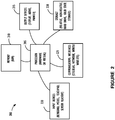
- FIG. 2 illustrates a high-level block diagram of a computing device 200 (e.g., computing system or network switch as shown in Figure 1 ) that may be used to implement one or more disclosed examples (e.g., a multi-editor as part of a network configuration development environment and the network devices it supports).
- computing device 200 illustrated in Figure 2
- computing device 200 and its elements as shown in Figure 2 each relate to physical hardware.
- one, more, or all of the elements could be implemented using emulators or virtual machines as levels of abstraction.
- computing device 200 at its lowest level may be implemented on physical hardware.
- computing device 200 may include one or more input devices 230, such as a keyboard, mouse, touchpad, or sensor readout (e.g., biometric scanner) and one or more output devices 215, such as displays, speakers for audio, or printers. Some devices may be configured as input/output devices also (e.g., a network interface or touchscreen display).
- Computing device 200 may also include communications interfaces 225, such as a network communication unit that could include a wired communication component and/or a wireless communications component, which may be communicatively coupled to processor 205.
- the network communication unit may utilize any of a variety of proprietary or standardized network protocols, such as Ethernet, TCP/IP, to name a few of many protocols, to effect communications between devices.
- Network communication units may also comprise one or more transceivers that utilize the Ethernet, power line communication (PLC), Wi-Fi, cellular, and/or other communication methods.
- computing device 200 includes a processing element, such as processor 205, that contains one or more hardware processors, where each hardware processor may have a single or multiple processor cores.
- the processor 205 may include at least one shared cache that stores data (e.g., computing instructions) that are utilized by one or more other components of processor 205.
- the shared cache may be a locally cached data stored in a memory for faster access by components of the processing elements that make up processor 205.
- the shared cache may include one or more mid-level caches, such as level 2 (L2), level 3 (L3), level 4 (L4), or other levels of cache, a last level cache (LLC), or combinations thereof.
- LLC last level cache
- processors include, but are not limited to a central processing unit (CPU) microprocessor.
- CPU central processing unit
- the processing elements that make up processor 205 may also include one or more other types of hardware processing components, such as graphics processing units (GPUs), application specific integrated circuits (ASICs), field-programmable gate arrays (FPGAs), and/or digital signal processors (DSPs).
- GPUs graphics processing units
- ASICs application specific integrated circuits
- FPGAs field-programmable gate arrays
- DSPs digital signal processors
- Memory 210 may be operatively and communicatively coupled to processor 205.
- Memory 210 may be a non-transitory medium configured to store various types of data.
- memory 210 may include one or more storage devices 220 that comprise a non-volatile storage device and/or volatile memory.
- Volatile memory such as random access memory (RAM)
- RAM random access memory
- the non-volatile storage devices 220 can include one or more disk drives, optical drives, solid-state drives (SSDs), tap drives, flash memory, read-only memory (ROM), and/or any other type memory designed to maintain data for a duration time after a power loss or shut down operation.
- the non-volatile storage devices 220 may be used to store overflow data if allocated RAM is not large enough to hold all working data.
- the non-volatile storage devices 220 may also be used to store programs that are loaded into the RAM when such programs are selected for execution.
- the compiling process of the software program may transform program code written in a programming language to another computer language such that the processor 205 is able to execute the programming code.
- the compiling process of the software program may generate an executable program that provides encoded instructions (e.g., machine code instructions) for processor 205 to accomplish specific, non-generic, particular computing functions.
- the encoded instructions may then be loaded as computer executable instructions or process steps to processor 205 from storage 220, from memory 210, and/or embedded within processor 205 (e.g., via a cache or on-board ROM).
- Processor 205 may be configured to execute the stored instructions or process steps in order to perform instructions or process steps to transform the computing device into a non-generic, particular, specially programmed machine or apparatus.
- Stored data e.g., data stored by a storage device 220, may be accessed by processor 205 during the execution of computer executable instructions or process steps to instruct one or more components within the computing device 200.
- a user interface can include a display, positional input device (such as a mouse, touchpad, touchscreen, or the like), keyboard, or other forms of user input and output devices.
- the user interface components may be communicatively coupled to processor 205.
- the output device is or includes a display
- the display can be implemented in various ways, including by a liquid crystal display (LCD) or a cathode-ray tube (CRT) or light emitting diode (LED) display, such as an OLED display.
- LCD liquid crystal display
- CRT cathode-ray tube
- LED light emitting diode
- Persons of ordinary skill in the art are aware that the computing device 200 may comprise other components well known in the art, such as sensors, powers sources, and/or analog-to-digital converters, not explicitly shown in Figure 2 .
- this disclosure presents a multi-edit capability that allows a user (e.g., network administrator) to simultaneously view and edit multiple text-based configuration files.
- the presentation format allows the user to view similarities and differences through a stacked text presentation.
- text that is the same across all files may be shown once as common stacked text while text that is different across some files may be shown as a textual variable or textual overlay.
- Textual variables when present, may be expanded to view and edit the individual file values associated with the variable. In use, to make a corresponding part of all underlying files the same, changes may be made to the common stacked text. Alternatively, to introduce differences across the files, textual variables may be inserted, and individual file values may be edited.
- the textual variable may be replaced with common stacked text that will affect all underlying files.
- the scope of the editor e.g., files shown and affected by editing
- the disclosed multi-editor represents an improvement to the art of network configuration and administration by providing an intuitive and concise presentation that enables a network administrator to see the similarities and differences across multiple configuration files, each representative of a network device, and the ability to easily change multiple file contents to be the same or different. Further, controlled deployment of changes to configuration parameters to their corresponding devices, and audit tracking of those changes may be provided.
- block diagram 300 illustrates multiple network administrator endpoints (e.g., computers 320-325, and 330) connected through at least one network to a backend processing system (e.g., network configuration data repository 340) configured to support a network configuration development environment, according to one or more disclosed implementations.
- a backend processing system e.g., network configuration data repository 340
- Each network administrator endpoint may facilitate execution of the disclosed multi-editor interface 360 for working within a network configuration development environment.
- Block 360 indicates that multi-editor functions may include, but are not limited to, difference identification; editing functions; variable substitution; and parameter correlation.
- multi-editor interface 360 may be presented as a graphical user interface front-end to an application executing locally or to a remotely executing application and provided via a web interface (e.g., web browser or web application).
- Multi-editor 371 may include backend functions that execute alongside repository functions 370 and be connected via a local graphical user interface.
- the disclosed multi-edit capability may be implemented as a distributed application with functions executing on different processors across a network configuration domain.
- functions are distributed across a network configuration domain based on performance, security, or convenience reasons and these distributed functions collectively provide the multi-edit capability disclosed herein.
- network configuration data repository 340 is configured to use servers 341 and 342 for maintaining data and performing functions to support a network engineer development environment for network configuration domain 305.
- Servers 341 and 342 may be configured to maintain data representative of network configuration settings (e.g., parameters) corresponding to individual network devices within network configuration domain 305.
- This information may be stored logically, for example in a database, and obtained as configuration file representations, or physically as individual files. In either case, the information may be indexed and correlated to support search, update, and deployment capabilities as described herein.
- Block 370 indicates that functions performed by network configuration data repository 340 include, but are not limited to, configuration file indexing; difference identification; parameter correlation; expert systems analysis; variable substitution; and configuration storage, retrieval and deployment. Each of these aspects will be discuss in more detail below.
- networks 315 represent optional communication networks that are not considered part of network configuration domain 305 but may allow for system administrators to interact with network configuration data repository 340 from remote locations or even mobile devices (e.g., laptop 330).
- network configuration domain 305 represents, in this example, a corporate network (e.g., similar to customer network 102 from Figure 1 ) that may be maintained by one or more system administrators.
- the one or more system administrators may use the disclosed multi-edit interface 360 capability (executing on, for example, computers 320-325, or 330) to interact with network configuration data repository 340 to view and edit configuration parameters for one or more networks devices (351-356) in network configuration domain 305.
- network configuration domain 305 includes a central router/switch 350, and three subnets (i.e., subnet 1 310, subnet 2 311, and subnet 3 356).
- a total of seven network devices i.e., ND 351, ND 352, ND 353, ND 354, ND 355, ND 356, and central router/switch 350) are shown in network configuration domain 305.
- network devices there may be hundreds or even thousands of network devices within an actual network configuration domain of a large corporation or enterprise but for simplicity only seven are shown here.
- most network devices are dedicated switches, routers, or bridges, however, server computers may be configured to perform functions of a network device and may be used in that manner by smaller entities.
- the concepts of this disclosure are not limited to dedicated network devices and will work advantageously with any existing device configured to support networking functions.
- each of the seven network devices will have identical configuration settings for many configuration parameters. For example, there will likely be only one NTP server in the network, and a single DNS master. However, particular parameters may be different on specific devices or groups of devices. For example, all network devices in subnet 1 310 may be similarly configured to each other but have differences for certain parameters than the network devices in subnet 2 311 (which would each have a set of identical parameters). In a specific case, central router/switch 350 may have at least two interface ports with different IP addresses. All devices in subnet 1 310 should be configured to communicate with central router/switch 350 on the first interface port and all devices in subnet 2 311 should be configured to communicate with central router/switch 350 on the second interface port.
- network devices within a network configuration domain such as network configuration domain 305 may be expected to have a large degree of overlap with specific reasons and rationale behind any differences in value for a corresponding parameter setting (e.g., different value for a value that corresponds to an NTP server, or DNS master).
- a corresponding parameter setting e.g., different value for a value that corresponds to an NTP server, or DNS master.
- variations in values of configuration parameter settings may be properly identified (e.g., as "expected” or “unexpected") to assist a user managing the network configuration domain.
- process 400 is illustrated in flow chart form and represents one possible method of collecting and indexing network configuration information, presenting information to and receiving updates from a system administrator, and providing updates to a plurality of network devices in a controlled and audited manner, according to one or more disclosed implementations.
- network configuration data is collected from an identified network configuration domain (e.g., network configuration domain 305). Data may be manually entered, automatically discovered, or a combination of both.
- Block 410 indicates that data may be indexed, correlated and stored in a data repository (e.g., network configuration data repository 340).
- Block 415 indicates that in addition to standard indexing and correlation techniques, additional techniques that are "network aware” may be used to identify parameters that are expected to be identical across devices and parameters that may be different or required to be unique across devices.
- Block 420 indicates that "expert systems” techniques, for example machine learning techniques,” may also be applied to the network configuration data. Additionally, connection information, such as a hyperlink of parameters to knowledge base information may also be identified as part of the "expert systems” techniques.
- block 425 indicates that a request for multiple device configurations may be received (e.g., from the disclosed multi-editor capability).
- Block 430 indicates that additional processing may be performed to determine consistent data versus uniform data, for example, to present a multi-editor view.
- consistent data refers to data that is expected to be the same and is in fact the same
- uniform data refers to data that is expected to be different in some manner and the difference is not more than normal for that type of configuration parameter setting.
- Uniform data may then be replaced with a "macro variable" so that the variable (possibly highlighted with a visual cue or other indicator) may be presented in the multi-edit view (e.g., a comprehensive editor view for all configuration files within the scope of a current editing session) of multi-editor interface 360 rather than showing a highlighted difference.
- differences that are not considered “uniform” may be shown using any one or more of a variety of techniques to bring attention to that data value (see Figures 5-7 ). These differences that are not considered uniform may represent errors in the configuration data that need to be addressed by a network administrator.
- Block 435 indicates that user input may be received to alter a data value (e.g., network configuration parameter setting) in one or more devices, for example, because a user edited a value in the multi-editor view.
- This change may represent a correction of an identified erroneous configuration setting or may simply be a change to "consistent" data that is to be applied across all associated network devices concurrently (e.g., configuration change).
- block 440 indicates that the system administrator may wait for a pre-defined "maintenance window" in which he is allowed to alter the network configuration.
- Block 445 indicates that changes may be deployed, from network configuration data repository 340 for example, to a running configuration for each affected network device. Once applied, the network may be monitored to determine if it is functioning acceptably after the change.
- Block 450 indicates that the network may be allowed to stabilize after changes because, in some cases, even though changes were applied concurrently, it may take some time for the network to "understand” the configuration changes applied.
- Block 455 indicates that, if everything is working as expected in the network, changes may be "committed” to network devices by altering their startup configuration settings. Alternatively, if an error occurs (or unexpected results) a rollback may be performed by redeployment of previous configuration parameter settings to the running configuration or even by initiating a restart of network devices. As explained above, a restart of a network device will cause that device to purge its running configuration and reload from its startup configuration.
- Block 460 indicates that the data repository may be updated to reflect the actions performed in this deployment.
- Block 465 indicates that any change log or audit trail information may also be stored to reflect the time of change, what was changed, and to track who initiated the changes, for example. Additionally, each update (either deployment or commit/save) to a network device may result in a status return that indicates whether the network device was able to accept the supplied change to configuration. Further, as part of blocks 460 or 465, each network device that was affected may be queried to retrieve its current running (or startup) configuration parameters to verify that they reflect identical information with respect to what was sent to them in the update(s).
- FIG. 5 illustrates a screen shot 500 showing an overlay method of presenting textual data from a plurality of network devices to a system administrator in a single presentation format, according to one or more disclosed implementations.
- the text shown in portion 505 begins with identification of "user admin group" in overlaid text where each of the underlying files contain the same variable name, thus this beginning portion of text appears "bold” but readable.
- the value of the variable shown in the remaining text of block 505 reflects overlaid text where at least some of the underlying files have different characters in corresponding locations resulting in unreadable information.
- Block 510 illustrates text in a "soft" representation to indicate that this information may be present in only one (or very few) of the underlying files associated with this view.
- the NTP server line with element 515 includes both bold overlaid text and, inside element 515, indications of different characters for at least some of the underlying configuration files.
- Element 520 again begins with bold text indicating that the first portion of this line is identical across all underlying configuration files and ends with element 525 in a "softer” text indicating that this portion stating "community aruba123" is only contained in a subset of all underlying files.
- Screenshot 500 represents an overlay method that may be combined with one or more other visual indicators (see Figures 6-7 ) to convey information about similarities within multiple files brought together in a multi-editor view.
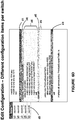
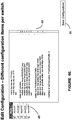
- FIGs. 6A-E which each illustrate alternative presentation methods that may be used instead of or in addition to the presentation method of FIG. 5 .
- Figure 6A illustrates a "scope" of an editor view in block 605 where information from five routers is being processed concurrently. That is, the scope of the edit session is currently set to include five underlying configuration files.
- Element 610 illustrates a uniform has been identified and the underlying data has been replaced with the macro variable "rate.”
- the macro variable is further highlighted because at least one of the underlying files does not have an identical value to the other four routers that are within the scope of this edit session.
- pop-up dialog 615 it is router 2 that has a value of 600 rather than 6000 as is configured in every other router shown.
- the scope of the edit session has been changed as indicated by block 605'.
- router 2 has been de-selected.
- the scope of the edit session has changed to only four routers and each of those routers have consistent information (at least as far as what is currently shown in the view of this example).
- Element 620 indicates that the "rate" variable has been removed because it is no longer necessary and is replaced with information reflecting the consistent value 6000 for all four routers (i.e., 1, 3, 4, and 5) within the current scope of this edit session.
- the scope of the edit session affects the presentation format and also affects how changes to data within an edit session will be applied to the underlying configuration information. Only devices for which the scope of the session is set will “participate" in the edit session at that time.
- data within a configuration repository may be indexed and thus may be searched by regular expressions (e.g., *-rt-* may return all routers) or other search criteria in order to assist in setting a proper scope for an edit session.
- the system administrator may provide a search string and the multi-editor may provide a view that includes all devices matching that search criteria with all devices selected and participating in the scope of the edit session until such time as a user may refine the search or de-select the devices corresponding checkbox.
- a system administrator may include a "draft" configuration within the scope of an edit session. Recall, that a draft configuration is a configuration that does not represent an actual device and may be considered as a kind of master template for configuration settings.
- draft configurations stored within a data repository for different types of network devices, for example.
- Use of a draft configuration may assist in configuring new devices or ensuring that existing devices maintain conformance with an overall network configuration design. Further, if a change is made in which a draft configuration is within the scope of the edit session, that edit session may automatically update the draft configuration so that future use of the draft will include current information.
- the scope of the edit session includes five routers as indicated by the five checked boxes in block 605.
- Collapsed summary lines 625 and 630 indicate that their respective information is currently found in only 4 of the 5 underlying configurations. This is illustrated by the italicized text stating "in 4 / 5 configurations.”
- Figure 6D illustrates what might be presented in response to a user expanding summary line 635.
- summary line 635 is expanded and line 640 indicates that the four routers containing consistent information for this configuration information are routers 1, 2, 3, and 4.
- the specific configuration information that is consistent across those four routers is shown by lines bracketed by element 641.
- Line 645 and the lines bracketed by element 646 show that the information for router 5 with respect to the variable identified on line 635 is empty. In this manner a network administrator may recognize that configuration information is simply missing from some devices rather than those devices having corresponding but not consistent configuration information.
- block 605 indicates that the scope of the edit session is set to five routers (i.e., 1, 2, 3, 4, and 5).
- side block 605 there is an asterisk next to router 2 and router 5.
- change bars identified by element 650.
- the change bars and asterisks are used to inform a system administrator that the lines having change bars represent a potential change to the routers that have an asterisk. Accordingly, this view shows that there are eight changes (there are eight individual change bars) that would be deployed and affect only routers 2 and 5 if the save configurations pushbutton 655 were selected. Note that not all eight changes are necessarily applied to both routers 2 and 5 in this example. Instead, at least one of the eight changes would be applied to each of routers 2 and 5 (up to and including applying all eight changes to both routers).
- multiple individual editing sessions may be performed prior to deployment of changes within the network configuration domain.
- multiple editing sessions of varying scope may be performed to adjust network configuration parameter settings across different sets or different types of network devices.
- the sum of the scope of each of these multiple editing sessions may be thought of as a "collective scope.”
- the changes from the multiple editing sessions may be deployed as a single update to the network configuration domain (e.g., at the next appropriate maintenance window).
- FIGS 7A-B two screen shots are shown to illustrate yet another presentation method using color coding, mouse hovering capabilities, and other visual clues for presenting a multi-file editing capability to a system administrator, according to one or more disclosed implementations.
- element 710 identifies that three devices (i.e., device-100, device-200, and device-300) are within the scope of this edit session.
- Line numbers are referenced by element 705 and line 1 shows a macro variable represented by an italicized " HOSTNAME " has been inserted in place of the underlying data.
- Line 12 represents the next line in the current edit view across three files that is different.
- Line 12 represents the 'ntp server...' configuration line. In this case, there are two (of the 3) files that have this line and one file does not have this line. This situation is highlighted by the annotation on the right noting '(2/3)'. Because some implementations may need to be able to scale up to many files, numbers may be shown when more than 1 file has the same information, but not all the files (e.g., 993/1000). Device names may also be placed in a preface line (small text above the line as shown by element 720 for lines 12 and 38).
- the preface text for both lines 12 and 38 is 'device-100, device-200'.
- This preface line may be collapsed by default, so an administrator would only see the blue background and the right annotation-indicating this line is not in all files, and how many have it.
- the system administrator might click on a '+' sign on that line (not shown in Figure 7 ).
- the router ids are different per switch. Accordingly, this is displayed with a macro variable "A.B.C.D" in a similar manner to line 1.
- two of the three (i.e., 2/3) files have consistent information for this line (similar to line 12).
- element 750 indicates that three devices are selected for the current edit session.
- Dialog box 760 illustrates the effect of hovering over or selecting the macro variable " HOSTNAME " on line 1. That is, the value of the hostname parameter setting for the three switches (i.e., SW01, SW02, and SW03) is shown in the dialog box. In this case, the hostname parameter setting is expected to be unique for each switch.
- each value for the hostname parameter setting is further associated with its' corresponding device identifier (in this case IP address from block 750).
- the network administrator can change the individual values for the three switches.
- Small prefix text (reference element 770) and the right-hand annotation ("2/3") is shown for lines 28 and 29.
- the prefix text identifies the IP address for each of the two out of three devices that have this parameter setting value (it is not present in device 192.168.56.10 in this example).
- Figure 8 is a flow chart representing one particular embodiment of a method practiced in accordance with at least some aspects of the present disclosure.
- a computer is configured to implement a method, for example, by storing instructions in a memory to cause one or more processing units to perform the method.
- the implemented method is a method of simultaneously viewing and editing multiple network device configurations.
- Block 810 indicates that the method includes providing an indication of a first plurality of network devices to a network configuration data repository storing information pertaining to parameter settings for a second plurality of network devices within a network configuration domain, the first plurality of network devices representing a subset of the second plurality of network devices.
- Block 815 indicates that the method includes receiving a plurality of configuration file representations including network configuration parameter settings, from the network data repository, the plurality of configuration file representations having a one-to-one correspondence with the first plurality of network devices, each network configuration parameter setting having an associated parameter setting value.
- Block 820 indicates that the method includes presenting a graphical representation of data correlated across the plurality of configuration file representations in a comprehensive editor view for an editing session having a scope to edit the plurality of configuration file representations simultaneously.
- Block 825 indicates that the method includes receiving a change, via the graphical user interface, of at least one configuration parameter setting value represented in at least two of the plurality of configuration file representations.
- block 830 indicates that the method includes providing an update for the at least one configuration parameter setting value in the network configuration data repository to adjust a parameter setting value for each of the first plurality of network devices in response to the change, the update causing each of the first plurality of network devices to obtain the adjusted parameter setting value as part of a deployment.
Landscapes
- Engineering & Computer Science (AREA)
- Computer Networks & Wireless Communication (AREA)
- Signal Processing (AREA)
- Human Computer Interaction (AREA)
- Health & Medical Sciences (AREA)
- Computing Systems (AREA)
- General Health & Medical Sciences (AREA)
- Medical Informatics (AREA)
- Computer And Data Communications (AREA)
Claims (14)
- Computerimplementiertes Verfahren (805) zum gleichzeitigen Anzeigen und Bearbeiten einer Mehrzahl von Netzwerkgerätekonfigurationen, wobei das Verfahren dadurch gekennzeichnet ist, dass es Folgendes umfasst:Bereitstellen (810) einer Angabe einer ersten Mehrzahl von Netzwerkgeräten für ein Netzwerkkonfigurationsdaten-Repository, in dem Informationen bezüglich Parametereinstellungen für eine zweite Mehrzahl von Netzwerkgeräten in einer Netzwerkkonfigurationsdomäne gespeichert sind, wobei die erste Mehrzahl von Netzwerkgeräten eine Teilmenge der zweiten Mehrzahl von Netzwerkgeräten darstellt;Empfangen (815) einer Mehrzahl von Konfigurationsdateidarstellungen, einschließlich Netzwerkkonfigurations-Parametereinstellungen, von dem Netzwerkdaten-Repository, wobei die Mehrzahl von Konfigurationsdateidarstellungen eine Eins-zu-Eins-Entsprechung mit der ersten Mehrzahl von Netzwerkgeräten aufweist, wobei jede Netzwerkkonfigurations-Parametereinstellung einen zugehörigen Parametereinstellungswert aufweist;Darbieten (820) einer grafischen Darstellung von Daten, die über die Mehrzahl von Konfigurationsdateidarstellungen korreliert sind, in einer umfassenden Editoransicht für eine Bearbeitungssitzung mit der Möglichkeit zum gleichzeitigen Bearbeiten der Mehrzahl von Konfigurationsdateidarstellungen;Empfangen (825), über die grafische Benutzeroberfläche, einer Änderung mindestens eines Konfigurationsparametereinstellungswerts für jedes der ersten Mehrzahl von Netzwerkgeräten mit einer Konfigurationsdateidarstellung im Rahmen der Bearbeitungssitzung; undBereitstellen (830) einer Aktualisierung für den mindestens einen Konfigurationsparametereinstellungswert in dem Netzwerkkonfigurationsdaten-Repository, um einen Parametereinstellungswert für jedes der ersten Mehrzahl von Netzwerkgeräten in Reaktion auf die Änderung anzupassen, wobei die Aktualisierung jedes der ersten Mehrzahl von Netzwerkgeräten dazu veranlasst, den angepassten Parametereinstellungswert als Teil einer Bereitstellung zu erhalten.
- Verfahren nach Anspruch 1, wobei:(i) mindestens ein Teil der Mehrzahl von Konfigurationsdateidarstellungen aus einer logischen Darstellung einer Konfigurationsdatei erhalten wird, die in Reaktion auf eine Abfrage einer Datenbank abgerufen wird;(ii) jede der Mehrzahl von Konfigurationsdateidarstellungen eine Entsprechung zu einem Netzwerkgerät in der Netzwerkkonfigurationsdomäne aufweist; und/oder(iii) die Mehrzahl von Konfigurationsdateidarstellungen einen Entwurf einer Konfigurationsdatei beinhaltet, die Richtlinien für Parametereinstellungen darstellt, anstelle von Einstellungen, die einem bestimmten Netzwerkgerät zugeordnet sind.
- Verfahren nach Anspruch 1, wobei mindestens eine Konfigurationsparametereinstellung durch eine Makrovariable ersetzt wird, die mindestens zwei zugrunde liegende Konfigurationseinstellungswerte darstellt, bevor die umfassende Editoransicht dargeboten wird.
- Verfahren nach Anspruch 3, wobei die Makrovariable in Reaktion auf eine Benutzeraktion innerhalb der grafischen Benutzerschnittstelle erweitert werden kann, um mindestens zwei zugrunde liegende Werte der ersetzten Konfigurationsparametereinstellung und eine Angabe der Prävalenz der mindestens zwei zugrunde liegenden Werte über die Mehrzahl von Netzwerkgeräten im Rahmen der Bearbeitungssitzung anzuzeigen, wobei die Benutzeraktion optional das Bewegen über die Makrovariablen oder das Auswählen dieser unter Verwendung einer Schnittstelle im Zeiger-Stil umfasst.
- Verfahren nach Anspruch 1, wobei das Bereitstellen einer Aktualisierung für die mindestens eine Konfigurationsparametereinstellung das Bereitstellen einer Kandidatenversion der mindestens zwei Konfigurationsdateien zum Speichern in einem Daten-Repository beinhaltet, vor dem Bereitstellen der Aktualisierung für die mindestens eine Konfigurationsparametereinstellung für jedes von zwei Netzwerkgeräten, die den mindestens zwei der Mehrzahl von Konfigurationsdateidarstellungen eindeutig zugeordnet sind.
- Verfahren nach Anspruch 1, das ferner Folgendes umfasst:
Senden einer Anweisung zum Initiieren der Bereitstellung einer Reihe von Aktualisierungen für Mehrzahl von Netzwerkgeräten mit einer Eins-zu-Eins-Entsprechung zu Konfigurationsdateien im gemeinsamen Rahmen einer oder mehrerer Bearbeitungssitzungen. - Verfahren nach Anspruch 1, wobei der Computer, der die grafische Benutzerschnittstelle bereitstellt, über ein öffentliches Netzwerk verbunden ist, um mit Informationen aus dem Netzwerkkonfigurationsdaten-Repository zu interagieren.
- Verfahren nach Anspruch 1, wobei die Netzwerkkonfigurationsdomäne eine Mehrzahl von logisch getrennten Subnetzen innerhalb eines Kundennetzwerks umfasst, wobei optional mindestens eines der Mehrzahl von logisch getrennten Subnetzen mindestens ein sicheres Subnetz beinhaltet, das vor Standardnetzwerkkommunikationsverkehr des Kundennetzwerkes geschützt ist.
- Verfahren nach Anspruch 1, das ferner Folgendes umfasst:Empfangen einer Angabe zum Ändern eines Rahmens der Bearbeitungssitzung, um mindestens eine Konfigurationsdateidarstellung aus den Informationen zum gleichzeitigen Anzeigen zu entfernen, die in der Bearbeitungssitzung dargeboten sind;Aktualisieren der Darbietung auf der grafischen Benutzeroberfläche, um das Entfernen der mindestens einen Konfigurationsdateidarstellung widerzuspiegeln; undEmpfangen einer Aktualisierung für eine Parametereinstellung und Speichern der Aktualisierung, ohne die Konfigurationseinstellungen des Geräts zu beeinflussen, die der entfernten mindestens einen Konfigurationsdateidarstellung eindeutig zugeordnet sind,wobei optional das Aktualisieren der Darbietung auf der grafischen Benutzeroberfläche, um das Entfernen der mindestens einen Konfigurationsdateidarstellung widerzuspiegeln, das Aktualisieren der Darstellung umfasst, um mindestens eine Makrovariable durch einen zugrunde liegenden Wert einer Konfigurationsparametereinstellung zu ersetzen, die zuvor als Makrovariable dargestellt wurde.
- Verfahren nach Anspruch 1, wobei mindestens ein visueller Hinweis, der zugrunde liegende Unterschiede in Parameterwerten anzeigt, aus der Gruppe von visuellen Hinweisen ausgewählt ist, die Folgendes beinhaltet: überlagerten Text, der die Mehrzahl von Werten darstellt; einen Makrovariablennamensersatz der Mehrzahl von Werten; eine gewichtete Schriftdarstellung, die die Mehrzahl von Werten darstellt; und eine Farbcodierung zur Hervorhebung von Abschnitten, die für Unterschiede repräsentativ sind.
- Verfahren nach Anspruch 1, wobei mindestens eines der ersten Mehrzahl von Netzwerkgeräten aus der Gruppe ausgewählt ist, die aus den Folgenden besteht: einem Router; einem Switch; einem Domänennamenserver; einem Webserver; einer virtuellen Maschine; einem Datenbankserver; einem Netzwerkadressen-Übersetzungsserver; einer Firewall; einem Anwendungsserver; einem RAS-Server; einer Bridge; einem Client-Gerät; und einem Netzwerk-Gateway.
- Nichtflüchtiges computerlesbares Medium, das darauf gespeicherte computerausführbare Computeranweisungen umfasst, die, wenn sie von einer oder mehreren Verarbeitungseinheiten ausgeführt werden, ein Verfahren ausführen, um eine Ansichts- und Bearbeitungsfunktion zum gleichzeitigen Anzeigen und Bearbeiten mehrerer Netzwerkgerätekonfigurationen bereitzustellen, wobei das Verfahren dadurch gekennzeichnet ist, dass es Folgendes umfasst:Bereitstellen (810) einer Angabe einer ersten Mehrzahl von Netzwerkgeräten für ein Netzwerkkonfigurationsdaten-Repository, in dem Informationen bezüglich Parametereinstellungen für eine zweite Mehrzahl von Netzwerkgeräten in einer Netzwerkkonfigurationsdomäne gespeichert sind, wobei die erste Mehrzahl von Netzwerkgeräten eine Teilmenge der zweiten Mehrzahl von Netzwerkgeräten darstellt;Empfangen (815) einer Mehrzahl von Konfigurationsdateidarstellungen, einschließlich Netzwerkkonfigurations-Parametereinstellungen, von dem Netzwerkdaten-Repository, wobei die Mehrzahl von Konfigurationsdateidarstellungen eine Eins-zu-Eins-Entsprechung mit der ersten Mehrzahl von Netzwerkgeräten aufweist, wobei jede Netzwerkkonfigurations-Parametereinstellung einen zugehörigen Parametereinstellungswert aufweist;Darbieten (820) einer grafischen Darstellung von Daten, die über die Mehrzahl von Konfigurationsdateidarstellungen korreliert sind, in einer umfassenden Editoransicht für eine Bearbeitungssitzung mit der Möglichkeit zum gleichzeitigen Bearbeiten der Mehrzahl von Konfigurationsdateidarstellungen;Empfangen (825), über die grafische Benutzeroberfläche, einer Änderung mindestens eines Konfigurationsparametereinstellungswerts für jedes der ersten Mehrzahl von Netzwerkgeräten mit einer Konfigurationsdateidarstellung im Rahmen der Bearbeitungssitzung; undBereitstellen (830) einer Aktualisierung für den mindestens einen Konfigurationsparametereinstellungswert in dem Netzwerkkonfigurationsdaten-Repository, um einen Parametereinstellungswert für jedes der ersten Mehrzahl von Netzwerkgeräten in Reaktion auf die Änderung anzupassen, wobei die Aktualisierung jedes der ersten Mehrzahl von Netzwerkgeräten dazu veranlasst, den angepassten Parametereinstellungswert als Teil einer Bereitstellung zu erhalten.
- Computersystem (200), das Folgendes umfasst:eine Netzwerkkommunikationsschnittstelle (225);einen Speicher (220); undeine oder mehrere Verarbeitungseinheiten (205), die kommunikativ mit dem Speicher und der Netzwerkkommunikationsschnittstelle verbunden sind, wobei der Speicher Anweisungen speichert, die, wenn sie von der einen oder den mehreren Verarbeitungseinheiten ausgeführt werden, die eine oder mehreren Verarbeitungseinheiten veranlassen, eine Ansichts- und Bearbeitungsfunktion zum gleichzeitigen Anzeigen und Bearbeiten mehrerer Netzwerkgerätekonfigurationen bereitzustellen, wobei die Ansichts- und Bearbeitungsfunktion dadurch gekennzeichnet durch, dass sie zu Folgendem konfiguriert ist:Bereitstellen (805) einer Angabe einer ersten Mehrzahl von Netzwerkgeräten für ein Netzwerkkonfigurationsdaten-Repository, in dem Informationen bezüglich Parametereinstellungen für eine zweite Mehrzahl von Netzwerkgeräten in einer Netzwerkkonfigurationsdomäne gespeichert sind, wobei die erste Mehrzahl von Netzwerkgeräten eine Teilmenge der zweiten Mehrzahl von Netzwerkgeräten darstellt;Empfangen (815) einer Mehrzahl von Konfigurationsdateidarstellungen, einschließlich Netzwerkkonfigurations-Parametereinstellungen, von dem Netzwerkdaten-Repository, wobei die Mehrzahl von Konfigurationsdateidarstellungen eine Eins-zu-Eins-Entsprechung mit der ersten Mehrzahl von Netzwerkgeräten aufweist, wobei jede Netzwerkkonfigurations-Parametereinstellung einen zugehörigen Parametereinstellungswert aufweist;Darbieten (820) einer grafischen Darstellung von Daten, die über die Mehrzahl von Konfigurationsdateidarstellungen korreliert sind, in einer umfassenden Editoransicht für eine Bearbeitungssitzung mit der Möglichkeit zum gleichzeitigen Bearbeiten der Mehrzahl von Konfigurationsdateidarstellungen;Empfangen (825), über die grafische Benutzeroberfläche, einer Änderung mindestens eines Konfigurationsparametereinstellungswert für jedes der ersten Mehrzahl von Netzwerkgeräten mit einer Konfigurationsdateidarstellung im Rahmen der Bearbeitungssitzung; undBereitstellen (830) einer Aktualisierung für den mindestens einen Konfigurationsparametereinstellungswert in dem Netzwerkkonfigurationsdaten-Repository, um einen Parametereinstellungswert für jedes der ersten Mehrzahl von Netzwerkgeräten in Reaktion auf die Änderung anzupassen, wobei die Aktualisierung jedes der ersten Mehrzahl von Netzwerkgeräten dazu veranlasst, den angepassten Parametereinstellungswert als Teil einer Bereitstellung zu erhalten.
- Computersystem nach Anspruch 13, wobei mindestens ein Teil der Mehrzahl von Konfigurationsdateidarstellungen aus einer logischen Darstellung einer Konfigurationsdatei erhalten wird, die in Reaktion auf eine Abfrage einer Datenbank abgerufen wird.
Applications Claiming Priority (1)
| Application Number | Priority Date | Filing Date | Title |
|---|---|---|---|
| US15/934,824 US10887190B2 (en) | 2018-03-23 | 2018-03-23 | System for simultaneous viewing and editing of multiple network device configurations |
Publications (2)
| Publication Number | Publication Date |
|---|---|
| EP3544331A1 EP3544331A1 (de) | 2019-09-25 |
| EP3544331B1 true EP3544331B1 (de) | 2020-11-04 |
Family
ID=66000947
Family Applications (1)
| Application Number | Title | Priority Date | Filing Date |
|---|---|---|---|
| EP19163655.4A Active EP3544331B1 (de) | 2018-03-23 | 2019-03-19 | System zur gleichzeitigen ansicht und bearbeitung von mehreren netzwerkvorrichtungskonfigurationen |
Country Status (2)
| Country | Link |
|---|---|
| US (2) | US10887190B2 (de) |
| EP (1) | EP3544331B1 (de) |
Families Citing this family (13)
| Publication number | Priority date | Publication date | Assignee | Title |
|---|---|---|---|---|
| US9916289B2 (en) * | 2013-09-10 | 2018-03-13 | Embarcadero Technologies, Inc. | Syndication of associations relating data and metadata |
| ES2929139T3 (es) * | 2018-05-30 | 2022-11-25 | Cole Parmer Instr Company Llc | Monitorización de red y control de aparato de registro de datos |
| JP2021039624A (ja) * | 2019-09-04 | 2021-03-11 | 富士ゼロックス株式会社 | 情報処理装置および情報処理システム |
| US11354491B1 (en) * | 2019-12-20 | 2022-06-07 | Itential, Inc. | Systems and methods for improved data modeling and translation |
| US11212191B2 (en) * | 2020-01-07 | 2021-12-28 | Forcepoint Llc | GUI assisted infrastructure as code |
| US12244458B2 (en) * | 2021-03-09 | 2025-03-04 | Ciena Corporation | Limiting the scope of a declarative configuration editing operation |
| US11562140B2 (en) * | 2021-04-29 | 2023-01-24 | Hewlett Packard Enterprise Development Lp | Dynamically configurable templates to support versatile deployment of configurations at network devices |
| US20230089721A1 (en) * | 2021-09-22 | 2023-03-23 | Hewlett Packard Enterprise Development Lp | Difference based multiple device configuration rendering and editing |
| JP7779775B2 (ja) * | 2022-03-10 | 2025-12-03 | トヨタ自動車株式会社 | 通信制御装置、通信制御方法及び通信制御プログラム |
| US11853154B2 (en) * | 2022-04-21 | 2023-12-26 | Hewlett Packard Enterprise Development Lp | Automated global configuration error removal of clustered network devices |
| US12585462B2 (en) * | 2022-05-20 | 2026-03-24 | Scalr, Inc. | Infrastructure provisioning local agents and storage |
| CN114697211B (zh) * | 2022-05-31 | 2022-09-02 | 深圳市科力锐科技有限公司 | 网络配置方法、装置、设备及存储介质 |
| US12212903B2 (en) | 2022-12-05 | 2025-01-28 | At&T Intellectual Property I, L.P. | Dynamic cross-frequency path configuration for wavelength division multiplexing networks |
Family Cites Families (48)
| Publication number | Priority date | Publication date | Assignee | Title |
|---|---|---|---|---|
| CA2239985C (en) | 1995-12-08 | 2002-05-14 | Amsc Subsidiary Corporation | Mobile communications terminal for satellite communications system |
| AU5025600A (en) | 1999-05-17 | 2000-12-05 | Foxboro Company, The | Process control configuration system with parameterized objects |
| US7130870B1 (en) | 2000-05-20 | 2006-10-31 | Ciena Corporation | Method for upgrading embedded configuration databases |
| US7062546B1 (en) | 2002-02-07 | 2006-06-13 | Juniper Networks, Inc. | Network device channel configuration |
| US6973479B2 (en) | 2002-05-01 | 2005-12-06 | Thales Avionics, Inc. | Method and system for configuration and download in a restricted architecture network |
| JP2004199577A (ja) | 2002-12-20 | 2004-07-15 | Hitachi Ltd | 設定ファイルの統合編集方法および設定ファイル統合基盤 |
| US7571431B2 (en) * | 2003-04-29 | 2009-08-04 | Microsoft Corporation | Processing macro information and displaying via GUI in different tools |
| GB0312489D0 (en) | 2003-05-30 | 2003-07-09 | Nokia Corp | Terminal setting change notification |
| KR20050080504A (ko) | 2004-02-10 | 2005-08-17 | (주)씨앤에스 테크놀로지 | 인터넷 영상 전화 단말기의 펌웨어 자동 업그레이드시스템 및 이의 운용방법 |
| US8589531B2 (en) | 2004-07-14 | 2013-11-19 | Riverbed Technology, Inc. | Network difference reporting |
| US7657868B2 (en) | 2005-03-14 | 2010-02-02 | Research In Motion Limited | System and method for applying development patterns for component based applications |
| US8429630B2 (en) | 2005-09-15 | 2013-04-23 | Ca, Inc. | Globally distributed utility computing cloud |
| US7506143B2 (en) | 2005-11-15 | 2009-03-17 | Microsoft Corporation | Distributed monitoring of desired configurations using rules |
| US10637724B2 (en) | 2006-09-25 | 2020-04-28 | Remot3.It, Inc. | Managing network connected devices |
| US7974211B2 (en) | 2006-10-30 | 2011-07-05 | Hewlett-Packard Development Company, L.P. | Methods and apparatus for network configuration baselining and restoration |
| US8938489B2 (en) | 2007-06-22 | 2015-01-20 | Red Hat, Inc. | Monitoring system performance changes based on configuration modification |
| EP2179375A1 (de) | 2007-08-24 | 2010-04-28 | Opnet Technologies, Inc. | Verifikation von datenkonsistenzen zwischen mehreren strukturierten dateien |
| EP2109254B1 (de) | 2008-04-08 | 2012-02-01 | Tieto Oyj | Konfigurationsserver für verwaltete Elemente in einem Telekommunikationssystem |
| US8291403B2 (en) | 2008-06-30 | 2012-10-16 | Symantec Operating Corporation | Install-unit upgrade using dynamic configuration data manipulation and merging |
| US8156213B1 (en) * | 2009-07-27 | 2012-04-10 | Juniper Networks, Inc. | Merging network device configuration schemas |
| US8248958B1 (en) * | 2009-12-09 | 2012-08-21 | Juniper Networks, Inc. | Remote validation of network device configuration using a device management protocol for remote packet injection |
| US20110213480A1 (en) | 2010-03-01 | 2011-09-01 | Genexis Design Inc. | Parametric product configuration system |
| US8736611B1 (en) | 2010-09-09 | 2014-05-27 | Juniper Networks, Inc. | Assigning values to objects using a two-dimensional data input plane |
| US9170926B1 (en) | 2011-05-08 | 2015-10-27 | Panaya Ltd. | Generating a configuration test based on configuration tests of other organizations |
| US20130166774A1 (en) | 2011-09-13 | 2013-06-27 | Niksun, Inc. | Dynamic network provisioning systems and methods |
| US8908698B2 (en) * | 2012-01-13 | 2014-12-09 | Cisco Technology, Inc. | System and method for managing site-to-site VPNs of a cloud managed network |
| US9088491B2 (en) | 2012-03-07 | 2015-07-21 | Citrix Systems, Inc. | Systems and methods for comparing configuration files and generating corrective commands |
| US20130254524A1 (en) | 2012-03-20 | 2013-09-26 | Yariv SNAPIR | Automated configuration change authorization |
| US9247436B2 (en) | 2012-07-27 | 2016-01-26 | Nokia Solutions And Networks Oy | Insight based orchestration of network optimization in communication networks |
| CN104520818A (zh) | 2012-08-13 | 2015-04-15 | 惠普发展公司,有限责任合伙企业 | 连续部署管道中的性能测试 |
| US9411558B2 (en) | 2012-10-20 | 2016-08-09 | Luke Hutchison | Systems and methods for parallelization of program code, interactive data visualization, and graphically-augmented code editing |
| US9094299B1 (en) | 2013-01-08 | 2015-07-28 | Juniper Networks, Inc. | Auto-generation of platform-independent interface and operational scripts for configuring network devices |
| US9369431B1 (en) | 2013-02-07 | 2016-06-14 | Infoblox Inc. | Security device controller |
| US20140280833A1 (en) * | 2013-03-15 | 2014-09-18 | Lingping Gao | System and method for efficiently managing network changes |
| US9600386B1 (en) | 2013-05-31 | 2017-03-21 | Sandia Corporation | Network testbed creation and validation |
| WO2016056236A1 (ja) | 2014-10-08 | 2016-04-14 | 日本電気株式会社 | 情報処理装置、情報処理方法、及び、記録媒体 |
| US10346780B2 (en) | 2015-01-30 | 2019-07-09 | International Business Machines Corporation | Extraction of system administrator actions to a workflow providing a resolution to a system issue |
| US9787722B2 (en) | 2015-05-19 | 2017-10-10 | Cisco Technology, Inc. | Integrated development environment (IDE) for network security configuration files |
| US10038697B2 (en) | 2015-05-19 | 2018-07-31 | Cisco Technology, Inc. | Determining similarity between security rules based on weighted comparisons of their rule parameters |
| US10057124B2 (en) | 2015-08-21 | 2018-08-21 | Vmware, Inc. | Resolving configuration errors through recommendations |
| US10528211B2 (en) * | 2015-10-08 | 2020-01-07 | Salesforce.Com, Inc. | Computing systems and processes for simultaneous co-development of dashboard interfaces |
| US20170255866A1 (en) | 2016-03-03 | 2017-09-07 | Canice Lambe | Architectures and mechanisms for providing analysis of complex object structures |
| US10148506B1 (en) | 2016-06-28 | 2018-12-04 | Juniper Networks, Inc. | Network configuration service discovery |
| US10374884B2 (en) | 2016-07-22 | 2019-08-06 | Cisco Technology, Inc. | Automatically, dynamically generating augmentation extensions for network feature authorization |
| JP2018041146A (ja) | 2016-09-05 | 2018-03-15 | キヤノン株式会社 | 管理装置、制御方法、プログラム |
| US10785278B2 (en) | 2016-11-04 | 2020-09-22 | Google Llc | Network management interface |
| US20180136931A1 (en) | 2016-11-14 | 2018-05-17 | Ca, Inc. | Affinity of microservice containers |
| US10509660B2 (en) | 2017-10-06 | 2019-12-17 | Datalogic IP Tech, S.r.l | Systems and methods for assessing configuration profiles for a user configurable device |
-
2018
- 2018-03-23 US US15/934,824 patent/US10887190B2/en active Active
-
2019
- 2019-03-19 EP EP19163655.4A patent/EP3544331B1/de active Active
-
2020
- 2020-12-14 US US17/121,415 patent/US11374827B2/en active Active
Non-Patent Citations (1)
| Title |
|---|
| None * |
Also Published As
| Publication number | Publication date |
|---|---|
| US10887190B2 (en) | 2021-01-05 |
| US20190296982A1 (en) | 2019-09-26 |
| US11374827B2 (en) | 2022-06-28 |
| US20210099359A1 (en) | 2021-04-01 |
| EP3544331A1 (de) | 2019-09-25 |
Similar Documents
| Publication | Publication Date | Title |
|---|---|---|
| US11374827B2 (en) | System for simultaneous viewing and editing of multiple network device configurations | |
| US11089115B2 (en) | Discovery of cloud-based infrastructure and resources | |
| US10749943B1 (en) | Discovery and mapping of cloud-based resources | |
| EP3544330B1 (de) | System und verfahren zur validierung der korrektheit von änderungen an netzwerkvorrichtungskonfigurationen | |
| US10970107B2 (en) | Discovery of hyper-converged infrastructure | |
| US10924344B2 (en) | Discovery and mapping of cloud-based resource modifications | |
| EP3544233B1 (de) | System und verfahren zur bereitstellung von netzwerkeinsichten zur korrekten und effizienten netzwerkkonfiguration | |
| US11210466B2 (en) | Multiple document editing using rules for a restricted language | |
| US11115279B2 (en) | Client server model for multiple document editor | |
| US20110004629A1 (en) | Method and System for Automating the Migration of User Settings from a First Domain to a Second Domain | |
| US11762873B2 (en) | System and method for importation of configuration item (CI) data into a configuration management database (CMDB) | |
| US10505822B2 (en) | Interactive software renormalization | |
| US11263002B2 (en) | Efficient automatic population of downgrade rights of licensed software | |
| US10785096B2 (en) | Graphical user interfaces for device discovery and scheduling thereof | |
| US12001502B2 (en) | Common fragment caching for web documents | |
| US11805012B2 (en) | Cloud network mechanism driver migration | |
| CN117389822A (zh) | 通过命令验证的快速错误检测 | |
| US11487933B2 (en) | Error detection and correction for multiple document editor | |
| US11283677B2 (en) | Maintaining edit position for multiple document editor | |
| US10917312B2 (en) | Graphical user interface for validation of credentials and scheduled discovery of remote networks | |
| US12554380B2 (en) | Component selector for user interfaces with dynamic identifiers | |
| JP2015141604A (ja) | 通信システム、サーバ装置、サーバネットワーク、情報処理方法、ネットワーク構築方法、およびプログラム |
Legal Events
| Date | Code | Title | Description |
|---|---|---|---|
| PUAI | Public reference made under article 153(3) epc to a published international application that has entered the european phase |
Free format text: ORIGINAL CODE: 0009012 |
|
| STAA | Information on the status of an ep patent application or granted ep patent |
Free format text: STATUS: THE APPLICATION HAS BEEN PUBLISHED |
|
| AK | Designated contracting states |
Kind code of ref document: A1 Designated state(s): AL AT BE BG CH CY CZ DE DK EE ES FI FR GB GR HR HU IE IS IT LI LT LU LV MC MK MT NL NO PL PT RO RS SE SI SK SM TR |
|
| AX | Request for extension of the european patent |
Extension state: BA ME |
|
| STAA | Information on the status of an ep patent application or granted ep patent |
Free format text: STATUS: REQUEST FOR EXAMINATION WAS MADE |
|
| 17P | Request for examination filed |
Effective date: 20200311 |
|
| RBV | Designated contracting states (corrected) |
Designated state(s): AL AT BE BG CH CY CZ DE DK EE ES FI FR GB GR HR HU IE IS IT LI LT LU LV MC MK MT NL NO PL PT RO RS SE SI SK SM TR |
|
| RIC1 | Information provided on ipc code assigned before grant |
Ipc: H04W 24/02 20090101AFI20200408BHEP |
|
| GRAP | Despatch of communication of intention to grant a patent |
Free format text: ORIGINAL CODE: EPIDOSNIGR1 |
|
| STAA | Information on the status of an ep patent application or granted ep patent |
Free format text: STATUS: GRANT OF PATENT IS INTENDED |
|
| INTG | Intention to grant announced |
Effective date: 20200604 |
|
| GRAS | Grant fee paid |
Free format text: ORIGINAL CODE: EPIDOSNIGR3 |
|
| GRAA | (expected) grant |
Free format text: ORIGINAL CODE: 0009210 |
|
| STAA | Information on the status of an ep patent application or granted ep patent |
Free format text: STATUS: THE PATENT HAS BEEN GRANTED |
|
| AK | Designated contracting states |
Kind code of ref document: B1 Designated state(s): AL AT BE BG CH CY CZ DE DK EE ES FI FR GB GR HR HU IE IS IT LI LT LU LV MC MK MT NL NO PL PT RO RS SE SI SK SM TR |
|
| REG | Reference to a national code |
Ref country code: GB Ref legal event code: FG4D |
|
| REG | Reference to a national code |
Ref country code: CH Ref legal event code: EP |
|
| REG | Reference to a national code |
Ref country code: AT Ref legal event code: REF Ref document number: 1332426 Country of ref document: AT Kind code of ref document: T Effective date: 20201115 |
|
| REG | Reference to a national code |
Ref country code: DE Ref legal event code: R096 Ref document number: 602019001155 Country of ref document: DE |
|
| REG | Reference to a national code |
Ref country code: IE Ref legal event code: FG4D |
|
| REG | Reference to a national code |
Ref country code: NL Ref legal event code: MP Effective date: 20201104 |
|
| REG | Reference to a national code |
Ref country code: AT Ref legal event code: MK05 Ref document number: 1332426 Country of ref document: AT Kind code of ref document: T Effective date: 20201104 |
|
| PG25 | Lapsed in a contracting state [announced via postgrant information from national office to epo] |
Ref country code: FI Free format text: LAPSE BECAUSE OF FAILURE TO SUBMIT A TRANSLATION OF THE DESCRIPTION OR TO PAY THE FEE WITHIN THE PRESCRIBED TIME-LIMIT Effective date: 20201104 Ref country code: RS Free format text: LAPSE BECAUSE OF FAILURE TO SUBMIT A TRANSLATION OF THE DESCRIPTION OR TO PAY THE FEE WITHIN THE PRESCRIBED TIME-LIMIT Effective date: 20201104 Ref country code: PT Free format text: LAPSE BECAUSE OF FAILURE TO SUBMIT A TRANSLATION OF THE DESCRIPTION OR TO PAY THE FEE WITHIN THE PRESCRIBED TIME-LIMIT Effective date: 20210304 Ref country code: GR Free format text: LAPSE BECAUSE OF FAILURE TO SUBMIT A TRANSLATION OF THE DESCRIPTION OR TO PAY THE FEE WITHIN THE PRESCRIBED TIME-LIMIT Effective date: 20210205 Ref country code: NO Free format text: LAPSE BECAUSE OF FAILURE TO SUBMIT A TRANSLATION OF THE DESCRIPTION OR TO PAY THE FEE WITHIN THE PRESCRIBED TIME-LIMIT Effective date: 20210204 |
|
| PG25 | Lapsed in a contracting state [announced via postgrant information from national office to epo] |
Ref country code: AT Free format text: LAPSE BECAUSE OF FAILURE TO SUBMIT A TRANSLATION OF THE DESCRIPTION OR TO PAY THE FEE WITHIN THE PRESCRIBED TIME-LIMIT Effective date: 20201104 Ref country code: ES Free format text: LAPSE BECAUSE OF FAILURE TO SUBMIT A TRANSLATION OF THE DESCRIPTION OR TO PAY THE FEE WITHIN THE PRESCRIBED TIME-LIMIT Effective date: 20201104 Ref country code: BG Free format text: LAPSE BECAUSE OF FAILURE TO SUBMIT A TRANSLATION OF THE DESCRIPTION OR TO PAY THE FEE WITHIN THE PRESCRIBED TIME-LIMIT Effective date: 20210204 Ref country code: IS Free format text: LAPSE BECAUSE OF FAILURE TO SUBMIT A TRANSLATION OF THE DESCRIPTION OR TO PAY THE FEE WITHIN THE PRESCRIBED TIME-LIMIT Effective date: 20210304 Ref country code: LV Free format text: LAPSE BECAUSE OF FAILURE TO SUBMIT A TRANSLATION OF THE DESCRIPTION OR TO PAY THE FEE WITHIN THE PRESCRIBED TIME-LIMIT Effective date: 20201104 Ref country code: PL Free format text: LAPSE BECAUSE OF FAILURE TO SUBMIT A TRANSLATION OF THE DESCRIPTION OR TO PAY THE FEE WITHIN THE PRESCRIBED TIME-LIMIT Effective date: 20201104 Ref country code: SE Free format text: LAPSE BECAUSE OF FAILURE TO SUBMIT A TRANSLATION OF THE DESCRIPTION OR TO PAY THE FEE WITHIN THE PRESCRIBED TIME-LIMIT Effective date: 20201104 |
|
| REG | Reference to a national code |
Ref country code: LT Ref legal event code: MG9D |
|
| PG25 | Lapsed in a contracting state [announced via postgrant information from national office to epo] |
Ref country code: HR Free format text: LAPSE BECAUSE OF FAILURE TO SUBMIT A TRANSLATION OF THE DESCRIPTION OR TO PAY THE FEE WITHIN THE PRESCRIBED TIME-LIMIT Effective date: 20201104 |
|
| PG25 | Lapsed in a contracting state [announced via postgrant information from national office to epo] |
Ref country code: RO Free format text: LAPSE BECAUSE OF FAILURE TO SUBMIT A TRANSLATION OF THE DESCRIPTION OR TO PAY THE FEE WITHIN THE PRESCRIBED TIME-LIMIT Effective date: 20201104 Ref country code: LT Free format text: LAPSE BECAUSE OF FAILURE TO SUBMIT A TRANSLATION OF THE DESCRIPTION OR TO PAY THE FEE WITHIN THE PRESCRIBED TIME-LIMIT Effective date: 20201104 Ref country code: CZ Free format text: LAPSE BECAUSE OF FAILURE TO SUBMIT A TRANSLATION OF THE DESCRIPTION OR TO PAY THE FEE WITHIN THE PRESCRIBED TIME-LIMIT Effective date: 20201104 Ref country code: SK Free format text: LAPSE BECAUSE OF FAILURE TO SUBMIT A TRANSLATION OF THE DESCRIPTION OR TO PAY THE FEE WITHIN THE PRESCRIBED TIME-LIMIT Effective date: 20201104 Ref country code: SM Free format text: LAPSE BECAUSE OF FAILURE TO SUBMIT A TRANSLATION OF THE DESCRIPTION OR TO PAY THE FEE WITHIN THE PRESCRIBED TIME-LIMIT Effective date: 20201104 Ref country code: EE Free format text: LAPSE BECAUSE OF FAILURE TO SUBMIT A TRANSLATION OF THE DESCRIPTION OR TO PAY THE FEE WITHIN THE PRESCRIBED TIME-LIMIT Effective date: 20201104 |
|
| REG | Reference to a national code |
Ref country code: DE Ref legal event code: R097 Ref document number: 602019001155 Country of ref document: DE |
|
| PG25 | Lapsed in a contracting state [announced via postgrant information from national office to epo] |
Ref country code: DK Free format text: LAPSE BECAUSE OF FAILURE TO SUBMIT A TRANSLATION OF THE DESCRIPTION OR TO PAY THE FEE WITHIN THE PRESCRIBED TIME-LIMIT Effective date: 20201104 |
|
| PLBE | No opposition filed within time limit |
Free format text: ORIGINAL CODE: 0009261 |
|
| STAA | Information on the status of an ep patent application or granted ep patent |
Free format text: STATUS: NO OPPOSITION FILED WITHIN TIME LIMIT |
|
| 26N | No opposition filed |
Effective date: 20210805 |
|
| PG25 | Lapsed in a contracting state [announced via postgrant information from national office to epo] |
Ref country code: NL Free format text: LAPSE BECAUSE OF FAILURE TO SUBMIT A TRANSLATION OF THE DESCRIPTION OR TO PAY THE FEE WITHIN THE PRESCRIBED TIME-LIMIT Effective date: 20201104 Ref country code: AL Free format text: LAPSE BECAUSE OF FAILURE TO SUBMIT A TRANSLATION OF THE DESCRIPTION OR TO PAY THE FEE WITHIN THE PRESCRIBED TIME-LIMIT Effective date: 20201104 Ref country code: IT Free format text: LAPSE BECAUSE OF FAILURE TO SUBMIT A TRANSLATION OF THE DESCRIPTION OR TO PAY THE FEE WITHIN THE PRESCRIBED TIME-LIMIT Effective date: 20201104 Ref country code: MC Free format text: LAPSE BECAUSE OF FAILURE TO SUBMIT A TRANSLATION OF THE DESCRIPTION OR TO PAY THE FEE WITHIN THE PRESCRIBED TIME-LIMIT Effective date: 20201104 |
|
| PG25 | Lapsed in a contracting state [announced via postgrant information from national office to epo] |
Ref country code: SI Free format text: LAPSE BECAUSE OF FAILURE TO SUBMIT A TRANSLATION OF THE DESCRIPTION OR TO PAY THE FEE WITHIN THE PRESCRIBED TIME-LIMIT Effective date: 20201104 |
|
| REG | Reference to a national code |
Ref country code: BE Ref legal event code: MM Effective date: 20210331 |
|
| PG25 | Lapsed in a contracting state [announced via postgrant information from national office to epo] |
Ref country code: IE Free format text: LAPSE BECAUSE OF NON-PAYMENT OF DUE FEES Effective date: 20210319 Ref country code: LU Free format text: LAPSE BECAUSE OF NON-PAYMENT OF DUE FEES Effective date: 20210319 Ref country code: FR Free format text: LAPSE BECAUSE OF NON-PAYMENT OF DUE FEES Effective date: 20210331 |
|
| PG25 | Lapsed in a contracting state [announced via postgrant information from national office to epo] |
Ref country code: IS Free format text: LAPSE BECAUSE OF FAILURE TO SUBMIT A TRANSLATION OF THE DESCRIPTION OR TO PAY THE FEE WITHIN THE PRESCRIBED TIME-LIMIT Effective date: 20210304 |
|
| PG25 | Lapsed in a contracting state [announced via postgrant information from national office to epo] |
Ref country code: BE Free format text: LAPSE BECAUSE OF NON-PAYMENT OF DUE FEES Effective date: 20210331 |
|
| REG | Reference to a national code |
Ref country code: CH Ref legal event code: PL |
|
| REG | Reference to a national code |
Ref country code: DE Ref legal event code: R082 Ref document number: 602019001155 Country of ref document: DE Representative=s name: FLEUCHAUS & GALLO PARTNERSCHAFT MBB - PATENT- , DE Ref country code: DE Ref legal event code: R082 Ref document number: 602019001155 Country of ref document: DE Representative=s name: FLEUCHAUS & GALLO PARTNERSCHAFT MBB PATENTANWA, DE |
|
| PG25 | Lapsed in a contracting state [announced via postgrant information from national office to epo] |
Ref country code: LI Free format text: LAPSE BECAUSE OF NON-PAYMENT OF DUE FEES Effective date: 20220331 Ref country code: CH Free format text: LAPSE BECAUSE OF NON-PAYMENT OF DUE FEES Effective date: 20220331 |
|
| REG | Reference to a national code |
Ref country code: DE Ref legal event code: R081 Ref document number: 602019001155 Country of ref document: DE Owner name: HEWLETT PACKARD ENTERPRISE DEVELOPMENT LP, SPR, US Free format text: FORMER OWNER: HEWLETT PACKARD ENTERPRISE DEVELOPMENT LP, HOUSTON, TEX., US |
|
| PG25 | Lapsed in a contracting state [announced via postgrant information from national office to epo] |
Ref country code: CY Free format text: LAPSE BECAUSE OF FAILURE TO SUBMIT A TRANSLATION OF THE DESCRIPTION OR TO PAY THE FEE WITHIN THE PRESCRIBED TIME-LIMIT Effective date: 20201104 |
|
| PG25 | Lapsed in a contracting state [announced via postgrant information from national office to epo] |
Ref country code: HU Free format text: LAPSE BECAUSE OF FAILURE TO SUBMIT A TRANSLATION OF THE DESCRIPTION OR TO PAY THE FEE WITHIN THE PRESCRIBED TIME-LIMIT; INVALID AB INITIO Effective date: 20190319 |
|
| PG25 | Lapsed in a contracting state [announced via postgrant information from national office to epo] |
Ref country code: MK Free format text: LAPSE BECAUSE OF FAILURE TO SUBMIT A TRANSLATION OF THE DESCRIPTION OR TO PAY THE FEE WITHIN THE PRESCRIBED TIME-LIMIT Effective date: 20201104 |
|
| PG25 | Lapsed in a contracting state [announced via postgrant information from national office to epo] |
Ref country code: TR Free format text: LAPSE BECAUSE OF FAILURE TO SUBMIT A TRANSLATION OF THE DESCRIPTION OR TO PAY THE FEE WITHIN THE PRESCRIBED TIME-LIMIT Effective date: 20201104 |
|
| PG25 | Lapsed in a contracting state [announced via postgrant information from national office to epo] |
Ref country code: MT Free format text: LAPSE BECAUSE OF FAILURE TO SUBMIT A TRANSLATION OF THE DESCRIPTION OR TO PAY THE FEE WITHIN THE PRESCRIBED TIME-LIMIT Effective date: 20201104 |
|
| PGFP | Annual fee paid to national office [announced via postgrant information from national office to epo] |
Ref country code: GB Payment date: 20260326 Year of fee payment: 8 |
|
| PGFP | Annual fee paid to national office [announced via postgrant information from national office to epo] |
Ref country code: DE Payment date: 20260326 Year of fee payment: 8 |