EP3538544B1 - Subtilase cytotoxin b subunit mutant - Google Patents
Subtilase cytotoxin b subunit mutant Download PDFInfo
- Publication number
- EP3538544B1 EP3538544B1 EP17870370.8A EP17870370A EP3538544B1 EP 3538544 B1 EP3538544 B1 EP 3538544B1 EP 17870370 A EP17870370 A EP 17870370A EP 3538544 B1 EP3538544 B1 EP 3538544B1
- Authority
- EP
- European Patent Office
- Prior art keywords
- linked
- fragment
- glycolylneuraminic acid
- acid
- subb
- Prior art date
- Legal status (The legal status is an assumption and is not a legal conclusion. Google has not performed a legal analysis and makes no representation as to the accuracy of the status listed.)
- Active
Links
Images







Classifications
-
- C—CHEMISTRY; METALLURGY
- C12—BIOCHEMISTRY; BEER; SPIRITS; WINE; VINEGAR; MICROBIOLOGY; ENZYMOLOGY; MUTATION OR GENETIC ENGINEERING
- C12N—MICROORGANISMS OR ENZYMES; COMPOSITIONS THEREOF; PROPAGATING, PRESERVING, OR MAINTAINING MICROORGANISMS; MUTATION OR GENETIC ENGINEERING; CULTURE MEDIA
- C12N9/00—Enzymes; Proenzymes; Compositions thereof; Processes for preparing, activating, inhibiting, separating or purifying enzymes
- C12N9/14—Hydrolases (3)
- C12N9/48—Hydrolases (3) acting on peptide bonds (3.4)
- C12N9/50—Proteinases, e.g. Endopeptidases (3.4.21-3.4.25)
- C12N9/52—Proteinases, e.g. Endopeptidases (3.4.21-3.4.25) derived from bacteria or Archaea
-
- C—CHEMISTRY; METALLURGY
- C07—ORGANIC CHEMISTRY
- C07K—PEPTIDES
- C07K14/00—Peptides having more than 20 amino acids; Gastrins; Somatostatins; Melanotropins; Derivatives thereof
- C07K14/195—Peptides having more than 20 amino acids; Gastrins; Somatostatins; Melanotropins; Derivatives thereof from bacteria
- C07K14/24—Peptides having more than 20 amino acids; Gastrins; Somatostatins; Melanotropins; Derivatives thereof from bacteria from Enterobacteriaceae (F), e.g. Citrobacter, Serratia, Proteus, Providencia, Morganella, Yersinia
- C07K14/245—Escherichia (G)
-
- A—HUMAN NECESSITIES
- A61—MEDICAL OR VETERINARY SCIENCE; HYGIENE
- A61P—SPECIFIC THERAPEUTIC ACTIVITY OF CHEMICAL COMPOUNDS OR MEDICINAL PREPARATIONS
- A61P35/00—Antineoplastic agents
-
- A—HUMAN NECESSITIES
- A61—MEDICAL OR VETERINARY SCIENCE; HYGIENE
- A61K—PREPARATIONS FOR MEDICAL, DENTAL OR TOILETRY PURPOSES
- A61K38/00—Medicinal preparations containing peptides
- A61K38/16—Peptides having more than 20 amino acids; Gastrins; Somatostatins; Melanotropins; Derivatives thereof
- A61K38/43—Enzymes; Proenzymes; Derivatives thereof
- A61K38/46—Hydrolases (3)
- A61K38/48—Hydrolases (3) acting on peptide bonds (3.4)
-
- C—CHEMISTRY; METALLURGY
- C07—ORGANIC CHEMISTRY
- C07K—PEPTIDES
- C07K16/00—Immunoglobulins [IGs], e.g. monoclonal or polyclonal antibodies
- C07K16/12—Immunoglobulins [IGs], e.g. monoclonal or polyclonal antibodies against material from bacteria
- C07K16/1203—Immunoglobulins [IGs], e.g. monoclonal or polyclonal antibodies against material from bacteria from Gram-negative bacteria
- C07K16/1228—Immunoglobulins [IGs], e.g. monoclonal or polyclonal antibodies against material from bacteria from Gram-negative bacteria from Enterobacteriaceae (F), e.g. Citrobacter, Serratia, Proteus, Providencia, Morganella, Yersinia
- C07K16/1232—Immunoglobulins [IGs], e.g. monoclonal or polyclonal antibodies against material from bacteria from Gram-negative bacteria from Enterobacteriaceae (F), e.g. Citrobacter, Serratia, Proteus, Providencia, Morganella, Yersinia from Escherichia (G)
-
- C—CHEMISTRY; METALLURGY
- C07—ORGANIC CHEMISTRY
- C07K—PEPTIDES
- C07K16/00—Immunoglobulins [IGs], e.g. monoclonal or polyclonal antibodies
- C07K16/40—Immunoglobulins [IGs], e.g. monoclonal or polyclonal antibodies against enzymes
-
- C—CHEMISTRY; METALLURGY
- C12—BIOCHEMISTRY; BEER; SPIRITS; WINE; VINEGAR; MICROBIOLOGY; ENZYMOLOGY; MUTATION OR GENETIC ENGINEERING
- C12Y—ENZYMES
- C12Y304/00—Hydrolases acting on peptide bonds, i.e. peptidases (3.4)
- C12Y304/21—Serine endopeptidases (3.4.21)
- C12Y304/21062—Subtilisin (3.4.21.62)
-
- G—PHYSICS
- G01—MEASURING; TESTING
- G01N—INVESTIGATING OR ANALYSING MATERIALS BY DETERMINING THEIR CHEMICAL OR PHYSICAL PROPERTIES
- G01N33/00—Investigating or analysing materials by specific methods not covered by groups G01N1/00 - G01N31/00
- G01N33/48—Biological material, e.g. blood, urine; Haemocytometers
- G01N33/50—Chemical analysis of biological material, e.g. blood, urine; Testing involving biospecific ligand binding methods; Immunological testing
- G01N33/53—Immunoassay; Biospecific binding assay; Materials therefor
- G01N33/574—Immunoassay; Biospecific binding assay; Materials therefor for cancer
-
- G—PHYSICS
- G01—MEASURING; TESTING
- G01N—INVESTIGATING OR ANALYSING MATERIALS BY DETERMINING THEIR CHEMICAL OR PHYSICAL PROPERTIES
- G01N33/00—Investigating or analysing materials by specific methods not covered by groups G01N1/00 - G01N31/00
- G01N33/48—Biological material, e.g. blood, urine; Haemocytometers
- G01N33/50—Chemical analysis of biological material, e.g. blood, urine; Testing involving biospecific ligand binding methods; Immunological testing
- G01N33/53—Immunoassay; Biospecific binding assay; Materials therefor
- G01N33/574—Immunoassay; Biospecific binding assay; Materials therefor for cancer
- G01N33/57484—Immunoassay; Biospecific binding assay; Materials therefor for cancer involving compounds serving as markers for tumor, cancer, neoplasia, e.g. cellular determinants, receptors, heat shock/stress proteins, A-protein, oligosaccharides, metabolites
- G01N33/57492—Immunoassay; Biospecific binding assay; Materials therefor for cancer involving compounds serving as markers for tumor, cancer, neoplasia, e.g. cellular determinants, receptors, heat shock/stress proteins, A-protein, oligosaccharides, metabolites involving compounds localized on the membrane of tumor or cancer cells
-
- G—PHYSICS
- G01—MEASURING; TESTING
- G01N—INVESTIGATING OR ANALYSING MATERIALS BY DETERMINING THEIR CHEMICAL OR PHYSICAL PROPERTIES
- G01N33/00—Investigating or analysing materials by specific methods not covered by groups G01N1/00 - G01N31/00
- G01N33/48—Biological material, e.g. blood, urine; Haemocytometers
- G01N33/50—Chemical analysis of biological material, e.g. blood, urine; Testing involving biospecific ligand binding methods; Immunological testing
- G01N33/68—Chemical analysis of biological material, e.g. blood, urine; Testing involving biospecific ligand binding methods; Immunological testing involving proteins, peptides or amino acids
-
- A—HUMAN NECESSITIES
- A61—MEDICAL OR VETERINARY SCIENCE; HYGIENE
- A61K—PREPARATIONS FOR MEDICAL, DENTAL OR TOILETRY PURPOSES
- A61K38/00—Medicinal preparations containing peptides
-
- C—CHEMISTRY; METALLURGY
- C07—ORGANIC CHEMISTRY
- C07K—PEPTIDES
- C07K2317/00—Immunoglobulins specific features
- C07K2317/30—Immunoglobulins specific features characterized by aspects of specificity or valency
- C07K2317/34—Identification of a linear epitope shorter than 20 amino acid residues or of a conformational epitope defined by amino acid residues
-
- G—PHYSICS
- G01—MEASURING; TESTING
- G01N—INVESTIGATING OR ANALYSING MATERIALS BY DETERMINING THEIR CHEMICAL OR PHYSICAL PROPERTIES
- G01N2400/00—Assays, e.g. immunoassays or enzyme assays, involving carbohydrates
-
- G—PHYSICS
- G01—MEASURING; TESTING
- G01N—INVESTIGATING OR ANALYSING MATERIALS BY DETERMINING THEIR CHEMICAL OR PHYSICAL PROPERTIES
- G01N2400/00—Assays, e.g. immunoassays or enzyme assays, involving carbohydrates
- G01N2400/10—Polysaccharides, i.e. having more than five saccharide radicals attached to each other by glycosidic linkages; Derivatives thereof, e.g. ethers, esters
Definitions
- THIS INVENTION relates to bacterial toxin proteins. More particularly, this invention relates to a mutant subtilase cytotoxin B subunit protein having an ability to bind ⁇ 2-6-linked N -glycolylneuraminic acid while retaining the ability to bind ⁇ 2-3-linked N -glycolylneuraminic acid.
- AB5 toxins exert their effects in a two-step process: (i) binding of the pentameric B subunit to specific glycan receptors on the target cell surface; (ii) internalisation of the AB5 toxin, followed by A subunit-mediated inhibition or corruption of essential host functions 1 .
- the B subunits of AB5 toxins recognize cell surface glycan receptors, directing internalization and intracellular trafficking of the holotoxin. Specificity of these protein-glycan interactions is critical for pathogenesis, as it determines host susceptibility and tissue tropism.
- subtilase cytotoxin (SubAB) 4
- SubAB subtilase cytotoxin
- SubAB the A subunit (SubA) was found to be a subtilase family serine protease with extraordinar specificity for the essential endoplasmic reticulum chaperone BiP/GRP78 5 .
- Structural studies revealed that unlike most subtilases, SubA possessed an unusually deep active site cleft, explaining its extraordinar substrate specificity 5 .
- SubA has proven to be a powerful tool for examining the role of BiP in diverse cellular processes and it also has potential as a cancer therapeutic 6,7 .
- glycan array analysis has shown that the B subunit of the toxin (SubB) has a high degree of binding specificity for glycans terminating with ⁇ 2-3-linked N -glycolylneuraminic acid (Neu5Gc), a sialic acid that humans cannot synthesise 8 .
- the best binding occurred with Neu5Gc ⁇ 2-3Gal ⁇ 1-4GlcNAc ⁇ -. Binding of labelled toxin to the array was reduced 20-fold if the Neu5Gc was changed to Neu5Ac; over 30-fold if the Neu5Gc linkage was changed from ⁇ 2-3 to ⁇ 2-6; and 100-fold if the sialic acid was removed.
- SubB amino acids S12 and Y78 form crucial stabilizing bonds with Neu5Gc 8 .
- An S12A mutation abolished glycan binding completely, while a Y78F mutation that prevents interactions with the C 11 OH group that distinguishes Neu5Gc from Neu5Ac reduced glycan binding by 90% and abolished preference of the mutant SubB protein for Neu5Gc over Neu5Ac 8 .
- Neu5Gc The most prominent form of aberrant glycosylation in human cancers is the expression of glycans terminated by Neu5Gc.
- Neu5Gc is not expressed in significant levels on normal healthy human cells 9-12 as humans cannot synthesise Neu5Gc due to an inactivating mutation in the CMAH gene 13 .
- CMAH gene 13 a gene that influences the expression of Neu5Gc.
- Neu5Gc presentation in cancer patients can be explained by Neu5Gc absorption through dietary intake of red meat and dairy products, which are the richest sources of Neu5Gc 14 .
- the presence of Neu5Gc is prognostically important, because its expression frequently correlates with invasiveness, metastasis and the tumour grade 10 .
- Preferential display of Neu5Gc glycans on cancer cells may be at least partly explained by the hypoxic tumour environment, which markedly induces expression of the sialic acid transporter sialin, resulting in increased display of Neu5Gc and other sialic acids on the cell surface 15 . Due to the fact that sialyl-conjugates regulate adhesion and promote cell mobility, such alterations in surface sialylation may influence the colonisation and metastatic potential of tumour cells 16 . Elevated levels of abnormal sialic acids such as Neu5Gc have been observed in breast, ovarian, prostate, colon and lung cancer 11,12 .
- Neu5Gc is the dominant sialic acid in glycoproteins secreted from cancer cells into the surrounding tissues 9 .
- the expression of Neu5Gc in cancer is also known to drive production of xenoautoantibodies against Neu5Gc 17,18 .
- These anti-Neu5Gc antibodies are being investigated to determine their potential for novel diagnostics, prognostics, and therapeutics in human carcinomas 17 .
- SubB has a strong preference for glycans terminating in the sialic acid N-glycolylneuraminic acid (Neu5Gc) and identified specific residues involved in this specificity, mutagenesis of which abrogated glycan recognition.
- the present invention is directed to a mutant subtilase cytotoxin B subunit protein (SubB) which can bind glycans having ⁇ 2-3-linked N -glycolylneuraminic acid and glycans having ⁇ 2-6-linked N -glycolylneuraminic acid.
- the mutant SubB protein has a previously undescribed ability to bind glycans having ⁇ 2-6-linked N -glycolylneuraminic acid, while not losing the ability to bind glycans having ⁇ 2-3-linked N -glycolylneuraminic acid.
- This provides a mutant SubB protein that can be used to detect and target a broader spectrum of N -glycolylneuraminic acid-containing glycans than was previously possible.
- An aspect of the invention provides an isolated protein comprising an amino acid sequence of SubB (SEQ ID NO:2) or a fragment thereof comprising the amino acid sequence TTSTE (SEQ ID NO:3), which comprises a deletion of one or more of the amino acid residues of the amino acid sequence TTSTE (SEQ ID NO:3) and wherein the isolated protein or fragment thereof is capable of binding ⁇ 2-3-linked N- glycolylneuraminic acid and ⁇ 2-6-linked N -glycolylneuraminic acid.
- the isolated protein or fragment thereof comprises a deletion of at least one of the underlined residues of TT ST E (SEQ ID NO:3) and optionally a deletion of the underlined residue of TTST E (SEQ ID NO:3).
- the isolated protein or fragment thereof comprises a deletion of the underlined residues of TTS TE (SEQ ID NO:3).
- the isolated protein or fragment of this embodiment can bind Neu5Ac glycans such as Neu5Ac- ⁇ 2-6-lac and Neu5Ac- ⁇ 2-3-lac.
- the isolated protein or fragment thereof comprises the amino acid sequence set forth in SEQ ID NO: 1 or an amino acid sequence that is 98 % identical over the full length of SEQ ID NO: 1.
- Another aspect of the invention provides an isolated molecular complex comprising the isolated protein or fragment of the first aspect and a glycan comprising ⁇ 2-3-linked N -glycolylneuraminic acid and/or ⁇ 2-6-linked N- glycolylneuraminic acid.
- Yet another aspect of the invention provides a composition comprising the isolated protein or fragment of the first aspect.
- composition is a pharmaceutical composition.
- the composition is a diagnostic composition.
- Still yet another aspect of the invention provides a method of detecting ⁇ 2-3-linked N -glycolylneuraminic acid and/or ⁇ 2-6-linked N -glycolylneuraminic acid, said method including the step of combining the isolated protein or fragment of the first aspect with a sample to thereby form a detectable complex comprising the isolated protein or fragment of the first aspect and ⁇ 2-3-linked N -glycolylneuraminic acid and/or ⁇ 2-6-linked N -glycolylneuraminic acid.
- the ⁇ 2-3-linked N -glycolylneuraminic acid and/or ⁇ 2-6-linked N -glycolylneuraminic acid may be expressed by a tumour cell or feline blood cells.
- the ⁇ 2-3-linked N -glycolylneuraminic acid and/or ⁇ 2-6-linked N -glycolylneuraminic acid may be a contaminant in a sample or preparation comprising recombinant glycosylated drugs, antibodies and other therapeutic biomolecules for human administration.
- Another aspect of the invention provides a method of isolating a glycan or a cell expressing the glycan, the glycan comprising ⁇ 2-3-linked N -glycolylneuraminic acid and/or an ⁇ 2-6-linked N -glycolylneuraminic acid, said method including the steps of: combining the isolated protein or fragment disclosed herein with a sample to thereby form a complex comprising the isolated protein or fragment and ⁇ 2-3-linked N -glycolylneuraminic acid and/or ⁇ 2-6-linked N -glycolylneuraminic acid; and isolating the protein or cell.
- the cell is a tumour cell or a feline blood cell.
- the ⁇ 2-3-linked N -glycolylneuraminic acid and/or ⁇ 2-6-linked N -glycolylneuraminic acid may be a contaminant in a preparation or formulation comprising recombinant glycosylated drugs, antibodies and other therapeutic biomolecules for human administration.
- Another aspect of the invention provides an isolated protein or fragment according to the present invention for use in the treatment of cancer in a subject to thereby selectively target a cancer cell expressing an ⁇ 2-3-linked N- glycolylneuraminic acid and/or ⁇ 2-6-linked N -glycolylneuraminic acid.
- the isolated protein or fragment of the first aspect is coupled to a cytotoxic agent.
- a further aspect of the invention provides an isolated nucleic acid encoding the isolated protein or fragment of the first aspect.
- Another further aspect of the invention provides a genetic construct comprising the isolated nucleic acid of the invention.
- Yet another further aspect of the invention provides a host cell comprising the genetic construct of the aforementioned aspect.
- kits comprising the isolated protein or fragment thereof, isolated nucleic acid, composition, and/or genetic construct. These may be used for example in detecting ⁇ 2-3-linked N -glycolylneuraminic acid and/or ⁇ 2-6-linked N -glycolylneuraminic acid or therapeutic targeting of tumour cells expressing ⁇ 2-3-linked N -glycolylneuraminic acid and/or ⁇ 2-6-linked N- glycolylneuraminic acid.
- the isolated protein or fragment has one, two or no more than three amino acid residues in addition to the recited amino acid sequence.
- the additional amino acid residues may occur at the N- and/or C-termini of the recited amino acid sequence, although without limitation thereto.
- indefinite articles “ a " and “an” are not to be read as singular or as otherwise excluding more than one or more than a single subject to which the indefinite article refers.
- a protein includes one protein, one or more proteins or a plurality of proteins.
- the present invention relates to an engineered mutant subtilase cytotoxin B subunit (SubB) protein or fragment thereof that has one or more deleted amino acid residues of the amino acid sequence TTSTE that can bind glycans terminating in either ⁇ 2-3-linked or ⁇ 2-6-linked Neu5Gc.
- the isolated protein or fragment thereof may be used in methods for detecting glycans comprising ⁇ 2-3-linked N-glycolylneuraminic acid and/or ⁇ 2-6-linked N-glycolylneuraminic acid, such as expressed by certain tumour cells and also expressed by type A feline blood cells.
- Such glycans may also be contaminants in drug and other biomolecule preparations.
- aspects of the invention may relate to purifying, removing or depleting glycans comprising ⁇ 2-3-linked N -glycolylneuraminic acid and/or ⁇ 2-6-linked N- glycolylneuraminic acid, or cells that express these glycans.
- a further aspect of the invention relates to therapeutic uses of the isolated protein for targeted delivery of anti-cancer agents to certain tumour cells.
- isolated is meant material that has been removed from its natural state or otherwise been subjected to human manipulation. Isolated material may be partly, substantially or essentially free from, or depleted of, components that normally accompany it in its natural state. Isolated material may be in native, chemical synthetic or recombinant form. In some embodiments, isolated material may be in enriched, partially purified or purified form.
- sample may be any fraction, piece, portion or part that is representative of a larger entity.
- the sample may be of a pharmaceutical, drug, antibody or other therapeutic formulation or preparation or a biological sample such as obtained from a human, animal or other biological source.
- a biological sample may be a cell or tissue sample such as a biopsy, smear, tissue section or cell pellet or a fluid sample such as comprising urine, serum, plasma, cerebrospinal fluid or saliva, although without limitation thereto.
- a “composition” comprises an isolated protein or fragment thereof, nucleic acid, genetic construct, antibody or other molecule together with one or more other components such as water or other solvents, salts, buffering agents and/or stabilizers, although without limitation thereto.
- a “diagnostic” composition may comprise one or more other molecular components that facilitate detection of proteins that comprise ⁇ 2-3-linked N- glycolylneuraminic acid and/or ⁇ 2-6-linked N -glycolylneuraminic acid.
- Such components may include enzyme substrates, secondary antibodies, colour reagents, labels and catalysts ( e . g "detection reagents”) as will be described in more detail hereinafter.
- a "pharmaceutical" composition may comprise one or more other molecular components that facilitate therapeutic administration of the isolated protein or fragment thereof disclosed herein (e.g. a carrier, diluent or excipient), as will be described in more detail hereinafter.
- protein is meant an amino acid polymer.
- the amino acids may be natural or non-natural amino acids, D- or L-amino acids as are well understood in the art.
- the term “protein” includes and encompasses "peptide”, which is typically used to describe a protein having no more than fifty (50) amino acids and “polypeptide”, which is typically used to describe a protein having more than fifty (50) amino acids.
- glycan is a glycoprotein, glycolipid or other carbohydrate-containing macromolecule, and includes molecules that may be referred to as peptidoglycans, glycoproteins, glycopeptides, glycolipoproteins and the like.
- a particular glycan comprises N -glycolylneuraminic acid (Neu5Gc).
- the glycan may comprise ⁇ 2-3-linked N -glycolylneuraminic acid or ⁇ 2-6-linked N- glycolylneuraminic acid.
- the ⁇ 2-3-linked N -glycolylneuraminic acid and ⁇ 2-6-linked N -glycolylneuraminic acids are terminal sialic acids.
- ⁇ 2-3-linked N -glycolylneuraminic acid is a terminal silaic acid such as in Neu5Gc ⁇ 2-3Gal ⁇ 1-4GlcNAc ⁇ -; and ⁇ 2-6-linked N -glycolylneuraminic acid is a terminal sialic acid in Neu5Gc ⁇ 2-6Gal ⁇ 1-3Glc-.
- a preferred aspect of the invention provides an isolated protein comprising an amino acid sequence of SubB protein (SEQ ID NO:2) or a fragment thereof comprising the amino acid sequence TTSTE (SEQ ID NO:3), that has one or more deleted amino acid residues of the amino acid sequence TTSTE, wherein the isolated protein or fragment is capable of binding a glycan comprising ⁇ 2-3-linked N -glycolylneuraminic acid and a glycan comprising ⁇ 2-6-linked N -glycolylneuraminic acid.
- a related aspect of the invention provides an isolated molecular complex comprising the isolated protein or fragment of the first aspect and a glycan comprising ⁇ 2-3-linked N -glycolylneuraminic acid and/or ⁇ 2-6-linked N -glycolylneuraminic acid.
- ⁇ 2-3-linked N-glycolylneuraminic acid and ⁇ 2-6-linked N-glycolylneuraminic acid means that the isolated protein or fragment binds ⁇ 2-6-linked N-glycolylneuraminic acid glycans with substantially greater affinity than does a wild-type SubB protein, while also binding ⁇ 2-3-linked N-glycolylneuraminic acid glycans with a comparable affinity to that of a wild-type SubB protein.
- the isolated protein or fragment binds ⁇ 2-6-linked N-glycolylneuraminic acid glycans with an affinity of about 5-15 nM, about 7-12 nM or about 8-10 nM. In a particular embodiment, the isolated protein or fragment binds ⁇ 2-3-linked N-glycolylneuraminic acid glycans with an affinity of about 8-20 nM, 10-18 nM or about 14-16 nM.
- Wild-type SubB protein may comprise an amino acid sequence set forth in SEQ ID NO:2:
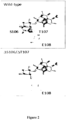
- the resultant steric hindrance distorts the docking of the terminal Neu5Gc into the binding pocket, accounting for the significantly poorer binding of ⁇ 2-6-linked Neu5Gc structures observed on the original glycan array analysis of SubB 8 .
- Modification of one or more residues in the loop enhance binding of a mutant SubB protein to the ⁇ 2-6 structure while also allowing binding to ⁇ 2-3 structures.
- amino acid deletions that reduce or lower the "height" of the loop may be advantageous for improved binding of ⁇ 2-6-linked Neu5Gc structures.
- "height" may be a function of the distance an amino acid R group projects or extends from the peptide backbone in 3D space ( e.g. valine has greater height than leucine).
- deletion of one or more of the TTSTE (SEQ ID NO:3) residues of the loop is preferred (referred to herein as a "deletion mutant").
- these are underlined in TT ST E (SEQ ID NO:3).
- residues S106 and/or T107 are deleted.
- residues S106 and T107 are deleted.
- mutant SubB protein comprises the amino acid sequence of SEQ ID NO:1:
- the isolated protein or fragment comprise a deletion of the amino acid residues underlined in the amino acid sequence TTS TE (SEQ ID NO:3).
- the T107 and E108 deletion mutant can broadly bind glycans including Neu5Ac glycans such as Neu5Ac- ⁇ 2-6-lac and Neu5Ac- ⁇ 2-3-lac ( e . g .see Table 1). It is also noted that WT SubB does not detectably bind Neu5Ac- ⁇ 2-6-lac.
- the T107 and E108 deletion mutant protein may be a useful protein for binding or detecting Neu5Gc glycans such as ⁇ 2-6-linked N-glycolylneuraminic acid glycans and ⁇ 2-3-linked N-glycolylneuraminic acid glycans and also Neu5Ac glycans such as Neu5Ac- ⁇ 2-6-lac and Neu5Ac- ⁇ 2-3-lac.
- Neu5Gc glycans such as ⁇ 2-6-linked N-glycolylneuraminic acid glycans and ⁇ 2-3-linked N-glycolylneuraminic acid glycans
- Neu5Ac glycans such as Neu5Ac- ⁇ 2-6-lac and Neu5Ac- ⁇ 2-3-lac.
- variants, fragments and derivatives of the isolated protein retain an ability to bind glycans terminating in ⁇ 2-3-linked and ⁇ 2-6-linked Neu5Gc. In particular embodiments, this is at least 50%, 55%, 60%, 65%, 70%, 75%, 80%, 85%, 90%, 91%, 92%, 93%, 94%, 95%, 96%, 97%, 98% or 99% of the ability of the isolated protein of an isolated protein disclosed herein to bind glycans terminating in ⁇ 2-3-linked and ⁇ 2-6-linked Neu5Gc.
- a peptide “variant” has at least 70%, 71%, 72%, 73%, 74%, 75%, 76%, 77%, 78%, 79%, 80%, 81%, 82%, 83%, 84%, 85%, 86%, 87%, 88%, 89%, 90%, 91%, 92%, 93%, 94%, 95%, 96%, 97%, 98% or 99% sequence identity with an amino acid sequence of an isolated protein disclosed herein.
- the peptide "variant” disclosed herein may have one or more amino acids deleted or substituted by different amino acids. It is well understood in the art that some amino acids may be substituted or deleted without changing biological activity of the peptide (conservative substitutions).
- sequence comparisons are typically performed by comparing sequences over a “comparison window” to identify and compare local regions of sequence similarity.
- a “comparison window” refers to a conceptual segment of typically 6, 9 or 12 contiguous residues that is compared to a reference sequence.
- the comparison window may comprise additions or deletions (i.e., gaps) of about 20% or less as compared to the reference sequence for optimal alignment of the respective sequences.
- Optimal alignment of sequences for aligning a comparison window may be conducted by computerised implementations of algorithms (Geneworks program by Intelligenetics; GAP, BESTFIT, FASTA, and TFASTA in the Wisconsin Genetics Software Package Release 7.0, Genetics Computer Group, 575 Science Drive Madison, WI, USA) or by inspection and the best alignment ( i . e . resulting in the highest percentage homology over the comparison window) generated by any of the various methods selected.
- sequence identity is used herein in its broadest sense to include the number of exact nucleotide or amino acid matches having regard to an appropriate alignment using a standard algorithm, having regard to the extent that sequences are identical over a window of comparison.
- a “percentage of sequence identity” is calculated by comparing two optimally aligned sequences over the window of comparison, determining the number of positions at which the identical nucleic acid base ( e . g ., A, T, C, G, I) occurs in both sequences to yield the number of matched positions, dividing the number of matched positions by the total number of positions in the window of comparison ( i . e ., the window size), and multiplying the result by 100 to yield the percentage of sequence identity.
- sequence identity may be understood to mean the "match percentage” calculated by the DNASIS computer program (Version 2.5 for windows; available from Hitachi Software engineering Co., Ltd., South San Francisco, California, USA).
- fragments of the isolated peptide disclosed herein may comprise, consist essentially of, or consist of 10, 15, 20, 25, 30, 35, 40, 45, 50, 55, 60, 65, 70, 75, 80, 85, 90, 95, 100, 105, 110, 115 contiguous amino acids of an isolated protein disclosed herein.
- derivative proteins or peptides have been altered, for example by conjugation or complexing with other chemical moieties, by post-translational modification (e . g . phosphorylation, ubiquitination, glycosylation), chemical modification (e . g . cross-linking, acetylation, biotinylation, oxidation or reduction and the like), conjugation with labels (e . g . fluorophores, enzymes, radioactive isotopes) and/or inclusion of additional amino acid sequences as would be understood in the art.
- post-translational modification e . g phosphorylation, ubiquitination, glycosylation
- chemical modification e . g . cross-linking, acetylation, biotinylation, oxidation or reduction and the like
- conjugation with labels e . g . fluorophores, enzymes, radioactive isotopes
- Additional amino acid sequences may include fusion partner amino acid sequences which create a fusion protein.
- fusion partner amino acid sequences may assist in detection and/or purification of the isolated fusion protein.
- Non-limiting examples include metal-binding (e . g . polyhistidine) fusion partners, maltose binding protein (MBP), Protein A, glutathione S-transferase (GST), fluorescent protein sequences ( e . g . GFP), epitope tags such as myc, FLAG and haemagglutinin tags.
- the isolated peptides of the present invention may be produced by any means known in the art, including but not limited to, chemical synthesis and recombinant DNA technology.
- Chemical synthesis is inclusive of solid phase and solution phase synthesis. Such methods are well known in the art, although reference is made to examples of chemical synthesis techniques as provided in Chapter 9 of SYNTHETIC VACCINES Ed. Nicholson (Blackwell Scientific Publications ) and Chapter 15 of CURRENT PROTOCOLS IN PROTEIN SCIENCE Eds. Coligan et al., (John Wiley & Sons, Inc. NY USA 1995-2014 ). In this regard, reference is also made to International Publication WO 99/02550 and International Publication WO 97/45444 .
- Recombinant proteins may be conveniently prepared by a person skilled in the art using standard protocols as for example described in Sambrook et al., MOLECULAR CLONING. A Laboratory Manual (Cold Spring Harbor Press, 1989 ), in particular Sections 16 and 17; CURRENT PROTOCOLS IN MOLECULAR BIOLOGY Eds. Ausubel et al., (John Wiley & Sons, Inc. NY USA 1995-2014 ), in particular Chapters 10 and 16; and CURRENT PROTOCOLS IN PROTEIN SCIENCE Eds. Coligan et al., (John Wiley & Sons, Inc. NY USA 1995-2014 ), in particular Chapters 1, 5 and 6.
- An aspect of the invention provides a method of detecting ⁇ 2-3-linked N- glycolylneuraminic acid and/or ⁇ 2-6-linked N -glycolylneuraminic acid, said method including the step of combining the isolated protein or fragment disclosed herein with a sample to thereby form a detectable complex comprising the isolated protein or fragment of the first aspect and ⁇ 2-3-linked N -glycolylneuraminic acid and/or ⁇ 2-6-linked N -glycolylneuraminic acid.
- ⁇ 2-3-linked N -glycolylneuraminic acid and/or ⁇ 2-6-linked N- glycolylneuraminic acid may be components of glycans expressed by tumour cells, and certain blood cells such as feline blood cells.
- glycans comprising ⁇ 2-3-linked N -glycolylneuraminic acid and/or ⁇ 2-6-linked N- glycolylneuraminic acid may be expressed by human carcinomas, with elevated expression detected in breast, ovarian, prostate, colon and lung cancer.
- N -glycolylneuraminic acid defines the "A" blood group of felines while N -acetylneuraminic acid defines the "B" blood group of felines.
- the isolated protein or fragment may be used for detecting the presence of ⁇ 2-3-linked N -glycolylneuraminic acid and/or ⁇ 2-6-linked N- glycolylneuraminic acid-expressing tumour cells in a patient sample, such as a biopsy, fluid sample, smear or the like.
- the isolated protein or fragment may be used for feline blood-typing by detecting blood cells that express N-glycolylneuraminic acid glycans, such as comprising ⁇ 2-3-linked N- glycolylneuraminic acid and/or ⁇ 2-6-linked N -glycolylneuraminic acid, in a feline blood sample.
- glycans comprising ⁇ 2-3-linked N- glycolylneuraminic acid and/or ⁇ 2-6-linked N -glycolylneuraminic acid may be present in a preparation or formulation comprising drugs, antibodies or other therapeutic biomolecules for human administration.
- Recombinant glycosylated drugs, antibodies and other therapeutic biomolecules for human administration are often produced in non-human mammalian cell lines which can synthesize and/or metabolically incorporate the non-human sialic acid N-glycolylneuraminic acid (Neu5Gc).
- Some humans have high levels of circulating anti-Neu5Gc antibodies.
- the clinically effective anti-EGFR mAb Cetuximab may have covalently-bound Neu5Gc.
- Anti-Neu5Gc antibodies from normal humans interact with Cetuximab in a Neu5Gc-specific manner and generate immune complexes in vitro. These antibodies may enhance Cetuximab (or other therapeutic antibody) clearance in vivo.
- Neu5Gc contamination of drugs, antibodies and other therapeutic biomolecules may adversely affect half-life, efficacy and immune reactions in patients administered such drugs. While it may be possible to avoid Neu5Gc contamination by using Neu5Gc-deficient cells and media, this may not be an optimal solution in all cases.
- certain embodiments of the invention provide detection of ⁇ 2-3-linked N- glycolylneuraminic acid and/or ⁇ 2-6-linked N -glycolylneuraminic acid in drugs, antibodies or other therapeutic biomolecules for human administration.
- inventions provide isolation, depletion or removal of ⁇ 2-3-linked N -glycolylneuraminic acid and/or ⁇ 2-6-linked N -glycolylneuraminic acid-containing contaminants from drugs, antibodies or other therapeutic biomolecules for human administration.
- the isolated protein e.g. of an isolated protein disclosed herein such as comprising the amino acid sequence of SEQ ID NO:1
- the isolated protein or fragment is covalently coupled to a label.
- a labelled secondary binding agent such as an antibody or antibody fragment may be used to detect the isolated protein when bound to glycans comprising ⁇ 2-3-linked N -glycolylneuraminic acid and/or ⁇ 2-6-linked N -glycolylneuraminic acid.
- a label may be selected from a group including a chromogen, a catalyst, biotin, avidin, digoxigenin, an enzyme, a fluorophore, a chemiluminescent molecule or a radioisotope although without limitation thereto.
- the fluorophore may be, for example, fluorescein isothiocyanate (FITC), Alexa dyes, tetramethylrhodamine isothiocyanate (TRITL), allophycocyanin (APC), Texas Red, FAM, ROX, Cy5, Cy3, or R-Phycoerythrin (RPE) although without limitation thereto.
- FITC fluorescein isothiocyanate
- Alexa dyes tetramethylrhodamine isothiocyanate
- APC allophycocyanin
- Texas Red FAM
- ROX Cy5 Cy3
- RPE R-Phycoerythrin
- the enzyme may be horseradish peroxidase (HRP), alkaline phosphatase (AP), ⁇ -galactosidase or glucose oxidase, although without limitation thereto.
- Appropriate substrates include diaminobanzidine (DAB), permanent red, 3-ethylbenzthiazoline sulfonic acid (ABTS), 5-bromo-4-chloro-3-indolyl phosphate (BCIP), nitro blue tetrazolium (NBT), 3,3',5,5'-tetramethyl benzidine (TNB) and 4-chloro-1-naphthol (4-CN), although without limitation thereto.
- a non-limiting example of a chemiluminescent substrate is Luminol TM , which is oxidized in the presence of HRP and hydrogen peroxide to form an excited state product (3-aminophthalate).
- Radioisotope labels may include 125 I, 131 I, 51 Cr and 99 Tc, although without limitation thereto.
- a colloidal metallic or non-metallic particle a dye particle, an organic polymer, a latex particle, a liposome, a minicell or other vesicle containing a signal producing substance and the like.
- the labeled isolated protein or fragment may be used in detection systems such as histochemistry, flow cytometry, fluorescence microscopy and ELISAs, body imaging (e.g PET scans) and nuclear medicine although without limitation thereto.
- the invention provides a method of isolating a glycan or a cell expressing the glycan, the glycan comprising ⁇ 2-3-linked N -glycolylneuraminic acid and/or an ⁇ 2-6-linked N -glycolylneuraminic acid, said method including the steps of: combining the isolated protein or fragment disclosed herein with a sample to thereby form a complex comprising the isolated protein or fragment and ⁇ 2-3-linked N -glycolylneuraminic acid and/or ⁇ 2-6-linked N -glycolylneuraminic acid; and isolating the glycan or the cell.
- the term "isolating” preferably refers to purifying, enriching or depleting or removing the glycan comprising ⁇ 2-3-linked N -glycolylneuraminic acid and/or an ⁇ 2-6-linked N -glycolylneuraminic acid, or cells expressing same.
- the isolated protein (e . g . comprising the amino acid sequence of SEQ ID NO: 1), or a fragment thereof, is coupled to a label as hereinbefore described, which facilitates detection of the glycan comprising ⁇ 2-3-linked N -glycolylneuraminic acid and/or an ⁇ 2-6-linked N -glycolylneuraminic acid, or cells expressing same.
- a label as hereinbefore described
- a fluorescent label such as hereinbefore described
- the isolated protein disclosed herein, or a fragment thereof may be coupled, bound, affixed or otherwise linked to a substrate that facilitates isolation, enrichment, purification, depletion or removal of a glycan comprising ⁇ 2-3-linked N -glycolylneuraminic acid and/or ⁇ 2-6-linked N- glycolylneuraminic acid, or cells expressing same.
- the isolated protein disclosed herein, or a fragment thereof, may be coupled, bound, affixed or otherwise linked to a substrate that may be a bead, matrix, crosslinked polymer, gel, particle, surface or other solid or semi-solid substrate.
- the substrate may be or comprise sepharose, agarose, Protein A, Protein G, a magnetic bead, a paramagnetic particle, or sensor chip surface ( e.g. for BIACore or surface plasmon resonance).
- a sample comprises a mixture of molecules that may comprise, or be suspected of comprising, ⁇ 2-3-linked N- glycolylneuraminic acid and/or ⁇ 2-6-linked N -glycolylneuraminic acid, or cells expressing same.
- the isolated protein disclosed herein or a fragment thereof, coupled, bound, affixed or otherwise linked to a substrate may be suitable for chromatography (e . g affinity chromatography), magnetic bead depletion or other techniques that facilitate isolation, enrichment, purification, depletion or removal of a glycan comprising ⁇ 2-3-linked N -glycolylneuraminic acid and/or ⁇ 2-6-linked N- glycolylneuraminic acid, or cells expressing same.
- the ⁇ 2-3-linked N -glycolylneuraminic acid and/or an ⁇ 2-6-linked N -glycolylneuraminic acid may be present as contaminants in a sample, whereby the complex formed between the isolated protein and ⁇ 2-3-linked N -glycolylneuraminic acid and/or ⁇ 2-6-linked N -glycolylneuraminic acid removes the contaminants from the sample.
- a particular example is a preparation or formulation comprising recombinant glycosylated drugs, antibodies and other therapeutic biomolecules for human administration, as hereinbefore described.
- the isolated protein disclosed herein such as comprising the amino acid sequence of SEQ ID NO:1, or a fragment may be suitable for targeted delivery of anti-cancer compounds to tumour cells that express glycans comprising ⁇ 2-3-linked N -glycolylneuraminic acid and/or ⁇ 2-6-linked N -glycolylneuraminic acid.
- the ability to bind both ⁇ 2-3-linked N -glycolylneuraminic acid and/or ⁇ 2-6-linked N- glycolylneuraminic acid means that the present invention provides a far more efficacious targeted delivery system than could be provided using a wild-type SubB protein.
- a further aspect of the invention provides an isolated protein or fragment thereof according to the invention for use in treating cancer in a subject to thereby selectively target a cancer cell expressing an ⁇ 2-3-linked N- glycolylneuraminic acid and/or ⁇ 2-6-linked N -glycolylneuraminic acid.
- tumour cells express glycans comprising ⁇ 2-3-linked N -glycolylneuraminic acid and/or ⁇ 2-6-linked N -glycolylneuraminic acid, whereas normal cells typically do not express these sugars.
- glycans comprising ⁇ 2-3-linked N -glycolylneuraminic acid and/or ⁇ 2-6-linked N -glycolylneuraminic acid may be expressed by human carcinomas, with elevated expression detected in breast, ovarian, prostate, colon and lung cancer, although without limitation thereto.
- the isolated protein or fragment may be coupled, bound, affixed or otherwise linked to a cytotoxic agent that facilitates binding to, and killing or disabling of, tumour cells that express ⁇ 2-3-linked N -glycolylneuraminic acid and/or ⁇ 2-6-linked N -glycolylneuraminic acid.
- the cytotoxic agent may be a radionuclide, a chemotherapeutic drug, a mutagen, a toxin, a mitosis inhibitor or other anti-proliferative agent, a pro-apoptotic agent, a DNA intercalating agent or any other agent that assists or causes killing or disabling of tumour cells.
- Non-limiting examples of radionuclides include 211 At, 212 B1, 213 Bi, 125 I, 111 In, 90 Yt, 193 Pt, 177 Lu, 134 Eu and 67 Ga, although without limitation thereto.
- Chemotherapeutic drugs, mutagens, toxins, mitosis inhibitors, pro-apoptotic agents and DNA intercalating agents may include doxorubicin, N -acetyl- ⁇ -calicheamicin, maytansinoids, taxoids, auristatins and duocarmycins, although without limitation thereto. Chemotherapeutic drugs, mutagens, toxins, mitosis inhibitors, pro-apoptotic agents and DNA intercalating agents may be coupled to the isolated protein or fragment by a cleavable or non-cleavable linker to form a cleavable conjugate.
- the cleavable conjugate is internalized by the tumour cell where the cleavable linker is cleaved to release the drug into the cell.
- these may be preferred where it is essential that the drug is entirely localized to the targeted tumour cell and there is no "leakage" of the drug from the targeted tumour cell into adjacent cells, tissues or fluids.
- the chemotherapeutic drugs, mutagens, toxins, mitosis inhibitors, pro-apoptotic and DNA intercalating agents may be in the form of a pro-drug which is activated upon internalization inside a targeted tumour cell.
- the isolated protein e.g. comprising the amino acid sequence of SEQ ID NO:1
- the isolated protein may be administered as a pharmaceutical composition.
- the pharmaceutical composition comprises a pharmaceutically-acceptable carrier, diluent or excipient.
- pharmaceutically-acceptable carrier diluent or excipient
- a solid or liquid filler diluent or encapsulating substance that may be safely used in systemic administration.
- a variety of carriers well known in the art may be used.
- These carriers may be selected from a group including sugars, starches, cellulose and its derivatives, malt, gelatine, talc, calcium sulfate, liposomes and other lipid-based carriers, vegetable oils, synthetic oils, polyols, alginic acid, phosphate buffered solutions, emulsifiers, isotonic saline and salts such as mineral acid salts including hydrochlorides, bromides and sulfates, organic acids such as acetates, propionates and malonates and pyrogen-free water.
- any safe route of administration may be employed for providing a patient with the composition of the invention.
- oral, rectal, parenteral, sublingual, buccal, intravenous, intra-articular, intra-muscular, intra-dermal, subcutaneous, inhalational, intraocular, intraperitoneal, intracerebroventricular, transdermal and the like may be employed.
- Intra-muscular and subcutaneous injection is appropriate, for example, for administration of immunotherapeutic compositions, proteinaceous vaccines and nucleic acid vaccines.
- Dosage forms include tablets, dispersions, suspensions, injections, solutions, syrups, troches, capsules, suppositories, aerosols, transdermal patches and the like. These dosage forms may also include injecting or implanting controlled releasing devices designed specifically for this purpose or other forms of implants modified to act additionally in this fashion. Controlled release of the therapeutic agent may be effected by coating the same, for example, with hydrophobic polymers including acrylic resins, waxes, higher aliphatic alcohols, polylactic and polyglycolic acids and certain cellulose derivatives such as hydroxypropylmethyl cellulose. In addition, the controlled release may be effected by using other polymer matrices, liposomes and/or microspheres.
- compositions of the present invention suitable for oral or parenteral administration may be presented as discrete units such as capsules, sachets or tablets each containing a pre-determined amount of one or more therapeutic agents of the invention, as a powder or granules or as a solution or a suspension in an aqueous liquid, a non-aqueous liquid, an oil-in-water emulsion or a water-in-oil liquid emulsion.
- Such compositions may be prepared by any of the methods of pharmacy but all methods include the step of bringing into association one or more agents as described above with the carrier which constitutes one or more necessary ingredients.
- the compositions are prepared by uniformly and intimately admixing the agents of the invention with liquid carriers or finely divided solid carriers or both, and then, if necessary, shaping the product into the desired presentation.
- compositions may be administered in a manner compatible with the dosage formulation, and in such amount as is pharmaceutically-effective.
- the dose administered to a patient should be sufficient to effect a beneficial response in a patient over an appropriate period of time.
- the quantity of agent(s) to be administered may depend on the subject to be treated inclusive of the age, sex, weight and general health condition thereof, factors that will depend on the judgement of the practitioner.
- an antibody or antibody fragment that binds the isolated protein or fragment thereof.
- the antibody or antibody fragment does not bind a wild-type SubB protein (such as comprising the amino acid sequence of SEQ ID NO:2), or binds with at least 5 or 10-fold lower affinity compared to the affinity with which it binds the isolated protein or fragment disclosed herein (such as comprising the amino acid sequence of SEQ ID NO:1).
- the antibody or antibody fragment binds an epitope of SEQ ID NO:1 comprising the one or more modified amino acid residues of the amino acid sequence TTSTE.
- an “antibody” is or comprises an immunoglobulin.
- immunoglobulin includes any antigen-binding protein product of a mammalian immunoglobulin gene complex, including immunoglobulin isotypes IgA, IgD, IgM, IgG and IgE and antigen-binding fragments thereof. Included in the term “immunoglobulin” are immunoglobulins that are chimeric or humanised or otherwise comprise altered or variant amino acid residues, sequences and/or glycosylation, whether naturally occurring or produced by human intervention ( e . g . by recombinant DNA technology).
- Antibody fragments include Fab and Fab'2 fragments, diabodies and single chain antibody fragments (e.g. scVs), although without limitation thereto.
- an antibody comprises respective light chain and heavy chain variable regions that each comprise CDR 1, 2 and 3 amino acid sequences
- the antibody or antibody fragment may comprise at least a portion of a CDR1, 2 and/or 3 amino acid sequence
- a preferred antibody fragment comprises at least one entire light chain variable region CDR and/or at least one entire heavy chain variable region CDR.
- Antibodies and antibody fragments may be polyclonal or preferably monoclonal.
- Monoclonal antibodies may be produced using the standard method as for example, described in an article by Köhler & Milstein, 1975, Nature 256, 495 , or by more recent modifications thereof as for example described in Chapter 2 of Coligan et al., CURRENT PROTOCOLS IN IMMUNOLOGY , by immortalizing spleen or other antibody producing cells derived from a production species which has been inoculated the isolated protein ( e . g . comprising the amino acid sequence of SEQ ID NO: 1) or a fragment thereof.
- antibodies may be produced as recombinant synthetic antibodies or antibody fragments by expressing a nucleic acid encoding the antibody or antibody fragment in an appropriate host cell.
- Recombinant synthetic antibody or antibody fragment heavy and light chains may be co-expressed from different expression vectors in the same host cell or expressed as a single chain antibody in a host cell.
- Non-limiting examples of recombinant antibody expression and selection techniques are provided in Chapter 17 of Coligan et al., CURRENT PROTOCOLS IN IMMUNOLOGY supra and Zuberbuhler et al., 2009, Protein Engineering, Design & Selection 22 169 .
- Antibodies and antibody fragments may be modified so as to be administrable to one species having being produced in, or originating from, another species without eliciting a deleterious immune response to the "foreign" antibody. In the context of humans, this is “humanization” of the antibody produced in, or originating from, another species.
- Such methods are well known in the art and generally involve recombinant "grafting" of non-human antibody complementarity determining regions (CDRs) onto a human antibody scaffold or backbone.
- CDRs complementarity determining regions
- the antibody or antibody fragment may be labeled. Labels may be as hereinbefore described.
- the invention also provides an isolated nucleic acid encoding the isolated protein disclosed herein, or a fragment thereof.
- the isolated nucleic acid encodes the isolated protein comprising the amino acid sequence set forth in SEQ ID NO:1, or a fragment thereof.
- nucleic acid designates single- or double-stranded DNA and RNA.
- DNA includes genomic DNA and cDNA.
- RNA includes mRNA, RNA, RNAi, siRNA, cRNA and autocatalytic RNA.
- Nucleic acids may also be DNA-RNA hybrids.
- a nucleic acid comprises a nucleotide sequence which typically includes nucleotides that comprise an A, G, C, T or U base. However, nucleotide sequences may include other bases such as inosine, methylycytosine, methylinosine, methyladenosine and/or thiouridine, although without limitation thereto.
- a nucleic acid variant may have at least 70%, 75%, 80%, 85%, 90%, 91%, 92%, 93%, 94%, 95%, 96%, 97%, 98% or 99% nucleotide sequence identity to an nucleotide sequence encoding SEQ ID NO:1.
- a nucleic acid variant may hybridize to a nucleotide sequence encoding SEQ ID NO:1 under high stringency conditions.
- stringency is dependent upon the concentration of one or more factors during hybridization and/or washing.
- factors may include ionic strength, detergent type and/or concentration, temperature, time, denaturant type and/or concentration, as are well understood in the art.
- high stringency conditions include:-
- T m of a duplex DNA decreases by about 1°C with every increase of 1% in the number of mismatched bases.
- the isolated nucleic acid is in a genetic construct that comprises the isolated nucleic acid operably linked or connected to one or more other genetic components.
- a genetic construct may be suitable for therapeutic delivery of the isolated nucleic acid or for recombinant protein production in a host cell.
- the genetic construct is in the form of, or comprises genetic components of, a plasmid, bacteriophage, a cosmid, a yeast or bacterial artificial chromosome as are well understood in the art. Genetic constructs may be suitable for maintenance and propagation of the isolated nucleic acid in bacteria or other host cells, for manipulation by recombinant DNA technology and/or expression of the nucleic acid or an encoded protein of the invention.
- the genetic construct is an expression construct.
- the expression construct comprises the nucleic acid of the invention operably linked to one or more additional sequences in an expression vector.
- An "expression vector” may be either a self-replicating extra-chromosomal vector such as a plasmid, or a vector that integrates into a host genome.
- operably linked is meant that said additional nucleotide sequence(s) is/are positioned relative to the nucleic acid of the invention preferably to initiate, regulate or otherwise control transcription.
- Regulatory nucleotide sequences will generally be appropriate for the host cell used for expression. Numerous types of appropriate expression vectors and suitable regulatory sequences are known in the art for a variety of host cells.
- said one or more regulatory nucleotide sequences may include, but are not limited to, promoter sequences, leader or signal sequences, ribosomal binding sites, polyadenylatioin sequences, transcriptional start and termination sequences, translational start and termination sequences, and enhancer or activator sequences.
- the expression construct may also include an additional nucleotide sequence encoding a fusion partner (typically provided by the expression vector) so that the recombinant protein is expressed as a fusion protein, as hereinbefore described.
- the expression construct may also include an additional nucleotide sequence encoding a selection marker such as amp R , neo R or kan R , although without limitation thereto.
- the expression construct may be in the form of plasmid DNA, suitably comprising a promoter operable in an animal cell (e.g. a CMV, an ⁇ A-crystallin or SV40 promoter).
- the nucleic acid may be in the form of a viral construct such as an adenoviral, vaccinia, lentiviral or adeno-associated viral vector.
- the invention provides a host cell transformed with a nucleic acid molecule or a genetic construct described herein.
- Suitable host cells for expression may be prokaryotic or eukaryotic.
- suitable host cells may include but are not limited to mammalian cells (e.g. HeLa, Cos, NIH-3T3, HEK293T, Jurkat cells), yeast cells ( e.g. Saccharomyces cerevisiae ), insect cells (e.g. Sf9, Trichoplusia ni) utilized with or without a baculovirus expression system, plant cells (e.g. Chlamydomonas reinhardtii, Phaeodactylum tricornutum ) or bacterial cells, such as E. coli.
- mammalian cells e.g. HeLa, Cos, NIH-3T3, HEK293T, Jurkat cells
- yeast cells e.g. Saccharomyces cerevisiae
- insect cells e.g. Sf9, Trichoplusia ni
- plant cells e.g. Chlamydomona
- kits comprising the isolated protein or fragment thereof, isolated nucleic acid, and/or genetic construct, such as for expression of the isolated protein or fragment, use in detecting ⁇ 2-3-linked N- glycolylneuraminic acid and/or ⁇ 2-6-linked N -glycolylneuraminic acid or therepeutic targeting of tumour cells expressing ⁇ 2-3-linked N -glycolylneuraminic acid and/or ⁇ 2-6-linked N -glycolylneuraminic acid, although without limitation thereto.
- kits for detecting ⁇ 2-3-linked N -glycolylneuraminic acid and/or ⁇ 2-6-linked N -glycolylneuraminic acid may comprise the isolated protein or fragment, which may be labeled or unlabeled, optionally a labeled secondary binding agent such as an antibody which binds the isolated protein or fragment, optionally one or more substrates for enzymes such as AP or HRP and instructions for use.
- kits for expression of the isolated protein or fragment may comprise a genetic construct encoding the isolated protein or fragment, suitable host cells for transfection and expression of the isolated protein and instructions for use.
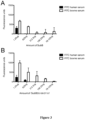
- the wild-type SubB also had a 13-fold reduced binding affinity for human AGP compared to bovine AGP.
- the mutation in SubB T107A had no significant effect on binding to any of the tested structures compared to the wild-type protein.
- SubB S106A/T107A had improved binding to ⁇ 2-6-linked structures, but this improvement was seen for both Neu5Ac and Neu5Gc.
- the nanomolar range affinities observed for all linked sugars tested reveals that SubB S106A/TI07A is a good all-round sialic acid-recognising lectin.
- the SubB ⁇ S106/ ⁇ T107/E108D mutant had improved recognition of ⁇ 2-6-linked Neu5Gc without changing the binding to the ⁇ 2-6-linked Neu5Ac structures.
- SubB ⁇ S106/ ⁇ T107 exhibited the optimum combination of enhanced Neu5Gc vs Neu5Ac discrimination and the capacity to recognise both ⁇ 2-3- and ⁇ 2-6-linked Neu5Gc structures.
- the SubB ⁇ T107/ ⁇ E108 deletion mutant bound ⁇ 2-6-linked N-glycolylneuraminic acid glycans with substantially greater affinity than wild-type SubB protein, while also binding ⁇ 2-3-linked N-glycolylneuraminic acid glycans.
- SubB ⁇ T107/ ⁇ E108 can broadly bind Neu5Ac glycans such as Neu5Ac- ⁇ 2-6-lac, which are not detectably bound by either wild-type SubB or SubB ⁇ S106/ ⁇ T107.
- the anti-Neu5Gc antibody produced in chicken was used as a control and showed less selectivity and lower affinity for Neu5Gc containing glycans than any of the SubB proteins tested.
- SubB ⁇ S106/ ⁇ T107 only had displayed significant binding to four structures on the array. These were limited to structures terminating with Neu5Gc ⁇ 2-3Gal or Neu5Gc ⁇ 2-6 Gal.
- SubBS106A/T107A bound to 18 glycans in total on the array including structures containing Neu5Gc and Neu5Ac. It also recognised sulfated structures including glycosaminoglycans (heparin and chondroitin-6-sulfate) and sulfated lactosamine structures (Table 4).
- SubBS106A/T107A also recognised a range negatively charged of monosaccharides (NeuSAc, Neu5Gc, 9-NAc-NeuSAc, 3-O-Su-GlcNAc) on the array.
- FIG. 9 The various Neu5Ac and Neu5Gc glycan structures analysed in the Z-biotech glycan arrays are shown in FIG. 9 and an example of an array in FIG. 6 .
- Table 3 provides the code linking the glycans of FIG. 9 with the array data in FIGS 7 and 8 .
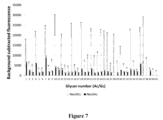
- the array data summarized in FIG. 7 show that binding to Neu5Gc structures is preferred by the wild-type SubB but there are 4/40 Neu5Ac glycans that are bound with greater than 5000 fluorescence units above background and 14/41 Neu5Gc structures that have binding below 5000. All Neu5Ac structures register some binding above background. As also evident in FIG. 8 , binding to Neu5Gc structures is preferred by SubB 2M.
- Neu5Gc is an important diagnostic and prognostic marker in human carcinomas, with elevated Neu5Gc expression detected in breast, ovarian, prostate, colon and lung cancer 11,12 .
- Wild-type SubB had unprecedented specificity for glycans terminating in Neu5Gc, but bound poorly to ⁇ 2-6-linked Neu5Gc and still recognised ⁇ 2-3-linked Neu5Ac structures albeit weakly 8 .
- the SubB ⁇ S106/ ⁇ T107 mutant was significantly improved for the recognition Neu5Gc containing structures compared to the wild-type SubB.
- SubB ⁇ S106/ ⁇ T107 also had no difference in its ability to bind ⁇ 2-3-linked Neu5Gc or ⁇ 2-6-linked Neu5Gc structures, making it a significant improvement over the wild-type protein.
- Further modifications of the SubB protein outside of the S106 and T107 amino acids produced no significant improvement in specificity.
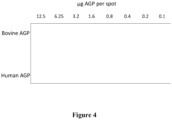
- the SubB ⁇ S106/ ⁇ T107/E108D mutant protein which is the SubB ⁇ S106/ ⁇ T107 protein with a E108D mutation also added, was less able to distinguish ⁇ 2-3-linked Neu5Gc from ⁇ 2-3-linked Neu5Ac than SubB ⁇ S106/ ⁇ T107 and had stronger binding to the human ⁇ 1-Acid glycoprotein than the SubB ⁇ S106/ ⁇ T107 mutant (24 fold more protein bound by SubB ⁇ S106/ ⁇ T107/E108D than SubB AS106/ ⁇ T107 ).
- SubB ⁇ T107/ ⁇ E108 deletion mutant not only bound ⁇ 2-6-linked N-glycolylneuraminic acid glycans and ⁇ 2-3-linked N-glycolylneuraminic acid glycans but also Neu5Ac glycans such as Neu5Ac- ⁇ 2-6-lac and Neu5Ac- ⁇ 2-3-lac, which are not detectably bound by SubB ⁇ S106/ ⁇ T107 .
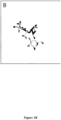
- the three-dimensional structure of the SubB mutants were modeled using Phyre2 24 .
- Neu5GC ⁇ 2-6Gal ⁇ 1-3Glc was acquired from PDB ID: 4EN8 25 and modeled into the SubB and SubB mutant structures manually using Coot 26 .
- Mutations were introduced into the subB coding sequence (close to the 3' end) by direct high-fidelity PCR using the forward primer pETSubBF and the respective mutant-specific reverse primers listed in Table 2.
- PCR products were cloned into the Bam HI and Xho I sites of pET-23(+) (Novagen) and transformed into E. coli BL21(DE3).
- SubB derivatives were expressed and purified as His 6 -tagged fusion proteins by Ni-NTA affinity chromatography, as previously described 4 . Proteins were >95% pure as judged by SDS-PAGE and Coomassie blue staining.
- SPR Surface Plasmon resonance
- GE Biacore T100 system
- SubB, SubB mutants and anti-Neu5Gc IgY were immobilized onto flow cell 2-4 of a series S sensor chip CMS (GE) using the NHS capture kit and flow cell 1 was run as a blank immobilization.
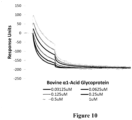
- Monosaccharides, disaccharides, oligosaccharides and ⁇ 1-Acid glycoprotein from human and bovine sources were flowed over at 0.01-100 ⁇ M on initial range finding experiments. Concentrations were adjusted and all data were analysed using single cycle kinetics using the Biacore T100 Evaluation software.
- AGP from human plasma (Sigma-Aldrich G9885) and bovine plasma (Sigma-Aldrich G3643) (1mg in 6M guanidinium chloride, 50 mM Tris-HCl pH8) was reduced and alkylated with 10 mM dithiothreitol and 25 mM acrylamide, respectively. Protein was then precipitated by adding 4 volumes of 1:1 methanol: acetone, incubating in -20°C for 16 h and then centrifuged (18,000 rcf, 10 min) to collect the pellet.
- the precipitated protein was resuspended in 50 ⁇ L of 50 mM Tris-HCl pH8 and digested (37°C, 16 h) with 1 ⁇ g trypsin (Trypsin Gold, Promega). Digested peptides were then desalted with C18 ZipTips (Millipore).
- Purified SubB ⁇ S106/ ⁇ T107 was labelled with biotin using the EZ-Link ® Sulfo-NHS-Biotinylation Kit (Thermo Scientific) according to the manufacturer's instructions.
- Purified human and bovine ⁇ -1 acid glycoprotein (Sigma cat. nos. G9885 and G3643) were dissolved in water at 5 mg/ml and 5 ⁇ l volumes of serial two-fold dilutions were spotted onto nitrocellulose filters and air dried at 37 °C overnight. Filters were then blocked with 5% skim milk in Tris-buffered saline with 0.05% Tween 20 (TTBS) for 2 h.
- TTBS Tris-buffered saline with 0.05% Tween 20
- glycan array slides were printed on SuperEpoxy 3 (Arrayit) activated substrates using an Arrayit Spotbot Extreme contact printer as previously described 28 .
- SubB proteins were pre-complexed with anti-His tag antibody (Cell signalling) and Alexa555 secondary and tertiary antibodies (rabbit anti-mouse; goat anti-rabbit) at a ratio of 2: 1:0.5:0.25 in a final volume of 500 ⁇ L.
- This 500 ⁇ L antibody protein complex was added to a 65 ⁇ L gene frame (Thermo Scientific) without a coverslip. Washing and analysis was performed as previously described 27 .
- Neu5Ac/Neu5Gc Glycan arrays were obtained from Z-biotech (http://www.zbiotech.com/neu5gc-xenoantigen-microarray.html). Arrays were preformed as per manufacturer's instructions with a total of 2 ⁇ g of protein applied to each of the subarray areas. Detection was with mouse anti-His IgG (1: 1 molar ratio with protein), rabbit anti-mouse Alexa 555 IgG (0.5 molar amount of mouse IgG) and goat anti-rabbit Alexa 555 IgG (0.5 molar amount of rabbit IgG). Proteins were incubated for 1 hour and washed 3 times in 1xPBS. Slides were scanned on an Innoscan 1100AL using 488, 532 and 647 lasers. Arrays were analysed with Mapix software. All data was taken from the 532 laser channel and background subtracted fluorescence was used in the analysis.
- Table 1 Binding affinities of wild type SubB, various mutant derivatives and an anti-Neu5Gc IgY antibody, to purified tri- and monosaccharides and/or human or bovine ⁇ 1-acid glycoprotein (AGP) was determined by SPR, as described in the Materials and Methods. NCDI indicates that no concentration- dependent interaction was observed with concentrations ranging up to 100 ⁇ M; ND: Not done; Rmax: the total amount of response units (RUs) of the analyte bound to the protein (the higher the number the more the glycan/glycoprotein was bound by the immobilised SubB). Table 2.
- Oligonucleotides Primer Sequence 5'-3' pETSubBF TTGTAAGGATCCGGAGGTGCATATGACG (SEQ ID NO:4) pETSUbB T107A R pETSubB S106A/T107A R pETSubB ⁇ S106/ ⁇ T107 R pETSubB ⁇ S106/ ⁇ T107/E108D R Table 3.
Landscapes
- Health & Medical Sciences (AREA)
- Life Sciences & Earth Sciences (AREA)
- Chemical & Material Sciences (AREA)
- Engineering & Computer Science (AREA)
- Immunology (AREA)
- Molecular Biology (AREA)
- Organic Chemistry (AREA)
- General Health & Medical Sciences (AREA)
- Medicinal Chemistry (AREA)
- Biomedical Technology (AREA)
- Biochemistry (AREA)
- Cell Biology (AREA)
- Urology & Nephrology (AREA)
- Hematology (AREA)
- Genetics & Genomics (AREA)
- Biotechnology (AREA)
- Microbiology (AREA)
- Bioinformatics & Cheminformatics (AREA)
- Oncology (AREA)
- Zoology (AREA)
- Wood Science & Technology (AREA)
- Proteomics, Peptides & Aminoacids (AREA)
- General Physics & Mathematics (AREA)
- Pathology (AREA)
- Analytical Chemistry (AREA)
- Physics & Mathematics (AREA)
- Food Science & Technology (AREA)
- Hospice & Palliative Care (AREA)
- General Engineering & Computer Science (AREA)
- Biophysics (AREA)
- Pharmacology & Pharmacy (AREA)
- Animal Behavior & Ethology (AREA)
- Public Health (AREA)
- Veterinary Medicine (AREA)
- Gastroenterology & Hepatology (AREA)
- Chemical Kinetics & Catalysis (AREA)
- General Chemical & Material Sciences (AREA)
- Nuclear Medicine, Radiotherapy & Molecular Imaging (AREA)
- Epidemiology (AREA)
- Peptides Or Proteins (AREA)
Applications Claiming Priority (2)
| Application Number | Priority Date | Filing Date | Title |
|---|---|---|---|
| AU2016904572A AU2016904572A0 (en) | 2016-11-09 | Subtilase cytotoxin b subunit mutant | |
| PCT/AU2017/051230 WO2018085888A1 (en) | 2016-11-09 | 2017-11-09 | Subtilase cytotoxin b subunit mutant |
Publications (3)
| Publication Number | Publication Date |
|---|---|
| EP3538544A1 EP3538544A1 (en) | 2019-09-18 |
| EP3538544A4 EP3538544A4 (en) | 2020-04-15 |
| EP3538544B1 true EP3538544B1 (en) | 2024-03-27 |
Family
ID=62109062
Family Applications (1)
| Application Number | Title | Priority Date | Filing Date |
|---|---|---|---|
| EP17870370.8A Active EP3538544B1 (en) | 2016-11-09 | 2017-11-09 | Subtilase cytotoxin b subunit mutant |
Country Status (9)
| Country | Link |
|---|---|
| US (2) | US11371033B2 (enExample) |
| EP (1) | EP3538544B1 (enExample) |
| JP (1) | JP7123921B2 (enExample) |
| KR (1) | KR102703633B1 (enExample) |
| CN (1) | CN110402251A (enExample) |
| AU (1) | AU2017358401B2 (enExample) |
| CA (1) | CA3044303A1 (enExample) |
| ES (1) | ES2983352T3 (enExample) |
| WO (1) | WO2018085888A1 (enExample) |
Families Citing this family (3)
| Publication number | Priority date | Publication date | Assignee | Title |
|---|---|---|---|---|
| CN112760305B (zh) * | 2021-01-25 | 2022-04-29 | 浙江工业大学 | 一种栖热腔菌磷酸酶突变体及其应用 |
| CN117651868A (zh) * | 2021-05-06 | 2024-03-05 | 伊诺维吉股份有限公司 | 与肿瘤源性胞外囊泡相关的方法 |
| WO2022236383A1 (en) * | 2021-05-14 | 2022-11-17 | The University Of Adelaide | Methods of analysing a sample |
Family Cites Families (5)
| Publication number | Priority date | Publication date | Assignee | Title |
|---|---|---|---|---|
| AUPO007396A0 (en) | 1996-05-24 | 1996-06-20 | Csl Limited | Ebv ctl epitopes |
| AUPO784197A0 (en) | 1997-07-10 | 1997-08-07 | Csl Limited | Treatment of nasopharyngeal carcinoma |
| EP1386927B1 (en) | 2002-08-02 | 2005-03-30 | Institut Curie | Shiga toxin B-subunit as a vector for tumor diagnosis and drug delivery to GB3 expressing tumors |
| US7078489B2 (en) * | 2003-12-22 | 2006-07-18 | Adelaide Research & Innovation Pty, Ltd. | Cytotoxin with a subtilase domain |
| EP2667898A1 (en) | 2011-01-26 | 2013-12-04 | Cenix Bioscience GmbH | Delivery system and conjugates for compound delivery via naturally occurring intracellular transport routes |
-
2017
- 2017-11-09 EP EP17870370.8A patent/EP3538544B1/en active Active
- 2017-11-09 US US16/348,732 patent/US11371033B2/en active Active
- 2017-11-09 CN CN201780082403.7A patent/CN110402251A/zh active Pending
- 2017-11-09 CA CA3044303A patent/CA3044303A1/en active Pending
- 2017-11-09 WO PCT/AU2017/051230 patent/WO2018085888A1/en not_active Ceased
- 2017-11-09 ES ES17870370T patent/ES2983352T3/es active Active
- 2017-11-09 JP JP2019524202A patent/JP7123921B2/ja active Active
- 2017-11-09 AU AU2017358401A patent/AU2017358401B2/en active Active
- 2017-11-09 KR KR1020197014900A patent/KR102703633B1/ko active Active
-
2022
- 2022-05-27 US US17/827,072 patent/US20220372459A1/en not_active Abandoned
Also Published As
| Publication number | Publication date |
|---|---|
| JP2020501521A (ja) | 2020-01-23 |
| EP3538544A4 (en) | 2020-04-15 |
| ES2983352T3 (es) | 2024-10-22 |
| CA3044303A1 (en) | 2018-05-17 |
| KR20190084995A (ko) | 2019-07-17 |
| JP7123921B2 (ja) | 2022-08-23 |
| EP3538544A1 (en) | 2019-09-18 |
| US20190367895A1 (en) | 2019-12-05 |
| US11371033B2 (en) | 2022-06-28 |
| AU2017358401B2 (en) | 2022-01-13 |
| AU2017358401A1 (en) | 2019-05-30 |
| US20220372459A1 (en) | 2022-11-24 |
| WO2018085888A1 (en) | 2018-05-17 |
| KR102703633B1 (ko) | 2024-09-05 |
| CN110402251A (zh) | 2019-11-01 |
Similar Documents
| Publication | Publication Date | Title |
|---|---|---|
| JP7479435B2 (ja) | 癌治療および判断ターゲットとしてのly75 | |
| US20220372459A1 (en) | Subtilase cytotoxin b subunit mutant | |
| Gomes et al. | Glycoproteomic analysis of serum from patients with gastric precancerous lesions | |
| JP5945381B2 (ja) | タンパク質 | |
| US8540998B2 (en) | Methods for treating cancer using ephrin type-A receptor 10 antibodies conjugated to cytotoxic agents | |
| US8420091B2 (en) | Matriptase protein and uses thereof | |
| US20100284908A1 (en) | Proteins | |
| US20110229480A1 (en) | Pta072 protein | |
| EP2447719A1 (en) | Proteins | |
| KR20150131655A (ko) | Aimp2-dx2-34s 단백질 및 이의 제조방법 | |
| García Pérez | Investigation of Siglec8 as a therapeutic target to treat asthma | |
| WO2010084408A2 (en) | Pta089 protein | |
| EP2122359A2 (en) | Proteins |
Legal Events
| Date | Code | Title | Description |
|---|---|---|---|
| STAA | Information on the status of an ep patent application or granted ep patent |
Free format text: STATUS: THE INTERNATIONAL PUBLICATION HAS BEEN MADE |
|
| PUAI | Public reference made under article 153(3) epc to a published international application that has entered the european phase |
Free format text: ORIGINAL CODE: 0009012 |
|
| STAA | Information on the status of an ep patent application or granted ep patent |
Free format text: STATUS: REQUEST FOR EXAMINATION WAS MADE |
|
| 17P | Request for examination filed |
Effective date: 20190502 |
|
| AK | Designated contracting states |
Kind code of ref document: A1 Designated state(s): AL AT BE BG CH CY CZ DE DK EE ES FI FR GB GR HR HU IE IS IT LI LT LU LV MC MK MT NL NO PL PT RO RS SE SI SK SM TR |
|
| AX | Request for extension of the european patent |
Extension state: BA ME |
|
| DAV | Request for validation of the european patent (deleted) | ||
| DAX | Request for extension of the european patent (deleted) | ||
| A4 | Supplementary search report drawn up and despatched |
Effective date: 20200318 |
|
| RIC1 | Information provided on ipc code assigned before grant |
Ipc: C07K 16/40 20060101ALI20200312BHEP Ipc: C07K 16/12 20060101ALI20200312BHEP Ipc: A61P 35/00 20060101ALI20200312BHEP Ipc: G01N 21/00 20060101ALI20200312BHEP Ipc: C12N 9/52 20060101ALI20200312BHEP Ipc: G01N 33/574 20060101ALI20200312BHEP Ipc: A61K 38/48 20060101ALI20200312BHEP Ipc: C07K 14/245 20060101AFI20200312BHEP Ipc: G01N 33/68 20060101ALI20200312BHEP |
|
| STAA | Information on the status of an ep patent application or granted ep patent |
Free format text: STATUS: EXAMINATION IS IN PROGRESS |
|
| 17Q | First examination report despatched |
Effective date: 20210326 |
|
| GRAP | Despatch of communication of intention to grant a patent |
Free format text: ORIGINAL CODE: EPIDOSNIGR1 |
|
| STAA | Information on the status of an ep patent application or granted ep patent |
Free format text: STATUS: GRANT OF PATENT IS INTENDED |
|
| INTG | Intention to grant announced |
Effective date: 20231020 |
|
| RIN1 | Information on inventor provided before grant (corrected) |
Inventor name: PATON, JAMES, CLELAND Inventor name: PATON, ADRIENNE, WEBSTER Inventor name: DAY, CHRISTOPHER Inventor name: JENNINGS, MICHAEL, PAUL |
|
| GRAS | Grant fee paid |
Free format text: ORIGINAL CODE: EPIDOSNIGR3 |
|
| GRAA | (expected) grant |
Free format text: ORIGINAL CODE: 0009210 |
|
| STAA | Information on the status of an ep patent application or granted ep patent |
Free format text: STATUS: THE PATENT HAS BEEN GRANTED |
|
| AK | Designated contracting states |
Kind code of ref document: B1 Designated state(s): AL AT BE BG CH CY CZ DE DK EE ES FI FR GB GR HR HU IE IS IT LI LT LU LV MC MK MT NL NO PL PT RO RS SE SI SK SM TR |
|
| REG | Reference to a national code |
Ref country code: GB Ref legal event code: FG4D |
|
| REG | Reference to a national code |
Ref country code: CH Ref legal event code: EP |
|
| REG | Reference to a national code |
Ref country code: DE Ref legal event code: R096 Ref document number: 602017080471 Country of ref document: DE |
|
| REG | Reference to a national code |
Ref country code: IE Ref legal event code: FG4D |
|
| PG25 | Lapsed in a contracting state [announced via postgrant information from national office to epo] |
Ref country code: LT Free format text: LAPSE BECAUSE OF FAILURE TO SUBMIT A TRANSLATION OF THE DESCRIPTION OR TO PAY THE FEE WITHIN THE PRESCRIBED TIME-LIMIT Effective date: 20240327 |
|
| REG | Reference to a national code |
Ref country code: NL Ref legal event code: FP Ref country code: LT Ref legal event code: MG9D |
|
| PG25 | Lapsed in a contracting state [announced via postgrant information from national office to epo] |
Ref country code: GR Free format text: LAPSE BECAUSE OF FAILURE TO SUBMIT A TRANSLATION OF THE DESCRIPTION OR TO PAY THE FEE WITHIN THE PRESCRIBED TIME-LIMIT Effective date: 20240628 |
|
| PG25 | Lapsed in a contracting state [announced via postgrant information from national office to epo] |
Ref country code: HR Free format text: LAPSE BECAUSE OF FAILURE TO SUBMIT A TRANSLATION OF THE DESCRIPTION OR TO PAY THE FEE WITHIN THE PRESCRIBED TIME-LIMIT Effective date: 20240327 Ref country code: RS Free format text: LAPSE BECAUSE OF FAILURE TO SUBMIT A TRANSLATION OF THE DESCRIPTION OR TO PAY THE FEE WITHIN THE PRESCRIBED TIME-LIMIT Effective date: 20240627 |
|
| PG25 | Lapsed in a contracting state [announced via postgrant information from national office to epo] |
Ref country code: RS Free format text: LAPSE BECAUSE OF FAILURE TO SUBMIT A TRANSLATION OF THE DESCRIPTION OR TO PAY THE FEE WITHIN THE PRESCRIBED TIME-LIMIT Effective date: 20240627 Ref country code: NO Free format text: LAPSE BECAUSE OF FAILURE TO SUBMIT A TRANSLATION OF THE DESCRIPTION OR TO PAY THE FEE WITHIN THE PRESCRIBED TIME-LIMIT Effective date: 20240627 Ref country code: LT Free format text: LAPSE BECAUSE OF FAILURE TO SUBMIT A TRANSLATION OF THE DESCRIPTION OR TO PAY THE FEE WITHIN THE PRESCRIBED TIME-LIMIT Effective date: 20240327 Ref country code: HR Free format text: LAPSE BECAUSE OF FAILURE TO SUBMIT A TRANSLATION OF THE DESCRIPTION OR TO PAY THE FEE WITHIN THE PRESCRIBED TIME-LIMIT Effective date: 20240327 Ref country code: GR Free format text: LAPSE BECAUSE OF FAILURE TO SUBMIT A TRANSLATION OF THE DESCRIPTION OR TO PAY THE FEE WITHIN THE PRESCRIBED TIME-LIMIT Effective date: 20240628 Ref country code: FI Free format text: LAPSE BECAUSE OF FAILURE TO SUBMIT A TRANSLATION OF THE DESCRIPTION OR TO PAY THE FEE WITHIN THE PRESCRIBED TIME-LIMIT Effective date: 20240327 Ref country code: BG Free format text: LAPSE BECAUSE OF FAILURE TO SUBMIT A TRANSLATION OF THE DESCRIPTION OR TO PAY THE FEE WITHIN THE PRESCRIBED TIME-LIMIT Effective date: 20240327 |
|
| PG25 | Lapsed in a contracting state [announced via postgrant information from national office to epo] |
Ref country code: SE Free format text: LAPSE BECAUSE OF FAILURE TO SUBMIT A TRANSLATION OF THE DESCRIPTION OR TO PAY THE FEE WITHIN THE PRESCRIBED TIME-LIMIT Effective date: 20240327 Ref country code: LV Free format text: LAPSE BECAUSE OF FAILURE TO SUBMIT A TRANSLATION OF THE DESCRIPTION OR TO PAY THE FEE WITHIN THE PRESCRIBED TIME-LIMIT Effective date: 20240327 |
|
| REG | Reference to a national code |
Ref country code: AT Ref legal event code: MK05 Ref document number: 1669833 Country of ref document: AT Kind code of ref document: T Effective date: 20240327 |
|
| PG25 | Lapsed in a contracting state [announced via postgrant information from national office to epo] |
Ref country code: IS Free format text: LAPSE BECAUSE OF FAILURE TO SUBMIT A TRANSLATION OF THE DESCRIPTION OR TO PAY THE FEE WITHIN THE PRESCRIBED TIME-LIMIT Effective date: 20240727 |
|
| PG25 | Lapsed in a contracting state [announced via postgrant information from national office to epo] |
Ref country code: SM Free format text: LAPSE BECAUSE OF FAILURE TO SUBMIT A TRANSLATION OF THE DESCRIPTION OR TO PAY THE FEE WITHIN THE PRESCRIBED TIME-LIMIT Effective date: 20240327 Ref country code: PT Free format text: LAPSE BECAUSE OF FAILURE TO SUBMIT A TRANSLATION OF THE DESCRIPTION OR TO PAY THE FEE WITHIN THE PRESCRIBED TIME-LIMIT Effective date: 20240729 |
|
| REG | Reference to a national code |
Ref country code: ES Ref legal event code: FG2A Ref document number: 2983352 Country of ref document: ES Kind code of ref document: T3 Effective date: 20241022 |
|
| PG25 | Lapsed in a contracting state [announced via postgrant information from national office to epo] |
Ref country code: CZ Free format text: LAPSE BECAUSE OF FAILURE TO SUBMIT A TRANSLATION OF THE DESCRIPTION OR TO PAY THE FEE WITHIN THE PRESCRIBED TIME-LIMIT Effective date: 20240327 Ref country code: EE Free format text: LAPSE BECAUSE OF FAILURE TO SUBMIT A TRANSLATION OF THE DESCRIPTION OR TO PAY THE FEE WITHIN THE PRESCRIBED TIME-LIMIT Effective date: 20240327 |
|
| PG25 | Lapsed in a contracting state [announced via postgrant information from national office to epo] |
Ref country code: AT Free format text: LAPSE BECAUSE OF FAILURE TO SUBMIT A TRANSLATION OF THE DESCRIPTION OR TO PAY THE FEE WITHIN THE PRESCRIBED TIME-LIMIT Effective date: 20240327 |
|
| PG25 | Lapsed in a contracting state [announced via postgrant information from national office to epo] |
Ref country code: PL Free format text: LAPSE BECAUSE OF FAILURE TO SUBMIT A TRANSLATION OF THE DESCRIPTION OR TO PAY THE FEE WITHIN THE PRESCRIBED TIME-LIMIT Effective date: 20240327 |
|
| PG25 | Lapsed in a contracting state [announced via postgrant information from national office to epo] |
Ref country code: SK Free format text: LAPSE BECAUSE OF FAILURE TO SUBMIT A TRANSLATION OF THE DESCRIPTION OR TO PAY THE FEE WITHIN THE PRESCRIBED TIME-LIMIT Effective date: 20240327 |
|
| PG25 | Lapsed in a contracting state [announced via postgrant information from national office to epo] |
Ref country code: SM Free format text: LAPSE BECAUSE OF FAILURE TO SUBMIT A TRANSLATION OF THE DESCRIPTION OR TO PAY THE FEE WITHIN THE PRESCRIBED TIME-LIMIT Effective date: 20240327 Ref country code: SK Free format text: LAPSE BECAUSE OF FAILURE TO SUBMIT A TRANSLATION OF THE DESCRIPTION OR TO PAY THE FEE WITHIN THE PRESCRIBED TIME-LIMIT Effective date: 20240327 Ref country code: RO Free format text: LAPSE BECAUSE OF FAILURE TO SUBMIT A TRANSLATION OF THE DESCRIPTION OR TO PAY THE FEE WITHIN THE PRESCRIBED TIME-LIMIT Effective date: 20240327 Ref country code: PT Free format text: LAPSE BECAUSE OF FAILURE TO SUBMIT A TRANSLATION OF THE DESCRIPTION OR TO PAY THE FEE WITHIN THE PRESCRIBED TIME-LIMIT Effective date: 20240729 Ref country code: PL Free format text: LAPSE BECAUSE OF FAILURE TO SUBMIT A TRANSLATION OF THE DESCRIPTION OR TO PAY THE FEE WITHIN THE PRESCRIBED TIME-LIMIT Effective date: 20240327 Ref country code: IS Free format text: LAPSE BECAUSE OF FAILURE TO SUBMIT A TRANSLATION OF THE DESCRIPTION OR TO PAY THE FEE WITHIN THE PRESCRIBED TIME-LIMIT Effective date: 20240727 Ref country code: EE Free format text: LAPSE BECAUSE OF FAILURE TO SUBMIT A TRANSLATION OF THE DESCRIPTION OR TO PAY THE FEE WITHIN THE PRESCRIBED TIME-LIMIT Effective date: 20240327 Ref country code: CZ Free format text: LAPSE BECAUSE OF FAILURE TO SUBMIT A TRANSLATION OF THE DESCRIPTION OR TO PAY THE FEE WITHIN THE PRESCRIBED TIME-LIMIT Effective date: 20240327 Ref country code: AT Free format text: LAPSE BECAUSE OF FAILURE TO SUBMIT A TRANSLATION OF THE DESCRIPTION OR TO PAY THE FEE WITHIN THE PRESCRIBED TIME-LIMIT Effective date: 20240327 |
|
| REG | Reference to a national code |
Ref country code: DE Ref legal event code: R097 Ref document number: 602017080471 Country of ref document: DE |
|
| PGFP | Annual fee paid to national office [announced via postgrant information from national office to epo] |
Ref country code: DE Payment date: 20241112 Year of fee payment: 8 |
|
| PG25 | Lapsed in a contracting state [announced via postgrant information from national office to epo] |
Ref country code: DK Free format text: LAPSE BECAUSE OF FAILURE TO SUBMIT A TRANSLATION OF THE DESCRIPTION OR TO PAY THE FEE WITHIN THE PRESCRIBED TIME-LIMIT Effective date: 20240327 |
|
| PGFP | Annual fee paid to national office [announced via postgrant information from national office to epo] |
Ref country code: GB Payment date: 20241107 Year of fee payment: 8 |
|
| PGFP | Annual fee paid to national office [announced via postgrant information from national office to epo] |
Ref country code: FR Payment date: 20241111 Year of fee payment: 8 |
|
| PGFP | Annual fee paid to national office [announced via postgrant information from national office to epo] |
Ref country code: IE Payment date: 20241112 Year of fee payment: 8 |
|
| PGFP | Annual fee paid to national office [announced via postgrant information from national office to epo] |
Ref country code: IT Payment date: 20241112 Year of fee payment: 8 Ref country code: ES Payment date: 20241209 Year of fee payment: 8 |
|
| PG25 | Lapsed in a contracting state [announced via postgrant information from national office to epo] |
Ref country code: DK Free format text: LAPSE BECAUSE OF FAILURE TO SUBMIT A TRANSLATION OF THE DESCRIPTION OR TO PAY THE FEE WITHIN THE PRESCRIBED TIME-LIMIT Effective date: 20240327 |
|
| PGFP | Annual fee paid to national office [announced via postgrant information from national office to epo] |
Ref country code: CH Payment date: 20241201 Year of fee payment: 8 |
|
| PLBE | No opposition filed within time limit |
Free format text: ORIGINAL CODE: 0009261 |
|
| STAA | Information on the status of an ep patent application or granted ep patent |
Free format text: STATUS: NO OPPOSITION FILED WITHIN TIME LIMIT |
|
| 26N | No opposition filed |
Effective date: 20250103 |
|
| PG25 | Lapsed in a contracting state [announced via postgrant information from national office to epo] |
Ref country code: SI Free format text: LAPSE BECAUSE OF FAILURE TO SUBMIT A TRANSLATION OF THE DESCRIPTION OR TO PAY THE FEE WITHIN THE PRESCRIBED TIME-LIMIT Effective date: 20240327 |
|
| PG25 | Lapsed in a contracting state [announced via postgrant information from national office to epo] |
Ref country code: MC Free format text: LAPSE BECAUSE OF FAILURE TO SUBMIT A TRANSLATION OF THE DESCRIPTION OR TO PAY THE FEE WITHIN THE PRESCRIBED TIME-LIMIT Effective date: 20240327 |
|
| PG25 | Lapsed in a contracting state [announced via postgrant information from national office to epo] |
Ref country code: LU Free format text: LAPSE BECAUSE OF NON-PAYMENT OF DUE FEES Effective date: 20241109 |
|
| REG | Reference to a national code |
Ref country code: BE Ref legal event code: MM Effective date: 20241130 |
|
| PG25 | Lapsed in a contracting state [announced via postgrant information from national office to epo] |
Ref country code: BE Free format text: LAPSE BECAUSE OF NON-PAYMENT OF DUE FEES Effective date: 20241130 |
|
| REG | Reference to a national code |
Ref country code: CH Ref legal event code: U11 Free format text: ST27 STATUS EVENT CODE: U-0-0-U10-U11 (AS PROVIDED BY THE NATIONAL OFFICE) Effective date: 20251201 |
|
| PGFP | Annual fee paid to national office [announced via postgrant information from national office to epo] |
Ref country code: NL Payment date: 20251112 Year of fee payment: 9 |