EP3537657B1 - Schleifenstörunghandhabungsverfahren und schalter - Google Patents
Schleifenstörunghandhabungsverfahren und schalter Download PDFInfo
- Publication number
- EP3537657B1 EP3537657B1 EP17878717.2A EP17878717A EP3537657B1 EP 3537657 B1 EP3537657 B1 EP 3537657B1 EP 17878717 A EP17878717 A EP 17878717A EP 3537657 B1 EP3537657 B1 EP 3537657B1
- Authority
- EP
- European Patent Office
- Prior art keywords
- flapping
- port
- switch
- mac address
- network
- Prior art date
- Legal status (The legal status is an assumption and is not a legal conclusion. Google has not performed a legal analysis and makes no representation as to the accuracy of the status listed.)
- Active
Links
Images



Classifications
-
- H—ELECTRICITY
- H04—ELECTRIC COMMUNICATION TECHNIQUE
- H04L—TRANSMISSION OF DIGITAL INFORMATION, e.g. TELEGRAPHIC COMMUNICATION
- H04L12/00—Data switching networks
- H04L12/28—Data switching networks characterised by path configuration, e.g. LAN [Local Area Networks] or WAN [Wide Area Networks]
- H04L12/42—Loop networks
- H04L12/437—Ring fault isolation or reconfiguration
-
- H—ELECTRICITY
- H04—ELECTRIC COMMUNICATION TECHNIQUE
- H04L—TRANSMISSION OF DIGITAL INFORMATION, e.g. TELEGRAPHIC COMMUNICATION
- H04L12/00—Data switching networks
- H04L12/28—Data switching networks characterised by path configuration, e.g. LAN [Local Area Networks] or WAN [Wide Area Networks]
- H04L12/42—Loop networks
-
- H—ELECTRICITY
- H04—ELECTRIC COMMUNICATION TECHNIQUE
- H04L—TRANSMISSION OF DIGITAL INFORMATION, e.g. TELEGRAPHIC COMMUNICATION
- H04L12/00—Data switching networks
- H04L12/28—Data switching networks characterised by path configuration, e.g. LAN [Local Area Networks] or WAN [Wide Area Networks]
- H04L12/46—Interconnection of networks
- H04L12/4641—Virtual LANs, VLANs, e.g. virtual private networks [VPN]
-
- H—ELECTRICITY
- H04—ELECTRIC COMMUNICATION TECHNIQUE
- H04L—TRANSMISSION OF DIGITAL INFORMATION, e.g. TELEGRAPHIC COMMUNICATION
- H04L41/00—Arrangements for maintenance, administration or management of data switching networks, e.g. of packet switching networks
- H04L41/06—Management of faults, events, alarms or notifications
- H04L41/0654—Management of faults, events, alarms or notifications using network fault recovery
-
- H—ELECTRICITY
- H04—ELECTRIC COMMUNICATION TECHNIQUE
- H04L—TRANSMISSION OF DIGITAL INFORMATION, e.g. TELEGRAPHIC COMMUNICATION
- H04L41/00—Arrangements for maintenance, administration or management of data switching networks, e.g. of packet switching networks
- H04L41/06—Management of faults, events, alarms or notifications
- H04L41/0654—Management of faults, events, alarms or notifications using network fault recovery
- H04L41/0659—Management of faults, events, alarms or notifications using network fault recovery by isolating or reconfiguring faulty entities
- H04L41/0661—Management of faults, events, alarms or notifications using network fault recovery by isolating or reconfiguring faulty entities by reconfiguring faulty entities
-
- H—ELECTRICITY
- H04—ELECTRIC COMMUNICATION TECHNIQUE
- H04L—TRANSMISSION OF DIGITAL INFORMATION, e.g. TELEGRAPHIC COMMUNICATION
- H04L41/00—Arrangements for maintenance, administration or management of data switching networks, e.g. of packet switching networks
- H04L41/06—Management of faults, events, alarms or notifications
- H04L41/0677—Localisation of faults
-
- H—ELECTRICITY
- H04—ELECTRIC COMMUNICATION TECHNIQUE
- H04L—TRANSMISSION OF DIGITAL INFORMATION, e.g. TELEGRAPHIC COMMUNICATION
- H04L12/00—Data switching networks
- H04L12/28—Data switching networks characterised by path configuration, e.g. LAN [Local Area Networks] or WAN [Wide Area Networks]
- H04L12/46—Interconnection of networks
- H04L12/4604—LAN interconnection over a backbone network, e.g. Internet, Frame Relay
- H04L2012/4629—LAN interconnection over a backbone network, e.g. Internet, Frame Relay using multilayer switching, e.g. layer 3 switching
-
- H—ELECTRICITY
- H04—ELECTRIC COMMUNICATION TECHNIQUE
- H04L—TRANSMISSION OF DIGITAL INFORMATION, e.g. TELEGRAPHIC COMMUNICATION
- H04L2101/00—Indexing scheme associated with group H04L61/00
- H04L2101/60—Types of network addresses
- H04L2101/618—Details of network addresses
- H04L2101/622—Layer-2 addresses, e.g. medium access control [MAC] addresses
Definitions
- the present invention relates to network communications technologies, and in particular, to a loop failure handling method and a switch.
- An incorrect network wiring in an Ethernet or an incorrect configuration of a switch may cause the Ethernet to form a loop.
- a packet is forwarded in the loop, a broadcast storm is formed, and this severely affects services of the whole network.
- a network administrator expects that an Ethernet switch can automatically and precisely locate a port related to a loop failure, and block the related port when the loop failure occurs in the Ethernet, to avoid adverse impact on the whole network.
- a ring protection protocol such as the Spanning Tree Protocol (STP for short) or the Ethernet Ring Protection Switching (ERPS for short)
- STP Spanning Tree Protocol
- ERPS Ethernet Ring Protection Switching
- the ring protection protocols support computation of a logical loop-free network on a physical ring network.
- the ring protection protocol such as STP or ERPS can ensure, only when configurations are correct, that the network does not form a loop logically.
- the ring protection protocol such as STP or ERPS cannot resolve a loop failure.
- a plurality of access switches access a same aggregation (or core) switch, so that all the access switches are interconnected.
- a network wiring is incorrect or a switch is incorrectly configured, a loop also occurs in the large layer 2 network. Consequently, after a flooding packet sent by a switch arrives at another switch through the aggregation (or core) switch, the flooding packet is sent by the another switch back to the switch, causing a broadcast storm.
- a switch sends a probe packet, and determines, by monitoring whether the probe packet is received by a same port for a plurality of times, whether a loop exists in a network. If the probe packet is received by a port of the switch for a plurality of times, the switch determines that the port is a faulty port and performs a loop protection action, that is, blocks the faulty port.
- EP 2590372 A1 relates to the field of communication and provide an Ethernet loop locating method, a switching device, and a system to locate loop fault ports precisely.
- the switching device receives an Ethernet frame, learns a MAC address according to a source MAC address of the Ethernet frame, and determines a learned associated port of the MAC address as a first port of the MAC address; uses a port after hopping as a second port of the MAC address when the associated port of the MAC address undergoes hopping for a first time after the MAC address is learned; and determines the second port as a loop fault port if the total number of hops of the associated port of the MAC address in a specified time is greater than or equal to a preset threshold.
- US 20070118595 A1 discloses a technique for detecting a loop between network devices such as customer and carrier edge devices involves counting the number of media access control (MAC) address moves that occur at a device and comparing the number of MAC address moves to a pre-established MAC move threshold.
- the technique includes artificially accelerating the MAC move count related to a MAC address when the MAC address is moving between a set of ports at which the MAC address was previously found.
- the MAC move count is artificially accelerated because movement of a MAC address between a set of ports at which the MAC address was previously found is a strong indication of loop.
- the MAC move count is artificially accelerated by weighting the MAC move count once it has been determined that a MAC is moving between a set of ports at which the MAC address was previously found.
- US 20040218539 A1 discloses a technique for managing loops between network devices such as customer and carrier edge devices involves monitoring the MAC moves that occur at a device to detect the existence of a loop and initiating a loop protection action if the MAC moves indicate that a loop exists.
- the number of MAC moves that indicates the existence of a loop is user programmable and pre-established in the device configuration.
- the number of MAC moves can be expressed as a MAC move threshold, which is defined in terms of, for example, a MAC move rate or a number of MAC moves.
- the loop protection action that is initiated in response to a detected loop involves blocking the flow of the looping packets at the corresponding device.
- US 20060126517 A1 provides a loop detection method and device which enables a general L2 switch to be applied and complicated condition equations or the like for determining a loop generation, a terminal moving state in which packets of a same transmitting source address are inputted to different ports is detected; a frequency of detecting the terminal moving state is counted for each port; and, when the frequency exceeds a threshold, it is regarded that a loop has occurred at the port.
- Embodiments of the present invention provide a loop failure handling method to avoid a service interruption caused by loop protection actions that are simultaneously performed by a plurality of network devices when a loop occurs in a network.
- the present invention is defined by the method of independent claim 1 and by the apparatus of independent claim 12. Additional features of the invention are presented in the dependent claims.
- a first aspect of the embodiments of the present invention provides a loop failure handling method.
- a switch receives a first packet, where the first packet includes a source media access control MAC address, and the source MAC address is a MAC address of a device that generates the first packet.
- the switch obtains a first flapping count corresponding to the source MAC address, where the first flapping count indicates a quantity of times that the source MAC address flaps between different ports of the switch.
- the switch determines, based on the first flapping count, whether a loop failure occurs in a network in which the switch is located.
- the switch obtains a flapping port set corresponding to the source MAC address when the loop failure occurs in the network in which the switch is located, where the flapping port set includes a plurality of ports of the switch to which the source MAC address flaps sequentially.
- the switch determines a primary port in the plurality of ports, and enables a flooding suppression function on the primary port, where the primary port is a port that must be suppressed and the flooding suppression function is used to suppress forwarding of a received flooding packet by the primary port.
- the suppressing forwarding of a received flooding packet by the primary port is enabling the primary port not to forward flooding packets received by the primary port or to forward only some flooding packets received by the primary port.
- the switch when detecting a loop failure, can determine a plurality of flapping ports of the switch, select at least one primary port from the plurality of flapping ports, and enable the flooding suppression function on each of the at least one primary port, so that each primary port does not forward the flooding packets received by the primary port or forwards only some flooding packets received by the primary port.
- the switch only forwarding of a received flooding packet by the primary port of the switch is suppressed, and other types of packets are not suppressed. Therefore, a network service interruption caused by blocking all flapping ports in a conventional loop protection solution can be avoided.
- That the switch enables a flooding suppression function on each primary port may be that the switch sends a first flooding suppression instruction to each primary port to enable the flooding suppression function, or may be that the switch directly enables the flooding suppression function on each primary port according to a switch configuration performed by a user.
- the primary port may be one or more ports.
- the switch When there are a plurality of primary ports, the switch enables the flooding suppression function on each of the plurality of primary ports. This can avoid forming a broadcast storm in the network while avoiding a network service interruption, and reduce adverse impact of the loop failure on the whole network.
- the switch further determines a secondary port in the plurality of ports, where the secondary port is a port suppressed optionally. The switch enables the flooding suppression function on the secondary port.
- the secondary port is a port on which the switch learns the source MAC address earliest.
- the primary port may be an access-side port or a network-side port of the switch
- the secondary port may also be an access-side port or a network-side port of the switch.
- the primary port and the secondary port are different ports of the switch.
- the network in which the switch is located is a Transparent Interconnection of Lots of Links TRILL network or a Virtual eXtensible Local area network VXLAN
- both the primary port and the secondary port are access-side ports of the switch.
- That the switch enables the flooding suppression function on the secondary port may be that the switch sends a second flooding suppression instruction to the secondary port to enable the flooding suppression function, or may be that the switch directly enables the flooding suppression function on the secondary port according to a switch configuration performed by the user.
- the method provided by this embodiment of the present invention may be not only applied to the Ethernet, but also applied to the TRILL network or the VXLAN, to compensate for a disadvantage that the TRILL network or the VXLAN cannot avoid an access-side loop.
- the switch may further determine, based on actual usage of the network in which the switch is located, a type of flooding packet that needs to be suppressed, and add the determined type of flooding packet to the first flooding suppression instruction and/or the second flooding suppression instruction, so that each port receiving the first flooding suppression instruction and/or the second flooding suppression instruction suppresses a flooding packet properly, striking a balance between avoiding a broadcast storm and fully using a network forwarding capability.
- the type of flooding packet includes one or more of broadcast, unknown multicast, and unknown unicast.
- the switch may further set a suppression ratio for each type of packet, and add the suppression ratio to the first flooding suppression instruction and/or the second flooding suppression instruction, to avoid a network service interruption caused by suppressing all flooding packets by the port receiving the first flooding suppression instruction and/or the second flooding suppression instruction.
- the switch after determining that the loop failure is recovered, sends an unsuppress instruction to each suppressed port, where the unsuppress instruction is used to trigger the port receiving the unsuppress instruction to forward the received flooding packet.
- the switch can automatically detect whether the loop failure is recovered, and unsuppress the suppressed port after the loop failure is recovered. This can accelerate recovery of the loop failure, and improve network utilization.
- the switch when obtaining the first flapping count corresponding to the source MAC address, searches a flapping information table based on the source MAC address to obtain a flapping information entry corresponding to the source MAC address, where the flapping information entry includes the flapping port set and the first flapping count. The switch obtains the first flapping count from the flapping information entry.
- the fifth implementation provides a specific method for obtaining the first flapping count. Storing the flapping port set and the first flapping count in a same entry can shorten a search time and improve search efficiency.
- the first flapping count is specifically a quantity of times that the source MAC address flags between different ports of the switch, starting from a flapping start time.
- the switch may determine, based on the first flapping count, whether a loop failure occurs in the network in which the switch is located, in one of the following two manners: In a first manner, the switch compares the first flapping count with a preset flapping threshold, and when the first flapping count is greater than or equal to the flapping threshold, determines that the loop failure occurs in the network in which the switch is located; or in a second manner, the switch determines a first time difference between a current system time and the flapping start time, calculates a ratio of the first flapping count to the first time difference to obtain a first flapping frequency, compares the first flapping frequency with a preset flapping frequency threshold, and when the first flapping frequency is greater than or equal to the flapping frequency threshold, determines that the loop failure occurs in the network in which the switch is located.
- the sixth implementation provides a specific method for determining a loop failure. Based on the flapping start time in the flapping information table provided in this embodiment of the present invention, the switch may determine, by using a plurality of methods, whether a loop failure occurs in the network in which the switch is located. This improves flexibility of detecting a loop failure.
- the flapping information entry further includes a last update time of a MAC entry corresponding to the source MAC address in a MAC address table of the switch.
- the switch calculates a second time difference between the current system time and the last update time of the MAC entry; and when the second time difference is greater than or equal to a specified duration, determines that the loop failure is recovered.
- the switch may automatically determine that the loop failure is recovered, and automatically send an unsuppress instruction to each suppressed port. This accelerates recovery of the network service.
- the switch before searching the flapping information table based on the source MAC address, determines a first port that receives the first packet.
- the switch updates the flapping information table based on the first port, where the prior port is a port in the MAC entry corresponding to the source MAC address when the switch receives the first packet.
- the flapping information table includes the flapping information entry corresponding to the source MAC address, and the first port is already in the flapping port set; and when updating the flapping information table based on the first port, the switch changes the last update time in the flapping information entry to a time at which the switch updates the MAC entry based on the first port, and adds 1 to a prior flapping count in the flapping information entry to obtain the first flapping count, where the prior flapping count is a flapping count in the flapping information entry before the flapping information table is updated.
- the flapping information table includes the flapping information entry corresponding to the source MAC address, and the first port is not in the flapping port set; and when updating the flapping information table based on the first port, the switch adds the first port to the flapping port set sequentially, changes the last update time in the flapping information entry to a time at which the switch updates the MAC entry based on the first port, and adds 1 to a prior flapping count in the flapping information entry to obtain the first flapping count, where the prior flapping count is a flapping count in the flapping information entry before the flapping information table is updated.
- the flapping information table does not include the flapping information entry corresponding to the source MAC address; and when updating the flapping information table based on the first port, the switch adds, to the flapping information table, the flapping information entry corresponding to the source MAC address, adds the prior port and the first port sequentially to the flapping port set in the flapping information entry, adds, to the flapping information entry, the flapping start time and the last update time of the MAC entry corresponding to the source MAC address, and sets a flapping count in the flapping information entry to 1, to obtain the first flapping count.
- the flapping start time is a time at which the switch determines that the first port is different from the prior port
- the last update time of the MAC entry is a time at which the switch updates the MAC entry based on the first port.
- the switch instantly records and updates the flapping information entry corresponding to the source MAC address in the flapping information table, and the update of the flapping information entry enables the switch to obtain latest information related to the MAC address. Therefore, accuracy and flexibility of operations of the switch based on the flapping information entry are improved.
- a second aspect of the embodiments of the present invention provides a switch, where the switch includes a plurality of units that can implement the method in the first aspect and various implementations of the first aspect.
- the switch includes a plurality of units that can implement the method in the first aspect and various implementations of the first aspect.
- a third aspect of the embodiments of the present invention provides a switch, where the switch includes a memory, a processor, and a plurality of ports.
- the memory is configured to store program code
- the processor is configured to invoke the program code to implement the method in the first aspect and various implementations of the first aspect.
- a fourth aspect of the embodiments of the present invention provides a computer instruction, where when the computer instruction is invoked, the method in the first aspect and various implementations of the first aspect can be implemented.
- a fifth aspect of the embodiments of the present invention provides a network system, where the network system includes a plurality of switches in the second aspect, or a plurality of switches in the third aspect.
- MAC address learning is a basic function of a switch, and is also a function that must be enabled when the switch runs.
- MAC address learning means that the switch obtains, after receiving a packet, a source MAC address of the packet and a port on which the switch receives the packet, and records a mapping relationship between the source MAC address and the port in a MAC address table. The learned mapping relationship may be used by the switch for packet forwarding.
- the switch determines that a MAC address flapping corresponding to the MAC address exists, or the switch determines that the MAC address flaps between different ports of the switch.
- the switch also has a loop detection function. When detecting the MAC address flapping, and the MAC address flapping satisfies a preset condition, it may be determined that a loop exists in a network in which the switch is located.
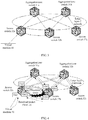
- FIG. 1 is a schematic diagram of an Ethernet loop according to an embodiment of the present invention.
- An Ethernet 100 includes a switch 11, a switch 12, a switch 13, a switch 14, and a switch 15. Due to an incorrect network wiring or an incorrect configuration of a network device, the switch 12, the switch 13, the switch 14, and the switch 15 form a loop (as shown by a thick solid line in FIG. 1 ), that is, a loop failure occurs in the Ethernet 100.
- the switch 11 After the switch 11 receives, by using a port 111, a flooding packet whose source address is MAC 1, the switch 11 broadcasts the flooding packet through another port than the port 111.
- the flooding packet includes an unknown multicast packet (a multicast packet whose destination MAC address is not a broadcast address but the destination MAC address is not learned by the switch 11) and an unknown unicast packet (a unicast packet whose destination MAC address is not a broadcast address but the destination MAC address is not learned by the switch 11) in addition to a broadcast packet whose destination MAC address is a broadcast address, where the flooding packet is also referred to as a BUM (English: broadcast, unknown unicast and multicast) packet.
- BUM American Standard: broadcast, unknown unicast and multicast
- the switch 12 continues to broadcast the flooding packet by using a port 122 and a port 123.
- the switch 13 and the switch 15 receive the flooding packet by using a port 131 and a port 151 respectively. Then the switch 13 and the switch 15 also separately broadcast the flooding packet. Finally, the flooding packet is broadcast continuously in a whole broadcast domain, and forms a broadcast storm.
- FIG. 3 is a schematic diagram of a data center network loop according to an embodiment of the present invention.
- the data center network is a large layer 2 network.
- the large layer 2 network may be a Transparent Interconnection of Lots of Links (TRILL for short) network or a Virtual eXtensible Local Area Network (VXLAN for short).
- TRILL Transparent Interconnection of Lots of Links
- VXLAN Virtual eXtensible Local Area Network
- the large layer 2 network includes an access layer and a core layer. Because the large layer 2 network has only two layers, the core layer may also be referred to as an aggregation layer.
- the access layer includes access switches 32a, 32b, and 32c.
- the core layer includes core switches 31a and 31b. Each access switch is connected to both of the core switches. Either of the core switches is also connected to all of the access switches.
- FIG. 3 shows a loop caused by incorrect wiring in the large layer 2 network.
- the access switch 32a, the core switch 31a, and the access switch 32b form a loop.
- the access switch 32a, the core switch 31b, and the access switch 32b also form a loop.
- each access switch may further communicate with at least one virtual machine (VM for short).
- VM virtual machine
- the figure shows a virtual machine 41 communicating with the access switch 32a.
- an access switch is a switch that enables a terminal device to access the TRILL network.
- an access switch may be referred to as a VXLAN tunnel endpoint (VTEP for short).
- VTEP VXLAN tunnel endpoint
- FIG. 4 is a schematic diagram of a process of generating a broadcast storm in a scenario in FIG. 3 .
- the access switch 32a receives, by using an access-side port 32a1, a flooding packet that is sent by the virtual machine 41 and whose source MAC address is MAC 2, the switch 32a broadcasts the flooding packet through other ports than the port 32a1, that is, ports 32a2, 32a3, and 32a4.
- the flooding packet arrives at the core switch 31a, the access switch 32b, and the core switch 31b respectively.
- Each switch receiving the flooding packet sends the flooding packet in broadcast mode to other ports than the port receiving the flooding packet.
- the core switch 31a and the core switch 31b respectively send the flooding packet in broadcast mode to the access switches 32b and 32c, and the access switches respectively send the flooding packet in broadcast mode to the core switch 31a and the core switch 31b by using a port 32b1 and a port 32b3.
- the core switch 31a After receiving, the flooding packet sent by the access switch 32b, the core switch 31a sends the flooding packet in broadcast mode to the access switch 32a and the access switch 32c respectively.
- the core switch 31b After receiving, from the access switch 32b, the flooding packet sent by the access switch 32b, the core switch 31b sends the flooding packet in broadcast mode to the access switch 32a and the access switch 32c. In this way, the access switch 32a receives the flooding packet sent by the access switch 32a itself, and continues to forwarding the packet. Therefore, a broadcast storm is formed.
- sending a flooding packet in all embodiments of the present invention means sending the flooding packet to a port that is configured with a same VLAN as the flooding packet.
- the present invention provides a loop failure handling method shown in FIG. 5 .
- the method may be applied to each switch in FIG. 1 and FIG. 2 , or applied to each access switch in FIG. 3 and FIG. 4 .
- a switch receives a first packet, where the first packet includes a source MAC address.
- the first packet is any packet received by the switch.
- the source MAC address is a MAC address of a device generating the first packet, for example, may be a MAC address MAC 2 of a virtual machine 41.
- the device generating the first packet is a physical terminal device or a virtual terminal device that needs to initiate a session, for example, a personal computer or a virtual machine.
- the first packet may be any one of an Ethernet frame, a TRILL-encapsulated packet, or a VXLAN-encapsulated packet.
- the source MAC address is included in an Ethernet header of the Ethernet frame.
- the source MAC address is included in an inner packet header of the TRILL packet.
- the source MAC address is included in an inner packet header of the VXLAN packet.
- the switch obtains a first flapping count corresponding to the source MAC address.
- the first flapping count indicates a quantity of times that the source MAC address flaps between different ports of the switch.
- the switch maintains a flapping information table, and each entry of the flapping information table records flapping information of a MAC address.
- the flapping information of each MAC address includes a flapping port set corresponding to the MAC address and a quantity of times that the MAC address flaps on the switch.
- the flapping information of each MAC address may further include a flapping start time of the MAC address, and a last update time of a MAC entry corresponding to the MAC address in a MAC address table of the switch.
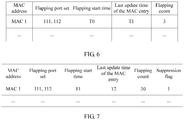
- FIG. 6 is a schematic diagram of a flapping information table on a switch 11.
- the flapping information in the flapping information table is merely an example.
- content of the flapping information may be further separately stored in different tables or different storage spaces.
- the switch needs to recognize a correspondence between the source MAC address and the content.
- Information in the flapping information table is continuously updated with a MAC address learning process of the switch.
- S502 may specifically include: searching the flapping information table based on the source MAC address to obtain a flapping information entry corresponding to the source MAC address, and obtaining the first flapping count in the flapping information entry.
- the first flapping count is specifically a quantity of times that the source MAC address flags between different ports of the switch, starting from the flapping start time.
- the switch creates, only when determining that a prior port corresponding to a MAC address is different from a port of the MAC address currently learned, a flapping information entry corresponding to the MAC address. Therefore, before the searching the flapping information table based on the source MAC address to obtain a flapping information entry corresponding to the source MAC address, optionally, the method may further include the following steps:
- Updating the flapping information table includes three cases.
- the flapping information table includes the flapping information entry corresponding to the source MAC address, and the first port is already in a flapping port set corresponding to the source MAC address; and the updating the flapping information table based on the first port includes: changing a last update time in the flapping information entry to a time at which the switch updates the MAC entry based on the first port; and adding 1 to a prior flapping count in the flapping information entry to obtain the first flapping count.
- the prior flapping count is a flapping count in the flapping information entry before the flapping information table is updated.
- the flapping information table includes the flapping information entry corresponding to the source MAC address, and the first port is not in a flapping port set corresponding to the source MAC address; and the updating the flapping information table based on the first port includes: the switch adds the first port to the flapping port set sequentially, changes a last update time in the flapping information entry to a time at which the switch updates the MAC entry based on the first port, and adds 1 to a prior flapping count in the flapping information entry to obtain the first flapping count.
- the prior flapping count is a flapping count in the flapping information entry before the flapping information table is updated. Because the switch has generated the corresponding flapping information entry for the source MAC address, it can be known that, in this case, at least two flapping ports are included before the first port in the flapping port set.
- the flapping information table does not include the flapping information entry corresponding to the source MAC address; and the updating the flapping information table based on the first port includes: the switch adds, to the flapping information table, the flapping information entry corresponding to the source MAC address, adds the prior port and the first port sequentially to a flapping port set in the flapping information entry, adds, to the flapping information entry, the flapping start time and a last update time of the MAC entry corresponding to the source MAC address, and sets a flapping count in the flapping information entry to 1, to obtain the first flapping count.
- the flapping start time is a time at which the switch receives the first packet.
- the last update time of the MAC entry is a time at which the switch updates the MAC entry based on the first port.
- the flapping information table does not include the flapping information entry corresponding to the source MAC address, because the switch detects the flapping of the source MAC address for the first time, or because a prior flapping information entry corresponding to the source MAC address is aged (deleted).
- the switch adds a corresponding flapping information entry for the MAC address to the flapping information table.
- the initial flapping information entry includes only a port on which the switch receives a packet whose source MAC address is the MAC address and a time at which the MAC address table of the switch is updated based on the port, and other content in the entry is null or is 0.
- the switch updates the flapping information table based on a flapping status of the MAC address in a manner same as the foregoing implementation.
- the switch determines, based on the first flapping count, whether a loop failure occurs in a network in which the switch is located.
- the switch forwards the first packet in a conventional manner.
- the switch performs S504.
- the switch compares the first flapping count with a preset flapping threshold, and when the first flapping count is greater than or equal to the flapping threshold, determines that the loop failure occurs in the network in which the switch is located.
- the switch may preset the flapping threshold and a detection period. When the first flapping count is greater than or equal to the flapping threshold in the detection period, the switch determines that the loop failure occurs in the network. For example, the detection period is five minutes, and the flapping threshold is 20. In a case shown in FIG. 6 , if a flapping count corresponding to a MAC 1 is less than 20 within five minutes starting from T0, the switch considers that no loop failure occurs in the network. In a case shown in FIG.
- the switch when a flapping count corresponding to the MAC 1 is greater than 20 within five minutes starting from T1, the switch considers that a loop failure occurs in the network.
- the detection period is used to age the flapping information entry corresponding to the MAC address. For example, a flapping information entry corresponding to the MAC 1 is aged (that is, deleted) after five minutes starting from T0. In this way, a flapping count read by the switch every time is a flapping count in a detection period, and flapping counts are not accumulated across periods.
- the switch obtains a flapping port set corresponding to the source MAC address, where the flapping port set includes a plurality of ports to which the source MAC address flaps sequentially.
- the switch determines a primary port in the plurality of ports.
- the plurality of ports belong to the switch.
- the plurality of ports are arranged based on a time sequence in which the source MAC address flaps to the plurality of ports.
- the primary port is a port that must be suppressed.
- the plurality of ports further include a secondary port, where the secondary port is a port suppressed optionally. It should be noted that, in the present invention, the primary port and the secondary port are used only for describing different operations on different ports. It is not required that physical division or classification-based storage should be performed on the plurality of ports in the flapping port set in an implementation of any embodiment of the present invention.
- a flooding packet whose source MAC address is MAC 1 first arrives at the port 111 of the switch 11, and the switch 11 first records the port 111 in a flapping port set corresponding to the MAC 1.
- the switch 11 receives the broadcast packet again by using the port 112.
- the switch 11 learns the MAC 1 again on the port 112, and the switch adds the port 112 sequentially to the flapping port set corresponding to the MAC 1. Therefore, the flapping port set corresponding to the MAC 1 is ⁇ 111, 112 ⁇ , which includes the two ports 111 and 112 on which the MAC 1 is sequentially learned.
- the secondary port includes a port that is added by the switch to the flapping port set earliest; and the primary port includes one or more ports that are added after the primary port to the flapping port set by the switch.
- the port 111 of the switch 11 is a secondary port, and the port 112 is a primary port.
- flapping port sets of other switches in FIG. 2 are as follows:
- the secondary port includes an access-side port that is added by the switch to the flapping port set earliest; and the primary port includes one or more access-side ports (although a primary port of the switch 32b is not shown in FIG. 4 for brevity, the primary port necessarily exists in an actual network) that are added after the secondary port to the flapping port set by the switch.
- description information may be added to the flapping port set to record an attribute of a port.
- flapping port sets of the access switches 32a and 32b may be:
- information about a core switch may be added to the flapping port set to record an attribute of a port.
- a nickname of a core switch may be used to replace a network-side interface, and in this case, flapping port sets of the access switches 32a and 32b may be:
- an Internet Protocol address of a core switch may be used to replace a network-side interface, and in this case, flapping port sets of the access switches 32a and 32b may be:
- the switch enables a flooding suppression function on each primary port, where the flooding suppression function is used to suppress forwarding of a received flooding packet by each primary port.
- the flooding suppression function may be further enabled on the secondary port in this embodiment of the present invention, to suppress forwarding of a received flooding packet by the secondary port.
- That the switch enables a flooding suppression function on each primary port may be that the switch sends a first flooding suppression instruction to each primary port to enable the flooding suppression function, or may be that the switch directly enables the flooding suppression function on each primary port according to a switch configuration performed by a user.
- That the switch enables the flooding suppression function on the secondary port may be that the switch sends a second flooding suppression instruction to the secondary port to enable the flooding suppression function, or may be that the switch directly enables the flooding suppression function on the secondary port according to a switch configuration performed by the user.
- Any flooding suppression instruction in this embodiment of the present invention is not used to suppress reception of a flooding packet by a port receiving the flooding suppression instruction.
- each flooding suppression instruction may include a suppression parameter, where the suppression parameter may be a suppression rate or a suppression ratio.
- the suppression rate is used to indicate a rate at which the port receiving the flooding suppression instruction is allowed to send the flooding packet.
- the suppression ratio is used to indicate a ratio of to-be-suppressed flooding packets received by the port receiving the flooding suppression instruction.
- the suppression parameter indicates complete suppression (which, for example, may be indicated by 1, 100, or 100%)
- the port receiving the flooding suppression instruction is forbidden to forward the received flooding packets.
- the suppression parameter indicates partial suppression (which, for example, may be indicated by 0.95, 95, or 95%)
- the port receiving the flooding suppression instruction may forward the received flooding packets of a corresponding ratio.
- the suppression parameter in the first flooding suppression instruction may be the same or different from the suppression parameter in the second flooding suppression instruction.
- either of the first flooding suppression instruction and the second flooding suppression instruction may further include a to-be-suppressed packet type, to indicate a packet that needs to be suppressed.
- the packet type included in the first flooding suppression instruction is a broadcast packet
- the first flooding suppression instruction suppresses only a broadcast packet, and does not suppress an unknown unicast packet and an unknown multicast packet.
- a sequence of enabling the flooding suppression function on each primary port and enabling the flooding suppression function on the secondary port by the switch is not limited in the present invention.
- the flapping information table may further include a suppression flag, used to indicate whether the switch has enabled the flooding suppression function on a port in the flapping port set corresponding to the source MAC address.
- a suppression flag in FIG. 7 is 1, indicating that the switch has enabled the flooding suppression function on a port (according to system settings, the port may be a primary port or a primary port and a secondary port) in the flapping port set. If the suppression flag is 0, it indicates that the switch has not enabled the flooding suppression function on a port in the flapping port set.
- a person of ordinary skill may further set other suppression flags. For example, as long as the suppression flag is set, it is considered that the switch has sent a flooding suppression instruction.
- the method in this embodiment of the present invention optionally further includes S507.
- the switch After determining that the loop failure is recovered, the switch sends an unsuppress instruction to each suppressed port, where the unsuppress instruction is used to trigger the port receiving the unsuppress instruction to forward the received flooding packet.
- the suppressed flapping ports include at least each primary port, and may further include a secondary port.
- the determining that the loop failure is recovered may include: when the source MAC address does not flap after a specified duration, determining that the loop failure is eliminated.
- the switch may obtain a second time difference by subtracting the last update time of the MAC entry corresponding to the source MAC address in the flapping information table from the current system time, and compare the second time difference with the specified duration; and when the second time difference is greater than or equal to the specified duration, determine that the source MAC address does not flap after the specified duration, that is, determine that the loop failure is recovered.
- the switch determines that the source MAC address does not flap for five minutes. Therefore, the switch considers that the loop failure is recovered, and sends an unsuppress instruction to the suppressed port in the flapping port set. After sending the unsuppress instruction, the switch deletes or migrates the flapping information entry corresponding to the source MAC address from the flapping information table to a history database.
- the loop failure recovery can be detected automatically, and a loop protection action is released. This improves robustness of the network.
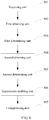
- FIG. 8 is a schematic structural diagram of the switch 800 according to an embodiment of the present invention.
- the switch 800 includes:
- the first obtaining unit 802 and the second obtaining unit 804 may be a same obtaining unit or may be different obtaining units.
- the first determining unit 803 and the second determining unit 805 may be a same determining unit or may be different determining units.
- the switch 800 may further include a storage unit, configured to store the flapping information table.
- the switch 800 may further include an updating unit, configured to update the flapping information table when a MAC address flaps.
- the foregoing division of units in FIG. 8 is an example, and is only intended for indicating that the switch shown in FIG. 8 can fully implement the method shown in FIG. 5 .
- functional units in this embodiment of the present invention may be integrated into one processing unit, or each of the units may physically exist separately, or two or more units are integrated into one unit.
- the first obtaining unit 802 and the second obtaining unit 804 may be a same unit or may be different units.
- division of units in the switch 800 may be in another manner. Each unit may be implemented in a form of hardware, or may be implemented in a form of a software functional unit.
- FIG. 9 is a schematic structural diagram of the switch 900 according to an embodiment of the present invention.
- the switch includes a first memory 901, a processor 902, and a plurality of ports 903, where the first memory 901, the processor 902, and the plurality of ports 903 are interconnected by a bus 904.
- the bus 904 may be a peripheral component interconnect (PCI for short) bus or an extended industry standard architecture (EISA for short) bus, or the like.
- PCI peripheral component interconnect
- EISA extended industry standard architecture
- the bus may be classified into an address bus, a data bus, a control bus, and the like. For ease of representation, only one thick line is used to represent the bus in FIG. 9 , but this does not mean that there is only one bus or only one type of bus.
- the first memory 901 is configured to store program code; the processor 902 is configured to invoke the program code to implement the method shown in FIG. 5 and the specific implementations of the method, and suppress a primary port and/or a secondary port in the plurality of ports, so that the primary port and/or the secondary port do/does not forward received flooding packets or forward/forwards received flooding packets according to a suppression ratio.
- the program code may be specifically a computer program instruction. When the computer program instruction is invoked by the processor 902, the method shown in FIG. 5 and the specific implementations of the method can be implemented.
- Each of the plurality of ports 903 is configured to receive or discard a packet under control of the processor 902 when the processor 902 invokes the program code.
- the switch 900 may further include a second memory 905, and the second memory 905 is configured to store a flapping information table of the switch 900.
- the first memory 901 and the second memory 905 may be a same memory or may be different memories.
- the first memory 901 and the second memory 905 may be a random access memory (English: random access memory, RAM for short), a flash memory, a read-only memory (ROM for short), an erasable programmable read-only memory (, EPROM for short), an electrically erasable programmable read-only memory (EEPROM for short), a register, a hard disk, a removable hard disk, a compact disc read-only memory (CD-ROM), or a storage medium in any other form known in the art.
- RAM random access memory
- ROM read-only memory
- EPROM erasable programmable read-only memory
- EEPROM electrically erasable programmable read-only memory
- the processor 902 may be a central processing unit (CPU for short), an application-specific integrated circuit (ASIC for short), a digital signal processor (DSP for short), or one or more integrated circuits configured to implement the embodiments of the present invention.
- CPU central processing unit
- ASIC application-specific integrated circuit
- DSP digital signal processor
Landscapes
- Engineering & Computer Science (AREA)
- Computer Networks & Wireless Communication (AREA)
- Signal Processing (AREA)
- Computer Security & Cryptography (AREA)
- Small-Scale Networks (AREA)
- Data Exchanges In Wide-Area Networks (AREA)
Claims (15)
- Schleifenfehlerbehandlungsverfahren, das auf einen Switch angewendet wird, wobei das Verfahren Folgendes umfasst:Empfangen (S501) eines ersten Pakets, wobei das erste Paket eine Quellmedienzugriffssteuerungs(media access control ― MAC)-Adresse umfasst und die Quell-MAC-Adresse eine MAC-Adresse einer Vorrichtung ist, die das erste Paket erzeugt;Erhalten (S502) eines ersten Flapping-Zählwerts, der der Quell-MAC-Adresse entspricht, wobei der erste Flapping-Zählwert eine Häufigkeit angibt, mit der die Quell-MAC-Adresse zwischen verschiedenen Ports des Switches flappt;Bestimmen (S503), basierend auf dem ersten Flapping-Zählwert, ob ein Schleifenfehler in einem Netzwerk auftritt, in dem sich der Switch befindet;Erhalten (S504) eines Flapping-Port-Satzes, der der Quell-MAC-Adresse entspricht, wenn der Schleifenfehler in dem Netzwerk auftritt, in dem sich der Switch befindet, wobei der Flapping-Port-Satz mehrere Ports des Switches umfasst, zu denen die Quell-MAC-Adresse fortlaufend flappt;Bestimmen (S505) eines primären Ports in den mehreren Ports, wobei der primäre Port ein Port ist, der unterdrückt werden muss; unddadurch gekennzeichnet, dass das Verfahren ferner Folgendes umfasst:
Aktivieren (S506) einer Flooding-Unterdrückungsfunktion an dem primären Port, wobei die Flooding-Unterdrückungsfunktion verwendet wird, um ein Weiterleiten eines empfangenen Flooding-Pakets durch den primären Port zu unterdrücken, wobei ein Unicast-Paket nicht durch die Flooding-Unterdrückungsfunktion unterdrückt wird. - Verfahren nach Anspruch 1, wobei das Verfahren ferner Folgendes umfasst:Bestimmen eines sekundären Ports in den mehreren Ports, wobei der sekundäre Port ein optional unterdrückter Port ist; undAktivieren der Flooding-Unterdrückungsfunktion an dem sekundären Port, wobeider sekundäre Port ein zugriffsseitiger Port oder ein netzwerkseitiger Port des Switches ist, wenn das Netzwerk, in dem sich der Switch befindet, ein Ethernet ist; oderder sekundäre Port ein zugriffsseitiger Port des Switches ist, wenn das Netzwerk, in dem sich der Switch befindet, ein Transparent-Interconnection-of-Lots-of-Links(TRILL)-Netzwerk oder ein Virtual-eXtensible-Local-Area(VXLAN)-Netzwerk ist.
- Verfahren nach Anspruch 1 oder 2, wobei das Verfahren ferner Folgendes umfasst:
nach dem Bestimmen, dass der Schleifenfehler behoben ist, Senden (S507) einer Unterdrückungsaufhebungsanweisung an jeden unterdrückten Port, wobei die Unterdrückungsaufhebungsanweisung verwendet wird, um einen Port, der die Unterdrückungsaufhebungsanweisung empfängt, zu veranlassen, ein empfangenes Flooding-Paket weiterzuleiten. - Verfahren nach einem der Ansprüche 1 bis 3, wobei das Erhalten eines ersten Flapping-Zählwerts, der der Quell-MAC-Adresse entspricht, Folgendes umfasst:Durchsuchen einer Flapping-Informationstabelle basierend auf der Quell-MAC-Adresse, um einen Flapping-Informationseintrag zu erhalten, der der Quell-MAC-Adresse entspricht, wobei der Flapping-Informationseintrag den Flapping-Port-Satz und den ersten Flapping-Zählwert umfasst; undErhalten des ersten Flapping-Zählwerts aus dem Flapping-Informationseintrag.
- Verfahren nach Anspruch 4, wobei der Flapping-Informationseintrag ferner eine Flapping-Startzeit umfasst, die der Quell-MAC-Adresse entspricht;der erste Flapping-Zählwert speziell eine Häufigkeit ist, mit der die Quell-MAC-Adresse zwischen verschiedenen Ports des Switches Marker setzt, startend mit der Flapping-Startzeit; unddas Bestimmen, basierend auf dem ersten Flapping-Zählwert, ob ein Schleifenfehler in einem Netzwerk auftritt, in dem sich der Switch befindet, Folgendes umfasst: Vergleichen des ersten Flapping-Zählwerts mit einer voreingestellten Flapping-Schwelle und Bestimmen, dass der Schleifenfehler in dem Netzwerk auftritt, in dem sich der Switch befindet, wenn der erste Flapping-Zählwert größer als oder gleich der Flapping-Schwelle ist; oder Bestimmen einer ersten Zeitdifferenz zwischen einer aktuellen Systemzeit und der Flapping-Startzeit, Berechnen eines Verhältnisses des ersten Flapping-Zählwerts zu der ersten Zeitdifferenz, um eine erste Flapping-Frequenz zu erhalten, Vergleichen der ersten Flapping-Frequenz mit einer voreingestellten Flapping-Frequenzschwelle und Bestimmen, dass der Schleifenfehler in dem Netzwerk auftritt, in dem sich der Switch befindet, wenn die erste Flapping-Frequenz größer als oder gleich der Flapping-Frequenzschwelle ist.
- Verfahren nach Anspruch 4 oder 5, wobei
der Flapping-Informationseintrag ferner eine letzte Aktualisierungszeit eines MAC-Eintrags umfasst, der der Quell-MAC-Adresse in einer MAC-Adresstabelle des Switches entspricht; und das Bestimmen, dass der Schleifenfehler behoben ist, Folgendes umfasst:Berechnen einer zweiten Zeitdifferenz zwischen der aktuellen Systemzeit und der letzten Aktualisierungszeit des MAC-Eintrags; undBestimmen, dass der Schleifenfehler behoben ist, wenn die zweite Zeitdifferenz größer als oder gleich einer spezifizierten Dauer ist. - Verfahren nach einem der Ansprüche 4 bis 6, wobei vor dem Durchsuchen der Flapping-Informationstabelle basierend auf der Quell-MAC-Adresse das Verfahren ferner Folgendes umfasst:Bestimmen eines ersten Ports, der das erste Paket empfängt; undAktualisieren der Flapping-Informationstabelle basierend auf dem ersten Port, wenn sich der erste Port von einem vorherigen Port unterscheidet, der der Quell-MAC-Adresse entspricht, wobei der vorherige Port ein Port in dem MAC-Eintrag ist, der der Quell-MAC-Adresse entspricht, wenn der Switch das erste Paket empfängt.
- Verfahren nach Anspruch 7, wobei die Flapping-Informationstabelle den Flapping-Informationseintrag umfasst, der der Quell-MAC-Adresse entspricht, und der erste Port bereits in dem Flapping-Port-Satz ist; und
das Aktualisieren der Flapping-Informationstabelle basierend auf dem ersten Port Folgendes umfasst:Ändern der letzten Aktualisierungszeit in dem Flapping-Informationseintrag zu einer Zeit, zu der der Switch den MAC-Eintrag basierend auf dem ersten Port aktualisiert; undHinzufügen von 1 zu einem früheren Flapping-Zählwert in dem Flapping-Informationseintrag, um den ersten Flapping-Zählwert zu erhalten, wobei der vorherige Flapping-Zählwert ein Flapping-Zählwert in dem Flapping-Informationseintrag ist, bevor die Flapping-Informationstabelle aktualisiert wird. - Verfahren nach Anspruch 7, wobei die Flapping-Informationstabelle den Flapping-Informationseintrag umfasst, der der Quell-MAC-Adresse entspricht, und der erste Port nicht in dem Flapping-Port-Satz ist; und
das Aktualisieren der Flapping-Informationstabelle basierend auf dem ersten Port Folgendes umfasst:fortlaufendes Hinzufügen des ersten Ports zu dem Flapping-Port-Satz;Ändern der letzten Aktualisierungszeit in dem Flapping-Informationseintrag zu einer Zeit, zu der der Switch den MAC-Eintrag basierend auf dem ersten Port aktualisiert; undHinzufügen von 1 zu einem früheren Flapping-Zählwert in dem Flapping-Informationseintrag, um den ersten Flapping-Zählwert zu erhalten, wobei der vorherige Flapping-Zählwert ein Flapping-Zählwert in dem Flapping-Informationseintrag ist, bevor die Flapping-Informationstabelle aktualisiert wird. - Verfahren nach Anspruch 7, wobei die Flapping-Informationstabelle nicht den Flapping-Informationseintrag umfasst, der der Quell-MAC-Adresse entspricht; und das Aktualisieren der Flapping-Informationstabelle basierend auf dem ersten Port Folgendes umfasst:Hinzufügen, zu der Flapping-Informationstabelle, des Flapping-Informationseintrags, der der Quell-MAC-Adresse entspricht;fortlaufendes Hinzufügen des vorherigen Ports und des ersten Ports zu dem Flapping-Port, der in dem Flapping-Informationseintrag eingestellt ist;Hinzufügen, zu dem Flapping-Informationseintrag, der Flapping-Startzeit und der letzten Aktualisierungszeit des MAC-Eintrags, der der Quell-MAC-Adresse entspricht, wobei die Flapping-Startzeit eine Zeit ist, zu der der Switch bestimmt, dass sich der erste Port von dem vorherigen Port unterscheidet, und die letzte Aktualisierungszeit des MAC-Eintrags eine Zeit ist, zu der der Switch den MAC-Eintrag basierend auf dem ersten Port aktualisiert; undEinstellen eines Flapping-Zählwerts in dem Flapping-Informationseintrag auf 1, um den ersten Flapping-Zählwert zu erhalten.
- Verfahren nach einem der Ansprüche 1 bis 10, wobeider primäre Port ein zugriffsseitiger Port oder ein netzwerkseitiger Port des Switches ist, wenn das Netzwerk, in dem sich der Switch befindet, ein Ethernet ist; oderder primäre Port ein zugriffsseitiger Port des Switches ist, wenn das Netzwerk, in dem sich der Switch befindet, ein Transparent-lnterconnection-of-Lots-of-Links(TRILL)-Netzwerk oder ein Virtual-eXtensible-Local-Area(VXLAN)-Netzwerk ist.
- Switch, der Folgendes umfasst:eine Empfangseinheit (801), die konfiguriert ist, um ein erstes Pakets zu empfangen, wobei das erste Paket eine Quellmedienzugriffssteuerungs(MAC)-Adresse umfasst und die Quell-MAC-Adresse eine MAC-Adresse einer Vorrichtung ist, die das erste Paket erzeugt;eine erste Erfassungseinheit (802), die konfiguriert ist, um einen ersten Flapping-Zählwert zu erhalten, der der Quell-MAC-Adresse entspricht, wobei der erste Flapping-Zählwert eine Häufigkeit angibt, mit der die Quell-MAC-Adresse zwischen verschiedenen Ports des Switches flappt;eine erste Bestimmungseinheit (803), die konfiguriert ist, um basierend auf dem ersten Flapping-Zählwert zu bestimmen, ob ein Schleifenfehler in einem Netzwerk auftritt, in dem sich der Switch befindet;eine zweite Erhaltungseinheit (804), die konfiguriert ist, um einen Flapping-Port-Satz zu erhalten, der der Quell-MAC-Adresse entspricht, wenn der Schleifenfehler in dem Netzwerk auftritt, in dem sich der Switch befindet, wobei der Flapping-Port Satz mehrere Ports des Switches umfasst, zu denen die Quell-MAC-Adresse fortlaufend flappt;eine zweite Bestimmungseinheit (805), die konfiguriert ist, um einen primären Port in den mehreren Ports zu bestimmen, wobei der primäre Port ein Port ist, der unterdrückt werden muss; unddadurch gekennzeichnet, dass der Switch ferner Folgendes umfasst:
eine Unterdrückungsaktivierungseinheit (806), die konfiguriert ist, um eine Flooding-Unterdrückungsfunktion an dem primären Port zu aktivieren, wobei die Flooding-Unterdrückungsfunktion verwendet wird, um das Weiterleiten eines empfangenen Flooding-Pakets durch den primären Port zu unterdrücken, wobei ein Unicast-Paket durch die Flooding-Unterdrückungsfunktion nicht unterdrückt wird. - Switch nach Anspruch 12, wobei die zweite Bestimmungseinheit ferner konfiguriert ist, um einen sekundären Port in den mehreren Ports zu bestimmen, wobei der sekundäre Port ein optional unterdrückter Port ist; unddie Unterdrückungsaktivierungseinheit ferner konfiguriert ist, um die Flooding-Unterdrückungsfunktion an dem sekundären Port zu aktivieren, wobeider sekundäre Port ein zugriffsseitiger Port oder ein netzwerkseitiger Port des Switches ist, wenn das Netzwerk, in dem sich der Switch befindet, ein Ethernet ist; oderder sekundäre Port ein zugriffsseitiger Port des Switches ist, wenn das Netzwerk, in dem sich der Switch befindet, ein Transparent-Interconnection-of-Lots-of-Links(TRILL)-Netzwerk oder ein Virtual-eXtensible-Local-Area(VXLAN)-Netzwerk ist.
- Switch nach Anspruch 12 oder 13, wobei die erste Bestimmungseinheit ferner konfiguriert ist, um zu bestimmen, ob der Schleifenfehler behoben ist; und
der Switch ferner eine Unterdrückungsaufhebungseinheit (807) umfasst, die konfiguriert ist, um eine Unterdrückungsaufhebungsanweisung an jeden unterdrückten Port zu senden, nachdem die erste Bestimmungseinheit bestimmt hat, dass der Schleifenfehler behoben ist, wobei die Unterdrückungsaufhebungsanweisung verwendet wird, um den Port, der die Unterdrückungsaufhebungsanweisung empfängt, zu veranlassen, ein empfangenes Flooding-Paket weiterzuleiten. - Netzwerksystem, das mehrere Switches nach einem der Ansprüche 12 bis 14 umfasst.
Applications Claiming Priority (2)
| Application Number | Priority Date | Filing Date | Title |
|---|---|---|---|
| CN201611110936.5A CN108156014B (zh) | 2016-12-06 | 2016-12-06 | 一种环路故障处理方法和交换机 |
| PCT/CN2017/107704 WO2018103468A1 (zh) | 2016-12-06 | 2017-10-25 | 一种环路故障处理方法和交换机 |
Publications (3)
| Publication Number | Publication Date |
|---|---|
| EP3537657A1 EP3537657A1 (de) | 2019-09-11 |
| EP3537657A4 EP3537657A4 (de) | 2019-11-13 |
| EP3537657B1 true EP3537657B1 (de) | 2021-12-29 |
Family
ID=62468312
Family Applications (1)
| Application Number | Title | Priority Date | Filing Date |
|---|---|---|---|
| EP17878717.2A Active EP3537657B1 (de) | 2016-12-06 | 2017-10-25 | Schleifenstörunghandhabungsverfahren und schalter |
Country Status (5)
| Country | Link |
|---|---|
| US (1) | US10764085B2 (de) |
| EP (1) | EP3537657B1 (de) |
| JP (1) | JP6820423B2 (de) |
| CN (1) | CN108156014B (de) |
| WO (1) | WO2018103468A1 (de) |
Families Citing this family (22)
| Publication number | Priority date | Publication date | Assignee | Title |
|---|---|---|---|---|
| CN109286583B (zh) * | 2018-10-23 | 2021-08-10 | 郑州云海信息技术有限公司 | 一种控制器网络端口管理方法、装置、设备及存储介质 |
| CN109089000B (zh) * | 2018-10-24 | 2020-10-27 | 迈普通信技术股份有限公司 | 语音呼叫处理方法及装置 |
| CN113542110B (zh) * | 2020-04-15 | 2022-09-23 | 中国南方电网有限责任公司 | 一种智能变电站过程层网络风暴定位及消除方法及系统 |
| US11689455B2 (en) * | 2020-05-28 | 2023-06-27 | Oracle International Corporation | Loop prevention in virtual layer 2 networks |
| WO2022015883A1 (en) | 2020-07-14 | 2022-01-20 | Oracle International Corporation | Systems and methods for a vlan switching and routing service |
| CN111901234B (zh) * | 2020-08-12 | 2023-03-14 | 深圳市信锐网科技术有限公司 | 网络环路处理方法、系统及相关设备 |
| CN112636999A (zh) * | 2020-11-26 | 2021-04-09 | 新华三技术有限公司成都分公司 | 一种端口的探测方法和网络监控系统 |
| WO2022146585A1 (en) | 2020-12-30 | 2022-07-07 | Oracle International Corporation | Layer-2 networking using access control lists in a virtualized cloud environment |
| WO2022146588A1 (en) | 2020-12-30 | 2022-07-07 | Oracle International Corporation | Layer-2 networking storm control in a virtualized cloud environment |
| US11909636B2 (en) | 2020-12-30 | 2024-02-20 | Oracle International Corporation | Layer-2 networking using access control lists in a virtualized cloud environment |
| US11671355B2 (en) | 2021-02-05 | 2023-06-06 | Oracle International Corporation | Packet flow control in a header of a packet |
| US11777897B2 (en) | 2021-02-13 | 2023-10-03 | Oracle International Corporation | Cloud infrastructure resources for connecting a service provider private network to a customer private network |
| EP4292262A1 (de) | 2021-02-13 | 2023-12-20 | Oracle International Corporation | Cloud-infrastrukturressourcen zur verbindung eines privaten dienstanbieternetzwerks mit einem privaten kundennetzwerk |
| US12592877B2 (en) | 2021-02-13 | 2026-03-31 | Oracle International Corporation | Packet flow in a cloud infrastructure based on cached and non-cached configuration information |
| CN113098709B (zh) * | 2021-03-24 | 2021-12-14 | 深圳市乙辰科技股份有限公司 | 基于分布式组网系统的网络恢复方法、装置和计算机设备 |
| CN113504976B (zh) * | 2021-06-10 | 2023-05-23 | 中国联合网络通信集团有限公司 | 软件定义网络架构调度方法、系统、终端设备及存储介质 |
| CN113794656B (zh) * | 2021-08-25 | 2023-11-07 | 新华三信息安全技术有限公司 | 一种报文转发方法及设备 |
| CN114124782B (zh) * | 2021-11-24 | 2023-02-28 | 北京鼎兴达信息科技股份有限公司 | 终端ip业务路径的确定方法 |
| CN114567572B (zh) * | 2022-04-29 | 2023-01-31 | 南京金阵微电子技术有限公司 | 一种网络环路监测方法、系统、设备及存储介质 |
| CN115604173B (zh) * | 2022-09-15 | 2025-03-04 | 新华三技术有限公司合肥分公司 | 一种链路检测方法及设备 |
| CN116436878A (zh) * | 2023-04-11 | 2023-07-14 | 杭州迪普科技股份有限公司 | 媒体访问控制子协议表项同步方法及装置 |
| US12452167B2 (en) * | 2023-10-03 | 2025-10-21 | Hewlett Packard Enterprise Development Lp | Identifying loop-origination points in an overlay network |
Family Cites Families (17)
| Publication number | Priority date | Publication date | Assignee | Title |
|---|---|---|---|---|
| US7496030B2 (en) * | 2003-03-26 | 2009-02-24 | Lucent Technologies, Inc. | Managing loops between network devices by monitoring MAC moves |
| US7515530B2 (en) * | 2004-03-25 | 2009-04-07 | Alcatel-Lucent Usa Inc. | Detecting loops between network devices by monitoring MAC moves |
| JP4667849B2 (ja) * | 2004-12-13 | 2011-04-13 | 富士通株式会社 | ループ検出方法及び装置 |
| WO2006095508A1 (ja) * | 2005-03-08 | 2006-09-14 | Nippon Telegraph And Telephone Corporation | フラッディング抑制方法 |
| CN101405976A (zh) | 2005-12-07 | 2009-04-08 | 卢森特技术有限公司 | 通过监视mac移动来检测网络设备之间的环路 |
| US7995499B2 (en) * | 2006-11-23 | 2011-08-09 | Cisco Technology, Inc. | Minimizing spanning-tree protocol event processing and flooding in distribution networks |
| CN101378311B (zh) * | 2007-08-27 | 2013-01-09 | 华为技术有限公司 | 一种保护倒换的方法、系统和设备 |
| US8279867B2 (en) * | 2008-03-02 | 2012-10-02 | Jeffrey Alan Carley | Method and apparatus for reducing flood traffic in switches |
| CN101640622B (zh) | 2009-09-07 | 2012-05-23 | 中兴通讯股份有限公司 | 一种以太环网保护方法及传输节点 |
| CN101707538B (zh) * | 2009-11-25 | 2011-09-14 | 烽火通信科技股份有限公司 | 一种检测以太网环路并且自动恢复的方法 |
| WO2012013251A1 (en) * | 2010-07-30 | 2012-02-02 | Telefonaktiebolaget Lm Ericsson (Publ) | Method and apparatus for handling network resource failures in a router |
| CN103181128A (zh) * | 2010-10-28 | 2013-06-26 | 日本电气株式会社 | 网络系统和通信业务控制方法 |
| CN102347881A (zh) * | 2011-09-30 | 2012-02-08 | 华为技术有限公司 | 以太环网故障倒换时恢复单播转发业务流的方法及装置 |
| CN102347865B (zh) * | 2011-11-04 | 2015-02-25 | 华为技术有限公司 | 一种以太网环路定位方法、交换设备及系统 |
| US9059930B2 (en) * | 2013-03-11 | 2015-06-16 | Dell Products L.P. | Techniques for management of data forwarding systems while suppressing loops in telecommunications networks |
| US10015066B2 (en) * | 2016-02-04 | 2018-07-03 | Ciena Corporation | Propagation of frame loss information by receiver to sender in an ethernet network |
| CN105933180A (zh) * | 2016-04-12 | 2016-09-07 | 上海斐讯数据通信技术有限公司 | 一种基于交换机的环路检测方法及环路检测装置 |
-
2016
- 2016-12-06 CN CN201611110936.5A patent/CN108156014B/zh active Active
-
2017
- 2017-10-25 WO PCT/CN2017/107704 patent/WO2018103468A1/zh not_active Ceased
- 2017-10-25 EP EP17878717.2A patent/EP3537657B1/de active Active
- 2017-10-25 JP JP2019530186A patent/JP6820423B2/ja active Active
-
2019
- 2019-06-05 US US16/432,397 patent/US10764085B2/en active Active
Non-Patent Citations (1)
| Title |
|---|
| None * |
Also Published As
| Publication number | Publication date |
|---|---|
| WO2018103468A1 (zh) | 2018-06-14 |
| CN108156014A (zh) | 2018-06-12 |
| US10764085B2 (en) | 2020-09-01 |
| US20190288871A1 (en) | 2019-09-19 |
| CN108156014B (zh) | 2021-08-13 |
| JP2020501444A (ja) | 2020-01-16 |
| JP6820423B2 (ja) | 2021-01-27 |
| EP3537657A4 (de) | 2019-11-13 |
| EP3537657A1 (de) | 2019-09-11 |
Similar Documents
| Publication | Publication Date | Title |
|---|---|---|
| EP3537657B1 (de) | Schleifenstörunghandhabungsverfahren und schalter | |
| JP5570560B2 (ja) | イーサネット・ループの所在位置を突き止める方法、スイッチング・デバイス、及びシステム | |
| US9001644B2 (en) | Ethernet virtual private network system for providing fast protection for access rings | |
| CN102625986A (zh) | 一种二层网络环路处理的方法、装置及网络设备 | |
| CN102461087A (zh) | 防止由网络内的不一致配置引起的网络流量的丢失 | |
| EP2863595B1 (de) | Topologieeinstufung und überschwemmungsverarbeitungsverfahren und vorrichtung | |
| US11711243B2 (en) | Packet processing method and gateway device | |
| EP3249853B1 (de) | Ethernetringschutzwechselverfahren und knoten | |
| US20220263746A1 (en) | Method for monitoring running state of peer, apparatus, and storage medium | |
| CN111245700B (zh) | 一种环路检测方法及装置 | |
| WO2017050199A1 (zh) | 一种网络环路检测方法及控制器 | |
| US20220360519A1 (en) | Method and device for packet forwarding | |
| CN109412851B (zh) | 链路层路径检测方法、装置及系统 | |
| CN108600070B (zh) | 指定转发者df选举方法及装置 | |
| CN110012490B (zh) | 告警方法、装置、操作维护中心及计算机可读存储介质 | |
| CN112565045A (zh) | Evpn中报文转发方法、装置、设备及存储介质 | |
| WO2015117465A1 (zh) | 环形网络中fdb刷新方法、装置、节点及系统 | |
| US12407604B2 (en) | Loop protection in a network | |
| US20220094569A1 (en) | Method and system to selectively flush filtering databases in a major ring of an ethernet ring protection switching network | |
| CN113037539B (zh) | 一种故障定位方法及装置 | |
| US10862801B1 (en) | Selective media access control (MAC) learning and purging to reduce flooding and replication in a network | |
| EP4539402A1 (de) | Routingweiterleitungsverfahren, elektronische vorrichtung und speichermedium | |
| CN114500160A (zh) | 报文转发方法、装置及存储介质 | |
| CN121239669A (zh) | Mac地址漂移抑制方法、交换机、电子设备和存储介质 | |
| CN121887698A (zh) | 路由设备节点、系统、路由转发方法、设备及存储介质 |
Legal Events
| Date | Code | Title | Description |
|---|---|---|---|
| STAA | Information on the status of an ep patent application or granted ep patent |
Free format text: STATUS: THE INTERNATIONAL PUBLICATION HAS BEEN MADE |
|
| PUAI | Public reference made under article 153(3) epc to a published international application that has entered the european phase |
Free format text: ORIGINAL CODE: 0009012 |
|
| STAA | Information on the status of an ep patent application or granted ep patent |
Free format text: STATUS: REQUEST FOR EXAMINATION WAS MADE |
|
| 17P | Request for examination filed |
Effective date: 20190603 |
|
| AK | Designated contracting states |
Kind code of ref document: A1 Designated state(s): AL AT BE BG CH CY CZ DE DK EE ES FI FR GB GR HR HU IE IS IT LI LT LU LV MC MK MT NL NO PL PT RO RS SE SI SK SM TR |
|
| AX | Request for extension of the european patent |
Extension state: BA ME |
|
| A4 | Supplementary search report drawn up and despatched |
Effective date: 20191011 |
|
| RIC1 | Information provided on ipc code assigned before grant |
Ipc: H04L 12/437 20060101ALI20191007BHEP Ipc: H04L 12/42 20060101ALI20191007BHEP Ipc: H04L 12/24 20060101AFI20191007BHEP |
|
| DAV | Request for validation of the european patent (deleted) | ||
| DAX | Request for extension of the european patent (deleted) | ||
| STAA | Information on the status of an ep patent application or granted ep patent |
Free format text: STATUS: EXAMINATION IS IN PROGRESS |
|
| 17Q | First examination report despatched |
Effective date: 20200813 |
|
| REG | Reference to a national code |
Ref country code: DE Ref legal event code: R079 Ref document number: 602017051714 Country of ref document: DE Free format text: PREVIOUS MAIN CLASS: H04L0012240000 Ipc: H04L0012420000 |
|
| GRAP | Despatch of communication of intention to grant a patent |
Free format text: ORIGINAL CODE: EPIDOSNIGR1 |
|
| STAA | Information on the status of an ep patent application or granted ep patent |
Free format text: STATUS: GRANT OF PATENT IS INTENDED |
|
| RIC1 | Information provided on ipc code assigned before grant |
Ipc: H04L 12/42 20060101AFI20210701BHEP Ipc: H04L 12/437 20060101ALI20210701BHEP Ipc: H04L 12/24 20060101ALI20210701BHEP Ipc: H04L 12/46 20060101ALI20210701BHEP |
|
| INTG | Intention to grant announced |
Effective date: 20210719 |
|
| GRAS | Grant fee paid |
Free format text: ORIGINAL CODE: EPIDOSNIGR3 |
|
| GRAA | (expected) grant |
Free format text: ORIGINAL CODE: 0009210 |
|
| STAA | Information on the status of an ep patent application or granted ep patent |
Free format text: STATUS: THE PATENT HAS BEEN GRANTED |
|
| AK | Designated contracting states |
Kind code of ref document: B1 Designated state(s): AL AT BE BG CH CY CZ DE DK EE ES FI FR GB GR HR HU IE IS IT LI LT LU LV MC MK MT NL NO PL PT RO RS SE SI SK SM TR |
|
| REG | Reference to a national code |
Ref country code: GB Ref legal event code: FG4D |
|
| REG | Reference to a national code |
Ref country code: CH Ref legal event code: EP |
|
| REG | Reference to a national code |
Ref country code: AT Ref legal event code: REF Ref document number: 1459506 Country of ref document: AT Kind code of ref document: T Effective date: 20220115 |
|
| REG | Reference to a national code |
Ref country code: IE Ref legal event code: FG4D |
|
| REG | Reference to a national code |
Ref country code: DE Ref legal event code: R096 Ref document number: 602017051714 Country of ref document: DE |
|
| REG | Reference to a national code |
Ref country code: NL Ref legal event code: FP |
|
| REG | Reference to a national code |
Ref country code: LT Ref legal event code: MG9D |
|
| PG25 | Lapsed in a contracting state [announced via postgrant information from national office to epo] |
Ref country code: RS Free format text: LAPSE BECAUSE OF FAILURE TO SUBMIT A TRANSLATION OF THE DESCRIPTION OR TO PAY THE FEE WITHIN THE PRESCRIBED TIME-LIMIT Effective date: 20211229 Ref country code: LT Free format text: LAPSE BECAUSE OF FAILURE TO SUBMIT A TRANSLATION OF THE DESCRIPTION OR TO PAY THE FEE WITHIN THE PRESCRIBED TIME-LIMIT Effective date: 20211229 Ref country code: FI Free format text: LAPSE BECAUSE OF FAILURE TO SUBMIT A TRANSLATION OF THE DESCRIPTION OR TO PAY THE FEE WITHIN THE PRESCRIBED TIME-LIMIT Effective date: 20211229 Ref country code: BG Free format text: LAPSE BECAUSE OF FAILURE TO SUBMIT A TRANSLATION OF THE DESCRIPTION OR TO PAY THE FEE WITHIN THE PRESCRIBED TIME-LIMIT Effective date: 20220329 |
|
| REG | Reference to a national code |
Ref country code: AT Ref legal event code: MK05 Ref document number: 1459506 Country of ref document: AT Kind code of ref document: T Effective date: 20211229 |
|
| PG25 | Lapsed in a contracting state [announced via postgrant information from national office to epo] |
Ref country code: SE Free format text: LAPSE BECAUSE OF FAILURE TO SUBMIT A TRANSLATION OF THE DESCRIPTION OR TO PAY THE FEE WITHIN THE PRESCRIBED TIME-LIMIT Effective date: 20211229 Ref country code: NO Free format text: LAPSE BECAUSE OF FAILURE TO SUBMIT A TRANSLATION OF THE DESCRIPTION OR TO PAY THE FEE WITHIN THE PRESCRIBED TIME-LIMIT Effective date: 20220329 Ref country code: LV Free format text: LAPSE BECAUSE OF FAILURE TO SUBMIT A TRANSLATION OF THE DESCRIPTION OR TO PAY THE FEE WITHIN THE PRESCRIBED TIME-LIMIT Effective date: 20211229 Ref country code: HR Free format text: LAPSE BECAUSE OF FAILURE TO SUBMIT A TRANSLATION OF THE DESCRIPTION OR TO PAY THE FEE WITHIN THE PRESCRIBED TIME-LIMIT Effective date: 20211229 Ref country code: GR Free format text: LAPSE BECAUSE OF FAILURE TO SUBMIT A TRANSLATION OF THE DESCRIPTION OR TO PAY THE FEE WITHIN THE PRESCRIBED TIME-LIMIT Effective date: 20220330 |
|
| PG25 | Lapsed in a contracting state [announced via postgrant information from national office to epo] |
Ref country code: SM Free format text: LAPSE BECAUSE OF FAILURE TO SUBMIT A TRANSLATION OF THE DESCRIPTION OR TO PAY THE FEE WITHIN THE PRESCRIBED TIME-LIMIT Effective date: 20211229 Ref country code: SK Free format text: LAPSE BECAUSE OF FAILURE TO SUBMIT A TRANSLATION OF THE DESCRIPTION OR TO PAY THE FEE WITHIN THE PRESCRIBED TIME-LIMIT Effective date: 20211229 Ref country code: RO Free format text: LAPSE BECAUSE OF FAILURE TO SUBMIT A TRANSLATION OF THE DESCRIPTION OR TO PAY THE FEE WITHIN THE PRESCRIBED TIME-LIMIT Effective date: 20211229 Ref country code: PT Free format text: LAPSE BECAUSE OF FAILURE TO SUBMIT A TRANSLATION OF THE DESCRIPTION OR TO PAY THE FEE WITHIN THE PRESCRIBED TIME-LIMIT Effective date: 20220429 Ref country code: ES Free format text: LAPSE BECAUSE OF FAILURE TO SUBMIT A TRANSLATION OF THE DESCRIPTION OR TO PAY THE FEE WITHIN THE PRESCRIBED TIME-LIMIT Effective date: 20211229 Ref country code: EE Free format text: LAPSE BECAUSE OF FAILURE TO SUBMIT A TRANSLATION OF THE DESCRIPTION OR TO PAY THE FEE WITHIN THE PRESCRIBED TIME-LIMIT Effective date: 20211229 Ref country code: CZ Free format text: LAPSE BECAUSE OF FAILURE TO SUBMIT A TRANSLATION OF THE DESCRIPTION OR TO PAY THE FEE WITHIN THE PRESCRIBED TIME-LIMIT Effective date: 20211229 |
|
| PG25 | Lapsed in a contracting state [announced via postgrant information from national office to epo] |
Ref country code: PL Free format text: LAPSE BECAUSE OF FAILURE TO SUBMIT A TRANSLATION OF THE DESCRIPTION OR TO PAY THE FEE WITHIN THE PRESCRIBED TIME-LIMIT Effective date: 20211229 Ref country code: AT Free format text: LAPSE BECAUSE OF FAILURE TO SUBMIT A TRANSLATION OF THE DESCRIPTION OR TO PAY THE FEE WITHIN THE PRESCRIBED TIME-LIMIT Effective date: 20211229 |
|
| PG25 | Lapsed in a contracting state [announced via postgrant information from national office to epo] |
Ref country code: IS Free format text: LAPSE BECAUSE OF FAILURE TO SUBMIT A TRANSLATION OF THE DESCRIPTION OR TO PAY THE FEE WITHIN THE PRESCRIBED TIME-LIMIT Effective date: 20220429 |
|
| REG | Reference to a national code |
Ref country code: DE Ref legal event code: R097 Ref document number: 602017051714 Country of ref document: DE |
|
| PG25 | Lapsed in a contracting state [announced via postgrant information from national office to epo] |
Ref country code: DK Free format text: LAPSE BECAUSE OF FAILURE TO SUBMIT A TRANSLATION OF THE DESCRIPTION OR TO PAY THE FEE WITHIN THE PRESCRIBED TIME-LIMIT Effective date: 20211229 Ref country code: AL Free format text: LAPSE BECAUSE OF FAILURE TO SUBMIT A TRANSLATION OF THE DESCRIPTION OR TO PAY THE FEE WITHIN THE PRESCRIBED TIME-LIMIT Effective date: 20211229 |
|
| PLBE | No opposition filed within time limit |
Free format text: ORIGINAL CODE: 0009261 |
|
| STAA | Information on the status of an ep patent application or granted ep patent |
Free format text: STATUS: NO OPPOSITION FILED WITHIN TIME LIMIT |
|
| 26N | No opposition filed |
Effective date: 20220930 |
|
| PG25 | Lapsed in a contracting state [announced via postgrant information from national office to epo] |
Ref country code: SI Free format text: LAPSE BECAUSE OF FAILURE TO SUBMIT A TRANSLATION OF THE DESCRIPTION OR TO PAY THE FEE WITHIN THE PRESCRIBED TIME-LIMIT Effective date: 20211229 |
|
| PG25 | Lapsed in a contracting state [announced via postgrant information from national office to epo] |
Ref country code: MC Free format text: LAPSE BECAUSE OF FAILURE TO SUBMIT A TRANSLATION OF THE DESCRIPTION OR TO PAY THE FEE WITHIN THE PRESCRIBED TIME-LIMIT Effective date: 20211229 |
|
| REG | Reference to a national code |
Ref country code: CH Ref legal event code: PL |
|
| REG | Reference to a national code |
Ref country code: BE Ref legal event code: MM Effective date: 20221031 |
|
| P01 | Opt-out of the competence of the unified patent court (upc) registered |
Effective date: 20230524 |
|
| PG25 | Lapsed in a contracting state [announced via postgrant information from national office to epo] |
Ref country code: LU Free format text: LAPSE BECAUSE OF NON-PAYMENT OF DUE FEES Effective date: 20221025 |
|
| PG25 | Lapsed in a contracting state [announced via postgrant information from national office to epo] |
Ref country code: LI Free format text: LAPSE BECAUSE OF NON-PAYMENT OF DUE FEES Effective date: 20221031 Ref country code: CH Free format text: LAPSE BECAUSE OF NON-PAYMENT OF DUE FEES Effective date: 20221031 |
|
| PG25 | Lapsed in a contracting state [announced via postgrant information from national office to epo] |
Ref country code: BE Free format text: LAPSE BECAUSE OF NON-PAYMENT OF DUE FEES Effective date: 20221031 |
|
| PG25 | Lapsed in a contracting state [announced via postgrant information from national office to epo] |
Ref country code: IE Free format text: LAPSE BECAUSE OF NON-PAYMENT OF DUE FEES Effective date: 20221025 |
|
| PG25 | Lapsed in a contracting state [announced via postgrant information from national office to epo] |
Ref country code: HU Free format text: LAPSE BECAUSE OF FAILURE TO SUBMIT A TRANSLATION OF THE DESCRIPTION OR TO PAY THE FEE WITHIN THE PRESCRIBED TIME-LIMIT; INVALID AB INITIO Effective date: 20171025 |
|
| PG25 | Lapsed in a contracting state [announced via postgrant information from national office to epo] |
Ref country code: CY Free format text: LAPSE BECAUSE OF FAILURE TO SUBMIT A TRANSLATION OF THE DESCRIPTION OR TO PAY THE FEE WITHIN THE PRESCRIBED TIME-LIMIT Effective date: 20211229 |
|
| PG25 | Lapsed in a contracting state [announced via postgrant information from national office to epo] |
Ref country code: MK Free format text: LAPSE BECAUSE OF FAILURE TO SUBMIT A TRANSLATION OF THE DESCRIPTION OR TO PAY THE FEE WITHIN THE PRESCRIBED TIME-LIMIT Effective date: 20211229 |
|
| PG25 | Lapsed in a contracting state [announced via postgrant information from national office to epo] |
Ref country code: TR Free format text: LAPSE BECAUSE OF FAILURE TO SUBMIT A TRANSLATION OF THE DESCRIPTION OR TO PAY THE FEE WITHIN THE PRESCRIBED TIME-LIMIT Effective date: 20211229 |
|
| PG25 | Lapsed in a contracting state [announced via postgrant information from national office to epo] |
Ref country code: MT Free format text: LAPSE BECAUSE OF FAILURE TO SUBMIT A TRANSLATION OF THE DESCRIPTION OR TO PAY THE FEE WITHIN THE PRESCRIBED TIME-LIMIT Effective date: 20211229 |
|
| PGFP | Annual fee paid to national office [announced via postgrant information from national office to epo] |
Ref country code: IT Payment date: 20250922 Year of fee payment: 9 Ref country code: NL Payment date: 20250912 Year of fee payment: 9 |
|
| PGFP | Annual fee paid to national office [announced via postgrant information from national office to epo] |
Ref country code: GB Payment date: 20250904 Year of fee payment: 9 |
|
| PGFP | Annual fee paid to national office [announced via postgrant information from national office to epo] |
Ref country code: FR Payment date: 20250908 Year of fee payment: 9 |
|
| PGFP | Annual fee paid to national office [announced via postgrant information from national office to epo] |
Ref country code: DE Payment date: 20250902 Year of fee payment: 9 |