EP3527674A1 - Tanning unit for life cycle assessment comprising a drum - Google Patents
Tanning unit for life cycle assessment comprising a drum Download PDFInfo
- Publication number
- EP3527674A1 EP3527674A1 EP19158295.6A EP19158295A EP3527674A1 EP 3527674 A1 EP3527674 A1 EP 3527674A1 EP 19158295 A EP19158295 A EP 19158295A EP 3527674 A1 EP3527674 A1 EP 3527674A1
- Authority
- EP
- European Patent Office
- Prior art keywords
- drum
- life cycle
- solid waste
- sensor
- control unit
- Prior art date
- Legal status (The legal status is an assumption and is not a legal conclusion. Google has not performed a legal analysis and makes no representation as to the accuracy of the status listed.)
- Granted
Links
Images


Classifications
-
- C—CHEMISTRY; METALLURGY
- C14—SKINS; HIDES; PELTS; LEATHER
- C14B—MECHANICAL TREATMENT OR PROCESSING OF SKINS, HIDES OR LEATHER IN GENERAL; PELT-SHEARING MACHINES; INTESTINE-SPLITTING MACHINES
- C14B1/00—Manufacture of leather; Machines or devices therefor
-
- C—CHEMISTRY; METALLURGY
- C14—SKINS; HIDES; PELTS; LEATHER
- C14B—MECHANICAL TREATMENT OR PROCESSING OF SKINS, HIDES OR LEATHER IN GENERAL; PELT-SHEARING MACHINES; INTESTINE-SPLITTING MACHINES
- C14B3/00—Milling leather
-
- C—CHEMISTRY; METALLURGY
- C14—SKINS; HIDES; PELTS; LEATHER
- C14C—CHEMICAL TREATMENT OF HIDES, SKINS OR LEATHER, e.g. TANNING, IMPREGNATING, FINISHING; APPARATUS THEREFOR; COMPOSITIONS FOR TANNING
- C14C15/00—Apparatus for chemical treatment or washing of hides, skins, or leather
Definitions
- the present invention relates to a tanning unit comprising a drum, a plurality of sensors and an electronic unit to allow monitoring of parameters relevant to the evaluation of the environmental impact and, in particular, of the evaluation of the life cycle and the relative processing.
- the present invention also relates to a method for updating an already installed drum providing a kit in order to allow the monitoring of parameters relevant for the assessment of the environmental impact.
- the need is felt to monitor the resources used in the production processes of leather tanning to identify any inefficient use of resources such as water, energy, chemicals, etc. and to reduce the polluting products in the waste fluids.
- the object of the present invention is to improve the monitoring of the tanning process so as to allow a more efficient use of the resources, in particular of resources with environmental impact.
- a tanning unit comprising a drum, a plurality of sensors including one or more of, in any combination, an input water flow meter, a meter for electric energy absorbed by the drum, a weight sensor for the batch of raw loading material, a sensor for the process temperature in the drum, a sensor for the weight of waste solids, a flow meter for water discharged from the drum, an estimation of the air discharged on the basis of the volume occupied in the drum by the skin and by the process bath and an electronic control unit programmed to process a life cycle assessment (LCA) and / or life cycle cost (LCC) based on the signals received from the sensors and, preferably, the estimation of discharged air.
- the evaluation of the life cycle and of the life cycle cost with reference to the leather sector is carried out by the electronic unit to obtain data processing that are compliant with the requirements of international standards according to a non-limiting example ISO 14040, ISO 14044 and ISO 14025, the third of the which refers in particular to the 'product category rules' (PCR), necessary for data processing for specific categories of manufactured goods or intermediate.
- PCR 'product category rules'
- An example of product category specific rules for leather is represented by the standard EN 16887, version 2.0 - 2011: 13, and by the PCR of the EPD System "PRODUCT CATEGORY RULES ACCORDING TO ISO 14025 - PRODUCT GROUP: A CPC 2912 FINISHED BOVINE LEATHER" version 2.0.
- the drum comprises a hollow rotary element in which the chemical-physical processes of the tanning take place, a fixed manifold, fluidly connected with the inside of the rotating element and configured to take samples of fluid, and sensors to detect traces of chemical agents to generate data on the fluid flowing in the manifold.
- the fixed manifold recirculates the process fluid coming from the rotating element and that, after flowing in the fixed tank, returns to the rotating element due to gravity or a special pump (version not shown).
- the electronic control unit is programmed to process the sensor signals so as to process data relating to each treatment batch processed by the drum.
- a drum already installed in a tanning plant by means of a method comprising the steps of connecting a sensor for measuring the quantity of solid waste to a solid waste collection device; connecting to the sensor a unit programmed to process a life cycle assessment (LCA) and / or life cycle cost (LCC) based on the signals received from an input water flow meter, a meter for electric energy absorbed by the drum, a weight sensor for the batch of raw loading material, a sensor of the process temperature in the drum, a weight sensor for solid waste, a flow meter for water discharged from the drum and, preferably, based on the estimate of air used in the drum.
- LCA life cycle assessment
- LCC life cycle cost
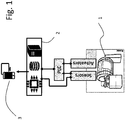
- Figure 1 schematically illustrates a unit for tanning comprising a drum 1, an electronic control unit 2 and a user interface 3.
- Electronic control unit 2 can be on board drum 1 or remote, possibly integrated in an electronic control unit (not shown) for monitoring process activities, e.g. work cycles dependent on the type of hyde to be processed, i.e. bovine, sheep, etc., malfunctions and the like, of drum 1 and / or of a more complex process line of which drum 1 is part.
- the data transmission between drum 1 and electronic control unit 2 can be operated both via cables and wireless.
- drum 1 comprises a main support frame 4, a rotating element 5 to receive a predefined quantity of raw material to be processed by chemical-physical processes, a plurality of sensors for controlling chemical-physical processes ( Figure 2 ) and one or more actuators for driving rotating element 5 and performing any further automation.
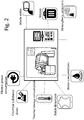
- Some process quantities or parameters for example the temperature of the water bath and tanning chemicals, such as sulfides, lime, chrome or light metal salts, aniline dyes, lubricants, PH correctors etc. the weight of a production batch of raw leather, the amount of input water and the weight of the chemicals in the process bath, are detected, according to the present invention, by sensors connected in data exchange to electronic control unit 2. These sensors can be on board drum 1 or can be arranged remotely with respect to drum 1 but in any case connected in data exchange to electronic control unit 2. This is shown for example in the left part of figure 2 .
- electronic control unit 2 receives data from additional sensors to monitor quantities and factors used in the life cycle assessment (LCA) and life cycle cost (LCC). In particular (the right side of figure 2 ) the quantity of waste water and solid waste is also measured.
- LCA life cycle assessment
- LCC life cycle cost
- electronic control unit 2 processes, for the purposes of the life cycle assessment (LCA) and the life cycle cost (LCC), the quantity and quality of chemical substances in the waste water, for example of substances resulting after chemical tanning reactions, such as residual chromium etc.
- LCA life cycle assessment
- LCC life cycle cost
- These quantities can be detected both outside the process line to be received by electronic control unit 2 or by manual input or by wireless data acquisition, for example on the basis of laboratory analyses performed on samples of the bath from rotating element 5 taken in one or more phases of the process performed by drum 1, for example at the end of this process.
- one or more sensors are mounted on board drum 1 and are connected in data exchange to electronic control unit 2.
- electronic control unit 2 is also programmed to estimate the air used in the drum on the basis of a mathematical model, for example based on the subtraction from the internal working volume of rotating element 5, of the volume occupied by the load of hydes, water, process chemicals etc. or it is connected to a volumetric sensor that measures the air coming out of the drum, if it is adducted into a clean-up system.
- a mathematical model for example based on the subtraction from the internal working volume of rotating element 5, of the volume occupied by the load of hydes, water, process chemicals etc. or it is connected to a volumetric sensor that measures the air coming out of the drum, if it is adducted into a clean-up system.
- Electronic control unit 2 collects the signals of the sensors and of the further parameters possibly inputted through the user interface and processes the relative data, in particular combining them with stored digital libraries, possibly proprietary and updatable, relating for example to the average price of the electricity, water etc.; to the equivalent production of carbon dioxide per Kg of processed raw material, to the price of the chemical products used, etc. in order to calculate the indices, parameters and factors necessary for the assessment of the life cycle (LCA) and the life cycle cost (LCC), for example according to the standards cited in the previous paragraphs.
- stored digital libraries possibly proprietary and updatable, relating for example to the average price of the electricity, water etc.; to the equivalent production of carbon dioxide per Kg of processed raw material, to the price of the chemical products used, etc.
- FIG. 3 shows a preferred embodiment of drum 1, in which support frame 3 comprises a first and a second upright 10, 11 and defines a rotation axis A of rotating element 5.
- the latter comprises inner peripheral ducts 12 having inlet and outlet ports 13 for the tanning bath spaced radially from the axis A so that, during rotation, by gravity the bath enters ducts 12 when the relative ports are in a lower zone I and exit towards the skin to be treated when the relative ports are in an upper zone S.
- Ducts 12 also converge towards a fixed manifold 15 in which a quantity of bath continuously flows from the inside of the drum during the operation of rotating element 5 because it is adducted through the rotation of the drum itself.
- a sliding seal is provided between rotating element 5 and manifold 15 to prevent leakage of fluid from the bath towards the external environment.
- This seal surrounds a plurality of ports 16 of ducts 12 arranged at a vertical height between the maximum vertical height of a port 13 and the minimum vertical height of port 13, so that a flow rate of the bath reaches manifold 15 by gravity while the relative duct 12 reaches the upper zone S and, again by gravity since manifold 15 is located at a higher level than the inferior zone I, a bath flow reaches again, through a port 13, the raw skin to continue the process.
- At least the temperature sensor is arranged in manifold 15.
- a load cell interposed between frame 3 and rotating element 5 allows to measure a lot of raw material when it is loaded into the drum before adding water. and chemical agents.
- the input water is advantageously measured by a flow meter connected to an inlet duct 17 of rotating element 5 concentric to axis A and connected to a hot water mixer by means of a sliding fluid seal.
- the absorbed electrical energy can be detected by monitoring the inverter that controls the electric motor connected to rotating element 5.
- Figure 4 illustrates an embodiment in which manifold 15 comprises a continuous solid-liquid separation device 20 for extracting the solid waste that comes off the hides due to the mechanical action of the drum, e.g. flesh, filaments, shaving etc. from the flow of bath flowing in the collector.
- a load cell connected in data exchange with electronic control unit 2 can be arranged in the solid waste collection area of the separation device 20 to weigh such waste.
- separation device 20 comprises a perforated half-cylinder housing a AISI 316 stainless steel helix inclined as an Archimedes' spiral, to intercept the flow of the bath from rotating element 5.
- This device causes the almost total separation of solid waste from the fluid.
- the solid waste is collected by a cochlea 22, made to gradually rise upwards through the inclined semi-cylinder, partially dehydrated and discharged from above to fall towards a collection container 24, which is reached by gravity from solid waste.
- drum 1 is emptied in a washing tank having a grid to evacuate the tanning bath and to retain the processed skin and solid waste. After the skins have been washed and removed, the grid retains solid waste that can be weighed. In this case, the grid performs both the function of separating the tanning bath from solid waste and the function of collecting this waste to allow weighinh through the respective sensor.
- drums it is mainly necessary to connect an electronic control unit appropriately programmed according to the indications in the previous paragraphs to an input water flow meter, a meter for electric energy absorbed by the drum, a weight sensor of the batch of input raw material, a process temperature sensor in the drum, a solid waste weight sensor and a flow meter fr water discharged from the drum; and supplying both the separation device and the device for collecting the solid waste.
- the missing sensors must be supplied.
- the weight sensor it is necessary to provide the weight sensor to be connected to the solid waste collection device and / or the flow meter to measure the amount of fluid discharged from the drum after the process.
Landscapes
- Chemical & Material Sciences (AREA)
- Engineering & Computer Science (AREA)
- Organic Chemistry (AREA)
- Mechanical Engineering (AREA)
- Manufacturing & Machinery (AREA)
- Chemical Kinetics & Catalysis (AREA)
- General Chemical & Material Sciences (AREA)
- Processing Of Solid Wastes (AREA)
- Treatment Of Fiber Materials (AREA)
- Control Of Washing Machine And Dryer (AREA)
- Pulleys (AREA)
Abstract
Description
- The present invention relates to a tanning unit comprising a drum, a plurality of sensors and an electronic unit to allow monitoring of parameters relevant to the evaluation of the environmental impact and, in particular, of the evaluation of the life cycle and the relative processing.
- The present invention also relates to a method for updating an already installed drum providing a kit in order to allow the monitoring of parameters relevant for the assessment of the environmental impact.
- The need is felt to monitor the resources used in the production processes of leather tanning to identify any inefficient use of resources such as water, energy, chemicals, etc. and to reduce the polluting products in the waste fluids.
- The object of the present invention is to improve the monitoring of the tanning process so as to allow a more efficient use of the resources, in particular of resources with environmental impact.
- The object of the present invention is achieved by means of a tanning unit comprising a drum, a plurality of sensors including one or more of, in any combination, an input water flow meter, a meter for electric energy absorbed by the drum, a weight sensor for the batch of raw loading material, a sensor for the process temperature in the drum, a sensor for the weight of waste solids, a flow meter for water discharged from the drum, an estimation of the air discharged on the basis of the volume occupied in the drum by the skin and by the process bath and an electronic control unit programmed to process a life cycle assessment (LCA) and / or life cycle cost (LCC) based on the signals received from the sensors and, preferably, the estimation of discharged air. In particular, there is provided a device for separating from the tanning bath the solid waste generated during the use of the drum and a device for collecting such solid waste, to which the waste weight sensor is connected.
- Preferably, the evaluation of the life cycle and of the life cycle cost with reference to the leather sector is carried out by the electronic unit to obtain data processing that are compliant with the requirements of international standards according to a non-limiting example ISO 14040, ISO 14044 and ISO 14025, the third of the which refers in particular to the 'product category rules' (PCR), necessary for data processing for specific categories of manufactured goods or intermediate. An example of product category specific rules for leather is represented by the standard EN 16887, version 2.0 - 2011: 13, and by the PCR of the EPD System "PRODUCT CATEGORY RULES ACCORDING TO ISO 14025 - PRODUCT GROUP: A CPC 2912 FINISHED BOVINE LEATHER" version 2.0.
- Preferably, the drum comprises a hollow rotary element in which the chemical-physical processes of the tanning take place, a fixed manifold, fluidly connected with the inside of the rotating element and configured to take samples of fluid, and sensors to detect traces of chemical agents to generate data on the fluid flowing in the manifold. In particular, through a closed fluidic circuit, the fixed manifold recirculates the process fluid coming from the rotating element and that, after flowing in the fixed tank, returns to the rotating element due to gravity or a special pump (version not shown).
- Preferably, the electronic control unit is programmed to process the sensor signals so as to process data relating to each treatment batch processed by the drum.
- According to the present invention, it is also possible to update a drum already installed in a tanning plant, by means of a method comprising the steps of connecting a sensor for measuring the quantity of solid waste to a solid waste collection device;
connecting to the sensor a unit programmed to process a life cycle assessment (LCA) and / or life cycle cost (LCC) based on the signals received from an input water flow meter, a meter for electric energy absorbed by the drum, a weight sensor for the batch of raw loading material, a sensor of the process temperature in the drum, a weight sensor for solid waste, a flow meter for water discharged from the drum and, preferably, based on the estimate of air used in the drum. - Further advantages of the present invention are presented in the description and in the dependent claims.
- The invention is described below on the basis of non-limiting examples illustrated purely for the purpose of explanation in the annexed drawings, which refer respectively to:
-
Fig. 1 a functional diagram of the tanning unit according to the present invention; -
Fig. 2 an image showing the sensor data and the quantities processed by the electronic control unit; -
Fig. 3 a section along a vertical plane of a drum according to a first embodiment; and -
Fig. 4 a section along a vertical plane of a drum according to a further embodiment. -
Figure 1 schematically illustrates a unit for tanning comprising adrum 1, anelectronic control unit 2 and auser interface 3. -
Electronic control unit 2 can be onboard drum 1 or remote, possibly integrated in an electronic control unit (not shown) for monitoring process activities, e.g. work cycles dependent on the type of hyde to be processed, i.e. bovine, sheep, etc., malfunctions and the like, ofdrum 1 and / or of a more complex process line of whichdrum 1 is part. The data transmission betweendrum 1 andelectronic control unit 2 can be operated both via cables and wireless. Analogously with the data transmission betweenelectronic control unit 2 anduser interface 3, which can be onboard drum 1 and / or in a remote and fixed position (not shown) and / or a mobile device, for example a personal mobile device, remotely and wirelessly connected toelectronic control unit 2. - In particular,
drum 1 comprises amain support frame 4, a rotatingelement 5 to receive a predefined quantity of raw material to be processed by chemical-physical processes, a plurality of sensors for controlling chemical-physical processes (Figure 2 ) and one or more actuators for driving rotatingelement 5 and performing any further automation. - Some process quantities or parameters, for example the temperature of the water bath and tanning chemicals, such as sulfides, lime, chrome or light metal salts, aniline dyes, lubricants, PH correctors etc. the weight of a production batch of raw leather, the amount of input water and the weight of the chemicals in the process bath, are detected, according to the present invention, by sensors connected in data exchange to
electronic control unit 2. These sensors can be onboard drum 1 or can be arranged remotely with respect todrum 1 but in any case connected in data exchange toelectronic control unit 2. This is shown for example in the left part offigure 2 . - In addition,
electronic control unit 2 receives data from additional sensors to monitor quantities and factors used in the life cycle assessment (LCA) and life cycle cost (LCC). In particular (the right side offigure 2 ) the quantity of waste water and solid waste is also measured. - According to a further improved embodiment,
electronic control unit 2 processes, for the purposes of the life cycle assessment (LCA) and the life cycle cost (LCC), the quantity and quality of chemical substances in the waste water, for example of substances resulting after chemical tanning reactions, such as residual chromium etc. - These quantities can be detected both outside the process line to be received by
electronic control unit 2 or by manual input or by wireless data acquisition, for example on the basis of laboratory analyses performed on samples of the bath from rotatingelement 5 taken in one or more phases of the process performed bydrum 1, for example at the end of this process. Alternatively, one or more sensors are mounted onboard drum 1 and are connected in data exchange toelectronic control unit 2. - Preferably,
electronic control unit 2 is also programmed to estimate the air used in the drum on the basis of a mathematical model, for example based on the subtraction from the internal working volume of rotatingelement 5, of the volume occupied by the load of hydes, water, process chemicals etc. or it is connected to a volumetric sensor that measures the air coming out of the drum, if it is adducted into a clean-up system. -
Electronic control unit 2 collects the signals of the sensors and of the further parameters possibly inputted through the user interface and processes the relative data, in particular combining them with stored digital libraries, possibly proprietary and updatable, relating for example to the average price of the electricity, water etc.; to the equivalent production of carbon dioxide per Kg of processed raw material, to the price of the chemical products used, etc. in order to calculate the indices, parameters and factors necessary for the assessment of the life cycle (LCA) and the life cycle cost (LCC), for example according to the standards cited in the previous paragraphs. -
Figure 3 shows a preferred embodiment ofdrum 1, in whichsupport frame 3 comprises a first and a second upright 10, 11 and defines a rotation axis A of rotatingelement 5. The latter comprises innerperipheral ducts 12 having inlet andoutlet ports 13 for the tanning bath spaced radially from the axis A so that, during rotation, by gravity the bath entersducts 12 when the relative ports are in a lower zone I and exit towards the skin to be treated when the relative ports are in an upperzone S. Ducts 12 also converge towards afixed manifold 15 in which a quantity of bath continuously flows from the inside of the drum during the operation of rotatingelement 5 because it is adducted through the rotation of the drum itself. In particular, a sliding seal is provided between rotatingelement 5 andmanifold 15 to prevent leakage of fluid from the bath towards the external environment. This seal surrounds a plurality ofports 16 ofducts 12 arranged at a vertical height between the maximum vertical height of aport 13 and the minimum vertical height ofport 13, so that a flow rate of the bath reachesmanifold 15 by gravity while therelative duct 12 reaches the upper zone S and, again by gravity sincemanifold 15 is located at a higher level than the inferior zone I, a bath flow reaches again, through aport 13, the raw skin to continue the process. - Preferably, at least the temperature sensor is arranged in
manifold 15. Furthermore, a load cell interposed betweenframe 3 and rotatingelement 5 allows to measure a lot of raw material when it is loaded into the drum before adding water. and chemical agents. The input water is advantageously measured by a flow meter connected to aninlet duct 17 of rotatingelement 5 concentric to axis A and connected to a hot water mixer by means of a sliding fluid seal. Furthermore, the absorbed electrical energy can be detected by monitoring the inverter that controls the electric motor connected to rotatingelement 5. - It is possible to weigh the quantities of each chemical agent to be added to the raw material in the drum and to manually enter the data via
user interface 3 or to connect a not shown weight scale in data exchange withelectronic control unit 2. - It is also possible to take samples of the bath from
manifold 15 to perform the chemical analyses of the residues present or install inmanifold 15 special sensors capable of detecting the type and quantity of chemicals present in the bath. Likewise, it is possible to perform off-line chemical analyses or through sensors of the aeriform aspirated through a hood before the opening of rotatingelement 5 and to input the relative data throughuser interface 3 or through automatic data acquisition so that unit ofcontrol 2 can take this into account. -
Figure 4 illustrates an embodiment in whichmanifold 15 comprises a continuous solid-liquid separation device 20 for extracting the solid waste that comes off the hides due to the mechanical action of the drum, e.g. flesh, filaments, shaving etc. from the flow of bath flowing in the collector. Preferably, a load cell connected in data exchange withelectronic control unit 2 can be arranged in the solid waste collection area of theseparation device 20 to weigh such waste. - According to a preferred embodiment of the invention,
separation device 20 comprises a perforated half-cylinder housing a AISI 316 stainless steel helix inclined as an Archimedes' spiral, to intercept the flow of the bath from rotatingelement 5. This device causes the almost total separation of solid waste from the fluid. In particular, the solid waste is collected by acochlea 22, made to gradually rise upwards through the inclined semi-cylinder, partially dehydrated and discharged from above to fall towards acollection container 24, which is reached by gravity from solid waste. - According to an alternative not illustrated embodiment, it is possible that
drum 1 is emptied in a washing tank having a grid to evacuate the tanning bath and to retain the processed skin and solid waste. After the skins have been washed and removed, the grid retains solid waste that can be weighed. In this case, the grid performs both the function of separating the tanning bath from solid waste and the function of collecting this waste to allow weighinh through the respective sensor. - It is also possible to update a drum already in use at a leather processing plant to allow the LCA and the LCC calculation. Since there are numerous configurations of drums, ranging from a purely mechanical version without any sensor, to the more complete versions, which include a plurality of sensors for process monitoring, it is mainly necessary to connect an electronic control unit appropriately programmed according to the indications in the previous paragraphs to an input water flow meter, a meter for electric energy absorbed by the drum, a weight sensor of the batch of input raw material, a process temperature sensor in the drum, a solid waste weight sensor and a flow meter fr water discharged from the drum; and supplying both the separation device and the device for collecting the solid waste. Furthermore, based on the actual instrumentation already present on board the drum to be updated, the missing sensors must be supplied. Preferably, it is necessary to provide the weight sensor to be connected to the solid waste collection device and / or the flow meter to measure the amount of fluid discharged from the drum after the process.
Claims (7)
- Tanning unit comprising a drum (1), a separation device (20) for separation of the tanning bath and solid waste generated in use in the drum (1), an electronic control unit (2) and a plurality of sensors connected in data exchange with the control unit, wherein the control unit (2):a. is connected in data exchange with the plurality of sensors among which at least a flow sensor of the input water in the drum; a flow sensor for the output fluid discharged by the drum after the process; a meter for electric power absorbed by the drum (1) and a solid waste weight sensor connected to a collecting device (24) for the solid waste intercepted by the separation device (20); andb. is programmed to process data received via the sensors and possible other data received via a user interface or by means of a data acquisition process; and to provide life cycle assessment data (LCA) and/or life cycle cost data (LCC).
- Tanning unit according to claims 1, wherein the separation device (20) and the collecting device (24) are different devices and are configured so that the collecting device (24) is reached by gravity by solid waste collected through the separation device (20).
- Tanning unit according to any of the preceding claims, wherein the drum (1) comprises a static manifold (15) fluidically connected to the rotating element (5) to receive a process fluid flow while the drum (1) is in use and at least a chemical analysis sensor mounted in the static manifold (15).
- Retrofit method of a tanning drum comprising the steps of:connecting a weight sensor for solid waste generated during the use of the drum to a solid waste collecting device (24);connecting to said sensor a control unit programmed so as to process a life cycle assessment (LCA) and/or a life cycle cost (LCC) on the basis of signals from a flow sensor of the input water; a counter for electric power absorbed by the drum (1), a weight sensor for a batch of input raw material, a process temperature sensor, the solid waste weight sensor and a flow sensor for the output fluid discharged by the drum.
- Retrofit method comprising the steps of:Connecting to an exhaust port a flow sensor for the output fluid discharged by the drum;connecting to said sensor a control unit programmed so as to process a life cycle assessment (LCA) and/or a life cycle cost (LCC) on the basis of signals from an input water counter, a counter for electric power absorbed by the drum, a weight sensor for a batch of input raw material, a process temperature sensor, the solid waste weight sensor and a flow sensor for the output fluid discharged by the drum
- Method for processing life cycle assessment (LCA) and/or the life cycle cost (LCC) for a unit according to claims 1, comprising the step of collecting solid waste from one or more batch and weighing the weight thereof.
- Method for processing life cycle assessment (LCA) and/or the life cycle cost (LCC) for a unit according to claim 1, comprising the step of measuring the fluid flow discharged after the process.
Applications Claiming Priority (1)
| Application Number | Priority Date | Filing Date | Title |
|---|---|---|---|
| IT102018000002869A IT201800002869A1 (en) | 2018-02-20 | 2018-02-20 | Tanning unit for the evaluation of the life cycle including a drum |
Publications (3)
| Publication Number | Publication Date |
|---|---|
| EP3527674A1 true EP3527674A1 (en) | 2019-08-21 |
| EP3527674C0 EP3527674C0 (en) | 2025-06-18 |
| EP3527674B1 EP3527674B1 (en) | 2025-06-18 |
Family
ID=62218216
Family Applications (1)
| Application Number | Title | Priority Date | Filing Date |
|---|---|---|---|
| EP19158295.6A Active EP3527674B1 (en) | 2018-02-20 | 2019-02-20 | Tanning unit for life cycle assessment comprising a drum and method for processing life cycle assesment and/or life cycle cost |
Country Status (2)
| Country | Link |
|---|---|
| EP (1) | EP3527674B1 (en) |
| IT (1) | IT201800002869A1 (en) |
Cited By (5)
| Publication number | Priority date | Publication date | Assignee | Title |
|---|---|---|---|---|
| WO2022128033A1 (en) * | 2020-12-14 | 2022-06-23 | Ecco Sko A/S | A process of tanning animal hides |
| IT202100000998A1 (en) * | 2021-01-21 | 2022-07-21 | Conceria Italpelli S R L | TANNING METHOD, ENVIRONMENTALLY SUSTAINABLE WITH LOW USE OF WATER |
| IT202100001001A1 (en) * | 2021-01-21 | 2022-07-21 | Only Frank S R L | ECO-SUSTAINABLE TANNING METHOD, SUITABLE FOR WASHING, TREATMENT AND PRODUCTION OF WORKABLE LEATHER AND ASSOCIATED DRUM |
| IT202200000887A1 (en) * | 2022-01-20 | 2023-07-20 | Be Green Tannery Innovazione Conciaria Italiana S R L | TANNING METHOD OF SHEEP AND GOATSKIN FOR THE PRODUCTION OF ECO-SUSTAINABLE LEATHER WITHOUT CHROME AND ASSOCIATED DRUM |
| WO2025073332A1 (en) * | 2023-10-05 | 2025-04-10 | Ecco Sko A/S | Control of tanning drum temperature during tanning of animal hides |
Citations (5)
| Publication number | Priority date | Publication date | Assignee | Title |
|---|---|---|---|---|
| EP0960948A1 (en) * | 1998-05-27 | 1999-12-01 | ERRETRE s.r.l. | Drum for milling, dyeing and tanning |
| EP0990707A2 (en) * | 1998-09-28 | 2000-04-05 | ERRETRE s.r.l. | Process for the controlled dosing of products in a drum |
| WO2001032937A1 (en) * | 1999-10-29 | 2001-05-10 | Italprogetti Engineering S.R.L. | Dry milling drum |
| CN202786270U (en) * | 2012-09-21 | 2013-03-13 | 宁夏西部皮草有限公司 | Ecological tanning device for tibet lamb skin |
| CN203878156U (en) * | 2014-06-13 | 2014-10-15 | 王宗琼 | Novel stainless steel superload drum |
-
2018
- 2018-02-20 IT IT102018000002869A patent/IT201800002869A1/en unknown
-
2019
- 2019-02-20 EP EP19158295.6A patent/EP3527674B1/en active Active
Patent Citations (5)
| Publication number | Priority date | Publication date | Assignee | Title |
|---|---|---|---|---|
| EP0960948A1 (en) * | 1998-05-27 | 1999-12-01 | ERRETRE s.r.l. | Drum for milling, dyeing and tanning |
| EP0990707A2 (en) * | 1998-09-28 | 2000-04-05 | ERRETRE s.r.l. | Process for the controlled dosing of products in a drum |
| WO2001032937A1 (en) * | 1999-10-29 | 2001-05-10 | Italprogetti Engineering S.R.L. | Dry milling drum |
| CN202786270U (en) * | 2012-09-21 | 2013-03-13 | 宁夏西部皮草有限公司 | Ecological tanning device for tibet lamb skin |
| CN203878156U (en) * | 2014-06-13 | 2014-10-15 | 王宗琼 | Novel stainless steel superload drum |
Cited By (6)
| Publication number | Priority date | Publication date | Assignee | Title |
|---|---|---|---|---|
| WO2022128033A1 (en) * | 2020-12-14 | 2022-06-23 | Ecco Sko A/S | A process of tanning animal hides |
| CN116829738A (en) * | 2020-12-14 | 2023-09-29 | 伊科斯克有限公司 | The process of tanning animal hides and skins |
| IT202100000998A1 (en) * | 2021-01-21 | 2022-07-21 | Conceria Italpelli S R L | TANNING METHOD, ENVIRONMENTALLY SUSTAINABLE WITH LOW USE OF WATER |
| IT202100001001A1 (en) * | 2021-01-21 | 2022-07-21 | Only Frank S R L | ECO-SUSTAINABLE TANNING METHOD, SUITABLE FOR WASHING, TREATMENT AND PRODUCTION OF WORKABLE LEATHER AND ASSOCIATED DRUM |
| IT202200000887A1 (en) * | 2022-01-20 | 2023-07-20 | Be Green Tannery Innovazione Conciaria Italiana S R L | TANNING METHOD OF SHEEP AND GOATSKIN FOR THE PRODUCTION OF ECO-SUSTAINABLE LEATHER WITHOUT CHROME AND ASSOCIATED DRUM |
| WO2025073332A1 (en) * | 2023-10-05 | 2025-04-10 | Ecco Sko A/S | Control of tanning drum temperature during tanning of animal hides |
Also Published As
| Publication number | Publication date |
|---|---|
| EP3527674C0 (en) | 2025-06-18 |
| EP3527674B1 (en) | 2025-06-18 |
| IT201800002869A1 (en) | 2019-08-20 |
Similar Documents
| Publication | Publication Date | Title |
|---|---|---|
| EP3527674B1 (en) | Tanning unit for life cycle assessment comprising a drum and method for processing life cycle assesment and/or life cycle cost | |
| CN102498405A (en) | Analytical instrument for automated determination of measured variables of liquid samples | |
| CN106872232A (en) | Full-automatic microwave pretreatment device | |
| CN113083148A (en) | Proportioning and feeding device of sewage treatment neutralizer based on visual detection | |
| CN112284963A (en) | A fully automatic textile fiber dissolution tester | |
| CN213633055U (en) | Full-automatic textile fiber dissolution tester | |
| KR101781430B1 (en) | Food waste automatic treatment apparatus for apartment house, wherein convenience of the user is improved | |
| CN209302712U (en) | A kind of tank body of pair of acid pickle pretreatment reaction | |
| US20180321213A1 (en) | Method for monitoring chemical parameters from an operating mineral or water processing plant; system therefor; processing plant comprising such system | |
| EP3892742B1 (en) | An adjustable pressure leather and fur processing cabinet and an operation method | |
| CN212483053U (en) | A kind of hydrogen chloride gas sampling and analysis device | |
| CN214278108U (en) | Coarse fiber detection system | |
| CN116087444A (en) | Dedicated sewage quality of water inspection appearance of environmental protection detection | |
| KR100753687B1 (en) | Automatic sample analysis using robot and automatic sample analysis device | |
| CN212964268U (en) | Automatic pretreatment device for samples | |
| CN110967278B (en) | Compactness detection system for engineering detection and detection method thereof | |
| CN220490829U (en) | Full-automatic textile fiber dissolver | |
| CN115505519A (en) | An anaerobic digestion tank adjustment system and adjustment method with built-in detection function | |
| CN111443175B (en) | Waste water detection device and detection method thereof | |
| CN113777264A (en) | Factory rainwater monitoring system and method | |
| CN208026729U (en) | A kind of system for measuring water quality biological toxicity | |
| CN209182088U (en) | Thimerosal sampler and thimerosal production equipment | |
| KR20170001700U (en) | Gravimetry module for kitchen waste collection apparatus of each house hold with hinged door | |
| CN220690941U (en) | Inspection device for detecting pH value of textile | |
| CZ25460U1 (en) | Pilot composting reactor |
Legal Events
| Date | Code | Title | Description |
|---|---|---|---|
| PUAI | Public reference made under article 153(3) epc to a published international application that has entered the european phase |
Free format text: ORIGINAL CODE: 0009012 |
|
| STAA | Information on the status of an ep patent application or granted ep patent |
Free format text: STATUS: THE APPLICATION HAS BEEN PUBLISHED |
|
| AK | Designated contracting states |
Kind code of ref document: A1 Designated state(s): AL AT BE BG CH CY CZ DE DK EE ES FI FR GB GR HR HU IE IS IT LI LT LU LV MC MK MT NL NO PL PT RO RS SE SI SK SM TR |
|
| AX | Request for extension of the european patent |
Extension state: BA ME |
|
| STAA | Information on the status of an ep patent application or granted ep patent |
Free format text: STATUS: REQUEST FOR EXAMINATION WAS MADE |
|
| 17P | Request for examination filed |
Effective date: 20200221 |
|
| RBV | Designated contracting states (corrected) |
Designated state(s): AL AT BE BG CH CY CZ DE DK EE ES FI FR GB GR HR HU IE IS IT LI LT LU LV MC MK MT NL NO PL PT RO RS SE SI SK SM TR |
|
| GRAP | Despatch of communication of intention to grant a patent |
Free format text: ORIGINAL CODE: EPIDOSNIGR1 |
|
| STAA | Information on the status of an ep patent application or granted ep patent |
Free format text: STATUS: GRANT OF PATENT IS INTENDED |
|
| RIC1 | Information provided on ipc code assigned before grant |
Ipc: C14C 15/00 20060101ALI20211112BHEP Ipc: C14C 3/00 20060101ALI20211112BHEP Ipc: C14B 3/00 20060101ALI20211112BHEP Ipc: C14B 1/00 20060101AFI20211112BHEP |
|
| INTG | Intention to grant announced |
Effective date: 20211220 |
|
| GRAS | Grant fee paid |
Free format text: ORIGINAL CODE: EPIDOSNIGR3 |
|
| GRAA | (expected) grant |
Free format text: ORIGINAL CODE: 0009210 |
|
| STAA | Information on the status of an ep patent application or granted ep patent |
Free format text: STATUS: THE PATENT HAS BEEN GRANTED |
|
| AK | Designated contracting states |
Kind code of ref document: B1 Designated state(s): AL AT BE BG CH CY CZ DE DK EE ES FI FR GB GR HR HU IE IS IT LI LT LU LV MC MK MT NL NO PL PT RO RS SE SI SK SM TR |
|
| REG | Reference to a national code |
Ref country code: GB Ref legal event code: FG4D |
|
| REG | Reference to a national code |
Ref country code: CH Ref legal event code: EP |
|
| REG | Reference to a national code |
Ref country code: DE Ref legal event code: R096 Ref document number: 602019020424 Country of ref document: DE |
|
| REG | Reference to a national code |
Ref country code: IE Ref legal event code: FG4D |
|
| REG | Reference to a national code |
Ref country code: AT Ref legal event code: REF Ref document number: 1524201 Country of ref document: AT Kind code of ref document: T Effective date: 20221115 |
|
| PUAC | Information related to the publication of a b1 document modified or deleted |
Free format text: ORIGINAL CODE: 0009299EPPU |
|
| STAA | Information on the status of an ep patent application or granted ep patent |
Free format text: STATUS: GRANT OF PATENT IS INTENDED |
|
| REG | Reference to a national code |
Ref country code: CH Ref legal event code: PK Free format text: DIE ERTEILUNG WURDE VOM EPA WIDERRUFEN. |
|
| REG | Reference to a national code |
Ref country code: LT Ref legal event code: MG9D |
|
| 29U | Proceedings interrupted after grant according to rule 142 epc |
Effective date: 20200730 |
|
| DB1 | Publication of patent cancelled |
Effective date: 20230113 |
|
| REG | Reference to a national code |
Ref country code: NL Ref legal event code: MP Effective date: 20221012 |
|
| REG | Reference to a national code |
Ref country code: DE Ref legal event code: R107 Ref document number: 602019020424 Country of ref document: DE |
|
| REG | Reference to a national code |
Ref country code: AT Ref legal event code: REZ Ref document number: 1524201 Country of ref document: AT Kind code of ref document: T Effective date: 20221012 |
|
| GBPC | Gb: european patent ceased through non-payment of renewal fee |
Effective date: 20230220 |
|
| 19W | Proceedings resumed before grant after interruption of proceedings |
Effective date: 20250502 |
|
| GRAA | (expected) grant |
Free format text: ORIGINAL CODE: 0009210 |
|
| STAA | Information on the status of an ep patent application or granted ep patent |
Free format text: STATUS: THE PATENT HAS BEEN GRANTED |
|
| RAP3 | Party data changed (applicant data changed or rights of an application transferred) |
Owner name: SPIN 360 S.R.L. Owner name: SYNESIS SOCIETA'CONSORTILE A RESPONSABILITA' LIMITATA |
|
| AK | Designated contracting states |
Kind code of ref document: B1 Designated state(s): AL AT BE BG CH CY CZ DE DK EE ES FI FR GB GR HR HU IE IS IT LI LT LU LV MC MK MT NL NO PL PT RO RS SE SI SK SM TR |
|
| REG | Reference to a national code |
Ref country code: CH Ref legal event code: EP |
|
| REG | Reference to a national code |
Ref country code: DE Ref legal event code: R081 Ref document number: 602019020424 Country of ref document: DE Owner name: SYNESIS SOCIETA' CONSORTILE A RESPONSABILITA' , IT Free format text: FORMER OWNERS: SPIN 360 S.R.L., PORDENONE, IT; SYNESIS SOCIETA' CONSORTILE A RESPONSABILITA' LIMITATA, LOMAZZO, CO, IT; VALLERO INTERNATIONAL S.R.L., OGLIANICO, TO, IT Ref country code: DE Ref legal event code: R081 Ref document number: 602019020424 Country of ref document: DE Owner name: SPIN 360 S.R.L., IT Free format text: FORMER OWNERS: SPIN 360 S.R.L., PORDENONE, IT; SYNESIS SOCIETA' CONSORTILE A RESPONSABILITA' LIMITATA, LOMAZZO, CO, IT; VALLERO INTERNATIONAL S.R.L., OGLIANICO, TO, IT |
|
| REG | Reference to a national code |
Ref country code: CH Ref legal event code: EP |
|
| REG | Reference to a national code |
Ref country code: DE Ref legal event code: R096 Ref document number: 602019020424 Country of ref document: DE |
|
| U01 | Request for unitary effect filed |
Effective date: 20250718 |
|
| U07 | Unitary effect registered |
Designated state(s): AT BE BG DE DK EE FI FR IT LT LU LV MT NL PT RO SE SI Effective date: 20250804 |
|
| PG25 | Lapsed in a contracting state [announced via postgrant information from national office to epo] |
Ref country code: NO Free format text: LAPSE BECAUSE OF FAILURE TO SUBMIT A TRANSLATION OF THE DESCRIPTION OR TO PAY THE FEE WITHIN THE PRESCRIBED TIME-LIMIT Effective date: 20250918 |
|
| PG25 | Lapsed in a contracting state [announced via postgrant information from national office to epo] |
Ref country code: HR Free format text: LAPSE BECAUSE OF FAILURE TO SUBMIT A TRANSLATION OF THE DESCRIPTION OR TO PAY THE FEE WITHIN THE PRESCRIBED TIME-LIMIT Effective date: 20250618 |
|
| PG25 | Lapsed in a contracting state [announced via postgrant information from national office to epo] |
Ref country code: SM Free format text: LAPSE BECAUSE OF FAILURE TO SUBMIT A TRANSLATION OF THE DESCRIPTION OR TO PAY THE FEE WITHIN THE PRESCRIBED TIME-LIMIT Effective date: 20250618 |
|
| PG25 | Lapsed in a contracting state [announced via postgrant information from national office to epo] |
Ref country code: CZ Free format text: LAPSE BECAUSE OF FAILURE TO SUBMIT A TRANSLATION OF THE DESCRIPTION OR TO PAY THE FEE WITHIN THE PRESCRIBED TIME-LIMIT Effective date: 20250618 |
|
| PG25 | Lapsed in a contracting state [announced via postgrant information from national office to epo] |
Ref country code: PL Free format text: LAPSE BECAUSE OF FAILURE TO SUBMIT A TRANSLATION OF THE DESCRIPTION OR TO PAY THE FEE WITHIN THE PRESCRIBED TIME-LIMIT Effective date: 20250618 |
|
| PG25 | Lapsed in a contracting state [announced via postgrant information from national office to epo] |
Ref country code: SK Free format text: LAPSE BECAUSE OF FAILURE TO SUBMIT A TRANSLATION OF THE DESCRIPTION OR TO PAY THE FEE WITHIN THE PRESCRIBED TIME-LIMIT Effective date: 20250618 |
|
| PG25 | Lapsed in a contracting state [announced via postgrant information from national office to epo] |
Ref country code: MC Free format text: LAPSE BECAUSE OF FAILURE TO SUBMIT A TRANSLATION OF THE DESCRIPTION OR TO PAY THE FEE WITHIN THE PRESCRIBED TIME-LIMIT Effective date: 20250618 |
|
| U21 | Renewal fee for the european patent with unitary effect paid with additional fee |
Year of fee payment: 8 Effective date: 20260317 |
|
| PLBE | No opposition filed within time limit |
Free format text: ORIGINAL CODE: 0009261 |
|
| STAA | Information on the status of an ep patent application or granted ep patent |
Free format text: STATUS: NO OPPOSITION FILED WITHIN TIME LIMIT |
|
| REG | Reference to a national code |
Ref country code: CH Ref legal event code: L10 Free format text: ST27 STATUS EVENT CODE: U-0-0-L10-L00 (AS PROVIDED BY THE NATIONAL OFFICE) Effective date: 20260430 |