EP3527563A1 - Dna-pk inhibitors - Google Patents
Dna-pk inhibitors Download PDFInfo
- Publication number
- EP3527563A1 EP3527563A1 EP18207382.5A EP18207382A EP3527563A1 EP 3527563 A1 EP3527563 A1 EP 3527563A1 EP 18207382 A EP18207382 A EP 18207382A EP 3527563 A1 EP3527563 A1 EP 3527563A1
- Authority
- EP
- European Patent Office
- Prior art keywords
- alkyl
- cycloalkyl
- groups
- ring
- mhz
- Prior art date
- Legal status (The legal status is an assumption and is not a legal conclusion. Google has not performed a legal analysis and makes no representation as to the accuracy of the status listed.)
- Granted
Links
- 0 C*NC1=CC(C(*(C)[C@](CC2)CC[C@]2Oc2c(*C=C*3)c3cc(*3CCOCC3)c2)=O)=**1NC Chemical compound C*NC1=CC(C(*(C)[C@](CC2)CC[C@]2Oc2c(*C=C*3)c3cc(*3CCOCC3)c2)=O)=**1NC 0.000 description 16
- ZYESGWGOSDQFDM-MAEOIBBWSA-N Brc1cnc(N[C@H](CC2)CC[C@H]2Oc2cc(N3CCOCC3)cc3c2nccn3)nc1 Chemical compound Brc1cnc(N[C@H](CC2)CC[C@H]2Oc2cc(N3CCOCC3)cc3c2nccn3)nc1 ZYESGWGOSDQFDM-MAEOIBBWSA-N 0.000 description 1
- JLJJSUUSJXLPDW-ORVCNLIYSA-N C(C1)[C@H](C2)O[C@@H]1CN2c(cc1O[C@H](CC2)CC[C@H]2Nc2ncccn2)cc2c1nccn2 Chemical compound C(C1)[C@H](C2)O[C@@H]1CN2c(cc1O[C@H](CC2)CC[C@H]2Nc2ncccn2)cc2c1nccn2 JLJJSUUSJXLPDW-ORVCNLIYSA-N 0.000 description 1
- CATRHVRATSPPJU-HLAWJBBLSA-N C(COC1)[C@H]1Oc1cnc(N[C@H](CC2)CC[C@H]2Oc2cc(N3CCOCC3)cc3c2nccn3)nc1 Chemical compound C(COC1)[C@H]1Oc1cnc(N[C@H](CC2)CC[C@H]2Oc2cc(N3CCOCC3)cc3c2nccn3)nc1 CATRHVRATSPPJU-HLAWJBBLSA-N 0.000 description 1
- SXGIYKPOYRFCTB-CALCHBBNSA-N C(C[C@H](CC1)Nc2ncccn2)[C@@H]1Nc1cc(N2CCOCC2)cc2c1nccn2 Chemical compound C(C[C@H](CC1)Nc2ncccn2)[C@@H]1Nc1cc(N2CCOCC2)cc2c1nccn2 SXGIYKPOYRFCTB-CALCHBBNSA-N 0.000 description 1
- SPMBCUSEOUYYCX-DKXQDJALSA-N C(C[C@H](CC1)Oc2cc(N3CCOCC3)cc3c2nccn3)[C@@H]1Nc1ncc(C2CCNCC2)cn1 Chemical compound C(C[C@H](CC1)Oc2cc(N3CCOCC3)cc3c2nccn3)[C@@H]1Nc1ncc(C2CCNCC2)cn1 SPMBCUSEOUYYCX-DKXQDJALSA-N 0.000 description 1
- YNAVUWVOSKDBBP-UHFFFAOYSA-N C1NCCOC1 Chemical compound C1NCCOC1 YNAVUWVOSKDBBP-UHFFFAOYSA-N 0.000 description 1
- ZOIKRWZADUVCOV-UHFFFAOYSA-N C1OC(CC2)(CCC2Oc2cc(N3CCOCC3)cc3c2nccn3)OC1 Chemical compound C1OC(CC2)(CCC2Oc2cc(N3CCOCC3)cc3c2nccn3)OC1 ZOIKRWZADUVCOV-UHFFFAOYSA-N 0.000 description 1
- RSHBLZQBIVURPD-UHFFFAOYSA-N C=CCOCCN Chemical compound C=CCOCCN RSHBLZQBIVURPD-UHFFFAOYSA-N 0.000 description 1
- DMBCWLBGBBOGAV-IZAXUBKRSA-N CC(C)COC(N[C@H](CC1)CC[C@H]1Oc1cc(N2CCOCC2)cc2c1nccn2)=O Chemical compound CC(C)COC(N[C@H](CC1)CC[C@H]1Oc1cc(N2CCOCC2)cc2c1nccn2)=O DMBCWLBGBBOGAV-IZAXUBKRSA-N 0.000 description 1
- IGUJLZXLIULXLM-PUZFROQSSA-N CC(C)Oc1cnc(N[C@H](CC2)CC[C@H]2Oc2c3nccnc3cc(N3CCOCC3)c2)nc1 Chemical compound CC(C)Oc1cnc(N[C@H](CC2)CC[C@H]2Oc2c3nccnc3cc(N3CCOCC3)c2)nc1 IGUJLZXLIULXLM-PUZFROQSSA-N 0.000 description 1
- PWOCYWRVOWWSEH-TYKWCNGQSA-N CC(C)c1cnc(N[C@H](CC2)CC[C@H]2Oc2cc(N3CCOCC3)cc3c2nccn3)nc1 Chemical compound CC(C)c1cnc(N[C@H](CC2)CC[C@H]2Oc2cc(N3CCOCC3)cc3c2nccn3)nc1 PWOCYWRVOWWSEH-TYKWCNGQSA-N 0.000 description 1
- IJZZPPZNVKNWGQ-ZWSKBUGNSA-N CC(COC)NC(c1cnc(N[C@H](CC2)CC[C@H]2Oc2cc(N3CCOCC3)cc3c2nccn3)nc1)=O Chemical compound CC(COC)NC(c1cnc(N[C@H](CC2)CC[C@H]2Oc2cc(N3CCOCC3)cc3c2nccn3)nc1)=O IJZZPPZNVKNWGQ-ZWSKBUGNSA-N 0.000 description 1
- LSSSOVZVFDFODI-WKILWMFISA-N CC(N[C@H](CC1)CC[C@@H]1Nc1cc(N2CCOCC2)cc2nccnc12)=O Chemical compound CC(N[C@H](CC1)CC[C@@H]1Nc1cc(N2CCOCC2)cc2nccnc12)=O LSSSOVZVFDFODI-WKILWMFISA-N 0.000 description 1
- HWCXDTLFAFUQLW-UHFFFAOYSA-N CC1(C)CCC2(CC2)CC1 Chemical compound CC1(C)CCC2(CC2)CC1 HWCXDTLFAFUQLW-UHFFFAOYSA-N 0.000 description 1
- PQGPYWUIWWYUGU-UHFFFAOYSA-N CC1=CCOCC1 Chemical compound CC1=CCOCC1 PQGPYWUIWWYUGU-UHFFFAOYSA-N 0.000 description 1
- FDABENXUAOKNBL-UHFFFAOYSA-N CC1CCC2(CC2)CC1 Chemical compound CC1CCC2(CC2)CC1 FDABENXUAOKNBL-UHFFFAOYSA-N 0.000 description 1
- UWLXLJPUBOGIIZ-UHFFFAOYSA-N CCCN(CCO)c1cc(C)c(C)c(OC2CCC3(CC3)CC2)c1 Chemical compound CCCN(CCO)c1cc(C)c(C)c(OC2CCC3(CC3)CC2)c1 UWLXLJPUBOGIIZ-UHFFFAOYSA-N 0.000 description 1
- YDNGBVDKDHLDRY-LCWIRDFKSA-N CCO/C=C/c1cnc(N[C@H](CC2)CC[C@H]2Oc2cc(N3CCOCC3)cc3c2nccn3)nc1 Chemical compound CCO/C=C/c1cnc(N[C@H](CC2)CC[C@H]2Oc2cc(N3CCOCC3)cc3c2nccn3)nc1 YDNGBVDKDHLDRY-LCWIRDFKSA-N 0.000 description 1
- CGPXRHCCVQCUPH-CCZBSFLLSA-N CCOC(N[C@H](CC1)CC[C@H]1Nc1cc(N2CC(CC3)OC3C2)cc2nccnc12)=O Chemical compound CCOC(N[C@H](CC1)CC[C@H]1Nc1cc(N2CC(CC3)OC3C2)cc2nccnc12)=O CGPXRHCCVQCUPH-CCZBSFLLSA-N 0.000 description 1
- UHYFOOFTOSPJOG-TYKWCNGQSA-N CCOc1nc(NC[C@H](CC2)CC[C@H]2Oc(cc(cc2N=C)N3CCOCC3)c2N=C)ccc1 Chemical compound CCOc1nc(NC[C@H](CC2)CC[C@H]2Oc(cc(cc2N=C)N3CCOCC3)c2N=C)ccc1 UHYFOOFTOSPJOG-TYKWCNGQSA-N 0.000 description 1
- YETNHASKRYNGRO-IZAXUBKRSA-N CCOc1nccc(N[C@H](CC2)CC[C@H]2Oc2cc(N3CCOCC3)cc3c2nccn3)n1 Chemical compound CCOc1nccc(N[C@H](CC2)CC[C@H]2Oc2cc(N3CCOCC3)cc3c2nccn3)n1 YETNHASKRYNGRO-IZAXUBKRSA-N 0.000 description 1
- ZRUQRWQNKZXRLS-PUZFROQSSA-N CCc1cnc(N[C@H](CC2)CC[C@H]2Oc2cc(N3CCOCC3)cc3c2nccn3)nc1 Chemical compound CCc1cnc(N[C@H](CC2)CC[C@H]2Oc2cc(N3CCOCC3)cc3c2nccn3)nc1 ZRUQRWQNKZXRLS-PUZFROQSSA-N 0.000 description 1
- FZGLKUKCUIRXSX-MSEWRSJXSA-N CN(C)c1cnc(N[C@H](CC2)CC[C@H]2Oc2cc(N3CCOCC3)cc3c2nccn3)nc1 Chemical compound CN(C)c1cnc(N[C@H](CC2)CC[C@H]2Oc2cc(N3CCOCC3)cc3c2nccn3)nc1 FZGLKUKCUIRXSX-MSEWRSJXSA-N 0.000 description 1
- OGJBCCLJDNCEOO-UHFFFAOYSA-N CN1CC(C2)OC2C1 Chemical compound CN1CC(C2)OC2C1 OGJBCCLJDNCEOO-UHFFFAOYSA-N 0.000 description 1
- XJZDIZQNHVHDKM-UHFFFAOYSA-N CN1CC(CC2)OC2C1 Chemical compound CN1CC(CC2)OC2C1 XJZDIZQNHVHDKM-UHFFFAOYSA-N 0.000 description 1
- SJRJJKPEHAURKC-UHFFFAOYSA-N CN1CCOCC1 Chemical compound CN1CCOCC1 SJRJJKPEHAURKC-UHFFFAOYSA-N 0.000 description 1
- OBYUSPJNYMLEOQ-MAEOIBBWSA-N CNc1cc(N[C@H](CC2)CC[C@H]2Oc2cc(N3CCOCC3)cc3nccnc23)ncn1 Chemical compound CNc1cc(N[C@H](CC2)CC[C@H]2Oc2cc(N3CCOCC3)cc3nccnc23)ncn1 OBYUSPJNYMLEOQ-MAEOIBBWSA-N 0.000 description 1
- WKWBIXCAMYLSCK-BKBIYGFMSA-N COc1nc(C(/N=C(\CC2)/CC[C@H]2Oc2cc(N3CCOCC3)cc3c2nccn3)=O)ccc1 Chemical compound COc1nc(C(/N=C(\CC2)/CC[C@H]2Oc2cc(N3CCOCC3)cc3c2nccn3)=O)ccc1 WKWBIXCAMYLSCK-BKBIYGFMSA-N 0.000 description 1
- OWNUXJADSMYYMW-WOVMCDHWSA-N CSc(nc1)nc(N[C@H](CC2)CC[C@H]2Oc2cc(N3CCOCC3)cc3c2nccn3)c1F Chemical compound CSc(nc1)nc(N[C@H](CC2)CC[C@H]2Oc2cc(N3CCOCC3)cc3c2nccn3)c1F OWNUXJADSMYYMW-WOVMCDHWSA-N 0.000 description 1
- UUMDQBJGJSKFPK-RKDXNWHRSA-N C[C@H]1[C@H](C)CC2(CC2)CC1 Chemical compound C[C@H]1[C@H](C)CC2(CC2)CC1 UUMDQBJGJSKFPK-RKDXNWHRSA-N 0.000 description 1
- IDPIQWPQKNCXKJ-IQGASKDCSA-N Cc1nc(C)cc(N[C@H](CC2)CC[C@H]2Oc2cc(N3CCOCC3)cc3c2nccn3)c1 Chemical compound Cc1nc(C)cc(N[C@H](CC2)CC[C@H]2Oc2cc(N3CCOCC3)cc3c2nccn3)c1 IDPIQWPQKNCXKJ-IQGASKDCSA-N 0.000 description 1
- OLOPDNMLFGLWNT-IZAXUBKRSA-N Cc1nc(cc(cc2O[C@H](CC3)CC[C@H]3Nc3ncccn3)N3CCOCC3)c2nc1 Chemical compound Cc1nc(cc(cc2O[C@H](CC3)CC[C@H]3Nc3ncccn3)N3CCOCC3)c2nc1 OLOPDNMLFGLWNT-IZAXUBKRSA-N 0.000 description 1
- FTFNZVIEMNMEHY-IZAXUBKRSA-N Cc1nccc(N[C@H](CC2)CC[C@H]2Oc2cc(N3CCOCC3)cc3c2nccn3)n1 Chemical compound Cc1nccc(N[C@H](CC2)CC[C@H]2Oc2cc(N3CCOCC3)cc3c2nccn3)n1 FTFNZVIEMNMEHY-IZAXUBKRSA-N 0.000 description 1
- YFFGRVHGMLPOQS-RVWIWJKTSA-N Cc1nccc(N[C@H](CC2)CC[C@H]2Oc2cc(N3CCOCC3)cc3nccnc23)c1 Chemical compound Cc1nccc(N[C@H](CC2)CC[C@H]2Oc2cc(N3CCOCC3)cc3nccnc23)c1 YFFGRVHGMLPOQS-RVWIWJKTSA-N 0.000 description 1
- PZMJNTMWVOWJQB-OZBRXXBKSA-N FC(c1nccc(/N=C(\CC2)/CC[C@H]2Oc2cc(N3CCOCC3)cc3nccnc23)n1)(F)F Chemical compound FC(c1nccc(/N=C(\CC2)/CC[C@H]2Oc2cc(N3CCOCC3)cc3nccnc23)n1)(F)F PZMJNTMWVOWJQB-OZBRXXBKSA-N 0.000 description 1
- MFPMSHOUEVBUQF-MAEOIBBWSA-N Fc1cnc(N[C@H](CC2)CC[C@H]2Oc2cc(N3CCOCC3)cc3c2nccn3)nc1 Chemical compound Fc1cnc(N[C@H](CC2)CC[C@H]2Oc2cc(N3CCOCC3)cc3c2nccn3)nc1 MFPMSHOUEVBUQF-MAEOIBBWSA-N 0.000 description 1
- MNVBAAYDKQPBNE-UHFFFAOYSA-N I[IH]C1CCOCC1 Chemical compound I[IH]C1CCOCC1 MNVBAAYDKQPBNE-UHFFFAOYSA-N 0.000 description 1
- AGPSBPSNFDFMBR-IZAXUBKRSA-N Nc1ccc(N[C@H](CC2)CC[C@H]2Oc2c3nccnc3cc(N3CCOCC3)c2)nc1 Chemical compound Nc1ccc(N[C@H](CC2)CC[C@H]2Oc2c3nccnc3cc(N3CCOCC3)c2)nc1 AGPSBPSNFDFMBR-IZAXUBKRSA-N 0.000 description 1
- CYGDFUGEVNDNMK-UHFFFAOYSA-N O=C(c1ccn[s]1)NC[C@H](CC1)CC/C1=[O]/c1cc(N2CCOCC2)cc2nccnc12 Chemical compound O=C(c1ccn[s]1)NC[C@H](CC1)CC/C1=[O]/c1cc(N2CCOCC2)cc2nccnc12 CYGDFUGEVNDNMK-UHFFFAOYSA-N 0.000 description 1
- AYGHBQBFJSNKIL-PUZFROQSSA-N O=C(c1cnccc1)N[C@H](CC1)CC[C@H]1Oc1cc(N2CCOCC2)cc2c1nccn2 Chemical compound O=C(c1cnccc1)N[C@H](CC1)CC[C@H]1Oc1cc(N2CCOCC2)cc2c1nccn2 AYGHBQBFJSNKIL-PUZFROQSSA-N 0.000 description 1
- WTFMSJUYGYNVMR-IZAXUBKRSA-N OC(c(cc1)cnc1N[C@H](CC1)CC[C@H]1Oc1cc(N2CCOCC2)cc2c1nccn2)=O Chemical compound OC(c(cc1)cnc1N[C@H](CC1)CC[C@H]1Oc1cc(N2CCOCC2)cc2c1nccn2)=O WTFMSJUYGYNVMR-IZAXUBKRSA-N 0.000 description 1
- YEAXJKHOICHUFU-CRAHXNDLSA-N OCCOC(/N=C(\CC1)/CC[C@@H]1Nc1cc(N2CCOCC2)cc2nccnc12)=O Chemical compound OCCOC(/N=C(\CC1)/CC[C@@H]1Nc1cc(N2CCOCC2)cc2nccnc12)=O YEAXJKHOICHUFU-CRAHXNDLSA-N 0.000 description 1
- ZSSSEILZPPCKGE-RHNCMZPLSA-N Oc1cnc(N[C@H](CC2)CC[C@H]2Oc2cc(N3CCOCC3)cc3c2nccn3)nc1 Chemical compound Oc1cnc(N[C@H](CC2)CC[C@H]2Oc2cc(N3CCOCC3)cc3c2nccn3)nc1 ZSSSEILZPPCKGE-RHNCMZPLSA-N 0.000 description 1
- RLABOVVMVFMNKJ-UWUNEBHHSA-N [O-][N+](c(cc1)cnc1N[C@H](CC1)CC[C@H]1Oc1cc(N2CCOCC2)cc2c1nccn2)=O Chemical compound [O-][N+](c(cc1)cnc1N[C@H](CC1)CC[C@H]1Oc1cc(N2CCOCC2)cc2c1nccn2)=O RLABOVVMVFMNKJ-UWUNEBHHSA-N 0.000 description 1
- FEPPUSLPASVEBK-UHFFFAOYSA-N [O-][N+](c1cnc(NC[C@H](CC2)CC/C2=[O]/c2cc(N3CCOCC3)cc3c2nccn3)nc1)=O Chemical compound [O-][N+](c1cnc(NC[C@H](CC2)CC/C2=[O]/c2cc(N3CCOCC3)cc3c2nccn3)nc1)=O FEPPUSLPASVEBK-UHFFFAOYSA-N 0.000 description 1
Classifications
-
- C—CHEMISTRY; METALLURGY
- C07—ORGANIC CHEMISTRY
- C07D—HETEROCYCLIC COMPOUNDS
- C07D498/00—Heterocyclic compounds containing in the condensed system at least one hetero ring having nitrogen and oxygen atoms as the only ring hetero atoms
- C07D498/02—Heterocyclic compounds containing in the condensed system at least one hetero ring having nitrogen and oxygen atoms as the only ring hetero atoms in which the condensed system contains two hetero rings
- C07D498/08—Bridged systems
-
- A—HUMAN NECESSITIES
- A61—MEDICAL OR VETERINARY SCIENCE; HYGIENE
- A61K—PREPARATIONS FOR MEDICAL, DENTAL OR TOILETRY PURPOSES
- A61K31/00—Medicinal preparations containing organic active ingredients
- A61K31/33—Heterocyclic compounds
- A61K31/395—Heterocyclic compounds having nitrogen as a ring hetero atom, e.g. guanethidine or rifamycins
- A61K31/535—Heterocyclic compounds having nitrogen as a ring hetero atom, e.g. guanethidine or rifamycins having six-membered rings with at least one nitrogen and one oxygen as the ring hetero atoms, e.g. 1,2-oxazines
- A61K31/5375—1,4-Oxazines, e.g. morpholine
- A61K31/5377—1,4-Oxazines, e.g. morpholine not condensed and containing further heterocyclic rings, e.g. timolol
-
- A—HUMAN NECESSITIES
- A61—MEDICAL OR VETERINARY SCIENCE; HYGIENE
- A61K—PREPARATIONS FOR MEDICAL, DENTAL OR TOILETRY PURPOSES
- A61K31/00—Medicinal preparations containing organic active ingredients
- A61K31/33—Heterocyclic compounds
- A61K31/395—Heterocyclic compounds having nitrogen as a ring hetero atom, e.g. guanethidine or rifamycins
- A61K31/495—Heterocyclic compounds having nitrogen as a ring hetero atom, e.g. guanethidine or rifamycins having six-membered rings with two or more nitrogen atoms as the only ring heteroatoms, e.g. piperazine or tetrazines
- A61K31/505—Pyrimidines; Hydrogenated pyrimidines, e.g. trimethoprim
- A61K31/506—Pyrimidines; Hydrogenated pyrimidines, e.g. trimethoprim not condensed and containing further heterocyclic rings
-
- A—HUMAN NECESSITIES
- A61—MEDICAL OR VETERINARY SCIENCE; HYGIENE
- A61K—PREPARATIONS FOR MEDICAL, DENTAL OR TOILETRY PURPOSES
- A61K31/00—Medicinal preparations containing organic active ingredients
- A61K31/33—Heterocyclic compounds
- A61K31/395—Heterocyclic compounds having nitrogen as a ring hetero atom, e.g. guanethidine or rifamycins
- A61K31/495—Heterocyclic compounds having nitrogen as a ring hetero atom, e.g. guanethidine or rifamycins having six-membered rings with two or more nitrogen atoms as the only ring heteroatoms, e.g. piperazine or tetrazines
- A61K31/505—Pyrimidines; Hydrogenated pyrimidines, e.g. trimethoprim
- A61K31/517—Pyrimidines; Hydrogenated pyrimidines, e.g. trimethoprim ortho- or peri-condensed with carbocyclic ring systems, e.g. quinazoline, perimidine
-
- A—HUMAN NECESSITIES
- A61—MEDICAL OR VETERINARY SCIENCE; HYGIENE
- A61K—PREPARATIONS FOR MEDICAL, DENTAL OR TOILETRY PURPOSES
- A61K31/00—Medicinal preparations containing organic active ingredients
- A61K31/33—Heterocyclic compounds
- A61K31/395—Heterocyclic compounds having nitrogen as a ring hetero atom, e.g. guanethidine or rifamycins
- A61K31/535—Heterocyclic compounds having nitrogen as a ring hetero atom, e.g. guanethidine or rifamycins having six-membered rings with at least one nitrogen and one oxygen as the ring hetero atoms, e.g. 1,2-oxazines
- A61K31/5375—1,4-Oxazines, e.g. morpholine
- A61K31/5386—1,4-Oxazines, e.g. morpholine spiro-condensed or forming part of bridged ring systems
-
- A—HUMAN NECESSITIES
- A61—MEDICAL OR VETERINARY SCIENCE; HYGIENE
- A61P—SPECIFIC THERAPEUTIC ACTIVITY OF CHEMICAL COMPOUNDS OR MEDICINAL PREPARATIONS
- A61P35/00—Antineoplastic agents
-
- A—HUMAN NECESSITIES
- A61—MEDICAL OR VETERINARY SCIENCE; HYGIENE
- A61P—SPECIFIC THERAPEUTIC ACTIVITY OF CHEMICAL COMPOUNDS OR MEDICINAL PREPARATIONS
- A61P35/00—Antineoplastic agents
- A61P35/02—Antineoplastic agents specific for leukemia
-
- A—HUMAN NECESSITIES
- A61—MEDICAL OR VETERINARY SCIENCE; HYGIENE
- A61P—SPECIFIC THERAPEUTIC ACTIVITY OF CHEMICAL COMPOUNDS OR MEDICINAL PREPARATIONS
- A61P43/00—Drugs for specific purposes, not provided for in groups A61P1/00-A61P41/00
-
- C—CHEMISTRY; METALLURGY
- C07—ORGANIC CHEMISTRY
- C07D—HETEROCYCLIC COMPOUNDS
- C07D241/00—Heterocyclic compounds containing 1,4-diazine or hydrogenated 1,4-diazine rings
- C07D241/36—Heterocyclic compounds containing 1,4-diazine or hydrogenated 1,4-diazine rings condensed with carbocyclic rings or ring systems
- C07D241/38—Heterocyclic compounds containing 1,4-diazine or hydrogenated 1,4-diazine rings condensed with carbocyclic rings or ring systems with only hydrogen or carbon atoms directly attached to the ring nitrogen atoms
- C07D241/40—Benzopyrazines
-
- C—CHEMISTRY; METALLURGY
- C07—ORGANIC CHEMISTRY
- C07D—HETEROCYCLIC COMPOUNDS
- C07D241/00—Heterocyclic compounds containing 1,4-diazine or hydrogenated 1,4-diazine rings
- C07D241/36—Heterocyclic compounds containing 1,4-diazine or hydrogenated 1,4-diazine rings condensed with carbocyclic rings or ring systems
- C07D241/38—Heterocyclic compounds containing 1,4-diazine or hydrogenated 1,4-diazine rings condensed with carbocyclic rings or ring systems with only hydrogen or carbon atoms directly attached to the ring nitrogen atoms
- C07D241/40—Benzopyrazines
- C07D241/42—Benzopyrazines with only hydrogen atoms, hydrocarbon or substituted hydrocarbon radicals, directly attached to carbon atoms of the hetero ring
-
- C—CHEMISTRY; METALLURGY
- C07—ORGANIC CHEMISTRY
- C07D—HETEROCYCLIC COMPOUNDS
- C07D241/00—Heterocyclic compounds containing 1,4-diazine or hydrogenated 1,4-diazine rings
- C07D241/36—Heterocyclic compounds containing 1,4-diazine or hydrogenated 1,4-diazine rings condensed with carbocyclic rings or ring systems
- C07D241/38—Heterocyclic compounds containing 1,4-diazine or hydrogenated 1,4-diazine rings condensed with carbocyclic rings or ring systems with only hydrogen or carbon atoms directly attached to the ring nitrogen atoms
- C07D241/40—Benzopyrazines
- C07D241/44—Benzopyrazines with hetero atoms or with carbon atoms having three bonds to hetero atoms with at the most one bond to halogen, e.g. ester or nitrile radicals, directly attached to carbon atoms of the hetero ring
-
- C—CHEMISTRY; METALLURGY
- C07—ORGANIC CHEMISTRY
- C07D—HETEROCYCLIC COMPOUNDS
- C07D271/00—Heterocyclic compounds containing five-membered rings having two nitrogen atoms and one oxygen atom as the only ring hetero atoms
- C07D271/12—Heterocyclic compounds containing five-membered rings having two nitrogen atoms and one oxygen atom as the only ring hetero atoms condensed with carbocyclic rings or ring systems
-
- C—CHEMISTRY; METALLURGY
- C07—ORGANIC CHEMISTRY
- C07D—HETEROCYCLIC COMPOUNDS
- C07D401/00—Heterocyclic compounds containing two or more hetero rings, having nitrogen atoms as the only ring hetero atoms, at least one ring being a six-membered ring with only one nitrogen atom
- C07D401/02—Heterocyclic compounds containing two or more hetero rings, having nitrogen atoms as the only ring hetero atoms, at least one ring being a six-membered ring with only one nitrogen atom containing two hetero rings
- C07D401/12—Heterocyclic compounds containing two or more hetero rings, having nitrogen atoms as the only ring hetero atoms, at least one ring being a six-membered ring with only one nitrogen atom containing two hetero rings linked by a chain containing hetero atoms as chain links
-
- C—CHEMISTRY; METALLURGY
- C07—ORGANIC CHEMISTRY
- C07D—HETEROCYCLIC COMPOUNDS
- C07D401/00—Heterocyclic compounds containing two or more hetero rings, having nitrogen atoms as the only ring hetero atoms, at least one ring being a six-membered ring with only one nitrogen atom
- C07D401/14—Heterocyclic compounds containing two or more hetero rings, having nitrogen atoms as the only ring hetero atoms, at least one ring being a six-membered ring with only one nitrogen atom containing three or more hetero rings
-
- C—CHEMISTRY; METALLURGY
- C07—ORGANIC CHEMISTRY
- C07D—HETEROCYCLIC COMPOUNDS
- C07D403/00—Heterocyclic compounds containing two or more hetero rings, having nitrogen atoms as the only ring hetero atoms, not provided for by group C07D401/00
- C07D403/02—Heterocyclic compounds containing two or more hetero rings, having nitrogen atoms as the only ring hetero atoms, not provided for by group C07D401/00 containing two hetero rings
- C07D403/12—Heterocyclic compounds containing two or more hetero rings, having nitrogen atoms as the only ring hetero atoms, not provided for by group C07D401/00 containing two hetero rings linked by a chain containing hetero atoms as chain links
-
- C—CHEMISTRY; METALLURGY
- C07—ORGANIC CHEMISTRY
- C07D—HETEROCYCLIC COMPOUNDS
- C07D403/00—Heterocyclic compounds containing two or more hetero rings, having nitrogen atoms as the only ring hetero atoms, not provided for by group C07D401/00
- C07D403/14—Heterocyclic compounds containing two or more hetero rings, having nitrogen atoms as the only ring hetero atoms, not provided for by group C07D401/00 containing three or more hetero rings
-
- C—CHEMISTRY; METALLURGY
- C07—ORGANIC CHEMISTRY
- C07D—HETEROCYCLIC COMPOUNDS
- C07D405/00—Heterocyclic compounds containing both one or more hetero rings having oxygen atoms as the only ring hetero atoms, and one or more rings having nitrogen as the only ring hetero atom
- C07D405/02—Heterocyclic compounds containing both one or more hetero rings having oxygen atoms as the only ring hetero atoms, and one or more rings having nitrogen as the only ring hetero atom containing two hetero rings
- C07D405/12—Heterocyclic compounds containing both one or more hetero rings having oxygen atoms as the only ring hetero atoms, and one or more rings having nitrogen as the only ring hetero atom containing two hetero rings linked by a chain containing hetero atoms as chain links
-
- C—CHEMISTRY; METALLURGY
- C07—ORGANIC CHEMISTRY
- C07D—HETEROCYCLIC COMPOUNDS
- C07D405/00—Heterocyclic compounds containing both one or more hetero rings having oxygen atoms as the only ring hetero atoms, and one or more rings having nitrogen as the only ring hetero atom
- C07D405/14—Heterocyclic compounds containing both one or more hetero rings having oxygen atoms as the only ring hetero atoms, and one or more rings having nitrogen as the only ring hetero atom containing three or more hetero rings
-
- C—CHEMISTRY; METALLURGY
- C07—ORGANIC CHEMISTRY
- C07D—HETEROCYCLIC COMPOUNDS
- C07D413/00—Heterocyclic compounds containing two or more hetero rings, at least one ring having nitrogen and oxygen atoms as the only ring hetero atoms
- C07D413/02—Heterocyclic compounds containing two or more hetero rings, at least one ring having nitrogen and oxygen atoms as the only ring hetero atoms containing two hetero rings
-
- C—CHEMISTRY; METALLURGY
- C07—ORGANIC CHEMISTRY
- C07D—HETEROCYCLIC COMPOUNDS
- C07D413/00—Heterocyclic compounds containing two or more hetero rings, at least one ring having nitrogen and oxygen atoms as the only ring hetero atoms
- C07D413/02—Heterocyclic compounds containing two or more hetero rings, at least one ring having nitrogen and oxygen atoms as the only ring hetero atoms containing two hetero rings
- C07D413/04—Heterocyclic compounds containing two or more hetero rings, at least one ring having nitrogen and oxygen atoms as the only ring hetero atoms containing two hetero rings directly linked by a ring-member-to-ring-member bond
-
- C—CHEMISTRY; METALLURGY
- C07—ORGANIC CHEMISTRY
- C07D—HETEROCYCLIC COMPOUNDS
- C07D413/00—Heterocyclic compounds containing two or more hetero rings, at least one ring having nitrogen and oxygen atoms as the only ring hetero atoms
- C07D413/02—Heterocyclic compounds containing two or more hetero rings, at least one ring having nitrogen and oxygen atoms as the only ring hetero atoms containing two hetero rings
- C07D413/12—Heterocyclic compounds containing two or more hetero rings, at least one ring having nitrogen and oxygen atoms as the only ring hetero atoms containing two hetero rings linked by a chain containing hetero atoms as chain links
-
- C—CHEMISTRY; METALLURGY
- C07—ORGANIC CHEMISTRY
- C07D—HETEROCYCLIC COMPOUNDS
- C07D413/00—Heterocyclic compounds containing two or more hetero rings, at least one ring having nitrogen and oxygen atoms as the only ring hetero atoms
- C07D413/14—Heterocyclic compounds containing two or more hetero rings, at least one ring having nitrogen and oxygen atoms as the only ring hetero atoms containing three or more hetero rings
-
- C—CHEMISTRY; METALLURGY
- C07—ORGANIC CHEMISTRY
- C07D—HETEROCYCLIC COMPOUNDS
- C07D417/00—Heterocyclic compounds containing two or more hetero rings, at least one ring having nitrogen and sulfur atoms as the only ring hetero atoms, not provided for by group C07D415/00
- C07D417/02—Heterocyclic compounds containing two or more hetero rings, at least one ring having nitrogen and sulfur atoms as the only ring hetero atoms, not provided for by group C07D415/00 containing two hetero rings
- C07D417/12—Heterocyclic compounds containing two or more hetero rings, at least one ring having nitrogen and sulfur atoms as the only ring hetero atoms, not provided for by group C07D415/00 containing two hetero rings linked by a chain containing hetero atoms as chain links
-
- C—CHEMISTRY; METALLURGY
- C07—ORGANIC CHEMISTRY
- C07D—HETEROCYCLIC COMPOUNDS
- C07D471/00—Heterocyclic compounds containing nitrogen atoms as the only ring hetero atoms in the condensed system, at least one ring being a six-membered ring with one nitrogen atom, not provided for by groups C07D451/00 - C07D463/00
- C07D471/02—Heterocyclic compounds containing nitrogen atoms as the only ring hetero atoms in the condensed system, at least one ring being a six-membered ring with one nitrogen atom, not provided for by groups C07D451/00 - C07D463/00 in which the condensed system contains two hetero rings
- C07D471/04—Ortho-condensed systems
-
- C—CHEMISTRY; METALLURGY
- C07—ORGANIC CHEMISTRY
- C07D—HETEROCYCLIC COMPOUNDS
- C07D473/00—Heterocyclic compounds containing purine ring systems
- C07D473/40—Heterocyclic compounds containing purine ring systems with halogen atoms or perhalogeno-alkyl radicals directly attached in position 2 or 6
-
- C—CHEMISTRY; METALLURGY
- C07—ORGANIC CHEMISTRY
- C07D—HETEROCYCLIC COMPOUNDS
- C07D475/00—Heterocyclic compounds containing pteridine ring systems
-
- C—CHEMISTRY; METALLURGY
- C07—ORGANIC CHEMISTRY
- C07D—HETEROCYCLIC COMPOUNDS
- C07D487/00—Heterocyclic compounds containing nitrogen atoms as the only ring hetero atoms in the condensed system, not provided for by groups C07D451/00 - C07D477/00
- C07D487/02—Heterocyclic compounds containing nitrogen atoms as the only ring hetero atoms in the condensed system, not provided for by groups C07D451/00 - C07D477/00 in which the condensed system contains two hetero rings
- C07D487/04—Ortho-condensed systems
-
- C—CHEMISTRY; METALLURGY
- C07—ORGANIC CHEMISTRY
- C07D—HETEROCYCLIC COMPOUNDS
- C07D491/00—Heterocyclic compounds containing in the condensed ring system both one or more rings having oxygen atoms as the only ring hetero atoms and one or more rings having nitrogen atoms as the only ring hetero atoms, not provided for by groups C07D451/00 - C07D459/00, C07D463/00, C07D477/00 or C07D489/00
- C07D491/02—Heterocyclic compounds containing in the condensed ring system both one or more rings having oxygen atoms as the only ring hetero atoms and one or more rings having nitrogen atoms as the only ring hetero atoms, not provided for by groups C07D451/00 - C07D459/00, C07D463/00, C07D477/00 or C07D489/00 in which the condensed system contains two hetero rings
- C07D491/04—Ortho-condensed systems
- C07D491/044—Ortho-condensed systems with only one oxygen atom as ring hetero atom in the oxygen-containing ring
- C07D491/048—Ortho-condensed systems with only one oxygen atom as ring hetero atom in the oxygen-containing ring the oxygen-containing ring being five-membered
-
- C—CHEMISTRY; METALLURGY
- C07—ORGANIC CHEMISTRY
- C07D—HETEROCYCLIC COMPOUNDS
- C07D491/00—Heterocyclic compounds containing in the condensed ring system both one or more rings having oxygen atoms as the only ring hetero atoms and one or more rings having nitrogen atoms as the only ring hetero atoms, not provided for by groups C07D451/00 - C07D459/00, C07D463/00, C07D477/00 or C07D489/00
- C07D491/02—Heterocyclic compounds containing in the condensed ring system both one or more rings having oxygen atoms as the only ring hetero atoms and one or more rings having nitrogen atoms as the only ring hetero atoms, not provided for by groups C07D451/00 - C07D459/00, C07D463/00, C07D477/00 or C07D489/00 in which the condensed system contains two hetero rings
- C07D491/04—Ortho-condensed systems
- C07D491/044—Ortho-condensed systems with only one oxygen atom as ring hetero atom in the oxygen-containing ring
- C07D491/052—Ortho-condensed systems with only one oxygen atom as ring hetero atom in the oxygen-containing ring the oxygen-containing ring being six-membered
-
- C—CHEMISTRY; METALLURGY
- C07—ORGANIC CHEMISTRY
- C07D—HETEROCYCLIC COMPOUNDS
- C07D491/00—Heterocyclic compounds containing in the condensed ring system both one or more rings having oxygen atoms as the only ring hetero atoms and one or more rings having nitrogen atoms as the only ring hetero atoms, not provided for by groups C07D451/00 - C07D459/00, C07D463/00, C07D477/00 or C07D489/00
- C07D491/02—Heterocyclic compounds containing in the condensed ring system both one or more rings having oxygen atoms as the only ring hetero atoms and one or more rings having nitrogen atoms as the only ring hetero atoms, not provided for by groups C07D451/00 - C07D459/00, C07D463/00, C07D477/00 or C07D489/00 in which the condensed system contains two hetero rings
- C07D491/04—Ortho-condensed systems
- C07D491/056—Ortho-condensed systems with two or more oxygen atoms as ring hetero atoms in the oxygen-containing ring
-
- C—CHEMISTRY; METALLURGY
- C07—ORGANIC CHEMISTRY
- C07D—HETEROCYCLIC COMPOUNDS
- C07D491/00—Heterocyclic compounds containing in the condensed ring system both one or more rings having oxygen atoms as the only ring hetero atoms and one or more rings having nitrogen atoms as the only ring hetero atoms, not provided for by groups C07D451/00 - C07D459/00, C07D463/00, C07D477/00 or C07D489/00
- C07D491/02—Heterocyclic compounds containing in the condensed ring system both one or more rings having oxygen atoms as the only ring hetero atoms and one or more rings having nitrogen atoms as the only ring hetero atoms, not provided for by groups C07D451/00 - C07D459/00, C07D463/00, C07D477/00 or C07D489/00 in which the condensed system contains two hetero rings
- C07D491/08—Bridged systems
-
- C—CHEMISTRY; METALLURGY
- C07—ORGANIC CHEMISTRY
- C07D—HETEROCYCLIC COMPOUNDS
- C07D513/00—Heterocyclic compounds containing in the condensed system at least one hetero ring having nitrogen and sulfur atoms as the only ring hetero atoms, not provided for in groups C07D463/00, C07D477/00 or C07D499/00 - C07D507/00
- C07D513/02—Heterocyclic compounds containing in the condensed system at least one hetero ring having nitrogen and sulfur atoms as the only ring hetero atoms, not provided for in groups C07D463/00, C07D477/00 or C07D499/00 - C07D507/00 in which the condensed system contains two hetero rings
- C07D513/04—Ortho-condensed systems
Definitions
- the present invention relates to compounds useful as inhibitors of DNA-dependent protein kinase (DNA-PK).
- the invention also provides pharmaceutically acceptable compositions comprising the compounds of the invention and methods of using the compositions in the treatment of cancer,
- Ionizing radiation induces a variety of DNA damage of which double strand breaks (DSBs) are the most cytotoxic. These DSBs can lead to cell death via apoptosis and/or mitotic catastrophe if not rapidly and completely repaired.
- certain chemotherapeutic agents including topoisomerase II inhibitors, bleomycin, and doxorubicin also cause DSBs. These DNA lesions trigger a complex set of signals through the DNA damage response network that function to repair the damaged DNA and maintain cell viability and genomic stability.
- NHEJ Non-Homologous End Joining Pathway
- NHEJ requires coordination of many proteins and signaling pathways.
- the core NHEJ machinery consists of the Ku70/80 heterodimer and the catalytic subunit of DNA-dependent protein kinase (DNA-PKcs), which together comprise the active DNA-PK enzyme complex.
- DNA-PKcs DNA-dependent protein kinase
- DNA-PKcs is a member of the phosphatidylinositol 3-kinase-related kinase (PIKK) family of serine/threonine protein kinases that also includes ataxia telangiectasia mutated (ATM), ataxia telangiectasia and Rad3-related (ATR), mTOR, and four PI3K isoforms.
- PIKK phosphatidylinositol 3-kinase-related kinase
- ATM telangiectasia mutated
- ATR ataxia telangiectasia and Rad3-related
- mTOR mTOR
- DNA-PKcs is in the same protein kinase family as ATM and ATR, these latter kinases function to repair DNA damage through the Homologous Recombination (HR) pathway and are restricted to the S and G 2 phases of the cell cycle.
- HR Homologous Recombination
- ATM
- NHEJ is thought to proceed through three key steps: recognition of the DSBs, DNA processing to remove non-ligatable ends or other forms of damage at the termini, and finally ligation of the DNA ends.
- Recognition of the DSB is carried out by binding of the Ku heterodimer to the ragged DNA ends followed by recruitment of two molecules of DNA-PKcs to adjacent sides of the DSB; this serves to protect the broken termini until additional processing enzymes are recruited.
- Recent data supports the hypothesis that DNA-PKcs phosphorylates the processing enzyme, Artemis, as well as itself to prepare the DNA ends for additional processing. In some cases DNA polymerase may be required to synthesize new ends prior to the ligation step. The auto-phosphorylation of DNA-PKcs is believed to induce a conformational change that opens the central DNA binding cavity, releases DNA-PKcs from DNA, and facilitates the ultimate religation of the DNA ends.
- DNA-PK -/- mice are hypersensitive to the effects of IR and that some non-selective small molecule inhibitors of DNA-PKcs can radiosensitize a variety of tumor cell types across a broad set of genetic backgrounds. While it is expected that inhibition of DNA-PK will radiosensitize normal cells to some extent, this has been observed to a lesser degree than with tumor cells likely due to the fact that tumor cells possess higher basal levels of endogenous replication stress and DNA damage (oncogene-induced replication stress) and DNA repair mechanisms are less efficient in tumor cells. Most importantly, an improved therapeutic window with greater sparing of normal tissue will be imparted from the combination of a DNA-PK inhibitor with recent advances in precision delivery of focused IR, including image-guide RT (IGRT) and intensity-modulated RT (IMRT).
- IGRT image-guide RT
- IMRT intensity-modulated RT
- DNA-PK activity induces effects in both cycling and non-cycling cells. This is highly significant since the majority of cells in a solid tumor are not actively replicating at any given moment, which limits the efficacy of many agents targeting the cell cycle. Equally interesting are recent reports that suggest a strong connection between inhibition of the NHEJ pathway and the ability to kill traditionally radioresistant cancer stem cells (CSCs). It has been shown in some tumor cells that DSBs in dormant CSCs predominantly activate DNA repair through the NHEJ pathway; it is believed that CSCs are usually in the quiescent phase of the cell cycle. This may explain why half of cancer patients may experience local or distant tumor relapse despite treatment as current strategies are not able to effectively target CSCs. A DNA-PK inhibitor may have the ability to sensitize these potential metastatic progenitor cells to the effects of IR and select DSB-inducing chemotherapeutic agents.
- DNA-PK inhibitory drugs Given the involvement of DNA-PK in DNA repair processes, an application of specific DNA-PK inhibitory drugs would be to act as agents that will enhance the efficacy of both cancer chemotherapy and radiotherapy. Accordingly, it would be desirable to develop compounds useful as inhibitors of DNA-PK.
- the invention features compounds having the general formula: or a pharmaceutically acceptable salt thereof, where each of R 1 , R 2 , X, Ring A, Ring B and Ring C is as defined elsewhere herein.
- the invention also provides pharmaceutical compositions that include a compound of formula I and a pharmaceutically acceptable carrier, adjuvant, or vehicle. These compounds and pharmaceutical compositions are useful for treating or lessening the severity of cancer.
- the compounds and compositions provided by this invention are also useful for the study of DNA-PK in biological and pathological phenomena; the study of intracellular signal transduction pathways mediated by such kinases; and the comparative evaluation of new kinase inhibitors.
- compounds of the invention may optionally be substituted with one or more substituents, such as are illustrated generally above, or as exemplified by particular classes, subclasses, and species of the invention.
- substituents such as are illustrated generally above, or as exemplified by particular classes, subclasses, and species of the invention.
- the phrase “optionally substituted” is used interchangeably with the phrase “substituted or unsubstituted.”
- substituted refers to the replacement of one or more hydrogen radicals in a given structure with the radical of a specified substituent.
- an optionally substituted group may have a substituent at each substitutable position of the group. When more than one position in a given structure can be substituted with more than one substituent selected from a specified group, the substituent may be either the same or different at each position.
- Combinations of substituents envisioned by this invention are preferably those that result in the formation of stable or chemically feasible compounds.
- stable refers to compounds that are not substantially altered when subjected to conditions to allow for their production, detection, and, preferably, their recovery, purification, and use for one or more of the purposes disclosed herein.
- a stable compound or chemically feasible compound is one that is not substantially altered when kept at a temperature of 40°C or less, in the absence of moisture or other chemically reactive conditions, for at least a week.
- alkyl or "alkyl group,” as used herein, means a straight-chain (i.e., unbranched) or branched, substituted or unsubstituted hydrocarbon chain that is completely saturated. Unless otherwise specified, alkyl groups contain 1-8 carbon atoms. In some embodiments, alkyl groups contain 1-6 carbon atoms, and in yet other embodiments, alkyl groups contain 1-4 carbon atoms (represented as “C 1-4 alkyl”). In other embodiments, alkyl groups are characterized as "C 0-4 alkyl" representing either a covalent bond or a C 1-4 alkyl chain.
- alkyl groups include methyl, ethyl, propyl, butyl, isopropyl, isobutyl, sec -butyl, and tert -butyl.
- alkylene represents a saturated divalent straight or branched chain hydrocarbon group and is exemplified by methylene, ethylene, isopropylene and the like.
- alkylidene represents a divalent straight chain alkyl linking group.
- alkenyl represents monovalent straight or branched chain hydrocarbon group containing one or more carbon-carbon double bonds.
- alkynyl represents a monovalent straight or branched chain hydrocarbon group containing one or more carbon-carbon triple bonds.
- cycloalkyl refers to a monocyclic C 3 -C 8 hydrocarbon or bicyclic C 8 -C 12 hydrocarbon that is completely saturated and has a single point of attachment to the rest of the molecule, and wherein any individual ring in said bicyclic ring system has 3-7 members.
- Suitable cycloalkyl groups include, but are not limited to, cyclopropyl, cyclobutyl, cyclopentyl, cyclohexyl, and cycloheptyl.
- heterocycle refers to a monocyclic, bicyclic, or tricyclic ring system in which at least one ring in the system contains one or more heteroatoms, which is the same or different, and that is completely saturated or that contains one or more units of unsaturation, but which is not aromatic, and that has a single point of attachment to the rest of the molecule.
- the "heterocycle,” “heterocyclyl,” “heterocycloalkyl,” or “heterocyclic” group has three to fourteen ring members in which one or more ring members is a heteroatom independently selected from oxygen, sulfur, nitrogen, or phosphorus, and each ring in the system contains 3 to 8 ring members.
- heterocyclic rings include, but are not limited to, the following monocycles: 2-tetrahydrofuranyl, 3-tetrahydrofuranyl, 2-tetrahydrothiophenyl, 3-tetrahydrothiophenyl, 2-morpholino, 3-morpholino, 4-morpholino, 2-thiomorpholino, 3-thiomorpholino, 4-thiomorpholino, 1-pyrrolidinyl, 2-pyrrolidinyl, 3-pyrrolidinyl, 1-tetrahydropiperazinyl, 2-tetrahydropiperazinyl, 3-tetrahydropiperazinyl, 1-piperidinyl, 2-piperidinyl, 3-piperidinyl, 1-pyrazolinyl, 3-pyrazolinyl, 4-pyrazolinyl, 5-pyrazolinyl, 1-piperidinyl, 2-piperidinyl, 3-piperidinyl, 4-piperidinyl, 2-thiazolidinyl, 3-thiazolidinyl
- heteroatom means one or more of oxygen, sulfur, nitrogen, or phosphorus, including any oxidized form of nitrogen, sulfur, or phosphorus; the quaternized form of any basic nitrogen; or a substitutable nitrogen of a heterocyclic ring, for example N (as in 3,4-dihydro-2 H -pyrrolyl), NH (as in pyrrolidinyl) or NR + (as in N-substituted pyrrolidinyl).
- unsaturated means that a moiety has one or more units of unsaturation.
- alkoxy refers to an alkyl group, as previously defined, attached to the principal carbon chain through an oxygen (“alkoxy”) or sulfur (“thioalkyl”) atom.
- haloalkyl means alkyl, alkenyl, or alkoxy, as the case may be, substituted with one or more halogen atoms.
- halogen means F, Cl, Br, or I.
- aryl used alone or as part of a larger moiety as in “aralkyl,” “aralkoxy,” or “aryloxyalkyl,” refers to a monocyclic, bicyclic, or tricyclic carbocyclic ring system having a total of six to fourteen ring members, wherein said ring system has a single point of attachment to the rest of the molecule, at least one ring in the system is aromatic and wherein each ring in the system contains 4 to 7 ring members.
- aryl may be used interchangeably with the term “aryl ring.” Examples of aryl rings include phenyl, naphthyl, and anthracene.
- heteroaryl used alone or as part of a larger moiety as in “heteroaralkyl,” or “heteroarylalkoxy,” refers to a monocyclic, bicyclic, and tricyclic ring system having a total of five to fourteen ring members, wherein said ring system has a single point of attachment to the rest of the molecule, at least one ring in the system is aromatic, at least one ring in the system contains one or more heteroatoms independently selected from nitrogen, oxygen, sulfur or phosphorus, and wherein each ring in the system contains 4 to 7 ring members.
- heteroaryl may be used interchangeably with the term “heteroaryl ring” or the term “heteroaromatic.”
- heteroaryl rings include the following monocycles: 2-furanyl, 3-furanyl, N-imidazolyl, 2-imidazolyl, 4-imidazolyl, 5-imidazolyl, 3-isoxazolyl, 4-isoxazolyl, 5-isoxazolyl, 2-oxazolyl, 4-oxazolyl, 5-oxazolyl, N-pyrrolyl, 2-pyrrolyl, 3-pyrrolyl, 2-pyridyl, 3-pyridyl, 4-pyridyl, 2-pyrimidinyl, 4-pyrimidinyl, 5-pyrimidinyl, pyridazinyl (e.g., 3-pyridazinyl), 2-thiazolyl, 4-thiazolyl, 5-thiazolyl, tetrazolyl (e.g., 5-tetrazolyl), triazolyl (e.g., 2-triazolyl and 5-triazolyl), 2-thienyl, 3-thienyl,
- a bond drawn from a substituent to the center of one ring within a multiple-ring system represents substitution of the substituent at any substitutable position in any of the rings within the multiple ring system.
- Structure a represents possible substitution in any of the positions shown in Structure b.
- each substituent only represents substitution on the ring to which it is attached.
- Y is an optionally substituent for ring A only
- X is an optional substituent for ring B only.
- protecting group represent those groups intended to protect a functional group, such as, for example, an alcohol, amine, carboxyl, carbonyl, etc., against undesirable reactions during synthetic procedures. Commonly used protecting groups are disclosed in Greene and Wuts, Protective Groups In Organic Synthesis, 3rd Edition (John Wiley & Sons, New York, 1999 ), which is incorporated herein by reference.
- nitrogen protecting groups include acyl, aroyl, or carbamyl groups such as formyl, acetyl, propionyl, pivaloyl, t-butylacetyl, 2-chloroacetyl, 2-bromoacetyl, trifluoroacetyl, trichloroacetyl, phthalyl, o-nitrophenoxyacetyl, ⁇ -chlorobutyryl, benzoyl, 4-chlorobenzoyl, 4-bromobenzoyl, 4-nitrobenzoyl and chiral auxiliaries such as protected or unprotected D, L or D, L-amino acids such as alanine, leucine, phenylalanine and the like; sulfonyl groups such as benzenesulfonyl, p-toluenesulfonyl and the like; carbamate groups such as benzyloxycarbonyl, p-chlorobenz
- N-protecting groups are formyl, acetyl, benzoyl, pivaloyl, t-butylacetyl, alanyl, phenylsulfonyl, benzyl, t-butyloxycarbonyl (Boc) and benzyloxycarbonyl (Cbz).
- hydroxyl protecting groups include ethers, such as tetrahydropyranyl, tert butyl, benzyl, allyl, and the like; silyl ethers such as trimethyl silyl, triethyl silyl, triisopropylsilyl, tert-butyl diphenyl silyl, and the like; esters such as acetyl, trifluoroacetyl, and the like; and carbonates. Hydroxyl protecting groups also include those appropriate for the protection of phenols.
- structures recited herein are meant to include all isomeric (e.g., enantiomeric, diastereomeric, and geometric (or conformational)) forms of the structure; for example, the R and S configurations for each asymmetric center, (Z) and (E) double bond isomers, and (Z) and (E) conformational isomers. Therefore, single stereochemical isomers as well as enantiomeric, diastereomeric, and geometric (or conformational) mixtures of the present compounds are within the scope of the invention.
- the invention features compounds having the formula: wherein
- Ring C is cyclobutane
- the invention features compounds having the formula: wherein R 1 and R 2 are as defined for compounds of formula I.
- the invention features compounds having the formula: wherein R 2 is as defined for compounds of formula I .
- the invention features compounds having the formula: wherein R 2 is as defined for compounds of formula I .
- the invention features compounds having the formula: wherein R 1 is as defined for compounds of formula I .
- the invention features compounds having the formula: wherein R 1 is as defined for compounds of formula I .
- R 1 is -C 0-4 alkyl-NHR 4 .
- X is -O- or -OC 1-4 alkyl-.
- Ring C is cyclohexane
- the invention features compounds having the formula: wherein R 1 is as defined for compounds of formula I .
- X is -NH-.
- the invention features compounds having the formula: wherein R 2 is as defined for compounds of formula I .
- the invention features compounds having the formula: wherein R 2 is as defined for compounds of formula I .
- R 2 is -C 0-4 alkyl-NHR 4 or -OR 4 .
- R 2 is -NHR 4 or -OR 4 .
- the invention features compounds having the formula: wherein R 1 is as defined for compounds of formula I .
- the invention features compounds having the formula: wherein R 1 is as defined for compounds of formula I .
- R 1 is -C 0-4 alkyl-NHR 4 or -OR 4 .
- R 1 is -NHR 4 or -OR 4 .
- X is -O-.
- the invention features compounds having the formula: wherein R 2 is as defined for compounds of formula I .
- the invention features compounds having the formula: wherein R 2 is as defined for compounds of formula I .
- the invention features compounds having the formula: wherein R 1 is as defined for compounds of formula I .
- the invention features compounds having the formula: wherein R 1 is as defined for compounds of formula I .
- R 1 is -C 0-4 alkyl-NHR 4 or -OR 4 .
- R 1 is -NHR 4 or -OR 4 .
- the invention features compounds having the formula: wherein Y is -O- or -NH-.
- R 3 is hydrogen
- R 4 is hydrogen, C 1-4 alkyl, C 2-4 alkenyl, C 2-4 alkynyl, C 3-5 cycloalkyl, phenyl, wherein each of said R 4 groups is optionally substituted with up to four Br, Cl, F, or C 1-4 alkyl, up to three CN, NO 2 , C 2-4 alkenyl, C 2-4 alkynyl, C 3-6 cycloalkyl, C 0-4 alkyl-C 3-5 cycloalkyl, C 0-4 alkyl-O-C 1-4 alkyl, C 0-4 alkyl-O-C 0-4 alkyl-C 3-5 cycloalkyl, C(O)OC 1-4 alkyl, C(O)OC 0-4 alkyl-C 3-5 cycloalkyl, C 0-4 alkyl-C(O)NH 2 , C(O)NHC 1-4 alkyl, C(O)N(C 1-4 alkyl) 2
- R 4 is a 5-10-membered monocyclic or bicyclic heteroaryl ring selected from pyrrole, imidazole, pyrazole, triazole, thiazole, isothiazole, oxazole, pyridine, pyrimidine, pyrimidinone, pyrazine, pyridazine, or quinoline, wherein each of said R 4 groups is optionally substituted with up to four Br, Cl, F, or C 1-4 alkyl, up to three CN, NO 2 , C 2-4 alkenyl, C 2-4 alkynyl, C 3-6 cycloalkyl, C 0-4 alkyl-C 3-5 cycloalkyl, C 0-4 alkyl-O-C 1-4 alkyl, C 0-4 alkyl-O-C 0-4 alkyl-C 3-5 cycloalkyl, C(O)OC 1-4 alkyl, C(O)OC 0-4 alkyl-C 3-5 cycl
- R 4 is pyridine or pyrimidine, which is optionally substituted with up to four Br, Cl, F, or C 1-4 alkyl, up to three CN, NO 2 , C 2-4 alkenyl, C 2- 4 alkynyl, C 3-6 cycloalkyl, C 0-4 alkyl-C 3-5 cycloalkyl, C 0-4 alkyl-O-C 1-4 alkyl, C 0-4 alkyl-O-C 0- 4 alkyl-C 3-5 cycloalkyl, C(O)OC 1-4 alkyl, C(O)OC 0-4 alkyl-C 3-5 cycloalkyl, C 0-4 alkyl-C(O)NH 2 , C(O)NHC 1-4 alkyl, C(O)N(C 1-4 alkyl) 2 , C(O)NH(C 0-4 alkyl-C 3-5 cycloalkyl), CH 2 OR 5 , C 0-4 alkyl
- R 4 is a 4-10-membered monocyclic or bicyclic heterocyclyl ring selected from oxetane, tetrahydrofuran, tetrahydropyran, dihydroisoxazole, pyrimidine-2,4(1H,3H)-dione, dihydrofuropyrimidine, dihydropyranopyrimidine, dihydropyrrolopyrimidine, tetrahydropteridine, or tetrahydropyridopyrimidine, wherein each of said R 4 groups is optionally substituted with up to four Br, Cl, F, or C 1-4 alkyl, up to three CN, NO 2 , C 2-4 alkenyl, C 2-4 alkynyl, C 3- 6 cycloalkyl, C 0-4 alkyl-C 3-5 cycloalkyl, C 0-4 alkyl-O-C 1-4 alkyl, C 0-4 alkyl-O-C 0-4 alkyl, C
- the invention features compounds having the formula: wherein R 3 is hydrogen, C 1-4 alkyl, fluoro, chloro, -OC 1-2 alkyl, or -C(O)NH 2 ,-C(O)H, or -CN, wherein each of said R 3 alkyl is optionally substituted with OH or up to 3 fluorine atoms;
- R 3 is hydrogen
- each of X 1 and X 2 is, independently, CH or N.
- each of R 4a and R 4b is, independently, a heterocyclic ring system selected from oxetane, azetidine, tetrahydrofuran, dihydropyran, tetrahydropyran, morpholine, piperidine, or piperazine, wherein each of said R 4a or R 4b heterocyclic or heteroaryl ring systems is optionally substituted with up to four fluorine atoms, up to two C 1-4 alkyl, up to two OH groups, a C(O)C 1-4 alkyl, a C(O)OC 1-4 alkyl, or a C(O)OC 0-4 alkyl-C 3-5 cycloalkyl; and wherein each of said R 4a or R 4b alkyl or cycloalkyl is optionally substituted with up to 2 non-geminal OH groups or up to 3 fluorine atoms.
- each of R 4a and R 4b is, independently, a heteroaryl ring system selected from furan, oxazole, oxadiazole, pyrrole, pyrazole, triazole, or tetrazole, wherein each of said R 4a or R 4b heterocyclic or heteroaryl ring systems is optionally substituted with up to four fluorine atoms, up to two C 1-4 alkyl, up to two OH groups, a C(O)C 1-4 alkyl, a C(O)OC 1-4 alkyl, or a C(O)OC 0-4 alkyl-C 3-5 cycloalkyl; and wherein each of said R 4a or R 4b alkyl or cycloalkyl is optionally substituted with up to 2 non-geminal OH groups or up to 3 fluorine atoms.
- each of R 4a and R 4b is, independently, hydrogen, F, Cl, Br, CN, NO 2 , C 1-4 alkyl, C 0-4 alkyl-C 3-5 cycloalkyl, C 0-4 alkyl-O-C 1-4 alkyl, C 0-4 alkyl-O-C 0-4 alkyl-C 3-5 cycloalkyl, C 2-4 alkenyl, C 2-4 alkynyl, C(O)OC 1-4 alkyl, C(O)OC 0-4 alkyl-C 3-5 cycloalkyl, C(O)NH 2 , C(O)NHC 1-4 alkyl, C(O)N(C 1-4 alkyl) 2 , or C(O)NH(C 0-4 alkyl-C 3-5 cycloalkyl), wherein each of said R 4a or R 4b heterocyclic or heteroaryl ring systems is optionally substituted with up to four fluorine atoms, up to two C
- the invention features a compound selected from the group of compounds listed in Table 1.
- the invention features a compound selected from the group of compounds listed in Table 2.
- the invention provides a pharmaceutical composition comprising a compound of any of the formulae described herein and a pharmaceutically acceptable excipient.
- the invention provides a pharmaceutical composition comprising a compound of Table 1.
- the composition additionally comprises an additional therapeutic agent.
- the invention provides a composition comprising a compound of this invention or a pharmaceutically acceptable derivative thereof and a pharmaceutically acceptable carrier, adjuvant, or vehicle.
- the amount of compound in a composition of this invention is such that is effective to measurably inhibit a DNA-PK in a biological sample or in a patient.
- the amount of compound in the compositions of this invention is such that is effective to measurably inhibit DNA-PK.
- the composition of this invention is formulated for administration to a patient in need of such composition.
- the composition of this invention is formulated for oral administration to a patient.
- patient means an animal, preferably a mammal, and most preferably a human.
- a pharmaceutically acceptable derivative includes, but is not limited to, pharmaceutically acceptable prodrugs, salts, esters, salts of such esters, or any other adduct or derivative which upon administration to a patient in need is capable of providing, directly or indirectly, a compound as otherwise described herein, or a metabolite or residue thereof.
- the term "inhibitory active metabolite or residue thereof” means that a metabolite or residue thereof is also an inhibitor of DNA-PK.
- pharmaceutically acceptable salt refers to those salts which are, within the scope of sound medical judgment, suitable for use in contact with the tissues of humans and lower animals without undue toxicity, irritation, allergic response and the like.
- Pharmaceutically acceptable salts are well known in the art. For example, S. M. Berge et al., describe pharmaceutically acceptable salts in detail in J. Pharmaceutical Sciences, 66:1-19, 1977 , which is incorporated herein by reference.
- Pharmaceutically acceptable salts of the compounds of this invention include those derived from suitable inorganic and organic acids and bases.
- Examples of pharmaceutically acceptable, nontoxic acid addition salts are salts of an amino group formed with inorganic acids such as hydrochloric acid, hydrobromic acid, phosphoric acid, sulfuric acid and perchloric acid or with organic acids such as acetic acid, oxalic acid, maleic acid, tartaric acid, citric acid, succinic acid or malonic acid or by using other methods used in the art such as ion exchange.
- salts include adipate, alginate, ascorbate, aspartate, benzenesulfonate, benzoate, bisulfate, borate, butyrate, camphorate, camphorsulfonate, citrate, cyclopentanepropionate, digluconate, dodecylsulfate, ethanesulfonate, formate, fumarate, glucoheptonate, glycerophosphate, gluconate, hemisulfate, heptanoate, hexanoate, hydroiodide, 2-hydroxy-ethanesulfonate, lactobionate, lactate, laurate, lauryl sulfate, malate, maleate, malonate, methanesulfonate, 2-naphthalenesulfonate, nicotinate, nitrate, oleate, oxalate, palmitate, pamoate, pectinate,
- Salts derived from appropriate bases include alkali metal, alkaline earth metal, ammonium and N + (C 1-4 alkyl) 4 salts.
- This invention also envisions the quaternization of any basic nitrogen-containing groups of the compounds disclosed herein. Water or oil-soluble or dispersable products may be obtained by such quaternization.
- Representative alkali or alkaline earth metal salts include sodium, lithium, potassium, calcium, magnesium, and the like.
- Further pharmaceutically acceptable salts include, when appropriate, nontoxic ammonium, quaternary ammonium, and amine cations formed using counterions such as halide, hydroxide, carboxylate, sulfate, phosphate, nitrate, C 1-8 sulfonate and aryl sulfonate.
- compositions of the present invention additionally comprise a pharmaceutically acceptable carrier, adjuvant, or vehicle, which, as used herein, includes any and all solvents, diluents, or other liquid vehicle, dispersion or suspension aids, surface active agents, isotonic agents, thickening or emulsifying agents, preservatives, solid binders, lubricants and the like, as suited to the particular dosage form desired.
- a pharmaceutically acceptable carrier includes any and all solvents, diluents, or other liquid vehicle, dispersion or suspension aids, surface active agents, isotonic agents, thickening or emulsifying agents, preservatives, solid binders, lubricants and the like, as suited to the particular dosage form desired.
- materials which can serve as pharmaceutically acceptable carriers include, but are not limited to, ion exchangers, alumina, aluminum stearate, lecithin, serum proteins, such as human serum albumin, buffer substances such as phosphates, glycine, sorbic acid, or potassium sorbate, partial glyceride mixtures of saturated vegetable fatty acids, water, salts or electrolytes, such as protamine sulfate, disodium hydrogen phosphate, potassium hydrogen phosphate, sodium chloride, zinc salts, colloidal silica, magnesium trisilicate, polyvinyl pyrrolidone, polyacrylates, waxes, polyethylene-polyoxypropylene-block polymers, wool fat, sugars such as lactose, glucose and sucrose; starches such as corn starch and potato starch; cellulose and its derivatives such as sodium carboxymethyl cellulose, ethyl cellulose and cellulose acetate; powdered tragacanth; malt; gelatin; talc
- compositions of the present invention may be administered orally, parenterally, by inhalation spray, topically, rectally, nasally, buccally, vaginally or via an implanted reservoir.
- parenteral as used herein includes subcutaneous, intravenous, intramuscular, intra-articular, intra-synovial, intrasternal, intrathecal, intraocular, intrahepatic, intralesional, epidural, intraspinal, and intracranial injection or infusion techniques.
- the compositions are administered orally, intraperitoneally or intravenously.
- Sterile injectable forms of the compositions of this invention may be aqueous or oleaginous suspension.
- suspensions may be formulated according to techniques known in the art using suitable dispersing or wetting agents and suspending agents.
- the sterile injectable preparation may also be a sterile injectable solution or suspension in a non-toxic parenterally acceptable diluent or solvent, for example as a solution in 1,3-butanediol.
- acceptable vehicles and solvents that may be employed are water, Ringer's solution and isotonic sodium chloride solution.
- sterile, fixed oils are conventionally employed as a solvent or suspending medium.
- any bland fixed oil may be employed including synthetic mono- or diglycerides.
- Fatty acids such as oleic acid and its glyceride derivatives are useful in the preparation of injectables, as are natural pharmaceutically-acceptable oils, such as olive oil or castor oil, especially in their polyoxyethylated versions.
- These oil solutions or suspensions may also contain a long-chain alcohol diluent or dispersant, such as carboxymethyl cellulose or similar dispersing agents that are commonly used in the formulation of pharmaceutically acceptable dosage forms including emulsions and suspensions.
- Other commonly used surfactants such as Tweens, Spans and other emulsifying agents or bioavailability enhancers which are commonly used in the manufacture of pharmaceutically acceptable solid, liquid, or other dosage forms may also be used for the purposes of formulation.
- compositions of this invention may be orally administered in any orally acceptable dosage form including, but not limited to, capsules, tablets, aqueous suspensions or solutions.
- carriers commonly used include lactose and corn starch.
- Lubricating agents such as magnesium stearate, are also typically added.
- useful diluents include lactose and dried cornstarch.
- aqueous suspensions are required for oral use, the active ingredient is combined with emulsifying and suspending agents. If desired, certain sweetening, flavoring or coloring agents may also be added.
- compositions of this invention may be administered in the form of suppositories for rectal administration.
- suppositories for rectal administration.
- suppositories can be prepared by mixing the agent with a suitable non-irritating excipient that is solid at room temperature but liquid at rectal temperature and therefore will melt in the rectum to release the drug.
- suitable non-irritating excipient include cocoa butter, beeswax and polyethylene glycols.
- compositions of this invention may also be administered topically, especially when the target of treatment includes areas or organs readily accessible by topical application, including diseases of the eye, the skin, or the lower intestinal tract. Suitable topical formulations are readily prepared for each of these areas or organs.
- Topical application for the lower intestinal tract can be effected in a rectal suppository formulation (see above) or in a suitable enema formulation. Topically-transdermal patches may also be used.
- the pharmaceutically acceptable compositions may be formulated in a suitable ointment containing the active component suspended or dissolved in one or more carriers.
- Carriers for topical administration of the compounds of this invention include, but are not limited to, mineral oil, liquid petrolatum, white petrolatum, propylene glycol, polyoxyethylene, polyoxypropylene compound, emulsifying wax and water.
- the pharmaceutically acceptable compositions can be formulated in a suitable lotion or cream containing the active components suspended or dissolved in one or more pharmaceutically acceptable carriers.
- Suitable carriers include, but are not limited to, mineral oil, sorbitan monostearate, polysorbate 60, cetyl esters wax, cetearyl alcohol, 2-octyldodecanol, benzyl alcohol and water.
- the pharmaceutically acceptable compositions may be formulated, e.g., as micronized suspensions in isotonic, pH adjusted sterile saline or other aqueous solution, or, preferably, as solutions in isotonic, pH adjusted sterile saline or other aqueous solution, either with or without a preservative such as benzylalkonium chloride.
- the pharmaceutically acceptable compositions may be formulated in an ointment such as petrolatum.
- the pharmaceutically acceptable compositions of this invention may also be administered by nasal aerosol or inhalation.
- compositions are prepared according to techniques well-known in the art of pharmaceutical formulation and may be prepared as solutions in saline, employing benzyl alcohol or other suitable preservatives, absorption promoters to enhance bioavailability, fluorocarbons, and/or other conventional solubilizing or dispersing agents.
- compositions of this invention are formulated for oral administration.
- Liquid dosage forms for oral administration include, but are not limited to, pharmaceutically acceptable emulsions, microemulsions, solutions, suspensions, syrups and elixirs.
- the liquid dosage forms may contain inert diluents commonly used in the art such as, for example, water or other solvents, solubilizing agents and emulsifiers such as ethyl alcohol, isopropyl alcohol, ethyl carbonate, ethyl acetate, benzyl alcohol, benzyl benzoate, propylene glycol, 1,3-butylene glycol, dimethylformamide, oils (in particular, cottonseed, groundnut, corn, germ, olive, castor, and sesame oils), glycerol, tetrahydrofurfuryl alcohol, polyethylene glycols and fatty acid esters of sorbitan, and mixtures thereof.
- the oral compositions can also include adjuvants such as, for example, water or other solvents, solubil
- sterile injectable aqueous or oleaginous suspensions may be formulated according to the known art using suitable dispersing or wetting agents and suspending agents.
- the sterile injectable preparation may also be a sterile injectable solution, suspension or emulsion in a nontoxic parenterally acceptable diluent or solvent, for example, as a solution in 1,3-butanediol.
- acceptable vehicles and solvents that may be employed are water, Ringer's solution, U.S.P. and isotonic sodium chloride solution.
- sterile, fixed oils are conventionally employed as a solvent or suspending medium.
- any bland fixed oil can be employed including synthetic mono- or diglycerides.
- fatty acids such as oleic acid are used in the preparation of injectables.
- the injectable formulations can be sterilized, for example, by filtration through a bacterial-retaining filter, or by incorporating sterilizing agents in the form of sterile solid compositions which can be dissolved or dispersed in sterile water or other sterile injectable medium prior to use.
- the rate of compound release can be controlled.
- biodegradable polymers include poly(orthoesters) and poly(anhydrides).
- Depot injectable formulations are also prepared by entrapping the compound in liposomes or microemulsions that are compatible with body tissues.
- compositions for rectal or vaginal administration are preferably suppositories which can be prepared by mixing the compounds of this invention with suitable non-irritating excipients or carriers such as cocoa butter, polyethylene glycol or a suppository wax which are solid at ambient temperature but liquid at body temperature and therefore melt in the rectum or vaginal cavity and release the active compound.
- suitable non-irritating excipients or carriers such as cocoa butter, polyethylene glycol or a suppository wax which are solid at ambient temperature but liquid at body temperature and therefore melt in the rectum or vaginal cavity and release the active compound.
- Solid dosage forms for oral administration include capsules, tablets, pills, powders, and granules.
- the active compound is mixed with at least one inert, pharmaceutically acceptable excipient or carrier such as sodium citrate or dicalcium phosphate and/or a) fillers or extenders such as starches, lactose, sucrose, glucose, mannitol, and silicic acid, b) binders such as, for example, carboxymethylcellulose, alginates, gelatin, polyvinylpyrrolidinone, sucrose, and acacia, c) humectants such as glycerol, d) disintegrating agents such as agar-agar, calcium carbonate, potato or tapioca starch, alginic acid, certain silicates, and sodium carbonate, e) solution retarding agents such as paraffin, f) absorption accelerators such as quaternary ammonium compounds, g) wetting agents such as, for example, cetyl alcohol and gly
- Solid compositions of a similar type may also be employed as fillers in soft and hard-filled gelatin capsules using such excipients as lactose or milk sugar as well as high molecular weight polyethylene glycols and the like.
- the solid dosage forms of tablets, dragees, capsules, pills, and granules can be prepared with coatings and shells such as enteric coatings and other coatings well known in the pharmaceutical formulating art. They may optionally contain opacifying agents and can also be of a composition that they release the active ingredient(s) only, or preferentially, in a certain part of the intestinal tract, optionally, in a delayed manner. Examples of embedding compositions that can be used include polymeric substances and waxes. Solid compositions of a similar type may also be employed as fillers in soft and hard-filled gelatin capsules using such excipients as lactose or milk sugar as well as high molecular weight polethylene glycols and the like.
- the active compounds can also be in micro-encapsulated form with one or more excipients as noted above.
- the solid dosage forms of tablets, dragees, capsules, pills, and granules can be prepared with coatings and shells such as enteric coatings, release controlling coatings and other coatings well known in the pharmaceutical formulating art.
- the active compound may be admixed with at least one inert diluent such as sucrose, lactose or starch.
- Such dosage forms may also comprise, as is normal practice, additional substances other than inert diluents, e.g., tableting lubricants and other tableting aids such a magnesium stearate and microcrystalline cellulose.
- the dosage forms may also comprise buffering agents. They may optionally contain opacifying agents and can also be of a composition that they release the active ingredient(s) only, or preferentially, in a certain part of the intestinal tract, optionally, in a delayed manner.
- buffering agents include polymeric substances and waxes.
- Dosage forms for topical or transdermal administration of a compound of this invention include ointments, pastes, creams, lotions, gels, powders, solutions, sprays, inhalants or patches.
- the active component is admixed under sterile conditions with a pharmaceutically acceptable carrier and any needed preservatives or buffers as may be required.
- Ophthalmic formulation, eardrops, and eye drops are also contemplated as being within the scope of this invention.
- the present invention contemplates the use of transdermal patches, which have the added advantage of providing controlled delivery of a compound to the body.
- Such dosage forms can be made by dissolving or dispensing the compound in the proper medium.
- Absorption enhancers can also be used to increase the flux of the compound across the skin. The rate can be controlled by either providing a rate controlling membrane or by dispersing the compound in a polymer matrix or gel.
- the compounds of the invention are preferably formulated in dosage unit form for ease of administration and uniformity of dosage.
- dosage unit form refers to a physically discrete unit of agent appropriate for the patient to be treated. It will be understood, however, that the total daily usage of the compounds and compositions of the present invention will be decided by the attending physician within the scope of sound medical judgment.
- the specific effective dose level for any particular patient or organism will depend upon a variety of factors including the disorder being treated and the severity of the disorder; the activity of the specific compound employed; the specific composition employed; the age, body weight, general health, sex and diet of the patient; the time of administration, route of administration, and rate of excretion of the specific compound employed; the duration of the treatment; drugs used in combination or coincidental with the specific compound employed, and like factors well known in the medical arts.
- compositions should be formulated so that a dosage of between 0.01 - 100 mg/kg body weight/day of the inhibitor can be administered to a patient receiving these compositions.
- additional therapeutic agents which are normally administered to treat or prevent that condition, may also be present in the compositions of this invention.
- additional therapeutic agents which are normally administered to treat or prevent a particular proliferative condition or cancer are known as "appropriate for the disease, or condition, being treated.” Examples of additional therapeutic agents are provided infra.
- the amount of additional therapeutic agent present in the compositions of this invention will be no more than the amount that would normally be administered in a composition comprising that therapeutic agent as the only active agent.
- the amount of additional therapeutic agent in the presently disclosed compositions will range from about 50% to 100% of the amount normally present in a composition comprising that agent as the only therapeutically active agent.
- the invention provides a method of sensitizing a cell to a theraputic agent or a disease state that induces a DNA lesion comprising the step of contacting the cell with one or more DNA-PK inhibitors of formulae I , II , or III , or subformula thereof (e.g., formulae I-A, I-A-1, I-A-2, I-B, I-B-1, I-B-2, I-C, I-C-1, I-C-2, I-C-3, I-C-4, I-D, I-D-1, I-D-2, I-D-3, I-D-4, or I-D-5 ).
- one or more DNA-PK inhibitors of formulae I , II , or III or subformula thereof (e.g., formulae I-A, I-A-1, I-A-2, I-B, I-B-1, I-B-2, I-C, I-C-1, I-C-2, I-C-3, I-C-4, I-D, I
- the invention further provides methods of potentiating a therapeutic regimen for treatment of cancer comprising the step of administering to an individual in need thereof an effective amount of a DNA-PK inhibitor of formula I , II , or III , or a subformula thereof.
- the therapeutic regimen for treatment of cancer includes radiation therapy.
- Compounds of the invention are useful in instances where radiation therapy is indicated to enhance the therapeutic benefit of such treatment.
- radiation therapy frequently is indicated as an adjuvent to surgery in the treatment of cancer.
- the goal of radiation therapy in the adjuvant setting is to reduce the risk of recurrence and enhance disease-free survival when the primary tumor has been controlled.
- Adjuvant radiation therapy is indicated in several diseases including colon, rectal, lung, gastroesophageal, and breast cancers as described below.
- the invention also can be practiced by including another anti-cancer chemotherapeutic agent with a compound of the invention in a therapeutic regimen for the treatment of cancer, with or without radiation therapy.
- a DNA-PK inhibitor compound of the invention with such other agents can potentiate the chemotherapeutic protocol.
- the inhibitor compound of the invention can be administered with etoposide or bleomycin, agents known to cause DNA strand breakage.
- the invention further relates to radiosensitizing tumor cells utilizing a compound of formula I , II , or III , or a subformula thereof.
- the preferred compounds are those as described for the pharmaceutical compositions of the invention.
- a compound that can "radiosensitize" a cell, as used herein, is defined as a molecule, preferably a low molecular weight molecule, administered to animals in therapeutically effective amount to increase the sensitivity of cells to electromagnetic radiation and/or to promote the treatment of diseases that are treatable with electromagnetic radiation (e.g., X-rays).
- Diseases that are treatable with electromagnetic radiation include neoplastic diseases, benign and malignant tumors, and cancerous cells.
- the present invention also provides methods of treating cancer in an animal that includes administering to the animal an effective amount of a DNA-PK inhibitor such as, for example, a compound of the invention.
- the invention further is directed to methods of inhibiting cancer cell growth, including processes of cellular proliferation, invasiveness, and metastasis in biological systems. Methods include use of a compound of the invention as an inhibitor of cancer cell growth. Preferably, the methods are employed to inhibit or reduce cancer cell growth, invasiveness, metastasis, or tumor incidence in living animals, such as mammals.
- the compounds of the invention can be used, either alone or in combination with the use of IR or one or more chemotherapeutic agents, in treating cancer or inhibiting cancer cell growth. Methods of the invention also are readily adaptable for use in assay systems, e.g., assaying cancer cell growth and properties thereof, as well as identifying compounds that affect cancer cell growth.
- Tumors or neoplasms include growths of tissue cells in which the multiplication of the cells is uncontrolled and progressive. Some such growths are benign, but others are termed “malignant” and can lead to death of the organism. Malignant neoplasms or “cancers” are distinguished from benign growths in that, in addition to exhibiting aggressive cellular proliferation, they can invade surrounding tissues and metastasize. Moreover, malignant neoplasms are characterized in that they show a greater loss of differentiation (greater "dedifferentiation") and their organization relative to one another and their surrounding tissues. This property is also called “anaplasia.”
- Neoplasms treatable by the present invention also include solid tumors, i.e., carcinomas and sarcomas.
- Carcinomas include those malignant neoplasms derived from epithelial cells which infiltrate (invade) the surrounding tissues and give rise to metastases.
- Adenocarcinomas are carcinomas derived from glandular tissue, or from tissues which form recognizable glandular structures.
- Another broad category of cancers includes sarcomas, which are tumors whose cells are embedded in a fibrillar or homogeneous substance like embryonic connective tissue.
- the invention also enables treatment of cancers of the myeloid or lymphoid systems, including leukemias, lymphomas, and other cancers that typically do not present as a tumor mass, but are distributed in the vascular or lymphoreticular systems.
- DNA-PK activity can be associated with various forms of cancer in, for example, adult and pediatric oncology, growth of solid tumors/malignancies, myxoid and round cell carcinoma, locally advanced tumors, metastatic cancer, human soft tissue sarcomas, including Ewing's sarcoma, cancer metastases, including lymphatic metastases, squamous cell carcinoma, particularly of the head and neck, esophageal squamous cell carcinoma, oral carcinoma, blood cell malignancies, including multiple myeloma, leukemias, including acute lymphocytic leukemia, acute nonlymphocytic leukemia, chronic lymphocytic leukemia, chronic myelocytic leukemia, and hairy cell leukemia, effusion lymphomas (body cavity based lymphomas), thymic lymphoma lung cancer, including small cell lung carcinoma, cutaneous T cell lymphoma, Hodgkin's lymphoma, non-Hodgkin's lymphoma, cancer of
- the invention provides a method of inhibiting DNA-PK activity in a biological sample that includes contacting the biological sample with a compound or composition of the invention.
- biological sample means a sample outside a living organism and includes, without limitation, cell cultures or extracts thereof; biopsied material obtained from a mammal or extracts thereof; and blood, saliva, urine, feces, semen, tears, or other body fluids or extracts thereof.
- Inhibition of kinase activity, particularly DNA-PK activity, in a biological sample is useful for a variety of purposes known to one of skill in the art. Examples of such purposes include, but are not limited to, biological specimen storage and biological assays.
- the method of inhibiting DNA-PK activity in a biological sample is limited to non-therapeutic methods.
- the compounds of this invention may be prepared by methods described herein or by other methods known to those skilled in the art.
- step 1-iii of Scheme 1 when monoprotected meso cyclohexane-1,4-diamines of formula E are prepared, removal of the protecting group forms compounds of formula F , as shown in step 1-iii of Scheme 1.
- the resulting free amine can then be reacted with various moieties having groups reactive towards amines (e.g., R 1a -L, where L is a leaving group such as chloro, bromo, iodo, toluenesulfonate, methanesulfonate, or trifluoromethanesulfonate; or where L is a reactive carbonyl-containing moiety such as an active ester or an isocyanato group) to produce a compound of formula G , as shown in step 1-iv of Scheme 1.
- R 1a -L where L is a leaving group such as chloro, bromo, iodo, toluenesulfonate, methanesulfonate, or
- a compound of formula K can be reacted with a compound of formula L under conditions sufficient to affect the SN2 displacement of its leaving group (e.g., where L is a leaving group such as chloro, bromo, iodo, toluenesulfonate, methanesulfonate, or trifluoromethanesulfonate) to produce a compound of formula M or formula M , depending on whether R 1 or R 2 is hydrogen.
- L is a leaving group such as chloro, bromo, iodo, toluenesulfonate, methanesulfonate, or trifluoromethanesulfonate
- R 1 or R 2 are protected nitrogen or oxygen moieties
- compounds of the invention can be produced by removal of the protecting group and subsequent synthetic manipulation of the resulting free amine/alcohol.
- the hydroxyl group of a compound of formula O can be reacted with a compound of formula L to produce a fused bicycloheteroaryl bromide of formula P , which can subsequently be reacted with morpholine or a morpholine analog to produce a compound of formula M or formula N .
- rings B is a dihydropyran ring
- compounds of the invention in which Ring B is a dihydropyran ring can be prepared by reacting compounds of formula Q with dialkyl (3,6-dihydro-2 H -pyran-4-yl)boronates to produce compounds of formula R .
- Compounds of formula R can then be subsequently reduced to form compounds of formula S .
- step 3-i of Scheme 3 to a solution of 3-bromo-5-fluoro-benzene-1,2-diamine (compound 1001 , 1.11 g, 5.41 mmol) in methanol (11 mL) was added oxaldehyde (1.57 mL of 40 % w/v, 10.8 mmol). The reaction mixture was stirred at room temperature under nitrogen. After 2 hours a yellow solid precipitated.
- step 3-ii of Scheme 3 to a solution of 5-bromo-7-fluoroquinoxaline (4.5 g, 19.8 mmol) in NMP (67.5 mL) was added morpholine (3.1 mL, 35.6 mmol). The reaction mixture was heated to 140°C and stirred for 15 hours.
- step 3-iii of Scheme 3 a mixture of 4-(8-bromoquinoxalin-6-yl)morpholine (1.57 g, 5.34 mmol), tert -butyl- N -(4-aminocyclohexyl)carbamate (1.37 g, 6.40 mmol), ( rac )-BINAP (664 mg, 1.07 mmol), cesium carbonate (5.22 g, 16.0 mmol), and Pd 2 (dba) 3 (489 mg, 0.534 mmol) in toluene (50 mL) was heated at 100°C for 12 hours.
- step 3-iv of Scheme 3 to a solution of tert -butyl (-4-((7-morpholinoquinoxalin-5-yl)amino)cyclohexyl)carbamate (900 mg, 2.00 mmol) in dichloromethane (16 mL) was added trifluoroacetic acid (3 mL, 38.9 mmol). The resulting black reaction mixture was stirred under an atmosphere of nitrogen at room temperature for 2 hours. Saturated aqueous sodium bicarbonate (150 mL) was added slowly until the color turned from black to orange.
- step 3-v of Scheme 3 to solution of N 1 -(7-morpholinoquinoxalin-5-yl)cyclohexane-1,4-diamine (25 mg, 0.07 mmol) and diisopropylethylamine (18.0 mg, 24.3 ⁇ L, 0.14 mmol) in dichloromethane (750 ⁇ L) was added ethyl chloroformate (11.4 mg, 10.0 ⁇ L, 0.105 mmol). The reaction mixture was stirred for 12 hours, diluted with dichloromethane (10mL), washed with saturated aqueous sodium bicarbonate (5mL), dried over sodium sulfate, and concentrated under reduced pressure.
- step 3-vi of Scheme 3 A mixture of N 1 -(7-morpholinoquinoxalin-5-yl)cyclohexane-1,4-diamine (185 mg, 0.56 mmol), 2-bromopyrimidine (93 mg, 0.58 mmol), and triethylamine (143 mg, 197 ⁇ L, 1.41 mmol) in 1-methylpyrrolidin-2-one (3 mL) was heated to 130°C and stirred for 15 hours.
- step 4-i of Scheme 4 to a solution of 5-bromo-7-fluoroquinoxaline (compound 1002 , 150 mg, 0.66 mmol) in NMP (2.3 mL) was added 8-oxa-3-azabicyclo[3.2.1]octane (178 mg, 1.2 mmol) at RT.
- the reaction mixture was sealed in a microwave vial and heated at 180°C for 20 minutes. Afte cooling to RT and pouring into water, the aqueous phase was extracted with EtOAc (3x).
- step 4-ii of Scheme 4 a degassed solution of 3-(8-bromoquinoxalin-6-yl)-8-oxa-3-azabicyclo[3.2.1]octane (261 mg, 0.815 mmol), tert -butyl N -(4-aminocyclohexyl)carbamate (210 mg, 0.98 mmol), rac -BINAP (102 mg, 0.163 mmol), Cs 2 CO 3 (797 mg, 2.45mmol), and Pd 2 (dba) 3 (75 mg, 0.0815 mmol) in toluene (10.5 mL) was heated at 100°C (oil bath temp) in a sealed microwave tube for 15 hours.
- step 4-iii of Scheme 4 to a solution of compound 1007 (141 mg, 0.295 mmol) in CH 2 Cl 2 (2.5 mL) was added TFA (656 mg, 443 ⁇ L, 5.75 mmol) at RT. The resulting black solution was stirred for 2 hours and then the reaction was quenched by the addition of saturated NaHCO 3 until the black color gradually turned into an orange color.
- step 4-iv of Scheme 4 to a solution of compound 1008 (45 mg, 0.071 mmol) and DIEA (36.5 mg, 49.0 ⁇ L, 0.28 mmol) in CH 2 Cl 2 (1.4 mL) was added ethyl isocyanate (20 mg, 0.28 mmol) at RT.
- step 5-i of Scheme 5 a mixture of tert -butyl (( cis ) - 4-aminocyclohexyl)carbamate (compound 1009 , 490 mg, 2.3 mmol), 2-chloropyrimidine (262 mg, 2.3 mmol) and TEA (463 mg, 637 ⁇ L, 4.6 mmol) in DMF (10 mL) was subjected to microwave irradiation for 20 minutes at 150°C.
- step 5-ii of Scheme 5 HCl (3 mL, 4M in THF, 12 mmol) was added to compound 1010 . The mixture was stirred for 30 min and concentrated under reduced pressure to produce ( cis )- N 1 - (pyrimidin-2-yl)cyclohexane-1,4-diamine hydrochloride (compound 1011 ). This material was used in subsequent reactions as is without further purification.
- step 5-iii of Scheme 5 a mixture of 4-bromo-6-morpholinobenzo[ c ][1,2,5]oxadiazole (compound 1012 , 147 mg, 0.5 mmol), ( cis ) -N 1 -(pyrimidin-2-yl)cyclohexane-1,4-diamine hydrochloride (120 mg, 0.6 mmol), ( rac )-BINAP (32 mg, 0.05 mmol), Pd 2 (dba) 3 (24 mg, 0.026 mmol), and cesium carbonate (506 mg, 1.55 mmol) in toluene (5 mL) was flushed with nitrogen gas and stirred overnight at 90°C under an atmosphere of nitrogen.
- step 6-i of Scheme 6 to a mixture of 5-bromo-2-fluoro-pyrimidine (1 g, 5.651 mmol) in iPrOH (10 mL) was added TEA (1.143 g, 1.574 mL, 11.30 mmol) and trans -4-aminocyclohexan-1-01 (650.8 mg, 5.651 mmol). The mixture was microwaved for 20min at 150°C, concentrated under reduced pressure, diluted with EtOAc , washed with water, and dried over Na 2 SO 4 .
- step 6-ii of Scheme 6 to compound 1013 (1.2 g, 4.41 mmol) in DCM (20 mL) was added TEA (1.134 g, 1.84 mL, 13.2 mmol) and MsCl (505 mg, 341 ⁇ L, 4.41 mmol).
- step 6-iii of Scheme 6 to a solution of 2-amino-3-nitrophenol (5.00 g, 32.4 mmol) in dioxane (50 mL) was added bromine (6.22 g, 2.01 mL, 38.9 mmol). The mixture was stirred for 2 hours and a precipitate formed, which was collected and washed with dioxane and ether. The resulting yellow solid treated with a saturated NaHCO 3 solution, which was extracted with EtOAc (3x). The combined organics were dried over Na 2 SO 4 , filtered, and concentrated under reduced pressure to yield 2-amino-5-bromo-3-nitrophenol (compound 1015 ) as a brown solid. This material was carried on as is in subsequent reactions without futher purification.
- step 6-iv of Scheme 6 to a solution of 2-amino-5-bromo-3-nitrophenol (7.5 g, 31.8 mmol) in ethyl acetate (60 mL) was added Raney nickelTM (1.90 g, 214 ⁇ L, 32.4 mmol) and the reaction mixture was shaken for 2 hours under an atmosphere of H 2 at 30 p.s.i. After filtering and drying over Na 2 SO 4 , the mixture was concentrated under reduced pressure to provide 2,3-diamino-5-bromophenol (compound 1016), which was used as is in subsequent reactions without futher purification.
- step 6-v of Scheme 6 2,3-diamino-5-bromophenol (6.0 g, 29.5 mmol) was dissolved in methanol and to this solution was added glyoxal (3.77 g, 2.98 mL, 64.9 mmol) and stirred overnight. The reaction mixture was concentrated under reduced pressure to a minimum volume and the resulting tan solid collected by filtration and dried under high vacuum to produce 7-bromoquinoxalin-5-ol (compound 1017 ), which was used as is in subsequent reactions without futher purification.
- step 6-vi of Scheme 6 a solution of 7-bromoquinoxalin-5-ol (2.0 g, 8.89 mmol) in DCM (20 mL) was added imidazole (1.82 g, 26.7 mmol) and tert butyldimethylsilyl chloride (1.34 g, 1.65 mL, 8.89 mmol).
- step 6-vii of Scheme 6 a mixture of 7-bromo-5-(( tert butyldimethylsilyl)oxy)quinoxaline (700 mg, 2.06 mmol), morpholine (270 mg, 270 ⁇ L, 3.09 mmol), Pd 2 (dba) 3 (94.50 mg, 0.1032 mmol), ( rac )-BINAP (129 mg, 0.206 mmol), cesium carbonate (2.02 g, 6.19 mmol) in toluene (7 mL) was flushed with nitrogen for 10 minutes. The mixture was then heated overnight at 100°C.
- step 6-viii of Scheme 6 a solution of 7-morpholinoquinoxalin-5-ol (100 mg, 0.432 mmol), ( trans )-4-((5-bromopyrimidin-2-yl)amino)cyclohexyl methanesulfonate (compound 1014 , 303 mg, 0.865 mmol), and CsCO 3 (282 mg, 0.865 mmol) in dioxane (1.0 mL was stirred for 16 hours at 105°C.
- step 6-ix of Scheme 6 to a mixture 5-bromo- N- (( cis )-4-((7-morpholinoquinoxalin-5-yl)oxy)cyclohexyl)pyrimidin-2-amine (75 mg, 0.155 mmol), cesium carbonate (101 mg, 0.309 mmol), allylpalladium(II) chloride dimer (0.28 mg, 0.0015 mmol), RockPhos (2.17 mg, 0.0046 mmol) and MeOH (9.9 mg, 12.5 ⁇ L, 0.31 mmol) in toluene (2 mL) was flushed with nitrogen gas and heated to 100°C for 18 hours.
- Example 7 Preparation of 4-(8-((( trans )-4-(pyrimidin-2-yloxy)cyclohexyl)oxy)quinoxalin-6-yl)morpholine (Compound 34 ) and 4 - (8 - ((( cis )-4-(pyrimidin-2-yloxy)cyclohexyl)oxy)-quinoxalin-6-yl)morpholine (Compound 42 )
- step 7-i of Scheme 7 to a solution of 1,4-dioxaspiro[4.5]decan-8-ol (compound 1021 , 1.0 g, 6.32 mmol) in DMF (10 mL) was added NaH (370 mg, 9.25 mmol). The reaction mixture was stirred for 20 minutes before the addition of 2-chloropyrimidine (869 mg, 7.59 mmol). The mixture was stirred for 30 minute at RT and then heated to 100°C for 9 hours.
- step 7-ii of Scheme 7 to 2-(1,4-dioxaspiro[4.5]decan-8-yloxy)pyrimidine (620 mg, 2.624 mmol) was added HCl (4.0 mL of 6 M, 8.86 mmol) and the reaction mixture was stirred for 2 hours. The pH of the mixture was neutralized with with sat. NaHCO 3 (aq) and the mixture was concentrated under reduced pressure as a methanol azeotrope. To the residue was added DCM (30mL) to produce a precipitate, followed by stirring for an additional 20 minutes. The solids were filtered off and the mother liquor was concentrated under reduced pressure.
- step 7-iii of Scheme 7 to a solution of a cis / trans mixture of 4-pyrimidin-2-yloxycyclohexanol (244 mg, 1.256 mmol) and triethylamine (350 ⁇ L, 2.51 mmol) in dichloromethane (5 mL) was added methane sulfonyl chloride (145 ⁇ L, 1.87 mmol).
- step 7-iv of Scheme 7 a mixture of (4-pyrimidi-2-yloxycyclohexyl) methanesulfonate (105 mg, 0.386 mmol), 7-morpholinoquinoxalin-5-ol (178.3 mg, 0.7712 mmol), and Cs 2 CO 3 (125.6 mg, 0.3856 mmol) in dioxane (1.5 mL) was sealed in a 5 mL microwave tube and heated to 110°C for 14 hours using an oil bath. The reaction mixture was cooled to room temperature, diluted with EtOAc, and filtered through diatomaceous earth which was subsequently washed with ethyl acetate.
- step 8-i of Scheme 8 to a mixture of 7-bromoquinoxalin-5-ol (compound 1018 , 200 mg, 0.89 mmol) and cesium carbonate (579 mg, 1.78 mmol) in NMP (4.0 mL) was added ( trans )-4-(pyrimidin-2-ylamino)cyclohexyl methanesulfonate (compound 1014 , 241.1 mg, 0.8887 mmol). The mixture was stirred for 18 hours at 90°C, at which time an additional 0.5 eq of compound 1014 (241 mg, 0.89 mmol) was added.
- step 8-ii of Scheme 8 a mixture of N- (( cis )-4-((7-bromoquinoxalin-5-yl)oxy)cyclohexyl)pyrimidin-2-amine (compound 1025 , 52 mg, 0.1299 mmol), Pd(dppf)Cl2 (10.61 mg, 0.01299 mmol), 2-(3,6-dihydro-2 H -pyran-4-yl)-4,4,5,5-tetramethyl-1,3,2-dioxaborolane (compound 1026 , 27.3 mg, 0.13 mmol), Na 2 CO 3 (195 ⁇ L of 2M (aq) solution, 0.39 mmol) in DMF (1 mL) was flushed with nitrogen gas for 10 minutes.
- N- (( cis )-4-((7-bromoquinoxalin-5-yl)oxy)cyclohexyl)pyrimidin-2-amine compound 1025 , 52 mg, 0.1299 mmol
- step 9-i of Scheme 9 7-bromoquinoxalin-5-ol (compound 1017 , 5.4 g, 24.0 mmol), 2-(( trans )-4-hydroxycyclohexyl)isoindoline-1,3-dione (5.607 g, 22.86 mmol), and triphenylphosphine (8.994 g, 7.945 mL, 34.29 mmol) were dissolved in anhydrous THF and the flask was cooled in an ice bath. DIAD (6.93 g, 6.64 mL, 34.3 mmol) was added dropwise and the reaction was stirred at 0°C for 5 minutes, then warmed to room temperature and stirred for 18 hours.
- DIAD 6.93 g, 6.64 mL, 34.3 mmol
- step 9-ii of Scheme 9 In a round bottom flask fitted with a condenser, a mixture of 2-[4-(7-bromoquinoxalin-5-yl)oxycyclohexyl]isoindoline-1,3-dione (6.2 g, 12.34 mmol), morpholine (1.61 g, 1.62 mL, 18.5 mmol), and Cs 2 CO 3 (12.06 g, 37.0 mmol) in anhydrous toluene (73 mL) was treated with rac-BINAP (768.4 mg, 1.234 mmol) and Pd 2 (dba) 3 (565 mg, 0.617 mmol).
- reaction mixture was heated at 110°C for 18 hours. After cooling to room temperature, the mixture was filtered through diatomaceous earth and concentrated under reduced pressure. The residue was triturated with Et 2 O and the solids collected by filtration and washed with Et 2 O to produce 2 - (( cis )-4-((7-morpholinoquinoxalin-5-yl)oxy)cyclohexyl)isoindoline-1,3-dione (compound 1029 , 4.2 g) as yellow solid.
- step 9-iii of Scheme 9 to a suspension of 2-[( cis )-4-(7-morpholinoquinoxalin-5-yl)oxycyclohexyl]isoindoline-1,3-dione (2.3 g, 5.02 mmol) in MeOH (25 mL) was added hydrazine (321 mg, 315 ⁇ L, 10.0 mmol) and the reaction mixture stirred for 18 hours at RT, over which time the initial suspension became homogenenous followed by the appearance of a precipitate. Et 2 O (30 mL) was added and the reaction mixture stirred an additional 30 minutes.
- step 9-iv of Scheme 9 to a solution so ( cis ) 4-(7-morpholinoquinoxalin-5-yl)oxycyclohexanamine (415 mg, 1.264 mmol) and 2-methylsulfonylpyrimidine (400 mg, 2.53 mmol) was added DIEA (490 mg, 661 ⁇ L, 3.79 mmol) and the reaction mixture was sealed in a vessel and heated to 100°C for 16 hours. After this time, the volatiles were removed under a stream of nitrogen gas and the crude residue dissolved in minimal amount of DCM.
- the reaction was evaporated in vacuo.
- the residual reddish-brown viscous oil was dissolved in CH2Cl2 and filtered through a plug of silica in a glass column using applied air pressure (plug was made with 1L of dry silica suspended in CH2Cl2).
- the plug was eluted with CH2Cl2, the fractions were combined and evaporated in vacuo to afford a red-brown viscous oil/foam, that was then dissolved in 700 mL of MeOH before precipitating.
- reaction mixture was concentrated, and then purified from 12 g silica gel cartridge with 0-6% MeOH/DCM to yield N-[4-[7-(6-oxa-3-azabicyclo[3.1.1]heptan-3-yl)quinoxalin-5-yl]oxycyclohexyl]pyrimidin-2-amine (120.2 mg, 48.9%) as a yellow solid.
- Tables 1 and 2 provides analytical characterization data for certain compounds of formula I (blank cells indicate that the test was not performed).
- the assay was carried out in 384-well plates to a final volume of 50 ⁇ L per well containing approximately 6 nM DNA-PK, 50 mM HEPES (pH 7.5), 10 mM MgCl 2 , 25 mM NaCl, 0.01% BSA, 1 mM DTT, 10 ⁇ g/mL sheared double-stranded DNA (obtained from Sigma), 0.8 mg/mL DNA-PK peptide (Glu-Pro-Pro-Leu-Ser-Gln-Glu-Ala-Phe-Ala-Asp-Leu-Trp-Lys-Lys- Lys, obtained from American Peptide), and 100 ⁇ M ATP.
- compounds of the invention were dissolved in DMSO to make 10 mM initial stock solutions. Serial dilutions in DMSO were then made to obtain the final solutions for the assay. A 0.75 ⁇ L aliquot of DMSO or inhibitor in DMSO was added to each well, followed by the addition of ATP substrate solution containing 33 P-ATP (obtained from Perkin Elmer). The reaction was started by the addition of DNA-PK, peptide and ds-DNA. After 45 min, the reaction was quenched with 25 ⁇ L of 5% phosphoric acid. The reaction mixture was transferred to MultiScreen HTS 384-well PH plates (obtained from Millipore), allowed to bind for one hour, and washed three times with 1% phosphoric acid.
- MultiScreen HTS 384-well PH plates obtained from Millipore
- Each of compounds 1-291, 295-331, 333-367, 369-523, 525-640, 642-644, 646 , and 648-659 has a K i of less than 1.0 micromolar for the inhibition of DNA-PK.
Landscapes
- Chemical & Material Sciences (AREA)
- Organic Chemistry (AREA)
- Health & Medical Sciences (AREA)
- General Health & Medical Sciences (AREA)
- Veterinary Medicine (AREA)
- Public Health (AREA)
- Medicinal Chemistry (AREA)
- Animal Behavior & Ethology (AREA)
- Life Sciences & Earth Sciences (AREA)
- Pharmacology & Pharmacy (AREA)
- Epidemiology (AREA)
- Chemical Kinetics & Catalysis (AREA)
- Nuclear Medicine, Radiotherapy & Molecular Imaging (AREA)
- General Chemical & Material Sciences (AREA)
- Bioinformatics & Cheminformatics (AREA)
- Engineering & Computer Science (AREA)
- Oncology (AREA)
- Hematology (AREA)
- Pharmaceuticals Containing Other Organic And Inorganic Compounds (AREA)
- Plural Heterocyclic Compounds (AREA)
- Nitrogen Condensed Heterocyclic Rings (AREA)
- Nitrogen And Oxygen Or Sulfur-Condensed Heterocyclic Ring Systems (AREA)
- Heterocyclic Carbon Compounds Containing A Hetero Ring Having Nitrogen And Oxygen As The Only Ring Hetero Atoms (AREA)
- Heterocyclic Carbon Compounds Containing A Hetero Ring Having Oxygen Or Sulfur (AREA)
Abstract
Description
- This application claims the benefit to
U.S. Provisional Application No. 61/777,816, filed on March 12, 2013 - The present invention relates to compounds useful as inhibitors of DNA-dependent protein kinase (DNA-PK). The invention also provides pharmaceutically acceptable compositions comprising the compounds of the invention and methods of using the compositions in the treatment of cancer,
- Ionizing radiation (IR) induces a variety of DNA damage of which double strand breaks (DSBs) are the most cytotoxic. These DSBs can lead to cell death via apoptosis and/or mitotic catastrophe if not rapidly and completely repaired. In addition to IR, certain chemotherapeutic agents including topoisomerase II inhibitors, bleomycin, and doxorubicin also cause DSBs. These DNA lesions trigger a complex set of signals through the DNA damage response network that function to repair the damaged DNA and maintain cell viability and genomic stability. In mammalian cells, the predominant repair pathway for DSBs is the Non-Homologous End Joining Pathway (NHEJ). This pathway functions regardless of the phase of the cell cycle and does not require a template to religate the broken DNA ends. NHEJ requires coordination of many proteins and signaling pathways. The core NHEJ machinery consists of the Ku70/80 heterodimer and the catalytic subunit of DNA-dependent protein kinase (DNA-PKcs), which together comprise the active DNA-PK enzyme complex. DNA-PKcs is a member of the phosphatidylinositol 3-kinase-related kinase (PIKK) family of serine/threonine protein kinases that also includes ataxia telangiectasia mutated (ATM), ataxia telangiectasia and Rad3-related (ATR), mTOR, and four PI3K isoforms. However, while DNA-PKcs is in the same protein kinase family as ATM and ATR, these latter kinases function to repair DNA damage through the Homologous Recombination (HR) pathway and are restricted to the S and G2 phases of the cell cycle. While ATM is also recruited to sites of DSBs, ATR is recruited to sites of single stranded DNA breaks.
- NHEJ is thought to proceed through three key steps: recognition of the DSBs, DNA processing to remove non-ligatable ends or other forms of damage at the termini, and finally ligation of the DNA ends. Recognition of the DSB is carried out by binding of the Ku heterodimer to the ragged DNA ends followed by recruitment of two molecules of DNA-PKcs to adjacent sides of the DSB; this serves to protect the broken termini until additional processing enzymes are recruited. Recent data supports the hypothesis that DNA-PKcs phosphorylates the processing enzyme, Artemis, as well as itself to prepare the DNA ends for additional processing. In some cases DNA polymerase may be required to synthesize new ends prior to the ligation step. The auto-phosphorylation of DNA-PKcs is believed to induce a conformational change that opens the central DNA binding cavity, releases DNA-PKcs from DNA, and facilitates the ultimate religation of the DNA ends.
- It has been known for some time that DNA-PK-/- mice are hypersensitive to the effects of IR and that some non-selective small molecule inhibitors of DNA-PKcs can radiosensitize a variety of tumor cell types across a broad set of genetic backgrounds. While it is expected that inhibition of DNA-PK will radiosensitize normal cells to some extent, this has been observed to a lesser degree than with tumor cells likely due to the fact that tumor cells possess higher basal levels of endogenous replication stress and DNA damage (oncogene-induced replication stress) and DNA repair mechanisms are less efficient in tumor cells. Most importantly, an improved therapeutic window with greater sparing of normal tissue will be imparted from the combination of a DNA-PK inhibitor with recent advances in precision delivery of focused IR, including image-guide RT (IGRT) and intensity-modulated RT (IMRT).
- Inhibition of DNA-PK activity induces effects in both cycling and non-cycling cells. This is highly significant since the majority of cells in a solid tumor are not actively replicating at any given moment, which limits the efficacy of many agents targeting the cell cycle. Equally intriguing are recent reports that suggest a strong connection between inhibition of the NHEJ pathway and the ability to kill traditionally radioresistant cancer stem cells (CSCs). It has been shown in some tumor cells that DSBs in dormant CSCs predominantly activate DNA repair through the NHEJ pathway; it is believed that CSCs are usually in the quiescent phase of the cell cycle. This may explain why half of cancer patients may experience local or distant tumor relapse despite treatment as current strategies are not able to effectively target CSCs. A DNA-PK inhibitor may have the ability to sensitize these potential metastatic progenitor cells to the effects of IR and select DSB-inducing chemotherapeutic agents.
- Given the involvement of DNA-PK in DNA repair processes, an application of specific DNA-PK inhibitory drugs would be to act as agents that will enhance the efficacy of both cancer chemotherapy and radiotherapy. Accordingly, it would be desirable to develop compounds useful as inhibitors of DNA-PK.
- It has been found that compounds of this invention, and pharmaceutically acceptable compositions thereof, are effective as inhibitors of DNA-PK. Accordingly, the invention features compounds having the general formula:

- The invention also provides pharmaceutical compositions that include a compound of formula I and a pharmaceutically acceptable carrier, adjuvant, or vehicle. These compounds and pharmaceutical compositions are useful for treating or lessening the severity of cancer.
- The compounds and compositions provided by this invention are also useful for the study of DNA-PK in biological and pathological phenomena; the study of intracellular signal transduction pathways mediated by such kinases; and the comparative evaluation of new kinase inhibitors.
- As used herein, the following definitions shall apply unless otherwise indicated. For purposes of this invention, the chemical elements are identified in accordance with the Periodic Table of the Elements, CAS version, and the Handbook of Chemistry and Physics, 75th Ed. 1994. Additionally, general principles of organic chemistry are described in "Organic Chemistry," Thomas Sorrell, University Science Books, Sausalito: 1999, and "March's Advanced Organic Chemistry," 5th Ed., Smith, M.B. and March, J., eds. John Wiley & Sons, New York: 2001, the entire contents of which are hereby incorporated by reference.
- As described herein, compounds of the invention may optionally be substituted with one or more substituents, such as are illustrated generally above, or as exemplified by particular classes, subclasses, and species of the invention. It will be appreciated that the phrase "optionally substituted" is used interchangeably with the phrase "substituted or unsubstituted." In general, the term "substituted," whether preceded by the term "optionally" or not, refers to the replacement of one or more hydrogen radicals in a given structure with the radical of a specified substituent. Unless otherwise indicated, an optionally substituted group may have a substituent at each substitutable position of the group. When more than one position in a given structure can be substituted with more than one substituent selected from a specified group, the substituent may be either the same or different at each position.
- As described herein, when the term "optionally substituted" precedes a list, said term refers to all of the subsequent substitutable groups in that list. For example, if X is halogen; optionally substituted C1-3 alkyl or phenyl; X may be either optionally substituted alkyl or optionally substituted phenyl. Likewise, if the term "optionally substituted" follows a list, said term also refers to all of the substitutable groups in the prior list unless otherwise indicated. For example: if X is halogen, C1-3 alkyl, or phenyl, wherein X is optionally substituted by JX, then both C1-3 alkyl and phenyl may be optionally substituted by JX. As is apparent to one having ordinary skill in the art, groups such as H, halogen, NO2, CN, NH2, OH, or OCF3 would not be included because they are not substitutable groups. As is also apparent to a skilled person, a heteroaryl or heterocyclic ring containing an NH group can be optionally substituted by replacing the hydrogen atom with the substituent. If a substituent radical or structure is not identified or defined as "optionally substituted," the substituent radical or structure is unsubstituted.
- Combinations of substituents envisioned by this invention are preferably those that result in the formation of stable or chemically feasible compounds. The term "stable," as used herein, refers to compounds that are not substantially altered when subjected to conditions to allow for their production, detection, and, preferably, their recovery, purification, and use for one or more of the purposes disclosed herein. In some embodiments, a stable compound or chemically feasible compound is one that is not substantially altered when kept at a temperature of 40°C or less, in the absence of moisture or other chemically reactive conditions, for at least a week.
- The term "alkyl" or "alkyl group," as used herein, means a straight-chain (i.e., unbranched) or branched, substituted or unsubstituted hydrocarbon chain that is completely saturated. Unless otherwise specified, alkyl groups contain 1-8 carbon atoms. In some embodiments, alkyl groups contain 1-6 carbon atoms, and in yet other embodiments, alkyl groups contain 1-4 carbon atoms (represented as "C1-4 alkyl"). In other embodiments, alkyl groups are characterized as "C0-4 alkyl" representing either a covalent bond or a C1-4 alkyl chain. Examples of alkyl groups include methyl, ethyl, propyl, butyl, isopropyl, isobutyl, sec-butyl, and tert-butyl. The term "alkylene," as used herein, represents a saturated divalent straight or branched chain hydrocarbon group and is exemplified by methylene, ethylene, isopropylene and the like. The term "alkylidene," as used herein, represents a divalent straight chain alkyl linking group. The term "alkenyl," as used herein, represents monovalent straight or branched chain hydrocarbon group containing one or more carbon-carbon double bonds. The term "alkynyl," as used herein, represents a monovalent straight or branched chain hydrocarbon group containing one or more carbon-carbon triple bonds.
- The term "cycloalkyl" (or "carbocycle") refers to a monocyclic C3-C8 hydrocarbon or bicyclic C8-C12 hydrocarbon that is completely saturated and has a single point of attachment to the rest of the molecule, and wherein any individual ring in said bicyclic ring system has 3-7 members. Suitable cycloalkyl groups include, but are not limited to, cyclopropyl, cyclobutyl, cyclopentyl, cyclohexyl, and cycloheptyl.
- The term "heterocycle," "heterocyclyl," "heterocycloalkyl," or "heterocyclic" as used herein refers to a monocyclic, bicyclic, or tricyclic ring system in which at least one ring in the system contains one or more heteroatoms, which is the same or different, and that is completely saturated or that contains one or more units of unsaturation, but which is not aromatic, and that has a single point of attachment to the rest of the molecule. In some embodiments, the "heterocycle," "heterocyclyl," "heterocycloalkyl," or "heterocyclic" group has three to fourteen ring members in which one or more ring members is a heteroatom independently selected from oxygen, sulfur, nitrogen, or phosphorus, and each ring in the system contains 3 to 8 ring members.
- Examples of heterocyclic rings include, but are not limited to, the following monocycles: 2-tetrahydrofuranyl, 3-tetrahydrofuranyl, 2-tetrahydrothiophenyl, 3-tetrahydrothiophenyl, 2-morpholino, 3-morpholino, 4-morpholino, 2-thiomorpholino, 3-thiomorpholino, 4-thiomorpholino, 1-pyrrolidinyl, 2-pyrrolidinyl, 3-pyrrolidinyl, 1-tetrahydropiperazinyl, 2-tetrahydropiperazinyl, 3-tetrahydropiperazinyl, 1-piperidinyl, 2-piperidinyl, 3-piperidinyl, 1-pyrazolinyl, 3-pyrazolinyl, 4-pyrazolinyl, 5-pyrazolinyl, 1-piperidinyl, 2-piperidinyl, 3-piperidinyl, 4-piperidinyl, 2-thiazolidinyl, 3-thiazolidinyl, 4-thiazolidinyl, 1-imidazolidinyl, 2-imidazolidinyl, 4-imidazolidinyl, 5-imidazolidinyl; and the following bicycles: 3-1H-benzimidazol-2-one, 3-(1-alkyl)-benzimidazol-2-one, indolinyl, tetrahydroquinolinyl, tetrahydroisoquinolinyl, benzothiolane, benzodithiane, and 1,3 -dihydro-imidazol-2-one.
- The term "heteroatom" means one or more of oxygen, sulfur, nitrogen, or phosphorus, including any oxidized form of nitrogen, sulfur, or phosphorus; the quaternized form of any basic nitrogen; or a substitutable nitrogen of a heterocyclic ring, for example N (as in 3,4-dihydro-2H-pyrrolyl), NH (as in pyrrolidinyl) or NR+ (as in N-substituted pyrrolidinyl).
- The term "unsaturated," as used herein, means that a moiety has one or more units of unsaturation.
- The term "alkoxy," or "thioalkyl," as used herein, refers to an alkyl group, as previously defined, attached to the principal carbon chain through an oxygen ("alkoxy") or sulfur ("thioalkyl") atom.
- The terms "haloalkyl," "haloalkenyl," and "haloalkoxy" mean alkyl, alkenyl, or alkoxy, as the case may be, substituted with one or more halogen atoms. The term "halogen" means F, Cl, Br, or I.
- The term "aryl" used alone or as part of a larger moiety as in "aralkyl," "aralkoxy," or "aryloxyalkyl," refers to a monocyclic, bicyclic, or tricyclic carbocyclic ring system having a total of six to fourteen ring members, wherein said ring system has a single point of attachment to the rest of the molecule, at least one ring in the system is aromatic and wherein each ring in the system contains 4 to 7 ring members. The term "aryl" may be used interchangeably with the term "aryl ring." Examples of aryl rings include phenyl, naphthyl, and anthracene.
- The term "heteroaryl," used alone or as part of a larger moiety as in "heteroaralkyl," or "heteroarylalkoxy," refers to a monocyclic, bicyclic, and tricyclic ring system having a total of five to fourteen ring members, wherein said ring system has a single point of attachment to the rest of the molecule, at least one ring in the system is aromatic, at least one ring in the system contains one or more heteroatoms independently selected from nitrogen, oxygen, sulfur or phosphorus, and wherein each ring in the system contains 4 to 7 ring members. The term "heteroaryl" may be used interchangeably with the term "heteroaryl ring" or the term "heteroaromatic."
- Further examples of heteroaryl rings include the following monocycles: 2-furanyl, 3-furanyl, N-imidazolyl, 2-imidazolyl, 4-imidazolyl, 5-imidazolyl, 3-isoxazolyl, 4-isoxazolyl, 5-isoxazolyl, 2-oxazolyl, 4-oxazolyl, 5-oxazolyl, N-pyrrolyl, 2-pyrrolyl, 3-pyrrolyl, 2-pyridyl, 3-pyridyl, 4-pyridyl, 2-pyrimidinyl, 4-pyrimidinyl, 5-pyrimidinyl, pyridazinyl (e.g., 3-pyridazinyl), 2-thiazolyl, 4-thiazolyl, 5-thiazolyl, tetrazolyl (e.g., 5-tetrazolyl), triazolyl (e.g., 2-triazolyl and 5-triazolyl), 2-thienyl, 3-thienyl, pyrazolyl (e.g., 2-pyrazolyl), isothiazolyl, 1,2,3-oxadiazolyl, 1,2,5-oxadiazolyl, 1,2,4-oxadiazolyl, 1,2,3-triazolyl, 1,2,3-thiadiazolyl, 1,3,4-thiadiazolyl, 1,2,5-thiadiazolyl, pyrazinyl, 1,3,5-triazinyl, and the following bicycles: benzimidazolyl, benzofuryl, benzothiophenyl, indolyl (e.g., 2-indolyl), purinyl, quinolinyl (e.g., 2-quinolinyl, 3-quinolinyl, 4-quinolinyl), and isoquinolinyl (e.g., 1-isoquinolinyl, 3-isoquinolinyl, or 4-isoquinolinyl)..
- As described herein, a bond drawn from a substituent to the center of one ring within a multiple-ring system (as shown below) represents substitution of the substituent at any substitutable position in any of the rings within the multiple ring system. For example, Structure a represents possible substitution in any of the positions shown in Structure b.

- This also applies to multiple ring systems fused to optional ring systems (which would be represented by dotted lines). For example, in Structure c, X is an optional substituent both for ring A and ring B.

- If, however, two rings in a multiple ring system each have different substituents drawn from the center of each ring, then, unless otherwise specified, each substituent only represents substitution on the ring to which it is attached. For example, in Structure d, Y is an optionally substituent for ring A only, and X is an optional substituent for ring B only.

- The term "protecting group," as used herein, represent those groups intended to protect a functional group, such as, for example, an alcohol, amine, carboxyl, carbonyl, etc., against undesirable reactions during synthetic procedures. Commonly used protecting groups are disclosed in Greene and Wuts, Protective Groups In Organic Synthesis, 3rd Edition (John Wiley & Sons, New York, 1999), which is incorporated herein by reference. Examples of nitrogen protecting groups include acyl, aroyl, or carbamyl groups such as formyl, acetyl, propionyl, pivaloyl, t-butylacetyl, 2-chloroacetyl, 2-bromoacetyl, trifluoroacetyl, trichloroacetyl, phthalyl, o-nitrophenoxyacetyl, α-chlorobutyryl, benzoyl, 4-chlorobenzoyl, 4-bromobenzoyl, 4-nitrobenzoyl and chiral auxiliaries such as protected or unprotected D, L or D, L-amino acids such as alanine, leucine, phenylalanine and the like; sulfonyl groups such as benzenesulfonyl, p-toluenesulfonyl and the like; carbamate groups such as benzyloxycarbonyl, p-chlorobenzyloxycarbonyl, p-methoxybenzyloxycarbonyl, p-nitrobenzyloxycarbonyl, 2-nitrobenzyloxycarbonyl, p-bromobenzyloxycarbonyl, 3,4-dimethoxybenzyloxycarbonyl, 3,5-dimethoxybenzyloxycarbonyl, 2,4-dimethoxybenzyloxycarbonyl, 4-methoxybenzyloxycarbonyl, 2-nitro-4,5-dimethoxybenzyloxycarbonyl, 3,4,5-trimethoxybenzyloxycarbonyl, 1-(p-biphenylyl)-1-methylethoxycarbonyl, α,α-dimethyl-3,5 -dimethoxybenzyloxycarbonyl, benzhydryloxycarbonyl, t-butyloxycarbonyl, diisopropylmethoxycarbonyl, isopropyloxycarbonyl, ethoxycarbonyl, methoxycarbonyl, allyloxycarbonyl, 2,2,2,-trichloroethoxycarbonyl, phenoxycarbonyl, 4-nitrophenoxy carbonyl, fluorenyl-9-methoxycarbonyl, cyclopentyloxycarbonyl, adamantyloxycarbonyl, cyclohexyloxycarbonyl, phenylthiocarbonyl and the like, arylalkyl groups such as benzyl, triphenylmethyl, benzyloxymethyl and the like and silyl groups such as trimethylsilyl and the like. Preferred N-protecting groups are formyl, acetyl, benzoyl, pivaloyl, t-butylacetyl, alanyl, phenylsulfonyl, benzyl, t-butyloxycarbonyl (Boc) and benzyloxycarbonyl (Cbz). Examples of hydroxyl protecting groups include ethers, such as tetrahydropyranyl, tert butyl, benzyl, allyl, and the like; silyl ethers such as trimethyl silyl, triethyl silyl, triisopropylsilyl, tert-butyl diphenyl silyl, and the like; esters such as acetyl, trifluoroacetyl, and the like; and carbonates. Hydroxyl protecting groups also include those appropriate for the protection of phenols.
- Unless otherwise depicted or stated, structures recited herein are meant to include all isomeric (e.g., enantiomeric, diastereomeric, and geometric (or conformational)) forms of the structure; for example, the R and S configurations for each asymmetric center, (Z) and (E) double bond isomers, and (Z) and (E) conformational isomers. Therefore, single stereochemical isomers as well as enantiomeric, diastereomeric, and geometric (or conformational) mixtures of the present compounds are within the scope of the invention. Compounds that have been drawn with stereochemical centers defined, usually through the use of a hatched () or bolded (
 ) bond, are stereochemically pure, but with the absolute stereochemistry still undefined. Such compounds can have either the R or S configuration. In those cases where the absolute configuration has been determined, the chiral center(s) are labeled (R) or (S) in the drawing.
- Unless otherwise stated, all tautomeric forms of the compounds of the invention are within the scope of the invention. Additionally, unless otherwise stated, structures depicted herein are also meant to include compounds that differ only in the presence of one or more isotopically enriched atoms. For example, compounds having the present structures except for the replacement of hydrogen by deuterium or tritium, or the replacement of a carbon by a 13C- or 14C-enriched carbon are within the scope of this invention. Such compounds are useful, for example, as analytical tools, probes in biological assays, or as DNA-PK inhibitors with an improved therapeutic profile.
- In one aspect, the invention features compounds having the formula:

- Ring A is a ring system selected from

- Ring B is a ring system selected from

- Ring C is a cyclohexane or a cyclobutane ring;
- X is -NH-, -O-, or -OC1-4 alkyl-;
- each of R1 and R2 is, independently, hydrogen, -C(O)NHR4, -C(O)OR4, -NHC(O)R4, -NHC(O)OR4, -NHC(O)NHR4, -NHS(O)2R4, -C0-4 alkyl-NHR4, or -OR4, wherein R1 and R2 cannot simultaneously be hydrogen, and wherein R1 and R2 and the intervening carbon atom can form a dioxane or dioxolane ring;
- R3 is hydrogen, -C1-4alkyl, fluoro, chloro, -OC1-2alkyl, -C(O)H, -C(O)OH, -C(O)OC1-2alkyl, -CN, -C(O)NHC1-2alkyl, or -C(O)NH2, wherein each of said R3 alkyl is optionally substituted with up to 3 fluorine atoms, up to two OH, or up to two OC1-2alkyl groups;
- R4 is hydrogen, C1-4alkyl, C2-4alkenyl, C2-4alkynyl, C3-5cycloalkyl, phenyl, a 5-10-membered monocyclic or bicyclic heteroaryl ring selected from pyrrole, imidazole, pyrazole, triazole, thiazole, isothiazole, oxazole, pyridine, pyrimidine, pyrimidinone, pyrazine, pyridazine, or quinoline, or a 4-10-membered monocyclic or bicyclic heterocyclyl ring selected from oxetane, tetrahydrofuran, tetrahydropyran, dihydroisoxazole, pyrimidine-2,4(1H,3H)-dione, dihydrofuropyrimidine, dihydropyranopyrimidine, dihydropyrrolopyrimidine, tetrahydropteridine, or tetrahydropyridopyrimidine, wherein each of said R4 groups is optionally substituted with up to four Br, Cl, F, or C1-4alkyl, up to three CN, NO2, C2-4alkenyl, C2-4alkynyl, C3-6cycloalkyl, C0-4 alkyl-C3-5 cycloalkyl, C0-4 alkyl-O-C1-4 alkyl, C0-4 alkyl-O-C0-4 alkyl-C3-5 cycloalkyl, C(O)OC1-4 alkyl, C(O)OC0-4 alkyl-C3-5 cycloalkyl, C0-4 alkyl-C(O)NH2, C(O)NHC1-4 alkyl, C(O)N(C1-4 alkyl)2, C(O)NH(C0-4 alkyl-C3-5 cycloalkyl), CH2OR5, C0-4 alkyl-C(O)R5, C0-4 alkyl-C(O)N(R5)2, C0-4 alkyl-C(O)OR5, C0-4 alkyl-NHC(O)R5, C0-4 alkyl-N(R5)2, a heterocyclic ring system selected from oxetane, azetidine, tetrahydrofuran, dihydropyran, tetrahydropyran, morpholine, piperidine, pyrrolidine or piperazine, a heteroaryl ring system selected from furan, oxazole, oxadiazole, pyrrole, pyrazole, triazole, oxadiazole or tetrazole, or up to two OR5, wherein each of said optional R4 substituents is optionally substituted with up to four fluorine atoms, up to two C1-4alkyl groups, up to two OH groups, up to two OC1-4alkyl groups, up to two SC1-4alkyl groups, a C(O)C1-4 alkyl, a C(O)OC1-4 alkyl, or a C(O)OC0-4 alkyl-C3-5 cycloalkyl; and
- each R5 is, independently, hydrogen, C1-4alkyl, a 5-6-membered heteroaryl selected from imidazole, triazole, thiazole, pyridine, or pyrimidine, a 4-6-membered heterocyclyl selected from oxetane, tetrahydrofuran, or tetrahydropyran, and each R5 group is optionally substituted with chloro, up to three fluorine atoms, up to two C1-2alkyl, CH2OH, CN, up to two OH, up to two OC1-2alkyl, a spirooxetane, pyrrolidine, or triazole, or two R5 groups together with the intervening nitrogen atom form a morpholine ring, azetidine ring, pyrrolidine ring, piperidine ring, or piperazine ring.
- In one embodiment, Ring C is cyclobutane.
- In another aspect, the invention features compounds having the formula:

- In another aspect, the invention features compounds having the formula:

- In another aspect, the invention features compounds having the formula:

- In another aspect, the invention features compounds having the formula:

- In another aspect, the invention features compounds having the formula:

- In one embodiment, R1 is -C0-4 alkyl-NHR4.
- In another embodiment, X is -O- or -OC1-4 alkyl-.
- In one embodiment, Ring C is cyclohexane.
- In another aspect, the invention features compounds having the formula:

- In one embodiment, X is -NH-.
- In another aspect, the invention features compounds having the formula:

- In another aspect, the invention features compounds having the formula:

- In one embodiment, R2 is -C0-4 alkyl-NHR4 or -OR4.
- In another embodiment, R2 is -NHR4 or -OR4.
- In another aspect, the invention features compounds having the formula:

- In another aspect, the invention features compounds having the formula:


- In one embodiment, R1 is -C0-4 alkyl-NHR4 or -OR4.
- In another embodiment, R1 is -NHR4 or -OR4.
- In another embodiment, X is -O-.
- In another aspect, the invention features compounds having the formula:

- In another aspect, the invention features compounds having the formula:

- In another aspect, the invention features compounds having the formula:

- In another aspect, the invention features compounds having the formula:

- In one embodiment, R1 is -C0-4 alkyl-NHR4 or -OR4.
- In another embodiment, R1 is -NHR4 or -OR4.
- In another aspect, the invention features compounds having the formula:

- In one embodiment of compounds having formula I, II, II-A, II-A-1, II-B, II-B-1, III, III-A, III-A-1, III-A-2, III-B, III-B-1, III-B-2, III-C, III-C-1, III-C-2, III-D, III-D-1, III-D-2, or III-D-3,

- In another embodiment,

- In another embodiment, R3 is hydrogen.
- In another embodiment, R4 is hydrogen, C1-4alkyl, C2-4alkenyl, C2-4alkynyl, C3-5cycloalkyl, phenyl, wherein each of said R4 groups is optionally substituted with up to four Br, Cl, F, or C1-4alkyl, up to three CN, NO2, C2-4alkenyl, C2-4alkynyl, C3-6cycloalkyl, C0-4 alkyl-C3-5 cycloalkyl, C0-4 alkyl-O-C1-4 alkyl, C0-4 alkyl-O-C0-4 alkyl-C3-5 cycloalkyl, C(O)OC1-4 alkyl, C(O)OC0-4 alkyl-C3-5 cycloalkyl, C0-4 alkyl-C(O)NH2, C(O)NHC1-4 alkyl, C(O)N(C1-4 alkyl)2, C(O)NH(C0-4 alkyl-C3-5 cycloalkyl), CH2OR5, C0-4 alkyl-C(O)R5, C0-4 alkyl-C(O)N(R5)2, C0-4 alkyl-C(O)OR5, C0-4 alkyl-NHC(O)R5, C0-4 alkyl-N(R5)2, a heterocyclic ring system selected from oxetane, azetidine, tetrahydrofuran, dihydropyran, tetrahydropyran, morpholine, piperidine, pyrrolidine or piperazine, a heteroaryl ring system selected from furan, oxazole, oxadiazole, pyrrole, pyrazole, triazole, oxadiazole or tetrazole, or up to two OR5, wherein each of said optional R4 substituents is optionally substituted with up to four fluorine atoms, up to two C1-4alkyl groups, up to two OH groups, up to two OC1-4alkyl groups, up to two SC1-4alkyl groups, a C(O)C1-4 alkyl, a C(O)OC1-4 alkyl, or a C(O)OC0-4 alkyl-C3-5 cycloalkyl; and
each R5 is, independently, hydrogen, C1-4alkyl, a 5-6-membered heteroaryl selected from imidazole, triazole, thiazole, pyridine, or pyrimidine, a 4-6-membered heterocyclyl selected from oxetane, tetrahydrofuran, or tetrahydropyran, and each R5 group is optionally substituted with chloro, up to three fluorine atoms, up to two C1-2alkyl, CH2OH, CN, up to two OH, up to two OC1-2alkyl, a spirooxetane, pyrrolidine, or triazole, or two R5 groups together with the intervening nitrogen atom form a morpholine ring, azetidine ring, pyrrolidine ring, piperidine ring, or piperazine ring. - In another embodiment, R4 is a 5-10-membered monocyclic or bicyclic heteroaryl ring selected from pyrrole, imidazole, pyrazole, triazole, thiazole, isothiazole, oxazole, pyridine, pyrimidine, pyrimidinone, pyrazine, pyridazine, or quinoline, wherein each of said R4 groups is optionally substituted with up to four Br, Cl, F, or C1-4alkyl, up to three CN, NO2, C2-4alkenyl, C2-4alkynyl, C3-6cycloalkyl, C0-4 alkyl-C3-5 cycloalkyl, C0-4 alkyl-O-C1-4 alkyl, C0-4 alkyl-O-C0-4 alkyl-C3-5 cycloalkyl, C(O)OC1-4 alkyl, C(O)OC0-4 alkyl-C3-5 cycloalkyl, C0-4 alkyl-C(O)NH2, C(O)NHC1-4 alkyl, C(O)N(C1-4 alkyl)2, C(O)NH(C0-4 alkyl-C3-5 cycloalkyl), CH2OR5, C0-4 alkyl-C(O)R5, C0-4 alkyl-C(O)N(R5)2, C0-4 alkyl-C(O)OR5, C0-4 alkyl-NHC(O)R5, C0-4 alkyl-N(R5)2, a heterocyclic ring system selected from oxetane, azetidine, tetrahydrofuran, dihydropyran, tetrahydropyran, morpholine, piperidine, pyrrolidine or piperazine, a heteroaryl ring system selected from furan, oxazole, oxadiazole, pyrrole, pyrazole, triazole, oxadiazole or tetrazole, or up to two OR5, wherein each of said optional R4 substituents is optionally substituted with up to four fluorine atoms, up to two C1-4alkyl groups, up to two OH groups, up to two OC1-4alkyl groups, up to two SC1-4alkyl groups, a C(O)C1-4 alkyl, a C(O)OC1-4 alkyl, or a C(O)OC0-4 alkyl-C3-5 cycloalkyl; and
each R5 is, independently, hydrogen, C1-4alkyl, a 5-6-membered heteroaryl selected from imidazole, triazole, thiazole, pyridine, or pyrimidine, a 4-6-membered heterocyclyl selected from oxetane, tetrahydrofuran, or tetrahydropyran, and each R5 group is optionally substituted with chloro, up to three fluorine atoms, up to two C1-2alkyl, CH2OH, CN, up to two OH, up to two OC1-2alkyl, a spirooxetane, pyrrolidine, or triazole, or two R5 groups together with the intervening nitrogen atom form a morpholine ring, azetidine ring, pyrrolidine ring, piperidine ring, or piperazine ring. - In yet another embodiment, R4 is pyridine or pyrimidine, which is optionally substituted with up to four Br, Cl, F, or C1-4alkyl, up to three CN, NO2, C2-4alkenyl, C2- 4alkynyl, C3-6cycloalkyl, C0-4 alkyl-C3-5 cycloalkyl, C0-4 alkyl-O-C1-4 alkyl, C0-4 alkyl-O-C0- 4alkyl-C3-5 cycloalkyl, C(O)OC1-4 alkyl, C(O)OC0-4 alkyl-C3-5 cycloalkyl, C0-4 alkyl-C(O)NH2, C(O)NHC1-4 alkyl, C(O)N(C1-4 alkyl)2, C(O)NH(C0-4 alkyl-C3-5 cycloalkyl), CH2OR5, C0-4 alkyl-C(O)R5, C0-4 alkyl-C(O)N(R5)2, C0-4 alkyl-C(O)OR5, C0-4 alkyl-NHC(O)R5, C0-4 alkyl-N(R5)2, a heterocyclic ring system selected from oxetane, azetidine, tetrahydrofuran, dihydropyran, tetrahydropyran, morpholine, piperidine, pyrrolidine or piperazine, a heteroaryl ring system selected from furan, oxazole, oxadiazole, pyrrole, pyrazole, triazole, oxadiazole or tetrazole, or up to two OR5, wherein each of said optional R4 substituents is optionally substituted with up to four fluorine atoms, up to two C1-4alkyl groups, up to two OH groups, up to two OC1-4alkyl groups, up to two SC1-4alkyl groups, a C(O)C1-4 alkyl, a C(O)OC1-4 alkyl, or a C(O)OC0-4 alkyl-C3-5 cycloalkyl; and
each R5 is, independently, hydrogen, C1-4alkyl, a 5-6-membered heteroaryl selected from imidazole, triazole, thiazole, pyridine, or pyrimidine, a 4-6-membered heterocyclyl selected from oxetane, tetrahydrofuran, or tetrahydropyran, and each R5 group is optionally substituted with chloro, up to three fluorine atoms, up to two C1-2alkyl, CH2OH, CN, up to two OH, up to two OC1-2alkyl, a spirooxetane, pyrrolidine, or triazole, or two R5 groups together with the intervening nitrogen atom form a morpholine ring, azetidine ring, pyrrolidine ring, piperidine ring, or piperazine ring. - In another embodiment, R4 is a 4-10-membered monocyclic or bicyclic heterocyclyl ring selected from oxetane, tetrahydrofuran, tetrahydropyran, dihydroisoxazole, pyrimidine-2,4(1H,3H)-dione, dihydrofuropyrimidine, dihydropyranopyrimidine, dihydropyrrolopyrimidine, tetrahydropteridine, or tetrahydropyridopyrimidine, wherein each of said R4 groups is optionally substituted with up to four Br, Cl, F, or C1-4alkyl, up to three CN, NO2, C2-4alkenyl, C2-4alkynyl, C3- 6cycloalkyl, C0-4 alkyl-C3-5 cycloalkyl, C0-4 alkyl-O-C1-4 alkyl, C0-4 alkyl-O-C0-4 alkyl-C3-5 cycloalkyl, C(O)OC1-4 alkyl, C(O)OC0-4 alkyl-C3-5 cycloalkyl, C0-4 alkyl-C(O)NH2, C(O)NHC1-4 alkyl, C(O)N(C1-4 alkyl)2, C(O)NH(C0-4 alkyl-C3-5 cycloalkyl), CH2OR5, C0-4 alkyl-C(O)R5, C0-4 alkyl-C(O)N(R5)2, C0-4 alkyl-C(O)OR5, C0-4 alkyl-NHC(O)R5, C0-4 alkyl-N(R5)2, a heterocyclic ring system selected from oxetane, azetidine, tetrahydrofuran, dihydropyran, tetrahydropyran, morpholine, piperidine, pyrrolidine or piperazine, a heteroaryl ring system selected from furan, oxazole, oxadiazole, pyrrole, pyrazole, triazole, oxadiazole or tetrazole, or up to two OR5, wherein each of said optional R4 substituents is optionally substituted with up to four fluorine atoms, up to two C1-4alkyl groups, up to two OH groups, up to two OC1-4alkyl groups, up to two SC1-4alkyl groups, a C(O)C1-4 alkyl, a C(O)OC1-4 alkyl, or a C(O)OC0-4 alkyl-C3-5 cycloalkyl; and
each R5 is, independently, hydrogen, C1-4alkyl, a 5-6-membered heteroaryl selected from imidazole, triazole, thiazole, pyridine, or pyrimidine, a 4-6-membered heterocyclyl selected from oxetane, tetrahydrofuran, or tetrahydropyran, and each R5 group is optionally substituted with chloro, up to three fluorine atoms, up to two C1-2alkyl, CH2OH, CN, up to two OH, up to two OC1-2alkyl, a spirooxetane, pyrrolidine, or triazole, or two R5 groups together with the intervening nitrogen atom form a morpholine ring, azetidine ring, pyrrolidine ring, piperidine ring, or piperazine ring. - In another aspect, the invention features compounds having the formula:

- R4 is

- X1 is N, CH, CF, CCl, or CC1-2 alkyl optionally substituted with up to 3 fluorine atoms;
- X2 is N or CR4c; wherein X1 and X2 cannot simultaneously be N,
- each of R4a , R4b, and R4c is, independently, hydrogen, F, Cl, Br, CN, NO2, C1-4 alkyl, C0-4 alkyl-C3-5 cycloalkyl, C0-4 alkyl-O-C1-4 alkyl, C0-4 alkyl-O-C0-4 alkyl-C3-5 cycloalkyl, C2-4 alkenyl, C2-4 alkynyl, C(O)OC1-4 alkyl, C(O)OC0-4 alkyl-C3-5 cycloalkyl, C(O)NH2, C(O)NHC1-4 alkyl, C(O)N(C1-4 alkyl)2, C(O)NH(C0-4 alkyl-C3-5 cycloalkyl), a heterocyclic ring system selected from oxetane, azetidine, tetrahydrofuran, dihydropyran, tetrahydropyran, morpholine, piperidine, or piperazine, or a heteroaryl ring system selected from furan, oxazole, oxadiazole, pyrrole, pyrazole, triazole, or tetrazole, or R4c, R4a, and the intervening atoms form a dihydrofuran, a dihydropyran, or a tetrahydropiperidine heterocyclic ring system;
- wherein each of said R4a, R4b, or R4c heterocyclic or heteroaryl ring systems is optionally substituted with up to four fluorine atoms, up to two C1-4 alkyl, up to two OH groups, a C(O)C1-4 alkyl, a C(O)OC1-4 alkyl, or a C(O)OC0-4 alkyl-C3-5 cycloalkyl; and
- wherein each of said R4a, R4b, or R4c alkyl or cycloalkyl is optionally substituted with up to 2 non-geminal OH groups or up to 3 fluorine atoms.
- In one embodiment, R3 is hydrogen.
- In another embodiment, each of X1 and X2 is, independently, CH or N.
- In another embodiment, each of R4a and R4b is, independently, a heterocyclic ring system selected from oxetane, azetidine, tetrahydrofuran, dihydropyran, tetrahydropyran, morpholine, piperidine, or piperazine, wherein each of said R4a or R4b heterocyclic or heteroaryl ring systems is optionally substituted with up to four fluorine atoms, up to two C1-4 alkyl, up to two OH groups, a C(O)C1-4 alkyl, a C(O)OC1-4 alkyl, or a C(O)OC0-4 alkyl-C3-5 cycloalkyl; and wherein each of said R4a or R4b alkyl or cycloalkyl is optionally substituted with up to 2 non-geminal OH groups or up to 3 fluorine atoms.
- In another embodiment, each of R4a and R4b is, independently, a heteroaryl ring system selected from furan, oxazole, oxadiazole, pyrrole, pyrazole, triazole, or tetrazole, wherein each of said R4a or R4b heterocyclic or heteroaryl ring systems is optionally substituted with up to four fluorine atoms, up to two C1-4 alkyl, up to two OH groups, a C(O)C1-4 alkyl, a C(O)OC1-4 alkyl, or a C(O)OC0-4 alkyl-C3-5 cycloalkyl; and wherein each of said R4a or R4b alkyl or cycloalkyl is optionally substituted with up to 2 non-geminal OH groups or up to 3 fluorine atoms.
- In another embodiment, each of R4a and R4b is, independently, hydrogen, F, Cl, Br, CN, NO2, C1-4 alkyl, C0-4 alkyl-C3-5 cycloalkyl, C0-4 alkyl-O-C1-4 alkyl, C0-4 alkyl-O-C0-4 alkyl-C3-5 cycloalkyl, C2-4 alkenyl, C2-4 alkynyl, C(O)OC1-4 alkyl, C(O)OC0-4 alkyl-C3-5 cycloalkyl, C(O)NH2, C(O)NHC1-4 alkyl, C(O)N(C1-4 alkyl)2, or C(O)NH(C0-4 alkyl-C3-5 cycloalkyl), wherein each of said R4a or R4b heterocyclic or heteroaryl ring systems is optionally substituted with up to four fluorine atoms, up to two C1-4 alkyl, up to two OH groups, a C(O)C1-4 alkyl, a C(O)OC1-4 alkyl, or a C(O)OC0-4 alkyl-C3-5 cycloalkyl; and wherein each of said R4a or R4b alkyl or cycloalkyl is optionally substituted with up to 2 non-geminal OH groups or up to 3 fluorine atoms.
- In another embodiment, the invention features a compound selected from the group of compounds listed in Table 1.
- In another embodiment, the invention features a compound selected from the group of compounds listed in Table 2.
- In another embodiment, the invention provides a pharmaceutical composition comprising a compound of any of the formulae described herein and a pharmaceutically acceptable excipient. In a further embodiment, the invention provides a pharmaceutical composition comprising a compound of Table 1. In a further embodiment, the composition additionally comprises an additional therapeutic agent.
- According to another embodiment, the invention provides a composition comprising a compound of this invention or a pharmaceutically acceptable derivative thereof and a pharmaceutically acceptable carrier, adjuvant, or vehicle. In one embodiment, the amount of compound in a composition of this invention is such that is effective to measurably inhibit a DNA-PK in a biological sample or in a patient. In another embodiment, the amount of compound in the compositions of this invention is such that is effective to measurably inhibit DNA-PK. In one embodiment, the composition of this invention is formulated for administration to a patient in need of such composition. In a further embodiment, the composition of this invention is formulated for oral administration to a patient.
- The term "patient," as used herein, means an animal, preferably a mammal, and most preferably a human.
- It will also be appreciated that certain of the compounds of present invention can exist in free form for treatment, or where appropriate, as a pharmaceutically acceptable derivative thereof. According to the present invention, a pharmaceutically acceptable derivative includes, but is not limited to, pharmaceutically acceptable prodrugs, salts, esters, salts of such esters, or any other adduct or derivative which upon administration to a patient in need is capable of providing, directly or indirectly, a compound as otherwise described herein, or a metabolite or residue thereof. As used herein, the term "inhibitory active metabolite or residue thereof" means that a metabolite or residue thereof is also an inhibitor of DNA-PK.
- As used herein, the term "pharmaceutically acceptable salt" refers to those salts which are, within the scope of sound medical judgment, suitable for use in contact with the tissues of humans and lower animals without undue toxicity, irritation, allergic response and the like.
- Pharmaceutically acceptable salts are well known in the art. For example, S. M. Berge et al., describe pharmaceutically acceptable salts in detail in J. Pharmaceutical Sciences, 66:1-19, 1977, which is incorporated herein by reference. Pharmaceutically acceptable salts of the compounds of this invention include those derived from suitable inorganic and organic acids and bases. Examples of pharmaceutically acceptable, nontoxic acid addition salts are salts of an amino group formed with inorganic acids such as hydrochloric acid, hydrobromic acid, phosphoric acid, sulfuric acid and perchloric acid or with organic acids such as acetic acid, oxalic acid, maleic acid, tartaric acid, citric acid, succinic acid or malonic acid or by using other methods used in the art such as ion exchange. Other pharmaceutically acceptable salts include adipate, alginate, ascorbate, aspartate, benzenesulfonate, benzoate, bisulfate, borate, butyrate, camphorate, camphorsulfonate, citrate, cyclopentanepropionate, digluconate, dodecylsulfate, ethanesulfonate, formate, fumarate, glucoheptonate, glycerophosphate, gluconate, hemisulfate, heptanoate, hexanoate, hydroiodide, 2-hydroxy-ethanesulfonate, lactobionate, lactate, laurate, lauryl sulfate, malate, maleate, malonate, methanesulfonate, 2-naphthalenesulfonate, nicotinate, nitrate, oleate, oxalate, palmitate, pamoate, pectinate, persulfate, 3-phenylpropionate, phosphate, picrate, pivalate, propionate, stearate, succinate, sulfate, tartrate, thiocyanate, p-toluenesulfonate, undecanoate, valerate salts, and the like. Salts derived from appropriate bases include alkali metal, alkaline earth metal, ammonium and N+(C1-4 alkyl)4 salts. This invention also envisions the quaternization of any basic nitrogen-containing groups of the compounds disclosed herein. Water or oil-soluble or dispersable products may be obtained by such quaternization. Representative alkali or alkaline earth metal salts include sodium, lithium, potassium, calcium, magnesium, and the like. Further pharmaceutically acceptable salts include, when appropriate, nontoxic ammonium, quaternary ammonium, and amine cations formed using counterions such as halide, hydroxide, carboxylate, sulfate, phosphate, nitrate, C1-8 sulfonate and aryl sulfonate.
- As described above, the pharmaceutically acceptable compositions of the present invention additionally comprise a pharmaceutically acceptable carrier, adjuvant, or vehicle, which, as used herein, includes any and all solvents, diluents, or other liquid vehicle, dispersion or suspension aids, surface active agents, isotonic agents, thickening or emulsifying agents, preservatives, solid binders, lubricants and the like, as suited to the particular dosage form desired. In Remington: The Science and Practice of Pharmacy, 21st edition, 2005, ed. D.B. Troy, Lippincott Williams & Wilkins, Philadelphia, and Encyclopedia of Pharmaceutical Technology, eds. J. Swarbrick and J. C. Boylan, 1988-1999, Marcel Dekker, New York, the contents of each of which is incorporated by reference herein, are disclosed various carriers used in formulating pharmaceutically acceptable compositions and known techniques for the preparation thereof. Except insofar as any conventional carrier medium is incompatible with the compounds of the invention, such as by producing any undesirable biological effect or otherwise interacting in a deleterious manner with any other component(s) of the pharmaceutically acceptable composition, its use is contemplated to be within the scope of this invention.
- Some examples of materials which can serve as pharmaceutically acceptable carriers include, but are not limited to, ion exchangers, alumina, aluminum stearate, lecithin, serum proteins, such as human serum albumin, buffer substances such as phosphates, glycine, sorbic acid, or potassium sorbate, partial glyceride mixtures of saturated vegetable fatty acids, water, salts or electrolytes, such as protamine sulfate, disodium hydrogen phosphate, potassium hydrogen phosphate, sodium chloride, zinc salts, colloidal silica, magnesium trisilicate, polyvinyl pyrrolidone, polyacrylates, waxes, polyethylene-polyoxypropylene-block polymers, wool fat, sugars such as lactose, glucose and sucrose; starches such as corn starch and potato starch; cellulose and its derivatives such as sodium carboxymethyl cellulose, ethyl cellulose and cellulose acetate; powdered tragacanth; malt; gelatin; talc; excipients such as cocoa butter and suppository waxes; oils such as peanut oil, cottonseed oil; safflower oil; sesame oil; olive oil; corn oil and soybean oil; glycols; such a propylene glycol or polyethylene glycol; esters such as ethyl oleate and ethyl laurate; agar; buffering agents such as magnesium hydroxide and aluminum hydroxide; alginic acid; pyrogen-free water; isotonic saline; Ringer's solution; ethyl alcohol, and phosphate buffer solutions, as well as other non-toxic compatible lubricants such as sodium lauryl sulfate and magnesium stearate, as well as coloring agents, releasing agents, coating agents, sweetening, flavoring and perfuming agents, preservatives and antioxidants can also be present in the composition, according to the judgment of the formulator.
- The compositions of the present invention may be administered orally, parenterally, by inhalation spray, topically, rectally, nasally, buccally, vaginally or via an implanted reservoir. The term "parenteral" as used herein includes subcutaneous, intravenous, intramuscular, intra-articular, intra-synovial, intrasternal, intrathecal, intraocular, intrahepatic, intralesional, epidural, intraspinal, and intracranial injection or infusion techniques. Preferably, the compositions are administered orally, intraperitoneally or intravenously. Sterile injectable forms of the compositions of this invention may be aqueous or oleaginous suspension. These suspensions may be formulated according to techniques known in the art using suitable dispersing or wetting agents and suspending agents. The sterile injectable preparation may also be a sterile injectable solution or suspension in a non-toxic parenterally acceptable diluent or solvent, for example as a solution in 1,3-butanediol. Among the acceptable vehicles and solvents that may be employed are water, Ringer's solution and isotonic sodium chloride solution. In addition, sterile, fixed oils are conventionally employed as a solvent or suspending medium.
- For this purpose, any bland fixed oil may be employed including synthetic mono- or diglycerides. Fatty acids, such as oleic acid and its glyceride derivatives are useful in the preparation of injectables, as are natural pharmaceutically-acceptable oils, such as olive oil or castor oil, especially in their polyoxyethylated versions. These oil solutions or suspensions may also contain a long-chain alcohol diluent or dispersant, such as carboxymethyl cellulose or similar dispersing agents that are commonly used in the formulation of pharmaceutically acceptable dosage forms including emulsions and suspensions. Other commonly used surfactants, such as Tweens, Spans and other emulsifying agents or bioavailability enhancers which are commonly used in the manufacture of pharmaceutically acceptable solid, liquid, or other dosage forms may also be used for the purposes of formulation.
- The pharmaceutically acceptable compositions of this invention may be orally administered in any orally acceptable dosage form including, but not limited to, capsules, tablets, aqueous suspensions or solutions. In the case of tablets for oral use, carriers commonly used include lactose and corn starch. Lubricating agents, such as magnesium stearate, are also typically added. For oral administration in a capsule form, useful diluents include lactose and dried cornstarch. When aqueous suspensions are required for oral use, the active ingredient is combined with emulsifying and suspending agents. If desired, certain sweetening, flavoring or coloring agents may also be added.
- Alternatively, the pharmaceutically acceptable compositions of this invention may be administered in the form of suppositories for rectal administration. These can be prepared by mixing the agent with a suitable non-irritating excipient that is solid at room temperature but liquid at rectal temperature and therefore will melt in the rectum to release the drug. Such materials include cocoa butter, beeswax and polyethylene glycols.
- The pharmaceutically acceptable compositions of this invention may also be administered topically, especially when the target of treatment includes areas or organs readily accessible by topical application, including diseases of the eye, the skin, or the lower intestinal tract. Suitable topical formulations are readily prepared for each of these areas or organs.
- Topical application for the lower intestinal tract can be effected in a rectal suppository formulation (see above) or in a suitable enema formulation. Topically-transdermal patches may also be used.
- For topical applications, the pharmaceutically acceptable compositions may be formulated in a suitable ointment containing the active component suspended or dissolved in one or more carriers. Carriers for topical administration of the compounds of this invention include, but are not limited to, mineral oil, liquid petrolatum, white petrolatum, propylene glycol, polyoxyethylene, polyoxypropylene compound, emulsifying wax and water. Alternatively, the pharmaceutically acceptable compositions can be formulated in a suitable lotion or cream containing the active components suspended or dissolved in one or more pharmaceutically acceptable carriers. Suitable carriers include, but are not limited to, mineral oil, sorbitan monostearate, polysorbate 60, cetyl esters wax, cetearyl alcohol, 2-octyldodecanol, benzyl alcohol and water.
- For ophthalmic use, the pharmaceutically acceptable compositions may be formulated, e.g., as micronized suspensions in isotonic, pH adjusted sterile saline or other aqueous solution, or, preferably, as solutions in isotonic, pH adjusted sterile saline or other aqueous solution, either with or without a preservative such as benzylalkonium chloride. Alternatively, for ophthalmic uses, the pharmaceutically acceptable compositions may be formulated in an ointment such as petrolatum. The pharmaceutically acceptable compositions of this invention may also be administered by nasal aerosol or inhalation. Such compositions are prepared according to techniques well-known in the art of pharmaceutical formulation and may be prepared as solutions in saline, employing benzyl alcohol or other suitable preservatives, absorption promoters to enhance bioavailability, fluorocarbons, and/or other conventional solubilizing or dispersing agents.
- Most preferably, the pharmaceutically acceptable compositions of this invention are formulated for oral administration.
- Liquid dosage forms for oral administration include, but are not limited to, pharmaceutically acceptable emulsions, microemulsions, solutions, suspensions, syrups and elixirs. In addition to the active compounds, the liquid dosage forms may contain inert diluents commonly used in the art such as, for example, water or other solvents, solubilizing agents and emulsifiers such as ethyl alcohol, isopropyl alcohol, ethyl carbonate, ethyl acetate, benzyl alcohol, benzyl benzoate, propylene glycol, 1,3-butylene glycol, dimethylformamide, oils (in particular, cottonseed, groundnut, corn, germ, olive, castor, and sesame oils), glycerol, tetrahydrofurfuryl alcohol, polyethylene glycols and fatty acid esters of sorbitan, and mixtures thereof. Besides inert diluents, the oral compositions can also include adjuvants such as wetting agents, emulsifying and suspending agents, sweetening, flavoring, and perfuming agents.
- Injectable preparations, for example, sterile injectable aqueous or oleaginous suspensions may be formulated according to the known art using suitable dispersing or wetting agents and suspending agents. The sterile injectable preparation may also be a sterile injectable solution, suspension or emulsion in a nontoxic parenterally acceptable diluent or solvent, for example, as a solution in 1,3-butanediol. Among the acceptable vehicles and solvents that may be employed are water, Ringer's solution, U.S.P. and isotonic sodium chloride solution. In addition, sterile, fixed oils are conventionally employed as a solvent or suspending medium. For this purpose any bland fixed oil can be employed including synthetic mono- or diglycerides. In addition, fatty acids such as oleic acid are used in the preparation of injectables.
- The injectable formulations can be sterilized, for example, by filtration through a bacterial-retaining filter, or by incorporating sterilizing agents in the form of sterile solid compositions which can be dissolved or dispersed in sterile water or other sterile injectable medium prior to use.
- In order to prolong the effect of a compound of the present invention, it is often desirable to slow the absorption of the compound from subcutaneous or intramuscular injection. This may be accomplished by the use of a liquid suspension of crystalline or amorphous material with poor water solubility. The rate of absorption of the compound then depends upon its rate of dissolution that, in turn, may depend upon crystal size and crystalline form. Alternatively, dissolving or suspending the compound in an oil vehicle accomplishes delayed absorption of a parenterally administered compound form. Injectable depot forms are made by forming microencapsule matrices of the compound in biodegradable polymers such as polylactide-polyglycolide. Depending upon the ratio of compound to polymer and the nature of the particular polymer employed, the rate of compound release can be controlled. Examples of other biodegradable polymers include poly(orthoesters) and poly(anhydrides). Depot injectable formulations are also prepared by entrapping the compound in liposomes or microemulsions that are compatible with body tissues.
- Compositions for rectal or vaginal administration are preferably suppositories which can be prepared by mixing the compounds of this invention with suitable non-irritating excipients or carriers such as cocoa butter, polyethylene glycol or a suppository wax which are solid at ambient temperature but liquid at body temperature and therefore melt in the rectum or vaginal cavity and release the active compound.
- Solid dosage forms for oral administration include capsules, tablets, pills, powders, and granules. In such solid dosage forms, the active compound is mixed with at least one inert, pharmaceutically acceptable excipient or carrier such as sodium citrate or dicalcium phosphate and/or a) fillers or extenders such as starches, lactose, sucrose, glucose, mannitol, and silicic acid, b) binders such as, for example, carboxymethylcellulose, alginates, gelatin, polyvinylpyrrolidinone, sucrose, and acacia, c) humectants such as glycerol, d) disintegrating agents such as agar-agar, calcium carbonate, potato or tapioca starch, alginic acid, certain silicates, and sodium carbonate, e) solution retarding agents such as paraffin, f) absorption accelerators such as quaternary ammonium compounds, g) wetting agents such as, for example, cetyl alcohol and glycerol monostearate, h) absorbents such as kaolin and bentonite clay, and i) lubricants such as talc, calcium stearate, magnesium stearate, solid polyethylene glycols, sodium lauryl sulfate, and mixtures thereof. In the case of capsules, tablets and pills, the dosage form may also comprise buffering agents.
- Solid compositions of a similar type may also be employed as fillers in soft and hard-filled gelatin capsules using such excipients as lactose or milk sugar as well as high molecular weight polyethylene glycols and the like. The solid dosage forms of tablets, dragees, capsules, pills, and granules can be prepared with coatings and shells such as enteric coatings and other coatings well known in the pharmaceutical formulating art. They may optionally contain opacifying agents and can also be of a composition that they release the active ingredient(s) only, or preferentially, in a certain part of the intestinal tract, optionally, in a delayed manner. Examples of embedding compositions that can be used include polymeric substances and waxes. Solid compositions of a similar type may also be employed as fillers in soft and hard-filled gelatin capsules using such excipients as lactose or milk sugar as well as high molecular weight polethylene glycols and the like.
- The active compounds can also be in micro-encapsulated form with one or more excipients as noted above. The solid dosage forms of tablets, dragees, capsules, pills, and granules can be prepared with coatings and shells such as enteric coatings, release controlling coatings and other coatings well known in the pharmaceutical formulating art. In such solid dosage forms the active compound may be admixed with at least one inert diluent such as sucrose, lactose or starch. Such dosage forms may also comprise, as is normal practice, additional substances other than inert diluents, e.g., tableting lubricants and other tableting aids such a magnesium stearate and microcrystalline cellulose. In the case of capsules, tablets and pills, the dosage forms may also comprise buffering agents. They may optionally contain opacifying agents and can also be of a composition that they release the active ingredient(s) only, or preferentially, in a certain part of the intestinal tract, optionally, in a delayed manner. Examples of embedding compositions that can be used include polymeric substances and waxes.
- Dosage forms for topical or transdermal administration of a compound of this invention include ointments, pastes, creams, lotions, gels, powders, solutions, sprays, inhalants or patches. The active component is admixed under sterile conditions with a pharmaceutically acceptable carrier and any needed preservatives or buffers as may be required. Ophthalmic formulation, eardrops, and eye drops are also contemplated as being within the scope of this invention. Additionally, the present invention contemplates the use of transdermal patches, which have the added advantage of providing controlled delivery of a compound to the body. Such dosage forms can be made by dissolving or dispensing the compound in the proper medium. Absorption enhancers can also be used to increase the flux of the compound across the skin. The rate can be controlled by either providing a rate controlling membrane or by dispersing the compound in a polymer matrix or gel.
- The compounds of the invention are preferably formulated in dosage unit form for ease of administration and uniformity of dosage. The expression "dosage unit form" as used herein refers to a physically discrete unit of agent appropriate for the patient to be treated. It will be understood, however, that the total daily usage of the compounds and compositions of the present invention will be decided by the attending physician within the scope of sound medical judgment. The specific effective dose level for any particular patient or organism will depend upon a variety of factors including the disorder being treated and the severity of the disorder; the activity of the specific compound employed; the specific composition employed; the age, body weight, general health, sex and diet of the patient; the time of administration, route of administration, and rate of excretion of the specific compound employed; the duration of the treatment; drugs used in combination or coincidental with the specific compound employed, and like factors well known in the medical arts.
- The amount of the compounds of the present invention that may be combined with the carrier materials to produce a composition in a single dosage form will vary depending upon the host treated, the particular mode of administration. Preferably, the compositions should be formulated so that a dosage of between 0.01 - 100 mg/kg body weight/day of the inhibitor can be administered to a patient receiving these compositions.
- Depending upon the particular proliferative condition or cancer to be treated, additional therapeutic agents, which are normally administered to treat or prevent that condition, may also be present in the compositions of this invention. As used herein, additional therapeutic agents which are normally administered to treat or prevent a particular proliferative condition or cancer are known as "appropriate for the disease, or condition, being treated." Examples of additional therapeutic agents are provided infra.
- The amount of additional therapeutic agent present in the compositions of this invention will be no more than the amount that would normally be administered in a composition comprising that therapeutic agent as the only active agent. Preferably the amount of additional therapeutic agent in the presently disclosed compositions will range from about 50% to 100% of the amount normally present in a composition comprising that agent as the only therapeutically active agent.
- In one embodiment, the invention provides a method of sensitizing a cell to a theraputic agent or a disease state that induces a DNA lesion comprising the step of contacting the cell with one or more DNA-PK inhibitors of formulae I, II, or III, or subformula thereof (e.g., formulae I-A, I-A-1, I-A-2, I-B, I-B-1, I-B-2, I-C, I-C-1, I-C-2, I-C-3, I-C-4, I-D, I-D-1, I-D-2, I-D-3, I-D-4, or I-D-5).
- The invention further provides methods of potentiating a therapeutic regimen for treatment of cancer comprising the step of administering to an individual in need thereof an effective amount of a DNA-PK inhibitor of formula I, II, or III, or a subformula thereof. In one aspect, the therapeutic regimen for treatment of cancer includes radiation therapy.
- Compounds of the invention are useful in instances where radiation therapy is indicated to enhance the therapeutic benefit of such treatment. In addition, radiation therapy frequently is indicated as an adjuvent to surgery in the treatment of cancer. The goal of radiation therapy in the adjuvant setting is to reduce the risk of recurrence and enhance disease-free survival when the primary tumor has been controlled. Adjuvant radiation therapy is indicated in several diseases including colon, rectal, lung, gastroesophageal, and breast cancers as described below.
- The invention also can be practiced by including another anti-cancer chemotherapeutic agent with a compound of the invention in a therapeutic regimen for the treatment of cancer, with or without radiation therapy. The combination of a DNA-PK inhibitor compound of the invention with such other agents can potentiate the chemotherapeutic protocol. For example, the inhibitor compound of the invention can be administered with etoposide or bleomycin, agents known to cause DNA strand breakage.
- The invention further relates to radiosensitizing tumor cells utilizing a compound of formula I, II, or III, or a subformula thereof. The preferred compounds are those as described for the pharmaceutical compositions of the invention. A compound that can "radiosensitize" a cell, as used herein, is defined as a molecule, preferably a low molecular weight molecule, administered to animals in therapeutically effective amount to increase the sensitivity of cells to electromagnetic radiation and/or to promote the treatment of diseases that are treatable with electromagnetic radiation (e.g., X-rays). Diseases that are treatable with electromagnetic radiation include neoplastic diseases, benign and malignant tumors, and cancerous cells.
- The present invention also provides methods of treating cancer in an animal that includes administering to the animal an effective amount of a DNA-PK inhibitor such as, for example, a compound of the invention. The invention further is directed to methods of inhibiting cancer cell growth, including processes of cellular proliferation, invasiveness, and metastasis in biological systems. Methods include use of a compound of the invention as an inhibitor of cancer cell growth. Preferably, the methods are employed to inhibit or reduce cancer cell growth, invasiveness, metastasis, or tumor incidence in living animals, such as mammals. The compounds of the invention can be used, either alone or in combination with the use of IR or one or more chemotherapeutic agents, in treating cancer or inhibiting cancer cell growth. Methods of the invention also are readily adaptable for use in assay systems, e.g., assaying cancer cell growth and properties thereof, as well as identifying compounds that affect cancer cell growth.
- Tumors or neoplasms include growths of tissue cells in which the multiplication of the cells is uncontrolled and progressive. Some such growths are benign, but others are termed "malignant" and can lead to death of the organism. Malignant neoplasms or "cancers" are distinguished from benign growths in that, in addition to exhibiting aggressive cellular proliferation, they can invade surrounding tissues and metastasize. Moreover, malignant neoplasms are characterized in that they show a greater loss of differentiation (greater "dedifferentiation") and their organization relative to one another and their surrounding tissues. This property is also called "anaplasia."
- Neoplasms treatable by the present invention also include solid tumors, i.e., carcinomas and sarcomas. Carcinomas include those malignant neoplasms derived from epithelial cells which infiltrate (invade) the surrounding tissues and give rise to metastases. Adenocarcinomas are carcinomas derived from glandular tissue, or from tissues which form recognizable glandular structures. Another broad category of cancers includes sarcomas, which are tumors whose cells are embedded in a fibrillar or homogeneous substance like embryonic connective tissue. The invention also enables treatment of cancers of the myeloid or lymphoid systems, including leukemias, lymphomas, and other cancers that typically do not present as a tumor mass, but are distributed in the vascular or lymphoreticular systems.
- DNA-PK activity can be associated with various forms of cancer in, for example, adult and pediatric oncology, growth of solid tumors/malignancies, myxoid and round cell carcinoma, locally advanced tumors, metastatic cancer, human soft tissue sarcomas, including Ewing's sarcoma, cancer metastases, including lymphatic metastases, squamous cell carcinoma, particularly of the head and neck, esophageal squamous cell carcinoma, oral carcinoma, blood cell malignancies, including multiple myeloma, leukemias, including acute lymphocytic leukemia, acute nonlymphocytic leukemia, chronic lymphocytic leukemia, chronic myelocytic leukemia, and hairy cell leukemia, effusion lymphomas (body cavity based lymphomas), thymic lymphoma lung cancer, including small cell lung carcinoma, cutaneous T cell lymphoma, Hodgkin's lymphoma, non-Hodgkin's lymphoma, cancer of the adrenal cortex, ACTH-producing tumors, nonsmall cell cancers, breast cancer, including small cell carcinoma and ductal carcinoma, gastrointestinal cancers, including stomach cancer, colon cancer, colorectal cancer, polyps associated with colorectal neoplasia, pancreatic cancer, liver cancer, urological cancers, including bladder cancer, including primary superficial bladder tumors, invasive transitional cell carcinoma of the bladder, and muscle-invasive bladder cancer, prostate cancer, malignancies of the female genital tract, including ovarian carcinoma, primary peritoneal epithelial neoplasms, cervical carcinoma, uterine endometrial cancers, vaginal cancer, cancer of the vulva, uterine cancer and solid tumors in the ovarian follicle, malignancies of the male genital tract, including testicular cancer and penile cancer, kidney cancer, including renal cell carcinoma, brain cancer, including intrinsic brain tumors, neuroblastoma, astrocytic brain tumors, gliomas, metastatic tumor cell invasion in the central nervous system, bone cancers, including osteomas and osteosarcomas, skin cancers, including malignant melanoma, tumor progression of human skin keratinocytes, squamous cell cancer, thyroid cancer, retinoblastoma, neuroblastoma, peritoneal effusion, malignant pleural effusion, mesothelioma, Wilms's tumors, gall bladder cancer, trophoblastic neoplasms, hemangiopericytoma, and Kaposi's sarcoma. Methods to potentiate treatment of these and other forms of cancer are embraced by the invention.
- The invention provides a method of inhibiting DNA-PK activity in a biological sample that includes contacting the biological sample with a compound or composition of the invention. The term "biological sample," as used herein, means a sample outside a living organism and includes, without limitation, cell cultures or extracts thereof; biopsied material obtained from a mammal or extracts thereof; and blood, saliva, urine, feces, semen, tears, or other body fluids or extracts thereof. Inhibition of kinase activity, particularly DNA-PK activity, in a biological sample is useful for a variety of purposes known to one of skill in the art. Examples of such purposes include, but are not limited to, biological specimen storage and biological assays. In one embodiment, the method of inhibiting DNA-PK activity in a biological sample is limited to non-therapeutic methods.
- As used herein, all abbreviations, symbols and conventions are consistent with those used in the contemporary scientific literature. See, e.g., Janet S. Dodd, ed., The ACS Style Guide: A Manual for Authors and Editors, 2nd Ed., Washington, D.C.: American Chemical Society, 1997. The following definitions describe terms and abbreviations used herein:
- BPin pinacol boronate ester
- Brine a saturated NaCl solution in water
- DCM dichloromethane
- DIAD diisopropylazodicarboxylate
- DIEA diisopropylethylamine
- DMA dimethylacetamide
- DMF dimethylformamide
- DMSO dimethylsulfoxide
- DTT dithiothreitol
- ESMS electrospray mass spectrometry
- Et2O ethyl ether
- EtOAc ethyl acetate
- EtOH ethyl alcohol
- HEPES 4-(2-hydroxyethyl)-1-piperazineethanesulfonic acid
- HPLC high performance liquid chromatography
- IPA isopropanol
- LAH lithium aluminum hydride
- LC-MS liquid chromatography-mass spectrometry
- LDA lithium diisoproylethylamide
- Me methyl
- MeOH methanol
- MsCl methanesulfonyl chloride
- MTBE methyl t-butyl ether
- NMP N-methylpyrrolidine
- Pd2(dba)3 tris(dibenzylideneacetone)dipalladium(0)
- Pd(dppf)Cl2 1,1'bis(diphenylphosphino)-ferrocene dichloro-palladium
- PG protecting group
- Ph phenyl
- (rac)-BINAP racemic 2,2'-bis(diphenylphosphino)-1,1'-binaphthyl
- RockPhos di-tert-butyl(2',4',6'-triisopropyl-3,6-dimethoxy-[1,1'-biphenyl]-2-yl)phosphine
- RT or rt room temperature
- SFC supercritical fluid chromatography
- SPhos 2-dicyclohexylphosphino-2',6'-dimethoxybiphenyl
- TBAI tetrabutylammonium iodide
- tBu tertiary butyl
- THF tetrahydrofuran
- TEA triethylamine
- TMEDA tetramethylethylenediamine
- VPhos [3-(2-dicyclohexylphosphanylphenyl)-2,4-dimethoxyphenyl] sulfonyloxysodium
- In general, the compounds of this invention may be prepared by methods described herein or by other methods known to those skilled in the art.
-

- Compounds of formula I, wherein X1 is NH (i.e., compounds of formula I-A), can be prepared as outlined below in Scheme 1. Accordingly, as shown in step 1-i of Scheme 1, heteroaryl compounds of formula A can be reacted with morpholine or a morpholine analog by heating the mixture in a polar, non-protic solvent to produce compounds of formula B. Utilizing a palladium-catalyzed, phosphine ligand-assisted Buchwald/Hartwig-type coupling, as shown in step 1-ii of Scheme 1, a compound of formula B can be reacted with aminocyclohexanes of formula C to produce compounds of formula D, wherein R1 and R2 are as described elsewhere herein. In one example, when monoprotected meso cyclohexane-1,4-diamines of formula E are prepared, removal of the protecting group forms compounds of formula F, as shown in step 1-iii of Scheme 1. The resulting free amine can then be reacted with various moieties having groups reactive towards amines (e.g., R1a-L, where L is a leaving group such as chloro, bromo, iodo, toluenesulfonate, methanesulfonate, or trifluoromethanesulfonate; or where L is a reactive carbonyl-containing moiety such as an active ester or an isocyanato group) to produce a compound of formula G, as shown in step 1-iv of Scheme 1.
-

- Compounds of formula I, wherein X1 is O can be prepared as outlined below in Schemes 2a and 2b. Accordingly, as shown in step 2-i of Scheme 2a, the hydroxyl group of heteroaryl compounds of formula H can be protected to produce compounds of formula J, which can then be reacted with morpholine or a morpholine analog by heating the mixture in a polar, non-protic solvent to produce compounds of formula K after removal of the protecting group, as shown in steps 2-ii and 2-iii of Scheme 2a. Subsequently, as shown in step 2-iv of Scheme 2a, a compound of formula K can be reacted with a compound of formula L under conditions sufficient to affect the SN2 displacement of its leaving group (e.g., where L is a leaving group such as chloro, bromo, iodo, toluenesulfonate, methanesulfonate, or trifluoromethanesulfonate) to produce a compound of formula M or formula M, depending on whether R1 or R2 is hydrogen. In those instances when R1 or R2 are protected nitrogen or oxygen moieties, compounds of the invention can be produced by removal of the protecting group and subsequent synthetic manipulation of the resulting free amine/alcohol.
- Alternatively, as shown in Scheme 2b, the hydroxyl group of a compound of formula O can be reacted with a compound of formula L to produce a fused bicycloheteroaryl bromide of formula P, which can subsequently be reacted with morpholine or a morpholine analog to produce a compound of formula M or formula N.

- Alternatively, as shown in Scheme 2c, compounds of the invention in which Ring B is a dihydropyran ring can be prepared by reacting compounds of formula Q with dialkyl (3,6-dihydro-2H-pyran-4-yl)boronates to produce compounds of formula R. Compounds of formula R can then be subsequently reduced to form compounds of formula S.

-

- As shown in step 3-i of Scheme 3, to a solution of 3-bromo-5-fluoro-benzene-1,2-diamine (compound 1001, 1.11 g, 5.41 mmol) in methanol (11 mL) was added oxaldehyde (1.57 mL of 40 % w/v, 10.8 mmol). The reaction mixture was stirred at room temperature under nitrogen. After 2 hours a yellow solid precipitated. The reaction mixture was diluted with water (20 mL), stirred an additional 5 minutes, filtered, and the collected solid dried under high vacuum to produce 5-bromo-7-fluoroquinoxaline (compound 1002, 868 mg, 70.6% yield): 1H-NMR (300 MHz, DMSO-d6) δ 9.06 (s, 2H), 8.36 (dd, J = 8.5, 2.7 Hz, 1H), 8.00 (dd, J = 9.2, 2.7 Hz, 1H); ESMS (M+H+) = 227.14.
- As shown in step 3-ii of Scheme 3, to a solution of 5-bromo-7-fluoroquinoxaline (4.5 g, 19.8 mmol) in NMP (67.5 mL) was added morpholine (3.1 mL, 35.6 mmol). The reaction mixture was heated to 140°C and stirred for 15 hours. After cooling, the mixture was poured into water (200 mL), extracted with ethyl acetate (2 x 100mL), dried over magnesium sulfate, filtered, evaporated under reduced pressure, and purified by medium pressure silica gel chromatography (10 to 80% EtOAc/hexanes gradient) to provide 4-(8-bromoquinoxalin-6-yl)morpholine (compound 1003, 3.86g, 66% yield) as a yellow solid: 1H-NMR (400 MHz, DMSO-d6) δ 8.82 (d, J = 1.6 Hz, 1H), 8.73 (d, J = 1.6 Hz, 1H), 8.12 (d, J = 2.5 Hz, 1H), 7.27 (d, J = 2.4 Hz, 1H), 3.87-3.69 (m, 4H), 3.44-3.34 (m, 4H); ESMS (M+H+) = 227.14.
- As shown in step 3-iii of Scheme 3, a mixture of 4-(8-bromoquinoxalin-6-yl)morpholine (1.57 g, 5.34 mmol), tert-butyl-N-(4-aminocyclohexyl)carbamate (1.37 g, 6.40 mmol), (rac)-BINAP (664 mg, 1.07 mmol), cesium carbonate (5.22 g, 16.0 mmol), and Pd2(dba)3 (489 mg, 0.534 mmol) in toluene (50 mL) was heated at 100°C for 12 hours. After cooling, the mixture was diluted with ethyl acetate (150 mL) and water (25 mL), then filtered through diatomaceous earth which was subsequently washed with ethyl acetate. The combined organics were washed with brine, dried over sodium sulfate, concentrated under reduced pressure, and purified by medium pressure silica gel chromatography (0 to 60% EtOAc/hexanes gradient) to provide tert-butyl(-4-((7-morpholinoquinoxalin-5-yl)amino)cyclohexyl)carbamate (compound 1004, 1.83g, 83.2% yield): 1H-NMR (300 MHz, CDCl3) δ 8.65 (d, J = 2.0 Hz, 1H), 8.35 (d, J = 2.0 Hz, 1H), 6.60 (d, J = 2.4 Hz, 1H), 6.34 (d, J = 2.4 Hz, 1H), 6.11 (d, J = 7.8 Hz, 1H), 4.60 (s, 1H), 3.97-3.86 (m, 4H), 3.67 (s, 2H), 3.41-3.25 (m, 4H), 1.85 (d, J = 3.0 Hz, 5H), 1.74-1.57 (m, 3H), 1.45 (s, 9H).
- As shown in step 3-iv of Scheme 3, to a solution of tert-butyl (-4-((7-morpholinoquinoxalin-5-yl)amino)cyclohexyl)carbamate (900 mg, 2.00 mmol) in dichloromethane (16 mL) was added trifluoroacetic acid (3 mL, 38.9 mmol). The resulting black reaction mixture was stirred under an atmosphere of nitrogen at room temperature for 2 hours. Saturated aqueous sodium bicarbonate (150 mL) was added slowly until the color turned from black to orange. The mixture was extracted with dichloromethane (2 x 100 mL) and the combined organics washed with brine (50 mL), dried over sodium sulfate, and concentrated under reduced pressure to provide-N 1-(7-morpholinoquinoxalin-5-yl)cyclohexane-1,4-diamine, trifluoroacetate (compound 1005): 1H NMR (300 MHz, CDCl3) δ 8.64 (d, J = 1.9 Hz, 1H), 8.36 (d, J = 1.9 Hz, 1H), 6.59 (d, J = 2.3 Hz, 1H), 6.34 (d, J = 2.3 Hz, 1H), 6.20 (d, J = 7.9 Hz, 1H), 3.95-3.84 (m, 4H), 3.69 (s, 1H), 3.41-3.25 (m, 4H), 2.93 (d, J = 8.9 Hz, 1H), 2.09-1.87 (m, 2H), 1.90-1.68 (m, 6H), 1.58 (dd, J = 11.2, 8.7 Hz, 2H); ESMS (M+H+) = 328.34. This compound was used as is without further purification.
- As shown in step 3-v of Scheme 3, to solution of N 1-(7-morpholinoquinoxalin-5-yl)cyclohexane-1,4-diamine (25 mg, 0.07 mmol) and diisopropylethylamine (18.0 mg, 24.3 µL, 0.14 mmol) in dichloromethane (750 µL) was added ethyl chloroformate (11.4 mg, 10.0 µL, 0.105 mmol). The reaction mixture was stirred for 12 hours, diluted with dichloromethane (10mL), washed with saturated aqueous sodium bicarbonate (5mL), dried over sodium sulfate, and concentrated under reduced pressure. The resulting residue was purified by HPLC preparative chromatography using a 10-90% acetonitrile/water (0.1% TFA) gradient as eluant to provide ethyl (4-((7-morpholinoquinoxalin-5-yl)amino)cyclohexyl)carbamate (compound 6, 14 mg, 50% yield): 1H-NMR (300 MHz, CDCl3) δ 8.65 (d, J = 2.0 Hz, 1H), 8.36 (d, J = 2.0 Hz, 1H), 6.61 (d, J = 2.4 Hz, 1H), 6.35 (d, J = 2.4 Hz, 1H), 6.10 (d, J = 7.6 Hz, 1H), 4.72 (s, 1H), 4.12 (q, J = 7.0 Hz, 2H), 3.96-3.82 (m, 4H), 3.68 (s, 2H), 3.42-3.23 (m, 4H), 1.93-1.78 (m, 6H), 1.69 (dd, J = 15.0, 6.3 Hz, 2H), 1.25 (t, J = 7.1 Hz, 3H); ESMS (M+H+) = 400.17.
- As shown in step 3-vi of Scheme 3, A mixture of N 1-(7-morpholinoquinoxalin-5-yl)cyclohexane-1,4-diamine (185 mg, 0.56 mmol), 2-bromopyrimidine (93 mg, 0.58 mmol), and triethylamine (143 mg, 197 µL, 1.41 mmol) in 1-methylpyrrolidin-2-one (3 mL) was heated to 130°C and stirred for 15 hours. After cooling to room temperature, the mixture was diluted with ethyl acetate (70 mL) and methyl tert-butyl ether (20 mL), washed with water (3 x 20 mL), washed with brine (15 mL), dried over sodium sulfate, concentrated under reduced pressure, and purified by medium pressure silica gel chromatography (10 to 100% EtOAc/hexanes gradient) to provide N 1-(7-morpholinoquinoxalin-5-yl)-N 4-(pyrimidin-2-yl)cyclohexane-1,4-diamine (compound 18, 102 mg, 45% yield): 1H-NMR (300 MHz, CDCl3) δ 8.65 (d, J = 2.0 Hz, 1H), 8.37 (d, J = 2.0 Hz, 1H), 8.27 (d, J = 4.8 Hz, 2H), 6.60(d, J = 2.4 Hz, 1H), 6.51 (t, J = 4.8 Hz, 1H), 6.36 (d, J =2.4 Hz, 1H), 6.15 (d, J = 7.8 Hz, 1H), 5.20 (d, J = 7.7 Hz, 1H), 4.04 (d, J = 7.9 Hz, 1H), 3.96-3.82 (m, 4H), 3.70 (s, 1H), 3.39-3.24 (m, 4H), 1.94 (dd, J = 13.7, 4.4 Hz, 6H), 1.78 (dt, J = 28.8, 16.1 Hz, 2H); ESMS (M+H+) = 328.34.
-

- As shown in step 4-i of Scheme 4, to a solution of 5-bromo-7-fluoroquinoxaline (compound 1002, 150 mg, 0.66 mmol) in NMP (2.3 mL) was added 8-oxa-3-azabicyclo[3.2.1]octane (178 mg, 1.2 mmol) at RT. The reaction mixture was sealed in a microwave vial and heated at 180°C for 20 minutes. Afte cooling to RT and pouring into water, the aqueous phase was extracted with EtOAc (3x). The combined extracts were dried over MgSO4, filtered, concentrated under reduced pressure, and purified by medium pressure silica gel chromatography (0 to 100% EtOAc/hexanes gradient) to provide 3-(8-bromoquinoxalin-6-yl)-8-oxa-3-azabicyclo[3.2.1]octane (compound 1006, 87 mg, 41% yield) as a dark orange oil: ESMS (M+H+) = 320.07.
- As shown in step 4-ii of Scheme 4, a degassed solution of 3-(8-bromoquinoxalin-6-yl)-8-oxa-3-azabicyclo[3.2.1]octane (261 mg, 0.815 mmol), tert-butyl N-(4-aminocyclohexyl)carbamate (210 mg, 0.98 mmol), rac-BINAP (102 mg, 0.163 mmol), Cs2CO3 (797 mg, 2.45mmol), and Pd2(dba)3 (75 mg, 0.0815 mmol) in toluene (10.5 mL) was heated at 100°C (oil bath temp) in a sealed microwave tube for 15 hours. After cooling, the mixture was applied directly to a chromatography column and purified by medium pressure silica gel chromatography (0 to 100% EtOAc/hexanes gradient) to afford tert-butyl (4-((7-(8-oxa-3-azabicyclo[3.2.1]octan-3-yl)quinoxalin-5-yl)amino)cyclohexyl)carbamate (compound 1007, 141 mg, 36% yield) as a white solid: 1H-NMR (400 MHz, CDCl3) d 8.49 (s, 1H), 8.23 (d, J = 1.5 Hz, 1H), 6.48 (s, 1H), 6.18 (d, J = 1.9 Hz, 1H), 6.06 (s, 1H), 4.52 (s, 1H), 4.47 (s, 2H), 3.60 (s, 2H), 3.45 (d, J = 11.6 Hz, 2H), 3.14-3.12 (m, 2H), 1.96-1.84 (m, 4H), 1.79 (s, 5H), 1.54 (s, 3H) and 1.38 (s, 9H) ppm; ESMS (M+H+) = 453.96.
- As shown in step 4-iii of Scheme 4, to a solution of compound 1007 (141 mg, 0.295 mmol) in CH2Cl2 (2.5 mL) was added TFA (656 mg, 443 µL, 5.75 mmol) at RT. The resulting black solution was stirred for 2 hours and then the reaction was quenched by the addition of saturated NaHCO3 until the black color gradually turned into an orange color. The reaction mixture was extracted with CH2Cl2 (3x) and the combined organic extracts were dried over Na2SO4 and evaporated to dryness to provide N 1-(7-(8-oxa-3-azabicyclo[3.2.1]octan-3-yl)quinoxalin-5-yl)cyclohexane-1,4-diamine, trifluoroacetate (compound 1008): ESMS (M+H+) = 354.20. This material was used in subsequent reactions without any further purification.
- As shown in step 4-iv of Scheme 4, to a solution of compound 1008 (45 mg, 0.071 mmol) and DIEA (36.5 mg, 49.0 µL, 0.28 mmol) in CH2Cl2 (1.4 mL) was added ethyl isocyanate (20 mg, 0.28 mmol) at RT. The solution was stirred at this temperature for 15 hours and then applied directly to a chromatography column and purified by medium pressure silica gel chromatograph (0 to 100% EtOAc/hexanes gradient) to afford 1-(4-((7-(8-oxa-3-azabicyclo[3.2.1]octan-3-yl)quinoxalin-5-yl)amino)cyclohexyl)-3-ethylurea (compound 22, 8 mg, 27% yield) as a white solid: 1H-NMR (400 MHz, CDCl3) δ 8.54 (s, 1H), 8.22 (s, 1H), 6.43 (s, 1H), 6.19 (s, 1H), 6.02 (s, 1H), 4.47 (s, 2H), 4.38 (d, J = 5.2 Hz, 1H), 4.28 (s, 1H), 3.74 (s, 1H), 3.60 (s, 1H), 3.42 (s, 4H), 3.14-3.09 (m, 4H), 2.05-1.87 (m, 3H), 1.79 (s, 3H), 1.55 (d, J = 7.1 Hz, 2H) and 1.21-1.05 (m, 5H) ppm; ESMS (M+H+) = 425.35.
-

- As shown in step 5-i of Scheme 5, a mixture of tert-butyl ((cis)-4-aminocyclohexyl)carbamate (compound 1009, 490 mg, 2.3 mmol), 2-chloropyrimidine (262 mg, 2.3 mmol) and TEA (463 mg, 637µL, 4.6 mmol) in DMF (10 mL) was subjected to microwave irradiation for 20 minutes at 150°C. The reaction mixture was diluted with EtOAc, washed with H2O, dried over Na2SO4, concentrated under reduced pressure, and purified by medium pressure silica gel chromatography (0 to 50 % EtOAc/hexanes gradient) to provide tert-butyl ((cis)-4-(pyrimidin-2-ylamino)cyclohexyl)carbamate (compound 1010) as a white solid: 1H-NMR (300 MHz, CDCl3) δ 8.28 (d, J = 4.8 Hz, 2H), 6.53 (t, J = 4.8 Hz, 1H), 5.12 (s, 1H), 4.56 (s, 1H), 3.99 (dq, J = 7.0, 3.5 Hz, 1H), 3.65 (s, 1H), 1.83 (tq, J = 10.2, 3.6 Hz, 5H), 1.66 (s, 8H), 8.13-7.91 (m, 3H), 1.47 (s, 9H).
- As shown in step 5-ii of Scheme 5, HCl (3 mL, 4M in THF, 12 mmol) was added to compound 1010. The mixture was stirred for 30 min and concentrated under reduced pressure to produce (cis)-N 1 -(pyrimidin-2-yl)cyclohexane-1,4-diamine hydrochloride (compound 1011). This material was used in subsequent reactions as is without further purification.
- As shown in step 5-iii of Scheme 5, a mixture of 4-bromo-6-morpholinobenzo[c][1,2,5]oxadiazole (compound 1012, 147 mg, 0.5 mmol), (cis)-N 1-(pyrimidin-2-yl)cyclohexane-1,4-diamine hydrochloride (120 mg, 0.6 mmol), (rac)-BINAP (32 mg, 0.05 mmol), Pd2(dba)3 (24 mg, 0.026 mmol), and cesium carbonate (506 mg, 1.55 mmol) in toluene (5 mL) was flushed with nitrogen gas and stirred overnight at 90°C under an atmosphere of nitrogen. The mixture was filtered though a layer of diatomaceous earth, concentrated under reduced pressure, and purified by medium pressure silica gel chromatography (0 to 80% EtOAc/hexanes gradient) to provide (cis)-N 1-(6-morpholinobenzo[c][1,2,5]oxadiazol-4-yl)-N 4-(pyrimidin-2-yl)cyclohexane-1,4-diamine (compound 23) as an orange solid: 1H-NMR (300 MHz, CDCl3) δ 8.20 (d, J = 4.9 Hz, 2H), 6.46 (t, J = 4.8 Hz, 1H), 6.05 (d, J = 1.6 Hz, 1H), 5.82 (s, 1H), 5.24 (s, 1H), 4.82 (d, J = 7.0 Hz, 1H), 3.98 (s, 1H), 3.85-3.72 (m, 4H), 3.60 (s, 1H), 3.23-3.06 (m, 4H), 1.95-1.62 (m, 8H).
-

- As shown in step 6-i of Scheme 6, to a mixture of 5-bromo-2-fluoro-pyrimidine (1 g, 5.651 mmol) in iPrOH (10 mL) was added TEA (1.143 g, 1.574 mL, 11.30 mmol) and trans-4-aminocyclohexan-1-01 (650.8 mg, 5.651 mmol). The mixture was microwaved for 20min at 150°C, concentrated under reduced pressure, diluted with EtOAc , washed with water, and dried over Na2SO4. After removal of the volatiles under reduced pressure, the residue was purified by medium pressure silica gel chromatography (0-80% EtOAc/hexanes gradient) to provide (trans)-4-((5-bromopyrimidin-2-yl)amino)cyclohexanol (compound 1013, 1.2 g): 1H-NMR (300 MHz, CDCl3) δ 8.28 (s, 2H), 5.03 (d, J = 8.1 Hz, 1H), 3.91-3.49 (m, 2H), 2.31-1.90 (m, 4H), 1.56-1.19 (m, 4H)..
- As shown in step 6-ii of Scheme 6, to compound 1013 (1.2 g, 4.41 mmol) in DCM (20 mL) was added TEA (1.134 g, 1.84 mL, 13.2 mmol) and MsCl (505 mg, 341 µL, 4.41 mmol). The reaction mixture was stirred for 1 hour, concentrated under reduced pressure, and purified by medium pressure silica gel chromatography (0 to 80% EtOAc/hexanes gradient) to provide trans-4-((5-bromopyrimidin-2-yl)amino)cyclohexyl methanesulfonate (compound 1014): 1H-NMR (300 MHz, CDCl3) δ 8.29 (s, 2H), 5.03 (d, J = 7.8 Hz, 1H), 4.70 (tt, J = 10.6, 3.9 Hz, 1H), 3.80 (dtt, J = 11.2, 7.6, 3.7 Hz, 1H), 3.04 (s, 3H), 2.30-2.12 (m, 4H), 1.93-1.69 (m, 2H), 1.51-1.33 (m, 2H).
- As shown in step 6-iii of Scheme 6, to a solution of 2-amino-3-nitrophenol (5.00 g, 32.4 mmol) in dioxane (50 mL) was added bromine (6.22 g, 2.01 mL, 38.9 mmol). The mixture was stirred for 2 hours and a precipitate formed, which was collected and washed with dioxane and ether. The resulting yellow solid treated with a saturated NaHCO3 solution, which was extracted with EtOAc (3x). The combined organics were dried over Na2SO4, filtered, and concentrated under reduced pressure to yield 2-amino-5-bromo-3-nitrophenol (compound 1015) as a brown solid. This material was carried on as is in subsequent reactions without futher purification.
- As shown in step 6-iv of Scheme 6, to a solution of 2-amino-5-bromo-3-nitrophenol (7.5 g, 31.8 mmol) in ethyl acetate (60 mL) was added Raney nickel™ (1.90 g, 214 µL, 32.4 mmol) and the reaction mixture was shaken for 2 hours under an atmosphere of H2 at 30 p.s.i. After filtering and drying over Na2SO4, the mixture was concentrated under reduced pressure to provide 2,3-diamino-5-bromophenol (compound 1016), which was used as is in subsequent reactions without futher purification.
- As shown in step 6-v of Scheme 6, 2,3-diamino-5-bromophenol (6.0 g, 29.5 mmol) was dissolved in methanol and to this solution was added glyoxal (3.77 g, 2.98 mL, 64.9 mmol) and stirred overnight. The reaction mixture was concentrated under reduced pressure to a minimum volume and the resulting tan solid collected by filtration and dried under high vacuum to produce 7-bromoquinoxalin-5-ol (compound 1017), which was used as is in subsequent reactions without futher purification.
- As shown in step 6-vi of Scheme 6, a solution of 7-bromoquinoxalin-5-ol (2.0 g, 8.89 mmol) in DCM (20 mL) was added imidazole (1.82 g, 26.7 mmol) and tertbutyldimethylsilyl chloride (1.34 g, 1.65 mL, 8.89 mmol). The reaction mixture was stirred overnight at RT, concentrated under reduced pressure, and purified by medium pressure silica gel chromatography (0 to 20% EtOAc/hexanes gradient) to provide 7-bromo-5-((tert-butyldimethylsilyl)oxy)quinoxaline (compound 1018) as a colorless oil: 1H-NMR (300 MHz, CDCL3) δ 8.69 (q, J = 1.8 Hz, 2H), 7.80 (d, J = 2.1 Hz, 1H), 7.22 (d, J = 2.1 Hz, 1H), 0.96 (s, 9H), 0.81 (s, 7H).
- As shown in step 6-vii of Scheme 6, a mixture of 7-bromo-5-((tertbutyldimethylsilyl)oxy)quinoxaline (700 mg, 2.06 mmol), morpholine (270 mg, 270 µL, 3.09 mmol), Pd2(dba)3 (94.50 mg, 0.1032 mmol), (rac)-BINAP (129 mg, 0.206 mmol), cesium carbonate (2.02 g, 6.19 mmol) in toluene (7 mL) was flushed with nitrogen for 10 minutes. The mixture was then heated overnight at 100°C. After cooling, the reaction mixture was diluted with EtOAc, filtered through a layer of diatomaceous earth, concentrated under reduced pressure, and purified by medium pressure silica gel chromatography (0 to 30% EtOAc/hexanes gradient) to provide 7-morpholinoquinoxalin-5-ol. This compound (450 mg, 1.3 mmol) was dissolved in THF (20 mL) and tetra-n-butylammonium fluoride (539 mg, 2.06 mmol) was added. The reaction mixture was stirred for 0.5 hour, concentrated under reduced pressure, and purified by medium pressure silica gel chromatography (0 to 100% EtOAc /hexanes gradient) to provide 7-morpholinoquinoxalin-5-ol (compound 1019) as a yellow solid: 1H-NMR (300 MHz, CDCl3) δ 8.75 (d, J = 2.0 Hz, 1H), 8.46 (d, J = 2.0 Hz, 1H), 7.70 (d, J = 41.8 Hz, 1H), 7.01 (d, J = 2.6 Hz, 1H), 6.89 (d, J = 2.5 Hz, 1H), 4.12-3.78 (m, 4H), 3.51-3.24 (m, 4H).
- As shown in step 6-viii of Scheme 6, a solution of 7-morpholinoquinoxalin-5-ol (100 mg, 0.432 mmol), (trans)-4-((5-bromopyrimidin-2-yl)amino)cyclohexyl methanesulfonate (compound 1014, 303 mg, 0.865 mmol), and CsCO3 (282 mg, 0.865 mmol) in dioxane (1.0 mL was stirred for 16 hours at 105°C. After cooling, the reaction mixture was diluted with EtOAc, filtered through diatomaceous earth, concentrated under reduced pressure, and purified by medium pressure silica gel chromatography (0 to 5% MeOH/DCM gradient) to produce 5-bromo-N-((cis)-4-((7-morpholinoquinoxalin-5-yl)oxy)cyclohexyl)pyrimidin-2-amine (compound 1020, 110 mg) as a yellow foam: 1H-NMR (400 MHz, CDCl3) δ 8.70 (d, J = 2.0 Hz, 1H), 8.64 (d, J = 1.9 Hz, 1H), 8.29 (s, 2H), 6.98 (d, J = 2.5 Hz, 1H), 6.92 (d, J = 2.5 Hz, 1H), 5.29 (d, J = 8.3 Hz, 1H), 4.81 (s, 1H), 4.04-3.84 (m, 4H), 3.42-3.31 (m, 4H), 2.22 (s, 2H), 1.92 (d, J = 4.9 Hz, 6H).
- As shown in step 6-ix of Scheme 6, to a mixture 5-bromo-N-((cis)-4-((7-morpholinoquinoxalin-5-yl)oxy)cyclohexyl)pyrimidin-2-amine (75 mg, 0.155 mmol), cesium carbonate (101 mg, 0.309 mmol), allylpalladium(II) chloride dimer (0.28 mg, 0.0015 mmol), RockPhos (2.17 mg, 0.0046 mmol) and MeOH (9.9 mg, 12.5 µL, 0.31 mmol) in toluene (2 mL) was flushed with nitrogen gas and heated to 100°C for 18 hours. The reaction mixture was iluted with EtOAc, filtered though a layer of diatomaceous earth, and concentrated under reduced pressure. Purification by medium pressure silica gel chromatography (0-8% MeOH/DCM gradient) yielded 5-methoxy-N-((cis)-4-((7-morpholinoquinoxalin-5-yl)oxy)cyclohexyl)pyrimidin-2-amine (compound 134, 43 mg): 1H-NMR (300 MHz, CDCl3) δ 8.70 (d, J = 1.9 Hz, 1H), 8.63 (d, J = 1.9 Hz, 1H), 8.07 (s, 2H), 6.96 (d, J = 2.5 Hz, 1H), 6.92 (d, J = 2.5 Hz, 1H), 5.01 (d, J = 8.1 Hz, 1H), 4.80 (q, J = 5.6, 4.2 Hz, 1H), 4.03-3.87 (m, 5H), 3.80 (s, 3H), 3.42-3.27 (m, 4H), 2.29-2.10 (m, 2H), 1.99-1.82 (m, 6H).
-

- As shown in step 7-i of Scheme 7, to a solution of 1,4-dioxaspiro[4.5]decan-8-ol (compound 1021, 1.0 g, 6.32 mmol) in DMF (10 mL) was added NaH (370 mg, 9.25 mmol). The reaction mixture was stirred for 20 minutes before the addition of 2-chloropyrimidine (869 mg, 7.59 mmol). The mixture was stirred for 30 minute at RT and then heated to 100°C for 9 hours. After cooling, the mixture was diluted with EtOAc, washed with H2O, dried over Na2SO4, concentrated under reduced pressure, and purified by medium pressure silica gel chromatography (0-40% EtOAc/hexanes) to produce 2-(1,4-dioxaspiro[4.5]decan-8-yloxy)pyrimidine (compound 1022) as a colorless oil: 1H NMR (300 MHz, Chloroform-d) δ 8.52 (d, J = 4.8 Hz, 2H), 6.92 (t, J = 4.8 Hz, 1H), 5.15 (ddd, J = 10.7, 6.5, 4.2 Hz, 1H), 4.05-3.87 (m, 4H), 2.14-1.85 (m, 6H), 1.79-1.65 (m, 2H); ESMS (M+H+) = 237.12.
- As shown in step 7-ii of Scheme 7, to 2-(1,4-dioxaspiro[4.5]decan-8-yloxy)pyrimidine (620 mg, 2.624 mmol) was added HCl (4.0 mL of 6 M, 8.86 mmol) and the reaction mixture was stirred for 2 hours. The pH of the mixture was neutralized with with sat. NaHCO3(aq) and the mixture was concentrated under reduced pressure as a methanol azeotrope. To the residue was added DCM (30mL) to produce a precipitate, followed by stirring for an additional 20 minutes. The solids were filtered off and the mother liquor was concentrated under reduced pressure. The resulting residue was dissolved in methanol and sodium borohydride (151 mg, 3.99 mmol) was added as a solid. The mixture was stirred for 1 hour and the reaction quenched with HCl (6M, 0.70 mL). Stirring was continued until gas evolution ceased. The pH of the mixture was adjusted to about 8 with IN sodium hydroxide and extracted with EtOAc (20mL). The organics were dried over sodium sulfate and concentrated under reduced pressure to produce 4-(pyrimidin-2-yloxy)cyclohexanol (compound 1023, 248mg, 64% yield) as a mixture of (cis)- and (trans)- isomers. A 12 mg aliquot of the sample was purified via HPLC preperative reversed-phase chromatography (10-90% CH3CN/water gradient containing 0.1% TFA) to separate the isomers: (trans)-4-pyrimidin-2-yloxycyclohexanol - 1H NMR (300 MHz, Chloroform-d) δ 8.54 (d, J = 4.8 Hz, 2H), 6.95 (t, J = 4.8 Hz, 1H), 5.05 (tt, J = 9.4, 4.0 Hz, 1H), 3.91-3.75 (m, 1H), 2.26-1.99 (m, 4H), 1.76-1.41 (m, 4H); ESMS (M+H+) = 195.07, (cis)-4-pyrimidin-2-yloxycyclohexanol-1H NMR (300 MHz, Chloroform-d) δ 8.62 (d, J = 4.9 Hz, 2H), 7.04 (t, J = 4.9 Hz, 1H), 5.21 (tt, J = 5.3, 2.6 Hz, 1H), 4.56 (s, 1H), 3.85 (p, J = 5.9 Hz, 1H), 2.17-2.02 (m, 2H), 1.88-1.67 (m, 6H); ESMS (M+H+) = 195.07. The remaining material was used in subsequent reactions as the cis/trans mixture.
- As shown in step 7-iii of Scheme 7, to a solution of a cis/trans mixture of 4-pyrimidin-2-yloxycyclohexanol (244 mg, 1.256 mmol) and triethylamine (350 µL, 2.51 mmol) in dichloromethane (5 mL) was added methane sulfonyl chloride (145 µL, 1.87 mmol). The reaction mixture was stirred for 2 hours, concentrated under reduced pressure, and purified by medium pressure silica gel chromatography (0- 20% EtOAc/dichloromethane gradient) to provide 4-pyrimidin-2-yloxycyclohexyl) methanesulfonate (compound 1024, 239 mg, 70% yield) as a mixture of cis/trans isomers: 1H NMR (300 MHz, Chloroform-d) δ 8.51 (d, J = 4.8 Hz, 2H), 6.93 (t, J = 4.8 Hz, 1H), 5.13 (dq, J = 9.9, 3.0 Hz, 1H), 4.87 (p, J = 3.8 Hz, 1H), 3.04 (d, J = 2.4 Hz, 3H), 2.28-1.99 (m, 4H), 1.99-1.74 (m, 4H); ESMS (M+H+) = 273.52.
- As shown in step 7-iv of Scheme 7, a mixture of (4-pyrimidi-2-yloxycyclohexyl) methanesulfonate (105 mg, 0.386 mmol), 7-morpholinoquinoxalin-5-ol (178.3 mg, 0.7712 mmol), and Cs2CO3 (125.6 mg, 0.3856 mmol) in dioxane (1.5 mL) was sealed in a 5 mL microwave tube and heated to 110°C for 14 hours using an oil bath. The reaction mixture was cooled to room temperature, diluted with EtOAc, and filtered through diatomaceous earth which was subsequently washed with ethyl acetate. The filtrate was concentrated under reduced pressure and the residue purified via preparative reversed-phase HPLC (10-90% CH3CN/water gradient containing 0.1% TFA). Fractions containing a mixture of cis and trans isomers were further purified via SFC using a chiral OJ column and eluting with 40% MeOH in CO2 to provide 21mg of 4-(8-(((trans)-4-(pyrimidin-2-yloxy)cyclohexyl)oxy)quinoxalin-6-yl)morpholine (compound 34): 1H NMR (300 MHz, Chloroform-d) δ 8.69 (dd, J = 3.4, 1.9 Hz, 1H), 8.62 (dd, J = 3.6, 1.9 Hz, 1H), 8.51 (dd, J = 4.8, 2.2 Hz, 2H), 7.01-6.83 (m, 3H), 5.18 (tt, J = 7.0, 3.4 Hz, 1H), 4.79 (tt, J = 6.9, 3.1 Hz, 1H), 4.00-3.85 (m, 4H), 3.34 (dq, J = 4.8, 2.6 Hz, 4H), 2.44-2.16 (m, 4H), 1.92 (tdd, J = 16.4, 7.7, 2.8 Hz, 4H); ESMS (M+H+) = 408.56, and 22 mg of 4-(8-(((cis)-4-(pyrimidin-2-yloxy)cyclohexyl)oxy)-quinoxalin-6-yl)morpholine (compound 42): 1H NMR (300 MHz, Chloroform-d) δ 8.70 (d, J = 1.9 Hz, 1H), 8.63 (d, J = 1.9 Hz, 1H), 8.52 (d, J = 4.8 Hz, 2H), 7.01-6.87 (m, 3H), 5.17 (ddt, J = 8.7, 6.7, 3.4 Hz, 1H), 4.76-4.58 (m, 1H), 4.00-3.87 (m, 4H), 3.40-3.27 (m, 4H), 2.43-2.22 (m, 4H), 2.05-1.87 (m, 2H), 1.86-1.71 (m, 2H); ESMS (M+H+) = 408.56.
-

- As shown in step 8-i of Scheme 8, to a mixture of 7-bromoquinoxalin-5-ol (compound 1018, 200 mg, 0.89 mmol) and cesium carbonate (579 mg, 1.78 mmol) in NMP (4.0 mL) was added (trans)-4-(pyrimidin-2-ylamino)cyclohexyl methanesulfonate (compound 1014, 241.1 mg, 0.8887 mmol). The mixture was stirred for 18 hours at 90°C, at which time an additional 0.5 eq of compound 1014 (241 mg, 0.89 mmol) was added. After stirring at 90°C for an additional 6 hours, the reaction mixture was diluted with EtOAc, washed with H2O, dried over Na2SO4, concentrated, , and purified by medium pressure silica gel chromatography (0-5% MeOH/DCM) to provide N-((cis)-4-((7-bromoquinoxalin-5-yl)oxy)cyclohexyl)pyrimidin-2-amine (compound 1025): 1H-NMR (300 MHz, CDCl3) δ 9.01-8.77 (m, 2H), 8.29 (d, J = 4.8 Hz, 2H), 7.89 (d, J = 1.9 Hz, 1H), 7.25 (d, J = 2.0 Hz, 1H), 6.53 (t, J = 4.8 Hz, 1H), 5.43-5.22 (m, 1H), 4.79 (td, J = 5.2, 2.5 Hz, 1H), 4.18-3.95 (m, 1H), 3.51 (s, 1H), 2.22 (td, J = 10.2, 9.6, 5.4 Hz, 2H), 2.09-1.86 (m, 6H).
- As shown in step 8-ii of Scheme 8, a mixture of N-((cis)-4-((7-bromoquinoxalin-5-yl)oxy)cyclohexyl)pyrimidin-2-amine (compound 1025, 52 mg, 0.1299 mmol), Pd(dppf)Cl2 (10.61 mg, 0.01299 mmol), 2-(3,6-dihydro-2H-pyran-4-yl)-4,4,5,5-tetramethyl-1,3,2-dioxaborolane (compound 1026, 27.3 mg, 0.13 mmol), Na2CO3 (195 µL of 2M (aq) solution, 0.39 mmol) in DMF (1 mL) was flushed with nitrogen gas for 10 minutes. The mixture was subjected to microwave radiation for 20 min at 150 °C. After cooling, the mixture was diluted with EtOAc , washed with H2O, dried over Na2SO4, concentrated under reduced pressure and purified by medium pressure silica gel chromatography (0-5% MeOH/DCM) to provide N-[(cis)-4-[7-(3,6-dihydro-2H-pyran-4-yl)quinoxalin-5-yl]oxycyclohexyl]pyrimidin-2-amine (compound 36) as an off-white solid: 1H-NMR (300 MHz, CDCl3) δ 8.94-8.76 (m, 2H), 8.29 (d, J = 4.8 Hz, 2H), 7.67 (d, J = 1.7 Hz, 1H), 6.53 (t, J = 4.8 Hz, 1H), 6.37 (tt, J = 3.1, 1.5 Hz, 1H), 5.30 (d, J = 7.9 Hz, 1H), 4.87 (dt, J = 7.5, 3.6 Hz, 1H), 4.43 (q, J = 2.8 Hz, 2H), 4.02 (t, J = 5.5 Hz, 3H), 2.68 (dqd, J = 6.0, 3.4, 3.0, 1.8 Hz, 2H), 2.35-2.11 (m, 2H), 2.07-1.84 (m, 6H); ESMS (M+H+) = 404.2.
-

- As shown in step 9-i of Scheme 9, 7-bromoquinoxalin-5-ol (compound 1017, 5.4 g, 24.0 mmol), 2-((trans)-4-hydroxycyclohexyl)isoindoline-1,3-dione (5.607 g, 22.86 mmol), and triphenylphosphine (8.994 g, 7.945 mL, 34.29 mmol) were dissolved in anhydrous THF and the flask was cooled in an ice bath. DIAD (6.93 g, 6.64 mL, 34.3 mmol) was added dropwise and the reaction was stirred at 0°C for 5 minutes, then warmed to room temperature and stirred for 18 hours. The reaction mixture was concentrated under reduced pressure, the residue was treated with Et2O and stirred for 0.5 hour at RT, the precipitates filtered off, the filtrate concentrated under reduced pressure, and the residue purified by medium pressure silica gel chromatography (0-50% EtOAc/hexanes gradient) to produce 2-[(cis)-4-(7-bromoquinoxalin-5-yl)oxycyclohexyl]isoindoline-1,3-dione (compound 1028, 6.2 g, 60% yield): 1H-NMR (300 MHz, CDCl3) δ 8.95 (d, J = 1.8 Hz, 1H), 8.86 (d, J = 1.8 Hz, 1H), 7.91 (d, J = 2.0 Hz, 1H), 7.88-7.80 (m, 2H), 7.77-7.68 (m, 2H), 7.31 (d, J = 2.0 Hz, 1H), 4.96 (t, J = 2.9 Hz, 1H), 4.29 (tt, J = 12.5, 3.8 Hz, 1H), 2.88 (qd, J = 12.9, 3.6 Hz, 2H), 2.54-2.32 (m, 2H), 1.94-1.61 (m, 4H).
- As shown in step 9-ii of Scheme 9, In a round bottom flask fitted with a condenser, a mixture of 2-[4-(7-bromoquinoxalin-5-yl)oxycyclohexyl]isoindoline-1,3-dione (6.2 g, 12.34 mmol), morpholine (1.61 g, 1.62 mL, 18.5 mmol), and Cs2CO3 (12.06 g, 37.0 mmol) in anhydrous toluene (73 mL) was treated with rac-BINAP (768.4 mg, 1.234 mmol) and Pd2(dba)3 (565 mg, 0.617 mmol). The reaction mixture was heated at 110°C for 18 hours. After cooling to room temperature, the mixture was filtered through diatomaceous earth and concentrated under reduced pressure. The residue was triturated with Et2O and the solids collected by filtration and washed with Et2O to produce 2-((cis)-4-((7-morpholinoquinoxalin-5-yl)oxy)cyclohexyl)isoindoline-1,3-dione (compound 1029, 4.2 g) as yellow solid. The filterate was concentrated under reduced pressure and purified by medium pressure silica gel chromatography (0-100% EtOAc/hexanes gradient) to produce an additional 300 mg of compound 1029: 1H-NMR (300 MHz, CDCl3) δ 8.76-8.63 (m, 2H), 7.85 (dd, J = 5.4, 3.1 Hz, 2H), 7.79-7.60 (m, 2H), 7.09 (d, J = 2.6 Hz, 1H), 6.99 (d, J = 2.5 Hz, 1H), 5.06 (t, J = 2.8 Hz, 1H), 4.27 (tt, J = 12.3, 3.8 Hz, 1H), 4.02-3.85 (m, 4H), 3.49-3.27 (m, 4H), 3.03-2.75 (m, 2H), 2.37 (d, J = 14.0 Hz, 2H), 1.83-1.56 (m, 4H).
- As shown in step 9-iii of Scheme 9, to a suspension of 2-[(cis)-4-(7-morpholinoquinoxalin-5-yl)oxycyclohexyl]isoindoline-1,3-dione (2.3 g, 5.02 mmol) in MeOH (25 mL) was added hydrazine (321 mg, 315 µL, 10.0 mmol) and the reaction mixture stirred for 18 hours at RT, over which time the initial suspension became homogenenous followed by the appearance of a precipitate. Et2O (30 mL) was added and the reaction mixture stirred an additional 30 minutes. The precipitates were filtered off, the filtrate concentrated under reduced pressure, the residue treated with DCM (30 mL), and any remaining solids removed by filtration. The filtrate was concentrated under reduced pressure to provide (cis)-4-((7-morpholinoquinoxalin-5-yl)oxy)cyclohexanamine (compound 1030), which was used as is in subsequent reactions: 1H-NMR (300 MHz, CDCl3) δ 8.69 (d, J = 1.9 Hz, 1H), 8.62 (d, J = 1.9 Hz, 1H), 6.95 (d, J = 2.5 Hz, 1H), 6.90 (d, J = 2.5 Hz, 1H), 5.00-4.67 (m, 3H), 4.03-3.81 (m, 4H), 3.49 (s, 1H), 3.43-3.25 (m, 4H), 2.88 (q, J = 6.2 Hz, 2H), 2.36-1.96 (m, 6H).
- As shown in step 9-iv of Scheme 9, to a solution so (cis) 4-(7-morpholinoquinoxalin-5-yl)oxycyclohexanamine (415 mg, 1.264 mmol) and 2-methylsulfonylpyrimidine (400 mg, 2.53 mmol) was added DIEA (490 mg, 661 µL, 3.79 mmol) and the reaction mixture was sealed in a vessel and heated to 100°C for 16 hours. After this time, the volatiles were removed under a stream of nitrogen gas and the crude residue dissolved in minimal amount of DCM. Purification by medium pressure silica gel chromatography (0-10% MeOH/DCM, 1% Et3N] produced N-((cis)-4-((7-morpholinoquinoxalin-5 -yl)oxy)cyclohexyl)pyrimidin-2-amine containing triethylamine hydrochloride as an impurity. Dissolved product in DCM and stirred with a silica-supported amine (Silabond amine® 40-63 µm). The scavenger mixture was filtered, concentrated under reduced pressure, and dried under high vacuum to provide N-((cis)-4-((7-morpholinoquinoxalin-5-yl)oxy)cyclohexyl)pyrimidin-2-amine (Compound 28, 435 mg): 1H-NMR (400 MHz, CDCl3) δ 8.68 (d, J = 1.9 Hz, 1H), 8.61 (d, J = 1.9 Hz, 1H), 8.27 (s, 1H), 8.26 (s, 1H), 6.94 (d, J = 2.4 Hz, 1H), 6.90 (d, J = 2.4 Hz, 1H), 6.50 (t, J = 4.8 Hz, 1H), 4.78 (s, 1H), 4.08 - 3.97 (m, 1H), 3.94 - 3.86 (m, 4H), 3.37 - 3.28 (m, 4H), 2.20 (d, J = 9.1 Hz, 2H), 1.95 - 1.85 (m, 6H).
-

- To a mixture of 7-bromoquinoxalin-5-ol (47.53 g, 211.2 mmol), 2-(4-hydroxycyclohexyl)isoindoline-1,3-dione (52.41 g, 213.7 mmol), and PPh3 (87.31 g, 332.9 mmol) in THF (740 mL) at 21 °C was added tert-butyl (NZ)-N-tert-butoxycarbonyliminocarbamate (DTBAD) (79.51 g, 328.0 mmol) in portions over 40 min so as to maintain the temperature below 30 °C and the resultant reaction mixture was stirred at room temperature for a further 20 h.
- The reaction was evaporated in vacuo. The residual reddish-brown viscous oil was dissolved in CH2Cl2 and filtered through a plug of silica in a glass column using applied air pressure (plug was made with 1L of dry silica suspended in CH2Cl2). The plug was eluted with CH2Cl2, the fractions were combined and evaporated in vacuo to afford a red-brown viscous oil/foam, that was then dissolved in 700 mL of MeOH before precipitating. The mixture was stirred at room temperature for 1 h, filtered, washed with cold MeOH (500 mL) and Et2O (100 mL), then dried in vacuo to yield a tan solid that was suspended in 300 mL MeOH and brought to reflux for 10 min. The suspension was cooled to room temperature and filtered, washed with a further MeOH and Et2O (4:1), and dried in vacuo to provide 2-[4-(7-bromoquinoxalin-5-yl)oxycyclohexyl]isoindoline-1,3-dione (58.43 g, 126.6 mmol, 59.94%). 1H NMR (400 MHz, CDCl3) δ 8.96 (d, J = 1.8 Hz, 1H), 8.86 (d, J = 1.8 Hz, 1H), 7.91 (d, J = 1.9 Hz, 1H), 7.89 - 7.82 (m, 2H), 7.78 - 7.67 (m, 2H), 7.30 (d, J = 1.9 Hz, 1H), 4.95 (s, 1H), 4.29 (tt, J = 12.5, 3.7 Hz, 1H), 2.87 (qd, J = 13.1, 3.5 Hz, 2H), 2.44 (d, J = 15.2 Hz, 2H), 1.80 (t, J = 14.1 Hz, 2H), 1.67 (d, 2H). ESI-MS m/z calc. 451.05316, found 452.19 (M+1)+; Retention time: 0.92 minutes.

- A mixture of 2-[4-(7-bromoquinoxalin-5-yl)oxycyclohexyl]isoindoline-1,3-dione (1 g, 2.211 mmol), 6-oxa-3-azabicyclo[3.1.1]heptane HCl (180 mg, 1.328 mmol), cesium carbonate (2.161 g, 6.633 mmol), Pd2(dba)3 (202.5 mg, 0.2211 mmol) and rac-BINAP (275.3 mg, 0.4422 mmol) in dioxane (5 mL) was stirred overnight at 70 °C, then heated in a microwave reactor for 15 min at 150 °C. The reaction was then diluted with methylene chloride, filtered though Celite, and concentrated. Silica gel flash column chromatography (0-5% MeOH/DCM) yielded 2-[4-[7-(6-oxa-3-azabicyclo[3.1.1]heptan-3-yl)quinoxalin-5-yl]oxycyclohexyl]isoindoline-1,3-dione (750 mg, 72.1%) as a yellow solid that was carried on to the next reaction.

- To a solution of 2-[4-[7-(6-oxa-3-azabicyclo[3.1.1]heptan-3-yl)quinoxalin-5-yl]oxycyclohexyl]isoindoline-1,3-dione (800 mg, 1.700 mmol) in EtOH (10 mL) was added hydrazine monohydrate (85.10 mg, 83.35 µL, 1.700 mmol) and the reaction was stirred at reflux overnight, then concentrated, diluted with DCM, and filtered. The filtrate was concentrated, and purified on a 40 g silica gel cartridge with 0-50% (20% NH3/MeOH) to yield 4-[7-(6-oxa-3-azabicyclo[3.1.1]heptan-3-yl)quinoxalin-5-yl]oxycyclohexanamine (450 mg, 77.8%) as a yellow solid. 1H NMR (300 MHz, Chloroform-d) ∂ 8.65 (d, J = 1.9 Hz, 1H), 8.53 (d, J = 1.9 Hz, 1H), 6.83 (q, J = 2.6 Hz, 2H), 4.83 (t, J = 6.0 Hz, 4H), 3.87 - 3.60 (m, 5H), 3.34 (dt, J = 8.7, 6.6 Hz, 1H), 3.01 - 2.83 (m, 1H), 2.23 (dq, J = 11.3, 5.8, 4.8 Hz, 2H), 2.07 (d, J = 8.7 Hz, 1H), 1.92 - 1.62 (m, 6H).

- A mixture of 4-[7-(6-oxa-3-azabicyclo[3.1.1]heptan-3-yl)quinoxalin-5-yl]oxycyclohexanamine (190 mg, 0.5581 mmol), 2-fluoropyrimidine (60 mg, 0.6118 mmol) and DIEA (200 µL, 1.148 mmol) in 2-propanol (2 mL) was heated in a microwave reactor for 20 min at 150 °C. The reaction mixture was concentrated, and then purified from 12 g silica gel cartridge with 0-6% MeOH/DCM to yield N-[4-[7-(6-oxa-3-azabicyclo[3.1.1]heptan-3-yl)quinoxalin-5-yl]oxycyclohexyl]pyrimidin-2-amine (120.2 mg, 48.9%) as a yellow solid. Mass + 1: 419.23; Retention Time: 0.72; NMR Annotation: 1H NMR (400 MHz, Chloroform-d) δ 8.42 (d, J = 1.9 Hz, 1H), 8.30 (d, J = 1.9 Hz, 1H), 8.04 (d, J = 4.8 Hz, 2H), 6.65 - 6.56 (m, 2H), 6.28 (t, J = 4.8 Hz, 1H), 4.99 (d, J = 8.1 Hz, 1H), 4.60 (d, J = 6.5 Hz, 3H), 3.79 (dd, J = 8.2, 4.0 Hz, 0H), 3.62 - 3.38 (m, 4H), 3.17 - 3.03 (m, 1H), 2.07 - 1.90 (m, 2H), 1.89 - 1.59 (m, 7H).
- Tables 1 and 2 provides analytical characterization data for certain compounds of formula I (blank cells indicate that the test was not performed).
Table 1. Cmpd. No. Compound Structure ESMS (M+H) 1H NMR (300 MHz, unless indicated otherwise) NMR peaks given as δ values 1 
370.52 (CDCl3) δ 8.64 (d, J = 2.0 Hz, 1H), 8.36 (d, J = 2.0 Hz, 1H), 6.61 (d, J = 2.4 Hz, 1H), 6.34 (d, J = 2.4 Hz, 1H), 5.90 (s, 1H), 5.40 (d, J = 7.7 Hz, 1H), 3.98 -3.76 (m, 5H), 3.51 -3.24 (m, 5H), 2.33 - 2.08 (m, 4H), 1.99 (s, 3H), 1.58 - 1.31 (m, 4H) 2 
476.61 (CDCl3) δ 8.63 (d, J = 1.9 Hz, 1H), 8.34 (d, J = 1.9 Hz, 1H), 7.17 (d, J = 8.6 Hz, 2H), 6.90 (d, J = 8.5 Hz, 2H), 6.59 (d, J = 2.2 Hz, 1H), 6.29 (d, J = 2.2 Hz, 1H), 5.86 (d, J = 7.6 Hz, 1H), 5.29 (d, J = 8.0 Hz, 1H), 3.96 - 3.75 (m, 8H), 3.52 (s, 2H), 3.39 - 3.22 (m, 5H), 2.19 (d, J = 11.7 Hz, 2H), 2.12 - 1.89 (m, 2H), 1.43 (td, J = 13.0, 2.4 Hz, 2H), 1.32 - 1.15 (m, 2H) 3 
428.49 (CDCl3) δ 8.65 (d, J = 2.0 Hz, 1H), 8.35 (d, J = 2.0 Hz, 1H), 6.60 (d, J = 2.4 Hz, 1H), 6.34 (d, J = 2.4 Hz, 1H), 6.11 (d, J = 7.8 Hz, 1H), 4.60 (s, 1H), 3.97 - 3.86 (m, 4H), 3.67 (s, 2H), 3.41 - 3.25 (m, 4H), 1.85 (d, J = 3.0 Hz, 5H), 1.74 - 1.57 (m, 3H), 1.45 (s, 9H) 4 
370.46 (CDCl3) δ 8.64 (d, J = 1.9 Hz, 1H), 8.34 (d, J = 1.9 Hz, 1H), 6.61 (d, J = 2.2 Hz, 1H), 6.35 (d, J = 2.3 Hz, 1H), 6.12 (br s, 1H), 5.56 (d, J = 7.5 Hz, 1H), 4.11 - 3.81 (m, 5H), 3.70 (m, 1H), 3.42 - 3.24 (m, 4H), 1.99 (s, 3H), 1.86 (m, 6H), 1.75 - 1.51 (m, 2H) 5 
406.12 (CDCl3) δ 8.65 (d, J = 2.0 Hz, 1H), 8.36 (d, J = 2.0 Hz, 1H), 6.62 (d, J = 2.4 Hz, 1H), 6.34 (d, J = 2.3 Hz, 1H), 6.09 (d, J = 7.6 Hz, 1H), 4.68 (d, J = 7.2 Hz, 1H), 3.97 - 3.82 (m, 4H), 3.76 - 3.47 (m, 2H), 3.40 - 3.23 (m, 4H), 3.01 (s, 3H), 2.04 - 1.65 (m, 8H) 6 
400.17 (CDCl3) δ 8.65 (d, J = 2.0 Hz, 1H), 8.36 (d, J = 2.0 Hz, 1H), 6.61 (d, J = 2.4 Hz, 1H), 6.35 (d, J = 2.4 Hz, 1H), 6.10 (d, J = 7.6 Hz, 1H), 4.72 (s, 1H), 4.12 (q, J = 7.0 Hz, 2H), 3.96 - 3.82 (m, 4H), 3.68 (s, 2H), 3.42 - 3.23 (m, 4H), 1.93 - 1.78 (m, 6H), 1.69 (dd, J = 15.0, 6.3 Hz, 2H), 1.25 (t, J = 7.1 Hz, 3H) 7 
442.14 (CDCl3) δ 8.65 (d, J = 2.0 Hz, 1H), 8.35 (d, J = 2.0 Hz, 1H), 6.61 (d, J = 2.4 Hz, 1H), 6.35 (d, J = 2.3 Hz, 1H), 6.10 (d, J = 7.7 Hz, 1H), 5.26 (s, 1H), 4.85 (d, J = 7.4 Hz, 1H), 4.03 - 3.79 (m, 8H), 3.68 (s, 2H), 3.41 - 3.24 (m, 4H), 2.16 (dd, J = 13.9, 6.0 Hz, 1H), 2.08 - 1.93 (m, 1H), 1.86 (d, J = 3.5 Hz, 6H), 1.76 - 1.54 (m, 2H) 8 
416.42 (CDCl3) δ 8.65 (d, J = 2.0 Hz, 1H), 8.36 (d, J = 2.0 Hz, 1H), 6.61 (d, J = 2.4 Hz, 1H), 6.35 (d, J = 2.4 Hz, 1H), 6.10 (d, J = 7.6 Hz, 1H), 4.88 (d, J = 6.3 Hz, 1H), 4.21 (d, J = 4.1 Hz, 2H), 3.95 - 3.88 (m, 4H), 3.87 - 3.59 (m, 4H), 3.40 - 3.26 (m, 4H), 1.95 - 1.52 (m, 9H) 9 
424.42 (CDCl3) δ 8.65 (d, J = 1.9 Hz, 1H), 8.37 (d, J = 2.0 Hz, 1H), 6.61 (d, J = 2.3 Hz, 1H), 6.34 (d, J = 2.3 Hz, 1H), 6.09 (d, J = 7.4 Hz, 1H), 4.81 (s, 1H), 4.66 (s, 2H), 4.01 - 3.86 (m, 4H), 3.65 (s, 2H), 3.42 - 3.24 (m, 4H), 1.87 (t, J = 2.3 Hz, 5H), 1.64 (d, J = 26.9 Hz, 6H) 10 
414.44 (CDCl3) δ 8.65 (d, J = 1.9 Hz, 1H), 8.36 (d, J = 1.9 Hz, 1H), 6.61 (d, J = 2.3 Hz, 1H), 6.35 (d, J = 2.3 Hz, 1H), 6.10 (d, J = 7.7 Hz, 1H), 4.72 (s, 1H), 4.02 (t, J = 6.6 Hz, 2H), 3.95 - 3.82 (m, 4H), 3.68 (s, 2H), 3.43 - 3.26 (m, 4H), 1.87 (d, J = 3.7 Hz, 6H), 1.78 - 1.50 (m, 4H), 0.94 (t, J = 7.4 Hz, 3H) 11 
414.44 (CDCl3) δ 8.65 (d, J = 2.0 Hz, 1H), 8.35 (d, J = 2.0 Hz, 1H), 6.60 (d, J = 2.4 Hz, 1H), 6.35 (d, J = 2.4 Hz, 1H), 6.10 (d, J = 7.7 Hz, 1H), 4.91 (dt, J = 12.5, 6.2 Hz, 1H), 4.69 (s, 1H), 4.01 - 3.81 (m, 4H), 3.68 (s, 2H), 3.46 - 3.24 (m, 4H), 1.93 - 1.76 (m, 6H), 1.78 - 1.56 (m, 2H), 1.25 (t, J = 9.6 Hz, 6H) 12 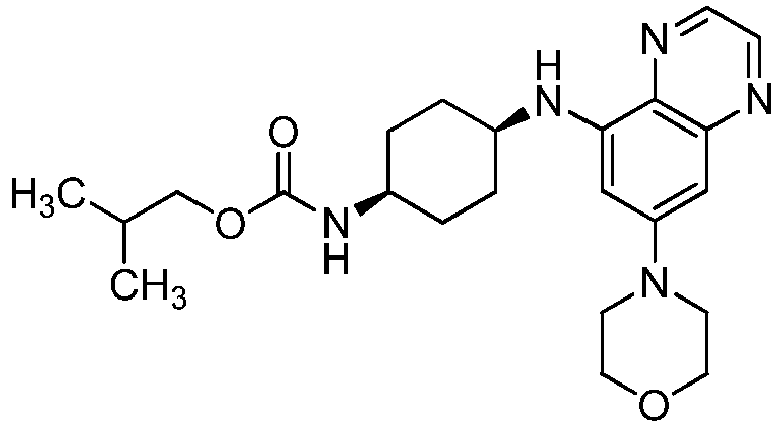
428.2 (CDCl3) δ 8.65 (d, J = 1.9 Hz, 1H), 8.35 (d, J = 1.9 Hz, 1H), 6.61 (d, J = 2.3 Hz, 1H), 6.35 (d, J = 2.3 Hz, 1H), 6.11 (d, J = 7.6 Hz, 1H), 4.74 (s, 1H), 3.99 - 3.79 (m, 6H), 3.68 (s, 2H), 3.40 - 3.24 (m, 4H), 1.87 (d, J = 3.5 Hz, 7H), 1.78 - 1.52 (m, 2H), 0.93 (d, J = 6.7 Hz, 6H) 13 
418.44 (CDCl3) δ 8.65 (t, J = 1.6 Hz, 1H), 8.36 (t, J = 1.6 Hz, 1H), 6.61 (d, J = 2.3 Hz, 1H), 6.35 (d, J = 2.0 Hz, 1H), 6.11 (d, J = 7.6 Hz, 1H), 4.91 (d, J = 7.2 Hz, 1H), 4.80 - 4.18 (m, 4H), 4.00 - 3.84 (m, 4H), 3.81 - 3.56 (m, 2H), 3.46 - 3.21 (m, 4H), 1.87 (d, J = 3.5 Hz, 6H), 1.71 (dd, J = 16.0, 8.2 Hz, 2H) 14 
410.44 (CDCl3) δ 8.65 (d, J = 2.0 Hz, 1H), 8.36 (d, J = 2.0 Hz, 1H), 6.61 (d, J = 2.4 Hz, 1H), 6.34 (d, J = 2.3 Hz, 1H), 6.10 (d, J = 7.1 Hz, 1H), 4.83 (s, 1H), 4.69 (s, 2H), 3.96 - 3.83 (m, 4H), 3.68 (s, 2H), 3.40 - 3.23 (m, 4H), 2.48 (t, J = 2.4 Hz, 1H), 1.87 (d, J = 4.2 Hz, 6H), 1.71 (dd, J = 15.7, 7.4 Hz, 2H) 15 
478.44 (CDCl3) δ 8.66 (d, J = 2.0 Hz, 1H), 8.37 (d, J = 2.0 Hz, 1H), 7.10 - 6.98 (m, 2H), 6.87 (d, J = 9.0 Hz, 2H), 6.62 (d, J = 2.4 Hz, 1H), 6.36 (d, J = 2.4 Hz, 1H), 6.13 (d, J = 7.3 Hz, 1H), 5.06 (d, J = 7.9 Hz, 1H), 3.97 - 3.84 (m, 4H), 3.84 - 3.61 (m, 5H), 3.42 - 3.25 (m, 4H), 1.91 (d, J = 4.2 Hz, 6H), 1.85 - 1.68 (m, 2H) 16 
453.96 (CDCl3) δ 8.49 (s, 1H), 8.23 (d, J = 1.5 Hz, 1H), 6.48 (s, 1H), 6.18 (d, J = 1.9 Hz, 1H), 6.06 (s, 1H), 4.52 (s, 1H), 4.47 (s, 2H), 3.60 (s, 2H), 3.45 (d, J = 11.6 Hz, 2H), 3.14 - 3.12 (m, 2H), 1.96 - 1.84 (m, 4H), 1.79 (s, 5H), 1.54 (s, 3H) and 1.38 (s, 9H) ppm 17 
418.4 (CDCl3) δ 6.13 (d, J = 1.6 Hz, 1H), 5.89 (d, J = 1.4 Hz, 1H), 4.87 (d, J = 7.0 Hz, 1H), 4.59 (s, 1H), 3.26 (dd, J = 9.2, 4.3 Hz, 4H), 1.98 - 1.74 (m, 6H), 1.65 (dd, J = 15.9, 7.3 Hz, 3H), 1.47 (s, 9H) 18 
406.48 (CDCl3) δ 8.65 (d, J = 2.0 Hz, 1H), 8.37 (d, J = 2.0 Hz, 1H), 8.27 (d, J = 4.8 Hz, 2H), 6.60 (d, J = 2.4 Hz, 1H), 6.51 (t, J = 4.8 Hz, 1H), 6.36 (d, J = 2.4 Hz, 1H), 6.15 (d, J = 7.8 Hz, 1H), 5.20 (d, J = 7.7 Hz, 1H), 4.04 (d, J = 7.9 Hz, 1H), 3.96 - 3.82 (m, 4H), 3.70 (s, 1H), 3.39 - 3.24 (m, 4H), 1.94 (dd, J = 13.7, 4.4 Hz, 6H), 1.78 (dt, J = 28.8, 16.1 Hz, 2H) 19 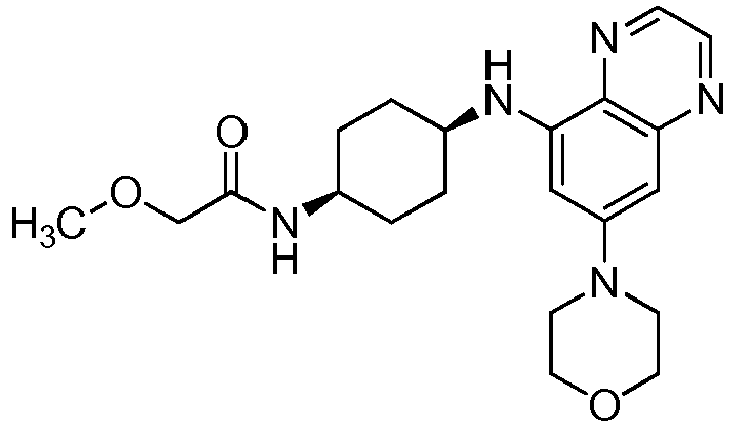
400.46 (CDCl3) δ 8.64 (d, J = 1.9 Hz, 1H), 8.35 (d, J = 1.9 Hz, 1H), 6.58 (t, J = 5.1 Hz, 2H), 6.34 (d, J = 2.3 Hz, 1H), 6.10 (d, J = 7.3 Hz, 1H), 4.03 (d, J = 8.3 Hz, 1H), 3.88 (t, J = 4.7 Hz, 6H), 3.68 (s, 1H), 3.42 (s, 3H), 3.37 - 3.23 (m, 4H), 1.98 - 1.78 (m, 6H), 1.69 (dd, J = 15.8, 7.5 Hz, 2H) 20 
468.23 (400.0 MHz, CDCl3) δ 8.52 (d, J = 1.7 Hz, 1H), 8.23 (d, J = 1.6 Hz, 1H), 6.47 (d, J = 1.9 Hz, 1H), 6.19 (s, 1H), 6.03 (s, 1H), 5.19 (s, 1H), 4.76 (d, J = 7.6 Hz, 1H), 4.47 (s, 2H), 3.87 - 3.76 (m, 4H), 3.60 (s, 2H), 3.45 (d, J = 11.6 Hz, 2H), 3.13-3.10 (m, 2H), 2.61 (s, 1H), 2.13 - 2.04 (m, 1H), 1.95 - 1.85 (m, 5H), 1.79 (s, 5H) and 1.62 - 1.58 (m, 2H) 21 
426.31 22 
425.35 (400.0 MHz, CDCl3) δ 8.54 (s, 1H), 8.22 (s, 1H), 6.43 (s, 1H), 6.19 (s, 1H), 6.02 (s, 1H), 4.47 (s, 2H), 4.38 (d, J = 5.2 Hz, 1H), 4.28 (s, 1H), 3.74 (s, 1H), 3.60 (s, 1H), 3.42 (s, 4H), 3.14 - 3.09 (m, 4H), 2.05 - 1.87 (m, 3H), 1.79 (s, 3H), 1.55 (d, J = 7.1 Hz, 2H) and 1.21 - 1.05 (m, 5H) 23 
396.2 (CDCl3) δ 8.20 (d, J = 4.9 Hz, 2H), 6.46 (t, J = 4.8 Hz, 1H), 6.05 (d, J = 1.6 Hz, 1H), 5.82 (s, 1H), 5.24 (s, 1H), 4.82 (d, J = 7.0 Hz, 1H), 3.98 (s, 1H), 3.85 - 3.72 (m, 4H), 3.60 (s, 1H), 3.23 - 3.06 (m, 4H), 1.95 - 1.62 (m, 8H). [2] 24 
405.59 (400 MHz, CDCl3) δ 8.65 (s, 1H), 8.37 (d, J = 1.8 Hz, 1H), 8.08 (d, J = 4.9 Hz, 1H), 7.41 (t, J = 7.7 Hz, 1H), 6.61 (s, 1H), 6.58 - 6.53 (m, 1H), 6.46 - 6.30 (m, 2H), 6.15 (d, J = 7.3 Hz, 1H), 4.56 (s, 1H), 3.98 - 3.78 (m, 5H), 3.76 - 3.61 (m, 1H), 3.42 - 3.24 (m, 4H), 1.97 (d, J = 29.6 Hz, 6H), 1.86 - 1.66 (m, 2H) 25 
467.57 (CDCl3) δ 8.69 (d, J = 2.0 Hz, 1H), 8.42 (d, J = 2.0 Hz, 1H), 8.26 (s, 1H), 7.14 (d, J = 2.1 Hz, 1H), 6.64 (d, J = 2.4 Hz, 1H), 6.38 (d, J = 2.3 Hz, 1H), 6.24 (d, J = 6.8 Hz, 1H), 4.31 (q, J = 7.1 Hz, 2H), 3.97 - 3.81 (m, 5H), 3.41 - 3.24 (m, 4H), 2.22 (d, J = 7.5 Hz, 2H), 1.90 (dd, J = 22.4, 10.3 Hz, 6H), 1.35 (t, J = 7.1 Hz, 3H) 26 
429.62 (CDCl3) δ 8.70 (d, J = 1.9 Hz, 1H), 8.62 (d, J = 1.9 Hz, 1H), 6.95 (d, J = 2.5 Hz, 1H), 6.88 (d, J = 2.5 Hz, 1H), 4.82 ? 4.60 (m, 2H), 4.00 ? 3.88 (m, 4H), 3.69 (d, J = 6.8 Hz, 1H), 3.42 ? 3.28 (m, 4H), 2.15 (p, J = 6.7, 5.6 Hz, 2H), 1.94 ? 1.75 (m, 6H), 1.46 (s, 9H) 27 
406.58 (CDCl3) δ 8.65 (d, J = 2.0 Hz, 1H), 8.36 (d, J = 2.0 Hz, 1H), 7.98 (dd, J = 2.8, 1.5 Hz, 1H), 7.88 (d, J = 1.5 Hz, 1H), 7.79 (d, J = 2.8 Hz, 1H), 6.62 (d, J = 2.4 Hz, 1H), 6.37 (d, J = 2.4 Hz, 1H), 6.17 (s, 1H), 8.69 - 8.61 (m, 1H), 4.60 (d, J = 7.7 Hz, 1H), 4.08 - 3.83 (m, 5H), 8.71 - 8.57 (m, 1H), 3.73 (t, J = 6.9 Hz, 1H), 3.40 - 3.25 (m, 4H), 1.96 (h, J = 4.9 Hz, 6H), 1.77 (q, J = 7.4, 6.1 Hz, 2H) 28 
407.3 (400 MHz, CDCl3) δ 8.77 - 8.59 (m, 2H), 8.29 (d, J = 4.9 Hz, 2H), 7.01 - 6.87 (m, 2H), 6.61 - 6.48 (m, 1H), 4.82 (s, 1H), 4.05 (s, 1H), 3.93 (t, J = 4.8 Hz, 4H), 3.35 (t, J = 4.8 Hz, 4H), 2.23 (d, J = 13.1 Hz, 2H), 2.05 - 1.82 (m, 6H) 29 
450.61 (DMSO-d6) δ 12.65 (s, 1H), 8.69 (d, J = 2.0 Hz, 2H), 8.43 (d, J = 2.0 Hz, 1H), 8.00 (d, J = 7.9 Hz, 1H), 6.54 (d, J = 2.5 Hz, 1H), 6.48 (d, J = 2.3 Hz, 1H), 6.17 (d, J = 8.2 Hz, 1H), 4.06 (s, 1H), 3.77 (dd, J = 5.9, 3.8 Hz, 4H), 3.29 (s, 5H), 2.04 - 1.46 (m, 8H) 30 
406.52 (CDCl3) δ 8.66 (d, J = 2.0 Hz, 1H), 8.58 (s, 1H), 8.37 (d, J = 2.0 Hz, 1H), 8.13 (s, 2H), 6.63 (d, J = 2.4 Hz, 1H), 6.37 (d, J = 2.4 Hz, 1H), 6.14 (d, J = 7.6 Hz, 1H), 3.96 - 3.86 (m, 4H), 3.76 (d, J = 7.7 Hz, 2H), 3.54 (d, J = 8.3 Hz, 1H), 3.39 - 3.29 (m, 4H), 2.02 - 1.86 (m, 6H), 1.76 (q, J = 8.9, 8.3 Hz, 2H) 31 
422.49 (CDCl3) δ 12.88 - 12.45 (m, 1H), 8.66 (d, J = 2.0 Hz, 1H), 8.37 (d, J = 2.0 Hz, 1H), 7.81 (s, 1H), 6.62 (d, J = 2.3 Hz, 1H), 6.36 (d, J = 2.4 Hz, 1H), 6.12 (d, J = 7.7 Hz, 1H), 5.27 (s, 1H), 5.05 (d, J = 7.6 Hz, 1H), 4.02 - 3.83 (m, 4H), 3.63 (d, J = 47.6 Hz, 2H), 3.44 - 3.22 (m, 4H), 1.91 (q, J = 4.8, 4.3 Hz, 6H), 1.82-1.69 (m, 2H) 32 
464.6 (CDCl3) δ 8.78 (d, J = 1.3 Hz, 1H), 8.66 (d, J = 2.0 Hz, 1H), 8.37 (d, J = 2.0 Hz, 1H), 7.91 (d, J = 1.3 Hz, 1H), 6.62 (d, J = 2.4 Hz, 1H), 6.37 (d, J = 2.4 Hz, 1H), 6.16 (d, J = 7.6 Hz, 1H), 5.13 (d, J = 7.6 Hz, 1H), 4.10 (s, 1H), 3.99 - 3.86 (m, 7H), 3.76 (s, 1H), 3.39 - 3.28 (m, 4H), 1.98 (h, J = 4.8 Hz, 6H), 1.80 (t, J = 8.7 Hz, 2H) 33 
407.3 (CDCl3) δ 8.63 (d, J = 1.9 Hz, 1H), 7.99 (dd, J = 2.8, 1.5 Hz, 1H), 7.94 - 7.85 (m, 1H), 7.79 (d, J = 2.8 Hz, 1H), 7.14 (d, J = 1.0 Hz, 1H), 7.03 - 6.87 (m, 2H), 4.82 (d, J = 5.7 Hz, 1H), 4.70 (d, J = 8.0 Hz, 1H), 4.03 - 3.86 (m, 4H), 3.51 (s, 1H), 3.43 - 3.30 (m, 4H), 2.35 - 1.81 (m, 8H) 34 
408.5 (CDCl3) δ 8.69 (dd, J = 3.4, 1.9 Hz, 1H), 8.62 (dd, J = 3.6, 1.9 Hz, 1H), 8.51 (dd, J = 4.8, 2.2 Hz, 2H), 7.01 - 6.83 (m, 3H), 5.18 (tt, J = 7.0, 3.4 Hz, 1H), 4.79 (tt, J = 6.9, 3.1 Hz, 1H), 4.00 - 3.85 (m, 4H), 3.34 (dq, J = 4.8, 2.6 Hz, 4H), 2.44 - 2.16 (m, 4H), 1.92 (tdd, J = 16.4, 7.7, 2.8 Hz, 4H) 35 
372.23 (CDCl3) δ 8.68 (d, J = 1.9 Hz, 1H), 8.61 (d, J = 1.9 Hz, 1H), 6.99 - 6.85 (m, 2H), 4.70 (dq, J = 7.3, 3.5 Hz, 1H), 4.05 - 3.84 (m, 8H), 3.40 - 3.25 (m, 4H), 2.19 - 1.93 (m, 6H), 1.77 - 1.64 (m, 2H) 36 
404.2 (CDCl3) δ 8.94 - 8.76 (m, 2H), 8.29 (d, J = 4.8 Hz, 2H), 7.67 (d, J = 1.7 Hz, 1H), 6.53 (t, J = 4.8 Hz, 1H), 6.37 (tt, J = 3.1, 1.5 Hz, 1H), 5.30 (d, J = 7.9 Hz, 1H), 4.87 (dt, J = 7.5, 3.6 Hz, 1H), 4.43 (q, J = 2.8 Hz, 2H), 4.02 (t, J = 5.5 Hz, 3H), 2.68 (dqd, J = 6.0, 3.4, 3.0, 1.8 Hz, 2H), 2.35 - 2.11 (m, 2H), 2.07 - 1.84 (m, 6H) 37 
425.25 (CDCl3) δ 8.71 (d, J = 1.9 Hz, 1H), 8.63 (d, J = 1.9 Hz, 1H), 8.18 (dd, J = 3.7, 0.8 Hz, 2H), 7.01 - 6.85 (m, 2H), 5.37 - 5.20 (m, 1H), 4.79 (d, J = 5.5 Hz, 1H), 4.02 - 3.85 (m, 4H), 3.43 - 3.29 (m, 4H), 2.31 - 2.15 (m, 2H), 2.02 - 1.85 (m, 6H) 38 
407.25 (CDCl3) δ 8.61 (d, J = 2.0 Hz, 1H), 8.55 (d, J = 1.9 Hz, 1H), 8.20 (d, J = 4.8 Hz, 2H), 6.87 (d, J = 2.5 Hz, 1H), 6.81 (d, J = 2.5 Hz, 1H), 6.46 (t, J = 4.8 Hz, 1H), 4.95 (s, 1H), 4.45 (tt, J = 10.7, 3.6 Hz, 1H), 3.95 - 3.77 (m, 5H), 3.32 - 3.19 (m, 4H), 2.34 - 2.10 (m, 4H), 1.82 (dt, J = 12.9, 10.0 Hz, 2H), 1.45 - 1.20 (m, 2H) 39 
441.28 (CDCl3) δ 8.72 (d, J = 1.9 Hz, 1H), 8.62 (d, J = 1.9 Hz, 1H), 8.37 (s, 1H), 6.98 (d, J = 2.5 Hz, 1H), 6.92 (d, J = 2.5 Hz, 1H), 6.36 (d, J = 1.0 Hz, 1H), 4.91 - 4.76 (m, 1H), 4.00 - 3.88 (m, 4H), 3.45 - 3.24 (m, 4H), 2.34 - 2.17 (m, 2H), 2.03 - 1.84 (m, 6H) 40 
441.3 (CDCl3) δ 8.71 (d, J = 1.9 Hz, 1H), 8.61 (d, J = 1.9 Hz, 1H), 7.15 (d, J = 9.3 Hz, 1H), 7.00 - 6.87 (m, 2H), 6.64 (d, J = 9.3 Hz, 1H), 4.89 - 4.76 (m, 2H), 4.11 - 4.03 (m, 1H), 4.00 - 3.83 (m, 4H), 3.40 - 3.24 (m, 4H), 2.23 (dq, J = 12.9, 6.3, 5.6 Hz, 2H), 2.02 - 1.79 (m, 6H) 41 
421.43 (CDCl3) δ 8.63 (d, J = 1.9 Hz, 1H), 8.55 (d, J = 1.9 Hz, 1H), 7.58 (d, J = 23.6 Hz, 2H), 6.89 (d, J = 2.4 Hz, 1H), 6.84 (d, J = 2.5 Hz, 1H), 4.73 (s, 2H), 3.93 - 3.72 (m, 5H), 3.34 - 3.18 (m, 4H), 2.29 (s, 3H), 2.15 (m, 2H), 1.84 (m, 6H) 42 
408.56 (CDCl3) δ 8.70 (d, J = 1.9 Hz, 1H), 8.63 (d, J = 1.9 Hz, 1H), 8.52 (d, J = 4.8 Hz, 2H), 7.01 - 6.87 (m, 3H), 5.17 (ddt, J = 8.7, 6.7, 3.4 Hz, 1H), 4.76 - 4.58 (m, 1H), 4.00 - 3.87 (m, 4H), 3.40 - 3.27 (m, 4H), 2.43 - 2.22 (m, 4H), 2.05 - 1.87 (m, 2H), 1.86 - 1.71 (m, 2H) 43 
412.48 (CDCl3) δ 8.70 (d, J = 1.9 Hz, 1H), 8.61 (d, J = 1.9 Hz, 1H), 7.36 (s, 1H), 7.12 (d, J = 3.6 Hz, 1H), 6.95 (d, J = 2.5 Hz, 1H), 6.90 (d, J = 2.5 Hz, 1H), 6.48 (d, J = 3.6 Hz, 1H), 5.18 (d, J = 8.0 Hz, 1H), 4.79 (td, J = 5.4, 2.7 Hz, 1H), 3.97 - 3.85 (m, 4H), 3.70 (q, J = 6.8 Hz, 1H), 3.39 - 3.25 (m, 4H), 2.29 - 2.12 (m, 2H), 2.07 - 1.77 (m, 6H) 44 
432.6 (CDCl3) δ 8.71 (d, J = 2.0 Hz, 1H), 8.64 (d, J = 2.0 Hz, 1H), 8.54 (d, J = 2.9 Hz, 1H), 8.47 (d, J = 3.0 Hz, 1H), 6.99 (d, J = 2.4 Hz, 1H), 6.92 (d, J = 2.5 Hz, 1H), 5.81 (d, J = 8.3 Hz, 1H), 4.84 (dt, J = 5.3, 2.8 Hz, 1H), 4.13 - 4.05 (m, 1H), 4.00 - 3.84 (m, 4H), 3.43 - 3.30 (m, 4H), 2.32 - 2.17 (m, 2H), 2.02 - 1.85 (m, 6H) 45 
485.26 (CDCl3) δ 8.70 (d, J = 2.0 Hz, 1H), 8.64 (d, J = 1.9 Hz, 1H), 8.29 (s, 2H), 6.98 (d, J = 2.5 Hz, 1H), 6.92 (d, J = 2.5 Hz, 1H), 5.29 (d, J = 8.3 Hz, 1H), 4.81 (s, 1H), 4.04 - 3.84 (m, 4H), 3.42 - 3.31 (m, 4H), 2.22 (s, 2H), 1.92 (d, J = 4.9 Hz, 6H) 46 
407.57 (CDCl3) δ 8.63 (d, J = 2.0 Hz, 1H), 8.52 (d, J = 4.8 Hz, 2H), 8.37 (d, J = 2.0 Hz, 1H), 6.92 (t, J = 4.8 Hz, 1H), 6.62 (d, J = 2.4 Hz, 1H), 6.38 (d, J = 2.4 Hz, H), 6.16 (s, 1H), 5.27 (s, 1H), 4.06 - 3.78 (m, 4H), 3.64 (s, 1H), 3.48 - 3.20 (m, 4H), 2.14 (s, 2H), 2.04 - 1.80 (m, 4H) 47 
372.16 (CDCl3) δ 8.66 (dd, J = 20.5, 1.9 Hz, 2H), 6.93 (dd, J = 17.3, 2.5 Hz, 2H), 4.87 - 4.65 (m, 1H), 4.04 - 3.83 (m, 4H), 3.72 (s, 3H), 3.46 - 3.22 (m, 4H), 2.72 - 2.40 (m, 1H), 2.35 - 1.99 (m, 4H), 1.99 - 1.51 (m, 4H) 48 
358.64 (DMSO-d6) δ 12.13 (s, 1H), 8.72 (d, J = 1.7 Hz, 1H), 8.58 (d, J = 1.8 Hz, 1H), 7.13 (d, J = 2.1 Hz, 1H), 6.83 (d, J = 2.0 Hz, 1H), 4.94 - 4.84 (m, 1H), 3.91 -3.68 (m, 4H), 3.51 - 3.19 (m, 4H), 2.47 - 2.33 (m, 1H), 2.04 - 1.82 (m, 4H), 1.82 - 1.60 (m, 4H) 49 
425.39 (400 MHz, CDCl3) δ 8.70 (d, J = 1.9 Hz, 1H), 8.60 (d, J = 1.9 Hz, 1H), 7.99 (s, 1 H), 6.96 (d, J = 2.4 Hz, 1H), 6.89 (d, J = 2.3 Hz, 1H), 6.20 (s, 1H), 5.19 (bs, 1H), 4.81 (bs, 1H), 3.96 - 3.84 (m, 4H), 3.40 - 3.27 (m, 4H), 2.29 - 2.14 (m, 2H), 1.99 - 1.81 (m, 6H) 50 
425.39 (400 MHz, CDCl3) δ 8.69 (d, J = 1.9 Hz, 1H), 8.60 (d, J = 1.9 Hz, 1H), 8.30 (d, J = 2.1 Hz, 1H), 6.95 (d, J = 2.4 Hz, 1H), 6.89 (d, J = 2.4 Hz, 1H), 5.84 (s, 1H), 5.42 (s, 1H), 4.81 (s, 1H), 3.99 - 3.82 (m, 4H), 3.39 - 3.24 (m, 4H), 2.31 - 2.19 (m, 2H), 2.08 - 1.72 (m, 8H) 51 
425.33 (400 MHz, CDCl3) δ 8.69 (d, J = 1.9 Hz, 1H), 8.60 (d, J = 1.9 Hz, 1H), 8.30 (d, J = 2.1 Hz, 1H), 6.95 (d, J = 2.4 Hz, 1H), 6.89 (d, J = 2.4 Hz, 1H), 5.84 (s, 1H), 5.42 (s, 1H), 4.8 1 (s, 1H), 3.99 - 3.82 (m, 4H), 3.39 - 3.24 (m, 4H), 2.31 - 2.19 (m, 2H), 2.08 - 1.72 (m, 8H) 52 
435.19 (400 MHz, CDCl3) δ 8.68 (d, J = 1.4 Hz, 1H), 8.60 (d, J = 1.5 Hz, 1H), 6.93 (s, 1H), 6.90 (s, 1H), 6.28 (s, 1H), 5.06 (d, J = 7.9 Hz, 1H), 4.77 (s, 1H), 4.06 (bs, 1H), 3.97 - 3.84 (m, 4H), 3.38 - 3.25 (m, 4H), 2.27 (s, 6H), 2.18 - 2.09 (m, 2H), 1.94 - 1.83 (m, 7H) 53 
433.25 (CDCl3) δ.9 Hz, 1H), 8.28 (d, J = 4.8 Hz, 2H), 6.85 (t, J = 1.9 Hz, 2H), 6.51 (t, J = 4.8 Hz, 1H), 5.29 (d, J = 6.3 Hz, 1H), 4.80 (dq, J = 5.5, 2.8 Hz, 1H), 4.57 (d, J = 3.9 Hz, 2H), 4.02 (t, J = 6.2 Hz, 1H), 3.54 - 3.43 (m, 2H), 3.19 (dd, J = 11.6, 2.6 Hz, 2H), 2.27 - 2.14 (m, 2H), 2.08 - 1.85 (m, 10H) 54 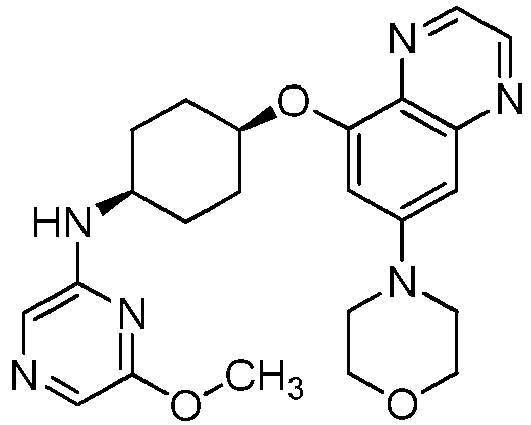
437.27 (CDCl3) δ 8.70 (d, J = 1.9 Hz, 1H), 8.62 (d, J = 1.9 Hz, 1H), 7.45 (d, J = 7.8 Hz, 2H), 7.02 - 6.81 (m, 2H), 4.78 (ddd, J = 7.3, 5.6, 3.1 Hz, 1H), 4.66 (d, J = 7.9 Hz, 1H), 4.01 - 3.78 (m, 7H), 3.41 - 3.25 (m, 4H), 2.30 - 2.08 (m, 2H), 1.94 (h, J = 8.8, 8.2 Hz, 6H) 55 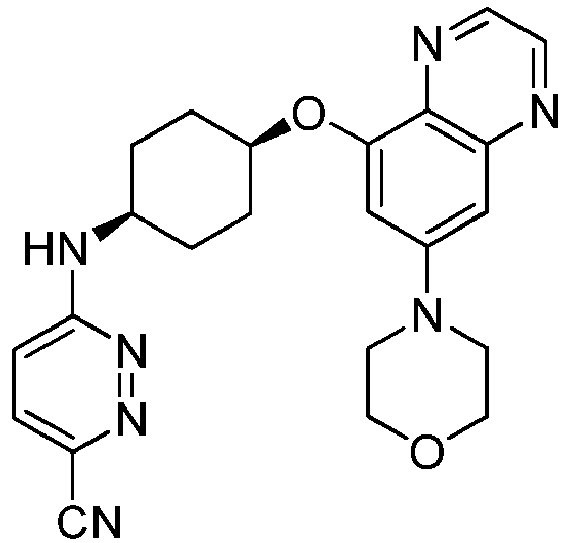
432.3 (CDCl3) δ 8.73 (d, J = 2.0 Hz, 1H), 8.63 (d, J = 2.0 Hz, 1H), 7.42 (d, J = 9.3 Hz, 1H), 6.96 (dd, J = 19.6, 2.5 Hz, 2H), 6.65 (d, J = 9.3 Hz, 1H), 5.40 (s, 1H), 4.86 (s, 1H), 3.94 (dd, J = 5.9, 3.8 Hz, 4H), 3.37 (dd, J = 6.0, 3.7 Hz, 4H), 2.27 (d, J = 12.7 Hz, 2H), 2.05 - 1.80 (m,6H) 56 
421.47 (CDCl3) δ 8.69 (d, J = 1.9 Hz, 1H), 8.61 (d, J = 1.9 Hz, 1H), 8.28 (d, J = 4.8 Hz, 2H), 6.98 - 6.86 (m, 2H), 6.53 (t, J = 4.8 Hz, 1H), 5.39 (s, 1H), 4.89 - 4.75 (m, 1H), 4.18 - 3.93 (m, 2H), 3.93 - 3.72 (m, 2H), 3.70 - 3.52 (m, 2H), 3.00 (td, J = 12.0, 3.5 Hz, 1H), 2.66 (dd, J = 12.1, 10.3 Hz, 1H), 2.21 (d, J = 8.9 Hz, 2H), 1.93 (d, J = 6.7 Hz, 6H), 1.30 (d, J = 6.2 Hz, 3H) 57 
437.49 (CDCl3) δ 8.69 (d, J = 1.9 Hz, 1H), 8.62 (d, J = 1.9 Hz, 1H), 8.28 (d, J = 4.8 Hz, 2H), 7.02 - 6.86 (m, 2H), 6.53 (t, J = 4.8 Hz, 1H), 5.40 (s, 1H), 4.82 (d, J = 5.8 Hz, 1H), 4.20 - 3.95 (m, 2H), 3.94 - 3.53 (m, 6H), 3.03 (td, J = 12.0, 3.5 Hz, 1H), 2.86 (dd, J = 12.1, 10.4 Hz, 1H), 2.20 (d, J = 9.2 Hz, 2H), 2.11 - 1.80 (m, 7H) 58 
467.16 (400 MHz, methanol-d4) δ 8.69 (d, J = 2.0 Hz, 1H), 8.56 (d, J = 2.0 Hz, 1H), 7.12 (d, J = 2.3 Hz, 1H), 6.89 (d, J = 2.4 Hz, 1H), 5.36 (s, 1H), 3.97 (s, 1H), 3.91 - 3.86 (m, 4H), 3.84 (s, 6H), 3.43 - 3.35 (m, 4H), 2.23 - 2.10 (m, 2H), 2.00 - 1.81 (m, 6H) 59 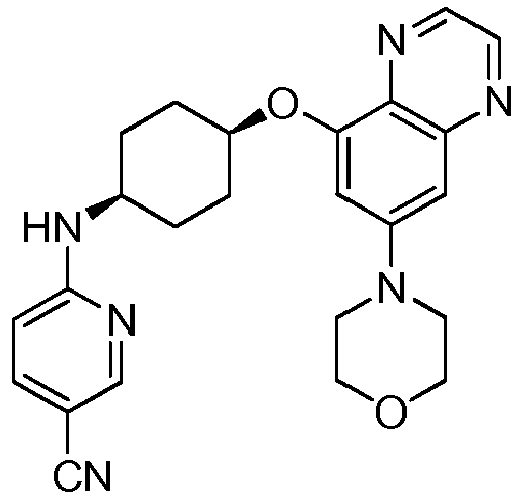
431.19 (400 MHz, CDCl3) δ 8.70 (d, J = 1.9 Hz, 1H), 8.61 (d, J = 1.9 Hz, 1H), 8.36 (d, J = 1.8 Hz, 1H), 7.54 (dd, J = 8.8, 2.2 Hz, 1H), 6.96 (d, J = 2.4 Hz, 1H), 6.90 (d, J = 2.4 Hz, 1H), 6.37 (d, J = 8.7 Hz, 1H), 5.11 (s, 1H), 4.80 (s, 1H), 3.94 (s, 1H), 3.94 - 3.79 (m, 4H), 3.38 - 3.25 (m, 4H), 2.32 - 2.12 (m, 2H), 2.02 - 1.78 (m, 6H) 60 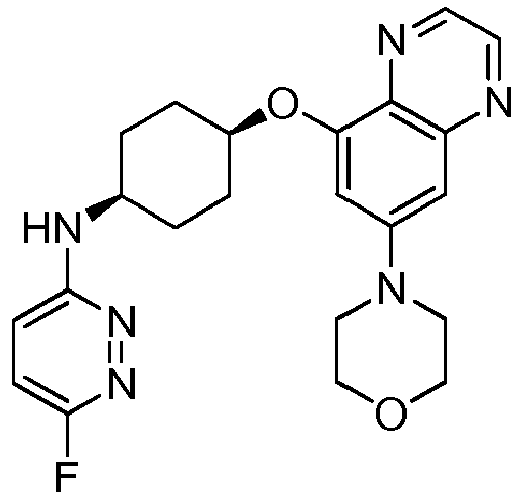
425.23 (CDCl3) δ 8.71 (d, J = 1.9 Hz, 1H), 8.62 (d, J = 1.9 Hz, 1H), 7.06 - 6.88 (m, 3H), 6.80 (dd, J = 9.4, 6.3 Hz, 1H), 4.97 - 4.71 (m, 2H), 4.14 (q, J = 7.1 Hz, 1H), 4.01 - 3.85 (m, 4H), 3.44 - 3.24 (m, 4H), 2.23 (d, J = 10.7 Hz, 2H), 1.96 (dt, J = 11.0, 7.6 Hz, 6H) 61 
397.15 (400 MHz, CDCl3) δ 8.69 (d, J = 1.8 Hz, 1H), 8.61 (d, J = 1.9 Hz, 1H), 6.94 (d, J = 2.3 Hz, 1H), 6.87 (s, 1H), 5.78 - 5.64 (m, 1H), 4.73 (s, 1H), 4.01 (s, 1H), 3.97 - 3.78 (m, 4H), 3.43 - 3.18 (m, 4H), 2.26 - 2.05 (m, 2H), 1.98 - 1.73 (m, 6H), 1.36 - 1.26 (m, 1H), 1.01 - 0.92 (m, 2H), 0.78 - 0.67 (m, 2H) 62 
427.23 (400 MHz, CDCl3) δ 8.69 (d, J = 1.9 Hz, 1H), 8.62 (d, J = 1.9 Hz, 1H), 6.95 (d, J = 2.3 Hz, 1H), 6.87 (d, J = 2.2 Hz, 1H), 6.79 (d, J = 8.1 Hz, 1H), 4.73 (s, 1H), 4.34 (dd, J = 8.3, 5.9 Hz, 1H), 4.04 - 3.84 (m, 7H), 3.40 - 3.28 (m, 4H), 2.35 - 2.24 (m, 1H), 2.23 - 2.11 (m, 2H), 2.09 - 1.98 (m, 1H), 1.97 - 1.76 (m, 8H) 63 
463.54 (CDCl3) δ 8.53 (s, 1H), 8.29 (d, J = 4.8 Hz, 2H), 6.92 (d, J = 2.5 Hz, 1H), 6.85 (d, J = 2.5 Hz, 1H), 6.52 (t, J = 4.8 Hz, 1H), 5.25 (d, J = 8.3 Hz, 1H), 4.79 (s, 1H), 4.07 (d, J = 20.4 Hz, 1H), 3.98 - 3.85 (m, 4H), 3.43 - 3.21 (m, 4H), 3.05 - 2.83 (m, 2H), 2.30 - 2.14 (m, 1H), 2.03 - 1.71 (m, 7H), 1.45 (dq, J = 14.5, 7.3 Hz, 2H), 0.98 (t, J = 7.3 Hz, 3H) 64 
541.26 (CDCl3) δ 8.55 (s, 1H), 8.29 (d, J = 1.5 Hz, 2H), 7.05 - 6.93 (m, 1H), 6.85 (d, J = 2.5 Hz, 1H), 5.49 (d, J = 8.0 Hz, 1H), 4.80 (d, J = 5.8 Hz, 1H), 4.03 - 3.81 (m, 5H), 3.45 - 3.27 (m, 4H), 2.98 (dd, J = 8.5, 7.0 Hz, 2H), 2.32 -2.09 (m, 2H), 2.00 - 1.71 (m, 8H), 1.56 - 1.34 (m, 2H), 0.98 (td, J = 7.3, 3.3 Hz, 3H) 65 
450.49 (CDCl3) δ 8.76 - 8.66 (m, 3H), 8.61 (d, J = 1.9 Hz, 1H), 6.99 - 6.87 (m, 2H), 5.71 (d, J = 8.1 Hz, 1H), 4.81 (s, 1H), 4.11 (s, 1H), 3.92 (t, J = 4.9 Hz, 4H), 3.34 (t, J = 4.9 Hz, 4H), 2.22 (d, J = 10.2 Hz, 2H), 2.02 - 1.85 (m, 6H) 66 
495.23 (CDCl3) δ 8.77 (d, J = 2.3 Hz, 1H), 8.72 (d, J = 2.3 Hz, 1H), 7.12 (d, J = 2.4 Hz, 1H), 7.02 (d, J = 2.4 Hz, 1H), 4.92 (s, 1H), 4.18 - 4.08 (m, 2H), 3.93 (t, J = 4.9 Hz, 4H), 3.85 - 3.76 (m, 2H), 3.60 (q, J = 7.0 Hz, 2H), 3.47 (t, J = 4.9 Hz, 4H), 2.26 (d, J = 13.3 Hz, 2H), 2.07 (t, J = 10.5 Hz, 2H), 2.01 - 1.72 (m, 2H), 1.26 (t, J = 7.0 Hz, 4H) 67 
450.3 (CDCl3) δ 8.71 (d, J = 2.0 Hz, 1H), 8.64 (d, J = 1.9 Hz, 1H), 8.02 (s, 1H), 6.94 (dd, J = 12.2, 2.5 Hz, 2H), 5.32 (s, 2H), 4.87 (d, J = 8.1 Hz, 1H), 4.79 (s, 1H), 4.01 - 3.86 (m, 4H), 3.36 (q, J = 5.4, 4.7 Hz, 4H), 2.83 (s, 6H), 2.19 (s, 2H), 1.92 (d, J = 4.8 Hz, 6H) 68 
489.24 (CDCl3) δ 8.70 (d, J = 1.9 Hz, 1H), 8.63 (d, J = 1.9 Hz, 1H), 8.34 (s, 2H), 7.02 - 6.86 (m, 2H), 6.00 (tt, J = 3.0, 1.5 Hz, 1H), 5.41 - 5.21 (m, 1H), 4.81 (dt, J = 7.2, 3.6 Hz, 1H), 4.31 (q, J = 2.8 Hz, 2H), 4.03 (dd, J = 7.8, 4.4 Hz, 1H), 4.00 - 3.82 (m, 6H), 3.42 - 3.25 (m, 4H), 2.44 (tdd, J = 5.7, 2.9, 1.7 Hz, 2H), 2.22 (dq, J = 11.2, 6.6, 6.0 Hz, 2H), 2.02 - 1.83 (m, 6H) 69 
451.21 (CDCl3) δ 9.05 (s, 1H), 8.88 - 8.71 (m, 3H), 8.49 (s, 1H), 7.06 (d, J = 2.3 Hz, 1H), 6.96 (d, J = 2.3 Hz, 1H), 4.85 (s, 1H), 4.17 (s, 1H), 3.93 (t, J = 4.8 Hz, 4H), 3.42 (t, J = 4.9 Hz, 4H), 2.25 - 2.10 (m, 2H), 1.95 (d, J = 11.9 Hz, 4H) 70 
409.45 (methanol-d4) δ 8.69 (s, 1H), 8.56 (s, 1H), 7.20 (s, 1H), 7.10 (d, J = 2.2 Hz, 1H), 6.88 (d, J = 2.4 Hz, 1H), 4.93 (d, J = 14.3 Hz, 2H), 3.95 - 3.76 (m, 7H), 3.42 - 3.32 (m, 4H), 3.09 (d, J = 7.3 Hz, 1H), 2.21 - 2.09 (m, 2H), 1.85 (dd, J = 10.8, 5.6 Hz, 6H) 71 
464.4 (CDCl3) δ 8.79 - 8.64 (m, 3H), 8.59 (d, J = 1.9 Hz, 1H), 6.99 - 6.88 (m, 2H), 6.19 (q, J = 4.7 Hz, 1H), 5.90 (d, J = 8.2 Hz, 1H), 4.81 (dq, J = 5.3, 2.7 Hz, 1H), 4.08 (qd, J = 8.2, 6.5, 2.3 Hz, 1H), 3.97 - 3.87 (m, 4H), 3.39 - 3.29 (m, 4H), 2.93 (d, J = 4.8 Hz, 3H), 2.27 - 2.14 (m, 2H), 2.06 - 1.79 (m, 6H) 72 
478.39 (CDCl3) δ 3.97 - 3.87 (m, 4H), 3.39 - 3.29 (m, 4H), 3.10 (s, 6H), 2.22 (dt, J = 11.3, 5.1 Hz, 2H), 1.94 (dd, J = 8.3, 3.9 Hz, 6H), 4.12 - 4.01 (m, 1H), 8.70 (d, J = 1.9 Hz, 1H), 8.62 (d, J = 1.9 Hz, 1H), 8.46 (s, 2H), 7.00 - 6.87 (m, 2H), 5.57 (d, J = 8.1 Hz, 1H), 4.81 (dq, J = 5.1, 2.4 Hz, 1H) 73 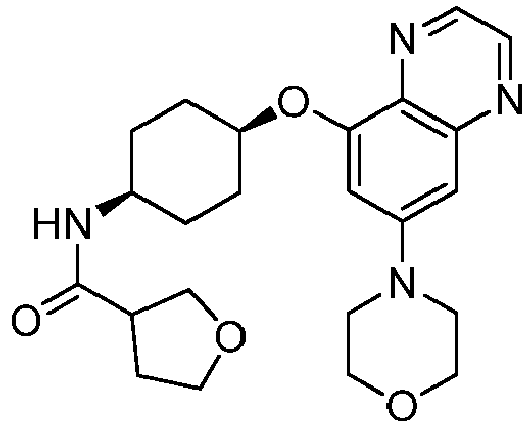
427.2 (400 MHz, CDCl3) δ 8.69 (d, J = 1.2 Hz, 1H), 8.57 (d, J = 21.7 Hz, 1H), 6.93 (d, J = 1.7 Hz, 1H), 6.86 (s, 1H), 5.75 (d, J = 7.4 Hz, 1H), 4.74 (s, 1H), 4.03 - 3.87 (m, 8H), 3.81 (dd, J = 15.2, 7.5 Hz, 1H), 3.37 - 3.25 (m, 4H), 2.96 - 2.76 (m, 1H), 2.23 -2.07 (m, 4H), 1.84 - 1.78 (m, 6H) 74 
411.25 (400 MHz, CDCl3) δ 8.69 (d, J = 1.9 Hz, 1H), 8.60 (d, J = 1.9 Hz, 1H), 6.94 (d, J = 2.4 Hz, 1H), 6.86 (d, J = 2.4 Hz, 1H), 5.42 (d, J = 7.9 Hz, 1H), 4.72 (s, 1H), 3.98 (s, 1H), 3.95 - 3.86 (m, 4H), 3.40 - 3.26 (m, 4H), 3.05 - 2.87 (m, 1H), 2.32 - 2.21 (m, 2H), 2.21 -2.07 (m, 4H), 2.03 - 1.90 (m, 1H), 1.90 - 1.77 (m, 7H) 75 
562.34 (CDCl3) δ 8.72 - 8.51 (m, 2H), 7.01 (d, J = 2.5 Hz, 1H), 6.93 (d, J = 2.5 Hz, 1H), 4.84 (s, 1H), 4.40 (s, 2H), 3.99 (s, 1H), 3.83 (dd, J = 5.9, 3.8 Hz, 4H), 3.65 (s, 2H), 3.35 (t, J = 4.9 Hz, 4H), 2.87 (s, 2H), 2.27 - 1.91 (m, 4H), 1.90 - 1.59 (m, 2H), 1.41 (s, 9H) 76 
462.23 (CDCl3) δ 8.70 (t, J = 2.2 Hz, 1H), 8.63 (dd, J = 2.7, 1.9 Hz, 1H), 7.97 (s, 1H), 7.00 - 6.86 (m, 2H), 5.05 (d, J = 8.2 Hz, 1H), 4.77 (s, 1H), 4.02 (s, 1H), 3.93 (t, J = 4.7 Hz, 4H), 3.86 (s, 1H), 3.35 (t, J = 4.8 Hz, 4H), 3.17 (t, J = 6.0 Hz, 1H), 2.89 (d, J = 5.5 Hz, 1H), 2.71 (t, J = 6.0 Hz, 1H), 2.21 (dd, J = 9.2, 4.9 Hz, 2H), 1.91 (d, J = 5.5 Hz, 3H), 1.75 (d, J = 5.6 Hz, 4H) 77 
413.19 (400 MHz, CDCl3) δ 8.68 (d, J = 1.9 Hz, 1H), 8.63 - 8.54 (m, 1H), 6.93 (d, J = 2.4 Hz, 1H), 6.86 (d, J = 2.3 Hz, 1H), 5.76 - 5.55 (m, 1H), 4.93 - 4.67 (m, 4H), 3.99 (d, J = 26.0 Hz, 1H), 3.95 - 3.81 (m, 4H), 3.77 - 3.55 (m, 2H), 3.39 - 3.28 (m, 4H), 2.21 - 2.09 (m, 2H), 1.90 - 1.75 (m, 6H) 78 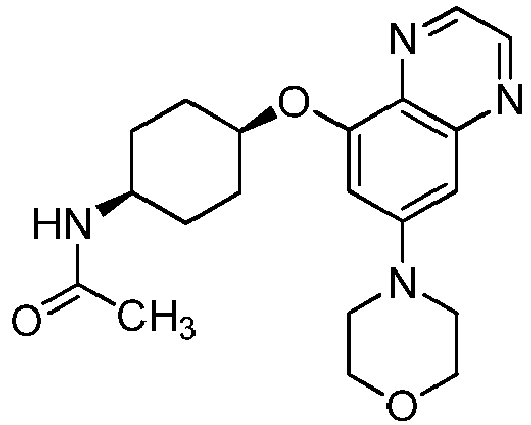
371.18 (400 MHz, CDCl3) δ 8.69 (s, 1H), 8.60 (s, 1 H), 6.94 (s, 1H), 6.86 (s, 1H), 5.59 (s, 1H), 4.74 (s, 1 H), 4.11 - 3.81 (m,5H), 3.42 - 3.23 (m, 4H), 2.28 - 2.09 (m, 2H), 1.98 (s, 3H), 1.90 - 1.78 (m, 6H) 79 
385.18 (400 MHz, CDCl3) δ 8.69 (d, J = 1.9 Hz, 1H), 8.60 (d, J = 1.9 Hz, 1H), 6.93 (d, J = 2.4 Hz, 1H), 6.86 (d, J = 2.3 Hz, 1H), 5.52 (d, J = 7.3 Hz, 1H), 4.73 (s, 1H), 3.99 (s, 1H), 3.96 - 3.87 (m, 4H), 3.38 - 3.30 (m, 4H), 2.24 - 2.08 (m, 4H), 1.88 - 1.79 (m, 6H), 1.16 (t, J = 7.6 Hz, 3H) 80 
399.23 (400 MHz, CDCl3) δ 8.69 (d, J = 1.9 Hz, 1H), 8.60 (d, J = 1.9 Hz, 1H), 6.93 (d, J = 2.4 Hz, 1H), 6.86 (d, J = 2.3 Hz, 1H), 5.53 (d, J = 7.7 Hz, 1H), 4.73 (s, 1H), 4.00 (s, 1H), 3.95 - 3.84 (m, 4H), 3.39 - 3.25 (m, 4H), 2.22 - 2.06 (m, 4H), 1.88 - 1.76 (m, 6H), 1.70 - 1.61 (m, 2H), 0.94 (t, J = 7.4 Hz, 3H) 81 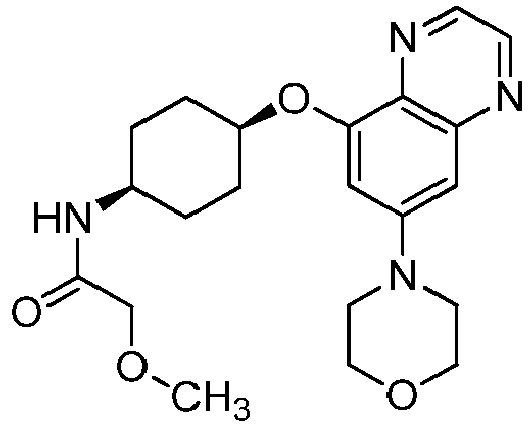
401.21 (400 MHz, CDCl3) δ 8.69 (d, J = 1.9 Hz, 1H), 8.62 (d, J = 1.9 Hz, 1H), 6.94 (d, J = 2.4 Hz, 1H), 6.87 (d, J = 2.2 Hz, 1H), 6.65 (d, J = 8.5 Hz, 1H), 4.72 (s, 1H), 4.06 (s, 1H), 3.96 - 3.85 (m, 6H), 3.43 (s, 3H), 3.38 - 3.28 (m, 4H), 2.24 - 2.09 (m, 2H), 1.95 - 1.76 (m, 6H) 82 
413.27 (400 MHz, CDCl3) δ 8.68 (d, J = 1.8 Hz, 1H), 8.59 (d, J = 1.8 Hz, 1H), 6.93 (d, J = 2.3 Hz, 1H), 6.86 (d, J = 2.0 Hz, 1H), 5.53 (d, J = 7.8 Hz, 1H), 4.72 (s, 1H), 4.01 (s, 1H), 3.96 - 3.81 (m, 4H), 3.37 - 3.24 (m, 4H), 2.24 - 2.06 (m, 3H), 2.01 (d, J = 7.0 Hz, 2H), 1.87 - 1.76 (m, 6H), 0.94 (d, J = 6.5 Hz, 6H) 83 
413.23 (400 MHz, CDCl3) δ 8.62 (d, J = 1.9 Hz, 1H), 8.55 (d, J = 1.9 Hz, 1H), 6.87 (d, J = 2.4 Hz, 1H), 6.80 (d, J = 2.3 Hz, 1H), 5.62 (d, J = 7.7 Hz, 1H), 4.64 (s, 1H), 3.99 - 3.76 (m, 5H), 3.37 - 3.14 (m, 4H), 2.21 - 1.95 (m, 2H), 1.87 - 1.63 (m, 6H), 1.13 (s, 9H) 84 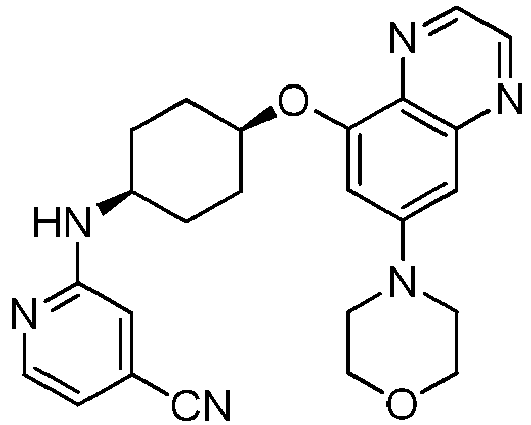
431.19 (400 MHz, CDCl3) δ 8.69 (d, J = 1.9 Hz, 1H), 8.61 (d, J = 1.9 Hz, 1H), 8.19 (d, J = 4.8 Hz, 1H), 6.95 (d, J = 2.3 Hz, 1H), 6.90 (d, J = 2.4 Hz, 1H), 6.70 (dd, J = 5.1, 1.2 Hz, 1H), 6.56 (s, 1H), 4.87 (d, J = 7.6 Hz, 1H), 4.80 (s, 1H), 3.96 - 3.88 (m, 4H), 3.85 (s, 1H), 3.38 - 3.28 (m, 4H), 2.28 - 2.14 (m, 2H), 2.00 - 1.85 (m, 6H) 85 
491.3 (CDCl3) δ 8.67 (d, J = 2.0 Hz, 1H), 8.62 (d, J = 2.0 Hz, 1H), 7.05 - 6.95 (m, 2H), 6.72 (s, 1H), 4.88 (s, 1H), 3.98 - 3.82 (m, 4H), 3.64 (t, J = 5.1 Hz, 2H), 3.41 - 3.31 (m, 4H), 3.24 (s, 3H), 3.09 (t, J = 5.2 Hz, 2H), 2.68 (s, 3H), 2.30 - 1.99 (m, 4H), 1.86 (d, J = 9.0 Hz, 4H) 86 
433.2 (CDCl3) δ 9.68 (s, 1H), 8.76 - 8.58 (m, 2H), 7.00 (d, J = 2.5 Hz, 1H), 6.92 (d, J = 2.5 Hz, 1H), 6.41 (dd, J = 17.7, 11.1 Hz, 1H), 5.65 (d, J = 17.7 Hz, 1H), 5.33 (d, J = 11.1 Hz, 1H), 4.85 (q, J = 3.6 Hz, 1H), 4.01 (s, 1H), 3.94 - 3.70 (m, 4H), 3.47-3.19 (m, 4H), 2.27 - 1.94 (m, 4H), 1.93 - 1.63 (m, 4H) 87 
431.2 (CDCl3) δ 8.63 (d, J = 1.9 Hz, 1H), 8.57 (d, J = 1.9 Hz, 1H), 8.20 (dd, J = 5.0, 1.9 Hz, 1H), 7.57 (dd, J = 7.6, 1.9 Hz, 1H), 6.89 (d, J = 2.5 Hz, 1H), 6.85 (d, J = 2.5 Hz, 1H), 6.51 (dd, J = 7.6, 4.9 Hz, 1H), 5.12 (d, J = 7.7 Hz, 1H), 4.83 - 4.71 (m, 0H), 4.24 - 4.03 (m, 1H), 3.92 - 3.77 (m, 4H), 3.35 - 3.19 (m, 4H), 2.28 - 2.10 (m, 2H), 1.88 (td, J = 8.3, 6.8, 3.9 Hz, 6H) 88 
434.25 (400 MHz, CDCl3) δ 8.69 (s, 1H), 8.63 (s, 1H), 8.57 (s, 1H), 8.30 - 8.12 (m, 2H), 7.85 (t, J = 7.1 Hz, 1H), 7.50 - 7.37 (m, 1H), 6.94 (s, 1 H), 6.89 (s, 1 H), 4.89 - 4.63 (m, 1H), 4.35 - 4.13 (m, 1H), 4.01 - 3.78 (m, 4H), 3.43 - 3.19 (m, 4H), 2.37 - 2.15 (m, 2H), 2.12 - 1.82 (m, 6H) 89 
434.22 (400 MHz, CDCl3) δ 8.99 (s, 1H), 8.73 (d, J = 3.4 Hz, 1H), 8.70 (d, J = 1.6 Hz, 1H), 8.60 (d, J = 1.7 Hz, 1H), 8.11 (d, J = 7.8 Hz, 1H), 7.40 (dd, J = 7.6, 4.8 Hz, 1H), 6.95 (d, J = 2.1 Hz, 1H), 6.90 (s, 1H), 6.30 (d, J = 7.6 Hz, 1H), 4.81 (s, 1H), 4.22 (s, 1H), 3.97 - 3.85 (m, 4H), 3.41 - 3.23 (m, 4H), 2.32 - 2.17 (m, 2H), 2.01 - 1.84 (m, 6H) 90 
434.22 (400 MHz, CDCl3) δ 8.75 (dd, J = 4.4, 1.7 Hz, 2H), 8.70 (d, J = 1.9 Hz, 1H), 8.60 (d, J = 1.9 Hz, 1H), 7.62 (dd, J = 4.4, 1.7 Hz, 2H), 6.95 (d, J = 2.4 Hz, 1H), 6.89 (d, J = 2.5 Hz, 1H), 6.33 (d, J = 8.2 Hz, 1H), 4.81 (s, 1 H), 4.27 - 4.16 (m, 1 H), 3.96 - 3.87 (m, 4H), 3.38 - 3.31 (m, 4H), 2.30 - 2.16 (m, 2H), 2.00 - 1.86 (m, 6H) 91 
433.21 (400 MHz, CDCl3) δ 8.69 (d, J = 1.9 Hz, 1H), 8.63 - 8.58 (m, 1H), 7.77 (dd, J = 5.2, 3.2 Hz, 2H), 7.54 - 7.40 (m, 3H), 6.95 (d, J = 2.4 Hz, 1H), 6.89 (d, J = 2.4 Hz, 1H), 6.23 (d, J = 8.0 Hz, 1H), 4.78 (s, 1H), 4.31 - 4.13 (m, 1H), 3.95 - 3.87 (m, 4H), 3.38 - 3.27 (m, 4H), 2.31 - 2.17 (m, 2H), 1.97 - 1.85 (m, 6H) 92 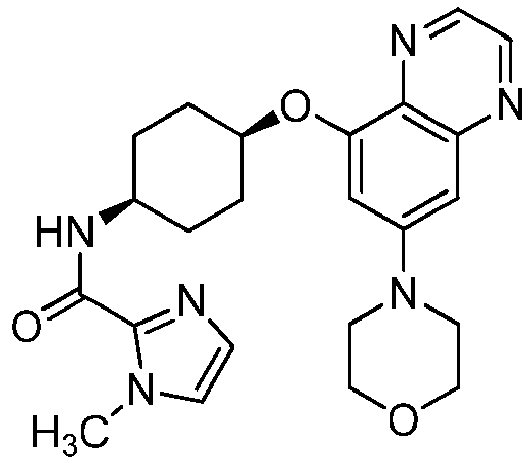
437.24 (400 MHz, CDCl3) δ 8.69 (d, J = 1.9 Hz, 1H), 8.62 (d, J = 1.9 Hz, 1H), 7.47 (d, J = 8.9 Hz, 1H), 7.00 (d, J = 1.0 Hz, 1H), 6.95 (d, J = 0.7 Hz, 1H), 6.94 (d, J = 2.5 Hz, 1H), 6.89 (d, J = 2.4 Hz, 1H), 4.81 (s, 1H), 4.07 (d, J = 12.3 Hz, 4H), 3.98 - 3.85 (m, 4H), 3.41 - 3.24 (m, 4H), 2.34 - 2.12 (m, 2H), 2.06 - 1.83 (m, 6H) 93 
451.21 (methanol-d4) δ 8.69 (d, J = 2.2 Hz, 1H), 8.59 (d, J = 2.2 Hz, 1H), 8.53 (d, J = 4.9 Hz, 1H), 7.19 (d, J = 5.0 Hz, 1H), 7.15 (d, J = 2.3 Hz, 1H), 6.87 (d, J = 2.4 Hz, 1H), 4.95 (d, J = 7.7 Hz, 1H), 4.10 (s, 1H), 3.95 - 3.82 (m, 4H), 3.47 - 3.37 (m, 4H), 2.20 (d, J = 10.1 Hz, 2H), 2.04 - 1.81 (m, 6H) 94 
437.44 (CDCl3) δ 8.68 (d, J = 2.0 Hz, 1H), 8.60 (d, J = 1.9 Hz, 1H), 8.29 (s, 2H), 6.98 - 6.87 (m, 2H), 5.36 (d, J = 8.1 Hz, 1H), 4.79 (q, J = 5.2, 4.0 Hz, 1H), 4.52 (s, 2H), 4.01 (dd, J = 8.1, 4.3 Hz, 1H), 3.95 - 3.84 (m, 4H), 3.39 - 3.28 (m, 4H), 2.25 - 2.12 (m, 2H), 1.99 - 1.82 (m, 6H) 95 
424.21 (400 MHz, CDCl3) δ 8.70 (d, J = 1.7 Hz, 1H), 8.65 - 8.58 (m, 1H), 7.80 (s, 1H), 7.22 (d, J = 9.6 Hz, 1H), 7.15 (d, J = 7.6 Hz, 1H), 6.95 (d, J = 2.4 Hz, 1H), 6.89 (d, J = 2.4 Hz, 1H), 4.80 (s, 1H), 4.24 - 4.09 (m, 1H), 3.98 - 3.85 (m, 4H), 3.40 - 3.29 (m, 4H), 2.29 - 2.15 (m, 2H), 2.02 - 1.86 (m, 6H) 96 
435.19 (400 MHz, CDCl3) δ 8.89 (d, J = 4.9 Hz, 2H), 8.69 (d, J = 1.9 Hz, 1H), 8.62 (d, J = 1.9 Hz, 1H), 8.20 (d, J = 8.3 Hz, 1H), 7.45 (t, J = 4.9 Hz, 1H), 6.94 (d, J = 2.4 Hz, 1H), 6.89 (d, J = 2.4 Hz, 1H), 4.75 (s, 1H), 4.39 - 4.21 (m, 1H), 4.00 - 3.84 (m, 4H), 3.41 - 3.21 (m, 4H), 2.29 - 2.13 (m, 2H), 2.12 - 1.87 (m, 6H) 97 
435.19 (400 MHz, CDCl3) δ 9.25 (d, J = 1.4 Hz, 1H), 8.97 (d, J = 5.0 Hz, 1H), 8.70 (d, J = 1.9 Hz, 1H), 8.63 (d, J = 1.9 Hz, 1H), 8.22 - 8.04 (m, 2H), 6.95 (d, J = 2.4 Hz, 1H), 6.89 (d, J = 2.4 Hz, 1H), 4.81 - 4.72 (m, 1H), 4.26 - 4.15 (m, 1H), 3.96 - 3.86 (m, 4H), 3.38 - 3.29 (m, 4H), 2.28 - 2.17 (m, 2H), 2.06 - 1.86 (m, 6H) 98 
435.19 (400 MHz, CDCl3) δ 9.33 (s, 1H), 9.12 (s, 2H), 8.70 (d, J = 1.9 Hz, 1H), 8.57 (d, J = 1.9 Hz, 1H), 6.95 (d, J = 2.4 Hz, 1H), 6.89 (d, J = 2.4 Hz, 1H), 6.44 (d, J = 7.8 Hz, 1H), 4.83 (s, 1H), 4.23 (qd, J = 9.2, 4.7 Hz, 1H), 3.96 - 3.87 (m, 4H), 3.38 - 3.30 (m, 4H), 2.32 - 2.18 (m, 2H), 2.01 - 1.88 (m, 6H) 99 
435.19 (400 MHz, CDCl3) δ 9.29 (dd, J = 5.0, 1.7 Hz, 1H), 8.70 (d, J = 1.9 Hz, 1H), 8.64 (d, J = 1.9 Hz, 1H), 8.33 (dd, J = 8.4, 1.7 Hz, 2H), 7.67 (dd, J = 8.4, 5.0 Hz, 1H), 6.95 (d, J = 2.5 Hz, 1H), 6.91 (d, J = 2.5 Hz, 1H), 4.85 (s, 1H), 4.29 - 4.13 (m, 1H), 3.98 - 3.85 (m, 4H), 3.40 - 3.26 (m, 4H), 2.32 - 2.16 (m, 2H), 2.12 - 1.98 (m, 2H), 1.99 - 1.87 (m, 4H) 100 
423.13 (400 MHz, CDCl3) δ 11.83 (s, 1H), 8.71 (d, J = 1.9 Hz, 1H), 8.59 (d, J = 1.9 Hz, 1H), 7.55 (d, J = 2.4 Hz, 1H), 7.05 (d, J = 8.5 Hz, 1H), 6.94 (d, J = 2.4 Hz, 1H), 6.87 (dd, J = 4.7, 2.3 Hz, 1H), 6.84 (d, J = 2.4 Hz, 1H), 4.74 (s, 1H), 4.18 (s, 1H), 3.96 - 3.88 (m, 4H), 3.38 - 3.29 (m, 4H), 2.17 - 2.09 (m, 2H), 1.94 - 1.81 (m, 6H) 101 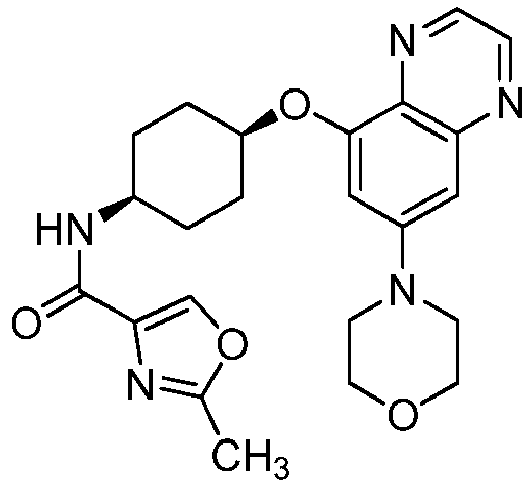
438.18 (400 MHz, CDCl3) δ 8.70 (d, J = 1.9 Hz, 1H), 8.63 (d, J = 1.9 Hz, 1H), 8.07 (s, 1H), 7.01 (d, J = 8.3 Hz, 1H), 6.94 (d, J = 2.4 Hz, 1H), 6.88 (d, J = 2.4 Hz, 1H), 4.76 (s, 1H), 4.23 - 4.09 (m, 1H), 3.98 - 3.84 (m, 4H), 3.40 - 3.26 (m, 4H), 2.48 (s, 3H), 2.28 - 2.12 (m, 2H), 1.99 - 1.82 (m, 6H) 102 
482.36 (CDCl3) δ 8.71 (d, J = 1.9 Hz, 1H), 8.59 (d, J = 2.0 Hz, 1H), 6.96 (d, J = 2.5 Hz, 1H), 6.89 (d, J = 2.5 Hz, 1H), 4.73 (d, J = 5.7 Hz, 1H), 4.18 (d, J = 7.7 Hz, 1H), 3.93 (dd, J = 5.9, 3.8 Hz, 4H), 3.69 - 3.55 (m, 1H), 3.46 (d, J = 16.5 Hz, 1H), 3.41 - 3.28 (m, 4H), 3.08 (d, J =16.4 Hz, 1H), 2.17 (d, J = 11.6 Hz, 2H), 2.00 - 1.75 (m, 6H) 103 
463.36 (CDCl3) δ 8.72 (d, J = 2.0 Hz, 1H), 8.64 (d, J = 2.0 Hz, 1H), 6.99 (d, J = 2.5 Hz, 1H), 6.93 (d, J = 2.5 Hz, 1H), 5.74 (s, 1H), 4.80 (s, 1H), 4.02 - 3.87 (m, 4H), 3.36 (t, J = 4.9 Hz, 4H), 2.19 (s, 2H), 2.08 - 1.79 (m, 6H) 104 
443.38 (CDCl3) δ 8.73 (s, 1H), 8.68 (d, J = 2.4 Hz, 1H), 6.99 (d, J = 2.4 Hz, 1H), 6.85 (d, J = 2.4 Hz, 1H), 5.69 (d, J = 2.5 Hz, 1H), 4.76 (s, 1H), 3.84 (dd, J = 5.9, 3.9 Hz, 4H), 3.38 (dd, J = 6.0, 3.9 Hz, 4H), 2.15 (d, J = 11.1 Hz, 2H), 1.96 - 1.67 (m, 6H) 105 
432.4 (CDCl3) δ 8.70 (d, J = 1.9 Hz, 1H), 8.59 (d, J = 1.9 Hz, 1H), 8.30 (d, J = 1.3 Hz, 1H), 7.89 (d, J = 1.4 Hz, 1H), 6.93 (dd, J = 18.4, 2.5 Hz, 2H), 5.52 (d, J = 7.8 Hz, 1H), 4.83 (tt, J = 4.8, 2.7 Hz, 1H), 4.19 - 4.01 (m, 1H), 3.96 - 3.87 (m, 4H), 3.39 - 3.26 (m, 4H), 2.31 - 2.14 (m, 2H), 2.09 - 1.78 (m, 6H) 106 
465.14 (400 MHz, CDCl3) δ 8.71 (d, J = 1.9 Hz, 1H), 8.64 (d, J = 1.9 Hz, 1H), 7.88 (dd, J = 7.4, 2.1 Hz, 1H), 7.02 (dd, J = 11.9, 8.3 Hz, 1H), 6.97 (d, J = 2.4 Hz, 1H), 6.92 (d, J = 2.4 Hz, 1H), 6.83 (dd, J = 12.4, 7.6 Hz, 1H), 4.78 (s, 1H), 4.25 (s, 1H), 4.03 - 3.85 (m, 4H), 3.44 - 3.23 (m, 4H), 2.38 (s, 3H), 2.30 - 2.13 (m, 2H), 2.06 - 1.88 (m, 6H) 107 
485.12 (400 MHz, CDCl3) δ 8.73 - 8.66 (m, 1H), 8.65 - 8.59 (m, 1H), 8.05 (dd, J = 6.6, 2.8 Hz, 1H), 7.46 - 7.36 (m, 1H), 7.08 (dd, J = 11.1, 8.8 Hz, 1H), 6.95 (d, J = 2.4 Hz, 1H), 6.89 (d, J = 2.4 Hz, 1H), 6.84 - 6.66 (m, 1H), 4.76 (bs, 1H), 4.22 (bs, 1H), 3.96 - 3.87 (m, 4H), 3.37 - 3.28 (m, 4H), 2.28 - 2.10 (m, 2H), 2.01 - 1.86 (m, 6H) 108 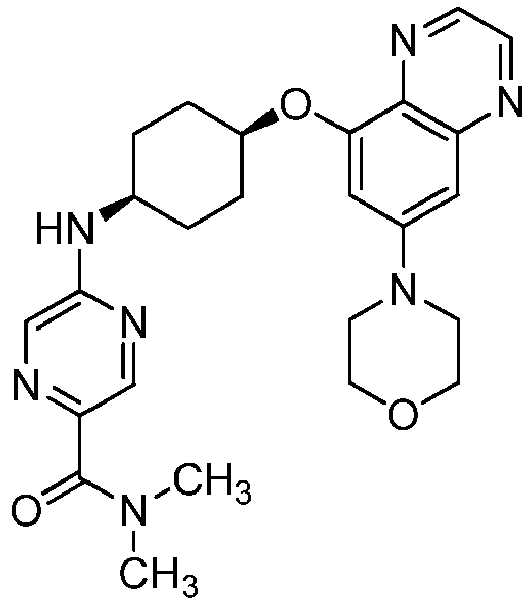
478.26 (CDCl3) δ 8.69 (d, J = 1.9 Hz, 1H), 8.61 (d, J = 2.0 Hz, 1H), 8.49 (d, J = 1.4 Hz, 1H), 7.77 (d, J = 1.4 Hz, 1H), 6.93 (dd, J = 16.1, 2.5 Hz, 2H), 5.03 (d, J = 7.9 Hz, 1H), 4.81 (td, J = 5.3, 2.6 Hz, 1H), 4.09 - 3.98 (m, 1H), 3.98 - 3.87 (m, 4H), 3.39 - 3.26 (m, 4H), 3.19 (s, 3H), 3.12 (s, 3H), 2.22 (dt, J = 11.2,4.9 Hz, 2H), 2.02 - 1.82 (m, 6H) 109 
447.02 (CDCl3) δ 8.70 (d, J = 1.9 Hz, 1H), 8.63 (d, J = 1.9 Hz, 1H), 8.10 (d, J = 0.5 Hz, 2H), 6.97 (d, J = 2.5 Hz, 1H), 6.92 (d, J = 2.5 Hz, 1H), 5.13 (d, J = 8.3 Hz, 1H), 4.80 (s, 1H), 4.06 - 3.86 (m, 5H), 3.35 (dd, J = 5.9, 3.8 Hz, 4H), 2.27 - 2.14 (m, 2H), 1.92 (d, J = 5.1 Hz, 6H), 1.79 - 1.44 (m, 6H), 1.28 (t, J = 7.1 Hz, 1H), 1.03 -0.83 (m, 2H), 0.68 - 0.51 (m, 2H) 110 
395.19 (400 MHz, CDCl3) δ 8.69 (d, J = 1.9 Hz, 1H), 8.64 - 8.54 (m, 1H), 6.94 (d, J = 2.4 Hz, 1H), 6.86 (d, J = 2.5 Hz, 1H), 6.06 - 5.78 (m, 1H), 4.79 - 4.68 (m, 1H), 4.11 - 3.96 (m, 1H), 3.96 - 3.86 (m, 4H), 3.40 - 3.27 (m, 4H), 2.13 (dd, J = 11.0, 5.2 Hz, 2H), 1.94 (s, 3H), 1.90 - 1.78 (m, 6H) 111 
421.19 112 
452.18 (400 MHz, CDCl3) δ 8.70 (d, J = 1.9 Hz, 1H), 8.66 - 8.53 (m, 3H), 7.93 (dd, J = 6.4, 5.0 Hz, 1H), 6.95 (d, J = 2.4 Hz, 1H), 6.90 (d, J = 2.4 Hz, 1H), 6.78 (s, 1H), 4.78 (bs, 1H), 4.23 (bs, 1H), 3.97 - 3.85 (m, 4H), 3.38 - 3.27 (m, 4H), 2.30 - 2.15 (m, 2H), 2.02 - 1.86 (m, 6H) 113 
439.24 (400 MHz, CDCl3) δ 8.70 (s, 1H), 8.60 (s, 1 H), 6.94 (s, 1 H), 6.87 (s, 1H), 5.99 (d, J = 6.8 Hz, 1H), 4.75 (bs, 1H), 4.03 (bs, 1H), 3.99 - 3.83 (m, 4H), 3.43 - 3.21 (m, 4H), 2.33 (s, 1H), 2.24 - 2.04 (m, 2H), 1.94 - 1.74 (m, 6H), 1.56 (s, 6H) 114 
452.15 (400 MHz, CDCl3) δ 8.70 (d, J = 1.9 Hz, 1H), 8.63 (d, J = 1.9 Hz, 1H), 8.40 (dt, J = 4.3, 1.3 Hz, 1H), 8.01 (d, J = 8.5 Hz, 1H), 7.58 - 7.52 (m, 1H), 7.51 - 7.46 (m, 1H), 6.95 (d, J = 2.4 Hz, 1H), 6.90 (d, J = 2.4 Hz, 1H), 4.74 (s, 1H), 4.29 - 4.17 (m, 1H), 3.97 - 3.88 (m, 4H), 3.39 - 3.30 (m, 4H), 2.25 - 2.16 (m, 2H), 2.06 - 1.88 (m, 6H) 115 
451.16 (400 MHz, CDCl3) δ 8.69 (d, J = 1.8 Hz, 1H), 8.62 (d, J = 1.8 Hz, 1H), 8.09 (dd, J = 7.9, 6.1 Hz, 1H), 7.47 (d, J = 8.1 Hz, 1H), 7.13 (dd, J = 11.8, 7.9 Hz, 1H), 6.95 (d, J = 2.3 Hz, 1H), 6.90 (d, J = 2.3 Hz, 1H), 6.82 (s, 1H), 4.77 (s, 1H), 4.24 (s, 1H), 3.96 - 3.88 (m, 4H), 3.38 - 3.30 (m, 4H), 2.27 - 2.14 (m, 2H), 2.01 - 1.87 (m, 6H) 116 
473.17 (400 MHz, CDCl3) δ 8.70 (d, J = 1.9 Hz, 1H), 8.63 (d, J = 1.9 Hz, 1H), 7.83 (d, J = 2.7 Hz, 1H), 7.19 - 6.93 (m, 4H), 6.89 (d, J = 2.4 Hz, 1H), 4.75 (s, 1H), 4.21 (s, 1H), 3.95 - 3.89 (m, 4H), 3.38 - 3.30 (m, 4H), 2.26 - 2.13 (m, 2H), 2.03 - 1.86 (m, 6H) 117 
437.17 (400 MHz, CDCl3) δ 8.69 (d, J = 1.9 Hz, 1H), 8.62 (d, J = 1.9 Hz, 1H), 7.35 (d, J = 2.2 Hz, 1H), 6.99 (d, J = 8.2 Hz, 1H), 6.93 (d, J = 2.4 Hz, 1H), 6.88 (d, J = 2.4 Hz, 1H), 6.78 (d, J = 2.3 Hz, 1H), 4.73 (s, 1H), 4.26 - 4.14 (m, 1H), 3.96 - 3.87 (m, 7H), 3.36 - 3.29 (m, 4H), 2.23 - 2.12 (m, 2H), 2.01 - 1.82 (m, 6H) 118 
437.21 (400 MHz, CDCl3) δ 10.00 (s, 1H), 8.63 (d, J = 1.9 Hz, 1H), 8.54 (d, J = 1.9 Hz, 1H), 6.93 (s, 1H), 6.87 (d, J = 2.4 Hz, 1H), 6.81 (d, J = 2.4 Hz, 1H), 6.50 (s, 1H), 4.69 (s, 1H), 4.15 - 4.05 (m, 1H), 3.92 - 3.77 (m, 4H), 3.35 - 3.19 (m, 4H), 2.27 (d, J = 0.5 Hz, 3H), 2.18 - 2.04 (m, 2H), 1.95 - 1.74 (m, 6H) 119 
451.25 (400 MHz, CDCl3) δ 8.70 (s, 1H), 8.63 (s, 1H), 6.99 - 6.50 (m, 3H), 4.76 (d, J = 20.7 Hz, 1H), 4.19 (s, 1H), 4.13 - 3.74 (m, 7H), 3.41 - 3.21 (m, 4H), 2.37 -2.08 (m, 5H), 2.03 - 1.79 (m, 6H) 120 
491.18 (400 MHz, CDCl3) δ 8.73 (d, J = 1.9 Hz, 1H), 8.58 (d, J = 1.9 Hz, 1H), 6.97 (d, J = 2.4 Hz, 1H), 6.93 (s, 1 H), 6.88 (d, J = 2.3 Hz, 1H), 6.53 (s, 1H), 4.79 (s, 1H), 4.24 - 4.15 (m, 1H), 3.96 - 3.86 (m, 4H), 3.40 - 3.27 (m, 4H), 2.22 - 2.15 (m, 2H), 1.94 - 1.82 (m, 6H) 121 
436.18 (400 MHz, CDCl3) δ 8.70 (d, J = 1.9 Hz, 1H), 8.62 (d, J = 1.9 Hz, 1H), 6.95 (d, J = 2.4 Hz, 1H), 6.89 (d, J = 2.4 Hz, 1H), 6.71 (d, J = 2.1 Hz, 1H), 6.54 (dd, J = 3.9, 1.7 Hz, 1H), 6.09 (dd, J = 3.9, 2.6 Hz, 1H), 5.94 (d, J = 8.1 Hz, 1H), 4.76 (s, 1H), 4.11 (s, 1H), 3.98 - 3.86 (m, 7H), 3.39 - 3.27 (m, 4H), 2.27 - 2.14 (m, 2H), 1.95 - 1.83 (m, 6H) 122 
440.18 (400 MHz, CDCl3) δ 8.70 (s, 1H), 8.61 (s, 1H), 8.51 (s, 1H), 7.50 (s, 1H), 6.95 (s, 1H), 6.89 (s, 1H), 6.16 (d, 1H), 4.80 (s, 1H), 4.18 (s, 1H), 4.01 - 3.78 (m, 4H), 3.44 - 3.23 (m, 4H), 2.33 - 2.16 (m, 2H), 1.91 (d, J = 25.1 Hz, 6H) 123 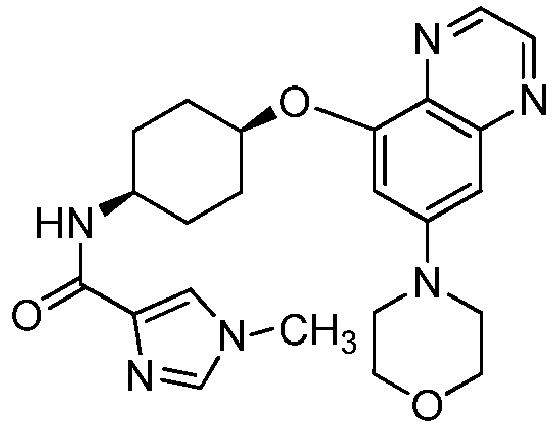
437.21 (400 MHz, CDCl3) δ 8.69 (d, J = 1.8 Hz, 1H), 8.62 (d, J = 1.9 Hz, 1H), 7.50 (d, J = 1.2 Hz, 1H), 7.36 (d, J = 1.0 Hz, 1H), 7.16 (d, J = 7.9 Hz, 1H), 6.94 (d, J = 2.3 Hz, 1H), 6.88 (d, J = 2.3 Hz, 1H), 4.78 (s, 1H), 4.20 - 4.09 (m, 1H), 3.95 - 3.87 (m, 4H), 3.73 (s, 3H), 3.38 - 3.28 (m, 4H), 2.25 - 2.14 (m, 2H), 2.00 - 1.82 (m, 6H) 124 
473.2 (CDCl3) δ 8.68 (d, J = 1.9 Hz, 1H), 8.58 (d, J = 1.9 Hz, 1H), 7.85 - 7.72 (m, 2H), 6.95 (d, J = 2.5 Hz, 1H), 6.86 (d, J = 2.5 Hz, 1H), 4.89 (d, J = 7.5 Hz, 1H), 4.71 (dq, J = 5.5, 2.7 Hz, 1H), 4.00 - 3.85 (m, 7H), 3.47 - 3.27 (m, 5H), 2.19 - 2.07 (m, 2H), 1.97 - 1.65 (m, 6H) 125 
473.25 (CDCl3) δ 8.70 (d, J = 1.9 Hz, 1H), 8.55 (d, J = 1.9 Hz, 1H), 7.46 (d, J = 2.0 Hz, 1H), 6.97 (d, J = 2.5 Hz, 1H), 6.81 (dd, J = 22.5, 2.3 Hz, 2H), 5.65 - 5.56 (m, 1H), 4.73 (p, J = 2.5 Hz, 1H), 4.10 (s, 3H), 3.95 - 3.85 (m, 4H), 3.47 (d, J = 15.3 Hz, 1H), 3.36 - 3.27 (m, 4H), 2.23 - 2.08 (m, 2H), 1.98 - 1.62 (m, 6H) 126 
473.25 (CDCl3) δ 8.68 (d, J = 1.9 Hz, 1H), 8.58 (d, J = 1.9 Hz, 1H), 7.41 (d, J = 2.3 Hz, 1H), 6.95 (d, J = 2.5 Hz, 1H), 6.86 (d, J = 2.5 Hz, 1H), 6.69 (d, J = 2.3 Hz, 1H), 4.95 (d, J = 7.3 Hz, 1H), 4.72 (h, J = 2.6 Hz, 1H), 4.02 - 3.82 (m, 7H), 3.52 (d, J = 9.0 Hz, 1H), 3.37 - 3.27 (m, 4H), 2.12 (dt, J = 16.1, 5.7 Hz, 2H), 1.97 - 1.65 (m, 6H) 127 
507.2 (CDCl3) δ 8.62 (d, J = 1.9 Hz, 1H), 8.54 (d, J = 1.9 Hz, 1H), 8.01 (s, 2H), 6.88 (s, 1H), 6.83 (d, J = 2.5 Hz, 1H), 4.93 (d, J = 8.1 Hz, 1H), 4.72 (d, J = 5.8 Hz, 1H), 4.53 (d, J = 6.0 Hz, 2H), 4.38 (d, J = 6.0 Hz, 2H), 3.89 - 3.75 (m, 4H), 3.35 - 3.13 (m, 4H), 2.10 (s, 3H), 1.95 - 1.72 (m, 6H), 1.36 (s, 3H) 128 
477.2 (CDCl3) δ 8.70 (d, J = 1.9 Hz, 1H), 8.63 (d, J = 1.9 Hz, 1H), 8.56 (s, 2H), 7.04 - 6.87 (m, 2H), 6.19 (d, J = 6.8 Hz, 1H), 5.15 (d, J = 8.2 Hz, 1H), 5.01 (d, J = 6.8 Hz, 1H), 4.81 (s, 1H), 4.11 - 3.85 (m, 6H), 3.43 - 3.22 (m, 4H), 2.21 (d, J = 9.5 Hz, 2H), 1.94 (t, J = 3.9 Hz, 6H), 1.36 (t, J = 7.1 Hz, 3H) 129 
478.93 (CDCl3) δ 8.60 (d, J = 1.9 Hz, 1H), 8.53 (d, J = 1.9 Hz, 1H), 7.81 (s, 2H), 6.91 - 6.75 (m, 2H), 5.08 - 4.89 (m, 2H), 4.89 - 4.77 (m, 2H), 4.67 (ddd, J = 8.2, 4.7, 1.9 Hz, 3H), 3.94 - 3.72 (m, 5H), 3.34 - 3.17 (m, 4H), 2.21 -2.00 (m, 2H), 1.91 - 1.69 (m, 6H) 130 
401.24 (400 MHz, methanol-d4) δ 8.69 (d, J = 2.0 Hz, 1H), 8.55 (d, J = 2.0 Hz, 1H), 7.10 (d, J = 2.3 Hz, 1H), 6.89 (d, J = 2.4 Hz, 1H), 4.85 - 4.82 (m, 1H), 4.07 (q, J = 6.9 Hz, 2H), 3.95 - 3.81 (m, 4H), 3.64 - 3.53 (m, 1H), 3.42 - 3.35 (m, 4H), 2.20 - 2.02 (m, 2H), 1.94 - 1.66 (m, 6H), 1.24 (t, J = 7.1 Hz, 3H) 131 
429.21 (400 MHz, CDCl3) δ 8.73 - 8.65 (m, 1H), 8.60 (d, J = 1.9 Hz, 1H), 6.94 (d, J = 2.4 Hz, 1H), 6.87 (d, J = 2.3 Hz, 1H), 4.90 - 4.58 (m, 2H), 3.97 - 3.88 (m, 4H), 3.83 (d, J = 6.3 Hz, 2H), 3.72 (s, 1H), 3.39 - 3.27 (m, 4H), 2.20 - 2.06 (m, 2H), 1.95 - 1.76 (m, 7H), 0.93 (d, J = 6.7 Hz, 6H) 132 
449.16 (400 MHz, CDCl3) δ 8.70 (d, J = 1.6 Hz, 1H), 8.62 (d, J = 1.7 Hz, 1H), 7.36 (t, J = 7.6 Hz, 2H), 7.19 (t, J = 7.3 Hz, 1H), 7.13 (d, J = 7.7 Hz, 2H), 6.96 (s, 1H), 6.89 (s, 1H), 5.12 (d, J = 7.2 Hz, 1H), 4.77 (s, 1H), 3.98 - 3.85 (m, 4H), 3.79 (s, 1H), 3.39 - 3.28 (m, 4H), 2.29 - 2.11 (m, 2H), 1.98 - 1.79 (m, 6H) 133 
493.25 (CDCl3) δ 8.71 (d, J = 1.9 Hz, 1H), 8.63 (d, J = 1.9 Hz, 1H), 8.04 (s, 2H), 6.97 (d, J = 2.5 Hz, 1H), 6.92 (d, J = 2.7 Hz, 1H), 4.79 (s, 2H), 4.07 - 3.83 (m, 6H), 3.42 - 3.25 (m, 4H), 2.29 - 2.02 (m, 2H), 1.92 (d, J = 4.6 Hz, 6H), 1.36 - 1.12 (m, 3H) 134 
437.3 (CDCl3) δ 8.70 (d, J = 1.9 Hz, 1H), 8.63 (d, J = 1.9 Hz, 1H), 8.07 (s, 2H), 6.97 (d, J = 2.5 Hz, 1H), 6.92 (d, J = 2.6 Hz, 1H), 4.99 (d, J = 8.0 Hz, 1H), 4.81 (d, J = 5.9 Hz, 1H), 3.93 (dd, J = 6.0, 3.7 Hz, 5H), 3.81 (s, 3H), 3.45 - 3.24 (m, 4H), 2.21 (d, J = 8.6 Hz, 2H), 2.05 - 1.78 (m, 6H) 135 
479.2 (CDCl3) δ 8.70 (d, J = 1.9 Hz, 1H), 8.63 (d, J = 1.9 Hz, 1H), 8.19 (s, 2H), 6.96 (d, J = 2.5 Hz, 1H), 6.92 (d, J = 2.5 Hz, 1H), 5.12 (d, J = 8.1 Hz, 1H), 4.81 (d, J = 5.6 Hz, 1H), 4.09 - 3.85 (m, 5H), 3.63 - 3.41 (m, 4H), 3.43 - 3.26 (m, 4H), 2.69 (t, J = 6.6 Hz, 2H), 2.33 -2.13 (m, 2H), 2.03 - 1.83 (m, 6H), 1.21 (t, J = 7.0 Hz, 3H) 136 
494.24 (methanol-d4) δ 8.77 - 8.65 (m, 3H), 8.56 (d, J = 2.0 Hz, 1H), 7.11 (d, J = 2.4 Hz, 1H), 6.89 (d, J = 2.4 Hz, 1H), 4.92 (s, 1H), 4.02 (dd, J = 8.4, 4.3 Hz, 1H), 3.93 - 3.83 (m, 4H), 3.69 (t, J = 5.7 Hz, 2H), 3.47 (t, J = 5.8 Hz, 2H), 3.42 - 3.33 (m, 5H), 2.26 - 2.15 (m, 2H), 2.08 - 1.78 (m, 6H) 137 
522.23 (CDCl3) δ 8.73 - 8.58 (m, 4H), 7.01 - 6.87 (m, 2H), 6.12 (d, J = 7.9 Hz, 1H), 5.57 (d, J = 8.1 Hz, 1H), 4.80 (s, 1H), 4.39 - 4.28 (m, 1H), 4.10 (d, J = 6.9 Hz, 1H), 3.97 - 3.87 (m, 4H), 3.54 - 3.29 (m, 9H), 2.21 (d, J = 9.9 Hz, 2H), 2.08 - 1.84 (m, 6H), 1.28 (d, J = 6.8 Hz, 3H) 138 
452.92 (CDCl3) δ 9.04 (d, J = 3.2 Hz, 1H), 8.97 (d, J = 3.3 Hz, 1H), 8.64 (d, J = 1.9 Hz, 1H), 8.55 (d, J = 1.9 Hz, 1H), 6.90 (d, J = 2.5 Hz, 1H), 6.84 (d, J = 2.5 Hz, 1H), 6.03 (d, J = 8.2 Hz, 1H), 4.77 (td, J = 5.1, 2.6 Hz, 1H), 4.15 - 4.07 (m, 1H), 3.92 - 3.79 (m, 4H), 3.35 - 3.15 (m, 4H), 2.25 - 2.11 (m, 2H), 1.95 - 1.69 (m, 6H) 139 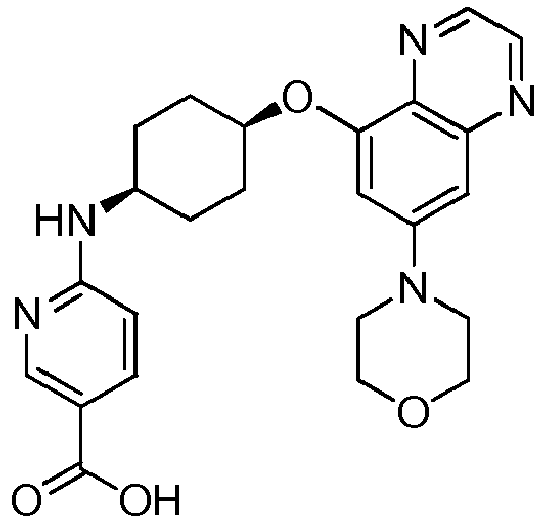
450.17 (400 MHz, CDCl3) δ 8.74 (d, J = 1.9 Hz, 2H), 8.70 (d, J = 1.9 Hz, 1H), 8.03 (dd, J = 8.9, 2.0 Hz, 1H), 6.97 (d, J = 2.4 Hz, 1H), 6.92 (d, J = 2.4 Hz, 1H), 6.37 (d, J = 8.9 Hz, 1H), 6.05 (s, 1H), 4.81 (s, 1H), 3.99 - 3.88 (m, 4H), 3.84 (s, 1H), 3.39 - 3.27 (m, 4H), 2.31 - 2.17 (m, 2H), 2.08 - 1.98 (m, 2H), 1.98 - 1.82 (m, 4H) 140 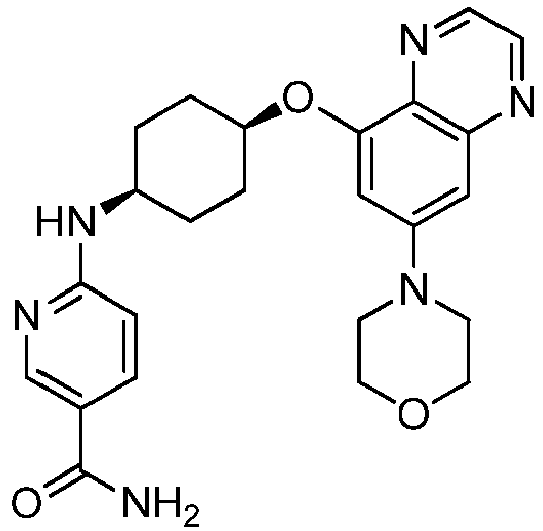
449.19 (400 MHz, CDCl3) δ 8.70 (d, J = 1.9 Hz, 1H), 8.61 (d, J = 1.9 Hz, 1H), 8.53 (d, J = 2.1 Hz, 1H), 7.88 (dd, J = 8.8, 2.4 Hz, 1H), 6.95 (d, J = 2.4 Hz, 1H), 6.90 (d, J = 2.4 Hz, 1H), 6.39 (d, J = 8.7 Hz, 1H), 5.61 (s, 2H), 4.97 (d, J = 7.9 Hz, 1H), 4.80 (s, 1H), 4.02 - 3.82 (m, 5H), 3.42 - 3.26 (m, 4H), 2.27 - 2.14 (m, 2H), 2.00 - 1.81 (m, 6H) 141 
492.17 (CDCl3) δ 8.70 (d, J = 1.9 Hz, 1H), 8.63 (d, J = 1.9 Hz, 1H), 8.09 (s, 2H), 7.01 - 6.86 (m, 2H), 4.88 - 4.75 (m, 1H), 4.08 - 3.80 (m, 9H), 3.43 - 3.27 (m, 4H), 3.09 - 2.96 (m, 4H), 2.31 - 2.15 (m, 2H), 2.05 - 1.81 (m, 6H) 142 
421.2 (CDCl3) δ 8.70 (d, J = 1.9 Hz, 1H), 8.63 (d, J = 1.9 Hz, 1H), 8.14 (d, J = 0.8 Hz, 2H), 7.01 - 6.90 (m, 2H), 4.81 (td, J = 5.6, 2.7 Hz, 1H), 4.08 - 3.84 (m, 5H), 3.43 - 3.26 (m, 4H), 2.25 - 2.10 (m, 5H), 2.02 - 1.83 (m, 6H) 143 
422.25 (CDCl3) δ 8.70 (d, J = 1.9 Hz, 1H), 8.63 (d, J = 1.9 Hz, 1H), 8.02 (s, 2H), 6.95 (dd, J = 11.8, 2.5 Hz, 2H), 4.81 (s, 2H), 4.08 - 3.85 (m, 5H), 3.41 - 3.30 (m, 4H), 2.20 (d, J = 10.1 Hz, 2H), 1.95 (d, J = 19.7 Hz, 6H), 1H NMR (300 MHz, Methanol-d4) ? 8.68 (d, J = 2.0 Hz, 1H), 8.56 (d, J = 2.1 Hz, 1H), 7.93 (s, 2H), 7.11 (d, J = 2.5 Hz, 1H), 6.88 (d, J = 2.4 Hz, 1H), 3.96 - 3.71 (m, 5H), 3.37 (dd, J = 5.8, 3.9 Hz, 4H), 2.27 - 2.04 (m, 2H), 1.98 - 1.74 (m, 6H). [2] 144 
463.2 (400 MHz, CDCl3) δ 8.69 (d, J = 1.9 Hz, 1H), 8.61 (d, J = 1.9 Hz, 1H), 8.47 (d, J = 2.1 Hz, 1H), 7.84 (dd, J = 8.7, 2.4 Hz, 1H), 6.95 (d, J = 2.4 Hz, 1H), 6.90 (d, J = 2.4 Hz, 1H), 6.37 (d, J = 8.7 Hz, 1H), 5.94 (d, J = 3.9 Hz, 1H), 4.92 (d, J = 7.8 Hz, 1H), 4.79 (s, 1H), 3.98 - 3.84 (m, 5H), 3.39 - 3.26 (m, 4H), 2.98 (d, J = 4.8 Hz, 3H), 2.27 - 2.12 (m, 2H), 1.97 - 1.83 (m, 6H) 145 
477.2 (400 MHz, CDCl3) δ 8.69 (d, J = 1.9 Hz, 1H), 8.61 (d, J = 1.9 Hz, 1H), 8.20 (s, 1H), 7.61 (d, J = 8.2 Hz, 1H), 6.95 (d, J = 2.4 Hz, 1H), 6.91 (d, J = 2.4 Hz, 1H), 6.43 (d, J = 7.9 Hz, 1H), 4.81 (s, 1H), 3.98 - 3.81 (m, 5H), 3.40 - 3.27 (m, 4H), 3.09 (s, 6H), 2.27 - 2.15 (m, 2H), 1.99 - 1.83 (m, 6H) 146 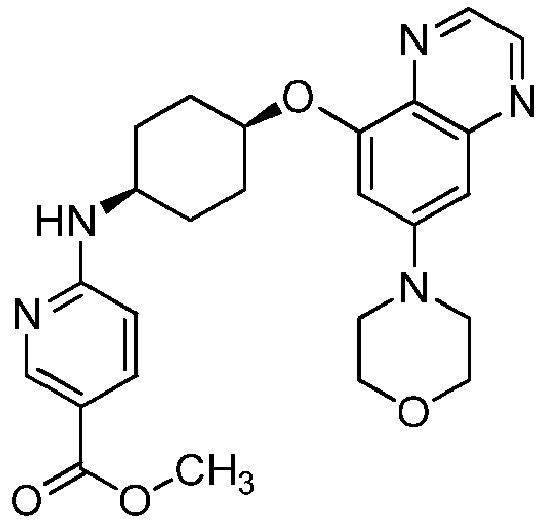
464.17 (CDCl3) δ 8.76 (d, J = 2.0 Hz, 1H), 8.71 (d, J = 1.9 Hz, 1H), 8.63 (d, J = 1.9 Hz, 1H), 7.99 (dd, J = 8.8, 2.2 Hz, 1H), 6.97 (d, J = 2.5 Hz, 1H), 6.92 (d, J = 2.5 Hz, 1H), 6.38 (d, J = 8.9 Hz, 1H), 5.13 (s, 1H), 4.82 (s, 1H), 4.11 - 3.73 (m, 8H), 3.44 - 3.27 (m, 4H), 2.30 - 2.17 (m, 2H), 2.07 - 1.79 (m, 6H) 147 
423.2 (400 MHz, CDCl3) δ 10.77 - 10.42 (m, 1H), 8.70 (d, J = 1.9 Hz, 1H), 8.63 (d, J = 1.9 Hz, 1H), 7.30 (d, J = 8.2 Hz, 1H), 7.15 (d, J = 5.7 Hz, 2H), 6.95 (d, J = 2.5 Hz, 1H), 6.90 (d, J = 2.4 Hz, 1H), 4.83 (s, 1H), 4.19 - 4.05 (m, 1H), 3.99 - 3.84 (m, 4H), 3.40 - 3.27 (m, 4H), 2.31 - 2.15 (m, 2H), 2.06 - 1.93 (m, 2H), 1.93 - 1.79 (m, 4H) 148 
534.28 (DMSO-d6) δ 8.73 (d, J = 1.5 Hz, 3H), 8.59 (d, J = 1.9 Hz, 1H), 8.12 (d, J = 8.2 Hz, 1H), 7.84 (d, J = 7.4 Hz, 1H), 7.14 (d, J = 2.4 Hz, 1H), 6.84 (d, J = 2.3 Hz, 1H), 4.93 (s, 1H), 4.51 (ddd, J = 13.3, 8.2, 5.2 Hz, 1H), 4.01 - 3.74 (m, 6H), 3.55 (q, J = 8.0 Hz, 1H), 3.38 - 3.27 (m, 4H), 2.33 - 2.15 (m, 1H), 2.06 (d, J = 11.1 Hz, 2H), 1.96 - 1.67 (m, 8H), 1.02 (d, J = 6.3 Hz, 3H) 149 
520.33 (DMSO-d6) δ 8.76 - 8.67 (m, 3H), 8.59 (d, J = 1.9 Hz, 1H), 8.32 (d, J = 6.5 Hz, 1H), 7.84 (d, J = 7.3 Hz, 1H), 7.14 (d, J = 2.5 Hz, 1H), 6.84 (d, J = 2.3 Hz, 1H), 4.93 (s, 1H), 4.49 - 4.37 (m, 1H), 3.96 - 3.63 (m, 9H), 3.55 (dd, J = 8.9, 4.2 Hz, 1H), 3.38 - 3.27 (m, 4H), 2.23 - 2.00 (m, 4H), 1.95 - 1.71 (m, 6H) 150 
520.33 (DMSO-d6) δ 8.76 - 8.67 (m, 3H), 8.59 (d, J = 1.9 Hz, 1H), 8.32 (d, J = 6.5 Hz, 1H), 7.84 (d, J = 7.3 Hz, 1H), 7.14 (d, J = 2.5 Hz, 1H), 6.84 (d, J = 2.3 Hz, 1H), 4.93 (s, 1H), 4.49 - 4.37 (m, 1H), 3.96 - 3.63 (m, 9H), 3.55 (dd, J = 8.9, 4.2 Hz, 1H), 3.38 - 3.27 (m, 4H), 2.23 - 2.00 (m, 4H), 1.95 - 1.71 (m, 6H) 151 
(CDCl3) δ 8.70 (d, J = 1.9 Hz, 1H), 8.64 (d, J = 2.0 Hz, 1H), 7.93 (s, 2H), 7.02 - 6.90 (m, 2H), 4.82 (t, J = 6.7 Hz, 3H), 4.66 (t, J = 6.4 Hz, 2H), 4.14 (q, J = 7.1 Hz, 1H), 4.08 - 3.89 (m, 5H), 3.42 - 3.25 (m, 4H), 2.80 (s, 3H), 2.22 (s, 2H), 2.05 - 1.79 (m, 6H) 152 
464.21 (CDCl3) δ 8.70 (d, J = 1.9 Hz, 1H), 8.64 (d, J = 1.9 Hz, 1H), 7.94 (s, 2H), 6.99 - 6.90 (m, 2H), 4.82 (s, 1H), 4.05 - 3.87 (m, 5H), 3.44 (q, J = 6.3 Hz, 1H), 3.39 - 3.26 (m, 4H), 2.23 (d, J = 12.4 Hz, 2H), 2.03 - 1.82 (m, 6H), 1.23 (d, J = 6.3 Hz, 6H) 153 
483.1 (CDCl3) δ 8.64 - 8.49 (m, 2H), 6.93 (d, J = 3.9 Hz, 1H), 6.83 (d, J = 2.4 Hz, 1H), 5.27 (d, J = 8.1 Hz, 1H), 4.94 (t, J = 1.9 Hz, 2H), 4.81 (t, J = 1.9 Hz, 2H), 4.72 (s, 1H), 3.96 (s, 1H), 3.89 - 3.78 (m, 4H), 3.37 - 3.25 (m, 4H),2.11 (s, 2H), 1.82 (d, J = 5.1 Hz, 6H) 154 
483.1 (CDCl3) δ 8.68 (dd, J = 8.7, 2.0 Hz, 1H), 8.56 (d, J = 2.0 Hz, 1H), 6.92 (d, J = 2.3 Hz, 1H), 6.84 (d, J = 2.4 Hz, 1H), 4.92 (t, J = 2.7 Hz, 2H), 4.82 (t, J = 2.7 Hz, 2H), 4.75 (s, 1H), 3.94 - 3.81 (m, 4H), 3.35 - 3.15 (m, 4H), 2.14 (d, J = 12.0 Hz, 2H), 1.82 (d, J = 17.3 Hz, 6H) 155 
478.3 (CDCl3) δ 8.71 (d, J = 1.9 Hz, 1H), 8.64 (d, J = 1.9 Hz, 1H), 7.02 - 6.89 (m, 2H), 4.83 (s, 1H), 4.08 - 3.87 (m, 5H), 3.44 - 3.33 (m, 4H), 3.27 (d, J = 26.0 Hz, 4H), 2.23 (d, J = 9.8 Hz, 2H), 2.05 - 1.80 (m, 6H), 1.14 (s, 6H) 156 
462.23 (CDCl3) δ 8.70 (d, J = 2.0 Hz, 1H), 8.63 (d, J = 1.9 Hz, 1H), 7.72 (s, 2H), 6.96 (d, J = 2.5 Hz, 1H), 6.92 (d, J = 2.5 Hz, 1H), 5.03 (s, 1H), 4.80 (q, J = 4.4 Hz, 1H), 4.03 - 3.89 (m, 4H), 3.83 (t, J = 7.1 Hz, 4H), 3.44 - 3.29 (m, 4H), 2.41 (dq, J = 8.6, 7.1 Hz, 2H), 2.20 (q, J = 5.9 Hz, 2H), 1.99 - 1.81 (m, 6H) 157 
433.2 158 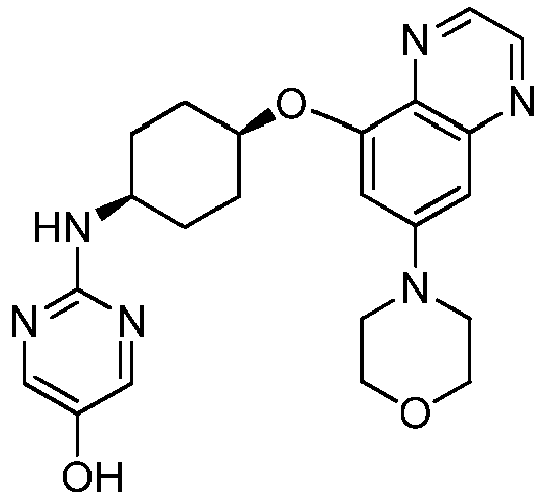
(CDCl3) δ 8.71 (d, J = 2.0 Hz, 1H), 8.64 (d, J = 1.9 Hz, 1H), 8.41 (s, 2H), 6.97 (d, J = 2.4 Hz, 1H), 6.93 (d, J = 2.5 Hz, 1H), 5.32 (d, J = 8.1 Hz, 1H), 4.82 (s, 1H), 4.07 (s, 1H), 4.00 - 3.88 (m, 4H), 3.43 - 3.29 (m, 4H), 2.22 (s, 2H), 2.06 - 1.81 (m, 6H) 159 
434.24 160 
436.2 (400 MHz, CDCl3) δ 8.69 (d, J = 1.9 Hz, 1H), 8.61 (d, J = 1.9 Hz, 1H), 8.05 (d, J = 2.2 Hz, 1H), 7.46 (dd, J = 8.5, 2.3 Hz, 1H), 6.94 (d, J = 2.4 Hz, 1H), 6.90 (d, J = 2.4 Hz, 1H), 6.39 (d, J = 8.6 Hz, 1H), 4.77 (s, 1H), 4.53 (s, 2H), 3.95 - 3.87 (m, 5H), 3.36 - 3.32 (m, 4H), 2.25 - 2.12 (m, 2H), 1.90 (d, J = 4.4 Hz, 6H) 161 
451.28 (CDCl3) δ 8.69 (d, J = 1.9 Hz, 1H), 8.61 (d, J = 1.9 Hz, 1H), 8.26 (s, 2H), 6.95 (d, J = 2.5 Hz, 1H), 6.90 (d, J = 2.6 Hz, 1H), 5.23 (d, J = 8.1 Hz, 1H), 4.80 (d, J = 5.8 Hz, 1H), 4.26 (s, 2H), 4.03 (s, 1H), 3.97 - 3.85 (m, 4H), 3.44 - 3.21 (m, 7H), 2.32 - 2.09 (m, 2H), 2.06 - 1.70 (m, 6H) 162 
492.29 (DMSO-d6) δ 8.81 - 8.64 (m, 3H), 8.58 (d, J = 1.9 Hz, 1H), 7.99 (d, J = 7.6 Hz, 1H), 7.76 (d, J = 7.4 Hz, 1H), 7.14 (d, J = 2.5 Hz, 1H), 6.84 (d, J = 2.3 Hz, 1H), 4.92 (s, 1H), 3.98 - 3.84 (m, 1H), 4.05 (dq, J = 13.5, 6.7 Hz, 1H), 3.79 (d, J = 9.6 Hz, 4H), 3.32 (d, J = 8.2 Hz, 4H), 2.06 (d, J = 11.8 Hz, 2H), 1.96 - 1.66 (m, 6H), 1.14 (d, J = 6.6 Hz, 6H) 163 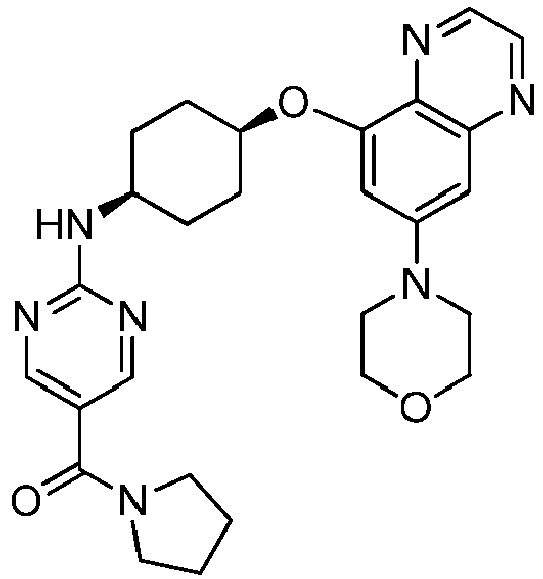
504.26 (CDCl3) δ 8.69 (d, J = 1.9 Hz, 1H), 8.65 - 8.53 (m, 3H), 6.93 (dd, J = 14.6, 2.5 Hz, 2H), 5.48 (d, J = 8.0 Hz, 1H), 4.81 (d, J = 6.1 Hz, 1H), 4.19 - 4.03 (m, 1H), 3.92 (dd, J = 6.0, 3.7 Hz, 4H), 3.65 - 3.54 (m, 4H), 3.34 (dd, J = 5.9, 3.7 Hz, 4H), 2.27 - 2.15 (m, 2H), 2.08 - 1.81 (m, 10H) 164 
484.12 (400 MHz, CDCl3) δ 8.60 (d, J = 1.9 Hz, 1H), 8.52 (d, J = 1.9 Hz, 1H), 8.01 (d, J = 2.1 Hz, 1H), 7.35 (dd, J = 8.8, 2.5 Hz, 1H), 6.86 (d, J = 2.5 Hz, 1H), 6.80 (d, J = 2.5 Hz, 1H), 6.20 (d, J = 8.4 Hz, 1H), 4.68 (s, 1H), 4.47 (d, J = 8.0 Hz, 1H), 3.92 - 3.80 (m, 4H), 3.74 (s, 1H), 3.34 - 3.14 (m, 4H), 2.18 - 2.02 (m, 2H), 1.94 - 1.67 (m, 6H) 165 
448.15 (400 MHz, CDCl3) δ 8.69 (d, J = 1.9 Hz, 1H), 8.63 (d, J = 1.9 Hz, 1H), 8.44 - 8.37 (m, 1H), 8.33 (d, J = 8.1 Hz, 1H), 7.58 (dd, J = 7.8, 0.9 Hz, 1H), 7.31 (dd, J = 7.7, 4.6 Hz, 1H), 6.95 (d, J = 2.4 Hz, 1H), 6.90 (d, J = 2.4 Hz, 1H), 4.75 (s, 1H), 4.25 - 4.10 (m, 1H), 3.97 - 3.85 (m, 4H), 3.41 - 3.26 (m, 4H), 2.75 (s, 3H), 2.29 - 2.13 (m, 2H), 2.06 - 1.85 (m, 6H) 166 
448.19 (400 MHz, CDCl3) δ 8.69 (d, J = 1.9 Hz, 1H), 8.63 (d, J = 1.9 Hz, 1H), 8.41 (d, J = 4.5 Hz, 1H), 8.21 (d, J = 8.0 Hz, 1H), 8.08 - 7.98 (m, 1H), 7.25 - 7.22 (m, 1H), 6.95 (d, J = 2.5 Hz, 1H), 6.90 (d, J = 2.4 Hz, 1H), 4.76 (s, 1H), 4.27 - 4.15 (m, 1H), 3.98 - 3.86 (m, 4H), 3.40 - 3.29 (m, 4H), 2.43 (s, 3H), 2.29 - 2.16 (m, 2H), 2.07 - 1.86 (m, 6H) 167 
448.19 (400 MHz, CDCl3) δ 8.70 (d, J = 1.9 Hz, 1H), 8.63 (d, J = 1.9 Hz, 1H), 8.37 (dd, J = 1.4, 0.7 Hz, 1H), 8.16 (d, J = 8.4 Hz, 1H), 8.09 (d, J = 8.0 Hz, 1H), 7.66 - 7.61 (m, 1H), 6.95 (d, J = 2.4 Hz, 1H), 6.90 (d, J = 2.4 Hz, 1H), 4.75 (s, 1H), 4.29 - 4.16 (m, 1H), 3.97 - 3.86 (m, 4H), 3.39 - 3.29 (m, 4H), 2.41 (s, 3H), 2.28 - 2.15 (m, 2H), 2.04 - 1.84 (m, 6H) 168 
462.16 (400 MHz, CDCl3) δ 8.69 (d, J = 1.8 Hz, 1H), 8.63 (d, J = 1.9 Hz, 1H), 8.39 (d, J = 1.6 Hz, 1H), 8.17 (d, J = 8.6 Hz, 1H), 8.11 (d, J = 8.0 Hz, 1H), 7.66 (dd, J = 7.9, 2.0 Hz, 1H), 6.95 (d, J = 2.3 Hz, 1H), 6.90 (d, J = 2.4 Hz, 1H), 4.76 (s, 1H), 4.31 - 4.14 (m, 1H), 4.00 - 3.85 (m, 4H), 3.42 - 3.25 (m, 4H), 2.73 (q, J = 7.6 Hz, 2H), 2.30 - 2.14 (m, 2H), 1.99 (ddd, J = 34.6, 19.6, 10.3 Hz, 7H), 1.29 (t, J = 7.6 Hz, 3H) 169 
448.19 (400 MHz, CDCl3) δ 8.70 (d, J = 1.9 Hz, 1H), 8.64 (d, J = 1.9 Hz, 1H), 8.24 (d, J = 7.8 Hz, 1H), 8.01 (d, J = 7.5 Hz, 1H), 7.72 (t, J = 7.7 Hz, 1H), 7.27 (d, J = 6.6 Hz, 1H), 6.95 (d, J = 2.4 Hz, 1H), 6.90 (d, J = 2.4 Hz, 1H), 4.82 - 4.68 (m, 1H), 4.27 - 4.13 (m, 1H), 3.98 - 3.86 (m, 4H), 3.41 - 3.28 (m, 4H), 2.60 (s, 3H), 2.30 - 2.18 (m, 2H), 2.09 - 1.88 (m, 6H) 170 
464.17 (400 MHz, CDCl3) δ 8.69 (d, J = 1.8 Hz, 1H), 8.61 (d, J = 1.9 Hz, 1H), 7.90 (d, J = 7.2 Hz, 1H), 7.83 - 7.78 (m, 1H), 7.76 - 7.69 (m, 1H), 6.96 (d, J = 2.3 Hz, 1H), 6.94 - 6.86 (m, 2H), 4.77 (s, 1H), 4.17 (s, 1H), 4.00 (s, 3H), 3.95 - 3.86 (m, 4H), 3.40 - 3.29 (m, 4H), 2.30 - 2.17 (m, 2H), 2.06 - 1.88 (m, 6H) 171 
459.17 (400 MHz, CDCl3) δ 8.76 (dd, J = 4.9, 0.8 Hz, 1H), 8.70 (d, J = 1.9 Hz, 1H), 8.62 (d, J = 1.9 Hz, 1H), 8.48 - 8.38 (m, 1H), 8.09 (d, J = 8.0 Hz, 1H), 7.67 (dd, J = 4.9, 1.6 Hz, 1H), 6.96 (d, J = 2.4 Hz, 1H), 6.90 (d, J = 2.4 Hz, 1H), 4.76 (s, 1H), 4.31 - 4.14 (m, 1H), 4.01 - 3.83 (m, 4H), 3.43 - 3.26 (m, 4H), 2.31 - 2.15 (m, 2H), 2.08 - 1.87 (m, 6H) 172 
452.22 (400 MHz, CDCl3) δ 8.70 (d, J = 1.9 Hz, 1H), 8.64 (d, J = 1.9 Hz, 1H), 8.11 (dd, J = 7.4, 1.4 Hz, 1H), 7.96 (dd, J = 15.6, 7.7 Hz, 1H), 7.82 (d, J = 7.7 Hz, 1H), 7.09 (dd, J = 8.1, 1.8 Hz, 1H), 6.96 (d, J = 2.4 Hz, 1H), 6.91 (d, J = 2.4 Hz, 1H), 4.80 (s, 1H), 4.26 - 4.09 (m, 1H), 3.99 - 3.86 (m, 4H), 3.41 - 3.25 (m, 4H), 2.31 - 2.17 (m, 2H), 2.05 - 1.86 (m, 6H) 173 
452.22 174 
470.22 (400 MHz, CDCl3) δ 8.69 (d, J = 1.9 Hz, 1H), 8.62 (d, J = 1.9 Hz, 1H), 8.30 (d, J = 2.1 Hz, 1H), 7.80 (d, J = 7.9 Hz, 1H), 7.32 (ddd, J = 10.3, 8.1, 2.3 Hz, 1H), 6.95 (d, J = 2.4 Hz, 1H), 6.89 (d, J = 2.4 Hz, 1H), 4.74 (s, 1H), 4.27 - 4.15 (m, 1H), 4.00 - 3.86 (m, 4H), 3.41 - 3.27 (m, 4H), 2.27 - 2.13 (m, 2H), 2.08 - 1.86 (m, 6H) 175 
450.13 176 
450.2 (400 MHz, CDCl3) δ 12.21 (s, 1H), 8.70 (d, J = 1.9 Hz, 1H), 8.63 (d, J = 1.9 Hz, 1H), 8.17 (d, J = 7.4 Hz, 1H), 8.07 (dd, J = 4.2, 1.5 Hz, 1H), 7.33 (ddd, J = 10.0, 8.5, 2.9 Hz, 2H), 6.97 (d, J = 2.4 Hz, 1H), 6.90 (d, J = 2.5 Hz, 1H), 4.83 - 4.74 (m, 1H), 4.24 - 4.11 (m, 1H), 3.99 - 3.86 (m, 4H), 3.41 - 3.26 (m, 4H), 2.30 - 2.18 (m, 2H), 2.08 - 1.87 (m, 6H) 177 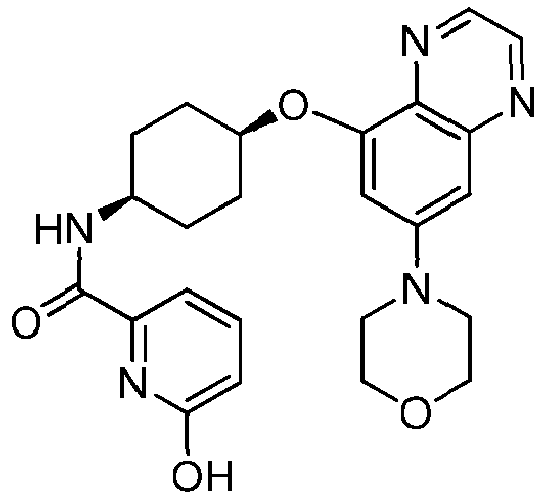
450.17 (400 MHz, CDCl3) δ 11.13 (s, 1H), 8.71 (d, J = 1.9 Hz, 1H), 8.59 (d, J = 1.9 Hz, 1H), 7.64 - 7.39 (m, 2H), 7.07 (d, J = 6.8 Hz, 1H), 7.02 - 6.79 (m, 3H), 4.76 (s, 1H), 4.32 - 4.15 (m, 1H), 3.96 - 3.85 (m, 4H), 3.42 - 3.24 (m, 4H), 2.39 - 2.14 (m, 2H), 2.10 - 1.82 (m, 6H) 178 
468.17 (400 MHz, CDCl3) δ 8.70 (d, J = 1.9 Hz, 1H), 8.64 (d, J = 1.9 Hz, 1H), 8.14 (dd, J = 7.6, 0.7 Hz, 1H), 7.91 (d, J = 8.1 Hz, 1H), 7.81 (t, J = 7.8 Hz, 1H), 7.46 (dd, J = 7.9, 0.7 Hz, 1H), 6.96 (d, J = 2.4 Hz, 1H), 6.91 (d, J = 2.4 Hz, 1H), 4.80 (s, 1H), 4.24 - 4.08 (m, 1H), 3.99 - 3.83 (m, 4H), 3.41 - 3.26 (m, 4H), 2.33 - 2.18 (m, 2H), 2.11 - 1.98 (m,2H), 1.98 - 1.87 (m, 4H) 179 
464.28 (400 MHz, CDCl3) δ 8.70 (d, J = 1.9 Hz, 1H), 8.63 (d, J = 1.9 Hz, 1H), 8.13 (d, J = 7.7 Hz, 1H), 8.02 (d, J = 7.8 Hz, 1H), 7.86 (t, J = 7.7 Hz, 1H), 7.48 (d, J = 7.8 Hz, 1H), 6.96 (d, J = 2.4 Hz, 1H), 6.91 (d, J = 2.4 Hz, 1H), 4.85 (s, 2H), 4.79 (s, 1H), 4.28 - 4.15 (m, 1H), 4.00 - 3.87 (m, 4H), 3.41 - 3.27 (m, 4H), 2.88 (s, 1H), 2.33 - 2.16 (m, 2H), 2.07 - 1.88 (m, 6H) 180 
503.27 (400 MHz, CDCl3) δ 8.68 (d, J = 1.9 Hz, 1H), 8.62 (d, J = 1.9 Hz, 1H), 8.16 (d, J = 7.8 Hz, 1H), 7.56 (dd, J = 8.4, 7.3 Hz, 1H), 7.43 (d, J = 6.7 Hz, 1H), 6.96 (d, J = 2.4 Hz, 1H), 6.91 (d, J = 2.4 Hz, 1H), 6.50 (d, J = 7.8 Hz, 1H), 4.74 (s, 1H), 4.21 - 4.07 (m, 1H), 3.97 - 3.86 (m, 4H), 3.54 - 3.48 (m, 4H), 3.40 - 3.29 (m, 4H), 2.26 - 2.14 (m, 2H), 2.07 - 1.88 (m, 10H) 181 
501.25 (400 MHz, CDCl3) δ 8.91 (s, 2H), 8.71 (d, J = 1.9 Hz, 1H), 8.64 (d, J = 1.9 Hz, 1H), 8.30 (dd, J = 7.7, 0.7 Hz, 1H), 8.11 (t, J = 7.9 Hz, 1H), 7.74 (d, J = 8.2 Hz, 1H), 7.57 (dd, J = 8.0, 0.7 Hz, 1H), 6.97 (d, J = 2.4 Hz, 1H), 6.92 (d, J = 2.4 Hz, 1H), 4.82 (s, 1H), 4.27 - 4.11 (m, 1H), 3.99 - 3.85 (m, 4H), 3.42 - 3.27 (m, 4H), 2.34 - 2.20 (m, 2H), 2.12 - 2.00 (m, 2H), 2.00 - 1.84 (m, 4H) 182 
424.21 (400 MHz, CDCl3) δ 8.71 (d, J = 1.9 Hz, 1H), 8.63 (d, J = 1.9 Hz, 1H), 8.15 (s, 1H), 7.43 (d, J = 8.1 Hz, 1H), 6.97 (d, J = 2.3 Hz, 1H), 6.90 (d, J = 2.4 Hz, 1H), 4.82 (s, 1H), 4.24 - 4.13 (m, 1H), 3.98 - 3.86 (m, 4H), 3.40 - 3.27 (m, 4H), 2.30 - 2.16 (m, 2H), 2.05 - 1.78 (m, 6H) 183 
440.12 (400 MHz, CDCl3) δ 8.69 (d, J = 1.9 Hz, 1H), 8.63 (d, J = 1.9 Hz, 1H), 7.86 (d, J = 3.1 Hz, 1H), 7.57 (d, J = 3.1 Hz, 1H), 7.38 (d, J = 8.0 Hz, 1H), 6.95 (d, J = 2.4 Hz, 1H), 6.90 (d, J = 2.4 Hz, 1H), 4.79 (s, 1H), 4.25 - 4.09 (m, 1H), 3.97 - 3.88 (m, 4H), 3.39 - 3.29 (m, 4H), 2.28 - 2.17 (m, 2H), 2.07 - 1.96 (m, 2H), 1.96 - 1.85 (m, 4H) 184 
454.09 (400 MHz, CDCl3) δ 8.69 (d, J = 1.9 Hz, 1H), 8.62 (d, J = 1.9 Hz, 1H), 7.50 (d, J = 1.1 Hz, 1H), 7.28 (d, J = 8.3 Hz, 1H), 6.95 (d, J = 2.4 Hz, 1H), 6.89 (d, J = 2.4 Hz, 1H), 4.78 (s, 1H), 4.23 - 4.07 (m, 1H), 3.99 - 3.87 (m, 4H), 3.40 - 3.27 (m, 4H), 2.53 (d, J = 1.0 Hz, 3H), 2.28 - 2.14 (m, 2H), 2.04 - 1.95 (m, 2H), 1.95 - 1.84 (m, 4H) 185 
454.13 (400 MHz, CDCl3) δ 8.70 (t, J = 5.6 Hz, 1H), 8.61 (dd, J = 12.5, 1.9 Hz, 1H), 7.35 (d, J = 8.0 Hz, 1H), 7.11 (d, J = 0.9 Hz, 1H), 7.01 - 6.92 (m, 1H), 6.89 (d, J = 2.4 Hz, 1H), 4.85 - 4.70 (m, 1H), 4.26 - 4.11 (m, 1H), 3.90 (dd, J = 15.3, 10.4 Hz, 4H), 3.42 - 3.25 (m, 4H), 2.49 (d, J = 0.9 Hz, 3H), 2.30 - 2.16 (m, 2H), 2.12 - 1.84 (m, 6H) 186 
437.2 (CDCl3) δ 8.71 (d, J = 1.9 Hz, 1H), 8.63 (d, J = 1.9 Hz, 1H), 8.01 (d, J = 5.8 Hz, 1H), 7.00 - 6.86 (m, 2H), 6.03 (d, J = 5.8 Hz, 1H), 4.80 (d, J = 5.8 Hz, 1H), 4.07 (s, 1H), 3.97 - 3.83 (m, 7H), 3.41 - 3.28 (m, 4H), 2.20 (dd, J = 12.3, 5.6 Hz, 2H), 1.95 (dh, J = 11.8, 5.6, 4.7 Hz, 6H) 187 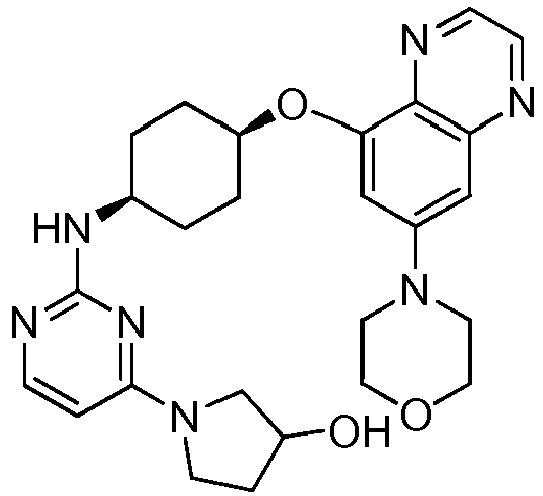
492.26 (CDCl3) δ 8.70 (d, J = 1.9 Hz, 1H), 8.63 (d, J = 1.9 Hz, 1H), 7.70 (s, 1H), 6.96 (q, J = 2.6 Hz, 2H), 5.75 (d, J = 6.5 Hz, 1H), 4.82 (s, 1H), 4.65 (s, 1H), 3.93 (dd, J = 5.9, 3.8 Hz, 4H), 3.63 (s, 4H), 3.36 (dd, J = 6.1, 3.7 Hz, 4H), 2.14 (s, 2H), 1.95 (d, J = 31.2 Hz, 6H) 188 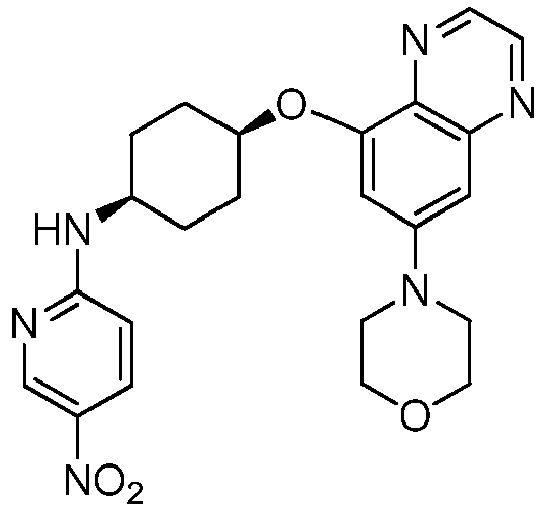
451.14 (400 MHz, CDCl3) δ 9.02 (d, J = 2.6 Hz, 1H), 8.70 (d, J = 1.9 Hz, 1H), 8.61 (d, J = 1.9 Hz, 1H), 8.17 (dd, J = 9.3, 2.6 Hz, 1H), 6.97 (d, J = 2.4 Hz, 1H), 6.91 (d, J = 2.4 Hz, 1H), 6.36 (d, J = 9.3 Hz, 1H), 5.37 (s, 1H), 4.82 (s, 1H), 4.04 (s, 1H), 3.96 - 3.87 (m, 4H), 3.40 - 3.27 (m, 4H), 2.31 - 2.18 (m, 2H), 2.03 - 1.84 (m, 6H) 189 
474.147 (400 MHz, CDCl3) δ 8.69 (d, J = 1.6 Hz, 1H), 8.61 (d, J = 1.7 Hz, 1H), 8.32 (s, 1H), 7.56 (d, J = 6.7 Hz, 1H), 6.96 (d, J = 2.2 Hz, 1H), 6.90 (d, J = 2.3 Hz, 1H), 6.40 (d, J = 8.7 Hz, 1H), 4.96 (s, 1H), 4.80 (s, 1H), 4.01 - 3.84 (m, 5H), 3.42 - 3.24 (m, 4H), 2.21 (d, J = 8.4 Hz, 2H), 1.92 (d, J = 6.4 Hz, 6H) 190 
(CDCl3) δ 8.52 (s, 1H), 8.29 (d, J = 4.8 Hz, 2H), 6.90 (d, J = 2.5 Hz, 1H), 6.85 (d, J = 2.5 Hz, 1H), 6.52 (t, J = 4.8 Hz, 1H), 5.36 (s, 1H), 4.79 (dq, J = 5.6, 2.9 Hz, 1H), 4.04 (dp, J = 8.0, 3.8 Hz, 1H), 3.97 - 3.85 (m, 4H), 3.38 - 3.26 (m, 4H), 2.70 (s, 3H), 2.29 - 2.11 (m, 2H), 2.00 - 1.78 (m, 6H) 191 
421.24 (CDCl3) δ 8.52 (s, 1H), 8.29 (d, J = 4.8 Hz, 2H), 6.90 (d, J = 2.5 Hz, 1H), 6.85 (d, J = 2.5 Hz, 1H), 6.53 (t, J = 4.8 Hz, 1H), 5.42 (d, J = 7.9 Hz, 1H), 4.80 (dq, J = 5.9, 2.9 Hz, 1H), 4.11 - 3.98 (m, 1H), 3.91 (dd, J = 5.9, 3.8 Hz, 4H), 3.42 - 3.21 (m, 4H), 2.71 (s, 3H), 2.31 -2.07 (m, 2H), 2.04 - 1.77 (m, 6H) 192 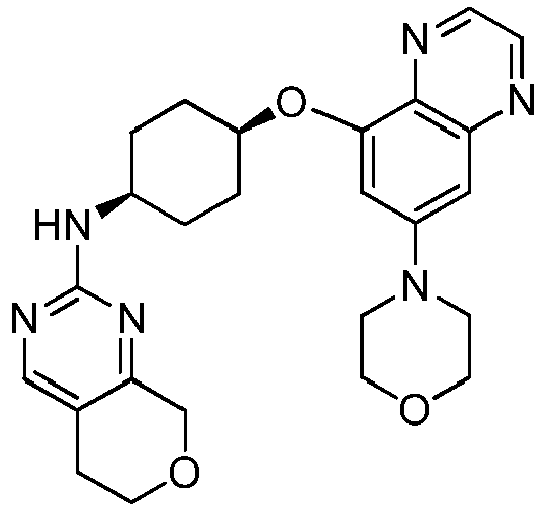
463.2 (CDCl3) δ 8.70 (d, J = 1.9 Hz, 1H), 8.63 (d, J = 1.9 Hz, 1H), 7.97 (s, 1H), 6.97 (d, J = 2.5 Hz, 1H), 6.93 (d, J = 2.5 Hz, 1H), 5.36 (s, 1H), 4.80 (d, J = 6.2 Hz, 1H), 4.65 (d, J = 0.9 Hz, 2H), 4.02 (t, J = 5.8 Hz, 3H), 3.98 - 3.82 (m, 4H), 3.42 - 3.30 (m, 4H), 2.80 (t, J = 5.8 Hz, 2H), 2.29 - 2.11 (m, 2H), 2.03 - 1.77 (m, 7H) 193 
524.21 (CDCl3) δ 8.70 (d, J = 1.9 Hz, 1H), 8.63 (d, J = 1.9 Hz, 1H), 7.95 (s, 2H), 7.05 - 6.88 (m, 2H), 4.92 (s, 1H), 4.79 (s, 1H), 3.93 (t, J = 4.8 Hz, 5H), 3.60 - 3.44 (m, 4H), 3.37 (d, J = 10.5 Hz, 9H), 2.20 (d, J = 6.9 Hz, 2H), 1.91 (d, J = 4.6 Hz, 6H) 194 
437.23 (CDCl3) δ 8.70 (d, J = 1.9 Hz, 1H), 8.62 (d, J = 1.9 Hz, 1H), 8.28 (d, J = 0.9 Hz, 1H), 6.97 (d, J = 2.5 Hz, 1H), 6.91 (d, J = 2.5 Hz, 1H), 5.74 - 5.58 (m, 1H), 5.16 (d, J = 8.0 Hz, 1H), 4.82 (dq, J = 5.4, 2.7 Hz, 1H), 4.06 - 3.85 (m, 7H), 3.70 (d, J = 14.0 Hz, 1H), 3.42 - 3.28 (m, 4H), 2.30 - 2.16 (m, 2H), 1.99 - 1.75 (m, 6H) 195 
431.22 (CDCl3) δ 8.70 (d, J = 1.9 Hz, 1H), 8.62 (d, J = 2.0 Hz, 1H), 7.43 (dd, J = 8.6, 7.2 Hz, 1H), 7.02 - 6.86 (m, 3H), 6.55 (dd, J = 8.6, 0.8 Hz, 1H), 4.80 (d, J = 6.6 Hz, 2H), 4.10 - 3.81 (m, 5H), 3.47 - 3.25 (m, 4H), 2.30 - 2.11 (m, 2H), 1.99 - 1.81 (m, 6H) 196 
463.27 (CDCl3) δ 8.71 (d, J = 1.9 Hz, 1H), 8.63 (d, J = 1.9 Hz, 1H), 7.61 (d, J = 9.4 Hz, 1H), 7.41 (d, J = 7.2 Hz, 1H), 7.05 - 6.87 (m, 2H), 6.65 (s, 1H), 4.86 (s, 1H), 4.04 - 3.87 (m, 7H), 3.74 (s, 1H), 3.43 - 3.27 (m, 4H), 2.21 (d, J = 10.8 Hz, 2H), 1.98 (d, J = 23.5 Hz, 6H) 197 
421.69 (400 MHz, CDCl3) δ 8.68 (d, J = 1.9 Hz, 1H), 8.61 (d, J = 1.9 Hz, 1H), 8.13 - 8.04 (m, 1H), 7.67 (d, J = 2.4 Hz, 1H), 6.99 - 6.93 (m, 2H), 6.90 (d, J = 2.4 Hz, 1H), 6.33 (d, J = 8.7 Hz, 1H), 4.77 (s, 1H), 3.99 - 3.65 (m, 7H), 3.39 - 3.27 (m, 4H), 2.25 -2.10 (m, 2H), 1.96 - 1.82 (m, 6H) 198 
532.11 (400 MHz, CDCl3) δ 8.69 (d, J = 1.6 Hz, 1H), 8.61 (d, J = 1.7 Hz, 1H), 8.57 (d, J = 2.1 Hz, 1H), 7.89 (dd, J = 8.9, 2.3 Hz, 1H), 6.95 (s, 1 H), 6.90 (s, 1 H), 6.62 (d, J = 9.0 Hz, 1H), 5.99 (d, J = 7.7 Hz, 1H), 4.78 (s, 1H), 4.18 (s, 1H), 4.03 - 3.81 (m, 4H), 3.76 - 3.60 (m, 4H), 3.42 - 3.25 (m, 4H), 2.62 - 2.44 (m, 4H), 2.36 (s, 3H), 2.29 - 2.14 (m, 2H), 1.99 - 1.84 (m, 6H) 199 
533.01 (400 MHz, CDCl3) δ 8.73 - 8.65 (m, 3H), 8.60 (d, J = 1.9 Hz, 1H), 6.95 (d, J = 2.4 Hz, 1H), 6.89 (d, J = 2.4 Hz, 1H), 5.93 (d, J = 8.0 Hz, 1H), 4.79 (s, 1H), 4.23 - 4.09 (m, 1H), 3.97 - 3.88 (m, 8H), 3.40 - 3.25 (m, 4H), 2.53 - 2.42 (m, 4H), 2.34 (s, 3H), 2.26 - 2.18 (m, 2H), 1.97 - 1.83 (m, 6H) 200 
549.17 (400 MHz, CDCl3) δ 8.69 (d, J = 1.9 Hz, 1H), 8.61 (d, J = 1.9 Hz, 1H), 7.51 - 7.42 (m, 2H), 6.98 - 6.85 (m, 3H), 6.07 (d, J = 8.0 Hz, 1H), 4.77 (s, 1H), 4.25 - 4.11 (m, 1H), 3.99 - 3.85 (m, 4H), 3.40 - 3.27 (m, 4H), 3.26 - 3.14 (m, 4H), 2.67 - 2.52 (m, 4H), 2.36 (s, 3H), 2.28 - 2.13 (m, 2H), 1.98 - 1.84 (m, 6H) 201 
549.1 (400 MHz, CDCl3) δ 9.47 (s, 1H), 8.68 (d, J = 1.7 Hz, 1H), 8.56 (d, J = 1.7 Hz, 1H), 8.21 - 8.11 (m, 1H), 6.97 - 6.85 (m, 4H), 4.82 (s, 1H), 4.23 - 4.07 (m, 1H), 3.96 - 3.87 (m, 4H), 3.38 - 3.29 (m, 4H), 3.03 (s, 4H), 2.65 (s, 4H), 2.37 - 2.25 (m, 5H), 2.02 - 1.84 (m, 6H) 202 
464.13 (400 MHz, CDCl3) δ 8.69 (d, J = 1.8 Hz, 1H), 8.63 (d, J = 1.9 Hz, 1H), 8.27 (dd, J = 4.7, 1.9 Hz, 1H), 8.19 (s, 1H), 8.11 (d, J = 6.8 Hz, 1H), 6.95 (d, J = 2.4 Hz, 1H), 6.92 (d, J = 2.3 Hz, 1H), 6.51 (dd, J = 7.4, 4.9 Hz, 1H), 4.76 (s, 1H), 4.30 (s, 1H), 4.02 - 3.90 (m, 4H), 3.88 (s, 3H), 3.41 - 3.26 (m, 4H), 2.29 - 2.11 (m, 2H), 2.11 - 1.85 (m, 6H) 203 
432.58 (CDCl3) δ 8.70 (d, J = 1.9 Hz, 1H), 8.60 (d, J = 1.9 Hz, 1H), 8.15 (s, 1H), 6.93 (dd, J = 17.9, 2.5 Hz, 2H), 6.43 (d, J = 6.1 Hz, 1H), 5.20 (s, 1H), 4.82 (s, 1H), 4.00 - 3.82 (m, 4H), 3.44 - 3.25 (m, 4H), 2.23 (d, J = 11.2 Hz, 2H), 1.91 (s, 6H) 204 
421.65 (CDCl3) δ 8.70 (d, J = 1.9 Hz, 1H), 8.61 (d, J = 1.9 Hz, 1H), 8.09 (d, J = 6.0 Hz, 1H), 6.93 (dd, J = 16.1, 2.5 Hz, 2H), 6.15 (d, J = 6.0 Hz, 1H), 5.10 (d, J = 8.0 Hz, 1H), 4.81 (td, J = 5.5, 2.7 Hz, 1H), 3.97 - 3.87 (m, 4H), 3.49 (s, 1H), 3.39 - 3.27 (m, 4H), 2.49 (s, 3H), 2.27 - 2.14 (m, 2H), 2.03 - 1.80 (m, 6H) 205 
436.63 (CDCl3) δ 8.70 (d, J = 1.9 Hz, 1H), 8.61 (dd, J = 5.3, 1.9 Hz, 1H), 8.19 - 8.06 (m, 1H), 6.99 - 6.84 (m, 2H), 5.34 - 5.21 (m, 1H), 4.76 (d, J = 9.7 Hz, 3H), 3.92 (t, J = 4.9 Hz, 4H), 3.81 (s, 1H), 3.33 (dd, J = 5.7, 4.1 Hz, 4H), 2.87 (d, J = 5.2 Hz, 3H), 2.19 (d, J = 8.5 Hz, 2H), 1.88 (dd, J = 13.3, 5.1 Hz, 6H) 206 
436.18 (400 MHz, CDCl3) δ 8.68 (d, J = 1.9 Hz, 1H), 8.61 (d, J = 1.9 Hz, 1H), 7.82 (d, J = 2.8 Hz, 1H), 7.09 (dd, J = 8.9, 3.0 Hz, 1H), 6.94 (d, J = 2.5 Hz, 1H), 6.90 (d, J = 2.5 Hz, 1H), 6.37 (d, J = 8.8 Hz, 1H), 4.77 (s, 1H), 4.29 (bs, 1H), 3.98 - 3.87 (m, 4H), 3.85 - 3.79 (m, 1H), 3.77 (s, 3H), 3.41 - 3.24 (m, 4H), 2.27 - 2.12 (m, 2H), 1.97 - 1.79 (m, 6H) 207 
(CDCl3) δ 8.71 (d, J = 2.0 Hz, 1H), 8.64 (d, J = 1.9 Hz, 1H), 8.44 (s, 1H), 6.98 (d, J = 2.5 Hz, 1H), 6.92 (d, J = 2.5 Hz, 1H), 6.82 (d, J = 4.7 Hz, 1H), 5.56 (d, J = 30.8 Hz, 1H), 4.83 (d, J = 5.2 Hz, 1H), 4.04 (s, 2H), 3.97 - 3.84 (m, 4H), 3.44 - 3.29 (m, 4H), 2.23 (d, J = 8.2 Hz, 2H), 2.02 - 1.77 (m, 6H) 208 
435.6 (CDCl3) δ 8.70 (d, J = 1.9 Hz, 1H), 8.64 (d, J = 1.9 Hz, 1H), 8.16 (s, 2H), 7.00 - 6.84 (m, 2H), 5.32 (s, 1H), 4.81 (s, 1H), 4.03 (s, 1H), 3.96 - 3.85 (m, 4H), 3.43 - 3.32 (m, 4H), 2.49 (q, J = 7.6 Hz, 2H), 2.21 (d, J = 8.8 Hz, 2H), 2.06 - 1.75 (m, 6H), 1.21 (t, J = 7.6 Hz, 3H) 209 
(CDCl3) δ 8.70 (d, J = 1.9 Hz, 1H), 8.63 (d, J = 1.9 Hz, 1H), 8.18 (s, 2H), 7.01 - 6.88 (m, 2H), 5.30 (d, J = 9.0 Hz, 1H), 4.81 (d, J = 5.9 Hz, 1H), 4.02 (s, 1H), 3.96 - 3.85 (m, 4H), 3.42 - 3.29 (m, 4H), 2.78 (p, J = 6.9 Hz, 1H), 2.31 - 2.14 (m, 2H), 2.01 - 1.83 (m, 6H), 1.25 (d, J = 6.9 Hz, 6H) 210 
450.17 (400 MHz, methanol-d4) δ 8.69 (d, J = 2.0 Hz, 1H), 8.57 (d, J = 2.0 Hz, 1H), 7.92 (d, J = 6.2 Hz, 1H), 7.17 - 7.10 (m, 2H), 7.02 (d, J = 7.1 Hz, 1H), 6.90 (d, J = 2.5 Hz, 1H), 4.93 (s, 1H), 3.93 - 3.87 (m, 4H), 3.84 - 3.79 (m, 1H), 3.44 - 3.37 (m, 4H), 2.24 - 2.15 (m, 2H), 1.97 - 1.82 (m, 6H) 211 
434.19 212 
437.12 213 
434.15 214 
474.12 (400 MHz, CDCl3) δ 8.98 - 8.83 (m, 1H), 8.79 - 8.67 (m, 1H), 8.64 - 8.50 (m, 1H), 8.35 (d, J = 9.2 Hz, 1H), 7.04 - 6.86 (m, 2H), 6.75 (d, J = 9.0 Hz, 2H), 4.78 (s, 1H), 4.00 - 3.79 (m, 5H), 3.42 - 3.21 (m, 4H), 2.17 - 2.11 (m, 2H), 2.02 - 1.81 (m, 6H) 215 
451.21 (CDCl3) δ 8.70 (d, J = 1.9 Hz, 1H), 8.61 (d, J = 1.9 Hz, 1H), 8.25 (d, J = 0.9 Hz, 1H), 6.93 (dd, J = 17.1, 2.5 Hz, 2H), 5.64 (d, J = 0.9 Hz, 1H), 5.00 (d, J = 8.1 Hz, 1H), 4.80 (dq, J = 5.5, 2.7 Hz, 1H), 4.33 (q, J = 7.1 Hz, 2H), 3.97 - 3.87 (m, 4H), 3.71 (s, 1H), 3.38 - 3.29 (m, 4H), 2.27 - 2.14 (m, 2H), 2.03 - 1.80 (m, 6H), 1.37 (t, J = 7.1 Hz, 3H) 216 
481.26 (CDCl3) δ 8.69 (d, J = 1.9 Hz, 1H), 8.62 (d, J = 1.9 Hz, 1H), 6.95 (d, J = 2.5 Hz, 1H), 6.90 (d, J = 2.5 Hz, 1H), 0.23 - 0.16 (m, 0H), 4.93 (s, 1H), 4.76 (s, 1H), 4.19 - 4.01 (m, 1H), 3.97 - 3.87 (m, 4H), 3.38 - 3.29 (m, 4H), 2.49 (s, 3H), 2.26 (s, 3H), 2.21 - 2.10 (m, 2H), 2.05 (d, J = 1.8 Hz, 3H), 2.00 - 1.85 (m, 6H) 217 
464.17 (400 MHz, CDCl3) δ 8.69 (d, J = 1.9 Hz, 1H), 8.61 (d, J = 1.9 Hz, 1H), 8.15 (d, J = 5.3 Hz, 1H), 7.06 (dd, J = 5.4, 1.3 Hz, 1H), 7.00 (s, 1H), 6.95 (d, J = 2.4 Hz, 1H), 6.91 (d, J = 2.4 Hz, 1H), 5.15 (s, 1H), 4.81 (d, J = 2.5 Hz, 1H), 3.95 - 3.83 (m, 8H), 3.38 -3.30 (m, 4H), 2.27 - 2.16 (m, 2H), 1.97 - 1.85 (m, 6H) 218 
(CDCl3) δ 8.70 (d, J = 2.0 Hz, 1H), 8.63 (d, J = 1.9 Hz, 1H), 8.17 (d, J = 0.9 Hz, 1H), 7.02 - 6.85 (m, 2H), 5.40 (s, 1H), 5.05 (td, J = 1.8, 0.8 Hz, 2H), 4.91 - 4.73 (m, 3H), 4.05 (s, 0H), 3.99 - 3.85 (m, 4H), 3.43 - 3.27 (m, 4H), 2.30 - 2.12 (m, 2H), 2.02 - 1.82 (m, 6H) 219 
471.06 (CDCl3) δ 8.70 (d, J = 1.9 Hz, 1H), 8.61 (d, J = 1.9 Hz, 1H), 6.96 (d, J = 2.5 Hz, 1H), 6.89 (d, J = 2.5 Hz, 1H), 6.03 (s, 1H), 5.00 (s, 1H), 4.79 (s, 1H), 3.92 (d, J = 9.3 Hz, 7H), 3.41 - 3.25 (m, 4H), 2.28 - 2.13 (m, 2H), 1.92 (d, J = 18.6 Hz, 6H) 220 
474.07 (400 MHz, CDCl3) δ 8.69 (s, 1H), 8.62 (s, 1H), 8.54 (s, 1H), 8.21 (d, J = 4.9 Hz, 1H), 7.22 - 7.08 (m, 2H), 6.96 (s, 1H), 6.93 (s, 1 H), 4.84 (s, 1 H), 3.98 - 3.86 (m, 5H), 3.38 - 3.26 (m, 4H), 2.31 - 2.19 (m, 2H), 2.03 - 1.86 (m, 6H) 221 
474.12 (400 MHz, CDCl3) δ 8.75 (d, J = 1.9 Hz, 1H), 8.69 (d, J = 1.9 Hz, 1H), 8.61 (d, J = 1.9 Hz, 1H), 8.39 (s, 1H), 8.05 (dd, J = 8.8, 2.3 Hz, 1H), 6.95 (d, J = 2.4 Hz, 1H), 6.91 (d, J = 2.4 Hz, 1H), 6.49 (d, J = 8.8 Hz, 1H), 5.23 (s, 1H), 4.88 - 4.71 (m, 1H), 4.05 - 3.95 (m, 1H), 3.95 - 3.85 (m, 4H), 3.39 - 3.26 (m, 4H), 2.28 - 2.16 (m, 2H), 2.00 - 1.83 (m, 6H) 222 
485.14 (CDCl3) δ 8.63 (d, J = 1.9 Hz, 1H), 8.53 (dd, J = 1.9, 0.6 Hz, 1H), 7.71 (d, J = 9.4 Hz, 1H), 6.89 (d, J = 2.4 Hz, 1H), 6.83 (d, J = 2.5 Hz, 1H), 6.68 (d, J = 9.4 Hz, 1H), 5.33 (s, 1H), 4.76 (dq, J = 5.0, 2.5 Hz, 1H), 4.14 (s, 1H), 3.93 - 3.77 (m, 4H), 3.28 (d, J = 5.1 Hz, 7H), 2.18 (dt, J = 13.4, 4.6 Hz, 2H), 2.02 - 1.75 (m, 6H) 223 
435.18 (CDCl3) δ 8.71 (d, J = 1.9 Hz, 1H), 8.61 (d, J = 1.9 Hz, 1H), 6.94 (dd, J = 15.2, 2.5 Hz, 2H), 6.07 (s, 1H), 4.82 (dt, J = 5.8, 3.0 Hz, 1H), 4.02 - 3.83 (m, 4H), 3.77 - 3.57 (m, 1H), 3.43 - 3.28 (m, 4H), 2.52 (s, 3H), 2.37 (s, 3H), 2.30 - 2.16 (m, 2H), 2.05 - 1.78 (m, 6H) 224 
475.02 (CDCl3) δ 8.72 (d, J = 1.9 Hz, 1H), 8.63 (d, J = 1.9 Hz, 1H), 8.27 (s, 1H), 6.98 (d, J = 2.4 Hz, 1H), 6.92 (d, J = 2.6 Hz, 1H), 6.44 (d, J = 6.0 Hz, 1H), 4.84 (s, 1H), 3.93 (dd, J = 6.0, 3.7 Hz, 4H), 3.43 - 3.25 (m, 4H), 2.23 (s, 2H), 2.08 - 1.83 (m, 6H) 225 
451.16 (CDCl3) δ 8.70 (d, J = 1.9 Hz, 1H), 8.62 (d, J = 1.9 Hz, 1H), 8.49 (d, J = 1.1 Hz, 1H), 6.93 (dd, J = 16.7, 2.5 Hz, 2H), 6.45 (d, J = 1.2 Hz, 1H), 5.01 (s, 1H), 4.81 (s, 1H), 4.39 (d, J = 0.9 Hz, 2H), 3.97 - 3.87 (m, 4H), 3.49 (s, 3H), 3.39 - 3.29 (m, 4H), 2.22 (d, J = 9.4 Hz, 2H), 1.99 - 1.87 (m, 6H) 226 
463.18 (CDCl3) δ 8.70 (d, J = 2.0 Hz, 1H), 8.63 (d, J = 1.9 Hz, 1H), 6.95 (d, J = 2.5 Hz, 1H), 6.91 (d, J = 2.5 Hz, 1H), 4.75 (d, J = 5.6 Hz, 1H), 4.66 (s, 1H), 4.32 (s, 1H), 4.00 - 3.83 (m, 4H), 3.43 - 3.22 (m, 4H), 2.46 (d, J = 15.1 Hz, 5H), 2.36 (s, 3H), 2.19 (q, J = 6.3, 3.9 Hz, 2H), 1.12 (t, J = 7.6 Hz, 3H) 227 
453.2 (CDCl3) δ 8.72 (d, J = 1.9 Hz, 1H), 8.64 (d, J = 1.9 Hz, 1H), 8.33 (d, J = 1.8 Hz, 1H), 7.04 - 6.87 (m, 2H), 5.15 (s, 1H), 4.82 (dq, J = 5.2, 2.6 Hz, 1H), 4.24 (dt, J = 8.3, 4.7 Hz, 1H), 4.03 - 3.86 (m, 4H), 3.44 - 3.28 (m, 4H), 2.74 (qd, J = 7.6, 2.3 Hz, 2H), 2.24 (dq, J = 9.6, 4.6 Hz, 2H), 2.09 - 1.85 (m, 6H), 1.29 (t, J = 7.6 Hz, 3H) 228 
462.14 (CDCl3) δ 8.60 (dd, J = 8.1, 1.9 Hz, 1H), 8.54 (d, J = 1.9 Hz, 1H), 8.00 (s, 1H), 6.92 - 6.75 (m, 2H), 5.06 (d, J = 8.0 Hz, 1H), 4.70 (s, 1H), 3.94 (s, 1H), 3.89 - 3.76 (m, 4H), 3.75 - 3.62 (m, 4H), 3.34 - 3.17 (m, 4H), 2.50 (s, 3H), 2.11 (s, 2H), 1.82 (d, J = 5.0 Hz, 5H) 229 
488.57 (400 MHz, CDCl3) δ 8.70 (d, J = 1.9 Hz, 1H), 8.62 (d, J = 1.9 Hz, 1H), 8.44 (d, J = 2.0 Hz, 1H), 7.91 (d, J = 8.8 Hz, 1H), 6.97 (d, J = 2.4 Hz, 1H), 6.92 (d, J = 2.4 Hz, 1H), 6.60 (d, J = 8.6 Hz, 1H), 5.52 (s, 1H), 4.83 (s, 1H), 4.18 (s, 3H), 4.00 - 3.87 (m, 5H), 3.39 - 3.24 (m, 4H), 2.31 - 2.18 (m, 2H), 2.04 - 1.87 (m, 6H) 230 
488.57 (400 MHz, CDCl3) δ 8.81 (d, J = 1.8 Hz, 1H), 8.69 (d, J = 1.9 Hz, 1H), 8.61 (d, J = 1.9 Hz, 1H), 8.13 (dd, J = 8.8, 2.2 Hz, 1H), 6.95 (d, J = 2.4 Hz, 1H), 6.92 (d, J = 2.4 Hz, 1H), 6.52 (d, J = 8.8 Hz, 1H), 4.82 (s, 1H), 4.36 (s, 3H), 3.96 - 3.85 (m, 5H), 3.41 - 3.28 (m, 4H), 2.28 - 2.17 (m,2H), 2.06 - 1.83 (m, 6H) 231 
510.2 (CDCl3) δ 8.70 (d, J = 1.9 Hz, 1H), 8.62 (d, J = 2.0 Hz, 1H), 7.70 (d, J = 3.4 Hz, 1H), 6.93 (dd, J = 14.6, 2.5 Hz, 2H), 4.96 (dd, J = 17.8, 7.1 Hz, 2H), 4.76 (d, J = 6.2 Hz, 1H), 4.62 (ddt, J = 12.6, 7.1, 3.5 Hz, 1H), 4.05 - 3.82 (m, 8H), 3.75 (dd, J = 9.4, 3.2 Hz, 1H), 3.40 - 3.27 (m, 4H), 2.35 (ddt, J = 13.0, 8.2, 7.1 Hz, 1H), 2.25 - 2.08 (m, 2H), 2.00 - 1.77 (m, 6H) 232 
477.18 (CDCl3) δ 8.61 (d, J = 1.9 Hz, 1H), 8.54 (d, J = 1.9 Hz, 1H), 7.98 (s, 2H), 6.94 - 6.75 (m, 2H), 5.01 (s, 1H), 4.71 (d, J = 5.9 Hz, 1H), 3.96 - 3.78 (m, 5H), 3.68 (d, J = 7.0 Hz, 2H), 3.37 - 3.17 (m, 4H), 2.21 - 1.96 (m, 2H), 1.92 - 1.75 (m, 6H), 1.25 - 1.06 (m, 1H), 0.66 - 0.44 (m, 2H), 0.34 - 0.18 (m, 2H) 233 
451.2 (CDCl3) δ 8.70 (d, J = 1.9 Hz, 1H), 8.63 (d, J = 1.9 Hz, 1H), 8.06 (s, 2H), 7.01 - 6.86 (m, 2H), 5.00 (d, J = 8.1 Hz, 1H), 4.80 (d, J = 5.6 Hz, 1H), 4.10 - 3.82 (m, 7H), 3.42 - 3.26 (m, 5H), 2.20 (d, J = 8.2 Hz, 2H), 2.01 - 1.80 (m, 6H), 1.39 (t, J = 7.0 Hz, 3H) 234 
432.17 (CDCl3) δ 8.72 (d, J = 1.9 Hz, 1H), 8.60 (t, J = 1.9 Hz, 2H), 6.97 (d, J = 2.5 Hz, 1H), 6.91 (d, J = 2.5 Hz, 1H), 6.70 (d, J = 1.2 Hz, 1H), 4.85 (d, J = 4.9 Hz, 1H), 3.98 - 3.84 (m, 4H), 3.42 - 3.26 (m, 4H), 2.33 - 2.17 (m, 2H), 2.01 - 1.77 (m, 5H) 235 
505.04 (CDCl3) δ 8.68 (d, J = 2.0 Hz, 1H), 8.59 (d, J = 1.9 Hz, 1H), 8.36 (s, 2H), 6.97 - 6.86 (m, 2H), 5.53 (d, J = 8.1 Hz, 1H), 4.96 - 4.72 (m, 3H), 4.09 - 3.86 (m, 5H), 3.33 (dd, J = 5.8, 4.0 Hz, 4H), 2.28 - 2.10 (m, 2H), 1.98 - 1.78 (m, 6H) 236 
505.17 (CDCl3) δ 8.68 (d, J = 2.0 Hz, 1H), 8.59 (d, J = 1.9 Hz, 1H), 8.36 (s, 2H), 6.97 - 6.86 (m, 2H), 5.53 (d, J = 8.1 Hz, 1H), 4.96 - 4.72 (m, 3H), 4.09 - 3.86 (m, 5H), 3.33 (dd, J = 5.8, 4.0 Hz, 4H), 2.28 - 2.10 (m, 2H), 1.98 - 1.78 (m, 6H) 237 
451.16 (CDCl3) δ 8.69 (d, J = 1.9 Hz, 1H), 8.61 (d, J = 1.9 Hz, 1H), 8.31 (s, 2H), 6.99 - 6.87 (m, 2H), 5.34 (d, J = 8.1 Hz, 1H), 4.87 - 4.73 (m, 2H), 4.06 - 3.87 (m, 6H), 3.38 - 3.29 (m, 4H), 2.20 (q, J = 5.8 Hz, 2H), 2.04 - 1.84 (m, 6H), 1.51 (d, J = 6.5 Hz, 3H) 238 
492.98 (CDCl3) δ 8.71 (d, J = 1.9 Hz, 1H), 8.64 (d, J = 1.9 Hz, 1H), 8.15 (s, 2H), 6.99 - 6.86 (m, 2H), 5.11 (td, J = 7.9, 7.4, 3.8 Hz, 1H), 4.82 - 4.55 (m, 3H), 4.10 (dd, J = 4.1, 2.7 Hz, 2H), 3.93 (dd, J = 6.0, 3.7 Hz, 5H), 3.60 - 3.43 (m, 1H), 3.36 (dd, J = 6.0, 3.7 Hz, 4H), 2.85 - 2.61 (m, 1 H), 2.30 - 2.10 (m, 2H), 1.92 (s, 6H), 1.24 (q, J = 6.9 Hz, 1H) 239 
507 (CDCl3) δ 8.61 (d, J = 1.9 Hz, 1H), 8.54 (d, J = 1.9 Hz, 1H), 7.95 (d, J = 13.9 Hz, 2H), 6.92 - 6.72 (m, 2H), 4.85 - 4.64 (m, 3H), 4.41 (t, J = 6.2 Hz, 2H), 3.83 (q, J = 6.7, 5.7 Hz, 6H), 3.33 - 3.18 (m, 5H), 2.20 - 1.97 (m, 1H), 1.82 (s, 7H) 240 
493.16 (CDCl3) δ 8.70 (d, J = 1.9 Hz, 1H), 8.63 (d, J = 1.9 Hz, 1H), 8.08 (s, 2H), 7.01 - 6.87 (m, 2H), 5.11 (d, J = 8.1 Hz, 1H), 4.95 - 4.74 (m, 3H), 4.56 (t, J = 6.0 Hz, 2H), 4.17 (d, J = 6.7 Hz, 2H), 4.05 - 3.81 (m, 4H), 3.51 - 3.29 (m, 5H), 2.21 (q, J = 6.4, 5.7 Hz, 2H), 2.03 - 1.80 (m, 8H) 241 
445.54 (400 MHz, CDCl3) δ 8.69 (d, J = 1.9 Hz, 1H), 8.61 (d, J = 1.9 Hz, 1H), 7.52 (d, J = 8.7 Hz, 1H), 6.96 (d, J = 2.5 Hz, 1H), 6.90 (d, J = 2.5 Hz, 1H), 6.23 (d, J = 8.7 Hz, 1H), 5.09 (s, 1H), 4.80 (s, 1H), 4.00 - 3.78 (m, 5H), 3.40 - 3.24 (m, 4H), 2.56 (s, 3H), 2.29 - 2.14 (m, 2H), 2.01 - 1.80 (m, 6H) 242 
445.54 (400 MHz, CDCl3) δ 8.70 (d, J = 1.8 Hz, 1H), 8.62 (d, J = 1.9 Hz, 1H), 8.30 (d, J = 1.8 Hz, 1H), 7.37 (s, 1 H), 6.96 (d, J = 2.3 Hz, 1H), 6.91 (d, J = 2.3 Hz, 1H), 4.79 (s, 1H), 4.74 (s, 1H), 4.28 (s, 1H), 4.01 - 3.83 (m, 4H), 3.40 - 3.25 (m, 4H), 2.30 - 2.17 (m, 2H), 2.11 (s, 3H), 1.99 - 1.87 (m, 6H) 243 
465.2 (CDCl3) δ 8.69 (d, J = 2.0 Hz, 1H), 8.62 (d, J = 1.9 Hz, 1H), 5.36 (s, 1H), 4.03 (s, 1H), 1.57 (s, 6H), 2.02 - 1.80 (m, 6H), 8.42 (s, 2H), 6.99 - 6.87 (m, 2H), 4.80 (s, 1H), 3.92 (dd, J = 6.0, 3.7 Hz, 4H), 3.39 - 3.29 (m, 4H), 2.20 (d, J = 9.0 Hz, 2H) 244 
475.15 (CDCl3) δ 8.98 - 8.86 (m, 2H), 8.66 (dd, J = 23.8, 1.9 Hz, 2H), 8.44 (s, 1H), 7.00 - 6.88 (m, 2H), 5.89 (d, J = 8.1 Hz, 1H), 4.83 (dq, J = 5.4, 2.6 Hz, 1H), 4.22 - 4.04 (m, 1H), 3.97 - 3.87 (m, 4H), 3.43 - 3.29 (m, 4H), 2.24 (td, J = 8.3, 7.4, 4.0 Hz, 2H), 2.15 - 1.81 (m, 6H) 245 
467.14 (CDCl3) δ 8.61 (d, J = 1.9 Hz, 1H), 8.53 (d, J = 1.9 Hz, 1H), 6.84 (dd, J = 18.2, 2.5 Hz, 2H), 5.26 (s, 1H), 4.78 (d, J = 8.0 Hz, 1H), 4.68 (d, J = 5.6 Hz, 1H), 3.82 (t, J = 4.0 Hz, 10H), 3.30 - 3.15 (m, 4H), 2.10 (q, J = 6.2, 5.7 Hz, 2H), 1.94 - 1.69 (m, 6H) 246 
421.23 (CDCl3) δ 8.61 (d, J = 1.9 Hz, 1H), 8.54 (d, J = 1.9 Hz, 1H), 8.06 (d, J = 5.0 Hz, 1H), 6.94 - 6.78 (m, 2H), 6.32 (d, J = 5.0 Hz, 1H), 5.09 (s, 1H), 4.70 (d, J = 6.0 Hz, 1H), 3.95 (s, 1H), 3.91 - 3.77 (m, 5H), 3.37 - 3.13 (m, 4H), 2.20 - 2.00 (m, 2H), 1.94 - 1.71 (m, 6H) 247 
465.1 (CDCl3) δ 8.71 (d, J = 1.9 Hz, 1H), 8.64 (t, J = 2.4 Hz, 1H), 8.05 (s, 2H), 7.04 - 6.87 (m, 2H), 5.20 (s, 1H), 4.80 (s, 1H), 4.30 (p, J = 6.1 Hz, 1H), 4.05 - 3.81 (m, 4H), 3.44 - 3.27 (m, 4H), 2.22 (t, J = 7.3 Hz, 2H), 1.93 (d, J = 4.6 Hz, 6H), 1.33 (d, J = 6.1 Hz, 6H) 248 
488.48 (400 MHz, CDCl3) δ 8.69 (d, J = 1.9 Hz, 1H), 8.66 (d, J = 1.9 Hz, 1H), 8.62 (d, J = 1.9 Hz, 1H), 8.05 (d, J = 8.5 Hz, 1H), 6.96 (d, J = 2.4 Hz, 1H), 6.92 (d, J = 2.5 Hz, 1H), 6.51 (d, J = 8.7 Hz, 1H), 4.82 (s, 1H), 3.99 - 3.85 (m, 5H), 3.38 - 3.27 (m, 4H), 2.59 (s, 3H), 2.29 - 2.18 (m, 2H), 2.01 - 1.84 (m, 6H) 249 
472.54 (400 MHz, CDCl3) δ 8.69 (d, J = 1.9 Hz, 1H), 8.61 (d, J = 1.9 Hz, 1H), 8.45 (d, J = 1.9 Hz, 1H), 7.86 (d, J = 7.7 Hz, 1H), 7.60 (d, J = 2.3 Hz, 1H), 6.96 (d, J = 2.4 Hz, 1H), 6.92 (d, J = 2.4 Hz, 1H), 6.50 (d, J = 2.3 Hz, 1H), 6.48 (d, J = 8.9 Hz, 1H), 4.81 (s, 1H), 3.95 - 3.85 (m, 5H), 3.39 - 3.30 (m, 4H), 2.26 - 2.17 (m, 2H), 1.99 - 1.84 (m, 6H) 250 
486.5 (400 MHz, CDCl3) δ 8.69 (d, J = 1.9 Hz, 1H), 8.61 (d, J = 1.9 Hz, 1H), 8.09 (d, J = 1.7 Hz, 1H), 7.56 - 7.45 (m, 2H), 6.96 (d, J = 2.4 Hz, 1H), 6.93 (d, J = 2.4 Hz, 1H), 6.55 (d, J = 8.5 Hz, 1H), 6.25 (d, J = 1.9 Hz, 1H), 4.84 (s, 1H), 3.96 - 3.83 (m, 8H), 3.39 - 3.30 (m, 4H), 2.28 - 2.19 (m, 2H), 2.03 - 1.83 (m, 6H) 251 
491.1 (CDCl3) δ 8.71 (d, J = 1.9 Hz, 1H), 8.63 (d, J = 1.9 Hz, 1H), 8.18 (s, 2H), 7.04 - 6.87 (m, 2H), 5.21 (d, J = 8.2 Hz, 1H), 4.80 (s, 1H), 4.2-4.0 (m, 3H), 3.98 - 3.85 (m, 4H), 3.61 - 3.44 (m, 2H), 3.41 - 3.21 (m, 4H), 2.75 - 2.47 (m, 1H), 2.21 (d, J = 9.6 Hz, 2H), 1.92 (t, J = 6.4 Hz, 6H), 1.83 - 1.66 (m, 4H) 252 
471.1 (CDCl3) δ 3.97 - 3.87 (m, 4H), 3.39 - 3.29 (m, 4H), 2.50 (s, 3H), 2.28 - 2.16 (m, 2H), 2.02 - 1.89 (m, 6H), 4.26 - 4.17 (m, 1H), 8.70 (d, J = 1.9 Hz, 1H), 8.63 (d, J = 1.9 Hz, 1H), 7.88 (d, J = 3.3 Hz, 1H), 6.93 (dd, J = 18.7, 2.5 Hz, 2H), 5.10 (d, J = 7.9 Hz, 1H), 4.79 (d, J = 3.7 Hz, 1H) 253 
453.19 (CDCl3) δ 8.70 (d, J = 1.9 Hz, 1H), 8.61 (d, J = 2.0 Hz, 1H), 8.38 (d, J = 1.1 Hz, 1H), 6.93 (dd, J = 17.3, 2.5 Hz, 2H), 6.18 (d, J = 1.2 Hz, 1H), 5.03 (s, 1H), 4.81 (d, J = 6.1 Hz, 1H), 3.97 - 3.87 (m, 4H), 3.83 (s, 1H), 3.39 - 3.29 (m, 4H), 2.51 (s, 3H), 2.21 (d, J = 8.8 Hz, 2H), 2.05 (s, 0H), 1.91 (d, J = 10.6 Hz, 6H) 254 
406.57 (400 MHz, CDCl3) δ 8.71 (d, J = 1.9 Hz, 1H), 8.63 (d, J = 1.9 Hz, 1H), 8.15 - 8.04 (m, 1H), 7.46 - 7.39 (m, 1H), 6.97 (d, J = 2.5 Hz, 1H), 6.93 (d, J = 2.5 Hz, 1H), 6.60 - 6.52 (m, 1H), 6.41 (d, J = 8.4 Hz, 1H), 4.80 (s, 1H), 4.68 (s, 1H), 3.98 - 3.85 (m, 5H), 3.41 - 3.30 (m, 4H), 2.27 - 2.15 (m, 2H), 1.97 - 1.86 (m, 6H) 255 
450.96 (methanol-d4) δ 8.71 (dd, J = 7.5, 2.1 Hz, 1H), 8.57 (dd, J = 8.8, 2.1 Hz, 1H), 7.12 (d, J = 2.5 Hz, 1H), 6.88 (d, J = 2.4 Hz, 1H), 3.88 (t, J = 4.8 Hz, 4H), 3.45 - 3.35 (m, 4H), 3.19 (s, 3H), 2.25 -2.01 (m, 2H), 2.00 - 1.80 (m, 6H) 256 
420.1 (CDCl3) δ 8.71 (d, J = 1.9 Hz, 1H), 8.64 (d, J = 1.9 Hz, 1H), 7.80 (d, J = 1.5 Hz, 1H), 7.47 (d, J = 1.5 Hz, 1H), 7.02 - 6.86 (m, 2H), 4.80 (s, 1H), 4.27 (d, J = 8.3 Hz, 1H), 4.00 - 3.72 (m, 7H), 3.35 (dd, J = 6.0, 3.8 Hz, 4H), 2.23 (s, 2H), 2.02 - 1.80 (m, 6H) 257 
437.1 (CDCl3) δ 8.71 (d, J = 1.9 Hz, 1H), 8.63 (dd, J = 1.9, 0.7 Hz, 1H), 7.99 - 7.88 (m, 1H), 7.02 - 6.87 (m, 2H), 6.34 (d, J = 8.4 Hz, 1H), 4.78 (s, 1H), 4.40 (d, J = 8.2 Hz, 1H), 4.03 - 3.75 (m, 5H), 3.35 (dd, J = 6.0, 3.7 Hz, 4H), 2.18 (s, 5H), 2.03 - 1.81 (m, 6H) 258 
488.52 (CDCl3) δ 8.78 - 8.59 (m, 3H), 8.38 (s, 1H), 7.85 (s, 1H), 6.95 (d, J = 2.4 Hz, 1H), 6.91 (d, J = 2.3 Hz, 1H), 4.79 (s, 1H), 4.67 (d, J = 7.6 Hz, 1H), 4.32 (s, 1H), 3.99 - 3.82 (m, 4H), 3.40 - 3.27 (m, 4H), 2.33 - 2.06 (m, 5H), 2.03 - 1.87 (m, 6H) 259 
488.48 (CDCl3) δ 8.70 (d, J = 1.9 Hz, 1H), 8.62 (d, 1H), 8.41 (s, 1H), 8.04 - 7.93 (m, 1H), 6.96 (d, J = 2.5 Hz, 1H), 6.91 (d, J = 2.1 Hz, 1H), 6.35 (d, J = 9.1 Hz, 1H), 5.07 (s, 1H), 4.82 (s, 1H), 4.02 - 3.79 (m, 5H), 3.41 - 3.27 (m, 4H), 2.83 - 2.72 (m, 3H), 2.30 - 2.17 (m, 2H), 2.02 - 1.80 (m, 6H) 260 
437.24 (CDCl3) δ 8.70 (d, J = 1.9 Hz, 1H), 8.62 (d, J = 1.9 Hz, 1H), 6.93 (dd, J = 14.5, 2.5 Hz, 2H), 6.79 (d, J = 9.4 Hz, 1H), 6.64 (d, J = 9.4 Hz, 1H), 4.80 (d, J = 5.5 Hz, 1H), 4.27 (d, J = 7.5 Hz, 1H), 4.14 (s, 1H), 4.02 (s, 3H), 3.98 - 3.88 (m, 4H), 3.42 - 3.29 (m, 4H), 2.31 - 2.12 (m, 2H), 1.95 (ddd, J = 17.2, 9.2, 6.0 Hz, 6H) 261 
477.3 (CDCl3) δ 8.71 (d, J = 1.9 Hz, 1H), 8.64 (d, J = 1.9 Hz, 1H), 8.20 (s, 2H), 7.04 - 6.84 (m, 2H), 5.16 (d, J = 8.0 Hz, 1H), 4.80 (s, 1H), 4.19 - 3.85 (m, 7H), 3.66 (dd, J = 8.5, 7.1 Hz, 1H), 3.35 (dd, J = 5.9, 3.8 Hz, 4H), 3.24 (t, J = 7.5 Hz, 1H), 2.48 - 2.11 (m, 4H), 2.05 - 1.82 (m, 6H) 262 
476.26 (CDCl3) δ 8.69 (d, J = 1.9 Hz, 1H), 8.62 (d, J = 1.9 Hz, 1H), 7.61 (d, J = 1.0 Hz, 1H), 6.98 - 6.86 (m, 2H), 4.96 (s, 1H), 4.82 -4.71 (m, 1H), 4.63 - 4.56 (m, 1H), 4.08 -3.87 (m, 5H), 3.38-3.29 (m, 4H), 2.80 (tdd, J = 6.8, 5.0, 3.1 Hz, 1H), 2.23 - 2.11 (m, 2H), 2.08 - 1.82 (m, 9H), 0.90 - 0.72 (m, 2H), 0.59 - 0.47 (m, 2H) 263 
480.22 (CDCl3) δ 8.70 (d, J = 1.9 Hz, 1H), 8.61 (d, J = 1.9 Hz, 1H), 8.11 (d, J = 0.9 Hz, 1H), 6.93 (dd, J = 15.5, 2.5 Hz, 2H), 5.30 (d, J = 1.0 Hz, 1H), 5.16 (s, 1H), 4.95 (s, 1H), -0.17 - -0.23 (m, 0H), 4.80 (s, 1H), 3.92 (dd, J = 5.9, 3.7 Hz, 4H), 3.74 (s, 1H), 3.57 (dd, J = 5.6, 4.6 Hz, 2H), 3.50 - 3.29 (m, 9H), 2.20 (d, J = 9.1 Hz, 2H), 1.93 (d, J = 13.1 Hz, 6H) 264 
494.1 (CDCl3) δ 8.69 (d, J = 1.9 Hz, 1H), 8.62 (d, J = 2.0 Hz, 1H), 7.76 (d, J = 5.8 Hz, 1H), 7.02 - 6.86 (m, 2H), 5.66 (d, J = 5.9 Hz, 1H), 4.80 (d, J = 5.5 Hz, 1H), 4.63 (s, 1H), 3.97 - 3.84 (m, 5H), 1.30 - 1.20 (m, 1H), 3.64 (s, 2H), 3.38 - 3.28 (m, 4H), 1.37 (s, 6H), 5.16 - 4.86 (m, 1 H), 2.24 - 2.13 (m, 2H), 1.96 - 1.82 (m, 6H) 265 
421.18 (CDCl3) δ 8.70 (d, J = 1.9 Hz, 1H), 8.61 (d, J = 1.9 Hz, 1H), 8.47 (d, J = 1.1 Hz, 1H), 6.93 (dd, J = 16.7, 2.5 Hz, 2H), 6.17 (t, J = 0.9 Hz, 1H), 4.95 (s, 1H), 4.81 (td, J = 5.3, 2.5 Hz, 1H), 4.07 - 3.83 (m, 5H), 3.39 - 3.29 (m, 4H), 2.34 (s, 3H), 2.21 (dt, J = 11.1, 5.1 Hz, 2H), 2.04 - 1.76 (m, 6H) 266 
441.2 (CDCl3) δ 11.49 (s, 1H), 8.69 (d, J = 1.9 Hz, 1H), 8.59 (d, J = 1.9 Hz, 1H), 7.73 (d, J = 3.0 Hz, 1H), 7.03 - 6.89 (m, 2H), 6.56 (d, J = 7.2 Hz, 1H), 4.82 (s, 1H), 3.91 (dd, J = 6.0, 3.8 Hz, 5H), 3.39 - 3.29 (m, 4H), 2.27 - 2.14 (m, 2H), 2.07 - 1.81 (m, 6H) 267 
447.11 (CDCl3) δ 8.70 (d, J = 1.9 Hz, 1H), 8.60 (d, J = 1.9 Hz, 1H), 8.03 (d, J = 6.1 Hz, 1H), 6.93 (dd, J = 18.6, 2.5 Hz, 2H), 6.13 (d, J = 6.1 Hz, 1H), 5.09 (s, 1H), 4.79 (s, 1H), 4.03 - 3.78 (m, 5H), 3.34 (dd, J = 6.0, 3.8 Hz, 4H), 2.20 (d, J = 8.1 Hz, 2H), 1.96 (s, 7H), 1.10 (d, J = 2.8 Hz, 2H), 1.00 (d, J = 8.0 Hz, 2H) 268 
437.19 (CDCl3) δ 8.69 (d, J = 1.9 Hz, 1H), 8.60 (d, J = 1.9 Hz, 1H), 7.95 (d, J = 5.8 Hz, 1H), 6.92 (dd, J = 17.9, 2.5 Hz, 2H), 5.99 (d, J = 5.9 Hz, 1H), 5.01 (s, 1H), 4.79 (dt, J = 6.9, 3.4 Hz, 1H), 3.91 (d, J = 8.7 Hz, 8H), 3.43 - 3.25 (m, 4H), 2.32 - 2.09 (m, 2H), 2.05 - 1.74 (m, 6H) 269 
468.13 (CDCl3) δ 8.69 (d, J = 1.9 Hz, 1H), 8.62 (d, J = 1.9 Hz, 1H), 7.70 (d, J = 6.8 Hz, 1H), 6.92 (dd, J = 14.4, 2.5 Hz, 2H), 4.86 (d, J = 8.1 Hz, 1H), 4.75 (dt, J = 8.6, 4.0 Hz, 1H), 3.97 - 3.87 (m, 5H), 3.38 - 3.28 (m, 4H), 3.14 (d, J = 2.2 Hz, 6H), 2.24 - 2.07 (m, 2H), 2.02 - 1.79 (m, 6H) 270 
(CDCl3) δ 8.71 (d, J = 1.9 Hz, 1H), 8.64 (d, J = 2.0 Hz, 1H), 8.15 (s, 2H), 7.01 - 6.87 (m, 2H), 5.13 (d, J = 8.1 Hz, 1H), 4.80 (s, 1H), 4.24 (s, 1H), 4.01 (s, 2H), 3.93 (dd, J = 6.0, 3.7 Hz, 4H), 3.35 (dd, J = 5.9, 3.9 Hz, 4H), 2.80 (t, J = 12.7 Hz, 2H), 2.51 (t, J = 12.1 Hz, 1H), 2.21 (d, J = 8.3 Hz, 2H), 2.05 - 1.72 (m, 8H), 1.49 (s, 9H) 271 
490.2 (CDCl3) δ 8.62 (d, J = 1.9 Hz, 1H), 8.55 (d, J = 1.9 Hz, 1H), 8.09 (s, 2H), 6.93 - 6.78 (m, 2H), 5.03 (d, J = 8.1 Hz, 1H), 4.72 (d, J = 5.8 Hz, 1H), 4.02 - 3.75 (m, 5H), 3.34 - 3.21 (m, 4H), 3.20 - 3.06 (m, 2H), 2.66 (td, J = 12.1, 2.5 Hz, 2H), 2.38 (ddt, J = 12.2, 7.6, 3.8 Hz, 1H), 2.12 (d, J = 8.9 Hz, 2H), 1.96 - 1.65 (m, 10H), 1.53 (qd, J = 12.3, 3.9 Hz, 2H) 272 
406.53 (CDCl3) δ 8.69 (d, J = 1.9 Hz, 1H), 8.61 (d, J = 1.9 Hz, 1H), 8.04 (d, J = 2.8 Hz, 1H), 7.94 (dd, J = 4.7, 1.3 Hz, 1H), 7.11 (dd, J = 8.3, 4.7 Hz, 1H), 7.00 - 6.84 (m, 3H), 4.78 (s, 1H), 3.98 - 3.88 (m, 4H), 3.85 (d, J = 8.1 Hz, 1H), 3.38 - 3.28 (m, 4H), 2.27 - 2.15 (m, 2H), 1.97 - 1.84 (m, 6H) 273 
406.57 (CDCl3) δ 8.70 (d, J = 1.9 Hz, 1H), 8.61 (d, J = 1.9 Hz, 1H), 8.18 (d, J = 6.3 Hz, 2H), 6.96 (d, J = 2.4 Hz, 1H), 6.90 (d, J = 2.4 Hz, 1H), 6.51 - 6.42 (m, 2H), 4.79 (s, 1H), 4.47 (d, J = 7.7 Hz, 1H), 3.98 - 3.86 (m, 4H), 3.56 (s, 1H), 3.39 - 3.26 (m, 4H), 2.27 - 2.15 (m, 2H), 2.01 - 1.79 (m, 6H) 274 
504.1 (CDCl3) δ 8.71 (d, J = 1.9 Hz, 1H), 8.63 (d, J = 1.9 Hz, 1H), 8.18 (s, 2H), 7.03 - 6.86 (m, 2H), 5.11 (d, J = 8.1 Hz, 1H), 4.81 (d, J = 5.9 Hz, 1H), 4.12 - 3.84 (m, 5H), 3.42 - 3.29 (m, 4H), 3.05 - 2.89 (m, 2H), 2.33 (s, 4H), 2.21 (d, J = 8.8 Hz, 2H), 2.11 - 1.61 (m, 10H) 275 
519.2 (CDCl3) δ 8.62 (d, J = 1.9 Hz, 1H), 8.54 (d, J = 1.9 Hz, 1H), 6.93 - 6.77 (m, 2H), 5.20 (s, 1H), 4.78 - 4.60 (m, 2H), 3.92 - 3.79 (m, 5H), 3.64 (s, 0H), 3.51 (t, J = 5.1 Hz, 4H), 3.36 - 3.16 (m, 4H), 2.40 (t, J = 5.1 Hz, 4H), 2.27 (d, J = 4.8 Hz, 6H), 2.16 - 2.02 (m, 2H), 1.81 (q, J = 8.1, 5.7 Hz, 6H) 276 
451.53 (CDCl3) δ 8.69 (d, J = 1.8 Hz, 1H), 8.61 (d, J = 1.9 Hz, 1H), 6.94 (d, J = 2.3 Hz, 1H), 6.90 (d, J = 2.3 Hz, 1H), 5.87 (s, 1H), 5.13 (s, 1H), 4.76 (s, 1H), 4.04 (s, 1H), 3.98 - 3.89 (m, 4H), 3.87 (s, 3H), 3.41 - 3.23 (m, 4H), 2.25 (s, 3H), 2.23 - 2.09 (m, 2H), 1.99 - 1.80 (m, 6H) 277 
459.08 (CDCl3) δ 8.71 (d, J = 1.9 Hz, 1H), 8.62 (d, J = 1.9 Hz, 1H), 8.17 (d, J = 0.9 Hz, 1H), 6.94 (dd, J = 15.8, 2.5 Hz, 2H), 5.31 (s, 1H), 4.83 (dp, J = 4.6, 2.5 Hz, 1H), 4.22 (qt, J = 8.5, 4.9 Hz, 1H), 4.03 - 3.87 (m, 4H), 3.39 - 3.29 (m, 4H), 2.25 (td, J = 7.9, 6.6, 3.9 Hz, 2H), 2.09 - 1.80 (m, 6H) 278 
488.48 (400 MHz, CDCl3) δ 8.83 (d, J = 2.2 Hz, 1H), 8.69 (d, J = 1.9 Hz, 1H), 8.61 (d, J = 1.9 Hz, 1H), 8.02 (dd, J = 8.8, 2.3 Hz, 1H), 6.96 (d, J = 2.4 Hz, 1H), 6.91 (d, J = 2.5 Hz, 1H), 6.45 (d, J = 8.9 Hz, 1H), 5.12 (s, 1H), 4.81 (d, J = 2.6 Hz, 1H), 3.98 (s, 1H), 3.95 - 3.87 (m, 4H), 3.40 - 3.26 (m, 5H), 2.42 (s, 3H), 2.29 - 2.16 (m, 2H), 1.99 - 1.87 (m, 6H) 279 
451.12 (CDCl3) δ 8.69 (d, J = 1.9 Hz, 1H), 8.60 (d, J = 2.0 Hz, 1H), 7.21 - 7.11 (m, 1H), 7.00 - 6.85 (m, 2H), 5.51 (s, 1H), 4.95 - 4.70 (m, 2H), 4.53 - 4.34 (m, 1H), 4.01 - 3.74 (m, 5H), 3.45 - 3.25 (m, 4H), 2.25 - 2.09 (m, 2H), 2.03 - 1.73 (m, 6H), 1.39 - 1.25 (m, 3H) 280 
423.08 (methanol-d4) δ 8.68 (d, J = 2.0 Hz, 1H), 8.54 (d, J = 2.0 Hz, 1H), 7.30 (d, J = 7.2 Hz, 1H), 7.10 (d, J = 2.4 Hz, 1H), 6.87 (d, J = 2.4 Hz, 1H), 5.79 (d, J = 7.2 Hz, 1H), 4.13 (qd, J = 8.5, 6.7, 2.4 Hz, 1H), 3.87 (dd, J = 5.9, 3.8 Hz, 4H), 3.42 - 3.32 (m, 5H), 2.21 - 2.07 (m, 2H), 2.01 - 1.78 (m, 6H) 281 
464.53 (400 MHz, CDCl3) δ 8.68 (d, J = 1.9 Hz, 1H), 8.61 (d, J = 1.9 Hz, 1H), 8.18 (d, J = 2.2 Hz, 1H), 7.58 (dd, J = 8.7, 2.5 Hz, 1H), 6.95 (d, J = 2.5 Hz, 1H), 6.91 (d, J = 2.4 Hz, 1H), 6.39 (d, J = 8.8 Hz, 1H), 4.78 (s, 1H), 4.69 (s, 1H), 3.96 - 3.83 (m, 5H), 3.49 (s, 1H), 3.38 - 3.28 (m, 4H), 2.26 - 2.13 (m, 2H), 1.95 - 1.84 (m, 6H), 1.56 (s, 6H) 282 
421.2 (CDCl3) δ 8.71 (d, J = 1.9 Hz, 1H), 8.63 (d, J = 1.9 Hz, 1H), 7.93 - 7.74 (m, 2H), 7.04 - 6.82 (m, 2H), 4.80 (s, 1H), 4.50 (d, J = 8.1 Hz, 1H), 3.93 (dd, J = 6.4, 3.4 Hz, 5H), 3.41 - 3.25 (m, 4H), 2.51 - 2.33 (m, 3H), 2.23 (s, 2H), 2.04 - 1.82 (m, 6H) 283 
420.2 (CDCl3) δ 8.62 (d, J = 1.9 Hz, 1H), 8.55 (d, J = 1.9 Hz, 1H), 7.88 (dd, J = 5.3, 0.7 Hz, 1H), 6.95 - 6.79 (m, 2H), 6.32 (ddd, J = 5.2, 1.5, 0.7 Hz, 1H), 6.12 (dt, J = 1.6, 0.8 Hz, 1H), 4.71 (d, J = 5.9 Hz, 1H), 4.40 (d, J = 8.2 Hz, 1H), 3.98 - 3.67 (m, 4H), 3.35 - 3.17 (m, 4H), 2.15 (s, 4H), 1.83 (d, J = 5.2 Hz, 5H) 284 
426.1 (CDCl3) δ 8.62 (d, J = 1.9 Hz, 1H), 8.54 (d, J = 1.9 Hz, 1H), 6.86 (dd, J = 16.6, 2.5 Hz, 2H), 5.97 (d, J = 1.2 Hz, 1H), 5.02 (s, 1H), 4.71 (dt, J = 5.7, 3.0 Hz, 1H), 3.91 - 3.75 (m, 4H), 3.63 - 3.42 (m, 1H), 3.33 - 3.17 (m, 4H), 2.21 - 2.03 (m, 5H), 1.94 - 1.71 (m, 6H) 285 
420.57 (400 MHz, CDCl3) δ 8.69 (d, J = 1.9 Hz, 1H), 8.61 (d, J = 1.9 Hz, 1H), 8.08 (d, J = 5.7 Hz, 1H), 6.96 (d, J = 2.4 Hz, 1H), 6.90 (d, J = 2.4 Hz, 1H), 6.30 (s, 1H), 6.28 (dd, J = 5.7, 2.2 Hz, 1H), 4.78 (s, 1H), 4.19 (d, J = 7.7 Hz, 1H), 3.97 - 3.82 (m, 4H), 3.53 (s, 1H), 3.40 - 3.24 (m, 4H), 2.41 (s, 3H), 2.27 - 2.11 (m, 2H), 1.92 - 1.84 (m, 6H) 286 
434.56 (400 MHz, CDCl3) δ 8.69 (d, J = 1.9 Hz, 1H), 8.60 (d, J = 1.9 Hz, 1H), 6.95 (d, J = 2.4 Hz, 1H), 6.89 (d, J = 2.4 Hz, 1H), 6.15 (s, 2H), 4.77 (s, 1H), 4.12 (d, J = 7.8 Hz, 1H), 3.99 - 3.81 (m, 4H), 3.53 (s, 1H), 3.40 - 3.23 (m, 4H), 2.36 (d, J = 14.5 Hz, 6H), 2.25 - 2.14 (m, 2H), 1.89 (t, J = 7.8 Hz, 6H) Table 2. Compound No. Compound Structure ESMS (M+H) 1H NMR 287 
478.3 1H NMR (300 MHz, Chloroform-d) δ 8.70 (d, J = 1.9 Hz, 1H), 8.62 (d, J = 1.9 Hz, 1H), 8.33 (s, 1H), 6.94 (dd, J = 14.3, 2.5 Hz, 2H), 5.80 (d, J = 4.9 Hz, 1H), 5.42 (d, J = 8.1 Hz, 1H), 4.88 - 4.74 (m, 1H), 4.08 (s, 2H), 3.99-3.86 (m, 4H), 3.50 (s, 3H), 3.42 - 3.28 (m, 4H), 3.01 (dd, J = 18.4, 5.0 Hz, 3H), 2.54 (s, 3H), 2.28 - 2.08 (m, 2H), 2.03 - 1.79 (m, 6H). 288 
404 1H NMR (400 MHz, CDCl3) δ 8.68 (t, J = 5.2 Hz, 1H), 8.65 (d, J = 1.7 Hz, 1H), 8.02 (d, J = 5.9 Hz, 1H), 7.26 (d, J = 1.5 Hz, 1H), 7.08 (d, J = 1.6 Hz, 1H), 7.00 (d, J = 1.6 Hz, 1H), 6.07 (d, J = 6.0 Hz, 1H), 4.91 (s, 1H), 4.75 (s, 1H), 4.54 (t, J = 9.6 Hz, 2H), 3.03 (td, J = 9.8, 1.6 Hz, 2H), 2.42 (s, 3H), 2.21 - 2.06 (m, 2H), 1.91 - 1.74 (m, 7H). 289 
404 1H NMR (400 MHz, CDCl3) δ 8.79 - 8.71 (m, 2H), 8.03 (d, J = 5.8 Hz, 1H), 7.39 (s, 1H), 6.38 (s, 1H), 6.08 (d, J = 5.9 Hz, 1H), 5.06 (s, 2H), 4.83 (d, J = 29.0 Hz, 4H), 2.42 (s, 3H), 2.16 (d, J = 7.2 Hz, 2H), 1.88 (dd, J = 21.2, 8.7 Hz, 6H), 1.58 (s, 2H). 290 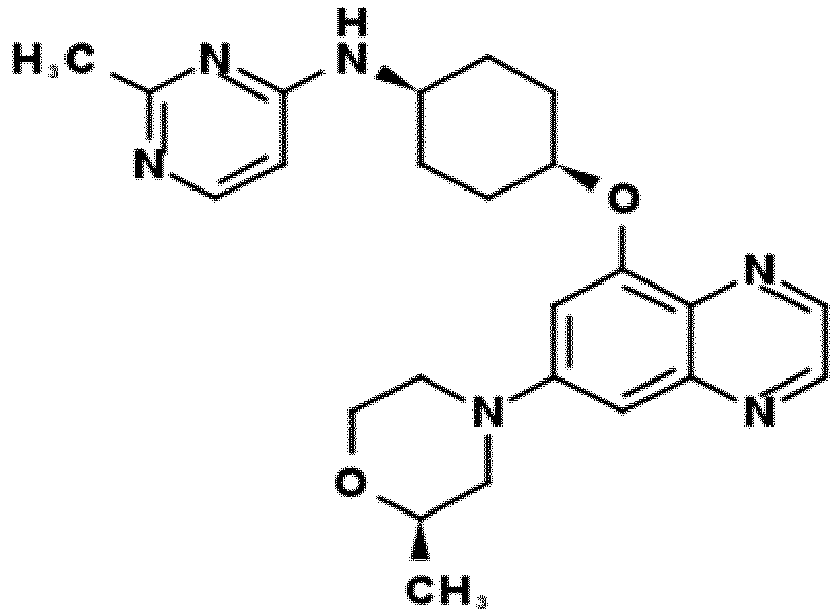
435 1H NMR (400 MHz, CDCl3) δ 8.62 (d, J = 1.9 Hz, 1H), 8.53 (d, J = 1.9 Hz, 1H), 8.03 (d, J = 5.9 Hz, 1H), 6.88 (td, J = 19.2, 3.6 Hz, 2H), 6.07 (d, J = 6.0 Hz, 1H), 4.87 (s, 1H), 4.74 (s, 1H), 4.06 - 3.93 (m, 1H), 3.80 - 3.69 (m, 2H), 3.58 - 3.38 (m, 2H), 2.94 (td, J = 11.9, 3.5 Hz, 1H), 2.65 - 2.52 (m, 1H), 2.42 (s, 3H), 2.13 (d, J = 10.1 Hz, 2H), 1.81 (d, J = 9.7 Hz, 6H), 1.32 - 1.08 (m, 3H). 291 
419.23 [1] 1H NMR (400 MHz, Chloroform-d) δ 8.42 (d, J = 1.9 Hz, 1H), 8.30 (d, J = 1.9 Hz, 1H), 8.04 (d, J = 4.8 Hz, 2H), 6.65 - 6.56 (m, 2H), 6.28 (t, J = 4.8 Hz, 1H), 4.99 (d, J = 8.1 Hz, 1H), 4.60 (d, J = 6.5 Hz, 3H), 3.79 (dd, J = 8.2, 4.0 Hz, 0H), 3.62 - 3.38 (m, 4H), 3.17 - 3.03 (m, 1H), 2.07-1.90 (m, 2H), 1.89 - 1.59 (m, 7H). 292 
413 1H NMR (400 MHz, CDCl3) δ 8.83 (dd, J = 2.3, 0.8 Hz, 1H), 8.77 - 8.68 (m, 2H), 8.54 (dd, J = 4.8, 1.6 Hz, 1H), 7.95 (d, J = 6.0 Hz, 1H), 7.86 (ddd, J = 7.9, 2.4, 1.6 Hz, 1H), 7.76 (d, J = 1.7 Hz, 1H), 7.31 (ddd, J = 7.9, 4.8, 0.8 Hz, 1H), 7.21 (d, J = 1.6 Hz, 1H), 7.11 (d, J = 0.9 Hz, 1H), 6.00 (d, J = 6.0 Hz, 1H), 4.80 (d, J = 27.2 Hz, 2H), 2.34 (s, 3H), 2.18 - 2.04 (m, 2H), 1.84 - 1.71 (m, 6H). 293 
402 1H NMR (400 MHz, CDCl3) δ 11.20 (s, 1H), 8.74 (t, J = 6.1 Hz, 1H), 8.71 (d, J = 1.8 Hz, 1H), 8.03 (d, J = 5.9 Hz, 1H), 7.96 (s, 2H), 7.75 (t, J = 8.0 Hz, 1H), 7.26 (d, J = 1.5 Hz, 1H), 6.08 (d, J = 6.0 Hz, 1H), 5.09 (s, 1H), 4.82 (s, 1H), 3.77 (s, 1H), 2.43 (s, 3H), 2.24-2.08 (m, 2H), 1.93 - 1.76 (m, 6H). 294 
410.35 1H NMR (300 MHz, Chloroform-d) δ 8.10 (d, J = 6.0 Hz, 1H), 7.36-7.28 (m, 1H), 6.65 (d, J = 2.0 Hz, 1H), 6.13 (d, J = 6.0 Hz, 1H), 4.81 (d, J = 8.0 Hz, 1H), 4.00-3.80 (m, 6H), 3.80 - 3.56 (m, 1H), 3.29 (dd, J = 5.8, 3.8 Hz, 4H), 3.02 - 2.84 (m, 2H), 2.48 (s, 3H), 2.36 (td, J = 11.4, 10.9, 2.5 Hz, 2H), 2.14 - 1.98 (m, 2H), 1.70 - 1.46 (m, 2H). 295 
450.2 1H NMR (300 MHz, Chloroform-d) δ 8.98 - 8.78 (m, 2H), 8.33 (d, J = 1.9 Hz, 1H), 7.67 (d, J = 1.8 Hz, 1H), 7.30 (d, J = 1.8 Hz, 1H), 6.49 - 6.31 (m, 1H), 5.07 (d, J = 7.6 Hz, 1H), 4.87 (d, J = 5.5 Hz, 1H), 4.43 (q, J = 2.8 Hz, 2H), 4.24 (s, 1H), 4.02 (t, J = 5.4 Hz, 2H), 2.71 (dtd, J = 13.1, 7.7, 2.7 Hz, 4H), 2.26 (dt, J = 10.4, 5.3 Hz, 2H), 1.97 (d, J = 5.3 Hz, 6H), 1.28 (t, J = 7.6 Hz, 3H). 296 
550.6 1H NMR (300 MHz, Chloroform-d) δ 8.79 - 8.67 (m, 1H), 8.64 (d, J = 1.9 Hz, 1H), 6.93 (dd, J = 13.0, 2.6 Hz, 2H), 4.77 (s, 1H), 3.94 (q, J = 6.6, 5.0 Hz, 5H), 3.35 (t, J = 4.8 Hz, 4H), 2.16 (d, J = 33.6 Hz, 2H), 1.86 (mJ = 4.9 Hz, 6H), 1.51 (q, J = 2.0, 1.6 Hz, 9H). 297 
447 1H NMR (400 MHz, CDCl3) δ 8.60 (d, J = 1.9 Hz, 1H), 8.49 (d, J = 1.9 Hz, 1H), 8.02 (d, J = 6.0 Hz, 1H), 6.78 (dd, J = 10.1, 2.5 Hz, 2H), 6.08 (d, J = 6.0 Hz, 1H), 4.96 (s, 1H), 4.74 (d, J = 2.4 Hz, 1H), 4.49 (d, J = 2.3 Hz, 2H), 3.41 (t, J = 5.4 Hz, 2H), 3.12 (dd, J = 11.6, 2.5 Hz, 2H), 2.43 (s, 3H), 2.14 (dd, J = 9.6, 4.9 Hz, 2H), 1.98 - 1.68 (m, 10H). 298 
459.4 1H NMR (300 MHz, Chloroform-d) δ 8.71 (d, J = 1.9 Hz, 1H), 8.65 (d, J = 1.9 Hz, 1H), 7.53 (dt, J = 8.1, 1.0 Hz, 1H), 7.35 (ddd, J = 8.1, 6.8, 1.1 Hz, 1H), 7.20 (dt, J = 8.5, 0.9 Hz, 1H), 7.07-6.89 (m, 3H), 4.79 (td, J = 6.1, 3.1 Hz, 1H), 4.02-3.91 (m, 4H), 3.87 (s, 3H), 3.43-3.25 (m, 4H), 2.34 - 2.15 (m, 2H), 2.10 - 1.88 (m, 6H). 299 
475.28 1H NMR (300 MHz, Chloroform-d) δ 8.70 (d, J = 1.9 Hz, 1H), 8.63 (d, J = 1.9 Hz, 1H), 7.02 - 6.89 (m, 2H), 6.57 (d, J = 1.0 Hz, 1H), 4.87 - 4.76 (m, 1H), 4.76 - 4.62 (m, 1H), 4.09 - 3.88 (m, 5H), 3.45 - 3.25 (m, 4H), 2.65 (d, J = 0.8 Hz, 3H),2.56(s, 3H), 2.31 - 2.12 (m, 2H), 2.09 -1.81 (m, 6H). 300 
407.26 1H NMR (400 MHz, CDCl3) δ 8.71 (d, J = 1.9 Hz, 1H), 8.61 (d, J = 1.9 Hz, 1H), 8.13 (d, J = 5.9 Hz, 1H), 6.94 (d, J = 2.4 Hz, 1H), 6.85 (d, J = 2.4 Hz, 1H), 6.13 (d, J = 6.0 Hz, 1H), 5.17 (s, 1H), 4.50 (s, 1H), 4.29 (d, J = 6.7 Hz, 2H), 4.03 - 3.82 (m, 4H), 3.45-3.32 (m, 4H), 3.04-2.93 (m, 1H), 2.58 - 2.50 (m, 2H), 2.49 (s, 3H), 2.24 (ddd, J = 20.4, 10.3, 6.0 Hz, 2H). 301 
407.26 1H NMR (400 MHz, CDCl3) δ 8.76 (s, 2H), 8.09 (d, J = 5.7 Hz, 1H), 6.94 (d, J = 2.3 Hz, 1H), 6.80 (d, J = 2.2 Hz, 1H), 6.73 (s, 1H), 6.19 (d, J = 5.1 Hz, 1H), 4.35 (s, 1H), 4.17 (d, J = 3.9 Hz, 2H), 4.03-3.77 (m, 4H), 3.45 - 3.21 (m, 4H), 2.85 (dd, J = 19.9, 9.1 Hz, 2H), 2.80-2.70 (m, 1H), 2.51 (s, 3H), 2.06 (dt, J = 12.7, 6.4 Hz, 2H). 302 
407.21 1H NMR (400 MHz, CDCl3) δ 8.70 (d, J = 1.9 Hz, 1H), 8.61 (d, J = 1.9 Hz, 1H), 8.13 (d, J = 5.8 Hz, 1H), 6.92 (d, J = 2.4 Hz, 1H), 6.55 (d, J = 2.4 Hz, 1H), 6.18 (d, J = 6.0 Hz, 1H), 5.07 - 4.97 (m, 1H), 4.91 (s, 1H), 3.99 - 3.82 (m, 4H), 3.50 (d, J = 5.5 Hz, 1H), 3.38 - 3.23 (m, 4H), 2.72 (dd, J = 8.1, 4.8 Hz, 1H), 2.65 (dt, J = 15.2, 7.7 Hz, 2H), 2.51 (s, 3H), 2.45 (ddd, J = 11.1, 6.8, 3.4 Hz, 2H). 303 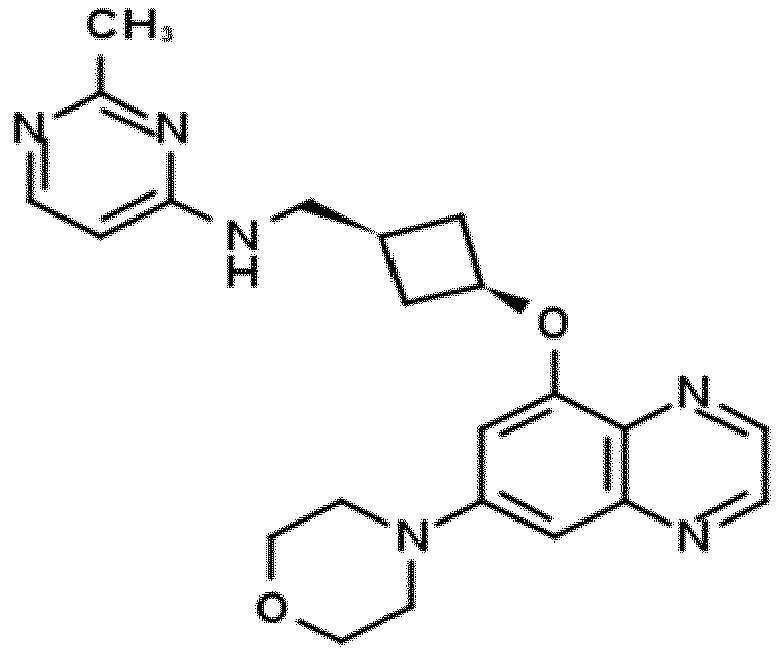
407.26 1H NMR (400 MHz, CDCl3) δ 8.71 (d, J = 1.9 Hz, 1H), 8.61 (d, J = 1.9 Hz, 1H), 8.10 (d, J = 5.8 Hz, 1H), 6.92 (d, J = 2.4 Hz, 1H), 6.67 (d, J = 2.4 Hz, 1H), 6.15 (d, J = 6.0 Hz, 1H), 4.95 (s, 1H), 4.79 (p, J = 7.1 Hz, 1H), 3.98 - 3.83 (m, 4H), 3.45 (bt, 2H), 3.36-3.27 (m, 4H), 2.79 (dtd, J = 9.8, 7.2, 2.8 Hz, 2H), 2.48 (s, 3H), 2.38 (dt, J = 16.0, 8.0 Hz, 1H), 2.19 (ddd, J = 17.0, 9.7, 2.8 Hz, 2H). 304 
393.21 1H NMR (400 MHz, CDCl3) δ 8.69 (d, J = 1.9 Hz, 1H), 8.61 (d, J = 1.9 Hz, 1H), 8.27 (d, J = 4.8 Hz, 2H), 6.93 (d, J = 2.4 Hz, 1H), 6.85 (d, J = 2.4 Hz, 1H), 6.54 (t, J = 4.8 Hz, 1H), 5.36 (d, J = 7.2 Hz, 1H), 4.70 - 4.58 (m, 1H), 4.31 (d, J = 7.7 Hz, 2H), 4.01 - 3.86 (m, 4H), 3.44 - 3.30 (m, 4H), 3.04 - 2.93 (m, 1H), 2.50 (ddd, J = 13.5, 7.8, 3.1 Hz, 2H), 2.31 - 2.19 (m, 2H). 305 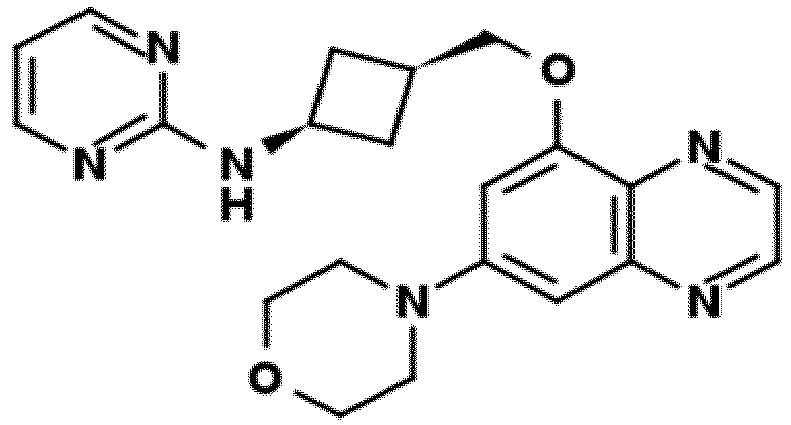
393.26 1H NMR (400 MHz, CDCl3) δ 8.81 (d, J = 1.9 Hz, 1H), 8.74 (d, J = 1.9 Hz, 1H), 8.29 (d, J = 4.8 Hz, 2H), 6.93 (d, J = 2.4 Hz, 1H), 6.80 (d, J = 2.4 Hz, 1H), 6.64 (d, J = 8.5 Hz, 1H), 6.50 (t, J = 4.8 Hz, 1H), 4.60 (dq, J = 15.6, 7.6 Hz, 1H), 4.19 (d, J = 4.6 Hz, 2H), 4.01 - 3.84 (m, 4H), 3.43-3.27 (m, 4H), 2.88 - 2.78 (m, 2H), 2.78 - 2.68 (m, 1H), 2.08 - 1.97 (m, 2H). 306 
393.26 1H NMR (400 MHz, CDCl3) δ 8.70 (d, J = 1.9 Hz, 1H), 8.61 (d, J = 1.9 Hz, 1H), 8.29 (d, J = 4.8 Hz, 2H), 6.91 (d, J = 2.4 Hz, 1H), 6.63 - 6.51 (m, 2H), 5.21 (s, 1H), 5.03 (p, J = 6.6 Hz, 1H), 4.02 - 3.79 (m, 4H), 3.63 (dd, J = 7.3, 5.9 Hz, 2H), 3.42 - 3.19 (m, 4H), 2.79 - 2.68 (m, 1H), 2.68 - 2.54 (m, 2H), 2.52 - 2.40 (m, 2H). 307 
393.26 1H NMR (400 MHz, CDCl3) δ 8.69 (d, J = 1.8 Hz, 1H), 8.61 (d, J = 1.8 Hz, 1H), 8.26 (d, J = 4.8 Hz, 2H), 6.91 (d, J = 2.0 Hz, 1H), 6.68 (d, J = 2.1 Hz, 1H), 6.53 (t, J = 4.8 Hz, 1H), 5.19 (s, 1H), 4.76 (p, J = 7.2 Hz, 1H), 3.99-3.79 (m, 4H), 3.56 (t, J = 6.4 Hz, 2H), 3.41 - 3.23 (m, 4H), 2.77 (dt, J = 9.7, 7.3 Hz, 2H), 2.39 (dt, J = 16.5, 8.3 Hz, 1H), 2.19 (dd, J = 19.6, 9.7 Hz, 2H). 308 
478.64 1H NMR (300 MHz, Chloroform-d) δ 8.71 (d, J = 1.9 Hz, 1H), 8.64 (d, J = 1.9 Hz, 1H), 7.79 (s, 1H), 7.23 (s, 1H), 6.95 (dd, J = 14.0, 2.5 Hz, 2H), 5.23 (d, J = 8.1 Hz, 1H), 4.80 (s, 1H), 4.09 (s, 1H), 3.94 (dd, J = 6.1, 3.6 Hz, 4H), 3.43 - 3.23 (m, 4H), 3.02 (d, J = 5.1 Hz, 3H), 2.43 (s, 3H), 2.31 - 2.12 (m, 2H), 1.95 (p, J = 10.0 Hz, 6H). 309 
477.54 1H NMR (300 MHz, Chloroform-d) δ 8.68 (d, J = 1.9 Hz, 1H), 8.54 (d, J = 1.9 Hz, 1H), 6.85 (s, 2H), 6.30 (s, 1H), 5.06 (d, J = 16.2 Hz, 1H), 4.85 (d, J = 6.5 Hz, 3H), 4.44 - 4.30 (m, 2H), 4.14 (q, J = 7.1 Hz, 1H), 3.89 - 3.60 (m, 5H), 3.50 (s, 3H), 3.35 (q, J = 7.2 Hz, 1H), 2.49 (s, 3H), 2.24 (d, J = 8.7 Hz, 2H), 2.08 (d, J = 7.7 Hz, 2H), 1.92 (q, J = 9.6, 6.9 Hz, 6H), 1.28 (t, J = 7.1 Hz, 2H). 310 
461.26 1H NMR (300 MHz, CDCl3) δ 8.72 (d, J = 1.8 Hz, 1H), 8.66 (d, J = 1.9 Hz, 1H), 7.35 (d, J = 4.3 Hz, 1H), 7.17 (d, J = 4.8 Hz, 1H), 6.97 (dd, J = 12.0, 2.2 Hz, 2H), 4.92 (s, 1H), 4.35 (s, 1H), 4.01 - 3.84 (m, 4H), 3.48 - 3.26 (m, 4H), 2.72 (s, 3H), 2.36 - 2.21 (m, 2H), 2.13 - 1.85 (m, 6H). 311 
436.29 312 
437.33 1H NMR (300 MHz, CDCl3) δ 8.71 (d, J = 1.9 Hz, 1H), 8.65 (d, J = 1.9 Hz, 1H), 7.57 (d, J = 3.2 Hz, 1H), 7.35 -7.28 (m, 2H), 6.97 (d, J = 2.4 Hz, 1H), 6.91 (d, J = 2.4 Hz, 1H), 5.23 (s, 1H), 4.76 (s, 1H), 4.20 (s, 1H), 4.01 (s, 3H), 3.98 - 3.84 (m, 4H), 3.44 - 3.29 (m, 4H), 2.27 - 2.14 (m, 2H), 2.05 - 1.85 (m, 6H). 313 
460.29 1H NMR (300 MHz, CDCl3) δ 8.68 (dd, J = 21.2, 1.9 Hz, 2H), 7.86 (s, 1H), 7.18 (d, J = 4.9 Hz, 1H), 7.00 (d, J = 4.9 Hz, 1H), 6.96 (dd, J = 12.1, 2.4 Hz, 2H), 5.18 (d, J = 7.4 Hz, 1H), 4.80 (s, 1H), 4.30 (dd, J = 11.9, 6.0 Hz, 1H), 4.05 - 3.77 (m, 4H), 3.45-3.14 (m, 4H), 2.75 (s, 3H), 2.37 - 2.14 (m, 2H), 2.14-1.87 (m, 6H). 314 
435.32 1H NMR (300 MHz, CDCl3) δ 8.71 (d, J = 1.9 Hz, 1H), 8.63 (d, J = 1.9 Hz, 1H), 7.66 (s, 1H), 6.94 (dd, J = 14.9, 2.4 Hz, 2H), 4.84 - 4.74 (m, 1H), 4.47 (s, 1H), 4.02 - 3.87 (m, 4H), 3.87 - 3.75 (m, 1H), 3.47 - 3.21 (m, 4H), 2.38 (d, J = 4.0 Hz, 6H), 2.26 - 2.13 (m, 2H), 2.01 - 1.78 (m, 6H). 315 
476.23 1H NMR (300 MHz, Chloroform-d) δ 8.68 (d, J = 1.9 Hz, 1H), 8.59 - 8.46 (m, 2H), 7.98 (s, 1H), 7.18 (s, 1H), 6.85 (s, 2H), 4.85 (d, J = 6.6 Hz, 2H), 3.90 - 3.62 (m, 5H), 3.35 (d, J = 8.2 Hz, 1H), 3.03 (d, J = 5.1 Hz, 3H), 2.27 (s, 2H), 2.13 -1.80 (m, 7H), 10.58(s, 2H) 316 
411.34 1H NMR (300 MHz, Chloroform-d) δ 8.14 (d, J = 6.2 Hz, 1H), 6.50 (d, J = 1.7 Hz, 1H), 6.43 (d, J = 1.6 Hz, 1H), 6.21 (d, J = 6.2 Hz, 1H), 4.98 (s, 1H), 4.01 - 3.81 (m, 5H), 3.37 - 3.18 (m, 5H), 2.54 (s, 3H), 2.20 (d, J = 9.1 Hz, 3H), 2.05 - 1.71 (m, 6H). 317 
476.55 1H NMR (300 MHz, Chloroform-d) δ 8.68 (d, J = 1.9 Hz, 1H), 8.62 - 8.41 (m, 2H), 7.79 (s, 1H), 7.33 (d, J = 4.9 Hz, 1H), 6.85 (q, J = 2.6 Hz, 3H), 4.85 (d, J = 6.3 Hz, 4H), 4.08 (s, 0H), 3.88 - 3.58 (m, 5H), 3.35 (q, J = 6.8 Hz, 1H), 3.03 (d, J = 5.1 Hz, 3H), 2.36 - 2.13 (m, 2H), 2.15 - 1.84 (m, 6H). 318 
465.3 1H NMR (300 MHz, Chloroform-d) δ 8.68 (d, J = 1.9 Hz, 1H), 8.56 (d, J = 1.9 Hz, 1H), 8.33 (d, J = 1.9 Hz, 1H), 6.85 (s, 2H), 5.07 (d, J = 8.1 Hz, 1H), 4.86 (d, J = 6.4 Hz, 4H), 4.23 (s, 2H), 3.90 - 3.62 (m, 4H), 3.35 (q, J = 7.1 Hz, 1H), 2.73 (qd, J = 7.6, 2.3 Hz, 2H), 2.27 (d, J = 10.1 Hz, 3H), 2.12 -1.82 (m, 6H), 1.28 (t, J = 7.6 Hz, 3H). 319 
461.38 1H NMR (300 MHz, Chloroform-d) δ 8.83 (dt, J = 6.4, 1.4 Hz, 2H), 8.51 (d, J = 4.7 Hz, 1H), 7.78 (s, 1H), 7.68 (d, J = 1.7 Hz, 1H), 7.34 (dd, J = 4.9, 0.9 Hz, 1H), 6.38 (s, 1H), 5.32 (d, J = 0.9 Hz, 1H), 4.87 (s, 1H), 4.43 (q, J = 2.8 Hz, 2H), 4.17 - 3.94 (m, 3H), 3.03 (dd, J = 5.1, 1.0 Hz, 3H), 2.76 - 2.59 (m, 2H), 2.23 (d, J = 12.7 Hz, 2H), 1.98 (d, J = 7.7 Hz, 6H). 320 
451.44 1H NMR (300 MHz, Chloroform-d) δ 8.70 (d, J = 1.9 Hz, 1H), 8.62 (d, J = 1.9 Hz, 1H), 8.10 (d, J = 6.0 Hz, 1H), 6.97 (d, J = 2.4 Hz, 1H), 6.90 (d, J = 2.6 Hz, 1H), 6.15 (d, J = 6.0 Hz, 1H), 4.99 (s, 1H), 4.81 (s, 1H), 4.19 - 4.08 (m, 1H), 3.94 - 3.69 (m, 5H), 3.63 (t, J = 11.3 Hz, 2H), 3.04 (td, J = 11.9, 3.5 Hz, 1H), 2.92 - 2.80 (m, 1H), 2.50 (s, 3H), 2.20 (d, J = 8.9 Hz, 2H), 1.90 (d, J = 5.6 Hz, 7H). 321 
461.63 1H NMR (300 MHz, Chloroform-d) δ 8.81 - 8.67 (m, 2H), 8.42 (s, 1H), 7.89 (s, 1H), 7.58 (d, J = 1.8 Hz, 1H), 7.09 (s, 1H), 6.28 (dq, J = 3.0, 1.6 Hz, 1H), 4.81 (s, 1H), 4.33 (q, J = 2.8 Hz, 2H), 3.92 (t, J = 5.4 Hz, 2H), 2.93 (d, J = 5.1 Hz, 3H), 2.67 - 2.48 (m, 2H), 2.18 (d, J = 11.3 Hz, 2H), 1.98 - 1.73 (m, 6H). 322 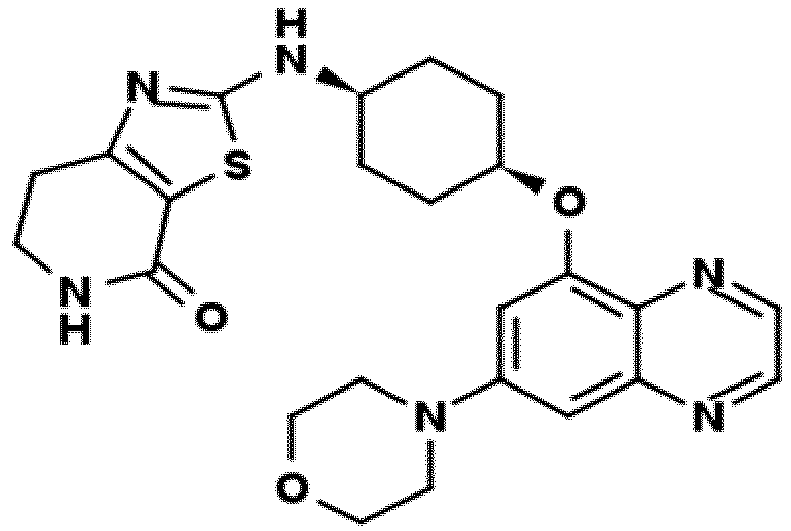
481.3 1H NMR (300 MHz, Chloroform-d) δ 8.62 (d, J = 1.9 Hz, 1H), 8.52 (d, J = 1.9 Hz, 1H), 6.85 (dd, J = 18.8, 2.5 Hz, 2H), 5.59 (d, J = 8.3 Hz, 1H), 5.24 (s, 1H), 4.72 (s, 1H), 3.84 (t, J = 4.9 Hz, 5H), 3.66 - 3.39 (m, 3H), 3.30 - 3.19 (m, 5H), 2.78 (t, J = 7.0 Hz, 2H), 2.11 (s, 1H), 2.00 - 1.66 (m, 6H). 323 
435.33 324 
450.35 1H NMR (300 MHz, CDCl3) δ 8.71 (d, J = 1.9 Hz, 1H), 8.63 (d, J = 1.9 Hz, 1H), 7.79 (d, J = 5.9 Hz, 1H), 6.97 (d, J = 2.4 Hz, 1H), 6.91 (d, J = 2.4 Hz, 1H), 6.13 (dd, J = 5.9, 2.1 Hz, 1H), 5.87 (d, J = 2.0 Hz, 1H), 4.87 - 4.70 (m, 1H), 4.32 (q, J = 7.1 Hz, 2H), 4.21 (d, J = 7.8 Hz, 1H), 4.05 - 3.81 (m, 4H), 3.60 - 3.45 (m, 1H), 3.45 - 3.24 (m, 4H), 2.33 - 2.10 (m, 2H), 2.02 - 1.77 (m, 6H), 1.39 (t, J = 7.1 Hz, 3H). [2] 325 
422.34 1H NMR (300 MHz, CDCl3) δ 11.03 (s, 1H), 8.71 (d, J = 1.9 Hz, 1H), 8.62 (d, J = 1.9 Hz, 1H), 7.09 (d, J = 7.1 Hz, 1H), 6.97 (d, J = 2.4 Hz, 1H), 6.90 (d, J = 2.4 Hz, 1H), 5.67 (dd, J = 7.2, 2.1 Hz, 1H), 5.58 (d, J = 2.1 Hz, 1H), 4.84 - 4.75 (m, 1H), 4.41 (d, J = 7.6 Hz, 1H), 4.02 - 3.87 (m, 4H), 3.54 - 3.43 (m, 1H), 3.42 - 3.27 (m, 4H), 2.28 - 2.15 (m, 2H), 2.05 - 1.78 (m, 6H). 326 
423.4 1H NMR (300 MHz, Chloroform-d) δ 8.68 (d, J = 1.9 Hz, 1H), 8.61 (d, J = 1.9 Hz, 1H), 7.01 - 6.83 (m, 2H), 5.34 (s, 1H), 4.73 (d, J = 6.1 Hz, 1H), 3.91 (dd, J = 6.1, 3.7 Hz, 4H), 3.59 (s, 4H), 3.44 (s, 1H), 3.33 (t, J = 4.9 Hz, 4H), 2.17 (s, 5H), 1.86 (q, J = 9.1, 6.3 Hz, 6H). 327 
523.35 1H NMR (300 MHz, Chloroform-d) δ 8.70 (d, J = 2.0 Hz, 1H), 8.63 (d, J = 1.9 Hz, 1H), 8.00 (d, J = 1.3 Hz, 1H), 6.95 (d, J = 2.4 Hz, 1H), 6.89 (d, J = 2.5 Hz, 1H), 4.88 (d, J = 8.2 Hz, 1H), 4.77 (s, 1H), 4.63 (d, J = 9.0 Hz, 2H), 4.15 (s, 1H), 3.92 (t, J = 4.9 Hz, 4H), 3.39 - 3.26 (m, 4H), 2.91 (td, J = 8.6, 3.9 Hz, 1H), 2.72 - 2.55 (m, 2H), 2.50 - 2.10 (m, 7H), 1.91 (d, J = 5.5 Hz, 6H), 1.72 (d, J = 4.7 Hz, 1H). 328 
521.69 1H NMR (300 MHz, Chloroform-d) δ 8.81 - 8.59 (m, 3H), 8.54 (d, J = 1.9 Hz, 1H), 6.92 - 6.73 (m, 2H), 5.50 (d, J = 8.2 Hz, 1H), 4.72 (s, 1H), 4.01 (s, 2H), 3.84 (t, J = 4.9 Hz, 5H), 3.50 (q, J = 5.3 Hz, 3H), 3.37 - 3.17 (m, 5H), 2.62 (t, J = 5.6 Hz, 2H), 2.34 (s, 7H), 2.13 (d, J = 10.7 Hz, 2H), 1.87 (d, J = 22.1 Hz, 6H). 329 
460.44 1H NMR (300 MHz, Chloroform-d) δ 8.62 (t, J = 1.7 Hz, 1H), 8.55 (t, J = 1.7 Hz, 1H), 8.37 (dt, J = 4.6, 1.5 Hz, 1H), 7.78 (dt, J = 7.9, 1.5 Hz, 1H), 6.93 - 6.77 (m, 3H), 4.71 (d, J = 6.1 Hz, 1H), 3.96 - 3.77 (m, 6H), 3.33 - 3.18 (m, 4H), 2.23 - 2.07 (m, 2H), 2.01 - 1.77 (m, 6H). 330 
463.6 1H NMR (300 MHz, Chloroform-d) δ 8.62 (d, J = 1.9 Hz, 1H), 8.53 (d, J = 1.9 Hz, 1H), 8.10 (dd, J = 4.8, 1.5 Hz, 1H), 7.61 (dd, J = 8.0, 1.5 Hz, 1H), 7.12 (dd, J = 8.1, 4.8 Hz, 1H), 6.95 - 6.76 (m, 2H), 5.39 (s, 1H), 4.74 (s, 1H), 3.96 - 3.75 (m, 5H), 3.26 (t, J = 4.9 Hz, 4H), 2.16 (d, J = 12.8 Hz, 2H), 2.05 - 1.71 (m, 6H). 331 
455.4 1H NMR (300 MHz, Chloroform-d) δ 8.62 (d, J = 1.9 Hz, 1H), 8.53 (d, J = 1.9 Hz, 1H), 7.28 (d, J = 0.7 Hz, 1H), 6.94 - 6.77 (m, 2H), 5.39 (s, 1H), 5.09 (d, J = 7.8 Hz, 1H), 4.71 (s, 1H), 3.93 - 3.77 (m, 4H), 3.58 (s, 1H), 3.26 (dd, J = 6.0, 3.7 Hz, 4H), 2.11 (s, 2H), 1.97 - 1.66 (m, 6H). 332 
465.36 333 
435.33 334 
451.36 335 
421.37 336 
446.35 337 
533.2 1H NMR (300 MHz, Chloroform-d) δ 8.67 - 8.58 (m, 1H), 8.58 - 8.49 (m, 1H), 8.33 (s, 2H), 6.92 - 6.78 (m, 2H), 5.41 (d, J = 8.1 Hz, 1H), 4.72 (s, 1H), 3.98 (d, J = 8.6 Hz, 1H), 3.84 (t, J = 4.8 Hz, 4H), 3.58 (s, 4H), 3.26 (t, J = 4.9 Hz, 4H), 2.36 (t, J = 4.9 Hz, 4H), 2.25 (s, 3H), 2.13 (d, J = 10.8 Hz, 2H), 1.84 (s,6H). 338 
447.43 1H NMR (300 MHz, DMSO-d6) δ 8.72 (d, J = 1.9 Hz, 1H), 8.59 (d, J = 1.9 Hz, 1H), 7.17 (d, J = 2.5 Hz, 1H), 6.84 (d, J = 2.4 Hz, 1H), 6.69 - 6.61 (m, 1H), 6.50 (m, 2H), 4.94 (m, 1H), 4.50 (t, J = 8.7 Hz, 2H), 4.27 (d, J = 8.2 Hz, 1H), 3.79 (m, 4H), 3.45 (m, 1H), 3.32 (m, 4H), 3.13 (t, J = 8.7 Hz, 2H), 1.98 (m, 2H), 1.74 (m, 6H). 339 
449.41 1H NMR (300 MHz, DMSO-d6) δ 8.72 (d, J = 1.9 Hz, 1H), 8.58 (d, J = 1.9 Hz, 1H), 7.14 (d, J = 2.5 Hz, 1H), 6.84 (d, J = 2.3 Hz, 1H), 6.64 (t, J = 8.0 Hz, 1H), 6.36 (d, J = 8.2 Hz, 1H), 6.22 (dd, J = 7.7, 1.0 Hz, 1H), 5.89 (s, 2H), 4.96 (m, 2H), 3.79 (m, 4H), 3.51 (m, 1H), 3.32 (m, 4H), 2.03 (m, 2H), 1.75 (m, 6H). 340 
474.48 1H NMR (300 MHz, DMSO-d6) δ 8.73 (d, J = 1.9 Hz, 1H), 8.59 (d, J = 1.9 Hz, 1H), 7.25 (m, 1H), 7.14 (d, J = 2.4 Hz, 1H), 6.89 - 6.78 (m, 3H), 5.47 (d, J = 7.7 Hz, 1H), 4.94 (m, 1H), 4.29 (s, 2H), 3.79 (m, 4H), 3.51 (m, 1H), 3.06 (s, 3H), 2.09 (m, 2H), 1.81 (m, 6H). 341 
465.57 1H NMR (300 MHz, DMSO-d6) δ 8.72 (d, J = 1.9 Hz, 1H), 8.58 (d, J = 1.9 Hz, 1H), 8.17 (s, 2H), 7.15 (d, J = 2.4 Hz, 1H), 6.83 (d, J = 2.3 Hz, 1H), 6.06 (d, J = 7.8 Hz, 1H), 4.92 (m, 1H), 4.77 (s, 1H), 3.79 (m, 4H), 3.50 (m, 1H), 3.30 (m, 4H), 2.02 (m, 2H), 1.80 (m, 6H), 1.42 (s, 6H). 342 
364.27 1H NMR (400 MHz, CDCl3) δ 8.86 (d, J = 0.9 Hz, 1H), 8.84 (s, 1H), 8.16 (s, 1H), 7.73 - 7.63 (m, 2H), 7.17 (d, J = 7.0 Hz, 1H), 5.24 (d, J = 7.8 Hz, 1H), 5.03 (s, 2H), 4.83 (s, 2H), 4.79 (s, 1H), 4.12 - 3.99 (m, 1H), 2.26 - 2.14 (m, 2H), 2.01 - 1.84 (m, 6H). 343 
523.44 1H NMR (300 MHz, Chloroform-d) δ 8.70 (d, J = 2.0 Hz, 1H), 8.63 (d, J = 1.9 Hz, 1H), 8.00 (d, J = 1.3 Hz, 1H), 6.95 (d, J = 2.4 Hz, 1H), 6.89 (d, J = 2.5 Hz, 1H), 4.88 (d, J = 8.2 Hz, 1H), 4.77 (s, 1H), 4.63 (d, J = 9.0 Hz, 2H), 4.15 (s, 1H), 3.92 (t, J = 4.9 Hz, 4H), 3.39 - 3.26 (m, 4H), 2.91 (td, J = 8.6, 3.9 Hz, 1H), 2.72 - 2.55 (m, 2H), 2.50 - 2.10 (m, 7H), 1.91 (d, J = 5.5 Hz, 6H), 1.72 (d, J = 4.7 Hz, 1H). 344 
441.58 345 
449.59 1H NMR (300 MHz, DMSO-d6) δ 9.18 (d, J = 1.5 Hz, 1H), 8.98 (t, 1H), 8.87 (d, J = 2.5 Hz, 1H), 8.76 - 8.69 (m, 2H), 8.57 (d, J = 1.9 Hz, 1H), 7.12 (d, J = 2.6 Hz, 1H), 6.82 (d, J = 2.3 Hz, 1H), 4.94 (m, 1H), 3.78 (m, 4H), 3.27 (m, 6H), 1.99 (m, 2H), 1.83 - 1.48 (m, 7H). 346 
385.56 1H NMR (300 MHz, DMSO-d6) δ 8.71 (d, J = 1.9 Hz, 1H), 8.59 (d, J = 1.9 Hz, 1H), 7.85 (t, 1H), 7.12 (d, J = 2.5 Hz, 1H), 6.83 (d, J = 2.4 Hz, 1H), 4.93 (m, 1H), 3.78 (m, 4H), 3.31 (m, 3H), 2.95 (t, J = 6.0 Hz, 2H), 2.03 - 1.90 (m, 2H), 1.80 (s, 3H), 1.52 (m, 7H). 347 
450.63 1H NMR (300 MHz, DMSO-d6) δ 8.72 (d, J = 1.9 Hz, 1H), 8.59 (s, 1H), 7.60 (d, J = 2.3 Hz, 1H), 7.46 (s, 1H), 7.13 (s, 1H), 6.83 (s, 1H), 6.46 (s, 1H), 5.97 (m, 1H), 4.96 (m 1H), 3.87 - 3.70 (m, 7H), 3.30 (s, 4H), 2.95 (t, J = 5.7 Hz, 2H), 1.99 (m, 2H), 1.62 (t, J = 18.1 Hz, 7H). 348 
421.6 1H NMR (300 MHz, DMSO-d6) δ 8.72 (d, J = 1.9 Hz, 1H), 8.60 (d, J = 1.9 Hz, 1H), 8.24 (d, J = 4.7 Hz, 1H), 7.22 (t, J = 6.0 Hz, 1H), 7.11 (d, J = 2.6 Hz, 1H), 6.82 (d, J = 2.3 Hz, 1H), 6.51 (t, J = 4.7 Hz, 1H), 4.93 (m, 1H), 3.78 (m, 4H), 3.31 m, 4H), 3.19 (t, J = 6.5 Hz, 2H), 1.97 (m, 2H), 1.55 (m, 7H). 349 
464.58 1H NMR (300 MHz, DMSO-d6) δ 8.72 (d, J = 1.9 Hz, 1H), 8.57 (d, J = 1.9 Hz, 1H), 7.59 (d, J = 5.9 Hz, 1H), 7.14 (d, J = 2.5 Hz, 1H), 6.82 (d, J = 2.3 Hz, 1H), 6.44 (d, J = 7.7 Hz, 1H), 6.22 (dd, J = 5.8, 2.1 Hz, 1H), 5.80 - 5.74 (m, 1H), 5.19 - 5.11 (m, 1H), 4.92 (m, 1H), 3.79 (m, 4H), 3.32 (m, 4H), 2.01 (m, 2H), 1.75 (m, 6H), 1.21 (d, J = 6.1 Hz, 6H). 350 
464.42 1H NMR (300 MHz, Chloroform-d) δ 4.79 (s, 1H), 4.24 - 3.76 (m, 5H), 3.50 - 3.20 (m, 4H), 3.02 (d, J = 5.1 Hz, 3H), 2.20 (d, J = 12.8 Hz, 2H), 2.09 - 1.75 (m, 6H), 5.29 - 5.19 (m, 1H), 8.70 (d, J = 1.9 Hz, 1H), 8.62 (d, J = 1.9 Hz, 1H), 8.49 (d, J = 4.8 Hz, 1H), 7.77 (s, 1H), 7.32 (d, J = 4.9 Hz, 1H), 7.02 - 6.86 (m, 2H). 351 
478.38 1H NMR (300 MHz, Chloroform-d) δ 8.70 (d, J = 1.9 Hz, 1H), 8.62 (d, J = 2.0 Hz, 1H), 8.38 (d, J = 4.9 Hz, 1H), 6.93 (dd, J = 14.5, 2.4 Hz, 2H), 6.68 (d, J = 4.9 Hz, 1H), 5.28 (s, 1H), 4.79 (s, 1H), 4.22 - 3.86 (m, 5H), 3.34 (t, J = 4.8 Hz, 4H), 3.17 - 2.97 (m, 6H), 2.20 (s, 2H), 1.91 (d, J = 5.1 Hz, 6H). 352 
418.5 1H NMR (300 MHz, Chloroform-d) δ 8.91 - 8.75 (m, 2H), 8.11 (d, J = 5.9 Hz, 1H), 7.68 (d, J = 1.8 Hz, 1H), 6.37 (tt, J = 3.0, 1.5 Hz, 1H), 6.16 (d, J = 6.0 Hz, 1H), 4.99 (s, 1H), 4.88 (d, J = 6.0 Hz, 1H), 4.43 (q, J = 2.8 Hz, 2H), 4.02 (t, J = 5.4 Hz, 2H), 3.85 (s, 1H), 2.77 - 2.64 (m, 2H), 2.51 (s, 3H), 2.23 (d, J = 13.2 Hz, 2H), 2.03 - 1.82 (m, 6H). 353 
433.62 1H NMR (300 MHz, Chloroform-d) δ 8.67 (d, J = 1.9 Hz, 1H), 8.54 (d, J = 1.9 Hz, 1H), 8.11 (d, J = 6.0 Hz, 1H), 6.85 (s, 2H), 6.16 (d, J = 6.0 Hz, 1H), 5.00 (s, 1H), 4.85 (d, J = 6.5 Hz, 3H), 3.93 - 3.57 (m, 5H), 3.35 (q, J = 7.1 Hz, 1H), 2.62 (d, J = 8.0 Hz, 1H), 2.50 (s, 3H), 2.24 (d, J = 8.9 Hz, 2H), 2.01 - 1.81 (m, 6H). 354 
407.56 1H NMR (300 MHz, DMSO-d6) δ 8.73 (d, J = 1.9 Hz, 1H), 8.61 (d, J = 3.1 Hz, 1H), 8.58 (d, J = 2.0 Hz, 1H), 8.47 (d, J = 6.2 Hz, 1H), 7.15 (d, J = 2.4 Hz, 1H), 6.99 (d, J = 7.8 Hz, 1H), 6.83 (d, J = 2.3 Hz, 1H), 6.65 (m, 1H), 4.94 (m, 1H), 3.79 (m, 4H), 3.55 (m, 1H), 3.35 (m, 4H), 2.03 (m, 2H), 1.78 (m, 6H). 355 
421.23 1H NMR (400 MHz, CDCl3) δ 8.70 (d, J = 1.8 Hz, 1H), 8.61 (d, J = 1.8 Hz, 1H), 8.17 (s, 1H), 6.93 (d, J = 2.2 Hz, 1H), 6.71 (d, J = 2.2 Hz, 1H), 5.36 (d, J = 7.8 Hz, 1H), 5.04 (s, 2H), 4.85 (s, 2H), 4.74 - 4.61 (m, 1H), 4.40 - 4.28 (m, 1H), 4.02 - 3.82 (m, 4H), 3.43 - 3.27 (m, 4H), 3.26 - 3.13 (m, 2H), 2.35 (dd, J = 19.4, 9.4 Hz, 2H). 356 
419.19 1H NMR (400 MHz, CDCl3) δ 8.72 (s, 1H), 8.62 (d, J = 1.5 Hz, 1H), 8.50 (s, 1H), 7.74 (d, J = 1.9 Hz, 1H), 6.95 (d, J = 2.0 Hz, 1H), 6.86 (d, J = 1.9 Hz, 1H), 6.73 (d, J = 2.1 Hz, 1H), 5.44 (d, J = 7.5 Hz, 1H), 4.82 - 4.72 (m, 1H), 4.72 - 4.61 (m, 1H), 4.00 - 3.86 (m, 4H), 3.40 - 3.32 (m, 4H), 3.32 - 3.22 (m, 2H), 2.53 - 2.40 (m, 2H). 357 
393.39 1H NMR (400 MHz, CDCl3) δ 8.71 (d, J = 1.9 Hz, 1H), 8.61 (d, J = 1.9 Hz, 1H), 8.12 (d, J = 5.9 Hz, 1H), 6.95 (d, J = 2.4 Hz, 1H), 6.70 (d, J = 2.4 Hz, 1H), 6.13 (d, J = 5.9 Hz, 1H), 5.06 (s, 1H), 4.72 (p, J = 6.9 Hz, 1H), 4.18 (s, 1H), 3.98 - 3.85 (m, 4H), 3.40 - 3.27 (m, 4H), 3.27 - 3.13 (m, 2H), 2.50 (s, 3H), 2.36 (ddd, J = 12.7, 10.0, 2.9 Hz, 2H). 358 
463.41 1H NMR (300 MHz, DMSO-d6) δ 8.72 (d, J = 1.9 Hz, 1H), 8.57 (d, J = 1.9 Hz, 1H), 8.22 (m, 1H), 8.00 (d, J = 2.7 Hz, 1H), 7.73 (d, J = 8.6 Hz, 1H), 7.15 (d, J = 2.3 Hz, 1H), 7.02 (dd, J = 8.7, 2.8 Hz, 1H), 6.83 (d, J = 2.4 Hz, 1H), 6.50 (d, J = 7.6 Hz, 1H), 4.93 (m, 1H), 3.79 (m, 4H), 3.52 (m, 1H), 3.34 (m, 4H), 2.76 (d, J = 4.9 Hz, 3H), 2.04 (m, 2H), 1.79 (m, 6H). 359 
537.71 1H NMR (300 MHz, Chloroform-d) δ 8.69 (d, J = 1.9 Hz, 1H), 8.62 (d, J = 1.9 Hz, 1H), 7.99 (d, J = 1.3 Hz, 1H), 6.92 (dd, J = 16.0, 2.5 Hz, 2H), 5.12 (d, J = 7.5 Hz, 1H), 4.76 (d, J = 5.4 Hz, 1H), 4.69 - 4.54 (m, 1H), 4.15 (s, 1H), 4.01 - 3.82 (m, 4H), 3.72 (ddd, J = 13.2, 7.6, 2.9 Hz, 1H), 3.44 - 3.21 (m, 5H), 3.21 - 2.99 (m, 1H), 2.46 (dq, J = 7.9, 3.9 Hz, 1H), 2.34 (s, 3H), 2.22 (t, J = 8.8 Hz, 3H), 1.86 (dd, J = 10.0, 4.8 Hz, 7H), 1.79 -1.51 (m, 2H). 360 
464.58 1H NMR (300 MHz, Chloroform-d) δ 8.69 (d, J = 1.9 Hz, 1H), 8.61 (d, J = 1.9 Hz, 1H), 7.16 (d, J = 1.2 Hz, 1H), 6.93 (dd, J = 17.1, 2.5 Hz, 2H), 5.38-5.21 (m,1H), 4.90 - 4.77 (m, 1H), 3.91 (dd, J = 6.0, 3.7 Hz, 5H), 3.44-3.26 (m, 4H), 3.00 (d, J = 5.1 Hz, 3H), 2.23 (d, J = 11.4 Hz, 2H), 2.04 - 1.76 (m, 6H). 361 
478.57 1H NMR (300 MHz, Chloroform-d) δ 8.69 (d, J = 1.9 Hz, 1H), 8.61 (d, J = 1.9 Hz, 1H), 8.38 (d, J = 4.9 Hz, 1H), 7.00 - 6.85 (m, 2H), 6.68 (d, J = 4.9 Hz, 1H), 5.29 (d, J = 7.7 Hz, 1H), 4.79 (s, 1H), 4.04 (s, 1H), 3.92 (dd, J = 6.0, 3.8 Hz, 4H), 3.41 - 3.26 (m, 4H), 3.10 (s, 3H), 3.04 (s, 3H), 2.19 (d, J = 8.7 Hz, 2H). 362 
512.55 1H NMR (300 MHz, Chloroform-d) δ 8.69 (d, J = 1.9 Hz, 1H), 8.63 (t, J = 1.6 Hz, 1H), 8.04 (s, 1H), 6.95 (d, J = 2.3 Hz, 1H), 6.90 (d, J = 2.7 Hz, 1H), 4.88 (d, J = 8.3 Hz, 1H), 4.80 (s, 1H), 4.48 (t, J = 5.9 Hz, 2H), 4.17 (s, 1H), 4.01 - 3.81 (m, 4H), 3.34 (t, J = 4.7 Hz, 4H), 2.73 (t, J = 5.9 Hz, 2H), 2.33 (d, J = 1.2 Hz, 8H), 2.07 - 1.73 (m, 6H). 363 
469.62 1H NMR (300 MHz, Chloroform-d) δ 8.70 (d, J = 1.9 Hz, 1H), 8.60 (d, J = 1.9 Hz, 1H), 6.92 (dd, J = 21.1, 2.5 Hz, 2H), 4.74 (s, 1H), 4.35 (d, J = 7.9 Hz, 1H), 4.12 (d, J = 8.0 Hz, 1H), 4.03 - 3.67 (m, 5H), 3.63 - 3.50 (m, 1H), 3.47 - 3.20 (m, 4H), 2.77 (d, J = 11.3 Hz, 2H), 2.28 (s, 3H), 2.22 - 2.04 (m, 4H), 1.90 (dd, J = 38.6, 8.3 Hz, 8H), 1.45 (qd, J = 11.1, 3.8 Hz, 2H). 364 
497.61 1H NMR (300 MHz, Chloroform-d) δ 8.70 (d, J = 1.9 Hz, 1H), 8.59 (d, J = 2.0 Hz, 1H), 6.92 (dd, J = 21.8, 2.5 Hz, 2H), 4.75 (s, 1H), 4.47 (dd, J = 28.7, 10.8 Hz, 2H), 4.19 (d, J = 7.7 Hz, 1H), 3.99-3.68 (m, 6H), 3.46 - 3.27 (m, 4H), 3.18 (t, J = 11.7 Hz, 1H), 2.85 - 2.64 (m, 1H), 2.11 (s, 5H), 1.83 (d, J = 4.9 Hz, 6H), 1.41 - 1.17 (m, 5H). 365 
495.54 1H NMR (300 MHz, Chloroform-d) δ 8.67 (dd, J = 21.6, 1.9 Hz, 2H), 8.01 (s, 1H), 6.94 (dd, J = 16.5, 2.5 Hz, 2H), 4.79 (s, 1H), 4.67 (s, 2H), 4.18 (s, 2H), 3.93 (t, J = 4.8 Hz, 4H), 3.41 - 3.27 (m, 6H), 2.20 (d, J = 9.9 Hz, 2H), 1.93 (d, J = 5.5 Hz, 6H), 0.63 - 0.50 (m, 2H), 0.29 (t, J = 5.0 Hz, 2H). 366 
475.56 367 
413.34 1H NMR (400 MHz, CDCl3) δ 8.90 (dd, J = 7.2, 1.8 Hz, 2H), 8.75 (dd, J = 4.5, 1.6 Hz, 2H), 8.10 (d, J = 6.0 Hz, 1H), 7.97 (d, J = 1.7 Hz, 1H), 7.62 (dd, J = 4.5, 1.6 Hz, 2H), 7.38 (d, J = 1.7 Hz, 1H), 6.15 (d, J = 6.0 Hz, 1H), 4.98 (s, 1H), 4.93 (s, 1H), 3.86 (s, 1H), 2.49 (s, 3H), 2.34 - 2.18 (m, 2H), 1.96 (dd, J = 20.7, 8.9 Hz, 6H). 368 
343.48 1H NMR (300 MHz, DMSO-d6) δ 8.73 (d, J = 2.0 Hz, 1H), 8.60 (d, J = 2.0 Hz, 1H), 7.96 (s, 2H), 7.15 (d, J = 2.5 Hz, 1H), 6.85 (d, J = 2.4 Hz, 1H), 4.97 (m, 1H), 3.79 (t, J = 4.9 Hz, 4H), 3.35 (t, J = 4.9 Hz, 4H), 2.72 (t, J = 6.2 Hz, 2H), 2.65 (m, 1H), 2.01 (m, 2H), 1.77 - 1.48 (m, 6H). 369 
436.5 1H NMR (300 MHz, Chloroform-d) δ 8.71 (d, J = 1.9 Hz, 1H), 8.62 (d, J = 1.9 Hz, 1H), 7.71 (s, 1H), 6.94 (dd, J = 14.6, 2.5 Hz, 2H), 5.09 (d, J = 7.7 Hz, 1H), 4.80 (d, J = 5.4 Hz, 1H), 4.29 (s, 2H), 4.01 - 3.84 (m, 4H), 3.45 - 3.28 (m, 4H), 2.49 (s, 3H), 2.21 (q, J = 6.1 Hz, 2H), 1.95 (dt, J = 10.0, 4.1 Hz, 6H). 370 
448.25 1H NMR (300 MHz, Chloroform-d) δ 8.71 (t, J = 1.9 Hz, 1H), 8.64 (dd, J = 3.9, 2.0 Hz, 1H), 8.11 (s, 1H), 7.01 - 6.90 (m, 2H), 4.75 (d, J = 20.3 Hz, 2H), 4.23 (s, 2H), 3.93 (t, J = 4.8 Hz, 4H), 3.68 (t, J = 8.7 Hz, 2H), 3.42 - 3.29 (m, 4H), 2.90 (t, J = 8.7 Hz, 2H), 2.34 - 2.12 (m, 2H), 2.11 - 1.83 (m, 6H). 371 
447.5 1H NMR (300 MHz, Chloroform-d) δ 8.70 (d, J = 1.9 Hz, 1H), 8.63 (d, J = 1.9 Hz, 1H), 7.79 (d, J = 5.6 Hz, 1H), 7.03 - 6.89 (m, 2H), 6.05 (d, J = 5.6 Hz, 1H), 4.77 (d, J = 5.9 Hz, 1H),4.21 (s, 1H), 3.93 (dd, J = 6.0, 3.7 Hz, 4H), 3.68 (t, J = 8.7 Hz, 2H), 3.36 (dd, J = 5.8, 4.0 Hz, 4H), 2.85 (t, J = 8.7 Hz, 2H), 2.20 (q, J = 12.1, 9.5 Hz, 2H), 1.94 (t, J = 5.8 Hz, 6H). 372 
446.44 373 
421.51 1H NMR (400 MHz, CDCl3) δ 8.71 (d, J = 1.8 Hz, 1H), 8.63 (d, J = 1.8 Hz, 1H), 7.70 (d, J = 5.0 Hz, 2H), 6.97 (d, J = 1.6 Hz, 1H), 6.92 (d, J = 2.1 Hz, 1H), 4.81 (s, 1H), 4.65 (s, 1H), 3.99 - 3.85 (m, 5H), 3.40 - 3.30 (m, 4H), 2.37 (s, 3H), 2.28 - 2.16 (m, 2H), 2.01 - 1.82 (m, 6H). 374 
441.45 375 
420.57 1H NMR (300 MHz, Chloroform-d) δ 8.81 - 8.67 (m, 2H), 8.01 (d, J = 6.0 Hz, 1H), 7.46 (dd, J = 1.7, 0.7 Hz, 1H), 6.98 (d, J = 1.7 Hz, 1H), 6.06 (d, J = 6.0 Hz, 1H), 4.80 (d, J = 38.5 Hz, 2H), 4.13 - 3.97 (m, 3H), 3.51 (td, J = 11.3, 3.5 Hz, 2H), 2.99 - 2.80 (m, 1H), 2.41 (s, 3H), 2.21 - 2.03 (m, 2H), 1.94 - 1.70 (m, 7H). 376 
455.33 1H NMR (300 MHz, Chloroform-d) δ 8.69 (d, J = 1.9 Hz, 1H), 8.62 (d, J = 1.9 Hz, 1H), 8.07 (s, 1H), 6.93 (dd, J = 17.0, 2.5 Hz, 2H), 4.98 - 4.71 (m, 2H), 4.17 (s, 1H), 4.00 (s, 3H), 3.92 (dd, J = 5.8, 3.9 Hz, 4H), 3.42 - 3.26 (m, 4H), 2.22 (d, J = 9.5 Hz, 2H), 1.93 (dd, J = 6.1, 2.4 Hz, 6H). 377 
512.36 1H NMR (300 MHz, Chloroform-d) δ 8.69 (d, J = 1.9 Hz, 1H), 8.62 (d, J = 1.9 Hz, 1H), 7.95 (d, J = 1.2 Hz, 1H), 6.92 (dd, J = 16.9, 2.5 Hz, 2H), 4.98 (s, 1H), 4.81 - 4.66 (m, 2H), 4.16 (s, 1H), 3.97 - 3.87 (m, 4H), 3.46 (d, J = 6.1 Hz, 2H), 3.39 - 3.29 (m, 4H), 2.19 (d, J = 12.5 Hz, 2H), 1.91 (d, J = 5.4 Hz, 6H), 1.26 (s, 6H), 0.94 - 0.83 (m, 1H). 378 
524.38 1H NMR (300 MHz, Chloroform-d) δ 8.69 (d, J = 1.9 Hz, 1H), 8.62 (d, J = 1.9 Hz, 1H), 7.99 (d, J = 1.3 Hz, 1H), 6.92 (dd, J = 17.1, 2.5 Hz, 2H), 4.77 (s, 1H), 4.66 (d, J = 8.5 Hz, 1H), 4.41 (d, J = 7.7 Hz, 1H), 4.23 - 4.10 (m, 2H), 4.05 - 3.87 (m, 6H), 3.54 (td, J = 11.7, 2.1 Hz, 2H), 3.39 - 3.29 (m, 4H), 2.19 (d, J = 11.3 Hz, 2H), 2.08 - 1.85 (m, 8H), 1.64 - 1.44 (m, 2H). 379 
510.38 1H NMR (300 MHz, Chloroform-d) δ 8.69 (d, J = 1.9 Hz, 1H), 8.62 (d, J = 1.9 Hz, 1H), 8.00 (d, J = 1.3 Hz, 1H), 6.95 (d, J = 2.5 Hz, 1H), 6.89 (d, J = 2.5 Hz, 1H), 4.87 - 4.56 (m, 4H), 4.16 (s, 1H), 4.04 - 3.65 (m, 8H), 3.46 - 3.26 (m, 4H), 2.43 - 2.26 (m, 1H), 2.20 (q, J = 6.6, 5.9 Hz, 2H), 1.90 (t, J = 5.5 Hz, 6H). 380 
498.36 1H NMR (300 MHz, Chloroform-d) δ 8.69 (d, J = 2.0 Hz, 1H), 8.62 (d, J = 1.9 Hz, 1H), 8.00 - 7.91 (m, 1H), 6.92 (dd, J = 17.2, 2.5 Hz, 2H), 4.87 - 4.64 (m, 2H), 4.59 (d, J = 5.7 Hz, 1H), 4.16 (ddt, J = 9.7, 6.8, 3.7 Hz, 2H), 4.01 - 3.85 (m, 4H), 3.75 (d, J = 11.2 Hz, 1H), 3.58 (dd, J = 10.9, 7.0 Hz, 1H), 3.48 - 3.23 (m, 4H), 2.36 - 2.07 (m, 2H), 1.91 (d, J = 5.5 Hz, 6H), 1.28 (d, J = 6.8 Hz, 3H), 0.97 - 0.78 (m, 1H). 381 
523.39 1H NMR (300 MHz, Chloroform-d) δ 8.69 (d, J = 1.9 Hz, 1H), 8.62 (d, J = 1.9 Hz, 1H), 7.98 (d, J = 7.3 Hz, 1H), 6.92 (dd, J = 16.7, 2.5 Hz, 2H), 4.87 (d, J = 8.6 Hz, 1H), 4.77 (s, 2H), 4.61 (s, 2H), 4.15 (s, 1H), 3.91 (dd, J = 5.9, 3.8 Hz, 4H), 3.46 - 3.29 (m, 4H), 2.99 - 2.77 (m, 2H), 2.74 - 2.54 (m, 2H), 2.46 - 2.10 (m, 6H), 1.91 (d, J = 5.5 Hz, 6H). 382 
498.32 1H NMR (300 MHz, Chloroform-d) δ 8.69 (d, J = 1.9 Hz, 1H), 8.62 (d, J = 1.9 Hz, 1H), 8.00 (s, 1H), 6.92 (dd, J = 16.5, 2.5 Hz, 2H), 4.92 (s, 1H), 4.77 (s, 1H), 4.64 (d, J = 8.5 Hz, 1H), 4.16 (s, 1H), 4.03 - 3.82 (m, 4H), 3.65 (q, J = 5.8, 5.4 Hz, 2H), 3.56 (ddd, J = 5.6, 4.7, 1.0 Hz, 2H), 3.48 - 3.21 (m, 7H), 2.19 (d, J = 10.1 Hz, 2H), 1.91 (d, J = 5.4 Hz, 6H). 383 
476.5 1H NMR (300 MHz, Chloroform-d) δ 8.69 (s, 1H), 8.62 (d, J = 1.9 Hz, 1H), 8.55 (d, J = 1.9 Hz, 1H), 6.93 - 6.71 (m, 3H), 6.22 (dd, J = 3.6, 2.0 Hz, 1H), 5.01 (d, J = 8.1 Hz, 1H), 4.71 (s, 1H), 4.34 (s, 1H), 3.92 - 3.78 (m, 7H), 3.26 (dd, J = 5.9, 3.9 Hz, 4H), 2.15 (d, J = 10.8 Hz, 2H), 1.98 -1.78 (m, 6H). 384 
460.6 1H NMR (300 MHz, Chloroform-d) δ 8.72 (d, J = 2.0 Hz, 1H), 8.65 (d, J = 1.9 Hz, 1H), 8.39 (s, 1H), 7.01 - 6.90 (m, 3H), 6.35 (d, J = 3.5 Hz, 1H), 5.05 (t, J = 8.6 Hz, 1H), 4.83 (d, J = 5.6 Hz, 1H), 4.41 (s, 1H), 4.01 - 3.87 (m, 4H), 3.82 (d, J = 1.1 Hz, 3H), 3.44 - 3.30 (m, 4H), 2.27 (d, J = 8.9 Hz, 2H), 2.12 - 1.86 (m, 6H). 385 
445.5 1H NMR (300 MHz, Chloroform-d) δ 8.72 (d, J = 1.9 Hz, 1H), 8.65 (d, J = 1.9 Hz, 1H), 8.03 (d, J = 5.6 Hz, 1H), 7.11 (d, J = 3.6 Hz, 1H), 7.03 - 6.91 (m, 2H), 6.41 (d, J = 3.6 Hz, 1H), 6.28 (d, J = 5.7 Hz, 1H), 4.83 (s, 1H), 4.56 (d, J = 8.0 Hz, 1H), 4.01 - 3.88 (m, 4H), 3.78 (s, 1H), 3.44 - 3.30 (m, 4H), 2.28 (d, J = 10.0 Hz, 2H), 2.11 - 1.85 (m, 6H). 386 
480.41 1H NMR (400 MHz, CDCl3) δ 8.70 (d, J = 1.9 Hz, 1H), 8.62 (d, J = 1.9 Hz, 1H), 7.49 (s, 1H), 6.95 (d, J = 2.4 Hz, 1H), 6.89 (d, J = 2.4 Hz, 1H), 5.25 (s, 1H), 4.72 (s, 1H), 4.18 (s, 1H), 3.96 - 3.87 (m, 4H), 3.77 (s, 3H), 3.39 - 3.30 (m, 4H), 3.10 (s, 6H), 2.21 -2.12 (m, 2H), 2.02 - 1.85 (m, 6H). 387 
466.4 1H NMR (400 MHz, CDCl3) δ 8.70 (d, J = 1.9 Hz, 1H), 8.62 (d, J = 1.9 Hz, 1H), 7.49 (s, 1H), 6.95 (d, J = 2.4 Hz, 1H), 6.89 (d, J = 2.4 Hz, 1H), 5.25 (s, 1H), 4.72 (s, 1H), 4.18 (s, 1H), 3.96 - 3.87 (m, 4H), 3.77 (s, 3H), 3.39 - 3.30 (m, 4H), 3.10 (s, 6H), 2.21 -2.12 (m, 2H), 2.02 - 1.85 (m, 6H). 388 
480.41 1H NMR (400 MHz, CDCl3) δ 8.69 (d, J = 1.9 Hz, 1H), 8.63 (d, J = 1.9 Hz, 1H), 8.04 (s, 1H), 6.94 (d, J = 2.4 Hz, 1H), 6.89 (d, J = 2.4 Hz, 1H), 5.15 (d, J = 8.4 Hz, 1H), 4.75 (s, 1H), 4.14 (s, 1H), 3.97 - 3.83 (m, 4H), 3.59 (s, 3H), 3.38-3.28 (m, 4H), 3.09 (s, 6H), 2.25 - 2.13 (m, 2H), 2.00 - 1.83 (m, 6H). 389 
504.48 1H NMR (300 MHz, Chloroform-d) δ 8.69 (d, J = 1.9 Hz, 1H), 8.61 (d, J = 1.9 Hz, 1H), 8.50 (d, J = 1.1 Hz, 1H), 6.93 (dd, J = 16.5, 2.5 Hz, 2H), 6.49 (s, 1H), 4.90 (s, 1H), 4.80 (s, 1H), 4.08 - 3.87 (m, 5H), 3.44 - 3.29 (m, 6H), 2.45 (t, J = 5.3 Hz, 4H), 2.26 - 2.14 (m, 2H), 1.90 (t, J = 6.5 Hz, 6H), 1.63 (d, J = 5.7 Hz, 4H), 1.53 - 1.43 (m, 2H). 390 
464.62 1H NMR (300 MHz, Chloroform-d) δ 8.69 (d, J = 1.9 Hz, 1H), 8.61 (d, J = 1.9 Hz, 1H), 8.50 (d, J = 1.1 Hz, 1H), 6.93 (dd, J = 16.5, 2.5 Hz, 2H), 6.44 (d, J = 1.1 Hz, 1H), 4.93 (s, 1H), 4.80 (s, 1H), 3.97 - 3.87 (m, 4H), 3.47 - 3.29 (m, 6H), 2.31 (s, 6H), 2.21 (d, J = 9.1 Hz, 2H), 1.89 (t, J = 6.9 Hz, 6H). 391 
500.63 1H NMR (300 MHz, Chloroform-d) δ 8.68 (d, J = 1.9 Hz, 1H), 8.58 (d, J = 1.9 Hz, 1H), 6.94 (d, J = 2.5 Hz, 1H), 6.86 (d, J = 2.5 Hz, 1H), 4.81 - 4.61 (m, 3H), 4.47 (td, J = 8.7, 5.2 Hz, 1H), 3.98 - 3.88 (m, 4H), 3.85 - 3.66 (m, 4H), 3.40 - 3.25 (m, 4H), 2.24 - 2.07 (m, 2H), 1.93 - 1.74 (m, 6H), 1.71-1.64 (m, 1H). 1.58 - 1.39 (m, 2H), 0.93 (t, J = 6.3 Hz, 6H). 392 
443.61 1H NMR (300 MHz, DMSO-d6) δ 8.71 (d, J = 1.9 Hz, 1H), 8.58 (d, J = 1.9 Hz, 1H), 7.10 (d, J = 2.5 Hz, 1H), 6.82 (d, J = 2.6 Hz, 2H), 4.92 (m, 1H), 3.78 (m, 4H), 3.30 (m, 5H), 2.84 (t, J = 6.0 Hz, 2H), 1.96 - 1.33 (m, 18H). 393 
450.58 1H NMR (300 MHz, DMSO-d6) δ 8.73 (d, J = 1.9 Hz, 1H), 8.58 (d, J = 1.9 Hz, 1H), 8.10 (d, J = 2.7 Hz, 1H), 7.97 (d, J = 8.9 Hz, 1H), 7.38 (dd, J = 9.0, 2.7 Hz, 1H), 7.16 (d, J = 2.4 Hz, 1H), 6.84 (d, J = 2.3 Hz, 1H), 4.96 (m, 1H), 3.79 (m, 4H), 3.66 (m, 1H), 3.3 (m, 4H), 2.14 - 1.95 (m, 2H), 1.81 (m, 5H). 394 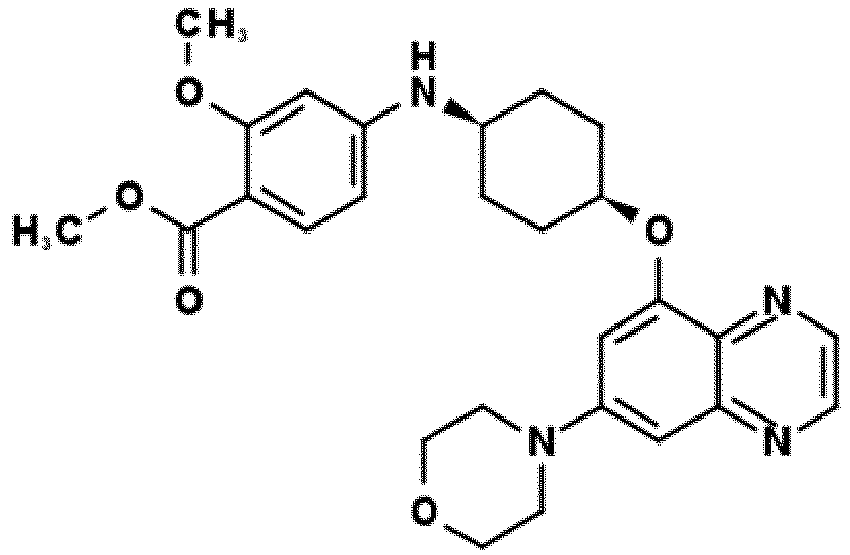
493.61 1H NMR (300 MHz, DMSO-d6) δ 8.72 (d, J = 1.9 Hz, 1H), 8.58 (d, J = 1.9 Hz, 1H), 7.54 (d, J = 8.6 Hz, 1H), 7.14 (d, J = 2.4 Hz, 1H), 6.83 (d, J = 2.3 Hz, 1H), 6.48 (d, J = 7.7 Hz, 1H), 6.30 - 6.18 (m, 2H), 4.92 (m, 1H), 3.79 (m, 4H), 3.74 (s, 3H), 3.66 (s, 3H), 3.55 (m, 1H), 3.34 (m, 4H), 2.03 (m, 2H), 1.78 (m, 6H). 395 
441.2 1H NMR (300 MHz, Chloroform-d) δ 8.61 (d, J = 1.9 Hz, 1H), 8.53 (d, J = 2.0 Hz, 1H), 7.13 (d, J = 5.3 Hz, 1H), 6.84 (dd, J = 20.0, 2.4 Hz, 2H), 5.40 (d, J = 8.2 Hz, 1H), 4.72 (s, 1H), 4.31 (d, J = 7.0 Hz, 1H), 3.83 (dd, J = 5.8, 3.8 Hz, 4H), 3.26 (t, J = 4.9 Hz, 4H), 2.14 (d, J = 12.3 Hz, 2H), 1.95 - 1.68 (m, 6H). 396 
455.2 1H NMR (300 MHz, Chloroform-d) δ 8.61 (d, J = 1.9 Hz, 1H), 8.54 (d, J = 1.9 Hz, 1H), 7.72 (d, J = 2.9 Hz, 1H), 6.87 (d, J = 2.5 Hz, 1H), 6.81 (d, J = 2.5 Hz, 1H), 5.03 (d, J = 7.8 Hz, 1H), 4.71 (s, 1H), 4.16 (s, 2H), 3.83 (q, J = 3.9, 3.1 Hz, 7H), 3.32 - 3.21 (m, 4H), 2.13 (d, J = 11.2 Hz, 2H), 1.83 (t, J = 6.5 Hz, 6H). 397 
422.5 1H NMR (300 MHz, Chloroform-d) δ 8.70 (d, J = 1.9 Hz, 1H), 8.63 (d, J = 1.9 Hz, 1H), 7.89 (d, J = 5.8 Hz, 1H), 7.02 - 6.88 (m, 2H), 5.79 (d, J = 5.7 Hz, 1H), 4.80 (s, 1H), 4.61 (s, 2H), 4.08 - 3.88 (m, 5H), 3.35 (dd, J = 5.6, 4.1 Hz, 4H), 2.27 - 2.09 (m, 2H), 1.91 (d, J = 5.0 Hz, 6H). 398 
476.3 1H NMR (300 MHz, Chloroform-d) δ 8.62 (d, J = 1.9 Hz, 1H), 8.54 (d, J = 1.9 Hz, 1H), 8.38 (s, 1H), 6.94 - 6.74 (m, 2H), 4.69 (s, 1H), 4.34 (s, 1H), 4.25 (s, 1H), 3.84 (dd, J = 5.9, 3.8 Hz, 4H), 3.30 - 3.14 (m, 6H), 2.79 (d, J = 5.7 Hz, 2H), 2.71 (d, J = 5.6 Hz, 2H), 2.49 (s, 3H), 2.13 (m, 2H), 1.85 (d, J = 5.5 Hz, 6H). 399 
435.35 1H NMR (300 MHz, CDCl3) δ 8.69 (d, J = 1.9 Hz, 1H), 8.61 (d, J = 1.9 Hz, 1H), 8.08 (d, J = 6.3 Hz, 1H), 6.96 (d, J = 2.5 Hz, 1H), 6.92 (d, J = 2.4 Hz, 1H), 6.23 (d, J = 6.3 Hz, 1H), 4.87 (s, 1H), 4.69 (s, 1H), 4.00 - 3.83 (m, 4H), 3.45 - 3.24 (m, 4H), 2.98 (s, 3H), 2.50 (s, 3H), 2.45 - 2.30 (m, 2H), 1.92 - 1.64 (m, 6H). 400 
452.3 1H NMR (300 MHz, Chloroform-d) δ 8.71 (d, J = 1.9 Hz, 1H), 8.62 (d, J = 1.9 Hz, 1H), 6.94 (dd, J = 19.8, 2.4 Hz, 2H), 5.09 (s, 1H), 4.81 (s, 1H), 4.01 - 3.88 (m, 4H), 3.42 - 3.29 (m, 4H), 2.91 (d, J = 4.8 Hz, 3H), 2.18 (m, 2H), 1.90 (s, 6H). 401 
471.32 1H NMR (300 MHz, CDCl3) δ 8.69 (d, J = 1.9 Hz, 1H), 8.62 (d, J = 1.9 Hz, 1H), 7.51 (s, 1H), 6.95 (d, J = 2.4 Hz, 1H), 6.89 (d, J = 2.4 Hz, 1H), 5.56 (d, J = 8.0 Hz, 1H), 4.75 (s, 1H), 4.25 (s, 1H), 3.96 - 3.89 (m, 4H), 3.88 (s, 3H), 3.47 - 3.23 (m, 4H), 2.29 - 2.06 (m, 2H), 2.06 - 1.78 (m, 6H). 402 
471.36 1H NMR (300 MHz, CDCl3) δ 8.70 (d, J = 1.9 Hz, 1H), 8.62 (d, J = 1.9 Hz, 1H), 8.14 (s, 1H), 6.96 (d, J = 2.4 Hz, 1H), 6.90 (d, J = 2.5 Hz, 1H), 5.52 (d, J = 8.6 Hz, 1H), 4.79 (s, 1H), 4.18 (s, 1H), 3.96 - 3.89 (m, 4H), 3.89 (s, 3H), 3.41 - 3.27 (m, 4H), 2.31 - 2.14 (m, 2H), 2.03 - 1.83 (m, 6H). 403 
463.4 1H NMR (300 MHz, CDCl3) δ 8.69 (d, J = 1.9 Hz, 1H), 8.61 (d, J = 1.9 Hz, 1H), 6.95 (d, J = 2.4 Hz, 1H), 6.89 (d, J = 2.5 Hz, 1H), 4.77 (s, 1H), 4.68 (d, J = 8.4 Hz, 1H), 4.58 (t, J = 9.1 Hz, 2H), 4.25 (s, 1H), 3.98 - 3.84 (m, 4H), 3.40 - 3.27 (m, 4H), 3.19 (t, J = 9.0 Hz, 2H), 2.49 (s, 3H), 2.25 - 2.10 (m, 2H), 2.00 - 1.82 (m, 6H). 404 
480.56 1H NMR (300 MHz, DMSO-d6) δ 8.72 (d, J = 1.9 Hz, 1H), 8.57 (d, J = 1.9 Hz, 1H), 7.69 (s, 1H), 7.15 (d, J = 2.5 Hz, 1H), 7.01 (s, 1H), 6.84 (d, J = 2.3 Hz, 1H), 4.94 (m, 1H), 3.75 (m, 8H), 3.34 (m, 4H), 2.05 (m, 2H), 1.86 - 1.70 (m, 6H). 405 
480.56 1H NMR (300 MHz, DMSO-d6) δ 8.72 (d, J = 1.9 Hz, 1H), 8.57 (d, J = 1.9 Hz, 1H), 8.01 (m, 1H), 7.14 (s, 1H), 7.01 - 6.90 (m, 1H), 6.82 (m, 2H), 6.71 (m, 1H), 5.70 (d, J = 7.9 Hz, 1H), 4.91 (m, 1H), 3.79 (m, 4H), 3.34 (m, 5H), 2.74 (d, J = 4.6 Hz, 3H), 2.02 (m, 2H), 1.76 (m, 6H). 406 
463.68 1H NMR (300 MHz, DMSO-d6) δ 8.72 (d, J = 1.9 Hz, 1H), 8.58 (d, J = 1.9 Hz, 1H), 8.27 (d, J = 5.2 Hz, 1H), 7.46 (dd, J = 8.4, 7.1 Hz, 1H), 7.15 (d, J = 2.4 Hz, 1H), 7.10 (dd, J = 7.1, 0.9 Hz, 1H), 6.83 (d, J = 2.3 Hz, 1H), 6.75 (d, J = 7.8 Hz, 1H), 6.68 (dd, J = 8.4, 0.9 Hz, 1H), 4.91 (m, 1H), 4.14 (m, 1H), 3.80 (m, 4H), 3.35 (m, 4H), 2.82 (d, J = 4.9 Hz, 3H), 2.03 (m, 2H), 1.93 - 1.73 (m, 6H). 407 
536.49 1H NMR (300 MHz, Chloroform-d) rotomers, δ 9.07 (m, 1H), 8.89 (m, 1H), 8.75 (m, 1H), 7.47 (m, 1H), 6.96 (s, 1H), 4.95 (m, 1H), 3.97 (m, 4H), 3.82 (m, 4H), 3.38 (s, 3H), 2.24 (m, 8H), 1.60 (s, 9H). 408 
435.6 1H NMR (300 MHz, DMSO-d6) δ 8.72 (d, J = 1.9 Hz, 1H), 8.57 (d, J = 1.9 Hz, 1H), 7.13 (d, J = 2.4 Hz, 1H), 6.94 (t, J = 8.0 Hz, 1H), 6.83 (d, J = 2.3 Hz, 1H), 6.26 - 6.14 (m, 2H), 6.10 - 6.03 (m, 1H), 5.57 (d, J = 7.8 Hz, 1H), 4.90 (m, 1H), 3.79 (m, 4H), 3.66 (s, 3H), 3.33 (m, 4H), 2.03 (m, 2H), 1.77 (m, 6H). 409 
441.29 1H NMR (300 MHz, CDCl3) δ 8.70 (d, J = 1.9 Hz, 1H), 8.63 (d, J = 1.9 Hz, 1H), 8.47 (s, 1H), 8.18 (s, 1H), 6.96 (d, J = 2.4 Hz, 1H), 6.91 (d, J = 2.4 Hz, 1H), 5.47 (d, J = 7.6 Hz, 1H), 4.80 (s, 1H), 4.31 - 4.19 (m, 1H), 4.02 - 3.79 (m, 4H), 3.48 - 3.24 (m, 4H), 2.32 - 2.17 (m, 2H), 2.09 - 1.79 (m, 6H). 410 
468.38 1H NMR (300 MHz, Chloroform-d) δ 8.68 (d, J = 2.0 Hz, 1H), 8.59 (d, J = 1.9 Hz, 1H), 6.94 (d, J = 2.5 Hz, 1H), 6.87 (d, J = 2.5 Hz, 1H), 4.73 (d, J = 5.5 Hz, 1H), 4.49 - 4.19 (m, 2H), 4.03 - 3.87 (m, 4H), 3.81 (q, J = 6.6 Hz, 1H), 3.44 - 3.25 (m, 4H), 2.99 (t, J = 6.3 Hz, 2H), 2.13 (q, J = 7.5, 5.0 Hz, 2H), 1.99 - 1.57 (m, 11H), 1.42 (dqd, J = 10.0, 7.1, 6.7, 3.4 Hz, 1H), 1.20 (tt, J = 17.8, 10.5 Hz, 3H), 0.91 (q, J = 12.1 Hz, 2H). 411 
400.37 1H NMR (300 MHz, Chloroform-d) δ 8.69 (d, J = 1.9 Hz, 1H), 8.61 (d, J = 1.9 Hz, 1H), 6.94 (d, J = 2.5 Hz, 1H), 6.87 (d, J = 2.5 Hz, 1H), 4.70 (d, J = 2.6 Hz, 1H), 4.41 (d, J = 7.7 Hz, 1H), 3.97 - 3.81 (m, 4H), 3.41 - 3.25 (m, 4H), 2.91 (s, 6H), 2.15 (d, J = 9.2 Hz, 2H), 1.98 - 1.71 (m, 6H). 412 
442.37 1H NMR (300 MHz, Chloroform-d) δ 8.69 (d, J = 1.9 Hz, 1H), 8.60 (d, J = 1.9 Hz, 1H), 6.90 (dd, J = 21.6, 2.5 Hz, 2H), 4.72 (s, 1H), 4.48 (d, J = 7.9 Hz, 1H), 4.04 - 3.82 (m, 4H), 3.78 - 3.62 (m, 4H), 3.34 (dt, J = 5.0, 3.2 Hz, 8H), 2.15 (s, 2H), 1.84 (d, J = 4.8 Hz, 6H). 413 
428.37 1H NMR (300 MHz, Chloroform-d) δ 8.69 (d, J = 1.9 Hz, 1H), 8.61 (d, J = 2.0 Hz, 1H), 6.94 (d, J = 2.5 Hz, 1H), 6.87 (d, J = 2.5 Hz, 1H), 4.71 (d, J = 5.4 Hz, 1H), 4.37 (d, J = 7.9 Hz, 1H), 3.99 - 3.81 (m, 4H), 3.44 - 3.09 (m, 8H), 2.24 - 2.06 (m, 2H), 1.94 - 1.73 (m, 6H), 1.15 (t, J = 7.1 Hz, 6H). 414 
455.42 1H NMR (300 MHz, Chloroform-d) δ 8.69 (d, J = 1.9 Hz, 1H), 8.60 (d, J = 1.9 Hz, 1H), 6.94 (d, J = 2.5 Hz, 1H), 6.87 (d, J = 2.5 Hz, 1H), 4.72 (d, J = 5.6 Hz, 1H), 4.50 (d, J = 7.6 Hz, 1H), 4.02 - 3.80 (m, 4H), 3.49 - 3.18 (m, 8H), 2.41 (t, J = 5.1 Hz, 4H), 2.32 (s, 3H), 2.22 - 2.05 (m, 2H), 1.95 - 1.75 (m, 6H). 415 
426.52 1H NMR (300 MHz, Chloroform-d) δ 8.69 (d, J = 1.9 Hz, 1H), 8.61 (d, J = 1.9 Hz, 1H), 6.94 (d, J = 2.5 Hz, 1H), 6.87 (d, J = 2.5 Hz, 1H), 4.70 (s, 1H), 4.24 (d, J = 7.9 Hz, 1H), 4.02 - 3.82 (m, 5H), 3.44 - 3.23 (m, 8H), 2.61 (s, 1H), 2.26 - 2.06 (m, 2H), 1.99 - 1.73 (m, 9H). 416 
440.39 1H NMR (300 MHz, Chloroform-d) δ 8.69 (d, J = 1.9 Hz, 1H), 8.61 (d, J = 1.9 Hz, 1H), 6.94 (d, J = 2.4 Hz, 1H), 6.87 (d, J = 2.5 Hz, 1H), 4.70 (d, J = 4.4 Hz, 1H), 4.48 (d, J = 7.6 Hz, 1H), 4.03 - 3.80 (m, 5H), 3.49 (d, J = 4.2 Hz, 2H), 3.45 - 3.17 (m, 8H), 2.23 - 2.04 (m, 2H), 2.02- 1.73 (m, 6H), 1.56 - 1.49 (m, 4H). 417 
475.36 1H NMR (300 MHz, Chloroform-d) δ 8.81 - 8.55 (m, 3H), 6.94 (dd, J = 17.2, 2.5 Hz, 2H), 6.65 (d, J = 1.1 Hz, 1H), 4.84 (td, J = 5.1, 2.4 Hz, 1H), 4.01 - 3.86 (m, 4H), 3.42 - 3.29 (m, 4H), 2.35 - 2.11 (m, 2H), 2.05 - 1.82 (m, 6H). 418 
475.4 1H NMR (300 MHz, Chloroform-d) δ 8.71 (d, J = 1.9 Hz, 1H), 8.63 (d, J = 1.9 Hz, 1H), 8.49 (d, J = 4.9 Hz, 1H), 7.04 - 6.89 (m, 2H), 6.81 (d, J = 4.9 Hz, 1H), 5.54 (d, J = 7.9 Hz, 1H), 4.80 (d, J = 5.2 Hz, 1H), 4.17 - 3.98 (m, 1H), 3.98 - 3.87 (m, 4H), 3.42 - 3.31 (m, 4H), 2.33 - 2.12 (m, 2H), 2.06 - 1.72 (m, 6H). 419 
450.38 1H NMR (300 MHz, Chloroform-d) rotomers δ 8.82 (d, J = 2.9 Hz, 1H), 8.74 (m, 1H), 8.00 (m, 1H), 7.55 - 7.47 (m, 1H), 7.25 (m, 1H), 7.14 (m, 1H), 7.05 (m, 1H), 3.97 (m, 5H), 3.47 (m, 5H), 2.30 (s, 2H), 2.0 (m, 6H).. 420 
467.48 1H NMR (300 MHz, DMSO-d6) δ 8.73 (d, J = 1.9 Hz, 1H), 8.58 (d, J = 2.0 Hz, 1H), 7.27 - 6.96 (m, 4H), 6.83 (d, J = 2.3 Hz, 1H), 4.92 (m, 1H), 3.85 - 3.74 (m, 4H), 3.45 (m, 1H), 3.34 (m, 4H), 2.05 (m, 2H), 1.76 (m, 6H). 421 
523.58 1H NMR (300 MHz, DMSO-d6) δ 8.93 (d, J = 1.8 Hz, 1H), 8.80 (d, J = 1.8 Hz, 1H), 7.20 (s, 1H), 7.13 - 6.85 (m, 4H), 4.92 (m, 1H), 3.86 - 3.79 (m, 4H), 3.32 (m, 5H), 2.09 (m, 2H), 1.90 - 1.73 (m, 6H), 1.55 (s, 9H). 422 
432.5 1H NMR (300 MHz, Chloroform-d) δ 8.72 - 8.52 (m, 3H), 8.38 (s, 1H), 6.87 (dd, J = 15.7, 2.5 Hz, 2H), 5.50 (d, J = 7.9 Hz, 1H), 4.79 (p, J = 3.5 Hz, 1H), 4.20 (dp, J = 14.0, 5.2, 4.7 Hz, 1H), 3.90 - 3.76 (m, 4H), 3.32 - 3.22 (m, 4H), 2.29 - 2.07 (m, 2H), 1.99 - 1.71 (m, 6H). 423 
481.3 1H NMR (300 MHz, Chloroform-d) δ 8.74 (d, J = 1.9 Hz, 1H), 8.65 (s, 1H), 8.01 (s, 1H), 7.05 - 6.88 (m, 2H), 4.87 (s, 1H), 3.95 (d, J = 4.7 Hz, 4H), 3.77 - 3.56 (m, 1H), 3.37 (dd, J = 5.8, 3.8 Hz, 4H), 3.11 (qd, J = 7.4, 4.2 Hz, 1H), 2.28 (s, 2H), 1.98 (dd, J = 22.7, 9.4 Hz, 6H). 424 
437.3 1H NMR (300 MHz, Chloroform-d) δ 8.62 (d, J = 1.9 Hz, 1H), 8.52 (d, J = 1.9 Hz, 1H), 8.46 - 8.35 (m, 1H), 6.84 (dd, J = 16.8, 2.5 Hz, 2H), 6.28 - 6.20 (m, 1H), 5.08 (s, 1H), 4.72 (d, J = 5.2 Hz, 1H), 4.58 - 4.43 (m, 2H), 3.93 - 3.77 (m, 4H), 3.34 - 3.19 (m, 4H), 2.14 (dd, J = 9.6, 5.4 Hz, 2H), 1.93 - 1.73 (m, 6H). 425 
428.46 1H NMR (300 MHz, Chloroform-d) δ 8.68 (d, J = 2.0 Hz, 1H), 8.59 (d, J = 2.0 Hz, 1H), 6.93 (d, J = 2.5 Hz, 1H), 6.86 (d, J = 2.5 Hz, 1H), 4.72 (s, 1H), 4.20 (s, 1H), 4.11 (s, 1H), 3.98 - 3.85 (m, 4H), 3.78 (s, 1H), 3.40 - 3.24 (m, 4H), 2.14 (d, J = 9.2 Hz, 2H), 1.81 (t, J = 6.3 Hz, 6H), 1.33 (s, 9H). 426 
499.35 1H NMR (300 MHz, Chloroform-d) δ 9.26 (m, 2H), 8.90 (m, 1H), 8.79 - 8.64 (m, 2H), 7.22 - 7.01 (m, 3H), 4.97 (m, 1H), 4.01 - 3.87 (m, 4H), 3.38 (m, 5H), 2.77 (s, 3H), 2.19 (m, 9H). 427 
474.33 1H NMR (300 MHz, Chloroform-d) δ 8.94 - 8.63 (m, 2H), 8.07 (d, J = 2.8 Hz, 1H), 7.45 (d, J = 8.7 Hz, 1H), 7.14 - 6.87 (m, 3H), 4.84 (m, 1H), 3.99 - 3.87 (m, 4H), 3.62 - 3.48 (m, 1H), 3.35 (dt, J = 42.8, 4.8 Hz, 4H), 2.32 - 2.14 (m, 2H), 1.91 (d, J = 17.8 Hz, 6H). 428 
475.41 1H NMR (300 MHz, Chloroform-d) δ 8.81 - 8.64 (m, 2H), 8.20 (s, 2H), 7.08 (d, J = 2.4 Hz, 1H), 6.94 (d, J = 2.4 Hz, 1H), 4.90 - 4.82 (m, 1H), 4.42 (m, 1H), 3.98 - 3.88 (m, 4H), 3.57 (m, 1H), 3.45 - 3.26 (m, 4H), 2.33 - 2.18 (m, 2H), 2.04 - 1.82 (m, 6H). 429 
474.37 1H NMR (300 MHz, Chloroform-d) δ 8.70 (d, J = 2.0 Hz, 1H), 8.63 (d, J = 2.0 Hz, 1H), 8.42 (m, 1H), 8.16 - 8.08 (m, 1H), 7.20 (s, 1H), 7.04 - 6.98 (m, 1H), 6.94 (d, J = 2.4 Hz, 1H), 4.84 (m, 1H), 4.01 - 3.87 (m, 4H), 3.54 (m, 1H), 3.42 - 3.26 (m, 4H), 2.33 - 2.19 (m, 2H), 2.08 - 1.80 (m, 6H). 430 
533.47 1H NMR (300 MHz, Chloroform-d) δ 8.69 (d, J = 1.9 Hz, 1H), 8.62 (d, J = 1.9 Hz, 1H), 8.15 (s, 2H), 7.03 - 6.85 (m, 2H), 5.09 (d, J = 8.1 Hz, 1H), 4.78 (s, 1H), 3.92 (dd, J = 5.9, 3.7 Hz, 5H), 3.40 - 3.24 (m, 4H), 2.71 - 2.33 (m, 8H), 2.30 (s, 3H), 2.20 (s, 2H), 1.91 (d, J = 5.0 Hz, 6H), 1.26 (d, J = 3.1 Hz, 4H). 431 
478.47 1H NMR (300 MHz, Chloroform-d) δ 8.69 (d, J = 1.9 Hz, 1H), 8.62 (d, J = 1.9 Hz, 1H), 8.15 (s, 2H), 6.99 - 6.86 (m, 2H), 5.10 (d, J = 8.1 Hz, 1H), 4.79 (d, J = 5.9 Hz, 1H), 4.09 - 3.85 (m, 5H), 3.41 - 3.25 (m, 4H), 2.68 - 2.51 (m, 2H), 2.52 - 2.37 (m, 2H), 2.28 (s, 6H), 2.19 (q, J = 6.2, 5.8 Hz, 2H), 2.02 - 1.81 (m, 6H). 432 
504.44 1H NMR (300 MHz, Chloroform-d) δ 8.69 (d, J = 1.9 Hz, 1H), 8.62 (d, J = 1.9 Hz, 1H), 8.16 (s, 2H), 6.98 - 6.86 (m, 2H), 5.10 (d, J = 8.1 Hz, 1H), 4.78 (s, 1H), 4.08 - 3.83 (m, 5H), 3.39 - 3.27 (m, 4H), 2.60 (d, J = 16.9 Hz, 8H), 2.19 (d, J = 7.8 Hz, 2H), 2.01 - 1.74 (m, 10H). 433 
518.72 1H NMR (300 MHz, Chloroform-d) δ 8.69 (d, J = 1.9 Hz, 1H), 8.62 (d, J = 1.9 Hz, 1H), 8.15 (s, 2H), 6.99 - 6.85 (m, 2H), 5.09 (d, J = 8.1 Hz, 1H), 4.78 (s, 1H), 4.06 - 3.85 (m, 5H), 3.40 - 3.27 (m, 4H), 2.67 - 2.55 (m, 2H), 2.47 (d, J = 9.1 Hz, 6H), 2.19 (d, J = 9.6 Hz, 2H), 1.91 (d, J = 4.8 Hz, 6H), 1.62 (d, J = 5.5 Hz, 6H). 434 
520.47 1H NMR (300 MHz, Chloroform-d) δ 8.69 (d, J = 1.9 Hz, 1H), 8.62 (d, J = 1.9 Hz, 1H), 8.16 (s, 2H), 6.99 - 6.84 (m, 2H), 5.11 (d, J = 8.1 Hz, 1H), 4.78 (s, 1H), 4.05 - 3.87 (m, 5H), 3.78 - 3.66 (m, 4H), 3.40 - 3.27 (m, 4H), 2.69 - 2.43 (m, 8H), 2.19 (d, J = 8.2 Hz, 2H), 1.91 (d, J = 4.8 Hz, 6H). 435 
461.37 1H NMR (400 MHz, CDCl3) δ 8.70 (d, J = 1.9 Hz, 1H), 8.62 (d, J = 1.9 Hz, 1H), 7.68 (d, J = 2.1 Hz, 1H), 6.96 (d, J = 2.4 Hz, 1H), 6.91 (d, J = 2.4 Hz, 1H), 6.76 (d, J = 2.2 Hz, 1H), 5.21 (d, J = 8.4 Hz, 1H), 4.86 - 4.76 (m, 1H), 4.45 - 4.33 (m, 1H), 3.98 - 3.84 (m, 4H), 3.39 - 3.25 (m, 4H), 2.59 (s, 3H), 2.31 - 2.16 (m, 2H), 2.06 - 1.89 (m, 6H). 436 
449.44 1H NMR (400 MHz, CDCl3) δ 8.70 (d, J = 1.9 Hz, 1H), 8.61 (d, J = 1.9 Hz, 1H), 6.95 (d, J = 2.4 Hz, 1H), 6.90 (d, J = 2.4 Hz, 1H), 4.88 - 4.70 (m, 2H), 4.32 (s, 1H), 3.98 - 3.85 (m, 4H), 3.41 - 3.27 (m, 4H), 2.53 (s, 3H), 2.40 (s, 3H), 2.26 - 2.14 (m, 2H), 1.99 (s, 3H), 1.94 - 1.88 (m, 6H). 437 
464.2 1H NMR (300 MHz, Chloroform-d) δ 8.72 (d, J = 2.0 Hz, 1H), 8.65 (d, J = 1.9 Hz, 1H), 8.31 (s, 1H), 7.02-6.88 (m, 2H), 6.77 (d, J = 2.6 Hz, 1H), 5.42 (d, J = 8.1 Hz, 1H), 4.90 - 4.78 (m, 1H), 4.42 (d, J = 7.8 Hz, 1H), 3.99 - 3.85 (m, 4H), 3.43 - 3.27 (m, 4H), 2.37 - 2.13 (m, 2H), 2.10 - 1.88 (m, 6H). 438 
437.3 1H NMR (300 MHz, Chloroform-d) δ 8.72 (d, J = 2.0 Hz, 1H), 8.64 (d, J = 1.9 Hz, 1H), 8.28 (s, 1H), 7.72 (s, 1H), 6.94 (dd, J = 16.4, 2.5 Hz, 2H), 5.45 (d, J = 8.2 Hz, 1H), 4.76 (d, J = 6.6 Hz, 1H), 4.26 (s, 1H), 4.01 - 3.85 (m, 7H), 3.44 - 3.28 (m, 4H), 2.30 - 2.11 (m, 2H), 2.08 - 1.82 (m, 6H). 439 
435.44 1H NMR (400 MHz, CDCl3) δ 8.71 (d, J = 1.8 Hz, 1H), 8.63 (d, J = 1.8 Hz, 1H), 8.14 (d, J = 5.9 Hz, 1H), 6.98 (d, J = 2.4 Hz, 1H), 6.17 (d, J = 6.0 Hz, 1H), 5.05 (s, 1H), 4.01 - 3.70 (m, 5H), 3.42 - 3.25 (m, 4H), 2.77 (q, J = 7.6 Hz, 2H), 2.32 - 2.16 (m, 2H), 2.04 - 1.80 (m, 6H), 1.32 (t, J = 7.6 Hz, 3H). 440 
436.22 1H NMR (300 MHz, Chloroform-d) δ 8.70 (d, J = 1.9 Hz, 1H), 8.60 (d, J = 1.9 Hz, 1H), 7.81 (d, J = 6.3 Hz, 1H), 6.96 (d, J = 2.4 Hz, 1H), 6.90 (d, J = 2.6 Hz, 1H), 6.24 (d, J = 6.2 Hz, 1H), 5.92 (s, 1H), 4.80 (m, 1H), 3.98 (s, 3H), 3.95 - 3.87 (m, 4H), 3.54 (m, 1H), 3.38 - 3.28 (m, 4H), 2.23 (m, 2H), 2.00 - 1.81 (m, 6H). 441 
434.35 1H NMR (300 MHz, Chloroform-d) rotomers, δ 8.80 (d, 1H), 8.73 (d, 1H), 7.73 (s, 1H), 7.16 - 6.99 (m, 3H), 4.91 (m, 1H), 3.95 (m, 4H), 3.55 (m, 1H), 3.37 (m, 4H), 2.73 (s, 3H), 2.41 (s, 3H), 2.29 (m, 2H), 2.13 (m, 6H). 442 
420.4 1H NMR (300 MHz, Chloroform-d) δ 8.70 (d, J = 1.9 Hz, 1H), 8.62 (d, J = 1.9 Hz, 1H), 7.89 (dd, J = 5.0, 1.4 Hz, 1H), 7.19 -7.10 (m, 1H), 7.03 - 6.95 (m, 2H), 6.92 (d, J = 2.6 Hz, 1H), 4.80 (m, 1H), 3.96 - 3.87 (m, 4H), 3.79 (m, 1H), 3.51 (m, 1H), 3.38 - 3.29 (m, 4H), 2.51 (m, 3H), 2.25 (m, 2H), 2.00 - 1.87 (m, 6H). 443 
420.36 1H NMR (300 MHz, Chloroform-d) δ 8.69 (d, J = 1.9 Hz, 1H), 8.61 (d, J = 1.9 Hz, 1H), 8.01 (s, 1H), 7.89 (d, J = 4.8 Hz, 1H), 7.03 (d, J = 4.8 Hz, 1H), 6.96 (d, J = 2.4 Hz, 1H), 6.91 (d, J = 2.5 Hz, 1H), 4.78 (m, 1H), 3.98 - 3.86 (m, 4H), 3.61 (m, 2H), 3.39 - 3.28 (m, 4H), 2.30 - 2.15 (m, 5H), 1.93 (m, 6H). 444 
420.28 1H NMR (300 MHz, Chloroform-d) δ 8.69 (d, J = 1.9 Hz, 1H), 8.60 (d, J = 1.9 Hz, 1H), 8.03 (dd, J = 2.7, 0.9 Hz, 1H), 7.12 - 7.00 (m, 2H), 6.95 (d, J = 2.5 Hz, 1H), 6.90 (d, J = 2.5 Hz, 1H), 4.79 (m, 1H), 4.08 - 3.87 (m, 5H), 3.49 (m, 1H), 3.38 - 3.28 (m, 4H), 2.53 (s, 3H), 2.21 (m, 2H), 1.84 (d, J = 6.8 Hz, 6H). 445 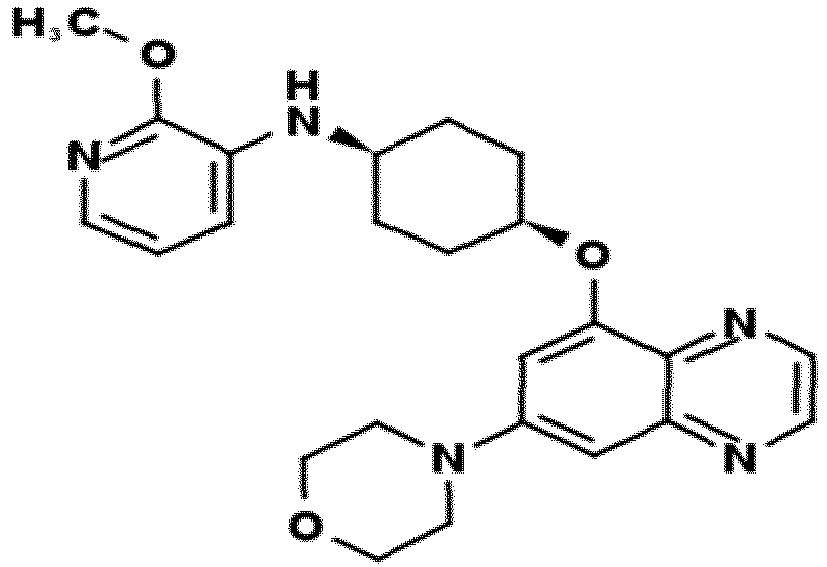
436.43 1H NMR (300 MHz, Chloroform-d) δ 8.65 (m, 1H), 8.40 (m, 1H), 7.50 (dd, J = 4.5, 2.2 Hz, 1H), 7.03 (s, 1H), 6.92 (s, 1H), 6.80 (m, 2H), 4.76 (m, 1H), 4.08 (s, 3H), 3.93 (m, 5H), 3.49 (m, 1H), 3.42 - 3.30 (m, 4H), 2.20 (m, 2H), 1.92 (m, 6H). 446 
436.17 1H NMR (300 MHz, Chloroform-d) δ 8.69 (d, J = 1.9 Hz, 1H), 8.60 (d, J = 1.9 Hz, 1H), 7.71 (d, J = 2.4 Hz, 1H), 7.65 (d, J = 2.4 Hz, 1H), 6.96 (d, J = 2.4 Hz, 1H), 6.90 (d, J = 2.4 Hz, 1H), 6.55 (t, J = 2.4 Hz, 1H), 4.79 (m, 1H), 4.13 (m, 1H), 3.92 (m, 4H), 3.85 (s, 3H), 3.48 (m, 1H), 3.38 - 3.29 (m, 4H), 2.22 (m, 2H), 1.98 - 1.88 (m, 6H). 447 
436.34 1H NMR (300 MHz, Chloroform-d) δ 8.69 (d, J = 1.9 Hz, 1H), 8.60 (d, J = 2.0 Hz, 1H), 7.70 (s, 1H), 7.15 (m, 1H), 6.96 (d, J = 2.4 Hz, 1H), 6.92 (m, 1H), 6.64 (d, J = 8.8 Hz, 1H), 4.80 (m, 1H), 3.90 (m, 7H), 3.45 - 3.26 (m, 5H), 2.24 - 2.12 (m, 2H), 1.98 - 1.81 (m, 6H). 448 
421.39 1H NMR (300 MHz, Chloroform-d) δ 8.78 (dd, J = 4.0, 2.0 Hz, 1H), 8.66 (d, J = 2.1 Hz, 1H), 8.55 (s, 1H), 8.06 (s, 1H), 7.02 (d, J = 2.5 Hz, 1H), 6.96 (d, J = 2.5 Hz, 1H), 4.88 (m, 1H), 3.93 (m, 4H), 3.55 (m, 1H), 3.40 (m, 4H), 3.29 (m, 1H), 2.58 (s, 3H), 2.28 (m, 2H), 2.07 (m, 6H). 449 
435.35 1H NMR (300 MHz, Chloroform-d) rotomers, δ 8.85 (d, 1H), 8.67 d, 1H), 7.92 (d, 1H), 7.07 - 6.96 (m, 2H), 4.91 (m, 1H), 4.01 - 3.88 (m, 4H), 3.53 - 3.24 (m, 5H), 2.87 (s, 3H), 2.64 (s, 3H), 2.04 - 1.76 (m, 6H). 450 
421.36 1H NMR (300 MHz, Chloroform-d) δ 8.69 (d, J = 1.9 Hz, 1H), 8.61 (d, J = 1.9 Hz, 1H), 7.21 (d, J = 9.2 Hz, 1H), 6.99 - 6.87 (m, 3H), 4.87 (m, 1H), 3.98 - 3.82 (m, 5H), 3.39 - 3.29 (m, 4H), 2.51 (s, 3H), 2.30 - 2.22 (m, 2H), 2.11 - 1.84 (m, 6H). 451 
421.56 1H NMR (300 MHz, Chloroform-d) rotomers, δ 8.92 (d, J = 1.8 Hz, 1H), 8.77 (d, J = 1.8 Hz, 1H), 8.30 (m, 2H), 7.02 - 6.90 (m, 2H), 4.86 (m, 1H), 3.94 (m, 4H), 3.52 - 3.26 (m, 5H), 2.78 (s, 3H), 2.26 (d, J = 11.8 Hz, 2H), 1.90 (m, 6H). 452 
463.35 1H NMR (400 MHz, CDCl3) δ 8.69 (d, J = 1.9 Hz, 1H), 8.61 (d, J = 1.9 Hz, 1H), 6.95 (d, J = 2.4 Hz, 1H), 6.89 (d, J = 2.4 Hz, 1H), 5.01 (s, 2H), 4.91 (t, J = 2.5 Hz, 2H), 4.79 (s, 1H), 4.49 (s, 1H), 4.16 (s, 1H), 3.99 - 3.82 (m, 4H), 3.40 - 3.25 (m, 4H), 2.53 (s, 3H), 2.29 - 2.15 (m, 2H), 1.96 - 1.80 (m, 6H). 453 
450.43 1H NMR (300 MHz, CDCl3) δ 8.69 (s, 1H), 8.62 (s, 1H), 7.89 (d, J = 5.9 Hz, 1H), 6.94 (s, 1H), 6.89 (s, 1H), 5.64 (d, J = 6.0 Hz, 1H), 4.87 - 4.66 (m, 2H), 3.98 - 3.83 (m, 4H), 3.44 - 3.24 (m, 4H), 3.13 (s, 6H), 2.26 - 2.10 (m, 2H), 2.04 - 1.75 (m, 6H). 454 
436.34 1H NMR (300 MHz, CDCl3) δ 8.61 (d, J = 1.8 Hz, 1H), 8.52 (d, J = 1.9 Hz, 1H), 7.69 (s, 1H), 6.86 (d, J = 2.4 Hz, 1H), 6.80 (d, J = 2.2 Hz, 1H), 5.62 (d, J = 6.0 Hz, 1H), 4.83 (s, 1H), 4.69 (s, 1H), 3.91 - 3.74 (m, 4H), 3.36 - 3.10 (m, 4H), 2.86 (d, J = 5.0 Hz, 3H), 2.22 - 2.03 (m, 2H), 1.91 - 1.72 (m, 6H). 455 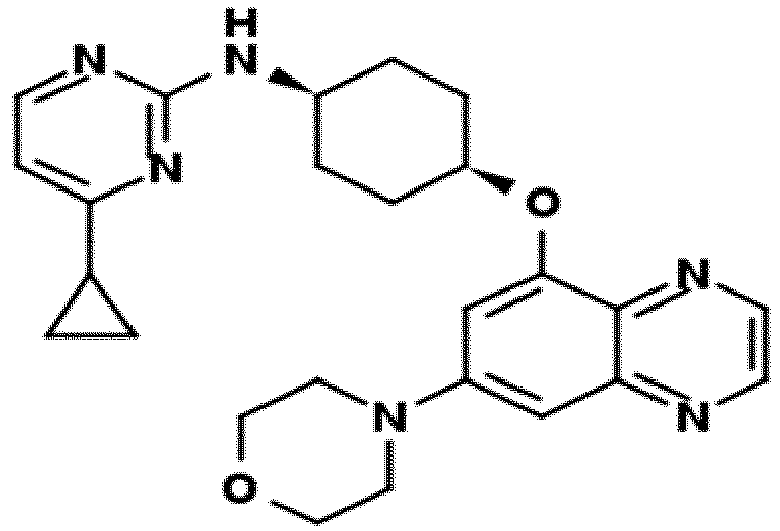
447.41 1H NMR (300 MHz, CDCl3) δ 8.69 (d, J = 1.9 Hz, 1H), 8.61 (d, J = 1.9 Hz, 1H), 8.05 (d, J = 5.2 Hz, 1H), 6.94 (d, J = 2.5 Hz, 1H), 6.89 (d, J = 2.5 Hz, 1H), 6.39 (d, J = 5.2 Hz, 1H), 5.13 (bd, 1H), 4.76 (s, 1H), 4.10 - 3.96 (m, 1H), 3.95 - 3.83 (m, 4H), 3.40 - 3.24 (m, 4H), 2.26 - 2.09 (m, 2H), 1.97 -1.76 (m, 7H), 1.10 - 1.00(m, 2H), 1.00 - 0.91 (m, 2H). 456 
465.29 1H NMR (300 MHz, CDCl3) δ 8.72 (d, J = 1.9 Hz, 1H), 8.64 (d, J = 1.9 Hz, 1H), 8.23 (d, J = 1.8 Hz, 1H), 6.97 (d, J = 2.5 Hz, 1H), 6.92 (d, J = 2.4 Hz, 1H), 5.04 (d, J = 7.6 Hz, 1H), 4.81 (s, 1H), 4.21 (s, 1H), 4.02 - 3.82 (m, 4H), 3.44 - 3.26 (m, 4H), 2.33 - 2.10 (m, 3H), 2.06 -1.82 (m, 6H), 1.19 - 1.11 (m, 2H), 1.06 - 0.97 (m, 2H). 457 
437.38 1H NMR (300 MHz, CDCl3) δ 8.69 (d, J = 1.9 Hz, 1H), 8.62 (d, J = 1.9 Hz, 1H), 8.21 (d, J = 51H NMR (300 MHz, CDCl3) δ 8.69 (d, J = 1.9 Hz, 1H), 8.62 (d, J = 1.9 Hz, 1H), 8.21 (d, J = 5.1 Hz, 1H), 6.95 (d, J = 2.5 Hz, 1H), 6.90 (d, J = 2.5 Hz, 1H), 6.45 (d, J = 5.1 Hz, 1H), 5.33 (d, J = 7.6 Hz, 1H), 4.85 - 4.74 (m, 1H), 4.56 (s, 2H), 4.12 - 4.00 (m, 1H), 3.95 - 3.86 (m, 4H), 3.66 (s, 1H), 3.39 - 3.27 (m, 4H), 2.18 (dd, J = 14.1, 8.4 Hz, 2H), 2.01 - 1.83 (m, 6H). 458 
489.41 1H NMR (300 MHz, CDCl3) δ 8.97 (s, 2H), 8.69 (d, J = 1.9 Hz, 1H), 8.62 (d, J = 1.9 Hz, 1H), 6.96 (d, J = 2.4 Hz, 1H), 6.91 (d, J = 2.4 Hz, 1H), 5.54 (d, J = 8.0 Hz, 1H), 4.81 (s, 1H), 4.38 (s, 3H), 4.16 - 4.05 (m, 1H), 4.00 - 3.81 (m, 4H), 3.42 - 3.23 (m, 4H), 2.29 - 2.15 (m, 2H), 2.05- 1.83 (m, 6H). 459 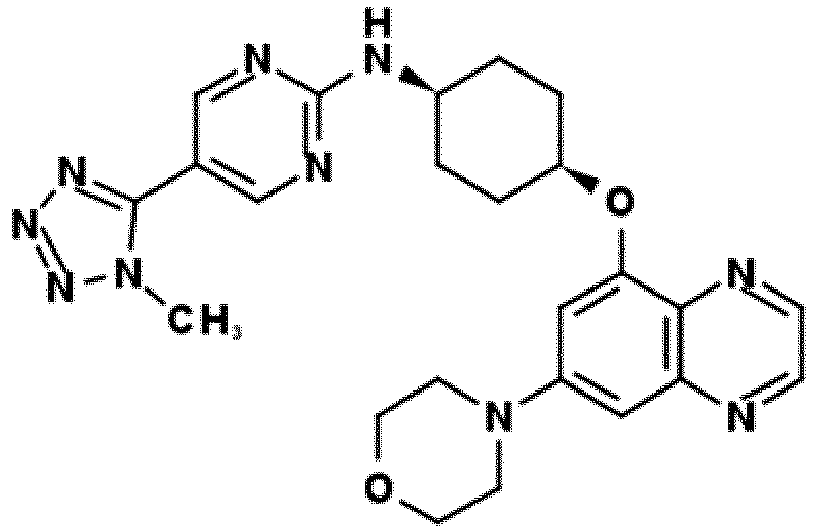
489.41 1H NMR (300 MHz, CDCl3) δ 8.80 - 8.64 (m, 3H), 8.62 (d, J = 1.9 Hz, 1H), 6.97 (d, J = 2.4 Hz, 1H), 6.91 (d, J = 2.4 Hz, 1H), 5.69 (d, J = 7.6 Hz, 1H), 4.82 (s, 1H), 4.18 (s, 3H), 4.15 - 4.06 (m, 1H), 4.01 - 3.83 (m, 4H), 3.44 - 3.24 (m, 4H), 2.32 - 2.18 (m, 2H), 2.07 - 1.84 (m, 6H). 460 
475.37 1H NMR (300 MHz, CDCl3) δ 9.02 (s, 2H), 8.84 (d, J = 2.0 Hz, 1H), 8.66 (d, J = 2.0 Hz, 1H), 7.01 (d, J = 2.3 Hz, 1H), 6.94 (d, J = 2.4 Hz, 1H), 5.90 (d, J = 7.1 Hz, 1H), 4.74 (s, 1H), 4.13 (s, 1H), 4.04 - 3.88 (m, 4H), 3.45 - 3.32 (m, 4H), 2.06 (d, J = 7.5 Hz, 2H), 1.96 - 1.84 (m, 6H). 461 
475.19 1H NMR (300 MHz, CDCl3) δ 8.72 (d, J = 1.9 Hz, 1H), 8.64 (d, J = 1.9 Hz, 1H), 8.59 (s, 1H), 8.54 (bd, 1H), 7.37 (d, J = 4.9 Hz, 1H), 6.97 (d, J = 2.5 Hz, 1H), 6.93 (d, J = 2.1 Hz, 1H), 5.55 (bd, 1H), 4.83 (s, 1H), 4.14 (s, 1H), 4.00 - 3.89 (m, 4H), 3.42 - 3.29 (m, 4H), 2.30 - 2.18 (m, 2H), 1.96 (s, 6H). 462 
473.39 1H NMR (300 MHz, CDCl3) δ 8.69 (d, J = 2.5 Hz, 3H), 8.62 (d, J = 1.9 Hz, 1H), 7.62 (d, J = 2.3 Hz, 1H), 6.95 (d, J = 2.4 Hz, 1H), 6.91 (d, J = 2.4 Hz, 1H), 6.52 (d, J = 2.1 Hz, 1H), 5.37 (d, J = 7.9 Hz, 1H), 4.86 - 4.75 (m, 1H), 4.14 - 4.01 (m, 1H), 3.99 - 3.83 (m, 4H), 3.41 - 3.26 (m, 4H), 2.28 - 2.15 (m, 2H), 2.01 - 1.86 (m, 6H). 463 
453.4 1H NMR (400 MHz, CDCl3) δ 8.69 (d, J = 1.9 Hz, 1H), 8.62 (d, J = 1.9 Hz, 1H), 6.95 (d, J = 2.4 Hz, 1H), 6.90 (d, J = 2.4 Hz, 1H), 4.95 (d, J = 7.1 Hz, 1H), 4.78 (s, 1H), 4.23 (d, J = 3.8 Hz, 1H), 3.99 - 3.82 (m, 4H), 3.42 - 3.25 (m, 4H), 2.45 (d, J = 0.6 Hz, 3H), 2.30 (d, J = 2.8 Hz, 3H), 2.26 - 2.14 (m, 2H), 1.99 - 1.86 (m, 6H). 464 
449.35 1H NMR (300 MHz, CDCl3) δ 8.69 (d, J = 1.9 Hz, 1H), 8.62 (d, J = 1.9 Hz, 1H), 8.22 (s, 1H), 6.94 (d, J = 2.4 Hz, 1H), 6.89 (d, J = 2.4 Hz, 1H), 4.78 (d, J = 7.8 Hz, 2H), 4.62 (t, J = 9.1 Hz, 2H), 4.23 (s, 1H), 3.97 - 3.85 (m, 4H), 3.40 - 3.30 (m, 4H), 3.25 (t, J = 9.1 Hz, 2H), 2.27 - 2.11 (m, 2H), 2.01 - 1.82 (m, 6H). 465 
420.19 1H NMR (300 MHz, Chloroform-d) δ 8.70 (d, J = 1.9 Hz, 1H), 8.61 (d, J = 1.9 Hz, 1H), 7.86 (d, J = 2.7 Hz, 1H), 7.78 (s, 1H), 6.96 (d, J = 2.4 Hz, 1H), 6.90 (d, J = 2.5 Hz, 1H), 6.78 (t, J = 2.1 Hz, 1H), 4.78 (m, 1H), 4.00 - 3.86 (m, 4H), 3.50 (s, 1H), 3.38 - 3.28 (m, 4H), 2.28 (s, 3H), 2.25 - 2.14 (m, 2H), 1.95 - 1.85 (m, 6H). 466 
461.33 1H NMR (300 MHz, Chloroform-d) δ 8.69 (m, 1H), 8.60 (d, J = 1.9 Hz, 1H), 8.20 (m, 1h), 7.93 (s, 1H), 6.97-6.89 (m, 3H), 4.77 (m, 1H), 3.92 m, 4H), 3.49 (m, 1H), 3.34 (m, 4H), 2.20 (m, 2H), 1.88 (d, J = 4.1 Hz, 6H), 1.70 (m, 4H). 467 
435.35 1H NMR (400 MHz, CDCl3) δ 8.68 (d, J = 1.9 Hz, 1H), 8.61 (d, J = 1.9 Hz, 1H), 7.95 (s, 1H), 6.94 (d, J = 2.5 Hz, 1H), 6.90 (d, J = 2.5 Hz, 1H), 5.00 (d, J = 7.9 Hz, 1H), 4.83 - 4.74 (m, 1H), 4.07 - 3.96 (m, 1H), 3.96 - 3.87 (m, 4H), 3.38 - 3.28 (m, 4H), 2.29 (s, 3H), 2.22 - 2.12 (m, 2H), 2.07 (s, 3H), 1.93 - 1.85 (m, 6H). 468 
478.21 1H NMR (300 MHz, Chloroform-d) δ 8.70 (d, J = 1.9 Hz, 1H), 8.62 (d, J = 1.9 Hz, 1H), 7.91 (d, J = 2.7 Hz, 1H), 7.73 (dd, J = 8.6, 0.7 Hz, 1H), 7.11 (dd, J = 8.6, 2.8 Hz, 1H), 6.96 (d, J = 2.4 Hz, 1H), 6.91 (d, J = 2.5 Hz, 1H), 5.11 - 5.02 (m, 2H), 4.85 - 4.75 (m, 1H), 4.75 - 4.67 (m, 2H), 3.98 - 3.86 (m, 4H), 3.54 (s, 1H), 3.40 - 3.27 (m, 4H), 2.31 - 2.15 (m, 2H), 2.00- 1.83 (m, 6H). 469 
454.3 1H NMR (400 MHz, CDCl3) δ 8.69 (d, J = 1.9 Hz, 1H), 8.62 (d, J = 1.9 Hz, 1H), 8.03 (s, 1H), 6.95 (d, J = 2.4 Hz, 1H), 6.89 (d, J = 2.4 Hz, 1H), 4.77 (s, 1H), 4.67 (s, 1H), 4.60 (s, 1H), 4.16 (s, 1H), 4.00 - 3.82 (m, 4H), 3.41 - 3.25 (m, 4H), 3.04 (d, J = 5.0 Hz, 3H), 2.28 - 2.11 (m, 2H), 1.99 - 1.84 (m, 6H). 470 
446.38 1H NMR (400 MHz, CDCl3) δ 8.69 (d, J = 1.9 Hz, 1H), 8.63 (d, J = 1.9 Hz, 1H), 7.88 (d, J = 5.5 Hz, 1H), 7.61 (d, J = 2.1 Hz, 1H), 6.94 (d, J = 2.4 Hz, 1H), 6.91 (d, J = 2.4 Hz, 1H), 6.84 (d, J = 5.5 Hz, 1H), 6.70 (d, J = 2.1 Hz, 1H), 4.92 (s, 1H), 4.82 - 4.74 (m, 1H), 4.44 - 4.28 (m, 1H), 3.95 - 3.86 (m, 4H), 3.39 - 3.26 (m, 4H), 2.28 - 2.17 (m, 2H), 2.06 - 1.92 (m, 6H). 471 
421.35 1H NMR (300 MHz, Chloroform-d) δ 8.62 (d, J = 1.9 Hz, 1H), 8.54 (d, J = 2.0 Hz, 1H), 8.42 (s, 1H), 7.91 (d, J = 13.5 Hz, 1H), 6.93 - 6.78 (m, 2H), 4.71 (s, 1H), 4.57 (d, J = 7.9 Hz, 1H), 4.22 (s, 1H), 3.91 - 3.78 (m, 4H), 3.33 - 3.19 (m, 4H), 2.16 (d, J = 6.6 Hz, 2H), 1.96 (s, 3H), 1.91 - 1.77 (m, 6H). 472 
534.2 1H NMR (300 MHz, Chloroform-d) δ 8.62 (d, J = 1.9 Hz, 1H), 8.54 (d, J = 1.9 Hz, 1H), 8.10 (d, J = 0.8 Hz, 1H), 6.92 - 6.77 (m, 2H), 5.36 (dd, J = 7.9, 0.9 Hz, 1H), 4.71 (q, J = 5.2, 4.2 Hz, 2H), 3.97 - 3.69 (m, 7H), 3.58 - 3.37 (m, 4H), 3.30 - 3.03 (m, 6H), 2.22 - 2.04 (m, 2H), 1.93 - 1.73 (m, 6H), 1.52 (dtd, J = 12.8, 8.9, 3.8 Hz, 2H), 1.28 - 1.16 (m, 3H). 473 
462.3 1H NMR (300 MHz, Chloroform-d) δ 8.70 (d, J = 2.0 Hz, 1H), 8.62 (d, J = 1.9 Hz, 1H), 8.16 (s, 1H), 6.92 (dd, J = 15.4, 2.5 Hz, 2H), 4.77 (d, J = 5.4 Hz, 1H), 4.25 - 4.07 (m, 2H), 3.98 - 3.86 (m, 5H), 3.51 (dd, J = 9.3, 8.2 Hz, 2H), 3.40 - 3.29 (m, 5H), 2.92 (s, 3H), 2.87 - 2.71 (m, 2H), 2.19 (d, J = 7.1 Hz, 2H), 1.91 (t, J = 4.0 Hz, 6H). 474 
523.31 1H NMR (400 MHz, CDCl3) δ 8.69 (d, J = 1.9 Hz, 1H), 8.61 (d, J = 1.9 Hz, 1H), 7.99 (d, J = 1.5 Hz, 1H), 6.94 (d, J = 2.4 Hz, 1H), 6.89 (d, J = 2.4 Hz, 1H), 4.82 (d, J = 5.5 Hz, 1H), 4.77 (s, 1H), 4.15 (s, 1H), 3.96 - 3.85 (m, 4H), 3.76-3.65 (m, 4H), 3.38 - 3.26 (m, 4H), 2.59 - 2.45 (m, 4H), 2.34 (s, 3H), 2.27 - 2.13 (m, 2H), 1.96- 1.85 (m, 6H). 475 
449.21 1H NMR (400 MHz, CDCl3) δ 8.69 (d, J = 1.9 Hz, 1H), 8.60 (d, J = 1.9 Hz, 1H), 8.52 (s, 1H), 6.95 (d, J = 2.4 Hz, 1H), 6.89 (d, J = 2.4 Hz, 1H), 5.01 (d, J = 2.6 Hz, 2H), 4.98 - 4.89 (m, 2H), 4.80 (s, 1H), 4.54 (s, 1H), 4.22 (s, 1H), 3.95 - 3.86 (m, 4H), 3.39 - 3.27 (m, 4H), 2.29 - 2.16 (m, 2H), 1.98 - 1.84 (m, 6H). 476 
439.4 1H NMR (400 MHz, CDCl3) δ 8.70 (d, J = 1.9 Hz, 1H), 8.63 (d, J = 1.9 Hz, 1H), 8.03 (d, J = 1.7 Hz, 1H), 6.97 (d, J = 2.5 Hz, 1H), 6.92 (d, J = 2.5 Hz, 1H), 5.18 - 5.04 (m, 1H), 4.80 (s, 1H), 3.99 - 3.90 (m, 5H), 3.40 - 3.32 (m, 4H), 2.36 (d, J = 2.4 Hz, 3H), 2.23 - 2.15 (m, 2H), 1.95 - 1.85 (m, 6H). 477 
439.36 1H NMR (400 MHz, CDCl3) δ 8.70 (d, J = 1.9 Hz, 1H), 8.62 (d, J = 1.9 Hz, 1H), 8.26 (d, J = 1.7 Hz, 1H), 6.95 (d, J = 2.4 Hz, 1H), 6.90 (d, J = 2.4 Hz, 1H), 5.07 (d, J = 7.2 Hz, 1H), 4.80 (s, 1H), 4.30 - 4.13 (m, 1H), 3.98 - 3.83 (m, 4H), 3.38 - 3.26 (m, 4H), 2.36 (d, J = 2.8 Hz, 3H), 2.29 - 2.16 (m, 2H), 1.97 - 1.85 (m, 6H). 478 
424 1H NMR (400 MHz, CDCl3) δ 8.64 (t, J = 9.6 Hz, 1H), 8.53 (d, J = 1.9 Hz, 1H), 8.02 (d, J = 5.9 Hz, 1H), 6.89 (d, J = 2.4 Hz, 1H), 6.83 (d, J = 2.4 Hz, 1H), 6.07 (d, J = 6.0 Hz, 1H), 4.91 (s, 1H), 4.73 (s, 1H), 3.83 (dd, J = 17.8, 12.9 Hz, 5H), 3.25 (dd, J = 17.8, 13.0 Hz, 4H), 2.14 (dd, J = 8.9, 5.0 Hz, 2H), 1.91 - 1.76 (m, 6H). 479 
449.3 1H NMR (300 MHz, Chloroform-d) δ 8.62 (d, J = 1.9 Hz, 1H), 8.53 (d, J = 1.9 Hz, 1H), 8.15 (s, 1H), 6.84 (dd, J = 17.3, 2.5 Hz, 2H), 4.70 (s, 1H), 4.55 (dd, J = 9.2, 8.3 Hz, 2H), 4.36 (s, 1H), 4.16 (s, 1H), 3.92 - 3.76 (m, 4H), 3.35 - 3.15 (m, 4H), 3.03 - 2.83 (m, 2H), 2.14 (s, 2H), 1.84 (d, J = 5.4 Hz, 6H). 480 
478.26 1H NMR (300 MHz, Chloroform-d) δ 8.70 (d, J = 2.0 Hz, 1H), 8.61 (d, J = 1.9 Hz, 1H), 8.20 (d, J = 0.9 Hz, 1H), 6.93 (dd, J = 17.6, 2.5 Hz, 2H), 5.65 (d, J = 0.9 Hz, 1H), 5.54 - 5.38 (m, 1H), 4.97 (d, J = 8.0 Hz, 1H), 4.80 (s, 1H), 4.04 - 3.85 (m, 5H), 3.81 - 3.62 (m, 3H), 3.41 - 3.24 (m, 4H), 2.62 (s, 1H), 2.31 - 2.11 (m, 2H), 1.90 (dd, J = 8.0, 3.5 Hz, 6H). 481 
451.41 1H NMR (300 MHz, Chloroform-d) δ 8.69 (d, J = 1.9 Hz, 1H), 8.62 (d, J = 1.9 Hz, 1H), 8.18 (s, 2H), 6.99 - 6.87 (m, 2H), 5.16 (d, J = 8.1 Hz, 1H), 4.78 (s, 1H), 4.03 - 3.87 (m, 5H), 3.80 (t, J = 6.5 Hz, 2H), 3.39 - 3.29 (m, 4H), 2.67 (t, J = 6.5 Hz, 2H), 2.26 - 2.14 (m, 2H), 1.90 (t, J = 6.5 Hz, 6H). 482 
454.35 1H NMR (400 MHz, CDCl3) δ 8.68 (d, J = 1.9 Hz, 1H), 8.61 (d, J = 1.9 Hz, 1H), 7.65 (d, J = 3.6 Hz, 1H), 6.94 (d, J = 2.4 Hz, 1H), 6.90 (d, J = 2.4 Hz, 1H), 5.14 (s, 1H), 4.90 (s, 1H), 4.76 (s, 1H), 4.01 - 3.87 (m, 5H), 3.39 - 3.31 (m, 4H), 3.01 (d, J = 5.0 Hz, 3H), 2.23 - 2.12 (m, 2H), 1.99 - 1.81 (m, 6H). 483 
464.3 1H NMR (300 MHz, CDCl3): ppm 1.81 - 1.98 (m, 6 H), 2.11 - 2.23 (m, 2 H), 2.29 (s, 6 H), 3.29 - 3.38 (m, 6 H), 3.89-3.94 (m, 4 H), 3.98 - 4.08 (m, 1 H), 4.75 - 4.82 (m, 1 H), 5.21 (d, J = 7.9 Hz, 1 H), 6.61 (d, J = 5.1 Hz, 1 H), 6.90 (d, J = 2.3 Hz, 1 H) 484 
519.3 1H NMR (300 MHz, CDCl3): ppm 1.79 - 1.98 (m, 6 H), 2.13 - 2.26 (m, 2 H), 2.34 (s, 3 H), 2.46 - 2.78 (m, 8 H), 3.28-3.38 (m, 4 H), 3.60 (s, 2 H), 3.78 - 3.98 (m, 5 H), 4.76-4.85 (m, 1 H), 5.10 (br s, 1 H), 6.18 (d, J = 6.0 Hz, 1 H), 6.90 (d, J = 2.4 H 485 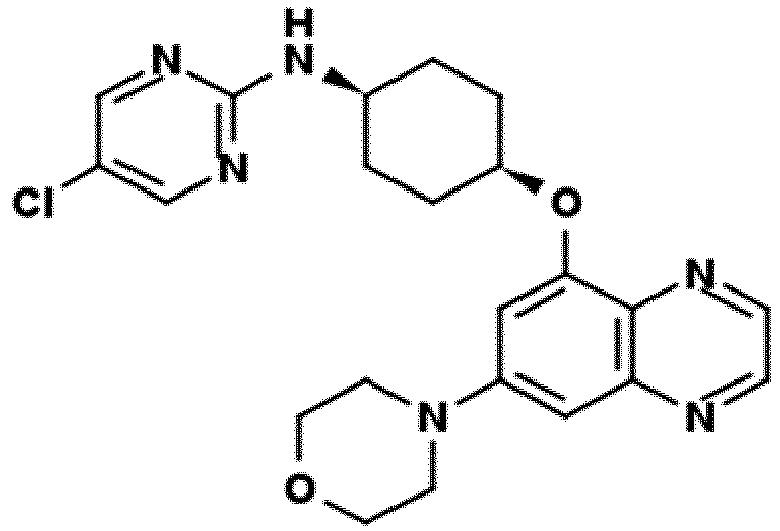
441.29 1H NMR (400 MHz, CDCl3) δ 8.68 (d, J = 1.9 Hz, 1H), 8.62 (d, J = 1.9 Hz, 1H), 8.20 (s, 2H), 6.96 (d, J = 2.3 Hz, 1H), 6.90 (d, J = 2.4 Hz, 1H), 5.27 (d, J = 7.4 Hz, 1H), 4.79 (s, 1H), 4.01 - 3.84 (m, 5H), 3.40 - 3.25 (m, 4H), 2.25 - 2.12 (m, 2H), 1.97 - 1.82 (m, 6H). 486 
407 1H NMR (400 MHz, CDCl3) δ 8.62 (d, J = 1.9 Hz, 1H), 8.54 (d, J = 1.9 Hz, 1H), 8.49 (s, 1H), 8.08 (d, J = 6.0 Hz, 1H), 6.89 (d, J = 2.5 Hz, 1H), 6.83 (d, J = 2.5 Hz, 1H), 6.24 (dd, J = 6.0, 1.1 Hz, 1H), 4.88 (s, 1H), 4.78 - 4.67 (m, 1H), 3.87 - 3.82 (m, 4H), 3.25 (dd, J = 13.6, 8.8 Hz, 4H), 2.15 (dd, J = 8.8, 5.1 Hz, 2H), 1.90 - 1.78 (m, 6H). 487 
447.37 1H NMR (400 MHz, CDCl3) δ 8.69 (d, J = 1.9 Hz, 1H), 8.61 (d, J = 1.9 Hz, 1H), 8.45 (s, 1H), 6.94 (d, J = 2.4 Hz, 1H), 6.87 (t, J = 9.8 Hz, 1H), 4.77 (s, 1H), 4.49 (d, J = 8.0 Hz, 1H), 4.28 (s, 1H), 3.96 - 3.86 (m, 4H), 3.40 - 3.28 (m, 4H), 2.95 - 2.85 (m, 2H), 2.73 - 2.61 (m, 2H), 2.28 - 2.17 (m, 2H), 2.17 - 2.06 (m, 2H), 1.94 - 1.89 (m, 6H). 488 
447.37 1H NMR (400 MHz, CDCl3) δ 8.70 (d, J = 1.9 Hz, 1H), 8.62 (d, J = 1.9 Hz, 1H), 8.48 (s, 1H), 7.73 (d, J = 2.1 Hz, 1H), 6.96 (d, J = 2.4 Hz, 1H), 6.91 (d, J = 2.4 Hz, 1H), 6.85 (d, J = 2.1 Hz, 1H), 5.29 (d, J = 8.3 Hz, 1H), 4.88 - 4.75 (m, 1H), 4.46 - 4.33 (m, 1H), 3.95 - 3.87 (m, 4H), 3.38 - 3.30 (m, 4H), 2.31 - 2.19 (m, 2H), 2.06 - 1.91 (m, 6H). 489 
450.34 1H NMR (400 MHz, CDCl3) δ 8.68 (d, J = 1.9 Hz, 1H), 8.61 (d, J = 1.9 Hz, 1H), 7.85 (d, J = 6.1 Hz, 1H), 6.94 (d, J = 2.4 Hz, 1H), 6.90 (d, J = 2.4 Hz, 1H), 5.81 (d, J = 6.1 Hz, 1H), 4.92 (s, 1H), 4.75 (s, 1H), 4.02 (s, 1H), 3.97 - 3.86 (m, 4H), 3.32 (dd, J = 17.6, 12.8 Hz, 4H), 3.04 (s, 6H), 2.18 (dd, J = 24.2, 17.3 Hz, 2H). 490 
435.35 1H NMR (400 MHz, CDCl3) δ 8.70 (d, J = 1.9 Hz, 1H), 8.62 (d, J = 1.9 Hz, 1H), 7.87 (d, J = 0.7 Hz, 1H), 6.95 (d, J = 2.4 Hz, 1H), 6.90 (d, J = 2.4 Hz, 1H), 4.78 (s, 1H), 4.67 (s, 1H), 4.41 - 4.28 (m, 1H), 3.96 - 3.88 (m, 4H), 3.38 - 3.30 (m, 4H), 2.52 (s, 3H), 2.28 - 2.16 (m, 2H), 2.00 (s, 3H), 1.98 - 1.90 (m, 6H). 491 
435.35 1H NMR (400 MHz, CDCl3) δ 8.70 (d, J = 1.7 Hz, 1H), 8.61 (d, J = 1.7 Hz, 1H), 8.42 (s, 1H), 6.95 (s, 1H), 6.90 (s, 1H), 4.79 (s, 2H), 4.28 (s, 1H), 3.98 - 3.86 (m, 4H), 3.40 - 3.28 (m, 4H), 2.42 (s, 3H), 2.30 - 2.16 (m, 2H), 2.02 (s, 3H), 1.99 - 1.89 (m, 6H). 492 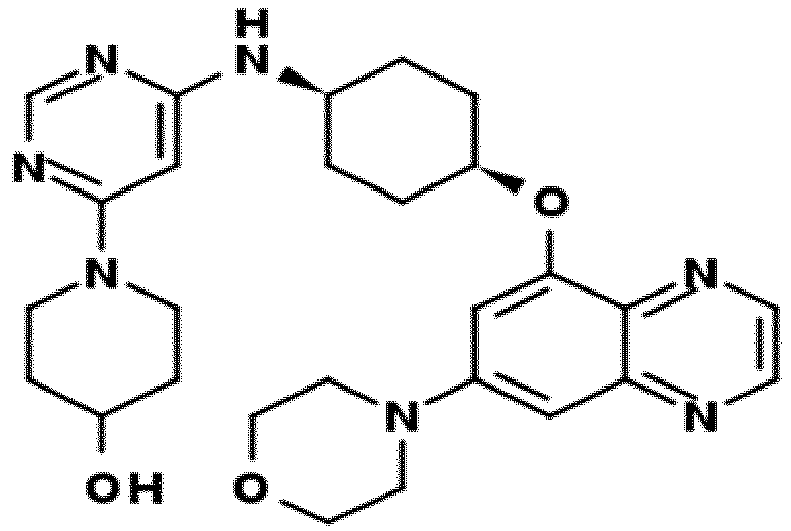
506.2 1H NMR (300 MHz, Chloroform-d) δ 8.71 (d, J = 1.9 Hz, 1H), 8.63 (d, J = 1.9 Hz, 1H), 8.20 (d, J = 0.8 Hz, 1H), 6.97 (d, J = 2.4 Hz, 1H), 6.92 (d, J = 2.5 Hz, 1H), 5.47 (d, J = 1.0 Hz, 1H), 4.76 (d, J = 23.9 Hz, 2H), 4.12 - 3.75 (m, 7H), 3.41 - 3.28 (m, 4H), 3.20 (ddd, J = 13.2, 9.6, 3.2 Hz, 2H), 2.20 (d, J = 6.9 Hz, 2H), 1.91 (d, J = 5.2 Hz, 6H). 493 
534 1H NMR (400 MHz, DMSO) δ 8.72 (d, J = 1.9 Hz, 1H), 8.57 (d, J = 1.9 Hz, 1H), 7.77 (s, 1H), 7.45 (s, 1H), 7.14 (d, J = 2.4 Hz, 1H), 6.83 (d, J = 2.3 Hz, 1H), 6.15 (d, J = 5.8 Hz, 1H), 4.92 (s, 1H), 4.26 (t, J = 6.1 Hz, 2H), 4.09 - 3.89 (m, 1H), 3.83 - 3.72 (m, 4H), 3.34 (d, J = 7.7 Hz, 4H), 2.57 (t, J = 6.1 Hz, 2H), 2.36 (d, J = 24.2 Hz, 4H), 2.01 (d, J = 17.5 Hz, 2H), 1.76 (d, J = 4.8 Hz, 6H), 1.52 - 1.35 (m, 6H). 494 
439.23 1H NMR (300 MHz, Chloroform-d) δ 8.62 (d, J = 1.9 Hz, 1H), 8.54 (d, J = 1.9 Hz, 1H), 7.82 (d, J = 3.4 Hz, 1H), 6.88 (d, J = 2.5 Hz, 1H), 6.82 (d, J = 2.5 Hz, 1H), 4.96 (d, J = 8.0 Hz, 1H), 4.72 (d, J = 3.1 Hz, 1H), 4.18 (s, 1H), 3.90 - 3.78 (m, 4H), 3.35 - 3.19 (m, 4H), 2.41 (d, J = 0.9 Hz, 3H), 2.13 (q, J = 6.4 Hz, 2H), 1.84 (t, J = 6.3 Hz, 6H). 495 
504.3 1H NMR (300 MHz, CDCl3): ppm 1.37 - 1.47 (m, 2 H), 1.51 -1.60 (m, 4 H), 1.82-1.99 (m, 6 H), 2.14 - 2.24 (m, 2 H), 2.30 - 2.41 (m, 4 H), 3.29 (s, 2 H), 3.30 - 3.35 (m, 4 H), 3.89 - 3.93 (m, 4 H), 3.96 - 4.06 (m, 1 H), 4.75 - 4.81 (m, 1 H), 5.18 (d, J = 496 
504.3 1H NMR (300 MHz, CDCl3): ppm 1.38 - 1.49 (m, 2 H), 1.56 -1.64 (m, 4 H), 1.79 -1.97 (m, 6 H), 2.15 - 2.26 (m, 2 H), 2.45 - 2.57 (m, 4 H), 3.28 - 3.38 (m, 4 H), 3.53 (s, 2 H), 3.68 - 3.99 (m, 5 H), 4.76 - 4.85 (m, 1 H), 5.11 (br s, 1 H), 6.18 (d, J = 6.0 497 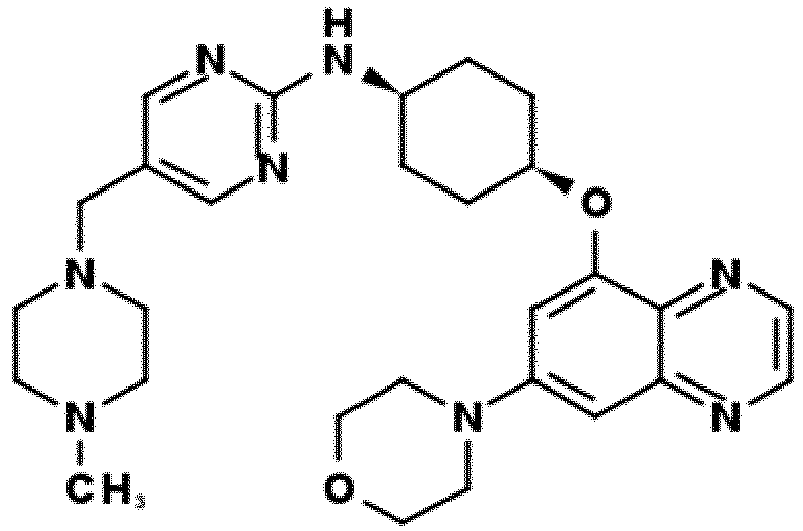
519.2 1H NMR (300 MHz, Chloroform-d) δ 8.71 (d, J = 1.9 Hz, 1H), 8.63 (d, J = 1.9 Hz, 1H), 8.22 (s, 2H), 7.01 - 6.85 (m, 2H), 5.21 (d, J = 8.1 Hz, 1H), 4.79 (d, J = 5.3 Hz, 1H), 4.11 - 3.87 (m, 5H), 3.35 (q, J = 3.4 Hz, 6H), 2.46 (s, 6H), 2.29 (s, 3H), 2.19 (s, 3H), 2.01 - 1.83 (m, 6H). 498 
446.1 1H NMR (300 MHz, Chloroform-d) δ 8.72 (d, J = 1.9 Hz, 1H), 8.63 (d, J = 1.9 Hz, 1H), 8.23 (dd, J = 7.6, 0.8 Hz, 1H), 7.85 (d, J = 2.2 Hz, 1H), 6.97 (d, J = 2.5 Hz, 1H), 6.92 (d, J = 2.5 Hz, 1H), 6.12 (dd, J = 2.2, 0.8 Hz, 1H), 6.00 (d, J = 7.6 Hz, 1H), 4.91 (d, J = 7.9 Hz, 1H), 4.81 (s, 1H), 4.20 (s, 1H), 4.01 - 3.88 (m, 4H), 3.42 - 3.28 (m, 4H), 2.22 (s, 2H), 1.97 (dd, J = 7.8, 5.5 Hz, 6H). 499 
535.24 1H NMR (300 MHz, Chloroform-d) δ 8.70 (d, J = 1.9 Hz, 1H), 8.61 (d, J = 1.9 Hz, 1H), 8.19 (d, J = 0.8 Hz, 1H), 6.93 (dd, J = 16.4, 2.5 Hz, 2H), 5.42 (d, J = 1.0 Hz, 1H), 4.87 - 4.67 (m, 2H), 4.01 - 3.77 (m, 5H), 3.61 (dt, J = 27.3, 5.1 Hz, 6H), 3.41 - 3.26 (m, 4H), 2.73 (t, J = 5.3 Hz, 1H), 2.59 (ddd, J = 6.2, 5.0, 3.7 Hz, 6H), 2.19 (d, J = 6.6 Hz, 2H), 1.89 (t, J = 5.2 Hz, 6H). 500 
461.24 1H NMR (300 MHz, Chloroform-d) δ 8.64 (d, J = 1.9 Hz, 1H), 8.55 (d, J = 1.9 Hz, 1H), 8.21 (s, 1H), 6.88 (dd, J = 16.1, 2.5 Hz, 2H), 6.16 (d, J = 8.3 Hz, 1H), 5.98 (s, 1H), 4.80 (d, J = 2.9 Hz, 1H), 3.90 - 3.77 (m, 4H), 3.72 - 3.51 (m, 1H), 3.33 - 3.20 (m, 4H), 2.51 (s, 3H), 2.34 - 1.66 (m, 8H). 501 
480.15 1H NMR (300 MHz, Chloroform-d) δ 8.63 (d, J = 1.9 Hz, 1H), 8.55 (d, J = 1.9 Hz, 1H), 6.95 (dd, J = 3.6, 2.3 Hz, 1H), 6.86 (dd, J = 13.7, 2.4 Hz, 2H), 6.30 (dd, J = 3.6, 2.0 Hz, 1H), 5.22 (m, 1H), 4.74 (s, 1H), 4.30 (s, 1H), 3.91 - 3.79 (m, 4H), 3.35 - 3.19 (m, 4H), 2.15 (m, 2H), 2.03 - 1.76 (m, 6H). 502 
462.19 1H NMR (300 MHz, Chloroform-d) δ 8.63 (d, J = 1.9 Hz, 1H), 8.54 (d, J = 2.0 Hz, 1H), 8.25 (s, 1H), 6.88 (d, J = 2.4 Hz, 1H), 6.82 (d, J = 2.5 Hz, 1H), 4.73 (s, 1H), 4.54 (s, 1H), 4.12 (s, 1H), 3.84 (dd, J = 6.0, 3.7 Hz, 4H), 3.37-3.19 (m, 5H), 2.17 (d, J = 10.1 Hz, 2H), 1.92 - 1.71 (m, 6H). 503 
506.3 1H NMR (300 MHz, CDCl3): ppm 1.79 ñ 1.99 (m, 6 H), 2.15-2.26 (m, 2 H), 2.54-2.65 (m, 4 H), 3.29 - 3.37 (m, 4 H), 3.58 (s, 2 H), 3.74 - 3.83 (m, 5 H), 3.88 - 3.95 (m, 4 H), 4.75 - 4.85 (m, 1 H), 5.11 (br. s, 1H), 6.19 (d, J = 5.9 Hz, 1 H), 6.90 (d, J 504 
504.3 1H NMR (300 MHz, CDCl3): ppm 1.40 - 1.49 (m, 2 H), 1.55 -1.65 (m, 4 H), 1.84 -1.96 (m, 6 H), 2.12 - 2.23 (m, 2 H), 2.43 (br. s, 4 H), 3.30 - 3.40 (m, 6 H), 3.88 - 3.95 (m, 4 H), 3.97 - 4.08 (m, 1 H), 4.75 - 4.82 (m, 1 H), 5.17 (d, J = 7.9 Hz, 1 H), 6.68 505 
506.3 1H NMR (300 MHz, CDCl3): ppm 1.83 - 1.96 (m, 6 H), 2.13 - 2.23 (m, 2 H), 2.53 (br. s, 4 H), 3.30 - 3.36 (m, 4 H), 3.42 (s, 2H), 3.72 - 3.78 (m, 4 H), 3.88 - 3.95 (m, 4 H), 4.03 (br. s, 1 H), 4.75 - 4.82 (m, 1 H), 5.21 (d, J = 8.0 Hz, 1 H), 6.67 (d, J = 5) 506 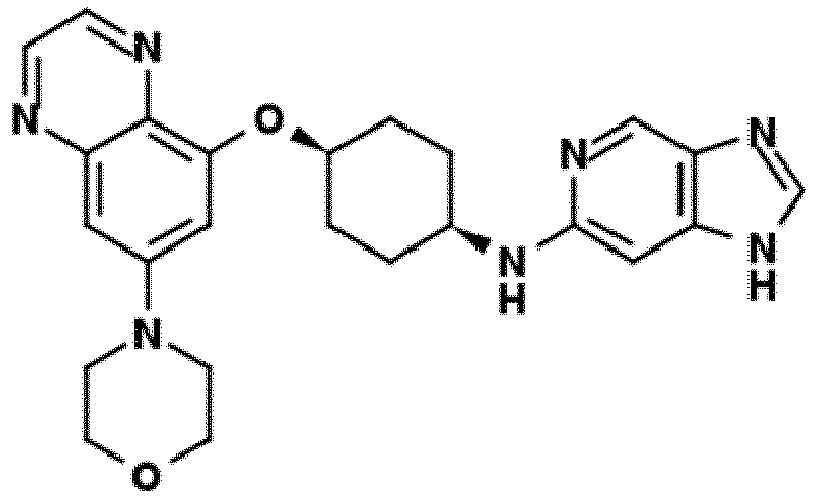
446.3 1H NMR (300 MHz, DMSO-d6): ppm 1.71 - 1.85 (m, 6 H), 1.98 - 2.10 (m, 2 H), 3.33-3.38 (m, 4 H), 3.74 - 3.91 (m, 5 H), 4.87 - 4.96 (m, 1 H), 6.02 (d, J = 7.2 Hz, 1 H), 6.51 (s, 1 H), 6.83 (d, J = 1.9 Hz, 1 H), 7.14 (d, J = 1.9 Hz, 1 H), 7.94 (s, 1 H), 8.3 507 
548.4 1H NMR (300 MHz, CDCl3): ppm 1.39 - 1.48 (m, 2 H), 1.54 -1.69 (m, 4 H), 1.83 -1.98 (m, 8 H), 2.12 - 2.24 (m, 2 H), 2.33 - 2.47 (m, 6 H), 3.31 - 3.35 (m, 4 H), 3.89 - 3.99 (m, 7 H), 4.74 - 4.81 (m, 1 H), 4.95 (d, J = 8.2 Hz, 1 H), 6.90 (d, J = 2.3 Hz, 1 508 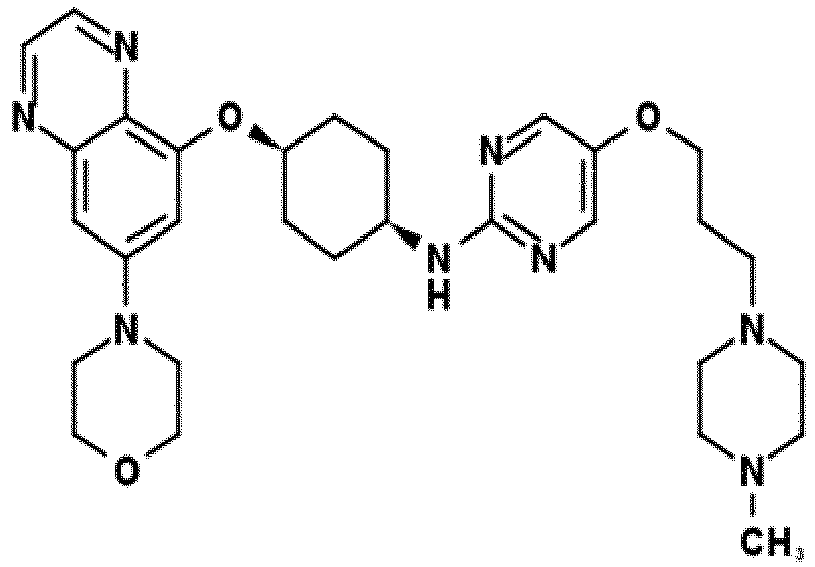
563.3 1H NMR (300 MHz, CDCl3): ppm 1.82 - 1.98 (m, 8 H), 2.13 - 2.23 (m, 2 H), 2.29 (s, 3 H), 2.35 - 2.62 (m, 10 H), 3.29 - 3.37 (m, 4 H), 3.87 - 3.94 (m, 5 H), 3.97 (t, J = 6.3 Hz, 2 H), 4.74 - 4.81 (m, 1 H), 4.96 (d, J = 8.1 Hz, 1 H), 6.90 (d, J = 2.3 Hz, 1 H 509 
520.3 1H NMR (300 MHz, CDCl3) ppm 1.77 - 1.96 (m, 10 H), 2.11 - 2.25 (m, 2 H), 2.57-2.65 (m, 4 H), 2.86 (t, J = 5.7 Hz, 2 H), 3.31 - 3.35 (m, 4 H), 3.87 - 3.98 (m, 5 H), 4.05 (t, J = 5.7 Hz, 2 H), 4.74 - 4.81 (m, 1 H), 4.98 (d, J = 8.2 Hz, 1 H), 6.90 (d, J = 510 
447.16 1H NMR (300 MHz, Chloroform-d) δ 8.95 (d, J = 1.3 Hz, 1H), 8.72 (d, J = 1.9 Hz, 1H), 8.64 (d, J = 1.9 Hz, 1H), 8.14 (s, 1H), 6.95 (dd, J = 16.0, 2.5 Hz, 2H), 6.36 (d, J = 1.3 Hz, 1H), 5.11 (d, J = 7.8 Hz, 1H), 4.83 (dd, J = 5.5, 2.9 Hz, 1H), 4.01 - 3.84 (m, 4H), 3.73 - 3.55 (m, 1H), 3.40 - 3.30 (m, 4H), 2.34 - 2.21 (m, 2H), 2.08 - 1.83 (m, 6H). 511 
510.2 1H NMR (300 MHz, Chloroform-d) δ 8.63 (d, J = 1.9 Hz, 1H), 8.55 (d, J = 1.9 Hz, 1H), 7.93 (d, J = 1.7 Hz, 1H), 6.85 (dd, J = 16.5, 2.5 Hz, 2H), 4.74 (ddd, J = 21.7, 7.5, 3.9 Hz, 2H), 4.09 (p, J = 7.7, 7.2 Hz, 1H), 3.92 - 3.79 (m, 4H), 3.71 (dd, J = 5.7, 3.7 Hz, 4H), 3.57 (dd, J = 5.7, 3.7 Hz, 4H), 3.34 - 3.20 (m, 4H), 2.15 (td, J = 11.0, 10.0, 6.2 Hz, 2H), 1.94- 1.79 (m, 6H). 512 
468.27 1H NMR (300 MHz, Chloroform-d) δ 8.71 (d, J = 1.9 Hz, 1H), 8.64 (d, J = 1.9 Hz, 1H), 7.99 (d, J = 1.8 Hz, 1H), 7.00 - 6.85 (m, 2H), 4.77 (d, J = 6.6 Hz, 2H), 4.14 (q, J = 7.2 Hz, 1H), 4.03 - 3.87 (m, 4H), 3.78 - 3.64 (m, 1H), 3.43 - 3.28 (m, 4H), 3.15 (d, J = 2.5 Hz, 6H), 2.98 - 2.84 (m, 1H), 2.20 (d, J = 11.9 Hz, 2H), 1.94 (p, J = 5.8, 5.3 Hz, 6H). 513 
480.1 1H NMR (300 MHz, Chloroform-d) δ 10.85 (d, J = 3.0 Hz, 1H), 8.66 (d, J = 1.9 Hz, 1H), 8.40 (d, J = 2.0 Hz, 1H), 7.22 (t, J = 2.9 Hz, 1H), 6.85 (d, J = 2.4 Hz, 1H), 6.75 (d, J = 2.4 Hz, 1H), 6.36 (dd, J = 3.1, 1.9 Hz, 1H), 5.86 (d, J = 7.8 Hz, 1H), 4.59 (s, 1H), 4.25 (s, 1H), 3.82 (dd, J = 6.0, 3.7 Hz, 4H), 3.24 (dd, J = 6.0, 3.8 Hz, 4H), 1.71 (s, 11 H), 1.51 (t, J = 10.1 Hz, 2H). 514 
480.1 1H NMR (300 MHz, Chloroform-d) δ 10.96 (s, 1H), 8.64 (d, J = 1.9 Hz, 1H), 8.40 (d, J = 1.9 Hz, 1H), 6.84 (d, J = 2.4 Hz, 1H), 6.75 (d, J = 2.4 Hz, 1H), 6.34 (dd, J = 3.1, 1.9 Hz, 1H), 6.02 (d, J = 7.8 Hz, 1H), 4.59 (s, 1H), 4.23 (td, J = 8.8, 8.3, 4.2 Hz, 1H), 3.89 - 3.74 (m, 4H), 3.30 - 3.03 (m, 4H), 1.89 - 1.61 (m, 6H), 1.61 - 1.39 (m, 2H). 515 
446.42 1H NMR (300 MHz, Chloroform-d) δ 9.53 (s, 1H), 8.71 (d, J = 2.0 Hz, 1H), 8.64 (d, J = 1.9 Hz, 1H), 8.35 (s, 1H), 7.06 (dd, J = 3.6, 2.1 Hz, 1H), 7.00 - 6.85 (m, 2H), 6.39 (dd, J = 3.6, 1.8 Hz, 1H), 5.14 (d, J = 8.3 Hz, 1H), 4.82 (s, 1H), 4.40 (d, J = 8.0 Hz, 1H), 4.01 - 3.81 (m, 4H), 3.44 - 3.25 (m, 4H), 2.26 (d, J = 9.8 Hz, 2H), 2.08 - 1.86 (m, 6H). 516 
447.32 1H NMR (300 MHz, Chloroform-d) δ 12.29 (s, 1H), 8.71 (d, J = 1.9 Hz, 1H), 8.64 (d, J = 1.9 Hz, 1H), 8.43 (s, 1H), 7.95 (s, 1H), 7.00 - 6.89 (m, 2H), 6.03 (s, 1H), 4.86 (s, 1H), 4.42 (s, 1H), 3.92 (dd, J = 6.0, 3.7 Hz, 4H), 3.40 - 3.30 (m, 4H), 2.27 (d, J = 10.1 Hz, 2H), 2.07 - 1.88 (m, 6H). 517 
446.33 1H NMR (300 MHz, Chloroform-d) δ 11.28 (s, 1H), 8.75 (d, J = 1.9 Hz, 1H), 8.53 (d, J = 2.0 Hz, 1H), 8.47 (s, 1H), 7.34 (s, 1H), 6.93 (d, J = 2.3 Hz, 1H), 6.82 (d, J = 2.5 Hz, 1H), 1.93 - 1.71 (m, 6H), 6.54 (d, J = 3.0 Hz, 1H), 5.57 (d, J = 7.9 Hz, 1H), 4.64 (s, 1H), 4.33 (s, 1H), 3.90 (t, J = 4.8 Hz, 4H), 3.31 (t, J = 4.9 Hz, 4H), 1.80-1.68 (m, 6H), 1.54 (d, J = 9.2 Hz, 2H). 518 
447.2 1H NMR (300 MHz, Chloroform-d) δ 8.63 (d, J = 1.9 Hz, 1H), 8.55 (d, J = 1.9 Hz, 1H), 8.32 (s, 1H), 7.42 (d, J = 2.5 Hz, 1H), 6.88 (d, J = 2.5 Hz, 1H), 6.83 (d, J = 2.5 Hz, 1H), 6.58 (d, J = 2.5 Hz, 1H), 5.07 (s, 1H), 4.74 (s, 1H), 4.26 (s, 1H), 3.84 (dd, J = 6.0, 3.7 Hz, 4H), 3.42 - 3.10 (m, 4H), 2.18 (d, J = 10.2 Hz, 2H), 2.06 - 1.70 (m, 6H). 519 
543.21 1H NMR (300 MHz, Chloroform-d) δ 8.61 (d, J = 1.9 Hz, 1H), 8.54 (d, J = 1.9 Hz, 1H), 8.07 (s, 2H), 6.93 - 6.79 (m, 2H), 5.04 (d, J = 8.1 Hz, 1H), 4.70 (s, 1H), 4.02 - 3.76 (m, 5H), 3.34 - 3.20 (m, 4H), 3.02 - 2.87 (m, 2H), 2.66 (t, J = 6.9 Hz, 2H), 2.53 - 2.42 (m, 2H), 2.35 - 2.22 (m, 1H), 2.10 (td, J = 11.6, 3.0 Hz, 3H), 1.90- 1.46 (m, 11H). 520 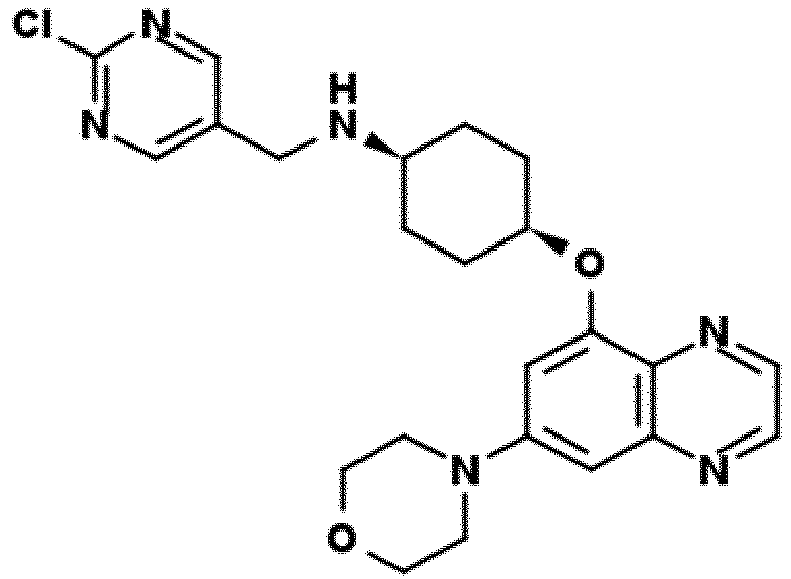
455.17 1H NMR (300 MHz, Chloroform-d) δ 8.61 (d, J = 2.0 Hz, 1H), 8.56 (d, J = 0.6 Hz, 2H), 8.53 (d, J = 1.9 Hz, 1H), 6.86 (d, J = 2.5 Hz, 1H), 4.67 (d, J = 6.1 Hz, 1H), 3.89 - 3.81 (m, 4H), 3.79 (d, J = 0.7 Hz, 2H), 3.31 - 3.17 (m, 4H), 2.60 (s, 1H), 2.20 - 2.03 (m, 2H), 1.79 - 1.59 (m, 6H). 521 
465.16 1H NMR (300 MHz, Chloroform-d) δ 8.74 (d, J = 1.9 Hz, 1H), 8.66 (d, J = 2.0 Hz, 1H), 7.93 (s, 1H), 6.99 (d, J = 2.4 Hz, 1H), 6.93 (d, J = 2.5 Hz, 1H), 6.20 (d, J = 8.5 Hz, 1H), 4.87 (s, 1H), 4.36 (s, 1H), 3.94 (dd, J = 5.9, 3.8 Hz, 4H), 3.42 - 3.32 (m, 4H), 2.26 (s, 2H), 1.93 (s, 6H). 522 
552.21 1H NMR (300 MHz, Chloroform-d) δ 8.70 (d, J = 1.9 Hz, 1H), 8.63 (d, J = 1.9 Hz, 1H), 8.17 (s, 2H), 7.01 - 6.89 (m, 2H), 5.12 (d, J = 8.1 Hz, 1H), 4.80 (s, 1H), 4.09 - 3.86 (m, 5H), 3.63 (t, J = 7.1 Hz, 2H), 3.40 - 3.29 (m, 4H), 3.06 (d, J = 11.3 Hz, 2H), 2.79 (t, J = 7.1 Hz, 2H), 2.39 -2.15 (m, 4H), 2.02 - 1.53 (m, 10H). 523 
518.2 1H NMR (300 MHz, Chloroform-d) δ 8.71 (d, J = 1.9 Hz, 1H), 8.63 (d, J = 1.9 Hz, 1H), 8.18 (s, 2H), 7.02 - 6.86 (m, 2H), 5.12 (d, J = 8.1 Hz, 1H), 4.80 (s, 1H), 4.09 - 3.87 (m, 5H), 3.42 - 3.29 (m, 4H), 3.12 (d, J = 11.2 Hz, 2H), 2.60 - 1.54 (m, 17H), 1.15 (t, J = 7.2 Hz, 3H). 524 
301.24 1H NMR (400 MHz, CDCl3) δ 8.69 (d, J = 1.9 Hz, 1H), 8.61 (d, J = 1.9 Hz, 1H), 6.91 (d, J = 2.5 Hz, 1H), 6.61 (d, J = 2.5 Hz, 1H), 5.19 - 5.05 (m, 1H), 3.97 - 3.85 (m, 5H), 3.37 - 3.29 (m, 4H), 2.71 (ddd, J = 16.1, 7.8, 5.0 Hz, 2H), 2.34 (ddd, J = 13.6, 7.0, 4.1 Hz, 2H). 525 
379.26 1H NMR (400 MHz, CDCl3) δ 8.71 (d, J = 1.9 Hz, 1H), 8.63 (d, J = 1.9 Hz, 1H), 8.31 (s, 1H), 8.30 (s, 1H), 6.93 (d, J = 2.4 Hz, 1H), 6.64 - 6.54 (m, 2H), 5.38 (d, J = 5.1 Hz, 1H), 5.17 - 5.07 (m, 1H), 4.68 - 4.56 (m, 1H), 3.95 - 3.85 (m, 4H), 3.35 - 3.27 (m, 4H), 2.94 (ddd, J = 13.4, 8.2, 5.1 Hz, 2H), 2.59 (ddd, J = 13.9, 7.0, 4.5 Hz, 2H). 526 
550.3 1H NMR (300 MHz, CDCl3): ppm 1.80 - 2.07 (m, 8 H), 2.11 - 2.25 (m, 2 H), 2.39 - 2.76 (m, 6 H), 3.27 - 3.40 (m, 4 H), 3.70 - 3.84 (m, 4 H), 3.87-3.96 (m, 5H), 3.99 (t, J = 6.2 Hz, 2 H), 4.73 - 4.82 (m, 1 H), 4.97 (d, J = 8.1 Hz, 1 H), 6.90 (d, J = 2.4 H 527 
534.3 1H NMR (300 MHz, CDCl3): ppm 1.39 - 1.48 (m, 2 H), 1.56 -1.67 (m, 4 H), 1.78 - 1.96 (m, 6 H), 2.14 - 2.25 (m, 2 H), 2.44 - 2.52 (m, 4 H), 2.72 (t, J = 6.0 Hz, 2H), 3.31 - 3.35 (m, 4 H), 3.63 - 3.75 (m, 1 H), 3.90 - 3.93 (m, 4 H), 4.41 (t, J = 6.0 Hz, 2 528 
490.2 1H NMR (300 MHz, Chloroform-d) δ 8.70 (d, J = 1.9 Hz, 1H), 8.63 (d, J = 1.9 Hz, 1H), 8.31 (s, 2H), 7.02 - 6.86 (m, 2H), 5.52 (d, J = 8.0 Hz, 1H), 4.81 (dt, J = 6.8, 3.4 Hz, 1H), 4.04 (td, J = 8.0, 4.0 Hz, 1H), 3.97 - 3.86 (m, 4H), 3.64 (s, 2H), 3.43 - 3.27 (m, 4H), 2.75 (t, J = 5.4 Hz, 4H), 2.32 - 2.15 (m, 2H), 2.07 (s, 2H), 1.92 (tt, J = 6.7, 3.6 Hz, 8H). 529 
464.23 1H NMR (300 MHz, Chloroform-d) δ 8.70 (d, J = 1.9 Hz, 1H), 8.63 (d, J = 1.9 Hz, 1H), 8.22 (s, 2H), 7.02 - 6.86 (m, 2H), 5.21 (d, J = 8.1 Hz, 1H), 4.81 (dt, J = 7.5, 3.7 Hz, 1H), 4.04 (d, J = 6.9 Hz, 1H), 3.96 - 3.82 (m, 4H), 3.41 - 3.30 (m, 4H), 3.27 (s, 2H), 2.24 (m, 8H), 2.07 - 1.77 (m, 6H). 530 
506.25 1H NMR (300 MHz, Chloroform-d) δ 8.61 (d, J = 1.9 Hz, 1H), 8.53 (d, J = 1.9 Hz, 1H), 8.13 (s, 2H), 6.87 (d, J = 2.5 Hz, 1H), 6.83 (d, J = 2.5 Hz, 1H), 5.10 (d, J = 8.1 Hz, 1H), 4.71 (s, 1H), 3.94 (s, 1H), 3.88 - 3.78 (m, 4H), 3.67 - 3.56 (m, 4H), 3.32 - 3.17 (m, 6H), 2.41 - 2.26 (m, 4H), 2.12 (d, J = 8.7 Hz, 2H), 1.92 - 1.76 (m, 6H). 531 
425.19 1H NMR (300 MHz, Chloroform-d) δ 8.71 (d, J = 1.9 Hz, 1H), 8.64 (d, J = 1.9 Hz, 1H), 8.39 (dd, J = 2.7, 0.5 Hz, 1H), 8.04 (d, J = 3.4 Hz, 1H), 6.97 (d, J = 2.5 Hz, 1H), 6.92 (d, J = 2.5 Hz, 1H), 5.15 (d, J = 8.1 Hz, 1H), 4.83 (dq, J = 5.1, 2.6 Hz, 1H), 4.25 (dd, J = 8.1, 4.6 Hz, 1H), 3.98 - 3.88 (m, 4H), 3.39 - 3.28 (m, 4H), 2.34 - 2.17 (m, 2H), 2.03 - 1.84 (m, 6H). 532 
441.29 1H NMR (400 MHz, CDCl3) δ 8.69 (d, J = 1.9 Hz, 1H), 8.61 (d, J = 1.9 Hz, 1H), 8.13 (d, J = 4.8 Hz, 1H), 6.96 (d, J = 2.4 Hz, 1H), 6.90 (d, J = 2.5 Hz, 1H), 6.54 (d, J = 5.2 Hz, 1H), 5.36 (s, 1H), 4.79 (s, 1H), 4.03 (s, 1H), 3.97 - 3.84 (m, 4H), 3.41 - 3.23 (m, 4H), 2.26 - 2.12 (m, 2H), 1.98 - 1.81 (m, 6H). 533 
441.25 1H NMR (400 MHz, CDCl3) δ 8.69 (d, J = 1.9 Hz, 1H), 8.60 (d, J = 1.9 Hz, 1H), 7.99 (s, 1H), 6.96 (d, J = 2.4 Hz, 1H), 6.90 (d, J = 2.4 Hz, 1H), 6.22 (d, J = 5.9 Hz, 1H), 5.22 (s, 1H), 4.81 (s, 1H), 4.03 (dt, J = 12.1, 6.2 Hz, 1H), 3.94 - 3.86 (m, 4H), 3.40 - 3.26 (m, 4H), 2.27 - 2.13 (m, 2H), 1.90 (t, J = 17.4 Hz, 6H). 534 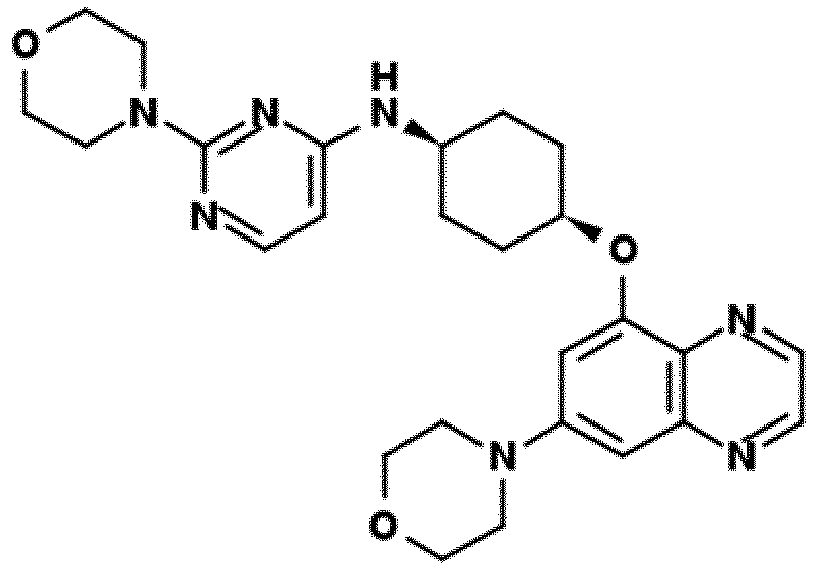
492.39 1H NMR (400 MHz, CDCl3) δ 8.69 (s, 1H), 8.61 (s, 1H), 7.89 (d, J = 5.5 Hz, 1H), 6.95 (s, 1H), 6.89 (s, 1H), 5.71 (d, J = 5.8 Hz, 1H), 4.76 (s, 2H), 4.01 - 3.81 (m, 5H), 3.74 (s, 8H), 3.41 - 3.26 (m, 4H), 2.26 - 2.12 (m, 2H), 1.98 - 1.81 (m, 6H). 535 
505.35 1H NMR (400 MHz, CDCl3) δ 8.69 (d, J = 1.9 Hz, 1H), 8.61 (d, J = 1.9 Hz, 1H), 7.88 (d, J = 5.7 Hz, 1H), 6.95 (d, J = 2.4 Hz, 1H), 6.89 (d, J = 2.4 Hz, 1H), 5.67 (d, J = 5.8 Hz, 1H), 4.84 - 4.63 (m, 2H), 3.99 - 3.83 (m, 5H), 3.82 - 3.73 (m, 4H), 3.37 - 3.27 (m, 4H), 2.49 - 2.40 (m, 4H), 2.33 (s, 3H), 2.23 - 2.11 (m, 2H), 1.96 - 1.82 (m, 6H). 536 
461.2 1H NMR (300 MHz, Chloroform-d) δ 8.73 (d, J = 1.9 Hz, 1H), 8.65 (d, J = 1.9 Hz, 1H), 8.30 (s, 1H), 6.97 (dd, J = 15.8, 2.5 Hz, 2H), 6.23 (d, J = 8.2 Hz, 1H), 6.07 (s, 1H), 4.90 (dt, J = 5.1, 2.4 Hz, 1H), 3.99 - 3.88 (m, 4H), 3.72 (dq, J = 9.2, 4.7 Hz, 1H), 3.40 - 3.29 (m, 4H), 2.60 (s, 3H), 2.34 (dt, J = 14.1, 5.2 Hz, 2H), 2.23 - 1.79 (m, 6H). 537 
505.35 1H NMR (400 MHz, CDCl3) δ 8.69 (d, J = 1.7 Hz, 1H), 8.60 (d, J = 1.7 Hz, 1H), 8.18 (s, 1H), 6.95 (d, J = 2.2 Hz, 1H), 6.90 (s, 1H), 5.42 (s, 1H), 4.78 (s, 1H), 4.71 (d, J = 8.3 Hz, 1H), 3.98 - 3.87 (m, 4H), 3.83 (s, 1H), 3.65 - 3.48 (m, 4H), 3.41 - 3.24 (m, 4H), 2.54 - 2.42 (m, 4H), 2.33 (s, 3H), 2.25 - 2.11 (m, 2H), 1.97 - 1.82 (m, 6H). 538 
480.19 1H NMR (300 MHz, Chloroform-d) δ 8.74 (d, J = 1.9 Hz, 1H), 8.61 (d, J = 1.9 Hz, 1H), 7.57 (d, J = 1.6 Hz, 1H), 7.38 (dd, J = 1.7, 0.8 Hz, 1H), 7.05 - 6.88 (m, 3H), 5.52 (d, J = 8.1 Hz, 1H), 4.87 (d, J = 4.0 Hz, 1H), 4.47 - 4.31 (m, 1H), 3.98 - 3.88 (m, 4H), 3.42 - 3.30 (m, 4H), 2.35 - 2.21 (m, 2H), 2.16 - 1.88 (m, 6H). 539 
481.3 1H NMR (300 MHz, CDCl3): ppm 1.76 - 1.97 (m, 6 H), 2.15 - 2.26 (m, 2 H), 3.31 - 3.35 (m, 4 H), 3.43 (s, 3 H), 3.61 - 3.72 (m, 3 H), 3.90 - 3.93 (m, 4 H), 4.45 - 4.48 (m, 2 H), 4.76 - 4.82 (m, 1 H), 4.94 (d, J = 7.1 Hz, 1 H), 5.73 (s, 1 H), 6.89 (d, J = 2. 540 
445.3 1H NMR (300 MHz, CDCl3): ppm 1.82 - 1.99 (m, 6 H), 2.13 - 2.25 (m, 2 H), 3.29 - 3.38 (m, 4 H), 3.73 (br. s, 1 H), 3.84 - 3.98 (m, 4 H), 4.45 (br. s, 1 H), 4.74 - 4.84 (m, 1 H), 6.31 (s, 1 H), 6.43 - 6.47 (m, 1 H), 6.91 (d, J = 2.3 Hz, 1 H), 6.93 - 6.99 (m 541 
534.4 1H NMR (300 MHz, CDCl3): ppm 1.40 - 1.48 (m, 2 H), 1.56 -1.67 (m, 4 H), 1.84 - 1.99 (m, 6 H), 2.11 - 2.24 (m, 2 H), 2.45 - 2.52 (m, 4 H), 2.72 (t, J = 6.2 Hz, 2 H), 3.32 - 3.35 (m, 4 H), 3.90 - 3.93 (m, 4 H), 3.96 - 4.08 (m, 1 H), 4.40 (t, J = 6.2 Hz, 2 542 
447.25 1H NMR (300 MHz, Chloroform-d) δ 8.63 (d, J = 1.9 Hz, 1H), 8.56 (d, J = 1.9 Hz, 1H), 8.18 (s, 1H), 7.83 (d, J = 6.3 Hz, 1H), 6.96 - 6.80 (m, 3H), 6.23 (d, J = 8.2 Hz, 1H), 4.77 (dd, J = 5.8, 3.3 Hz, 1H), 4.23 (dq, J = 8.6, 4.3 Hz, 1H), 3.89 - 3.75 (m, 4H), 3.35 - 3.20 (m, 4H), 2.20 (d, J = 12.8 Hz, 2H), 2.10 - 1.79 (m, 6H). 543 
518.2 1H NMR (300 MHz, Chloroform-d) δ 8.53 (s, 1H), 8.18 (s, 2H), 6.96 - 6.80 (m, 2H), 5.14 (d, J = 8.1 Hz, 1H), 4.78 (s, 1H), 4.08 - 3.86 (m, 5H), 3.33 (dd, J = 6.0, 3.8 Hz, 4H), 3.07 - 2.94 (m, 2H), 2.71 (s, 3H), 2.35 (s, 3H), 2.26 - 1.97 (m, 4H), 1.99 - 1.57 (m, 11H). 544 
518.2 1H NMR (300 MHz, Chloroform-d) δ 8.61 (s, 1H), 8.18 (s, 2H), 7.02 - 6.87 (m, 2H), 5.12 (d, J = 8.2 Hz, 1H), 4.80 (s, 1H), 4.05 - 3.87 (m, 5H), 3.38 - 3.27 (m, 4H), 3.01 (d, J = 11.4 Hz, 3H), 2.74 (s, 3H), 2.36 (s, 3H), 2.20 (m, 2H), 2.06 (m,2H), 2.00 - 1.58 (m, 11H). 545 
461.24 1H NMR (300 MHz, Chloroform-d) δ 8.73 (d, J = 2.0 Hz, 1H), 8.64 (d, J = 2.0 Hz, 1H), 8.39 (s, 1H), 7.92 (s, 1H), 7.05 - 6.89 (m, 2H), 4.88 (s, 1H), 4.06 (s, 3H), 3.94 (dd, J = 6.0, 3.8 Hz, 4H), 3.36 (t, J = 4.9 Hz, 5H), 2.29 (s, 2H), 1.98 (d, J = 35.4 Hz, 6H). 546 
461.24 1H NMR (300 MHz, Chloroform-d) δ 8.62 (d, J = 1.9 Hz, 1H), 8.55 (d, J = 1.9 Hz, 1H), 8.32 (s, 1H), 7.66 (s, 1H), 6.92 - 6.81 (m, 2H), 4.79 (s, 1H), 3.87 - 3.80 (m, 4H), 3.75 (s, 3H), 3.31 - 3.22 (m, 4H), 2.18 (d, J = 12.7 Hz, 2H), 2.08 - 1.75 (m, 6H). 547 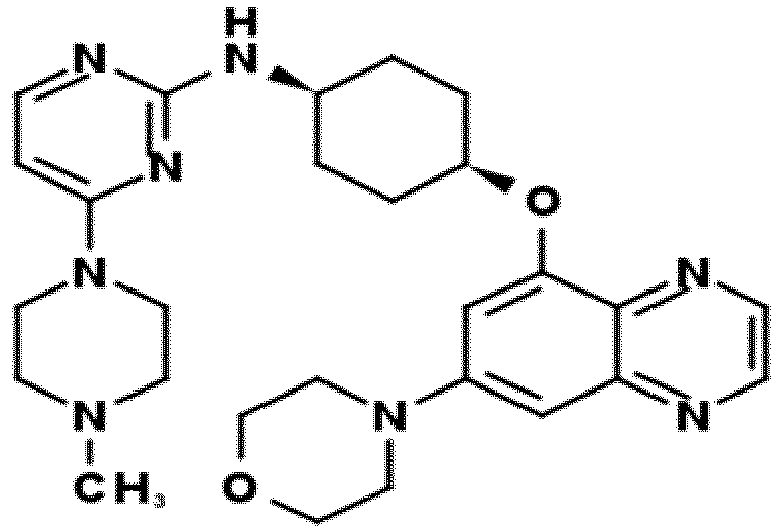
505.4 1H NMR (400 MHz, CDCl3) δ 8.70 (d, J = 1.9 Hz, 1H), 8.63 (d, J = 1.9 Hz, 1H), 7.90 (d, J = 6.0 Hz, 1H), 6.96 (d, J = 2.4 Hz, 1H), 6.92 (d, J = 2.3 Hz, 1H), 5.89 (d, J = 6.1 Hz, 1H), 4.96 (s, 1H), 4.77 (s, 1H), 4.08 - 3.98 (m, 1H), 3.96 - 3.87 (m, 4H), 3.70 - 3.53 (m, 4H), 3.43 - 3.27 (m, 4H), 2.53 - 2.42 (m, 4H), 2.35 (s, 3H), 2.25 - 2.13 (m, 2H), 2.00 - 1.85 (m, 6H). 548 
492.39 1H NMR (400 MHz, CDCl3) δ 8.70 (d, J = 1.8 Hz, 1H), 8.63 (d, J = 1.9 Hz, 1H), 7.93 (d, J = 5.9 Hz, 1H), 6.96 (d, J = 2.3 Hz, 1H), 6.91 (d, J = 2.3 Hz, 1H), 5.87 (d, J = 6.1 Hz, 1H), 4.97 (s, 1H), 4.77 (s, 1H), 4.02 (s, 1H), 3.97 - 3.88 (m, 4H), 3.83 - 3.70 (m, 4H), 3.63 - 3.52 (m, 4H), 3.39 - 3.27 (m, 4H), 2.25 - 2.12 (m, 2H), 2.01 - 1.85 (m, 6H). 549 
504.27 1H NMR (300 MHz, Chloroform-d) δ 8.70 (d, J = 1.9 Hz, 1H), 8.62 (d, J = 1.9 Hz, 1H), 8.18 (d, J = 5.1 Hz, 1H), 6.98 - 6.89 (m, 2H), 6.42 (d, J = 5.1 Hz, 1H), 5.18 (d, J = 8.0 Hz, 1H), 4.79 (dt, J = 7.9, 3.7 Hz, 1H), 4.11 - 3.87 (m, 5H), 3.42 - 3.25 (m, 4H), 3.00 (dq, J = 9.9, 3.3 Hz, 2H), 2.63 - 2.35 (m, 5H), 2.27 - 2.04 (m, 4H), 1.97 - 1.82 (m, 9H). 550 
546.31 1H NMR (300 MHz, Chloroform-d) δ 8.70 (d, J = 1.9 Hz, 1H), 8.63 (d, J = 1.9 Hz, 1H), 8.16 (s, 2H), 7.05 - 6.83 (m, 2H), 5.14 (d, J = 8.1 Hz, 1H), 4.79 (d, J = 5.3 Hz, 1H), 4.10 - 3.85 (m, 5H), 3.41 - 3.28 (m, 4H), 2.87 (tt, J = 12.8, 3.2 Hz, 1H), 2.20 (q, J = 6.2 Hz, 2H), 1.91 (p, J = 3.7, 2.8 Hz, 6H), 1.73 (dd, J = 13.1, 3.2 Hz, 2H), 1.29 (d, J = 24.9 Hz, 12H). 551 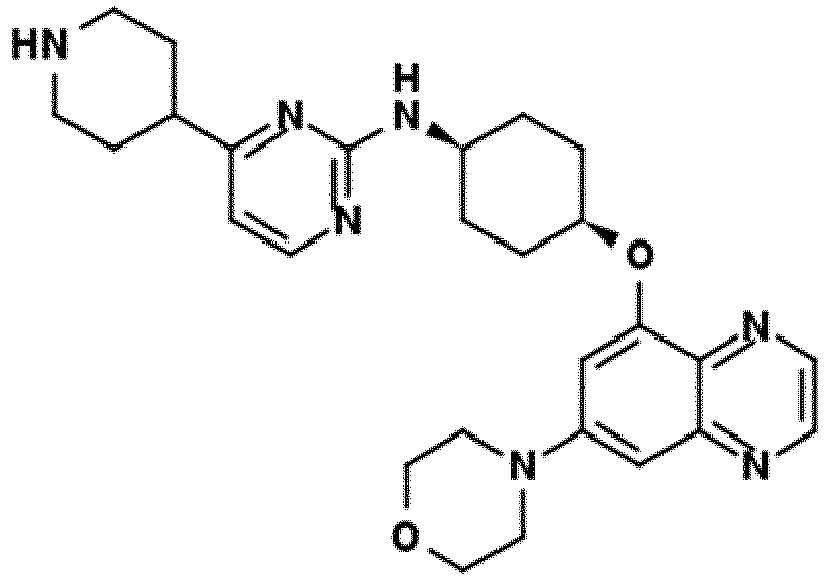
490.28 H NMR (300 MHz, Chloroform-d) δ 8.71 (d, J = 1.9 Hz, 1H), 8.64 (d, J = 1.9 Hz, 1H), 8.20 (d, J = 5.1 Hz, 1H), 7.01 - 6.89 (m, 2H), 6.42 (d, J = 5.1 Hz, 1H), 5.15 (d, J = 7.9 Hz, 1H), 4.80 (s, 1H), 4.05 (s, 1H), 3.97 - 3.88 (m, 4H), 3.43 - 3.31 (m, 4H), 3.24 (d, J = 12.3 Hz, 2H), 2.84 - 2.69 (m, 2H), 2.59 (m, 1H), 2.20 (m, 2H), 1.92 (t, J = 8.2 Hz, 6H). 552 
462.2 1H NMR (300 MHz, Chloroform-d) δ 8.61 (d, J = 2.0 Hz, 1H), 8.53 (d, J = 1.9 Hz, 1H), 7.85 (s, 1H), 6.94 - 6.73 (m, 2H), 5.33 (d, J = 7.9 Hz, 1H), 4.69 (s, 1H), 4.00 - 3.78 (m, 5H), 3.38 (d, J = 1.0 Hz, 2H), 3.33 - 3.20 (m, 4H), 2.19 - 1.99 (m, 2H), 1.83 (h, J = 5.6 Hz, 6H). 553 
480.19 1H NMR (300 MHz, Chloroform-d) δ 8.71 (d, J = 1.9 Hz, 1H), 8.63 (d, J = 1.9 Hz, 1H), 6.93 (dd, J = 17.8, 2.5 Hz, 2H), 5.07 (s, 1H), 4.78 (d, J = 6.2 Hz, 1H), 4.68 (d, J = 7.9 Hz, 1H), 4.03 - 3.90 (m, 4H), 3.87 (s, 3H), 3.71 (s, 1H), 3.42 - 3.28 (m, 4H), 3.13 (s, 6H), 2.27 - 2.00 (m, 2H), 2.00 - 1.79 (m, 6H). 554 
462.2 1H NMR (300 MHz, Chloroform-d) δ 8.70 (d, J = 1.9 Hz, 1H), 8.63 (d, J = 1.9 Hz, 1H), 8.04 (s, 1H), 5.04 (d, J = 8.2 Hz, 1H), 4.79 (s, 1H), 4.09 - 3.90 (m, 5H), 3.85 (s, 2H), 3.42 - 3.31 (m, 4H), 3.11 (t, J = 5.8 Hz, 2H), 2.63 (t, J = 5.8 Hz, 2H), 2.19 (d, J = 8.1 Hz, 2H), 1.91 (d, J = 5.5 Hz, 6H). 555 
357.15 1H NMR (400 MHz, CDCl3) δ 8.68 (d, J = 1.9 Hz, 1H), 8.61 (d, J = 1.9 Hz, 1H), 6.94 (d, J = 2.4 Hz, 1H), 6.87 (d, J = 2.4 Hz, 1H), 5.47 (s, 1H), 5.30 (s, 1H), 4.50 (s, 1H), 4.00 - 3.84 (m, 4H), 3.40 - 3.27 (m, 4H), 2.45 - 2.33 (m, 2H), 2.33 - 2.18 (m, 1H), 2.15 - 2.00 (m, 2H), 1.74 (d, J = 5.4 Hz, 4H). 556 
476.23 1H NMR (300 MHz, Chloroform-d) δ 8.61 (d, J = 1.9 Hz, 1H), 8.53 (d, J = 1.9 Hz, 1H), 7.97 (s, 1H), 6.92 - 6.77 (m, 2H), 4.95 (d, J = 8.1 Hz, 1H), 4.76 - 4.64 (m, 1 H), 3.97 - 3.75 (m, 5H), 3.34 (s, 2H), 3.30 - 3.17 (m, 4H), 2.60 (dq, J = 9.7, 5.3, 4.8 Hz, 4H), 2.37 (s, 3H), 2.10 (td, J = 10.8, 10.3, 6.1 Hz, 2H), 1.90 - 1.62 (m, 6H). 557 
590.2 1H NMR (300 MHz, Chloroform-d) δ 8.71 (d, J = 2.0 Hz, 1H), 8.63 (d, J = 1.9 Hz, 1H), 8.20 (d, J = 5.1 Hz, 1H), 7.01 - 6.89 (m, 2H), 6.40 (d, J = 5.1 Hz, 1H), 5.20 (s, 1H), 4.81 (d, J = 6.1 Hz, 1H), 4.23 (s, 2H), 4.04 (s, 1H), 3.97 - 3.89 (m, 4H), 3.42 - 3.28 (m, 4H), 2.82 (t, J = 12.8 Hz, 2H), 2.67 - 2.44 (m, 1H), 2.27 - 2.11 (m, 2H), 1.98 - 1.87 (m, 8H), 1.49 (s, 9H). 558 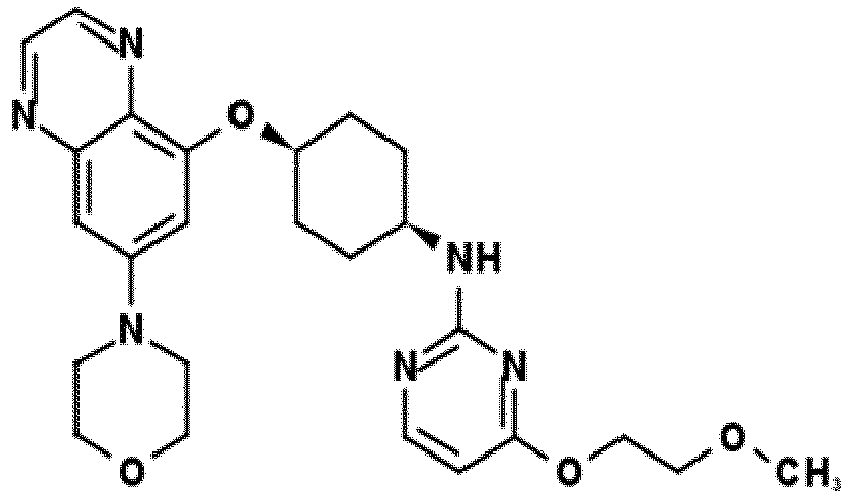
481.3 1H NMR (300 MHz, CDCl3): ppm 1.84 - 1.99 (m, 6 H), 2.11 - 2.25 (m, 2 H), 3.32 - 3.36 (m, 4 H), 3.43 (s, 3 H), 3.70 - 3.73 (m, 2 H), 3.90 - 3.93 (m, 4 H), 3.96 - 4.07 (m, 1 H), 4.41 - 4.44 (m, 2 H), 4.72-4.80 (m, 1 H), 5.10 (br. s, 1 H), 6.06 (d, J = 5.6 559 
494.3 1H NMR (300 MHz, CDCl3): ppm 1.84 - 1.98 (m, 6 H), 2.13 - 2.23 (m, 2 H), 2.32 (s, 6 H), 2.68 (t, J = 5.8 Hz, 2 H), 3.30 - 3.37 (m, 4 H), 3.88 - 3.95 (m, 4 H), 3.98 - 4.08 (m, 1 H), 4.37 (t, J = 5.8 Hz, 2 H), 4.73-4.80 (m, 1 H), 5.05 (d, J = 7.5 Hz, 1 H) 560 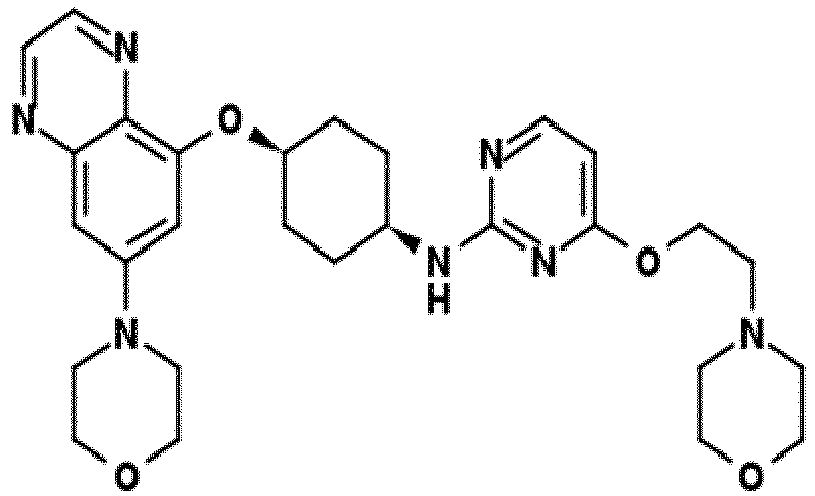
536.3 1H NMR (300 MHz, CDCl3): ppm 1.83 - 2.00 (m, 6 H), 2.10 - 2.25 (m, 2 H), 2.52 - 2.59 (m, 4 H), 2.76 (t, J = 5.8 Hz, 2 H), 3.31 - 3.38 (m, 4 H), 3.70 - 3.77 (m, 4 H), 3.89 - 3.95 (m, 4 H), 4.03 (br. s, 1 H), 4.41 (t, J = 5.8 Hz, 2 H), 4.72 - 4.80 (m, 1 H), 561 
494.3 1H NMR (300 MHz, CDCl3): ppm 1.78 - 1.94 (m, 6 H), 2.14 - 2.25 (m, 2 H), 2.32 (s, 6 H), 2.67 (t, J = 5.5 Hz, 2 H), 3.28 - 3.38 (m, 4 H), 3.66 (br. s, 1 H), 3.84 - 3.98 (m, 4 H), 4.39 (t, J = 5.5 Hz, 2 H), 4.79 (br. s, 1 H), 4.90 (d, J = 7.2 Hz, 1 H), 5.73 562 
549.3 1H NMR (300 MHz, CDCl3): ppm 1.81 - 1.94 (m, 6 H), 2.14 - 2.24 (m, 2 H), 2.28 (s, 3 H), 2.47 (br. s, 4 H), 2.59 (br. s, 4 H), 2.76 (t, J = 5.8 Hz, 2 H), 3.30 - 3.37 (m, 4 H), 3.69 (br. s, 1 H), 3.88 - 3.95 (m, 4 H), 4.42 (t, J = 5.8 Hz, 2 H), 4.75 - 4.83 563 
447.37 1H NMR (400 MHz, CDCl3) δ 8.68 (d, J = 1.9 Hz, 1H), 8.61 (d, J = 1.9 Hz, 1H), 8.48 (d, J = 0.6 Hz, 1H), 7.75 (d, J = 2.2 Hz, 1H), 6.94 (d, J = 2.4 Hz, 1H), 6.92 - 6.88 (m, 1H), 6.67 (d, J = 1.4 Hz, 1H), 5.22 (t, J = 9.5 Hz, 1H), 4.79 (s, 1H), 4.06 (s, 1H), 4.00 - 3.84 (m, 4H), 3.40 - 3.24 (m, 4H), 2.16 (t, J = 21.2 Hz, 2H), 1.98 - 1.85 (m, 6H). 564 
562.25 1H NMR (300 MHz, Chloroform-d) δ 8.70 (d, J = 1.9 Hz, 1H), 8.62 (d, J = 1.9 Hz, 1H), 8.07 (s, 1H), 6.99 - 6.84 (m, 2H), 5.10 (d, J = 8.1 Hz, 1H), 4.78 (d, J = 5.7 Hz, 1H), 4.42 (s, 2H), 4.10 - 3.85 (m, 5H), 3.64 (t, J = 5.6 Hz, 2H), 3.40-3.29 (m, 4H), 2.65 (dt, J = 6.2, 2.8 Hz, 2H), 2.19 (q, J = 6.0 Hz, 2H), 1.98 - 1.85 (m, 6H), 1.49 (s, 9H). 565 
479.1 1H NMR (300 MHz, Chloroform-d) δ 8.55 (d, J = 1.9 Hz, 1H), 8.47 (d, J = 1.9 Hz, 1H), 6.93 (s, 1H), 6.86 - 6.72 (m, 2H), 5.25 (s, 1H), 4.66 (s, 1H), 4.05 - 3.90 (m, 1H), 3.86 - 3.71 (m, 7H), 3.30 - 3.09 (m, 4H), 2.27 (d, J = 2.2 Hz, 3H), 2.04 (d, J = 9.2 Hz, 2H), 1.75 (d, J = 4.8 Hz, 6H). 566 
475.15 1H NMR (300 MHz, Chloroform-d) δ 8.71 (d, J = 2.0 Hz, 2H), 8.63 (d, J = 1.9 Hz, 1H), 7.42 (s, 1H), 7.01 - 6.86 (m, 2H), 5.64 (d, J = 8.2 Hz, 1H), 4.83 (s, 1H), 3.92 (dd, J = 6.0, 3.7 Hz, 4H), 3.34 (dd, J = 5.8, 3.9 Hz, 4H), 2.11 - 1.78 (m, 6H). 567 
504.1 1H NMR (300 MHz, Chloroform-d) δ 8.70 (d, J = 1.9 Hz, 1H), 8.63 (d, J = 1.9 Hz, 1H), 7.74 (s, 1H), 7.00-6.89 (m, 2H), 4.91 (s, 1H), 4.76 (d, J = 6.1 Hz, 1H), 4.04 - 3.93 (m, 5H), 3.43 - 3.28 (m, 4H), 2.26 - 2.14 (m, 2H), 2.08 (d, J = 0.8 Hz, 3H), 2.00 - 1.92 (m, 6H), 1.69 (d, J = 21.2 Hz, 10H). 568 
490.23 1H NMR (300 MHz, Chloroform-d) δ 8.70 (d, J = 1.9 Hz, 1H), 8.63 (d, J = 2.0 Hz, 1H), 8.22 (s, 2H), 7.04 - 6.88 (m, 2H), 5.14 (d, J = 8.1 Hz, 1H), 4.80 (d, J = 5.5 Hz, 1H), 4.09 - 3.85 (m, 5H), 3.41 - 3.31 (m, 4H), 3.29 - 3.13 (m, 1H), 3.04 - 2.92 (m, 1H), 2.81 (q, J = 8.1 Hz, 1H), 2.68 (dt, J = 9.2, 4.6 Hz, 1H), 2.52 - 2.26 (m, 5H), 2.24 - 2.13 (m, 2H), 2.02 - 1.78 (m, 7H). 569 
476.06 1H NMR (300 MHz, Chloroform-d) δ 8.61 (d, J = 1.9 Hz, 1H), 8.54 (d, J = 1.9 Hz, 1H), 8.10 (s, 2H), 6.93 - 6.76 (m, 2H), 5.07 (d, J = 8.1 Hz, 1H), 4.68 (d, J = 15.8 Hz, 1H), 4.00 - 3.78 (m, 5H), 3.35 - 3.20 (m, 4H), 3.18 - 2.92 (m, 3H), 2.70 (dd, J = 10.7, 8.4 Hz, 1H), 2.24 - 2.02 (m, 3H), 1.94 - 1.62 (m, 7H). 570 
576.2 1H NMR (300 MHz, Chloroform-d) δ 8.71 (d, J = 2.2 Hz, 1H), 8.63 (d, J = 2.1 Hz, 1H), 8.19 (s, 2H), 7.03 - 6.86 (m, 2H), 4.10 - 3.86 (m, 5H), 3.46 - 3.28 (m, 4H), 3.24 - 3.13 (m, 1H), 2.35 - 2.16 (m, 1H), 2.05 - 1.84 (m, 8H), 1.81 - 1.66 (m, 1H), 1.55 - 1.41 (m,11H). 571 
476.31 1H NMR (400 MHz, CDCl3) δ 8.69 (d, J = 1.9 Hz, 1H), 8.61 (d, J = 1.9 Hz, 1H), 7.88 (d, J = 2.4 Hz, 1H), 6.96 (d, J = 2.5 Hz, 1H), 6.90 (d, J = 2.4 Hz, 1H), 6.76 (s, 1H), 4.98 (s, 2H), 4.78 (s, 1H), 4.00 - 3.86 (m, 4H), 3.83 (s, 1H), 3.39 - 3.27 (m, 4H), 2.21 (d, J = 9.6 Hz, 2H), 1.89 (dd, J = 13.3, 8.6 Hz, 6H), 1.50 (s, 6H). 572 
472.2 1H NMR (300 MHz, CDCl3): ppm 1.82 - 1.99 (m, 6 H), 2.14 - 2.28 (m, 2 H), 3.32 - 3.35 (m, 4 H), 3.80 - 3.88 (m, 1 H), 3.90 - 3.93 (m, 4 H), 4.70 - 4.83 (m, 2 H), 6.37 (d, J = 8.8 Hz, 1 H), 6.38 (t, J = 73.8 Hz, 1 H), 6.90 (d, J = 2.3 Hz, 1 H), 6.95 (d, J = 573 
464.3 1H NMR (300 MHz, CDCl3): ppm 1.52 (s, 6 H), 1.73 (br s, 1 H), 1.85 - 1.96 (m, 6 H), 2.11 - 2.25 (m, 2 H), 3.30 - 3.36 (m, 4 H), 3.88 - 4.00 (m, 5 H), 4.55 (d, J = 8.1 Hz, 1 H), 4.74 - 4.81 (m, 1 H), 6.52 (s, 1 H), 6.57 (dd, J = 5.4, 1.4 Hz, 1 H), 6.90 (d, 574 
437.42 1H NMR (400 MHz, CDCl3) δ 8.69 (d, J = 1.9 Hz, 1H), 8.61 (d, J = 1.9 Hz, 1H), 7.99 (s, 2H), 6.95 (d, J = 2.4 Hz, 1H), 6.89 (d, J = 2.4 Hz, 1H), 4.78 (s, 1H), 4.01 - 3.84 (m, 7H), 3.41 (s, 2H), 3.37 - 3.27 (m, 4H), 2.26 - 2.14 (m, 2H), 1.93 - 1.81 (m, 6H). 575 
407.35 1H NMR (400 MHz, CDCl3) δ 8.69 (d, J = 1.9 Hz, 1H), 8.62 (d, J = 1.9 Hz, 1H), 8.57 (s, 1H), 8.13 (s, 2H), 6.98 (d, J = 2.4 Hz, 1H), 6.91 (d, J = 2.5 Hz, 1H), 4.86 - 4.73 (m, 1H), 3.95 - 3.88 (m, 4H), 3.56 - 3.49 (m, 1H), 3.39 - 3.31 (m, 4H), 2.30 - 2.18 (m, 2H), 1.97 - 1.84 (m, 6H). 576 
450.13 1H NMR (300 MHz, Chloroform-d) δ 8.71 (d, J = 2.0 Hz, 1H), 8.63 (d, J = 1.9 Hz, 1H), 8.13 (s, 1H), 7.01 - 6.87 (m, 2H), 4.81 (s, 1H), 4.57 (s, 2H), 4.06 (s, 1H), 3.99 - 3.87 (m, 4H), 3.35 (dd, J = 5.9, 3.8 Hz, 4H), 2.45 (s, 3H), 2.20 (d, J = 8.0 Hz, 2H), 1.93 (d, J = 5.1 Hz, 6H). 577 
437.25 1H NMR (300 MHz, Chloroform-d) δ 8.71 (d, J = 1.9 Hz, 1H), 8.63 (d, J = 2.0 Hz, 1H), 8.02 (d, J = 1.4 Hz, 1H), 7.87 (d, J = 1.5 Hz, 1H), 6.94 (dd, J = 16.2, 2.5 Hz, 2H), 4.89 - 4.71 (m, 2H), 4.65 (s, 2H), 4.06 - 3.85 (m, 4H), 3.40 - 3.27 (m, 4H), 2.23 (dt, J = 11.5, 5.5 Hz, 2H), 2.04 - 1.80 (m, 6H). 578 
437.2 1H NMR (300 MHz, Chloroform-d) δ 8.71 (d, J = 2.0 Hz, 1H), 8.63 (d, J = 1.9 Hz, 1H), 7.01 - 6.88 (m, 2H), 6.87 - 6.66 (m, 2H), 3.94 (t, J = 4.9 Hz, 4H), 3.65 (s, 3H), 3.42 - 3.30 (m, 4H), 2.19 (s, 2H), 1.91 (d, J = 4.9 Hz, 6H). 579 
505.53 1H NMR (400 MHz, CDCl3) δ 8.68 (s, 1H), 8.61 (s, 1H), 8.07 (s, 2H), 6.94 (s, 1H), 6.90 (s, 1H), 4.96 (d, J = 8.1 Hz, 1H), 4.78 (s, 1H), 4.02 - 3.81 (m, 5H), 3.47 - 3.19 (m, 5H), 3.19 - 2.83 (m, 4H), 2.76 - 2.52 (m, 3H), 2.37 (s, 3H), 2.26 - 2.11 (m, 2H), 2.03 - 1.82 (m, 6H). 580 
445.3 1H NMR (300 MHz, CDCl3): ppm 1.84 - 2.17 (m, 6 H), 2.23 - 2.35 (m, 2 H), 3.31 - 3.38 (m, 4 H), 3.63 ñ 3.75 (m, 1 H), 3.87 - 3.96 (m, 4 H), 4.82-4.89 (m, 1 H), 5.88 (d, J = 7.2 Hz, 1 H), 6.11 (d, J = 7.8 Hz, 1 H), 6.44 (d, J = 2.2 Hz, 1 H), 6.90 ñ 6.95 ( 581 
446.3 1H NMR (300 MHz, CDCl3): ppm 1.85 - 2.18 (m, 6 H), 2.24 - 2.36 (m, 2 H), 3.31 - 3.39 (m, 4 H), 3.64 - 3.77 (m, 1 H), 3.88 - 3.97 (m, 4 H), 4.82 - 4.89 (m, 1 H), 5.91 (d, J = 7.9 Hz, 1 H), 6.12 (d, J = 7.9 Hz, 1 H), 6.93 (d, J = 2.4 Hz, 1 H), 6.98 (d, J = 582 
450.3 1H NMR (300 MHz, CDCl3): ppm 1.83 ñ 1.96 (m, 6 H), 2.14 - 2.26 (m, 2 H), 3.30 - 3.36 (m, 4 H), 3.41 (s, 3 H), 3.87 ñ 3.95 (m, δ H), 4.36 (s, 2 H), 4.59 - 4.89 (m, 2 H), 6.38 (s, 1 H), 6.48 (d, J = 5.2 Hz, 1 H), 6.90 (d, J = 2.4 Hz, 1 H), 6.95 (d, J = 2.4 583 
466.3 1H NMR (300 MHz, CDCl3): ppm 1.84 - 2.00 (m, 6 H), 2.09 - 2.24 (m, 2 H), 3.30 - 3.37 (m, 4 H), 3.64 - 3.74 (m, 1 H), 3.78 (s, 3 H), 3.89 - 3.95 (m, 7 H), 4.71 - 4.79 (m, 1 H), 5.88 (d, J = 8.3 Hz, 1 H), 6.90 (d, J = 2.4 Hz, 1 H), 6.95 (d, J = 2.4 Hz, 1 H) 584 
436.3 1H NMR (300 MHz, CDCl3): ppm 1.86 - 2.04 (m, 6 H), 2.12 - 2.26 (m, 2 H), 3.28 - 3.39 (m, 4 H), 3.88 - 3.96 (m, 4 H), 4.26 (br s, 1 H), 4.62 (s, 2 H), 4.69 - 4.78 (m, 1 H), 5.56 (br s, 1 H), 6.50 (t, J = 5.3 Hz, 1 H), 6.90 (d, J = 1.9 Hz, 1 H), 6.93 (d, J 585 
536.3 1H NMR (300 MHz, CDCl3): ppm 1.81 - 1.96 (m, 6 H), 2.11 - 2.25 (m, 2 H), 2.56 (br s, 4 H), 2.76 (t, J = 5.3 Hz, 2 H), 3.30 - 3.36 (m, 4 H), 3.74 (t, J = 4.4 Hz, 4 H), 3.88 - 3.96 (m, 5 H), 4.06 (t, J = 5.3 Hz, 2 H), 4.73 - 4.81 (m, 1 H), 4.99 (d, J = 7.8 586 
420.3 1H NMR (300 MHz, CDCl3): ppm 1.88 ñ 2.01 (m, 6 H), 2.10 (s, 3 H), 2.15 - 2.25 (m, 2 H), 3.30 - 3.37 (m, 4 H), 3.89 ñ 3.95 (m, 4 H), 4.25 (br s, 2 H), 4.71 - 4.78 (m, 1 H), 6.51 (dd, J = 6.8, 5.4 Hz, 1 H), 6.90 (d, J = 2.3 Hz, 1 H), 6.94 (d, J = 2.3 Hz, 1 587 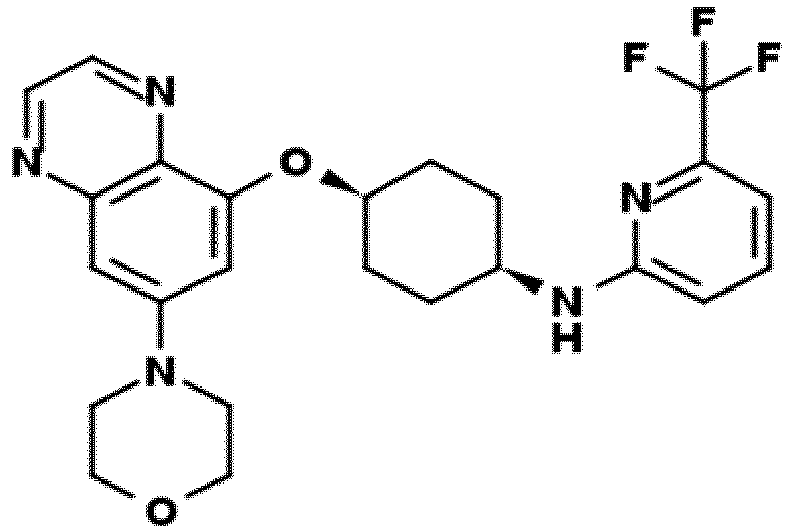
474.2 1H NMR (300 MHz, CDCl3): ppm 1.82 - 1.98 (m, 6 H), 2.12 - 2.26 (m, 2 H), 3.25 - 3.43 (m, 4 H), 3.82 - 3.98 (m, 5 H), 4.80 (br s, 2 H), 6.52 (d, J = 8.4 Hz, 1 H), 6.87 - 6.93 (m, 2 H), 6.95 - 7.00 (m, 1 H), 7.50 (t, J = 7.9 Hz, 1 H), 8.63 (d, J = 1.2 Hz, 1 588 
450.3 1H NMR (300 MHz, CDCl3): ppm 1.38 (t, J = 7.0 Hz, 3 H), 1.83 - 2.00 (m, 6 H), 2.11 - 2.24 (m, 2 H), 3.30 - 3.37 (m, 4 H), 3.75 - 3.85 (m, 1 H), 3.89 - 3.94 (m, 4 H), 4.25 (q, J = 7.0 Hz, 2 H), 4.42 - 4.54 (m, 1 H), 4.72 - 4.79 (m, 1 H), 5.94 (d, J = 7.7 H 589 
474.2 1H NMR (300 MHz, CDCl3): ppm 1.86 - 1.99 (m, 6 H), 2.16 - 2.27 (m, 2 H), 3.31 - 3.36 (m, 4 H), 3.88 - 3.95 (m, 5 H), 4.77 - 4.84 (m, 1 H), 4.90 (br s, 1 H), 6.55 (s, 1 H), 6.72 (d, J = 5.0 Hz, 1 H), 6.91 (d, J = 2.4 Hz, 1 H), 6.95 (d, J = 2.4 Hz, 1 H), 8. 590 
491.3 1H NMR (300 MHz, CDCl3): ppm 1.82 - 1.98 (m, 6 H), 2.10 -2.22 (m, 2 H), 3.31 - 3.35 (m, 4 H), 3.41 - 3.45 (m, 4 H), 3.69 - 3.82 (m, 5 H), 3.90 - 3.93 (m, 4 H), 4.43 (d, J = 7.7 Hz, 1 H), 4.70 - 4.77 (m, 1 H), 5.81 (d, J = 8.0 Hz, 1 H), 5.90 (d, J = 8.0 H 591 
424.2 1H NMR (300 MHz, CDCl3): ppm 1.88 - 2.00 (m, 6 H), 2.13 - 2.28 (m, 2 H), 3.29 - 3.38 (m, 4 H), 3.88 - 3.95 (m, 4 H), 4.21 (br s, 1 H), 4.62 - 4.84 (m, 2 H), 6.45 - 6.54 (m, 1 H), 6.90 (d, J = 2.4 Hz, 1 H), 6.95 (d, J = 2.4 Hz, 1 H), 7.07 - 7.18 (m, 1 H), 592 
436.3 1H NMR (300 MHz, CDCl3): ppm 1.84 - 2.03 (m, 6 H), 2.11 - 2.24 (m, 2 H), 3.30 - 3.37 (m, 4 H), 3.84 (s, 3 H), 3.89 - 3.95 (m, 4 H), 4.17 - 4.29 (m, 1H), 4.67 - 4.76 (m, 1 H), 5.08 (d, J = 7.4 Hz, 1 H), 6.50 (dd, J = 7.3, 5.2 Hz, 1 H), 6.82 (d, J = 7.4 Hz 593 
474.2 1H NMR (300 MHz, CDCl3): ppm 1.86 - 2.00 (m, 6 H), 2.13 - 2.26 (m, 2 H), 3.30 - 3.38 (m, 4 H), 3.88 - 3.97 (m, 4 H), 4.22 - 4.35 (m, 1 H), 4.73 - 4.80 (m, 1 H), 4.89 - 4.99 (m, 1 H), 6.60 (dd, J = 7.1, 5.1 Hz, 1 H), 6.91 (d, J = 2.3 Hz, 1 H), 6.96 (d, J = 594 
442.2 1H NMR (300 MHz, CDCl3): ppm 1.85 - 2.00 (m, 6 H), 2.11 - 2.28 (m, 2 H), 3.29 - 3.39 (m, 4 H), 3.87 - 3.97 (m, 4 H), 4.06 -4.18 (m, 1 H), 4.56 (d, J = 7.6 Hz, 1 H), 4.73 - 4.81 (m, 1 H), 6.90 (d, J = 2.4 Hz, 1 H), 6.95 (d, J = 2.4 Hz, 1 H), 7.05 (ddd, J = 595 
434.3 1H NMR (300 MHz, CDCl3): ppm 1.88 - 2.02 (m, 6 H), 2.08 (s, 3 H), 2.15 (s, 3 H), 2.14 - 2.24 (m, 2 H), 3.31 - 3.36 (m, 4 H), 3.89 - 3.95 (m, 4 H), 4.03 - 4.16 (m, 1 H), 4.23 (br s, 1 H), 4.69 - 4.77 (m, 1 H), 6.90 (d, J = 2.4 Hz, 1 H), 6.94 (d, J = 2.4 Hz 596 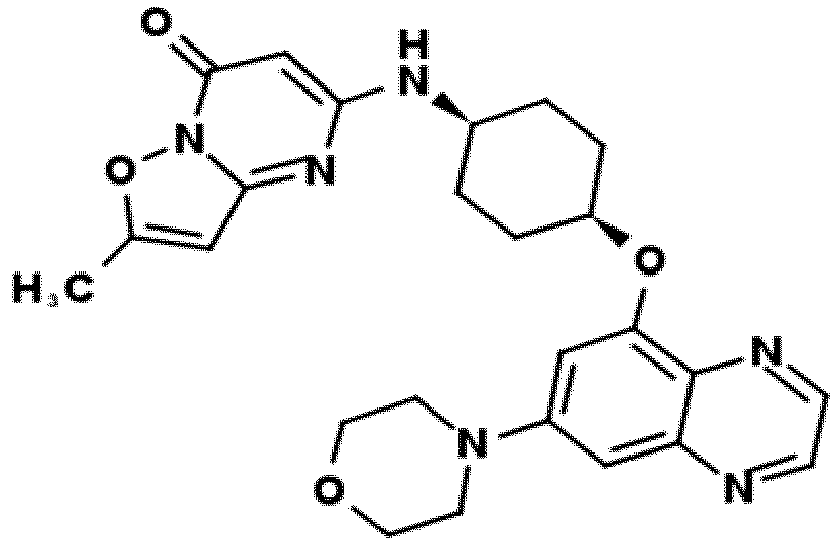
477.68 1H NMR (300 MHz, Chloroform-d) δ 8.70 (d, J = 2.0 Hz, 1H), 8.63 (d, J = 2.0 Hz, 1H), 6.99 (d, J = 2.4 Hz, 1H), 6.92 (t, J = 2.8 Hz, 1H), 6.08 (d, J = 1.1 Hz, 1H), 5.21 (s, 1H), 4.81 (s, 2H), 3.98 - 3.87 (m, 4H), 3.43 - 3.30 (m, 4H), 2.51 (d, J = 1.0 Hz, 3H), 2.19 (s, 2H), 2.01 - 1.77 (m, 6H). 597 
449.23 1H NMR (300 MHz, Chloroform-d) δ 8.71 (d, J = 1.9 Hz, 1H), 8.63 (d, J = 1.9 Hz, 1H), 7.07 - 6.87 (m, 2H), 6.02 (s, 1H), 4.83 (d, J = 5.5 Hz, 1H), 4.03 - 3.81 (m, 5H), 3.44 - 3.25 (m, 4H), 2.72 - 2.57 (m, 1H), 2.51 (s, 3H), 2.29 - 2.11 (m, 2H), 2.05 - 1.72 (m, 6H), 1.27 (t, J = 7.6 Hz, 3H). 598 
450.23 1H NMR (300 MHz, Chloroform-d) δ 8.61 (d, J = 1.9 Hz, 1H), 8.54 (d, J = 1.9 Hz, 1H), 6.93 - 6.72 (m, 3H), 6.55 (s, 1H), 4.71 (s, 1H), 4.01 (s, 1H), 3.92 - 3.76 (m, 4H), 3.34 - 3.18 (m, 4H), 2.98 (s, 6H), 2.07 (d, J = 24.1 Hz, 2H), 1.87 (d, J = 9.2 Hz, 6H). 599 
437.21 1H NMR (300 MHz, Chloroform-d) δ 8.62 (d, J = 1.9 Hz, 1H), 8.54 (t, J = 2.4 Hz, 1H), 6.85 (dd, J = 18.9, 2.4 Hz, 2H), 6.63 - 6.50 (m, 1H), 4.68 (s, 1H), 3.92 - 3.76 (m, 4H), 3.66 (s, 1H), 3.32 - 3.17 (m, 4H), 2.16 - 1.99 (m, 5H), 1.92 - 1.72 (m, 6H). 600 
464.26 1H NMR (300 MHz, Chloroform-d) δ 8.71 (d, J = 2.0 Hz, 1H), 8.62 (d, J = 2.0 Hz, 1H), 7.00 - 6.85 (m, 2H), 5.44 (d, J = 8.5 Hz, 1H), 4.78 (s, 1H), 3.93 (t, J = 4.8 Hz, 4H), 3.35 (t, J = 4.9 Hz, 4H), 3.06 - 2.91 (m, 1H), 2.15 (d, J = 26.6 Hz, 2H), 1.89 (s, 6H), 1.30 - 0.94 (m, 4H). 601 
461.32 1H NMR (300 MHz, Chloroform-d) δ 8.70 (d, J = 1.9 Hz, 1H), 8.62 (d, J = 1.9 Hz, 1H), 7.06 (d, J = 9.1 Hz, 1H), 6.98 - 6.86 (m, 2H), 6.58 (d, J = 9.1 Hz, 1H), 4.81 (dq, J = 5.5, 2.7 Hz, 1H), 4.52 (s, 1H), 4.17 (d, J = 5.0 Hz, 1H), 4.01 - 3.87 (m, 4H), 3.67 (dq, J = 8.9, 8.1 Hz, 1H), 3.43 - 3.30 (m, 4H), 2.47 - 2.29 (m, 4H), 2.22 (dt, J = 11.9, 5.5 Hz, 2H), 2.05 - 1.82 (m, 6H). 602 
464.1 1H NMR (300 MHz, Chloroform-d) δ 8.70 (d, J = 1.9 Hz, 1H), 8.62 (d, J = 1.9 Hz, 1H), 7.04 - 6.92 (m, 2H), 4.82 (d, J = 3.0 Hz, 1H), 3.93 (dd, J = 5.9, 3.8 Hz, 4H), 3.65 (d, J = 8.7 Hz, 1H), 3.44 - 3.29 (m, 4H), 3.08 (s, 6H), 2.39 (s, 3H), 2.21 (d, J = 14.4 Hz, 2H), 1.92 (dt, J = 17.0, 10.7 Hz, 6H). 603 
450.1 1H NMR (300 MHz, Chloroform-d) δ 8.70 (d, J = 1.9 Hz, 1H), 8.62 (d, J = 1.9 Hz, 1H), 8.18 (s, 1H), 7.02 - 6.86 (m, 2H), 4.81 (s, 2H), 4.00 - 3.76 (m, 5H), 3.42 - 3.26 (m, 4H), 3.07 (s, 6H), 2.20 (q, J = 6.3, 5.8 Hz, 2H), 2.01 - 1.79 (m, 6H). 604 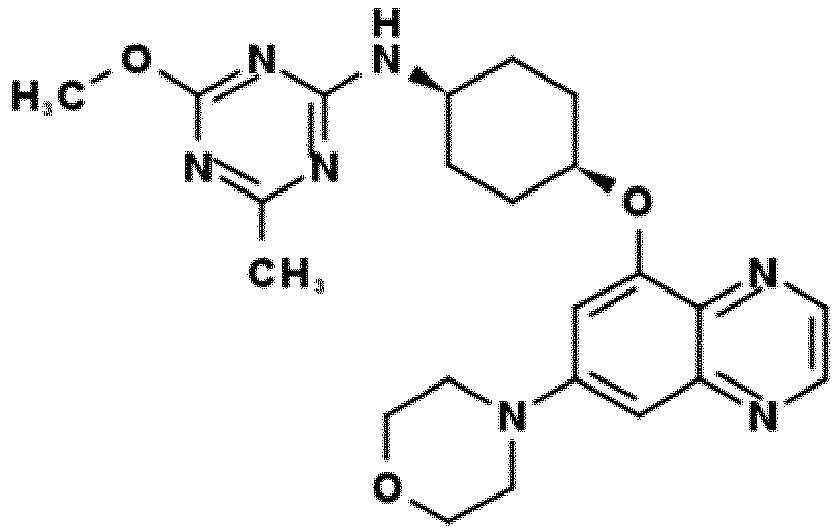
452.1 1H NMR (300 MHz, Chloroform-d) δ 8.62 (d, J = 1.9 Hz, 1H), 8.53 (d, J = 1.9 Hz, 1H), 6.87 (d, J = 2.5 Hz, 1H), 6.81 (d, J = 2.6 Hz, 1H), 4.71 (s, 1H), 3.94 - 3.72 (m, 7H), 3.25 (dd, J = 5.8, 3.8 Hz, 4H), 2.29 (d, J = 10.4 Hz, 3H), 2.21 - 2.02 (m, 2H), 1.93 - 1.71 (m, 6H). 605 
482.3 606 
450.17 1H NMR (300 MHz, Chloroform-d) δ 9.41 (s, 1H), 8.20 (dd, J = 4.8, 2.4 Hz, 2H), 6.98 - 6.77 (m, 3H), 6.44 (dt, J = 7.5, 4.8 Hz, 2H), 4.71 (s, 2H), 3.83 (dd, J = 5.7, 4.0 Hz, 6H), 3.27 (dt, J = 30.0, 4.9 Hz, 5H), 2.13 (s, 2H), 2.00 - 1.68 (m, 6H). 607 
469.08 1H NMR (300 MHz, Chloroform-d) δ 8.71 (d, J = 1.9 Hz, 1H), 8.63 (d, J = 1.9 Hz, 1H), 7.79 (d, J = 2.9 Hz, 1H), 6.93 (dd, J = 17.8, 2.5 Hz, 2H), 5.19 - 5.07 (m, 1H), 4.80 (dt, J = 6.7, 3.4 Hz, 1H), 4.32 (q, J = 7.1 Hz, 3H), 3.98 - 3.87 (m, 4H), 3.41 - 3.29 (m, 4H), 2.30 - 2.13 (m, 2H), 2.03 - 1.84 (m, 6H), 1.41 (t, J = 7.1 Hz, 3H). 608 
468.63 1H NMR (300 MHz, Chloroform-d) δ 8.71 (d, J = 1.9 Hz, 1H), 8.63 (d, J = 2.0 Hz, 1H), 6.94 (dd, J = 18.9, 2.5 Hz, 2H), 5.42 (d, J = 8.4 Hz, 1H), 4.79 (s, 1H), 4.22 - 4.06 (m, 1H), 4.03 - 3.89 (m, 10H), 3.42 - 3.22 (m, 4H), 2.19 (m, 2H), 2.01 - 1.79 (m, 6H). 609 
471.87 1H NMR (300 MHz, Chloroform-d) δ 8.72 (d, J = 1.9 Hz, 1H), 8.63 (d, J = 1.9 Hz, 1H), 7.03 - 6.84 (m, 2H), 5.66 (d, J = 9.1 Hz, 1H), 4.82 (s, 1H), 4.09 - 3.84 (m, 7H), 3.35 (dd, J = 5.5, 3.6 Hz, 4H), 2.20 (s, 2H), 1.91 (d, J = 6.4 Hz, 6H). 610 
479.2 1H NMR (300 MHz, Chloroform-d) δ 8.69 (d, J = 1.9 Hz, 1H), 8.61 (d, J = 1.9 Hz, 1H), 8.51 (s, 2H), 6.95 (d, J = 2.5 Hz, 1H), 6.91 (d, J = 2.6 Hz, 1H), 5.39 (d, J = 8.1 Hz, 1H), 4.88 (d, J = 1.8 Hz, 4H), 4.80 (d, J = 6.2 Hz, 1H), 4.13 - 3.98 (m, 1H), 3.96 - 3.89 (m, 4H), 3.38 - 3.30 (m, 4H), 3.06 (s, 1H), 2.28 - 2.11 (m, 2H), 1.98 - 1.84 (m, 6H). 611 
344.19 1H NMR (300 MHz, Chloroform-d) δ 8.67 (d, J = 1.9 Hz, 1H), 8.60 (d, J = 1.9 Hz, 1H), 6.91 (dd, J = 16.1, 2.5 Hz, 2H), 4.81 (q, J = 3.6, 2.4 Hz, 1H), 4.03 - 3.75 (m, 4H), 3.59 (d, J = 2.9 Hz, 2H), 3.45 - 3.28 (m, 4H), 2.20 (dt, J = 9.5, 4.6 Hz, 2H), 1.74 - 1.23 (m, 7H) 1.41 (s, 1H). 612 
481.3 1H NMR (300 MHz, CDCl3): ppm 1.83 - 1.96 (m, 6 H), 2.14 - 2.24 (m, 2 H), 3.31 - 3.35 (m, 4 H), 3.44 (s, 3 H), 3.69 - 3.72 (m, 2 H), 3.89 - 3.95 (m, 5 H), 4.06 - 4.09 (m, 2 H), 4.74 - 4.83 (m, 1 H), 5.04 - 5.15 (m, 1 H), 6.90 (d, J = 2.4 Hz, 1 H), 6.94 (d, 613 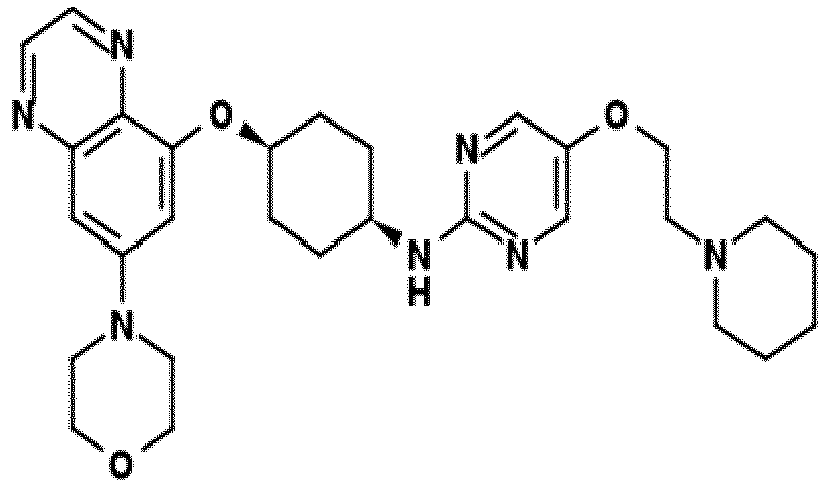
534.3 1H NMR (300 MHz, CDCl3): ppm 1.39 - 1.75 (m, 6 H), 1.82 - 1.95 (m, 6 H), 2.11-2.24 (m, 2 H), 2.37 - 2.63 (m, 4 H), 2.67 - 2.90 (m, 2 H), 3.33 (t, J = 4.7 Hz, 4 H), 3.87 - 3.97 (m, 5 H), 4.01 - 4.20 (m, 2 H), 4.74 - 4.82 (m, 1 H), 4.98 (d, J = 7.9 Hz, 1 614 
424.2 1H NMR (300 MHz, CDCl3): ppm 1.83 - 1.95 (m, 6 H), 2.12 - 2.26 (m, 2 H), 3.30 - 3.40 (m, 4 H), 3.85 - 3.96 (m, 5 H), 4.55 - 4.68 (m, 1 H), 4.74 - 4.82 (m, 1 H), 6.10 (dd, J = 7.7, 1.8 Hz, 1 H), 6.18 (dd, J = 8.0, 1.8 Hz, 1 H), 6.90 (d, J = 1.8 Hz, 1 H), 6 615 
436.3 1H NMR (300 MHz, CDCl3): ppm 1.82 - 2.10 (m, 7 H), 2.14 - 2.29 (m, 2 H), 3.26 - 3.40 (m, 4 H), 3.82 - 4.05 (m, 5 H), 4.64 (s, 2 H), 4.75 - 4.84 (m, 1 H), 4.85 - 5.13 (m, 1 H), 6.46 (s, 1 H), 6.51 (d, J = 5.3 Hz, 1 H), 6.90 (d, J = 1.7 Hz, 1 H), 6.94 (d, 616 
465.1 1H NMR (300 MHz, Chloroform-d) δ 8.71 (d, J = 1.9 Hz, 1H), 8.63 (d, J = 1.9 Hz, 1H), 6.95 (dd, J = 16.6, 2.5 Hz, 2H), 6.30 (s, 1H), 5.02 (s, 1H), 4.82 (s, 1H), 4.38 (d, J = 0.9 Hz, 2H), 3.99 - 3.83 (m, 5H), 3.39 - 3.24 (m, 4H), 2.49 (s, 3H), 2.33 - 2.11 (m, 2H), 1.91 (q, J = 9.0, 6.9 Hz, 6H). 617 
437.1 1H NMR (300 MHz, Chloroform-d) δ 8.63 (s, 1H), 8.20 (d, J = 4.8 Hz, 2H), 6.90 (dd, J = 16.2, 2.5 Hz, 2H), 6.44 (t, J = 4.8 Hz, 1H), 5.15 (d, J = 8.1 Hz, 1H), 4.90 (d, J = 3.9 Hz, 2H), 4.79 - 4.64 (m, 1H), 3.99 - 3.71 (m, 6H), 3.32 - 3.19 (m, 4H), 2.21 - 2.04 (m, 2H), 1.95 - 1.70 (m, 6H). 618 
463.13 1H NMR (300 MHz, Chloroform-d) δ 8.63 (d, J = 1.9 Hz, 1H), 8.55 (d, J = 1.9 Hz, 1H), 6.86 (dd, J = 16.5, 2.5 Hz, 2H), 5.94 (s, 1H), 4.73 (s, 1H), 3.85 (dd, J = 5.9, 3.7 Hz, 4H), 3.35 - 3.20 (m, 4H), 2.67 - 2.51 (m, 2H), 2.26 (s, 3H), 2.09 (d, J = 36.8 Hz, 3H), 1.94 - 1.59 (m, 6H), 0.91 (t, J = 7.4 Hz, 3H). 619 
1H NMR (300 MHz, Chloroform-d) δ 8.77 (s, 1H), 8.29 (d, J = 4.7 Hz, 2H), 7.02 (d, J = 2.5 Hz, 1H), 6.97 (d, J = 2.5 Hz, 1H), 6.53 (t, J = 4.8 Hz, 1H), 5.16 (dd, J = 16.9, 7.5 Hz, 2H), 4.81 (s, 1H), 3.93 (t, J = 4.8 Hz, 5H), 3.34 (t, J = 4.9 Hz, 4H), 2.27 (d, J = 21.1 Hz, 2H), 2.06 - 1.76 (m, 6H), 1.66 (d, J = 6.6 Hz, 3H). 620 
435.1 1H NMR (300 MHz, Chloroform-d) δ 10.21 (s, 1H), 9.26 (s, 1H), 8.30 (d, J = 4.8 Hz, 2H), 7.09 - 6.88 (m, 2H), 6.54 (t, J = 4.8 Hz, 1H), 4.89 (dq, J = 4.9, 2.5 Hz, 1H), 4.04 (q, J = 6.5 Hz, 1H), 3.99 - 3.87 (m, 5H), 3.55 - 3.39 (m, 5H), 2.35 - 2.17 (m, 3H), 2.09 - 1.82 (m, 6H). 621 
449.55 1H NMR (400 MHz, CDCl3) δ 8.68 (d, J = 1.7 Hz, 1H), 8.61 (d, J = 1.7 Hz, 1H), 7.95 (s, 1H), 6.94 (d, J = 2.1 Hz, 1H), 6.90 (s, 1H), 5.12 (d, J = 7.5 Hz, 1H), 4.77 (s, 1H), 4.60 (t, J = 8.5 Hz, 2H), 4.00 (s, 1H), 3.94 - 3.84 (m, 4H), 3.38 - 3.27 (m, 4H), 3.11 (t, J = 8.3 Hz, 2H), 2.25 - 2.10 (m, 2H), 1.97 - 1.82 (m, 6H). 622 
424.2 1H NMR (300 MHz, CDCl3): ppm 1.81 - 1.98 (m, 6 H), 2.13 - 2.25 (m, 2 H), 3.29 - 3.38 (m, 4 H), 3.75 - 3.85 (m, 1 H), 3.88 - 3.96 (m, 4 H), 4.56 - 4.71 (m, 1 H), 4.75 - 4.83 (m, 1 H), 6.36 (dd, J = 9.1, 3.3 Hz, 1 H), 6.90 (d, J = 1.9 Hz, 1 H), 6.95 (d, J = 623 
420.3 1H NMR (300 MHz, CDCl3): ppm 1.80 - 1.98 (m, 6 H), 2.13 - 2.23 (m, 2 H), 2.38 (s, 3 H), 3.25 - 3.37 (m, 4 H), 3.62 - 3.77 (m, 1 H), 3.88 - 3.97 (m, 4 H), 4.76 - 4.83 (m, 1 H), 6.23 (d, J = 7.9 Hz, 1 H), 6.43 (d, J = 7.3 Hz, 1 H), 6.91 (d, J = 2.5 Hz, 1 H) 624 
494.3 1H NMR (300 MHz, CDCl3): ppm 1.78 - 2.01 (m, 6 H), 2.11 - 2.24 (m, 2 H), 2.33 (s, 6 H), 2.38 - 2.45 (m, 1 H), 2.69 (t, J = 5.2 Hz, 2 H), 3.26 - 3.42 (m, 4 H), 3.84 - 3.98 (m, 4 H), 4.01 (t, J = 5.2 Hz, 2 H), 4.72-4.83 (m, 1 H), 4.97 (d, J = 7.5 Hz, 1 H) 625 
480.3 1H NMR (300 MHz, CDCl3): ppm 1.81 - 1.95 (m, 6 H), 2.11 -2.26 (m, 2 H), 3.31 - 3.35 (m, 4 H), 3.44 (s, 3 H), 3.69 - 3.73 (m, 2 H), 3.76 - 3.84 (m, 1 H), 3.89 - 3.93 (m, 4 H), 4.04 - 4.08 (m, 2 H), 4.44 (br s, 1 H), 4.74 - 4.81 (m, 1 H), 6.37 (d, J = 8.9 626 
504.3 1H NMR (300 MHz, CDCl3): ppm 1.81 - 1.98 (m, 6 H), 2.12 - 2.25 (m, 2 H), 2.37 - 2.48 (m, 3 H), 2.58 - 2.77 (m, 4 H), 3.04 - 3.16 (m, 4 H), 3.28 - 3.37 (m, 4 H), 3.77 - 3.85 (m, 1 H), 3.87 - 3.97 (m, 4 H), 4.32 - 4.51 (m, 1 H), 4.73 - 4.83 (m, 1 H), 6.38 ( 627 
436.3 1H NMR (300 MHz, CDCl3): ppm 1.81 - 2.03 (m, 7 H), 2.12 - 2.28 (m, 2 H), 3.28 - 3.39 (m, 4 H), 3.81 (s, 3 H), 3.87 - 3.98 (m, 5 H), 4.76 - 4.84 (m, 1 H), 5.87 (d, J = 1.5 Hz, 1 H), 6.21 (dd, J = 5.9, 1.5 Hz, 1 H), 6.91 (d, J = 1.7 Hz, 1 H), 6.95 (d, J = 1 628 
458.05 1H NMR (300 MHz, Chloroform-d) δ 8.71 (d, J = 1.9 Hz, 1H), 8.63 (d, J = 1.9 Hz, 1H), 6.94 (dd, J = 14.6, 2.5 Hz, 2H), 5.57 (s, 1H), 4.86 - 4.72 (m, 1H), 4.02 - 3.86 (m, 4H), 3.50 - 3.26 (m, 5H), 2.65 (s, 3H), 2.32 - 2.06 (m, 2H), 2.06 - 1.73 (m, 6H). 629 
518.4 1H NMR (300 MHz, CDCl3) δ 8.62 (s, 1H), 8.54 (s, 1H), 8.15 - 7.93 (m, 1H), 7.40 (d, J = 8.0 Hz, 1H), 6.88 (s, 1H), 6.84 (s, 1H), 6.34 (d, J = 8.6 Hz, 1H), 4.83 - 4.56 (m, 2H), 4.40 - 4.22 (m, 1H), 4.00 - 3.62 (m, 5H), 3.47 - 3.04 (m, 7H), 2.24 - 2.02 (m, 2H), 1.96 - 1.70 (m, 6H). 630 
504.22 1H NMR (400 MHz, CDCl3) δ 8.68 (d, J = 1.8 Hz, 1H), 8.59 (d, J = 1.8 Hz, 1H), 8.06 (s, 1H), 7.55 (d, J = 8.3 Hz, 1H), 6.94 (d, J = 2.3 Hz, 1H), 6.89 (d, J = 2.2 Hz, 1H), 6.41 (d, J = 8.7 Hz, 1H), 4.88 (dd, J = 13.4, 6.7 Hz, 1H), 4.85 - 4.71 (m, 2H), 3.98 - 3.85 (m, 5H), 3.39 - 3.28 (m, 4H), 2.25 - 2.12 (m, 2H), 1.94 - 1.82 (m, 6H). 631 
464.53 1H NMR (400 MHz, CDCl3) δ 8.68 (d, J = 1.7 Hz, 1H), 8.61 (d, J = 1.8 Hz, 1H), 7.01 (d, J = 8.4 Hz, 1H), 6.94 (d, J = 2.3 Hz, 1H), 6.89 (s, 1H), 5.96 (d, J = 8.4 Hz, 1H), 4.75 (s, 1H), 4.43 - 4.35 (m, 2H), 4.22 (s, 1H), 4.19 - 4.10 (m, 2H), 3.98 - 3.86 (m, 4H), 3.82 (s, 1H), 3.36 - 3.28 (m, 4H), 2.23 - 2.08 (m, 2H), 1.94 - 1.79 (m, 6H). 632 
476.44 1H NMR (300 MHz, Chloroform-d) δ 8.70 (d, J = 1.9 Hz, 1H), 8.63 (d, J = 1.9 Hz, 1H), 7.98 (s, 1H), 7.02 - 6.85 (m, 2H), 5.04 (d, J = 8.2 Hz, 1H), 4.79 (s, 1H), 4.02 (s, 1H), 3.96 - 3.87 (m, 4H), 3.40 - 3.25 (m, 4H), 2.82 (t, J = 5.9 Hz, 2H), 2.73 (t, J = 5.8 Hz, 2H), 2.48 (s, 3H), 2.19 (d, J = 8.5 Hz, 2H), 1.91 (d, J = 5.3 Hz, 5H). 633 
435.2 1H NMR (300 MHz, Chloroform-d) δ 8.70 (d, J = 1.9 Hz, 1H), 8.63 (d, J = 1.9 Hz, 1H), 8.18 (d, J = 5.1 Hz, 1H), 7.01 - 6.88 (m, 2H), 6.42 (d, J = 5.1 Hz, 1H), 5.15 (d, J = 8.0 Hz, 1H), 4.79 (d, J = 5.7 Hz, 1H), 4.17 - 4.00 (m, 1H), 3.98 - 3.83 (m, 4H), 3.67 (td, J = 6.7, 4.0 Hz, 1H), 3.42 - 3.31 (m, 4H), 2.59 (q, J = 7.6 Hz, 2H), 2.20 (q, J = 6.1 Hz, 2H), 2.03 - 1.86 (m, 6H), 1.26 (t, J = 7.6 Hz, 3H). 634 
449.2 1H NMR (300 MHz, Chloroform-d) δ 8.71 (d, J = 1.9 Hz, 1H), 8.63 (d, J = 1.9 Hz, 1H), 8.19 (d, J = 5.1 Hz, 1H), 7.01 - 6.88 (m, 2H), 6.42 (d, J = 5.2 Hz, 1H), 5.14 (d, J = 7.9 Hz, 1H), 4.80 (dt, J = 7.8, 3.8 Hz, 1H), 4.06 (d, J = 4.1 Hz, 0H), 3.99 - 3.85 (m, 4H), 3.46 - 3.24 (m, 4H), 2.78 (hept, J = 7.0 Hz, 1H), 2.34 - 2.11 (m, 2H), 2.04 - 1.81 (m, 7H), 1.25 (d, J = 7.0 Hz, 6H). 635 
481.05 1H NMR (300 MHz, Chloroform-d) δ 8.63 (d, J = 1.9 Hz, 1H), 8.54 (d, J = 1.9 Hz, 1H), 6.85 (dd, J = 17.6, 2.5 Hz, 2H), 5.86 - 5.70 (m, 1H), 4.89 - 4.67 (m, 2H), 3.94 - 3.77 (m, 5H), 3.34 - 3.20 (m, 4H), 3.02 (q, J = 7.3 Hz, 2H), 2.27 - 2.04 (m, 5H), 1.93 - 1.63 (m, 6H), 1.30 (t, J = 7.3 Hz, 3H). 636 
461.1 1H NMR (300 MHz, Chloroform-d) δ 8.63 (d, J = 1.9 Hz, 1H), 8.54 (d, J = 1.9 Hz, 1H), 6.86 (dd, J = 16.2, 2.5 Hz, 2H), 5.85 (s, 1H), 4.75 (d, J = 5.5 Hz, 1H), 3.96 - 3.76 (m, 4H), 3.34 - 3.19 (m, 4H), 2.41 (s, 3H), 2.13 (d, J = 8.5 Hz, 2H), 1.82 (q, J = 10.2, 8.8 Hz, 6H), 1.58 - 1.33 (m, 3H), 1.03 - 0.86 (m, 3H). 637 
409.2 1H NMR (300 MHz, Chloroform-d) δ 8.70 (d, J = 1.9 Hz, 1H), 8.62 (d, J = 1.9 Hz, 1H), 7.02 - 6.82 (m, 2H), 5.41 (d, J = 0.8 Hz, 1H), 4.76 (td, J = 5.9, 3.0 Hz, 1H), 4.03 - 3.84 (m, 4H), 3.49 (q, J = 5.8 Hz, 1H), 3.40 - 3.25 (m, 5H), 2.33 - 2.10 (m, 4H), 2.00 - 1.77 (m, 7H). 638 
478.3 1H NMR (300 MHz, CDCl3): ppm 1.82 - 1.95 (m, 6 H), 2.14 - 2.26 (m, 2 H), 3.31 - 3.35 (m, 4 H), 3.77 - 3.85 (m, 1 H), 3.90 - 3.93 (m, 4 H), 4.71 - 4.80 (m, 3 H), 4.92 (t, J = 6.6 Hz, 2 H), 5.10 (quint., J = 5.6 Hz, 1 H), 6.39 (d, J = 8.9 Hz, 1 H), 6.90 (d, 639 
535.3 1H NMR (300 MHz, CDCl3): 1.80 - 1.95 (m, 6 H), 2.10-2.25 (m, 2 H), 2.52 - 2.64 (m, 4 H), 2.77 (t, J = 5.6 Hz, 2 H), 3.33 (t, J = 4.7 Hz, 4 H), 3.74 (t, J = 4.7 Hz, 4 H), 3.70 - 3.85 (m, 1 H), 3.91 (t, J = 4.7 Hz, 4 H), 4.06 (t, J = 5.6 Hz, 2 H), 4.30 - 640 
533.4 1H NMR (300 MHz, CDCl3): ppm 1.40 - 1.50 (m, 2 H), 1.56 -1.70 (m, 4 H), 1.84 -1.94 (m, 6 H), 2.11 - 2.23 (m, 2 H), 2.46 - 2.58 (m, 4 H), 2.71 - 2.80 (m, 2 H), 3.33 (t, J = 4.7 Hz, 4 H), 3.76 - 3.84 (m, 1 H), 3.91 (t, J = 4.7 Hz, 4 H), 4.07 (t, J = 5.7 H 641 
371.56 1H NMR (400 MHz, CDCl3) δ 8.73 - 8.65 (m, 1H), 8.60 (d, J = 1.8 Hz, 1H), 6.93 (d, J = 2.4 Hz, 1H), 6.89 (d, J = 2.3 Hz, 1H), 4.75 (s, 1H), 3.95 - 3.87 (m, 4H), 3.39 - 3.28 (m, 4H), 3.05 - 2.93 (m, 1H), 2.82 - 2.69 (m, 1H), 2.24 - 2.08 (m, 2H), 1.80 - 1.71 (m, 6H), 1.07 (d, J = 6.2 Hz, 6H). 642 
424.53 1H NMR (400 MHz, CDCl3) δ 8.70 (d, J = 1.9 Hz, 1H), 8.61 (d, J = 1.9 Hz, 1H), 7.78 (d, J = 5.8 Hz, 1H), 6.96 (d, J = 2.4 Hz, 1H), 6.90 (d, J = 2.4 Hz, 1H), 6.36 - 6.26 (m, 1H), 5.99 (d, J = 1.9 Hz, 1H), 4.79 (d, J = 2.4 Hz, 1H), 4.47 (d, J = 7.1 Hz, 1H), 3.99 - 3.85 (m, 4H), 3.56 - 3.49 (m, 1H), 3.39 - 3.26 (m, 4H), 2.28 - 2.16 (m, 2H), 1.98 - 1.80 (m, 6H). 643 
492.2 1H NMR (300 MHz, Chloroform-d) δ 8.70 (d, J = 1.9 Hz, 1H), 8.61 (d, J = 1.9 Hz, 1H), 8.57 - 8.45 (m, 1H), 7.81 (d, J = 8.4 Hz, 1H), 7.18 (d, J = 1.2 Hz, 1H), 6.93 (dd, J = 16.8, 2.5 Hz, 2H), 5.48 (s, 1H), 4.83 (dp, J = 4.5, 2.4 Hz, 1H), 4.23 (dp, J = 8.3, 6.6 Hz, 1H), 4.00 - 3.85 (m, 4H), 3.42 - 3.23 (m, 4H), 2.35 - 2.15 (m, 2H), 1.97 - 1.76 (m, 6H), 1.26 (d, J = 6.6 Hz, 6H). 644 
465.16 1H NMR (300 MHz, Chloroform-d) δ 8.69 (d, J = 1.9 Hz, 1H), 8.61 (d, J = 1.9 Hz, 1H), 6.93 (dd, J = 17.5, 2.5 Hz, 2H), 5.47 (s, 1H), 4.90 (s, 1H), 4.31 (q, J = 7.1 Hz, 2H), 3.92 (dd, J = 5.9, 3.7 Hz, 4H), 3.60 (s, 1H), 3.38 - 3.28 (m, 4H), 2.40 (s, 3H), 2.19 (d, J = 9.4 Hz, 2H), 1.97 - 1.80 (m, 6H), 1.36 (t, J = 7.1 Hz, 3H), 4.83 - 4.76 (m, 1 H). 645 
385.51 1H NMR (400 MHz, CDCl3) δ 8.68 (d, J = 1.8 Hz, 1H), 8.60 (d, J = 1.9 Hz, 1H), 6.94 (d, J = 2.4 Hz, 1H), 6.87 (d, J = 2.4 Hz, 1H), 4.83 (t, J = 6.9 Hz, 2H), 4.76 (s, 1H), 4.45 (t, J = 6.6 Hz, 2H), 4.14 - 4.05 (m, 1H), 3.94 - 3.88 (m, 4H), 3.35 - 3.30 (m, 4H), 2.65 (s, 1H), 2.24 - 2.15 (m, 2H), 1.75 - 1.64 (m, 6H). 646 
423.16 1H NMR (300 MHz, Chloroform-d) δ 8.71 (d, J = 1.9 Hz, 1H), 8.57 (d, J = 1.9 Hz, 1H), 7.01 - 6.84 (m, 2H), 6.18 (d, J = 1.4 Hz, 1H), 4.80 (s, 1H), 4.43 (s, 1H), 3.93 (t, J = 4.9 Hz, 5H), 3.48 (s, 3H), 3.43 - 3.25 (m, 5H), 2.38 - 1.86 (m, 9H). 647 
413.59 1H NMR (400 MHz, CDCl3) δ 8.67 (d, J = 1.9 Hz, 1H), 8.59 (d, J = 1.9 Hz, 1H), 6.94 (d, J = 2.5 Hz, 1H), 6.88 (d, J = 2.5 Hz, 1H), 4.75 (s, 1H), 4.03 - 3.94 (m, 2H), 3.94 - 3.83 (m, 4H), 3.41 (td, J = 11.7, 2.1 Hz, 2H), 3.36 - 3.25 (m, 4H), 2.89 - 2.77 (m, 2H), 2.24 - 2.13 (m, 2H), 1.85 - 1.68 (m, 8H), 1.40 (ddd, J = 16.2, 12.3, 4.4 Hz, 3H). 648 
405.58 1H NMR (400 MHz, CDCl3) δ 8.69 (d, J = 1.9 Hz, 1H), 8.62 (d, J = 1.9 Hz, 1H), 7.17 (dd, J = 8.5, 7.4 Hz, 2H), 6.95 (d, J = 2.5 Hz, 1H), 6.90 (d, J = 2.4 Hz, 1H), 6.69 (t, J = 7.3 Hz, 1H), 6.63 (d, J = 7.9 Hz, 2H), 4.75 (s, 1H), 3.98 - 3.71 (m, 5H), 3.52 (s, 1H), 3.40 - 3.30 (m, 4H), 2.24 - 2.11 (m, 2H), 1.94 - 1.84 (m, 6H). 649 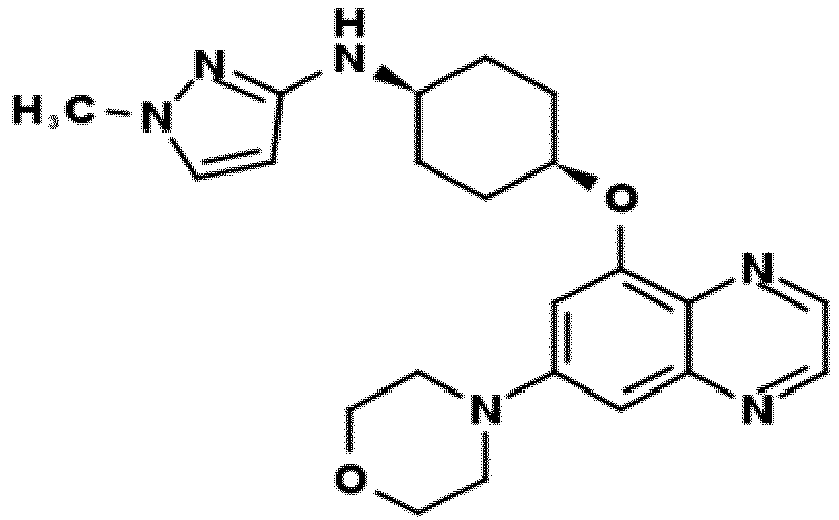
409.17 1H NMR (300 MHz, Chloroform-d) δ 8.69 (d, J = 1.9 Hz, 1H), 8.62 (d, J = 1.9 Hz, 1H), 7.10 (d, J = 2.3 Hz, 1H), 6.99 - 6.81 (m, 2H), 5.52 (d, J = 2.3 Hz, 1H), 4.76 (t, J = 5.9 Hz, 1H), 4.06 - 3.86 (m, 5H), 3.72 (s, 3H), 3.49 (t, J = 5.3 Hz, 1H), 3.40 - 3.18 (m, 4H), 2.19 (dq, J = 12.9, 7.1, 6.7 Hz, 2H), 1.90 (dd, J = 9.4, 5.2 Hz, 7H). 650 
447.2 1H NMR (300 MHz, Chloroform-d) δ 8.70 (d, J = 1.9 Hz, 1H), 8.62 (d, J = 1.9 Hz, 1H), 8.47 - 8.36 (m, 1H), 6.96 (d, J = 2.5 Hz, 1H), 6.90 (d, J = 2.5 Hz, 1H), 6.18 (d, J = 1.2 Hz, 1H), 4.95 - 4.73 (m, 2H), 4.04 - 3.78 (m, 5H), 3.44 - 3.24 (m, 4H), 2.30 - 2.12 (m, 2H), 2.03 - 1.70 (m, 7H), 1.17 - 0.80 (m, 4H). 651 
435.18 1H NMR (300 MHz, Chloroform-d) δ 8.70 (d, J = 1.9 Hz, 1H), 8.61 (d, J = 1.9 Hz, 1H), 8.50 (d, J = 1.1 Hz, 1H), 6.93 (dd, J = 15.9, 2.5 Hz, 2H), 6.17 (d, J = 1.1 Hz, 1H), 4.98 (d, J = 8.1 Hz, 1H), 4.86 - 4.75 (m, 1H), 3.97 - 3.87 (m, 4H), 3.39 - 3.29 (m, 4H), 2.61 (q, J = 7.6 Hz, 2H), 2.21 (dt, J = 11.2, 5.0 Hz, 2H), 2.04 - 1.82 (m, 6H), 1.25 (t, J = 7.6 Hz, 3H). 652 
449.23 1H NMR (300 MHz, Chloroform-d) δ 8.70 (d, J = 1.9 Hz, 1H), 8.61 (d, J = 1.9 Hz, 1H), 8.52 (d, J = 1.1 Hz, 1H), 6.93 (dd, J = 16.0, 2.5 Hz, 2H), 6.19 - 6.12 (m, 1H), 4.91 (d, J = 8.0 Hz, 1H), 4.81 (d, J = 5.4 Hz, 1H), 4.13 - 3.77 (m, 5H), 3.40 - 3.29 (m, 4H), 2.80 (hept, J = 6.8 Hz, 1H), 2.27 - 2.00 (m, 2H), 1.99 - 1.83 (m, 6H), 1.40 - 1.12 (m, 6H). 653 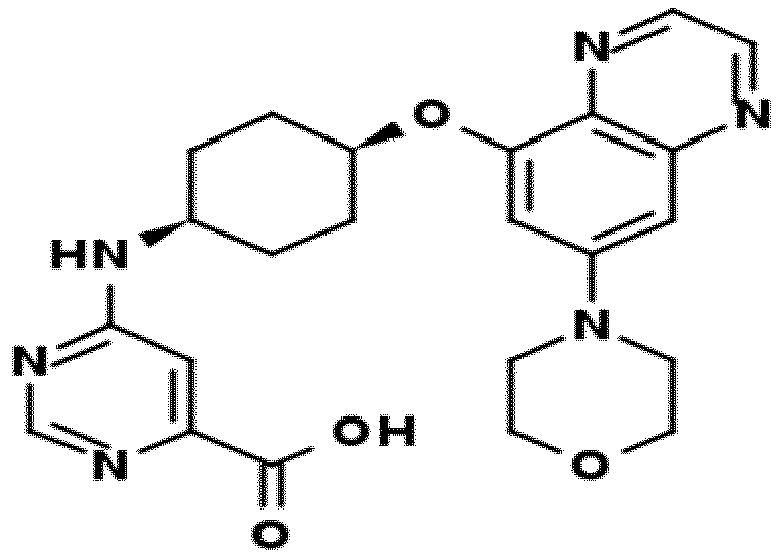
451.07 1H NMR (300 MHz, Methanol-d4/CDCl3) δ 8.82 - 8.68 (m, 2H), 8.61 (d, J = 0.8 Hz, 1H), 7.38 (t, J = 0.8 Hz, 1H), 7.18 (s, 1H), 5.11 - 4.99 (m, 1H), 4.47 - 4.31 (m, 1H), 3.99 - 3.88 (m, 4H), 3.74 - 3.58 (m, 4H), 2.37 - 2.23 (m, 2H), 2.13 - 1.80 (m, 6H). 654 
493.3 1H NMR (300 MHz, CDCl3): ppm 1.82 - 1.95 (m, 6 H), 2.11 -2.24 (m, 2 H), 2.32 (s, 6 H), 2.68 (t, J = 5.7 Hz, 2 H), 3.29-3.37 (m, 4 H), 3.76 - 3.86 (m, 1 H), 3.88 - 3.95 (m, 4 H), 4.00 (t, J = 5.7 Hz, 2 H), 4.29 (d, J = 8.2 Hz, 1 H), 4.70 - 4.83 (m, 1 H) 655 
548.3 1H NMR (300 MHz, CDCl3): ppm 1.81 - 1.97 (m, 6 H), 2.10 - 2.25 (m, 2 H), 2.33 (s, 3 H), 2.42 - 2.83 (m, 8 H), 2.78 (t, J = 5.6 Hz, 2 H), 3.28 - 3.39 (m, 4 H), 3.75 - 3.85 (m, 1 H), 3.86 - 3.97 (m, 4 H), 4.05 (t, J = 5.6 Hz, 2 H), 4.29 (t, J = 8.4 Hz, 1 H) 656 
393.1 1H NMR (300 MHz, DMSO-d6) δ 8.64 (d, J = 1.9 Hz, 1H), 8.47 (d, J = 1.9 Hz, 1H), 8.25 (d, J = 4.8 Hz, 2H), 7.15 (d, J = 7.3 Hz, 1H), 6.59 - 6.47 (m, 2H), 6.31 (d, J = 2.2 Hz, 1H), 5.80 - 5.68 (m, 1H), 4.85 (s, 2H), 4.62 (d, J = 5.3 Hz, 0H), 4.24 (t, J = 7.4 Hz, 2H), 3.83 (s, 1H), 3.71 (dd, J = 8.4, 4.7 Hz, 2H), 2.14 - 1.97 (m, 2H), 1.79 (d, J = 19.4 Hz, 5H). 657 
518.32 1H NMR (300 MHz, Chloroform-d) δ 8.59 (d, J = 1.9 Hz, 1H), 8.50 (d, J = 1.9 Hz, 1H), 8.11 (s, 2H), 6.91 - 6.70 (m, 2H), 4.66 (s, 1H), 3.92 - 3.56 (m, 7H), 3.45 (d, J = 4.3 Hz, 3H), 3.31 - 3.18 (m, 6H), 2.08 (s, 2H), 1.84 (d, J = 38.5 Hz, 8H). 658 
450.3 1H NMR (300 MHz, CDCl3): ppm 1.37 (t, J = 7.0 HZ, 3 H), 1.84 - 1.94 (m, 6 H), 2.10-2.25 (m, 2 H), 3.29 - 3.38 (m, 4 H), 3.75 - 3.85 (m, 1 H), 3.88 - 3.95 (m, 4 H), 3.97 (q, J = 7.0 Hz, 2 H), 4.22 - 4.34 (m, 1 H), 4.73 - 4.80 (m, 1 H), 6.36 (d, J = 9.0 H 659 
451.34 1H NMR (300 MHz, Chloroform-d) δ 8.69 (d, J = 1.9 Hz, 1H), 8.60 (d, J = 1.9 Hz, 1H), 6.92 (dd, J = 19.6, 2.5 Hz, 2H), 5.25 (s, 1H), 4.76 (q, J = 8.3, 7.2 Hz, 2H), 3.97 - 3.87 (m, 4H), 3.58 - 3.28 (m, 8H), 2.40 (s, 3H), 2.24 - 2.13 (m, 2H), 2.07 - 1.78 (m, 6H). - Compounds were screened for their ability to inhibit DNA-PK kinase using a standard radiometric assay. Briefly, in this kinase assay the transfer of the terminal 33P-phosphate in 33P-ATP to a peptide substrate is interrogated. The assay was carried out in 384-well plates to a final volume of 50 µL per well containing approximately 6 nM DNA-PK, 50 mM HEPES (pH 7.5), 10 mM MgCl2, 25 mM NaCl, 0.01% BSA, 1 mM DTT, 10 µg/mL sheared double-stranded DNA (obtained from Sigma), 0.8 mg/mL DNA-PK peptide (Glu-Pro-Pro-Leu-Ser-Gln-Glu-Ala-Phe-Ala-Asp-Leu-Trp-Lys-Lys- Lys, obtained from American Peptide), and 100 µM ATP. Accordingly, compounds of the invention were dissolved in DMSO to make 10 mM initial stock solutions. Serial dilutions in DMSO were then made to obtain the final solutions for the assay. A 0.75 µL aliquot of DMSO or inhibitor in DMSO was added to each well, followed by the addition of ATP substrate solution containing 33P-ATP (obtained from Perkin Elmer). The reaction was started by the addition of DNA-PK, peptide and ds-DNA. After 45 min, the reaction was quenched with 25 µL of 5% phosphoric acid. The reaction mixture was transferred to MultiScreen HTS 384-well PH plates (obtained from Millipore), allowed to bind for one hour, and washed three times with 1% phosphoric acid. Following the addition of 50 µL of Ultima Gold™ high efficiency scintillant (obtained from Perkin Elmer), the samples were counted in a Packard TopCount NXT Microplate Scintillation and Luminescence Counter (Packard BioScience). The Ki values were calculated using Microsoft Excel Solver macros to fit the data to the kinetic model for competitive tight-binding inhibition.
- Each of compounds 1-291, 295-331, 333-367, 369-523, 525-640, 642-644, 646, and 648-659 has a Ki of less than 1.0 micromolar for the inhibition of DNA-PK. Each of compounds 3, 6-14, 16-18, 23-34, 36-37, 39-41, 43-46, 49-72, 74-76, 78, 84-101, 103-123, 127-200, 202-291, 295-299, 305, 307-331, 333-341, 343, 347-366, 369-374, 376-391, 393-519, 521-523, 526-554, 556-610, 612-640, 642-644, 646, 648-655 and 657-659 has a Ki of less than 0.10 micromolar for the inhibition of DNA-PK.
- Although the foregoing invention has been described in some detail by way of illustration and example for purposes of clarity of understanding, it will be readily apparent to those of ordinary skill in the art in light of the teachings of this invention that certain changes and modifications may be made thereto without departing from the spirit or scope of the appended claims.
- Aspects and embodiments of the present invention are set out in the following numbered clauses which contains subject matter of the claims of the parent application as originally filed.
- 1. A compound having the formula:

- Ring A is a ring system selected from

- Ring B is a ring system selected from

- Ring C is a cyclohexane or a cyclobutane ring;
- X is -NH-, -O-, or -OC1-4 alkyl-;
- each of R1 and R2 is, independently, hydrogen, -C(O)NHR4, -C(O)OR4, -NHC(O)R4, -NHC(O)OR4, -NHC(O)NHR4, -NHS(O)2R4, -C0-4 alkyl-NHR4, or -OR4, wherein R1 and R2 cannot simultaneously be hydrogen, and wherein R1 and R2 and the intervening carbon atom can form a dioxane or dioxolane ring;
- R3 is hydrogen, -C1-4alkyl, fluoro, chloro, -OC1-2alkyl, -C(O)H, -C(O)OH, -C(O)OC1-2alkyl, -CN, -C(O)NHC1-2alkyl, or -C(O)NH2, wherein each of said R3 alkyl is optionally substituted with up to 3 fluorine atoms, up to two OH, or up to two OC1-2alkyl groups;
- R4 is hydrogen, C1-4alkyl, C2-4alkenyl, C2-4alkynyl, C3-5cycloalkyl, phenyl, a 5-10-membered monocyclic or bicyclic heteroaryl ring selected from pyrrole, imidazole, pyrazole, triazole, thiazole, isothiazole, oxazole, pyridine, pyrimidine, pyrimidinone, pyrazine, pyridazine, or quinoline, or a 4-10-membered monocyclic or bicyclic heterocyclyl ring selected from oxetane, tetrahydrofuran, tetrahydropyran, dihydroisoxazole, pyrimidine-2,4(1H,3H)-dione, dihydrofuropyrimidine, dihydropyranopyrimidine, dihydropyrrolopyrimidine, tetrahydropteridine, or tetrahydropyridopyrimidine, wherein each of said R4 groups is optionally substituted with up to four Br, Cl, F, or C1-4alkyl, up to three CN, NO2,
- C2-4alkenyl, C2-4alkynyl, C3-6cycloalkyl, C0-4 alkyl-C3-5 cycloalkyl, C0-4 alkyl-O-C1-4 alkyl, C0-4 alkyl-O-C0-4 alkyl-C3-5 cycloalkyl, C(O)OC1-4 alkyl, C(O)OC0-4 alkyl-C3-5 cycloalkyl, C0-4 alkyl-C(O)NH2, C(O)NHC1-4 alkyl, C(O)N(C1-4 alkyl)2, C(O)NH(C0-4 alkyl-C3-5 cycloalkyl), CH2OR5, C0-4 alkyl-C(O)R5, C0-4 alkyl-C(O)N(R5)2, C0-4 alkyl-C(O)OR5, C0-4 alkyl-NHC(O)R5, C0-4 alkyl-N(R5)2, a heterocyclic ring system selected from oxetane, azetidine, tetrahydrofuran, dihydropyran, tetrahydropyran, morpholine, piperidine, pyrrolidine or piperazine, a heteroaryl ring system selected from furan, oxazole, oxadiazole, pyrrole, pyrazole, triazole, oxadiazole or tetrazole, or up to two OR5, wherein each of said optional R4 substituents is optionally substituted with up to four fluorine atoms, up to two C1-4alkyl groups, up to two OH groups, up to two OC1-4alkyl groups, up to two SC1-4alkyl groups, a C(O)C1-4 alkyl, a C(O)OC1-4 alkyl, or a C(O)OC0-4 alkyl-C3-5 cycloalkyl; and
- each R5 is, independently, hydrogen, C1-4alkyl, a 5-6-membered heteroaryl selected from imidazole, triazole, thiazole, pyridine, or pyrimidine, a 4-6-membered heterocyclyl selected from oxetane, tetrahydrofuran, or tetrahydropyran, and each R5 group is optionally substituted with chloro, up to three fluorine atoms, up to two C1-2alkyl, CH2OH, CN, up to two OH, up to two OC1-2alkyl, a spirooxetane, pyrrolidine, or triazole, or two R5 groups together with the intervening nitrogen atom form a morpholine ring, azetidine ring, pyrrolidine ring, piperidine ring, or piperazine ring.
- Ring A is a ring system selected from
- 2. The compound of clause 1, wherein Ring C is cyclobutane.
- 3. The compound of clause 2, having the following formula:

- 4. The compound of clause 3, having the following formula:

- 5. The compound of clause 4, having the following formula:

- 6. The compound of clause 4 or 5, wherein R2 is -C0-4 alkyl-NHR4.
- 7. The compound of clause 3, having the following formula:

- 8. The compound of clause 7, having the following formula:

- 9. The compound of clause 7 or 8, wherein R1 is -C0-4 alkyl-NHR4.
- 10. The compound of any one of clauses 2-9, wherein X is -O- or -OC1-4 alkyl-.
- 11. The compound of any one of clauses 2-10 wherein


- 12. The compound of clause 11 wherein
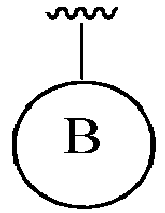

- 13. The compound of any one of clauses 2-12, wherein R3 is hydrogen.
- 14. The compound of any one of clauses 2-13, wherein
R4 is hydrogen, C1-4alkyl, C2-4alkenyl, C2-4alkynyl, C3-5cycloalkyl, phenyl, wherein each of said R4 groups is optionally substituted with up to four Br, Cl, F, or C1-4alkyl, up to three CN, NO2, C2-4alkenyl, C2-4alkynyl, C3-6cycloalkyl, C0-4 alkyl-C3-5 cycloalkyl, C0-4 alkyl-O-C1-4 alkyl, C0-4 alkyl-O-C0-4 alkyl-C3-5 cycloalkyl, C(O)OC1-4 alkyl, C(O)OC0-4 alkyl-C3-5 cycloalkyl, C0-4 alkyl-C(O)NH2, C(O)NHC1-4 alkyl, C(O)N(C1-4 alkyl)2, C(O)NH(C0-4 alkyl-C3-5 cycloalkyl), CH2OR5, C0-4 alkyl-C(O)R5, C0-4 alkyl-C(O)N(R5)2,
C0-4 alkyl-C(O)OR5, C0-4 alkyl-NHC(O)R5, C0-4 alkyl-N(R5)2, a heterocyclic ring system selected from oxetane, azetidine, tetrahydrofuran, dihydropyran, tetrahydropyran, morpholine, piperidine, pyrrolidine or piperazine, a heteroaryl ring system selected from furan, oxazole, oxadiazole, pyrrole, pyrazole, triazole, oxadiazole or tetrazole, or up to two OR5, wherein each of said optional R4 substituents is optionally substituted with up to four fluorine atoms, up to two C1-4alkyl groups, up to two OH groups, up to two OC1-4alkyl groups, up to two
SC1-4alkyl groups, a C(O)C1-4 alkyl, a C(O)OC1-4 alkyl, or a C(O)OC0-4 alkyl-C3-5 cycloalkyl; and
each R5 is, independently, hydrogen, C1-4alkyl, a 5-6-membered heteroaryl selected from imidazole, triazole, thiazole, pyridine, or pyrimidine, a 4-6-membered heterocyclyl selected from oxetane, tetrahydrofuran, or tetrahydropyran, and each R5 group is optionally substituted with chloro, up to three fluorine atoms, up to two C1-2alkyl, CH2OH, CN, up to two OH, up to two OC1-2alkyl, a spirooxetane, pyrrolidine, or triazole, or two R5 groups together with the intervening nitrogen atom form a morpholine ring, azetidine ring, pyrrolidine ring, piperidine ring, or piperazine ring. - 15. The compound of any one of clauses 2-13, wherein
R4 is a 5-10-membered monocyclic or bicyclic heteroaryl ring selected from pyrrole, imidazole, pyrazole, triazole, thiazole, isothiazole, oxazole, pyridine, pyrimidine, pyrimidinone, pyrazine, pyridazine, or quinoline, wherein each of said R4 groups is optionally substituted with up to four Br, Cl, F, or C1-4alkyl, up to three CN, NO2, C2-4alkenyl,
C2-4alkynyl, C3-6cycloalkyl, C0-4 alkyl-C3-5 cycloalkyl, C0-4 alkyl-O-C1-4 alkyl,
C0-4 alkyl-O-C0-4 alkyl-C3-5 cycloalkyl, C(O)OC1-4 alkyl, C(O)OC0-4 alkyl-C3-5 cycloalkyl,
C0-4 alkyl-C(O)NH2, C(O)NHC1-4 alkyl, C(O)N(C1-4 alkyl)2, C(O)NH(C0-4 alkyl-C3-5 cycloalkyl), CH2OR5, C0-4 alkyl-C(O)R5, C0-4 alkyl-C(O)N(R5)2, C0-4 alkyl-C(O)OR5,
C0-4 alkyl-NHC(O)R5, C0-4 alkyl-N(R5)2, a heterocyclic ring system selected from oxetane, azetidine, tetrahydrofuran, dihydropyran, tetrahydropyran, morpholine, piperidine, pyrrolidine or piperazine, a heteroaryl ring system selected from furan, oxazole, oxadiazole, pyrrole, pyrazole, triazole, oxadiazole or tetrazole, or up to two OR5, wherein each of said optional R4 substituents is optionally substituted with up to four fluorine atoms, up to two C1-4alkyl groups, up to two OH groups, up to two OC1-4alkyl groups, up to two SC1-4alkyl groups, a C(O)C1-4 alkyl, a C(O)OC1-4 alkyl, or a C(O)OC0-4 alkyl-C3-5 cycloalkyl; and
each R5 is, independently, hydrogen, C1-4alkyl, a 5-6-membered heteroaryl selected from imidazole, triazole, thiazole, pyridine, or pyrimidine, a 4-6-membered heterocyclyl selected from oxetane, tetrahydrofuran, or tetrahydropyran, and each R5 group is optionally substituted with chloro, up to three fluorine atoms, up to two C1-2alkyl, CH2OH, CN, up to two OH, up to two OC1-2alkyl, a spirooxetane, pyrrolidine, or triazole, or two R5 groups together with the intervening nitrogen atom form a morpholine ring, azetidine ring, pyrrolidine ring, piperidine ring, or piperazine ring. - 16. The compound of any one of clauses 2-13, wherein
R4 is a 4-10-membered monocyclic or bicyclic heterocyclyl ring selected from oxetane, tetrahydrofuran, tetrahydropyran, dihydroisoxazole, pyrimidine-2,4(1H,3H)-dione, dihydrofuropyrimidine, dihydropyranopyrimidine, dihydropyrrolopyrimidine, tetrahydropteridine, or tetrahydropyridopyrimidine, wherein each of said R4 groups is optionally substituted with up to four Br, Cl, F, or C1-4alkyl, up to three CN, NO2, C2-4alkenyl, C2-4alkynyl, C3-6cycloalkyl, C0-4 alkyl-C3-5 cycloalkyl, C0-4 alkyl-O-C1-4 alkyl, C0-4 alkyl-O-C0-4 alkyl-C3-5 cycloalkyl, C(O)OC1-4 alkyl, C(O)OC0-4 alkyl-C3-5 cycloalkyl, C0-4 alkyl-C(O)NH2, C(O)NHC1-4 alkyl, C(O)N(C1-4 alkyl)2, C(O)NH(C0-4 alkyl-C3-5 cycloalkyl), CH2OR5, C0-4 alkyl-C(O)R5, C0-4 alkyl-C(O)N(R5)2, C0-4 alkyl-C(O)OR5, C0-4 alkyl-NHC(O)R5, C0-4 alkyl-N(R5)2, a heterocyclic ring system selected from oxetane, azetidine, tetrahydrofuran, dihydropyran, tetrahydropyran, morpholine, piperidine, pyrrolidine or piperazine, a heteroaryl ring system selected from furan, oxazole, oxadiazole, pyrrole, pyrazole, triazole, oxadiazole or tetrazole, or up to two OR5, wherein each of said optional R4 substituents is optionally substituted with up to four fluorine atoms, up to two C1-4alkyl groups, up to two OH groups, up to two OC1-4alkyl groups, up to two SC1-4alkyl groups, a C(O)C1-4 alkyl, a C(O)OC1-4 alkyl, or a C(O)OC0-4 alkyl-C3-5 cycloalkyl; and
each R5 is, independently, hydrogen, C1-4alkyl, a 5-6-membered heteroaryl selected from imidazole, triazole, thiazole, pyridine, or pyrimidine, a 4-6-membered heterocyclyl selected from oxetane, tetrahydrofuran, or tetrahydropyran, and each R5 group is
optionally substituted with chloro, up to three fluorine atoms, up to two C1-2alkyl, CH2OH, CN, up to two OH, up to two OC1-2alkyl, a spirooxetane, pyrrolidine, or triazole, or two R5 groups together with the intervening nitrogen atom form a morpholine ring, azetidine ring, pyrrolidine ring, piperidine ring, or piperazine ring. - 17. The compound of clause 1, wherein Ring C is cyclohexane.
- 18. The compound of clause 17, having the following formula:

- 19. The compound of clause 17 or 18, wherein X is -NH-.
- 20. The compound of any one of clauses 17-19, having the following formula:
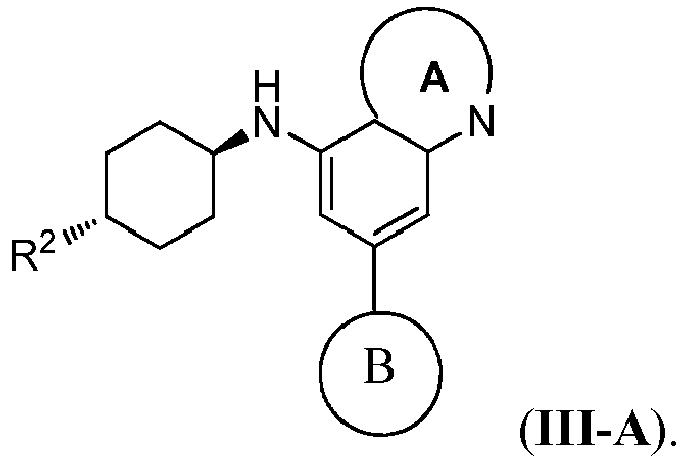
- 21. The compound of clause 20, having the following formula:

- 22. The compound of clause 20 or 21, wherein R2 is -C0-4 alkyl-NHR4 or -OR4.
- 23. The compound of clause 22, wherein R2 is -NHR4.
- 24. The compound of clause 22, wherein R2 is -OR4.
- 25. The compound of clause 17-19, having the following formula:

- 26. The compound of clause 25 having the following formula:

- 27. The compound of clause 25 or 26, wherein R1 is -C0-4 alkyl-NHR4 or -OR4.
- 28. The compound of clause 27, wherein R1 is -NHR4.
- 29. The compound of clause 27, wherein R1 is -OR4.
- 30. The compound of any one of clauses 17-29 wherein

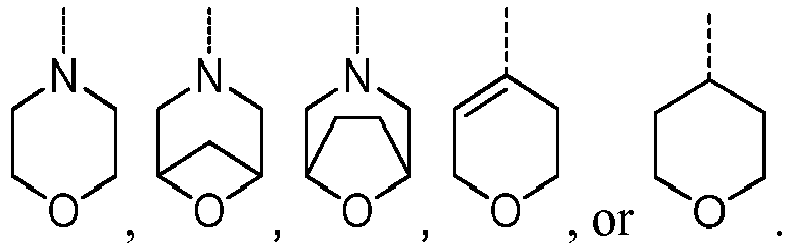
- 31. The compound of clause 30 wherein


- 32. The compound of clause 17 or 18, wherein X is -O-.
- 33. The compound of clause 17, 18 or 32, having the following formula:

- 34. The compound of clause 33, having the following formula:

- 35. The compound of clause 33 or 34, wherein is R2 is -C0-4 alkyl-NHR4 or -OR4.
- 36. The compound of clause 35, wherein is R2 is -NHR4.
- 37. The compound of clause 35, wherein is R2 is -OR4.
- 38. The compound of clause 17, 18 or 32, having the following formula:

- 39. The compound according to clause 38 having the following formula:

- 40. The compound of clause 38 or 39, wherein is R1 is -C0-4 alkyl-NHR4 or -OR4.
- 41. The compound of clause 40, wherein is R1 is -NHR4.
- 42. The compound of clause 40, wherein is R1 is -OR4.
- 43. The compound of clause 38 or 39 having the following formula:

Y is -O- or -NH-. - 44. The compound of any one of clauses 32-43 wherein


- 45. The compound of clause 44 wherein


- 46. The compound of any one of clauses 17-45, wherein R3 is hydrogen, C1-4alkyl, OC1-2alkyl, or C(O)NH2, or C(O)H, wherein each of said R3 alkyl is optionally substituted with OH.
- 47. The compound of clause 46, wherein R3 is hydrogen.
- 48. The compound of any one of clauses 17-47, wherein
R4 is hydrogen, C1-4alkyl, C2-4alkenyl, C2-4alkynyl, C3-5cycloalkyl, phenyl, wherein each of said R4 groups is optionally substituted with up to four Br, Cl, F, or C1-4alkyl, up to three CN, NO2, C2-4alkenyl, C2-4alkynyl, C3-6cycloalkyl, C0-4 alkyl-C3-5 cycloalkyl, C0-4 alkyl-O-C1-4 alkyl, C0-4 alkyl-O-C0-4 alkyl-C3-5 cycloalkyl, C(O)OC1-4 alkyl, C(O)OC0-4 alkyl-C3-5 cycloalkyl, C0-4 alkyl-C(O)NH2, C(O)NHC1-4 alkyl, C(O)N(C1-4 alkyl)2, C(O)NH(C0-4 alkyl-C3-5 cycloalkyl), CH2OR5, C0-4 alkyl-C(O)R5, C0-4 alkyl-C(O)N(R5)2,
C0-4 alkyl-C(O)OR5, C0-4 alkyl-NHC(O)R5, C0-4 alkyl-N(R5)2, a heterocyclic ring system selected from oxetane, azetidine, tetrahydrofuran, dihydropyran, tetrahydropyran, morpholine, piperidine, pyrrolidine or piperazine, a heteroaryl ring system selected from furan, oxazole, oxadiazole, pyrrole, pyrazole, triazole, oxadiazole or tetrazole, or up to two OR5, wherein each of said optional R4 substituents is optionally substituted with up to four fluorine atoms, up to two C1-4alkyl groups, up to two OH groups, up to two OC1-4alkyl groups, up to two
SC1-4alkyl groups, a C(O)C1-4 alkyl, a C(O)OC1-4 alkyl, or a C(O)OC0-4 alkyl-C3-5 cycloalkyl; and
each R5 is, independently, hydrogen, C1-4alkyl, a 5-6-membered heteroaryl selected from imidazole, triazole, thiazole, pyridine, or pyrimidine, a 4-6-membered heterocyclyl selected from oxetane, tetrahydrofuran, or tetrahydropyran, and each R5 group is optionally substituted with chloro, up to three fluorine atoms, up to two C1-2alkyl, CH2OH, CN, up to two OH, up to two OC1-2alkyl, a spirooxetane, pyrrolidine, or triazole, or two R5 groups together with the intervening nitrogen atom form a morpholine ring, azetidine ring, pyrrolidine ring, piperidine ring, or piperazine ring. - 49. The compound of any one of clauses 17-47, wherein
R4 is a 5-10-membered monocyclic or bicyclic heteroaryl ring selected from pyrrole, imidazole, pyrazole, triazole, thiazole, isothiazole, oxazole, pyridine, pyrimidine, pyrimidinone, pyrazine, pyridazine, or quinoline, wherein each of said R4 groups is optionally substituted with up to four Br, Cl, F, or C1-4alkyl, up to three CN, NO2, C2-4alkenyl, C2-4alkynyl, C3-6cycloalkyl, C0-4 alkyl-C3-5 cycloalkyl, C0-4 alkyl-O-C1-4 alkyl, C0-4 alkyl-O-C0-4 alkyl-C3-5 cycloalkyl, C(O)OC1-4 alkyl, C(O)OC0-4 alkyl-C3-5 cycloalkyl, C0-4 alkyl-C(O)NH2, C(O)NHC1-4 alkyl, C(O)N(C1-4 alkyl)2,
C(O)NH(C0-4 alkyl-C3-5 cycloalkyl), CH2OR5, C0-4 alkyl-C(O)R5, C0-4 alkyl-C(O)N(R5)2, C0-4 alkyl-C(O)OR5, C0-4 alkyl-NHC(O)R5, C0-4 alkyl-N(R5)2, a heterocyclic ring system selected from oxetane, azetidine, tetrahydrofuran, dihydropyran, tetrahydropyran, morpholine, piperidine, pyrrolidine or piperazine, a heteroaryl ring system selected from furan, oxazole, oxadiazole, pyrrole, pyrazole, triazole, oxadiazole or tetrazole, or up to two OR5, wherein each of said optional R4 substituents is optionally substituted with up to four fluorine atoms, up to two C1-4alkyl groups, up to two OH groups, up to two OC1-4alkyl groups, up to two
SC1-4alkyl groups, a C(O)C1-4 alkyl, a C(O)OC1-4 alkyl, or a C(O)OC0-4 alkyl-C3-5 cycloalkyl; and
each R5 is, independently, hydrogen, C1-4alkyl, a 5-6-membered heteroaryl selected from imidazole, triazole, thiazole, pyridine, or pyrimidine, a 4-6-membered heterocyclyl selected from oxetane, tetrahydrofuran, or tetrahydropyran, and each R5 group is optionally substituted with chloro, up to three fluorine atoms, up to two C1-2alkyl, CH2OH, CN, up to two OH, up to two OC1-2alkyl, a spirooxetane, pyrrolidine, or triazole, or two R5 groups together with the intervening nitrogen atom form a morpholine ring, azetidine ring, pyrrolidine ring, piperidine ring, or piperazine ring. - 50. The compound of clause 49, wherein
R4 is pyridine or pyrimidine, which is optionally substituted with up to four Br, Cl, F, or C1-4alkyl, up to three CN, NO2, C2-4alkenyl, C2-4alkynyl, C3-6cycloalkyl, C0-4 alkyl-C3-5 cycloalkyl, C0-4 alkyl-O-C1-4 alkyl, C0-4 alkyl-O-C0-4 alkyl-C3-5 cycloalkyl, C(O)OC1-4 alkyl, C(O)OC0-4 alkyl-C3-5 cycloalkyl, C0-4 alkyl-C(O)NH2, C(O)NHC1-4 alkyl, C(O)N(C1-4 alkyl)2, C(O)NH(C0-4 alkyl-C3-5 cycloalkyl), CH2OR5, C0-4 alkyl-C(O)R5, C0-4 alkyl-C(O)N(R5)2,
C0-4 alkyl-C(O)OR5, C0-4 alkyl-NHC(O)R5, C0-4 alkyl-N(R5)2, a heterocyclic ring system selected from oxetane, azetidine, tetrahydrofuran, dihydropyran, tetrahydropyran, morpholine, piperidine, pyrrolidine or piperazine, a heteroaryl ring system selected from furan, oxazole, oxadiazole, pyrrole, pyrazole, triazole, oxadiazole or tetrazole, or up to two OR5, wherein each of said optional R4 substituents is optionally substituted with up to four fluorine atoms, up to two C1-4alkyl groups, up to two OH groups, up to two OC1-4alkyl groups, up to two
SC1-4alkyl groups, a C(O)C1-4 alkyl, a C(O)OC1-4 alkyl, or a C(O)OC0-4 alkyl-C3-5 cycloalkyl; and
each R5 is, independently, hydrogen, C1-4alkyl, a 5-6-membered heteroaryl selected from imidazole, triazole, thiazole, pyridine, or pyrimidine, a 4-6-membered heterocyclyl selected from oxetane, tetrahydrofuran, or tetrahydropyran, and each R5 group is optionally substituted with chloro, up to three fluorine atoms, up to two C1-2alkyl, CH2OH, CN, up to two OH, up to two OC1-2alkyl, a spirooxetane, pyrrolidine, or triazole, or two R5 groups together with the intervening nitrogen atom form a morpholine ring, azetidine ring, pyrrolidine ring, piperidine ring, or piperazine ring. - 51. The compound of any one of clauses 17-47, wherein
R4 is a 4-10-membered monocyclic or bicyclic heterocyclyl ring selected from oxetane, tetrahydrofuran, tetrahydropyran, dihydroisoxazole, pyrimidine-2,4(1H,3H)-dione, dihydrofuropyrimidine, dihydropyranopyrimidine, dihydropyrrolopyrimidine, tetrahydropteridine, or tetrahydropyridopyrimidine, wherein each of said R4 groups is optionally substituted with up to four Br, Cl, F, or C1-4alkyl, up to three CN, NO2, C2-4alkenyl, C2-4alkynyl, C3-6cycloalkyl, C0-4 alkyl-C3-5 cycloalkyl, C0-4 alkyl-O-C1-4 alkyl, C0-4 alkyl-O-C0-4 alkyl-C3-5 cycloalkyl, C(O)OC1-4 alkyl, C(O)OC0-4 alkyl-C3-5 cycloalkyl, C0-4 alkyl-C(O)NH2, C(O)NHC1-4 alkyl, C(O)N(C1-4 alkyl)2,
C(O)NH(C0-4 alkyl-C3-5 cycloalkyl), CH2OR5, C0-4 alkyl-C(O)R5, C0-4 alkyl-C(O)N(R5)2, C0-4 alkyl-C(O)OR5, C0-4 alkyl-NHC(O)R5, C0-4 alkyl-N(R5)2, a heterocyclic ring system selected from oxetane, azetidine, tetrahydrofuran, dihydropyran, tetrahydropyran, morpholine, piperidine, pyrrolidine or piperazine, a heteroaryl ring system selected from furan, oxazole, oxadiazole, pyrrole, pyrazole, triazole, oxadiazole or tetrazole, or up to two OR5, wherein each of said optional R4 substituents is optionally substituted with up to four fluorine atoms, up to two C1-4alkyl groups, up to two OH groups, up to two OC1-4alkyl groups, up to two
SC1-4alkyl groups, a C(O)C1-4 alkyl, a C(O)OC1-4 alkyl, or a C(O)OC0-4 alkyl-C3-5 cycloalkyl; and
each R5 is, independently, hydrogen, C1-4alkyl, a 5-6-membered heteroaryl selected from imidazole, triazole, thiazole, pyridine, or pyrimidine, a 4-6-membered heterocyclyl selected from oxetane, tetrahydrofuran, or tetrahydropyran, and each R5 group is optionally substituted with chloro, up to three fluorine atoms, up to two C1-2alkyl, CH2OH, CN, up to two OH, up to two OC1-2alkyl, a spirooxetane, pyrrolidine, or triazole, or two R5 groups together with the intervening nitrogen atom form a morpholine ring, azetidine ring, pyrrolidine ring, piperidine ring, or piperazine ring. - 52. The compound of clause 32 having the formula:

- R3 is hydrogen, -C1-4alkyl, fluoro, chloro, -OC1-2alkyl, or -C(O)NH2, -C(O)H, or -CN, wherein each of said R3 alkyl is optionally substituted with OH or up to 3 fluorine atoms;
- R4 is
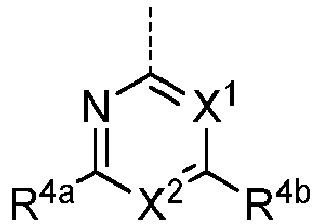
- X1 is N, CH, CF, CCl, or CC1-2 alkyl optionally substituted with up to 3 fluorine atoms;
- X2 is N or CR4c, wherein X1 and X2 cannot simultaneously be N;
- each of R4a , R4b, and R4c is, independently, hydrogen, F, Cl, Br, CN, NO2, C1-4 alkyl, C0-4 alkyl-C3-5 cycloalkyl, C0-4 alkyl-O-C1-4 alkyl, C0-4 alkyl-O-C0-4 alkyl-C3-5 cycloalkyl, C2-4 alkenyl, C2-4 alkynyl, C(O)OC1-4 alkyl, C(O)OC0-4 alkyl-C3-5 cycloalkyl, C(O)NH2, C(O)NHC1-4 alkyl, C(O)N(C1-4 alkyl)2, C(O)NH(C0-4 alkyl-C3-5 cycloalkyl), a heterocyclic ring system selected from oxetane, azetidine, tetrahydrofuran, dihydropyran, tetrahydropyran, morpholine, piperidine, or piperazine, or a heteroaryl ring system selected from furan, oxazole, oxadiazole, pyrrole, pyrazole, triazole, or tetrazole, or R4c, R4a, and the intervening atoms form a dihydrofuran, a dihydropyran, or a tetrahydropiperidine heterocyclic ring system;
- wherein each of said R4a, R4b, or R4c heterocyclic or heteroaryl ring systems is optionally substituted with up to four fluorine atoms, up to two C1-4 alkyl, up to two OH groups, a C(O)C1-4 alkyl, a C(O)OC1-4 alkyl, or a C(O)OC0-4 alkyl-C3-5 cycloalkyl; and
- wherein each of said R4a, R4b, or R4c alkyl or cycloalkyl is optionally substituted with up to 2 non-geminal OH groups or up to 3 fluorine atoms.
- 53. The compound of clause 52, wherein R3 is hydrogen, -C1-4alkyl, -OC1-2alkyl, or -C(O)NH2, or -C(O)H, wherein each of said R3 alkyl is optionally substituted with OH.
- 54. The compound of clause 52 or 53, wherein R3 is hydrogen.
- 55. The compound of any one of clauses 52-54, wherein each of X1 and X2 is, independently, CH or N, wherein X1 and X2 cannot simultaneously be N.
- 56. The compound of any one of clauses 52-55, wherein each of R4a and R4b is, independently, a heterocyclic ring system selected from oxetane, azetidine, tetrahydrofuran, dihydropyran, tetrahydropyran, morpholine, piperidine, or piperazine,
wherein each of said R4a or R4b heterocyclic or heteroaryl ring systems is optionally substituted with up to four fluorine atoms, up to two C1-4 alkyl, up to two OH groups, a C(O)C1-4 alkyl, a C(O)OC1-4 alkyl, or a C(O)OC0-4 alkyl-C3-5 cycloalkyl; and
wherein each of said R4a or R4b alkyl or cycloalkyl is optionally substituted with up to 2 non-geminal OH groups or up to 3 fluorine atoms. - 57. The compound of any one of clauses 52-55, wherein each of R4a and R4b is, independently, a heteroaryl ring system selected from furan, oxazole, oxadiazole, pyrrole, pyrazole, triazole, or tetrazole,
wherein each of said R4a or R4b heterocyclic or heteroaryl ring systems is optionally substituted with up to four fluorine atoms, up to two C1-4 alkyl, up to two OH groups, a C(O)C1-4 alkyl, a C(O)OC1-4 alkyl, or a C(O)OC0-4 alkyl-C3-5 cycloalkyl; and wherein each of said R4a or R4b alkyl or cycloalkyl is optionally substituted with up to 2 non-geminal OH groups or up to 3 fluorine atoms. - 58. The compound of any one of clauses 52-55, wherein each of R4a and R4b is, independently, hydrogen, F, Cl, Br, CN, NO2, C1-4 alkyl, C0-4 alkyl-C3-5 cycloalkyl, C0-4 alkyl-O-C1-4 alkyl, C0-4 alkyl-O-C0-4 alkyl-C3-5 cycloalkyl, C2-4 alkenyl, C2-4 alkynyl, C(O)OC1-4 alkyl, C(O)OC0-4 alkyl-C3-5 cycloalkyl, C(O)NH2, C(O)NHC1-4 alkyl, C(O)N(C1-4 alkyl)2, or C(O)NH(C0-4 alkyl-C3-5 cycloalkyl),
wherein each of said R4a or R4b heterocyclic or heteroaryl ring systems is optionally substituted with up to four fluorine atoms, up to two C1-4 alkyl, up to two OH groups, a C(O)C1-4 alkyl, a C(O)OC1-4 alkyl, or a C(O)OC0-4 alkyl-C3-5 cycloalkyl; and
wherein each of said R4a or R4b alkyl or cycloalkyl is optionally substituted with up to 2 non-geminal OH groups or up to 3 fluorine atoms. - 59. A compound selected from the list of compounds in Table 1.
- 60. A compound selected from the list of compounds in Table 2.
- 61. A pharmaceutical composition comprising a compound of any one of clauses 1-60 and a pharmaceutically acceptable excipient.
- 62. A method of sensitizing a cell to a therapeutic agent or a disease state that induces a DNA lesion comprising the step of contacting the cell with the compound of any one of clauses 1-61, or a pharmaceutical composition comprising said compound.
- 63. A method of potentiating a therapeutic regimen for the treatment of cancer in a patient comprising the step of administering to said patient an effective amount of the compound of any one of clauses 1-60, or a pharmaceutical composition comprising said compound.
- 64. A method of treating cancer or inhibiting cancer cell growth in a patient comprising administering to said patient an effective amount of the compound of any one of clauses 1-60, or a pharmaceutical composition comprising said compound, either alone or in combination with one or more additional therapeutic agent.
Claims (16)
- A compound having the formula:
 Ring A is
 Ring B is
 Ring C is a cyclohexane ring;X is -NH-, -O-, or -OC1-4 alkyl-;each of R1 and R2 is, independently, hydrogen, -C(O)NHR4, -C(O)OR4, -NHC(O)R4, -NHC(O)OR4, -NHC(O)NHR4, -NHS(O)2R4, -C0-4 alkyl-NHR4, or -OR4, wherein R1 and R2 cannot simultaneously be hydrogen, and wherein R1 and R2 and the intervening carbon atom can form a dioxane or dioxolane ring;R3 is hydrogen, -C1-4alkyl, fluoro, chloro, -OC1-2alkyl, -C(O)H, -C(O)OH, -C(O)OC1-2alkyl,-CN, -C(O)NHC1-2alkyl, or -C(O)NH2, wherein each of said R3 alkyl is optionally substituted with up to 3 fluorine atoms, up to two OH, or up to two OC1-2alkyl groups;R4 is hydrogen, C1-4alkyl, C2-4alkenyl, C2-4alkynyl, C3-5cycloalkyl, phenyl, pyrrole, imidazole, pyrazole, triazole, thiazole, isothiazole, oxazole, pyridine, pyrimidine, pyrimidinone, pyrazine, pyridazine, quinoline, oxetane, tetrahydrofuran, tetrahydropyran, dihydroisoxazole, pyrimidine-2,4(1H,3H)-dione, dihydrofuropyrimidine, dihydropyranopyrimidine, dihydropyrrolopyrimidine, tetrahydropteridine, or tetrahydropyridopyrimidine, wherein each of said R4 groups is optionally substituted with up to four Br, Cl, F, or C1-4alkyl, up to three CN, NO2, C2-4alkenyl, C2-4alkynyl, C3-6cycloalkyl, C0-4 alkyl-C3-5 cycloalkyl, C0-4 alkyl-O-C1-4 alkyl, C0-4 alkyl-O-C0-4 alkyl-C3-5 cycloalkyl, C(O)OC1-4 alkyl, C(O)OC0-4 alkyl-C3-5 cycloalkyl, C0-4 alkyl-C(O)NH2, C(O)NHC1-4 alkyl, C(O)N(C1-4 alkyl)2, C(O)NH(C0-4 alkyl-C3-5 cycloalkyl), CH2OR5, C0-4 alkyl-C(O)R5, C0-4 alkyl-C(O)N(R5)2, C0-4 alkyl-C(O)OR5, C0-4 alkyl-NHC(O)R5, C0-4 alkyl-N(R5)2, oxetane, azetidine, tetrahydrofuran, dihydropyran, tetrahydropyran, morpholine, piperidine, pyrrolidine, piperazine, furan, oxazole, oxadiazole, pyrrole, pyrazole, triazole, oxadiazole, tetrazole, or up to two OR5, wherein each of said optional R4 substituents is optionally substituted with up to four fluorine atoms, up to two C1-4alkyl groups, up to two OH groups, up to two OC1-4alkyl groups, up to two SC1-4alkyl groups, a C(O)C1-4 alkyl, a C(O)OC1-4 alkyl, or a C(O)OC0-4 alkyl-C3-5 cycloalkyl; andeach R5 is, independently, hydrogen, C1-4alkyl, imidazole, triazole, thiazole, pyridine, pyrimidine, oxetane, tetrahydrofuran, or tetrahydropyran, and each R5 group is optionally substituted with chloro, up to three fluorine atoms, up to two C1-2alkyl, CH2OH, CN, up to two OH, up to two OC1-2alkyl, a spirooxetane, pyrrolidine, or triazole, or two R5 groups together with the intervening nitrogen atom form a morpholine ring, azetidine ring, pyrrolidine ring, piperidine ring, or piperazine ring.
 - The compound of claim 1, wherein Ring C is cyclohexane; for example, having the following formula:
 a) the compound or pharmaceutically acceptable salt thereof, wherein X is -NH-; for example,
the compound having the following formula:


 b) the compound, wherein X is -O-; for example, the compound having the following formula:
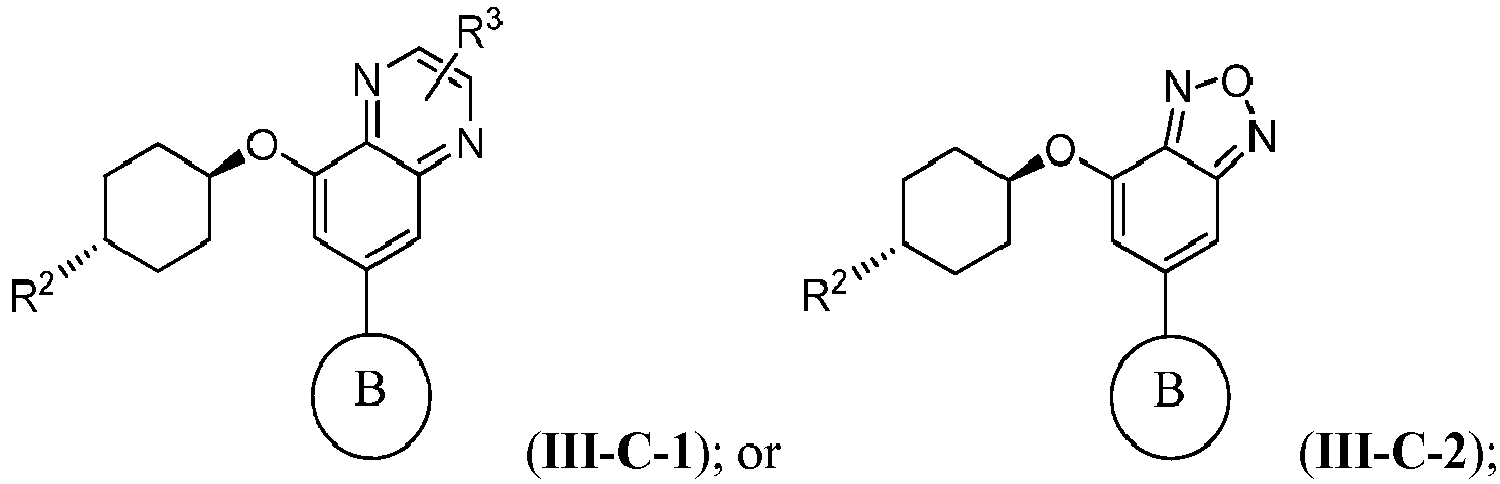


- The compound of claim 2, having the formula III-A, III-A-1, III-A-2, III-C, III-C-1, or III-C-2, wherein R2 is -C0-4 alkyl-NHR4, -OR4, or -NHR4;
or the compound of claim 2, having the formula III-B, III-B-1, III-B-2, III-D, III-D-1, or III-D-2, wherein R1 is -C0-4 alkyl-NHR4, -OR4 or -NHR4. - The compound of claim 2 having the formula III-D or III-D-1, having the following formula:

- The compound of any one of claims 2-4, wherein


- The compound of any one of claims 2-5, whereina) R4 is hydrogen, C1-4alkyl, C2-4alkenyl, C2-4alkynyl, C3-5cycloalkyl, or phenyl, wherein each of said R4 groups is optionally substituted with up to four Br, Cl, F, or C1-4alkyl, up to three CN, NO2, C2-4alkenyl, C2-4alkynyl, C3-6cycloalkyl, C0-4 alkyl-C3-5 cycloalkyl, C0-4 alkyl-O-C1-4 alkyl, C0-4 alkyl-O-C0-4 alkyl-C3-5 cycloalkyl, C(O)OC1-4 alkyl, C(O)OC0-4 alkyl-C3-5 cycloalkyl, C0-4 alkyl-C(O)NH2, C(O)NHC1-4 alkyl, C(O)N(C1-4 alkyl)2, C(O)NH(C0-4 alkyl-C3-5 cycloalkyl), CH2OR5, C0-4 alkyl-C(O)R5, C0-4 alkyl-C(O)N(R5)2, C0-4 alkyl-C(O)OR5, C0-4 alkyl-NHC(O)R5, C0-4 alkyl-N(R5)2, oxetane, azetidine, tetrahydrofuran, dihydropyran, tetrahydropyran, morpholine, piperidine, pyrrolidine, piperazine, furan, oxazole, oxadiazole, pyrrole, pyrazole, triazole, oxadiazole, tetrazole, or up to two OR5, wherein each of said optional R4 substituents is optionally substituted with up to four fluorine atoms, up to two C1-4alkyl groups, up to two OH groups, up to two OC1-4alkyl groups, up to two SC1-4alkyl groups, a C(O)C1-4 alkyl, a C(O)OC1-4 alkyl, or a C(O)OC0-4 alkyl-C3-5 cycloalkyl; and
each R5 is, independently, hydrogen, C1-4alkyl, imidazole, triazole, thiazole, pyridine, pyrimidine, oxetane, tetrahydrofuran, or tetrahydropyran, and each R5 group is optionally substituted with chloro, up to three fluorine atoms, up to two C1-2alkyl, CH2OH, CN, up to two OH, up to two OC1-2alkyl, a spirooxetane, pyrrolidine, or triazole, or two R5 groups together with the intervening nitrogen atom form a morpholine ring, azetidine ring, pyrrolidine ring, piperidine ring, or piperazine ring;b) R4 is pyrrole, imidazole, pyrazole, triazole, thiazole, isothiazole, oxazole, pyridine, pyrimidine, pyrimidinone, pyrazine, pyridazine, or quinoline, wherein each of said R4 groups is optionally substituted with up to four Br, Cl, F, or C1-4alkyl, up to three CN, NO2, C2-4alkenyl, C2-4alkynyl, C3-6cycloalkyl, C0-4 alkyl-C3-5 cycloalkyl, C0-4 alkyl-O-C1-4 alkyl, C0-4 alkyl-O-C0-4 alkyl-C3-5 cycloalkyl, C(O)OC1-4 alkyl, C(O)OC0-4 alkyl-C3-5 cycloalkyl, C0-4 alkyl-C(O)NH2, C(O)NHC1-4 alkyl, C(O)N(C1-4 alkyl)2, C(O)NH(C0-4 alkyl-C3-5 cycloalkyl), CH2OR5, C0-4 alkyl-C(O)R5, C0-4 alkyl-C(O)N(R5)2, C0-4 alkyl-C(O)OR5, C0-4 alkyl-NHC(O)R5, C0-4 alkyl-N(R5)2, oxetane, azetidine, tetrahydrofuran, dihydropyran, tetrahydropyran, morpholine, piperidine, pyrrolidine, piperazine, furan, oxazole, oxadiazole, pyrrole, pyrazole, triazole, oxadiazole, tetrazole, or up to two OR5, wherein each of said optional R4 substituents is optionally substituted with up to four fluorine atoms, up to two C1-4alkyl groups, up to two OH groups, up to two OC1-4alkyl groups, up to two SC1-4alkyl groups, a C(O)C1-4 alkyl, a C(O)OC1-4 alkyl, or a C(O)OC0-4 alkyl-C3-5 cycloalkyl; and
each R5 is, independently, hydrogen, C1-4alkyl, imidazole, triazole, thiazole, pyridine, pyrimidine, oxetane, tetrahydrofuran, or tetrahydropyran, and each R5 group is optionally substituted with chloro, up to three fluorine atoms, up to two C1-2alkyl, CH2OH, CN, up to two OH, up to two OC1-2alkyl, a spirooxetane, pyrrolidine, or triazole, or two R5 groups together with the intervening nitrogen atom form a morpholine ring, azetidine ring, pyrrolidine ring, piperidine ring, or piperazine ring;c) R4 is pyridine or pyrimidine, which is optionally substituted with up to four Br, Cl, F, or C1-4alkyl, up to three CN, NO2, C2-4alkenyl, C2-4alkynyl, C3-6cycloalkyl, C0-4 alkyl-C3-5 cycloalkyl, C0-4 alkyl-O-C1-4 alkyl, C0-4 alkyl-O-C0-4 alkyl-C3-5 cycloalkyl, C(O)OC1-4 alkyl, C(O)OC0-4 alkyl-C3-5 cycloalkyl, C0-4 alkyl-C(O)NH2, C(O)NHC1-4 alkyl, C(O)N(C1-4 alkyl)2, C(O)NH(C0-4 alkyl-C3-5 cycloalkyl), CH2OR5, C0-4 alkyl-C(O)R5, C0-4 alkyl-C(O)N(R5)2, C0-4 alkyl-C(O)OR5, C0-4 alkyl-NHC(O)R5, C0-4 alkyl-N(R5)2, oxetane, azetidine, tetrahydrofuran, dihydropyran, tetrahydropyran, morpholine, piperidine, pyrrolidine, piperazine, furan, oxazole, oxadiazole, pyrrole, pyrazole, triazole, oxadiazole, tetrazole, or up to two OR5, wherein each of said optional R4 substituents is optionally substituted with up to four fluorine atoms, up to two C1-4alkyl groups, up to two OH groups, up to two OC1-4alkyl groups, up to two SC1-4alkyl groups, a C(O)C1-4 alkyl, a C(O)OC1-4 alkyl, or a C(O)OC0-4 alkyl-C3-5 cycloalkyl; and
each R5 is, independently, hydrogen, C1-4alkyl, imidazole, triazole, thiazole, pyridine, pyrimidine, oxetane, tetrahydrofuran, or tetrahydropyran, and each R5 group is optionally substituted with chloro, up to three fluorine atoms, up to two C1-2alkyl, CH2OH, CN, up to two OH, up to two OC1-2alkyl, a spirooxetane, pyrrolidine, or triazole, or two R5 groups together with the intervening nitrogen atom form a morpholine ring, azetidine ring, pyrrolidine ring, piperidine ring, or piperazine ring; ord) R4 is oxetane, tetrahydrofuran, tetrahydropyran, dihydroisoxazole, pyrimidine-2,4(1H,3H)-dione, dihydrofuropyrimidine, dihydropyranopyrimidine, dihydropyrrolopyrimidine, tetrahydropteridine, or tetrahydropyridopyrimidine, wherein each of said R4 groups is optionally substituted with up to four Br, Cl, F, or C1-4alkyl, up to three CN, NO2, C2-4alkenyl, C2-4alkynyl, C3-6cycloalkyl, C0-4 alkyl-C3-5 cycloalkyl, C0-4 alkyl-O-C1-4 alkyl, C0-4 alkyl-O-C0-4 alkyl-C3-5 cycloalkyl, C(O)OC1-4 alkyl, C(O)OC0-4 alkyl-C3-5 cycloalkyl, C0-4 alkyl-C(O)NH2, C(O)NHC1-4 alkyl, C(O)N(C1-4 alkyl)2, C(O)NH(C0-4 alkyl-C3-5 cycloalkyl), CH2OR5, C0-4 alkyl-C(O)R5, C0-4 alkyl-C(O)N(R5)2, C0-4 alkyl-C(O)OR5, C0-4 alkyl-NHC(O)R5, C0-4 alkyl-N(R5)2, oxetane, azetidine, tetrahydrofuran, dihydropyran, tetrahydropyran, morpholine, piperidine, pyrrolidine, piperazine, furan, oxazole, oxadiazole, pyrrole, pyrazole, triazole, oxadiazole, tetrazole, or up to two OR5, wherein each of said optional R4 substituents is optionally substituted with up to four fluorine atoms, up to two C1-4alkyl groups, up to two OH groups, up to two OC1-4alkyl groups, up to two SC1-4alkyl groups, a C(O)C1-4 alkyl, a C(O)OC1-4 alkyl, or a C(O)OC0-4 alkyl-C3-5 cycloalkyl; and
each R5 is, independently, hydrogen, C1-4alkyl, imidazole, triazole, thiazole, pyridine, pyrimidine, oxetane, tetrahydrofuran, or tetrahydropyran, and each R5 group is optionally substituted with chloro, up to three fluorine atoms, up to two C1-2alkyl, CH2OH, CN, up to two OH, up to two OC1-2alkyl, a spirooxetane, pyrrolidine, or triazole, or two R5 groups together with the intervening nitrogen atom form a morpholine ring, azetidine ring, pyrrolidine ring, piperidine ring, or piperazine ring. - The compound of claim 2 part b), having the formula:
 R3 is hydrogen, -C1-4alkyl, fluoro, chloro, -OC1-2alkyl, -C(O)NH2, -C(O)H, or -CN, wherein each of said R3 alkyl is optionally substituted with OH or up to 3 fluorine atoms;R4 is
 X1 is N, CH, CF, CCl, or CC1-2 alkyl optionally substituted with up to 3 fluorine atoms;X2 is N or CR4c, wherein X1 and X2 cannot simultaneously be N;each of R4a , R4b, and R4c is, independently, hydrogen, F, Cl, Br, CN, NO2, C1-4 alkyl, C0-4 alkyl-C3-5 cycloalkyl, C0-4 alkyl-O-C1-4 alkyl, C0-4 alkyl-O-C0-4 alkyl-C3-5 cycloalkyl, C2-4 alkenyl, C2-4 alkynyl, C(O)OC1-4 alkyl, C(O)OC0-4 alkyl-C3-5 cycloalkyl, C(O)NH2, C(O)NHC1-4 alkyl, C(O)N(C1-4 alkyl)2, C(O)NH(C0-4 alkyl-C3-5 cycloalkyl), oxetane, azetidine, tetrahydrofuran, dihydropyran, tetrahydropyran, morpholine, piperidine, piperazine, furan, oxazole, oxadiazole, pyrrole, pyrazole, triazole, or tetrazole, or R4c, R4a, and the intervening atoms form a dihydrofuran, a dihydropyran, or a tetrahydropiperidine heterocyclic ring system;wherein each of said R4a, R4b, and R4c heterocyclic and heteroaryl ring system is optionally substituted with up to four fluorine atoms, up to two C1-4 alkyl, up to two OH groups, a C(O)C1-4 alkyl, a C(O)OC1-4 alkyl, or a C(O)OC0-4 alkyl-C3-5 cycloalkyl; andwherein each of said R4a, R4b, and R4c alkyl and cycloalkyl is optionally substituted with up to 2 non-geminal OH groups or up to 3 fluorine atoms.
 - The compound of any one of claims 2-5 or 7, wherein R3 is hydrogen, -C1-4alkyl,-OC1-2alkyl, -C(O)NH2, or -C(O)H, wherein each of said R3 alkyl is optionally substituted with OH; for example, wherein R3 is hydrogen.
- The compound of claim 7 or claim 8 when dependent on claim 7, wherein each of X1 and X2 is, independently, CH or N, wherein X1 and X2 cannot simultaneously be N.
- The compound of any one of claims 7-9, whereina) each of R4a and R4b is, independently, oxetane, azetidine, tetrahydrofuran, dihydropyran, tetrahydropyran, morpholine, piperidine, or piperazine,
wherein each of said R4a and R4b is optionally substituted with up to four fluorine atoms, up to two C1-4 alkyl, up to two OH groups, a C(O)C1-4 alkyl, a C(O)OC1-4 alkyl, or a C(O)OC0-4 alkyl-C3-5 cycloalkyl; and
wherein each of said R4a and R4b alkyl and cycloalkyl is optionally substituted with up to 2 non-geminal OH groups or up to 3 fluorine atoms;b) each of R4a and R4b is, independently, furan, oxazole, oxadiazole, pyrrole, pyrazole, triazole, or tetrazole,
wherein each of said R4a and R4b heterocyclic and heteroaryl ring systems is optionally substituted with up to four fluorine atoms, up to two C1-4 alkyl, up to two OH groups, a C(O)C1-4 alkyl, a C(O)OC1-4 alkyl, or a C(O)OC0-4 alkyl-C3-5 cycloalkyl; and
wherein each of said R4a and R4b alkyl and cycloalkyl is optionally substituted with up to 2 non-geminal OH groups or up to 3 fluorine atoms; orc) each of R4a and R4b is, independently, hydrogen, F, Cl, Br, CN, NO2, C1-4 alkyl, C0-4 alkyl-C3-5 cycloalkyl, C0-4 alkyl-O-C1-4 alkyl, C0-4 alkyl-O-C0-4 alkyl-C3-5 cycloalkyl, C2-4 alkenyl, C2-4 alkynyl, C(O)OC1-4 alkyl, C(O)OC0-4 alkyl-C3-5 cycloalkyl, C(O)NH2, C(O)NHC1-4 alkyl, C(O)N(C1-4 alkyl)2, or C(O)NH(C0-4 alkyl-C3-5 cycloalkyl),
wherein each of said R4a and R4b alkyl and cycloalkyl is optionally substituted with up to 2 non-geminal OH groups or up to 3 fluorine atoms. - The compound of claim 1, selected from the following compounds, or a pharmaceutically acceptable salt thereof:


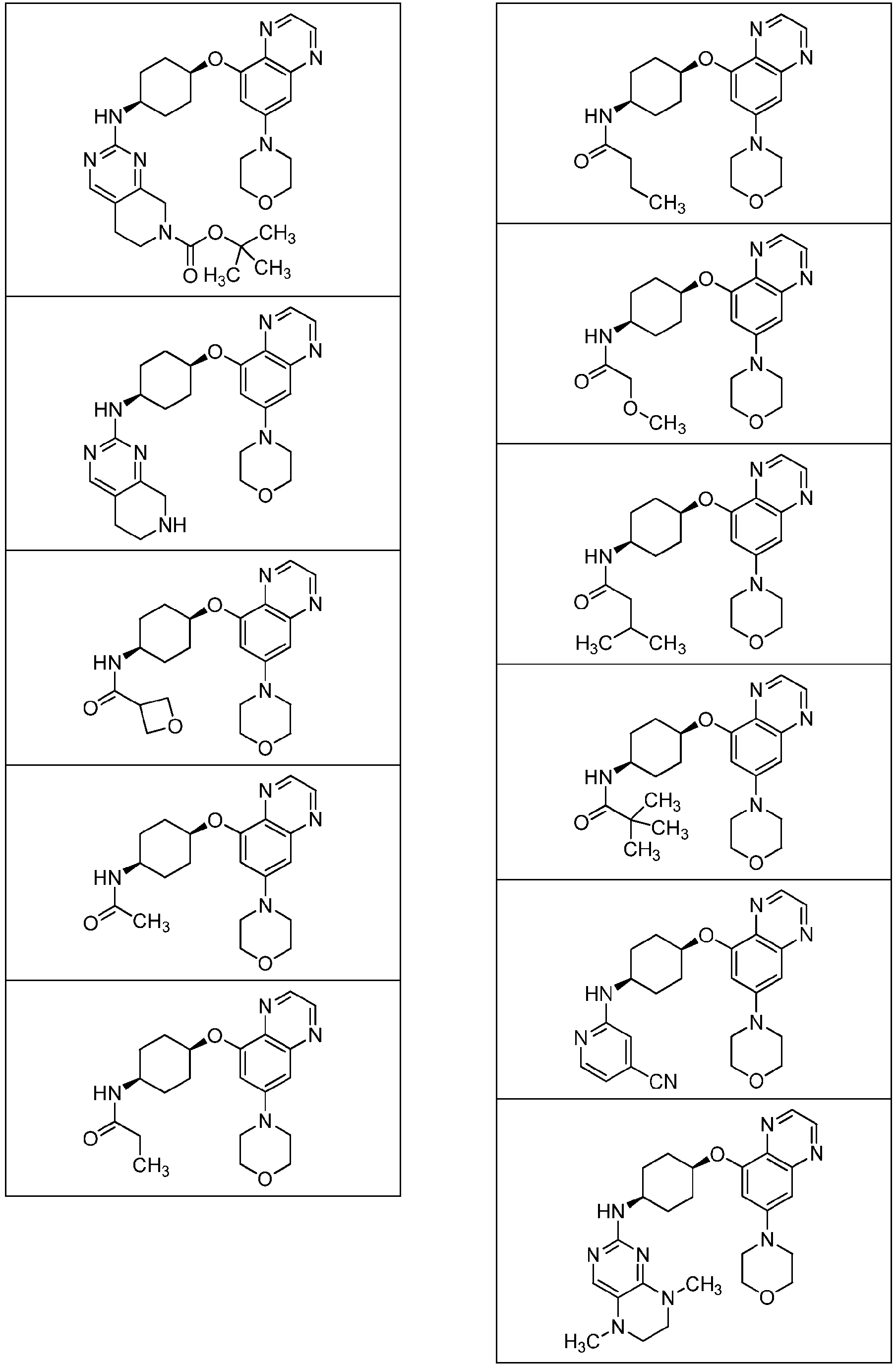
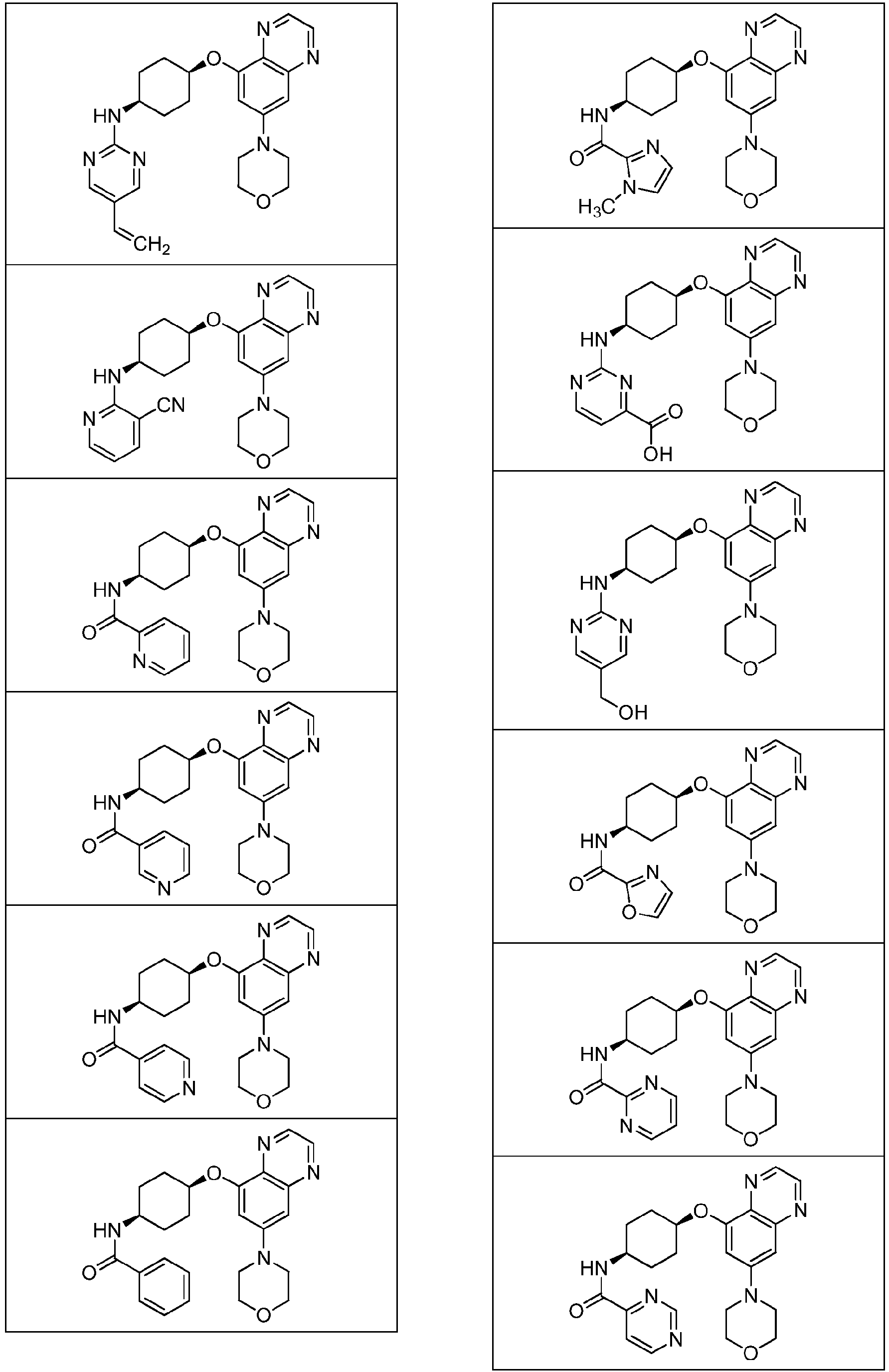


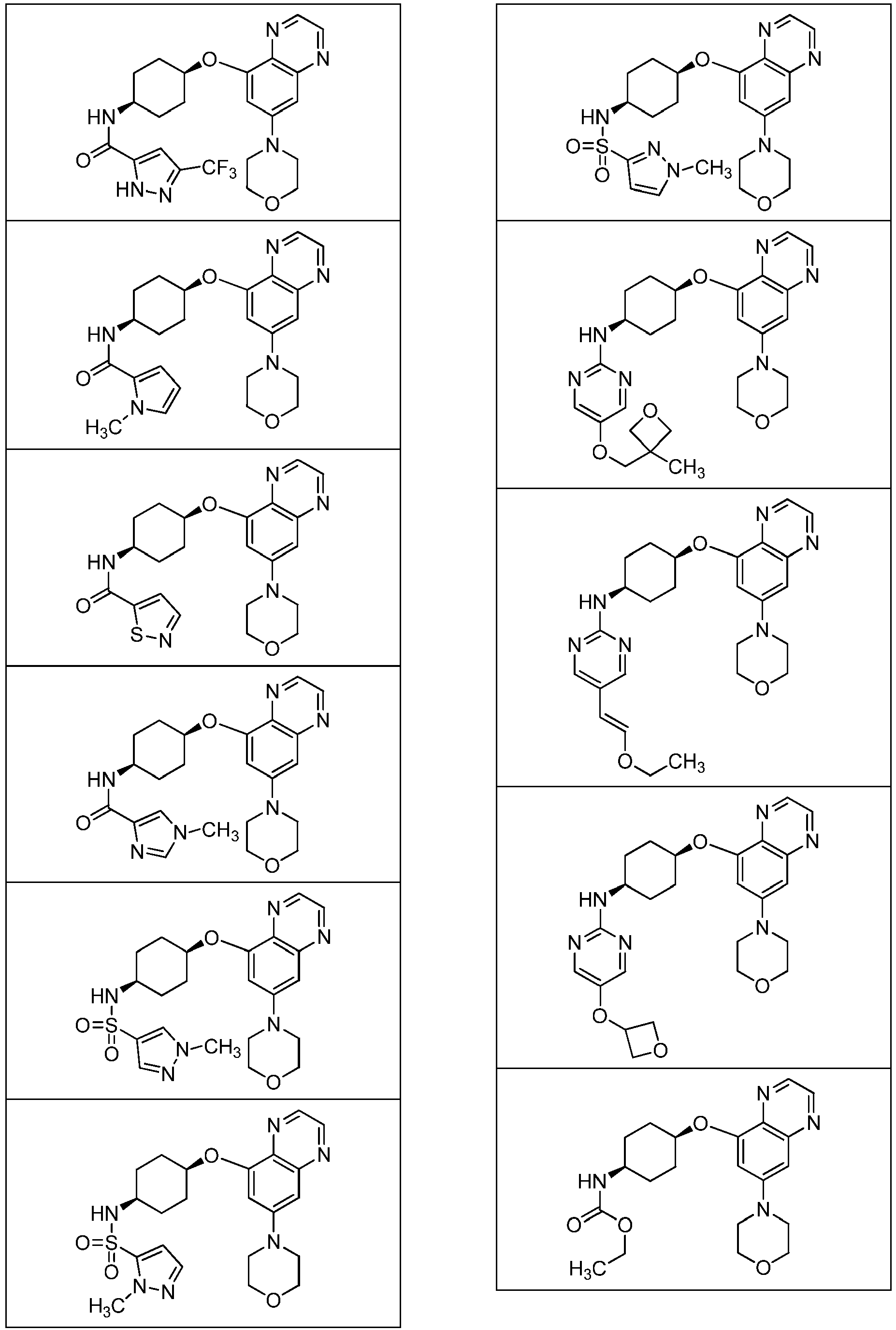
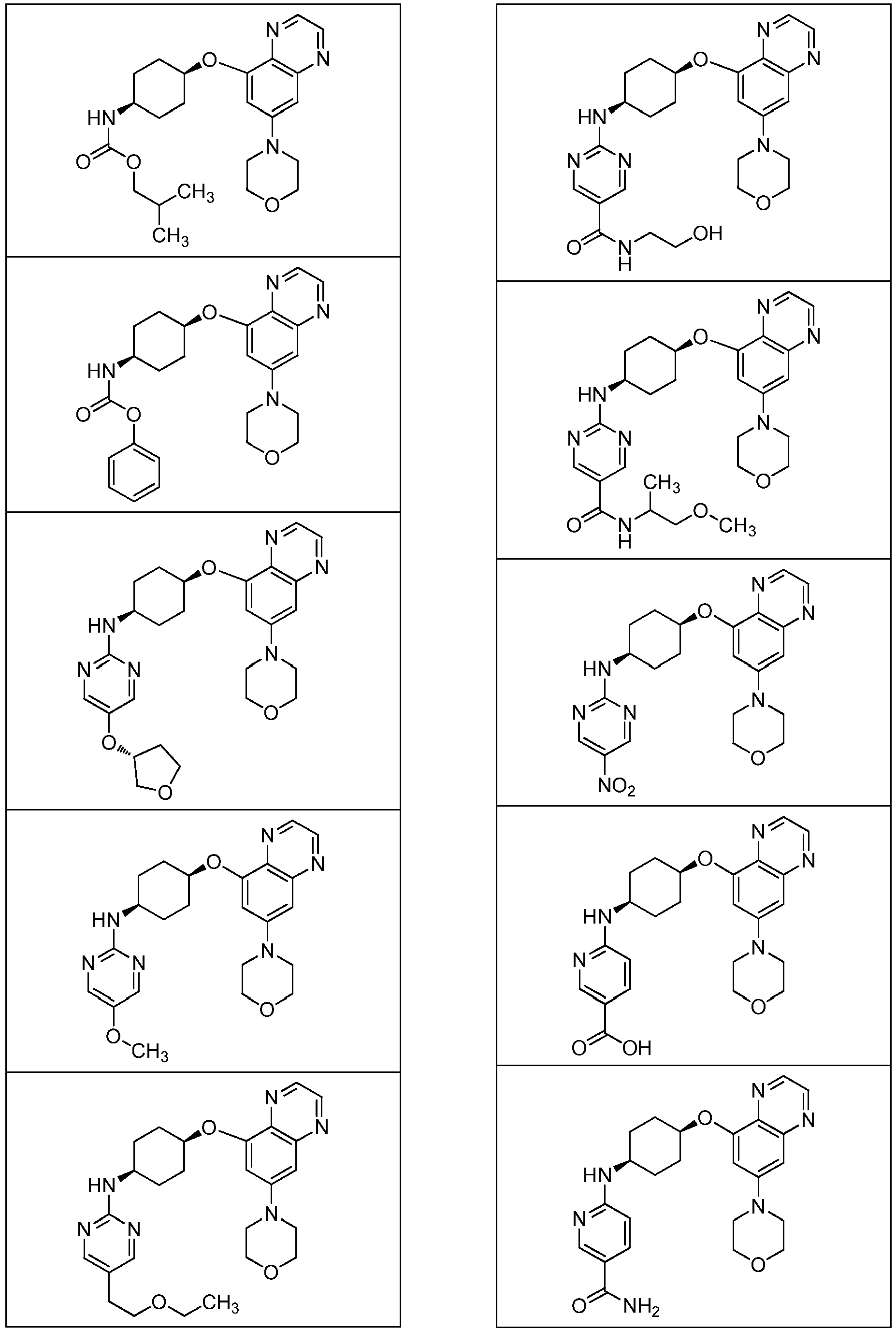

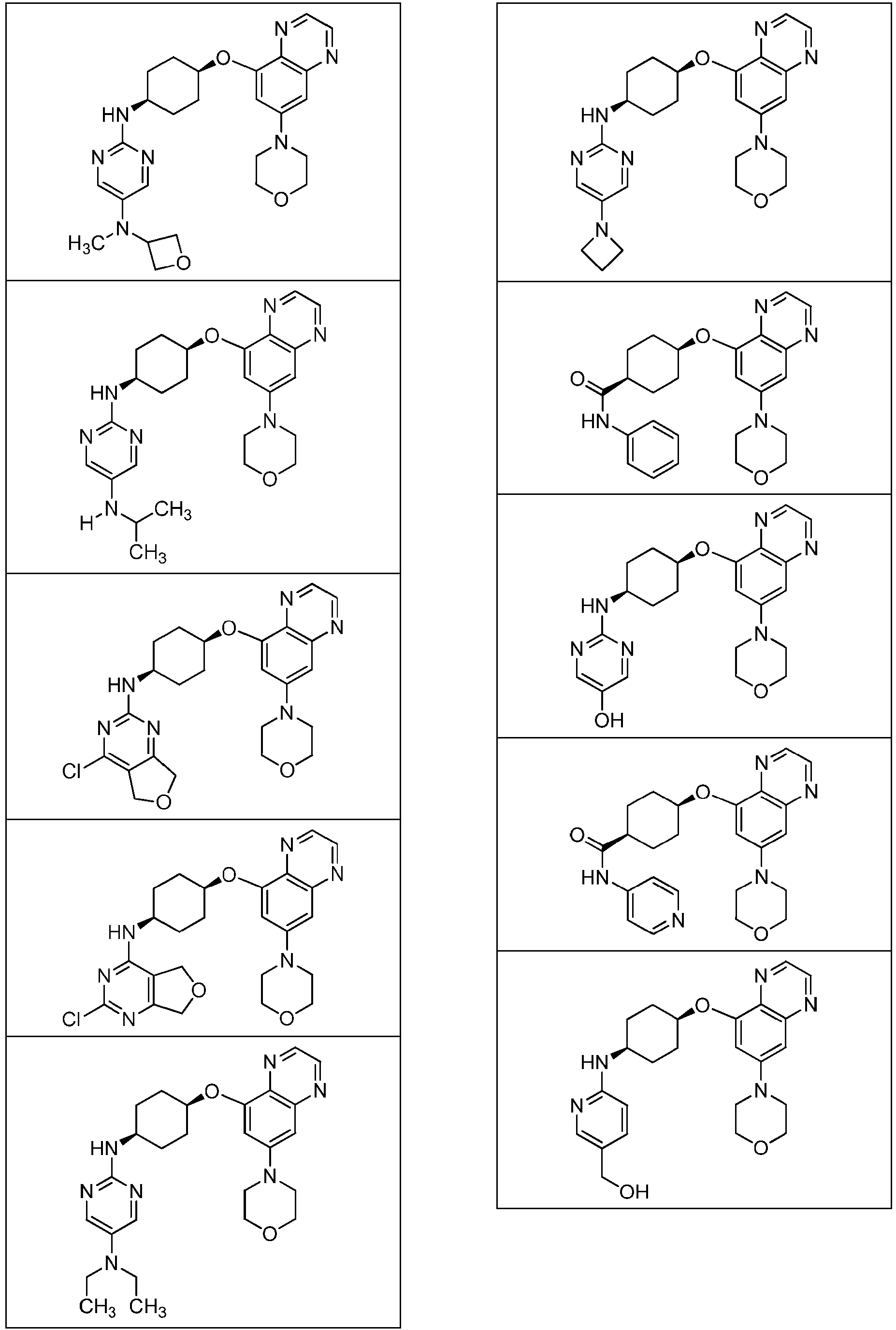


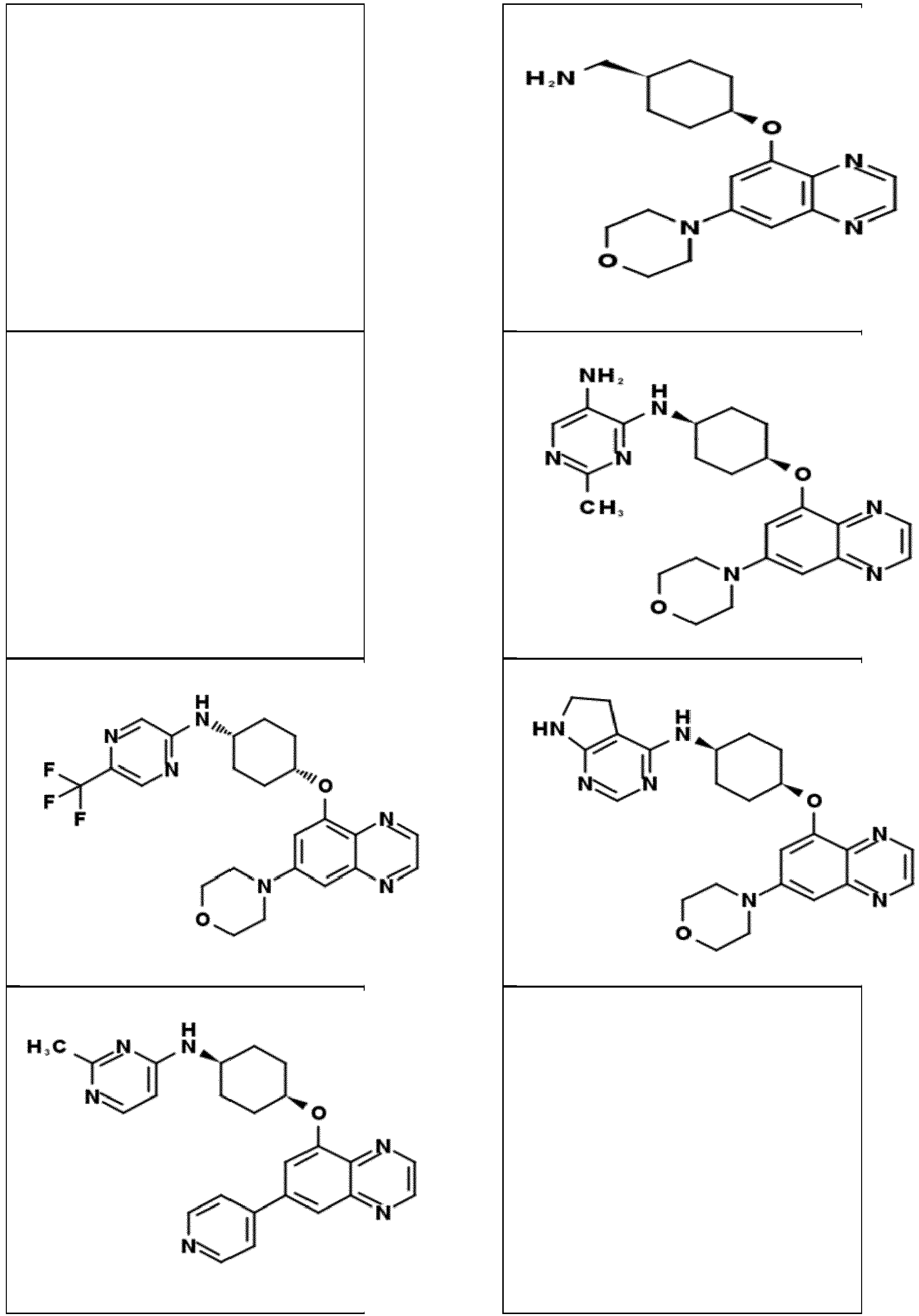


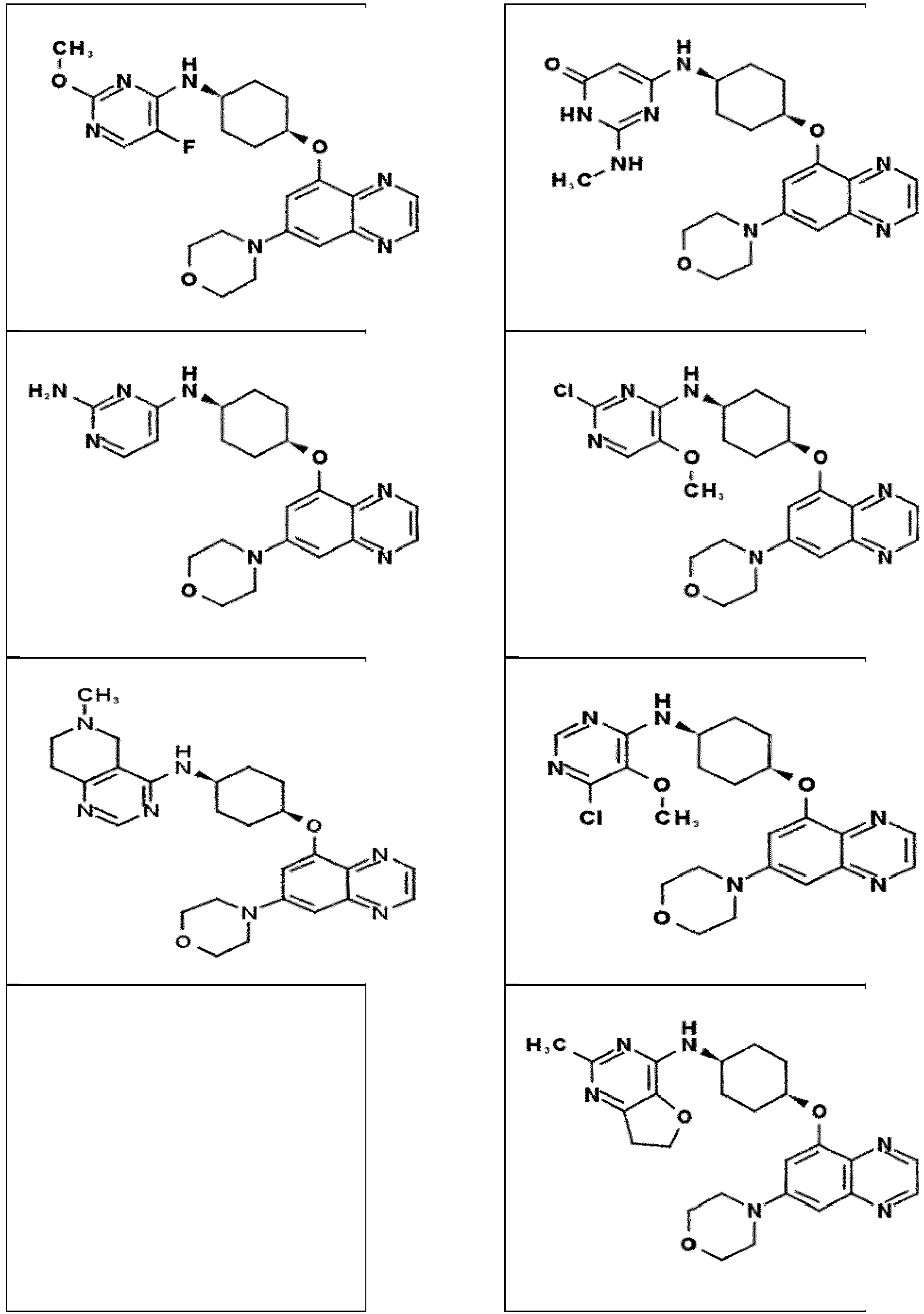


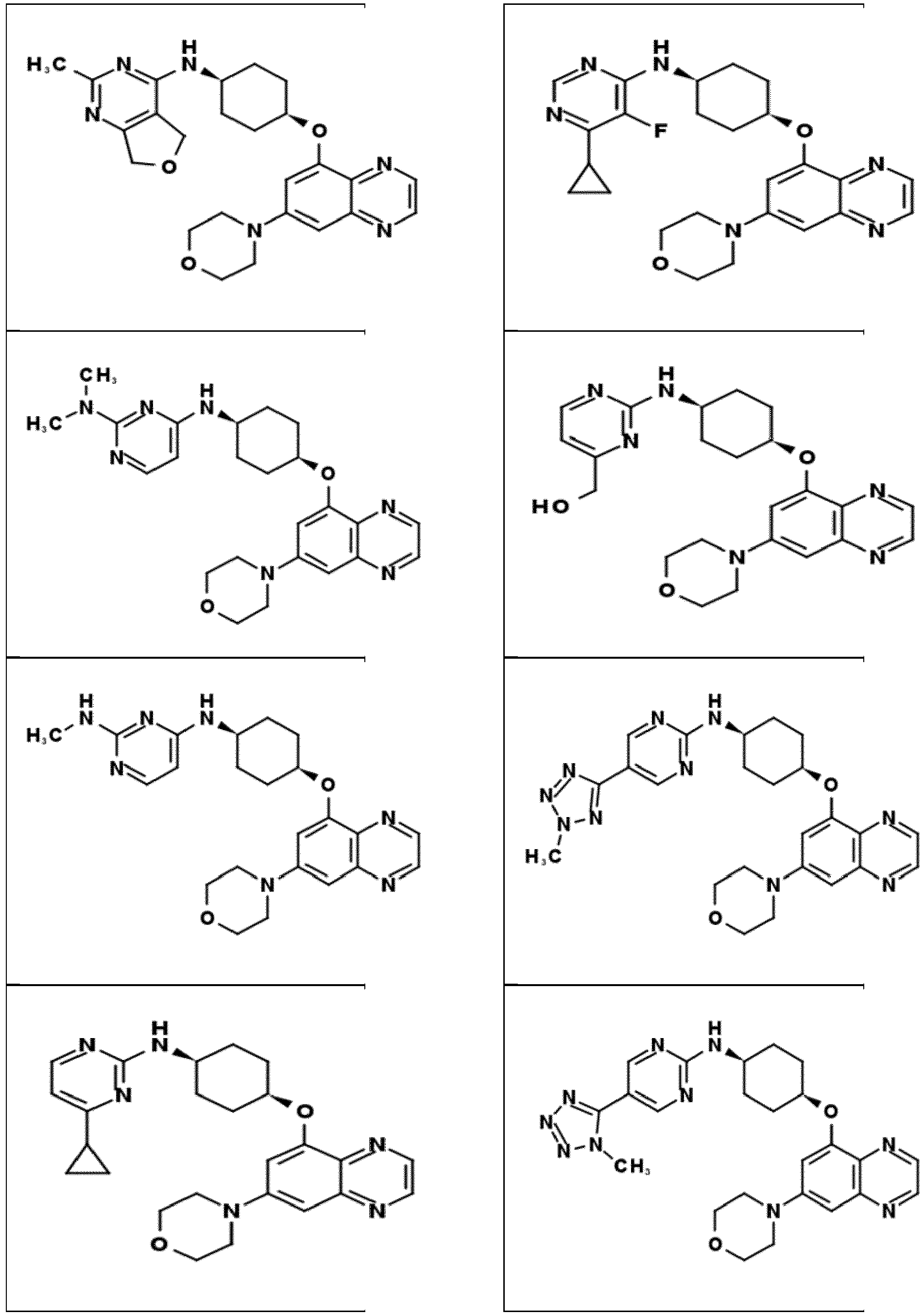


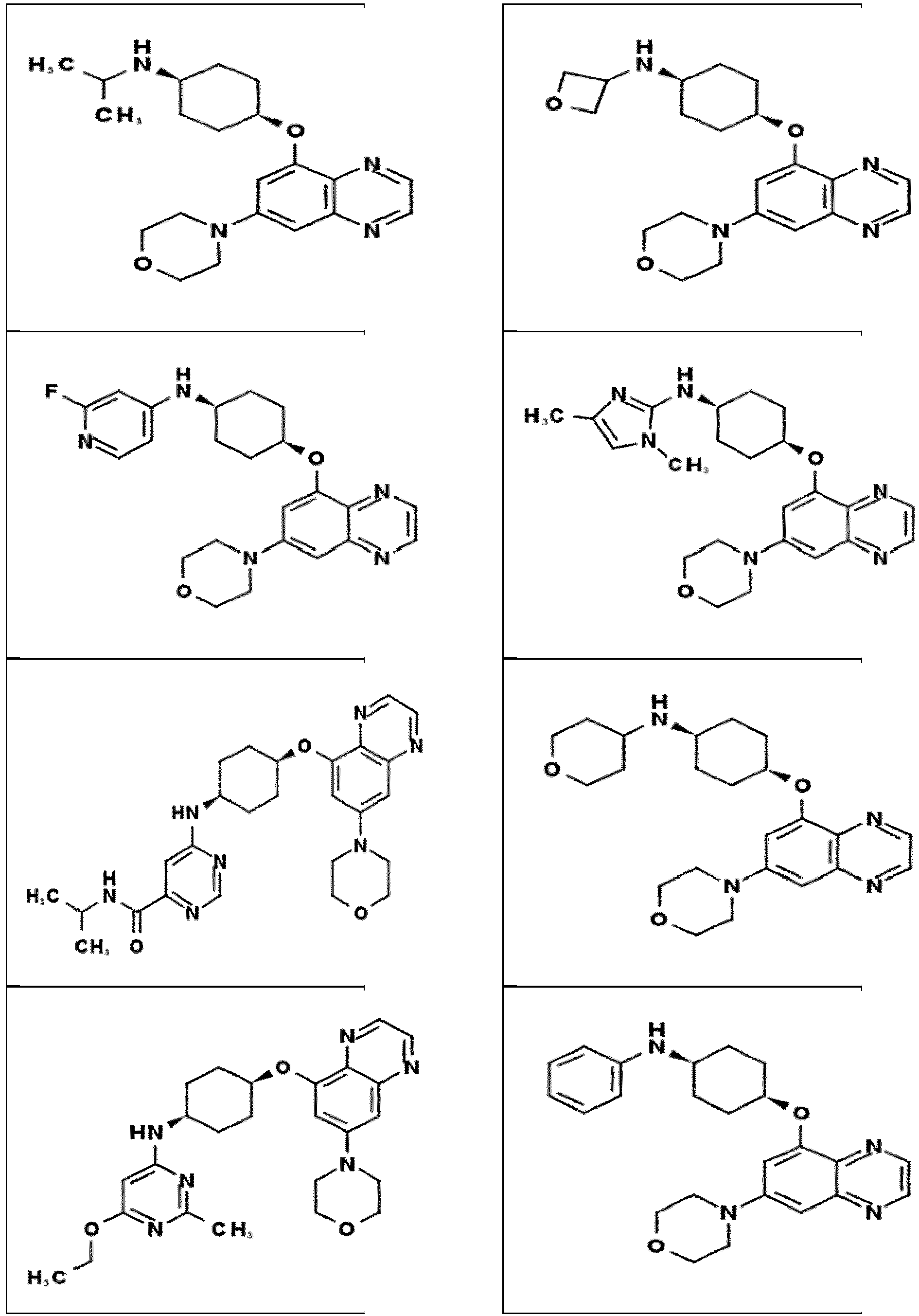
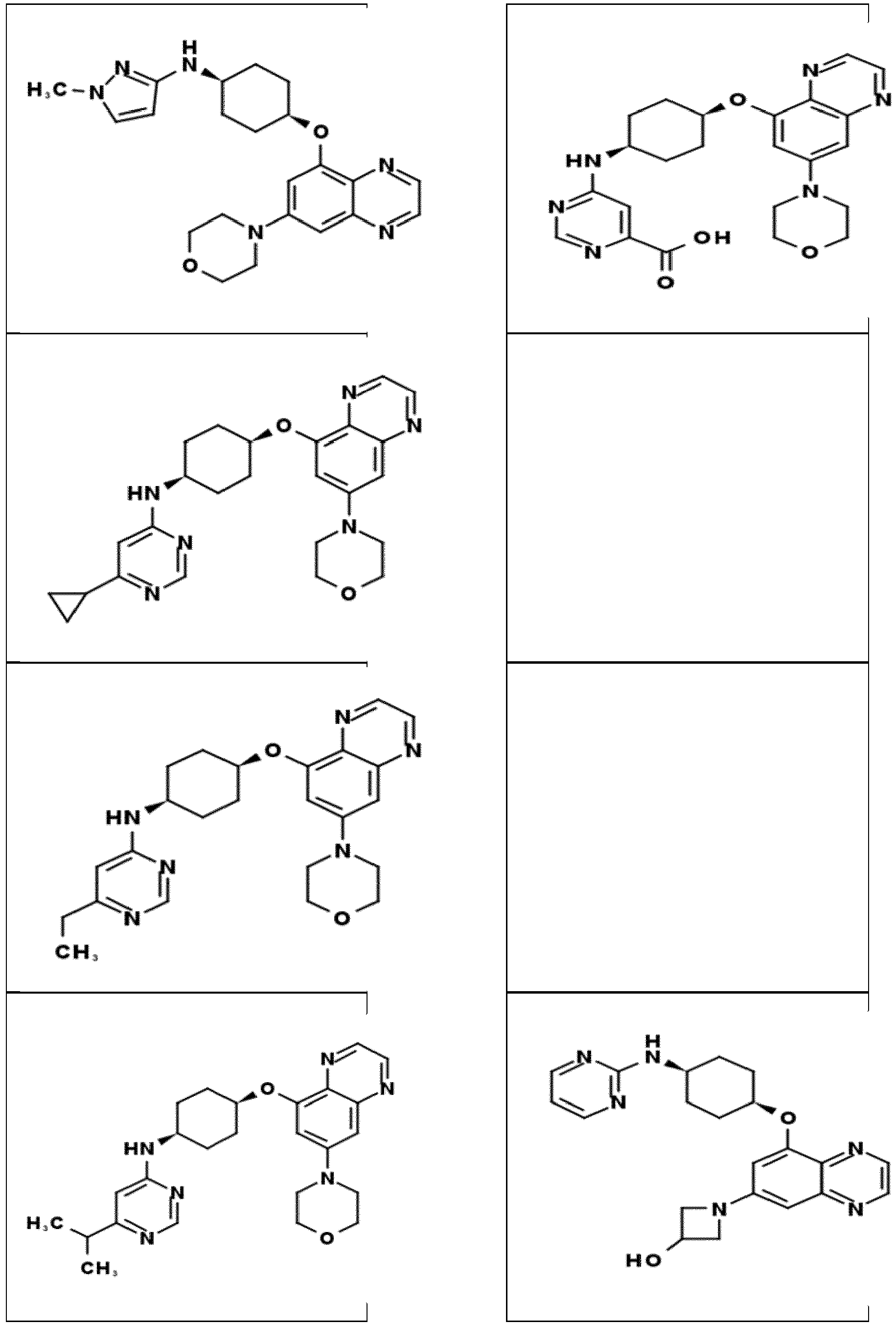

- The compound of claim 1, selected from the following:


- The compound of claim 1, selected from the following:


- A pharmaceutical composition comprising a compound of any one of claims 1-13 and a pharmaceutically acceptable excipient.
- A compound of any one of claims 1-13, or a pharmaceutical composition of claim 14, for use ina) sensitizing a cell to a therapeutic agent or a disease state that induces a DNA lesion, comprising the step of contacting the cell with said compound or pharmaceutical composition; orb) potentiating a therapeutic regimen for the treatment of cancer in a patient.
- A compound of any one of claims 1-13, or a pharmaceutical composition of claim 14, either alone or in combination with one or more additional therapeutic agent, for use in treating cancer or inhibiting cancer cell growth in a patient.
Priority Applications (6)
| Application Number | Priority Date | Filing Date | Title |
|---|---|---|---|
| RS20211467A RS62649B1 (en) | 2013-03-12 | 2014-03-12 | Dna-pk inhibitors |
| SI201431922T SI3527563T1 (en) | 2013-03-12 | 2014-03-12 | Dna-pk inhibitors |
| HRP20211855TT HRP20211855T1 (en) | 2013-03-12 | 2014-03-12 | Dna-pk inhibitors |
| SM20210687T SMT202100687T1 (en) | 2013-03-12 | 2014-03-12 | Dna-pk inhibitors |
| EP21192836.1A EP3985003B1 (en) | 2013-03-12 | 2014-03-12 | Dna-pk inhibitors |
| PL18207382T PL3527563T3 (en) | 2013-03-12 | 2014-03-12 | DNA-PK inhibitors |
Applications Claiming Priority (3)
| Application Number | Priority Date | Filing Date | Title |
|---|---|---|---|
| US201361777816P | 2013-03-12 | 2013-03-12 | |
| EP14719434.4A EP2970218B8 (en) | 2013-03-12 | 2014-03-12 | Dna-pk inhibitors |
| PCT/US2014/024767 WO2014159690A1 (en) | 2013-03-12 | 2014-03-12 | Dna-pk inhibitors |
Related Parent Applications (2)
| Application Number | Title | Priority Date | Filing Date |
|---|---|---|---|
| EP14719434.4A Division-Into EP2970218B8 (en) | 2013-03-12 | 2014-03-12 | Dna-pk inhibitors |
| EP14719434.4A Division EP2970218B8 (en) | 2013-03-12 | 2014-03-12 | Dna-pk inhibitors |
Related Child Applications (1)
| Application Number | Title | Priority Date | Filing Date |
|---|---|---|---|
| EP21192836.1A Division EP3985003B1 (en) | 2013-03-12 | 2014-03-12 | Dna-pk inhibitors |
Publications (2)
| Publication Number | Publication Date |
|---|---|
| EP3527563A1 true EP3527563A1 (en) | 2019-08-21 |
| EP3527563B1 EP3527563B1 (en) | 2021-09-01 |
Family
ID=50549437
Family Applications (3)
| Application Number | Title | Priority Date | Filing Date |
|---|---|---|---|
| EP18207382.5A Active EP3527563B1 (en) | 2013-03-12 | 2014-03-12 | Dna-pk inhibitors |
| EP14719434.4A Active EP2970218B8 (en) | 2013-03-12 | 2014-03-12 | Dna-pk inhibitors |
| EP21192836.1A Active EP3985003B1 (en) | 2013-03-12 | 2014-03-12 | Dna-pk inhibitors |
Family Applications After (2)
| Application Number | Title | Priority Date | Filing Date |
|---|---|---|---|
| EP14719434.4A Active EP2970218B8 (en) | 2013-03-12 | 2014-03-12 | Dna-pk inhibitors |
| EP21192836.1A Active EP3985003B1 (en) | 2013-03-12 | 2014-03-12 | Dna-pk inhibitors |
Country Status (26)
| Country | Link |
|---|---|
| US (11) | US9359380B2 (en) |
| EP (3) | EP3527563B1 (en) |
| JP (2) | JP6360878B2 (en) |
| KR (1) | KR102216284B1 (en) |
| CN (2) | CN105246883B (en) |
| AU (2) | AU2014244555B2 (en) |
| BR (1) | BR112015021888B1 (en) |
| CA (1) | CA2904641C (en) |
| CY (2) | CY1121360T1 (en) |
| DK (2) | DK2970218T3 (en) |
| ES (2) | ES2711839T3 (en) |
| HR (2) | HRP20211855T1 (en) |
| HU (2) | HUE041544T2 (en) |
| IL (1) | IL241330B (en) |
| LT (2) | LT3527563T (en) |
| ME (1) | ME03336B (en) |
| MX (1) | MX365294B (en) |
| PL (2) | PL2970218T3 (en) |
| PT (2) | PT2970218T (en) |
| RS (2) | RS62649B1 (en) |
| RU (1) | RU2676259C2 (en) |
| SG (1) | SG11201507203RA (en) |
| SI (2) | SI3527563T1 (en) |
| SM (2) | SMT201900107T1 (en) |
| TR (1) | TR201901886T4 (en) |
| WO (1) | WO2014159690A1 (en) |
Families Citing this family (53)
| Publication number | Priority date | Publication date | Assignee | Title |
|---|---|---|---|---|
| SI3459942T1 (en) | 2012-04-24 | 2021-05-31 | Vertex Pharmaceuticals Incorporated | Dna-pk inhibitors |
| HUE041544T2 (en) | 2013-03-12 | 2019-05-28 | Vertex Pharma | Dna-pk inhibitors |
| PT3424920T (en) | 2013-10-17 | 2020-07-07 | Vertex Pharma | Co-crystals of (s)-n-methyl-8-(1-((2'-methyl-[4,5'-bipyrimidin]-6-yl)amino)propan-2-yl)quinoline-4-carboxamide and deuterated derivatives thereof as dna-pk inhibitors |
| EP3247701B1 (en) | 2015-01-20 | 2021-09-22 | Boehringer Ingelheim Animal Health USA Inc. | Anthelmintic compounds, compositions and method of using thereof |
| JP6625649B2 (en) * | 2015-01-23 | 2019-12-25 | グラクソスミスクライン、インテレクチュアル、プロパティー、ディベロップメント、リミテッドGlaxosmithkline Intellectual Property Development Limited | Pyrazolo [3,4-d] pyrimidine derivatives and their use for the treatment of leishmaniasis |
| US10774064B2 (en) | 2016-06-02 | 2020-09-15 | Cadent Therapeutics, Inc. | Potassium channel modulators |
| JP2019529475A (en) | 2016-09-27 | 2019-10-17 | バーテックス ファーマシューティカルズ インコーポレイテッドVertex Pharmaceuticals Incorporated | Method for treating cancer using a combination of a DNA damaging agent and a DNA-PK inhibitor |
| BR112019014814B1 (en) | 2017-01-23 | 2024-03-12 | Novartis Ag | COMPOUNDS, PHARMACEUTICAL COMPOSITIONS THEREOF AND THEIR USES IN THE TREATMENT OF DISEASES ASSOCIATED WITH DYSFUNCTION OF POTASSIUM ION CHANNELS |
| CN107158001A (en) * | 2017-03-29 | 2017-09-15 | 解益新 | A kind of pharmaceutical composition for treating asthma |
| JP7391854B2 (en) * | 2018-01-17 | 2023-12-05 | バーテックス ファーマシューティカルズ インコーポレイテッド | DNA-PK inhibitor |
| AU2019209292B2 (en) * | 2018-01-17 | 2023-10-05 | Vertex Pharmaceuticals Incorporated | Quinoxalinone compounds, compositions, methods, and kits for increasing genome editing efficiency |
| BR112020014140A2 (en) | 2018-01-17 | 2020-12-01 | Vertex Pharmaceuticals Incorporated | dna-pk inhibitors |
| AU2019366312B2 (en) | 2018-10-22 | 2025-04-24 | Novartis Ag | Crystalline forms of potassium channel modulators |
| EA202191890A1 (en) | 2019-01-18 | 2022-02-03 | Астразенека Аб | PCSK9 INHIBITORS AND METHODS FOR THEIR USE |
| US11248001B2 (en) * | 2019-01-18 | 2022-02-15 | Astrazeneca Ab | PCSK9 inhibitors and methods of use thereof |
| CN111909147B (en) * | 2019-05-10 | 2021-07-20 | 山东轩竹医药科技有限公司 | DNA-PK inhibitors |
| TWI899080B (en) * | 2019-05-27 | 2025-10-01 | 大陸商迪哲(江蘇)醫藥股份有限公司 | Dna-dependent protein kinase inhibitor |
| KR20220070443A (en) | 2019-08-27 | 2022-05-31 | 버텍스 파마슈티칼스 인코포레이티드 | Compositions and methods for the treatment of disorders associated with repetitive DNA |
| US20230063457A1 (en) * | 2019-09-11 | 2023-03-02 | Andrew Ivor MINCHINTON | Dna-pk inhibiting compounds |
| AU2020367204A1 (en) * | 2019-10-15 | 2022-04-14 | Aucentra Therapeutics Pty Ltd | Derivatives of 4-(imidazo[1,2-a]pyridin-3-yl)-N-(pyridin-3-yl) pyrimidin-2- amine for treating proliferative diseases and conditions |
| KR20220103987A (en) * | 2019-11-21 | 2022-07-25 | 지앙수 헨그루이 파마슈티컬스 컴퍼니 리미티드 | Pyrazolo-heteroaryl derivatives, methods for their preparation, and medical uses thereof |
| WO2021136462A1 (en) * | 2019-12-31 | 2021-07-08 | 成都百裕制药股份有限公司 | Furan derivatives and application thereof in medicine |
| CN113121573A (en) * | 2019-12-31 | 2021-07-16 | 成都百裕制药股份有限公司 | Purine derivatives and their use in medicine |
| AR121759A1 (en) * | 2020-04-07 | 2022-07-06 | Mitobridge Inc | CD38 INHIBITORS |
| KR20230017783A (en) | 2020-04-28 | 2023-02-06 | 인텔리아 테라퓨틱스, 인크. | In vitro cell delivery methods |
| AU2021346954A1 (en) * | 2020-09-24 | 2023-05-25 | Auckland Uniservices Limited | Novel aminopyridines and their use in treating cancer |
| EP4294798A1 (en) * | 2021-02-19 | 2023-12-27 | Kalvista Pharmaceuticals Limited | Factor xiia inhibitors |
| WO2022182959A1 (en) | 2021-02-26 | 2022-09-01 | Vertex Pharmaceuticals Incorporated | Compositions and methods for treatment of myotonic dystrophy type 1 with crispr/slucas9 |
| WO2022182957A1 (en) | 2021-02-26 | 2022-09-01 | Vertex Pharmaceuticals Incorporated | Compositions and methods for treatment of myotonic dystrophy type 1 with crispr/sacas9 |
| CA3213117A1 (en) * | 2021-03-10 | 2022-09-15 | adMare Therapeutics Society | 7-morpholino-l,6-naphthyridin-5-yl derivatives and pharmaceutical compositions thereof useful as dna-pk inhibitor |
| MX2023012236A (en) | 2021-04-17 | 2024-01-23 | Intellia Therapeutics Inc | DEOXYRIBONUCLEIC ACID (AND) DEPENDENT PROTEIN KINASE INHIBITORS AND COMPOSITIONS AND USES THEREOF. |
| WO2023018637A1 (en) | 2021-08-09 | 2023-02-16 | Vertex Pharmaceuticals Incorporated | Gene editing of regulatory elements |
| US12084453B2 (en) | 2021-12-10 | 2024-09-10 | Incyte Corporation | Bicyclic amines as CDK12 inhibitors |
| CN121712509A (en) | 2023-05-04 | 2026-03-20 | 锐新医药公司 | Combination therapy for RAS related diseases or conditions |
| US20250049810A1 (en) | 2023-08-07 | 2025-02-13 | Revolution Medicines, Inc. | Methods of treating a ras protein-related disease or disorder |
| WO2025049254A1 (en) * | 2023-08-25 | 2025-03-06 | Juno Therapeutics, Inc. | Pyrazolopyridine based inhibitors of dna-dependent protein kinase and compositions and application in gene editing |
| WO2025049481A1 (en) | 2023-08-28 | 2025-03-06 | Intellia Therapeutics, Inc. | Methods of editing an hla-a gene in vitro |
| IL327306A (en) | 2023-10-12 | 2026-05-01 | Revolution Medicines Inc | Macrocyclic ras inhibitors |
| WO2025171296A1 (en) | 2024-02-09 | 2025-08-14 | Revolution Medicines, Inc. | Ras inhibitors |
| WO2025217307A1 (en) | 2024-04-09 | 2025-10-16 | Revolution Medicines, Inc. | Methods for predicting response to a ras(on) inhibitor and combination therapies |
| WO2025240847A1 (en) | 2024-05-17 | 2025-11-20 | Revolution Medicines, Inc. | Ras inhibitors |
| WO2025255438A1 (en) | 2024-06-07 | 2025-12-11 | Revolution Medicines, Inc. | Methods of treating a ras protein-related disease or disorder |
| WO2025265060A1 (en) | 2024-06-21 | 2025-12-26 | Revolution Medicines, Inc. | Therapeutic compositions and methods for managing treatment-related effects |
| WO2026006747A1 (en) | 2024-06-28 | 2026-01-02 | Revolution Medicines, Inc. | Ras inhibitors |
| WO2026015796A1 (en) | 2024-07-12 | 2026-01-15 | Revolution Medicines, Inc. | Methods of treating a ras related disease or disorder |
| WO2026015801A1 (en) | 2024-07-12 | 2026-01-15 | Revolution Medicines, Inc. | Methods of treating a ras related disease or disorder |
| WO2026015825A1 (en) | 2024-07-12 | 2026-01-15 | Revolution Medicines, Inc. | Use of ras inhibitor for treating pancreatic cancer |
| WO2026015790A1 (en) | 2024-07-12 | 2026-01-15 | Revolution Medicines, Inc. | Methods of treating a ras related disease or disorder |
| WO2026050446A1 (en) | 2024-08-29 | 2026-03-05 | Revolution Medicines, Inc. | Ras inhibitors |
| WO2026072904A2 (en) | 2024-09-26 | 2026-04-02 | Revolution Medicines, Inc. | Compositions and methods for treating lung cancer |
| WO2026090116A2 (en) | 2024-10-21 | 2026-04-30 | Revolution Medicines, Inc. | Ras inhibitors |
| WO2026090245A1 (en) | 2024-10-22 | 2026-04-30 | Revolution Medicines, Inc. | Use of ras inhibitors for treating cancer |
| US20260108528A1 (en) | 2024-10-22 | 2026-04-23 | Revolution Medicines, Inc. | Methods of treating a ras protein-related disease or disorder |
Citations (1)
| Publication number | Priority date | Publication date | Assignee | Title |
|---|---|---|---|---|
| WO2002020500A2 (en) * | 2000-09-01 | 2002-03-14 | Icos Corporation | Materials and methods to potentiate cancer treatment |
Family Cites Families (174)
| Publication number | Priority date | Publication date | Assignee | Title |
|---|---|---|---|---|
| US5571506A (en) | 1989-08-14 | 1996-11-05 | Rhone-Poulenc Rorer Pharmaceuticals Inc. | Aromatic oligomeric compounds useful as mimics of bioactive macromolecules |
| AU658134B2 (en) | 1989-12-28 | 1995-04-06 | Virginia Commonwealth University | Sigma receptor ligands and the use thereof |
| US6004979A (en) | 1991-02-07 | 1999-12-21 | Hoechst Marion Roussel | Nitrogenous bicycles |
| JP3531944B2 (en) | 1991-02-07 | 2004-05-31 | アベンティス・ファーマ・ソシエテ・アノニム | Novel benzyl group-substituted nitrogen-based bicyclic derivative and method for producing the same |
| EP0519211A1 (en) | 1991-05-17 | 1992-12-23 | Hoechst Schering AgrEvo GmbH | Substituted 4-aminopyrimidine, process for their preparation and their use as parasiticide |
| DE4208254A1 (en) | 1992-03-14 | 1993-09-16 | Hoechst Ag | SUBSTITUTED PYRIMIDINE, METHOD FOR THE PRODUCTION THEREOF AND THEIR USE AS A PEST CONTROL AND FUNGICIDE |
| AU3933493A (en) | 1992-04-24 | 1993-11-29 | E.I. Du Pont De Nemours And Company | Arthropodicidal and fungicidal aminopyrimidines |
| US5595756A (en) | 1993-12-22 | 1997-01-21 | Inex Pharmaceuticals Corporation | Liposomal compositions for enhanced retention of bioactive agents |
| DE4437406A1 (en) | 1994-10-19 | 1996-04-25 | Hoechst Ag | Quinoxalines, process for their preparation and their use |
| US5977117A (en) | 1996-01-05 | 1999-11-02 | Texas Biotechnology Corporation | Substituted phenyl compounds and derivatives thereof that modulate the activity of endothelin |
| JP4495257B2 (en) | 1997-02-19 | 2010-06-30 | バーレツクス ラボラトリーズ インコーポレーテツド | N-heterocyclic derivatives as NOS inhibitors |
| JPH10251255A (en) | 1997-03-14 | 1998-09-22 | Nissan Chem Ind Ltd | Azine derivative |
| AU742739B2 (en) * | 1997-05-28 | 2002-01-10 | Aventis Pharmaceuticals Inc. | Quinoline and quinoxaline compounds which inhibit platelet-derived growth factor and/or p56 lck tyrosine kinases |
| DE19801598C2 (en) | 1998-01-17 | 2000-05-11 | Aventis Res & Tech Gmbh & Co | Catalytic synthesis of N-alkylated anilines from olefins and anilines |
| DE19836697A1 (en) | 1998-08-13 | 2000-02-17 | Hoechst Marion Roussel De Gmbh | New substituted 4-amino-2-aryl-pyrimidines, are soluble guanylate cyclase activators useful e.g. for treating atherosclerosis, hypertension, angina pectoris, thrombosis, asthma or diabetes |
| JP2002534512A (en) | 1999-01-15 | 2002-10-15 | ノボ ノルディスク アクティーゼルスカブ | Non-peptide GLP-1 agonist |
| JP2003511378A (en) | 1999-10-07 | 2003-03-25 | アムジエン・インコーポレーテツド | Triazine kinase inhibitors |
| GB9924092D0 (en) | 1999-10-13 | 1999-12-15 | Zeneca Ltd | Pyrimidine derivatives |
| US6552016B1 (en) | 1999-10-14 | 2003-04-22 | Curis, Inc. | Mediators of hedgehog signaling pathways, compositions and uses related thereto |
| EP1255741A2 (en) | 2000-02-01 | 2002-11-13 | Cor Therapeutics, Inc. | 2- 1H]-QUINOLONE AND 2- 1H]-QUINOXALONE INHIBITORS OF FACTOR Xa |
| ES2254385T3 (en) | 2000-02-29 | 2006-06-16 | Millennium Pharmaceuticals, Inc. | RELATED BENZAMIDS AND INHIBITORS OF FACTOR XA. |
| US6605615B2 (en) | 2000-03-01 | 2003-08-12 | Tularik Inc. | Hydrazones and analogs as cholesterol lowering agents |
| DE10013318A1 (en) | 2000-03-17 | 2001-09-20 | Merck Patent Gmbh | Quinoxaline derivatives are used as photo-stable UV filters in cosmetic or pharmaceutical sunscreens for the hair or skin |
| US7498304B2 (en) | 2000-06-16 | 2009-03-03 | Curis, Inc. | Angiogenesis-modulating compositions and uses |
| US6660731B2 (en) | 2000-09-15 | 2003-12-09 | Vertex Pharmaceuticals Incorporated | Pyrazole compounds useful as protein kinase inhibitors |
| US6613776B2 (en) | 2000-09-15 | 2003-09-02 | Vertex Pharmaceuticals Incorporated | Pyrazole compounds useful as protein kinase inhibitors |
| US7473691B2 (en) | 2000-09-15 | 2009-01-06 | Vertex Pharmaceuticals Incorporated | Pyrazole compounds useful as protein kinase inhibitors |
| ES2266258T3 (en) | 2000-09-15 | 2007-03-01 | Vertex Pharmaceuticals Incorporated | PIRAZOL COMPOUNDS USED AS PROTEIN KINASES INHIBITORS. |
| US6610677B2 (en) | 2000-09-15 | 2003-08-26 | Vertex Pharmaceuticals Incorporated | Pyrazole compounds useful as protein kinase inhibitors |
| US20020111353A1 (en) | 2000-12-05 | 2002-08-15 | Mark Ledeboer | Inhibitors of c-Jun N-terminal kinases (JNK) and other protein kinases |
| EP1345925B1 (en) | 2000-12-21 | 2006-05-17 | Vertex Pharmaceuticals Incorporated | Pyrazole compounds useful as protein kinase inhibitors |
| JP2004521901A (en) | 2001-02-02 | 2004-07-22 | グラクソ グループ リミテッド | Pyrazoles as TGF inhibitors |
| MY130778A (en) | 2001-02-09 | 2007-07-31 | Vertex Pharma | Heterocyclic inhibitiors of erk2 and uses thereof |
| ES2292753T4 (en) | 2001-03-29 | 2009-02-16 | Vertex Pharmaceuticals Incorporated | INHIBITORS OF N-TERMINAL KINASES C-JUN (JNK) AND OTHER PROTEIN KINASES. |
| JP2004535381A (en) | 2001-04-13 | 2004-11-25 | バーテックス ファーマシューティカルズ インコーポレイテッド | Inhibitors of c-Jun N-terminal kinase (JNK) and other protein kinases |
| US20030096813A1 (en) | 2001-04-20 | 2003-05-22 | Jingrong Cao | Compositions useful as inhibitors of GSK-3 |
| AU2002308748A1 (en) | 2001-05-16 | 2002-11-25 | Vertex Pharmaceuticals Incorporated | Heterocyclic substituted pyrazoles as inhibitors of src and other protein kinases |
| MXPA03010961A (en) | 2001-05-31 | 2004-02-27 | Vertex Pharma | Thiazole compounds useful as inhibitors of protein kinases. |
| CA2446756C (en) | 2001-06-01 | 2011-03-08 | Vertex Pharmaceuticals Incorporated | Thiazole compounds useful as inhibitors of protein kinase |
| DE60232510D1 (en) | 2001-06-15 | 2009-07-16 | Vertex Pharma | 5- (2-AMINOPYRIMIDIN-4-YL) BENZOXOXOLEA AS PROTEIN KINASE INHIBITOR |
| US6689778B2 (en) | 2001-07-03 | 2004-02-10 | Vertex Pharmaceuticals Incorporated | Inhibitors of Src and Lck protein kinases |
| GB0119865D0 (en) * | 2001-08-14 | 2001-10-10 | Cancer Res Campaign Tech | DNA-PK inhibitors |
| CA2469316A1 (en) | 2001-12-07 | 2003-06-19 | Vertex Pharmaceuticals, Inc. | Pyrimidine-based compounds useful as gsk-3 inhibitors |
| RU2004126671A (en) | 2002-02-06 | 2005-04-10 | Вертекс Фармасьютикалз Инкорпорейтед (Us) | HETEROARYL COMPOUNDS USEFUL AS GSK-3 INHIBITORS |
| US20030199525A1 (en) | 2002-03-21 | 2003-10-23 | Hirst Gavin C. | Kinase inhibitors |
| US20030207873A1 (en) | 2002-04-10 | 2003-11-06 | Edmund Harrington | Inhibitors of Src and other protein kinases |
| AU2003237121A1 (en) | 2002-04-26 | 2003-11-10 | Vertex Pharmaceuticals Incorporated | Pyrrole derivatives as inhibitors of erk2 and uses thereof |
| US7271179B2 (en) | 2002-05-06 | 2007-09-18 | Vertex Pharmaceuticals Incorporated | Inhibitors of JAK protein kinase |
| AU2003231880A1 (en) | 2002-05-30 | 2003-12-19 | Vertex Pharmaceuticals Incorporated | Inhibitors of jak and cdk2 protein kinases |
| MY141867A (en) | 2002-06-20 | 2010-07-16 | Vertex Pharma | Substituted pyrimidines useful as protein kinase inhibitors |
| EP1554269A1 (en) | 2002-07-09 | 2005-07-20 | Vertex Pharmaceuticals Incorporated | Imidazoles, oxazoles and thiazoles with protein kinase inhibiting activities |
| CA2495386C (en) | 2002-08-14 | 2011-06-21 | Vertex Pharmaceuticals Incorporated | Protein kinase inhibitors and uses thereof |
| US7419984B2 (en) | 2002-10-17 | 2008-09-02 | Cell Therapeutics, Inc. | Pyrimidines and uses thereof |
| EP2172460A1 (en) | 2002-11-01 | 2010-04-07 | Vertex Pharmaceuticals Incorporated | Compositions useful as inhibitors of JAK and other protein kinases |
| US7259161B2 (en) | 2002-11-04 | 2007-08-21 | Vertex Pharmaceuticals Incorporated | Compositions useful as inhibitors of JAK and other protein kinases |
| ATE425160T1 (en) | 2002-12-18 | 2009-03-15 | Vertex Pharma | BENZISOXAZOLE DERIVATIVES THAT ARE PROTEIN KINASE INHIBITORS |
| US7144911B2 (en) | 2002-12-31 | 2006-12-05 | Deciphera Pharmaceuticals Llc | Anti-inflammatory medicaments |
| AU2004212421B2 (en) | 2003-02-07 | 2009-08-20 | Vertex Pharmaceuticals Incorporated | Heteroaryl substituted pyrolls useful as inhibitors of protein kinases |
| US7456190B2 (en) | 2003-03-13 | 2008-11-25 | Vertex Pharmaceuticals Incorporated | Compositions useful as protein kinase inhibitors |
| WO2004085418A2 (en) | 2003-03-24 | 2004-10-07 | Luitpold Pharmaceuticals, Inc. | Xanthones, thioxanthones and acridinones as dna-pk inhibitors |
| WO2004087698A2 (en) | 2003-03-25 | 2004-10-14 | Vertex Pharmaceuticals Incorporated | Thiazoles useful as inhibitors of protein kinases |
| US6875781B2 (en) | 2003-04-04 | 2005-04-05 | Cell Therapeutics, Inc. | Pyridines and uses thereof |
| US7189724B2 (en) | 2003-04-15 | 2007-03-13 | Valeant Research And Development | Quinoxaline derivatives having antiviral activity |
| EP1678147B1 (en) | 2003-09-15 | 2012-08-08 | Lead Discovery Center GmbH | Pharmaceutically active 4,6-disubstituted aminopyrimidine derivatives as modulators of protein kinases |
| AU2004313928A1 (en) | 2003-12-02 | 2005-07-28 | Vertex Pharmaceuticals, Inc. | Heterocyclic protein kinase inhibitors and uses thereof |
| US7592340B2 (en) | 2003-12-04 | 2009-09-22 | Vertex Pharmaceuticals Incorporated | Quinoxalines useful as inhibitors of protein kinases |
| TW200533357A (en) | 2004-01-08 | 2005-10-16 | Millennium Pharm Inc | 2-(amino-substituted)-4-aryl pyrimidines and related compounds useful for treating inflammatory diseases |
| DE602005018333D1 (en) | 2004-03-15 | 2010-01-28 | Sunesis Pharmaceuticals Inc | SNS-595 AND METHOD OF USE |
| GB0405985D0 (en) | 2004-03-17 | 2004-04-21 | Novartis Forschungsstiftung | Kinase |
| RU2006144448A (en) | 2004-05-14 | 2008-06-20 | Вертекс Фармасьютикалз | PREPAROLYL-PYRIMIDINE PROTEIN KINDS ERK PROTEIN KINASES |
| JP4449580B2 (en) | 2004-05-31 | 2010-04-14 | 宇部興産株式会社 | 4-Aralkylaminopyrimidine derivatives and antibacterial agents |
| HRP20090093T3 (en) | 2004-06-04 | 2009-03-31 | Arena Pharmaceuticals Inc. | Substituted aryl and heteroaryl derivatives as modulators of metabolism and the prophylaxis and treatment of disorders related thereto |
| MX2007003154A (en) | 2004-09-17 | 2007-05-15 | Vertex Pharma | Diaminotriazole compounds useful as protein kinase inhibitors. |
| EP1815206B1 (en) | 2004-10-13 | 2016-04-06 | PTC Therapeutics, Inc. | Compounds for nonsense suppression, and methods for their use |
| JP2008516939A (en) | 2004-10-15 | 2008-05-22 | アストラゼネカ アクチボラグ | Chemical compound |
| GT200500284A (en) | 2004-10-15 | 2006-03-27 | Aventis Pharma Inc | PYRIMIDINS AS ANTAGONISTS OF PROSTAGLANDINA D2 RECEPTOR |
| US20060166936A1 (en) | 2004-10-29 | 2006-07-27 | Hayley Binch | Diaminotriazole compounds useful as inhibitors of protein kinases |
| US7517870B2 (en) | 2004-12-03 | 2009-04-14 | Fondazione Telethon | Use of compounds that interfere with the hedgehog signaling pathway for the manufacture of a medicament for preventing, inhibiting, and/or reversing ocular diseases related with ocular neovascularization |
| AU2005316599A1 (en) | 2004-12-14 | 2006-06-22 | Vertex Pharmaceuticals Incorporated | Pyrimidine inhibitors of ERK protein kinase and uses therof |
| EP1833820A1 (en) | 2004-12-23 | 2007-09-19 | Vertex Pharmaceuticals Incorporated | Selective inhibitors of erk protein kinase and uses therof |
| MX2007009388A (en) | 2005-02-04 | 2007-09-25 | Senomyx Inc | Compounds comprising linked hetero aryl moieties and their use as novel umami flavor modifiers, tastants and taste enhancers for comestible compositions. |
| EP1865775A1 (en) | 2005-04-06 | 2007-12-19 | Irm, Llc | Diarylamine-containing compounds and compositions, and their use as modulators of steroid hormone nuclear receptors |
| AR053358A1 (en) | 2005-04-15 | 2007-05-02 | Cancer Rec Tech Ltd | DNA INHIBITORS - PK |
| JP2008542219A (en) | 2005-05-25 | 2008-11-27 | インゲニウム ファーマシューティカルズ ジーエムビーエイチ | Pain treatment |
| WO2006138418A2 (en) | 2005-06-14 | 2006-12-28 | President And Fellows Of Harvard College | Improvement of cognitive performance with sirtuin activators |
| JP2007008045A (en) | 2005-06-30 | 2007-01-18 | Mitsui Chemicals Inc | Optical recording medium and 1h-quinoxaline-2-on derivative |
| WO2007014250A2 (en) | 2005-07-26 | 2007-02-01 | Vertex Pharmaceuticals Incorporated | Abl kinase inhibition |
| GB0520657D0 (en) | 2005-10-11 | 2005-11-16 | Ludwig Inst Cancer Res | Pharmaceutical compounds |
| US20070219192A1 (en) | 2005-11-02 | 2007-09-20 | Xiangping Qian | Certain chemical entities, compositions, and methods |
| WO2007056163A2 (en) | 2005-11-03 | 2007-05-18 | Vertex Pharmaceuticals Incorporated | Aminopyrimidines useful as kinase inhibitors |
| US20070179125A1 (en) | 2005-11-16 | 2007-08-02 | Damien Fraysse | Aminopyrimidines useful as kinase inhibitors |
| WO2007082899A1 (en) | 2006-01-17 | 2007-07-26 | Vib Vzw | Inhibitors of prolyl-hydroxylase 1 for the treatment of skeletal muscle degeneration |
| JO2660B1 (en) | 2006-01-20 | 2012-06-17 | نوفارتيس ايه جي | PI-3 Kinase inhibitors and methods of their use |
| UY30118A1 (en) | 2006-01-31 | 2007-06-29 | Tanabe Seiyaku Co | AMIS TRISUSTITUDE COMPUTER |
| WO2007109783A2 (en) | 2006-03-23 | 2007-09-27 | Janssen Pharmaceutica, N.V. | Substituted pyrimidine kinase inhibitors |
| US20080280891A1 (en) | 2006-06-27 | 2008-11-13 | Locus Pharmaceuticals, Inc. | Anti-cancer agents and uses thereof |
| WO2008008852A2 (en) | 2006-07-11 | 2008-01-17 | Emory University | Cxcr4 antagonists including heteroatoms for the treatment of medical disorders |
| TW200811134A (en) | 2006-07-12 | 2008-03-01 | Irm Llc | Compounds and compositions as protein kinase inhibitors |
| EP2044056B1 (en) | 2006-07-14 | 2012-08-22 | Novartis AG | Pyrimidine derivatives as alk-5 inhibitors |
| PE20080403A1 (en) | 2006-07-14 | 2008-04-25 | Amgen Inc | FUSED HETEROCYCLIC DERIVATIVES AND METHODS OF USE |
| US7635683B2 (en) | 2006-08-04 | 2009-12-22 | Enanta Pharmaceuticals, Inc. | Quinoxalinyl tripeptide hepatitis C virus inhibitors |
| EP2061764B1 (en) | 2006-08-22 | 2014-07-02 | Technion Research & Development Foundation LTD. | Heterocyclic derivatives binding to the peripheral-type benzodiazepine receptor (pbr) |
| EP1903038A1 (en) | 2006-09-07 | 2008-03-26 | Bayer Schering Pharma Aktiengesellschaft | N-(1-hetaryl-piperidin-4-yl)-(het)arylamide as EP2 receptor modulators |
| US7875603B2 (en) | 2006-09-21 | 2011-01-25 | Nova Southeastern University | Specific inhibitors for vascular endothelial growth factor receptors |
| MX2009003456A (en) | 2006-10-02 | 2009-04-14 | Irm Llc | Compounds and compositions as protein kinase inhibitors. |
| DE102006050512A1 (en) | 2006-10-26 | 2008-04-30 | Bayer Healthcare Ag | New substituted dihydropyrazole- and dihydrotriazole derivatives are hypoxia-inducible transcription factor-prolyl-4-hydroxylase inhibitors useful to treat/prevent e.g. cardiovascular diseases, heart-circulation diseases and anemia |
| MX2009004807A (en) | 2006-11-02 | 2009-06-15 | Vertex Pharma | Aminopyridines and aminopyrimidines useful as inhibitors of protein kinases. |
| CN101679371A (en) | 2006-12-04 | 2010-03-24 | 艾美罗股份公司 | Substituted pyrimidines as adenosine receptor antagonists |
| JP2010513567A (en) | 2006-12-19 | 2010-04-30 | バーテックス ファーマシューティカルズ インコーポレイテッド | Aminopyrimidines useful as inhibitors of protein kinases |
| AU2007341997A1 (en) | 2006-12-28 | 2008-07-10 | Ambrx, Inc. | Phenazine and quinoxaline substituted amino acids and polypeptides |
| ES2702362T3 (en) | 2007-01-31 | 2019-02-28 | Ym Biosciences Australia Pty | Compounds based on thiopyrimidine and uses thereof |
| WO2008106202A1 (en) | 2007-02-27 | 2008-09-04 | Housey Gerard M | Theramutein modulators |
| WO2008112642A1 (en) | 2007-03-09 | 2008-09-18 | Vertex Pharmaceuticals Incorporated | Aminopyrimidines useful as inhibitors of protein kinases |
| WO2008112646A1 (en) | 2007-03-09 | 2008-09-18 | Vertex Pharmaceuticals Incorporated | Aminopyridines useful as inhibitors of protein kinases |
| ATE526328T1 (en) | 2007-03-09 | 2011-10-15 | Vertex Pharma | AMINOPYRIMIDINES SUITABLE AS INHIBITORS OF PROTEIN KINASES |
| CN101675041A (en) | 2007-03-20 | 2010-03-17 | 沃泰克斯药物股份有限公司 | Amino-metadiazine compound as kinase inhibitor |
| DE102007015169A1 (en) | 2007-03-27 | 2008-10-02 | Universität des Saarlandes Campus Saarbrücken | 17beta-hydroxysteroid dehydrogenase type 1 inhibitors for the treatment of hormone-dependent diseases |
| CA2683785A1 (en) | 2007-04-13 | 2008-10-23 | Vertex Pharmaceuticals Incorporated | Aminopyrimidines useful as kinase inhibitors |
| US7910587B2 (en) | 2007-04-26 | 2011-03-22 | Enanta Pharmaceuticals, Inc. | Quinoxalinyl dipeptide hepatitis C virus inhibitors |
| MX2009011811A (en) | 2007-05-02 | 2010-01-14 | Vertex Pharma | Aminopyrimidines useful as kinase inhibitors. |
| MX2009011812A (en) | 2007-05-02 | 2010-01-14 | Vertex Pharma | Aminopyrimidines useful as kinase inhibitors. |
| CA2685876A1 (en) | 2007-05-02 | 2008-11-13 | Vertex Pharmaceuticals Incorporated | Thiazoles and pyrazoles useful as kinase inhibitors |
| PE20090288A1 (en) | 2007-05-10 | 2009-04-03 | Smithkline Beecham Corp | QUINOXALINE DERIVATIVES AS PI3 KINASE INHIBITORS |
| WO2008144253A1 (en) | 2007-05-14 | 2008-11-27 | Irm Llc | Protein kinase inhibitors and methods for using thereof |
| CN101687852A (en) | 2007-05-24 | 2010-03-31 | 沃泰克斯药物股份有限公司 | Thiazoles and pyrazoles useful as kinase inhibitors |
| US9242933B2 (en) | 2007-05-25 | 2016-01-26 | AbbVie Deutschland GmbH & Co. KG | Heterocyclic compounds as positive modulators of metabotropic glutamate receptor 2 (mGlu2 receptor) |
| EP2170274A1 (en) | 2007-07-02 | 2010-04-07 | Technion Research and Development Foundation, Ltd. | Compositions, articles and methods comprising tspo ligands for preventing or reducing tobacco-associated damage |
| US20100130597A1 (en) | 2007-07-06 | 2010-05-27 | The United State Of America, As Represented By The Secretary Of The Dept Of Health And Human Service | Dna-pkcs modulates energy regulation and brain function |
| UY31232A1 (en) | 2007-07-19 | 2009-03-02 | COMPOUNDS DERIVED FROM DIBENZOTIFENILAMINO-CROMEN-4-ACTIVE WAVES REPLACED AND ITS ISOMERS AND APPLICATIONS | |
| MX2010001240A (en) | 2007-08-01 | 2010-04-30 | Kumiai Chemical Industry Co | Oxopyrazine derivative and herbicide. |
| EP2190466A4 (en) | 2007-08-10 | 2011-12-21 | Burnham Inst Medical Research | NON-SPECIFIC TISSUE ALKALINE PHOSPHATASE ACTIVATORS (TNAP) AND USES THEREOF |
| DE102007044032A1 (en) | 2007-09-14 | 2009-03-19 | Bayer Healthcare Ag | New substituted heteroaryl compounds are hypoxia-inducible factor prolyl-4-hydroxylase inhibitors useful to treat and/or prevent e.g. circulatory heart diseases, heart failure, anemia, chronic kidney diseases and renal failure |
| WO2009047359A1 (en) | 2007-10-12 | 2009-04-16 | Ingenium Pharmaceuticals Gmbh | Inhibitors of protein kinases |
| WO2009061761A2 (en) | 2007-11-06 | 2009-05-14 | E. I. Du Pont De Nemours And Company | Fungicidal heterocyclic amines |
| EP2231624A4 (en) | 2007-12-21 | 2011-07-06 | Progenics Pharm Inc | Triazines and related compounds having antiviral activity, compositions and methods thereof |
| US8562945B2 (en) | 2008-01-09 | 2013-10-22 | Molecular Insight Pharmaceuticals, Inc. | Technetium- and rhenium-bis(heteroaryl) complexes and methods of use thereof |
| CA2714743C (en) | 2008-02-19 | 2017-01-17 | Janssen Pharmaceutica N.V. | Aryl-hydroxyethylamino-pyrimidines and triazines as modulators of fatty acid amide hydrolase |
| US20110009421A1 (en) | 2008-02-27 | 2011-01-13 | Takeda Pharmaceutical Company Limited | Compound having 6-membered aromatic ring |
| AU2009221327B2 (en) | 2008-03-05 | 2014-03-27 | Merck Patent Gmbh | Quinoxalinone derivatives as insulin secretion stimulators, methods for obtaining them and use thereof for the treatment of diabetes |
| US8268834B2 (en) | 2008-03-19 | 2012-09-18 | Novartis Ag | Pyrazine derivatives that inhibit phosphatidylinositol 3-kinase enzyme |
| CA2725316A1 (en) | 2008-06-02 | 2009-12-10 | Banyu Pharmaceutical Co., Ltd. | Novel isoxazole derivative |
| BRPI0915064B8 (en) | 2008-06-16 | 2021-05-25 | Merck Patent Gmbh | quinoxalinedione derivatives, their uses, and medicines |
| EP2138488A1 (en) | 2008-06-26 | 2009-12-30 | sanofi-aventis | 4-(pyridin-4-yl)-1H-[1,3,5]triazin-2-one derivatives as GSK3-beta inhibitors for the treatment of neurodegenerative diseases |
| AU2009274011B2 (en) | 2008-07-23 | 2014-12-18 | Vertex Pharmaceuticals Incorporated | Pyrazolopyridine kinase inhibitors |
| WO2010048149A2 (en) | 2008-10-20 | 2010-04-29 | Kalypsys, Inc. | Heterocyclic modulators of gpr119 for treatment of disease |
| US8697685B2 (en) | 2008-11-20 | 2014-04-15 | Glaxosmithkline Llc | Chemical compounds |
| BRPI0924084B1 (en) | 2008-12-19 | 2021-12-21 | Vertex Pharmaceuticals Incorporated | PYRAZINE DERIVATIVES AND PHARMACEUTICAL COMPOSITION INCLUDING THEM |
| JP2012517448A (en) | 2009-02-11 | 2012-08-02 | リアクション バイオロジー コープ. | Selective kinase inhibitor |
| JP2010111702A (en) | 2009-02-16 | 2010-05-20 | Tetsuya Nishio | Heterocyclic compound, method for producing the same and use thereof |
| US8906914B2 (en) | 2009-08-18 | 2014-12-09 | Janssen Pharmaceutica Nv | Ethylene diamine modulators of fatty acid hydrolase |
| AR077999A1 (en) | 2009-09-02 | 2011-10-05 | Vifor Int Ag | ANTIGONISTS OF PYRIMIDIN AND TRIAZIN-HEPCIDINE |
| EP2947073B1 (en) | 2009-10-22 | 2019-04-03 | Fibrotech Therapeutics Pty Ltd | Fused ring analogues of anti-fibrotic agents |
| ES2360333B1 (en) | 2009-10-29 | 2012-05-04 | Consejo Superior De Investigaciones Cientificas (Csic) (70%) | DERIVATIVES OF BIS (ARALQUIL) AMINO AND AROMATICS SYSTEMS OF SIX MEMBERS AND THEIR USE IN THE TREATMENT OF NEURODEGENERATIVE PATHOLOGIES, INCLUDING ALZHEIMER'S DISEASE |
| JPWO2011052756A1 (en) | 2009-10-30 | 2013-03-21 | 持田製薬株式会社 | Novel 3-hydroxy-5-arylisoxazole derivatives |
| PH12012501456A1 (en) | 2009-12-25 | 2012-10-29 | Mochida Pharm Co Ltd | Novel 3-hydroxy -5- arylisothiazole derivative |
| UY33213A (en) | 2010-02-18 | 2011-09-30 | Almirall Sa | PIRAZOL DERIVATIVES AS JAK INHIBITORS |
| MX2012010557A (en) | 2010-03-16 | 2012-10-05 | Merck Patent Gmbh | Morpholinylquinazolines. |
| TWI516264B (en) | 2010-05-06 | 2016-01-11 | 臺北醫學大學 | Aroylquinoline compounds |
| JP2011246389A (en) * | 2010-05-26 | 2011-12-08 | Oncotherapy Science Ltd | Condensed-ring pyrazole derivative having ttk inhibiting action |
| DE102010025786A1 (en) | 2010-07-01 | 2012-01-05 | Merck Patent Gmbh | Pyrazolochinoline |
| DE102010035744A1 (en) | 2010-08-28 | 2012-03-01 | Merck Patent Gmbh | Imidazolonylchinoline |
| WO2012129562A2 (en) | 2011-03-24 | 2012-09-27 | The Scripps Research Institute | Compounds and methods for inducing chondrogenesis |
| GB201114051D0 (en) | 2011-08-15 | 2011-09-28 | Domainex Ltd | Compounds and their uses |
| CN107245056A (en) | 2011-08-26 | 2017-10-13 | 润新生物公司 | Chemical entities, composition and method |
| EP2755657B1 (en) | 2011-09-14 | 2017-11-29 | Neupharma, Inc. | Certain chemical entities, compositions, and methods |
| US9249110B2 (en) | 2011-09-21 | 2016-02-02 | Neupharma, Inc. | Substituted quinoxalines as B-raf kinase inhibitors |
| WO2013049701A1 (en) | 2011-09-30 | 2013-04-04 | Neupharma, Inc. | Certain chemical entities, compositions, and methods |
| DE102011118830A1 (en) | 2011-11-18 | 2013-05-23 | Merck Patent Gmbh | Morpholinylbenzotriazine |
| GB201120993D0 (en) | 2011-12-06 | 2012-01-18 | Imp Innovations Ltd | Novel compounds and their use in therapy |
| EP2806874B1 (en) | 2012-01-25 | 2017-11-15 | Neupharma, Inc. | Quinoxaline-oxy-phenyl derivatives as kinase inhibitors |
| SI3459942T1 (en) | 2012-04-24 | 2021-05-31 | Vertex Pharmaceuticals Incorporated | Dna-pk inhibitors |
| US9725421B2 (en) | 2012-11-12 | 2017-08-08 | Neupharma, Inc. | Substituted quinoxalines as B-raf kinase inhibitors |
| HUE041544T2 (en) | 2013-03-12 | 2019-05-28 | Vertex Pharma | Dna-pk inhibitors |
| PT3424920T (en) | 2013-10-17 | 2020-07-07 | Vertex Pharma | Co-crystals of (s)-n-methyl-8-(1-((2'-methyl-[4,5'-bipyrimidin]-6-yl)amino)propan-2-yl)quinoline-4-carboxamide and deuterated derivatives thereof as dna-pk inhibitors |
-
2014
- 2014-03-12 HU HUE14719434A patent/HUE041544T2/en unknown
- 2014-03-12 LT LTEP18207382.5T patent/LT3527563T/en unknown
- 2014-03-12 HR HRP20211855TT patent/HRP20211855T1/en unknown
- 2014-03-12 WO PCT/US2014/024767 patent/WO2014159690A1/en not_active Ceased
- 2014-03-12 KR KR1020157028350A patent/KR102216284B1/en not_active Expired - Fee Related
- 2014-03-12 PT PT14719434T patent/PT2970218T/en unknown
- 2014-03-12 US US14/205,508 patent/US9359380B2/en active Active
- 2014-03-12 ES ES14719434T patent/ES2711839T3/en active Active
- 2014-03-12 SI SI201431922T patent/SI3527563T1/en unknown
- 2014-03-12 LT LTEP14719434.4T patent/LT2970218T/en unknown
- 2014-03-12 EP EP18207382.5A patent/EP3527563B1/en active Active
- 2014-03-12 DK DK14719434.4T patent/DK2970218T3/en active
- 2014-03-12 PT PT182073825T patent/PT3527563T/en unknown
- 2014-03-12 SM SM20190107T patent/SMT201900107T1/en unknown
- 2014-03-12 PL PL14719434T patent/PL2970218T3/en unknown
- 2014-03-12 SI SI201431104T patent/SI2970218T1/en unknown
- 2014-03-12 PL PL18207382T patent/PL3527563T3/en unknown
- 2014-03-12 RS RS20211467A patent/RS62649B1/en unknown
- 2014-03-12 RU RU2015143211A patent/RU2676259C2/en active
- 2014-03-12 HR HRP20190373TT patent/HRP20190373T1/en unknown
- 2014-03-12 US US14/205,657 patent/US9340557B2/en active Active
- 2014-03-12 SM SM20210687T patent/SMT202100687T1/en unknown
- 2014-03-12 CN CN201480025199.1A patent/CN105246883B/en not_active Expired - Fee Related
- 2014-03-12 SG SG11201507203RA patent/SG11201507203RA/en unknown
- 2014-03-12 CA CA2904641A patent/CA2904641C/en active Active
- 2014-03-12 TR TR2019/01886T patent/TR201901886T4/en unknown
- 2014-03-12 DK DK18207382.5T patent/DK3527563T3/en active
- 2014-03-12 ME MEP-2019-55A patent/ME03336B/en unknown
- 2014-03-12 AU AU2014244555A patent/AU2014244555B2/en not_active Ceased
- 2014-03-12 CN CN201710472183.0A patent/CN107200749B/en not_active Expired - Fee Related
- 2014-03-12 ES ES18207382T patent/ES2900061T3/en active Active
- 2014-03-12 RS RS20190243A patent/RS58374B1/en unknown
- 2014-03-12 EP EP14719434.4A patent/EP2970218B8/en active Active
- 2014-03-12 BR BR112015021888-1A patent/BR112015021888B1/en not_active IP Right Cessation
- 2014-03-12 EP EP21192836.1A patent/EP3985003B1/en active Active
- 2014-03-12 JP JP2016501636A patent/JP6360878B2/en not_active Expired - Fee Related
- 2014-03-12 MX MX2015012502A patent/MX365294B/en active IP Right Grant
- 2014-03-12 HU HUE18207382A patent/HUE057527T2/en unknown
-
2015
- 2015-09-08 IL IL241330A patent/IL241330B/en active IP Right Grant
-
2016
- 2016-04-20 US US15/133,378 patent/US9987284B2/en active Active
- 2016-05-06 US US15/148,229 patent/US20160354381A1/en not_active Abandoned
-
2017
- 2017-07-25 US US15/659,306 patent/US10258627B2/en active Active
-
2018
- 2018-04-27 US US15/965,489 patent/US20180311254A1/en not_active Abandoned
- 2018-05-14 JP JP2018092924A patent/JP2018135389A/en not_active Withdrawn
- 2018-09-27 AU AU2018236800A patent/AU2018236800B2/en not_active Ceased
-
2019
- 2019-02-20 CY CY20191100217T patent/CY1121360T1/en unknown
- 2019-02-21 US US16/282,083 patent/US10786512B2/en active Active
- 2019-04-01 US US16/372,080 patent/US10973830B2/en active Active
-
2020
- 2020-09-17 US US17/023,597 patent/US11813267B2/en active Active
-
2021
- 2021-02-09 US US17/171,061 patent/US20210236505A1/en not_active Abandoned
- 2021-12-01 CY CY20211101051T patent/CY1125436T1/en unknown
-
2023
- 2023-02-27 US US18/175,515 patent/US12251387B2/en active Active
Patent Citations (1)
| Publication number | Priority date | Publication date | Assignee | Title |
|---|---|---|---|---|
| WO2002020500A2 (en) * | 2000-09-01 | 2002-03-14 | Icos Corporation | Materials and methods to potentiate cancer treatment |
Non-Patent Citations (8)
| Title |
|---|
| "Encyclopedia of Pharmaceutical Technology", 1988, MARCEL DEKKER |
| "Handbook of Chemistry and Physics", 1994 |
| "March's Advanced Organic Chemistry", 2001, JOHN WILEY & SONS |
| "Remington: The Science and Practice of Pharmacy", 2005, LIPPINCOTT WILLIAMS & WILKINS |
| "The ACS Style Guide: A Manualfor Authors and Editors", 1997, AMERICAN CHEMICAL SOCIETY |
| GREENE; WUTS: "Protective Groups In Organic Synthesis", 1999, JOHN WILEY & SONS |
| S. M. BERGE ET AL.: "describe pharmaceutically acceptable salts in detail in", J. PHARMACEUTICAL SCIENCES, vol. 66, 1977, pages 1 - 19 |
| THOMAS SORRELL: "Organic Chemistry", 1999, UNIVERSITY SCIENCE |
Also Published As
Similar Documents
| Publication | Publication Date | Title |
|---|---|---|
| US12251387B2 (en) | Substituted quinoxalines and benzo[c][1,2,5]oxadiazoles as DNA-PK inhibitors | |
| US11021465B2 (en) | DNA-PK inhibitors | |
| HK40013013A (en) | Dna-pk inhibitors | |
| HK40013013B (en) | Dna-pk inhibitors | |
| HK1220190B (en) | Dna-pk inhibitors | |
| NZ712576B2 (en) | Dna-pk inhibitors |
Legal Events
| Date | Code | Title | Description |
|---|---|---|---|
| REG | Reference to a national code |
Ref country code: HR Ref legal event code: TUEP Ref document number: P20211855 Country of ref document: HR |
|
| PUAI | Public reference made under article 153(3) epc to a published international application that has entered the european phase |
Free format text: ORIGINAL CODE: 0009012 |
|
| STAA | Information on the status of an ep patent application or granted ep patent |
Free format text: STATUS: THE APPLICATION HAS BEEN PUBLISHED |
|
| AC | Divisional application: reference to earlier application |
Ref document number: 2970218 Country of ref document: EP Kind code of ref document: P |
|
| AK | Designated contracting states |
Kind code of ref document: A1 Designated state(s): AL AT BE BG CH CY CZ DE DK EE ES FI FR GB GR HR HU IE IS IT LI LT LU LV MC MK MT NL NO PL PT RO RS SE SI SK SM TR |
|
| AX | Request for extension of the european patent |
Extension state: BA ME |
|
| STAA | Information on the status of an ep patent application or granted ep patent |
Free format text: STATUS: REQUEST FOR EXAMINATION WAS MADE |
|
| 17P | Request for examination filed |
Effective date: 20200218 |
|
| RBV | Designated contracting states (corrected) |
Designated state(s): AL AT BE BG CH CY CZ DE DK EE ES FI FR GB GR HR HU IE IS IT LI LT LU LV MC MK MT NL NO PL PT RO RS SE SI SK SM TR |
|
| STAA | Information on the status of an ep patent application or granted ep patent |
Free format text: STATUS: EXAMINATION IS IN PROGRESS |
|
| 17Q | First examination report despatched |
Effective date: 20200527 |
|
| REG | Reference to a national code |
Ref country code: HK Ref legal event code: DE Ref document number: 40013013 Country of ref document: HK |
|
| GRAP | Despatch of communication of intention to grant a patent |
Free format text: ORIGINAL CODE: EPIDOSNIGR1 |
|
| STAA | Information on the status of an ep patent application or granted ep patent |
Free format text: STATUS: GRANT OF PATENT IS INTENDED |
|
| INTG | Intention to grant announced |
Effective date: 20210326 |
|
| GRAS | Grant fee paid |
Free format text: ORIGINAL CODE: EPIDOSNIGR3 |
|
| GRAA | (expected) grant |
Free format text: ORIGINAL CODE: 0009210 |
|
| STAA | Information on the status of an ep patent application or granted ep patent |
Free format text: STATUS: THE PATENT HAS BEEN GRANTED |
|
| AC | Divisional application: reference to earlier application |
Ref document number: 2970218 Country of ref document: EP Kind code of ref document: P |
|
| AK | Designated contracting states |
Kind code of ref document: B1 Designated state(s): AL AT BE BG CH CY CZ DE DK EE ES FI FR GB GR HR HU IE IS IT LI LT LU LV MC MK MT NL NO PL PT RO RS SE SI SK SM TR |
|
| REG | Reference to a national code |
Ref country code: GB Ref legal event code: FG4D |
|
| REG | Reference to a national code |
Ref country code: CH Ref legal event code: EP Ref country code: AT Ref legal event code: REF Ref document number: 1426149 Country of ref document: AT Kind code of ref document: T Effective date: 20210915 |
|
| REG | Reference to a national code |
Ref country code: DE Ref legal event code: R096 Ref document number: 602014079931 Country of ref document: DE |
|
| REG | Reference to a national code |
Ref country code: IE Ref legal event code: FG4D |
|
| REG | Reference to a national code |
Ref country code: FI Ref legal event code: FGE |
|
| REG | Reference to a national code |
Ref country code: DK Ref legal event code: T3 Effective date: 20211130 Ref country code: NO Ref legal event code: T2 Effective date: 20210901 |
|
| REG | Reference to a national code |
Ref country code: PT Ref legal event code: SC4A Ref document number: 3527563 Country of ref document: PT Date of ref document: 20211209 Kind code of ref document: T Free format text: AVAILABILITY OF NATIONAL TRANSLATION Effective date: 20211202 |
|
| REG | Reference to a national code |
Ref country code: SE Ref legal event code: TRGR |
|
| REG | Reference to a national code |
Ref country code: NL Ref legal event code: FP |
|
| REG | Reference to a national code |
Ref country code: EE Ref legal event code: FG4A Ref document number: E021655 Country of ref document: EE Effective date: 20211126 |
|
| REG | Reference to a national code |
Ref country code: RO Ref legal event code: EPE |
|
| REG | Reference to a national code |
Ref country code: GR Ref legal event code: EP Ref document number: 20210403167 Country of ref document: GR Effective date: 20220113 |
|
| REG | Reference to a national code |
Ref country code: NO Ref legal event code: T2 Effective date: 20210901 |
|
| REG | Reference to a national code |
Ref country code: HR Ref legal event code: T1PR Ref document number: P20211855 Country of ref document: HR |
|
| REG | Reference to a national code |
Ref country code: ES Ref legal event code: FG2A Ref document number: 2900061 Country of ref document: ES Kind code of ref document: T3 Effective date: 20220315 |
|
| REG | Reference to a national code |
Ref country code: HR Ref legal event code: ODRP Ref document number: P20211855 Country of ref document: HR Payment date: 20220221 Year of fee payment: 9 |
|
| REG | Reference to a national code |
Ref country code: HU Ref legal event code: AG4A Ref document number: E057527 Country of ref document: HU |
|
| REG | Reference to a national code |
Ref country code: DE Ref legal event code: R097 Ref document number: 602014079931 Country of ref document: DE |
|
| PLBE | No opposition filed within time limit |
Free format text: ORIGINAL CODE: 0009261 |
|
| STAA | Information on the status of an ep patent application or granted ep patent |
Free format text: STATUS: NO OPPOSITION FILED WITHIN TIME LIMIT |
|
| 26N | No opposition filed |
Effective date: 20220602 |
|
| REG | Reference to a national code |
Ref country code: AT Ref legal event code: UEP Ref document number: 1426149 Country of ref document: AT Kind code of ref document: T Effective date: 20210901 |
|
| REG | Reference to a national code |
Ref country code: HR Ref legal event code: ODRP Ref document number: P20211855 Country of ref document: HR Payment date: 20230221 Year of fee payment: 10 |
|
| P01 | Opt-out of the competence of the unified patent court (upc) registered |
Effective date: 20230528 |
|
| REG | Reference to a national code |
Ref country code: HR Ref legal event code: ODRP Ref document number: P20211855 Country of ref document: HR Payment date: 20240221 Year of fee payment: 11 |
|
| PGFP | Annual fee paid to national office [announced via postgrant information from national office to epo] |
Ref country code: GR Payment date: 20240327 Year of fee payment: 11 |
|
| PGFP | Annual fee paid to national office [announced via postgrant information from national office to epo] |
Ref country code: IS Payment date: 20240228 Year of fee payment: 11 |
|
| PGFP | Annual fee paid to national office [announced via postgrant information from national office to epo] |
Ref country code: LT Payment date: 20240220 Year of fee payment: 11 |
|
| PGFP | Annual fee paid to national office [announced via postgrant information from national office to epo] |
Ref country code: LU Payment date: 20240327 Year of fee payment: 11 |
|
| PGFP | Annual fee paid to national office [announced via postgrant information from national office to epo] |
Ref country code: AT Payment date: 20240221 Year of fee payment: 11 |
|
| PGFP | Annual fee paid to national office [announced via postgrant information from national office to epo] |
Ref country code: MC Payment date: 20240226 Year of fee payment: 11 |
|
| PGFP | Annual fee paid to national office [announced via postgrant information from national office to epo] |
Ref country code: SM Payment date: 20240223 Year of fee payment: 11 Ref country code: RO Payment date: 20240223 Year of fee payment: 11 Ref country code: HU Payment date: 20240222 Year of fee payment: 11 Ref country code: FI Payment date: 20240325 Year of fee payment: 11 Ref country code: EE Payment date: 20240221 Year of fee payment: 11 Ref country code: CZ Payment date: 20240227 Year of fee payment: 11 Ref country code: BG Payment date: 20240305 Year of fee payment: 11 Ref country code: PT Payment date: 20240226 Year of fee payment: 11 Ref country code: SK Payment date: 20240220 Year of fee payment: 11 |
|
| PGFP | Annual fee paid to national office [announced via postgrant information from national office to epo] |
Ref country code: SI Payment date: 20240221 Year of fee payment: 11 |
|
| PGFP | Annual fee paid to national office [announced via postgrant information from national office to epo] |
Ref country code: RS Payment date: 20240222 Year of fee payment: 11 Ref country code: PL Payment date: 20240220 Year of fee payment: 11 Ref country code: NO Payment date: 20240228 Year of fee payment: 11 Ref country code: MT Payment date: 20240220 Year of fee payment: 11 Ref country code: LV Payment date: 20240220 Year of fee payment: 11 Ref country code: IT Payment date: 20240321 Year of fee payment: 11 Ref country code: HR Payment date: 20240221 Year of fee payment: 11 Ref country code: BE Payment date: 20240327 Year of fee payment: 11 Ref country code: TR Payment date: 20240227 Year of fee payment: 11 Ref country code: SE Payment date: 20240327 Year of fee payment: 11 |
|
| PGFP | Annual fee paid to national office [announced via postgrant information from national office to epo] |
Ref country code: ES Payment date: 20240401 Year of fee payment: 11 |
|
| PGFP | Annual fee paid to national office [announced via postgrant information from national office to epo] |
Ref country code: CY Payment date: 20240228 Year of fee payment: 11 |
|
| PGFP | Annual fee paid to national office [announced via postgrant information from national office to epo] |
Ref country code: AL Payment date: 20240318 Year of fee payment: 11 |
|
| PGFP | Annual fee paid to national office [announced via postgrant information from national office to epo] |
Ref country code: CH Payment date: 20250401 Year of fee payment: 12 |
|
| REG | Reference to a national code |
Ref country code: HR Ref legal event code: PBON Ref document number: P20211855 Country of ref document: HR Effective date: 20250312 |
|
| PG25 | Lapsed in a contracting state [announced via postgrant information from national office to epo] |
Ref country code: PT Free format text: LAPSE BECAUSE OF NON-PAYMENT OF DUE FEES Effective date: 20250912 |
|
| PG25 | Lapsed in a contracting state [announced via postgrant information from national office to epo] |
Ref country code: FI Free format text: LAPSE BECAUSE OF NON-PAYMENT OF DUE FEES Effective date: 20250312 |
|
| REG | Reference to a national code |
Ref country code: LT Ref legal event code: MM4D Effective date: 20250312 |
|
| PG25 | Lapsed in a contracting state [announced via postgrant information from national office to epo] |
Ref country code: MC Free format text: LAPSE BECAUSE OF NON-PAYMENT OF DUE FEES Effective date: 20250331 |
|
| PG25 | Lapsed in a contracting state [announced via postgrant information from national office to epo] |
Ref country code: BG Free format text: LAPSE BECAUSE OF NON-PAYMENT OF DUE FEES Effective date: 20250312 |
|
| PG25 | Lapsed in a contracting state [announced via postgrant information from national office to epo] |
Ref country code: CY Free format text: LAPSE BECAUSE OF NON-PAYMENT OF DUE FEES Effective date: 20250312 |
|
| PG25 | Lapsed in a contracting state [announced via postgrant information from national office to epo] |
Ref country code: RS Free format text: LAPSE BECAUSE OF NON-PAYMENT OF DUE FEES Effective date: 20250312 Ref country code: CZ Free format text: LAPSE BECAUSE OF NON-PAYMENT OF DUE FEES Effective date: 20250312 |
|
| PG25 | Lapsed in a contracting state [announced via postgrant information from national office to epo] |
Ref country code: RO Free format text: LAPSE BECAUSE OF NON-PAYMENT OF DUE FEES Effective date: 20250312 |
|
| REG | Reference to a national code |
Ref country code: SE Ref legal event code: EUG |
|
| PG25 | Lapsed in a contracting state [announced via postgrant information from national office to epo] |
Ref country code: LV Free format text: LAPSE BECAUSE OF NON-PAYMENT OF DUE FEES Effective date: 20250312 |
|
| REG | Reference to a national code |
Ref country code: SK Ref legal event code: MM4A Ref document number: E 39551 Country of ref document: SK Effective date: 20250312 |
|
| PGFP | Annual fee paid to national office [announced via postgrant information from national office to epo] |
Ref country code: MK Payment date: 20240221 Year of fee payment: 11 |
|
| PG25 | Lapsed in a contracting state [announced via postgrant information from national office to epo] |
Ref country code: HU Free format text: LAPSE BECAUSE OF NON-PAYMENT OF DUE FEES Effective date: 20250313 |
|
| REG | Reference to a national code |
Ref country code: AT Ref legal event code: MM01 Ref document number: 1426149 Country of ref document: AT Kind code of ref document: T Effective date: 20250312 |
|
| PG25 | Lapsed in a contracting state [announced via postgrant information from national office to epo] |
Ref country code: LU Free format text: LAPSE BECAUSE OF NON-PAYMENT OF DUE FEES Effective date: 20250312 |
|
| REG | Reference to a national code |
Ref country code: BE Ref legal event code: MM Effective date: 20250331 |
|
| PG25 | Lapsed in a contracting state [announced via postgrant information from national office to epo] |
Ref country code: LT Free format text: LAPSE BECAUSE OF NON-PAYMENT OF DUE FEES Effective date: 20250312 |
|
| PG25 | Lapsed in a contracting state [announced via postgrant information from national office to epo] |
Ref country code: NO Free format text: LAPSE BECAUSE OF NON-PAYMENT OF DUE FEES Effective date: 20250331 |
|
| PG25 | Lapsed in a contracting state [announced via postgrant information from national office to epo] |
Ref country code: SM Free format text: LAPSE BECAUSE OF NON-PAYMENT OF DUE FEES Effective date: 20251017 Ref country code: AT Free format text: LAPSE BECAUSE OF NON-PAYMENT OF DUE FEES Effective date: 20250312 |
|
| PG25 | Lapsed in a contracting state [announced via postgrant information from national office to epo] |
Ref country code: IT Free format text: LAPSE BECAUSE OF NON-PAYMENT OF DUE FEES Effective date: 20250312 Ref country code: HR Free format text: LAPSE BECAUSE OF NON-PAYMENT OF DUE FEES Effective date: 20250312 |
|
| PG25 | Lapsed in a contracting state [announced via postgrant information from national office to epo] |
Ref country code: BE Free format text: LAPSE BECAUSE OF NON-PAYMENT OF DUE FEES Effective date: 20250331 Ref country code: GR Free format text: LAPSE BECAUSE OF NON-PAYMENT OF DUE FEES Effective date: 20251003 |
|
| PG25 | Lapsed in a contracting state [announced via postgrant information from national office to epo] |
Ref country code: SE Free format text: LAPSE BECAUSE OF NON-PAYMENT OF DUE FEES Effective date: 20250313 |
|
| PG25 | Lapsed in a contracting state [announced via postgrant information from national office to epo] |
Ref country code: EE Free format text: LAPSE BECAUSE OF NON-PAYMENT OF DUE FEES Effective date: 20250331 |
|
| PG25 | Lapsed in a contracting state [announced via postgrant information from national office to epo] |
Ref country code: SK Free format text: LAPSE BECAUSE OF NON-PAYMENT OF DUE FEES Effective date: 20250312 |
|
| REG | Reference to a national code |
Ref country code: CH Ref legal event code: U11 Free format text: ST27 STATUS EVENT CODE: U-0-0-U10-U11 (AS PROVIDED BY THE NATIONAL OFFICE) Effective date: 20260401 |
|
| PGFP | Annual fee paid to national office [announced via postgrant information from national office to epo] |
Ref country code: GB Payment date: 20260327 Year of fee payment: 13 |
|
| PGFP | Annual fee paid to national office [announced via postgrant information from national office to epo] |
Ref country code: DE Payment date: 20260327 Year of fee payment: 13 Ref country code: DK Payment date: 20260325 Year of fee payment: 13 Ref country code: IE Payment date: 20260327 Year of fee payment: 13 |
|
| PGFP | Annual fee paid to national office [announced via postgrant information from national office to epo] |
Ref country code: NL Payment date: 20260326 Year of fee payment: 13 |
|
| PGFP | Annual fee paid to national office [announced via postgrant information from national office to epo] |
Ref country code: FR Payment date: 20260325 Year of fee payment: 13 |
|
| PG25 | Lapsed in a contracting state [announced via postgrant information from national office to epo] |
Ref country code: PL Free format text: LAPSE BECAUSE OF NON-PAYMENT OF DUE FEES Effective date: 20250312 |
|
| REG | Reference to a national code |
Ref country code: ES Ref legal event code: FD2A Effective date: 20260504 |