EP3525535B1 - Method for obtaining network system resource allocation, terminal, network device, and system - Google Patents
Method for obtaining network system resource allocation, terminal, network device, and system Download PDFInfo
- Publication number
- EP3525535B1 EP3525535B1 EP17838833.6A EP17838833A EP3525535B1 EP 3525535 B1 EP3525535 B1 EP 3525535B1 EP 17838833 A EP17838833 A EP 17838833A EP 3525535 B1 EP3525535 B1 EP 3525535B1
- Authority
- EP
- European Patent Office
- Prior art keywords
- anchor carrier
- anchor
- carrier
- frequency point
- list
- Prior art date
- Legal status (The legal status is an assumption and is not a legal conclusion. Google has not performed a legal analysis and makes no representation as to the accuracy of the status listed.)
- Active
Links
Images
Classifications
-
- H—ELECTRICITY
- H04—ELECTRIC COMMUNICATION TECHNIQUE
- H04W—WIRELESS COMMUNICATION NETWORKS
- H04W72/00—Local resource management
- H04W72/30—Resource management for broadcast services
-
- H—ELECTRICITY
- H04—ELECTRIC COMMUNICATION TECHNIQUE
- H04L—TRANSMISSION OF DIGITAL INFORMATION, e.g. TELEGRAPHIC COMMUNICATION
- H04L1/00—Arrangements for detecting or preventing errors in the information received
- H04L1/12—Arrangements for detecting or preventing errors in the information received by using return channel
- H04L1/16—Arrangements for detecting or preventing errors in the information received by using return channel in which the return channel carries supervisory signals, e.g. repetition request signals
- H04L1/1607—Details of the supervisory signal
- H04L1/1614—Details of the supervisory signal using bitmaps
-
- H—ELECTRICITY
- H04—ELECTRIC COMMUNICATION TECHNIQUE
- H04W—WIRELESS COMMUNICATION NETWORKS
- H04W24/00—Supervisory, monitoring or testing arrangements
- H04W24/08—Testing, supervising or monitoring using real traffic
-
- H—ELECTRICITY
- H04—ELECTRIC COMMUNICATION TECHNIQUE
- H04W—WIRELESS COMMUNICATION NETWORKS
- H04W48/00—Access restriction; Network selection; Access point selection
- H04W48/08—Access restriction or access information delivery, e.g. discovery data delivery
-
- H—ELECTRICITY
- H04—ELECTRIC COMMUNICATION TECHNIQUE
- H04W—WIRELESS COMMUNICATION NETWORKS
- H04W68/00—User notification, e.g. alerting and paging, for incoming communication, change of service or the like
- H04W68/005—Transmission of information for alerting of incoming communication
-
- H—ELECTRICITY
- H04—ELECTRIC COMMUNICATION TECHNIQUE
- H04W—WIRELESS COMMUNICATION NETWORKS
- H04W72/00—Local resource management
- H04W72/04—Wireless resource allocation
- H04W72/044—Wireless resource allocation based on the type of the allocated resource
- H04W72/0453—Resources in frequency domain, e.g. a carrier in FDMA
-
- H—ELECTRICITY
- H04—ELECTRIC COMMUNICATION TECHNIQUE
- H04W—WIRELESS COMMUNICATION NETWORKS
- H04W72/00—Local resource management
- H04W72/20—Control channels or signalling for resource management
- H04W72/23—Control channels or signalling for resource management in the downlink direction of a wireless link, i.e. towards a terminal
-
- H—ELECTRICITY
- H04—ELECTRIC COMMUNICATION TECHNIQUE
- H04W—WIRELESS COMMUNICATION NETWORKS
- H04W74/00—Wireless channel access
- H04W74/002—Transmission of channel access control information
- H04W74/006—Transmission of channel access control information in the downlink, i.e. towards the terminal
-
- H—ELECTRICITY
- H04—ELECTRIC COMMUNICATION TECHNIQUE
- H04W—WIRELESS COMMUNICATION NETWORKS
- H04W74/00—Wireless channel access
- H04W74/08—Non-scheduled access, e.g. ALOHA
- H04W74/0833—Random access procedures, e.g. with 4-step access
-
- H—ELECTRICITY
- H04—ELECTRIC COMMUNICATION TECHNIQUE
- H04W—WIRELESS COMMUNICATION NETWORKS
- H04W76/00—Connection management
- H04W76/20—Manipulation of established connections
- H04W76/28—Discontinuous transmission [DTX]; Discontinuous reception [DRX]
Definitions
- the present disclosure relates to, but is not limited to, the field of radio communications and, in particular, relates to a method for obtaining a network system resource configuration, a terminal, a network device and a system.
- NB-IoT narrowband-Internet of things
- MTC machine type communication
- a single-carrier cell within the 200 kHz spectral bandwidth has a small capacity, and is difficult to support the traffic transmission of a large number of NB-IoT terminals. Therefore, a multi-carrier cell strategy is introduced, that is, multiple single-carrier cells covered in the same area under the same base station are aggregated into a multi-carrier cell.
- the multiple single-carrier cells share one physical cell identifier, and transmit a broadcast channel and a synchronization channel on one single carrier, this single carrier is called an anchor carrier; and other multiple single carriers are used for providing the uplink and downlink traffic channel transmission and these multiple single carriers are called non-anchor carriers.
- 3GPP R2-161394 relates to multiple NB-IoT carriers operation.
- one or more additional carriers can be configured through NB-SIB1, e.g., PRB carriers for NB-PDCCH, NB-PDSCH and NB-PDSCH can be separately configured for different coverage enhancement (CE) levels.
- NB-SIB1 e.g., PRB carriers for NB-PDCCH, NB-PDSCH and NB-PDSCH can be separately configured for different coverage enhancement (CE) levels.
- CE coverage enhancement
- one or more NB-PRACH PRB carrier(s) are configured by NB-SIB1 depending on the coverage level, and the UE chooses PRB carrier to launch RACH procedure based on its coverage level.
- embodiments of the present disclosure provide a method for obtaining a network system resource configuration, a terminal, a network device and a system.
- a method for obtaining a network system resource configuration includes:
- the non-anchor carrier configuration further includes any one of or any combination of: a random access resource configuration list for non-anchor carriers, a reference signal receiving power (RSRP) threshold for radio coverage level list for non-anchor carriers and a RSRP threshold for radio coverage level list for downlink non-anchor carriers.
- RSRP reference signal receiving power
- the non-anchor carrier configuration further includes any one of or any combination of: a paging parameter configuration list for non-anchor carriers and a paging parameter configuration list for downlink non-anchor carriers.
- the non-anchor carrier configuration further includes any one of or any combination of:
- the non-anchor carrier includes any one of: the non-anchor carrier, an uplink non-anchor carrier and a downlink non-anchor carrier.
- the non-anchor carrier configuration further includes any one of or any combination of: the paging parameter configuration list for the non-anchor carriers and the paging parameter configuration list for the downlink non-anchor carriers.
- the paging parameter configuration list further includes any one of or any combination of:
- the non-anchor carrier includes any one of: the non-anchor carrier and the downlink non-anchor carrier.
- the method includes: the terminal receives a random access carrier configuration broadcast by the network device and corresponding to each radio coverage level, where the random access carrier configuration further includes any one of or any combination of: a carrier frequency point, a carrier frequency point list, an anchor carrier frequency point, an anchor carrier frequency point list, a non-anchor carrier frequency point, the non-anchor carrier frequency point list, an uplink non-anchor carrier frequency point, the uplink non-anchor carrier frequency point list, a carrier sequence number, a carrier sequence number list, an anchor carrier sequence number, an anchor carrier sequence number list, a non-anchor carrier sequence number, a non-anchor carrier sequence number list, an uplink non-anchor carrier frequency point sequence number, an uplink non-anchor carrier frequency point sequence number list, random access resource configurations corresponding to the above frequency points or frequency point lists.
- the carrier frequency point includes the anchor carrier frequency point and the non-anchor carrier frequency point
- the carrier frequency point list includes the anchor carrier frequency point list and the non-anchor carrier frequency point list.
- the method includes: the terminal receives a paging carrier configuration broadcast by the network device and corresponding to each radio coverage level, where the paging carrier configuration further includes any one of or any combination of: a carrier frequency point, a carrier frequency point list, an anchor carrier frequency point, an anchor carrier frequency point list, a non-anchor carrier frequency point, the non-anchor carrier frequency point list, a downlink non-anchor carrier frequency point, the downlink non-anchor carrier frequency point list, a carrier sequence number, a carrier sequence number list, an anchor carrier sequence number, an anchor carrier sequence number list, a non-anchor carrier sequence number, a non-anchor carrier sequence number list, a downlink non-anchor carrier frequency point sequence number, a downlink non-anchor carrier frequency point sequence number list, the paging resource configurations corresponding to the above frequency points or frequency point lists.
- the carrier frequency point includes the anchor carrier frequency point and the non-anchor carrier frequency point
- the carrier frequency point list includes the anchor carrier frequency point list and the non-anchor carrier frequency
- the paging carrier configuration further includes any one of or any combination of:
- the non-anchor carrier includes any one of: the non-anchor carrier and the downlink non-anchor carrier.
- the carrier feature parameter includes at least one of: a guard band, an in-band and a standlone band.
- the method further includes:
- the method further includes: the terminal obtains second indication information broadcast by the network device, where the second indication information is used for instructing the terminal to perform the random access through a second non-anchor carrier, or a second uplink non-anchor carrier, or the second non-anchor carrier and the second uplink non-anchor carrier;
- the method further includes: the terminal receives a carrier configuration corresponding to each radio coverage level, where the carrier configuration is broadcast by the network device and monitored for receiving a PDCCH channel.
- the carrier configuration monitored for receiving the PDCCH channel at least includes any one of or any combination of: a carrier frequency point, a carrier frequency point list, an anchor carrier frequency point, an anchor carrier frequency point list, a non-anchor carrier frequency point, the non-anchor carrier frequency point list, a downlink non-anchor carrier frequency point, a downlink non-anchor carrier frequency point list, a carrier sequence number, a carrier sequence number list, an anchor carrier sequence number, an anchor carrier sequence number list, a non-anchor carrier sequence number, a non-anchor carrier sequence number list, a downlink non-anchor carrier frequency point sequence number, a downlink non-anchor carrier frequency point sequence number list.
- the carrier frequency point includes the anchor carrier frequency point and the non-anchor carrier frequency point
- the carrier frequency point list includes the anchor carrier frequency point list and the non-anchor
- the method further includes: the terminal determines according to a preset algorithm to select, in the carrier configuration monitored for receiving the PDCCH channel, a jth carrier to listen and receive a PDCCH channel when the terminal selects an ith carrier to initiate the random access in the random access carrier configuration.
- Npd is a total number of carriers in the carrier configuration monitored for receiving the PDCCH channel
- Npa is a total number of the carriers in the random access carrier configuration
- a minimum value of i and a minimum value of j are 1.
- N offset is a preset value or a constant
- Npd is a total number of carriers in the carrier configuration monitored for receiving the PDCCH channel
- Npa is a total number of the carriers in the random access carrier configuration
- a minimum value of i and a minimum value of j are 1.
- the preset algorithm further includes:
- the preset algorithm further includes:
- the method further includes: the terminal receives a correspondence between a carrier configuration monitored for receiving the PDCCH channel and an uplink carrier configuration corresponding to any one of: each non-anchor carrier and each radio coverage level, where the correspondence is broadcast by the network device.
- the uplink carrier configuration includes at least one of or any combination of: a carrier frequency point, a carrier frequency point list, an anchor carrier frequency point, an anchor carrier frequency point list, a non-anchor carrier frequency point, the non-anchor carrier frequency point list, an uplink non-anchor carrier frequency point, the uplink non-anchor carrier frequency point list, a carrier sequence number, a carrier sequence number list, an anchor carrier sequence number, an anchor carrier sequence number list, a non-anchor carrier sequence number, a non-anchor carrier sequence number list, an uplink non-anchor carrier frequency point sequence number, an uplink non-anchor carrier frequency point sequence number list.
- the carrier configuration monitored for receiving the PDCCH channel includes at least one of or any combination of: the carrier frequency point, the carrier frequency point list, the anchor carrier frequency point, the anchor carrier frequency point list, the non-anchor carrier frequency point, the non-anchor carrier frequency point list, a downlink non-anchor carrier frequency point, a downlink non-anchor carrier frequency point list, the carrier sequence number, the carrier sequence number list, the anchor carrier sequence number, the anchor carrier sequence number list, the non-anchor carrier sequence number, the non-anchor carrier sequence number list, a downlink non-anchor carrier frequency point sequence number, a downlink non-anchor carrier frequency point sequence number list.
- the method further includes: in response to determining that the terminal selects a certain uplink carrier to initiate the random access, the terminal selects, according to the correspondence, the carrier configuration having the correspondence and monitored for receiving the PDCCH channel to listen and receive the PDCCH channel.
- the correspondence includes at least one of or any combination of:
- the method further includes: the terminal determines, according to a preset algorithm, in the carrier configuration monitored for receiving the PDCCH channel and having the correspondence, to select a jth carrier to monitor and receive the PDCCH channel when the terminal selects an ith carrier to initiate the random access in the uplink carrier configuration.
- the preset algorithm further includes:
- the preset algorithm further includes:
- Npd is a total number of carriers in the carrier configuration monitored for receiving the PDCCH channel and having the correspondence
- Npa is a total number of the carriers in the random access carrier configuration
- the Npa is a total number of the carriers in the uplink carrier configuration
- Ns is a subcarrier identity factor in the random access carrier configuration or a function of the subcarrier identity factor
- Ns is a current coverage level factor of the terminal or a function of the current coverage level factor.
- the preset algorithm further includes:
- the time domain factor includes at least one of: a sequence number of a first radio frame in the selected random access resource, a sequence number of a first radio subframe in the selected random access resource, a sequence number of a first radio frame transmitting a random access preamble, and a sequence number of a first radio subframe transmitting the random access preamble.
- each item of each of the non-anchor carrier configuration parameter list, the uplink non-anchor carrier configuration parameter list, and the downlink non-anchor carrier configuration parameter list includes: other physical layer parameters.
- each item of each of the non-anchor carrier configuration parameter list, the uplink non-anchor carrier configuration parameter list, and the downlink non-anchor carrier configuration parameter list includes: a frequency band feature parameter.
- the carrier feature parameter includes one of: a guard band, an in-band and a standlone band.
- the random access resource configuration list for the non-anchor carriers at least includes one random access resource configuration corresponding to a radio coverage level.
- the random access resource configuration for the non-anchor carriers in response to determining that the non-anchor carrier configuration does not include the random access resource configuration, is the same as the random access resource configuration for anchor carriers by default.
- different non-anchor carriers have a same random access resource configuration or different random access resource configurations.
- the other physical layer parameters include at least one of or any combination of: a downlink subframe configuration, a downlink transmission gap configuration, a size of evolved universal terrestrial radio access (E-UTRA) control region in an in-band operation mode.
- E-UTRA evolved universal terrestrial radio access
- the method further includes: the terminal receives a difference between a radio coverage level RSRP threshold for the non-anchor carriers and a radio coverage level RSRP threshold for anchor carriers, where the difference is broadcast by the network device.
- An embodiment of the present disclosure further includes a method for transmitting a network system resource configuration, which includes:
- the non-anchor carrier configuration further includes at least one of or any combination of: a random access resource configuration list for non-anchor carriers, a reference signal receiving power (RSRP) threshold for radio coverage level list for non-anchor carriers and reference signal receiving power (RSRP) threshold for radio coverage level list for downlink non-anchor carriers.
- RSRP reference signal receiving power
- RSRP reference signal receiving power
- the method further includes: the network device broadcasts a random access carrier configuration corresponding to each radio coverage level to the terminal, where the random access carrier configuration further includes at least one of or any combination of: a carrier frequency point, a carrier frequency point list, an anchor carrier frequency point, an anchor carrier frequency point list, a non-anchor carrier frequency point, a non-anchor carrier frequency point list, an uplink non-anchor carrier frequency point, an uplink non-anchor carrier frequency point list, a carrier sequence number, a carrier sequence number list, an anchor carrier sequence number, an anchor carrier sequence number list, a non-anchor carrier sequence number, a non-anchor carrier sequence number list, an uplink non-anchor carrier frequency point sequence number, an uplink non-anchor carrier frequency point sequence number list, random access resource configurations corresponding to the above frequency points or frequency point lists.
- the carrier frequency point includes the anchor carrier frequency point and the non-anchor carrier frequency point
- the carrier frequency point list includes the anchor carrier frequency point list and the non-anchor carrier frequency point list.
- the method further includes:
- the method further includes: the network device broadcasts second indication information to the terminal, where the second indication information is used for instructing the terminal to perform the random access through a second non-anchor carrier, or a second uplink non-anchor carrier, or the second non-anchor carrier and the second uplink non-anchor carrier;
- the method further includes: the network device broadcasts a carrier configuration to the terminal, where the carrier configuration is monitored for receiving a PDCCH channel and corresponds to each radio coverage level, the carrier configuration monitored for receiving the PDCCH channel at least includes one of or any combination of: a carrier frequency point, a carrier frequency point list, an anchor carrier frequency point, an anchor carrier frequency point list, a non-anchor carrier frequency point, the non-anchor carrier frequency point list, a downlink non-anchor carrier frequency point, the downlink non-anchor carrier frequency point list, a carrier sequence number, a carrier sequence number list, an anchor carrier sequence number, an anchor carrier sequence number list, a non-anchor carrier sequence number, a non-anchor carrier sequence number list, a downlink non-anchor carrier frequency point sequence number, a downlink non-anchor carrier frequency point sequence number list.
- the carrier frequency point includes the anchor carrier frequency point and the non-anchor carrier frequency point
- the carrier frequency point list includes the anchor carrier frequency point list and the non-anchor carrier frequency
- each item of each of the non-anchor carrier configuration parameter list, the uplink non-anchor carrier configuration parameter list, and the downlink non-anchor carrier configuration parameter list includes: other physical layer parameters.
- the random access resource configuration list for the non-anchor carrier at least includes an item of the random access resource configuration corresponding to a radio coverage level.
- the random access resource configuration for the non-anchor carriers in response to determining that the non-anchor carrier configuration does not include the random access resource configuration, is the same as the random access resource configuration for anchor carriers by default.
- different non-anchor carriers have a same random access resource configurations or different random access resource configurations.
- the other physical layer parameters include at least one of or any combination of: a downlink subframe configuration, a downlink transmission gap configuration, a size of evolved universal terrestrial radio access (E-UTRA) control region in an in-band operation mode.
- E-UTRA evolved universal terrestrial radio access
- the method further includes: the network device broadcasts a difference between a radio coverage level RSRP threshold for the non-anchor carrier and a radio coverage level RSRP threshold for an anchor carrier to the terminal.
- An embodiment of the present invention further provides a computer-readable storage medium storing computer-executable instructions.
- the instructions execute the method for obtaining the network system resource configuration when executed by a processor.
- An embodiment of the present invention further provides a computer-readable storage medium storing computer-executable instructions.
- the instructions execute the method for transmitting the network system resource configuration when executed by a processor.
- the embodiment of the present disclosure further includes a device for obtaining a network system resource configuration, which includes:
- the non-anchor carrier configuration further includes at least one of or any combination of: a random access resource configuration list for non-anchor carriers, a reference signal receiving power (RSRP) threshold for radio coverage level list for non-anchor carriers and a RSRP threshold for radio coverage level list for downlink non-anchor carriers.
- RSRP reference signal receiving power
- the non-anchor carrier configuration further includes at least one of or any combination of: a paging parameter configuration list for the non-anchor carriers and a paging parameter configuration list for the downlink non-anchor carriers.
- the non-anchor carrier configuration further includes at least one of or any combination of:
- the non-anchor carrier includes any one of: the non-anchor carrier, an uplink non-anchor carrier and a downlink non-anchor carrier.
- the non-anchor carrier configuration further includes at least one of or any combination of: the paging parameter configuration list for the non-anchor carriers and the paging parameter configuration list for the downlink non-anchor carriers.
- the paging parameter configuration list further includes at least one of or any combination of:
- the non-anchor carrier includes any one of: the non-anchor carrier and the downlink non-anchor carrier.
- the receiving module is configured to receive a random access carrier configuration corresponding to each radio coverage level broadcast by the network device, where the random access carrier configuration further includes at least one of or any combination of: a carrier frequency point, a carrier frequency point list, an anchor carrier frequency point, an anchor carrier frequency point list, a non-anchor carrier frequency point, the non-anchor carrier frequency point list, an uplink non-anchor carrier frequency point, the uplink non-anchor carrier frequency point list, a carrier sequence number, a carrier sequence number list, an anchor carrier sequence number, an anchor carrier sequence number list, a non-anchor carrier sequence number, a non-anchor carrier sequence number list, an uplink non-anchor carrier frequency point sequence number, an uplink non-anchor carrier frequency point sequence number list, random access resource configurations corresponding to the above frequency points or frequency point lists.
- the carrier frequency point includes the anchor carrier frequency point and the non-anchor carrier frequency point
- the carrier frequency point list includes the anchor carrier frequency point list and the non-anchor carrier frequency point list.
- the receiving module is further configured to: receive a paging carrier configuration corresponding to each radio coverage level broadcast by the network device.
- the paging carrier configuration further includes at least one of or any combination of: a carrier frequency point, a carrier frequency point list, an anchor carrier frequency point, an anchor carrier frequency point list, the non-anchor carrier frequency point, the non-anchor carrier frequency point list, a downlink non-anchor carrier frequency point, the downlink non-anchor carrier frequency point list, a carrier sequence number, a carrier sequence number list, an anchor carrier sequence number, an anchor carrier sequence number list, a non-anchor carrier sequence number, a non-anchor carrier sequence number list, a downlink non-anchor carrier frequency point sequence number, a downlink non-anchor carrier frequency point sequence number list, paging resource configurations corresponding to the above frequency points or frequency point lists.
- the carrier frequency point includes the anchor carrier frequency point and the non-anchor carrier frequency point
- the carrier frequency point list includes the anchor carrier frequency point list and the non-anchor carrier frequency
- the paging carrier configuration further includes at least one of or any combination of:
- the non-anchor carrier includes any one of: the non-anchor carrier and the downlink non-anchor carrier.
- the carrier feature parameter includes at least one of: a guard band, an in-band and a standlone band.
- the receiving module is configured to obtain first indication information broadcast by the network device, where the first indication information is used for instructing the terminal to monitor pages through a first non-anchor carrier, or a first downlink non-anchor carrier, or the first non-anchor carrier and the first downlink non-anchor carrier;
- the receiving module is configured to obtain second indication information broadcast by the network device, where the second indication information is used for instructing the terminal to perform the random access on a second non-anchor carrier, or a second uplink non-anchor carrier, or the second non-anchor carrier and the second uplink non-anchor carrier;
- the receiving module is configured to obtain fourth indication information broadcast by the network device, where the fourth indication information is used for instructing the terminal to perform the random access on a second anchor carrier;
- the receiving module is configured to receive a carrier configuration broadcast by the network device, where the carrier configuration is monitored for receiving a PDCCH channel and corresponds to each radio coverage level.
- the carrier configuration monitored for receiving the PDCCH channel at least includes one of or any combination of: a carrier frequency point, a carrier frequency point list, an anchor carrier frequency point, an anchor carrier frequency point list, the non-anchor carrier frequency point, the non-anchor carrier frequency point list, a downlink non-anchor carrier frequency point, a downlink non-anchor carrier frequency point list, a carrier sequence number, a carrier sequence number list, an anchor carrier sequence number, an anchor carrier sequence number list, a non-anchor carrier sequence number, a non-anchor carrier sequence number list, a downlink non-anchor carrier frequency point sequence number, a downlink non-anchor carrier frequency point sequence number list.
- the carrier frequency point includes the anchor carrier frequency point and the non-anchor carrier frequency point
- the carrier frequency point list includes the anchor carrier frequency point list and the non-anchor carrier frequency point
- the receiving module is configured to determine, according to a preset algorithm, in a carrier configuration monitored for receiving the PDCCH channel, to select a jth carrier to monitor and receive the PDCCH channel when the terminal selects an ith carrier to initiate the random access in a random access carrier configuration.
- Npd is a total number of carriers in the carrier configuration monitored for receiving the PDCCH channel
- Npa is a total number of the carriers in the random access carrier configuration
- a minimum value of i and a minimum value of j are 1.
- the preset algorithm further includes:
- the preset algorithm further includes:
- the receiving module is configured to: receive information on a correspondence between a carrier configuration monitored for receiving the PDCCH channel and an uplink carrier configuration corresponding to any one of: each non-anchor carrier and each radio coverage level, where the information is broadcast by the network device.
- the uplink carrier configuration includes at least one of or any combination of: a carrier frequency point, a carrier frequency point list, an anchor carrier frequency point, an anchor carrier frequency point list, a non-anchor carrier frequency point, the non-anchor carrier frequency point list, an uplink non-anchor carrier frequency point, the uplink non-anchor carrier frequency point list, a carrier sequence number, a carrier sequence number list, an anchor carrier sequence number, an anchor carrier sequence number list, a non-anchor carrier sequence number, a non-anchor carrier sequence number list, an uplink non-anchor carrier frequency point sequence number, an uplink non-anchor carrier frequency point sequence number list.
- the carrier configuration monitored for receiving the PDCCH channel includes at least one of or any combination of: the carrier frequency point, the carrier frequency point list, the anchor carrier frequency point, the anchor carrier frequency point list, the non-anchor carrier frequency point, the non-anchor carrier frequency point list, a downlink non-anchor carrier frequency point, a downlink non-anchor carrier frequency point list, the carrier sequence number, the carrier sequence number list, the anchor carrier sequence number, the anchor carrier sequence number list, the non-anchor carrier sequence number, the non-anchor carrier sequence number list, a downlink non-anchor carrier frequency point sequence number, a downlink non-anchor carrier frequency point sequence number list.
- the correspondence in response to determining that the terminal selects a certain uplink carrier to initiate the random access, the carrier configuration monitored for receiving the PDCCH channel and corresponding to the certain uplink carrier is selected to monitor and receive the PDCCH channel.
- the correspondence includes at least one of or any combination of:
- the determining module is configured to: when the terminal selects an ith carrier to initiate the random access in the uplink carrier configuration, determine, according to a preset algorithm, to select a jth carrier to monitor and receive a PDCCH channel in the carrier configuration monitored for receiving the PDCCH channel and having the correspondence.
- the preset algorithm further includes:
- the preset algorithm further includes:
- the preset algorithm further includes:
- the time domain factor includes at least one of: a sequence number of a first radio frame in the selected random access resource, a sequence number of a first radio subframe in the selected random access resource, a sequence number of a first radio frame transmitting a random access preamble, and a sequence number of a first radio subframe transmitting the random access preamble.
- each item of each of the non-anchor carrier configuration parameter list, the uplink non-anchor carrier configuration parameter list, and the downlink non-anchor carrier configuration parameter list includes: other physical layer parameters.
- each item of each of the non-anchor carrier configuration parameter list, the uplink non-anchor carrier configuration parameter list, and the downlink non-anchor carrier configuration parameter list includes: a frequency band feature parameter.
- the carrier feature parameter includes one of: a guard band, an in-band and a standlone band.
- the random access resource configuration list for the non-anchor carriers at least includes an item of the random access resource configuration corresponding to a radio coverage level.
- the random access resource configuration for the non-anchor carriers in response to determining that the non-anchor carrier configuration does not include the random access resource configuration, is the same as the random access resource configuration for anchor carriers by default.
- different non-anchor carriers have a same random access resource configuration or have different random access resource configurations.
- the other physical layer parameters include at least one of or any combination of: a downlink subframe configuration, a downlink transmission gap configuration, a size of evolved universal terrestrial radio access (E-UTRA) control region in an in-band operation mode.
- E-UTRA evolved universal terrestrial radio access
- the device further includes: the receiving module is further configured to receive a difference between a reference signal receiving power (RSRP) threshold for radio coverage level list for non-anchor carriers and a RSRP threshold for radio coverage level list for anchor carriers, where the difference is broadcast by the network device.
- RSRP reference signal receiving power
- An embodiment of the present disclosure further includes a device for transmitting a network system resource configuration.
- the device includes:
- the non-anchor carrier configuration further includes at least one of or any combination of: a random access resource configuration list for non-anchor carriers, a reference signal receiving power (RSRP) threshold for radio coverage level list for the non-anchor carriers and a RSRP threshold for radio coverage level list for downlink non-anchor carriers.
- RSRP reference signal receiving power
- the broadcasting module is further configured to broadcast a random access carrier configuration corresponding to each radio coverage level to the terminal.
- the random access carrier configuration further includes at least one of or any combination of: a carrier frequency point, a carrier frequency point list, an anchor carrier frequency point, an anchor carrier frequency point list, a non-anchor carrier frequency point, the non-anchor carrier frequency point list, an uplink non-anchor carrier frequency point, the uplink non-anchor carrier frequency point list, a carrier sequence number, a carrier sequence number list, an anchor carrier sequence number, an anchor carrier sequence number list, a non-anchor carrier sequence number, a non-anchor carrier sequence number list, an uplink non-anchor carrier frequency point sequence number, an uplink non-anchor carrier frequency point sequence number list, random access resource configurations corresponding to the above frequency points or frequency point lists.
- the carrier frequency point includes the anchor carrier frequency point and the non-anchor carrier frequency point
- the carrier frequency point list includes the anchor carrier frequency point list and the non-anchor carrier frequency point list.
- the broadcasting module is configured to broadcast first indication information to the terminal, where the first indication information is used for instructing the terminal to monitor pages through a first non-anchor carrier, or a first downlink non-anchor carrier, or the first non-anchor carrier and the first downlink non-anchor carrier.
- the broadcasting module is configured to broadcast third indication information to the terminal, where the third indication information is used for instructing the terminal to monitor pages through a first anchor carrier.
- the broadcasting module is configured to broadcast fifth indication information to the terminal, where the fifth indication information is used for instructing the terminal to monitor pages through the first anchor carrier, the first non-anchor carrier, or the first downlink non-anchor carrier.
- the first non-anchor carrier includes at least one downlink non-anchor carrier in the non-anchor carrier configuration
- the first downlink non-anchor carrier includes at least one downlink non-anchor carrier in the non-anchor carrier configuration
- the first anchor carrier includes at least one anchor carrier in an anchor carrier list broadcast by a system.
- the broadcasting module is configured to broadcast seventh indication information to the terminal, where the seventh indication information is used for indicating whether resources used by the terminal for monitoring pages include the anchor carrier.
- the broadcasting module is configured to broadcast second indication information to the terminal, where the second indication information is used for instructing the terminal to perform the random access through a second non-anchor carrier, or a second uplink non-anchor carrier, or the second non-anchor carrier and the second uplink non-anchor carrier.
- the broadcasting module is configured to broadcast fourth indication information to the terminal, where the fourth indication information is used for instructing the terminal to perform the random access through a second anchor carrier.
- the broadcasting module is configured to broadcast sixth indication information to the terminal, where the sixth indication information is used for instructing the terminal to perform the random access through the second anchor carrier, the second non-anchor carrier, or the second uplink non-anchor carrier.
- the second non-anchor carrier includes at least one non-anchor carrier in the non-anchor carrier configuration or the random access carrier configuration
- the second uplink non-anchor carrier includes at least one uplink non-anchor carrier in the non-anchor carrier configuration or the random access carrier configuration
- the second anchor carrier includes at least one anchor carrier in an anchor carrier list broadcast by the network device.
- the broadcasting module is configured to broadcast eighth indication information to the terminal, where the eighth indication information is used for indicating whether resources for performing the random access used by the terminal include the anchor carrier.
- the broadcasting module is configured to broadcast to the terminal a carrier configuration corresponding to each radio coverage level, where the carrier configuration is monitored for receiving a PDCCH channel.
- the carrier configuration monitored for receiving the PDCCH channel at least includes any one of or any combination of: a carrier frequency point, a carrier frequency point list, an anchor carrier frequency point, an anchor carrier frequency point list, a non-anchor carrier frequency point, the non-anchor carrier frequency point list, a downlink non-anchor carrier frequency point, the downlink non-anchor carrier frequency point list, a carrier sequence number, a carrier sequence number list, an anchor carrier sequence number, an anchor carrier sequence number list, a non-anchor carrier sequence number, a non-anchor carrier sequence number list, a downlink non-anchor carrier frequency point sequence number, a downlink non-anchor carrier frequency point sequence number list.
- the carrier frequency point includes the anchor carrier frequency point and the non-anchor carrier frequency point
- the carrier frequency point list includes the anchor carrier frequency point list and the non-anchor carrier frequency point list
- each item of each of the non-anchor carrier configuration parameter list, the uplink non-anchor carrier configuration parameter list, and the downlink non-anchor carrier configuration parameter list includes: other physical layer parameters.
- the random access resource configuration list for the non-anchor carriers at least includes one item of the random access resource configuration corresponding to a radio coverage level.
- the random access resource configuration for the non-anchor carriers in response to determining that the non-anchor carrier configuration does not include the random access resource configuration, is the same as the random access resource configuration for the anchor carriers.
- different non-anchor carrier have a same random access resource configuration or have different random access resource configurations.
- the other physical layer parameters include at least one of or any combination of: a downlink subframe configuration, a downlink transmission gap configuration, a size of evolved universal terrestrial radio access (E-UTRA) control region in an in-band operation mode.
- E-UTRA evolved universal terrestrial radio access
- the device further includes: the broadcasting module is further configured to broadcast a difference between a RSRP threshold for radio coverage level list for the non-anchor carriers and a RSRP threshold for radio coverage level list for anchor carriers to the terminal.
- An embodiment of the present disclosure further includes a system for obtaining a network system resource configuration, which includes: the device for obtaining a network system resource configuration described above and the device for transmitting the network system resource configuration described above.
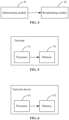
- the embodiment of the present disclosure further provides a terminal.
- the terminal includes a processor and a memory storing instructions executable by the processor. The instructions, when executed by the processor, execute the following operations:
- the non-anchor carrier configuration further includes at least one of or any combination of: a random access resource configuration list for non-anchor carriers, a RSRP threshold for radio coverage level list for the non-anchor carriers and a RSRP threshold for radio coverage level list for downlink non-anchor carriers.
- the non-anchor carrier configuration further includes at least one of or any combination of: a paging parameter configuration list for the non-anchor carriers and a paging parameter configuration list for the downlink non-anchor carriers.
- the non-anchor carrier configuration further includes at least one of or any combination of:
- the non-anchor carrier includes any one of: the non-anchor carrier, an uplink non-anchor carrier and a downlink non-anchor carrier.
- the non-anchor carrier configuration further includes at least one of or any combination of: a paging parameter configuration list for the non-anchor carriers and a paging parameter configuration list for the downlink non-anchor carriers.
- the paging parameter configuration list further includes at least one of or any combination of:
- the non-anchor carrier includes any one of: the non-anchor carrier and the downlink non-anchor carrier.
- the instructions further execute the following operations: receiving a random access carrier configuration corresponding to each radio coverage level, where the random access carrier configuration is broadcast by the network device.
- the random access carrier configuration further includes at least one of or any combination of: a carrier frequency point, a carrier frequency point list, an anchor carrier frequency point, an anchor carrier frequency point list, the non-anchor carrier frequency point, the non-anchor carrier frequency point list, an uplink non-anchor carrier frequency point, the uplink non-anchor carrier frequency point list, a carrier sequence number, a carrier sequence number list, an anchor carrier sequence number, an anchor carrier sequence number list, a non-anchor carrier sequence number, a non-anchor carrier sequence number list, an uplink non-anchor carrier frequency point sequence number, an uplink non-anchor carrier frequency point sequence number list, random access resource configurations corresponding to the above frequency points or frequency point lists.
- the carrier frequency point includes the anchor carrier frequency point and the non-anchor carrier frequency point
- the carrier frequency point list includes the anchor carrier frequency point list and the non-anchor
- the instructions further execute the following operations: receiving a paging carrier configuration corresponding to each radio coverage level, where the paging carrier configuration is broadcast by the network device.
- the paging carrier configuration further includes at least one of or any combination of: a carrier frequency point, a carrier frequency point list, an anchor carrier frequency point, an anchor carrier frequency point list, the non-anchor carrier frequency point, the non-anchor carrier frequency point list, a downlink non-anchor carrier frequency point, the downlink non-anchor carrier frequency point list, a carrier sequence number, a carrier sequence number list, an anchor carrier sequence number, an anchor carrier sequence number list, a non-anchor carrier sequence number, a non-anchor carrier sequence number list, a downlink non-anchor carrier frequency point sequence number, a downlink non-anchor carrier frequency point sequence number list, the paging resource configurations corresponding to the above frequency points or frequency point lists.
- the carrier frequency point includes the anchor carrier frequency point and the non-anchor carrier frequency point
- the carrier frequency point list includes the anchor carrier carrier
- the paging carrier configuration further includes at least one of or any combination of:
- the non-anchor carrier includes any one of: the non-anchor carrier and the downlink non-anchor carrier.
- the carrier feature parameter includes at least one of: a guard band, an in-band and a standlone band.
- the instructions further execute the following operations:
- the instructions further execute the following operations: obtaining second indication information broadcast by the network device, where the second indication information is used for instructing the terminal to perform the random access through a second non-anchor carrier, or a second uplink non-anchor carrier, or the second non-anchor carrier and the second uplink non-anchor carrier; or
- the instructions further execute the following operations: receiving a carrier configuration corresponding to each radio coverage level and broadcast by the network device, where the carrier configuration is monitored for receiving the PDCCH channel.
- the carrier configuration monitored for receiving the PDCCH channel at least includes one of or any combination of: a carrier frequency point, a carrier frequency point list, an anchor carrier frequency point, an anchor carrier frequency point list, the non-anchor carrier frequency point, the non-anchor carrier frequency point list, a downlink non-anchor carrier frequency point, a downlink non-anchor carrier frequency point list, a carrier sequence number, a carrier sequence number list, an anchor carrier sequence number, an anchor carrier sequence number list, a non-anchor carrier sequence number, a non-anchor carrier sequence number list, a downlink non-anchor carrier frequency point sequence number, a downlink non-anchor carrier frequency point sequence number list.
- the carrier frequency point includes the anchor carrier frequency point and the non-anchor carrier frequency point
- the carrier frequency point list includes the anchor carrier frequency point list and the non-anchor carrier frequency
- the instructions further execute the following operations: when the terminal selects an ith carrier in a random access carrier configuration to initiate the random access, determining, according to a preset algorithm, to select a jth carrier to monitor and receive a PDCCH channel in a carrier configuration monitored for receiving the PDCCH channel.
- Npd is a total number of carriers in the carrier configuration monitored for receiving the PDCCH channel
- Npa is a total number of the carriers in the random access carrier configuration
- a minimum value of i and a minimum value of j are 1.
- the preset algorithm further includes:
- the preset algorithm further includes:
- the instructions further execute the following operations: receiving information broadcast by the network device and on a correspondence between a carrier configuration monitored for receiving the PDCCH channel and an uplink carrier configuration corresponding to any one of: each non-anchor carrier and each radio coverage level.
- the uplink carrier configuration includes at least one of or any combination of: a carrier frequency point, a carrier frequency point list, an anchor carrier frequency point, an anchor carrier frequency point list, a non-anchor carrier frequency point, the non-anchor carrier frequency point list, an uplink non-anchor carrier frequency point, the uplink non-anchor carrier frequency point list, a carrier sequence number, a carrier sequence number list, an anchor carrier sequence number, an anchor carrier sequence number list, a non-anchor carrier sequence number, a non-anchor carrier sequence number list, an uplink non-anchor carrier frequency point sequence number, an uplink non-anchor carrier frequency point sequence number list.
- the carrier configuration monitored for receiving the PDCCH channel includes at least one of or any combination of: the carrier frequency point, the carrier frequency point list, the anchor carrier frequency point, the anchor carrier frequency point list, the non-anchor carrier frequency point, the non-anchor carrier frequency point list, a downlink non-anchor carrier frequency point, a downlink non-anchor carrier frequency point list, the carrier sequence number, the carrier sequence number list, the anchor carrier sequence number, the anchor carrier sequence number list, the non-anchor carrier sequence number, the non-anchor carrier sequence number list, a downlink non-anchor carrier frequency point sequence number, a downlink non-anchor carrier frequency point sequence number list.
- the correspondence in response to determining that the terminal selects a certain uplink carrier to initiate the random access, the carrier configuration having the correspondence with the certain uplink carrier and monitored for receiving the PDCCH channel is selected to monitor and receive the PDCCH channel.
- the correspondence includes at least one of or any combination of:
- the instructions further execute the following operations: when the terminal selects an ith carrier to initiate the random access in the uplink access carrier configuration, determining, according to a preset algorithm, to select a jth carrier to monitor and receive a PDCCH channel in the carrier configuration monitored for receiving the PDCCH channel and having the correspondence.
- the preset algorithm further includes:
- the preset algorithm further includes:
- Npd is a total number of carriers in the carrier configuration monitored for receiving the PDCCH channel and having the correspondence
- Npa is a total number of the carriers in the random access carrier configuration
- the Npa is a total number of the carriers in the uplink carrier configuration
- Ns is a subcarrier identity factor in the random access carrier configuration or a function of the subcarrier identity factor
- Ns is a current coverage level factor of the terminal or a function of the current coverage level factor.
- the preset algorithm further includes:
- the time domain factor includes at least one of: a sequence number of a first radio frame in the selected random access resource, a number of a first radio subframe serial in the selected random access resource, a sequence number of a first radio frame transmitting a random access preamble, and a sequence number of a first radio subframe serial transmitting the random access preamble.
- the embodiment of the present disclosure further provides a network device, which includes a processor and a memory storing instructions executable by the processor.
- the instructions when executed by the processor, execute following operations:
- the non-anchor carrier configuration further includes at least one of or any combination of: a random access resource configuration list for non-anchor carriers, a radio coverage level reference signal receiving power (RSRP) threshold list for the non-anchor carriers and a radio coverage level RSRP threshold list for downlink non-anchor carriers.
- RSRP radio coverage level reference signal receiving power
- the instructions further execute the following operations: broadcasting a random access carrier configuration corresponding to each radio coverage level to the terminal, where the random access carrier configuration further includes at least one of or any combination of: a carrier frequency point, a carrier frequency point list, an anchor carrier frequency point, an anchor carrier frequency point list, a non-anchor carrier frequency point, the non-anchor carrier frequency point list, an uplink non-anchor carrier frequency point, the uplink non-anchor carrier frequency point list, a carrier sequence number, a carrier sequence number list, an anchor carrier sequence number, an anchor carrier sequence number list, a non-anchor carrier sequence number, a non-anchor carrier sequence number list, an uplink non-anchor carrier frequency point sequence number, an uplink non-anchor carrier frequency point sequence number list, and random access resource configurations corresponding to the above frequency points or frequency point lists.
- the carrier frequency point includes the anchor carrier frequency point and the non-anchor carrier frequency point
- the carrier frequency point list includes the anchor carrier frequency point list and the non-anchor carrier frequency point list.
- the following operations are further executed: broadcasting to the terminal a carrier configuration monitored for receiving a PDCCH channel corresponding to each radio coverage level.
- the carrier configuration monitored for receiving the PDCCH channel at least includes one of or any combination of: a carrier frequency point, a carrier frequency point list, an anchor carrier frequency point, an anchor carrier frequency point list, the non-anchor carrier frequency point, the non-anchor carrier frequency point list, a downlink non-anchor carrier frequency point, a downlink non-anchor carrier frequency point list, a carrier sequence number, a carrier sequence number list, an anchor carrier sequence number, an anchor carrier sequence number list, a non-anchor carrier sequence number, a non-anchor carrier sequence number list, a downlink non-anchor carrier frequency point sequence number, a downlink non-anchor carrier frequency point sequence number list.
- the carrier frequency point includes the anchor carrier frequency point and the non-anchor carrier frequency point
- the carrier frequency point list includes the anchor carrier frequency point list and the non-anchor carrier frequency point list.
- each item of each of the non-anchor carrier configuration parameter list, the uplink non-anchor carrier configuration parameter list, and the downlink non-anchor carrier configuration parameter list includes: other physical layer parameters.
- the random access resource configuration list for the non-anchor carriers at least includes an item of the random access resource configuration corresponding to a radio coverage level.
- a terminal receives a non-anchor carrier configuration broadcast by a network device, and determines, according to the non-anchor carrier configuration, resource information for performing random access or monitoring pages with the network device.
- the non-anchor carrier configuration includes at least one of or any combination of: a non-anchor carrier frequency point list, a non-anchor carrier configuration parameter list, an uplink non-anchor carrier frequency point list, an uplink non-anchor carrier configuration parameter list, a downlink non-anchor carrier frequency point list and a downlink non-anchor carrier configuration parameter list.
- a method for obtaining a network system resource configuration and a method for transmitting the network system resource configuration provided by embodiments of the present disclosure may be applied when a network device and a terminal perform monitoring pages or random access through a non-anchor carrier.
- the method for obtaining the network system resource configuration provided by embodiments of the present disclosure may be executed by a device for obtaining the network system resource configuration, which may be integrated in a terminal device or provided separately.
- the method for transmitting the network system resource configuration provided by embodiments of the present disclosure may be executed by a device for transmitting the network system resource configuration, which may be integrated in the network device or provided separately.
- the device for obtaining the network system resource configuration and the device for transmitting the network system resource configuration may be implemented by software, hardware, or a combination thereof.
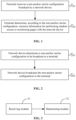
- step 101 the terminal receives a non-anchor carrier configuration broadcast by a network device.
- the non-anchor carrier configuration includes at least one of or any combination of: a non-anchor carrier frequency point list, a non-anchor carrier configuration parameter list, an uplink non-anchor carrier frequency point list, an uplink non-anchor carrier configuration parameter list, a downlink non-anchor carrier frequency point list and a downlink non-anchor carrier configuration parameter list.
- This embodiment is used in such a usage scenario in which multiple single-carrier cells in a same area under a same network device, such as a base station, are aggregated into a multi-carrier cell.
- the non-anchor carrier frequency point list includes at least one non-anchor carrier frequency point.
- the network device may be the base station or any device of a network system.
- the terminal may be any terminal device connected with the network device.
- the non-anchor carrier configuration parameter list may include at least two implementation modes.
- the non-anchor carrier configuration parameter list may include at least one item, and each item includes different configuration parameters, such as power and interval time.
- the configuration parameters in each item are not limited to the power and interval time, and may further include the configuration parameter configured by those skilled in the art.
- the non-anchor carrier configuration parameter list may include at least one item, and each item includes one configuration parameter.
- the non-anchor carrier configuration parameter list may include two items, where one item is a power, and the other item is interval time.
- the non-anchor carrier frequency point list and the non-anchor carrier configuration parameter list may be configured in the same list. That is, each non-anchor carrier frequency point in the non-anchor carrier frequency point list may correspond to one configuration parameter list items in the non-anchor carrier configuration parameter list. Alternatively, all non-anchor carrier frequency points in the non-anchor carrier frequency point list may correspond to one configuration parameter list item in the non-anchor carrier configuration parameter list.
- step 102 the terminal determines, according to the non-anchor carrier configuration, resource information for performing random access or monitoring pages with the network device.
- the step in which the terminal determines according to the non-anchor carrier configuration the resource information for performing the random access or monitoring pages with the network device at least includes two implementation modes.
- the terminal may determine the resource information for monitoring pages with the network device according to the non-anchor carrier frequency point list, the non-anchor carrier configuration parameter list, the downlink non-anchor carrier frequency point list and the downlink non-anchor carrier configuration parameter list indicated in the non-anchor carrier configuration, thereby initiating monitoring pages on the resource information.
- the terminal may determine the resource information for performing the random access with the network device according to the non-anchor carrier frequency point list, the non-anchor carrier configuration parameter list, the uplink non-anchor carrier frequency point list and the uplink non-anchor carrier configuration parameter list indicated in the non-anchor carrier configuration, thereby initiating the random access on the resource information.
- the terminal receives the non-anchor carrier configuration broadcast by the network device.
- the non-anchor carrier configuration includes at least one of or any combination of: the non-anchor carrier frequency point list, the non-anchor carrier configuration parameter list, the uplink non-anchor carrier frequency point list, the uplink non-anchor carrier configuration parameter list, the downlink non-anchor carrier frequency point list and the downlink non-anchor carrier configuration parameter list.
- the terminal determines, according to the non-anchor carrier configuration, the resource information for performing the random access or monitoring pages with the network device. In this way, the terminal performs the random access and monitoring pages on the non-anchor carrier, thereby improving the ability of the paging and random access capacity of the network device.
- the non-anchor carrier configuration further includes at least one of or any combination of: a random access resource configuration list for non-anchor carriers, a reference signal receiving power (RSRP) threshold for radio coverage level list for the non-anchor carriers and a RSRP threshold for radio coverage level list for downlink non-anchor carriers.
- RSRP reference signal receiving power
- the random access resource configuration list for the non-anchor carriers at least includes one random access resource configuration item.
- Each random access resource configuration item includes a correspondence relationship between the non-anchor carrier frequency points and the radio coverage levels. For example, a first radio coverage level corresponds to three non-anchor carrier frequency points, i.e., F1, F2 and F5, and a second radio coverage level corresponds to two non-anchor carrier frequency points, i.e., F3 and F4.
- the RSRP threshold for radio coverage level list for the non-anchor carriers may at least include a non-anchor carrier radio coverage level RSRP threshold item.
- Each non-anchor carrier radio coverage level RSRP threshold item includes a correspondence relationship between RSRP thresholds and the radio coverage levels. For example, the RSRP which is greater than a first RSRP threshold, i.e., 800HZ, corresponds to a first non-anchor carrier radio coverage level, and the RSRP which is less than the first RSRP threshold and greater than a second RSRP threshold, i.e., 500HZ, corresponds to a second non-anchor carrier radio coverage level.
- the RSRP threshold list for the downlink non-anchor carrier at least includes a downlink non-anchor carrier RSRP threshold item.
- Each downlink non-anchor carrier RSRP threshold item includes a correspondence relationship between the RSRP threshold and a downlink radio coverage level.
- the RSRP which is greater than the first RSRP threshold i.e., 800HZ
- the RSRP which is less than the first RSRP threshold and greater than the second RSRP threshold i.e., 500HZ
- the non-anchor carrier configuration further includes at least one of or any combination of: a paging parameter configuration list for the non-anchor carrier and a paging parameter configuration list for the downlink non-anchor carrier.
- the non-anchor carrier configuration further includes at least one of or any combination of:
- the non-anchor carriers include any one of: the non-anchor carrier, the uplink non-anchor carrier and the downlink non-anchor carrier.
- the non-anchor carrier configuration further includes at least one of or any combination of: the paging parameter configuration list for the non-anchor carrier and the paging parameter configuration list for the downlink non-anchor carrier.
- the paging parameter configuration list further includes at least one of or any combination of:
- the non-anchor carrier includes any one of: the non-anchor carrier and the downlink non-anchor carrier.
- the method may further include: the terminal receives each radio coverage level's corresponding random access carrier configuration broadcast by the network device.
- the random access carrier configuration further includes at least one of or any combination of: a carrier frequency point, a carrier frequency point list, an anchor carrier frequency point, an anchor carrier frequency point list, a non-anchor carrier frequency point, the non-anchor carrier frequency point list, an uplink non-anchor carrier frequency point, the uplink non-anchor carrier frequency point list, a carrier sequence number, a carrier sequence number list, an anchor carrier sequence number, an anchor carrier sequence number list, a non-anchor carrier sequence number, a non-anchor carrier sequence number list, an uplink non-anchor carrier frequency point sequence number, an uplink non-anchor carrier frequency point sequence number list, and random access resource configurations corresponding to the above frequency points or frequency point lists, where the carrier frequency point includes the anchor carrier frequency point and the non-anchor carrier frequency point, and the carrier frequency point list includes the anchor carrier frequency point list and the non-anchor carrier frequency point list
- the method may further include: the terminal receives each radio coverage level's corresponding paging carrier configuration broadcast by the network device.
- the paging carrier configuration further includes at least one of or any combination of: a carrier frequency point, a carrier frequency point list, an anchor carrier frequency point, an anchor carrier frequency point list, a non-anchor carrier frequency point, the non-anchor carrier frequency point list, a downlink non-anchor carrier frequency point, the downlink non-anchor carrier frequency point list, a carrier sequence number, a carrier sequence number list, an anchor carrier sequence number, an anchor carrier sequence number list, a non-anchor carrier sequence number, a non-anchor carrier sequence number list, a downlink non-anchor carrier frequency point sequence number, a downlink non-anchor carrier frequency point sequence number list, and paging resource configurations corresponding to the above frequency points or frequency point lists.
- the carrier frequency point comprises the anchor carrier frequency point and the non-anchor carrier frequency point
- the carrier frequency point list comprises the anchor carrier frequency point list and the non-anchor
- the paging carrier configuration further includes at least one of or any combination of:
- the non-anchor carrier includes any one of: the non-anchor carrier and the downlink non-anchor carrier.
- the carrier feature parameter includes one of: a guard band, an in-band and a standlone band.
- the method may further include: the terminal obtains first indication information broadcast by the network device, where the first indication information is used for instructing the terminal to monitor pages on a first non-anchor carrier, or a first downlink non-anchor carrier, or the first non-anchor carrier and the first downlink non-anchor carrier.
- the terminal obtains third indication information broadcast by the network device, where the third indication information is used for instructing the terminal to monitor pages through a first anchor carrier.
- the terminal obtains fifth indication information broadcast by the network device, where the fifth indication information is used for instructing the terminal to monitor pages through the first anchor carrier, the first non-anchor carrier, or the first downlink non-anchor carrier.
- the first non-anchor carrier includes at least one non-anchor carrier in the non-anchor carrier configuration
- the first downlink non-anchor carrier includes at least one downlink non-anchor carrier in the non-anchor carrier configuration
- the first anchor carrier includes at least one anchor carrier in an anchor carrier list broadcast by a system.
- the terminal obtains seventh indication information broadcast by the network device, where the seventh indication information is used for indicating whether resources used by the terminal for monitoring pages include the anchor carrier.
- the terminal receives at least one of or any combination of: the first indication information broadcast, the third indication information and the fifth indication information which are broadcast by the network device in at least two implementation modes.
- the network device transmits these indication information by directly using bits.
- the network device transmits these indication information in an implicit mode, that is, without using bit.
- the method in the embodiment of the present disclosure may further include: the terminal obtains second indication information broadcast by the network device, where the second indication information is used for instructing the terminal to perform the random access on a second non-anchor carrier, or a second uplink non-anchor carrier, or the second non-anchor carrier and the second uplink non-anchor carrier.
- the terminal obtains fourth indication information broadcast by the network device, where the fourth indication information is used for instructing the terminal to perform the random access by a second anchor carrier.
- the terminal obtains sixth indication information broadcast by the network device, where the sixth indication information is used for instructing the terminal to perform the random access on the second anchor carrier, the second non-anchor carrier, or the second uplink non-anchor carrier.
- the second non-anchor carrier includes at least one non-anchor carrier in the non-anchor carrier configuration or the random access carrier configuration
- the second uplink non-anchor carrier includes at least one uplink non-anchor carrier in the non-anchor carrier configuration or the random access carrier configuration
- the second anchor carrier includes at least one anchor carrier in an anchor carrier list broadcast by the network device.
- the terminal obtains eighth indication information broadcast by the network device, where the eighth indication information is used for indicating whether resources for performing the random access used by the terminal include the anchor carrier.
- the terminal receives at least one of or any combination of: the second indication information broadcast, the fourth indication information and the sixth indication information broadcast by the network device in at least two implementation modes.
- the network device transmits these indication information by directly using bits.
- the network device transmits these indication information in an implicit mode, that is, without using bit.
- the method of this embodiment further includes: the terminal receives each radio coverage level's corresponding carrier configuration broadcast by the network device, where carrier configuration is monitored for receiving the PDCCH channel.
- the carrier configuration monitored for receiving the PDCCH channel at least includes one of or any combination of: a carrier frequency point, a carrier frequency point list, an anchor carrier frequency point, an anchor carrier frequency point list, the non-anchor carrier frequency point, the non-anchor carrier frequency point list, a downlink non-anchor carrier frequency point, a downlink non-anchor carrier frequency point list, a carrier sequence number, a carrier sequence number list, an anchor carrier sequence number, an anchor carrier sequence number list, a non-anchor carrier sequence number, a non-anchor carrier sequence number list, a downlink non-anchor carrier frequency point sequence number, and a downlink non-anchor carrier frequency point sequence number list.
- the carrier frequency point comprises the anchor carrier frequency point and the non-anchor carrier frequency point
- the carrier frequency point list comprises the anchor carrier frequency point list and the non-anchor carrier frequency
- the terminal may determine according to a preset algorithm to select a jth carrier to listen and receive the PDCCH channel in the carrier configuration monitored for receiving the PDCCH channel when the terminal selects an ith carrier to initiate the random access in the random access carrier configuration.
- Npd is a total number of carriers in the carrier configuration monitored for receiving the PDCCH channel
- Npa is a total number of the carriers in the random access carrier configuration
- a minimum value of i and a minimum value of j are 1.
- the preset algorithm may be implemented in any mode described below.
- the preset algorithm includes:
- the preset algorithm includes:
- Npd is a total number of carriers in the carrier configuration monitored for receiving the PDCCH channel
- Npa is a total number of the carriers in the random access carrier configuration
- a minimum value of i and a minimum value of j are 1.
- the method may further include: the terminal receives information on a correspondence between the carrier configuration monitored for receiving the PDCCH channel and an uplink carrier configuration corresponding to any one of: each non-anchor carrier and each radio coverage level.
- the information is broadcast by the network device.
- the uplink carrier configuration includes at least one of or any combination of: a carrier frequency point, a carrier frequency point list, an anchor carrier frequency point, an anchor carrier frequency point list, a non-anchor carrier frequency point, the non-anchor carrier frequency point list, an uplink non-anchor carrier frequency point, the uplink non-anchor carrier frequency point list, a carrier sequence number, a carrier sequence number list, an anchor carrier sequence number, an anchor carrier sequence number list, a non-anchor carrier sequence number, a non-anchor carrier sequence number list, an uplink non-anchor carrier frequency point sequence number, and an uplink non-anchor carrier frequency point sequence number list.
- the carrier configuration monitored for receiving the PDCCH channel includes at least one of or any combination of: the carrier frequency point, the carrier frequency point list, the anchor carrier frequency point, the anchor carrier frequency point list, the non-anchor carrier frequency point, the non-anchor carrier frequency point list, a downlink non-anchor carrier frequency point, a downlink non-anchor carrier frequency point list, the carrier sequence number, the carrier sequence number list, the anchor carrier sequence number, the anchor carrier sequence number list, the non-anchor carrier sequence number, the non-anchor carrier sequence number list, a downlink non-anchor carrier frequency point sequence number, and a downlink non-anchor carrier frequency point sequence number list.
- the method may further include: When the terminal selects a certain uplink carrier to initiate the random access, the terminal selects, according to the correspondence, the carrier configuration corresponding to the certain uplink carrier and monitored for receiving the PDCCH channel to monitor and receive the PDCCH channel.
- the correspondence includes at least one of or any combination of:
- the method may further include: when the terminal selects an ith carrier to initiate the random access in the uplink carrier configuration, the terminal determines, according to a preset algorithm, to select a jth carrier to monitor and receive a PDCCH channel in the carrier configuration monitored for receiving the PDCCH channel and having the correspondence.
- the preset algorithm may be implemented in any mode described below.
- Npd Npa
- the terminal initiates the random access on the ith carrier, the terminal selects the carrier monitored for receiving the PDCCH channel according to which one of the Npd segments the value of Ns in a selected random access resource falls into. For example, the value of Ns in the selected random access resource falls into a Mjth segment, the jth carrier is selected as the carrier monitored for receiving the PDCCH channel.
- Npd is a total number of carriers in the carrier configuration monitored for receiving the PDCCH channel and having the correspondence
- Npa is a total number of the carriers in the random access carrier configuration
- the Npa is a total number of the carriers in the uplink carrier configuration
- Ns is a subcarrier identity factor in the random access carrier configuration or a function of the subcarrier identity factor
- Ns is a current coverage level factor of the terminal or a function of the current coverage level factor.
- the time domain factor includes at least one of: a first radio frame sequence number of the selected random access resource, a first radio subframe sequence number of the selected random access resource, a first radio frame sequence number of a transmission random access preamble, and a first radio subframe sequence number of the transmission random access preamble.
- Each item of each of the non-anchor carrier configuration parameter list, the uplink non-anchor carrier configuration parameter list, and the downlink non-anchor carrier configuration parameter list includes: other physical layer parameters.
- Each item of each of the non-anchor carrier configuration parameter list, the uplink non-anchor carrier configuration parameter list, and the downlink non-anchor carrier configuration parameter list includes: a frequency band feature parameter.
- the carrier feature parameter includes one of: a guard band, an in-band and a standlone band.
- the method may further include: the random access resource configuration list for the non-anchor carrier at least includes one item of the random access resource configuration corresponding to the radio coverage level.
- a default configuration is that the random access resource configuration for the non-anchor carrier may be the same as the random access resource configuration for the anchor carrier.
- Different non-anchor carrier have a same random access resource configuration, or have different random access resource configurations.
- the other physical layer parameters include at least one of or any combination of: a downlink subframe configuration, a downlink transmission gap configuration, a size of evolved universal terrestrial radio access (E-UTRA) control region in an in-band operation mode.
- E-UTRA evolved universal terrestrial radio access
- the terminal may receive a difference between the non-anchor carrier radio coverage level RSRP threshold and the anchor carrier radio coverage level RSRP threshold, where the difference broadcast by the network device.
- the difference may be a difference list.
- Each item in the difference list represents a difference between a RSRP threshold for radio coverage level list for a certain non-anchor carrier and a RSRP threshold for radio coverage level list for a certain anchor carrier. If the difference list has only one item, the item represents a difference between the RSRP threshold for radio coverage level list for all non-anchor carriers and the RSRP threshold for radio coverage level list for all anchor carriers.
- the first indication information, the second indication information, the third indication information, the fourth indication information, the fifth indication information and the sixth indication information may be different values of the same indication information, or two or more of the above indication information are indicated by one indication.
- the above method further includes at least one of or any combination of:
- System information broadcast by the network device and received by the terminal is shown as follows.
- a revision mark is used to represent the non-anchor carrier configuration added to a current configuration and the random access carrier configuration added to a random access configuration.
- the SystemInformationBlockTypeX (the SystemInformationBlockTypeX may be SIB1, SIB2 or other SIB information) includes the non-anchor carrier configuration.
- the non-anchor carrier configuration includes non-anchor carrier frequency point configurations with a total number of maxNonAnchorCarrier.
- the terminal performs monitoring pages on an anchor carrier, and initiates random access on the anchor carrier by using a nprach-Config-r13 configuration.
- the new version terminal When the new version terminal receives the above non-anchor carrier frequency point configuration, it may be considered that the new version terminal receives an implicit indication of the network device, indicating that the new version terminal may select one of these non-anchor carrier frequency points to monitor pages or initiate the random access.
- the random access resource configuration may include a random access resource configuration NPRACH-ConfigSIB-NB-r14 that the new version terminal needs to additionally receive.
- the NPRACH-ConfigSIB-NB-r14 includes multiple random access resource configurations corresponding to coverage levels.
- Each random access resource configuration NPRACH-Parameters-NB-r14 mainly includes the random access carrier configuration.
- the random access carrier configuration may include frequency points of multiple random access carriers. The frequency points correspond to frequency points of the anchor carriers and/or non-anchor carriers broadcast in the system information.
- the random access carrier configuration may also include sequence numbers CarrierFreqIndex-NB-r14 of the multiple random access carriers, the sequence numbers correspond to sequence numbers of the anchor carriers and/or non-anchor carriers broadcast in the system information.
- the above embodiment adopts the latter configuration mode.
- the sequence number of the anchor carrier may be considered to be the smallest.
- the used random access resource configuration is the original random access resource configuration , that is, the used random access resource configuration is the random access resource configuration corresponding to the current coverage level on the anchor carrier.
- maxNPRACH-Carrier is less than or equal to maxNonAnchorCarrier.
- each NPRACH-Parameters-NB-r14 in addition to include the random access carrier configuration, may also include the random access resource configuration NPRACH-CarrierConfig-NB-r14 corresponding to the carrier configuration.
- NPRACH-CarrierConfig-NB-r14 may be similar to the configuration mode of a PRACH resource for each coverage level in NPRACH-ConfigSIB-NB-r13. If NPRACH-CarrierList-NB-r14 includes multiple non-anchor carriers, then the multiple non-anchor carriers correspond to the same random access resource configuration.
- each non-anchor carrier configuration in addition to include frequency point information, may also include other physical parameter configurations, such as waiting time shown below.
- the carrier configuration monitored for receiving the PDCCH is also added into the random access resource configuration.
- the SystemInformationBlockTypeX (the SystemInformationBlockTypeX may be SIB1, SIB2 or other SIB information) includes the non-anchor carrier configuration.
- the non-anchor carrier configuration includes the non-anchor carrier frequency point configurations with the total number of maxNonAnchorCarrier.
- the old version terminal monitors pages on the anchor carrier, and initiates the random access on the anchor carrier by using the nprach-Config-r13 configuration.
- the new version terminal When the new version terminal receives the above non-anchor carrier frequency point configuration, it may be considered that the new version terminal receives the implicit indication from the network device, indicating that the new version terminal may select one of these non-anchor carrier frequency points to monitor pages or initiate the random access.
- the random access resource configuration further includes the random access resource configuration NPRACH-ConfigSIB-NB-r14 that the new version terminal needs to additionally receive.
- the NPRACH-ConfigSIB-NB-r14 includes multiple random access resource configurations corresponding to the coverage levels.
- Each random access resource configuration NPRACH-Parameters-NB-r14 includes the random access carrier configuration.
- the random access carrier configuration may include frequency points of multiple random access carriers, and may also include sequence numbers CarrierFreqIndex-NB-r14 of the multiple random access carriers.
- the sequence number corresponds to the sequence number of the anchor carrier and/or non-anchor carrier broadcast in the system information.
- the sequence number of the anchor carrier may be considered to be the smallest.
- the random access resource configuration further includes the carrier configuration NPDCCH-ConfigSIB-NB-r14 that the new version terminal needs to additionally receive, where the carrier configuration NPDCCH-ConfigSIB-NB-r14 is monitored for receiving the PDCCH channel.
- the NPDCCH-ConfigSIB-NB-r14 includes multiple carrier configurations corresponding to the coverage levels.
- a NPDCCH monitoring carrier configuration corresponding to each coverage level may include frequency points of multiple carriers monitored for receiving the PDCCH channel (the number is equal to the number of the random access carriers under each coverage level, and accordingly, the maximum is maxNPRACH-Carrier, alternatively, the number is different from the number of the random access carriers under each coverage level, and accordingly, the maximum is maxNPDCCH-Carrier).
- the NPDCCH monitoring carrier configuration may include sequence numbers CarrierFreqIndex-NB-r14 of the multiple carriers monitored for receiving the PDCCH channel, and the sequence number corresponds to the sequence number of the anchor carrier and/or non-anchor carrier broadcast in the system information.
- the sequence number of the anchor carrier may be considered to be the smallest.
- the carriers in the random access carrier configuration and the carriers in the carrier configuration monitored for receiving the PDCCH channel are in one-to-one correspondence in sequence. That is, if the random access is initiated on a nth carrier in the random access carrier configuration, the PDCCH channel is monitored to on a nth carrier in the carrier configuration monitored for receiving the PDCCH channel.
- the terminal selects an ith carrier to initiate the random access in the random access carrier configuration
- Npd is a total number of carriers in the carrier configuration monitored for receiving the PDCCH channel
- Npa is a total number of the carriers in the random access carrier configuration
- a minimum value of i and a minimum value of j are 1.
- the non-anchor carrier configuration may include an uplink non-anchor carrier configuration and a downlink non-anchor carrier configuration
- NPRACH-ConfigSIB-NB-r14 and NPDCCH-Parameters-NB-r14 may be respectively configured based on the uplink non-anchor carrier and the downlink non-anchor carrier.
- the configuration difference is described below.
- the system information broadcast by the network device and received by the terminal is shown as follows.
- the revision mark is used to represent the non-anchor carrier configuration added to the current configuration.
- the SystemInformationBlockTypeX (the SystemInformationBlockTypeX may be SIB1, SIB2 or other SIB information) includes the non-anchor carrier configuration.
- the non-anchor carrier configuration not only includes non-anchor carrier frequency points a total number of which is maxNonAnchorCarrier, but also includes the random access resource configuration.
- the random access resource configuration and a PRACH configuration on the anchor carrier adopt a similar structure, that is, including multiple random access resource configurations corresponding to the coverage levels. Values of various parameters in the random access resource configuration may be different from values of various parameters in the PRACH configuration on the anchor carrier. However, for all non-anchor carriers, their random access resource configurations are same.
- the terminal When the terminal can parse the newly added fields described above, the terminal preferentially selects one carrier in the non-anchor carrier configuration to execute the subsequent random access process.
- the system information broadcast by the network device and received by the terminal is shown as follows.
- the revision mark is used to represent the non-anchor carrier configuration added to the current configuration.
- the SystemInformationBlockTypeX (the SystemInformationBlockTypeX may be SIB1, SIB2 or other SIB information) includes non-anchor carrier dedicated configurations with a total number of maxNonAnchorCarrier.
- Each non-anchor carrier dedicated configuration includes an uplink configuration and a downlink confirmation. The total number of uplink carriers and the total number of downlink carriers of are the same and both are maxNonAnchorCarrier.
- Each downlink non-anchor carrier configuration mainly includes frequency point information.
- the uplink non-anchor carrier configuration includes the frequency point and the random access resource configuration.
- the random access resource configuration and the PRACH configuration on the anchor carrier adopt a similar structure. That is, the uplink non-anchor carrier configuration includes multiple random access resource configurations corresponding to the coverage levels.
- the values of various parameters in the random access resource configuration may be different from that in the PRACH configuration on the anchor carrier, and the non-anchor carriers may have different random access resource configurations.
- the terminal When the terminal is capable of parsing the newly added fields described above, the terminal preferentially selects one carrier in the non-anchor carrier configuration to execute the subsequent random access process.
- the system information broadcast by the network device and received by the terminal is shown as follows.
- the revision mark is used to represent the non-anchor carrier configuration added to the current configuration.
- the SystemInformationBlockTypeX (the SystemInformationBlockTypeX may be SIB1, SIB2 or other SIB information) includes downlink non-anchor carrier dedicated configurations with a total number of maxDLNonAnchorCarrier and uplink non-anchor carrier dedicated configurations with a total number of maxULNonAnchorCarrier.
- maxDLNonAnchorCarrier and maxULNonAnchorCarrier are different.
- Each downlink non-anchor carrier dedicated configuration includes the frequency point and other physical layer parameters.
- Each uplink non-anchor carrier dedicated configuration includes the frequency point and the random access resource configuration.
- the random access resource configuration adopts a structure similar with that in the PRACH configuration on the anchor carrier, that is, the random access resource configuration includes multiple random access resource configurations each of which corresponds to a respective one of the coverage levels.
- the values of various parameters in the random access resource configuration may be different from that in the PRACH configuration on the anchor carrier, and the non-anchor carriers may have different random access resource configurations.
- the terminal and base station determine, according to the preset algorithm, to monitor the PDCCH channel on a jth downlink non-anchor carrier when initiating the random access on an ith uplink non-anchor carrier.
- Npd is maxDLNonAnchorCarrier
- Npa is maxULNonAnchorCarrier
- the minimum value of i and the minimum value of j are 1.
- the terminal When the terminal is capable of parsing the newly added fields described above, the terminal preferentially selects one carrier in the non-anchor carrier configuration to execute the subsequent random access process.
- the system information broadcast by the network device and received by the terminal is shown as follows.
- the revision mark is used for representing an indication that the terminal capable of initiating the random access on the non-anchor carrier preferentially initiates the random access on the non-anchor carrier and an instruction that the terminal capable of receiving paging on the non-anchor carrier preferentially receives paging on the non-anchor carrier, which are newly added to the current configuration.
- the terminal When the terminal is capable of parsing the newly added fields described above, no matter which non-anchor carrier configuration or random access resource configuration is adopted, the terminal preferentially selects one carrier in the non-anchor carrier configuration to monitor pages or execute the subsequent random access process.
- Example ten is a comprehensive example based on the first implementation mode described above.
- the network device broadcasts all non-anchor carrier configurations by the system information.
- the non-anchor carrier configuration at least includes a non-anchor carrier frequency point list.
- Each non-anchor carrier in the non-anchor carrier configuration has a uplink non-anchor carrier configuration for the case where the non-anchor carrier is used for uplink and a downlink non-anchor carrier configuration for the case where the non-anchor carrier is used for downlink.
- the random access resource configuration broadcast by network device via the system information includes a random access frequency point configuration.
- the random access frequency point configuration includes random access frequency point lists configured for coverage levels.
- the random access frequency point list includes one or more frequency points or frequency point sequence numbers.
- Each one of all frequency points of the frequency point list corresponding to this coverage level includes one PRACH resource configuration, that is, the definition of NPRACH-Parameters-NB-r14 is modified as follows:
- the non-anchor carrier configuration further includes at least one of or any combination of: a random access resource configuration list for the non-anchor carrier, a reference signal receiving power (RSRP) threshold for radio coverage level list for the non-anchor carrier and a RSRP threshold for radio coverage level list for the downlink non-anchor carrier.
- the network device broadcasts all non-anchor carrier configurations by the system information.
- Each non-anchor carrier in the non-anchor carrier configurations has a configuration for the case where the non-anchor carrier is used for uplink and a configuration for the case where the non-anchor carrier is used for downlink.
- the non-anchor carrier configuration at least includes the non-anchor carrier frequency point list, and the random access resource configuration configured for each non-anchor carrier.
- FIG. 2 is a flowchart of a method for transmitting a network system resource configuration according to an embodiment of the present disclosure.
- the method may be executed by a network device. As shown in FIG. 2 , the method includes steps 201 and 202.
- step 201 the network device determines a non-anchor carrier configuration to be broadcast to the terminal.
- the non-anchor carrier configuration includes at least one of or any combination of: a non-anchor carrier frequency point list, a non-anchor carrier configuration parameter list, an uplink non-anchor carrier frequency point list, an uplink non-anchor carrier configuration parameter list, a downlink non-anchor carrier frequency point list and a downlink non-anchor carrier configuration parameter list.
- step 202 the network device broadcasts the non-anchor carrier configuration to the terminal.
- the network device determines the non-anchor carrier configuration broadcast to the terminal, and then broadcasts the non-anchor carrier configuration to the terminal.
- the non-anchor carrier configuration includes at least one of or any combination of: the non-anchor carrier frequency point list, the non-anchor carrier configuration parameter list, the uplink non-anchor carrier frequency point list, the uplink non-anchor carrier configuration parameter list, the downlink non-anchor carrier frequency point list and the downlink non-anchor carrier configuration parameter list.
- the non-anchor carrier configuration further includes at least one of or any combination of: a non-anchor carrier random access resource configuration list, a non-anchor carrier radio coverage level reference signal receiving power (RSRP) threshold list and a downlink non-anchor carrier radio coverage level RSRP threshold list.
- RSRP non-anchor carrier radio coverage level reference signal receiving power
- the method may further include: the network device broadcasts a random access carrier configuration corresponding to each radio coverage level to the terminal, where the random access carrier configuration includes at least one of or any combination of: a carrier frequency point, a carrier frequency point list, an anchor carrier frequency point, an anchor carrier frequency point list, a non-anchor carrier frequency point, a non-anchor carrier frequency point list, an uplink non-anchor carrier frequency point, an uplink non-anchor carrier frequency point list, a carrier sequence number, a carrier sequence number list, an anchor carrier sequence number, an anchor carrier sequence number list, a non-anchor carrier sequence number, a non-anchor carrier sequence number list, an uplink non-anchor carrier frequency point sequence number, an uplink non-anchor carrier frequency point sequence number list, and random access resource configurations corresponding to the above frequency points or frequency point lists.
- the carrier frequency point includes the anchor carrier frequency point and the non-anchor carrier frequency point
- the carrier frequency point list comprises the anchor carrier frequency point list and the non-anchor carrier frequency point list
- the method may further include:
- the method further includes: the network device broadcasts second indication information to the terminal, where the second indication information is used for instructing the terminal to perform the random access on a second non-anchor carrier, or a second uplink non-anchor carrier, or the second non-anchor carrier and the second uplink non-anchor carrier;
- the method further includes: the network device broadcasts a carrier configuration monitored for receiving the PDCCH channel corresponding to each radio coverage level to the terminal.
- the carrier configuration monitored for receiving the PDCCH channel at least includes one of or any combination of: a carrier frequency point, a carrier frequency point list, an anchor carrier frequency point, an anchor carrier frequency point list, a non-anchor carrier frequency point, the non-anchor carrier frequency point list, a downlink non-anchor carrier frequency point, the downlink non-anchor carrier frequency point list, a carrier sequence number, a carrier sequence number list, an anchor carrier sequence number, an anchor carrier sequence number list, a non-anchor carrier sequence number, a non-anchor carrier sequence number list, a downlink non-anchor carrier frequency point sequence number, and a downlink non-anchor carrier frequency point sequence number list.
- the carrier frequency point includes the anchor carrier frequency point and the non-anchor carrier frequency point
- the carrier frequency point list includes the anchor carrier frequency point list and the non-anchor carrier frequency point list.
- each item of each of the non-anchor carrier configuration parameter list, the uplink non-anchor carrier configuration parameter list, and the downlink non-anchor carrier configuration parameter list includes: other physical layer parameters.
- the non-anchor carrier random access resource configuration list at least includes a random access resource configuration item corresponding to the radio coverage level.
- the default configuration is that the non-anchor carrier random access resource configuration is the same as the anchor carrier random access resource configuration.
- different non-anchor carriers have a same random access resource configuration or have different a random access resource configurations.
- the other physical layer parameters include at least one of or any combination of: a downlink subframe configuration, a downlink transmission gap configuration, a size of evolved universal terrestrial radio access (E-UTRA) control region in an in-band operation mode.
- E-UTRA evolved universal terrestrial radio access
- the method may further include: the network device broadcasts by a difference between a non-anchor carrier radio coverage level RSRP threshold and an anchor carrier radio coverage level RSRP threshold to the terminal.
- FIG. 3 is a schematic diagram of modules in a device for obtaining a network system resource configuration according to an embodiment of the present disclosure.
- the device for obtaining the network system resource configuration includes a receiving module 31 and a determining module 32.
- the device for obtaining the network system resource configuration may be integrated in a terminal device or provided separately.
- the receiving module 31 is configured to receive a non-anchor carrier configuration broadcast by a network device.
- the non-anchor carrier configuration includes at least one of or any combination of: a non-anchor carrier frequency point list, a non-anchor carrier configuration parameter list, an uplink non-anchor carrier frequency point list, an uplink non-anchor carrier configuration parameter list, a downlink non-anchor carrier frequency point list and a downlink non-anchor carrier configuration parameter list.
- the determining module 32 is configured to determine, according to the non-anchor carrier configuration, resource information for performing random access or monitoring pages with the network device.
- the device for obtaining the network system resource configuration receives the non-anchor carrier configuration broadcast by the network device.
- the non-anchor carrier configuration includes at least one of or any combination of: the non-anchor carrier frequency point list, the non-anchor carrier configuration parameter list, the uplink non-anchor carrier frequency point list, the uplink non-anchor carrier configuration parameter list, the downlink non-anchor carrier frequency point list and the downlink non-anchor carrier configuration parameter list.
- the terminal determines, according to the non-anchor carrier configuration, the resource information for performing the random access or monitoring pages with the network device. In this way, the terminal performs the random access and monitoring pages on the non-anchor carrier, thereby improving the ability of the paging and random access capacity of the network device.
- the non-anchor carrier configuration further includes at least one of or any combination of: a random access resource configuration list for non-anchor carriers, a RSRP threshold for radio coverage level list for the non-anchor carriers and a RSRP threshold for radio coverage level list for downlink non-anchor carriers.
- the receiving module 31 is configured to receive a random access carrier configuration broadcast by the network device and corresponding to each radio coverage level.
- the random access carrier configuration further includes at least one of or any combination of: a carrier frequency point, a carrier frequency point list, an anchor carrier frequency point, an anchor carrier frequency point list, a non-anchor carrier frequency point, the non-anchor carrier frequency point list, an uplink non-anchor carrier frequency point, the uplink non-anchor carrier frequency point list, a carrier sequence number, a carrier sequence number list, an anchor carrier sequence number, an anchor carrier sequence number list, a non-anchor carrier sequence number, a non-anchor carrier sequence number list, an uplink non-anchor carrier frequency point sequence number, an uplink non-anchor carrier frequency point sequence number list, random access resource configurations corresponding to the above frequency points or frequency point lists.
- the carrier frequency point comprises the anchor carrier frequency point and the non-anchor carrier frequency point
- the carrier frequency point list includes the anchor carrier frequency point list and the non-anchor carrier frequency point list.
- the receiving module 31 is further configured to obtain first indication information broadcast by the network device, where the first indication information is used for instructing the terminal to monitor pages on a first non-anchor carrier, or a first downlink non-anchor carrier, or the first non-anchor carrier and the first downlink non-anchor carrier.
- the receiving module 31 is further configured to obtain third indication information broadcast by the network device, where the third indication information is used for instructing the terminal to monitoring pages on a first anchor carrier.
- the receiving module 31 is further configured to obtain fifth indication information broadcast by the network device, where the fifth indication information is used for instructing the terminal to monitor pages on the first anchor carrier, the first non-anchor carrier, or the first downlink non-anchor carrier, where the first non-anchor carrier includes at least one non-anchor carrier in the non-anchor carrier configuration, and the first downlink non-anchor carrier includes at least one downlink anchor carrier in the non-anchor carrier configuration; the first anchor carrier includes at least one anchor carrier in an anchor carrier list broadcast by a system.
- the receiving module 31 is further configured to obtain seventh indication information broadcast by the network device, where the seventh indication information is used for indicating whether resources used by the terminal for monitoring pages include the anchor carrier.
- the receiving module 31 is further configured to obtain second indication information broadcast by the network device, where the second indication information is used for instructing the terminal to perform the random access on a second non-anchor carrier, or a second uplink non-anchor carrier, or the second non-anchor carrier and the second uplink non-anchor carrier.
- the receiving module 31 is further configured to obtain fourth indication information broadcast by the network device, where the fourth indication information is used for instructing the terminal to perform the random access on a second anchor carrier.
- the receiving module 31 is further configured to obtain sixth indication information broadcast by the network device, where the sixth indication information is used for instructing the terminal to perform the random access on the second anchor carrier, the second non-anchor carrier, or the second uplink non-anchor carrier.
- the second non-anchor carrier includes at least one non-anchor carrier in the non-anchor carrier configuration or the random access carrier configuration
- the second uplink non-anchor carrier includes at least one uplink non-anchor carrier in the non-anchor carrier configuration or the random access carrier configuration
- the second anchor carrier includes at least one anchor carrier in an anchor carrier list broadcast by the network device; or
- the receiving module 31 is further configured to obtain eighth indication information broadcast by the network device, where the eighth indication information is used for indicating whether resources for performing the random access used by the terminal include the anchor carrier.
- the receiving module 31 is configured to receive a carrier configuration corresponding to each radio coverage level and broadcast by the network device, where the carrier configuration is monitored for receiving a PDCCH channel.
- the carrier configuration monitored for receiving the PDCCH channel at least includes one of or any combination of: a carrier frequency point, a carrier frequency point list, an anchor carrier frequency point, an anchor carrier frequency point list, the non-anchor carrier frequency point, the non-anchor carrier frequency point list, a downlink non-anchor carrier frequency point, a downlink non-anchor carrier frequency point list, a carrier sequence number, a carrier sequence number list, an anchor carrier sequence number, an anchor carrier sequence number list, a non-anchor carrier sequence number, a non-anchor carrier sequence number list, a downlink non-anchor carrier frequency point sequence number, and a downlink non-anchor carrier frequency point sequence number list.
- the carrier frequency point includes the anchor carrier frequency point and the non-anchor carrier frequency point
- the carrier frequency point list includes the anchor carrier frequency point list and the non-anchor carrier
- the receiving module 31 is configured to determine, according to a preset algorithm, to select a jth carrier to monitor and receive a PDCCH channel in a carrier configuration monitored for receiving the PDCCH channel when the terminal selects an ith carrier to initiate the random access in a random access carrier configuration.
- Npd is a total number of carriers in the carrier configuration monitored for receiving the PDCCH channel
- Npa is a total number of the carriers in the random access carrier configuration
- a minimum value of i and a minimum value of j are 1.
- the preset algorithm may include:
- the preset algorithm may include:
- Npd is a total number of carriers in the carrier configuration monitored for receiving the PDCCH channel
- Npa is a total number of the carriers in the random access carrier configuration
- the minimum value of i and the minimum value of j are 1.
- the receiving module 31 is configured to receive information on a correspondence between a carrier configuration monitored for the receiving PDCCH channel and an uplink carrier configuration corresponding to any one of: each non-anchor carrier and each radio coverage level, where the information on the correspondence is broadcast by the network device.
- the uplink carrier configuration includes at least one of or any combination of: a carrier frequency point, a carrier frequency point list, an anchor carrier frequency point, an anchor carrier frequency point list, a non-anchor carrier frequency point, the non-anchor carrier frequency point list, an uplink non-anchor carrier frequency point, the uplink non-anchor carrier frequency point list, a carrier sequence number, a carrier sequence number list, an anchor carrier sequence number, an anchor carrier sequence number list, a non-anchor carrier sequence number, a non-anchor carrier sequence number list, an uplink non-anchor carrier frequency point sequence number, an uplink non-anchor carrier frequency point sequence number list.
- the carrier configuration monitored for receiving the PDCCH channel includes at least one of or any combination of: the carrier frequency point, the carrier frequency point list, the anchor carrier frequency point, the anchor carrier frequency point list, the non-anchor carrier frequency point, the non-anchor carrier frequency point list, a downlink non-anchor carrier frequency point, a downlink non-anchor carrier frequency point list, the carrier sequence number, the carrier sequence number list, the anchor carrier sequence number, the anchor carrier sequence number list, the non-anchor carrier sequence number, the non-anchor carrier sequence number list, a downlink non-anchor carrier frequency point sequence number, a downlink non-anchor carrier frequency point sequence number list.
- the terminal selects a certain uplink carrier to initiate the random access
- the terminal selects, according to the correspondence, the carrier configuration monitored for receiving the PDCCH channel and corresponding to the uplink carrier to monitor and receive the PDCCH channel.
- the correspondence includes at least one of or any combination of:
- each item of each of the non-anchor carrier configuration parameter list, the uplink non-anchor carrier configuration parameter list, and the downlink non-anchor carrier configuration parameter list includes: other physical layer parameters.
- the random access resource configuration list for the non-anchor carrier at least includes a random access resource configuration item corresponding to the radio coverage level.
- a default configuration is that the random access resource configuration for the non-anchor carrier is the same with the random access resource configuration for the anchor carrier.
- different non-anchor carriers have a same random access resource configuration or have different random access resource configurations.
- the other physical layer parameters include at least one of or any combination of: a downlink subframe configuration, a downlink transmission gap configuration, a size of evolved universal terrestrial radio access (E-UTRA) control region in an in-band operation mode.
- E-UTRA evolved universal terrestrial radio access
- the receiving module 31 is further configured to receive a difference between a RSRP threshold for radio coverage level list for the non-anchor carrier and a RSRP threshold for radio coverage level list for the anchor carrier, where the difference is broadcast by the network device.
- the random access resource configuration for the non-anchor carrier at least includes a random access resource parameter.
- Different non-anchor carriers and/or anchor carriers are configured with different random access resource parameters.
- each non-anchor carrier and/or anchor carrier is configured with a unique access capacity, or each non-anchor carrier and/or anchor carrier is configured with a unique access probability or access possibility.
- different non-anchor carriers are configured with different number of subcarriers, in this way, different non-anchor carriers are indirectly configured with different access capacities, or different non-anchor carriers are indirectly configured with different access probabilities or access possibilities.
- the terminal will select the non-anchor carrier with a greater probability in a random access process, while the terminal will select the non-anchor carrier with less subcarriers in a smaller probability in the random access process.
- different non-anchor carriers are configured with random access periods with different lengths. For the non-anchor carrier configured with a longer random access period, the terminal will select the non-anchor carrier with a greater probability in the random access process, while the terminal will select the non-anchor carrier with a shorter random access period in a smaller probability in the random access process.
- the value range of the subcarrier quantity is expanded on the basis of a current value range.
- the value range expands to the following values ⁇ n12, n16, n20, n24, n28, n32, n36, n40, n44, n48 ⁇ .
- the values of the random access parameters configured for different non-anchor carriers and/or anchor carriers are in a ratio relationship, and the ration relationship may represent a ratio relationship of selecting probabilities of the different non-anchor carriers and/or anchor carriers by the terminal in the random access process.
- FIG. 4 is a schematic diagram of modules in a device for transmitting a network system resource configuration according to an embodiment of the present disclosure.
- the device for transmitting the network system resource configuration includes a determining module 41 and a broadcasting module 42.
- the device for transmitting the network system resource configuration may be integrated in a network device or provided separately.
- the determining module 41 is configured to determine a non-anchor carrier configuration to be broadcast to a terminal, where the non-anchor carrier configuration includes at least one of or any combination of: a non-anchor carrier frequency point list, a non-anchor carrier configuration parameter list, an uplink non-anchor carrier frequency point list, an uplink non-anchor carrier configuration parameter list, a downlink non-anchor carrier frequency point list and a downlink non-anchor carrier configuration parameter list.
- the broadcasting module 42 is configured to broadcast the non-anchor carrier configuration to the terminal.
- the device for transmitting the network system resource configuration determines the non-anchor carrier configuration broadcast to the terminal.
- the non-anchor carrier configuration includes at least one of or any combination of: the non-anchor carrier frequency point list, the non-anchor carrier configuration parameter list, the uplink non-anchor carrier frequency point list, the uplink non-anchor carrier configuration parameter list, the downlink non-anchor carrier frequency point list and the downlink non-anchor carrier configuration parameter list.
- the network device broadcasts the non-anchor carrier configuration to the terminal. In this way, the terminal can perform the random access and monitoring pages on the non-anchor carrier, thereby improving the ability of the paging and random access capacity of the network device.
- the non-anchor carrier configuration further includes at least one of or any combination of: a random access resource configuration list for non-anchor carriers, a RSRP threshold for radio coverage level list for the non-anchor carriers and a RSRP threshold for radio coverage level list for downlink non-anchor carriers.
- the determining module 41 is further configured to determine, according to a preset algorithm, to select a jth carrier to monitor and receive a PDCCH channel in the carrier configuration monitored for receiving the PDCCH channel and having the correspondence when the terminal selects an ith carrier to initiate the random access in the uplink carrier configuration.
- the preset algorithm may include:
- Npd is a total number of carriers in the carrier configuration monitored for receiving the PDCCH channel and having the correspondence
- Npa is a total number of the carriers in the random access carrier configuration, or the Npa is a total number of the carriers in the uplink carrier configuration
- Ns is a subcarrier identity factor of the ith carrier in the random access carrier configuration or a function of the subcarrier identity factor
- Ns is a current coverage level factor of the terminal or a function of the current coverage level factor
- k0 and N0 are preset constants.
- the terminal initiates the random access on the ith carrier, the terminal selects the carrier monitored for receiving the PDCCH channel according to which one of the Npd segments the value of Ns in a selected random access resource falls into. For example, the value of Ns in the selected random access resource falls into a Mjth segment, the jth carrier is selected as the carrier monitored for receiving the PDCCH channel.
- Npd is a total number of carriers in the carrier configuration monitored for receiving the PDCCH channel and having the correspondence
- Npa is a total number of the carriers in the random access carrier configuration
- the Npa is a total number of the carriers in the uplink carrier configuration
- Ns is a subcarrier identity factor in the random access carrier configuration or a function of the subcarrier identity factor
- Ns is a current coverage level factor of the terminal or a function of the current coverage level factor.
- Npd is a total number of carriers in the carrier configuration monitored for receiving the PDCCH channel and having the correspondence
- Npa is a total number of the carriers in the random access carrier configuration, or the Npa is a total number of the carriers in the uplink carrier configuration
- T is a time domain factor
- k1 and N1 are preset constants.
- Npd is a total number of carriers in the carrier configuration monitored for receiving the PDCCH channel and having the correspondence
- Npa is a total number of the carriers in the random access carrier configuration, or the Npa is a total number of the carriers in the uplink carrier configuration
- Ns is a subcarrier identity factor in the random access carrier configuration or a function of the subcarrier identity factor, or Ns is a current coverage level factor of the terminal or a function of the current coverage level factor.
- T is a time domain factor.
- k3, k4 and N3 are preset constants.
- k3 is the maximum value of i
- k4 is the maximum value of the calculation result of (i+ k3*Ns).
- Npd is a total number of carriers in the carrier configuration monitored for receiving the PDCCH channel and having the correspondence
- Npa is a total number of the carriers in the random access carrier configuration, or the Npa is a total number of the carriers in the uplink carrier configuration
- Ns is a subcarrier identity factor in the random access carrier configuration or a function of the subcarrier identity factor, or Ns is a current coverage level factor of the terminal or a function of the current coverage level factor.
- T is a time domain factor.
- k3, k4 and N3 are preset constants.
- k3 is the maximum value of i
- k4 is the maximum value of the calculation result of (i+ k3*T).
- the broadcasting module 42 is configured to broadcast a random access carrier configuration corresponding to each radio coverage level to the terminal.
- the random access carrier configuration further includes at least one of or any combination of: a carrier frequency point, a carrier frequency point list, an anchor carrier frequency point, an anchor carrier frequency point list, a non-anchor carrier frequency point, the non-anchor carrier frequency point list, an uplink non-anchor carrier frequency point, the uplink non-anchor carrier frequency point list, a carrier sequence number, a carrier sequence number list, an anchor carrier sequence number, an anchor carrier sequence number list, a non-anchor carrier sequence number, a non-anchor carrier sequence number list, an uplink non-anchor carrier frequency point sequence number, an uplink non-anchor carrier frequency point sequence number list, and random access resource configurations corresponding to the above frequency points or frequency point lists.
- the carrier frequency point includes the anchor carrier frequency point and the non-anchor carrier frequency point
- the carrier frequency point list includes the anchor carrier frequency point list and the non-anchor carrier frequency point list.
- the broadcasting module 42 is configured to broadcast first indication information to the terminal, where the first indication information is used for instructing the terminal to monitor pages on a first non-anchor carrier, or a first downlink non-anchor carrier, or the first non-anchor carrier and the first downlink non-anchor carrier.
- the broadcasting module 42 is configured to broadcast third indication information to the terminal, where the third indication information is used for instructing the terminal to monitor pages on a first anchor carrier.
- the broadcasting module 42 is configured to broadcast fifth indication information to the terminal, where the fifth indication information is used for instructing the terminal to monitor pages on the first anchor carrier, the first non-anchor carrier, or the first downlink non-anchor carrier.
- the first non-anchor carrier includes at least one non-anchor carrier in the non-anchor carrier configuration
- the first downlink non-anchor carrier includes at least one downlink non-anchor carrier in the non-anchor carrier configuration
- the first anchor carrier includes at least one anchor carrier in an anchor carrier list broadcast by a system.
- the broadcasting module 42 is configured to broadcast seventh indication information to the terminal, where the seventh indication information is used for indicating whether resources used by the terminal for monitoring pages include the anchor carrier.
- the broadcasting module 42 is further configured to broadcast second indication information to the terminal, where the second indication information is used for instructing the terminal to perform the random access on a second non-anchor carrier, or a second uplink non-anchor carrier, or the second non-anchor carrier and the second uplink non-anchor carrier.
- the broadcasting module 42 is configured to broadcast fourth indication information to the terminal, where the fourth indication information is used for instructing the terminal to perform the random access on a second anchor carrier.
- the broadcasting module 42 is configured to broadcast sixth indication information to the terminal, where the sixth indication information is used for instructing the terminal to perform the random access on the second anchor carrier, the second non-anchor carrier, or the second uplink non-anchor carrier.
- the second non-anchor carrier includes at least one non-anchor carrier in the non-anchor carrier configuration or the random access carrier configuration
- the second uplink non-anchor carrier includes at least one uplink non-anchor carrier in the non-anchor carrier configuration or the random access carrier configuration
- the second anchor carrier includes at least one anchor carrier in an anchor carrier list broadcast by the network device.
- the broadcasting module 42 is configured to broadcast eighth indication information to the terminal, where the eighth indication information is used for indicating whether resource for performing the random access used by the terminal include the anchor carrier.
- the broadcasting module 42 is configured to broadcast a carrier configuration monitored for receiving the PDCCH channel and corresponding to each radio coverage level to the terminal.
- the carrier configuration monitored for receiving the PDCCH channel at least includes one of or any combination of: a carrier frequency point, a carrier frequency point list, an anchor carrier frequency point, an anchor carrier frequency point list, a non-anchor carrier frequency point, the non-anchor carrier frequency point list, a downlink non-anchor carrier frequency point, the downlink non-anchor carrier frequency point list, a carrier sequence number, a carrier sequence number list, an anchor carrier sequence number, an anchor carrier sequence number list, a non-anchor carrier sequence number, a non-anchor carrier sequence number list, a downlink non-anchor carrier frequency point sequence number, and a downlink non-anchor carrier frequency point sequence number list.
- the carrier frequency point includes the anchor carrier frequency point and the non-anchor carrier frequency point
- the carrier frequency point list includes the anchor carrier frequency point list and the non-anchor carrier frequency point list.
- each item of each of the non-anchor carrier configuration parameter list, the uplink non-anchor carrier configuration parameter list, and the downlink non-anchor carrier configuration parameter list includes: other physical layer parameters.
- the random access resource configuration list for the non-anchor carrier at least includes a random access resource configuration item corresponding to the radio coverage level.
- a default configuration is that the random access resource configuration for the non-anchor carrier is the same as the random access resource configuration for the anchor carrier.
- different non-anchor carriers are configured with a same random access resource configuration or configured with different random access resource configurations.
- the other physical layer parameters include at least one of or any combination of: a downlink subframe configuration, a downlink transmission gap configuration, a size of evolved universal terrestrial radio access (E-UTRA) control region in an in-band operation mode.
- E-UTRA evolved universal terrestrial radio access
- the broadcasting module 42 is configured to broadcast to the terminal a difference between a RSRP threshold for radio coverage level list for the non-anchor carrier and a RSRP threshold for radio coverage level list for the anchor carrier.
- An embodiment of the present disclosure provides a network system, which includes: the device for obtaining a network system resource configuration described above and teh device for transmitting the network system resource configuration described above.
- the term, computer storage medium includes volatile and nonvolatile, removable and non-removable medium implemented in any method or technology for storing information (such as computer-readable instructions, data structures, program modules or other data).
- the computer storage medium includes, but is not limited to, a RAM, a ROM, an EEPROM, a flash memory or other memory technologies, a CD-ROM, a digital versatile disc (DVD) or other optical disc storage, a magnetic cassette, a magnetic tape, a magnetic disk storage or other magnetic storage apparatuses, or any other medium used for storing desired information and accessed by a computer.
- the communication medium generally includes computer-readable instructions, data structures, program modules or other data in modulated data signals such as carriers or other transmission mechanisms, and may include any information delivery medium.
- FIG. 5 is a structural diagram of a terminal according to an embodiment of the present disclosure.
- the terminal provided by the embodiment of the present disclosure includes a processor 51 and a memory 52 storing instructions executable by the terminal.
- the memory 52 may include at least one type of storage medium.
- the storage medium includes a flash, a hard disk, a multimedia card, a card-type (such as SD or DX memory), a random access memory (RAM), a static random-access memory (SRAM), a read-only memory (ROM), a erasable programmable read only memory (EEPROM), a programmable read-only memory (PROM), a magnetic memory, a magnetic disk and an optical disk.
- the terminal can perform random access and monitoring pages on the non-anchor carrier, thereby improving the ability of the paging and random access capacity of the network device.
- the non-anchor carrier configuration further includes at least one of or any combination of: a random access resource configuration list for non-anchor carriers, a RSRP threshold for radio coverage level list for the non-anchor carriers and a RSRP threshold for radio coverage level list for downlink non-anchor carriers.
- the processor 51 further executes the following operations: receiving a random access carrier configuration broadcast by the network device and corresponding to each radio coverage level.
- the random access carrier configuration further includes at least one of or any combination of: a carrier frequency point, a carrier frequency point list, an anchor carrier frequency point, an anchor carrier frequency point list, the non-anchor carrier frequency point, the non-anchor carrier frequency point list, an uplink non-anchor carrier frequency point, the uplink non-anchor carrier frequency point list, a carrier sequence number, a carrier sequence number list, an anchor carrier sequence number, an anchor carrier sequence number list, a non-anchor carrier sequence number, a non-anchor carrier sequence number list, an uplink non-anchor carrier frequency point sequence number, an uplink non-anchor carrier frequency point sequence number list, and random access resource configurations corresponding to the above frequency points or frequency point lists.
- the carrier frequency point includes the anchor carrier frequency point and the non-anchor carrier frequency point
- the carrier frequency point list includes the anchor carrier frequency point list and the non-anchor carrier frequency point
- the processor 51 further executes the following operations:
- the processor 51 further executes the following operations: obtaining second indication information broadcast by the network device, where the second indication information is used for instructing the terminal to perform the random access on a second non-anchor carrier, or a second uplink non-anchor carrier, or the second non-anchor carrier and the second uplink non-anchor carrier;
- the processor 51 further executes the following operations: receiving a carrier configuration broadcast by the network device and monitored for receiving the PDCCH channel corresponding to each radio coverage level.
- the carrier configuration monitored for receiving the PDCCH channel at least includes one of or any combination of: a carrier frequency point, a carrier frequency point list, an anchor carrier frequency point, an anchor carrier frequency point list, the non-anchor carrier frequency point, the non-anchor carrier frequency point list, a downlink non-anchor carrier frequency point, a downlink non-anchor carrier frequency point list, a carrier sequence number, a carrier sequence number list, an anchor carrier sequence number, an anchor carrier sequence number list, a non-anchor carrier sequence number, a non-anchor carrier sequence number list, a downlink non-anchor carrier frequency point sequence number, a downlink non-anchor carrier frequency point sequence number list.
- the carrier frequency point includes the anchor carrier frequency point and the non-anchor carrier frequency point
- the carrier frequency point list includes the anchor carrier frequency point list and the non-anchor carrier frequency point list.
- the processor 51 further executes the following operations: determining, according to a preset algorithm, to select a jth carrier to monitor and receive a PDCCH channel in a carrier configuration monitored for receiving the PDCCH channel when the terminal selects an ith carrier to initiate the random access in a random access carrier configuration.
- Npd is a total number of carriers in the carrier configuration monitored for receiving the PDCCH channel
- Npa is a total number of the carriers in the random access carrier configuration
- the minimum value of i and the minimum value of j are 1.
- Npd is a total number of carriers in the carrier configuration monitored for receiving the PDCCH channel
- Npa is a total number of the carriers in the random access carrier configuration
- the minimum value of i and the minimum value of j are 1.
- Npd is a total number of carriers in the carrier configuration monitored for receiving the PDCCH channel
- Npa is a total number of the carriers in the random access carrier configuration
- the minimum value of i and the minimum value of j are 1.
- implementation modes described here may be implemented by using a computer-readable media such as software, hardware, or a combination thereof.
- the implementation mode described here may be implemented by using at least one of an application specific integrated circuit (ASIC), a digital signal processor (DSP), a digital signal processing device (DSPD), a programmable logic device (PLD), a field programmable gate array (FPGA), a processor, a controller, a microcontroller and a microprocessor and an electronic unit designed to execute functions described here.
- ASIC application specific integrated circuit
- DSP digital signal processor
- DSPD digital signal processing device
- PLD programmable logic device
- FPGA field programmable gate array
- the implementation mode of processes or functions may be implemented by a separate software module allowable to executed at least one of the functions or operations.
- Software codes may be implemented by a software application (or program) written in any suitable programming language, or may be stored in the memory 52 and executed by the controller.
- FIG. 6 is a structural diagram of a network device according to an embodiment of the present disclosure.
- the network device provides by the embodiment of the present disclosure includes a processor 61 and a memory 62 storing instructions executable by the processor.
- the memory 62 may include at least one type of storage medium which includes a flash, a hard disk, a multimedia card, a card-type (such as SD or DX memory), a random access memory (RAM), a static random-access memory (SRAM), a read-only memory (ROM), a erasable programmable read only memory (EEPROM), a programmable read-only memory (PROM), a magnetic memory, a magnetic disk and an optical disk.
- a flash such as SD or DX memory
- RAM random access memory
- SRAM static random-access memory
- ROM read-only memory
- EEPROM erasable programmable read only memory
- PROM programmable read-only memory
- magnetic memory a magnetic disk and an optical disk.
- the random access and monitoring pages on the non-anchor carrier by the terminal is implemented, thereby improving the ability of the paging and random access capacity of the network device.
- the non-anchor carrier configuration further includes at least one of or any combination of: a random access resource configuration list for non-anchor carriers, a RSRP threshold for radio coverage level list for the non-anchor carriers and a RSRP threshold for radio coverage level list for downlink non-anchor carriers.
- the processor 61 further executes the following operations: broadcasting a random access carrier configuration corresponding to each radio coverage level to the terminal, where the random access carrier configuration further includes at least one of or any combination of: a carrier frequency point, a carrier frequency point list, an anchor carrier frequency point, an anchor carrier frequency point list, a non-anchor carrier frequency point, the non-anchor carrier frequency point list, an uplink non-anchor carrier frequency point, the uplink non-anchor carrier frequency point list, a carrier sequence number, a carrier sequence number list, an anchor carrier sequence number, an anchor carrier sequence number list, a non-anchor carrier sequence number, a non-anchor carrier sequence number list, an uplink non-anchor carrier frequency point sequence number, an uplink non-anchor carrier frequency point sequence number list, and random access resource configurations corresponding to the above frequency points or frequency point lists.
- the carrier frequency point includes the anchor carrier frequency point and the non-anchor carrier frequency point
- the carrier frequency point list includes the anchor carrier frequency point list and the non-anchor carrier frequency
- the processor 61 further executes the following operations:
- the processor 61 further executes the following operations:
- the processor 61 further executes the following operations: broadcasting a carrier configuration monitored for receiving the PDCCH channel corresponding to each radio coverage level to the terminal.
- the carrier configuration monitored for receiving the PDCCH channel at least includes one of or any combination of: a carrier frequency point, a carrier frequency point list, an anchor carrier frequency point, an anchor carrier frequency point list, the non-anchor carrier frequency point, the non-anchor carrier frequency point list, a downlink non-anchor carrier frequency point, a downlink non-anchor carrier frequency point list, a carrier sequence number, a carrier sequence number list, an anchor carrier sequence number, an anchor carrier sequence number list, a non-anchor carrier sequence number, a non-anchor carrier sequence number list, a downlink non-anchor carrier frequency point sequence number, and a downlink non-anchor carrier frequency point sequence number list.
- the carrier frequency point includes the anchor carrier frequency point and the non-anchor carrier frequency point
- the carrier frequency point list includes the anchor carrier frequency point list and the non-anchor carrier frequency point list.
- each item of each of the non-anchor carrier configuration parameter list, the uplink non-anchor carrier configuration parameter list, and the downlink non-anchor carrier configuration parameter list includes: other physical layer parameters.
- the random access resource configuration list for the non-anchor carriers at least includes a random access resource configuration item corresponding to the radio coverage level.
- implementation modes described here may use a computer-readable media such as software, hardware, or a combination thereof to implement.
- the implementation mode described here may use at least one of a application specific integrated circuit (ASIC), a digital signal processor (DSP), a digital signal processing device (DSPD), a programmable logic device (PLD), a field programmable gate array (FPGA), a processor, a controller, a microcontroller and a microprocessor and an electronic unit designed to execute functions described here to implement.
- ASIC application specific integrated circuit
- DSP digital signal processor
- DSPD digital signal processing device
- PLD programmable logic device
- FPGA field programmable gate array
- the implementation mode of processes or functions may be implemented by a separate software module allowable to executed at least one of the functions or operations.
- Software codes may be implemented by a software application (or program) written in any suitable programming language, or may be stored in the memory 52 and executed by the controller.
- An embodiment of the present disclosure provides a network system, which includes the terminal described above and the network device described above.
- an embodiment of the present disclosure further provides a computer-readable storage medium configured to store computer-executable instructions.
- the instructions execute the method for obtaining a network system resource configuration when executed by a processor.
- An embodiment of the present disclosure further provides a computer-readable storage medium configured to store computer-executable instructions.
- the instructions execute the method for transmitting the network system resource configuration when executed by a processor.
- a terminal receives a non-anchor carrier configuration broadcast by a network device, and determines according to the non-anchor carrier configuration, resource information for performing random access or monitoring pages with the network device.
- the non-anchor carrier configuration includes at least one of or any combination of: a non-anchor carrier frequency point list, a non-anchor carrier configuration parameter list, an uplink non-anchor carrier frequency point list, an uplink non-anchor carrier configuration parameter list, a downlink non-anchor carrier frequency point list and a downlink non-anchor carrier configuration parameter list.
Landscapes
- Engineering & Computer Science (AREA)
- Computer Networks & Wireless Communication (AREA)
- Signal Processing (AREA)
- Computer Security & Cryptography (AREA)
- Mobile Radio Communication Systems (AREA)
Priority Applications (1)
| Application Number | Priority Date | Filing Date | Title |
|---|---|---|---|
| EP25163750.0A EP4586709A3 (en) | 2016-08-12 | 2017-08-11 | Method for obtaining network system resource allocation, terminal, network device, and system |
Applications Claiming Priority (3)
| Application Number | Priority Date | Filing Date | Title |
|---|---|---|---|
| CN201610665418 | 2016-08-12 | ||
| CN201610866458.4A CN107734687B (zh) | 2016-08-12 | 2016-09-29 | 一种获取网络系统资源配置方法、终端、网络设备及系统 |
| PCT/CN2017/097253 WO2018028703A1 (zh) | 2016-08-12 | 2017-08-11 | 一种获取网络系统资源配置方法、终端、网络设备及系统 |
Related Child Applications (1)
| Application Number | Title | Priority Date | Filing Date |
|---|---|---|---|
| EP25163750.0A Division EP4586709A3 (en) | 2016-08-12 | 2017-08-11 | Method for obtaining network system resource allocation, terminal, network device, and system |
Publications (3)
| Publication Number | Publication Date |
|---|---|
| EP3525535A1 EP3525535A1 (en) | 2019-08-14 |
| EP3525535A4 EP3525535A4 (en) | 2020-07-29 |
| EP3525535B1 true EP3525535B1 (en) | 2025-04-09 |
Family
ID=61201242
Family Applications (2)
| Application Number | Title | Priority Date | Filing Date |
|---|---|---|---|
| EP17838833.6A Active EP3525535B1 (en) | 2016-08-12 | 2017-08-11 | Method for obtaining network system resource allocation, terminal, network device, and system |
| EP25163750.0A Pending EP4586709A3 (en) | 2016-08-12 | 2017-08-11 | Method for obtaining network system resource allocation, terminal, network device, and system |
Family Applications After (1)
| Application Number | Title | Priority Date | Filing Date |
|---|---|---|---|
| EP25163750.0A Pending EP4586709A3 (en) | 2016-08-12 | 2017-08-11 | Method for obtaining network system resource allocation, terminal, network device, and system |
Country Status (6)
| Country | Link |
|---|---|
| US (2) | US11197268B2 (cg-RX-API-DMAC7.html) |
| EP (2) | EP3525535B1 (cg-RX-API-DMAC7.html) |
| JP (1) | JP6846508B2 (cg-RX-API-DMAC7.html) |
| KR (1) | KR102269513B1 (cg-RX-API-DMAC7.html) |
| CN (2) | CN117500062A (cg-RX-API-DMAC7.html) |
| ES (1) | ES3025204T3 (cg-RX-API-DMAC7.html) |
Families Citing this family (15)
| Publication number | Priority date | Publication date | Assignee | Title |
|---|---|---|---|---|
| CN108633019B (zh) * | 2017-03-23 | 2022-02-08 | 华为技术有限公司 | 信息收发方法和设备 |
| EP3780462B1 (en) * | 2018-04-05 | 2023-07-19 | LG Electronics Inc. | Method and apparatus for transmitting or receiving system information in wireless communication system supporting tdd narrowband |
| US11197210B2 (en) * | 2018-07-19 | 2021-12-07 | Qualcomm Incorporated | Radio resource management for paging in a non-anchor carrier |
| CN111836265B (zh) * | 2019-04-22 | 2023-04-18 | 华为技术有限公司 | 一种资源共享的方法和装置 |
| KR102249912B1 (ko) * | 2019-07-12 | 2021-05-11 | 엘지전자 주식회사 | 무선 통신 시스템에서 harq-ack 정보를 송수신 하는 방법 및 이에 대한 장치 |
| CN112291848B (zh) * | 2019-07-23 | 2023-09-26 | 上海华为技术有限公司 | 一种终端能力配置的方法及通信装置 |
| CN114007203A (zh) * | 2020-07-28 | 2022-02-01 | 华为技术有限公司 | 一种随机接入资源选择的方法以及相关装置 |
| CN114071709B (zh) | 2020-07-31 | 2023-07-25 | 展讯半导体(南京)有限公司 | 寻呼载波的确定及寻呼方法、装置、存储介质、终端、基站 |
| WO2022077375A1 (zh) * | 2020-10-15 | 2022-04-21 | 华为技术有限公司 | 一种通信方法及装置 |
| CN115473597A (zh) * | 2021-06-11 | 2022-12-13 | 中国移动通信有限公司研究院 | 资源指示方法、数据传输方法、网络侧设备和终端设备 |
| EP4366415A4 (en) * | 2021-06-30 | 2025-04-09 | Beijing Xiaomi Mobile Software Co., Ltd. | Data transmission method and apparatus, and device |
| CN117136599A (zh) * | 2021-07-12 | 2023-11-28 | Oppo广东移动通信有限公司 | 定位方法、装置、设备及介质 |
| US12432786B2 (en) * | 2021-12-23 | 2025-09-30 | Qualcomm Incorporated | Uplink (UL) transmission in random access channel (RACH) on flexible cell |
| WO2024138395A1 (en) * | 2022-12-27 | 2024-07-04 | Nec Corporation | Device and method of communication |
| WO2025174051A1 (ko) * | 2024-02-16 | 2025-08-21 | 엘지전자 주식회사 | 무선 통신 시스템에서 무선 신호 송수신 방법 및 장치 |
Family Cites Families (22)
| Publication number | Priority date | Publication date | Assignee | Title |
|---|---|---|---|---|
| US8711785B2 (en) * | 2008-03-25 | 2014-04-29 | Qualcomm Incorporated | Fast carrier allocation in multi-carrier systems |
| KR101637004B1 (ko) * | 2009-04-23 | 2016-07-07 | 인터디지탈 패튼 홀딩스, 인크 | 멀티캐리어 무선 통신에서의 임의 접속을 위한 방법 및 장치 |
| KR101603584B1 (ko) * | 2009-08-18 | 2016-03-15 | 삼성전자주식회사 | 반송파 결합을 지원하는 셀룰러 무선 통신시스템에서 단말의 초기 전송전력 설정 방법 및 장치 |
| CN102823181B (zh) | 2009-09-25 | 2016-03-30 | 黑莓有限公司 | 用于多载波网络操作的系统和方法 |
| EP2744132A4 (en) * | 2011-08-10 | 2015-05-06 | Samsung Electronics Co Ltd | METHOD AND DEVICE FOR TRANSMITTING DATA WITH A MULTIPLE CARRIER IN A MOBILE COMMUNICATION SYSTEM |
| WO2014082215A1 (zh) * | 2012-11-28 | 2014-06-05 | 华为技术有限公司 | Fdd系统中多载波配置、用户设备接入方法及相应装置 |
| US20140169325A1 (en) * | 2012-12-14 | 2014-06-19 | Nokia Siemens Networks Oy | Carrier deployment method for reduced bandwidth mtc devices |
| CN103023618B (zh) | 2013-01-11 | 2015-04-22 | 北京邮电大学 | 一种任意码长的极化编码方法 |
| CN103746708A (zh) | 2013-10-25 | 2014-04-23 | 中国农业大学 | 一种Polar-LDPC级联码的构造方法 |
| CA2927870C (en) | 2013-11-13 | 2017-09-26 | Lg Electronics Inc. | Apparatus for transmitting broadcast signals, apparatus for receiving broadcast signals, method for transmitting broadcast signals and method for receiving broadcast signals |
| CN105103641B (zh) | 2014-02-10 | 2019-06-21 | 华为技术有限公司 | Prach资源配置方法及资源配置的获取方法、基站及用户设备 |
| RU2637476C1 (ru) | 2014-02-21 | 2017-12-04 | Хуавэй Текнолоджиз Ко., Лтд. | Способ и устройство согласования скорости для полярного кода |
| WO2015139248A1 (zh) | 2014-03-19 | 2015-09-24 | 华为技术有限公司 | 极性码的速率匹配方法和速率匹配装置 |
| US20170238284A1 (en) * | 2016-02-05 | 2017-08-17 | Mediatek Inc. | Multi-Carrier Operation for Narrowband Internet of Things |
| CN105811998B (zh) | 2016-03-04 | 2019-01-18 | 深圳大学 | 一种基于密度演进的极化码构造方法及极化码编译码系统 |
| CN108781200B (zh) * | 2016-03-30 | 2021-11-30 | 夏普株式会社 | 由用户设备执行的方法,由演进节点b执行的方法,用户设备以及演进节点b |
| WO2017191012A1 (en) * | 2016-05-03 | 2017-11-09 | Telefonaktiebolaget Lm Ericsson (Publ) | Wireless device, network node and methods therefor, and computer programs |
| CN107666709B (zh) * | 2016-07-28 | 2022-03-29 | 夏普株式会社 | 用户设备、基站及其用于寻呼的方法 |
| CN109565879B (zh) * | 2016-08-12 | 2022-09-09 | 瑞典爱立信有限公司 | 用于随机接入的载波配置 |
| US10218406B2 (en) * | 2016-09-02 | 2019-02-26 | Qualcomm Incorporated | Narrowband communication for different device capabilities in unlicensed spectrum |
| CN116707540B (zh) | 2017-01-09 | 2024-04-26 | 中兴通讯股份有限公司 | 极性Polar码的速率匹配处理方法及装置 |
| WO2018127206A1 (zh) | 2017-01-09 | 2018-07-12 | 中兴通讯股份有限公司 | 极性Polar码的速率匹配处理方法及装置 |
-
2016
- 2016-09-29 CN CN202311741563.1A patent/CN117500062A/zh active Pending
- 2016-09-29 CN CN201610866458.4A patent/CN107734687B/zh active Active
-
2017
- 2017-08-11 KR KR1020197007273A patent/KR102269513B1/ko active Active
- 2017-08-11 JP JP2019507775A patent/JP6846508B2/ja active Active
- 2017-08-11 EP EP17838833.6A patent/EP3525535B1/en active Active
- 2017-08-11 ES ES17838833T patent/ES3025204T3/es active Active
- 2017-08-11 EP EP25163750.0A patent/EP4586709A3/en active Pending
-
2019
- 2019-02-12 US US16/274,169 patent/US11197268B2/en active Active
-
2021
- 2021-12-03 US US17/457,633 patent/US11856590B2/en active Active
Also Published As
| Publication number | Publication date |
|---|---|
| US20190349889A1 (en) | 2019-11-14 |
| CN107734687B (zh) | 2024-01-02 |
| ES3025204T3 (en) | 2025-06-06 |
| CN107734687A (zh) | 2018-02-23 |
| JP2019528020A (ja) | 2019-10-03 |
| US11856590B2 (en) | 2023-12-26 |
| KR20190049730A (ko) | 2019-05-09 |
| JP6846508B2 (ja) | 2021-03-24 |
| KR102269513B1 (ko) | 2021-06-25 |
| EP4586709A2 (en) | 2025-07-16 |
| US20220201652A1 (en) | 2022-06-23 |
| CN117500062A (zh) | 2024-02-02 |
| US11197268B2 (en) | 2021-12-07 |
| EP3525535A1 (en) | 2019-08-14 |
| EP3525535A4 (en) | 2020-07-29 |
| EP4586709A3 (en) | 2025-10-15 |
Similar Documents
| Publication | Publication Date | Title |
|---|---|---|
| EP3525535B1 (en) | Method for obtaining network system resource allocation, terminal, network device, and system | |
| US11812475B2 (en) | Wireless resource allocation method and apparatus | |
| CN108141891B (zh) | 选择覆盖增强等级的方法、用户设备装置 | |
| EP2906004B1 (en) | Method for determining resources, and user equipment | |
| EP3742858A1 (en) | User equipment, base station, and related method | |
| US10009831B2 (en) | Method and apparatus for communication of system information in a wireless system | |
| WO2020034319A1 (en) | Methods, apparatus and systems for performing a random access procedure in a wireless communication | |
| EP3711367B1 (en) | Implicit temporal network access load distribution | |
| EP3099137B1 (en) | Method, device and system for notifying terminal type supported by current cell | |
| EP3545708B1 (en) | Method and apparatus for controlling a radio access connection to a telecommunications network | |
| US20230397256A1 (en) | Methods, apparatus and systems for preamble aggregation in a random access procedure | |
| CN111096041A (zh) | 新无线电通讯中的存取控制 | |
| CN104394592A (zh) | Prb资源的分配方法、装置及基站 | |
| CN107734552B (zh) | 一种随机接入载波的选择方法及装置、电子设备 | |
| WO2018028703A1 (zh) | 一种获取网络系统资源配置方法、终端、网络设备及系统 | |
| KR20200105710A (ko) | 랜덤 액세스 절차를 수행하기 위한 시스템 및 방법 |
Legal Events
| Date | Code | Title | Description |
|---|---|---|---|
| STAA | Information on the status of an ep patent application or granted ep patent |
Free format text: STATUS: THE INTERNATIONAL PUBLICATION HAS BEEN MADE |
|
| PUAI | Public reference made under article 153(3) epc to a published international application that has entered the european phase |
Free format text: ORIGINAL CODE: 0009012 |
|
| STAA | Information on the status of an ep patent application or granted ep patent |
Free format text: STATUS: REQUEST FOR EXAMINATION WAS MADE |
|
| 17P | Request for examination filed |
Effective date: 20190311 |
|
| AK | Designated contracting states |
Kind code of ref document: A1 Designated state(s): AL AT BE BG CH CY CZ DE DK EE ES FI FR GB GR HR HU IE IS IT LI LT LU LV MC MK MT NL NO PL PT RO RS SE SI SK SM TR |
|
| AX | Request for extension of the european patent |
Extension state: BA ME |
|
| DAV | Request for validation of the european patent (deleted) | ||
| DAX | Request for extension of the european patent (deleted) | ||
| A4 | Supplementary search report drawn up and despatched |
Effective date: 20200629 |
|
| RIC1 | Information provided on ipc code assigned before grant |
Ipc: H04W 68/00 20090101ALI20200623BHEP Ipc: H04W 74/08 20090101ALI20200623BHEP Ipc: H04W 72/04 20090101AFI20200623BHEP Ipc: H04W 48/08 20090101ALI20200623BHEP Ipc: H04W 74/00 20090101ALI20200623BHEP |
|
| STAA | Information on the status of an ep patent application or granted ep patent |
Free format text: STATUS: EXAMINATION IS IN PROGRESS |
|
| 17Q | First examination report despatched |
Effective date: 20220603 |
|
| GRAP | Despatch of communication of intention to grant a patent |
Free format text: ORIGINAL CODE: EPIDOSNIGR1 |
|
| STAA | Information on the status of an ep patent application or granted ep patent |
Free format text: STATUS: GRANT OF PATENT IS INTENDED |
|
| INTG | Intention to grant announced |
Effective date: 20241029 |
|
| GRAS | Grant fee paid |
Free format text: ORIGINAL CODE: EPIDOSNIGR3 |
|
| GRAA | (expected) grant |
Free format text: ORIGINAL CODE: 0009210 |
|
| STAA | Information on the status of an ep patent application or granted ep patent |
Free format text: STATUS: THE PATENT HAS BEEN GRANTED |
|
| AK | Designated contracting states |
Kind code of ref document: B1 Designated state(s): AL AT BE BG CH CY CZ DE DK EE ES FI FR GB GR HR HU IE IS IT LI LT LU LV MC MK MT NL NO PL PT RO RS SE SI SK SM TR |
|
| REG | Reference to a national code |
Ref country code: GB Ref legal event code: FG4D |
|
| REG | Reference to a national code |
Ref country code: CH Ref legal event code: EP |
|
| REG | Reference to a national code |
Ref country code: DE Ref legal event code: R096 Ref document number: 602017088850 Country of ref document: DE |
|
| REG | Reference to a national code |
Ref country code: IE Ref legal event code: FG4D |
|
| REG | Reference to a national code |
Ref country code: NL Ref legal event code: FP |
|
| REG | Reference to a national code |
Ref country code: ES Ref legal event code: FG2A Ref document number: 3025204 Country of ref document: ES Kind code of ref document: T3 Effective date: 20250606 |
|
| PGFP | Annual fee paid to national office [announced via postgrant information from national office to epo] |
Ref country code: GB Payment date: 20250619 Year of fee payment: 9 |
|
| PGFP | Annual fee paid to national office [announced via postgrant information from national office to epo] |
Ref country code: NL Payment date: 20250613 Year of fee payment: 9 |
|
| PGFP | Annual fee paid to national office [announced via postgrant information from national office to epo] |
Ref country code: FR Payment date: 20250610 Year of fee payment: 9 |
|
| REG | Reference to a national code |
Ref country code: AT Ref legal event code: MK05 Ref document number: 1784755 Country of ref document: AT Kind code of ref document: T Effective date: 20250409 |
|
| PG25 | Lapsed in a contracting state [announced via postgrant information from national office to epo] |
Ref country code: FI Free format text: LAPSE BECAUSE OF FAILURE TO SUBMIT A TRANSLATION OF THE DESCRIPTION OR TO PAY THE FEE WITHIN THE PRESCRIBED TIME-LIMIT Effective date: 20250409 Ref country code: PT Free format text: LAPSE BECAUSE OF FAILURE TO SUBMIT A TRANSLATION OF THE DESCRIPTION OR TO PAY THE FEE WITHIN THE PRESCRIBED TIME-LIMIT Effective date: 20250811 |
|
| PGFP | Annual fee paid to national office [announced via postgrant information from national office to epo] |
Ref country code: ES Payment date: 20250905 Year of fee payment: 9 |
|
| PGFP | Annual fee paid to national office [announced via postgrant information from national office to epo] |
Ref country code: DE Payment date: 20250618 Year of fee payment: 9 |
|
| REG | Reference to a national code |
Ref country code: LT Ref legal event code: MG9D |
|
| PG25 | Lapsed in a contracting state [announced via postgrant information from national office to epo] |
Ref country code: GR Free format text: LAPSE BECAUSE OF FAILURE TO SUBMIT A TRANSLATION OF THE DESCRIPTION OR TO PAY THE FEE WITHIN THE PRESCRIBED TIME-LIMIT Effective date: 20250710 Ref country code: NO Free format text: LAPSE BECAUSE OF FAILURE TO SUBMIT A TRANSLATION OF THE DESCRIPTION OR TO PAY THE FEE WITHIN THE PRESCRIBED TIME-LIMIT Effective date: 20250709 |
|
| PG25 | Lapsed in a contracting state [announced via postgrant information from national office to epo] |
Ref country code: PL Free format text: LAPSE BECAUSE OF FAILURE TO SUBMIT A TRANSLATION OF THE DESCRIPTION OR TO PAY THE FEE WITHIN THE PRESCRIBED TIME-LIMIT Effective date: 20250409 |
|
| PGFP | Annual fee paid to national office [announced via postgrant information from national office to epo] |
Ref country code: IT Payment date: 20250722 Year of fee payment: 9 |
|
| PG25 | Lapsed in a contracting state [announced via postgrant information from national office to epo] |
Ref country code: BG Free format text: LAPSE BECAUSE OF FAILURE TO SUBMIT A TRANSLATION OF THE DESCRIPTION OR TO PAY THE FEE WITHIN THE PRESCRIBED TIME-LIMIT Effective date: 20250409 |
|
| PG25 | Lapsed in a contracting state [announced via postgrant information from national office to epo] |
Ref country code: HR Free format text: LAPSE BECAUSE OF FAILURE TO SUBMIT A TRANSLATION OF THE DESCRIPTION OR TO PAY THE FEE WITHIN THE PRESCRIBED TIME-LIMIT Effective date: 20250409 |
|
| PG25 | Lapsed in a contracting state [announced via postgrant information from national office to epo] |
Ref country code: AT Free format text: LAPSE BECAUSE OF FAILURE TO SUBMIT A TRANSLATION OF THE DESCRIPTION OR TO PAY THE FEE WITHIN THE PRESCRIBED TIME-LIMIT Effective date: 20250409 |
|
| PG25 | Lapsed in a contracting state [announced via postgrant information from national office to epo] |
Ref country code: RS Free format text: LAPSE BECAUSE OF FAILURE TO SUBMIT A TRANSLATION OF THE DESCRIPTION OR TO PAY THE FEE WITHIN THE PRESCRIBED TIME-LIMIT Effective date: 20250709 |
|
| PG25 | Lapsed in a contracting state [announced via postgrant information from national office to epo] |
Ref country code: IS Free format text: LAPSE BECAUSE OF FAILURE TO SUBMIT A TRANSLATION OF THE DESCRIPTION OR TO PAY THE FEE WITHIN THE PRESCRIBED TIME-LIMIT Effective date: 20250809 |
|
| PG25 | Lapsed in a contracting state [announced via postgrant information from national office to epo] |
Ref country code: LV Free format text: LAPSE BECAUSE OF FAILURE TO SUBMIT A TRANSLATION OF THE DESCRIPTION OR TO PAY THE FEE WITHIN THE PRESCRIBED TIME-LIMIT Effective date: 20250409 |