EP3525533B1 - Data transmission method, network device, and terminal device - Google Patents
Data transmission method, network device, and terminal device Download PDFInfo
- Publication number
- EP3525533B1 EP3525533B1 EP16920604.2A EP16920604A EP3525533B1 EP 3525533 B1 EP3525533 B1 EP 3525533B1 EP 16920604 A EP16920604 A EP 16920604A EP 3525533 B1 EP3525533 B1 EP 3525533B1
- Authority
- EP
- European Patent Office
- Prior art keywords
- downlink data
- scheduling information
- groups
- pieces
- terminal device
- Prior art date
- Legal status (The legal status is an assumption and is not a legal conclusion. Google has not performed a legal analysis and makes no representation as to the accuracy of the status listed.)
- Active
Links
Images







Classifications
-
- H—ELECTRICITY
- H04—ELECTRIC COMMUNICATION TECHNIQUE
- H04W—WIRELESS COMMUNICATION NETWORKS
- H04W72/00—Local resource management
- H04W72/12—Wireless traffic scheduling
- H04W72/121—Wireless traffic scheduling for groups of terminals or users
-
- H—ELECTRICITY
- H04—ELECTRIC COMMUNICATION TECHNIQUE
- H04W—WIRELESS COMMUNICATION NETWORKS
- H04W72/00—Local resource management
- H04W72/20—Control channels or signalling for resource management
- H04W72/23—Control channels or signalling for resource management in the downlink direction of a wireless link, i.e. towards a terminal
-
- H—ELECTRICITY
- H04—ELECTRIC COMMUNICATION TECHNIQUE
- H04L—TRANSMISSION OF DIGITAL INFORMATION, e.g. TELEGRAPHIC COMMUNICATION
- H04L1/00—Arrangements for detecting or preventing errors in the information received
- H04L1/0001—Systems modifying transmission characteristics according to link quality, e.g. power backoff
- H04L1/0002—Systems modifying transmission characteristics according to link quality, e.g. power backoff by adapting the transmission rate
- H04L1/0003—Systems modifying transmission characteristics according to link quality, e.g. power backoff by adapting the transmission rate by switching between different modulation schemes
- H04L1/0004—Systems modifying transmission characteristics according to link quality, e.g. power backoff by adapting the transmission rate by switching between different modulation schemes applied to control information
-
- H—ELECTRICITY
- H04—ELECTRIC COMMUNICATION TECHNIQUE
- H04W—WIRELESS COMMUNICATION NETWORKS
- H04W72/00—Local resource management
- H04W72/12—Wireless traffic scheduling
- H04W72/1263—Mapping of traffic onto schedule, e.g. scheduled allocation or multiplexing of flows
- H04W72/1273—Mapping of traffic onto schedule, e.g. scheduled allocation or multiplexing of flows of downlink data flows
-
- H—ELECTRICITY
- H04—ELECTRIC COMMUNICATION TECHNIQUE
- H04W—WIRELESS COMMUNICATION NETWORKS
- H04W80/00—Wireless network protocols or protocol adaptations to wireless operation
- H04W80/08—Upper layer protocols
-
- H—ELECTRICITY
- H04—ELECTRIC COMMUNICATION TECHNIQUE
- H04W—WIRELESS COMMUNICATION NETWORKS
- H04W72/00—Local resource management
- H04W72/50—Allocation or scheduling criteria for wireless resources
- H04W72/56—Allocation or scheduling criteria for wireless resources based on priority criteria
- H04W72/566—Allocation or scheduling criteria for wireless resources based on priority criteria of the information or information source or recipient
- H04W72/569—Allocation or scheduling criteria for wireless resources based on priority criteria of the information or information source or recipient of the traffic information
Definitions
- Embodiments of the present invention relate to communications technologies, and in particular, to a data transmission method, a network device, and a terminal device.
- a terminal device receives downlink data or sends uplink data based on downlink control information (DCI) sent by a network device.
- DCI downlink control information
- the DCI includes scheduling information, power control command information, and the like.
- the scheduling information includes at least resource allocation (RA) information and/or modulation and coding scheme (MCS) information.
- RA resource allocation
- MCS modulation and coding scheme
- the network device mainly adds the DCI to a physical downlink control channel (PDCCH), such as a PDCCH defined in Release 8 (R8) or an enhanced physical downlink control channel (ePDCCH) defined in Release 11 (R11).
- a physical downlink control channel such as a PDCCH defined in Release 8 (R8) or an enhanced physical downlink control channel (ePDCCH) defined in Release 11 (R11).
- PDCCH physical downlink control channel
- ePDCCH enhanced physical downlink control channel
- R11 enhanced physical downlink control channel
- user equipment performs blind detection on the PDCCH or the ePDCCH to obtain required DCI, and receives downlink data or sends uplink data based on the DCI.
- an error may occur, and an error occurrence possibility is referred to as a miss-detection probability.
- an indicator of a miss-detection probability of the PDCCH or the ePDCCH in LTE is 10 -2 .
- NTT DOCOMO "Initial views on DL control channel design", vol. RAN WG1, no. Portugal; 20161010 - 20161014, (20161009), 3GPP DRAFT; R1-1610058, 3RD GENERATION PARTNERSHIP PROJECT (3GPP), MOBILE COMPETENCE CENTRE ; 650, ROUTE DES LUCIOLES ; F-06921 SOPHIA-ANTIPOLIS CEDEX ; FRANCE , discusses high-level requirements on DL control channel design and design aspects in terms of DCI, search space and physical control channel.
- an embodiment of the present invention provides a data transmission method.
- the method is described from a perspective of a network device, and the method includes: configuring, by the network device, N groups of scheduling information based on a requirement of a terminal device group, configuring at least one piece of downlink data based on M groups of scheduling information in the N groups of scheduling information, and sending first downlink data to a first terminal device in a first transmission time unit; and correspondingly, determining, by the first terminal device, the N groups of scheduling information, and detecting the first downlink data in the first transmission time unit based on the N groups of scheduling information.
- the first downlink data includes the at least one piece of downlink data, and the at least one piece of downlink data carries same information. Therefore, as long as the first terminal device successfully detects one piece of downlink data from the first downlink data, it indicates that the data is successfully received. In this way, the first downlink data can be successfully transmitted through a plurality of transmissions and one successful detection, thereby implementing highly reliable data transmission. In addition, not only low reliability of PDCCH dynamic scheduling is avoided without introducing a large quantity of control overheads, but also link adaptation can be obtained.
- Each of the M groups of scheduling information indicates one channel resource and one MCS
- the first downlink data includes M pieces of downlink data
- that the network device configures the first downlink data based on the M groups of scheduling information in the N groups of scheduling information includes at least the following two steps:
- the network device modulates the M pieces of downlink data based on M modulation and coding schemes MCSs indicated in the M groups of scheduling information, and the network device respectively maps the downlink data onto M channel resources indicated in the M groups of scheduling information.
- the M pieces of first downlink data carry same information.
- the first downlink data configured by the network device based on the M groups of scheduling information includes the M pieces of downlink data carrying the same information, and the M pieces of downlink data carrying the same information are sent to the first terminal device in the first transmission time unit, so that the first terminal device detects the M pieces of downlink data.
- M is greater than 1.
- the M groups of scheduling information include an i th group of scheduling information in the N groups of scheduling information, and the i th group of scheduling information indicates S i channel resources, or the i th group of scheduling information indicates S i channel resources and S i MCSs, or the i th group of scheduling information indicates S i channel resources, S; MCSs, and S i redundancy versions RVs, where S i is an integer greater than 1.
- That the network device configures S i pieces of downlink data included in the first downlink data includes at least one of the following two steps: The network device modulates the S i pieces of downlink data based on the S i MCSs indicated in the i th group of scheduling information, and the network device respectively maps the S i pieces of downlink data onto the S i channel resources.
- the first downlink data configured by the network device includes the S i pieces of downlink data, and the S i pieces of downlink data carry same information, so that the first terminal device detects the S i pieces of downlink data.
- the first downlink data further includes S j pieces of downlink data
- the M groups of scheduling information include a j th group of scheduling information in the N groups of scheduling information
- the j th group of scheduling information and the i th group of scheduling information are different scheduling information
- that the network device configures the first downlink data based on the M groups of scheduling information in the N groups of scheduling information includes: configuring, by the network device, the S j pieces of downlink data based on the j th group of scheduling information, where the S j pieces of downlink data carry same information, and the information carried in the S j pieces of downlink data is different from the information carried in the S i pieces of downlink data, and S j is a positive integer.
- the method further includes: configuring, by the network device, second downlink data based on P groups of scheduling information in the N groups of scheduling information, where P is a positive integer less than or equal to N; and sending, by the network device, the second downlink data to a second terminal device in a second transmission time unit.
- the first transmission time unit does not overlap the second transmission time unit, and the M groups of scheduling information are the same as, partially the same as, or different from the P groups of scheduling information; or the first transmission time unit overlaps or partially overlaps the second transmission time unit, and the M groups of scheduling information are different from the P groups of scheduling information.
- the network device configures the N groups of scheduling information for one terminal device group, and sends, on one or more channel resources, downlink data to one or more UEs having a transmission requirement in the terminal device group.
- the plurality of UEs reuse the channel resource, thereby increasing utilization of the channel resource.
- the method before the sending, by the network device, first downlink data to a first terminal device in a first transmission time unit, the method further includes: sending, by the network device, scheduling information indication signaling to the first terminal device and/or the second terminal device, where the scheduling information indication signaling is used to indicate the N groups of scheduling information, and the scheduling information indication signaling is higher layer signaling or physical layer signaling.
- the scheduling information indication signaling is used to indicate the N groups of scheduling information
- the scheduling information indication signaling is higher layer signaling or physical layer signaling.
- the scheduling information indication signaling is higher layer signaling or physical layer signaling.
- the method further includes: sending, by the network device, downlink data indication signaling to the first terminal device in the first transmission time unit, where the downlink data indication signaling is used to indicate whether the first downlink data is sent within the first transmission time, thereby preventing the terminal device from performing blind detection on the first downlink data in real time.
- an embodiment of the present invention provides a data transmission method.
- the method is described from a perspective of a first terminal device, and the method includes: determining, by the first terminal device, N groups of scheduling information, where N is a positive integer; and detecting, by the first terminal device, first downlink data in a first transmission time unit based on the N groups of scheduling information, where the first downlink data includes at least one piece of downlink data.
- the first downlink data includes the at least one piece of downlink data, and the at least one piece of downlink data carries same information. Therefore, as long as the first terminal device successfully detects one piece of downlink data from the first downlink data, it indicates that the data is successfully received. In this way, the first downlink data can be successfully transmitted through a plurality of transmissions and one successful detection, thereby implementing highly reliable data transmission. In addition, not only low reliability of PDCCH dynamic scheduling is avoided without introducing a large quantity of control overheads, but also link adaptation can be obtained.
- the first downlink data is configured by the network device based on M groups of scheduling information in the N groups of scheduling information, M is a positive integer less than or equal to N.
- the first downlink data includes M pieces of downlink data, the M pieces of downlink data carry same information, and the detecting, by the first terminal device, first downlink data in a first transmission time unit based on the N groups of scheduling information includes: extracting, by the first terminal device in the first transmission time unit, the M pieces of downlink data from M channel resources indicated in the M groups of scheduling information; and demodulating, by the first terminal device, the M pieces of downlink data in the first transmission time unit based on M MCSs indicated in the M groups of scheduling information.
- the M groups of scheduling information include an i th group of scheduling information in the N groups of scheduling information, and the i th group of scheduling information indicates S i channel resources, or the i th group of scheduling information indicates S i channel resources and S i MCSs, or the i th group of scheduling information indicates S i channel resources, S i MCSs, and S i redundancy versions RVs, where S i is an integer greater than 1.
- the first downlink data includes S i pieces of downlink data
- the detecting, by the first terminal device, first downlink data in a first transmission time unit based on the N groups of scheduling information includes: detecting, by the first terminal device, the S i pieces of downlink data based on the i th group of scheduling information, where the S i pieces of downlink data carry same information.
- the first downlink data further includes S j pieces of downlink data
- the M groups of scheduling information include a j th group of scheduling information in the N groups of scheduling information
- the j th group of scheduling information and the i th group of scheduling information are different scheduling information
- the detecting, by the first terminal device, first downlink data in a first transmission time unit based on the N groups of scheduling information includes: detecting, by the first terminal device, the S j pieces of downlink data based on the i th group of scheduling information, where the S j pieces of downlink data carry same information, and the information carried in the S j pieces of downlink data is different from the information carried in the S i pieces of downlink data, and S j is a positive integer.
- the method before the detecting, by the first terminal device, first downlink data in a first transmission time unit based on the N groups of scheduling information, the method further includes: receiving, by the first terminal device, scheduling information indication signaling sent by the network device, where the scheduling information indication signaling is used to indicate the N groups of scheduling information, and the scheduling information indication signaling is higher layer signaling or physical layer signaling.
- the method before the detecting, by the first terminal device, first downlink data in a first transmission time unit based on the N groups of scheduling information, the method further includes: receiving, by the first terminal device, downlink data indication signaling that is sent by the network device in the first transmission time unit, where the downlink data indication signaling is used to indicate whether the first downlink data is sent within the first transmission time.
- an embodiment of the present invention provides a network device, including:
- the first downlink data includes M pieces of downlink data, the M pieces of downlink data carry same information, and when configuring the first downlink data based on the M groups of scheduling information in the N groups of scheduling information, the processing module specifically and separately modulates the M pieces of downlink data based on M modulation and coding schemes MCSs indicated in the M groups of scheduling information; and respectively maps the M pieces of downlink data onto M channel resources indicated in the M groups of scheduling information.
- the M groups of scheduling information include an i th group of scheduling information in the N groups of scheduling information, and the i th group of scheduling information indicates S i channel resources, or the i th group of scheduling information indicates S i channel resources and S i MCSs, or the i th group of scheduling information indicates S i channel resources, S i MCSs, and S i redundancy versions RVs, where S i is an integer greater than 1.
- the first downlink data includes S i pieces of downlink data
- the processing module specifically configures the S i pieces of downlink data based on the i th group of scheduling information when configuring the first downlink data based on the M groups of scheduling information in the N groups of scheduling information, where the S i pieces of downlink data carry same information.
- the first downlink data further includes S j pieces of downlink data
- the M groups of scheduling information include a j th group of scheduling information in the N groups of scheduling information
- the j th group of scheduling information and the i lh group of scheduling information are different scheduling information
- the processing module specifically configures the S j pieces of downlink data based on the j th group of scheduling information when configuring the first downlink data based on the M groups of scheduling information in the N groups of scheduling information, where the S j pieces of downlink data carry same information, where the information carried in the S j pieces of downlink data is different from the information carried in the S i pieces of downlink data, and S j is a positive integer.
- the processing module is further configured to configure second downlink data based on P groups of scheduling information in the N groups of scheduling information, where P is a positive integer less than or equal to N; and the transceiver module is further configured to send the second downlink data to a second terminal device in a second transmission time unit.
- the first transmission time unit does not overlap the second transmission time unit, and the M groups of scheduling information are the same as, partially the same as, or different from the P groups of scheduling information; or the first transmission time unit overlaps or partially overlaps the second transmission time unit, and the M groups of scheduling information are different from the P groups of scheduling information.
- the transceiver module is further configured to send scheduling information indication signaling to the first terminal device and/or the second terminal device before sending the first downlink data to the first terminal device in the first transmission time unit, where the scheduling information indication signaling is used to indicate the N groups of scheduling information, and the scheduling information indication signaling is higher layer signaling or physical layer signaling.
- the transceiver module is further configured to send downlink data indication signaling to the first terminal device in the first transmission time unit, where the downlink data indication signaling is used to indicate whether the first downlink data is sent within the first transmission time.
- an embodiment of the present invention provides a terminal device, where the terminal device is a first terminal device, and the first terminal device includes: a processing module, configured to: determine N groups of scheduling information, where N is a positive integer; and detect first downlink data in a first transmission time unit based on the N groups of scheduling information, where the first downlink data includes at least one piece of downlink data.
- the first downlink data is configured by the network device based on M groups of scheduling information in the N groups of scheduling information, M is a positive integer less than or equal to N.
- the first downlink data includes M pieces of downlink data, the M pieces of downlink data carry same information, and when detecting the first downlink data in the first transmission time unit based on the N groups of scheduling information, the processing module is specifically configured to extract, in the first transmission time unit, the M pieces of downlink data from M channel resources indicated in the M groups of scheduling information; and/or the processing module is specifically configured to demodulate the M pieces of downlink data in the first transmission time unit based on M MCSs indicated in the M groups of scheduling information.
- the M groups of scheduling information include an i th group of scheduling information in the N groups of scheduling information, and the i th group of scheduling information indicates S; channel resources, or the i th group of scheduling information indicates S i channel resources and S i MCSs, or the i th group of scheduling information indicates S i channel resources, S i MCSs, and S i redundancy versions RVs, where S i is an integer greater than 1.
- the first downlink data includes S i pieces of downlink data
- the processing module is specifically configured to detect the S i pieces of downlink data based on the i th group of scheduling information when detecting the first downlink data in the first transmission time unit based on the N groups of scheduling information, where the S i pieces of downlink data carry same information.
- the first downlink data further includes S j pieces of downlink data
- the M groups of scheduling information include a j th group of scheduling information in the N groups of scheduling information
- the j th group of scheduling information and the i th group of scheduling information are different scheduling information
- the processing module is specifically configured to detect the S j pieces of downlink data based on the j th group of scheduling information when detecting the first downlink data in the first transmission time unit based on the N groups of scheduling information, where the S j pieces of downlink data carry same information, where the information carried in the S j pieces of downlink data is different from the information carried in the S i pieces of downlink data, and S j is a positive integer.
- the first terminal device further includes: the first downlink data in the first transmission time unit based on the N groups of scheduling information, receive scheduling information indication signaling sent by the network device, where the scheduling information indication signaling is used to indicate the N groups of scheduling information, and the scheduling information indication signaling is higher layer signaling or physical layer signaling.
- the transceiver module is configured to: before the processing module detects the first downlink data in the first transmission time unit based on the N groups of scheduling information, receive downlink data indication signaling that is sent by the network device in the first transmission time unit, where the downlink data indication signaling is used to indicate whether the first downlink data is sent within the first transmission time.
- an embodiment of the present invention provides a network device, including a processor, a memory, a communications interface, and a system bus.
- the memory, the communications interface, and the processor are connected to and communicate with each other by using the system bus, the memory is configured to store a computer execution instruction, the communications interface is configured to communicate with another device, and the processor is configured to run the computer execution instruction, so that the network device performs the steps in any one of the first aspect or the possible implementations of the first aspect.
- an embodiment of the present invention provides a terminal device, where the terminal device is a first terminal device, and the first terminal device includes a processor, a memory, a communications interface, and a system bus.
- the memory, the communications interface, and the processor are connected to and communicate with each other by using the system bus, the memory is configured to store a computer execution instruction, the communications interface is configured to communicate with another device, and the processor is configured to run the computer execution instruction, so that the first terminal device performs the steps in any one of the second aspect or the possible implementations of the second aspect.
- a data transmission method includes:
- the first downlink data includes A transport blocks, and the scheduling information occupies the first X bits or the last X bits of one of the A transport blocks; or the first downlink data includes two transport blocks, and the scheduling information occupies the first X bits or the last X bits of each of the two transport blocks, where X is an integer greater than or equal to 1, and A is equal to 1 or 2.
- the transport block further includes scheduling information indication field information; and the first downlink data includes A transport blocks, the scheduling information indication field information occupies the first Y bits of one of the A transport blocks, and the scheduling information occupies X bits after the Y bits of the transport block; or the first downlink data includes two transport blocks, the scheduling information indication field information occupies the first Y bits of each of the two transport blocks, and the scheduling information occupies X bits after the Y bits of each of the two transport blocks, where X is an integer greater than or equal to 1, and A is equal to 1 or 2.
- joint coding is performed on all information in the transport block.
- the method before the sending, by a network device, first downlink data to a first terminal device in a first transmission time unit, the method further includes:
- a data transmission method includes:
- the first downlink data includes A transport blocks, and the scheduling information occupies the first X bits or the last X bits of one of the A transport blocks; or the first downlink data includes two transport blocks, and the scheduling information occupies the first X bits or the last X bits of each of the two transport blocks, where X is an integer greater than or equal to 1, and A is equal to 1 or 2.
- the first downlink data includes A transport blocks, the scheduling information indication field information occupies the first Y bits of one of the A transport blocks, and the scheduling information occupies X bits after the Y bits of the transport block; or the first downlink data includes two transport blocks, the scheduling information indication field information occupies the first Y bits of each of the two transport blocks, and the scheduling information occupies X bits after the Y bits of each of the two transport blocks, where X is an integer greater than or equal to 1, and A is equal to 1 or 2.
- joint coding is performed on all information in the transport block.
- the receiving, by a first terminal device, first downlink data that is sent by a network device in a first transmission time unit includes: receiving, by the first terminal device in the first transmission time unit, the first downlink data configured by the network device based on one of N groups of scheduling information.
- a network device particularly includes:
- the first downlink data includes A transport blocks, and the scheduling information occupies the first X bits or the last X bits of one of the A transport blocks; or the first downlink data includes two transport blocks, and the scheduling information occupies the first X bits or the last X bits of each of the two transport blocks, where X is an integer greater than or equal to 1, and A is equal to 1 or 2.
- the transport block further includes scheduling information indication field information; and the first downlink data includes A transport blocks, the scheduling information indication field information occupies the first Y bits of one of the A transport blocks, and the scheduling information occupies X bits after the Y bits of the transport block; or the first downlink data includes two transport blocks, the scheduling information indication field information occupies the first Y bits of each of the two transport blocks, and the scheduling information occupies X bits after the Y bits of each of the two transport blocks, where X is an integer greater than or equal to 1, and A is equal to 1 or 2.
- joint coding is performed on all information in the transport block.
- the processing module is further configured to: configure N groups of scheduling information before the transceiver module sends the first downlink data to the first terminal device in the first transmission time unit, where N is a positive integer; and configure the first downlink data based on one of the N groups of scheduling information.
- a terminal device is a first terminal device, and the first terminal device particularly includes:
- the first downlink data includes A transport blocks, and the scheduling information occupies the first X bits or the last X bits of one of the A transport blocks; or the first downlink data includes two transport blocks, and the scheduling information occupies the first X bits or the last X bits of each of the two transport blocks, where X is an integer greater than or equal to 1, and A is equal to 1 or 2.
- the first downlink data includes A transport blocks, the scheduling information indication field information occupies the first Y bits of one of the A transport blocks, and the scheduling information occupies X bits after the Y bits of the transport block; or the first downlink data includes two transport blocks, the scheduling information indication field information occupies the first Y bits of each of the two transport blocks, and the scheduling information occupies X bits after the Y bits of each of the two transport blocks, where X is an integer greater than or equal to 1, and A is equal to 1 or 2.
- joint coding is performed on all information in the transport block.
- the transceiver module is specifically configured to receive, in the first transmission time unit, the first downlink data configured by the network device based on one of N groups of scheduling information.
- a network device particularly includes a processor, a memory, a communications interface, and a system bus.
- the memory, the communications interface, and the processor are connected to and communicate with each other by using the system bus, the memory is configured to store a computer execution instruction, the communications interface is configured to communicate with another device, and the processor is configured to run the computer execution instruction, so that the network device performs the steps in any one of the seventh aspect or the possible implementations of the seventh aspect.
- a terminal device is a first terminal device, and the first terminal device particularly includes a processor, a memory, a communications interface, and a system bus.
- the memory, the communications interface, and the processor are connected to and communicate with each other by using the system bus, the memory is configured to store a computer execution instruction, the communications interface is configured to communicate with another device, and the processor is configured to run the computer execution instruction, so that the first terminal device performs the steps in any one of the seventh aspect or the possible implementations of the seventh aspect.
- a computer storage medium is configured to store a computer software instruction used by the network device, where the computer software instruction includes a program designed to perform any one of the first aspect or the feasible implementations of the first aspect.
- a computer storage medium is configured to store a computer software instruction used when the terminal device serves as a first terminal device, where the computer software instruction includes a program designed to perform any one of the first aspect or the feasible implementations of the first aspect.
- a computer storage medium is configured to store a computer software instruction used by the network device, where the computer software instruction includes a program designed to perform any one of the seventh aspect or the feasible implementations of the seventh aspect.
- a computer storage medium is configured to store a computer software instruction used when the terminal device serves as a first terminal device, where the computer software instruction includes a program designed to perform any one of the seventh aspect or the feasible implementations of the seventh aspect.
- the network device configures the N groups of scheduling information based on the requirement of the terminal device group, configures the at least one piece of downlink data based on the M groups of scheduling information in the N groups of scheduling information, and sends the first downlink data to the first terminal device in the first transmission time unit.
- the first terminal device determines the N groups of scheduling information, and detects the first downlink data in the first transmission time unit based on the N groups of scheduling information.
- the first downlink data includes the at least one piece of downlink data, and the at least one piece of downlink data carries same information.
- the first terminal device successfully detects one piece of downlink data from the first downlink data, it indicates that the data is successfully received.
- the first downlink data can be successfully transmitted through a plurality of transmissions and one successful detection, thereby implementing highly reliable data transmission.
- not only low reliability of PDCCH dynamic scheduling is avoided without introducing a large quantity of control overheads, but also link adaptation can be obtained.
- any other variants mean to cover the non-exclusive inclusion, for example, a process, method, system, product, or device that includes a list of steps or units is not necessarily limited to those units, but may include other units not expressly listed or inherent to such a process, method, system, product, or device.
- the embodiments of the present invention provide a data transmission method, a network device, and a terminal device, to implement highly reliable data transmission.
- the data transmission method described in the specification can be applied to various wireless communications systems in which a plurality of types of terminals exist.
- the wireless communications system imposes a relatively high requirement on data transmission reliability, for example, up to a value ranging from 10-5 to 1.
- the wireless communications system is a Global System for Mobile Communications (GSM), a Code Division Multiple Access (CDMA) system, a Time Division Multiple Access (TDMA) system, Wideband Code Division Multiple Access (WCDMA), a Frequency Division Multiple Access (FDMA) system, an orthogonal frequency division multiple access (OFDMA) system, a single carrier FDMA (SC-FDMA) system, a general packet radio service (GPRS) system, a Long Term Evolution (LTE) system, an E-UTRA system, a 5G mobile communications system, or another communications system of such a type.
- GSM Global System for Mobile Communications
- CDMA Code Division Multiple Access
- TDMA Time Division Multiple Access
- WCDMA Wideband Code Division Multiple Access
- FDMA Frequency
- the terminal device used in the embodiments of the present invention is a wireless terminal device.
- the wireless terminal may be a device providing voice and/or data connectivity for a user, a hand-held device having a wireless connection function, or another processing device connected to a wireless modem.
- the wireless terminal may communicate with one or more core networks through a radio access network (such as a RAN).
- the wireless terminal may be a mobile terminal, such as a mobile phone (or referred to as a "cellular" phone) and a computer with a mobile terminal.
- the wireless terminal may be a portable, pocket-sized, handheld, computer built-in, or in-vehicle mobile apparatus, which exchanges voice and/or data with the radio access network.
- the wireless terminal is a device such as a personal communications service (PCS) phone, a cordless telephone set, a Session Initiation Protocol (SIP) phone, a wireless local loop (WLL) station, or a personal digital assistant (PDA).
- PCS personal communications service
- SIP Session Initiation Protocol
- WLL wireless local loop
- PDA personal digital assistant
- the wireless terminal may be referred to as a system, a subscriber unit, a subscriber station, a mobile station, a mobile console (Mobile), a remote station, a remote terminal, an access terminal, a user terminal, a user agent, a user device, user equipment (UE), a PUE, or a VUE.
- the network device used in this application may be a base station, an access point (AP), or the like.
- the base station may be a device that communicates with the wireless terminal over an air interface in an access network by using one or more sectors.
- the base station may be configured to mutually convert a received over-the-air frame and an IP packet and serve as a router between the wireless terminal and a rest portion of the access network, where the rest portion of the access network may include an Internet Protocol (IP) network.
- IP Internet Protocol
- the base station may further coordinate attribute management of the air interface.
- the base station may be a 5G gNodeB (gNB, g-NodeB), an evolved NodeB (NodeB, eNB, or e-NodeB) in LTE, even a base transceiver station (BTS) in GSM or CDMA, or a NodeB in WCDMA.
- gNB 5G gNodeB
- NodeB evolved NodeB
- eNB evolved NodeB
- e-NodeB evolved NodeB
- WCDMA Wideband Code Division Multiple Access
- FIG. 1 is a schematic diagram of a network architecture to which a data transmission method is applicable according to the present invention.
- a plurality of terminal device groups (only one group is shown in FIG. 1 ) exist in the network architecture, and a network device establishes a radio communication connection to each terminal device in the terminal device group.
- the data transmission method in the embodiments of the present invention is described below in detail based on FIG. 1 . For details, refer to FIG. 2 .
- FIG. 2 is a signaling diagram of Embodiment 1 of a data transmission method according to the present invention.
- the data transmission method includes the following steps.
- a network device configures N groups of scheduling information, where N is a positive integer.
- the N groups of scheduling information are configured for one terminal device group, for example, configured for one group of URLLC terminal devices for use.
- the network device configures the N groups of scheduling information for one terminal device group based on a current requirement of the terminal device group, where N is greater than or equal to 1.
- That two groups of scheduling information are different means that channel resources respectively indicated in the two groups of scheduling information are different from each other and MCSs are different from each other; or that channel resources respectively indicated in the two groups of scheduling information are different from each other but MCSs are the same; or that channel resources respectively indicated in the two groups of scheduling information are the same but MCSs are different from each other.
- the N groups of scheduling information are valid in each transmission time unit within a period of time; or the N groups of scheduling information are valid in some transmission time units within a period of time.
- the period of time is configured by the network device or is preconfigured, and may be a finite time, for example, 100 ms; or may be an infinite time.
- a transmission time unit may also be referred to as a transmission time interval. Any two of a plurality of transmission time units included in the period of time have same duration, or at least two of a plurality of transmission time units included in the period of time have different duration.
- the network device configures first downlink data based on M groups of scheduling information in the N groups of scheduling information, where there is at least one piece of first downlink data, and M is a positive integer less than or equal to N.
- the network device may configure the first downlink data by using the following two methods.
- Method 1 If each of the M groups of scheduling information indicates one channel resource and/or one MCS, the M groups of scheduling information indicate M channel resources, M MCSs, and/or M redundancy versions (RV).
- the network device configures M pieces of downlink data based on each of the M groups of scheduling information.
- the first downlink data includes the M pieces of downlink data, and the M pieces of downlink data carry same information. For example, M is equal to 5, and N is greater than or equal to 5. It should be noted that when the M pieces of downlink data carry same information, the M pieces of downlink data may also be considered as one piece of downlink data. This is not limited in the present invention. That the M pieces of downlink data carry the same information means that the M pieces of downlink data carry same original information bits. For example, if the M pieces of downlink data are respectively carried on M PDSCHs, the M PDSCHs carry same original information bits. However, after the original information bits are modulated and encoded based on different MCSs, obtained original information bits are different.
- any one of the M channel resources may be a contiguous or non-contiguous frequency domain resource. This is not limited in the present invention.
- the M channel resources are respectively located in different bands in frequency domain, or the M channel resources have no correlation with each other.
- BLER block error rate
- Method 2 Any one of the M groups of scheduling information is indicated as an i th group of scheduling information, and the i th group of scheduling information indicates S i channel resources, S i MCSs, and/or S i RVs.
- the network device configures S i pieces of downlink data for the i th group of scheduling information in the M groups of scheduling information, the first downlink data includes the S i pieces of downlink data, and the S i pieces of downlink data carry same information. If all the pieces of scheduling information indicate a same quantity of channel resources and/or a same quantity of MCSs, the network device configures M ⁇ S i pieces of downlink data.
- the network device configures M ⁇ S i pieces of downlink data that are equivalent to M pieces of downlink data. This is not limited in the present invention.
- the S i pieces of downlink data carry same information, and may be separately self-decoded. Therefore, as long as the first terminal device successfully detects one of the S i pieces of downlink data included in the first downlink data, the downlink data corresponding to the i th group of scheduling information is successfully received.
- any one of the S i channel resources may be a contiguous or non-contiguous frequency domain resource. This is not limited in the present invention.
- the S i channel resources are respectively located in different bands in frequency domain, or the S i channel resources have no correlation with each other.
- the S; pieces of first downlink data carry same information, and may be separately self-decoded. Therefore, as long as the first terminal device successfully detects one of the S i pieces of downlink data included in the first downlink data, the first downlink data corresponding to the i th group of scheduling information is successfully received.
- a first downlink data packet is merely an initially transmitted packet, and there is no retransmitted packet.
- the network device always considers that the first terminal device correctly receives the first downlink data. Because the reliability of the first downlink data is a value ranging from 10 -5 to 1, there is no need to support a hybrid automatic repeat request (HARQ).
- HARQ hybrid automatic repeat request
- the network device sends the first downlink data to a first terminal device in a first transmission time unit.
- the network device After configuring of the first downlink data, the network device sends the first downlink data to the first terminal device in the first transmission time unit.
- the first terminal device is one terminal device in the terminal device group.
- the first terminal device determines the N groups of scheduling information, where N is a positive integer.
- the network device may indicate the N groups of scheduling information to the first terminal device in the terminal device group by using higher layer signaling or physical layer signaling.
- the first terminal device determines the N groups of scheduling information configured by the network-side device.
- the first terminal device detects the first downlink data in the first transmission time unit based on the N groups of scheduling information.
- the first terminal device detects the first downlink data in the first transmission time unit based on the N groups of scheduling information. Specifically, the first terminal device performs a cyclic redundancy check (CRC) on received data. If the CRC check succeeds, it is considered that the first downlink data is detected; or if the CRC check fails, it is considered that the first downlink data is not detected. Therefore, execution of step 105 includes two cases. In a first case, the first terminal device detects no first downlink data in the first transmission time unit based on the N groups of scheduling information. In other words, the first terminal device receives no first downlink data. In a second case, the first terminal device detects the first downlink data in the first transmission time unit based on the N groups of scheduling information. The first downlink data is configured by the network device based on the M groups of scheduling information in the N groups of scheduling information, and the first downlink data includes at least one piece of downlink data, and M ⁇ N.
- CRC cyclic redundancy check
- the first downlink data When each of the M groups of scheduling information indicates one channel resource and/or one MCS, the first downlink data includes M pieces of downlink data, and the M pieces of downlink data carry same information. In this case, as long as the first terminal successfully detects one of the M pieces of downlink data included in one piece of first downlink data, it indicates that the first downlink data is successfully received.
- the first downlink data when an i th group of scheduling information in the M groups of scheduling information indicates S i channel resources and/or S i MCSs, the first downlink data includes S i pieces of downlink data, the first downlink data configured by the network device based on the i th group of scheduling information includes the S i pieces of downlink data, and the S i pieces of downlink data carry same information. In this case, as long as the first terminal successfully detects one of the S i pieces of downlink data, it indicates that the first downlink data configured by the network device based on the i th group of scheduling information is successfully received.
- the first downlink data includes M pieces of downlink data, and the M pieces of downlink data carry same information
- that the first terminal device detects the first downlink data in the first transmission time unit based on the N groups of scheduling information includes the following: The first terminal device extracts, in the first transmission time unit, the M pieces of downlink data from M channel resources indicated in the M groups of scheduling information; and/or the first terminal device demodulates the M pieces of downlink data in the first transmission time unit based on M MCSs indicated in the M groups of scheduling information.
- the M groups of scheduling information include an i th group of scheduling information in the N groups of scheduling information
- the first downlink data includes S i pieces of downlink data
- that the first terminal device detects the first downlink data in the first transmission time unit based on the N groups of scheduling information includes the following: The first terminal device detects the S i pieces of downlink data based on the i th group of scheduling information, where the S i pieces of downlink data carry same information.
- the first downlink data further includes S j pieces of downlink data
- the M groups of scheduling information further include a j th group of scheduling information in the N groups of scheduling information
- the j th group of scheduling information and the i th group of scheduling information are different scheduling information
- that the first terminal device detects the first downlink data in the first transmission time unit based on the N groups of scheduling information includes the following: The first terminal device detects the S j pieces of downlink data based on the i th group of scheduling information, where the S j pieces of downlink data carry same information, and the information carried in the S j pieces of downlink data is different from the information carried in the S i pieces of downlink data, and S j is a positive integer.
- step 101 to step 105 may not be performed in an order of 101 to 105.
- step 104 may be performed before step 102 or step 103. This is not limited in the present invention.
- the network device configures the N groups of scheduling information based on the requirement of the terminal device group, configures the at least one piece of downlink data based on the M groups of scheduling information in the N groups of scheduling information, and sends the first downlink data to the first terminal device in the first transmission time unit.
- the first terminal device determines the N groups of scheduling information, and detects the first downlink data in the first transmission time unit based on the N groups of scheduling information.
- the first downlink data includes the at least one piece of downlink data, and the at least one piece of downlink data carries same information.
- the first terminal device successfully detects one piece of downlink data from the first downlink data, it indicates that the data is successfully received.
- the first downlink data can be successfully transmitted through a plurality of transmissions and one successful detection, thereby implementing highly reliable data transmission.
- not only low reliability of PDCCH dynamic scheduling is avoided without introducing a large quantity of control overheads, but also link adaptation can be obtained.
- each of the M groups of scheduling information indicates one channel resource and/or one MCS.
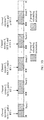
- FIG. 3A is a schematic example diagram of scheduling information in a data transmission method according to the present invention.
- the M groups of scheduling information include a first group of scheduling information to a fifth group of scheduling information (shown as portions filled with five patterns in the figure) that are shown in the figure, the five groups of scheduling information are respectively located in different bands, and a channel resource in each group of scheduling information is a contiguous frequency domain resource.
- the first downlink data includes M pieces of downlink data
- that the network device configures the first downlink data based on the M groups of scheduling information in the N groups of scheduling information includes at least one of the following two steps:
- the network device modulates the M pieces of downlink data based on M modulation and coding schemes MCSs indicated in the M groups of scheduling information, and the network device respectively maps the downlink data onto M channel resources indicated in the M groups of scheduling information.
- the M pieces of first downlink data carry same information.
- the first downlink data configured by the network device based on the M groups of scheduling information includes the M pieces of downlink data carrying the same information, and the M pieces of downlink data carrying the same information are sent to the first terminal device in the first transmission time unit, so that the first terminal device detects the M pieces of downlink data.
- M is greater than 1.
- any one of the M groups of scheduling information is indicated as an i th group of scheduling information, and the i th group of scheduling information indicates S i channel resources, or the i th group of scheduling information indicates S i channel resources and S i MCSs, or the i th group of scheduling information indicates S i channel resources, S i MCSs, and S i redundancy versions (Redundancy Version, RV), where S i is an integer greater than 1.
- a channel resource in each band may be a continuous or non-contiguous frequency domain resource. This is not limited in this embodiment of the present invention.
- downlink data carried on the S i channel resources may be separately self-decoded.
- the network device configures, based on any one of the foregoing combinations, the S i pieces of downlink data included in the first downlink data. Then the network device sends the S i pieces of downlink data on the S i channel resources.
- FIG. 3B is another schematic example diagram of scheduling information in a data transmission method according to the present invention.
- the first downlink data configured by the network device includes S i pieces of downlink data for the i th group of scheduling information in the M groups of scheduling information, and the S i pieces of downlink data carry same information.
- the first downlink data corresponding to the i th group of scheduling information includes the S; pieces of downlink data, and that the network device configures the S i pieces of downlink data included in the first downlink data includes at least one of the following two steps:
- the network device modulates the S i pieces of downlink data based on S i MCSs indicated in the i th group of scheduling information, and the network device respectively maps the S i pieces of downlink data onto the S i channel resources.
- a block error rate (BLER) of downlink data carried on each channel resource is 0.1
- a probability of an error occurring when all downlink data carried on the S i channel resources is sent is 10 -Si .
- S i 5
- reliability of the first downlink data reaches a value ranging from 10 -5 to 1.
- a channel resource in the i th group of scheduling information is a non-continuous frequency domain resource.
- the network device may configure the first downlink data for the i th group of scheduling information in the M groups of scheduling information in another manner. For example, the network device sends one piece of downlink data included in the first downlink data only on the non-continuous frequency domain resource. To achieve reliability of a value ranging from 10 -5 to 1, an extremely low MCS is required.
- that the network device configures the first downlink data based on the M groups of scheduling information in the N groups of scheduling information includes at least one of the following two steps: The network device modulates one piece of downlink data based on an extremely low MCS indicated in the i th group of scheduling information, and the network device maps the piece of downlink data onto the channel resource indicated in the i th group of scheduling information.
- the first downlink data configured by the network device includes the S i pieces of downlink data, and the S i pieces of downlink data carry the same information, so that the first terminal device detects the S; pieces of downlink data.
- the data transmission method shown in FIG. 2 further includes: configuring, by the network device based on P groups of scheduling information in the N groups of scheduling information, second downlink data corresponding to the P groups of scheduling information, where P ⁇ N; and sending, by the network device in a second transmission time unit, the second downlink data corresponding to the P groups of scheduling information to a second terminal device, where the second terminal device is a terminal device other than the first terminal device in the terminal device group.
- P is a positive integer less than or equal to N.
- the first transmission time unit in which the network device sends the first downlink data configured based on the M groups of scheduling information does not overlap the second transmission time unit in which the network device sends the second downlink data configured based on the P groups of scheduling information
- the M groups of scheduling information are the same as, partially the same as, or different from the P groups of scheduling information.
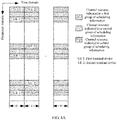
- FIG. 4A and FIG. 4B are schematic example diagram of a transmission time unit and scheduling information in a data transmission method according to the present invention
- FIG. 4B is another schematic example diagram of a transmission time unit and scheduling information in a data transmission method according to the present invention.
- the first terminal device is UE 1 located in a first transmission time unit 0, the second terminal device is UE 2 located in a second transmission time unit 1, and the first terminal device and the second terminal device use different scheduling information.
- the first terminal device UE 1 is located in a first transmission time unit 0, the second terminal device UE 2 is located in a second transmission time unit 1, and the first terminal device and the second terminal device use same scheduling information.
- the first transmission time unit in which the network device sends the second downlink data configured based on the M groups of scheduling information overlaps or partially overlaps the second transmission time unit in which the network device sends the second downlink data configured based on the P groups of scheduling information, and the M groups of scheduling information are different from the P groups of scheduling information.
- FIG. 4C is still another schematic example diagram of a transmission time unit and scheduling information in a data transmission method according to the present invention.
- the first terminal device UE 1 and the second terminal device are both located in a first transmission time unit 0, but the first terminal device and the second terminal device use different scheduling information.
- a URLLC service has a feature of a low latency. In other words, the service is sent at any time. Therefore, a resource needs to be reserved for a terminal device. However, if one or more channel resources are reserved for each terminal device, and each terminal device cannot use a channel resource of another terminal device, a large quantity of reserved resources exist in a URLLC system.
- the network device configures the N groups of scheduling information for one terminal device group, and sends, on one or more channel resources, downlink data to one or more UEs having a transmission requirement in the terminal device group. The plurality of UEs reuse the channel resource, thereby increasing utilization of the channel resource.
- the network device further sends scheduling information indication signaling to the first terminal device and/or the second terminal device before sending the first downlink data to the first terminal device in the first transmission time unit.
- the scheduling information indication signaling is used to indicate the N groups of scheduling information.
- the scheduling information indication signaling is higher layer signaling, such as dedicated RRC signaling or broadcast signaling.
- the scheduling signaling may be physical layer signaling.
- the physical layer signaling is group-specific physical layer signaling. In other words, each terminal device group corresponds to one piece of physical layer signaling. To enable data transmission reliability to reach a value ranging from 10 -5 to 1, reliability of the physical layer signaling needs to be greater than a value ranging from 10 -5 to 1.
- the physical layer signaling may reach the reliability indicator by occupying more channel resources. Therefore, in comparison with use of physical layer signaling specific to a terminal device, use of the group-specific physical layer signaling may greatly reduce overheads.
- the method further includes: receiving, by the first terminal device, the scheduling information indication signaling, where the scheduling information indication signaling is used to indicate the N groups of scheduling information.
- the network device when sending the physical layer signaling, may send the physical layer signaling based on a time period T. For example, the network device sends the physical layer signaling to the first terminal device and/or the second terminal device every other time period T.
- the time period T is a positive number, such as 1 ms, 0.5 ms, 0.25 ms, 0.125 ms, 10 ms, 2 ms, one transmission time unit, two transmission time units, three transmission time units, or four transmission time units.
- the time period T is configured by the network device or is predefined.
- the network device may send the physical layer signaling in a semi-persistent manner.
- the network device sends the physical layer signaling to the terminal device based on the time period T. For example, the network device detects, every other time period T, whether the physical layer signaling is updated; and if the physical layer signaling is updated, sends new physical layer signaling.
- the N groups of scheduling information are preconfigured. Because the N preconfigured groups of scheduling information do not need to frequently change, the higher layer signaling may be used to indicate the N groups of scheduling information. In this case, the network device sends the higher layer signaling for different terminal device groups to indicate the N groups of scheduling information.
- the higher layer signaling is radio resource control (RRC) signaling or Media Access Control (MAC) signaling.
- downlink data indication signaling is introduced in this embodiment of the present invention. Specifically, in each transmission time unit for sending the first downlink data, the network device further sends the downlink data indication signaling, and the downlink data indication signaling is used to indicate whether downlink data is sent within the first transmission time.
- the downlink data is used in a general sense, and may be sent to any terminal device served by the network device.
- the network device sends the downlink data indication signaling in the first transmission time unit. If the downlink data indication signaling indicates that downlink data is sent in the first transmission time unit, even if the downlink data is not sent to the first terminal device, the first terminal device still performs blind detection on the first downlink data in the first transmission time unit; otherwise, the first terminal device does not need to perform blind detection on the first downlink data in the first transmission time unit.
- the downlink data indication signaling is physical layer signaling. Reliability of the physical layer signaling needs to be extremely high, for example, greater than a value ranging from to 10 -5 to 1.
- the first terminal device further receives the downlink data indication signaling within the first transmission time.
- FIG. 5 is a signaling diagram of Embodiment 2 of a data transmission method according to the present invention.
- the data transmission method includes the following steps.
- a network device sends first downlink data to a first terminal device in a first transmission time unit, where at least one transport block included in the first downlink data includes scheduling information.
- the network device sends the first downlink data including the scheduling information to the first terminal device in the first transmission time unit, and the scheduling information is included in the at least one transport block included in the first downlink data.
- the network device configures second downlink data based on the scheduling information.
- the network device configures the second downlink data based on the scheduling information, such as a channel resource, an MCS, or an RB version indicated in the scheduling information.
- the scheduling information such as a channel resource, an MCS, or an RB version indicated in the scheduling information.
- the network device sends the second downlink data to the first terminal device in a second transmission time unit, where the first transmission time unit is earlier than the second transmission time unit.
- the network device sends the second downlink data to the first terminal device in the second transmission time unit later than the first transmission time unit.
- the first terminal device receives the first downlink data in the first transmission time unit.
- the first terminal device demodulates the second downlink data in the second transmission time unit based on the scheduling information.
- the first terminal device demodulates the received second downlink data in the second transmission time unit, and the second downlink data is configured by the network device based on the scheduling information.
- the network device sends the first downlink data to the first terminal device in the first transmission time unit, where the at least one transport block included in the first downlink data includes the scheduling information; configures the second downlink data based on the scheduling information; and sends the second downlink data to the first terminal device in the second transmission time unit.
- the first terminal device demodulates the received second downlink data in the second transmission time unit.
- the network device first sends the scheduling information to the first terminal device, and then sends the downlink data configured based on the scheduling information to the first terminal device, so that the first terminal device can detect the downlink data based on the scheduling information, thereby implementing highly reliable data transmission.
- not only low reliability of PDCCH dynamic scheduling is avoided without introducing a large quantity of control overheads, but also link adaptation can be obtained.
- the first downlink data includes one or two transport blocks.
- One transport block in the first downlink data includes the scheduling information.
- the scheduling information occupies X bits of the transport block.
- the scheduling information occupies the first X bits or the last X bits of the transport block.
- the first X bits or the last X bits of the transport block are the scheduling information.
- X is an integer greater than or equal to 1.
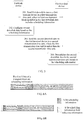
- FIG. 6A is a schematic diagram of a transport block including scheduling information in a data transmission method according to the present invention.
- the first X bits of a transport block for example, a downlink shared channel (DL-SCH), are the scheduling information.
- DL-SCH downlink shared channel
- the first downlink data includes two transport blocks.
- the scheduling information occupies X bits of each of the two transport blocks.
- the scheduling information is located in the first X bits or the last X bits of each of the two transport blocks.
- the first X bits or the last X bits of each of the two transport blocks are the scheduling information.
- a transport block may further include scheduling information indication field information.
- the scheduling information indication field information occupies Y bits of one or two transport blocks in the first downlink data.
- the scheduling information indication field information occupies the first Y bits of the one or two transport blocks, and the scheduling information occupies X bits after the Y bits.
- the scheduling information indication field information is used to indicate whether the scheduling information exists in the first downlink data. If the scheduling information indication field information indicates that the first downlink data includes the scheduling information, the first terminal device considers that the first downlink data includes the scheduling information; otherwise, the first terminal device considers that the first downlink data does not include the scheduling information. For details, refer to FIG. 6B. FIG.
- FIG. 6B is a schematic diagram of a transport block including scheduling information indication field information and scheduling information in a data transmission method according to the present invention.
- the first Y bits of a transport block for example, a downlink shared channel (DL-SCH)
- DL-SCH downlink shared channel
- X bits adjacent to the Y bits are the scheduling information.
- Y is equal to 1 or another value.
- the network device may configure the scheduling information indication field information to indicate that the scheduling information is not included, so as to release a resource occupied by the scheduling information.
- joint coding is performed on all information in the transport block carrying the scheduling information.
- joint coding is performed on both the scheduling information and DL-SCH data information, or joint coding is performed on all of the scheduling information indication information, the scheduling information, and DL-SCH data information.
- the scheduling information included in the first downlink data is used to subsequently transmit downlink data.
- the network device configures and sends the second downlink data based on the scheduling information.
- FIG. 7 is a schematic example diagram of a channel resource indicated in scheduling information in first downlink data in a data transmission method according to the present invention.
- the first terminal device receives first downlink data that is sent by the network device on a channel resource indicated in a third group of scheduling information.
- a transport block included in the first downlink data includes scheduling information, and a channel resource indicated in the scheduling information is located in a second transmission time unit 1.
- FIG. 8 is a signaling diagram of Embodiment 3 of a data transmission method according to the present invention.
- the data transmission method includes the following steps.
- a network device configures N groups of scheduling information, where N is a positive integer.
- the network device configures the first downlink data based on one of the N groups of scheduling information, where at least one transport block included in the first downlink data includes scheduling information.
- the network device sends the first downlink data to a first terminal device in a first transmission time unit.
- the first terminal device receives, in the first transmission time unit, the first downlink data configured by the network device based on one of the N groups of scheduling information.
- the network device configures second downlink data based on the scheduling information.
- the network device sends the second downlink data to the first terminal device in a second transmission time unit.
- the first terminal device determines the N groups of scheduling information configured by the network device, where N is a positive integer.
- the first terminal device demodulates the second downlink data in the second transmission time unit based on the scheduling information.
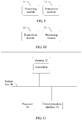
- FIG. 9 is a schematic structural diagram of Embodiment 1 of a network device according to the present invention.
- the network device provided in this embodiment may implement the steps of the method that is applied to the network device and that is provided in FIG. 2 and the optional embodiments in the present invention. A specific implementation process is not described herein again.
- the network device provided in this embodiment includes:
- the network device provided in this embodiment of the present invention configures the N groups of scheduling information based on a requirement of a terminal device group, configures the at least one piece of downlink data based on the M groups of scheduling information in the N groups of scheduling information, and sends the first downlink data to the first terminal device in the first transmission time unit.
- the first terminal device determines the N groups of scheduling information, and detects the first downlink data in the first transmission time unit based on the N groups of scheduling information.
- the first downlink data includes the at least one piece of downlink data, and the at least one piece of downlink data carries same information. Therefore, as long as the first terminal device successfully detects one piece of downlink data from the first downlink data, it indicates that the data is successfully received.
- the first downlink data can be successfully transmitted through a plurality of transmissions and one successful detection, thereby implementing highly reliable data transmission.
- not only low reliability of PDCCH dynamic scheduling is avoided without introducing a large quantity of control overheads, but also link adaptation can be obtained.
- the first downlink data includes M pieces of downlink data, the M pieces of downlink data carry same information, and when configuring the first downlink data based on the M groups of scheduling information in the N groups of scheduling information, the processing module 11 specifically and separately modulates the M pieces of downlink data based on M modulation and coding schemes MCSs indicated in the M groups of scheduling information; and/or respectively maps the M pieces of downlink data onto M channel resources indicated in the M groups of scheduling information.
- the M groups of scheduling information include an i th group of scheduling information in the N groups of scheduling information, and the i th group of scheduling information indicates S i channel resources, or the i th group of scheduling information indicates S; channel resources and S i MCSs, or the i th group of scheduling information indicates S i channel resources, S i MCSs, and S i redundancy versions RVs.
- S i is an integer greater than 1.
- the first downlink data includes S i pieces of downlink data
- the processing module 11 specifically configures the S i pieces of downlink data based on the i th group of scheduling information when configuring the first downlink data based on the M groups of scheduling information in the N groups of scheduling information, where the S i pieces of downlink data carry same information.
- the first downlink data further includes S j pieces of downlink data
- the M groups of scheduling information include a j th group of scheduling information in the N groups of scheduling information
- the j th group of scheduling information and the i th group of scheduling information are different scheduling information
- the processing module 11 specifically configures the S j pieces of downlink data based on the j th group of scheduling information when configuring the first downlink data based on the M groups of scheduling information in the N groups of scheduling information, where the S j pieces of downlink data carry same information.
- the information carried in the S j pieces of downlink data is different from the information carried in the S i pieces of downlink data, and S j is a positive integer.
- the processing module 11 is further configured to configure second downlink data based on P groups of scheduling information in the N groups of scheduling information, where P is a positive integer less than or equal to N.
- the transceiver module 12 is further configured to send the second downlink data to a second terminal device in a second transmission time unit.
- the first transmission time unit does not overlap the second transmission time unit, and the M groups of scheduling information are the same as, partially the same as, or different from the P groups of scheduling information; or the first transmission time unit overlaps or partially overlaps the second transmission time unit, and the M groups of scheduling information are different from the P groups of scheduling information.
- the transceiver module 12 is further configured to send scheduling information indication signaling to the first terminal device and/or the second terminal device before sending the first downlink data to the first terminal device in the first transmission time unit, where the scheduling information indication signaling is used to indicate the N groups of scheduling information, and the scheduling information indication signaling is higher layer signaling or physical layer signaling.
- the transceiver module 12 is further configured to send downlink data indication signaling to the first terminal device in the first transmission time unit, where the downlink data indication signaling is used to indicate whether the first downlink data is sent within the first transmission time.
- FIG. 10 is a schematic structural diagram of Embodiment 1 of a terminal device according to the present invention.
- the terminal device provided in this embodiment may implement the steps of the method that is applied to the terminal device and that is provided in FIG. 2 and the optional embodiments in the present invention. A specific implementation process is not described herein again.
- the terminal device provided in this embodiment includes: a processing module 21, configured to: determine N groups of scheduling information, where N is a positive integer; and detect first downlink data in a first transmission time unit based on the N groups of scheduling information, where the first downlink data includes at least one piece of downlink data.
- the terminal device provided in this embodiment of the present invention is specifically a first terminal device.
- a network device configures the N groups of scheduling information based on a requirement of a terminal device group, configures the at least one piece of downlink data based on M groups of scheduling information in the N groups of scheduling information, and sends the first downlink data to the first terminal device in the first transmission time unit.
- the first terminal device determines the N groups of scheduling information, and detects the first downlink data in the first transmission time unit based on the N groups of scheduling information.
- the first downlink data includes the at least one piece of downlink data, and the at least one piece of downlink data carries same information.
- the first terminal device successfully detects one piece of downlink data from the first downlink data, it indicates that the data is successfully received.
- the first downlink data can be successfully transmitted through a plurality of transmissions and one successful detection, thereby implementing highly reliable data transmission.
- not only low reliability of PDCCH dynamic scheduling is avoided without introducing a large quantity of control overheads, but also link adaptation can be obtained.
- the first downlink data is configured by the network device based on M groups of scheduling information in the N groups of scheduling information, M is a positive integer less than or equal to N.
- the first downlink data includes M pieces of downlink data, the M pieces of downlink data carry same information, and when detecting the first downlink data in the first transmission time unit based on the N groups of scheduling information, the processing module 21 is specifically configured to extract, in the first transmission time unit, the M pieces of downlink data from M channel resources indicated in the M groups of scheduling information; and/or the processing module 21 is specifically configured to: when detecting the first downlink data in the first transmission time unit based on the N groups of scheduling information, demodulate the M pieces of downlink data in the first transmission time unit based on M MCSs indicated in the M groups of scheduling information.
- the M groups of scheduling information include an i th group of scheduling information in the N groups of scheduling information, and the i th group of scheduling information indicates S i channel resources, or the i th group of scheduling information indicates S i channel resources and S i MCSs, or the i th group of scheduling information indicates S i channel resources, S; MCSs, and S i redundancy versions RVs.
- S i is an integer greater than 1.
- the first downlink data includes S i pieces of downlink data
- the processing module 21 is specifically configured to detect the S i pieces of downlink data based on the i th group of scheduling information when detecting the first downlink data in the first transmission time unit based on the N groups of scheduling information, where the S i pieces of downlink data carry same information.
- the first downlink data further includes S j pieces of downlink data
- the M groups of scheduling information include a j th group of scheduling information in the N groups of scheduling information
- the j th group of scheduling information and the i th group of scheduling information are different scheduling information
- the processing module 21 is specifically configured to detect the S j pieces of downlink data based on the j th group of scheduling information, where the S j pieces of downlink data carry same information.
- the information carried in the S j pieces of downlink data is different from the information carried in the S i pieces of downlink data, and S j is a positive integer.
- the terminal device provided in this embodiment of the present invention further includes: a transceiver module 22, configured to: before the processing module 21 detects the first downlink data in the first transmission time unit based on the N groups of scheduling information, receive scheduling information indication signaling sent by the network device, where the scheduling information indication signaling is used to indicate the N groups of scheduling information, and the scheduling information indication signaling is higher layer signaling or physical layer signaling.
- a transceiver module 22 configured to: before the processing module 21 detects the first downlink data in the first transmission time unit based on the N groups of scheduling information, receive scheduling information indication signaling sent by the network device, where the scheduling information indication signaling is used to indicate the N groups of scheduling information, and the scheduling information indication signaling is higher layer signaling or physical layer signaling.
- the transceiver module 22 is configured to: before the processing module 21 detects the first downlink data in the first transmission time unit based on the N groups of scheduling information, receive downlink data indication signaling that is sent by the network device in the first transmission time unit, where the downlink data indication signaling is used to indicate whether the first downlink data is sent within the first transmission time.
- FIG. 11 is a schematic structural diagram of Embodiment 2 of a network device according to the present invention.
- the network device provided in this embodiment includes a processor 31, a memory 32, a communications interface 33, and a system bus 34.
- the memory 32, the communications interface 33, and the processor 31 are connected to and communicate with each other by using the system bus 34.
- the memory 32 is configured to store a computer execution instruction
- the communications interface 33 is configured to communicate with another device
- the processor 31 is configured to run the computer execution instruction, so that the network device performs the steps applied to FIG. 2 or the optional embodiments.
- FIG. 12 is a schematic structural diagram of Embodiment 2 of a terminal device according to the present invention.
- the terminal device provided in this embodiment includes a processor 41, a memory 42, a communications interface 43, and a system bus 44.
- the memory 42, the communications interface 43, and the processor 41 are connected to and communicate with each other by using the system bus 44.
- the memory 42 is configured to store a computer execution instruction
- the communications interface 43 is configured to communicate with another device
- the processor 41 is configured to run the computer execution instruction, so that the terminal device performs the steps applied to FIG. 2 or the optional embodiments.
- FIG. 13 is a schematic structural diagram of Embodiment 3 of a network device according to the present invention.
- the network device provided in this embodiment may implement the steps of the method that is applied to the network device and that is provided in FIG. 5 and the optional embodiments in the present invention. A specific implementation process is not described herein again.
- the network device provided in this embodiment includes:
- the transceiver module 51 is further configured to send the second downlink data to the first terminal device in a second transmission time unit.
- the first transmission time unit is earlier than the second transmission time unit.
- the network device provided in this embodiment of the present invention sends the first downlink data to the first terminal device in the first transmission time unit, where the at least one transport block included in the first downlink data includes the scheduling information; configures the second downlink data based on the scheduling information; and sends the second downlink data to the first terminal in the second transmission time unit.
- the first terminal device demodulates the received second downlink data in the second transmission time unit.
- the network device first sends the scheduling information to the first terminal device, and then sends the downlink data configured based on the scheduling information to the first terminal device, so that the first terminal device can detect the downlink data based on the scheduling information, thereby implementing highly reliable data transmission.
- not only low reliability of PDCCH dynamic scheduling is avoided without introducing a large quantity of control overheads, but also link adaptation can be obtained.
- the first downlink data includes A transport blocks, and the scheduling information occupies the first X bits or the last X bits of one of the A transport blocks; or the first downlink data includes two transport blocks, and the scheduling information occupies the first X bits or the last X bits of each of the two transport blocks.
- X is an integer greater than or equal to 1, and A is equal to 1 or 2.
- the transport block further includes scheduling information indication field information.
- the first downlink data includes A transport blocks, the scheduling information indication field information occupies the first Y bits of one of the A transport blocks, and the scheduling information occupies X bits after the Y bits of the transport block; or the first downlink data includes two transport blocks, the scheduling information indication field information occupies the first Y bits of each of the two transport blocks, and the scheduling information occupies X bits after the Y bits of each of the two transport blocks.
- X is an integer greater than or equal to 1, and A is equal to 1 or 2.
- joint coding is performed on all information in the transport block.
- the processing module 52 is further configured to: configure N groups of scheduling information before the transceiver module 51 sends the first downlink data to the first terminal device in the first transmission time unit, where N is a positive integer; and configure the first downlink data based on one of the N groups of scheduling information.
- FIG. 14 is a schematic structural diagram of Embodiment 3 of a terminal device according to the present invention.
- the terminal device provided in this embodiment may implement the steps of the method that is applied to the terminal device and that is provided in FIG. 5 and the optional embodiments in the present invention. A specific implementation process is not described herein again.
- the terminal device provided in this embodiment includes:
- the first transmission time unit is earlier than the second transmission time unit.
- the first downlink data includes A transport blocks, and the scheduling information occupies the first X bits or the last X bits of one of the A transport blocks; or the first downlink data includes two transport blocks, and the scheduling information occupies the first X bits or the last X bits of each of the two transport blocks.
- X is an integer greater than or equal to 1, and A is equal to 1 or 2.
- the first downlink data includes A transport blocks, the scheduling information indication field information occupies the first Y bits of one of the A transport blocks, and the scheduling information occupies X bits after the Y bits of the transport block; or the first downlink data includes two transport blocks, the scheduling information indication field information occupies the first Y bits of each of the two transport blocks, and the scheduling information occupies X bits after the Y bits of each of the two transport blocks.
- X is an integer greater than or equal to 1, and A is equal to 1 or 2.
- joint coding is performed on all information in the transport block.
- the transceiver module 61 is specifically configured to receive, in the first transmission time unit, the first downlink data configured by the network device based on one of N groups of scheduling information.
- FIG. 15 is a schematic structural diagram of Embodiment 4 of a network device according to the present invention.
- the network device provided in this embodiment includes a processor 71, a memory 72, a communications interface 73, and a system bus 74.
- the memory 72, the communications interface 73, the processor 71 are connected to and communicate with each other by using the system bus 74.
- the memory 72 is configured to store a computer execution instruction
- the communications interface 73 is configured to communicate with another device
- the processor 71 is configured to run the computer execution instruction, so that the network device performs the steps applied to FIG. 5 or the optional embodiments.
- FIG. 16 is a schematic structural diagram of Embodiment 4 of a terminal device according to the present invention.
- the terminal device provided in this embodiment includes a processor 81, a memory 82, a communications interface 83, and a system bus 84.
- the memory 82, the communications interface 83, the processor 81 are connected to and communicate with each other by using the system bus 84.
- the memory 82 is configured to store a computer execution instruction
- the communications interface 83 is configured to communicate with another device
- the processor 81 is configured to run the computer execution instruction, so that the terminal device performs the steps applied to FIG. 5 or the optional embodiments.
- the program may be stored in a computer readable storage medium.
- the foregoing storage medium includes: any medium that can store program code, such as a ROM, a RAM, a magnetic disk, or an optical disc.
Landscapes
- Engineering & Computer Science (AREA)
- Computer Networks & Wireless Communication (AREA)
- Signal Processing (AREA)
- Quality & Reliability (AREA)
- Mobile Radio Communication Systems (AREA)
- Detection And Prevention Of Errors In Transmission (AREA)
Applications Claiming Priority (1)
| Application Number | Priority Date | Filing Date | Title |
|---|---|---|---|
| PCT/CN2016/104461 WO2018081985A1 (zh) | 2016-11-03 | 2016-11-03 | 数据传输方法、网络设备及终端设备 |
Publications (3)
| Publication Number | Publication Date |
|---|---|
| EP3525533A1 EP3525533A1 (en) | 2019-08-14 |
| EP3525533A4 EP3525533A4 (en) | 2019-09-18 |
| EP3525533B1 true EP3525533B1 (en) | 2021-01-06 |
Family
ID=62076467
Family Applications (1)
| Application Number | Title | Priority Date | Filing Date |
|---|---|---|---|
| EP16920604.2A Active EP3525533B1 (en) | 2016-11-03 | 2016-11-03 | Data transmission method, network device, and terminal device |
Country Status (5)
| Country | Link |
|---|---|
| US (1) | US11259315B2 (enExample) |
| EP (1) | EP3525533B1 (enExample) |
| JP (1) | JP2020502874A (enExample) |
| CN (1) | CN109479266B (enExample) |
| WO (1) | WO2018081985A1 (enExample) |
Families Citing this family (4)
| Publication number | Priority date | Publication date | Assignee | Title |
|---|---|---|---|---|
| CN110831186B (zh) * | 2018-08-10 | 2023-10-13 | 大唐移动通信设备有限公司 | 一种调度方法、装置、基站、终端及计算机可读存储介质 |
| CN111356242B (zh) * | 2018-12-20 | 2022-01-04 | 大唐移动通信设备有限公司 | 一种时隙调度的方法及设备 |
| CN113708899B (zh) * | 2020-05-20 | 2023-04-21 | 维沃移动通信有限公司 | 多载波调度方法、装置及设备 |
| CN115868233B (zh) * | 2021-07-09 | 2024-01-23 | 北京小米移动软件有限公司 | 组调度指令处理方法及装置、通信设备及存储介质 |
Family Cites Families (37)
| Publication number | Priority date | Publication date | Assignee | Title |
|---|---|---|---|---|
| ES2186531B1 (es) * | 2001-04-19 | 2005-03-16 | Diseño De Sistemas En Silicio, S.A. | Procedimiento de acceso multiple y multiple transmision de datos para un sistema multiusuario de transmision digital de datos punto a multipunto sobre red electrica. |
| US7003292B2 (en) * | 2001-10-10 | 2006-02-21 | Nokia Corporation | Mechanism for point-to-multipoint communication |
| US8312142B2 (en) * | 2005-02-28 | 2012-11-13 | Motorola Mobility Llc | Discontinuous transmission/reception in a communications system |
| EP3471301B1 (en) * | 2006-02-24 | 2020-01-22 | Sun Patent Trust | Resource block candidate selection technique employing packet scheduling in wireless communication systems |
| US8165228B2 (en) * | 2007-03-20 | 2012-04-24 | Alcatel Lucent | Non-coherent transmission method for uplink control signals using a constant amplitude zero-autocorrelation sequence |
| KR101030365B1 (ko) * | 2007-03-23 | 2011-04-20 | 한국과학기술원 | 통신 시스템에서 채널 상태 정보 송수신 장치 및 방법 |
| WO2008130156A1 (en) * | 2007-04-19 | 2008-10-30 | Lg Electronics Inc. | Grouping based resource allocation method, method for transmitting signal using the same, and grouping based resource allocation controller |
| EP2177073B1 (en) * | 2007-08-03 | 2023-07-19 | Wireless Future Technologies Inc. | Mobile station aggregation of acknowledgments and negative acknowledgments in wireless networks |
| US8693406B2 (en) * | 2007-08-09 | 2014-04-08 | Intel Corporation | Multi-user resource allocation and medium access control (MAC) overhead reduction for mobile worldwide interoperability for microwave access (WiMAX) systems |
| CN101500312B (zh) * | 2008-02-01 | 2011-06-22 | 中兴通讯股份有限公司 | 一种可用资源分配方法 |
| US8295209B2 (en) * | 2008-02-21 | 2012-10-23 | Nokia Corporation | Frame structures with flexible partition boundary for wireless networks |
| JP5391275B2 (ja) * | 2008-06-30 | 2014-01-15 | ノキア シーメンス ネットワークス オサケユキチュア | ノーマル及びバーチャル二重レイヤack/nack間の選択 |
| CN101645762B (zh) * | 2008-08-08 | 2013-09-04 | 鼎桥通信技术有限公司 | 一种下行调度的方法 |
| CN101741440B (zh) * | 2008-11-27 | 2015-09-02 | 三星电子株式会社 | Geran/muros系统中的分集指示方法 |
| JP5180163B2 (ja) * | 2009-08-05 | 2013-04-10 | 株式会社エヌ・ティ・ティ・ドコモ | 移動端末装置、無線基地局装置及び無線通信方法 |
| JP5501067B2 (ja) * | 2010-03-30 | 2014-05-21 | シャープ株式会社 | 無線通信システム及び受信装置 |
| US9258807B2 (en) * | 2010-05-03 | 2016-02-09 | Intel Deutschland Gmbh | Communication network device, communication terminal, and communication resource allocation methods |
| EP2647237B1 (en) * | 2010-06-15 | 2017-12-06 | Huawei Technologies Co., Ltd. | Method and apparatus of wireless communications |
| CN103378939B (zh) * | 2012-04-28 | 2016-09-28 | 电信科学技术研究院 | 一种下行数据传输方法及装置 |
| WO2014026381A1 (zh) * | 2012-08-17 | 2014-02-20 | 华为技术有限公司 | 上行控制信息的发送方法和装置 |
| WO2014048472A1 (en) * | 2012-09-27 | 2014-04-03 | Huawei Technologies Co., Ltd. | Methods and nodes in a wireless communication system |
| CN103841603B (zh) * | 2012-11-20 | 2019-05-31 | 北京三星通信技术研究有限公司 | 上行分组调度的方法及设备 |
| CN105612806A (zh) * | 2013-11-06 | 2016-05-25 | Kt株式会社 | 在无线局域网系统中传输和接收数据的方法和设备 |
| CN104901775B (zh) | 2014-03-09 | 2018-12-21 | 上海朗帛通信技术有限公司 | 一种在非授权频谱上的通信方法和装置 |
| CN109451590B (zh) * | 2014-03-20 | 2021-10-29 | 上海朗帛通信技术有限公司 | 一种非授权频谱上的通信方法、用户装置和基站装置 |
| EP3128791B1 (en) * | 2014-04-03 | 2019-03-20 | LG Electronics Inc. | Method and terminal for transmitting power headroom report in dual connection between terminal and base station |
| WO2015159638A1 (ja) * | 2014-04-16 | 2015-10-22 | 株式会社日立国際電気 | 無線通信システム |
| JP6515176B2 (ja) * | 2014-07-29 | 2019-05-15 | パナソニック インテレクチュアル プロパティ コーポレーション オブ アメリカPanasonic Intellectual Property Corporation of America | カバレッジの拡張における必要なharq繰り返し数の伝達 |
| US10849125B2 (en) * | 2015-01-30 | 2020-11-24 | Qualcomm Incorporated | Joint control for enhanced carrier aggregation |
| US11012272B2 (en) * | 2015-03-10 | 2021-05-18 | Qualcomm Incorporated | Channel or interference estimation for SC-FDM symbol streams |
| JP2019024147A (ja) * | 2015-12-01 | 2019-02-14 | シャープ株式会社 | 基地局装置、端末装置および通信方法 |
| JP6773052B2 (ja) * | 2016-01-26 | 2020-10-21 | ソニー株式会社 | 端末装置、基地局装置および通信方法 |
| WO2017135799A1 (en) * | 2016-02-05 | 2017-08-10 | Samsung Electronics Co., Ltd. | Multiple access method, and corresponding transmission method, receiver and transmitter |
| CN113965295B (zh) * | 2016-04-20 | 2024-12-03 | 交互数字专利控股公司 | 新无线电中的物理信道 |
| US20180063725A1 (en) * | 2016-08-26 | 2018-03-01 | Qualcomm Incorporated | Mu-mimo grouping for a plurality of mu-mimo clients |
| KR102570904B1 (ko) * | 2016-10-06 | 2023-08-25 | 삼성전자주식회사 | 다중 사용자 다중 안테나 통신을 위한 인티저 포싱 기법 |
| US10645730B2 (en) * | 2017-04-06 | 2020-05-05 | Huawei Technologies Co., Ltd. | Flexible grant-free resource configuration signaling |
-
2016
- 2016-11-03 WO PCT/CN2016/104461 patent/WO2018081985A1/zh not_active Ceased
- 2016-11-03 EP EP16920604.2A patent/EP3525533B1/en active Active
- 2016-11-03 JP JP2019522767A patent/JP2020502874A/ja active Pending
- 2016-11-03 CN CN201680087656.9A patent/CN109479266B/zh active Active
-
2019
- 2019-05-02 US US16/401,969 patent/US11259315B2/en active Active
Non-Patent Citations (1)
| Title |
|---|
| None * |
Also Published As
| Publication number | Publication date |
|---|---|
| US11259315B2 (en) | 2022-02-22 |
| US20190261386A1 (en) | 2019-08-22 |
| EP3525533A1 (en) | 2019-08-14 |
| WO2018081985A1 (zh) | 2018-05-11 |
| CN109479266A (zh) | 2019-03-15 |
| CN109479266B (zh) | 2020-12-01 |
| EP3525533A4 (en) | 2019-09-18 |
| JP2020502874A (ja) | 2020-01-23 |
Similar Documents
| Publication | Publication Date | Title |
|---|---|---|
| US12526847B2 (en) | Terminal device, base station device, method, and recording medium | |
| US11929954B2 (en) | Communication apparatus and communication method | |
| US11102705B2 (en) | Communication device, communication method, and program | |
| EP3703298B1 (en) | Information transmission method and device | |
| EP3697149B1 (en) | Terminal device, base station device, and communication method | |
| US11196495B2 (en) | Communication device, communication method, and program | |
| US9979525B2 (en) | Method for feeding back acknowledge/ non-acknowledge, user equipment and system | |
| WO2011148876A1 (ja) | 移動局装置、基地局装置、無線通信システム、無線通信方法および集積回路 | |
| EP3637818B1 (en) | Signal sending and receiving method and device | |
| EP3179822B1 (en) | Terminal device and method for device-to-device communication | |
| EP3177084B1 (en) | Terminal device, base station device, communications method and integrated circuit | |
| WO2017002794A1 (ja) | 端末装置、基地局装置、通信方法、および、集積回路 | |
| US11259315B2 (en) | Data transmission method, network device, and terminal device | |
| JP7140129B2 (ja) | 無線通信装置、無線通信方法およびコンピュータプログラム | |
| EP3393185A1 (en) | Method for transmitting downlink feedback information, base station and terminal device | |
| WO2015045731A1 (ja) | 端末装置、基地局装置、集積回路、および、通信方法 | |
| CN112054833A (zh) | 一种用于无线通信的通信节点中的方法和装置 | |
| WO2017002804A1 (ja) | 端末装置、基地局装置、通信方法、および、集積回路 | |
| WO2013172369A1 (ja) | 基地局装置、移動局装置、無線通信方法、無線通信システムおよび集積回路 | |
| EP3445110B1 (en) | Transmission resource mapping apparatus | |
| WO2019156224A1 (ja) | 端末装置、基地局装置、および、通信方法 | |
| WO2017002813A1 (ja) | 端末装置、基地局装置、通信方法、および、集積回路 | |
| EP3512278B1 (en) | Methods and devices for sending and receiving uplink control information | |
| WO2017002801A1 (ja) | 端末装置、基地局装置、通信方法、および、集積回路 | |
| US10993226B2 (en) | Subframe indication method and device |
Legal Events
| Date | Code | Title | Description |
|---|---|---|---|
| STAA | Information on the status of an ep patent application or granted ep patent |
Free format text: STATUS: THE INTERNATIONAL PUBLICATION HAS BEEN MADE |
|
| PUAI | Public reference made under article 153(3) epc to a published international application that has entered the european phase |
Free format text: ORIGINAL CODE: 0009012 |
|
| STAA | Information on the status of an ep patent application or granted ep patent |
Free format text: STATUS: REQUEST FOR EXAMINATION WAS MADE |
|
| 17P | Request for examination filed |
Effective date: 20190510 |
|
| AK | Designated contracting states |
Kind code of ref document: A1 Designated state(s): AL AT BE BG CH CY CZ DE DK EE ES FI FR GB GR HR HU IE IS IT LI LT LU LV MC MK MT NL NO PL PT RO RS SE SI SK SM TR |
|
| AX | Request for extension of the european patent |
Extension state: BA ME |
|
| A4 | Supplementary search report drawn up and despatched |
Effective date: 20190821 |
|
| RIC1 | Information provided on ipc code assigned before grant |
Ipc: H04W 72/12 20090101ALN20190814BHEP Ipc: H04W 72/04 20090101AFI20190814BHEP |
|
| DAV | Request for validation of the european patent (deleted) | ||
| DAX | Request for extension of the european patent (deleted) | ||
| RIC1 | Information provided on ipc code assigned before grant |
Ipc: H04W 72/12 20090101ALN20200617BHEP Ipc: H04W 72/04 20090101AFI20200617BHEP |
|
| GRAP | Despatch of communication of intention to grant a patent |
Free format text: ORIGINAL CODE: EPIDOSNIGR1 |
|
| STAA | Information on the status of an ep patent application or granted ep patent |
Free format text: STATUS: GRANT OF PATENT IS INTENDED |
|
| RIC1 | Information provided on ipc code assigned before grant |
Ipc: H04W 72/12 20090101ALN20200624BHEP Ipc: H04W 72/04 20090101AFI20200624BHEP |
|
| RIC1 | Information provided on ipc code assigned before grant |
Ipc: H04W 72/04 20090101AFI20200702BHEP Ipc: H04W 72/12 20090101ALN20200702BHEP |
|
| INTG | Intention to grant announced |
Effective date: 20200724 |
|
| GRAS | Grant fee paid |
Free format text: ORIGINAL CODE: EPIDOSNIGR3 |
|
| GRAA | (expected) grant |
Free format text: ORIGINAL CODE: 0009210 |
|
| STAA | Information on the status of an ep patent application or granted ep patent |
Free format text: STATUS: THE PATENT HAS BEEN GRANTED |
|
| AK | Designated contracting states |
Kind code of ref document: B1 Designated state(s): AL AT BE BG CH CY CZ DE DK EE ES FI FR GB GR HR HU IE IS IT LI LT LU LV MC MK MT NL NO PL PT RO RS SE SI SK SM TR |
|
| REG | Reference to a national code |
Ref country code: GB Ref legal event code: FG4D |
|
| REG | Reference to a national code |
Ref country code: AT Ref legal event code: REF Ref document number: 1353738 Country of ref document: AT Kind code of ref document: T Effective date: 20210115 Ref country code: CH Ref legal event code: EP |
|
| REG | Reference to a national code |
Ref country code: DE Ref legal event code: R096 Ref document number: 602016051265 Country of ref document: DE |
|
| REG | Reference to a national code |
Ref country code: IE Ref legal event code: FG4D |
|
| REG | Reference to a national code |
Ref country code: NL Ref legal event code: MP Effective date: 20210106 |
|
| REG | Reference to a national code |
Ref country code: AT Ref legal event code: MK05 Ref document number: 1353738 Country of ref document: AT Kind code of ref document: T Effective date: 20210106 |
|
| REG | Reference to a national code |
Ref country code: LT Ref legal event code: MG9D |
|
| PG25 | Lapsed in a contracting state [announced via postgrant information from national office to epo] |
Ref country code: LT Free format text: LAPSE BECAUSE OF FAILURE TO SUBMIT A TRANSLATION OF THE DESCRIPTION OR TO PAY THE FEE WITHIN THE PRESCRIBED TIME-LIMIT Effective date: 20210106 Ref country code: BG Free format text: LAPSE BECAUSE OF FAILURE TO SUBMIT A TRANSLATION OF THE DESCRIPTION OR TO PAY THE FEE WITHIN THE PRESCRIBED TIME-LIMIT Effective date: 20210406 Ref country code: NO Free format text: LAPSE BECAUSE OF FAILURE TO SUBMIT A TRANSLATION OF THE DESCRIPTION OR TO PAY THE FEE WITHIN THE PRESCRIBED TIME-LIMIT Effective date: 20210406 Ref country code: PT Free format text: LAPSE BECAUSE OF FAILURE TO SUBMIT A TRANSLATION OF THE DESCRIPTION OR TO PAY THE FEE WITHIN THE PRESCRIBED TIME-LIMIT Effective date: 20210506 Ref country code: FI Free format text: LAPSE BECAUSE OF FAILURE TO SUBMIT A TRANSLATION OF THE DESCRIPTION OR TO PAY THE FEE WITHIN THE PRESCRIBED TIME-LIMIT Effective date: 20210106 Ref country code: GR Free format text: LAPSE BECAUSE OF FAILURE TO SUBMIT A TRANSLATION OF THE DESCRIPTION OR TO PAY THE FEE WITHIN THE PRESCRIBED TIME-LIMIT Effective date: 20210407 Ref country code: HR Free format text: LAPSE BECAUSE OF FAILURE TO SUBMIT A TRANSLATION OF THE DESCRIPTION OR TO PAY THE FEE WITHIN THE PRESCRIBED TIME-LIMIT Effective date: 20210106 |
|
| PG25 | Lapsed in a contracting state [announced via postgrant information from national office to epo] |
Ref country code: SE Free format text: LAPSE BECAUSE OF FAILURE TO SUBMIT A TRANSLATION OF THE DESCRIPTION OR TO PAY THE FEE WITHIN THE PRESCRIBED TIME-LIMIT Effective date: 20210106 Ref country code: AT Free format text: LAPSE BECAUSE OF FAILURE TO SUBMIT A TRANSLATION OF THE DESCRIPTION OR TO PAY THE FEE WITHIN THE PRESCRIBED TIME-LIMIT Effective date: 20210106 Ref country code: LV Free format text: LAPSE BECAUSE OF FAILURE TO SUBMIT A TRANSLATION OF THE DESCRIPTION OR TO PAY THE FEE WITHIN THE PRESCRIBED TIME-LIMIT Effective date: 20210106 Ref country code: RS Free format text: LAPSE BECAUSE OF FAILURE TO SUBMIT A TRANSLATION OF THE DESCRIPTION OR TO PAY THE FEE WITHIN THE PRESCRIBED TIME-LIMIT Effective date: 20210106 Ref country code: PL Free format text: LAPSE BECAUSE OF FAILURE TO SUBMIT A TRANSLATION OF THE DESCRIPTION OR TO PAY THE FEE WITHIN THE PRESCRIBED TIME-LIMIT Effective date: 20210106 |
|
| PG25 | Lapsed in a contracting state [announced via postgrant information from national office to epo] |
Ref country code: IS Free format text: LAPSE BECAUSE OF FAILURE TO SUBMIT A TRANSLATION OF THE DESCRIPTION OR TO PAY THE FEE WITHIN THE PRESCRIBED TIME-LIMIT Effective date: 20210506 |
|
| REG | Reference to a national code |
Ref country code: DE Ref legal event code: R097 Ref document number: 602016051265 Country of ref document: DE |
|
| PG25 | Lapsed in a contracting state [announced via postgrant information from national office to epo] |
Ref country code: CZ Free format text: LAPSE BECAUSE OF FAILURE TO SUBMIT A TRANSLATION OF THE DESCRIPTION OR TO PAY THE FEE WITHIN THE PRESCRIBED TIME-LIMIT Effective date: 20210106 Ref country code: EE Free format text: LAPSE BECAUSE OF FAILURE TO SUBMIT A TRANSLATION OF THE DESCRIPTION OR TO PAY THE FEE WITHIN THE PRESCRIBED TIME-LIMIT Effective date: 20210106 Ref country code: SM Free format text: LAPSE BECAUSE OF FAILURE TO SUBMIT A TRANSLATION OF THE DESCRIPTION OR TO PAY THE FEE WITHIN THE PRESCRIBED TIME-LIMIT Effective date: 20210106 |
|
| PLBE | No opposition filed within time limit |
Free format text: ORIGINAL CODE: 0009261 |
|
| STAA | Information on the status of an ep patent application or granted ep patent |
Free format text: STATUS: NO OPPOSITION FILED WITHIN TIME LIMIT |
|
| PG25 | Lapsed in a contracting state [announced via postgrant information from national office to epo] |
Ref country code: DK Free format text: LAPSE BECAUSE OF FAILURE TO SUBMIT A TRANSLATION OF THE DESCRIPTION OR TO PAY THE FEE WITHIN THE PRESCRIBED TIME-LIMIT Effective date: 20210106 Ref country code: SK Free format text: LAPSE BECAUSE OF FAILURE TO SUBMIT A TRANSLATION OF THE DESCRIPTION OR TO PAY THE FEE WITHIN THE PRESCRIBED TIME-LIMIT Effective date: 20210106 Ref country code: RO Free format text: LAPSE BECAUSE OF FAILURE TO SUBMIT A TRANSLATION OF THE DESCRIPTION OR TO PAY THE FEE WITHIN THE PRESCRIBED TIME-LIMIT Effective date: 20210106 |
|
| 26N | No opposition filed |
Effective date: 20211007 |
|
| PG25 | Lapsed in a contracting state [announced via postgrant information from national office to epo] |
Ref country code: ES Free format text: LAPSE BECAUSE OF FAILURE TO SUBMIT A TRANSLATION OF THE DESCRIPTION OR TO PAY THE FEE WITHIN THE PRESCRIBED TIME-LIMIT Effective date: 20210106 Ref country code: AL Free format text: LAPSE BECAUSE OF FAILURE TO SUBMIT A TRANSLATION OF THE DESCRIPTION OR TO PAY THE FEE WITHIN THE PRESCRIBED TIME-LIMIT Effective date: 20210106 |
|
| PG25 | Lapsed in a contracting state [announced via postgrant information from national office to epo] |
Ref country code: SI Free format text: LAPSE BECAUSE OF FAILURE TO SUBMIT A TRANSLATION OF THE DESCRIPTION OR TO PAY THE FEE WITHIN THE PRESCRIBED TIME-LIMIT Effective date: 20210106 |
|
| PG25 | Lapsed in a contracting state [announced via postgrant information from national office to epo] |
Ref country code: IT Free format text: LAPSE BECAUSE OF FAILURE TO SUBMIT A TRANSLATION OF THE DESCRIPTION OR TO PAY THE FEE WITHIN THE PRESCRIBED TIME-LIMIT Effective date: 20210106 |
|
| PG25 | Lapsed in a contracting state [announced via postgrant information from national office to epo] |
Ref country code: IS Free format text: LAPSE BECAUSE OF FAILURE TO SUBMIT A TRANSLATION OF THE DESCRIPTION OR TO PAY THE FEE WITHIN THE PRESCRIBED TIME-LIMIT Effective date: 20210506 |
|
| PG25 | Lapsed in a contracting state [announced via postgrant information from national office to epo] |
Ref country code: MC Free format text: LAPSE BECAUSE OF FAILURE TO SUBMIT A TRANSLATION OF THE DESCRIPTION OR TO PAY THE FEE WITHIN THE PRESCRIBED TIME-LIMIT Effective date: 20210106 |
|
| REG | Reference to a national code |
Ref country code: CH Ref legal event code: PL |
|
| PG25 | Lapsed in a contracting state [announced via postgrant information from national office to epo] |
Ref country code: LU Free format text: LAPSE BECAUSE OF NON-PAYMENT OF DUE FEES Effective date: 20211103 Ref country code: BE Free format text: LAPSE BECAUSE OF NON-PAYMENT OF DUE FEES Effective date: 20211130 |
|
| REG | Reference to a national code |
Ref country code: BE Ref legal event code: MM Effective date: 20211130 |
|
| PG25 | Lapsed in a contracting state [announced via postgrant information from national office to epo] |
Ref country code: LI Free format text: LAPSE BECAUSE OF NON-PAYMENT OF DUE FEES Effective date: 20211130 Ref country code: CH Free format text: LAPSE BECAUSE OF NON-PAYMENT OF DUE FEES Effective date: 20211130 |
|
| PG25 | Lapsed in a contracting state [announced via postgrant information from national office to epo] |
Ref country code: IE Free format text: LAPSE BECAUSE OF NON-PAYMENT OF DUE FEES Effective date: 20211103 |
|
| PG25 | Lapsed in a contracting state [announced via postgrant information from national office to epo] |
Ref country code: FR Free format text: LAPSE BECAUSE OF NON-PAYMENT OF DUE FEES Effective date: 20211130 |
|
| PG25 | Lapsed in a contracting state [announced via postgrant information from national office to epo] |
Ref country code: NL Free format text: LAPSE BECAUSE OF NON-PAYMENT OF DUE FEES Effective date: 20210206 Ref country code: CY Free format text: LAPSE BECAUSE OF FAILURE TO SUBMIT A TRANSLATION OF THE DESCRIPTION OR TO PAY THE FEE WITHIN THE PRESCRIBED TIME-LIMIT Effective date: 20210106 |
|
| PG25 | Lapsed in a contracting state [announced via postgrant information from national office to epo] |
Ref country code: HU Free format text: LAPSE BECAUSE OF FAILURE TO SUBMIT A TRANSLATION OF THE DESCRIPTION OR TO PAY THE FEE WITHIN THE PRESCRIBED TIME-LIMIT; INVALID AB INITIO Effective date: 20161103 |
|
| PG25 | Lapsed in a contracting state [announced via postgrant information from national office to epo] |
Ref country code: MK Free format text: LAPSE BECAUSE OF FAILURE TO SUBMIT A TRANSLATION OF THE DESCRIPTION OR TO PAY THE FEE WITHIN THE PRESCRIBED TIME-LIMIT Effective date: 20210106 |
|
| PG25 | Lapsed in a contracting state [announced via postgrant information from national office to epo] |
Ref country code: MT Free format text: LAPSE BECAUSE OF FAILURE TO SUBMIT A TRANSLATION OF THE DESCRIPTION OR TO PAY THE FEE WITHIN THE PRESCRIBED TIME-LIMIT Effective date: 20210106 |
|
| PGFP | Annual fee paid to national office [announced via postgrant information from national office to epo] |
Ref country code: GB Payment date: 20250930 Year of fee payment: 10 |
|
| PG25 | Lapsed in a contracting state [announced via postgrant information from national office to epo] |
Ref country code: TR Free format text: LAPSE BECAUSE OF FAILURE TO SUBMIT A TRANSLATION OF THE DESCRIPTION OR TO PAY THE FEE WITHIN THE PRESCRIBED TIME-LIMIT Effective date: 20210106 |
|
| PGFP | Annual fee paid to national office [announced via postgrant information from national office to epo] |
Ref country code: DE Payment date: 20250930 Year of fee payment: 10 |