EP3524067B1 - Spray-dried mixture of human milk oligosaccharides - Google Patents
Spray-dried mixture of human milk oligosaccharides Download PDFInfo
- Publication number
- EP3524067B1 EP3524067B1 EP18155669.7A EP18155669A EP3524067B1 EP 3524067 B1 EP3524067 B1 EP 3524067B1 EP 18155669 A EP18155669 A EP 18155669A EP 3524067 B1 EP3524067 B1 EP 3524067B1
- Authority
- EP
- European Patent Office
- Prior art keywords
- spray
- hmos
- hmo
- dried powder
- lacto
- Prior art date
- Legal status (The legal status is an assumption and is not a legal conclusion. Google has not performed a legal analysis and makes no representation as to the accuracy of the status listed.)
- Active
Links
Images

Classifications
-
- A—HUMAN NECESSITIES
- A23—FOODS OR FOODSTUFFS; TREATMENT THEREOF, NOT COVERED BY OTHER CLASSES
- A23L—FOODS, FOODSTUFFS OR NON-ALCOHOLIC BEVERAGES, NOT OTHERWISE PROVIDED FOR; PREPARATION OR TREATMENT THEREOF
- A23L33/00—Modifying nutritive qualities of foods; Dietetic products; Preparation or treatment thereof
- A23L33/40—Complete food formulations for specific consumer groups or specific purposes, e.g. infant formula
-
- A—HUMAN NECESSITIES
- A23—FOODS OR FOODSTUFFS; TREATMENT THEREOF, NOT COVERED BY OTHER CLASSES
- A23L—FOODS, FOODSTUFFS OR NON-ALCOHOLIC BEVERAGES, NOT OTHERWISE PROVIDED FOR; PREPARATION OR TREATMENT THEREOF
- A23L29/00—Foods or foodstuffs containing additives; Preparation or treatment thereof
- A23L29/30—Foods or foodstuffs containing additives; Preparation or treatment thereof containing carbohydrate syrups; containing sugars; containing sugar alcohols, e.g. xylitol; containing starch hydrolysates, e.g. dextrin
-
- A—HUMAN NECESSITIES
- A23—FOODS OR FOODSTUFFS; TREATMENT THEREOF, NOT COVERED BY OTHER CLASSES
- A23L—FOODS, FOODSTUFFS OR NON-ALCOHOLIC BEVERAGES, NOT OTHERWISE PROVIDED FOR; PREPARATION OR TREATMENT THEREOF
- A23L33/00—Modifying nutritive qualities of foods; Dietetic products; Preparation or treatment thereof
- A23L33/20—Reducing nutritive value; Dietetic products with reduced nutritive value
- A23L33/21—Addition of substantially indigestible substances, e.g. dietary fibres
-
- C—CHEMISTRY; METALLURGY
- C07—ORGANIC CHEMISTRY
- C07H—SUGARS; DERIVATIVES THEREOF; NUCLEOSIDES; NUCLEOTIDES; NUCLEIC ACIDS
- C07H1/00—Processes for the preparation of sugar derivatives
- C07H1/06—Separation; Purification
- C07H1/08—Separation; Purification from natural products
-
- C—CHEMISTRY; METALLURGY
- C07—ORGANIC CHEMISTRY
- C07H—SUGARS; DERIVATIVES THEREOF; NUCLEOSIDES; NUCLEOTIDES; NUCLEIC ACIDS
- C07H13/00—Compounds containing saccharide radicals esterified by carbonic acid or derivatives thereof, or by organic acids, e.g. phosphonic acids
- C07H13/02—Compounds containing saccharide radicals esterified by carbonic acid or derivatives thereof, or by organic acids, e.g. phosphonic acids by carboxylic acids
- C07H13/04—Compounds containing saccharide radicals esterified by carbonic acid or derivatives thereof, or by organic acids, e.g. phosphonic acids by carboxylic acids having the esterifying carboxyl radicals attached to acyclic carbon atoms
-
- C—CHEMISTRY; METALLURGY
- C07—ORGANIC CHEMISTRY
- C07H—SUGARS; DERIVATIVES THEREOF; NUCLEOSIDES; NUCLEOTIDES; NUCLEIC ACIDS
- C07H3/00—Compounds containing only hydrogen atoms and saccharide radicals having only carbon, hydrogen, and oxygen atoms
- C07H3/02—Monosaccharides
-
- C—CHEMISTRY; METALLURGY
- C07—ORGANIC CHEMISTRY
- C07H—SUGARS; DERIVATIVES THEREOF; NUCLEOSIDES; NUCLEOTIDES; NUCLEIC ACIDS
- C07H3/00—Compounds containing only hydrogen atoms and saccharide radicals having only carbon, hydrogen, and oxygen atoms
- C07H3/06—Oligosaccharides, i.e. having three to five saccharide radicals attached to each other by glycosidic linkages
Definitions
- the present invention relates to spray-dried powders containing a mixture of structurally distinct human milk oligosaccharides and at least one monosaccharide selected from the group consisting of L-fucose and N-acetylneuraminic acid, and to their use for manufacturing nutritional compositions.
- Human breast milk contains substantial amounts of carbohydrates.
- the carbohydrates that are present in human breast milk include monosaccharides such as L-fucose and N-acetylneuraminic acid, the disaccharide lactose, and up to 20 g/l oligosaccharides, the so-called "human milk oligosaccharides (HMOs)".
- HMOs represent the third most abundant constituent of human breast milk. It is presumed that more than 150 structurally distinct oligosaccharides are present in human milk. Selected HMOs are shown in Table 1.
- HMOs Each of about 10 to 13 of these HMOs are present in human milk in a concentration of between several hundred milligrams to grams per liter ( Thurl et al., (2017), Nutrition Reviews 75(11) 920-933 ).
- neutral HMOs are known as well as acidic HMOs which contain at least one N-acetylneuraminic acid (NeuAc) moiety.
- NeuAc N-acetylneuraminic acid
- HMOs are not digested by humans, the physiological role of these saccharides has been under investigation for several decades. The prebiotic effect of HMOs was discovered more than 100 years ago. Upon consumption, HMOs are able to modulate the composition of the human gut microbiome by supporting growth of beneficial bacteria.
- Table 1 Structures of notable oligosaccharides in human breast milk.
- HMOs are known to act as decoys to reduce the risk of infections by bacterial and viral pathogens which adhere to human cells by binding to these cells' surface glycoproteins. Additionally, various HMOs possess an anti-inflammatory effect and act as immunomodulators. Hence, it was proposed that HMOs reduce the risks of developing food allergies.
- a positive effect of sialylated HMOs on the development of a neonate's central nervous system is also intensely discussed (reviewed in " Prebiotics and Probiotics in Human Milk, Origins and functions of milk-borne oligosaccharides and bacteria", Academic Press (2017) editors: McGuire M., McGuire M., and Bode L .).
- HMOs beneficial effects of HMOs
- efforts are made in adding individual HMOs to nutritional composition, in particular to infant formula.
- supplementing nutritional compositions with a combination of different HMOs would be better, because such compositions more closely resemble the natural source of HMOs, i.e. human milk, and are more likely to possess better effects on a person's health and development than compositions containing only a single species of the HMOs.
- HMOs are produced in an industrial scale using fermentation of genetically-engineered microbial cells ( WO 2015/150328 A1 , WO 2017/043382 A1 , WO 2010/070104 A1 , WO 2012/097950 A1 ).
- the HMOs are synthesized by genetically-engineered microbial cells and can be recovered from the fermentation medium and/or cell lysate to obtain a substantially pure preparation of the HMO.
- HMOs are usually present in form of a liquid process stream, e.g. an aqueous solution which contains the HMO of interest and which may also contain undesired HMOs which are by-products that were generated during the fermentative production of the desired HMO.
- aqueous solution which contains the HMO of interest and which may also contain undesired HMOs which are by-products that were generated during the fermentative production of the desired HMO.
- aqueous solution containing HMOs is vulnerable to bacterial or fungal contamination. Therefore, it is preferred to provide the desired HMOs as a dry or solid product which contains a low amount of water. Growth of microbial organisms is hardly possible on/in such a solid product.
- a saccharide is obtained in solid form by crystallization.
- Crystallization of individual HMOs from an aqueous solution has been described for 3-fucosyllactose ( WO 2014/075680 A ), for 2'-fucosyllactose ( WO 2011/150939 A ), di-fucosyllactose ( WO 2016/086947 A ), lacto-N-tetraose ( WO 2017/101953 A ), lacto-N-neotetraose ( WO 2014/094783 A ). Crystallization of HMOs involves the use of organic solvents such as alcohols, mainly ethanol or methanol, or organic acids such as glacial acetic acid.
- Document EP 2 896 628 A1 pertains to a process for efficient purification of neutral human milk oligosaccharides from fermentation broths.
- the process involves a combination of a cation exchanger treatment, and anion exchanger treatment, and a nanofiltration and/or electrodialysis step.
- the HMO may be obtained in solid from by spray-drying, as crystalline material or as sterile filtered concentrate.
- Laid open publication WO 2015/049331 A1 discloses a process for purifying a neutral HMO utilizing simulated moving bed chromatography. This process allows a continuous purification of a neutral HMO from a crude solution to obtain the HMO in high purity in solid form by spray-drying or as a concentrated syrup.
- Document US 2015/183814 A1 discloses a method for enhancing the stability of a human milk oligosaccharide of a HMO blend when stored for extended periods at temperatures above 25 °C. The method involves spray-drying an aqueous solution of the HMO or HMO blend to remove at least 90 % of the water. This document also discloses a method for removing organic solvent residues from a HMO or a HMO blend by spray-drying, and a method for enhancing the bioavailability of a HMO of HMO blend by spray-drying.
- sialic acid In addition to the utilization of endogenously produced sialic acid, the human body is able to utilize sialic acid from dietary sources such as breast milk or of animal origin. The latter contains significant levels of the unfavorable N-glycolyl-D-neuraminic acid which has been identified as a risk factor for long-term adverse health effects. Röhrig et al. disclose that extremely high purity NeuAc can only be obtained from alternative manufacturing processes if robust crystallization procedures are applied that provide a crystalline ingredient.
- the object has been achieved by a process for the manufacture of a spray-dried powder comprising a mixture of structurally distinct HMOs.
- a spray-dried powder containing a mixture of structurally distinct HMOs and at least one monosaccharide selected from the group consisting of L-fucose and N-acetylneuraminic acid is provided, as defined in claim 1.
- the use of the spray-dried powder containing a mixture of structurally distinct HMOs and at least one monosaccharide selected from the group consisting of L-fucose and N-acetylneuraminic acid for the manufacture of a nutritional composition is provided, as defined in claim 6.
- a spray-dried powder which contains a mixture of structurally distinct HMOs, as defined in claim 1.
- the spray-dried powder preferably contains at least 80 %-wt., at least 85 %-wt., at least 90 %-wt., at least 93 %-wt., at least 95 %-wt. or at least 98 %-wt. HMOs..
- the spray-dried powder contains a mixture of structurally distinct HMOs and at least one monosaccharide selected from the group consisting of L-fucose and N-acetylneuraminic acid (NeuAc).
- the spray-dried powder contains in addition to the mixture of structurally distinct HMOs the monosaccharides L-fucose and N -acetylneuraminic acid.
- the spray-dried powder comprises the composition provided in Table 2, with the exception of a composition comprising Table 2: Composition of the spray-dried powder saccharide [wt.-%] 2'-fucosylactose (2'-FL) 34 3-fucosyllactose (3-FL) 11 lacto- N -tetraose (L N T) 20 lacto- N -neotetraose (L N nT) 2 lacto-N-fucopentaose I (L N FPI) 13 3'-sialyllactose (3'-SL) 3 6'-sialyllactose (6'-SL) 4 N-acetylneuraminic acid (NeuAc) 8 L-fucose 5 Total 100 2'-FL 30.0 - 55.0 3-FL 10.0 - 15.0 L N T 20.0 - 30.0 L N nT 0.0 - 5.0 L N FPI 0.0 - 20.0 3'-SL 2.0 -
- At least one of the HMOs of the mixture of structurally distinct HMOs and/or of the spray-dried powder has been produced by microbial fermentation.
- all HMOs of the mixture of structurally distinct HMOs and/or of the spray-dried powder have been produced by microbial fermentation.
- said at least one monosaccharide has been produced by microbial fermentation.
- the spray-dried powder contains L-fucose and N-acetylneuraminic acid, both monosaccharides have been produced by microbial fermentation.
- all saccharides that are present in the spray-dried powder i.e. the HMOs and the monosaccharides, have been produced by microbial fermentation.
- At least one of the HMOs in the spray-dried powder are present in amorphous form.
- the monosaccharide, at least one of the monosaccharides or both monosaccharides is/are present in amorphous form.
- the spray-dried powder contains a low amount of water.
- low amount of water refers to an amount of ⁇ 15 %-wt. of water, preferably ⁇ 10 %-wt. of water, more preferably ⁇ 7 %-wt. of water, most preferably ⁇ 5 %-wt. of water.
- the spray-dried powder is free of genetically-engineered microorganisms and free of nucleic acid molecules derived from genetically-engineered microorganisms.
- a spray-dried powder containing a mixture of structurally distinct HMOs in combination with at least one monosaccharide selected from the group consisting of L-fucose and N-acetylneuraminic acid is advantageous over liquid compositions in that said spray-dried powder is less vulnerable to microbial contamination.
- Said spray-dried powder is also advantageous over powders having the same composition of ingredients which were obtained by freeze-drying or lyophilization in that the spray-dried powder is less hygroscopic and remains flowable much longer.
- the spray-dried powder comprising a mixture of structurally distinct HMOs and at least one monosaccharide selected from the group consisting of L-fucose and N-acetylneuraminic acid, wherein at least one of the structurally distinct HMOs, preferably all of the structurally distinct HMOs has/have been produced by microbial fermentation.
- the process comprises the steps of:
- the purification of the at least one HMO from fermentation broth includes one or more of the steps of
- the at least one HMO or any one of the structurally distinct HMOs of the mixture may be produced by microbial fermentation, wherein a genetically-engineered microorganism that is able to synthesize an HMO is cultivated in a culture medium (fermentation broth) and under conditions that are permissive for the synthesis of said HMO by said genetically-engineered microorganism.
- the purification of the HMO that was synthesized by the cells of the genetically-engineered microorgansim comprises the step of separating the microbial cells from the fermentation broth to obtain a process stream.
- the process stream is essentially free of cells and contains said HMO(s). This step is the first step in the process of purifying the desired HMO.
- Suitable methods for separating the microbial cells from the fermentation broth include centrifugation wherein the microbial cells are obtained as a pellet and the fermentation broth as a supernatant.
- the microbial cells are separated from the fermentation broth by means of filtration.
- Suitable filtration methods for separating the cells from the fermentation broth include microfiltration and ultrafiltration.
- Microfiltration as such is a physical filtration process where a particle-containing fluid is passed through a special pore-sized membrane to separate the particles from the fluid.
- microfiltration referst to a physical filtration process where cells are seprated from the fermentation broth.
- Ultrafiltration is a variety of membrane filtration and is not fundamentally different. In ultrafiltration, forces like pressure or concentration gradients lead to a separation through a semipermeable membrane. Cells, suspended solids and solutes of high molecular weight are retained in the so-called retentate, while water and low molecular weight solutes such as the desired sialylated oligosaccharide pass through the membrane in the permeate (filtrate).
- Ultrafiltration membranes are defined by the molecular weight cut-off (MWCO) of the membrane used. Ultrafiltration is applied in cross-flow or dead-end mode.
- MWCO molecular weight cut-off
- the microbial cells synthesize the HMOs intracellularly.
- the HMO is either delivered into the fermentation broth or remains inside the microbal cell.
- the thus produced HMO is present in the fermentation broth at the end of the fermentation, and can be recovered from the fermentation broth which thus becomes the process stream.
- the microbial cells bearing the HMOs are separated from the fermentation broth and are lysed to release the HMOs.
- the cell lysate containd the HMO and becomes the process stream for the purification of the HMO as described herein after.
- the process is used for the purification of HMOs that have been produced by microbial fermentation, said process may also be employed to purify HMOS that were produced by enzymatic catalysis in-vitro.
- the HMO can then be purified from the reaction mixture at the end of the biocatalytic reaction. Said reaction mixture is subjected to the process for the purification as process stream.
- the process stream contains the desired HMO(s) as well as by-products and undesired impurities such as - for example - monosaccharides, disaccharides, undesired oligosaccharide by-products, ions, amino acids, polypeptides, proteins and/or nucleic acid molecules.
- the process for the purification of the HMO comprises the step of at least one cation exchange treatment to remove positively charged compounds from the cleared process stream.
- Suitable cation exchange resins for removing postively charged compounds from the process stream include Lewatit ® S 6368 A (Lanxess AG, Cologne, DE) in H + form; Lewatit ® S 2568 (H + ) (Lanxess AG, Cologne, DE).
- the process for the purification of the HMO comprises the step of an anion exchange treatment to remove undesired negatively charged compounds from the cleared process stream.
- Suitable anion exchange resins include Lewatit ® S 2568 (Cl - ) (Lanxess AG, Cologne, DE) Lewatit ® S 6368 A (Lanxess AG, C perfume, DE), Lewatit ® S 4268 (Lanxess AG, Cologne, DE), Lewatit ® S 5528 (Lanxess AG, C perfume, DE), Dowex ® AG 1x2 (Mesh 200-400), Dowex ® 1x8 (Mesh 100-200), Purolite ® Chromalite ® CGA100x4 (Purolite GmbH, Ratingen, DE), Dow ® Amberlite TM FPA51 (Dow Chemicals, MI, USA).
- the process for the purification of the HMO comprises a nanofiltration and/or a diafiltration step to remove impurities having a lower molecular weight, and to concentrate the desired HMO.
- Diafiltration involves the addition of fresh water to a solution in order to remove (wash out) membrane-permeable components.
- Diafiltration can be used to separate components on the basis of their molecular size and charge by using appropriate membranes, wherein one or more species are efficiently retained and other species are membrane permeable.
- diafiltration using a nanofiltration membrane is effective for the separation of low molecular weight compounds like small molecule and salts.
- Nanofiltration membranes usually have a molecular weight cut-off in the range 150 - 1000 Daltons. Nanofiltration is widely used in the dairy industry for the concentration and demineralization of whey.
- Suitable membranes for nanofiltration and/or diafiltration include Dow ® Filmtec TM NF270-4040, Trisep ® 4040-XN45-TSF (Microdyn-Nadir GmbH, Wiesbaden, DE), GE4040F30 and GH4040F50 (GE Water & Process Technologies, Ratingen, DE).
- Diafiltration using nanofiltration membranes was found to be efficient as a pretreatment to remove significant amounts of contaminants prior to electrodialysis treatment of the solution containing the oligosaccharide.
- the use of nanofiltration membranes for concentration and diafiltration during the purification of HMOs results in lower energy and processing costs, and better product quality due to reduced thermal exposure, leading to reduced Maillard reactions and aldol reactions.
- the process for the purification of the HMO comprises at least one electrodialysis step.
- Electrodialysis combines dialysis and electrolysis and can be used for the separation or concentration of ions in solutions based on their selective electromigration through semipermeable membranes.
- the basic principle of electrodialysis consists of an electrolytic cell comprising a pair of electrodes submerged into an electrolyte for the conduction of ions, connected to a direct current generator.
- the electrode connected to the positive pole of the direct current generator is the anode
- the electrode connected to the negative pole is the cathode.
- the electrolyte solution then supports the current flow, which results from the movement of negative and positive ions towards the anode and cathode, respectively.
- the membranes used for electrodialysis are essentially sheets of porous ion-exchange resins with negative or positive charge groups, and are therefore described as cationic or anionic membranes, respectively.
- the ion-exchange membranes are usually made of polystyrene carrying a suitable functional group (such as sulfonic acid for cationic membranes or a quaternary ammonium group for anionic membranes) cross-linked with divinylbenzene.
- the electrolyte can be, for example, sodium chloride, sodium acetate, sodium propionate or sulfamic acid.
- the electrodialysis stack is then assembled in such a way that the anionic and cationic membranes are parallel as in a filter press between two electrode blocks, such that the stream undergoing ion depletion is well separated from the stream undergoing ion enrichment (the two solutions are also referred to as the diluate (undergoing ion depletion) and concentrate (undergoing ion enrichment).
- the heart of the electrodialysis process is the membrane stack, which consists of several anion-exchange membranes and cation-exchange membranes separated by spacers, installed between two electrodes. By applying a direct electric current, anions and cations will migrate across the membranes towards the electrodes.
- the process for the purification of the HMO further comprises a step of continuous chromatography like simulated bed moving (SMB) chromatography.
- SMB simulated bed moving
- SMB Simulated moving bed
- SMB chromatography processes used to separate saccharides use e.g. calcium charged, cross-linked polystyrene resins, anion resins in the bisulfite form ( Bechthold M., et al., Chemie Ingenieurtechnik, 2010, 82, 65-75 ), or polystyrenic gel strong acid cation resin in the hydrogen form (Purolite ® PCR833H) (Purolite, Bala Cynwyd, USA).
- SMB chromatography systems Given the continuous mode of operation, the recycling of the mobile phase and also the potential to use large column sizes, SMB chromatography systems can in principle be scaled to achieve production volumes of hundreds of tons.
- the process step of simulated moving bed chromatography is advantageous in that this process step allows further removal of oligosaccharides being structurally closely related to the desired oligosaccharide.
- the process for the purification of the at least one HMO comprises a treatment of the process stream with activated charcoal to remove contaminating substances such as colorants from the process stream.
- the process for the purification of the at least one HMO comprises at least one step of crystallization or precipitation of the HMO from the process stream.
- Crystallization or precipitation of the at least one HMO from the process stream may be performed by adding a suitable amount of an organic solvent that is miscible with water to the process stream containing the at least one HMO.
- the organic solvent may be selected from the group consisting of C 1 - to C 6 -alcohols and C 1 - to C 4 -carboxylic acids.
- the step of crystallization or precipitation of the at least one HMO is not performed at the end of the recovery process such that residual amounts of the organic solvent or carboxylic acid can be removed by subsequent process steps.
- the process for the purification of the at least one HMO comprises a step sterile filtration and/or endotoxin removal, preferably by filtration of the process stream through a 3 kDa filter or 6 kDa filter.
- the process for the purification of the at least one HMO comprises a step of increasing the concentration of the at least one HMO in the process stream.
- concentration of the at least one HMO in the process stream can be increased by subjecting the process stream to vacuum evaporation, reverse osmosis or nanofiltration (e.g. nanofiltration with a nanofiltration membrane having a size exclusion limit of ⁇ 20 ⁇ ).
- nanofiltration e.g. nanofiltration with a nanofiltration membrane having a size exclusion limit of ⁇ 20 ⁇ .
- crystallized or precipitated HMOs are dissolved in water to obtain an aqueous solution of the at least one HMO, wherein the aqueous solution possessing the desired concentration of said at least one HMO.
- the resulting process stream is an aqueous solution which contains the at least one HMO in a concentration of ⁇ 20 g/l, ⁇ 25 g/l, ⁇ 30 g/l, ⁇ 40 g/l, ⁇ 60 g/l, ⁇ 100 g/l, ⁇ 200 g/l or even ⁇ 300 g/l.
- the aqueous solution contains the at least one HMO in a purity of at least 80 %, at least 85 %, at least 90 %, at least 93 %, at least 95 % or at least 98 % with respect to the weight of dry matter/solutes within the solution.
- the purity of an HMO in a preparation can be determined by any suitable method known to the skilled artisan, for example by using HPLC and calculating the ratio of the area underneath the peak(s) representing the amount of HMO(s) to the sum of areas underneath the peaks representing the HMO(s) and all other compounds than said HMO(s) in the same chromatogram.
- the aqueous solution containing the at least one HMO can be stored under appropriate conditions, for example said aqueous solution can be frozen.
- the process for the purification of the at least one HMO is cost efficient and easy to scale up, making it suitable as a basis for a multi-ton scale manufacturing process.
- the process for the purification of the at least one HMO is also advantageous in that the aqueous solution is free of genetically-engineered microorganisms and nucleic acid molecules derived from genetically-engineered microorganisms.
- the aqueous solution is free of proteins. The total removal of proteins eliminates the risk of causing allergies to a potential consumer.
- the process for the manufacture of the spray-dried powder comprises the step of providing an aqueous solution containing the at least one HMO or the mixture of structurally distinct HMOs, and - optionally - the at least one monosaccharide.
- the at least one HMO is selected from the group consisting of 2'-FL, 3-FL, LNT, LNnT, LNFPI, 3'-SL, 6'-SL.
- the mixture of structurally distinct HMOs consists of five structurally distinct HMOs, preferably of 2'-FL, 3-FL, LNT, 3'-SL and 6'-SL. In another embodiment, the mixture of structurally distinct HMOs consists of seven structurally distinct HMOs, preferably of 2'-FL, 3-FL, LNT, LNnT, LNFPI, 3'-SL and 6'-SL.
- the aqueous solution further contains at least one monosaccharide, preferably selected from the group consisting of L-fucose and N-acetylneuraminic acid. In another embodiment, the aqueous solution further contains L-fucose and N-acetylneuraminic acid.
- the aqueous solution contains the at least one HMO or the mixture of HMOs, and/or the at least one monosaccharide, in an amount totaling a saccharide amount of at least 20 % (w/v), 30 % (w/v), 35 % (w/v), and up to 45 % (w/v), 50 % (w/v), 60 % (w/v).
- the aqueous solution contains the at least one HMO or the mixture of HMOs in a purity of at least 80 %, at least 85 %, at least 90 %, at least 93 %, at least 95 % or at least 98 % with respect to the weight of dry matter/solutes within the solution.
- the aqueous solution does not contain genetically-engineered microorganisms, nucleic acid molecules derived from genetically-engineered microorganisms and proteins.
- the aqueous solution containing the at least one HMO or the mixture of structurally distinct HMOs is subjected to spray-drying.
- Spray-drying is a method to obtain dry powders, wherein the solution containing the substance of interest is first sprayed into droplets which are rapidly dried by hot air. Spray-drying is very fast and exposure of the substance to be dried to high temperatures is quite short.
- the aqueous solution containing the at least one HMO or the mixture of structurally distinct HMOs is spray-dried at a nozzle temperature of at least 110 °C, preferably at least 120 °C, more preferably at least 125 °C, and less than 150 °C, preferably less than 140 °C and more preferably less than 135 °C.
- the aqueous solution containing the at least one HMO or the mixture of structurally distinct HMOs is spray-dried at an outlet temperature of at least 60 °C, preferably at least 65 °C, and less than 80 °C, preferably less than 70 °C.
- the aqueous solution containing the HMO(s) is spray-dried at a nozzle temperature of about 68 °C to about 70 °C.
- each species of the structurally distinct HMOs - optionally in combination with the at least one monosaccharide - can be purified and spray-dried individually, and that the resulting spray-dried powders can be mixed in any desired ratio.
- the aqueous solutions contains all structural distinct HMOs, and the resulting aqueous solution containing the mixture of structurally distinct HMOs in the desired ratio is subjected to spray-drying.
- the aqueous solution containing at least one HMO or a mixture of structurally distinct HMOs further contains at least one monosaccharide selected from the group consisting of L-fucose and N-acetylneuraminic acid.
- the aqueous solution containing the at least one HMO or the mixture of structurally distinct HMOs, and the at least one monosaccharide is then subjected to spray-drying to obtain a spray-dried powder consisting essentially of the at least one HMO and the at least one monosaccharide or the mixture of structurally distinct HMOs and the at least one monosaccharide.
- the ratio of saccharides (HMOs and monosaccharide(s)) in the resulting spray-dried powder corresponds to the ratio of these saccharides in the aqueous solution.
- the spray-drying of the aqueous solution containing the at least one HMO or the mixture of structurally distinct HMOs provides a powder of low hygroscopy, wherein the HMO is present in amorphous form, and wherein the particle size is homogeneous.
- the spray-dried powder containing the mixture of structurally distinct HMOs is less hygroscopic than a powder of identical composition which was obtained by freeze-drying.
- the spray-dried powders as described herein are advantageous with respect to their further use and processing.
- the spray-dried powder containing a mixture of structurally distinct HMOs and at least one monosaccharide selected from the group consisting of L-fucose and N-acetylneuraminic acid, for the manufacture of a nutritional composition.
- the spray-dried powder is suitable for human consumptions and may thus be included into preparations for human consumption such as medicinal formulations, infant formula, dairy drinks or dietary supplements.
- the nutritional composition contains one or more additional ingredients.
- Said one or more additional ingredients are selected from the group consisting of oil, fat and fatty acids (such as olive oil, sunflower oil, coconut oil, nut oil, rapeseed oil, palm oil, flaxseed oil, fish oil, linolenic acid, soy-bean oil, etc.), carbohydrates (such as glucose, fructose, lactose, maltodextrin, starch, sucrose, inositol, etc.) proteins (from skim milk, whey, casein (derived from any domesticated dairy animals), or soy bean), vitamins (A, B1, B2, B5, B6, B12,C, D, E, K, biotin, folic acid, niacin, choline) minerals and trace elements (sodium, potassium, chloride, calcium, phosphorus, magnesium, iron, zinc, manganese, fluoride, selenium, iodine, copper).
- the nutritional composition containing the spray-dried powder containing the mixture of human milk oligosaccharides and the at least one monosaccharide may be an infant formula that meets the compositional requirements set forth in Regulation (EU) 2016/127 and/or in the Code of Federal Regulations (USA) Title 21 107.100 (nutrient specifications).
- Representative compositions of infant formulas are specified in Table 3.
- Table 3 Composition of a representative infant formula. The final concentration is based on a preparation of 13.5 g of the powder in 90 ml of water.
- the nutritional composition also contains microorganisms, preferably probiotic microorganisms.
- the preferred microorganisms are derived from or can be found in the microbiome of a healthy human.
- the microorganisms are selected from the genera Bifidobacterium, Lactobacillus, Enterococcus, Streptococcus, Staphylococcus, Peptostreptococcus, Leuconostoc, Clostridium, Eubacterium, Veilonella, Fusobacterium, Bacterioides, Prevotella, Escherichia, Propionibacterium and Saccharomyces.
- the microorganism is selected from the group consisting of Bifidobacterium adolescentis, B. animalis, B. bifidum, B. breve, B. infantis, B. lactis, B. longum; Enterococcus faecium; Escherichia coli; Klyveromyces marxianus; Lactobacillus acidophilus, L. bulgaricus, L . casei, L . crispatus, L. fermentum, L . gasseri, L. helveticus, L. johnsonii, L. paracasei, L. plantarum, L. reuteri, L. rhamnosus, L.
- Lactococcus lactis including but not limited to the subspecies lactis, cremoris and diacetylactis
- Leuconostoc mesenteroides including but not limited to subspecies mesenteroides
- Pedicoccus acidilactici P. pentosaceus
- Propionibacterium acidipropionici P. freudenreichii ssp. shermanii
- Staphylococcus carnosus and Streptococcus thermophilus.
- the nutritional composition can also include dead cell cultures.
- killed cell cultures are sometimes used (e.g. tyndalized bacteria). These killed cultures may provide proteins, peptides, oligosaccharides, cell outer wall fragments and natural products, leading to the short-term stimulation of the immune system.
- Including probiotic microorganisms in the nutritional composition, especially in the presence of HMOs, is particularly advantageous in that it also promotes the establishment of a healthy gut microbiome.
- the solid material was added to a mixture of isopropanol and water (3:1 (vol/vol)) in a ratio of 1 kg powder in 12 L isopropanol/water. The suspension was stirred vigorously, then the insoluble lacto-N-tetraose was filtrated and dried at 40 °C. Starting with a 73-89 % pure material, the crystallized Lacto-N-tetraose was purified to about 95 %, with a recovery of 85 %. The sugar was dissolved in water to a concentration of 25 % and passed sequentially through a 6 kDa filter (Pall Microza ultrafiltration module SIP-2013, Pall Corporation, Dreieich, Germany) and a 0.2 ⁇ m sterile filter. Solid material was obtained by spray drying the sterile material under the conditions described above.
- coli W and a functional gal-operon, consisting of the genes galE (UDP-glucose-4-epimerase), galT (galactose-1-phosphate uridylyltransferase), galK (galactokinase), and galM (galactose-1-epimerase) from E. coli K12 were integrated into the genome of the BL21 strain, and constitutively expressed.
- galE UDP-glucose-4-epimerase
- galT galactose-1-phosphate uridylyltransferase
- galK galactokinase
- galM galactose-1-epimerase
- the strain synthesizing 3'-sialyllactose harbors the 3'-sialyltransferase gene from Vibrio sp. JT-FAJ-16, while the 6'-sialyllactose producing strain contains the alpha-2,6-sialyltransferase plsT6 from Photobacterium leiognathi JT-SHIZ-119.
- the sialyllactose producing strains were grown in a defined mineral salts medium, comprising 7 g l -1 NH 4 H 2 PO 4 , 7 g l -1 K 2 HPO 4 , 2 g l -1 KOH, 0.3g l -1 citric acid, 5 g l -1 NH 4 Cl, 1 ml l -1 antifoam (Struktol J673, Schill + Seilacher), 0.1 mM CaCl 2 , 8 mM MgSO 4 , trace-elements and 2% sucrose as carbon source.
- a defined mineral salts medium comprising 7 g l -1 NH 4 H 2 PO 4 , 7 g l -1 K 2 HPO 4 , 2 g l -1 KOH, 0.3g l -1 citric acid, 5 g l -1 NH 4 Cl, 1 ml l -1 antifoam (Struktol J673, Schill + Seilacher),
- sucrose feed 500 g l -1
- fed in the fed-batch phase was supplemented with 8 mM MgSO 4 , 0.1 mM CaCl 2 , trace elements, and 5 g l -1 NH 4 Cl.
- Trace elements consisted of 0.101 g l -1 nitrilotriacetic acid, pH 6.5, 0.056 g l -1 ammonium ferric citrate, 0.01 g l -1 MnCl 2 ⁇ 4 H 2 O, 0.002 g l -1 CoCl 2 ⁇ 6 H 2 O, 0.001g l -1 CuCl 2 ⁇ 2 H 2 O, 0.002 g l -1 boric acid, 0.009 g l -1 ZnSO 4 ⁇ 7 H 2 O, 0.001 g l -1 Na 2 MoO 4 ⁇ 2 H 2 O, 0.002 g l -1 Na 2 SeO 3 , 0.002 g l -1 NiSO 4 ⁇ 6 H 2 O.
- the cell-free liquid was then deionized by ion exchange chromatography.
- cationic contaminants were removed on a strong cationic exchanger in a volume of 200 L (Lewatit ® S 2568 (Lanxess, Cologne, Germany) in H + form.
- NaOH the pH of the obtained solution was set to 7.0.
- anionic ions and undesired colorants were removed from the solution using the strong anionic exchanger Lewatit ® S 6368 S (Lanxess, Cologne, Germany) in the chloride form.
- the ion exchanger had a bed volume of 200 L.
- a second filtration step on the cross-flow filter 150 kDa cut-off
- precipitates originating from acidifying the solution were removed.
- the solution was nanofiltrated on a Dow FILMTECH NF270-4040 (Inaqua, Mönchengladbach, Germany), or, alternatively on a Trisep 4040-XN45-TSF Membrane (0.5 kDa cut-off) (Microdyn-Nadir, Wiesbaden, Germany).
- the monosaccharide N-acetylglucosamine originating from the fermentation process and contaminating the sialyllactose solution, was separated from the product.
- the concentrated sialyllactose solution was then treated with activated charcoal ( CAS:7440-44-0 , Carl Roth, Düsseldorf, Germany) to remove colorants such as Maillard reaction products and aldol reaction products.
- the solution was filtrated on with a 1 kDa cut-off membrane GE4040F30 (GE water & process technologies, Ratingen, Germany), and diafiltrated to a conductivity of 0.6 to 0.8 mS cm -1 .
- the diluted solution was concentrated on a rotary evaporator to a concentration of about 300 g L -1 . In a final chromatographic separation other contaminating sugars, like di-sialyllactose were removed.
- the product was finalized by passing a 20% sialyllactose solution sequentially through a 6 kDa filter (Pall Microza ultrafiltration module SIP-2013, Pall Corporation, Dreieich, Germany) and a 0.2 ⁇ m sterile filter.
- HMO-Mix I contained 2'-fucosyllactose and lacto-N-tetraose in a ratio of 70 %-wt to 30 %-wt; HMO-Mix II contained 2'-fucosyllactose (52 %-wt), 3-fucosyllactose (13 %-wt), lacto-N-tetraose (26 %-wt), 3'-sialyllactose (4 %-wt), and 6'-sialyllactose (5 %wt).
- the mixed powders were dissolved in water to a solution containing 20 %-wt HMOs, and the resulting solution was spray-dried again using the Büchi spray dryer as described in Example 4.
- DSC Differential scanning calorimetry
- a Mettler Toledo 821e (Mettler Toledo, Giessen, Germany) was used to determine thermal events of the spray-dried products (glass transition temperature (Tg), further exo- and endothermic events).
- the first heating scan in all samples showed a main glass transition event in the total heat flow, as evidenced by a main step transition in the range of approximately 48-58 °C, in most of the samples, the major glass transition event observed in the first heating scan reoccurred in the second heating scan.
- the results of the DSC analyses are summarized in Table 4.
- Table 4 Thermal events of HMOs as determined by differential scanning calorimetry Sample 1 st heating scan 2 nd heating scan Tg [°C] Tg [°C] 3-fucosyllactose 57,6 59,9 Lacto-N-tetraose 49,9 79,4 6'-sialyllactose 47,6 49,6 3'-sialyllactose 48,8 54,3 2'-fucosyllactose/lacto- N- tetraose 56,3 59 HMO Mix 54,2 55,6
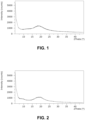
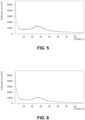
- XRD Wide angle X-ray powder diffraction
- the powder particle size was assessed by laser diffraction.
- the system detects scattered and diffracted light by an array of concentrically arranged sensor elements.
- the software-algorithm is then approximating the particle counts by calculating the z-values of the light intensity values, which arrive at the different sensor elements.
- the analysis was executed using a SALD-7500 Aggregate Sizer (Shimadzu Corporation, Kyoto, Japan) quantitative laser diffraction system (qLD).
- a small amount (spatula tip) of each sample was dispersed in 2 ml isooctane and homogenized by ultrasonication for five minutes. The dispersion was transferred into a batch cell filled with isooctane and analyzed in manual mode.
- Data acquisition settings were as follows: Signal Averaging Count per Measurement: 128, Signal Accumulation Count: 3, and Interval: 2 seconds.
Landscapes
- Chemical & Material Sciences (AREA)
- Life Sciences & Earth Sciences (AREA)
- Health & Medical Sciences (AREA)
- Organic Chemistry (AREA)
- Engineering & Computer Science (AREA)
- Molecular Biology (AREA)
- Biochemistry (AREA)
- Biotechnology (AREA)
- General Health & Medical Sciences (AREA)
- Genetics & Genomics (AREA)
- Food Science & Technology (AREA)
- Polymers & Plastics (AREA)
- Nutrition Science (AREA)
- Mycology (AREA)
- Pediatric Medicine (AREA)
- Pharmaceuticals Containing Other Organic And Inorganic Compounds (AREA)
Priority Applications (78)
| Application Number | Priority Date | Filing Date | Title |
|---|---|---|---|
| ES18155669T ES3026362T3 (en) | 2018-02-08 | 2018-02-08 | Spray-dried mixture of human milk oligosaccharides |
| DK18155669.7T DK3524067T3 (da) | 2018-02-08 | 2018-02-08 | Spraytørret blanding af modermælksoligosaccharider |
| PL18155669.7T PL3524067T3 (pl) | 2018-02-08 | 2018-02-08 | Suszona rozpyłowo mieszanina oligosacharydów mleka ludzkiego |
| EP18155669.7A EP3524067B1 (en) | 2018-02-08 | 2018-02-08 | Spray-dried mixture of human milk oligosaccharides |
| SG11202004659QA SG11202004659QA (en) | 2017-12-08 | 2018-12-07 | Spray-dried sialyllactose |
| CN201880079391.7A CN111447845B (zh) | 2017-12-08 | 2018-12-07 | 喷雾干燥的唾液酸乳糖 |
| NZ764680A NZ764680A (en) | 2017-12-08 | 2018-12-07 | Spray-dried 3-fucosyllactose |
| BR112020011236-4A BR112020011236B1 (pt) | 2017-12-08 | 2018-12-07 | Composição nutricional que contém um pó seco por pulverização contendo lacto-n-fucopentaose |
| JP2020531496A JP2021505177A (ja) | 2017-12-08 | 2018-12-07 | 噴霧乾燥四糖 |
| SG11202004650SA SG11202004650SA (en) | 2017-12-08 | 2018-12-07 | Spray-dried tetrasaccharides |
| MX2020005788A MX2020005788A (es) | 2017-12-08 | 2018-12-07 | Lacto-n-fucopentaosa secada por aspersion. |
| MX2020005995A MX2020005995A (es) | 2017-12-08 | 2018-12-07 | Mezcla secada por atomizacion de oligosacaridos de leche humana. |
| MX2020005782A MX2020005782A (es) | 2017-12-08 | 2018-12-07 | Tetrasacaridos secados por aspersion. |
| AU2018380957A AU2018380957B2 (en) | 2017-12-08 | 2018-12-07 | Spray-dried 3-fucosyllactose |
| ATGM50151/2019U AT17129U1 (de) | 2017-12-08 | 2018-12-07 | Sprühgetrocknetes Gemisch humaner Milch-Oligosaccharide |
| RU2020119946A RU2812853C2 (ru) | 2017-12-08 | 2018-12-07 | Высушенные распылением тетрасахариды |
| RU2020119944A RU2810298C2 (ru) | 2017-12-08 | 2018-12-07 | Высушенная распылением 3-фукозиллактоза |
| CN201880079361.6A CN111447844A (zh) | 2017-12-08 | 2018-12-07 | 喷雾干燥的四糖 |
| JP2020531471A JP2021505174A (ja) | 2017-12-08 | 2018-12-07 | 噴霧乾燥ラクト−n−フコペンタオース |
| BR112020011296-8A BR112020011296B1 (pt) | 2017-12-08 | 2018-12-07 | Composição nutricional que contém pó seco por pulverização |
| CN201880079310.3A CN111465331A (zh) | 2017-12-08 | 2018-12-07 | 喷雾干燥的3-岩藻糖基乳糖 |
| EP18811845.9A EP3720297A1 (en) | 2017-12-08 | 2018-12-07 | Spray-dried mixture of human milk oligosacchrides |
| AU2018380959A AU2018380959B2 (en) | 2017-12-08 | 2018-12-07 | Spray-dried sialyllactose |
| US16/769,897 US20200383367A1 (en) | 2017-12-08 | 2018-12-07 | Spray-dried mixture of human milk oligosaccharides |
| BR112020011242-9A BR112020011242A2 (pt) | 2017-12-08 | 2018-12-07 | mistura seca por pulverização de oligossacarídeos de leite humano |
| JP2020531469A JP7291702B2 (ja) | 2017-12-08 | 2018-12-07 | ヒトミルクオリゴ糖の噴霧乾燥混合物 |
| MX2020005781A MX2020005781A (es) | 2017-12-08 | 2018-12-07 | 3-fucosil-lactosa secada por aspersion. |
| US16/770,465 US20220232870A1 (en) | 2017-12-08 | 2018-12-07 | Spray-dried lacto-n-fucopentaose |
| US16/770,224 US11582994B2 (en) | 2017-12-08 | 2018-12-07 | Spray-dried 3-fucosyllactose |
| CN202411829057.2A CN119769733A (zh) | 2017-12-08 | 2018-12-07 | 喷雾干燥的人乳低聚糖混合物 |
| EP18811849.1A EP3720301A1 (en) | 2017-12-08 | 2018-12-07 | Spray-dried lacto-n-fucopentaose |
| AU2018380962A AU2018380962B2 (en) | 2017-12-08 | 2018-12-07 | Spray-dried lacto-N-fucopentaose |
| PCT/EP2018/083973 WO2019110803A1 (en) | 2017-12-08 | 2018-12-07 | Spray-dried sialyllactose |
| JP2020531432A JP2021505170A (ja) | 2017-12-08 | 2018-12-07 | 噴霧乾燥3−フコシルラクトース |
| CN202510023114.6A CN119679161A (zh) | 2017-12-08 | 2018-12-07 | 喷雾干燥的人乳低聚糖混合物 |
| DE202018006272.3U DE202018006272U1 (de) | 2017-12-08 | 2018-12-07 | Ernährungszusammensetzung umfassend eine sprühgetrocknete Mischung von Humanmilcholigosacchariden |
| PCT/EP2018/083968 WO2019110800A1 (en) | 2017-12-08 | 2018-12-07 | Spray-dried mixture of human milk oligosacchrides |
| KR1020257019640A KR20250093416A (ko) | 2017-12-08 | 2018-12-07 | 분무건조된 사당류 |
| AU2018380956A AU2018380956B2 (en) | 2017-12-08 | 2018-12-07 | Spray-dried mixture of human milk oligosacchrides |
| KR1020207016439A KR20200096771A (ko) | 2017-12-08 | 2018-12-07 | 분무건조된 락토-n-푸코펜타오스 |
| BR112020011202-0A BR112020011202B1 (pt) | 2017-12-08 | 2018-12-07 | Tetrassacarídeos secos por pulverização |
| CN201880079590.8A CN111447843A (zh) | 2017-12-08 | 2018-12-07 | 喷雾干燥的人乳低聚糖混合物 |
| SG11202004655PA SG11202004655PA (en) | 2017-12-08 | 2018-12-07 | Spray-dried lacto-n-fucopentaose |
| CZ2019-36810U CZ35153U1 (cs) | 2017-12-08 | 2018-12-07 | Výživová kompozice |
| PCT/EP2018/083969 WO2019110801A1 (en) | 2017-12-08 | 2018-12-07 | Spray-dried 3-fucosyllactose |
| EP18811848.3A EP3720300A1 (en) | 2017-12-08 | 2018-12-07 | Spray-dried tetrasaccharides |
| EP18811846.7A EP3720298A1 (en) | 2017-12-08 | 2018-12-07 | Spray-dried 3-fucosyllactose |
| SG11202004414PA SG11202004414PA (en) | 2017-12-08 | 2018-12-07 | Spray-dried 3-fucosyllactose |
| KR1020207016438A KR20200096770A (ko) | 2017-12-08 | 2018-12-07 | 분무건조된 3-푸코실락토스 |
| RU2020119953A RU2802680C2 (ru) | 2017-12-08 | 2018-12-07 | Высушенная распылением сиалиллактоза |
| CN201880078303.1A CN111432663A (zh) | 2017-12-08 | 2018-12-07 | 喷雾干燥的乳-n-岩藻戊糖 |
| PCT/EP2018/083978 WO2019110806A1 (en) | 2017-12-08 | 2018-12-07 | Spray-dried lacto-n-fucopentaose |
| KR1020207016440A KR102897445B1 (ko) | 2017-12-08 | 2018-12-07 | 분무건조된 시알릴락토스 |
| BR112020011300-0A BR112020011300B1 (pt) | 2017-12-08 | 2018-12-07 | Composição nutricional que contém um pó seco por pulverização contendo 3-fucosil-lactose |
| JP2020531443A JP2021505171A (ja) | 2017-12-08 | 2018-12-07 | 噴霧乾燥シアリルラクトース |
| KR1020207018646A KR102945202B1 (ko) | 2017-12-08 | 2018-12-07 | 분무건조된 사당류 |
| US16/769,964 US20200384041A1 (en) | 2017-12-08 | 2018-12-07 | Spray-dried sialyllactose |
| SG11202004914RA SG11202004914RA (en) | 2017-12-08 | 2018-12-07 | Spray-dried mixture of human milk oligosacchrides |
| RU2020119951A RU2812864C2 (ru) | 2017-12-08 | 2018-12-07 | Высушенная распылением лакто-n-фукопентаоза |
| US16/770,236 US20210161192A1 (en) | 2017-12-08 | 2018-12-07 | Spray-dried tetrasaccharides |
| RU2020119954A RU2803849C2 (ru) | 2017-12-08 | 2018-12-07 | Высушенная распылением смесь олигосахаридов грудного молока |
| KR1020207017546A KR20200096779A (ko) | 2017-12-08 | 2018-12-07 | 분무건조된 인간 모유 올리고당 혼합물 |
| PCT/EP2018/083974 WO2019110804A1 (en) | 2017-12-08 | 2018-12-07 | Spray-dried tetrasaccharides |
| AU2018380960A AU2018380960B2 (en) | 2017-12-08 | 2018-12-07 | Spray-dried tetrasaccharides |
| EP18811847.5A EP3720299A1 (en) | 2017-12-08 | 2018-12-07 | Spray-dried sialyllactose |
| MX2020005783A MX2020005783A (es) | 2017-12-08 | 2018-12-07 | Sialil-lactosa secada por aspersion. |
| DKBA201900079U DK201900079Y4 (da) | 2017-12-08 | 2019-10-10 | Spraytørret blanding af humane mælkeoligosaccharider |
| DKBA201900113U DK201900113U1 (en) | 2017-12-08 | 2019-12-23 | SPRAY-DRIED MIXTURE OF HUMAN MILK OLIGOSACCHRIDES |
| PH12020550840A PH12020550840A1 (en) | 2017-12-08 | 2020-06-08 | Spray-dried lacto-n-fucopentaose |
| PH12020550849A PH12020550849A1 (en) | 2017-12-08 | 2020-06-08 | Spray-dried mixture of human milk oligosaccharides |
| PH12020550839A PH12020550839A1 (en) | 2017-12-08 | 2020-06-08 | Spray-dried sialyllactose |
| PH12020550848A PH12020550848A1 (en) | 2017-12-08 | 2020-06-08 | Spray-dried tetrasaccharides |
| PH12020550843A PH12020550843A1 (en) | 2017-12-08 | 2020-06-08 | Spray-dried 3-fucosyllactose |
| US17/992,331 US20230148644A1 (en) | 2017-12-08 | 2022-11-22 | Spray-Dried Tetrasaccharides |
| JP2023167511A JP2023182675A (ja) | 2017-12-08 | 2023-09-28 | 噴霧乾燥四糖 |
| JP2023192885A JP7793583B2 (ja) | 2017-12-08 | 2023-11-13 | 噴霧乾燥3-フコシルラクトース |
| JP2023201732A JP2024023444A (ja) | 2017-12-08 | 2023-11-29 | 噴霧乾燥シアリルラクトース |
| AU2024278162A AU2024278162A1 (en) | 2017-12-08 | 2024-12-05 | Spray-dried tetrasaccharides |
Applications Claiming Priority (1)
| Application Number | Priority Date | Filing Date | Title |
|---|---|---|---|
| EP18155669.7A EP3524067B1 (en) | 2018-02-08 | 2018-02-08 | Spray-dried mixture of human milk oligosaccharides |
Publications (2)
| Publication Number | Publication Date |
|---|---|
| EP3524067A1 EP3524067A1 (en) | 2019-08-14 |
| EP3524067B1 true EP3524067B1 (en) | 2025-04-02 |
Family
ID=61192684
Family Applications (1)
| Application Number | Title | Priority Date | Filing Date |
|---|---|---|---|
| EP18155669.7A Active EP3524067B1 (en) | 2017-12-08 | 2018-02-08 | Spray-dried mixture of human milk oligosaccharides |
Country Status (4)
| Country | Link |
|---|---|
| EP (1) | EP3524067B1 (pl) |
| DK (1) | DK3524067T3 (pl) |
| ES (1) | ES3026362T3 (pl) |
| PL (1) | PL3524067T3 (pl) |
Families Citing this family (8)
| Publication number | Priority date | Publication date | Assignee | Title |
|---|---|---|---|---|
| PL3524067T3 (pl) | 2018-02-08 | 2025-06-09 | Chr. Hansen HMO GmbH | Suszona rozpyłowo mieszanina oligosacharydów mleka ludzkiego |
| GB2623899B (en) * | 2019-12-11 | 2024-08-07 | Mjn Us Holdings Llc | Staged nutritional compositions containing human milk oligosaccharides and uses thereof |
| GB2590375B (en) * | 2019-12-11 | 2024-05-08 | Mjn Us Holdings Llc | Staged nutritional compositions containing human milk oligosaccharides and uses thereof |
| BR112022018578A2 (pt) * | 2020-03-20 | 2022-11-08 | Glycom As | Métodos para fornecer um produto de hmo sólido e produtos de hmo sólido obtidos por meio deles |
| US20240035055A1 (en) * | 2020-08-10 | 2024-02-01 | Inbiose N.V. | Process for purification of an oligosaccharide solution produced by cell cultivation or microbial fermentation |
| US20230413838A1 (en) * | 2020-11-09 | 2023-12-28 | Basf Se | Obtaining highly concentrated hmo solutions by reverse osmosis |
| CN119790133A (zh) | 2022-08-29 | 2025-04-08 | 科·汉森有限公司 | 用于生产源自微生物发酵方法的纯化人乳低聚糖的方法 |
| WO2025045720A1 (en) * | 2023-08-25 | 2025-03-06 | Chr. Hansen A/S | Process for manufacturing a powder blend of oligosaccharides |
Citations (18)
| Publication number | Priority date | Publication date | Assignee | Title |
|---|---|---|---|---|
| WO1998043494A1 (en) | 1997-03-31 | 1998-10-08 | Abbott Laboratories | Nutritional formulations containing oligosaccharides |
| WO2007135583A2 (en) | 2006-05-19 | 2007-11-29 | Firmenich Sa | One step spray-drying process |
| WO2012092157A2 (en) | 2010-12-31 | 2012-07-05 | Abbott Laboratories | Nutritional formulations including human milk oligosaccharides and antioxidants and uses thereof |
| WO2012156273A1 (en) | 2011-05-13 | 2012-11-22 | Nestec S.A. | Nutritional products comprising human milk oligosaccharides and methods for manufacture thereof |
| WO2015071402A1 (en) | 2013-11-15 | 2015-05-21 | Nestec S.A. | Compositions for use in the prevention or treatment of necrotizing enterocolitis in infants and young children |
| US20150183814A1 (en) | 2012-06-14 | 2015-07-02 | Glycom A/S | Enhancing the Stability and Purity and Increasing the Bioavailability of Human Milk Oligosaccharides or Precursors or Blends Thereof |
| WO2016030524A1 (en) | 2014-08-29 | 2016-03-03 | Algipharma As | Inhalable powder formulations of alginate oligomers |
| WO2016066174A1 (en) | 2014-10-29 | 2016-05-06 | Glycom A/S | Synthetic composition and method for promoting mucosal healing |
| WO2016139333A1 (en) | 2015-03-05 | 2016-09-09 | Nestec S.A. | Compositions for use in the prevention or treatment of gastrointestinal infections/inflammations in infants or young children |
| WO2017103850A1 (en) | 2015-12-15 | 2017-06-22 | Glycom A/S | Mixture of hmos |
| WO2017156550A1 (en) | 2016-03-11 | 2017-09-14 | Evolve Biosystems Inc. | A transient commensal microorganism for improving gut health |
| EP3450443A1 (en) | 2017-08-29 | 2019-03-06 | Jennewein Biotechnologie GmbH | Process for purifying sialylated oligosaccharides |
| EP3486326A1 (en) * | 2017-11-21 | 2019-05-22 | Jennewein Biotechnologie GmbH | Method for the purification of n-acetylneuraminic acid from a fermentation broth |
| EP3494804A1 (en) * | 2017-12-08 | 2019-06-12 | Jennewein Biotechnologie GmbH | Spray-dried 3-fucosyllactose |
| EP3494806A1 (en) * | 2017-12-08 | 2019-06-12 | Jennewein Biotechnologie GmbH | Spray-dried lacto-n-fucopentaose |
| EP3494807A1 (en) * | 2017-12-11 | 2019-06-12 | Jennewein Biotechnologie GmbH | Spray-dried sialyllactose |
| EP3494805A1 (en) * | 2017-12-08 | 2019-06-12 | Jennewein Biotechnologie GmbH | Spray-dried tetrasaccharides |
| EP3524067A1 (en) | 2018-02-08 | 2019-08-14 | Jennewein Biotechnologie GmbH | Spray-dried mixture of human milk oligosaccharides |
Family Cites Families (12)
| Publication number | Priority date | Publication date | Assignee | Title |
|---|---|---|---|---|
| EP2379708B1 (en) | 2008-12-19 | 2016-04-27 | Jennewein Biotechnologie GmbH | Synthesis of fucosylated compounds |
| US8889637B2 (en) | 2010-06-01 | 2014-11-18 | Glycom A/S | Polymorphs of 2′-O-fucosyllactose and producing thereof |
| ES2439507T3 (es) | 2011-01-20 | 2014-01-23 | Jennewein Biotechnologie Gmbh | Fucosiltransferasas novedosas y sus aplicaciones |
| EP2943500B1 (en) | 2012-11-13 | 2017-11-08 | Glycom A/S | Crystalline 3-o-fucosyllactose |
| EP2935300B1 (en) | 2012-12-18 | 2025-01-22 | Glycom A/S | Novel polymorphs of lnnt |
| PL2845905T3 (pl) | 2013-09-10 | 2021-09-27 | Chr. Hansen HMO GmbH | Wytwarzanie oligosacharydów |
| EP2857410A1 (en) | 2013-10-04 | 2015-04-08 | Jennewein Biotechnologie GmbH | Process for purification of 2´-fucosyllactose using simulated moving bed chromatography |
| DK2896628T3 (en) | 2014-01-20 | 2019-01-14 | Jennewein Biotechnologie Gmbh | Process for Effective Purification of Neutral Milk Oligosaccharides (HMOs) from Microbial Fermentation |
| EP3461890B1 (en) | 2014-03-31 | 2025-09-24 | Chr. Hansen HMO GmbH | Total fermentation of oligosaccharides |
| US10500221B2 (en) | 2014-12-05 | 2019-12-10 | Glycom A/S | Crystalline difucosyllactose |
| WO2017043382A1 (ja) | 2015-09-09 | 2017-03-16 | カルソニックカンセイ株式会社 | 流体加熱装置及びその製造方法 |
| US10696705B2 (en) | 2015-12-17 | 2020-06-30 | Glycom A/S | Crystalline forms of LNT |
-
2018
- 2018-02-08 PL PL18155669.7T patent/PL3524067T3/pl unknown
- 2018-02-08 EP EP18155669.7A patent/EP3524067B1/en active Active
- 2018-02-08 DK DK18155669.7T patent/DK3524067T3/da active
- 2018-02-08 ES ES18155669T patent/ES3026362T3/es active Active
Patent Citations (18)
| Publication number | Priority date | Publication date | Assignee | Title |
|---|---|---|---|---|
| WO1998043494A1 (en) | 1997-03-31 | 1998-10-08 | Abbott Laboratories | Nutritional formulations containing oligosaccharides |
| WO2007135583A2 (en) | 2006-05-19 | 2007-11-29 | Firmenich Sa | One step spray-drying process |
| WO2012092157A2 (en) | 2010-12-31 | 2012-07-05 | Abbott Laboratories | Nutritional formulations including human milk oligosaccharides and antioxidants and uses thereof |
| WO2012156273A1 (en) | 2011-05-13 | 2012-11-22 | Nestec S.A. | Nutritional products comprising human milk oligosaccharides and methods for manufacture thereof |
| US20150183814A1 (en) | 2012-06-14 | 2015-07-02 | Glycom A/S | Enhancing the Stability and Purity and Increasing the Bioavailability of Human Milk Oligosaccharides or Precursors or Blends Thereof |
| WO2015071402A1 (en) | 2013-11-15 | 2015-05-21 | Nestec S.A. | Compositions for use in the prevention or treatment of necrotizing enterocolitis in infants and young children |
| WO2016030524A1 (en) | 2014-08-29 | 2016-03-03 | Algipharma As | Inhalable powder formulations of alginate oligomers |
| WO2016066174A1 (en) | 2014-10-29 | 2016-05-06 | Glycom A/S | Synthetic composition and method for promoting mucosal healing |
| WO2016139333A1 (en) | 2015-03-05 | 2016-09-09 | Nestec S.A. | Compositions for use in the prevention or treatment of gastrointestinal infections/inflammations in infants or young children |
| WO2017103850A1 (en) | 2015-12-15 | 2017-06-22 | Glycom A/S | Mixture of hmos |
| WO2017156550A1 (en) | 2016-03-11 | 2017-09-14 | Evolve Biosystems Inc. | A transient commensal microorganism for improving gut health |
| EP3450443A1 (en) | 2017-08-29 | 2019-03-06 | Jennewein Biotechnologie GmbH | Process for purifying sialylated oligosaccharides |
| EP3486326A1 (en) * | 2017-11-21 | 2019-05-22 | Jennewein Biotechnologie GmbH | Method for the purification of n-acetylneuraminic acid from a fermentation broth |
| EP3494804A1 (en) * | 2017-12-08 | 2019-06-12 | Jennewein Biotechnologie GmbH | Spray-dried 3-fucosyllactose |
| EP3494806A1 (en) * | 2017-12-08 | 2019-06-12 | Jennewein Biotechnologie GmbH | Spray-dried lacto-n-fucopentaose |
| EP3494805A1 (en) * | 2017-12-08 | 2019-06-12 | Jennewein Biotechnologie GmbH | Spray-dried tetrasaccharides |
| EP3494807A1 (en) * | 2017-12-11 | 2019-06-12 | Jennewein Biotechnologie GmbH | Spray-dried sialyllactose |
| EP3524067A1 (en) | 2018-02-08 | 2019-08-14 | Jennewein Biotechnologie GmbH | Spray-dried mixture of human milk oligosaccharides |
Non-Patent Citations (6)
| Title |
|---|
| ANONYMOUS: "COMMISSION IMPLEMENTING REGULATION (EU) 2017/2470 of 20 December 2017 establishing the Union list of novel foods in accordance with Regulation (EU) 2015/2283 of the European Parliament and of the Council on novel foods (Text with EEA relevance)", OFFICIAL JOURNAL OF THE EUROPEAN UNION, 30 December 2017 (2017-12-30), XP093355227, Retrieved from the Internet <URL:https://eur-lex.europa.eu/legal-content/EN/TXT/PDF/?uri=CELEX:32017R2470> |
| D11 - RESPONSE TO OFFICE ACTION BY PATENTEE DD 4 OCTOBER 2024 |
| JENNEWEIN BIOTECHNOLOGIE GMBH: "GRAS Notification for T-Fucosyllactose (T-FL)", 1 March 2015 (2015-03-01), XP055661223 |
| MCGUIRE MICHELLE K, MEEHAN COURTNEY L, MCGUIRE MARK A, WILLIAMS JANET E, FOSTER JAMES, SELLEN DANIEL W, KAMAU-MBUTHIA ELIZABETH W,: "What’s normal? Oligosaccharide concentrations and profiles in milk produced by healthy women vary geographically ", AMERICAN JOURNAL OF CLINICAL NUTRITION, ELSEVIER, vol. 105, no. 5, 1 May 2017 (2017-05-01), pages 1086 - 1100, XP093342481, ISSN: 0002-9165, DOI: 10.3945/ajcn.116.139980 |
| RÖHRIG CHRISTOPH H., CHOI SHARON S. H., BALDWIN NIGEL: "The nutritional role of free sialic acid, a human milk monosaccharide, and its application as a functional food ingredient", CRITICAL REVIEWS IN FOOD SCIENCE AND NUTRITION, TAYLOR & FRANCIS, USA, vol. 57, no. 5, 24 March 2017 (2017-03-24), USA , pages 1017 - 1038, XP093218276, ISSN: 1040-8398, DOI: 10.1080/10408398.2015.1040113 |
| THURL S, MUELLER-WERNER B, SAWATZKI G: "Quantification of individual oligosaccharide compounds from human milk using high-pH anion-exchange chromatography", ANALYTICAL BIOCHEMISTRY, ACADEMIC PRESS, AMSTERDAM, NL, vol. 235, no. 2, 1 January 1996 (1996-01-01), Amsterdam, NL , pages 202 - 206, XP002439151, ISSN: 0003-2697, DOI: 10.1006/abio.1996.0113 |
Also Published As
| Publication number | Publication date |
|---|---|
| EP3524067A1 (en) | 2019-08-14 |
| ES3026362T3 (en) | 2025-06-11 |
| PL3524067T3 (pl) | 2025-06-09 |
| DK3524067T3 (da) | 2025-05-19 |
Similar Documents
| Publication | Publication Date | Title |
|---|---|---|
| JP7793583B2 (ja) | 噴霧乾燥3-フコシルラクトース | |
| EP3524067B1 (en) | Spray-dried mixture of human milk oligosaccharides | |
| EP3494805B1 (en) | Spray-dried tetrasaccharides | |
| EP3494807A1 (en) | Spray-dried sialyllactose | |
| EP3494806B1 (en) | Spray-dried lacto-n-fucopentaose | |
| EP3494804B1 (en) | Spray-dried 3-fucosyllactose | |
| US20230148644A1 (en) | Spray-Dried Tetrasaccharides | |
| RU2812853C2 (ru) | Высушенные распылением тетрасахариды | |
| RU2803849C2 (ru) | Высушенная распылением смесь олигосахаридов грудного молока |
Legal Events
| Date | Code | Title | Description |
|---|---|---|---|
| PUAI | Public reference made under article 153(3) epc to a published international application that has entered the european phase |
Free format text: ORIGINAL CODE: 0009012 |
|
| STAA | Information on the status of an ep patent application or granted ep patent |
Free format text: STATUS: THE APPLICATION HAS BEEN PUBLISHED |
|
| AK | Designated contracting states |
Kind code of ref document: A1 Designated state(s): AL AT BE BG CH CY CZ DE DK EE ES FI FR GB GR HR HU IE IS IT LI LT LU LV MC MK MT NL NO PL PT RO RS SE SI SK SM TR |
|
| AX | Request for extension of the european patent |
Extension state: BA ME |
|
| STAA | Information on the status of an ep patent application or granted ep patent |
Free format text: STATUS: REQUEST FOR EXAMINATION WAS MADE |
|
| TPAC | Observations filed by third parties |
Free format text: ORIGINAL CODE: EPIDOSNTIPA |
|
| 17P | Request for examination filed |
Effective date: 20200213 |
|
| RBV | Designated contracting states (corrected) |
Designated state(s): AL AT BE BG CH CY CZ DE DK EE ES FI FR GB GR HR HU IE IS IT LI LT LU LV MC MK MT NL NO PL PT RO RS SE SI SK SM TR |
|
| STAA | Information on the status of an ep patent application or granted ep patent |
Free format text: STATUS: EXAMINATION IS IN PROGRESS |
|
| 17Q | First examination report despatched |
Effective date: 20210325 |
|
| RAP3 | Party data changed (applicant data changed or rights of an application transferred) |
Owner name: CHR. HANSEN HMO GMBH |
|
| TPAC | Observations filed by third parties |
Free format text: ORIGINAL CODE: EPIDOSNTIPA |
|
| TPAC | Observations filed by third parties |
Free format text: ORIGINAL CODE: EPIDOSNTIPA |
|
| TPAC | Observations filed by third parties |
Free format text: ORIGINAL CODE: EPIDOSNTIPA |
|
| TPAC | Observations filed by third parties |
Free format text: ORIGINAL CODE: EPIDOSNTIPA |
|
| GRAP | Despatch of communication of intention to grant a patent |
Free format text: ORIGINAL CODE: EPIDOSNIGR1 |
|
| STAA | Information on the status of an ep patent application or granted ep patent |
Free format text: STATUS: GRANT OF PATENT IS INTENDED |
|
| RIC1 | Information provided on ipc code assigned before grant |
Ipc: C07H 13/04 20060101ALI20241106BHEP Ipc: C07H 3/02 20060101ALI20241106BHEP Ipc: A23L 33/21 20160101ALI20241106BHEP Ipc: A23L 29/30 20160101ALI20241106BHEP Ipc: C07H 3/06 20060101ALI20241106BHEP Ipc: C07H 1/08 20060101ALI20241106BHEP Ipc: A23L 33/00 20160101AFI20241106BHEP |
|
| INTG | Intention to grant announced |
Effective date: 20241118 |
|
| GRAS | Grant fee paid |
Free format text: ORIGINAL CODE: EPIDOSNIGR3 |
|
| GRAA | (expected) grant |
Free format text: ORIGINAL CODE: 0009210 |
|
| STAA | Information on the status of an ep patent application or granted ep patent |
Free format text: STATUS: THE PATENT HAS BEEN GRANTED |
|
| AK | Designated contracting states |
Kind code of ref document: B1 Designated state(s): AL AT BE BG CH CY CZ DE DK EE ES FI FR GB GR HR HU IE IS IT LI LT LU LV MC MK MT NL NO PL PT RO RS SE SI SK SM TR |
|
| REG | Reference to a national code |
Ref country code: GB Ref legal event code: FG4D |
|
| REG | Reference to a national code |
Ref country code: CH Ref legal event code: EP |
|
| P01 | Opt-out of the competence of the unified patent court (upc) registered |
Free format text: CASE NUMBER: APP_11019/2025 Effective date: 20250306 |
|
| REG | Reference to a national code |
Ref country code: IE Ref legal event code: FG4D |
|
| RIN2 | Information on inventor provided after grant (corrected) |
Inventor name: JENNEWEIN, STEFAN |
|
| REG | Reference to a national code |
Ref country code: DE Ref legal event code: R096 Ref document number: 602018080645 Country of ref document: DE |
|
| REG | Reference to a national code |
Ref country code: DK Ref legal event code: T3 Effective date: 20250515 |
|
| REG | Reference to a national code |
Ref country code: NL Ref legal event code: FP |
|
| REG | Reference to a national code |
Ref country code: SE Ref legal event code: TRGR |
|
| REG | Reference to a national code |
Ref country code: ES Ref legal event code: FG2A Ref document number: 3026362 Country of ref document: ES Kind code of ref document: T3 Effective date: 20250611 |
|
| REG | Reference to a national code |
Ref country code: SK Ref legal event code: T3 Ref document number: E 46353 Country of ref document: SK |
|
| PG25 | Lapsed in a contracting state [announced via postgrant information from national office to epo] |
Ref country code: PT Free format text: LAPSE BECAUSE OF FAILURE TO SUBMIT A TRANSLATION OF THE DESCRIPTION OR TO PAY THE FEE WITHIN THE PRESCRIBED TIME-LIMIT Effective date: 20250804 Ref country code: FI Free format text: LAPSE BECAUSE OF FAILURE TO SUBMIT A TRANSLATION OF THE DESCRIPTION OR TO PAY THE FEE WITHIN THE PRESCRIBED TIME-LIMIT Effective date: 20250402 |
|
| REG | Reference to a national code |
Ref country code: LT Ref legal event code: MG9D |
|
| PG25 | Lapsed in a contracting state [announced via postgrant information from national office to epo] |
Ref country code: HR Free format text: LAPSE BECAUSE OF FAILURE TO SUBMIT A TRANSLATION OF THE DESCRIPTION OR TO PAY THE FEE WITHIN THE PRESCRIBED TIME-LIMIT Effective date: 20250402 |
|
| PG25 | Lapsed in a contracting state [announced via postgrant information from national office to epo] |
Ref country code: RS Free format text: LAPSE BECAUSE OF FAILURE TO SUBMIT A TRANSLATION OF THE DESCRIPTION OR TO PAY THE FEE WITHIN THE PRESCRIBED TIME-LIMIT Effective date: 20250702 |
|
| PG25 | Lapsed in a contracting state [announced via postgrant information from national office to epo] |
Ref country code: IS Free format text: LAPSE BECAUSE OF FAILURE TO SUBMIT A TRANSLATION OF THE DESCRIPTION OR TO PAY THE FEE WITHIN THE PRESCRIBED TIME-LIMIT Effective date: 20250802 |
|
| PG25 | Lapsed in a contracting state [announced via postgrant information from national office to epo] |
Ref country code: LV Free format text: LAPSE BECAUSE OF FAILURE TO SUBMIT A TRANSLATION OF THE DESCRIPTION OR TO PAY THE FEE WITHIN THE PRESCRIBED TIME-LIMIT Effective date: 20250402 |
|
| REG | Reference to a national code |
Ref country code: DE Ref legal event code: R026 Ref document number: 602018080645 Country of ref document: DE |
|
| PLBI | Opposition filed |
Free format text: ORIGINAL CODE: 0009260 |
|
| PG25 | Lapsed in a contracting state [announced via postgrant information from national office to epo] |
Ref country code: SM Free format text: LAPSE BECAUSE OF FAILURE TO SUBMIT A TRANSLATION OF THE DESCRIPTION OR TO PAY THE FEE WITHIN THE PRESCRIBED TIME-LIMIT Effective date: 20250402 |
|
| REG | Reference to a national code |
Ref country code: CH Ref legal event code: L10 Free format text: ST27 STATUS EVENT CODE: U-0-0-L10-L00 (AS PROVIDED BY THE NATIONAL OFFICE) Effective date: 20260114 |
|
| PLAX | Notice of opposition and request to file observation + time limit sent |
Free format text: ORIGINAL CODE: EPIDOSNOBS2 |
|
| PG25 | Lapsed in a contracting state [announced via postgrant information from national office to epo] |
Ref country code: EE Free format text: LAPSE BECAUSE OF FAILURE TO SUBMIT A TRANSLATION OF THE DESCRIPTION OR TO PAY THE FEE WITHIN THE PRESCRIBED TIME-LIMIT Effective date: 20250402 |
|
| PG25 | Lapsed in a contracting state [announced via postgrant information from national office to epo] |
Ref country code: RO Free format text: LAPSE BECAUSE OF FAILURE TO SUBMIT A TRANSLATION OF THE DESCRIPTION OR TO PAY THE FEE WITHIN THE PRESCRIBED TIME-LIMIT Effective date: 20250402 |
|
| 26 | Opposition filed |
Opponent name: GREAVES BREWSTER LLP Effective date: 20251222 |
|
| PGFP | Annual fee paid to national office [announced via postgrant information from national office to epo] |
Ref country code: NL Payment date: 20260128 Year of fee payment: 9 |
|
| REG | Reference to a national code |
Ref country code: CH Ref legal event code: U11 Free format text: ST27 STATUS EVENT CODE: U-0-0-U10-U11 (AS PROVIDED BY THE NATIONAL OFFICE) Effective date: 20260301 |
|
| PGFP | Annual fee paid to national office [announced via postgrant information from national office to epo] |
Ref country code: SE Payment date: 20260128 Year of fee payment: 9 |
|
| PGFP | Annual fee paid to national office [announced via postgrant information from national office to epo] |
Ref country code: GB Payment date: 20260128 Year of fee payment: 9 |
|
| PGFP | Annual fee paid to national office [announced via postgrant information from national office to epo] |
Ref country code: ES Payment date: 20260311 Year of fee payment: 9 |
|
| PGFP | Annual fee paid to national office [announced via postgrant information from national office to epo] |
Ref country code: DE Payment date: 20260121 Year of fee payment: 9 Ref country code: NO Payment date: 20260211 Year of fee payment: 9 Ref country code: DK Payment date: 20260213 Year of fee payment: 9 Ref country code: IE Payment date: 20260123 Year of fee payment: 9 |
|
| PGFP | Annual fee paid to national office [announced via postgrant information from national office to epo] |
Ref country code: AT Payment date: 20260127 Year of fee payment: 9 |
|
| PGFP | Annual fee paid to national office [announced via postgrant information from national office to epo] |
Ref country code: IT Payment date: 20260128 Year of fee payment: 9 Ref country code: BE Payment date: 20260122 Year of fee payment: 9 |
|
| PGFP | Annual fee paid to national office [announced via postgrant information from national office to epo] |
Ref country code: FR Payment date: 20260121 Year of fee payment: 9 |