EP3518203A1 - Information processing device and terminal device - Google Patents
Information processing device and terminal device Download PDFInfo
- Publication number
- EP3518203A1 EP3518203A1 EP17866218.5A EP17866218A EP3518203A1 EP 3518203 A1 EP3518203 A1 EP 3518203A1 EP 17866218 A EP17866218 A EP 17866218A EP 3518203 A1 EP3518203 A1 EP 3518203A1
- Authority
- EP
- European Patent Office
- Prior art keywords
- accident
- notification
- withdrawal
- determination
- unit
- Prior art date
- Legal status (The legal status is an assumption and is not a legal conclusion. Google has not performed a legal analysis and makes no representation as to the accuracy of the status listed.)
- Granted
Links
Images




Classifications
-
- G—PHYSICS
- G07—CHECKING-DEVICES
- G07C—TIME OR ATTENDANCE REGISTERS; REGISTERING OR INDICATING THE WORKING OF MACHINES; GENERATING RANDOM NUMBERS; VOTING OR LOTTERY APPARATUS; ARRANGEMENTS, SYSTEMS OR APPARATUS FOR CHECKING NOT PROVIDED FOR ELSEWHERE
- G07C5/00—Registering or indicating the working of vehicles
- G07C5/008—Registering or indicating the working of vehicles communicating information to a remotely located station
-
- B—PERFORMING OPERATIONS; TRANSPORTING
- B60—VEHICLES IN GENERAL
- B60R—VEHICLES, VEHICLE FITTINGS, OR VEHICLE PARTS, NOT OTHERWISE PROVIDED FOR
- B60R21/00—Arrangements or fittings on vehicles for protecting or preventing injuries to occupants or pedestrians in case of accidents or other traffic risks
-
- G—PHYSICS
- G07—CHECKING-DEVICES
- G07C—TIME OR ATTENDANCE REGISTERS; REGISTERING OR INDICATING THE WORKING OF MACHINES; GENERATING RANDOM NUMBERS; VOTING OR LOTTERY APPARATUS; ARRANGEMENTS, SYSTEMS OR APPARATUS FOR CHECKING NOT PROVIDED FOR ELSEWHERE
- G07C5/00—Registering or indicating the working of vehicles
- G07C5/08—Registering or indicating performance data other than driving, working, idle, or waiting time, with or without registering driving, working, idle or waiting time
- G07C5/0816—Indicating performance data, e.g. occurrence of a malfunction
-
- G—PHYSICS
- G07—CHECKING-DEVICES
- G07C—TIME OR ATTENDANCE REGISTERS; REGISTERING OR INDICATING THE WORKING OF MACHINES; GENERATING RANDOM NUMBERS; VOTING OR LOTTERY APPARATUS; ARRANGEMENTS, SYSTEMS OR APPARATUS FOR CHECKING NOT PROVIDED FOR ELSEWHERE
- G07C5/00—Registering or indicating the working of vehicles
- G07C5/08—Registering or indicating performance data other than driving, working, idle, or waiting time, with or without registering driving, working, idle or waiting time
- G07C5/0841—Registering performance data
-
- G—PHYSICS
- G08—SIGNALLING
- G08G—TRAFFIC CONTROL SYSTEMS
- G08G1/00—Traffic control systems for road vehicles
-
- G—PHYSICS
- G08—SIGNALLING
- G08G—TRAFFIC CONTROL SYSTEMS
- G08G1/00—Traffic control systems for road vehicles
- G08G1/01—Detecting movement of traffic to be counted or controlled
- G08G1/0104—Measuring and analyzing of parameters relative to traffic conditions
- G08G1/0108—Measuring and analyzing of parameters relative to traffic conditions based on the source of data
- G08G1/0112—Measuring and analyzing of parameters relative to traffic conditions based on the source of data from the vehicle, e.g. floating car data [FCD]
-
- G—PHYSICS
- G08—SIGNALLING
- G08G—TRAFFIC CONTROL SYSTEMS
- G08G1/00—Traffic control systems for road vehicles
- G08G1/09—Arrangements for giving variable traffic instructions
- G08G1/0962—Arrangements for giving variable traffic instructions having an indicator mounted inside the vehicle, e.g. giving voice messages
- G08G1/0967—Systems involving transmission of highway information, e.g. weather, speed limits
- G08G1/096766—Systems involving transmission of highway information, e.g. weather, speed limits where the system is characterised by the origin of the information transmission
- G08G1/096775—Systems involving transmission of highway information, e.g. weather, speed limits where the system is characterised by the origin of the information transmission where the origin of the information is a central station
-
- G—PHYSICS
- G08—SIGNALLING
- G08G—TRAFFIC CONTROL SYSTEMS
- G08G1/00—Traffic control systems for road vehicles
- G08G1/09—Arrangements for giving variable traffic instructions
- G08G1/0962—Arrangements for giving variable traffic instructions having an indicator mounted inside the vehicle, e.g. giving voice messages
- G08G1/0967—Systems involving transmission of highway information, e.g. weather, speed limits
- G08G1/096766—Systems involving transmission of highway information, e.g. weather, speed limits where the system is characterised by the origin of the information transmission
- G08G1/096791—Systems involving transmission of highway information, e.g. weather, speed limits where the system is characterised by the origin of the information transmission where the origin of the information is another vehicle
-
- G—PHYSICS
- G08—SIGNALLING
- G08G—TRAFFIC CONTROL SYSTEMS
- G08G1/00—Traffic control systems for road vehicles
- G08G1/20—Monitoring the location of vehicles belonging to a group, e.g. fleet of vehicles, countable or determined number of vehicles
- G08G1/205—Indicating the location of the monitored vehicles as destination, e.g. accidents, stolen, rental
-
- H—ELECTRICITY
- H04—ELECTRIC COMMUNICATION TECHNIQUE
- H04W—WIRELESS COMMUNICATION NETWORKS
- H04W4/00—Services specially adapted for wireless communication networks; Facilities therefor
- H04W4/30—Services specially adapted for particular environments, situations or purposes
- H04W4/40—Services specially adapted for particular environments, situations or purposes for vehicles, e.g. vehicle-to-pedestrians [V2P]
Definitions
- the present invention relates to an information processing device and a terminal device.
- an accident notifying system that, if an accident occurs in a mobile object such as a vehicle, automatically notifies the occurrence of the accident to a server.
- a terminal device mounted in a vehicle detects impact occurring in the vehicle and determines based on the detected magnitude of the impact (impact value) whether an accident has occurred. And if determining that an accident has occurred, the terminal device notifies the fact of accident occurrence and the site of occurrence of the accident to an external server via radio communication (e.g., Patent Document 1).
- Patent Document 1 Japanese Laid-Open Patent Publication No. 2001-266294
- the invention according to claim 1 is an information processing device comprising: an accident notification accepting unit that accepts from a mobile object an accident notification containing accident determination information indicating that it is determined that an accident has occurred in said mobile object and occurrence site information indicating the site where it is determined that the accident has occurred; a withdrawal notification accepting unit that accepts a withdrawal notification to withdraw said accident notification; and an area identifying unit that records the occurrence site information contained in the accident notification withdrawn by said withdrawal notification and identifies a withdrawal-notification prone area based on the recorded occurrence site information.
- the invention according to claim 8 is a terminal device to be mounted in a mobile object characterized by comprising: an accident determining unit that determines that an accident has occurred in said mobile object; a transmitting unit that transmits an accident notification containing information about the site where it is determined that the accident has occurred, according to determination of said accident determining unit; and a receiving unit that receives information about a withdrawal-notification prone area where withdrawal of said accident notification often happens.
- the invention according to claim 14 is an information processing method executed by an information processing device having a notification accepting means and an area identifying means, the information processing method comprising: a step of accepting from a mobile object an accident notification containing accident determination information indicating that it is determined that an accident has occurred in said mobile object and occurrence site information indicating the site where it is determined that the accident has occurred; a step of accepting a withdrawal notification to withdraw said accident notification; and a step of recording the occurrence site information contained in the accident notification withdrawn by said withdrawal notification and identifying a withdrawal-notification prone area based on the recorded occurrence site information.
- the invention according to claim 15 is an accident reporting method executed by a terminal device being mounted in a mobile object and having an accident determining means, a transmitting means and a receiving means, the accident reporting method comprising: a step of determining that an accident has occurred in said mobile object; a step of transmitting an accident notification containing information about the site where it is determined that the accident has occurred, according to determination of occurrence of the accident; and a step of receiving information about a withdrawal-notification prone area where withdrawal of said accident notification often happens.
- the invention according to claim 16 is a program configured to cause a computer executing; a step of accepting from a mobile object an accident notification containing accident determination information indicating that it is determined that an accident has occurred in said mobile object and occurrence site information indicating the site where it is determined that the accident has occurred; a step of accepting a withdrawal notification to withdraw said accident notification; and a step of recording the occurrence site information contained in the accident notification withdrawn by said withdrawal notification and identifying a withdrawal-notification prone area based on the recorded occurrence site information.
- the invention according to claim 17 is characterized by A program configured to cause a computer executing; a step of determining that an accident has occurred in a mobile object; a step of transmitting an accident notification containing information about the site where it is determined that the accident has occurred, according to determination of occurrence of the accident; and a step of receiving information about a withdrawal-notification prone area where withdrawal of said accident notification often happens.
- FIG. 1 is a block diagram showing the configuration of an accident notifying system according to Embodiment 1.
- the accident notifying system is composed of a server 20 and a plurality of terminal devices 10-1 to 10-n (n is an integer of two or greater).
- the terminal device 10-1 to 10-n is, for example, a navigation device mounted in a mobile object such as a vehicle (hereinafter simply called a vehicle) and performs radio communication with the server 20.
- the terminal devices 10-1 to 10-n each have the same configuration, and hence the configuration of the terminal device 10-1 will be described below with description of the configurations of the terminal devices 10-2 to 10-n being omitted.
- the terminal device 10-1 has an output unit 11, an impact detecting unit 12, a position information acquiring unit 13, an accident determining unit 14, a notification generating unit 15, an error determining unit 16, a transmitting and receiving unit 17, a storage unit 18, and an erroneous-determination prone area approach determining unit 19.
- the output unit 11 is composed of a display section 11A and a voice output section 11B.
- the display section 11A is constituted by a display panel such as a liquid crystal display and has a function to display, e.g., buttons of a touch-panel type.
- the voice output section 11B is constituted by a voice output device such as a speaker.
- the impact detecting unit 12 is constituted by, e.g., an acceleration sensor and detects the magnitude of impact occurring in the vehicle as an impact value G (hereinafter simply called an impact value) based on a change in acceleration of the vehicle.
- an impact value G hereinafter simply called an impact value
- the position information acquiring unit 13 is constituted by, e.g., a GPS (Global Positioning System) sensor and acquires position information indicating the current position of the vehicle.
- the position information acquiring unit 13 receives radio waves transmitted from a plurality of GPS satellites and calculates the distance from each GPS satellite based on the received radio waves to acquire position information.
- the accident determining unit 14 determines that an accident has occurred when the impact value detected by the impact detecting unit 12 is greater than or equal to a threshold.
- the notification generating unit 15 generates an accident notification containing information about the impact value of detected impact and the travelling speed and position of the vehicle when the impact was detected according to accident determination by the accident determining unit 14. Further, the notification generating unit 15 generates a withdrawal notification to withdraw the accident notification if the error determining unit 16 determines that the accident determination is false.
- the error determining unit 16 determines whether accident determination by the accident determining unit 14 is false. For example, after the impact detecting unit 12 detects impact greater than or equa1 to the threshold, the error determining unit 16 determines whether the vehicle travels normally based on whether the vehicle travels a predetermined distance in a predetermined time and, when determining that the vehicle travels normally, determines that the accident determination is false.
- the error determining unit 16 makes the display section 11A of the output unit 11 display a withdrawal button of a touch-panel type to accept the withdrawal of accident notification by the driver's judgement. If the withdrawal button is operated, the error determining unit 16 determines that the accident determination is false.
- the transmitting and receiving unit 17 transmits the accident notification generated by the notification generating unit 15 to the server 20. Further, after transmitting the accident notification to the server 20, the transmitting and receiving unit 17 transmits a withdrawal notification to the server 20 if the error determining unit determines that the accident determination is false.
- the transmitting and receiving unit 17 receives information about the threshold of impact used in accident determination by the accident determining unit 14 and information about an erroneous-determination prone area from the server 20.
- the storage unit 18 stores a variety of information including information about the threshold of impact and the erroneous-determination prone area received by the transmitting and receiving unit 17.
- the erroneous-determination prone area approach determining unit 19 determines whether the vehicle is approaching the erroneous-determination prone area (that is, whether the vehicle will enter the erroneous-determination prone area within a predetermined reference time) based on information about the erroneous-determination prone area stored in the storage unit 18 and position information acquired by the position information acquiring unit 13. Then the erroneous-determination prone area approach determining unit 19 makes the output unit 11 output the determining result.
- the erroneous-determination prone area approach determining unit 19 makes, for example, a message to notify approaching the erroneous-determination prone area and to prompt the driver to notice ("An erroneous-determination prone area ... meters ahead, please carefully travel.” or the like) be displayed on the screen of the display section 11A. Further, the erroneous-determination prone area approach determining unit 19 makes the voice output section 11B output a voice message corresponding to the message displayed by the display section 11A.
- the server 20 includes a transmitting and receiving unit 21, a notification accepting unit 22, an accident processing unit 23, an erroneous-determination prone area identifying unit 24, a threshold calculating unit 25, and a storage unit 26.
- the transmitting and receiving unit 21 transmits and receives information data to and from the terminal devices 10-1 to 10-n and receives accident notifications and withdrawal notifications. Further, the transmitting and receiving unit 21 transmits information about the threshold of impact to be used in accident determination by the terminal devices 10-1 to 10-n and the erroneous-determination prone area to the terminal devices 10-1 to 10-n.
- the notification accepting unit 22 accepts accident notifications and withdrawal notifications from the terminal devices 10-1 to 10-n via the transmitting and receiving unit 21.
- the notification accepting unit 22 acquires information about the detection position of impact and speed of the vehicle, and information about the impact value contained in an accident notification to store in the storage unit 26.
- the accident processing unit 23 performs a process of establishing voice communication between the operator terminal (not shown) used by the operator and the terminal device which transmitted the accident notification, and a process of notifying accident occurrence with position information to a police station and a fire station (hereinafter collectively called an accident process).
- a process of establishing voice communication between the operator terminal (not shown) used by the operator and the terminal device which transmitted the accident notification and a process of notifying accident occurrence with position information to a police station and a fire station (hereinafter collectively called an accident process).
- the voice communication between the operator terminal and the terminal device for example, questioning by the operator, the driver's response thereto, and the like are performed.
- the erroneous-determination prone area identifying unit 24 identifies an area including many detection positions for which an accident notification was withdrawn as an erroneous-determination prone area based on information about the detection positions of impact contained in accident notifications (withdrawn accident notifications and not-withdrawn accident notifications) accepted by the notification accepting unit 22. For example, the erroneous-determination prone area identifying unit 24, for each area of a certain size (e.g., an area 50 meters square), calculates the proportion of the number of accident notifications withdrawn by withdrawal notifications to the number of accepted accident notifications as a withdrawal rate and identifies an area of a high withdrawal rate as an erroneous-determination prone area.
- a certain size e.g., an area 50 meters square
- the erroneous-determination prone area identifying unit 24 does not calculate a withdrawal rate for an area where the number of accepted accident notifications is less than a predetermined reference value (that is, an area where the number of samples, accident notifications, is small) and does not identify the area as an erroneous-determination prone area.
- a predetermined reference value that is, an area where the number of samples, accident notifications, is small
- the threshold calculating unit 25 calculates a reference value for impact values based on accident notifications and withdrawal notifications accepted by the notification accepting unit 22 and sets thresholds for impact that the terminal devices 10-1 to 10-n use in accident determination.
- FIGS. 2A, 2B and 2C are diagrams schematically showing the relation between the travelling speed, impact value, and threshold.
- the hatched portions of the figures indicate ranges above or at a threshold (that is, ranges where it is determined that an accident occurs.
- a threshold that is, ranges where it is determined that an accident occurs.
- the threshold calculating unit 25 makes a change to this by a statistical technique so as to set a threshold of impact suitable for the area (that is, a threshold applied to each area).
- the threshold calculating unit 25 calculates an impact value as a reference based on impact values and travelling speeds contained in accident notifications to set a threshold for impact. For example, the threshold calculating unit 25 calculates a standard deviation for how impact values are distributed in a certain speed range to set a threshold for impact.
- FIG. 2B is a diagram showing an example of how accident notifications (not-withdrawn accident notifications and withdrawn accident notifications) are distributed against the impact value and the travelling speed.
- the threshold calculating unit 25 sets a threshold for impact based on this distribution such that the smallest impact value (corresponding to the travelling speed) from among impact values contained in the not-withdrawn accident notifications is included in a region above or at the threshold (that is, a region where it is determined that an accident occurs) as shown in FIG. 2C .
- the storage unit 26 accumulates and stores accident notifications and withdrawal notifications accepted by the notification accepting unit 22, thresholds for impact set by the threshold calculating unit 25, and information about erroneous-determination prone areas identified by the erroneous-determination prone area identifying unit 24.
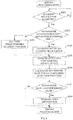
- terminal devices 10-1 to 10-n First, a first processing operation executed by the terminal devices 10-1 to 10-n will be described with reference to the flow chart of FIG. 3 . In the description below, one of the terminal devices 10-1 to 10-n is also called simply the terminal device 10.
- the impact detecting unit 12 of the terminal device 10 determines whether impact greater than or equal to the threshold has been detected (step S101). If impact greater than or equal to the threshold has been detected, the accident determining unit 14 determines that an accident has occurred (step S102).
- the notification generating unit 15 generates an accident notification containing position information indicating the position of the vehicle when impact was detected and information about the speed of the vehicle and the impact value of detected impact.
- the transmitting and receiving unit 17 transmits the accident notification generated by the notification generating unit 15 to the server 20 (step S103) .
- the error determining unit 16 determines whether the accident determination is false (step S104). Specifically, the error determining unit 16 determines that the accident determination is false if the vehicle has travelled a predetermined distance within a predetermined time or if the driver has operated the withdrawal button. On the other hand, if the vehicle has not travelled a predetermined distance and has stopped, and the withdrawal button has not been operated, then it is determined that the accident determination is not false.
- the terminal device 10 finishes the process. On the other hand, if it is determined that the accident determination is false, the notification generating unit 15 of the terminal device 10 generates a withdrawal notification to withdraw the accident notification. The transmitting and receiving unit 17 transmits the withdrawal notification to the server 20 (step S105).
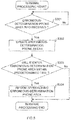
- the notification accepting unit 22 determines whether an accident notification has been accepted (that is, whether the transmitting and receiving unit 21 has received an accident notification) (step S201). If determining that an accident notification has been accepted, the notification accepting unit 22 determines whether a withdrawal notification has been accepted (that is, whether the transmitting and receiving unit 21 has received a withdrawal notification) within a predetermined time (step S202).
- the notification accepting unit 22 supplies accident-notification acceptance information indicating that the accident notification has been accepted to the accident processing unit 23.
- the accident processing unit 23 performs a predetermined accident process (step S203).
- the notification accepting unit 22 withdraws the accepted accident notification (step S204).
- the notification accepting unit 22 acquires information about the detection positions of impact, information about vehicle speeds, and information about impact values contained in accident notifications (that is, withdrawn accident notifications and not-withdrawn accident notifications) (step S205) and stores in the storage unit 26.
- the erroneous-determination prone area identifying unit 24 calculates the withdrawal rate of accident notifications in a predetermined range of area (e.g., an area 50 meters square) including detection positions based on information about the detection positions, vehicle speeds, and impact values of past accident notifications stored in the storage unit 26 (step S206).
- a predetermined range of area e.g., an area 50 meters square
- the erroneous-determination prone area identifying unit 24 determines whether the calculated withdrawal rate is greater than or equal to a predetermined value (step S207). If the withdrawal rate is not greater than or equal to the predetermined value, the server 20 finishes the process. On the other hand, if determining that the withdrawal rate is greater than or equal to the predetermined value, the erroneous-determination prone area identifying unit 24 updates information about erroneous-determination prone areas stored in the storage unit 26. The transmitting and receiving unit 21 transmits the updated information about erroneous-determination prone areas to the terminal devices 10-1 to 10-n (step S208).
- the erroneous-determination prone area identifying unit 24 excludes that area from the erroneous-determination prone areas and updates information about the erroneous-determination prone areas stored in the storage unit 26.
- the transmitting and receiving unit 21 transmits the updated information about the erroneous-determination prone areas to the terminal devices 10-1 to 10-n.
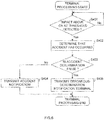
- the transmitting and receiving unit 17 determines whether information about the erroneous-determination prone areas has been received from the server 20 (step S301). When determining that information about the erroneous-determination prone areas has been received, the unit 17 updates information about erroneous-determination prone areas stored in the storage unit 18 (step S302).
- the erroneous-determination prone area approach determining unit 19 determines whether the vehicle will enter an erroneous-determination prone area within a predetermined reference time based on information about the erroneous-determination prone areas and current-position information acquired by the position information acquiring unit 13 (step S303).
- the terminal device 10 finishes the process.
- the output unit 11 informs that the vehicle is approaching an erroneous-determination prone area (step S304). For example, the display section 11A displays a message indicating that the vehicle is approaching an erroneous-determination prone area and to call the driver's attention, and the voice output section 11B outputs a voice message corresponding to this.
- a terminal device that has detected impact greater than or equal to the threshold transmits an accident notification to the server. Thereafter, the terminal device determines whether the accident determination is false, and, if determining being false, transmits a withdrawal notification to the server.
- the server updates information about erroneous-determination prone areas that designates areas where the withdrawal of an accident notification often happens based on received accident notifications and withdrawal notifications and transmits the updated information about erroneous-determination prone areas to the terminal devices.
- the server can identify areas where the withdrawal of an accident notification often happens (that is, erroneous-determination prone areas) based on accident notifications and withdrawal notifications transmitted from the terminal devices.
- the accident process can be appropriately performed based on information about erroneous-determination prone areas.
- the server calculates an impact value as a reference based on information about impact detection positions, vehicle speeds, and impact values, and the like contained in accident notifications (that is, withdrawn accident notifications and not-withdrawn accident notifications) and sets a threshold for impact to be used by the terminal device in accident determination.
- the threshold as a reference with which to determine an accident occurring can be changed according to the shape of the road, vehicle speed, and so on, so that erroneous determination of an accident can be prevented.
- the terminal device receives information about erroneous-determination prone areas from the server.
- the driver who drives a vehicle having the terminal device mounted therein can drive avoiding large impact by lowering the speed or so on when passing through that area, based on information about erroneous-determination prone areas, so that erroneous determination of an accident can be prevented.
- An accident notifying system of the present embodiment has substantially the same configuration as the accident notifying system of Embodiment 1 shown in FIG. 1 and is different in the operation of the notification generating unit 15 and transmitting and receiving unit 17 of the terminal devices 10-1 to 10-n and the operation of the transmitting and receiving unit 21 and notification accepting unit 22 of the server 20 from the accident notifying system of Embodiment 1.
- the notification generating unit 15 generates an accident notification containing information about the impact value of detected impact and the travelling speed and position of the vehicle when the impact was detected in response to accident determination by the accident determining unit 14. Further, the notification generating unit 15 generates an erroneous-determination notification indicating that an erroneous-determination was made if the error determining unit 16 determines that the accident determination is false.
- the erroneous-determination notification includes position information of the site where impact was detected, information about the speed of the vehicle, information about the impact value, and information indicating that the impact was not what was caused by an accident.
- the transmitting and receiving unit 17 transmits an accident notification to the server 20.
- the error determining unit 16 determines that the accident determination is false within the predetermined time, then instead of an accident notification an erroneous-determination notification is transmitted to the server 20. That is, in the accident notifying system of the present embodiment, if the error determining unit 16 determines that the accident determination is false, an accident notification is not transmitted to the server 20, and only an erroneous-determination notification is transmitted to the server 20.
- the transmitting and receiving unit 21 of the server 20 transmits and receives information data to and from the terminal devices 10-1 to 10-n and receives accident notifications and erroneous-determination notifications.
- the terminal devices 10-1 to 10-n selectively transmit an accident notification or erroneous-determination notification according to the determination of the error determining unit 16, so that the transmitting and receiving unit 21 of the server 20 receives one of an accident notification and erroneous-determination notification.
- the notification accepting unit 22 accepts one of an accident notification and erroneous-determination notification from the terminal device 10-1 to 10-n via the transmitting and receiving unit 21.
- the notification accepting unit 22 acquires information about the detection position of impact and the speed of the vehicle, and information about the impact value contained in the accident notification or erroneous-determination notification and stores in the storage unit 26.
- the erroneous-determination prone area identifying unit 24 counts the number of erroneous determinations for each area of a certain size (e.g., an area 50 meters square) based on information about the detection positions of impact contained in erroneous-determination notifications stored in the storage unit 26. Then the erroneous-determination prone area identifying unit 24 identifies an area where the number of erroneous determinations is greater than or equal to a predetermined number as an erroneous-determination prone area.
- a certain size e.g., an area 50 meters square
- terminal devices 10-1 to 10-n First, a first processing operation executed by the terminal devices 10-1 to 10-n will be described with reference to the flow chart of FIG. 6 . In the description below, one of the terminal devices 10-1 to 10-n is also called simply the terminal device 10.
- the impact detecting unit 12 of the terminal device 10 determines whether impact greater than or equal to the threshold has been detected (step S401). If impact greater than or equal to the threshold has been detected, the accident determining unit 14 determines that an accident has occurred (step S402).
- the notification generating unit 15 generates an accident notification containing position information indicating the position of the vehicle when impact was detected and information about the speed of the vehicle and the impact value of detected impact.
- the error determining unit 16 determines whether the accident determination is false (step S403).
- the error determining unit 16 determines that the accident determination is false if the vehicle has travelled a predetermined distance within a predetermined time or if the driver has operated the withdrawal button. On the other hand, if the vehicle has not travelled a predetermined distance and has stopped and if the withdrawal button has not been operated, then it is determined that the accident determination is not false.
- the transmitting and receiving unit 17 transmits the accident notification generated by the notification generating unit 15 to the server 20 (step S404).
- the notification generating unit 15 generates an erroneous-determination notification containing position information indicating the position of the vehicle when impact was detected, the speed of the vehicle, and the impact value of detected impact.
- the transmitting and receiving unit 17 transmits the erroneous-determination notification to the server 20 (step S405).
- the notification accepting unit 22 determines whether an accident notification transmitted from the terminal device 10 has been accepted (that is, whether the transmitting and receiving unit 21 has received an accident notification) (step S501). If determining that an accident notification has been accepted, the notification accepting unit 22 supplies accident-notification acceptance information indicating that the accident notification has been accepted to the accident processing unit 23. The accident processing unit 23 performs a predetermined accident process (step S502).
- the notification accepting unit 22 determines whether an erroneous-determination notification has been accepted (that is, whether the transmitting and receiving unit 21 has received an erroneous-determination notification) (step S503).
- the erroneous-determination prone area identifying unit 24 counts that erroneous-determination notification as an erroneous determination at the detection position based on information about the detection position contained in the erroneous-determination notification (step S504).
- the counted erroneous-determination notification is stored in the storage unit 26.
- the erroneous-determination prone area identifying unit 24 determines whether the number of erroneous determinations in a predetermined range of area (e.g., an area 50 meters square) including the detection position is greater than or equal to a predetermined number based on information about detection positions, vehicle speeds, and impact values of past erroneous-determination notifications stored in the storage unit 26 (step S505). If the number of erroneous determinations is less than the predetermined number, the server 20 finishes the process.
- a predetermined range of area e.g., an area 50 meters square
- the erroneous-determination prone area identifying unit 24 updates information about erroneous-determination prone areas stored in the storage unit 26.
- the transmitting and receiving unit 21 transmits the updated information about erroneous-determination prone areas to the terminal devices 10-1 to 10-n (step S506).
- the transmitting and receiving unit 17 determines whether information about the erroneous-determination prone areas has been received (step S601). When determining that information about the erroneous-determination prone areas has been received, the unit 17 updates information about erroneous-determination prone areas stored in the storage unit 18 (step S602).
- the erroneous-determination prone area approach determining unit 19 determines whether the vehicle will enter an erroneous-determination prone area within a predetermined reference time based on information about the erroneous-determination prone areas and current-position information acquired by the position information acquiring unit 13 (step S603).
- the terminal device 10 finishes the process.
- the output unit 11 informs that the vehicle is approaching an erroneous-determination prone area (step S604).
- the display section 11A displays a message indicating that the vehicle is approaching an erroneous-determination prone area and to call the driver's attention, and the voice output section 11B outputs a voice message corresponding to this.
- the terminal device determines that an accident has occurred and generates an accident notification. Then the terminal device determines whether the determination that an accident has occurred is false, and, if determining not being false, transmits an accident notification and, if determining being false, transmits an erroneous-determination notification.
- the server updates information about erroneous-determination prone areas that designates areas where the erroneous determination of an accident notification often happens based on received accident notifications and erroneous-determination notifications and transmits the updated information about erroneous-determination prone areas to the terminal devices.
- the server can identify areas where the withdrawal of an accident notification often happens (that is, erroneous-determination prone areas) based on accident notifications and erroneous-determination notifications transmitted from the terminal devices.
- the accident process can be appropriately performed based on information about erroneous-determination prone areas.
- the reference e.g., the threshold for impact
- the terminal device determines an accident happening can be changed based on information about erroneous-determination prone areas, so that erroneous determination of an accident can be prevented.
- the terminal device receives information about erroneous-determination prone areas from the server.
- the driver who drives a vehicle having the terminal device mounted therein can drive avoiding large impact by lowering the speed or so on when passing through that area, based on information about erroneous-determination prone areas, so that erroneous determination of an accident can be prevented.
- Embodiments of the present invention are not limited to what are shown by the above embodiments.
- description has been made taking as an example the case where an impact value (G) is detected based on a change in acceleration to determine whether an accident has occurred.
- the method of determining whether an accident has occurred is not limited to this. For example, it may be determined whether an accident has occurred based on a characteristic of sound of the impact when a vehicle suffers impact.
- the output unit of the terminal device informs that the vehicle is approaching an erroneous-determination prone area
- the display section displays a message to inform that the vehicle is approaching an erroneous-determination prone area on the screen while the voice output section outputs it as a voice message.
- the output unit need not necessarily perform both screen display and voice output, and a method other than screen display and voice output may be used to inform.
- the above embodiment 1 describes an example where the erroneous-determination prone area identifying unit of the server 20 calculates the withdrawal rate of accident notifications to identify an erroneous-determination prone area.
- the erroneous-determination prone area identifying unit calculating the withdrawal rate, an area where the number of withdrawals is large may be identified as an erroneous-determination prone area.
- the above embodiment 2 describes an example where the erroneous-determination prone area identifying unit of the server 20 counts erroneous-determination notifications to identify an area where erroneous determination often happens as an erroneous-determination prone area.
- an area where the proportion of erroneous-determination notifications is high may be identified as an erroneous-determination prone area.
- a series of processes described in the above embodiments can be executed by computer processing according to a program stored in a recording medium such as a ROM.
Landscapes
- Physics & Mathematics (AREA)
- General Physics & Mathematics (AREA)
- Engineering & Computer Science (AREA)
- Life Sciences & Earth Sciences (AREA)
- Atmospheric Sciences (AREA)
- Computer Networks & Wireless Communication (AREA)
- Signal Processing (AREA)
- Mechanical Engineering (AREA)
- Chemical & Material Sciences (AREA)
- Analytical Chemistry (AREA)
- Traffic Control Systems (AREA)
- Alarm Systems (AREA)
Abstract
Description
- The present invention relates to an information processing device and a terminal device.
- There has been proposed an accident notifying system that, if an accident occurs in a mobile object such as a vehicle, automatically notifies the occurrence of the accident to a server. In this accident notifying system, for example, a terminal device mounted in a vehicle detects impact occurring in the vehicle and determines based on the detected magnitude of the impact (impact value) whether an accident has occurred. And if determining that an accident has occurred, the terminal device notifies the fact of accident occurrence and the site of occurrence of the accident to an external server via radio communication (e.g., Patent Document 1).
- Patent Document 1: Japanese Laid-Open Patent Publication No.
2001-266294 - In the above conventional technique, when impact above or at a certain level is detected, it is uniformly determined that an accident has occurred and is notified, and thus a so-called false notification reporting an accident, occurs in spite of no accident having actually occurred. For example, false notifications tend to increase on roads on which impact is likely to occur because of irregularities in the surface, the condition of a curve and inclination, and the like. In contrast, if the reference value (threshold) for impact values with which to determine as an accident is raised so that no false notification occurs, then there is the problem that accidents with weak impact cannot be notified as accidents.
- The problem that false notifications may occur in a large number with the accident notifying system that notifies the occurrence of an accident can be cited as an example of problems to be solved by the present invention.
- The invention according to claim 1 is an information processing device comprising: an accident notification accepting unit that accepts from a mobile object an accident notification containing accident determination information indicating that it is determined that an accident has occurred in said mobile object and occurrence site information indicating the site where it is determined that the accident has occurred; a withdrawal notification accepting unit that accepts a withdrawal notification to withdraw said accident notification; and an area identifying unit that records the occurrence site information contained in the accident notification withdrawn by said withdrawal notification and identifies a withdrawal-notification prone area based on the recorded occurrence site information.
- The invention according to claim 8 is a terminal device to be mounted in a mobile object characterized by comprising: an accident determining unit that determines that an accident has occurred in said mobile object; a transmitting unit that transmits an accident notification containing information about the site where it is determined that the accident has occurred, according to determination of said accident determining unit; and a receiving unit that receives information about a withdrawal-notification prone area where withdrawal of said accident notification often happens.
- The invention according to
claim 14 is an information processing method executed by an information processing device having a notification accepting means and an area identifying means, the information processing method comprising: a step of accepting from a mobile object an accident notification containing accident determination information indicating that it is determined that an accident has occurred in said mobile object and occurrence site information indicating the site where it is determined that the accident has occurred; a step of accepting a withdrawal notification to withdraw said accident notification; and a step of recording the occurrence site information contained in the accident notification withdrawn by said withdrawal notification and identifying a withdrawal-notification prone area based on the recorded occurrence site information. - The invention according to
claim 15 is an accident reporting method executed by a terminal device being mounted in a mobile object and having an accident determining means, a transmitting means and a receiving means, the accident reporting method comprising: a step of determining that an accident has occurred in said mobile object; a step of transmitting an accident notification containing information about the site where it is determined that the accident has occurred, according to determination of occurrence of the accident; and a step of receiving information about a withdrawal-notification prone area where withdrawal of said accident notification often happens. - The invention according to
claim 16 is a program configured to cause a computer executing; a step of accepting from a mobile object an accident notification containing accident determination information indicating that it is determined that an accident has occurred in said mobile object and occurrence site information indicating the site where it is determined that the accident has occurred; a step of accepting a withdrawal notification to withdraw said accident notification; and a step of recording the occurrence site information contained in the accident notification withdrawn by said withdrawal notification and identifying a withdrawal-notification prone area based on the recorded occurrence site information. - The invention according to
claim 17 is characterized by A program configured to cause a computer executing; a step of determining that an accident has occurred in a mobile object; a step of transmitting an accident notification containing information about the site where it is determined that the accident has occurred, according to determination of occurrence of the accident; and a step of receiving information about a withdrawal-notification prone area where withdrawal of said accident notification often happens. -
-
FIG. 1 is a block diagram showing the configurations of a terminal device and a server; -
FIGS. 2A, 2B and 2C are diagrams showing schematically the relation between the impact value, vehicle speed, and impact threshold; -
FIG. 3 is a flow chart showing the processing operation of a terminal device; -
FIG. 4 is a flow chart showing the processing operation of a server; -
FIG. 5 is a flow chart showing the processing operation of the terminal device; -
FIG. 6 is a flow chart showing the processing operation of a terminal device; -
FIG. 7 is a flow chart showing the processing operation of a server; and -
FIG. 8 is a flow chart showing the processing operation of the terminal device. - Embodiments of the present invention will be described below with reference to the drawings. The same reference numerals are used to denote substantially the same or equivalent parts in the descriptions and accompanying drawings of the embodiments below.
-
FIG. 1 is a block diagram showing the configuration of an accident notifying system according to Embodiment 1. The accident notifying system is composed of aserver 20 and a plurality of terminal devices 10-1 to 10-n (n is an integer of two or greater). - The terminal device 10-1 to 10-n is, for example, a navigation device mounted in a mobile object such as a vehicle (hereinafter simply called a vehicle) and performs radio communication with the
server 20. The terminal devices 10-1 to 10-n each have the same configuration, and hence the configuration of the terminal device 10-1 will be described below with description of the configurations of the terminal devices 10-2 to 10-n being omitted. - The terminal device 10-1 has an
output unit 11, animpact detecting unit 12, a positioninformation acquiring unit 13, anaccident determining unit 14, anotification generating unit 15, anerror determining unit 16, a transmitting and receivingunit 17, astorage unit 18, and an erroneous-determination prone areaapproach determining unit 19. - The
output unit 11 is composed of adisplay section 11A and avoice output section 11B. Thedisplay section 11A is constituted by a display panel such as a liquid crystal display and has a function to display, e.g., buttons of a touch-panel type. Thevoice output section 11B is constituted by a voice output device such as a speaker. - The
impact detecting unit 12 is constituted by, e.g., an acceleration sensor and detects the magnitude of impact occurring in the vehicle as an impact value G (hereinafter simply called an impact value) based on a change in acceleration of the vehicle. - The position
information acquiring unit 13 is constituted by, e.g., a GPS (Global Positioning System) sensor and acquires position information indicating the current position of the vehicle. For example, the positioninformation acquiring unit 13 receives radio waves transmitted from a plurality of GPS satellites and calculates the distance from each GPS satellite based on the received radio waves to acquire position information. - The
accident determining unit 14 determines that an accident has occurred when the impact value detected by theimpact detecting unit 12 is greater than or equal to a threshold. - The
notification generating unit 15 generates an accident notification containing information about the impact value of detected impact and the travelling speed and position of the vehicle when the impact was detected according to accident determination by theaccident determining unit 14. Further, thenotification generating unit 15 generates a withdrawal notification to withdraw the accident notification if theerror determining unit 16 determines that the accident determination is false. - The
error determining unit 16 determines whether accident determination by theaccident determining unit 14 is false. For example, after theimpact detecting unit 12 detects impact greater than or equa1 to the threshold, theerror determining unit 16 determines whether the vehicle travels normally based on whether the vehicle travels a predetermined distance in a predetermined time and, when determining that the vehicle travels normally, determines that the accident determination is false. - Further, during a predetermined withdrawal acceptance time, the
error determining unit 16 makes thedisplay section 11A of theoutput unit 11 display a withdrawal button of a touch-panel type to accept the withdrawal of accident notification by the driver's judgement. If the withdrawal button is operated, theerror determining unit 16 determines that the accident determination is false. - The transmitting and receiving
unit 17 transmits the accident notification generated by thenotification generating unit 15 to theserver 20. Further, after transmitting the accident notification to theserver 20, the transmitting and receivingunit 17 transmits a withdrawal notification to theserver 20 if the error determining unit determines that the accident determination is false. - Further, the transmitting and receiving
unit 17 receives information about the threshold of impact used in accident determination by theaccident determining unit 14 and information about an erroneous-determination prone area from theserver 20. - The
storage unit 18 stores a variety of information including information about the threshold of impact and the erroneous-determination prone area received by the transmitting and receivingunit 17. - The erroneous-determination prone area
approach determining unit 19 determines whether the vehicle is approaching the erroneous-determination prone area (that is, whether the vehicle will enter the erroneous-determination prone area within a predetermined reference time) based on information about the erroneous-determination prone area stored in thestorage unit 18 and position information acquired by the positioninformation acquiring unit 13. Then the erroneous-determination prone areaapproach determining unit 19 makes theoutput unit 11 output the determining result. - Specifically, when determining that the vehicle is approaching the erroneous-determination prone area, the erroneous-determination prone area
approach determining unit 19 makes, for example, a message to notify approaching the erroneous-determination prone area and to prompt the driver to notice ("An erroneous-determination prone area ... meters ahead, please carefully travel." or the like) be displayed on the screen of thedisplay section 11A. Further, the erroneous-determination prone areaapproach determining unit 19 makes thevoice output section 11B output a voice message corresponding to the message displayed by thedisplay section 11A. - The
server 20 includes a transmitting and receivingunit 21, anotification accepting unit 22, anaccident processing unit 23, an erroneous-determination pronearea identifying unit 24, athreshold calculating unit 25, and astorage unit 26. - The transmitting and receiving
unit 21 transmits and receives information data to and from the terminal devices 10-1 to 10-n and receives accident notifications and withdrawal notifications. Further, the transmitting and receivingunit 21 transmits information about the threshold of impact to be used in accident determination by the terminal devices 10-1 to 10-n and the erroneous-determination prone area to the terminal devices 10-1 to 10-n. - The
notification accepting unit 22 accepts accident notifications and withdrawal notifications from the terminal devices 10-1 to 10-n via the transmitting and receivingunit 21. Thenotification accepting unit 22 acquires information about the detection position of impact and speed of the vehicle, and information about the impact value contained in an accident notification to store in thestorage unit 26. - If the
notification accepting unit 22 accepts an accident notification and does not accept a withdrawal notification within a predetermined withdrawal time, then theaccident processing unit 23 performs a process of establishing voice communication between the operator terminal (not shown) used by the operator and the terminal device which transmitted the accident notification, and a process of notifying accident occurrence with position information to a police station and a fire station (hereinafter collectively called an accident process). In the voice communication between the operator terminal and the terminal device, for example, questioning by the operator, the driver's response thereto, and the like are performed. - The erroneous-determination prone
area identifying unit 24 identifies an area including many detection positions for which an accident notification was withdrawn as an erroneous-determination prone area based on information about the detection positions of impact contained in accident notifications (withdrawn accident notifications and not-withdrawn accident notifications) accepted by thenotification accepting unit 22. For example, the erroneous-determination pronearea identifying unit 24, for each area of a certain size (e.g., an area 50 meters square), calculates the proportion of the number of accident notifications withdrawn by withdrawal notifications to the number of accepted accident notifications as a withdrawal rate and identifies an area of a high withdrawal rate as an erroneous-determination prone area. Note that the erroneous-determination pronearea identifying unit 24 does not calculate a withdrawal rate for an area where the number of accepted accident notifications is less than a predetermined reference value (that is, an area where the number of samples, accident notifications, is small) and does not identify the area as an erroneous-determination prone area. - The
threshold calculating unit 25 calculates a reference value for impact values based on accident notifications and withdrawal notifications accepted by thenotification accepting unit 22 and sets thresholds for impact that the terminal devices 10-1 to 10-n use in accident determination. -
FIGS. 2A, 2B and 2C are diagrams schematically showing the relation between the travelling speed, impact value, and threshold. The hatched portions of the figures indicate ranges above or at a threshold (that is, ranges where it is determined that an accident occurs. In general, as the travelling speed of a vehicle becomes greater, impact occurring in the vehicle becomes greater, and hence the threshold of impact used in accident determination is determined according to the travelling speed in principle as shown inFIG. 2A . Thethreshold calculating unit 25 makes a change to this by a statistical technique so as to set a threshold of impact suitable for the area (that is, a threshold applied to each area). - If a predetermined number or greater of accident notifications are accepted by the
notification accepting unit 22 and stored in thestorage unit 26, thethreshold calculating unit 25 calculates an impact value as a reference based on impact values and travelling speeds contained in accident notifications to set a threshold for impact. For example, thethreshold calculating unit 25 calculates a standard deviation for how impact values are distributed in a certain speed range to set a threshold for impact. -
FIG. 2B is a diagram showing an example of how accident notifications (not-withdrawn accident notifications and withdrawn accident notifications) are distributed against the impact value and the travelling speed. Thethreshold calculating unit 25 sets a threshold for impact based on this distribution such that the smallest impact value (corresponding to the travelling speed) from among impact values contained in the not-withdrawn accident notifications is included in a region above or at the threshold (that is, a region where it is determined that an accident occurs) as shown inFIG. 2C . - The
storage unit 26 accumulates and stores accident notifications and withdrawal notifications accepted by thenotification accepting unit 22, thresholds for impact set by thethreshold calculating unit 25, and information about erroneous-determination prone areas identified by the erroneous-determination pronearea identifying unit 24. - Next, the operation of accident notification processing executed by the
server 20 and the terminal devices 10-1 to 10-n will be described with reference to the flow charts ofFIGS. 3 to 5 . Note that description of the threshold calculation processing executed by thethreshold calculating unit 25 of theserver 20 is omitted. - First, a first processing operation executed by the terminal devices 10-1 to 10-n will be described with reference to the flow chart of
FIG. 3 . In the description below, one of the terminal devices 10-1 to 10-n is also called simply theterminal device 10. - The
impact detecting unit 12 of theterminal device 10 determines whether impact greater than or equal to the threshold has been detected (step S101). If impact greater than or equal to the threshold has been detected, theaccident determining unit 14 determines that an accident has occurred (step S102). - The
notification generating unit 15 generates an accident notification containing position information indicating the position of the vehicle when impact was detected and information about the speed of the vehicle and the impact value of detected impact. The transmitting and receivingunit 17 transmits the accident notification generated by thenotification generating unit 15 to the server 20 (step S103) . - The
error determining unit 16 determines whether the accident determination is false (step S104). Specifically, theerror determining unit 16 determines that the accident determination is false if the vehicle has travelled a predetermined distance within a predetermined time or if the driver has operated the withdrawal button. On the other hand, if the vehicle has not travelled a predetermined distance and has stopped, and the withdrawal button has not been operated, then it is determined that the accident determination is not false. - If it is determined that the accident determination is not false, the
terminal device 10 finishes the process. On the other hand, if it is determined that the accident determination is false, thenotification generating unit 15 of theterminal device 10 generates a withdrawal notification to withdraw the accident notification. The transmitting and receivingunit 17 transmits the withdrawal notification to the server 20 (step S105). - Next, the processing operation of the
server 20 will be described with reference to the flow chart ofFIG. 4 . - The
notification accepting unit 22 determines whether an accident notification has been accepted (that is, whether the transmitting and receivingunit 21 has received an accident notification) (step S201). If determining that an accident notification has been accepted, thenotification accepting unit 22 determines whether a withdrawal notification has been accepted (that is, whether the transmitting and receivingunit 21 has received a withdrawal notification) within a predetermined time (step S202). - If determining that a withdrawal notification has not been accepted within the predetermined time, the
notification accepting unit 22 supplies accident-notification acceptance information indicating that the accident notification has been accepted to theaccident processing unit 23. Theaccident processing unit 23 performs a predetermined accident process (step S203). - In contrast, if determining that a withdrawal notification has been accepted within the predetermined time, the
notification accepting unit 22 withdraws the accepted accident notification (step S204). - The
notification accepting unit 22 acquires information about the detection positions of impact, information about vehicle speeds, and information about impact values contained in accident notifications (that is, withdrawn accident notifications and not-withdrawn accident notifications) (step S205) and stores in thestorage unit 26. - The erroneous-determination prone
area identifying unit 24 calculates the withdrawal rate of accident notifications in a predetermined range of area (e.g., an area 50 meters square) including detection positions based on information about the detection positions, vehicle speeds, and impact values of past accident notifications stored in the storage unit 26 (step S206). - The erroneous-determination prone
area identifying unit 24 determines whether the calculated withdrawal rate is greater than or equal to a predetermined value (step S207). If the withdrawal rate is not greater than or equal to the predetermined value, theserver 20 finishes the process. On the other hand, if determining that the withdrawal rate is greater than or equal to the predetermined value, the erroneous-determination pronearea identifying unit 24 updates information about erroneous-determination prone areas stored in thestorage unit 26. The transmitting and receivingunit 21 transmits the updated information about erroneous-determination prone areas to the terminal devices 10-1 to 10-n (step S208). - Apart from the process of steps S207 and S208, if the withdrawal rate in an area that has been an erroneous-determination prone area until now lowers to less than the predetermined value, the erroneous-determination prone
area identifying unit 24 excludes that area from the erroneous-determination prone areas and updates information about the erroneous-determination prone areas stored in thestorage unit 26. The transmitting and receivingunit 21 transmits the updated information about the erroneous-determination prone areas to the terminal devices 10-1 to 10-n. - Next, a second processing operation executed by the terminal devices 10-1 to 10-n will be described with reference to the flow chart of
FIG. 5 . - The transmitting and receiving
unit 17 determines whether information about the erroneous-determination prone areas has been received from the server 20 (step S301). When determining that information about the erroneous-determination prone areas has been received, theunit 17 updates information about erroneous-determination prone areas stored in the storage unit 18 (step S302). - The erroneous-determination prone area
approach determining unit 19 determines whether the vehicle will enter an erroneous-determination prone area within a predetermined reference time based on information about the erroneous-determination prone areas and current-position information acquired by the position information acquiring unit 13 (step S303). - If determining that the vehicle will not enter an erroneous-determination prone area within the predetermined reference time, the
terminal device 10 finishes the process. On the other hand, if it is determined that the vehicle will pass through an erroneous-determination prone area within the predetermined reference time, theoutput unit 11 informs that the vehicle is approaching an erroneous-determination prone area (step S304). For example, thedisplay section 11A displays a message indicating that the vehicle is approaching an erroneous-determination prone area and to call the driver's attention, and thevoice output section 11B outputs a voice message corresponding to this. - As described above, in the accident notifying system of the present embodiment, a terminal device that has detected impact greater than or equal to the threshold transmits an accident notification to the server. Thereafter, the terminal device determines whether the accident determination is false, and, if determining being false, transmits a withdrawal notification to the server. The server updates information about erroneous-determination prone areas that designates areas where the withdrawal of an accident notification often happens based on received accident notifications and withdrawal notifications and transmits the updated information about erroneous-determination prone areas to the terminal devices.
- In the accident notifying system of the present embodiment, the server can identify areas where the withdrawal of an accident notification often happens (that is, erroneous-determination prone areas) based on accident notifications and withdrawal notifications transmitted from the terminal devices. Thus, when an accident notification is made, the accident process can be appropriately performed based on information about erroneous-determination prone areas.
- Further, the server calculates an impact value as a reference based on information about impact detection positions, vehicle speeds, and impact values, and the like contained in accident notifications (that is, withdrawn accident notifications and not-withdrawn accident notifications) and sets a threshold for impact to be used by the terminal device in accident determination. Thus, the threshold as a reference with which to determine an accident occurring can be changed according to the shape of the road, vehicle speed, and so on, so that erroneous determination of an accident can be prevented.
- The terminal device receives information about erroneous-determination prone areas from the server. Thus, the driver who drives a vehicle having the terminal device mounted therein can drive avoiding large impact by lowering the speed or so on when passing through that area, based on information about erroneous-determination prone areas, so that erroneous determination of an accident can be prevented.
- An accident notifying system of the present embodiment has substantially the same configuration as the accident notifying system of Embodiment 1 shown in
FIG. 1 and is different in the operation of thenotification generating unit 15 and transmitting and receivingunit 17 of the terminal devices 10-1 to 10-n and the operation of the transmitting and receivingunit 21 andnotification accepting unit 22 of theserver 20 from the accident notifying system of Embodiment 1. - The
notification generating unit 15 generates an accident notification containing information about the impact value of detected impact and the travelling speed and position of the vehicle when the impact was detected in response to accident determination by theaccident determining unit 14. Further, thenotification generating unit 15 generates an erroneous-determination notification indicating that an erroneous-determination was made if theerror determining unit 16 determines that the accident determination is false. The erroneous-determination notification includes position information of the site where impact was detected, information about the speed of the vehicle, information about the impact value, and information indicating that the impact was not what was caused by an accident. - If the
notification generating unit 15 has generated an accident notification, and the error determining unit has not determined that the accident determination is false within a predetermined time (e.g., 20 sec) (that is, if the accident determination has not been withdrawn), then the transmitting and receivingunit 17 transmits an accident notification to theserver 20. - On the other hand, if, after the
accident determining unit 14 determines that an accident has occurred, theerror determining unit 16 determines that the accident determination is false within the predetermined time, then instead of an accident notification an erroneous-determination notification is transmitted to theserver 20. That is, in the accident notifying system of the present embodiment, if theerror determining unit 16 determines that the accident determination is false, an accident notification is not transmitted to theserver 20, and only an erroneous-determination notification is transmitted to theserver 20. - The transmitting and receiving
unit 21 of theserver 20 transmits and receives information data to and from the terminal devices 10-1 to 10-n and receives accident notifications and erroneous-determination notifications. Note that the terminal devices 10-1 to 10-n selectively transmit an accident notification or erroneous-determination notification according to the determination of theerror determining unit 16, so that the transmitting and receivingunit 21 of theserver 20 receives one of an accident notification and erroneous-determination notification. - The
notification accepting unit 22 accepts one of an accident notification and erroneous-determination notification from the terminal device 10-1 to 10-n via the transmitting and receivingunit 21. Thenotification accepting unit 22 acquires information about the detection position of impact and the speed of the vehicle, and information about the impact value contained in the accident notification or erroneous-determination notification and stores in thestorage unit 26. - The erroneous-determination prone
area identifying unit 24 counts the number of erroneous determinations for each area of a certain size (e.g., an area 50 meters square) based on information about the detection positions of impact contained in erroneous-determination notifications stored in thestorage unit 26. Then the erroneous-determination pronearea identifying unit 24 identifies an area where the number of erroneous determinations is greater than or equal to a predetermined number as an erroneous-determination prone area. - Next, the operation of accident notification processing executed by the
server 20 and the terminal devices 10-1 to 10-n of the present embodiment will be described with reference to the flow charts ofFIGS. 6 to 8 . Note that description of the threshold calculation processing executed by thethreshold calculating unit 25 of theserver 20 is omitted. - First, a first processing operation executed by the terminal devices 10-1 to 10-n will be described with reference to the flow chart of
FIG. 6 . In the description below, one of the terminal devices 10-1 to 10-n is also called simply theterminal device 10. - The
impact detecting unit 12 of theterminal device 10 determines whether impact greater than or equal to the threshold has been detected (step S401). If impact greater than or equal to the threshold has been detected, theaccident determining unit 14 determines that an accident has occurred (step S402). Thenotification generating unit 15 generates an accident notification containing position information indicating the position of the vehicle when impact was detected and information about the speed of the vehicle and the impact value of detected impact. - The
error determining unit 16 determines whether the accident determination is false (step S403). Theerror determining unit 16 determines that the accident determination is false if the vehicle has travelled a predetermined distance within a predetermined time or if the driver has operated the withdrawal button. On the other hand, if the vehicle has not travelled a predetermined distance and has stopped and if the withdrawal button has not been operated, then it is determined that the accident determination is not false. - If it is determined that the accident determination is not false, the transmitting and receiving
unit 17 transmits the accident notification generated by thenotification generating unit 15 to the server 20 (step S404). - On the other hand, if it is determined that the accident determination is false, the
notification generating unit 15 generates an erroneous-determination notification containing position information indicating the position of the vehicle when impact was detected, the speed of the vehicle, and the impact value of detected impact. The transmitting and receivingunit 17 transmits the erroneous-determination notification to the server 20 (step S405). - Next, the processing operation of the
server 20 will be described with reference to the flow chart ofFIG. 7 . - The
notification accepting unit 22 determines whether an accident notification transmitted from theterminal device 10 has been accepted (that is, whether the transmitting and receivingunit 21 has received an accident notification) (step S501). If determining that an accident notification has been accepted, thenotification accepting unit 22 supplies accident-notification acceptance information indicating that the accident notification has been accepted to theaccident processing unit 23. Theaccident processing unit 23 performs a predetermined accident process (step S502). - On the other hand, when determining that an accident notification has not been accepted, the
notification accepting unit 22 determines whether an erroneous-determination notification has been accepted (that is, whether the transmitting and receivingunit 21 has received an erroneous-determination notification) (step S503). - When determining that an erroneous-determination notification has been accepted, the erroneous-determination prone
area identifying unit 24 counts that erroneous-determination notification as an erroneous determination at the detection position based on information about the detection position contained in the erroneous-determination notification (step S504). The counted erroneous-determination notification is stored in thestorage unit 26. - The erroneous-determination prone
area identifying unit 24 determines whether the number of erroneous determinations in a predetermined range of area (e.g., an area 50 meters square) including the detection position is greater than or equal to a predetermined number based on information about detection positions, vehicle speeds, and impact values of past erroneous-determination notifications stored in the storage unit 26 (step S505). If the number of erroneous determinations is less than the predetermined number, theserver 20 finishes the process. - If the number of erroneous determinations is greater than or equal to the predetermined number, the erroneous-determination prone
area identifying unit 24 updates information about erroneous-determination prone areas stored in thestorage unit 26. The transmitting and receivingunit 21 transmits the updated information about erroneous-determination prone areas to the terminal devices 10-1 to 10-n (step S506). - Next, a second processing operation executed by the terminal devices 10-1 to 10-n will be described with reference to the flow chart of
FIG. 8 . - The transmitting and receiving
unit 17 determines whether information about the erroneous-determination prone areas has been received (step S601). When determining that information about the erroneous-determination prone areas has been received, theunit 17 updates information about erroneous-determination prone areas stored in the storage unit 18 (step S602). - The erroneous-determination prone area
approach determining unit 19 determines whether the vehicle will enter an erroneous-determination prone area within a predetermined reference time based on information about the erroneous-determination prone areas and current-position information acquired by the position information acquiring unit 13 (step S603). - If determining that the vehicle will not enter an erroneous-determination prone area within the predetermined reference time, the
terminal device 10 finishes the process. On the other hand, if it is determined that the vehicle will pass through an erroneous-determination prone area within the predetermined reference time, theoutput unit 11 informs that the vehicle is approaching an erroneous-determination prone area (step S604). For example, thedisplay section 11A displays a message indicating that the vehicle is approaching an erroneous-determination prone area and to call the driver's attention, and thevoice output section 11B outputs a voice message corresponding to this. - As described above, in the accident notifying system of the present embodiment, if a terminal device has detected impact greater than or equal to the threshold, the terminal device determines that an accident has occurred and generates an accident notification. Then the terminal device determines whether the determination that an accident has occurred is false, and, if determining not being false, transmits an accident notification and, if determining being false, transmits an erroneous-determination notification. The server updates information about erroneous-determination prone areas that designates areas where the erroneous determination of an accident notification often happens based on received accident notifications and erroneous-determination notifications and transmits the updated information about erroneous-determination prone areas to the terminal devices.
- In the accident notifying system of the present embodiment, the server can identify areas where the withdrawal of an accident notification often happens (that is, erroneous-determination prone areas) based on accident notifications and erroneous-determination notifications transmitted from the terminal devices. Thus, when an accident notification is made, the accident process can be appropriately performed based on information about erroneous-determination prone areas. Further, the reference (e.g., the threshold for impact) with which the terminal device determines an accident happening can be changed based on information about erroneous-determination prone areas, so that erroneous determination of an accident can be prevented.
- Further, the terminal device receives information about erroneous-determination prone areas from the server. Thus, the driver who drives a vehicle having the terminal device mounted therein can drive avoiding large impact by lowering the speed or so on when passing through that area, based on information about erroneous-determination prone areas, so that erroneous determination of an accident can be prevented.
- Embodiments of the present invention are not limited to what are shown by the above embodiments. For example, in the above embodiments, description has been made taking as an example the case where an impact value (G) is detected based on a change in acceleration to determine whether an accident has occurred. However, the method of determining whether an accident has occurred is not limited to this. For example, it may be determined whether an accident has occurred based on a characteristic of sound of the impact when a vehicle suffers impact.
- Further, in the above embodiments, as a means with which the output unit of the terminal device informs that the vehicle is approaching an erroneous-determination prone area, an example is described where the display section displays a message to inform that the vehicle is approaching an erroneous-determination prone area on the screen while the voice output section outputs it as a voice message. However, the output unit need not necessarily perform both screen display and voice output, and a method other than screen display and voice output may be used to inform.
- Yet further, the above embodiment 1 describes an example where the erroneous-determination prone area identifying unit of the
server 20 calculates the withdrawal rate of accident notifications to identify an erroneous-determination prone area. However, without the erroneous-determination prone area identifying unit calculating the withdrawal rate, an area where the number of withdrawals is large may be identified as an erroneous-determination prone area. - Still further, the above embodiment 2 describes an example where the erroneous-determination prone area identifying unit of the
server 20 counts erroneous-determination notifications to identify an area where erroneous determination often happens as an erroneous-determination prone area. However, by calculating the proportion of erroneous-determination notifications to accident notifications, an area where the proportion of erroneous-determination notifications is high may be identified as an erroneous-determination prone area. - A series of processes described in the above embodiments can be executed by computer processing according to a program stored in a recording medium such as a ROM.
Claims (17)
- An information processing device comprising:an accident notification accepting unit that accepts from a mobile object an accident notification containing accident determination information indicating that it is determined that an accident has occurred in said mobile object and occurrence site information indicating the site where it is determined that the accident has occurred;a withdrawal notification accepting unit that accepts a withdrawal notification to withdraw said accident notification; andan area identifying unit that records the occurrence site information contained in the accident notification withdrawn by said withdrawal notification and identifies a withdrawal-notification prone area based on the recorded occurrence site information.
- An information processing device according to claim 1, wherein said area identifying unit identifies an area where the number of withdrawals of said accident notifications is greater than or equal to a predetermined number as said withdrawal-notification prone area based on said recorded occurrence site information.
- An information processing device according to claim 1, wherein said area identifying unit calculates the proportion of the number of accident notifications withdrawn by said withdrawal notifications to the number of accident notifications accepted by said accident notification accepting unit as a withdrawal rate for each area and identifies an area where said withdrawal rate is greater than or equal to a predetermined value as said withdrawal-notification prone area.
- An information processing device according to any one of claims 1 to 3, comprising a transmitting unit that transmits information about said withdrawal-notification prone area to said mobile object.
- An information processing device according to any one of claims 1 to 4, wherein determination that an accident has occurred in said mobile object is made by detecting impact greater than or equal to a threshold in said mobile object.
- An information processing device according to claim 5, wherein said accident notification contains information about an impact value of impact detected when it is determined that an accident occurs in said mobile object,
said information processing device comprising a threshold calculating unit that corrects said threshold based on information about impact values contained in accident notifications withdrawn by said withdrawal notifications and not-withdrawn accident notifications, and
wherein said transmitting unit transmits said corrected threshold to said mobile object. - An information processing device according to claim 6, comprising a storage unit that stores said accident notifications,
wherein said threshold calculating unit corrects said threshold when a predetermined number or greater of said accident notifications are stored in said storage unit. - A terminal device to be mounted in a mobile object, comprising:an accident determining unit that determines that an accident has occurred in said mobile object;a transmitting unit that transmits an accident notification containing information about the site where it is determined that the accident has occurred, according to determination of said accident determining unit; anda receiving unit that receives information about a withdrawal-notification prone area where withdrawal of said accident notification often happens.
- A terminal device according to claim 8, comprising an erroneous-determination determining unit that determines whether a determination of said accident determining unit is an erroneous determination,
wherein said transmitting unit transmits a withdrawal notification to withdraw said accident notification when it is determined that the determination of said accident determining unit is an erroneous determination. - A terminal device according to claim 8 or 9, comprising an impact detecting unit that detects impact occurred in said mobile object,
wherein when said impact detecting unit detects impact greater than or equal to a threshold, said accident determining unit determines that an accident has occurred in said mobile object. - A terminal device according to claim 10, wherein said receiving unit receives a threshold for impact to be applied in said withdrawal-notification prone area, and
wherein said impact detecting unit takes the threshold received by said receiving unit as a threshold for detection in said withdrawal-notification prone area. - A terminal device according to claim 10 or 11, wherein said transmitting unit transmits said accident notification containing information about the impact value of detected impact by said impact detecting unit.
- A terminal device according to any one of claims 8 to 12, further comprising an informing unit that informs of information about said withdrawal-notification prone area when said mobile object approaches said withdrawal-notification prone area.
- An information processing method executed by an information processing device having a notification accepting means and an area identifying means, the information processing method comprising:a step of accepting from a mobile object an accident notification containing accident determination information indicating that it is determined that an accident has occurred in said mobile object and occurrence site information indicating the site where it is determined that the accident has occurred;a step of accepting a withdrawal notification to withdraw said accident notification; anda step of recording the occurrence site information contained in the accident notification withdrawn by said withdrawal notification and identifying a withdrawal-notification prone area based on the recorded occurrence site information.
- An accident reporting method executed by a terminal device being mounted in a mobile object and having an accident determining means, a transmitting means and a receiving means, the accident reporting method comprising:a step of determining that an accident has occurred in said mobile object;a step of transmitting an accident notification containing information about the site where it is determined that the accident has occurred, according to determination of occurrence of the accident; anda step of receiving information about a withdrawal-notification prone area where withdrawal of said accident notification often happens.
- A program configured to cause a computer executing;
a step of accepting from a mobile object an accident notification containing accident determination information indicating that it is determined that an accident has occurred in said mobile object and occurrence site information indicating the site where it is determined that the accident has occurred;
a step of accepting a withdrawal notification to withdraw said accident notification; and
a step of recording the occurrence site information contained in the accident notification withdrawn by said withdrawal notification and identifying a withdrawal-notification prone area based on the recorded occurrence site information. - A program configured to cause a computer executing;
a step of determining that an accident has occurred in a mobile object;
a step of transmitting an accident notification containing information about the site where it is determined that the accident has occurred, according to determination of occurrence of the accident; and
a step of receiving information about a withdrawal-notification prone area where withdrawal of said accident notification often happens.
Applications Claiming Priority (2)
| Application Number | Priority Date | Filing Date | Title |
|---|---|---|---|
| JP2016213604 | 2016-10-31 | ||
| PCT/JP2017/036486 WO2018079235A1 (en) | 2016-10-31 | 2017-10-06 | Information processing device and terminal device |
Publications (3)
| Publication Number | Publication Date |
|---|---|
| EP3518203A1 true EP3518203A1 (en) | 2019-07-31 |
| EP3518203A4 EP3518203A4 (en) | 2020-06-17 |
| EP3518203B1 EP3518203B1 (en) | 2025-07-23 |
Family
ID=62023453
Family Applications (1)
| Application Number | Title | Priority Date | Filing Date |
|---|---|---|---|
| EP17866218.5A Active EP3518203B1 (en) | 2016-10-31 | 2017-10-06 | Information processing device and terminal device |
Country Status (4)
| Country | Link |
|---|---|
| US (1) | US11544971B2 (en) |
| EP (1) | EP3518203B1 (en) |
| JP (5) | JP6718974B2 (en) |
| WO (1) | WO2018079235A1 (en) |
Cited By (2)
| Publication number | Priority date | Publication date | Assignee | Title |
|---|---|---|---|---|
| CN109859345A (en) * | 2019-01-30 | 2019-06-07 | 合肥锟特奇科技有限公司 | A kind of running record electronic information |
| CN112150734A (en) * | 2020-09-27 | 2020-12-29 | 中国银行股份有限公司 | Self-service equipment transaction limit processing method, device and system and computer equipment |
Families Citing this family (4)
| Publication number | Priority date | Publication date | Assignee | Title |
|---|---|---|---|---|
| US11408739B2 (en) * | 2019-05-16 | 2022-08-09 | International Business Machines Corporation | Location correction utilizing vehicle communication networks |
| JP7640551B2 (en) | 2019-12-19 | 2025-03-05 | エルジー・エイチアンドエイチ・カンパニー・リミテッド | Dental patch |
| US11562603B2 (en) * | 2020-06-26 | 2023-01-24 | Allstate Insurance Company | Collision analysis platform using machine learning to reduce generation of false collision outputs |
| US12597303B2 (en) * | 2023-09-26 | 2026-04-07 | GM Global Technology Operations LLC | Impact monitoring system |
Family Cites Families (17)
| Publication number | Priority date | Publication date | Assignee | Title |
|---|---|---|---|---|
| US7629899B2 (en) * | 1997-10-22 | 2009-12-08 | Intelligent Technologies International, Inc. | Vehicular communication arrangement and method |
| DE19917207C2 (en) * | 1999-04-16 | 2001-09-27 | Bosch Gmbh Robert | Emergency call device for vehicles |
| JP2001266294A (en) | 2000-03-15 | 2001-09-28 | Total Center:Kk | Vehicle accident notification device |
| JP2002185647A (en) * | 2000-12-14 | 2002-06-28 | Matsushita Electric Ind Co Ltd | Emergency call device |
| JP2007112435A (en) | 2006-11-06 | 2007-05-10 | Fujitsu Ten Ltd | Accident notification system and accident notification method |
| US8370056B2 (en) * | 2009-08-12 | 2013-02-05 | Ford Global Technologies, Llc | False event suppression for collision avoidance systems |
| US9070243B1 (en) * | 2009-08-19 | 2015-06-30 | Allstate Insurance Company | Assistance on the go |
| US20140108058A1 (en) * | 2012-10-11 | 2014-04-17 | Agero, Inc. | Method and System to Determine Auto Insurance Risk |
| JP5977681B2 (en) | 2013-01-16 | 2016-08-24 | 株式会社日立ソリューションズ | Traffic information provision system using location information of mobile terminals |
| US9260059B2 (en) | 2014-04-25 | 2016-02-16 | Robert Bosch Gmbh | False warning reduction using location data |
| US10417914B1 (en) * | 2014-05-30 | 2019-09-17 | State Farm Mutual Automobile Insurance Company | Systems and methods for determining a vehicle is at an elevated risk for an animal collision |
| JP6206337B2 (en) | 2014-06-18 | 2017-10-04 | トヨタ自動車株式会社 | Information providing apparatus and information providing method |
| US9392431B2 (en) * | 2014-09-30 | 2016-07-12 | Verizon Patent And Licensing Inc. | Automatic vehicle crash detection using onboard devices |
| JP2016091165A (en) | 2014-10-31 | 2016-05-23 | 株式会社ユピテル | Device and program |
| US9475500B2 (en) * | 2014-11-12 | 2016-10-25 | GM Global Technology Operations LLC | Use of participative sensing systems to enable enhanced road friction estimation |
| US10214166B2 (en) * | 2015-06-11 | 2019-02-26 | Calamp Corp. | Systems and methods for impact detection with noise attenuation of a sensor signal |
| US9457754B1 (en) * | 2015-07-13 | 2016-10-04 | State Farm Mutual Automobile Insurance Company | Method and system for identifying vehicle collisions using sensor data |
-
2017
- 2017-10-06 WO PCT/JP2017/036486 patent/WO2018079235A1/en not_active Ceased
- 2017-10-06 EP EP17866218.5A patent/EP3518203B1/en active Active
- 2017-10-06 US US16/346,344 patent/US11544971B2/en active Active
- 2017-10-06 JP JP2018547528A patent/JP6718974B2/en active Active
-
2020
- 2020-06-15 JP JP2020103201A patent/JP2020144955A/en active Pending
-
2022
- 2022-06-10 JP JP2022094141A patent/JP2022123016A/en active Pending
-
2024
- 2024-05-30 JP JP2024087803A patent/JP2024103640A/en active Pending
-
2025
- 2025-09-05 JP JP2025147577A patent/JP2025168546A/en active Pending
Cited By (2)
| Publication number | Priority date | Publication date | Assignee | Title |
|---|---|---|---|---|
| CN109859345A (en) * | 2019-01-30 | 2019-06-07 | 合肥锟特奇科技有限公司 | A kind of running record electronic information |
| CN112150734A (en) * | 2020-09-27 | 2020-12-29 | 中国银行股份有限公司 | Self-service equipment transaction limit processing method, device and system and computer equipment |
Also Published As
| Publication number | Publication date |
|---|---|
| JP6718974B2 (en) | 2020-07-08 |
| EP3518203A4 (en) | 2020-06-17 |
| US20190266810A1 (en) | 2019-08-29 |
| JP2024103640A (en) | 2024-08-01 |
| WO2018079235A1 (en) | 2018-05-03 |
| US11544971B2 (en) | 2023-01-03 |
| EP3518203B1 (en) | 2025-07-23 |
| JP2025168546A (en) | 2025-11-07 |
| JPWO2018079235A1 (en) | 2019-09-12 |
| JP2022123016A (en) | 2022-08-23 |
| JP2020144955A (en) | 2020-09-10 |
Similar Documents
| Publication | Publication Date | Title |
|---|---|---|
| US11544971B2 (en) | Information processing device, terminal device | |
| US8963702B2 (en) | System and method for viewing and correcting data in a street mapping database | |
| US9599480B2 (en) | Vehicle localization and transmission method and system using a plurality of communication methods | |
| US8618923B2 (en) | Speed alarm system | |
| EP2620932B1 (en) | System and method for providing an aircraft noise advisory during departure and arrival of an aircraft | |
| TW201508706A (en) | Mobile device, method and computer-readable storage medium for monitoring the vehicle path | |
| JP5260186B2 (en) | Safety support device, safety support system, and safety support method | |
| KR102859160B1 (en) | System and method for providing traffic safty based on traffic flow information in a tunnel | |
| US20150338430A1 (en) | Excessive vehicle acceleration detection using a mobile device | |
| US11912276B2 (en) | Information processing apparatus, information processing method, and storage medium | |
| CN107730960A (en) | A kind of bus stop reporting method and system | |
| WO2016030934A1 (en) | Information-processing device, control method, program, and storage medium | |
| KR101744789B1 (en) | Method for determining whether a breakaway has happened for a predetermined transport route and device for the same | |
| WO2013145146A1 (en) | Navigation device, navigation method and navigation program | |
| KR20140054673A (en) | Apparatus for transmitting message based on v2x and method thereof | |
| JP6843587B2 (en) | Information processing equipment, terminal equipment | |
| JP2008108086A (en) | Traffic information providing system, traffic information providing apparatus, and traffic information providing method | |
| JP2018151970A (en) | Accident suppression device, accident suppression method, and accident suppression program | |
| CN108140304A (en) | Method and device for determining the end of a blockage in road traffic | |
| US20240385032A1 (en) | Optical fiber sensing system, optical fiber sensing device, and road monitoring method | |
| US12406580B2 (en) | Information processing apparatus and information processing method | |
| US12488681B2 (en) | Driver assistance system | |
| US12602979B2 (en) | Information processing device | |
| JP6428490B2 (en) | Safety information management device, portable terminal, and safety confirmation system | |
| JP2014067128A (en) | Information processor, server device, display system, control method, program and storage medium |
Legal Events
| Date | Code | Title | Description |
|---|---|---|---|
| STAA | Information on the status of an ep patent application or granted ep patent |
Free format text: STATUS: THE INTERNATIONAL PUBLICATION HAS BEEN MADE |
|
| PUAI | Public reference made under article 153(3) epc to a published international application that has entered the european phase |
Free format text: ORIGINAL CODE: 0009012 |
|
| STAA | Information on the status of an ep patent application or granted ep patent |
Free format text: STATUS: REQUEST FOR EXAMINATION WAS MADE |
|
| 17P | Request for examination filed |
Effective date: 20190425 |
|
| AK | Designated contracting states |
Kind code of ref document: A1 Designated state(s): AL AT BE BG CH CY CZ DE DK EE ES FI FR GB GR HR HU IE IS IT LI LT LU LV MC MK MT NL NO PL PT RO RS SE SI SK SM TR |
|
| AX | Request for extension of the european patent |
Extension state: BA ME |
|
| DAV | Request for validation of the european patent (deleted) | ||
| DAX | Request for extension of the european patent (deleted) | ||
| A4 | Supplementary search report drawn up and despatched |
Effective date: 20200518 |
|
| RIC1 | Information provided on ipc code assigned before grant |
Ipc: G08G 1/0967 20060101ALI20200512BHEP Ipc: G08G 1/01 20060101ALI20200512BHEP Ipc: B60R 21/00 20060101ALI20200512BHEP Ipc: G08G 1/00 20060101AFI20200512BHEP |
|
| STAA | Information on the status of an ep patent application or granted ep patent |
Free format text: STATUS: EXAMINATION IS IN PROGRESS |
|
| 17Q | First examination report despatched |
Effective date: 20221027 |
|
| GRAP | Despatch of communication of intention to grant a patent |
Free format text: ORIGINAL CODE: EPIDOSNIGR1 |
|
| STAA | Information on the status of an ep patent application or granted ep patent |
Free format text: STATUS: GRANT OF PATENT IS INTENDED |
|
| INTG | Intention to grant announced |
Effective date: 20250401 |
|
| GRAS | Grant fee paid |
Free format text: ORIGINAL CODE: EPIDOSNIGR3 |
|
| GRAA | (expected) grant |
Free format text: ORIGINAL CODE: 0009210 |
|
| STAA | Information on the status of an ep patent application or granted ep patent |
Free format text: STATUS: THE PATENT HAS BEEN GRANTED |
|
| AK | Designated contracting states |
Kind code of ref document: B1 Designated state(s): AL AT BE BG CH CY CZ DE DK EE ES FI FR GB GR HR HU IE IS IT LI LT LU LV MC MK MT NL NO PL PT RO RS SE SI SK SM TR |
|
| REG | Reference to a national code |
Ref country code: GB Ref legal event code: FG4D |
|
| REG | Reference to a national code |
Ref country code: CH Ref legal event code: EP Ref country code: DE Ref legal event code: R084 Ref document number: 602017090813 Country of ref document: DE |
|
| REG | Reference to a national code |
Ref country code: DE Ref legal event code: R096 Ref document number: 602017090813 Country of ref document: DE |
|
| REG | Reference to a national code |
Ref country code: IE Ref legal event code: FG4D |
|
| REG | Reference to a national code |
Ref country code: GB Ref legal event code: 746 Effective date: 20250730 |
|
| REG | Reference to a national code |
Ref country code: NL Ref legal event code: MP Effective date: 20250723 |
|
| PG25 | Lapsed in a contracting state [announced via postgrant information from national office to epo] |
Ref country code: PT Free format text: LAPSE BECAUSE OF FAILURE TO SUBMIT A TRANSLATION OF THE DESCRIPTION OR TO PAY THE FEE WITHIN THE PRESCRIBED TIME-LIMIT Effective date: 20251124 |
|
| PG25 | Lapsed in a contracting state [announced via postgrant information from national office to epo] |
Ref country code: NL Free format text: LAPSE BECAUSE OF FAILURE TO SUBMIT A TRANSLATION OF THE DESCRIPTION OR TO PAY THE FEE WITHIN THE PRESCRIBED TIME-LIMIT Effective date: 20250723 |
|
| REG | Reference to a national code |
Ref country code: AT Ref legal event code: MK05 Ref document number: 1817270 Country of ref document: AT Kind code of ref document: T Effective date: 20250723 |
|
| PG25 | Lapsed in a contracting state [announced via postgrant information from national office to epo] |
Ref country code: IS Free format text: LAPSE BECAUSE OF FAILURE TO SUBMIT A TRANSLATION OF THE DESCRIPTION OR TO PAY THE FEE WITHIN THE PRESCRIBED TIME-LIMIT Effective date: 20251123 |
|
| PGFP | Annual fee paid to national office [announced via postgrant information from national office to epo] |
Ref country code: GB Payment date: 20251022 Year of fee payment: 9 |
|
| PG25 | Lapsed in a contracting state [announced via postgrant information from national office to epo] |
Ref country code: NO Free format text: LAPSE BECAUSE OF FAILURE TO SUBMIT A TRANSLATION OF THE DESCRIPTION OR TO PAY THE FEE WITHIN THE PRESCRIBED TIME-LIMIT Effective date: 20251023 |
|
| REG | Reference to a national code |
Ref country code: LT Ref legal event code: MG9D |
|
| PG25 | Lapsed in a contracting state [announced via postgrant information from national office to epo] |
Ref country code: AT Free format text: LAPSE BECAUSE OF FAILURE TO SUBMIT A TRANSLATION OF THE DESCRIPTION OR TO PAY THE FEE WITHIN THE PRESCRIBED TIME-LIMIT Effective date: 20250723 |
|
| PG25 | Lapsed in a contracting state [announced via postgrant information from national office to epo] |
Ref country code: FI Free format text: LAPSE BECAUSE OF FAILURE TO SUBMIT A TRANSLATION OF THE DESCRIPTION OR TO PAY THE FEE WITHIN THE PRESCRIBED TIME-LIMIT Effective date: 20250723 |
|
| PG25 | Lapsed in a contracting state [announced via postgrant information from national office to epo] |
Ref country code: HR Free format text: LAPSE BECAUSE OF FAILURE TO SUBMIT A TRANSLATION OF THE DESCRIPTION OR TO PAY THE FEE WITHIN THE PRESCRIBED TIME-LIMIT Effective date: 20250723 |
|
| PGFP | Annual fee paid to national office [announced via postgrant information from national office to epo] |
Ref country code: FR Payment date: 20251030 Year of fee payment: 9 |
|
| PG25 | Lapsed in a contracting state [announced via postgrant information from national office to epo] |
Ref country code: GR Free format text: LAPSE BECAUSE OF FAILURE TO SUBMIT A TRANSLATION OF THE DESCRIPTION OR TO PAY THE FEE WITHIN THE PRESCRIBED TIME-LIMIT Effective date: 20251024 |
|
| PG25 | Lapsed in a contracting state [announced via postgrant information from national office to epo] |
Ref country code: SE Free format text: LAPSE BECAUSE OF FAILURE TO SUBMIT A TRANSLATION OF THE DESCRIPTION OR TO PAY THE FEE WITHIN THE PRESCRIBED TIME-LIMIT Effective date: 20250723 |
|
| PG25 | Lapsed in a contracting state [announced via postgrant information from national office to epo] |
Ref country code: LV Free format text: LAPSE BECAUSE OF FAILURE TO SUBMIT A TRANSLATION OF THE DESCRIPTION OR TO PAY THE FEE WITHIN THE PRESCRIBED TIME-LIMIT Effective date: 20250723 |
|
| PG25 | Lapsed in a contracting state [announced via postgrant information from national office to epo] |
Ref country code: PL Free format text: LAPSE BECAUSE OF FAILURE TO SUBMIT A TRANSLATION OF THE DESCRIPTION OR TO PAY THE FEE WITHIN THE PRESCRIBED TIME-LIMIT Effective date: 20250723 Ref country code: BG Free format text: LAPSE BECAUSE OF FAILURE TO SUBMIT A TRANSLATION OF THE DESCRIPTION OR TO PAY THE FEE WITHIN THE PRESCRIBED TIME-LIMIT Effective date: 20250723 |
|
| PG25 | Lapsed in a contracting state [announced via postgrant information from national office to epo] |
Ref country code: RS Free format text: LAPSE BECAUSE OF FAILURE TO SUBMIT A TRANSLATION OF THE DESCRIPTION OR TO PAY THE FEE WITHIN THE PRESCRIBED TIME-LIMIT Effective date: 20251023 |
|
| PG25 | Lapsed in a contracting state [announced via postgrant information from national office to epo] |
Ref country code: ES Free format text: LAPSE BECAUSE OF FAILURE TO SUBMIT A TRANSLATION OF THE DESCRIPTION OR TO PAY THE FEE WITHIN THE PRESCRIBED TIME-LIMIT Effective date: 20250723 |
|
| PG25 | Lapsed in a contracting state [announced via postgrant information from national office to epo] |
Ref country code: RO Free format text: LAPSE BECAUSE OF FAILURE TO SUBMIT A TRANSLATION OF THE DESCRIPTION OR TO PAY THE FEE WITHIN THE PRESCRIBED TIME-LIMIT Effective date: 20250723 |
|
| PG25 | Lapsed in a contracting state [announced via postgrant information from national office to epo] |
Ref country code: SM Free format text: LAPSE BECAUSE OF FAILURE TO SUBMIT A TRANSLATION OF THE DESCRIPTION OR TO PAY THE FEE WITHIN THE PRESCRIBED TIME-LIMIT Effective date: 20250723 |
|
| PG25 | Lapsed in a contracting state [announced via postgrant information from national office to epo] |
Ref country code: DK Free format text: LAPSE BECAUSE OF FAILURE TO SUBMIT A TRANSLATION OF THE DESCRIPTION OR TO PAY THE FEE WITHIN THE PRESCRIBED TIME-LIMIT Effective date: 20250723 |
|
| PGFP | Annual fee paid to national office [announced via postgrant information from national office to epo] |
Ref country code: DE Payment date: 20251229 Year of fee payment: 9 |
|
| PG25 | Lapsed in a contracting state [announced via postgrant information from national office to epo] |
Ref country code: IT Free format text: LAPSE BECAUSE OF FAILURE TO SUBMIT A TRANSLATION OF THE DESCRIPTION OR TO PAY THE FEE WITHIN THE PRESCRIBED TIME-LIMIT Effective date: 20250723 |
|
| PG25 | Lapsed in a contracting state [announced via postgrant information from national office to epo] |
Ref country code: CZ Free format text: LAPSE BECAUSE OF FAILURE TO SUBMIT A TRANSLATION OF THE DESCRIPTION OR TO PAY THE FEE WITHIN THE PRESCRIBED TIME-LIMIT Effective date: 20250723 |
|
| REG | Reference to a national code |
Ref country code: DE Ref legal event code: R097 Ref document number: 602017090813 Country of ref document: DE |
|
| PG25 | Lapsed in a contracting state [announced via postgrant information from national office to epo] |
Ref country code: EE Free format text: LAPSE BECAUSE OF FAILURE TO SUBMIT A TRANSLATION OF THE DESCRIPTION OR TO PAY THE FEE WITHIN THE PRESCRIBED TIME-LIMIT Effective date: 20250723 Ref country code: SK Free format text: LAPSE BECAUSE OF FAILURE TO SUBMIT A TRANSLATION OF THE DESCRIPTION OR TO PAY THE FEE WITHIN THE PRESCRIBED TIME-LIMIT Effective date: 20250723 |
|
| REG | Reference to a national code |
Ref country code: CH Ref legal event code: H13 Free format text: ST27 STATUS EVENT CODE: U-0-0-H10-H13 (AS PROVIDED BY THE NATIONAL OFFICE) Effective date: 20260527 |
|
| PLBE | No opposition filed within time limit |
Free format text: ORIGINAL CODE: 0009261 |
|
| STAA | Information on the status of an ep patent application or granted ep patent |
Free format text: STATUS: NO OPPOSITION FILED WITHIN TIME LIMIT |
|
| REG | Reference to a national code |
Ref country code: CH Ref legal event code: L10 Free format text: ST27 STATUS EVENT CODE: U-0-0-L10-L00 (AS PROVIDED BY THE NATIONAL OFFICE) Effective date: 20260604 |
|
| PG25 | Lapsed in a contracting state [announced via postgrant information from national office to epo] |
Ref country code: LU Free format text: LAPSE BECAUSE OF NON-PAYMENT OF DUE FEES Effective date: 20251006 |
|
| REG | Reference to a national code |
Ref country code: BE Ref legal event code: MM Effective date: 20251031 |
|
| PG25 | Lapsed in a contracting state [announced via postgrant information from national office to epo] |
Ref country code: LT Free format text: LAPSE BECAUSE OF FAILURE TO SUBMIT A TRANSLATION OF THE DESCRIPTION OR TO PAY THE FEE WITHIN THE PRESCRIBED TIME-LIMIT Effective date: 20250723 Ref country code: MC Free format text: LAPSE BECAUSE OF FAILURE TO SUBMIT A TRANSLATION OF THE DESCRIPTION OR TO PAY THE FEE WITHIN THE PRESCRIBED TIME-LIMIT Effective date: 20250723 |
|
| 26N | No opposition filed |
Effective date: 20260424 |
|
| PG25 | Lapsed in a contracting state [announced via postgrant information from national office to epo] |
Ref country code: BE Free format text: LAPSE BECAUSE OF NON-PAYMENT OF DUE FEES Effective date: 20251031 Ref country code: CH Free format text: LAPSE BECAUSE OF NON-PAYMENT OF DUE FEES Effective date: 20251031 |