EP3514531A1 - Verfahren zur erzeugung einer einschlussliste zur gezielten massenspektrometrischen analyse - Google Patents
Verfahren zur erzeugung einer einschlussliste zur gezielten massenspektrometrischen analyse Download PDFInfo
- Publication number
- EP3514531A1 EP3514531A1 EP19152869.4A EP19152869A EP3514531A1 EP 3514531 A1 EP3514531 A1 EP 3514531A1 EP 19152869 A EP19152869 A EP 19152869A EP 3514531 A1 EP3514531 A1 EP 3514531A1
- Authority
- EP
- European Patent Office
- Prior art keywords
- peptide
- predicted
- retention time
- unlabeled
- isobarically
- Prior art date
- Legal status (The legal status is an assumption and is not a legal conclusion. Google has not performed a legal analysis and makes no representation as to the accuracy of the status listed.)
- Granted
Links
Images


Classifications
-
- G—PHYSICS
- G01—MEASURING; TESTING
- G01N—INVESTIGATING OR ANALYSING MATERIALS BY DETERMINING THEIR CHEMICAL OR PHYSICAL PROPERTIES
- G01N33/00—Investigating or analysing materials by specific methods not covered by groups G01N1/00 - G01N31/00
- G01N33/48—Biological material, e.g. blood, urine; Haemocytometers
- G01N33/50—Chemical analysis of biological material, e.g. blood, urine; Testing involving biospecific ligand binding methods; Immunological testing
- G01N33/68—Chemical analysis of biological material, e.g. blood, urine; Testing involving biospecific ligand binding methods; Immunological testing involving proteins, peptides or amino acids
- G01N33/6803—General methods of protein analysis not limited to specific proteins or families of proteins
- G01N33/6848—Methods of protein analysis involving mass spectrometry
-
- C—CHEMISTRY; METALLURGY
- C07—ORGANIC CHEMISTRY
- C07K—PEPTIDES
- C07K1/00—General methods for the preparation of peptides, i.e. processes for the organic chemical preparation of peptides or proteins of any length
- C07K1/13—Labelling of peptides
-
- C—CHEMISTRY; METALLURGY
- C40—COMBINATORIAL TECHNOLOGY
- C40B—COMBINATORIAL CHEMISTRY; LIBRARIES, e.g. CHEMICAL LIBRARIES
- C40B40/00—Libraries per se, e.g. arrays, mixtures
- C40B40/04—Libraries containing only organic compounds
- C40B40/10—Libraries containing peptides or polypeptides, or derivatives thereof
-
- G—PHYSICS
- G01—MEASURING; TESTING
- G01N—INVESTIGATING OR ANALYSING MATERIALS BY DETERMINING THEIR CHEMICAL OR PHYSICAL PROPERTIES
- G01N30/00—Investigating or analysing materials by separation into components using adsorption, absorption or similar phenomena or using ion-exchange, e.g. chromatography or field flow fractionation
- G01N30/02—Column chromatography
- G01N30/62—Detectors specially adapted therefor
- G01N30/72—Mass spectrometers
- G01N30/7233—Mass spectrometers interfaced to liquid or supercritical fluid chromatograph
-
- G—PHYSICS
- G01—MEASURING; TESTING
- G01N—INVESTIGATING OR ANALYSING MATERIALS BY DETERMINING THEIR CHEMICAL OR PHYSICAL PROPERTIES
- G01N30/00—Investigating or analysing materials by separation into components using adsorption, absorption or similar phenomena or using ion-exchange, e.g. chromatography or field flow fractionation
- G01N30/02—Column chromatography
- G01N30/86—Signal analysis
- G01N30/8675—Evaluation, i.e. decoding of the signal into analytical information
- G01N30/8679—Target compound analysis, i.e. whereby a limited number of peaks is analysed
-
- G—PHYSICS
- G01—MEASURING; TESTING
- G01N—INVESTIGATING OR ANALYSING MATERIALS BY DETERMINING THEIR CHEMICAL OR PHYSICAL PROPERTIES
- G01N33/00—Investigating or analysing materials by specific methods not covered by groups G01N1/00 - G01N31/00
- G01N33/48—Biological material, e.g. blood, urine; Haemocytometers
- G01N33/50—Chemical analysis of biological material, e.g. blood, urine; Testing involving biospecific ligand binding methods; Immunological testing
- G01N33/68—Chemical analysis of biological material, e.g. blood, urine; Testing involving biospecific ligand binding methods; Immunological testing involving proteins, peptides or amino acids
- G01N33/6803—General methods of protein analysis not limited to specific proteins or families of proteins
- G01N33/6818—Sequencing of polypeptides
-
- G—PHYSICS
- G01—MEASURING; TESTING
- G01N—INVESTIGATING OR ANALYSING MATERIALS BY DETERMINING THEIR CHEMICAL OR PHYSICAL PROPERTIES
- G01N33/00—Investigating or analysing materials by specific methods not covered by groups G01N1/00 - G01N31/00
- G01N33/48—Biological material, e.g. blood, urine; Haemocytometers
- G01N33/50—Chemical analysis of biological material, e.g. blood, urine; Testing involving biospecific ligand binding methods; Immunological testing
- G01N33/68—Chemical analysis of biological material, e.g. blood, urine; Testing involving biospecific ligand binding methods; Immunological testing involving proteins, peptides or amino acids
- G01N33/6803—General methods of protein analysis not limited to specific proteins or families of proteins
- G01N33/6842—Proteomic analysis of subsets of protein mixtures with reduced complexity, e.g. membrane proteins, phosphoproteins, organelle proteins
-
- H—ELECTRICITY
- H01—ELECTRIC ELEMENTS
- H01J—ELECTRIC DISCHARGE TUBES OR DISCHARGE LAMPS
- H01J49/00—Particle spectrometers or separator tubes
- H01J49/004—Combinations of spectrometers, tandem spectrometers, e.g. MS/MS, MSn
-
- G—PHYSICS
- G01—MEASURING; TESTING
- G01N—INVESTIGATING OR ANALYSING MATERIALS BY DETERMINING THEIR CHEMICAL OR PHYSICAL PROPERTIES
- G01N2458/00—Labels used in chemical analysis of biological material
- G01N2458/15—Non-radioactive isotope labels, e.g. for detection by mass spectrometry
-
- H—ELECTRICITY
- H01—ELECTRIC ELEMENTS
- H01J—ELECTRIC DISCHARGE TUBES OR DISCHARGE LAMPS
- H01J49/00—Particle spectrometers or separator tubes
- H01J49/0027—Methods for using particle spectrometers
Definitions
- This invention relates to mass spectrometry based quantitation. More specifically, this invention relates to generating an inclusion list for targeted mass spectrometric analysis using results from analysis of corresponding isobarically labeled peptides.
- Protein quantitation using mass spectrometry requires integration of sample preparation, instrumentation, and software. Strategies to improve sensitivity and comprehensiveness generally require large sample quantities and multi-dimensional fractionation, which sacrifices throughput. Alternately, efforts to improve the sensitivity and throughput of protein quantification necessarily limit the number of features that can be monitored. For this reason, proteomics research is typically divided into two categories: discovery and targeted proteomics.
- Discovery proteomics experiments are intended to identify as many proteins as possible across a broad dynamic range. This often requires depletion of highly abundant proteins, enrichment of relevant fractions, and fractionation to decrease sample complexity.
- Isobaric tags which are commercially available in the form of tandem mass tags (TMT) reagents (sold by Thermo Fisher Scientific) and isobaric tags for relative and absolute quantitation (iTRAQ) reagents (sold by AB Sciex), have been repeatedly demonstrated as a facile means of obtaining relative protein quantitation in both small and large scale proteomics studies while providing the powerful capability of simultaneously comparing up to eleven different treatments, time points, or samples.
- Targeted proteomics experiments are typically designed to quantify less than one hundred proteins with very high precision, sensitivity, specificity and throughput.
- Targeted MS quantitation strategies use specialized workflows and instruments to improve the specificity and quantification of a limited number of features across hundreds or thousands of samples. These methods typically minimize the amount of sample preparation to improve precision and throughput.
- Targeted quantitative proteomic workflows typically involve protein denaturation, reduction, alkylation, digestion and desalting prior to LC-MS/MS analysis on a mass spectrometer instrument capable of quantifying peptides by monitoring specific mass windows for peptides of interest, fragmenting the isolated peptide(s), and then quantifying several fragment ions that are specific for the peptide of interest.
- This acquisition strategy of which selective reaction monitoring (SRM) is a common example, together with chromatographic retention time information, provides very high sensitivity, specificity, dynamic range and throughput.
- SRM selective reaction monitoring
- a method of generating an inclusion list for targeted mass spectrometric analysis includes receiving, at a data processing system, experimentally-acquired data for a plurality of isobarically-labeled peptides wherein each of the isobarically-labeled peptides is derived by proteolytic digestion of a corresponding protein.
- the data includes, for each one of the isobarically-labeled peptides, a mass-to-charge ratio (m/z), a charge state, and a chromatographic retention time.
- the following steps are performed, via a data processing system, for each one of the isobarically-labeled peptides: determining a hydrophobicity index (HI) of an unlabeled peptide corresponding to the isobarically-labeled peptide; if the determined HI is less than a threshold value, selecting a substitute unlabeled peptide in accordance with predetermined criteria, the substitute unlabeled peptide being derivable by proteolytic digestion of the protein from which the isobarically-labeled peptide is derived, determining and storing on the inclusion list predicted properties for the substitute unlabeled peptide, the predicted properties including a predicted m/z, a predicted charge state, and a predicted chromatographic retention time, wherein the predicted chromatographic retention time is based on an HI of the substitute unlabeled peptide and chromatographic conditions for the targeted analysis; if the determined HI for the unlabeled peptide is at least as great as the threshold value, determining and
- the predetermined criteria include the substitute unlabeled peptide having an HI of 2.0 % acetonitrile (ACN) or greater at LC gradient initial conditions.
- the threshold value of the unlabeled peptide is 1.0 %ACN at LC gradient initial conditions.
- the LC gradient initial (i.e., starting) condition refers to the beginning of a chromatographic gradient before a specific peptide elutes from the LC and is injected into the mass spectrometer.
- the HI is at least 1 %ACN at the LC gradient initial conditions.
- the substitute unlabeled peptide may be selected from a stored library comprising proteins and corresponding sets of proteotypic peptides having known HI values.
- the proteolytic digestion comprises tryptic digestion.
- the predicted properties further include a predicted fragment ion m/z.
- the experimentally-acquired data may also include an amino acid sequence of each peptide.
- the predicted chromatographic retention time for the corresponding unlabeled peptide is determined further based on its relation to an experimentally-acquired chromatographic retention time of a reference peptide.
- the reference peptide can be, but is not limited to, at least one peptide of a peptide retention time calibration (PRTC) mixture.
- the isobarically-labeled peptides can be, but are not limited to, tandem mass tag (TMT)-labeled peptides, isobaric tags for relative and absolute quantitation (iTRAQ)-labeled peptides, Combinatorial Isobaric Mass Tags (CMTs), or N,N-Dimethylated Leucine (DiLeu) isobaric tags.
- TMT tandem mass tag
- iTRAQ isobaric tags for relative and absolute quantitation
- CMTs Combinatorial Isobaric Mass Tags
- DiLeu N,N-Dimethylated Leucine
- the targeted mass spectrometric analysis comprises MS n quantitation.
- the MS n quantitation can be, but is not limited to, parallel reaction monitoring (PRM), selected reaction monitoring (SRM) or synchronous precursor selection (SPS).
- PRM parallel reaction monitoring
- SRM selected reaction monitoring
- SPS synchronous precursor selection
- the hydrophobicity index of the corresponding unlabeled peptide is calculated using a retention time prediction tool.
- the retention time prediction tool may be a sequence-specific retention time calculation tool such as SSRCalc.
- a method of generating an inclusion list for targeted mass spectrometric analysis includes receiving, at a data processing system, experimentally-acquired data for a plurality of isobarically-labeled peptides wherein each of the isobarically-labeled peptides is derived by proteolytic digestion of a corresponding protein.
- the data includes, for each one of the isobarically-labeled peptides, a mass-to-charge ratio (m/z), a charge state, and a chromatographic retention time.
- the following steps are performed, via a data processing system, for each one of the isobarically-labeled peptides: determining a hydrophobicity index (HI) of an unlabeled peptide corresponding to the isobarically-labeled peptide; if the determined HI is less than a threshold value, selecting a substitute unlabeled peptide in accordance with predetermined criteria, the substitute unlabeled peptide being derivable by proteolytic digestion of the protein from which the isobarically-labeled peptide is derived, determining and storing on the inclusion list predicted properties for the substitute unlabeled peptide, the predicted properties including a predicted m/z, a predicted charge state, a predicted fragment ion m/z, and a predicted chromatographic retention time, wherein the predicted chromatographic retention time is based on an HI of the substitute unlabeled peptide, chromatographic conditions for the targeted analysis, and on its relation to an experimentally-acquired chromatographic
- Embodiments of the present invention are directed to systems and methods of translating the results of an isobaric labeling experiment directly into an inclusion list for label-free targeted mass spectrometric analysis or quantitation.
- the methods described herein may be executed in a data processing system, alternatively referred to as a computer.
- the data processing system may comprise one or a combination of devices, including but not limited to general-purpose and specialized processors and application-specific circuitry, having logic (e.g., in the form of software code) configured to perform the steps of the methods.
- the data processing system will also typically include local or network storage for holding input and output data, as well as a display or other device for presenting results to the instrument operator. The storage may also hold the peptide library described below in further detail.
- retention time refers to the time elapsed from when a sample is first introduced into a chromatography column and is eluted from the chromatography column.
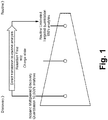
- Figure 1 shows a broad overview of the process for generating an inclusion list for targeted mass spectrometric analysis, in accordance with one embodiment of the present invention.
- the first step involves receiving data generated in an isobaric multiplexed discovery quantitation study.
- isobaric multiplexed discovery quantitation experiments involve separately preparing a number of samples, enzymatically digesting the samples to produce cleaved peptides, adding a different reagent from an isobaric labeling reagent set to each one of the samples to label the peptides contained therein, combining the labeled sample, and then analyzing the combined sample by tandem or MSn mass spectrometry.
- the samples include a first group of samples extracted from biological tissue or fluids of diseased animals/humans, and a second of samples extracted from biological tissue or fluids of healthy (control) animals/humans, and the experiment is intended to identify peptides that are differentially expressed (i.e., present in higher or lower amounts) in one group relative to another; the identified peptides may be further investigated as biomarker candidates.
- the spectral data generated by the mass spectrometer is processed by data analysis software (e.g., Proteome Discoverer software from Thermo Fisher Scientific) to provide a list of labeled peptides identified in the samples, and the relative amounts of the labeled peptides across the individual samples.
- the list will further include, for each labeled peptide, the retention time, precursor ion mass-to-charge ratio (m/z) and charge state.
- This list may be processed in an automated, semi-automated, or fully manual fashion to select a set of peptides of interest (e.g., those showing a high degree of differentiation between disease and control group samples), derived by proteolytic digestion of a corresponding protein, for label-free targeted analysis.
- the peptide list derived by performing a multiplexed discovery quantitation experiment and selecting peptides of interest from the results, as described above, includes properties (retention time, m/z, charge state) measured for the labeled versions of the peptides of interest, i.e., the peptide bonded to a labeling moiety.
- properties for the label-free versions of the peptides of interest need to be determined.
- Embodiments of the present invention obviate the need for an intermediate validation step using a label-free quantitative technique such as DIA or MS1 based discovery quantitation, which can be costly in terms of performance, sample, instrument time, and reagents, and permits direct translation from multiplexed discovery quantitation to routine label-free targeted quantitation.
- a label-free quantitative technique such as DIA or MS1 based discovery quantitation
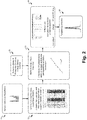
- FIG. 2 is a diagram illustrating the workflow involved in generating an inclusion list for targeted mass spectrometric analysis, in accordance with one embodiment of the present invention.
- a multiplexed discovery experiment 10 using isobarically-labeled samples outputs the isobarically-labeled discovery quantitation results 15. These results comprise but are not limited to a list of identified peptides derived by proteolytic digestion of a corresponding protein and corresponding properties (m/z values, charge states, and retention times) determined for the labeled version of the peptides which, in the manned discussed below, may be used to calculate properties to be used for label-free targeted quantitation.
- the hydrophobicity index is one type of retention-time prediction index.
- a value of the hydrophobicity index may be calculated for each peptide based on the peptide m/z, charge state, and chromatographic retention time. Peptide retention times that are observed in reverse-phase high pressure liquid chromatograph are found to depend on peptide hydrophobicity and can be modeled in terms of the hydrophobicity index.
- a hydrophobicity index for each identified and quantified peptide sequence of interest may be calculated using a sequence-specific retention time calculator tool that estimates retention times from the amino acid composition and sequence of a peptide (e.g., the SSRCalc algorithm described in Krokhin, "Sequence-Specific Retention Calculator. Algorithm for Peptide Retention Prediction in Ion-Pair RP-HPLC: Application to 300- and 100-A Pore Size C18 Sorbents, Analytical Chemistry, Vol. 78, No. 22, pp.7785-95 (2006 ), which is incorporated herein by reference).
- a sequence-specific retention time calculator tool that estimates retention times from the amino acid composition and sequence of a peptide
- An optional external library 20 containing only previously observed charge states for transitions or fragments of these peptides can also be used for determining their predicted retention times 25 but is not required.
- An inclusion list 30 with peptide parent m/z, charge state, and retention time is supplied to run a targeted quantitation experiment 35.
- the inclusion list is a compilation or listing of one or more peptides derived by proteolytic digestion, m/z values, charge states, and retention times which have been identified and selected for MS/MS or MS n analysis.
- MS n scan specific ions detected in a survey scan are selected to enter a collision chamber.
- the ability to define the ions - by the inclusion list - for MS n allows data to be acquired for specific precursors.
- the series of fragments that is generated in the collision chamber is then analyzed again by mass spectrometry, and the resulting spectrum is recorded and may be used to identify the amino acid sequence of the particular peptide. This sequence, together with other information such as the peptide mass, may then be used to identify the protein.
- the ions subjected to MS n cycles may be user defined or determined automatically by the spectrometer.
- Figures 3A-3C are a series of graphs showing a method of generating an inclusion list for targeted mass spectrometric analysis, in accordance with one embodiment of the present invention.
- Figure 3A is a graph showing the experimental retention time vs. hydrophobicity indices (HIs) for isobarically labeled peptides.
- the HIs for the isobarically labeled peptides - TMT labeled peptides, in this example - were determined by using an equation for linearization of the HI of the TMT labeled peptides and their retention times.
- the equation for the linear fit or linearization of the HI is provided on the upper left section of Figure 3A .
- FIG 3B is a graph showing the experimental HI values vs. experimental retention times for the isobarically labeled peptides.
- the experimental HI values for the isobarically labeled peptides (“TMT-HI") were calculated using the equation in Figure 3A for linearization.
- the " ⁇ HI” is the individually adjusted HI index for each TMT labeled peptide which yields an HI index for the unlabeled counterpart peptides ("Unlabeled-HI").
- Isobaric labeling alters not only the mass of the peptide but also its charge and hydrophobicity. It has been discovered, however, that some of the unlabeled peptides derived by proteolytic digestion of a corresponding protein cannot be readily analyzed by the liquid chromatography-mass spectrometry (LCMS) technique, as the unlabeled peptides may be too hydrophilic to be retained in a chromatography column. For these peptides, conversion from an isobarically-labeled peptide yields a corresponding unlabeled peptide possessing negative or close to zero HI values, and thus the unlabeled peptide cannot be analyzed in a targeted LCMS method.
- LCMS liquid chromatography-mass spectrometry
- the HI is 1.94 %ACN and the RT is 12.24 minutes.
- the same peptide without the TMT label has a calculated HI of less than 1 %ACN.
- the peptide would elute in the loading step of a chromatographic run and hence its retention time could not be predicted, rendering it impossible to perform targeted LCMS analysis of this peptide.
- a substitute unlabeled peptide belonging to the same protein, is selected in accordance with predetermined criteria.
- the substitute unlabeled peptide is an alternative proteotypic peptide derivable by proteolytic digestion of the protein from which the isobarically-labeled peptide was derived.
- the substitute unlabeled peptide is automatically selected from a library, stored in the data processing system, which contains, for each of a plurality of proteins, a list of corresponding proteotypic peptides as well as the HI value for each proteotypic peptide (or, alternatively, information about the peptide, such as its amino acid sequence, from which its HI value may be calculated).
- the library may include additional information for each prototypic peptide, such as predicted charge states and m/z's of its pseudo-molecular ions as well as predicted charge states and m/z's of product ions formed by fragmentation of the pseudo-molecular ions.
- the library is searched to identify one or more substitute unlabeled peptide candidates corresponding to the protein from which the unlabeled counterpart was derived.
- Predetermined criteria are applied to the one or more identified substitute unlabeled peptide candidates to select the substitute unlabeled peptide to be used for the targeted analysis.
- the criteria will include a minimum HI value (i.e., an HI that is sufficiently great such that the substitute unlabeled peptide will absorb to the column media and not be eluted during loading).
- the criteria applied for selection may also be based on the m/z's of the pseudo-molecular ion and/or its products (to ensure that they are detectable by the mass analyzer, or that they are not obscured by interfering co-eluting ion species), and the predicted abundances of the pseudo-molecular ion and/or its products (to screen out candidate substitute unlabeled ion species that will not yield peaks of sufficient signal-to-noise ratio to be confidently identified or quantified.
- the step of selection of the substitute unlabeled peptide may be performed in a fully automatic fashion, i.e., without any user intervention.
- certain implementations of the method may employ a semi-automated routine, whereby the data processing system identifies a plurality of candidates that may be used as the substitute unlabeled peptide and presents that list to the user, and the user them manually selects the substitute unlabeled peptide to be utilized for targeted analysis from the list.
- the threshold value for the determined HI of the unlabeled counterpart is 1.0 %ACN or less at LC gradient initial conditions. In one embodiment, the predetermined criteria used to select an unlabeled peptide is an HI greater than at least 2.0 %ACN at LC gradient initial conditions.
- Figure 3C is a graph of the predicted retention time vs. HI for the unlabeled peptides.
- the predicted retention time for the unlabeled peptides were calculated using the equation for linearization as previously determined in Figure 3A .
- a TMT-labeled peptide identified from the discovery quantitation MS data and having determined to be of interest, such as IVAVTGAEAQK (SEQ ID NO: 2) because of its relative quantitation values, is selected for subsequent targeted quantitation.
- the intact mass of the corresponding unlabeled peptide is calculated from its sequence (IVAVTGAEAQK; SEQ ID NO: 2).
- the molecular weight of each amino acid (I, V, A, V, T, G, A, E, A, Q, K) in the sequence can be found in any chemical table.
- the charge state(s) of the unlabeled form of the peptide is (are) predicted based on its sequence or provided by referencing an external database or library such as NIST/EPA/NIH Mass Spectral Library, a peptide repository such as PeptideAtlas, which may be accessed at http://www.peptideatlas.org, or by tools like SSRCalc (http://hs2.proteome.ca/SSRCalc/SSRCalc.html). With the intact mass and expected charge state value, an m/z value for the unlabeled peptide can be readily computed.
- a predicted retention time for the unlabeled version of the peptide can be determined.
- the observed retention times for all TMT-labeled peptides identified in the discovery quantitation experiment are plotted against their calculated hydrophobicity index (HI) values (expressed as %ACN).
- HI hydrophobicity index
- %ACN calculated hydrophobicity index
- the HI-labeled for IVAVTGAEAQK (SEQ ID NO: 2) is calculated to be approximately 11.45 %ACN. From Figure 3B , the empirically adjusted HI for the labeled HI is adjusted to give the HI for the unlabeled counterpart peptide which is approximately 5.1210 %ACN.
- the following illustrates another example of the present invention for predicting the retention time where the TMT linearized equation is not used when the gradient is different.
- the charge state is predicted to be +2 for the unlabeled peptide, in this case equal to the TMT-labeled counterpart, such that the m/z value for the unlabeled peptide reflects only the mass difference of the TMT label on the N-terminus and lysine.
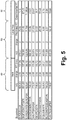
- a dramatic change in retention time of approximately 35 minutes is predicted for the unlabeled peptide, and the observed retention time (for the unlabeled peptide in label-free experiments) is within 90 seconds of this prediction, as shown in the sequence data of Figure 5 .
- solvent system e.g., ACN, methanol, water, or an ion pairing agent such as TFA or FA
- mobile phase composition to ensure accurate HI calculations.
- a TMT-labeled peptide (or other suitably labeled peptide), AQHEDQVEQYKK (SEQ ID NO: 3), identified from the discovery quantitation MS data and having determined to be of interest because of its relative quantitation values, is selected for subsequent targeted quantitation.
- the AQHEDQVEQYKK peptide (SEQ ID NO: 3) was derived by proteolytic digestion of the LAMIN A/C protein.
- the intact mass of the corresponding unlabeled peptide is calculated from its sequence (AQHEDQVEQYKK; SEQ ID NO: 3).
- the molecular weight of each amino acid (A, Q, H, E, D, Q, V, E, Q, Y, K, K) in the sequence can be found in any chemical table.
- the charge state(s) of the unlabeled form of the peptide is (are) predicted based on its sequence or provided by referencing an external database or library such as NIST/EPA/NIH Mass Spectral Library, a peptide repository such as PeptideAtlas, which may be accessed at http://www.peptideatlas.org, or by tools like SSRCalc (http://hs2.proteome.ca/SSRCalc/SSRCalc.html). With the intact mass and expected charge state value, an m/z value for the unlabeled peptide can be readily computed. It should be noted that other databases, libraries, and tools may be accessed or utilized to identify charge states associated with the peptides.
- a predicted retention time for the unlabeled version of the peptide can be determined.
- the observed retention times for all TMT-labeled peptides identified in the discovery quantitation experiment are plotted against their calculated hydrophobicity index (HI) values (expressed as %ACN).
- HI hydrophobicity index
- %ACN calculated hydrophobicity index
- the HI for the peptide sequence AQHEDQVEQYKK (SEQ ID NO: 3) without the TMT label has a predicted unlabeled HI of 0.95 %ACN with a corresponding unlabeled retention time of approximately 5.4 minutes.
- the AQHEDQVEQYKK peptide (SEQ ID NO: 3) would elute in the loading step and thus could not be observed.
- an available peptide library such as the Proteome Tools library (http://www.proteometools.org ) is searched to replace the AQHEDQVEQYKK peptide (SEQ ID NO: 3) with a peptide having an HI value of at least 1.0 or higher and derived from the same Lamin A/C protein.
- peptide sequence EGDLIAAQAR SEQ ID NO: 4
- peptide sequence AQHEDQVEQYKK SEQ ID NO: 3
- used in its place for subsequent label-free quantitation of the Lamin A/C protein may be substituted for peptide sequence AQHEDQVEQYKK (SEQ ID NO: 3) and used in its place for subsequent label-free quantitation of the Lamin A/C protein.
- the peptide sequence EGDLIAAQAR (SEQ ID NO: 4) has a TMT-labeled HI of 9 %ACN and an unlabeled HI of 4.86 %ACN, with a predicted retention time of approximately 25.5 minutes. Some consideration may be given to selecting substitute peptides whose retention times are not coincidental with other peptides already present on the nascent targeted inclusion list.
- FIG. 4A is a flowchart 400 illustrating the method of generating an inclusion list for targeted mass spectrometric analysis, which was shown in the graphs of Figures 3A-3C , in accordance with one embodiment of the present invention.
- the HIs for the TMT labeled peptides are calculated and, in step 420, are linearized by applying a linear fit to experimentally-acquired retention times.
- the HIs for the TMT labeled peptides are adjusted to account for the absence of the TMT labeling. In other words, the HI index for each TMT labeled peptide is individually adjusted to yield HIs for the corresponding unlabeled counterpart peptides.
- step 440 retention times for the corresponding unlabeled peptides are predicted using the equation for linear fit as previously determined. As a result, these retention times are independent of gradient length, depending only on HI and solvent composition.
- reference peptides e.g., PRTC
- PRTC PRTC
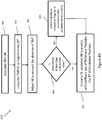
- FIG. 4B is another flowchart 450 illustrating a method of generating an inclusion list for targeted mass spectrometric analysis, in accordance with an alternative embodiment of the present invention.
- the HIs for the TMT labeled peptides are calculated and, in step 470, are linearized by applying a linear fit to experimentally-acquired retention times.
- the HIs for the TMT labeled peptides are adjusted to account for the absence of the TMT labeling. In other words, the HI index for each TMT labeled peptide is individually adjusted to yield HIs for the corresponding unlabeled counterpart peptides.
- step 490 the data processing system compares the determined HI of the unlabeled peptide to a threshold value. If the determined HI is less than a threshold value, a substitute unlabeled peptide is selected, in step 495, in accordance with predetermined criteria.
- the threshold value of the unlabeled HI is 1.0 and the predetermined criteria is a substitute unlabeled peptide having an HI greater than at least 2.0, both at LC gradient initial conditions.
- any substitute unlabeled peptide from the same parent protein (from which the isobarically-labeled peptide was derived by proteolytic digestion) having an HI greater than at least 2.0 may be selected and used in its place for subsequent label-free quantitation of the parent protein via step 500, where retention times for the corresponding unlabeled peptides are predicted using the equation for linear fit as previously determined.
- Some consideration may be given to selecting substitute peptides whose retention times are not coincidental with other peptides already present on the nascent targeted inclusion list.
- predicted properties for the unlabeled peptide, in step 500 are determined and stored on the inclusion list.
- no substitute peptide is used, and the predicted chromatographic retention time is based on the HI of the unlabeled peptide corresponding to the isobarically-labeled peptide -- not on the HI of any substituted peptideand the chromatographic conditions for the targeted analysis.
- reference peptides e.g., PRTC
- PRTC retention time landmarks to refine predicted retention times for disparate gradients.
- the reference peptides can be, but are not limited to, at least one peptide of a peptide retention time calibration (PRTC) mixtures.
- PRTC peptide retention time calibration
- the PRTC mixture contains fifteen synthetic heavy peptides mixed at an equimolar ratio that elute across the chromatographic gradient.
- the observed retention times and hydrophobicity index for these reference peptides may be used to refine the predicted retention times of the unlabeled targeted peptides especially if different chromatography conditions such as column and gradient length are employed.
- Targeted quantitation experiments may be performed on a variety of mass spectrometer instruments such as, but not limited to, a triple quadrupole, linear ion trap, Orbitrap, or time-of-flight mass spectrometers, using data acquisition techniques which may include Single Ion Monitoring (SIM), Selected Reaction Monitoring (SRM), Parallel Reaction Monitoring (PRM), synchronous precursor selection (SPS), or any such multiplexed MS n quantitation technique.
- SIM Single Ion Monitoring
- SRM Selected Reaction Monitoring
- PRM Parallel Reaction Monitoring
- SPS synchronous precursor selection
- Figure 5 shows the data for generating an inclusion list, beginning with the quantitative results of TMT-labeled peptides of interest 40, including m/z values, charge state, and experimentally observed retention times, to a list of corresponding predicted properties 50.
- a comparison between the predicted 50 and experimental 55 results shows that the methods of the present invention provide highly accurate retention time values to enable label-free targeted quantitation.
- the results of the TMT discovery quantitation experiment in Proteome Discoverer or similar software furnish the requisite information for generation of an inclusion list including but not limited to the peptide sequence, parent m/z value, and charge state(s). Together with the adjusted retention time values from the methods described above and optionally supplemented with information on charge state obtained from a global publically available database containing nearly all human peptides, a complete inclusion list is automatically produced.
- the inclusion list comprising at a minimum the m/z value and charge state, but also often the retention type of targeted peptides, must be supplied to the mass spectrometer. Scheduling acquisition according to the peptide's retention time enables the quantitation of significantly more targets.
- the instrument specific inclusion list is automatically generated by the methods of the present invention.
- the inclusion list must also include fragment information, and an additional verification step may be required to determine peptide specific transitions, as the fragmentation pattern can be label specific.
- the advantages of the present invention include the use of isobarically labeled multiplexed discovery quantitation as a template to build a method for routine and highly sensitive targeted quantitation without the need for additional intensive validation steps or complex libraries containing fragmentation data. Not only are the methods described herein instrument independent, but the present invention also allows for the use of varied chromatography as isobaric labelling is typically run on longer gradients (e.g. 4 hours) while typical label-free targeted experiments use far shorter gradients (e.g. 60 minutes). The present invention also affords the power to adjust for these disparate gradient lengths and or the use of fractionation allowing easy and effective translation from multiplexed discovery quantitation to routine label-free targeted quantitation.
Landscapes
- Life Sciences & Earth Sciences (AREA)
- Health & Medical Sciences (AREA)
- Engineering & Computer Science (AREA)
- Chemical & Material Sciences (AREA)
- Molecular Biology (AREA)
- Physics & Mathematics (AREA)
- Immunology (AREA)
- Biochemistry (AREA)
- Analytical Chemistry (AREA)
- General Health & Medical Sciences (AREA)
- Urology & Nephrology (AREA)
- Biomedical Technology (AREA)
- Hematology (AREA)
- General Physics & Mathematics (AREA)
- Pathology (AREA)
- Bioinformatics & Cheminformatics (AREA)
- Bioinformatics & Computational Biology (AREA)
- Biophysics (AREA)
- Medicinal Chemistry (AREA)
- Proteomics, Peptides & Aminoacids (AREA)
- Organic Chemistry (AREA)
- Biotechnology (AREA)
- Cell Biology (AREA)
- Microbiology (AREA)
- Food Science & Technology (AREA)
- Spectroscopy & Molecular Physics (AREA)
- Library & Information Science (AREA)
- Chemical Kinetics & Catalysis (AREA)
- General Chemical & Material Sciences (AREA)
- Genetics & Genomics (AREA)
- Other Investigation Or Analysis Of Materials By Electrical Means (AREA)
Applications Claiming Priority (1)
| Application Number | Priority Date | Filing Date | Title |
|---|---|---|---|
| US15/875,825 US12276666B2 (en) | 2018-01-19 | 2018-01-19 | Method of generating an inclusion list for targeted mass spectrometric analysis |
Publications (2)
| Publication Number | Publication Date |
|---|---|
| EP3514531A1 true EP3514531A1 (de) | 2019-07-24 |
| EP3514531B1 EP3514531B1 (de) | 2022-09-14 |
Family
ID=65411711
Family Applications (1)
| Application Number | Title | Priority Date | Filing Date |
|---|---|---|---|
| EP19152869.4A Active EP3514531B1 (de) | 2018-01-19 | 2019-01-21 | Verfahren zur erzeugung einer einschlussliste zur gezielten massenspektrometrischen analyse |
Country Status (2)
| Country | Link |
|---|---|
| US (1) | US12276666B2 (de) |
| EP (1) | EP3514531B1 (de) |
Families Citing this family (1)
| Publication number | Priority date | Publication date | Assignee | Title |
|---|---|---|---|---|
| EP4047371A1 (de) * | 2021-02-18 | 2022-08-24 | Thermo Fisher Scientific (Bremen) GmbH | Verfahren und vorrichtung zur analyse von proben von biomolekülen mittels massenspektrometrie mit datenunabhängiger erfassung |
Citations (1)
| Publication number | Priority date | Publication date | Assignee | Title |
|---|---|---|---|---|
| EP3361258A1 (de) * | 2017-02-13 | 2018-08-15 | Thermo Finnigan LLC | Verfahren zur erzeugung einer einschlussliste zur gezielten massenspektrometrischen analyse |
Family Cites Families (13)
| Publication number | Priority date | Publication date | Assignee | Title |
|---|---|---|---|---|
| EP1495332A2 (de) | 2002-04-15 | 2005-01-12 | Thermo Finnigan LLC | Quantifizierung biologischer moleküle |
| CA2596117A1 (en) | 2005-02-03 | 2006-08-10 | Perkinelmer Las, Inc. | Ultra-sensitive detection systems using multidimension signals |
| GB0611669D0 (en) | 2006-06-13 | 2006-07-19 | Astrazeneca Uk Ltd | Mass spectrometry biomarker assay |
| WO2010060218A1 (en) | 2008-11-28 | 2010-06-03 | University Of Manitoba | A composition for use as a peptide retention standard and a method of predicting peptide hydrophobicity in liquid chromatography |
| US8227251B2 (en) | 2009-04-14 | 2012-07-24 | Institute For Systems Biology | Mass spectrum-based identification and quantitation of proteins and peptides |
| US20130090862A1 (en) * | 2010-05-20 | 2013-04-11 | University Of Manitoba | Methods and systems for analysis of peptide sample streams using tandem mass spectroscopy |
| US10553412B2 (en) | 2010-05-24 | 2020-02-04 | Agilent Technologies, Inc. | System and method of data-dependent acquisition by mass spectrometry |
| EP2606165B1 (de) | 2010-08-16 | 2016-10-12 | Sinai Health System | Marker für den männlichen urogenitaltrakt |
| CA2810143C (en) | 2010-09-08 | 2019-03-26 | Dh Technologies Development Pte. Ltd. | Systems and methods for using variable mass selection window widths in tandem mass spectrometry |
| WO2013112677A2 (en) | 2012-01-24 | 2013-08-01 | Thermo Finnigan Llc | Multinotch isolation for ms3 mass analysis |
| US9410966B2 (en) * | 2013-01-17 | 2016-08-09 | The Regents Of The University Of California | Isotopic recoding for targeted tandem mass spectrometry |
| CN105143872B (zh) | 2013-06-07 | 2019-03-01 | 皮尔斯生物科技有限公司 | 通过质谱分析用复用内标物对蛋白质和蛋白质修饰的绝对定量 |
| US9720001B2 (en) | 2014-05-21 | 2017-08-01 | Thermo Finnigan Llc | Methods for mass spectrometric biopolymer analysis using optimized weighted oligomer scheduling |
-
2018
- 2018-01-19 US US15/875,825 patent/US12276666B2/en active Active
-
2019
- 2019-01-21 EP EP19152869.4A patent/EP3514531B1/de active Active
Patent Citations (1)
| Publication number | Priority date | Publication date | Assignee | Title |
|---|---|---|---|---|
| EP3361258A1 (de) * | 2017-02-13 | 2018-08-15 | Thermo Finnigan LLC | Verfahren zur erzeugung einer einschlussliste zur gezielten massenspektrometrischen analyse |
Non-Patent Citations (5)
| Title |
|---|
| D. J. BAILEY ET AL: "Instant spectral assignment for advanced decision tree-driven mass spectrometry", PROCEEDINGS OF THE NATIONAL ACADEMY OF SCIENCES OF THE UNITED STATES OF AMERICA, vol. 109, no. 22, 14 May 2012 (2012-05-14), US, pages 8411 - 8416, XP055482082, ISSN: 0027-8424, DOI: 10.1073/pnas.1205292109 * |
| DEREK J. BAILEY ET AL: "Intelligent Data Acquisition Blends Targeted and Discovery Methods", JOURNAL OF PROTEOME RESEARCH, vol. 13, no. 4, 4 April 2014 (2014-04-04), pages 2152 - 2161, XP055275486, ISSN: 1535-3893, DOI: 10.1021/pr401278j * |
| KROKHIN: "Sequence-Specific Retention Calculator. Algorithm for Peptide Retention Prediction in Ion-Pair RP-HPLC: Application to 300- and 100-A Pore Size C18 Sorbents", ANALYTICAL CHEMISTRY, vol. 78, no. 22, 2006, pages 7785 - 95, XP055139131, DOI: doi:10.1021/ac060777w |
| WENTING HU ET AL: "GlycoPep MassList: software to generate massive inclusion lists for glycopeptide analyses", ANALYTICAL AND BIOANALYTICAL CHEMISTRY, vol. 409, no. 2, 10 September 2016 (2016-09-10), DE, pages 561 - 570, XP055482101, ISSN: 1618-2642, DOI: 10.1007/s00216-016-9896-y * |
| ZHOU LI ET AL: "Systematic Comparison of Label-Free, Metabolic Labeling, and Isobaric Chemical Labeling for Quantitative Proteomics on LTQ Orbitrap Velos", JOURNAL OF PROTEOME RESEARCH, vol. 11, no. 3, 2 March 2012 (2012-03-02), pages 1582 - 1590, XP055260882, ISSN: 1535-3893, DOI: 10.1021/pr200748h * |
Also Published As
| Publication number | Publication date |
|---|---|
| US12276666B2 (en) | 2025-04-15 |
| EP3514531B1 (de) | 2022-09-14 |
| US20190227076A1 (en) | 2019-07-25 |
Similar Documents
| Publication | Publication Date | Title |
|---|---|---|
| Meier et al. | diaPASEF: parallel accumulation–serial fragmentation combined with data-independent acquisition | |
| Ctortecka et al. | The rise of single‐cell proteomics | |
| Holman et al. | The use of selected reaction monitoring in quantitative proteomics | |
| US9435778B2 (en) | Methods and systems for experimental set-up and data analysis in targeted proteomics applications | |
| Chakraborty et al. | Use of an integrated MS–multiplexed MS/MS data acquisition strategy for high‐coverage peptide mapping studies | |
| EP2124060A1 (de) | Verfahren zur Assayerzeugung von Peptiden/Proteinen mit hohem Durchsatz und so erzeugte Assays | |
| Paulo et al. | Advances in quantitative high‐throughput phosphoproteomics with sample multiplexing | |
| US12228577B2 (en) | Operating a mass spectrometer utilizing mass spectral database search | |
| Božović et al. | Quantitative mass spectrometry-based assay development and validation: From small molecules to proteins | |
| US11769655B2 (en) | Systems and methods for performing multiplexed targeted mass spectrometry | |
| Meier et al. | Parallel accumulation–serial fragmentation combined with data-independent acquisition (diaPASEF): Bottom-up proteomics with near optimal ion usage | |
| JP2005528606A (ja) | クロマトグラフィ/分光測定データの解析でデータビンニングを用いる方法 | |
| Remes et al. | Hybrid quadrupole mass filter–radial ejection linear ion trap and intelligent data acquisition enable highly multiplex targeted proteomics | |
| EP3361258B1 (de) | Verfahren zur erzeugung einer einschlussliste zur gezielten massenspektrometrischen analyse | |
| Ebhardt | Selected reaction monitoring mass spectrometry: a methodology overview | |
| Kopka | Gas chromatography mass spectrometry | |
| EP3654364A1 (de) | Verfahren für multiplexierte ms-3-analysen von peptiden | |
| EP3514531B1 (de) | Verfahren zur erzeugung einer einschlussliste zur gezielten massenspektrometrischen analyse | |
| Feng et al. | Selected reaction monitoring to measure proteins of interest in complex samples: a practical guide | |
| Linke et al. | Optimized fragmentation conditions for iTRAQ-labeled phosphopeptides | |
| ZHANG | Progress in mass spectrometry acquisition approach for quantitative proteomics | |
| EP3745407A1 (de) | Betrieb eines massenspektrometers unter verwendung einer beförderungsliste | |
| KR20070029126A (ko) | 단백질 해석 방법 | |
| Varela et al. | The Emerging Potential of Advanced Targeted Mass Spectrometry to Become a Routine Tool for Protein Quantification in Biomedical Research | |
| Kiyonami et al. | Selected reaction monitoring applied to quantitative proteomics |
Legal Events
| Date | Code | Title | Description |
|---|---|---|---|
| PUAI | Public reference made under article 153(3) epc to a published international application that has entered the european phase |
Free format text: ORIGINAL CODE: 0009012 |
|
| STAA | Information on the status of an ep patent application or granted ep patent |
Free format text: STATUS: THE APPLICATION HAS BEEN PUBLISHED |
|
| AK | Designated contracting states |
Kind code of ref document: A1 Designated state(s): AL AT BE BG CH CY CZ DE DK EE ES FI FR GB GR HR HU IE IS IT LI LT LU LV MC MK MT NL NO PL PT RO RS SE SI SK SM TR |
|
| AX | Request for extension of the european patent |
Extension state: BA ME |
|
| STAA | Information on the status of an ep patent application or granted ep patent |
Free format text: STATUS: REQUEST FOR EXAMINATION WAS MADE |
|
| 17P | Request for examination filed |
Effective date: 20191230 |
|
| RBV | Designated contracting states (corrected) |
Designated state(s): AL AT BE BG CH CY CZ DE DK EE ES FI FR GB GR HR HU IE IS IT LI LT LU LV MC MK MT NL NO PL PT RO RS SE SI SK SM TR |
|
| GRAP | Despatch of communication of intention to grant a patent |
Free format text: ORIGINAL CODE: EPIDOSNIGR1 |
|
| STAA | Information on the status of an ep patent application or granted ep patent |
Free format text: STATUS: GRANT OF PATENT IS INTENDED |
|
| INTG | Intention to grant announced |
Effective date: 20220304 |
|
| GRAS | Grant fee paid |
Free format text: ORIGINAL CODE: EPIDOSNIGR3 |
|
| GRAA | (expected) grant |
Free format text: ORIGINAL CODE: 0009210 |
|
| STAA | Information on the status of an ep patent application or granted ep patent |
Free format text: STATUS: THE PATENT HAS BEEN GRANTED |
|
| AK | Designated contracting states |
Kind code of ref document: B1 Designated state(s): AL AT BE BG CH CY CZ DE DK EE ES FI FR GB GR HR HU IE IS IT LI LT LU LV MC MK MT NL NO PL PT RO RS SE SI SK SM TR |
|
| REG | Reference to a national code |
Ref country code: GB Ref legal event code: FG4D |
|
| REG | Reference to a national code |
Ref country code: CH Ref legal event code: EP |
|
| REG | Reference to a national code |
Ref country code: DE Ref legal event code: R096 Ref document number: 602019019463 Country of ref document: DE |
|
| REG | Reference to a national code |
Ref country code: IE Ref legal event code: FG4D |
|
| REG | Reference to a national code |
Ref country code: AT Ref legal event code: REF Ref document number: 1519000 Country of ref document: AT Kind code of ref document: T Effective date: 20221015 |
|
| REG | Reference to a national code |
Ref country code: LT Ref legal event code: MG9D |
|
| REG | Reference to a national code |
Ref country code: NL Ref legal event code: MP Effective date: 20220914 |
|
| PG25 | Lapsed in a contracting state [announced via postgrant information from national office to epo] |
Ref country code: SE Free format text: LAPSE BECAUSE OF FAILURE TO SUBMIT A TRANSLATION OF THE DESCRIPTION OR TO PAY THE FEE WITHIN THE PRESCRIBED TIME-LIMIT Effective date: 20220914 Ref country code: RS Free format text: LAPSE BECAUSE OF FAILURE TO SUBMIT A TRANSLATION OF THE DESCRIPTION OR TO PAY THE FEE WITHIN THE PRESCRIBED TIME-LIMIT Effective date: 20220914 Ref country code: NO Free format text: LAPSE BECAUSE OF FAILURE TO SUBMIT A TRANSLATION OF THE DESCRIPTION OR TO PAY THE FEE WITHIN THE PRESCRIBED TIME-LIMIT Effective date: 20221214 Ref country code: LV Free format text: LAPSE BECAUSE OF FAILURE TO SUBMIT A TRANSLATION OF THE DESCRIPTION OR TO PAY THE FEE WITHIN THE PRESCRIBED TIME-LIMIT Effective date: 20220914 Ref country code: LT Free format text: LAPSE BECAUSE OF FAILURE TO SUBMIT A TRANSLATION OF THE DESCRIPTION OR TO PAY THE FEE WITHIN THE PRESCRIBED TIME-LIMIT Effective date: 20220914 Ref country code: FI Free format text: LAPSE BECAUSE OF FAILURE TO SUBMIT A TRANSLATION OF THE DESCRIPTION OR TO PAY THE FEE WITHIN THE PRESCRIBED TIME-LIMIT Effective date: 20220914 |
|
| REG | Reference to a national code |
Ref country code: AT Ref legal event code: MK05 Ref document number: 1519000 Country of ref document: AT Kind code of ref document: T Effective date: 20220914 |
|
| PG25 | Lapsed in a contracting state [announced via postgrant information from national office to epo] |
Ref country code: HR Free format text: LAPSE BECAUSE OF FAILURE TO SUBMIT A TRANSLATION OF THE DESCRIPTION OR TO PAY THE FEE WITHIN THE PRESCRIBED TIME-LIMIT Effective date: 20220914 Ref country code: GR Free format text: LAPSE BECAUSE OF FAILURE TO SUBMIT A TRANSLATION OF THE DESCRIPTION OR TO PAY THE FEE WITHIN THE PRESCRIBED TIME-LIMIT Effective date: 20221215 |
|
| PG25 | Lapsed in a contracting state [announced via postgrant information from national office to epo] |
Ref country code: SM Free format text: LAPSE BECAUSE OF FAILURE TO SUBMIT A TRANSLATION OF THE DESCRIPTION OR TO PAY THE FEE WITHIN THE PRESCRIBED TIME-LIMIT Effective date: 20220914 Ref country code: RO Free format text: LAPSE BECAUSE OF FAILURE TO SUBMIT A TRANSLATION OF THE DESCRIPTION OR TO PAY THE FEE WITHIN THE PRESCRIBED TIME-LIMIT Effective date: 20220914 Ref country code: PT Free format text: LAPSE BECAUSE OF FAILURE TO SUBMIT A TRANSLATION OF THE DESCRIPTION OR TO PAY THE FEE WITHIN THE PRESCRIBED TIME-LIMIT Effective date: 20230116 Ref country code: ES Free format text: LAPSE BECAUSE OF FAILURE TO SUBMIT A TRANSLATION OF THE DESCRIPTION OR TO PAY THE FEE WITHIN THE PRESCRIBED TIME-LIMIT Effective date: 20220914 Ref country code: CZ Free format text: LAPSE BECAUSE OF FAILURE TO SUBMIT A TRANSLATION OF THE DESCRIPTION OR TO PAY THE FEE WITHIN THE PRESCRIBED TIME-LIMIT Effective date: 20220914 Ref country code: AT Free format text: LAPSE BECAUSE OF FAILURE TO SUBMIT A TRANSLATION OF THE DESCRIPTION OR TO PAY THE FEE WITHIN THE PRESCRIBED TIME-LIMIT Effective date: 20220914 |
|
| PG25 | Lapsed in a contracting state [announced via postgrant information from national office to epo] |
Ref country code: SK Free format text: LAPSE BECAUSE OF FAILURE TO SUBMIT A TRANSLATION OF THE DESCRIPTION OR TO PAY THE FEE WITHIN THE PRESCRIBED TIME-LIMIT Effective date: 20220914 Ref country code: PL Free format text: LAPSE BECAUSE OF FAILURE TO SUBMIT A TRANSLATION OF THE DESCRIPTION OR TO PAY THE FEE WITHIN THE PRESCRIBED TIME-LIMIT Effective date: 20220914 Ref country code: IS Free format text: LAPSE BECAUSE OF FAILURE TO SUBMIT A TRANSLATION OF THE DESCRIPTION OR TO PAY THE FEE WITHIN THE PRESCRIBED TIME-LIMIT Effective date: 20230114 Ref country code: EE Free format text: LAPSE BECAUSE OF FAILURE TO SUBMIT A TRANSLATION OF THE DESCRIPTION OR TO PAY THE FEE WITHIN THE PRESCRIBED TIME-LIMIT Effective date: 20220914 |
|
| REG | Reference to a national code |
Ref country code: DE Ref legal event code: R097 Ref document number: 602019019463 Country of ref document: DE |
|
| P01 | Opt-out of the competence of the unified patent court (upc) registered |
Effective date: 20230520 |
|
| PG25 | Lapsed in a contracting state [announced via postgrant information from national office to epo] |
Ref country code: NL Free format text: LAPSE BECAUSE OF FAILURE TO SUBMIT A TRANSLATION OF THE DESCRIPTION OR TO PAY THE FEE WITHIN THE PRESCRIBED TIME-LIMIT Effective date: 20220914 Ref country code: AL Free format text: LAPSE BECAUSE OF FAILURE TO SUBMIT A TRANSLATION OF THE DESCRIPTION OR TO PAY THE FEE WITHIN THE PRESCRIBED TIME-LIMIT Effective date: 20220914 |
|
| PLBE | No opposition filed within time limit |
Free format text: ORIGINAL CODE: 0009261 |
|
| STAA | Information on the status of an ep patent application or granted ep patent |
Free format text: STATUS: NO OPPOSITION FILED WITHIN TIME LIMIT |
|
| PG25 | Lapsed in a contracting state [announced via postgrant information from national office to epo] |
Ref country code: DK Free format text: LAPSE BECAUSE OF FAILURE TO SUBMIT A TRANSLATION OF THE DESCRIPTION OR TO PAY THE FEE WITHIN THE PRESCRIBED TIME-LIMIT Effective date: 20220914 |
|
| 26N | No opposition filed |
Effective date: 20230615 |
|
| PG25 | Lapsed in a contracting state [announced via postgrant information from national office to epo] |
Ref country code: SI Free format text: LAPSE BECAUSE OF FAILURE TO SUBMIT A TRANSLATION OF THE DESCRIPTION OR TO PAY THE FEE WITHIN THE PRESCRIBED TIME-LIMIT Effective date: 20220914 |
|
| REG | Reference to a national code |
Ref country code: CH Ref legal event code: PL |
|
| PG25 | Lapsed in a contracting state [announced via postgrant information from national office to epo] |
Ref country code: LU Free format text: LAPSE BECAUSE OF NON-PAYMENT OF DUE FEES Effective date: 20230121 |
|
| REG | Reference to a national code |
Ref country code: BE Ref legal event code: MM Effective date: 20230131 |
|
| PG25 | Lapsed in a contracting state [announced via postgrant information from national office to epo] |
Ref country code: LI Free format text: LAPSE BECAUSE OF NON-PAYMENT OF DUE FEES Effective date: 20230131 Ref country code: CH Free format text: LAPSE BECAUSE OF NON-PAYMENT OF DUE FEES Effective date: 20230131 |
|
| PG25 | Lapsed in a contracting state [announced via postgrant information from national office to epo] |
Ref country code: BE Free format text: LAPSE BECAUSE OF NON-PAYMENT OF DUE FEES Effective date: 20230131 |
|
| PG25 | Lapsed in a contracting state [announced via postgrant information from national office to epo] |
Ref country code: IE Free format text: LAPSE BECAUSE OF NON-PAYMENT OF DUE FEES Effective date: 20230121 |
|
| PG25 | Lapsed in a contracting state [announced via postgrant information from national office to epo] |
Ref country code: IT Free format text: LAPSE BECAUSE OF FAILURE TO SUBMIT A TRANSLATION OF THE DESCRIPTION OR TO PAY THE FEE WITHIN THE PRESCRIBED TIME-LIMIT Effective date: 20220914 |
|
| PG25 | Lapsed in a contracting state [announced via postgrant information from national office to epo] |
Ref country code: MC Free format text: LAPSE BECAUSE OF FAILURE TO SUBMIT A TRANSLATION OF THE DESCRIPTION OR TO PAY THE FEE WITHIN THE PRESCRIBED TIME-LIMIT Effective date: 20220914 |
|
| PG25 | Lapsed in a contracting state [announced via postgrant information from national office to epo] |
Ref country code: MC Free format text: LAPSE BECAUSE OF FAILURE TO SUBMIT A TRANSLATION OF THE DESCRIPTION OR TO PAY THE FEE WITHIN THE PRESCRIBED TIME-LIMIT Effective date: 20220914 |
|
| PG25 | Lapsed in a contracting state [announced via postgrant information from national office to epo] |
Ref country code: BG Free format text: LAPSE BECAUSE OF FAILURE TO SUBMIT A TRANSLATION OF THE DESCRIPTION OR TO PAY THE FEE WITHIN THE PRESCRIBED TIME-LIMIT Effective date: 20220914 |
|
| PG25 | Lapsed in a contracting state [announced via postgrant information from national office to epo] |
Ref country code: BG Free format text: LAPSE BECAUSE OF FAILURE TO SUBMIT A TRANSLATION OF THE DESCRIPTION OR TO PAY THE FEE WITHIN THE PRESCRIBED TIME-LIMIT Effective date: 20220914 |
|
| PG25 | Lapsed in a contracting state [announced via postgrant information from national office to epo] |
Ref country code: CY Free format text: LAPSE BECAUSE OF FAILURE TO SUBMIT A TRANSLATION OF THE DESCRIPTION OR TO PAY THE FEE WITHIN THE PRESCRIBED TIME-LIMIT; INVALID AB INITIO Effective date: 20190121 |
|
| PG25 | Lapsed in a contracting state [announced via postgrant information from national office to epo] |
Ref country code: HU Free format text: LAPSE BECAUSE OF FAILURE TO SUBMIT A TRANSLATION OF THE DESCRIPTION OR TO PAY THE FEE WITHIN THE PRESCRIBED TIME-LIMIT; INVALID AB INITIO Effective date: 20190121 |
|
| PG25 | Lapsed in a contracting state [announced via postgrant information from national office to epo] |
Ref country code: TR Free format text: LAPSE BECAUSE OF FAILURE TO SUBMIT A TRANSLATION OF THE DESCRIPTION OR TO PAY THE FEE WITHIN THE PRESCRIBED TIME-LIMIT Effective date: 20220914 |
|
| PGFP | Annual fee paid to national office [announced via postgrant information from national office to epo] |
Ref country code: GB Payment date: 20260108 Year of fee payment: 8 |
|
| PGFP | Annual fee paid to national office [announced via postgrant information from national office to epo] |
Ref country code: DE Payment date: 20251211 Year of fee payment: 8 |
|
| PGFP | Annual fee paid to national office [announced via postgrant information from national office to epo] |
Ref country code: FR Payment date: 20260112 Year of fee payment: 8 |