EP3512808B1 - Verfahren zum stickstoffdotierung von feststoffmaterialien - Google Patents
Verfahren zum stickstoffdotierung von feststoffmaterialien Download PDFInfo
- Publication number
- EP3512808B1 EP3512808B1 EP17780817.7A EP17780817A EP3512808B1 EP 3512808 B1 EP3512808 B1 EP 3512808B1 EP 17780817 A EP17780817 A EP 17780817A EP 3512808 B1 EP3512808 B1 EP 3512808B1
- Authority
- EP
- European Patent Office
- Prior art keywords
- carbon atoms
- nitrogen
- mev
- hybridization state
- dinitrogen
- Prior art date
- Legal status (The legal status is an assumption and is not a legal conclusion. Google has not performed a legal analysis and makes no representation as to the accuracy of the status listed.)
- Active
Links
Images



Classifications
-
- C—CHEMISTRY; METALLURGY
- C01—INORGANIC CHEMISTRY
- C01B—NON-METALLIC ELEMENTS; COMPOUNDS THEREOF; METALLOIDS OR COMPOUNDS THEREOF NOT COVERED BY SUBCLASS C01C
- C01B32/00—Carbon; Compounds thereof
- C01B32/15—Nano-sized carbon materials
- C01B32/182—Graphene
- C01B32/194—After-treatment
-
- C—CHEMISTRY; METALLURGY
- C01—INORGANIC CHEMISTRY
- C01B—NON-METALLIC ELEMENTS; COMPOUNDS THEREOF; METALLOIDS OR COMPOUNDS THEREOF NOT COVERED BY SUBCLASS C01C
- C01B32/00—Carbon; Compounds thereof
- C01B32/15—Nano-sized carbon materials
- C01B32/152—Fullerenes
-
- C—CHEMISTRY; METALLURGY
- C01—INORGANIC CHEMISTRY
- C01B—NON-METALLIC ELEMENTS; COMPOUNDS THEREOF; METALLOIDS OR COMPOUNDS THEREOF NOT COVERED BY SUBCLASS C01C
- C01B32/00—Carbon; Compounds thereof
- C01B32/15—Nano-sized carbon materials
- C01B32/152—Fullerenes
- C01B32/156—After-treatment
-
- C—CHEMISTRY; METALLURGY
- C01—INORGANIC CHEMISTRY
- C01B—NON-METALLIC ELEMENTS; COMPOUNDS THEREOF; METALLOIDS OR COMPOUNDS THEREOF NOT COVERED BY SUBCLASS C01C
- C01B32/00—Carbon; Compounds thereof
- C01B32/15—Nano-sized carbon materials
- C01B32/158—Carbon nanotubes
- C01B32/168—After-treatment
-
- C—CHEMISTRY; METALLURGY
- C01—INORGANIC CHEMISTRY
- C01B—NON-METALLIC ELEMENTS; COMPOUNDS THEREOF; METALLOIDS OR COMPOUNDS THEREOF NOT COVERED BY SUBCLASS C01C
- C01B32/00—Carbon; Compounds thereof
- C01B32/20—Graphite
-
- C—CHEMISTRY; METALLURGY
- C01—INORGANIC CHEMISTRY
- C01B—NON-METALLIC ELEMENTS; COMPOUNDS THEREOF; METALLOIDS OR COMPOUNDS THEREOF NOT COVERED BY SUBCLASS C01C
- C01B32/00—Carbon; Compounds thereof
- C01B32/20—Graphite
- C01B32/21—After-treatment
-
- C—CHEMISTRY; METALLURGY
- C01—INORGANIC CHEMISTRY
- C01B—NON-METALLIC ELEMENTS; COMPOUNDS THEREOF; METALLOIDS OR COMPOUNDS THEREOF NOT COVERED BY SUBCLASS C01C
- C01B2202/00—Structure or properties of carbon nanotubes
- C01B2202/20—Nanotubes characterized by their properties
- C01B2202/22—Electronic properties
-
- C—CHEMISTRY; METALLURGY
- C01—INORGANIC CHEMISTRY
- C01B—NON-METALLIC ELEMENTS; COMPOUNDS THEREOF; METALLOIDS OR COMPOUNDS THEREOF NOT COVERED BY SUBCLASS C01C
- C01B2204/00—Structure or properties of graphene
- C01B2204/20—Graphene characterized by its properties
- C01B2204/22—Electronic properties
-
- C—CHEMISTRY; METALLURGY
- C01—INORGANIC CHEMISTRY
- C01P—INDEXING SCHEME RELATING TO STRUCTURAL AND PHYSICAL ASPECTS OF SOLID INORGANIC COMPOUNDS
- C01P2002/00—Crystal-structural characteristics
- C01P2002/50—Solid solutions
- C01P2002/52—Solid solutions containing elements as dopants
- C01P2002/54—Solid solutions containing elements as dopants one element only
-
- C—CHEMISTRY; METALLURGY
- C01—INORGANIC CHEMISTRY
- C01P—INDEXING SCHEME RELATING TO STRUCTURAL AND PHYSICAL ASPECTS OF SOLID INORGANIC COMPOUNDS
- C01P2006/00—Physical properties of inorganic compounds
- C01P2006/20—Powder free flowing behaviour
-
- C—CHEMISTRY; METALLURGY
- C01—INORGANIC CHEMISTRY
- C01P—INDEXING SCHEME RELATING TO STRUCTURAL AND PHYSICAL ASPECTS OF SOLID INORGANIC COMPOUNDS
- C01P2006/00—Physical properties of inorganic compounds
- C01P2006/40—Electric properties
Definitions
- the present invention relates to a method for doping nitrogen with solid materials, these materials comprising or consisting of a set of carbon atoms in the sp 2 hybridization state.
- Doping with nitrogen is also advantageous with regard to other materials consisting of carbon atoms in the sp 2 hybridization state, such as for example graphite or carbon nanotubes.
- the nitrogen doping of graphene can be done chemically, for example by heat treatment of graphene oxide in the presence of ammonia ( Xu et al., Journal of Colloid and Interface Science 2015, 445, 143-150 ) or an organic compound comprising nitrogen ( Liu et al., Energy Storage Materials 2016, 2, 69-75 ), or by heating a graphene precursor doped with nitrogen, such as pyridine or julolidine ( Yasuda et al., ChemComm 2013, 49, 9627 ).
- Nitrogen doping of graphene can also be carried out by exposure of graphene to N + ions and / or to neutralized thermalized nitrogen species, the graphene being during this exposure brought to high temperature (for example 850 ° VS) ( Lin et al., Carbon 2014, 73, 216-224 ) or heat treated after exposure to temperatures above 700 ° C ( Sforzini et al., Physical Review Letters 2016, 116, 126805 ), or 550 ° C or even 850 ° C ( Lin et al., Carbon 2016, 100, 337-344 ).
- high temperature for example 850 ° VS
- heat treated after exposure to temperatures above 700 ° C Sforzini et al., Physical Review Letters 2016, 116, 126805
- 550 ° C or even 850 ° C Lin et al., Carbon 2016, 100, 337-344 .
- these processes again use high temperatures, thus making them unattractive
- one of the objectives of the present invention is to provide a process for doping with nitrogen a material comprising carbon atoms in the sp 2 hybridization state which is simple to implement and clean, that is to say, not involving the use of toxic chemical compounds.
- Another object of the present invention is to provide a nitrogen doping process in which the production of defects in the irradiated material is selective and limited in nature.
- Another object of the present invention is to provide a nitrogen doping process which is versatile, also allowing, where appropriate, the functionalization of the material via the formation of carbon-oxygen bonds, in particular of carboxyl groups and / or carbonyl.
- the process of the invention allows effective doping of the material, while being simple to implement and clean, under conditions which are not detrimental to this material.
- a graphite-based material doped with nitrogen obtained by the process according to the invention has been tested as a redox electrode with respect to the vanadium redox couples used for rechargeable batteries of the oxidation-reduction flux type. vanadium. It turns out that the electron exchange rates are changed remarkably for both the oxidation and reduction reactions.
- doping according to the invention is capable of modifying the work of output of the electrons from the material, in particular of increasing the work of output of the electrons from the irradiated material, in particular with respect to the annealed material temperature (for example 10 min at 450 ° C., under ultra high vacuum).
- Control of the work of electron output can be advantageous for the optimization of electronic components such as transistors, photovoltaic cells, chemical detectors, gas detectors, field effect transmitters.
- the contacting a) of the material is carried out with a gas mixture consisting of or comprising dinitrogen, in particular a gas mixture consisting of or comprising air.
- the contacting of said material with the dinitrogen is done in the absence of any solution, the dinitrogen being only supplied in the form of gas, pure or in mixture with other gases.
- the process of the invention is, in the absence of any solution, advantageously simple to implement, given that no solution is to be prepared, and that no step for drying the doped material is to be provided after irradiation.
- said gaseous mixture consists or comprises dinitrogen and a gas chosen from dioxygen, carbon dioxide, dihydrogen, helium, neon, argon, krypton, xenon, water vapor, and mixtures thereof.
- said gaseous mixture consists of or comprises dinitrogen and optionally a gas chosen from dihydrogen, helium, neon, argon, krypton, xenon and their mixtures.
- dinitrogen (as the only gas) or of a gas mixture consisting of dinitrogen and another gas chosen from dihydrogen, helium, neon, argon, krypton, xenon and their mixtures
- doping with nitrogen can be carried out without the material being functionalized by carbon oxygen bonds.
- said gaseous mixture consists of or comprises air and / or water vapor, and optionally a gas chosen from dioxygen, carbon dioxide, dihydrogen, helium, neon, argon, krypton, xenon and their mixtures.
- said gaseous mixture allows, in addition to doping with nitrogen, the functionalization of the material by carbon oxygen bonds.
- This functionalization is advantageous in particular in the context of the use of said material for the production of electrodes of the redox type, of hydrogen storage devices, as well as in catalysis. This functionalization is also advantageous for transparent electrodes (photovoltaic) and for supercapacitors (batteries).
- the contacting a) of the material is carried out with a gas mixture consisting of or comprising helium and air.
- the contacting a) of the material is carried out with a gas mixture consisting of or comprising dinitrogen.
- the contacting a) of the material is carried out with a gaseous mixture consisting of or comprising dinitrogen and air.
- the contacting a) of the material is carried out with a gaseous mixture consisting of or comprising dinitrogen and dihydrogen.
- the contacting a) of the material is carried out with a gaseous mixture consisting of or comprising dinitrogen and water vapor, in particular saturated water vapor.
- the contacting a) of the material is carried out with a gaseous mixture consisting of or comprising air and water vapor, in particular saturated water vapor.
- said gaseous mixture further comprises a gas chosen from sulfur dioxide, hydrogen sulfide, methane, propane, butane, ethylene, propene, butene, acetylene, propyne, butyne, nitrogen trifluoride, methane trifluoride, sulfur hexafluoride, nitrous oxide, halogenated gases, in particular dichloride, silicon gases, vapors of organometallic compounds, and their mixtures.
- a gas chosen from sulfur dioxide, hydrogen sulfide, methane, propane, butane, ethylene, propene, butene, acetylene, propyne, butyne, nitrogen trifluoride, methane trifluoride, sulfur hexafluoride, nitrous oxide, halogenated gases, in particular dichloride, silicon gases, vapors of organometallic compounds, and their mixtures.
- silicon gases means any gas containing silicon, for example SiH 4 .
- the vapors of organometallic compounds can be obtained by any method known to those skilled in the art, in particular those used in the context of organometallic vapor epitaxy.
- said set of carbon atoms in the sp 2 hybridization state is chosen from graphene, graphite, carbon nanotubes, fullerenes and fullerites, said set being in particular graphene or graphite.
- said set of carbon atoms in the sp 2 hybridization state is supported by a substrate.
- the substrate When said set of carbon atoms in the sp 2 hybridization state is graphene supported by a substrate, the substrate carries in particular one or more graphene monolayers, in particular from 1 to 7 graphene monolayers.
- the substrate is chosen from metals, in particular Ni, semiconductors and insulators, in particular SiO 2 , glasses and polymers.
- the set of carbon atoms in the sp 2 hybridization state is supported by a substrate, in particular SiO 2 , and the set of carbon atoms in the hybridization state sp 2 doped with nitrogen, obtained at the end of step b), is also doped with at least one of the atoms of the support, in particular Si.
- said set of carbon atoms in the sp 2 hybridization state is in powder form.
- Said powder in particular graphene or graphite, can be prepared by powder reduction techniques well known to those skilled in the art.
- the energy of the electron or light ion beam is greater than or equal to 0.2; 0.3 or 0.4 MeV.
- said beam is an electron beam.
- the electrons have an energy ranging from 0.1 to 10 MeV, in particular from 0.1 to 5 MeV or from 0.4 to 5 MeV, more particularly from 0.4 to 2.5 MeV , even more particularly from 1.0 to 2.5 MeV, the said set of carbon atoms in the sp 2 hybridization state being in particular supported by a substrate.
- the electrons have an energy ranging from 2.5 to 10 MeV, said set of carbon atoms in the sp 2 hybridization state being in particular supported by a substrate or in powder form.
- said beam is a beam of light ions.
- the light ions are chosen from H + and He + .
- the light ions have an energy ranging from 0.1 MeV to 45 MeV, in particular from 0.4 MeV to 45 MeV.
- the duration of the irradiation of step b) ranges from 1 minute to 72 hours, in particular from 5 minutes to 14 or 15 hours.
- the variation in the irradiation time makes it possible to obtain nitrogen doping in a wide percentage range.
- the flux of the electron beam ranges from 3.10 11 to 4.10 13 e-.cm -2 .s -1 , in particular from 1.4.10 12 to 1.9.10 13 e-.cm -2 . s -1 .
- the flux of the light ion beam ranges from 3.10 7 to 6.10 11 e-.cm -2 .s -1 .
- the fluence of the electron or light ion beam ranges from 1.8 10 9 to 10 19 e-.cm -2 , in particular from 6.7.10 15 to 7.2.10 16 e-. cm -2 .
- the invention relates to a method as defined above, in which, during irradiation b), the beam irradiates the dinitrogen, then the material comprising or consisting of a set of carbon atoms to sp 2 hybridization state.
- the electron beam first meets the dinitrogen, in particular in the form of gas, then strikes the material and then, if necessary, the substrate.
- the invention relates to a method as defined above, in which, during irradiation b), the beam irradiates the material comprising or consisting of a set of carbon atoms in the state sp 2 hybridization, then dinitrogen.
- the electron beam first meets, if necessary, the substrate, then the material and then the dinitrogen, in particular in the form of gas.
- the invention relates to a process as defined above, in which the atomic percentage of nitrogen of said set of carbon atoms in the sp 2 hybridization state doped with nitrogen is greater or equal to 0.5% at, in particular greater than or equal to 1.0% at.
- the invention relates to a process as defined above, in which the atomic percentage of nitrogen of said set of carbon atoms in the sp 2 hybridization state doped with nitrogen is greater or equal to 2.5% at, in particular greater than or equal to 3.0% at, 3.5% at, or 4.0% at, said gaseous mixture comprising in particular dinitrogen and water vapor.
- the method according to the invention allows effective doping of the material, while being simple to implement and clean, and under conditions which are not detrimental to this material.
- the invention relates to a method as defined above, in which the doping comprises the incorporation of nitrogen atoms into said set of carbon atoms in the sp 2 hybridization state under the in the form of nitro groups -NO 2 , and / or of nitrate groups -O-NO 2 , said gaseous mixture comprising in particular dinitrogen and water vapor.
- the invention relates to a method as defined above, in which the doping comprises the incorporation of nitrogen atoms into said set of carbon atoms in the sp 2 hybridization state under the in the form of nitro groups -NO 2 , and / or of nitrate groups -O-NO 2 , said gaseous mixture comprising in particular air and water vapor, more particularly saturated water vapor.
- the invention relates to a method as defined above, in which the doping comprises the incorporation of nitrogen atoms into said set of carbon atoms in the sp 2 hybridization state under the in the form of nitro groups -NO 2 , and / or of nitrate groups -O-NO 2 , said gaseous mixture comprising in particular dinitrogen and air.
- the invention relates to a method as defined above, in which the doping comprises the incorporation of nitrogen atoms into said set of carbon atoms in the sp 2 hybridization state under the form of pyrrolitic nitrogen and / or nitrogen of the N-pyridone type, said gaseous mixture comprising in particular dinitrogen and water vapor, more particularly saturated water vapor.
- the invention relates to a method as defined above, in which the doping comprises the incorporation of nitrogen atoms into said set of carbon atoms in the sp 2 hybridization state under the form of pyrrolitic nitrogen and / or nitrogen of N-pyridone type, said gaseous mixture comprising in particular dinitrogen and dihydrogen.
- the invention relates to a method as defined above, in which the doping comprises the incorporation of nitrogen atoms into said set of carbon atoms in the sp 2 hybridization state under the form of pyrrolitic nitrogen, N-pyridone type nitrogen, nitro -NO 2 groups, and / or nitrate groups -O-NO 2 , said gaseous mixture comprising or consisting in particular of dinitrogen.
- the set of carbon atoms in the sp 2 hybridization state doped with nitrogen, obtained at the end of step b), is also functionalized by groups comprising of oxygen, in particular groups comprising one or more carbon oxygen bonds, more particularly carboxyl and / or carbonyl groups.
- said set of carbon atoms in the sp 2 hybridization state is chosen from graphene, graphite, carbon nanotubes, fullerenes and fullerites, said set being in particular graphene or graphite.
- said set of carbon atoms in the sp 2 hybridization state is supported by a substrate.
- the substrate When said set of carbon atoms in the sp 2 hybridization state is graphene supported by a substrate, the substrate carries in particular one or more graphene monolayers, in particular from 1 to 7 graphene monolayers.
- the substrate is chosen from metals, in particular Ni, semiconductors and insulators, in particular SiO 2 , glasses and polymers.
- the set of carbon atoms in the sp 2 hybridization state is supported by a substrate, in particular SiO 2 , and the set of carbon atoms in the hybridization state sp 2 doped with nitrogen, obtained at the end of step b), is also doped with at least one of the atoms of the support, in particular Si.
- said set of carbon atoms in the sp 2 hybridization state is in powder form.
- the set of carbon atoms in the sp 2 hybridization state doped with nitrogen, obtained at the end of step b), is also functionalized by groups comprising of oxygen, in particular groups comprising one or more carbon oxygen bonds, more particularly carboxyl and / or carbonyl groups.
- set of carbon atoms in the sp 2 hybridization state is meant a set in which each carbon atom, with the exception of the carbon atoms at the edge of this set, is linked to three other atoms of carbon by covalent bonds of sigma type for its 3 sp 2 electrons, and covalent bonds of ⁇ type for its other p electron.
- the assembly may also have defects, well known to those skilled in the art. In this case, there are, for example, carbon atoms unrelated to three other carbon atoms. They can then be linked to four carbon atoms (sp 3 hybridization).
- This assembly can also be doped and / or functionalized as mentioned above and defined below.
- nitrogen doping is meant the incorporation of nitrogen atoms into said set of carbon atoms in the sp 2 hybridization state.
- Incorporation is, for example, the direct substitution of a carbon atom by a nitrogen atom. We then speak of graphitic nitrogen. This incorporation can also be done by bonding a nitrogen atom to two carbon atoms to form a ring of 6 atoms or 5 atoms. We then speak respectively of pyridine and pyrroline nitrogen.
- bringing said material into contact with dinitrogen is meant bringing at least all of the carbon atoms in the sp 2 hybridization state of said material into contact with dinitrogen, in particular in the form gas.
- the irradiation of the material is meant the irradiation of at least all or part of said set of carbon atoms in the sp 2 hybridization state.
- the irradiation of the material and of the dinitrogen brought into contact it is meant that said contacting of step a) continues during step b), and that both the material and the dinitrogen are irradiated during this step b).
- the material not being oxidized before step a) it is understood in particular that said material comprising or consisting of a set of carbon atoms in the sp 2 hybridization state is not a material comprising or consisting of graphene oxide before step a) of contacting with dinitrogen.
- irradiation with a beam of electrons or light ions is meant in particular irradiation in fixed mode.
- An irradiation zone is for example defined on the material to be doped, the irradiation is carried out on part of this zone, in fixed mode, under the conditions, in particular of duration, defined in the present description, then a new part of said area is possibly irradiated. This last step is optionally repeated until irradiation of the entire irradiation zone considered.
- the material not being oxidized before step a) it is understood in particular that the material subjected to steps a) and b) is not graphene oxide.
- flux is meant the number of electrons or light ions per unit of time and per unit of area.
- fluence is meant the total number of electrons or light ions per unit area.
- saturated water vapor water vapor at a pressure P corresponding to the saturated vapor pressure. This saturated steam is moist when in the presence of liquid water, and dries otherwise.
- the graphene on Ni substrate comes from Graphene Supermarket (Graphene Laboratories Inc.); these are 10mm x 10mm samples.
- the one on SiO 2 substrate comes from Graphenea (Graphena Monolayer Graphene film).
- the electron beam irradiations were carried out using a Pelletron accelerator, supplying high energy electrons (150 keV - 2.5 MeV) and variable current (150 nA - 200 ⁇ A), and manufactured by the company NEC.
- the irradiations with an electron beam in the range 2.5 -10 MeV are carried out with a LINAC of 10 MeV.
- the irradiations with a light ion beam in the 0.4 - 3 MeV range are carried out with a pelletron manufactured by the company NEC and in the 3 - 45 MeV range with a cyclotron.
- the percentages of the elements on the surface of the irradiated samples are measured by X-ray photoelectron spectrometry (XPS) using a THERMO-VG ESCALAB 250 spectrometer fitted with an RX K-> A1 source (1486 , 6 eV).
- XPS X-ray photoelectron spectrometry
- the irradiation geometry used is as follows: the beam crosses the layer of gas in contact with the graphene on the substrate then enters the graphene then the substrate.
- the irradiation creates radicals in the gas layer at the surface as well as defects in the crystal structure of the surface with partial destruction of the bonds between carbon.
- the percentages of the elements on the surface of the irradiated samples are measured by XPS according to a procedure where a long-term pumping is carried out under vacuum to condition the surfaces. This method differs from standard XPS analysis procedures, which perform thermal annealing at high temperature, around 450 to 550 ° C, of short duration (for example 10 min), before the measurements.
- Photoelectron emission microscopy was used to perform spectroscopic analysis in imaging.
- maps of the work of electron extraction were determined for a reference layer of graphene / Ni and a treated layer (G9) using the procedure described by Wang et al. (Carbon 2015, 82, 360-367 ).
- Example 1 Doping with Graphene Nitrogen on a Ni Substrate Under a Helium / Air Atmosphere
- the flux / flux0 ratios in Table 1 correspond to the ICE current ratios which allow the Pelletron electron beam to be adjusted.
- the value flux0 is the nominal value of the number of electrons emitted per unit of time and area for the minimum ICE current used in the present tests, and is indicated for each test in table 1.
- the nominal value fluence0 corresponds to an irradiation of duration one hour for a flow of electrons of value flux0.
- the flux values on the graphene layers depend on the setting of the electron beam of the Pelletron.
- the nominal flux values vary in ratios from 1 to 10 (Table 1)
- the flux values vary in ratios from 1 to 11.9.
- the fluences vary in ratios from 1 to 10.8 instead of ratios from 1 to 14 for the nominal values (Table 1).
- the fluxes used vary in the range (1.4.10 12 to 1.9.10 13 ) e-.cm -2 .s -1 and the fluences in the range (6.7.10 15 to 7.2.10 16 ) e-.cm - 2 (table). It is possible to widen the range of fluxes used, for example from (3.10 11 to 4.10 13 ) e-.cm -2 .s -1 .
- Table 1 List of graphene samples irradiated with an electron beam emitted by the Pelletron, and corresponding irradiation conditions. ⁇ /i> Exp. Irradiation time.
- the columns entitled “MeV”, “CE / ⁇ A”, “flux / flux0” and “fluence / fluence0” indicate respectively the energy of the electrons, the beam current, whether the irradiation took place on the whole layer or not , the ratio of irradiation fluxes and fluences to the lowest nominal values used.
- the flux, fluence columns indicate the values of the fluxes and fluences which irradiate the graphene monolayers on the substrate.
- the columns flux / fxmin and fluence / femin indicate their respective ratios to the minimum values used in the tests.
- doping with nitrogen is observed both for electrons of low energy 1 MeV and of high energy 2.5 MeV in a range of fluxes which varies in a ratio of 1 to 10 and of fluences which vary in a ratio 1 to 14.
- doping with nitrogen is observed both for electrons of 1.5 MeV energy and of high energy 2.5 MeV in a range of fluences which vary in a ratio 1 to 4.67.
- the amount of nitrogen introduced to the surface of graphene on SiO 2 substrate is close to that introduced under the same conditions to the surface of graphene on Ni substrate (sample E9 of Example 1), showing the great versatility of the process of the invention as to the substrates carrying the irradiated sample.
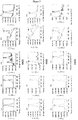
- the figure 1 shows that the population of the different types of nitrogen dopant bond is strongly dependent on the atmosphere (helium / air or humid air) brought into contact with the sample to be doped, before irradiation with 2.5Mev at low flux (xl) and strong fluence (xl4).
- the humid air type atmosphere favors almost only nitrogen Nls-3.
- the helium / air type atmosphere makes it possible to populate the three types of bond with a slightly higher probability for N1s-1 than for N1s-2 and Nls-3.
- the following table 7 gives the domain and the average values of the bonding energies of the electrons corresponding to the different components Nls-n determined in the XPS spectra, as well as the identification of these components.
- Table 7 ⁇ /i> Component N1s Emin-Emax (dE) in eV E (eV) nature N1s-1 399.9-400.69 (0.7) 400.23 N-pyrrolic; N-pyridone. N1s-2a 402.3 (0) 402.30 NN. N1s-2b 403.01-403-63 (0.62) 403.26 N-pyridine oxide; N-nitroso. N1s-3 406.83-407.59 (0.76) 407.20 N-nitro; N-nitrate
- the beam first crosses the substrate, then the graphene, and finally arrives in the gas in contact with the graphene.
- Graphene samples on Ni, Cu, SiO 2 , SiC substrate are irradiated under an N 2 , N 2 / H 2 (5%), N 2 / saturated water vapor, N 2 / H 2 (5%) / atmosphere.
- BMA-MP_1 5-5 3h 1h + 1h + 1h 1.5 1.2 1 3 1.44E + 12 1.44E + 12 1.00E + 00 1.56E + 16 He (0.9atm) / Air (0.1)
- BMA-MP_1 5-6 3h 1h + 1h + 1h 1.5 1.2 1 3 1.44E + 12 1.44E + 12 1.00E + 00 1.56E + 16 air + water vapor
Landscapes
- Chemical & Material Sciences (AREA)
- Organic Chemistry (AREA)
- Inorganic Chemistry (AREA)
- Engineering & Computer Science (AREA)
- Materials Engineering (AREA)
- Nanotechnology (AREA)
- Life Sciences & Earth Sciences (AREA)
- General Life Sciences & Earth Sciences (AREA)
- Geology (AREA)
- Carbon And Carbon Compounds (AREA)
Claims (16)
- Verfahren zur Stickstoffdotierung eines Materials umfassend eine Gesamtheit von Kohlenstoffatomen im sp2-Hybridiesierungszustand, wobei das Verfahren die folgenden Schritte umfasst:a) Inkontaktbringen des Materials mit Stickstoff;b) Bestrahlung des Materials und des in Kontakt gebrachten Stickstoffes über einen Elektronen- oder Leichtionenstrahl, dessen Energie größer als oder gleich 0,1 MeV ist, um ein Material zu erhalten, von dem alles oder ein Teil der Gesamtheit der Kohlenstoffatome im sp2-Hybridiesierungszustand stickstoffdoziert ist;wobei das Material nicht im Vorfeld in Schritt a) oxidiert wird.
- Verfahren nach Anspruch 1, wobei das Inkontaktbringen a) des Materials mit einer Stickstoff umfassenden gasförmigen Mischung erfolgt, vornehmlich mit einer Luft umfassenden gasförmigen Mischung.
- Verfahren nach Anspruch 2, in welchem die gasförmige Mischung weiter ein Gas enthält ausgewählt aus Sauerstoff, Kohlenstoffdioxid, Wasserstoff, Helium, Neon, Argon, Krypton, Xenon, Wasserdampf und deren Mischungen.
- Verfahren nach einem der Ansprüche 1 bis 3, in welchem das Inkontaktbringen a) des Materials erfolgt mit:- einer Helium und Luft umfassenden gasförmigen Mischung; oder- einer Luft und Wasserdampf, insbesondere gesättigten Wasserdampf umfassenden gasförmigen Mischung.
- Verfahren nach einem der Ansprüche 1 bis 4, in welchem die Gesamtheit der Kohlenstoffatome im sp2-Hybridiesierungszustand ausgewählt ist aus Graphen, Graphit, Kohlenstoffröhrchen, Fullerenen und Fulleriten, wobei die Gesamtheit insbesondere aus Graphen oder Graphit besteht.
- Verfahren nach einem der Ansprüche 1 bis 5, in welchem die Gesamtheit von Kohlenstoffatomen im sp2-Hybridiesierungszustand von einem Substrat getragen wird, insbesondere ausgewählt aus Metallen, insbesondere Ni, Halbleitern und Isolatoren, insbesondere SiO2, Glas und Polymeren.
- Verfahren nach einem der Ansprüche 1 bis 6, in welchem die Gesamtheit der Kohlenstoffatome im sp2-Hybridiesierungszustand Pulverform aufweist.
- Verfahren nach einem der Ansprüche 1 bis 7, in welchem der Strahl ein Elektronenstrahl ist.
- Verfahren nach Anspruch 8, in welchem die Elektronen eine Energie reichend von 0,1 bis 10 MeV aufweisen, vornehmlich von 0,4 bis 2,5 MeV, vornehmlicher von 1,0 bis 2,5 MeV,
wobei die Gesamtheit von Kohlenstoffatomen im sp2-Hybridiesierungszustand insbesondere von einem Substrat getragen wird. - Verfahren nach Anspruch 8, in welchem die Elektronen eine Energie reichend von 2,5 bis 10 MeV aufweisen,
wobei die Einheit von Kohlenstoffatomen im sp2-Hybridiesierungszustand insbesondere durch ein Substrat getragen werden oder Pulverform aufweisen. - Verfahren nach einem der Ansprüche 1 bis 7, in welchem der Strahl ein Leichtionenstrahl ist, insbesondere ausgewählt aus H+ und He+.
- Verfahren nach Anspruch 11, in welchem die Leichtionen eine Energie reichend von 0,1 MeV bis 45 MeV aufweisen.
- Verfahren nach einem der Ansprüche 1 bis 12, in welchem die Dauer der Bestrahlung des Schrittes b) von 1 Minute bis 72 Stunden reicht, vornehmlich von 5 Minuten bis 15 Stunden.
- Verfahren nach einem der Ansprüche 1 bis 13, in welchem:- der Strom des Elektronenstrahls von 3.1011 bis 4.1013 e-.cm-2.s-1 reicht, bevorzugt von 1,4.1012 bis 1,9.1013 e-.cm-2.s-1; oder- der Strom des Leichtionenstrahls von 3.107 bis 6.1011 e-.cm-2.s-1 reicht; und/oder- der Fluss des Elektronen- oder Leichtionenstrahls von 1,8.109 bis 1019 e-.cm-2 reicht, vornehmlich von 6,7.1015 bis 7,2.1016 e-.cm-2.
- Verfahren nach einem der Ansprüche 1 bis 14, in welchem bei der Bestrahlung b):- der Strahl Stickstoff, dann das Material umfassend eine Gesamtheit von Kohlenstoffatomen im sp2-Hybridiesierungszustand ausstrahlt; oder- der Strahl das Material umfassend eine Gesamtheit von Kohlenstoffatomen im sp2-Hybridiesierungszustand, dann den Stickstoff ausstrahlt.
- Verfahren nach einem der Ansprüche 1 bis 15, in welchem die stickstoffdotierte Gesamtheit von Kohlenstoffatomen im sp2-Hybridiesierungszustand, infolge von Schritt b) gewonnen, gleichfalls durch Kohlenstoff-Sauerstoff-Verbindungen funktionalisiert wird, vornehmlich durch Carboxyl- und/oder Carbonylgruppen.
Applications Claiming Priority (2)
| Application Number | Priority Date | Filing Date | Title |
|---|---|---|---|
| FR1658615A FR3056015B1 (fr) | 2016-09-15 | 2016-09-15 | Procede de dopage par l'azote de materiaux solides |
| PCT/FR2017/052474 WO2018051037A2 (fr) | 2016-09-15 | 2017-09-15 | Procede de dopage par l'azote de materiaux solides |
Publications (2)
| Publication Number | Publication Date |
|---|---|
| EP3512808A2 EP3512808A2 (de) | 2019-07-24 |
| EP3512808B1 true EP3512808B1 (de) | 2020-04-15 |
Family
ID=58162682
Family Applications (1)
| Application Number | Title | Priority Date | Filing Date |
|---|---|---|---|
| EP17780817.7A Active EP3512808B1 (de) | 2016-09-15 | 2017-09-15 | Verfahren zum stickstoffdotierung von feststoffmaterialien |
Country Status (4)
| Country | Link |
|---|---|
| US (1) | US11261093B2 (de) |
| EP (1) | EP3512808B1 (de) |
| FR (1) | FR3056015B1 (de) |
| WO (1) | WO2018051037A2 (de) |
Families Citing this family (4)
| Publication number | Priority date | Publication date | Assignee | Title |
|---|---|---|---|---|
| CN109765285B (zh) * | 2019-01-30 | 2020-06-09 | 厦门大学 | 一种可实时检测体液的柔性条带状pH传感器及其制备方法 |
| CN110484933B (zh) * | 2019-08-13 | 2021-04-20 | 中国工程物理研究院材料研究所 | 一种自支撑镍铁磷化物/氮杂碳布复合电极的制备方法 |
| CN111170315A (zh) * | 2019-12-17 | 2020-05-19 | 核工业北京化工冶金研究院 | 一种提高石墨烯纸力学性质和导电性的方法 |
| KR102808025B1 (ko) * | 2022-01-06 | 2025-05-19 | 한국과학기술연구원 | 전자빔 조사를 이용한 탄소 나노 소재 기반 구조체, 이를 포함하는 유연 투명 전극, 및 제조 방법 |
Family Cites Families (1)
| Publication number | Priority date | Publication date | Assignee | Title |
|---|---|---|---|---|
| CN104891476B (zh) * | 2015-05-12 | 2017-02-01 | 上海大学 | 电子束辐照制备氮掺杂还原石墨烯的方法 |
-
2016
- 2016-09-15 FR FR1658615A patent/FR3056015B1/fr active Active
-
2017
- 2017-09-15 EP EP17780817.7A patent/EP3512808B1/de active Active
- 2017-09-15 US US16/333,715 patent/US11261093B2/en active Active
- 2017-09-15 WO PCT/FR2017/052474 patent/WO2018051037A2/fr not_active Ceased
Non-Patent Citations (1)
| Title |
|---|
| None * |
Also Published As
| Publication number | Publication date |
|---|---|
| WO2018051037A9 (fr) | 2018-12-06 |
| WO2018051037A3 (fr) | 2018-10-04 |
| EP3512808A2 (de) | 2019-07-24 |
| WO2018051037A2 (fr) | 2018-03-22 |
| US20190270643A1 (en) | 2019-09-05 |
| FR3056015B1 (fr) | 2018-10-12 |
| FR3056015A1 (fr) | 2018-03-16 |
| US11261093B2 (en) | 2022-03-01 |
Similar Documents
| Publication | Publication Date | Title |
|---|---|---|
| Khare et al. | Functionalization of carbon nanotubes via nitrogen glow discharge | |
| Liu et al. | Chirality-controlled synthesis of single-wall carbon nanotubes using vapour-phase epitaxy | |
| EP3512808A2 (de) | Verfahren zum stickstoffdotierung von feststoffmaterialien | |
| Korusenko et al. | Changes of the electronic structure of the atoms of nitrogen in nitrogen-doped multiwalled carbon nanotubes under the influence of pulsed ion radiation | |
| Nuntawong et al. | Shelf time effect on SERS effectiveness of silver nanorod prepared by OAD technique | |
| Okada et al. | Bonding state and defects of nitrogen-doped graphene in oxygen reduction reaction | |
| Ren et al. | Fabrication of nitrogen-doped graphenes by pulsed laser deposition and improved chemical enhancement for Raman spectroscopy | |
| Chang et al. | Characteristics of graphene grown through low power capacitive coupled radio frequency plasma enhanced chemical vapor deposition | |
| Wang et al. | Conversion of pristine and p-doped sulfuric-acid-treated single-walled carbon nanotubes to n-type materials by a facile hydrazine vapor exposure process | |
| Bodik et al. | Fast low-temperature plasma reduction of monolayer graphene oxide at atmospheric pressure | |
| Botas et al. | High quantum yield dual emission from gas-phase grown crystalline Si nanoparticles | |
| McCann et al. | Chemical bonding modifications of tetrahedral amorphous carbon and nitrogenated tetrahedral amorphous carbon films induced by rapid thermal annealing | |
| JP5504565B2 (ja) | ダイヤモンド紫外線センサー素子とその製造方法、並びに紫外線センサー装置 | |
| EP3008014A1 (de) | Graphitnanomaterialien in form von kohlenstoffzwiebeln, herstellungsverfahren dafür und verwendung davon | |
| Liu et al. | Application of plasma modified multi-wall carbon nanotubes to ethanol vapor detection | |
| Udachin et al. | Dielectric barrier discharge plasma deoxidation of copper surfaces in an Ar/SiH4 atmosphere | |
| Kang et al. | Cyclic atomic layer etching of PdSe2 | |
| Bishop et al. | Probing redox kinetics in Pr doped ceria mixed ionic electronic conducting thin films by in situ optical absorption measurements | |
| CN109400641B (zh) | 胶体量子点改性方法 | |
| Choi et al. | Hydrogen plasma-enhanced atomic layer deposition of hydrogenated amorphous carbon thin films | |
| Hussein | Towards a fine-tuning of surface chemistry in aligned carbon nanotubes induced by nitrogen plasma discharge post-treatment: a combined microscopic and spectroscopic study | |
| CN114420787B (zh) | 一种太阳能电池退火方法及退火设备 | |
| Muramatsu et al. | Synthesis of outer tube-selectively nitrogen-doped double-walled carbon nanotubes by nitrogen plasma treatment | |
| Higo et al. | Characterization and preservation of gold oxides prepared by an oxygen-dc glow discharge from gold films and studied by X-ray photoelectron spectroscopy | |
| FR2873705A1 (fr) | Procede de traitement de surface d'un substrat en polyester ou polyamide |
Legal Events
| Date | Code | Title | Description |
|---|---|---|---|
| STAA | Information on the status of an ep patent application or granted ep patent |
Free format text: STATUS: UNKNOWN |
|
| STAA | Information on the status of an ep patent application or granted ep patent |
Free format text: STATUS: THE INTERNATIONAL PUBLICATION HAS BEEN MADE |
|
| PUAI | Public reference made under article 153(3) epc to a published international application that has entered the european phase |
Free format text: ORIGINAL CODE: 0009012 |
|
| STAA | Information on the status of an ep patent application or granted ep patent |
Free format text: STATUS: REQUEST FOR EXAMINATION WAS MADE |
|
| 17P | Request for examination filed |
Effective date: 20190322 |
|
| AK | Designated contracting states |
Kind code of ref document: A2 Designated state(s): AL AT BE BG CH CY CZ DE DK EE ES FI FR GB GR HR HU IE IS IT LI LT LU LV MC MK MT NL NO PL PT RO RS SE SI SK SM TR |
|
| AX | Request for extension of the european patent |
Extension state: BA ME |
|
| DAV | Request for validation of the european patent (deleted) | ||
| DAX | Request for extension of the european patent (deleted) | ||
| GRAP | Despatch of communication of intention to grant a patent |
Free format text: ORIGINAL CODE: EPIDOSNIGR1 |
|
| STAA | Information on the status of an ep patent application or granted ep patent |
Free format text: STATUS: GRANT OF PATENT IS INTENDED |
|
| INTG | Intention to grant announced |
Effective date: 20200103 |
|
| GRAS | Grant fee paid |
Free format text: ORIGINAL CODE: EPIDOSNIGR3 |
|
| GRAA | (expected) grant |
Free format text: ORIGINAL CODE: 0009210 |
|
| STAA | Information on the status of an ep patent application or granted ep patent |
Free format text: STATUS: THE PATENT HAS BEEN GRANTED |
|
| AK | Designated contracting states |
Kind code of ref document: B1 Designated state(s): AL AT BE BG CH CY CZ DE DK EE ES FI FR GB GR HR HU IE IS IT LI LT LU LV MC MK MT NL NO PL PT RO RS SE SI SK SM TR |
|
| REG | Reference to a national code |
Ref country code: CH Ref legal event code: EP |
|
| REG | Reference to a national code |
Ref country code: DE Ref legal event code: R096 Ref document number: 602017014932 Country of ref document: DE |
|
| REG | Reference to a national code |
Ref country code: IE Ref legal event code: FG4D Free format text: LANGUAGE OF EP DOCUMENT: FRENCH |
|
| REG | Reference to a national code |
Ref country code: AT Ref legal event code: REF Ref document number: 1257079 Country of ref document: AT Kind code of ref document: T Effective date: 20200515 |
|
| REG | Reference to a national code |
Ref country code: NL Ref legal event code: MP Effective date: 20200415 |
|
| REG | Reference to a national code |
Ref country code: LT Ref legal event code: MG4D |
|
| PG25 | Lapsed in a contracting state [announced via postgrant information from national office to epo] |
Ref country code: PT Free format text: LAPSE BECAUSE OF FAILURE TO SUBMIT A TRANSLATION OF THE DESCRIPTION OR TO PAY THE FEE WITHIN THE PRESCRIBED TIME-LIMIT Effective date: 20200817 Ref country code: NO Free format text: LAPSE BECAUSE OF FAILURE TO SUBMIT A TRANSLATION OF THE DESCRIPTION OR TO PAY THE FEE WITHIN THE PRESCRIBED TIME-LIMIT Effective date: 20200715 Ref country code: GR Free format text: LAPSE BECAUSE OF FAILURE TO SUBMIT A TRANSLATION OF THE DESCRIPTION OR TO PAY THE FEE WITHIN THE PRESCRIBED TIME-LIMIT Effective date: 20200716 Ref country code: IS Free format text: LAPSE BECAUSE OF FAILURE TO SUBMIT A TRANSLATION OF THE DESCRIPTION OR TO PAY THE FEE WITHIN THE PRESCRIBED TIME-LIMIT Effective date: 20200815 Ref country code: SE Free format text: LAPSE BECAUSE OF FAILURE TO SUBMIT A TRANSLATION OF THE DESCRIPTION OR TO PAY THE FEE WITHIN THE PRESCRIBED TIME-LIMIT Effective date: 20200415 Ref country code: FI Free format text: LAPSE BECAUSE OF FAILURE TO SUBMIT A TRANSLATION OF THE DESCRIPTION OR TO PAY THE FEE WITHIN THE PRESCRIBED TIME-LIMIT Effective date: 20200415 Ref country code: NL Free format text: LAPSE BECAUSE OF FAILURE TO SUBMIT A TRANSLATION OF THE DESCRIPTION OR TO PAY THE FEE WITHIN THE PRESCRIBED TIME-LIMIT Effective date: 20200415 Ref country code: LT Free format text: LAPSE BECAUSE OF FAILURE TO SUBMIT A TRANSLATION OF THE DESCRIPTION OR TO PAY THE FEE WITHIN THE PRESCRIBED TIME-LIMIT Effective date: 20200415 |
|
| REG | Reference to a national code |
Ref country code: AT Ref legal event code: MK05 Ref document number: 1257079 Country of ref document: AT Kind code of ref document: T Effective date: 20200415 |
|
| PG25 | Lapsed in a contracting state [announced via postgrant information from national office to epo] |
Ref country code: HR Free format text: LAPSE BECAUSE OF FAILURE TO SUBMIT A TRANSLATION OF THE DESCRIPTION OR TO PAY THE FEE WITHIN THE PRESCRIBED TIME-LIMIT Effective date: 20200415 Ref country code: BG Free format text: LAPSE BECAUSE OF FAILURE TO SUBMIT A TRANSLATION OF THE DESCRIPTION OR TO PAY THE FEE WITHIN THE PRESCRIBED TIME-LIMIT Effective date: 20200715 Ref country code: LV Free format text: LAPSE BECAUSE OF FAILURE TO SUBMIT A TRANSLATION OF THE DESCRIPTION OR TO PAY THE FEE WITHIN THE PRESCRIBED TIME-LIMIT Effective date: 20200415 Ref country code: RS Free format text: LAPSE BECAUSE OF FAILURE TO SUBMIT A TRANSLATION OF THE DESCRIPTION OR TO PAY THE FEE WITHIN THE PRESCRIBED TIME-LIMIT Effective date: 20200415 |
|
| PG25 | Lapsed in a contracting state [announced via postgrant information from national office to epo] |
Ref country code: AL Free format text: LAPSE BECAUSE OF FAILURE TO SUBMIT A TRANSLATION OF THE DESCRIPTION OR TO PAY THE FEE WITHIN THE PRESCRIBED TIME-LIMIT Effective date: 20200415 |
|
| REG | Reference to a national code |
Ref country code: DE Ref legal event code: R097 Ref document number: 602017014932 Country of ref document: DE |
|
| PG25 | Lapsed in a contracting state [announced via postgrant information from national office to epo] |
Ref country code: IT Free format text: LAPSE BECAUSE OF FAILURE TO SUBMIT A TRANSLATION OF THE DESCRIPTION OR TO PAY THE FEE WITHIN THE PRESCRIBED TIME-LIMIT Effective date: 20200415 Ref country code: AT Free format text: LAPSE BECAUSE OF FAILURE TO SUBMIT A TRANSLATION OF THE DESCRIPTION OR TO PAY THE FEE WITHIN THE PRESCRIBED TIME-LIMIT Effective date: 20200415 Ref country code: DK Free format text: LAPSE BECAUSE OF FAILURE TO SUBMIT A TRANSLATION OF THE DESCRIPTION OR TO PAY THE FEE WITHIN THE PRESCRIBED TIME-LIMIT Effective date: 20200415 Ref country code: SM Free format text: LAPSE BECAUSE OF FAILURE TO SUBMIT A TRANSLATION OF THE DESCRIPTION OR TO PAY THE FEE WITHIN THE PRESCRIBED TIME-LIMIT Effective date: 20200415 Ref country code: EE Free format text: LAPSE BECAUSE OF FAILURE TO SUBMIT A TRANSLATION OF THE DESCRIPTION OR TO PAY THE FEE WITHIN THE PRESCRIBED TIME-LIMIT Effective date: 20200415 Ref country code: RO Free format text: LAPSE BECAUSE OF FAILURE TO SUBMIT A TRANSLATION OF THE DESCRIPTION OR TO PAY THE FEE WITHIN THE PRESCRIBED TIME-LIMIT Effective date: 20200415 Ref country code: CZ Free format text: LAPSE BECAUSE OF FAILURE TO SUBMIT A TRANSLATION OF THE DESCRIPTION OR TO PAY THE FEE WITHIN THE PRESCRIBED TIME-LIMIT Effective date: 20200415 Ref country code: ES Free format text: LAPSE BECAUSE OF FAILURE TO SUBMIT A TRANSLATION OF THE DESCRIPTION OR TO PAY THE FEE WITHIN THE PRESCRIBED TIME-LIMIT Effective date: 20200415 |
|
| PLBE | No opposition filed within time limit |
Free format text: ORIGINAL CODE: 0009261 |
|
| STAA | Information on the status of an ep patent application or granted ep patent |
Free format text: STATUS: NO OPPOSITION FILED WITHIN TIME LIMIT |
|
| PG25 | Lapsed in a contracting state [announced via postgrant information from national office to epo] |
Ref country code: SK Free format text: LAPSE BECAUSE OF FAILURE TO SUBMIT A TRANSLATION OF THE DESCRIPTION OR TO PAY THE FEE WITHIN THE PRESCRIBED TIME-LIMIT Effective date: 20200415 Ref country code: PL Free format text: LAPSE BECAUSE OF FAILURE TO SUBMIT A TRANSLATION OF THE DESCRIPTION OR TO PAY THE FEE WITHIN THE PRESCRIBED TIME-LIMIT Effective date: 20200415 |
|
| 26N | No opposition filed |
Effective date: 20210118 |
|
| REG | Reference to a national code |
Ref country code: CH Ref legal event code: PL |
|
| PG25 | Lapsed in a contracting state [announced via postgrant information from national office to epo] |
Ref country code: SI Free format text: LAPSE BECAUSE OF FAILURE TO SUBMIT A TRANSLATION OF THE DESCRIPTION OR TO PAY THE FEE WITHIN THE PRESCRIBED TIME-LIMIT Effective date: 20200415 |
|
| REG | Reference to a national code |
Ref country code: BE Ref legal event code: MM Effective date: 20200930 |
|
| PG25 | Lapsed in a contracting state [announced via postgrant information from national office to epo] |
Ref country code: LU Free format text: LAPSE BECAUSE OF NON-PAYMENT OF DUE FEES Effective date: 20200915 |
|
| PG25 | Lapsed in a contracting state [announced via postgrant information from national office to epo] |
Ref country code: IE Free format text: LAPSE BECAUSE OF NON-PAYMENT OF DUE FEES Effective date: 20200915 Ref country code: LI Free format text: LAPSE BECAUSE OF NON-PAYMENT OF DUE FEES Effective date: 20200930 Ref country code: CH Free format text: LAPSE BECAUSE OF NON-PAYMENT OF DUE FEES Effective date: 20200930 Ref country code: BE Free format text: LAPSE BECAUSE OF NON-PAYMENT OF DUE FEES Effective date: 20200930 |
|
| PG25 | Lapsed in a contracting state [announced via postgrant information from national office to epo] |
Ref country code: TR Free format text: LAPSE BECAUSE OF FAILURE TO SUBMIT A TRANSLATION OF THE DESCRIPTION OR TO PAY THE FEE WITHIN THE PRESCRIBED TIME-LIMIT Effective date: 20200415 Ref country code: MT Free format text: LAPSE BECAUSE OF FAILURE TO SUBMIT A TRANSLATION OF THE DESCRIPTION OR TO PAY THE FEE WITHIN THE PRESCRIBED TIME-LIMIT Effective date: 20200415 Ref country code: CY Free format text: LAPSE BECAUSE OF FAILURE TO SUBMIT A TRANSLATION OF THE DESCRIPTION OR TO PAY THE FEE WITHIN THE PRESCRIBED TIME-LIMIT Effective date: 20200415 |
|
| PG25 | Lapsed in a contracting state [announced via postgrant information from national office to epo] |
Ref country code: MK Free format text: LAPSE BECAUSE OF FAILURE TO SUBMIT A TRANSLATION OF THE DESCRIPTION OR TO PAY THE FEE WITHIN THE PRESCRIBED TIME-LIMIT Effective date: 20200415 Ref country code: MC Free format text: LAPSE BECAUSE OF FAILURE TO SUBMIT A TRANSLATION OF THE DESCRIPTION OR TO PAY THE FEE WITHIN THE PRESCRIBED TIME-LIMIT Effective date: 20200415 |
|
| PGFP | Annual fee paid to national office [announced via postgrant information from national office to epo] |
Ref country code: GB Payment date: 20250929 Year of fee payment: 9 |
|
| PGFP | Annual fee paid to national office [announced via postgrant information from national office to epo] |
Ref country code: FR Payment date: 20250929 Year of fee payment: 9 |
|
| PGFP | Annual fee paid to national office [announced via postgrant information from national office to epo] |
Ref country code: DE Payment date: 20251029 Year of fee payment: 9 |