EP3512808B1 - Procede de dopage par l'azote de materiaux solides - Google Patents
Procede de dopage par l'azote de materiaux solides Download PDFInfo
- Publication number
- EP3512808B1 EP3512808B1 EP17780817.7A EP17780817A EP3512808B1 EP 3512808 B1 EP3512808 B1 EP 3512808B1 EP 17780817 A EP17780817 A EP 17780817A EP 3512808 B1 EP3512808 B1 EP 3512808B1
- Authority
- EP
- European Patent Office
- Prior art keywords
- carbon atoms
- nitrogen
- mev
- hybridization state
- dinitrogen
- Prior art date
- Legal status (The legal status is an assumption and is not a legal conclusion. Google has not performed a legal analysis and makes no representation as to the accuracy of the status listed.)
- Active
Links
Images



Classifications
-
- C—CHEMISTRY; METALLURGY
- C01—INORGANIC CHEMISTRY
- C01B—NON-METALLIC ELEMENTS; COMPOUNDS THEREOF; METALLOIDS OR COMPOUNDS THEREOF NOT COVERED BY SUBCLASS C01C
- C01B32/00—Carbon; Compounds thereof
- C01B32/15—Nano-sized carbon materials
- C01B32/182—Graphene
- C01B32/194—After-treatment
-
- C—CHEMISTRY; METALLURGY
- C01—INORGANIC CHEMISTRY
- C01B—NON-METALLIC ELEMENTS; COMPOUNDS THEREOF; METALLOIDS OR COMPOUNDS THEREOF NOT COVERED BY SUBCLASS C01C
- C01B32/00—Carbon; Compounds thereof
- C01B32/15—Nano-sized carbon materials
- C01B32/152—Fullerenes
-
- C—CHEMISTRY; METALLURGY
- C01—INORGANIC CHEMISTRY
- C01B—NON-METALLIC ELEMENTS; COMPOUNDS THEREOF; METALLOIDS OR COMPOUNDS THEREOF NOT COVERED BY SUBCLASS C01C
- C01B32/00—Carbon; Compounds thereof
- C01B32/15—Nano-sized carbon materials
- C01B32/152—Fullerenes
- C01B32/156—After-treatment
-
- C—CHEMISTRY; METALLURGY
- C01—INORGANIC CHEMISTRY
- C01B—NON-METALLIC ELEMENTS; COMPOUNDS THEREOF; METALLOIDS OR COMPOUNDS THEREOF NOT COVERED BY SUBCLASS C01C
- C01B32/00—Carbon; Compounds thereof
- C01B32/15—Nano-sized carbon materials
- C01B32/158—Carbon nanotubes
- C01B32/168—After-treatment
-
- C—CHEMISTRY; METALLURGY
- C01—INORGANIC CHEMISTRY
- C01B—NON-METALLIC ELEMENTS; COMPOUNDS THEREOF; METALLOIDS OR COMPOUNDS THEREOF NOT COVERED BY SUBCLASS C01C
- C01B32/00—Carbon; Compounds thereof
- C01B32/20—Graphite
-
- C—CHEMISTRY; METALLURGY
- C01—INORGANIC CHEMISTRY
- C01B—NON-METALLIC ELEMENTS; COMPOUNDS THEREOF; METALLOIDS OR COMPOUNDS THEREOF NOT COVERED BY SUBCLASS C01C
- C01B32/00—Carbon; Compounds thereof
- C01B32/20—Graphite
- C01B32/21—After-treatment
-
- C—CHEMISTRY; METALLURGY
- C01—INORGANIC CHEMISTRY
- C01B—NON-METALLIC ELEMENTS; COMPOUNDS THEREOF; METALLOIDS OR COMPOUNDS THEREOF NOT COVERED BY SUBCLASS C01C
- C01B2202/00—Structure or properties of carbon nanotubes
- C01B2202/20—Nanotubes characterized by their properties
- C01B2202/22—Electronic properties
-
- C—CHEMISTRY; METALLURGY
- C01—INORGANIC CHEMISTRY
- C01B—NON-METALLIC ELEMENTS; COMPOUNDS THEREOF; METALLOIDS OR COMPOUNDS THEREOF NOT COVERED BY SUBCLASS C01C
- C01B2204/00—Structure or properties of graphene
- C01B2204/20—Graphene characterized by its properties
- C01B2204/22—Electronic properties
-
- C—CHEMISTRY; METALLURGY
- C01—INORGANIC CHEMISTRY
- C01P—INDEXING SCHEME RELATING TO STRUCTURAL AND PHYSICAL ASPECTS OF SOLID INORGANIC COMPOUNDS
- C01P2002/00—Crystal-structural characteristics
- C01P2002/50—Solid solutions
- C01P2002/52—Solid solutions containing elements as dopants
- C01P2002/54—Solid solutions containing elements as dopants one element only
-
- C—CHEMISTRY; METALLURGY
- C01—INORGANIC CHEMISTRY
- C01P—INDEXING SCHEME RELATING TO STRUCTURAL AND PHYSICAL ASPECTS OF SOLID INORGANIC COMPOUNDS
- C01P2006/00—Physical properties of inorganic compounds
- C01P2006/20—Powder free flowing behaviour
-
- C—CHEMISTRY; METALLURGY
- C01—INORGANIC CHEMISTRY
- C01P—INDEXING SCHEME RELATING TO STRUCTURAL AND PHYSICAL ASPECTS OF SOLID INORGANIC COMPOUNDS
- C01P2006/00—Physical properties of inorganic compounds
- C01P2006/40—Electric properties
Definitions
- the present invention relates to a method for doping nitrogen with solid materials, these materials comprising or consisting of a set of carbon atoms in the sp 2 hybridization state.
- Doping with nitrogen is also advantageous with regard to other materials consisting of carbon atoms in the sp 2 hybridization state, such as for example graphite or carbon nanotubes.
- the nitrogen doping of graphene can be done chemically, for example by heat treatment of graphene oxide in the presence of ammonia ( Xu et al., Journal of Colloid and Interface Science 2015, 445, 143-150 ) or an organic compound comprising nitrogen ( Liu et al., Energy Storage Materials 2016, 2, 69-75 ), or by heating a graphene precursor doped with nitrogen, such as pyridine or julolidine ( Yasuda et al., ChemComm 2013, 49, 9627 ).
- Nitrogen doping of graphene can also be carried out by exposure of graphene to N + ions and / or to neutralized thermalized nitrogen species, the graphene being during this exposure brought to high temperature (for example 850 ° VS) ( Lin et al., Carbon 2014, 73, 216-224 ) or heat treated after exposure to temperatures above 700 ° C ( Sforzini et al., Physical Review Letters 2016, 116, 126805 ), or 550 ° C or even 850 ° C ( Lin et al., Carbon 2016, 100, 337-344 ).
- high temperature for example 850 ° VS
- heat treated after exposure to temperatures above 700 ° C Sforzini et al., Physical Review Letters 2016, 116, 126805
- 550 ° C or even 850 ° C Lin et al., Carbon 2016, 100, 337-344 .
- these processes again use high temperatures, thus making them unattractive
- one of the objectives of the present invention is to provide a process for doping with nitrogen a material comprising carbon atoms in the sp 2 hybridization state which is simple to implement and clean, that is to say, not involving the use of toxic chemical compounds.
- Another object of the present invention is to provide a nitrogen doping process in which the production of defects in the irradiated material is selective and limited in nature.
- Another object of the present invention is to provide a nitrogen doping process which is versatile, also allowing, where appropriate, the functionalization of the material via the formation of carbon-oxygen bonds, in particular of carboxyl groups and / or carbonyl.
- the process of the invention allows effective doping of the material, while being simple to implement and clean, under conditions which are not detrimental to this material.
- a graphite-based material doped with nitrogen obtained by the process according to the invention has been tested as a redox electrode with respect to the vanadium redox couples used for rechargeable batteries of the oxidation-reduction flux type. vanadium. It turns out that the electron exchange rates are changed remarkably for both the oxidation and reduction reactions.
- doping according to the invention is capable of modifying the work of output of the electrons from the material, in particular of increasing the work of output of the electrons from the irradiated material, in particular with respect to the annealed material temperature (for example 10 min at 450 ° C., under ultra high vacuum).
- Control of the work of electron output can be advantageous for the optimization of electronic components such as transistors, photovoltaic cells, chemical detectors, gas detectors, field effect transmitters.
- the contacting a) of the material is carried out with a gas mixture consisting of or comprising dinitrogen, in particular a gas mixture consisting of or comprising air.
- the contacting of said material with the dinitrogen is done in the absence of any solution, the dinitrogen being only supplied in the form of gas, pure or in mixture with other gases.
- the process of the invention is, in the absence of any solution, advantageously simple to implement, given that no solution is to be prepared, and that no step for drying the doped material is to be provided after irradiation.
- said gaseous mixture consists or comprises dinitrogen and a gas chosen from dioxygen, carbon dioxide, dihydrogen, helium, neon, argon, krypton, xenon, water vapor, and mixtures thereof.
- said gaseous mixture consists of or comprises dinitrogen and optionally a gas chosen from dihydrogen, helium, neon, argon, krypton, xenon and their mixtures.
- dinitrogen (as the only gas) or of a gas mixture consisting of dinitrogen and another gas chosen from dihydrogen, helium, neon, argon, krypton, xenon and their mixtures
- doping with nitrogen can be carried out without the material being functionalized by carbon oxygen bonds.
- said gaseous mixture consists of or comprises air and / or water vapor, and optionally a gas chosen from dioxygen, carbon dioxide, dihydrogen, helium, neon, argon, krypton, xenon and their mixtures.
- said gaseous mixture allows, in addition to doping with nitrogen, the functionalization of the material by carbon oxygen bonds.
- This functionalization is advantageous in particular in the context of the use of said material for the production of electrodes of the redox type, of hydrogen storage devices, as well as in catalysis. This functionalization is also advantageous for transparent electrodes (photovoltaic) and for supercapacitors (batteries).
- the contacting a) of the material is carried out with a gas mixture consisting of or comprising helium and air.
- the contacting a) of the material is carried out with a gas mixture consisting of or comprising dinitrogen.
- the contacting a) of the material is carried out with a gaseous mixture consisting of or comprising dinitrogen and air.
- the contacting a) of the material is carried out with a gaseous mixture consisting of or comprising dinitrogen and dihydrogen.
- the contacting a) of the material is carried out with a gaseous mixture consisting of or comprising dinitrogen and water vapor, in particular saturated water vapor.
- the contacting a) of the material is carried out with a gaseous mixture consisting of or comprising air and water vapor, in particular saturated water vapor.
- said gaseous mixture further comprises a gas chosen from sulfur dioxide, hydrogen sulfide, methane, propane, butane, ethylene, propene, butene, acetylene, propyne, butyne, nitrogen trifluoride, methane trifluoride, sulfur hexafluoride, nitrous oxide, halogenated gases, in particular dichloride, silicon gases, vapors of organometallic compounds, and their mixtures.
- a gas chosen from sulfur dioxide, hydrogen sulfide, methane, propane, butane, ethylene, propene, butene, acetylene, propyne, butyne, nitrogen trifluoride, methane trifluoride, sulfur hexafluoride, nitrous oxide, halogenated gases, in particular dichloride, silicon gases, vapors of organometallic compounds, and their mixtures.
- silicon gases means any gas containing silicon, for example SiH 4 .
- the vapors of organometallic compounds can be obtained by any method known to those skilled in the art, in particular those used in the context of organometallic vapor epitaxy.
- said set of carbon atoms in the sp 2 hybridization state is chosen from graphene, graphite, carbon nanotubes, fullerenes and fullerites, said set being in particular graphene or graphite.
- said set of carbon atoms in the sp 2 hybridization state is supported by a substrate.
- the substrate When said set of carbon atoms in the sp 2 hybridization state is graphene supported by a substrate, the substrate carries in particular one or more graphene monolayers, in particular from 1 to 7 graphene monolayers.
- the substrate is chosen from metals, in particular Ni, semiconductors and insulators, in particular SiO 2 , glasses and polymers.
- the set of carbon atoms in the sp 2 hybridization state is supported by a substrate, in particular SiO 2 , and the set of carbon atoms in the hybridization state sp 2 doped with nitrogen, obtained at the end of step b), is also doped with at least one of the atoms of the support, in particular Si.
- said set of carbon atoms in the sp 2 hybridization state is in powder form.
- Said powder in particular graphene or graphite, can be prepared by powder reduction techniques well known to those skilled in the art.
- the energy of the electron or light ion beam is greater than or equal to 0.2; 0.3 or 0.4 MeV.
- said beam is an electron beam.
- the electrons have an energy ranging from 0.1 to 10 MeV, in particular from 0.1 to 5 MeV or from 0.4 to 5 MeV, more particularly from 0.4 to 2.5 MeV , even more particularly from 1.0 to 2.5 MeV, the said set of carbon atoms in the sp 2 hybridization state being in particular supported by a substrate.
- the electrons have an energy ranging from 2.5 to 10 MeV, said set of carbon atoms in the sp 2 hybridization state being in particular supported by a substrate or in powder form.
- said beam is a beam of light ions.
- the light ions are chosen from H + and He + .
- the light ions have an energy ranging from 0.1 MeV to 45 MeV, in particular from 0.4 MeV to 45 MeV.
- the duration of the irradiation of step b) ranges from 1 minute to 72 hours, in particular from 5 minutes to 14 or 15 hours.
- the variation in the irradiation time makes it possible to obtain nitrogen doping in a wide percentage range.
- the flux of the electron beam ranges from 3.10 11 to 4.10 13 e-.cm -2 .s -1 , in particular from 1.4.10 12 to 1.9.10 13 e-.cm -2 . s -1 .
- the flux of the light ion beam ranges from 3.10 7 to 6.10 11 e-.cm -2 .s -1 .
- the fluence of the electron or light ion beam ranges from 1.8 10 9 to 10 19 e-.cm -2 , in particular from 6.7.10 15 to 7.2.10 16 e-. cm -2 .
- the invention relates to a method as defined above, in which, during irradiation b), the beam irradiates the dinitrogen, then the material comprising or consisting of a set of carbon atoms to sp 2 hybridization state.
- the electron beam first meets the dinitrogen, in particular in the form of gas, then strikes the material and then, if necessary, the substrate.
- the invention relates to a method as defined above, in which, during irradiation b), the beam irradiates the material comprising or consisting of a set of carbon atoms in the state sp 2 hybridization, then dinitrogen.
- the electron beam first meets, if necessary, the substrate, then the material and then the dinitrogen, in particular in the form of gas.
- the invention relates to a process as defined above, in which the atomic percentage of nitrogen of said set of carbon atoms in the sp 2 hybridization state doped with nitrogen is greater or equal to 0.5% at, in particular greater than or equal to 1.0% at.
- the invention relates to a process as defined above, in which the atomic percentage of nitrogen of said set of carbon atoms in the sp 2 hybridization state doped with nitrogen is greater or equal to 2.5% at, in particular greater than or equal to 3.0% at, 3.5% at, or 4.0% at, said gaseous mixture comprising in particular dinitrogen and water vapor.
- the method according to the invention allows effective doping of the material, while being simple to implement and clean, and under conditions which are not detrimental to this material.
- the invention relates to a method as defined above, in which the doping comprises the incorporation of nitrogen atoms into said set of carbon atoms in the sp 2 hybridization state under the in the form of nitro groups -NO 2 , and / or of nitrate groups -O-NO 2 , said gaseous mixture comprising in particular dinitrogen and water vapor.
- the invention relates to a method as defined above, in which the doping comprises the incorporation of nitrogen atoms into said set of carbon atoms in the sp 2 hybridization state under the in the form of nitro groups -NO 2 , and / or of nitrate groups -O-NO 2 , said gaseous mixture comprising in particular air and water vapor, more particularly saturated water vapor.
- the invention relates to a method as defined above, in which the doping comprises the incorporation of nitrogen atoms into said set of carbon atoms in the sp 2 hybridization state under the in the form of nitro groups -NO 2 , and / or of nitrate groups -O-NO 2 , said gaseous mixture comprising in particular dinitrogen and air.
- the invention relates to a method as defined above, in which the doping comprises the incorporation of nitrogen atoms into said set of carbon atoms in the sp 2 hybridization state under the form of pyrrolitic nitrogen and / or nitrogen of the N-pyridone type, said gaseous mixture comprising in particular dinitrogen and water vapor, more particularly saturated water vapor.
- the invention relates to a method as defined above, in which the doping comprises the incorporation of nitrogen atoms into said set of carbon atoms in the sp 2 hybridization state under the form of pyrrolitic nitrogen and / or nitrogen of N-pyridone type, said gaseous mixture comprising in particular dinitrogen and dihydrogen.
- the invention relates to a method as defined above, in which the doping comprises the incorporation of nitrogen atoms into said set of carbon atoms in the sp 2 hybridization state under the form of pyrrolitic nitrogen, N-pyridone type nitrogen, nitro -NO 2 groups, and / or nitrate groups -O-NO 2 , said gaseous mixture comprising or consisting in particular of dinitrogen.
- the set of carbon atoms in the sp 2 hybridization state doped with nitrogen, obtained at the end of step b), is also functionalized by groups comprising of oxygen, in particular groups comprising one or more carbon oxygen bonds, more particularly carboxyl and / or carbonyl groups.
- said set of carbon atoms in the sp 2 hybridization state is chosen from graphene, graphite, carbon nanotubes, fullerenes and fullerites, said set being in particular graphene or graphite.
- said set of carbon atoms in the sp 2 hybridization state is supported by a substrate.
- the substrate When said set of carbon atoms in the sp 2 hybridization state is graphene supported by a substrate, the substrate carries in particular one or more graphene monolayers, in particular from 1 to 7 graphene monolayers.
- the substrate is chosen from metals, in particular Ni, semiconductors and insulators, in particular SiO 2 , glasses and polymers.
- the set of carbon atoms in the sp 2 hybridization state is supported by a substrate, in particular SiO 2 , and the set of carbon atoms in the hybridization state sp 2 doped with nitrogen, obtained at the end of step b), is also doped with at least one of the atoms of the support, in particular Si.
- said set of carbon atoms in the sp 2 hybridization state is in powder form.
- the set of carbon atoms in the sp 2 hybridization state doped with nitrogen, obtained at the end of step b), is also functionalized by groups comprising of oxygen, in particular groups comprising one or more carbon oxygen bonds, more particularly carboxyl and / or carbonyl groups.
- set of carbon atoms in the sp 2 hybridization state is meant a set in which each carbon atom, with the exception of the carbon atoms at the edge of this set, is linked to three other atoms of carbon by covalent bonds of sigma type for its 3 sp 2 electrons, and covalent bonds of ⁇ type for its other p electron.
- the assembly may also have defects, well known to those skilled in the art. In this case, there are, for example, carbon atoms unrelated to three other carbon atoms. They can then be linked to four carbon atoms (sp 3 hybridization).
- This assembly can also be doped and / or functionalized as mentioned above and defined below.
- nitrogen doping is meant the incorporation of nitrogen atoms into said set of carbon atoms in the sp 2 hybridization state.
- Incorporation is, for example, the direct substitution of a carbon atom by a nitrogen atom. We then speak of graphitic nitrogen. This incorporation can also be done by bonding a nitrogen atom to two carbon atoms to form a ring of 6 atoms or 5 atoms. We then speak respectively of pyridine and pyrroline nitrogen.
- bringing said material into contact with dinitrogen is meant bringing at least all of the carbon atoms in the sp 2 hybridization state of said material into contact with dinitrogen, in particular in the form gas.
- the irradiation of the material is meant the irradiation of at least all or part of said set of carbon atoms in the sp 2 hybridization state.
- the irradiation of the material and of the dinitrogen brought into contact it is meant that said contacting of step a) continues during step b), and that both the material and the dinitrogen are irradiated during this step b).
- the material not being oxidized before step a) it is understood in particular that said material comprising or consisting of a set of carbon atoms in the sp 2 hybridization state is not a material comprising or consisting of graphene oxide before step a) of contacting with dinitrogen.
- irradiation with a beam of electrons or light ions is meant in particular irradiation in fixed mode.
- An irradiation zone is for example defined on the material to be doped, the irradiation is carried out on part of this zone, in fixed mode, under the conditions, in particular of duration, defined in the present description, then a new part of said area is possibly irradiated. This last step is optionally repeated until irradiation of the entire irradiation zone considered.
- the material not being oxidized before step a) it is understood in particular that the material subjected to steps a) and b) is not graphene oxide.
- flux is meant the number of electrons or light ions per unit of time and per unit of area.
- fluence is meant the total number of electrons or light ions per unit area.
- saturated water vapor water vapor at a pressure P corresponding to the saturated vapor pressure. This saturated steam is moist when in the presence of liquid water, and dries otherwise.
- the graphene on Ni substrate comes from Graphene Supermarket (Graphene Laboratories Inc.); these are 10mm x 10mm samples.
- the one on SiO 2 substrate comes from Graphenea (Graphena Monolayer Graphene film).
- the electron beam irradiations were carried out using a Pelletron accelerator, supplying high energy electrons (150 keV - 2.5 MeV) and variable current (150 nA - 200 ⁇ A), and manufactured by the company NEC.
- the irradiations with an electron beam in the range 2.5 -10 MeV are carried out with a LINAC of 10 MeV.
- the irradiations with a light ion beam in the 0.4 - 3 MeV range are carried out with a pelletron manufactured by the company NEC and in the 3 - 45 MeV range with a cyclotron.
- the percentages of the elements on the surface of the irradiated samples are measured by X-ray photoelectron spectrometry (XPS) using a THERMO-VG ESCALAB 250 spectrometer fitted with an RX K-> A1 source (1486 , 6 eV).
- XPS X-ray photoelectron spectrometry
- the irradiation geometry used is as follows: the beam crosses the layer of gas in contact with the graphene on the substrate then enters the graphene then the substrate.
- the irradiation creates radicals in the gas layer at the surface as well as defects in the crystal structure of the surface with partial destruction of the bonds between carbon.
- the percentages of the elements on the surface of the irradiated samples are measured by XPS according to a procedure where a long-term pumping is carried out under vacuum to condition the surfaces. This method differs from standard XPS analysis procedures, which perform thermal annealing at high temperature, around 450 to 550 ° C, of short duration (for example 10 min), before the measurements.
- Photoelectron emission microscopy was used to perform spectroscopic analysis in imaging.
- maps of the work of electron extraction were determined for a reference layer of graphene / Ni and a treated layer (G9) using the procedure described by Wang et al. (Carbon 2015, 82, 360-367 ).
- Example 1 Doping with Graphene Nitrogen on a Ni Substrate Under a Helium / Air Atmosphere
- the flux / flux0 ratios in Table 1 correspond to the ICE current ratios which allow the Pelletron electron beam to be adjusted.
- the value flux0 is the nominal value of the number of electrons emitted per unit of time and area for the minimum ICE current used in the present tests, and is indicated for each test in table 1.
- the nominal value fluence0 corresponds to an irradiation of duration one hour for a flow of electrons of value flux0.
- the flux values on the graphene layers depend on the setting of the electron beam of the Pelletron.
- the nominal flux values vary in ratios from 1 to 10 (Table 1)
- the flux values vary in ratios from 1 to 11.9.
- the fluences vary in ratios from 1 to 10.8 instead of ratios from 1 to 14 for the nominal values (Table 1).
- the fluxes used vary in the range (1.4.10 12 to 1.9.10 13 ) e-.cm -2 .s -1 and the fluences in the range (6.7.10 15 to 7.2.10 16 ) e-.cm - 2 (table). It is possible to widen the range of fluxes used, for example from (3.10 11 to 4.10 13 ) e-.cm -2 .s -1 .
- Table 1 List of graphene samples irradiated with an electron beam emitted by the Pelletron, and corresponding irradiation conditions. ⁇ /i> Exp. Irradiation time.
- the columns entitled “MeV”, “CE / ⁇ A”, “flux / flux0” and “fluence / fluence0” indicate respectively the energy of the electrons, the beam current, whether the irradiation took place on the whole layer or not , the ratio of irradiation fluxes and fluences to the lowest nominal values used.
- the flux, fluence columns indicate the values of the fluxes and fluences which irradiate the graphene monolayers on the substrate.
- the columns flux / fxmin and fluence / femin indicate their respective ratios to the minimum values used in the tests.
- doping with nitrogen is observed both for electrons of low energy 1 MeV and of high energy 2.5 MeV in a range of fluxes which varies in a ratio of 1 to 10 and of fluences which vary in a ratio 1 to 14.
- doping with nitrogen is observed both for electrons of 1.5 MeV energy and of high energy 2.5 MeV in a range of fluences which vary in a ratio 1 to 4.67.
- the amount of nitrogen introduced to the surface of graphene on SiO 2 substrate is close to that introduced under the same conditions to the surface of graphene on Ni substrate (sample E9 of Example 1), showing the great versatility of the process of the invention as to the substrates carrying the irradiated sample.
- the figure 1 shows that the population of the different types of nitrogen dopant bond is strongly dependent on the atmosphere (helium / air or humid air) brought into contact with the sample to be doped, before irradiation with 2.5Mev at low flux (xl) and strong fluence (xl4).
- the humid air type atmosphere favors almost only nitrogen Nls-3.
- the helium / air type atmosphere makes it possible to populate the three types of bond with a slightly higher probability for N1s-1 than for N1s-2 and Nls-3.
- the following table 7 gives the domain and the average values of the bonding energies of the electrons corresponding to the different components Nls-n determined in the XPS spectra, as well as the identification of these components.
- Table 7 ⁇ /i> Component N1s Emin-Emax (dE) in eV E (eV) nature N1s-1 399.9-400.69 (0.7) 400.23 N-pyrrolic; N-pyridone. N1s-2a 402.3 (0) 402.30 NN. N1s-2b 403.01-403-63 (0.62) 403.26 N-pyridine oxide; N-nitroso. N1s-3 406.83-407.59 (0.76) 407.20 N-nitro; N-nitrate
- the beam first crosses the substrate, then the graphene, and finally arrives in the gas in contact with the graphene.
- Graphene samples on Ni, Cu, SiO 2 , SiC substrate are irradiated under an N 2 , N 2 / H 2 (5%), N 2 / saturated water vapor, N 2 / H 2 (5%) / atmosphere.
- BMA-MP_1 5-5 3h 1h + 1h + 1h 1.5 1.2 1 3 1.44E + 12 1.44E + 12 1.00E + 00 1.56E + 16 He (0.9atm) / Air (0.1)
- BMA-MP_1 5-6 3h 1h + 1h + 1h 1.5 1.2 1 3 1.44E + 12 1.44E + 12 1.00E + 00 1.56E + 16 air + water vapor
Landscapes
- Chemical & Material Sciences (AREA)
- Organic Chemistry (AREA)
- Inorganic Chemistry (AREA)
- Engineering & Computer Science (AREA)
- Materials Engineering (AREA)
- Nanotechnology (AREA)
- Life Sciences & Earth Sciences (AREA)
- General Life Sciences & Earth Sciences (AREA)
- Geology (AREA)
- Carbon And Carbon Compounds (AREA)
Description
- La présente invention concerne un procédé de dopage par l'azote de matériaux solides, ces matériaux comprenant ou étant constitués d'un ensemble d'atomes de carbone à l'état d'hybridation sp2.
- La découverte du graphène et de ses propriétés exceptionnelles, notamment celles de transport électronique bidimensionnel, a donné lieu à des recherches très actives sur ce matériau. L'une de ces voies de recherche vise à modifier les propriétés électroniques du graphène dans le cadre de son utilisation dans divers dispositifs.
- L'une des façons de modifier les propriétés électroniques du graphène est le dopage, généralement effectué en substituant des atomes de carbone par d'autres éléments. À ce jour, l'azote est l'un des dopants les plus étudiés dans le cas du graphène. Il a été démontré que le dopage à l'azote améliore de façon remarquable les performances du graphène, notamment dans les batteries lithium-ion, les supercondensateurs, les piles à combustible, et les transistors à effet de champ.
- Le dopage à l'azote est également avantageux en ce qui concerne d'autres matériaux constitués d'atomes de carbone à l'état d'hybridation sp2, comme par exemple le graphite ou les nanotubes de carbone.
- Le dopage à l'azote du graphène peut se faire par voie chimique, par exemple par traitement thermique d'oxyde de graphène en présence d'ammoniac (Xu et al., Journal of Colloid and Interface Science 2015, 445, 143-150) ou d'un composé organique comprenant de l'azote (Liu et al., Energy Storage Materials 2016, 2, 69-75), ou par chauffage d'un précurseur de graphène dopé à l'azote, comme la pyridine ou la julolidine (Yasuda et al., ChemComm 2013, 49, 9627). Le dopage de nanotubes de carbone par des groupes NO2/NH3 a été proposé par traitement à partir d'un mélange d'acides nitrique et sulfurique concentrés (Li Wang et al., Applied Surface Science 2010, 256, 6060-6064). Toutefois, ces procédés font appel à des hautes températures et des composés chimiques toxiques, les rendant ainsi peu attractifs d'un point de vue économique et écologique.
- Le dopage à l'azote du graphène peut également être effectué par exposition du graphène à des ions N+ et/ou à des espèces neutres thermalisées de l'azote, le graphène étant lors de cette exposition porté à haute température (par exemple 850°C) (Lin et al., Carbon 2014, 73, 216-224) ou traité thermiquement après l'exposition à des températures supérieures à 700°C (Sforzini et al., Physical Review Letters 2016, 116, 126805), ou de 550°C voire 850°C (Lin et al., Carbon 2016, 100, 337-344). Toutefois, ces procédés font là encore appel à des hautes températures, les rendant ainsi peu attractifs d'un point de vue économique. De plus, ces derniers ne sont pas versatiles, l'azote étant apporté par des ions N+ et/ou des espèces neutres thermalisées de l'azote, et non par une atmosphère gazeuse facilement modifiable. En outre, ces méthodes sont susceptibles de provoquer des défauts importants au sein du graphène, lesquels peuvent être pénalisants pour les applications ultérieures.
- Ainsi, l'un des objectifs de la présente invention est de fournir un procédé de dopage à l'azote d'un matériau comprenant des atomes de carbone à l'état d'hybridation sp2 qui soit simple à mettre en œuvre et propre, c'est-à-dire n'impliquant pas l'utilisation de composés chimiques toxiques.
- Un autre but de la présente invention est de fournir un procédé de dopage à l'azote où la production de défauts dans le matériau irradié est de nature sélective et limitée.
- Un autre but de la présente invention est de fournir un procédé de dopage à l'azote qui soit versatile, permettant également, le cas échéant, la fonctionnalisation du matériau via la formation de liaisons carbone-oxygène, en particulier de groupes carboxyle et/ou carbonyle.
- Aussi, un premier objet de l'invention concerne un procédé de dopage à l'azote d'un matériau comprenant ou constitué d'un ensemble d'atomes de carbone à l'état d'hybridation sp2, ledit procédé comprenant les étapes suivantes :
- a) la mise en contact dudit matériau avec du diazote ;
- b) l'irradiation du matériau et du diazote mis en contact par un faisceau d'électrons ou d'ions légers dont l'énergie est supérieure ou égale à 0,1 MeV, pour obtenir un matériau dont tout ou partie de l'ensemble d'atomes de carbone à l'état d'hybridation sp2 est dopé à l'azote ;
- De façon surprenante, les Inventeurs ont remarqué que le procédé de l'invention permet un dopage efficace du matériau, tout en étant simple à mettre en œuvre et propre, dans des conditions non pénalisantes pour ce matériau.
- Par exemple, un matériau à base de graphite dopé à l'azote obtenu par le procédé selon l'invention a été testé en tant qu'électrode redox vis à vis des couple redox vanadium utilisés pour des batteries rechargeables à flux de type à oxydoréduction au vanadium. Il s'avère que les vitesses d'échange des électrons sont modifiées de manière remarquable à la fois pour les réactions d'oxydation et de réduction.
- En outre, il a été montré que le dopage selon l'invention est susceptible de modifier le travail de sortie des électrons du matériau, en particulier d'augmenter le travail de sortie des électrons du matériau irradié, notamment par rapport au matériau recuit à haute température (par exemple 10 min à 450°C , sous ultravide). Le contrôle du travail de sortie des électrons peut être avantageux pour l'optimisation de composants électroniques tels que transistors, cellules photovoltaïques, détecteurs chimiques, détecteurs à gaz, émetteurs à effet de champ.
- Selon un mode de réalisation, la mise en contact a) du matériau se fait avec un mélange gazeux constitué ou comprenant du diazote, en particulier un mélange gazeux constitué ou comprenant de l'air.
- Ainsi, la mise en contact dudit matériau avec le diazote se fait en l'absence de toute solution, le diazote étant uniquement apporté sous forme de gaz, pur ou en mélange avec d'autres gaz.
- Le procédé de l'invention est, en l'absence de toute solution, avantageusement simple à mettre en œuvre, étant donné qu'aucune solution n'est à préparer, et qu'aucune étape de séchage du matériau dopé n'est à prévoir à l'issue de l'irradiation.
- Selon un mode de réalisation avantageux, ledit mélange gazeux est constitué ou comprend du diazote et un gaz choisi parmi le dioxygène, le dioxyde de carbone, le dihydrogène, l'hélium, le néon, l'argon, le krypton, le xénon, la vapeur d'eau, et leurs mélanges.
- Dans ce cas, le matériau est en contact avec :
- du diazote (comme seul gaz), ou
- un mélange gazeux comprenant du diazote, ou
- un mélange gazeux constitué de diazote et d'un autre gaz tel que défini ci-dessus, ou
- un mélange gazeux comprenant du diazote et un autre gaz tel que défini ci-dessus.
- Selon un autre mode de réalisation avantageux, ledit mélange gazeux est constitué ou comprend du diazote et éventuellement un gaz choisi parmi le dihydrogène, l'hélium, le néon, l'argon, le krypton, le xénon et leurs mélanges.
- Ainsi, le matériau peut être en contact avec :
- du diazote (comme seul gaz), ou
- un mélange gazeux comprenant du diazote, ou
- un mélange gazeux constitué de diazote et d'un autre gaz tel que défini ci-dessus, ou
- un mélange gazeux comprenant du diazote et un autre gaz tel que défini ci-dessus.
- Dans le cas du diazote (comme seul gaz) ou d'un mélange gazeux constitué de diazote et d'un autre gaz choisi parmi le dihydrogène, l'hélium, le néon, l'argon, le krypton, le xénon et leurs mélanges, le dopage par l'azote peut être réalisé sans que le matériau soit fonctionnalisé par des liaisons carbone oxygène.
- Selon un autre mode de réalisation avantageux, ledit mélange gazeux est constitué ou comprend de l'air et/ou de la vapeur d'eau, et éventuellement un gaz choisi parmi le dioxygène, le dioxyde de carbone, le dihydrogène, l'hélium, le néon, l'argon, le krypton, le xénon et leurs mélanges.
- Dans ce cas, ledit mélange gazeux permet, outre le dopage par l'azote, la fonctionnalisation du matériau par des liaisons carbone oxygène.
- Cette fonctionnalisation est avantageuse notamment dans le cadre de l'utilisation dudit matériau pour la réalisation d'électrodes de type redox, de dispositifs de stockage de l'hydrogène, ainsi qu'en catalyse. Cette fonctionnalisation est aussi avantageuse pour des électrodes transparentes (photovoltaïques) et pour les supercondensateurs (batteries).
- Selon un mode de réalisation particulièrement avantageux, la mise en contact a) du matériau se fait avec un mélange gazeux constitué ou comprenant de l'hélium et de l'air.
- Selon un mode de réalisation particulièrement avantageux, la mise en contact a) du matériau se fait avec un mélange gazeux constitué ou comprenant du diazote.
- Selon un mode de réalisation particulièrement avantageux, la mise en contact a) du matériau se fait avec un mélange gazeux constitué ou comprenant du diazote et de l'air.
- Selon un mode de réalisation particulièrement avantageux, la mise en contact a) du matériau se fait avec un mélange gazeux constitué ou comprenant du diazote et du dihydrogène.
- Selon un autre mode de réalisation particulièrement avantageux, la mise en contact a) du matériau se fait avec un mélange gazeux constitué ou comprenant du diazote et de la vapeur d'eau, en particulier de la vapeur d'eau saturée.
- Selon un autre mode de réalisation particulièrement avantageux, la mise en contact a) du matériau se fait avec un mélange gazeux constitué ou comprenant de l'air et de la vapeur d'eau, en particulier de la vapeur d'eau saturée.
- Selon un mode de réalisation, ledit mélange gazeux comprend en outre un gaz choisi parmi le dioxyde de soufre, l'hydrogène sulfuré, le méthane, le propane, le butane, l'éthylène, le propène, le butène, l'acétylène, le propyne, le butyne, le trifluorure d'azote, le trifluorure de méthane, l'hexafluorure de soufre, le protoxyde d'azote, les gaz halogénés, notamment le dichlore, les gaz siliciés, les vapeurs de composés organométalliques, et leurs mélanges.
- Par « gaz siliciés », on entend tout gaz contenant du silicium, par exemple SiH4.
- Les vapeurs de composés organométalliques peuvent être obtenues par toute méthode connue de l'homme du métier, en particulier celles utilisées dans le cadre de l'épitaxie en phase vapeur aux organométalliques.
- Ces gaz peuvent permettre en outre de fonctionnaliser l'ensemble d'atomes de carbone à l'état d'hybridation sp2, par des liaisons carbone soufre, carbone fluor, ou autres.
- Selon un mode de réalisation, ledit ensemble d'atomes de carbone à l'état d'hybridation sp2 est choisi parmi le graphène, le graphite, les nanotubes de carbones, les fullerènes et les fullerites, ledit ensemble étant en particulier le graphène ou le graphite.
- Selon un mode de réalisation, ledit ensemble d'atomes de carbone à l'état d'hybridation sp2 est supporté par un substrat.
- Lorsque ledit ensemble d'atomes de carbone à l'état d'hybridation sp2 est du graphène supporté par un substrat, le substrat porte en particulier une ou plusieurs monocouches de graphène, notamment de 1 à 7 monocouches de graphène.
- Selon un mode de réalisation, le substrat est choisi parmi les métaux, en particulier Ni, les semi-conducteurs et les isolants, en particulier SiO2, les verres et les polymères.
- Selon un mode de réalisation, l'ensemble d'atomes de carbone à l'état d'hybridation sp2 est supporté par un substrat, en particulier SiO2, et l'ensemble d'atomes de carbone à l'état d'hybridation sp2 dopé à l'azote, obtenu à l'issue de l'étape b), est également dopé à au moins l'un des atomes du support, en particulier Si.
- Selon un mode de réalisation, ledit ensemble d'atomes de carbone à l'état d'hybridation sp2 est sous forme de poudre.
- Ladite poudre, notamment de graphène ou de graphite, peut être préparée par les techniques de réduction en poudre bien connues de l'homme du métier.
- Selon un mode de réalisation, l'énergie du faisceau d'électrons ou d'ions légers est supérieure ou égale à 0,2 ; 0,3 ou 0,4 MeV.
- Selon un mode de réalisation, ledit faisceau est un faisceau d'électrons.
- Selon un mode de réalisation particulier, les électrons ont une énergie allant de 0,1 à 10 MeV, en particulier de 0,1 à 5 MeV ou de 0,4 à 5 MeV, plus particulièrement de 0,4 à 2,5 MeV, encore plus particulièrement de 1,0 à 2,5 MeV, le dit ensemble d'atomes de carbone à l'état d'hybridation sp2 étant notamment supporté par un substrat.
- Selon un autre mode de réalisation particulier, les électrons ont une énergie allant de 2,5 à 10 MeV, ledit ensemble d'atomes de carbone à l'état d'hybridation sp2 étant notamment supporté par un substrat ou sous forme de poudre.
- Selon un mode de réalisation, ledit faisceau est un faisceau d'ions légers.
- Selon un mode de réalisation avantageux, les ions légers sont choisis parmi H+ et He+.
- Selon un autre mode de réalisation avantageux, les ions légers ont une énergie allant de 0,1 MeV à 45 MeV, en particulier de 0,4 MeV à 45 MeV.
- Selon un mode de réalisation, la durée de l'irradiation de l'étape b) va de 1 minute à 72 heures, en particulier de 5 minutes à 14 ou 15 heures.
- La variation de la durée d'irradiation permet d'obtenir un dopage d'azote dans une large gamme de pourcentage.
- Selon un mode de réalisation, le flux du faisceau d'électrons va de 3.1011 à 4.1013 e-.cm-2.s-1, en particulier de 1,4.1012 à 1,9.1013 e-.cm-2.s-1.
- Selon un mode de réalisation, le flux du faisceau d'ions légers va de 3.107 à 6.1011 e-.cm-2.s-1.
- Selon un mode de réalisation, la fluence du faisceau d'électrons ou d'ions légers va de 1,8 109 à 1019 e-.cm-2, en particulier de 6,7.1015 à 7,2.1016 e-.cm-2.
- Selon un mode de réalisation, l'invention concerne un procédé tel que défini précédemment, dans lequel, lors de l'irradiation b), le faisceau irradie le diazote, puis le matériau comprenant ou constitué d'un ensemble d'atomes de carbone à l'état d'hybridation sp2.
- Dans ce cas, le faisceau d'électrons rencontre tout d'abord le diazote, notamment sous forme de gaz, puis frappe le matériau et ensuite, le cas échéant, le substrat.
- Selon un autre mode de réalisation, l'invention concerne un procédé tel que défini précédemment, dans lequel, lors de l'irradiation b), le faisceau irradie le matériau comprenant ou constitué d'un ensemble d'atomes de carbone à l'état d'hybridation sp2, puis le diazote.
- Dans ce cas, le faisceau d'électrons rencontre tout d'abord, le cas échéant, le substrat, puis le matériau et ensuite le diazote, notamment sous forme de gaz.
- Selon un autre mode de réalisation, l'invention concerne un procédé tel que défini précédemment, dans lequel le pourcentage atomique d'azote dudit ensemble d'atomes de carbone à l'état d'hybridation sp2 dopé à l'azote est supérieur ou égal à 0,5 % at, en particulier supérieur ou égal à 1,0 % at.
- Selon un mode de réalisation avantageux, l'invention concerne un procédé tel que défini précédemment, dans lequel le pourcentage atomique d'azote dudit ensemble d'atomes de carbone à l'état d'hybridation sp2 dopé à l'azote est supérieur ou égal à 2,5 % at, en particulier supérieur ou égal à 3,0 % at, 3,5 % at, ou 4,0 % at, ledit mélange gazeux comprenant en particulier du diazote et de la vapeur d'eau.
- Ainsi, le procédé selon l'invention permet un dopage efficace du matériau, tout en étant simple à mettre en œuvre et propre, et dans des conditions non pénalisantes pour ce matériau.
- Selon un autre mode de réalisation, l'invention concerne un procédé tel que défini précédemment, dans lequel le dopage comprend l'incorporation d'atomes d'azote dans ledit ensemble d'atomes de carbone à l'état d'hybridation sp2 sous la forme d'azotes pyrroliques, d'azotes N-oxyde pyridiniques, d'azote de type N-pyridone, de groupes nitro -NO2, de groupes nitroso -N=O, et/ou de groupes nitrates -O-NO2, ledit mélange gazeux comprenant en particulier de l'hélium et de l'air.
- Selon un mode de réalisation, l'invention concerne un procédé tel que défini précédemment, dans lequel le dopage comprend l'incorporation d'atomes d'azote dans ledit ensemble d'atomes de carbone à l'état d'hybridation sp2 sous la forme de groupes nitro -NO2, et/ou de groupes nitrates -O-NO2, ledit mélange gazeux comprenant en particulier du diazote et de la vapeur d'eau.
- Selon un mode de réalisation, l'invention concerne un procédé tel que défini précédemment, dans lequel le dopage comprend l'incorporation d'atomes d'azote dans ledit ensemble d'atomes de carbone à l'état d'hybridation sp2 sous la forme de groupes nitro -NO2, et/ou de groupes nitrates -O-NO2, ledit mélange gazeux comprenant en particulier de l'air et de la vapeur d'eau, plus particulièrement de la vapeur d'eau saturée.
- Selon un mode de réalisation, l'invention concerne un procédé tel que défini précédemment, dans lequel le dopage comprend l'incorporation d'atomes d'azote dans ledit ensemble d'atomes de carbone à l'état d'hybridation sp2 sous la forme de groupes nitro -NO2, et/ou de groupes nitrates -O-NO2, ledit mélange gazeux comprenant en particulier du diazote et de l'air.
- Selon un autre mode de réalisation, l'invention concerne un procédé tel que défini précédemment, dans lequel le dopage comprend l'incorporation d'atomes d'azote dans ledit ensemble d'atomes de carbone à l'état d'hybridation sp2 sous la forme d'azotes pyrroliques et/ou d'azote de type N-pyridone, ledit mélange gazeux comprenant en particulier du diazote et de la vapeur d'eau, plus particulièrement de la vapeur d'eau saturée.
- Selon un autre mode de réalisation, l'invention concerne un procédé tel que défini précédemment, dans lequel le dopage comprend l'incorporation d'atomes d'azote dans ledit ensemble d'atomes de carbone à l'état d'hybridation sp2 sous la forme d'azotes pyrroliques et/ou d'azote de type N-pyridone, ledit mélange gazeux comprenant en particulier du diazote et du dihydrogène.
- Selon un autre mode de réalisation, l'invention concerne un procédé tel que défini précédemment, dans lequel le dopage comprend l'incorporation d'atomes d'azote dans ledit ensemble d'atomes de carbone à l'état d'hybridation sp2 sous la forme d'azotes pyrroliques, d'azote de type N-pyridone, de groupes nitro -NO2, et/ou de groupes nitrates -O-NO2, ledit mélange gazeux comprenant ou étant constitué en particulier de diazote.
- Selon un mode de réalisation, l'ensemble d'atomes de carbone à l'état d'hybridation sp2 dopé à l'azote, obtenu à l'issue de l'étape b), est également fonctionnalisé par des groupes comprenant de l'oxygène, en particulier des groupes comprenant une ou plusieurs liaisons carbone oxygène, plus particulièrement des groupes carboxyle et/ou carbonyle.
- Le matériau obtenu par le procédé selon l'invention comprend ou est constitué d'un ensemble d'atomes de carbone à l'état d'hybridation sp2, dont tout ou partie de l'ensemble d'atomes de carbone à l'état d'hybridation sp2 est dopé à l'azote, et dans lequel:
- le pourcentage atomique d'azote dudit ensemble d'atomes de carbone à l'état d'hybridation sp2 dopé à l'azote est supérieur ou égal à 0,5 % at, en particulier supérieur ou égal à 1,0 % at ou 1,2 % at; et
- le pourcentage atomique d'azote dudit ensemble d'atomes de carbone à l'état d'hybridation sp2 dopé à l'azote sous la forme de groupes nitro -NO2, et/ou de groupes nitrates -O-NO2 est supérieur ou égal à 0,1 % at, en particulier supérieur ou égal à 0,3 % at ou 0,4 % at.
- Selon un mode de réalisation, ce matériau est tel que
- le pourcentage atomique d'azote dudit ensemble d'atomes de carbone à l'état d'hybridation sp2 dopé à l'azote est supérieur ou égal à 1,5 % at, en particulier supérieur ou égal à 2,5 % at ou 4,0 % at; et
- le pourcentage atomique d'azote dudit ensemble d'atomes de carbone à l'état d'hybridation sp2 dopé à l'azote sous la forme groupes nitro -NO2, et/ou de groupes nitrates - O-NO2 est supérieur ou égal à 1,3 % at, en particulier supérieur ou égal à 2,0% at ou 3,0 % at.
- Selon un mode de réalisation, ledit ensemble d'atomes de carbone à l'état d'hybridation sp2 est choisi parmi le graphène, le graphite, les nanotubes de carbones, les fullerènes et les fullerites, ledit ensemble étant en particulier le graphène ou le graphite.
- Selon un mode de réalisation, ledit ensemble d'atomes de carbone à l'état d'hybridation sp2 est supporté par un substrat.
- Lorsque ledit ensemble d'atomes de carbone à l'état d'hybridation sp2 est du graphène supporté par un substrat, le substrat porte en particulier une ou plusieurs monocouches de graphène, notamment de 1 à 7 monocouches de graphène.
- Selon un mode de réalisation, le substrat est choisi parmi les métaux, en particulier Ni, les semi-conducteurs et les isolants, en particulier SiO2, les verres et les polymères.
- Selon un mode de réalisation, l'ensemble d'atomes de carbone à l'état d'hybridation sp2 est supporté par un substrat, en particulier SiO2, et l'ensemble d'atomes de carbone à l'état d'hybridation sp2 dopé à l'azote, obtenu à l'issue de l'étape b), est également dopé à au moins l'un des atomes du support, en particulier Si.
- Selon un mode de réalisation, ledit ensemble d'atomes de carbone à l'état d'hybridation sp2 est sous forme de poudre.
- Selon un mode de réalisation, l'ensemble d'atomes de carbone à l'état d'hybridation sp2 dopé à l'azote, obtenu à l'issue de l'étape b), est également fonctionnalisé par des groupes comprenant de l'oxygène, en particulier des groupes comprenant une ou plusieurs liaisons carbone oxygène, plus particulièrement des groupes carboxyle et/ou carbonyle.
- Par « ensemble d'atomes de carbone à l'état d'hybridation sp2 », on entend un ensemble dans lequel chaque atome de carbone, à l'exception des atomes de carbone au bord de cet ensemble, est lié à trois autres atomes de carbone par des liaisons covalentes de type sigma pour ses 3 électrons sp2, et des liaisons covalentes de type π pour son autre électron p.
- L'ensemble peut en outre présenter des défauts, bien connus de l'homme du métier. Dans ce cas, il existe par exemple des atomes de carbone non liés à trois autres atomes de carbone. Ils peuvent alors être liés à quatre atomes de carbone (hybridation sp3).
- Cet ensemble peut également être dopé et/ou fonctionnalisé comme mentionné plus haut et défini ci-après.
- Par « dopage à l'azote », on entend l'incorporation d'atomes d'azote dans ledit ensemble d'atomes de carbone à l'état d'hybridation sp2.
- L'incorporation est par exemple la substitution directe d'un atome de carbone par un atome d'azote. On parle alors d'azote graphitique. Cette incorporation peut également être faite par liaison d'un atome d'azote à deux atomes de carbone pour former un cycle de 6 atomes ou 5 atomes. On parle alors respectivement d'azote pyridinique et pyrrolique.
- Par « la mise en contact dudit matériau avec du diazote », on entend la mise en contact d'au moins l'ensemble d'atomes de carbone à l'état d'hybridation sp2 dudit matériau avec du diazote, en particulier sous forme de gaz.
- Par « l'irradiation du matériau », on entend l'irradiation d'au moins tout ou partie dudit ensemble d'atomes de carbone à l'état d'hybridation sp2.
- Par « l'irradiation du matériau et du diazote mis en contact», on entend que ladite mise en contact de l'étape a) se poursuit lors de l'étape b), et qu'à la fois le matériau et le diazote sont irradiés lors de cette étape b).
- Par « le matériau n'étant pas oxydé préalablement à l'étape a)», on entend notamment que ledit matériau comprenant ou constitué d'un ensemble d'atomes de carbone à l'état d'hybridation sp2 n'est pas un matériau comprenant ou constitué d'oxyde de graphène avant l'étape a) de mise en contact avec du diazote.
- Par « fonctionnalisation par des liaisons carbone oxygène », on entend que certains atomes de carbone dudit ensemble portent une liaison carbone-oxygène. En particulier, certains atomes de carbone dudit ensemble portent alors un groupe carbonyle ou carboxyle.
- Par « irradiation par un faisceau d'électrons ou d'ions légers », on entend en particulier une irradiation en mode fixe. Une zone d'irradiation est par exemple définie sur le matériau à doper, l'irradiation est effectuée sur une partie de cette zone, en mode fixe, dans les conditions, notamment de durée, définies dans la présente description, puis une nouvelle partie de ladite zone est éventuellement irradiée. Cette dernière étape est éventuellement reproduite jusqu'à irradiation de la totalité de la zone d'irradiation considérée.
- Par « le matériau n'étant pas oxydé préalablement à l'étape a) », on entend notamment que le matériau soumis aux étapes a) et b) n'est pas de l'oxyde de graphène.
- Par « flux », on entend le nombre d'électrons ou d'ions légers par unité de temps et par unité de surface.
- Par « fluence », on entend le nombre total d'électrons ou d'ions légers par unité de surface.
- Par « vapeur d'eau saturée », on entend de la vapeur d'eau à une pression P correspondant à la pression de vapeur saturante. Cette vapeur d'eau saturée est humide lorsqu'elle est en présence d'eau liquide, et sèche dans le cas contraire.
-
- La
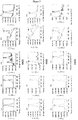
figure 1 illustre la résolution des différentes composantes des pics XPS de l'azote, Nls-1, Nls-2, Nls-3, déterminée à partir des données XPS obtenues pour du graphène sur substrat Ni (Graphene Supermarket) irradié à la même énergie des électrons, 2.5 MeV, au même flux (xl) et à la même fluence (x14), à savoir G8 (exemple 2,figure 1A ) et G9 (exemple 1,figure 1B ). L'épaisseur du graphène sur le substrat Ni varie de 1 à 7 couches sur des domaines d'environ 2 à 5 µm (Graphene Supermarket). - La
figure 2 présente l'analyse de la distribution des énergies de liaison des photoelectrons obtenue à partir des données de spectroscopie de photoelectrons (XPS) des échantillons E3(2), A3(2) et G1(2) de l'exemple 7. - La
figure 3 présente l'analyse de la distribution des énergies de liaison des , photoelectrons obtenue à partir des données de spectroscopie de photoelectrons (XPS) des échantillons E3(2) et E5(2) et G1(2) de l'exemple 7. - La
figure 4 présente l'analyse de la distribution des énergies de liaison des photoelectrons obtenue à partir des données de spectroscopie de photoelectrons (XPS) des échantillons E1(2) et A5(2) et E9(2) de l'exemple 7. - Le graphène sur substrat Ni provient de Graphene Supermarket (Graphene Laboratories Inc.) ; il s'agit d'échantillons de 10mm x 10 mm. Celui sur substrat SiO2 provient de Graphenea (Graphena Monolayer Graphene film).
- Les irradiations par faisceau d'électrons ont été effectuées à l'aide d'un accélérateur Pelletron, fournissant des électrons de forte énergie (150 keV - 2.5 MeV) et à courant variable (150 nA - 200 µA), et fabriqué par la société NEC. Les irradiations avec un faisceau d'électrons dans la gamme 2,5 -10 MeV sont effectuées avec un LINAC de 10 MeV.
- Les irradiations avec un faisceau d'ions légers dans la gamme 0,4 - 3 MeV sont effectuées avec un pelletron fabriqué par la société NEC et dans la gamme 3 - 45 MeV avec un cyclotron.
- La mesure des pourcentages des éléments à la surface des échantillons irradiés est effectuée par spectrométrie de photoélectrons induits par rayons X (XPS) à l'aide d'un spectromètre THERMO-VG ESCALAB 250 muni d'une source RX K->A1 (1486,6 eV).
- Dans les exemples 1 à 4 qui suivent, la géométrie d'irradiation utilisée est la suivante : le faisceau traverse la couche de gaz en contact avec le graphène sur substrat puis entre dans le graphène puis le substrat. L'irradiation crée des radicaux dans la couche du gaz à la surface ainsi que des défauts dans la structure cristalline de la surface avec destruction partielle des liaisons entre carbone.
- Les pourcentages des éléments à la surface des échantillons irradiés sont mesurés par XPS selon un mode opératoire où un pompage de longue durée est effectué sous vide pour conditionner les surfaces. Cette méthode diffère des procédures d'analyse XPS standard qui effectuent un recuit thermique à haute température, environ 450 à 550°C, de courte durée (par exemple 10 min), avant les mesures.
- La microscopie à émission des photoélectrons (XPEEM) a été utilisée pour réaliser une analyse spectroscopique en imagerie. En particulier des cartographies du travail d'extraction des électrons ont été déterminées pour une couche de référence de graphène/Ni et d'une couche traitée (G9) en utilisant la procédure décrite par Wang et al. (Carbon 2015, 82, 360-367).
- Des échantillons de graphène sur substrat Ni ont été irradiés sous atmosphère hélium/air dans les conditions décrites dans le tableau 1 suivant. La pression du mélange est de 1 atm avec une pression partielle de 0,9 atm pour He et de 0,1 atm pour l'air.
- Les rapports flux/flux0 du tableau 1 correspondent aux rapports des courants ICE qui permettent de régler le faisceau d'électrons du Pelletron. La valeur flux0 est la valeur nominale du nombre d'électrons émis par unité de temps et de surface pour le courant ICE minimal utilisé dans les présents essais, et est indiquée pour chaque essai dans le tableau 1. La valeur nominale fluence0 correspond à une irradiation de durée une heure pour un flux d'électrons de valeur flux0.
- Les valeurs de flux sur les couches graphène dépendent du réglage du faisceau d'électrons du Pelletron. La courbe d'étalonnage, Icible=f(ICE), permet de les déterminer à partir des valeurs nominales des flux. Pour les essais réalisés où les valeurs nominales de flux varient dans des rapports de 1 à 10 (tableau 1), les valeurs de flux varient dans des rapports de 1 à 11,9. Les fluences varient dans des rapports de 1 à 10,8 au lieu des rapports de 1 à 14 pour les valeurs nominales (tableau 1).
- Les flux utilisés varient dans la gamme (1,4.1012 à 1,9.1013) e-.cm-2.s-1 et les fluences dans la gamme (6,7.1015 à 7,2.1016)e-.cm-2 (tableaul). Il est possible d'élargir la gamme de flux utilisés, par exemple de (3.1011 à 4.1013) e-.cm-2.s-1.
Tableau 1 : Liste des échantillons de graphène irradiés avec un faisceau d'électrons émis par le Pelletron, et des conditions d'irradiation correspondantes. Exp. Tps d'irrad. MeV CE/ µA Flux/Flux0 Fluence/Fluence0 Flux0 Flux Flux/Fxmin Fluence Fluence/Femin e-.cm-2.s-1 e-.cm-2.s-1 e-.cm-2 G9 14h 2,5 1,2 1 14 1,44.1012 1,44.1011 1 7,27.1016 10,8 E9 1+1+1=3h 1,5 1,2 1 3 1,87.1012 1,87.1012 1,29 2,01.1016 3 E7 6min 1 12 10 1 1,87.1013 1.87.1013 12,9 6,72.1015 1 - Les colonnes intitulées « MeV », « CE/µA », « flux/flux0 » et « fluence/fluence0 » indiquent respectivement l'énergie des électrons, le courant du faisceau, si l'irradiation a eu lieu sur toute la couche ou non, le rapport des flux et des fluences d'irradiation aux valeurs nominales les plus basses utilisées. Les colonnes flux, fluence indiquent les valeurs des flux et fluences qui irradient les monocouches de graphène sur substrat. Les colonnes flux/fxmin et fluence/femin indiquent leurs rapports respectifs aux valeurs minimales utilisées dans les essais.
- Les pourcentages des éléments à la surface des échantillons irradiés comme indiqué précédemment sont consignés dans le tableau 2 suivant.
Tableau 2 : pourcentages des éléments à la surface desdits échantillons irradiés déterminé par XPS. G7-ref correspond à un échantillon non irradié de graphène sur substrat Ni. XPS : atome (%) Exp. C 1s N 1s Ni 2p O 1s Si 2p G7-ref 79,54 0 4,74 9,47 6,3 G9 59,85 1,3 4,38 28,5 6 E9 69,69 0,9 3,13 20,1 6,2 E7 71,25 0,6 3,91 19 5,3 - Ainsi, le dopage par l'azote est observé aussi bien pour des électrons de basse énergie 1 MeV que de haute énergie 2.5 MeV dans une gamme de flux qui varie dans un rapport de 1 à 10 et de fluences qui varient dans un rapport 1 à 14.
- Ces données montrent qu'il y a également fonctionnalisation du carbone par des groupes comprenant de l'oxygène, en particulier des groupes carboxyle et/ou carbonyle.
- Des échantillons de graphène sur substrat Ni ont été irradiés sous une atmosphère d'air humidifié par la présence de vapeur d'eau saturée, dans les conditions décrites dans le tableau 3 suivant.
Tableau 3 : Liste des échantillons de graphène irradiés avec un faisceau d'électrons émis par le Pelletron, et des conditions d'irradiation correspondantes. Exp. Tps d'irrad. MeV CE/ µA Flux/Flux0 Fluence/Fluence0 Flux0 Flux Flux/Fxmin Fluence Fluence/Femin e-.cm-2.s-1 e-.cm-2.s-1 e-.cm-2 G8 14h 2,5 1,2 1 14 1,44.1012 1,44.1012 1 7,27.1016 10,8 E10 1+1+1=3h 1,5 1,2 1 3 1,87.1012 1,87.1012 1,29 2,01.1016 3 - Les pourcentages des éléments à la surface des échantillons irradiés comme indiqué précédemment sont consignés dans le tableau 4 suivant.
Tableau 4: pourcentages des éléments à la surface desdits échantillons irradiés déterminé par XPS XPS : atome (%) Exp. C 1s N 1s Ni 2p O 1s Si 2p G7-ref 79,54 0 4,74 9,47 6,3 G8 57,56 4,2 4,59 29,1 4,6 E10 64,02 2,6 4,63 25,6 3,1 - Ainsi, le dopage par l'azote est observé aussi bien pour des électrons d'énergie 1,5 MeV que de haute énergie 2.5 MeV dans une gamme de fluences qui varient dans un rapport 1 à 4,67.
- Ces données montrent qu'il y a également fonctionnalisation du carbone par des groupes comprenant de l'oxygène, en particulier des groupes carboxyle et/ou carbonyle.
- Des échantillons de graphène sur substrat SiO2 ont été irradiés sous atmosphère hélium/air dans les conditions décrites dans le tableau 5 suivant. La pression du mélange est de 1 atm avec une pression partielle de 0.9 atm pour He et de 0.1 atm pour l'air.
Tableau 5 : Echantillons de graphène irradié avec un faisceau d'électrons émis par le Pelletron, et conditions d'irradiation correspondantes. Exp. Tps d'irrad. MeV CE/ µA Flux/Flux0 Fluence/Fluence0 Flux0 Flux Flux/Fxmin Fluence Fluence/Femin e-.cm-2.s-1 e-.cm-2.s-1 e-.cm-2 Gsl 1+1+1=3h 1,5 1,2 1 3 1,87.1012 1,87.1012 1,29 2,01.1016 1 - Les pourcentages des éléments à la surface de l'échantillon irradié comme indiqué précédemment sont consignés dans le tableau 6 suivant.
Tableau 6 : pourcentages des éléments à la surface de l'échantillon Gs1 irradié déterminé par XPS XPS : atome (%) Exp. C 1s N 1s Ni 2p O 1s Si 2p G7-ref 79,54 0 4,74 9,47 6,3 Gs1 26,26 1,1 0 44,7 28 - Ainsi, la quantité d'azote introduite à la surface du graphène sur substrat SiO2 est proche de celle introduite dans les mêmes conditions à la surface du graphène sur substrat Ni (échantillon E9 de l'exemple 1), montrant la grande polyvalence du procédé de l'invention quant aux substrats portant l'échantillon irradié.
- Les données du tableau 6 montrent qu'il y a également fonctionnalisation du carbone par des groupes comprenant de l'oxygène, en particulier des groupes carboxyle et/ou carbonyle.
- L'analyse de la distribution des énergies de liaison des photoelectrons obtenue à partir des données de spectroscopie de photoelectrons (XPS) montre que le dopant azote a plusieurs états de liaison qui correspondent aux énergies des gammes (a) 400.2 -400.7, (b) 403.01-403.63 et (c) 407.18-407.59 eV, pour G9 (exemple 1) et G8 (exemple 2).
- La
figure 1 montre que la population des différents types de liaison du dopant azote est fortement dépendante de l'atmosphère (hélium/air ou air humide) mise en contact avec l'échantillon à doper, avant irradiation à 2.5Mev à bas flux (xl) et forte fluence (xl4). L'atmosphère de type air humide favorise quasiment uniquement l'azote Nls-3. L'atmosphère de type hélium/air permet de peupler les trois types de liaison avec une probabilité légèrement plus forte pour N1s-1 que pour N1s-2 et Nls-3. - Le tableau 7 suivant donne le domaine et les valeurs moyennes des énergies de liaison des électrons correspondant aux différentes composantes Nls-n déterminées dans les spectres XPS, ainsi que l'identification de ces composantes.
Tableau 7 Composante N1s Emin-Emax (dE) en eV E(eV) nature N1s-1 399.9-400.69 (0,7) 400,23 N- pyrrolique ; N-pyridone. N1s-2a 402.3(0) 402,30 N-N. N1s-2b 403.01-403-63(0,62) 403,26 N-pyridine oxyde ; N-nitroso. N1s-3 406.83-407.59(0,76) 407,20 N-nitro ; N-nitrate - Dans cet exemple, le faisceau traverse d'abord le substrat, puis le graphène, et arrive finalement dans le gaz en contact avec le graphène.
- Des échantillons de graphène sur substrat Ni, Cu, SiO2, SiC sont irradiés sous atmosphère N2, N2/H2(5%), N2/vapeur d'eau saturante, N2/H2(5%)/vapeur d'eau saturante, N2/alcène, N2/alcyne, N2/H2S, N2/O2, N2/SO2, He(0.9atm)/Air(0.1), ou Air(vapeur d'eau saturante) (voir en particulier les exemples 1 et 2) avec des électrons qui ont à l'interface graphène/gaz des énergies dans la gamme 0,4-2,5 MeV pour des conditions de flux et fluence, respectivement dans les gammes (3.1011 à 4.1013) e-.cm-2.s-1 et (1,8.1013 à 1.1019) e-.cm-2.
- Des disques (diamètre 8-10mm) de composites graphite (PVDF) BMA-5, utilisés dans l'industrie comme éléments de structure dans des piles à combustibles, ont été irradiés en conditions oxydantes sous atmosphère He(0,9atm)/Air(0,1atm), Air(vapeur d'eau saturante), à 1.5 MeV dans des conditions de flux et fluence comparables au graphène , en particulier selon les conditions suivantes :
Tableau 8 Exp. Tps d'irrad. MeV CE/µA Flux/Flux0 Fluence/Fluence0 Flux0 Flux Flux/Fxmin Fluence Atmosphère e-. cm-2.s-1 e-. cm-2.s-1 e-.cm-2 BMA-MP_1 5-5 3h=1h+ 1h+1h 1,5 1,2 1 3 1,44E+ 12 1,44E+ 12 1,00E+ 00 1,56E+ 16 He(0.9atm)/ Air(0.1) BMA-MP_1 5-6 3h=1h+ 1h+1h 1,5 1,2 1 3 1,44E+ 12 1,44E+ 12 1,00E+ 00 1,56E+ 16 air + vapeur d'eau - Ces disques, une fois dopés à l'azote, ont ensuite été testés en tant qu'électrode redox vis à vis des couple redox vanadium utilisés pour des batteries rechargeables à flux de type à oxydoréduction au vanadium. Il s'avère que les vitesses d'échange des électrons sont modifiées de manière remarquable à la fois pour les réactions d'oxydation et de réduction.
- Des échantillons de graphène sur substrat Ni ont été irradiés sous une atmosphère telle que décrite dans le tableau 9 suivant, dans les conditions décrites dans le tableau 10 suivant.
Expérience Atmosphère A3(2) H2 (3%) / N2 1,1 bar E3(2) N2 1,1 bar E5(2) N2 0,6 bar ; Air 0,4 bar G1(2) N2 1,1 bar ; vapeur d'eau saturée A5(2) H2 (3%) / N2 1,1 bar E1(2) N2 1,1 bar E9(2) N2 1,1 bar ; vapeur d'eau saturée Tableau 10 : Liste des échantillons de graphène irradiés avec un faisceau d'électrons émis par le Pelletron, et des conditions d'irradiation correspondantes. Exp. Tps d'irrad. MeV CE/µA Flux/Flux0 Flux0 Flux Flux/Fxmin Fluence Fluence/Femin e-.cm-2.s-1 e-.cm-2.s-1 e-.cm-2 A3(2) 1+1+1=3h 1,5 1,2 1 2.51 1012 2.51 1012 1 2.71 1016 3 E3(2) 1+1+1=3h 1,5 1,2 1 2.51 1012 2.51 1012 1 2.71 1016 3 E5(2) 1+1+1=3h 1,5 1,2 1 2.51 1012 2.51 1012 1 2.71 1016 3 G1(2) 1+1+1=3h 1,5 1,2 1 2.51 1012 2.51 1012 1 2.71 1016 3 A5(2) 14h19 1,5 1,2 1 2.51 1012 2.51 1012 1 1.30. 1017 14,32 E1(2) 13h21 1,5 1,2 1 2.51 1012 2.51 1012 1 1.21. 1017 13,35 E9(2) 14h28 1,5 1,2 1 2.51 1012 2.51 1012 1 1,30. 1017 14,47 - L'analyse de la distribution des énergies de liaison des photoelectrons obtenue à partir des données de spectroscopie de photoelectrons (XPS) des échantillons mentionnés ci-dessus est donnée aux
figures 2 ,3 et4 .
Claims (16)
- Procédé de dopage à l'azote d'un matériau comprenant un ensemble d'atomes de carbone à l'état d'hybridation sp2, ledit procédé comprenant les étapes suivantes :a) la mise en contact dudit matériau avec du diazote ;b) l'irradiation du matériau et du diazote mis en contact par un faisceau d'électrons ou d'ions légers dont l'énergie est supérieure ou égale à 0,1 MeV, pour obtenir un matériau dont tout ou partie de l'ensemble d'atomes de carbone à l'état d'hybridation sp2 est dopé à l'azote ;le matériau n'étant pas oxydé préalablement à l'étape a).
- Procédé selon la revendication 1, dans lequel la mise en contact a) du matériau se fait avec un mélange gazeux comprenant du diazote, en particulier un mélange gazeux comprenant de l'air.
- Procédé selon la revendication 2, dans lequel ledit mélange gazeux comprend en outre un gaz choisi parmi le dioxygène, le dioxyde de carbone, le dihydrogène, l'hélium, le néon, l'argon, le krypton, le xénon, la vapeur d'eau et leurs mélanges.
- Procédé selon l'une des revendications 1 à 3, dans lequel la mise en contact a) du matériau se fait avec :- un mélange gazeux comprenant de l'hélium et de l'air ; ou- un mélange gazeux comprenant de l'air et de la vapeur d'eau, en particulier de la vapeur d'eau saturée.
- Procédé selon l'une des revendications 1 à 4, dans lequel ledit ensemble d'atomes de carbone à l'état d'hybridation sp2 est choisi parmi le graphène, le graphite, les nanotubes de carbones, les fullerènes et les fullerites, ledit ensemble étant en particulier le graphène ou le graphite.
- Procédé selon l'une des revendications 1 à 5, dans lequel ledit ensemble d'atomes de carbone à l'état d'hybridation sp2 est supporté par un substrat, notamment choisi parmi les métaux, en particulier Ni, les semi-conducteurs et les isolants, en particulier SiO2, les verres et les polymères.
- Procédé selon l'une des revendications 1 à 6, dans lequel ledit ensemble d'atomes de carbone à l'état d'hybridation sp2 est sous forme de poudre.
- Procédé selon l'une des revendications 1 à 7, dans lequel ledit faisceau est un faisceau d'électrons.
- Procédé selon la revendication 8, dans lequel les électrons ont une énergie allant de 0,1 à 10 MeV, en particulier de 0,4 à 2,5 MeV, plus particulièrement de 1,0 à 2,5 MeV,
ledit ensemble d'atomes de carbone à l'état d'hybridation sp2 étant notamment supporté par un substrat. - Procédé selon la revendication 8, dans lequel les électrons ont une énergie allant de 2,5 à 10 MeV,
ledit ensemble d'atomes de carbone à l'état d'hybridation sp2 étant notamment supporté par un substrat ou sous forme de poudre. - Procédé selon l'une des revendications 1 à 7, dans lequel ledit faisceau est un faisceau d'ions légers, notamment choisis parmi H+ et He+.
- Procédé selon la revendication 11, dans lequel les ions légers ont une énergie allant de 0,1 MeV à 45 MeV.
- Procédé selon l'une des revendications 1 à 12, dans lequel la durée de l'irradiation de l'étape b) allant de 1 minute à 72 heures, en particulier de 5 minutes à 15 heures.
- Procédé selon l'une des revendications 1 à 13, dans lequel :- le flux du faisceau d'électrons va de 3.1011 à 4.1013 e-.cm-2.s-1 , en particulier de 1,4.1012 à 1,9.1013 e-.cm-2.s-1 ; ou- le flux du faisceau d'ions légers va de 3.107 à 6.1011 e-.cm-2.s-1 ; et/ou- la fluence du faisceau d'électrons ou d'ions légers va de 1,8.109 à 1019 e-.cm-2 , en particulier de 6,7.1015 à 7,2.1016 e-.cm-2.
- Procédé selon l'une des revendications 1 à 14, dans lequel, lors de l'irradiation b) :- le faisceau irradie le diazote, puis le matériau comprenant un ensemble d'atomes de carbone à l'état d'hybridation sp2 ; ou- le faisceau irradie le matériau comprenant un ensemble d'atomes de carbone à l'état d'hybridation sp2, puis le diazote.
- Procédé selon l'une des revendications 1 à 15, dans lequel l'ensemble d'atomes de carbone à l'état d'hybridation sp2 dopé à l'azote, obtenu à l'issue de l'étape b), est également fonctionnalisé par des liaisons carbone oxygène, en particulier des groupes carboxyle et/ou carbonyle.
Applications Claiming Priority (2)
| Application Number | Priority Date | Filing Date | Title |
|---|---|---|---|
| FR1658615A FR3056015B1 (fr) | 2016-09-15 | 2016-09-15 | Procede de dopage par l'azote de materiaux solides |
| PCT/FR2017/052474 WO2018051037A2 (fr) | 2016-09-15 | 2017-09-15 | Procede de dopage par l'azote de materiaux solides |
Publications (2)
| Publication Number | Publication Date |
|---|---|
| EP3512808A2 EP3512808A2 (fr) | 2019-07-24 |
| EP3512808B1 true EP3512808B1 (fr) | 2020-04-15 |
Family
ID=58162682
Family Applications (1)
| Application Number | Title | Priority Date | Filing Date |
|---|---|---|---|
| EP17780817.7A Active EP3512808B1 (fr) | 2016-09-15 | 2017-09-15 | Procede de dopage par l'azote de materiaux solides |
Country Status (4)
| Country | Link |
|---|---|
| US (1) | US11261093B2 (fr) |
| EP (1) | EP3512808B1 (fr) |
| FR (1) | FR3056015B1 (fr) |
| WO (1) | WO2018051037A2 (fr) |
Families Citing this family (4)
| Publication number | Priority date | Publication date | Assignee | Title |
|---|---|---|---|---|
| CN109765285B (zh) * | 2019-01-30 | 2020-06-09 | 厦门大学 | 一种可实时检测体液的柔性条带状pH传感器及其制备方法 |
| CN110484933B (zh) * | 2019-08-13 | 2021-04-20 | 中国工程物理研究院材料研究所 | 一种自支撑镍铁磷化物/氮杂碳布复合电极的制备方法 |
| CN111170315A (zh) * | 2019-12-17 | 2020-05-19 | 核工业北京化工冶金研究院 | 一种提高石墨烯纸力学性质和导电性的方法 |
| KR102808025B1 (ko) * | 2022-01-06 | 2025-05-19 | 한국과학기술연구원 | 전자빔 조사를 이용한 탄소 나노 소재 기반 구조체, 이를 포함하는 유연 투명 전극, 및 제조 방법 |
Family Cites Families (1)
| Publication number | Priority date | Publication date | Assignee | Title |
|---|---|---|---|---|
| CN104891476B (zh) * | 2015-05-12 | 2017-02-01 | 上海大学 | 电子束辐照制备氮掺杂还原石墨烯的方法 |
-
2016
- 2016-09-15 FR FR1658615A patent/FR3056015B1/fr active Active
-
2017
- 2017-09-15 EP EP17780817.7A patent/EP3512808B1/fr active Active
- 2017-09-15 US US16/333,715 patent/US11261093B2/en active Active
- 2017-09-15 WO PCT/FR2017/052474 patent/WO2018051037A2/fr not_active Ceased
Non-Patent Citations (1)
| Title |
|---|
| None * |
Also Published As
| Publication number | Publication date |
|---|---|
| WO2018051037A9 (fr) | 2018-12-06 |
| WO2018051037A3 (fr) | 2018-10-04 |
| EP3512808A2 (fr) | 2019-07-24 |
| WO2018051037A2 (fr) | 2018-03-22 |
| US20190270643A1 (en) | 2019-09-05 |
| FR3056015B1 (fr) | 2018-10-12 |
| FR3056015A1 (fr) | 2018-03-16 |
| US11261093B2 (en) | 2022-03-01 |
Similar Documents
| Publication | Publication Date | Title |
|---|---|---|
| Khare et al. | Functionalization of carbon nanotubes via nitrogen glow discharge | |
| Liu et al. | Chirality-controlled synthesis of single-wall carbon nanotubes using vapour-phase epitaxy | |
| EP3512808A2 (fr) | Procede de dopage par l'azote de materiaux solides | |
| Korusenko et al. | Changes of the electronic structure of the atoms of nitrogen in nitrogen-doped multiwalled carbon nanotubes under the influence of pulsed ion radiation | |
| Nuntawong et al. | Shelf time effect on SERS effectiveness of silver nanorod prepared by OAD technique | |
| Okada et al. | Bonding state and defects of nitrogen-doped graphene in oxygen reduction reaction | |
| Ren et al. | Fabrication of nitrogen-doped graphenes by pulsed laser deposition and improved chemical enhancement for Raman spectroscopy | |
| Chang et al. | Characteristics of graphene grown through low power capacitive coupled radio frequency plasma enhanced chemical vapor deposition | |
| Wang et al. | Conversion of pristine and p-doped sulfuric-acid-treated single-walled carbon nanotubes to n-type materials by a facile hydrazine vapor exposure process | |
| Bodik et al. | Fast low-temperature plasma reduction of monolayer graphene oxide at atmospheric pressure | |
| Botas et al. | High quantum yield dual emission from gas-phase grown crystalline Si nanoparticles | |
| McCann et al. | Chemical bonding modifications of tetrahedral amorphous carbon and nitrogenated tetrahedral amorphous carbon films induced by rapid thermal annealing | |
| JP5504565B2 (ja) | ダイヤモンド紫外線センサー素子とその製造方法、並びに紫外線センサー装置 | |
| EP3008014A1 (fr) | Nanomateriaux graphitiques sous forme d'oignons de carbone, leur procede de preparation et leur utilisation | |
| Liu et al. | Application of plasma modified multi-wall carbon nanotubes to ethanol vapor detection | |
| Udachin et al. | Dielectric barrier discharge plasma deoxidation of copper surfaces in an Ar/SiH4 atmosphere | |
| Kang et al. | Cyclic atomic layer etching of PdSe2 | |
| Bishop et al. | Probing redox kinetics in Pr doped ceria mixed ionic electronic conducting thin films by in situ optical absorption measurements | |
| CN109400641B (zh) | 胶体量子点改性方法 | |
| Choi et al. | Hydrogen plasma-enhanced atomic layer deposition of hydrogenated amorphous carbon thin films | |
| Hussein | Towards a fine-tuning of surface chemistry in aligned carbon nanotubes induced by nitrogen plasma discharge post-treatment: a combined microscopic and spectroscopic study | |
| CN114420787B (zh) | 一种太阳能电池退火方法及退火设备 | |
| Muramatsu et al. | Synthesis of outer tube-selectively nitrogen-doped double-walled carbon nanotubes by nitrogen plasma treatment | |
| Higo et al. | Characterization and preservation of gold oxides prepared by an oxygen-dc glow discharge from gold films and studied by X-ray photoelectron spectroscopy | |
| FR2873705A1 (fr) | Procede de traitement de surface d'un substrat en polyester ou polyamide |
Legal Events
| Date | Code | Title | Description |
|---|---|---|---|
| STAA | Information on the status of an ep patent application or granted ep patent |
Free format text: STATUS: UNKNOWN |
|
| STAA | Information on the status of an ep patent application or granted ep patent |
Free format text: STATUS: THE INTERNATIONAL PUBLICATION HAS BEEN MADE |
|
| PUAI | Public reference made under article 153(3) epc to a published international application that has entered the european phase |
Free format text: ORIGINAL CODE: 0009012 |
|
| STAA | Information on the status of an ep patent application or granted ep patent |
Free format text: STATUS: REQUEST FOR EXAMINATION WAS MADE |
|
| 17P | Request for examination filed |
Effective date: 20190322 |
|
| AK | Designated contracting states |
Kind code of ref document: A2 Designated state(s): AL AT BE BG CH CY CZ DE DK EE ES FI FR GB GR HR HU IE IS IT LI LT LU LV MC MK MT NL NO PL PT RO RS SE SI SK SM TR |
|
| AX | Request for extension of the european patent |
Extension state: BA ME |
|
| DAV | Request for validation of the european patent (deleted) | ||
| DAX | Request for extension of the european patent (deleted) | ||
| GRAP | Despatch of communication of intention to grant a patent |
Free format text: ORIGINAL CODE: EPIDOSNIGR1 |
|
| STAA | Information on the status of an ep patent application or granted ep patent |
Free format text: STATUS: GRANT OF PATENT IS INTENDED |
|
| INTG | Intention to grant announced |
Effective date: 20200103 |
|
| GRAS | Grant fee paid |
Free format text: ORIGINAL CODE: EPIDOSNIGR3 |
|
| GRAA | (expected) grant |
Free format text: ORIGINAL CODE: 0009210 |
|
| STAA | Information on the status of an ep patent application or granted ep patent |
Free format text: STATUS: THE PATENT HAS BEEN GRANTED |
|
| AK | Designated contracting states |
Kind code of ref document: B1 Designated state(s): AL AT BE BG CH CY CZ DE DK EE ES FI FR GB GR HR HU IE IS IT LI LT LU LV MC MK MT NL NO PL PT RO RS SE SI SK SM TR |
|
| REG | Reference to a national code |
Ref country code: CH Ref legal event code: EP |
|
| REG | Reference to a national code |
Ref country code: DE Ref legal event code: R096 Ref document number: 602017014932 Country of ref document: DE |
|
| REG | Reference to a national code |
Ref country code: IE Ref legal event code: FG4D Free format text: LANGUAGE OF EP DOCUMENT: FRENCH |
|
| REG | Reference to a national code |
Ref country code: AT Ref legal event code: REF Ref document number: 1257079 Country of ref document: AT Kind code of ref document: T Effective date: 20200515 |
|
| REG | Reference to a national code |
Ref country code: NL Ref legal event code: MP Effective date: 20200415 |
|
| REG | Reference to a national code |
Ref country code: LT Ref legal event code: MG4D |
|
| PG25 | Lapsed in a contracting state [announced via postgrant information from national office to epo] |
Ref country code: PT Free format text: LAPSE BECAUSE OF FAILURE TO SUBMIT A TRANSLATION OF THE DESCRIPTION OR TO PAY THE FEE WITHIN THE PRESCRIBED TIME-LIMIT Effective date: 20200817 Ref country code: NO Free format text: LAPSE BECAUSE OF FAILURE TO SUBMIT A TRANSLATION OF THE DESCRIPTION OR TO PAY THE FEE WITHIN THE PRESCRIBED TIME-LIMIT Effective date: 20200715 Ref country code: GR Free format text: LAPSE BECAUSE OF FAILURE TO SUBMIT A TRANSLATION OF THE DESCRIPTION OR TO PAY THE FEE WITHIN THE PRESCRIBED TIME-LIMIT Effective date: 20200716 Ref country code: IS Free format text: LAPSE BECAUSE OF FAILURE TO SUBMIT A TRANSLATION OF THE DESCRIPTION OR TO PAY THE FEE WITHIN THE PRESCRIBED TIME-LIMIT Effective date: 20200815 Ref country code: SE Free format text: LAPSE BECAUSE OF FAILURE TO SUBMIT A TRANSLATION OF THE DESCRIPTION OR TO PAY THE FEE WITHIN THE PRESCRIBED TIME-LIMIT Effective date: 20200415 Ref country code: FI Free format text: LAPSE BECAUSE OF FAILURE TO SUBMIT A TRANSLATION OF THE DESCRIPTION OR TO PAY THE FEE WITHIN THE PRESCRIBED TIME-LIMIT Effective date: 20200415 Ref country code: NL Free format text: LAPSE BECAUSE OF FAILURE TO SUBMIT A TRANSLATION OF THE DESCRIPTION OR TO PAY THE FEE WITHIN THE PRESCRIBED TIME-LIMIT Effective date: 20200415 Ref country code: LT Free format text: LAPSE BECAUSE OF FAILURE TO SUBMIT A TRANSLATION OF THE DESCRIPTION OR TO PAY THE FEE WITHIN THE PRESCRIBED TIME-LIMIT Effective date: 20200415 |
|
| REG | Reference to a national code |
Ref country code: AT Ref legal event code: MK05 Ref document number: 1257079 Country of ref document: AT Kind code of ref document: T Effective date: 20200415 |
|
| PG25 | Lapsed in a contracting state [announced via postgrant information from national office to epo] |
Ref country code: HR Free format text: LAPSE BECAUSE OF FAILURE TO SUBMIT A TRANSLATION OF THE DESCRIPTION OR TO PAY THE FEE WITHIN THE PRESCRIBED TIME-LIMIT Effective date: 20200415 Ref country code: BG Free format text: LAPSE BECAUSE OF FAILURE TO SUBMIT A TRANSLATION OF THE DESCRIPTION OR TO PAY THE FEE WITHIN THE PRESCRIBED TIME-LIMIT Effective date: 20200715 Ref country code: LV Free format text: LAPSE BECAUSE OF FAILURE TO SUBMIT A TRANSLATION OF THE DESCRIPTION OR TO PAY THE FEE WITHIN THE PRESCRIBED TIME-LIMIT Effective date: 20200415 Ref country code: RS Free format text: LAPSE BECAUSE OF FAILURE TO SUBMIT A TRANSLATION OF THE DESCRIPTION OR TO PAY THE FEE WITHIN THE PRESCRIBED TIME-LIMIT Effective date: 20200415 |
|
| PG25 | Lapsed in a contracting state [announced via postgrant information from national office to epo] |
Ref country code: AL Free format text: LAPSE BECAUSE OF FAILURE TO SUBMIT A TRANSLATION OF THE DESCRIPTION OR TO PAY THE FEE WITHIN THE PRESCRIBED TIME-LIMIT Effective date: 20200415 |
|
| REG | Reference to a national code |
Ref country code: DE Ref legal event code: R097 Ref document number: 602017014932 Country of ref document: DE |
|
| PG25 | Lapsed in a contracting state [announced via postgrant information from national office to epo] |
Ref country code: IT Free format text: LAPSE BECAUSE OF FAILURE TO SUBMIT A TRANSLATION OF THE DESCRIPTION OR TO PAY THE FEE WITHIN THE PRESCRIBED TIME-LIMIT Effective date: 20200415 Ref country code: AT Free format text: LAPSE BECAUSE OF FAILURE TO SUBMIT A TRANSLATION OF THE DESCRIPTION OR TO PAY THE FEE WITHIN THE PRESCRIBED TIME-LIMIT Effective date: 20200415 Ref country code: DK Free format text: LAPSE BECAUSE OF FAILURE TO SUBMIT A TRANSLATION OF THE DESCRIPTION OR TO PAY THE FEE WITHIN THE PRESCRIBED TIME-LIMIT Effective date: 20200415 Ref country code: SM Free format text: LAPSE BECAUSE OF FAILURE TO SUBMIT A TRANSLATION OF THE DESCRIPTION OR TO PAY THE FEE WITHIN THE PRESCRIBED TIME-LIMIT Effective date: 20200415 Ref country code: EE Free format text: LAPSE BECAUSE OF FAILURE TO SUBMIT A TRANSLATION OF THE DESCRIPTION OR TO PAY THE FEE WITHIN THE PRESCRIBED TIME-LIMIT Effective date: 20200415 Ref country code: RO Free format text: LAPSE BECAUSE OF FAILURE TO SUBMIT A TRANSLATION OF THE DESCRIPTION OR TO PAY THE FEE WITHIN THE PRESCRIBED TIME-LIMIT Effective date: 20200415 Ref country code: CZ Free format text: LAPSE BECAUSE OF FAILURE TO SUBMIT A TRANSLATION OF THE DESCRIPTION OR TO PAY THE FEE WITHIN THE PRESCRIBED TIME-LIMIT Effective date: 20200415 Ref country code: ES Free format text: LAPSE BECAUSE OF FAILURE TO SUBMIT A TRANSLATION OF THE DESCRIPTION OR TO PAY THE FEE WITHIN THE PRESCRIBED TIME-LIMIT Effective date: 20200415 |
|
| PLBE | No opposition filed within time limit |
Free format text: ORIGINAL CODE: 0009261 |
|
| STAA | Information on the status of an ep patent application or granted ep patent |
Free format text: STATUS: NO OPPOSITION FILED WITHIN TIME LIMIT |
|
| PG25 | Lapsed in a contracting state [announced via postgrant information from national office to epo] |
Ref country code: SK Free format text: LAPSE BECAUSE OF FAILURE TO SUBMIT A TRANSLATION OF THE DESCRIPTION OR TO PAY THE FEE WITHIN THE PRESCRIBED TIME-LIMIT Effective date: 20200415 Ref country code: PL Free format text: LAPSE BECAUSE OF FAILURE TO SUBMIT A TRANSLATION OF THE DESCRIPTION OR TO PAY THE FEE WITHIN THE PRESCRIBED TIME-LIMIT Effective date: 20200415 |
|
| 26N | No opposition filed |
Effective date: 20210118 |
|
| REG | Reference to a national code |
Ref country code: CH Ref legal event code: PL |
|
| PG25 | Lapsed in a contracting state [announced via postgrant information from national office to epo] |
Ref country code: SI Free format text: LAPSE BECAUSE OF FAILURE TO SUBMIT A TRANSLATION OF THE DESCRIPTION OR TO PAY THE FEE WITHIN THE PRESCRIBED TIME-LIMIT Effective date: 20200415 |
|
| REG | Reference to a national code |
Ref country code: BE Ref legal event code: MM Effective date: 20200930 |
|
| PG25 | Lapsed in a contracting state [announced via postgrant information from national office to epo] |
Ref country code: LU Free format text: LAPSE BECAUSE OF NON-PAYMENT OF DUE FEES Effective date: 20200915 |
|
| PG25 | Lapsed in a contracting state [announced via postgrant information from national office to epo] |
Ref country code: IE Free format text: LAPSE BECAUSE OF NON-PAYMENT OF DUE FEES Effective date: 20200915 Ref country code: LI Free format text: LAPSE BECAUSE OF NON-PAYMENT OF DUE FEES Effective date: 20200930 Ref country code: CH Free format text: LAPSE BECAUSE OF NON-PAYMENT OF DUE FEES Effective date: 20200930 Ref country code: BE Free format text: LAPSE BECAUSE OF NON-PAYMENT OF DUE FEES Effective date: 20200930 |
|
| PG25 | Lapsed in a contracting state [announced via postgrant information from national office to epo] |
Ref country code: TR Free format text: LAPSE BECAUSE OF FAILURE TO SUBMIT A TRANSLATION OF THE DESCRIPTION OR TO PAY THE FEE WITHIN THE PRESCRIBED TIME-LIMIT Effective date: 20200415 Ref country code: MT Free format text: LAPSE BECAUSE OF FAILURE TO SUBMIT A TRANSLATION OF THE DESCRIPTION OR TO PAY THE FEE WITHIN THE PRESCRIBED TIME-LIMIT Effective date: 20200415 Ref country code: CY Free format text: LAPSE BECAUSE OF FAILURE TO SUBMIT A TRANSLATION OF THE DESCRIPTION OR TO PAY THE FEE WITHIN THE PRESCRIBED TIME-LIMIT Effective date: 20200415 |
|
| PG25 | Lapsed in a contracting state [announced via postgrant information from national office to epo] |
Ref country code: MK Free format text: LAPSE BECAUSE OF FAILURE TO SUBMIT A TRANSLATION OF THE DESCRIPTION OR TO PAY THE FEE WITHIN THE PRESCRIBED TIME-LIMIT Effective date: 20200415 Ref country code: MC Free format text: LAPSE BECAUSE OF FAILURE TO SUBMIT A TRANSLATION OF THE DESCRIPTION OR TO PAY THE FEE WITHIN THE PRESCRIBED TIME-LIMIT Effective date: 20200415 |
|
| PGFP | Annual fee paid to national office [announced via postgrant information from national office to epo] |
Ref country code: GB Payment date: 20250929 Year of fee payment: 9 |
|
| PGFP | Annual fee paid to national office [announced via postgrant information from national office to epo] |
Ref country code: FR Payment date: 20250929 Year of fee payment: 9 |
|
| PGFP | Annual fee paid to national office [announced via postgrant information from national office to epo] |
Ref country code: DE Payment date: 20251029 Year of fee payment: 9 |