EP3505488A1 - Verfahren und system für adaptive multifaktorielle kombinierte identifizierung - Google Patents
Verfahren und system für adaptive multifaktorielle kombinierte identifizierung Download PDFInfo
- Publication number
- EP3505488A1 EP3505488A1 EP17844048.3A EP17844048A EP3505488A1 EP 3505488 A1 EP3505488 A1 EP 3505488A1 EP 17844048 A EP17844048 A EP 17844048A EP 3505488 A1 EP3505488 A1 EP 3505488A1
- Authority
- EP
- European Patent Office
- Prior art keywords
- supply
- fuel
- information
- identification
- sensor
- Prior art date
- Legal status (The legal status is an assumption and is not a legal conclusion. Google has not performed a legal analysis and makes no representation as to the accuracy of the status listed.)
- Granted
Links
Images

Classifications
-
- G—PHYSICS
- G07—CHECKING-DEVICES
- G07F—COIN-FREED OR LIKE APPARATUS
- G07F13/00—Coin-freed apparatus for controlling dispensing or fluids, semiliquids or granular material from reservoirs
- G07F13/02—Coin-freed apparatus for controlling dispensing or fluids, semiliquids or granular material from reservoirs by volume
-
- B—PERFORMING OPERATIONS; TRANSPORTING
- B60—VEHICLES IN GENERAL
- B60K—ARRANGEMENT OR MOUNTING OF PROPULSION UNITS OR OF TRANSMISSIONS IN VEHICLES; ARRANGEMENT OR MOUNTING OF PLURAL DIVERSE PRIME-MOVERS IN VEHICLES; AUXILIARY DRIVES FOR VEHICLES; INSTRUMENTATION OR DASHBOARDS FOR VEHICLES; ARRANGEMENTS IN CONNECTION WITH COOLING, AIR INTAKE, GAS EXHAUST OR FUEL SUPPLY OF PROPULSION UNITS IN VEHICLES
- B60K15/00—Arrangement in connection with fuel supply of combustion engines or other fuel consuming energy converters, e.g. fuel cells; Mounting or construction of fuel tanks
- B60K15/03—Fuel tanks
-
- B—PERFORMING OPERATIONS; TRANSPORTING
- B60—VEHICLES IN GENERAL
- B60K—ARRANGEMENT OR MOUNTING OF PROPULSION UNITS OR OF TRANSMISSIONS IN VEHICLES; ARRANGEMENT OR MOUNTING OF PLURAL DIVERSE PRIME-MOVERS IN VEHICLES; AUXILIARY DRIVES FOR VEHICLES; INSTRUMENTATION OR DASHBOARDS FOR VEHICLES; ARRANGEMENTS IN CONNECTION WITH COOLING, AIR INTAKE, GAS EXHAUST OR FUEL SUPPLY OF PROPULSION UNITS IN VEHICLES
- B60K15/00—Arrangement in connection with fuel supply of combustion engines or other fuel consuming energy converters, e.g. fuel cells; Mounting or construction of fuel tanks
- B60K15/03—Fuel tanks
- B60K15/073—Tank construction specially adapted to the vehicle
-
- G—PHYSICS
- G06—COMPUTING OR CALCULATING; COUNTING
- G06Q—INFORMATION AND COMMUNICATION TECHNOLOGY [ICT] SPECIALLY ADAPTED FOR ADMINISTRATIVE, COMMERCIAL, FINANCIAL, MANAGERIAL OR SUPERVISORY PURPOSES; SYSTEMS OR METHODS SPECIALLY ADAPTED FOR ADMINISTRATIVE, COMMERCIAL, FINANCIAL, MANAGERIAL OR SUPERVISORY PURPOSES, NOT OTHERWISE PROVIDED FOR
- G06Q20/00—Payment architectures, schemes or protocols
- G06Q20/38—Payment protocols; Details thereof
- G06Q20/40—Authorisation, e.g. identification of payer or payee, verification of customer or shop credentials; Review and approval of payers, e.g. check credit lines or negative lists
-
- B—PERFORMING OPERATIONS; TRANSPORTING
- B67—OPENING, CLOSING OR CLEANING BOTTLES, JARS OR SIMILAR CONTAINERS; LIQUID HANDLING
- B67D—DISPENSING, DELIVERING OR TRANSFERRING LIQUIDS, NOT OTHERWISE PROVIDED FOR
- B67D7/00—Apparatus or devices for transferring liquids from bulk storage containers or reservoirs into vehicles or into portable containers, e.g. for retail sale purposes
- B67D7/06—Details or accessories
- B67D7/32—Arrangements of safety or warning devices; Means for preventing unauthorised delivery of liquid
- B67D7/34—Means for preventing unauthorised delivery of liquid
- B67D7/344—Means for preventing unauthorised delivery of liquid by checking a correct coupling or coded information
- B67D7/348—Means for preventing unauthorised delivery of liquid by checking a correct coupling or coded information by interrogating an information transmitter, e.g. a transponder
-
- G—PHYSICS
- G08—SIGNALLING
- G08G—TRAFFIC CONTROL SYSTEMS
- G08G1/00—Traffic control systems for road vehicles
- G08G1/01—Detecting movement of traffic to be counted or controlled
- G08G1/017—Detecting movement of traffic to be counted or controlled identifying vehicles
Definitions
- the invention relates to a method and a system for adaptive multifactorial combination identification of vehicle means and their owners during the automated testing of the technical condition of objects (vehicle means and stationary installations, including power plants) in the supply of oil and different fuel types, such as gasoline, kerosene, Heating oil, diesel oil and LPG from stationary or mobile tank installations, provided that tank objects and tank installations are equipped with an automated object identification device for the supply of fuel or oil with simultaneous control over the supply of fuel and lubricants.
- Possible objects are vehicle equipment and / or stationary equipment used for the storage, transport or consumption of fuel and oil, as well as their owners.
- identification information carrier and “information carrier” mean here and in the following text material objects, technical means and technology for different purposes, which are owned by the owner of an information carrier and contain digital or analog information.
- the information is readable with an electronic reading device by accepting magnetic, electromagnetic or other radiation, including ionizing radiation, in a wide frequency band.
- the information on an information carrier can be contained in any form, u. a. as a barcode, holographic record, chip, USB memory, credit card, discount card, tag, RFID tag, transponder, etc., provided it is permanently and firmly applied to the body of a physical item.
- the information on an information carrier can be made active as well as passive, i. H. either broadcast or returned.
- reading device here and in the following text means an electronic device for reading the information from a chip, a USB memory, a credit card, a tag, an RFID tag, a transponder or any other information carrier except for fingerprints.
- additional information carrier means here and in the following text any material object that can store registered digital or analog information that is transmitted by an electronic reading device Assumption of magnetic, electromagnetic or other radiation, including ionizing radiation, in a wide frequency band can be read.
- An additional information carrier may represent a chip, a USB memory, a credit card, a discount card, a tag, an RFID tag, a transponder and so on.
- Such an additional information carrier can be both active and passive, ie have its own energy source or are based on the re-radiation of a radiation, and must represent an independent material carrier.
- owner of an information carrier means here and in the following text a legal or natural person who has “an additional information carrier” and a mobile tangible object owned by an owner of an information carrier with a fixed information carrier.
- sensor for detecting acoustic / electromagnetic noises / vibrations and / or for detecting the supply / non-supply of a fuel and lubricant in a container of the art means here and in the following text a sensor of any mode of action, which detects or registers whether a Consumable, z. As a fuel and lubricant, is fed into the container of the art or not, and sends information that represents an additional or major factor for the identification of the technique for the identification system, and which is attached to the art.
- Notoriously known is a method for identifying vehicle means for operator purposes (see, for example, http://www.roseman.ru/rfid-tag.html or http://www.roseman.ru/rfid-reader.html). It is based on a system having more than one information carrier and more than one reading device, all of which are connected to a data processor having a unit for registering and reproducing the information on an operator display. According to this method, the operation begins after reading the information identifying a technique associated with the owner. The information is read by a carrier attached to the container of the technique by means of a reading device. The reading device is attached to the filling device of a fuel pump. When a condition prescribed in the data processor is satisfied, a predetermined operation procedure starts according to the information on the information carrier.
- This procedure may be material objects owned by the owner, e.g. As a vehicle, identify and provide a corresponding predetermined service.
- the procedure can not identify the owner of the object or a person providing services and the consent of the owner to perform the service, which of course results in deliberate or accidental errors in operation and can naturally cause material damage.
- this method requires the use of very expensive information carriers (identifiers), which must be mounted on each vehicle and each filling device of the fuel pump, which increases the price of the system as a whole.
- This procedure does not register the provision of the given service, which can lead to misuse.
- the system itself can not detect fraud or misuse by the operator of the fuel pump and by the driver requesting this service from the operator.
- the closest solution in its technical nature is a method for multifactorial combination identification (see description of the Ns 99746 certificate according to the Ukrainian application no. 201410593 of 11.08.2014), according to which the operation takes place only if there are information carriers that the owner and identify his technique.
- the information is read from information carriers by means of reading devices. If the condition stipulated in the data processor is fulfilled, the specified service is provided or a product is sold. In this case, the owner or his technology receives the service only if the information combination read by the owner's information carrier and his technology in the service area coincides with the predetermined combination of information in the data processor at the time the service is provided.
- the owner of an information carrier additionally receives a sensor for detecting the noise and / or the supply / non-supply of the fuel and lubricant in the container of the art.
- the sensor sends the information representing an additional identification factor of a vehicle.
- the sensor is installed by the owner in advance to the technology in his property. The fact of operation of the owner or his technique is registered at the reception / absence of the information from the sensor for detecting the noises and / or for supplying / not supplying the fuel and lubricant into the tank of the technology (the vehicle).
- vehicle means are identified by the full inventory of identifiers, e.g.
- P is an identifier of the additional sensor for detecting the noise or information about the supply / non-supply of the fuel to the vehicle, which are passed to the data processor.
- vehicle means only after one Identify characteristic P (ie supply / non-delivery of the fuel and lubricant into the container of the vehicle).
- the closest solution in terms of its technical nature, which implements this method, is the identification system (see description of the registration N2 96508 of 10.02.2015 according to the Ukrainian application No. 201408984 of 11.08.2014), which has more than one information carrier and more than one Includes reading device connected to a data processor. There is an additional information carrier in the system.
- the data processor or the identification system are equipped with a memory and a comparison device, which can be compared using the reading devices of more than one information carrier read information sets. If the information combination matches the previously stored / recorded information combination in the data processor that corresponds to the operating condition, the system issues a signal to the connected actuator.
- the system checks the data on the mileage and the amount of previously filled fuel by the connection with an odometer of the vehicle or a navigation satellite connection.
- the system is equipped with a sensor for detecting acoustic / electromagnetic noise / vibrations and / or the supply / non-supply of the fuel and lubricant in a container of the vehicle. This sensor detects and registers the supply / non-supply of the fuel and lubricant in the container of the vehicle and sends information that represents an additional identification factor.
- the system is equipped with a corresponding device for transferring the information from such a sensor to the data processor.
- the sensor is designed in the form of a larynx microphone, microphone, piezoelectric transducer, vibration transmitter, sensor, ultrasonic generator, radioisotope transmitter, induction transmitter, eddy current generator, vibration transmitter, electromagnetic transmitter, on / in the container for fuels and lubricants or any Position of the vehicle is mounted in close contact with its steel housing.
- the device for transferring the digital or analogue information of such a sensor sends the information about the supply / non-supply of the fuel and lubricant to the data processor wirelessly or via a wire connection.
- This procedure and system supervise the provision of the requested service and register the fulfillment of the services. This makes it possible to detect additional conditions or factors during operation, eg. As the actual supply / non-supply of the fuel or oil, if there is the consent / rejection of the owners of information carriers for the operation. This also makes it possible to check whether this customer is allowed with this technique to receive the predetermined service or to change the previously specified service (purchase of a product) depending on additional conditions. This also makes it possible to introduce an additional confirmation of the need for the service only for the filling stations connected to the identification and control system.
- the present method of adaptive multifactorial combination identification of the owner and the technique at the control desk solves these problems, as in the implementation of this method, the operation only takes place when there are information carriers that identify the owner and the associated technology.
- the information is read from the information carriers by means of reading devices. If the condition stipulated in the data processor is fulfilled, the specified service is provided or a certain product is sold.
- the operation of the owner or his technique takes place only if an information combination read by the owner's information carriers and his technology in the operating area at the time of the provision of the service matches the information combination provided in advance in the data processor.
- the owner's technique of the information carrier is equipped with a sensor for detecting acoustic / electromagnetic noises / vibrations and / or supplying / not supplying the fuel and lubricant into the container of the art.
- This sensor passes the information representing an additional or major factor in the identification of the technique.
- the owner attaches this sensor in advance to the technology in his property. In this case, the operation of the owner or his technology is registered in the reception / absence of the information of the sensor for detecting acoustic / electromagnetic noises / vibrations and / or the supply / non-supply of the fuel and lubricant in the container of the art.
- a characteristic feature of such a method is that when setting the identification system in order to adapt the system for a specific technique, the information about the execution of this technique in form of values of the acoustic / electromagnetic noises / vibrations of the signal and / or the feature of feeding / not supplying the fuel and lubricant into the container of the technology.
- This information is stored in the adaptation unit of the sensor for detecting acoustic / electromagnetic noises / vibrations and / or the supply / non-supply of the fuel and lubricant in the container of the art.
- the sensor detects and registers the supply / non-delivery of the fuel and lubricant into the container of the vehicle and sends information representing an additional or major factor in the identification of the technique. This sensor is attached to the technique.
- This distinguishing feature provides additional information in identifying the owner and his technique. As a result, the reliability of the identification of a concrete technique that needs the operation, can be increased.
- the concrete service depends on the execution of the technology. This is more likely to guarantee that a fuel and lubricant is fed to a specific technology. This prevents possible abuse, e.g. refueling a foreign vehicle.
- the second characteristic feature of the method according to the invention for adaptive multifactorial combination identification of the owner and the technique at the control point is that if the connection of the control center to the operating center of the card system or a centralized monitoring system is absent and / or involves the risk of blocking the operator Operation of the technique and / or fraud or misuse during operation, for example, to prevent excessive increase of the specified range of services, is the sensor for detecting acoustic / electromagnetic noise / vibrations and / or the supply / non-supply of the fuel and lubricant in the container of the art equipped in advance with a storage unit.
- This sensor detects or registers the supply / non-delivery of the fuel and lubricant into the container and provides the information that constitutes an additional or major factor in the identification of the technique.
- the sensor is attached to the technology.
- the data about certain or previously provided services is stored. These data are necessary for the functioning of the identification system.
- the memory unit of the sensor is connected to the data processor during operation.
- the identification system receives the data on predetermined or previously provided services. After operation, the information in the memory unit is updated / changed.
- This distinguishing feature of the method enables the operation of the technique, even if the connection (GPRS, GSM, Internet, radio channel and others) of the control center, z.
- the connection GPRS, GSM, Internet, radio channel and others
- a gas station with one for all control points, z.
- common detection system or a card system is missing, which gives the identification system data for concrete technology on predetermined operating conditions online. This makes it possible to prevent a possible blocking of the operation of the technology and / or abuse or fraud by exceeding the specified range of services. This in turn increases the reliability of the work and makes the system of automated identification easier and cheaper.
- the third characterizing feature of the present method of adaptive multifactorial combination identification of the owner and the technique at the control point is that the identification system is equipped with a generator of the moments of random shutdowns of the fuel supply from the fuel pump to prevent fraud by an imitation operation the sensor signal for detecting acoustic / electromagnetic noise / vibrations and / or the supply / not supply of the fuel and lubricant into the container of the art to prevent.
- the sensor passes the Information that represents an additional or major factor in the identification of the technique.
- the owner attaches this sensor in advance to his technique.
- This distinguishing feature of the present method of adaptive multifactorial combination identification of the operator and the technique at the control station provides protection against intentional imitation of the signal from the sensor for detecting acoustic / electromagnetic noises / vibrations and / or the supply / non-supply of the fuel and lubricant in the Tank of engineering. This makes it possible to damage the operation by fraud and theft of consumables, such. As fuel exclude. This further increases the reliability of the system as a whole.
- the present system for the implementation of the method for adaptive multifactorial combination identification of the owners and their technology (vehicles) at the control desk also achieves the stated object, in that this system contains more than one information carrier and more than one reading device connected to a data processor.
- the system includes a sensor for detecting acoustic / electromagnetic noise / vibrations and / or the supply / non-supply of the fuel and lubricant in the container of the art. This sensor detects or registers whether a fuel and lubricant in the tank supplied to the technology or not supplied. The sensor passes the information, which represents an additional factor in the identification of the technique.
- the system also includes a corresponding means for transferring the information from such a sensor to the data processor.
- the distinguishing feature of this system is that the sensor for detecting acoustic / electromagnetic noises / vibrations and / or the supply / non-supply of the fuel and lubricant in the container of the art, which detects or registers whether a fuel and lubricant in the Container of the art supplied or not, the information passes, which represents an additional factor of the identification of the technique and which is an additional information carrier and is attached to the technology, has an adaptation unit.
- the adaptation unit makes it possible to adapt to identification parameters when setting for adaptation to work with a specific vehicle. These identification parameters depend on the design of the vehicle and are transmitted by the sensor for detecting acoustic / electromagnetic noises / vibrations and / or the supply / non-supply of the fuel and lubricant in the container of the art.
- This distinguishing feature allows the automated identification system to obtain additional information dependent on the execution of the vehicle for identification purposes and to increase the reliability of the identification of specific vehicles needing the operation. This is more likely to guarantee that a fuel and lubricant is fed to a specific technology. This prevents possible abuse.
- the second characteristic feature is that the sensor recognizes acoustic / electromagnetic noises / vibrations and / or the supply / non-supply of the fuel and lubricant in the container of the art, which detects the supply / non-supply of the fuel and lubricant into the container or registered and that provides the information that constitutes an additional factor for the identification of vehicles and that is attached to vehicles in the Advance equipped with a storage unit.
- This storage unit is connected to the data processor when operating a vehicle.
- the data on predetermined or previously provided services are transmitted and updated in the storage unit after completion of the operation, if the connection with a common detection system for all gas stations or a card system or a common multifactorial combination identification system is missing.
- a possibility is given to possibly block the operation of vehicles and / or to prevent fraud and abuse with the specified scope of service during operation.
- This distinguishing feature allows the system of automated identification to fulfill its functions, even if the connection (GPRS, GSM, Internet, radio channel and others) is absent with a detection system common to all gas stations or a card system providing the identification system with operating conditions for all vehicle means online. This gives the possibility to grant a possible blockage of the operation of vehicles and / or to prevent abuse or fraud by exaggeration of the specified scope of service during operation.
- the third characteristic feature is that the identification system is additionally equipped with a generator of the moments of random shutdowns of the fuel supply from the fuel pump. This generator is connected to the data processor and to the actuator of the fuel pump control.
- the operation of the vehicle is blocked by the identification system in the operation of a vehicle (refueling) in the case of a random shutdown of the supply of fuel from the fuel pump when a signal of the sensor for detecting acoustic / electromagnetic noises / vibrations and / or the supply / non-supply of the fuel and lubricant in the container of the vehicle in the presence of a switch-off signal of the fuel supply from Generator of moments of random shutdowns of the fuel supply of the fuel pump continues to arrive.
- This characterizing feature allows the identification system to protect against deliberate imitation of a sensor signal to detect acoustic / electromagnetic noise / vibrations and / or supply / non-delivery of the fuel and lubricant into the container of the art. This further increases the reliability of the system as a whole and protects it against abuse and fraud.
- the present multi-combi combination adaptive identification method and system for implementing the method are inventive because no one skilled in the art has proposed a similar solution to the filing date that implements the described system functions with minimal investment and significant possibilities of handling information carriers offers.
- the present method of adaptive multifactorial combination identification and the present system for its implementation are industrially applicable, since there is no doubt about the implementation possibilities in the industry and in the household by hand.
- the present method of adaptive multi-factorial combination identification of owners and technicians at operator stations is that the operator only operates when there are information carriers identifying the owner and his technique.
- data on information carriers are read by means of reading devices. If a given condition stored in the data processor is met, the predetermined operation or sale of a commodity occurs.
- the owner or his technology receives a service only if the information combination read by the information carriers of the owner and his technology in the operating area with the operation with the predetermined information combination in the data processor that corresponds to the operating condition.
- the technique of possession of an information carrier is equipped with a sensor for detecting acoustic / electromagnetic noises / vibrations and / or supplying / not supplying the fuel and lubricant into the container of the art.
- This sensor provides the information that represents an additional or main identification factor of a vehicle.
- the owner attaches the sensor in advance to the technology in his possession. The fact of operation of the owner or his technique is registered at the reception / absence of the information of the sensor for detecting acoustic / electromagnetic noises / vibrations and / or the supply / non-supply of the fuel and lubricant in the container of the art.
- the adaptation unit of the sensor In setting the identification system to adapt the system for a particular technique, information about the performance of this technique is stored in the adaptation unit of the sensor, in the form of values of the acoustic / electromagnetic noises / vibrations of the signal and / or the feature of the feeder / Non-supply of consumables, eg. As a fuel and lubricant, in the container of the art.
- Said sensor is used to detect acoustic / electromagnetic noises / vibrations and / or the supply / non-supply of the fuel and lubricant in the container of the art. This sensor detects or registers the supply / non-supply of fuel and lubricant in the container of the technology.
- This sensor passes the information representing an additional or major factor of identification of the technique and is attached to the technique.
- the control center In case of disconnection of the control center with the operation center of the card system or a centralized monitoring system, and / or to exclude the risk of blocking the operation and / or the risk of fraud or misuse during operation, eg. B. increase of the given service level to prevent the sensor is equipped in advance with a storage unit.
- the sensor is used to detect acoustic / electromagnetic noises / vibrations and / or the supply / non-supply of the fuel and lubricant in the container of the art. This sensor detects or registers the supply / non-supply of fuel and lubricant in the container.
- the senor provides the information, which is an additional or major factor in the identification of the technique, and is attached to the art.
- the storage unit stores data about the predetermined services necessary for the functioning of the identification system.
- the memory unit of the sensor is connected to the data processor.
- the identification system receives the data on the in V or from certain services. After operation, the information in the memory unit is updated / changed.
- the identification system is provided in advance with a generator of the moments of random shutdowns of the fuel supply from the gasoline pump.
- Said sensor is used to detect acoustic / electromagnetic noises / vibrations and / or the supply / non-supply of the fuel and lubricant in the container of the art.
- This sensor gives the information, which is an additional or major factor in the identification of the technology, and is attached in advance by the owner to the technology of the owner.
- further operation is blocked when a signal from the sensor for detecting acoustic / electromagnetic noises / vibrations and / or the supply / non-supply of the fuel and lubricant in the container of the technology arrives. This occurs in the presence of a shutdown signal of the fuel supply from the generator of the moments of random shutdowns of the fuel supply from the fuel pump.
- the data processor 7 or the multifactorial combination identification system is equipped with a comparison unit 9. This makes it possible to compare sets of information which are read by means of the reading devices 4, 5, 6 from more than one information carrier 1, an additional information carrier 2 and a sensor 4.
- the sensor 4 provides the information about the feeding or not feeding of the fuel into the container. The said information constitutes an additional factor for the identification of the technology in the operating area 10. If the read information combination matches a previously stored / recorded information combination in the data processor 7 corresponding to the operating condition, the system gives a signal to the connected operating device 11 of FIG Fuel tank 12.
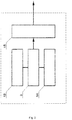
- the senor 3 for detecting acoustic / electromagnetic noises / vibrations and / or the supply / non-supply of the fuel and lubricant in the container of the art as in Fig. 2
- the adaptation unit 13 and the memory unit 14 supply the data via a corresponding data transmission unit 15 to the reading devices 5, 6 (FIG. Fig. 1 ).
- the present method of adaptive multi-factorial combination identification of owners and technology at an operator station is that the operation takes place only when the information carriers 1 and 2 are present which recognize the owner and the technology associated with him.
- the information is read from the information carriers 1 and 2 by means of the reading devices 4, 5 and 6 which are located at different areas of the operating point ( s. Fig. 1 ).
- an operating condition predetermined in advance in the data processor 7 is satisfied, a predetermined service is provided or a commodity is sold.
- the owner or his technology receives a service only when an information combination read from the information carriers 1 and 2 of the owner and his technology in the operating area 10 at the time of operation, with an information combination specified in the data processor 7 matches the operating condition equivalent.
- the technology of the owner of an information carrier is equipped with the sensor 3 for detecting acoustic / electromagnetic noises / vibrations and / or the supply / non-supply of the fuel and lubricant in the container of the art. Said sensor provides the information, which represents an additional / major factor in the identification of the technique, and is attached by the owner to the technology associated with it.
- Cases of operation of the owner or its technique are detected at the reception / absence of the information from the sensor 3 for detecting acoustic / electromagnetic noises / vibrations and / or the supply / non-supply of the fuel and lubricant in the container of the art.
- data on the execution of this technique is stored in the adaptation unit 13 of the sensor 3, in the form of acoustic / electromagnetic noise / vibration values of the signal and / or feature Supply / non-supply of fuel and lubricant in the container of the art.
- Said sensor 3 is used to detect acoustic / electromagnetic noises / vibrations and / or the supply / non-supply of the fuel and lubricant in the container of the art.
- the sensor 3 detects or registers the supply / non-supply of the fuel in the container of the art.
- This sensor 3 provides the information representing an additional / major factor of identification of the technique and is attached to the art.
- increase of the predetermined range of services to prevent the sensor 3 is equipped in advance with a memory unit 14.
- the sensor 3 is used to detect acoustic / electromagnetic noises / vibrations and / or the supply / non-supply of the fuel and lubricant in the container of the art. Said sensor 3 detects or registers the supply / non-supply of the fuel and lubricant in the container. This sensor 3 provides the information that constitutes an additional or major factor in the identification of the technique and is attached to the art.
- the storage unit 14 the data about the predetermined services is stored. These data are necessary for the functioning of the identification system.
- the memory unit 14 of the sensor 3 to the data processor. 7 connected.
- the identification system receives the data about the predetermined services. After operation, the information in the memory unit is updated or changed.
- the identification system is equipped in advance with a generator 8 of the moments of random shutdowns of the fuel supply from the fuel pump.
- Said sensor 3 is used to detect acoustic / electromagnetic noises / vibrations and / or the supply / non-supply of the fuel and lubricant in the container of the art.
- the sensor 3 provides the information that represents an additional or major factor in the identification of the technique.
- This sensor 3 is attached by the owner in advance to the technology of the owner. When operating the technology, further operation is blocked when a signal from the sensor arrives. This happens in the presence of a shutdown signal of the fuel supply from the generator 8 of the moments of random shutdowns of the fuel supply from the fuel pump.
- Said sensor 3 is used to detect acoustic / electromagnetic noises / vibrations and / or the supply / non-supply of the fuel and lubricant in the container of the art.
- the generator 8 of the moments of random shutdowns of the fuel supply from the fuel pump 12 triggers a shutdown signal at a random time.
- the operation is inhibited. If no information from the sensor 3 for detecting acoustic / electromagnetic noises / vibrations and / or the characteristics of the supply / non-supply of the fuel and lubricant in the container of the art, this means that a fuel and lubricant to the tank to be operated Technology is not supplied further.
- the memory unit 14 of the acoustic / electromagnetic sensor 3 Noises / vibrations and / or the supply / non-supply of the fuel and lubricant, z.
- the identification system receives the data about the given services. After the operation, the information in the storage unit 14 is updated / changed.
- the implementation of the present method and system guarantees that only properly identified vehicles can fill up and the human factor is excluded.
- the present method and system minimize the risk of abuse when operating the vehicles.
- the present method and the system can be used in the operation of vehicles at gas stations.
- the identifiers 1 on the windscreens of the vehicles recognize vehicles, but do not guarantee that only certain vehicles will refuel.
- the sensor 3 for detecting acoustic / electromagnetic noises / vibrations and / or the Supplying / not supplying the fuel and lubricant into the container of the technology with the additional adaptation unit 12 and the storage unit 14 recognizes the vehicle and registers the fact that a certain vehicle has fueled and, together with the generator 8, prevents the moments of random shutdowns Fuel supply from the fuel pump 12 a possible misuse and refueling of unidentified vehicles.
Landscapes
- Engineering & Computer Science (AREA)
- Business, Economics & Management (AREA)
- Sustainable Energy (AREA)
- Chemical & Material Sciences (AREA)
- Mechanical Engineering (AREA)
- Transportation (AREA)
- Physics & Mathematics (AREA)
- Combustion & Propulsion (AREA)
- General Physics & Mathematics (AREA)
- Accounting & Taxation (AREA)
- Life Sciences & Earth Sciences (AREA)
- Sustainable Development (AREA)
- Theoretical Computer Science (AREA)
- Computer Security & Cryptography (AREA)
- General Business, Economics & Management (AREA)
- Strategic Management (AREA)
- Finance (AREA)
- Loading And Unloading Of Fuel Tanks Or Ships (AREA)
Abstract
Description
- Die Erfindung betrifft ein Verfahren und ein System zur adaptiven multifaktoriellen Kombinationsidentifikation von Fahrzeugmitteln und deren Besitzern während der automatisierten Prüfung des technischen Zustands von Objekten (Fahrzeugmitteln und stationären Anlagen, darunter auch Energieanlagen) bei der Zuführung von Öl und unterschiedlichen Brennstoffsorten, wie Benzin, Kerosin, Heizöl, Dieselöl und Flüssiggas aus stationären oder mobilen Tankanlagen, sofern tankende Objekte und Tankanlagen mit einer Vorrichtung der automatisierten Objektidentifikation bei der Zuführung von Brennstoff oder Öl mit gleichzeitiger Kontrolle über die Zuführung von Treib- und Schmierstoffen ausgestattet sind. Mögliche Objekte sind Fahrzeugmittel und/oder stationäre Anlagen, die für die Lagerung, den Transport oder den Verbrauch von Brennstoff und Öl dienen, sowie deren Besitzer.
- Die Begriffe "Identifikationsinformationsträger" und "Informationsträger" bedeuten hier und im folgenden Text materielle Gegenstände, technische Mittel sowie Technik für unterschiedliche Anwendungszwecke, die sich im Eigentum des Besitzers von einem Informationsträger befinden und digitale oder analoge Informationen enthalten. Die Information ist mit einer elektronischen Ablesevorrichtung durch Annahme einer magnetischen, elektromagnetischen oder einer anderen Strahlung, einschließlich ionisierender Strahlung, in einem breiten Frequenzband ablesbar. Die Information auf einem Informationsträger kann in beliebiger Form enthalten sein, u. a. als Barcode, holographische Aufzeichnung, Chip, USB-Speicher, Kreditkarte, Rabattkarte, Tag, RFID-Tag, Transponder usw., vorausgesetzt, dass sie auf den Körper eines materiellen Gegenstands permanent und fest aufgetragen ist. Die Information auf einem Informationsträger kann aktiv als auch passiv gestaltet, d. h. entweder ausgestrahlt oder zurückgestrahlt werden.
- Der Begriff "Technik" bedeutet hier und im folgenden Text materielle Gegenstände, die sich bewegen können und Betriebsstoffe verbrauchen (Brennstoff, Heizöl, Treib- und Schmierstoffe, Öl, Flüssigkeit, Farbe usw.), technische Mittel, die sich bewegen können und Betriebsstoffe verbrauchen, fahrbare Technik für unterschiedliche Anwendungszwecke, Fahrzeugmittel, u. a. Schienenwagen, Lastkraftfahrzeuge, Personenkraftfahrzeuge usw., die mit einem Behälter für Betriebsstoffe ausgestattet sind.
- Der Begriff "Ablesevorrichtung" bedeutet hier und im folgenden Text eine elektronische Vorrichtung zum Ablesen der Information von einem Chip, einem USB-Speicher, einer Kreditkarte, einem Tag, einem RFID-Tag, einem Transponder oder einem beliebigen anderen Informationsträger bis auf Fingerabdrücke.
- Der Begriff "zusätzlicher Informationsträger" bedeutet hier und im folgenden Text einen beliebigen materiellen Gegenstand, der eingetragene digitale oder analoge Informationen speichern kann, die mit einer elektronischen Ablesevorrichtung durch Annahme von magnetischer, elektromagnetischer oder einer anderen Strahlung, einschließlich einer ionisierenden Strahlung, in einem breiten Frequenzband abgelesen werden kann. Ein zusätzlicher Informationsträger kann einen Chip, einen USB-Speicher, eine Kreditkarte, eine Rabattkarte, einen Tag, einen RFID-Tag, einen Transponder usw. darstellen. Ein solcher zusätzlicher Informationsträger kann sowohl aktiv als auch passiv sein, d. h. eine eigene Energiequelle haben oder auf der Rückstrahlung einer Strahlung basieren, und muss einen unabhängigen materiellen Träger darstellen.
- Der Begriff "Besitzer eines Informationsträgers" bedeutet hier und im folgenden Text eine juristische oder natürliche Person, die "einen zusätzlichen Informationsträger" und ein fahrbares materielles Objekt im Eigentum eines Besitzers eines Informationsträgers mit einem fest angebrachten Informationsträger besitzt.
- Der Begriff "Eigentum eines Besitzers eines Informationsträgers" bedeutet hier und im folgenden Text Technik, materielle Gegenstände, technische Mittel oder Technik für unterschiedliche Anwendungszwecke mit einem fest angebrachten Informationsträger, die im Eigentum des Besitzers eines Informationsträgers sind.
- Der Begriff "Sensor zum Erkennen akustischer/elektromagnetischer Geräusche/Schwingungen und/oder zum Erkennen der Zuführung/Nichtzuführung eines Treib- und Schmierstoffs in einen Behälter der Technik" bedeutet hier und im folgenden Text einen Sensor beliebiger Wirkungsweise, der erkennt oder registriert, ob ein Verbrauchsstoff, z. B. ein Treib- und Schmierstoff, in den Behälter der Technik zugeführt bzw. nicht zugeführt wird, und eine Information sendet, die für das Identifikationssystem einen zusätzlichen oder Hauptfaktor für die Identifikation der Technik darstellt, und der an der Technik angebracht ist.
- Notorisch bekannt ist ein Verfahren zur Identifikation von Fahrzeugmitteln für Bedienungszwecke (s. z. B. http://www.roseman.ru/rfid-tag.html oder http://www.roseman.ru/rfid-reader.html). Es basiert auf einem System mit mehr als einem Informationsträger und mehr als einer Ablesevorrichtung, die alle an einen Datenverarbeiter mit einer Einheit für die Registrierung und Wiedergabe der Information auf einem Bedienerdisplay angeschlossen sind. Nach diesem Verfahren beginnt die Bedienung nach dem Ablesen der Information, die eine mit dem Besitzer verbundene Technik identifiziert. Die Information wird von einem am Behälter der Technik angebrachten Träger mithilfe einer Ablesevorrichtung abgelesen. Die Ablesevorrichtung ist an der Abfüllvorrichtung einer Tanksäule angebracht. Wenn eine im Datenverarbeiter vorgegebene Bedingung erfüllt ist, beginnt eine vorbestimmte Bedienungsprozedur gemäß der Information auf dem Informationsträger.
- Dieses Verfahren kann materielle Gegenstände im Eigentum des Besitzers, z. B. ein Fahrzeug, identifizieren und eine entsprechende vorgegebene Dienstleistung erbringen. Das Verfahren kann aber den Besitzer des Gegenstands oder eine Person, die Dienstleistungen derzeit erbringt, und die Zustimmung des Besitzers zur Ausführung der Dienstleistung nicht feststellen, was selbstverständlich absichtliche oder zufällige Fehler in der Bedienung zur Folge haben und natürlicherweise materiellen Schaden hervorrufen kann. Darüber hinaus setzt dieses Verfahren die Anwendung von sehr teuren Informationsträgern (Identifikatoren) voraus, die auf jedem Fahrzeug und jeder Abfüllvorrichtung der Tanksäule angebracht sein müssen, was den Preis des Systems im Ganzen erhöht. Dieses Verfahren lässt dabei die Erbringung der vorgegebenen Dienstleistung nicht registrieren, was zum Missbrauch führen kann. Das System selbst kann einen Betrug oder Missbrauch seitens des Bedieners der Tanksäule sowie seitens des diese Dienstleistung beim Bediener angefragten Fahrers nicht erkennen.
- Die in ihrem technischen Wesen nächstliegende Lösung ist ein Verfahren zur multifaktoriellen Kombinationsidentifikation (s. Beschreibung zum Urheberzeugnis Ns 99746 nach der ukrainischen Anmeldung Nr. 201410593 vom 11.08.2014), nach dem die Bedienung nur dann erfolgt, wenn Informationsträger vorhanden sind, die den Besitzer und seine Technik identifizieren. Um die Bedingung zu prüfen, die die Bedienung des Besitzers eines Informationsträgers und der damit verbundenen Technik voraussetzt, wird die Information von Informationsträgern mithilfe von Ablesevorrichtungen abgelesen. Wenn die im Datenverarbeiter vorgegebene Bedingung erfüllt ist, wird die vorgegebene Dienstleistung erbracht, oder eine Ware wird verkauft. Dabei erhält der Besitzer oder seine Technik die Dienstleistung nur, wenn die von den Informationsträgern des Besitzers und seiner Technik im Bedienungsbereich abgelesene Informationskombination mit der im Voraus vorgegebenen Informationskombination im Datenverarbeiter zum Zeitpunkt der Erbringung der Dienstleistung übereinstimmt. Der Besitzer eines Informationsträgers erhält zusätzlich einen Sensor zum Erkennen der Geräusche und/oder der Zuführung/Nichtzuführung des Treib- und Schmierstoffs in den Behälter der Technik. Der Sensor sendet die Information, die einen zusätzlichen Identifikationsfaktor eines Fahrzeugs darstellt. Der Sensor wird vom Besitzer im Voraus an die Technik in seinem Eigentum angebracht. Die Tatsache der Bedienung des Besitzers oder seiner Technik wird am Empfang/Fehlen der Information vom Sensor zum Erkennen der Geräusche und/oder zur Zuführung/Nichtzuführung des Treib- und Schmierstoffs in den Behälter der Technik (des Fahrzeugs) registriert. Darüber hinaus werden Fahrzeugmittel nach dem vollen Bestand der Identifikatoren identifiziert, z. B., wenn es drei Identifikatoren gibt, dann nach {M;N;P} oder nach der Information aus Paaren von Identifikatoren {M;P} oder nach der Information aus Paaren von Identifikatoren {N;P}, wobei P ein Identifikator des zusätzlichen Sensors zum Erkennen der Geräusche oder der Information über die Zuführung/Nichtzuführung des Brennstoffs in das Fahrzeug ist, die in den Datenverarbeiter übergeben werden. Es ist möglich, Fahrzeugmittel auch nur nach einem Merkmal P (d. h. Zuführung/Nichtzuführung des Treib- und Schmiermittels in den Behälter des Fahrzeugs) zu identifizieren.
- Die ihrem technischen Wesen nach nächstliegende Lösung, die dieses Verfahren umsetzt, ist das Identifikationssystem (s. Beschreibung zum Urheberzeugnis N2 96508 vom 10.02.2015 nach der ukrainischen Anmeldung Nr. 201408984 vom 11.08.2014), das mehr als einen Informationsträger und mehr als eine Ablesevorrichtung enthält, die an einen Datenverarbeiter angeschlossen sind. Dabei gibt es im System einen zusätzlichen Informationsträger. Der Datenverarbeiter oder das Identifikationssystem sind mit einem Speicher und einer Vergleichseinrichtung ausgestattet, die mithilfe der Ablesevorrichtungen von mehr als einem Informationsträger abgelesene Informationssätze vergleichen lassen. Wenn die Informationskombination mit der früher gespeicherten/aufgezeichneten Informationskombination im Datenverarbeiter, die der Bedienungsbedingung entspricht, übereinstimmt, gibt das System ein Signal an die angeschlossene Betätigungseinrichtung. Um unberechtigtes Tanken zu erkennen (festzustellen), prüft das System die Daten über den Kilometerstand und die Menge des früher eingefüllten Brennstoffs durch die Verbindung mit einem Wegstreckenzähler des Fahrzeugs bzw. einer Navigationssatellitenverbindung. Dabei ist das System mit einem Sensor zum Erkennen akustischer/elektromagnetischer Geräusche/Schwingungen und/oder der Zuführung/Nichtzuführung des Treib- und Schmiermittels in einen Behälter des Fahrzeugs ausgerüstet. Dieser Sensor erkennt und registriert die Zuführung/Nichtzuführung des Treib- und Schmiermittels in den Behälter des Fahrzeugs und sendet eine Information, die einen zusätzlichen Identifikationsfaktor darstellt. Das System ist mit einer entsprechenden Einrichtung zur Übergabe der Information von einem solchen Sensor zum Datenverarbeiter ausgestattet. Der Sensor ist in Form eines Kehlkopfmikrofons, Mikrofons, Piezogebers, Schwingungsgebers, Sensors, Ultraschallgebers, Radioisotopengebers, Induktionsgebers, Wirbelstromgebers, Schwingungsgebers, elektromagnetischen Gebers ausgeführt, der am/im Behälter für Treib- und Schmiermittel oder an einer beliebigen Stelle des Fahrzeugs im engen Kontakt mit seinem Stahlgehäuse angebracht ist. Die Einrichtung für die Übergabe der digitalen oder analogen Information eines solchen Sensors sendet die Information über die Zuführung/Nichtzuführung des Treib- und Schmiermittels an den Datenverarbeiter drahtlos oder über eine Drahtverbindung.
- Dieses Verfahren und dieses System überwachen die Erbringung der angefragten Dienstleistung und registrieren die Erfüllung der Dienstleistungen. Dies ermöglicht es, zusätzliche Bedingungen oder Faktoren während der Bedienung zu erfassen, z. B. die Ist-Zuführung/Nichtzuführung des Brennstoffs oder Öls, wenn die Zustimmung/Absage der Besitzer von Informationsträgern für die Bedienung vorliegt. Dies ermöglicht es auch zu prüfen, ob diesem Kunden mit dieser Technik erlaubt ist, die vorgegebene Dienstleistung zu erhalten oder die früher vorgegebene Dienstleistung (Kauf einer Ware) abhängig von zusätzlichen Bedingungen zu ändern. Dies ermöglicht es auch, eine zusätzliche Bestätigung des Bedarfs an der Dienstleistung nur für die Tankstellen einzuführen, die an das System der Identifikation und Kontrolle angeschlossen sind.
- Dabei haben das genannte Verfahren und das System auch wesentliche Nachteile:
- 1. Das Identifikationssystem hat keinen Mechanismus der Adaptierung (Einstellung, Anpassung) dazu, dass unterschiedliche Vorrichtungen unterschiedliche physikalische Eigenschaften haben, die die Zuverlässigkeit der Identifikation der Technik beeinflussen. Darüber hinaus können sich physikalische Eigenschaften des Systems im Laufe des Betriebs ändern, was den Identifikationsvorgang wesentlich erschwert.
- 2. In dem Fall, wenn die Verbindung (GPRS, GSM, Internet, Funkkanal u.a.) mit einem für alle Tankstellen gemeinsamen Erfassungssystem oder einem Kartensystem, das dem Identifikationssystem Daten für die bestimmte Technik über vorgegebene Bedienungsbedingungen online übergibt, zeitweise oder dauernd fehlt, geben dieses Verfahren und dieses System keine Lösung, wie man eine gehörige Bedienung des Kunden an der Tankstelle überprüfen kann oder wie man Betrug durch Überhöhung des vorgegebenen Dienstleistungsumfangs, z. B. Tanken mehr als vorgegeben und zum falschen Preis, verhindern kann.
- 3. Dieses Verfahren und das System geben keinen Schutz gegen eine absichtliche Imitation des Sensorsignals zum Erkennen akustischer/elektromagnetischer Geräusche/Schwingungen und/oder der Zuführung/Nichtzuführung des Brennstoffs in den Behälter, was zu wesentlichen Verlusten des Brennstoffbesitzers führen kann.
- Die Aufgabe der Erfindung ist die Entwicklung eines solchen Verfahrens zur adaptiven multifaktoriellen Kombinationsidentifikation bei der Erbringung von Dienstleistung, das es den Besitzern von Informationsträgern und eines solchen Systems für die Umsetzung des Verfahrens im automatisierten Kundenbedienungsprozess ermöglichen würde:
- 1. im Betrieb der Adaptierung (Einstellung, Anpassung) des Identifikationssystems an verschiedene technische Mittel verschiedene physikalische Eigenschaften der Technik, die die Zuverlässigkeit der Identifikation von der Technik beeinflussen, zu erfassen und zu berücksichtigen,
- 2. im Fall, wenn die Verbindung (GPRS, GSM, Internet, Funkkanal u. a.) mit einem für alle Tankstellen gemeinsamen Erfassungssystem oder einem Kartensystem, das dem Identifikationssystem Daten für die bestimmte Technik über vorgegebene Bedienungsbedingungen online übergibt, zeitweise oder dauernd fehlt, eine Möglichkeit zu geben, dem Kunden eine gehörige Bedienung an der Tankstelle zu gewähren und/oder einen Betrug durch Überhöhung des vorgegebenen Dienstleistungsumfangs zu verhindern,
- 3. einen Schutz gegen absichtliche Imitation akustischer/elektromagnetischer Geräusche/Schwingung und/oder der Zuführung/Nichtzuführung des Brennstoffs zu gewähren.
- Das vorliegende Verfahren zur adaptiven multifaktoriellen Kombinationsidentifikation der Besitzer und der Technik an der Bedienungsstelle löst diese Aufgaben, da bei der Umsetzung dieses Verfahrens die Bedienung nur dann erfolgt, wenn Informationsträger vorhanden sind, die den Besitzer und die mit ihm verbundene Technik identifizieren. Um die für den Besitzer und seine Technik vorgegebene Bedienungsbedingung zu überprüfen, wird die Information von den Informationsträgern mithilfe von Ablesevorrichtungen abgelesen. Wenn die im Datenverarbeiter vorgegebene Bedingung erfüllt ist, wird die vorgegebene Dienstleistung erbracht oder eine bestimmte Ware verkauft. Die Bedienung des Besitzers oder seiner Technik erfolgt nur, wenn eine von den Informationsträgern des Besitzers und seiner Technik im Bedienungsbereich zum Zeitpunkt der Erbringung der Dienstleistung abgelesene Informationskombination mit der im Voraus im Datenverarbeiter vorgegebenen Informationskombination übereinstimmt. Darüber hinaus ist die Technik des Besitzers vom Informationsträger mit einem Sensor zum Erkennen akustischer/elektromagnetischer Geräusche/Schwingungen und/oder der Zuführung/Nichtzuführung des Treib- und Schmierstoffs in den Behälter der Technik ausgestattet. Dieser Sensor übergibt die Information, die einen zusätzlichen oder Hauptfaktor der Identifikation der Technik darstellt. Der Besitzer bringt diesen Sensor im Voraus an die Technik in seinem Eigentum fest an. Dabei wird die Bedienung des Besitzers oder seiner Technik am Empfang/Fehlen der Information des Sensors zum Erkennen akustischer/elektromagnetischer Geräusche/Schwingungen und/oder der Zuführung/Nichtzuführung des Treib- und Schmierstoffs in den Behälter der Technik registriert. Ein kennzeichnendes Merkmal eines solchen Verfahrens besteht darin, dass bei der Einstellung des Identifikationssystems zwecks Adaptierung des Systems für eine konkrete Technik die Information über die Ausführung dieser Technik in Form von Werten der akustischen/elektromagnetischen Geräusche/Schwingungen des Signals und/oder des Merkmals der Zuführung/Nichtzuführung des Treib- und Schmierstoffs in den Behälter der Technik eingetragen wird. Diese Information wird in die Adaptierungseinheit des Sensors zum Erkennen akustischer/elektromagnetischer Geräusche/Schwingungen und/oder der Zuführung/Nichtzuführung des Treib- und Schmierstoffs in den Behälter der Technik gespeichert. Der Sensor erkennt und registriert die Zuführung/Nichtzuführung des Treib- und Schmiermittels in den Behälter des Fahrzeugs und sendet eine Information, die einen zusätzlichen oder Hauptfaktor der Identifikation der Technik darstellt. Dieser Sensor ist an der Technik angebracht.
- Dieses kennzeichnende Merkmal lässt eine zusätzliche Information bei der Identifikation des Besitzers und seiner Technik gewinnen. Dadurch kann auch die Zuverlässigkeit der Identifikation von einer konkreten Technik, die die Bedienung braucht, erhöht werden. Dabei ist die konkrete Dienstleistung von der Ausführung der Technik abhängig. Das garantiert mit größerer Wahrscheinlichkeit, dass ein Treib- und Schmierstoff einer konkreten Technik zugeführt wird. Damit wird möglicher Missbrauch verhindert, wie z.B. das Betanken eines fremden Fahrzeugs.
- Das zweite kennzeichnende Merkmal des Verfahrens gemäß der Erfindung zur adaptiven multifaktoriellen Kombinationsidentifikation der Besitzers und der Technik an der Bedienungsstelle besteht darin, dass, wenn die Verbindung der Bedienungsstelle mit dem Operationszentrum des Kartensystems oder einem zentralisierten Überwachungssystem fehlt und/oder um das Risiko einer Blockierung der Bedienung der Technik und/oder des Betrugs oder Missbrauchs während der Bedienung, z.B. Überhöhung des vorgegebenen Dienstleistungsumfangs zu verhindern, ist der Sensor zum Erkennen akustischer/elektromagnetischer Geräusche/Schwingungen und/oder der Zuführung/Nichtzuführung des Treib- und Schmierstoffs in den Behälter der Technik im Voraus mit einer Speichereinheit ausgerüstet. Dieser Sensor erkennt oder registriert die Zuführung/Nichtzuführung des Treib- und Schmierstoffs in den Behälter und liefert die Information, die einen zusätzlichen oder Hauptfaktor für die Identifikation der Technik darstellt. Der Sensor ist an der Technik angebracht. In der Speichereinheit des Sensors werden die Daten über bestimmte oder früher erbrachte Dienstleistungen gespeichert. Diese Daten sind für das Funktionieren des Identifikationssystems notwendig. Dabei wird die Speichereinheit des Sensors während der Bedienung an den Datenverarbeiter angeschlossen. Somit erhält das Identifikationssystem die Daten über vorgegebene oder früher erbrachte Dienstleistungen. Nach der Bedienung wird die Information in der Speichereinheit aktualisiert/geändert.
- Dieses kennzeichnende Merkmal des Verfahrens ermöglicht die Bedienung der Technik, auch wenn die Verbindung (GPRS, GSM, Internet, Funkkanal u. a.) der Bedienungsstelle, z. B. einer Tankstelle, mit einem für alle Bedienungsstellen, z. B. Tankstellen, gemeinen Erfassungssystem oder einem Kartensystem fehlt, das dem Identifikationssystem Daten für konkrete Technik über vorgegebene Bedienungsbedingungen online übergibt. Das gibt dazu die Möglichkeit, eine eventuelle Blockierung der Bedienung der Technik und/oder Missbrauch oder Betrug durch Überhöhen des vorgegebenen Dienstleistungsumfangs zu verhindern. Dies erhöht wiederum die Zuverlässigkeit der Arbeit und macht das System der automatisierten Identifikation einfacher und günstiger.
- Das dritte kennzeichnende Merkmal des vorliegenden Verfahrens zur adaptiven multifaktoriellen Kombinationsidentifikation der Besitzers und der Technik an der Bedienungsstelle besteht darin, dass das Identifikationssystem mit einem Generator der Momente von zufallsmäßigen Abschaltungen der Brennstoffzuführung von der Tanksäule ausgerüstet wird, um einen Betrug bei der Bedienung durch eine Imitation des Sensorsignals zum Erkennen akustischer/elektromagnetischer Geräusche/Schwingungen und/oder der Zuführung/Nichtzuführung des Treib- und Schmierstoffs in den Behälter der Technik zu verhindern. Der Sensor übergibt die Information, die einen zusätzlichen oder Hauptfaktor der Identifikation der Technik darstellt. Der Besitzer bringt diesen Sensor im Voraus an seiner Technik an. Bei der Bedienung der Technik wird eine weitere Bedienung blockiert, wenn ein Signal des Sensors zum Erkennen akustischer/elektromagnetischer Geräusche/Schwingungen und/oder der Zuführung/Nichtzuführung des Treib- und Schmierstoffs in den Behälter der Technik beim Vorliegen eines Abschaltsignals der Brennstoffzuführung vom Generator der Momente von zufallsmäßigen Abschaltungen der Brennstoffzuführung von der Tanksäule ankommt.
- Dieses kennzeichnende Merkmal des vorliegenden Verfahrens zur adaptiven multifaktoriellen Kombinationsidentifikation der Besitzer und der Technik an der Bedienungsstelle gewährt Schutz gegen eine absichtliche Imitation des Signals vom Sensor zum Erkennen akustischer/elektromagnetischer Geräusche/Schwingungen und/oder der Zuführung/Nichtzuführung des Treib- und Schmierstoffs in den Behälter der Technik. Dies ermöglicht es, bei der Bedienung einen Schaden durch Betrug und Diebstahl von Verbrauchsstoff, z. B. Brennstoff, auszuschließen. Das erhöht ferner die Zuverlässigkeit des Systems im Ganzen.
- Das vorliegende System für die Umsetzung des Verfahrens zur adaptiven multifaktoriellen Kombinationsidentifikation der Besitzer und ihrer Technik (Fahrzeuge) an der Bedienungsstelle löst auch die gestellte Aufgabe, indem dieses System mehr als einen Informationsträger und mehr als eine Ablesevorrichtung enthält, die an einen Datenverarbeiter angeschlossen sind. Außerdem enthält das System einen Sensor zum Erkennen akustischer/elektromagnetischer Geräusche/Schwingungen und/oder der Zuführung/Nichtzuführung des Treib- und Schmierstoffs in den Behälter der Technik. Dieser Sensor erkennt oder registriert, ob ein Treib- und Schmierstoff in den Behälter der Technik zugeführt bzw. nicht zugeführt wird. Der Sensor übergibt die Information, die einen zusätzlichen Faktor der Identifikation der Technik darstellt.
- Das System enthält ferner eine entsprechende Einrichtung zur Übergabe der Information von einem solchen Sensor zum Datenverarbeiter. Das kennzeichnende Merkmal dieses Systems besteht darin, dass der Sensor zum Erkennen akustischer/elektromagnetischer Geräusche/Schwingungen und/oder der Zuführung/Nichtzuführung des Treib- und Schmierstoffs in den Behälter der Technik, der erkennt oder registriert, ob ein Treib- und Schmierstoff in den Behälter der Technik zugeführt bzw. nicht zugeführt wird, der Information übergibt, die einen zusätzlichen Faktor der Identifikation der Technik darstellt und der einen zusätzlichen Informationsträger darstellt und an der Technik angebracht ist, eine Adaptierungseinheit hat. Die Adaptierungseinheit ermöglicht bei der Einstellung zwecks Adaptierung für die Arbeit mit einem konkreten Fahrzeug die Anpassung an Identifikationsparameter. Diese Identifikationsparameter hängen von der Ausführung des Fahrzeugs ab und werden vom Sensor zum Erkennen akustischer/elektromagnetischer Geräusche/Schwingungen und/oder der Zuführung/Nichtzuführung des Treib- und Schmierstoffs in den Behälter der Technik übergeben.
- Dieses kennzeichnende Merkmal erlaubt dem System der automatisierten Identifikation, eine zusätzliche von der Ausführung des Fahrzeugs abhängige Information für Identifikationszwecke zu erhalten und die Zuverlässigkeit der Identifikation von konkreten Fahrzeugen zu erhöhen, die die Bedienung brauchen. Das garantiert mit größerer Wahrscheinlichkeit, dass ein Treib- und Schmierstoff einer konkreten Technik zugeführt wird. Damit wird ein möglicher Missbrauch verhindert.
- Das zweite kennzeichnende Merkmal besteht darin, dass der Sensor zum Erkennen akustischer/elektromagnetischer Geräusche/Schwingungen und/oder der Zuführung/Nichtzuführung des Treib- und Schmierstoffs in den Behälter der Technik, der die Zuführung/Nichtzuführung des Treib- und Schmierstoffs in den Behälter erkennt oder registriert und der die Information liefert, die einen zusätzlichen Faktor für die Identifikation von Fahrzeugen darstellt und der an Fahrzeugen angebracht ist, im Voraus mit einer Speichereinheit ausgerüstet ist. Diese Speichereinheit wird bei der Bedienung eines Fahrzeugs an den Datenverarbeiter angeschlossen. Dabei werden die Daten über vorbestimmte oder früher erbrachte Dienstleistungen übertragen und in der Speichereinheit nach Beendigung der Bedienung aktualisiert, falls die Verbindung mit einem für alle Tankstellen gemeinsamen Erfassungssystem oder einem Kartensystem oder einem gemeinsamen System der multifaktoriellen Kombinationsidentifikation fehlt. Somit wird eine Möglichkeit gegeben, die Bedienung von Fahrzeugen eventuell zu blockieren und/oder einen Betrug und Missbrauch mit dem vorgegebenen Dienstleistungsumfang während der Bedienung zu verhindern.
- Dieses kennzeichnende Merkmal erlaubt dem System der automatisierten Identifikation seine Funktionen zu erfüllen, auch wenn die Verbindung (GPRS, GSM, Internet, Funkkanal u. a.) mit einem für alle Tankstellen gemeinsamen Erfassungssystem oder einem Kartensystem fehlt, das dem Identifikationssystem Bedienungsbedingungen für alle Fahrzeugmittel online liefert. Das gibt dazu die Möglichkeit, eine eventuelle Blockierung der Bedienung von Fahrzeugen zu gewähren und/oder einen Missbrauch oder Betrug durch Überhöhung des vorgegebenen Dienstleistungsumfangs während der Bedienung zu verhindern.
- Das dritte kennzeichnende Merkmal besteht darin, dass das Identifikationssystem zusätzlich mit einem Generator der Momente von zufallsmäßigen Abschaltungen der Brennstoffzuführung von der Tanksäule ausgerüstet ist. Dieser Generator ist an den Datenverarbeiter und an die Betätigungseinrichtung der Tanksäulensteuerung angeschlossen. Die Bedienung des Fahrzeugs wird durch das Identifikationssystem bei der Bedienung eines Fahrzeugs (Tanken) im Fall einer zufallsmäßigen Abschaltung der Zuführung von Brennstoff von der Tanksäule blockiert, wenn ein Signal des Sensors zum Erkennen akustischer/elektromagnetischer Geräusche/Schwingungen und/oder der Zuführung/Nichtzuführung des Treib- und Schmierstoffs in den Behälter des Fahrzeugs beim Vorliegen eines Abschaltsignals der Brennstoffzuführung vom Generator der Momente von zufallsmäßigen Abschaltungen der Brennstoffzuführung der Tanksäule weiter ankommt.
- Dieses kennzeichnende Merkmal lässt das Identifikationssystem Schutz gegen eine absichtliche Imitation eines Sensorsignals zum Erkennen akustischer/elektromagnetischer Geräusche/Schwingungen und/oder der Zuführung/Nichtzuführung des Treib- und Schmierstoffs in den Behälter der Technik gewähren. Das erhöht ferner die Zuverlässigkeit des Systems im Ganzen und schützt es gegen Missbrauch und Betrug.
- Das vorliegende Verfahren zur adaptiven multifaktoriellen Kombinationsidentifikation und das vorliegende System für die Umsetzung des Verfahrens sind neu, da keine ähnlichen Lösungen dem Erfinder und Anmelder zum Anmeldetag aus zugänglichen Informationsquellen bekannt sind.
- Das vorliegende Verfahren zur adaptiven multifaktoriellen Kombinationsidentifikation und das vorliegende System für die Umsetzung des Verfahrens sind erfinderisch, da kein Fachmann auf diesem Gebiet der Technik zum Anmeldetag eine ähnliche Lösung vorgeschlagen hat, die die beschriebenen Systemfunktionen mit minimalen Investitionen umsetzt und signifikante Möglichkeiten der Bedienung von Informationsträgern bietet.
- Das vorliegende Verfahren zur adaptiven multifaktoriellen Kombinationsidentifikation und das vorliegende System für dessen Umsetzung sind gewerblich anwendbar, da kein Zweifel bezüglich der Umsetzungsmöglichkeiten in der Industrie und im Haushalt handwerksmäßig besteht.
- Die vorliegenden Lösungen in beliebiger Ausführungsform der erfinderischen Idee können industriell mit dem Einsatz von herkömmlichen Mitteln umgesetzt werden, die aus Informationsquellen (aus dem Bereich der Informationstechnik) bekannt sind.
- Das vorliegende Verfahren zur adaptiven multifaktoriellen Kombinationsidentifikation und das vorliegende System für dessen Umsetzung werden anhand von Zeichnungen näher erläutert und stellen schematisch dar:
- Fig. 1
- ein System, das das Verfahren zur adaptiven multifaktoriellen Kombinationsidentifikation von Fahrzeugen an Tankstellen bei der Wahl eines Fahrzeugs und der Bedienungsbedingungen (Menge von Litern zum Tanken) umsetzt und
- Fig. 2
- einen schematischen Aufbau des Sensors 3 zum Erkennen akustischer/elektromagnetischer Geräusche/Schwingungen und/oder der Zuführung/Nichtzuführung des Treib- und Schmierstoffs in den Behälter der Technik.
- Kurz gefasst besteht das vorliegende Verfahren zur adaptiven multifaktoriellen Kombinationsidentifikation von Besitzern und Technik an Bedienungsstellen darin, dass die Bedienung nur dann erfolgt, wenn es Informationsträger gibt, die den Besitzer und seine Technik identifizieren. Um die Bedienungsbedingung des Besitzers von einem Informationsträger und der damit verbundenen Technik zu prüfen, werden Daten auf Informationsträgern mithilfe von Ablesevorrichtungen abgelesen. Wenn eine vorgegebene Bedingung, die im Datenverarbeiter gespeichert ist, erfüllt ist, erfolgt die vorgegebene Bedienung oder der Verkauf einer Ware. Dabei erhält der Besitzer oder seine Technik eine Dienstleistung nur, wenn die von den Informationsträgern des Besitzers und seiner Technik im Bedienungsbereich bei der Bedienung abgelesene Informationskombination mit der im Voraus vorgegebenen Informationskombination im Datenverarbeiter übereinstimmt, die der Bedienungsbedingung entspricht. Darüber hinaus ist die Technik des Besitzes eines Informationsträgers mit einem Sensor zum Erkennen akustischer/elektromagnetischer Geräusche/Schwingungen und/oder der Zuführung/Nichtzuführung des Treib- und Schmierstoffs in den Behälter der Technik ausgestattet. Dieser Sensor liefert die Information, die einen zusätzlichen oder Hauptidentifikationsfaktor eines Fahrzeugs darstellt. Der Besitzer bringt den Sensor im Voraus an der Technik in seinem Eigentum an. Die Tatsache der Bedienung des Besitzers oder seiner Technik wird am Empfang/Fehlen der Information des Sensors zum Erkennen akustischer/elektromagnetischer Geräusche/Schwingungen und/oder der Zuführung/Nichtzuführung des Treib- und Schmierstoffs in den Behälter der Technik registriert. Bei der Einstellung des Identifikationssystems zwecks Adaptierung des Systems für eine konkrete Technik wird eine Information über die Ausführung dieser Technik in der Adaptierungseinheit des Sensors gespeichert, und zwar in Form von Werten der akustischen/elektromagnetischen Geräusche/Schwingungen des Signals und/oder des Merkmals der Zuführung/Nichtzuführung des Verbrauchsmaterials, z. B. eines Treib- und Schmierstoffs, in den Behälter der Technik. Der genannte Sensor dient zum Erkennen akustischer/elektromagnetischer Geräusche/Schwingungen und/oder der Zuführung/Nichtzuführung des Treib- und Schmierstoffs in den Behälter der Technik. Dieser Sensor erkennt oder registriert die Zuführung/Nichtzuführung des Treib- und Schmierstoffs in den Behälter der Technik. Dieser Sensor übergibt die Information, die einen zusätzlichen oder Hauptfaktor der Identifikation der Technik darstellt, und ist an der Technik angebracht. Für eventuelle Fälle, wenn die Verbindung der Bedienungsstelle mit dem Operationszentrum des Kartensystems oder einem zentralisierten Überwachungssystem fehlt, und/oder um das Risiko der eventuellen Blockierung der Bedienung auszuschließen und/oder um das Risiko des Betrugs oder Missbrauchs während der Bedienung, z. B. Überhöhung des vorgegebenen Dienstleistungsumfangs, zu verhindern, wird der Sensor im Voraus mit einer Speichereinheit ausgerüstet. Der Sensor dient zum Erkennen akustischer/elektromagnetischer Geräusche/Schwingungen und/oder der Zuführung/Nichtzuführung des Treib- und Schmierstoffs in den Behälter der Technik. Dieser Sensor erkennt oder registriert die Zuführung/Nichtzuführung des Treib- und Schmierstoffs in den Behälter. Ferner liefert der Sensor die Information, die einen zusätzlichen oder Hauptfaktor für die Identifikation der Technik darstellt, und ist an der Technik angebracht. In der Speichereinheit werden Daten über die im Voraus bestimmten Dienstleistungen gespeichert, die für das Funktionieren des Identifikationssystems notwendig sind. Während der Bedienung wird die Speichereinheit des Sensors an den Datenverarbeiter angeschlossen. Somit erhält das Identifikationssystem die Daten über die im V
oraus bestimmten Dienstleistungen. Nach der Bedienung wird die Information in der Speichereinheit aktualisiert/geändert. Darüber hinaus, um einen Betrug bei der Bedienung durch eine Imitation eines Sensorsignals zu verhindern, wird das Identifikationssystem im Voraus mit einem Generator der Momente von zufallsmäßigen Abschaltungen der Brennstoffzuführung von der Tanksäule ausgestattet. Der genannte Sensor dient zum Erkennen akustischer/elektromagnetischer Geräusche/Schwingungen und/oder der Zuführung/Nichtzuführung des Treib- und Schmierstoffs in den Behälter der Technik. Dieser Sensor übergibt die Information, die einen zusätzlichen oder Hauptfaktor der Identifikation der Technik darstellt, und wird vom Besitzer im Voraus an der Technik des Besitzers angebracht. Bei der Bedienung der Technik wird eine weitere Bedienung blockiert, wenn ein Signal vom Sensor zum Erkennen akustischer/elektromagnetischer Geräusche/Schwingungen und/oder der Zuführung/Nichtzuführung des Treib- und Schmierstoffs in den Behälter der Technik ankommt. Dies geschieht beim Vorliegen eines Abschaltsignals der Brennstoffzuführung vom Generator der Momente von zufallsmäßigen Abschaltungen der Brennstoffzuführung von der Tanksäule. - Das Wesen des Systems zur Umsetzung des vorliegenden Verfahrens besteht darin, dass das genannte System folgende Komponenten aufweist (s.
Fig. 1 ): - mehr als einen Informationsträger 1, der die Technik identifiziert,
- einen zusätzlichen Informationsträger 2, der den Technikbesitzer identifiziert,
- einen Sensor 3 zum Erkennen akustischer/elektromagnetischer Geräusche/Schwingungen und/oder der Zuführung/Nichtzuführung des Treib- und Schmierstoffs in den Behälter der Technik, der die Erbringung der Dienstleistung erkennt,
- und mehr als eine Ablesevorrichtung 4, 5, 6, die Daten aus einem entsprechenden Informationsträger ablesen und an einen Datenverarbeiter 7 angeschlossen sind,
- sowie einen Generator 7 der Momente von zufallsmäßigen Abschaltungen der Brennstoffzuführung von der Tanksäule.
- Der Datenverarbeiter 7 oder das System der multifaktoriellen Kombinationsidentifikation ist mit einer Vergleichseinheit 9 ausgerüstet. Diese ermöglicht es, Informationssätze zu vergleichen, die mithilfe der Ablesevorrichtungen 4, 5, 6 von mehr als einem Informationsträger 1, einem zusätzlichen Informationsträger 2 und einem Sensor 4 abgelesen sind. Der Sensor 4 liefert die Information über die Zuführung oder Nichtzuführung des Brennstoffs in den Behälter. Die genannte Information stellt einen zusätzlichen Faktor für die Identifikation der Technik im Bedienungsbereich 10 dar. Wenn die abgelesene Informationskombination mit einer früher gespeicherten/aufgezeichneten Informationskombination im Datenverarbeiter 7, die der Bedienungsbedingung entspricht, übereinstimmt, gibt das System ein Signal an die angeschlossene Betätigungseinrichtung 11 der Tanksäule 12. Dabei hat der Sensor 3 zum Erkennen akustischer/elektromagnetischer Geräusche/Schwingungen und/oder der Zuführung/Nichtzuführung des Treib- und Schmierstoffs in den Behälter der Technik, wie in
Fig. 2 dargestellt, eine angeschlossene Adaptierungseinheit 13 und eine Speichereinheit 14. Die Adaptierungseinheit 13 und die Speichereinheit 14 liefern die Daten über eine entsprechende Datenübertragungseinheit 15 an die Ablesevorrichtungen 5, 6 (Fig. 1 ). - Das vorliegende Verfahren zur adaptiven multifaktoriellen Kombinationsidentifikation von Besitzern und Technik an einer Bedienungsstelle besteht darin, dass die Bedienung nur dann erfolgt, wenn die Informationsträger 1 und 2 vorhanden sind, die den Besitzer und die mit ihm verbundene Technik erkennen. Um eine Bedienungsbedingung zu prüfen, die für den Besitzer des Informationsträgers und der mit ihm verbundenen Technik vorgegeben ist, liest man die Informationen von den Informationsträgern 1 und 2 mithilfe der Ablesevorrichtungen 4, 5 und 6 ab, die sich an verschiedenen Bereichen der Bedienungsstelle befinden (s.
Fig. 1 ). Wenn eine im Voraus im Datenverarbeiter 7 vorgegebene Bedienungsbedingung erfüllt ist, wird eine vorbestimmte Dienstleistung erbracht oder eine Ware verkauft. Dabei erhält der Besitzer oder seine Technik eine Dienstleistung nur dann, wenn eine Informationskombination, die von den Informationsträgern 1 und 2 des Besitzers und seiner Technik im Bedienungsbereich 10 zum Zeitpunkt der Bedienung abgelesen ist, mit einer im Datenverarbeiter 7 vorgegebenen Informationskombination übereinstimmt, die der Bedienungsbedingung entspricht. Darüber hinaus ist die Technik des Besitzers eines Informationsträgers mit dem Sensor 3 zum Erkennen akustischer/elektromagnetischer Geräusche/Schwingungen und/oder der Zuführung/Nichtzuführung des Treib- und Schmierstoffs in den Behälter der Technik ausgerüstet. Der genannte Sensor liefert die Information, die einen zusätzlichen/Hauptfaktor für die Identifikation der Technik darstellt, und ist vom Besitzer an der mit ihm verbundenen Technik angebracht. Fälle der Bedienung des Besitzers oder seiner Technik werden am Empfang/Fehlen der Information vom Sensor 3 zum Erkennen akustischer/elektromagnetischer Geräusche/Schwingungen und/oder der Zuführung/Nichtzuführung des Treib- und Schmierstoffs in den Behälter der Technik erfasst. Bei der Einstellung des Identifikationssystems zwecks Adaptierung des Systems für eine konkrete Technik werden Daten über die Ausführung dieser Technik in der Adaptierungseinheit 13 des Sensors 3 gespeichert, und zwar in Form von Werten der akustischen/elektromagnetischen Geräusche/Schwingungen des Signals und/oder des Merkmals der Zuführung/Nichtzuführung des Treib- und Schmierstoffs in den Behälter der Technik. Der genannte Sensor 3 dient zum Erkennen akustischer/elektromagnetischer Geräusche/Schwingungen und/oder der Zuführung/Nichtzuführung des Treib- und Schmierstoffs in den Behälter der Technik. Der Sensor 3 erkennt oder registriert die Zuführung/Nichtzuführung des Brennstoffs in den Behälter der Technik. Dieser Sensor 3 liefert die Information, die einen zusätzlichen/Hauptfaktor der Identifikation von der Technik darstellt, und ist an der Technik angebracht. Für eventuelle Fälle, wenn die Verbindung der Bedienungsstelle mit dem Operationszentrum des Kartensystems oder einem zentralisierten Überwachungssystem fehlt, und/oder um die Blockierung der Bedienung der Technik auszuschließen und/oder um das Risiko eines Betrugs oder Missbrauchs während der Bedienung, z. B. Überhöhung des vorgegebenen Dienstleistungsumfangs, zu verhindern, wird der Sensor 3 im Voraus mit einer Speichereinheit 14 ausgerüstet. Der Sensor 3 dient zum Erkennen akustischer/elektromagnetischer Geräusche/Schwingungen und/oder der Zuführung/Nichtzuführung des Treib- und Schmierstoffs in den Behälter der Technik. Der genannte Sensor 3 erkennt oder registriert die Zuführung/Nichtzuführung des Treib- und Schmierstoffs in den Behälter. Dieser Sensor 3 liefert die Information, die einen zusätzlichen oder Hauptfaktor für die Identifikation der Technik darstellt, und ist an der Technik angebracht. In der Speichereinheit 14 werden die Daten über die im Voraus bestimmten Dienstleistungen gespeichert. Diese Daten sind für das Funktionieren des Identifikationssystems notwendig. Während der Bedienung wird die Speichereinheit 14 des Sensors 3 an den Datenverarbeiter 7 angeschlossen. Somit erhält das Identifikationssystem die Daten über die vorbestimmten Dienstleistungen. Nach der Bedienung wird die Information in der Speichereinheit aktualisiert oder geändert. Um einen Betrug bei der Bedienung durch eine Imitation eines Sensorsignals 3 zu verhindern, wird das Identifikationssystem im Voraus mit einem Generator 8 der Momente von zufallsmäßigen Abschaltungen der Brennstoffzuführung von der Tanksäule ausgerüstet. Der genannte Sensor 3 dient zum Erkennen akustischer/elektromagnetischer Geräusche/Schwingungen und/oder der Zuführung/Nichtzuführung des Treib- und Schmierstoffs in den Behälter der Technik. Der Sensor 3 liefert die Information, die einen zusätzlichen oder Hauptfaktor der Identifikation der Technik darstellt. Dieser Sensor 3 ist vom Besitzer im Voraus an der Technik des Besitzers angebracht. Bei der Bedienung der Technik wird eine weitere Bedienung blockiert, wenn ein Signal vom Sensor ankommt. Dies geschieht beim Vorliegen eines Abschaltsignals der Brennstoffzuführung vom Generator 8 der Momente von zufallsmäßigen Abschaltungen der Brennstoffzuführung von der Tanksäule. Der genannte Sensor 3 dient zum Erkennen akustischer/elektromagnetischer Geräusche/Schwingungen und/oder der Zuführung/Nichtzuführung des Treib- und Schmierstoffs in den Behälter der Technik. - Wird die Entscheidung über die Bedienung (Tanken eines Fahrzeugs) nur nach der Informationskombination {M;N} (Identifikatoren) 1 und 2, die im Datenverarbeiter 7 des Identifikationssystems im Voraus gespeichert ist, getroffen, so gibt es unter Berücksichtigung des menschlichen Faktors (Betrugsversuche) keinen Schutz gegen Versuche, einen anderen und nicht das identifizierte Fahrzeug zu tanken. Es ist aber möglich, einen zusätzlichen Faktor der Identifikation P im Datenverarbeiter 7 vorzugeben und die Kontrolle über drei Faktoren der Identifikation {M;N;P}, einschließlich der zusätzlichen Daten über das Tanken eines bestimmten Fahrzeugs, zu führen, wobei:
- M ein Zahlenwert eines der Identifikatoren vom Faktor M des Systems der multifaktoriellen Kombinationsidentifikation (z. B. Identifikator der Fahrerkarte) ist,
- N ein Zahlenwert eines der Identifikatoren vom Faktor N des Systems der multifaktoriellen Kombinationsidentifikation (z. B. Identifikator des Fahrzeugs in Form eines Zeichens auf der Frontscheibe des Fahrzeugs) ist und P ein Zahlenwert eines der Identifikatoren vom Faktor P, z. B. Information vom Sensor zum Erkennen von Geräuschen/Schwingungen und/oder Merkmalen von der Zuführung/Nichtzuführung des Treib- und Schmierstoffes in ein bestimmtes Fahrzeug, ist.
- Um bei der Bedienung der Technik zu prüfen, ob ein bestimmtes Fahrzeug getankt wird, löst der Generator 8 der Momente von zufallsmäßigen Abschaltungen der Brennstoffzuführung von der Tanksäule 12 ein Abschaltsignal zu einem zufälligen Zeitpunkt aus. Wenn die Information des Sensors 3 zum Erkennen akustischer/elektromagnetischer Geräusche/Schwingungen und/oder der Merkmale von der Zuführung/Nichtzuführung des Treib- und Schmierstoffs in den Behälter der Technik weiter ankommt, wird die Bedienung blockiert. Kommt keine Information vom Sensor 3 zum Erkennen akustischer/elektromagnetischer Geräusche/Schwingungen und/oder der Merkmale von der Zuführung/Nichtzuführung des Treib- und Schmierstoffs in den Behälter der Technik an, bedeutet das, dass ein Treib- und Schmierstoff dem Tank der zu bedienenden Technik weiter nicht zugeführt wird. In diesem Fall wird die Entscheidung getroffen, dass eine richtig erkannte (identifizierte) Technik bedient wird, und die Zuführung des Brennstoffs von der Tanksäule 12 fängt wieder an. Diese Methode ermöglicht eine zusätzliche Identifikation der Technik mit dem Ziel, Schutz gegen eventuelle Versuche, das Funktionieren des Sensors 3 zum Erkennen von Geräuschen/Schwingungen und/oder Merkmalen von der Zuführung/Nichtzuführung des Treib- und Schmierstoffs, z. B. Brennstoffs, in den Behälter der Technik, der als zusätzlicher Identifikator dient, zu imitieren.
- Wenn die Verbindung der Bedienungsstelle mit dem Operationszentrum des Kartensystems oder einem zentralisierten Überwachungssystem zum Zeitpunkt der Bedienung fehlt, dann wird, um das Risiko der Blockierung der Bedienung und/oder des Betrugs oder Missbrauchs der vorgegebenen Dienstleistungen während der Bedienung durch Überhöhung des vorgegebenen Dienstleistungsumfangs (z. B. einen anderen Brennstoff tanken, mit anderem Tageslimit oder Rabatt usw.) zu verhindern, zum Zeitpunkt der Bedienung die Speichereinheit 14 des Sensors 3 zum Erkennen akustischer/elektromagnetischer Geräusche/Schwingungen und/oder der Zuführung/Nichtzuführung des Treib- und Schmierstoffs, z. B. Brennstoffs, in den Behälter der Technik an den Datenverarbeiter 7 angeschlossen. Somit erhält das Identifikationssystem die Daten über die vorgegebenen Dienstleistungen. Nach der Bedienung wird die Information in der Speichereinheit 14 aktualisiert/geändert.
- Die Umsetzung des vorliegenden Verfahrens und Systems garantiert, dass nur richtig identifizierte Fahrzeuge tanken können, und der menschliche Faktor ausgeschlossen ist.
- Das vorliegende Verfahren und System minimieren das Risiko des Missbrauchs bei der Bedienung der Fahrzeuge.
- Das vorliegende Verfahren bzw. das System können bei der Bedienung von Fahrzeugen an Tankstellen eingesetzt werden.
- Bedienung der Kunden an Tankstellen.
- Kunden der Tankstellen (juristische Personen), die über eine eigene Fahrzeugflotte verfügen, bezahlen das Tanken ihrer Fahrzeuge im Voraus und sind daran interessiert, dass der bezahlte Brennstoff nur in ihre Fahrzeuge getankt wird. Die Identifikatoren 1 an den Frontscheiben der Fahrzeuge lassen Fahrzeuge erkennen, garantieren aber nicht, dass nur bestimmte Fahrzeuge tanken werden. Der Sensor 3 zum Erkennen akustischer/elektromagnetischer Geräusche/Schwingungen und/oder der Zuführung/Nichtzuführung des Treib- und Schmierstoffs in den Behälter der Technik mit der zusätzlichen Adaptierungseinheit 12 und der Speichereinheit 14 erkennt das Fahrzeug und registriert die Tatsache, dass ein bestimmtes Fahrzeug getankt hat, und verhindert zusammen mit dem Generator 8 der Momente von zufallsmäßigen Abschaltungen der Brennstoffzuführung von der Tanksäule 12 einen eventuellen Missbrauch und ein Betanken von nicht identifizierten Fahrzeugen.
Claims (6)
- Verfahren zur adaptiven multifaktoriellen Kombinationsidentifikation von Besitzern und deren Technik an einer Bedienungsstelle, bei dem eine Bedienung nur dann erfolgt, wenn Informationsträger (1, 2) vorhanden sind, die den Besitzer und die mit ihm verbundene Technik identifizieren, wobei- zur Überprüfung der für den Besitzer und seine Technik vorgegebenen Bedienungsbedingung eine Information von den Informationsträgern (1, 2) mithilfe von Ablesevorrichtungen (4, 5, 6) in einem Datenverarbeiter (7) abgelesen wird,- bei Erfüllung einer in einem Datenverarbeiter (7) vorgegebenen Bedingung die vorgegebene Dienstleistung erbracht oder eine bestimmte Ware verkauft wird,- die Bedienung des Besitzers oder seiner Technik nur dann erfolgt, wenn eine von den Informationsträgern (1, 2) des Besitzers und seiner Technik im Bedienungsbereich (10) abgelesene Informationskombination zum Zeitpunkt der Bedienung mit der im Voraus im Datenverarbeiter (7) vorgegebenen Informationskombination übereinstimmt, die der Bedienungsbedingung entspricht,- die Technik des Besitzers vom Informationsträger (1, 2) mit einem Sensor (3) zum Erkennen akustischer/elektromagnetischer Geräusche/Schwingungen und/oder der Zuführung/Nichtzuführung des Treib- und Schmierstoffs in einen Behälter der Technik ausgestattet ist, der eine Information übergibt, die einen zusätzlichen Faktor der Identifikation der Technik darstellt, und den der Besitzer im Voraus an der Technik in seinem Eigentum angebracht hat, und- die Bedienung des Besitzers oder seiner Technik am Empfang/Fehlen der Information vom genannten Sensor (3) zum Erkennen akustischer/elektromagnetischer Geräusche/Schwingungen und/oder der Zuführung/Nichtzuführung des Treib- und Schmierstoffs in den Behälter der Technik registriert wird,dadurch gekennzeichnet,
dass bei der Einstellung des Identifikationssystems zwecks Adaptierung des Systems für eine konkrete Technik eine Information über die Ausführung dieser Technik in Form von Werten der akustischen/elektromagnetischen Geräusche/Schwingungen des Signals und/oder des Merkmals der Zuführung/Nichtzuführung des Treib- und Schmierstoffs in den Behälter der Technik gespeichert wird, wobei diese Information in der Adaptierungseinheit (13) des Sensors (3) zum Erkennen akustischer/elektromagnetischer Geräusche/Schwingungen und/oder der Zuführung/Nichtzuführung des Treib- und Schmierstoffs in den Behälter der Technik gespeichert wird, und wobei der genannte Sensor eine Information übergibt, die einen zusätzlichen oder Hauptfaktor der Identifikation der Technik darstellt, und an der Technik angebracht ist. - Verfahren zur adaptiven multifaktoriellen Kombinationsidentifikation von Besitzern und deren Technik an einer Bedienungsstelle nach Anspruch 1,
dadurch gekennzeichnet,
dass beim Fehlen einer Verbindung der Bedienungsstelle mit dem Operationszentrum des Kartensystems oder eines zentralisierten Überwachungssystems und/oder zur Verhinderung des Risikos einer Bedienungsblockierung und/oder eines Betrugs oder Missbrauchs während der Bedienung durch Überhöhung des vorgegebenen Dienstleistungsumfangs der Sensor zum Erkennen akustischer/elektromagnetischer Geräusche/Schwingungen und/oder der Zuführung/Nichtzuführung des Treib- und Schmierstoffs in den Behälter der Technik, der die Zuführung/Nichtzuführung des Treib- und Schmierstoffs in den Behälter erkennt oder registriert, und der die Information liefert, die einen zusätzlichen oder Hauptfaktor für die Identifikation der Technik darstellt, und der an der Technik angebracht ist, im Voraus mit einer Speichereinheit ausgerüstet ist, in der zusätzliche Daten über die vorbestimmten Dienstleistungen gespeichert werden, die für das Funktionieren des Identifikationssystems notwendig sind,
dass dabei die Speichereinheit (14) des Sensors (3) während der Bedienung an den Datenverarbeiter (7) angeschlossen ist, damit das Identifikationssystem die Daten über die vorgegebenen Dienstleistungen erhält und
dass nach der Bedienung die Information in der Speichereinheit aktualisiert/geändert wird. - Verfahren zur adaptiven multifaktoriellen Kombinationsidentifikation von Besitzern und deren Technik an einer Bedienungsstelle nach Anspruch 1,
dadurch gekennzeichnet,
dass das Identifikationssystem mit einem Generator der Momente von zufallsmäßigen Abschaltungen der Brennstoffzuführung von der Tanksäule ausgerüstet ist, um einen Betrug bei der Bedienung durch eine Imitation eines Signals vom Sensor (3) zum Erkennen akustischer/elektromagnetischer Geräusche/Schwingungen und/oder der Zuführung/Nichtzuführung des Treib- und Schmierstoffs in den Behälter der Technik zu verhindern, der die Information übergibt, die einen zusätzlichen oder Hauptfaktor der Identifikation der Technik darstellt, und den der Besitzer im Voraus an seiner Technik angebracht hat, wobei bei der Bedienung der Technik eine weitere Bedienung blockiert wird, wenn ein Signal vom Sensor (3) zum Erkennen akustischer/elektromagnetischer Geräusche/Schwingungen und/oder der Zuführung/Nichtzuführung des Treib- und Schmierstoffs in den Behälter der Technik beim Vorliegen eines entsprechenden Abschaltsignals der Brennstoffzuführung vom Generator (8) der Momente von zufallsmäßigen Abschaltungen der Brennstoffzuführung von der Tanksäule (12) fortwährend ankommt. - System zur adaptiven multifaktoriellen Kombinationsidentifikation von Besitzern und deren Technik an einer Bedienungsstelle, das mehr als einen Informationsträger (1, 2) und mehr als eine Ablesevorrichtung (4, 5, 6) enthält, die an einen Datenverarbeiter (7) angeschlossen sind, sowie einen Sensor (3) zum Erkennen akustischer/elektromagnetischer Geräusche/Schwingungen und/oder der Zuführung/Nichtzuführung des Treib- und Schmierstoffs in den Behälter der Technik enthält, der erkennt oder registriert, ob ein Treib- und Schmierstoff in den Behälter der Technik zugeführt bzw. nicht zugeführt wird, und der eine Information übergibt, die einen zusätzlichen Faktor der Identifikation der Technik darstellt, wobei das genannte System mit einer entsprechenden Einrichtung für die Datenübertragung von einem solchen Sensor (3) zum Datenverarbeiter (7) ausgerüstet ist,
dadurch gekennzeichnet,
dass der Sensor (3) zum Erkennen akustischer/elektromagnetischer Geräusche/Schwingungen und/oder der Zuführung/Nichtzuführung des Treib- und Schmierstoffs in den Behälter der Technik, der erkennt oder registriert, ob der Treib- und Schmierstoff in den Behälter der Technik zugeführt bzw. nicht zugeführt wird, der eine Information übergibt, die einen zusätzlichen Faktor der Identifikation der Technik darstellt, und an der Technik angebracht ist, zusätzlich eine Adaptierungseinheit aufweist, die bei der Einstellung zwecks Adaptierung für die Arbeit mit einem konkreten Fahrzeug die Anpassung der Identifikationsparameter an tatsächliche physikalische Eigenschaften dieser Technik ermöglicht, wobei die genannten Identifikationsparameter von der Ausführung des Fahrzeugs abhängen und durch den Sensor zum Erkennen akustischer/elektromagnetischer Geräusche/Schwingungen und/oder der Zuführung/Nichtzuführung des Treib- und Schmierstoffs in den Behälter der Technik geliefert werden. - System zur adaptiven multifaktoriellen Kombinationsidentifikation von Besitzern und deren Technik an einer Bedienungsstelle nach Anspruch 4,
dadurch gekennzeichnet,
dass zur Verhinderung des Risikos der Bedienungsblockierung und/oder eines Betrugs oder Missbrauchs während der Bedienung durch eine Überhöhung des vorgegebenen Dienstleistungsumfangs bei eventuellen Fällen, in denen die Verbindung der Bedienungsstelle mit dem Operationszentrum des Kartensystems oder einem gemeinsamen System der multifaktoriellen Kombinationsidentifikation fehlt, der Sensor (3) zum Erkennen akustischer/elektromagnetischer Geräusche/Schwingungen und/oder der Zuführung/Nichtzuführung des Treib- und Schmierstoffs in den Behälter der Technik, der die Zuführung/Nichtzuführung des Treib- und Schmierstoffs in den Behälter erkennt oder registriert, und der die Information liefert, die einen zusätzlichen Faktor für die Identifikation der Technik darstellt, und der an der Technik angebracht ist, im Voraus zusätzlich mit einer Speichereinheit (14) ausgerüstet ist, die während der Bedienung des Fahrzeugs an den Datenverarbeiter (7) angeschlossen wird, dass dabei der Datenverarbeiter (7) die Daten über den vorgegebenen Dienstleistungsumfang erhält, und
dass die Information nach der Bedienung in der Speichereinheit (14) geändert wird. - System zur adaptiven multifaktoriellen Kombinationsidentifikation von Besitzern und deren Technik an einer Bedienungsstelle nach Anspruch 4,
dadurch gekennzeichnet,
dass das Identifikationssystem zusätzlich mit einem Generator (8) der Momente von zufallsmäßigen Abschaltungen der Brennstoffzuführung von der Tanksäule (12) ausgerüstet ist, der an den Datenverarbeiter (7) und an die Betätigungseinrichtung der Tanksäulensteuerung angeschlossen ist, und der zufallsmäßige Abschaltsignale während der Bedienung des Fahrzeugs erzeugt, wobei das Identifikationssystem (11) eine weitere Bedienung des Fahrzeugs blockiert, wenn ein Signal vom Sensor (3) zum Erkennen akustischer/elektromagnetischer Geräusche/Schwingungen und/oder der Zuführung/Nichtzuführung des Treib- und Schmierstoffs in den Behälter des Fahrzeugs und/oder ein Signal von einem Imitator der Sensorinformation weiter ankommt.
Applications Claiming Priority (3)
| Application Number | Priority Date | Filing Date | Title |
|---|---|---|---|
| UAU201608996U UA115158U (xx) | 2016-08-23 | 2016-08-23 | Система адаптивної багатофакторної комбінаційної ідентифікації |
| UAU201608997U UA115159U (xx) | 2016-08-23 | 2016-08-23 | Спосіб адаптивної багатофакторної комбінаційної ідентифікації |
| PCT/UA2017/000013 WO2018038694A1 (ru) | 2016-08-23 | 2017-02-17 | Способ и система адаптивной многофакторной комбинационной идентификации |
Publications (3)
| Publication Number | Publication Date |
|---|---|
| EP3505488A1 true EP3505488A1 (de) | 2019-07-03 |
| EP3505488A4 EP3505488A4 (de) | 2020-01-22 |
| EP3505488B1 EP3505488B1 (de) | 2023-12-06 |
Family
ID=61246196
Family Applications (1)
| Application Number | Title | Priority Date | Filing Date |
|---|---|---|---|
| EP17844048.3A Active EP3505488B1 (de) | 2016-08-23 | 2017-02-17 | Verfahren und system für adaptive multifaktorielle kombinierte identifizierung |
Country Status (2)
| Country | Link |
|---|---|
| EP (1) | EP3505488B1 (de) |
| WO (1) | WO2018038694A1 (de) |
Families Citing this family (1)
| Publication number | Priority date | Publication date | Assignee | Title |
|---|---|---|---|---|
| CN116109417B (zh) * | 2023-02-10 | 2026-04-10 | 中国建设银行股份有限公司 | 产品数据处理方法、装置、计算机设备和存储介质 |
Family Cites Families (10)
| Publication number | Priority date | Publication date | Assignee | Title |
|---|---|---|---|---|
| GB2100705B (en) * | 1981-06-23 | 1985-01-30 | Monitronix Syst | Monitored delivery systems |
| US5204819A (en) * | 1990-08-27 | 1993-04-20 | Ryan Michael C | Fluid delivery control apparatus |
| US5923572A (en) * | 1996-04-02 | 1999-07-13 | Pollock; Stephen F. | Fuel dispensing control, authorization and accounting system |
| IL123708A (en) * | 1998-03-17 | 2003-10-31 | Hi G Tek Ltd | Fueling system |
| EP1094028A1 (de) * | 1999-10-22 | 2001-04-25 | Hectronic Ag | Verfahren und System zur automatischen Fahrzeugerkennung beim Tanken |
| US8924267B1 (en) * | 2000-10-10 | 2014-12-30 | Gilbarco Inc. | Remote payment account relational system and method for retail devices |
| WO2008142423A2 (en) * | 2007-05-24 | 2008-11-27 | Airmax Group Plc | Improvements in and relating to payment cards and fuel cards |
| WO2011126394A1 (ru) * | 2010-04-06 | 2011-10-13 | Ertugrul Altyntash | Устройство для автоматического распознавания транспортных средств и стационарных установок при передаче им топлива и масла |
| US10580001B2 (en) * | 2014-01-13 | 2020-03-03 | Epona Llc | Vehicle transaction data communication using communication device |
| UA99746U (de) * | 2014-08-11 | 2015-06-25 |
-
2017
- 2017-02-17 WO PCT/UA2017/000013 patent/WO2018038694A1/ru not_active Ceased
- 2017-02-17 EP EP17844048.3A patent/EP3505488B1/de active Active
Also Published As
| Publication number | Publication date |
|---|---|
| WO2018038694A1 (ru) | 2018-03-01 |
| EP3505488B1 (de) | 2023-12-06 |
| EP3505488A4 (de) | 2020-01-22 |
Similar Documents
| Publication | Publication Date | Title |
|---|---|---|
| DE69801588T2 (de) | Bestellsystem für kraftstoff und kundendienst an einer tankstelle | |
| EP1105861B1 (de) | Vorrichtung und verfahren zum automatisierten bargeldlosen entrichten des entgelts für die anbringung eines werbeträgers an einem fahrzeug, werbeträger | |
| DE69107695T2 (de) | Automatische Identifizierung und Serviceleistung an einem Fahrzeug und Rechnungsstellung der Serviceleistung für den Fahrzeugeigner. | |
| EP2595821B1 (de) | Vorrichtung und verfahren zum messen von reifenparametern eines fahrzeugs | |
| DE69719018T2 (de) | Serviceabgabe an ein fahrzeug | |
| DE69103325T2 (de) | Kontrollgerät für Flüssigkeitsabgabevorrichtung. | |
| DE69521052T2 (de) | Verfahren und system zur überwachung der wartung eines flugzeuges | |
| DE102013006070A1 (de) | Verfahren und Vorrichtung zur Übermittlung fahrzeugspezifischer Informationen an ein Endgerät eines Nutzers durch Mittel der drahtlosen Kommunikation | |
| EP3505488B1 (de) | Verfahren und system für adaptive multifaktorielle kombinierte identifizierung | |
| DE102018120595A1 (de) | Rfid-vorrichtungen und zugehörige kommunikationsverfahren | |
| DE102005002245A1 (de) | Verfahren und Vorrichtung zum Betanken eines Fahrzeugs | |
| WO2001030687A1 (de) | Verfahren und system zur automatischen fahrzeugerkennung beim tanken | |
| EP3239918A1 (de) | Verfahren zur freigabe der entnahme einer definierten energiemenge und entnahmevorrichtung | |
| DE102014009519A1 (de) | Vorrichtung und Verfahren zur Bereitstellung zumindest einer fahrzeugspezifischen Information | |
| DE102019132834A1 (de) | Verfahren zum Durchführen einer fahrzeugbasierten Serviceleistung sowie ein Kraftfahrzeug hierzu | |
| DE102021209220A1 (de) | Vorrichtung und verfahren zur erkennung einer betrügerischen finanztransaktion | |
| EP4252164A1 (de) | Erkennen von identifizierern an pfandgut und für rückgabeeinrichtung zum auslösen einer pfandgutschrift | |
| DE102016220258A1 (de) | Lieferfahrzeug, Warenlogistiksystem und Verfahren zum Betreiben eines Warenlogistiksystems | |
| EP2697758A1 (de) | Verfahren zur handhabung von produktinformationen | |
| UA99746U (de) | ||
| EP2662814A1 (de) | Verfahren zum Registrieren, Inventarisieren, Verwalten, Überprüfen und Überwachen von materiellen und immateriellen Gegenständen | |
| AT524800B1 (de) | Bereitstellen und Beziehen eines Pfandguts mit einem Identifizierer | |
| EP1587021A1 (de) | Verfahren und System zur Bestätigung von Daten | |
| DE102023135659A1 (de) | Verfahren und vorrichtung zur steuerung der rückgabelogistik einer primärverpackung | |
| WO2017067825A1 (de) | Objektfindesystem |
Legal Events
| Date | Code | Title | Description |
|---|---|---|---|
| STAA | Information on the status of an ep patent application or granted ep patent |
Free format text: STATUS: THE INTERNATIONAL PUBLICATION HAS BEEN MADE |
|
| PUAI | Public reference made under article 153(3) epc to a published international application that has entered the european phase |
Free format text: ORIGINAL CODE: 0009012 |
|
| STAA | Information on the status of an ep patent application or granted ep patent |
Free format text: STATUS: REQUEST FOR EXAMINATION WAS MADE |
|
| 17P | Request for examination filed |
Effective date: 20190325 |
|
| AK | Designated contracting states |
Kind code of ref document: A1 Designated state(s): AL AT BE BG CH CY CZ DE DK EE ES FI FR GB GR HR HU IE IS IT LI LT LU LV MC MK MT NL NO PL PT RO RS SE SI SK SM TR |
|
| AX | Request for extension of the european patent |
Extension state: BA ME |
|
| DAV | Request for validation of the european patent (deleted) | ||
| DAX | Request for extension of the european patent (deleted) | ||
| A4 | Supplementary search report drawn up and despatched |
Effective date: 20200103 |
|
| RIC1 | Information provided on ipc code assigned before grant |
Ipc: B60K 15/03 20060101ALI20191218BHEP Ipc: B67D 7/08 20100101ALI20191218BHEP Ipc: B60S 5/02 20060101ALI20191218BHEP Ipc: G07F 13/02 20060101ALI20191218BHEP Ipc: G06Q 20/40 20120101ALI20191218BHEP Ipc: B67D 7/14 20100101ALI20191218BHEP Ipc: B60K 15/073 20060101ALI20191218BHEP Ipc: G08G 1/017 20060101ALI20191218BHEP Ipc: B67D 7/32 20100101AFI20191218BHEP Ipc: B67D 7/34 20100101ALI20191218BHEP |
|
| STAA | Information on the status of an ep patent application or granted ep patent |
Free format text: STATUS: EXAMINATION IS IN PROGRESS |
|
| 17Q | First examination report despatched |
Effective date: 20220111 |
|
| GRAP | Despatch of communication of intention to grant a patent |
Free format text: ORIGINAL CODE: EPIDOSNIGR1 |
|
| STAA | Information on the status of an ep patent application or granted ep patent |
Free format text: STATUS: GRANT OF PATENT IS INTENDED |
|
| INTG | Intention to grant announced |
Effective date: 20230721 |
|
| GRAS | Grant fee paid |
Free format text: ORIGINAL CODE: EPIDOSNIGR3 |
|
| GRAA | (expected) grant |
Free format text: ORIGINAL CODE: 0009210 |
|
| STAA | Information on the status of an ep patent application or granted ep patent |
Free format text: STATUS: THE PATENT HAS BEEN GRANTED |
|
| AK | Designated contracting states |
Kind code of ref document: B1 Designated state(s): AL AT BE BG CH CY CZ DE DK EE ES FI FR GB GR HR HU IE IS IT LI LT LU LV MC MK MT NL NO PL PT RO RS SE SI SK SM TR |
|
| REG | Reference to a national code |
Ref country code: GB Ref legal event code: FG4D |
|
| REG | Reference to a national code |
Ref country code: CH Ref legal event code: EP |
|
| REG | Reference to a national code |
Ref country code: DE Ref legal event code: R096 Ref document number: 502017015665 Country of ref document: DE |
|
| REG | Reference to a national code |
Ref country code: IE Ref legal event code: FG4D Free format text: LANGUAGE OF EP DOCUMENT: GERMAN |
|
| REG | Reference to a national code |
Ref country code: LT Ref legal event code: MG9D |
|
| PG25 | Lapsed in a contracting state [announced via postgrant information from national office to epo] |
Ref country code: GR Free format text: LAPSE BECAUSE OF FAILURE TO SUBMIT A TRANSLATION OF THE DESCRIPTION OR TO PAY THE FEE WITHIN THE PRESCRIBED TIME-LIMIT Effective date: 20240307 |
|
| REG | Reference to a national code |
Ref country code: NL Ref legal event code: MP Effective date: 20231206 |
|
| PG25 | Lapsed in a contracting state [announced via postgrant information from national office to epo] |
Ref country code: LT Free format text: LAPSE BECAUSE OF FAILURE TO SUBMIT A TRANSLATION OF THE DESCRIPTION OR TO PAY THE FEE WITHIN THE PRESCRIBED TIME-LIMIT Effective date: 20231206 |
|
| PG25 | Lapsed in a contracting state [announced via postgrant information from national office to epo] |
Ref country code: ES Free format text: LAPSE BECAUSE OF FAILURE TO SUBMIT A TRANSLATION OF THE DESCRIPTION OR TO PAY THE FEE WITHIN THE PRESCRIBED TIME-LIMIT Effective date: 20231206 |
|
| PG25 | Lapsed in a contracting state [announced via postgrant information from national office to epo] |
Ref country code: LT Free format text: LAPSE BECAUSE OF FAILURE TO SUBMIT A TRANSLATION OF THE DESCRIPTION OR TO PAY THE FEE WITHIN THE PRESCRIBED TIME-LIMIT Effective date: 20231206 Ref country code: GR Free format text: LAPSE BECAUSE OF FAILURE TO SUBMIT A TRANSLATION OF THE DESCRIPTION OR TO PAY THE FEE WITHIN THE PRESCRIBED TIME-LIMIT Effective date: 20240307 Ref country code: ES Free format text: LAPSE BECAUSE OF FAILURE TO SUBMIT A TRANSLATION OF THE DESCRIPTION OR TO PAY THE FEE WITHIN THE PRESCRIBED TIME-LIMIT Effective date: 20231206 Ref country code: BG Free format text: LAPSE BECAUSE OF FAILURE TO SUBMIT A TRANSLATION OF THE DESCRIPTION OR TO PAY THE FEE WITHIN THE PRESCRIBED TIME-LIMIT Effective date: 20240306 |
|
| PGFP | Annual fee paid to national office [announced via postgrant information from national office to epo] |
Ref country code: DE Payment date: 20240219 Year of fee payment: 8 Ref country code: GB Payment date: 20240219 Year of fee payment: 8 |
|
| PG25 | Lapsed in a contracting state [announced via postgrant information from national office to epo] |
Ref country code: NL Free format text: LAPSE BECAUSE OF FAILURE TO SUBMIT A TRANSLATION OF THE DESCRIPTION OR TO PAY THE FEE WITHIN THE PRESCRIBED TIME-LIMIT Effective date: 20231206 |
|
| PG25 | Lapsed in a contracting state [announced via postgrant information from national office to epo] |
Ref country code: SE Free format text: LAPSE BECAUSE OF FAILURE TO SUBMIT A TRANSLATION OF THE DESCRIPTION OR TO PAY THE FEE WITHIN THE PRESCRIBED TIME-LIMIT Effective date: 20231206 Ref country code: RS Free format text: LAPSE BECAUSE OF FAILURE TO SUBMIT A TRANSLATION OF THE DESCRIPTION OR TO PAY THE FEE WITHIN THE PRESCRIBED TIME-LIMIT Effective date: 20231206 Ref country code: NO Free format text: LAPSE BECAUSE OF FAILURE TO SUBMIT A TRANSLATION OF THE DESCRIPTION OR TO PAY THE FEE WITHIN THE PRESCRIBED TIME-LIMIT Effective date: 20240306 Ref country code: NL Free format text: LAPSE BECAUSE OF FAILURE TO SUBMIT A TRANSLATION OF THE DESCRIPTION OR TO PAY THE FEE WITHIN THE PRESCRIBED TIME-LIMIT Effective date: 20231206 Ref country code: LV Free format text: LAPSE BECAUSE OF FAILURE TO SUBMIT A TRANSLATION OF THE DESCRIPTION OR TO PAY THE FEE WITHIN THE PRESCRIBED TIME-LIMIT Effective date: 20231206 Ref country code: HR Free format text: LAPSE BECAUSE OF FAILURE TO SUBMIT A TRANSLATION OF THE DESCRIPTION OR TO PAY THE FEE WITHIN THE PRESCRIBED TIME-LIMIT Effective date: 20231206 |
|
| PGFP | Annual fee paid to national office [announced via postgrant information from national office to epo] |
Ref country code: TR Payment date: 20240223 Year of fee payment: 8 Ref country code: FR Payment date: 20240222 Year of fee payment: 8 |
|
| PG25 | Lapsed in a contracting state [announced via postgrant information from national office to epo] |
Ref country code: IS Free format text: LAPSE BECAUSE OF FAILURE TO SUBMIT A TRANSLATION OF THE DESCRIPTION OR TO PAY THE FEE WITHIN THE PRESCRIBED TIME-LIMIT Effective date: 20240406 |
|
| PG25 | Lapsed in a contracting state [announced via postgrant information from national office to epo] |
Ref country code: CZ Free format text: LAPSE BECAUSE OF FAILURE TO SUBMIT A TRANSLATION OF THE DESCRIPTION OR TO PAY THE FEE WITHIN THE PRESCRIBED TIME-LIMIT Effective date: 20231206 |
|
| PG25 | Lapsed in a contracting state [announced via postgrant information from national office to epo] |
Ref country code: SK Free format text: LAPSE BECAUSE OF FAILURE TO SUBMIT A TRANSLATION OF THE DESCRIPTION OR TO PAY THE FEE WITHIN THE PRESCRIBED TIME-LIMIT Effective date: 20231206 |
|
| PG25 | Lapsed in a contracting state [announced via postgrant information from national office to epo] |
Ref country code: SM Free format text: LAPSE BECAUSE OF FAILURE TO SUBMIT A TRANSLATION OF THE DESCRIPTION OR TO PAY THE FEE WITHIN THE PRESCRIBED TIME-LIMIT Effective date: 20231206 Ref country code: SK Free format text: LAPSE BECAUSE OF FAILURE TO SUBMIT A TRANSLATION OF THE DESCRIPTION OR TO PAY THE FEE WITHIN THE PRESCRIBED TIME-LIMIT Effective date: 20231206 Ref country code: RO Free format text: LAPSE BECAUSE OF FAILURE TO SUBMIT A TRANSLATION OF THE DESCRIPTION OR TO PAY THE FEE WITHIN THE PRESCRIBED TIME-LIMIT Effective date: 20231206 Ref country code: IT Free format text: LAPSE BECAUSE OF FAILURE TO SUBMIT A TRANSLATION OF THE DESCRIPTION OR TO PAY THE FEE WITHIN THE PRESCRIBED TIME-LIMIT Effective date: 20231206 Ref country code: IS Free format text: LAPSE BECAUSE OF FAILURE TO SUBMIT A TRANSLATION OF THE DESCRIPTION OR TO PAY THE FEE WITHIN THE PRESCRIBED TIME-LIMIT Effective date: 20240406 Ref country code: EE Free format text: LAPSE BECAUSE OF FAILURE TO SUBMIT A TRANSLATION OF THE DESCRIPTION OR TO PAY THE FEE WITHIN THE PRESCRIBED TIME-LIMIT Effective date: 20231206 Ref country code: CZ Free format text: LAPSE BECAUSE OF FAILURE TO SUBMIT A TRANSLATION OF THE DESCRIPTION OR TO PAY THE FEE WITHIN THE PRESCRIBED TIME-LIMIT Effective date: 20231206 |
|
| PG25 | Lapsed in a contracting state [announced via postgrant information from national office to epo] |
Ref country code: PT Free format text: LAPSE BECAUSE OF FAILURE TO SUBMIT A TRANSLATION OF THE DESCRIPTION OR TO PAY THE FEE WITHIN THE PRESCRIBED TIME-LIMIT Effective date: 20240408 Ref country code: PL Free format text: LAPSE BECAUSE OF FAILURE TO SUBMIT A TRANSLATION OF THE DESCRIPTION OR TO PAY THE FEE WITHIN THE PRESCRIBED TIME-LIMIT Effective date: 20231206 |
|
| PG25 | Lapsed in a contracting state [announced via postgrant information from national office to epo] |
Ref country code: PT Free format text: LAPSE BECAUSE OF FAILURE TO SUBMIT A TRANSLATION OF THE DESCRIPTION OR TO PAY THE FEE WITHIN THE PRESCRIBED TIME-LIMIT Effective date: 20240408 Ref country code: PL Free format text: LAPSE BECAUSE OF FAILURE TO SUBMIT A TRANSLATION OF THE DESCRIPTION OR TO PAY THE FEE WITHIN THE PRESCRIBED TIME-LIMIT Effective date: 20231206 |
|
| REG | Reference to a national code |
Ref country code: DE Ref legal event code: R097 Ref document number: 502017015665 Country of ref document: DE |
|
| PG25 | Lapsed in a contracting state [announced via postgrant information from national office to epo] |
Ref country code: MC Free format text: LAPSE BECAUSE OF FAILURE TO SUBMIT A TRANSLATION OF THE DESCRIPTION OR TO PAY THE FEE WITHIN THE PRESCRIBED TIME-LIMIT Effective date: 20231206 |
|
| REG | Reference to a national code |
Ref country code: CH Ref legal event code: PL |
|
| PG25 | Lapsed in a contracting state [announced via postgrant information from national office to epo] |
Ref country code: DK Free format text: LAPSE BECAUSE OF FAILURE TO SUBMIT A TRANSLATION OF THE DESCRIPTION OR TO PAY THE FEE WITHIN THE PRESCRIBED TIME-LIMIT Effective date: 20231206 |
|
| PLBE | No opposition filed within time limit |
Free format text: ORIGINAL CODE: 0009261 |
|
| STAA | Information on the status of an ep patent application or granted ep patent |
Free format text: STATUS: NO OPPOSITION FILED WITHIN TIME LIMIT |
|
| PG25 | Lapsed in a contracting state [announced via postgrant information from national office to epo] |
Ref country code: LU Free format text: LAPSE BECAUSE OF NON-PAYMENT OF DUE FEES Effective date: 20240217 |
|
| PG25 | Lapsed in a contracting state [announced via postgrant information from national office to epo] |
Ref country code: CH Free format text: LAPSE BECAUSE OF NON-PAYMENT OF DUE FEES Effective date: 20240229 |
|
| PG25 | Lapsed in a contracting state [announced via postgrant information from national office to epo] |
Ref country code: SI Free format text: LAPSE BECAUSE OF FAILURE TO SUBMIT A TRANSLATION OF THE DESCRIPTION OR TO PAY THE FEE WITHIN THE PRESCRIBED TIME-LIMIT Effective date: 20231206 |
|
| PG25 | Lapsed in a contracting state [announced via postgrant information from national office to epo] |
Ref country code: SI Free format text: LAPSE BECAUSE OF FAILURE TO SUBMIT A TRANSLATION OF THE DESCRIPTION OR TO PAY THE FEE WITHIN THE PRESCRIBED TIME-LIMIT Effective date: 20231206 Ref country code: LU Free format text: LAPSE BECAUSE OF NON-PAYMENT OF DUE FEES Effective date: 20240217 Ref country code: DK Free format text: LAPSE BECAUSE OF FAILURE TO SUBMIT A TRANSLATION OF THE DESCRIPTION OR TO PAY THE FEE WITHIN THE PRESCRIBED TIME-LIMIT Effective date: 20231206 Ref country code: CH Free format text: LAPSE BECAUSE OF NON-PAYMENT OF DUE FEES Effective date: 20240229 |
|
| 26N | No opposition filed |
Effective date: 20240909 |
|
| REG | Reference to a national code |
Ref country code: BE Ref legal event code: MM Effective date: 20240229 |
|
| PG25 | Lapsed in a contracting state [announced via postgrant information from national office to epo] |
Ref country code: BE Free format text: LAPSE BECAUSE OF NON-PAYMENT OF DUE FEES Effective date: 20240229 |
|
| PG25 | Lapsed in a contracting state [announced via postgrant information from national office to epo] |
Ref country code: IE Free format text: LAPSE BECAUSE OF NON-PAYMENT OF DUE FEES Effective date: 20240217 |
|
| PG25 | Lapsed in a contracting state [announced via postgrant information from national office to epo] |
Ref country code: IE Free format text: LAPSE BECAUSE OF NON-PAYMENT OF DUE FEES Effective date: 20240217 Ref country code: BE Free format text: LAPSE BECAUSE OF NON-PAYMENT OF DUE FEES Effective date: 20240229 |
|
| REG | Reference to a national code |
Ref country code: AT Ref legal event code: MM01 Ref document number: 1638249 Country of ref document: AT Kind code of ref document: T Effective date: 20240217 |
|
| PG25 | Lapsed in a contracting state [announced via postgrant information from national office to epo] |
Ref country code: AT Free format text: LAPSE BECAUSE OF NON-PAYMENT OF DUE FEES Effective date: 20240217 |
|
| PG25 | Lapsed in a contracting state [announced via postgrant information from national office to epo] |
Ref country code: CY Free format text: LAPSE BECAUSE OF FAILURE TO SUBMIT A TRANSLATION OF THE DESCRIPTION OR TO PAY THE FEE WITHIN THE PRESCRIBED TIME-LIMIT; INVALID AB INITIO Effective date: 20170217 |
|
| REG | Reference to a national code |
Ref country code: DE Ref legal event code: R119 Ref document number: 502017015665 Country of ref document: DE |
|
| PG25 | Lapsed in a contracting state [announced via postgrant information from national office to epo] |
Ref country code: HU Free format text: LAPSE BECAUSE OF FAILURE TO SUBMIT A TRANSLATION OF THE DESCRIPTION OR TO PAY THE FEE WITHIN THE PRESCRIBED TIME-LIMIT; INVALID AB INITIO Effective date: 20170217 |
|
| PG25 | Lapsed in a contracting state [announced via postgrant information from national office to epo] |
Ref country code: FI Free format text: LAPSE BECAUSE OF FAILURE TO SUBMIT A TRANSLATION OF THE DESCRIPTION OR TO PAY THE FEE WITHIN THE PRESCRIBED TIME-LIMIT Effective date: 20231207 |
|
| GBPC | Gb: european patent ceased through non-payment of renewal fee |
Effective date: 20250217 |
|
| PG25 | Lapsed in a contracting state [announced via postgrant information from national office to epo] |
Ref country code: DE Free format text: LAPSE BECAUSE OF NON-PAYMENT OF DUE FEES Effective date: 20250902 |
|
| PG25 | Lapsed in a contracting state [announced via postgrant information from national office to epo] |
Ref country code: GB Free format text: LAPSE BECAUSE OF NON-PAYMENT OF DUE FEES Effective date: 20250217 |
|
| PG25 | Lapsed in a contracting state [announced via postgrant information from national office to epo] |
Ref country code: FR Free format text: LAPSE BECAUSE OF NON-PAYMENT OF DUE FEES Effective date: 20250228 |