EP3503739B1 - Wertprodukt und verfahren zur gewinnung einer wertstoffphase - Google Patents
Wertprodukt und verfahren zur gewinnung einer wertstoffphase Download PDFInfo
- Publication number
- EP3503739B1 EP3503739B1 EP17754346.9A EP17754346A EP3503739B1 EP 3503739 B1 EP3503739 B1 EP 3503739B1 EP 17754346 A EP17754346 A EP 17754346A EP 3503739 B1 EP3503739 B1 EP 3503739B1
- Authority
- EP
- European Patent Office
- Prior art keywords
- phase
- mixture
- substances
- water
- valuable
- Prior art date
- Legal status (The legal status is an assumption and is not a legal conclusion. Google has not performed a legal analysis and makes no representation as to the accuracy of the status listed.)
- Active
Links
Images
Classifications
-
- C—CHEMISTRY; METALLURGY
- C09—DYES; PAINTS; POLISHES; NATURAL RESINS; ADHESIVES; COMPOSITIONS NOT OTHERWISE PROVIDED FOR; APPLICATIONS OF MATERIALS NOT OTHERWISE PROVIDED FOR
- C09B—ORGANIC DYES OR CLOSELY-RELATED COMPOUNDS FOR PRODUCING DYES, e.g. PIGMENTS; MORDANTS; LAKES
- C09B67/00—Influencing the physical, e.g. the dyeing or printing properties of dyestuffs without chemical reactions, e.g. by treating with solvents grinding or grinding assistants, coating of pigments or dyes; Process features in the making of dyestuff preparations; Dyestuff preparations of a special physical nature, e.g. tablets, films
- C09B67/0096—Purification; Precipitation; Filtration
-
- A—HUMAN NECESSITIES
- A23—FOODS OR FOODSTUFFS; TREATMENT THEREOF, NOT COVERED BY OTHER CLASSES
- A23K—FODDER
- A23K10/00—Animal feeding-stuffs
- A23K10/30—Animal feeding-stuffs from material of plant origin, e.g. roots, seeds or hay; from material of fungal origin, e.g. mushrooms
- A23K10/37—Animal feeding-stuffs from material of plant origin, e.g. roots, seeds or hay; from material of fungal origin, e.g. mushrooms from waste material
-
- A—HUMAN NECESSITIES
- A23—FOODS OR FOODSTUFFS; TREATMENT THEREOF, NOT COVERED BY OTHER CLASSES
- A23L—FOODS, FOODSTUFFS OR NON-ALCOHOLIC BEVERAGES, NOT OTHERWISE PROVIDED FOR; PREPARATION OR TREATMENT THEREOF
- A23L11/00—Pulses, i.e. fruits of leguminous plants, for production of food; Products from legumes; Preparation or treatment thereof
- A23L11/30—Removing undesirable substances, e.g. bitter substances
-
- A—HUMAN NECESSITIES
- A23—FOODS OR FOODSTUFFS; TREATMENT THEREOF, NOT COVERED BY OTHER CLASSES
- A23L—FOODS, FOODSTUFFS OR NON-ALCOHOLIC BEVERAGES, NOT OTHERWISE PROVIDED FOR; PREPARATION OR TREATMENT THEREOF
- A23L33/00—Modifying nutritive qualities of foods; Dietetic products; Preparation or treatment thereof
- A23L33/10—Modifying nutritive qualities of foods; Dietetic products; Preparation or treatment thereof using additives
- A23L33/105—Plant extracts, their artificial duplicates or their derivatives
-
- C—CHEMISTRY; METALLURGY
- C12—BIOCHEMISTRY; BEER; SPIRITS; WINE; VINEGAR; MICROBIOLOGY; ENZYMOLOGY; MUTATION OR GENETIC ENGINEERING
- C12N—MICROORGANISMS OR ENZYMES; COMPOSITIONS THEREOF; PROPAGATING, PRESERVING, OR MAINTAINING MICROORGANISMS; MUTATION OR GENETIC ENGINEERING; CULTURE MEDIA
- C12N9/00—Enzymes; Proenzymes; Compositions thereof; Processes for preparing, activating, inhibiting, separating or purifying enzymes
- C12N9/0004—Oxidoreductases (1.)
-
- C—CHEMISTRY; METALLURGY
- C12—BIOCHEMISTRY; BEER; SPIRITS; WINE; VINEGAR; MICROBIOLOGY; ENZYMOLOGY; MUTATION OR GENETIC ENGINEERING
- C12N—MICROORGANISMS OR ENZYMES; COMPOSITIONS THEREOF; PROPAGATING, PRESERVING, OR MAINTAINING MICROORGANISMS; MUTATION OR GENETIC ENGINEERING; CULTURE MEDIA
- C12N9/00—Enzymes; Proenzymes; Compositions thereof; Processes for preparing, activating, inhibiting, separating or purifying enzymes
- C12N9/0004—Oxidoreductases (1.)
- C12N9/0055—Oxidoreductases (1.) acting on diphenols and related substances as donors (1.10)
- C12N9/0057—Oxidoreductases (1.) acting on diphenols and related substances as donors (1.10) with oxygen as acceptor (1.10.3)
- C12N9/0061—Laccase (1.10.3.2)
-
- A—HUMAN NECESSITIES
- A23—FOODS OR FOODSTUFFS; TREATMENT THEREOF, NOT COVERED BY OTHER CLASSES
- A23J—PROTEIN COMPOSITIONS FOR FOODSTUFFS; WORKING-UP PROTEINS FOR FOODSTUFFS; PHOSPHATIDE COMPOSITIONS FOR FOODSTUFFS
- A23J1/00—Obtaining protein compositions for foodstuffs; Bulk opening of eggs and separation of yolks from whites
- A23J1/14—Obtaining protein compositions for foodstuffs; Bulk opening of eggs and separation of yolks from whites from leguminous or other vegetable seeds; from press-cake or oil-bearing seeds
-
- C—CHEMISTRY; METALLURGY
- C12—BIOCHEMISTRY; BEER; SPIRITS; WINE; VINEGAR; MICROBIOLOGY; ENZYMOLOGY; MUTATION OR GENETIC ENGINEERING
- C12Y—ENZYMES
- C12Y110/00—Oxidoreductases acting on diphenols and related substances as donors (1.10)
- C12Y110/03—Oxidoreductases acting on diphenols and related substances as donors (1.10) with an oxygen as acceptor (1.10.3)
- C12Y110/03002—Laccase (1.10.3.2)
-
- Y—GENERAL TAGGING OF NEW TECHNOLOGICAL DEVELOPMENTS; GENERAL TAGGING OF CROSS-SECTIONAL TECHNOLOGIES SPANNING OVER SEVERAL SECTIONS OF THE IPC; TECHNICAL SUBJECTS COVERED BY FORMER USPC CROSS-REFERENCE ART COLLECTIONS [XRACs] AND DIGESTS
- Y02—TECHNOLOGIES OR APPLICATIONS FOR MITIGATION OR ADAPTATION AGAINST CLIMATE CHANGE
- Y02P—CLIMATE CHANGE MITIGATION TECHNOLOGIES IN THE PRODUCTION OR PROCESSING OF GOODS
- Y02P60/00—Technologies relating to agriculture, livestock or agroalimentary industries
- Y02P60/80—Food processing, e.g. use of renewable energies or variable speed drives in handling, conveying or stacking
- Y02P60/87—Re-use of by-products of food processing for fodder production
Definitions
- the present invention relates to a valuable product in the form of a flavonoid-containing phenol mixture with an intense red coloration and a process for obtaining a valuable material phase, in particular a red-colored phase, from a native substance mixture.
- a protein phase can be obtained as a valuable material phase from seeds with hard, breakable shells, in particular from rapeseed.
- the usual approach to protein concentrate production involves washing the meal (highly deoiled), whereby the soluble extractants are depleted.
- the value of the deoiled intermediate products depends strongly on the concentration of accompanying substances, such as fibers, sugars and secondary plant substances ( Menner, M. et al. "Fractionation of plant raw materials for the simultaneous production of food, technical raw materials and energy sources", Chemie Ingenieurtechnik, Volume 81, Issue 11, Pages 1743 - 1756, November 2009 ).
- These accompanying substances also include polyphenols such as sinapine.
- the polyphenolic acid "sinapinic acid” is found primarily in rapeseed (where the sinapine content is around 640 mg / 100 g rapeseed).
- proteins are also denatured (temperature, alcohol), cellulose is enzymatically broken down into short-chain carbohydrates; these methods are chosen in order to be able to extract the substances better.
- the object of the invention is to obtain an intensively red-colored valuable product and to further optimize the extraction of valuable products from the native mixture of substances, whereby it should be possible in particular to relatively simple way to obtain an intensely red colored valuable material phase from the native material mixture.
- the invention solves this problem by providing a method having the features of claim 1 and by a valuable product having the features of claim 11.
- a valuable product is a flavonoid-containing phenol mixture.
- This flavonoid-containing phenol mixture comprises a reaction product.
- This is preferably a phenolic compound.
- the phenolic compound can particularly preferably be a flavonoid.
- the reaction product is formed when laccase is added to an aqueous and/or alcoholic phase containing sinapic acid.
- this alcoholic or aqueous phase is produced from plants and/or parts of plants, preferably from seeds and/or fruits of cruciferous plants (Brassicaceae), in particular from rapeseed or camelina.
- the reaction product is formed in the presence of oxygen.
- containing sinapinic acid also includes sinapinic acid derivatives, such as sinapinic acid esters.
- the dimerization of sinapinic acid with laccase in the presence of oxygen to form a red dye is known per se.
- the red coloration is significantly more intense when using a phase containing sinapinic acid, which was obtained from a plant or parts of a plant, than when using a coloration of the laccase-sinapinic acid reaction product. This may be due to the presence of other reactants in the alcoholic-aqueous phase, which are not present in the reaction of the two pure or isolated reactants.
- the reaction product can advantageously be present in an aqueous and/or alcoholic solution and/or dispersion.
- the solution and/or dispersion is in this case the product of value.
- the reaction product is preferably a phenolic compound and particularly preferably a flavonoid.
- the valuable product i.e. the flavonoid-containing phenol mixture
- Such an increased dry matter content increases the stability of the solution, so that the reaction product decomposes more slowly or not at all.
- an aqueous solution is also understood to mean a mixture of water and an organic water-soluble solvent.
- This organic water-soluble solvent can be an alcohol, in particular an alcohol with three or fewer carbon atoms, and particularly preferably ethanol.
- An alcoholic solution consists exclusively of alcohol, in particular an alcohol with three or fewer carbon atoms, and particularly preferably ethanol.
- the aqueous and/or alcoholic phase containing sinapinic acid as starting material is advantageously produced from cold-pressed seeds and/or fruits.
- the aqueous and/or alcoholic phase advantageously has a dry matter content before the addition of laccase of less than 3%, preferably less than 1%.
- the above-mentioned valuable product is prepared according to the invention by the following process.
- the polyphenol-albumin liquid phase corresponds to the aforementioned sinapinic acid-containing aqueous and/or alcoholic phase, wherein the polyphenol is sinapinic acid or a sinapinic acid derivative.
- the process according to the invention represents a particularly economical way of obtaining the aforementioned valuable product with an intense red color.
- step I The polyphenol-albumin liquid phase of step I), to which laccase has been added, takes on a red color after a maximum reaction time of 30 minutes.
- Laccase is advantageously added to the polyphenol-albumin liquid phase of step H) in step I) in the presence of oxygen in the following amount: at least 0.1 g/l, preferably 0.15 to 0.25 g/l of laccase based on an enzyme activity of 0.28 kilounits.
- the reaction product according to the invention is thereby formed.
- step H the following phase separation can advantageously also be carried out in one or two steps, preferably in a centrifuge, in particular in a decanter or separator, in two valuable material phases, with at least one aqueous phase with albumin content and sinapic acid content and residual oil content.
- a "recently produced intermediate product” can be processed as a mixture of substances/starting material, i.e. no more than 31 days have passed since the preliminary stage.
- a "fresh intermediate product" can be processed as a mixture/starting material, i.e. no more than 3 days may have passed since the preliminary stage, preferably even less than 48 hours, especially less than 24 hours.
- cold-pressed material in particular a cold-pressed rapeseed press cake
- a temperature of less than 70°C particularly preferably even less than 60°C.
- One or more of the separation steps can advantageously be carried out in a 3-phase decanter or in at least two steps in 2-phase decanters.
- One or more of the separation steps can advantageously be carried out in a nozzle separator.
- the water-soluble organic solvent can advantageously be a linear aliphatic alcohol.
- the content of water-soluble organic solvent in the aqueous portion of the slurry (I) after addition of the water-soluble organic solvent may advantageously be less than 45 vol. %, preferably less than 30 vol. % and particularly preferably less than 15 vol. %.
- the temperature can advantageously be below 60 °C during all process steps, which do not include pressing to produce the press cake.
- the temperature may advantageously be below 50 °C during all process steps, which do not include the pressing preceding the process to produce a press cake as starting material.
- the invention relates to a product which is produced by the process according to the invention.
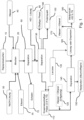
- Fig. 1 schematically shows an exemplary process sequence for the production of a valuable product with an intense red coloration. This red coloration is well preserved even over a longer period of time when stored at room temperature.
- Laccase 130 can preferably be added at one of two locations. The two options are shown with dashed arrows.
- the method according to the invention preferably comprises the following steps:
- the mixture of substances within the meaning of this application can consist of the complete but broken seeds. These can be unpeeled, partially peeled or completely peeled.
- the mixture of substances can also consist of a product which has already been deoiled, in particular of an "intermediate product", i.e. of a press cake 10 which remains as a residue of the oil extraction after a "preliminary stage", e.g. the pressing out of oil, in particular with a press (e.g. a screw press).
- an "intermediate product” i.e. of a press cake 10 which remains as a residue of the oil extraction after a "preliminary stage", e.g. the pressing out of oil, in particular with a press (e.g. a screw press).
- a "recently obtained intermediate product" as the starting material, i.e. no more than 31 days may have passed since the preliminary stage.
- the seeds can be freshly harvested or days, weeks or months old; the intermediate stage (pressing) should take place shortly or even immediately before further processing so that the material - the seeds - has not changed too much after the oil has been extracted.
- freshness material as the starting material, i.e. no more than 3 days may have passed after a preliminary stage or pre-processing (oil extraction), preferably even less than 48 hours or 24 hours or 12 hours or less than 1 hour.
- the press cake 10 can have a residual oil content that can be 20% or more. Despite such high residual oil contents, the extraction of a protein phase can also be achieved in a simple manner with the invention. However, the protein extraction is only optional.
- the sinapic acid and/or the Sinapine salt as a possible sinapinic acid derivative can thus be obtained as the only valuable product of the mixture or as an additional valuable product in protein production.
- step a crush the mixture of materials from step a) to break open the shells. If a press cake is used, this is broken open, ideally immediately after pressing, while still warm. In this way, a crushed material - a type of granulate - is produced from the press cake.
- the mixture of materials, which has previously been (partially) deoiled by a pressing process, is usually only crushed, for example crumbled or granulated, or the shells are broken open.
- the prepared and comminuted mixture of substances from step A) or B) is dispersed by mixing 20 with water 40 and/or an aqueous solution (e.g. a salt solution).
- aqueous solution e.g. a salt solution
- the water and comminuted product are then stirred to form a flowable slurry or dispersion. Stirring is preferably carried out for more than 30 minutes, in particular for more than 1 hour.
- the pH of the slurry (I) from step c) is adjusted to an alkaline range; the pH of the slurry or dispersion is preferably adjusted to pH 10 to 11 using lye 50. Stirring is continued (carefully).
- the stirring time is preferably more than 30 minutes, preferably 1 hour or more.
- At least one water-soluble organic solvent preferably alcohol 30, is added, in particular in water diluted form following adjustment of the pH of the slurry in step D.
- the dispersion whose pH has been adjusted to the alkaline range, is brought to an alcohol concentration of 20-15 vol.% or less, in particular 12% EtOH concentration, with the alcohol ethanol or EtOH (preferably 30-60 vol.%).
- the amount of water in step C can be reduced by the water contained in the alcohol, in particular in the 30-60% EtOH. This causes the shells to detach from the endosperm (cotyledon) with the residual oil and can be separated, in particular centrifugally.
- alcohols such as isopropanol
- Steps C-E can be carried out together, for example at the same time.
- step F) therefore, during a first separation 60, a solid phase which comprises the predominant portion, preferably more than 80% by weight, of the shells 70 is separated from the slurry, preferably in a centrifuge in the centrifugal field, or the slurry is clarified from shell solid portions, in particular in a decanter.
- the shells are separated from the remaining pulp using a decanter with an inlet.
- the lighter phase of a centrifugal phase separation is also occasionally referred to as the upper phase and the solid phase as the heavy phase.
- a middle phase would lie in between in terms of its density.
- step F The pulp from step F), which is in any case largely free of shells, is now processed further.
- the dissolved protein portion is precipitated from the shell-free pulp, which together with the undissolved or partially dissolved protein portion forms a fraction, the curd.
- Hydrochloric acid 80 preferably in diluted form, can be added for this purpose.
- the shell-free pulp is then separated by a second separation 90 - preferably in a centrifuge, in particular in at least one decanter or in a separator - in one or two steps into valuable material phases, one of which phases is a protein concentrate phase and one of these phases is a liquid phase containing sinapic acid;
- dissolved plant components may be present in the aqueous phase. These include one or more albumins and/or polyphenols and/or other plant components contained in the above-mentioned plants that were not separated as solids under the above-mentioned conditions.
- the two-phase separation is carried out when the raw material is relatively deoiled and/or bound in solids or when no intensive shearing has been carried out.
- the addition of water or alcohol or Lye or similar can also be used in partial steps.
- the oil, as a lighter phase, contains triglycerides and is one of the valuable substances that can be recovered.
- Step I) Addition of Laccase 130 to the sinapic acid-containing liquid phase of step H) with or without residual oil content directly or after passing through further intermediate steps.
- the sinapic acid-containing liquid phase 110 of step I) to which Laccase 130 has been added takes on a red color after a reaction time of preferably less than 30 minutes.
- sinapic acid can also be present as a sinapic acid derivative, e.g. esterified with choline. Sinapic acid can therefore also be present as a sinapic acid derivative in the respective phase. These compounds are also covered by the terms "sinapic acid” or "containing sinapic acid”.
- the temperature during all process steps is below 60°C, in particular below 50°C, preferably between 40°C and 50°C, which enables particularly valuable products to be obtained.
- the denaturation of proteins is a temperature and time-dependent process. Added to this is the condition in the alcoholic environment. Protein denaturation occurs more quickly the higher the temperature. In an aqueous environment, however, irreversible protein denaturation is not to be expected even with heat effects of 45-50 °C. This changes, however, with the alcohol concentration. Even at ambient temperature, protein precipitation can be observed with highly concentrated alcohol.
- the temperature chosen is as high as possible, i.e. as close as possible to 60°C, in order to dissolve as many substances as possible, such as proteins, lecithins, glycolipids, etc.
- the precipitated proteins from step H) are present as protein curd (heavy phase). They form another of the recoverable valuable substances. This phase can easily be dried into powder.
- step I After step I), after a sufficient reaction time has elapsed, a red fluid is obtained that is visually appealing and can therefore be used further.
- the fluid has a color that is similar to the color of the fruit "beetroot”.
- Standardized colors are referred to as RAL colors (RAL GmbH, a subsidiary of the RAL Institute). Each color is assigned a four-digit color number. Theoretically, any press cake can be used for the process.
- the advantageous temperature specification for process steps A to H does not refer to the pressing temperature when producing the press cake during oil production.
- the use of optimally selected raw materials preferably cold-pressed rapeseed press cake, preferably very fresh results in a particularly attractive, particularly easily recyclable product.
- cold-pressed material in particular a cold-pressed rapeseed press cake (temperature during pressing advantageously less than 70°C, particularly preferably even less than 60°C) as the starting material or as the mixture of materials provided.
- Hot-pressed material is exposed to significantly higher temperatures (up to over 100°C) during pressing.
- a protein phase or "protein or protein phase” can be produced. Quark phase” with significantly better properties (particularly in terms of color, much lighter and therefore easier to process) and with a significantly better yield than when using warm or hot-pressed starting material. This has not been recognized in the prior art to date.
- the liquid phase or "water phase” of step H) still contains valuable ingredients, in particular it contains a relatively high amount of albumin and/or sinapic acid.
- the liquid phase is also enriched with sinapine, sinapic acid and/or sinapic acid derivatives. The production of a red-colored fluid according to the invention is therefore sensible and advantageous.
- degassing 120 can be carried out in a step K) to partially remove water and/or ethanol, preferably in a temperature-friendly manner. This can advantageously be carried out by means of a vacuum or negative pressure. This is particularly advantageous the higher the ethanol content in the aqueous phase.
- an optional separation of a residual protein phase 150 can be carried out by a third separation 140.
- the residual protein phase 150 contains in particular albumins and/or napins, which can be separated as solids by a separator, in particular by a decanter. This can optionally be carried out by adding additives such as enzymes, complexing agents and/or precipitants such as ammonium sulfate.
- the laccase according to step I) can be added both before and after the optional steps K and/or L.
- the reaction of the sinapinic acid and/or The reaction of the sinapinic acid derivative with the laccase in step I) is particularly preferably carried out in the presence of oxygen.
- additional oxygen can be introduced during the reaction, for example by means of circulating air.
- Sinapic acid or a sinapic acid derivative and laccase are involved in the reaction. However, one or more other substances may also be involved, which are dissolved in the aqueous-alcoholic phase during the preceding steps A-H, and preferably also in the optional steps K and L.
- the reaction product produced from sinapinic acid, laccase and possibly other reaction products is contained in the aqueous-alcoholic solution 160 with a dry matter content of 3-8%.
- the reaction product is finally stabilized with the intense red color.
- This is done by concentrating the reaction product by removing water and alcohol 170, e.g. by degassing under negative pressure or vacuum. The concentration can either take place in step 120 before the albumins are separated or only in step 170 or by a first concentration in step 120 and a second concentration in step 170.
- a red syrup is formed as the valuable product 180 with a dry matter content of at least 20 percent, preferably 30-35 percent. However, part of the syrup is preferably still water and/or ethanol.
- the valuable product, i.e. the syrup Contains residual amounts of sinapinic acid, but these are below 500 ppm, preferably below 400 ppm. This means that the valuable product can be used directly in the food industry, e.g. as a dye for coloring food.
- the aforementioned valuable product is preferably a flavonoid-containing phenol mixture.
- the reaction product with the red color is a phenolic compound, in particular a flavonoid.
- the majority of the sinapic acid is preferably converted to the reaction product when laccase is added. This means that less mol% of sinapic acid is contained in the syrup as a reaction product.
- the molar fraction of sinapic acid compared to the reaction product can particularly preferably be less than 50%. This means that preferably two thirds of the sinapic acid has been converted.
- the dye or reaction product can be stabilized or decomposed slowly or quickly. Therefore, various applications for the red reaction product are possible.
- a solution with a concentration of the reaction product of more than 20% can be stored either at normal ambient temperature of 20-35°C or in a cool place.
- the decomposition of the reaction product depends on the pH value, among other things.
- the reaction product as a color indicator to indicate a cold chain in the food industry. If the cold chain is interrupted, the reaction product decomposes, which is accompanied by a change in the color of the indicator from intense red to brown.
- the reaction product can also be used as a stable food coloring, e.g. for coloring ice cream.
- Step A) The raw material provided in this example is pressed rapeseed cake, ideally gently and cold pressed, with typical residual oil contents of 20%; even higher is not a problem.
- Step B) The cake is broken open, ideally immediately after pressing, while still warm.
- Step C) The cake granules are dispersed with water (1 part cake and max. 6 parts water) and stirred carefully (1h).
- Step D) This dispersion is adjusted to pH 10 to 11 with alkali and stirred gently, usually for 1 h.
- Step E) The dispersion from D is to be brought to a concentration of 12 vol.% EtOH with EtOH (preferably 30-60% - based on volume percent), thus the amount of water in point C is reduced by the water contained in this 30-60% EtOH.
- Step F This separates the shells from the endosperm (cotyledon) with the remaining oil and can be separated centrifugally. An overflow and a shell fraction are created.
- Step H Separation of the precipitated proteins as curd (heavy phase (usually solid phase or here curd phase)) and possibly triglycerides (as light oil) from the upper flow (light phase or alcoholic-aqueous phase), in particular centrifugally.
- Step K) Degassing of the light alcoholic-aqueous phase Step L) optional separation of a protein residual phase from the sinapinic acid-containing alcoholic-aqueous phase Step I) Adding laccase to the sinapinic acid-containing alcoholic-aqueous phase after steps H), K) and/or L) with or without residual oil content and waiting for a reaction time until a red coloration occurs.
- a cold-pressed protein-containing cake, which is processed up to step F, has the following phases after processing: 17% heavy phase as shell portion of the feed with 20% of the cake proteins and 83% overflow as protein-polyphenol-oil-phosphatide phase with 80% of the cake proteins.
- a warm pressed cake which is processed up to step F has the following phases after processing: 26% heavy phase as shell portion of the feed with 30% of the cake proteins and 74% overflow as protein-polyphenol-oil-phosphatide phase with 70% of the cake proteins.
- a hot-pressed cake processed in step F has the following phases after processing: 30% heavy phase as shell fraction of the feed with 50% of the cake proteins and 70% overflow as protein-polyphenol-oil-phosphatide phase with 50% of the cake proteins.
- the water-insoluble proteins which can, however, swell in aqueous solution, together with the precipitated globulins, form the protein fraction of the "protein curd".
- the liquid in this fraction has the same composition as the liquid in the middle phase (upper flow without triglycerides).
- the curd phase since the curd phase only makes up 10-30% by weight of the feed (with a relatively high proportion of dry matter, 15-25% by weight of dry matter), the curd phase also contains significantly fewer polyphenols than the middle phase, although the concentration of polyphenols in relation to the water is the same.
- the pure triglyceride is displaced from the liquid as a light phase, the residual oil content in the final protein product can be reduced to below 15 wt.%, even below 13 wt.% based on dry matter.
- the end product can also be described as native.
- step H before the oil separation
- step F before the oil separation
- step F after step F) or G) of claim 1
- This shearing can be carried out with a shearing device, such as a homogenizer or an intensive mixer, in order to obtain even more oil.
- Shearing with a shearing device can be carried out in a continuous process. Overall, a continuous process is preferably implemented.
- steps C), D) and E) results in the sinapinic acid being enriched in the "water phase". This is advantageous for the present process.
- the choice of starting material therefore influences the amount of sinapinic acid available for the reaction.
- the polyphenol content in the aqueous phase can increase by more than 4 times if "cold-pressed rapeseed press cake" is used as the starting material instead of "hot-pressed rapeseed press cake".
- the use of fresh material is also advantageous in this respect.
- the polyphenol content is enriched in the aqueous phase, it is depleted in the protein curd phase.
- the proportion of 9.4% polyphenols dry matter "TS” in the raw material
- TS dry matter
- the polyphenols are transferred in the greatest quantity into the water phase, or more precisely the "polyphenol albumin phase" of step H).
- the alkaline pretreatment (+temperature and EtOH)
- they are essentially present as sinapinic acid or salts of sinapinic acid and no longer as sinapine and not yet as canolol.
- an enzyme in particular laccase
- laccase C from ABA Spezialsysteme GmbH, Wolfenbüttel, Germany
- This enzyme is preferably added in at least 0.1 g/l, preferably 0.15 to 0.25 g/l of laccase based on an enzyme activity of 0.28 kilounits.
- At least 30% by weight, preferably more than 50% by weight, of the dry substance of the valuable product comprises the reaction product of laccase and the aforementioned naturally obtained sinapinic acid.
- Peeled, single or double deoiled rapeseed cake has proven to be particularly suitable for processing.
- the sum of the sinapine content and the sinapic acid content is greater than in a warm-pressed rapeseed cake. It is also advantageous if the proportion of sinapic acid in the sinapine-sinapic acid mixture is as high as possible.
- steps C) to F) it is advantageous to select the conditions of steps C) to F) so that as much sinapinic acid as possible is produced.
- the pH in step D) is greater than 10
- the temperature in steps E) to H) is also advantageously at least 20° C.
- the cleavage of a choline group from sinapine to sinapinic acid is more successful in an alkaline environment and at slightly elevated temperatures.
- a red fluid is obtained from the upper flow of step H), the polyphenol albumin phase with a sinapine/sinapinic acid content, a brown fluid with at least, for example, approx. 8% TS, of which 2% protein (85% of which is water-soluble napin) and approx. 6-7% sugar and some oil-containing substances.
- the enzyme laccase is added to the upper flow (preferably at room temperature) in the amount of 0.1 g of a solution with 10,000 units (amount 1 g), i.e. in about 1,000 units. Then aeration takes place for at least 30 minutes, preferably about 1 hour. Even 1 + 1 (1kUnit) produces a result.
- T the overflow to which laccase has been added turns red.
- a red fluid is formed which has a coloration similar to the colors RAL 3004, 3005 and/or 3006. The resulting color resembles the color of the fruit "beetroot".
- the resulting fluid has many uses, for example as a food additive for coloring in the style of a color of the "beetroot" type.
- the valuable product can be a valuable product which, in addition to the reaction product, still contains residual protein (albumin/napin) or it can be a valuable product which has been largely freed from this residual protein by an additional separation 140.
- the sinapinic acid-containing aqueous and/or alcoholic phase (110 or 160) can be made from cold-pressed seeds and/or fruits.
- the aqueous and/or alcoholic phase (110 or 160) may have a dry matter content before the addition of laccase (130) of less than 3%, preferably less than 1%.
- the water-soluble organic solvent can be a linear aliphatic alcohol.
- the valuable product according to the invention is preferably prepared by a process according to the invention.
Landscapes
- Life Sciences & Earth Sciences (AREA)
- Chemical & Material Sciences (AREA)
- Health & Medical Sciences (AREA)
- Engineering & Computer Science (AREA)
- Zoology (AREA)
- Polymers & Plastics (AREA)
- Organic Chemistry (AREA)
- Bioinformatics & Cheminformatics (AREA)
- Wood Science & Technology (AREA)
- Genetics & Genomics (AREA)
- Biotechnology (AREA)
- Molecular Biology (AREA)
- Food Science & Technology (AREA)
- Botany (AREA)
- Mycology (AREA)
- Medicinal Chemistry (AREA)
- Biomedical Technology (AREA)
- Microbiology (AREA)
- Biochemistry (AREA)
- General Engineering & Computer Science (AREA)
- General Health & Medical Sciences (AREA)
- Animal Husbandry (AREA)
- Physiology (AREA)
- Nutrition Science (AREA)
- Chemical Kinetics & Catalysis (AREA)
- Agronomy & Crop Science (AREA)
- Preparation Of Compounds By Using Micro-Organisms (AREA)
- Coloring Foods And Improving Nutritive Qualities (AREA)
Description
- Die vorliegende Erfindung betrifft ein Wertprodukt in Form eines flavonoid-enthaltenden Phenolgemisches mit intensiver Rotfärbung und ein Verfahren zur Gewinnung einer Wertstoffphase, insbesondere einer rot gefärbten Phase, aus einem nativen Stoffgemenge.
- Es ist bekannt, aus Saaten mit harten, zerbrechbaren Schalen, insbesondere aus Rapsfrüchten, eine Proteinphase als Wertstoffphase zu gewinnen.
- Beim gängigen Ansatz zur Proteinkonzentratherstellung erfolgt eine Waschung der Schrote (stark entölt), wobei die löslichen Extraktionsstoffe abgereichert werden. Die Wertigkeit der entölten Zwischenprodukte hängt stark von der Konzentration an Begleitstoffen ab, wie Fasern, Zucker und sekundäre Pflanzenstoffen (Menner, M. u.a. "Fraktionierung pflanzlicher Rohstoffe zur simultanen Erzeugung von Lebensmitteln, technischen Rohstoffen und Energieträgern", Chemie Ingenieur Technik, Band 81, Ausgabe 11, Seiten 1743 - 1756, November 2009). Zu diesen Begleitstoffen zählen auch Polyphenole wie Sinapin. Die Polyphenolsäure "Sinapinsäure" kommt vor allem in Rapssamen vor (dort liegt der Sinapingehalt bei ca. 640 mg / 100 g Raps). Um Begleitstoffe wie Sinapin abzutrennen, werden große Verdünnungen gewählt, auch Proteine denaturiert (Temperatur, Alkohol), Zellulose wird enzymatisch abgebaut zu kurzkettigen Kohlenhydraten; diese Methoden werden gewählt, um die Stoffen besser extrahieren zu können.
- Die Zugabe von Laccase zu Sinapinsäure ist u.a. aus verschiedenen wissenschaftlichen Publikationen bekannt:
- LACKl K ET AL, "TRANSFORMATION OF 3,5-DIMETHOXY-4-HYDROXY CINNAMIC ACID AND ITS DERIVATIVES USING ENZYME FROM WHITE-ROT FUNGUS TRAMETES VERSICOLOR:ENZYME CHARACTERISTICS AND ITS APPLICATION", JOURNAL OF CHEMICAL TECHNOLOGY AND BIOTECHNOLOGY, WILEY, (19960301), vol. 65, no. 3, ISSN 0268-2575;
- YANZHOU ZHANG ET AL, "Hydrogen Peroxide-Resistant CotA and YjqC of Bacillus altitudinis Spores Are a Promising Biocatalyst for Catalyzing Reduction of Sinapic Acid and Sinapine in Rapeseed Meal", PLOS ONE, (20160630), vol. 11, no. 6, doi:1 0.1 371/journal.pone.01 58351;
- YANXING NIU ET AL, "Characterization of the Factors that Influence Sinapine Concentration in Rapeseed Meal during Fermentation", PLOS ONE, (20150121), vol. 10, no. 1, doi:10.1371/journal.pone.0116470;
- LACKl K ET AL, "Comparison of three methods for the determination of sinapic acid ester content in enzymatically treated canola meals", APPLIED MICROBIOLOGY AND BIOTECHNOLOGY, SPRINGER, BERLIN, DE, (19960501), vol. 45, no. 4, doi:10.1007/BF00578467, ISSN 1432-0614;
- ADINARAYANA KUNAMNENI ET AL, "Laccases and Their Applications: A Patent Review", RECENT PATENTS ON BIOTECHNOLOGY, NL, (20080101), vol. 2, no. 1, doi:10.2174/187220808783330965, ISSN 1872-2083;
- JOHANN F. OSMA ET AL, "Uses of Laccases in the Food Industry", ENZYME RESEARCH, (20100101), vol. 2010, doi:10.4061/2010/918761;
- TIAN XIE ET AL, "Structural insight into the oxidation of sinapic acid by CotA laccase", JOURNAL OF STRUCTURAL BIOLOGY, United States, (20150501), vol. 190, no. 2, doi:10.1016/j.jsb.2015.03.005, ISSN 1047-8477;
- PARDO ET AL, "Re-designing the substrate binding pocket of laccase for enhanced oxidation of sinapic acid", CATALYSIS SCIENCE & TECHNOLOGY, United Kingdom, (20160101), vol. 6, no. 11, doi:10.1039/C5CY01725D, ISSN 2044-4753;
- Vor diesem Hintergrund ist es die Aufgabe der Erfindung, ein intensiv-rot gefärbtes Wertprodukt zu gewinnen und die Gewinnung von Wertprodukten aus dem nativen Stoffgemenge weiter zu optimieren, wobei es insbesondere möglich sein soll, auf relativ einfache Weise eine intensiv rot gefärbte Wertstoffphase aus dem nativen Stoffgemenge zu gewinnen.
- Die Erfindung löst diese Aufgabe durch das Bereitstellen eines Verfahrens mit den Merkmalen des Anspruchs 1 und durch ein Wertprodukt mit den Merkmalen des Anspruchs 11.
- Ein Wertprodukt ist ein flavonoid-enthaltendes Phenolgemisch.
- Dieses flavonoid-enthaltende Phenolgemisch umfasst ein Reaktionsprodukt. Dieses ist vorzugsweise eine Phenolische Verbindung. Besonders bevorzugt kann es sich bei der phenolischen Verbindung um ein Flavonoid handeln. Das Reaktionsprodukt wird gebildet bei der Zugabe von Laccase zu einer sinapinsäurehaltigen wäßrigen und/oder alkoholischen Phase. Diese alkoholische oder wäßrige Phase ist erfindungsgemäß hergestellt aus Pflanzen und/oder Pflanzenteilen, vorzugsweise aus Saaten und/oder Früchten von Kreuzblütengewächsen (Brassicaceae), insbesondere von Rapsfrüchten oder Camelina. Die Bildung des Reaktionsproduktes erfolgt unter Anwesenheit von Sauerstoff.
- Als "sinapinsäurehaltig" werden in Rahmen der vorliegenden Erfindung auch Sinapinsäurederivate verstanden, so z.B. Sinapinsäureester.
- Die Dimerisierung von Sinapinsäure mit Laccase in Anwesenheit von Sauerstoff unter Bildung eines roten Farbstoffes ist an sich bekannt. Es hat sich allerdings überraschend gezeigt, dass die Rotfärbung, bei der Verwendung einer sinapinsäurehaltigen Phase, welche aus Pflanze oder Pflanzenteilen gewonnen wurde, gegenüber einer Färbung des Laccase-Sinapinsäure-Reaktionsproduktes deutlich intensiver ist. Dies kann ggf. auf die Anwesenheit weiterer Reaktionspartner in der alkoholisch-wäßrigen Phase zurückzuführen sein, welche bei der Reaktion der beiden reinen bzw. isolierten Reaktionspartner nicht vorhanden sind.
- Vorteilhafte Ausgestaltungen der Erfindung sind Gegenstand der Unteransprüche.
- Das Reaktionsprodukt kann vorteilhaft in einer wäßrigen und/oder alkoholischen Lösung und/oder Dispersion vorliegen. Die Lösung und/oder Dispersion ist in diesem Fall das Wertprodukt. Das Reaktionsprodukt ist vorzugsweise eine Phenolische Verbindung und besonders bevorzugt ein Flavonoid.
- Das Wertprodukt, also das flavonoid-enthaltende Phenolgemisch, weist einen Trockensubstanzgehalt von mehr als 55 % auf. Ein derart erhöhter Trockensubstanzgehalt erhöht die Stabilität der Lösung, so dass sich das Reaktionsprodukt langsamer oder gar nicht zersetzt.
- Als wäßrige Lösung wird im Rahmen der vorliegenden Erfindung auch ein Gemisch aus Wasser und einem organischen wasserlöslichen Lösungsmittel verstanden. Dieses organische wasserlösliche Lösungsmittel kann ein Alkohol, insbesondere ein Alkohol mit drei oder weniger Kohlenstoffatomen, und besonders bevorzugt Ethanol, sein.
- Eine alkoholische Lösung besteht demgegenüber ausschließlich aus Alkohol, insbesondere aus einem Alkohol mit drei oder weniger Kohlenstoffatomen, und besonders bevorzugt aus Ethanol.
- Die sinapinsäurehaltige wäßrige und/oder alkoholische Phase als Ausgangsstoff ist vorteilhaft aus kaltgepressten Saaten und/oder Früchten hergestellt.
- Der pH-Wert der wäßrigen und/oder alkoholischen Phase beträgt vorzugsweise pH=7 oder weniger.
- Die wäßrige und/oder alkoholische Phase weist vorteilhaft einen Trockensubstanzgehalt vor der Zugabe von Laccase von weniger als 3%, vorzugsweise weniger als 1 % auf.
- Das vorgenannte Wertprodukt wird erfindungsgemäß nach dem folgenden Verfahren hergestellt.
- Ein erfindungsgemäßes Verfahren zur Gewinnung einer Wertstoffphase, insbesondere eines erfindungsgemäßen Wertproduktes aus einem nativen Stoffgemenge, umfasst die folgenden Schritte:
- Schritt A: Bereitstellen des nativen Stoffgemenges aus Saaten von Kreuzblütengewächsen (Brassicaceae), mit einem Anteil von harten, zerbrechbaren Schalen oder in geschälter Form, insbesondere von Rapssaaten als Stoffgemenge aus den vollständigen Saaten oder aus bereits (teil-) entölten Saaten, insbesondere als Presskuchen, der bei einem Abpressen von Öl insbesondere mit einer Presse als Rückstand der Ölgewinnung verbleibt;
- Schritt B: sofern das Stoffgemenge aus Schritt A noch nicht zerkleinert ist: Zerkleinern des Stoffgemenges, wobei ggf. die Schalen aufgebrochen werden;
- Schritt C: Dispergieren des zerkleinerten Stoffgemenges aus Schritt A) oder B) mit Wasser, wobei auf einen Teil zerkleinertes Stoffgemenge vorzugsweise bis zu maximal 8, besonders vorzugsweise bis zu maximal 6, insbesondere bis zu maximal 5 Teile Wasser zugegeben werden und wobei das Wasser und das zerkleinerte Stoffgemenge gerührt werden, so dass sich ein fließfähiger Brei bzw. eine Dispersion ergibt;
- Schritt D): Einstellen des pH-Wertes des Breis aus Schritt C) in einen alkalischen Bereich pH > 9, 5;
- Schritt E): Zugeben eines wasserlöslichen organischen Lösemittels, vorzugsweise von Ethanol, insbesondere in mit Wasser verdünnter Form, zu dem Brei aus Schritt D) im Anschluss an das Einstellen des pH-Wertes des Breis im Schritt D; insbesondere derart, dass eine Alkoholkonzentration erreicht wird, die kleiner als 30% ist, um die Schalen vom Endosperm der Saaten/Früchte zu lösen;
- Schritt F): Abtrennen einer Feststoffphase, welche den überwiegenden Anteil der ggf. noch vorhandenen Schalen aufweist, vorzugsweise in einer Zentrifuge im Zentrifugalfeld;
- Schritt G): Verschieben des pH-Wertes des Feststoffphase befreiten Breis aus Schritt F) in den pH-Bereich von pH = 4,5 bis pH = 7,2; und
- Schritt H): Trennen des schalenfreien Breis, dessen pH-Wert in Schritt G) ins Saure verschoben worden ist, vorzugweise in einer Zentrifuge, insbesondere in wenigstens einem Dekanter oder einem Separator, in mehrere Phasen, wobei zumindest eine dieser Phasen eine Polyphenol-Albumin-Flüssigkeitsphase ist;
- Schritt I): Zugabe von Laccase zu der Polyphenol-Albumin-Flüssigkeitsphase des Schrittes H) direkt oder nach einem Durchlaufen weiterer Zwischenschritte.
- Die Polyphenol-Albumin-Flüssigkeitsphase entspricht der vorgenannten sinapinsäurehaltigen wäßrigen und/oder alkoholischen Phase, wobei das Polyphenol die Sinapinsäure oder ein Sinapinsäurederivat ist.
- Das erfindungsgemäße Verfahren stellt eine besonders wirtschaftliche Gewinnung des vorgenannten Wertproduktes mit intensiver Rotfärbung dar.
- Vorteilhafte Ausgestaltungen des Verfahrens sind Gegenstand der Unteransprüche.
- Die Polyphenol-Albumin-Flüssigkeitsphase des Schrittes I), der Laccase zugesetzt worden ist, nimmt dabei nach einer Reaktionszeit von maximal 30 min eine rote Färbung an.
- Der Polyphenol-Albumin-Flüssigkeitsphase des Schrittes H) im Schritt I) wird vorteilhaft Laccase in Anwesenheit von Sauerstoff in folgender Menge zugesetzt: zumindest 0,1 g/l, vorzugsweise 0,15 bis 0,25 g/l an Laccase bezogen auf eine Enzymaktivität von 0,28 Kilounits , Dabei erfolgt die Bildung des erfindungsgemäßen Reaktionsproduktes.
- Im Schritt H) kann vorteilhaft folgende Phasentrennung in einem oder zwei Schritten, vorzugsweise in einer Zentrifuge, insbesondere in einem Dekanter oder Separator erfolgen:
- ölhaltige Phase mit Triglyceridgehalt;
- wässrige Phase mit Albumin und Sinapinsäuregehalt; und
- Im Schritt H) kann vorteilhaft zudem folgende Phasentrennung in einem oder zwei Schritten, vorzugsweise in einer Zentrifuge, insbesondere in einem Dekanter oder Separator, in zwei Wertstoffphasen erfolgen, mit zumindest einer wässrigen Phase mit Albumingehalt und Sinapinsäuregehalt und Restölgehalt.
- Als Stoffgemenge/Ausgangsmaterial kann ein "kurz zuvor hergestelltes Zwischenprodukt" verarbeitet werden, d.h. nach der Vorstufe sind nicht mehr als 31 Tage vergangen.
- Als Stoffgemenge/Ausgangsmaterial kann ein "frisches Zwischenprodukt" verarbeitet werden, d.h. nach der Vorstufe dürfen nicht mehr als 3 Tage vergangen sein, vorzugsweise sogar nur weniger als 48 Stunden, insbesondere weniger als 24 Stunden.
- Als Stoffgemenge kann in Schritt A kalt gepressten Material, insbesondere ein kalt gepresster Rapspresskuchen verwendet wird, der bei einer Temperatur kleiner als 70°C, besonders vorzugsweise sogar kleiner als 60°C, gepresst worden ist
Einer oder mehrere der Abtrennungsschritte kann oder können vorteilhaft in einem 3-Phasendekanter oder in zumindest zwei Schritten in 2-Phasendekantern erfolgen. - Einer oder mehrere der Abtrennungsschritte kann oder können vorteilhaft in einem Düsenseparator erfolgen.
- Das wasserlösliche organische Lösemittel kann vorteilhaft ein linearer aliphatischer Alkohol sein.
- Der Gehalt an wasserlöslichem organischen Lösemittel im wässrigen Anteil des Breis (I) nach dem Zugeben des wasserlöslichen organischen Lösemittels kann vorteilhaft weniger als 45 Vol. %, vorzugsweise weniger als 30 Vol % und besonders vorzugsweise weniger als 15 Vol %, betragen.
- Die Temperatur kann vorteilhaft während sämtlicher Verfahrensschritte, wozu nicht das Pressen zur Erzeugen des Presskuchens gehört, unterhalb von 60 ° C liegen.
- Die Temperatur kann vorteilhaft während sämtlicher Verfahrensschritte, wozu nicht das dem Verfahren vorangehende Pressen zur Erzeugen eines Presskuchens als Ausgangsmaterial gehört, unterhalb von 50 ° C liegen.
- Besonders bevorzugt werden abgesehen von der Laccase keine weiteren Enzyme oder andere Chemikalien (außer zur pH-Wertanpassung) in den Schritten A) bis I) und im gesamten Herstellverfahren zugegeben.
- Weiterhin erfindungsgemäß ist ein Erzeugnis, welches durch das erfindungsgemäße Verfahren hergestellt ist.
- Nachfolgend wird der Gegenstand der Erfindung anhand eines Ausführungsbeispiels und unter Bezugnahme auf die beiliegende Figur näher erläutert. Es zeigt:
- Fig. 1
- Ablaufdiagramm eines Ausführungsbeispiels zur Durchführung eines erfindungsgemäßen Verfahrens zur Herstellung eines erfindungsgemäßen Wertproduktes.
-
Fig. 1 stellt schematisch einen beispielhaften Verfahrensablauf für die Gewinnung eines Wertproduktes mit intensiver Rotfärbung dar. Diese Rotfärbung bleibt auch über einen längeren Zeitraum bei Lagerung unter Raumtemperatur gut erhalten. - Die Zugabe der Laccase 130 kann vorzugsweise an einer der beiden zwei Stellen erfolgen. Die beiden Optionen sind mit gestichelten Pfeilen dargestellt.
- Das erfindungsgemäße Verfahren weist vorzugsweise folgende Schritte auf:
- Als Ausgangsmaterial wird natives Stoffgemenge aus Saaten (Samen) mit harten, zerbrechbaren Schalen, insbesondere aus
- Saaten/Früchten von Kreuzblütengewächsen (Brassicaceae), insbesondere von Rapsfrüchten oder Camelina wie z.B. Leindotter, bereitgestellt.
- Das Stoffgemenge im Sinne dieser Anmeldung kann aus den vollständigen, jedoch gebrochenen Saaten bestehen. Diese können ungeschält sein oder teilweise geschält oder ganz geschält.
- Alternativ kann das Stoffgemenge aber auch aus einem bereits entölten Produkt bestehen, insbesondere aus einem "Zwischenprodukt", d.h. aus einem Presskuchen 10, der nach einer "Vorstufe", z.B. dem Abpressen von Öl, insbesondere mit einer Presse (z.B. einer Schneckenpresse) als Rückstand der Ölgewinnung verbleibt.
- Besonders bevorzugt wird als das Ausgangsmaterial "kurz zuvor gewonnenes Zwischenprodukt" verarbeitet, d.h. nach der Vorstufe dürfen nicht mehr als 31 Tage vergangen sein.
- Die Saat kann frisch geerntet oder aber Tage, Wochen oder Monate alt sein, die Zwischenstufe (das Pressen) sollte kurz oder sogar unmittelbar vor der weiteren Verarbeitung stattfinden, damit sich nach der Ölgewinnung das Material - die Saat - nicht zu stark verändert hat.
- Ganz bevorzugt wird als das Ausgangsmaterial "frisches Material" verarbeitet, d.h. nach eine Vorstufe bzw. Vorbearbeitung (Ölgewinnen) dürfen nicht mehr als 3 Tage vergangen sein, vorzugsweise sogar nur weniger als 48 Stunden oder 24 Stunden oder 12 h oder weniger als 1h.
- Mit Material aus einem Zeitraum kurz nach der Vorstufe werden gute oder/und mit frischem Material in der Regel nochmals bessere Ergebnisse hinsichtlich der Ausbeute und der Reinheit der Wertprodukte erzielt.
- Der Presskuchen 10 kann einen Restölgehalt aufweisen, der auch bei 20% oder mehr liegen kann. Trotz derart hoher Restölgehalte ist die Gewinnung auch einer Proteinphase mit der Erfindung auf einfache Weise realisierbar. Die Proteingewinnung ist dabei jedoch lediglich optional. Die Sinapinsäure und/oder das Sinapinsalz als mögliches Sinapinsäurederivat kann somit als einziges Wertprodukt des Stoffgemenges gewonnen werden oder als zusätzliches Wertprodukt bei einer Proteingewinnung gewonnen werden.
- Sofern es noch nicht zerkleinert vorliegt: Zerkleinern des Stoffgemenges aus Schritt a) zum Aufbrechen der Schalen. Sofern ein Presskuchen verwendet wird, wird dieser aufgebrochen, idealerweise unmittelbar nach dem Pressen, noch warm. Derart wird ein zerkleinertes Material - eine Art Granulat - aus dem Presskuchen erzeugt. Das zuvor durch einen Pressvorgang (teil-) entölte Stoffgemenge wird in der Regel nur zerkleinert, beispielsweise zerbröselt bzw granuliert oder es werden jedenfalls die Schalen aufgebrochen.
- Das bereitgestellte und zerkleinerte Stoffgemenge aus Schritt A) oder B) wird durch Mischen 20 mit Wasser 40 und/oder einer wässrigen Lösung (z.B. einer Salzlösung) dispergiert. Auf einen Teil "zerkleinertes Produkt" werden vorzugswiese bis zu maximal 8, vorzugsweise bis zu maximal 5 Teile (Gewichtsanteile) Wasser zugegeben. Sodann werden Wasser und zerkleinertes Produkt gerührt, so dass sich ein fließfähiger Brei bzw. eine Dispersion ergibt. Das Rühren erfolgt vorzugsweise für mehr als 30 min, insbesondere für mehr als 1h.
- Als nächstes erfolgt ein Einstellen des pH-Wertes des Breis (I) aus Schritt c) in einen alkalischen Bereich; Vorzugsweise wird der pH-Wert des Breis bzw. der Dispersion mit Lauge 50 auf pH 10 bis 11 eingestellt. Dabei wird (vorsichtig) das Rühren fortgesetzt. Die Verrührzeit beträgt vorzugsweise mehr als 30 min, vorzugsweise liegt sie bei 1 h oder darüber.
- In diesem weiteren Schritt erfolgt ein Zugeben mindestens eines wasserlöslichen organischen Lösemittels, vorzugsweise von Alkohol 30, insbesondere in mit Wasser verdünnter Form im Anschluss an das Einstellen des pH-Wertes des Breis im Schritt D. Vorzugsweise wird die Dispersion, deren pH-Wert in den alkalischen Bereich eingestellt worden ist, mit dem Alkohol Ethanol bzw. EtOH (vorzugsweise 30-60 Vol.%) auf eine Alkoholkonzentration von 20-15 Vol.% oder weniger, insbesondere 12% EtOH Konzentration gebracht. Entsprechend der Wassermenge des verwendeten Alkohols kann die Wassermenge in Schritt C um das im Alkohol, insbesondere im 30-60%igen EtOH enthaltene Wasser, reduziert werden. Damit lösen sich die Schalen vom Endosperm (Kotyledon) mit dem Restöl und können abgetrennt werden, insbesondere zentrifugal.
- Als weniger bevorzugte Alternative gegenüber Ethanol können auch andere Alkohole, so z.B. Isopropanol, verwandt werden.
- Die Schritte C-E können gemeinsam, beispielsweise zeitgleich, erfolgen. So ist es z.B. möglich eine wässrige stark verdünnte Ethanollösung mit Lauge auf einen entsprechend basischen pH-Wert einzustellen und diese Lösung dem zerkleinerten Stoffgemenge zuzugeben.
- Im Schritt F) erfolgt daher bei einem ersten Separieren 60 ein Abtrennen einer Feststoffphase, welche den überwiegenden Anteil, vorzugsweise mehr als 80 Gew.%, der Schalen 70 umfasst, vorzugsweise in einer Zentrifuge im Zentrifugalfeld aus dem Brei bzw. es erfolgt ein Klären des Breis von Schalen-Feststoffanteilen insbesondere in einem Dekanter.
- Bei diesem Schritt werden mit einem Dekanter mit einem Zulauf die Schalen von dem Restbrei getrennt.
- Die leichtere Phase einer zentrifugalen Phasentrennung wird nachfolgend auch gelegentlich als Oberlauf bezeichnet und die Feststoffphase als schwere Phase. Eine Mittelphase läge entsprechend bzgl. ihrer Dichte dazwischen.
- Der jedenfalls weitestgehend schalenfreie Brei aus Schritt F) wird nunmehr weiterverarbeitet. Vorzugsweise erfolgt dabei eine Ausfällung des gelösten - Proteinanteiles aus dem schalenfreien Brei, der zusammen mit dem un- oder angelösten Protein-Teil eine Fraktion bildet, den Quark. Der pH-Wert wird dabei wieder weiter in den sauren Bereich verschoben, insbesondere in den pH-Bereich von pH = 4,5 bis pH = 7. Hierzu kann Salzsäure 80, vorzugsweise in verdünnter Form, zugegeben werden.
- Sodann wird der schalenfreie Brei, dessen pH-Wert wieder ins Saure verschoben worden ist, durch ein zweites Separieren 90 - vorzugweise in einer Zentrifuge, insbesondere in wenigstens einem Dekanter oder in einem Separator - in einem oder zwei Schritten in Wertstoffphasen getrennt, von denen eine Phase eine Proteinkonzentratphase ist und eine dieser Phasen eine sinapinsäurehaltige Flüssigkeitsphase ist;
- Besonders bevorzugt erfolgt eine Trennung in folgende zwei oder drei Phasen:
- ölhaltige Phase 190 welche als optionale separate Phase mit gestrichelten Pfeilen dargestellt ist
- wässrige Phase (Sinapinsäurehaltig) 110
- Proteinkonzentratphase (nachfolgenden auch "Proteinquark" genannt) 100 oder
- wässrige sinapinsäurehaltige Phase mit Restölgehalt 110; und
- Proteinkonzentratphase (Proteinquark) 100;
- In der wäßrigen Phase können weitere gelöste Pflanzenbestandteile vorhanden sein. Dabei handelt es sich unter anderem um eines oder mehrere Albumine und/oder Polyphenole und/oder weitere in den o.g. Pflanzen enthaltene pflanzliche Bestandteile, welche nicht unter den o.g. Bedingungen als Feststoffe abgetrennt wurden.
- Die Zwei-Phasentrennung wird dann ausgeführt, wenn das Rohmaterial relativ stark entölt ist und/oder im Feststoff gebunden vorliegt oder wenn kein intensiver Scherungseinfluss ausgeführt worden ist. Die Zugabe von Wasser oder Alkohol oder Lauge oder dgl. kann auch in Teilschritten erfolgen. Das Öl als leichtere Phase enthält Triglyceride und ist einer der gewinnbaren Wertstoffe.
- Schritt I) Zugabe von Laccase 130 zur sinapinsäurehaltigen Flüssigkeitsphase des Schrittes H) mit oder ohne Restölgehalt direkt oder nach einem Durchlaufen weiterer Zwischenschritte. Die sinapinsäurehaltige Flüssigkeitsphase 110 des Schrittes I), der Laccase 130 zugesetzt worden ist, nimmt nach einer Reaktionszeit von vorzugsweise weniger als 30 min eine rote Färbung an.
- Nachfolgend wird zumeist von der Sinapinsäure und sinapinsäurehaltigen Phasen und Stoffgemengen gesprochen. Es versteht sich allerdings, dass je nach pH-Wert die Sinapinsäure auch als Sinapinsäurederivat z.B. verestert mit Cholin vorliegen kann. Die Sinapinsäure kann somit auch als Sinapinsäurederivat in der jeweiligen Phase vorliegen. Diese Verbindungen werden ebenfalls durch die Begriffe "Sinapinsäure" oder "sinapinsäurehaltig" erfasst.
- Vorzugsweise liegt die Temperatur während sämtlicher Verfahrensschritte unter 60°C, insbesondere unter 50°C, vorzugsweise, zwischen 40 °C und 50°C, wodurch sich besonders wertvolle Produkte gewinnen lassen.
- Die Denaturierung der Proteine ist ein temperatur- und zeitabhängiger Prozess. Hinzu kommt die Bedingung im alkoholischen Milieu. Die Proteindenaturierung geht umso schneller, je höher die Temperatur ist. In wässriger Umgebung ist aber auch bei Wärmeinwirkungen von 45-50 °C keine irreversible Proteindenaturierung zu erwarten. Das ändert sich aber mit der Alkoholkonzentration. Schon bei Umgebungstemperatur ist bei hochkonzentriertem Alkohol eine Proteinausfällung zu beobachten.
- Je geringer nun die Alkoholkonzentration ist, umso höher muss die Temperatur sein, um die Proteine zu denaturieren. Oder umgekehrt: je wässriger die Alkoholkonzentration ist, umso höher darf die Arbeitstemperatur sein, ohne dass die Proteine irreversibel geschädigt werden.
- Man wird also (für reines Wasser) eine möglichst hohe, d.h. möglichst an 60°C heranreichende Temperatur wählen, um möglichst viele Stoffe in Lösung zu bringen, wie Proteine, Lecithine, Glycolipide etc.. Es ist jedoch darauf zu achten, dass die Temperatur entsprechend den Prozessparametern Zeit und Alkoholkonzentration (ggf. Druck) hinreichend niedrig bleibt.
- Die gefällten Proteine aus Schritt H) liegen als Proteinquark vor (schwere Phase). Sie bilden einen weiteren der gewinnbaren Wertstoffe. Diese Phase kann gut zu Pulver getrocknet werden.
- Nach dem Schritt I) wird nach dem Verstreichen einer genügenden Reaktionszeit ein auch optisch ansprechendes und daher gut weiter verwertbares Fluid roter Färbung gewonnen. Das Fluid weist eine Färbung auf, die der Farbe der Frucht "rote Beete" ähnelt. Als RAL-Farbe werden normierte Farben bezeichnet (RAL GmbH, Tochter des RAL-Institutes). Jeder Farbe ist eine vierstellige Farbnummer zugeordnet. Theoretisch kann für das Verfahren jeder Presskuchen verwendet werden.
- Die vorteilhafte Temperaturangabe zu den Verfahrensschritten A bis H bezieht sich nicht auf die Presstemperatur beim Erzeugen des Presskuchens bei der Ölerzeugung. Je höher die Temperatur bei den vorangegangen Prozessschritten war, umso brauner wird die Proteinphase bzw. Quarkfraktion. Dies liegt einerseits an der Maillard-Reaktion von Zuckern mit Proteinen, andererseits an der Phenoloxidation. Gegenüber der
DE 10 2011 050 905 A1 wird insbesondere durch die Verwendung optimiert ausgewählten Ausgangsmaterials (vorzugsweise kalt gepresster Raps-Presskuchen, vorzugsweise sehr frisch) ein besonders ansprechendes, besonders gut weiterverwertbares Produkt gewonnen. - Besonders vorteilhaft ist die Verwendung kalt gepressten Materials, insbesondere eines kalt gepressten Rapspresskuchens (Temperatur beim Pressen vorteilhaft kleiner als 70°C, besonders vorzugsweise sogar kleiner als 60°C) als Ausgangsmaterial bzw. als das bereitgestellte Stoffgemenge. Warm gepresstes Material wird beim Pressen deutlich höheren Temperaturen (bis über 100° C) ausgesetzt. Durch die Verwendung kalt gepressten Materials als Ausgangsmaterial für das erfindungsgemäße Verfahren kann eine Proteinphase bzw. "Protein- bzw. Quarkphase" mit deutlich besseren Eigenschaften (insbesondere hinsichtlich der Farbe deutlich heller und daher besser verarbeitbar) und mit deutlich besserer Ausbeute gewonnen werden als bei der Verwendung warm bzw. heiß gepressten Ausgangsmaterials. Dies wurde im Stand der Technik bisher nicht erkannt. Denn gängige Rapspressverfahren zielen auf eine hohe Ölausbeute, weshalb beim Pressen gern höhere Temperaturen verwendet werden. Als Nebeneffekt ist festzustellen, dass Sinapin (ein Polyphenol) abgebaut wird, was an sich vorteilhaft für die Proteinfraktion wäre. Beim erfindungsgemäßen Verfahren stellt der originale, also nicht reduzierte, Sinapingehalt im kalt gepressten Kuchen aber dennoch kein Problem für das Endprodukt dar, da die polyphenolischen Verbindungen im Wesentlichen nicht in der Quarkphase zu finden sind, da sie in die Wasserphase übergehen.
- In der Flüssigkeitsphase bzw. "Wasserphase" des Schrittes H) sind noch wertvolle Inhaltsstoffe enthalten, insbesondere ist sie relativ stark albuminhaltig und/oder sinapinsäurehaltig. Auch ist die Flüssigphase mit Sinapin, Sinapinsäure und/oder Sinapinsäurederivate angereichert, Sinnvoll und vorteilhaft ist insofern die erfindungsgemäße Gewinnung eines rot gefärbten Fluids.
- Im Anschluss an Schritt I) kann in einem Schritt K) eine Entgasung 120 zur teilweisen Entfernung von Wasser und/oder Ethanol, vorzugsweise auf temperaturschonende Weise, erfolgen. Dies kann vorteilhaft durch Vakuum oder Unterdruck erfolgen. Dies ist besonders vorteilhaft je höher der Ethanolgehalt in der wässrigen Phase ist.
- Schließlich kann in Schritt L) eine optionale Abtrennung einer Restproteinphase 150 durch eine dritte Separation 140 erfolgen. In der Restproteinphase 150 sind insbesondere Albumine und/oder Napine enthalten, welche als Feststoffe durch einen Separator, insbesondere durch einen Dekanter abtrennbar sind. Dies kann ggf. unter Zugabe von Additiven, wie z.B. Enzymen; Komplexbildnern und/oder Fällungsmitteln, wie z.B. Ammoniumsulfat erfolgen.
- Die Laccase gemäß Schritt I) kann sowohl vor als auch nach den optionalen Schritten K und/oder L zugegeben werden. Die Reaktion der Sinapinsäure und/oder des Sinapinsäurederivats mit der Laccase erfolgt in Schritt I) besonders bevorzugt in Anwesenheit mit Sauerstoff erfolgen. Bevorzugt kann zusätzlich Sauerstoff, beispielsweise durch Umluftbetrieb, während der Reaktion eingeleitet werden.
- An der Reaktion ist Sinapinsäure bzw. ein Sinapinsäurederivat und Laccase beteiligt. Es kann jedoch auch noch eine oder mehrere weitere Substanzen beteiligt sein, welche gelöst in der wässrig-alkoholischen Phase während der vorhergehenden Schritte A-H, und vorzugsweise auch in den optionalen Schritten K und L mitgeführt werden.
- Das hergestellte Reaktionsprodukt aus Sinapinsäure, Laccase und ggf. weiteren Reaktionsprodukten ist mit einem Trockensubstanzgehalt von 3-8% in der wäßrigalkoholischen Lösung 160 enthalten.
- Es wurde überraschend gefunden, dass die Rotfärbung bei der Zugabe von Laccase zu einer sinapinsäurehaltigen Phase, welche bei der Verarbeitung von Pflanzen, insbesondere von Brassicaceae, anfällt, deutlich intensiver ausfällt als die Rotfärbung welche bei der Reaktion von isolierter bzw. reiner Sinapinsäure mit Laccase, wie sie z.B. im Artikel "Transformation of 3,5-Dimethoxy 4-hydroxy Cinnamic Acid by Polyphenol Oxidase from Fungus Trametes versicolor" (Lacki and Duvnjak, Biotechnology and Bioengineering, Vol. 57, No. 6, p.694-703) beschrieben wurden.
- In einem weiteren Schritt M erfolgt schließlich eine Stabilisierung des Reaktionsproduktes mit der intensiven Rotfärbung. Dies erfolgt durch Aufkonzentrierung des Reaktionsproduktes durch Entfernen von Wasser und Alkohol 170, z.B. durch Entgasen bei Unterdruck oder Vakuum. Die Aufkonzentrierung kann entweder bereits im Schritt 120 vor dem Abtrennen der Albumine erfolgen oder erst im Schritt 170 oder aber durch ein erstes Aufkonzentrieren in Schritt 120 und ein zweitens Aufkonzentrieren im Schritt 170. Es bildet sich ein roter Sirup als Wertprodukt 180 mit einem Trockensubstanzgehalt von zumindest 20 Prozent, vorzugsweise 30-35 Prozent. Ein Teil des Sirups ist dabei allerdings vorzugsweise noch Wasser und/oder Ethanol. Weiterhin kann das Wertprodukt, also der Sirup Restmengen an Sinapinsäure enthalten, welche jedoch unter 500 ppm, vorzugsweise unter 400 ppm liegen. Damit ist das Wertprodukt direkt in der Lebensmittelindustrie, z.B. als Farbstoff zum Einfärben von Lebensmitteln, verwendbar.
- Bei dem vorgenannten Wertprodukt handelt es sich vorzugsweise um ein flavonoidhaltiges Phenolgemisch. Dabei ist das Reaktionsprodukt mit der roten Farbe eine Phenolische Verbindung, insbesondere ein Flavonoid.
- Der Großteil der Sinapinsäure ist dabei vorzugsweise zum Reaktionsprodukt bei Laccasezugabe umgesetzt. So sind weniger Mol% Sinapinsäure als Reaktionsprodukt im Sirup enthalten. Besonders bevorzugt kann der Stoffmengenanteil an Sinapinsäure gegenüber dem Reaktionsprodukt bei weniger als 50 % beträgen. Das heißt, dass bevorzugt zwei Drittel der Sinapinsäure umgesetzt wurden.
- Je nach Konzentrationsbereich und pH-Wert kann es zu einer Stabilisierung, einem langsamen oder einem schnellen Zersetzen des Farbstoffes bzw. des Reaktionsproduktes kommen. Daher kommen verschiedene Anwendungen für das rote Reaktionsprodukt in Betracht.
- Eine Lösung mit einer Konzentration des Reaktionsproduktes von mehr als 20 % kann sowohl bei normaler Umgebungstemperatur von 20-35°C oder auch kühl gelagert werden.
- Die Zersetzung des Reaktionsproduktes ist u.a. pH-wertabhängig. So ist es z.B. denkbar, das Reaktionsprodukt als Farbindikator zur Anzeige einer Kühlkette in der Lebensmittelindustrie einzusetzen, wobei es bei Unterbrechung der Kühlkette zur Zersetzung des Reaktionsproduktes kommt, was mit einer Umfärbung des Indikators von intensiv-rot zu braun einhergeht.
- Das Reaktionsprodukt kann zudem auch als stabile Lebensmittelfarbe, z.B. zur Färbung von Speiseeis, eingesetzt werden.
- Eine besonders vorteilhafte Verfahrensvariante sei anhand des folgenden Beispiels erläutert.
- Schritt A) Das bereitgestellte Ausgangsmaterial ist bei diesem Beispiel gepresster Rapskuchen, idealerweise schonend und kalt gepresst, mit typischen Restölgehalten von 20%; auch höher stellt kein Problem dar.
- Schritt B) Der Kuchen wird aufgebrochen, idealerweise unmittelbar nach dem Pressen, noch warm.
- Schritt C) Das Kuchengranulat wird mit Wasser dispergiert (1 Teil Kuchen und max. 6 Teile Wasser) und ist vorsichtig zu Rühren (1h).
- Schritt D) Diese Dispersion ist mit Lauge auf pH 10 bis 11 einzustellen und vorsichtig zu Rühren, üblicherweise 1 h.
- Schritt E) Die Dispersion aus D ist mit EtOH (vorzugsweise 30-60%ig - bezogen auf Volumenprozent) auf 12 Vol.% EtOH Konzentration zu bringen, somit wird die Wassermenge in Punkt C um das in diesem 30-60%igen EtOH enthaltene Wasser reduziert.
- Schritt F) Damit lösen sich die Schalen vom Endosperm (Kotyledon) mit dem Restöl und können zentrifugal abgetrennt werden. Es entstehen ein Oberlauf und eine Schalenfraktion.
- Schritt G) Ausfällung vom Protein durch Ansäuern auf vorzugsweise pH = 4,5 bis 7,2 aus dem Oberlauf (Oberlauf: Leichte Phase der Separation aus Schritt F) mit einem pH-Wert von vorzugsweise 9,7 bis 10,5) zur Trennung: Öl - Wässrige sinapinsäurehaltige Phase - Proteinkonzentratphase (Proteinquark) oder Trennung in sinapinsäurehaltige Öl/Wasserphase und Proteinkonzentratphase; Unterstützt werden kann dieser Schritt durch einer intensive Scherung, um die Ölfreisetzung zu erleichtern.
- Schritt H) Abtrennung der gefällten Proteine als Quark (schwere Phase (in der Regel Feststoffphase bzw. hier Quarkphase)) und ggf. Triglyceride (als leichtes Öl) aus dem Oberlauf (leichte Phase bzw. alkoholisch-wässrige Phase), insbesondere zentrifugal.
- Schritt K) Entgasen der leichten alkoholisch-wässrigen Phase
Schritt L) optionale Abtrennung einer Proteinrestphase aus der sinapinsäurehaltigen alkoholisch-wäßrigen Phase
Schritt I) Zugeben von Laccase zu der sinapinsäurehaltigen alkoholisch-wäßrigen Phase nach dem Schritte H), K) und/oder L) mit oder ohne Restölgehalt und Abwarten einer Reaktionszeit, bis sich eine rote Färbung einstellt. - Schritt M) Stabilisierung der alkoholisch-wäßrigen Phase durch Entfernung von Alkohol oder Wasser unter Einstellung eines TS-Gehalts von größer als 20%, vorzugsweise zwischen 30-35%.
- Die Separation soll anhand einiger Beispiele zur besseren Veranschaulichung nachfolgend erläutert werden.
- B1) Ein kalt gepresster proteinhaltiger Kuchen, welcher bis zum Schritt F verarbeitet wird, weist nach seiner Verarbeitung folgende Phasen auf: 17% schwere Phase als Schalenanteil vom Zulauf mit 20 % der Kuchen-Proteine und 83% Oberlauf als Protein-Polyphenol-Öl-Phosphatid-Phase mit 80 % der Kuchenproteine.
- B2) Ein warm gepresster Kuchen, welcher bis zum Schritt F verarbeitet wird, weist nach seiner Verarbeitung folgende Phasen auf: 26% Schwere Phase als Schalenanteil vom Zulauf mit 30 % der Kuchen-Proteine und 74% Oberlauf als Protein-Polyphenol-Öl-Phosphatid-Phase mit 70 % der Kuchenproteine.
- B3) Ein heiß gepresster Kuchen, welcher in Schritt F verarbeitet wird, weist nach seiner Verarbeitung folgende Phasen auf: 30% Schwere Phase als Schalenanteil vom Zulauf mit 50 % der Kuchen-Proteine und 70% Oberlauf als Protein-Polyphenol-Öl-Phosphatid-Phase mit 50 % der Kuchenproteine.
- Aus dem Oberlauf (Oberlauf = leichte Phase) der Separation im vorangegangenen Schritt werden die Proteine durch pH-Verschiebung auf den Bereich von 4,5 bis ca. 7 ausgefällt. Die wasserunlöslichen Proteine, welche jedoch in wässriger Lösung quellbar sind, bilden zusammen mit den ausgefallenen Globulinen die Proteinfraktion des "Proteinquarks". Die Flüssigkeit in dieser Fraktion hat dieselbe Zusammensetzung wie die Flüssigkeit der Mittelphase (Oberlauf ohne Triglyceride). Da aber die Quarkphase nur 10-30 Gew.% des Zulaufes ausmacht, (mit einem relativ hohem Anteil an Trockenmasse, 15-25 Gew.% Trockensubstanz), sind in der Quarkphase mengenmäßig auch wesentlich weniger Polyphenole zu finden als in der Mittelphase, wenngleich die Konzentration der Polyphenole bezogen auf das Wasser dieselbe ist.
- Damit ist eine Proteinphase aus wasserunlöslichen jedoch gequollenen Proteinen mit Globulinen verfügbar, die mit Polyphenolen abgereichert ist. Diese Kombination aus alkalisch-ethanolischem Milieu in den Schritten A-F gefolgt von einem saueralkoholischen Milieu zur Proteinfällung stellen sehr gute Bedingungen für eine Polyphenol-Extraktion dar. Überraschenderweise hat sich für Raps (Sinapin und Derivate) hier die Beobachtung für andere Polyphenole (Tyrosol und Derivate u.a,) aus anderen Bereichen wie der Verarbeitung von Oliven bestätigt, obwohl deutlich mehr reaktionsaktive Stoffe wie Proteine und Zucker in der Suspension enthalten sind.
- Damit werden Verdünnungen wie in der Literatur beschrieben hinfällig, um auf gleichwertige Polyphenol Extraktionsraten des Wässrigen zu kommen (so etwa wiederum Kroll et al, "Rapssamenproteine - Struktur, Eigenschaften, Gewinnung und Modifizierung", Deutsche Lebensmittel-Rundschau, Heft 3, 2007, S. 109.
- Da das reine Triglycerid aus der Flüssigkeit als leichte Phase verdrängt wird, kann der Restölgehalt im Protein-Endprodukt auf unter 15 Gew.%, auch unter 13 Gew.% bezogen auf Trockensubstanz gesenkt werden.
- Da die Temperaturen während des gesamten Prozesses <= 50 °C betragen, kann auch von einem nativen Endprodukt gesprochen werden.
- Vorteilhaft ist ein Scheren des weiter zu verarbeitenden Breis vor der Phasentrennung des Schrittes H (vor der Ölabtrennung) und nach Schritt F) oder G) des Anspruchs 1 zur Verbesserung der Verdrängungsextraktion. Dieses Scheren kann mit einer Schervorrichtung, wie z.B. einem Homogenisator oder einem Intensivmischer durchgeführt werden, um derart noch mehr Öl zu gewinnen.
- Das Scheren mit einer Schervorrichtung kann im kontinuierlichen Prozess durchgeführt werden. Insgesamt wird vorzugsweise ein kontinuierlicher Prozess realisiert.
- In weiteren Versuchen hat sich gezeigt, dass bei einer Vorbehandlung der Schritte C), D) und E) die Sinapinsäure in der "Wasserphase" angereichert wird. Dies ist für das vorliegende Verfahren vorteilhaft. So hat die Wahl des Ausgangsmaterials einen Einfluss auf die Menge der zur Reaktion bereitstehenden Sinapinsäure.
- Bei den einzelnen Versuchen wurden unterschiedliche Ansätze aus verschiedenem Rohmaterial bzw. Ausgangsmaterial plus Wasser gewählt, wobei die Proben zwar verschiedene Mengen hatten, dies wurde aber normiert bzw. geeignet umgerechnet.
- Es hat sich gezeigt, dass der Polyphenolgehalt in der wässrigen Phase auf mehr als das 4-fache ansteigen kann, wenn als Ausgangsmaterial "kalt gepresster Rapspresskuchen" anstelle von "heißgepresstem Rapspresskuchen" genutzt wird. Die Verwendung des frischen Materials ist auch insoweit vorteilhaft. Denn genauso wie der Polyphenolanteil in der Wasserphase angereichert wird, wird er in der Proteinquarkphase abgereichert. So wird bei einem heiß gepressten Kuchen der Anteil von 9,4 % Polyphenolen (Trockensubstanz "TS" im Rohmaterial) auf 5,6 Gew.% TS im Proteinquark oder Quarkpulver abgereichert bzw. beim kalt gepressten Kuchen von 18,6 Gew.% TS auf 10,1 Gew.% TS im Quarkpulver. Somit ist diese Konzentration der Polyphenole bezogen auf die Trockenmasse im Feststoff nur noch etwa halb so groß wie im Ausgangsmaterial.
- Damit ist eine Proteinphase aus wasserunlöslichen jedoch gequollenen Proteinen mit Globulinen verfügbar, die in Hinsicht auf den Polyphenolgehalt abgereichert worden ist. Es verbleiben in der Wasserphase ca. 55 Gew.% der Polyphenole in folgenden Konzentrationen:
Kuchenart Verdünnung beim Verfahren PP in der Wasserphase (mg) PP in der Wasserphase normiert auf eine Verdünnung 1 Teil Saat + 6 Teile Fluid Anteil Wasser bezogen auf 1 Anteil Kuchen Kalt 4,5 3976 2982 Warm 4,2 3183 2228 Heiß 6,0 1053 1058 - Folgende Einflussfaktoren sollten bei der Verarbeitung beachtet werden: Beim Heißpressen werden Polyphenole (PP) abgebaut. Es ist gemessen worden, dass der PP-Gehalt bei kaltgepresster Saat bei 18 mg/g lag, bei heiß gepresster Saat jedoch bei 8,8 mg/g. Aus der Literatur sind ähnliche Werte bekannt (6,2 mg/g bei Jeroch et al. 1999). Neben der Reduzierung der Polyphenole im Rohmaterial geht ein Entestern des Sinapins zu Sinapinsäure vonstatten.
- Durch das Kaltpressen sind nach dem o.g. Verfahren die Polyphenole mengenmäßig am Stärksten bei der Kaltpressung in die Wasserphase bzw. präziser "Polyphenol-Albumin-Phase" des Schrittes H) überführt. Sie liegen infolge der alkalischen Vorbehandlung (+Temperatur und EtOH) im Wesentlichen als Sinapinsäure oder Salze der Sinapinsäure vor und nicht mehr als Sinapin und noch nicht als Canolol.
- Nunmehr ist es vorteilhaft, der Polyphenol-Albumin-Phase" des Schrittes H ein Enzym, insbesondere Laccase, zuzugeben. Als besonders vorteilhaft hat sich das Enzym "Laccase C" der ABA Spezialsysteme GmbH, Wolfenbüttel, Deutschland, erwiesen. Dieses Enzym wird vorzugweise in zumindest 0,1 g/l, vorzugsweise 0,15 bis 0,25 g/l an Laccase bezogen auf eine Enzymaktivität von 0,28 Kilounits zugegeben.
- Bevorzugt umfasst zumindest 30 Gew. %, vorzugsweise über 50 Gew.%, der Trockensubstanz des Wertproduktes das Reaktionsprodukt aus Laccase und der vorgenannten natürlich gewonnenen Sinapinsäure.
- Als besonders geeignet hat sich dabei zur Verarbeitung geschälter, einfach oder zweifach entölter Rapspresskuchen erwiesen. Bei einem kaltgepresstem Rapspresskuchen ist die Summe aus dem Sinapingehalt und dem Sinapinsäuregehalt größer als beim warmgepressten Rapspresskuchen. Vorteilhaft ist zudem, wenn der Anteil an Sinapinsäure in dem Sinapin- Sinapinsäuregemisch möglichst groß ist.
- Es ist vorteilhaft, die Bedingungen der Schritte C) bis F) so zu wählen, dass möglichst viel Sinapinsäure entsteht. Hierzu ist es vorteilhaft, wenn der pH-Wert in Schritt D) größer als 10 ist, wenn die Verweilzeit t mindestens 30 min oder mehr beträgt und wenn die Temperatur bei mindestens T = 20° C liegt. Auch bei den Schritten E) bis H) beträgt die Temperatur vorteilhaft mindestens 20° C.
- Die Abspaltung einer Cholingruppe aus dem Sinapin zu Sinapinsäure gelingt im alkalischen Milieu und bei leicht erhöhten Temperaturen besser.
- Aus dem Oberlauf des Schrittes H), der Polyphenol-Albuminphase mit einem Sinapin-/Sinapinsäureanteil, einem braunen Fluid mit zumindest beispielsweise ca. 8% TS, davon 2% Protein (85% dessen wiederum wasserlösliches Napin) und ca. 6-7 % Zucker und etwas ölhaltigen Substanzen wird ein rotes Fluid gewonnen.
- Danach wird dem Oberlauf (vorzugsweise bei Raumtemperatur) das Enzym Laccase in der Menge von 0,1g von einer Lösung mit 10.000 Units (Menge 1 g) also in etwa 1.000 Units zugegeben. Sodann erfolgt eine Belüftung für wenigstens 30 min, vorzugsweise ca. 1 Stunde. Bereits 1 + 1 (1kUnit) bewirken ein Ergebnis. Nachdem eine genügende Reaktionszeit T verstrichen ist, wird der Oberlauf, dem Laccase zugegeben worden ist, rot. Es entsteht ein rotes Fluid, das eine Färbung nach Art der Farben RAL 3004, 3005 und/oder 3006 aufweist. Die entstehende Farbe ähnelt der Farbe der Frucht "rote Beete". Das entstehende Fluid ist vielfach verwendbar, so als Lebensmittelzusatz zum Färben nach Art einer Farbe des Typs "rote Beete.".
- Das Wertprodukt kann ein Wertprodukt sein, welches zusätzlich zum Reaktionsprodukt noch Restprotein (Albumin/Napin) aufweist oder es kann ein Wertprodukt sein, welches durch eine zusätzliche Separation 140 von diesem Restprotein weitestgehend befreit ist.
- Die sinapinsäurehaltige wäßrige und/oder alkoholische Phase (110 oder 160) kann aus kaltgepressten Saaten und/oder Früchten hergestellt sein.
- Der pH-Wert der wäßrigen und/oder alkoholischen Phase (110 oder 160) kann pH=7 oder weniger betragen.
- Die wäßrige und/oder alkoholische Phase (110 oder 160) kann einen Trockensubstanzgehalt vor der Zugabe von Laccase (130) von weniger als 3%, vorzugsweise weniger als 1% aufweisen.
- Das wasserlösliche organische Lösemittel kann ein linearer aliphatischer Alkohol sein.
- Das erfindungsgemäße Wertprodukt ist vorzugsweise nach einem erfindungsgemäßen Verfahren hergestellt.
-
- 10
- Rapspresskuchen
- 20
- Mischen
- 30
- Ethanol
- 40
- Wasser
- 50
- Lauge
- 60
- Separation
- 70
- Schalen
- 80
- Salzsäure-Lösung
- 90
- Separation
- 100
- Proteinquark
- 110
- Sinapinsäurehaltige Phase
- 120
- H2O + EtOH - Entfernung
- 130
- Laccase
- 140
- Separation
- 150
- Restprotein
- 160
- Lösung und/oder Dispersion
- 170
- H2O + EtOH - Entfernung
- 180
- Wertprodukt (mehr als 30 % TS)
Claims (15)
- Verfahren zur Gewinnung einer Wertstoffphase, insbesondere Wertproduktes aus einem nativen Stoffgemenge, mit folgenden Schritten:- Schritt A: Bereitstellen des nativen Stoffgemenges aus Saaten von Kreuzblütengewächsen (Brassicaceae), mit einem Anteil von harten, zerbrechbaren Schalen oder in geschälter Form, insbesondere von Rapssaaten als Stoffgemenge aus den vollständigen Saaten oder aus bereits (teil-) entölten Saaten, insbesondere als Presskuchen, der bei einem Abpressen von Öl insbesondere mit einer Presse als Rückstand der Ölgewinnung verbleibt;- Schritt B: sofern das Stoffgemenge aus Schritt A noch nicht zerkleinert ist: Zerkleinern des Stoffgemenges, wobei ggf. die Schalen aufgebrochen werden;- Schritt C: Dispergieren und/oder Mischen (20) des zerkleinerten Stoffgemenges aus Schritt A) oder B) mit Wasser (40), wobei auf einen Teil zerkleinertes Stoffgemenge vorzugsweise bis zu maximal 8, besonders vorzugsweise bis zu maximal 6, insbesondere bis zu maximal 5 Teile Wasser zugegeben werden und wobei das Wasser (40) und das zerkleinerte Stoffgemenge gerührt werden, so dass sich ein fließfähiger Brei bzw. eine Dispersion ergibt;- Schritt D: Einstellen des pH-Wertes des Breis aus Schritt C) in einen alkalischen Bereich pH > 9, 5;- Schritt E: Zugeben eines wasserlöslichen organischen Lösemittels, vorzugsweise von Ethanol (30), insbesondere in mit Wasser verdünnter Form, zu dem Brei aus Schritt D) im Anschluss an das Einstellen des pH-Wertes des Breis im Schritt D; insbesondere derart, dass eine Alkoholkonzentration erreicht wird, die kleiner als 30% ist, um die Schalen vom Endosperm der Saaten/Früchte zu lösen;- Schritt F: Abtrennen einer Feststoffphase (60), welche den überwiegenden Anteil der ggf. noch vorhandenen Schalen (70) aufweist, vorzugsweise in einer Zentrifuge im Zentrifugalfeld;- Schritt G: Verschieben des pH-Wertes des Feststoffphase befreiten Breis aus Schritt F) in den pH-Bereich von pH = 4,5 bis pH = 7,2; und- Schritt H: Trennen des schalenfreien Breis (90), dessen pH-Wert in Schritt G) ins Saure verschoben worden ist, vorzugweise in einer Zentrifuge, insbesondere in wenigstens einem Dekanter oder einem Separator, in mehrere Phasen, wobei zumindest eine dieser Phasen eine sinapinsäurehaltige Phase (110) ist;- Schritt I: Zugabe von Laccase (130) zu der sinapinsäurehaltigen Phase (110) des Schrittes H) direkt oder nach einem Durchlaufen weiterer Zwischenschritte.
- Verfahren nach Anspruch 1, dadurch gekennzeichnet, dass die sinapinsäurehaltige Phase (110) des Schrittes I) eine Flüssigphase ist, der Laccase zugesetzt worden ist und die nach einer Reaktionszeit von maximal 30 min eine rote Färbung annimmt.
- Verfahren nach Anspruch 1 oder 2, dadurch gekennzeichnet, dass der sinapinsäurehaltigen Phase (110) des Schrittes H) im Schritt I) Laccase in Anwesenheit von Sauerstoff in folgender Menge zugesetzt wird: zumindest 0,1 g/l, vorzugsweise 0,15 bis 0,25 g/l an Laccase (130) bezogen auf eine Enzymaktivität von 0,28 Kilounits, unter Bildung des Reaktionsproduktes gemäß Anspruch 1.
- Verfahren nach Anspruch 1 oder 2, dadurch gekennzeichnet, dass im Schritt H) folgende Phasentrennung in einem oder zwei Schritten, vorzugsweise in einer Zentrifuge, insbesondere in einem Dekanter oder Separator, vorgenommen wird:- ölhaltige Phase (190) mit Triglyceridgehalt;- wässrige Phase (110) mit Albumin und Sinapinsäuregehalt; undggf. eine dritte Phase (100) mit einem weiteren Wertprodukt.
- Verfahren nach einem der vorhergehenden Ansprüche, dadurch gekennzeichnet, dass im Schritt H) folgende Phasentrennung in einem oder zwei Schritten, vorzugsweise in einer Zentrifuge, insbesondere in einem Dekanter oder Separator, in zwei Wertstoffphasen vorgenommen wird, mit zumindest einer wässrigen Phase (110) mit Albumingehalt und Sinapinsäuregehalt und Restölgehalt.
- Verfahren nach einem der vorstehenden Ansprüche, dadurch gekennzeichnet, dass das Stoffgemenge/Ausgangsmaterial (10) als "kurz zuvor hergestelltes Zwischenprodukt" verarbeitet wird, d.h. nach der Vorstufe sind nicht mehr als 31 Tage, vorzugsweise nicht mehr als 3 Tage, besonders vorzugsweise weniger als 48 Stunden, insbesondere weniger als 24 Stunden, vergangen.
- Verfahren nach einem der vorstehenden Ansprüche, dadurch gekennzeichnet, dass als das Stoffgemenge in Schritt A kalt gepressten Material, insbesondere ein kalt gepresster Rapspresskuchen (10) verwendet wird, der bei einer Temperatur kleiner als 70°C, besonders vorzugsweise sogar kleiner als 60°C, gepresst worden ist.
- Verfahren nach einem der vorstehenden Ansprüche, dadurch gekennzeichnet, dass einer oder mehrere der Abtrennungsschritte in einem 3-Phasendekanter oder in zumindest zwei Schritten in 2-Phasendekantern erfolgt/erfolgen, insbesondere in einem Düsenseparator erfolgt/erfolgen.
- Verfahren nach einem der vorhergehenden Ansprüchen, dadurch gekennzeichnet, dass der Gehalt an wasserlöslichem organischen Lösemittel im wässrigen Anteil des Breis (I) nach dem Zugeben des wasserlöslichen organischen Lösemittels weniger als 45 Vol. %, vorzugsweise weniger als 30 Vol %, und besonders vorzugsweise weniger als 15 Vol %, beträgt.
- Verfahren nach einem der vorhergehenden Ansprüche, dadurch gekennzeichnet, dass die Temperatur während sämtlicher Verfahrensschritte, wozu nicht das Pressen zur Erzeugen des Presskuchens gehört, unterhalb von 60 °C, insbesondere unterhalb von 50°C, liegt.
- Wertprodukt (180) hergestellt nach einem Verfahren nach Anspruch 4, in Form eines flavonoid-enthaltenden Phenolgemisches umfassend ein Reaktionsprodukt, welches gebildet wird bei der Zugabe von Laccase (130) zu einer sinapinsäurehaltigen wäßrigen und/oder alkoholischen Phase (110 oder 160) hergestellt aus Pflanzen und/oder Pflanzenteilen, vorzugsweise aus Saaten und/oder Früchten von Kreuzblütengewächsen (Brassicaceae), insbesondere von Rapsfrüchten oder Camelina, unter Anwesenheit von Sauerstoff, wobei die wäßrige und/oder alkoholische Phase (110, 160) nach einer erfolgten Abtrennung einer Schalenfraktion, einer Ölfraktion und einer Proteinkonzentratfraktion, als drittes Wertprodukt gemäß Anspruch 4, nach dem Durchführen der Schritte A-H, bereitgestellt wird.
- Wertprodukt nach Anspruch 11, dadurch gekennzeichnet, dass das Wertprodukt (180) als eine wäßrige und/oder alkoholische Lösung und/oder Dispersion vorliegt, in welcher das Reaktionsprodukt gelöst und/oder dispergiert vorliegt.
- Wertprodukt nach Anspruch 12, dadurch gekennzeichnet, dass die alkoholische und/oder wäßrige Lösung und/oder Dispersion einen Trockensubstanzgehalt von mehr als 30 %, vorzugsweise mehr als 55 % aufweist.
- Wertprodukt nach einem der vorhergehenden Ansprüche, dadurch gekennzeichnet, dass das Reaktionsprodukt eine Phenolische Verbindung, insbesondere ein Flavonoid, ist.
- Wertprodukt nach einem der vorhergehenden Ansprüche, dadurch gekennzeichnet, dass das Wertprodukt (180) weniger als 500 mg/kg, vorzugsweise weniger als 400 mg/kg, an Sinapinsäure aufweist und insbesondere das Wertprodukt (180) mehr Mol-% an Reaktionsprodukt als an Sinapinsäure aufweist.
Applications Claiming Priority (2)
| Application Number | Priority Date | Filing Date | Title |
|---|---|---|---|
| DE102016115911.5A DE102016115911B4 (de) | 2016-08-26 | 2016-08-26 | Verfahren zur Gewinnung eines Wertprodukts und Wertprodukt |
| PCT/EP2017/070848 WO2018036901A1 (de) | 2016-08-26 | 2017-08-17 | Wertprodukt und verfahren zur gewinnung einer wertstoffphase |
Publications (2)
| Publication Number | Publication Date |
|---|---|
| EP3503739A1 EP3503739A1 (de) | 2019-07-03 |
| EP3503739B1 true EP3503739B1 (de) | 2024-10-09 |
Family
ID=59656068
Family Applications (1)
| Application Number | Title | Priority Date | Filing Date |
|---|---|---|---|
| EP17754346.9A Active EP3503739B1 (de) | 2016-08-26 | 2017-08-17 | Wertprodukt und verfahren zur gewinnung einer wertstoffphase |
Country Status (6)
| Country | Link |
|---|---|
| US (1) | US10975244B2 (de) |
| EP (1) | EP3503739B1 (de) |
| DE (1) | DE102016115911B4 (de) |
| PL (1) | PL3503739T3 (de) |
| RU (1) | RU2754780C2 (de) |
| WO (1) | WO2018036901A1 (de) |
Families Citing this family (1)
| Publication number | Priority date | Publication date | Assignee | Title |
|---|---|---|---|---|
| DE102021128016A1 (de) | 2021-10-27 | 2023-04-27 | Brökelmann & Co. Ölmühle GmbH & Co. | Verfahren zur Gewinnung von Proteinen aus Rapspresskuchen |
Citations (1)
| Publication number | Priority date | Publication date | Assignee | Title |
|---|---|---|---|---|
| WO2015155010A1 (de) * | 2014-04-08 | 2015-10-15 | Gea Mechanical Equipment Gmbh | Verfahren zur gewinnung von eines oder mehrerer wertstoffe aus saaten |
Family Cites Families (9)
| Publication number | Priority date | Publication date | Assignee | Title |
|---|---|---|---|---|
| EP0835299B1 (de) * | 1995-05-11 | 1999-11-03 | Novo Nordisk A/S | Die deoxygenierung eines ölproduktes mit einer laccase |
| EP0932612A4 (de) * | 1996-07-19 | 2000-11-02 | Purdue Research Foundation | Verwendung eines gewebespezifischem-promoters zur änderung der ligninzusammensetzung von pflanzen |
| EP0934142B1 (de) | 1996-10-11 | 2002-01-16 | Novozymes A/S | Verfahren zur imprägnierung von massivholz sowie hierdurch erhältliches produkt |
| KR100816113B1 (ko) * | 1998-01-22 | 2008-03-28 | 내셔날 리서치 카운실 오브 캐나다 | 식물의 이차 대사 화합물 함량의 변화 방법 및 그를 위한조성물 |
| WO2001068042A1 (en) * | 2000-03-17 | 2001-09-20 | Novozymes A/S | Method for dyeing dry hair |
| DE10132529A1 (de) * | 2001-07-09 | 2003-01-30 | Henkel Kgaa | Kulturmedium zur Kultivierung filamentöser Pilze |
| DE102011050905A1 (de) | 2011-06-07 | 2012-12-13 | Gea Mechanical Equipment Gmbh | Verfahren zur Gewinnung von Proteinen aus einem nativen Stoffgemenge |
| GB201300073D0 (en) * | 2013-01-03 | 2013-02-20 | Givaudan Sa | Process |
| DE102014107607A1 (de) | 2014-05-28 | 2015-12-03 | Gea Mechanical Equipment Gmbh | Verfahren zur Gewinnung von Sinapinsäure aus einem nativen Stoffgemenge |
-
2016
- 2016-08-26 DE DE102016115911.5A patent/DE102016115911B4/de active Active
-
2017
- 2017-08-17 RU RU2019107694A patent/RU2754780C2/ru active
- 2017-08-17 EP EP17754346.9A patent/EP3503739B1/de active Active
- 2017-08-17 US US16/328,195 patent/US10975244B2/en active Active
- 2017-08-17 PL PL17754346.9T patent/PL3503739T3/pl unknown
- 2017-08-17 WO PCT/EP2017/070848 patent/WO2018036901A1/de not_active Ceased
Patent Citations (1)
| Publication number | Priority date | Publication date | Assignee | Title |
|---|---|---|---|---|
| WO2015155010A1 (de) * | 2014-04-08 | 2015-10-15 | Gea Mechanical Equipment Gmbh | Verfahren zur gewinnung von eines oder mehrerer wertstoffe aus saaten |
Non-Patent Citations (4)
| Title |
|---|
| M. NACZK ET AL: "Current research developments on polyphenolics of rapeseed/canola: a review", FOOD CHEMISTRY, vol. 62, no. 4, 1 August 1998 (1998-08-01), NL, pages 489 - 502, XP055423549, ISSN: 0308-8146, DOI: 10.1016/S0308-8146(97)00198-2 * |
| MARÍA ELENA CARTEA ET AL: "Phenolic Compounds in Brassica Vegetables", MOLECULES, vol. 16, no. 1, 30 December 2010 (2010-12-30), pages 251 - 280, XP055422152, DOI: 10.3390/molecules16010251 * |
| NEDA NIĆIFOROVIĆ ET AL: "Sinapic Acid and Its Derivatives: Natural Sources and Bioactivity : Sinapic acid and its derivatives…", COMPREHENSIVE REVIEWS IN FOOD SCIENCE AND FOOD SAFETY, vol. 13, no. 1, 17 December 2013 (2013-12-17), US, pages 34 - 51, XP055424560, ISSN: 1541-4337, DOI: 10.1111/1541-4337.12041 * |
| YANZHOU ZHANG ET AL: "Hydrogen Peroxide-Resistant CotA and YjqC of Bacillus altitudinis Spores Are a Promising Biocatalyst for Catalyzing Reduction of Sinapic Acid and Sinapine in Rapeseed Meal", PLOS ONE, vol. 11, no. 6, 30 June 2016 (2016-06-30), pages e0158351, XP055423491, DOI: 10.1371/journal.pone.0158351 * |
Also Published As
| Publication number | Publication date |
|---|---|
| RU2754780C2 (ru) | 2021-09-07 |
| CA3033672A1 (en) | 2018-03-01 |
| DE102016115911B4 (de) | 2020-07-16 |
| EP3503739A1 (de) | 2019-07-03 |
| US10975244B2 (en) | 2021-04-13 |
| RU2019107694A3 (de) | 2020-09-28 |
| WO2018036901A1 (de) | 2018-03-01 |
| PL3503739T3 (pl) | 2025-02-10 |
| RU2019107694A (ru) | 2020-09-28 |
| DE102016115911A1 (de) | 2018-03-01 |
| US20190194466A1 (en) | 2019-06-27 |
Similar Documents
| Publication | Publication Date | Title |
|---|---|---|
| DE3908649A1 (de) | Verfahren zur herstellung eines loeslichen kakaoerzeugnisses | |
| EP2938204B1 (de) | Verfahren zur gewinnung von wertprodukten, insbesondere proteinen, aus einem nativen stoffgemenge | |
| DE102011050905A1 (de) | Verfahren zur Gewinnung von Proteinen aus einem nativen Stoffgemenge | |
| EP4337024A1 (de) | Proteinpräparat aus mandelsamen und verfahren zur herstellung | |
| DE102016115911B4 (de) | Verfahren zur Gewinnung eines Wertprodukts und Wertprodukt | |
| EP3143029B1 (de) | Verfahren zur gewinnung von eines oder mehrerer wertstoffe aus saaten | |
| EP3154375B1 (de) | Verfahren zur gewinnung von sinapinsäure aus einem nativen stoffgemenge | |
| DE1917341A1 (de) | Verfahren zur Gewinnung von Baumwollsaatoel | |
| EP2654449B1 (de) | Verfahren zur fraktionierung von jatrophasamen | |
| EP4444105A2 (de) | Proteinpräparat aus leinsamen und verfahren zur herstellung | |
| EP1500695B1 (de) | Verwendung eines Verfahrens zur Aufbereitung von glycosidhaltigen Pflanzenölen, um genießbare und lagerfähige Pflanzenöle zu bereiten. | |
| WO2008138324A1 (de) | Phenolextrakte aus ölsaaten | |
| DE19857582B4 (de) | Verfahren zur Gewinnung von Pflanzenölen aus ölhaltigen Pflanzenprodukten | |
| EP1531919B1 (de) | Verfahren zur gewinnung einer ölfraktion und einer eiweiss-fraktion aus einer pflanzlichen ausgangssubstanz | |
| CA3033672C (en) | Valuable product and method for obtaining a valuable material phase | |
| DE102020113747A1 (de) | Verfahren zur Gewinnung von Proteinen aus einem nativen Stoffgemenge aus Soja oder aus Sojamilch | |
| EP4429471A1 (de) | Verfahren zur gewinnung von proteinen aus hanf | |
| DE102020002144A1 (de) | Bearbeitung von Rapssaaten | |
| DD145925A1 (de) | Verfahren zur behandlung pflanzlic er thioglycosidhaltiger rohstoffe | |
| DE2104259A1 (en) | Oil-extraction from seeds - esp grains, by enzymatic breakdown of cell walls in water dispersions |
Legal Events
| Date | Code | Title | Description |
|---|---|---|---|
| STAA | Information on the status of an ep patent application or granted ep patent |
Free format text: STATUS: UNKNOWN |
|
| STAA | Information on the status of an ep patent application or granted ep patent |
Free format text: STATUS: THE INTERNATIONAL PUBLICATION HAS BEEN MADE |
|
| PUAI | Public reference made under article 153(3) epc to a published international application that has entered the european phase |
Free format text: ORIGINAL CODE: 0009012 |
|
| STAA | Information on the status of an ep patent application or granted ep patent |
Free format text: STATUS: REQUEST FOR EXAMINATION WAS MADE |
|
| 17P | Request for examination filed |
Effective date: 20190307 |
|
| AK | Designated contracting states |
Kind code of ref document: A1 Designated state(s): AL AT BE BG CH CY CZ DE DK EE ES FI FR GB GR HR HU IE IS IT LI LT LU LV MC MK MT NL NO PL PT RO RS SE SI SK SM TR |
|
| AX | Request for extension of the european patent |
Extension state: BA ME |
|
| DAV | Request for validation of the european patent (deleted) | ||
| DAX | Request for extension of the european patent (deleted) | ||
| REG | Reference to a national code |
Ref country code: DE Ref legal event code: R079 Ref country code: DE Ref legal event code: R079 Ref document number: 502017016475 Country of ref document: DE Free format text: PREVIOUS MAIN CLASS: A23K0010370000 Ipc: A23J0001140000 |
|
| GRAP | Despatch of communication of intention to grant a patent |
Free format text: ORIGINAL CODE: EPIDOSNIGR1 |
|
| STAA | Information on the status of an ep patent application or granted ep patent |
Free format text: STATUS: GRANT OF PATENT IS INTENDED |
|
| RIC1 | Information provided on ipc code assigned before grant |
Ipc: C12N 9/02 20060101ALI20240423BHEP Ipc: A23L 11/30 20160101ALI20240423BHEP Ipc: A23K 10/37 20160101ALI20240423BHEP Ipc: A23J 1/14 20060101AFI20240423BHEP |
|
| INTG | Intention to grant announced |
Effective date: 20240513 |
|
| P01 | Opt-out of the competence of the unified patent court (upc) registered |
Free format text: CASE NUMBER: APP_33234/2024 Effective date: 20240604 |
|
| GRAJ | Information related to disapproval of communication of intention to grant by the applicant or resumption of examination proceedings by the epo deleted |
Free format text: ORIGINAL CODE: EPIDOSDIGR1 |
|
| STAA | Information on the status of an ep patent application or granted ep patent |
Free format text: STATUS: REQUEST FOR EXAMINATION WAS MADE |
|
| GRAS | Grant fee paid |
Free format text: ORIGINAL CODE: EPIDOSNIGR3 |
|
| STAA | Information on the status of an ep patent application or granted ep patent |
Free format text: STATUS: GRANT OF PATENT IS INTENDED |
|
| GRAP | Despatch of communication of intention to grant a patent |
Free format text: ORIGINAL CODE: EPIDOSNIGR1 |
|
| INTC | Intention to grant announced (deleted) | ||
| INTG | Intention to grant announced |
Effective date: 20240806 |
|
| GRAA | (expected) grant |
Free format text: ORIGINAL CODE: 0009210 |
|
| STAA | Information on the status of an ep patent application or granted ep patent |
Free format text: STATUS: THE PATENT HAS BEEN GRANTED |
|
| AK | Designated contracting states |
Kind code of ref document: B1 Designated state(s): AL AT BE BG CH CY CZ DE DK EE ES FI FR GB GR HR HU IE IS IT LI LT LU LV MC MK MT NL NO PL PT RO RS SE SI SK SM TR |
|
| REG | Reference to a national code |
Ref country code: CH Ref legal event code: EP |
|
| REG | Reference to a national code |
Ref country code: DE Ref legal event code: R096 Ref document number: 502017016475 Country of ref document: DE |
|
| REG | Reference to a national code |
Ref country code: IE Ref legal event code: FG4D Free format text: LANGUAGE OF EP DOCUMENT: GERMAN |
|
| REG | Reference to a national code |
Ref country code: SE Ref legal event code: TRGR |
|
| REG | Reference to a national code |
Ref country code: LT Ref legal event code: MG9D |
|
| REG | Reference to a national code |
Ref country code: NL Ref legal event code: MP Effective date: 20241009 |
|
| PG25 | Lapsed in a contracting state [announced via postgrant information from national office to epo] |
Ref country code: NL Free format text: LAPSE BECAUSE OF FAILURE TO SUBMIT A TRANSLATION OF THE DESCRIPTION OR TO PAY THE FEE WITHIN THE PRESCRIBED TIME-LIMIT Effective date: 20241009 |
|
| PG25 | Lapsed in a contracting state [announced via postgrant information from national office to epo] |
Ref country code: NL Free format text: LAPSE BECAUSE OF FAILURE TO SUBMIT A TRANSLATION OF THE DESCRIPTION OR TO PAY THE FEE WITHIN THE PRESCRIBED TIME-LIMIT Effective date: 20241009 |
|
| PG25 | Lapsed in a contracting state [announced via postgrant information from national office to epo] |
Ref country code: PT Free format text: LAPSE BECAUSE OF FAILURE TO SUBMIT A TRANSLATION OF THE DESCRIPTION OR TO PAY THE FEE WITHIN THE PRESCRIBED TIME-LIMIT Effective date: 20250210 Ref country code: IS Free format text: LAPSE BECAUSE OF FAILURE TO SUBMIT A TRANSLATION OF THE DESCRIPTION OR TO PAY THE FEE WITHIN THE PRESCRIBED TIME-LIMIT Effective date: 20250209 Ref country code: HR Free format text: LAPSE BECAUSE OF FAILURE TO SUBMIT A TRANSLATION OF THE DESCRIPTION OR TO PAY THE FEE WITHIN THE PRESCRIBED TIME-LIMIT Effective date: 20241009 |
|
| PG25 | Lapsed in a contracting state [announced via postgrant information from national office to epo] |
Ref country code: FI Free format text: LAPSE BECAUSE OF FAILURE TO SUBMIT A TRANSLATION OF THE DESCRIPTION OR TO PAY THE FEE WITHIN THE PRESCRIBED TIME-LIMIT Effective date: 20241009 |
|
| PG25 | Lapsed in a contracting state [announced via postgrant information from national office to epo] |
Ref country code: BG Free format text: LAPSE BECAUSE OF FAILURE TO SUBMIT A TRANSLATION OF THE DESCRIPTION OR TO PAY THE FEE WITHIN THE PRESCRIBED TIME-LIMIT Effective date: 20241009 |
|
| PG25 | Lapsed in a contracting state [announced via postgrant information from national office to epo] |
Ref country code: ES Free format text: LAPSE BECAUSE OF FAILURE TO SUBMIT A TRANSLATION OF THE DESCRIPTION OR TO PAY THE FEE WITHIN THE PRESCRIBED TIME-LIMIT Effective date: 20241009 |
|
| PG25 | Lapsed in a contracting state [announced via postgrant information from national office to epo] |
Ref country code: NO Free format text: LAPSE BECAUSE OF FAILURE TO SUBMIT A TRANSLATION OF THE DESCRIPTION OR TO PAY THE FEE WITHIN THE PRESCRIBED TIME-LIMIT Effective date: 20250109 |
|
| PG25 | Lapsed in a contracting state [announced via postgrant information from national office to epo] |
Ref country code: LV Free format text: LAPSE BECAUSE OF FAILURE TO SUBMIT A TRANSLATION OF THE DESCRIPTION OR TO PAY THE FEE WITHIN THE PRESCRIBED TIME-LIMIT Effective date: 20241009 Ref country code: GR Free format text: LAPSE BECAUSE OF FAILURE TO SUBMIT A TRANSLATION OF THE DESCRIPTION OR TO PAY THE FEE WITHIN THE PRESCRIBED TIME-LIMIT Effective date: 20250110 |
|
| PG25 | Lapsed in a contracting state [announced via postgrant information from national office to epo] |
Ref country code: RS Free format text: LAPSE BECAUSE OF FAILURE TO SUBMIT A TRANSLATION OF THE DESCRIPTION OR TO PAY THE FEE WITHIN THE PRESCRIBED TIME-LIMIT Effective date: 20250109 |
|
| PG25 | Lapsed in a contracting state [announced via postgrant information from national office to epo] |
Ref country code: SM Free format text: LAPSE BECAUSE OF FAILURE TO SUBMIT A TRANSLATION OF THE DESCRIPTION OR TO PAY THE FEE WITHIN THE PRESCRIBED TIME-LIMIT Effective date: 20241009 |
|
| PG25 | Lapsed in a contracting state [announced via postgrant information from national office to epo] |
Ref country code: DK Free format text: LAPSE BECAUSE OF FAILURE TO SUBMIT A TRANSLATION OF THE DESCRIPTION OR TO PAY THE FEE WITHIN THE PRESCRIBED TIME-LIMIT Effective date: 20241009 |
|
| REG | Reference to a national code |
Ref country code: DE Ref legal event code: R097 Ref document number: 502017016475 Country of ref document: DE |
|
| PG25 | Lapsed in a contracting state [announced via postgrant information from national office to epo] |
Ref country code: EE Free format text: LAPSE BECAUSE OF FAILURE TO SUBMIT A TRANSLATION OF THE DESCRIPTION OR TO PAY THE FEE WITHIN THE PRESCRIBED TIME-LIMIT Effective date: 20241009 |
|
| PG25 | Lapsed in a contracting state [announced via postgrant information from national office to epo] |
Ref country code: RO Free format text: LAPSE BECAUSE OF FAILURE TO SUBMIT A TRANSLATION OF THE DESCRIPTION OR TO PAY THE FEE WITHIN THE PRESCRIBED TIME-LIMIT Effective date: 20241009 |
|
| PG25 | Lapsed in a contracting state [announced via postgrant information from national office to epo] |
Ref country code: SK Free format text: LAPSE BECAUSE OF FAILURE TO SUBMIT A TRANSLATION OF THE DESCRIPTION OR TO PAY THE FEE WITHIN THE PRESCRIBED TIME-LIMIT Effective date: 20241009 |
|
| PG25 | Lapsed in a contracting state [announced via postgrant information from national office to epo] |
Ref country code: CZ Free format text: LAPSE BECAUSE OF FAILURE TO SUBMIT A TRANSLATION OF THE DESCRIPTION OR TO PAY THE FEE WITHIN THE PRESCRIBED TIME-LIMIT Effective date: 20241009 |
|
| PG25 | Lapsed in a contracting state [announced via postgrant information from national office to epo] |
Ref country code: IT Free format text: LAPSE BECAUSE OF FAILURE TO SUBMIT A TRANSLATION OF THE DESCRIPTION OR TO PAY THE FEE WITHIN THE PRESCRIBED TIME-LIMIT Effective date: 20241009 |
|
| PLBE | No opposition filed within time limit |
Free format text: ORIGINAL CODE: 0009261 |
|
| STAA | Information on the status of an ep patent application or granted ep patent |
Free format text: STATUS: NO OPPOSITION FILED WITHIN TIME LIMIT |
|
| 26N | No opposition filed |
Effective date: 20250710 |
|
| PGFP | Annual fee paid to national office [announced via postgrant information from national office to epo] |
Ref country code: DE Payment date: 20250828 Year of fee payment: 9 |
|
| PGFP | Annual fee paid to national office [announced via postgrant information from national office to epo] |
Ref country code: PL Payment date: 20250722 Year of fee payment: 9 |
|
| PGFP | Annual fee paid to national office [announced via postgrant information from national office to epo] |
Ref country code: AT Payment date: 20250822 Year of fee payment: 9 Ref country code: FR Payment date: 20250826 Year of fee payment: 9 |
|
| PGFP | Annual fee paid to national office [announced via postgrant information from national office to epo] |
Ref country code: CH Payment date: 20250901 Year of fee payment: 9 Ref country code: SE Payment date: 20250827 Year of fee payment: 9 |
|
| PG25 | Lapsed in a contracting state [announced via postgrant information from national office to epo] |
Ref country code: MC Free format text: LAPSE BECAUSE OF FAILURE TO SUBMIT A TRANSLATION OF THE DESCRIPTION OR TO PAY THE FEE WITHIN THE PRESCRIBED TIME-LIMIT Effective date: 20241009 |
|
| PG25 | Lapsed in a contracting state [announced via postgrant information from national office to epo] |
Ref country code: LU Free format text: LAPSE BECAUSE OF NON-PAYMENT OF DUE FEES Effective date: 20250817 |
|
| GBPC | Gb: european patent ceased through non-payment of renewal fee |
Effective date: 20250817 |