EP3495773B1 - Procédé d'aide au déplacement d'une personne à mobilité réduite dans un moyen de transport public, produit programme d'ordinateur et système associés - Google Patents
Procédé d'aide au déplacement d'une personne à mobilité réduite dans un moyen de transport public, produit programme d'ordinateur et système associés Download PDFInfo
- Publication number
- EP3495773B1 EP3495773B1 EP18210843.1A EP18210843A EP3495773B1 EP 3495773 B1 EP3495773 B1 EP 3495773B1 EP 18210843 A EP18210843 A EP 18210843A EP 3495773 B1 EP3495773 B1 EP 3495773B1
- Authority
- EP
- European Patent Office
- Prior art keywords
- person
- reduced mobility
- transport
- information
- mobility
- Prior art date
- Legal status (The legal status is an assumption and is not a legal conclusion. Google has not performed a legal analysis and makes no representation as to the accuracy of the status listed.)
- Active
Links
Images

Classifications
-
- G—PHYSICS
- G01—MEASURING; TESTING
- G01C—MEASURING DISTANCES, LEVELS OR BEARINGS; SURVEYING; NAVIGATION; GYROSCOPIC INSTRUMENTS; PHOTOGRAMMETRY OR VIDEOGRAMMETRY
- G01C21/00—Navigation; Navigational instruments not provided for in groups G01C1/00 - G01C19/00
- G01C21/20—Instruments for performing navigational calculations
-
- A—HUMAN NECESSITIES
- A61—MEDICAL OR VETERINARY SCIENCE; HYGIENE
- A61H—PHYSICAL THERAPY APPARATUS, e.g. DEVICES FOR LOCATING OR STIMULATING REFLEX POINTS IN THE BODY; ARTIFICIAL RESPIRATION; MASSAGE; BATHING DEVICES FOR SPECIAL THERAPEUTIC OR HYGIENIC PURPOSES OR SPECIFIC PARTS OF THE BODY
- A61H3/00—Appliances for aiding patients or disabled persons to walk about
- A61H3/06—Walking aids for blind persons
- A61H3/061—Walking aids for blind persons with electronic detecting or guiding means
-
- H—ELECTRICITY
- H04—ELECTRIC COMMUNICATION TECHNIQUE
- H04W—WIRELESS COMMUNICATION NETWORKS
- H04W4/00—Services specially adapted for wireless communication networks; Facilities therefor
- H04W4/02—Services making use of location information
- H04W4/021—Services related to particular areas, e.g. point of interest [POI] services, venue services or geofences
-
- H—ELECTRICITY
- H04—ELECTRIC COMMUNICATION TECHNIQUE
- H04W—WIRELESS COMMUNICATION NETWORKS
- H04W4/00—Services specially adapted for wireless communication networks; Facilities therefor
- H04W4/30—Services specially adapted for particular environments, situations or purposes
- H04W4/40—Services specially adapted for particular environments, situations or purposes for vehicles, e.g. vehicle-to-pedestrians [V2P]
- H04W4/42—Services specially adapted for particular environments, situations or purposes for vehicles, e.g. vehicle-to-pedestrians [V2P] for mass transport vehicles, e.g. buses, trains or aircraft
Definitions
- the present invention relates to a method for assisting the movement of a person with reduced mobility in a means of public transport.
- the present invention also relates to an associated computer program product and system.
- person with reduced mobility any person having permanent or temporary difficulty in moving around in a public space, in particular in public transport.
- a person with reduced mobility mention may be made of a person suffering from a sensory or intellectual handicap, or even a person using a wheelchair.
- the aim of the present invention is to simplify the movements of people with reduced mobility in public transport, and in particular in means of transport provided with spaces adapted for these people.
- the subject of the invention is a method for assisting the movement of a person with reduced mobility, in accordance with claim 1.
- the method comprises one or more of the characteristics of claims 2 to 8.
- the invention also relates to a computer program product comprising software instructions which, when implemented by computer equipment, implement the method as defined previously.
- the invention also relates to a system for assisting the movement of a person with reduced mobility comprising means implementing the method as described previously.
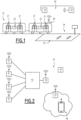
- the travel aid system 10 visible on the figure 1 simplifies the movement of a person with reduced mobility in a means of public transport 12.
- the means of transport 12 defines different passenger transport zones. Passenger access to these transport areas takes place, for example, via different doors.
- the means of transport 12 when the means of transport 12 is a metro train, the latter comprises a plurality of wagons, each wagon comprising a plurality of doors.
- a transport zone is defined by an area adjacent to one of these doors.
- Each transport zone includes, for example, a space reserved for people with reduced mobility.
- the means of transport 12 comprises a means of communication 20, a plurality of sensors 21 arranged in different transport zones and means of broadcasting information to the passengers 22.
- the communication means 20 makes it possible to communicate with a similar communication means disposed for example in a station as will be explained below. This communication takes place for example via radioelectric signals carrying communicated information.
- the sensors 21 make it possible to determine the density of the passengers in each of the transport zones. To do this, they are for example arranged close to each door of the means of transport 12 and are adapted to determine the number of incoming and outgoing passengers through the corresponding door.
- the information dissemination means 22 comprise visual information dissemination means, such as for example screens, and auditory information dissemination means, such as for example loudspeakers. These means make it possible in particular to transmit information received via the means of communication 20 to the passengers.
- the information dissemination means 22 further comprise means of communication with the person with reduced mobility.
- the means of transport 12 is adapted to embark or disembark passengers in a boarding station 30 illustrated in the figure 1 .
- the station 30 comprises a boarding platform 32 in the means of transport 12, a means of communication 33 and means of disseminating information 34.
- the communication means 33 is capable of communicating with the communication means 20 of the means of transport 12 and has for example a structure similar to the latter.
- the information dissemination means 34 make it possible to disseminate information to the passengers present in the station 30 and in particular on the platform 32.
- these information dissemination means 34 comprise visual information dissemination means and auditory information dissemination means. These means are for example presented by screens, loudspeakers, video projectors, animated panels, etc.
- At least one means of disseminating information is arranged close to each door when the means of transport 12 is stopped on the platform 32 and makes it possible to indicate this door visually and/or audibly.
- the movement aid system 10 is arranged at least partially in the station 30.
- the travel assistance system 10 comprises a plurality of sensors 41, a processing module 42, a communication module 43, a remote server 44 and at least one connected system.
- the connected system belongs to the person with reduced mobility and includes a connected object 45 and preferably a smart phone 46.
- the connected object 45 has for example a key fob provided with a call button.
- This connected object 45 comprises a transmitter capable of transmitting identification signals relating to the person with reduced mobility.
- the emission of these signals is carried out for example by using Bluetooth Low Energy technology which means “Bluetooth low consumption” in French.
- the identification signals include in particular an identifier and information relating to the type of disability of the person with reduced mobility.
- the transmitter of this object 45 is capable of transmitting specific signals intended for the smart telephone 46.
- the smart phone 46 is a smartphone type phone known per se. It includes in particular an application which is capable of sending a request for help to the remote server 44 in the event of detection of the specific signals emitted by the object 45. This request is transmitted via a mobile network such as Wi-Fi, 2G, 3G , 4G, 5G or any other wireless network.
- a mobile network such as Wi-Fi, 2G, 3G , 4G, 5G or any other wireless network.
- the remote server 44 is able to acquire information transmitted by the smart telephone 46 in order to transmit at least some of this information to people, subsequently called helpers.
- the server 44 comprises a database comprising information relating to helpers registered via mobile applications installed on the smart telephones of these people. Each carer presents a volunteer ready to help a person with reduced mobility.
- the sensors 41 are arranged in the station 30 in different places and are able to receive signals from the connected object 45.
- the communication module 43 is an information receiver/transmitter which is connected to the communication means 33 of the station 30 by a wired or wireless computer network and capable of communicating with the latter as will be explained subsequently.
- the processing module 42 has for example at least partially an electronic module comprising logic circuits and/or software executable by a computer. This processing module 42 is able to acquire information from the sensors 41 and from the communication module 43, and to process this information in particular to control the operation of the information dissemination means 22, 34 of the means of transport 12 and of the station 30, as will be explained later.
- the travel assistance system 10 detects the presence of the person with reduced mobility in the station 30.
- at least one of the sensors 41 detects identification signals from the connected object 45 of the person with reduced mobility.
- At least some other sensors 41 detect the same identification signals and transmit them to the processing module 42.
- the processing module 42 analyzes these signals as well as the position of each of the sensors 41 having transmitted these signals and deduces therefrom the location of the person with reduced mobility in the station 30. This is carried out using triangulation methods known per se.
- the processing module 42 also determines the identity of the person with reduced mobility and the type of his disability by using the information transmitted by the identification signals.
- the location of the person with reduced mobility is also carried out by means of geolocation integrated into his smartphone 46 which transmits this information to the processing module 42.
- the processing module 42 acquires information relating to the density of passengers in each of the transport zones of the means of transport 12 which is for example right now approaching station 30.
- the communication module 43 of the system 10 communicates with the communication means 33 of the station 30 which in turn communicates with the communication means 20 of the means of transport 12 which acquires the corresponding information acquired by the sensors 21.
- the communication module 43 of the system 10 communicates directly with the means of communication 20 of the means of transport 12.
- the processing module 42 determines a transport zone suitable for transporting the person with reduced mobility by analyzing in particular the information relating to the density of passengers in each of the zones and to the existing layout. in each of these areas.
- the processing module 42 controls the dissemination of information intended for the person with reduced mobility and indicating access to the adapted transport zone.
- This dissemination takes place via the information dissemination means 34 (visual or auditory) of the station and take into account, for example, the type of disability of the person with reduced mobility.
- the processing module 42 first determines the information to be broadcast by the various information dissemination means 34 on the platform and then transmits this information to the corresponding dissemination means 34 via the communication module 43 and the means of communication 33.
- the information thus disseminated on the platform 32 indicates to the person with reduced mobility the future location of the door of the means of transport 12 giving access to the adapted zone when the means of transport 12 arrives on the platform 32.
- step 160 implemented for example simultaneously with step 150 or after the latter, the processing module 42 controls the dissemination of information intended for the passengers of the means of transport 12 and indicating an upcoming entry of the person with low mobility.
- This information is broadcast via the information dissemination means 22 of the means of transport 12 and invites, for example, the passengers concerned to free up the space reserved for the person with reduced mobility in the adapted transport zone.
- the processing module 42 first determines the information to be broadcast by the various information broadcasting means 22 of the means of transport 12 and then, transmits this information to the broadcasting means. 22 correspondents via the communication module 43, the means of communication 33 and the means of communication 20.
- step 170 When during step 170, the person with reduced mobility needs additional help, he activates the call button on the connected object 45 and the following step 171 is then executed.
- the connected object 45 transmits a specific signal to the smart telephone 46 which then generates a request for assistance from the person with reduced mobility.
- the telephone 46 transmits this request to the remote server 44 which then acquires this request.
- the remote server 44 transmits the help request to a set of registered helpers.
- This set can for example only comprise carers who are close to the person with reduced mobility.
- each of the helpers receives the request for help on his application with the exact location of the person with reduced mobility and has the possibility either of accepting the request or of declining it.
- the remote server 44 puts him in contact with the person with reduced mobility by sending him, for example, a photograph of the person.
- step 175 the server 44 calls on an emergency service formed, for example, of employees in the station 30.
- the present invention makes it possible to considerably simplify the movements of people with reduced mobility in public transport.
- This indication is carried out via information broadcasting means present in the station.
- the invention makes it possible to inform the other passengers when a person with reduced mobility intends to board the corresponding means of transport. These passengers will then be able to free up space for this person.
- the person with reduced mobility has the option of asking for help by simply pressing a button located on a connected object that is separate from their telephone.
- This object can for example be stored in a pocket easily accessible by the person with reduced mobility.
- the disability of this person can make it difficult to use his phone along his route. This also presents a considerable risk of theft of the telephone held in particular by a visually impaired person.
Landscapes
- Engineering & Computer Science (AREA)
- Radar, Positioning & Navigation (AREA)
- Remote Sensing (AREA)
- Computer Networks & Wireless Communication (AREA)
- Health & Medical Sciences (AREA)
- Signal Processing (AREA)
- Epidemiology (AREA)
- Animal Behavior & Ethology (AREA)
- General Physics & Mathematics (AREA)
- Physics & Mathematics (AREA)
- Automation & Control Theory (AREA)
- Pain & Pain Management (AREA)
- Physical Education & Sports Medicine (AREA)
- Rehabilitation Therapy (AREA)
- Life Sciences & Earth Sciences (AREA)
- Aviation & Aerospace Engineering (AREA)
- General Health & Medical Sciences (AREA)
- Public Health (AREA)
- Veterinary Medicine (AREA)
- Medical Treatment And Welfare Office Work (AREA)
- Escalators And Moving Walkways (AREA)
- Financial Or Insurance-Related Operations Such As Payment And Settlement (AREA)
- Mobile Radio Communication Systems (AREA)
Description
- La présente invention concerne un procédé d'aide au déplacement d'une personne à mobilité réduite dans un moyen de transport public.
- La présente invention concerne également un produit programme d'ordinateur et un système associés.
- Au sens de la présente invention, par personne à mobilité réduite, on entend toute personne ayant des difficultés de manière permanente ou temporaire à se déplacer dans un espace public, notamment dans le transport public. Ainsi, à titre d'exemple d'une personne à mobilité réduite, on peut citer une personne souffrant d'un handicap sensoriel ou intellectuel, ou encore une personne se déplaçant en fauteuil roulant.
- De manière connue, il existe de nombreuses contraintes rendant très difficile et parfois même impossible, l'utilisation du transport public par les personnes à mobilité réduite.
- Outre les difficultés relatives à l'infrastructure d'accès à des stations ou à des quais par une personne à mobilité réduite, certains types de handicap rendent difficile pour cette personne l'embarquement dans le moyen de transport correspondant ainsi que le voyage à bord de celui-ci.
- Même si des emplacements adaptés aux personnes à mobilité réduite existent généralement dans les moyens de transport, ces emplacements peuvent parfois être difficilement accessibles pour ces personnes ou être occupés dans certains cas par d'autres passagers.
- On connait également des solutions pour les déplacements d'une personne à mobilité réduire proposées par le document « Informative input to standardization, BUTLER Use-Cases and Requirements ».
- La présente invention a pour but de simplifier les déplacements des personnes à mobilité réduite dans le transport public, et notamment dans des moyens de transport munis d'emplacements adaptés pour ces personnes.
- À cet effet, l'invention a pour objet un procédé d'aide au déplacement d'une personne à mobilité réduite, conforme à la revendication 1.
- Suivant d'autres aspects avantageux de l'invention, le procédé comprend une ou plusieurs des caractéristiques des revendications 2 à 8.
- L'invention a également pour objet un produit programme d'ordinateur comportant des instructions logicielles qui, lorsque mises en oeuvre par un équipement informatique, mettent en oeuvre le procédé tel que défini précédemment.
- L'invention a également pour objet un système d'aide au déplacement d'une personne à mobilité réduite comprenant des moyens mettant en oeuvre le procédé tel que décrit précédemment.
- Ces caractéristiques et avantages de l'invention apparaitront à la lecture de la description qui va suivre, donnée uniquement à titre d'exemple non limitatif, et faite en référence aux dessins annexés, sur lesquels :
- la
figure 1 est une vue schématique d'une station d'embarquement à bord d'un moyen de transport ; - la
figure 2 est une vue schématique d'un système d'aide au déplacement selon l'invention, le système étant disposé au moins partiellement dans la station de lafigure 1 ; - la
figure 3 est un organigramme d'un procédé d'aide au déplacement selon l'invention, le procédé étant mis en oeuvre par le système d'aide au déplacement de lafigure 2 . - Le système d'aide au déplacement 10 visible sur la
figure 1 permet de simplifier le déplacement d'une personne à mobilité réduite dans un moyen de transport public 12. - Par moyen de transport public, on entend tout moyen de transport habituellement utilisé dans un milieu urbain ou à l'extérieur de celui-ci. Ainsi, à titre d'exemple, on peut citer un train, une rame de métro, un tramway, un trolleybus, un autobus, une navette, etc.
- De manière connue en soi, le moyen de transport 12 définit différentes zones de transport de passagers. L'accès des passagers dans ces zones de transport s'effectue par exemple via des portes différentes.
- Ainsi, par exemple, lorsque le moyen de transport 12 est une rame de métro, celle-ci comporte une pluralité de wagons, chaque wagon comportant une pluralité de portes. Dans cet exemple, une zone de transport est définie par une zone adjacente à l'une de ces portes. Chaque zone de transport comporte par exemple un emplacement réservé aux personnes à mobilité réduite.
- Le moyen de transport 12 comporte un moyen de communication 20, une pluralité de capteurs 21 disposes dans des zones de transport différentes et des moyens de diffusion d'information aux passagers 22.
- Le moyen de communication 20 permet de communiquer avec un moyen de communication analogue disposé par exemple dans une station comme cela sera expliqué par la suite. Cette communication s'effectue par exemple via des signaux radioélectriques portant des informations communiquées.
- Les capteurs 21 permettent de déterminer la densité des passagers dans chacune des zones de transport. Pour ce faire, ils sont par exemple disposés à proximité de chaque porte du moyen de transport 12 et sont adaptés pour déterminer le nombre des passagers entrants et sortants à travers la porte correspondante.
- Les moyens de diffusion d'information 22 comprennent des moyens de diffusion visuelle d'information, comme par exemple des écrans, et des moyens de diffusion auditive d'information, comme par exemple des hautparleurs. Ces moyens permettent de transmettre notamment des informations reçues via le moyen de communication 20 aux passagers.
- Selon un exemple de réalisation, les moyens de diffusion d'information 22 comprennent en outre des moyens de communication avec la personne à mobilité réduite.
- Le moyen de transport 12 est adapté pour embarquer ou débarquer des passagers dans une station d'embarquement 30 illustré sur la
figure 1 . - En référence à cette
figure 1 , la station 30 comprend un quai d'embarquement 32 dans le moyen de transport 12, un moyen de communication 33 et des moyens de diffusion d'information 34. - Le moyen de communication 33 est apte à communiquer avec le moyen de communication 20 du moyen de transport 12 et présente par exemple une structure analogue à celui-ci.
- Les moyens de diffusion d'information 34 permettent de diffuser des informations aux passagers présents dans la station 30 et notamment sur le quai 32.
- Comme dans le cas précédent, ces moyens de diffusion d'information 34 comprennent des moyens de diffusion visuelle d'information et des moyens de diffusion auditive d'information. Ces moyens sont par exemple présentés par des écrans, des hautparleurs, des vidéoprojecteurs, des panneaux animés, etc.
- Avantageusement, au moins un moyen de diffusion d'information est disposé à proximité de chaque porte lorsque le moyen de transport 12 est arrêté sur le quai 32 et permet d'indiquer de façon visuelle et/ou auditive cette porte.
- Le système d'aide au déplacement 10 est disposé au moins partiellement dans la station 30.
- Ainsi, en référence à la
figure 2 , le système d'aide au déplacement 10 comprend une pluralité de capteurs 41, un module de traitement 42, un module de communication 43, un serveur distant 44 et au moins un système connecté. - Le système connecté appartient à la personne à mobilité réduite et comprend un objet connecté 45 et de préférence, un téléphone intelligent 46.
- L'objet connecté 45 présente par exemple un porte-clés muni d'un bouton d'appel.
- Cet objet connecté 45 comprend un émetteur apte à émettre des signaux d'identification relatifs à la personne à mobilité réduite. L'émission de ces signaux s'effectue par exemple en utilisant la technologie Bluetooth Low Energy ce qui signifie « Bluetooth faible consommation » en français.
- Les signaux d'identification comprennent notamment un identifiant et une information relative au type de handicap de la personne à mobilité réduite.
- En outre, en cas d'activation du bouton d'appel, l'émetteur de cet objet 45 est apte à émettre des signaux spécifiques destinés au téléphone intelligent 46.
- Le téléphone intelligent 46 est un téléphone de type smartphone connu en soi. Il comporte notamment une application qui est apte à envoyer une demande d'aide au serveur distant 44 en cas de détection des signaux spécifiques émis par l'objet 45. Cette demande est transmise via un réseau mobile tel que Wi-Fi, 2G, 3G, 4G, 5G ou tout autre réseau sans fil.
- Le serveur distant 44 est apte à acquérir des informations transmises par le téléphone intelligent 46 pour transmettre au moins certaines de ces informations à des personnes, appelées aidants par la suite.
- À cet effet, le serveur 44 comporte une base de données comprenant des informations relatives à des aidants enregistrés via des applications mobiles installées sur des téléphones intelligents de ces personnes. Chaque aidant présente ainsi un volontaire prêt à aider une personne à mobilité réduite.
- Les capteurs 41 sont disposés dans la station 30 dans des endroits différents et sont aptes à recevoir des signaux issus de l'objet connecté 45.
- Le module de communication 43 est un récepteur/émetteur d'information qui est relié au moyen de communication 33 de la station 30 par un réseau informatique filaire ou sans fil et apte à communiquer avec celui-ci comme cela sera expliqué par la suite.
- Le module de traitement 42 présente par exemple au moins partiellement un module électronique comprenant des circuits logiques et/ou un logiciel exécutable par un calculateur. Ce module de traitement 42 est apte à acquérir des informations issues des capteurs 41 et du module de communication 43, et à traiter ces informations notamment pour commander le fonctionnement des moyens de diffusion d'information 22, 34 du moyen de transport 12 et de la station 30, comme cela sera expliqué par la suite.
- Le procédé d'aide au déplacement d'une personne à mobilité réduite mis en oeuvre par le système d'aide au déplacement 10 sera désormais expliqué en référence à la
figure 3 présentant un organigramme de ses étapes. - Lors d'une étape initiale 110, le système d'aide au déplacement 10 détecte la présence de la personne à mobilité réduite dans la station 30. En particulier, lors de cette étape, au moins un des capteurs 41 détecte des signaux d'identification provenant de l'objet connecté 45 de la personne à mobilité réduite.
- Lors de l'étape 120 suivante, au moins certains autres capteurs 41 détectent les mêmes signaux d'identification et les transmettent au module de traitement 42.
- Le module de traitement 42 analyse ces signaux ainsi que la position de chacun des capteurs 41 ayant transmis ces signaux et en déduit la localisation de la personne à mobilité réduite dans la station 30. Cela est effectué en utilisant des méthodes de triangulation connues en soi.
- Le module de traitement 42 détermine également l'identité de la personne à mobilité réduite et le type de son handicap en utilisant les informations transmises par les signaux d'identification.
- En variante ou en complément, la localisation de la personne à mobilité réduite s'effectue en outre par des moyens de géolocalisation intégré dans son téléphone intelligent 46 qui transmet cette information au module de traitement 42.
- Lors de l'étape suivante 130 mise en oeuvre lorsque la personne à mobilité réduite s'approche du quai 32, le module de traitement 42 acquiert des informations relatives à la densité de passagers dans chacune des zones de transport du moyen de transport 12 qui est par exemple en ce moment à l'approche de la station 30.
- Pour ce faire, le module de communication 43 du système 10 communique avec le moyen de communication 33 de la station 30 qui communique à son tour avec le moyen de communication 20 du moyen de transport 12 qui acquiert les informations correspondantes acquises par les capteurs 21.
- En variante, le module de communication 43 du système 10 communique directement avec le moyen de communication 20 du moyen de transport 12.
- Puis, lors de l'étape suivante 140, le module de traitement 42 détermine une zone de transport adaptée au transport de la personne à mobilité réduite en analysant notamment les informations relatives à la densité des passagers dans chacune des zones et à l'aménagement existant dans chacune de ces zones.
- Puis, lors de l'étape suivante 150, le module de traitement 42 commande la diffusion d'informations destinées à la personne à mobilité réduite et indiquant l'accès à la zone de transport adaptée. Cette diffusion s'effectue via les moyens de diffusion d'information 34 (visuels ou auditifs) de la station et prennent par exemple en compte le type de handicap de la personne à mobilité réduite.
- Pour ce faire, le module de traitement 42 détermine d'abord les informations à diffuser par les différents moyens de diffusion d'information 34 sur le quai et puis, transmet ces informations vers les moyens de diffusion 34 correspondants via le module de communication 43 et le moyen de communication 33.
- Avantageusement, les informations ainsi diffusées sur le quai 32 indiquent à la personne à mobilité réduite le futur emplacement de la porte du moyen de transport 12 donnant l'accès à la zone adaptée lorsque le moyen de transport 12 arrivera sur le quai 32.
- Lors de l'étape 160 mise en oeuvre par exemple simultanément avec l'étape 150 ou après celle-ci, le module de traitement 42 commande la diffusion d'informations destinées aux passagers du moyen de transport 12 et indiquant une entrée prochaine de la personne à mobilité réduite. Ces informations sont diffusées via les moyens de diffusion d'information 22 du moyen de transport 12 et invitent par exemple les passagers concernés à libérer l'emplacement réservé à la personne à mobilité réduite dans la zone de transport adaptée.
- Comme dans l'étape précédente, pour ce faire, le module de traitement 42 détermine d'abord les informations à diffuser par les différents moyens de diffusion d'information 22 du moyen de transport 12 et puis, transmet ces informations vers les moyens de diffusion 22 correspondants via le module de communication 43, le moyen de communication 33 et le moyen de communication 20.
- Lorsque lors de l'étape 170, la personne à mobilité réduite a besoin d'une aide supplémentaire, elle active le bouton appel sur l'objet connecté 45 et l'étape 171 suivante est alors exécutée.
- Lors de cette étape 171, l'objet connecté 45 transmet un signal spécifique au téléphone intelligent 46 qui génère alors une demande d'aide à la personne à mobilité réduite.
- Puis, le téléphone 46 transmet cette demande au serveur distant 44 qui acquiert ensuite cette demande.
- Lors de l'étape 172 suivante, le serveur distant 44 transmet la demande d'aide à un ensemble d'aidants enregistrés.
- Cet ensemble peut par exemple comprendre uniquement des aidants se trouvant à proximité de la personne à mobilité réduite.
- Lors de l'étape 173 suivante, chacun des aidants reçoit la demande d'aide sur son application avec la localisation exacte de la personne à mobilité réduite et a la possibilité soit d'accepter la demande soit de la décliner.
- Lorsque l'un des aidants propose son aide en réponse à la demande d'aide, lors de l'étape 174, le serveur distant 44 le met en contact avec la personne à mobilité réduite en lui envoyant par exemple une photographie de la personne.
- En complément, lors de l'étape 175, le serveur 44 fait appel à un service d'urgence formé par exemple d'employés dans la station 30.
- On conçoit alors que la présente invention permet de simplifier considérablement les déplacements des personnes à mobilité réduite dans le transport public.
- En particulier, elle permet d'indiquer à ces personnes une zone de transport adaptée dans le moyen de transport correspondant.
- Cette indication s'effectue via des moyens de diffusion d'information présents dans la station.
- De plus, l'invention permet d'informer les autres passagers lorsqu'une personne à mobilité réduite a l'intention de monter dans le moyen de transport correspondant. Ces passagers pourront alors libérer de la place pour cette personne.
- Finalement, la personne à mobilité réduite a la possibilité de demander de l'aide en appuyant simplement sur un bouton situé sur un objet connecté qui est séparé de son téléphone. Cet objet peut par exemple être rangé dans une poche facilement accessible par la personne à mobilité réduite. En effet, le handicap de cette personne peut rendre délicate l'utilisation de son téléphone le long de son parcours. Cela présente en outre un risque considérable de vol du téléphone tenu notamment par une personne malvoyante.
Claims (10)
- Procédé d'aide au déplacement d'une personne à mobilité réduite souhaitant embarquer à bord d'un moyen de transport public (12), la personne à mobilité réduite étant munie d'un système connecté émettant des signaux d'identification comprenant un identifiant de la personne à mobilité réduite ;le procédé comprenant les étapes suivantes :- détection (110) de la présence de la personne à mobilité réduite dans une station d'embarquement (30) à bord du moyen de transport (12) en détectant les signaux d'identification émis par le système connecté ;- détermination d'une localisation (120) de la personne à mobilité réduite dans la station (30) ;- à l'arrivée de la personne à mobilité réduite sur un quai d'embarquement (32) à bord du moyen de transport (12), acquisition (130) d'informations relatives à la densité de passagers dans différentes zones de transport du moyen de transport (12) et détermination (140) d'une zone de transport adaptée au transport de la personne à mobilité réduite ;le procédé étant caractérisé par les étapes suivantes:- diffusion (150) sur le quai d'embarquement (32) d'informations destinées à la personne à mobilité réduite et indiquant l'accès à la zone de transport adaptée, via des moyens de diffusion visuelle (34) et/ou des moyens de diffusion sonore (34) présents sur le quai d'embarquement (32)- avant l'arrivée à la station (30) du moyen transport (12), diffusion (160) dans le moyen de transport (12) d'informations destinées aux passagers de ce moyen de transport (12) et indiquant une entrée prochaine de la personne à mobilité réduite.
- Procédé selon la revendication 1, dans lequel les signaux d'identification comprennent en outre le type de handicap de la personne à mobilité réduite.
- Procédé selon la revendication 2, dans lequel les informations destinées à la personne à mobilité réduite sont diffusées sur le quai d'embarquement (32) via des moyens de diffusion visuelle (34) ou des moyens de diffusion auditive (34) en fonction du type de handicap de la personne à mobilité réduite.
- Procédé selon l'une quelconque des revendications précédentes, dans lequel les signaux d'identification sont émis par le système connecté selon la technologie Bluetooth Low Energy ou par un autre moyen de communication sans fil.
- Procédé selon l'une quelconque des revendications précédentes, dans lequel le système connecté comprend un objet connecté (45) et de préférence, un téléphone intelligent (46) distinct de l'objet connecté (45) et connecté à l'objet connecté (45) ;
avantageusement, l'objet connecté (45) comprenant un bouton d'appel et le procédé comprenant en outre une étape d'acquisition (171) d'une demande d'aide émise par la personne à mobilité réduite, la demande d'aide étant transmise par le téléphone intelligent (46) à la suite de l'activation par la personne à mobilité réduite du bouton d'appel sur l'objet connecté (45). - Procédé selon la revendication 5, comprenant en outre une étape de diffusion (172) de la demande d'aide émise par la personne à mobilité réduite à un ensemble de personnels aidants enregistrés via un téléphone intelligent appartenant à chacun des personnels aidants.
- Procédé selon la revendication 5 ou 6, dans lequel la détermination de la localisation de la personne à mobilité réduite s'effectue par des moyens de géolocalisation intégrés dans le téléphone intelligent.
- Procédé selon l'une quelconque des revendications 1 à 6, dans lequel la détermination de la localisation de la personne à mobilité réduite s'effectue par triangulation des signaux d'identification.
- -Système (10) d'aide au déplacement d'une personne à mobilité réduite comprenant des moyens mettant en oeuvre un procédé selon l'une quelconque des revendications 1 à 8.
- Produit programme d'ordinateur comportant des instructions logicielles qui, lorsque mises en oeuvre par un équipement informatique, mettent en oeuvre un procédé selon l'une quelconque des revendications 1 à 8 par un système selon la revendication 9.
Applications Claiming Priority (1)
| Application Number | Priority Date | Filing Date | Title |
|---|---|---|---|
| FR1761796A FR3074893B1 (fr) | 2017-12-07 | 2017-12-07 | Procede d'aide au deplacement d'une personne a mobilite reduite dans un moyen de transport public, produit programme d'ordinateur et systeme associes |
Publications (2)
| Publication Number | Publication Date |
|---|---|
| EP3495773A1 EP3495773A1 (fr) | 2019-06-12 |
| EP3495773B1 true EP3495773B1 (fr) | 2023-03-15 |
Family
ID=61655890
Family Applications (1)
| Application Number | Title | Priority Date | Filing Date |
|---|---|---|---|
| EP18210843.1A Active EP3495773B1 (fr) | 2017-12-07 | 2018-12-06 | Procédé d'aide au déplacement d'une personne à mobilité réduite dans un moyen de transport public, produit programme d'ordinateur et système associés |
Country Status (3)
| Country | Link |
|---|---|
| EP (1) | EP3495773B1 (fr) |
| ES (1) | ES2945423T3 (fr) |
| FR (1) | FR3074893B1 (fr) |
Citations (1)
| Publication number | Priority date | Publication date | Assignee | Title |
|---|---|---|---|---|
| FR2846499B1 (fr) * | 2002-10-25 | 2005-03-11 | Inst Nat Rech Inf Automat | Dispositif et procede de gestion de donnees entre equipements de communication en vue de l'obtention d'un service |
Family Cites Families (4)
| Publication number | Priority date | Publication date | Assignee | Title |
|---|---|---|---|---|
| FR2889339B1 (fr) * | 2005-08-01 | 2009-07-10 | Synd Mixte Trans En Commun Agg | Systeme de detection de personnes a mobilite reduite |
| FR2934940B1 (fr) * | 2008-08-06 | 2012-03-16 | Embedia | Systeme de guidage et d'information interactif sur telephone mobile ou terminal analogue. |
| EP2395495A3 (fr) * | 2010-06-11 | 2015-03-25 | Tata Consultancy Services Ltd. | Aide à la navigation portable pour des personnes touchées par un handicap visuel |
| WO2017111271A1 (fr) * | 2015-12-23 | 2017-06-29 | Lg Electronics Inc. | Dispositif mobile et son procédé de fonctionnement |
-
2017
- 2017-12-07 FR FR1761796A patent/FR3074893B1/fr active Active
-
2018
- 2018-12-06 ES ES18210843T patent/ES2945423T3/es active Active
- 2018-12-06 EP EP18210843.1A patent/EP3495773B1/fr active Active
Patent Citations (1)
| Publication number | Priority date | Publication date | Assignee | Title |
|---|---|---|---|---|
| FR2846499B1 (fr) * | 2002-10-25 | 2005-03-11 | Inst Nat Rech Inf Automat | Dispositif et procede de gestion de donnees entre equipements de communication en vue de l'obtention d'un service |
Also Published As
| Publication number | Publication date |
|---|---|
| FR3074893B1 (fr) | 2019-12-20 |
| FR3074893A1 (fr) | 2019-06-14 |
| ES2945423T3 (es) | 2023-07-03 |
| EP3495773A1 (fr) | 2019-06-12 |
Similar Documents
| Publication | Publication Date | Title |
|---|---|---|
| US10440514B2 (en) | Crash event detection, response and reporting apparatus and method | |
| US10794714B2 (en) | Self-driving vehicle systems and methods | |
| US10466057B1 (en) | Self-driving vehicle systems and methods | |
| US20120214472A1 (en) | Method and System for Controlling Mobile Device Functions via a Service or Background Process | |
| WO2018231493A1 (fr) | Procédé, dispositif et système d'assistant numérique électronique permettant la détection en langage naturel d'un changement d'état d'utilisateur et modification correspondante d'une interface utilisateur | |
| JPWO2020031924A1 (ja) | 情報処理装置、端末装置、情報処理方法および情報処理プログラム | |
| US11070622B2 (en) | Street information processing system, client and server applied to street information processing system, and method and program of the same | |
| EP3656105A1 (fr) | Procédé et dispositif de réponse à une requête | |
| US20190082304A1 (en) | Method and device for responding to an audio inquiry | |
| JP7363838B2 (ja) | 異常挙動通知装置、異常挙動通知システム、異常挙動通知方法、およびプログラム | |
| JP6327636B2 (ja) | 災害時情報システム機能を備えた移動体運行システム | |
| US20150045066A1 (en) | Multi-modal traffic security assistance application | |
| US20190286796A1 (en) | Device, system and method for managing access authorizations of devices | |
| EP3495773B1 (fr) | Procédé d'aide au déplacement d'une personne à mobilité réduite dans un moyen de transport public, produit programme d'ordinateur et système associés | |
| EP4127899B1 (fr) | Dispositif de communication électronique ayant une interface utilisateur comprenant une interface d'entrée unique pour accéder à un assistant numérique électronique et à une commande vocale | |
| US10708797B2 (en) | Responding to a query in a communication system | |
| US20210004751A1 (en) | System and method for electronically monitoring officer context change and accumulating corresponding form completion times and providing an indication thereof | |
| LU100701B1 (en) | Method and system for alerting in case of emergency | |
| FR3105539A1 (fr) | Procédé de gestion d’un état de crise d’un premier véhicule et dispositif de gestion associé | |
| US20250336390A1 (en) | Device and method for updating a digital-assistant recommendation in response to a user not following the recommendation | |
| JP7438800B2 (ja) | 管理装置、管理方法、およびプログラム | |
| JP2026027898A (ja) | 検出装置およびプログラム | |
| EP2261875B1 (fr) | Procédé de télécommunication pour commander un équipement | |
| WO2021123647A1 (fr) | Procédé de gestion d'un état d'urgence d'un premier véhicule et dispositif de gestion associé | |
| FR2957472A1 (fr) | Systeme et methode permettant d'echanger communications et messages avec un usager de transports en commun via un reseau de telecommunications mobiles |
Legal Events
| Date | Code | Title | Description |
|---|---|---|---|
| PUAI | Public reference made under article 153(3) epc to a published international application that has entered the european phase |
Free format text: ORIGINAL CODE: 0009012 |
|
| STAA | Information on the status of an ep patent application or granted ep patent |
Free format text: STATUS: THE APPLICATION HAS BEEN PUBLISHED |
|
| STAA | Information on the status of an ep patent application or granted ep patent |
Free format text: STATUS: REQUEST FOR EXAMINATION WAS MADE |
|
| AK | Designated contracting states |
Kind code of ref document: A1 Designated state(s): AL AT BE BG CH CY CZ DE DK EE ES FI FR GB GR HR HU IE IS IT LI LT LU LV MC MK MT NL NO PL PT RO RS SE SI SK SM TR |
|
| AX | Request for extension of the european patent |
Extension state: BA ME |
|
| 17P | Request for examination filed |
Effective date: 20190531 |
|
| RBV | Designated contracting states (corrected) |
Designated state(s): AL AT BE BG CH CY CZ DE DK EE ES FI FR GB GR HR HU IE IS IT LI LT LU LV MC MK MT NL NO PL PT RO RS SE SI SK SM TR |
|
| STAA | Information on the status of an ep patent application or granted ep patent |
Free format text: STATUS: EXAMINATION IS IN PROGRESS |
|
| 17Q | First examination report despatched |
Effective date: 20200824 |
|
| GRAP | Despatch of communication of intention to grant a patent |
Free format text: ORIGINAL CODE: EPIDOSNIGR1 |
|
| STAA | Information on the status of an ep patent application or granted ep patent |
Free format text: STATUS: GRANT OF PATENT IS INTENDED |
|
| INTG | Intention to grant announced |
Effective date: 20221019 |
|
| GRAS | Grant fee paid |
Free format text: ORIGINAL CODE: EPIDOSNIGR3 |
|
| GRAA | (expected) grant |
Free format text: ORIGINAL CODE: 0009210 |
|
| STAA | Information on the status of an ep patent application or granted ep patent |
Free format text: STATUS: THE PATENT HAS BEEN GRANTED |
|
| AK | Designated contracting states |
Kind code of ref document: B1 Designated state(s): AL AT BE BG CH CY CZ DE DK EE ES FI FR GB GR HR HU IE IS IT LI LT LU LV MC MK MT NL NO PL PT RO RS SE SI SK SM TR |
|
| REG | Reference to a national code |
Ref country code: CH Ref legal event code: EP Ref country code: GB Ref legal event code: FG4D Free format text: NOT ENGLISH |
|
| REG | Reference to a national code |
Ref country code: DE Ref legal event code: R096 Ref document number: 602018047200 Country of ref document: DE |
|
| REG | Reference to a national code |
Ref country code: IE Ref legal event code: FG4D Free format text: LANGUAGE OF EP DOCUMENT: FRENCH |
|
| REG | Reference to a national code |
Ref country code: AT Ref legal event code: REF Ref document number: 1554240 Country of ref document: AT Kind code of ref document: T Effective date: 20230415 |
|
| REG | Reference to a national code |
Ref country code: ES Ref legal event code: FG2A Ref document number: 2945423 Country of ref document: ES Kind code of ref document: T3 Effective date: 20230703 |
|
| REG | Reference to a national code |
Ref country code: LT Ref legal event code: MG9D |
|
| REG | Reference to a national code |
Ref country code: NL Ref legal event code: MP Effective date: 20230315 |
|
| PG25 | Lapsed in a contracting state [announced via postgrant information from national office to epo] |
Ref country code: RS Free format text: LAPSE BECAUSE OF FAILURE TO SUBMIT A TRANSLATION OF THE DESCRIPTION OR TO PAY THE FEE WITHIN THE PRESCRIBED TIME-LIMIT Effective date: 20230315 Ref country code: NO Free format text: LAPSE BECAUSE OF FAILURE TO SUBMIT A TRANSLATION OF THE DESCRIPTION OR TO PAY THE FEE WITHIN THE PRESCRIBED TIME-LIMIT Effective date: 20230615 Ref country code: LV Free format text: LAPSE BECAUSE OF FAILURE TO SUBMIT A TRANSLATION OF THE DESCRIPTION OR TO PAY THE FEE WITHIN THE PRESCRIBED TIME-LIMIT Effective date: 20230315 Ref country code: LT Free format text: LAPSE BECAUSE OF FAILURE TO SUBMIT A TRANSLATION OF THE DESCRIPTION OR TO PAY THE FEE WITHIN THE PRESCRIBED TIME-LIMIT Effective date: 20230315 Ref country code: HR Free format text: LAPSE BECAUSE OF FAILURE TO SUBMIT A TRANSLATION OF THE DESCRIPTION OR TO PAY THE FEE WITHIN THE PRESCRIBED TIME-LIMIT Effective date: 20230315 |
|
| PG25 | Lapsed in a contracting state [announced via postgrant information from national office to epo] |
Ref country code: SE Free format text: LAPSE BECAUSE OF FAILURE TO SUBMIT A TRANSLATION OF THE DESCRIPTION OR TO PAY THE FEE WITHIN THE PRESCRIBED TIME-LIMIT Effective date: 20230315 Ref country code: NL Free format text: LAPSE BECAUSE OF FAILURE TO SUBMIT A TRANSLATION OF THE DESCRIPTION OR TO PAY THE FEE WITHIN THE PRESCRIBED TIME-LIMIT Effective date: 20230315 Ref country code: GR Free format text: LAPSE BECAUSE OF FAILURE TO SUBMIT A TRANSLATION OF THE DESCRIPTION OR TO PAY THE FEE WITHIN THE PRESCRIBED TIME-LIMIT Effective date: 20230616 Ref country code: FI Free format text: LAPSE BECAUSE OF FAILURE TO SUBMIT A TRANSLATION OF THE DESCRIPTION OR TO PAY THE FEE WITHIN THE PRESCRIBED TIME-LIMIT Effective date: 20230315 |
|
| P01 | Opt-out of the competence of the unified patent court (upc) registered |
Effective date: 20230823 |
|
| RAP2 | Party data changed (patent owner data changed or rights of a patent transferred) |
Owner name: ALSTOM HOLDINGS |
|
| PG25 | Lapsed in a contracting state [announced via postgrant information from national office to epo] |
Ref country code: SM Free format text: LAPSE BECAUSE OF FAILURE TO SUBMIT A TRANSLATION OF THE DESCRIPTION OR TO PAY THE FEE WITHIN THE PRESCRIBED TIME-LIMIT Effective date: 20230315 Ref country code: RO Free format text: LAPSE BECAUSE OF FAILURE TO SUBMIT A TRANSLATION OF THE DESCRIPTION OR TO PAY THE FEE WITHIN THE PRESCRIBED TIME-LIMIT Effective date: 20230315 Ref country code: PT Free format text: LAPSE BECAUSE OF FAILURE TO SUBMIT A TRANSLATION OF THE DESCRIPTION OR TO PAY THE FEE WITHIN THE PRESCRIBED TIME-LIMIT Effective date: 20230717 Ref country code: EE Free format text: LAPSE BECAUSE OF FAILURE TO SUBMIT A TRANSLATION OF THE DESCRIPTION OR TO PAY THE FEE WITHIN THE PRESCRIBED TIME-LIMIT Effective date: 20230315 Ref country code: CZ Free format text: LAPSE BECAUSE OF FAILURE TO SUBMIT A TRANSLATION OF THE DESCRIPTION OR TO PAY THE FEE WITHIN THE PRESCRIBED TIME-LIMIT Effective date: 20230315 |
|
| PG25 | Lapsed in a contracting state [announced via postgrant information from national office to epo] |
Ref country code: SK Free format text: LAPSE BECAUSE OF FAILURE TO SUBMIT A TRANSLATION OF THE DESCRIPTION OR TO PAY THE FEE WITHIN THE PRESCRIBED TIME-LIMIT Effective date: 20230315 Ref country code: PL Free format text: LAPSE BECAUSE OF FAILURE TO SUBMIT A TRANSLATION OF THE DESCRIPTION OR TO PAY THE FEE WITHIN THE PRESCRIBED TIME-LIMIT Effective date: 20230315 Ref country code: IS Free format text: LAPSE BECAUSE OF FAILURE TO SUBMIT A TRANSLATION OF THE DESCRIPTION OR TO PAY THE FEE WITHIN THE PRESCRIBED TIME-LIMIT Effective date: 20230715 |
|
| REG | Reference to a national code |
Ref country code: DE Ref legal event code: R097 Ref document number: 602018047200 Country of ref document: DE |
|
| PLBE | No opposition filed within time limit |
Free format text: ORIGINAL CODE: 0009261 |
|
| STAA | Information on the status of an ep patent application or granted ep patent |
Free format text: STATUS: NO OPPOSITION FILED WITHIN TIME LIMIT |
|
| PG25 | Lapsed in a contracting state [announced via postgrant information from national office to epo] |
Ref country code: SI Free format text: LAPSE BECAUSE OF FAILURE TO SUBMIT A TRANSLATION OF THE DESCRIPTION OR TO PAY THE FEE WITHIN THE PRESCRIBED TIME-LIMIT Effective date: 20230315 Ref country code: DK Free format text: LAPSE BECAUSE OF FAILURE TO SUBMIT A TRANSLATION OF THE DESCRIPTION OR TO PAY THE FEE WITHIN THE PRESCRIBED TIME-LIMIT Effective date: 20230315 |
|
| 26N | No opposition filed |
Effective date: 20231218 |
|
| PG25 | Lapsed in a contracting state [announced via postgrant information from national office to epo] |
Ref country code: IT Free format text: LAPSE BECAUSE OF FAILURE TO SUBMIT A TRANSLATION OF THE DESCRIPTION OR TO PAY THE FEE WITHIN THE PRESCRIBED TIME-LIMIT Effective date: 20230315 |
|
| PG25 | Lapsed in a contracting state [announced via postgrant information from national office to epo] |
Ref country code: LU Free format text: LAPSE BECAUSE OF NON-PAYMENT OF DUE FEES Effective date: 20231206 |
|
| PG25 | Lapsed in a contracting state [announced via postgrant information from national office to epo] |
Ref country code: MC Free format text: LAPSE BECAUSE OF FAILURE TO SUBMIT A TRANSLATION OF THE DESCRIPTION OR TO PAY THE FEE WITHIN THE PRESCRIBED TIME-LIMIT Effective date: 20230315 |
|
| GBPC | Gb: european patent ceased through non-payment of renewal fee |
Effective date: 20231206 |
|
| REG | Reference to a national code |
Ref country code: BE Ref legal event code: MM Effective date: 20231231 |
|
| PG25 | Lapsed in a contracting state [announced via postgrant information from national office to epo] |
Ref country code: MC Free format text: LAPSE BECAUSE OF FAILURE TO SUBMIT A TRANSLATION OF THE DESCRIPTION OR TO PAY THE FEE WITHIN THE PRESCRIBED TIME-LIMIT Effective date: 20230315 Ref country code: LU Free format text: LAPSE BECAUSE OF NON-PAYMENT OF DUE FEES Effective date: 20231206 |
|
| REG | Reference to a national code |
Ref country code: IE Ref legal event code: MM4A |
|
| PG25 | Lapsed in a contracting state [announced via postgrant information from national office to epo] |
Ref country code: IE Free format text: LAPSE BECAUSE OF NON-PAYMENT OF DUE FEES Effective date: 20231206 |
|
| PG25 | Lapsed in a contracting state [announced via postgrant information from national office to epo] |
Ref country code: GB Free format text: LAPSE BECAUSE OF NON-PAYMENT OF DUE FEES Effective date: 20231206 |
|
| PG25 | Lapsed in a contracting state [announced via postgrant information from national office to epo] |
Ref country code: BE Free format text: LAPSE BECAUSE OF NON-PAYMENT OF DUE FEES Effective date: 20231231 |
|
| REG | Reference to a national code |
Ref country code: AT Ref legal event code: UEP Ref document number: 1554240 Country of ref document: AT Kind code of ref document: T Effective date: 20230315 |
|
| PG25 | Lapsed in a contracting state [announced via postgrant information from national office to epo] |
Ref country code: IE Free format text: LAPSE BECAUSE OF NON-PAYMENT OF DUE FEES Effective date: 20231206 Ref country code: BE Free format text: LAPSE BECAUSE OF NON-PAYMENT OF DUE FEES Effective date: 20231231 Ref country code: GB Free format text: LAPSE BECAUSE OF NON-PAYMENT OF DUE FEES Effective date: 20231206 |
|
| PG25 | Lapsed in a contracting state [announced via postgrant information from national office to epo] |
Ref country code: BG Free format text: LAPSE BECAUSE OF FAILURE TO SUBMIT A TRANSLATION OF THE DESCRIPTION OR TO PAY THE FEE WITHIN THE PRESCRIBED TIME-LIMIT Effective date: 20230315 |
|
| PG25 | Lapsed in a contracting state [announced via postgrant information from national office to epo] |
Ref country code: BG Free format text: LAPSE BECAUSE OF FAILURE TO SUBMIT A TRANSLATION OF THE DESCRIPTION OR TO PAY THE FEE WITHIN THE PRESCRIBED TIME-LIMIT Effective date: 20230315 |
|
| PG25 | Lapsed in a contracting state [announced via postgrant information from national office to epo] |
Ref country code: CY Free format text: LAPSE BECAUSE OF FAILURE TO SUBMIT A TRANSLATION OF THE DESCRIPTION OR TO PAY THE FEE WITHIN THE PRESCRIBED TIME-LIMIT; INVALID AB INITIO Effective date: 20181206 |
|
| PG25 | Lapsed in a contracting state [announced via postgrant information from national office to epo] |
Ref country code: HU Free format text: LAPSE BECAUSE OF FAILURE TO SUBMIT A TRANSLATION OF THE DESCRIPTION OR TO PAY THE FEE WITHIN THE PRESCRIBED TIME-LIMIT; INVALID AB INITIO Effective date: 20181206 |
|
| PG25 | Lapsed in a contracting state [announced via postgrant information from national office to epo] |
Ref country code: TR Free format text: LAPSE BECAUSE OF FAILURE TO SUBMIT A TRANSLATION OF THE DESCRIPTION OR TO PAY THE FEE WITHIN THE PRESCRIBED TIME-LIMIT Effective date: 20230315 |
|
| REG | Reference to a national code |
Ref country code: CH Ref legal event code: U11 Free format text: ST27 STATUS EVENT CODE: U-0-0-U10-U11 (AS PROVIDED BY THE NATIONAL OFFICE) Effective date: 20260101 |
|
| PGFP | Annual fee paid to national office [announced via postgrant information from national office to epo] |
Ref country code: DE Payment date: 20251211 Year of fee payment: 8 |
|
| PGFP | Annual fee paid to national office [announced via postgrant information from national office to epo] |
Ref country code: AT Payment date: 20251222 Year of fee payment: 8 |
|
| PGFP | Annual fee paid to national office [announced via postgrant information from national office to epo] |
Ref country code: FR Payment date: 20251229 Year of fee payment: 8 |
|
| PGFP | Annual fee paid to national office [announced via postgrant information from national office to epo] |
Ref country code: ES Payment date: 20260130 Year of fee payment: 8 |
|
| PGFP | Annual fee paid to national office [announced via postgrant information from national office to epo] |
Ref country code: CH Payment date: 20260101 Year of fee payment: 8 |