EP3490258B2 - Dispositif de décodage d'un signal de données représentatif d'au moins une image - Google Patents
Dispositif de décodage d'un signal de données représentatif d'au moins une image Download PDFInfo
- Publication number
- EP3490258B2 EP3490258B2 EP18185339.1A EP18185339A EP3490258B2 EP 3490258 B2 EP3490258 B2 EP 3490258B2 EP 18185339 A EP18185339 A EP 18185339A EP 3490258 B2 EP3490258 B2 EP 3490258B2
- Authority
- EP
- European Patent Office
- Prior art keywords
- coefficients
- coefficient
- sign
- zero coefficient
- zero
- Prior art date
- Legal status (The legal status is an assumption and is not a legal conclusion. Google has not performed a legal analysis and makes no representation as to the accuracy of the status listed.)
- Active
Links
Images


Classifications
-
- G—PHYSICS
- G06—COMPUTING OR CALCULATING; COUNTING
- G06T—IMAGE DATA PROCESSING OR GENERATION, IN GENERAL
- G06T9/00—Image coding
-
- H—ELECTRICITY
- H04—ELECTRIC COMMUNICATION TECHNIQUE
- H04N—PICTORIAL COMMUNICATION, e.g. TELEVISION
- H04N19/00—Methods or arrangements for coding, decoding, compressing or decompressing digital video signals
- H04N19/10—Methods or arrangements for coding, decoding, compressing or decompressing digital video signals using adaptive coding
- H04N19/102—Methods or arrangements for coding, decoding, compressing or decompressing digital video signals using adaptive coding characterised by the element, parameter or selection affected or controlled by the adaptive coding
- H04N19/103—Selection of coding mode or of prediction mode
- H04N19/105—Selection of the reference unit for prediction within a chosen coding or prediction mode, e.g. adaptive choice of position and number of pixels used for prediction
-
- H—ELECTRICITY
- H04—ELECTRIC COMMUNICATION TECHNIQUE
- H04N—PICTORIAL COMMUNICATION, e.g. TELEVISION
- H04N19/00—Methods or arrangements for coding, decoding, compressing or decompressing digital video signals
- H04N19/10—Methods or arrangements for coding, decoding, compressing or decompressing digital video signals using adaptive coding
- H04N19/102—Methods or arrangements for coding, decoding, compressing or decompressing digital video signals using adaptive coding characterised by the element, parameter or selection affected or controlled by the adaptive coding
- H04N19/117—Filters, e.g. for pre-processing or post-processing
-
- H—ELECTRICITY
- H04—ELECTRIC COMMUNICATION TECHNIQUE
- H04N—PICTORIAL COMMUNICATION, e.g. TELEVISION
- H04N19/00—Methods or arrangements for coding, decoding, compressing or decompressing digital video signals
- H04N19/10—Methods or arrangements for coding, decoding, compressing or decompressing digital video signals using adaptive coding
- H04N19/102—Methods or arrangements for coding, decoding, compressing or decompressing digital video signals using adaptive coding characterised by the element, parameter or selection affected or controlled by the adaptive coding
- H04N19/119—Adaptive subdivision aspects, e.g. subdivision of a picture into rectangular or non-rectangular coding blocks
-
- H—ELECTRICITY
- H04—ELECTRIC COMMUNICATION TECHNIQUE
- H04N—PICTORIAL COMMUNICATION, e.g. TELEVISION
- H04N19/00—Methods or arrangements for coding, decoding, compressing or decompressing digital video signals
- H04N19/10—Methods or arrangements for coding, decoding, compressing or decompressing digital video signals using adaptive coding
- H04N19/102—Methods or arrangements for coding, decoding, compressing or decompressing digital video signals using adaptive coding characterised by the element, parameter or selection affected or controlled by the adaptive coding
- H04N19/12—Selection from among a plurality of transforms or standards, e.g. selection between discrete cosine transform [DCT] and sub-band transform or selection between H.263 and H.264
- H04N19/122—Selection of transform size, e.g. 8x8 or 2x4x8 DCT; Selection of sub-band transforms of varying structure or type
-
- H—ELECTRICITY
- H04—ELECTRIC COMMUNICATION TECHNIQUE
- H04N—PICTORIAL COMMUNICATION, e.g. TELEVISION
- H04N19/00—Methods or arrangements for coding, decoding, compressing or decompressing digital video signals
- H04N19/10—Methods or arrangements for coding, decoding, compressing or decompressing digital video signals using adaptive coding
- H04N19/102—Methods or arrangements for coding, decoding, compressing or decompressing digital video signals using adaptive coding characterised by the element, parameter or selection affected or controlled by the adaptive coding
- H04N19/124—Quantisation
-
- H—ELECTRICITY
- H04—ELECTRIC COMMUNICATION TECHNIQUE
- H04N—PICTORIAL COMMUNICATION, e.g. TELEVISION
- H04N19/00—Methods or arrangements for coding, decoding, compressing or decompressing digital video signals
- H04N19/10—Methods or arrangements for coding, decoding, compressing or decompressing digital video signals using adaptive coding
- H04N19/102—Methods or arrangements for coding, decoding, compressing or decompressing digital video signals using adaptive coding characterised by the element, parameter or selection affected or controlled by the adaptive coding
- H04N19/13—Adaptive entropy coding, e.g. adaptive variable length coding [AVLC] or context adaptive binary arithmetic coding [CABAC]
-
- H—ELECTRICITY
- H04—ELECTRIC COMMUNICATION TECHNIQUE
- H04N—PICTORIAL COMMUNICATION, e.g. TELEVISION
- H04N19/00—Methods or arrangements for coding, decoding, compressing or decompressing digital video signals
- H04N19/10—Methods or arrangements for coding, decoding, compressing or decompressing digital video signals using adaptive coding
- H04N19/134—Methods or arrangements for coding, decoding, compressing or decompressing digital video signals using adaptive coding characterised by the element, parameter or criterion affecting or controlling the adaptive coding
- H04N19/136—Incoming video signal characteristics or properties
- H04N19/14—Coding unit complexity, e.g. amount of activity or edge presence estimation
-
- H—ELECTRICITY
- H04—ELECTRIC COMMUNICATION TECHNIQUE
- H04N—PICTORIAL COMMUNICATION, e.g. TELEVISION
- H04N19/00—Methods or arrangements for coding, decoding, compressing or decompressing digital video signals
- H04N19/10—Methods or arrangements for coding, decoding, compressing or decompressing digital video signals using adaptive coding
- H04N19/134—Methods or arrangements for coding, decoding, compressing or decompressing digital video signals using adaptive coding characterised by the element, parameter or criterion affecting or controlling the adaptive coding
- H04N19/146—Data rate or code amount at the encoder output
- H04N19/147—Data rate or code amount at the encoder output according to rate distortion criteria
-
- H—ELECTRICITY
- H04—ELECTRIC COMMUNICATION TECHNIQUE
- H04N—PICTORIAL COMMUNICATION, e.g. TELEVISION
- H04N19/00—Methods or arrangements for coding, decoding, compressing or decompressing digital video signals
- H04N19/10—Methods or arrangements for coding, decoding, compressing or decompressing digital video signals using adaptive coding
- H04N19/134—Methods or arrangements for coding, decoding, compressing or decompressing digital video signals using adaptive coding characterised by the element, parameter or criterion affecting or controlling the adaptive coding
- H04N19/157—Assigned coding mode, i.e. the coding mode being predefined or preselected to be further used for selection of another element or parameter
- H04N19/159—Prediction type, e.g. intra-frame, inter-frame or bidirectional frame prediction
-
- H—ELECTRICITY
- H04—ELECTRIC COMMUNICATION TECHNIQUE
- H04N—PICTORIAL COMMUNICATION, e.g. TELEVISION
- H04N19/00—Methods or arrangements for coding, decoding, compressing or decompressing digital video signals
- H04N19/10—Methods or arrangements for coding, decoding, compressing or decompressing digital video signals using adaptive coding
- H04N19/169—Methods or arrangements for coding, decoding, compressing or decompressing digital video signals using adaptive coding characterised by the coding unit, i.e. the structural portion or semantic portion of the video signal being the object or the subject of the adaptive coding
- H04N19/17—Methods or arrangements for coding, decoding, compressing or decompressing digital video signals using adaptive coding characterised by the coding unit, i.e. the structural portion or semantic portion of the video signal being the object or the subject of the adaptive coding the unit being an image region, e.g. an object
- H04N19/172—Methods or arrangements for coding, decoding, compressing or decompressing digital video signals using adaptive coding characterised by the coding unit, i.e. the structural portion or semantic portion of the video signal being the object or the subject of the adaptive coding the unit being an image region, e.g. an object the region being a picture, frame or field
-
- H—ELECTRICITY
- H04—ELECTRIC COMMUNICATION TECHNIQUE
- H04N—PICTORIAL COMMUNICATION, e.g. TELEVISION
- H04N19/00—Methods or arrangements for coding, decoding, compressing or decompressing digital video signals
- H04N19/10—Methods or arrangements for coding, decoding, compressing or decompressing digital video signals using adaptive coding
- H04N19/169—Methods or arrangements for coding, decoding, compressing or decompressing digital video signals using adaptive coding characterised by the coding unit, i.e. the structural portion or semantic portion of the video signal being the object or the subject of the adaptive coding
- H04N19/17—Methods or arrangements for coding, decoding, compressing or decompressing digital video signals using adaptive coding characterised by the coding unit, i.e. the structural portion or semantic portion of the video signal being the object or the subject of the adaptive coding the unit being an image region, e.g. an object
- H04N19/176—Methods or arrangements for coding, decoding, compressing or decompressing digital video signals using adaptive coding characterised by the coding unit, i.e. the structural portion or semantic portion of the video signal being the object or the subject of the adaptive coding the unit being an image region, e.g. an object the region being a block, e.g. a macroblock
-
- H—ELECTRICITY
- H04—ELECTRIC COMMUNICATION TECHNIQUE
- H04N—PICTORIAL COMMUNICATION, e.g. TELEVISION
- H04N19/00—Methods or arrangements for coding, decoding, compressing or decompressing digital video signals
- H04N19/10—Methods or arrangements for coding, decoding, compressing or decompressing digital video signals using adaptive coding
- H04N19/169—Methods or arrangements for coding, decoding, compressing or decompressing digital video signals using adaptive coding characterised by the coding unit, i.e. the structural portion or semantic portion of the video signal being the object or the subject of the adaptive coding
- H04N19/18—Methods or arrangements for coding, decoding, compressing or decompressing digital video signals using adaptive coding characterised by the coding unit, i.e. the structural portion or semantic portion of the video signal being the object or the subject of the adaptive coding the unit being a set of transform coefficients
-
- H—ELECTRICITY
- H04—ELECTRIC COMMUNICATION TECHNIQUE
- H04N—PICTORIAL COMMUNICATION, e.g. TELEVISION
- H04N19/00—Methods or arrangements for coding, decoding, compressing or decompressing digital video signals
- H04N19/10—Methods or arrangements for coding, decoding, compressing or decompressing digital video signals using adaptive coding
- H04N19/169—Methods or arrangements for coding, decoding, compressing or decompressing digital video signals using adaptive coding characterised by the coding unit, i.e. the structural portion or semantic portion of the video signal being the object or the subject of the adaptive coding
- H04N19/184—Methods or arrangements for coding, decoding, compressing or decompressing digital video signals using adaptive coding characterised by the coding unit, i.e. the structural portion or semantic portion of the video signal being the object or the subject of the adaptive coding the unit being bits, e.g. of the compressed video stream
-
- H—ELECTRICITY
- H04—ELECTRIC COMMUNICATION TECHNIQUE
- H04N—PICTORIAL COMMUNICATION, e.g. TELEVISION
- H04N19/00—Methods or arrangements for coding, decoding, compressing or decompressing digital video signals
- H04N19/10—Methods or arrangements for coding, decoding, compressing or decompressing digital video signals using adaptive coding
- H04N19/189—Methods or arrangements for coding, decoding, compressing or decompressing digital video signals using adaptive coding characterised by the adaptation method, adaptation tool or adaptation type used for the adaptive coding
- H04N19/19—Methods or arrangements for coding, decoding, compressing or decompressing digital video signals using adaptive coding characterised by the adaptation method, adaptation tool or adaptation type used for the adaptive coding using optimisation based on Lagrange multipliers
-
- H—ELECTRICITY
- H04—ELECTRIC COMMUNICATION TECHNIQUE
- H04N—PICTORIAL COMMUNICATION, e.g. TELEVISION
- H04N19/00—Methods or arrangements for coding, decoding, compressing or decompressing digital video signals
- H04N19/44—Decoders specially adapted therefor, e.g. video decoders which are asymmetric with respect to the encoder
-
- H—ELECTRICITY
- H04—ELECTRIC COMMUNICATION TECHNIQUE
- H04N—PICTORIAL COMMUNICATION, e.g. TELEVISION
- H04N19/00—Methods or arrangements for coding, decoding, compressing or decompressing digital video signals
- H04N19/46—Embedding additional information in the video signal during the compression process
-
- H—ELECTRICITY
- H04—ELECTRIC COMMUNICATION TECHNIQUE
- H04N—PICTORIAL COMMUNICATION, e.g. TELEVISION
- H04N19/00—Methods or arrangements for coding, decoding, compressing or decompressing digital video signals
- H04N19/46—Embedding additional information in the video signal during the compression process
- H04N19/463—Embedding additional information in the video signal during the compression process by compressing encoding parameters before transmission
-
- H—ELECTRICITY
- H04—ELECTRIC COMMUNICATION TECHNIQUE
- H04N—PICTORIAL COMMUNICATION, e.g. TELEVISION
- H04N19/00—Methods or arrangements for coding, decoding, compressing or decompressing digital video signals
- H04N19/46—Embedding additional information in the video signal during the compression process
- H04N19/467—Embedding additional information in the video signal during the compression process characterised by the embedded information being invisible, e.g. watermarking
-
- H—ELECTRICITY
- H04—ELECTRIC COMMUNICATION TECHNIQUE
- H04N—PICTORIAL COMMUNICATION, e.g. TELEVISION
- H04N19/00—Methods or arrangements for coding, decoding, compressing or decompressing digital video signals
- H04N19/48—Methods or arrangements for coding, decoding, compressing or decompressing digital video signals using compressed domain processing techniques other than decoding, e.g. modification of transform coefficients, variable length coding [VLC] data or run-length data
-
- H—ELECTRICITY
- H04—ELECTRIC COMMUNICATION TECHNIQUE
- H04N—PICTORIAL COMMUNICATION, e.g. TELEVISION
- H04N19/00—Methods or arrangements for coding, decoding, compressing or decompressing digital video signals
- H04N19/50—Methods or arrangements for coding, decoding, compressing or decompressing digital video signals using predictive coding
- H04N19/593—Methods or arrangements for coding, decoding, compressing or decompressing digital video signals using predictive coding involving spatial prediction techniques
-
- H—ELECTRICITY
- H04—ELECTRIC COMMUNICATION TECHNIQUE
- H04N—PICTORIAL COMMUNICATION, e.g. TELEVISION
- H04N19/00—Methods or arrangements for coding, decoding, compressing or decompressing digital video signals
- H04N19/90—Methods or arrangements for coding, decoding, compressing or decompressing digital video signals using coding techniques not provided for in groups H04N19/10-H04N19/85, e.g. fractals
- H04N19/91—Entropy coding, e.g. variable length coding [VLC] or arithmetic coding
Definitions
- the present invention relates generally to the field of image processing, and more specifically to the coding and decoding of digital images and digital image sequences.
- the invention can thus, in particular, be applied to video coding implemented in current video coders (MPEG, H.264, etc.) or future ones (ITU-T/VCEG (H.265) or ISO/MPEG (HEVC).
- a residual block also called a prediction residue
- the residual blocks are transformed by a discrete cosine transform (DCT) type transform, then quantified using a quantization, for example of the scalar type.
- DCT discrete cosine transform
- Coefficients some of which are positive and others negative, are obtained at the end of the quantization step. They are then scanned in a generally zigzag reading order (as in the JPEG standard), which makes it possible to exploit the large number of zero coefficients in the high frequencies.
- a one-dimensional list of coefficients is obtained, which will be called the "quantized residue".
- the coefficients in this list are then coded by an entropic coding.
- Decoding is done frame by frame, and for each frame, macroblock by macroblock. For each partition of a macroblock, the corresponding elements of the stream are read. Inverse quantization and inverse transformation of the block coefficients are performed to produce the decoded prediction residue. Then, the partition prediction is computed and the partition is reconstructed by adding the prediction to the decoded prediction residue.
- Intra or inter coding by competition is thus based on the competition of different coding information, such as those mentioned above, with the aim of selecting the best mode, i.e. the one which will optimize the coding of the partition considered according to a predetermined performance criterion, for example the bitrate/distortion cost well known to those skilled in the art.
- the information representative of the selected coding mode is contained in the data signal transmitted by the encoder to the decoder.
- the decoder is thus able to identify the coding mode selected at the encoder, then to apply the prediction conforming to this mode.
- a competition index such as that resulting from a plurality of competition indices to be transmitted.
- an index is for example the MVComp index which represents information making it possible to identify the motion vector predictor used for a predicted block in Inter mode.
- Such an index which can be 0 or 1 is not written directly in the coded data signal, but transported by the parity of the sum of the coefficients of the quantized residue.
- An association is created between the parity of the quantized residue and the MVComp index. For example, the even value of the quantized residue is associated with the MVComp index of value 0, while the odd value of the quantized residue is associated with the MVComp index of value 1. Two cases may arise.
- the quantized residue is coded in a conventional manner.
- a modification of the quantized residue is carried out so that its parity is the same as that of the MVComp index.
- Such a modification consists of incrementing or decrementing one or more coefficients of the quantized residue by an odd value (e.g.: +1, -1, +3, -3, +5, -+5...) and retaining only the modification that optimizes a predetermined criterion, in this case the aforementioned flow-distortion cost.
- the MVComp index is not read in the signal.
- the decoder simply determines the residue in the classical way. If the value of this residue is even, the MVComp index is set to 0. If the value of this residue is odd, the MVComp index is set to 1.
- the coefficients undergoing modification are not always chosen optimally, so that the applied modification causes disturbances in the signal transmitted to the decoder. Such disturbances inevitably harm the efficiency of video compression.
- One of the aims of the invention is to remedy drawbacks of the aforementioned state of the art.
- a coding device is provided according to claim 1. Further embodiments of the invention are provided according to the dependent claims. All further embodiments mentioned in the description are only considered as illustrative examples.
- the coding method according to the invention is used to code a sequence of images according to a bit stream close to that obtained by coding according to the H.264/MPEG-4 AVC standard.
- the coding method according to the invention is for example implemented in software or hardware by modifications of an encoder initially compliant with the H.264/MPEG-4 AVC standard.
- the coding method according to the invention is represented in the form of an algorithm comprising steps C1 to C40, represented in figure 1 .
- the coding method according to the invention is implemented in a coding device or CO coder, an embodiment of which is shown in the figure 2 .
- an image IE of a sequence of images to be coded in a predetermined order is divided into a plurality Z of partitions B 1 , B 2 , .... B i ,.... B z , as shown in the figure. figure 2 .
- such a coding unit groups together sets of pixels of rectangular or square shape, also called blocks, macroblocks, or sets of pixels presenting other geometric shapes.
- said partitions are blocks that have a square shape and are all the same size.
- the last blocks on the left and the last blocks at the bottom may not be square.
- the blocks may for example be rectangular in size and/or not aligned with each other.
- Each block or macroblock can also be divided into sub-blocks which are themselves subdivisible.
- Such a division is carried out by a partitioning PCO module represented in the figure 2 which for example uses a well-known partitioning algorithm as such.
- each of the current partitions B i (i being an integer such that 1 ⁇ i ⁇ Z) of said image IE is encoded.
- such coding is applied successively to each of the blocks B 1 to B z of the current image IE.
- the blocks are coded according to, for example, a path such as the “raster scan” path well known to those skilled in the art.
- the coding according to the invention is implemented in a coding software module MC_CO of the CO encoder, as shown in the figure 2 .
- the MC_CO coding module of the figure 2 selects as current block B i the first block B 1 to be coded from the current image IE. As shown in figure 2 , this is the first block on the left of the IE image.
- the current block B 1 is predictively encoded using known intra and/or inter prediction techniques, during which the block B 1 is predicted with respect to at least one previously encoded and decoded block.
- a prediction is performed by a PRED_CO prediction software module as shown in figure 2 .
- the current block B 1 may also be subjected to predictive coding in inter mode, during which the current block is predicted with respect to a block from a previously coded and decoded image.
- predictive coding in inter mode, during which the current block is predicted with respect to a block from a previously coded and decoded image.
- Other types of prediction are of course conceivable.
- the optimal prediction is chosen according to a rate distortion criterion well known to those skilled in the art.
- Said aforementioned predictive coding step makes it possible to construct a predicted block Bp 1 which is an approximation of the current block B 1 .
- the information relating to this predictive coding is intended to be written in a signal to be transmitted to the decoder.
- Such information includes in particular the type of prediction (inter or intra), and where appropriate, the intra prediction mode, the type of partitioning of a block or macroblock if the latter has been subdivided, the reference image index and the displacement vector used in the inter prediction mode. This information is compressed by the CO coder.
- the prediction module PRED_CO compares the data relating to the current block B 1 with the data of the predicted block Bp 1 . More precisely, during this step, the predicted block Bp 1 is conventionally subtracted from the current block B 1 to produce a residual block Br 1 .
- the residue block Br 1 is transformed using a classic direct transformation operation such as, for example, a discrete cosine transformation of the DCT type, to produce a transformed block Bt 1 .
- a classic direct transformation operation such as, for example, a discrete cosine transformation of the DCT type
- Such an operation is performed by a transform software module MT_CO, as shown in figure 2 .
- the transformed block Bt 1 is quantized using a classical quantization operation, such as for example a scalar quantization.
- a block Bq 1 of quantized coefficients is then obtained.
- Such a step is performed using a quantization software module MQ_CO as shown in figure 2 .
- a traversal is carried out, in a predefined order, of the quantized coefficients of the block Bq 1 .
- this is a classic zigzag traversal.
- Each of the coefficients in the list E 1 is associated with different digital information that is intended to undergo entropic coding. Such digital information is described below as an example.
- E 1 (0, +9, -7, 0, 0, +1, 0, -1, +2, 0, 0, +1, 0, 0, 0, 0).
- the invention it is decided to avoid entropically coding at least one of the aforementioned digital information. For the reasons explained above in the description, in a preferred embodiment, it is decided not to entropically code at least one sign of one of said coefficients of the list E 1 .
- step C7 the number of signs to be hidden is chosen during the subsequent entropy coding step.
- a processing software module MTR_CO as shown in the figure 2 .
- the number of signs to be hidden is either zero, one, two, three, or more.
- step C7 the following procedure is carried out during a first sub-step C71 shown in figure 1 , to the determination, from said list E 1 , of a sublist SE 1 containing coefficients capable of being modified ⁇ '1, ⁇ '2,..., ⁇ 'M where M ⁇ L. Such coefficients will be called modifiable coefficients in the remainder of the description.
- the MTR_CO processing module compares the number of modifiable coefficients with a predetermined threshold TSIG.
- TSIG is equal to 4.
- the following procedure is carried out during a step C20 shown in figure 1 , to a classic entropic coding of the coefficients of the list E 1 , such as that carried out for example in a CABAC coder, designated by the reference CE_CO on the figure 2 .
- the sign of each non-zero coefficient in the list E 1 is entropically encoded.
- the MTR_CO processing module calculates the value of a function f which is representative of the coefficients of the sublist SE 1 .
- the function f is the parity of the sum of the coefficients of the sublist SE 1 .
- the MTR_CO processing module checks whether the parity of the value of the sign to be hidden corresponds to the parity of the sum of the coefficients of the SE 1 sublist by virtue of a convention defined beforehand in the CO encoder.
- said convention is such that a positive sign is associated with a bit of value equal to zero, while a negative sign is associated with a bit of value equal to one.
- step C20 of entropic coding of the coefficients of the aforementioned list E 1 is carried out, with the exception of the sign of the coefficient ⁇ 2.
- step C20 of entropic coding of the coefficients of the aforementioned list E 1 is also carried out, with the exception of the sign of the coefficient ⁇ 2.
- the sign is positive, which corresponds to a coding bit value of zero, and the sum of the coefficients of the sublist SE 1 is odd
- the following procedure is carried out during a step C10 shown in the figure: figure 1 , to a modification of at least one modifiable coefficient of the sublist SE 1 .
- step C10 is also carried out for modifying at least one modifiable coefficient of the sublist SE 1 .
- Such a modification operation is performed by the MTR_CO processing module of the figure 2 .
- the total sum f of the coefficients is equal to 5, and is therefore odd.
- such a selection constitutes the optimal prediction according to a performance criterion which is for example the rate distortion criterion well known to those skilled in the art.
- the modification that results in an optimal prediction according to the aforementioned rate-distortion criterion is the addition of the value 1 to the second coefficient -7 of the sublist SE 1 .
- a modified sublist SEm 1 (+9,+6,0,0,+1,0,-1,+2,0,0,+1) is then obtained.
- the MTR_CO processing module makes a corresponding modification to the list E 1 .
- the following modified list Em 1 (0,+9,-6,0,0,+1,0,-1,+2,0,0,+1,0,0,0,0) is then obtained.
- Step C20 of entropic coding of the coefficients of the aforementioned list Em 1 is then carried out, with the exception of the sign of the coefficient ⁇ 2, which is the + sign of the coefficient 9 in the proposed example, which sign is hidden in the parity of the sum of the coefficients.
- the set of amplitudes of the coefficients of the list E 1 or the modified list Em 1 is encoded before the set of signs, excluding the sign of the first non-zero coefficient ⁇ 2 which is not encoded as explained above.
- the MC_CO coding module of the figure 2 tests if the current encoded block is the last block of the IE image.
- the coding process is terminated.
- next block B i is selected and is then coded in accordance with the aforementioned raster scan order, by iteration of steps C1 to C20, for 1 ⁇ i ⁇ Z.
- a signal F is constructed representing, in binary form, said coded blocks.
- the construction of the binary signal F is implemented in a CF flow construction software module, as shown in the figure 2 .
- the stream F is then transmitted by a communication network (not shown) to a remote terminal.
- This terminal includes a decoder which will be described in more detail later in the description.
- This other embodiment differs from the previous one only by the number of coefficients to be hidden which is either 0 or N, N being an integer such that N ⁇ 2.
- the aforementioned comparison substep C72 is replaced by substep C72a shown in dotted lines on the figure 1 , during which the number of modifiable coefficients is compared with several predetermined thresholds 0 ⁇ TSIG_1 ⁇ TSIG_2 ⁇ TSIG_3..., such that if the number of modifiable coefficients is between TSIG_N and TSIG_N+1, N signs are intended to be hidden.
- the conventional entropic coding of the coefficients in list E 1 is carried out during the aforementioned step C20.
- the sign of each non-zero coefficient in list E 1 is entropically coded.
- the MTR_CO processing module calculates the value of a function f which is representative of the coefficients of the sublist E 1 .
- the MTR_CO processing module checks whether the configuration of the N signs, i.e. 2 N possible configurations, corresponds to the value of the remainder modulo 2 N of the sum of the coefficients of the sublist SE 1 .
- step C20 of entropic coding of the coefficients of the aforementioned list E 1 is carried out, with the exception of the sign of the coefficient ⁇ 2 and of the coefficient ⁇ 3, which signs are hidden in the parity of the sum modulo 2 N of the coefficients.
- step C10 is carried out to modify at least one modifiable coefficient of the sublist SE 1 .
- Such a modification is carried out by the processing module MTR_CO of the figure 2 such that the remainder modulo 2 N of the sum of the modifiable coefficients of the sublist SE 1 reaches the value of each of the two signs to be hidden.
- the processing module MTR_CO makes a corresponding modification to the list E 1 .
- a modified list Em 1 is then obtained.
- Step C20 of entropic coding of the coefficients of the aforementioned list Em 1 is then carried out, with the exception of the sign of the coefficient ⁇ 2 and the sign of the coefficient ⁇ 3, which signs are hidden in the parity of the sum modulo 2 N of the coefficients.
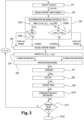
- the decoding method according to the invention is represented in the form of an algorithm comprising steps D1 to D12 represented in figure 3 .
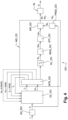
- the decoding method according to the invention is implemented in a decoding device or decoder DO, as shown in figure 4 .
- the identification is carried out, in the received data signal F, of the partitions B 1 to B z which have been previously coded by the coder CO.
- said partitions are blocks which have a square shape and all have the same size.
- the last blocks on the left and the last blocks at the bottom may not be square.
- the blocks may for example be of rectangular size and/or not aligned with each other.
- Each block or macroblock can also be divided into sub-blocks which are themselves subdivisible.
- Such identification is performed by a flow analysis software module EX_DO, as shown in figure 4 .
- the EX_DO module of the figure 4 selects as the current block B i the first block B 1 to be decoded. Such a selection consists, for example, in placing a read pointer in the signal F at the beginning of the data of the first block B 1 .
- Each of the selected coded blocks is then decoded.
- such decoding is applied successively to each of the coded blocks B 1 to B z .
- the blocks are decoded according to, for example, a “raster scan” path well known to those skilled in the art.
- the decoding according to the invention is implemented in a software decoding module MD_DO of the DO decoder, as shown in the figure 4 .
- a D2 step represented in the figure 3 first the entropy decoding of the first current block B 1 that has been selected is carried out. Such an operation is performed by an entropy decoding module DE_DO shown in the figure 4 , for example of the CABAC type.
- the DE_DO module performs an entropic decoding of the digital information corresponding to the amplitude of each of the coded coefficients of the list E 1 or the modified list Em 1 .
- the signs of the coefficients of the list E 1 or the modified list Em 1 are not decoded.
- Step D3 is similar to the aforementioned step C7 of determining the number of signs to be hidden.
- the number of hidden signs is either zero, one, two, three, or more.
- step D3 the following procedure is carried out, during a first sub-step D31 shown in figure 3 , to the determination, from said list E 1 or from the modified list Em 1 , of a sub-list containing coefficients ⁇ '1, ⁇ '2, ..., ⁇ 'M where M ⁇ L likely to have been modified during coding.
- SEm 1 (9, -6, 0, 0, 1, 0, -1, 2, 0, 0, 1).
- the processing module MTR_DO compares the number of coefficients likely to have been modified with a predetermined threshold TSIG.
- TSIG is equal to 4.
- the following procedure is carried out during a step D4 shown in figure 3 , to a classical entropic decoding of all the signs of the coefficients of the list E 1 .
- Such decoding is carried out by the CABAC decoder, designated by the reference DE_DO on the figure 4 .
- the sign of each non-zero coefficient in the list E 1 is entropically decoded.
- step D4 If the number of coefficients likely to have been modified is greater than the TSIG threshold, during said step D4, the classic entropic decoding of all the signs of the coefficients in the list Em 1 is carried out, with the exception of the sign of the first non-zero coefficient ⁇ 2.
- the MTR_DO processing module calculates the value of a function f which is representative of the coefficients of the sublist SEm 1 in order to determine whether the calculated value is even or odd.
- the function f is the parity of the sum of the coefficients of the sublist SEm 1 .
- an even value of the sum of the coefficients of the sublist SEm 1 means that the sign of the first non-zero coefficient of the modified list Em 1 is positive, while an odd value of the sum of the coefficients of the sublist SEm 1 means that the sign of the first non-zero coefficient of the modified list Em 1 is negative.
- step D5 the processing module MTR_DO deduces that the hidden sign of the first non-zero coefficient ⁇ 2 is positive.
- the quantized coefficients of block Bq 1 are reconstructed in a predefined order.
- this is a zigzag path that is the reverse of the zigzag path performed during the aforementioned coding step C6.
- Such a step is performed by a reading software module ML_DO, as shown in figure 4 . More precisely, the ML_DO module proceeds to register the coefficients of the list E 1 (one-dimensional) in the block Bq 1 (two-dimensional), using the said reverse zigzag traversal order.
- the quantized residue block Bq 1 is dequantized according to a classic dequantization operation which is the inverse operation of the quantization carried out in the aforementioned coding step C5, to produce a decoded dequantized block BDq 1 .
- a dequantization software module MDQ_DO as shown in figure 4 .
- the inverse transformation of the dequantized block BDq 1 is carried out, which is the inverse operation of the direct transformation carried out during coding in the aforementioned step C4.
- a decoded residue block BDr 1 is then obtained.
- Such an operation is carried out by an inverse transform software module MTI_DO as shown figure 4 .
- the current block ⁇ 1 is predictively decoded.
- Such predictive decoding is conventionally performed by known intra and/or inter prediction techniques, during which the block ⁇ 1 is predicted with respect to at least one previously decoded block.
- Such an operation is performed by a predictive decoding module PRED_DO as shown figure 4 .
- predictive decoding is performed using the syntax elements decoded in the previous step and including in particular the prediction type (inter or intra), and where appropriate, the intra prediction mode, the partitioning type of a block or macroblock if the latter has been subdivided, the reference image index and the displacement vector used in the inter prediction mode.
- the aforementioned predictive decoding step makes it possible to construct a predicted block Bp 1 .
- the decoded block BD 1 is constructed by adding the decoded residue block BDr 1 to the predicted block Bp 1 . Such an operation is performed by a reconstruction software module MR_DO shown in figure 4 .
- the MD_DO decoding module tests whether the current decoded block is the last block identified in the F signal.
- next block B i to be decoded is selected in accordance with the aforementioned raster scan order, by iteration of steps D1 to D10, for 1 ⁇ i ⁇ Z.
- This other embodiment differs from the previous one only by the number of hidden coefficients which is either 0 or N, N being an integer such that N ⁇ 2.
- comparison substep D32 is replaced by substep D32a shown in dotted lines on the figure 3 , during which the number of coefficients likely to have been modified is compared with several predetermined thresholds 0 ⁇ TSIG_1 ⁇ TSIG_2 ⁇ TSIG_3..., such that if the number of said coefficients is between TSIG_N and TSIG_N+1, N signs have been hidden.
- the conventional entropic decoding of all the signs of the coefficients in the list E 1 is carried out during the aforementioned step D4. For this purpose, the sign of each non-zero coefficient in the list E 1 is entropically decoded.
- the conventional entropic decoding of all the signs of the coefficients of the list E 1 is carried out during the aforementioned step D4, with the exception of the N respective signs of the first non-zero coefficients of said modified list Em 1 , said N signs being hidden.
- the MTR_DO processing module then deduces the configuration of the two hidden signs which are assigned respectively to each of the first two non-zero coefficients ⁇ 2 and ⁇ 3, according to the convention used in coding.
- steps D6 to D12 described above are carried out.
- the CO encoder could be configured to hide at least N' predetermined signs, with N' ⁇ 1, instead of either zero, one or N predetermined signs.
- the comparison step C72 or C72a would be omitted.
- the DO decoder would be configured to reconstruct N' predetermined signs instead of either zero, one, or N predetermined signs. In this case, the comparison step D32 or D32a would be removed.
- the decision criterion applied in the coding step C72 and in the decoding step D32 could be replaced by another type of criterion.
- the processing module MTR_CO or MTR_DO could apply a decision criterion which is respectively a function of the sum of the amplitudes of the modifiable coefficients or those likely to have been modified, or of the number of zeros present among the modifiable coefficients or those likely to have been modified.
Landscapes
- Engineering & Computer Science (AREA)
- Multimedia (AREA)
- Signal Processing (AREA)
- Physics & Mathematics (AREA)
- General Physics & Mathematics (AREA)
- Theoretical Computer Science (AREA)
- Discrete Mathematics (AREA)
- Compression Or Coding Systems Of Tv Signals (AREA)
- Compression, Expansion, Code Conversion, And Decoders (AREA)
- Error Detection And Correction (AREA)
- Medicines That Contain Protein Lipid Enzymes And Other Medicines (AREA)
- Cosmetics (AREA)
- Acyclic And Carbocyclic Compounds In Medicinal Compositions (AREA)
- Signal Processing For Digital Recording And Reproducing (AREA)
- Detection And Correction Of Errors (AREA)
- Television Signal Processing For Recording (AREA)
Description
- La présente invention se rapporte de manière générale au domaine du traitement d'images, et plus précisément au codage et au décodage d'images numériques et de séquences d'images numériques.
- L'invention peut ainsi, notamment, s'appliquer au codage vidéo mis en œuvre dans les codeurs vidéo actuels (MPEG, H.264, etc) ou à venir (ITU-T/VCEG (H.265) ou ISO/MPEG (HEVC).
- Les codeurs vidéo actuels (MPEG, H.264, ...) utilisent une représentation par blocs de la séquence vidéo. Les images sont découpées en macro-blocs, chaque macro-bloc est lui-même découpé en blocs et chaque bloc, ou macro-bloc, est codé par prédiction intra-images ou inter-images. Ainsi, certaines images sont codées par prédiction spatiale (prédiction intra), tandis que d'autres images sont codées par prédiction temporelle (prédiction inter) par rapport à une ou plusieurs images de référence codées-décodées, à l'aide d'une compensation en mouvement connue par l'homme de l'art.
- Pour chaque bloc est codé un bloc résiduel, encore appelé résidu de prédiction, correspondant au bloc original diminué d'une prédiction. Les blocs résiduels sont transformés par une transformée de type transformée en cosinus discrète (DCT), puis quantifiés à l'aide d'une quantification par exemple de type scalaire. Des coefficients dont certains sont positifs et d'autres négatifs sont obtenus à l'issue de l'étape de quantification. Ils sont ensuite parcourus dans un ordre de lecture généralement en zigzag (comme dans la norme JPEG), ce qui permet d'exploiter le nombre important de coefficients nuls dans les hautes fréquences. A l'issue du parcours précité, une liste monodimensionnelle de coefficients est obtenue, laquelle sera appelée « résidu quantifié ». Les coefficients de cette liste sont alors codés par un codage entropique.
- Le codage entropique (par exemple de type codage arithmétique ou codage de Huffman) est effectué de la façon suivante :
- une information est codée entropiquement pour indiquer l'emplacement du dernier coefficient non nul de la liste,
- pour chaque coefficient situé avant le dernier coefficient non nul, une information est codée entropiquement pour indiquer si le coefficient est nul ou pas,
- pour chaque coefficient non nul indiqué précédemment, une information est codée entropiquement pour indiquer si le coefficient est égal à un ou pas,
- pour chaque coefficient non nul et non égal à un situé avant le dernier coefficient non nul, une information d'amplitude (valeur absolue du coefficient diminuée de deux) est codée entropiquement,
- pour chaque coefficient non nul, le signe qui lui est affecté est codé par un '0' (pour le signe +) ou un '1' (pour le signe -).
- Selon la technique H.264 par exemple, lorsqu'un macrobloc est découpé en blocs, un signal de données, correspondant à chaque bloc, est transmis au décodeur. Un tel signal comprend :
- les résidus quantifiés contenus dans la liste précitée,
- des informations représentatives du mode de codage utilisé, en particulier:
- le mode de prédiction (prédiction intra, prédiction inter, prédiction par défaut réalisant une prédiction pour laquelle aucune information n'est transmise au décodeur (« en anglais « skip »)) ;
- des informations précisant le type de prédiction (orientation, image de référence, ...) ;
- le type de partitionnement ;
- le type de transformée, par exemple DCT 4x4, DCT 8x8, etc...
- les informations de mouvement si nécessaire ;
- etc.
- Le décodage est fait image par image, et pour chaque image, macrobloc par macrobloc. Pour chaque partition d'un macrobloc, les éléments correspondants du flux sont lus. La quantification inverse et la transformation inverse des coefficients des blocs sont effectuées pour produire le résidu de prédiction décodé. Puis, la prédiction de la partition est calculée et la partition est reconstruite en ajoutant la prédiction au résidu de prédiction décodé.
- Le codage intra ou inter par compétition, tel que mis en œuvre dans la norme H.264, repose ainsi sur la mise en compétition de différentes informations de codage, telles que celles précitées, dans le but de sélectionner le meilleur mode, c'est-à-dire celui qui optimisera le codage de la partition considérée selon un critère de performance prédéterminé, par exemple le coût débit/distorsion bien connu de l'homme du métier.
- Les informations représentatives du mode de codage sélectionné sont contenues dans le signal de données transmis par le codeur au décodeur. Le décodeur est ainsi capable d'identifier le mode de codage sélectionné au codeur, puis d'appliquer la prédiction conforme à ce mode.
- Dans le document « Data Hiding of Motion Information in Chroma and Luma Samples for Video Compression », J.-M. Thiesse, J. Jung and M. Antonini, International workshop on multimedia signal processing, 2011, il est présenté un procédé de dissimulation de données (traduction anglaise de « Data Hiding ») mis en œuvre au cours d'une compression vidéo.
- Plus précisément, il est proposé d'éviter d'inclure dans le signal à transmettre au décodeur au moins un index de compétition tel qu'issu d'une pluralité d'index de compétition à transmettre. Un tel index est par exemple l'index MVComp qui représente une information permettant d'identifier le prédicteur de vecteur de mouvement utilisé pour un bloc prédit en mode Inter. Un tel index qui peut valoir 0 ou 1, n'est pas inscrit directement dans le signal de données codées, mais transporté par la parité de la somme des coefficients du résidu quantifié. Une association est créée entre la parité du résidu quantifié et l'index MVComp. A titre d'exemple, la valeur paire du résidu quantifié est associée à l'index MVComp de valeur 0, tandis que la valeur impaire du résidu quantifié est associée à l'index MVComp de valeur 1. Deux cas peuvent se présenter. Dans un premier cas, si la parité du résidu quantifié correspond déjà à celle de l'index MVComp que l'on veut transmettre, le résidu quantifié est codé de façon classique. Dans un deuxième cas, si la parité du résidu quantifié est différente de celle de l'index MVComp que l'on veut transmettre, il est procédé à une modification du résidu quantifié de manière à ce que sa parité soit la même que celle de l'index MVComp. Une telle modification consiste à incrémenter ou décrémenter un ou plusieurs coefficients du résidu quantifié d'une valeur impaire (ex : +1, -1, +3, -3, +5, -+5...) et de ne retenir que la modification qui optimise un critère prédéterminé, en l'occurrence le coût débit-distorsion précité.
- Au décodeur, l'index MVComp n'est pas lu dans le signal. Le décodeur se contente simplement de déterminer classiquement le résidu. Si la valeur de ce résidu est paire, l'index MVComp est mis à 0. Si la valeur de ce résidu est impaire, l'index MVComp est mis à 1.
- Conformément à la technique qui vient d'être présentée, les coefficients qui subissent la modification ne sont pas toujours choisis de façon optimale, de sorte que la modification appliquée entraîne des perturbations dans le signal transmis au décodeur. De telles perturbations nuisent inévitablement à l'efficacité de la compression vidéo.
- Un des buts de l'invention est de remédier à des inconvénients de l'état de la technique précité.
- Conformément a l'invention, un dispositif de codage est prévu selon la revendication 1. Les autres modes de réalisation de l'invention sont prévus selon les revendications dépendantes.Tout les autres modes de réalisation mentionnés dans la description, sont seulement considérés comme exemples illustratifs.
- D'autres caractéristiques et avantages apparaîtront à la lecture de deux modes de réalisation préférés décrits en référence aux figures dans lesquelles:
- la
figure 1 représente les principales étapes du procédé de codage selon l'invention, - la
figure 2 représente un mode de réalisation d'un dispositif de codage selon l'invention, - la
figure 3 représente les principales étapes du procédé de décodage selon l'invention, - la
figure 4 représente un mode de réalisation d'un dispositif de décodage selon l'invention. - Un mode de réalisation de l'invention va maintenant être décrit, dans lequel le procédé de codage selon l'invention est utilisé pour coder une séquence d'images selon un flux binaire proche de celui qu'on obtient par un codage selon la norme H.264/MPEG-4 AVC. Dans ce mode de réalisation, le procédé de codage selon l'invention est par exemple implémenté de manière logicielle ou matérielle par modifications d'un codeur initialement conforme à la norme H.264/MPEG-4 AVC. Le procédé de codage selon l'invention est représenté sous la forme d'un algorithme comportant des étapes C1 à C40, représentées à la
figure 1 . - Selon le mode de réalisation de l'invention, le procédé de codage selon l'invention est implémenté dans un dispositif de codage ou codeur CO dont un mode de réalisation est représenté sur la
figure 2 . - Conformément à l'invention, il est procédé, préalablement au codage proprement dit, à un découpage d'une image IE d'une séquence d'images à coder dans un ordre prédéterminé, en une pluralité Z de partitions B1, B2, .... Bi,.... Bz, comme représenté sur la
figure 2 . - Il convient de noter qu'au sens de l'invention, le terme « partition » signifie unité de codage (de l'anglais « coding unit »). Cette dernière terminologie est notamment utilisée dans la norme HEVC/H.265 en cours d'élaboration, par exemple dans le document accessible à l'adresse Internet suivante :
http://phenix.int-evry.fr/jct/doc end user/current document.php?id=3286 - En particulier, une telle unité de codage regroupe des ensembles de pixels de forme rectangulaire ou carrée, encore appelés blocs, macroblocs, ou bien des ensembles de pixels présentant d'autres formes géométriques.
- Dans l'exemple représenté sur la
figure 2 , lesdites partitions sont des blocs qui ont une forme carrée et ont tous la même taille. En fonction de la taille de l'image qui n'est pas forcément un multiple de la taille des blocs, les derniers blocs à gauche et les derniers blocs en bas peuvent ne pas être carrés. Dans un mode alternatif de réalisation, les blocs peuvent être par exemple de taille rectangulaire et/ou non alignés les uns avec les autres. - Chaque bloc ou macrobloc peut par ailleurs être lui-même divisé en sous blocs qui sont eux-mêmes subdivisibles.
- Un tel découpage est effectué par un module PCO de partitionnement représenté à la
figure 2 qui utilise par exemple un algorithme de partitionnement bien connu en tant que tel. - A la suite de ladite étape de découpage, il est procédé au codage de chacune des partitions courantes Bi (i étant un entier tel que 1≤i≤Z) de ladite image IE.
- Dans l'exemple représenté sur la
figure 2 , un tel codage est appliqué successivement à chacun des blocs B1 à Bz de l'image courante IE. Les blocs sont codés selon par exemple un parcours tel que le parcours « raster scan » bien connu de l'homme du métier. - Le codage selon l'invention est mis en œuvre dans un module logiciel de codage MC_CO du codeur CO, tel que représenté sur la
figure 2 . - Au cours d'une étape C1 représentée à la
figure 1 , le module de codage MC_CO de lafigure 2 sélectionne comme bloc courant Bi le premier bloc B1 à coder de l'image courante IE. Comme représenté à lafigure 2 , il s'agit du premier bloc de gauche de l'image IE. - Au cours d'une étape C2 représentée à la
figure 1 , il est procédé au codage prédictif du bloc courant B1 par des techniques connues de prédiction intra et/ou inter, au cours duquel le bloc B1 est prédit par rapport à au moins un bloc précédemment codé et décodé. Une telle prédiction est effectuée par un module logiciel de prédiction PRED_CO tel que représenté à lafigure 2 . - Il va de soi que d'autres modes de prédiction intra tels que proposé dans la norme H.264 sont possibles.
- Le bloc courant B1 peut être également soumis à un codage prédictif en mode inter, au cours duquel le bloc courant est prédit par rapport à un bloc issu d'une image précédemment codée et décodée. D'autres types de prédiction sont bien entendu envisageables. Parmi les prédictions possibles pour un bloc courant, la prédiction optimale est choisie selon un critère débit distorsion bien connu de l'homme du métier.
- Ladite étape de codage prédictif précitée permet de construire un bloc prédit Bp1 qui est une approximation du bloc courant B1. Les informations relatives à ce codage prédictif sont destinées à être inscrites dans un signal à transmettre au décodeur. De telles informations comprennent notamment le type de prédiction (inter ou intra), et le cas échéant, le mode de prédiction intra, le type de partitionnement d'un bloc ou macrobloc si ce dernier a été subdivisé, l'indice d'image de référence et le vecteur de déplacement utilisés dans le mode de prédiction inter. Ces informations sont compressées par le codeur CO.
- Au cours d'une étape suivante C3 représentée à la
figure 1 , le module de prédiction PRED_CO compare les données relatives au bloc courant B1 aux données du bloc prédit Bp1. Plus précisément, au cours de cette étape, il est procédé classiquement à la soustraction du bloc prédit Bp1 du bloc courant B1 pour produire un bloc résidu Br1. - Au cours d'une étape suivante C4 représentée à la
figure 1 , il est procédé à la transformation du bloc résidu Br1 selon une opération classique de transformation directe telle que par exemple une transformation en cosinus discrètes de type DCT, pour produire un bloc transformé Bt1. Une telle opération est effectuée par un module logiciel MT_CO de transformée, tel que représentéfigure 2 . - Au cours d'une étape suivante C5 représentée à la
figure 1 , il est procédé à la quantification du bloc transformé Bt1 selon une opération classique de quantification, telle que par exemple une quantification scalaire. Un bloc Bq1 de coefficients quantifiés est alors obtenu. Une telle étape est effectuée au moyen d'un module logiciel de quantification MQ_CO tel que représenté à lafigure 2 . - Au cours d'une étape suivante C6 représentée à la
figure 1 , il est procédé à un parcours, dans un ordre prédéfini, des coefficients quantifiés du bloc Bq1. Dans l'exemple représenté, il s'agit d'un parcours en zigzag classique. Une telle étape est effectuée par un module logiciel de lecture ML_CO, tel que représenté à lafigure 2 . A l'issue de l'étape C6, une liste monodimensionnelle E1=(ε1, ε2,..., εL) de coefficients est obtenue, plus connue sous l'appellation « résidu quantifié », où L est un entier supérieur ou égal à 1. Chacun des coefficients de la liste E1 est associé à différentes informations numériques qui sont destinées à subir un codage entropique. De telles informations numériques sont décrites ci-dessous à titre d'exemple. - Supposons que dans l'exemple représenté, L=16 et que la liste E1 contient les seize coefficients suivants : E1=(0, +9, -7, 0, 0, +1, 0, -1, +2, 0, 0, +1, 0, 0, 0, 0).
- En l'espèce :
- pour chaque coefficient situé avant le dernier coefficient non nul de la liste E1, une information numérique, telle qu'un bit, est destinée à être codée entropiquement pour indiquer si le coefficient est nul ou pas : si le coefficient est nul, c'est par exemple le bit de valeur 0 qui sera codé, tandis que si le coefficient est non nul, c'est le bit de valeur 1 qui sera codé ;
- pour chaque coefficient non nul +9, -7, +1, -1, +2, +1, une information numérique, telle qu'un bit, est destinée à être codée entropiquement pour indiquer si la valeur absolue du coefficient est égal à un ou pas : si elle est égale à 1, c'est par exemple le bit de valeur 1 qui sera codé, tandis que si elle est égale à 0, c'est le bit de valeur 0 qui sera codé ;
- pour chaque coefficient non nul et dont la valeur absolue est non égale à un situé avant le dernier coefficient non nul, tels les coefficients de valeur +9, -7, +2, une information d'amplitude (valeur absolue du coefficient à laquelle est retranchée la valeur deux) est codée entropiquement,
- pour chaque coefficient non nul, le signe qui lui est affecté est codé par une information numérique, telle qu'un bit par exemple mis à '0' (pour le signe +) ou à '1' (pour le signe -).
- On va maintenant décrire, en référence à la
figure 1 , les étapes spécifiques de codage selon l'invention. - Conformément à l'invention, il est décidé d'éviter de coder entropiquement au moins une des informations numériques précitées. Pour les raisons expliquées plus haut dans la description, dans un mode préféré de réalisation, il est décidé de ne pas coder entropiquement au moins un signe d'un desdits coefficients de la liste E1.
- A titre d'exemple alternatif, il pourrait notamment être décidé de coder entropiquement le bit de poids faible de la représentation binaire de l'amplitude du premier coefficient non nul de ladite liste E1.
- A cet effet, au cours d'une étape C7 représentée à la
figure 1 , il est procédé au choix du nombre de signes à cacher au cours de l'étape ultérieure de codage entropique. Une telle étape est effectuée par un module logiciel de traitement MTR_CO, tel que représenté sur lafigure 2 . - Dans le mode préféré de réalisation, le nombre de signes à cacher est un ou zéro. En outre, conformément audit mode de réalisation préféré, c'est le signe du premier coefficient non nul qui est destiné à être caché. Dans l'exemple représenté, il s'agit donc de cacher le signe du coefficient ε2=+9.
- Dans un mode de réalisation alternatif, le nombre de signes à cacher est soit zéro, soit un, soit deux, soit trois, soit plus.
- Conformément au mode de réalisation préféré de l'étape C7, il est procédé, au cours d'une première sous-étape C71 représentée à la
figure 1 , à la détermination, à partir de ladite liste E1, d'une sous-liste SE1 contenant des coefficients aptes à être modifiés ε'1, ε'2,..., ε'M où M<L. De tels coefficients seront appelés coefficients modifiables dans la suite de la description. - Selon l'invention, un coefficient est modifiable si la modification de sa valeur quantifiée ne provoque pas de désynchronisation au décodeur, une fois que ce coefficient modifié est traité par le décodeur. Ainsi, le module de traitement MTR_CO est configuré initialement pour ne pas modifier :
- le ou les coefficients nuls situés avant le premier coefficient non nul, de façon à ce que le décodeur n'affecte pas la valeur du signe caché à ce ou ces coefficients nuls,
- et pour des raisons de complexité de calcul, le ou les coefficients nuls situés après le dernier coefficient non nul.
- Dans l'exemple représenté, à l'issue de la sous-étape C71, la sous-liste SE1 obtenue est telle que SE1=(9,-7,0,0,1,0,-1,2,0,0,1). En conséquence, onze coefficients modifiables sont obtenus.
- Au cours d'une sous-étape suivante C72 représentée à la
figure 1 , le module de traitement MTR_CO procède à la comparaison du nombre de coefficients modifiables avec un seuil prédéterminé TSIG. Dans le mode préféré de réalisation, TSIG vaut 4. - Si le nombre de coefficients modifiables est inférieur au seuil TSIG, il est procédé, au cours d'une étape C20 représentée à la
figure 1 , à un codage entropique classique des coefficients de la liste E1, tel que celui réalisé par exemple dans un codeur CABAC, désigné par la référence CE_CO sur lafigure 2 . A cet effet, le signe de chaque coefficient non nul de la liste E1 est codé entropiquement. - Si le nombre de coefficients modifiables est supérieur au seuil TSIG, au cours d'une étape C8 représentée à la
figure 1 , le module de traitement MTR_CO calcule la valeur d'une fonction f qui est représentative des coefficients de la sous-liste SE1. - Dans le mode préféré de réalisation où un seul signe est destiné à être caché dans le signal à transmettre au décodeur, la fonction f est la parité de la somme des coefficients de la sous-liste SE1.
- Au cours d'une étape C9 représentée à la
figure 1 , le module de traitement MTR_CO vérifie si la parité de la valeur du signe à cacher correspond à la parité de la somme des coefficients de la sous-liste SE1 en vertu d'une convention définie préalablement au codeur CO. - Dans l'exemple proposé, ladite convention est telle qu'un signe positif est associé à un bit de valeur égale à zéro, tandis qu'un signe négatif est associé à un bit de valeur égale à un.
- Si, d'après la convention adoptée dans le codeur CO selon l'invention, le signe est positif, ce qui correspond à une valeur de bit de codage à zéro, et que la somme des coefficients de la sous-liste SE1 est paire, il est procédé à l'étape C20 de codage entropique des coefficients de la liste E1 précitée, à l'exception du signe du coefficient ε2.
- Si, toujours d'après la convention adoptée dans le codeur CO selon l'invention, le signe est négatif, ce qui correspond à une valeur de bit de codage à un, et que la somme des coefficients de la sous-liste SE1 est impaire, il est également procédé à l'étape C20 de codage entropique des coefficients de la liste E1 précitée, à l'exception du signe du coefficient ε2.
- Si, d'après la convention adoptée dans le codeur CO selon l'invention, le signe est positif, ce qui correspond à une valeur de bit de codage à zéro, et que la somme des coefficients de la sous-liste SE1 est impaire, il est procédé, au cours d'une étape C10 représentée sur la
figure 1 , à une modification d'au moins un coefficient modifiable de la sous-liste SE1. - Si, toujours d'après la convention adoptée dans le codeur CO selon l'invention, le signe est négatif, ce qui correspond à une valeur de bit de codage à un, et que la somme des coefficients de la sous-liste SE1 est paire, il est également procédé à l'étape C10 de modification d'au moins un coefficient modifiable de la sous-liste SE1.
- Une telle opération de modification est effectuée par le module de traitement MTR_CO de la
figure 2 . - Dans l'exemple de réalisation où SE1=(+9,-7,0,0,+1,0,-1,+2,0,0,+1), la somme totale f des coefficient est égale à 5, et est donc impaire. Afin que le décodeur puisse reconstruire le signe positif affecté au premier coefficient non nul, ε2=+9, sans que le codeur CO n'ait à transmettre ce coefficient au décodeur, il faut que la parité de la somme devienne paire. En conséquence, le module de traitement MTR_CO teste, au cours de ladite étape C10, différentes modifications de coefficients de la sous-liste SE1, visant toutes à changer la parité de la somme des coefficients. Dans le mode préféré de réalisation, il est procédé à l'ajout de +1 ou -1 à chaque coefficient modifiable et à la sélection d'une modification parmi toutes celles qui sont effectuées.
- Dans le mode préféré de réalisation, une telle sélection constitue la prédiction optimale selon un critère de performance qui est par exemple le critère débit distorsion bien connu de l'homme du métier. Un tel critère s'exprime par l'équation (1) ci-dessous:

D représente la distorsion entre le macrobloc original et le macrobloc reconstruit, R représente le coût en bits du codage des informations de codage et λ représente un multiplicateur de Lagrange, dont la valeur peut être fixée préalablement au codage. - Dans l'exemple proposé, la modification qui entraîne une prédiction optimale selon le critère débit-distorsion précité est l'ajout de la valeur 1 au deuxième coefficient -7 de la sous-liste SE1.
- Il est alors obtenu, à l'issue de l'étape C10, une sous-liste modifiée SEm1=(+9,+6,0,0,+1,0,-1,+2,0,0,+1)
- Il convient de noter qu'au cours de cette étape, certaines modifications sont interdites. Ainsi, dans le cas où le premier coefficient non nul ε2 aurait valu +1, il n'aurait pas été possible de lui ajouter -1, car il serait devenu nul, et il aurait alors perdu sa caractéristique de premier coefficient non nul de la liste E1. Le décodeur aurait alors attribué ultérieurement le signe décodé (par calcul de la parité de la somme des coefficients) à un autre coefficient, et il y aurait alors eu une erreur de décodage.
- Au cours d'une étape C11 représentée à la
figure 1 , le module de traitement MTR_CO procède à une modification correspondante de la liste E1. La liste modifiée suivante Em1= (0,+9,-6,0,0,+1,0,-1,+2,0,0,+1,0,0,0,0) est alors obtenue. - Il est ensuite procédé à l'étape C20 de codage entropique des coefficients de la liste Em1 précitée, à l'exception du signe du coefficient ε2, qui est le signe + du coefficient 9 dans l'exemple proposé, lequel signe est caché dans la parité de la somme des coefficients.
- Il convient de noter que l'ensemble des amplitudes des coefficients de la liste E1 ou de la liste modifiée Em1 est codé avant l'ensemble des signes, à l'exclusion du signe du premier coefficient non nul ε2 qui n'est pas codé comme cela a été expliqué ci-dessus.
- Au cours d'une étape suivante C30 représentée à la
figure 1 , le module de codage MC_CO de lafigure 2 teste si le bloc courant codé est le dernier bloc de l'image IE. - Si le bloc courant est le dernier bloc de l'image IE, au cours d'une étape C40 représentée à la
figure 1 , il est mis fin au procédé de codage. - Si tel n'est pas le cas, il est procédé à la sélection du bloc suivant Bi qui est alors codé conformément à l'ordre de parcours raster scan précité, par itération des étapes C1 à C20, pour 1 <i<Z.
- Une fois réalisé le codage entropique de tous les blocs B1 à Bz, il est procédé à la construction d'un signal F représentant, sous forme binaire, lesdits blocs codés.
- La construction du signal binaire F est mise en œuvre dans un module logiciel CF de construction de flux, tel que représenté sur la
figure 2 . - Le flux F est ensuite transmis par un réseau de communication (non représenté), à un terminal distant. Celui-ci comporte un décodeur qui sera décrit plus en détail dans la suite de la description.
- On va maintenant décrire, principalement en référence à la
figure 1 , un autre mode de réalisation de l'invention. - Cet autre mode de réalisation se distingue du précédent uniquement par le nombre de coefficients à cacher qui est soit 0, soit N, N étant un entier tel que N≥2.
- A cet effet, la sous-étape de comparaison C72 précitée est remplacée par la sous-étape C72a représentée en pointillé sur la
figure 1 , au cours de laquelle il est procédé à la comparaison du nombre de coefficients modifiables avec plusieurs seuils prédéterminés 0<TSIG_1<TSIG_2<TSIG_3..., de telle façon que si le nombre de coefficients modifiables est compris entre TSIG_N et TSIG_N+1, N signes sont destinés à être cachés. - Si le nombre de coefficients modifiables est inférieur au premier seuil TSIG_1, il est procédé, au cours de l'étape C20 précitée, au codage entropique classique des coefficients de la liste E1. A cet effet, le signe de chaque coefficient non nul de la liste E1 est codé entropiquement.
- Si le nombre de coefficients modifiables est compris entre le seuil TSIG_N et TSIG_N+1, au cours d'une étape C8 représentée à la
figure 1 , le module de traitement MTR_CO calcule la valeur d'une fonction f qui est représentative des coefficients de la sous-liste E1. - Dans cet autre mode de réalisation, la décision au codeur étant de cacher N signes, la fonction f est le reste modulo 2N de la somme des coefficients de la sous-liste SE1. On suppose que dans l'exemple proposé, N=2, les deux signes à cacher étant les deux premiers signes des deux premiers coefficients non nuls respectivement, à savoir ε2 et ε3.
- Au cours de l'étape suivante C9 représentée à la
figure 1 , le module de traitement MTR_CO vérifie si la configuration des N signes, soit 2N configurations possibles, correspond à la valeur du reste modulo 2N de la somme des coefficients de la sous-liste SE1. - Dans l'exemple proposé où N=2, il existe 22=4 configurations de signes différentes.
- Ces quatre configurations obéissent à une convention au codeur CO, laquelle est par exemple déterminée de la façon suivante :
- un reste égal à zéro correspond à deux signes positifs consécutifs : +, + ;
- un reste égal à un correspond à un signe positif et un signe négatif consécutifs : +, - ;
- un reste égal à deux correspond à un signe négatif et un signe positif consécutifs : -, + ;
- un reste égal à trois correspond à deux signes négatifs consécutifs : -, -.
- Si la configuration des N signes correspond à la valeur du reste modulo 2N de la somme des coefficients de la sous-liste SE1, il est procédé à l'étape C20 de codage entropique des coefficients de la liste E1 précitée, à l'exception du signe du coefficient ε2 et du coefficient ε3, lesquels signes sont cachés dans la parité de la somme modulo 2N des coefficients.
- Si tel n'est pas le cas, il est procédé à l'étape C10 de modification d'au moins un coefficient modifiable de la sous-liste SE1. Une telle modification est effectuée par le module de traitement MTR_CO de la
figure 2 de telle manière que le reste modulo 2N de la somme des coefficients modifiables de la sous-liste SE1 atteigne la valeur de chacun des deux signes à cacher. - Au cours de l'étape C11 précitée, le module de traitement MTR_CO procède à une modification correspondante de la liste E1. Une liste modifiée Em1 est alors obtenue.
- Il est ensuite procédé à l'étape C20 de codage entropique des coefficients de la liste Em1 précitée, à l'exception du signe du coefficient ε2 et du signe du coefficient ε3, lesquels signes sont cachés dans la parité de la somme modulo 2N des coefficients.
- Un mode de réalisation du procédé de décodage selon l'invention va maintenant être décrit, dans lequel le procédé de décodage est implémenté de manière logicielle ou matérielle par modifications d'un décodeur initialement conforme à la norme H.264/MPEG-4 AVC.
- Le procédé de décodage selon l'invention est représenté sous la forme d'un algorithme comportant des étapes D1 à D12 représentées à la
figure 3 . - Selon le mode de réalisation de l'invention, le procédé de décodage selon l'invention est implémenté dans un dispositif de décodage ou décodeur DO, tel que représenté à la
figure 4 . - Au cours d'une étape préliminaire non représentée sur la
figure 3 , il est procédé à l'identification, dans le signal de données F reçu, des partitions B1 à Bz qui ont été codées précédemment par le codeur CO. Dans le mode préféré de réalisation, lesdites partitions sont des blocs qui ont une forme carrée et ont tous la même taille. En fonction de la taille de l'image qui n'est pas forcément un multiple de la taille des blocs, les derniers blocs à gauche et les derniers blocs en bas peuvent ne pas être carrés. Dans un mode alternatif de réalisation, les blocs peuvent être par exemple de taille rectangulaire et/ou non alignés les uns avec les autres. - Chaque bloc ou macrobloc peut par ailleurs être lui-même divisé en sous blocs qui sont eux-mêmes subdivisibles.
- Une telle identification est effectuée par un module logiciel EX_DO d'analyse de flux, tel que représenté à la
figure 4 . - Au cours d'une étape D1 représentée à la
figure 3 , le module EX_DO de lafigure 4 sélectionne comme bloc courant Bi le premier bloc B1 à décoder. Une telle sélection consiste par exemple à placer un pointeur de lecture dans le signal F au début des données du premier bloc B1. - Il est ensuite procédé au décodage de chacun des blocs codés sélectionnés.
- Dans l'exemple représenté sur la
figure 3 , un tel décodage est appliqué successivement à chacun des blocs codés B1 à Bz. Les blocs sont décodés selon par exemple un parcours « raster scan » bien connu de l'homme du métier. - Le décodage selon l'invention est mis en œuvre dans un module logiciel de décodage MD_DO du décodeur DO, tel que représenté sur la
figure 4 . - Au cours d'une étape D2 représentée à la
figure 3 , il est d'abord procédé au décodage entropique du premier bloc courant B1 qui a été sélectionné. Une telle opération est effectuée par un module de décodage entropique DE_DO représenté sur lafigure 4 , par exemple de type CABAC. Au cours de cette étape, le module DE_DO effectue un décodage entropique des informations numériques correspondant à l'amplitude de chacun des coefficients codés de la liste E1 ou de la liste modifiée Em1. A ce stade, seuls les signes des coefficients de la liste E1 ou de la liste modifiée Em1 ne sont pas décodés. - Au cours d'une étape D3 représentée à la
figure 3 , il est procédé à la détermination du nombre de signes susceptibles d'avoir été cachés au cours de l'étape précédente de codage entropique C20. Une telle étape D3 est effectuée par un module logiciel de traitement MTR_DO, tel que représenté sur lafigure 4 . L'étape D3 est similaire à l'étape C7 précitée de détermination du nombre de signes à cacher. - Dans le mode préféré de réalisation, le nombre de signes cachés est un ou zéro. En outre, conformément audit mode de réalisation préféré, c'est le signe du premier coefficient non nul qui est caché. Dans l'exemple représenté, il s'agit donc du signe positif du coefficient ε2=+9.
- Dans un mode de réalisation alternatif, le nombre de signes cachés est soit zéro, soit un, soit deux, soit trois, soit plus.
- Conformément au mode de réalisation préféré de l'étape D3, il est procédé, au cours d'une première sous-étape D31 représentée à la
figure 3 , à la détermination, à partir de ladite liste E1 ou de la liste modifiée Em1, d'une sous-liste contenant des coefficients ε'1, ε'2, ..., ε'M où M<L susceptibles d'avoir été modifiés au codage. - Une telle détermination est effectuée de la même manière qu'à l'étape de codage C7 précitée.
- Comme le module de traitement MTR_CO précité, le module de traitement MTR_DO est configuré initialement pour ne pas modifier :
- le ou les coefficients nuls situés avant le premier coefficient non nul,
- et pour des raisons de complexité de calcul, le ou les coefficients nuls situés après le dernier coefficient non nul.
- Dans l'exemple représenté, à l'issue de la sous-étape D31, il s'agit de la sous-liste SEm1 telle que SEm1 = (9, -6, 0, 0, 1, 0, -1, 2, 0, 0, 1). En conséquence, onze coefficients susceptibles d'avoir été modifiés sont obtenus.
- Au cours d'une sous-étape suivante D32 représentée à la
figure 3 , le module de traitement MTR_DO procède à la comparaison du nombre de coefficients susceptibles d'avoir été modifiés avec un seuil prédéterminé TSIG. Dans le mode préféré de réalisation, TSIG vaut 4. - Si le nombre de coefficients susceptibles d'avoir été modifiés est inférieur au seuil TSIG, il est procédé, au cours d'une étape D4 représentée à la
figure 3 , à un décodage entropique classique de tous les signes des coefficients de la liste E1. Un tel décodage est effectué par le décodeur CABAC, désigné par la référence DE_DO sur lafigure 4 . A cet effet, le signe de chaque coefficient non nul de la liste E1 est décodé entropiquement. - Si le nombre de coefficients susceptibles d'avoir été modifiés est supérieur au seuil TSIG, il est procédé, au cours de ladite étape D4, au décodage entropique classique de tous les signes des coefficients de la liste Em1, à l'exception du signe du premier coefficient non nul ε2.
- Au cours d'une étape D5 représentée à la
figure 3 , le module de traitement MTR_DO calcule la valeur d'une fonction f qui est représentative des coefficients de la sous-liste SEm1 de façon à déterminer si la valeur calculée est paire ou impaire. - Dans le mode préféré de réalisation où un seul signe est caché dans le signal F, la fonction f est la parité de la somme des coefficients de la sous-liste SEm1.
- Conformément à la convention utilisée au codeur CO, qui est la même au décodeur DO, une valeur paire de la somme des coefficients de la sous-liste SEm1 signifie que le signe du premier coefficient non nul de la liste modifiée Em1 est positif, tandis qu'une valeur impaire de la somme des coefficients de la sous-liste SEm1 signifie que le signe du premier coefficient non nul de la liste modifiée Em1 est négatif.
- Dans l'exemple de réalisation où SEm1=(+9,-6,0,0,+1,0,-1,+2,0,0,+1), la somme totale des coefficient est égale à 6, et est donc paire. En conséquence, à l'issue de l'étape D5, le module de traitement MTR_DO en déduit que le signe caché du premier coefficient non nul ε2 est positif.
- Au court d'une étape D6 représentée à la
figure 3 , et à l'aide de toutes les informations numériques reconstruites au cours des étapes D2, D4 et D5, il est procédé à la reconstruction des coefficients quantifiés du bloc Bq1 dans un ordre prédéfini. Dans l'exemple représenté, il s'agit d'un parcours en zigzag inverse au parcours en zigzag effectué au cours de l'étape de codage C6 précitée. Une telle étape est effectuée par un module logiciel de lecture ML_DO, tel que représenté à lafigure 4 . Plus précisément, le module ML_DO procède à l'inscription des coefficients de la liste E1 (monodimensionnelle) dans le bloc Bq1 (bidimensionnel), en utilisant ledit ordre de parcours en zigzag inverse. - Au cours d'une étape D7 représentée à la
figure 3 , il est procédé à la déquantification du bloc résidu quantifié Bq1 selon une opération classique de déquantification qui est l'opération inverse de la quantification effectuée à l'étape de codage C5 précitée, pour produire un bloc déquantifié décodé BDq1. Une telle étape est effectuée au moyen d'un module logiciel de déquantification MDQ_DO tel que représenté à lafigure 4 . - Au cours d'une étape D8 représentée à la
figure 3 , il est procédé à la transformation inverse du bloc déquantifié BDq1 qui est l'opération inverse de la transformation directe effectuée au codage à l'étape C4 précitée. Un bloc résidu décodé BDr1 est alors obtenu. Une telle opération est effectuée par un module logiciel MTI_DO de transformée inverse tel que représentéfigure 4 . - Au cours d'une étape D9 représentée à la
figure 3 , il est procédé au décodage prédictif du bloc courant β1. Un tel décodage prédictif est effectué classiquement par des techniques connues de prédiction intra et/ou inter, au cours duquel le bloc β1 est prédit par rapport à au moins un bloc précédemment décodé. Une telle opération est effectuée par un module de décodage prédictif PRED_DO tel que représentéfigure 4 . - Il va de soi que d'autres modes de prédiction intra tels que proposés dans la norme H.264 sont possibles.
- Au cours de cette étape, le décodage prédictif est effectué à l'aide des éléments de syntaxe décodés à l'étape précédente et comprenant notamment le type de prédiction (inter ou intra), et le cas échéant, le mode de prédiction intra, le type de partitionnement d'un bloc ou macrobloc si ce dernier a été subdivisé, l'indice d'image de référence et le vecteur de déplacement utilisés dans le mode de prédiction inter.
- Ladite étape de décodage prédictif précitée permet de construire un bloc prédit Bp1.
- Au cours d'une étape D10 représentée à la
figure 3 , il est procédé à la construction du bloc décodé BD1 en ajoutant au bloc prédit Bp1 le bloc résidu décodé BDr1. Une telle opération est effectuée par un module logiciel de reconstruction MR_DO représenté à lafigure 4 . - Au cours d'une étape D11 représentée à la
figure 3 , le module de décodage MD_DO teste si le bloc courant décodé est le dernier bloc identifié dans le signal F. - Si le bloc courant est le dernier bloc du signal F, au cours d'une étape D12 représentée à la
figure 3 , il est mis fin au procédé de décodage. - Si tel n'est pas le cas, il est procédé à la sélection du bloc suivant Bi à décoder conformément à l'ordre de parcours raster scan précité, par itération des étapes D1 à D10, pour 1≤i≤Z.
- On va maintenant décrire, principalement en référence à la
figure 3 , un autre mode de réalisation de l'invention. - Cet autre mode de réalisation se distingue du précédent uniquement par le nombre de coefficients cachés qui est soit 0, soit N, N étant un entier tel que N≥2.
- A cet effet, la sous-étape de comparaison D32 précitée est remplacée par la sous-étape D32a représentée en pointillé sur la
figure 3 , au cours de laquelle il est procédé à la comparaison du nombre de coefficients susceptibles d'avoir été modifiés avec plusieurs seuils prédéterminés 0<TSIG_1<TSIG_2<TSIG_3..., de telle façon que si le nombre desdits coefficients est compris entre TSIG_N et TSIG_N+1, N signes ont été cachés. - Si le nombre desdits coefficients est inférieur au premier seuil TSIG_1, il est procédé, au cours de l'étape D4 précitée, au décodage entropique classique de tous les signes des coefficients de la liste E1. A cet effet, le signe de chaque coefficient non nul de la liste E1 est décodé entropiquement.
- Si le nombre desdits coefficients est compris entre le seuil TSIG_N et TSIG_N+1, il est procédé, au cours de l'étape D4 précitée, au décodage entropique classique de tous les signes des coefficients de la liste E1, à l'exception des N signes respectifs des premiers coefficients non nuls de ladite liste modifiée Em1, lesdits N signes étant cachés.
- Dans cet autre mode de réalisation, le module de traitement MTR_DO calcule, au cours de l'étape D5, la valeur de la fonction f qui est le reste modulo 2N de la somme des coefficients de la sous-liste SEm1. On suppose que dans l'exemple proposé, N=2.
- Le module de traitement MTR_DO en déduit alors la configuration des deux signes cachés qui sont affectés respectivement à chacun des deux premiers coefficients non nuls ε2 et ε3, selon la convention utilisée au codage.
- Une fois ces deux signes reconstruits, il est procédé à la réalisation des étapes D6 à D12 décrites ci-dessus.
- Il va de soi que les modes de réalisation qui ont été décrits ci-dessus ont été donnés à titre purement indicatif et nullement limitatif, et que de nombreuses modifications peuvent être facilement apportées par l'homme de l'art.
- Ainsi par exemple, selon un mode de réalisation simplifié par rapport à celui représenté à la
figure 1 , le codeur CO pourrait être configuré pour cacher au moins N' signes prédéterminés, avec N'≥1, au lieu de soit zéro, soit un ou N signes prédéterminés. Dans ce cas, l'étape de comparaison C72 ou C72a serait supprimée. De façon correspondante, selon un mode de réalisation simplifié par rapport à celui représenté à lafigure 3 , le décodeur DO serait configuré pour reconstruire N' signes prédéterminés au lieu de soit zéro, soit un ou N signes prédéterminés. Dans ce cas, l'étape de comparaison D32 ou D32a serait supprimée. - En outre, le critère de décision appliqué à l'étape de codage C72 et à l'étape de décodage D32 pourrait être remplacé par un autre type de critère. A cet effet, au lieu de comparer à un seuil le nombre de coefficients modifiables ou le nombre de coefficients susceptibles d'avoir été modifiés, le module de traitement MTR_CO ou MTR_DO pourrait appliquer un critère de décision qui est respectivement fonction de la somme des amplitudes des coefficients modifiables ou susceptibles d'avoir été modifiés, ou encore du nombre de zéros présents parmi les coefficients modifiables ou susceptibles d'avoir été modifiés.
Claims (2)
- Dispositif (DO) de décodage d'un signal de données représentatif d'au moins une image découpée en partitions qui a été précédemment codée, comprenant des moyens (DE_DO) d'obtention, par décodage entropique de données dudit signal, d'informations numériques associées à des données résiduelles relatives à au moins une partition précédemment codée,
ledit dispositif de décodage étant caractérisé en ce qu'il comprend des moyens de traitement (MTR_DO) qui sont aptes à:- déterminer, à partir desdites données résiduelles, un sous-ensemble contenant des données résiduelles susceptibles d'être modifiés au cours d'un codage précédent, le sous-ensemble étant déterminé par un premier coefficient non nul et un dernier coefficient non nul, les coefficients nuis situés avant le premier coefficient non nul et les coefficients nuis situés après le dernier coefficient non nul étant non susceptibles d'être modifiés,- calculer la valeur d'une fonction représentative des coefficients des données résiduelles dudit sous-ensemble déterminé, la fonction représentative étant la parité de la somme des coefficients des données résiduelles dudit sous-ensemble déterminé,- obtenir, en plus des informations numériques obtenues par décodage entropique, un signe du premier coefficient non nul, le signe du premier coefficient non nul étant obtenu à partir de la parité de la somme des coefficients des données résiduelles dudit sous-ensemble déterminé, le signe du premier coefficient non nul étant obtenu en utilisant une convention prédéterminée. - Dispositif (DO) de décodage selon la revendication 1, dans lequel la convention prédéterminée est telle qu'une valeur paire de la somme des coefficients des données résiduelles dudit sous-ensemble déterminé signifie que le signe du premier coefficient non nul est positif, tandis qu'une valeur impaire de la somme des coefficients des données résiduelles dudit sous-ensemble déterminé signifie que le signe du premier coefficient non nul est négatif.
Priority Applications (3)
| Application Number | Priority Date | Filing Date | Title |
|---|---|---|---|
| PL18185339.1T PL3490258T5 (pl) | 2011-11-07 | 2012-11-06 | Urządzenie do dekodowania sygnału danych reprezentującego co najmniej jeden obraz |
| SI201231936T SI3490258T2 (sl) | 2011-11-07 | 2012-11-06 | Postopek in snemalni nosilec, ki shranjuje tok kodiranih slikovnih podatkov |
| EP21183244.9A EP4009633A1 (fr) | 2011-11-07 | 2012-11-06 | Procédé et support d'enregistrement mémorisant un flux de données d'images codées |
Applications Claiming Priority (5)
| Application Number | Priority Date | Filing Date | Title |
|---|---|---|---|
| FR1160109A FR2982447A1 (fr) | 2011-11-07 | 2011-11-07 | Procede de codage et decodage d'images, dispositif de codage et decodage et programmes d'ordinateur correspondants |
| EP17154805.0A EP3182707B1 (fr) | 2011-11-07 | 2012-11-06 | Procédé et support d'enregistrement mémorisant un flux de données d'images codées |
| EP15185082.3A EP2981088B1 (fr) | 2011-11-07 | 2012-11-06 | Support d'enregistrement mémorisant un flux de données d'images codées |
| EP12794438.7A EP2777270B1 (fr) | 2011-11-07 | 2012-11-06 | Procédé de codage et décodage d'images, dispositif de codage et décodage et programmes d'ordinateur correspondants |
| PCT/FR2012/052552 WO2013068684A1 (fr) | 2011-11-07 | 2012-11-06 | Procédé de codage et décodage d'images, dispositif de codage et décodage et programmes d'ordinateur correspondants |
Related Parent Applications (3)
| Application Number | Title | Priority Date | Filing Date |
|---|---|---|---|
| EP12794438.7A Division EP2777270B1 (fr) | 2011-11-07 | 2012-11-06 | Procédé de codage et décodage d'images, dispositif de codage et décodage et programmes d'ordinateur correspondants |
| EP15185082.3A Division EP2981088B1 (fr) | 2011-11-07 | 2012-11-06 | Support d'enregistrement mémorisant un flux de données d'images codées |
| EP17154805.0A Division EP3182707B1 (fr) | 2011-11-07 | 2012-11-06 | Procédé et support d'enregistrement mémorisant un flux de données d'images codées |
Related Child Applications (2)
| Application Number | Title | Priority Date | Filing Date |
|---|---|---|---|
| EP21183244.9A Division EP4009633A1 (fr) | 2011-11-07 | 2012-11-06 | Procédé et support d'enregistrement mémorisant un flux de données d'images codées |
| EP21183244.9A Division-Into EP4009633A1 (fr) | 2011-11-07 | 2012-11-06 | Procédé et support d'enregistrement mémorisant un flux de données d'images codées |
Publications (3)
| Publication Number | Publication Date |
|---|---|
| EP3490258A1 EP3490258A1 (fr) | 2019-05-29 |
| EP3490258B1 EP3490258B1 (fr) | 2021-07-14 |
| EP3490258B2 true EP3490258B2 (fr) | 2024-08-21 |
Family
ID=47263472
Family Applications (6)
| Application Number | Title | Priority Date | Filing Date |
|---|---|---|---|
| EP17154805.0A Active EP3182707B1 (fr) | 2011-11-07 | 2012-11-06 | Procédé et support d'enregistrement mémorisant un flux de données d'images codées |
| EP18185339.1A Active EP3490258B2 (fr) | 2011-11-07 | 2012-11-06 | Dispositif de décodage d'un signal de données représentatif d'au moins une image |
| EP12794438.7A Active EP2777270B1 (fr) | 2011-11-07 | 2012-11-06 | Procédé de codage et décodage d'images, dispositif de codage et décodage et programmes d'ordinateur correspondants |
| EP21183244.9A Pending EP4009633A1 (fr) | 2011-11-07 | 2012-11-06 | Procédé et support d'enregistrement mémorisant un flux de données d'images codées |
| EP15185082.3A Active EP2981088B1 (fr) | 2011-11-07 | 2012-11-06 | Support d'enregistrement mémorisant un flux de données d'images codées |
| EP15185078.1A Active EP2991351B1 (fr) | 2011-11-07 | 2012-11-06 | Procédé de décodage d'images |
Family Applications Before (1)
| Application Number | Title | Priority Date | Filing Date |
|---|---|---|---|
| EP17154805.0A Active EP3182707B1 (fr) | 2011-11-07 | 2012-11-06 | Procédé et support d'enregistrement mémorisant un flux de données d'images codées |
Family Applications After (4)
| Application Number | Title | Priority Date | Filing Date |
|---|---|---|---|
| EP12794438.7A Active EP2777270B1 (fr) | 2011-11-07 | 2012-11-06 | Procédé de codage et décodage d'images, dispositif de codage et décodage et programmes d'ordinateur correspondants |
| EP21183244.9A Pending EP4009633A1 (fr) | 2011-11-07 | 2012-11-06 | Procédé et support d'enregistrement mémorisant un flux de données d'images codées |
| EP15185082.3A Active EP2981088B1 (fr) | 2011-11-07 | 2012-11-06 | Support d'enregistrement mémorisant un flux de données d'images codées |
| EP15185078.1A Active EP2991351B1 (fr) | 2011-11-07 | 2012-11-06 | Procédé de décodage d'images |
Country Status (22)
| Country | Link |
|---|---|
| US (11) | US9374599B2 (fr) |
| EP (6) | EP3182707B1 (fr) |
| JP (3) | JP6096204B2 (fr) |
| KR (12) | KR101863485B1 (fr) |
| CN (4) | CN108093256B (fr) |
| BR (5) | BR122020015290B1 (fr) |
| CY (4) | CY1116899T1 (fr) |
| DK (5) | DK2991351T3 (fr) |
| ES (5) | ES2618070T3 (fr) |
| FI (1) | FI3490258T4 (fr) |
| FR (1) | FR2982447A1 (fr) |
| HR (4) | HRP20151035T1 (fr) |
| HU (5) | HUE040543T2 (fr) |
| IN (1) | IN2014CN03039A (fr) |
| LT (4) | LT2981088T (fr) |
| PL (5) | PL3182707T3 (fr) |
| PT (5) | PT3182707T (fr) |
| RS (3) | RS55743B1 (fr) |
| RU (3) | RU2609088C2 (fr) |
| SI (5) | SI2981088T1 (fr) |
| SM (2) | SMT201700188T1 (fr) |
| WO (1) | WO2013068684A1 (fr) |
Families Citing this family (23)
| Publication number | Priority date | Publication date | Assignee | Title |
|---|---|---|---|---|
| US9560632B2 (en) * | 2011-08-12 | 2017-01-31 | Qualcomm Incorporated | Devices for title of invention reduced overhead paging |
| US9560630B2 (en) | 2011-08-12 | 2017-01-31 | Qualcomm Incorporated | Devices for reduced overhead paging |
| US9584819B2 (en) * | 2011-10-24 | 2017-02-28 | Qualcomm Incorporated | Grouping of tiles for video coding |
| FR2982446A1 (fr) | 2011-11-07 | 2013-05-10 | France Telecom | Procede de codage et decodage d'images, dispositif de codage et decodage et programmes d'ordinateur correspondants |
| FR2982447A1 (fr) | 2011-11-07 | 2013-05-10 | France Telecom | Procede de codage et decodage d'images, dispositif de codage et decodage et programmes d'ordinateur correspondants |
| US9620133B2 (en) * | 2013-12-04 | 2017-04-11 | Vixs Systems Inc. | Watermark insertion in frequency domain for audio encoding/decoding/transcoding |
| JP6401290B2 (ja) | 2014-04-01 | 2018-10-10 | ホアウェイ・テクノロジーズ・カンパニー・リミテッド | 多層構造化コーディングユニットのデータ隠蔽のための方法および装置 |
| FR3024933A1 (fr) * | 2014-08-12 | 2016-02-19 | Orange | Procede de codage et de decodage d'images, dispositif de codage et de decodage d'images et programmes d'ordinateur correspondants |
| FR3029333A1 (fr) * | 2014-11-27 | 2016-06-03 | Orange | Procede de codage et decodage d'images, dispositif de codage et decodage et programmes d'ordinateur correspondants |
| FR3047379A1 (fr) * | 2016-01-29 | 2017-08-04 | Orange | Procede de codage et decodage de donnees, dispositif de codage et decodage de donnees et programmes d'ordinateur correspondants |
| US10623777B2 (en) | 2016-02-16 | 2020-04-14 | Samsung Electronics Co., Ltd. | Image encoding method and apparatus, and image decoding method and apparatus |
| CN106060556B (zh) * | 2016-06-24 | 2018-11-02 | 宁波大学 | 一种针对hevc预测模式隐写的检测方法 |
| US10609367B2 (en) * | 2016-12-21 | 2020-03-31 | Qualcomm Incorporated | Low-complexity sign prediction for video coding |
| US11266933B2 (en) * | 2017-01-19 | 2022-03-08 | Roki Techno Co., Ltd. | Filter container attachment and detachment system |
| JP2019107192A (ja) * | 2017-12-18 | 2019-07-04 | 株式会社三共 | 遊技機 |
| WO2019172798A1 (fr) * | 2018-03-07 | 2019-09-12 | Huawei Technologies Co., Ltd. | Procédé et appareil pour la prédiction de signe résiduel dans un domaine de transformation |
| KR20240059000A (ko) * | 2018-07-02 | 2024-05-07 | 프라운호퍼 게젤샤프트 쭈르 푀르데룽 데어 안겐반텐 포르슝 에. 베. | 종속 스칼라 양자화에 적합한 변환 계수의 엔트로피 코딩 |
| CN109068144B (zh) * | 2018-07-18 | 2021-03-12 | 北京奇艺世纪科技有限公司 | 一种概率估计方法、装置及电子设备 |
| EP3975572A1 (fr) * | 2018-09-11 | 2022-03-30 | LG Electronics Inc. | Procédé de codage résiduel et dispositif correspondant |
| CN111373753B (zh) * | 2018-09-20 | 2023-09-08 | Lg电子株式会社 | 变换因子级别编码方法及其装置 |
| ES2985892T3 (es) * | 2018-09-21 | 2024-11-07 | Guangdong Oppo Mobile Telecommunicationscorp Ltd | Método de codificación/decodificación de señales de imagen y aparato para el mismo |
| WO2023277451A1 (fr) * | 2021-07-01 | 2023-01-05 | 세종대학교 산학협력단 | Procédé de codage et de décodage vidéo utilisant un masquage de bits de code |
| WO2023184250A1 (fr) * | 2022-03-30 | 2023-10-05 | Oppo广东移动通信有限公司 | Procédé, appareil et système de codage/décodage vidéo, dispositif et support de stockage |
Citations (2)
| Publication number | Priority date | Publication date | Assignee | Title |
|---|---|---|---|---|
| US7203372B1 (en) † | 2003-01-15 | 2007-04-10 | Cisco Technology, Inc. | Extension of two-dimensional variable length coding for image compression |
| US20110268183A1 (en) † | 2009-01-27 | 2011-11-03 | Thomson Licensing | Method and apparatus for transform selection in video encoding and decoding |
Family Cites Families (93)
| Publication number | Priority date | Publication date | Assignee | Title |
|---|---|---|---|---|
| JPS4726141Y1 (fr) | 1967-09-06 | 1972-08-12 | ||
| JPS5130676Y2 (fr) | 1971-04-09 | 1976-08-02 | ||
| JP3387418B2 (ja) * | 1998-07-10 | 2003-03-17 | 日本電気株式会社 | ディジタル信号の電子透かし挿入システム |
| JP2001231017A (ja) * | 2000-02-16 | 2001-08-24 | Kddi Corp | 電子透かしを用いた絶対画質評価方法、そのための符号化方法、および符号化装置 |
| GB0007781D0 (en) | 2000-03-30 | 2000-05-17 | Sony Uk Ltd | Data compression |
| PL351569A1 (en) | 2000-04-25 | 2003-05-05 | Koninkl Philips Electronics Nv | A device for encoding/decoding n−bit source words into corresponding m−bit channel words, and vice versa |
| JP3784635B2 (ja) | 2000-11-10 | 2006-06-14 | 富士通株式会社 | データ運用方法 |
| CN1856105B (zh) * | 2001-11-27 | 2011-08-24 | 三星电子株式会社 | 用于对定向内插器进行编码和译码的方法和装置 |
| JP3932110B2 (ja) * | 2002-04-23 | 2007-06-20 | シャープ株式会社 | 画像処理装置、画像処理システム、電子情報機器、画像処理方法、制御プログラムおよび可読記録媒体 |
| JP2004080756A (ja) * | 2002-07-22 | 2004-03-11 | Xerox Corp | Jpeg圧縮画像データの認証方法及び認証システム |
| US7627761B2 (en) | 2002-07-22 | 2009-12-01 | Xerox Corporation | System for authentication of JPEG image data |
| US6795584B2 (en) * | 2002-10-03 | 2004-09-21 | Nokia Corporation | Context-based adaptive variable length coding for adaptive block transforms |
| JP4240283B2 (ja) * | 2002-10-10 | 2009-03-18 | ソニー株式会社 | 復号装置及び復号方法 |
| KR100586101B1 (ko) * | 2003-05-12 | 2006-06-07 | 엘지전자 주식회사 | 동영상 코딩 방법 |
| US7769088B2 (en) * | 2003-05-28 | 2010-08-03 | Broadcom Corporation | Context adaptive binary arithmetic code decoding engine |
| EP1636995B1 (fr) | 2003-06-25 | 2010-06-02 | Thomson Licensing | Procede de codage et dispositif d'insertion de filigranes dans un flux binaire video compresse |
| JP4165752B2 (ja) | 2003-09-30 | 2008-10-15 | アヴァシス株式会社 | 画像データへの秘匿データ挿入方式および秘匿データ検出方式 |
| US7379608B2 (en) * | 2003-12-04 | 2008-05-27 | Fraunhofer-Gesellschaft Zur Foerderung Der Angewandten Forschung, E.V. | Arithmetic coding for transforming video and picture data units |
| CN1642278A (zh) | 2004-01-06 | 2005-07-20 | 北京大学 | 嵌入式零树编码方法及其电路结构 |
| EP1776655B1 (fr) | 2004-03-26 | 2019-03-20 | New Jersey Institute of Technology | Systeme et procede pour masquage de donnees reversible reposant sur l'utilisation d'un spectre etale a transformee en ondelettes entiere |
| CN1677438A (zh) | 2004-03-31 | 2005-10-05 | 松下电器产业株式会社 | 在数据码流中隐藏数据的方法及装置 |
| CN1265323C (zh) | 2004-06-25 | 2006-07-19 | 闫宇松 | 一种高压缩比人像编解码方法 |
| JP4624359B2 (ja) | 2004-09-06 | 2011-02-02 | 三菱電機株式会社 | 電子透かし装置 |
| CN1756350A (zh) | 2004-09-29 | 2006-04-05 | 乐金电子(惠州)有限公司 | 动影像编码方法 |
| DE102004059993B4 (de) | 2004-10-15 | 2006-08-31 | Fraunhofer-Gesellschaft zur Förderung der angewandten Forschung e.V. | Vorrichtung und Verfahren zum Erzeugen einer codierten Videosequenz unter Verwendung einer Zwischen-Schicht-Bewegungsdaten-Prädiktion sowie Computerprogramm und computerlesbares Medium |
| KR100677548B1 (ko) | 2004-12-31 | 2007-02-02 | 삼성전자주식회사 | 복호된 영상의 오류 재은닉 방법 및 그 장치 |
| US7627467B2 (en) | 2005-03-01 | 2009-12-01 | Microsoft Corporation | Packet loss concealment for overlapped transform codecs |
| US7788106B2 (en) | 2005-04-13 | 2010-08-31 | Fraunhofer-Gesellschaft Zur Foerderung Der Angewandten Forschung E.V. | Entropy coding with compact codebooks |
| US8619860B2 (en) * | 2005-05-03 | 2013-12-31 | Qualcomm Incorporated | System and method for scalable encoding and decoding of multimedia data using multiple layers |
| IE20050277A1 (en) | 2005-05-04 | 2006-11-29 | Nat Univ Ireland | Method and apparatus for generating error-correcting and error-detecting codes using zero-divisors and units in group rings |
| RU2371881C1 (ru) * | 2005-07-08 | 2009-10-27 | ЭлДжи ЭЛЕКТРОНИКС ИНК. | Способ моделирования информации кодирования видеосигнала для компрессии/декомпрессии информации |
| US7894523B2 (en) | 2005-09-05 | 2011-02-22 | Lg Electronics Inc. | Method for modeling coding information of a video signal for compressing/decompressing coding information |
| US20070074251A1 (en) | 2005-09-27 | 2007-03-29 | Oguz Seyfullah H | Method and apparatus for using random field models to improve picture and video compression and frame rate up conversion |
| CN100466739C (zh) | 2005-10-12 | 2009-03-04 | 华为技术有限公司 | Cabac解码系统及方法 |
| KR100811184B1 (ko) * | 2005-10-21 | 2008-03-07 | 삼성전자주식회사 | 아우터 인코더 및 그 방법 |
| FR2896359A1 (fr) | 2006-01-19 | 2007-07-20 | France Telecom | Procede d'encodage et de decodage rapides et dispositifs associes. |
| US8184712B2 (en) | 2006-04-30 | 2012-05-22 | Hewlett-Packard Development Company, L.P. | Robust and efficient compression/decompression providing for adjustable division of computational complexity between encoding/compression and decoding/decompression |
| BRPI0715770B1 (pt) * | 2006-08-25 | 2020-03-10 | Interdigital Vc Holdings, Inc. | Método, aparelho e mídia de armazenamento para particionamento com menor resolução |
| CN101137047B (zh) | 2006-08-29 | 2010-09-15 | 昆山杰得微电子有限公司 | 一种通过有效残差系数分析提高编码效率的方法 |
| US8121190B2 (en) | 2006-10-05 | 2012-02-21 | Siemens Aktiengesellschaft | Method for video coding a sequence of digitized images |
| US8599926B2 (en) | 2006-10-12 | 2013-12-03 | Qualcomm Incorporated | Combined run-length coding of refinement and significant coefficients in scalable video coding enhancement layers |
| RU2426227C2 (ru) * | 2006-11-14 | 2011-08-10 | Квэлкомм Инкорпорейтед | Кодирование кодов переменной длины с эффективным использованием памяти |
| CN101198051B (zh) * | 2006-12-07 | 2011-10-05 | 深圳艾科创新微电子有限公司 | 基于h.264的熵解码器的实现方法及装置 |
| PT2123052E (pt) | 2007-01-18 | 2011-03-02 | Fraunhofer Ges Forschung | Corrente de dados de vídeo de qualidade escalonável |
| MX2009009489A (es) | 2007-03-13 | 2009-11-05 | Nokia Corp | Sistema y método para codificación y decodificación de video. |
| TWI341657B (en) * | 2007-04-03 | 2011-05-01 | Nat Univ Tsing Hua | Cabac decoding method |
| KR100873947B1 (ko) * | 2007-05-30 | 2008-12-12 | 주식회사 엠엠칩스 | H.264/avc 표준용 워터마크 삽입 방법 및 시스템 |
| US8428133B2 (en) * | 2007-06-15 | 2013-04-23 | Qualcomm Incorporated | Adaptive coding of video block prediction mode |
| US8254455B2 (en) | 2007-06-30 | 2012-08-28 | Microsoft Corporation | Computing collocated macroblock information for direct mode macroblocks |
| WO2009022048A1 (fr) | 2007-08-16 | 2009-02-19 | Nokia Corporation | Procédé et appareils de codage et de décodage d'une image |
| FR2920929B1 (fr) | 2007-09-10 | 2009-11-13 | St Microelectronics Sa | Procede et dispositif d'encodage de symboles avec un code du type a controle de parite et procede et dispositif correspondants de decodage |
| US9008171B2 (en) * | 2008-01-08 | 2015-04-14 | Qualcomm Incorporated | Two pass quantization for CABAC coders |
| KR101375668B1 (ko) * | 2008-03-17 | 2014-03-18 | 삼성전자주식회사 | 변환 계수의 부호화, 복호화 방법 및 장치 |
| US8542748B2 (en) * | 2008-03-28 | 2013-09-24 | Sharp Laboratories Of America, Inc. | Methods and systems for parallel video encoding and decoding |
| US8138956B2 (en) * | 2008-06-02 | 2012-03-20 | Mediatek Inc. | CABAC encoder and CABAC encoding method |
| KR20090129926A (ko) * | 2008-06-13 | 2009-12-17 | 삼성전자주식회사 | 영상 부호화 방법 및 그 장치, 영상 복호화 방법 및 그 장치 |
| CN101610405A (zh) * | 2008-06-20 | 2009-12-23 | 刘镔 | 一种以压缩视频为载体的信息隐写方法 |
| US20100014584A1 (en) | 2008-07-17 | 2010-01-21 | Meir Feder | Methods circuits and systems for transmission and reconstruction of a video block |
| US20100027663A1 (en) * | 2008-07-29 | 2010-02-04 | Qualcomm Incorporated | Intellegent frame skipping in video coding based on similarity metric in compressed domain |
| CN101365131A (zh) * | 2008-08-19 | 2009-02-11 | 华亚微电子(上海)有限公司 | 适于vlsi实现的avs视频解码器变长解码的简化码表及实施方法 |
| JP5086951B2 (ja) * | 2008-09-16 | 2012-11-28 | 株式会社リコー | 画像生成装置、画像生成方法、コンピュータが実行可能なプログラム、およびコンピュータが読み取り可能な記録媒体 |
| US8576916B2 (en) * | 2008-10-08 | 2013-11-05 | Qualcomm Incorporated | Method and apparatus for reducing bus traffic of a texture decoding module in a video decoder |
| MX2011005749A (es) | 2008-12-03 | 2011-06-20 | Nokia Corp | Conmutacion entre modos de codificacion de coeficientes dct. |
| US9467699B2 (en) * | 2008-12-03 | 2016-10-11 | Hfi Innovation Inc. | Method for performing parallel coding with ordered entropy slices, and associated apparatus |
| CN101583045B (zh) | 2009-06-18 | 2011-01-19 | 中国科学技术大学 | 基于obmc的svc层间错误隐藏方法 |
| WO2011001078A1 (fr) * | 2009-07-03 | 2011-01-06 | France Telecom | Prédiction d'un vecteur mouvement d'une partition d'image courante de forme géometrique ou de taille différente de celle d'au moins une partition d'image de référence voisine, codage et décodage utilisant une telle prédiction |
| US9167263B2 (en) * | 2009-10-27 | 2015-10-20 | Orange | Methods and devices for image encoding and decoding, and corresponding computer programs |
| US8315310B2 (en) * | 2010-01-08 | 2012-11-20 | Research In Motion Limited | Method and device for motion vector prediction in video transcoding using full resolution residuals |
| KR101768207B1 (ko) | 2010-01-19 | 2017-08-16 | 삼성전자주식회사 | 축소된 예측 움직임 벡터의 후보들에 기초해 움직임 벡터를 부호화, 복호화하는 방법 및 장치 |
| CN102148967A (zh) * | 2010-02-04 | 2011-08-10 | 成都市世嘉电子实业有限公司 | 一种无损帧内预测熵编码算法 |
| CN102158692B (zh) * | 2010-02-11 | 2013-02-13 | 华为技术有限公司 | 编码方法、解码方法、编码器和解码器 |
| CN102215383A (zh) * | 2010-04-06 | 2011-10-12 | 陶为 | 一种基于h.264的cavlc编码器的实现方法 |
| US8942282B2 (en) * | 2010-04-12 | 2015-01-27 | Qualcomm Incorporated | Variable length coding of coded block pattern (CBP) in video compression |
| EP2559253A1 (fr) * | 2010-04-13 | 2013-02-20 | Research In Motion Limited | Procédés et dispositifs permettant d'incorporer un dégroupage dans des données vidéo codées |
| CN101917625A (zh) * | 2010-06-03 | 2010-12-15 | 北京邮电大学 | 一种基于联合信源-网络编码的可分级视频流传输方法 |
| CN101944362B (zh) | 2010-09-14 | 2012-05-30 | 北京大学 | 一种基于整形小波变换的音频无损压缩编码、解码方法 |
| JP5041061B2 (ja) | 2010-12-27 | 2012-10-03 | ソニー株式会社 | 復号装置及び復号方法 |
| US10397577B2 (en) | 2011-03-08 | 2019-08-27 | Velos Media, Llc | Inverse scan order for significance map coding of transform coefficients in video coding |
| FR2975856A1 (fr) * | 2011-05-26 | 2012-11-30 | France Telecom | Procede de codage et de decodage d'images, dispositif de codage et de decodage d'images et programmes d'ordinateur correspondants |
| US8767824B2 (en) | 2011-07-11 | 2014-07-01 | Sharp Kabushiki Kaisha | Video decoder parallelization for tiles |
| FR2980942A1 (fr) * | 2011-09-30 | 2013-04-05 | France Telecom | Procede de codage et de decodage d'images, dispositif de codage et de decodage d'images et programmes d'ordinateur correspondants |
| CN104137541B (zh) * | 2011-10-31 | 2018-07-20 | 南洋理工大学 | 无损图像和视频压缩方法及装置 |
| US8964849B2 (en) * | 2011-11-01 | 2015-02-24 | Blackberry Limited | Multi-level significance maps for encoding and decoding |
| FR2982446A1 (fr) | 2011-11-07 | 2013-05-10 | France Telecom | Procede de codage et decodage d'images, dispositif de codage et decodage et programmes d'ordinateur correspondants |
| FR2982447A1 (fr) | 2011-11-07 | 2013-05-10 | France Telecom | Procede de codage et decodage d'images, dispositif de codage et decodage et programmes d'ordinateur correspondants |
| PL4447447T3 (pl) | 2012-01-20 | 2026-07-20 | Velos Media International Limited | Ukrywanie wielu bitów znaku w jednostce transformaty |
| US9008184B2 (en) | 2012-01-20 | 2015-04-14 | Blackberry Limited | Multiple sign bit hiding within a transform unit |
| US9363512B2 (en) * | 2012-03-08 | 2016-06-07 | Blackberry Limited | Motion vector sign bit hiding |
| US9294779B2 (en) | 2012-06-15 | 2016-03-22 | Blackberry Limited | Multi-bit information hiding using overlapping subsets |
| US20150139303A1 (en) | 2012-06-29 | 2015-05-21 | Sony Corporation | Encoding device, encoding method, decoding device, and decoding method |
| US9602930B2 (en) | 2015-03-31 | 2017-03-21 | Qualcomm Incorporated | Dual diaphragm microphone |
| US10368072B2 (en) | 2015-05-29 | 2019-07-30 | Qualcomm Incorporated | Advanced arithmetic coder |
| JP6539392B2 (ja) | 2018-08-01 | 2019-07-03 | 東芝テック株式会社 | 決済装置及びその制御プログラム |
-
2011
- 2011-11-07 FR FR1160109A patent/FR2982447A1/fr not_active Withdrawn
-
2012
- 2012-11-06 PL PL17154805T patent/PL3182707T3/pl unknown
- 2012-11-06 LT LTEP15185082.3T patent/LT2981088T/lt unknown
- 2012-11-06 EP EP17154805.0A patent/EP3182707B1/fr active Active
- 2012-11-06 RU RU2014123342A patent/RU2609088C2/ru active
- 2012-11-06 KR KR1020167032247A patent/KR101863485B1/ko active Active
- 2012-11-06 FI FIEP18185339.1T patent/FI3490258T4/fi active
- 2012-11-06 PT PT17154805T patent/PT3182707T/pt unknown
- 2012-11-06 BR BR122020015290-7A patent/BR122020015290B1/pt active IP Right Grant
- 2012-11-06 SI SI201230906A patent/SI2981088T1/sl unknown
- 2012-11-06 EP EP18185339.1A patent/EP3490258B2/fr active Active
- 2012-11-06 PT PT151850781T patent/PT2991351T/pt unknown
- 2012-11-06 EP EP12794438.7A patent/EP2777270B1/fr active Active
- 2012-11-06 PT PT151850823T patent/PT2981088T/pt unknown
- 2012-11-06 KR KR1020207004323A patent/KR102149540B1/ko active Active
- 2012-11-06 PL PL15185082T patent/PL2981088T3/pl unknown
- 2012-11-06 PL PL12794438T patent/PL2777270T3/pl unknown
- 2012-11-06 HU HUE17154805A patent/HUE040543T2/hu unknown
- 2012-11-06 WO PCT/FR2012/052552 patent/WO2013068684A1/fr not_active Ceased
- 2012-11-06 HR HRP20151035TT patent/HRP20151035T1/hr unknown
- 2012-11-06 HU HUE12794438A patent/HUE025423T2/en unknown
- 2012-11-06 KR KR1020227017284A patent/KR102609353B1/ko active Active
- 2012-11-06 LT LTEP15185078.1T patent/LT2991351T/lt unknown
- 2012-11-06 KR KR1020237041188A patent/KR102856031B1/ko active Active
- 2012-11-06 HU HUE15185082A patent/HUE031233T2/en unknown
- 2012-11-06 SI SI201231404T patent/SI3182707T1/sl unknown
- 2012-11-06 KR KR1020197000786A patent/KR102008151B1/ko active Active
- 2012-11-06 CN CN201810147654.5A patent/CN108093256B/zh active Active
- 2012-11-06 KR KR1020147015583A patent/KR101680949B1/ko active Active
- 2012-11-06 LT LTEP18185339.1T patent/LT3490258T/lt unknown
- 2012-11-06 EP EP21183244.9A patent/EP4009633A1/fr active Pending
- 2012-11-06 KR KR1020257029133A patent/KR20250136425A/ko active Pending
- 2012-11-06 DK DK15185078.1T patent/DK2991351T3/en active
- 2012-11-06 SI SI201230884A patent/SI2991351T1/sl unknown
- 2012-11-06 IN IN3039CHN2014 patent/IN2014CN03039A/en unknown
- 2012-11-06 BR BR122020015262-1A patent/BR122020015262B1/pt active IP Right Grant
- 2012-11-06 BR BR122020015283-4A patent/BR122020015283B1/pt active IP Right Grant
- 2012-11-06 DK DK12794438.7T patent/DK2777270T3/en active
- 2012-11-06 CN CN201810147716.2A patent/CN108235023B/zh active Active
- 2012-11-06 SI SI201230314T patent/SI2777270T1/sl unknown
- 2012-11-06 KR KR1020157011545A patent/KR101863423B1/ko active Active
- 2012-11-06 EP EP15185082.3A patent/EP2981088B1/fr active Active
- 2012-11-06 RS RS20170215A patent/RS55743B1/sr unknown
- 2012-11-06 ES ES15185078.1T patent/ES2618070T3/es active Active
- 2012-11-06 LT LTEP17154805.0T patent/LT3182707T/lt unknown
- 2012-11-06 CN CN201280066211.4A patent/CN104041038B/zh active Active
- 2012-11-06 DK DK17154805.0T patent/DK3182707T3/en active
- 2012-11-06 BR BR112014010839-0A patent/BR112014010839B1/pt active IP Right Grant
- 2012-11-06 KR KR1020197022616A patent/KR102079906B1/ko active Active
- 2012-11-06 ES ES17154805.0T patent/ES2691540T3/es active Active
- 2012-11-06 HU HUE15185078A patent/HUE033360T2/en unknown
- 2012-11-06 SM SM20170188T patent/SMT201700188T1/it unknown
- 2012-11-06 US US14/356,799 patent/US9374599B2/en active Active
- 2012-11-06 KR KR1020217019003A patent/KR102402534B1/ko active Active
- 2012-11-06 ES ES15185082.3T patent/ES2621545T3/es active Active
- 2012-11-06 HU HUE18185339A patent/HUE055415T2/hu unknown
- 2012-11-06 SI SI201231936T patent/SI3490258T2/sl unknown
- 2012-11-06 KR KR1020187014448A patent/KR101940967B1/ko active Active
- 2012-11-06 JP JP2014539392A patent/JP6096204B2/ja active Active
- 2012-11-06 EP EP15185078.1A patent/EP2991351B1/fr active Active
- 2012-11-06 RU RU2017100690A patent/RU2720975C2/ru active
- 2012-11-06 RS RS20150626A patent/RS54254B1/sr unknown
- 2012-11-06 CN CN201810147655.XA patent/CN108055541B/zh active Active
- 2012-11-06 KR KR1020207024400A patent/KR102269167B1/ko active Active
- 2012-11-06 DK DK15185082.3T patent/DK2981088T3/en active
- 2012-11-06 DK DK18185339.1T patent/DK3490258T4/da active
- 2012-11-06 ES ES18185339T patent/ES2883653T5/es active Active
- 2012-11-06 PT PT127944387T patent/PT2777270E/pt unknown
- 2012-11-06 ES ES12794438.7T patent/ES2549066T3/es active Active
- 2012-11-06 BR BR122020015256-7A patent/BR122020015256B1/pt active IP Right Grant
- 2012-11-06 PL PL18185339.1T patent/PL3490258T5/pl unknown
- 2012-11-06 PL PL15185078T patent/PL2991351T3/pl unknown
- 2012-11-06 RS RS20170345A patent/RS55834B1/sr unknown
- 2012-11-06 PT PT181853391T patent/PT3490258T/pt unknown
-
2014
- 2014-09-22 US US14/492,829 patent/US9001888B2/en active Active
-
2015
- 2015-03-23 US US14/665,163 patent/US9277240B2/en active Active
- 2015-10-02 SM SM201500241T patent/SMT201500241B/xx unknown
- 2015-10-02 CY CY20151100877T patent/CY1116899T1/el unknown
-
2016
- 2016-01-22 US US15/004,174 patent/US9628826B2/en active Active
- 2016-06-20 US US15/187,604 patent/US9654805B2/en active Active
- 2016-06-20 US US15/187,585 patent/US10142660B2/en active Active
-
2017
- 2017-02-15 JP JP2017025969A patent/JP2017123668A/ja active Pending
- 2017-03-02 HR HRP20170345TT patent/HRP20170345T1/hr unknown
- 2017-03-23 HR HRP20170491TT patent/HRP20170491T1/hr unknown
- 2017-04-06 CY CY20171100412T patent/CY1118974T1/el unknown
-
2018
- 2018-10-09 HR HRP20181621TT patent/HRP20181621T1/hr unknown
- 2018-10-18 CY CY20181101069T patent/CY1120960T1/el unknown
- 2018-11-02 US US16/178,910 patent/US10681389B2/en active Active
- 2018-11-13 JP JP2018212942A patent/JP6908572B2/ja active Active
-
2020
- 2020-04-16 RU RU2020113611A patent/RU2736421C1/ru active
- 2020-05-19 US US16/878,459 patent/US11109072B2/en active Active
-
2021
- 2021-08-09 CY CY20211100709T patent/CY1124423T1/el unknown
- 2021-08-30 US US17/460,992 patent/US11943485B2/en active Active
-
2024
- 2024-02-15 US US18/443,186 patent/US12519985B2/en active Active
-
2025
- 2025-12-11 US US19/416,127 patent/US20260172612A1/en active Pending
Patent Citations (2)
| Publication number | Priority date | Publication date | Assignee | Title |
|---|---|---|---|---|
| US7203372B1 (en) † | 2003-01-15 | 2007-04-10 | Cisco Technology, Inc. | Extension of two-dimensional variable length coding for image compression |
| US20110268183A1 (en) † | 2009-01-27 | 2011-11-03 | Thomson Licensing | Method and apparatus for transform selection in video encoding and decoding |
Non-Patent Citations (10)
| Title |
|---|
| "Test Model under Consideration, JCTVC-B205", JOINT COLLABORATIVE TEAM ON VIDEO CODING (JCT-VC) OF ITU-T SG16 WP3 AND ISO/IEC JTC1/SC29/WG11, 2ND MEETING: GENEVA, CH, 21-28 JULY, 2010, no. JCTVC-B205, 28 July 2010 (2010-07-28), pages 1 - 163 † |
| F. BOSSEN (SOFTWARE & TEST CONDITION COORDINATOR): "Common test conditions and software reference configurations", 6. JCT-VC MEETING; 97. MPEG MEETING; 14-7-2011 - 22-7-2011; TORINO; (JOINT COLLABORATIVE TEAM ON VIDEO CODING OF ISO/IEC JTC1/SC29/WG11 AND ITU-T SG.16 ); URL: HTTP://WFTP3.ITU.INT/AV-ARCH/JCTVC-SITE/, 12 September 2011 (2011-09-12) † |
| G. CLARE (ORANGE LABS), F. HENRY (ORANGE LABS), J. JUNG (ORANGE LABS): "Sign Data Hiding", 7. JCT-VC MEETING; 98. MPEG MEETING; 21-11-2011 - 30-11-2011; GENEVA; (JOINT COLLABORATIVE TEAM ON VIDEO CODING OF ISO/IEC JTC1/SC29/WG11 AND ITU-T SG.16 ); URL: HTTP://WFTP3.ITU.INT/AV-ARCH/JCTVC-SITE/, no. JCTVC-G271, 8 November 2011 (2011-11-08) † |
| GORDON CLARE (ORANGE), FELIX HENRY (ORANGE-FTGROUP), JOEL JUNG (ORANGE), STEPHANE PATEUX (ORANGE): "CE11: Sign Data Hiding", 8. JCT-VC MEETING; 20120201 - 20120210; SAN JOSE; (JOINT COLLABORATIVE TEAM ON VIDEO CODING OF ISO/IEC JTC1/SC29/WG11 AND ITU-T SG.16 ), no. JCTVC-H0224, 3 February 2012 (2012-02-03) † |
| I. AMONOU (FT), N. CAMMAS (FT), G. CLARE (FT), J. JUNG (FT), L. NOBLET (FT), S. PATEUX (FT), S. MATSUO (NTT), S. TAKAMURA (NTT), C: "Video coding technology proposal by France Telecom, NTT, NTT DoCoMo, Panasonic and Technicolor", 1. JCT-VC MEETING; 15-4-2010 - 23-4-2010; DRESDEN; (JOINTCOLLABORATIVE TEAM ON VIDEO CODING OF ISO/IEC JTC1/SC29/WG11 AND ITU-TSG.16 ); URL: HTTP://WFTP3.ITU.INT/AV-ARCH/JCTVC-SITE/, no. JCTVC-A114, 7 May 2010 (2010-05-07) † |
| J. WANG; D. HE; X. YU; G. MARTIN-COCHER (RIM): "Simplification of multiple sign bit hiding criterion", 10. JCT-VC MEETING; 101. MPEG MEETING; 11-7-2012 - 20-7-2012; STOCKHOLM; (JOINT COLLABORATIVE TEAM ON VIDEO CODING OF ISO/IEC JTC1/SC29/WG11 AND ITU-T SG.16 ); URL: HTTP://WFTP3.ITU.INT/AV-ARCH/JCTVC-SITE/, 29 June 2012 (2012-06-29) † |
| JCTVC-H0227: "Sign Data Hiding without RDOQ", JOINT COLLABORATIVE TEAM ON VIDEO CODING (JCT-VC) OF ITU-T SG 16 WP3 AND ISO/IEC JTC1/SC29/WG11 8TH MEETING, 10 February 2012 (2012-02-10), San Jose, CA, USA, Retrieved from the Internet <URL:http://phenix.it- sudparis.eu/jct/doc end user/current document.php?id=4530> † |
| J-M. THIESSE ET AL.: "Data hiding of Intra prediction information in chroma samples for video compression", PROC. IEEE INTERNATIONAL CONFERENCE ON IMAGE PROCESSING, September 2010 (2010-09-01), Hong Kong, pages 2861 - 2864, XP031813491 † |
| R. COHEN, S. RANE, A. VETRO, H. SUN (MERL): "Low Complexity Embedding of Information in Transform Coefficients", 5. JCT-VC MEETING; 96. MPEG MEETING; 16-3-2011 - 23-3-2011; GENEVA;(JOINT COLLABORATIVE TEAM ON VIDEO CODING OF ISO/IEC JTC1/SC29/WG11AND ITU-T SG.16 ); URL: HTTP://WFTP3.ITU.INT/AV-ARCH/JCTVC-SITE/, no. JCTVC-E428, 12 March 2011 (2011-03-12) † |
| X. YU, J. WANG, D. HE, G. MARTIN-COCHER, S. CAMPBELL: "Multiple Sign Bits Hiding", 8. JCT-VC MEETING; 99. MPEG MEETING; 1-2-2012 - 10-2-2012; SAN JOSE; (JOINT COLLABORATIVE TEAM ON VIDEO CODING OF ISO/IEC JTC1/SC29/WG11 AND ITU-T SG.16 ); URL: HTTP://WFTP3.ITU.INT/AV-ARCH/JCTVC-SITE/, 21 January 2012 (2012-01-21) † |
Also Published As
Similar Documents
| Publication | Publication Date | Title |
|---|---|---|
| EP3490258B1 (fr) | Procédé et support d'enregistrement mémorisant un flux de données d'images codées | |
| EP3442228B1 (fr) | Procédé de décodage d'images | |
| EP3075155B1 (fr) | Procédé de codage et de décodage d'images, dispositif de codage et de décodage d'images et programmes d'ordinateur correspondants | |
| EP2932714B1 (fr) | Procédé de codage et décodage d'images, dispositif de codage et décodage et programmes d'ordinateur correspondants | |
| EP3409016A1 (fr) | Procédé de codage et décodage de données, dispositif de codage et décodage de données et programmes d'ordinateur correspondants | |
| HK40009225B (en) | Method and recording medium storing coded image data | |
| WO2016132074A1 (fr) | Codage d'images par quantification vectorielle |
Legal Events
| Date | Code | Title | Description |
|---|---|---|---|
| PUAI | Public reference made under article 153(3) epc to a published international application that has entered the european phase |
Free format text: ORIGINAL CODE: 0009012 |
|
| STAA | Information on the status of an ep patent application or granted ep patent |
Free format text: STATUS: REQUEST FOR EXAMINATION WAS MADE |
|
| 17P | Request for examination filed |
Effective date: 20180724 |
|
| AC | Divisional application: reference to earlier application |
Ref document number: 2777270 Country of ref document: EP Kind code of ref document: P Ref document number: 3182707 Country of ref document: EP Kind code of ref document: P Ref document number: 2981088 Country of ref document: EP Kind code of ref document: P |
|
| AK | Designated contracting states |
Kind code of ref document: A1 Designated state(s): AL AT BE BG CH CY CZ DE DK EE ES FI FR GB GR HR HU IE IS IT LI LT LU LV MC MK MT NL NO PL PT RO RS SE SI SK SM TR |
|
| STAA | Information on the status of an ep patent application or granted ep patent |
Free format text: STATUS: EXAMINATION IS IN PROGRESS |
|
| REG | Reference to a national code |
Ref country code: HK Ref legal event code: DE Ref document number: 40009225 Country of ref document: HK |
|
| 17Q | First examination report despatched |
Effective date: 20200604 |
|
| GRAP | Despatch of communication of intention to grant a patent |
Free format text: ORIGINAL CODE: EPIDOSNIGR1 |
|
| STAA | Information on the status of an ep patent application or granted ep patent |
Free format text: STATUS: GRANT OF PATENT IS INTENDED |
|
| INTG | Intention to grant announced |
Effective date: 20210205 |
|
| RIN1 | Information on inventor provided before grant (corrected) |
Inventor name: CLARE, GORDON Inventor name: HENRY, FELIX |
|
| GRAS | Grant fee paid |
Free format text: ORIGINAL CODE: EPIDOSNIGR3 |
|
| GRAA | (expected) grant |
Free format text: ORIGINAL CODE: 0009210 |
|
| STAA | Information on the status of an ep patent application or granted ep patent |
Free format text: STATUS: THE PATENT HAS BEEN GRANTED |
|
| AC | Divisional application: reference to earlier application |
Ref document number: 3182707 Country of ref document: EP Kind code of ref document: P Ref document number: 2981088 Country of ref document: EP Kind code of ref document: P Ref document number: 2777270 Country of ref document: EP Kind code of ref document: P |
|
| AK | Designated contracting states |
Kind code of ref document: B1 Designated state(s): AL AT BE BG CH CY CZ DE DK EE ES FI FR GB GR HR HU IE IS IT LI LT LU LV MC MK MT NL NO PL PT RO RS SE SI SK SM TR |
|
| REG | Reference to a national code |
Ref country code: GB Ref legal event code: FG4D Free format text: NOT ENGLISH |
|
| REG | Reference to a national code |
Ref country code: DE Ref legal event code: R096 Ref document number: 602012076131 Country of ref document: DE |
|
| REG | Reference to a national code |
Ref country code: IE Ref legal event code: FG4D Free format text: LANGUAGE OF EP DOCUMENT: FRENCH |
|
| REG | Reference to a national code |
Ref country code: RO Ref legal event code: EPE |
|
| REG | Reference to a national code |
Ref country code: PT Ref legal event code: SC4A Ref document number: 3490258 Country of ref document: PT Date of ref document: 20210811 Kind code of ref document: T Free format text: AVAILABILITY OF NATIONAL TRANSLATION Effective date: 20210805 Ref country code: NL Ref legal event code: FP |
|
| REG | Reference to a national code |
Ref country code: AT Ref legal event code: REF Ref document number: 1411578 Country of ref document: AT Kind code of ref document: T Effective date: 20210815 |
|
| REG | Reference to a national code |
Ref country code: DK Ref legal event code: T3 Effective date: 20210811 |
|
| REG | Reference to a national code |
Ref country code: FI Ref legal event code: FGE |
|
| REG | Reference to a national code |
Ref country code: SE Ref legal event code: TRGR |
|
| REG | Reference to a national code |
Ref country code: GR Ref legal event code: EP Ref document number: 20210402006 Country of ref document: GR Effective date: 20210915 |
|
| REG | Reference to a national code |
Ref country code: SK Ref legal event code: T3 Ref document number: E 37892 Country of ref document: SK |
|
| REG | Reference to a national code |
Ref country code: EE Ref legal event code: FG4A Ref document number: E021312 Country of ref document: EE Effective date: 20210804 |
|
| REG | Reference to a national code |
Ref country code: HU Ref legal event code: AG4A Ref document number: E055415 Country of ref document: HU |
|
| REG | Reference to a national code |
Ref country code: ES Ref legal event code: FG2A Ref document number: 2883653 Country of ref document: ES Kind code of ref document: T3 Effective date: 20211209 |
|
| PG25 | Lapsed in a contracting state [announced via postgrant information from national office to epo] |
Ref country code: NO Free format text: LAPSE BECAUSE OF FAILURE TO SUBMIT A TRANSLATION OF THE DESCRIPTION OR TO PAY THE FEE WITHIN THE PRESCRIBED TIME-LIMIT Effective date: 20211014 Ref country code: RS Free format text: LAPSE BECAUSE OF FAILURE TO SUBMIT A TRANSLATION OF THE DESCRIPTION OR TO PAY THE FEE WITHIN THE PRESCRIBED TIME-LIMIT Effective date: 20210714 Ref country code: HR Free format text: LAPSE BECAUSE OF FAILURE TO SUBMIT A TRANSLATION OF THE DESCRIPTION OR TO PAY THE FEE WITHIN THE PRESCRIBED TIME-LIMIT Effective date: 20210714 |
|
| REG | Reference to a national code |
Ref country code: DE Ref legal event code: R026 Ref document number: 602012076131 Country of ref document: DE |
|
| PLBI | Opposition filed |
Free format text: ORIGINAL CODE: 0009260 |
|
| RAP4 | Party data changed (patent owner data changed or rights of a patent transferred) |
Owner name: DOLBY INTERNATIONAL AB |
|
| PLAX | Notice of opposition and request to file observation + time limit sent |
Free format text: ORIGINAL CODE: EPIDOSNOBS2 |
|
| REG | Reference to a national code |
Ref country code: FI Ref legal event code: MDE Opponent name: UNIFIED PATENTS, LLC |
|
| 26 | Opposition filed |
Opponent name: UNIFIED PATENTS, LLC Effective date: 20220414 |
|
| PG25 | Lapsed in a contracting state [announced via postgrant information from national office to epo] |
Ref country code: SM Free format text: LAPSE BECAUSE OF FAILURE TO SUBMIT A TRANSLATION OF THE DESCRIPTION OR TO PAY THE FEE WITHIN THE PRESCRIBED TIME-LIMIT Effective date: 20210714 Ref country code: AL Free format text: LAPSE BECAUSE OF FAILURE TO SUBMIT A TRANSLATION OF THE DESCRIPTION OR TO PAY THE FEE WITHIN THE PRESCRIBED TIME-LIMIT Effective date: 20210714 |
|
| PLBB | Reply of patent proprietor to notice(s) of opposition received |
Free format text: ORIGINAL CODE: EPIDOSNOBS3 |
|
| RAP4 | Party data changed (patent owner data changed or rights of a patent transferred) |
Owner name: DOLBY INTERNATIONAL AB |
|
| REG | Reference to a national code |
Ref country code: DE Ref legal event code: R081 Ref document number: 602012076131 Country of ref document: DE Owner name: DOLBY INTERNATIONAL AB, IE Free format text: FORMER OWNER: DOLBY INTERNATIONAL AB, AMSTERDAM, NL Ref country code: DE Ref legal event code: R081 Ref document number: 602012076131 Country of ref document: DE Owner name: DOLBY INTERNATIONAL AB, NL Free format text: FORMER OWNER: DOLBY INTERNATIONAL AB, AMSTERDAM, NL |
|
| PLAB | Opposition data, opponent's data or that of the opponent's representative modified |
Free format text: ORIGINAL CODE: 0009299OPPO |
|
| REG | Reference to a national code |
Ref country code: BE Ref legal event code: PD Owner name: DOLBY INTERNATIONAL AB; IE Free format text: DETAILS ASSIGNMENT: CHANGE OF OWNER(S), OTHER; FORMER OWNER NAME: DOLBY INTERNATIONAL AB Effective date: 20221207 |
|
| R26 | Opposition filed (corrected) |
Opponent name: UNIFIED PATENTS, LLC Effective date: 20220414 |
|
| REG | Reference to a national code |
Ref country code: DE Ref legal event code: R081 Ref document number: 602012076131 Country of ref document: DE Owner name: DOLBY INTERNATIONAL AB, IE Free format text: FORMER OWNER: DOLBY INTERNATIONAL AB, DP AMSTERDAM, NL |
|
| REG | Reference to a national code |
Ref country code: EE Ref legal event code: HE1A Ref document number: E021312 Country of ref document: EE |
|
| REG | Reference to a national code |
Ref country code: SK Ref legal event code: TC4A Ref document number: E 37892 Country of ref document: SK Owner name: DOLBY INTERNATIONAL AB, DUBLIN, IE Effective date: 20230428 |
|
| REG | Reference to a national code |
Ref country code: HU Ref legal event code: HC9C Owner name: DOLBY INTERNATIONAL AB, IE Free format text: FORMER OWNER(S): DOLBY INTERNATIONAL AB, NL |
|
| REG | Reference to a national code |
Ref country code: SI Ref legal event code: SP73 Owner name: DOLBY INTERNATIONAL AB; IE Effective date: 20230517 |
|
| APBM | Appeal reference recorded |
Free format text: ORIGINAL CODE: EPIDOSNREFNO |
|
| APBP | Date of receipt of notice of appeal recorded |
Free format text: ORIGINAL CODE: EPIDOSNNOA2O |
|
| APAH | Appeal reference modified |
Free format text: ORIGINAL CODE: EPIDOSCREFNO |
|
| APBU | Appeal procedure closed |
Free format text: ORIGINAL CODE: EPIDOSNNOA9O |
|
| REG | Reference to a national code |
Ref country code: CH Ref legal event code: PK Free format text: TITRE |
|
| PG25 | Lapsed in a contracting state [announced via postgrant information from national office to epo] |
Ref country code: MK Free format text: LAPSE BECAUSE OF FAILURE TO SUBMIT A TRANSLATION OF THE DESCRIPTION OR TO PAY THE FEE WITHIN THE PRESCRIBED TIME-LIMIT Effective date: 20210714 |
|
| PUAH | Patent maintained in amended form |
Free format text: ORIGINAL CODE: 0009272 |
|
| STAA | Information on the status of an ep patent application or granted ep patent |
Free format text: STATUS: PATENT MAINTAINED AS AMENDED |
|
| 27A | Patent maintained in amended form |
Effective date: 20240821 |
|
| AK | Designated contracting states |
Kind code of ref document: B2 Designated state(s): AL AT BE BG CH CY CZ DE DK EE ES FI FR GB GR HR HU IE IS IT LI LT LU LV MC MK MT NL NO PL PT RO RS SE SI SK SM TR |
|
| REG | Reference to a national code |
Ref country code: DE Ref legal event code: R102 Ref document number: 602012076131 Country of ref document: DE |
|
| REG | Reference to a national code |
Ref country code: DE Ref legal event code: R039 Ref document number: 602012076131 Country of ref document: DE Ref country code: DE Ref legal event code: R008 Ref document number: 602012076131 Country of ref document: DE |
|
| PG25 | Lapsed in a contracting state [announced via postgrant information from national office to epo] |
Ref country code: MT Free format text: LAPSE BECAUSE OF FAILURE TO SUBMIT A TRANSLATION OF THE DESCRIPTION OR TO PAY THE FEE WITHIN THE PRESCRIBED TIME-LIMIT Effective date: 20210714 |
|
| REG | Reference to a national code |
Ref country code: NL Ref legal event code: FP |
|
| REG | Reference to a national code |
Ref country code: DK Ref legal event code: T4 Effective date: 20241030 |
|
| REG | Reference to a national code |
Ref country code: SE Ref legal event code: RPEO |
|
| REG | Reference to a national code |
Ref country code: EE Ref legal event code: LD4A Ref document number: E021312 Country of ref document: EE |
|
| REG | Reference to a national code |
Ref country code: SK Ref legal event code: T5 Ref document number: E 37892 Country of ref document: SK |
|
| REG | Reference to a national code |
Ref country code: GR Ref legal event code: EP Ref document number: 20240402609 Country of ref document: GR Effective date: 20241209 |
|
| REG | Reference to a national code |
Ref country code: DE Ref legal event code: R040 Ref document number: 602012076131 Country of ref document: DE |
|
| REG | Reference to a national code |
Ref country code: ES Ref legal event code: DC2A Ref document number: 2883653 Country of ref document: ES Kind code of ref document: T5 Effective date: 20250203 |
|
| PGFP | Annual fee paid to national office [announced via postgrant information from national office to epo] |
Ref country code: LU Payment date: 20251022 Year of fee payment: 14 Ref country code: NL Payment date: 20251022 Year of fee payment: 14 |
|
| REG | Reference to a national code |
Ref country code: CH Ref legal event code: U11 Free format text: ST27 STATUS EVENT CODE: U-0-0-U10-U11 (AS PROVIDED BY THE NATIONAL OFFICE) Effective date: 20251201 |
|
| PGFP | Annual fee paid to national office [announced via postgrant information from national office to epo] |
Ref country code: PT Payment date: 20251024 Year of fee payment: 14 |
|
| PGFP | Annual fee paid to national office [announced via postgrant information from national office to epo] |
Ref country code: IS Payment date: 20251107 Year of fee payment: 14 Ref country code: DE Payment date: 20251022 Year of fee payment: 14 |
|
| PGFP | Annual fee paid to national office [announced via postgrant information from national office to epo] |
Ref country code: LT Payment date: 20251022 Year of fee payment: 14 Ref country code: GB Payment date: 20251023 Year of fee payment: 14 |
|
| PGFP | Annual fee paid to national office [announced via postgrant information from national office to epo] |
Ref country code: MC Payment date: 20251028 Year of fee payment: 14 |
|
| PGFP | Annual fee paid to national office [announced via postgrant information from national office to epo] |
Ref country code: AT Payment date: 20251024 Year of fee payment: 14 |
|
| PGFP | Annual fee paid to national office [announced via postgrant information from national office to epo] |
Ref country code: FI Payment date: 20251022 Year of fee payment: 14 Ref country code: DK Payment date: 20251022 Year of fee payment: 14 Ref country code: IT Payment date: 20251022 Year of fee payment: 14 |
|
| PGFP | Annual fee paid to national office [announced via postgrant information from national office to epo] |
Ref country code: FR Payment date: 20251022 Year of fee payment: 14 Ref country code: HU Payment date: 20251117 Year of fee payment: 14 |
|
| PGFP | Annual fee paid to national office [announced via postgrant information from national office to epo] |
Ref country code: BE Payment date: 20251022 Year of fee payment: 14 Ref country code: GR Payment date: 20251024 Year of fee payment: 14 Ref country code: TR Payment date: 20251031 Year of fee payment: 14 |
|
| PGFP | Annual fee paid to national office [announced via postgrant information from national office to epo] |
Ref country code: CH Payment date: 20251201 Year of fee payment: 14 Ref country code: SE Payment date: 20251022 Year of fee payment: 14 |
|
| PGFP | Annual fee paid to national office [announced via postgrant information from national office to epo] |
Ref country code: IE Payment date: 20251024 Year of fee payment: 14 Ref country code: CY Payment date: 20251023 Year of fee payment: 14 Ref country code: CZ Payment date: 20251030 Year of fee payment: 14 |
|
| PGFP | Annual fee paid to national office [announced via postgrant information from national office to epo] |
Ref country code: LV Payment date: 20251022 Year of fee payment: 14 |
|
| PGFP | Annual fee paid to national office [announced via postgrant information from national office to epo] |
Ref country code: PL Payment date: 20251023 Year of fee payment: 14 Ref country code: BG Payment date: 20251028 Year of fee payment: 14 |
|
| PGFP | Annual fee paid to national office [announced via postgrant information from national office to epo] |
Ref country code: EE Payment date: 20251027 Year of fee payment: 14 |
|
| PGFP | Annual fee paid to national office [announced via postgrant information from national office to epo] |
Ref country code: SK Payment date: 20251029 Year of fee payment: 14 Ref country code: RO Payment date: 20251105 Year of fee payment: 14 |
|
| PGFP | Annual fee paid to national office [announced via postgrant information from national office to epo] |
Ref country code: SI Payment date: 20251029 Year of fee payment: 14 Ref country code: ES Payment date: 20251201 Year of fee payment: 14 |