EP3489508A1 - Verfahren und vorrichtung zur automatischen kalibrierung eines windausrichtungsfehlers einer windenergieerzeugungseinheit - Google Patents
Verfahren und vorrichtung zur automatischen kalibrierung eines windausrichtungsfehlers einer windenergieerzeugungseinheit Download PDFInfo
- Publication number
- EP3489508A1 EP3489508A1 EP17830459.8A EP17830459A EP3489508A1 EP 3489508 A1 EP3489508 A1 EP 3489508A1 EP 17830459 A EP17830459 A EP 17830459A EP 3489508 A1 EP3489508 A1 EP 3489508A1
- Authority
- EP
- European Patent Office
- Prior art keywords
- data
- target
- operation data
- wind
- alignment error
- Prior art date
- Legal status (The legal status is an assumption and is not a legal conclusion. Google has not performed a legal analysis and makes no representation as to the accuracy of the status listed.)
- Granted
Links
Images




Classifications
-
- F—MECHANICAL ENGINEERING; LIGHTING; HEATING; WEAPONS; BLASTING
- F03—MACHINES OR ENGINES FOR LIQUIDS; WIND, SPRING, OR WEIGHT MOTORS; PRODUCING MECHANICAL POWER OR A REACTIVE PROPULSIVE THRUST, NOT OTHERWISE PROVIDED FOR
- F03D—WIND MOTORS
- F03D17/00—Monitoring or testing of wind motors, e.g. diagnostics
-
- F—MECHANICAL ENGINEERING; LIGHTING; HEATING; WEAPONS; BLASTING
- F03—MACHINES OR ENGINES FOR LIQUIDS; WIND, SPRING, OR WEIGHT MOTORS; PRODUCING MECHANICAL POWER OR A REACTIVE PROPULSIVE THRUST, NOT OTHERWISE PROVIDED FOR
- F03D—WIND MOTORS
- F03D7/00—Controlling wind motors
- F03D7/02—Controlling wind motors the wind motors having rotation axis substantially parallel to the air flow entering the rotor
- F03D7/0204—Controlling wind motors the wind motors having rotation axis substantially parallel to the air flow entering the rotor for orientation in relation to wind direction
-
- F—MECHANICAL ENGINEERING; LIGHTING; HEATING; WEAPONS; BLASTING
- F03—MACHINES OR ENGINES FOR LIQUIDS; WIND, SPRING, OR WEIGHT MOTORS; PRODUCING MECHANICAL POWER OR A REACTIVE PROPULSIVE THRUST, NOT OTHERWISE PROVIDED FOR
- F03D—WIND MOTORS
- F03D7/00—Controlling wind motors
- F03D7/02—Controlling wind motors the wind motors having rotation axis substantially parallel to the air flow entering the rotor
- F03D7/04—Automatic control; Regulation
- F03D7/042—Automatic control; Regulation by means of an electrical or electronic controller
- F03D7/043—Automatic control; Regulation by means of an electrical or electronic controller characterised by the type of control logic
-
- F—MECHANICAL ENGINEERING; LIGHTING; HEATING; WEAPONS; BLASTING
- F05—INDEXING SCHEMES RELATING TO ENGINES OR PUMPS IN VARIOUS SUBCLASSES OF CLASSES F01-F04
- F05B—INDEXING SCHEME RELATING TO WIND, SPRING, WEIGHT, INERTIA OR LIKE MOTORS, TO MACHINES OR ENGINES FOR LIQUIDS COVERED BY SUBCLASSES F03B, F03D AND F03G
- F05B2270/00—Control
- F05B2270/30—Control parameters, e.g. input parameters
- F05B2270/321—Wind directions
-
- F—MECHANICAL ENGINEERING; LIGHTING; HEATING; WEAPONS; BLASTING
- F05—INDEXING SCHEMES RELATING TO ENGINES OR PUMPS IN VARIOUS SUBCLASSES OF CLASSES F01-F04
- F05B—INDEXING SCHEME RELATING TO WIND, SPRING, WEIGHT, INERTIA OR LIKE MOTORS, TO MACHINES OR ENGINES FOR LIQUIDS COVERED BY SUBCLASSES F03B, F03D AND F03G
- F05B2270/00—Control
- F05B2270/30—Control parameters, e.g. input parameters
- F05B2270/329—Azimuth or yaw angle
-
- F—MECHANICAL ENGINEERING; LIGHTING; HEATING; WEAPONS; BLASTING
- F05—INDEXING SCHEMES RELATING TO ENGINES OR PUMPS IN VARIOUS SUBCLASSES OF CLASSES F01-F04
- F05B—INDEXING SCHEME RELATING TO WIND, SPRING, WEIGHT, INERTIA OR LIKE MOTORS, TO MACHINES OR ENGINES FOR LIQUIDS COVERED BY SUBCLASSES F03B, F03D AND F03G
- F05B2270/00—Control
- F05B2270/30—Control parameters, e.g. input parameters
- F05B2270/335—Output power or torque
-
- F—MECHANICAL ENGINEERING; LIGHTING; HEATING; WEAPONS; BLASTING
- F05—INDEXING SCHEMES RELATING TO ENGINES OR PUMPS IN VARIOUS SUBCLASSES OF CLASSES F01-F04
- F05B—INDEXING SCHEME RELATING TO WIND, SPRING, WEIGHT, INERTIA OR LIKE MOTORS, TO MACHINES OR ENGINES FOR LIQUIDS COVERED BY SUBCLASSES F03B, F03D AND F03G
- F05B2270/00—Control
- F05B2270/80—Devices generating input signals, e.g. transducers, sensors, cameras or strain gauges
- F05B2270/802—Calibration thereof
-
- Y—GENERAL TAGGING OF NEW TECHNOLOGICAL DEVELOPMENTS; GENERAL TAGGING OF CROSS-SECTIONAL TECHNOLOGIES SPANNING OVER SEVERAL SECTIONS OF THE IPC; TECHNICAL SUBJECTS COVERED BY FORMER USPC CROSS-REFERENCE ART COLLECTIONS [XRACs] AND DIGESTS
- Y02—TECHNOLOGIES OR APPLICATIONS FOR MITIGATION OR ADAPTATION AGAINST CLIMATE CHANGE
- Y02E—REDUCTION OF GREENHOUSE GAS [GHG] EMISSIONS, RELATED TO ENERGY GENERATION, TRANSMISSION OR DISTRIBUTION
- Y02E10/00—Energy generation through renewable energy sources
- Y02E10/70—Wind energy
- Y02E10/72—Wind turbines with rotation axis in wind direction
Definitions
- a method and a device for automatically calibrating a wind alignment error of a wind power generator set are provided in the present disclosure, to solve the problem in the conventional art that many factors cause an absolute zero position of the wind vane to be not parallel to the centerline of the nacelle, and a yaw system has an "inherent wind alignment error", which results in that an output power of a generator set cannot meet design requirements.
- the technical solutions are described as follows.
- a method for automatically calibrating a wind alignment error of a wind power generator set includes:
- the removing abnormal data from the historical operation data of the target generator set includes: performing a clustering process on the historical operation data, and removing the abnormal data based on a clustering result of the clustering process.
- the performing a clustering process on the historical operation data includes:
- the performing a dimensionality reduction process on the target data, and determining a curve representing a relationship between a wind alignment error and an output performance based on the data obtained by the dimensionality reduction process includes:
- the method further includes: evaluating, based on an operation data deep purification technique, a change from the output performance of the target generator set before the correcting is performed to the output performance of the target generator set after the correcting is performed.
- the evaluating, based on an operation data deep purification technique, a change from the output performance of the target generator set before the correcting is performed to the output performance of the target generator set after the correcting is performed includes:
- a device for automatically calibrating a wind alignment error of a wind power generator set includes:
- the data removing module includes:
- the dimensionality reduction process module includes:
- the curve determining module includes:
- the device further includes an evaluating module, configured to evaluate, based on an operation data deep purification technique, a change from the output performance of the target generator set before the correcting is performed to the output performance of the target generator set after the correcting is performed.
- an evaluating module configured to evaluate, based on an operation data deep purification technique, a change from the output performance of the target generator set before the correcting is performed to the output performance of the target generator set after the correcting is performed.
- the evaluating module includes:
- the abnormal data removing submodule is further configured to: perform probability statistics on the power deviations corresponding to data points; remove the data points, which have probability densities out of a preset range, based on a result of the probability statistics, to acquire new before-correction operation data and new after-correction operation data; and then trigger the data dividing submodule to divide the before-correction operation data into two sets according to a rated wind speed, until the fitted wind power curve no longer changes.
- the evaluating module further includes:
- the above technical solutions have the following beneficial effects.
- the historical operation data of the wind power generator set is fully utilized.
- the inherent wind alignment error of the yaw system of the wind power generator set is automatically identified by performing data mining and analysis on the historical operation data of the wind power generator set.
- the zero position parameter of the yaw control system is automatically adjusted based on the inherent wind alignment error, thereby enhancing the self-adaptive capability of the yaw system of the generator set, and improving the actual output performance of the generator set, so that the output power of the generator set can meet design requirements.
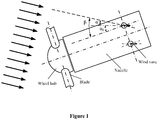
- a wind vane is mounted on a meteorological frame at the rear of the top of a nacelle cover.
- the wind vane is used to measure a deviation angle between a wind direction and a centerline of the nacelle, that is, a wind alignment error. Because the order of magnitude of the characteristic size of the wind vane is different from the order of magnitude of the characteristic size of the plane of the top of the nacelle cover, it is difficult to ensure that the zero position of the wind vane is parallel to the centerline of the nacelle by visual inspection of an operator or by using simple wind vane zero positioning equipment. According to engineering experience, there are still many factors that may cause the wind vane to shift or loose during the operation of a wind farm.
- a method for automatically calibrating a wind alignment error of a wind power generator set is provided by an embodiment of the present disclosure.
- historical operation data of the wind power generator set is fully utilized.
- the inherent wind alignment error of the yaw system of the wind power generator set is automatically identified by performing data mining and analysis on the historical operation data.
- the zero position parameter of the yaw control system is automatically adjusted based on the inherent wind alignment error, thereby enhancing the self-adaptive capability of the yaw system of the generator set, and improving the actual output performance of the generator set.
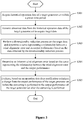
- Figure 2 is a schematic flowchart of a method for automatically calibrating a wind alignment error of a wind power generator set according to an embodiment of the present disclosure.
- the method includes steps S201 to step S205.
- step S201 historical operation data of a target generator set within a preset time period is acquired.
- the historical operation data of the target generator set may include a sampling time of data, a state of the wind power generator set, a wind speed, an active power, a generator speed, a pitch angle and a wind alignment error.
- step S202 abnormal data is removed from the historical operation data of the target generator set to acquire target data.
- step S203 a dimensionality reduction process is performed on the target data, and a curve representing a relationship between a wind alignment error and an output performance is determined based on the data obtained by the dimensionality reduction process.
- step S204 an inherent wind alignment error is determined based on the curve representing the relationship between the wind alignment error and the output performance.
- the wind alignment error corresponding to the highest point in the curve representing the relationship between the wind alignment error and the output performance serves as the inherent wind alignment error of the target generator set.
- step S205 a zero position parameter of a yaw system of the target generator set is corrected based on the inherent wind alignment error.
- abnormal data is firstly removed from the historical operation data of the generator set, then a dimensionality reduction process is performed on the data in which the abnormal data is removed, and a curve representing a relationship between a wind alignment error and an output performance is determined, and an inherent wind alignment error is determined based on the curve representing the relationship between the wind alignment error and the output performance, and a zero position parameter of a yaw system of the target generator set is corrected based on the inherent wind alignment error.
- the inherent wind alignment error of the yaw system of the wind power generator set is determined by performing a clustering process and a dimensionality reduction process or the like on the historical operation data. Furthermore, the zero position parameter of the yaw control system is automatically adjusted based on the inherent wind alignment error, thereby enhancing the self-adaptive capability of the yaw system of the generator set, and improving the actual output performance of the generator set.
- Figure 3 is a schematic flowchart of a method for automatically calibrating a wind alignment error of a wind power generator set according to an embodiment of the present disclosure.
- the method includes steps S301 to step S306.
- step S301 historical operation data of a target generator set within a preset time period is acquired.
- the historical operation data of the target generator set may include a sampling time of data, a state of the wind power generator set, a wind speed, an active power, a generator speed, a pitch angle and a wind alignment error.
- step S302 abnormal data is removed from the historical operation data of the target generator set to acquire target data.
- step S303 a dimensionality reduction process is performed on the target data, and a curve representing a relationship between a wind alignment error and an output performance is determined based on the data obtained by the dimensionality reduction process.
- step S304 an inherent wind alignment error is determined based on the curve representing the relationship between the wind alignment error and the output performance.
- the wind alignment error corresponding to the highest point in the curve representing the relationship between the wind alignment error and the output performance serves as the inherent wind alignment error of the target generator set.
- step S305 a zero position parameter of a yaw system of the target generator set is corrected based on the inherent wind alignment error.
- step S306 a change from the output performance of the target generator set before the correcting is performed to the output performance of the target generator set after the correcting is performed is evaluated based on an operation data deep purification technique.
- abnormal data is firstly removed from the historical operation data of the generator set, then a dimensionality reduction process is performed on the data in which the abnormal data is removed, and a curve representing a relationship between a wind alignment error and an output performance is determined, and an inherent wind alignment error is determined based on the curve representing the relationship between the wind alignment error and the output performance, and a zero position parameter of a yaw system of the target generator set is corrected based on the inherent wind alignment error.
- a change from the output performance of the target generator set before the correcting is performed to the output performance of the target generator set after the correcting is performed may be evaluated.
- the inherent wind alignment error of the yaw system of the wind power generator set is determined by performing a clustering process and a dimensionality reduction process or the like on the historical operation data. Furthermore, the zero position parameter of the yaw control system is automatically adjusted based on the inherent wind alignment error, thereby enhancing the self-adaptive capability of the yaw system of the generator set, and it is determined based on the evaluation result that the actual output performance of the generator set is improved.
- the abnormal data there are some abnormal data in the historical operation data of the wind power generator set, and the abnormal data may has an adverse impact on the determination of the inherent wind alignment error.
- the abnormal data is removed from the historical operation data of the wind power generator set according to the embodiment of the present disclosure.
- a clustering process is performed on the historical operation data, and the abnormal data is removed based on a clustering result of the clustering process.
- the clustering process may be performed on the historical operation data of the target generator set by using an improved DBSCAN clustering algorithm, and the abnormal data may be removed based on the clustering result.
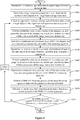
- Figure 4 is a schematic flowchart of an implementation manner of performing a clustering process on the historical operation data, which includes step S401 to step S411.
- step S401 the historical operation data is standardized to acquire target historical operation data.
- step S402 a target noise data proportion ⁇ -noise is determined based on the number of data objects in the target historical operation data.
- step S403 a geometric distance between each of the data objects and a target object in the target historical operation data is calculated to acquire a distance set.
- the target object is a data object in the target historical operation data which has the k-th geometric distance in an ascending order of geometric distances between a data object and the data objects, where an initial value of k is 2.
- Dist k ⁇ k - dis 1 ,k - dis 2 , ⁇ , k-dis n ⁇ .
- step S404 probability statistics is performed on elements in the distance set, and the elements in the distance set, which have probability values within a preset probability range, are grouped into a new distance set.
- elements in the distance set which have probability values within a probability range of 5%-95%, may be grouped into a new distance set.
- step S405 a mathematical expectation value of the new distance set is determined as a value of a parameter Eps k of a DBSCAN clustering algorithm.
- step S407 probability statistics is performed on elements in the number set, and the elements in the number set, which have probability values within a preset probability range, are grouped into a new number set.
- step S408 a mathematical expectation value of the new number set is determined as a value of a parameter Minpts k of the DBSCAN clustering algorithm.
- the elements in the number set which have probability values within a probability range of 5%-95% may be grouped into a new number set P k *, and the mathematical expectation value of P k * is assigned to Minpts k .
- step S409 a DBSCAN clustering process is performed on the target historical operation data with the parameters Minpts k and Eps k .
- step S410 a current noise data proportion Ratio-noise k is calculated based on a clustering result of the DBSCAN clustering process.
- step S411 it is determined whether k meets k>2 and Ratio-noise k meets
- the clustering process is ended, in a case that k>2 and Ratio-noise k meets
- k+1 is assigned to k, and then it is turned to perform step S403, in a case that k does not meet k>2 and/or Ratio-noisek does not meet
- Figure 5-a is a scatter diagram of the historical operation data before the clustering process is performed
- Figure 5-b is a scatter diagram of the historical operation data after the clustering process is performed on the historical operation data with an improved DBSCAN clustering algorithm to remove abnormal data.
- DBSCAN clustering algorithm is a classic density-based clustering algorithm, which has a fast clustering speed and is capable of finding clusters of arbitrary shapes in a dataset having abnormal data.
- the accuracy of the DBSCAN clustering algorithm is related to the selection of two parameters Eps and Minpts.
- the parameters Eps and Minpt of the DBSCAN algorithm is determined adaptively during the clustering process, thereby ensuring the reliability and accuracy of the clustering result, and fully eliminating the adverse impact of the abnormal data on the determination of inherent wind alignment error of the yaw system of the wind power generator set.
- the target data is obtained by removing the abnormal data with the improved DBSCAN clustering algorithm
- the data may also be filtered based on normal variation ranges of main parameters in the historical operation data, and then the data is reconstructed by using a linear interpolation method to acquire the target data.
- the target data may also be acquired based on a method for removing the abnormal data, such as a quartile method and a k-means clustering algorithm.
- Figure 6 is a schematic flowchart of an implementation manner of performing a dimensionality reduction process on the target data and determining a curve representing a relationship between a wind alignment error and an output performance based on the data obtained by the dimensionality reduction process, in the method for automatically calibrating a wind alignment error of a wind power generator set according to an embodiment of the present disclosure.
- the implementation manner shown in Figure 6 includes steps S601 to S604.
- step S601 probability statistics is performed on the wind alignment error in the target data, and a target wind alignment error range is determined based on a result of the probability statistics.
- a wind alignment error range determined by the wind alignment errors having probability values within a probability range of 10% to 90%, may be determined as the target wind alignment error range, as shown in Figure 7 .
- step S602 data, which has a wind alignment error out of the target wind alignment error range, is removed from the target data to acquire first target data.
- step S603 a wind power curve corresponding to each wind alignment error is determined based on the first target data.
- the wind power curve is a curve representing a relationship between a wind speed and an active power.
- a dimensionality reduction process is performed on the data by using the Bin method.
- the wind power curves corresponding to different wind alignment errors as shown in Figure 8 are fitted, and the method for fitting the wind power curve may be implemented by referring to IEC61400-12-1-2005 standard.
- step S604 the wind power curve is processed into the curve representing the relationship between the wind alignment error and the output performance.
- the zero position parameter of the yaw system of the target generator set may be corrected based on the inherent wind alignment error after the inherent wind alignment error is determined.
- a change from the output performance of the target generator set before the correcting is performed to the output performance of the target generator set after the correcting is performed is evaluated based on an operation data deep purification technique.
- a process of evaluating, based on an operation data deep purification technique, a change from the output performance of the target generator set before the correcting is performed to the output performance of the target generator set after the correcting is performed includes steps (1) to (9).
- step (1) before-correction operation data of the target generator set before the correcting is performed and after-correction operation data of the target generator set after the correcting is performed are acquired.
- step (2) each of the before-correction operation data and the after-correction operation data is divided into two sets according to a rated wind speed.
- step (3) abnormal data is removed from the two sets of the before-correction operation data, and the two sets of the before-correction operation data, in which the abnormal data is removed, are merged to acquire target before-correction operation data.
- Abnormal data is removed from the two sets of the after-correction operation data, and the two sets of the after-correction operation data, in which the abnormal data is removed, are merged to acquire target after-correction operation data.
- step (4) a wind power curve fitted to each of the target before-correction operation data and the target after-correction operation data, and linear interpolation is performed on the wind power curve with respect to a wind speed in each of the target before-correction operation data and the target after-correction operation data, to acquire a theoretical active power corresponding to each wind speed.
- step (5) a power deviation between an actual active power and the theoretical active power of each data point in each of the target before-correction operation data and the target after-correction operation data is calculated to acquire the power deviation corresponding to each data point.
- Figure 10 shows the power deviation between an actual active power and a theoretical active power of a data point.
- step (6) probability statistics is performed on the power deviations corresponding to data points.
- Figure 11-a shows a statistical result of the power deviation for a case that a wind speed is less than a rated wind speed
- Figure 11-b shows a statistical result of the power deviation for a case that the wind speed is greater than the rated wind speed.
- step (7) the data points, which have probability densities out of a preset range, are removed based on a result of the probability statistics, to obtain new target before-correction operation data and new target after-correction operation data. Then, it is turned to perform the step (2), until the fitted wind power curve no longer changes. Specifically, data points with probability density less than 10% and probability density greater than 90% are regarded as outlier data and edge data, and these data are removed.
- step (8) the wind power curve before the correcting is performed is converted into a quantized value of the output performance before the correcting is performed by performing an integral process on the wind power curve before the correcting is performed, and the wind power curve after the correcting is performed is converted to a quantized value of the output performance after the correcting is performed by performing an integral process on the wind power curve after the correcting is performed.
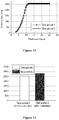
- Figure 12 is a diagram shows comparison between the wind power curve of the generator set before the correcting is performed and the wind power curve of the generator set after the correcting is performed.
- step (9) the quantitative value of the output performance before the correcting is performed is compared with the quantitative value of the output performance after the correcting is performed, to acquire the change from the output performance of the target generator set before the correcting is performed to the output performance of the target generator set after the correcting is performed.
- Figure 13 is an evaluation result diagram of the output performances of the target generator set before the correcting is performed and the output performances of the target generator set after the correcting is performed.
- FIG. 14 shows a schematic structural diagram of the device, the device may include a data acquiring module 1401, an abnormal data removing module 1402, a dimensionality reduction process module 1403, a curve determining module 1404, an inherent wind alignment error determining module 1405 and a correcting module 1406.
- the data acquiring module 1401 is configured to acquire historical operation data of a target generator set within a preset time period.
- the data removing module 1402 is configured to remove abnormal data from the historical operation data, to acquire target data.
- the dimensionality reduction process module 1403 is configured to perform a dimensionality reduction process on the target data obtained by the data removing module 1402 after the abnormal data is removed.
- the curve determining module 1404 is configured to determine a curve representing a relationship between a wind alignment error and an output performance based on the data obtained by the dimensionality reduction process module 1403 after the dimensionality reduction process is performed.
- the inherent wind alignment error determining module 1405 is configured to determine an inherent wind alignment error based on the curve representing the relationship between the wind alignment error and the output performance determined by the curve determining module 1404.
- the correcting module 1406 is configured to correct a zero position parameter of a yaw system of the target generator set based on the inherent wind alignment error determined by the inherent wind alignment error determining module 1405.
- abnormal data is firstly removed from the historical operation data of the generator set, then a dimensionality reduction process is performed on the data in which the abnormal data is removed, and a curve representing a relationship between a wind alignment error and an output performance is determined, and an inherent wind alignment error is determined based on the curve representing the relationship between the wind alignment error and the output performance, and a zero position parameter of a yaw system of the target generator set is corrected based on the inherent wind alignment error.
- the inherent wind alignment error of the yaw system of the wind power generator set is determined by performing a clustering process and a dimensionality reduction process or the like on the historical operation data. Furthermore, the zero position parameter of the yaw control system is automatically adjusted based on the inherent wind alignment error, thereby enhancing the self-adaptive capability of the yaw system of the generator set, and improving the actual output performance of the generator set.
- the data removing module includes a clustering module and a removing module.
- the clustering module is configured to perform a clustering process on the historical operation data, to acquire a clustering result.
- the removing module is configured to remove the abnormal data based on the clustering result of the clustering process.
- the clustering module includes a standardizing process submodule, a noise data proportion determining submodule, a distance calculating submodule, a first probability statistics submodule, a distance set determining submodule, a first parameter determining submodule, a number set determining submodule, a second probability statistics submodule, a first number set determining submodule, a second probability statistics submodule, a second number set determining submodule, a second parameter determining submodule, a clustering process submodule, a noise data proportion calculating submodule, a judging submodule, and an assigning submodule.
- the standardizing process submodule is configured to standardize the historical operation data to acquire target historical operation data.
- the noise data proportion determining submodule is configured to determine a target noise data proportion ⁇ - noise based on the number of data objects in the target historical operation data.
- the distance calculating submodule is configured to calculate a geometric distance between each of the data objects and a target object in the target historical operation data to acquire a distance set.
- the target object is a data object in the target historical operation data which has the k-th geometric distance in an ascending order of geometric distances between a data object and the data objects, an initial value of k is 2.
- the first probability statistics submodule is configured to perform probability statistics on elements in the distance set.
- the distance set determining submodule is configured to group the elements in the distance set, which have probability values within a preset probability range, into a new distance set.
- the first parameter determining submodule is configured to determine a mathematical expectation value of the new distance set as a value of a parameter Eps k of a DBSCAN clustering algorithm.
- the first number set determining submodule is configured to determine the number of points in an Epsk neighborhood of each of the data objects in the target historical operation data, to acquire a number set.
- the second probability statistics submodule is configured to perform probability statistics on elements in the number set.
- the second number set determining submodule is configured to group the elements in the number set, which have probability values within a preset probability range, into a new number set.
- the second parameter determining submodule is configured to determine a mathematical expectation value of the new number set as a value of a parameter Minpts k of the DBSCAN clustering algorithm.
- the clustering process submodule is configured to perform a DBSCAN clustering process on the target historical operation data with the parameters Minptsk and Epsk.
- the noise data proportion calculating submodule is configured to calculate a current noise data proportion Ratio-noisek based on a clustering result of the DBSCAN clustering process.
- the judging submodule is configured to determine whether k is greater than 2 and Ratio-noisek meets
- the clustering process is ended, in a case that k is greater than 2 and Ratio-noisek meets
- the assigning submodule is trigerred to assign k+1 to k, and the distance calculating submodule is triggered to calculate a geometric distance between each of the data objects and a target object in the target historical operation data, in a case that k is not greater than 2 and/or Ratio-noisek does not meet
- the dimensionality reduction process module includes a probability statistics submodule and a data removing submodule.
- the probability statistics submodule is configured to perform probability statistics on the wind alignment error in the target data, and determine a target wind alignment error range based on a result of the probability statistics.
- the data removing submodule is configured to remove data, which has a wind alignment error out of the target wind alignment error range, from the target data to acquire first target data.
- the curve determining module includes a first curve determining submodule and a second curve determining submodule.
- the first curve determining submodule is configured to determine a wind power curve corresponding to each wind alignment error based on the first target data.
- the wind power curve is a curve representing a relationship between a wind speed and an active power.
- the second curve determining submodule is configured to process the wind power curve into the curve representing the relationship between the wind alignment error and the output performance.
- the device for automatically calibrating a wind alignment error of a wind power generator set further includes an evaluating module configured to evaluate, according to a preset evaluating method, a change from the output performance of the target generator set before the correcting is performed to the output performance of the target generator set after the correcting is performed.
- the evaluating module includes a data acquiring submodule, a data dividing submodule, an abnormal data removing submodule, a data merging submodule, a data fitting submodule, a data interpolating submodule, a power deviation calculating submodule, a wind power curve processing submodule and a comparing submodule.
- the data acquiring submodule is configured to acquire before-correction operation data of the target generator set before the correcting is performed and after-correction operation data of the target generator set after the correcting is performed.
- the data dividing submodule is configured to divide each of the before-correction operation data and the after-correction operation data into two sets according to a rated wind speed.
- the abnormal data removing submodule is configured to remove abnormal data from the two sets of the before-correction operation data and to remove abnormal data from the two sets of the after-correction operation data.
- the data merging submodule is configured to merge the two sets of the before-correction operation data in which the abnormal data is removed, to acquire target before-correction operation data and to merge the two sets of the after-correction operation data in which the abnormal data is removed, to acquire target after-correction operation data.
- the data fitting submodule is configured to fit a wind power curve to each of the target before-correction operation data and the target after-correction operation data.
- the data interpolating submodule is configured to perform linear interpolation on the wind power curve with respect to a wind speed in each of the target before-correction operation data and the target after-correction operation data, to acquire a theoretical active power corresponding to each wind speed.
- the power deviation calculating submodule is configured to calculate a power deviation between an actual active power and the theoretical active power of each data point in each of the target before-correction operation data and the target after-correction operation data, to acquire the power deviation corresponding to each data point.
- the abnormal data removing submodule is further configured to: perform probability statistics on the power deviations corresponding to data points; remove the data points, which have probability densities out of a preset range, based on a result of the probability statistics, to acquire new before-correction operation data and new after-correction operation data; and then trigger the data dividing submodule to divide the before-correction operation data into two sets according to a rated wind speed, until the fitted wind power curve no longer changes.
- the wind power curve processing submodule is configured to convert the wind power curve before the correcting is performed into a quantized value of the output performance before the correcting is performed by performing an integral process on the wind power curve before the correcting is performed, and to convert the wind power curve after the correcting is performed to a quantized value of the output performance after the correcting is performed by performing an integral process on the wind power curve after the correcting is performed.
- the comparing submodule is configured to compare the quantitative value of the output performance before the correcting is performed with the quantitative value of the output performance after the correcting is performed, to acquire the change from the output performance of the target generator set before the correcting is performed to the output performance of the target generator set after the correcting is performed.
- the clustering process is performed on the operation data of the generator set by using the improved DBSCAN algorithm, to remove the abnormal data, and thereby sufficiently eliminating the adverse impact of the abnormal data on the automatic identification process of the inherent wind alignment error of the yaw system of a wind power generator set.
- the accuracy of an online identification of the inherent wind alignment error of the yaw system is improved by performing the probability statistics and the dimensionality reduction process, and timely feedback can be achieved when the wind vane shifts again due to external disturbances.
- the zero position parameter of the yaw control system is automatically adjusted based on the inherent wind alignment error, so as to enhance the adaptive level of the yaw system of the generator set and improve the wind alignment efficiency, and further to eliminate the periodic review of the wind vane performed by the operator and maintainer and to reduce the human error, thereby improving the reliability of the yaw system of the generator set.
- a change from the output performance of the wind power generator set before the correcting is performed to the output performance of the wind power generator set after the correcting is performed the abnormal data is eliminated and pure data capable of characterizing the performance of the generator set in a steady state, therefore, the output performance of the wind power generator set may be evaluated accurately.
- the disclosed method, apparatus and device may be implemented in other ways.
- the embodiments of the device described above are only schematic.
- the division of the units is only a division according to logical function, and there may be other division modes in the practical implementation, for instance, multiple units or components may be combined, or may be integrated into another system; and some features may be omitted or may not be performed.
- the coupling, direct coupling or communication connection displayed or discussed above may be realized by some communication interfaces, or indirect coupling or communication connection of devices or units, and may be electrical, mechanical or of other forms.
- the above unit described as a separate component may be or may not be separated physically.
- the component displayed as a unit may be or may not be a physical unit, that is, may be located at one place or may be distributed on multiple network units.
- the object of the solutions of the embodiments may be achieved by selecting a part or all of the units according to the practical needs.
- all function units according to the embodiment of the present disclosure may be integrated into one processing unit, or may be physically separate units, or two or more units are integrated into one unit.
- the function is implemented in the form of software function unit and is sold or used as a separate product, it can also be stored in a computer readable storage medium.
- the computer software product is stored in a storage medium, and includes several instructions configured to cause a computer device (which may be a personal computer, a server, or a network device, and etc.) to execute all or part of the steps of the method of each embodiment of the present disclosure.
- the storage medium described above includes various media capable of storing program codes, such as a USB flash disk, a movable hard disk, a Read-Only Memory (ROM), a Random Access Memory (RAM), a magnetic disc or an optical disc.
Landscapes
- Engineering & Computer Science (AREA)
- Life Sciences & Earth Sciences (AREA)
- Sustainable Development (AREA)
- Sustainable Energy (AREA)
- Chemical & Material Sciences (AREA)
- Combustion & Propulsion (AREA)
- Mechanical Engineering (AREA)
- General Engineering & Computer Science (AREA)
- Wind Motors (AREA)
Applications Claiming Priority (2)
| Application Number | Priority Date | Filing Date | Title |
|---|---|---|---|
| CN201610579606.4A CN106014858B (zh) | 2016-07-21 | 2016-07-21 | 一种风电机组对风误差自动校准方法及装置 |
| PCT/CN2017/093303 WO2018014825A1 (zh) | 2016-07-21 | 2017-07-18 | 一种风电机组对风误差自动校准方法及装置 |
Publications (3)
| Publication Number | Publication Date |
|---|---|
| EP3489508A1 true EP3489508A1 (de) | 2019-05-29 |
| EP3489508A4 EP3489508A4 (de) | 2019-08-07 |
| EP3489508B1 EP3489508B1 (de) | 2022-06-08 |
Family
ID=57117269
Family Applications (1)
| Application Number | Title | Priority Date | Filing Date |
|---|---|---|---|
| EP17830459.8A Active EP3489508B1 (de) | 2016-07-21 | 2017-07-18 | Verfahren und vorrichtung zur automatischen kalibrierung eines windausrichtungsfehlers einer windenergieerzeugungseinheit |
Country Status (5)
| Country | Link |
|---|---|
| EP (1) | EP3489508B1 (de) |
| CN (1) | CN106014858B (de) |
| DK (1) | DK3489508T3 (de) |
| ES (1) | ES2926639T3 (de) |
| WO (1) | WO2018014825A1 (de) |
Cited By (4)
| Publication number | Priority date | Publication date | Assignee | Title |
|---|---|---|---|---|
| CN112648139A (zh) * | 2020-11-12 | 2021-04-13 | 北京金风慧能技术有限公司 | 风力发电机组对风不正校正方法、装置及控制器 |
| CN114033631A (zh) * | 2021-11-08 | 2022-02-11 | 浙江运达风电股份有限公司 | 一种风电机组风能利用系数在线辨识方法 |
| EP3971413A1 (de) * | 2020-09-22 | 2022-03-23 | General Electric Renovables España S.L. | Systeme und verfahren zur steuerung einer windturbine |
| WO2022110557A1 (zh) * | 2020-11-25 | 2022-06-02 | 国网湖南省电力有限公司 | 一种台区户变关系异常诊断方法及装置 |
Families Citing this family (35)
| Publication number | Priority date | Publication date | Assignee | Title |
|---|---|---|---|---|
| CN106014858B (zh) * | 2016-07-21 | 2019-11-22 | 浙江运达风电股份有限公司 | 一种风电机组对风误差自动校准方法及装置 |
| CN108071562B (zh) * | 2016-11-17 | 2021-01-15 | 中国电力科学研究院 | 一种基于能量流的风电机组能效状态诊断方法 |
| CN106870298B (zh) * | 2017-03-28 | 2020-04-07 | 中车株洲电力机车研究所有限公司 | 基于机器学习的叶根螺栓断裂故障检测方法 |
| CN106991508A (zh) * | 2017-05-25 | 2017-07-28 | 华北电力大学 | 一种基于dbscan的风电机组运行状态识别方法 |
| CN109086793B (zh) * | 2018-06-27 | 2021-11-16 | 东北大学 | 一种风力发电机的异常识别方法 |
| CN109345113B (zh) * | 2018-09-29 | 2021-03-02 | 北京拾易技术有限公司 | 风电机组性能评估方法及介质 |
| CN109667727B (zh) * | 2018-11-18 | 2020-01-10 | 浙江大学 | 一种基于功率曲线分析的风电机组偏航误差固有偏差辨识及补偿方法 |
| CN109488528B (zh) * | 2018-11-23 | 2020-03-17 | 华润电力技术研究院有限公司 | 一种风机偏航系统的调整方法及装置 |
| CN109581269A (zh) * | 2018-12-25 | 2019-04-05 | 中国电力科学研究院有限公司 | 一种电子式互感器误差特性快速评价方法及系统 |
| CN109681380B (zh) * | 2018-12-29 | 2022-09-30 | 新疆金风科技股份有限公司 | 用于调整最小桨距角位置的方法及装置 |
| CN110094300B (zh) * | 2019-01-24 | 2020-04-21 | 上海电力学院 | 风电机组的对风偏差矫正方法、装置、设备及介质 |
| CN110094310B (zh) * | 2019-05-13 | 2020-05-19 | 北京天泽智云科技有限公司 | 一种识别风力发电机偏航对风不正的方法 |
| CN111145109B (zh) * | 2019-12-09 | 2023-03-31 | 深圳先进技术研究院 | 基于图像的风力发电功率曲线异常数据识别与清洗方法 |
| CN111322205B (zh) * | 2019-12-13 | 2021-11-23 | 风脉能源(武汉)股份有限公司 | 风电机组风向标零位误差辨识方法及校正方法 |
| CN113048016B (zh) * | 2019-12-27 | 2024-06-21 | 金风科技股份有限公司 | 在线修正风力发电机组的对风偏差的方法和装置 |
| CN111522808B (zh) * | 2020-04-29 | 2023-07-28 | 贵州电网有限责任公司 | 一种风电机组异常运行数据处理方法 |
| CN111828253B (zh) * | 2020-07-29 | 2022-02-11 | 湘电风能有限公司 | 一种基于风向方位角的风力发电机组保护控制方法 |
| CN112032003B (zh) * | 2020-09-01 | 2021-08-17 | 浙江运达风电股份有限公司 | 一种大型风电机组运行性能监测方法 |
| CN112145373B (zh) * | 2020-09-15 | 2021-09-10 | 东北大学 | 一种风力发电机测风仪风速的校正方法 |
| CN112031997B (zh) * | 2020-09-15 | 2021-08-13 | 华北电力科学研究院有限责任公司 | 一种风电机组偏航静态偏差确定方法、装置 |
| CN112443461B (zh) * | 2020-10-10 | 2022-02-08 | 东北电力大学 | 基于对称声压传感器的风力发电机组偏航误差分析方法 |
| CN112632773B (zh) * | 2020-12-21 | 2024-04-05 | 北京华能新锐控制技术有限公司 | 一种风电机组可靠性预测方法 |
| CN112381185B (zh) * | 2021-01-15 | 2022-03-01 | 北京工业大数据创新中心有限公司 | 一种工业设备特性曲线相似度获取方法及装置 |
| CN113309661B (zh) * | 2021-03-09 | 2022-04-26 | 明阳智慧能源集团股份公司 | 一种提升风力发电机组发电量的方法 |
| CN113236507B (zh) * | 2021-05-28 | 2022-08-19 | 中南大学 | 一种风电机组偏航静态误差诊断方法和系统 |
| CN113256179B (zh) * | 2021-07-06 | 2021-09-24 | 大唐环境产业集团股份有限公司 | 脱硫系统浆液品质在线分类评价方法、系统及装置 |
| CN113757041A (zh) * | 2021-08-12 | 2021-12-07 | 太原重工股份有限公司 | 一种风力发电机组风向数据的智能校准方法及系统 |
| CN113653609B (zh) * | 2021-09-17 | 2022-04-19 | 中节能风力发电股份有限公司 | 风电机组风向标故障识别方法、系统、设备和存储介质 |
| CN114239375A (zh) * | 2021-10-28 | 2022-03-25 | 博锐尚格科技股份有限公司 | 一种热力站历史能耗数据异常值处理方法及装置 |
| CN115342034A (zh) * | 2022-08-08 | 2022-11-15 | 浙江浙能技术研究院有限公司 | 一种风电机组偏航对风误差的校准方法 |
| CN115728515B (zh) * | 2022-11-04 | 2025-11-18 | 上海发电设备成套设计研究院有限责任公司 | 风电机组的风向测量偏差识别方法、装置、设备以及介质 |
| CN116608087A (zh) * | 2023-01-30 | 2023-08-18 | 国能定边新能源有限公司 | 机组偏航误差的控制方法、系统、设备及存储介质 |
| CN117538565A (zh) * | 2023-11-21 | 2024-02-09 | 大唐东北电力试验研究院有限公司 | 一种风向仪在线对风角度校准系统及其方法 |
| CN117869207B (zh) * | 2023-12-01 | 2024-08-02 | 太极计算机股份有限公司 | 一种风电机组发电性能检测方法、装置 |
| CN119982380B (zh) * | 2025-03-10 | 2025-11-14 | 中国科学院力学研究所 | 风力发电机风速计的风速误差诊断方法、系统及介质 |
Family Cites Families (18)
| Publication number | Priority date | Publication date | Assignee | Title |
|---|---|---|---|---|
| JP5022102B2 (ja) * | 2007-05-25 | 2012-09-12 | 三菱重工業株式会社 | 風力発電装置、風力発電システムおよび風力発電装置の発電制御方法 |
| JP4995209B2 (ja) * | 2009-01-05 | 2012-08-08 | 三菱重工業株式会社 | 風力発電装置及び風力発電装置の風向推定方法 |
| CN102213182B (zh) * | 2011-05-12 | 2013-09-04 | 北京金风科创风电设备有限公司 | 偏航误差角获得方法及偏航控制方法/装置和风力发电机组 |
| DK2757252T3 (en) * | 2013-01-17 | 2018-03-26 | Ge Renewable Tech | Procedure for operating a wind turbine |
| US20150086357A1 (en) * | 2013-09-24 | 2015-03-26 | General Electric Company | Wind turbine and method for adjusting yaw bias in wind turbine |
| WO2015048972A1 (en) * | 2013-10-01 | 2015-04-09 | Vestas Wind Systems A/S | Safe mode operation at high yaw error |
| CN103675356B (zh) * | 2013-11-19 | 2016-06-01 | 中国大唐集团科学技术研究院有限公司 | 基于粒子群优化的风速仪故障检测方法和系统 |
| ES2826173T3 (es) * | 2013-11-21 | 2021-05-17 | Gen Electric | Sistema y procedimiento para evaluar el impacto en el rendimiento de actualizaciones de turbinas eólicas |
| DK2878809T3 (en) * | 2013-11-29 | 2017-09-25 | Alstom Renovables Espana Sl | Methods of operating a wind turbine, wind turbines and wind farms |
| CN104481804B (zh) * | 2014-12-05 | 2017-02-22 | 北京金风科创风电设备有限公司 | 风力发电机组对风矫正控制方法、装置和系统 |
| CN104747368B (zh) * | 2015-01-27 | 2017-11-07 | 风脉(武汉)可再生能源技术有限责任公司 | 一种风电机组功率优化的方法和系统 |
| EP3250821A1 (de) * | 2015-01-28 | 2017-12-06 | KK Wind Solutions A/S | Kalibrierung einer windschaufel einer windturbine |
| CN104989592B (zh) * | 2015-07-07 | 2018-05-04 | 中能电力科技开发有限公司 | 风力发电机组机舱风向校正方法 |
| CN105257470B (zh) * | 2015-09-25 | 2018-03-20 | 南车株洲电力机车研究所有限公司 | 一种风电机组风向补偿优化方法及装置 |
| CN105259374B (zh) * | 2015-11-25 | 2018-10-26 | 江苏天赋新能源工程技术有限公司 | 风向标零位校正装置 |
| CN105484939A (zh) * | 2015-12-16 | 2016-04-13 | 大连尚能科技发展有限公司 | 一种风速风向仪的角度测量误差曲线的替代学习方法 |
| CN105569922A (zh) * | 2015-12-16 | 2016-05-11 | 大连尚能科技发展有限公司 | 一种基于风速影响的风速风向仪的角度测量误差补偿方法 |
| CN106014858B (zh) * | 2016-07-21 | 2019-11-22 | 浙江运达风电股份有限公司 | 一种风电机组对风误差自动校准方法及装置 |
-
2016
- 2016-07-21 CN CN201610579606.4A patent/CN106014858B/zh active Active
-
2017
- 2017-07-18 EP EP17830459.8A patent/EP3489508B1/de active Active
- 2017-07-18 ES ES17830459T patent/ES2926639T3/es active Active
- 2017-07-18 DK DK17830459.8T patent/DK3489508T3/da active
- 2017-07-18 WO PCT/CN2017/093303 patent/WO2018014825A1/zh not_active Ceased
Cited By (4)
| Publication number | Priority date | Publication date | Assignee | Title |
|---|---|---|---|---|
| EP3971413A1 (de) * | 2020-09-22 | 2022-03-23 | General Electric Renovables España S.L. | Systeme und verfahren zur steuerung einer windturbine |
| CN112648139A (zh) * | 2020-11-12 | 2021-04-13 | 北京金风慧能技术有限公司 | 风力发电机组对风不正校正方法、装置及控制器 |
| WO2022110557A1 (zh) * | 2020-11-25 | 2022-06-02 | 国网湖南省电力有限公司 | 一种台区户变关系异常诊断方法及装置 |
| CN114033631A (zh) * | 2021-11-08 | 2022-02-11 | 浙江运达风电股份有限公司 | 一种风电机组风能利用系数在线辨识方法 |
Also Published As
| Publication number | Publication date |
|---|---|
| CN106014858B (zh) | 2019-11-22 |
| CN106014858A (zh) | 2016-10-12 |
| ES2926639T3 (es) | 2022-10-27 |
| DK3489508T3 (da) | 2022-07-04 |
| EP3489508A4 (de) | 2019-08-07 |
| EP3489508B1 (de) | 2022-06-08 |
| WO2018014825A1 (zh) | 2018-01-25 |
Similar Documents
| Publication | Publication Date | Title |
|---|---|---|
| EP3489508B1 (de) | Verfahren und vorrichtung zur automatischen kalibrierung eines windausrichtungsfehlers einer windenergieerzeugungseinheit | |
| US11644009B2 (en) | Method and apparatus for detecting yaw-to-wind abnormality, and device and storage medium thereof | |
| US11401913B2 (en) | Yaw calibration method and system for wind turbine | |
| US9816836B2 (en) | Correlating meter data to detect mismappings | |
| CN113487080B (zh) | 一种基于风速分类的风速动态场景生成方法、系统及终端 | |
| CN107194499A (zh) | 区域风电短期功率的预测方法及预测装置 | |
| CN113554079A (zh) | 一种基于二次检测法的电力负荷异常数据检测方法及系统 | |
| JP7193384B2 (ja) | 残差特性推定モデル作成方法および残差特性推定モデル作成システム | |
| CN119397949A (zh) | 一种基于cfd的高边坡下风电机组载荷仿真方法 | |
| CN116187838A (zh) | 一种电力设备的质量评估方法、系统、装置及存储介质 | |
| CN117937424A (zh) | 一种配电网电力设备的功率突变预测方法、系统及设备 | |
| CN114077922A (zh) | 风电机组的故障预测方法、装置及电子设备 | |
| CN121092415A (zh) | 一种基于ddr4球芯片功能测试系统及方法 | |
| CN112052981B (zh) | 基于簇类的风电出力波动区间预测方法、装置及存储介质 | |
| KR102007326B1 (ko) | 구조물의 편평도를 분석하는 방법 | |
| CN117154725A (zh) | 水风光多能互补的调度方法、装置、计算机设备及介质 | |
| CN114971051B (zh) | 一种风功率预测方法 | |
| CN120763455B (zh) | 一种基于数据处理的精度数据批量统计方法 | |
| CN116992320B (zh) | 风电功率数据聚类方法、装置、计算机设备及存储介质 | |
| CN122000878A (zh) | 一种多新能源基地出力联合场景的生成方法和装置 | |
| Krieger et al. | CMIP6 multi-model assessment of Northeast Atlantic and German Bight storm activity | |
| Liu et al. | The detection method of wind turbine operation outliers based on muti-dimensional cluster | |
| CN121256533A (zh) | 光伏功率预测模型构建和光伏功率预测方法、装置及设备 | |
| CN121434441A (zh) | 用于混凝土抗压试块尺寸测量数据的云存储方法及系统 | |
| CN121880854A (zh) | 一种极限湍流预测方法、装置、电子设备、介质及产品 |
Legal Events
| Date | Code | Title | Description |
|---|---|---|---|
| STAA | Information on the status of an ep patent application or granted ep patent |
Free format text: STATUS: THE INTERNATIONAL PUBLICATION HAS BEEN MADE |
|
| PUAI | Public reference made under article 153(3) epc to a published international application that has entered the european phase |
Free format text: ORIGINAL CODE: 0009012 |
|
| STAA | Information on the status of an ep patent application or granted ep patent |
Free format text: STATUS: REQUEST FOR EXAMINATION WAS MADE |
|
| 17P | Request for examination filed |
Effective date: 20190124 |
|
| AK | Designated contracting states |
Kind code of ref document: A1 Designated state(s): AL AT BE BG CH CY CZ DE DK EE ES FI FR GB GR HR HU IE IS IT LI LT LU LV MC MK MT NL NO PL PT RO RS SE SI SK SM TR |
|
| AX | Request for extension of the european patent |
Extension state: BA ME |
|
| A4 | Supplementary search report drawn up and despatched |
Effective date: 20190705 |
|
| RIC1 | Information provided on ipc code assigned before grant |
Ipc: F03D 17/00 20160101ALI20190701BHEP Ipc: F03D 7/02 20060101AFI20190701BHEP Ipc: F03D 7/04 20060101ALI20190701BHEP |
|
| DAV | Request for validation of the european patent (deleted) | ||
| DAX | Request for extension of the european patent (deleted) | ||
| GRAP | Despatch of communication of intention to grant a patent |
Free format text: ORIGINAL CODE: EPIDOSNIGR1 |
|
| STAA | Information on the status of an ep patent application or granted ep patent |
Free format text: STATUS: GRANT OF PATENT IS INTENDED |
|
| INTG | Intention to grant announced |
Effective date: 20220117 |
|
| GRAS | Grant fee paid |
Free format text: ORIGINAL CODE: EPIDOSNIGR3 |
|
| GRAA | (expected) grant |
Free format text: ORIGINAL CODE: 0009210 |
|
| STAA | Information on the status of an ep patent application or granted ep patent |
Free format text: STATUS: THE PATENT HAS BEEN GRANTED |
|
| AK | Designated contracting states |
Kind code of ref document: B1 Designated state(s): AL AT BE BG CH CY CZ DE DK EE ES FI FR GB GR HR HU IE IS IT LI LT LU LV MC MK MT NL NO PL PT RO RS SE SI SK SM TR |
|
| REG | Reference to a national code |
Ref country code: AT Ref legal event code: REF Ref document number: 1497087 Country of ref document: AT Kind code of ref document: T Effective date: 20220615 Ref country code: CH Ref legal event code: EP |
|
| REG | Reference to a national code |
Ref country code: DE Ref legal event code: R096 Ref document number: 602017058370 Country of ref document: DE |
|
| REG | Reference to a national code |
Ref country code: DK Ref legal event code: T3 Effective date: 20220630 |
|
| REG | Reference to a national code |
Ref country code: IE Ref legal event code: FG4D |
|
| REG | Reference to a national code |
Ref country code: LT Ref legal event code: MG9D |
|
| REG | Reference to a national code |
Ref country code: NL Ref legal event code: MP Effective date: 20220608 |
|
| REG | Reference to a national code |
Ref country code: ES Ref legal event code: FG2A Ref document number: 2926639 Country of ref document: ES Kind code of ref document: T3 Effective date: 20221027 |
|
| PG25 | Lapsed in a contracting state [announced via postgrant information from national office to epo] |
Ref country code: SE Free format text: LAPSE BECAUSE OF FAILURE TO SUBMIT A TRANSLATION OF THE DESCRIPTION OR TO PAY THE FEE WITHIN THE PRESCRIBED TIME-LIMIT Effective date: 20220608 Ref country code: NO Free format text: LAPSE BECAUSE OF FAILURE TO SUBMIT A TRANSLATION OF THE DESCRIPTION OR TO PAY THE FEE WITHIN THE PRESCRIBED TIME-LIMIT Effective date: 20220908 Ref country code: LT Free format text: LAPSE BECAUSE OF FAILURE TO SUBMIT A TRANSLATION OF THE DESCRIPTION OR TO PAY THE FEE WITHIN THE PRESCRIBED TIME-LIMIT Effective date: 20220608 Ref country code: HR Free format text: LAPSE BECAUSE OF FAILURE TO SUBMIT A TRANSLATION OF THE DESCRIPTION OR TO PAY THE FEE WITHIN THE PRESCRIBED TIME-LIMIT Effective date: 20220608 Ref country code: GR Free format text: LAPSE BECAUSE OF FAILURE TO SUBMIT A TRANSLATION OF THE DESCRIPTION OR TO PAY THE FEE WITHIN THE PRESCRIBED TIME-LIMIT Effective date: 20220909 Ref country code: FI Free format text: LAPSE BECAUSE OF FAILURE TO SUBMIT A TRANSLATION OF THE DESCRIPTION OR TO PAY THE FEE WITHIN THE PRESCRIBED TIME-LIMIT Effective date: 20220608 Ref country code: BG Free format text: LAPSE BECAUSE OF FAILURE TO SUBMIT A TRANSLATION OF THE DESCRIPTION OR TO PAY THE FEE WITHIN THE PRESCRIBED TIME-LIMIT Effective date: 20220908 |
|
| REG | Reference to a national code |
Ref country code: AT Ref legal event code: MK05 Ref document number: 1497087 Country of ref document: AT Kind code of ref document: T Effective date: 20220608 |
|
| PG25 | Lapsed in a contracting state [announced via postgrant information from national office to epo] |
Ref country code: RS Free format text: LAPSE BECAUSE OF FAILURE TO SUBMIT A TRANSLATION OF THE DESCRIPTION OR TO PAY THE FEE WITHIN THE PRESCRIBED TIME-LIMIT Effective date: 20220608 Ref country code: LV Free format text: LAPSE BECAUSE OF FAILURE TO SUBMIT A TRANSLATION OF THE DESCRIPTION OR TO PAY THE FEE WITHIN THE PRESCRIBED TIME-LIMIT Effective date: 20220608 |
|
| PG25 | Lapsed in a contracting state [announced via postgrant information from national office to epo] |
Ref country code: NL Free format text: LAPSE BECAUSE OF FAILURE TO SUBMIT A TRANSLATION OF THE DESCRIPTION OR TO PAY THE FEE WITHIN THE PRESCRIBED TIME-LIMIT Effective date: 20220608 |
|
| PG25 | Lapsed in a contracting state [announced via postgrant information from national office to epo] |
Ref country code: SM Free format text: LAPSE BECAUSE OF FAILURE TO SUBMIT A TRANSLATION OF THE DESCRIPTION OR TO PAY THE FEE WITHIN THE PRESCRIBED TIME-LIMIT Effective date: 20220608 Ref country code: SK Free format text: LAPSE BECAUSE OF FAILURE TO SUBMIT A TRANSLATION OF THE DESCRIPTION OR TO PAY THE FEE WITHIN THE PRESCRIBED TIME-LIMIT Effective date: 20220608 Ref country code: RO Free format text: LAPSE BECAUSE OF FAILURE TO SUBMIT A TRANSLATION OF THE DESCRIPTION OR TO PAY THE FEE WITHIN THE PRESCRIBED TIME-LIMIT Effective date: 20220608 Ref country code: PT Free format text: LAPSE BECAUSE OF FAILURE TO SUBMIT A TRANSLATION OF THE DESCRIPTION OR TO PAY THE FEE WITHIN THE PRESCRIBED TIME-LIMIT Effective date: 20221010 Ref country code: EE Free format text: LAPSE BECAUSE OF FAILURE TO SUBMIT A TRANSLATION OF THE DESCRIPTION OR TO PAY THE FEE WITHIN THE PRESCRIBED TIME-LIMIT Effective date: 20220608 Ref country code: CZ Free format text: LAPSE BECAUSE OF FAILURE TO SUBMIT A TRANSLATION OF THE DESCRIPTION OR TO PAY THE FEE WITHIN THE PRESCRIBED TIME-LIMIT Effective date: 20220608 Ref country code: AT Free format text: LAPSE BECAUSE OF FAILURE TO SUBMIT A TRANSLATION OF THE DESCRIPTION OR TO PAY THE FEE WITHIN THE PRESCRIBED TIME-LIMIT Effective date: 20220608 |
|
| PG25 | Lapsed in a contracting state [announced via postgrant information from national office to epo] |
Ref country code: PL Free format text: LAPSE BECAUSE OF FAILURE TO SUBMIT A TRANSLATION OF THE DESCRIPTION OR TO PAY THE FEE WITHIN THE PRESCRIBED TIME-LIMIT Effective date: 20220608 Ref country code: IS Free format text: LAPSE BECAUSE OF FAILURE TO SUBMIT A TRANSLATION OF THE DESCRIPTION OR TO PAY THE FEE WITHIN THE PRESCRIBED TIME-LIMIT Effective date: 20221008 |
|
| REG | Reference to a national code |
Ref country code: CH Ref legal event code: PL |
|
| REG | Reference to a national code |
Ref country code: DE Ref legal event code: R097 Ref document number: 602017058370 Country of ref document: DE |
|
| REG | Reference to a national code |
Ref country code: BE Ref legal event code: MM Effective date: 20220731 |
|
| PG25 | Lapsed in a contracting state [announced via postgrant information from national office to epo] |
Ref country code: MC Free format text: LAPSE BECAUSE OF FAILURE TO SUBMIT A TRANSLATION OF THE DESCRIPTION OR TO PAY THE FEE WITHIN THE PRESCRIBED TIME-LIMIT Effective date: 20220608 Ref country code: AL Free format text: LAPSE BECAUSE OF FAILURE TO SUBMIT A TRANSLATION OF THE DESCRIPTION OR TO PAY THE FEE WITHIN THE PRESCRIBED TIME-LIMIT Effective date: 20220608 |
|
| PLBE | No opposition filed within time limit |
Free format text: ORIGINAL CODE: 0009261 |
|
| STAA | Information on the status of an ep patent application or granted ep patent |
Free format text: STATUS: NO OPPOSITION FILED WITHIN TIME LIMIT |
|
| PG25 | Lapsed in a contracting state [announced via postgrant information from national office to epo] |
Ref country code: LU Free format text: LAPSE BECAUSE OF NON-PAYMENT OF DUE FEES Effective date: 20220718 Ref country code: LI Free format text: LAPSE BECAUSE OF NON-PAYMENT OF DUE FEES Effective date: 20220731 Ref country code: CH Free format text: LAPSE BECAUSE OF NON-PAYMENT OF DUE FEES Effective date: 20220731 |
|
| 26N | No opposition filed |
Effective date: 20230310 |
|
| PG25 | Lapsed in a contracting state [announced via postgrant information from national office to epo] |
Ref country code: SI Free format text: LAPSE BECAUSE OF FAILURE TO SUBMIT A TRANSLATION OF THE DESCRIPTION OR TO PAY THE FEE WITHIN THE PRESCRIBED TIME-LIMIT Effective date: 20220608 Ref country code: BE Free format text: LAPSE BECAUSE OF NON-PAYMENT OF DUE FEES Effective date: 20220731 |
|
| PG25 | Lapsed in a contracting state [announced via postgrant information from national office to epo] |
Ref country code: IE Free format text: LAPSE BECAUSE OF NON-PAYMENT OF DUE FEES Effective date: 20220718 Ref country code: FR Free format text: LAPSE BECAUSE OF NON-PAYMENT OF DUE FEES Effective date: 20220808 |
|
| PG25 | Lapsed in a contracting state [announced via postgrant information from national office to epo] |
Ref country code: IT Free format text: LAPSE BECAUSE OF FAILURE TO SUBMIT A TRANSLATION OF THE DESCRIPTION OR TO PAY THE FEE WITHIN THE PRESCRIBED TIME-LIMIT Effective date: 20220608 |
|
| PG25 | Lapsed in a contracting state [announced via postgrant information from national office to epo] |
Ref country code: HU Free format text: LAPSE BECAUSE OF FAILURE TO SUBMIT A TRANSLATION OF THE DESCRIPTION OR TO PAY THE FEE WITHIN THE PRESCRIBED TIME-LIMIT; INVALID AB INITIO Effective date: 20170718 |
|
| PG25 | Lapsed in a contracting state [announced via postgrant information from national office to epo] |
Ref country code: MK Free format text: LAPSE BECAUSE OF FAILURE TO SUBMIT A TRANSLATION OF THE DESCRIPTION OR TO PAY THE FEE WITHIN THE PRESCRIBED TIME-LIMIT Effective date: 20220608 Ref country code: CY Free format text: LAPSE BECAUSE OF FAILURE TO SUBMIT A TRANSLATION OF THE DESCRIPTION OR TO PAY THE FEE WITHIN THE PRESCRIBED TIME-LIMIT Effective date: 20220608 |
|
| PG25 | Lapsed in a contracting state [announced via postgrant information from national office to epo] |
Ref country code: MT Free format text: LAPSE BECAUSE OF FAILURE TO SUBMIT A TRANSLATION OF THE DESCRIPTION OR TO PAY THE FEE WITHIN THE PRESCRIBED TIME-LIMIT Effective date: 20220608 |
|
| PG25 | Lapsed in a contracting state [announced via postgrant information from national office to epo] |
Ref country code: BG Free format text: LAPSE BECAUSE OF FAILURE TO SUBMIT A TRANSLATION OF THE DESCRIPTION OR TO PAY THE FEE WITHIN THE PRESCRIBED TIME-LIMIT Effective date: 20220608 |
|
| PG25 | Lapsed in a contracting state [announced via postgrant information from national office to epo] |
Ref country code: BG Free format text: LAPSE BECAUSE OF FAILURE TO SUBMIT A TRANSLATION OF THE DESCRIPTION OR TO PAY THE FEE WITHIN THE PRESCRIBED TIME-LIMIT Effective date: 20220608 |
|
| PGFP | Annual fee paid to national office [announced via postgrant information from national office to epo] |
Ref country code: ES Payment date: 20250801 Year of fee payment: 9 |
|
| PGFP | Annual fee paid to national office [announced via postgrant information from national office to epo] |
Ref country code: DK Payment date: 20250729 Year of fee payment: 9 Ref country code: DE Payment date: 20250711 Year of fee payment: 9 |
|
| PGFP | Annual fee paid to national office [announced via postgrant information from national office to epo] |
Ref country code: GB Payment date: 20250723 Year of fee payment: 9 |
|
| PG25 | Lapsed in a contracting state [announced via postgrant information from national office to epo] |
Ref country code: TR Free format text: LAPSE BECAUSE OF FAILURE TO SUBMIT A TRANSLATION OF THE DESCRIPTION OR TO PAY THE FEE WITHIN THE PRESCRIBED TIME-LIMIT Effective date: 20220608 |