EP3487489B1 - Hd acid concentrate with amino acids - Google Patents
Hd acid concentrate with amino acids Download PDFInfo
- Publication number
- EP3487489B1 EP3487489B1 EP17746030.0A EP17746030A EP3487489B1 EP 3487489 B1 EP3487489 B1 EP 3487489B1 EP 17746030 A EP17746030 A EP 17746030A EP 3487489 B1 EP3487489 B1 EP 3487489B1
- Authority
- EP
- European Patent Office
- Prior art keywords
- precursor composition
- μmole
- amino acid
- isoleucine
- valine
- Prior art date
- Legal status (The legal status is an assumption and is not a legal conclusion. Google has not performed a legal analysis and makes no representation as to the accuracy of the status listed.)
- Active
Links
Images

Classifications
-
- A—HUMAN NECESSITIES
- A61—MEDICAL OR VETERINARY SCIENCE; HYGIENE
- A61K—PREPARATIONS FOR MEDICAL, DENTAL OR TOILETRY PURPOSES
- A61K31/00—Medicinal preparations containing organic active ingredients
- A61K31/185—Acids; Anhydrides, halides or salts thereof, e.g. sulfur acids, imidic, hydrazonic or hydroximic acids
- A61K31/19—Carboxylic acids, e.g. valproic acid
- A61K31/195—Carboxylic acids, e.g. valproic acid having an amino group
- A61K31/197—Carboxylic acids, e.g. valproic acid having an amino group the amino and the carboxyl groups being attached to the same acyclic carbon chain, e.g. gamma-aminobutyric acid [GABA], beta-alanine, epsilon-aminocaproic acid or pantothenic acid
- A61K31/198—Alpha-amino acids, e.g. alanine or edetic acid [EDTA]
-
- A—HUMAN NECESSITIES
- A61—MEDICAL OR VETERINARY SCIENCE; HYGIENE
- A61K—PREPARATIONS FOR MEDICAL, DENTAL OR TOILETRY PURPOSES
- A61K31/00—Medicinal preparations containing organic active ingredients
- A61K31/33—Heterocyclic compounds
- A61K31/395—Heterocyclic compounds having nitrogen as a ring hetero atom, e.g. guanethidine or rifamycins
- A61K31/40—Heterocyclic compounds having nitrogen as a ring hetero atom, e.g. guanethidine or rifamycins having five-membered rings with one nitrogen as the only ring hetero atom, e.g. sulpiride, succinimide, tolmetin, buflomedil
- A61K31/403—Heterocyclic compounds having nitrogen as a ring hetero atom, e.g. guanethidine or rifamycins having five-membered rings with one nitrogen as the only ring hetero atom, e.g. sulpiride, succinimide, tolmetin, buflomedil condensed with carbocyclic rings, e.g. carbazole
- A61K31/404—Indoles, e.g. pindolol
- A61K31/405—Indole-alkanecarboxylic acids; Derivatives thereof, e.g. tryptophan, indomethacin
-
- A—HUMAN NECESSITIES
- A61—MEDICAL OR VETERINARY SCIENCE; HYGIENE
- A61K—PREPARATIONS FOR MEDICAL, DENTAL OR TOILETRY PURPOSES
- A61K31/00—Medicinal preparations containing organic active ingredients
- A61K31/33—Heterocyclic compounds
- A61K31/395—Heterocyclic compounds having nitrogen as a ring hetero atom, e.g. guanethidine or rifamycins
- A61K31/41—Heterocyclic compounds having nitrogen as a ring hetero atom, e.g. guanethidine or rifamycins having five-membered rings with two or more ring hetero atoms, at least one of which being nitrogen, e.g. tetrazole
- A61K31/4164—1,3-Diazoles
- A61K31/4172—Imidazole-alkanecarboxylic acids, e.g. histidine
-
- A—HUMAN NECESSITIES
- A61—MEDICAL OR VETERINARY SCIENCE; HYGIENE
- A61K—PREPARATIONS FOR MEDICAL, DENTAL OR TOILETRY PURPOSES
- A61K31/00—Medicinal preparations containing organic active ingredients
- A61K31/70—Carbohydrates; Sugars; Derivatives thereof
- A61K31/7004—Monosaccharides having only carbon, hydrogen and oxygen atoms
-
- A—HUMAN NECESSITIES
- A61—MEDICAL OR VETERINARY SCIENCE; HYGIENE
- A61K—PREPARATIONS FOR MEDICAL, DENTAL OR TOILETRY PURPOSES
- A61K33/00—Medicinal preparations containing inorganic active ingredients
-
- A—HUMAN NECESSITIES
- A61—MEDICAL OR VETERINARY SCIENCE; HYGIENE
- A61K—PREPARATIONS FOR MEDICAL, DENTAL OR TOILETRY PURPOSES
- A61K33/00—Medicinal preparations containing inorganic active ingredients
- A61K33/06—Aluminium, calcium or magnesium; Compounds thereof, e.g. clay
-
- A—HUMAN NECESSITIES
- A61—MEDICAL OR VETERINARY SCIENCE; HYGIENE
- A61K—PREPARATIONS FOR MEDICAL, DENTAL OR TOILETRY PURPOSES
- A61K33/00—Medicinal preparations containing inorganic active ingredients
- A61K33/14—Alkali metal chlorides; Alkaline earth metal chlorides
-
- A—HUMAN NECESSITIES
- A61—MEDICAL OR VETERINARY SCIENCE; HYGIENE
- A61K—PREPARATIONS FOR MEDICAL, DENTAL OR TOILETRY PURPOSES
- A61K45/00—Medicinal preparations containing active ingredients not provided for in groups A61K31/00 - A61K41/00
- A61K45/06—Mixtures of active ingredients without chemical characterisation, e.g. antiphlogistics and cardiaca
-
- A—HUMAN NECESSITIES
- A61—MEDICAL OR VETERINARY SCIENCE; HYGIENE
- A61M—DEVICES FOR INTRODUCING MEDIA INTO, OR ONTO, THE BODY; DEVICES FOR TRANSDUCING BODY MEDIA OR FOR TAKING MEDIA FROM THE BODY; DEVICES FOR PRODUCING OR ENDING SLEEP OR STUPOR
- A61M1/00—Suction or pumping devices for medical purposes; Devices for carrying-off, for treatment of, or for carrying-over, body-liquids; Drainage systems
- A61M1/14—Dialysis systems; Artificial kidneys; Blood oxygenators ; Reciprocating systems for treatment of body fluids, e.g. single needle systems for hemofiltration or pheresis
- A61M1/16—Dialysis systems; Artificial kidneys; Blood oxygenators ; Reciprocating systems for treatment of body fluids, e.g. single needle systems for hemofiltration or pheresis with membranes
- A61M1/1654—Dialysates therefor
- A61M1/1656—Apparatus for preparing dialysates
- A61M1/1666—Apparatus for preparing dialysates by dissolving solids
-
- A—HUMAN NECESSITIES
- A61—MEDICAL OR VETERINARY SCIENCE; HYGIENE
- A61P—SPECIFIC THERAPEUTIC ACTIVITY OF CHEMICAL COMPOUNDS OR MEDICINAL PREPARATIONS
- A61P3/00—Drugs for disorders of the metabolism
- A61P3/02—Nutrients, e.g. vitamins, minerals
-
- A—HUMAN NECESSITIES
- A61—MEDICAL OR VETERINARY SCIENCE; HYGIENE
- A61P—SPECIFIC THERAPEUTIC ACTIVITY OF CHEMICAL COMPOUNDS OR MEDICINAL PREPARATIONS
- A61P7/00—Drugs for disorders of the blood or the extracellular fluid
- A61P7/08—Plasma substitutes; Perfusion solutions; Dialytics or haemodialytics; Drugs for electrolytic or acid-base disorders, e.g. hypovolemic shock
Definitions
- the invention relates to a precursor composition for the preparation of a dialysis fluid comprising an amino acid component which is free from Methionine and Tryptophane.
- the invention further relates to a precursor composition comprising said amino acid component which, upon mixing with a buffer composition and aqueous dilution, yields a dialysis fluid.
- Said dialysis fluid may be used for the treatment of e.g. end stage renal therapy patients in hemodialysis.
- dialysis fluids are used as an exchange medium to take up metabolite substances via a separation membrane from patient's blood plasma.
- dialysis treatments the blood plasma concentrations of electrolytes and glucose is controlled by substance exchange processes occurring between patient's blood and a respective dialysis fluid.
- Dialysis fluids are aqueous fluids which contain solutes in a similar concentration to human blood plasma.
- a dialysis fluid comprises electrolytes like sodium chloride, optionally potassium chloride, magnesium chloride, calcium chloride, glucose and a buffer like sodium lactate or sodium bicarbonate.
- Dialysis fluids are offered in certain variations which are different in the concentration of dissolved ingredients. It can be important to treat dialysis patients with respective dialysis fluids due to arising comorbidities of dialysis patients, like blood hypertension, hyper and hypocalcaemia and others.
- Dialysis fluids may be provided in ready-to-use product forms.
- dialysis fluids may be provided in fluid bags.
- dialysis fluids may also be provided by an online dialysis fluid preparation present in a respective dialysis treatment unit. Dialysis fluids are then prepared from precursor compositions by automated mixing and dilution processes.
- Appropriate precursor compositions are known in the art. They are offered in packaged form, which makes it possible to directly connect these precursor composition packages to a respective dialysis treatment machine. These dialysis machines process said precursor compositions by diluting and proportional mixing respective volume fractions form the precursor composition to yield a ready-to-use dialysis fluid.
- precursor compositions suffers from certain drawbacks, as certain components of said precursor compositions cannot be stored together without causing harmful degradation processes.
- the storage of glucose with a basic buffer like bicarbonate has shown to result in glucose degradation.
- glucose and bicarbonate are the choice of components for hemodialysis, as both substances are well accepted from dialysis patients.
- Glucose degradation products like 5-HMF are harmful and their presence in dialysis products is inacceptable.
- great care has to be taken that certain product configurations do not lead to degradation processes. Therefore, dialysis fluid products and respective precursor compositions are often offered in a two- or multi-compartment form to provide incompatible components, like glucose and bicarbonate, separately in different compartments.
- a buffer is provided in a second compartment contributing to the precursor composition of the first compartment.
- Efficient therapies in extracorporal blood treatment of dialysis patients nowadays comprise certain blood filtration processes, which efficiently remove harmful metabolites form patient's blood. It has been found that undesired blood plasma proteins ranging in the middle molecular weight range are efficiently removed from patient's blood by aforementioned blood treatment therapies, and state of health in dialysis patients could be improved.
- hemodialysis treatment is known to clear amino acids, the building blocks of proteins, from blood plasma.
- Amino acids are small molecules free of binding in blood plasma. They are removed from the plasma during the dialysis treatment session with a significant decline of their plasma concentration between the beginning and the end of a dialysis treatment session. If food intake of a dialysis patient is not sufficient, amino acid losses are not compensated enough and protein catabolism of said dialysis patient worsens. As a consequence, several actions were developed to compensate amino acid loss of dialysis patients.
- dialysis patients are served protein enriched food.
- dialysis patients can be supplemented with an amino acid composition, for example by infusion. Infusion might be performed during a dialysis treatment session or independently of the treatment sessions.
- infusion might be performed during a dialysis treatment session or independently of the treatment sessions.
- Dialysis fluids comprising amino acid components known so far provide poor storage stability. It has been suggested to supply dialysis patients with amino acids by adding amino acids to the dialysis fluids shortly before a dialysis treatment session ( US 6,787,039 ). However, the addition of amino acids to a dialysis fluid always bears the risk of bio-contamination and incorrect dosing.
- solute refers to substances dissolved in an aqueous liquid.
- salts like sodium chloride, magnesium chloride, calcium chloride, sodium bicarbonate, potassium chloride, which respectively dissolve by dissociation into solvated ions, are referred to as solutes.
- solvated ions themselves are referred to as "solutes”.
- the term "solute” as used herein refers further to dissolved non-ionic substances like glucose.
- buffer as referred to in the present application relates to a compound which is able to compensate an acidic environment within a certain pH value range.
- Commonly used buffers in dialysis are a bicarbonate buffer, lactate buffer, acetate buffer, citrate buffers, which are physiologically acceptable.
- the term "acid” refers to a substance which is able to lower the pH value of water below pH 7 when dissolved.
- the term is used to specify an acid which can be metabolized by dialysis patients and is physiologically acceptable.
- Common physiologically acceptable acids in dialysis are citric acid, hydrochloric acid, and acetic acid. It is within the understanding of the present application to address acids in their dry and/or solid form, in dissolved form, in liquid form and any (other) form, as long as these forms provide a starting material for the preparation of a dialysis fluid.
- concentrate refers to a composition which has to be mixed with an aqueous diluent prior to administering the resulting mixed solution to a patient.
- Concentrates may appear in dry form, which means that those concentrates comprise solid constituents.
- a dry concentrate may also comprise fluid constituents which are, for example, absorbed by solid granules or particles of the concentrate.
- concentrates may also appear as liquid preparations. Concentrates are transferred into dialysis fluids by dilution with water or diluted aqueous solutions.
- component refers to a constituent, which is present in a dialysis concentrate or a dialysis fluid.
- a component may comprise a solute, e.g. sodium chloride, potassium chloride, magnesium chloride, calcium chloride.
- a component may also be composed of more than one constituent, e.g. an amino acid component as a part of a dialysis concentrate or a dialysis fluid.
- precursor composition refers to a composition of constituents which serve as a starting material in a process for the preparation of a fluid which may be used as a treatment fluid in dialysis therapies.
- a precursor composition may comprise several components or all components of solutes which are necessary for the preparation of a respective dialysis fluid.
- a precursor composition may be in form of a dry concentrate, a liquid concentrate or a solution which comprises respective components in concentrations already applicable in dialysis treatment sessions.
- dialysis fluid relates to an aqueous formulation which is acceptable for dialysis patients for therapeutic use of blood purification.
- the composition and requirements of dialysis fluids are regulated in the monography of the European Pharmacopoeia.
- a dialysis fluid may be obtained from a precursor composition by steps of diluting or mixing with further components in a form ready-to-use in dialysis treatment sessions.
- the problem to an afore-mentioned object of the invention is solved by a precursor composition according to claim 1.
- Claims 2 to 7 represent preferred embodiments of the first aspect of the invention.
- the problem to an afore-mentioned object is solved by a process for manufacturing a dialysis fluid according to claim 8.
- the problem to an afore-mentioned object of the invention is solved by a process for producing a precursor composition according to claim 9.
- Claim 10 represents a preferred embodiment of the fourth aspect of the invention.
- the problem to an afore-mentioned object of the invention is solved by a dialysis fluid for use in the treatment of dialysis patients according to claim 11.
- the amino acid component is present in the precursor composition which is free of tryptophan and methionine to yield upon mixing with a diluent in a dialysis fluid exhibiting the following amino acid concentration ranges: Amino Acid Concentration range Leucine 110 to 160 ⁇ mole/l Isoleucine 54 to 75 ⁇ mole/l Valine 210 to 290 ⁇ mole/l Phenylalanine 35 to 75 ⁇ mole/l Lysine 110 to 200 ⁇ mole/l Threonine 80 to 150 ⁇ mole/l Histidine 50 to 100 ⁇ mole/l
- the precursor composition is present in packaged form and, after being exposed to a temperature of 40°C and a relative air humidity of 25% for 9 months, yields a 5-HMF concentration of below 18 mg/l when prepared to yield a dialysis fluid.
- the process for producing a precursor composition is characterized in that the sodium chloride concentration in said pre-granulate is adjusted to yield a ratio from 10% to 80%, preferably 20% to 60% by weight of the total weight of the obtained pre-granulate.
- a precursor composition in the form of a liquid concentrate comprising an amino acid component which, upon mixing with a buffer component and dilution, yields a dialysis fluid.
- the precursor composition comprises at least a glucose component, an acid component and an amino acid component which comprises Valine, Leucine and Isoleucine and is free of Methionine and Tryptophan.
- the inventors have found that the combination of Valine, Leucine and Isoleucine in presence of glucose and an acid does not lead to adverse amino acid decomposition or glucose degradation. Therefore, it has been possible to provide a precursor composition which comprises said glucose acid and amino acid components in one compartment without inacceptable detrimental reactions during shelf life.
- CN 1 813 718 A discloses a concentrated powder or solution for hemodialysis comprising glucose, an acid component and an amino acid component comprising inter alia Methionine and Tryptophan.
- the composition further comprises sodium chloride, cations such as calcium, potassium and magnesium.
- Dialysis concentrate compositions can be distributed as lightweight products. Respective dialysis facilities and dialysis treatment machines are equipped to provide purified reverse osmosis water or simple tab water sources to supply the respective dialysis treatment machines with the needed volume of water for the preparation of dialysis fluids.
- the amino acid component can be added to the other precursor composition components during the process of producing the precursor composition.
- the amino acid component can be compounded in a granulation process together with the other precursor composition components without detrimental decomposition reactions. It was found that the resulting precursor composition in dry granular form can be dissolved efficiently in short times in water when compounded with sodium chloride.
- the granulation together with sodium chloride salt provides granulates wherein the precursor composition components are mixed and distributed within each respective granule. Dissolution of said granulates is efficiently performed in short times because of the fast-dissolving sodium chloride.
- the precursor composition in liquid concentrate form comprises also sodium chloride in dissolved form.
- Sodium is a relevant component in dialysis fluids. Dialysis treatment with dialysis fluids containing sodium chloride show an impact on the sodium balance of a dialysis patient blood plasma and may therefore serve to control blood pressure of treated dialysis patients.
- the precursor composition includes further substances which are relevant for dialysis.
- the further components may be potassium, magnesium and calcium, for example in their respective chloride salt forms or in dissolved electrolyte form, in a respective dry or liquid form of the precursor composition. Potassium, calcium and magnesium are important to maintain the physiologic electrolyte balance of dialysis patients. Further, dialysis patients suffering from certain comorbidities like hyperkalaemia or hypocalcaemia and others can be treated by an adapted composition of the respective components in the precursor composition.
- the acid component is chosen from the group consisting of citric acid, acetic acid, hydrochloride acid and succinic acid.
- Hydrochloride acid is commonly used for liquid precursor composition, as hydrochloride acid is obtainable in liquid form and is physiologically well accepted by dialysis patients.
- Citric acid is also a well-accepted acid component.
- Citric acid is a solid acid. As such it can be easily implemented in granulation processes which may be part of the production of the precursor composition.
- citric acid has a beneficial effect on dialysis patients' blood coagulation tendency when coming into contact with the patient's blood during a dialysis treatment session.
- Acetic acid is liquid at ambient temperatures and may be suitable for both the preparation of solid and liquid precursor compositions comprising said amino acid composition.
- the amount of acetic acid is kept as low as to be adsorbed by other solid components, like sodium chloride, present in said composition.
- the overall appearance of such granules or powders remains still solid but is characterized by a certain moisture content resulting from acetic acid.
- the stability of the precursor composition is enhanced by the absence of temperature sensitive amino acids.
- an amino acid component is provided which is free from Tryptophan and Methionine.
- an even more stable precursor composition comprising an amino acid component, an acid component, glucose component and optionally further components as mentioned herein before could be obtained if the amino acid component consists of Valine, Leucine and Isoleucine in liquid forms.
- the precursor composition according to this embodiment is still effective to contribute to the treatment of dialysis patients suffering from amino acid loss, muscle metabolism diseases or malnutrition.
- said precursor composition according to any aforementioned embodiments is configured to yield a dialysis fluid upon mixing with a further buffer component and dilution with water to exhibit the following ranges of concentrations: Table 1 Amio Acid Concentration Range Leucine 110 to 160 or 120 to 140 ⁇ mole/l Isoleucine 54 to 80 or 65 to 75 ⁇ mole/l Valine 210 to 290 or 260 to 280 ⁇ mole/l
- Concentrations of amino acids in ready-to-use dialysis fluids are adapted to the blood plasma concentration ranges.
- Dialysis fluids according to this embodiment are intended to prevent an amino acid loss during a dialysis treatment session.
- a precursor composition is provided to yield a dialysis fluid which exhibits a concentration of amino acids in an about threefold amount of aforementioned concentrations: Table 2 Amio Acid Concentration Range Leucine 300 to 370 ⁇ mole/l Isoleucine 180 to 240 ⁇ mole/l Valine 580 to 680 ⁇ mole/l
- composition of the precursor composition according to any of the aforementioned embodiments is chosen to yield concentration ranges as indicated below when in admixture with a buffer and optionally a diluent: Table 3 Component Concentration, common and preferred ranges Acid 1 to 20, 1 to 15 mole/l (e.g.
- citric acid Glucose 0,8 to 2,2 g/l, 1 to 2 g/l Sodium 110 to 170 mmole/l, 125 to 145 mmole/l Potassium 0,7 to 4,3 mmole/l, 2 to 3 mmole/l Magnesium 0,3 to 1,2 mmole/l 0,5 to 1 mmole/l Calcium 0,1 to 2,2 mmole/l, 1,25 to 1,75 mmole/l Valine 110 to 160, 120 to 140 ⁇ mole/l Leucine 54 to 80, 65 to 75 ⁇ mole/l Isoleucine 210 to 290, 260 to 280 ⁇ mole/l
- Valine, Isoleucine and Leucine may be present in the threefold concentration according to Table 2 while maintaining the concentration of the other constituents in accordance with Table 3.
- the acid concentration relates to the concentration of [H + ] which may be present by dissociation, i.e. regarding a polyacid like citric acid, which is a tribasic acid
- the concentration in Table 3 refers to the amount of dissociated [H + ] ions and not to the citrate concentration.
- a second aspect of the invention it was an object to provide a process for producing a dialysis fluid containing an amino acid component suitable for the treatment of dialysis patients suffering from metabolism disorders and/or malnutrition.
- the object was met by providing in a first process step a precursor composition comprising an amino acid component according to any of the aforementioned embodiments of the first aspect of the invention.
- the precursor composition is housed in a container and is brought into fluid connection with a dialysis treatment machine.
- a second container comprising a buffer composition is brought in fluid connection to said dialysis treatment unit.
- the precursor composition and the buffer composition are diluted with controlled proportions of a diluent, which is ultra-purified water to yield a dialysis fluid with desired concentrations of electrolytes, glucose, buffer and amino acids at a desired pH value. Subsequently, the obtained dialysis fluid is ready for use.
- a diluent which is ultra-purified water
- a preferred embodiment of the second aspect the invention is characterized in that the dialysis fluid comprises components in concentrations as listed below: Table 4 Component Concentration, common and preferred ranges Acid 1 to 20, 1 to 15 mole/l (e.g. citric acid) Glucose 0,8 to 2,2 g/l, 1 to 2 g/l Sodium 110 to 170 mmole/l, 125 to 145 mmole/l Potassium 0,7 to 4,3 mmole/l, 2 to 3 mmole/l Magnesium 0,3 to 1,2 mmole/l 0,5 to 1 mmole/l Calcium 0,1 to 2,2 mmole/l, 1,25 to 1,75 mmole/l Valine 110 to 160, 120 to 140 ⁇ mole/l Leucine 54 to 80, 65 to 75 ⁇ mole/l Isoleucine 210 to 290, 260 to 280 ⁇ mole/l
- a precursor composition according to the first aspect of the invention may be manufactured by adding the amino acid component dissolved in water, comprising at least the amino acids Valine, Leucine and Isoleucine.
- the dissolved amino acid composition can be added during the production of a liquid precursor composition corresponding for example to dialysis fluids of Table 5 and Table 6.
- the amino acid component may be injected during the filling process of liquid precursor composition into fluid bag packaging to form a precursor composition according to the invention.
- dissolved amino acids are susceptible to bio-contamination and may require additional disinfection steps in order to provide them in a necessary purified form. Additionally, storage of dissolved amino acids without stabilisation may be problematic due to their degradation tendencies in the dissolved state. Although amino acids are characterized by sufficient storage stability in the dry state, the use of dry amino acids in the production of a dialysis precursor composition is cumbersome due to the laborious process of dosing amino acids in powdery form. Such dosing techniques suffer from the risk of producing dosing failures.
- a pre-granulate for preparing a precursor composition according to any embodiment of the first aspect of the invention is herein disclosed.
- the pre-granulate is made from a compound which comprises a sodium chloride component in a ratio of 10% to 80% by weight of the total weight of the granulate and an amino acid component comprising Valine, Leucine and Isoleucine.
- the pre-granulate is characterized by a sodium chloride content of 20% to 60% per weight.
- the production process is characterized by a first step of compounding a dry amino acid component together with a sodium chloride salt component.
- Compounding within the present invention means to mix at least two components, i.e. the amino acid component and the sodium chloride salt component, in a dry or in liquid solution state to form an admixture.
- the admixture is dried, when in liquid or moist form, by known techniques to form a solid conglomerate of said components, i.e. the amino acid component and said sodium chloride salt.
- the obtained conglomerate is formed to a pre-granulate in a granulation process and is used for the production of a liquid precursor compositions according to any aforementioned embodiments of the first aspect of the invention.
- the ratio of sodium chloride in said pre-granulate is about 30% by weight related to the total weight of the compounded pre-granulate. It is, however, also within the scope of the invention to choose a sodium chloride ratio for the pre-granulation in the range of 10% to 80% or 20% to 60% by weight.
- the compounded pre-granulate is advantageous in usage throughout the production of the precursor composition. Said pre-granulate allows more precise dosing in automated production processes, as granulates provide improved bulk pouring and handling properties.
- the pre-granulate provides the needed amounts of amino acid component distributed in a higher bulk volume compared to the provision of pure powdery amino acids as a starting material. Thus, weighing of desired amounts of said amino acids can be performed more precisely. Further, said pre-granulate is less sensitive to moisture impact during production processes and is characterized by short dissolution times when mixed with a liquid precursor composition of the invention.
- compositions of dialysis fluids may contain citrate ions, originating from a citric acid precursor, bicarbonate ions, originating from a buffer composition comprising sodium bicarbonate, electrolytes and glucose, in concentrations as listed in Table 5: Table 5 Na + mmol/L K + mmol/L Ca 2+ mmol/L Mg 2+ mmol/L Cl - mmol/L HCO 3 ⁇ mmol/L Citrate mmol/L Acetate mmol/L Glucose g/L 138.00 2.00 1.50 0.50 109.00 32.00 1.00 - 1.00 138.00 2.00 1.75 0.50 109.50 32.00 1.00 - 1.00 138.00 3.00 1.50 0.50 110.00 32.00 1.00 - 1.00 138.00 3.00 1.75 0.50 110.50 32.00 1.00 - 1.00 138.00 4.00 1.50 0.50 111.00 32.00 1.00 - 1.00 - 1.00
- Table 5 lists different concentration combinations of dissolved components. It is within the understanding of the present invention that the specifications in Table 5 do not outline all possible dialysis fluid solute concentrations. It may be necessary to envision further solute concentrations for therapeutic reasons.
- exemplary dialysis fluids may contain acetate ions, originating from an acetic acid precursor, and bicarbonate ions, originating from a buffer composition comprising sodium chloride, as listed in Table 6: Table 6 Na + mmol/L K + mmol/L Ca 2+ mmol/L Mg 2+ mmol/L Cl - mmol/L HCO 3 ⁇ mmol/L Acetate mmol/L Glucose g/L 138.00 1.00 1.50 0.5 108.00 32.00 3.00 1.00 138.00 2.00 1.25 0.5 108.50 32.00 3.00 1.00 138.00 2.00 1.50 0.5 109.00 32.00 3.00 1.00 138.00 2.00 1.75 0.5 109.50 32.00 3.00 1.00 138.00 3.00 1.25 0.5 109.50 32.00 3.00 1.00 3.00 3.00 1.50 0.5 110.00 32.00 3.00 1,00 138.00 4.00 1.25 0.5 110.50 32.00 3.00 1.00 1.00 1.00 1.00 1.00 1.00
- the dialysis fluid concentrations as presented in Table 5 and Table 6 may be obtained from liquid concentrate compositions.
- Said concentrate compositions are commonly offered in fluid bags or in rigid cartridges.
- Liquid concentrates are for example available in a 45-fold or a 35-fold concentration. That means that one volume part of the liquid concentrate is diluted with 44 respectively 34 volume parts of a diluting fluid like water.
- the diluting fluid may also be an aqueous solution of other dialysis fluid components.
- a common buffer provided in dialysis may be for example a bicarbonate solution which, upon proportioned mixing with respective precursor composition and optionally dilution, yields in ready-to-use dialysis fluid with desired composition as shown in Table 5 and Table 6.
- the amino acid component was added in an amount to yield concentrations of Table 7 Amio Acid Concentration Leucine 130 ⁇ mole/l Isoleucine 70 ⁇ mole/l Valine 270 ⁇ mole/ll in a dialysis fluid corresponding to listed concentrations of Table 5 or Table 6.
- a liquid precursor composition offered in a 45-fold concentration exhibited the following concentrations: Table 8 Component Concentration Sodium 4,77 mole/l Potassium 45 mmole/l Calcium 67,5 mmole Magnesium 22,5 mmole/l Chloride 4,86 mole/l Acetic acid 135 mmole/l Glucose 45 g/l Valine 12,15 mmole/l Leucine 5,85 mmole/l Isoleucine 3,15 mmole/l
- composition as listed above is configured to be diluted together with sodium bicarbonate and water as diluent to yield a dialysis solution with electrolyte, glucose, buffer and acetate concentrations as listed in row 1 of Table 6.
- the amino acid component comprises nine amino acids essential for the protein metabolism of humans, in particular essential for malnourished dialysis patients.
- the precursor composition comprises Leucine, Isoleucine, Valine, Phenylalanine, Methionine, Lysine, Threonine, Tryptophan, Histidine in an amount to yield upon dilution and mixing with a buffer component a dialysis solution which exhibits concentrations of the respective amino acids as listed below: Table 9 Amino Acid Concentration Leucine 130 ⁇ mole/l Isoleucine 70 ⁇ mole/l Valine 270 ⁇ mole/l Phenylalanine 60 ⁇ mole/l Methionine 30 ⁇ mole/l Lysine 180 ⁇ mole/l Threonine 150 ⁇ mole/l Tryptophan 50 ⁇ mole/l Histidine 80 ⁇ mole/l
- a precursor composition comprising acetic acid as an acid component, which upon diluting and mixing with an bicarbonate component, results in a dialysis fluids as listed in Table 6, was combined with an amino acid component containing 9 amino acids Valine, Leucine and Isoleucine Phenylalanine, Methionine, Lysine, Threonine, Tryptophan and Histidine.
- a liquid precursor composition prepared in a 45-fold concentration exhibited the following concentrations: Component Concentration Sodium 4,77 mole/l Potassium 45 mmole/l Calcium 67,5 mmole Magnesium 22,5 mmole/l Chloride 4,91 mole/l Acetic acid 135 mmole/l Glucose 45 g/l Valine 12,15 mmole/l Leucine 5,85 mmole/l Isoleucine 3,15 mmole/l Phenylalanine 2.7 mmole/l Methionine 1.35 mmole/l Lysine 8.1 mmole/l Threonine 6.75 mmole/l Tryptophan 2.225 mmole/l Histidine 3.6 mmole/l
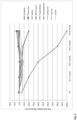
- the amino acid component was added in an amount to yield concentrations of table Table 9 in the ready-to-use dialysis fluid. Stability tests were performed to approve the stability of the precursor composition. Precursor compositions were packaged and stored under ageing conditions. The packaged precursor compositions were stored under the climatic conditions described in example 4. The samples were exposed to said climate for 6 month. During the stability test, samples were inspected with regard to amino acid degradation. Amino acid stability was determined in percentage reduction of the respective amino acids. The percentage reduction in the precursor composition is depicted in Fig. 1. Fig. 1 shows the time dependent amino acid reduction in the precursor composition according to the second trial.
- a precursor composition resulting in dialysis fluids as listed in Table 5, was combined with an amino acid component containing 9 amino acids Valine, Leucine and Isoleucine Phenylalanine, Methionine, Lysine, Threonine, Tryptophan and Histidine.
- a liquid precursor composition prepared in a 45-fold concentration exhibited the following concentrations: Component Concentration Sodium 4,77 mole/l Potassium 45 mmole/l Calcium 67,5 mmole Magnesium 22,5 mmole/l Chloride 4,86 mole/l Citric acid 45 mmole/l Glucose 45 g/l Valine 12,15 mmole/l Leucine 5,85 mmole/l Isoleucine 3,15 mmole/l Phenylalanine 2.7 mmole/l Methionine 1.35 mmole/l Lysine 8.1 mmole/l Threonine 6.75 mmole/l Tryptophan 2.225 mmole/l Histidine 3.6 mmole/l
- the amino acid component was added in an amount to yield concentrations of Table 9. Stability tests were performed to approve the stability of the precursor composition. Precursor compositions were packaged and stored under ageing conditions. The packaged precursor compositions were stored under the climatic conditions described in example 4. The samples were exposed to said climate for 6 months. During the stability test, samples were inspected with regard to amino acid degradation. Amino acid stability was determined in percentage reduction of the respective amino acids. The percentage reduction in the precursor composition is depicted in Fig. 2. Fig. 2 shows the time dependent amino acid reduction in the precursor composition according to the second trial.
- the amino acid component was added in an amount to yield concentrations of Amino Acid Concentration Leucine 130 ⁇ mole/l Isoleucine 70 ⁇ mole/l Valine 270 ⁇ mole/l Phenylalanine 60 ⁇ mole/l Methionine 30 ⁇ mole/l Lysine 180 ⁇ mole/l Threonine 150 ⁇ mole/l Histidine 80 ⁇ mole/l in a dialysis fluid corresponding to listed concentrations of Table 6.
- a liquid precursor composition with a 45-fold concentration exhibited the following concentrations: Component Concentration Sodium 4,77 mole/l Potassium 45 mmole/l Calcium 67,5 mmole Magnesium 22,5 mmole/l Chloride 4,91 mole/l Acetic acid 135 mmole/l Glucose 45 g/l Valine 12,15 mmole/l Leucine 5,85 mmole/l Isoleucine 3,15 mmole/l Phenylalanine 2.7 mmole/l Methionine 1.35 mmole/l Lysine 8.1 mmole/l Threonine 6.75 mmole/l Histidine 3.6 mmole/l
- Stability tests were performed to approve the stability of respective precursor compositions. Samples of precursor compositions comprising an amino acid component including Valine, Leucine and Isoleucine were packaged and stored under ageing conditions. The packaged precursor compositions were stored under adjusted climatic conditions of 40°C and 25% relative air humidity at ambient atmospheric pressure. The samples were exposed to said climate for 9 months. During the stability test, samples were inspected with regard to indications of following instabilities:
- 5-Hydroxymethylfurfural 5-HMF
Landscapes
- Health & Medical Sciences (AREA)
- Life Sciences & Earth Sciences (AREA)
- Veterinary Medicine (AREA)
- Public Health (AREA)
- General Health & Medical Sciences (AREA)
- Animal Behavior & Ethology (AREA)
- Medicinal Chemistry (AREA)
- Pharmacology & Pharmacy (AREA)
- Chemical & Material Sciences (AREA)
- Epidemiology (AREA)
- Inorganic Chemistry (AREA)
- Hematology (AREA)
- Engineering & Computer Science (AREA)
- Urology & Nephrology (AREA)
- Heart & Thoracic Surgery (AREA)
- General Chemical & Material Sciences (AREA)
- Diabetes (AREA)
- Bioinformatics & Cheminformatics (AREA)
- Organic Chemistry (AREA)
- Nuclear Medicine, Radiotherapy & Molecular Imaging (AREA)
- Chemical Kinetics & Catalysis (AREA)
- Biomedical Technology (AREA)
- Molecular Biology (AREA)
- Emergency Medicine (AREA)
- Vascular Medicine (AREA)
- Anesthesiology (AREA)
- Obesity (AREA)
- Nutrition Science (AREA)
- Acyclic And Carbocyclic Compounds In Medicinal Compositions (AREA)
- Medicinal Preparation (AREA)
- External Artificial Organs (AREA)
- Pharmaceuticals Containing Other Organic And Inorganic Compounds (AREA)
- Organic Low-Molecular-Weight Compounds And Preparation Thereof (AREA)
Description
- The invention relates to a precursor composition for the preparation of a dialysis fluid comprising an amino acid component which is free from Methionine and Tryptophane. The invention further relates to a precursor composition comprising said amino acid component which, upon mixing with a buffer composition and aqueous dilution, yields a dialysis fluid. Said dialysis fluid may be used for the treatment of e.g. end stage renal therapy patients in hemodialysis.
- In dialysis treatments, dialysis fluids are used as an exchange medium to take up metabolite substances via a separation membrane from patient's blood plasma. Within dialysis treatments the blood plasma concentrations of electrolytes and glucose is controlled by substance exchange processes occurring between patient's blood and a respective dialysis fluid.
- Dialysis fluids are aqueous fluids which contain solutes in a similar concentration to human blood plasma.
- Commonly, a dialysis fluid comprises electrolytes like sodium chloride, optionally potassium chloride, magnesium chloride, calcium chloride, glucose and a buffer like sodium lactate or sodium bicarbonate. Dialysis fluids are offered in certain variations which are different in the concentration of dissolved ingredients. It can be important to treat dialysis patients with respective dialysis fluids due to arising comorbidities of dialysis patients, like blood hypertension, hyper and hypocalcaemia and others.
- Dialysis fluids may be provided in ready-to-use product forms. For example, dialysis fluids may be provided in fluid bags. In hemodialysis therapy, dialysis fluids may also be provided by an online dialysis fluid preparation present in a respective dialysis treatment unit. Dialysis fluids are then prepared from precursor compositions by automated mixing and dilution processes.
- Appropriate precursor compositions are known in the art. They are offered in packaged form, which makes it possible to directly connect these precursor composition packages to a respective dialysis treatment machine. These dialysis machines process said precursor compositions by diluting and proportional mixing respective volume fractions form the precursor composition to yield a ready-to-use dialysis fluid.
- The commercial provision of precursor compositions suffers from certain drawbacks, as certain components of said precursor compositions cannot be stored together without causing harmful degradation processes. In this respect, the storage of glucose with a basic buffer like bicarbonate has shown to result in glucose degradation. Nevertheless, glucose and bicarbonate are the choice of components for hemodialysis, as both substances are well accepted from dialysis patients.
- Glucose degradation products like 5-HMF are harmful and their presence in dialysis products is inacceptable. Thus, in development and production of precursor compositions, great care has to be taken that certain product configurations do not lead to degradation processes. Therefore, dialysis fluid products and respective precursor compositions are often offered in a two- or multi-compartment form to provide incompatible components, like glucose and bicarbonate, separately in different compartments.
- It is known in the art to store the components of a precursor composition in compartments which comprise, in a first compartment, components like glucose, sodium, potassium, magnesium, calcium, hydrochloric acid, citric acid or acetic acid.
- In a second compartment contributing to the precursor composition of the first compartment, a buffer is provided. The separation of respective components as explained here made it possible to offer stable shelf-life dialysis precursor compositions.
- In recent years, it has been an object to steadily improve the performance of hemodialysis therapies. As a result, extracorporal blood treatment has become more efficient and treatment times have been reduced. Efficient therapies in extracorporal blood treatment of dialysis patients nowadays comprise certain blood filtration processes, which efficiently remove harmful metabolites form patient's blood. It has been found that undesired blood plasma proteins ranging in the middle molecular weight range are efficiently removed from patient's blood by aforementioned blood treatment therapies, and state of health in dialysis patients could be improved.
- On the other hand, some drawbacks from efficient hemodialysis therapies were identified. A known problem of chronical hemodialysis patients is malnutrition. Rocco et al. (Rocco et al.; Kidney International, Vol 65 (2004), pp. 2321-2334) observed a decline of body weight, albumin concentration in blood plasma and the uptake of proteins of dialysis patients over a time range of three years. It has been found that in particular the albumin level in blood is significant for the morbidity of patients.
- Several pathologic indications are said to increase the protein metabolism of patients with kidney insufficiency (Dukkipati et al.; Seminars in Nephrology; Vol. 29, No. 1, January 2009, pp. 39-49) that may lead to protein catabolism of respective patients.
- In addition, hemodialysis treatment is known to clear amino acids, the building blocks of proteins, from blood plasma. Amino acids are small molecules free of binding in blood plasma. They are removed from the plasma during the dialysis treatment session with a significant decline of their plasma concentration between the beginning and the end of a dialysis treatment session. If food intake of a dialysis patient is not sufficient, amino acid losses are not compensated enough and protein catabolism of said dialysis patient worsens. As a consequence, several actions were developed to compensate amino acid loss of dialysis patients.
- In a first therapeutic measure, dialysis patients are served protein enriched food. In another measure, dialysis patients can be supplemented with an amino acid composition, for example by infusion. Infusion might be performed during a dialysis treatment session or independently of the treatment sessions. In a third measure, it was suggested to enrich dialysis fluids with amino acids.
- However, nutrition of patients with protein enriched food affords a higher individual patient care. Another drawback is that a significant number of patients are not willing to take up protein enriched food during a dialysis treatment session. Also, the protein enriched food is not well accepted by at least part of the patients.
- The infusion of solutions of amino acid compositions to patients burdens the patient with an additional liquid volume which in consequence means that a higher ultrafiltration volume has to be removed from the patient during a dialysis treatment session. Thus, treatment times of patients have to be disadvantageously extended. Additionally, administration of infusion solutions increases the costs for treatment and efforts to the clinical staff.
- Dialysis fluids comprising amino acid components known so far provide poor storage stability. It has been suggested to supply dialysis patients with amino acids by adding amino acids to the dialysis fluids shortly before a dialysis treatment session (
US 6,787,039 ). However, the addition of amino acids to a dialysis fluid always bears the risk of bio-contamination and incorrect dosing. - It was further observed that storage of amino acid components together with other components of a dialysis fluid or a precursor composition can induce decomposition reactions. The well-known Maillard decomposition reaction is initiated between glucose and amino acid components. This led to the conclusion that amino acid components in dialysis fluids or dialysis precursor compositions have to be stored separately from a glucose component to avoid said Maillard reaction. However, it is not possible to store an amino acid component together with the buffer component in one compartment, separated from glucose, as basic storage of an amino acid component will not satisfy the requirement of shelf life of dialysis fluids or dialysis precursor compositions.
- An alternative option wherein the amino acid component is stored solely in a third compartment is undesirable, as the receiving units of dialysis treatment machines in the art are not configured to connect a third compartment.
- Therefore, there is a need in the state of the art to overcome aforementioned deficiencies.
- It has therefore been an object of the invention to provide a precursor composition for the preparation of a dialysis fluid comprising an amino acid component which is stable and can be provided together with an acid component and a glucose component in one compartment.
- It has been a further object of the invention to provide a dialysis fluid comprising an amino acid composition which is useful for the treatment of dialysis patients suffering from impaired muscle metabolism, mal-nutrition or amino acid loss.
- It has been a further object of the invention to provide a process for the preparation of a dialysis fluid from a precursor composition comprising a therapeutic effective amino acid component.
- Within the understanding of the present application, the term "solute" refers to substances dissolved in an aqueous liquid. In this respect, salts like sodium chloride, magnesium chloride, calcium chloride, sodium bicarbonate, potassium chloride, which respectively dissolve by dissociation into solvated ions, are referred to as solutes. Further, compounds like organic acids or amines, which dissolve by dissociation or protonation into ionic forms, are referred to as solutes. Within this meaning, also solvated ions themselves are referred to as "solutes". The term "solute" as used herein refers further to dissolved non-ionic substances like glucose.
- The term "buffer" as referred to in the present application relates to a compound which is able to compensate an acidic environment within a certain pH value range. Commonly used buffers in dialysis are a bicarbonate buffer, lactate buffer, acetate buffer, citrate buffers, which are physiologically acceptable.
- The term "acid" refers to a substance which is able to lower the pH value of water below pH 7 when dissolved. In particular, the term is used to specify an acid which can be metabolized by dialysis patients and is physiologically acceptable. Common physiologically acceptable acids in dialysis are citric acid, hydrochloric acid, and acetic acid. It is within the understanding of the present application to address acids in their dry and/or solid form, in dissolved form, in liquid form and any (other) form, as long as these forms provide a starting material for the preparation of a dialysis fluid.
- The term "concentrate" refers to a composition which has to be mixed with an aqueous diluent prior to administering the resulting mixed solution to a patient. Concentrates may appear in dry form, which means that those concentrates comprise solid constituents. Within the meaning of the present invention, a dry concentrate may also comprise fluid constituents which are, for example, absorbed by solid granules or particles of the concentrate. Within the meaning of the invention, concentrates may also appear as liquid preparations. Concentrates are transferred into dialysis fluids by dilution with water or diluted aqueous solutions.
- The term "component" refers to a constituent, which is present in a dialysis concentrate or a dialysis fluid. A component may comprise a solute, e.g. sodium chloride, potassium chloride, magnesium chloride, calcium chloride. A component may also be composed of more than one constituent, e.g. an amino acid component as a part of a dialysis concentrate or a dialysis fluid.
- The term "precursor composition" as used herein refers to a composition of constituents which serve as a starting material in a process for the preparation of a fluid which may be used as a treatment fluid in dialysis therapies. A precursor composition may comprise several components or all components of solutes which are necessary for the preparation of a respective dialysis fluid. A precursor composition may be in form of a dry concentrate, a liquid concentrate or a solution which comprises respective components in concentrations already applicable in dialysis treatment sessions.
- The term "dialysis fluid" relates to an aqueous formulation which is acceptable for dialysis patients for therapeutic use of blood purification. The composition and requirements of dialysis fluids are regulated in the monography of the European Pharmacopoeia. Within the understanding of the present application, a dialysis fluid may be obtained from a precursor composition by steps of diluting or mixing with further components in a form ready-to-use in dialysis treatment sessions.
- The invention is set out in the appended set of claims. In a first aspect of the invention the problem to an afore-mentioned object of the invention is solved by a precursor composition according to
claim 1. Claims 2 to 7 represent preferred embodiments of the first aspect of the invention. In a second aspect of the invention the problem to an afore-mentioned object is solved by a process for manufacturing a dialysis fluid according to claim 8. In a fourth aspect the problem to an afore-mentioned object of the invention is solved by a process for producing a precursor composition according to claim 9. Claim 10 represents a preferred embodiment of the fourth aspect of the invention. In a further aspect, the problem to an afore-mentioned object of the invention is solved by a dialysis fluid for use in the treatment of dialysis patients according to claim 11. - In one embodiment of the first aspect of the invention the amino acid component is present in the precursor composition which is free of tryptophan and methionine to yield upon mixing with a diluent in a dialysis fluid exhibiting the following amino acid concentration ranges:
Amino Acid Concentration range Leucine 110 to 160 µmole/l Isoleucine 54 to 75 µmole/l Valine 210 to 290 µmole/l Phenylalanine 35 to 75 µmole/l Lysine 110 to 200 µmole/l Threonine 80 to 150 µmole/l Histidine 50 to 100 µmole/l - In one embodiment of the first aspect of the invention, the precursor composition is present in packaged form and, after being exposed to a temperature of 40°C and a relative air humidity of 25% for 9 months, yields a 5-HMF concentration of below 18 mg/l when prepared to yield a dialysis fluid.
- In one embodiment of the fourth aspect of the invention, the process for producing a precursor composition is characterized in that the sodium chloride concentration in said pre-granulate is adjusted to yield a ratio from 10% to 80%, preferably 20% to 60% by weight of the total weight of the obtained pre-granulate.
- Surprisingly, in a first aspect of the invention, the above-mentioned object could be met by a precursor composition in the form of a liquid concentrate comprising an amino acid component which, upon mixing with a buffer component and dilution, yields a dialysis fluid. The precursor composition comprises at least a glucose component, an acid component and an amino acid component which comprises Valine, Leucine and Isoleucine and is free of Methionine and Tryptophan. The inventors have found that the combination of Valine, Leucine and Isoleucine in presence of glucose and an acid does not lead to adverse amino acid decomposition or glucose degradation. Therefore, it has been possible to provide a precursor composition which comprises said glucose acid and amino acid components in one compartment without inacceptable detrimental reactions during shelf life.
CN 1 813 718 A - Dialysis concentrate compositions can be distributed as lightweight products. Respective dialysis facilities and dialysis treatment machines are equipped to provide purified reverse osmosis water or simple tab water sources to supply the respective dialysis treatment machines with the needed volume of water for the preparation of dialysis fluids.
- The inventors have found that the amino acid component can be added to the other precursor composition components during the process of producing the precursor composition. Preferably, the amino acid component can be compounded in a granulation process together with the other precursor composition components without detrimental decomposition reactions. It was found that the resulting precursor composition in dry granular form can be dissolved efficiently in short times in water when compounded with sodium chloride. As a result, the granulation together with sodium chloride salt provides granulates wherein the precursor composition components are mixed and distributed within each respective granule. Dissolution of said granulates is efficiently performed in short times because of the fast-dissolving sodium chloride.
- In a further aspect of the invention according to the first aspect, the precursor composition in liquid concentrate form comprises also sodium chloride in dissolved form. Sodium is a relevant component in dialysis fluids. Dialysis treatment with dialysis fluids containing sodium chloride show an impact on the sodium balance of a dialysis patient blood plasma and may therefore serve to control blood pressure of treated dialysis patients.
- In a further embodiment of the first aspect of the invention the precursor composition includes further substances which are relevant for dialysis. The further components may be potassium, magnesium and calcium, for example in their respective chloride salt forms or in dissolved electrolyte form, in a respective dry or liquid form of the precursor composition. Potassium, calcium and magnesium are important to maintain the physiologic electrolyte balance of dialysis patients. Further, dialysis patients suffering from certain comorbidities like hyperkalaemia or hypocalcaemia and others can be treated by an adapted composition of the respective components in the precursor composition.
- In one further embodiment of the first aspect, the acid component is chosen from the group consisting of citric acid, acetic acid, hydrochloride acid and succinic acid. Hydrochloride acid is commonly used for liquid precursor composition, as hydrochloride acid is obtainable in liquid form and is physiologically well accepted by dialysis patients. Citric acid is also a well-accepted acid component. Citric acid is a solid acid. As such it can be easily implemented in granulation processes which may be part of the production of the precursor composition. In addition, citric acid has a beneficial effect on dialysis patients' blood coagulation tendency when coming into contact with the patient's blood during a dialysis treatment session.
- Another useful acid component which has shown to be compatible to amino acid components according to the present invention is acetic acid. Acetic acid is liquid at ambient temperatures and may be suitable for both the preparation of solid and liquid precursor compositions comprising said amino acid composition. In dry precursor compositions, the amount of acetic acid is kept as low as to be adsorbed by other solid components, like sodium chloride, present in said composition. The overall appearance of such granules or powders remains still solid but is characterized by a certain moisture content resulting from acetic acid.
- The stability of the precursor composition is enhanced by the absence of temperature sensitive amino acids. In this respect, an amino acid component is provided which is free from Tryptophan and Methionine.
- In a further embodiment of the first aspect of the invention, it was found that an even more stable precursor composition comprising an amino acid component, an acid component, glucose component and optionally further components as mentioned herein before could be obtained if the amino acid component consists of Valine, Leucine and Isoleucine in liquid forms. With respect to the medical indication of impaired muscle metabolism, the precursor composition according to this embodiment is still effective to contribute to the treatment of dialysis patients suffering from amino acid loss, muscle metabolism diseases or malnutrition.
- In a still further embodiment of the first aspect of the invention, said precursor composition according to any aforementioned embodiments is configured to yield a dialysis fluid upon mixing with a further buffer component and dilution with water to exhibit the following ranges of concentrations:
Table 1 Amio Acid Concentration Range Leucine 110 to 160 or 120 to 140 µmole/l Isoleucine 54 to 80 or 65 to 75 µmole/l Valine 210 to 290 or 260 to 280 µmole/l - Concentrations of amino acids in ready-to-use dialysis fluids are adapted to the blood plasma concentration ranges. Dialysis fluids according to this embodiment are intended to prevent an amino acid loss during a dialysis treatment session.
- In an alternative embodiment, a precursor composition is provided to yield a dialysis fluid which exhibits a concentration of amino acids in an about threefold amount of aforementioned concentrations:
Table 2 Amio Acid Concentration Range Leucine 300 to 370 µmole/l Isoleucine 180 to 240 µmole/l Valine 580 to 680 µmole/l - It was found that an amino acid concentration of Leucine, Isoleucine and Valine in dialysis fluids that is about three times the amount of the concentration in blood plasma is effective to improve the physical constitution of patients, which suffer from impaired muscle metabolism.
- In a further embodiment of the first aspect of the invention, the composition of the precursor composition according to any of the aforementioned embodiments is chosen to yield concentration ranges as indicated below when in admixture with a buffer and optionally a diluent:
Table 3 Component Concentration, common and preferred ranges Acid 1 to 20, 1 to 15 mole/l (e.g. citric acid) Glucose 0,8 to 2,2 g/l, 1 to 2 g/l Sodium 110 to 170 mmole/l, 125 to 145 mmole/l Potassium 0,7 to 4,3 mmole/l, 2 to 3 mmole/ l Magnesium 0,3 to 1,2 mmole/l 0,5 to 1 mmole/ l Calcium 0,1 to 2,2 mmole/l, 1,25 to 1,75 mmole/l Valine 110 to 160, 120 to 140 µmole/l Leucine 54 to 80, 65 to 75 µmole/l Isoleucine 210 to 290, 260 to 280 µmole/l - In an alternative embodiment of the composition according to Table 3, Valine, Isoleucine and Leucine may be present in the threefold concentration according to Table 2 while maintaining the concentration of the other constituents in accordance with Table 3. It is also understood that the acid concentration relates to the concentration of [H+] which may be present by dissociation, i.e. regarding a polyacid like citric acid, which is a tribasic acid, the concentration in Table 3 refers to the amount of dissociated [H+] ions and not to the citrate concentration.
- It was found that the above-mentioned components can form together a precursor composition which is stable in respect of glucose or amino acid induced side reactions.
- In a second aspect of the invention, it was an object to provide a process for producing a dialysis fluid containing an amino acid component suitable for the treatment of dialysis patients suffering from metabolism disorders and/or malnutrition. In an embodiment of the invention according to the second aspect of the invention, the object was met by providing in a first process step a precursor composition comprising an amino acid component according to any of the aforementioned embodiments of the first aspect of the invention. In one embodiment, the precursor composition is housed in a container and is brought into fluid connection with a dialysis treatment machine. In a second step, a second container comprising a buffer composition is brought in fluid connection to said dialysis treatment unit. Optionally, the precursor composition and the buffer composition are diluted with controlled proportions of a diluent, which is ultra-purified water to yield a dialysis fluid with desired concentrations of electrolytes, glucose, buffer and amino acids at a desired pH value. Subsequently, the obtained dialysis fluid is ready for use.
- A preferred embodiment of the second aspect the invention is characterized in that the dialysis fluid comprises components in concentrations as listed below:
Table 4 Component Concentration, common and preferred ranges Acid 1 to 20, 1 to 15 mole/l (e.g. citric acid) Glucose 0,8 to 2,2 g/l, 1 to 2 g/l Sodium 110 to 170 mmole/l, 125 to 145 mmole/l Potassium 0,7 to 4,3 mmole/l, 2 to 3 mmole/ l Magnesium 0,3 to 1,2 mmole/l 0,5 to 1 mmole/ l Calcium 0,1 to 2,2 mmole/l, 1,25 to 1,75 mmole/l Valine 110 to 160, 120 to 140 µmole/l Leucine 54 to 80, 65 to 75 µmole/l Isoleucine 210 to 290, 260 to 280 µmole/l - A precursor composition according to the first aspect of the invention may be manufactured by adding the amino acid component dissolved in water, comprising at least the amino acids Valine, Leucine and Isoleucine. The dissolved amino acid composition can be added during the production of a liquid precursor composition corresponding for example to dialysis fluids of Table 5 and Table 6.
- Alternatively, the amino acid component may be injected during the filling process of liquid precursor composition into fluid bag packaging to form a precursor composition according to the invention.
- However, dissolved amino acids are susceptible to bio-contamination and may require additional disinfection steps in order to provide them in a necessary purified form. Additionally, storage of dissolved amino acids without stabilisation may be problematic due to their degradation tendencies in the dissolved state. Although amino acids are characterized by sufficient storage stability in the dry state, the use of dry amino acids in the production of a dialysis precursor composition is cumbersome due to the laborious process of dosing amino acids in powdery form. Such dosing techniques suffer from the risk of producing dosing failures.
- In one aspect, a pre-granulate for preparing a precursor composition according to any embodiment of the first aspect of the invention is herein disclosed. The pre-granulate is made from a compound which comprises a sodium chloride component in a ratio of 10% to 80% by weight of the total weight of the granulate and an amino acid component comprising Valine, Leucine and Isoleucine. In a preferred embodiment, the pre-granulate is characterized by a sodium chloride content of 20% to 60% per weight.
- In a forth aspect of the invention, it has been found that the above mentioned drawbacks could be overcome in a new process for producing a precursor composition according to the first aspect of the invention. The production process is characterized by a first step of compounding a dry amino acid component together with a sodium chloride salt component. Compounding within the present invention means to mix at least two components, i.e. the amino acid component and the sodium chloride salt component, in a dry or in liquid solution state to form an admixture. The admixture is dried, when in liquid or moist form, by known techniques to form a solid conglomerate of said components, i.e. the amino acid component and said sodium chloride salt. Subsequently, the obtained conglomerate is formed to a pre-granulate in a granulation process and is used for the production of a liquid precursor compositions according to any aforementioned embodiments of the first aspect of the invention.
- It is preferred that the ratio of sodium chloride in said pre-granulate is about 30% by weight related to the total weight of the compounded pre-granulate. It is, however, also within the scope of the invention to choose a sodium chloride ratio for the pre-granulation in the range of 10% to 80% or 20% to 60% by weight. The compounded pre-granulate is advantageous in usage throughout the production of the precursor composition. Said pre-granulate allows more precise dosing in automated production processes, as granulates provide improved bulk pouring and handling properties. In addition, the pre-granulate provides the needed amounts of amino acid component distributed in a higher bulk volume compared to the provision of pure powdery amino acids as a starting material. Thus, weighing of desired amounts of said amino acids can be performed more precisely. Further, said pre-granulate is less sensitive to moisture impact during production processes and is characterized by short dissolution times when mixed with a liquid precursor composition of the invention.
- In exemplary cases, compositions of dialysis fluids may contain citrate ions, originating from a citric acid precursor, bicarbonate ions, originating from a buffer composition comprising sodium bicarbonate, electrolytes and glucose, in concentrations as listed in Table 5:
Table 5 Na+ mmol/L K+ mmol/L Ca2+ mmol/L Mg2+ mmol/L Cl- mmol/ L 
Citrate mmol/L Acetate mmol/L Glucose g/L 138.00 2.00 1.50 0.50 109.00 32.00 1.00 - 1.00 138.00 2.00 1.75 0.50 109.50 32.00 1.00 - 1.00 138.00 3.00 1.50 0.50 110.00 32.00 1.00 - 1.00 138.00 3.00 1.75 0.50 110.50 32.00 1.00 - 1.00 138.00 4.00 1.50 0.50 111.00 32.00 1.00 - 1.00 - Table 5 lists different concentration combinations of dissolved components. It is within the understanding of the present invention that the specifications in Table 5 do not outline all possible dialysis fluid solute concentrations. It may be necessary to envision further solute concentrations for therapeutic reasons.
- Other exemplary dialysis fluids may contain acetate ions, originating from an acetic acid precursor, and bicarbonate ions, originating from a buffer composition comprising sodium chloride, as listed in Table 6:
Table 6 Na+ mmol/L K+ mmol/L Ca2+ mmol/L Mg2+ mmol/L Cl- mmol/ L 
Acetate mmol/L Glucose g/L 138.00 1.00 1.50 0.5 108.00 32.00 3.00 1.00 138.00 2.00 1.25 0.5 108.50 32.00 3.00 1.00 138.00 2.00 1.50 0.5 109.00 32.00 3.00 1.00 138.00 2.00 1.75 0.5 109.50 32.00 3.00 1.00 138.00 3.00 1.25 0.5 109.50 32.00 3.00 1.00 138.00 3.00 1.50 0.5 110.00 32.00 3.00 1,00 138.00 4.00 1.25 0.5 110.50 32.00 3.00 1.00 - The dialysis fluid concentrations as presented in Table 5 and Table 6 may be obtained from liquid concentrate compositions. Said concentrate compositions are commonly offered in fluid bags or in rigid cartridges. Liquid concentrates are for example available in a 45-fold or a 35-fold concentration. That means that one volume part of the liquid concentrate is diluted with 44 respectively 34 volume parts of a diluting fluid like water.
- It is understood herein that the diluting fluid may also be an aqueous solution of other dialysis fluid components. A common buffer provided in dialysis may be for example a bicarbonate solution which, upon proportioned mixing with respective precursor composition and optionally dilution, yields in ready-to-use dialysis fluid with desired composition as shown in Table 5 and Table 6.
- A precursor composition, resulting in dialysis fluids as listed inTable 5 or Table 6, was combined with an amino acid component containing Valine, Leucine and Isoleucine. The amino acid component was added in an amount to yield concentrations of
Table 7 Amio Acid Concentration Leucine 130 µmole/l Isoleucine 70 µmole/l Valine 270 µmole/ll - Accordingly, a liquid precursor composition offered in a 45-fold concentration exhibited the following concentrations:
Table 8 Component Concentration Sodium 4,77 mole/l Potassium 45 mmole/l Calcium 67,5 mmole Magnesium 22,5 mmole/l Chloride 4,86 mole/l Acetic acid 135 mmole/l Glucose 45 g/l Valine 12,15 mmole/l Leucine 5,85 mmole/ l Isoleucine 3,15 mmole/l - The composition as listed above is configured to be diluted together with sodium bicarbonate and water as diluent to yield a dialysis solution with electrolyte, glucose, buffer and acetate concentrations as listed in
row 1 of Table 6. - Within this Comparative Example, the amino acid component comprises nine amino acids essential for the protein metabolism of humans, in particular essential for malnourished dialysis patients. According to this Example, the precursor composition comprises Leucine, Isoleucine, Valine, Phenylalanine, Methionine, Lysine, Threonine, Tryptophan, Histidine in an amount to yield upon dilution and mixing with a buffer component a dialysis solution which exhibits concentrations of the respective amino acids as listed below:
Table 9 Amino Acid Concentration Leucine 130 µmole/l Isoleucine 70 µmole/l Valine 270 µmole/l Phenylalanine 60 µmole/l Methionine 30 µmole/l Lysine 180 µmole/l Threonine 150 µmole/l Tryptophan 50 µmole/l Histidine 80 µmole/l - The storage of Methionine and Tryptophan among the remaining amino acids and in presence of an acid and glucose in the concentrate composition is crucial. However, the inventors have found that the appropriate ratios of amino acids present in the liquid or dry precursor composition prevented decomposition reactions of said amino acids. A shelf life product of a packaged concentrate composition according to the invention comprising above listed essential amino acids could be obtained in keeping the concentrate composition at ambient temperature, shielded from UV light and oxygen.
- In a first trial a precursor composition comprising acetic acid as an acid component, which upon diluting and mixing with an bicarbonate component, results in a dialysis fluids as listed in Table 6, was combined with an amino acid component containing 9 amino acids Valine, Leucine and Isoleucine Phenylalanine, Methionine, Lysine, Threonine, Tryptophan and Histidine. Accordingly, a liquid precursor composition prepared in a 45-fold concentration exhibited the following concentrations:
Component Concentration Sodium 4,77 mole/l Potassium 45 mmole/l Calcium 67,5 mmole Magnesium 22,5 mmole/l Chloride 4,91 mole/l Acetic acid 135 mmole/l Glucose 45 g/l Valine 12,15 mmole/l Leucine 5,85 mmole/ l Isoleucine 3,15 mmole/l Phenylalanine 2.7 mmole/l Methionine 1.35 mmole/l Lysine 8.1 mmole/l Threonine 6.75 mmole/l Tryptophan 2.225 mmole/l Histidine 3.6 mmole/l - The amino acid component was added in an amount to yield concentrations of table Table 9 in the ready-to-use dialysis fluid. Stability tests were performed to approve the stability of the precursor composition. Precursor compositions were packaged and stored under ageing conditions. The packaged precursor compositions were stored under the climatic conditions described in example 4. The samples were exposed to said climate for 6 month. During the stability test, samples were inspected with regard to amino acid degradation. Amino acid stability was determined in percentage reduction of the respective amino acids. The percentage reduction in the precursor composition is depicted in
Fig. 1. Fig. 1 shows the time dependent amino acid reduction in the precursor composition according to the second trial. - In a second trial a precursor composition, resulting in dialysis fluids as listed in Table 5, was combined with an amino acid component containing 9 amino acids Valine, Leucine and Isoleucine Phenylalanine, Methionine, Lysine, Threonine, Tryptophan and Histidine. Accordingly, a liquid precursor composition prepared in a 45-fold concentration exhibited the following concentrations:
Component Concentration Sodium 4,77 mole/l Potassium 45 mmole/l Calcium 67,5 mmole Magnesium 22,5 mmole/l Chloride 4,86 mole/l Citric acid 45 mmole/l Glucose 45 g/l Valine 12,15 mmole/l Leucine 5,85 mmole/ l Isoleucine 3,15 mmole/l Phenylalanine 2.7 mmole/l Methionine 1.35 mmole/l Lysine 8.1 mmole/l Threonine 6.75 mmole/l Tryptophan 2.225 mmole/l Histidine 3.6 mmole/l - The amino acid component was added in an amount to yield concentrations of Table 9. Stability tests were performed to approve the stability of the precursor composition. Precursor compositions were packaged and stored under ageing conditions. The packaged precursor compositions were stored under the climatic conditions described in example 4. The samples were exposed to said climate for 6 months. During the stability test, samples were inspected with regard to amino acid degradation. Amino acid stability was determined in percentage reduction of the respective amino acids. The percentage reduction in the precursor composition is depicted in
Fig. 2. Fig. 2 shows the time dependent amino acid reduction in the precursor composition according to the second trial. - In this comparative Example, a precursor composition, resulting in dialysis fluids as listed in Table 6, was combined with an amino acid component containing Valine, Leucine and Isoleucine Phenylalanine, Methionine, Lysine, Threonine, and Histidine. The amino acid component was added in an amount to yield concentrations of
Amino Acid Concentration Leucine 130 µmole/l Isoleucine 70 µmole/l Valine 270 µmole/l Phenylalanine 60 µmole/l Methionine 30 µmole/l Lysine 180 µmole/l Threonine 150 µmole/l Histidine 80 µmole/l Component Concentration Sodium 4,77 mole/l Potassium 45 mmole/l Calcium 67,5 mmole Magnesium 22,5 mmole/l Chloride 4,91 mole/l Acetic acid 135 mmole/l Glucose 45 g/l Valine 12,15 mmole/l Leucine 5,85 mmole/ l Isoleucine 3,15 mmole/l Phenylalanine 2.7 mmole/l Methionine 1.35 mmole/l Lysine 8.1 mmole/l Threonine 6.75 mmole/l Histidine 3.6 mmole/l - Stability tests were performed to approve the stability of respective precursor compositions. Samples of precursor compositions comprising an amino acid component including Valine, Leucine and Isoleucine were packaged and stored under ageing conditions. The packaged precursor compositions were stored under adjusted climatic conditions of 40°C and 25% relative air humidity at ambient atmospheric pressure. The samples were exposed to said climate for 9 months. During the stability test, samples were inspected with regard to indications of following instabilities:
- samples were checked in regard to visual indications of colorization, agglomeration and precipitation of components of the precursor composition
- concentrations and ratios of respective components of the precursor composition were monitored and it was recorded whether values shifted outside a specified tolerance range
- concentration tolerances were defined to the following ranges
- a. ± 5% deviation from the initial ion concentration! ratio of electrolytes/ salts (except for sodium ions)
- b. ± 2,5% deviation from initial sodium ion/salt concentration! ratio
- c. ± 10% deviation from the initial concentration! ratio of amino acids
- It was further monitored whether the concentration of 5-Hydroxymethylfurfural (5-HMF) remains below 18 mg/l, measured in a dialysis fluid sample prepared from an above-described package. 5-HMF is an indicator of arising glucose decomposition.
- The following results were obtained from stability studies of the aforementioned samples.
Table 10: Stability test results of a liquid concentrate composition comprising Valine, Leucine, Isoleucine, glucose and Acetic Acid (3 mmole/l in ready- to-use dialysis fluid) Component Exposure = 0 Exposure = 6 months Exposure = 9 months Amino acid OK OK OK Ion concentration OK OK OK Glucose degradation OK OK OK Table 11: Stability test results of a liquid concentrate composition comprising Valine, Leucine, Isoleucine, Glucose and Citric acid (1 mmole/l in ready for use dialysis fluid) Component Exposure = 0 Exposure = 6 months Exposure = 9 months Amino acid OK OK OK Ion concentration OK OK OK Glucose degradation OK OK acceptable Table 12: Stability test results of a liquid concentrate composition comprising Valine, Leucine/ Isoleucine/ (triple amino acid concentration) glucose and citric acid (1 mmole/l in ready-to-use dialysis fluid) Component Exposure = 0 Exposure = 6 months Exposure = 9 months Amino acid OK OK OK Ion concentration OK OK OK Glucose degradation OK acceptable NOK - Where a respective result of a stability investigation is assigned to "OK" in above Table 10 to Table 12, the required stability specification of a respective precursor composition is achieved. Where a result is found to be acceptable, the respective required stability specification can still be approved. Where a result is assigned to "NOK", the respective stability specification was not met.
- Within this Comparative Example, stability tests were performed to approve the stability of a precursor composition comprising an amino acid component including eight amino acids Leucine, Isoleucine, Valine, Phenylalanine, Methionine, Lysine, Threonine, and Histidine. The precursor compositions were packaged and stored under ageing conditions. The packaged precursor compositions were stored under the same climatic conditions as described in example 4. The samples were exposed to said climate for 1 month. During the stability test, samples were inspected with regard to instabilities as explained in Example 4:
Component Exposure = 0 Exposure = 1 months Amino acid OK OK Ion concentration OK OK Glucose degradation OK OK
Claims (11)
- A precursor composition in the form of a liquid concentrate for the preparation of a dialysis fluid, the precursor composition comprising at least a glucose component, an acid component, and an amino acid component,
characterized in thatthe amino acid component comprises Valine, Isoleucine and Leucine andthe amino acid component is free from Methionine and Tryptophan. - The precursor composition according to claim 1, characterized in that the precursor composition further comprises sodium chloride.
- The precursor composition according to claim 2, characterized in that the precursor composition further comprises at least one cation selected from potassium, calcium and magnesium, and an acid component selected from citric acid, acetic acid, hydrochloric acid and succinic acid.
- The precursor composition according to any of the preceding claims, characterized in that the acid amino acid component comprises Leucine, Isoleucine, Valine, and at least one of Phenylalanine, Lysine, Threonine, and Histidine, or comprises all of the aforementioned amino acids, or consists of Leucine, Isoleucine, Valine, Phenylalanine, Lysine, Threonine, and Histidine.
- The precursor composition according to any of the preceding claims, characterized in that the amino acid component consists of Valine, Leucine and Isoleucine, or the precursor composition is characterized in that the amino acid component consists of Valine, Leucine and Isoleucine, and is present in an amount to yield upon mixing with a diluent in a dialysis fluid the respective amino acid concentration ranges of
Amio Acid Concentration Leucine 110 to 160 µmole/l Isoleucine 54 to 75 µmole/l Valine 210 to 290 µmole/l, Amio Acid Concentration Leucine 120 to 140 µmole/l Isoleucine 65 to 75µmole/l Valine 260 to 280 µmole/l, Amio Acid Concentration Leucine 300 to 370 µmole/l Isoleucine 180 to 240 µmole/l Valine 580 to 680 µmole/l. - The precursor composition according to any of the preceding claims, characterized in that the respective components of the precursor composition are present in an amount to yield a dialysis fluid exhibiting the following concentration ranges
Component Concentration Citric Acid 1 to 20 mmole/l Glucose 0,8 to 2,2 g/I Sodium 110 to 170 mmole/l Potassium 0,7 to 4,3 mmole/l Magnesium 0,3 to 1,2 mmole/l Calcium 0,1 to 2,2 mmole/l Valine 110 to 160 µmole/l Leucine 54 to 80 µmole/l Isoleucine 210 to 290 µmole/l. - The precursor composition according to claim 6, characterized in that the respective components of the precursor composition are present in an amount to yield a dialysis fluid exhibiting the following concentration ranges
Component Concentration Citric Acid 1 to 15 mmole/l Glucose 1 to 2 g/l Sodium 125 to 145 mmole/l Potassium 2 to 3 mmole/l Magnesium 0,5 to 1 mmole/l Calcium 1,25 to 1,75 mmole/l Valine 120 to 140 µmole/l Leucine 65 to 75 µmole/l Isoleucine 260 to 280 µmole/l. - A process for manufacturing a dialysis fluid comprising the steps ofi. providing a precursor composition according to any claim 1 to 7,ii. providing a buffer composition,iii. optionally providing a diluent,iv. mixing said precursor composition, said buffer composition and optionally said diluent by proportional mixing of liquid volume fractions of the compositions of step i. and ii. and optionally iii. to yield a dialysis fluid.
- A process for producing a precursor composition according to any of claims 1 to 7, comprising the steps of:i. providing an amino acid component comprising at least Valine, Leucine and Isoleucine,ii. providing sodium chloride component in dry salt form,iii. compounding said amino acid component and sodium chloride component,iv. performing granulation of the compound obtained in step iii to form a pre-granulate, comprising a mixture of said amino acid component and said sodium chloride component,v. providing as further components glucose and an acid,vi.
dissolving said components of step v and said pre-granulate obtained in step iv in water to obtain said precursor composition in liquid form. - A process according to claim 9, characterized in that the sodium chloride concentration in said pre-granulate is adjusted to yield a ratio of from 10% to 80 % by weight of the total weight of the obtained pre-granulate.
- A dialysis fluid yielded from a precursor composition according to claims 5 comprising the amino acids Valine, Isoleucine and Leucine in an amount of
Amio Acid Concentration Range Leucine 300 to 370 µmole/l Isoleucine 180 to 240 µmole/l Valine 580 to 680 µmole/l
Applications Claiming Priority (3)
| Application Number | Priority Date | Filing Date | Title |
|---|---|---|---|
| EP16290142.5A EP3272347A1 (en) | 2016-07-22 | 2016-07-22 | Hd acid concentrate with amino acids |
| EP16001614 | 2016-07-22 | ||
| PCT/EP2017/068467 WO2018015531A1 (en) | 2016-07-22 | 2017-07-21 | Hd acid concentrate with amino acids |
Publications (2)
| Publication Number | Publication Date |
|---|---|
| EP3487489A1 EP3487489A1 (en) | 2019-05-29 |
| EP3487489B1 true EP3487489B1 (en) | 2023-12-20 |
Family
ID=59501412
Family Applications (1)
| Application Number | Title | Priority Date | Filing Date |
|---|---|---|---|
| EP17746030.0A Active EP3487489B1 (en) | 2016-07-22 | 2017-07-21 | Hd acid concentrate with amino acids |
Country Status (7)
| Country | Link |
|---|---|
| US (1) | US11141395B2 (en) |
| EP (1) | EP3487489B1 (en) |
| JP (1) | JP7026097B2 (en) |
| CN (1) | CN109475519B (en) |
| AU (1) | AU2017300740B2 (en) |
| CA (1) | CA3031292A1 (en) |
| WO (1) | WO2018015531A1 (en) |
Families Citing this family (1)
| Publication number | Priority date | Publication date | Assignee | Title |
|---|---|---|---|---|
| US12419850B1 (en) | 2024-03-21 | 2025-09-23 | GanD, Inc. | Bioactive fluid compositions |
Family Cites Families (8)
| Publication number | Priority date | Publication date | Assignee | Title |
|---|---|---|---|---|
| DE19717362C1 (en) * | 1997-04-24 | 1998-09-10 | Fresenius Medical Care De Gmbh | Production of chloride granules for preparing haemodialysis fluids |
| US6787039B2 (en) | 2001-01-26 | 2004-09-07 | Degussa Ag | Amino acid composition for hemodialysis |
| KR20060129363A (en) | 2004-02-09 | 2006-12-15 | 니프로 가부시키가이샤 | Dialysis solid preparation and preparation method thereof |
| JP4483406B2 (en) * | 2004-05-21 | 2010-06-16 | 味の素株式会社 | Method for producing solid dialysis agent |
| CN100417380C (en) * | 2005-12-14 | 2008-09-10 | 于力犁 | Dialysate amino acid powder/liquid, and its compound dialysate power/liquid and preparing method |
| CN102370640A (en) * | 2010-08-18 | 2012-03-14 | 俞黎黎 | Compound amino acid preparation for hemodialysis and hemodialysis preparation containing same |
| CN104688771A (en) * | 2013-12-09 | 2015-06-10 | 天津金耀集团有限公司 | Peritoneal dialysis solution composition containing keto-valine-calcium |
| EP2905039A1 (en) * | 2014-02-07 | 2015-08-12 | Fresenius Medical Care Deutschland GmbH | Dry Acid Concentrate in Granulate form |
-
2017
- 2017-07-21 CA CA3031292A patent/CA3031292A1/en active Pending
- 2017-07-21 EP EP17746030.0A patent/EP3487489B1/en active Active
- 2017-07-21 JP JP2019503420A patent/JP7026097B2/en not_active Expired - Fee Related
- 2017-07-21 CN CN201780045020.2A patent/CN109475519B/en active Active
- 2017-07-21 AU AU2017300740A patent/AU2017300740B2/en active Active
- 2017-07-21 US US16/317,832 patent/US11141395B2/en not_active Expired - Fee Related
- 2017-07-21 WO PCT/EP2017/068467 patent/WO2018015531A1/en not_active Ceased
Also Published As
| Publication number | Publication date |
|---|---|
| CA3031292A1 (en) | 2018-01-25 |
| AU2017300740B2 (en) | 2023-05-11 |
| JP2019523255A (en) | 2019-08-22 |
| EP3487489A1 (en) | 2019-05-29 |
| US20200352888A1 (en) | 2020-11-12 |
| WO2018015531A1 (en) | 2018-01-25 |
| JP7026097B2 (en) | 2022-02-25 |
| CN109475519B (en) | 2022-08-23 |
| US11141395B2 (en) | 2021-10-12 |
| AU2017300740A1 (en) | 2019-01-31 |
| CN109475519A (en) | 2019-03-15 |
Similar Documents
| Publication | Publication Date | Title |
|---|---|---|
| US11253543B2 (en) | Dialysis precursor composition product | |
| EP2567700B1 (en) | Vitamin-containing nutrition infusion for administration through peripheral vein | |
| CN102946886B (en) | Dialysis precursor composition | |
| JP7551858B2 (en) | Intradialytic use of sodium nitrite | |
| AU2010275752B2 (en) | Cell protection in dialysis patients by administration of a creatine compound | |
| US20070231395A1 (en) | Solid Pharmaceutical Preparation for Dialysis | |
| CN102429902A (en) | Pharmaceutical composition of alanyl glutamine and compound amino acid | |
| CN101123987A (en) | Preparations for dialysis | |
| EP1714657A1 (en) | Solid formulation for dialysis and process for producing the same | |
| US11141395B2 (en) | HD acid concentrate with amino acids | |
| EP3272347A1 (en) | Hd acid concentrate with amino acids | |
| CN119564868A (en) | Compound amino acid injection and stabilizer and preparation method thereof | |
| JP2022531670A (en) | Insulin premix formulations and products, how to prepare them, and how to use them | |
| JP2018529674A (en) | Solid soluble ferric pyrophosphate formulation, kit and method of using the same | |
| JP2002282353A (en) | Bicarbonate solid dialysis agent | |
| CN104940195A (en) | Pharmaceutical composition containing alanyl glutamine and compound amino acid | |
| JP6925148B2 (en) | Iron-containing infusion | |
| CN103463094A (en) | Medicine composition of cefpiramide sodium and infant compound amino acid injection (19AA-I) | |
| HK1165309B (en) | Dialysis solution comprising creatine for cell protection | |
| UA136549U (en) | READY-MADE MEDICINAL PRODUCT FOR TREATMENT OF HYPERAMONYEMIC CONDITIONS | |
| UA121019C2 (en) | READY-MADE MEDICINE WITH BALANCED OSMOLARITY AND ACIDITY |
Legal Events
| Date | Code | Title | Description |
|---|---|---|---|
| STAA | Information on the status of an ep patent application or granted ep patent |
Free format text: STATUS: UNKNOWN |
|
| STAA | Information on the status of an ep patent application or granted ep patent |
Free format text: STATUS: THE INTERNATIONAL PUBLICATION HAS BEEN MADE |
|
| PUAI | Public reference made under article 153(3) epc to a published international application that has entered the european phase |
Free format text: ORIGINAL CODE: 0009012 |
|
| STAA | Information on the status of an ep patent application or granted ep patent |
Free format text: STATUS: REQUEST FOR EXAMINATION WAS MADE |
|
| 17P | Request for examination filed |
Effective date: 20190212 |
|
| AK | Designated contracting states |
Kind code of ref document: A1 Designated state(s): AL AT BE BG CH CY CZ DE DK EE ES FI FR GB GR HR HU IE IS IT LI LT LU LV MC MK MT NL NO PL PT RO RS SE SI SK SM TR |
|
| AX | Request for extension of the european patent |
Extension state: BA ME |
|
| DAV | Request for validation of the european patent (deleted) | ||
| DAX | Request for extension of the european patent (deleted) | ||
| STAA | Information on the status of an ep patent application or granted ep patent |
Free format text: STATUS: EXAMINATION IS IN PROGRESS |
|
| 17Q | First examination report despatched |
Effective date: 20201030 |
|
| P01 | Opt-out of the competence of the unified patent court (upc) registered |
Effective date: 20230427 |
|
| GRAP | Despatch of communication of intention to grant a patent |
Free format text: ORIGINAL CODE: EPIDOSNIGR1 |
|
| STAA | Information on the status of an ep patent application or granted ep patent |
Free format text: STATUS: GRANT OF PATENT IS INTENDED |
|
| INTG | Intention to grant announced |
Effective date: 20230623 |
|
| GRAJ | Information related to disapproval of communication of intention to grant by the applicant or resumption of examination proceedings by the epo deleted |
Free format text: ORIGINAL CODE: EPIDOSDIGR1 |
|
| STAA | Information on the status of an ep patent application or granted ep patent |
Free format text: STATUS: EXAMINATION IS IN PROGRESS |
|
| GRAP | Despatch of communication of intention to grant a patent |
Free format text: ORIGINAL CODE: EPIDOSNIGR1 |
|
| STAA | Information on the status of an ep patent application or granted ep patent |
Free format text: STATUS: GRANT OF PATENT IS INTENDED |
|
| INTC | Intention to grant announced (deleted) | ||
| GRAS | Grant fee paid |
Free format text: ORIGINAL CODE: EPIDOSNIGR3 |
|
| INTG | Intention to grant announced |
Effective date: 20231020 |
|
| GRAA | (expected) grant |
Free format text: ORIGINAL CODE: 0009210 |
|
| STAA | Information on the status of an ep patent application or granted ep patent |
Free format text: STATUS: THE PATENT HAS BEEN GRANTED |
|
| AK | Designated contracting states |
Kind code of ref document: B1 Designated state(s): AL AT BE BG CH CY CZ DE DK EE ES FI FR GB GR HR HU IE IS IT LI LT LU LV MC MK MT NL NO PL PT RO RS SE SI SK SM TR |
|
| REG | Reference to a national code |
Ref country code: GB Ref legal event code: FG4D |
|
| REG | Reference to a national code |
Ref country code: CH Ref legal event code: EP |
|
| REG | Reference to a national code |
Ref country code: DE Ref legal event code: R096 Ref document number: 602017077693 Country of ref document: DE |
|
| REG | Reference to a national code |
Ref country code: IE Ref legal event code: FG4D |
|
| REG | Reference to a national code |
Ref country code: SE Ref legal event code: TRGR |
|
| PG25 | Lapsed in a contracting state [announced via postgrant information from national office to epo] |
Ref country code: GR Free format text: LAPSE BECAUSE OF FAILURE TO SUBMIT A TRANSLATION OF THE DESCRIPTION OR TO PAY THE FEE WITHIN THE PRESCRIBED TIME-LIMIT Effective date: 20240321 |
|
| REG | Reference to a national code |
Ref country code: LT Ref legal event code: MG9D |
|
| PG25 | Lapsed in a contracting state [announced via postgrant information from national office to epo] |
Ref country code: LT Free format text: LAPSE BECAUSE OF FAILURE TO SUBMIT A TRANSLATION OF THE DESCRIPTION OR TO PAY THE FEE WITHIN THE PRESCRIBED TIME-LIMIT Effective date: 20231220 |
|
| REG | Reference to a national code |
Ref country code: NL Ref legal event code: MP Effective date: 20231220 |
|
| PG25 | Lapsed in a contracting state [announced via postgrant information from national office to epo] |
Ref country code: ES Free format text: LAPSE BECAUSE OF FAILURE TO SUBMIT A TRANSLATION OF THE DESCRIPTION OR TO PAY THE FEE WITHIN THE PRESCRIBED TIME-LIMIT Effective date: 20231220 |
|
| PG25 | Lapsed in a contracting state [announced via postgrant information from national office to epo] |
Ref country code: LT Free format text: LAPSE BECAUSE OF FAILURE TO SUBMIT A TRANSLATION OF THE DESCRIPTION OR TO PAY THE FEE WITHIN THE PRESCRIBED TIME-LIMIT Effective date: 20231220 Ref country code: GR Free format text: LAPSE BECAUSE OF FAILURE TO SUBMIT A TRANSLATION OF THE DESCRIPTION OR TO PAY THE FEE WITHIN THE PRESCRIBED TIME-LIMIT Effective date: 20240321 Ref country code: FI Free format text: LAPSE BECAUSE OF FAILURE TO SUBMIT A TRANSLATION OF THE DESCRIPTION OR TO PAY THE FEE WITHIN THE PRESCRIBED TIME-LIMIT Effective date: 20231220 Ref country code: ES Free format text: LAPSE BECAUSE OF FAILURE TO SUBMIT A TRANSLATION OF THE DESCRIPTION OR TO PAY THE FEE WITHIN THE PRESCRIBED TIME-LIMIT Effective date: 20231220 Ref country code: BG Free format text: LAPSE BECAUSE OF FAILURE TO SUBMIT A TRANSLATION OF THE DESCRIPTION OR TO PAY THE FEE WITHIN THE PRESCRIBED TIME-LIMIT Effective date: 20240320 |
|
| REG | Reference to a national code |
Ref country code: AT Ref legal event code: MK05 Ref document number: 1641904 Country of ref document: AT Kind code of ref document: T Effective date: 20231220 |
|
| PG25 | Lapsed in a contracting state [announced via postgrant information from national office to epo] |
Ref country code: NL Free format text: LAPSE BECAUSE OF FAILURE TO SUBMIT A TRANSLATION OF THE DESCRIPTION OR TO PAY THE FEE WITHIN THE PRESCRIBED TIME-LIMIT Effective date: 20231220 |
|
| PG25 | Lapsed in a contracting state [announced via postgrant information from national office to epo] |
Ref country code: RS Free format text: LAPSE BECAUSE OF FAILURE TO SUBMIT A TRANSLATION OF THE DESCRIPTION OR TO PAY THE FEE WITHIN THE PRESCRIBED TIME-LIMIT Effective date: 20231220 Ref country code: NO Free format text: LAPSE BECAUSE OF FAILURE TO SUBMIT A TRANSLATION OF THE DESCRIPTION OR TO PAY THE FEE WITHIN THE PRESCRIBED TIME-LIMIT Effective date: 20240320 Ref country code: NL Free format text: LAPSE BECAUSE OF FAILURE TO SUBMIT A TRANSLATION OF THE DESCRIPTION OR TO PAY THE FEE WITHIN THE PRESCRIBED TIME-LIMIT Effective date: 20231220 Ref country code: LV Free format text: LAPSE BECAUSE OF FAILURE TO SUBMIT A TRANSLATION OF THE DESCRIPTION OR TO PAY THE FEE WITHIN THE PRESCRIBED TIME-LIMIT Effective date: 20231220 Ref country code: HR Free format text: LAPSE BECAUSE OF FAILURE TO SUBMIT A TRANSLATION OF THE DESCRIPTION OR TO PAY THE FEE WITHIN THE PRESCRIBED TIME-LIMIT Effective date: 20231220 |
|
| PG25 | Lapsed in a contracting state [announced via postgrant information from national office to epo] |
Ref country code: IS Free format text: LAPSE BECAUSE OF FAILURE TO SUBMIT A TRANSLATION OF THE DESCRIPTION OR TO PAY THE FEE WITHIN THE PRESCRIBED TIME-LIMIT Effective date: 20240420 |
|
| PGFP | Annual fee paid to national office [announced via postgrant information from national office to epo] |
Ref country code: GB Payment date: 20240620 Year of fee payment: 8 |
|
| PG25 | Lapsed in a contracting state [announced via postgrant information from national office to epo] |
Ref country code: CZ Free format text: LAPSE BECAUSE OF FAILURE TO SUBMIT A TRANSLATION OF THE DESCRIPTION OR TO PAY THE FEE WITHIN THE PRESCRIBED TIME-LIMIT Effective date: 20231220 Ref country code: AT Free format text: LAPSE BECAUSE OF FAILURE TO SUBMIT A TRANSLATION OF THE DESCRIPTION OR TO PAY THE FEE WITHIN THE PRESCRIBED TIME-LIMIT Effective date: 20231220 |
|
| PG25 | Lapsed in a contracting state [announced via postgrant information from national office to epo] |
Ref country code: SK Free format text: LAPSE BECAUSE OF FAILURE TO SUBMIT A TRANSLATION OF THE DESCRIPTION OR TO PAY THE FEE WITHIN THE PRESCRIBED TIME-LIMIT Effective date: 20231220 |
|
| PG25 | Lapsed in a contracting state [announced via postgrant information from national office to epo] |
Ref country code: SM Free format text: LAPSE BECAUSE OF FAILURE TO SUBMIT A TRANSLATION OF THE DESCRIPTION OR TO PAY THE FEE WITHIN THE PRESCRIBED TIME-LIMIT Effective date: 20231220 Ref country code: SK Free format text: LAPSE BECAUSE OF FAILURE TO SUBMIT A TRANSLATION OF THE DESCRIPTION OR TO PAY THE FEE WITHIN THE PRESCRIBED TIME-LIMIT Effective date: 20231220 Ref country code: RO Free format text: LAPSE BECAUSE OF FAILURE TO SUBMIT A TRANSLATION OF THE DESCRIPTION OR TO PAY THE FEE WITHIN THE PRESCRIBED TIME-LIMIT Effective date: 20231220 Ref country code: IT Free format text: LAPSE BECAUSE OF FAILURE TO SUBMIT A TRANSLATION OF THE DESCRIPTION OR TO PAY THE FEE WITHIN THE PRESCRIBED TIME-LIMIT Effective date: 20231220 Ref country code: IS Free format text: LAPSE BECAUSE OF FAILURE TO SUBMIT A TRANSLATION OF THE DESCRIPTION OR TO PAY THE FEE WITHIN THE PRESCRIBED TIME-LIMIT Effective date: 20240420 Ref country code: EE Free format text: LAPSE BECAUSE OF FAILURE TO SUBMIT A TRANSLATION OF THE DESCRIPTION OR TO PAY THE FEE WITHIN THE PRESCRIBED TIME-LIMIT Effective date: 20231220 Ref country code: CZ Free format text: LAPSE BECAUSE OF FAILURE TO SUBMIT A TRANSLATION OF THE DESCRIPTION OR TO PAY THE FEE WITHIN THE PRESCRIBED TIME-LIMIT Effective date: 20231220 Ref country code: AT Free format text: LAPSE BECAUSE OF FAILURE TO SUBMIT A TRANSLATION OF THE DESCRIPTION OR TO PAY THE FEE WITHIN THE PRESCRIBED TIME-LIMIT Effective date: 20231220 |
|
| PG25 | Lapsed in a contracting state [announced via postgrant information from national office to epo] |
Ref country code: PL Free format text: LAPSE BECAUSE OF FAILURE TO SUBMIT A TRANSLATION OF THE DESCRIPTION OR TO PAY THE FEE WITHIN THE PRESCRIBED TIME-LIMIT Effective date: 20231220 Ref country code: PT Free format text: LAPSE BECAUSE OF FAILURE TO SUBMIT A TRANSLATION OF THE DESCRIPTION OR TO PAY THE FEE WITHIN THE PRESCRIBED TIME-LIMIT Effective date: 20240422 |
|
| PG25 | Lapsed in a contracting state [announced via postgrant information from national office to epo] |
Ref country code: PT Free format text: LAPSE BECAUSE OF FAILURE TO SUBMIT A TRANSLATION OF THE DESCRIPTION OR TO PAY THE FEE WITHIN THE PRESCRIBED TIME-LIMIT Effective date: 20240422 Ref country code: PL Free format text: LAPSE BECAUSE OF FAILURE TO SUBMIT A TRANSLATION OF THE DESCRIPTION OR TO PAY THE FEE WITHIN THE PRESCRIBED TIME-LIMIT Effective date: 20231220 |
|
| PGFP | Annual fee paid to national office [announced via postgrant information from national office to epo] |
Ref country code: SE Payment date: 20240619 Year of fee payment: 8 |
|
| REG | Reference to a national code |
Ref country code: DE Ref legal event code: R097 Ref document number: 602017077693 Country of ref document: DE |
|
| PG25 | Lapsed in a contracting state [announced via postgrant information from national office to epo] |
Ref country code: DK Free format text: LAPSE BECAUSE OF FAILURE TO SUBMIT A TRANSLATION OF THE DESCRIPTION OR TO PAY THE FEE WITHIN THE PRESCRIBED TIME-LIMIT Effective date: 20231220 |
|
| PLBE | No opposition filed within time limit |
Free format text: ORIGINAL CODE: 0009261 |
|
| STAA | Information on the status of an ep patent application or granted ep patent |
Free format text: STATUS: NO OPPOSITION FILED WITHIN TIME LIMIT |
|
| PG25 | Lapsed in a contracting state [announced via postgrant information from national office to epo] |
Ref country code: SI Free format text: LAPSE BECAUSE OF FAILURE TO SUBMIT A TRANSLATION OF THE DESCRIPTION OR TO PAY THE FEE WITHIN THE PRESCRIBED TIME-LIMIT Effective date: 20231220 |
|
| PG25 | Lapsed in a contracting state [announced via postgrant information from national office to epo] |
Ref country code: SI Free format text: LAPSE BECAUSE OF FAILURE TO SUBMIT A TRANSLATION OF THE DESCRIPTION OR TO PAY THE FEE WITHIN THE PRESCRIBED TIME-LIMIT Effective date: 20231220 Ref country code: DK Free format text: LAPSE BECAUSE OF FAILURE TO SUBMIT A TRANSLATION OF THE DESCRIPTION OR TO PAY THE FEE WITHIN THE PRESCRIBED TIME-LIMIT Effective date: 20231220 |
|
| 26N | No opposition filed |
Effective date: 20240923 |
|
| PG25 | Lapsed in a contracting state [announced via postgrant information from national office to epo] |
Ref country code: MC Free format text: LAPSE BECAUSE OF FAILURE TO SUBMIT A TRANSLATION OF THE DESCRIPTION OR TO PAY THE FEE WITHIN THE PRESCRIBED TIME-LIMIT Effective date: 20231220 |
|
| REG | Reference to a national code |
Ref country code: CH Ref legal event code: PL |
|
| PG25 | Lapsed in a contracting state [announced via postgrant information from national office to epo] |
Ref country code: LU Free format text: LAPSE BECAUSE OF NON-PAYMENT OF DUE FEES Effective date: 20240721 |
|
| PG25 | Lapsed in a contracting state [announced via postgrant information from national office to epo] |
Ref country code: LU Free format text: LAPSE BECAUSE OF NON-PAYMENT OF DUE FEES Effective date: 20240721 |
|
| PG25 | Lapsed in a contracting state [announced via postgrant information from national office to epo] |
Ref country code: CH Free format text: LAPSE BECAUSE OF NON-PAYMENT OF DUE FEES Effective date: 20240731 Ref country code: BE Free format text: LAPSE BECAUSE OF NON-PAYMENT OF DUE FEES Effective date: 20240731 |
|
| REG | Reference to a national code |
Ref country code: BE Ref legal event code: MM Effective date: 20240731 |
|
| PG25 | Lapsed in a contracting state [announced via postgrant information from national office to epo] |
Ref country code: IE Free format text: LAPSE BECAUSE OF NON-PAYMENT OF DUE FEES Effective date: 20240721 |
|
| PGFP | Annual fee paid to national office [announced via postgrant information from national office to epo] |
Ref country code: DE Payment date: 20250828 Year of fee payment: 9 |
|
| PG25 | Lapsed in a contracting state [announced via postgrant information from national office to epo] |
Ref country code: CY Free format text: LAPSE BECAUSE OF FAILURE TO SUBMIT A TRANSLATION OF THE DESCRIPTION OR TO PAY THE FEE WITHIN THE PRESCRIBED TIME-LIMIT; INVALID AB INITIO Effective date: 20170721 |
|
| PG25 | Lapsed in a contracting state [announced via postgrant information from national office to epo] |
Ref country code: HU Free format text: LAPSE BECAUSE OF FAILURE TO SUBMIT A TRANSLATION OF THE DESCRIPTION OR TO PAY THE FEE WITHIN THE PRESCRIBED TIME-LIMIT; INVALID AB INITIO Effective date: 20170721 |
|
| GBPC | Gb: european patent ceased through non-payment of renewal fee |
Effective date: 20250721 |
|
| PG25 | Lapsed in a contracting state [announced via postgrant information from national office to epo] |
Ref country code: GB Free format text: LAPSE BECAUSE OF NON-PAYMENT OF DUE FEES Effective date: 20250721 |
|
| PG25 | Lapsed in a contracting state [announced via postgrant information from national office to epo] |
Ref country code: TR Free format text: LAPSE BECAUSE OF FAILURE TO SUBMIT A TRANSLATION OF THE DESCRIPTION OR TO PAY THE FEE WITHIN THE PRESCRIBED TIME-LIMIT Effective date: 20231220 |
|
| PGFP | Annual fee paid to national office [announced via postgrant information from national office to epo] |
Ref country code: FR Payment date: 20260619 Year of fee payment: 10 |
|
| PG25 | Lapsed in a contracting state [announced via postgrant information from national office to epo] |
Ref country code: SE Free format text: LAPSE BECAUSE OF NON-PAYMENT OF DUE FEES Effective date: 20250722 |