EP3484882B1 - Iso-citrat-dehydrogenase (idh)-inhibitor - Google Patents
Iso-citrat-dehydrogenase (idh)-inhibitor Download PDFInfo
- Publication number
- EP3484882B1 EP3484882B1 EP17826973.4A EP17826973A EP3484882B1 EP 3484882 B1 EP3484882 B1 EP 3484882B1 EP 17826973 A EP17826973 A EP 17826973A EP 3484882 B1 EP3484882 B1 EP 3484882B1
- Authority
- EP
- European Patent Office
- Prior art keywords
- compound
- compounds
- ethyl
- membered
- membered saturated
- Prior art date
- Legal status (The legal status is an assumption and is not a legal conclusion. Google has not performed a legal analysis and makes no representation as to the accuracy of the status listed.)
- Active
Links
Images




Classifications
-
- A—HUMAN NECESSITIES
- A61—MEDICAL OR VETERINARY SCIENCE; HYGIENE
- A61P—SPECIFIC THERAPEUTIC ACTIVITY OF CHEMICAL COMPOUNDS OR MEDICINAL PREPARATIONS
- A61P35/00—Antineoplastic agents
-
- A—HUMAN NECESSITIES
- A61—MEDICAL OR VETERINARY SCIENCE; HYGIENE
- A61K—PREPARATIONS FOR MEDICAL, DENTAL OR TOILETRY PURPOSES
- A61K45/00—Medicinal preparations containing active ingredients not provided for in groups A61K31/00 - A61K41/00
- A61K45/06—Mixtures of active ingredients without chemical characterisation, e.g. antiphlogistics and cardiaca
-
- C—CHEMISTRY; METALLURGY
- C07—ORGANIC CHEMISTRY
- C07D—HETEROCYCLIC COMPOUNDS
- C07D471/00—Heterocyclic compounds containing nitrogen atoms as the only ring hetero atoms in the condensed system, at least one ring being a six-membered ring with one nitrogen atom, not provided for by groups C07D451/00 - C07D463/00
- C07D471/02—Heterocyclic compounds containing nitrogen atoms as the only ring hetero atoms in the condensed system, at least one ring being a six-membered ring with one nitrogen atom, not provided for by groups C07D451/00 - C07D463/00 in which the condensed system contains two hetero rings
- C07D471/04—Ortho-condensed systems
Definitions
- the present disclosure relates to compounds that inhibiting the conversion of ⁇ -ketoglutarate (a-KG) to 2-hydroxyglutarate (2-HG) such as D-2-HG, a pharmaceutical composition comprising the compound(s) as an active ingredient, and use of the compounds in the manufacture of medicaments for treating diseases associated with the conversion of ⁇ -KG to D-2-HG.
- Isocitrate dehydrogenase is an essential enzyme for cellular respiration in the tricarboxylic acid (TCA) cycle which catalyzes the oxidative decarboxylation of isocitrate, producing alpha-ketoglutarate (a-ketoglutarate, ⁇ -KG) and CO 2 .
- TCA tricarboxylic acid
- IDH exists in three isoforms: IDH3 catalyzes the third step of the citric acid cycle while converting NAD + to NADH in the mitochondria.
- the isoforms IDH1 and IDH2 catalyze the same reaction outside the context of the citric acid cycle and use NADP+ as a cofactor instead of NAD+. They localize to the cytosol as well as the mitochondrion and peroxisome.
- IDH1 IDH1-derived neurotrophic factor receptor 1
- astrocytoma oligodendroglioma
- glioblastoma multiforme mutations found in nearly all cases of secondary glioblastomas, which develop from lower-grade gliomas, but rarely in primary high-grade glioblastoma multiforme.
- IDH1 and IDH2 mutations occur before p53 mutation and the loss of 1p/19q chromosomes and are believed to be the first event of gliomagenesis
- IDH1 mutations are early events in the development of astrocytomas and oligodendrogliomas", Watanabe, T., et al., Am J Pathol, (2009 ); " Mutational landscape and clonal architecture in grade II and III gliomas", Suzuki, H., et al., Nat Genet, (2015 ); “ Comprehensive, Integrative Genomic Analysis of Diffuse Lower-Grade Gliomas", Brat, D.J., et al., N Engl J Med, (2015 )].
- IDH2 and IDH1 were found in up to 20% of cytogenetically normal acute myeloid leukemia (AML) [" Recurring mutations found by sequencing an acute myeloid leukemia genome", Mardis, E.R., et al., N Engl J Med, (2009 )].
- AML cytogenetically normal acute myeloid leukemia
- the mutation rate of IDH1 and IDH2 in cytogenetic normal AML is around 20% [" Recurring mutations found by sequencing an acute myeloid leukemia genome”, Mardis, E.R., et al., N Engl J Med, (2009 ); “ Prognostic impact of IDH2 mutations in cytogenetically normal acute myeloid leukemia", Thol, F., et al., Blood, (2010 ); “ Acquired mutations in the genes encoding IDH1 and IDH2 both are recurrent aberrations in acute myeloid leukemia: prevalence and prognostic value", Abbas, S., et al., Blood, (2010 ); " The prognostic significance of IDH1 mutations in younger adult patients with acute myeloid leukemia is dependent on FLT3/ITD status", Green, C.L., et al., Blood, (2010 ); " IDH1 mutations are detected in 6.6% of 1414 AML patients
- IDH mutation is also reported in other type of cancer, including 75% chondrosarcoma [" IDH1 and IDH2 mutations are frequent events in central chondrosarcoma and central and periosteal chondromas but not in other mesenchymal tumours", Amary, M.F., et al., J Pathol, (2011 ); " Ollier disease and Maffucci syndrome are caused by somatic mosaic mutations of IDH1 and IDH2", Amary, M.F., et al., Nat Genet, (2011 )], 10-23% intrahepatic cholangiocarcinoma [” Frequent mutation of isocitrate dehydrogenase IDH1 and IDH2 in cholangiocarcinoma identified through broad-based tumor genotyping", Borger, D.R., et al., Oncologist, (2012 );” Mutations in isocitrate dehydrogenase 1 and 2 occur frequently in intrahepatic cholangiocarcinomas and share
- D-2-HG e.g. D-2-HG
- D-2-HG accumulates to very high concentrations which inhibits the function of enzymes that are dependent on alpha-ketoglutarate. This leads to a hypermethylated state of DNA and histones, which results in different gene expression that can activate oncogenes and inactivate tumor-suppressor genes.
- This may lead to the types of cancer disclosed above [" The consensus coding sequences of human breast and colorectal cancers", Sjoblom, T., et al., Science, (2006 )].
- the present invention is directed to a compound of Formula I: or a pharmaceutically acceptable salt, ester, hydrate, or solvate thereof, wherein,
- the present invention is directed to a pharmaceutical composition
- a pharmaceutical composition comprising one or more compounds, pharmaceutically acceptable salts, hydrates, solvates or stereoisomers thereof according to any of preceding claims as a first active ingredient, and a pharmaceutically acceptable carrier.
- the present invention is directed to an effective amount of one or more compounds, pharmaceutically acceptable salts, hydrates, solvates or stereoisomers thereof of the present invention or a pharmaceutical composition of the present invention for use in a method of treating a disease, comprising administering to a subject an effective amount of one or more compounds, pharmaceutically acceptable salts, hydrates, solvates or stereoisomers thereof of the present invention or a pharmaceutical composition of the present invention, wherein the disease is cancer.
- the present invention is directed to one or more compounds, pharmaceutically acceptable salts, hydrates, solvates or stereoisomers thereof of the present invention, or a pharmaceutical composition of the present invention for use in a method of inhibiting conversion of a-KG to D-2-HG by using one or more compounds, pharmaceutically acceptable salts, hydrates, solvates or stereoisomers thereof of the present invention, or a pharmaceutical composition of the present invention.
- the present invention is directed to one or more compounds, pharmaceutically acceptable salts, hydrates, solvates or stereoisomers thereof of the present invention, or a pharmaceutical composition of the present invention for use in a method of inhibiting mutant IDH, wild-type IDH or both by using one or more compounds, pharmaceutically acceptable salts, hydrates, solvates or stereoisomers thereof of the present invention, or a pharmaceutical composition of the present invention.
- the present disclosure provides a compound represented by Formula (I): or a pharmaceutically acceptable salt, ester, hydrate, solvates or stereoisomers thereof.
- the present disclosure provides a method for manufacturing the compounds of Formula (I).
- the present disclosure further provides a pharmaceutical composition
- a pharmaceutical composition comprising one or more compounds of Formula (I), pharmaceutically acceptable salts, hydrates, solvates or stereoisomers thereof.
- the present disclosure provides use of the compounds of Formula (I), pharmaceutically acceptable salts, hydrates, solvates or stereoisomers thereof, or pharmaceutical composition of the present disclosure in the manufacture of medicaments for treating diseases associated with the conversion of ⁇ -KG to D-2-HG, for example cancers.
- the present disclosure provides a method for inhibiting conversion of ⁇ -KG to D-2-HG.
- the present disclosure provides a method for treating diseases associated with conversion of ⁇ -KG to D-2-HG by using the compounds of Formula (I), pharmaceutically acceptable salts, hydrates, solvates or stereoisomers thereof or the pharmaceutical composition of the present disclosure.
- the present disclosure provides a method of inhibiting mutant IDH, wild-type IDH or both by using the compounds of Formula (I), pharmaceutically acceptable salts, hydrates, solvates or stereoisomers thereof or the pharmaceutical composition of the present disclosure.
- the present disclosure provides compounds of Formula (I): and a pharmaceutically acceptable salt, ester, hydrate, or solvates or stereoisomers thereof, wherein:
- Z is N.
- Q is N.
- A is NR a . In some embodiments, A is NH.
- the compounds of the present disclosure are represented by Formula (Ia): and a pharmaceutically acceptable salt, ester, hydrate, solvates or stereoisomers thereof, wherein,
- a in Formula (I) is NR a .
- R a in Formula (I) or Formula (Ia) is hydrogen.
- W in Formula (I) or Formula (Ia) is branched C 1-3 alkylene. In some embodiments, W in Formula (I) or Formula (Ia) is methylene, ethylene, or propylene. In some embodiments, W is 1,1-ethylene, 1,2-ethylene, 1,1-propylene, 1,2-propylene, 1,3-propylene, or 2,2-propylene. In some embodiments, W is 1,1-ethylene.
- X in Formula (I) or Formula (Ia) is C 6-12 aryl or C 6-12 heteroaryl. In some embodiments, X is phenyl, pyridinyl or pyrazolyl.
- Y in Formula (I) or Formula (Ia) is selected from the group consisting of:
- the compounds of the present disclosure can have a (R)-configuration, a (S)-configuration or a mixture thereof.
- the compounds of Formula (I) or Formula (Ia) of the present disclosure can be the following compounds 1-37: Compound No. Structure and Nomenclature 1 (S)-4-(1-(4-bromophenyl)ethylamino)-2-ethyl-2,3-dihydro-1H-pyrrolo[ 3,4-c]pyridin-1-one 2 (S)-2-ethyl-4-(1-(4-fluorophenyl)ethylamino)-2,3-dihydro-1H-pyrrolo[ 3,4-c]pyridin-1-one 3 (S)-2-ethyl-4-(1-p-tolylethylamino)-2,3-dihydro-1H-pyrrolo[3,4-c]pyri din-1-one 4 (S)-2-cyclopropyl-4-(1-phenylethylamino)-2,3-dihydro-1H-pyrrolo [3,4-c]pyridin-1
- substituted when refers to a chemical group, means the chemical group has one or more hydrogen atoms that is/are removed and replaced by substituents.
- substituted has the ordinary meaning known in the art and refers to a chemical moiety that is covalently attached to, or if appropriate fused to, a parent group.
- optionally substituted means that the chemical group may have no substituents (i.e. unsubstituted) or may have one or more substituents (i.e. substituted). It is to be understood that substitution at a given atom is limited by valency.
- C i-j indicates a range of the carbon atoms numbers, wherein i and j are integers and the range of the carbon atoms numbers includes the endpoints (i.e. i and j) and each integer point in between, and wherein i ⁇ 1, 2, 3, 4, 5, 6, 7, 8, 9, or 10 ⁇ , j is greater than i, j ⁇ ⁇ 2, 3, 4, 5, 6, 7, 8, 9, 10, 11, 12, 13, 14, 15, 16, 17, 18, 19, 20, 21, 22, 23, 24, 25, 26, 27, 28, 29, 30, 31, 32, 33, 34, 35, 36, 37, 38, 39, or 40 ⁇ .
- C 1-6 indicates a range of one to six carbon atoms, including one carbon atom, two carbon atoms, three carbon atoms, four carbon atoms, five carbon atoms and six carbon atoms.
- alkyl refers to a saturated or unsaturated hydrocarbon group that may be straight-chain or branched-chain.
- the term "Ci-j alkyl” refers to an alkyl having i to j carbon atoms. In some embodiments, the alkyl group contains 1 to 12, 1 to 8, 1 to 6, 1 to 4, 1 to 3, or 1 to 2 carbon atoms.
- saturated alkyl group examples include, but are not limited to, chemical groups such as methyl, ethyl, n-propyl, isopropyl, n-butyl, tert-butyl, isobutyl, sec-butyl; higher homologs such as 2-methyl-1-butyl, n-pentyl, 3-pentyl, n-hexyl, 1,2,2-trimethylpropyl, and the like.
- unsaturated alkyl groups include, but are not limited to, chemical groups such as ethenyl, n-propenyl, isopropenyl, n-butenyl, sec-butenyl, ethynyl, propyn-1-yl, propyn-2-yl, and the like.
- alkylene refers to a divalent alkyl.
- alkylene groups include, but are not limited to, methylene, 1,1-ethylene, 1,2-ethylene, 1,1-propylene, 1,2-propylene, 1,3-propylene, 2,2-propylene, and the like.
- aryl refers to a mono- or polycyclic carbocyclic ring system radicals with alternating double and single bonds between carbon atoms forming the rings.
- the aryl ring systems have 5 to 12, 5 to 10, or 5 to 8, 6 to 12, 6 to 10, or 6 to 8 carbon atoms in one or more rings.
- aryl groups include, but are not limited to, chemical groups such as phenyl, naphthyl, tetrahydronaphthyl, indanyl, idenyl and the like.
- aralkyl or “arylalkyl”, whether as part of another term or used independently, refers to a group of formula -alkyl-aryl.
- the term "Ci-j aralkyl” refers to aralkyl with a total carbon number between i to j.
- the alkyl moiety has 1 to 6, 1 to 4, 1 to 3, or 1 to 2 carbon atoms.
- the aralkyl group has 6-12, 6-11, 6-10, 6-9, 6-8, or 6-7 carbon atoms. Examples of aralkyl groups include, but are not limited to, various -alkyl-benzenes and -alkyl-naphthalenes.
- alkenyl refers to a straight or branched hydrocarbon chain having one or more double bonds.
- the term "Ci-j alkenyl” refers to alkenyl with a total carbon number between i to j.
- the alkenyl group has 2-12, 2-11, 2-10, 2-9, 2-8, 2-7, 2-6, 2-5, 2-4 or 2-3 carbon atoms.
- Examples of alkenyl groups include, but are not limited to, allyl, propenyl, 2-butenyl, 3-hexenyl, 3-octenyl and the like.
- One of the double bond carbons may optionally be the point of attachment of the alkenyl substituent.
- alkynyl refers to a straight or branched hydrocarbon chain having one or more triple bonds.
- the term "Ci-j alkynyl” refers to alkynyl with a total carbon number between i to j.
- the alkynyl group has 2-12, 2-11, 2-10, 2-9, 2-8, 2-7, 2-6, 2-5, 2-4 or 2-3 carbon atoms.
- Examples of alkynyl groups include, but are not limited to, ethynyl, propargyl, 3-hexynyl and the like.
- One of the triple bond carbons may optionally be the point of attachment of the alkynyl substituent.
- cycloalkyl refers to non-aromatic cyclic hydrocarbons including cyclized alkyl and/or alkenyl groups.
- Cycloalkyl groups can include mono- or polycyclic (e.g., having 2, 3 or 4 fused rings) groups and spirocycles.
- the cycloalkyl is saturated cycloalkyl.
- i-j membered cycloalkyl refers to cycloalkyl having i to j ring-forming members. Cycloalkyl groups can have 3, 4, 5, 6, 7, 8 ring-forming carbons (C 3-8 ).
- cycloalkyl groups include, but are not limited to, cyclopropyl, cyclobutyl, cyclopentyl, cyclohexyl, cycloheptyl, cyclopentenyl, cyclohexenyl, cyclohexadienyl, cycloheptatrienyl, and the like.
- a cycloalkyl used herein may be fused (i.e., having a bond in common with) with one or more aromatic rings, for example, benzo or thienyl derivatives of cyclopentane, cyclohexane, and the like.
- a cycloalkyl group containing a fused aromatic ring can be attached through any ring-forming atom including a ring-forming atom of the fused aromatic ring.
- heterocycloalkyl refers to cycloalkyl group wherein at least one ring atom in the ring systems is a heteroatom, and the remainder of the ring atoms being carbon atoms.
- i-j membered heterocycloalkyl refers to heterocycloalkyl having i to j ring-forming members.
- the ring may also have one or more double bonds, but not have a completely conjugated system.
- the heterocycloalkyl is saturated heterocycloalkyl. Examples of heteroatoms include, but are not limited to, oxygen, sulfur, nitrogen, phosphorus, and the like.
- heterocycloalkyl has 3 to 8, 3 to 6, or 4 to 6 ring-forming carbons.
- heterocycloalkyl include, but are not limited to, azetidine, aziridine, pyrrolidyl, piperidyl, piperazinyl, morpholinyl, thiomorpholinyl, homopiperazinyl, and the like.
- Carbocyclyl refers to any ring system in which all the ring atoms are carbon and which contains between three and twelve ring carbon atoms, between three and ten carbon atoms, between three and eight carbon atoms and between four to eight carbon atoms. Carbocyclyl groups may be saturated or partially unsaturated, but do not include aromatic rings. Examples of carbocyclyl groups include monocyclic, bicyclic, and tricyclic ring systems. Other carbocylcyl groups include bridged ring systems (e.g. bicyclo[2,2,1]heptenyl). A specific example of a carbocyclyl group is a cycloalkyl.
- heterocyclyl refers to a carbocyclyl group wherein one or more (e.g. 1, 2 or 3) ring atoms are replaced by heteroatoms which include, but are not limited to, oxygen, sulfur, nitrogen, phosphorus, and the like.
- a specific example of a heterocyclyl group is a cycloalkyl group wherein one or more ring atoms are replaced by heteroatoms.
- Exemplary heterocyclyl groups containing one hetero atom include pyrrolidine, tetrahydrofuran and piperidine, and exemplary heterocyclyl groups containing two hetero atoms include morpholine and piperazine.
- a further specific example of a heterocyclyl group is a cycloalkenyl group wherein one or more ring atoms are replaced by heteroatoms.
- alkoxy refers to a group of formula -O-alkyl.
- Ci-j alkoxy means that the alkyl moiety of the alkoxy group has i to j carbon atoms. In some embodiments, the alkyl moiety has 1 to 6, 1 to 5, 1 to 4, 1 to 3 or 1 to 2 carbon atoms. Examples of alkoxy groups include, but are not limted to, methoxy, ethoxy, propoxy (e.g., n-propoxy and isopropoxy), t-butoxy, and the like.
- aryloxyl refers to a group of formula -O-aryl, wherein the aryl group is as previously disclosed.
- Ci-j aryloxyl means that the aryl moiety of the aryloxyl group has i to j carbon atoms. In some embodiments, the aryl moiety has 5 to 10, 5 to 8, or 5 to 6 carbon atoms.
- n is an integer typically employed in combination with a ring system to describe the number of ring-forming atoms in the ring system.
- piperidinyl is an example of a 6 membered heterocycloalkyl ring
- pyrazolyl is an example of a 5 membered heteroaryl ring
- pyridyl is an example of a 6 membered heteroaryl ring
- 1,2,3,4-tetrahydro-naphthalene is an example of a 10 membered cycloalkyl group.
- heteroaryl refers to an aryl group wherein at least one ring atom in the aromatic ring is a heteroatom, and the remainder of the ring atoms being carbon atoms.
- i-j membered heteroaryl refers to heteroaryl having i to j ring-forming members. Examples of heteroatoms include, but are not limited to, oxygen, sulfur, nitrogen, phosphorus, and the like. In some embodiments, heteroaryl can have 5 to 10, 5 to 8, or 5 to 6 ring-forming members. In some embodiments, heteroaryl is 5 membered or 6 membered heteroaryl.
- heteroaryl examples include, but are not limited to, furanyl, thienyl, pyridyl, pyrrolyl, N-lower alkyl pyrrolyl, pyridyl-N-oxide, pyrimidyl, pyrazinyl, imidazolyl, indolyl and the like.
- a 5 membered heteroaryl can be a heteroaryl with a ring having five ring atoms, wherein one or more (e.g., 1, 2, or 3) ring atoms can be independently selected from N, O, P, and S.
- Exemplary 5 membered heteroaryl are thienyl, furyl, pyrrolyl, imidazolyl, thiazolyl, oxazolyl, pyrazolyl, isothiazolyl, isoxazolyl, 1,2,3-triazolyl, 1,2,4-triazolyl, 1,3,4-triazolyl, tetrazolyl, 1,2,3-thiadiazolyl, 1,2,4-thiadiazolyl, 1,3,4-thiadiazolyl, 1,2,3-oxadiazolyl, 1,2,4-oxadiazolyl, 1,3,4-oxadiazolyl and the like.
- a 6 membered heteroaryl is can be a heteroaryl with a ring having six ring atoms, wherein one or more (e.g., 1, 2, or 3) ring atoms can be independently selected from N, O, P, and S.
- Exemplary 6 membered heteroaryl are pyridyl, pyrazinyl, pyrimidinyl, triazinyl and pyridazinyl.
- halo and halogen refer to an atom selected from fluorine, chlorine, bromine and iodine.
- cyano refers to a group of formula -CN.
- hydroxyl refers to a group of formula -OH.
- the term "compound” is meant to include all stereoisomers (e.g., enantiomers and diastereomers), geometric iosomers, tautomers, and isotopes of the structures depicted.
- Compounds herein identified by name or structure as one particular tautomeric form are intended to include other tautomeric forms unless otherwise specified.
- the compounds disclosed herein can be asymmetric (e.g., having one or more stereocenters). All stereoisomers, such as enantiomers and diastereomers, are intended unless otherwise indicated.
- Compounds of the present disclosure that contain asymmetrically substituted carbon atoms can be isolated in optically active or racemic forms. Methods on how to prepare optically active forms from optically inactive starting materials are known in the art, such as by resolution of racemic mixtures or by stereoselective synthesis. Many geometric isomers of olefins, carbon-carbon double bonds, and the like can also be present in the compounds disclosed herein, and all such stable isomers are contemplated in the present disclosure. Cis and trans geometric isomers of the compounds of the present application are disclosed and may be isolated as a mixture of isomers or as separated isomeric forms.
- the compounds disclosed herein have the (R)-configuration. In some embodiments, the compounds disclosed herein have the (S)-configuration.
- Tautomeric forms include prototropic tautomers which are isomeric protonation states having the same empirical formula and total charge.
- Example prototropic tautomers include ketone-enol pairs, amide-imidic acid pairs, lactam-lactim pairs, enamine-imine pairs, and annular forms where a proton can occupy two or more positions of a heterocyclic system, for example, 1H- and 3H-imidazole, 1H-, 2H- and 4H- 1,2,4-triazole, 1H- and 2H- isoindole, and 1H- and 2H-pyrazole.
- Tautomeric forms can be in equilibrium or sterically locked into one form by appropriate substitution.
- Compounds disclosed herein can also include all isotopes of atoms occurring in the intermediates or final compounds.
- Isotopes include those atoms having the same atomic number but different mass numbers.
- isotopes of hydrogen include protium, deuterium and tritium. In some embodiments, the isotope of hydrogen is protium and deuterium.
- the compounds of the present disclosure may also be used as forms of pharmaceutically acceptable salts, hydrates, solvates or metabolites.
- the pharmaceutically acceptable salts comprise alkali salts of inorganic and organic acids, the acids comprise but not limit to hydrochloric acid, hydrobromic acid, sulfuric acid, phosphoric acid, methanesulfonic acid, ethylsulfonic acid, malic acid, acetic acid, oxalic acid, tartaric acid, citric acid, lactic acid, fumaric acid, succinic acid, maleic acid, salicylic acid, benzoic acid, phenylacetic acid, mandelic acid.
- the suitable pharmaceutically acceptable carboxylic cations are well-known for a person skilled in the art, including alkali, alkaline earth, ammonium, quaternary ammonium cations.
- IDH IDH or wild-type IDH refers to normal IDH enzymes which catalyze the conversion of isocitrate to ⁇ -KG.
- exemplary normal IDH enzymes include:
- IDH mutations refers to the any mutations to the IDH enzymes which enable the "IDH mutants", “mutant IDH” or “mutated IDH” to catalyze the conversion of ⁇ -KG to D-2-HG.
- mutant IDH catalyses both the conversion of ⁇ -KG to D-2-HG and the conversion of isocitrate to ⁇ -KG.
- Such mutations include but are not limited to, R132H, R132C, R132G, R132L, R132S in IDH1; or R172K, R172M, R172W in IDH2.
- compounds of the present disclosure inhibit the conversion of ⁇ -KG to D-2-HG. In some embodiments, compounds of present disclosure inhibit the conversion of isocitrate to ⁇ -KG. In some embodiments, compounds of present disclosure inhibit both the conversion of ⁇ -KG to D-2-HG and the conversion of isocitrate to ⁇ -KG. In some embodiments, compounds of the present disclosure can selectively inhibit conversion of ⁇ -KG to D-2-HG but not conversion of isocitrate to ⁇ -KG.
- compounds of the present disclosure inhibit mutant IDH. In some embodiments, compounds of present disclosure inhibit wild-type IDH. In some embodiments, compounds of present disclosure inhibit both mutant IDH and wild-type IDH. In some embodiments, compounds of the present disclosure can selectively inhibit mutant IDH but not wild-type IDH.
- compounds of the present disclosure inhibit wild-type IDH and/or mutant IDH with an IC 50 value of 0.01-1000 ⁇ M, prefereably 0.01-500 ⁇ M, 0.01-100 ⁇ M, 0.01-80 ⁇ M, 0.01-50 ⁇ M, 0.01-40 ⁇ M, 0.01-30 ⁇ M, or 0.01-20 ⁇ mM, more preferably 0.01-10 ⁇ M, 0.01-5 ⁇ M, or 0.01-1 ⁇ M.
- the term "selectively inhibit” means that the IC 50 of the compounds to wild-type IDH is at least 2 times, 3 times, 4 times, 5 times, preferably 10 times, 20 times, 30 times or 50 times higher than the IC 50 of the compounds to IDH mutant.
- the reactions for preparing compounds of the disclosure can be carried out in suitable solvents, which can be readily selected by one skilled in the art of organic synthesis.
- suitable solvents can be substantially non-reactive with the starting materials (reactants), the intermediates, or products at the temperatures at which the reactions are carried out, e.g., temperatures that can range from the solvent's freezing temperature to the solvent's boiling temperature.
- a given reaction can be carried out in one solvent or a mixture of more than one solvent.
- suitable solvents for a particular reaction step can be selected by a skilled artisan.
- Preparation of compounds of the disclosure can involve the protection and deprotection of various chemical groups.
- the need for protection and deprotection, and the selection of appropriate protecting groups, can be readily determined by one skilled in the art.
- the chemistry of protecting groups can be found, for example, in T. W. Greene and P. G. M. Wuts, Protective Groups in Organic Synthesis, 3rd Ed., Wiley & Sons, Inc., New York (1999 ),-
- Reactions can be monitored according to any suitable method known in the art.
- product formation can be monitored by spectroscopic means, such as nuclear magnetic resonance spectroscopy (e.g., 1 H or 13 C), infrared spectroscopy, spectrophotometry (e.g., UV-visible), mass spectrometry, or by chromatographic methods such as high performance liquid chromatography (HPLC), liquid chromatography-mass spectroscopy (LCMS), or thin layer chromatography (TLC).
- HPLC high performance liquid chromatography
- LCMS liquid chromatography-mass spectroscopy
- TLC thin layer chromatography
- Compounds can be purified by those skilled in the art by a variety of methods, including high performance liquid chromatography (HPLC) (" Preparative LC-MS Purification: Improved Compound Specific Method Optimization" Karl F. Blom, Brian Glass, Richard Sparks, Andrew P. Combs J. Combi. Chem. 2004, 6(6), 874-883 and normal phase silica
- the intermediate compounds of Formula (Ia) can be synthesized as shown in Schemes 1 to 5, the compounds of Formula (Ia) can be synthesized as shown in Scheme 6 to 11.
- Step 1 Compound 1001 was reacted with NBS and BPO in CCl 4 to afford Compound 1002, wherein the definition of R 2 is as disclosed above.
- Step 2 Compound 1002 was reacted with R 1 NH 2 HCl in the presence of Cs 2 CO 3 to give Compound 1004, wherein the definition of R 1 is as disclosed above.
- Step 1 Compound 1005 in DCM was reacted with m-tolylboronic acid, Cu(OAc)2 and TEA to give Compound 1006.
- Step 2 Compound 1006 in THF was reacted with ( R )-(+)-2-methyl-2-propanesulfinamide in the presence of Ti(OEt)4 to give Compound 1007.
- Step 3 Compound 1007 in anhydrous THF was reacted with L-selectride to give Compound 1008.
- Step 4 Compound 1008 in MeOH was reacted with HCl/MeOH to give Compound 1009.
- Step 1 Compound 1010 in toluene was reacted with p -cresol, CuI and Cs 2 CO 3 to give Compound 1011.
- Step 2 Compound 1011 in THF was reacted with ( R )-(+)-2-methyl-2-propanesulfinamide in the presence of Ti(OEt)4 to give Compound 1012.
- Step 3 Compound 1012 in anhydrous THF was reacted with L-selectride to give Compound 1013.
- Step 4 Compound 1013 in MeOH was reacted with HCl/MeOH to give Compound 1014.
- Step 1 Compound 1015 in toluene was reacted with 1-methylpiperazine and K 2 CO 3 to give Compound 1016.
- Step 2 Compound 1016 in THF was reacted with ( R )-(+)-2-methyl-2-propanesulfinamide in the presence of Ti(OEt)4 to give Compound 1017.
- Step 3 Compound 1017 in anhydrous THF was reacted with L-selectride to give Compound 1018.
- Step 4 Compound 1018 in MeOH was reacted with HCl/MeOH to give Compound 1019.
- Step 1 Compound 1020 in DCM was reacted with (4-fluorophenyl)boronic acid, Cu(OAc) 2 and TEA to give Compound 1021.
- Step 2 Compound 1021 in THF was reacted with ( R )-(+)-2-methyl-2-propanesulfinamide in the presence of Ti(OEt)4 to give Compound 1022.
- Step 3 Compound 1022 in anhydrous THF was reacted with L-selectride to give Compound 1023.
- Step 4 Compound 1023 in MeOH was reacted with HCl/MeOH to give Compound 1024.
- Step 1 Compound 1026 in THF was reacted with NaOH in water to give Compound 1027.
- Step 2 Compound 1027 in DMF was reacted with aniline, DIPEA and HATU to give the target compound.
- Step 1 Compound 1029 in dioxane was reacted with tert -butyl carbamate, t -BuOK, Pd(PPh3)4 and X-phos to give Compound 1030.
- Step 2 Compound 1030 in MeOH was reacted with HCl/MeOH to give the target compound.
- compositions comprising at least one compound disclosed herein.
- the pharmaceutical composition comprises more than one compounds disclosed herein.
- the pharmaceutical composition comprises one or more compounds disclosed herein, and a pharmaceutical acceptable carrier.
- the pharmaceutically acceptable carriers are conventional medicinal carriers in the art which can be prepared in a manner well known in the pharmaceutical art.
- the compounds disclosed herein may be admixed with pharmaceutically acceptable carrier for the preparation of pharmaceutical composition.
- the phrase "pharmaceutically acceptable” refers to those compounds, materials, compositions, and/or dosage forms which are, within the scope of sound medical judgment, suitable for use in contact with the tissues of human beings and animals without excessive toxicity, irritation, allergic response, or other problem or complication, commensurate with a reasonable benefit/risk ratio.
- compounds, materials, compositions, and/or dosage forms that are pharmaceutically acceptable refer to those approved by a regulatory agency (such as U.S. Food and Drug Administration, China Food and Drug Administration or European Medicines Agency) or listed in generally recognized pharmacopoeia (such as U.S. Pharmacopoeia, China Pharmacopoeia or European Pharmacopoeia) for use in animals, and more particularly in humans.
- pharmaceutically acceptable carrier refers to a pharmaceutically-acceptable material, composition or vehicle, such as a liquid or solid filler, diluent, excipient, solvent or encapsulating material, involved in carrying or transporting a compound provided herein from one location, body fluid, tissue, organ (interior or exterior), or portion of the body, to another location, body fluid, tissue, organ, or portion of the body.
- Pharmaceutically acceptable carriers can be vehicles, diluents, excipients, or other materials that can be used to contact the tissues of an animal without excessive toxicity or adverse effects.
- Exemplary pharmaceutically acceptable carriers include, sugars, starch, celluloses, malt, tragacanth, gelatin, Ringer's solution, alginic acid, isotonic saline, buffering agents, and the like.
- Pharmaceutically acceptable carrier that can be employed in present disclosure includes those generally known in the art, such as those disclosed in " Remington Pharmaceutical Sciences” Mack Pub. Co., New Jersey (1991 ).
- materials which can serve as pharmaceutically-acceptable carriers include: (1) sugars, such as lactose, glucose and sucrose; (2) starches, such as corn starch and potato starch; (3) cellulose, and its derivatives, such as sodium carboxymethyl cellulose, ethyl cellulose and cellulose acetate; (4) powdered tragacanth; (5) malt; (6) gelatin; (7) talc; (8) excipients, such as cocoa butter and suppository waxes; (9) oils, such as peanut oil, cottonseed oil, safflower oil, sesame oil, olive oil, corn oil and soybean oil; (10) glycols, such as propylene glycol; (11) polyols, such as glycerin, sorbitol, mannitol and polyethylene glycol; (12) esters, such as ethyl oleate and ethyl laurate; (13) agar; (14) buffering agents, such as magnesium hydroxide and aluminum hydrox
- compositions may contain pharmaceutically acceptable auxiliary substances as required to approximate physiological conditions such as pH adjusting and buffering agents, toxicity adjusting agents and the like, for example, sodium acetate, sodium chloride, potassium chloride, calcium chloride, sodium lactate and the like.
- compositions depends on a number of criteria, including, but not limited to, route of administration, extent of disease, or dose to be administered.
- the pharmaceutical compositions can be formulated for oral, nasal, rectal, percutaneous, intravenous, or intramuscular administration.
- the pharmaceutical compositions can be formulated in the form of tablets, capsule, pill, dragee, powder, granule, sachets, cachets, lozenges, suspensions, emulsions, solutions, syrups, aerosols (as a solid or in a liquid medium), spray, omintment, paste, cream, lotion, gel, patche, inhalant, or suppository.
- the pharmaceutical compositions can be formulated so as to provide quick, sustained or delayed release of the active ingredient after administration to the patient by employing procedures known in the art.
- the pharmaceutical composition is formulated in a sustained released form.
- sustained released form refers to release of the active agent from the pharmaceutical composition so that it becomes available for bio-absorption in the subject, primarily in the gastrointestinal tract of the subject, over a prolonged period of time (extended release), or at a certain location (controlled release).
- the prolonged period of time can be about 1 hour to 24 hours, 2 hours to 12 hours, 3 hours to 8 hours, 4 hours to 6 hours, 1 to 2 days or more.
- the prolonged period of time is at least about 4 hours, at least about 8 hours, at least about 12 hours, or at least about 24 hours.
- the pharmaceutical composition can be formulated in the form of tablet.
- release rate of the active agent can not only be controlled by dissolution of the active agent in gastrointestinal fluid and subsequent diffusion out of the tablet or pills independent of pH, but can also be influenced by physical processes of disintegration and erosion of the tablet.
- the pharmaceutical compositions comprise about 0.01 mg to about 1000 mg of the compounds provided herein (e.g. about 0.01 mg to about 10 mg, about 0.1 mg to about 10 mg, about 1 mg to about 10 mg, about 5 mg to about 10 mg, about 5 mg to about 20 mg, about 5 mg to about 30 mg, about 5 mg to about 40 mg, about 5 mg to about 50 mg, about 10 mg to about 100 mg, about 20 mg to about 100 mg, about 30 mg to about 100 mg, about 40 mg to about 100 mg, about 50 mg to about 100 mg, about 50 mg to about 200 mg, about 50 mg to about 300 mg, about 50 mg to about 400 mg, about 50 mg to about 500 mg, about 100 mg to about 200 mg, about 100 mg to about 300 mg, about 100 mg to about 400 mg, , about 100 mg to about 500 mg, about 200 mg to about 500 mg, about 300 mg to about 500 mg, about 400 mg to about 500 mg, about 500 mg to about 1000 mg, about 600 mg to about 1000 mg, about 700 mg to about 1000 mg, about 800 mg to about 1000
- the pharmaceutical compositions can be formulated in a unit dosage form, each dosage containing from about 0.01 mg to about 10 mg, about 0.1 mg to about 10 mg, about 1 mg to about 10 mg, about 5 mg to about 10 mg, about 5 mg to about 20 mg, about 5 mg to about 30 mg, about 5 mg to about 40 mg, about 5 mg to about 50 mg, about 10 mg to about 100 mg, about 20 mg to about 100 mg, about 30 mg to about 100 mg, about 40 mg to about 100 mg, about 50 mg to about 100 mg, about 50 mg to about 200 mg, about 50 mg to about 300 mg, about 50 mg to about 400 mg, about 50 mg to about 500 mg, about 100 mg to about 200 mg, about 100 mg to about 300 mg, about 100 mg to about 400 mg, , about 100 mg to about 500 mg, about 200 mg to about 500 mg, about 300 mg to about 500 mg, about 400 mg to about 500 mg, about 500 mg to about 1000 mg, about 600 mg to about 1000 mg, about 700 mg to about 1000 mg, about 800 mg to about 1000 mg, or about
- the pharmaceutical compositions comprising one or more compounds disclosed herein as a first active ingredient, and further comprises a second active ingredient.
- the second active ingredient can be any anticancer agent known in the art.
- Representative examples of the anticancer agent for treating cancers or tumors may include, but are not limited to, cell signal transduction inhibitors (e.g., imatinib, gefitinib, bortezomib, erlotinib, sorafenib, sunitinib, dasatinib, vorinostat, lapatinib, temsirolimus, nilotinib, everolimus, pazopanib, trastuzumab, bevacizumab, cetuximab, ranibizumab, pegaptanib, panitumumab and the like), mitosis inhibitors (e.g., paclitaxel, vincristine, vinblastine and the like), alkylating agents (e.g.,
- the second active agent is one or more of Ibrutinib, Venetoclax, Imatinib Mesylate, Nilotinib Hydrochloride, Bosutinib, Dasatinib, Etoposide, Fludarabine Phosphate, Ponatinib, Vincristine Sulfate, Methotrexate, Cyclophosphamide, Lomustine, Teniposide, Temozolomide, Fotemustine, Carmustine, Bevacizumab, Picibanil, Fluorouracil, Melphalan, Emcitabine Hydrochloride.
- the present disclosure provides compounds for use in a method of treating a disease associated with IDH, comprising administering to a subject an effective amount of one or more compounds, pharmaceutically acceptable salts, hydrates, solvates or stereoisomers thereof or the pharmaceutical composition disclosed herein.
- the one or more compounds pharmaceutically acceptable salts, hydrates, solvates or stereoisomers thereof or the pharmaceutical composition provided herein is administered via a parenteral route or a non-parenteral route.
- the one or more compounds pharmaceutically acceptable salts, hydrates, solvates or stereoisomers thereof or the pharmaceutical composition is administered orally, enterally, buccally, nasally, intranasally, transmucosally, epidermally, transdermally, dermally, ophthalmically, pulmonary, sublingually, rectally, vaginally, topically, subcutaneously, intravenously, intramuscularly, intraarterially, intrathecally, intracapsularly, intraorbitally, intracardiacally, intradermally, intraperitoneally, transtracheally, subcuticularly, intra-articularly, subcapsularly, subarachnoidly, intraspinally, or intrasternally.
- the compounds provided herein can be administrated in pure form, in a combination with other active ingredients or in the form of pharmaceutically composition of the present disclosure.
- the compounds provided herein can be administered to a subject in need concurrently or sequentially in a combination with one or more anticancer agent(s) known in the art.
- the administration is conducted once a day, twice a day, three times a day, or once every two days, once every three days, once every four days, once every five days, once every six days, once a week.
- the present disclosure provides use of the compounds, pharmaceutically acceptable salts, hydrates, solvates or stereoisomers thereof, or pharmaceutical composition of the present disclosure in the manufacture of medicaments for treating diseases associated with the conversion of ⁇ -KG to D-2-HG. In certain embodiments, the present disclosure provides use of the compounds, pharmaceutically acceptable salts, hydrates, solvates or stereoisomers thereof, or pharmaceutical composition of the present disclosure in the manufacture of medicaments for treating diseases associated with the mutant IDH.
- the diseases associated with the conversion of ⁇ -KG to D-2-HG are diseases associated with mutant IDH, including cancers.
- the cancers include but are not limited to, leukemia, glioblastoma, melanoma, chondrosarcoma, cholangiocarcinoma, osteosarcoma, lymphoma, lung cancer, adenoma, myeloma, hepatocellular carcinoma, adrenocortical carcinoma, pancreatic cancer, breast cancer, prostate cancer, liver cancer, gastric cancer, colon cancer, colorectal cancer, ovarian cancer, cervical cancer, brain cancer, esophageal cancer, bone cancer, testicular cancer, skin cancer, kidney cancers, mesothelioma, neuroblastoma, thyroid cancer, head and neck cancers, esophageal cancers, eye cancers, prostate cancer, nasopharyngeal cancer, or oral cancer.
- the cancers are leukemia, glioblastoma, or cholangiocarcinoma.
- the compounds and pharmaceutical compositions thereof in the present disclosure can be used in the prevention or treatment of the onset or development of any of the diseases or conditions associated with the conversion of ⁇ -KG to D-2-HG in mammals especially in human. In some embodiments, the compounds and pharmaceutical compositions thereof in the present disclosure can be used in the prevention or treatment of the onset or development of any of the diseases or conditions associated with mutant IDH in mammals especially in human.
- the present disclosure also provides a method of screening patient suitable for treating with the compounds or pharmaceutical composition of the present disclosure alone or combined with other ingredients (e.g. an second active ingredient, e.g. anticancer agent).
- the method includes sequencing the tumor samples from patients and detecting the accumulation of D-2-HG in the patient or detecting the mutations status of IDH in the patient.
- the compounds of the present disclosure may be prepared by the methods known in the art.
- the following illustrate the detailed preparation methods of the preferred compounds of the present disclosure. However, they are by no means limiting the preparation methods of the compounds of the present disclosure.
- NMR nuclear magnetic resonance
- ESI mass spectrometry
- HPLC High Performance Liquid Chromatography
- Thin layer chromatography was carried out using Yantai Huanghai HSGF254 silica gel plates.
- the silica gel plates used for thin layer chromatography (TLC) were 0.15mm ⁇ 0.2mm.
- the silica gel plates used for separating and purifying products by TLC were 0.4mm ⁇ 0.5mm.
- Purified chromatographic column uses the silica gel as the carrier (200 ⁇ 300 mesh, producted by Yantai Huanghai co.).
- the known starting materials of the present disclosure can be synthesized by using or according to the known methods in the art, or can be purchased from Alfa Aesar, Langcaster, TCI, Aldrich, Bepharm, and Scochem.
- the reactions in the examples were all carried out under argon or nitrogen atmosphere.
- Argon or nitrogen atmosphere refers to that the reaction flask is connected to an argon or nitrogen ballon with a volume of about 1L.
- Hydrogenation was usually carried out under vacuum, filled with hydrogen, and repeated for three times.
- the reaction temperature in the examples was ambient temperature, which was 20°C ⁇ 30°C.
- the reaction progress in the examples was monitored by TLC.
- the eluent systems used for the reactions include dichloromethane-methanol system and petroleum ether-ethyl acetate system.
- the volume ratios of the solvents were adjusted according to the different polarities of compounds.
- the elution system of column chromatography used for purifying compounds and eluent system of TLC include dichloromethane-methanol system and petroleum ether-ethyl acetate system.
- the volume ratios of the solvents were adjusted according to the different polarities of compounds.
- a small amount of alkaline or acidic agents such as triethylamine and acetic acid can be added for adjustment.
- Compound 23 of the present disclosure was prepared according to Schemes 1, 2 and 6.
- the synthesis and characterization methods for Compound 23 were similar with Synthetic Example 15, except that the 1-(4-hydroxyphenyl)ethanone was replaced by 1-(3-fluoro-4-hydroxyphenyl)ethanone, and the m -tolylboronic acid was replaced by phenylboronic acid.
- Compound 24 of the present disclosure was prepared according to Schemes 1, 2 and 6.
- the synthesis and characterization methods for Compound 24 were similar with Synthetic Example 15, except that the 1-(4-hydroxyphenyl)ethanone was replaced by 1-(3-fluoro-4-hydroxyphenyl)ethanone, and the m -tolylboronic acid was replaced by p -tolylboronic acid.
- Compound 29 of the present disclosure was prepared according to Schemes 1, 6 and 7.
- the starting compound for preparing Compound 29 (similar to 1026 shown in Scheme 7) was synthesized as in Synthetic Example 1, except that the ( S )-1-(4-bromophenyl)ethanamine was replaced by ( S )-ethyl-2-fluoro-4-((1-amino)ethyl)-benzoate.
- Compound 29 was prepared as in Synthetic Example 13, except that the aniline was replaced by cyclohexylamine, and was further characterized by NMR and MS.
- Compound 30 of the present disclosure was prepared according to Schemes 1, 2 and 6.
- the synthetic method was similar with Synthetic Example 15, except that the m-tolylboronic acid was replaced by p -tolylboronic acid, and 4-chloro-2-ethyl-2,3-dihydro-1 H -pyrrolo-[3,4- c ]pyridin-1-one was replaced by 4-chloro-2-methyl-2,3-dihydro-1 H -pyrrolo-[3,4- c ]pyridin-1-one, which was obtained as in Synthesis Example 1 except that ethanamine hydrochloride was replaced by methylamine.
- Compound 30 was further characterized by NMR and MS.
- Compound 32 of the present disclosure was prepared according to Schemes 1, 2 and 6.
- the synthetic method was similar with Synthetic Example 15, except that the m -tolylboronic acid was replaced by p -tolylboronic acid, and 4-chloro-2-ethyl-2,3-dihydro-1 H -pyrrolo[3,4- c ] pyridin-1-one was replaced by 4-chloro-2-(2-hydroxyethyl)-2,3-dihydro-1 H -pyrrolo-[3,4- c ]pyridin-1-one, which was obtained as in Synthesis Example 1 except that ethanamine hydrochloride was replaced by 2-hydroxyethanamine.
- Compound 32 was further characterized by NMR and MS.
- Test 1 Purification of wild-type and mutant IDH proteins
- the present disclosure provides the method for purification of mutant and wild-type recombinant IDH1 protein in E. coli.
- pSJ3 plasmids containing wild-type or mutant human IDH1 cDNA sequence are transformed into BL21 strains.
- a single colony is cultured in 5ml LB medium at 37°C overnight.
- the 5ml start culture is expended in 2L LB medium until the culture density reaches 0.5-0.6 OD600.
- Protein expression is induced by 0.5mM IPTG at 20°C overnight.
- the cells are collected by spinning and resuspend in TBS buffer (50mM Tris pH7.5, 150mM NaCl) supplemented with proteinase inhibitor PMSF.
- the cell lysate is prepared by sonication and is cleared by spinning.
- the supernatant is loaded into a column of Ni Separose 4B (purchased from GE Lifescience).
- the column is washed by 30mM imidazole in TBS solution, and IDH protein is eluted by 300mM imidazole in TBS solution.
- the imidazole is filtered out by Amicon 3,000 Da MWCO filter unit. Protein is stored at -80 °C in TBS solution contains 10% glycerol. The quantification of protein concentration is done by Bradford kit from Shanghai Sangon.
- IDH2 protein Due to its N-terminal mitochondrial targeting signal, IDH2 protein is insoluble and cannot be purified from E coli.
- the present disclosure provides a novel method of expressing and purificating IDH2 proteins by utilizing baculovirus in insect cells. Using the same technique, the human IDH2 (R172K or R172S) mutant which is analogous to IDH1 (R132) mutant can also be expressed and purified.
- Another method to purify the IDH2 proteins is to establish stable cells using human 293-F suspension cells to express wildtype and mutant IDH2, followed by affinity and ion-exchange purification.
- liver microsomes of mouse, rat, dog, monkey and human were purchased from Corning Inc., and were stored at -60°C prior to use.
- the acetonitrile and NADPH were purchased from Honeywell International Inc. (New Jersey, U.S.) and Roche Inc. (Basel, Swiss). Midazolam was used as the positive control and was purchased from National Institutes for Food and Drug Control (Beijing, China).
- test compounds or control compound Midazolam was co-incubated with 0.5 mg ⁇ mL -1 (for test compound) or 0.2 mg ⁇ mL -1 (for control) mouse, rat, dog, monkey or human liver microsomes in PBS (100 mM, pH 7.4) with 3mM MgCl 2 in a 37°C water bath at a pre-set initial concentration of 1 ⁇ M. Reactions were initiated by adding NADPH to a final concentration of 1 mM. The final volume of each reaction mixture was 0.2ml, and all reactions were performed in duplicate.
- a small aliquot (e.g., 20 ⁇ l) was transferred from the reaction system into ice-cold internal standard (IS) containing acetonitrile to quench the reaction and to precipitate the protein. After vortex and centrifuge at 3700 rpm for 10 min, the supernatant was injected into LC-MS/MS for analysis.
- IS internal standard
- In vitro microsomal clearance was estimated based on determination of elimination half-life (T 1/2 ) of compounds disappearance from their initial concentrations. Peak area ratios of each compound (test or control) to IS was calculated. Ln (%Control) versus Incubation Time (min) curve was plotted, and the slope of a linear fitting line was calculated. Drug elimination rate constant k (min -1 ), T 1/2 (min), and in vitro intrinsic clearance CL int (mL ⁇ min -1 ⁇ mg -1 proteins) was calculated according to the following equations:
- Test 3 Metabolic stability assay in mouse plasma
- Blank male/female mouse plasma was provided by 3D BioOptima (Suzhou, China) and was freshly collected prior to use.
- the acetonitrile was purchased from Honeywell International Inc. (New Jersey, U.S.).
- test compounds were co-incubated with mouse plasma in a 37°C water bath at a pre-set initial concentration of 2 ⁇ M for 2 h and the final volume of each incubation mix was 0.3 mL.
- small aliquots from the plasma samples was transferred (each of 20 ⁇ L) into the mirocentrifuge tubes, then was added into 200 ⁇ L IS containing acetonitrile for protein precipitation. After vortex and centrifuge at 3700 rpm for 10 min, the supernatant was injected into LC-MS/MS for analysis. All incubations were performed in duplicate.
- Stability C t C 0 ⁇ 100 %
- C t is the area ratio of the sample to the IS at 0.5, 1, 1.5 and 2 h post-incubation
- Co is the area ratio of the sample to the IS at 0 h pre-incubation.
- Test 4 In vivo pharmacokinetics assay
- the pharmacokinetic properties of the compounds of the present disclosure were assessed in ICR mice (male, 6-8 weeks, 20.0-25.3 g) after p.o. and i.v. administration.
- the ICR mice were purchased from Vital River Laboratory Technology Co., Ltd. (Beijing, China), housed in solid bottom polypropylene cages with sterilized bedding, kept in a room with 40% to 70% humidity, 20 to 25°C room temperature, 10 to 20 air changes/hour, and on a 12-hour light/dark cycle except when interruptions are necessitated by study activities.
- the mice were fed with sterilized diet from Shanghai SLAC Laboratory Animal Co., Ltd. (Shanghai, China) and sterilized water. All animals were examined upon receipt and were acclimated for at least 3 days. Only the ones that appear to be healthy were selected for the study basing on overall health, body weight, or other relevant data as appropriate. Individual animal in each group was identified by ear notch.
- mice were used, and mice in different groups were given a single p.o dose of the test compound at 10 mg ⁇ kg -1 , or a single i.v. dose of 2 mg ⁇ kg -1 respectively.
- Blood samples e.g., at least 120 ⁇ g
- Each mouse was collected the blood sample at three discontinuous time points, and three mice were used for sampling at each time point.
- the collected samples were centrifuged at 5500 rpm for 10 min to obtain plasma samples, which were later measured by LC-MS/MS. Data of plasma concentration vs. time were processed by linear regression analysis. All pharmacokinetic parameters were calculated using non-compartment model of Pharsight Phoenix 6.3.
- Test 5 Biochemical assay for IDH inhibition and selectivity of the compounds
- the present disclosure provides a biochemical assay method for detecting the IDH inhibition and selectivity of the compounds by detecting IDH enzyme activity directly.
- Figure 1 shows reactions catalyzed by wild-type and mutant IDH1/2.
- Wild-type IDH enzyme could convert NADP + to NADPH when it catalyzes the ⁇ -KG producing reaction.
- Mutant IDH enzyme could convert NADPH to NADP + when it catalyzes the D-2-HG producing reaction.
- the activity of wild-type and mutant IDH1/2 could be measured by monitoring NADPH level change: in the reaction catalyzed by wild-type IDH1/2, the newly generated NADPH is utilized instantly by coupled diaphorase-resazurin reaction to generate resorufin which is fluorescent (at Excitation 544nm, Emission 590nm) and thus NADPH is monitored indirectly; while in the reaction catalyzed by mutant IDH1/2, NADPH is directly monitored as it is fluorescent (at Excitation 340nm, Emission 460nm). By monitoring the change of NADPH level in the reaction, the enzyme activity could be determined rapidly and efficiently, IC 50 of a compound could also be assayed.
- test compounds were prepared into 50mM stock solutions in DMSO and stored at -20°C. Each test compound stock was further diluted to obtain a 100 ⁇ stock solution at a concentration of 200 ⁇ M, 100 ⁇ M, 50 ⁇ M, 25 ⁇ M, 12.5 ⁇ M, 6.25 ⁇ M and 3.125 ⁇ M, respectively, for the final use on the day of test.
- Solution A was prepared by combining 1 M Tris-HCl pH7.5 (300 ⁇ L), 5 M NaCl (450 ⁇ L), 1 M MgCl 2 (150 ⁇ L), 1 M DTT (15 ⁇ L), 20mg/mL BSA (37.5 ⁇ L), 50 mM NADP (20 ⁇ L), 80 mM isocitrate (20 ⁇ L), 100 mM resazurin (20 ⁇ L) and 0.1 unit/ ⁇ L diaphorase (50 ⁇ L), followed by adding deionized water to a final volume of 15 mL.
- Reaction buffer was prepared by combining 1 M Tris-HCl pH7.5 (200 ⁇ L), 5 M NaCl (300 ⁇ L), 1 M MgCl 2 (100 ⁇ L), 1 M DTT (10 ⁇ L) and 20mg/mL BSA(25 ⁇ L), followed by adding deionized water to a final volume of 10 mL.
- Solution B was prepared by combining the reaction buffer (5 mL) and 107 ⁇ M wild-type IDH1 (0.37 ⁇ L).
- Solution A 148 ⁇ L Solution A was added into each sample well of a 96-well plate P1, and then 2 ⁇ L of the test compound solution at each concentration and 2 ⁇ L of DMSO (negative control/blank) were added into individual sample well respectively.
- 50 ⁇ L of Solution B was added into each of the sample wells having test compounds and one sample well having DMSO only, and 50 ⁇ L of reaction buffer was added into another sample well having DMSO only, respectively.
- Solution A was prepared by combining 1 M Tris-HCl pH7.5 (300 ⁇ L), 5 M NaCl (450 ⁇ L), 1 M MgCl 2 (150 ⁇ L), 1 M DTT (15 ⁇ L), 20mg/mL BSA (37.5 ⁇ L), 20 mM NADPH (20 ⁇ L), and 0.5 mM ⁇ -KG (40 ⁇ L), followed by adding deionized water to a final volume of 15 mL.
- Reaction buffer was prepared by combining 1 M Tris-HCl pH 7.5 (200 ⁇ L), 5 M NaCl (300 ⁇ L), 1 M MgCl 2 (100 ⁇ L), 1 M DTT (10 ⁇ L) and 20mg/mL BSA(25 ⁇ L), followed by adding deionized water to a final volume of 10 mL.
- Solution B was prepared by combining the reaction buffer (5 mL) and 192 ⁇ M IDH1-R132H (5.21 ⁇ L) or 107 ⁇ M IDH1-R132C (4.67 ⁇ L).
- Solution A 148 ⁇ L Solution A was added into each sample well of a 96-well plate P1, and then 2 ⁇ L of the test compound solution at each concentration and 2 ⁇ L of DMSO (negative control/blank) were added into individual sample well respectively.
- 50 ⁇ L of Solution B was added into each of the sample wells having test compounds and one sample well having DMSO only, and 50 ⁇ L of reaction buffer was added into another sample well having DMSO only, respectively.
- Test 6 Cell-based assay for IDH inhibition and selectivity of the compounds
- the present disclosure also provides a cell based method for assaying IDH inhibition and selectivity of the compounds in human fibrosacoma cell line HT1080 and cholangiocarcinoma cell line HCCC 9810, which harbor endogenous heterozygous IDH1 R132C and R132H mutation respectively and accumulate D-2-HG.
- Tumor derived IDH mutant lost its normal activity of producing ⁇ -KG, and gained a new activity of producing D-2-HG.
- D-2-HG is a metabolite specifically elevated in IDH mutated tumor samples. Its concentration in normal tissues is negligible, and it does not have any known physiological functions in normal tissue.
- mutant IDH1 and IDH2 gain a new catalytic activity that does not have a function in normal cells
- inhibitors of mutant IDH enzyme therefore will effectively inhibit the growth of tumor cells expressing mutant IDH, but not affect the growth of normal cells.
- the method can be used for screening compounds which have high specificity to cells with mutant IDH and low toxicity to normal cells.
- HT1080 and HCCC 9810 cells are cultured in DMEM supplemented with 10% FBS.
- the cells are treated with compounds of present disclosure at various different concentration.
- cell culture supernatants were removed and cells were washed with PBS for one or two times.
- Cell metabolites are extracted by adding 80% methanol (pre-chilled under -80°C) in the cells, extract at 4°C temperature for 60 min, centrifuged to remove any insoluble component.
- Metabolites (clear supernatant from the previous step) are lyophilized and reconstituted in pyridine containing 20mg/ml O-methoxyamineHCl and are incubated at 70°C for 40 minutes. After cooling down to room temperature, MTBSTFA (N-tert-Butyldimethylsilyl-N-methyltrifluoroacetamide, Sigma Aldrich) is added at a volume ratio of 4:7 (e.g., 20 ⁇ L MTBSTFA to 35 ⁇ L 20mg/ml O-methoxyamineHCl solution) and derivation is performed at 70°C for 30 minutes. The derived metabolites including D-2-HG are analyzed by Agilent 7890A-5750 GC/MS system.
- MTBSTFA N-tert-Butyldimethylsilyl-N-methyltrifluoroacetamide
- 1 ⁇ l of the derived metabolite is injected into Agilent 7890A-5750 for D-2-HG concentration analysis.
- GC oven temperature is programmed from 140°C to 260°C at 10°C /min, from 260°C to 310°C at 8°C /min and hold at 310°C for 5min.
- the flow rate of carrier gas is 1 ml/min.
- the mass spectrometer is operated in the electron impact (EI) mode at 70 eV.
- EI electron impact
- the activity of IDHs in the presence of each compounds at different concentrations can be represented by relative D-2-HG concentration to negative control samples, and the IC 50 value, the inhibition and selectivity for each compound can be evaluated.
- Test 7 Improved cell-based assay for IDH inhibition and selectivity of the compounds
- the present disclosure also provides an improved cell-based assay for IDH inhibition and selectivity of the compounds, which involves stably over-expressing D-2-HG dehydrogenase in HT1080 and HCCC 9810 cells.
- Test 8 Inhibition of anchorage independent growth of IDH mutant cells
- anchorage-independent cell growth is a fundamental property of cancer cells.
- the ability of anchorage independent growth tightly correlates with tumorigenic and metastatic potentials of tumor cells in vivo.
- the compounds of present disclosure are used to treat IDH-mutant cancer cell lines, such as HT1080 containing IDH1 R132C and HCCC9810 containing IDH1 R132H, and test whether the compounds would affect cell growth in soft agar.
- the compounds are added into the soft agar as well as in the medium above the soft agar at a concentration higher than the IC 50 value calculated from the results in Test 5 and 6 for each compound. Colony formation is visualized by microscope. At the end of the experiments, the soft agar plates are stained with crystal violet to visualize cell colonies for quantification.
- the demonstration of IDH1 inhibition suppressing anchorage independent growth in a soft agar assay provides a valuable, effective, and convenient assay for assaying the activity of mutant IDH inhibitors in tumor inhibition. This assay is particularly informative as inhibition of mutant IDH1 does not affect HT 1080 cell growth under normal culture condition.
- Test 9 Inhibition of the IDH mutant tumor growth in patient derived xenograft model
- an IDH1 mutant glioma PDX model has been established from the Bt142 glioma brain stem cell line, which has IDH1 R132H mutation [" An in vivo patient-derived model of endogenous IDH1-mutant glioma", Luchman, H.A., et al., Neuro Oncol, (2012 )]. This mouse model is used to test the efficacy of compounds of present disclosure in suppressing glioma with IDH1 R132H mutation. The compounds of present disclosure inhibit the growth of the tumors harboring IDH1 R132H mutation in the xenograft models.
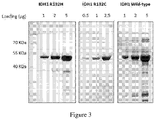
- IDH1 WT/R132H/R132C proteins were induced and purified in accordance with the methods disclosed in Test 1 of the Biological evaluation section. The concentration for each purified proteins was determined by Bradford assay.
- Figure 3 shows the coomassie staining for each of IDH1-R132H, IDH1-R132C, and IDH1-WT proteins, which proves the successful expression and purification of the proteins.
- PK pharmacokinetics
- Each experiment was independently performed in triplicate.
- the plasma concentration of an exemplary Compound 23 after a p.o. administration of 10 mg ⁇ kg -1 in ICR mouse is plotted as function of time in Figure 6 .
- the plasma concentration of the exemplary Compound 23 after an i.v. injection of 2 mg ⁇ kg -1 in ICR mouse is plotted as function of time in Figure 7 .
- Each data represents the mean plasma concentration of the three experiments with standard error of mean (SEM) as error bars.
- the PK parameters of Compound 23 are shown in Table 8A and 8B for p.o. and i.v. administrations, respectively.
- Table 8A The PK parameters of Compound 23 for p.o. administration in ICR mouse PK Parameters p.o.
- Example 4 Compounds inhibit the activity of IDH1 R132H and IDH1 R132C
- the IDH inhibition activity of the compounds were assessed according to Test 5 of the Biological evaluation section.
- the test for mutant IDH1 R132H/R132C inhibition of each compound was carried out in triplet.
- IDH1 R132H the enzyme activity of exemplary Compounds 16, 21, 22, 23, 24 and 31 is plotted as a function of logarithm of the concentration of the compound in Figures 8A-8C, 9A-9C, 10A-10C , 11A-11C, 12A-12C and 13A-13C, respectively.
- the IC 50 values of Compounds 16, 21, 22, 23, 24 and 31 to IDH1 R132H are less than 1.0 ⁇ M.
- IDH1 R132C the enzyme activity of exemplary Compounds 16, 21, 22, 23, 24 and 31 is plotted as function of logarithm of the concentration of the compound in Figures 14A-14C, 15A-15C, 16A-16C , 17A-17C, 18A-18C and 19A-19C, respectively.
- the IC 50 values of Compounds 16, 21, 22, 23, 24 and 31 to IDH1 R132C are less than 1.5 ⁇ M.
- the IC 50 values of the compounds to IDH1 R132C are shown in Table 9. Table 9: IC 50 value of the compounds to IDH1 R132C Compound No.
- IDH1 R132C IC 50 1 10-15 ⁇ M 2 10-15 ⁇ M 3 10-15 ⁇ M 4 10-15 ⁇ M 5 10-15 ⁇ M 6 10-15 ⁇ M 7 10-15 ⁇ M 8 10-15 ⁇ M 9 10-15 ⁇ M 10 10-15 ⁇ M 11 10-15 ⁇ M 12 10-15 ⁇ M 13 10-15 ⁇ M 14 10-15 ⁇ M 15 ⁇ 1.5 ⁇ M 16 ⁇ 1.5 ⁇ M 17 ⁇ 1.5 ⁇ M 18 ⁇ 1.5 ⁇ M 19 ⁇ 1.5 ⁇ M 20 1.5-10 ⁇ M 21 ⁇ 1.5 ⁇ M 22 ⁇ 1.5 ⁇ M 23 ⁇ 1.5 ⁇ M 24 ⁇ 1.5 ⁇ M 31 ⁇ 1.5 ⁇ M
- the test for wild-type IDH1 inhibition of the compounds was also performed. It shows that the compounds showed no inhibiting effect to wild-type IDH1 at the concentrations tested (0.03125 ⁇ M to 2 ⁇ M).
- Example 5 Compounds inhibit the D-2-HG producing activity of IDH1 R132C
- HT1080 cells were cultured in 35mm plate and treated with 10 ⁇ M of each of Compounds 1-37 for 12 h, and the D-2-HG concentration was analysed in accordance to the method disclosed in Test 6 of the Biological evaluation section. The D-2-HG concentration after the treatment of some of the compounds were shown in Figure 20 .
- the D-2-HG inhibition activity of compounds was also assessed in the improved cell-based assay according to the method disclosed in Test 7 of the Biological evaluation section.
- HT1080 cells over-expressing D-2-HG dehydrogenase were cultured in 35mm plate and treated with each of Compounds 1-37 at a concentration of 0.5 ⁇ M, 1 ⁇ M, 2.5 ⁇ M and 5 ⁇ M for 12 h, respectively, and the D-2-HG concentration was analysed.
- the inhibition ratio of D-2-HG in HT1080 cell by the exemplary Compounds 16, 21-24 and 31 at different concentrations were shown in Table 10.
- Example 6 Compounds inhibit anchorage independent growth of HT1080 cells
- HT1080 cells are cultured in 35mm plate and harvested at exponential growth phase, and used in soft agar in accordance to the description in Test 8 of the biological evaluation section.
- Compounds of present disclosure inhibit the anchorage-independent growth of IDH-mutant cancer cells.
- Example 7 Compounds inhibit IDH mutant tumor growth in PDX model
Landscapes
- Chemical & Material Sciences (AREA)
- Health & Medical Sciences (AREA)
- Organic Chemistry (AREA)
- General Health & Medical Sciences (AREA)
- Veterinary Medicine (AREA)
- Pharmacology & Pharmacy (AREA)
- Life Sciences & Earth Sciences (AREA)
- Animal Behavior & Ethology (AREA)
- Medicinal Chemistry (AREA)
- Public Health (AREA)
- Chemical Kinetics & Catalysis (AREA)
- General Chemical & Material Sciences (AREA)
- Nuclear Medicine, Radiotherapy & Molecular Imaging (AREA)
- Epidemiology (AREA)
- Pharmaceuticals Containing Other Organic And Inorganic Compounds (AREA)
- Nitrogen Condensed Heterocyclic Rings (AREA)
- Medicines That Contain Protein Lipid Enzymes And Other Medicines (AREA)
Claims (13)
- Verbindung der Formel I:

wobei,Z N ist;Q ausgewählt ist aus C und N;A O, S oder NRa ist;W lineares oder verzweigtes C1-6-Alkylen ist;X C6-12-Aryl, C6-12-Heteroaryl, 3-10-gliedriges gesättigtes oder ungesättigtes Cycloalkyl, 3-10-gliedriges gesättigtes oder ungesättigtes Heterocycloalkyl ist;Y Halogen, Cyano, C1-12-Alkyl, C6-12-Aryl, C1-12-Alkoxyl, C6-12-Aryloxyl, 3-10-gliedriges gesättigtes oder ungesättigtes Cycloalkyl, 3-10-gliedriges gesättigtes oder ungesättigtes Heterocycloalkyl, Cycloalkylalkyl, Heterocycloalkylalkyl, -C(O)ORb, -C(O)NRcRd ist, die gegebenenfalls ein- oder unabhängig mehrfach substituiert sein können mit einem oder mehreren von Halogen, Hydroxyl, Cyano, C1-12-Alkyl, C2-12-Alkenyl, C2-12-Alkinyl, C5-10-Aryl, C1-12-Alkoxy, 3-10-gliedrigem gesättigtem oder ungesättigtem Cycloalkyl, 3-10-gliedrigem Heterocycloalkyl oder 3-10-gliedrigem Heteroaryl, 65-10-Aryloxyl;R1 C1-12-Alkyl, 3-10-gliedriges gesättigtes oder ungesättigtes Cycloalkyl, Aralkyl, Alkoxyalkyl, Hydroxyalkyl, Alkoxyaralkyl oder -NReRf ist;R2 Wasserstoff, -NRgRh, -C(O)ORb oder -C(O)NRcRd ist;Ra, Rb, Rc, Rd, Re, Rf, Rg und Rh unabhängig voneinander ausgewählt sind aus Wasserstoff, C1-12-Alkyl, 3-10-gliedrigem gesättigtem oder ungesättigtem Cycloalkyl, C6-12-Aryl, das gegebenenfalls ein- oder unabhängig voneinander mehrfach substituiert sein kann durch Halogen, Hydroxyl, Cyano, C1-12-Alkyl, C2-12-Alkenyl, C2-12-Alkinyl, C5-10-Aryl, C1-12-Alkoxy, 3-10-gliedriges gesättigtes oder ungesättigtes Cycloalkyl, 3-10-gliedriges Heterocycloalkyl oder 3-10-gliedriges Heteroaryl, C5-10-Aryloxyl, gegebenenfalls Rc und Rd zusammen mit dem Stickstoffatom, an das sie gebunden sind, einen 4- bis 8-gliedrigen Heterocyclylrest bilden, der gegebenenfalls ein oder mehrere zusätzliche Heteroatome, ausgewählt aus N, S und O, umfasst,gegebenenfalls Rg und Rh zusammen mit dem Stickstoffatom, an das sie gebunden sind, einen 4- bis 8-gliedrigen Heterocyclylrest bilden, der gegebenenfalls ein oder mehrere zusätzliche Heteroatome, ausgewählt aus N, S und O umfasst;n 0, 1 oder 2 ist. - Verbindung nach Anspruch 1, wobei die Verbindung, die in Formel (Ia) dargestellte chemische Struktur aufweist:

wobei,W lineares oder verzweigtes C1-6-Alkylen ist;X C6-12-Aryl, C6-12-Heteroaryl, 3-10-gliedriges gesättigtes oder ungesättigtes Cycloalkyl, 3-10-gliedriges gesättigtes oder ungesättigtes Heterocycloalkyl ist;Y Halogen, Cyano, C1-12-Alkyl, C6-12-Aryl, C1-12-Alkoxyl, C6-12-Aryloxyl, 3-10-gliedriges gesättigtes oder ungesättigtes Cycloalkyl, 3-10-gliedriges gesättigtes oder ungesättigtes Heterocycloalkyl, Cycloalkylalkyl, Heterocycloalkylalkyl, -C(O)ORb, -C(O)NRcRd ist, die gegebenenfalls ein- oder unabhängig mehrfach substituiert sein können mit einem oder mehreren von Halogen, Hydroxyl, Cyano, C1-12-Alkyl, C2-12-Alkenyl, C2-12-Alkinyl, C5-10-Aryl, C1-12-Alkoxy, 3-10-gliedrigem gesättigtem oder ungesättigtem Cycloalkyl, 3-10-gliedrigem Heterocycloalkyl oder 3-10-gliedrigem Heteroaryl, C5-10-Aryloxyl,R1 C1-12-Alkyl, 3-10-gliedriges gesättigtes oder ungesättigtes Cycloalkyl, Aralkyl, Alkoxyalkyl, Hydroxyalkyl, Alkoxyaralkyl oder -NReRf ist;R2 Wasserstoff, -NRgRh, -C(O)ORb oder -C(O)NRcRd ist;Ra, Rb, Rc, Rd, Re, Rf, Rg und Rh unabhängig voneinander ausgewählt sind aus Wasserstoff, C1-12-Alkyl, 3-10-gliedrigem gesättigtem oder ungesättigtem Cycloalkyl, C6-12-Aryl, das gegebenenfalls ein- oder unabhängig voneinander mehrfach substituiert sein kann durch Halogen, Hydroxyl, Cyano, C1-12-Alkyl, C2-12-Alkenyl, C2-12-Alkinyl, C5-10-Aryl, C1-12-Alkoxy, 3-10-gliedriges gesättigtes oder ungesättigtes Cycloalkyl, 3-10-gliedriges Heterocycloalkyl oder 3-10-gliedriges Heteroaryl, C5-10-Aryloxyl, gegebenenfalls Rc und Rd zusammen mit dem Stickstoffatom, an das sie gebunden sind, ein 4- bis 8-gliedriges Heterocyclyl bilden, dasa gegebenenfalls ein oder mehrere zusätzliche Heteroatome, ausgewählt aus N, S und O umfasst,gegebenenfalls Rg und Rh zusammen mit dem Stickstoffatom, an das sie gebunden sind, ein 4- bis 8-gliedriges Heterocyclyl bilden, das gegebenenfalls ein oder mehrere zusätzliche Heteroatome, ausgewählt aus N, S und O umfasst;n 0, 1 oder 2 ist. - Verbindung nach Anspruch 1 oder 2, wobei Ra Wasserstoff ist.
- Verbindung nach Anspruch 1 oder 2, wobei W ein verzweigtes C1-3-Alkylen ist.
- Verbindung nach Anspruch 1 oder 2, wobei X C6-12-Aryl oder C6-12-Heteroaryl ist.
- Verbindung nach Anspruch 5, wobei X Phenyl, Pyridinyl oder Pyrazolyl ist.
- Verbindung nach Anspruch 1 oder 2, wobei Y ausgewählt ist aus der Gruppe bestehend aus:


- Verbindung nach einem beliebigen der vorhergehenden Ansprüche, wobei die Verbindung eine (R)-Konfiguration, eine (S)-Konfiguration oder eine Mischung davon aufweist.
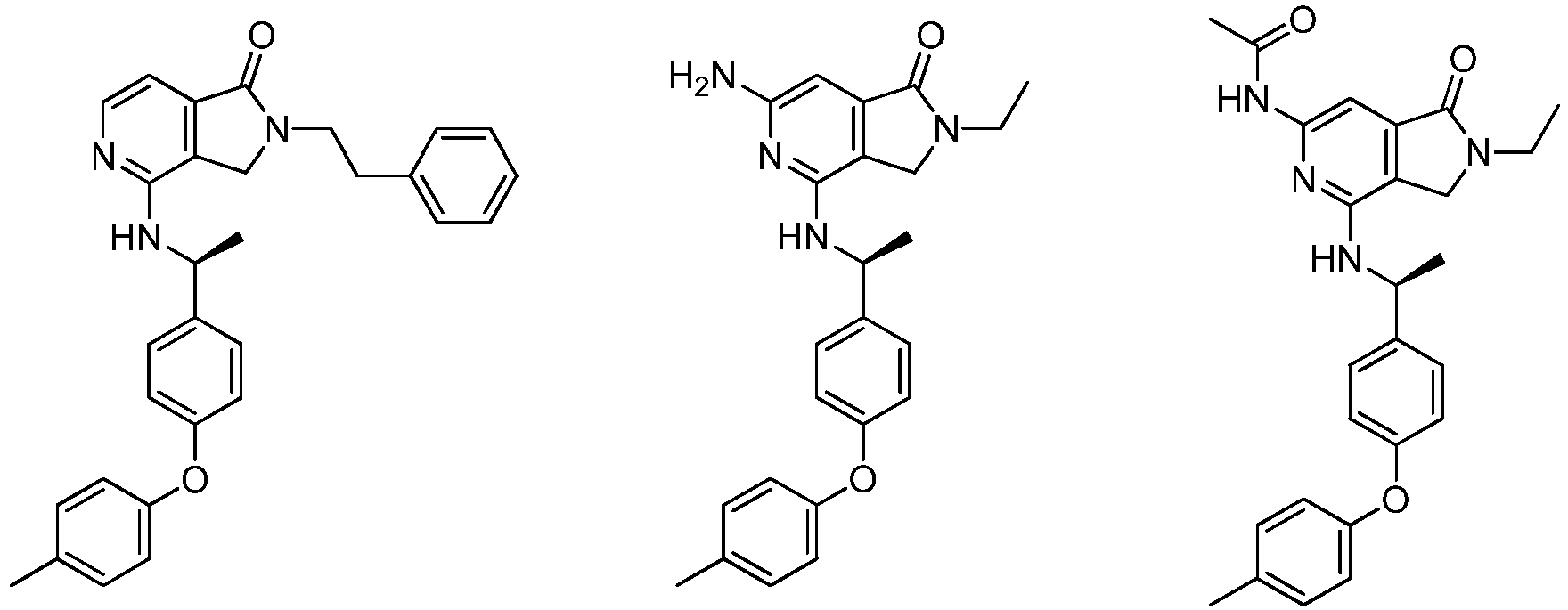
- Verbindung nach Anspruch 1, ausgewählt aus der Gruppe bestehend aus



- Pharmazeutische Zusammensetzung, die eine oder mehrere Verbindungen, pharmazeutisch verträgliche Salze, Hydrate, Solvate oder Stereoisomere davon nach einem beliebigen der vorhergehenden Ansprüche als ersten Wirkstoff und einen pharmazeutisch verträglichen Träger umfasst.
- Wirksame Menge einer oder mehrerer Verbindungen, pharmazeutisch verträglicher Salze, Hydrate, Solvate oder Stereoisomere davon nach einem beliebigen der Ansprüche 1 bis 9 oder einer pharmazeutischen Zusammensetzung nach Anspruch 10 zur Verwendung in einem Verfahren zur Behandlung einer Krankheit, umfassend die Verabreichung einer wirksamen Menge einer oder mehrerer Verbindungen, pharmazeutisch verträglicher Salze, Hydrate, Solvate oder Stereoisomere davon nach einem beliebigen der Ansprüche 1 bis 9 oder einer pharmazeutischen Zusammensetzung nach Anspruch 10 an ein Subjekt, wobei die Krankheit Krebs ist.
- Eine oder mehrere Verbindungen, pharmazeutisch verträgliche Salze, Hydrate, Solvate oder Stereoisomere davon nach einem beliebigen der Ansprüche 1 bis 9 oder eine pharmazeutische Zusammensetzung nach Anspruch 10 zur Verwendung in einem Verfahren zum Inhibieren der Umwandlung von α-KG in D-2-HG unter Verwendung einer oder mehrerer Verbindungen, pharmazeutisch verträglicher Salze, Hydrate, Solvate oder Stereoisomere davon nach einem beliebigen der Ansprüche 1 bis 9 oder einer pharmazeutischen Zusammensetzung nach Anspruch 10.
- Eine oder mehrere Verbindungen, pharmazeutisch verträgliche Salze, Hydrate, Solvate oder Stereoisomere davon nach einem beliebigen der Ansprüche 1 bis 9 oder eine pharmazeutische Zusammensetzung nach Anspruch 10 zur Verwendung in einem Verfahren zum Inhibieren von mutiertem IDH, Wildtyp-IDH oder beidem unter Verwendung einer oder mehrerer Verbindungen, pharmazeutisch verträglicher Salze, Hydrate, Solvate oder Stereoisomere davon nach einem beliebigen der Ansprüche 1 bis 9 oder einer pharmazeutischen Zusammensetzung nach Anspruch 10.
Applications Claiming Priority (2)
| Application Number | Priority Date | Filing Date | Title |
|---|---|---|---|
| PCT/CN2016/090022 WO2018010142A1 (en) | 2016-07-14 | 2016-07-14 | Iso-citrate dehydrogenase (idh) inhibitor |
| PCT/CN2017/092506 WO2018010637A1 (en) | 2016-07-14 | 2017-07-11 | Iso-citrate dehydrogenase (idh) inhibitor |
Publications (3)
| Publication Number | Publication Date |
|---|---|
| EP3484882A1 EP3484882A1 (de) | 2019-05-22 |
| EP3484882A4 EP3484882A4 (de) | 2020-02-26 |
| EP3484882B1 true EP3484882B1 (de) | 2022-04-27 |
Family
ID=60952234
Family Applications (1)
| Application Number | Title | Priority Date | Filing Date |
|---|---|---|---|
| EP17826973.4A Active EP3484882B1 (de) | 2016-07-14 | 2017-07-11 | Iso-citrat-dehydrogenase (idh)-inhibitor |
Country Status (7)
| Country | Link |
|---|---|
| US (1) | US10752626B2 (de) |
| EP (1) | EP3484882B1 (de) |
| JP (1) | JP7021405B2 (de) |
| CN (1) | CN109641890B (de) |
| CA (1) | CA3030458C (de) |
| SG (1) | SG11201900214UA (de) |
| WO (2) | WO2018010142A1 (de) |
Families Citing this family (5)
| Publication number | Priority date | Publication date | Assignee | Title |
|---|---|---|---|---|
| CA3104760C (en) * | 2018-06-26 | 2023-09-26 | Kpc Pharmaceuticals, Inc. | Benzimidazole derivatives and use thereof as idh1 inhibitors |
| JP2021534215A (ja) * | 2018-08-24 | 2021-12-09 | ゼニオプロ ゲーエムベーハー | 病的症状の治療における使用のための芳香族分子 |
| CN114555597B (zh) * | 2019-10-12 | 2024-06-04 | 浙江迈同生物医药有限公司 | 异柠檬酸脱氢酶(idh)抑制剂 |
| MX2024000313A (es) | 2021-07-09 | 2024-03-06 | Plexium Inc | Compuestos de arilo y composiciones farmaceuticas que modulan la ikzf2. |
| CN117957231A (zh) * | 2021-09-28 | 2024-04-30 | 上海艾力斯医药科技股份有限公司 | 一种稠环化合物、其制备方法及其应用 |
Family Cites Families (13)
| Publication number | Priority date | Publication date | Assignee | Title |
|---|---|---|---|---|
| GB0419160D0 (en) * | 2004-08-27 | 2004-09-29 | Novartis Ag | Organic compounds |
| US7837251B2 (en) * | 2007-09-19 | 2010-11-23 | Honda Motor Co., Ltd. | Rear-quarter window appearance |
| WO2009072581A1 (ja) * | 2007-12-05 | 2009-06-11 | Aska Pharmaceutical Co., Ltd. | ラクタム化合物又はその塩及びppar活性化剤 |
| GB0909671D0 (en) * | 2009-06-04 | 2009-07-22 | Xention Discovery Ltd | Compounds |
| US9474779B2 (en) * | 2012-01-19 | 2016-10-25 | Agios Pharmaceuticals, Inc. | Therapeutically active compositions and their methods of use |
| US10376510B2 (en) * | 2013-07-11 | 2019-08-13 | Agios Pharmaceuticals, Inc. | 2,4- or 4,6-diaminopyrimidine compounds as IDH2 mutants inhibitors for the treatment of cancer |
| TWI745271B (zh) * | 2014-05-19 | 2021-11-11 | 美商西建公司 | 全身紅斑性狼瘡之治療 |
| EP3200800A1 (de) * | 2014-09-29 | 2017-08-09 | Agios Pharmaceuticals, Inc. | Therapeutische wirkstoffverbindungen und deren verfahren zur verwendung |
| BR112017006425B8 (pt) * | 2014-10-01 | 2023-05-16 | Daiichi Sankyo Co Ltd | Compostos derivados de isoxazol, seus usos, inibidores de isocitrato desidrogenase 1 mutante e da produção de d-2 hidroxiglutamato, agente antitumoral e composição farmacêutica compreendendo os mesmos |
| WO2016060702A1 (en) * | 2014-10-13 | 2016-04-21 | Celgene Corporaton | Methods for treating solid tumors and the use of biomarkers as a predictor of clinical sensitivity to immunomodulatory therapies |
| ES2901509T3 (es) * | 2014-10-30 | 2022-03-22 | Kangpu Biopharmaceuticals Ltd | Derivado de isoindolina, compuesto intermedio, métodos de preparación, composición farmacéutica y uso del mismo |
| JP6815318B2 (ja) * | 2014-12-23 | 2021-01-20 | ダナ−ファーバー キャンサー インスティテュート,インコーポレイテッド | 二官能性分子によって標的化タンパク質分解を誘導する方法 |
| WO2016171755A1 (en) | 2015-04-21 | 2016-10-27 | Forma Therapeutics, Inc. | Fused-bicyclic aryl quinolinone derivatives as mutant-isocitrate dehydrogenase inhibitors |
-
2016
- 2016-07-14 WO PCT/CN2016/090022 patent/WO2018010142A1/en not_active Ceased
-
2017
- 2017-07-11 EP EP17826973.4A patent/EP3484882B1/de active Active
- 2017-07-11 CA CA3030458A patent/CA3030458C/en active Active
- 2017-07-11 US US16/315,653 patent/US10752626B2/en active Active
- 2017-07-11 CN CN201780051039.8A patent/CN109641890B/zh active Active
- 2017-07-11 SG SG11201900214UA patent/SG11201900214UA/en unknown
- 2017-07-11 JP JP2019523156A patent/JP7021405B2/ja active Active
- 2017-07-11 WO PCT/CN2017/092506 patent/WO2018010637A1/en not_active Ceased
Also Published As
| Publication number | Publication date |
|---|---|
| CA3030458A1 (en) | 2018-01-18 |
| SG11201900214UA (en) | 2019-02-27 |
| JP7021405B2 (ja) | 2022-02-17 |
| EP3484882A4 (de) | 2020-02-26 |
| WO2018010637A1 (en) | 2018-01-18 |
| CN109641890A (zh) | 2019-04-16 |
| US20190256511A1 (en) | 2019-08-22 |
| CA3030458C (en) | 2024-02-13 |
| EP3484882A1 (de) | 2019-05-22 |
| WO2018010142A1 (en) | 2018-01-18 |
| CN109641890B (zh) | 2022-04-26 |
| US10752626B2 (en) | 2020-08-25 |
| JP2019522056A (ja) | 2019-08-08 |
Similar Documents
| Publication | Publication Date | Title |
|---|---|---|
| EP3170825B1 (de) | Neuartige pyrrolopyrimidinverbindungen als hemmer der proteinkinase | |
| EP2931722B1 (de) | Substituierte 1h-pyrrolo-[2,3-b]pyridin- und 1h-pyrazolo-[3,4-b]pyridinderivate als salzinduzierbare kinase-2 (sik2)-hemmer | |
| CA3030458C (en) | Iso-citrate dehydrogenase (idh) inhibitor | |
| CN111909181B (zh) | 一类泛素化特异性蛋白酶抑制剂及其制备方法与应用 | |
| EP3782993A1 (de) | Selektiver jak2-inhibitor und seine anwendung | |
| JP2017508779A (ja) | ROS1阻害剤としての置換4,5,6,7−テトラヒドロ−ピラゾロ[1,5−α]ピラジン誘導体および5,6,7,8−テトラヒドロ−4H−ピラゾロ[1,5−α][1,4]ジアゼピン誘導体 | |
| EP4606801A1 (de) | Kondensierte heterocyclische verbindung und verwendung davon | |
| TWI875911B (zh) | Bruton酪胺酸激酶(BTK)抑制劑 | |
| EP4249489A1 (de) | Heterocyclische verbindung als diacylglycerolkinasehemmer und verwendung davon | |
| WO2023131677A1 (en) | Compounds containing a hydroxyphenyl moiety and their use | |
| JP2010111702A (ja) | 複素環化合物、その製造法および用途 | |
| WO2018095344A1 (en) | Isocitrate dehydrogenase (idh) inhibitor | |
| EP4041732B1 (de) | Iso-citrat-dehydrogenase (idh)-inhibitor | |
| AU2010266559A1 (en) | Substituted 4-hydroxypyrimidine-5-carboxamides | |
| JP2026514449A (ja) | 新規mettl3阻害剤及び治療におけるその使用 | |
| EP4053121A1 (de) | Neuartiges heterocyclische substituiertes pyrimidinderivat mit krebszellenwachstumshemmender wirkung und pharmazeutische zusammensetzung damit | |
| US20210107896A1 (en) | Macrophage Migration Inhibitory Factor Inhibitors, and Methods of Making and Using Same | |
| WO2024227026A1 (en) | Heterocyclic compounds as parp1 inhibitors | |
| OA22148A (en) | Indazole Macrocycles And Their Use. | |
| JP2010018601A (ja) | 複素環化合物、その製造法および用途 | |
| JP2010031001A (ja) | 複素環化合物、その製造法および用途 | |
| HK1238243B (en) | Novel pyrrolopyrimidine compounds as inhibitors of protein kinases | |
| HK1238243A1 (en) | Novel pyrrolopyrimidine compounds as inhibitors of protein kinases |
Legal Events
| Date | Code | Title | Description |
|---|---|---|---|
| STAA | Information on the status of an ep patent application or granted ep patent |
Free format text: STATUS: THE INTERNATIONAL PUBLICATION HAS BEEN MADE |
|
| PUAI | Public reference made under article 153(3) epc to a published international application that has entered the european phase |
Free format text: ORIGINAL CODE: 0009012 |
|
| STAA | Information on the status of an ep patent application or granted ep patent |
Free format text: STATUS: REQUEST FOR EXAMINATION WAS MADE |
|
| 17P | Request for examination filed |
Effective date: 20190205 |
|
| AK | Designated contracting states |
Kind code of ref document: A1 Designated state(s): AL AT BE BG CH CY CZ DE DK EE ES FI FR GB GR HR HU IE IS IT LI LT LU LV MC MK MT NL NO PL PT RO RS SE SI SK SM TR |
|
| AX | Request for extension of the european patent |
Extension state: BA ME |
|
| DAV | Request for validation of the european patent (deleted) | ||
| DAX | Request for extension of the european patent (deleted) | ||
| RIC1 | Information provided on ipc code assigned before grant |
Ipc: A61K 31/4436 20060101ALI20200115BHEP Ipc: A61P 31/04 20060101ALI20200115BHEP Ipc: C07D 417/14 20060101AFI20200115BHEP Ipc: A61P 35/00 20060101ALI20200115BHEP Ipc: C07D 471/04 20060101ALN20200115BHEP |
|
| A4 | Supplementary search report drawn up and despatched |
Effective date: 20200124 |
|
| GRAP | Despatch of communication of intention to grant a patent |
Free format text: ORIGINAL CODE: EPIDOSNIGR1 |
|
| STAA | Information on the status of an ep patent application or granted ep patent |
Free format text: STATUS: GRANT OF PATENT IS INTENDED |
|
| RAP1 | Party data changed (applicant data changed or rights of an application transferred) |
Owner name: ZHEJIANG METON PHARMACEUTICAL CO., LTD |
|
| RIC1 | Information provided on ipc code assigned before grant |
Ipc: C07D 471/04 20060101ALN20211001BHEP Ipc: A61P 35/00 20060101ALI20211001BHEP Ipc: A61P 31/04 20060101ALI20211001BHEP Ipc: A61K 31/4436 20060101ALI20211001BHEP Ipc: C07D 417/14 20060101AFI20211001BHEP |
|
| RIC1 | Information provided on ipc code assigned before grant |
Ipc: C07D 471/04 20060101ALN20211013BHEP Ipc: A61P 35/00 20060101ALI20211013BHEP Ipc: A61P 31/04 20060101ALI20211013BHEP Ipc: A61K 31/4436 20060101ALI20211013BHEP Ipc: C07D 417/14 20060101AFI20211013BHEP |
|
| INTG | Intention to grant announced |
Effective date: 20211108 |
|
| GRAS | Grant fee paid |
Free format text: ORIGINAL CODE: EPIDOSNIGR3 |
|
| GRAA | (expected) grant |
Free format text: ORIGINAL CODE: 0009210 |
|
| STAA | Information on the status of an ep patent application or granted ep patent |
Free format text: STATUS: THE PATENT HAS BEEN GRANTED |
|
| AK | Designated contracting states |
Kind code of ref document: B1 Designated state(s): AL AT BE BG CH CY CZ DE DK EE ES FI FR GB GR HR HU IE IS IT LI LT LU LV MC MK MT NL NO PL PT RO RS SE SI SK SM TR |
|
| REG | Reference to a national code |
Ref country code: GB Ref legal event code: FG4D |
|
| REG | Reference to a national code |
Ref country code: CH Ref legal event code: EP |
|
| REG | Reference to a national code |
Ref country code: AT Ref legal event code: REF Ref document number: 1486880 Country of ref document: AT Kind code of ref document: T Effective date: 20220515 |
|
| REG | Reference to a national code |
Ref country code: DE Ref legal event code: R096 Ref document number: 602017056649 Country of ref document: DE |
|
| REG | Reference to a national code |
Ref country code: IE Ref legal event code: FG4D |
|
| REG | Reference to a national code |
Ref country code: LT Ref legal event code: MG9D |
|
| REG | Reference to a national code |
Ref country code: NL Ref legal event code: MP Effective date: 20220427 |
|
| REG | Reference to a national code |
Ref country code: AT Ref legal event code: MK05 Ref document number: 1486880 Country of ref document: AT Kind code of ref document: T Effective date: 20220427 |
|
| PG25 | Lapsed in a contracting state [announced via postgrant information from national office to epo] |
Ref country code: NL Free format text: LAPSE BECAUSE OF FAILURE TO SUBMIT A TRANSLATION OF THE DESCRIPTION OR TO PAY THE FEE WITHIN THE PRESCRIBED TIME-LIMIT Effective date: 20220427 |
|
| PG25 | Lapsed in a contracting state [announced via postgrant information from national office to epo] |
Ref country code: SE Free format text: LAPSE BECAUSE OF FAILURE TO SUBMIT A TRANSLATION OF THE DESCRIPTION OR TO PAY THE FEE WITHIN THE PRESCRIBED TIME-LIMIT Effective date: 20220427 Ref country code: PT Free format text: LAPSE BECAUSE OF FAILURE TO SUBMIT A TRANSLATION OF THE DESCRIPTION OR TO PAY THE FEE WITHIN THE PRESCRIBED TIME-LIMIT Effective date: 20220829 Ref country code: NO Free format text: LAPSE BECAUSE OF FAILURE TO SUBMIT A TRANSLATION OF THE DESCRIPTION OR TO PAY THE FEE WITHIN THE PRESCRIBED TIME-LIMIT Effective date: 20220727 Ref country code: LT Free format text: LAPSE BECAUSE OF FAILURE TO SUBMIT A TRANSLATION OF THE DESCRIPTION OR TO PAY THE FEE WITHIN THE PRESCRIBED TIME-LIMIT Effective date: 20220427 Ref country code: HR Free format text: LAPSE BECAUSE OF FAILURE TO SUBMIT A TRANSLATION OF THE DESCRIPTION OR TO PAY THE FEE WITHIN THE PRESCRIBED TIME-LIMIT Effective date: 20220427 Ref country code: GR Free format text: LAPSE BECAUSE OF FAILURE TO SUBMIT A TRANSLATION OF THE DESCRIPTION OR TO PAY THE FEE WITHIN THE PRESCRIBED TIME-LIMIT Effective date: 20220728 Ref country code: FI Free format text: LAPSE BECAUSE OF FAILURE TO SUBMIT A TRANSLATION OF THE DESCRIPTION OR TO PAY THE FEE WITHIN THE PRESCRIBED TIME-LIMIT Effective date: 20220427 Ref country code: ES Free format text: LAPSE BECAUSE OF FAILURE TO SUBMIT A TRANSLATION OF THE DESCRIPTION OR TO PAY THE FEE WITHIN THE PRESCRIBED TIME-LIMIT Effective date: 20220427 Ref country code: BG Free format text: LAPSE BECAUSE OF FAILURE TO SUBMIT A TRANSLATION OF THE DESCRIPTION OR TO PAY THE FEE WITHIN THE PRESCRIBED TIME-LIMIT Effective date: 20220727 Ref country code: AT Free format text: LAPSE BECAUSE OF FAILURE TO SUBMIT A TRANSLATION OF THE DESCRIPTION OR TO PAY THE FEE WITHIN THE PRESCRIBED TIME-LIMIT Effective date: 20220427 |
|
| PG25 | Lapsed in a contracting state [announced via postgrant information from national office to epo] |
Ref country code: RS Free format text: LAPSE BECAUSE OF FAILURE TO SUBMIT A TRANSLATION OF THE DESCRIPTION OR TO PAY THE FEE WITHIN THE PRESCRIBED TIME-LIMIT Effective date: 20220427 Ref country code: PL Free format text: LAPSE BECAUSE OF FAILURE TO SUBMIT A TRANSLATION OF THE DESCRIPTION OR TO PAY THE FEE WITHIN THE PRESCRIBED TIME-LIMIT Effective date: 20220427 Ref country code: LV Free format text: LAPSE BECAUSE OF FAILURE TO SUBMIT A TRANSLATION OF THE DESCRIPTION OR TO PAY THE FEE WITHIN THE PRESCRIBED TIME-LIMIT Effective date: 20220427 Ref country code: IS Free format text: LAPSE BECAUSE OF FAILURE TO SUBMIT A TRANSLATION OF THE DESCRIPTION OR TO PAY THE FEE WITHIN THE PRESCRIBED TIME-LIMIT Effective date: 20220827 |
|
| REG | Reference to a national code |
Ref country code: DE Ref legal event code: R097 Ref document number: 602017056649 Country of ref document: DE |
|
| PG25 | Lapsed in a contracting state [announced via postgrant information from national office to epo] |
Ref country code: SM Free format text: LAPSE BECAUSE OF FAILURE TO SUBMIT A TRANSLATION OF THE DESCRIPTION OR TO PAY THE FEE WITHIN THE PRESCRIBED TIME-LIMIT Effective date: 20220427 Ref country code: SK Free format text: LAPSE BECAUSE OF FAILURE TO SUBMIT A TRANSLATION OF THE DESCRIPTION OR TO PAY THE FEE WITHIN THE PRESCRIBED TIME-LIMIT Effective date: 20220427 Ref country code: RO Free format text: LAPSE BECAUSE OF FAILURE TO SUBMIT A TRANSLATION OF THE DESCRIPTION OR TO PAY THE FEE WITHIN THE PRESCRIBED TIME-LIMIT Effective date: 20220427 Ref country code: EE Free format text: LAPSE BECAUSE OF FAILURE TO SUBMIT A TRANSLATION OF THE DESCRIPTION OR TO PAY THE FEE WITHIN THE PRESCRIBED TIME-LIMIT Effective date: 20220427 Ref country code: DK Free format text: LAPSE BECAUSE OF FAILURE TO SUBMIT A TRANSLATION OF THE DESCRIPTION OR TO PAY THE FEE WITHIN THE PRESCRIBED TIME-LIMIT Effective date: 20220427 Ref country code: CZ Free format text: LAPSE BECAUSE OF FAILURE TO SUBMIT A TRANSLATION OF THE DESCRIPTION OR TO PAY THE FEE WITHIN THE PRESCRIBED TIME-LIMIT Effective date: 20220427 |
|
| PG25 | Lapsed in a contracting state [announced via postgrant information from national office to epo] |
Ref country code: MC Free format text: LAPSE BECAUSE OF FAILURE TO SUBMIT A TRANSLATION OF THE DESCRIPTION OR TO PAY THE FEE WITHIN THE PRESCRIBED TIME-LIMIT Effective date: 20220427 |
|
| PLBE | No opposition filed within time limit |
Free format text: ORIGINAL CODE: 0009261 |
|
| STAA | Information on the status of an ep patent application or granted ep patent |
Free format text: STATUS: NO OPPOSITION FILED WITHIN TIME LIMIT |
|
| PG25 | Lapsed in a contracting state [announced via postgrant information from national office to epo] |
Ref country code: AL Free format text: LAPSE BECAUSE OF FAILURE TO SUBMIT A TRANSLATION OF THE DESCRIPTION OR TO PAY THE FEE WITHIN THE PRESCRIBED TIME-LIMIT Effective date: 20220427 |
|
| 26N | No opposition filed |
Effective date: 20230130 |
|
| PG25 | Lapsed in a contracting state [announced via postgrant information from national office to epo] |
Ref country code: LU Free format text: LAPSE BECAUSE OF NON-PAYMENT OF DUE FEES Effective date: 20220711 |
|
| PG25 | Lapsed in a contracting state [announced via postgrant information from national office to epo] |
Ref country code: SI Free format text: LAPSE BECAUSE OF FAILURE TO SUBMIT A TRANSLATION OF THE DESCRIPTION OR TO PAY THE FEE WITHIN THE PRESCRIBED TIME-LIMIT Effective date: 20220427 |
|
| P01 | Opt-out of the competence of the unified patent court (upc) registered |
Effective date: 20230522 |
|
| PG25 | Lapsed in a contracting state [announced via postgrant information from national office to epo] |
Ref country code: IE Free format text: LAPSE BECAUSE OF NON-PAYMENT OF DUE FEES Effective date: 20220711 |
|
| PG25 | Lapsed in a contracting state [announced via postgrant information from national office to epo] |
Ref country code: IT Free format text: LAPSE BECAUSE OF FAILURE TO SUBMIT A TRANSLATION OF THE DESCRIPTION OR TO PAY THE FEE WITHIN THE PRESCRIBED TIME-LIMIT Effective date: 20220427 |
|
| PG25 | Lapsed in a contracting state [announced via postgrant information from national office to epo] |
Ref country code: HU Free format text: LAPSE BECAUSE OF FAILURE TO SUBMIT A TRANSLATION OF THE DESCRIPTION OR TO PAY THE FEE WITHIN THE PRESCRIBED TIME-LIMIT; INVALID AB INITIO Effective date: 20170711 |
|
| PG25 | Lapsed in a contracting state [announced via postgrant information from national office to epo] |
Ref country code: MK Free format text: LAPSE BECAUSE OF FAILURE TO SUBMIT A TRANSLATION OF THE DESCRIPTION OR TO PAY THE FEE WITHIN THE PRESCRIBED TIME-LIMIT Effective date: 20220427 Ref country code: CY Free format text: LAPSE BECAUSE OF FAILURE TO SUBMIT A TRANSLATION OF THE DESCRIPTION OR TO PAY THE FEE WITHIN THE PRESCRIBED TIME-LIMIT Effective date: 20220427 |
|
| PG25 | Lapsed in a contracting state [announced via postgrant information from national office to epo] |
Ref country code: TR Free format text: LAPSE BECAUSE OF FAILURE TO SUBMIT A TRANSLATION OF THE DESCRIPTION OR TO PAY THE FEE WITHIN THE PRESCRIBED TIME-LIMIT Effective date: 20220427 |
|
| PG25 | Lapsed in a contracting state [announced via postgrant information from national office to epo] |
Ref country code: MT Free format text: LAPSE BECAUSE OF FAILURE TO SUBMIT A TRANSLATION OF THE DESCRIPTION OR TO PAY THE FEE WITHIN THE PRESCRIBED TIME-LIMIT Effective date: 20220427 |
|
| PG25 | Lapsed in a contracting state [announced via postgrant information from national office to epo] |
Ref country code: BG Free format text: LAPSE BECAUSE OF FAILURE TO SUBMIT A TRANSLATION OF THE DESCRIPTION OR TO PAY THE FEE WITHIN THE PRESCRIBED TIME-LIMIT Effective date: 20220427 |
|
| PG25 | Lapsed in a contracting state [announced via postgrant information from national office to epo] |
Ref country code: BG Free format text: LAPSE BECAUSE OF FAILURE TO SUBMIT A TRANSLATION OF THE DESCRIPTION OR TO PAY THE FEE WITHIN THE PRESCRIBED TIME-LIMIT Effective date: 20220427 |
|
| PGFP | Annual fee paid to national office [announced via postgrant information from national office to epo] |
Ref country code: DE Payment date: 20250708 Year of fee payment: 9 |
|
| PGFP | Annual fee paid to national office [announced via postgrant information from national office to epo] |
Ref country code: GB Payment date: 20250710 Year of fee payment: 9 Ref country code: BE Payment date: 20250716 Year of fee payment: 9 |
|
| PGFP | Annual fee paid to national office [announced via postgrant information from national office to epo] |
Ref country code: FR Payment date: 20250708 Year of fee payment: 9 |
|
| PGFP | Annual fee paid to national office [announced via postgrant information from national office to epo] |
Ref country code: CH Payment date: 20250801 Year of fee payment: 9 |