EP3482400B1 - Verfahren zur herstellung von radionukliden und vorrichtung dafür - Google Patents
Verfahren zur herstellung von radionukliden und vorrichtung dafür Download PDFInfo
- Publication number
- EP3482400B1 EP3482400B1 EP17737275.2A EP17737275A EP3482400B1 EP 3482400 B1 EP3482400 B1 EP 3482400B1 EP 17737275 A EP17737275 A EP 17737275A EP 3482400 B1 EP3482400 B1 EP 3482400B1
- Authority
- EP
- European Patent Office
- Prior art keywords
- foil
- target nuclide
- bismuth
- plate
- target
- Prior art date
- Legal status (The legal status is an assumption and is not a legal conclusion. Google has not performed a legal analysis and makes no representation as to the accuracy of the status listed.)
- Active
Links
Images


Classifications
-
- G—PHYSICS
- G21—NUCLEAR PHYSICS; NUCLEAR ENGINEERING
- G21G—CONVERSION OF CHEMICAL ELEMENTS; RADIOACTIVE SOURCES
- G21G1/00—Arrangements for converting chemical elements by electromagnetic radiation, corpuscular radiation or particle bombardment, e.g. producing radioactive isotopes
- G21G1/04—Arrangements for converting chemical elements by electromagnetic radiation, corpuscular radiation or particle bombardment, e.g. producing radioactive isotopes outside nuclear reactors or particle accelerators
- G21G1/10—Arrangements for converting chemical elements by electromagnetic radiation, corpuscular radiation or particle bombardment, e.g. producing radioactive isotopes outside nuclear reactors or particle accelerators by bombardment with electrically charged particles
-
- G—PHYSICS
- G21—NUCLEAR PHYSICS; NUCLEAR ENGINEERING
- G21G—CONVERSION OF CHEMICAL ELEMENTS; RADIOACTIVE SOURCES
- G21G4/00—Radioactive sources
- G21G4/04—Radioactive sources other than neutron sources
- G21G4/06—Radioactive sources other than neutron sources characterised by constructional features
- G21G4/08—Radioactive sources other than neutron sources characterised by constructional features specially adapted for medical application
-
- G—PHYSICS
- G21—NUCLEAR PHYSICS; NUCLEAR ENGINEERING
- G21K—HANDLING OF PARTICLES OR IONISING RADIATION NOT OTHERWISE PROVIDED FOR; IRRADIATION DEVICES; GAMMA RAY OR X-RAY MICROSCOPES
- G21K5/00—Irradiation devices
- G21K5/08—Holders for targets or for other objects to be irradiated
-
- H—ELECTRICITY
- H05—ELECTRIC TECHNIQUES NOT OTHERWISE PROVIDED FOR
- H05H—PLASMA TECHNIQUE; PRODUCTION OF ACCELERATED ELECTRICALLY-CHARGED PARTICLES OR OF NEUTRONS; PRODUCTION OR ACCELERATION OF NEUTRAL MOLECULAR OR ATOMIC BEAMS
- H05H13/00—Magnetic resonance accelerators; Cyclotrons
-
- A—HUMAN NECESSITIES
- A61—MEDICAL OR VETERINARY SCIENCE; HYGIENE
- A61K—PREPARATIONS FOR MEDICAL, DENTAL OR TOILETRY PURPOSES
- A61K51/00—Preparations containing radioactive substances for use in therapy or testing in vivo
- A61K51/02—Preparations containing radioactive substances for use in therapy or testing in vivo characterised by the carrier, i.e. characterised by the agent or material covalently linked or complexing the radioactive nucleus
- A61K51/025—Preparations containing radioactive substances for use in therapy or testing in vivo characterised by the carrier, i.e. characterised by the agent or material covalently linked or complexing the radioactive nucleus inorganic Tc complexes or compounds
-
- G—PHYSICS
- G21—NUCLEAR PHYSICS; NUCLEAR ENGINEERING
- G21G—CONVERSION OF CHEMICAL ELEMENTS; RADIOACTIVE SOURCES
- G21G1/00—Arrangements for converting chemical elements by electromagnetic radiation, corpuscular radiation or particle bombardment, e.g. producing radioactive isotopes
- G21G1/001—Recovery of specific isotopes from irradiated targets
- G21G2001/0084—Bismuth
-
- G—PHYSICS
- G21—NUCLEAR PHYSICS; NUCLEAR ENGINEERING
- G21G—CONVERSION OF CHEMICAL ELEMENTS; RADIOACTIVE SOURCES
- G21G1/00—Arrangements for converting chemical elements by electromagnetic radiation, corpuscular radiation or particle bombardment, e.g. producing radioactive isotopes
- G21G1/001—Recovery of specific isotopes from irradiated targets
- G21G2001/0094—Other isotopes not provided for in the groups listed above
-
- H—ELECTRICITY
- H05—ELECTRIC TECHNIQUES NOT OTHERWISE PROVIDED FOR
- H05H—PLASMA TECHNIQUE; PRODUCTION OF ACCELERATED ELECTRICALLY-CHARGED PARTICLES OR OF NEUTRONS; PRODUCTION OR ACCELERATION OF NEUTRAL MOLECULAR OR ATOMIC BEAMS
- H05H6/00—Targets for producing nuclear reactions
Definitions
- the present disclosure relates to a particle accelerator target for producing radionuclides, particularly a target for the production of astatine-211 in a cyclotron. It also relates to a method of producing radionuclides, such as astatine-211.
- Astatine-211 ( 211 At) is an ⁇ -particle emitting radionuclide (alpha-emitter) with a half-life of 7.2 hours. It is highly radiotoxic in its free state. It is an isotope of interest in nuclear medicine, having chemistry similar to iodine.
- ⁇ -particle emitting radionuclides Approximately 100 ⁇ -particle emitting radionuclides are known to exist. However, constraining factors, including physical decay characteristics (half-life, ⁇ -particle emission probability, energy and abundance of other emissions, presence of long-lived daughters) as well as other properties, like labelling chemistry and toxicity, limits the number of isotopes that have been evaluated for targeted radiotherapy to about an order of magnitude lower.
- An additional consideration is the availability of the radionuclide, either as a natural product or from an artificial production source.
- the majority of ⁇ -particle emitting radionuclides that have been investigated extensively for this purpose - 212 Bi, 213 Bi, 223 Ra, 224 Ra, 225 Ac, 227 Th - are products of natural decay chains. The notable exception is 211 At (astatine-211), which requires cyclotron production.
- the most efficient production route for 211 At is by the nuclear reaction on natural bismuth with an accelerated alpha particle (i.e. a helium nucleus), 209 Bi( ⁇ , 2n) 211 At.
- Water cooled targets with open target face of solid bismuth metal are limited by the low melting temperature of bismuth target metal (mp: 271 °C) and the volatility of astatine.
- bismuth has among the poorest thermal conduction among all metals.
- the intrinsic low melting temperature of bismuth and poor heat transfer of the water-cooled target backing puts limits on the target thickness and the applied intensity of beam current in order to prevent loss of product and target metal during cyclotron production.
- Existing production targets for 211 At contain bismuth bound to a support backing plate formed by a melting deposition or electrodeposition. Hence, the existing targets contains different amount of bismuth oxides or alloys formed from metals in the attaching support or backing material, depending on the assembling methods used.
- This target design also puts restrictions on the work-up process of 211 At after production. The most frequent work up method is a dry method using distillation and the second most used method is a wet method using solvation of the bismuth followed by extraction.
- the size of the target construct adds complexity to the equipment used for work up in addition to product quality and time requirements when processing.
- JP 2011-112413 discloses a plate and foil for producing a radionuclide using a vertically oriented radiation beam.
- the present disclosure aims to improve production rates of astatine-211.
- the present disclosure is also applicable to the production of other radionuclides.
- the disclosure provides a method of producing radionuclides, the method comprising: providing a plate having a recessed portion, wherein the recessed portion has a surface of ceramic or metal; placing a target nuclide in the recessed portion; covering the target nuclide with a foil such that the target nuclide is encapsulated by the foil and the surface of the recessed portion, securing the foil to the plate such that the target nuclide is fixed relative to the plate; wherein the foil has a higher melting temperature than target nuclide; irradiating the encapsulated target nuclide with a beam of radiation.
- the target nuclide may be bismuth-209, the radionuclide may be astatine-211, and the beam of radiation may be a beam of alpha particles.
- the target nuclide may be zinc-68, the radionuclide may be gallium-68, and the beam of radiation may be a beam of protons.
- the foil may have a melting temperature above 1000°C when the target nuclide has a melting temperature below 1000°C.
- the foil may be a cobalt-containing foil, preferably HavarTM foil that is an alloy consisting of 42.5%-no. Co, 20%-no. Cr 13%-no., Ni and the balance Fe, W, Mo, Mn, plus impurities.
- the piece of target nuclide may be a generally planar piece of the target nuclide dimensioned to sit in the recessed portion, preferably wherein a thickness of the generally planar piece of target nuclide is between 0.05 mm and 0.5 mm and a largest dimension of the generally planar piece of target nuclide is between 0.5 cm and 3 cm.
- the plate may be a plate comprising aluminium.
- the encapsulated target nuclide may be held fixed relative to the plate by a cover, the cover having an aperture.
- the aperture may be sized to be larger than a beam diameter of the beam of radiation for irradiating the encapsulated target nuclide.
- the beam of radiation may be a beam of alpha particles having a beam current greater than 50 ⁇ A, preferably the beam current is greater than 1mA.
- the target nuclide may be comprised of one or more of the following: bismuth, a plurality of pieces of bismuth, bismuth oxide, bismuth salt, or powdered bismuth.
- the present invention provides an apparatus for producing a radionuclide from a horizontally-oriented beam of radiation, the apparatus comprising: a plate having a recessed portion wherein the recessed portion has a surface of ceramic or metal; a target nuclide; and a foil; wherein the target nuclide is sized so as to be encapsulated by the foil and the surface of the recessed portion; wherein the foil has a melting temperature greater than the melting temperature of the target nuclide; the apparatus further comprising means for securing the foil and, thereby, the target nuclide relative to the plate.
- the foil may be a cobalt-based alloy foil, preferably wherein the foil comprises an alloy consisting of 42.5%-no., Co, 20%-no., Cr 13%-no., Ni and the balance Fe, W, Mo, Mn, plus impurities.
- the foil may have an average thickness of from 4 ⁇ m to 500 ⁇ m.
- the target nuclide may be a generally planar piece of target nuclide dimensioned to sit in the recessed portion or the target nuclide may be electrodeposited onto the plate or onto a coin dimensioned to sit in the recessed portion.
- the target nuclide may be comprised of one or more of the following: bismuth, a plurality of pieces of bismuth, bismuth salt, bismuth oxide, or powdered bismuth.
- the new target disclosed herein can be dimensioned for internal as well as external targets for the highest available cyclotron currents.
- the target nuclide is bismuth-209, this provides highly efficient 211 At production.
- 211 At may be more readily available for research into selective agents for internal radiotherapy of cancer and improve the prospects for industrial production of future 211 At therapy products.
- the sealed target design allows melting of the bismuth target and zero-loss production. It is expected that there will be an increase in production yield that is proportional with beam intensity.
- Known systems for production of astatine-211 utilise beam intensities equal to or lower than 45 ⁇ A. This target disclosed herein allows for beam intensities in the mA-range, and, hence, large-scale astatine-211 production.
- the apparatus disclosed herein are not limited to the production of astatine-211 from bismuth-209. Rather, the apparatus may be used to hold various different targets for the production of other radionuclides. Further, the target may be suitable for use with other types of particle accelerator, not only cyclotrons.
- the apparatus may be used in the production of gallium-68 or gallium-66 from zinc targets.
- One reaction may be the reaction 68 Zn(p, n) 68 Ga. In this reaction, a beam of protons is used instead of an alpha particle beam.
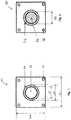
- Figure 1 shows a cover 10 having an aperture 12.
- the aperture is preferably located in the center of the cover 10.
- the cover 10 may be made of metal.
- the metal is aluminium such that the external surface of the cover 10 is coated by a layer of aluminium oxide.
- aluminium is chosen because of its inert oxide surface. Molten bismuth (at temperatures of ⁇ 300°C) will only bond with aluminium after physical manipulation that removes the oxide layer, such as scratching. Further planned experiments will provide information for selection of other materials e.g. copper, silver, etc. for the plate 30 and cover 10.
- the plate 30, as shown in Figure 2 may be approximately square and have an assembly hole 36 in each corner for joining the cover 10 to the plate 30.
- the assembly holes 15 of the cover 10 should align with the assembly holes 36 on the plate 30 when the cover 10 is laid on top of the plate 30.
- the plate is preferably made of aluminium such that the external surface of the plate is coated by a layer of aluminium oxide.
- the plate 30 may have a recessed portion 32 in the center such that a center of the recessed portion 32 is coaxial with a center of the aperture 12 of the cover 10 when the cover 10 is attached to the plate 30.
- the recessed portion 32 is circular and the aperture 12 is circular.
- the recessed portion 32 may have a larger diameter 38 than the diameter 18 of aperture 12.
- the diameter 38 of the recessed portion 32 may be equal to or smaller than the diameter 18 of the aperture 12.
- the recessed portion 32 does not extend through the entire thickness of the plate 30. That is, the recessed portion 32 may take the form of a blind hole in the plate 30.
- the plate 30 and/or the recessed portion 32 may be made from other materials. It is envisaged that many ceramic materials are suitable. Further, the plate 30 and/or recessed portion 32 may be formed from metals that are inert in the presence of the target nuclide (at, at least, the melting temperature of the target nuclide) and the produced radionuclide. For example, silver, gold, or copper may be suitably inert for the production of astatine-211 or other radionuclides.
- the recessed portion may a surface of aluminium oxide. As described in detail below, bismuth is placed in the recessed portion 32 in contact with the aluminium oxide surface.
- a sealing ring 14, such as an O-ring, may be disposed in the cover 10.
- a sealing ring 34, such as an O-ring, may be disposed in the plate 30.
- the two sealing rings 14, 34 are of equal size and are located so as to be coaxial when the cover is laid on top of the plate and fastened thereto. The sealing rings 14, 34 are to assist with gripping and sealing when the cover 10 is fastened to the plate 30.
- the sealing ring 14, 34 may be rubber. Alternatively, the sealing rings 14, 34 may be any other material that is inert, heat-resistant (to the degree of the target temperature), and sufficiently compressible/sealable to prevent gas leakage when the sealing rings 14, 34 are compressed pressed when the cover 10 is fastened to the plate 30.
- a target nuclide 50 may be placed in the recessed portion 32.
- the target nuclide 50 is described hereafter as a piece of bismuth 50, but other target nuclides are possible.
- the piece of bismuth 50 may take the shape of a coin having a diameter less than or equal to the diameter 38 of the recessed portion 32. Other shapes are also envisaged for the piece of bismuth 50.
- multiple pieces of bismuth 50, bismuth oxides, bismuth salts, or powdered bismuth may be used instead of a unitary piece of bismuth 50.
- the bismuth 50 is shaped to match the shape of the recessed portion 32.
- target nuclides may be used for the production of other radionuclides.
- zinc-68 for the production of gallium-68. This reaction may require protons (p, n) to be accelerated into the zinc-68 to produce the gallium-68.
- bismuth-209 is bombarded with alpha particles ( ⁇ , 2n).
- the other target nuclides may be provided in other forms such as salts or oxides, and maybe provided as single unitary pieces, isotope enriched or natural isotopes.
- the target material may be deposited, e.g. electrodeposited, such as onto an insertable coin sized to fit in the recessed portion, or as multiple pieces, or in powdered form.
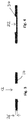
- a foil 52 may be laid on top of the bismuth 50.
- the foil 52 may have a melting temperature above that of bismuth (i.e. above 271°C) and is preferably made of a material that will not react with the bismuth 50.
- the foil will not interact, or only interact minimally, with the beam of alpha particles that will be used to convert the bismuth to astatine-211.
- the foil 52 may be a cobalt alloy foil.
- One suitable cobalt alloy foil is the commercially-available HavarTM foil 52, which is composed of 42.5%-no. Co, 20%-no. Cr, 13%-no.
- This foil 52 has a melting temperature of 1480°C and an average thickness of 10 ⁇ m.
- Other suitable materials may be used for the foil 52, for example, aluminium foil may be suitable. Further, different thicknesses of foil may be used.
- the foil will reduce the energy of the incoming alpha particle beam (described in greater detail below). Thus, one criterion governing the choice of foil material and thickness is based on the energy of the particle beam. Optimal production rates of astatine-211 may be achieved with the alpha particle beam impacting the bismuth-209 (i.e. after passing the foil) having an optimal energy of 28.5 MeV. This reduces the production of (unwanted) astatine-210.
- HavarTM foil reduces beam energy by 1.2 MeV.
- Aluminum foil is expected to have only 40% of the stopping power of HavarTM.
- the foil material will have a combination of low stopping power as well as being chemically inert and physically stable in the presence of heated target material (e.g. molten bismuth).
- the foil 52 may be dimensioned such that it may be overlaid on the sealing rings 14, 34 of the plate 30 and touch the sealing rings at every point. That is, the foil 52 may be larger than the sealing ring border.
- the foil shown in Figure 5 is square and has a side-length greater than diameter 20 of the sealing rings 14, 34 shown in Figures 1-4 .
- the sealing rings are sufficiently compressible such that, when the cover 10 is fastened to the plate 30, the foil 52 is contacted and held by both the cover 10 and the plate 30.
- the foil 52 may be provided integrally with the cover 10.
- the aperture 12 consists of a thin portion of the cover, either made from the same material as the cover 10 or from a separate material joined to the cover. This thin portion of the cover 10 is thin so as to limit the energy loss of radiation passing through the aperture, so that radiation may interact with the target nuclide held in the recessed portion, beneath the thin portion that is the aperture 12 of the cover 10.
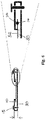
- the bismuth 50 may be placed in the recessed portion 32.
- the foil 52 may then be laid on top of the bismuth 50.
- the cover 10 may then be placed on top of the plate 30 and the foil 52, such that the sealing ring 14 of the cover 10 presses the foil 52 into the sealing ring 34 of the plate 30.
- the cover 10 may then be fastened to the plate 30.
- the bismuth 50 may be encapsulated in a region defined by the foil and the recessed portion. If the bismuth 50 extends above the depth of the recessed portion 32, then a portion of the plate between the recessed portion 34 and the sealing ring 34 may also form part of the encapsulating region.
- the plate 30 may be oriented vertically such that the normal line from the base of the recessed portion 32 points horizontally.
- the apparatus may be used with a horizontally oriented beam of alpha-particles from a cyclotron.
- the plate 30 may be laid flat such that the normal line from the base of the recessed portion 32 points vertically up or down. This allows the apparatus to be used with a vertically oriented beam of alpha-particles from a cyclotron. That is, the target may be used in any spatial orientation which may increase the number of suitable cyclotrons the target may be used with.
- the apparatus may be presented as a target at the output of a cyclotron or other particle accelerator.
- a cyclotron or other particle accelerator may be used as appropriate.
- the cyclotron may produce a beam of accelerate ⁇ -particles and this may be aimed at the bismuth 50 held by the apparatus.
- Astatine-211 may be produced by bombarding bismuth-209 (the primary naturally-occurring isotope of bismuth) with ⁇ -particles having energies of -28-30 MeV, preferably 28.5 MeV to mimimise production of astatine-210.
- Different target nuclides will have different particle types (e.g. alpha particles, deuterium ions etc.) for the radiation beam and different preferred particle energies.
- Cyclotrons for accelerating ⁇ -particles typically produce a beam of particles that has a beam diameter of the order of 1cm at the target location.
- the aperture 12 may be chosen to have a larger diameter than the particle beam of the cyclotron.
- the particle beam exiting the cyclotron is incident on the foil 52 first and then the bismuth 50, without the material of the cover 10 being in the path of the particle beam.
- the effective thickness of bismuth under ⁇ -particle bombardment to produce astatine-211 is between 100-200 ⁇ m. That is, reactions between alpha-particles and bismuth atoms are expected to occur primarily within the first 200 ⁇ m depth of the piece of bismuth 50. Other target nuclides and other radiation beams will have different effective thicknesses.
- the bismuth 50 may melt under the particle beam.
- the foil 52 having a much higher melting temperature than bismuth, may resist melting and thus acts to contain the molten or partially-molten bismuth 50 within the recessed portion 32 as the bismuth 50 is converted into astatine-211.
- the foil 52 may also prevent any release of bismuth or astatine to the atmosphere. This may be a useful safety feature inherent to the present design, given the known toxicity and radioactivity of astatine-211.
- the apparatus may be removed from the cyclotron.
- the foil 52 is preferably selected to be inert with respect to bismuth, molten bismuth and astatine. Further, the foil is preferably selected to be physically stable under the expected heating of the target nuclide. For example, the foil may have a melting temperature higher than, preferably much higher than, the melting temperature of the target nuclide. In this case, the irradiated bismuth/astatine mix, after resolidifying, may be easily separated from both the recessed portion 32 and foil 52.
- the plate 30 and cover 10 may each be 40x40mm and the aperture 12 of the cover 10 may have a diameter 18 of 10-20mm, preferably 17mm.
- the recessed portion may have a diameter 38 of 20-22mm and 0.15mm in depth.
- the piece of bismuth 50 may be a cylinder having a diameter of 17mm and a thickness of 0.2mm.
- the foil 52 may be 25x25mm and 0.01mm thick.
- the target metal piece may be unbound and free, as a piece resting on the plate 30.
- This allows use of pure target metal (bismuth) that promotes simpler production equipment, faster handling, and improved product quality.
- the target metal should not have bonded to the target holder and can be worked up separately providing simpler and faster workup procedure of the produced astatine-211.
- a sealed-target concept is presented in " Production of 211At by a vertical beam irradiation method" by Kotaro Nagatsu et. al. Applied Radiation and Isotopes 94 (2014) 363-371 .
- This document presents an astatine-211 production target that allows the bismuth metal to melt during the production of astatine-211.
- the researchers' major purpose with the design was to simplify target preparation, for example, to avoid plating of bismuth onto backing plates (i.e. onto the target holder). These researchers solved this by dropping shots of bismuth into a target capsule.
- Their design requires the target to be placed under a vertically-oriented particle beam, directed from above, to keep the molten bismuth surface at 90 degrees with respect to the incoming beam.
- the capsule is covered with cooled aluminium foils. It is reported that this setup results in about 6 MeV in energy loss between particles leaving the accelerator and particles reaching the bismuth.
- the foil design only provides a semi-sealed target and does not provide the same safety as the completely sealed design disclosed herein.
- the present disclosure may offer the following advantages over this known production method.
- the presently disclosed apparatus may be suitable for much higher particle beam currents than used previously for production of astatine-211.
- the maximum beam current used in previously published work on astatine-211 production was ⁇ 45 ⁇ A (microamp).
- the present disclosure may be suitable for beam currents well into the mA (milliamp) range. It is expected that astatine-211 production yields will increase proportionally to particle beam intensity.
- the present disclosure may allow for increased production yields and decreased production time for the production of astatine-211 from bismuth-209.
- the present disclosure may be used with other target nuclides. With suitable choice of foil and plate material for a given setup, the apparatus is suitable for the production of other radionuclides, with in other types of accelerator, and with other types of radiation beam.
Landscapes
- Physics & Mathematics (AREA)
- Engineering & Computer Science (AREA)
- General Engineering & Computer Science (AREA)
- High Energy & Nuclear Physics (AREA)
- Chemical & Material Sciences (AREA)
- Chemical Kinetics & Catalysis (AREA)
- General Chemical & Material Sciences (AREA)
- Plasma & Fusion (AREA)
- Spectroscopy & Molecular Physics (AREA)
- Particle Accelerators (AREA)
- Health & Medical Sciences (AREA)
- Medicines That Contain Protein Lipid Enzymes And Other Medicines (AREA)
- Inorganic Chemistry (AREA)
- Medicinal Chemistry (AREA)
- Optics & Photonics (AREA)
- Pharmacology & Pharmacy (AREA)
- Epidemiology (AREA)
- Life Sciences & Earth Sciences (AREA)
- Animal Behavior & Ethology (AREA)
- General Health & Medical Sciences (AREA)
- Public Health (AREA)
- Veterinary Medicine (AREA)
Claims (15)
- Verfahren zum Erzeugen von Radionukliden, das Verfahren umfassend:Bereitstellen einer Platte (30) mit einem vertieften Abschnitt (32), wobei der vertiefte Abschnitt eine Oberfläche aus Keramik oder Metall aufweist;Platzieren eines Zielnuklids (50) in dem vertieften Abschnitt;Bedecken des Zielnuklids mit einer Folie (52), sodass das Zielnuklid von der Folie und der Oberfläche des vertieften Abschnitts eingekapselt ist;Befestigen der Folie an der Platte, sodass das Zielnuklid relativ zu der Platte fixiert ist;wobei die Folie eine höhere Schmelztemperatur als das Zielnuklid aufweist;Bestrahlen des eingekapselten Zielnuklids mit einem Strahlungsstrahl.
- Verfahren nach Anspruch 1, wobei der Schritt zum Befestigen der Folie (52) an der Platte (30) bewirkt, dass die Platte und die Folie um das Zielnuklid (50) herum abdichten und wobei vorzugsweise die Folie und die Platte an dem Zielnuklid anliegen.
- Verfahren nach Anspruch 1 oder 2, wobei das Zielnuklid (50) Wismut-209 ist, das Radionuklid Astatin-211 ist und der Strahlungsstrahl ein Strahl von Alphapartikeln ist.
- Verfahren nach Anspruch 1 oder 2, wobei das Zielnuklid (50) Zink-68 ist, das Radionuklid Gallium-68 ist und der Strahlungsstrahl ein Strahl von Protonen ist.
- Verfahren nach einem vorstehenden Anspruch, wobei die Folie (52) eine Schmelztemperatur über 1000°C aufweist, wenn das Zielnuklid eine Schmelztemperatur unter 1000°C aufweist.
- Verfahren nach einem vorstehenden Anspruch, wobei die Folie (52) eine kobalthaltige Folie ist, vorzugsweise Havar™-Folie, die eine Legierung ist, die aus 42,5% Co, 20% Cr, 13% Ni und dem Rest Fe, W, Mo, Mn plus Unreinheiten besteht.
- Verfahren nach einem vorstehenden Anspruch, wobei das Stück Zielnuklid (50) ein im Allgemeinen ebenes Stück des Zielnuklids ist, das so bemessen ist, dass es in dem vertieften Abschnitt sitzt,
wobei vorzugsweise eine Dicke des im Allgemeinen ebenen Stücks des Zielnuklids zwischen 0,05 mm und 0,5 mm ist und eine größte Abmessung des im Allgemeinen ebenen Stücks des Zielnuklids zwischen 0,5 cm und 3 cm ist. - Verfahren nach einem vorstehenden Anspruch, wobei die Platte (30) eine Platte ist, die Aluminium umfasst.
- Verfahren nach einem vorstehenden Anspruch, wobei das eingekapselte Zielnuklid relativ zu der Platte durch eine Abdeckung (10) fixiert gehalten wird, wobei die Abdeckung eine Öffnung (12) aufweist.
- Verfahren nach Anspruch 9, wobei die Öffnung (12) so bemessen ist, dass sie größer als ein Strahldurchmesser des Strahlungsstrahls zum Bestrahlen des eingekapselten Zielnuklids (50) ist.
- Verfahren nach einem vorstehenden Anspruch, wobei der Strahlungsstrahl ein Strahl von Alphapartikeln ist, mit einem Strahlstrom größer als 50µA, wobei vorzugsweise der Strahlstrom größer als 1mA ist.
- Verfahren nach einem vorstehenden Anspruch, wobei das Zielnuklid (50) eines oder mehrere der folgenden umfasst: Wismut, eine Vielzahl von Wismutstücken, Wismutoxid, Wismutsalz oder pulverförmiges Wismut.
- Einrichtung zum Erzeugen eines Radionuklids aus einem horizontal ausgerichteten Strahlungsstrahl, die Einrichtung umfassend:eine Platte (30) mit einem vertieften Abschnitt (32), wobei der vertiefte Abschnitt eine Oberfläche aus Keramik oder Metall aufweist;ein Zielnuklid (50); undeine Folie (52);wobei das Zielnuklid so bemessen ist, dass es von der Folie und der Oberfläche des vertieften Abschnitts eingekapselt ist;wobei die Folie eine höhere Schmelztemperatur als die Schmelztemperatur des Zielnuklids aufweist;wobei die Einrichtung weiter Mittel zum Befestigen der Folie und somit des Zielnuklids relativ zu der Platte umfasst.
- Einrichtung nach Anspruch 13, wobei die Folie (52) eine auf Kobalt basierende Legierungsfolie ist, wobei die Folie vorzugsweise eine Legierung umfasst, die aus 42,5% Co, 20% Cr, 13% Ni und dem Rest Fe, W, Mo, Mn plus Unreinheiten besteht; optional
wobei die Folie (52) eine durchschnittliche Dicke von 4µm bis 500µm aufweist. - Einrichtung nach Anspruch 13 oder 14, wobei das Zielnuklid (50) ein im Allgemeinen ebenes Stück Zielnuklid ist, das so bemessen ist, dass es in dem vertieften Abschnitt (32) sitzt, oder wobei das Zielnuklid galvanisch auf der Platte oder auf eine Münze abgeschieden wird, die so bemessen ist, dass sie in dem vertieften Abschnitt sitzt; und/oder
wobei das Zielnuklid (50) eines oder mehrere der folgenden umfasst:
Wismut, eine Vielzahl von Wismutstücken, Wismutsalz, Wismutoxid oder pulverförmiges Wismut.
Applications Claiming Priority (2)
| Application Number | Priority Date | Filing Date | Title |
|---|---|---|---|
| GB1611925.7A GB2552151A (en) | 2016-07-08 | 2016-07-08 | Cyclotron target |
| PCT/EP2017/067234 WO2018007643A1 (en) | 2016-07-08 | 2017-07-10 | Method of producing radionuclides and apparatus therefore |
Publications (2)
| Publication Number | Publication Date |
|---|---|
| EP3482400A1 EP3482400A1 (de) | 2019-05-15 |
| EP3482400B1 true EP3482400B1 (de) | 2020-12-09 |
Family
ID=56891011
Family Applications (1)
| Application Number | Title | Priority Date | Filing Date |
|---|---|---|---|
| EP17737275.2A Active EP3482400B1 (de) | 2016-07-08 | 2017-07-10 | Verfahren zur herstellung von radionukliden und vorrichtung dafür |
Country Status (5)
| Country | Link |
|---|---|
| US (1) | US11335473B2 (de) |
| EP (1) | EP3482400B1 (de) |
| ES (1) | ES2859457T3 (de) |
| GB (1) | GB2552151A (de) |
| WO (1) | WO2018007643A1 (de) |
Families Citing this family (12)
| Publication number | Priority date | Publication date | Assignee | Title |
|---|---|---|---|---|
| WO2019088113A1 (ja) * | 2017-10-31 | 2019-05-09 | 国立研究開発法人量子科学技術研究開発機構 | 放射性同位体の製造方法、放射性同位体製造装置 |
| GB201814291D0 (en) * | 2018-09-03 | 2018-10-17 | Univ Oslo | Process for the production of gallium radionculides |
| US12435394B2 (en) | 2019-06-11 | 2025-10-07 | Wisconsin Alumni Research Foundation | Intermetallic compounds of cobalt as targets for the production of theranostic radionuclides |
| EP4031195A4 (de) | 2019-09-16 | 2023-11-29 | ABK Biomedical Incorporated | Zusammensetzung von radioaktiven und nicht-radioaktiven mikropartikeln |
| CN114902350A (zh) | 2019-12-05 | 2022-08-12 | 塞控斯公司 | 生产高纯度212Pb |
| WO2022099420A1 (en) * | 2020-11-16 | 2022-05-19 | The Governors Of The University Of Alberta | Cyclotron target and lanthanum theranostic pair for nuclear medicine |
| CN118451221A (zh) | 2021-08-23 | 2024-08-06 | 安德万细胞同位素有限公司 | 用于产生放射性同位素的材料和方法 |
| CN114242299B (zh) * | 2021-11-10 | 2025-07-01 | 砹尔法纽克莱(宁波)医疗科技有限公司 | 用于制备靶向核素药的回旋加速器金属复合靶材 |
| CN114249301B (zh) * | 2021-11-10 | 2023-06-16 | 砹尔法纽克莱(宁波)医疗科技有限公司 | 一种洗脱溶液及用于靶向核素药的放射性核素砹-211的制备方法 |
| CA3246116A1 (en) * | 2022-03-21 | 2023-09-28 | Ali A. Abbasi | METHOD AND APPARATUS FOR THE PRODUCTION OF ACTINIUM 225 ISOTOPE |
| EP4589605A1 (de) * | 2022-09-14 | 2025-07-23 | Hitachi High-Tech Corporation | System zur herstellung von radionukliden und verfahren zur herstellung von radionukliden |
| DE102024211128A1 (de) * | 2024-11-20 | 2026-05-21 | Forschungszentrum Jülich GmbH | Herstellungsverfahren für ein Bauteil zur Produktion von Astat-211, Bauteil und Verwendung |
Family Cites Families (9)
| Publication number | Priority date | Publication date | Assignee | Title |
|---|---|---|---|---|
| US3955093A (en) * | 1975-04-25 | 1976-05-04 | The United States Of America As Represented By The United States Energy Research And Development Administration | Targets for the production of radioisotopes and method of assembly |
| US4681727A (en) * | 1984-04-10 | 1987-07-21 | The United States Of America As Represented By The United States Department Of Energy | Process for producing astatine-211 for radiopharmaceutical use |
| US5917874A (en) * | 1998-01-20 | 1999-06-29 | Brookhaven Science Associates | Accelerator target |
| ES2385709T3 (es) * | 2002-11-25 | 2012-07-30 | Ion Beam Applications S.A. | Ciclotrón |
| JP5246881B2 (ja) * | 2009-11-25 | 2013-07-24 | 独立行政法人放射線医学総合研究所 | カプセル状ルツボ |
| US9693443B2 (en) * | 2010-04-19 | 2017-06-27 | General Electric Company | Self-shielding target for isotope production systems |
| EP2393344A1 (de) * | 2010-06-01 | 2011-12-07 | Ion Beam Applications S.A. | Vorrichtung zur Herstellung eines Radioisotops mit Mitteln und Verfahren zur Wartung besagter Vorrichtung |
| PL3135082T3 (pl) * | 2014-04-24 | 2021-09-13 | Triumf | Zespół tarczy do napromieniania molibdenu wiązką cząstek i sposób jego wytwarzania |
| PL3157577T3 (pl) * | 2014-06-18 | 2021-04-19 | Alpha Therapy Solutions Ab | Automatyczna platforma technologii produkcji radiofarmaceutyków astatyna-211 [at-211] |
-
2016
- 2016-07-08 GB GB1611925.7A patent/GB2552151A/en not_active Withdrawn
-
2017
- 2017-07-10 US US16/315,268 patent/US11335473B2/en active Active
- 2017-07-10 EP EP17737275.2A patent/EP3482400B1/de active Active
- 2017-07-10 ES ES17737275T patent/ES2859457T3/es active Active
- 2017-07-10 WO PCT/EP2017/067234 patent/WO2018007643A1/en not_active Ceased
Non-Patent Citations (1)
| Title |
|---|
| None * |
Also Published As
| Publication number | Publication date |
|---|---|
| GB201611925D0 (en) | 2016-08-24 |
| US11335473B2 (en) | 2022-05-17 |
| GB2552151A (en) | 2018-01-17 |
| US20190311819A1 (en) | 2019-10-10 |
| WO2018007643A1 (en) | 2018-01-11 |
| EP3482400A1 (de) | 2019-05-15 |
| ES2859457T3 (es) | 2021-10-04 |
Similar Documents
| Publication | Publication Date | Title |
|---|---|---|
| US11335473B2 (en) | Method of producing radionuclides and apparatus therefore | |
| McCarthy et al. | Efficient production of high specific activity 64Cu using a biomedical cyclotron | |
| RU2393564C2 (ru) | Мишень для получения радионуклидов и способ ее изготовления (варианты) | |
| Cisternino et al. | Target manufacturing by Spark Plasma Sintering for efficient 89Zr production | |
| US20140010338A1 (en) | METHODS FOR MAKING AND PROCESSING METAL TARGETS FOR PRODUCING Cu-67 RADIOISOTOPE FOR MEDICAL APPLICATIONS | |
| WO2007096119A2 (en) | Method for purification of 225ac from irradiated 226ra-targets | |
| CN115552548B (zh) | 由镭-226生产锕-225的设备及其用途 | |
| CA2662932A1 (en) | Method for the purification of radium from different sources | |
| Moody | Synthesis of superheavy elements | |
| WO2020210147A1 (en) | Systems and methods for producing actinium-225 | |
| Shusterman et al. | Aqueous harvesting of Zr 88 at a radioactive-ion-beam facility for cross-section measurements | |
| US3955093A (en) | Targets for the production of radioisotopes and method of assembly | |
| EP3847675B1 (de) | Verfahren zur herstellung von galliumradionukliden | |
| US20230420151A1 (en) | Phosphate based targets | |
| Maiti et al. | Investigation on the production and isolation of 149,150,151 Tb from 12C irradiated natural praseodymium target | |
| EP1610346A1 (de) | Verfahren zur Erzeugung von Actinium-225 | |
| EP2372720A1 (de) | Verfahren zum Produktion von Kupfer-67 | |
| RU2239900C1 (ru) | Способ получения радиоактивных изотопов кобальт-57 и кадмий-109 | |
| EP4542581A1 (de) | System zur herstellung von radionukliden und verfahren zur herstellung von radionukliden | |
| Bindu et al. | Optimization of commercial scale photonuclear production of radioisotopes | |
| Shefer et al. | Accelerator production of copper-64 for pet and radiotherapy | |
| Matei et al. | A new approach for manufacturing and processing targets to produce Tc with cyclotrons. | |
| Sommer | Radiation effects concerns at a spallation source | |
| Valdovinos et al. | Simplified targetry and separation chemistry for 68Ge production | |
| Tanaka et al. | 7. 1 Measurements of Residual Radionuclides by 12C-induced Reactions on Co |
Legal Events
| Date | Code | Title | Description |
|---|---|---|---|
| STAA | Information on the status of an ep patent application or granted ep patent |
Free format text: STATUS: UNKNOWN |
|
| STAA | Information on the status of an ep patent application or granted ep patent |
Free format text: STATUS: THE INTERNATIONAL PUBLICATION HAS BEEN MADE |
|
| PUAI | Public reference made under article 153(3) epc to a published international application that has entered the european phase |
Free format text: ORIGINAL CODE: 0009012 |
|
| STAA | Information on the status of an ep patent application or granted ep patent |
Free format text: STATUS: REQUEST FOR EXAMINATION WAS MADE |
|
| 17P | Request for examination filed |
Effective date: 20190206 |
|
| AK | Designated contracting states |
Kind code of ref document: A1 Designated state(s): AL AT BE BG CH CY CZ DE DK EE ES FI FR GB GR HR HU IE IS IT LI LT LU LV MC MK MT NL NO PL PT RO RS SE SI SK SM TR |
|
| AX | Request for extension of the european patent |
Extension state: BA ME |
|
| DAV | Request for validation of the european patent (deleted) | ||
| DAX | Request for extension of the european patent (deleted) | ||
| GRAP | Despatch of communication of intention to grant a patent |
Free format text: ORIGINAL CODE: EPIDOSNIGR1 |
|
| STAA | Information on the status of an ep patent application or granted ep patent |
Free format text: STATUS: GRANT OF PATENT IS INTENDED |
|
| INTG | Intention to grant announced |
Effective date: 20200610 |
|
| GRAS | Grant fee paid |
Free format text: ORIGINAL CODE: EPIDOSNIGR3 |
|
| GRAA | (expected) grant |
Free format text: ORIGINAL CODE: 0009210 |
|
| STAA | Information on the status of an ep patent application or granted ep patent |
Free format text: STATUS: THE PATENT HAS BEEN GRANTED |
|
| AK | Designated contracting states |
Kind code of ref document: B1 Designated state(s): AL AT BE BG CH CY CZ DE DK EE ES FI FR GB GR HR HU IE IS IT LI LT LU LV MC MK MT NL NO PL PT RO RS SE SI SK SM TR |
|
| REG | Reference to a national code |
Ref country code: GB Ref legal event code: FG4D |
|
| REG | Reference to a national code |
Ref country code: AT Ref legal event code: REF Ref document number: 1344232 Country of ref document: AT Kind code of ref document: T Effective date: 20201215 Ref country code: CH Ref legal event code: EP |
|
| REG | Reference to a national code |
Ref country code: DE Ref legal event code: R096 Ref document number: 602017029261 Country of ref document: DE |
|
| REG | Reference to a national code |
Ref country code: IE Ref legal event code: FG4D |
|
| PG25 | Lapsed in a contracting state [announced via postgrant information from national office to epo] |
Ref country code: RS Free format text: LAPSE BECAUSE OF FAILURE TO SUBMIT A TRANSLATION OF THE DESCRIPTION OR TO PAY THE FEE WITHIN THE PRESCRIBED TIME-LIMIT Effective date: 20201209 Ref country code: GR Free format text: LAPSE BECAUSE OF FAILURE TO SUBMIT A TRANSLATION OF THE DESCRIPTION OR TO PAY THE FEE WITHIN THE PRESCRIBED TIME-LIMIT Effective date: 20210310 Ref country code: FI Free format text: LAPSE BECAUSE OF FAILURE TO SUBMIT A TRANSLATION OF THE DESCRIPTION OR TO PAY THE FEE WITHIN THE PRESCRIBED TIME-LIMIT Effective date: 20201209 |
|
| REG | Reference to a national code |
Ref country code: NO Ref legal event code: T2 Effective date: 20201209 |
|
| REG | Reference to a national code |
Ref country code: AT Ref legal event code: MK05 Ref document number: 1344232 Country of ref document: AT Kind code of ref document: T Effective date: 20201209 |
|
| PG25 | Lapsed in a contracting state [announced via postgrant information from national office to epo] |
Ref country code: BG Free format text: LAPSE BECAUSE OF FAILURE TO SUBMIT A TRANSLATION OF THE DESCRIPTION OR TO PAY THE FEE WITHIN THE PRESCRIBED TIME-LIMIT Effective date: 20210309 Ref country code: LV Free format text: LAPSE BECAUSE OF FAILURE TO SUBMIT A TRANSLATION OF THE DESCRIPTION OR TO PAY THE FEE WITHIN THE PRESCRIBED TIME-LIMIT Effective date: 20201209 Ref country code: SE Free format text: LAPSE BECAUSE OF FAILURE TO SUBMIT A TRANSLATION OF THE DESCRIPTION OR TO PAY THE FEE WITHIN THE PRESCRIBED TIME-LIMIT Effective date: 20201209 |
|
| REG | Reference to a national code |
Ref country code: NL Ref legal event code: MP Effective date: 20201209 |
|
| PG25 | Lapsed in a contracting state [announced via postgrant information from national office to epo] |
Ref country code: HR Free format text: LAPSE BECAUSE OF FAILURE TO SUBMIT A TRANSLATION OF THE DESCRIPTION OR TO PAY THE FEE WITHIN THE PRESCRIBED TIME-LIMIT Effective date: 20201209 Ref country code: NL Free format text: LAPSE BECAUSE OF FAILURE TO SUBMIT A TRANSLATION OF THE DESCRIPTION OR TO PAY THE FEE WITHIN THE PRESCRIBED TIME-LIMIT Effective date: 20201209 |
|
| REG | Reference to a national code |
Ref country code: LT Ref legal event code: MG9D |
|
| PG25 | Lapsed in a contracting state [announced via postgrant information from national office to epo] |
Ref country code: RO Free format text: LAPSE BECAUSE OF FAILURE TO SUBMIT A TRANSLATION OF THE DESCRIPTION OR TO PAY THE FEE WITHIN THE PRESCRIBED TIME-LIMIT Effective date: 20201209 Ref country code: SK Free format text: LAPSE BECAUSE OF FAILURE TO SUBMIT A TRANSLATION OF THE DESCRIPTION OR TO PAY THE FEE WITHIN THE PRESCRIBED TIME-LIMIT Effective date: 20201209 Ref country code: PT Free format text: LAPSE BECAUSE OF FAILURE TO SUBMIT A TRANSLATION OF THE DESCRIPTION OR TO PAY THE FEE WITHIN THE PRESCRIBED TIME-LIMIT Effective date: 20210409 Ref country code: SM Free format text: LAPSE BECAUSE OF FAILURE TO SUBMIT A TRANSLATION OF THE DESCRIPTION OR TO PAY THE FEE WITHIN THE PRESCRIBED TIME-LIMIT Effective date: 20201209 Ref country code: EE Free format text: LAPSE BECAUSE OF FAILURE TO SUBMIT A TRANSLATION OF THE DESCRIPTION OR TO PAY THE FEE WITHIN THE PRESCRIBED TIME-LIMIT Effective date: 20201209 Ref country code: CZ Free format text: LAPSE BECAUSE OF FAILURE TO SUBMIT A TRANSLATION OF THE DESCRIPTION OR TO PAY THE FEE WITHIN THE PRESCRIBED TIME-LIMIT Effective date: 20201209 Ref country code: LT Free format text: LAPSE BECAUSE OF FAILURE TO SUBMIT A TRANSLATION OF THE DESCRIPTION OR TO PAY THE FEE WITHIN THE PRESCRIBED TIME-LIMIT Effective date: 20201209 |
|
| PG25 | Lapsed in a contracting state [announced via postgrant information from national office to epo] |
Ref country code: AT Free format text: LAPSE BECAUSE OF FAILURE TO SUBMIT A TRANSLATION OF THE DESCRIPTION OR TO PAY THE FEE WITHIN THE PRESCRIBED TIME-LIMIT Effective date: 20201209 Ref country code: PL Free format text: LAPSE BECAUSE OF FAILURE TO SUBMIT A TRANSLATION OF THE DESCRIPTION OR TO PAY THE FEE WITHIN THE PRESCRIBED TIME-LIMIT Effective date: 20201209 |
|
| REG | Reference to a national code |
Ref country code: DE Ref legal event code: R097 Ref document number: 602017029261 Country of ref document: DE |
|
| PG25 | Lapsed in a contracting state [announced via postgrant information from national office to epo] |
Ref country code: IS Free format text: LAPSE BECAUSE OF FAILURE TO SUBMIT A TRANSLATION OF THE DESCRIPTION OR TO PAY THE FEE WITHIN THE PRESCRIBED TIME-LIMIT Effective date: 20210409 |
|
| REG | Reference to a national code |
Ref country code: ES Ref legal event code: FG2A Ref document number: 2859457 Country of ref document: ES Kind code of ref document: T3 Effective date: 20211004 |
|
| PLBE | No opposition filed within time limit |
Free format text: ORIGINAL CODE: 0009261 |
|
| STAA | Information on the status of an ep patent application or granted ep patent |
Free format text: STATUS: NO OPPOSITION FILED WITHIN TIME LIMIT |
|
| PG25 | Lapsed in a contracting state [announced via postgrant information from national office to epo] |
Ref country code: AL Free format text: LAPSE BECAUSE OF FAILURE TO SUBMIT A TRANSLATION OF THE DESCRIPTION OR TO PAY THE FEE WITHIN THE PRESCRIBED TIME-LIMIT Effective date: 20201209 |
|
| 26N | No opposition filed |
Effective date: 20210910 |
|
| PG25 | Lapsed in a contracting state [announced via postgrant information from national office to epo] |
Ref country code: DK Free format text: LAPSE BECAUSE OF FAILURE TO SUBMIT A TRANSLATION OF THE DESCRIPTION OR TO PAY THE FEE WITHIN THE PRESCRIBED TIME-LIMIT Effective date: 20201209 Ref country code: SI Free format text: LAPSE BECAUSE OF FAILURE TO SUBMIT A TRANSLATION OF THE DESCRIPTION OR TO PAY THE FEE WITHIN THE PRESCRIBED TIME-LIMIT Effective date: 20201209 |
|
| REG | Reference to a national code |
Ref country code: CH Ref legal event code: PL |
|
| PG25 | Lapsed in a contracting state [announced via postgrant information from national office to epo] |
Ref country code: MC Free format text: LAPSE BECAUSE OF FAILURE TO SUBMIT A TRANSLATION OF THE DESCRIPTION OR TO PAY THE FEE WITHIN THE PRESCRIBED TIME-LIMIT Effective date: 20201209 |
|
| REG | Reference to a national code |
Ref country code: BE Ref legal event code: MM Effective date: 20210731 |
|
| PG25 | Lapsed in a contracting state [announced via postgrant information from national office to epo] |
Ref country code: LI Free format text: LAPSE BECAUSE OF NON-PAYMENT OF DUE FEES Effective date: 20210731 Ref country code: CH Free format text: LAPSE BECAUSE OF NON-PAYMENT OF DUE FEES Effective date: 20210731 |
|
| PG25 | Lapsed in a contracting state [announced via postgrant information from national office to epo] |
Ref country code: IS Free format text: LAPSE BECAUSE OF FAILURE TO SUBMIT A TRANSLATION OF THE DESCRIPTION OR TO PAY THE FEE WITHIN THE PRESCRIBED TIME-LIMIT Effective date: 20210409 Ref country code: LU Free format text: LAPSE BECAUSE OF NON-PAYMENT OF DUE FEES Effective date: 20210710 |
|
| PG25 | Lapsed in a contracting state [announced via postgrant information from national office to epo] |
Ref country code: IE Free format text: LAPSE BECAUSE OF NON-PAYMENT OF DUE FEES Effective date: 20210710 Ref country code: BE Free format text: LAPSE BECAUSE OF NON-PAYMENT OF DUE FEES Effective date: 20210731 |
|
| P01 | Opt-out of the competence of the unified patent court (upc) registered |
Effective date: 20230428 |
|
| PG25 | Lapsed in a contracting state [announced via postgrant information from national office to epo] |
Ref country code: CY Free format text: LAPSE BECAUSE OF FAILURE TO SUBMIT A TRANSLATION OF THE DESCRIPTION OR TO PAY THE FEE WITHIN THE PRESCRIBED TIME-LIMIT Effective date: 20201209 |
|
| PG25 | Lapsed in a contracting state [announced via postgrant information from national office to epo] |
Ref country code: HU Free format text: LAPSE BECAUSE OF FAILURE TO SUBMIT A TRANSLATION OF THE DESCRIPTION OR TO PAY THE FEE WITHIN THE PRESCRIBED TIME-LIMIT; INVALID AB INITIO Effective date: 20170710 |
|
| PG25 | Lapsed in a contracting state [announced via postgrant information from national office to epo] |
Ref country code: MK Free format text: LAPSE BECAUSE OF FAILURE TO SUBMIT A TRANSLATION OF THE DESCRIPTION OR TO PAY THE FEE WITHIN THE PRESCRIBED TIME-LIMIT Effective date: 20201209 |
|
| PG25 | Lapsed in a contracting state [announced via postgrant information from national office to epo] |
Ref country code: TR Free format text: LAPSE BECAUSE OF FAILURE TO SUBMIT A TRANSLATION OF THE DESCRIPTION OR TO PAY THE FEE WITHIN THE PRESCRIBED TIME-LIMIT Effective date: 20201209 |
|
| PG25 | Lapsed in a contracting state [announced via postgrant information from national office to epo] |
Ref country code: MT Free format text: LAPSE BECAUSE OF FAILURE TO SUBMIT A TRANSLATION OF THE DESCRIPTION OR TO PAY THE FEE WITHIN THE PRESCRIBED TIME-LIMIT Effective date: 20201209 |
|
| PGFP | Annual fee paid to national office [announced via postgrant information from national office to epo] |
Ref country code: ES Payment date: 20250812 Year of fee payment: 9 |
|
| PGFP | Annual fee paid to national office [announced via postgrant information from national office to epo] |
Ref country code: DE Payment date: 20250721 Year of fee payment: 9 |
|
| PGFP | Annual fee paid to national office [announced via postgrant information from national office to epo] |
Ref country code: NO Payment date: 20250722 Year of fee payment: 9 |
|
| PGFP | Annual fee paid to national office [announced via postgrant information from national office to epo] |
Ref country code: IT Payment date: 20250728 Year of fee payment: 9 |
|
| PGFP | Annual fee paid to national office [announced via postgrant information from national office to epo] |
Ref country code: GB Payment date: 20250718 Year of fee payment: 9 |
|
| PGFP | Annual fee paid to national office [announced via postgrant information from national office to epo] |
Ref country code: FR Payment date: 20250717 Year of fee payment: 9 |