EP3480100A2 - Verfahren zur freilaufkompensation einer antriebseinheit, steuergerät und fahrzeug mit diesem steuergerät - Google Patents
Verfahren zur freilaufkompensation einer antriebseinheit, steuergerät und fahrzeug mit diesem steuergerät Download PDFInfo
- Publication number
- EP3480100A2 EP3480100A2 EP18193694.9A EP18193694A EP3480100A2 EP 3480100 A2 EP3480100 A2 EP 3480100A2 EP 18193694 A EP18193694 A EP 18193694A EP 3480100 A2 EP3480100 A2 EP 3480100A2
- Authority
- EP
- European Patent Office
- Prior art keywords
- torque
- vehicle
- electric motor
- detected
- rotation
- Prior art date
- Legal status (The legal status is an assumption and is not a legal conclusion. Google has not performed a legal analysis and makes no representation as to the accuracy of the status listed.)
- Granted
Links
Images


Classifications
-
- B—PERFORMING OPERATIONS; TRANSPORTING
- B62—LAND VEHICLES FOR TRAVELLING OTHERWISE THAN ON RAILS
- B62M—RIDER PROPULSION OF WHEELED VEHICLES OR SLEDGES; POWERED PROPULSION OF SLEDGES OR SINGLE-TRACK CYCLES; TRANSMISSIONS SPECIALLY ADAPTED FOR SUCH VEHICLES
- B62M6/00—Rider propulsion of wheeled vehicles with additional source of power, e.g. combustion engine or electric motor
- B62M6/40—Rider propelled cycles with auxiliary electric motor
- B62M6/45—Control or actuating devices therefor
-
- B—PERFORMING OPERATIONS; TRANSPORTING
- B60—VEHICLES IN GENERAL
- B60L—PROPULSION OF ELECTRICALLY-PROPELLED VEHICLES; SUPPLYING ELECTRIC POWER FOR AUXILIARY EQUIPMENT OF ELECTRICALLY-PROPELLED VEHICLES; ELECTRODYNAMIC BRAKE SYSTEMS FOR VEHICLES IN GENERAL; MAGNETIC SUSPENSION OR LEVITATION FOR VEHICLES; MONITORING OPERATING VARIABLES OF ELECTRICALLY-PROPELLED VEHICLES; ELECTRIC SAFETY DEVICES FOR ELECTRICALLY-PROPELLED VEHICLES
- B60L15/00—Methods, circuits, or devices for controlling the traction-motor speed of electrically-propelled vehicles
- B60L15/20—Methods, circuits, or devices for controlling the traction-motor speed of electrically-propelled vehicles for control of the vehicle or its driving motor to achieve a desired performance, e.g. speed, torque, programmed variation of speed
- B60L15/2045—Methods, circuits, or devices for controlling the traction-motor speed of electrically-propelled vehicles for control of the vehicle or its driving motor to achieve a desired performance, e.g. speed, torque, programmed variation of speed for optimising the use of energy
-
- B—PERFORMING OPERATIONS; TRANSPORTING
- B60—VEHICLES IN GENERAL
- B60L—PROPULSION OF ELECTRICALLY-PROPELLED VEHICLES; SUPPLYING ELECTRIC POWER FOR AUXILIARY EQUIPMENT OF ELECTRICALLY-PROPELLED VEHICLES; ELECTRODYNAMIC BRAKE SYSTEMS FOR VEHICLES IN GENERAL; MAGNETIC SUSPENSION OR LEVITATION FOR VEHICLES; MONITORING OPERATING VARIABLES OF ELECTRICALLY-PROPELLED VEHICLES; ELECTRIC SAFETY DEVICES FOR ELECTRICALLY-PROPELLED VEHICLES
- B60L50/00—Electric propulsion with power supplied within the vehicle
- B60L50/20—Electric propulsion with power supplied within the vehicle using propulsion power generated by humans or animals
-
- B—PERFORMING OPERATIONS; TRANSPORTING
- B62—LAND VEHICLES FOR TRAVELLING OTHERWISE THAN ON RAILS
- B62M—RIDER PROPULSION OF WHEELED VEHICLES OR SLEDGES; POWERED PROPULSION OF SLEDGES OR SINGLE-TRACK CYCLES; TRANSMISSIONS SPECIALLY ADAPTED FOR SUCH VEHICLES
- B62M6/00—Rider propulsion of wheeled vehicles with additional source of power, e.g. combustion engine or electric motor
- B62M6/40—Rider propelled cycles with auxiliary electric motor
- B62M6/55—Rider propelled cycles with auxiliary electric motor power-driven at crank shafts parts
-
- G—PHYSICS
- G01—MEASURING; TESTING
- G01L—MEASURING FORCE, STRESS, TORQUE, WORK, MECHANICAL POWER, MECHANICAL EFFICIENCY, OR FLUID PRESSURE
- G01L25/00—Testing or calibrating of apparatus for measuring force, torque, work, mechanical power, or mechanical efficiency
- G01L25/003—Testing or calibrating of apparatus for measuring force, torque, work, mechanical power, or mechanical efficiency for measuring torque
-
- G—PHYSICS
- G01—MEASURING; TESTING
- G01L—MEASURING FORCE, STRESS, TORQUE, WORK, MECHANICAL POWER, MECHANICAL EFFICIENCY, OR FLUID PRESSURE
- G01L5/00—Apparatus for, or methods of, measuring force, work, mechanical power, or torque, specially adapted for specific purposes
- G01L5/13—Apparatus for, or methods of, measuring force, work, mechanical power, or torque, specially adapted for specific purposes for measuring the tractive or propulsive power of vehicles
-
- B—PERFORMING OPERATIONS; TRANSPORTING
- B60—VEHICLES IN GENERAL
- B60L—PROPULSION OF ELECTRICALLY-PROPELLED VEHICLES; SUPPLYING ELECTRIC POWER FOR AUXILIARY EQUIPMENT OF ELECTRICALLY-PROPELLED VEHICLES; ELECTRODYNAMIC BRAKE SYSTEMS FOR VEHICLES IN GENERAL; MAGNETIC SUSPENSION OR LEVITATION FOR VEHICLES; MONITORING OPERATING VARIABLES OF ELECTRICALLY-PROPELLED VEHICLES; ELECTRIC SAFETY DEVICES FOR ELECTRICALLY-PROPELLED VEHICLES
- B60L2200/00—Type of vehicles
- B60L2200/12—Bikes
-
- B—PERFORMING OPERATIONS; TRANSPORTING
- B60—VEHICLES IN GENERAL
- B60L—PROPULSION OF ELECTRICALLY-PROPELLED VEHICLES; SUPPLYING ELECTRIC POWER FOR AUXILIARY EQUIPMENT OF ELECTRICALLY-PROPELLED VEHICLES; ELECTRODYNAMIC BRAKE SYSTEMS FOR VEHICLES IN GENERAL; MAGNETIC SUSPENSION OR LEVITATION FOR VEHICLES; MONITORING OPERATING VARIABLES OF ELECTRICALLY-PROPELLED VEHICLES; ELECTRIC SAFETY DEVICES FOR ELECTRICALLY-PROPELLED VEHICLES
- B60L2240/00—Control parameters of input or output; Target parameters
- B60L2240/40—Drive Train control parameters
- B60L2240/42—Drive Train control parameters related to electric machines
- B60L2240/423—Torque
-
- Y—GENERAL TAGGING OF NEW TECHNOLOGICAL DEVELOPMENTS; GENERAL TAGGING OF CROSS-SECTIONAL TECHNOLOGIES SPANNING OVER SEVERAL SECTIONS OF THE IPC; TECHNICAL SUBJECTS COVERED BY FORMER USPC CROSS-REFERENCE ART COLLECTIONS [XRACs] AND DIGESTS
- Y02—TECHNOLOGIES OR APPLICATIONS FOR MITIGATION OR ADAPTATION AGAINST CLIMATE CHANGE
- Y02T—CLIMATE CHANGE MITIGATION TECHNOLOGIES RELATED TO TRANSPORTATION
- Y02T10/00—Road transport of goods or passengers
- Y02T10/60—Other road transportation technologies with climate change mitigation effect
- Y02T10/64—Electric machine technologies in electromobility
-
- Y—GENERAL TAGGING OF NEW TECHNOLOGICAL DEVELOPMENTS; GENERAL TAGGING OF CROSS-SECTIONAL TECHNOLOGIES SPANNING OVER SEVERAL SECTIONS OF THE IPC; TECHNICAL SUBJECTS COVERED BY FORMER USPC CROSS-REFERENCE ART COLLECTIONS [XRACs] AND DIGESTS
- Y02—TECHNOLOGIES OR APPLICATIONS FOR MITIGATION OR ADAPTATION AGAINST CLIMATE CHANGE
- Y02T—CLIMATE CHANGE MITIGATION TECHNOLOGIES RELATED TO TRANSPORTATION
- Y02T10/00—Road transport of goods or passengers
- Y02T10/60—Other road transportation technologies with climate change mitigation effect
- Y02T10/72—Electric energy management in electromobility
Definitions
- the present invention relates to a method for free-wheeling compensation of a drive unit, a control unit for carrying out the method and a vehicle, comprising the drive unit and this control unit, wherein the vehicle is in particular an electric bicycle.
- the crankshaft is typically connected to two pedals. Cyclists pedal, for example, backwards to align the pedals in a desired position when the bicycle is stationary.
- Electric bicycles may have a drive unit on the crankshaft, wherein the drive unit further comprises, for example, a crankshaft and an electric motor.
- the rotatable components each have a positive direction of rotation and a negative direction of rotation, wherein the positive direction of rotation is adapted to drive a drive wheel of the vehicle for forward travel.
- the crankshaft can be rotatably connected to the electric motor by means of a driver's freewheel with respect to the negative direction of rotation with the electric motor or without the freewheel clutch. Without the freewheel, the drive unit is lighter in weight and compact in space.
- the production of the drive unit without driver freewheel is cheaper.
- a driver In a rotationally fixed connection between the crankshaft and the electric motor, a driver must overcome the drag torque of the electric motor, as well as the friction losses in the gearbox to align the pedals when pedaling in a negative direction.
- a non-rotatable connection between the crankshaft and the electric motor in the rearward sliding of the electric bicycle or when moving the rotatable components of a drive unit in the negative direction makes the drag torque or a Cogging torque of the electric motor by a jerky or jerky rotation of the crankshaft or the pedals noticeable.
- the drag torque of the motor is essentially composed of cogging torque, losses in the bearing of the rotor shaft and iron losses in the engine.
- the object of the present invention is to reduce unwanted effects of a rotationally fixed connection in negative rotational direction between the crankshaft and the electric motor.
- the invention relates to a method for free-wheeling compensation for a vehicle having a drive unit, in particular an electric bicycle.
- the drive unit has at least one rotatable component.
- the rotatable component may have a positive direction of rotation or a negative direction of rotation, wherein the positive direction of rotation is adapted to drive a drive wheel of the vehicle for forward travel.
- the inventive method has a detection of the negative direction of rotation of a rotatable component of the drive unit. Subsequently, a directed in the negative direction of rotation motor torque is generated by means of an electric motor of the drive unit at a detected negative rotational direction.
- the generated motor torque is less than a drag torque of the electric motor and configured to reduce a force of a driver of the vehicle to rotate the electric motor.
- the method thus advantageously reduces the pedaling force required by the driver when aligning the pedals in the negative direction of rotation or the force required by the driver for the rearward sliding of the electric bicycle since the electric motor is actuated and thus the drag torque of the electric motor is not complete must be overcome by the driver.
- the generated engine torque is independent of the speed and / or a torque applied by the driver or constant. As a result, the generated engine torque is difficult for the driver to perceive. It therefore results in pedaling in the negative direction of rotation advantageously the impression of a freewheel between the crankshaft and the electric motor.
- an angular position and / or a rotational speed and / or a torque of a rotatable component of the drive unit is detected.
- the negative direction of rotation is detected as a function of the detected angular position and / or the detected rotational speed and / or the detected torque.
- the detection takes place by means of the rotor position sensors of the electric motor and / or an angular momentum transmitter (for example optical, magnetic, mechanical, etc.) and / or a sensor for detecting the driver torque.
- the generation of the engine torque takes place as a function of the detected angular position and / or the detected rotational speed and / or the detected torque.
- a speed-dependent drag torque or cogging torque of the electric motor for generating the motor torque can be taken into account, so that the generated motor torque at detected negative direction of rotation is reliably smaller than the drag torque.
- the detection of an acceleration of the vehicle takes place in the direction of the longitudinal axis of the vehicle.
- the generation of the engine torque is additionally performed in this continuation depending on the detected acceleration of the vehicle.
- a calibration method for determining the drag torque of the electric motor of the Drive unit performed.
- the generation of the engine torque is then additionally in dependence on the determined drag torque.
- This continuation has the advantage that due to manufacturing tolerances for each electric motor varying drag torque and / or changing with increasing life drag torque is determined.
- An accurately determined drag torque advantageously allows a barely perceptible implementation of the method for freewheel compensation or increases the ride comfort of the driver of the vehicle with the drive unit.
- the calibration method for determining a drag torque comprises generating a calibration torque by means of the electric motor.
- the calibration torque is greater than the drag torque of the electric motor.
- a detection of a rotational speed of the electric motor is a detection of a rotational speed of the electric motor.
- the calibration torque is adjusted as a function of the detected rotational speed for setting a predetermined rotational speed, wherein the predetermined rotational speed is in particular less than 5 revolutions per minute.
- the determination of the drag torque of the electric motor takes place as a function of the adjusted calibration torque.
- a detection of a speed of the vehicle is performed.
- the generation of the calibration torque is additionally effected as a function of the detected speed, the calibration torque being generated in particular when the vehicle is at a standstill.
- the calibration method is advantageously carried out only at low speeds or at standstill of the vehicle.
- the invention also relates to the control device for carrying out the method.
- the control unit detects the negative direction of rotation of a rotatable component of the drive unit by means of at least one sensor. Subsequently, the control unit generates a control signal.
- the control signal is set up to control the electric motor of the drive unit to generate the motor torque directed in the negative direction of rotation in the case of a detected negative direction of rotation.
- the generated engine torque is less than a drag torque of the electric motor and thus configured to reduce a force of a driver of the vehicle for rotation of the electric motor.
- the at least one sensor for detecting the negative direction of rotation is an angular position sensor of the rotor of the electric motor and / or a rotational speed sensor and / or a torque sensor.
- control unit generates the control signal as a function of the detected angular position and / or the rotational speed and / or the detected torque.
- control unit detects a speed of the vehicle by means of a speed sensor.
- control unit additionally generates the control signal as a function of the detected speed of the vehicle.
- the control device preferably also detects an acceleration of the vehicle in the direction of the longitudinal axis of the vehicle by means of an acceleration sensor.
- the control signal is additionally generated in this embodiment as a function of the detected acceleration of the vehicle.
- the control unit can optionally generate a calibration control signal, in particular at fixed time intervals.
- the calibration control signal is adapted to drive the electric motor to generate a calibration torque, wherein the calibration torque is greater than the drag torque of the electric motor.
- a rotational speed of the electric motor is detected and the calibration control signal is adjusted as a function of the detected rotational speed.
- the adjustment of the calibration control signal is carried out to set a predetermined rotational speed, wherein the predetermined rotational speed is in particular less than five revolutions per minute.
- the control unit determines the drag torque of the electric motor as a function of the adjusted calibration torque.
- control unit detects the speed of the vehicle by means of the speed sensor and that Calibration control signal additionally generated in dependence on the detected speed.
- control unit only generates the calibration control signal when the vehicle is at a standstill.
- the invention also relates to the vehicle, in particular the electric bicycle, with the drive unit and the control unit.
- FIG. 1 an electric bicycle 100 is shown. It can be moved in the direction of a longitudinal axis 101 of the electric bicycle 100 in the direction of travel forward or, for example, by sliding backwards.
- the rear wheel or the driving wheel 104 and the rotatable components 102, 210 and 151 of a drive unit 150 of the electric bicycle 150 may each have a positive direction of rotation when the bicycle 100 moves forward or a negative direction of rotation when the bicycle 100 is moved in the rearward direction.
- the negative rotational direction of the wheels 104 of the electric bicycle 100 and the two pedals 103 of the drive unit 150 is in FIG. 1 indicated by arrows.
- the electric bicycle 100 is motor-driven by means of the two pedals 103 by the driver and / or by means of an electric motor 151 of the drive unit 150. Both the pedals 103 and the electric motor 151 are rotationally fixed in the negative direction of rotation with a crankshaft 102 of the Drive unit 150 connected. Accordingly, between the crankshaft 102 and the electric motor 151 and / or between the driven chain blade 220 and the electric motor 151, there is no freewheel for interrupting transmission of a negative direction driver torque M F from the crankshaft 102 to the electric motor 151 and / or a sliding torque thereof Output chain 220 arranged on the electric motor 151.
- the pedals 103 and the electric motor 151 consequently rotate in the case of pedaling directed in the negative direction of rotation or of the electric bicycle 100 in the rearward direction.
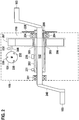
- a drive unit 150 for an electric bicycle 100 is shown.
- the crankshaft 102 is rotatably mounted in the drive unit 150 by means of two bearings 201 and 204.
- the crankshaft 102 is further rotatably connected in this example with a hollow shaft 202, wherein the hollow shaft 202 is adapted to be rotated by the driver torque M F.
- the rotation of the hollow shaft 202 is detected by means of a sensor 235, whereby the driver torque M F is detected or measured.
- a gear 210 is arranged with two gears 206 and 207, wherein between the gear 210 and the gear 206 and the hollow shaft 202, a motor freewheel 203 is arranged.
- the gear 210 rotatably connects the electric motor 151 and the hollow shaft 202 or the crankshaft 102 in the negative direction of rotation with each other.
- the engine freewheel 203 is configured to interrupt a transmission of engine torque of the electric motor 151 in the positive direction when driving in the forward direction, the driver torque M F in the positive direction stronger than the engine torque M M in the positive direction of rotation or the speed of the crankshaft 102 in positive Direction of rotation is faster than the rotational speed of the rotor shaft 208 in the positive direction of rotation.
- the hollow shaft 202 is further connected to an output chain plate 220.
- the output chain plate 220 is configured to transmit the total torque of the drive unit 150 to the drive wheel 104 of the electric bicycle 100 by means of a chain or a belt.
- the total torque represents the sum of the driver torque M F and the engine torque M M.
- the drive unit 150 in this embodiment no freewheel for interrupting a transmission of a rotation in the negative direction of rotation, that is, the crankshaft 102, the output link 220 and the electric motor 151 are rotatably connected to each other in the negative direction of rotation.
- the negative direction of rotation or the angular position of the rotor shaft 208 can be detected by means of a sensor or a plurality of sensors 230 in the electric motor 151 or on the rotor shaft 208 by means of the rotor position sensors 230 and / or a rotational speed sensor. Additionally or alternatively, at least one rotational speed or cadence sensor 231 and / or one may be used to detect the negative direction of rotation Rotational speed sensor on the crankshaft 102 or the hollow shaft 202 or on one of the cranks 240 or on a wheel axle, for example, on the wheel axle of the rear wheel 104 may be arranged. Furthermore, the detection of the direction of rotation can alternatively or additionally take place by means of the torque sensor 235.
- a freewheel in the negative direction of rotation between the output chain plate 220 and the hollow shaft 202 or between the output chain plate 220 and the gear 210 and / or the crankshaft 102 and / or in the hub or axle of the drive wheel 104.
- the drag torque M B of the electric motor 151 of the drive unit 150 must also be overcome because of the connection between the crankshaft 102 and the electric motor 151, which is rotationally fixed in the negative direction of rotation. Furthermore, when the electric bicycle 100 is pushed backwards, the torque directed in the negative direction of rotation is transmitted to the drive unit 150, in particular to the pedals 103 and the electric motor 151. Accordingly, without the present invention, when pushing backward, a pushing force greater than the drag torque M B of the electric motor 151 needs to be generated. Furthermore, due to the cogging torque of the electric motor 151 in the backward sliding without the present invention, the pedals 103 undesirably turn jerkily about the crankshaft 102.
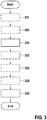
- FIG. 3 The method starts with a detection 310 of the negative direction of rotation of a rotatable component 102, 210, 151 of the drive unit 150.
- a detection 305 of an angular position and / or a rotational speed and / or a torque of a rotatable component 102, 210, 151 of the drive unit 150 performed and the negative direction of rotation in dependence on the angular position and / or the torque is detected or determined.
- the angular position and / or the rotational speed of the rotor shaft 208 of the electric motor 151, the gears 206 and 207 of the transmission 210 and / or the crankshaft 102 are detected.
- a motor torque M M directed in a negative direction of rotation or an engine force directed in a negative direction of rotation is generated on the rotor of the electric motor 151 or the rotor shaft 208 by means of the electric motor 151.
- the generated motor torque M M is smaller than a drag torque M B of the electric motor 151. Accordingly, the generated motor torque M M reduces the force required for the rotation of the rotor or the rotor shaft 208 of the driver.
- the generation 330 of the engine torque M M takes place optionally as a function of the detected rotational speed and / or the detected torque and / or a detected rotational speed, which can be determined from the detected angular position.
- the motor torque M M does not exceed a limit value, wherein the limit value represents, for example, the drag torque M B or an approximate value for the drag torque.
- the limit value is, for example, smaller by a factor of 0.60 to 0.95 than the drag torque M B.
- the generation 330 of the motor torque M M M in the negative direction of rotation optionally optionally additionally takes place as a function of the drag torque M B , which can be regularly updated or determined and stored, for example, in a memory unit 402 of the control unit 400, see also explanations below.
- the engine torque M M is smaller than the drag torque M B and therefore too small to independently generate a drive of the electric motor 151.
- the motor torque M M generated by the control of the electric motor 151 advantageously results in a reduced power requirement for the driver when pedaling in the negative direction of rotation, for example, for alignment or positioning of the pedals 103.
- the generated engine torque M M is preferably constant, that is, regardless of the rotational speed of the crankshaft 102 or the rotational speed of the crankshaft 102 or the driver torque on the pedals 103rd
- a detection 325 of the speed of the vehicle 100 takes place in the direction of the longitudinal axis of the vehicle 100.
- Generation 330 of the motor torque M M directed in the negative direction of rotation then additionally takes place as a function of the detected speed. Due to the additional consideration of the Speed is the generation of the negative direction of rotation directed engine torque M M, for example, only at standstill of the vehicle 100 and / or at a speed less than a speed threshold, for example, 10 km / h performed.
- a detection 326 of an acceleration 100 of the vehicle 100 takes place in the direction of the longitudinal axis of the vehicle 100.
- Generation 330 of the motor torque M M which is directed in the negative direction of rotation, then takes place additionally as a function of the detected acceleration. Due to the additional consideration of the acceleration, the generation of the negative direction of rotation directed engine torque M M, for example, carried out only when pushing the vehicle.
- the current drag torque M B is preferably determined by a calibration method.
- the optional first calibration method 301 of the drag torque M B takes place, for example, directly after the assembly of the drive unit 150.
- the optional second calibration method 329 takes place automatically and depending on the detected speed of the electric bicycle 100, preferably during a standstill of the electric bicycle 100 during operation of the electric bicycle 100, for example a traffic light.
- the drag torque M B determined by the first calibration method 301 and / or the second calibration method 329 is stored in a memory 402 of the controller 400.
- the first calibration method 301 and / or the second calibration method 329 of the drag torque M R is effected by controlling the electric motor 151 by means of the control unit 400 for setting a calibration torque as a function of the detected speed, for example only when the vehicle 100 is at rest.
- the generated calibration torque results a rotational speed n K of the electric motor 151 directed in the negative direction of rotation.
- the generated rotational speed n K is preferably small and barely perceptible to a driver.
- the generated calibration torque is therefore greater than the drag torque M B.
- the calibration torque is then adjusted as a function of the detected rotational speed n K until a predetermined rotational speed n K is reached.
- The, in particular average, calibration torque generated for setting the predetermined rotational speed n K is then multiplied to determine the drag torque M B by a constant factor smaller than 1.00, wherein the factor is in particular between 0.10 to 0.98.
- the second calibration method can be performed as an update of the drag torque M B at standstill of the electric bicycle 100, since a slow in negative direction of rotation directed rotation of the drive unit 150 and the electric motor 151 is barely perceptible by the driver.
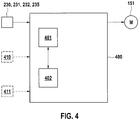
- the control device 400 has a computing unit 401 and a memory unit 402.
- the control unit 400 detects a negative direction of rotation of a rotatable component of the drive unit 150 by means of the sensors 230, 231 and / or 232, for example by means of the rotor position sensors 230.
- the control unit 400 generates a control signal in a negative direction of rotation of the drive unit 150.
- the control signal is set up to drive the electric motor 151 to generate 330 a motor torque M M directed in the negative direction of rotation, the motor torque M M directed in the negative direction of rotation being smaller than the drag torque M B of the electric motor 151.
- the control signal can optionally also be generated as a function of a determination of the drag torque M B or as a function of an update of the drag torque M B. Furthermore, it can optionally be provided that the control device 400 detects a speed v of the electric bicycle 100 in the longitudinal direction of the electric bicycle 100 by means of a speed sensor 410 and / or an acceleration a of the electric bicycle 100 in the longitudinal direction of the electric bicycle 100 by means of an acceleration sensor 411. The control signal is then generated by the control unit 400 as a function of the detected speed v and / or the detected acceleration a.
- control signal is generated only at standstill or at low speeds v of the electric bicycle 100, in particular at a speed of less than 10 km / h or at standstill of the electric bicycle 100, that is to say at a speed of 0 km / h.
- FIG. 12 is a torque and rotational speed chart for pedaling a driver of the electric bicycle 100 in the negative rotational direction.
- the driver initially generates a pedaling force 103 directed in the negative direction of rotation, which results in a driver torque M F directed in the negative direction of rotation, or a negative driver torque M 1 .
- the driver torque M F or M 1 exceeds an adhesion torque M H for overcoming the stoppage of the rotor shaft 208 of the electric motor 151.
- the adhesion torque M H is greater in magnitude than the drag torque M B.
- the driver torque M 1 is therefore at the beginning in terms of magnitude greater than the drag torque M B of the electric motor 151.
- Das Driver torque M 1 results after a time t 1 in a negative rotational speed ni of a shaft in the drive unit 150.
- the generated negative rotational direction is detected in step 310 by means of a sensor 230, 231, 232 and / or 235 during a measuring time period t M.
- the driver torque M F is greater than or equal to the drag torque M B.
- the negative direction of rotation is detected or determined up to a time t 2 .
- a motor torque M M is generated in step 330 at time t 3 .
- This motor torque M M is smaller in magnitude than the drag torque M B of the electric motor 151 and has a negative direction of rotation.
- the generated motor torque M M reduces the driver torque M 3 to be applied by the driver of the electric bicycle 100 to generate the negative speed ni.
- the driver is thus simulated by the motor torque M M generated in step 330, a driver's drive of the drive unit 150, that is, the pedals can be moved by a lower pedaling force of the driver in the negative direction or a lower driver torque M 3 .
Landscapes
- Engineering & Computer Science (AREA)
- Chemical & Material Sciences (AREA)
- Combustion & Propulsion (AREA)
- Transportation (AREA)
- Mechanical Engineering (AREA)
- Power Engineering (AREA)
- Physics & Mathematics (AREA)
- General Physics & Mathematics (AREA)
- Electric Propulsion And Braking For Vehicles (AREA)
Abstract
Description
- Die vorliegende Erfindung betrifft ein Verfahren zur Freilaufkompensation einer Antriebseinheit, ein Steuergerät zur Durchführung des Verfahrens und ein Fahrzeug, aufweisend die Antriebseinheit und dieses Steuergerät, wobei das Fahrzeug insbesondere ein Elektrofahrrad ist.
- Bei Fahrrädern ist die Kurbelwelle typischerweise mit zwei Pedalen verbunden. Fahrradfahrer pedalieren beispielsweise rückwärts um im Stillstand des Fahrrads die Pedale in eine gewünschte Position auszurichten. Elektrofahrräder können eine Antriebseinheit an der Kurbelwelle aufweisen, wobei die Antriebseinheit beispielsweise des Weiteren eine Kurbelwelle und einen Elektromotor umfasst. Die drehbaren Komponenten weisen jeweils eine positive Drehrichtung und eine negative Drehrichtung auf, wobei die positive Drehrichtung dazu eingerichtet ist, ein Antriebsrad des Fahrzeugs zur Vorwärtsfahrt anzutreiben. Die Kurbelwelle kann mittels eines Fahrerfreilaufs bezüglich der negativen Drehrichtung drehbar mit dem Elektromotor oder ohne Fahrerfreilauf drehfest mit dem Elektromotor verbunden sein. Ohne Fahrerfreilauf ist die Antriebseinheit im Gewicht leichter und ihr Bauraum kompakter. Des Weiteren ist die Herstellung der Antriebseinheit ohne Fahrerfreilauf günstiger. Bei einer drehfesten Verbindung zwischen der Kurbelwelle und dem Elektromotor muss ein Fahrer beim Treten bzw. Pedalieren in negativer Drehrichtung das Schleppmoment des Elektromotors, sowie die Reibungsverluste im Getriebe zur Ausrichtung der Pedale überwinden. Des Weiteren macht sich bei einer drehfesten Verbindung zwischen der Kurbelwelle und dem Elektromotor beim rückwärts gerichteten Schieben des Elektrofahrrads beziehungsweise beim Bewegen der drehbaren Komponenten einer Antriebseinheit in negativer Drehrichtung das Schleppmoment beziehungsweise ein Rastmoment des Elektromotors durch eine stoßartige oder ruckartige Drehung der Kurbelwelle beziehungsweise der Pedale bemerkbar. Das Schleppmoment des Motors setzt sich im Wesentlichen zusammen aus Rastmoment, Verlusten in der Lagerung der Rotorwelle und Eisenverlusten im Motor.
- Die Aufgabe der vorliegenden Erfindung ist es, unerwünschte Effekte einer in negativer Drehrichtung drehfesten Verbindung zwischen der Kurbelwelle und dem Elektromotor zu reduzieren.
- Die Erfindung betrifft ein Verfahren zur Freilaufkompensation für ein Fahrzeug mit einer Antriebseinheit, insbesondere ein Elektrofahrrad. Die Antriebseinheit weist mindestens eine drehbare Komponente auf. Die drehbare Komponente kann eine positive Drehrichtung oder eine negative Drehrichtung aufweisen, wobei die positive Drehrichtung dazu eingerichtet ist, ein Antriebsrad des Fahrzeugs zur Vorwärtsfahrt anzutreiben. Das erfindungsgemäße Verfahren weist eine Erfassung der negativen Drehrichtung einer drehbaren Komponente der Antriebseinheit auf. Anschließend wird ein in negativer Drehrichtung gerichtetes Motordrehmoment mittels eines Elektromotors der Antriebseinheit bei einer erfassten negativen Drehrichtung erzeugt. Das erzeugte Motordrehmoment ist kleiner als ein Schleppmoment des Elektromotors und dazu eingerichtet, eine Kraft eines Fahrers des Fahrzeugs zur Drehung des Elektromotors zu reduzieren. Durch das Verfahren wird demnach vorteilhafterweise die durch den Fahrer benötigte Trittkraft auf die Pedale beim Ausrichten der Pedale in negativer Drehrichtung oder die durch den Fahrer benötigte Kraft zum rückwärts gerichteten Schieben des Elektrofahrrads reduziert, da der Elektromotor angesteuert wird und somit das Schleppmoment des Elektromotors nicht vollständig durch den Fahrer überwunden werden muss. Vorteilhafterweise ist das erzeugte Motordrehmoment unabhängig von der Drehzahl und/oder eines durch den Fahrer aufgebrachten Drehmomentes beziehungsweise konstant. Dadurch ist das erzeugte Motordrehmoment nur schwer für den Fahrer wahrnehmbar. Es resultiert demnach beim Pedalieren in negativer Drehrichtung vorteilhafterweise der Eindruck eines Freilaufs zwischen der Kurbelwelle und dem Elektromotor.
- In einer bevorzugten Ausgestaltung erfolgt eine Erfassung einer Winkellage und/oder einer Drehgeschwindigkeit und/oder eines Drehmoments einer drehbaren Komponente der Antriebseinheit. Anschließend erfolgt die Erfassung der negativen Drehrichtung in Abhängigkeit der erfassten Winkellage und/oder der erfassten Drehgeschwindigkeit und/oder des erfassten Drehmoments. Vorteilhafterweise erfolgt die Erfassung mittels der Rotorlagesensoren des Elektromotors und/oder einem Drehimpulsgeber (z.B. optisch, magnetisch, mechanisch, ...) und/oder eines Sensors zur Erfassung des Fahrerdrehmoments. Dadurch entsteht der Vorteil, dass die negative Drehrichtung schnell, zuverlässig und günstig erfasst werden kann, da die Erfassung mit den ohnehin in der Antriebseinheit vorhandenen Sensoren erfolgt, das heißt kein zusätzlicher Sensor notwendig ist.
- In einer alternativen Ausgestaltung erfolgt die Erzeugung des Motordrehmomentes in Abhängigkeit der erfassten Winkellage und/oder der erfassten Drehgeschwindigkeit und/oder des erfassten Drehmoments. In dieser Ausgestaltung kann vorteilhafterweise ein drehzahlabhängiges Schleppmoment beziehungsweise Rastmoment des Elektromotors zur Erzeugung des Motordrehmomentes berücksichtigt werden, so dass das erzeugte Motordrehmoment bei erfasster negativer Drehrichtung zuverlässig kleiner dem Schleppmoment ist.
- In einer Weiterführung kann es vorgesehen sein, eine Geschwindigkeit des Fahrzeugs zu erfassen. Anschließend erfolgt die Erzeugung des Motordrehmoments zusätzlich in Abhängigkeit der erfassten Geschwindigkeit des Fahrzeugs. Dadurch entsteht der Vorteil, dass das Verfahren nur im Stillstand oder bei niedrigen Geschwindigkeiten durchgeführt werden kann.
- In einer anderen Weiterführung erfolgt die Erfassung einer Beschleunigung des Fahrzeugs in Richtung der Längsachse des Fahrzeugs. Die Erzeugung des Motordrehmoments wird in dieser Weiterführung zusätzlich in Abhängigkeit der erfassten Beschleunigung des Fahrzeugs durchgeführt. Dadurch entsteht der Vorteil, dass ein Schieben des Fahrzeugs in Abhängigkeit der Beschleunigung erkannt und die Erzeugung des Motordrehmoments nur bei einem erkannten Schieben des Fahrzeugs durchgeführt wird.
- In einer bevorzugten Weiterführung des Verfahrens wird in regelmäßigen Abständen ein Kalibrierungsverfahren zur Ermittlung des Schleppmoments des Elektromotors der Antriebseinheit durchgeführt. Die Erzeugung des Motordrehmoments erfolgt anschließend zusätzlich in Abhängigkeit des ermittelten Schleppmoments. Diese Weiterführung weist den Vorteil auf, dass das aufgrund von Fertigungstoleranzen für jeden Elektromotor variierende Schleppmoment und/oder das sich mit zunehmender Lebensdauer ändernde Schleppmoment ermittelt wird. Ein genau ermitteltes Schleppmoment erlaubt vorteilhafterweise eine kaum wahrnehmbare Durchführung des Verfahrens zur Freilaufkompensation beziehungsweise erhöht den Fahrkomfort des Fahrers des Fahrzeugs mit der Antriebseinheit.
- Das Kalibrierungsverfahren zur Ermittlung eines Schleppmoments weist eine Erzeugung eines Kalibrierdrehmoments mittels des Elektromotors auf. Das Kalibrierdrehmoment ist dabei größer als das Schleppmoment des Elektromotors. Anschließend erfolgt eine Erfassung einer Drehgeschwindigkeit des Elektromotors. Danach wird das Kalibrierdrehmoment in Abhängigkeit der erfassten Drehgeschwindigkeit zur Einstellung einer vorbestimmten Drehgeschwindigkeit angepasst, wobei die vorgebestimmte Drehgeschwindigkeit insbesondere kleiner 5 Umdrehungen pro Minute ist. Die Ermittlung des Schleppmoments des Elektromotors erfolgt in Abhängigkeit des angepassten Kalibrierdrehmoments. Durch diese Art der Ausgestaltung des Kalibrierungsverfahrens ist das Kalibrierungsverfahren für den Fahrer kaum wahrnehmbar, das Schleppmoment wird sehr genau ermittelt und das Verfahren zur Freilaufkompensation ist sehr komfortabel.
- In einer bevorzugten Ausgestaltung des Kalibrierungsverfahrens wird eine Erfassung einer Geschwindigkeit des Fahrzeugs durchgeführt. Anschließend erfolgt die Erzeugung des Kalibrierdrehmoments zusätzlich in Abhängigkeit der erfassten Geschwindigkeit, wobei das Kalibrierdrehmoment insbesondere beim Stillstand des Fahrzeugs erzeugt wird. Dadurch wird das Kalibrierungsverfahrens vorteilhafterweise nur bei niedrigen Geschwindigkeiten beziehungsweise im Stillstand des Fahrzeugs durchgeführt.
- Die Erfindung betrifft auch das Steuergerät zur Durchführung des Verfahrens. Das Steuergerät erfasst die negative Drehrichtung einer drehbaren Komponente der Antriebseinheit mittels mindestens eines Sensors. Anschließend erzeugt das Steuergerät ein Steuersignal. Das Steuersignal ist dazu eingerichtet, den Elektromotor der Antriebseinheit zur Erzeugung des in negativer Drehrichtung gerichteten Motordrehmoments bei einer erfassten negativen Drehrichtung anzusteuern. Das erzeugte Motordrehmoment ist kleiner als ein Schleppmoment des Elektromotors und somit dazu eingerichtet, eine Kraft eines Fahrers des Fahrzeugs zur Drehung des Elektromotors zu reduzieren.
- In einer bevorzugten Ausgestaltung ist der mindestens eine Sensor zur Erfassung der negativen Drehrichtung eine Winkellagesensorik des Rotors des Elektromotors und/oder ein Drehgeschwindigkeitssensor und/oder ein Drehmomentsensor.
- In einer alternativen Ausgestaltung erzeugt das Steuergerät das Steuersignal in Abhängigkeit der erfassten Winkellage und/oder der Drehgeschwindigkeit und/oder des erfassten Drehmoments.
- In einer Weiterführung kann es vorgesehen sein, dass das Steuergerät eine Geschwindigkeit des Fahrzeugs mittels eines Geschwindigkeitssensors erfasst. Das Steuergerät erzeugt in dieser Weiterführung das Steuersignal zusätzlich in Abhängigkeit der erfassten Geschwindigkeit des Fahrzeugs.
- Vorzugsweise erfasst das Steuergerät ferner eine Beschleunigung des Fahrzeugs in Richtung der Längsachse des Fahrzeugs mittels eines Beschleunigungssensors erfasst. Das Steuersignal wird in dieser Ausführung zusätzlich in Abhängigkeit der erfassten Beschleunigung des Fahrzeugs erzeugt.
- Das Steuergerät kann optional, insbesondere nach festen Zeitabständen, ein Kalibriersteuersignal erzeugen. Das Kalibriersteuersignal ist dazu eingerichtet, den Elektromotor zur Erzeugung eines Kalibrierdrehmoments anzusteuern, wobei das Kalibrierdrehmoment größer als das Schleppmoment des Elektromotors ist. Anschließend wird eine Drehgeschwindigkeit des Elektromotors erfasst und das Kalibriersteuersignal in Abhängigkeit der erfassten Drehgeschwindigkeit angepasst. Die Anpassung des Kalibriersteuersignals erfolgt zur Einstellung einer vorbestimmten Drehgeschwindigkeit, wobei die vorbestimmten Drehgeschwindigkeit insbesondere kleiner fünf Umdrehungen pro Minute ist. Das Steuergerät ermittelt anschließend das Schleppmoment des Elektromotors in Abhängigkeit des angepassten Kalibrierdrehmoments.
- Optional kann des Weiteren vorgesehen sein, dass das Steuergerät die Geschwindigkeit des Fahrzeugs mittels des Geschwindigkeitssensors erfasst und das Kalibriersteuersignal zusätzlich in Abhängigkeit der erfassten Geschwindigkeit erzeugt. Insbesondere erzeugt das Steuergerät das Kalibriersteuersignal nur im Stillstand des Fahrzeugs.
- Die Erfindung betrifft auch das Fahrzeug, insbesondere das Elektrofahrrad, mit der Antriebseinheit und dem Steuergerät.
- Weitere Vorteile ergeben sich aus der nachfolgenden Beschreibung von Ausführungsbeispielen mit Bezug zu den Figuren.
- Figur 1:
- Elektrofahrrad
- Figur 2:
- Antriebseinheit für ein Elektrofahrrad
- Figur 3:
- Ablaufdiagramm des Verfahrens zur Freilaufkompensation
- Figur 4:
- Steuergerät
- Figur 5:
- Drehmoment- und Drehzahldiagramm beim Pedalieren mit negativer Drehrichtung
- In
Figur 1 ist ein Elektrofahrrad 100 dargestellt. Es kann in Richtung einer Längsachse 101 des Elektrofahrrads 100 in Fahrtrichtung vorwärts oder beispielsweise durch Schieben rückwärts bewegt werden. Das Hinterrad beziehungsweise das Antriebsrad 104 und die drehbaren Komponenten 102, 210 und 151 einer Antriebseinheit 150 des Elektrofahrrads 150 können bei einer Bewegung des Fahrrads 100 in Vorwärtsrichtung jeweils eine positive Drehrichtung oder bei einer Bewegung des Fahrrads 100 in Rückwärtsrichtung eine negative Drehrichtung aufweisen. Die negative Drehrichtung der Räder 104 des Elektrofahrrads 100 und der zwei Pedale 103 der Antriebseinheit 150 ist inFigur 1 durch Pfeile gekennzeichnet. Das Elektrofahrrad 100 wird mittels der zwei Pedale 103 durch den Fahrer und/oder mittels eines Elektromotors 151 der Antriebseinheit 150 motorisch angetrieben. Sowohl die Pedale 103 als auch der Elektromotor 151 sind in negativer Drehrichtung drehfest mit einer Kurbelwelle 102 der Antriebseinheit 150 verbunden. Demnach ist zwischen der Kurbelwelle 102 und dem Elektromotor 151 und/oder zwischen dem Abtriebskettenblatt 220 und dem Elektromotor 151 kein Freilauf zur Unterbrechung einer Übertragung eines in negativer Drehrichtung gerichteten Fahrerdrehmoments MF von der Kurbelwelle 102 auf den Elektromotor 151 und/oder eines Schiebedrehmomentes von dem Abtriebskettenblatt 220 auf den Elektromotor 151 angeordnet. Die Pedale 103 und der Elektromotor 151 drehen beim in negativer Drehrichtung gerichteten Pedalieren oder beim in Rückwärtsrichtung gerichteten Schieben des Elektrofahrrads 100 folglich mit.
InFigur 2 ist eine Antriebseinheit 150 für ein Elektrofahrrad 100 gezeigt. Die Kurbelwelle 102 ist mittels zweier Lager 201 und 204 drehbar in der Antriebseinheit 150 gelagert. Die Kurbelwelle 102 ist des Weiteren in diesem Beispiel mit einer Hohlwelle 202 drehfest verbunden, wobei die Hohlwelle 202 dazu eingerichtet ist, durch das Fahrerdrehmoment MF verdreht zu werden. Die Verdrehung der Hohlwelle 202 wird mittels eines Sensors 235 erfasst, wodurch das Fahrerdrehmoment MF erfasst bzw. gemessen wird. An der Hohlwelle 202 ist ein Getriebe 210 mit zwei Zahnrädern 206 und 207 angeordnet, wobei zwischen dem Getriebe 210 bzw. dem Zahnrad 206 und der Hohlwelle 202 ein Motorfreilauf 203 angeordnet ist. Das Getriebe 210 verbindet den Elektromotor 151 und die Hohlwelle 202 bzw. die Kurbelwelle 102 in negativer Drehrichtung drehfest miteinander. Der Motorfreilauf 203 ist dazu eingerichtet, eine Übertragung eines Motordrehmoments des Elektromotors 151 in positiver Drehrichtung zu unterbrechen, wenn bei Fahrt in Vorwärtsrichtung das Fahrerdrehmoment MF in positiver Drehrichtung stärker als das Motordrehmoment MM in positiver Drehrichtung bzw. die Drehzahl der Kurbelwelle 102 in positiver Drehrichtung schneller als die Drehzahl der Rotorwelle 208 in positiver Drehrichtung ist. Die Hohlwelle 202 ist des Weiteren mit einem Abtriebskettenblatt 220 verbunden. Das Abtriebskettenblatt 220 ist dazu eingerichtet, das Gesamtdrehmoment der Antriebseinheit 150 mittels einer Kette oder eines Riemens an das Antriebsrad 104 des Elektrofahrrads 100 zu übertragen. Das Gesamtdrehmoment repräsentiert die Summe aus dem Fahrerdrehmoment MF und dem Motordrehmoment MM. Demnach weist die Antriebseinheit 150 in diesem Ausführungsbeispiel keinen Freilauf zur Unterbrechung einer Übertragung einer Drehung in negativer Drehrichtung auf, das heißt die Kurbelwelle 102, das Abtriebskettenblatt 220 und der Elektromotor 151 sind in jeweils negativer Drehrichtung drehfest miteinander verbunden. Die negative Drehrichtung beziehungsweise die Winkellage der Rotorwelle 208 kann mittels eines Sensors oder mehrerer Sensoren 230 in dem Elektromotor 151 oder an der Rotorwelle 208 mittels der Rotorlagesensoren 230 und/oder eines Drehgeschwindigkeitssensors erfasst werden. Zusätzlich oder alternativ kann zur Erfassung der negativen Drehrichtung mindestens ein Drehzahl- bzw. Trittfrequenzsensor 231 und/oder ein Drehgeschwindigkeitssensor an der Kurbelwelle 102 oder der Hohlwelle 202 oder an einer der Kurbeln 240 oder an einer Radachse, beispielsweise an der Radachse des Hinterrads 104, angeordnet sein. Des Weiteren kann die Erfassung der Drehrichtung alternativ oder zusätzlich mittels des Drehmomentsensors 235 erfolgen. - In einer alternativen Ausgestaltung kann zwischen dem Abtriebskettenblatt 220 und der Hohlwelle 202 beziehungsweise zwischen dem Abtriebskettenblatt 220 und dem Getriebe 210 und/oder der Kurbelwelle 102 und/oder in der Nabe beziehungsweise Achse des Antriebsrades 104 ein Freilauf in negativer Drehrichtung vorliegen. In dieser Ausgestaltung wird beim in Rückwärtsrichtung gerichteten Schieben des Elektrofahrrads 100 keine negative Drehrichtung einer drehbaren Komponente 102, 210 und 151 der Antriebseinheit 150 erzeugt, so dass nur eine negativer Drehrichtung durch das Verfahren erfasst wird, wenn der Fahrer mit negativer Drehrichtung pedaliert.
- Ohne die vorliegende Erfindung muss beim Pedalieren des Fahrers in negativer Drehrichtung wegen der in negativer Drehrichtung drehfesten Verbindung zwischen der Kurbelwelle 102 und dem Elektromotor 151 zusätzlich das Schleppmoment MB des Elektromotors 151 der Antriebseinheit 150 überwunden werden. Des Weiteren wird beim rückwärts gerichteten Schieben des Elektrofahrrads 100 das in negativer Drehrichtung gerichtete Drehmoment auf die Antriebseinheit 150, insbesondere auf die Pedale 103 und den Elektromotor 151, übertragen. Demnach muss ohne die vorliegende Erfindung beim rückwärts gerichteten Schieben eine Schiebekraft erzeugt werden, welche größer als das Schleppmoment MB des Elektromotors 151 ist. Des Weiteren drehen die Pedale 103 aufgrund des Rastmoments des Elektromotors 151 beim rückwärts gerichteten Schieben ohne die vorliegende Erfindung ungewünscht stoßartig beziehungsweise ruckartig um die Kurbelwelle 102.
-
Figur 3 stellt einen Verfahrensablauf zur Freilaufkompensation als Blockdiagramm dar. Das Verfahren startet mit einer Erfassung 310 der negativen Drehrichtung einer drehbaren Komponente 102, 210, 151 der Antriebseinheit 150. Dazu kann es optional vorgesehen sein, dass eine Erfassung 305 einer Winkellage und/oder ein Drehgeschwindigkeit und/oder eines Drehmoments einer drehbaren Komponente 102, 210, 151 der Antriebseinheit 150 durchgeführt und die negative Drehrichtung in Abhängigkeit der Winkellage und/oder des Drehmoments erfasst beziehungsweise ermittelt wird. Insbesondere wird die Winkellage und/oder die Drehgeschwindigkeit der Rotorwelle 208 des Elektromotors 151, der Zahnräder 206 und 207 des Getriebes 210 und/oder der Kurbelwelle 102 erfasst. Beispielsweise wird die Winkellage der Rotorwelle 208 mittels Rotorlagesensoren 230 erfasst. Bei Stillstand der Pedale bzw. der Kurbelwelle 102 oder bei einer positiven Drehrichtung beginnt das Verfahren von vorne. Bei einer erkannten negativen Drehrichtung wird in einem folgenden Schritt 330 ein in negative Drehrichtung gerichtetes Motordrehmoment MM beziehungsweise eine in negative Drehrichtung gerichtete Motorkraft auf den Rotor des Elektromotors 151 beziehungsweise die Rotorwelle 208 mittels des Elektromotors 151 erzeugt. Das erzeugte Motordrehmoment MM ist dabei kleiner als ein Schleppmoment MB des Elektromotors 151. Demnach reduziert das erzeugte Motordrehmoment MM die zur Drehung des Rotors bzw. der Rotorwelle 208 notwendige Kraft des Fahrers. Die Erzeugung 330 des Motordrehmomentes MM erfolgt optional in Abhängigkeit der erfassten Drehgeschwindigkeit und/oder des erfassten Drehmoments und/oder einer erfassten Drehzahl, welche aus der erfassten Winkellage ermittelt werden kann. Bevorzugt überschreitet dabei das Motordrehmoment MM einen Grenzwert nicht, wobei der Grenzwert beispielsweise das Schleppmoment MB beziehungsweise einen Näherungswert für das Schleppmoment repräsentiert. Der Grenzwert ist beispielsweise um einen Faktor 0,60 bis 0,95 kleiner als das Schleppmoment MB. Die Erzeugung 330 des Motordrehmomentes MM in negativer Drehrichtung erfolgt optional des Weiteren zusätzlich in Abhängigkeit des Schleppmoments MB, welches in regelmäßig aktualisiert beziehungsweise ermittelt und beispielsweise in einer Speichereinheit 402 des Steuergerätes 400 gespeichert sein kann, siehe dazu auch Ausführungen unten. - Demnach ist das Motordrehmoment MM kleiner dem Schleppmoment MB und deshalb zu klein um selbständig einen Antrieb des Elektromotors 151 zu erzeugen. Das durch die Ansteuerung des Elektromotors 151 erzeugte Motordrehmoment MM resultiert allerdings vorteilhafterweise in einem reduzierten Kraftbedarf für den Fahrer beim Pedalieren in negativer Drehrichtung, beispielsweise zur Ausrichtung beziehungsweise einer Positionierung der Pedale 103. Es entsteht der Vorteil einer gleichmäßigeren Drehung der Pedale 103 bzw. der Kurbelwelle 102 beim rückwärts gerichteten Schieben des Elektrofahrrads 100. Das erzeugte Motordrehmoment MM ist dabei vorzugsweise konstant, das heißt unabhängig von der Drehzahl der Kurbelwelle 102 oder der Drehgeschwindigkeit der Kurbelwelle 102 oder dem Fahrerdrehmoment auf die Pedale 103.
- Zusätzlich kann es vorgesehen sein, dass eine Erfassung 325 der Geschwindigkeit des Fahrzeugs 100 in Richtung der Längsachse des Fahrzeugs 100 erfolgt. Die Erzeugung 330 des in negativer Drehrichtung gerichteten Motordrehmoments MM erfolgt dann zusätzlich in Abhängigkeit der erfassten Geschwindigkeit. Durch die zusätzliche Berücksichtigung der Geschwindigkeit wird die Erzeugung des in negativer Drehrichtung gerichteten Motordrehmoments MM beispielsweise nur im Stillstand des Fahrzeugs 100 und/oder bei einer Geschwindigkeit kleiner einem Geschwindigkeitsschwellenwert von beispielsweise 10 km/h durchgeführt.
- Des Weiteren kann es vorgesehen sein, dass eine Erfassung 326 einer Beschleunigung 100 des Fahrzeugs 100 in Richtung der Längsachse des Fahrzeugs 100 erfolgt. Die Erzeugung 330 des in negativer Drehrichtung gerichteten Motordrehmoments MM erfolgt dann zusätzlich in Abhängigkeit der erfassten Beschleunigung. Durch die zusätzliche Berücksichtigung der Beschleunigung wird die Erzeugung des in negativer Drehrichtung gerichteten Motordrehmoments MM beispielsweise nur beim Schieben des Fahrzeugs durchgeführt.
- Da sich das Schleppmoment MB von unterschiedlichen Elektromotoren 151 aufgrund von Fertigungstoleranzen unterscheiden und sich des Weiteren das Schleppmoment MB eines Elektromotors 151 mit zunehmender Lebensdauer ändern kann, wird das aktuelle Schleppmoment MB bevorzugt durch ein Kalibrierungsverfahren ermittelt. Das optionale erste Kalibrierungsverfahrens 301 des Schleppmomentes MB erfolgt beispielsweise direkt nach der Montage der Antriebseinheit 150. Das optionale zweite Kalibrierungsverfahren 329 erfolgt automatisch und in Abhängigkeit der erfassten Geschwindigkeit des Elektrofahrrads 100 bevorzugt während eines Stillstandes des Elektrofahrrads 100 im Betrieb des Elektrofahrrads 100, beispielsweise an einer Ampel. Das durch das erste Kalibrierungsverfahren 301 und/oder das zweite Kalibrierungsverfahren 329 ermittelte Schleppmoment MB wird in einem Speicher 402 des Steuergeräts 400 abgespeichert. Das erste Kalibrierungsverfahren 301 und/oder das zweite Kalibrierungsverfahren 329 des Schleppmomentes MR erfolgt durch eine Ansteuerung des Elektromotors 151 mittels des Steuergeräts 400 zur Einstellung eines Kalibrierdrehmoments in Abhängigkeit der erfassten Geschwindigkeit, beispielsweise nur im Stillstand des Fahrzeugs 100. Durch das erzeugte Kalibrierdrehmoments resultiert beispielsweise eine in negative Drehrichtung gerichtete Drehgeschwindigkeit nK des Elektromotors 151. Die erzeugte Drehgeschwindigkeit nK ist bevorzugt klein und für einen Fahrer kaum wahrnehmbar. Das erzeugte Kalibrierdrehmoment ist demnach größer als das Schleppmoment MB. Zur Ermittlung des Schleppmomentes MB wird anschließend das Kalibrierdrehmoment in Abhängigkeit der erfassten Drehgeschwindigkeit nK angepasst bis eine vorbestimmte Drehgeschwindigkeit nK erreicht ist. Das zur Einstellung der vorbestimmte Drehgeschwindigkeit nK erzeugte, insbesondere durchschnittliche, Kalibrierdrehmoment wird danach zur Ermittlung des Schleppmoments MB mit einem konstanten Faktor kleiner als 1,00 multipliziert, wobei der Faktor insbesondere zwischen 0,10 bis 0,98 liegt. Während des Betriebs des Elektrofahrrads 100 kann das zweite Kalibrierungsverfahren als eine Aktualisierung des Schleppmomentes MB im Stillstand des Elektrofahrrads 100 durchgeführt werden, da eine langsame in negative Drehrichtung gerichtete Drehung der Antriebseinheit 150 bzw. des Elektromotors 151 von dem Fahrer kaum wahrnehmbar ist.
- In
Figur 4 ein Steuergerät 400 dargestellt. Das Steuergerät 400 weist eine Recheneinheit 401 und eine Speichereinheit 402 auf. Das Steuergerät 400 erfasst eine negative Drehrichtung einer drehbaren Komponente der Antriebseinheit 150 mittels der Sensoren 230, 231 und/oder 232, beispielsweise mittels der Rotorlagesensoren 230. Das Steuergerät 400 erzeugt bei einer negativen Drehrichtung der Antriebseinheit 150 ein Steuersignal. Das Steuersignal ist dazu eingerichtet, den Elektromotor 151 zur Erzeugung 330 eines in negativer Drehrichtung gerichteten Motordrehmoments MM anzusteuern, wobei das in negativer Drehrichtung gerichtete Motordrehmoment MM kleiner als das Schleppmoment MB des Elektromotors 151 ist. Das Steuersignal kann optional zusätzlich in Abhängigkeit einer Ermittlung des Schleppmomentes MB beziehungsweise in Abhängigkeit einer Aktualisierung des Schleppmomentes MB erzeugt werden. Des Weiteren kann es optional vorgesehen sein, dass das Steuergerät 400 eine Geschwindigkeit v des Elektrofahrrads 100 in Längsrichtung des Elektrofahrrads 100 mittels eines Geschwindigkeitssensors 410 und/oder eine Beschleunigung a des Elektrofahrrads 100 in Längsrichtung des Elektrofahrrads 100 mittels eines Beschleunigungssensors 411 erfasst. Das Steuersignal wird dann von dem Steuergerät 400 in Abhängigkeit der erfassten Geschwindigkeit v und/oder der erfassten Beschleunigung a erzeugt. Insbesondere wird das Steuersignal nur im Stillstand oder bei niedrigen Geschwindigkeiten v des Elektrofahrrads 100 erzeugt, insbesondere bei einer Geschwindigkeit kleiner 10 km/h oder im Stillstand des Elektrofahrrads 100, das heißt bei einer Geschwindigkeit von 0 km/h. - In der
Figur 5 ist ein Drehmoment- und Drehzahlablaufdiagramm beim in negative Drehrichtung gerichteten Pedalieren eines Fahrers des Elektrofahrrads 100 dargestellt. Der Fahrer erzeugt zunächst eine in negative Drehrichtung gerichtete Trittkraft auf die Pedale 103, welches in einem in negative Drehrichtung gerichteten Fahrerdrehmoment MF bzw. einem negativen Fahrerdrehmoment M1 resultiert. Zur Erzeugung einer in negative Drehrichtung gerichteten negativen Drehzahl n aus dem Stillstand des Elektrofahrrads 100 überschreitet das Fahrerdrehmoment MF bzw. M1 ein Haftmoment MH zur Überwindung des Stillstands der Rotorwelle 208 des Elektromotors 151. Das Haftmoment MH ist betragsmäßig größer als das Schleppmoment MB. Das Fahrerdrehmoment M1 ist demnach zu Beginn betragsmäßig größer als das Schleppmoment MB des Elektromotors 151. Das Fahrerdrehmoment M1 resultiert nach einer Zeit t1 in einer negativen Drehzahl ni einer Welle in der Antriebseinheit 150. Die erzeugte negative Drehrichtung wird im Schritt 310 mittels eines Sensors 230, 231, 232 und/oder 235 während einer Messzeitspanne tM erfasst. Während der Messzeitspanne tM ist das Fahrerdrehmoment MF größer oder gleich dem Schleppmoment MB. Die negative Drehrichtung wird bis zu einem Zeitpunkt t2 erfasst bzw. ermittelt. Nach einer weiteren Verzögerung wird im Schritt 330 zum Zeitpunkt t3 ein Motordrehmoment MM erzeugt. Dieses Motordrehmoment MM ist betragsmäßig kleiner als das Schleppmoment MB des Elektromotors 151 und weist eine negative Drehrichtung auf. Das erzeugte Motordrehmoment MM reduziert das vom Fahrer des Elektrofahrrads 100 aufzubringende Fahrerdrehmoment M3 zur Erzeugung der negativen Drehzahl ni. Dem Fahrer wird durch das im Schritt 330 erzeugte Motordrehmoment MM demnach ein Fahrerfreilauf der Antriebseinheit 150 simuliert, das heißt die Pedale lassen sich durch eine geringere Trittkraft des Fahrers in negative Drehrichtung bzw. ein geringeres Fahrerdrehmoment M3 bewegen. Beim Rückwärtsschieben resultiert ein Drehmoment- und Drehzahlablaufdiagramm, wie inFigur 5 , wobei die Fahrerdrehmomente M1 und M3 dann der aus der Schiebekraft des Fahrers resultierenden Drehmomente mit negativer Drehrichtung entsprechen. Der Fahrer muss also beim Pedalieren in negativer Drehrichtung oder beim rückwärts gerichteten Schieben des Elektrofahrrads 100 den Elektromotor 151 nicht mitschleppen bzw. eine erhöhte Kraft aufbringen, obwohl eine in negativer Drehrichtung drehfeste Verbindung zwischen den Pedalen 103 bzw. dem Abtriebskettenblatt 220 und dem Elektromotor 151 vorliegt bzw. ein Fahrerfreilauf in der Antriebseinheit fehlt.
Claims (15)
- Verfahren zur Freilaufkompensation für ein Fahrzeug (100) mit einer Antriebseinheit (150), insbesondere ein Elektrofahrrad, wobei die Antriebseinheit (150) mindestens eine drehbare Komponente aufweist, wobei die drehbare Komponente (102, 210, 151) eine positive Drehrichtung oder eine negative Drehrichtung aufweisen kann, wobei die positive Drehrichtung dazu eingerichtet ist, ein Antriebsrad des Fahrzeugs (100) zur Vorwärtsfahrt anzutreiben, wobei das Verfahren die folgenden Schritte aufweist• Erfassung (310) der negativen Drehrichtung einer drehbaren Komponente (102, 210, 151) der Antriebseinheit (150), und• Erzeugung (330) eines in negativer Drehrichtung gerichteten Motordrehmoments (MM) mittels eines Elektromotors (151) der Antriebseinheit (150) bei einer erfassten negativen Drehrichtung, wobei das erzeugte Motordrehmoment (MM) kleiner als ein Schleppmoment (MB) des Elektromotors (151) und dazu eingerichtet ist, eine Kraft eines Fahrers des Fahrzeugs (100) zur Drehung des Elektromotors (151) zu reduzieren.
- Verfahren nach einem der vorhergehenden Ansprüche, dadurch gekennzeichnet, dass das Verfahren die folgenden Schritte aufweist• Erfassung (305) einer Winkellage und/oder einer Drehgeschwindigkeit und/oder eines Drehmoments (M) einer drehbaren Komponente (102, 210, 151) der Antriebseinheit (150), und• Erfassung (310) der negativen Drehrichtung in Abhängigkeit der erfassten Winkellage und/oder der erfassten Drehgeschwindigkeit und/oder des erfassten Drehmoments (M).
- Verfahren nach Anspruch 2, dadurch gekennzeichnet, dass die Erzeugung (330) des Motordrehmomentes (MM) in Abhängigkeit der erfassten Winkellage (n) und/oder der erfassten Drehgeschwindigkeit und/oder des erfassten Drehmoments (M) erfolgt.
- Verfahren nach einem der vorhergehenden Ansprüche, dadurch gekennzeichnet, dass das Verfahren die folgenden Schritte aufweist• Erfassung (325) einer Geschwindigkeit des Fahrzeugs (100), und• Erzeugung (330) des Motordrehmoments (MM) zusätzlich in Abhängigkeit der erfassten Geschwindigkeit des Fahrzeugs (100).
- Verfahren nach einem der vorhergehenden Ansprüche, dadurch gekennzeichnet, dass das Verfahren die folgenden Schritte aufweist• Erfassung (326) einer Beschleunigung des Fahrzeugs (100) in Richtung der Längsachse des Fahrzeugs (100), und• Erzeugung (330) des Motordrehmoments (MM) zusätzlich in Abhängigkeit der erfassten Beschleunigung des Fahrzeugs (100).
- Verfahren nach einem der vorhergehenden Ansprüche, dadurch gekennzeichnet, dass das Verfahren die folgenden Schritte aufweist• Durchführung (600) eines Kalibrierungsverfahrens (326) zur Ermittlung eines Schleppmoments (MB) des Elektromotors (151) der Antriebseinheit (150), und• Erzeugung (330) des Motordrehmoments (MM) zusätzlich in Abhängigkeit des ermittelten Schleppmoments (MB).
- Kalibrierungsverfahren zur Ermittlung eines Schleppmoments (MB) eines Elektromotors (151) einer Antriebseinheit (150) eines Fahrzeug (100), insbesondere eines Elektrofahrrads, wobei das Verfahren die folgenden Schritte aufweist• Erzeugung (610) eines Kalibrierdrehmoments mittels eines Elektromotors (151), wobei das Kalibrierdrehmoment größer als ein Schleppmoment (MB) des Elektromotors (151) ist, und• Erfassung (620) einer Drehgeschwindigkeit (nK) des Elektromotors (151),• Anpassung (630) des Kalibrierdrehmoments in Abhängigkeit der erfassten Drehgeschwindigkeit zur Einstellung einer vorbestimmten Drehgeschwindigkeit (nK), wobei die vorbestimmten Drehgeschwindigkeit (nK) insbesondere kleiner fünf Umdrehungen pro Minute ist, und• Ermittlung (640) des Schleppmoments (MB) des Elektromotors (151) in Abhängigkeit des angepassten Kalibrierdrehmoments.
- Kalibrierungsverfahren nach Anspruch 7, dadurch gekennzeichnet, dass das Verfahren die folgenden Schritte aufweist• Erfassung (605) einer Geschwindigkeit des Fahrzeugs (100), und• Erzeugung (610) des Kalibrierdrehmoments zusätzlich in Abhängigkeit der erfassten Geschwindigkeit, wobei das Kalibrierdrehmoment insbesondere beim Stillstand des Fahrzeugs (100) erzeugt wird.
- Steuergerät (400) zur Durchführung des Verfahrens nach einem der Ansprüche 1 bis 8 für ein Fahrzeug (100) mit einer Antriebseinheit (150), insbesondere ein Elektrofahrrad, wobei die Antriebseinheit (150) mindestens eine drehbare Komponente aufweist, wobei die drehbare Komponente (102, 210, 151) eine positive Drehrichtung oder eine negative Drehrichtung aufweisen kann, wobei die positive Drehrichtung dazu eingerichtet ist, ein Antriebsrad des Fahrzeugs (100) zur Vorwärtsfahrt anzutreiben, wobei das Steuergerät (400)• die negative Drehrichtung einer drehbaren Komponente (102, 210, 151) der Antriebseinheit (150) mittels mindestens eines Sensors (230, 231, 232) erfasst, und• ein Steuersignal erzeugt, wobei das Steuersignal dazu eingerichtet ist, einen Elektromotor (151) der Antriebseinheit (150) zur Erzeugung eines in negativer Drehrichtung gerichtetes Motordrehmoments (MM) bei einer erfassten negativen Drehrichtung anzusteuern, wobei das erzeugte Motordrehmoment (MM) kleiner als ein Schleppmoment (MB) des Elektromotors (151) und dazu eingerichtet ist, eine Kraft eines Fahrers des Fahrzeugs (100) zur Drehung des Elektromotors (151) zu reduzieren.
- Steuergerät (400) nach Anspruch 9, dadurch gekennzeichnet, dass der mindestens eine Sensor (230, 231, 232) zur Erfassung der negativen Drehrichtung eine Winkellagesensorik (230, 231, 232) und/oder eine Drehgeschwindigkeitssensor und/oder ein Drehmomentsensor (235) ist.
- Steuergerät (400) nach einem der Ansprüche 9 bis 10, dadurch gekennzeichnet, dass das Steuergerät (400) das erzeugte Steuersignal in Abhängigkeit einer erfassten Winkellage (n) und/oder einer erfassten Drehgeschwindigkeit und/oder eines erfassten Drehmoments (M) erzeugt.
- Steuergerät (400) nach einem der Ansprüche 9 bis 11, dadurch gekennzeichnet, dass das Steuergerät (400)• eine Geschwindigkeit des Fahrzeugs (100) mittels eines Geschwindigkeitssensors (410) erfasst, und• das Steuersignal zusätzlich in Abhängigkeit der erfassten Geschwindigkeit des Fahrzeugs (100) erzeugt.
- Steuergerät (400) nach einem der Ansprüche 9 bis 12, dadurch gekennzeichnet, dass das Steuergerät (400)• eine Beschleunigung des Fahrzeugs (100) in Richtung der Längsachse des Fahrzeugs (100) mittels eines Beschleunigungssensors (411) erfasst, und• das Steuersignal zusätzlich in Abhängigkeit der erfassten Beschleunigung des Fahrzeugs (100) erzeugt.
- Steuergerät (400) nach einem der Ansprüche 9 bis 13, dadurch gekennzeichnet, dass das Steuergerät (400)• eine Geschwindigkeit des Fahrzeugs (100) erfasst,• ein Kalibriersteuersignal in Abhängigkeit der erfassten Geschwindigkeit erzeugt, insbesondere nur im Stillstand des Fahrzeugs (100), wobei das Kalibriersteuersignal dazu eingerichtet ist, den Elektromotor (151) zur Erzeugung (610) eines Kalibrierdrehmoments anzusteuern, wobei das Kalibrierdrehmoment größer als das Schleppmoment (MB) des Elektromotors (151) ist,• eine Drehgeschwindigkeit (nK) des Elektromotors (151) erfasst,• das Kalibriersteuersignal in Abhängigkeit der erfassten Drehgeschwindigkeit (nK) anpasst, wobei eine vorbestimmten Drehgeschwindigkeit (nK) eingestellt wird, wobei die vorbestimmten Drehgeschwindigkeit (nK) insbesondere kleiner fünf Umdrehungen pro Minute ist, und• das Schleppmoment (MB) des Elektromotors (151) in Abhängigkeit des angepassten Kalibrierdrehmoments ermittelt.
- Fahrzeug (100), insbesondere Elektrofahrrad, mit einer Antriebseinheit (150) und einem Steuergerät (400) nach einem der Ansprüche 9 bis 14.
Applications Claiming Priority (1)
| Application Number | Priority Date | Filing Date | Title |
|---|---|---|---|
| DE102017218398.5A DE102017218398B3 (de) | 2017-10-13 | 2017-10-13 | Verfahren zur Freilaufkompensation einer Antriebseinheit, Steuergerät und Elektrofahrrad mit diesem Steuergerät sowie Kalibrierungsverfahren |
Publications (3)
| Publication Number | Publication Date |
|---|---|
| EP3480100A2 true EP3480100A2 (de) | 2019-05-08 |
| EP3480100A3 EP3480100A3 (de) | 2019-07-24 |
| EP3480100B1 EP3480100B1 (de) | 2021-02-24 |
Family
ID=63557293
Family Applications (1)
| Application Number | Title | Priority Date | Filing Date |
|---|---|---|---|
| EP18193694.9A Active EP3480100B1 (de) | 2017-10-13 | 2018-09-11 | Verfahren zur freilaufkompensation einer antriebseinheit, steuergerät und fahrzeug mit diesem steuergerät |
Country Status (3)
| Country | Link |
|---|---|
| EP (1) | EP3480100B1 (de) |
| DE (1) | DE102017218398B3 (de) |
| ES (1) | ES2871087T3 (de) |
Family Cites Families (9)
| Publication number | Priority date | Publication date | Assignee | Title |
|---|---|---|---|---|
| FR2529674A1 (fr) * | 1982-07-01 | 1984-01-06 | Elmex | Procede et installation de mesure des caracteristiques dynamiques d'un systeme tournant, notamment d'un moteur electrique |
| US5440915A (en) * | 1994-09-09 | 1995-08-15 | Storar; Robert C. | Method and apparatus for measuring friction torque |
| JP4565426B2 (ja) * | 2004-09-15 | 2010-10-20 | 株式会社安川電機 | モータ制御装置 |
| DE102010028645B4 (de) | 2010-05-06 | 2022-01-20 | Robert Bosch Gmbh | Verfahren und Steuerungsvorrichtung zur Betätigung einer elektrischen Bremse eines Elektrofahrrads, Energieversorgungsvorrichtung mit der Steuerungsvorrichtung und elektrischer Antriebsstrang zum Antrieb eines Elektrofahrrads |
| DE102010028654A1 (de) | 2010-05-06 | 2011-11-10 | Robert Bosch Gmbh | Rücktrittgetriebe für Elektrofahrräder und Verfahren zur gesteuerten Kopplung von Abtrieb und Motor eines Elektrofahrrads |
| EP2617636B1 (de) * | 2010-09-16 | 2018-01-10 | Panasonic Corporation | Elektrisches fahrrad |
| KR20140038049A (ko) * | 2012-09-19 | 2014-03-28 | 주식회사 만도 | 전기 자전거 및 그 제어방법 |
| US20160159431A1 (en) * | 2014-12-05 | 2016-06-09 | GM Global Technology Operations LLC | Electric cycle having pedal force-based propulsion system |
| CN105424276B (zh) * | 2015-12-16 | 2018-03-23 | 四川长虹电器股份有限公司 | 一种获得电机转动惯量的方法和装置 |
-
2017
- 2017-10-13 DE DE102017218398.5A patent/DE102017218398B3/de active Active
-
2018
- 2018-09-11 EP EP18193694.9A patent/EP3480100B1/de active Active
- 2018-09-11 ES ES18193694T patent/ES2871087T3/es active Active
Non-Patent Citations (1)
| Title |
|---|
| None |
Also Published As
| Publication number | Publication date |
|---|---|
| EP3480100B1 (de) | 2021-02-24 |
| EP3480100A3 (de) | 2019-07-24 |
| ES2871087T3 (es) | 2021-10-28 |
| DE102017218398B3 (de) | 2019-03-07 |
Similar Documents
| Publication | Publication Date | Title |
|---|---|---|
| EP4185514B1 (de) | Verfahren zur steuerung einer antriebsvorrichtung eines fahrrads, antriebsvorrichtung für ein fahrrad und fahrrad | |
| EP2376324B1 (de) | Hybridantrieb für ein elektrofahrrad | |
| EP3251935B1 (de) | Steuerungsverfahren und steuergerät zur anpassung einer geschwindigkeit der schiebehilfe eines elektrofahrrads | |
| EP3464044B1 (de) | Steuerungsverfahren und vorrichtungen zur steuerung des elektromotors eines elektrofahrrads | |
| EP3486154A2 (de) | Hybridantrieb für ein elektrofahrrad | |
| DE102014000925A1 (de) | Elektrofahrrad | |
| DE102015120224A1 (de) | Elektrofahrrad mit pedalkraftbasiertem Vortriebssystem | |
| DE102022204271B3 (de) | Antriebsvorrichtung für ein Fahrrad, Verfahren zur Steuerung der Antriebsvorrichtung, Steuereinrichtung sowie Fahrrad | |
| DE102019127234A1 (de) | Steuervorrichtung eines mit menschenkraftangetriebenen fahrzeugs | |
| DE102021210868A1 (de) | Steuerungsvorrichtung für ein menschlich angetriebenes fahrzeug | |
| DE102021113862A1 (de) | Steuervorrichtung für muskelkraftbetriebenes fahrzeug | |
| DE102023200388B3 (de) | Verfahren zum Betreiben einer Antriebseinrichtung und Antriebseinrichtung für ein muskelbetriebenes Fahrzeug sowie muskelbetriebenes Fahrzeug | |
| DE102013100100B4 (de) | Steuereinrichtung für ein Fahrzeug sowie Fahrzeug | |
| EP4251479B1 (de) | Mit muskelkraft und/oder elektrisch antreibbares fahrzeug mit radschlupfregelung | |
| DE102008031438A1 (de) | Fahrzeug mit automatischem Getriebe | |
| EP3480100B1 (de) | Verfahren zur freilaufkompensation einer antriebseinheit, steuergerät und fahrzeug mit diesem steuergerät | |
| DE102023203840B3 (de) | Verfahren zum Steuern eines Antriebsstrangs und Antriebsstrang | |
| DE102022209482B4 (de) | Verfahren zur Steuerung der Antriebsvorrichtung, Steuervorrichtung sowie Fahrrad | |
| EP2862789B1 (de) | Steuereinheit zur Verwendung in einem von einem Fahrer antreibbaren Fortbewegungsmittel | |
| DE102023209373B3 (de) | Verfahren zum Herbeiführen einer Änderung in einem Drehmomentübertragungszustand eines Freilaufs | |
| DE102024113536B4 (de) | Antriebsvorrichtung für ein Fahrrad mit einem stufenlos verstellbaren Getriebe | |
| DE102023200460B3 (de) | Verfahren und System zur Erkennung einer Manipulation von Geschwindigkeitsdaten eines Elektrofahrrads, Steuereinrichtung, sowie Elektrofahrrad | |
| DE102023203841B3 (de) | Verfahren zum Steuern eines Antriebsstrangs eines Fahrzeugs und Antriebsstrang | |
| DE102024126461A1 (de) | Antriebssystem für ein Elektrofahrrad und Verfahren zur Bestimmung des Vorliegens einer Schlupfsituation | |
| DE102023210807A1 (de) | Antriebseinheit für ein mit Muskel- und/oder Motorkraft betriebenes Fahrzeug |
Legal Events
| Date | Code | Title | Description |
|---|---|---|---|
| PUAI | Public reference made under article 153(3) epc to a published international application that has entered the european phase |
Free format text: ORIGINAL CODE: 0009012 |
|
| STAA | Information on the status of an ep patent application or granted ep patent |
Free format text: STATUS: THE APPLICATION HAS BEEN PUBLISHED |
|
| AK | Designated contracting states |
Kind code of ref document: A2 Designated state(s): AL AT BE BG CH CY CZ DE DK EE ES FI FR GB GR HR HU IE IS IT LI LT LU LV MC MK MT NL NO PL PT RO RS SE SI SK SM TR |
|
| AX | Request for extension of the european patent |
Extension state: BA ME |
|
| PUAL | Search report despatched |
Free format text: ORIGINAL CODE: 0009013 |
|
| AK | Designated contracting states |
Kind code of ref document: A3 Designated state(s): AL AT BE BG CH CY CZ DE DK EE ES FI FR GB GR HR HU IE IS IT LI LT LU LV MC MK MT NL NO PL PT RO RS SE SI SK SM TR |
|
| AX | Request for extension of the european patent |
Extension state: BA ME |
|
| RIC1 | Information provided on ipc code assigned before grant |
Ipc: G01M 1/10 20060101ALI20190617BHEP Ipc: B60L 15/20 20060101ALI20190617BHEP Ipc: B62M 6/45 20100101AFI20190617BHEP Ipc: H02P 6/08 20160101ALI20190617BHEP |
|
| STAA | Information on the status of an ep patent application or granted ep patent |
Free format text: STATUS: REQUEST FOR EXAMINATION WAS MADE |
|
| 17P | Request for examination filed |
Effective date: 20200124 |
|
| RBV | Designated contracting states (corrected) |
Designated state(s): AL AT BE BG CH CY CZ DE DK EE ES FI FR GB GR HR HU IE IS IT LI LT LU LV MC MK MT NL NO PL PT RO RS SE SI SK SM TR |
|
| RAP1 | Party data changed (applicant data changed or rights of an application transferred) |
Owner name: ROBERT BOSCH GMBH |
|
| GRAP | Despatch of communication of intention to grant a patent |
Free format text: ORIGINAL CODE: EPIDOSNIGR1 |
|
| STAA | Information on the status of an ep patent application or granted ep patent |
Free format text: STATUS: GRANT OF PATENT IS INTENDED |
|
| INTG | Intention to grant announced |
Effective date: 20201130 |
|
| GRAS | Grant fee paid |
Free format text: ORIGINAL CODE: EPIDOSNIGR3 |
|
| GRAA | (expected) grant |
Free format text: ORIGINAL CODE: 0009210 |
|
| STAA | Information on the status of an ep patent application or granted ep patent |
Free format text: STATUS: THE PATENT HAS BEEN GRANTED |
|
| AK | Designated contracting states |
Kind code of ref document: B1 Designated state(s): AL AT BE BG CH CY CZ DE DK EE ES FI FR GB GR HR HU IE IS IT LI LT LU LV MC MK MT NL NO PL PT RO RS SE SI SK SM TR |
|
| REG | Reference to a national code |
Ref country code: CH Ref legal event code: EP |
|
| REG | Reference to a national code |
Ref country code: AT Ref legal event code: REF Ref document number: 1364131 Country of ref document: AT Kind code of ref document: T Effective date: 20210315 |
|
| REG | Reference to a national code |
Ref country code: IE Ref legal event code: FG4D Free format text: LANGUAGE OF EP DOCUMENT: GERMAN |
|
| REG | Reference to a national code |
Ref country code: DE Ref legal event code: R096 Ref document number: 502018003982 Country of ref document: DE |
|
| REG | Reference to a national code |
Ref country code: NL Ref legal event code: FP |
|
| REG | Reference to a national code |
Ref country code: LT Ref legal event code: MG9D |
|
| PG25 | Lapsed in a contracting state [announced via postgrant information from national office to epo] |
Ref country code: LT Free format text: LAPSE BECAUSE OF FAILURE TO SUBMIT A TRANSLATION OF THE DESCRIPTION OR TO PAY THE FEE WITHIN THE PRESCRIBED TIME-LIMIT Effective date: 20210224 Ref country code: NO Free format text: LAPSE BECAUSE OF FAILURE TO SUBMIT A TRANSLATION OF THE DESCRIPTION OR TO PAY THE FEE WITHIN THE PRESCRIBED TIME-LIMIT Effective date: 20210524 Ref country code: PT Free format text: LAPSE BECAUSE OF FAILURE TO SUBMIT A TRANSLATION OF THE DESCRIPTION OR TO PAY THE FEE WITHIN THE PRESCRIBED TIME-LIMIT Effective date: 20210624 Ref country code: BG Free format text: LAPSE BECAUSE OF FAILURE TO SUBMIT A TRANSLATION OF THE DESCRIPTION OR TO PAY THE FEE WITHIN THE PRESCRIBED TIME-LIMIT Effective date: 20210524 Ref country code: HR Free format text: LAPSE BECAUSE OF FAILURE TO SUBMIT A TRANSLATION OF THE DESCRIPTION OR TO PAY THE FEE WITHIN THE PRESCRIBED TIME-LIMIT Effective date: 20210224 Ref country code: GR Free format text: LAPSE BECAUSE OF FAILURE TO SUBMIT A TRANSLATION OF THE DESCRIPTION OR TO PAY THE FEE WITHIN THE PRESCRIBED TIME-LIMIT Effective date: 20210525 Ref country code: FI Free format text: LAPSE BECAUSE OF FAILURE TO SUBMIT A TRANSLATION OF THE DESCRIPTION OR TO PAY THE FEE WITHIN THE PRESCRIBED TIME-LIMIT Effective date: 20210224 |
|
| PG25 | Lapsed in a contracting state [announced via postgrant information from national office to epo] |
Ref country code: SE Free format text: LAPSE BECAUSE OF FAILURE TO SUBMIT A TRANSLATION OF THE DESCRIPTION OR TO PAY THE FEE WITHIN THE PRESCRIBED TIME-LIMIT Effective date: 20210224 Ref country code: LV Free format text: LAPSE BECAUSE OF FAILURE TO SUBMIT A TRANSLATION OF THE DESCRIPTION OR TO PAY THE FEE WITHIN THE PRESCRIBED TIME-LIMIT Effective date: 20210224 Ref country code: RS Free format text: LAPSE BECAUSE OF FAILURE TO SUBMIT A TRANSLATION OF THE DESCRIPTION OR TO PAY THE FEE WITHIN THE PRESCRIBED TIME-LIMIT Effective date: 20210224 Ref country code: PL Free format text: LAPSE BECAUSE OF FAILURE TO SUBMIT A TRANSLATION OF THE DESCRIPTION OR TO PAY THE FEE WITHIN THE PRESCRIBED TIME-LIMIT Effective date: 20210224 |
|
| PG25 | Lapsed in a contracting state [announced via postgrant information from national office to epo] |
Ref country code: IS Free format text: LAPSE BECAUSE OF FAILURE TO SUBMIT A TRANSLATION OF THE DESCRIPTION OR TO PAY THE FEE WITHIN THE PRESCRIBED TIME-LIMIT Effective date: 20210624 |
|
| REG | Reference to a national code |
Ref country code: ES Ref legal event code: FG2A Ref document number: 2871087 Country of ref document: ES Kind code of ref document: T3 Effective date: 20211028 |
|
| PG25 | Lapsed in a contracting state [announced via postgrant information from national office to epo] |
Ref country code: EE Free format text: LAPSE BECAUSE OF FAILURE TO SUBMIT A TRANSLATION OF THE DESCRIPTION OR TO PAY THE FEE WITHIN THE PRESCRIBED TIME-LIMIT Effective date: 20210224 Ref country code: CZ Free format text: LAPSE BECAUSE OF FAILURE TO SUBMIT A TRANSLATION OF THE DESCRIPTION OR TO PAY THE FEE WITHIN THE PRESCRIBED TIME-LIMIT Effective date: 20210224 Ref country code: SM Free format text: LAPSE BECAUSE OF FAILURE TO SUBMIT A TRANSLATION OF THE DESCRIPTION OR TO PAY THE FEE WITHIN THE PRESCRIBED TIME-LIMIT Effective date: 20210224 |
|
| REG | Reference to a national code |
Ref country code: DE Ref legal event code: R097 Ref document number: 502018003982 Country of ref document: DE |
|
| PG25 | Lapsed in a contracting state [announced via postgrant information from national office to epo] |
Ref country code: SK Free format text: LAPSE BECAUSE OF FAILURE TO SUBMIT A TRANSLATION OF THE DESCRIPTION OR TO PAY THE FEE WITHIN THE PRESCRIBED TIME-LIMIT Effective date: 20210224 Ref country code: DK Free format text: LAPSE BECAUSE OF FAILURE TO SUBMIT A TRANSLATION OF THE DESCRIPTION OR TO PAY THE FEE WITHIN THE PRESCRIBED TIME-LIMIT Effective date: 20210224 Ref country code: RO Free format text: LAPSE BECAUSE OF FAILURE TO SUBMIT A TRANSLATION OF THE DESCRIPTION OR TO PAY THE FEE WITHIN THE PRESCRIBED TIME-LIMIT Effective date: 20210224 |
|
| PLBE | No opposition filed within time limit |
Free format text: ORIGINAL CODE: 0009261 |
|
| STAA | Information on the status of an ep patent application or granted ep patent |
Free format text: STATUS: NO OPPOSITION FILED WITHIN TIME LIMIT |
|
| PG25 | Lapsed in a contracting state [announced via postgrant information from national office to epo] |
Ref country code: AL Free format text: LAPSE BECAUSE OF FAILURE TO SUBMIT A TRANSLATION OF THE DESCRIPTION OR TO PAY THE FEE WITHIN THE PRESCRIBED TIME-LIMIT Effective date: 20210224 |
|
| 26N | No opposition filed |
Effective date: 20211125 |
|
| PG25 | Lapsed in a contracting state [announced via postgrant information from national office to epo] |
Ref country code: SI Free format text: LAPSE BECAUSE OF FAILURE TO SUBMIT A TRANSLATION OF THE DESCRIPTION OR TO PAY THE FEE WITHIN THE PRESCRIBED TIME-LIMIT Effective date: 20210224 |
|
| PG25 | Lapsed in a contracting state [announced via postgrant information from national office to epo] |
Ref country code: IS Free format text: LAPSE BECAUSE OF FAILURE TO SUBMIT A TRANSLATION OF THE DESCRIPTION OR TO PAY THE FEE WITHIN THE PRESCRIBED TIME-LIMIT Effective date: 20210624 Ref country code: MC Free format text: LAPSE BECAUSE OF FAILURE TO SUBMIT A TRANSLATION OF THE DESCRIPTION OR TO PAY THE FEE WITHIN THE PRESCRIBED TIME-LIMIT Effective date: 20210224 |
|
| PG25 | Lapsed in a contracting state [announced via postgrant information from national office to epo] |
Ref country code: LU Free format text: LAPSE BECAUSE OF NON-PAYMENT OF DUE FEES Effective date: 20210911 Ref country code: IE Free format text: LAPSE BECAUSE OF NON-PAYMENT OF DUE FEES Effective date: 20210911 |
|
| GBPC | Gb: european patent ceased through non-payment of renewal fee |
Effective date: 20220911 |
|
| PG25 | Lapsed in a contracting state [announced via postgrant information from national office to epo] |
Ref country code: CY Free format text: LAPSE BECAUSE OF FAILURE TO SUBMIT A TRANSLATION OF THE DESCRIPTION OR TO PAY THE FEE WITHIN THE PRESCRIBED TIME-LIMIT Effective date: 20210224 |
|
| PG25 | Lapsed in a contracting state [announced via postgrant information from national office to epo] |
Ref country code: HU Free format text: LAPSE BECAUSE OF FAILURE TO SUBMIT A TRANSLATION OF THE DESCRIPTION OR TO PAY THE FEE WITHIN THE PRESCRIBED TIME-LIMIT; INVALID AB INITIO Effective date: 20180911 |
|
| PG25 | Lapsed in a contracting state [announced via postgrant information from national office to epo] |
Ref country code: GB Free format text: LAPSE BECAUSE OF NON-PAYMENT OF DUE FEES Effective date: 20220911 |
|
| PG25 | Lapsed in a contracting state [announced via postgrant information from national office to epo] |
Ref country code: MK Free format text: LAPSE BECAUSE OF FAILURE TO SUBMIT A TRANSLATION OF THE DESCRIPTION OR TO PAY THE FEE WITHIN THE PRESCRIBED TIME-LIMIT Effective date: 20210224 |
|
| PG25 | Lapsed in a contracting state [announced via postgrant information from national office to epo] |
Ref country code: TR Free format text: LAPSE BECAUSE OF FAILURE TO SUBMIT A TRANSLATION OF THE DESCRIPTION OR TO PAY THE FEE WITHIN THE PRESCRIBED TIME-LIMIT Effective date: 20210224 |
|
| PG25 | Lapsed in a contracting state [announced via postgrant information from national office to epo] |
Ref country code: MT Free format text: LAPSE BECAUSE OF FAILURE TO SUBMIT A TRANSLATION OF THE DESCRIPTION OR TO PAY THE FEE WITHIN THE PRESCRIBED TIME-LIMIT Effective date: 20210224 |
|
| REG | Reference to a national code |
Ref country code: AT Ref legal event code: MM01 Ref document number: 1364131 Country of ref document: AT Kind code of ref document: T Effective date: 20230911 |
|
| PG25 | Lapsed in a contracting state [announced via postgrant information from national office to epo] |
Ref country code: AT Free format text: LAPSE BECAUSE OF NON-PAYMENT OF DUE FEES Effective date: 20230911 |
|
| PG25 | Lapsed in a contracting state [announced via postgrant information from national office to epo] |
Ref country code: AT Free format text: LAPSE BECAUSE OF NON-PAYMENT OF DUE FEES Effective date: 20230911 |
|
| REG | Reference to a national code |
Ref country code: CH Ref legal event code: U11 Free format text: ST27 STATUS EVENT CODE: U-0-0-U10-U11 (AS PROVIDED BY THE NATIONAL OFFICE) Effective date: 20251001 |
|
| PGFP | Annual fee paid to national office [announced via postgrant information from national office to epo] |
Ref country code: NL Payment date: 20250922 Year of fee payment: 8 |
|
| PGFP | Annual fee paid to national office [announced via postgrant information from national office to epo] |
Ref country code: BE Payment date: 20250919 Year of fee payment: 8 |
|
| PGFP | Annual fee paid to national office [announced via postgrant information from national office to epo] |
Ref country code: FR Payment date: 20250924 Year of fee payment: 8 |
|
| PGFP | Annual fee paid to national office [announced via postgrant information from national office to epo] |
Ref country code: DE Payment date: 20251121 Year of fee payment: 8 |
|
| PGFP | Annual fee paid to national office [announced via postgrant information from national office to epo] |
Ref country code: IT Payment date: 20250930 Year of fee payment: 8 |
|
| PGFP | Annual fee paid to national office [announced via postgrant information from national office to epo] |
Ref country code: CH Payment date: 20251001 Year of fee payment: 8 |
|
| PGFP | Annual fee paid to national office [announced via postgrant information from national office to epo] |
Ref country code: ES Payment date: 20251020 Year of fee payment: 8 |
|
| PGFP | Annual fee paid to national office [announced via postgrant information from national office to epo] |
Ref country code: AT Payment date: 20260410 Year of fee payment: 5 |