EP3479262B1 - Regelung-zu-bereich-ausfallsicherung - Google Patents
Regelung-zu-bereich-ausfallsicherung Download PDFInfo
- Publication number
- EP3479262B1 EP3479262B1 EP17725003.2A EP17725003A EP3479262B1 EP 3479262 B1 EP3479262 B1 EP 3479262B1 EP 17725003 A EP17725003 A EP 17725003A EP 3479262 B1 EP3479262 B1 EP 3479262B1
- Authority
- EP
- European Patent Office
- Prior art keywords
- basal rate
- glucose
- person
- diabetes
- insulin
- Prior art date
- Legal status (The legal status is an assumption and is not a legal conclusion. Google has not performed a legal analysis and makes no representation as to the accuracy of the status listed.)
- Active
Links
Images




Classifications
-
- A—HUMAN NECESSITIES
- A61—MEDICAL OR VETERINARY SCIENCE; HYGIENE
- A61M—DEVICES FOR INTRODUCING MEDIA INTO, OR ONTO, THE BODY; DEVICES FOR TRANSDUCING BODY MEDIA OR FOR TAKING MEDIA FROM THE BODY; DEVICES FOR PRODUCING OR ENDING SLEEP OR STUPOR
- A61M5/00—Devices for bringing media into the body in a subcutaneous, intra-vascular or intramuscular way; Accessories therefor, e.g. filling or cleaning devices, arm-rests
- A61M5/14—Infusion devices, e.g. infusing by gravity; Blood infusion; Accessories therefor
- A61M5/168—Means for controlling media flow to the body or for metering media to the body, e.g. drip meters, counters ; Monitoring media flow to the body
- A61M5/172—Means for controlling media flow to the body or for metering media to the body, e.g. drip meters, counters ; Monitoring media flow to the body electrical or electronic
- A61M5/1723—Means for controlling media flow to the body or for metering media to the body, e.g. drip meters, counters ; Monitoring media flow to the body electrical or electronic using feedback of body parameters, e.g. blood-sugar, pressure
-
- A—HUMAN NECESSITIES
- A61—MEDICAL OR VETERINARY SCIENCE; HYGIENE
- A61B—DIAGNOSIS; SURGERY; IDENTIFICATION
- A61B5/00—Measuring for diagnostic purposes; Identification of persons
- A61B5/145—Measuring characteristics of blood in vivo, e.g. gas concentration or pH-value ; Measuring characteristics of body fluids or tissues, e.g. interstitial fluid or cerebral tissue
- A61B5/14532—Measuring characteristics of blood in vivo, e.g. gas concentration or pH-value ; Measuring characteristics of body fluids or tissues, e.g. interstitial fluid or cerebral tissue for measuring glucose, e.g. by tissue impedance measurement
-
- A—HUMAN NECESSITIES
- A61—MEDICAL OR VETERINARY SCIENCE; HYGIENE
- A61B—DIAGNOSIS; SURGERY; IDENTIFICATION
- A61B5/00—Measuring for diagnostic purposes; Identification of persons
- A61B5/48—Other medical applications
- A61B5/4836—Diagnosis combined with treatment in closed-loop systems or methods
- A61B5/4839—Diagnosis combined with treatment in closed-loop systems or methods combined with drug delivery
-
- A—HUMAN NECESSITIES
- A61—MEDICAL OR VETERINARY SCIENCE; HYGIENE
- A61M—DEVICES FOR INTRODUCING MEDIA INTO, OR ONTO, THE BODY; DEVICES FOR TRANSDUCING BODY MEDIA OR FOR TAKING MEDIA FROM THE BODY; DEVICES FOR PRODUCING OR ENDING SLEEP OR STUPOR
- A61M5/00—Devices for bringing media into the body in a subcutaneous, intra-vascular or intramuscular way; Accessories therefor, e.g. filling or cleaning devices, arm-rests
- A61M5/14—Infusion devices, e.g. infusing by gravity; Blood infusion; Accessories therefor
- A61M5/142—Pressure infusion, e.g. using pumps
- A61M5/14244—Pressure infusion, e.g. using pumps adapted to be carried by the patient, e.g. portable on the body
-
- G—PHYSICS
- G16—INFORMATION AND COMMUNICATION TECHNOLOGY [ICT] SPECIALLY ADAPTED FOR SPECIFIC APPLICATION FIELDS
- G16H—HEALTHCARE INFORMATICS, i.e. INFORMATION AND COMMUNICATION TECHNOLOGY [ICT] SPECIALLY ADAPTED FOR THE HANDLING OR PROCESSING OF MEDICAL OR HEALTHCARE DATA
- G16H20/00—ICT specially adapted for therapies or health-improving plans, e.g. for handling prescriptions, for steering therapy or for monitoring patient compliance
- G16H20/10—ICT specially adapted for therapies or health-improving plans, e.g. for handling prescriptions, for steering therapy or for monitoring patient compliance relating to drugs or medications, e.g. for ensuring correct administration to patients
- G16H20/17—ICT specially adapted for therapies or health-improving plans, e.g. for handling prescriptions, for steering therapy or for monitoring patient compliance relating to drugs or medications, e.g. for ensuring correct administration to patients delivered via infusion or injection
-
- G—PHYSICS
- G16—INFORMATION AND COMMUNICATION TECHNOLOGY [ICT] SPECIALLY ADAPTED FOR SPECIFIC APPLICATION FIELDS
- G16H—HEALTHCARE INFORMATICS, i.e. INFORMATION AND COMMUNICATION TECHNOLOGY [ICT] SPECIALLY ADAPTED FOR THE HANDLING OR PROCESSING OF MEDICAL OR HEALTHCARE DATA
- G16H40/00—ICT specially adapted for the management or administration of healthcare resources or facilities; ICT specially adapted for the management or operation of medical equipment or devices
- G16H40/60—ICT specially adapted for the management or administration of healthcare resources or facilities; ICT specially adapted for the management or operation of medical equipment or devices for the operation of medical equipment or devices
- G16H40/67—ICT specially adapted for the management or administration of healthcare resources or facilities; ICT specially adapted for the management or operation of medical equipment or devices for the operation of medical equipment or devices for remote operation
-
- G—PHYSICS
- G16—INFORMATION AND COMMUNICATION TECHNOLOGY [ICT] SPECIALLY ADAPTED FOR SPECIFIC APPLICATION FIELDS
- G16H—HEALTHCARE INFORMATICS, i.e. INFORMATION AND COMMUNICATION TECHNOLOGY [ICT] SPECIALLY ADAPTED FOR THE HANDLING OR PROCESSING OF MEDICAL OR HEALTHCARE DATA
- G16H50/00—ICT specially adapted for medical diagnosis, medical simulation or medical data mining; ICT specially adapted for detecting, monitoring or modelling epidemics or pandemics
- G16H50/20—ICT specially adapted for medical diagnosis, medical simulation or medical data mining; ICT specially adapted for detecting, monitoring or modelling epidemics or pandemics for computer-aided diagnosis, e.g. based on medical expert systems
-
- A—HUMAN NECESSITIES
- A61—MEDICAL OR VETERINARY SCIENCE; HYGIENE
- A61M—DEVICES FOR INTRODUCING MEDIA INTO, OR ONTO, THE BODY; DEVICES FOR TRANSDUCING BODY MEDIA OR FOR TAKING MEDIA FROM THE BODY; DEVICES FOR PRODUCING OR ENDING SLEEP OR STUPOR
- A61M5/00—Devices for bringing media into the body in a subcutaneous, intra-vascular or intramuscular way; Accessories therefor, e.g. filling or cleaning devices, arm-rests
- A61M5/14—Infusion devices, e.g. infusing by gravity; Blood infusion; Accessories therefor
- A61M5/142—Pressure infusion, e.g. using pumps
- A61M2005/14208—Pressure infusion, e.g. using pumps with a programmable infusion control system, characterised by the infusion program
-
- A—HUMAN NECESSITIES
- A61—MEDICAL OR VETERINARY SCIENCE; HYGIENE
- A61M—DEVICES FOR INTRODUCING MEDIA INTO, OR ONTO, THE BODY; DEVICES FOR TRANSDUCING BODY MEDIA OR FOR TAKING MEDIA FROM THE BODY; DEVICES FOR PRODUCING OR ENDING SLEEP OR STUPOR
- A61M5/00—Devices for bringing media into the body in a subcutaneous, intra-vascular or intramuscular way; Accessories therefor, e.g. filling or cleaning devices, arm-rests
- A61M5/14—Infusion devices, e.g. infusing by gravity; Blood infusion; Accessories therefor
- A61M5/142—Pressure infusion, e.g. using pumps
- A61M2005/14288—Infusion or injection simulation
- A61M2005/14292—Computer-based infusion planning or simulation of spatio-temporal infusate distribution
-
- A—HUMAN NECESSITIES
- A61—MEDICAL OR VETERINARY SCIENCE; HYGIENE
- A61M—DEVICES FOR INTRODUCING MEDIA INTO, OR ONTO, THE BODY; DEVICES FOR TRANSDUCING BODY MEDIA OR FOR TAKING MEDIA FROM THE BODY; DEVICES FOR PRODUCING OR ENDING SLEEP OR STUPOR
- A61M2205/00—General characteristics of the apparatus
- A61M2205/33—Controlling, regulating or measuring
- A61M2205/3303—Using a biosensor
-
- A—HUMAN NECESSITIES
- A61—MEDICAL OR VETERINARY SCIENCE; HYGIENE
- A61M—DEVICES FOR INTRODUCING MEDIA INTO, OR ONTO, THE BODY; DEVICES FOR TRANSDUCING BODY MEDIA OR FOR TAKING MEDIA FROM THE BODY; DEVICES FOR PRODUCING OR ENDING SLEEP OR STUPOR
- A61M2205/00—General characteristics of the apparatus
- A61M2205/50—General characteristics of the apparatus with microprocessors or computers
-
- A—HUMAN NECESSITIES
- A61—MEDICAL OR VETERINARY SCIENCE; HYGIENE
- A61M—DEVICES FOR INTRODUCING MEDIA INTO, OR ONTO, THE BODY; DEVICES FOR TRANSDUCING BODY MEDIA OR FOR TAKING MEDIA FROM THE BODY; DEVICES FOR PRODUCING OR ENDING SLEEP OR STUPOR
- A61M2230/00—Measuring parameters of the user
- A61M2230/20—Blood composition characteristics
- A61M2230/201—Glucose concentration
Definitions
- the present invention generally relates to processing glucose data measured from a person having diabetes and, in particular, for controlling adjustment of a basal rate with a control-to-range algorithm and at least one failsafe constraint to account for changes in the insulin sensitivity of the person with diabetes or inaccurate glucose measurement.
- CGM continuous glucose monitoring
- a glucose sensor may be placed under the skin which is capable of measuring the glucose level of the person in the interstitial fluid.
- the glucose sensor may periodically measure the glucose level of the person at a known time interval, such as every one minute, and transmit the results of the glucose measurement result to an insulin pump, blood glucose meter, smart phone or other electronic monitor.
- the measured glucose results may not accurately represent the true glucose concentration.
- the glucose sensor may malfunction from time to time, such that the measured glucose results (from the glucose sensor) may be substantially different than the actual glucose level of the person.
- the glucose sensor may malfunction in this manner due to, for example, failure of the sensor electronics or battery or due to sensor "dropout.” Sensor dropout may occur due to physiological problems with the glucose sensor's attachment to the person, such as movement of the sensor relative to the person. Sensor dropout may cause the measured glucose results "drop” to near zero, although the actual glucose level of the person may be much higher. Additionally, the calibration of the glucose sensor may drift resulting in a bias toward greater than the true current blood glucose level or less than the true current blood glucose level. The glucose sensor may also experience an error which causes the CGM to no longer response to changes in the true blood glucose level and remain at an incorrect artificially high or artificially low blood glucose reading.
- a person suffering from either Type I or Type II diabetes may have a change in their insulin sensitivity.
- the CGM parameters which provided safe blood glucose stabilization may no longer be effective.
- embodiments of the present disclosure may process the measured glucose results along with constraints implemented as failsafes to account for changes in the insulin sensitivity of a person with diabetes or inaccurate glucose measurement from the glucose sensor.
- WO 2013 / 032 965 A1 an Adaptive Advisory Control (AA Control) interactive process is provided involving algorithm-based assessment and communication of physiologic and behavioral parameters and patterns assists patients with diabetes with the optimization of their glycemic control.
- the method and system may uses all available sources of information about the patient; (i) EO Data (e.g. self-monitoring of blood glucose (SMBG) and CMG), (ii) Insulin Data (e.g. insulin pump log files or patient treatment records), and (iii) Patient Self Reporting Data (e.g.
- EO Data e.g. self-monitoring of blood glucose (SMBG) and CMG
- Insulin Data e.g. insulin pump log files or patient treatment records
- Patient Self Reporting Data e.g.
- a method may include detecting a glucose state of the person based on a received glucose measurement signal and determining a current risk metric associated with the detected glucose state.
- the method may include identifying a reference glucose state and a reference risk metric associated with the reference glucose state, and calculating an adjustment to a basal rate of a therapy delivery device based on the current risk metric associated with the detected glucose state and the reference risk metric associated with the reference glucose level.
- a system comprising a continuous, subcutaneous insulin infusion pump, continuous glucose monitor (CGM) and closed-loop insulin dosing algorithm is disclosed in the document D6, by Brian L. Levy et a, European Endocrinology, Vol. 12, No. 1, January 2016, page 18, XP055689885, ISSN:1758-3772, DOI:10.17925/EE.2016.12.01.18 .
- the system (HHM) is able to predict changes in blood glucose and adjust insulin delivery accordingly to help keep the patient at normal glucose levels.
- a method of determining a basal rate adjustment of insulin in a continuous glucose monitoring system of a person with diabetes includes receiving, by at least one computing device, a signal representative of at least one glucose measurement. The method also includes detecting, by the at least one computing device, a glucose state of the person based on the signal, the detected glucose state including a glucose level of the person and a rate of change of the glucose level. Further, the method includes calculating, by the at least one computing device, an adjustment to a basal rate of a therapy delivery device based on a control-to-range algorithm and at least one failsafe constraint to account for changes in the insulin sensitivity of the person with diabetes or inaccurate glucose measurement.
- the therapy delivery device has a nominal basal rate representing an unadjusted basal rate set for the person with diabetes.
- the failsafe constraint is calculated in accordance with a method determining if the basal rate remains above 1.1x the nominal basal rate for a predetermined period of time, alerting the person with diabetes to test their blood sugar and input the tested blood sugar into the continuous glucose monitoring system as an input blood sugar measurement, and determining whether the input blood sugar measurement and the detected glucose level of the person with diabetes agree with each other within a predetermined metric of quality, wherein if the at least one computing device determines the input blood sugar measurement and the detected glucose level of the person with diabetes do not agree with each other within the predetermined metric of quality, the control-to-range algorithm is turned off or the aggressiveness is reduced until the sensor in the continuous glucose monitoring system is replaced or the sensor is recalibrated and confirmed to be accurate;
- the device includes a non-transitory computer-readable medium storing executable instructions and at least one processing device configured to execute the executable instructions.
- the executable instructions When executed by the at least one processing device, the executable instructions cause the at least one processing device to: receive a signal representative of at least one glucose measurement; detect a glucose state of the person based on the signal, the detected glucose state including a glucose level of the person and a rate of change of the glucose level; and calculate an adjustment to a basal rate of a therapy delivery device based on a control-to-range algorithm and at least one failsafe constraint to account for changes in the insulin sensitivity of the person with diabetes or inaccurate glucose measurement.
- the therapy delivery device has a nominal basal rate representing an unadjusted basal rate set for the person with diabetes.
- the failsafe constraint is calculated in accordance with a method determining if the basal rate remains above 1.1x the nominal basal rate for a predetermined period of time, alerting the person with diabetes to test their blood sugar and input the tested blood sugar into the continuous glucose monitoring system as an input blood sugar measurement, and determining whether the input blood sugar measurement and the detected glucose level of the person with diabetes agree with each other within a predetermined metric of quality, wherein if the at least one computing device determines the input blood sugar measurement and the detected glucose level of the person with diabetes do not agree with each other within the predetermined metric of quality, the control-to-range algorithm is turned off or the aggressiveness is reduced until the sensor in the continuous glucose monitoring system is replaced or the sensor is recalibrated and confirmed to be accurate;
- the embodiments described herein generally relate to methods and systems for determining a basal rate adjustment of insulin in a continuous glucose monitoring system of a person with diabetes and, in particular, for implementing at least one failsafe constraint to account for changes in the insulin sensitivity of the person with diabetes or inaccurate glucose measurement.
- the "measured glucose results” are the glucose levels of the person as measured by the glucose sensor; the "actual glucose level” or “true glucose measurement” is the actual glucose level of the person.
- CGM system 10 for monitoring the glucose level of a person with diabetes (PWD) 11.
- CGM system 10 is operative to collect a measured glucose value at a predetermined, adjustable interval, such as every one minute, five minutes, or at other suitable intervals.
- CGM system 10 illustratively includes a glucose sensor 16 having a needle or probe 18 that is inserted under the skin 12 of the person. The end of the needle 18 is positioned in interstitial fluid 14, such as blood or another bodily fluid, such that measurements taken by glucose sensor 16 are based on the level of glucose in interstitial fluid 14.
- Glucose sensor 16 is positioned adjacent the abdomen of the person or at another suitable location.
- the glucose sensor 16 may be periodically calibrated in order to improve its accuracy. This periodic calibration may help correct for sensor drift due to sensor degradation and changes in the physiological condition of the sensor insertion site.
- Glucose sensor 16 may comprise other components as well, including but not limited to a wireless transmitter 20 and an antenna 22. Glucose sensor 16 may alternatively use other suitable devices for taking measurements, such as, for example, a non-invasive device (e.g., infrared light sensor).
- a non-invasive device e.g., infrared light sensor
- glucose sensor 16 Upon taking a measurement, glucose sensor 16 transmits the measured glucose value via a communication link 24 to a computing device 26, illustratively a blood glucose (bG) management device 26.
- the bG management device 26 may also be configured to store in memory 39 a plurality of measured glucose results received from the glucose sensor 16 over a period of time.
- CGM system 10 further includes a therapy delivery device 31, illustratively an insulin infusion pump 31, for delivering therapy (e.g., insulin) to the person.
- Insulin pump 31 is in communication with management device 26 via a communication link 35, and management device 26 is able to communicate bolus and basal rate information to insulin pump 31.
- Insulin pump 31 includes a catheter 33 having a needle that is inserted through the skin 12 of the person 11 for injecting the insulin.
- Insulin pump 31 is illustratively positioned adjacent the abdomen of the person or at another suitable location. Similar to glucose sensor 16, infusion pump 31 also includes a wireless transmitter and an antenna for communication with management device 26.
- Insulin pump 31 is operative to deliver basal insulin (e.g., small doses of insulin continuously or repeatedly released at a basal rate) and bolus insulin (e.g., a surge dose of insulin, such as around a meal event, for example).
- basal insulin e.g., small doses of insulin continuously or repeatedly released at a basal rate
- bolus insulin e.g., a surge dose of insulin, such as around a meal event, for example.
- the bolus insulin may be delivered in response to a user input triggered by the user, or in response to a command from management device 26.
- the basal rate of the basal insulin is set based on user input or in response to a command from management device 26.
- Infusion pump 31 may include a display for displaying pump data and a user interface providing user controls.
- insulin pump 31 and glucose sensor 16 may be provided as a single device worn by the patient, and at least a portion of the logic provided by processor or microcontroller may reside on this single device.
- Bolus insulin may also be injected by other means, such as manually by the user via a needle.
- such a CGM system 10 is referred to as an artificial pancreas system that provides closed loop or semi-closed loop therapy to the patient to approach or mimic the natural functions of a healthy pancreas.
- insulin doses are calculated based on the CGM readings and are automatically delivered to the patient based on the CGM reading. For example, if the CGM indicates that the user has a high blood glucose level or hyperglycemia, the system can calculate an insulin dose necessary to reduce the user's blood glucose level below a threshold level or to a target level and automatically deliver the dose. Alternatively, the system can automatically suggest a change in therapy such as an increased insulin basal rate or delivery of a bolus, but can require the user to accept the suggested change prior to delivery.
- the system can, for example, automatically reduce a basal rate, suggest to the user to reduce a basal rate, automatically deliver or suggest that the user initiate the delivery of an amount of a substance such as, e.g., a hormone (glucagon) to raise the concentration of glucose in the blood, suggest that the user, e.g., ingest carbohydrates and/or automatically take other actions and/or make other suggestions as may be appropriate to address the hypoglycemic condition, singly or in any desired combination or sequence.
- a substance such as, e.g., a hormone (glucagon) to raise the concentration of glucose in the blood
- a substance such as, e.g., a hormone (glucagon)
- a substance such as, e.g., a hormone (glucagon) to raise the concentration of glucose in the blood
- a substance such as, e.g., a hormone (glucagon) to raise the concentration of glucose in the blood
- a second medicament e.g., glucagon
- Communication links 24, 35 are illustratively wireless, such as a radio frequency (“RF”) or other suitable wireless frequency, in which data and controls are transmitted via electromagnetic waves between sensor 16, therapy delivery device 31, and management device 26.
- RF radio frequency
- Bluetooth ® is one exemplary type of wireless RF communication system that uses a frequency of approximately 2.4 Gigahertz (GHz).
- Another exemplary type of wireless communication scheme uses infrared light, such as the systems supported by the Infrared Data Association ® (IrDA ® ).
- IrDA ® Infrared Data Association
- each communication link 24, 35 may facilitate communication between multiple devices, such as between glucose sensor 16, computing device 26, insulin pump 31, and other suitable devices or systems.
- Wired links may alternatively be provided between devices of system 10, such as, for example, a wired Ethernet link. Other suitable public or proprietary wired or wireless links may be used.
- FIG. 2 illustrates an exemplary management device 26 of the CGM system 10 of FIG. 2 .
- Management device 26 includes at least one microprocessor or microcontroller 32 that executes software and/or firmware code stored in memory 39 of management device 26.
- the software/firmware code contains instructions that, when executed by the microcontroller 32 of management device 26, causes management device 26 to perform the functions described herein.
- Management device 26 may alternatively include one or more application-specific integrated circuits (ASICs), field-programmable gate arrays (FPGAs), digital signal processors (DSPs), hardwired logic, or combinations thereof.
- ASICs application-specific integrated circuits
- FPGAs field-programmable gate arrays
- DSPs digital signal processors
- management device 26 is illustratively a glucose monitor 26, other suitable management devices 26 may be provided, such as, for example, desktop computers, laptop computers, computer servers, personal data assistants ("PDA"), smart phones, cellular devices, tablet computers, infusion pumps, an integrated device including a glucose measurement engine and a PDA or cell phone, etc.
- PDA personal data assistants
- management device 26 is illustrated as a single management device 26, multiple computing devices may be used together to perform the functions of management device 26 described herein.
- Memory 39 is any suitable computer readable medium that is accessible by microcontroller 32.
- Memory 39 may be a single storage device or multiple storage devices, may be located internally or externally to management device 26, and may include both volatile and non-volatile media. Further, memory 39 may include one or both of removable and non-removable media.
- Exemplary memory 39 includes random-access memory (RAM), read-only memory (ROM), electrically erasable programmable ROM (EEPROM), flash memory, CD-ROM, Digital Versatile Disk (DVD) or other optical disk storage, a magnetic storage device, or any other suitable medium which is configured to store data and which is accessible by management device 26.
- the microcontroller 32 may also include additional programming to allow the microcontroller 32 to learn user preferences and/or user characteristics and/or user history data. This information can be utilized to implement changes in use, suggestions based on detected trends, such as, weight gain or loss.
- the microcontroller 32 can also include programming that allows the device 26 to generate reports, such as reports based upon user history, compliance, trending, and/or other such data.
- insulin infusion pump 31 embodiments of the disclosure may include a "power off' or "suspend" function for suspending one or more functions of the device 26, such as, suspending a delivery protocol, and/or for powering off the device 26 or the delivery mechanism thereof.
- two or more microcontrollers 32 may be used for controller functions of insulin infusion pump 31, including a high power controller and a low power controller used to maintain programming and pumping functions in low power mode, in order to save battery life.
- Management device 26 further includes a communication device 41 operatively coupled to microcontroller 32.
- Communication device 41 includes any suitable wireless and/or wired communication module operative to transmit and receive data and controls over communication links 24, 35 between device 26 and glucose sensor 16 and insulin pump 31.
- communication device 41 includes an antenna 30 ( FIG. 1 ) for receiving and/or transmitting data wirelessly over communication links 24, 35.
- Management device 26 stores in memory 39 measured glucose results and other data received from glucose sensor 16 and/or insulin pump 31 via communication device 41.
- Management device 26 includes one or more user input device(s) 34 for receiving user input.
- Input device(s) 34 may include pushbuttons, switches, a mouse pointer, keyboard, touchscreen, or any other suitable input device.
- Display 28 is operatively coupled to microcontroller 32, and may comprise any suitable display or monitor technology (e.g., liquid crystal display, etc.) configured to display information provided by microcontroller 32 to a user.
- Microcontroller 32 is configured to transmit to display 28 information related to the detected glucose state of the person, the risk associated with the glucose state, and basal rate and bolus information.
- the glucose state may include the estimated glucose level and the estimated rate-of-change of the glucose level, as well as an estimate of the quality or uncertainty of the estimated glucose level.
- the displayed information may include warnings, alerts, etc. regarding whether the estimated or predicted glucose level of the person is hypoglycemic or hyperglycemic. For example, a warning may be issued if the person's glucose level falls below (or is predicted to fall below) a predetermined hypoglycemic threshold, such as 50 to 70 milligrams of glucose per deciliter of blood (mg/dl).
- Management device 26 may also be configured to tactilely communicate information or warnings to the person, such as for example by vibrating.
- management device 26 is in communication with a remote computing device (not shown), such as at a caregiver's facility or a location accessible by a caregiver, and data (e.g., glucose data or other physiological information) is transferred between them.
- a remote computing device such as at a caregiver's facility or a location accessible by a caregiver
- data e.g., glucose data or other physiological information
- management device 26 and the remote device are configured to transfer physiological information through a data connection such as, for example, via the Internet, cellular communications, or the physical transfer of a memory device such as a diskette, USB key, compact disc, or other portable memory device.
- Microcontroller 32 also includes control-to-range logic 44.
- a control-to-range system reduces the likelihood of a hypoglycemic event or a hyperglycemic event by adjusting insulin dosing only if the PWD's 11 glucose level approaches the low or high glucose thresholds.
- Microcontroller 32 includes hazard analysis logic 40 that calculates target return paths from a plurality of initial glucose states to a target glucose state based on cumulative hazard values.
- the target glucose state is illustratively an optimal or ideal glucose state having no associated hazard or risk, such as a glucose level of 112.5 mg/dl and a glucose rate-of-change of zero, although any suitable target glucose state may be identified.
- Each target return path is comprised of a plurality of intermediate glucose states that are to be encountered during a transition from the initial glucose state to the target glucose state. Cumulative penalty values associated with the target return paths are stored in memory 76 that may be used as a lookup table. Calculation of cumulative penalty values is discussed infra.
- hazard analysis logic 40 analyzes the probability of accuracy of the detected glucose state provided with glucose sensor 24.
- Hazard analysis logic 40 may use any suitable probability analysis tool to determine the probability of accuracy of a measured glucose result, such as a hidden Markov model.
- hazard analysis logic 40 estimates the glucose level and the glucose rate of change of the person using a recursive filter 42.
- recursive filter 42 such as a Kalman filter, for example, weights the detected glucose state, including the glucose level and rate of change, with the determined probability of glucose sensor accuracy.
- recursive filter 42 calculates an uncertainty measure of the estimated glucose state. The uncertainty measure is indicative of the quality of the estimated glucose state. For a series of detected glucose states, the uncertainty for each state may vary.
- Microcontroller 32 of FIG. 2 further includes a bolus calculator module 48 that calculates bolus recommendations and a maximum allowed glucose level of a user which may be displayed to a user via display 28.
- Management device 26 maintains a record in memory 39 of historical data for the user accumulated over time leading up to the current time.
- the historical data includes blood glucose history, prescription data, prior bolus recommendations, prior administered boluses, prior basal rates, glucose sensitivity factors for the user's sensitivity to insulin and carbohydrates, blood glucose responses to prior boluses and meal events, other user health and medical data, and the time stamp of each event and data recordation.
- the history data includes patient recorded information such as meal events, amount of carbohydrates consumed, confirmations of bolus deliveries, medications, exercise events, periods of stress, physiological events, manual insulin injections, and other health events, entered via user inputs 34.
- Bolus calculator module 48 uses the historical data to more accurately and efficiently determine the recommended insulin bolus and/or carbohydrate amount.
- the bolus calculator module 48 determines a recommended bolus, such as an insulin correction bolus or a meal bolus, particular to the user based on the current glucose state, the history data, and user input.
- a suggested meal bolus e.g., carbohydrate amount
- a suggested correction bolus of insulin may be in response to the detected glucose exceeding the maximum allowable glucose level.
- the actual amount of carbohydrates consumed and the actual amount of insulin administered may be confirmed by the user as information entered via user inputs 34 and recorded in memory 39 with other history data.
- the recommended bolus may be displayed on display 28.
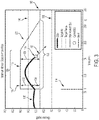
- CGM trace 100 is illustrated, wherein the x-axis represents time in minutes and the y-axis represents glucose in mg/dl.
- CGM trace 100 comprises a series of detected glucose levels measured over a period.
- CGM trace 100 represents filtered glucose levels, i.e., glucose levels that are estimated based on the measured glucose levels weighted with the probably of sensor accuracy.
- a most recent estimated glucose level 110 has an associated negative rate of change indicated with arrow 112.
- Bolus calculator module 48 determines the target glucose level 102 and a target range of glucose levels indicated with an upper glucose limit 104 and a lower glucose limit 106.
- target glucose level 102 is 110 mg/dl
- upper glucose limit 104 is 140 mg/dl
- lower glucose limit 106 is 80 mg/dl, although other suitable values may be provided.
- Bolus calculator module 48 may determine target glucose level 102 and limits 104, 106 based at least in part on the user's history data described herein.
- Management device 26 uses the trending glucose data of CGM trace 100 to recommend corrective action to move the blood glucose towards the target glucose level 102.
- the target glucose level 102 of FIG. 3 corresponds to the maximum allowed glucose before time t 1 and after time t 2 , i.e., when there has not been any recent meals or correction boluses. Between times t 1 and t 2 , the maximum allowed glucose is adjusted based on a meal event 114 or other suitable events.
- meal event 114 occurs when the user consumes a meal and enters carbohydrate data into management device 26 indicating the amount of carbohydrates consumed with the meal.
- an insulin bolus is administered at about the time of the meal event 114 to offset the expected increase in glucose levels resulting from the meal.
- Bolus calculator module 48 determines a projected glucose level rise and a duration of the glucose rise based on the carbohydrates consumed, the insulin correction bolus (if administered), and the user's historical data related to glucose swings following meals and insulin injections. Based on the projected glucose rise, bolus calculator module 48 determines an allowed rise value 124, an offset time value 126, and an acting time value 122.
- the allowed rise value 124 may be based on other events, such as a glucagon injection, exercise, sleep, driving, or time of day, for example.
- the allowed rise value 124 is the amount by which the glucose level of the user may be allowed to increase with respect to the target glucose level 102 as a result of the carbohydrate intake and insulin bolus.
- the allowed rise value 124 is the combination of a correction delta glucose value 130 resulting from an insulin bolus and a meal rise value 132 resulting from the meal event 114.
- the correction delta glucose value 130 is the difference between the current glucose level and the target glucose level 102 at the time of the insulin bolus to allow time for the glucose level to decrease following insulin.
- the allowed rise value 124 is constant (see line 118 ) for a first predetermined amount of time after the meal and insulin administration, i.e., offset time 126, and then decreases linearly (see slope 120 ) following the offset time 126.
- the total time that the meal and insulin dose have an effect on the bG levels of a patient is the acting time 122.
- FIG. 3 illustrates a trapezoid-shaped graph 116 of the allowed rise value 124 accounting for the effect of a dose of insulin and meal event.
- the maximum allowed glucose increases based on allowed rise value 124 and follows plot 116 of FIG. 3 .
- bolus calculator module 48 expands the range of allowable glucose levels after a meal event for the duration of the acting time 122 according to plot 116.
- the allowed rise value 124 illustratively has an initial height of 50 mg/dl, but could have other suitable heights based on the meal size, the insulin, and the user's typical reactions to boluses from the historical data.
- the meal rise value 132 is fixed.
- the offset time 126 is about two hours
- the acting time 122 is about three to five hours, depending on the user, the meal size, and the insulin bolus.
- management device 26 further includes basal rate adjustment logic 50 operative to calculate and adjust a basal rate based on the current glucose state and the risk associated with the current glucose state.
- Management device 26 transmits an adjustment to the basal rate in a control signal to insulin pump 31 via communication link 35, and insulin pump 31 adjusts the current insulin basal rate based on the adjustment.
- the adjusted basal rate may be displayed to the user, and the user manually adjusts the basal rate of insulin pump 31.
- the adjustment is a percent reduction to the initial, unadjusted or nominal basal rate based on a risk of hypoglycemia or a percent increase to the initial, unadjusted or nominal basal rate based on risk of hyperglycemic conditions.
- the basal rate adjustment logic 50 determines whether the basal rate is to be adjusted. If an adjusted basal rate is proper, basal rate adjustment logic 50 calculates an adjusted basal rate and management device 26 transmits a control signal to insulin pump 31 to cause insulin pump 31 to deliver insulin at the adjusted basal rate. Alternatively, management device 26 may display the adjusted basal rate to the user to prompt the user for manual adjustment of the insulin pump 31. In some embodiments, the implementation of the adjusted basal rate may be overridden by the user via manual control of the insulin pump 31.
- CGM devices estimate blood glucose levels from analyzing interstitial plasma or fluid rather than blood from, e.g., a finger stick
- CGM devices generally provide delayed and/or inexact blood glucose monitoring.
- the calibration blood sample is then used to compare the user's actual blood glucose level with the blood glucose levels determined by the glucose sensor 16 of the CGM system 10.
- Such calibration is only done periodically, such as every 12 hours.
- Embodiments of the present invention therefore incorporate solutions for mitigating the risk of automatically dosing insulin or other medicament to patients based on potentially inaccurate CGM data.
- the indirect measurement of blood glucose levels with a CGM device necessitates inclusion of failsafes in the control-to-range algorithm to guard against unreliable increases or decreases in basal insulin rates.
- Inaccuracies in the blood glucose monitoring from the CGM device may be the result of an inaccurate CGM calibration as a result of drift or other error.
- the calibration error may cause the glucose sensor 16 of the CGM system 10 to have a bias greater than the current true blood glucose level.
- a calibration error may cause the CGM to have a bias less than the current true blood glucose level.
- an error with the sensor in the GCM device may provide false or incorrect readings for the blood glucose levels. For example, a sensor error may cause the CGM to no longer respond to changes in blood glucose and remain artificially low or artificially high.
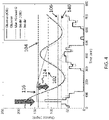
- the CGM system 10 treats increases in the basal rate of insulin as a bolus and inputs the bolus into the bolus calculator module 48 records only if the increase on the basal rate is greater than a predetermined threshold 140. For example, if the basal rate is increased to 1.3x the nominal basal rate, the increased basal rate is treated as a bolus and input into the bolus calculator module 48 records.
- Other thresholds are contemplated including, for example, 1.1x the nominal basal rate, 1.2x the nominal basal rate, 1.4x the nominal basal rate, 1.5x the nominal basal rate, and 2x the nominal basal rate.
- the threshold may be determined based on the individual physiological characteristics of the PWD and/or the value of the nominal basal rate. Referring to FIG. 4 , the basal rate is temporarily increased to a value greater than the threshold 140. The temporary increase in the basal rate is treated as a correction bolus which causes a trapezoidal rise in the maximum allowed glucose 116.
- TBR temporary basal rate
- TBR IOB represents a temporary basal rate threshold where the extra basal rate gets handles as a correction bolus.
- the value of the TBR IOB is set from 130% to 150%.
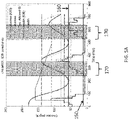
- the control-to-range algorithm is prevented from increasing the basal rate to a value above a limiting nominal basal rate 160 for a specified period of time 170.
- the risk of a hypoglycemic event is increased following a previous hypoglycemic event. This constraint helps to address this increase in risk.
- the lock is triggered by two consecutive time periods with a recommended TBR below a defined threshold 150. This may occur when the glucose value actually goes into the hypo region or by an extreme rate-of-change. Once this lock has been triggered, the TBR value is limited to 110% for a specified amount of time.
- the control-to-range algorithm is prevented from increasing the basal rate to above 1.1x the nominal basal rate for 2 hours.
- Other thresholds 150 are contemplated including, for example, 0.1x the nominal basal rate, 0.3x the nominal basal rate, 0.05x the nominal basal rate, and a basal rate of zero. Additional limiting nominal basal rates are contemplated including, for example, 0.8x the nominal basal rate, 0.9x the nominal basal rate, 1.0x the nominal basal rate, 1.2x the nominal basal rate, and 1.3x the nominal basal rate.
- additional periods of time where the basal rate is limited are contemplated including, for example, 0.5 hours, 1 hour, 1.5 hours, and 2.5 hours.
- the threshold 150, limiting nominal basal rate 160, and/or the period of time where the basal rate is limited 170 may be determined based on the individual physiological characteristics of the PWD 11 and/or the value of the nominal basal rate.
- TBR lock is a temporary basal rate threshold for transitioning from an initial lock period to the secondary lock period.
- TBR lock may be set as 90%
- the initial lock period may be 120 minutes.
- the secondary lock period may be 60 minutes.
- the lock window duration is reset to 60 minutes. This ensures that after a hypoglycemic event the insulin is not increased for at least the length of the secondary lock period after recovering from the hypoglycemic event.
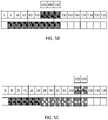
- FIG. 5B illustrates an example where the lock is set when the second 15 minute interval has a TBR of 0%.
- the lock window is set to 120 minutes.
- the system recommends TBRs of 120%, 130%, and 130%. These occur during the lock window and are adjusted down to 100%.
- the TBR is allowed to increase to values to above 100%.
- FIG. 5C illustrates an example where the TBR increases gradually after the lock window is triggered. This causes extra time to be added to the lock window (EXTRA).
- EXTRA extra time to be added to the lock window
- the second 0% TBR is recommended the lock is set to 120 minutes.
- the TBR recommendation is 60% which is below the TBR lock threshold. This causes an additional 60 minutes to be added to the lock window.
- the basal multiplier is limited for a PWD based on their current basal rate and insulin sensitivity factor.
- the max allowed TBR TBR MAX
- TBR MAX max allowed TBR
- G br the basal rate
- TBR limit min TBR MAX , G brT BR ⁇ IS ⁇ TBR MAX .
- the temporary basal rate limit may be incremented to the closest TBR increment.
- the glucose correction equivalent was calculated for 30 simulated PwDs.
- the simulated subjects numbered 21 and 24 showed an oscillating behavior when their insulin sensitivity was increased. With reference to FIG. 6 , an example of this behavior for subject number 24 is illustrated. In this scenario the basal rate was increased by a factor of 1.5 to induce hypoglycemia and the CTR algorithm was turned on to mitigate the effects. Simulations were repeated with different values for the max allowed TBR value ranging from 125% to 250%. The lower values for the max allowed TBR value have a lower magnitude of the oscillations demonstrating the benefit of implementing a TBR limit for PwD with a G br above the G brT .
- the control-to-range algorithm is evaluated on a 15 minute cycle.
- the amount that the control-to-range algorithm may increase the basal rate multiplier during each evaluation period is limited by a maximum basal multiplier delta. For example, if the current basal rate multiplier is 1.1x of the nominal basal rate then during the next time period the basal rate multiplier may only be increase to 1.6x if the maximum basal multiplier delta is set to 0.5.
- the maximum basal multiplier deltas are contemplated including, for example, 0.2, 0.4, 0.8, 1.0, and 1.5.
- the maximum basal multiplier delta may be determined based on the individual physiological characteristics of the PWD and/or the value of the nominal basal rate.
- control-to-range algorithm is not utilized when there has been a recent meal. This constraint may be implemented by limiting the maximum allowed basal multiplier if the maximum allowed glucose is greater than the target glucose level. This implementation would also limit the control-to-range algorithm after a correction bolus or manual bolus is administered.
- the allowed basal insulin increase is limited based on recent basal increase history.
- the basal increase history may be obtained from the historical data stored in memory 39 of management device 26.
- the allowed basal increase is limited if the sum of basal rate increases over a defined time span is greater than the insulin equivalent of an allocation of rescue carbohydrates. For example, if the sum of basal rate increases over the preceding 1 hour time span is greater than the insulin equivalent of 16 grams of rescue carbohydrates, then the allowed basal increase is limited.
- Other defined time spans for summing basal rate increases are contemplated including, for example, 15 minutes, 30 minutes, 45 minutes, 1.5 hours, 2 hours, and 4 hours.
- Additional rescue carbohydrate insulin equivalents are also contemplated including, for example, 8 grams of rescue carbohydrates, 12 grams of rescue carbohydrates, 20 grams of rescue carbohydrates, 24 grams or rescue carbohydrates, and 28 grams of rescue carbohydrates.
- the defined time span for basal rate increase summing, the rescue carbohydrate insulin equivalent limit, and/or the allowed basal increase limit may be determined based on the individual physiological characteristics of the PWD and/or the value of the nominal basal rate.
- the bolus calculator module 48 processes bolus records to detect if an over-correction bolus is delivered.
- An over-correction bolus is a correction bolus that is greater than the recommended correction bolus. If the bolus calculator module 48 detects an over-correction bolus, a portion of the over-correction bolus is converted into a hypo shift to make the CTR algorithm more sensitive to falling glucose. In this case the excess bolus, the amount greater than the recommended correction bolus, is converted to a glucose adjustment using the insulin sensitivity factor, acting time, and offset time to define a trapezoid following the delivery of the over-correction.
- the glucose adjustment may be reduced by a fixed amount which may be equal to the distance between the glucose target and the lower glucose target.
- This provides a bolus buffer where the glucose is not adjusted unless the over-correction bolus will result in a drop below the lower glucose target.
- the bolus buffer can be set to zero, such that any correction to a value below the target glucose is considered an over-correction.
- the glucose adjustment is applied as a hypo shift when calculating the risk of a glucose state. This increases the system safety following a correction bolus.
- the glucose adjustment is then reduced by the glucose equivalent of any reduction in basal rate following the over-correction.
- the glucose adjustment may be adjusted based on the difference between the expected insulin delivery following the over-correction and the actual insulin delivery following the over-correction. If less insulin was delivered than would nominally be delivered following determination of the over-correction the reduction in insulin is considered removed insulin.
- a flow diagram 300 of an exemplary constraint acting as a failsafe of the control-to-range algorithm is illustrated for verifying the validity of the CGM system 10 blood glucose readings.
- the validity of the CGM system 10 blood glucose readings are verified if the basal insulin rate remains constant above a rate threshold for a sustained period of time exceeding a time threshold. For example, at block 182, if the basal insulin rate remains constant above 110% of the nominal basal rate for a period of time exceeding 2 hours the PWD 11 is alerted to test their blood glucose to confirm the CGM value.
- rate thresholds are contemplated including, for example, 105% of the nominal basal rate, 115 % of the nominal basal rate, 120 % of the nominal basal rate, and 125% of the nominal basal rate.
- Additional time thresholds are also contemplated including, for example, 3 hours, 4 hours, the offset time, and the acting time.
- the microcontroller 32 checks to determine if the PWD 11 follows through with the request to test their blood glucose of block 182. If the PWD 11 does not check their blood glucose, the control-to-range is turned off or the aggressiveness is reduced as illustrated in block 186. If the PWD 11 complies with the instructions to test their blood glucose, the microcontroller 32 queries whether the blood glucose measurement confirms the CGM within a quality metric as illustrated in block 188. For example, the microcontroller 32 verifies that blood glucose measurement and the CGM value agree within +/- 20%. Other quality metric are contemplated including, for example, 105% of the nominal basal rate, 115 % of the nominal basal rate, 120 % of the nominal basal rate, and 125% of the nominal basal rate.
- control-to-range is turned off or the aggressiveness is reduced if the CGM data quality check of block 188 fails to confirm agreement between the blood glucose measurement and the CGM measurements.
- control-to-range is turned back on and/or the aggressiveness is increased back to nominal if the CGM sensor is replaced or recalibrated and confirmed to be accurate.
- the CGM system 10 polls the PWD 11 regarding if he has consumed a recent meal.
- the microcontroller 32 receives the PWD's 11 response at block 194 and acts accordingly.
- the control-to-range is kept on if the PWD 11 recently consumed a meal. The consumption of a recent meal justifies and explains the increased basal insulin rate for the time threshold.
- the PWD 11 is alerted to check the infusion site if the PWD 11 did not consume a meal recently. If the blood glucose measurement and the CGM measurement are in agreement and the patient did not recently consume a meal, but the basal insulin rate is consistently higher than nominal, that is indicative of the insulin no properly reaching the patient and/or the patient not responding to the insulin as expected.
- a simulation study was performed to demonstrate the effectiveness of the control-to-range failsafes.
- the study comprised the modeled blood glucose of 30 simulated subjects over a 5 day period with typical meals and carbohydrate estimation errors.
- the control-to-range algorithm without any of the failsafe constraints was applied to obtain a baseline modeled blood glucose of the 30 simulated subjects over a 5 day period (Baseline Simulation).
- the control-to-range algorithm with the failsafe constraints of the present disclosure implemented was applied to obtain a comparative modeled blood glucose of the 30 simulated subjects over a 5 day period (Failsafe Simulation).
- FIG. 8 illustrates the range of added error between the simulated true blood glucose and the simulated CGM blood glucose measurements.
- the methods and systems described herein may be used to estimate the glucose level of a person having diabetes and utilize a control-to-range algorithm to adjust the glucose level of a person having diabetes. Furthermore, the methods and systems described herein may also be used to provide fail safes with the control-to-range algorithm to reliably increase insulin basal rates to account for increases in glucose concentration.
- the methods described herein may be stored on a computer-readable medium which has computer-executable instructions for performing the methods.
- Such computer-readable media may include compact discs, hard drives, thumb drives, random-access memory, dynamic random-access memory, flash memory, and so forth.
- references herein of a component of the present disclosure being “configured” in a particular way, “configured” to embody a particular property, or function in a particular manner, are structural recitations, as opposed to recitations of intended use. More specifically, the references herein to the manner in which a component is “configured” denotes an existing physical condition of the component and, as such, is to be taken as a definite recitation of the structural characteristics of the component.
Landscapes
- Health & Medical Sciences (AREA)
- Engineering & Computer Science (AREA)
- Public Health (AREA)
- Biomedical Technology (AREA)
- Life Sciences & Earth Sciences (AREA)
- General Health & Medical Sciences (AREA)
- Medical Informatics (AREA)
- Animal Behavior & Ethology (AREA)
- Veterinary Medicine (AREA)
- Heart & Thoracic Surgery (AREA)
- Pathology (AREA)
- Primary Health Care (AREA)
- Epidemiology (AREA)
- Physics & Mathematics (AREA)
- Anesthesiology (AREA)
- Biophysics (AREA)
- Vascular Medicine (AREA)
- Hematology (AREA)
- Surgery (AREA)
- Molecular Biology (AREA)
- Medicinal Chemistry (AREA)
- Bioinformatics & Cheminformatics (AREA)
- Chemical & Material Sciences (AREA)
- Databases & Information Systems (AREA)
- Data Mining & Analysis (AREA)
- Optics & Photonics (AREA)
- Pharmacology & Pharmacy (AREA)
- Emergency Medicine (AREA)
- Diabetes (AREA)
- Business, Economics & Management (AREA)
- General Business, Economics & Management (AREA)
- Infusion, Injection, And Reservoir Apparatuses (AREA)
- Measurement Of The Respiration, Hearing Ability, Form, And Blood Characteristics Of Living Organisms (AREA)
- Train Traffic Observation, Control, And Security (AREA)
- Magnetic Resonance Imaging Apparatus (AREA)
- Valve Device For Special Equipments (AREA)
- Control Of Motors That Do Not Use Commutators (AREA)
- Crystals, And After-Treatments Of Crystals (AREA)
Claims (16)
- Verfahren zum Bestimmen einer Basalratenanpassung von Insulin in einem kontinuierlichen Glukoseüberwachungssystem (10) einer Person (11) mit Diabetes, wobei das Verfahren umfasst:- Empfangen eines Signals, das für mindestens eine Glukosemessung repräsentativ ist, durch mindestens eine Recheneinrichtung;- Erfassen eines Glukosezustands der Person (11) durch die mindestens eine Recheneinrichtung auf der Grundlage des Signals, wobei der erfasste Glukosezustand einen Glukosespiegel (110) der Person (11) und eine Änderungsrate des Glukosespiegels (112) umfasst;- Berechnen einer Anpassung an eine Basalrate einer Therapieverabreichungsvorrichtung (31) durch die mindestens eine Recheneinrichtung auf der Grundlage eines Control-to-Range-Algorithmus und mindestens einer Failsafe-Bedingung, um Änderungen der Insulinempfindlichkeit der Person (11) mit Diabetes oder eine ungenaue Glukosemessung zu berücksichtigen, wobei die Therapieverabreichungsvorrichtung (31) eine nominale Basalrate aufweist, die eine unangepasste Basalrate darstellt, welche für die Person (11) mit Diabetes eingestellt ist;wobei die Failsafe-Bedingung gemäß einem der folgenden Verfahren berechnet wird:- Bestimmen, ob die Basalrate während einer vorbestimmten Zeitspanne über dem 1,1-fachen der nominalen Basalrate bleibt,- Alarmieren der Person (11) mit Diabetes, ihren Blutzucker zu testen und den getesteten Blutzucker in das kontinuierliche Glukoseüberwachungssystem (10) als eine Eingabe-Blutzuckermessung einzugeben, und- Bestimmen, ob die Eingabe-Blutzuckermessung und der erfasste Glukosespiegel der Person (11) mit Diabetes innerhalb einer vorbestimmten Qualitätsmetrik übereinstimmen, wobei, wenn die mindestens eine Recheneinrichtung bestimmt, dass die Eingabe-Blutzuckermessung und der erfasste Glukosespiegel der Person (11) mit Diabetes nicht innerhalb der vorbestimmten Qualitätsmetrik übereinstimmen, der Control-to-Range-Algorithmus ausgeschaltet oder die Aggressivität verringert wird, bis der Sensor in dem kontinuierlichen Glukoseüberwachungssystem (10) ausgetauscht wird oder der Sensor neu kalibriert und als akkurat bestätigt wird.
- Verfahren nach Anspruch 1, ferner umfassend das Anzeigen grafischer Daten, welche die berechnete Anpassung der Basalrate repräsentieren, für einen Benutzer auf einer grafischen Benutzeroberfläche.
- Verfahren nach Anspruch 1, wobei für die Failsafe-Bedingung der Anstieg der Basalrate umgewandelt wird in einen Bolus zur Eingabe in den Bolusrechner durch die mindestens eine Recheneinrichtung in Übereinstimmung mit

- Verfahren nach Anspruch 1, wobei der Schwellenwert das 1,3-fache der nominalen Basalrate beträgt.
- Verfahren nach Anspruch 1, wobei die Failsafe-Bedingung ferner berechnet wird in Übereinstimmung mit:- dem Bestimmen, ob die Basalrate bei oder unter einem Schwellenwert (150) liegt, und- dem Verhindern, dass der Control-to-Range-Algorithmus die Basalrate auf einen Wert oberhalb einer beschränkenden nominalen Basalrate (160) für eine bestimmte Zeitspanne (170) erhöht, wenn die Basalrate bei oder unter dem Schwellenwert (150) liegt.
- Verfahren nach Anspruch 5, wobei- der Schwellenwert (150) das 0,2-fache der nominalen Basalrate beträgt, oder- der Schwellenwert (150) gleich Null ist.
- Verfahren nach Anspruch 5, wobei die beschränkende nominale Basalrate (160) das 1,1-fache der nominalen Basalrate beträgt.
- Verfahren nach Anspruch 5, wobei die festgelegte Zeitspanne (170) 2 Stunden beträgt.
- Verfahren nach Anspruch 8, wobei ein Basalmultiplikator der nominalen Basalrate auf der Grundlage der aktuellen Basalrate und des Insulinempfindlichkeitsfaktors einer Person (11) mit Diabetes begrenzt wird.
- Verfahren nach Anspruch 9, wobei der Grenzwert des Multiplikators der nominalen Basalrate von der mindestens einen Recheneinrichtung bestimmt wird in Übereinstimmung mit

- Verfahren nach Anspruch 1, wobei für die Failsafe-Bedingung (b) der maximale Basalmultiplikator Delta das 0,5-fache der nominalen Basalrate beträgt.
- Verfahren nach Anspruch 1, wobei für die Failsafe-Bedingung (d) die vorgegebene Qualitätsmetrik eine Übereinstimmung innerhalb von +/- 20 % liegt.
- Verfahren nach Anspruch 5, wobei, wenn die Basalrate auf 0 % der nominalen Basalrate für 2 Erfassungszyklen des Glukosezustands verringert wird, die Basalrate daran gehindert wird, für 120 Minuten über das 1,1-fache der nominalen Basalrate anzusteigen.
- Blutzuckermanagement-Vorrichtung (26), die so eingerichtet ist, dass sie eine Basalratenanpassung in einem kontinuierlichen Glukoseüberwachungssystem (10) einer Person (11) mit Diabetes bestimmt, wobei die Vorrichtung umfasst:- ein nicht-transitorisches computerlesbares Speichermedium, das ausführbare Anweisungen speichert; und- mindestens eine Verarbeitungsvorrichtung, die so eingerichtet ist, dass sie die ausführbaren Anweisungen derart ausführt, dass, wenn sie von der mindestens einen Verarbeitungsvorrichtung ausgeführt werden, die ausführbaren Anweisungen die mindestens eine Verarbeitungsvorrichtung veranlassen:- zum Empfangen eines Signals, das für mindestens eine Glukosemessung repräsentativ ist;- zum Erfassen eines Glukosezustands der Person (11) auf der Grundlage des Signals, wobei der erfasste Glukosezustand einen Glukosespiegel (110) der Person (11) und eine Änderungsrate des Glukosespiegels (112) umfasst; und- zum Berechnen einer Anpassung an eine Basalrate einer Therapieverabreichungsvorrichtung (31) auf der Grundlage eines Control-to-Range-Algorithmus und mindestens einer Failsafe-Bedingung, um Änderungen der Insulinempfindlichkeit der Person (11) mit Diabetes oder eine ungenaue Glukosemessung zu berücksichtigen, wobei die Therapieverabreichungsvorrichtung (31) eine nominale Basalrate aufweist, die eine nicht angepasste Basalrate darstellt, welche für die Person (11) mit Diabetes eingestellt ist;wobei die Failsafe-Bedingung gemäß einem der folgenden Verfahren berechnet wird:- Bestimmen, ob die Basalrate während einer vorbestimmten Zeitspanne über dem 1,1-fachen der nominalen Basalrate bleibt,- Alarmieren der Person (11) mit Diabetes, ihren Blutzucker zu testen und den getesteten Blutzucker in das kontinuierliche Glukoseüberwachungssystem (10) als eine Eingabe-Blutzuckermessung einzugeben, und- Bestimmen, ob die Eingabe-Blutzuckermessung und der erfasste Glukosespiegel der Person (11) mit Diabetes innerhalb einer vorbestimmten Qualitätsmetrik übereinstimmen, wobei, wenn die mindestens eine Recheneinrichtung bestimmt, dass die Eingabe-Blutzuckermessung und der erfasste Glukosespiegel der Person (11) mit Diabetes nicht innerhalb der vorbestimmten Qualitätsmetrik übereinstimmen, der Control-to-Range-Algorithmus ausgeschaltet oder die Aggressivität verringert wird, bis der Sensor in dem kontinuierlichen Glukoseüberwachungssystem (10) ausgetauscht wird oder der Sensor neu kalibriert und als akkurat bestätigt wird.
- Blutzuckermanagement-Vorrichtung (26) nach Anspruch 14, die ferner so konfiguriert ist, dass sie ein Steuersignal sendet, um die Therapieverabreichungsvorrichtung (31) anzuweisen, die Basalrate auf der Grundlage der berechneten Anpassung anzupassen.
- Blutzuckermanagement-Vorrichtung (26) nach Anspruch 15, wobei die Therapieverabreichungsvorrichtung (31) eine Insulinpumpe (31) zur Verabreichung von Insulin an die Person (11) mit Diabetes umfasst und die Therapieverabreichungsvorrichtung (31) in Kommunikation mit der mindestens einen Recheneinrichtung steht, um die berechnete Anpassung der Basalrate zu empfangen.
Applications Claiming Priority (2)
| Application Number | Priority Date | Filing Date | Title |
|---|---|---|---|
| US15/170,425 US10332632B2 (en) | 2016-06-01 | 2016-06-01 | Control-to-range failsafes |
| PCT/US2017/031662 WO2017209903A1 (en) | 2016-06-01 | 2017-05-09 | Control-to-range failsafes |
Publications (2)
| Publication Number | Publication Date |
|---|---|
| EP3479262A1 EP3479262A1 (de) | 2019-05-08 |
| EP3479262B1 true EP3479262B1 (de) | 2023-01-11 |
Family
ID=58745387
Family Applications (1)
| Application Number | Title | Priority Date | Filing Date |
|---|---|---|---|
| EP17725003.2A Active EP3479262B1 (de) | 2016-06-01 | 2017-05-09 | Regelung-zu-bereich-ausfallsicherung |
Country Status (11)
| Country | Link |
|---|---|
| US (1) | US10332632B2 (de) |
| EP (1) | EP3479262B1 (de) |
| KR (1) | KR102432415B1 (de) |
| CN (1) | CN109478422B (de) |
| AU (1) | AU2017275393B2 (de) |
| CA (1) | CA3025902C (de) |
| ES (1) | ES2939640T3 (de) |
| FI (1) | FI3479262T3 (de) |
| HU (1) | HUE061267T2 (de) |
| MX (1) | MX394631B (de) |
| WO (1) | WO2017209903A1 (de) |
Cited By (1)
| Publication number | Priority date | Publication date | Assignee | Title |
|---|---|---|---|---|
| EP4284468A4 (de) * | 2021-01-28 | 2025-01-29 | Tandem Diabetes Care, Inc. | Systeme und verfahren zur automatisierten insulinabgabe für diabetestherapie |
Families Citing this family (58)
| Publication number | Priority date | Publication date | Assignee | Title |
|---|---|---|---|---|
| US8417311B2 (en) | 2008-09-12 | 2013-04-09 | Optiscan Biomedical Corporation | Fluid component analysis system and method for glucose monitoring and control |
| US7959598B2 (en) | 2008-08-20 | 2011-06-14 | Asante Solutions, Inc. | Infusion pump systems and methods |
| US9561324B2 (en) | 2013-07-19 | 2017-02-07 | Bigfoot Biomedical, Inc. | Infusion pump system and method |
| GB2523989B (en) | 2014-01-30 | 2020-07-29 | Insulet Netherlands B V | Therapeutic product delivery system and method of pairing |
| US9465917B2 (en) * | 2014-05-30 | 2016-10-11 | Roche Diabetes Care, Inc. | Hazard based assessment patterns |
| CN107405446B (zh) | 2015-02-18 | 2020-09-29 | 英赛罗公司 | 流体输送和输注装置及其使用方法 |
| US10275573B2 (en) | 2016-01-13 | 2019-04-30 | Bigfoot Biomedical, Inc. | User interface for diabetes management system |
| CN108495665B (zh) | 2016-01-14 | 2021-04-09 | 比格福特生物医药公司 | 调整胰岛素输送速率 |
| HK1256995A1 (zh) | 2016-01-14 | 2019-10-11 | Bigfoot Biomedical, Inc. | 药物输送设备、系统和方法中的阻塞解决方案 |
| US12383166B2 (en) | 2016-05-23 | 2025-08-12 | Insulet Corporation | Insulin delivery system and methods with risk-based set points |
| KR102448156B1 (ko) | 2016-08-30 | 2022-09-29 | 에네오스 가부시키가이샤 | 올리고머의 제조 방법 및 촉매 |
| US10765807B2 (en) | 2016-09-23 | 2020-09-08 | Insulet Corporation | Fluid delivery device with sensor |
| EP3500161A4 (de) | 2016-12-12 | 2020-01-08 | Bigfoot Biomedical, Inc. | Alarme und warnungen für medikamentenabgabevorrichtungen und zugehörige systeme und verfahren |
| US10881792B2 (en) | 2017-01-13 | 2021-01-05 | Bigfoot Biomedical, Inc. | System and method for adjusting insulin delivery |
| WO2018132723A1 (en) | 2017-01-13 | 2018-07-19 | Mazlish Bryan | Insulin delivery methods, systems and devices |
| US10500334B2 (en) | 2017-01-13 | 2019-12-10 | Bigfoot Biomedical, Inc. | System and method for adjusting insulin delivery |
| EP3568859B1 (de) | 2017-01-13 | 2025-12-10 | Insulet Corporation | Insulinverabreichungsverfahren, -systeme und -vorrichtungen |
| US10758675B2 (en) | 2017-01-13 | 2020-09-01 | Bigfoot Biomedical, Inc. | System and method for adjusting insulin delivery |
| ES2903174T3 (es) | 2017-05-05 | 2022-03-31 | Lilly Co Eli | Control de bucle cerrado de glucosa fisiológica |
| EP3438858A1 (de) | 2017-08-02 | 2019-02-06 | Diabeloop | Blutglucosekontrollsysteme und -verfahren mit geschlossener schleife |
| CN118217478A (zh) | 2017-12-21 | 2024-06-21 | 益首药物治疗股份公司 | 生理葡萄糖的闭环控制 |
| USD928199S1 (en) | 2018-04-02 | 2021-08-17 | Bigfoot Biomedical, Inc. | Medication delivery device with icons |
| CN112236826B (zh) * | 2018-05-04 | 2024-08-13 | 英赛罗公司 | 基于控制算法的药物输送系统的安全约束 |
| JP2021528758A (ja) | 2018-06-22 | 2021-10-21 | イーライ リリー アンド カンパニー | インスリンとプラムリンタイドの送達システム、方法、およびデバイス |
| US11628251B2 (en) | 2018-09-28 | 2023-04-18 | Insulet Corporation | Activity mode for artificial pancreas system |
| EP3864668A1 (de) | 2018-10-11 | 2021-08-18 | Insulet Corporation | Ereignisdetektion für ein arzneimittelabgabesystem |
| USD920343S1 (en) | 2019-01-09 | 2021-05-25 | Bigfoot Biomedical, Inc. | Display screen or portion thereof with graphical user interface associated with insulin delivery |
| US11801344B2 (en) * | 2019-09-13 | 2023-10-31 | Insulet Corporation | Blood glucose rate of change modulation of meal and correction insulin bolus quantity |
| US11935637B2 (en) | 2019-09-27 | 2024-03-19 | Insulet Corporation | Onboarding and total daily insulin adaptivity |
| WO2021113647A1 (en) | 2019-12-06 | 2021-06-10 | Insulet Corporation | Techniques and devices providing adaptivity and personalization in diabetes treatment |
| US11833329B2 (en) | 2019-12-20 | 2023-12-05 | Insulet Corporation | Techniques for improved automatic drug delivery performance using delivery tendencies from past delivery history and use patterns |
| US12036389B2 (en) | 2020-01-06 | 2024-07-16 | Insulet Corporation | Prediction of meal and/or exercise events based on persistent residuals |
| US12370307B2 (en) | 2020-02-03 | 2025-07-29 | Insulet Corporation | Use of fuzzy logic in predicting user behavior affecting blood glucose concentration in a closed loop control system of an automated insulin delivery device |
| US11551802B2 (en) | 2020-02-11 | 2023-01-10 | Insulet Corporation | Early meal detection and calorie intake detection |
| US11547800B2 (en) | 2020-02-12 | 2023-01-10 | Insulet Corporation | User parameter dependent cost function for personalized reduction of hypoglycemia and/or hyperglycemia in a closed loop artificial pancreas system |
| US11986630B2 (en) | 2020-02-12 | 2024-05-21 | Insulet Corporation | Dual hormone delivery system for reducing impending hypoglycemia and/or hyperglycemia risk |
| US11324889B2 (en) | 2020-02-14 | 2022-05-10 | Insulet Corporation | Compensation for missing readings from a glucose monitor in an automated insulin delivery system |
| US12495994B2 (en) | 2020-02-20 | 2025-12-16 | Insulet Corporation | Meal bolus subcategories in model based insulin therapy |
| US11607493B2 (en) | 2020-04-06 | 2023-03-21 | Insulet Corporation | Initial total daily insulin setting for user onboarding |
| WO2022020197A1 (en) | 2020-07-22 | 2022-01-27 | Insulet Corporation | Open-loop insulin delivery basal parameters based on insulin delivery records |
| US11684716B2 (en) | 2020-07-31 | 2023-06-27 | Insulet Corporation | Techniques to reduce risk of occlusions in drug delivery systems |
| EP4221785B1 (de) | 2020-09-30 | 2025-12-24 | Insulet Corporation | Arzneimittelabgabevorrichtung mit integriertem optischen glucosemonitor |
| US12115351B2 (en) | 2020-09-30 | 2024-10-15 | Insulet Corporation | Secure wireless communications between a glucose monitor and other devices |
| US11160925B1 (en) | 2021-01-29 | 2021-11-02 | Insulet Corporation | Automatic drug delivery system for delivery of a GLP-1 therapeutic |
| US20220249773A1 (en) * | 2021-02-05 | 2022-08-11 | Insulet Corporation | Techniques and devices for adaptation of maximum drug delivery limits |
| US11904140B2 (en) | 2021-03-10 | 2024-02-20 | Insulet Corporation | Adaptable asymmetric medicament cost component in a control system for medicament delivery |
| WO2022192482A1 (en) | 2021-03-10 | 2022-09-15 | Insulet Corporation | A medicament delivery device with an adjustable and piecewise analyte level cost component to address persistent positive analyte level excursions |
| US12496398B2 (en) | 2021-05-28 | 2025-12-16 | Insulet Corporation | Threshold based automatic glucose control response |
| US12406760B2 (en) | 2021-06-07 | 2025-09-02 | Insulet Corporation | Exercise safety prediction based on physiological conditions |
| US20220395638A1 (en) * | 2021-06-14 | 2022-12-15 | Insulet Corporation | Method for modification of maximum delivery limits in automatic drug delivery systems |
| US12514980B2 (en) | 2021-06-30 | 2026-01-06 | Insulet Corporation | Adjustment of medicament delivery by a medicament delivery device based on menstrual cycle phase |
| US12521486B2 (en) | 2021-07-16 | 2026-01-13 | Insulet Corporation | Method for modification of insulin delivery during pregnancy in automatic insulin delivery systems |
| WO2023049900A1 (en) | 2021-09-27 | 2023-03-30 | Insulet Corporation | Techniques enabling adaptation of parameters in aid systems by user input |
| WO2023102010A1 (en) * | 2021-11-30 | 2023-06-08 | Tandem Diabetes Care, Inc. | System and method of modifying user profile in automated insulin delivery |
| US11439754B1 (en) | 2021-12-01 | 2022-09-13 | Insulet Corporation | Optimizing embedded formulations for drug delivery |
| WO2023102114A1 (en) * | 2021-12-01 | 2023-06-08 | Insulet Corporation | Optimizing embedded formulations for drug delivery |
| CA3275991A1 (en) | 2023-01-06 | 2024-07-11 | Insulet Corporation | Automatic or manual administration of meal boluses with subsequent automatic relaxation of safety constraints |
| US20250032710A1 (en) * | 2023-07-25 | 2025-01-30 | Dexcom, Inc. | Timing and dosing improvements for diabetes management |
Family Cites Families (42)
| Publication number | Priority date | Publication date | Assignee | Title |
|---|---|---|---|---|
| US8974386B2 (en) * | 1998-04-30 | 2015-03-10 | Abbott Diabetes Care Inc. | Analyte monitoring device and methods of use |
| US8882666B1 (en) * | 1998-05-08 | 2014-11-11 | Ideal Life Inc. | Personal health monitoring and/or communication system |
| US7395158B2 (en) | 2000-05-30 | 2008-07-01 | Sensys Medical, Inc. | Method of screening for disorders of glucose metabolism |
| CA2408338C (en) | 2000-08-18 | 2009-09-08 | Cygnus, Inc. | Methods and devices for prediction of hypoglycemic events |
| WO2002024065A1 (en) | 2000-09-22 | 2002-03-28 | Knobbe, Lim & Buckingham | Method and apparatus for real-time estimation and control of pysiological parameters |
| US9247901B2 (en) | 2003-08-22 | 2016-02-02 | Dexcom, Inc. | Systems and methods for replacing signal artifacts in a glucose sensor data stream |
| US7278983B2 (en) | 2002-07-24 | 2007-10-09 | Medtronic Minimed, Inc. | Physiological monitoring device for controlling a medication infusion device |
| US7291107B2 (en) | 2004-08-26 | 2007-11-06 | Roche Diagnostics Operations, Inc. | Insulin bolus recommendation system |
| US8684922B2 (en) | 2006-05-12 | 2014-04-01 | Bao Tran | Health monitoring system |
| US20080269714A1 (en) | 2007-04-25 | 2008-10-30 | Medtronic Minimed, Inc. | Closed loop/semi-closed loop therapy modification system |
| JP5501963B2 (ja) * | 2007-07-09 | 2014-05-28 | ユニバーシティ オブ バージニア パテント ファウンデーション | 自己監視データから糖尿病におけるインシュリン感度、インシュリン/炭水化物比率、及びインシュリン補正機能を評価するためのシステム及びコンピュータプログラム製品 |
| GB0719969D0 (en) | 2007-10-12 | 2007-11-21 | Cambridge Entpr Ltd | Substance monitoring and control in human or animal bodies |
| US7731659B2 (en) | 2007-10-18 | 2010-06-08 | Lifescan Scotland Limited | Method for predicting a user's future glycemic state |
| US20100262434A1 (en) | 2007-12-13 | 2010-10-14 | Shaya Steven A | Method and apparatus to calculate diabetic sensitivity factors affecting blood glucose |
| US8734422B2 (en) | 2008-08-31 | 2014-05-27 | Abbott Diabetes Care Inc. | Closed loop control with improved alarm functions |
| GB2466183A (en) | 2008-12-09 | 2010-06-16 | Cambridge Entpr Ltd | Closed loop diabetes management system |
| CA2752637A1 (en) * | 2009-02-26 | 2010-09-02 | Eran Atlas | Method and system for automatic monitoring of diabetes related treatments |
| WO2010135654A2 (en) | 2009-05-22 | 2010-11-25 | Abbott Diabetes Care Inc. | Safety features for integrated insulin delivery system |
| US20110071464A1 (en) | 2009-09-23 | 2011-03-24 | Medtronic Minimed, Inc. | Semi-closed loop insulin delivery |
| US8843321B2 (en) | 2010-01-26 | 2014-09-23 | Roche Diagnostics Operations, Inc. | Methods and systems for processing glucose data measured from a person having diabetes |
| US8579879B2 (en) | 2010-02-19 | 2013-11-12 | Medtronic Minimed, Inc. | Closed-loop glucose control startup |
| US8532933B2 (en) | 2010-06-18 | 2013-09-10 | Roche Diagnostics Operations, Inc. | Insulin optimization systems and testing methods with adjusted exit criterion accounting for system noise associated with biomarkers |
| US8589106B2 (en) | 2010-12-22 | 2013-11-19 | Roche Diagnostics Operations, Inc. | Calibration of a handheld diabetes managing device that receives data from a continuous glucose monitor |
| US8774889B2 (en) | 2010-12-22 | 2014-07-08 | Roche Diagnostics Operations, Inc. | Patient monitoring system with efficient pattern matching algorithm |
| WO2012108939A1 (en) | 2011-02-11 | 2012-08-16 | Abbott Diabetes Care Inc. | Feedback from cloud or hcp to payer or patient via meter or cell phone |
| GB2493712B (en) * | 2011-08-12 | 2014-07-02 | Gene Onyx Ltd | Insulin pump |
| CA2846854C (en) | 2011-08-26 | 2022-12-13 | University Of Virginia Patent Foundation | Method, system and computer readable medium for adaptive advisory control of diabetes |
| US10881339B2 (en) | 2012-06-29 | 2021-01-05 | Dexcom, Inc. | Use of sensor redundancy to detect sensor failures |
| US9623179B2 (en) | 2012-08-30 | 2017-04-18 | Medtronic Minimed, Inc. | Safeguarding techniques for a closed-loop insulin infusion system |
| US9364609B2 (en) * | 2012-08-30 | 2016-06-14 | Medtronic Minimed, Inc. | Insulin on board compensation for a closed-loop insulin infusion system |
| US9504412B2 (en) | 2012-09-17 | 2016-11-29 | Lifescan, Inc. | Method and system to derive glycemic patterns from clustering of glucose data |
| US9592002B2 (en) | 2012-09-21 | 2017-03-14 | Lifescan, Inc. | Method and system to derive multiple glycemic patterns from glucose measurements during time of the day |
| US10463282B2 (en) | 2012-10-04 | 2019-11-05 | Roche Diabetes Care, Inc. | System and method for assessing risk associated with a glucose state |
| US9119528B2 (en) | 2012-10-30 | 2015-09-01 | Dexcom, Inc. | Systems and methods for providing sensitive and specific alarms |
| US9486578B2 (en) * | 2012-12-07 | 2016-11-08 | Animas Corporation | Method and system for tuning a closed-loop controller for an artificial pancreas |
| US9351670B2 (en) | 2012-12-31 | 2016-05-31 | Abbott Diabetes Care Inc. | Glycemic risk determination based on variability of glucose levels |
| US10383580B2 (en) | 2012-12-31 | 2019-08-20 | Abbott Diabetes Care Inc. | Analysis of glucose median, variability, and hypoglycemia risk for therapy guidance |
| US9227014B2 (en) | 2013-02-07 | 2016-01-05 | The Board Of Trustees Of The Laland Stanford Junior University | Kalman filter based on-off switch for insulin pump |
| JP6643558B2 (ja) | 2013-11-14 | 2020-02-12 | リージェンツ オブ ザ ユニバーシティー オブ カリフォルニア | グルコース率増加検出器及びそれを含む人工膵臓、差し迫った有害事象のリアルタイム予測のためのヘルスモニタリングシステム並びにヘルスモニタリングシステム用の食事検出モジュール |
| US10722650B2 (en) | 2014-03-28 | 2020-07-28 | Roche Diabetes Care, Inc. | System and method for adjusting therapy based on risk associated with a glucose state |
| US9465917B2 (en) | 2014-05-30 | 2016-10-11 | Roche Diabetes Care, Inc. | Hazard based assessment patterns |
| RU2014135270A (ru) * | 2014-08-29 | 2016-03-20 | Государственное бюджетное образовательное учреждение дополнительного профессионального образования "Российская медицинская академия последипломного образования" Министерства здравоохранения Российской Федерации (ГБОУ ДПО РМАПО Минздрава России) | Способ оценки эффективности и безопасности сахароснижающей терапии у больных сахарным диабетом с сердечно-сосудистыми заболеваниями |
-
2016
- 2016-06-01 US US15/170,425 patent/US10332632B2/en active Active
-
2017
- 2017-05-09 CN CN201780048458.6A patent/CN109478422B/zh active Active
- 2017-05-09 MX MX2018014683A patent/MX394631B/es unknown
- 2017-05-09 CA CA3025902A patent/CA3025902C/en active Active
- 2017-05-09 HU HUE17725003A patent/HUE061267T2/hu unknown
- 2017-05-09 AU AU2017275393A patent/AU2017275393B2/en active Active
- 2017-05-09 WO PCT/US2017/031662 patent/WO2017209903A1/en not_active Ceased
- 2017-05-09 ES ES17725003T patent/ES2939640T3/es active Active
- 2017-05-09 EP EP17725003.2A patent/EP3479262B1/de active Active
- 2017-05-09 KR KR1020187037674A patent/KR102432415B1/ko active Active
- 2017-05-09 FI FIEP17725003.2T patent/FI3479262T3/fi active
Non-Patent Citations (5)
| Title |
|---|
| ANONYMOUS: "OpenAPS Reference Design", 4 March 2016 (2016-03-04), XP055688859, Retrieved from the Internet <URL:https://web.archive.org/web/20160304054614/http://openaps.org/open-artificial-pancreas-system-openaps-reference-design/> [retrieved on 20200423] * |
| ANONYMOUS: "Super Bolus - This is Caleb...", 21 April 2010 (2010-04-21), XP055689535, Retrieved from the Internet <URL:https://thisiscaleb.com/2010/04/21/super-bolus/> [retrieved on 20200427] * |
| BRIAN L LEVY ET AL: "The Hypoglycaemia-Hyperglycaemia Minimizer System in the Management of Type 1 Diabetes", EUROPEAN ENDOCRINOLOGY, vol. 12, no. 1, 1 January 2016 (2016-01-01), pages 18, XP055689885, ISSN: 1758-3772, DOI: 10.17925/EE.2016.12.01.18 * |
| DANA LEWIS: "How does a closed loop articial pancreas work when you DIY? Or: #DIYPS closed loop is working!", DIYPS.ORG, 15 December 2014 (2014-12-15), pages 1 - 17, XP055776532, Retrieved from the Internet <URL:https://diyps.org/2014/12/15/how-does-a-closed-loop-artificial-pancreas-work-when-you-diy-or-diyps-closed-loop-is-working/> [retrieved on 20210216] * |
| WANG YOUQING ET AL: "A Novel Adaptive Basal Therapy Based on the Value and Rate of Change of Blood Glucose", JOURNAL OF DIABETES SCIENCE AND TECHNOLOGY VOLUME DIABETES TECHNOLOGY SOCIETY, 1 September 2009 (2009-09-01), pages 1 - 10, XP055776543, Retrieved from the Internet <URL:https://www.ncbi.nlm.nih.gov/pmc/articles/PMC2769919/pdf/dst-03-1099.pdf> [retrieved on 20210216] * |
Cited By (1)
| Publication number | Priority date | Publication date | Assignee | Title |
|---|---|---|---|---|
| EP4284468A4 (de) * | 2021-01-28 | 2025-01-29 | Tandem Diabetes Care, Inc. | Systeme und verfahren zur automatisierten insulinabgabe für diabetestherapie |
Also Published As
| Publication number | Publication date |
|---|---|
| BR112018074909A2 (pt) | 2019-03-12 |
| HUE061267T2 (hu) | 2023-06-28 |
| KR20190013922A (ko) | 2019-02-11 |
| CA3025902A1 (en) | 2017-12-07 |
| US20170348482A1 (en) | 2017-12-07 |
| MX2018014683A (es) | 2019-02-28 |
| ES2939640T3 (es) | 2023-04-25 |
| AU2017275393B2 (en) | 2022-03-17 |
| EP3479262A1 (de) | 2019-05-08 |
| CN109478422A (zh) | 2019-03-15 |
| MX394631B (es) | 2025-03-24 |
| BR112018074909A8 (pt) | 2023-01-31 |
| AU2017275393A1 (en) | 2019-01-03 |
| WO2017209903A1 (en) | 2017-12-07 |
| KR102432415B1 (ko) | 2022-08-12 |
| CA3025902C (en) | 2024-06-11 |
| WO2017209903A8 (en) | 2018-08-30 |
| US10332632B2 (en) | 2019-06-25 |
| CN109478422B (zh) | 2022-05-24 |
| FI3479262T3 (fi) | 2023-03-23 |
Similar Documents
| Publication | Publication Date | Title |
|---|---|---|
| EP3479262B1 (de) | Regelung-zu-bereich-ausfallsicherung | |
| US11605461B2 (en) | Risk-based control-to-range blood glucose diabetes management device | |
| EP3465491B1 (de) | Control-to-range-aggressivität | |
| US10722650B2 (en) | System and method for adjusting therapy based on risk associated with a glucose state | |
| HK40000219A (en) | Control-to-range failsafes | |
| HK40000219B (en) | Control-to-range failsafes | |
| HK40008528B (zh) | 基於风险的范围控制方法及装置 | |
| HK40008528A (en) | Method and device for risk-based control-to-range | |
| HK40006648B (zh) | 控制到范围积极性 | |
| HK40006648A (en) | Control-to-range aggressiveness | |
| BR112018074909B1 (pt) | Método para a determinação de um ajuste da taxa basal de insulina em um sistema contínuo de monitoramento de glicose de uma pessoa com diabetes e dispositivo de gerenciamento de glicose no sangue | |
| BR112018074903B1 (pt) | Étodo para a determinação de um ajuste da taxa basal de insulina em um sistema contínuo de monitoramento de glicose de uma pessoa com diabetes e dispositivo de gerenciamento de glicose no sangue | |
| HK1234302B (zh) | 用於基於与葡萄糖状态相关联的风险调节治疗的系统和方法 | |
| HK1234302A1 (en) | System and method for adjusting therapy based on risk associated with a glucose state |
Legal Events
| Date | Code | Title | Description |
|---|---|---|---|
| STAA | Information on the status of an ep patent application or granted ep patent |
Free format text: STATUS: UNKNOWN |
|
| STAA | Information on the status of an ep patent application or granted ep patent |
Free format text: STATUS: THE INTERNATIONAL PUBLICATION HAS BEEN MADE |
|
| PUAI | Public reference made under article 153(3) epc to a published international application that has entered the european phase |
Free format text: ORIGINAL CODE: 0009012 |
|
| STAA | Information on the status of an ep patent application or granted ep patent |
Free format text: STATUS: REQUEST FOR EXAMINATION WAS MADE |
|
| 17P | Request for examination filed |
Effective date: 20190102 |
|
| AK | Designated contracting states |
Kind code of ref document: A1 Designated state(s): AL AT BE BG CH CY CZ DE DK EE ES FI FR GB GR HR HU IE IS IT LI LT LU LV MC MK MT NL NO PL PT RO RS SE SI SK SM TR |
|
| AX | Request for extension of the european patent |
Extension state: BA ME |
|
| DAV | Request for validation of the european patent (deleted) | ||
| DAX | Request for extension of the european patent (deleted) | ||
| STAA | Information on the status of an ep patent application or granted ep patent |
Free format text: STATUS: EXAMINATION IS IN PROGRESS |
|
| 17Q | First examination report despatched |
Effective date: 20200504 |
|
| REG | Reference to a national code |
Ref country code: DE Ref legal event code: R079 Ref document number: 602017065391 Country of ref document: DE Free format text: PREVIOUS MAIN CLASS: G06F0019000000 Ipc: G16H0050200000 |
|
| RIC1 | Information provided on ipc code assigned before grant |
Ipc: G16H 40/67 20180101ALI20211208BHEP Ipc: G16H 20/17 20180101ALI20211208BHEP Ipc: G16H 50/20 20180101AFI20211208BHEP |
|
| GRAP | Despatch of communication of intention to grant a patent |
Free format text: ORIGINAL CODE: EPIDOSNIGR1 |
|
| STAA | Information on the status of an ep patent application or granted ep patent |
Free format text: STATUS: GRANT OF PATENT IS INTENDED |
|
| INTG | Intention to grant announced |
Effective date: 20220715 |
|
| GRAS | Grant fee paid |
Free format text: ORIGINAL CODE: EPIDOSNIGR3 |
|
| GRAA | (expected) grant |
Free format text: ORIGINAL CODE: 0009210 |
|
| STAA | Information on the status of an ep patent application or granted ep patent |
Free format text: STATUS: THE PATENT HAS BEEN GRANTED |
|
| AK | Designated contracting states |
Kind code of ref document: B1 Designated state(s): AL AT BE BG CH CY CZ DE DK EE ES FI FR GB GR HR HU IE IS IT LI LT LU LV MC MK MT NL NO PL PT RO RS SE SI SK SM TR |
|
| RAP3 | Party data changed (applicant data changed or rights of an application transferred) |
Owner name: ROCHE DIABETES CARE GMBH Owner name: F. HOFFMANN-LA ROCHE AG |
|
| REG | Reference to a national code |
Ref country code: GB Ref legal event code: FG4D |
|
| REG | Reference to a national code |
Ref country code: CH Ref legal event code: EP |
|
| REG | Reference to a national code |
Ref country code: DE Ref legal event code: R096 Ref document number: 602017065391 Country of ref document: DE |
|
| REG | Reference to a national code |
Ref country code: IE Ref legal event code: FG4D |
|
| REG | Reference to a national code |
Ref country code: AT Ref legal event code: REF Ref document number: 1543910 Country of ref document: AT Kind code of ref document: T Effective date: 20230215 |
|
| REG | Reference to a national code |
Ref country code: NL Ref legal event code: FP |
|
| REG | Reference to a national code |
Ref country code: ES Ref legal event code: FG2A Ref document number: 2939640 Country of ref document: ES Kind code of ref document: T3 Effective date: 20230425 |
|
| REG | Reference to a national code |
Ref country code: LT Ref legal event code: MG9D |
|
| REG | Reference to a national code |
Ref country code: AT Ref legal event code: MK05 Ref document number: 1543910 Country of ref document: AT Kind code of ref document: T Effective date: 20230111 |
|
| REG | Reference to a national code |
Ref country code: HU Ref legal event code: AG4A Ref document number: E061267 Country of ref document: HU |
|
| PG25 | Lapsed in a contracting state [announced via postgrant information from national office to epo] |
Ref country code: RS Free format text: LAPSE BECAUSE OF FAILURE TO SUBMIT A TRANSLATION OF THE DESCRIPTION OR TO PAY THE FEE WITHIN THE PRESCRIBED TIME-LIMIT Effective date: 20230111 Ref country code: PT Free format text: LAPSE BECAUSE OF FAILURE TO SUBMIT A TRANSLATION OF THE DESCRIPTION OR TO PAY THE FEE WITHIN THE PRESCRIBED TIME-LIMIT Effective date: 20230511 Ref country code: NO Free format text: LAPSE BECAUSE OF FAILURE TO SUBMIT A TRANSLATION OF THE DESCRIPTION OR TO PAY THE FEE WITHIN THE PRESCRIBED TIME-LIMIT Effective date: 20230411 Ref country code: LV Free format text: LAPSE BECAUSE OF FAILURE TO SUBMIT A TRANSLATION OF THE DESCRIPTION OR TO PAY THE FEE WITHIN THE PRESCRIBED TIME-LIMIT Effective date: 20230111 Ref country code: LT Free format text: LAPSE BECAUSE OF FAILURE TO SUBMIT A TRANSLATION OF THE DESCRIPTION OR TO PAY THE FEE WITHIN THE PRESCRIBED TIME-LIMIT Effective date: 20230111 Ref country code: HR Free format text: LAPSE BECAUSE OF FAILURE TO SUBMIT A TRANSLATION OF THE DESCRIPTION OR TO PAY THE FEE WITHIN THE PRESCRIBED TIME-LIMIT Effective date: 20230111 Ref country code: AT Free format text: LAPSE BECAUSE OF FAILURE TO SUBMIT A TRANSLATION OF THE DESCRIPTION OR TO PAY THE FEE WITHIN THE PRESCRIBED TIME-LIMIT Effective date: 20230111 |
|
| PG25 | Lapsed in a contracting state [announced via postgrant information from national office to epo] |
Ref country code: SE Free format text: LAPSE BECAUSE OF FAILURE TO SUBMIT A TRANSLATION OF THE DESCRIPTION OR TO PAY THE FEE WITHIN THE PRESCRIBED TIME-LIMIT Effective date: 20230111 Ref country code: PL Free format text: LAPSE BECAUSE OF FAILURE TO SUBMIT A TRANSLATION OF THE DESCRIPTION OR TO PAY THE FEE WITHIN THE PRESCRIBED TIME-LIMIT Effective date: 20230111 Ref country code: IS Free format text: LAPSE BECAUSE OF FAILURE TO SUBMIT A TRANSLATION OF THE DESCRIPTION OR TO PAY THE FEE WITHIN THE PRESCRIBED TIME-LIMIT Effective date: 20230511 Ref country code: GR Free format text: LAPSE BECAUSE OF FAILURE TO SUBMIT A TRANSLATION OF THE DESCRIPTION OR TO PAY THE FEE WITHIN THE PRESCRIBED TIME-LIMIT Effective date: 20230412 |
|
| REG | Reference to a national code |
Ref country code: DE Ref legal event code: R097 Ref document number: 602017065391 Country of ref document: DE |
|
| PG25 | Lapsed in a contracting state [announced via postgrant information from national office to epo] |
Ref country code: SM Free format text: LAPSE BECAUSE OF FAILURE TO SUBMIT A TRANSLATION OF THE DESCRIPTION OR TO PAY THE FEE WITHIN THE PRESCRIBED TIME-LIMIT Effective date: 20230111 Ref country code: RO Free format text: LAPSE BECAUSE OF FAILURE TO SUBMIT A TRANSLATION OF THE DESCRIPTION OR TO PAY THE FEE WITHIN THE PRESCRIBED TIME-LIMIT Effective date: 20230111 Ref country code: EE Free format text: LAPSE BECAUSE OF FAILURE TO SUBMIT A TRANSLATION OF THE DESCRIPTION OR TO PAY THE FEE WITHIN THE PRESCRIBED TIME-LIMIT Effective date: 20230111 Ref country code: DK Free format text: LAPSE BECAUSE OF FAILURE TO SUBMIT A TRANSLATION OF THE DESCRIPTION OR TO PAY THE FEE WITHIN THE PRESCRIBED TIME-LIMIT Effective date: 20230111 |
|
| PLBE | No opposition filed within time limit |
Free format text: ORIGINAL CODE: 0009261 |
|
| STAA | Information on the status of an ep patent application or granted ep patent |
Free format text: STATUS: NO OPPOSITION FILED WITHIN TIME LIMIT |
|
| PG25 | Lapsed in a contracting state [announced via postgrant information from national office to epo] |
Ref country code: SK Free format text: LAPSE BECAUSE OF FAILURE TO SUBMIT A TRANSLATION OF THE DESCRIPTION OR TO PAY THE FEE WITHIN THE PRESCRIBED TIME-LIMIT Effective date: 20230111 |
|
| 26N | No opposition filed |
Effective date: 20231012 |
|
| PG25 | Lapsed in a contracting state [announced via postgrant information from national office to epo] |
Ref country code: MC Free format text: LAPSE BECAUSE OF FAILURE TO SUBMIT A TRANSLATION OF THE DESCRIPTION OR TO PAY THE FEE WITHIN THE PRESCRIBED TIME-LIMIT Effective date: 20230111 |
|
| REG | Reference to a national code |
Ref country code: BE Ref legal event code: MM Effective date: 20230531 |
|
| PG25 | Lapsed in a contracting state [announced via postgrant information from national office to epo] |
Ref country code: SI Free format text: LAPSE BECAUSE OF FAILURE TO SUBMIT A TRANSLATION OF THE DESCRIPTION OR TO PAY THE FEE WITHIN THE PRESCRIBED TIME-LIMIT Effective date: 20230111 Ref country code: MC Free format text: LAPSE BECAUSE OF FAILURE TO SUBMIT A TRANSLATION OF THE DESCRIPTION OR TO PAY THE FEE WITHIN THE PRESCRIBED TIME-LIMIT Effective date: 20230111 Ref country code: LU Free format text: LAPSE BECAUSE OF NON-PAYMENT OF DUE FEES Effective date: 20230509 |
|
| PG25 | Lapsed in a contracting state [announced via postgrant information from national office to epo] |
Ref country code: BE Free format text: LAPSE BECAUSE OF NON-PAYMENT OF DUE FEES Effective date: 20230531 |
|
| PG25 | Lapsed in a contracting state [announced via postgrant information from national office to epo] |
Ref country code: BG Free format text: LAPSE BECAUSE OF FAILURE TO SUBMIT A TRANSLATION OF THE DESCRIPTION OR TO PAY THE FEE WITHIN THE PRESCRIBED TIME-LIMIT Effective date: 20230111 |
|
| PG25 | Lapsed in a contracting state [announced via postgrant information from national office to epo] |
Ref country code: BG Free format text: LAPSE BECAUSE OF FAILURE TO SUBMIT A TRANSLATION OF THE DESCRIPTION OR TO PAY THE FEE WITHIN THE PRESCRIBED TIME-LIMIT Effective date: 20230111 |
|
| PGFP | Annual fee paid to national office [announced via postgrant information from national office to epo] |
Ref country code: NL Payment date: 20250423 Year of fee payment: 9 |
|
| PGFP | Annual fee paid to national office [announced via postgrant information from national office to epo] |
Ref country code: FI Payment date: 20250423 Year of fee payment: 9 |
|
| PGFP | Annual fee paid to national office [announced via postgrant information from national office to epo] |
Ref country code: DE Payment date: 20250423 Year of fee payment: 9 |
|
| PGFP | Annual fee paid to national office [announced via postgrant information from national office to epo] |
Ref country code: ES Payment date: 20250602 Year of fee payment: 9 Ref country code: GB Payment date: 20250423 Year of fee payment: 9 |
|
| PGFP | Annual fee paid to national office [announced via postgrant information from national office to epo] |
Ref country code: HU Payment date: 20250515 Year of fee payment: 9 |
|
| PGFP | Annual fee paid to national office [announced via postgrant information from national office to epo] |
Ref country code: IT Payment date: 20250423 Year of fee payment: 9 |
|
| PGFP | Annual fee paid to national office [announced via postgrant information from national office to epo] |
Ref country code: FR Payment date: 20250423 Year of fee payment: 9 |
|
| PGFP | Annual fee paid to national office [announced via postgrant information from national office to epo] |
Ref country code: CH Payment date: 20250601 Year of fee payment: 9 |
|
| PG25 | Lapsed in a contracting state [announced via postgrant information from national office to epo] |
Ref country code: CY Free format text: LAPSE BECAUSE OF FAILURE TO SUBMIT A TRANSLATION OF THE DESCRIPTION OR TO PAY THE FEE WITHIN THE PRESCRIBED TIME-LIMIT; INVALID AB INITIO Effective date: 20170509 |
|
| PGFP | Annual fee paid to national office [announced via postgrant information from national office to epo] |
Ref country code: CZ Payment date: 20250429 Year of fee payment: 9 |
|
| PGFP | Annual fee paid to national office [announced via postgrant information from national office to epo] |
Ref country code: IE Payment date: 20250424 Year of fee payment: 9 |
|
| PG25 | Lapsed in a contracting state [announced via postgrant information from national office to epo] |
Ref country code: TR Free format text: LAPSE BECAUSE OF FAILURE TO SUBMIT A TRANSLATION OF THE DESCRIPTION OR TO PAY THE FEE WITHIN THE PRESCRIBED TIME-LIMIT Effective date: 20230111 |