EP3474857B1 - Compositions and methods for the delivery of therapeutics - Google Patents
Compositions and methods for the delivery of therapeutics Download PDFInfo
- Publication number
- EP3474857B1 EP3474857B1 EP17816189.9A EP17816189A EP3474857B1 EP 3474857 B1 EP3474857 B1 EP 3474857B1 EP 17816189 A EP17816189 A EP 17816189A EP 3474857 B1 EP3474857 B1 EP 3474857B1
- Authority
- EP
- European Patent Office
- Prior art keywords
- acid
- prodrug
- hiv
- nanoparticle
- drug
- Prior art date
- Legal status (The legal status is an assumption and is not a legal conclusion. Google has not performed a legal analysis and makes no representation as to the accuracy of the status listed.)
- Active
Links
Images



Classifications
-
- C—CHEMISTRY; METALLURGY
- C07—ORGANIC CHEMISTRY
- C07D—HETEROCYCLIC COMPOUNDS
- C07D498/00—Heterocyclic compounds containing in the condensed system at least one hetero ring having nitrogen and oxygen atoms as the only ring hetero atoms
- C07D498/12—Heterocyclic compounds containing in the condensed system at least one hetero ring having nitrogen and oxygen atoms as the only ring hetero atoms in which the condensed system contains three hetero rings
- C07D498/14—Ortho-condensed systems
-
- A—HUMAN NECESSITIES
- A61—MEDICAL OR VETERINARY SCIENCE; HYGIENE
- A61K—PREPARATIONS FOR MEDICAL, DENTAL OR TOILETRY PURPOSES
- A61K47/00—Medicinal preparations characterised by the non-active ingredients used, e.g. carriers or inert additives; Targeting or modifying agents chemically bound to the active ingredient
- A61K47/06—Organic compounds, e.g. natural or synthetic hydrocarbons, polyolefins, mineral oil, petrolatum or ozokerite
- A61K47/08—Organic compounds, e.g. natural or synthetic hydrocarbons, polyolefins, mineral oil, petrolatum or ozokerite containing oxygen, e.g. ethers, acetals, ketones, quinones, aldehydes, peroxides
- A61K47/10—Alcohols; Phenols; Salts thereof, e.g. glycerol; Polyethylene glycols [PEG]; Poloxamers; PEG/POE alkyl ethers
-
- A—HUMAN NECESSITIES
- A61—MEDICAL OR VETERINARY SCIENCE; HYGIENE
- A61K—PREPARATIONS FOR MEDICAL, DENTAL OR TOILETRY PURPOSES
- A61K47/00—Medicinal preparations characterised by the non-active ingredients used, e.g. carriers or inert additives; Targeting or modifying agents chemically bound to the active ingredient
- A61K47/50—Medicinal preparations characterised by the non-active ingredients used, e.g. carriers or inert additives; Targeting or modifying agents chemically bound to the active ingredient the non-active ingredient being chemically bound to the active ingredient, e.g. polymer-drug conjugates
- A61K47/69—Medicinal preparations characterised by the non-active ingredients used, e.g. carriers or inert additives; Targeting or modifying agents chemically bound to the active ingredient the non-active ingredient being chemically bound to the active ingredient, e.g. polymer-drug conjugates the conjugate being characterised by physical or galenical forms, e.g. emulsion, particle, inclusion complex, stent or kit
- A61K47/6921—Medicinal preparations characterised by the non-active ingredients used, e.g. carriers or inert additives; Targeting or modifying agents chemically bound to the active ingredient the non-active ingredient being chemically bound to the active ingredient, e.g. polymer-drug conjugates the conjugate being characterised by physical or galenical forms, e.g. emulsion, particle, inclusion complex, stent or kit the form being a particulate, a powder, an adsorbate, a bead or a sphere
- A61K47/6927—Medicinal preparations characterised by the non-active ingredients used, e.g. carriers or inert additives; Targeting or modifying agents chemically bound to the active ingredient the non-active ingredient being chemically bound to the active ingredient, e.g. polymer-drug conjugates the conjugate being characterised by physical or galenical forms, e.g. emulsion, particle, inclusion complex, stent or kit the form being a particulate, a powder, an adsorbate, a bead or a sphere the form being a solid microparticle having no hollow or gas-filled cores
- A61K47/6929—Medicinal preparations characterised by the non-active ingredients used, e.g. carriers or inert additives; Targeting or modifying agents chemically bound to the active ingredient the non-active ingredient being chemically bound to the active ingredient, e.g. polymer-drug conjugates the conjugate being characterised by physical or galenical forms, e.g. emulsion, particle, inclusion complex, stent or kit the form being a particulate, a powder, an adsorbate, a bead or a sphere the form being a solid microparticle having no hollow or gas-filled cores the form being a nanoparticle, e.g. an immuno-nanoparticle
-
- A—HUMAN NECESSITIES
- A61—MEDICAL OR VETERINARY SCIENCE; HYGIENE
- A61P—SPECIFIC THERAPEUTIC ACTIVITY OF CHEMICAL COMPOUNDS OR MEDICINAL PREPARATIONS
- A61P31/00—Antiinfectives, i.e. antibiotics, antiseptics, chemotherapeutics
- A61P31/12—Antivirals
- A61P31/14—Antivirals for RNA viruses
- A61P31/18—Antivirals for RNA viruses for HIV
-
- B—PERFORMING OPERATIONS; TRANSPORTING
- B82—NANOTECHNOLOGY
- B82Y—SPECIFIC USES OR APPLICATIONS OF NANOSTRUCTURES; MEASUREMENT OR ANALYSIS OF NANOSTRUCTURES; MANUFACTURE OR TREATMENT OF NANOSTRUCTURES
- B82Y5/00—Nanobiotechnology or nanomedicine, e.g. protein engineering or drug delivery
Definitions
- the present invention relates to prodrug compounds and nanoparticles comprising the disclosed prodrug compounds as well as the use of the prodrug compounds and nanoparticles in the treatment and prevention of a HIV infection.
- ART antiretroviral therapy
- ART limitations abound which prevent full suppression of viral replication, reductions in drug- resistance patterns, biodistribution, pharmacokinetics (PK) and associated morbidities in HIV-infected individuals. These limitations also include drug PK and biodistribution, ( Garvie et al. (2009) J. Adolesc. Health 44:124-132 ; Hawkins, T. (2006) AIDS Patient Care STDs 20:6-18 ; Royal et al. (2009) AIDS Care 21:448-455 ).
- HIV continues to replicate at low levels in reservoir sites that include, but are not limited to, the lymph nodes, bone marrow, gut-associated lymphoid tissues, spleen and central nervous system ( Pomerantz, R.J. , (2002) Clin. Infect. Dis. , 34(1):91-97 ; Blankson et al. (2002) Annu. Rev. Med. , 53:557-593 ).
- Such limitations affect pathways towards sterilization/eradication of HIV-1 infection from an infected human host.
- antiretroviral drugs are quickly eliminated from the body and do not thoroughly penetrate all organs, dosing schedules tend to be complex and involve the continuous administration of large amounts of drug. Patients have difficulty properly following therapy guidelines leading to suboptimal adherence and increased risk of developing viral resistance, which can result in treatment failure and accelerated progression of disease ( Danel et al. (2009) J. Infect. Dis. 199:66-76 ). For HIV-infected patients who also experience psychiatric and mental disorders and/or drug abuse, proper adherence to therapy is even more difficult ( Meade et al. (2009) AIDS Patient Care STDs 23:259-266 ; Baum et al. (2009) J. Acquir. Immune Defic. Syndr.
- Zaro (2014) AAPS Journal, Vol 17 discloses lipid-based carriers for prodrugs to enhance delivery. Specifically, this article discloses prodrugs designed to target specific sites either via selective adsorption, retention or release of active drug at the target site.
- WO2010/011812 A1 discloses prodrugs of integrase inhibitors.
- Treatments of viral infections include inhibitors of viral entry, nucleoside reverse transcriptase, nucleotide reverse transcriptase, integrase, and protease. Resistance is linked to a shortened drug half-life, the viral life cycle, and rapid mutations resulting in a high genetic variability. Combination ART which are considered "cocktail" therapy, have gained substantial attention. Benefits include decreased viral resistance, limited toxicities, improved adherence to therapeutic regimens and sustained antiretroviral efficacy. Combination therapies minimize potential drug resistance by suppressing viral (e. g., HIV) replication, thereby reducing spontaneous resistant mutants. Treatment failure is attributed, in part, to the short drug half-life.
- Pre-exposure prophylaxis is another strategy used in the management of viral (e. g., HIV) transmission.
- TRUVADA ® tenofovir/emtricitabine
- Zdovudine a combination of lamivudine and zidovudine
- Targeted prodrug nanoparticles will improve drug biodistribution and enhance the therapeutic efficacy and the lower dosage will reduce side effects such as systemic toxicity. Further, single drug treatments may cause high genetic variability of HIV and drug resistance. In contrast, targeted combination therapeutic strategies will decrease viral resistance, improve the quality of life, and increase survival time.
- the prodrugs and nanoformulated prodrugs (nanoparticles) provided herein have numerous superior properties including, without limitation, extended drug half-life, increased hydrophobicity, improved protein binding capacity, improved biodistribution, improved plasma half-life, and increased antiviral efficacy. This will benefit people who have to receive daily high doses or even several doses a day, since lower dosage with less dosing frequency would not only decrease the side effects, but also be convenient to the patients.
- the prodrugs and nanoformulated prodrugs (nanoparticles) provided herein may also be used as a post-exposure treatment and/or pre-exposure prophylaxis (e. g., for people who are at high risk of contracting HIV-1).
- the prodrugs and nanoparticles as described herein and their combination may be used to prevent a viral infection (e. g., HIV infection) and/or treat or inhibit an acute or long term viral infection (e. g., HIV infection).
- a viral infection e. g., HIV infection
- an acute or long term viral infection e. g., HIV infection
- the prodrugs and nanoparticles as described herein are generally described as ARVs
- the prodrugs and nanoformulations as described herein are also effective against other microbial or viral infections including, without limitation: retroviruses, lentiviruses, hepatitis viruses (e. g., hepatitis B virus (HBV), hepatitis C virus (HCV) ( Tavis et al. (2013) PLoS Pathog.
- retroviruses lentiviruses
- hepatitis viruses e. g., hepatitis B virus (HBV), hepatitis C virus (HC
- herpesviruses e. g., herpes simplex virus (HSV), HSV-1, HSV-2 (Yan et al. (2014) 5(4):e01318-14), and Ebola virus.
- HSV herpes simplex virus
- HSV-1 HSV-1
- HSV-2 Yan et al. (2014) 5(4):e01318-14
- Ebola virus e.g., Ebola virus.
- the prodrugs and nanoformulations as described herein are also effective against other microbial infections such as Mycobacterium tuberculosis or for the treatment of a retrovirus (e. g., HIV) in a subject co-infected with Mycobacterium tuberculosis.
- retrovirus e. g., HIV
- integrase inhibitor prodrugs are provided, wherein the integrase inhibitor has been modified to be more hydrophobic.
- the integrase inhibitor prodrugs of the instant invention particularly the nanoformulations thereof, have improved extended drug half-life, increased hydrophobicity, improved protein binding capacity, increased antiviral efficacy, biodistribution, and plasma half-life compared to native drug.
- integrase inhibitor prodrugs comprising the integrase inhibitor conjugated to a hydrophobic moiety through a hydrolyzable bond, particularly as ester bond.
- the integrase inhibitor is conjugated, optionally via a linker, (e.
- the alkyl or aliphatic group is hydrophobic.
- the aliphatic group or alkyl comprises about 3 to about 30 carbons, about 4 to about 28 carbons, about 4 to about 24 carbons, about 12 to about 18 carbons, about 12 to about 14 carbons, or about 13 carbons (e. g., in the main chain of the alkyl or aliphatic group).
- the aliphatic group is a C4-C24 unsaturated or saturated aliphatic carbon chain.
- the aliphatic chain may be substituted with at least one (e. g., about 1 to about 5 or about 1 to about 3) heteroatoms (e. g., 0, N, or S). Described herein, the aliphatic chain is a fatty acid (saturated or unsaturated) residue. Described herein, the fatty acid is unsaturated.
- fatty acids include, without limitation: caprylic acid, capric acid, lauric acid, myristic acid, palmitic acid, stearic acid, arachidic acid, behenic acid, myristoleic acid, palmitoleic acid, sapienic acid, oleic acid, elaidic acid, vaccenic acid, linoleic acid, linoelaidic acid, ⁇ -linolenic acid, arachidonic acid, eicosapentaenoic acid, erucic acid, and docosahexaenoic acid.
- the fatty acid is myristic acid.
- prodrugs represented as compound of the formula I-A
- the DTG prodrug has the following formula: wherein R is an aliphatic group or an alkyl.
- the alkyl or aliphatic group is hydrophobic.
- the aliphatic group or alkyl comprises about 3 to about 30 carbons, about 4 to about 28 carbons, about 4 to about 28 carbons, about 12 to about 18 carbons, about 12 to about 14 carbons or about 13 carbons (e. g., in the main chain of the alkyl or aliphatic group).
- Risa C4-C24 unsaturated or saturated aliphatic chain may be substituted with at least one (e.
- R is the residue (that portion of the fatty acid not including the ester end-group) alkyl chain of a fatty acid (saturated or unsaturated). Described herein, the fatty acid is unsaturated.
- fatty acids include, without limitation: caprylic acid, capric acid, lauric acid, myristic acid, palmitic acid, stearic acid, arachidic acid, behenic acid, myristoleic acid, palmitoleic acid, sapienic acid, oleic acid, elaidic acid, vaccenic acid, linoleic acid, linoelaidic acid, ⁇ -linolenic acid, arachidonic acid, eicosapentaenoic acid, erucic acid, and docosahexaenoic acid.
- the fatty acid is myristic acid.
- the CAB prodrug has the following formula: wherein R is an aliphatic group or an alkyl.
- the alkyl or aliphatic group is hydrophobic.
- the aliphatic group or alkyl comprises about 3 to about 30 carbons, about 4 to about 28 carbons, about 4 to about 28 carbons, about 12 to about 18 carbons, about 12 to about 14 carbons or about 13 carbons (e. g., in the main chain ofthe alkyl or aliphatic group).
- R is a C4-C24 unsaturated or saturated aliphatic chain.
- the aliphatic may be substituted with at least one (e. g., about 1 to about 5 or about 1 to about 3) heteroatoms (e. g., 0, N, or S).
- R is the residue (that portion of the fatty acid not including the ester end-group) alkyl chain of a fatty acid (saturated or unsaturated).
- the fatty acid is unsaturated.
- fatty acids include, without limitation: caprylic acid, capric acid, lauric acid, myristic acid, palmitic acid, stearic acid, arachidic acid, behenic acid, myristoleic acid, palmitoleic acid, sapienic acid, oleic acid, elaidic acid, vaccenic acid, linoleic acid, linoelaidic acid, ⁇ -linolenic acid, arachidonic acid, eicosapentaenoic acid, erucic acid, and docosahexaenoic acid.
- the fatty acid is myristic acid.
- the BIC prodrug has the following formula: wherein R is an aliphatic group or an alkyl. Described herein, the alkyl or aliphatic group is hydrophobic. Described herein, the aliphatic group or alkyl comprises about 3 to about 30 carbons, about 4 to about 28 carbons, about 4 to about 28 carbons, about 12 to about 18 carbons, about 12 to about 14 carbons or about 13 carbons (e.g., in the main chain of the alkyl or aliphatic group). Described herein, R is a C4-C24 unsaturated or saturated aliphatic chain.
- the aliphatic may be substituted with at least one (e.g., about 1 to about 5 or about 1 to about 3) heteroatoms (e.g, O, N, or S).
- heteroatoms e.g, O, N, or S.
- Risthe residue that portion of the fatty acid not including the ester end-group alkyl chain of a fatty acid (saturated or unsaturated).
- the fatty acid is unsaturated.
- fatty acids include, without limitation: caprylic acid, capric acid, lauric acid, myristic acid, palmitic acid, stearic acid, arachidic acid, behenic acid, myristoleic acid, palmitoleic acid, sapienic acid, oleic acid, elaidic acid, vaccenic acid, linoleic acid, linoelaidic acid, ⁇ -linolenic acid, arachidonic acid, eicosapentaenoic acid, erucic acid, and docosahexaenoic acid.
- the fatty acid is myristic acid.
- the integrase inhibitor prodrugs are synthesized through the conjugation of a hydrophobic group such as an aliphatic or alkyl group (e. g., a fatty acid) to the integrase inhibitor, optionally via a linker (e. g., a carbonyl group).
- a hydrophobic group such as an aliphatic or alkyl group (e. g., a fatty acid)
- a linker e. g., a carbonyl group
- the hydrophobic group is conjugated to the integrase inhibitor via an -OH group (e. g., via an acylation reaction).
- the hydrophobic group is conjugated through direct conjugation with a fatty acid under acidic conditions or through a group protection and deprotection method.
- a scheme illustrating a method for synthesizing an integrase inhibitor prodrug (DTG (Scheme 1) and CAB (Scheme 2) prodrugs are exemplified, but similar methods can be employed for other integrase inhibitors) as described herein.
- the reagents, solvents and reaction conditions are illustrative.
- integrase inhibitor prodrugs can be prepared according to the following steps: 1) deprotonation of the phenol functional group with a base (e. g., N,N diisopropylethylamine) and 2) reaction with acyl halide (e. g., chloride) or activated carboxylic acid (e. g., of a fatty acid), Steps 1 and 2 reactions may be performed in a single vessel. Also described herein, the hydroxyl group may be deprotonated using the appropriate reagent (e.
- a base such as N,N diisopropylethylamine
- the alcohol anion may then be coupled with an acyl chloride or activated carboxylic acid to generate the prodrugs.
- Coupling reagents used to activate the carboxylic acid include, without limitation uranium salts, carbodiimide reagents, phosphonium salts and the like.
- the base may include, without limitation: triethylamine, N, N-diisopropylethylamine, collidine, etc.
- Polar aprotic solvents e. g., without limitation, N,N-dimethylformamide, tetrahydrofuran and acetonitrile
- the reagents may be mixed at about 0°C and gradually warmed to temperature (e.g. , room temperature) (e.g. , over about 12-24 hours),
- the final compounds may be purified on a silica column chromatography and characterized by nuclear magnetic resonance spectroscopy and high performance liquid chromatography in tandem with mass spectrometry.
- the methods for synthesizing the integrase inhibitor prodrugs may further comprise protection of other functional groups (e. g., amine and hydroxyl groups) to control chemoselectivity of the reaction.
- the method may further comprise deprotection after reacting the hydrophobic group with the integrase inhibitor to generate the desired compound.
- Hydroxyl-protecting groups include, without limitation, esters, acetyls, and ethers such as base sensitive groups like t-butyldimethylsilylchloride (TBDMS-Cl) and t-butyldiphenylsilylchloride.
- hydroxyl-protecting groups include, without limitation, phenylmethyl ether, trimethylsilyl ether, methoxymethyl ether, tetrahydropyranyl ether, t-butyl ether, allyl ether, benzyl ether, acetic acid ester, pivalic acid ester, and benzoic acid ester.
- the base used in this step may include amines such as, without limitation: pyridine, triethylamine, 4-dimethylaminopyridine, etc.
- Polar aprotic solvents such as N, N- dimethyl formamide and tetrahydrofuran may be used to run the reaction.
- the reagents can be mixed at 0°C and gradually warmed to temperature over time (e. g., 4-24 hours).
- the hydroxyl-protected compounds can be purified by conventional methods such as column chromatography.
- nanoparticles (sometimes referred to herein as nanoformulations) for the delivery of compounds to a cell.
- the nanoparticle is for the delivery of antiretroviral therapy to a subject.
- the nanoparticles described herein comprise at least one integrase inhibitor prodrug and at least one surfactant.
- the nanoparticles comprise a spectroscopic-defined drug: surfactant (polymer) ratio that maintains optimal targeting of the drug nanoparticle to maintain a macrophage depot.
- the drug: surfactant ratio (by weight) is from about 10:6 to about 1000:6, about 20:6 to about 500:6, about 50:6 to about 200:6, or about 100:6.
- the methods generate nanoparticles comprising the prodrug (e. g., crystalline or amorphous) coated (either partially or completely) with a surfactant.
- synthesis methods include, without limitation, milling (e. g., wet milling), homogenization (e. g., high pressure homogenization), particle replication in nonwetting template (PRINT) technology, and/or sonication techniques.
- milling e. g., wet milling
- homogenization e. g., high pressure homogenization
- PRINT nonwetting template
- U.S. Patent Application Publication No. 2013/0236553 incorporated by reference herein, provides methods suitable for synthesizing nanoparticles as described herein.
- the surfactants are firstly chemically modified with targeting ligands and then used directly or mixed with non-targeted surfactants in certain molar ratios to coat on the surface of drug suspensions - e. g., by using a nanoparticle synthesis process (e. g., a crystalline nanoparticle synthesis process) such as milling (e. g., wet milling), homogenization (e. g., high pressure homogenization), particle replication in nonwetting template (PRINT) technology, and/or sonication techniques, thereby preparing targeted nanoformulations.
- the nanoparticles may be used with or without further purification, although the avoidance of further purification is desirable for quicker production of the nanoparticles.
- the nanoparticles are synthesized using milling and/or homogenization.
- Targeted nanoparticles e. g., using ligands with high molecular weight
- the nanoparticles as described herein may be used to deliver at least one prodrug as described herein to a cell or a subject (including non-human animals).
- the nanoparticles as described herein comprise at least two therapeutic agents, particularly wherein at least one is a prodrug as described herein.
- the nanoparticle may comprise an integrase inhibitor prodrug as described herein and at least one other therapeutic agent (e. g., an anti-HIV agent).
- the nanoparticle may comprise a DTG prodrug of the instant invention and at least one other therapeutic agent (e. g., an anti-HIV agent).
- the nanoparticle may comprise a CAB prodrug as described herein and at least one other therapeutic agent (e.
- the nanoparticle may comprise a BIC prodrug as described herein and at least one other therapeutic agent (e. g., an anti-HIV agent).
- the nanoparticle may comprise a CAB prodrug as described herein, aDTG produg of the instant invention, and, optionally, at least one other therapeutic agent (e. g., an anti-HIV agent).
- the nanoparticles are a submicron colloidal dispersion of nanosized drug crystals (e. g., of prodrug) stabilized by surfactants (e. g., surfactant-coated drug crystals; a nanoformulation).
- the nanoparticles (or the therapeutic agent (e. g., prodrug) of the nanoparticles) may be crystalline (solids having the characteristics of crystals), amorphous, or are solid-state nanoparticles of the therapeutic agent (e. g., prodrug) that is formed as crystal that combines the therapeutic agent (e. g., prodrug) and surfactant.
- the term "crystalline" refers to an ordered state (i.e., non-amorphous) and/or a substance exhibiting long-range order in three dimensions. Described herein, the majority (e. g., at least 50%, 60%, 70%, 80%, 90%, 95% or more) of the therapeutic agent (and, optionally the hydrophobic portion of the surfactant) are crystalline.
- the nanoparticles are synthesized by adding the therapeutic agent (e. g., prodrug, optionally in free base form) to a surfactant (described below) solution and then generating the nanoparticles (e. g., by wet milling or high pressure homogenization).
- the therapeutic agent e. g., prodrug, optionally in free base form
- a surfactant described below
- the prodrug and surfactant solution may be agitated prior the wet milling or high pressure homogenization.
- the resultant nanoparticle is up to about 2 or 3 ⁇ min diameter (e. g., z-average diameter) or its longest dimension, particularly up to about 1 ⁇ m (e. g., about 100 nm to about 1 ⁇ m).
- the diameter or longest dimension of the nanoparticle may be about 50 to about 800 nm.
- the diameter or longest dimension of the nanoparticle is about 50 to about 750 nm, about 50 to about 500 nm, about 200 nm to about 500 nm, or about 200 nm to about 400 nm.
- the nanoparticles may be, for example, rod shaped, elongated rods, irregular, or round shaped.
- the nanoparticles as described herein may be neutral or charged.
- the nanoparticles may be charged positively or negatively.
- An anti-HIV compound or an anti-HIV agent is a compound which inhibits HIV.
- the anti-HIV compound may be in produg form.
- additional anti-HIV agents that may be used in combination with the prodrugs of the invention include, without limitation:
- Anti-HIV compounds also include maturation inhibitors (e. g., bevirimat). Maturation inhibitors are typically compounds which bind HIV gag and disrupt its processing during the maturation of the virus. Anti-HIV compounds also include HIV vaccines such as, without limitation, ALVAC ® HIV (vCP1521), AIDSV AX ® B/E (gp120), and combinations thereof. Anti-HIV compounds also include HIV antibodies (e. g., antibodies against gp120 or gp41), particularly broadly neutralizing antibodies.
- maturation inhibitors are typically compounds which bind HIV gag and disrupt its processing during the maturation of the virus.
- Anti-HIV compounds also include HIV vaccines such as, without limitation, ALVAC ® HIV (vCP1521), AIDSV AX ® B/E (gp120), and combinations thereof.
- Anti-HIV compounds also include HIV antibodies (e. g., antibodies against gp120 or gp41), particularly broadly neutralizing antibodies.
- More than one anti-HIV agent may be used, particularly where the agents have different mechanisms of action (as outlined above).
- anti-HIV agents which are not integrase inhibitors may be combined with the integrase inhibitor prodrugs as described herein.
- the other anti-HIV agents may be administered concurrently and/or separately with the integrase inhibitor prodrugs as described herein.
- the other anti-HIV agents may be formulated with the integrase inhibitor prodrugs in the nanoparticles as described herein.
- the other anti-HIV agents may be contained within a composition (e. g., a pharmaceutical composition comprising at least one pharmaceutically acceptable carrier) with the integrase inhibitor prodrugs of the instant invention.
- the other anti-HIV agents may be administered separately (e. g., in a composition (e. g., a pharmaceutical composition comprising at least one pharmaceutically acceptable carrier)) from the integrase inhibitor prodrugs of the instant invention.
- integrase inhibitor prodrugs of the instant invention include, without limitation: integrase inhibitor prodrug with rilpivirine, integrase inhibitor prodrug with lamivudine, integrase inhibitor prodrug with lamivudine prodrug (e.g.
- the lamivudine prodrug described in PCT/US15/54826 and abacavir prodrug (e. g., the abacavir prodrug described in PCT/US15/54826 ), CAB prodrug with rilpivirine, CAB prodrug with lamivudine, CAB prodrug with laminvudine prodrug (e. g., the lamivudine prodrug described in PCT/US15/54826 ), CAB prodrug with lamivudine and abacavir, CAB prodrug with lamivudine and abacavirprodrug (e.
- CAB prodrug with lamivudine prodrug e. g., the laminvudine prodrug described in PCT/US15/54826
- CAB prodrug with laminvudine prodrug e. g., the lamivudine prodrug described in PCT/US15/54826
- abacavir prodrug e. g., the abacavir prodrug described in PCT/US 15/54826
- the other anti-HIV agents may be administered concurrently and/or separately with the integrase inhibitor prodrugs of the instant invention.
- the other anti-HIV agents may be formulated with the integrase inhibitor prodrugs in the nanoparticles as described herein.
- the other anti-HIV agents may be contained within a composition (e. g., a pharmaceutical composition comprising at least one pharmaceutically acceptable carrier) with the integrase inhibitor prodrugs of the instant invention.
- the other anti-HIV agents may be administered separately (e. g., in a composition (e. g., a pharmaceutical composition comprising at least one pharmaceutically acceptable carrier)) from the integrase inhibitor prodrugs of the instant invention.
- the anti-HIV therapy is highly active antiretroviral therapy (HAART).
- HAART highly active antiretroviral therapy
- at least two NRTIs and one NNRTI are administered along with the integrase inhibitor prodrugs of the instant invention, optionally with at least one protease inhibitor and/or other anti-HIV agent.
- the nanoparticles as described herein comprise at least one surfactant.
- a “surfactant” refers to a surface-active agent, including substances commonly referred to as wetting agents, detergents, dispersing agents, or emulsifying agents. Surfactants are usually organic compounds that are amphiphilic.
- surfactants include, without limitation, synthetic or natural phospholipids, PEGylated lipids (e. g., PEGylated phospholipid), lipid derivatives, polysorbates, amphiphilic copolymers, amphiphilic block copolyemers, poly(ethylene glycol)-co-poly(lactide-co-glycolide) (PEG-PLGA), their derivatives, ligand-conjugated derivatives and combinations thereof.
- PEG-PLGA poly(ethylene glycol)-co-poly(lactide-co-glycolide)
- Other surfactants and their combinations that can form stable nanosuspensions and/or can chemically/physically bind to the targeting ligands of HIV infectable/infected CD4+ T cells, macrophages and dendritic cells can be used.
- surfactants include, without limitation: 1) nonionic surfactants (e. g., pegylated and/or polysaccharide-conjugated polyesters and other hydrophobic polymeric blocks such as poly(lactide-co-glycolide) (PLGA), polylactic acid (PLA), polycaprolactone (PCL), other polyesters, poly(propylene oxide), poly(1,2-butylene oxide), poly(n-butylene oxide), poly(tetrahydrofurane), and poly(styrene); glyceryl esters, polyoxyethylene fatty alcohol ethers, polyoxyethylene sorbitan fatty acid esters, polyoxyethylene fatty acid esters, sorbitan esters, glycerol monostearate, polyethylene glycols, polypropyleneglycols, cetyl alcohol, cetostearyl alcohol, stearyl alcohol, aryl alkyl polyether alcohols, polyoxyethylene-polyoxypropylene copolymers, polox
- the surfactant is present in the nanoparticle and/or surfactant solution to synthesize the nanoparticle (as described hereinabove) at a concentration ranging from about 0.0001% to about 10% or 15% by weight. Described herein, the concentration of the surfactant ranges from about 0.01% to about 15%, about 0.01% to about 10%, or about 0.1% to about 6% by weight. Described herein, the nanoparticle comprises at least about 50%, 75%, 80%, 85%, 90%, 95%, 97%, 98%, 99% or higher therapeutic agent by weight.
- the surfactant as described herein may be charged or neutral. Described herein , the surfactant is neutral or negatively charged (e. g., poloxamers, polysorbates, phospholipids, and their derivatives).
- the surfactant is an amphiphilic block copolymer or lipid derivative.
- at least one surfactant of the nanoparticle is an amphiphilic block copolymer, particularly a copolymer comprising at least one block of poly(oxyethylene) and at least one block of poly(oxypropylene).
- the surfactant is a triblock amphiphilic block copolymer.
- the surfactant is a triblock amphiphilic block copolymer comprising a central hydrophobic block of polypropylene glycol flanked by two hydrophilic blocks of polyethylene glycol.
- the surfactant is poloxamer 407.
- amphiphilic block copolymer is a copolymer comprising at least one block of poly(oxyethylene) and at least one block of poly(oxypropylene).
- Amphiphilic block copolymers are exemplified, without limitation, by the block copolymers having the formulas: In which x, y, z, i, and j have values from about 2 to about 800, particularly from about 5 to about 200 or about 5 to about 80, and wherein for each R 1 , R 2 pair, as shown in formula (IV) and (V), one is hydrogen and the other is a methyl group.
- Non-ionic Suifactants Dekker, N.Y., 1967 pp. 300-371 ).
- a number of such compounds are commercially available under such generic trade names as “lipoloxamers”, “Pluronics ® ,”poloxamers,” and “synperonics.”
- Pluronic ® copolymers within the B-A-B formula, as opposed to the A-B-A formula typical of Pluronics ® are often referred to as “reversed” Pluronics ® , "Pluronic ® R” or “meroxapol.”
- block copolymers can be described in terms of having hydrophilic "A” and hydrophobic "B” block segments.
- a copolymer of the formula A-B-A is a triblock copolymer consisting of a hydrophilic block connected to a hydrophobic block connected to another hydrophilic block.
- the "polyoxamine" polymer of formula (IV) is available from BASF under the tradename Tetronic ® .
- Tetronic R ® The order of the polyoxyethylene and polyoxypropylene blocks represented in formula (IV) can be reversed, creating Tetronic R ® , also available from BASF (see, Schmolka, J. Am. Oil. Soc. (1979) 59:110 ).
- Polyoxypropylene-polyoxyethylene block copolymers can also be designed with hydrophilic blocks comprising a random mix of ethylene oxide and propylene oxide repeating units.
- ethylene oxide can predominate.
- the hydrophobic block can be a mixture of ethylene oxide and propylene oxide repeating units.
- block copolymers are available from BASF under the tradename Pluradot TM .
- Poly(oxyethylene)-poly(oxypropylene) block units making up the first segment need not consist solely of ethylene oxide. Nor is it necessary that all of the B-type segment consist solely of propylene oxide units. Instead, in the simplest cases, for example, at least one of the monomers in segment A may be substituted with a side chain group.
- poloxamer copolymers are designed to meet the following formula:
- Examples of poloxamers include, without limitation, Pluronic ® L31, L35, F38, L42, L43, L44, L61, L62, L63, L64, P65, F68, L72, P75, F77, L81, P84, P85, F87, F88, L92, F98, L101, P103, P104, P105, F108, L121, L122, L123, F127, 10R5, 10R8, 12R3, 17R1, 17R2, 17R4, 17R8, 22R4, 25R1, 25R2, 25R4, 25R5, 25R8, 31R1, 31R2, and 31R4.
- Pluronic ® block copolymers are designated by a letter prefix followed by a two or a three digit number.
- the letter prefixes (L, P, or F) refer to the physical form of each polymer, (liquid, paste, or flakeable solid).
- the numeric code defines the structural parameters of the block copolymer. The last digit of this code approximates the weight content of EO block in tens of weight percent (for example, 80% weight if the digit is 8, or 10% weight if the digit is 1). The remaining first one or two digits encode the molecular mass of the central PO block. To decipher the code, one should multiply the corresponding number by 300 to obtain the approximate molecular mass in daltons (Da).
- Pluronic ® nomenclature provides a convenient approach to estimate the characteristics of the block copolymer in the absence of reference literature.
- the code 'F127' defines the block copolymer, which is a solid, has a PO block of 3600 Da (12X300) and 70% weight of EO.
- the precise molecular characteristics of each Pluronic ® block copolymer can be obtained from the manufacturer.
- biocompatible amphiphilic copolymers include those described in Gaucher et al. (J. Control Rel. (2005) 109:169-188 .
- examples of other polymers include, without limitation, poly(2-oxazoline) amphiphilic block copolymers, polyethylene glycol- polylactic acid (PEG-PLA), PEG-PLA-PEG, polyethylene glycol-poly(lactide-co-glycolide) (PEG-PLG), polyethylene glycol-poly(lactic-co-glycolic acid) (PEG-PLGA), polyethylene glycol- polycaprolactone (PEG-PCL), polyethylene glycol-polyaspartate (PEG-PAsp), polyethylene glycol-poly(glutamic acid) (PEG-PGlu), polyethylene glycol- poly(acrylic acid) (PEG-PAA), polyethylene glycol-poly(methacrylic acid) (PEG-PMA), polyethylene glycol-poly( ethyleneimine) (PEG
- the surfactant is poloxamer 407 (Pluronic ® F127).
- the surfactant as described herein may be linked to a targeting ligand .
- a targeting ligand is a compound that specifically binds to a specific type of tissue or cell type (e. g., in a desired target:cell ratio).
- a targeting ligand may be used for engagement or binding of a target cell (e. g., a macrophage) surface marker or receptor which may facilitate its uptake into the cell (e. g., within a protected subcellular organelle that is free from metabolic degradation).
- the targeting ligand is a ligand for a cell surface marker/receptor.
- the targeting ligand may be an antibody or fragment thereof immunologically specific for a cell surface marker (e. g., protein or carbohydrate) preferentially or exclusively expressed on the targeted tissue or cell type.
- Targeting ligands e. g., folic acid
- the targeting ligand may be linked directly to the surfactant or via a linker.
- the linker is a chemical moiety comprising a covalent bond or a chain of atoms that covalently attaches the ligand to the surfactant.
- the linker can be linked to any synthetically feasible position of the ligand and the surfactant.
- Exemplary linkers may comprise at least one optionally substituted; saturated or unsaturated; linear, branched or cyclic aliphatic group, an alkyl group, or an optionally substituted aryl group.
- the linker may be a lower alkyl or aliphatic.
- the linker may also be a polypeptide (e. g., from about 1 to about 10 amino acids, particularly about 1 to about 5). Described herein, the targeting moiety is linked to either of both ends of the surfactant.
- the linker may be non-degradable and may be a covalent bond or any other chemical structure which cannot be substantially cleaved or cleaved at all under physiological environments or conditions.
- the nanoparticles/nanoformulations as described herein may comprise targeted and/or non-targeted surfactants.
- the molar ratio of targeted and non-targeted surfactants in the nanoparticles/nanoformulations as described herein is from about 0.001 to 100%, about 1% to about 99%, about 5% to about 95%, about 10% to about 90%, about 25% to about 75%, about 30% to about 60%, or about 40%.
- the nanoparticle comprises only targeted surfactants.
- the nanoparticles/ nanoformulations of the instant invention comprise a folate targeted surfactant and a non-targeted version of the surfactant.
- the nanoparticles/ nanoformulations as described herein comprise folate-poloxamer 407 (FA-P407) and/or poloxamer 407.
- the targeted nanoformulations as described herein may comprise a targeting ligand for directing the nanoparticles to HIV tissue and cellular sanctuaries/reservoirs
- compositions comprising at least one prodrug and/or nanoparticle as described herein (sometimes referred to herein as nanoART) and at least one pharmaceutically acceptable carrier.
- the prodrugs and/or nanoparticles may comprise more than one therapeutic agent.
- the pharmaceutical composition comprises a first prodrugs and/or nanoparticles comprising a first therapeutic agent(s) and a second nanoparticle comprising a second therapeutic agent(s), wherein the first and second therapeutic agents are different.
- the pharmaceutical compositions as described herein may further comprise other therapeutic agents (e. g., other anti-HIV compounds (e. g., those described herein)).
- the present invention also encompasses methods for preventing or treating a HIV infection (e. g., HIV-1).
- a HIV infection e. g., HIV-1
- the pharmaceutical compositions as described herein can be administered to an animal, in particular a mammal, more particularly a human, in order to
- the dosage ranges for the administration of the pharmaceutical compositions as described herein are those large enough to produce the desired effect (e. g., curing, relieving, treating, and/or preventing the HIV infection, the symptoms of it (e. g., AIDS, ARC), or the predisposition towards it).
- the pharmaceutical composition as described herein is administered to the subject at an amount from about 5 ⁇ g/kg to about 500 mg/kg.
- the pharmaceutical composition as described herein is administered to the subject at an amount greater than about 5 ⁇ g/kg, greater than about 50 ⁇ g/kg, greater than about 0.1 mg/kg, greater than about 0.5 mg/kg, greater than about 1 mg/kg, or greater than about 5 mg/kg.
- the pharmaceutical composition as described herein is administered to the subject at an amount from about 0.5 mg/kg to about 100 mg/kg, about 10 mg/kg to about 100 mg/kg, or about 15 mg/kg to about 50 mg/kg.
- the dosage should not be so large as to cause significant adverse side effects, such as unwanted cross- reactions, anaphylactic reactions, and the like.
- the dosage will vary with the age, condition, sex and extent of the disease in the patient and can be determined by one of skill in the art.
- the dosage can be adjusted by the individual physician in the event of any counter indications.
- the prodrugs and/or nanoparticles described herein will generally be administered to a patient as a pharmaceutical composition.
- patient refers to human or animal subjects.
- nanoparticles may be employed therapeutically, under the guidance of a physician.
- compositions comprising the prodrugs and/or nanoparticles of as described herein may be conveniently formulated for administration with any
- the dose and dosage regimen of prodrugs and/or nanoparticles as described herein that are suitable for administration to a particular patient may be determined by a physician considering the patient's age, sex, weight, general medical condition, and the specific condition for which the prodrugs and/or nanoparticles are being administered and the severity thereof.
- the physician may also take into account the route of administration, the pharmaceutical carrier, and the prodrugs and/or nanoparticles's biological activity.
- a suitable pharmaceutical composition will also depend upon the mode of administration chosen.
- the prodrugs and/or nanoparticles as described herein may be administered by direct injection or intravenously.
- a pharmaceutical composition comprises the prodrugs and/or nanoparticles dispersed in a medium that is compatible with the site of injection.
- Prodrugs and/or nanoparticles as described herein may be administered by any method.
- the prodrugs and/or nanoparticles as described herein can be administered, without limitation parenterally, subcutaneously, orally, topically, pulmonarily, rectally, vaginally, intravenously, intraperitoneally, intrathecally, intracerbrally, epidurally, intramuscularly, intradermally, or intracarotidly.
- the nanoparticles are administered intramuscularly, subcutaneously, or to the bloodstream (e.g., intravenously).
- Pharmaceutical compositions for injection are known in the art. If injection is selected as a method for administering the nanoparticle, steps must be taken to ensure that sufficient amounts of the molecules or cells reach their target cells
- compositions containing a prodrug and/or nanoparticle as described herein as the active ingredient in intimate admixture with a pharmaceutically acceptable carrier can be prepared according to conventional pharmaceutical compounding techniques.
- the carrier may take a wide variety of forms depending on the form of pharmaceutical composition desired for administration, e. g., intravenous, oral, direct injection, intracranial, and intravitreal.
- a pharmaceutical composition as described herein may be formulated in dosage unit form for ease of administration and uniformity of dosage.
- Dosage unit form refers to a physically discrete unit of the pharmaceutical composition appropriate for the patient undergoing treatment. Each dosage should contain a quantity of active ingredient calculated to produce the desired effect in association with the selected pharmaceutical carrier. Procedures for determining the appropriate dosage unit are well known to those skilled in the art.
- the nanoformulations as described herein due to their long-acting therapeutic effect, may be administered once every 1 to 12 months or even less frequently. For example, the nanoformulations as described herein may be administered once every 0.5, 1, 2, 3, 4, 5, 6, 7, 8, 9, 10, 11, 12, 15, 18, 21, 24, or more months.
- Dosage units may be proportionately increased or decreased based on the weight of the patient. Appropriate concentrations for alleviation of a particular pathological condition may be determined by dosage concentration curve calculations, as known in the art.
- the appropriate dosage unit for the administration of prodrugs and/or nanoparticles may be determined by evaluating the toxicity of the molecules or cells in animal models. Various concentrations of nanoparticles in pharmaceutical composition may be administered to mice, and the minimal and maximal dosages may be determined based on the beneficial results and side effects observed as a result of the treatment. Appropriate dosage unit may also be determined by assessing the efficacy of the prodrug and/or nanoparticle treatment in combination with other standard drugs. The dosage units of nanoparticle may be determined individually or in combination with each treatment according to the effect detected.
- composition comprising the prodrugs and/or
- nanoparticle as described herein to a cell in vitro (e. g., in culture).
- the prodrugs and/or nanoparticles may be delivered to the cell in at least one carrier.
- “Pharmaceutically acceptable” indicates approval by a regulatory agency of the Federal or a state government or listed in the U.S. Pharmacopeia or other generally recognized pharmacopeia for use in animals, and more particularly in humans.
- a “carrier” refers to, for example, a diluent, adjuvant, preservative (e. g., Thimersol, benzyl alcohol), anti-oxidant (e. g., ascorbic acid, sodium metabisulfite), solubilizer (e. g., polysorbate 80), emulsifier, buffer (e. g., Tris HCl, acetate, phosphate), antimicrobial, bulking substance (e. g., lactose, mannitol), excipient, auxiliary agent or
- treat refers to any type of treatment that imparts a benefit to a patient afflicted with a disease, including improvement in the condition of the patient (e. g., in one or more symptoms), delay in the progression of the condition, etc.
- the treatment of a retroviral infection results in at least an inhibition/reduction in the number of infected cells and/or detectable viral levels.
- the term "prevent” refers to the prophylactic treatment of a subject who is at risk of developing a condition (e. g., HIV infection) resulting in a decrease in the probability that the subject will develop the condition.
- a condition e. g., HIV infection
- a “therapeutically effective amount” of a compound or a pharmaceutical composition refers to an amount effective to prevent, inhibit, treat, or lessen the symptoms of a particular disorder or disease.
- the treatment of a microbial infection e. g., HIV infection
- therapeutic agent refers to a chemical compound or biological molecule including, without limitation, nucleic acids, peptides, proteins, and antibodies that can be used to treat a condition, disease, or disorder or reduce the symptoms of the condition, disease, or disorder.
- small molecule refers to a substance or compound that has a relatively low molecular weight (e. g., less than 4,000, less than 2,000, particularly less than 1 kDa or 800 Da).
- small molecules are organic, but are not proteins, polypeptides, or nucleic acids, though they may be amino acids or dipeptides.
- antimicrobials indicates a substance that kills or inhibits the growth of microorganisms such as bacteria, fungi, viruses, or protozoans.
- an antiviral refers to a substance that destroys a virus and/or suppresses replication (reproduction) of the virus.
- an antiviral may inhibit and or prevent: production of viral particles, maturation of viral particles, viral attachment, viral uptake into cells, viral assembly, viral release/budding, viral integration, etc.
- HAART highly active antiretroviral therapy
- nucleoside reverse transcriptase inhibitors such as nucleoside reverse transcriptase inhibitors, non-nucleoside reverse transcriptase inhibitors, HIV protease inhibitors, and fusion inhibitors.
- amphiphilic means the ability to dissolve in both water and lipids/apolar environments.
- an amphiphilic compound comprises a hydrophilic portion and a hydrophobic portion.
- Hydrophilic designates a preference for apolar environments (e. g., a hydrophobic substance or moiety is more readily dissolved in or wetted by non-polar solvents, such as hydrocarbons, than by water).
- Hydrophilic compounds are, for the most part, insoluble in water.
- hydrophilic means the ability to dissolve in water.
- polymer denotes molecules formed from the chemical union of two or more repeating units or monomers.
- block copolymer most simply refers to conjugates of at least two different polymer segments, wherein each polymer segment comprises two or more adjacent units of the same kind.
- antibody or “antibody molecule” is any immunoglobulin, including antibodies and fragments thereof (e. g., scFv), that binds to a specific antigen.
- antibody or antibody molecule contemplates intact immunoglobulin molecules, immunologically active portions of an immunoglobulin molecule, and fusions of immunologically active portions of an immunoglobulin molecule.
- immunologically specific refers to proteins/polypeptides, particularly antibodies, that bind to one or more epitopes of a protein or compound of interest, but which do not substantially recognize and bind other molecules in a sample containing a mixed population of antigenic biological molecules.
- targeting ligand refers to any compound which specifically binds to a specific type of tissue or cell type, particularly without substantially binding other types of tissues or cell types.
- targeting ligands include, without limitation: proteins, polypeptides, peptides, antibodies, antibody fragments, hormones, ligands, carbohydrates, steroids, nucleic acid molecules, and polynucleotides.
- aliphatic refers to a non-aromatic hydrocarbon-based moiety.
- Aliphatic compounds can be acyclic (e. g., linear or branched) or cyclic moieties (e. g., alkyl and cycloalkyl) and can be saturated or unsaturated (e. g., alkyl, alkenyl, and alkynyl).
- Aliphatic compounds may comprise a mostly carbon main chain (e. g., 1 to about 30 carbons) and comprise heteroatoms and/or substituents (see below).
- alkyl alone or in combination with any other term, refers to a straight-chain or branched-chain saturated aliphatic hydrocarbon radical containing the specified number of carbon atoms,
- Linker refers to a chemical moiety comprising a covalent bond or a chain of atoms that covalently attach at least two compounds.
- the linker can be linked to any synthetically feasible position of the compounds, but preferably in such a manner as to avoid blocking the compounds desired activity.
- Linkers are generally known in the art.
- the linker may contain from ⁇ (i.e., a bond) to about 50 atoms, from ⁇ to about 10 atoms, or from about 1 to about 5 atoms.
- the linker may be biodegradable under physiological environments or conditions (e. g., comprise an ester bond).
- alkylene or "alkenyl” refers to a straight or branched chain divalent hydrocarbon radical, preferably having from one to thirty carbon atoms wherein at least one pair of carbon atoms is connected by a double bond.
- alkylene as used herein include, but are not limited to, methylene, ethylene, propylene, butylene, isobutylene and the like.
- aryl alone or in combination with any other term, refers to a carbocyclic aromatic moiety (such as phenyl or naphthyl) containing the specified number of carbon atoms, preferably from 6-10 carbon atoms.
- aryl radicals include, but are not limited to, phenyl, naphthyl, indenyl, azulenyl, fluorenyl, anthracenyl,
- cycloalkyl refers to a saturated monocyclic carbocyclic ring having from 3 to 8 carbon atoms, unless a different number of atoms is specified.
- a novel long acting dolutegravir (DTG) prodrug nanoformulation is provided with improved biological activity, extended drug half-life, increased hydrophobicity, improved protein binding capacity, improved biodistribution (tissue distribution), improved plasma half-life, and increased antiviral efficacy when compared to the parent drug.
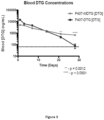
- the developed hydrophobic modified DTG prodrug (MDTG) exhibits improved cellular uptake of up to 100-fold compared to native drug formulations. Similarly, significant enhancements in cellular retention and antiretroviral activities were seen. Of significance, the MDTG nanoformulations demonstrated an up to a 10-fold improvement in pharmacokinetics compared to native drug formulations.
- the injectable may be administered once/month or longer and maintain consistent drug concentration.
- the prodrugs are derivatives of DTG conjugated to hydrophobic cleavable moieties.
- the hydrophobic parent compound is converted into a more hydrophobic ester derivative. This is achieved through attachment of a fatty acid, alkyl or aryl moiety that can improve drug protein binding and bioavailability.
- the ester chemical bond linkage is susceptible to enzymatic cleavage.
- the derivatives possess improved hydrophobicity when compared to the parent drug.
- the "more" hydrophobic nature of the crystalline prodrugs improve nanoformulations by making them even more long acting with improved biopharmaceutic features.
- the MDTG nanoformulations are composed of hydrophobic prodrug particles dispersed in aqueous suspensions of polymeric excipients.
- the mechanism of drug release involves dissolution of the prodrug from the excipient follows efficient enzymatic cleavage generating the active agent.
- the benefits of the system include, without limitation, improved drug bioavailability and extended half-life.
- the coating polymers used were poloxamer 407 (P407), 1,2-Distearoyl-sn-glycero- 3-phosphocholine (DSPC), 1,2-distearoy l-sn-glycero-3-phosphoethanolamine-N-[carboxy(polyethyleneglycol)-2000 (DSPE-PEG), and polyvinyl alcohol (PVA).
- P407 poloxamer 407
- DSPC 1,2-Distearoyl-sn-glycero- 3-phosphocholine
- DSPE-PEG 1,2-distearoy l-sn-glycero-3-phosphoethanolamine-N-[carboxy(polyethyleneglycol)-2000
- PVA polyvinyl alcohol
- a drug to surfactant ratio of 100:6 by weight was used to manufacture nanoformulated MDTG and DTG. Briefly, 1-5% (w/v) MDTG or DTG and 0.06 - 0.3 % (w/v) P407 were mixed in water. The premixed suspensions were formulated by wet milling or homogenizer at 20,000 psi pressure until desirable size and polydispersity index were achieved.
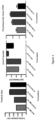
- Nanoformulations were characterized for particle size, polydispersity index (PDI) and zeta potential by dynamic light scattering ( Figure 1 ). This was done using a Malvern Zetasizer, Nano Series Nano-ZS (Malvern Instruments Inc., Westborough, MA). Nanoparticle morphology was determined by scanning electron microscopy (SEM). Ultra performance liquid chromatography tandem mass-spectrometry (UPLC MS/MS) was used for drug quantitation. As seen in Figure 1 , the hydrophobicity of DTG was greatly improved upon derivatization into MDTG prodrug. Further, the improved hydrophobicity of MDTG facilitated production of stable formulations with high drug loading capacity.
- SEM scanning electron microscopy
- UPLC MS/MS Ultra performance liquid chromatography tandem mass-spectrometry
- Human monocytes were cultured in macrophage colony stimulating factor containing cell culture medium for 7-10 days in order to differentiate into macrophages ( Balkundi et al. (2011) Intl. J. Nanomed., 6:3393-3404 ; Nowacek et al. (2009) Nanomed., 4(8):903-917 ).
- the macrophages were incubated with a range of formulations and native drugs.
- adherent MDM were washed three times with 1 mL of PBS, scraped into 1 mL of fresh PBS and pelleted by centrifugation at 950 x g for 8 minutes.
- the cell pellet was reconstituted in 200 ⁇ l of high performance liquid chromatography (HPLC)-grade methanol and probe sonicated followed by centrifugation at 20,000 x g for 20 minutes.
- HPLC high performance liquid chromatography
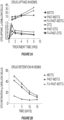
- the supernatant was analyzed for drug content using HPLC ( Figure 2A and Figure 2B ).
- conversion of DTG into the more hydrophobic MDTG and nanoparticle formation significantly improved intracellular accumulation of the drug to levels 100 fold higher than nanoformulated DTG.
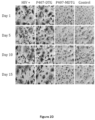
- MDM were treated with either 100 ⁇ M DTG, MDTG, P407-MDTG or FA-P407- MDTG for 8 hours.
- the cells were washed with PBS to remove excess of free drug and nanoparticles.
- the MDM were challenged with HIV-lADA at aMOI of0.01 infectious
- novel modified cabotegravir prodrugs are provided as well as their encapsulation into suitable excipients and stabilizers such as nanoformulated poloxamer 407 (P407-MCAB) or folic acid (FA) labeled nanoformulations (FA-P407- MCAB) for sustained and site specific drug delivery.
- suitable excipients and stabilizers such as nanoformulated poloxamer 407 (P407-MCAB) or folic acid (FA) labeled nanoformulations (FA-P407- MCAB) for sustained and site specific drug delivery.
- the prodrugs comprise native drug
- cabotegravir (CAB) (2 g, 4.93 mmol, 1.0 equiv.) in anhydrous dimethylformamide (20 mL) was cooled to 0°C under argon. N,N diisopropylethylamine (1.7 mL, 9.86 mmol, 2.0 equiv.) was then added dropwise to the precooled solution of the drug. Myristoyl chloride (1.34 mL, 9.86 mmol, 2.0 equiv.) was then added to the deprotonated phenol solution.
- CAB cabotegravir
- Coating polymers used were poloxamer 407 (P407), 1,2-Distearoyl-sn-glycero-3- phosphocholine (DSPC), 1,2-distearoy l-sn-glycero-3-phosphoethanolamine-N- [carboxy(polyethylene glycol)-2000 (DSPE-PEG), polyvinyl alcohol (PVA).
- P407 poloxamer 407
- DSPC 1,2-Distearoyl-sn-glycero-3- phosphocholine
- DSPE-PEG 1,2-distearoy l-sn-glycero-3-phosphoethanolamine-N- [carboxy(polyethylene glycol)-2000 (DSPE-PEG), polyvinyl alcohol (PVA).
- MCAB and CAB Based on proton NMR spectroscopy data, a drug to surfactant ratio of 100:6 by weight was used to manufacture nanoformulated MCAB and CAB. Briefly, 1-5% (w/v) MCAB or CAB and 0.06 - 0.3 % (w/v) P407 were mixed in water. The premixed suspensions were formulated by wet milling or homogenizer at 20,000 psi pressure until desirable size and polydispersity index were achieved.
- Nanoformulations were characterized for particle size, polydispersity index (PDI) and zeta potential by dynamic light scattering (DLS) (Table 1). This was done using a Malvern Zetasizer, Nano Series Nano-ZS (Malvern Instruments Inc, Westborough, MA). Nanoparticle morphology was determined by scanning electron microscopy (SEM). UPLC MS/MS was used for drug quantitation. As seen in Table 1, the hydrophobicity of CAB was greatly improved upon derivatization into MCAB. The improved hydrophobicity of MCAB facilitated production of stable formulations with high drug loading capacity. Table 1: Nanoparticle characterization of P407-MCAB and FA-P407-MCAB by DLS. Formulations Size (nm) POI Charge (mV) NMCAB 314 0.360 -23.3 FA-NMCAB 345 0.283 -34.8
- Human monocytes were cultured in macrophage colony stimulating factor containing cell culture medium for 7-10 days in order to differentiate into macrophages ( Balkundi et al. (2011) Intl. J. Nanomed., 6:3393-3404 ; Nowacek et al. (2009) Nanomed., 4(8):903-917 ).
- the macrophages were incubated with a range of formulations and native drugs.
- adherent monocyte-derived macrophage (MDM) were washed three times with 1 mL of PBS, scraped into 1 mL of fresh PBS and pelleted by centrifugation at 950 x g for 8 minutes.
- MDM were treated with either 100 ⁇ M CAB long acting parenteral (CAB-LAP), P407-CAB, P407-MCAB or FA-P407-MCAB for 8 hours.
- the cells were washed with PBS to remove excess of free drug and nanoparticles.
- the MDM were challenged with HIV-1ADA at a MOI of 0.01 infectious viral particles/cell for 18 hours on day 0,2,5 and
Landscapes
- Health & Medical Sciences (AREA)
- Chemical & Material Sciences (AREA)
- Life Sciences & Earth Sciences (AREA)
- Organic Chemistry (AREA)
- General Health & Medical Sciences (AREA)
- Public Health (AREA)
- Animal Behavior & Ethology (AREA)
- Veterinary Medicine (AREA)
- Medicinal Chemistry (AREA)
- Pharmacology & Pharmacy (AREA)
- Virology (AREA)
- Chemical Kinetics & Catalysis (AREA)
- General Chemical & Material Sciences (AREA)
- Engineering & Computer Science (AREA)
- Epidemiology (AREA)
- AIDS & HIV (AREA)
- Oncology (AREA)
- Communicable Diseases (AREA)
- Molecular Biology (AREA)
- Tropical Medicine & Parasitology (AREA)
- Nuclear Medicine, Radiotherapy & Molecular Imaging (AREA)
- Bioinformatics & Cheminformatics (AREA)
- Nanotechnology (AREA)
- Immunology (AREA)
- Oil, Petroleum & Natural Gas (AREA)
- Pharmaceuticals Containing Other Organic And Inorganic Compounds (AREA)
- Medicines That Contain Protein Lipid Enzymes And Other Medicines (AREA)
- Medicinal Preparation (AREA)
- Medicines Containing Material From Animals Or Micro-Organisms (AREA)
- Nitrogen And Oxygen Or Sulfur-Condensed Heterocyclic Ring Systems (AREA)
Priority Applications (3)
| Application Number | Priority Date | Filing Date | Title |
|---|---|---|---|
| EP25156350.8A EP4527463A3 (en) | 2016-06-23 | 2017-06-22 | Compositions and methods for the delivery of therapeutics |
| DK23208918.5T DK4299133T3 (da) | 2016-06-23 | 2017-06-22 | Sammensætninger og fremgangsmåder til levering af lægemidler |
| EP23208918.5A EP4299133B1 (en) | 2016-06-23 | 2017-06-22 | Compositions and methods for the delivery of therapeutics |
Applications Claiming Priority (2)
| Application Number | Priority Date | Filing Date | Title |
|---|---|---|---|
| US201662353736P | 2016-06-23 | 2016-06-23 | |
| PCT/US2017/038693 WO2017223280A2 (en) | 2016-06-23 | 2017-06-22 | Compositions and methods for the delivery of therapeutics |
Related Child Applications (4)
| Application Number | Title | Priority Date | Filing Date |
|---|---|---|---|
| EP25156350.8A Division-Into EP4527463A3 (en) | 2016-06-23 | 2017-06-22 | Compositions and methods for the delivery of therapeutics |
| EP25156350.8A Division EP4527463A3 (en) | 2016-06-23 | 2017-06-22 | Compositions and methods for the delivery of therapeutics |
| EP23208918.5A Division EP4299133B1 (en) | 2016-06-23 | 2017-06-22 | Compositions and methods for the delivery of therapeutics |
| EP23208918.5A Division-Into EP4299133B1 (en) | 2016-06-23 | 2017-06-22 | Compositions and methods for the delivery of therapeutics |
Publications (4)
| Publication Number | Publication Date |
|---|---|
| EP3474857A2 EP3474857A2 (en) | 2019-05-01 |
| EP3474857A4 EP3474857A4 (en) | 2020-03-18 |
| EP3474857B1 true EP3474857B1 (en) | 2025-05-21 |
| EP3474857C0 EP3474857C0 (en) | 2025-05-21 |
Family
ID=60784694
Family Applications (3)
| Application Number | Title | Priority Date | Filing Date |
|---|---|---|---|
| EP17816189.9A Active EP3474857B1 (en) | 2016-06-23 | 2017-06-22 | Compositions and methods for the delivery of therapeutics |
| EP23208918.5A Active EP4299133B1 (en) | 2016-06-23 | 2017-06-22 | Compositions and methods for the delivery of therapeutics |
| EP25156350.8A Pending EP4527463A3 (en) | 2016-06-23 | 2017-06-22 | Compositions and methods for the delivery of therapeutics |
Family Applications After (2)
| Application Number | Title | Priority Date | Filing Date |
|---|---|---|---|
| EP23208918.5A Active EP4299133B1 (en) | 2016-06-23 | 2017-06-22 | Compositions and methods for the delivery of therapeutics |
| EP25156350.8A Pending EP4527463A3 (en) | 2016-06-23 | 2017-06-22 | Compositions and methods for the delivery of therapeutics |
Country Status (6)
| Country | Link |
|---|---|
| US (1) | US11117904B2 (enExample) |
| EP (3) | EP3474857B1 (enExample) |
| JP (1) | JP7160466B2 (enExample) |
| DK (1) | DK4299133T3 (enExample) |
| ES (1) | ES3035041T3 (enExample) |
| WO (1) | WO2017223280A2 (enExample) |
Families Citing this family (20)
| Publication number | Priority date | Publication date | Assignee | Title |
|---|---|---|---|---|
| EP3737359A4 (en) | 2018-01-12 | 2021-11-03 | Board of Regents of the University of Nebraska | ANTIVIRAL PRODRUGS AND THEIR FORMULATIONS |
| WO2019171285A1 (en) * | 2018-03-07 | 2019-09-12 | Glaxosmithkline Intellectual Property (No.2) Limited | Compounds useful in hiv therapy |
| US11458136B2 (en) | 2018-04-09 | 2022-10-04 | Board Of Regents Of The University Of Nebraska | Antiviral prodrugs and formulations thereof |
| EP4751717A3 (en) * | 2018-10-22 | 2026-08-05 | Board of Regents of the University of Nebraska | Antiviral prodrugs and nanoformulations thereof |
| CN118873676A (zh) | 2018-11-29 | 2024-11-01 | 内布拉斯加大学董事会 | 抗病毒前药及其纳米制剂 |
| WO2020146788A1 (en) * | 2019-01-11 | 2020-07-16 | University Of Washington | Combination pharmaceutical compositions and methods thereof |
| PH12021500034A1 (en) | 2019-03-06 | 2022-06-06 | Glaxosmithkline Ip No 2 Ltd | Compounds useful in hiv therapy |
| KR20240151256A (ko) | 2019-03-22 | 2024-10-17 | 길리애드 사이언시즈, 인코포레이티드 | 가교된 트리시클릭 카르바모일피리돈 화합물 및 그의 제약 용도 |
| IL293566A (en) * | 2019-12-09 | 2022-08-01 | Viiv Healthcare Co | Pharmaceutical preparations containing Cabotgravir |
| EP4110783A1 (en) | 2020-02-24 | 2023-01-04 | Gilead Sciences, Inc. | Tetracyclic compounds for treating hiv infection |
| CN116390924B (zh) | 2020-09-30 | 2025-11-07 | 吉利德科学公司 | 桥连三环氨基甲酰基吡啶酮化合物及其用途 |
| CR20260070A (es) | 2021-01-19 | 2026-04-24 | Gilead Sciences Inc | COMPUESTOS DE PIRIDOTRIAZINA SUSTITUIDOS Y USOS DE ESTOS (Divisional 2023-0315) |
| WO2023183472A1 (en) * | 2022-03-23 | 2023-09-28 | Board Of Regents Of The University Of Nebraska | Antiviral prodrugs and use thereof |
| TWI856796B (zh) | 2022-04-06 | 2024-09-21 | 美商基利科學股份有限公司 | 橋聯三環胺甲醯基吡啶酮化合物及其用途 |
| CN120936599A (zh) * | 2023-01-18 | 2025-11-11 | 歌礼生物科技(杭州)有限公司 | 整合酶抑制剂及其应用 |
| WO2024227037A1 (en) * | 2023-04-26 | 2024-10-31 | University Of Washington | Long-acting colloidal pharmaceutical compositions of integrase strand transfer inhibitors and related methods |
| WO2025011661A1 (zh) * | 2023-07-12 | 2025-01-16 | 歌礼生物科技(杭州)有限公司 | 整合酶抑制类的制剂及其制备方法 |
| TW202543636A (zh) | 2023-12-12 | 2025-11-16 | 美商 Viiv 醫療保健公司 | 結晶形式 |
| WO2025128498A1 (en) | 2023-12-12 | 2025-06-19 | Viiv Healthcare Company | Pharmaceutical compositions |
| WO2026012272A1 (en) * | 2024-07-12 | 2026-01-15 | Ascletis Bioscience Co., Ltd. | Integrase inhibitor and use thereof |
Family Cites Families (11)
| Publication number | Priority date | Publication date | Assignee | Title |
|---|---|---|---|---|
| DK3187225T3 (da) | 2005-04-28 | 2022-02-28 | Viiv Healthcare Co | Polycyklisk carbamoylpyridonderivat med hiv-integrasehæmmende aktivitet |
| EP2660239B1 (en) * | 2008-07-25 | 2016-11-23 | VIIV Healthcare Company | Chemical compounds as synthetic intermediates |
| WO2010011812A1 (en) * | 2008-07-25 | 2010-01-28 | Smithkline Beecham Corporation | Chemical compounds |
| WO2010011815A1 (en) * | 2008-07-25 | 2010-01-28 | Smithkline Beecham Corporation | Chemical compounds |
| SMT202100268T1 (it) * | 2010-08-05 | 2021-07-12 | Shionogi & Co | Metodo per produrre composti aventi attività di inibizione di integrasi di hiv. |
| TWI577377B (zh) | 2010-09-16 | 2017-04-11 | Viiv醫療保健公司 | 醫藥組合物 |
| JP2013542945A (ja) | 2010-11-02 | 2013-11-28 | ボード オブ リージェンツ オブ ザ ユニバーシティ オブ ネブラスカ | 治療を送達するための組成物および方法 |
| EA030003B1 (ru) * | 2012-12-21 | 2018-06-29 | Джилид Сайэнс, Инк. | Полициклическое карбамоилпиридоновое соединение и его фармацевтическое применение для лечения вич-инфекции |
| HK1214817A1 (en) | 2012-12-27 | 2016-08-05 | Japan Tobacco Inc. | Substituted spiropyrido[1,2-a]pyrazine derivative and medicinal use thereof as hiv integrase inhibitor |
| WO2015039348A1 (en) * | 2013-09-23 | 2015-03-26 | Merck Sharp & Dohme Corp. | Tetracyclic heterocycle compounds useful as hiv integrase inhibitors |
| WO2015127437A1 (en) * | 2014-02-24 | 2015-08-27 | The Board Of Regents Of The University Of Nebraska | Compositions and methods for the delivery of therapeutics |
-
2017
- 2017-06-22 JP JP2018567638A patent/JP7160466B2/ja active Active
- 2017-06-22 EP EP17816189.9A patent/EP3474857B1/en active Active
- 2017-06-22 ES ES17816189T patent/ES3035041T3/es active Active
- 2017-06-22 WO PCT/US2017/038693 patent/WO2017223280A2/en not_active Ceased
- 2017-06-22 EP EP23208918.5A patent/EP4299133B1/en active Active
- 2017-06-22 EP EP25156350.8A patent/EP4527463A3/en active Pending
- 2017-06-22 US US16/304,759 patent/US11117904B2/en active Active
- 2017-06-22 DK DK23208918.5T patent/DK4299133T3/da active
Also Published As
| Publication number | Publication date |
|---|---|
| WO2017223280A3 (en) | 2019-04-25 |
| EP4299133B1 (en) | 2026-07-29 |
| EP4527463A2 (en) | 2025-03-26 |
| JP7160466B2 (ja) | 2022-10-25 |
| EP3474857A4 (en) | 2020-03-18 |
| EP4299133A2 (en) | 2024-01-03 |
| US11117904B2 (en) | 2021-09-14 |
| EP3474857C0 (en) | 2025-05-21 |
| EP4299133A3 (en) | 2024-03-13 |
| EP4527463A3 (en) | 2025-06-25 |
| JP2019524670A (ja) | 2019-09-05 |
| DK4299133T3 (da) | 2026-08-10 |
| ES3035041T3 (en) | 2025-08-27 |
| EP3474857A2 (en) | 2019-05-01 |
| US20210230186A1 (en) | 2021-07-29 |
| WO2017223280A2 (en) | 2017-12-28 |
Similar Documents
| Publication | Publication Date | Title |
|---|---|---|
| US11117904B2 (en) | Compositions and methods for the delivery of therapeutics | |
| US20220211714A1 (en) | Compositions and methods for the delivery of therapeutics | |
| US12168013B2 (en) | Antiviral prodrugs and nanoformulations thereof | |
| US12257306B2 (en) | Antiviral prodrugs and nanoformulations thereof | |
| US11839623B2 (en) | Antiviral prodrugs and formulations thereof | |
| US20170165271A1 (en) | Compositions and Methods for the Delivery of Therapeutics | |
| WO2021035114A1 (en) | Prodrugs and formulations thereof | |
| US20160136105A1 (en) | Compositions and Methods for the Delivery of Therapeutics | |
| US11458136B2 (en) | Antiviral prodrugs and formulations thereof | |
| US20180028457A1 (en) | Compositions and Methods for the Delivery of Therapeutics |
Legal Events
| Date | Code | Title | Description |
|---|---|---|---|
| STAA | Information on the status of an ep patent application or granted ep patent |
Free format text: STATUS: THE INTERNATIONAL PUBLICATION HAS BEEN MADE |
|
| PUAI | Public reference made under article 153(3) epc to a published international application that has entered the european phase |
Free format text: ORIGINAL CODE: 0009012 |
|
| STAA | Information on the status of an ep patent application or granted ep patent |
Free format text: STATUS: REQUEST FOR EXAMINATION WAS MADE |
|
| 17P | Request for examination filed |
Effective date: 20181211 |
|
| AK | Designated contracting states |
Kind code of ref document: A2 Designated state(s): AL AT BE BG CH CY CZ DE DK EE ES FI FR GB GR HR HU IE IS IT LI LT LU LV MC MK MT NL NO PL PT RO RS SE SI SK SM TR |
|
| AX | Request for extension of the european patent |
Extension state: BA ME |
|
| R17D | Deferred search report published (corrected) |
Effective date: 20190425 |
|
| A4 | Supplementary search report drawn up and despatched |
Effective date: 20200219 |
|
| RIC1 | Information provided on ipc code assigned before grant |
Ipc: C07D 498/14 20060101ALI20200213BHEP Ipc: A61K 31/5383 20060101AFI20200213BHEP Ipc: A61P 31/18 20060101ALI20200213BHEP |
|
| DAV | Request for validation of the european patent (deleted) | ||
| STAA | Information on the status of an ep patent application or granted ep patent |
Free format text: STATUS: EXAMINATION IS IN PROGRESS |
|
| 17Q | First examination report despatched |
Effective date: 20210303 |
|
| GRAP | Despatch of communication of intention to grant a patent |
Free format text: ORIGINAL CODE: EPIDOSNIGR1 |
|
| STAA | Information on the status of an ep patent application or granted ep patent |
Free format text: STATUS: GRANT OF PATENT IS INTENDED |
|
| INTG | Intention to grant announced |
Effective date: 20250114 |
|
| GRAS | Grant fee paid |
Free format text: ORIGINAL CODE: EPIDOSNIGR3 |
|
| GRAA | (expected) grant |
Free format text: ORIGINAL CODE: 0009210 |
|
| STAA | Information on the status of an ep patent application or granted ep patent |
Free format text: STATUS: THE PATENT HAS BEEN GRANTED |
|
| AK | Designated contracting states |
Kind code of ref document: B1 Designated state(s): AL AT BE BG CH CY CZ DE DK EE ES FI FR GB GR HR HU IE IS IT LI LT LU LV MC MK MT NL NO PL PT RO RS SE SI SK SM TR |
|
| REG | Reference to a national code |
Ref country code: GB Ref legal event code: FG4D |
|
| REG | Reference to a national code |
Ref country code: CH Ref legal event code: EP |
|
| REG | Reference to a national code |
Ref country code: DE Ref legal event code: R096 Ref document number: 602017089578 Country of ref document: DE |
|
| REG | Reference to a national code |
Ref country code: IE Ref legal event code: FG4D |
|
| U01 | Request for unitary effect filed |
Effective date: 20250603 |
|
| U07 | Unitary effect registered |
Designated state(s): AT BE BG DE DK EE FI FR IT LT LU LV MT NL PT RO SE SI Effective date: 20250611 |
|
| U20 | Renewal fee for the european patent with unitary effect paid |
Year of fee payment: 9 Effective date: 20250620 |
|
| REG | Reference to a national code |
Ref country code: ES Ref legal event code: FG2A Ref document number: 3035041 Country of ref document: ES Kind code of ref document: T3 Effective date: 20250827 |
|
| PGFP | Annual fee paid to national office [announced via postgrant information from national office to epo] |
Ref country code: ES Payment date: 20250703 Year of fee payment: 9 |
|
| PG25 | Lapsed in a contracting state [announced via postgrant information from national office to epo] |
Ref country code: NO Free format text: LAPSE BECAUSE OF FAILURE TO SUBMIT A TRANSLATION OF THE DESCRIPTION OR TO PAY THE FEE WITHIN THE PRESCRIBED TIME-LIMIT Effective date: 20250821 Ref country code: GR Free format text: LAPSE BECAUSE OF FAILURE TO SUBMIT A TRANSLATION OF THE DESCRIPTION OR TO PAY THE FEE WITHIN THE PRESCRIBED TIME-LIMIT Effective date: 20250822 |
|
| PG25 | Lapsed in a contracting state [announced via postgrant information from national office to epo] |
Ref country code: PL Free format text: LAPSE BECAUSE OF FAILURE TO SUBMIT A TRANSLATION OF THE DESCRIPTION OR TO PAY THE FEE WITHIN THE PRESCRIBED TIME-LIMIT Effective date: 20250521 |
|
| PG25 | Lapsed in a contracting state [announced via postgrant information from national office to epo] |
Ref country code: HR Free format text: LAPSE BECAUSE OF FAILURE TO SUBMIT A TRANSLATION OF THE DESCRIPTION OR TO PAY THE FEE WITHIN THE PRESCRIBED TIME-LIMIT Effective date: 20250521 |
|
| PGFP | Annual fee paid to national office [announced via postgrant information from national office to epo] |
Ref country code: CH Payment date: 20250701 Year of fee payment: 9 |
|
| PG25 | Lapsed in a contracting state [announced via postgrant information from national office to epo] |
Ref country code: RS Free format text: LAPSE BECAUSE OF FAILURE TO SUBMIT A TRANSLATION OF THE DESCRIPTION OR TO PAY THE FEE WITHIN THE PRESCRIBED TIME-LIMIT Effective date: 20250821 |
|
| PG25 | Lapsed in a contracting state [announced via postgrant information from national office to epo] |
Ref country code: IS Free format text: LAPSE BECAUSE OF FAILURE TO SUBMIT A TRANSLATION OF THE DESCRIPTION OR TO PAY THE FEE WITHIN THE PRESCRIBED TIME-LIMIT Effective date: 20250921 |
|
| PG25 | Lapsed in a contracting state [announced via postgrant information from national office to epo] |
Ref country code: SM Free format text: LAPSE BECAUSE OF FAILURE TO SUBMIT A TRANSLATION OF THE DESCRIPTION OR TO PAY THE FEE WITHIN THE PRESCRIBED TIME-LIMIT Effective date: 20250521 |
|
| PG25 | Lapsed in a contracting state [announced via postgrant information from national office to epo] |
Ref country code: CZ Free format text: LAPSE BECAUSE OF FAILURE TO SUBMIT A TRANSLATION OF THE DESCRIPTION OR TO PAY THE FEE WITHIN THE PRESCRIBED TIME-LIMIT Effective date: 20250521 |
|
| PG25 | Lapsed in a contracting state [announced via postgrant information from national office to epo] |
Ref country code: SK Free format text: LAPSE BECAUSE OF FAILURE TO SUBMIT A TRANSLATION OF THE DESCRIPTION OR TO PAY THE FEE WITHIN THE PRESCRIBED TIME-LIMIT Effective date: 20250521 |
|
| PG25 | Lapsed in a contracting state [announced via postgrant information from national office to epo] |
Ref country code: MC Free format text: LAPSE BECAUSE OF FAILURE TO SUBMIT A TRANSLATION OF THE DESCRIPTION OR TO PAY THE FEE WITHIN THE PRESCRIBED TIME-LIMIT Effective date: 20250521 |
|
| PLBE | No opposition filed within time limit |
Free format text: ORIGINAL CODE: 0009261 |
|
| STAA | Information on the status of an ep patent application or granted ep patent |
Free format text: STATUS: NO OPPOSITION FILED WITHIN TIME LIMIT |
|
| REG | Reference to a national code |
Ref country code: CH Ref legal event code: L10 Free format text: ST27 STATUS EVENT CODE: U-0-0-L10-L00 (AS PROVIDED BY THE NATIONAL OFFICE) Effective date: 20260402 |
|
| PG25 | Lapsed in a contracting state [announced via postgrant information from national office to epo] |
Ref country code: IE Free format text: LAPSE BECAUSE OF NON-PAYMENT OF DUE FEES Effective date: 20250622 |
|
| 26N | No opposition filed |
Effective date: 20260224 |
|
| U20 | Renewal fee for the european patent with unitary effect paid |
Year of fee payment: 10 Effective date: 20260520 |
|
| REG | Reference to a national code |
Ref country code: CH Ref legal event code: U11 Free format text: ST27 STATUS EVENT CODE: U-0-0-U10-U11 (AS PROVIDED BY THE NATIONAL OFFICE) Effective date: 20260701 |
|
| PGFP | Annual fee paid to national office [announced via postgrant information from national office to epo] |
Ref country code: GB Payment date: 20260520 Year of fee payment: 10 |
|
| PG25 | Lapsed in a contracting state [announced via postgrant information from national office to epo] |
Ref country code: CY Free format text: LAPSE BECAUSE OF FAILURE TO SUBMIT A TRANSLATION OF THE DESCRIPTION OR TO PAY THE FEE WITHIN THE PRESCRIBED TIME-LIMIT Effective date: 20250521 |