EP3470985B1 - Systeme und verfahren zur modifizierung eines industriesteuerungsprogramms - Google Patents
Systeme und verfahren zur modifizierung eines industriesteuerungsprogramms Download PDFInfo
- Publication number
- EP3470985B1 EP3470985B1 EP17196323.4A EP17196323A EP3470985B1 EP 3470985 B1 EP3470985 B1 EP 3470985B1 EP 17196323 A EP17196323 A EP 17196323A EP 3470985 B1 EP3470985 B1 EP 3470985B1
- Authority
- EP
- European Patent Office
- Prior art keywords
- program
- program element
- industrial control
- auxiliary
- safety classification
- Prior art date
- Legal status (The legal status is an assumption and is not a legal conclusion. Google has not performed a legal analysis and makes no representation as to the accuracy of the status listed.)
- Active
Links
Images


Classifications
-
- G—PHYSICS
- G05—CONTROLLING; REGULATING
- G05B—CONTROL OR REGULATING SYSTEMS IN GENERAL; FUNCTIONAL ELEMENTS OF SUCH SYSTEMS; MONITORING OR TESTING ARRANGEMENTS FOR SUCH SYSTEMS OR ELEMENTS
- G05B19/00—Program-control systems
- G05B19/02—Program-control systems electric
- G05B19/04—Program control other than numerical control, i.e. in sequence controllers or logic controllers
- G05B19/042—Program control other than numerical control, i.e. in sequence controllers or logic controllers using digital processors
- G05B19/0426—Programming the control sequence
-
- G—PHYSICS
- G05—CONTROLLING; REGULATING
- G05B—CONTROL OR REGULATING SYSTEMS IN GENERAL; FUNCTIONAL ELEMENTS OF SUCH SYSTEMS; MONITORING OR TESTING ARRANGEMENTS FOR SUCH SYSTEMS OR ELEMENTS
- G05B19/00—Program-control systems
- G05B19/02—Program-control systems electric
- G05B19/04—Program control other than numerical control, i.e. in sequence controllers or logic controllers
- G05B19/042—Program control other than numerical control, i.e. in sequence controllers or logic controllers using digital processors
- G05B19/0423—Input/output
- G05B19/0425—Safety, monitoring
-
- G—PHYSICS
- G06—COMPUTING OR CALCULATING; COUNTING
- G06F—ELECTRIC DIGITAL DATA PROCESSING
- G06F8/00—Arrangements for software engineering
- G06F8/30—Creation or generation of source code
-
- G—PHYSICS
- G06—COMPUTING OR CALCULATING; COUNTING
- G06F—ELECTRIC DIGITAL DATA PROCESSING
- G06F9/00—Arrangements for program control, e.g. control units
- G06F9/06—Arrangements for program control, e.g. control units using stored programs, i.e. using an internal store of processing equipment to receive or retain programs
- G06F9/46—Multiprogramming arrangements
- G06F9/54—Interprogram communication
-
- G—PHYSICS
- G06—COMPUTING OR CALCULATING; COUNTING
- G06F—ELECTRIC DIGITAL DATA PROCESSING
- G06F9/00—Arrangements for program control, e.g. control units
- G06F9/06—Arrangements for program control, e.g. control units using stored programs, i.e. using an internal store of processing equipment to receive or retain programs
- G06F9/46—Multiprogramming arrangements
- G06F9/54—Interprogram communication
- G06F9/545—Interprogram communication where tasks reside in different layers, e.g. user- and kernel-space
-
- G—PHYSICS
- G05—CONTROLLING; REGULATING
- G05B—CONTROL OR REGULATING SYSTEMS IN GENERAL; FUNCTIONAL ELEMENTS OF SUCH SYSTEMS; MONITORING OR TESTING ARRANGEMENTS FOR SUCH SYSTEMS OR ELEMENTS
- G05B2219/00—Program-control systems
- G05B2219/20—Pc systems
- G05B2219/23—Pc programming
- G05B2219/23333—Modify program and store it
Definitions
- the present disclosure relates to the field of industrial control, and in particular to control programs for industrial equipment that are configured to meet safety requirements.
- Industrial control programs may run on industrial controllers for real-time control of industrial processors, such as control of machinery or industrial processes.
- industrial control programs are written in a high-level language in a programming environment, are compiled and then stored and run on an industrial controller unit that directly controls an associated machinery or industrial process.
- safety requirements are intended to ensure the safety of the personnel operating the machinery.
- Components of an industrial control environment that pose safety requirements may be a sensor adapted to sense the presence of a human in the vicinity of machinery and trigger a corresponding stop signal, an emergency button, or a door lock system.
- the use of such safety systems and their properties and technical specifications are sometimes prescribed by law or industry regulation.
- Safety-relevant components of a machinery for industrial process may need to be certified or pass a certain security classification for them to obtain statutory approval. This translates into corresponding safety and statutory requirements for the industrial control software used in the control of these components.
- Such an industrial control system may also require certification.
- industrial control software comprises both functionalities that require safety certification, and others that do not.
- an industrial control software comprise both control of safety features such as safety sensors or door locks that require certification, and an interface for exchanging licensing data with a manufacturer, which does not require a safety certification. If the industrial control software can be decomposed into safety-relevant and safety-irrelevant parts, only the safety-relevant parts need to be assessed and certified.
- safety-irrelevant components or elements of the industrial control software may potentially affect the overall system safety if they are called from within a safety-relevant element. This poses a particular burden on the programmer who writes complex industrial control software.
- US 2012/0036493 A1 discloses techniques for converting a selected non-safety-related program variable to a selected safety-related program variable on the basis of an assignment condition when the industrial control program is executed.
- US 2011/0138476 A1 discloses the use of wrapper functions in techniques for byte-granularity isolation.
- the disclosure relates to a computer-implemented method for modifying an industrial control program, the industrial control program comprising a first program element having assigned a safety classification and a second program element not having assigned the safety classification, the method comprising the steps of identifying, in program source code of the first program element, a call to the second program element, and generating a modified program source code, comprising replacing, in the program source code, the call to the second program element by an auxiliary program element, the auxiliary program element being compliant with the safety classification.
- Generating the modified program source code comprises replacing the call to the second program element by a wrapper function, the wrapper function being adapted to call the auxiliary program element; wherein the steps of identifying the call to the second program element and generating the modified program source code are implemented automatically on a compiler unit for compiling the industrial control program.
- the auxiliary program element comprises instructions for a memory analysis; and wherein the auxiliary program element comprises instructions for switching an industrial control process controlled by the industrial control program to a default state in response to the memory analysis.
- the method according to the invention may avoid the critical situation that may arise if program source code of a first program element having the safety classification, advert-ently or inadvertently, calls a second program element that does not have the safety classification. Execution of the second program element may, in these configurations, jeopardize the safety classification of the first program element, and hence the entire industrial control program.
- the method according to the first aspect may address these concerns by automatically identifying, in the program source code of the first program element having the safety classification, a call to the second program element not having the safety classification, and automatically generating a modified program source code that mitigates the safety risks associated with the second program element by replacing it effectively with an auxiliary program element compliant with the safety classification.
- the techniques of the present disclosure may hence guarantee that the safety classification is upheld and respected under all circumstances, and may compensate efficiently for errors that the programmer have made when mixing safety-relevant and safety-irrelevant program elements.
- the techniques of the present disclosure may particularly benefit inexperienced programmers and help them to design complex industrial control software without the risk of jeopardizing the safety requirements.
- the techniques according to the present invention may effectively rule out the risk of jeopardizing the overall safety classification, the outcome is an industrial control program that has the required safety classification, as required by law, government or industry regulation.
- the safety classification may relate to the safety requirement of an industrial control process controlled by the industrial control program, and may in particular relate to a safety certificate.
- the safety classification may be defined or characterized in terms of a number of properties, characteristics or requirements of the program elements, which may distinguish the program elements having the safety classification from other program elements not having the safety classification.
- the industrial control program may comprise a plurality of first program elements having the safety classification and a plurality of second program elements not having the safety classification.
- the property of having or not having the safety classification may divide the totality of program elements of the industrial control program into two complementary, disjoint sets.
- the industrial control program may be an industrial control source program, or a portion thereof, in particular an industrial control source program in a high-level programming language.
- the first program element and/or the second program element and/or the auxiliary program element may comprise a program organization unit and/or a data element.
- a program organization unit in the sense of the present disclosure, may comprise a program portion and/or a function block and/or a function.
- a data element may comprise global and/or local data and/or user-defined dated types, such as structures.
- the data element may comprise a data write instruction and/or a data read instruction.
- data pertaining to a first program element having the safety classification and data pertaining to a second program element not having the safety classification may be allocated to different and/or spatially separate first and second memory areas, respectively. This may assist to avoid an unwanted backlash of the second program element not having the safety classification on certified data.
- the first program element comprises a first data element
- the second program element comprises a second data element
- the first data element relates to data allocated to a first memory area
- the second data element relates to data allocated to a second memory area, wherein the second memory area is different and/or spatially separated from the first memory area
- the auxiliary program element comprises instructions for preventing or delaying or modifying an execution on the second program element.
- the auxiliary program element may thereby prevent or delay a potential backlash of the second program element not having the safety classification on the first program element having the safety classification.
- the auxiliary program element may comprise instructions for triggering measures to make an execution of the second program element compliant with the safety classification.
- the techniques according to the present invention may not necessarily prevent an execution of the second program element, and may ultimately allow the second program element to execute, but in an environment that protects the safety classification of the industrial control program.
- the auxiliary program element may comprise instructions for preventing or delaying or modifying a call to the second program element until measures are effected to make an execution of the second program element compliant with the safety classification.
- the measures in the sense of the present disclosure, may be understood to comprise any instructions triggered by the auxiliary program element that affect the industrial control program, the industrial controller, and/or the industrial control environment so to effectively mitigate the effects that the second program element may have on the safety classification.
- the auxiliary program element comprises instructions for triggering measures to make an execution of the second program element compliant with the safety classification, and further comprises instructions for calling the second program element after the measures are effected.
- the measures may be removed or reverted so as to proceed with the instructions according to the first program element having the safety classification.
- the auxiliary program element comprises instructions for removing the measures after the second program element has been executed.
- the auxiliary program may be implemented by means of a wrapper function that wraps the call to the second program element in the program source code of the first program element.
- the auxiliary program element comprises instructions for a memory protection, in particular a memory lock.
- the memory lock may be adapted to lock memory in a first memory area, wherein the first memory area may be exclusive to program elements having the safety classification.
- the memory lock can be an effective means for avoiding interference of the second program element with safety-relevant data pertaining to the first program element having the safety classification, and being stored in the locked first memory area.
- the memory lock may be a software memory lock or a hardware memory lock, or a combination of a software memory lock and a hardware memory lock.
- the auxiliary program element may comprise instructions for delaying an execution of the second program element until after the memory protection is effected.
- the auxiliary program element comprises instructions for a memory analysis, in particular a memory analysis of a memory area exclusive to program elements having the safety classification.
- a memory analysis may allow to detect whether memory operations attributed to the second program element may have affected safety-relevant data pertaining to the first program element.
- the memory analysis may comprise a check sum analysis.
- the auxiliary program element may then allow to trigger countermeasures that prevent detrimental effects for the system safety that could ensue if the industrial control program were executed with the distorted memory.
- the auxiliary program element comprises instructions for switching an industrial control process controlled by the industrial control program to a default state in response to the memory analysis.
- this can be done in case the memory analysis yields that data in the memory area exclusive to program elements having the safety classification has been modified as a consequence of the call to the second program element.
- the auxiliary program element may comprise instructions for delegating an execution of the second program element to a separate task, in particular to a task having the safety classification or associated memory.
- the separate task may provide a secure environment in which the second program element may be executed without an effect on the first program element having the safety classification.
- the auxiliary program element may comprise instructions for the first program element to pause the execution until after the separate task finishes.
- the method may further comprise a step of determining that the second program element does not have the safety classification.
- Determining that the second program element does not have the safety classification may comprise comparing the second program element with a characteristic, said characteristic indicating a program element having the safety classification, or a program element not having the safety classification.
- determining that the second program element does not have the safety classification may comprise comparing the second program element with a list of program elements having the safety classification.
- the modified program source code may be provided for compilation, in particular to a compiler unit of an industrial control process or environment.
- the modified program source code when run on an industrial controller unit, may prevent an undesired backlash of program elements not having the safety classification on the overall safety classification of the industrial control process.
- the method further comprises compiling the modified program source code, in particular by means of a compiler unit pertaining to an industrial controller unit.
- the step of identifying the call to the second program element and/or generating the modified program source code and/or the determining that the second program element does not have the safety classification and/or providing the modified program source code for compilation and/or compiling the modified program source code is implemented automatically on a computing device, in particular on a compiler system for compiling the industrial control program. This allows for the safety classification of the industrial control program to be maintained even if the programmer, by chance or on purpose, mixes program elements having the safety classification with program elements not having the safety classification in his original program source code.
- the disclosure relates to a computer program or to a computer program product according to claim 8.
- the computer program product may comprise a tangible storage medium storing the computer-readable instructions.
- the disclosure relates to a system for modifying an industrial control program according to claim 9.
- the code analysis unit and/or the code modification unit may be implemented in hardware. In other examples, the code analysis unit and/or the code modification unit may be implemented in software. In some embodiments, the code analysis unit and/or the code modification unit may be implemented partly in hardware and partly in software.
- the code analysis unit and the code modification unit may be separate units. In other embodiments, the functionalities of the code analysis unit and the code modification unit may be integrated into a common unit.
- the system may be adapted to implement a method with some or all of the features described above.
- system further comprises a determination unit adapted to determine that the second program element does not have the safety classification.
- the determination unit and/or the compiler unit may be implemented in hardware. In other embodiments, the determination unit and/or the compiler unit may be implemented in software. In some embodiments, the determination unit and/or the compiler unit may be implemented partly in hardware and partly in software.
- the modified program source code comprises instructions for assigning data to a memory unit having a first memory area and a second memory area different and/or spatially separated from the first memory area, wherein the first program element having the safety classification pertains to the first memory area and the second program element not having the safety classification pertains to the second memory area.
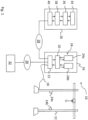
- the industrial control environment 10 comprises the gantry crane 12, which may be a crane employed in a factory environment to move heavy goods in an assembly hall. Operation of the gantry crane 12 may pose potential hazards to humans working or moving in the vicinity of the gantry crane 12.
- the gantry crane 12 may therefore be equipped with a plurality of vicinity sensors 14a, 14b that may serve to detect the presence of a human in the area of operations of the gantry crane 12.
- the industrial control software may monitor the vicinity sensors 14a, 14b, and may need to have provisions for performing these safety-related operations upon activation of the vicinity sensors 14a, 14b.
- the industrial control software may likewise need to require safety certification so that the machinery that it runs and controls, in our example the gantry crane 12, passes the certification requirements.
- requirements for safety certificates of industrial control software are laid down in specification IEC 61508 SIL2.
- the industrial control environment 10 further comprises an industrial controller unit 16 that is connected to the gantry crane 12 by means of a control line 18, such as a wired or wireless connection.
- a control line 18 such as a wired or wireless connection.
- the industrial controller unit 16 may be integrated into the controlled machinery, such as the gantry crane 12.
- the industrial controller unit 16 may comprise a processing device 20, such as a CPU to run an industrial control program, such as in the form of a compiled program for controlling the gantry crane 12.
- the industrial controller unit 16 comprises a communication interface 22 that is connected to the processing device 20 and is adapted to communicate with the gantry crane 12 via the control line 18.
- the processing device 20 may provide instructions to the gantry crane 12 for operation of actuators or motors of the gantry crane 12 via the communication interface 22 and control line 18.
- the communication interface 22 may also receive sensor signals pertaining to an operation of the gantry crane 12 via the control line 18, and provide corresponding feedback to the processing device 20. For instance, such sensor signals may relate to safety-critical signals from the vicinity sensors 14a, 14b.
- the industrial controller unit 16 also comprises a memory unit 24 connected to the processing device 20 and adapted to store programs, function blocks, functions, data or data structures pertaining to an operation of the industrial controller unit 16.
- the industrial control environment 10 may further comprise a programming environment 26 that is connected to the communication interface 22 via a network 28, such as a factory intranet or the internet.
- the programming environment 26 may comprise a desktop PC or other computing device and may be employed by a programmer to design and generate industrial control software for the industrial controller unit 16, for instance in the form of a compiled control program.
- the compiled program may be transferred from the programming environment 26 to the industrial controller unit 16 via the network 28, and may be stored in the memory unit 24.
- the industrial control program that a programmer designs may generally comprise program portions or elements that are relevant to the operational safety of the machinery, such as the gantry crane 12, and hence may need to fulfill or pass a safety classification.
- a first program element having a safety classification may relate to the operation of gathering signals from the vicinity sensors 14a, 14b, and generating corresponding control signals in response to the sensor signals to move the gantry crane 12 into a safe operation state in case the vicinity sensors 14a, 14b detect the presence of a human in the area of operations of the gantry crane 12.
- the industrial controller unit 16 may be further connected via the communication interface 22 and a network 30 to a server unit 32.
- the network 30 may be the internet
- the server unit 32 may be employed to remotely monitor operational data pertaining to an operation of the gantry crane 12.
- the server unit 32 may be employed as a licensing server to check that software licenses of software on the industrial controller unit 16 are up to date and running, such as at regular intervals or once the industrial controller unit 16 is started up.
- the server unit 32 may also provide means for communicating data between the industrial controller unit 16 and other industrial controller units (not shown) that may be operational in the industrial control environment 10.
- a second program element pertaining to such ancillary functions may not be relevant to the operational safety of the gantry crane 12, and hence may not need to have the safety classification. Such program elements do not require certification.
- an industrial control program such as an industrial control program pertaining to the specification IEC 61131-3, comprises programs, function blocks, functions, global data and user-defined data types such as structures. Programs, function blocks and functions are sometimes collectively called program organization units (POU).
- POU program organization units
- Each such program element of an industrial control program may be safety-relevant, and hence may require special testing or certification. However, other program elements may not be directly safety relevant, and hence may not require the safety classification.
- the programmer may want to follow a set of rules when programming the industrial control program.
- An exemplary set of rules may comprise the following provisions:
- the memory unit 24 of the industrial controller unit 16 may comprise a first memory area 24a pertaining to the safety classification and a second memory area 24b pertaining to data without the safety classification, wherein the first memory area 24a is distinct and spatially separated from the second memory area 24b.
- the programming environment 26 may provide a compiled program in which all safety-relevant data are allocated to the first memory area 24a, and all non-safety relevant data are allocated to the second memory area 24b. This may avoid a backlash of non-certified program elements on the safety-relevant data stored in the first memory area 24a.
- the programming environment 26 allows to automatically identify, in program source code of the first program element having the safety classification, a call to the second program element not having the safety classification, and implicitly and automatically generate code that may replace the call to the second program element by an auxiliary program element, wherein the auxiliary program element is designed to be compliant with the safety classification.
- the programming environment 26 comprises a programming unit 34, which a programmer may use as a tool to generate source code an industrial control program in a high-level programming language.
- the source code may be provided from the programming unit 34 to a code analysis unit 36, which may be adapted to identify, in program source code of the first program element having the safety classification, a call to the second program element not having the safety classification.
- the programing environment 26 also comprises a code modification unit 38 that is adapted to generate a modified program source code, and replaces, in the program source code, the call to the second program element by an auxiliary program element, the auxiliary program element being compliant with the safety classification.
- the programming environment 26 further comprises a compiler unit 40 which receives the thus-instrumented program code from the code modification unit 38 and compiles the modified program source code to provide a compiled industrial control program, which may be sent to the industrial controller unit 16 via the network 28.
- a compiler unit 40 which receives the thus-instrumented program code from the code modification unit 38 and compiles the modified program source code to provide a compiled industrial control program, which may be sent to the industrial controller unit 16 via the network 28.
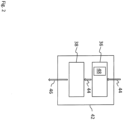
- Fig. 2 is an enlarged schematic view of a system 42 for modifying an industrial control program according to an example, comprising the code analysis unit 36 adapted to identify, in program source code 44 of the first program element having the safety classification, a call to the second program element not having the safety classification.
- the system 42 additionally comprises the code modification unit 38 adapted to receive the program source code 44 of the first program element and to generate a modified program source code 46 compliant with the safety classification.
- the code modification unit 38 is adapted to replace, in the program source code 44, the call to the second program element by an auxiliary program element, the auxiliary program element being compliant with the safety classification.
- FIG. 2 shows the code analysis unit 36 and the code modification unit 38 as separate units. However, in other examples, the code analysis unit 36 and the code modification unit 38 may be combined into a common unit. In particular, the code analysis unit 36 and/or the code modification unit 38 may be integrated into the compiler unit 40 of the programming environment 26.
- the system 42 may optionally comprise a determination unit 48 adapted to determine that the second program element does not have the safety classification.
- the determination unit 48 may be integrated into the code analysis unit 36.
- the determination unit 48 may be adapted to compare the second program element with a given list of program elements having the safety classification, or with a list of program elements not having the safety classification.
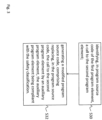
- Fig. 3 is a flow diagram illustrating a method for modifying an industrial control program according to an example.
- the industrial control program may comprise a first program element having a safety classification and a second program element not having the safety classification.
- a call to the second program element is identified in program source code of the first program element.
- a modified program source code is generated, comprising replacing, in the program source code, the call to the second program element by an auxiliary program element, the auxiliary program element being compliant with the safety classification.
- the code modification unit 38 may divert or reroute or redirect the call to the second program element by means of a wrapper function.
- the code modification unit 38 may replace the call to the second program element, such as a non-certified function, by a call to the auxiliary program element, such as an auxiliary function.
- the auxiliary function may receive as an input a pointer to the target function as well as a pointer to a list of arguments to be assigned to the target function.
- the auxiliary function may provide for appropriate measures that protect the safety-relevant data in the first memory area 24a during execution of the program code not having the safety classification.
- the auxiliary function can be implemented as a wrapper function, as will now be described with reference to Figs. 4 to 6 .
- Fig. 4 is a schematic flow diagram illustrating the operation of a wrapper function and its consequences for the execution of the program code.
- a call to the second element "NonSafeJob” not having the safety classification triggers execution of the auxiliary function "ExecuteNonSafeJob" in step S400.
- the auxiliary function "ExecuteNonSafeJob" checks in step S402 whether a memory protection unit (MPU) is enabled.
- the memory protection unit MPU may be adapted to implement a hardware lock, such as a hardware lock on memory in the first memory area 24a having the safety classification.
- the auxiliary function enables the memory protection unit in step S404.
- the auxiliary function calls the second program element not having the safety classification, such as the function "NonSafeJob" with corresponding arguments in step S406. Given that the memory protection is in place, any undesired backlash on program elements having the safety classification is effectively and automatically prevented.
- the auxiliary function checks in step S406 whether the memory protection unit is still enabled, and, if so, disables the memory protection unit in step S410. This completes the wrapper function.
- the implementation of a memory lock may not be desired or necessary, or may be unfeasible. In these examples, it may be sufficient to detect that certified data have been modified by means of non-certified code, so that appropriate countermeasures may be taken. For instance, if a backlash of non-certified code on certified data is detected, the controlled industrial system, such as the gantry crane 12, may be switched into a safe default state.
- the auxiliary function implements a check sum analysis of the data in the first memory area 24a having the safety classification before the second program element not having the safety classification is executed. Once the second program element has been executed, the auxiliary function checks whether the check sum of the data in the first memory area 24a is unchanged.
- FIG. 5 A corresponding flow diagram is schematically illustrated in Fig. 5 .
- a first step S500 the auxiliary function "ExecuteNonSafeJob" is called in response to a detected call to a non-certified function “NonSafeJob", and computes and stores a check sum across all the data in the first memory area 24a in step S502.
- the auxiliary function recalculates the check sum of the data stored in the first memory area 24a having the safety classification and compares it to the initial check sum in step S506.
- step S508 If no deviation is detected, the auxiliary function ends in step S508, and the program execution leaves the wrapper and returns to the original code.
- the industrial controller unit 16 provides a signal to the gantry crane 12 in step S510 to switch the gantry crane 12 into a default operational state in which the health risk for humans in the operating area of the gantry crane 12 is minimized. As part of the step S510, the industrial controller unit 16 may also alert an operator of the malfunction, such as via the server unit 32.
- an underlying operating system may not support a switching of a memory protection configuration, but may have provisions for memory protection per task, process or thread.
- the auxiliary function such as the wrapper function, may delegate the execution of non-certified code to another task, process, or thread with limited write access. This may also effectively prevent backlash on certified data.
- a corresponding wrapper function is schematically illustrated in Fig. 6 .
- auxiliary function "ExecuteNonSafeJob” is called in response to a detected call to a non-certified function "NonSafeJob".
- the auxiliary function delegates the non-certified function "NonSafeJob" to a different process in step S602, such as a separate child or worker process, and subsequently enters a sleep mode or idle mode in step S604.
- the parent function "NonSafeJob” waits in step S606 for a signal indicating that the separate worker process has been finished.
- the separate worker process "NonSafeJob_AsyncWorker” is generally in a sleep mode in step S608, and awakes in step S610 when the function "NonSafeJob” is delegated to it by the auxiliary function.
- the separate worker process then calls the second function "NonSafeJob” in step S612. Given that the separate worker process has no write access rights to the first memory area 24a having the safety classification, a backlash on the certified data is efficiently prevented.
- the auxiliary function Upon receipt of the notification in step S606, the auxiliary function terminates the sleep mode and returns to the original program in step S616.
- the techniques according to the disclosure may be employed to ensure that non-certified program code does not backlash on certified program code.
- the techniques of the present disclosure may be implemented in a safety extension for the compiler unit 40 that automatically identifies and decouples calls of non-certified program elements and establishes an effective memory protection using the techniques described above.
- initialization code i.e., code that may be used to set the industrial controller unit 16 and/or the industrial control process, such as the gantry crane 12 to an operating state during a loading or initialization phase. This may involve the call of constructors, data initializing and other functions, of which some may involve non-certified program code.
- the safety extension may identify and decouple the non-certified implicit initialization code by calling the wrapper function "ExecuteNonSafeJob" using the techniques described above.
Landscapes
- Engineering & Computer Science (AREA)
- Software Systems (AREA)
- Theoretical Computer Science (AREA)
- Physics & Mathematics (AREA)
- General Physics & Mathematics (AREA)
- General Engineering & Computer Science (AREA)
- Automation & Control Theory (AREA)
- Stored Programmes (AREA)
Claims (12)
- Computerimplementiertes Verfahren zum Modifizieren eines industriellen Steuerungsprogramms, wobei das industrielle Steuerungsprogramm ein erstes Programmelement mit einer Sicherheitsklassifikation und ein zweites Programmelement ohne die Sicherheitsklassifikation umfasst, wobei das Verfahren Folgendes umfasst:Identifizieren, in Programmquellcode (44) des ersten Programmelements, eines Aufrufs des zweiten Programmelements; undErzeugen eines modifizierten Programmquellcodes (46), umfassend ein Ersetzen, in dem Programmquellcode (44), des Aufrufs des zweiten Programmelements durch ein Hilfsprogrammelement, wobei das Hilfsprogrammelement mit der Sicherheitsklassifikation konform ist;wobei das Erzeugen des modifizierten Programmquellcodes (46) ein Ersetzen des Aufrufs des zweiten Programmelements durch eine Wrapper-Funktion umfasst, wobei die Wrapper-Funktion dazu ausgelegt ist, das Hilfsprogrammelement aufzurufen;wobei die Schritte des Identifizierens des Aufrufs des zweiten Programmelements und des Erzeugens des modifizierten Programmquellcodes (46) automatisch auf einer Compilereinheit (40) zum Kompilieren des industriellen Steuerungsprogramms implementiert werden;wobei das Hilfsprogrammelement Anweisungen für eine Speicheranalyse umfasst; undwobei das Hilfsprogrammelement Anweisungen zum Umschalten eines industriellen Steuerungsprozesses, der durch das industrielle Steuerungsprogramm gesteuert wird, in einen Standardzustand als Reaktion auf die Speicheranalyse umfasst.
- Verfahren nach Anspruch 1, wobei das Hilfsprogrammelement Anweisungen zum Verhindern oder Verzögern oder Modifizieren einer Ausführung des zweiten Programmelements umfasst.
- Verfahren nach einem der vorhergehenden Ansprüche, wobei das Hilfsprogrammelement Anweisungen für einen Speicherschutz, insbesondere eine Speichersperre, umfasst.
- Verfahren nach einem der vorhergehenden Ansprüche, wobei die Speicheranalyse eine Speicheranalyse eines Speicherbereichs (24a) ausschließlich für Programmelemente mit der Sicherheitsklassifikation umfasst.
- Verfahren nach einem der vorhergehenden Ansprüche, wobei das Hilfsprogrammelement Anweisungen zum Delegieren einer Ausführung des zweiten Programmelements an eine separate Aufgabe, insbesondere an eine Aufgabe mit der Sicherheitsklassifikation, umfasst.
- Verfahren nach Anspruch 5, wobei das Hilfsprogrammelement ferner Anweisungen zum Verzögern einer Ausführung des ersten Programmelements, bis die separate Aufgabe endet, umfasst.
- Verfahren nach einem der vorhergehenden Ansprüche, ferner umfassend:
Bestimmen, dass das zweite Programmelement nicht die Sicherheitsklassifikation aufweist. - Computerprogramm, umfassend computerlesbare Anweisungen, wobei die computerlesbaren Anweisungen dazu ausgelegt sind, wenn sie auf einer Rechenvorrichtung gelesen werden, auf der Rechenvorrichtung ein Verfahren nach einem der vorhergehenden Ansprüche zu implementieren.
- System (42) zum Modifizieren eines industriellen Steuerungsprogramms, wobei das industrielle Steuerungsprogramm ein erstes Programmelement mit einer Sicherheitsklassifikation und ein zweites Programmelement ohne die Sicherheitsklassifikation umfasst, wobei das System Folgendes umfasst:eine Compilereinheit (40) zum Kompilieren des industriellen Steuerungsprogramms;wobei die Compilereinheit (40) dazu ausgelegt ist, in Programmquellcode (44) des ersten Programmelements automatisch einen Aufruf des zweiten Programmelements zu identifizieren; undwobei die Compilereinheit (40) dazu ausgelegt ist, automatisch einen modifizierten Programmquellcode (46) zu erzeugen, umfassend ein Ersetzen, in dem Programmquellcode (44), des Aufrufs des zweiten Programmelements durch ein Hilfsprogrammelement, wobei das Hilfsprogrammelement mit der Sicherheitsklassifikation konform ist; wobei das Erzeugen des modifizierten Programmquellcodes (46) ein Ersetzen des Aufrufs des zweiten Programmelements durch eine Wrapper-Funktion umfasst, wobei die Wrapper-Funktion dazu ausgelegt ist, das Hilfsprogrammelement aufzurufen; undwobei die Compilereinheit (40) dazu ausgelegt ist, den modifizierten Programmquellcode (46) zu kompilieren;wobei das Hilfsprogrammelement Anweisungen für eine Speicheranalyse umfasst; undwobei das Hilfsprogrammelement Anweisungen zum Umschalten eines industriellen Steuerungsprozesses, der durch das industrielle Steuerungsprogramm gesteuert wird, in einen Standardzustand als Reaktion auf die Speicheranalyse umfasst.
- System (42) nach Anspruch 9, wobei das System (42) dazu ausgelegt ist, ein Verfahren nach einem der Ansprüche 1 bis 7 zu implementieren.
- System (42) nach Anspruch 9 oder 10, ferner umfassend:
eine Bestimmungseinheit (48), die dazu ausgelegt ist, zu bestimmen, dass das zweite Programmelement nicht die Sicherheitsklassifikation aufweist. - System (42) nach einem der Ansprüche 9 bis 11, wobei der modifizierte Programmquellcode (46) Anweisungen zum Zuweisen von Daten zu einer Speichereinheit (24) mit einem ersten Speicherbereich (24a) und einem zweiten Speicherbereich (24b), der von dem ersten Speicherbereich (24a) verschieden und/oder räumlich getrennt ist, umfasst, wobei das erste Programmelement mit der Sicherheitsklassifikation zu dem ersten Speicherbereich (24a) gehört und das zweite Programmelement, das nicht die Sicherheitsklassifikation aufweist, zu dem zweiten Speicherbereich (24b) gehört.
Priority Applications (2)
| Application Number | Priority Date | Filing Date | Title |
|---|---|---|---|
| EP17196323.4A EP3470985B1 (de) | 2017-10-13 | 2017-10-13 | Systeme und verfahren zur modifizierung eines industriesteuerungsprogramms |
| US16/156,338 US10761504B2 (en) | 2017-10-13 | 2018-10-10 | Method and system for modifying an industrial control program |
Applications Claiming Priority (1)
| Application Number | Priority Date | Filing Date | Title |
|---|---|---|---|
| EP17196323.4A EP3470985B1 (de) | 2017-10-13 | 2017-10-13 | Systeme und verfahren zur modifizierung eines industriesteuerungsprogramms |
Publications (3)
| Publication Number | Publication Date |
|---|---|
| EP3470985A1 EP3470985A1 (de) | 2019-04-17 |
| EP3470985C0 EP3470985C0 (de) | 2025-05-14 |
| EP3470985B1 true EP3470985B1 (de) | 2025-05-14 |
Family
ID=60138207
Family Applications (1)
| Application Number | Title | Priority Date | Filing Date |
|---|---|---|---|
| EP17196323.4A Active EP3470985B1 (de) | 2017-10-13 | 2017-10-13 | Systeme und verfahren zur modifizierung eines industriesteuerungsprogramms |
Country Status (2)
| Country | Link |
|---|---|
| US (1) | US10761504B2 (de) |
| EP (1) | EP3470985B1 (de) |
Families Citing this family (1)
| Publication number | Priority date | Publication date | Assignee | Title |
|---|---|---|---|---|
| US20240061675A1 (en) * | 2022-04-18 | 2024-02-22 | Palo Alto Networks (Israel Analytics) Ltd. | Source code correction system |
Citations (1)
| Publication number | Priority date | Publication date | Assignee | Title |
|---|---|---|---|---|
| US20110138476A1 (en) * | 2009-12-08 | 2011-06-09 | Microsoft Corporation | Software Fault Isolation Using Byte-Granularity Memory Protection |
Family Cites Families (9)
| Publication number | Priority date | Publication date | Assignee | Title |
|---|---|---|---|---|
| US8689194B1 (en) * | 2007-08-20 | 2014-04-01 | The Mathworks, Inc. | Optimization identification |
| US20090077532A1 (en) * | 2007-09-13 | 2009-03-19 | Universities Space Research Association | Automated annotation inference for safety certification of automatically generated code |
| DE102009011679A1 (de) * | 2009-02-23 | 2010-08-26 | Pilz Gmbh & Co. Kg | Verfahren und Vorrichtung zum Erstellen eines Anwenderprogrammes für eine Sicherheitssteuerung |
| US20130055369A1 (en) * | 2011-08-24 | 2013-02-28 | Mcafee, Inc. | System and method for day-zero authentication of activex controls |
| DE202012013193U1 (de) * | 2012-06-26 | 2015-05-06 | INTER CONTROL Hermann Köhler Elektrik GmbH & Co KG | Vorrichtung für eine sicherheitskritische Anwendung |
| DE102012218363A1 (de) * | 2012-10-09 | 2014-04-10 | Continental Automotive Gmbh | Verfahren zur Steuerung eines getrennten Ablaufs von verknüpften Programmblöcken und Steuergerät |
| JP6955858B2 (ja) * | 2016-10-17 | 2021-10-27 | オークマ株式会社 | 制御装置 |
| JP6816553B2 (ja) * | 2017-02-21 | 2021-01-20 | オムロン株式会社 | 制御システム |
| US10520928B2 (en) * | 2017-05-15 | 2019-12-31 | Rockwell Automation Technologies, Inc. | Safety industrial controller providing diversity in single multicore processor |
-
2017
- 2017-10-13 EP EP17196323.4A patent/EP3470985B1/de active Active
-
2018
- 2018-10-10 US US16/156,338 patent/US10761504B2/en active Active
Patent Citations (1)
| Publication number | Priority date | Publication date | Assignee | Title |
|---|---|---|---|---|
| US20110138476A1 (en) * | 2009-12-08 | 2011-06-09 | Microsoft Corporation | Software Fault Isolation Using Byte-Granularity Memory Protection |
Also Published As
| Publication number | Publication date |
|---|---|
| EP3470985C0 (de) | 2025-05-14 |
| US20190121310A1 (en) | 2019-04-25 |
| EP3470985A1 (de) | 2019-04-17 |
| US10761504B2 (en) | 2020-09-01 |
Similar Documents
| Publication | Publication Date | Title |
|---|---|---|
| JP5436660B2 (ja) | 安全関連制御ユニット用アプリケーションプログラムの生成方法および装置 | |
| US7286886B2 (en) | Safety controller and method for loading a new operating program onto the safety controller | |
| US10437571B2 (en) | Method for programming a safety controller | |
| CN104508578B (zh) | 用于安全关键的应用的设备和方法 | |
| US8683004B2 (en) | Apparatus for controlling a machine | |
| US10901387B2 (en) | Control system for an industrial automation facility and method for programming and operating such a control system | |
| CN105856225B (zh) | 用于运行多轴机器、特别是机器人的方法和系统 | |
| JP7143762B2 (ja) | コントローラシステム、制御装置および制御プログラム | |
| US12257716B2 (en) | System for guiding the movement of a manipulator having a first processor and at least one second processor | |
| CN105739463B (zh) | 成型设备和用于成型设备的外围设备 | |
| US10466678B2 (en) | Machine maintenance using a service computer | |
| EP3470985B1 (de) | Systeme und verfahren zur modifizierung eines industriesteuerungsprogramms | |
| US11169510B2 (en) | Engineering system and method for planning an automation system | |
| US11442431B2 (en) | Industrial control system | |
| CN108475202B (zh) | 安全控制器以及用于改变安全控制器的功能范围的方法 | |
| Cuninka et al. | Influence of Architecture on Reliability and Safety of the SRCS with Safety PLC | |
| US11579594B2 (en) | Method and engineering system for modifying a program of an industrial automation component | |
| EP3904980A1 (de) | Unterstützungsvorrichtung, unterstützungsprogramm und steuerungseinrichtung | |
| US20260104907A1 (en) | Method and apparatus for checking an execution of a bytecode instruction | |
| JP5352815B2 (ja) | 制御装置および制御方法 | |
| ENGİN | FUNCTIONAL SAFETY IN PROGRAMMABLE LOGIC CONTROLLERS | |
| Gold et al. | Integrating Cyber-Informed Engineering into Process Automation | |
| WO2025243490A1 (ja) | 制御装置、及び産業機械 | |
| Lee et al. | A Preliminary Report on Static Analysis of C Code for Nuclear Reactor Protection System | |
| US20250085693A1 (en) | Control device |
Legal Events
| Date | Code | Title | Description |
|---|---|---|---|
| PUAI | Public reference made under article 153(3) epc to a published international application that has entered the european phase |
Free format text: ORIGINAL CODE: 0009012 |
|
| STAA | Information on the status of an ep patent application or granted ep patent |
Free format text: STATUS: THE APPLICATION HAS BEEN PUBLISHED |
|
| AK | Designated contracting states |
Kind code of ref document: A1 Designated state(s): AL AT BE BG CH CY CZ DE DK EE ES FI FR GB GR HR HU IE IS IT LI LT LU LV MC MK MT NL NO PL PT RO RS SE SI SK SM TR |
|
| AX | Request for extension of the european patent |
Extension state: BA ME |
|
| STAA | Information on the status of an ep patent application or granted ep patent |
Free format text: STATUS: REQUEST FOR EXAMINATION WAS MADE |
|
| 17P | Request for examination filed |
Effective date: 20191015 |
|
| RBV | Designated contracting states (corrected) |
Designated state(s): AL AT BE BG CH CY CZ DE DK EE ES FI FR GB GR HR HU IE IS IT LI LT LU LV MC MK MT NL NO PL PT RO RS SE SI SK SM TR |
|
| STAA | Information on the status of an ep patent application or granted ep patent |
Free format text: STATUS: EXAMINATION IS IN PROGRESS |
|
| 17Q | First examination report despatched |
Effective date: 20200402 |
|
| REG | Reference to a national code |
Ref country code: DE Ipc: G06F0008300000 Ref legal event code: R079 Ref document number: 602017089433 Country of ref document: DE Free format text: PREVIOUS MAIN CLASS: G06F0009540000 |
|
| GRAP | Despatch of communication of intention to grant a patent |
Free format text: ORIGINAL CODE: EPIDOSNIGR1 |
|
| STAA | Information on the status of an ep patent application or granted ep patent |
Free format text: STATUS: GRANT OF PATENT IS INTENDED |
|
| RIC1 | Information provided on ipc code assigned before grant |
Ipc: G05B 19/042 20060101ALI20250121BHEP Ipc: G06F 8/30 20180101AFI20250121BHEP |
|
| INTG | Intention to grant announced |
Effective date: 20250131 |
|
| GRAS | Grant fee paid |
Free format text: ORIGINAL CODE: EPIDOSNIGR3 |
|
| GRAA | (expected) grant |
Free format text: ORIGINAL CODE: 0009210 |
|
| STAA | Information on the status of an ep patent application or granted ep patent |
Free format text: STATUS: THE PATENT HAS BEEN GRANTED |
|
| AK | Designated contracting states |
Kind code of ref document: B1 Designated state(s): AL AT BE BG CH CY CZ DE DK EE ES FI FR GB GR HR HU IE IS IT LI LT LU LV MC MK MT NL NO PL PT RO RS SE SI SK SM TR |
|
| REG | Reference to a national code |
Ref country code: GB Ref legal event code: FG4D |
|
| REG | Reference to a national code |
Ref country code: CH Ref legal event code: EP |
|
| REG | Reference to a national code |
Ref country code: DE Ref legal event code: R096 Ref document number: 602017089433 Country of ref document: DE |
|
| REG | Reference to a national code |
Ref country code: IE Ref legal event code: FG4D |
|
| U01 | Request for unitary effect filed |
Effective date: 20250516 |
|
| U07 | Unitary effect registered |
Designated state(s): AT BE BG DE DK EE FI FR IT LT LU LV MT NL PT RO SE SI Effective date: 20250522 |
|
| PG25 | Lapsed in a contracting state [announced via postgrant information from national office to epo] |
Ref country code: ES Free format text: LAPSE BECAUSE OF FAILURE TO SUBMIT A TRANSLATION OF THE DESCRIPTION OR TO PAY THE FEE WITHIN THE PRESCRIBED TIME-LIMIT Effective date: 20250514 |
|
| PG25 | Lapsed in a contracting state [announced via postgrant information from national office to epo] |
Ref country code: GR Free format text: LAPSE BECAUSE OF FAILURE TO SUBMIT A TRANSLATION OF THE DESCRIPTION OR TO PAY THE FEE WITHIN THE PRESCRIBED TIME-LIMIT Effective date: 20250815 Ref country code: NO Free format text: LAPSE BECAUSE OF FAILURE TO SUBMIT A TRANSLATION OF THE DESCRIPTION OR TO PAY THE FEE WITHIN THE PRESCRIBED TIME-LIMIT Effective date: 20250814 |
|
| PG25 | Lapsed in a contracting state [announced via postgrant information from national office to epo] |
Ref country code: PL Free format text: LAPSE BECAUSE OF FAILURE TO SUBMIT A TRANSLATION OF THE DESCRIPTION OR TO PAY THE FEE WITHIN THE PRESCRIBED TIME-LIMIT Effective date: 20250514 |
|
| PG25 | Lapsed in a contracting state [announced via postgrant information from national office to epo] |
Ref country code: HR Free format text: LAPSE BECAUSE OF FAILURE TO SUBMIT A TRANSLATION OF THE DESCRIPTION OR TO PAY THE FEE WITHIN THE PRESCRIBED TIME-LIMIT Effective date: 20250514 |
|
| PG25 | Lapsed in a contracting state [announced via postgrant information from national office to epo] |
Ref country code: RS Free format text: LAPSE BECAUSE OF FAILURE TO SUBMIT A TRANSLATION OF THE DESCRIPTION OR TO PAY THE FEE WITHIN THE PRESCRIBED TIME-LIMIT Effective date: 20250814 |
|
| PG25 | Lapsed in a contracting state [announced via postgrant information from national office to epo] |
Ref country code: IS Free format text: LAPSE BECAUSE OF FAILURE TO SUBMIT A TRANSLATION OF THE DESCRIPTION OR TO PAY THE FEE WITHIN THE PRESCRIBED TIME-LIMIT Effective date: 20250914 |
|
| U20 | Renewal fee for the european patent with unitary effect paid |
Year of fee payment: 9 Effective date: 20251027 |
|
| PG25 | Lapsed in a contracting state [announced via postgrant information from national office to epo] |
Ref country code: SM Free format text: LAPSE BECAUSE OF FAILURE TO SUBMIT A TRANSLATION OF THE DESCRIPTION OR TO PAY THE FEE WITHIN THE PRESCRIBED TIME-LIMIT Effective date: 20250514 |
|
| PG25 | Lapsed in a contracting state [announced via postgrant information from national office to epo] |
Ref country code: CZ Free format text: LAPSE BECAUSE OF FAILURE TO SUBMIT A TRANSLATION OF THE DESCRIPTION OR TO PAY THE FEE WITHIN THE PRESCRIBED TIME-LIMIT Effective date: 20250514 |
|
| PG25 | Lapsed in a contracting state [announced via postgrant information from national office to epo] |
Ref country code: SK Free format text: LAPSE BECAUSE OF FAILURE TO SUBMIT A TRANSLATION OF THE DESCRIPTION OR TO PAY THE FEE WITHIN THE PRESCRIBED TIME-LIMIT Effective date: 20250514 |
|
| PLBE | No opposition filed within time limit |
Free format text: ORIGINAL CODE: 0009261 |
|
| STAA | Information on the status of an ep patent application or granted ep patent |
Free format text: STATUS: NO OPPOSITION FILED WITHIN TIME LIMIT |
|
| REG | Reference to a national code |
Ref country code: CH Ref legal event code: L10 Free format text: ST27 STATUS EVENT CODE: U-0-0-L10-L00 (AS PROVIDED BY THE NATIONAL OFFICE) Effective date: 20260325 |
|
| 26N | No opposition filed |
Effective date: 20260217 |