EP3461272B1 - Polycarbonat-copolymere, daraus geformte artikel und verfahren zur herstellung - Google Patents
Polycarbonat-copolymere, daraus geformte artikel und verfahren zur herstellung Download PDFInfo
- Publication number
- EP3461272B1 EP3461272B1 EP17724200.5A EP17724200A EP3461272B1 EP 3461272 B1 EP3461272 B1 EP 3461272B1 EP 17724200 A EP17724200 A EP 17724200A EP 3461272 B1 EP3461272 B1 EP 3461272B1
- Authority
- EP
- European Patent Office
- Prior art keywords
- arylate
- resorcinol
- carbonate
- content
- acid
- Prior art date
- Legal status (The legal status is an assumption and is not a legal conclusion. Google has not performed a legal analysis and makes no representation as to the accuracy of the status listed.)
- Active
Links
- 0 COc1ccc(*)cc1O Chemical compound COc1ccc(*)cc1O 0.000 description 2
Images
Classifications
-
- C—CHEMISTRY; METALLURGY
- C08—ORGANIC MACROMOLECULAR COMPOUNDS; THEIR PREPARATION OR CHEMICAL WORKING-UP; COMPOSITIONS BASED THEREON
- C08L—COMPOSITIONS OF MACROMOLECULAR COMPOUNDS
- C08L69/00—Compositions of polycarbonates; Compositions of derivatives of polycarbonates
-
- C—CHEMISTRY; METALLURGY
- C08—ORGANIC MACROMOLECULAR COMPOUNDS; THEIR PREPARATION OR CHEMICAL WORKING-UP; COMPOSITIONS BASED THEREON
- C08G—MACROMOLECULAR COMPOUNDS OBTAINED OTHERWISE THAN BY REACTIONS ONLY INVOLVING UNSATURATED CARBON-TO-CARBON BONDS
- C08G63/00—Macromolecular compounds obtained by reactions forming a carboxylic ester link in the main chain of the macromolecule
- C08G63/64—Polyesters containing both carboxylic ester groups and carbonate groups
-
- C—CHEMISTRY; METALLURGY
- C08—ORGANIC MACROMOLECULAR COMPOUNDS; THEIR PREPARATION OR CHEMICAL WORKING-UP; COMPOSITIONS BASED THEREON
- C08G—MACROMOLECULAR COMPOUNDS OBTAINED OTHERWISE THAN BY REACTIONS ONLY INVOLVING UNSATURATED CARBON-TO-CARBON BONDS
- C08G77/00—Macromolecular compounds obtained by reactions forming a linkage containing silicon with or without sulfur, nitrogen, oxygen or carbon in the main chain of the macromolecule
- C08G77/42—Block-or graft-polymers containing polysiloxane sequences
- C08G77/445—Block-or graft-polymers containing polysiloxane sequences containing polyester sequences
- C08G77/448—Block-or graft-polymers containing polysiloxane sequences containing polyester sequences containing polycarbonate sequences
-
- C—CHEMISTRY; METALLURGY
- C08—ORGANIC MACROMOLECULAR COMPOUNDS; THEIR PREPARATION OR CHEMICAL WORKING-UP; COMPOSITIONS BASED THEREON
- C08K—Use of inorganic or non-macromolecular organic substances as compounding ingredients
- C08K5/00—Use of organic ingredients
- C08K5/04—Oxygen-containing compounds
- C08K5/05—Alcohols; Metal alcoholates
- C08K5/053—Polyhydroxylic alcohols
-
- C—CHEMISTRY; METALLURGY
- C08—ORGANIC MACROMOLECULAR COMPOUNDS; THEIR PREPARATION OR CHEMICAL WORKING-UP; COMPOSITIONS BASED THEREON
- C08K—Use of inorganic or non-macromolecular organic substances as compounding ingredients
- C08K5/00—Use of organic ingredients
- C08K5/04—Oxygen-containing compounds
- C08K5/07—Aldehydes; Ketones
- C08K5/08—Quinones
-
- C—CHEMISTRY; METALLURGY
- C08—ORGANIC MACROMOLECULAR COMPOUNDS; THEIR PREPARATION OR CHEMICAL WORKING-UP; COMPOSITIONS BASED THEREON
- C08K—Use of inorganic or non-macromolecular organic substances as compounding ingredients
- C08K5/00—Use of organic ingredients
- C08K5/04—Oxygen-containing compounds
- C08K5/09—Carboxylic acids; Metal salts thereof; Anhydrides thereof
-
- C—CHEMISTRY; METALLURGY
- C08—ORGANIC MACROMOLECULAR COMPOUNDS; THEIR PREPARATION OR CHEMICAL WORKING-UP; COMPOSITIONS BASED THEREON
- C08K—Use of inorganic or non-macromolecular organic substances as compounding ingredients
- C08K5/00—Use of organic ingredients
- C08K5/04—Oxygen-containing compounds
- C08K5/13—Phenols; Phenolates
-
- C—CHEMISTRY; METALLURGY
- C08—ORGANIC MACROMOLECULAR COMPOUNDS; THEIR PREPARATION OR CHEMICAL WORKING-UP; COMPOSITIONS BASED THEREON
- C08L—COMPOSITIONS OF MACROMOLECULAR COMPOUNDS
- C08L83/00—Compositions of macromolecular compounds obtained by reactions forming in the main chain of the macromolecule a linkage containing silicon with or without sulfur, nitrogen, oxygen or carbon only; Compositions of derivatives of such polymers
- C08L83/10—Block- or graft-copolymers containing polysiloxane sequences
-
- C—CHEMISTRY; METALLURGY
- C08—ORGANIC MACROMOLECULAR COMPOUNDS; THEIR PREPARATION OR CHEMICAL WORKING-UP; COMPOSITIONS BASED THEREON
- C08G—MACROMOLECULAR COMPOUNDS OBTAINED OTHERWISE THAN BY REACTIONS ONLY INVOLVING UNSATURATED CARBON-TO-CARBON BONDS
- C08G2120/00—Compositions for reaction injection moulding processes
-
- C—CHEMISTRY; METALLURGY
- C08—ORGANIC MACROMOLECULAR COMPOUNDS; THEIR PREPARATION OR CHEMICAL WORKING-UP; COMPOSITIONS BASED THEREON
- C08L—COMPOSITIONS OF MACROMOLECULAR COMPOUNDS
- C08L2203/00—Applications
- C08L2203/30—Applications used for thermoforming
Definitions
- This disclosure generally relates to polycarbonate copolymers, and more particularly, to poly(carbonate-arylate)s and poly(carbonate-siloxane-arylate)s, methods of manufacture, and uses thereof.
- Polycarbonates are useful in the manufacture of articles and components for a wide range of applications, from automotive parts to electronic appliances at least in part because of their good balance of properties, such as moldability, heat resistance and impact properties, among others.
- the properties of polycarbonates may be further adjusted by the inclusion of discrete, compositionally different polymer units.
- copolymers comprising ester, carbonate, and optionally siloxane units can exhibit additional advantageous properties in toughness, weatherability, and flame retardance.
- Copolymers comprising aromatic carbonate units, resorcinol arylate ester units and optionally siloxane units are known for examples from US2007/027271 , US2008/119597 and EP2634219 .
- Polycarbonate copolymers can be manufactured by different methods such as solution polymerization, interfacial polymerization, and melt polymerization.
- synthesis of the polycarbonate copolymers is based on using monomers having a very low impurity profile because it is believed that impurities in the monomers may have detrimental effects to the properties of the copolymers.
- Reliance on monomers having extremely low impurity presents challenges in terms of material supply and cost.
- a polycarbonate copolymer comprises aromatic carbonate units; optionally siloxane units; and resorcinol arylate ester units derived from a resorcinol composition having a hydroquinone content of 50 to 1200 parts per million, a catechol content of 5 to 29 parts per million, and a phenol content of 0 to 2400 parts per million, each as determined by high performance liquid chromatography, and further comprising an acid stabilizer.
- a method of manufacturing the polycarbonate copolymer comprises reacting a combination comprising a dicarboxylic acid dihalide, optionally a dihydroxy siloxane, and a resorcinol composition having a hydroquinone content of 5 to 1200 parts per million, a catechol content of 5 to 29 parts per million, a phenol content of 0 to 2400 parts per million, each as determined by high performance liquid chromatography, and further comprising an acid stabilizer, to provide an arylate-resorcinol-arylate polymer; and reacting the arylate-resorcinol-arylate polymer with a bisphenol and a carbonate precursor to provide the polycarbonate copolymer.
- a polycarbonate copolymer formed by the method is also disclosed.
- thermoplastic composition comprises the above-described polycarbonate copolymer.
- an article comprises the above-described thermoplastic composition.
- the article is a molded article, a fiber, a thermoformed article, an extruded film, an extruded sheet, one or more layers of a multi-layer article, a substrate for a coated article, or a substrate for a metallized article.
- polycarbonate copolymers having desirable properties can be derived from a resorcinol composition containing certain level of impurities.
- polycarbonate copolymers such as poly(carbonate-siloxane-arylate)s derived from a resorcinol composition containing certain levels of impurities can have increased ester content and decreased carbonate carbonyl to ester carbonyl ratio as compared to polycarbonate copolymers derived from a resorcinol composition containing less impurities.
- the polycarbonate copolymers derived from a resorcinol composition containing certain levels of impurities can have improved glass transition temperature, lower auto-fluorescence, and a lower yellowness index as compared to polycarbonate copolymers derived from a resorcinol composition containing fewer impurities.
- the polycarbonate copolymers comprise repeating aromatic carbonate units, resorcinol arylate ester units, and optionally aromatic siloxane units, where the resorcinol arylate ester units are derived from a resorcinol composition having a hydroquinone content of 50 to 1200 parts per million, a catechol content of 5 to 29 parts per million, and a phenol content of 0 to 2400 parts per million, each as determined by high performance liquid chromatography, and an acid stabilizer.
- the resorcinol composition has a purity of 99 wt% to 99.8 wt.%, or 98 wt.% to 99.8 wt.%, or 97 to 99.8 wt.%, each as determined by high performance liquid chromatography.
- the acid stabilizer can be inorganic or organic.
- Exemplary inorganic acid stabilizers include mineral acids such as hydrochloric acid, phosphoric acid, phosphorous acid, and the like.
- Organic acid stabilizers are preferred in some embodiments.
- the organic acid stabilizer can be used in the form of an acid or an acid derivative, for example in the form of a lactone or a C 1-6 , preferably a C 1-3 alkyl ester. When in the acid form, the organic acid stabilizer can have at least a first pKa from 2.5 to 4.5.
- Exemplary organic acid stabilizers include a C 1-12 , preferably a C 2-12 , more preferably a C 4-12 carboxylic acid, or a derivative thereof (i.e., the lactone or alkyl ester thereof).
- the organic acid stabilizer is a C 1-12 , preferably a C 2-12 , more preferably a C 4-12 compound that is a hydroxy-substituted carboxylic acid, a lactone, a hydroxy-substituted lactone, a polycarboxylic acid, a hydroxy-substituted polycarboxylic acid, or a combination comprising at least one of the foregoing.
- the corresponding derivatives of these compounds can also be used.
- organic acid stabilizers include oxalic acid, malic acid, citric acid, ascorbic acid, 2,3,4,5,6-pentahydroxyhexanoic acids such as gluconic acid, 2,3,4,5-tetrahydroxypentaanoic acids, acids maleic acid, fumaric acid, lactic acid, formic acid, tartaric acid, tartronic acid, or the corresponding lactone or alkyl ester of any of the foregoing, or a combination comprising at least one of the foregoing.
- the polycarbonate copolymer derived therefrom can have a further improved yellowness index as compared to a polycarbonate copolymer derived from an otherwise same resorcinol composition except for being stabilized with citric acid.
- a copolymer derived from a resorcinol composition stabilized with gluconic acid can also have a higher glass transition temperature than the copolymers derived from an otherwise same resorcinol composition except for being stabilized with citric acid. It is also discovered that the chain architecture of the copolymers can be adjusted by adjusting the stabilizer used in the resorcinol composition.
- a copolymer prepared from a resorcinol composition stabilized with gluconic acid can have a higher ITR blocks content, a lower arylate-resorcinol-carbonate content, and a lower carbonate-resorcinol-carbonate content, each on a percent basis compared to the copolymers prepared from an otherwise same resorcinol composition except for being stabilized with citric acid, as determined by 13 C NMR.
- the amount of the acid stabilizer can vary depending on the particular acid used and the resorcinol formulation. In an embodiment, the acid stabilizer is present in an amount of 1 to 5000 parts per million (ppm) by weight based on the parts by weight of resorcinol. In some embodiments the acid stabilizer is present in an amount of 10 to 5000 ppm, or 100 to 5000 ppm, or 100 to 2500 ppm, or 100 to 2000 ppm. Inorganic acids can be used in relatively lower amounts (e.g., 1 to 500 ppm), whereas organic acids can be used in relatively larger amounts (e.g., 500 to 5000 ppm).
- the resorcinol composition has a hydroquinone content of 50 to 500 parts per million, or 60 to 200 parts per million, or 100 to 150 parts per million, a catechol content of 10 to 29 parts per million, or 10 to 25 parts per million, or 15 to 25 parts per million, and a phenol content of 50 to 2400 parts per million, or 800 to 2400 parts per million, or 1000 to 2000 parts per million, each as determined by high performance liquid chromatography.
- the resorcinol composition has a hydroquinone content of 400 to 1200 parts per million, a catechol content of 5 to 11 parts per million, and a phenol content of 0 parts per million, each as determined by high performance liquid chromatography.
- the resorcinol arylate ester units in the polycarbonate copolymers are repeating units of formula (4) wherein D is a divalent group derived from a resorcinol-based monomer of formula (5); and T is a divalent C 6-20 arylene group
- each R f is independently a halogen atom, for example bromine, a C 1-10 hydrocarbyl group such as a C 1-10 alkyl, a halogen-substituted C 1-10 alkyl, a C 6-10 aryl, or a halogen-substituted C 6-10 aryl
- u is 0 to 4.
- D also includes a divalent group derived from a bisphenol of formula (3) as described herein such as bisphenol A.
- the D and T groups are desirably minimally substituted with hydrocarbon-containing substituents such as alkyl, alkoxy, or alkylene substituents.
- hydrocarbon-containing substituents such as alkyl, alkoxy, or alkylene substituents.
- less than 5 mol%, specifically less than or equal to 2 mol%, and still more specifically less than or equal to 1 mol% of the combined number of moles of D and T groups are substituted with hydrocarbon-containing substituents such as alkyl, alkoxy, or alkylene substituents.
- D does not have any substitution and is derived from a monomer of formula (5) where u is zero.
- aromatic dicarboxylic acids from which the T group in the ester unit of formula (4) is derived include isophthalic or terephthalic acid, 1,2-di(p-carboxyphenyl)ethane, 4,4'-dicarboxydiphenyl ether, 4,4'-bisbenzoic acid, and combinations comprising at least one of the foregoing acids. Acids containing fused rings can also be present, such as in 1,4-, 1,5-, or 2,6-naphthalenedicarboxylic acids.
- Specific dicarboxylic acids are terephthalic acid, isophthalic acid, naphthalene dicarboxylic acid, cyclohexane dicarboxylic acid, or combinations thereof.
- a specific dicarboxylic acid comprises a combination of isophthalic acid and terephthalic acid wherein the weight ratio of isophthalic acid to terephthalic acid is 99:1 to 1:99.
- a specific dicarboxylic acid dichloride comprises a combination of isophthalic acid dichloride and terephthalic acid dichloride.
- the arylate units are of formula (6) wherein each R f and u are as defined in formula (5), and m is greater than or equal to 4.
- m is 4 to 100, 4 to 50, specifically 5 to 30, more specifically 5 to 25, and still more specifically 10 to 20.
- the molar ratio of isophthalate to terephthalate can be 80:20 to 20:80, 70:30 to 30:70, or 60:40 to 40:60.
- Exemplary resorcinol arylate ester units are isophthalate-terephthalate-resorcinol ester units, isophthalate-terephthalate-bisphenol ester units, or a combination comprising each of these, which can be referred to respectively as poly(isophthalate-terephthalate-resorcinol) ester units, poly(isophthalate-terephthalate-bisphenol-A) ester units, and poly[(isophthalate-terephthalate-resorcinol) ester-co-(isophthalate-terephthalate-bisphenol-A)] ester units.
- each R 1 can be derived from a dihydroxy compound such as an aromatic dihydroxy compound of formula (2) or a bisphenol of formula (3).
- each R h is independently a halogen atom, for example bromine, a C 1-10 hydrocarbyl group such as a C 1-10 alkyl, a halogen-substituted C 1-10 alkyl, a C 6-10 aryl, or a halogen-substituted C 6-10 aryl
- n is 0 to 4.
- R a and R b are each independently a halogen, C 1-12 alkoxy, or C 1-12 alkyl, and p and q are each independently integers of 0 to 4, such that when p or q is less than 4, the valence of each carbon of the ring is filled by hydrogen.
- p and q is each 0, or p and q is each 1
- R a and R b are each a C 1-3 alkyl group, specifically methyl, disposed meta to the hydroxy group on each arylene group.
- X a is a bridging group connecting the two hydroxy-substituted aromatic groups, where the bridging group and the hydroxy substituent of each C 6 arylene group are disposed ortho, meta, or para (specifically para) to each other on the C 6 arylene group, for example, a single bond, -O-, -S-, -S(O)-, -S(O) 2 -, -C(O)-, or a C 1-18 organic group, which can be cyclic or acyclic, aromatic or non-aromatic, and can further comprise heteroatoms such as halogens, oxygen, nitrogen, sulfur, silicon, or phosphorous.
- dihydroxy compounds include bisphenol compounds such as 4,4'-dihydroxybiphenyl, 1,6-dihydroxynaphthalene, 2,6-dihydroxynaphthalene, bis(4-hydroxyphenyl)methane, bis(4-hydroxyphenyl)diphenylmethane, bis(4-hydroxyphenyl)-1-naphthylmethane, 1,2-bis(4-hydroxyphenyl)ethane, 1,1-bis(4-hydroxyphenyl)-1-phenylethane, 2-(4-hydroxyphenyl)-2-(3-hydroxyphenyl)propane, bis(4-hydroxyphenyl)phenylmethane, 2,2-bis(4-hydroxy-3-bromophenyl)propane, 1,1-bis (hydroxyphenyl)cyclopentane, 1,1-bis(4-hydroxyphenyl)cyclohexane, 1,1 -bis(4-hydroxyphenyl)isobutene,
- bisphenol compounds such as 4,
- dihydroxy compounds include resorcinol, 2,2-bis(4-hydroxyphenyl) propane (“bisphenol A” or "BPA”, in which in which each of A 1 and A 2 is p-phenylene and Y 1 is isopropylidene in formula (3)), 3,3-bis(4-hydroxyphenyl) phthalimidine, 2-phenyl-3,3'-bis(4-hydroxyphenyl) phthalimidine (also known as N-phenyl phenolphthalein bisphenol, "PPPBP”, or 3,3-bis(4-hydroxyphenyl)-2-phenylisoindolin-1-one), 1,1-bis(4-hydroxy-3-methylphenyl)cyclohexane (DMBPC), and from bisphenol A and 1,1-bis(4-hydroxy-3-methylphenyl)-3,3,5-trimethylcyclohexane (isophorone bisphenol).
- BPA 2,2-bis(4-hydroxyphenyl) propane
- BPA bisphenol A
- a 1 and A 2 is
- the polycarbonate units are present as linear units derived from bisphenol A.
- the polycarbonate units can also include resorcinol carbonate units derived from resorcinol.
- the carbonate units and the ester units are present as blocks of formula (7) wherein R f , u, and m are as defined in formula (5), each R 1 is independently a C 6-30 arylene group, and n is greater than or equal to one, for example 3 to 50, specifically from 5 to 25, and more specifically from 5 to 20. In an embodiment, m is 5 to 75 and n is 3 to 50, or m is 10 to 25 and n is 5 to 20, and the molar ratio of isophthalate units to terephthalate units is 80:20 to 20:80, 70:30 to 30:70, or 60:40 to 40:60.
- the preferred carbonate units are bisphenol A carbonate units, optionally together with resorcinol carbonate units, and the arylate units are poly(isophthalate-terephthalate-resorcinol) ester units, poly(isophthalate-terephthalate-bisphenol-A) ester units, and poly[(isophthalate-terephthalate-resorcinol) ester-co-(isophthalate-terephthalate-bisphenol-A)] ester units.
- the carbonate and arylate units are present as a poly(isophthalate-terephthalate-resorcinol ester)-co-(resorcinol carbonate)-co-(bisphenol-A carbonate) segment.
- the carbonate and arylate segments desirably comprise a minimum amount of saturated hydrocarbon present in the form of substituents or structural groups such as bridging groups or other connective groups.
- substituents or structural groups such as bridging groups or other connective groups.
- less than or equal to 25 mol%, specifically less than or equal to 15 mol%, and still more specifically less than or equal to 10 mol% of the combined arylate units and carbonate units comprise alkyl, alkoxy, or alkylene groups.
- the arylate ester units and the carbonate units are not substituted with non-aromatic hydrocarbon-containing substituents such as alkyl, alkoxy, or alkylene substituents.
- a specific polycarbonate copolymer is a poly(carbonate)-co-(monoaryl arylate ester) such as a poly(bisphenol A carbonate)-co-(isophthalate-terephthalate-resorcinol ester) of formula (7c) wherein m is 4 to 100, 4 to 90, 5 to 70, more specifically 5 to 50, or still more specifically 10 to 30, and the mole ratio of x:m is 99:1 to 1:99, specifically 90:10 to 10:90.
- the isophthalate-terephthalate-resorcinol ("ITR") ester units are present in the poly(carbonate-arylate ester) copolymer in an amount greater than or equal to 95 mol%, specifically greater than or equal to 99 mol%, and still more specifically greater than or equal to 99.5 mol% based on the total moles of ester units.
- R h is each independently a C 1-10 hydrocarbon group
- n is 0 to 4
- R a and R b are each independently a C 1-12 alkyl
- p and q are each independently integers of 0 to 4
- poly(bisphenol A carbonate)-co-(isophthalate-terephthalate-resorcinol ester) (7c) comprises 1 to 20 mol% of bisphenol A carbonate units, 20-98 mol% of isophthalic acid-terephthalic acid-resorcinol ester units, and optionally 1 to 60 mol% of resorcinol carbonate units, isophthalic acid-terephthalic acid-bisphenol A phthalate ester units, or a combination thereof.
- a specific poly(ester-carbonate) comprises resorcinol isophthalate and terephthalate units and bisphenol A carbonate units, such as those commercially available under the trade name LEXAN SLX from SABIC.
- poly(carbonate-siloxane-arylate) is a poly(carbonate-siloxane-arylate).
- poly(carbonate-siloxane-arylate)s also contain siloxane units.
- the siloxane units are present as polydiorganosiloxane (also referred to herein as "polysiloxane") blocks, which comprise repeating diorganosiloxane (“siloxane”) units as in formula (8) wherein each R is independently a C 1-13 monovalent organic group.
- R can be a C 1- C 13 alkyl, C 1 -C 13 alkoxy, C 2 -C 13 alkenyl, C 2 -C 13 alkenyloxy, C 3 -C 6 cycloalkyl, C 3 -C 6 cycloalkoxy, C 6 -C 14 aryl, C 6 -C 10 aryloxy, C 7 -C 13 arylalkyl, C 7 -C 13 aralkoxy, C 7 -C 13 alkylaryl, or C 7 -C 13 alkylaryloxy.
- the foregoing groups can be fully or partially halogenated with fluorine, chlorine, bromine, or iodine, or a combination thereof. In an embodiment, where a transparent polysiloxane-polycarbonate is desired, R is unsubstituted by halogen. Combinations of the foregoing R groups can be used in the same copolymer.
- E in formula (8) can vary widely depending on the type and relative amount of each component in the copolymer and composition containing the copolymer, the desired properties of the composition, and like considerations. Generally, E has an average value of 2 to 1,000, specifically 2 to 500, 2 to 200, or 2 to 125, 5 to 80, or 10 to 70, or 2 to 30 or 2 to 15, or 5 to 15. In an embodiment, E has an average value of 10 to 80 or 10 to 40, and in still another embodiment, E has an average value of 40 to 80, or 40 to 70. Where E is of a lower value, e.g., less than 40, it can be desirable to use a relatively larger amount of the polycarbonate-polysiloxane copolymer. Conversely, where E is of a higher value, e.g., greater than 40, a relatively lower amount of the polycarbonate-polysiloxane copolymer can be used.
- the siloxane units are of formula (9) wherein E is as defined in formula (8); each R can be the same or different, and is as defined above; and Ar can be the same or different, and is a substituted or unsubstituted C 6 -C 30 arylene, wherein the bonds are directly connected to an aromatic moiety.
- the Ar groups in formula (9) can be derived from a C 6 -C 30 dihydroxyarylene compound, for example a dihydroxyarylene compound of formula (2) or formula (3).
- Specific dihydroxyarylene compounds are 1,1-bis(4-hydroxyphenyl) methane, 1,1-bis(4-hydroxyphenyl) ethane, 2,2-bis(4-hydroxyphenyl) propane, 2,2-bis(4-hydroxyphenyl) butane, 2,2-bis(4-hydroxyphenyl) octane, 1,1-bis(4-hydroxyphenyl) propane, 1,1-bis(4-hydroxyphenyl) n-butane, 2,2-bis(4-hydroxy-1-methylphenyl) propane, 1,1-bis(4-hydroxyphenyl) cyclohexane, bis(4-hydroxyphenyl sulfide), and 1,1-bis(4-hydroxy-t-butylphenyl) propane.
- the Ar group is derived from resorcinol, bisphenol A, or a combination thereof, preferably the Ar group is derived from resorcinol.
- Units of formula (9) can be derived from the corresponding dihydroxy aromatic compound as is known in the art.
- polydiorganosiloxane units are of formula (10) wherein R and E are as described in formula (8), and each R 5 is independently a divalent C 1 -C 30 organic group, and wherein the polymerized polysiloxane unit is the reaction residue of its corresponding dihydroxy compound.
- the polydiorganosiloxane units are of formula (11): wherein R and E are as defined above.
- R 6 in formula (11) is a divalent C 2 -C 8 aliphatic.
- Each M in formula (11) can be the same or different, and can be a halogen, cyano, nitro, C 1 -C 8 alkylthio, C 1 -C 8 alkyl, C 1 -C 8 alkoxy, C 2 -C 8 alkenyl, C 2 -C 8 alkenyloxy, C 3 -C 8 cycloalkyl, C 3 -C 8 cycloalkoxy, C 6 -C 10 aryl, C 6 -C 10 aryloxy, C 7 -C 12 aralkyl, C 7 -C 12 aralkoxy, C 7 -C 12 alkylaryl, or C 7 -C 12 alkylaryloxy, wherein each n is independently 0, 1, 2, 3, or 4.
- M is bromo or chloro, an alkyl such as methyl, ethyl, or propyl, an alkoxy such as methoxy, ethoxy, or propoxy, or an aryl such as phenyl, chlorophenyl, or tolyl;
- R 6 is a dimethylene, trimethylene or tetramethylene; and
- R is a C 1-8 alkyl, haloalkyl such as trifluoropropyl, cyanoalkyl, or aryl such as phenyl, chlorophenyl or tolyl.
- R is methyl, or a combination of methyl and trifluoropropyl, or a combination of methyl and phenyl.
- R is methyl
- M is methoxy
- n is one
- R 6 is a divalent C 1 -C 3 aliphatic group.
- Specific siloxane blocks are of the formula or a combination comprising at least one of the foregoing, wherein E has an average value of 2 to 200, 2 to 125, 5 to 125, 5 to 100, 5 to 50, 20 to 80, or 5 to 20, or 2 to 30, or 5 to 15.
- Units of formula (11) can be derived from the corresponding dihydroxy polydiorganosiloxane as is known in the art.
- the dihydroxy polydiorganosiloxane of formula (11a) in turn can be prepared effecting a platinum-catalyzed addition between the siloxane hydride and an aliphatically unsaturated monohydric phenol uch as eugenol, 2-alkylphenol, 4-allyl-2-methylphenol, 4-allyl-2-phenylphenol, 4-allyl-2-bromophenol, 4-allyl-2-t-butoxyphenol, 4-phenyl-2-phenylphenol, 2-methyl-4-propylphenol, 2-allyl-4,6-dimethylphenol, 2-allyl-4-bromo-6-methylphenol, 2-allyl-6-methoxy-4-methylphenol and 2-allyl-4,6-dimethylphenol.
- the polysiloxane units can also be endcapped, with resorcinol or bisphenol A, for example, by the synthetic procedures of European Patent Application Publication No. 0 524 731 A1 of Hoover.
- the endcapped polysiloxane can form an ester-linked structure with a carboxylic acid derivative during formation of the poly(carbonate-siloxane-arylate), or a carbonate-linked structure by copolymerization with a carbonate precursor such as chloroformate, or a combination of such structures.
- the poly(carbonate-siloxane-arylate) comprises siloxane units in an amount of 0.5 to 20 mol%, specifically 1 to 10 mol% siloxane units, based on the combined mole percentages of siloxane units, arylate ester units, and carbonate units, and provided that siloxane units are provided by polysiloxane units covalently bonded in the polymer backbone of the poly(carbonate-siloxane-arylate).
- the poly(carbonate-siloxane-arylate) comprises siloxane units in an amount of 0.1 to 25 weight percent (wt%) or 0.2 to 10 wt%, specifically 0.2 to 6 wt%, more specifically 0.2 to 5 wt%, and still more specifically 0.25 to 2.5 wt%, based on the total weight of the poly(carbonate-siloxane-arylate), with the proviso that the siloxane units are provided by polysiloxane units covalently bonded in the polymer backbone of the poly(carbonate-siloxane-arylate); 50 to 99.6 wt% or 75 to 91 wt% arylate units, and 0.2 to 49.8 wt% carbonate units, wherein the combined weight percentages of the polysiloxane units, arylate units, and carbonate units is 100 wt% of the total weight of the poly(carbonate-siloxane-arylate), and optionally the carbonate units include 1 to 10.
- the poly(carbonate-siloxane-arylate) comprises 0.25 to 2 wt% polysiloxane units, 60 to 94.75 wt% arylate units, and 3.25 to 39.75 wt% carbonate units, wherein the combined weight percentages of the polysiloxane units, ester units, and carbonate units is 100 wt% of the total weight of the poly(carbonate-siloxane-arylate).
- the siloxane content of the poly(carbonate-siloxane-arylate) is 0.6 to 1.5 wt.% based on the total weight of the poly(carbonate-siloxane-arylate) copolymer.
- the polycarbonate copolymers comprising resorcinol arylate ester units derived from a resorcinol composition as described herein can have an M w of 10,000 to 100,000 g/mol, specifically 10,000 to 75,000 g/mol, more specifically 10,000 to 50,000 g/mol.
- M w 10,000 to 100,000 g/mol, specifically 10,000 to 75,000 g/mol, more specifically 10,000 to 50,000 g/mol.
- Molecular weight determinations are performed using GPC using a cross linked styrene-divinyl benzene column, at a sample concentration of 1 milligram per milliliter, and as calibrated with bisphenol A homopolycarbonate standards. Samples are eluted at a flow rate of 1.0 ml/min with methylene chloride as the eluent.
- an unmolded powder sample of the polycarbonate copolymer has a glass transition temperature of 139°C or higher determined by differential scanning calorimetry (DSC) as per ASTM D3418 with a 10°C/min heating rate.
- a sample of the polycarbonate copolymer can have a yellowness index of less than 8.5 as measured by ASTM D1925 on a 3.2 mm thick plaque molded at 580°F after drying to a moisture content of less than 0.65%.
- a powder sample of polycarbonate copolymer can have a fluorescent emission intensity at 450 nm of less than 1.2 lumens*sec after excitation at 375 nm as determined by high performance liquid chromatography.
- the polycarbonate copolymer is a poly(carbonate-siloxane-arylate), and the resorcinol composition has a hydroquinone content of 50 to 500 parts per million, or 60 to 200 parts per million, or 100 to 150 parts per million, a catechol content of 10 to 30 parts per million, or 10 to 25 parts per million, or 15 to 25 parts per million, and a phenol content of 50 to 2400 parts per million, or 800 to 2400 parts per million, or 1000 to 2000 parts per million, each as determined by high performance liquid chromatography.
- Such a poly(carbonate-siloxane-arylate) has a molar ratio of carbonate carbonyl groups relative to ester carbonyl groups of 0.13:1 to 0.20 :1, or 0.13:1 to 0.15: 1 as determined by Fourier transform infrared spectroscopy; and a percent ester carbonyl content of 91 to 84 mol% or 91 to 89 mol% as determined by 13 C nuclear magnetic resonance spectroscopy using Equation 1 disclosed herein.
- the polycarbonate copolymer is a poly(carbonate-siloxane-arylate), and wherein the resorcinol composition has a hydroquinone content of 400 to 1200 parts per million, a catechol content of 4 to 11 parts per million, and a phenol content of 0 parts per million, each as determined by high performance liquid chromatography.
- Such a poly(carbonate-siloxane-arylate) has a molar ratio of carbonate carbonyl groups relative to ester carbonyl groups of 0.16:1 to 0.20:1 as determined by Fourier transform infrared spectroscopy; and a percent ester carbonyl content of 88 to 84 mol% as determined by 13 C nuclear magnetic resonance spectroscopy using Equation 1 disclosed herein.
- the polycarbonate copolymer derived therefrom has an improved yellowness index as compared to a polycarbonate copolymer derived from an otherwise same resorcinol composition except for being stabilized with citric acid.
- the stabilizer comprises gluconic acid, and a molded sample of the polycarbonate copolymer powder has a yellowness index of less than 13 as measured by ASTM D1925 on a 3.2 mm thick plaque.
- a copolymer derived from a resorcinol composition stabilized with gluconic acid can also have a higher glass transition temperature than the copolymers derived from an otherwise same resorcinol composition except for being stabilized with citric acid.
- the stabilizer comprises gluconic acid
- an unmolded powder sample of the polycarbonate copolymer has a glass transition temperature of 139°C or higher determined by differential scanning calorimetry (DSC) as per ASTM D3418 with a 10°C/min heating rate.
- a copolymer prepared from a resorcinol composition stabilized with gluconic acid can have a higher ITR blocks content, a lower arylate-resorcinol-carbonate content, and a lower carbonate-resorcinol-carbonate content, each on a percent basis compared to the copolymers prepared from an otherwise same resorcinol composition except for being stabilized with citric acid, as determined by 13 C NMR.
- the polycarbonate copolymer is a poly(carbonate-siloxane-arylate)
- the polycarbonate copolymer as described herein comprise, based on the total weight of the polycarbonate copolymer, 1 to 10.3 wt.% bisphenol A carbonate units; 2.5 to 13 wt.% of resorcinol carbonate units; 0.25 to 2.5 wt.% siloxane units of the formulas or a combination comprising at least one of the foregoing, wherein E has an average value of 5 to 15 wt.%; make sure in specification the siloxane content being 0.6 to 1.5 wt.%, based on the total weight of the polycarbonate copolymer; and 75 to 91 weight percent of resorcinol isophthalate/terephthalate ester units derived from a resorcinol composition having a hydroquinone content of 60 to 200 parts per million, a catechol content of 10 to 29 parts per million, and a phenol
- the polycarbonate copolymers can be manufactured by different methods such as solution polymerization, interfacial polymerization, and melt polymerization as is known in the art.
- the polycarbonate copolymers are prepared by interfacial polymerization.
- the polycarbonate copolymers are provided by the reaction of a diacid derivative, optionally a difunctional siloxane, a resorcinol based monomer, a dihydroxy aromatic compound other than the resorcinol based monomer, and, a carbonyl source, in a biphasic medium comprising an immiscible organic phase and aqueous phase.
- the arylate unit is formed by reacting a resorcinol based monomer and a dicarboxylic acid dichloride in a biphasic medium in the presence of a base.
- An exemplary method for forming a polycarbonate copolymer comprises reacting a combination comprising a dicarboxylic acid dihalide, optionally a dihydroxy siloxane, and a resorcinol composition having an impurity profiled as disclosed herein to provide an arylate-resorcinol-arylate polymer; and reacting the arylate-resorcinol-arylate polymer with a bisphenol and a carbonate precursor preferably at a pH of less than 11, more preferably at a pH of less than 10 or less than 9 to provide the polycarbonate copolymer.
- a base can be used.
- Exemplary bases include, for example, triethylamine, sodium hydroxide, sodium carbonate, sodium bicarbonate, sodium acetate, sodium gluconate, sodium citrate, sodium tartrate, and the like, or a combination comprising at least one of the foregoing.
- the medium in which the arylate-resorcinol-arylate polymer is formed can be maintained at a suitable pH while combining and reacting, and is biphasic, having a solvent phase and an aqueous phase.
- the pH is of 4 to 11.5 more specifically 4 to 8.5.
- the pH may be adjusted by addition of a suitable base, for example sodium hydroxide as a concentrated solution in water, as needed during the reaction to form the arylate-resorcinol-arylate polymer.
- the diacid derivative compound is 1,4-terephthaloyl dichloride, 1,3-isophthaloyl dichloride, or a mixture of these acid chlorides.
- the arylate-resorcinol-arylate polymers can have a weight average molecular weight of 2,000 to 80,000 Daltons, specifically 3,000 to 50,000 Daltons, more specifically 4,000 to 20,000 Daltons, as measured by gel permeation chromatography (GPC), using a crosslinked styrene-divinylbenzene column and calibrated to bisphenol A homopolycarbonate references. GPC samples are prepared at a concentration of 1 mg per ml, and are eluted at a flow rate of 1.0 ml per minute.
- the mixture may be charged with an additional dihydroxy aromatic compound, a carbonyl compound, additional solvent, and a base to maintain the pH of the reaction from 8.5 to 11 or from 8.5 to 10. It has been discovered that if the pH is greater than 11, the produced polycarbonate copolymer can have an increased yellowness index.
- the carbonyl compound is phosgene.
- a chain stopper can be included in the reaction to prepare the arylate-resorcinol-arylate polymer and/or the reaction to produce the polycarbonate copolymer. All types of end groups are contemplated as being useful, e.g., phenol, cyanophenol, or para-cumyl phenol, provided that such end groups do not significantly affect desired properties of the thermoplastic compositions.
- a resorcinol composition having the impurity profile as described herein can also be used in other methods as disclosed in U.S. 7,790,292 to prepare poly(carbonate-siloxane-arylate)s.
- the polycarbonate copolymer can be incorporated into a thermoplastic composition.
- the thermoplastic composition optionally further comprise an additional polymer that is not the same as the polycarbonate copolymer.
- the additional polymer can be a polycarbonate including repeating carbonate units as described above, including homopolycarbonates, copolycarbonates, polycarbonate-esters, polycarbonate-siloxanes, polyesters, polyetherimides, polyetherimide-siloxanes, or a combination comprising at least one of the foregoing.
- polycarbonate copolymer is a poly(carbonate-siloxane-arylate), and the additional polymer is a polycarbonate-ester, in particular an aromatic polycarbonate-ester having aromatic carbonate units of formula (1) and arylate units of formula (4).
- the aromatic polycarbonate-ester can consist essentially of 50 to 100 mole percent of arylate units of formula (4), and 0 to 50 mole percent aromatic carbonate units derived from bisphenol compounds of formula (3). It is appreciated that the additional polymer can not contain any siloxane units.
- the additional polymer is a polyester for example, polyesters having repeating units of formula (4) wherein T can be aromatic or aliphatic, and, which include poly(alkylene dicarboxylates), liquid crystalline polyesters, and polyester copolymers.
- the polyesters described herein are desirably completely miscible with the polycarbonates when blended.
- the polyester desirably comprises or contributes a minimum amount of saturated hydrocarbon in the form of substituents or structural groups such as bridging groups or other connective groups.
- less than or equal to 20 mol%, specifically less than or equal to 10 mol%, and still more specifically less than or equal to 5 mol% of the combined non-arylate ester units, arylate ester units, and carbonate units comprise alkyl, alkoxy, or alkylene groups.
- less than or equal to 30 mol%, specifically less than or equal to 25 mol%, and still more specifically less than or equal to 20 mol% of the ester units comprise alkyl, alkoxy, or alkylene groups, based on the combined moles of arylate ester units and carbonate units.
- the arylate ester units and the carbonate units are not substituted with non-aromatic hydrocarbon-containing substituents.
- polyesters include poly(ethylene terephthalate) (PET), poly(1,4-butylene terephthalate) (PBT), poly(propylene terephthalate) (PPT), poly(ethylene naphthanoate) (PEN), poly(butylene naphthanoate) (PBN), poly(1,4-cyclohexanedimethylene terephthalate) (PCT), poly(1,4-cyclohexanedimethylene terephthalate)-co-poly(ethylene terephthalate), abbreviated as PETG where the polymer comprises greater than or equal to 50 mole% of poly(ethylene terephthalate), and abbreviated as PCTG where the polymer comprises greater than 50 mole% of poly(1,4-cyclohexanedimethylene terephthalate), and poly(1,4-cyclohexanedimethanol-1,4-cyclohexanedicarboxylate) (PCCD).
- PETG poly(ethylene terephthalate)
- Preferred polyesters are poly(isophthalate-terephthalate-resorcinol) esters, poly(isophthalate-terephthalate-bisphenol-A) esters, and poly[(isophthalate-terephthalate-resorcinol) ester-co-(isophthalate-terephthalate-bisphenol-A)] ester.
- the weight ratio of polycarbonate copolymer to additional polymer in the base layer can be, respectively, 1:99 to 99:1, specifically 10:90 to 90:10, more specifically 20:80 to 80:20, and still more specifically 30:70 to 70:30 or 40:60 to 60:40. It is understood that, where an added polymer, combination of polymers, or any other additive is used, the amount and type of the added polymer(s) or additive is selected such that the desired properties of the polycarbonate copolymer in the thermoplastic composition are not substantially adversely affected. In an embodiment only polycarbonate homopolymers or polycarbonate copolymers as described herein are used in the thermoplastic composition.
- the thermoplastic compositions can include various additives ordinarily incorporated into polymer compositions of this type, with the proviso that the additive(s) are selected so as to not significantly adversely affect the desired properties of the thermoplastic compositions.
- additives can be mixed at a suitable time during the mixing of the components for forming the composition.
- Additives include impact modifiers, fillers, reinforcing agents, antioxidants, heat stabilizers, light stabilizers, ultraviolet (UV) light stabilizers, plasticizers, lubricants, mold release agents, antistatic agents, colorants such as such as titanium dioxide, carbon black, and organic dyes, surface effect additives, radiation stabilizers, flame retardants, and anti-drip agents.
- a combination of additives can be used, for example a combination of a heat stabilizer, mold release agent, and ultraviolet light stabilizer.
- the additives are used in the amounts generally known to be effective.
- the total amount of the additives can be 0.01 to 5 wt.%, based on the total weight of the thermoplastic compositions.
- thermoplastic compositions can be manufactured by various methods. For example, powdered polycarbonate copolymer, and other optional components are first blended, optionally with fillers in a HENSCHEL-Mixer® high speed mixer. Other low shear processes, including but not limited to hand mixing, can also accomplish this blending. The blend is then fed into the throat of a twin-screw extruder via a hopper. Alternatively, at least one of the components can be incorporated into the composition by feeding directly into the extruder at the throat or downstream through a sidestuffer. Additives can also be compounded into a masterbatch with a desired polymer and fed into the extruder. The extruder is generally operated at a temperature higher than that necessary to cause the composition to flow.
- the extrudate is immediately quenched in a water bath and pelletized.
- the pellets so prepared can be one-fourth inch long or less as desired. Such pellets can be used for subsequent molding, shaping, or forming. In a specific embodiment, the pellets are used to make extruded films or sheets.
- thermoplastic compositions can be molded into useful shaped articles by a variety of methods, such as injection molding, extrusion, rotational molding, blow molding, and thermoforming.
- Some example of articles include extruded films or sheets, computer and business machine housings such as housings for monitors, handheld electronic device housings such as housings for cell phones, electrical connectors, and components of lighting fixtures, ornaments, home appliances, roofs, greenhouses, sun rooms, swimming pool enclosures, and the like.
- the articles can include a weatherable opaque part, or a tractor hood, a tractor side panel, an automotive grill or other part, and the like.
- the thermoplastic compositions can be used for the manufacture of transportation components.
- a “transportation component” is an article or portion of an article used in rolling stock, an aircraft, a roadway vehicle, or a marine vehicle.
- Rolling stock includes but is not limited to a locomotive, coach, light rail vehicle, underground rail vehicle, tram, trolley, magnetic levitation vehicle, and a cable car.
- An “aircraft” includes but is not limited to a jet, an airplane, an airship, a helicopter, a balloon, and a spacecraft.
- a “roadway vehicle” includes but is not limited to an automobile, bus, scooter and a motorcycle.
- a “marine vehicle” includes but is not limited to a boat, a ship (including freight and passenger ships), jet skis, and a submarine.
- Exemplary transportation components for rolling stock includes interior components (e.g., structure and coverings) such as ceiling paneling, flaps, boxes, hoods, louvers, insulation material and the body shell in interiors, side walls, front walls/end walls, partitions, room dividers, interior doors, interior lining of the front-/end-wall doors and external doors, luggage overhead luggage racks, vertical luggage rack, luggage container, luggage compartments, windows, window frames, kitchen interiors, surfaces or a component assembly comprising at least one of the foregoing.
- interior components e.g., structure and coverings
- interior components e.g., structure and coverings
- interior components e.g., structure and coverings
- interior components e.g., structure and coverings
- interior components e.g., structure and coverings
- interior components e.g., structure and coverings
- interior components e.g., structure and coverings
- interior components e.g., structure and coverings
- interior components e.g., structure and coverings
- thermoplastic compositions are particularly useful in train and aircraft, for example a variety of aircraft compartment interior applications, as well as interior applications for other modes of transportation, such as bus, train, subway, marine, and the like.
- the articles are interior components for aircraft or trains, including access panels, access doors, air flow regulators baggage storage doors, display panels, display units, door handles, door pulls, enclosures for electronic devices, food carts, food trays, grilles, handles, magazine racks, seat components, partitions, refrigerator doors, seat backs, side walls, tray tables, trim panels, and the like.
- the polycarbonate copolymer or thermoplastic compositions can be formed (e.g., molded) into sheets that can be used for any of the above mentioned components. It is generally noted that the overall size, shape, thickness, optical properties, and the like of the polycarbonate sheet can vary depending upon the desired application.
- the polycarbonate copolymers are further illustrated by the following non-limiting examples.
- Hydroquinone, catechol, and phenol content of resorcinol was determined by high performance liquid chromatography (HPLC).
- Weight average molecular weight was measured by gel permeation chromatography (GPC), using a crosslinked styrene-divinylbenzene column and calibrated to bisphenol A homopolycarbonate references.
- Glass transition temperature of unmolded powder sample was determined by differential scanning calorimetry (DSC) as per ASTM D3418 with a 10°C/min heating rate.
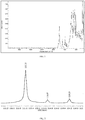
- Carbonate carbonyl to ester carbonyl ratios were determined by Fourier transform infrared spectroscopy (FTIR) on polymer film or polymer powder or color plaque. The molar ratio of carbonate carbonyl to ester carbonyl is calculated based on the ratio of IR intensity at 1779 cm -1 (carbonate carbonyl) to IR absorbance at 1733 cm -1 (ester carbonyl) after the baseline treatment of FTIR spectrum. An exemplary spectrum for Comparative Example 2 is shown in FIG. 1 .
- the percent of ester carbonyl in the arylate-resorcinol-arylate blocks ("ITR blocks" when the arylate is isophthalic and terephthalic acid) and the arylate-resorcinol-carbonate blocks can be quantitated by 13 C NMR spectroscopy of the polymer powder dissolved in deuterated CDCl 3 - using a VNMRS (Agilent) 500 MHz spectrometer. An exemplary 13 C NMR spectrum is shown in FIG. 2 . In particular, the percent ester carbonyl content is calculated by Equation 1.
- Percent ester carbonyl content Ester carbonyl content of arylate-resorcinol-arylate sequences + 0.5 ⁇ Ester carbonyl content of arylate-resorcinol-carbonate sequences Ester carbonyl content of arylate-resorcinol-arylate sequences + Ester carbonyl content of arylate-resorcinol-carbonate sequences + Carbonate carbonyl content of carbonate-resorcinol-carbonate sequences ⁇ 100
- Yellowness Index was calculated from the absorption spectrum from a MacBeth 9000A according to ASTM D1925-00.
- Fluorescence emission intensity was measured at 450 nm after excitation at 375 nm using high performance liquid chromatography (HPLC) on an Agilent Technologies Model 1100 apparatus fitted with a monolithic silica column and a 254 nm detector. Polymer powders were dissolved in dichloromethane to provide samples having a concentration of 5 mg/ml. The sample injection volume was 50 ⁇ L, and the mobile phase was 100% dichloromethane at a flow rate of 1 ml/min.
- This example can be executed on either the pilot plant or manufacturing plant scale, e.g., on a scale of 200 to 9,000 pounds (90.7 to 4082 kilogram).
- a reactor equipped with condenser, agitator, pH probes, and recirculation loops methylene chloride, triethylamine (1.5 to 2.5 wt% of RA), p-cumylphenol (3.8-4.2 wt% of RA), a dihydroxy siloxane (1.8-2.2 wt% of RA), and an aqueous solution of resorcinol RA was added.
- a molten mixture of isophthaloyl chloride and terephthaloyl chloride isomers (DAC, 50:50 ratio, up to stoichiometric ratio versus RA) was added to the reactor, while simultaneously adding a sodium hydroxide solution (33% w/w).
- the pH decreased to less than 7.
- the reactor contents were sampled for weight averaged molecular weight analyses of the RA-DAC-siloxane copolymer until the desired molecular weight was achieved.
- the reactor was subsequently charged with bisphenol-A (9.8 moles per mole of averaged mol wt of polymer), water (0.20 to 0.24 v/w of RA solution), and methylene chloride (0.65 to 0.75 v/w of RA solution).
- Phosgene was co-fed with sodium hydroxide (33% w/w) to the reactor using a NaOH/phosgene mole ratio to maintain the pH at 7 to 9.
- the reaction batches were purified to separate the catalyst and salts from the polymer solution. Solvents were then removed from the resulting polymeric solution to isolate the reaction product copolymer as a powder. Fourteen batches of the polymer were prepared in this manner. These powder samples were subsequently used for physical characterization.
- Example 1 was repeated except that in Example 2, resorcinol composition RB was used. Sixteen batches of the polymer were prepared. An identical set of characterizations were performed on these samples.
- Example 1 was repeated except that in Example 3, resorcinol composition RC stabilized with citric acid was used. Fifteen batches of the polymer were prepared. An identical set of characterizations were performed on these samples.
- the poly(carbonate-siloxane-arylate) copolymer derived from RA has a lower carbonate carbonyl content relative to ester carbonyl content compared to the copolymers derived from RB or RC, as determined by FTIR.
- the poly(carbonate-siloxane-arylate) copolymer derived from RA had a higher ester carbonyl content on a percent basis compared to the copolymers derived from RB (Comparative Example 2) or RC (Example 3), as determined by 13 C NMR.
- the carbonate:ester ratio was lower for the copolymer derived from RA as measured by FTIR and by 13 C NMR. It is unexpected that the ratio of carbonate:ester can be adjusted by adjusting the particular amounts of hydroquinone, catechol, and phenol in the resorcinol composition. Table 2.
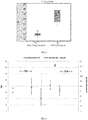
- FIG. 4 A box plot representation of this YI data is shown in FIG. 4 .
- the plots visually present the difference between the YI data sets for copolymers derived from RA, RB, and RC.
- Statistical analysis of the YI data using Tukey's t-test also shows that the YI for the copolymer derived from RB is statistically significantly lower than that of the copolymer derived from RC. In addition, YI for the copolymer derived from RA is statistically significantly lower than that of the copolymer derived from RB.
- Molded plaques of the copolymer derived from RA have lower average YI than the plaques of the copolymers derived from RB or RC.
- the result is surprising particularly with respect to the copolymers prepared from RA.
- RA contains more impurities than RB, yet copolymers derived from RA have a lower YI than copolymers derived from RB.
- Polycarbonate auto-fluorescence is widely used to investigate polymer instability and decomposition. Fluorescence emission at 450 nm is not desirable and should be minimized; and low auto-fluorescence is desirable for stability. In some application areas, higher levels of polymer fluorescence are also known to interfere with analytical instrumentation which relies on fluorescence detection. Poly(carbonate-siloxane-arylate) samples from Examples 1 to 3 were analyzed for fluorescence emission intensity at 450 nm, and the results are shown in Table 5. Table 5. Copolymer Ex 1 (RA) Ex 2 (RB)* Ex 3 (RC) Fluorescence Intensity (lumens*second) 0.95 1.27 2.28 Standard error 0.02 0.12 0.25 *Comparative
- the copolymer derived from RA (Example 1) has the lowest level of auto-fluorescence among the copolymers derived from RA, RB, and RC.
- the result is surprising particularly with respect to the copolymers prepared from RA.
- RA contains more impurities than RB, yet copolymers derived from RA have a lower level of auto-fluorescence than copolymers derived from RB.
- Example 4 Pilot scale trials were conducted following the procedure of Example 1 except that in Example 4, resorcinol composition RC stabilized with citric acid was used, and in Example 5, resorcinol composition RC stabilized with gluconic acid was used.
- Poly(carbonate-siloxane-arylate) powders prepared according to Examples 4 to 5 were dried to a volatiles content of less than 0.15%, combined with 0.06 parts per hundred of polymer (pph) PEPQ stabilizer, then fed into an injection molding machine where 0.32 mm inch color plaques were produced at a molding temperature of 550-580°C. The yellowness index of the molded plaques was measured. A box plot representation of this YI data is shown in FIG. 5 . As shown in FIG. 5 , molded plaques of the copolymer derived from RC stabilized with gluconic acid have a significantly lower YI than the plaques of the copolymers derived from RC stabilized with citric acid.
- Example 4 The poly(carbonate-siloxane-arylate) copolymers prepared according to Examples 4 and 5 were analyzed by 13 C NMR spectroscopy for chain architecture and by DSC for glass transition temperature. The results are summarized in Table 6. The results of Example 4 are from five batches. Table 6. Sample ITR blocks % Arylate-Rs-Carbonates% Carbonates-Rs-Carbonates% Tg (°C) Example 4 Average 81.75 7.03 11.22 137.38 Standard Deviation 0.72 0.16 0.62 0.87 Example 5 86.88 5.06 8.06 139.5
- the copolymer derived from RC stabilized with gluconic acid has a higher glass transition temperature than the copolymers derived from RC stabilized with citric acid.
- the data also shows that the copolymer prepared from RC stabilized with gluconic acid has a higher ITR blocks content, a lower arylate-resorcinol-carbonate content, and a lower carbonate-resorcinol-carbonate content, each on a percent basis compared to the copolymers prepared from RC stabilized with citric acid, as determined by 13 C NMR. It is unexpected that the chain architecture of the copolymers can be adjusted by adjusting the stabilizer used in the resorcinol composition.
- Example 1 was repeated using RA or RB.
- the maximum pH after the addition of DAC was controlled to be in a range of 9 to 12.
- the YI of plaques molded from PEPQ stabilized copolymer pellets were evaluated, and the results are summarized in FIG. 6 .
- hydrocarbyl and “hydrocarbon” refers broadly to a substituent comprising carbon and hydrogen, optionally with 1 to 3 heteroatoms, for example, oxygen, nitrogen, halogen, silicon, sulfur, or a combination thereof;
- alkyl refers to a straight or branched chain, saturated monovalent hydrocarbon group;
- alkylene refers to a straight or branched chain, saturated, divalent hydrocarbon group;
- alkylidene refers to a straight or branched chain, saturated divalent hydrocarbon group, with both valences on a single common carbon atom;
- alkenyl refers to a straight or branched chain monovalent hydrocarbon group having at least two carbons joined by a carbon-carbon double bond;
- cycloalkyl refers to a non-aromatic monovalent monocyclic or multicylic hydrocarbon group having at least three carbon atoms;
- cycloalkylene refers to a divalent radical formed by the removal of two hydrogen atom
- each of the foregoing groups can be unsubstituted or substituted, provided that the substitution does not significantly adversely affect synthesis, stability, or use of the compound.
- substituted means that at least one hydrogen on the designated atom or group is replaced with another group, provided that the designated atom's normal valence is not exceeded.
- two hydrogens on the atom are replaced.
Landscapes
- Chemical & Material Sciences (AREA)
- Health & Medical Sciences (AREA)
- Chemical Kinetics & Catalysis (AREA)
- Medicinal Chemistry (AREA)
- Polymers & Plastics (AREA)
- Organic Chemistry (AREA)
- Compositions Of Macromolecular Compounds (AREA)
- Polyesters Or Polycarbonates (AREA)
Claims (15)
- Ein Polycarbonatcopolymer, das Folgendes umfasst:aromatische Carbonateinheiten;wahlweise Siloxaneinheiten undResorcinolarylatestereinheiten, abgeleitet von einer Resorcinolzusammensetzung mit
einem Hydrochinongehalt von 50 bis 1200 Teilen je Million Teile,
einem Catechingehalt von 5 bis 29 Teilen je Million Teile und
einem Phenolgehalt von 0 bis 2400 Teilen je Million Teile, jeweils bestimmt durch Hochdruckflüssigchromatographie, und
einen Säurestabilisator. - Das Polycarbonatcopolymer gemäß Anspruch 1, das Folgendes hat:ein Molverhältnis von Carbonatcarbonylgruppen relativ zu Estercarbonylgruppen von 0,13:1 bis 0,20:1, bestimmt durch Fourier-Transformations-IR-Spektroskopie, undeinen prozentualen Estercarbonylgehalt von 91 bis 84 Molprozent, bestimmt durch 13C-NMR-Spektroskopie unter Verwendung folgender Gleichung:

- Das Polycarbonatcopolymer gemäß einem beliebigen oder mehreren der Ansprüche 1 bis 2, wobei eine oder mehrere der folgenden Bedingungen zutreffen: Eine ungeschmolzene Pulverprobe des Polycarbonatcopolymers hat eine Glasübergangstemperatur von 139°C oder höher, bestimmt durch Differentialscanningkalorimetrie, Differential Scanning Calorimetry - DSC -, nach ASTM D3418 mit einer Erwärmungsrate von 10°C/min;
eine geformte Probe des Polycarbonatcopolymerpulvers hat einen Gelbheitsindex von weniger als 8,5, gemessen durch ASTM D1925 an einer 3,2 mm dicken Platte; oder
eine Pulverprobe des Polycarbonatcopolymers hat eine Fluoreszenzemissionsintensität bei 450 nm von weniger als 1,2 Lumen*sec nach Anregung bei 375 nm, bestimmt durch Hochdruckflüssigchromatographie. - Das Polycarbonatcopolymer gemäß einem beliebigen oder mehreren der Ansprüche 1 bis 3, wobei das Polycarbonatcopolymer ein Poly(carbonat-siloxan-arylat) ist und die Resorcinolzusammensetzung Folgendes hat:einen Hydrochinongehalt von 50 bis 500 Teilen je Million Teile oder 60 bis 200 Teilen je Million Teile oder 100 bis 150 Teilen je Million Teile,einen Catechingehalt von 10 bis 29 Teilen je Million Teile oder 10 bis 25 Teilen je Million Teile oder 15 bis 25 Teilen je Million Teile undeinen Phenolgehalt von 50 bis 2400 Teilen je Million Teile oder 800 bis 2400 Teilen je Million Teile oder 1000 bis 2000 Teilen je Million Teile,jeweils bestimmt durch Hochdruckflüssigchromatographie.
- Das Polycarbonatcopolymer gemäß Anspruch 4, das Folgendes hat:ein Molverhältnis von Carbonatcarbonylgruppen relativ zu Estercarbonylgruppen von 0,13:1 bis 0,16:1 oder 0,13:1 bis 0,15:1, bestimmt durch Fourier-Transformations-IR-Spektroskopie, undeinen prozentualen Estercarbonylgehalt von 91 bis 88 Molprozent oder 91 bis 89 Molprozent, bestimmt durch 13C-NMR-Spektroskopie unter Verwendung folgender Gleichung:

- Das Polycarbonatcopolymer gemäß einem beliebigen oder mehreren der Ansprüche 1 bis 3, wobei das PolycarbonatCopolymer ein Poly(carbonat-siloxan-arylat) ist und wobei die Resorcinolzusammensetzung Folgendes hat:einen Hydrochinongehalt von 400 bis 1200 Teilen je Million Teile,einen Catechingehalt von 5 bis 11 Teilen je Million Teile undeinen Phenolgehalt von 0 Teilen je Million Teile,jeweils bestimmt durch Hochdruckflüssigchromatographie.
- Das Polycarbonatcopolymer gemäß Anspruch 6, wobei das Poly(carbonat-siloxan-arylat) Folgendes hat:ein Molverhältnis von Carbonatcarbonylgruppen relativ zu Estercarbonylgruppen von 0,16:1 bis 0,20:1, bestimmt durch Fourier-Transformations-IR-Spektroskopie, undeinen prozentualen Estercarbonylgehalt von 88 bis 84 Molprozent, bestimmt durch 13C-NMR-Spektroskopie unter Verwendung folgender Gleichung:

- Das Polycarbonatcopolymer gemäß einem beliebigen oder mehreren der Ansprüche 1 bis 7, wobei der Stabilisator eine Mineralsäure oder eine organische Säure ist, wobei der Stabilisator in Form einer organischen Säure eine C1-12-Carbonsäure, eine C2-12-Carbonsäure oder eine C-12-Carbonsäure oder ein Carbonsäurederivat einer der oben Genannten ist.
- Das Polycarbonatcopolymer gemäß Anspruch 8, wobei der Stabilisator in Form einer organischen Säure eine hydroxy-substituierte Carbonsäure, ein Lacton, ein hydroxy-substituiertes Lacton, eine Polycarbonsäure, eine hydroxy-substituierte Polycarbonsäure oder eine Zusammensetzung ist, die mindestens eines der oben Genannten umfasst.
- Das Polycarbonarcopolymer gemäß Anspruch 9, wobei der Stabilisator Oxalsäure, Äpfelsäure, Zitronensäure, Ascorbinsäure, 2,3,4,5,6-Pentahydroxyhexansäure, 2,3,4,5-Tetrahydroxyvaleriansäure, Gluconsäure, Maleinsäure, Fumarsäure, HCl, Phosphorsäure, phosphorige Säure, Milchsäure, Ameisensäure, Weinsäure, Tartronsäure, das entsprechende Lacton oder der C1-6-Alkylester einer der oben Genannten oder eine Kombination ist, die mindestens eines der oben Genannten umfasst, und wobei vorzugsweise
der Stabilisator Gluconsäure ist. - Das Polycarbonatcopolymer gemäß einem beliebigen oder mehreren der Ansprüche 1 bis 10, das, basierend auf dem Gesamtgewicht des Polycarbonatcopolymers, Folgendes umfasst:1 bis 10,3 Gewichtsprozent Bisphenol A-Carbonateinheiten;2,5 bis 13 Gewichtsprozent Resorcinolcarbonateinheiten;0,25 bis 2,5 Gewichtsprozent Siloxaneinheiten mit den Formeln

 75 bis 91 Gewichtsprozent Resorcinolisophthalat-/ Terephthalatestereinheiten, abgeleitet von einer Resorcinolzusammensetzung, die Folgendes hat:einen Hydrochinongehalt von 60 bis 200 Teilen je Million Teile,einen Catechingehalt von 10 bis 29 Teilen je Million Teile undeinen Phenolgehalt von 800 bis 2400 Teilen je Million Teile, jeweils bestimmt durch Hochdruckflüssigchromatographie, undeinen hydroxy-substituierten C4-12-Carbonsäurestabilisator.
 - Eine thermoplastische Zusammensetzung, die das Polycarbonatcopolymer gemäß einem beliebigen oder mehreren der Ansprüche 1 bis 11 umfasst.
- Ein Gegenstand, der die thermoplastische Zusammensetzung gemäß Anspruch 12 umfasst, wobei der Gegenstand ein geformter Gegenstand, eine Faser, ein wärmegeformter Gegenstand, eine extrudierte Folie, eine extrudierte Platte, eine oder mehrere Schichten eines Mehrschichtgegenstands, ein Substrat für einen beschichteten Gegenstand oder ein Substrat für einen metallisierten Gegenstand ist.
- Ein Verfahren zur Herstellung des Polycarbonatcopolymers gemäß einem beliebigen oder mehreren der Ansprüche 1 bis 11, wobei das Verfahren Folgendes umfasst:das Reagieren einer Kombination, die ein Dicarbonsäuredihalogenid, wahlweise ein Dihydroxysiloxan und eine Resorcinolzusammensetzung umfasst, die Folgendes hat:einen Hydrochinongehalt von 5 bis 1200 Teilen je Million Teile,einen Catechingehalt von 5 bis 29 Teilen je Million Teile,einen Phenolgehalt von 0 bis 2400 Teilen je Million Teile, jeweils bestimmt durch Hochdruckflüssigchromatographie, undweiter einen organischen Stabilisator mit einer ersten pKa von 2,5 bis 4,5 umfassend, um ein Arylat-Resorcinol-Arylat-Polymer zu liefern; unddas Reagieren des Arylat-Resorcinol-Arylat-Polymers mit einem Bisphenol und einem Carbonatvorläufer, vorzugsweise bei einem pH-Wert von weniger als 11, um das Polycarbonatcopolymer bereitzustellen.
- Ein Polycarbonatcopolymer, geformt durch das Verfahren gemäß Anspruch 14, wobei das Polycarbonatcopolymer ein Poly(carbonat-siloxan-arylat) ist, das Folgendes hat:ein Molverhältnis von Carbonatcarbonylgruppen relativ zu Estercarbonylgruppen von 0,13:1 bis 0,20:1, bestimmt durch Fourier-Transformations-IR-Spektroskopie; undeinen prozentualen Estercarbonylgehalt von 91 bis 84 Molprozent, bestimmt durch 13C-NMR-Spektroskopie unter Verwendung folgender Gleichung:

Applications Claiming Priority (2)
| Application Number | Priority Date | Filing Date | Title |
|---|---|---|---|
| US201762469693P | 2017-03-10 | 2017-03-10 | |
| PCT/US2017/031280 WO2018164706A1 (en) | 2017-03-10 | 2017-05-05 | Polycarbonate copolymers, articles formed therefrom, and methods of manufacture |
Publications (2)
| Publication Number | Publication Date |
|---|---|
| EP3461272A1 EP3461272A1 (de) | 2019-04-03 |
| EP3461272B1 true EP3461272B1 (de) | 2019-11-13 |
Family
ID=58710109
Family Applications (1)
| Application Number | Title | Priority Date | Filing Date |
|---|---|---|---|
| EP17724200.5A Active EP3461272B1 (de) | 2017-03-10 | 2017-05-05 | Polycarbonat-copolymere, daraus geformte artikel und verfahren zur herstellung |
Country Status (4)
| Country | Link |
|---|---|
| US (1) | US11001709B2 (de) |
| EP (1) | EP3461272B1 (de) |
| CN (1) | CN110382592B (de) |
| WO (1) | WO2018164706A1 (de) |
Family Cites Families (31)
| Publication number | Priority date | Publication date | Assignee | Title |
|---|---|---|---|---|
| AU497722B2 (en) * | 1975-03-10 | 1979-01-04 | Baxter Travenol Laboratories, Inc | Silicone block copolymer |
| JPS55164639A (en) | 1979-06-07 | 1980-12-22 | Sumitomo Chem Co Ltd | Prevention of dihydric phenol against discoloration |
| US4600647A (en) | 1984-09-26 | 1986-07-15 | Union Carbide Corporation | Ultraviolet light stabilized polyarylate containing article |
| EP0524731B1 (de) | 1991-07-01 | 2002-03-13 | General Electric Company | Mischungen aus Polycarbonat-Polysiloxan-Blockcopolymeren und Polycarbonaten oder Polyestercarbonatcopolymeren |
| US6143839A (en) | 1998-09-14 | 2000-11-07 | General Electric Company | Weatherable blends of polycarbonates with arylate polymers |
| DE69928431T2 (de) | 1998-10-29 | 2006-07-27 | General Electric Co. | Witterungsbeständige blockcopolyestercarbonate, verfahren zu deren herstellung und diese enthaltende polymerlegierungen |
| US6861482B2 (en) | 1999-05-18 | 2005-03-01 | General Electric Company | Weatherable, thermostable polymers having improved flow composition |
| US7790292B2 (en) * | 1999-05-18 | 2010-09-07 | Sabic Innovative Plastics Ip B.V. | Polysiloxane copolymers, thermoplastic composition, and articles formed therefrom |
| US7605221B2 (en) * | 1999-05-18 | 2009-10-20 | Sabic Innovative Plastics Ip B.V. | Weatherable, thermostable polymers having improved flow composition |
| US6306507B1 (en) | 1999-05-18 | 2001-10-23 | General Electric Company | Thermally stable polymers, method of preparation, and articles made therefrom |
| US7169859B2 (en) | 1999-05-18 | 2007-01-30 | General Electric Company | Weatherable, thermostable polymers having improved flow composition |
| US6410620B2 (en) | 1999-09-10 | 2002-06-25 | General Electric Company | Color stable compositions containing arylate-comprising polymers |
| US6414058B2 (en) | 1999-09-10 | 2002-07-02 | General Electric Company | Color stable compositions containing arylate-comprising polymers |
| US6228910B1 (en) | 1999-09-16 | 2001-05-08 | General Electric Company | Weatherable colored resin compositions |
| JP2003082201A (ja) | 2001-09-14 | 2003-03-19 | Unitika Ltd | ポリアリレート樹脂組成物およびそれよりなる成形品 |
| WO2005021616A1 (en) * | 2003-08-25 | 2005-03-10 | General Electric Company | Novel synthetic route for the preparation of hydroxy terminated polyarylates |
| US20060116487A1 (en) * | 2004-11-29 | 2006-06-01 | General Electric Company | Carboxy-terminated oligomeric polyester compositions and method for making |
| US7321014B2 (en) | 2004-12-29 | 2008-01-22 | General Electric Company | Transparent compositions, methods for the preparation thereof, and articles derived therefrom |
| US7695815B2 (en) | 2005-08-26 | 2010-04-13 | Sabic Innovative Plastics Ip B.V. | Low smoke polycarbonate composition and laminates, method of manufacture and product made therefrom |
| US7652107B2 (en) | 2005-10-31 | 2010-01-26 | Sabic Innovative Plastics Ip B.V. | Flame resistant polymer blends |
| US20070155913A1 (en) | 2006-01-04 | 2007-07-05 | Shreyas Chakravarti | Thermoplastic composition, method of making, and articles formed therefrom |
| US20070155946A1 (en) | 2006-01-04 | 2007-07-05 | Corrado Berti | Polyester oligomers, methods of making, and thermosetting compositions formed therefrom |
| US7709581B2 (en) | 2006-09-29 | 2010-05-04 | Sabic Innovative Plastics Ip B.V. | Polycarbonate-polysiloxane copolymer compositions and articles formed therefrom |
| US7686998B2 (en) | 2006-11-22 | 2010-03-30 | Sabic Innovative Plastics Ip B.V. | Thermoplastic composition, method of manufacture thereof, and articles derived therefrom |
| US8969447B2 (en) | 2012-02-29 | 2015-03-03 | Sabic Global Technologies B.V. | Thermoplastic polycarbonate copolymer compositions, methods of their manufacture, and articles thereof |
| US9352755B2 (en) | 2013-05-01 | 2016-05-31 | Sabic Global Technologies B.V. | Interior train components having low smoke and low heat release, and methods of their manufacture |
| US9650496B2 (en) | 2013-06-12 | 2017-05-16 | Sabic Global Technologies B.V. | Interior aircraft components and methods of manufacture |
| US20170173923A1 (en) | 2014-03-31 | 2017-06-22 | Sabic Global Technologies B.V. | Multilayer sheets, methods of manufacture, and articles formed therefrom |
| CN106574108B (zh) | 2014-08-20 | 2018-11-06 | 沙特基础工业全球技术有限公司 | 热塑性组合物、它们的制备方法及其制品 |
| US10144827B2 (en) | 2014-11-25 | 2018-12-04 | Sabic Global Technologies B.V. | Weatherable thermoplastic compositions, method of manufacture, and articles therefrom |
| US10377876B2 (en) | 2014-11-25 | 2019-08-13 | Sabic Global Technologies B.V. | Thermoplastic compositions, method of manufacture, and articles therefrom |
-
2017
- 2017-05-05 EP EP17724200.5A patent/EP3461272B1/de active Active
- 2017-05-05 US US16/479,787 patent/US11001709B2/en active Active
- 2017-05-05 CN CN201780087970.1A patent/CN110382592B/zh active Active
- 2017-05-05 WO PCT/US2017/031280 patent/WO2018164706A1/en not_active Ceased
Non-Patent Citations (1)
| Title |
|---|
| None * |
Also Published As
| Publication number | Publication date |
|---|---|
| WO2018164706A1 (en) | 2018-09-13 |
| EP3461272A1 (de) | 2019-04-03 |
| CN110382592A (zh) | 2019-10-25 |
| US11001709B2 (en) | 2021-05-11 |
| US20200385569A1 (en) | 2020-12-10 |
| CN110382592B (zh) | 2021-03-26 |
Similar Documents
| Publication | Publication Date | Title |
|---|---|---|
| KR101785578B1 (ko) | 난연성 폴리(실록산) 코폴리머 조성물, 이의 제조 방법 및 이로부터 형성된 물품 | |
| EP3131967B1 (de) | Hoch hitzebeständige polycarbonatzusammensetzungen | |
| KR20140026445A (ko) | 난연성 폴리카보네이트 조성물, 이의 제조 방법 및 이로부터 형성된 물품 | |
| WO2022190000A1 (en) | Polycarbonate copolymer compositions for rail interiors | |
| EP3131968B1 (de) | Hoch hitzebeständige polycarbonatzusammensetzungen | |
| WO2015159245A1 (en) | High heat polycarbonate compositions | |
| WO2015159246A1 (en) | High heat polycarbonate compositions | |
| WO2015160961A1 (en) | High heat polycarbonate compositions | |
| EP3224313B1 (de) | Thermoplastische zusammensetzungen, verfahren zur herstellung und artikel daraus | |
| WO2015160963A1 (en) | High heat polycarbonate compositions | |
| CN101198636B (zh) | 作为表面改性剂的用含硅基团封端的低聚-和聚-碳酸酯 | |
| EP2334717B1 (de) | Flammhemmende thermoplastische zusammensetzungen und daraus hergestellte artikel | |
| EP3461272B1 (de) | Polycarbonat-copolymere, daraus geformte artikel und verfahren zur herstellung | |
| EP4317290B1 (de) | Polycarbonatzusammensetzung, verfahren zur herstellung davon und daraus hergestellte artikel | |
| EP4194509B1 (de) | Polycarbonatzusammensetzungen | |
| WO2023166489A1 (en) | Thermoplastic compositions, methods of their manufacture, and articles thereof | |
| WO2024105479A1 (en) | Chemically resistant polycarbonate compositions and articles made therefrom | |
| EP4577597A1 (de) | Thermoplastische zusammensetzung, verfahren zu ihrer herstellung und daraus hergestellte artikel | |
| KR20250087688A (ko) | 폴리카르보네이트 조성물, 이의 제조 방법, 및 상기 폴리카르보네이트 조성물을 포함하는 물품 |
Legal Events
| Date | Code | Title | Description |
|---|---|---|---|
| STAA | Information on the status of an ep patent application or granted ep patent |
Free format text: STATUS: UNKNOWN |
|
| STAA | Information on the status of an ep patent application or granted ep patent |
Free format text: STATUS: THE INTERNATIONAL PUBLICATION HAS BEEN MADE |
|
| PUAI | Public reference made under article 153(3) epc to a published international application that has entered the european phase |
Free format text: ORIGINAL CODE: 0009012 |
|
| STAA | Information on the status of an ep patent application or granted ep patent |
Free format text: STATUS: REQUEST FOR EXAMINATION WAS MADE |
|
| 17P | Request for examination filed |
Effective date: 20181228 |
|
| AK | Designated contracting states |
Kind code of ref document: A1 Designated state(s): AL AT BE BG CH CY CZ DE DK EE ES FI FR GB GR HR HU IE IS IT LI LT LU LV MC MK MT NL NO PL PT RO RS SE SI SK SM TR |
|
| AX | Request for extension of the european patent |
Extension state: BA ME |
|
| GRAP | Despatch of communication of intention to grant a patent |
Free format text: ORIGINAL CODE: EPIDOSNIGR1 |
|
| STAA | Information on the status of an ep patent application or granted ep patent |
Free format text: STATUS: GRANT OF PATENT IS INTENDED |
|
| DAV | Request for validation of the european patent (deleted) | ||
| DAX | Request for extension of the european patent (deleted) | ||
| INTG | Intention to grant announced |
Effective date: 20190527 |
|
| GRAS | Grant fee paid |
Free format text: ORIGINAL CODE: EPIDOSNIGR3 |
|
| GRAA | (expected) grant |
Free format text: ORIGINAL CODE: 0009210 |
|
| STAA | Information on the status of an ep patent application or granted ep patent |
Free format text: STATUS: THE PATENT HAS BEEN GRANTED |
|
| AK | Designated contracting states |
Kind code of ref document: B1 Designated state(s): AL AT BE BG CH CY CZ DE DK EE ES FI FR GB GR HR HU IE IS IT LI LT LU LV MC MK MT NL NO PL PT RO RS SE SI SK SM TR |
|
| REG | Reference to a national code |
Ref country code: CH Ref legal event code: EP Ref country code: AT Ref legal event code: REF Ref document number: 1201584 Country of ref document: AT Kind code of ref document: T Effective date: 20191115 |
|
| REG | Reference to a national code |
Ref country code: DE Ref legal event code: R096 Ref document number: 602017008727 Country of ref document: DE |
|
| REG | Reference to a national code |
Ref country code: IE Ref legal event code: FG4D |
|
| REG | Reference to a national code |
Ref country code: NL Ref legal event code: MP Effective date: 20191113 |
|
| REG | Reference to a national code |
Ref country code: LT Ref legal event code: MG4D |
|
| PG25 | Lapsed in a contracting state [announced via postgrant information from national office to epo] |
Ref country code: FI Free format text: LAPSE BECAUSE OF FAILURE TO SUBMIT A TRANSLATION OF THE DESCRIPTION OR TO PAY THE FEE WITHIN THE PRESCRIBED TIME-LIMIT Effective date: 20191113 Ref country code: BG Free format text: LAPSE BECAUSE OF FAILURE TO SUBMIT A TRANSLATION OF THE DESCRIPTION OR TO PAY THE FEE WITHIN THE PRESCRIBED TIME-LIMIT Effective date: 20200213 Ref country code: NL Free format text: LAPSE BECAUSE OF FAILURE TO SUBMIT A TRANSLATION OF THE DESCRIPTION OR TO PAY THE FEE WITHIN THE PRESCRIBED TIME-LIMIT Effective date: 20191113 Ref country code: LT Free format text: LAPSE BECAUSE OF FAILURE TO SUBMIT A TRANSLATION OF THE DESCRIPTION OR TO PAY THE FEE WITHIN THE PRESCRIBED TIME-LIMIT Effective date: 20191113 Ref country code: LV Free format text: LAPSE BECAUSE OF FAILURE TO SUBMIT A TRANSLATION OF THE DESCRIPTION OR TO PAY THE FEE WITHIN THE PRESCRIBED TIME-LIMIT Effective date: 20191113 Ref country code: SE Free format text: LAPSE BECAUSE OF FAILURE TO SUBMIT A TRANSLATION OF THE DESCRIPTION OR TO PAY THE FEE WITHIN THE PRESCRIBED TIME-LIMIT Effective date: 20191113 Ref country code: NO Free format text: LAPSE BECAUSE OF FAILURE TO SUBMIT A TRANSLATION OF THE DESCRIPTION OR TO PAY THE FEE WITHIN THE PRESCRIBED TIME-LIMIT Effective date: 20200213 Ref country code: PT Free format text: LAPSE BECAUSE OF FAILURE TO SUBMIT A TRANSLATION OF THE DESCRIPTION OR TO PAY THE FEE WITHIN THE PRESCRIBED TIME-LIMIT Effective date: 20200313 Ref country code: PL Free format text: LAPSE BECAUSE OF FAILURE TO SUBMIT A TRANSLATION OF THE DESCRIPTION OR TO PAY THE FEE WITHIN THE PRESCRIBED TIME-LIMIT Effective date: 20191113 Ref country code: GR Free format text: LAPSE BECAUSE OF FAILURE TO SUBMIT A TRANSLATION OF THE DESCRIPTION OR TO PAY THE FEE WITHIN THE PRESCRIBED TIME-LIMIT Effective date: 20200214 |
|
| PG25 | Lapsed in a contracting state [announced via postgrant information from national office to epo] |
Ref country code: HR Free format text: LAPSE BECAUSE OF FAILURE TO SUBMIT A TRANSLATION OF THE DESCRIPTION OR TO PAY THE FEE WITHIN THE PRESCRIBED TIME-LIMIT Effective date: 20191113 Ref country code: IS Free format text: LAPSE BECAUSE OF FAILURE TO SUBMIT A TRANSLATION OF THE DESCRIPTION OR TO PAY THE FEE WITHIN THE PRESCRIBED TIME-LIMIT Effective date: 20200313 Ref country code: RS Free format text: LAPSE BECAUSE OF FAILURE TO SUBMIT A TRANSLATION OF THE DESCRIPTION OR TO PAY THE FEE WITHIN THE PRESCRIBED TIME-LIMIT Effective date: 20191113 |
|
| PG25 | Lapsed in a contracting state [announced via postgrant information from national office to epo] |
Ref country code: AL Free format text: LAPSE BECAUSE OF FAILURE TO SUBMIT A TRANSLATION OF THE DESCRIPTION OR TO PAY THE FEE WITHIN THE PRESCRIBED TIME-LIMIT Effective date: 20191113 |
|
| PG25 | Lapsed in a contracting state [announced via postgrant information from national office to epo] |
Ref country code: EE Free format text: LAPSE BECAUSE OF FAILURE TO SUBMIT A TRANSLATION OF THE DESCRIPTION OR TO PAY THE FEE WITHIN THE PRESCRIBED TIME-LIMIT Effective date: 20191113 Ref country code: RO Free format text: LAPSE BECAUSE OF FAILURE TO SUBMIT A TRANSLATION OF THE DESCRIPTION OR TO PAY THE FEE WITHIN THE PRESCRIBED TIME-LIMIT Effective date: 20191113 Ref country code: CZ Free format text: LAPSE BECAUSE OF FAILURE TO SUBMIT A TRANSLATION OF THE DESCRIPTION OR TO PAY THE FEE WITHIN THE PRESCRIBED TIME-LIMIT Effective date: 20191113 Ref country code: ES Free format text: LAPSE BECAUSE OF FAILURE TO SUBMIT A TRANSLATION OF THE DESCRIPTION OR TO PAY THE FEE WITHIN THE PRESCRIBED TIME-LIMIT Effective date: 20191113 Ref country code: DK Free format text: LAPSE BECAUSE OF FAILURE TO SUBMIT A TRANSLATION OF THE DESCRIPTION OR TO PAY THE FEE WITHIN THE PRESCRIBED TIME-LIMIT Effective date: 20191113 |
|
| REG | Reference to a national code |
Ref country code: DE Ref legal event code: R097 Ref document number: 602017008727 Country of ref document: DE |
|
| REG | Reference to a national code |
Ref country code: AT Ref legal event code: MK05 Ref document number: 1201584 Country of ref document: AT Kind code of ref document: T Effective date: 20191113 |
|
| PG25 | Lapsed in a contracting state [announced via postgrant information from national office to epo] |
Ref country code: SK Free format text: LAPSE BECAUSE OF FAILURE TO SUBMIT A TRANSLATION OF THE DESCRIPTION OR TO PAY THE FEE WITHIN THE PRESCRIBED TIME-LIMIT Effective date: 20191113 Ref country code: SM Free format text: LAPSE BECAUSE OF FAILURE TO SUBMIT A TRANSLATION OF THE DESCRIPTION OR TO PAY THE FEE WITHIN THE PRESCRIBED TIME-LIMIT Effective date: 20191113 |
|
| PLBE | No opposition filed within time limit |
Free format text: ORIGINAL CODE: 0009261 |
|
| STAA | Information on the status of an ep patent application or granted ep patent |
Free format text: STATUS: NO OPPOSITION FILED WITHIN TIME LIMIT |
|
| 26N | No opposition filed |
Effective date: 20200814 |
|
| PG25 | Lapsed in a contracting state [announced via postgrant information from national office to epo] |
Ref country code: SI Free format text: LAPSE BECAUSE OF FAILURE TO SUBMIT A TRANSLATION OF THE DESCRIPTION OR TO PAY THE FEE WITHIN THE PRESCRIBED TIME-LIMIT Effective date: 20191113 Ref country code: AT Free format text: LAPSE BECAUSE OF FAILURE TO SUBMIT A TRANSLATION OF THE DESCRIPTION OR TO PAY THE FEE WITHIN THE PRESCRIBED TIME-LIMIT Effective date: 20191113 |
|
| PG25 | Lapsed in a contracting state [announced via postgrant information from national office to epo] |
Ref country code: CH Free format text: LAPSE BECAUSE OF NON-PAYMENT OF DUE FEES Effective date: 20200531 Ref country code: IT Free format text: LAPSE BECAUSE OF FAILURE TO SUBMIT A TRANSLATION OF THE DESCRIPTION OR TO PAY THE FEE WITHIN THE PRESCRIBED TIME-LIMIT Effective date: 20191113 Ref country code: LI Free format text: LAPSE BECAUSE OF NON-PAYMENT OF DUE FEES Effective date: 20200531 Ref country code: MC Free format text: LAPSE BECAUSE OF FAILURE TO SUBMIT A TRANSLATION OF THE DESCRIPTION OR TO PAY THE FEE WITHIN THE PRESCRIBED TIME-LIMIT Effective date: 20191113 |
|
| REG | Reference to a national code |
Ref country code: BE Ref legal event code: MM Effective date: 20200531 |
|
| PG25 | Lapsed in a contracting state [announced via postgrant information from national office to epo] |
Ref country code: LU Free format text: LAPSE BECAUSE OF NON-PAYMENT OF DUE FEES Effective date: 20200505 |
|
| PG25 | Lapsed in a contracting state [announced via postgrant information from national office to epo] |
Ref country code: FR Free format text: LAPSE BECAUSE OF NON-PAYMENT OF DUE FEES Effective date: 20200531 Ref country code: IE Free format text: LAPSE BECAUSE OF NON-PAYMENT OF DUE FEES Effective date: 20200505 |
|
| REG | Reference to a national code |
Ref country code: DE Ref legal event code: R081 Ref document number: 602017008727 Country of ref document: DE Owner name: SHPP GLOBAL TECHNOLOGIES B.V., NL Free format text: FORMER OWNER: SABIC GLOBAL TECHNOLOGIES B.V., BERGEN OP ZOOM, NL |
|
| PG25 | Lapsed in a contracting state [announced via postgrant information from national office to epo] |
Ref country code: BE Free format text: LAPSE BECAUSE OF NON-PAYMENT OF DUE FEES Effective date: 20200531 |
|
| GBPC | Gb: european patent ceased through non-payment of renewal fee |
Effective date: 20210505 |
|
| PG25 | Lapsed in a contracting state [announced via postgrant information from national office to epo] |
Ref country code: GB Free format text: LAPSE BECAUSE OF NON-PAYMENT OF DUE FEES Effective date: 20210505 |
|
| PG25 | Lapsed in a contracting state [announced via postgrant information from national office to epo] |
Ref country code: TR Free format text: LAPSE BECAUSE OF FAILURE TO SUBMIT A TRANSLATION OF THE DESCRIPTION OR TO PAY THE FEE WITHIN THE PRESCRIBED TIME-LIMIT Effective date: 20191113 Ref country code: MT Free format text: LAPSE BECAUSE OF FAILURE TO SUBMIT A TRANSLATION OF THE DESCRIPTION OR TO PAY THE FEE WITHIN THE PRESCRIBED TIME-LIMIT Effective date: 20191113 Ref country code: CY Free format text: LAPSE BECAUSE OF FAILURE TO SUBMIT A TRANSLATION OF THE DESCRIPTION OR TO PAY THE FEE WITHIN THE PRESCRIBED TIME-LIMIT Effective date: 20191113 |
|
| PG25 | Lapsed in a contracting state [announced via postgrant information from national office to epo] |
Ref country code: MK Free format text: LAPSE BECAUSE OF FAILURE TO SUBMIT A TRANSLATION OF THE DESCRIPTION OR TO PAY THE FEE WITHIN THE PRESCRIBED TIME-LIMIT Effective date: 20191113 |
|
| P01 | Opt-out of the competence of the unified patent court (upc) registered |
Effective date: 20230530 |
|
| PGFP | Annual fee paid to national office [announced via postgrant information from national office to epo] |
Ref country code: DE Payment date: 20250311 Year of fee payment: 9 |