EP3455323B1 - High temperature viscoelastic surfactant (ves) fluids comprising nanoparticle viscosity modifiers - Google Patents
High temperature viscoelastic surfactant (ves) fluids comprising nanoparticle viscosity modifiers Download PDFInfo
- Publication number
- EP3455323B1 EP3455323B1 EP17723883.9A EP17723883A EP3455323B1 EP 3455323 B1 EP3455323 B1 EP 3455323B1 EP 17723883 A EP17723883 A EP 17723883A EP 3455323 B1 EP3455323 B1 EP 3455323B1
- Authority
- EP
- European Patent Office
- Prior art keywords
- viscoelastic
- fluid
- subterranean formation
- viscoelastic fluid
- surfactant
- Prior art date
- Legal status (The legal status is an assumption and is not a legal conclusion. Google has not performed a legal analysis and makes no representation as to the accuracy of the status listed.)
- Active
Links
Images

Classifications
-
- C—CHEMISTRY; METALLURGY
- C09—DYES; PAINTS; POLISHES; NATURAL RESINS; ADHESIVES; COMPOSITIONS NOT OTHERWISE PROVIDED FOR; APPLICATIONS OF MATERIALS NOT OTHERWISE PROVIDED FOR
- C09K—MATERIALS FOR MISCELLANEOUS APPLICATIONS, NOT PROVIDED FOR ELSEWHERE
- C09K8/00—Compositions for drilling of boreholes or wells; Compositions for treating boreholes or wells, e.g. for completion or for remedial operations
- C09K8/60—Compositions for stimulating production by acting on the underground formation
- C09K8/602—Compositions for stimulating production by acting on the underground formation containing surfactants
-
- C—CHEMISTRY; METALLURGY
- C09—DYES; PAINTS; POLISHES; NATURAL RESINS; ADHESIVES; COMPOSITIONS NOT OTHERWISE PROVIDED FOR; APPLICATIONS OF MATERIALS NOT OTHERWISE PROVIDED FOR
- C09K—MATERIALS FOR MISCELLANEOUS APPLICATIONS, NOT PROVIDED FOR ELSEWHERE
- C09K8/00—Compositions for drilling of boreholes or wells; Compositions for treating boreholes or wells, e.g. for completion or for remedial operations
- C09K8/02—Well-drilling compositions
- C09K8/03—Specific additives for general use in well-drilling compositions
- C09K8/035—Organic additives
-
- C—CHEMISTRY; METALLURGY
- C09—DYES; PAINTS; POLISHES; NATURAL RESINS; ADHESIVES; COMPOSITIONS NOT OTHERWISE PROVIDED FOR; APPLICATIONS OF MATERIALS NOT OTHERWISE PROVIDED FOR
- C09K—MATERIALS FOR MISCELLANEOUS APPLICATIONS, NOT PROVIDED FOR ELSEWHERE
- C09K8/00—Compositions for drilling of boreholes or wells; Compositions for treating boreholes or wells, e.g. for completion or for remedial operations
- C09K8/02—Well-drilling compositions
- C09K8/04—Aqueous well-drilling compositions
- C09K8/06—Clay-free compositions
-
- C—CHEMISTRY; METALLURGY
- C09—DYES; PAINTS; POLISHES; NATURAL RESINS; ADHESIVES; COMPOSITIONS NOT OTHERWISE PROVIDED FOR; APPLICATIONS OF MATERIALS NOT OTHERWISE PROVIDED FOR
- C09K—MATERIALS FOR MISCELLANEOUS APPLICATIONS, NOT PROVIDED FOR ELSEWHERE
- C09K8/00—Compositions for drilling of boreholes or wells; Compositions for treating boreholes or wells, e.g. for completion or for remedial operations
- C09K8/60—Compositions for stimulating production by acting on the underground formation
- C09K8/62—Compositions for forming crevices or fractures
- C09K8/66—Compositions based on water or polar solvents
- C09K8/68—Compositions based on water or polar solvents containing organic compounds
-
- C—CHEMISTRY; METALLURGY
- C09—DYES; PAINTS; POLISHES; NATURAL RESINS; ADHESIVES; COMPOSITIONS NOT OTHERWISE PROVIDED FOR; APPLICATIONS OF MATERIALS NOT OTHERWISE PROVIDED FOR
- C09K—MATERIALS FOR MISCELLANEOUS APPLICATIONS, NOT PROVIDED FOR ELSEWHERE
- C09K8/00—Compositions for drilling of boreholes or wells; Compositions for treating boreholes or wells, e.g. for completion or for remedial operations
- C09K8/60—Compositions for stimulating production by acting on the underground formation
- C09K8/62—Compositions for forming crevices or fractures
- C09K8/72—Eroding chemicals, e.g. acids
- C09K8/74—Eroding chemicals, e.g. acids combined with additives added for specific purposes
-
- C—CHEMISTRY; METALLURGY
- C09—DYES; PAINTS; POLISHES; NATURAL RESINS; ADHESIVES; COMPOSITIONS NOT OTHERWISE PROVIDED FOR; APPLICATIONS OF MATERIALS NOT OTHERWISE PROVIDED FOR
- C09K—MATERIALS FOR MISCELLANEOUS APPLICATIONS, NOT PROVIDED FOR ELSEWHERE
- C09K2208/00—Aspects relating to compositions of drilling or well treatment fluids
- C09K2208/10—Nanoparticle-containing well treatment fluids
-
- C—CHEMISTRY; METALLURGY
- C09—DYES; PAINTS; POLISHES; NATURAL RESINS; ADHESIVES; COMPOSITIONS NOT OTHERWISE PROVIDED FOR; APPLICATIONS OF MATERIALS NOT OTHERWISE PROVIDED FOR
- C09K—MATERIALS FOR MISCELLANEOUS APPLICATIONS, NOT PROVIDED FOR ELSEWHERE
- C09K2208/00—Aspects relating to compositions of drilling or well treatment fluids
- C09K2208/26—Gel breakers other than bacteria or enzymes
-
- C—CHEMISTRY; METALLURGY
- C09—DYES; PAINTS; POLISHES; NATURAL RESINS; ADHESIVES; COMPOSITIONS NOT OTHERWISE PROVIDED FOR; APPLICATIONS OF MATERIALS NOT OTHERWISE PROVIDED FOR
- C09K—MATERIALS FOR MISCELLANEOUS APPLICATIONS, NOT PROVIDED FOR ELSEWHERE
- C09K2208/00—Aspects relating to compositions of drilling or well treatment fluids
- C09K2208/30—Viscoelastic surfactants [VES]
Definitions
- Embodiments of the present disclosure generally relate to fluid fracturing of subterranean formations in hydrocarbon reservoirs to enhance the flow of hydrocarbons to a wellbore in the formation, and more specifically relate to high temperature viscoelastic surfactant ("VES") fracturing fluids comprising nanoparticle viscosity modifiers.
- VES viscoelastic surfactant
- Hydraulic fracturing is a well stimulation technique that involves injecting a fracturing fluid into subterranean formations at rates and pressures sufficient to rupture the subterranean formation to produce or widen compressed flow conduits, that is fissures, cracks, natural fractures, faults, lineaments and bedding planes.
- Viscoelastic fluids (VES) fluids are often used in oilfield applications, such as hydraulic fracturing. Specifically, the VES fluids exhibit both elastic behavior and viscous behavior due to the micelles structure formed under different conditions. When the VES fluid is subjected to shear stress, for example, by a pump, the VES fluid is shear thinned to produce a low viscosity fluid, which is easier to pump.
- the VES fluid When the shear stress is stopped, the VES fluid returns to a higher viscosity condition. Because the fracturing fluid contains a proppant that keeps an induced hydraulic fracture open after the pressure is released, a higher viscosity enables the VES fluid to suspend and transport the proppant into the fracture.
- the VES fluid includes wormlike micelles that become entangled to form a 3-dimensional (3D) viscoelastic gel, limiting mobility of solution molecules, for example water. Due to the advantages, such as low subterranean formation damage, good proppant suspending and carrying ability, good compatibility with brine and produced water, the VES fluids have been widely used in oilfield operations including fracturing, completion, acidizing, sand control, water shut-off, etc.
- WO 2012/160008 relates to viscoelastic fluids, thickened acid compositions and methods of using the gelled compositions.
- HT VES high temperature viscoelastic surfactant
- Embodiments of the present disclosure are directed to hydraulic fracturing treatments of underground oil and gas bearing formations.
- the fracturing fluids must be stable at high temperature and stable at high pump rates and shear rates.
- the embodiments found in this disclosure are designed to effectively lower the amount of HT VES needed at 121-177 °C (250-350 °F), and maintaining a similar viscosity through the use of selected nanomaterials.
- the viscoelastic fluids are enhanced with nanoparticles, thereby resulting in higher fluid viscosity.
- the selected nanoparticles may have, through forces such as van der Waals forces, simultaneously attached to multiple HT VES micelles in the fluid, thus strengthening the 3D network of the HT VES micelles.
- this disclosure describes a viscoelastic surfactant fluid for a subterranean formation comprising: brine solution, at least one nanoparticle viscosity modifier comprising a particle size of 0.1 nanometers to 500 nanometers or 0.1 nanometers to 100 nanometers where the at least one nanoparticle viscosity modifier comprises carbon nanotubes, ZrO 2 nanoparticles, or combinations thereof, and a viscoelastic surfactant according to formula (I):
- R 1 is a saturated or unsaturated hydrocarbon group of from 17 to 29 carbon atoms
- R 2 and R 3 are each independently selected from a straight chain or branched alkyl or hydroxyalkyl group of from 1 to 6 carbon atoms
- R 4 is selected from H, hydroxyl, alkyl or hydroxyalkyl groups of from 1 to 4 carbon atoms.
- k is an integer of from 2-20;
- m is an integer of from 1-20, and n is an integer of from 0-20.
- a method of treating a subterranean formation penetrated by a wellbore with a viscoelastic surfactant fluid comprising mixing a viscoelastic surfactant of formula (I), a nanoparticle viscosity modifier as defined above, and a brine solution to produce the viscoelastic fluid, where the viscoelastic surfactant according to formula (I) is as defined above.
- the viscoelastic fluid is introduced into the subterranean formation, where the treatment fluid is subjected to temperatures greater than 121 °C (250 °F).
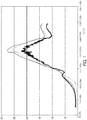
- FIG. 1 and FIG. 2 depict a baseline curve of a viscoelastic fluid.
- the viscoelastic fluid, "baseline fluid,” as denoted by the thickest black line (due to the backslashes) in FIG. 1 and FIG. 2 comprises 5% HT VES and brine.
- water includes deionized water, distilled water, brackish water, brine, fresh water, spring water, tap water, mineral water or water substantially free of chemical impurities.
- Embodiments of the present disclosure are directed to hydraulic fracturing treatments of underground oil and gas bearing formations, and generally relates to viscoelastic compositions or fluids, and to methods of using those fluids or compositions.
- This disclosure describes a viscoelastic surfactant fluid that maintains high viscosity at temperature of 93.3 °C (200 °F) or greater.
- the combination of viscoelastic surfactant, nanoparticle viscosity modifier and brine increases the viscosity, while using less of a high temperature viscoelastic surfactant (HT VES).
- the viscoelastic surfactant fluid in this disclosure can be used to stimulate or modify the permeability of underground formations, in drilling fluids, completion fluids, workover fluids, acidizing fluids, gravel packing, and fracturing.
- the viscosity of a viscoelastic fluid may vary with the stress or rate of strain applied. In the case of shear deformations, it is very common that the viscosity of the fluid drops with increasing shear rate or shear stress. This behavior is referred to as "shear thinning.”
- Surfactants can cause viscoelasticity in fluids and may manifest shear thinning behavior. For example, when such a fluid is passed through a pump or is in the vicinity of a rotating drill bit, the fluid is in a higher shear rate environment and the viscosity is decreased, resulting in low friction pressures and pumping energy savings. When the stress is removed, the fluid returns to a higher viscosity condition.
- the average kinetic energy of the molecules in the fluid increases, causing more disruptions to the VES micelle structures and the attractions among the micelles. This can lower the overall viscosity of the fluid.
- an increase in temperature correlates to a logarithmic decrease in the time required to impart equal strain under a constant stress. In other words, it takes less work to stretch a viscoelastic material an equal distance at a higher temperature than it does at a lower temperature.
- the addition of selected nanoparticles to the fluid may improve the fluid viscosity at elevated temperatures.
- the selected nanoparticles may have, through forces such as van der Waals forces, simultaneously attached to multiple HT VES micelles in the fluid, thus strengthening the 3D network of the HT VES micelles.
- a viscoelastic fluid for a subterranean formation comprising viscoelastic surfactant according to formula (I), a brine solution, and a nanoparticle viscosity modifier comprising a particle size of 0.1 nanometers to 500 nanometers, or 0.1 nanometers to 100 nanometers where the at least one nanoparticle viscosity modifier comprises carbon nanotubes, ZrO 2 nanoparticles, or combinations thereof.
- R 1 is a saturated or unsaturated hydrocarbon group of from 17 to 29 carbon atoms. In other embodiments, R 1 is a saturated or unsaturated, hydrocarbon group of 18 to 21 carbon atoms. R 1 can also be a fatty aliphatic derived from natural fats or oils having an iodine value of from 1 to 140. The iodine value, which determines the degree of unsaturation, can range from 30 to 90, or in other embodiments the R 1 has an iodine value of 40 to 70. R 1 may be restricted to a single chain length or may be of mixed chain length such as those groups derived from natural fats and oils or petroleum stocks.
- the natural fats and oils or petroleum stocks may comprise tallow alkyl, hardened tallow alkyl, rapeseed alkyl, hardened rapeseed alkyl, tall oil alkyl, hardened tall oil alkyl, coco alkyl, oleyl, erucyl, soya alkyl, or combinations thereof.
- R 2 and R 3 are each independently selected from a straight chain or branched alkyl or hydroxyalkyl group of from 1 to 6 carbon atoms, in other embodiments from 1 to 4 carbon atoms, and in another embodiment from 1 to 3 carbon atoms.
- R 4 is selected from H, hydroxyl, alkyl or hydroxyalkyl groups of from 1 to 4 carbon atoms, and can be selected from ethyl, hydroxyethyl, hydroxyl or methyl, but is not limited to this list of groups.
- the formula (I) of the viscoelastic surfactant has the variables subscript k, m, and n.
- Subscript k is an integer of from 2 to 20, in other embodiments, from 2 to 12, and in another embodiment from 2 to 4.
- Subscript m is an integer of from 1 to 20, in other embodiments from 1 to 12, in another embodiment from 1 to 6, and in some embodiments, m can also be an integer from 1 to 3.
- Subscript n is an integer of from 0 to 20, from 0 to 12, or from 0 to 6. In some embodiments, n is an integer from 0 to 1.
- the viscoelastic surfactant is erucamidopropyl hydroxypropylsultaine; commercially known as Armovis EHS®, provided by Akzo Nobel.
- the formula (I) further comprises a high temperature viscoelastic surfactant.
- the viscoelastic surfactant may form viscoelastic fluids at lesser concentrations than other surfactants. This specific rheological behavior is mainly due to the types of surfactant aggregates that are present in the fluids. In low viscosity fluids, the surfactant molecules aggregate in spherical micelles. Whereas in viscoelastic fluids, long micelles, which can be described as worm-like, thread-like or rod-like micelles, are present and entangled. These long flexible wormlike micelles can form in the presence of salt, and by entangling, they form a transient network and impart viscoelastic properties to the solution. These micelles can thus function as thickening and rheology control agents in aqueous systems. Wormlike micelles are in thermal equilibrium with their monomers. Thus, micellar self-assembly (and hence, their length and flexibility) responds to changes in surfactant and salt concentration, as well as changes in temperature.
- the viscoelastic fluid in this disclosure incorporates a lesser percent by weight of the viscoelastic surfactant.
- the amount of viscoelastic surfactant in the viscoelastic fluid can vary.
- the viscoelastic fluid contains 0.5% by weight to 20% by weight of viscoelastic surfactant.
- the viscoelastic fluid comprises 2% by weight to 8% by weight of viscoelastic surfactant.
- Other embodiments of the viscoelastic surfactant fluid comprise a viscoelastic fluid having 3% by weight to 6% by weight of viscoelastic surfactant.
- viscoelastic surfactants can form networks in lower concentrations compared to other surfactants
- the viscosity modifiers such as carbon nanotubes or zirconium (IV) oxide (ZrO 2 ) nanoparticles
- the surfactant micelles associate with surfactant micelles in aqueous viscoelastic solutions to better form networks that suspend or prevent the proppant from settling. If the proppant settles too quickly, it may accumulate at the bottom part of the fracture, clogging the fracture, and decreasing productivity.
- the nanoparticles are in a powder formulation, they are better able to disperse and combine with the micelles, and, as a result, this increases the viscosity beyond expected values.
- the powder formulation comprising nanoparticle viscosity modifiers, depends on the nanoparticle size, specifically, the nanoparticle diameter.
- the nanoparticle viscosity modifier particle size is from 0.1 nanometers (nm) and 500 nm. In another embodiment, the particle size is from 10 nm to 60 nm. In other embodiments, the particle size is between 20 nm to 50 nm.
- Nanoparticles describe materials having at least one unit sized (in at least one dimension) from 1 and 1000 nanometers (10 -9 meter), but is usually from 1 and 100 nm, which is an accepted definition of nano scale.
- the term "nanomaterials” encompasses other terms, such as, but not limited to: nanoparticles, nanotubes, nanorods, nanodots, or a combination thereof.
- Nanorods are solid one dimensional nanostructure and lack a hollow inner center that gives nanotubes a tubular structure.
- the at least one nanoparticle viscosity modifier comprises carbon nanotubes, ZrO 2 nanoparticles, or combinations thereof.
- the viscoelastic fluid may comprise a nanoparticle viscosity modifier, which further comprises one or more of nanomaterials, such as carbon nanotubes, zinc oxide (ZnO), nanorods, ZrO 2 nanoparticles or combinations thereof.
- nanomaterials such as carbon nanotubes, zinc oxide (ZnO), nanorods, ZrO 2 nanoparticles or combinations thereof.
- the viscoelastic fluid comprises nanoparticle viscosity modifiers.
- the nanoparticle viscosity modifier ranges from 0.1 pound per thousand gallons (ppt) (about 0.001% by weight) to 5% by weight.
- the viscoelastic fluid comprises about 0.04% to about 0.24% by weight nanoparticle viscosity modifier and in other embodiments 0.01% to 2% by weight nanoparticle viscosity modifier.
- additional surfactants are added into the viscoelastic fluid. Adding an additional surfactant may enhance the viscosity or effect the micelle formation at varying temperatures, pressures, or other changes in conditions.
- a non-limiting list of possible surfactants includes cationic surfactants, anionic surfactants, non-ionic surfactants, amphoteric surfactants, zwitterionic surfactants or combinations thereof.
- the viscoelastic fluid comprises 1% by weight to 50% by weight of salt in brine solution. In another embodiment, the viscoelastic fluid comprises 10% by weight to 40% by weight of salt in brine solution, and other embodiments comprise 15% by weight to 35% by weight of salt in brine solution.
- the fluid contains about 1 to 6 wt% viscoelastic surfactant, 1 to 50 wt% salt, and the remaining percentage being primarily water.
- the brine solution in the viscoelastic fluid comprises one or more metal salts.
- the metal salts may comprise alkali or alkaline earth metal halides.
- a non-limiting list of metal halides include: calcium chloride, calcium bromide, zinc bromide, or combinations thereof.
- the sequence of addition of the components may vary. For example, before the salt in brine is added to solution, it may be combined with the nanoparticle viscoelastic surfactant to form a powder formulation, and when added to the solution or solvent, the powder formulation rapidly disperses.
- the solvent may comprise water, alcohol, or combinations thereof.
- the alcohol comprises alkyloxy, diol, triol or combination thereof.
- alkyloxy solvents include, but are not limited to methanol, ethanol, propanol, and butanol.
- Glycol molecules are dihydric alcohols or diols, and a non-limiting list of diol solvents includes: ethylene glycol, butylene glycol, diethylene glycol, glycerin, propylene glycol, tetramethylene glycol, tetramethylethylene glycol, trimethylene glycol.
- Viscoelastic fluids in this disclosure may further contain one or more additives such as surfactants, salts, for example potassium chloride, anti-foam agents, scale inhibitors, corrosion inhibitors, fluid-loss additives, and bactericides.
- the purpose of a breaker is to "break" or diminish the viscosity of the fracturing fluid so that this fluid is more easily recovered from the fracture during clean-up. Breakers are different from stabilizer nanoparticles in that stabilizer nanoparticles inhibit or prevent the degradation of at least one VES.
- the viscoelastic fluids containing nanoparticles may also comprise breaker material.
- the breaker material comprises encapsulated breaker.
- Additional additives may include, but are not limited to polyelectrolytes, such as polycations and polyanions, zwitterionic polymers, such as zwitterionic polyacrylamides and copolymers and other surfactants.
- the viscoelastic fluid as described in this disclosure may include possible additives mentioned previously, and may also comprise materials designed to limit proppant flowback after the fracturing operation is complete by forming a porous pack in the fracture zone.
- Such materials called “proppant flowback inhibitors,” can be any known in the art, such as those available from Schlumberger under the name PROPNET®.
- One embodiment described in this disclosure is a method of treating a subterranean formation penetrated by a wellbore with a viscoelastic fluid comprising: mixing a viscoelastic surfactant of formula (I) as defined above, a nanoparticle viscosity modifier as defined above, and a brine solution to produce the viscoelastic fluid. Then the viscoelastic fluid is introduced into the subterranean formation through the wellbore, where the high temperature viscoelastic fluid is subjected to temperatures greater than 121.1 °C (250 °F).
- the high temperature viscoelastic fluid is subjected to temperatures greater than 135 °C (275 °F), and in other embodiments, the high temperature viscoelastic fluid is subjected to temperatures greater than 148.9 °C (300 °F).
- the baseline viscoelastic fluid was prepared by adding 5% by weight high temperature viscoelastic surfactant (HT VES) (Armovis® EHS) into a 30% by weight CaCl 2 brine. More specifically, 40.7 milliliter (mL) tap water, 26.8 grams (g) CaCl 2 •2H 2 O, and 2.6 mL HT VES was mixed together to form the baseline fluid. The viscosity of the fluid from room temperature to approximately 176.7 °C (350 °F) was measured at a shear rate of 100 per second (s -1 ) with a Fann50-type viscometer, and plotted in FIG. 1 .
- HT VES high temperature viscoelastic surfactant
- the viscosity was enhanced by approximately 20% with the addition of 6 ppt of the carbon nanotubes, and enhanced by approximately 26% with the addition of 12 ppt of the carbon nanotubes.
- the dispersion of the carbon nanotubes was poor in the fluid where the nanotubes preferred to stay in aggregates.
- the dispersion was greatly improved, and the carbon nanotubes appeared to be distributed evenly in the fluid.
- the baseline viscoelastic fluid was prepared by adding 5% by weight HT VES (Armovis® EHS) into a 30% by weight CaCl 2 brine. More specifically, 40.7 mL tap water, 26.8 g CaCl 2 •2H 2 O, and 2.6 mL HT VES was mixed together to form the baseline fluid. The viscosity of the fluid from room temperature to approximately 176.7 °C (350 °F) was measured at a shear rate of 100 s -1 with a Fann50-type viscometer, and plotted in FIG. 2 .
- HT VES Armovis® EHS
- the viscosity was similarly measured from room temperature to 176.7 °C (350 °F).
- the viscosity of the baseline VES viscoelastic fluid in the first test and the viscosity of 4 ppt of the ZrO 2 nanomaterial in the third test were mathematically added (simple addition) and plotted in FIG. 2 , as represented by the dotted line.
- the dotted line shows a lower viscosity when compared to the actual viscosity in the viscoelastic sample fluid containing both HT VES and 4 ppt of the ZrO 2 nanomaterial for temperatures greater than approximately 121.1 °C (250 °F). This suggests that there is a synergetic effect in the fluid between the HT VES and the ZrO 2 nanomaterial for enhancing the fluid viscosity at high temperatures.
- the viscosity of the baseline fluid and the viscosity of 4 ppt of the ZrO 2 nanomaterial are mathematically added by simple addition and plotted in FIG. 2 .
- the expected result shows a smaller viscosity when compared to the theoretical viscosity in the viscoelastic sample fluid containing both HT VES and 4 ppt of the ZrO 2 nanomaterial for temperatures greater than approximately 121.1 °C (250 °F). This suggests that there is a synergetic effect in the fluid between the HT VES and the ZrO 2 nanomaterial for enhancing the fluid viscosity at high temperatures.
- the ZrO 2 nanoparticle may have, through forces such as van der Waals forces, simultaneously attached to multiple HT VES micelles in the fluid, thus strengthening the 3D network of the HT VES micelles and enhancing the fluid viscosity.
Landscapes
- Chemical & Material Sciences (AREA)
- Life Sciences & Earth Sciences (AREA)
- General Life Sciences & Earth Sciences (AREA)
- Engineering & Computer Science (AREA)
- Materials Engineering (AREA)
- Organic Chemistry (AREA)
- Chemical Kinetics & Catalysis (AREA)
- General Chemical & Material Sciences (AREA)
- Colloid Chemistry (AREA)
- Lubricants (AREA)
- Organic Low-Molecular-Weight Compounds And Preparation Thereof (AREA)
- Emulsifying, Dispersing, Foam-Producing Or Wetting Agents (AREA)
- Detergent Compositions (AREA)
Applications Claiming Priority (2)
| Application Number | Priority Date | Filing Date | Title |
|---|---|---|---|
| US201662335377P | 2016-05-12 | 2016-05-12 | |
| PCT/US2017/031195 WO2017196646A1 (en) | 2016-05-12 | 2017-05-05 | High temperature viscoelastic surfactant (ves) fluids comprising nanoparticle viscosity modifiers |
Publications (2)
| Publication Number | Publication Date |
|---|---|
| EP3455323A1 EP3455323A1 (en) | 2019-03-20 |
| EP3455323B1 true EP3455323B1 (en) | 2021-06-30 |
Family
ID=58709624
Family Applications (1)
| Application Number | Title | Priority Date | Filing Date |
|---|---|---|---|
| EP17723883.9A Active EP3455323B1 (en) | 2016-05-12 | 2017-05-05 | High temperature viscoelastic surfactant (ves) fluids comprising nanoparticle viscosity modifiers |
Country Status (8)
| Country | Link |
|---|---|
| US (1) | US10407606B2 (enExample) |
| EP (1) | EP3455323B1 (enExample) |
| JP (1) | JP6761483B2 (enExample) |
| KR (1) | KR102229273B1 (enExample) |
| CN (1) | CN109312225A (enExample) |
| SA (1) | SA518400406B1 (enExample) |
| SG (1) | SG11201809916SA (enExample) |
| WO (1) | WO2017196646A1 (enExample) |
Families Citing this family (12)
| Publication number | Priority date | Publication date | Assignee | Title |
|---|---|---|---|---|
| US10702843B2 (en) * | 2018-03-29 | 2020-07-07 | Baker Hughes, A Ge Company, Llc | Compositions of matter comprising suspended nanoparticles and related methods |
| US12018209B2 (en) * | 2018-04-13 | 2024-06-25 | Mitsubishi Gas Chemical Company, Inc. | Viscoelastic surfactant fluid composition, and method of using the same |
| WO2020081095A1 (en) | 2018-10-19 | 2020-04-23 | Multi-Chem Group, Llc | Friction reducing additives including nanoparticles |
| CN112342003B (zh) * | 2019-08-07 | 2022-01-07 | 沧州中润化学助剂有限公司 | 一种提高采收率用粘弹表面活性剂制备方法 |
| CN110845372A (zh) * | 2019-11-26 | 2020-02-28 | 陕西科技大学 | 一种多烯烃弯钩型表活剂凝胶体压裂液及其制备和破胶方法 |
| CN112094632B (zh) * | 2020-10-21 | 2022-03-11 | 西南石油大学 | 一种纳米解除伤害剂及其制备方法 |
| CN112980415B (zh) * | 2021-02-19 | 2021-11-16 | 中国石油大学(华东) | 多接枝位点纳米碳材料和活性纳米碳材料及其制备方法和超低渗油藏用驱油体系 |
| WO2023094434A1 (en) * | 2021-11-23 | 2023-06-01 | Nouryon Chemicals International B.V. | Surfactant composition |
| US20230184075A1 (en) * | 2021-12-15 | 2023-06-15 | Aramco Services Company | Method to accelerate acid reactivity during reservoir stimulation |
| US11981855B2 (en) | 2022-04-01 | 2024-05-14 | Baker Hughes Oilfield Operations Llc | Compositions of matter comprising suspended nanoparticles functionalized with glymo or glymo-like groups and related methods |
| WO2024112840A1 (en) | 2022-11-23 | 2024-05-30 | Energy Solutions (US) LLC | Viscoelastic surfactant formulations and use in subterranean formations |
| US12662621B1 (en) | 2025-07-31 | 2026-06-23 | Schlumberger Technology Corporation | Compositions and methods of use of viscoelastic surfactants and nanoparticles for high temperature water conformance applications |
Family Cites Families (35)
| Publication number | Priority date | Publication date | Assignee | Title |
|---|---|---|---|---|
| US3401094A (en) | 1966-04-21 | 1968-09-10 | Westinghouse Electric Corp | Water conversion process and apparatus |
| US4930575A (en) | 1989-03-31 | 1990-06-05 | Marathon Oil Company | Method of protecting a permeable formation |
| FR2833966B1 (fr) | 2001-12-21 | 2007-02-09 | Rhodia Chimie Sa | Utilisation de polymeres statistiques amphiphiles charges pour epaissir des phases comprenant des micelles geantes de tensioactifs et composition aqueuse les comprenant |
| GB2383355A (en) | 2001-12-22 | 2003-06-25 | Schlumberger Holdings | An aqueous viscoelastic fluid containing hydrophobically modified polymer and viscoelastic surfactant |
| AU2003219942A1 (en) | 2002-03-01 | 2003-09-16 | Cesi Chemical, A Flotek Company | Composition and process for well cleaning |
| US7081439B2 (en) | 2003-11-13 | 2006-07-25 | Schlumberger Technology Corporation | Methods for controlling the fluid loss properties of viscoelastic surfactant based fluids |
| US8278252B2 (en) | 2004-05-13 | 2012-10-02 | Baker Hughes Incorporated | Nano-sized particles for stabilizing viscoelastic surfactant fluids |
| US7703531B2 (en) | 2004-05-13 | 2010-04-27 | Baker Hughes Incorporated | Multifunctional nanoparticles for downhole formation treatments |
| US9556376B2 (en) * | 2004-05-13 | 2017-01-31 | Baker Hughes Incorporated | Solids suspension with nanoparticle-associated viscoelastic surfactant micellar fluids |
| US7772164B2 (en) | 2004-06-02 | 2010-08-10 | Rhodia, Inc. | Multicomponent viscoelastic surfactant fluid and method of using as a fracturing fluid |
| US7244694B2 (en) | 2004-09-02 | 2007-07-17 | Schlumberger Technology Corporation | Viscoelastic fluids containing nanotubes for oilfield uses |
| US7665522B2 (en) | 2004-09-13 | 2010-02-23 | Schlumberger Technology Corporation | Fiber laden energized fluids and methods of use |
| US7392848B1 (en) | 2005-05-27 | 2008-07-01 | Bader Mansour S | Methods to produce sulfate-free saline water and gypsum |
| US7461694B2 (en) | 2005-11-16 | 2008-12-09 | Rhodia Inc. | Methods for recovering oil from an oil reservoir |
| US7798224B2 (en) | 2006-07-03 | 2010-09-21 | Schlumberger Technology Corporation | Rheology controlled heterogeneous particle placement in hydraulic fracturing |
| US8757259B2 (en) | 2006-12-08 | 2014-06-24 | Schlumberger Technology Corporation | Heterogeneous proppant placement in a fracture with removable channelant fill |
| GB2445285B (en) | 2006-12-27 | 2010-09-15 | Schlumberger Holdings | Rheology modifier for cement slurries |
| US9145510B2 (en) | 2007-05-30 | 2015-09-29 | Baker Hughes Incorporated | Use of nano-sized phyllosilicate minerals in viscoelastic surfactant fluids |
| US20080300153A1 (en) | 2007-05-30 | 2008-12-04 | Baker Hughes Incorporated | Use of Nano-Sized Clay Minerals in Viscoelastic Surfactant Fluids |
| EP2205826A4 (en) | 2007-10-31 | 2011-06-29 | Rhodia | ADDITION OF A ZWITTERIONIC TENSID TO A WATER-SOLUBLE POLYMER TO INCREASE THE STABILITY OF POLYMERS IN AQUEOUS SOLUTIONS WITH SALTS AND / OR TENSIDES |
| US7935661B2 (en) | 2008-07-28 | 2011-05-03 | Schlumberger Technology Corporation | Method and composition to increase viscosity of crosslinked polymer fluids |
| CN101417795B (zh) * | 2008-11-24 | 2010-11-17 | 山东大学 | 一种含碳纳米管粘弹性流体的制备方法 |
| EP2652072A1 (en) * | 2010-12-16 | 2013-10-23 | Akzo Nobel Chemicals International B.V. | Compositions of viscoelastic surfactant and hydrophobically modified polymer as aqueous thickeners |
| US9266754B2 (en) | 2010-12-22 | 2016-02-23 | Schlumberger Technology Corporation | Sulfate molecule removal through inorganic or divalent ion nuclei seeding |
| AU2012260957C1 (en) | 2011-05-23 | 2015-11-26 | Akzo Nobel Chemicals International B.V. | Thickened viscoelastic fluids and uses thereof |
| ES2556041T5 (es) * | 2011-09-13 | 2020-05-22 | Lubrizol Advanced Mat Inc | Microgeles polimerizados en emulsión que responden a los tensioactivos |
| WO2014088817A1 (en) | 2012-12-03 | 2014-06-12 | Schlumberger Canada Limited | Composition and method for treating subterranean formation |
| WO2014140055A1 (en) | 2013-03-15 | 2014-09-18 | Akzo Nobel Chemicals International B.V. | Synergistic effect of cosurfactants on the rheological performance of drilling, completion and fracturing fluids |
| KR101481383B1 (ko) * | 2014-02-05 | 2015-01-14 | 전남대학교산학협력단 | 유체주입을 통한 원유생산증진 시스템 및 방법 |
| CA2967531A1 (en) | 2014-11-24 | 2016-06-02 | Akzo Nobel Chemicals International B.V. | Internal polymeric breaker for viscoelastic surfactant-based fluids |
| CN107109199B (zh) | 2014-11-24 | 2020-04-10 | 阿克苏诺贝尔化学品国际有限公司 | 用于粘弹性表面活性剂基流体的延迟破坏剂 |
| US9695351B2 (en) | 2015-06-03 | 2017-07-04 | Baker Hughes Incorporated | High density, high strength, acid soluble pseudo-crosslinked, lost circulation preventative material |
| US9708869B2 (en) | 2015-06-03 | 2017-07-18 | Baker Hughes Incorporated | High strength, operationally robust lost circulation preventative pseudo-crosslinked material |
| CN105112041B (zh) | 2015-08-26 | 2018-03-30 | 陕西科技大学 | 耐受低pH值环境和较高矿化度的压裂液及其制备方法 |
| US10875795B2 (en) | 2016-01-11 | 2020-12-29 | Reliance Industries Limited | Process for removal of anion from aqueous solution |
-
2017
- 2017-04-28 US US15/581,449 patent/US10407606B2/en active Active
- 2017-05-05 SG SG11201809916SA patent/SG11201809916SA/en unknown
- 2017-05-05 JP JP2018559355A patent/JP6761483B2/ja not_active Expired - Fee Related
- 2017-05-05 KR KR1020187035753A patent/KR102229273B1/ko active Active
- 2017-05-05 WO PCT/US2017/031195 patent/WO2017196646A1/en not_active Ceased
- 2017-05-05 EP EP17723883.9A patent/EP3455323B1/en active Active
- 2017-05-05 CN CN201780028937.1A patent/CN109312225A/zh active Pending
-
2018
- 2018-11-10 SA SA518400406A patent/SA518400406B1/ar unknown
Non-Patent Citations (1)
| Title |
|---|
| None * |
Also Published As
| Publication number | Publication date |
|---|---|
| WO2017196646A1 (en) | 2017-11-16 |
| US20170327722A1 (en) | 2017-11-16 |
| JP2019521204A (ja) | 2019-07-25 |
| JP6761483B2 (ja) | 2020-09-23 |
| KR102229273B1 (ko) | 2021-03-19 |
| US10407606B2 (en) | 2019-09-10 |
| CN109312225A (zh) | 2019-02-05 |
| EP3455323A1 (en) | 2019-03-20 |
| SG11201809916SA (en) | 2018-12-28 |
| KR20190007454A (ko) | 2019-01-22 |
| SA518400406B1 (ar) | 2021-10-27 |
Similar Documents
| Publication | Publication Date | Title |
|---|---|---|
| US10407606B2 (en) | High temperature viscoelastic surfactant (VES) fluids comprising nanoparticle viscosity modifiers | |
| EP3455324B1 (en) | High temperature viscoelastic surfactant (ves) fluids comprising polymeric viscosity modifiers | |
| US7543644B2 (en) | Concentrated suspension of particulate additives for fracturing and other fluids | |
| AU2003200186B2 (en) | Crosslinked polymer fluids and crosslinking concentrates therefor | |
| US20080220995A1 (en) | Suspension of Concentrated Particulate Additives Containing Oil for Fracturing and Other Fluids | |
| US20160090525A1 (en) | Silica gel as a viscosifier for subterranean fluid system | |
| US20080103066A1 (en) | Use of mineral oils to reduce fluid loss for viscoelastic surfactant gelled fluids | |
| EP2970744B1 (en) | Synergistic effect of cosurfactants on the rheological performance of drilling, completion and fracturing fluids | |
| CN105733547A (zh) | 一种抗高温低摩阻加重清洁压裂液及其制备方法 | |
| US20080271888A1 (en) | Methods of Using Viscoelastic Surfactant Gelled Fluids to Pre-Saturate Underground Formations | |
| US20140305651A1 (en) | Hydraulic Fracturing Composition | |
| US10457856B2 (en) | Methods and materials for treating subterranean formations using a three-phase emulsion based fracturing fluid | |
| WO2005040554A1 (en) | Viscoelastic surfactant gels with reduced salft concentration | |
| US9845426B2 (en) | High-salt gelling compositions and methods for well treatment | |
| US10150909B2 (en) | Use of a boron cross linker in an emulsion system | |
| US20080149334A1 (en) | Particles in Oil for Viscoelastic Surfactant Gelled Fluids | |
| Alharbi | Additives to Minimize Viscosity Reduction for Borate-Crosslinked Guar under High Pressure | |
| EP2757138A1 (en) | Hydraulic fracturing composition | |
| WO2017083837A1 (en) | Environmentally friendly, non-clay, aqueous-based, borate cross-linker slurries using boron-containing materials |
Legal Events
| Date | Code | Title | Description |
|---|---|---|---|
| STAA | Information on the status of an ep patent application or granted ep patent |
Free format text: STATUS: UNKNOWN |
|
| STAA | Information on the status of an ep patent application or granted ep patent |
Free format text: STATUS: THE INTERNATIONAL PUBLICATION HAS BEEN MADE |
|
| PUAI | Public reference made under article 153(3) epc to a published international application that has entered the european phase |
Free format text: ORIGINAL CODE: 0009012 |
|
| STAA | Information on the status of an ep patent application or granted ep patent |
Free format text: STATUS: REQUEST FOR EXAMINATION WAS MADE |
|
| 17P | Request for examination filed |
Effective date: 20181212 |
|
| AK | Designated contracting states |
Kind code of ref document: A1 Designated state(s): AL AT BE BG CH CY CZ DE DK EE ES FI FR GB GR HR HU IE IS IT LI LT LU LV MC MK MT NL NO PL PT RO RS SE SI SK SM TR |
|
| AX | Request for extension of the european patent |
Extension state: BA ME |
|
| DAV | Request for validation of the european patent (deleted) | ||
| DAX | Request for extension of the european patent (deleted) | ||
| STAA | Information on the status of an ep patent application or granted ep patent |
Free format text: STATUS: EXAMINATION IS IN PROGRESS |
|
| 17Q | First examination report despatched |
Effective date: 20200707 |
|
| GRAP | Despatch of communication of intention to grant a patent |
Free format text: ORIGINAL CODE: EPIDOSNIGR1 |
|
| STAA | Information on the status of an ep patent application or granted ep patent |
Free format text: STATUS: GRANT OF PATENT IS INTENDED |
|
| INTG | Intention to grant announced |
Effective date: 20201210 |
|
| GRAS | Grant fee paid |
Free format text: ORIGINAL CODE: EPIDOSNIGR3 |
|
| GRAA | (expected) grant |
Free format text: ORIGINAL CODE: 0009210 |
|
| STAA | Information on the status of an ep patent application or granted ep patent |
Free format text: STATUS: THE PATENT HAS BEEN GRANTED |
|
| AK | Designated contracting states |
Kind code of ref document: B1 Designated state(s): AL AT BE BG CH CY CZ DE DK EE ES FI FR GB GR HR HU IE IS IT LI LT LU LV MC MK MT NL NO PL PT RO RS SE SI SK SM TR |
|
| REG | Reference to a national code |
Ref country code: CH Ref legal event code: EP |
|
| REG | Reference to a national code |
Ref country code: AT Ref legal event code: REF Ref document number: 1406344 Country of ref document: AT Kind code of ref document: T Effective date: 20210715 Ref country code: DE Ref legal event code: R096 Ref document number: 602017041196 Country of ref document: DE |
|
| REG | Reference to a national code |
Ref country code: IE Ref legal event code: FG4D |
|
| REG | Reference to a national code |
Ref country code: NL Ref legal event code: FP |
|
| REG | Reference to a national code |
Ref country code: LT Ref legal event code: MG9D |
|
| PG25 | Lapsed in a contracting state [announced via postgrant information from national office to epo] |
Ref country code: FI Free format text: LAPSE BECAUSE OF FAILURE TO SUBMIT A TRANSLATION OF THE DESCRIPTION OR TO PAY THE FEE WITHIN THE PRESCRIBED TIME-LIMIT Effective date: 20210630 Ref country code: HR Free format text: LAPSE BECAUSE OF FAILURE TO SUBMIT A TRANSLATION OF THE DESCRIPTION OR TO PAY THE FEE WITHIN THE PRESCRIBED TIME-LIMIT Effective date: 20210630 Ref country code: BG Free format text: LAPSE BECAUSE OF FAILURE TO SUBMIT A TRANSLATION OF THE DESCRIPTION OR TO PAY THE FEE WITHIN THE PRESCRIBED TIME-LIMIT Effective date: 20210930 |
|
| REG | Reference to a national code |
Ref country code: AT Ref legal event code: MK05 Ref document number: 1406344 Country of ref document: AT Kind code of ref document: T Effective date: 20210630 |
|
| PG25 | Lapsed in a contracting state [announced via postgrant information from national office to epo] |
Ref country code: LV Free format text: LAPSE BECAUSE OF FAILURE TO SUBMIT A TRANSLATION OF THE DESCRIPTION OR TO PAY THE FEE WITHIN THE PRESCRIBED TIME-LIMIT Effective date: 20210630 Ref country code: GR Free format text: LAPSE BECAUSE OF FAILURE TO SUBMIT A TRANSLATION OF THE DESCRIPTION OR TO PAY THE FEE WITHIN THE PRESCRIBED TIME-LIMIT Effective date: 20211001 Ref country code: RS Free format text: LAPSE BECAUSE OF FAILURE TO SUBMIT A TRANSLATION OF THE DESCRIPTION OR TO PAY THE FEE WITHIN THE PRESCRIBED TIME-LIMIT Effective date: 20210630 Ref country code: SE Free format text: LAPSE BECAUSE OF FAILURE TO SUBMIT A TRANSLATION OF THE DESCRIPTION OR TO PAY THE FEE WITHIN THE PRESCRIBED TIME-LIMIT Effective date: 20210630 Ref country code: NO Free format text: LAPSE BECAUSE OF FAILURE TO SUBMIT A TRANSLATION OF THE DESCRIPTION OR TO PAY THE FEE WITHIN THE PRESCRIBED TIME-LIMIT Effective date: 20210930 |
|
| PG25 | Lapsed in a contracting state [announced via postgrant information from national office to epo] |
Ref country code: EE Free format text: LAPSE BECAUSE OF FAILURE TO SUBMIT A TRANSLATION OF THE DESCRIPTION OR TO PAY THE FEE WITHIN THE PRESCRIBED TIME-LIMIT Effective date: 20210630 Ref country code: CZ Free format text: LAPSE BECAUSE OF FAILURE TO SUBMIT A TRANSLATION OF THE DESCRIPTION OR TO PAY THE FEE WITHIN THE PRESCRIBED TIME-LIMIT Effective date: 20210630 Ref country code: AT Free format text: LAPSE BECAUSE OF FAILURE TO SUBMIT A TRANSLATION OF THE DESCRIPTION OR TO PAY THE FEE WITHIN THE PRESCRIBED TIME-LIMIT Effective date: 20210630 Ref country code: ES Free format text: LAPSE BECAUSE OF FAILURE TO SUBMIT A TRANSLATION OF THE DESCRIPTION OR TO PAY THE FEE WITHIN THE PRESCRIBED TIME-LIMIT Effective date: 20210630 Ref country code: RO Free format text: LAPSE BECAUSE OF FAILURE TO SUBMIT A TRANSLATION OF THE DESCRIPTION OR TO PAY THE FEE WITHIN THE PRESCRIBED TIME-LIMIT Effective date: 20210630 Ref country code: PT Free format text: LAPSE BECAUSE OF FAILURE TO SUBMIT A TRANSLATION OF THE DESCRIPTION OR TO PAY THE FEE WITHIN THE PRESCRIBED TIME-LIMIT Effective date: 20211102 Ref country code: SM Free format text: LAPSE BECAUSE OF FAILURE TO SUBMIT A TRANSLATION OF THE DESCRIPTION OR TO PAY THE FEE WITHIN THE PRESCRIBED TIME-LIMIT Effective date: 20210630 Ref country code: SK Free format text: LAPSE BECAUSE OF FAILURE TO SUBMIT A TRANSLATION OF THE DESCRIPTION OR TO PAY THE FEE WITHIN THE PRESCRIBED TIME-LIMIT Effective date: 20210630 |
|
| PG25 | Lapsed in a contracting state [announced via postgrant information from national office to epo] |
Ref country code: PL Free format text: LAPSE BECAUSE OF FAILURE TO SUBMIT A TRANSLATION OF THE DESCRIPTION OR TO PAY THE FEE WITHIN THE PRESCRIBED TIME-LIMIT Effective date: 20210630 |
|
| REG | Reference to a national code |
Ref country code: DE Ref legal event code: R097 Ref document number: 602017041196 Country of ref document: DE |
|
| PG25 | Lapsed in a contracting state [announced via postgrant information from national office to epo] |
Ref country code: DK Free format text: LAPSE BECAUSE OF FAILURE TO SUBMIT A TRANSLATION OF THE DESCRIPTION OR TO PAY THE FEE WITHIN THE PRESCRIBED TIME-LIMIT Effective date: 20210630 |
|
| PLBE | No opposition filed within time limit |
Free format text: ORIGINAL CODE: 0009261 |
|
| STAA | Information on the status of an ep patent application or granted ep patent |
Free format text: STATUS: NO OPPOSITION FILED WITHIN TIME LIMIT |
|
| PG25 | Lapsed in a contracting state [announced via postgrant information from national office to epo] |
Ref country code: AL Free format text: LAPSE BECAUSE OF FAILURE TO SUBMIT A TRANSLATION OF THE DESCRIPTION OR TO PAY THE FEE WITHIN THE PRESCRIBED TIME-LIMIT Effective date: 20210630 |
|
| 26N | No opposition filed |
Effective date: 20220331 |
|
| PG25 | Lapsed in a contracting state [announced via postgrant information from national office to epo] |
Ref country code: IT Free format text: LAPSE BECAUSE OF FAILURE TO SUBMIT A TRANSLATION OF THE DESCRIPTION OR TO PAY THE FEE WITHIN THE PRESCRIBED TIME-LIMIT Effective date: 20210630 |
|
| REG | Reference to a national code |
Ref country code: CH Ref legal event code: PL |
|
| REG | Reference to a national code |
Ref country code: BE Ref legal event code: MM Effective date: 20220531 |
|
| PG25 | Lapsed in a contracting state [announced via postgrant information from national office to epo] |
Ref country code: MC Free format text: LAPSE BECAUSE OF FAILURE TO SUBMIT A TRANSLATION OF THE DESCRIPTION OR TO PAY THE FEE WITHIN THE PRESCRIBED TIME-LIMIT Effective date: 20210630 Ref country code: LU Free format text: LAPSE BECAUSE OF NON-PAYMENT OF DUE FEES Effective date: 20220505 Ref country code: LI Free format text: LAPSE BECAUSE OF NON-PAYMENT OF DUE FEES Effective date: 20220531 Ref country code: CH Free format text: LAPSE BECAUSE OF NON-PAYMENT OF DUE FEES Effective date: 20220531 |
|
| PG25 | Lapsed in a contracting state [announced via postgrant information from national office to epo] |
Ref country code: LT Free format text: LAPSE BECAUSE OF FAILURE TO SUBMIT A TRANSLATION OF THE DESCRIPTION OR TO PAY THE FEE WITHIN THE PRESCRIBED TIME-LIMIT Effective date: 20210630 Ref country code: IE Free format text: LAPSE BECAUSE OF NON-PAYMENT OF DUE FEES Effective date: 20220505 |
|
| PG25 | Lapsed in a contracting state [announced via postgrant information from national office to epo] |
Ref country code: BE Free format text: LAPSE BECAUSE OF NON-PAYMENT OF DUE FEES Effective date: 20220531 |
|
| P01 | Opt-out of the competence of the unified patent court (upc) registered |
Effective date: 20230514 |
|
| PG25 | Lapsed in a contracting state [announced via postgrant information from national office to epo] |
Ref country code: HU Free format text: LAPSE BECAUSE OF FAILURE TO SUBMIT A TRANSLATION OF THE DESCRIPTION OR TO PAY THE FEE WITHIN THE PRESCRIBED TIME-LIMIT; INVALID AB INITIO Effective date: 20170505 |
|
| PG25 | Lapsed in a contracting state [announced via postgrant information from national office to epo] |
Ref country code: MK Free format text: LAPSE BECAUSE OF FAILURE TO SUBMIT A TRANSLATION OF THE DESCRIPTION OR TO PAY THE FEE WITHIN THE PRESCRIBED TIME-LIMIT Effective date: 20210630 Ref country code: CY Free format text: LAPSE BECAUSE OF FAILURE TO SUBMIT A TRANSLATION OF THE DESCRIPTION OR TO PAY THE FEE WITHIN THE PRESCRIBED TIME-LIMIT Effective date: 20210630 |
|
| PG25 | Lapsed in a contracting state [announced via postgrant information from national office to epo] |
Ref country code: TR Free format text: LAPSE BECAUSE OF FAILURE TO SUBMIT A TRANSLATION OF THE DESCRIPTION OR TO PAY THE FEE WITHIN THE PRESCRIBED TIME-LIMIT Effective date: 20210630 |
|
| PG25 | Lapsed in a contracting state [announced via postgrant information from national office to epo] |
Ref country code: MT Free format text: LAPSE BECAUSE OF FAILURE TO SUBMIT A TRANSLATION OF THE DESCRIPTION OR TO PAY THE FEE WITHIN THE PRESCRIBED TIME-LIMIT Effective date: 20210630 |
|
| PGFP | Annual fee paid to national office [announced via postgrant information from national office to epo] |
Ref country code: NL Payment date: 20260421 Year of fee payment: 10 |
|
| PGFP | Annual fee paid to national office [announced via postgrant information from national office to epo] |
Ref country code: GB Payment date: 20260421 Year of fee payment: 10 |
|
| PGFP | Annual fee paid to national office [announced via postgrant information from national office to epo] |
Ref country code: DE Payment date: 20260421 Year of fee payment: 10 |
|
| PGFP | Annual fee paid to national office [announced via postgrant information from national office to epo] |
Ref country code: FR Payment date: 20260422 Year of fee payment: 10 |