EP3454822B1 - Composition comprising a polyester of biological origin and a biocompatible inorganic compound, and use thereof in the cosmetic field - Google Patents
Composition comprising a polyester of biological origin and a biocompatible inorganic compound, and use thereof in the cosmetic field Download PDFInfo
- Publication number
- EP3454822B1 EP3454822B1 EP17734453.8A EP17734453A EP3454822B1 EP 3454822 B1 EP3454822 B1 EP 3454822B1 EP 17734453 A EP17734453 A EP 17734453A EP 3454822 B1 EP3454822 B1 EP 3454822B1
- Authority
- EP
- European Patent Office
- Prior art keywords
- pha
- calcium phosphate
- composition according
- particles
- suspension
- Prior art date
- Legal status (The legal status is an assumption and is not a legal conclusion. Google has not performed a legal analysis and makes no representation as to the accuracy of the status listed.)
- Active
Links
Images



Classifications
-
- A—HUMAN NECESSITIES
- A61—MEDICAL OR VETERINARY SCIENCE; HYGIENE
- A61K—PREPARATIONS FOR MEDICAL, DENTAL OR TOILETRY PURPOSES
- A61K8/00—Cosmetics or similar toiletry preparations
- A61K8/18—Cosmetics or similar toiletry preparations characterised by the composition
- A61K8/72—Cosmetics or similar toiletry preparations characterised by the composition containing organic macromolecular compounds
- A61K8/84—Cosmetics or similar toiletry preparations characterised by the composition containing organic macromolecular compounds obtained by reactions otherwise than those involving only carbon-carbon unsaturated bonds
- A61K8/85—Polyesters
-
- A—HUMAN NECESSITIES
- A61—MEDICAL OR VETERINARY SCIENCE; HYGIENE
- A61K—PREPARATIONS FOR MEDICAL, DENTAL OR TOILETRY PURPOSES
- A61K8/00—Cosmetics or similar toiletry preparations
- A61K8/02—Cosmetics or similar toiletry preparations characterised by special physical form
- A61K8/0241—Containing particulates characterized by their shape and/or structure
- A61K8/0275—Containing agglomerated particulates
-
- A—HUMAN NECESSITIES
- A61—MEDICAL OR VETERINARY SCIENCE; HYGIENE
- A61K—PREPARATIONS FOR MEDICAL, DENTAL OR TOILETRY PURPOSES
- A61K8/00—Cosmetics or similar toiletry preparations
- A61K8/02—Cosmetics or similar toiletry preparations characterised by special physical form
- A61K8/0241—Containing particulates characterized by their shape and/or structure
- A61K8/0283—Matrix particles
-
- A—HUMAN NECESSITIES
- A61—MEDICAL OR VETERINARY SCIENCE; HYGIENE
- A61K—PREPARATIONS FOR MEDICAL, DENTAL OR TOILETRY PURPOSES
- A61K8/00—Cosmetics or similar toiletry preparations
- A61K8/18—Cosmetics or similar toiletry preparations characterised by the composition
- A61K8/19—Cosmetics or similar toiletry preparations characterised by the composition containing inorganic ingredients
- A61K8/24—Phosphorous; Compounds thereof
-
- A—HUMAN NECESSITIES
- A61—MEDICAL OR VETERINARY SCIENCE; HYGIENE
- A61K—PREPARATIONS FOR MEDICAL, DENTAL OR TOILETRY PURPOSES
- A61K8/00—Cosmetics or similar toiletry preparations
- A61K8/18—Cosmetics or similar toiletry preparations characterised by the composition
- A61K8/19—Cosmetics or similar toiletry preparations characterised by the composition containing inorganic ingredients
- A61K8/27—Zinc; Compounds thereof
-
- A—HUMAN NECESSITIES
- A61—MEDICAL OR VETERINARY SCIENCE; HYGIENE
- A61P—SPECIFIC THERAPEUTIC ACTIVITY OF CHEMICAL COMPOUNDS OR MEDICINAL PREPARATIONS
- A61P1/00—Drugs for disorders of the alimentary tract or the digestive system
- A61P1/02—Stomatological preparations, e.g. drugs for caries, aphtae, periodontitis
-
- A—HUMAN NECESSITIES
- A61—MEDICAL OR VETERINARY SCIENCE; HYGIENE
- A61P—SPECIFIC THERAPEUTIC ACTIVITY OF CHEMICAL COMPOUNDS OR MEDICINAL PREPARATIONS
- A61P17/00—Drugs for dermatological disorders
-
- A—HUMAN NECESSITIES
- A61—MEDICAL OR VETERINARY SCIENCE; HYGIENE
- A61P—SPECIFIC THERAPEUTIC ACTIVITY OF CHEMICAL COMPOUNDS OR MEDICINAL PREPARATIONS
- A61P31/00—Antiinfectives, i.e. antibiotics, antiseptics, chemotherapeutics
- A61P31/04—Antibacterial agents
-
- A—HUMAN NECESSITIES
- A61—MEDICAL OR VETERINARY SCIENCE; HYGIENE
- A61Q—SPECIFIC USE OF COSMETICS OR SIMILAR TOILETRY PREPARATIONS
- A61Q17/00—Barrier preparations; Preparations brought into direct contact with the skin for affording protection against external influences, e.g. sunlight, X-rays or other harmful rays, corrosive materials, bacteria or insect stings
- A61Q17/005—Antimicrobial preparations
-
- A—HUMAN NECESSITIES
- A61—MEDICAL OR VETERINARY SCIENCE; HYGIENE
- A61Q—SPECIFIC USE OF COSMETICS OR SIMILAR TOILETRY PREPARATIONS
- A61Q19/00—Preparations for care of the skin
-
- A—HUMAN NECESSITIES
- A61—MEDICAL OR VETERINARY SCIENCE; HYGIENE
- A61Q—SPECIFIC USE OF COSMETICS OR SIMILAR TOILETRY PREPARATIONS
- A61Q19/00—Preparations for care of the skin
- A61Q19/10—Washing or bathing preparations
-
- A—HUMAN NECESSITIES
- A61—MEDICAL OR VETERINARY SCIENCE; HYGIENE
- A61Q—SPECIFIC USE OF COSMETICS OR SIMILAR TOILETRY PREPARATIONS
- A61Q5/00—Preparations for care of the hair
- A61Q5/02—Preparations for cleaning the hair
-
- A—HUMAN NECESSITIES
- A61—MEDICAL OR VETERINARY SCIENCE; HYGIENE
- A61K—PREPARATIONS FOR MEDICAL, DENTAL OR TOILETRY PURPOSES
- A61K2800/00—Properties of cosmetic compositions or active ingredients thereof or formulation aids used therein and process related aspects
- A61K2800/40—Chemical, physico-chemical or functional or structural properties of particular ingredients
- A61K2800/41—Particular ingredients further characterized by their size
- A61K2800/412—Microsized, i.e. having sizes between 0.1 and 100 microns
-
- A—HUMAN NECESSITIES
- A61—MEDICAL OR VETERINARY SCIENCE; HYGIENE
- A61K—PREPARATIONS FOR MEDICAL, DENTAL OR TOILETRY PURPOSES
- A61K2800/00—Properties of cosmetic compositions or active ingredients thereof or formulation aids used therein and process related aspects
- A61K2800/40—Chemical, physico-chemical or functional or structural properties of particular ingredients
- A61K2800/52—Stabilizers
- A61K2800/522—Antioxidants; Radical scavengers
-
- A—HUMAN NECESSITIES
- A61—MEDICAL OR VETERINARY SCIENCE; HYGIENE
- A61K—PREPARATIONS FOR MEDICAL, DENTAL OR TOILETRY PURPOSES
- A61K2800/00—Properties of cosmetic compositions or active ingredients thereof or formulation aids used therein and process related aspects
- A61K2800/80—Process related aspects concerning the preparation of the cosmetic composition or the storage or application thereof
- A61K2800/805—Corresponding aspects not provided for by any of codes A61K2800/81 - A61K2800/95
-
- A—HUMAN NECESSITIES
- A61—MEDICAL OR VETERINARY SCIENCE; HYGIENE
- A61K—PREPARATIONS FOR MEDICAL, DENTAL OR TOILETRY PURPOSES
- A61K45/00—Medicinal preparations containing active ingredients not provided for in groups A61K31/00 - A61K41/00
- A61K45/06—Mixtures of active ingredients without chemical characterisation, e.g. antiphlogistics and cardiaca
-
- A—HUMAN NECESSITIES
- A61—MEDICAL OR VETERINARY SCIENCE; HYGIENE
- A61K—PREPARATIONS FOR MEDICAL, DENTAL OR TOILETRY PURPOSES
- A61K47/00—Medicinal preparations characterised by the non-active ingredients used, e.g. carriers or inert additives; Targeting or modifying agents chemically bound to the active ingredient
- A61K47/02—Inorganic compounds
-
- A—HUMAN NECESSITIES
- A61—MEDICAL OR VETERINARY SCIENCE; HYGIENE
- A61K—PREPARATIONS FOR MEDICAL, DENTAL OR TOILETRY PURPOSES
- A61K9/00—Medicinal preparations characterised by special physical form
- A61K9/10—Dispersions; Emulsions
Definitions
- the present invention relates to a composition comprising a polyester of a biological origin and a biocompatible inorganic compound, and its relative use in the cosmetic field. More specifically, the present invention relates to a composition comprising a polyhydroxyalkanoate and a calcium phosphate, and its relative use for conveying active ingredients in cosmetic formulations.
- polymeric substances are extremely widespread in the formulation of cosmetics and personal-care products. As these formulations are in most cases water-based, the polymers used must be as compatible as possible with the aqueous environment. This has in fact limited the selection to some condensation polymers, in particular polyesters and polyamides, which are generally used as fixatives for hair and encapsulants. Although these polymers have a certain instability in most aqueous environments typical of cosmetics, they have the advantage however, thanks to their low solubility in water, of not being easily removed as a result of rinsing processes and consequently remain longer on the hair and skin. This feature makes them still widely used in spite of the increasing availability of biopolymers and polyesters of a biological origin.
- the biodegradability of a material is related to its susceptibility to being converted by microorganisms into simple molecules that can participate to bio-geochemical cycles.
- Polyhydroxyalkanoates PHAs
- polymers produced by microorganisms isolated from natural environments or also genetically modified microorganisms are characterized by a high biodegradability. As is known, these are polymers that act as a carbon and energy reserve and which are accumulated by various species of bacteria under unfavourable growth conditions and in the presence of an excess carbon source.
- PHAs are synthesized and accumulated by about 300 different microbial species, included in more than 90 genera of gram-positive and gram-negative bacteria, such as, for example, Bacillus, Rhodococcus, Rhodospirillum, Pseudomonas, Alcaligenes, Azotobacter, Rhizobium.
- the PHA In cells, the PHA is stored in the form of microgranules, whose dimension and number per cell vary in the different bacterial species. They appear under an electronic microscope as refractive inclusions, with a diameter that can range from 0.2 to 0.7 ⁇ m. Bacteria, in the absence of an extracellular carbon source, mobilize and use these reserves as carbon and energy substrates. PHAs are key compounds in regulating intracellular metabolic processes, such as for example in cellular motility and in the distribution of carbon reserves in the various metabolic pathways. Further important functions have recently been attributed to the polymer, such as cell protection against environmental stress, for example osmotic shock, UV irradiation, dehydration, thermal or oxidative stress.
- PHAs can be divided into two groups, depending on the number of carbon atoms forming the monomeric unit: PHAscl (short chain length) composed from 3-5 carbon atoms, PHAmcl (medium chain length) from 6-15 carbon atoms, whereas PHAlcl (long chain length) have a monomeric unit with over 15 carbon atoms.
- PHAscls have a high degree of crystallinity
- PHAmcls and PHAlcls are elastomers having a low crystallinity and with a low melting point.
- PHAs The main features of PHAs are the following:
- the Applicant has faced the problem of using PHAs for the formulation of cosmetic products and for personal care, which can act not only as biodegradable polymeric components that remain for a long time on the surface of the keratins of skin and hair even after prolonged rinsing, but also as innovative carriers and dispensers of specific active ingredients, whose bioactivity is prolonged after each application.
- PHA can be bound to biocompatible inorganic microparticles based on calcium phosphate, which, under physiological conditions, is able to convey the active ingredients which are used in cosmetic and personal care products, and at the same time act as a gripping agent for the PHA to prevent the same from being easily removed as a result of repeated washings.
- the present invention therefore relates to a composition
- a composition comprising at least one polyhydroxyalkanoate (PHA) and at least one calcium phosphate, said at least one calcium phosphate being in the form of aggregates having an average size ranging from 0.1 ⁇ m to 10 ⁇ m, preferably from 0.2 ⁇ m to 5 ⁇ m, said micrometric aggregates being composed of calcium phosphate particles having average dimensions ranging from 0.01 to 1.0 microns and a crystallinity degree (CD) ranging from 50% to 80%.
- PHA polyhydroxyalkanoate
- CD crystallinity degree
- this is preferably a polymer containing repeating units having formula: -O-CHR 1 -(CH 2 ) n -CO- (I) wherein:
- R 1 is methyl or ethyl, and n is 1 or 2.
- the PHAs can be either homopolymers, copolymers or terpolymers.
- copolymers or terpolymers they can consist of different repeating units having formula (I), or at least one repeating unit having formula (I) combined with at least one repeating unit deriving from comonomers that are capable of copolymerizing with hydroxyalkanoates, for example lactones or lactams.
- the repeating units having formula (I) are present in a quantity equal to at least 10% by moles with respect to the total moles of repeating units.
- Particularly preferred repeating units having formula (I) are those deriving from: 3-hydroxybutyrate, 3-hydroxyvalerate, 3-hydroxyhexanoate, 3-hydroxyoctanoate, 3-hydroxyundec-10-enoate, 4-hydroxyvalerate.
- PHAs are: poly-3-hydroxybutyrate (PHB), poly-3-hydroxyvalerate (PHV), poly-3-hydroxyhexanoate (PHH), poly-3-hydroxyoctanoate (PHO), poly(3-hydroxybutyrate-co-3-hydroxyvalerate) (PHBV), poly(3-hydroxybutyrate-co-3-hydroxyhexanoate) (PHBH), poly(3-hydroxybutyrate-co-4-hydroxybutyrate), poly(3-hydroxyoctanoate-co-3-hydroxyundec-10-enoate) (PHOU), poly(3-hydroxybutyrate-co-3-hydroxyvalerate-co-4-hydroxyvalerate (PHBVV), or mixtures thereof.
- the PHA has a weight average molecular weight (M w ) ranging from 5,000 to 1,500,000 Da, more preferably from 100,000 to 1,000,000 Da.
- M w weight average molecular weight
- the PHA is in the form of particles having an average size ranging from 0.1 ⁇ m to 100 ⁇ m, preferably from 0.2 ⁇ m to 20 ⁇ m.
- PHAs With respect to the production of PHAs, this is preferably effected by microbial fermentation of an organic substrate (for example carbohydrates or other fermentable substrates, such as glycerol) by means of a strain of microorganisms capable of producing PHAs, and the subsequent recovery of the PHAs from the cell mass.
- an organic substrate for example carbohydrates or other fermentable substrates, such as glycerol
- Substrates suitable for the production of PHAs through fermentation can be obtained in particular from vegetable processing, for example juices, molasses, pulps deriving from processing of sugar beet or sugar cane.
- substrates generally contain, in addition to sucrose and other carbohydrates, organic growth factors, nitrogen, phosphorous and/or other minerals useful as nutrients for cell growth.
- organic growth factors include, in addition to sucrose and other carbohydrates, organic growth factors, nitrogen, phosphorous and/or other minerals useful as nutrients for cell growth.
- glycerol a low-cost organic carbon source, as it is a by-product of the production of biodiesel, which can possibly be used in admixture with levulinic acid (see for example patent US 8 956 835 B2 ).
- this is preferably selected from: octacalcium phosphate, tricalcium phosphate, apatite, hydroxyapatite.
- the calcium phosphate is more preferably apatite or hydroxyapatite.
- the calcium phosphate also comprises zinc ions which partially substitute calcium ions.
- the substitution degree of zinc ions within the calcium phosphate structure is in the range of from 0.1% to 20% by weight with respect to the total calcium content.
- the calcium phosphate also comprises carbonate ions which partially substitute phosphate ions.
- the substitution degree of the carbonate within the calcium phosphate structure is in the range of from 0.5% to 10% by weight.
- the hydroxyapatite has the following formula: Ca 10-x Zn x (PO 4 ) 6-y (CO 3 ) y+z (OH) 2-z wherein:
- the calcium phosphate is in the form of micrometric aggregates having an average size ranging from 0.1 ⁇ m to 10 ⁇ m, preferably from 0.2 ⁇ m to 5 ⁇ m.
- the micrometric aggregates are in turn composed of calcium phosphate particles having average dimensions ranging from 0.01 ⁇ m to 1.0 ⁇ m, preferably from 0.05 ⁇ m to 0.5 ⁇ m.
- the average size of the calcium phosphate aggregates and PHA particles are determined by dynamic light scattering with laser source (DLS technique, see for example standard ISO 13320-1 (1999)). With respect to the measurement of the average size of the calcium phosphate particles, however, the TEM (transmission electron microscope) image analysis is preferred.
- the calcium phosphate particles preferably have a neutralization deficiency between the positive and the negative charges on the surface, thus advantageously allowing sufficiently stable interactions to be formed (for example electrostatic bonds) with molecules and/or active ingredients of interest and for cosmetic application.
- the calcium phosphate particles have a crystallinity degree (CD) ranging from 50% to 80%, more preferably ranging from 58% to 75%.
- the crystallinity degree (CD) can be determined using methods well known to a skilled person in the field, such as, for example, by analysis of X-ray diffraction data.
- the calcium phosphate as defined above is capable of significantly increasing the biological activity of a biologically active molecule bound to it with respect to the activity of the same free molecule in the same biological environment. It is believed that this enhanced activity is primarily due to the distribution of free charges on the surface of the calcium phosphate particles, which spontaneously form electrostatic attractions with bioactive organic molecules. A further increase in the activity is also due to the high surface area of the particles to which the bioactive molecular is bound.
- the calcium phosphate is preferably obtained by the addition of an aqueous solution of phosphoric acid (H 3 PO 4 ) to an aqueous solution containing calcium ions (Ca 2+ ), and mixing the solution thus obtained until an aqueous suspension of calcium phosphate is obtained.
- the mixture is kept under stirring for a time generally ranging from 6 to 48 hours, preferably from 12 to 32 hours, at a temperature ranging from 25°C to 70°C.
- the suspension of calcium phosphate particles thus obtained is preferably neither washed nor filtered, but it is used as such for the preparation of the composition according to the present invention by the addition of an aqueous suspension containing at least one PHA in the form of particles in suspension.
- the calcium phosphate is not calcined.
- An optional active ingredient can be added during the synthesis of calcium phosphate, or to the PHA suspension, or also during the mixing of the PHA suspension with the suspension of calcium phosphate.
- the preparation of the suspension of calcium phosphate as described above allows obtaining a calcium phosphate with a controlled crystallinity, within the values indicated above, since a calcium phosphate with an excessive crystallinity (higher than 90%) would significantly reduce the activity of the calcium phosphate itself, which would have a reduced capacity of binding organic molecules and active ingredients.
- a calcium phosphate with an excessive crystallinity higher than 90%
- other synthesis processes of calcium phosphate would not be capable of obtaining this control of the crystallinity.
- the preparation of calcium phosphate in emulsion and subsequent calcination of the product after filtration would give a material with an excessive crystallinity, close to 90%, which would have a poorly reactive surface and therefore poorly suitable for being functionalized with active ingredients.
- the synthesis of calcium phosphate (in particular hydroxyapatite) by means of an oil-in-water emulsion process comprises the preparation of a solution of dodecylamine in a mixture of ethanol and heptane, to which an aqueous solution of calcium nitrate is added under vigorous stirring. An aqueous solution of ammonium hydrogen phosphate (NH 4 ) 2 HPO 4 is then added to this mixture. After keeping this mixture under stirring, the product is filtered and repeatedly washed with distilled water and ether, dried and calcined at 500°C for 28 hours.
- NH 4 ammonium hydrogen phosphate
- an emulsion method solid-in-oil-in-water emulsion
- gentamycin is added to the HA nanoparticles, and the nanoparticles thus charged are mixed with a ball mill with a solution of PHA in an organic solvent (dichloromethane) with polyethyleneglycol (PEG).
- PHA polyethyleneglycol
- the resulting emulsion is kept under stirring and the solvent is then evaporated.
- the end-product is obtained after centrifugation, filtration and drying (freeze-drying).
- said at least one PHA is present in the composition according to the present invention in a quantity ranging from 60% to 98% by weight, more preferably from 75% to 95% by weight, with respect to the overall weight of the composition.
- said at least one calcium phosphate is present in the composition according to the present invention in a quantity ranging from 2% to 40% by weight, more preferably from 5% to 25% by weight, with respect to the overall weight of the composition.
- composition according to the present invention is stable and practically insoluble in water under neutral and basic pH conditions, whereas it is soluble in an acid environment.
- This feature allows the composition according to the present invention to be substantially stable under physiological pH conditions of skin and hair (neutral or slightly basic), whereas the composition rapidly dissolves under altered pH conditions (generally around 3.5-5.5, these values generally being found in the case of infections or high bacterial charge), wherein the cosmetic formulations should act to restore the physiological conditions.
- the composition according to the present invention can exert two functions when a bioactive molecule is bound to it. Under physiological pH conditions, the composition remains attached to the keratins of hair and skin even after repeated washings, gradually releasing the specific active ingredient to the same keratins also for prolonged periods of time. When, on the other hand, the composition has the function of releasing molecules having a curative effect under altered pH conditions (non-physiological), the composition is solubilized and yields the active ingredient in situ.
- An example of this application is provided by intimate soaps and oral hygiene products, which require a balancing action of the physiological pH and, in the case of oral hygiene, an opposing action to the formation of dental plaque, which is acidic.
- the composition according to the present invention preferably comprises at least one bioactive substance. This can be selected from a wide range of products, in relation to the effect to be obtained.
- a first group of bioactive substances is that of antioxidants, which have the primary purpose of counteracting oxidative stress, which is a pathological condition caused by the breakdown of the physiological balance in a living organism between the production and elimination, by antioxidant defense systems, of oxidizing chemical species.
- Antioxidants are chemical substances (molecules, ions, radicals) or physical agents, which slow down or prevent the oxidation of other substances. Oxidation reactions can above all produce free radicals, responsible for the triggering of a chain reaction which damages the cells. Antioxidants terminate these chain reactions by intervening on the radicals and inhibiting other oxidation reactions, and consequently they essentially act as reducing substances.
- antioxidants that can be used in the compositions according to the present invention are, for example:
- glycosaminoglycans in particular hyaluronic acid.
- bioactive substances that can be included in the compositions according to the present invention can be selected from: antibacterial agents, antiinflammatory agents and painkillers.
- Said at least one bioactive substance can be included in the composition in quantities varying within wide limits, in relation to the specific substance, its activity and the effect to be obtained.
- Said at least one bioactive substance is generally present in the composition according to the present invention in a quantity ranging from 0.0001 to 30.0% by weight, preferably in a quantity ranging from 0.001 to 15.0% by weight, with respect to the overall weight of the composition.
- the present invention relates to the use of a composition as defined above in formulations for cosmetic use.
- the present invention relates to a first process for the preparation of a composition as defined above which comprises:
- the present invention relates to a second process for the preparation of a composition as defined above which comprises:
- the composition according to the present invention can be separated as a precipitate, or the suspension can be used as such, particularly when the composition is intended for the preparation of formulations containing a high percentage of water.
- this is used in the above processes in the form of particles in suspension, preferably having an average size ranging from 0.1 ⁇ m to 100 ⁇ m, more preferably from 0.2 ⁇ m to 20 ⁇ m.
- the aqueous suspension of PHA obtained directly from the bacterial fermentation process which produces PHA itself without having to precipitate it and dry it.
- the aqueous suspension obtained directly from the production process in fact, has optimum characteristics in terms of homogeneity, dispersion and particle-size of PHA.
- the aqueous suspension of PHA obtained from the fermentation process is in any event preferably previously subjected to a purification and whitening step, so as to eliminate the residues and substances present in the fermentation broth.
- the bioactive substance is preferably added together with the calcium phosphate. This favours the bond between the bioactive substance and the calcium phosphate, which is then bound to the PHA.
- the latter is added during the preparation of the calcium phosphate, in particular together with the solution of calcium ions or together with the solution of phosphate ions.
- aqueous suspension of hydroxyapatite (HA) was prepared as follows.
- An aqueous solution of 25.0 g of Ca(OH) 2 and 0.2 g of CaCO 3 was prepared by mixing said products in 250 ml of demineralized water, kept under stirring for 1 hour at 45°C. A solution of 6.3 g of phosphoric acid (H 3 PO 4 ) in 250 ml of demineralized water was added dropwise to this solution. The mixture thus obtained was kept under stirring for 24 hours at 25°C. The suspension of HA thus obtained was used as such as described hereunder.
- the HA thus obtained was characterized by its crystallinity degree (CD), defined as above and measured in accordance with the method described in Landi, E., Tampieri, A., Celotti, G., Sprio, S., "Densification behaviour and mechanisms of synthetic hydroxyapatites", J. Eur. Ceram. Soc., 2000, 20, 2377-2387 .
- CD value obtained was equal to 71.0%.
- a solution was prepared, consisting of 1 g of procyanidin dissolved in 7.5 g of demineralized water. The solution was added to the HA suspension prepared as described above (containing 10 g of HA). The dimensions of the single HA crystals ranged from 0.05 to 0.4 microns. These were in turn spontaneously aggregated in clusters having an average size of 1 micron.
- the suspension was kept under stirring for about 60 minutes.
- the suspension of HA containing procyanidin was mixed with the suspension of PHA, the whole mixture was kept under stirring for 120 minutes.
- composition according to the present invention was separated from the suspension thus obtained, by filtration.
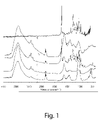
- Figure 1 shows the FT-IR spectra of HA as such (spectrum A), of HA + procyanidin (spectrum B), of composition HA + PHA + procyanidin (spectrum C), of procyanidin as such (spectrum D), of PHA as such (spectrum E).
- spectrum A relating to HA alone, the presence can be observed of the band typical of phosphate group at 1100-1030 cm -1 .
- procyanidin spectrum B
- a remarkable reduction in the intensity of this band can be noted, and the accentuation of the bands at 2800-3000 cm -1 , characteristic of the groups present in procyanidin and visible in spectrum D.
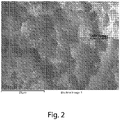
- Figure 4 shows how the EDX analysis carried out on the surface of the PHA particles reveals the presence of Au (gold), which is present as it is added by the instrument used for carrying out the analysis, sodium (probably present in the liquid in which the PHA is suspended), but above all carbon and oxygen.
- a solution was prepared, consisting of 21 g of coenzyme Q10 dissolved in 7 g of demineralized water. The solution was added to a suspension in water of 10 g of hydroxyapatite (HA) obtained as described in Example 1.
- HA hydroxyapatite
- the dimensions of the single crystals of HA ranged from 0.05 to 0.4 microns. These were in turn spontaneously aggregated in clusters having an average size of 1 micron.
- the suspension was kept under stirring for about 60 min.
- composition according to the present invention was separated from the suspension thus obtained, by filtration.
- Figure 6 shows the FT-IR spectra of HA as such (spectrum A), of coenzyme Q10 as such (spectrum B), of composition HA + PHA + coenzyme Q10 (spectrum C), of PHA as such (spectrum D).
- spectrum A relating to HA alone
- the presence can be observed of the band typical of phosphate group at 1100-1030 cm -1 .
- Q10 and PHA spectrum C
- a significant reduction in the intensity of this band can be noted, and the accentuation of the bands at 2800-3000 cm -1 , characteristic of the groups present in Q10 and visible in spectrum B relating to Q10 alone.
- spectrum C there is also the appearance of some bands typical of PHA, first of all that at 1800 cm -1 ,clearly visible in the spectrum of PHA alone (Spectrum D).
- Example 2 was repeated using, instead of the solution of coenzyme Q10, a solution consisting of potassium ascorbate (0.20 g) dissolved in 5 ml of demineralized water.
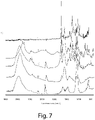
- Figure 7 shows the FT-IR spectra of HA as such (spectrum A), of ascorbate + HA (spectrum B), of composition HA + PHA + ascorbate (spectrum C), of ascorbate as such (spectrum D), of PHA as such (spectrum E).
- spectrum A the presence can be observed of the band typical of phosphate group at 1100-1030 cm -1 .
- spectrum B After the combination with ascorbate (spectrum B), a significant reduction in the intensity of this band can be noted, and the accentuation of the bands at 2800-3000 cm -1 ,characteristic of the groups present in the ascorbate and visible in spectrum D.
- spectrum B a broadening of the absorption band at 3200 cm -1 can also be observed, due to the overtone of absorption bands typical of ascorbate with those of HA.
- lactoferrin obtained by dissolving 200 mg of lactoferrin in 10 ml of demineralized water (concentration: 20 mg/ml), was added to the suspension. The whole mixture was kept under stirring for a time equal to about 360 minutes.
- composition according to the present invention was separated from the suspension thus obtained, by filtration.
- the starting materials and the composition thus obtained were characterized as follows.
- Figure 8 shows the FT-IR spectra of HA as such (spectrum A), of composition HA + PHA + lactoferrin (spectrum B), of lactoferrin as such (spectrum C), of PHA as such (spectrum D).
- spectrum A the presence can be observed of the band typical of phosphate group at 1100-1030 cm -1 .
- spectrum B After the combination with lactoferrin (spectrum B), a significant reduction in the intensity of this band can be noted, and the accentuation of the bands at 2800-3000 cm -1 , characteristic of the groups present in lactoferrin as such (spectrum C).
- the appearance Due to the interaction with PHA, in addition to the above-mentioned overtone at 3200 cm -1 , the appearance can also be noted of some bands typical of PHA, first of all that at 1800 cm -1 , clearly visible in the spectrum of PHA alone (Spectrum D).
- Example 4 Following the same procedure described in Example 4, two compositions of lactoferrin, hydroxyapatite and PHA were prepared, using solutions of lactoferrin with concentrations equal to 60 mg/ml and 80 mg/ml, and the same aqueous suspensions of HA and PHA used in Example 4 (weight ratio between lactoferrin and mixture of HA + PHA equal to 1:1).
- the antibacterial effectiveness of these compositions was assessed, by means of bacterial count on Petri plates with respect to the growth of Streptococcus mutans ATCC 35668.
Landscapes
- Health & Medical Sciences (AREA)
- Life Sciences & Earth Sciences (AREA)
- Animal Behavior & Ethology (AREA)
- Veterinary Medicine (AREA)
- Public Health (AREA)
- General Health & Medical Sciences (AREA)
- Epidemiology (AREA)
- Birds (AREA)
- Chemical & Material Sciences (AREA)
- Dermatology (AREA)
- Inorganic Chemistry (AREA)
- Physics & Mathematics (AREA)
- Mathematical Physics (AREA)
- Pharmacology & Pharmacy (AREA)
- Organic Chemistry (AREA)
- Nuclear Medicine, Radiotherapy & Molecular Imaging (AREA)
- Medicinal Chemistry (AREA)
- General Chemical & Material Sciences (AREA)
- Chemical Kinetics & Catalysis (AREA)
- Bioinformatics & Cheminformatics (AREA)
- Engineering & Computer Science (AREA)
- Communicable Diseases (AREA)
- Oncology (AREA)
- Cosmetics (AREA)
- Medicinal Preparation (AREA)
- Pharmaceuticals Containing Other Organic And Inorganic Compounds (AREA)
- Biological Depolymerization Polymers (AREA)
- Compositions Of Macromolecular Compounds (AREA)
Applications Claiming Priority (2)
| Application Number | Priority Date | Filing Date | Title |
|---|---|---|---|
| ITUA2016A003314A ITUA20163314A1 (it) | 2016-05-10 | 2016-05-10 | Composizione comprendente un poliestere di origine biologica e un composto inorganico biocompatibile, e relativo uso in campo cosmetico. |
| PCT/IB2017/052696 WO2017195108A1 (en) | 2016-05-10 | 2017-05-09 | Composition comprising a polyester of biological origin and a biocompatible inorganic compound, and use thereof in the cosmetic field |
Publications (2)
| Publication Number | Publication Date |
|---|---|
| EP3454822A1 EP3454822A1 (en) | 2019-03-20 |
| EP3454822B1 true EP3454822B1 (en) | 2022-08-10 |
Family
ID=56894136
Family Applications (1)
| Application Number | Title | Priority Date | Filing Date |
|---|---|---|---|
| EP17734453.8A Active EP3454822B1 (en) | 2016-05-10 | 2017-05-09 | Composition comprising a polyester of biological origin and a biocompatible inorganic compound, and use thereof in the cosmetic field |
Country Status (8)
| Country | Link |
|---|---|
| US (1) | US20190159997A1 (pl) |
| EP (1) | EP3454822B1 (pl) |
| JP (1) | JP7061112B2 (pl) |
| KR (1) | KR102427999B1 (pl) |
| ES (1) | ES2929750T3 (pl) |
| IT (1) | ITUA20163314A1 (pl) |
| PL (1) | PL3454822T3 (pl) |
| WO (1) | WO2017195108A1 (pl) |
Families Citing this family (5)
| Publication number | Priority date | Publication date | Assignee | Title |
|---|---|---|---|---|
| CA3144952C (en) | 2019-06-28 | 2023-10-03 | Sekisui Kasei Co., Ltd. | Biodegradable resin particles and formulation for external use includingthe same |
| FR3111811B1 (fr) * | 2020-06-24 | 2023-01-13 | Oreal | Composition cosmétique comprenant un copolymère polyhydroxyalcanoate à chaine hydrocarbonée (in)saturé, et un tensioactif |
| FR3130610B1 (fr) * | 2021-12-20 | 2025-11-21 | Oreal | Composition comprenant un copolymère polyhydroxyalcanoate à longue chaine hydrocarbonnée à groupe(s) ionique(s), procédé de traitement des matières kératiniques mettant en œuvre la composition |
| FR3131211B1 (fr) * | 2021-12-23 | 2024-10-04 | Oreal | Composition cosmétique comprenant un copolymère polyhydroxyalcanoate à chaine hydrocarbonée (in)saturé, et une argile |
| CN119403579A (zh) * | 2022-06-30 | 2025-02-07 | Cj第一制糖株式会社 | 医用组合物 |
Family Cites Families (1)
| Publication number | Priority date | Publication date | Assignee | Title |
|---|---|---|---|---|
| US6953594B2 (en) | 1996-10-10 | 2005-10-11 | Etex Corporation | Method of preparing a poorly crystalline calcium phosphate and methods of its use |
-
2016
- 2016-05-10 IT ITUA2016A003314A patent/ITUA20163314A1/it unknown
-
2017
- 2017-05-09 PL PL17734453.8T patent/PL3454822T3/pl unknown
- 2017-05-09 EP EP17734453.8A patent/EP3454822B1/en active Active
- 2017-05-09 WO PCT/IB2017/052696 patent/WO2017195108A1/en not_active Ceased
- 2017-05-09 KR KR1020187035758A patent/KR102427999B1/ko active Active
- 2017-05-09 JP JP2019512038A patent/JP7061112B2/ja active Active
- 2017-05-09 US US16/300,513 patent/US20190159997A1/en active Pending
- 2017-05-09 ES ES17734453T patent/ES2929750T3/es active Active
Also Published As
| Publication number | Publication date |
|---|---|
| KR102427999B1 (ko) | 2022-08-01 |
| US20190159997A1 (en) | 2019-05-30 |
| KR20190029522A (ko) | 2019-03-20 |
| ES2929750T3 (es) | 2022-12-01 |
| JP2019515051A (ja) | 2019-06-06 |
| JP7061112B2 (ja) | 2022-04-27 |
| EP3454822A1 (en) | 2019-03-20 |
| ITUA20163314A1 (it) | 2017-11-10 |
| WO2017195108A1 (en) | 2017-11-16 |
| PL3454822T3 (pl) | 2022-12-05 |
Similar Documents
| Publication | Publication Date | Title |
|---|---|---|
| EP3454822B1 (en) | Composition comprising a polyester of biological origin and a biocompatible inorganic compound, and use thereof in the cosmetic field | |
| Rodrigues et al. | Biogenic synthesis and antimicrobial activity of silica-coated silver nanoparticles for esthetic dental applications | |
| Sarkar et al. | Carbon quantum dot tailored calcium alginate hydrogel for pH responsive controlled delivery of vancomycin | |
| Nezhad-Mokhtari et al. | Reinforcement of hydrogel scaffold using oxidized-guar gum incorporated with curcumin-loaded zein nanoparticles to improve biological performance | |
| Hu et al. | Fluorescence imaging enabled poly (lactide-co-glycolide) | |
| US10695282B2 (en) | Functionalized transition metal dichalcogenides and composition for antioxidation containing the same | |
| Rejinold et al. | Synthesis, characterization and in vitro cytocompatibility studies of chitin nanogels for biomedical applications | |
| Ibraheem et al. | Novel pectin from Parkia biglobosa pulp mediated green route synthesis of hydroxyapatite nanoparticles | |
| Jariya et al. | Drug delivery and antimicrobial studies of chitosan-alginate based hydroxyapatite bioscaffolds formed by the Casein micelle assisted synthesis | |
| Czikó et al. | In vitro biological activity comparison of some hydroxyapatite-based composite materials using simulated body fluid | |
| Cai et al. | Synergistic effect of lecithin and alginate, CMC, or PVP in stabilizing curcumin and its potential mechanism | |
| Chen et al. | Functionalization of graphene oxide with amphiphilic block copolymer to enhance antibacterial activity | |
| Su et al. | Preparation and characterization of a novel amphiphilic nanocarrier based on enzymatic polymerization-derived α-1, 3-glucan for efficient quercetin encapsulation | |
| Yuwono et al. | The study of zinc oxide addition into hydroxyapatite/chitosan scaffold for bone tissue engineering application | |
| Kowalonek et al. | Zinc oxide nanoparticles and sage (Salvia officinalis) essential oil as active components of alginate films for food packaging | |
| Li et al. | Enhancement of oryzanol application by constructing modified β-cd inclusion complex and polycaprolactone-chitosan electrospun fiber membranes: Perspectives on wound dressings and grape preservation | |
| Tang et al. | Adsorption and in vitro controlled–release properties of a soybean cellulose nanocrystal/polyacrylamide–based hydrogel as a carrier for different polyphenols | |
| Mendoza-Villafaña et al. | Zn-based Metal-Organic Frameworks (MOFs) Incorporated into Collagen-Polysaccharide-based Composite Hydrogels for Their Use in Wound Healing | |
| Fayaz et al. | The effects of bioactive glass hydrogel coated with hyaluronic acid-Pluronic F-127 conjugates containing silver nanoparticles for accelerating of infected wounds healing | |
| Chen et al. | pH-controlled complex coacervation of OSA-modified starch and chitosan with enhanced oxidative stability of flaxseed oil | |
| KR20170051479A (ko) | 코어셸형 입자와 그의 제조 방법 | |
| Ciftci et al. | Comprehensive assessment of PLGA/nHAp combined with Hemp oil bionanocomposites: Revealing the in vitro behavior and features | |
| Helaly et al. | Preparation and Characterization of Poly ([beta]-Amino Ester) Capsules for Slow Release of Bioactive Material | |
| CN112472624A (zh) | 一种非晶的透明质酸纳米磷酸钙负载叶酸载体、制备方法及化妆品 | |
| KR101999973B1 (ko) | 다공성 분체를 포함하는 스틱제형 화장료 조성물 및 이의 제조 방법 |
Legal Events
| Date | Code | Title | Description |
|---|---|---|---|
| STAA | Information on the status of an ep patent application or granted ep patent |
Free format text: STATUS: UNKNOWN |
|
| STAA | Information on the status of an ep patent application or granted ep patent |
Free format text: STATUS: THE INTERNATIONAL PUBLICATION HAS BEEN MADE |
|
| PUAI | Public reference made under article 153(3) epc to a published international application that has entered the european phase |
Free format text: ORIGINAL CODE: 0009012 |
|
| STAA | Information on the status of an ep patent application or granted ep patent |
Free format text: STATUS: REQUEST FOR EXAMINATION WAS MADE |
|
| 17P | Request for examination filed |
Effective date: 20181126 |
|
| AK | Designated contracting states |
Kind code of ref document: A1 Designated state(s): AL AT BE BG CH CY CZ DE DK EE ES FI FR GB GR HR HU IE IS IT LI LT LU LV MC MK MT NL NO PL PT RO RS SE SI SK SM TR |
|
| AX | Request for extension of the european patent |
Extension state: BA ME |
|
| DAV | Request for validation of the european patent (deleted) | ||
| DAX | Request for extension of the european patent (deleted) | ||
| STAA | Information on the status of an ep patent application or granted ep patent |
Free format text: STATUS: EXAMINATION IS IN PROGRESS |
|
| 17Q | First examination report despatched |
Effective date: 20200415 |
|
| GRAP | Despatch of communication of intention to grant a patent |
Free format text: ORIGINAL CODE: EPIDOSNIGR1 |
|
| STAA | Information on the status of an ep patent application or granted ep patent |
Free format text: STATUS: GRANT OF PATENT IS INTENDED |
|
| RIC1 | Information provided on ipc code assigned before grant |
Ipc: A61P 31/04 20060101ALI20220323BHEP Ipc: A61P 17/00 20060101ALI20220323BHEP Ipc: A61P 1/02 20060101ALI20220323BHEP Ipc: A61K 47/02 20060101ALI20220323BHEP Ipc: A61K 8/02 20060101ALI20220323BHEP Ipc: A61K 9/10 20060101ALI20220323BHEP Ipc: A61K 8/85 20060101ALI20220323BHEP Ipc: A61Q 19/00 20060101ALI20220323BHEP Ipc: A61K 8/24 20060101AFI20220323BHEP |
|
| INTG | Intention to grant announced |
Effective date: 20220412 |
|
| GRAS | Grant fee paid |
Free format text: ORIGINAL CODE: EPIDOSNIGR3 |
|
| GRAA | (expected) grant |
Free format text: ORIGINAL CODE: 0009210 |
|
| STAA | Information on the status of an ep patent application or granted ep patent |
Free format text: STATUS: THE PATENT HAS BEEN GRANTED |
|
| AK | Designated contracting states |
Kind code of ref document: B1 Designated state(s): AL AT BE BG CH CY CZ DE DK EE ES FI FR GB GR HR HU IE IS IT LI LT LU LV MC MK MT NL NO PL PT RO RS SE SI SK SM TR |
|
| REG | Reference to a national code |
Ref country code: AT Ref legal event code: REF Ref document number: 1509969 Country of ref document: AT Kind code of ref document: T Effective date: 20220815 Ref country code: CH Ref legal event code: EP |
|
| REG | Reference to a national code |
Ref country code: IE Ref legal event code: FG4D |
|
| REG | Reference to a national code |
Ref country code: DE Ref legal event code: R096 Ref document number: 602017060491 Country of ref document: DE |
|
| REG | Reference to a national code |
Ref country code: ES Ref legal event code: FG2A Ref document number: 2929750 Country of ref document: ES Kind code of ref document: T3 Effective date: 20221201 |
|
| REG | Reference to a national code |
Ref country code: NL Ref legal event code: MP Effective date: 20220810 |
|
| REG | Reference to a national code |
Ref country code: LT Ref legal event code: MG9D |
|
| PG25 | Lapsed in a contracting state [announced via postgrant information from national office to epo] |
Ref country code: SE Free format text: LAPSE BECAUSE OF FAILURE TO SUBMIT A TRANSLATION OF THE DESCRIPTION OR TO PAY THE FEE WITHIN THE PRESCRIBED TIME-LIMIT Effective date: 20220810 Ref country code: RS Free format text: LAPSE BECAUSE OF FAILURE TO SUBMIT A TRANSLATION OF THE DESCRIPTION OR TO PAY THE FEE WITHIN THE PRESCRIBED TIME-LIMIT Effective date: 20220810 Ref country code: PT Free format text: LAPSE BECAUSE OF FAILURE TO SUBMIT A TRANSLATION OF THE DESCRIPTION OR TO PAY THE FEE WITHIN THE PRESCRIBED TIME-LIMIT Effective date: 20221212 Ref country code: NO Free format text: LAPSE BECAUSE OF FAILURE TO SUBMIT A TRANSLATION OF THE DESCRIPTION OR TO PAY THE FEE WITHIN THE PRESCRIBED TIME-LIMIT Effective date: 20221110 Ref country code: NL Free format text: LAPSE BECAUSE OF FAILURE TO SUBMIT A TRANSLATION OF THE DESCRIPTION OR TO PAY THE FEE WITHIN THE PRESCRIBED TIME-LIMIT Effective date: 20220810 Ref country code: LV Free format text: LAPSE BECAUSE OF FAILURE TO SUBMIT A TRANSLATION OF THE DESCRIPTION OR TO PAY THE FEE WITHIN THE PRESCRIBED TIME-LIMIT Effective date: 20220810 Ref country code: LT Free format text: LAPSE BECAUSE OF FAILURE TO SUBMIT A TRANSLATION OF THE DESCRIPTION OR TO PAY THE FEE WITHIN THE PRESCRIBED TIME-LIMIT Effective date: 20220810 Ref country code: FI Free format text: LAPSE BECAUSE OF FAILURE TO SUBMIT A TRANSLATION OF THE DESCRIPTION OR TO PAY THE FEE WITHIN THE PRESCRIBED TIME-LIMIT Effective date: 20220810 |
|
| REG | Reference to a national code |
Ref country code: AT Ref legal event code: MK05 Ref document number: 1509969 Country of ref document: AT Kind code of ref document: T Effective date: 20220810 |
|
| PG25 | Lapsed in a contracting state [announced via postgrant information from national office to epo] |
Ref country code: IS Free format text: LAPSE BECAUSE OF FAILURE TO SUBMIT A TRANSLATION OF THE DESCRIPTION OR TO PAY THE FEE WITHIN THE PRESCRIBED TIME-LIMIT Effective date: 20221210 Ref country code: HR Free format text: LAPSE BECAUSE OF FAILURE TO SUBMIT A TRANSLATION OF THE DESCRIPTION OR TO PAY THE FEE WITHIN THE PRESCRIBED TIME-LIMIT Effective date: 20220810 Ref country code: GR Free format text: LAPSE BECAUSE OF FAILURE TO SUBMIT A TRANSLATION OF THE DESCRIPTION OR TO PAY THE FEE WITHIN THE PRESCRIBED TIME-LIMIT Effective date: 20221111 |
|
| PG25 | Lapsed in a contracting state [announced via postgrant information from national office to epo] |
Ref country code: SM Free format text: LAPSE BECAUSE OF FAILURE TO SUBMIT A TRANSLATION OF THE DESCRIPTION OR TO PAY THE FEE WITHIN THE PRESCRIBED TIME-LIMIT Effective date: 20220810 Ref country code: RO Free format text: LAPSE BECAUSE OF FAILURE TO SUBMIT A TRANSLATION OF THE DESCRIPTION OR TO PAY THE FEE WITHIN THE PRESCRIBED TIME-LIMIT Effective date: 20220810 Ref country code: DK Free format text: LAPSE BECAUSE OF FAILURE TO SUBMIT A TRANSLATION OF THE DESCRIPTION OR TO PAY THE FEE WITHIN THE PRESCRIBED TIME-LIMIT Effective date: 20220810 Ref country code: CZ Free format text: LAPSE BECAUSE OF FAILURE TO SUBMIT A TRANSLATION OF THE DESCRIPTION OR TO PAY THE FEE WITHIN THE PRESCRIBED TIME-LIMIT Effective date: 20220810 Ref country code: AT Free format text: LAPSE BECAUSE OF FAILURE TO SUBMIT A TRANSLATION OF THE DESCRIPTION OR TO PAY THE FEE WITHIN THE PRESCRIBED TIME-LIMIT Effective date: 20220810 |
|
| REG | Reference to a national code |
Ref country code: DE Ref legal event code: R097 Ref document number: 602017060491 Country of ref document: DE |
|
| PG25 | Lapsed in a contracting state [announced via postgrant information from national office to epo] |
Ref country code: SK Free format text: LAPSE BECAUSE OF FAILURE TO SUBMIT A TRANSLATION OF THE DESCRIPTION OR TO PAY THE FEE WITHIN THE PRESCRIBED TIME-LIMIT Effective date: 20220810 Ref country code: EE Free format text: LAPSE BECAUSE OF FAILURE TO SUBMIT A TRANSLATION OF THE DESCRIPTION OR TO PAY THE FEE WITHIN THE PRESCRIBED TIME-LIMIT Effective date: 20220810 |
|
| PLBE | No opposition filed within time limit |
Free format text: ORIGINAL CODE: 0009261 |
|
| STAA | Information on the status of an ep patent application or granted ep patent |
Free format text: STATUS: NO OPPOSITION FILED WITHIN TIME LIMIT |
|
| PG25 | Lapsed in a contracting state [announced via postgrant information from national office to epo] |
Ref country code: AL Free format text: LAPSE BECAUSE OF FAILURE TO SUBMIT A TRANSLATION OF THE DESCRIPTION OR TO PAY THE FEE WITHIN THE PRESCRIBED TIME-LIMIT Effective date: 20220810 |
|
| P01 | Opt-out of the competence of the unified patent court (upc) registered |
Effective date: 20230525 |
|
| 26N | No opposition filed |
Effective date: 20230511 |
|
| PG25 | Lapsed in a contracting state [announced via postgrant information from national office to epo] |
Ref country code: SI Free format text: LAPSE BECAUSE OF FAILURE TO SUBMIT A TRANSLATION OF THE DESCRIPTION OR TO PAY THE FEE WITHIN THE PRESCRIBED TIME-LIMIT Effective date: 20220810 |
|
| REG | Reference to a national code |
Ref country code: CH Ref legal event code: PL |
|
| PG25 | Lapsed in a contracting state [announced via postgrant information from national office to epo] |
Ref country code: MC Free format text: LAPSE BECAUSE OF FAILURE TO SUBMIT A TRANSLATION OF THE DESCRIPTION OR TO PAY THE FEE WITHIN THE PRESCRIBED TIME-LIMIT Effective date: 20220810 |
|
| REG | Reference to a national code |
Ref country code: BE Ref legal event code: MM Effective date: 20230531 |
|
| PG25 | Lapsed in a contracting state [announced via postgrant information from national office to epo] |
Ref country code: MC Free format text: LAPSE BECAUSE OF FAILURE TO SUBMIT A TRANSLATION OF THE DESCRIPTION OR TO PAY THE FEE WITHIN THE PRESCRIBED TIME-LIMIT Effective date: 20220810 Ref country code: LU Free format text: LAPSE BECAUSE OF NON-PAYMENT OF DUE FEES Effective date: 20230509 Ref country code: LI Free format text: LAPSE BECAUSE OF NON-PAYMENT OF DUE FEES Effective date: 20230531 Ref country code: CH Free format text: LAPSE BECAUSE OF NON-PAYMENT OF DUE FEES Effective date: 20230531 |
|
| REG | Reference to a national code |
Ref country code: IE Ref legal event code: MM4A |
|
| PG25 | Lapsed in a contracting state [announced via postgrant information from national office to epo] |
Ref country code: IE Free format text: LAPSE BECAUSE OF NON-PAYMENT OF DUE FEES Effective date: 20230509 |
|
| PG25 | Lapsed in a contracting state [announced via postgrant information from national office to epo] |
Ref country code: IE Free format text: LAPSE BECAUSE OF NON-PAYMENT OF DUE FEES Effective date: 20230509 |
|
| PG25 | Lapsed in a contracting state [announced via postgrant information from national office to epo] |
Ref country code: BE Free format text: LAPSE BECAUSE OF NON-PAYMENT OF DUE FEES Effective date: 20230531 |
|
| PG25 | Lapsed in a contracting state [announced via postgrant information from national office to epo] |
Ref country code: BG Free format text: LAPSE BECAUSE OF FAILURE TO SUBMIT A TRANSLATION OF THE DESCRIPTION OR TO PAY THE FEE WITHIN THE PRESCRIBED TIME-LIMIT Effective date: 20220810 |
|
| PG25 | Lapsed in a contracting state [announced via postgrant information from national office to epo] |
Ref country code: BG Free format text: LAPSE BECAUSE OF FAILURE TO SUBMIT A TRANSLATION OF THE DESCRIPTION OR TO PAY THE FEE WITHIN THE PRESCRIBED TIME-LIMIT Effective date: 20220810 |
|
| PGFP | Annual fee paid to national office [announced via postgrant information from national office to epo] |
Ref country code: PL Payment date: 20250430 Year of fee payment: 9 Ref country code: DE Payment date: 20250429 Year of fee payment: 9 |
|
| PGFP | Annual fee paid to national office [announced via postgrant information from national office to epo] |
Ref country code: GB Payment date: 20250501 Year of fee payment: 9 Ref country code: ES Payment date: 20250605 Year of fee payment: 9 |
|
| PGFP | Annual fee paid to national office [announced via postgrant information from national office to epo] |
Ref country code: IT Payment date: 20250509 Year of fee payment: 9 |
|
| PGFP | Annual fee paid to national office [announced via postgrant information from national office to epo] |
Ref country code: FR Payment date: 20250508 Year of fee payment: 9 |
|
| PG25 | Lapsed in a contracting state [announced via postgrant information from national office to epo] |
Ref country code: CY Free format text: LAPSE BECAUSE OF FAILURE TO SUBMIT A TRANSLATION OF THE DESCRIPTION OR TO PAY THE FEE WITHIN THE PRESCRIBED TIME-LIMIT; INVALID AB INITIO Effective date: 20170509 |
|
| PG25 | Lapsed in a contracting state [announced via postgrant information from national office to epo] |
Ref country code: HU Free format text: LAPSE BECAUSE OF FAILURE TO SUBMIT A TRANSLATION OF THE DESCRIPTION OR TO PAY THE FEE WITHIN THE PRESCRIBED TIME-LIMIT; INVALID AB INITIO Effective date: 20170509 |
|
| PG25 | Lapsed in a contracting state [announced via postgrant information from national office to epo] |
Ref country code: TR Free format text: LAPSE BECAUSE OF FAILURE TO SUBMIT A TRANSLATION OF THE DESCRIPTION OR TO PAY THE FEE WITHIN THE PRESCRIBED TIME-LIMIT Effective date: 20220810 |