EP3452506B1 - Affinity engineered serum protein carrier binding domain - Google Patents
Affinity engineered serum protein carrier binding domain Download PDFInfo
- Publication number
- EP3452506B1 EP3452506B1 EP17723304.6A EP17723304A EP3452506B1 EP 3452506 B1 EP3452506 B1 EP 3452506B1 EP 17723304 A EP17723304 A EP 17723304A EP 3452506 B1 EP3452506 B1 EP 3452506B1
- Authority
- EP
- European Patent Office
- Prior art keywords
- cancer
- disease
- fab
- binding
- hsa
- Prior art date
- Legal status (The legal status is an assumption and is not a legal conclusion. Google has not performed a legal analysis and makes no representation as to the accuracy of the status listed.)
- Active
Links
Images


Classifications
-
- C—CHEMISTRY; METALLURGY
- C07—ORGANIC CHEMISTRY
- C07K—PEPTIDES
- C07K16/00—Immunoglobulins [IG], e.g. monoclonal or polyclonal antibodies
- C07K16/18—Immunoglobulins [IG], e.g. monoclonal or polyclonal antibodies against material from animals or humans
-
- A—HUMAN NECESSITIES
- A61—MEDICAL OR VETERINARY SCIENCE; HYGIENE
- A61P—SPECIFIC THERAPEUTIC ACTIVITY OF CHEMICAL COMPOUNDS OR MEDICINAL PREPARATIONS
- A61P1/00—Drugs for disorders of the alimentary tract or the digestive system
- A61P1/02—Stomatological preparations, e.g. drugs for caries, aphtae, periodontitis
-
- A—HUMAN NECESSITIES
- A61—MEDICAL OR VETERINARY SCIENCE; HYGIENE
- A61P—SPECIFIC THERAPEUTIC ACTIVITY OF CHEMICAL COMPOUNDS OR MEDICINAL PREPARATIONS
- A61P1/00—Drugs for disorders of the alimentary tract or the digestive system
- A61P1/04—Drugs for disorders of the alimentary tract or the digestive system for ulcers, gastritis or reflux esophagitis, e.g. antacids, inhibitors of acid secretion, mucosal protectants
-
- A—HUMAN NECESSITIES
- A61—MEDICAL OR VETERINARY SCIENCE; HYGIENE
- A61P—SPECIFIC THERAPEUTIC ACTIVITY OF CHEMICAL COMPOUNDS OR MEDICINAL PREPARATIONS
- A61P1/00—Drugs for disorders of the alimentary tract or the digestive system
- A61P1/14—Prodigestives, e.g. acids, enzymes, appetite stimulants, antidyspeptics, tonics, antiflatulents
-
- A—HUMAN NECESSITIES
- A61—MEDICAL OR VETERINARY SCIENCE; HYGIENE
- A61P—SPECIFIC THERAPEUTIC ACTIVITY OF CHEMICAL COMPOUNDS OR MEDICINAL PREPARATIONS
- A61P1/00—Drugs for disorders of the alimentary tract or the digestive system
- A61P1/16—Drugs for disorders of the alimentary tract or the digestive system for liver or gallbladder disorders, e.g. hepatoprotective agents, cholagogues, litholytics
-
- A—HUMAN NECESSITIES
- A61—MEDICAL OR VETERINARY SCIENCE; HYGIENE
- A61P—SPECIFIC THERAPEUTIC ACTIVITY OF CHEMICAL COMPOUNDS OR MEDICINAL PREPARATIONS
- A61P1/00—Drugs for disorders of the alimentary tract or the digestive system
- A61P1/18—Drugs for disorders of the alimentary tract or the digestive system for pancreatic disorders, e.g. pancreatic enzymes
-
- A—HUMAN NECESSITIES
- A61—MEDICAL OR VETERINARY SCIENCE; HYGIENE
- A61P—SPECIFIC THERAPEUTIC ACTIVITY OF CHEMICAL COMPOUNDS OR MEDICINAL PREPARATIONS
- A61P11/00—Drugs for disorders of the respiratory system
-
- A—HUMAN NECESSITIES
- A61—MEDICAL OR VETERINARY SCIENCE; HYGIENE
- A61P—SPECIFIC THERAPEUTIC ACTIVITY OF CHEMICAL COMPOUNDS OR MEDICINAL PREPARATIONS
- A61P11/00—Drugs for disorders of the respiratory system
- A61P11/06—Antiasthmatics
-
- A—HUMAN NECESSITIES
- A61—MEDICAL OR VETERINARY SCIENCE; HYGIENE
- A61P—SPECIFIC THERAPEUTIC ACTIVITY OF CHEMICAL COMPOUNDS OR MEDICINAL PREPARATIONS
- A61P13/00—Drugs for disorders of the urinary system
- A61P13/12—Drugs for disorders of the urinary system of the kidneys
-
- A—HUMAN NECESSITIES
- A61—MEDICAL OR VETERINARY SCIENCE; HYGIENE
- A61P—SPECIFIC THERAPEUTIC ACTIVITY OF CHEMICAL COMPOUNDS OR MEDICINAL PREPARATIONS
- A61P17/00—Drugs for dermatological disorders
-
- A—HUMAN NECESSITIES
- A61—MEDICAL OR VETERINARY SCIENCE; HYGIENE
- A61P—SPECIFIC THERAPEUTIC ACTIVITY OF CHEMICAL COMPOUNDS OR MEDICINAL PREPARATIONS
- A61P17/00—Drugs for dermatological disorders
- A61P17/02—Drugs for dermatological disorders for treating wounds, ulcers, burns, scars, keloids, or the like
-
- A—HUMAN NECESSITIES
- A61—MEDICAL OR VETERINARY SCIENCE; HYGIENE
- A61P—SPECIFIC THERAPEUTIC ACTIVITY OF CHEMICAL COMPOUNDS OR MEDICINAL PREPARATIONS
- A61P17/00—Drugs for dermatological disorders
- A61P17/06—Antipsoriatics
-
- A—HUMAN NECESSITIES
- A61—MEDICAL OR VETERINARY SCIENCE; HYGIENE
- A61P—SPECIFIC THERAPEUTIC ACTIVITY OF CHEMICAL COMPOUNDS OR MEDICINAL PREPARATIONS
- A61P19/00—Drugs for skeletal disorders
- A61P19/02—Drugs for skeletal disorders for joint disorders, e.g. arthritis, arthrosis
-
- A—HUMAN NECESSITIES
- A61—MEDICAL OR VETERINARY SCIENCE; HYGIENE
- A61P—SPECIFIC THERAPEUTIC ACTIVITY OF CHEMICAL COMPOUNDS OR MEDICINAL PREPARATIONS
- A61P19/00—Drugs for skeletal disorders
- A61P19/08—Drugs for skeletal disorders for bone diseases, e.g. rachitism, Paget's disease
-
- A—HUMAN NECESSITIES
- A61—MEDICAL OR VETERINARY SCIENCE; HYGIENE
- A61P—SPECIFIC THERAPEUTIC ACTIVITY OF CHEMICAL COMPOUNDS OR MEDICINAL PREPARATIONS
- A61P19/00—Drugs for skeletal disorders
- A61P19/08—Drugs for skeletal disorders for bone diseases, e.g. rachitism, Paget's disease
- A61P19/10—Drugs for skeletal disorders for bone diseases, e.g. rachitism, Paget's disease for osteoporosis
-
- A—HUMAN NECESSITIES
- A61—MEDICAL OR VETERINARY SCIENCE; HYGIENE
- A61P—SPECIFIC THERAPEUTIC ACTIVITY OF CHEMICAL COMPOUNDS OR MEDICINAL PREPARATIONS
- A61P25/00—Drugs for disorders of the nervous system
-
- A—HUMAN NECESSITIES
- A61—MEDICAL OR VETERINARY SCIENCE; HYGIENE
- A61P—SPECIFIC THERAPEUTIC ACTIVITY OF CHEMICAL COMPOUNDS OR MEDICINAL PREPARATIONS
- A61P25/00—Drugs for disorders of the nervous system
- A61P25/02—Drugs for disorders of the nervous system for peripheral neuropathies
-
- A—HUMAN NECESSITIES
- A61—MEDICAL OR VETERINARY SCIENCE; HYGIENE
- A61P—SPECIFIC THERAPEUTIC ACTIVITY OF CHEMICAL COMPOUNDS OR MEDICINAL PREPARATIONS
- A61P25/00—Drugs for disorders of the nervous system
- A61P25/28—Drugs for disorders of the nervous system for treating neurodegenerative disorders of the central nervous system, e.g. nootropic agents, cognition enhancers, drugs for treating Alzheimer's disease or other forms of dementia
-
- A—HUMAN NECESSITIES
- A61—MEDICAL OR VETERINARY SCIENCE; HYGIENE
- A61P—SPECIFIC THERAPEUTIC ACTIVITY OF CHEMICAL COMPOUNDS OR MEDICINAL PREPARATIONS
- A61P27/00—Drugs for disorders of the senses
- A61P27/02—Ophthalmic agents
-
- A—HUMAN NECESSITIES
- A61—MEDICAL OR VETERINARY SCIENCE; HYGIENE
- A61P—SPECIFIC THERAPEUTIC ACTIVITY OF CHEMICAL COMPOUNDS OR MEDICINAL PREPARATIONS
- A61P27/00—Drugs for disorders of the senses
- A61P27/16—Otologicals
-
- A—HUMAN NECESSITIES
- A61—MEDICAL OR VETERINARY SCIENCE; HYGIENE
- A61P—SPECIFIC THERAPEUTIC ACTIVITY OF CHEMICAL COMPOUNDS OR MEDICINAL PREPARATIONS
- A61P29/00—Non-central analgesic, antipyretic or antiinflammatory agents, e.g. antirheumatic agents; Non-steroidal antiinflammatory drugs [NSAID]
-
- A—HUMAN NECESSITIES
- A61—MEDICAL OR VETERINARY SCIENCE; HYGIENE
- A61P—SPECIFIC THERAPEUTIC ACTIVITY OF CHEMICAL COMPOUNDS OR MEDICINAL PREPARATIONS
- A61P3/00—Drugs for disorders of the metabolism
- A61P3/08—Drugs for disorders of the metabolism for glucose homeostasis
- A61P3/10—Drugs for disorders of the metabolism for glucose homeostasis for hyperglycaemia, e.g. antidiabetics
-
- A—HUMAN NECESSITIES
- A61—MEDICAL OR VETERINARY SCIENCE; HYGIENE
- A61P—SPECIFIC THERAPEUTIC ACTIVITY OF CHEMICAL COMPOUNDS OR MEDICINAL PREPARATIONS
- A61P31/00—Antiinfectives, i.e. antibiotics, antiseptics, chemotherapeutics
-
- A—HUMAN NECESSITIES
- A61—MEDICAL OR VETERINARY SCIENCE; HYGIENE
- A61P—SPECIFIC THERAPEUTIC ACTIVITY OF CHEMICAL COMPOUNDS OR MEDICINAL PREPARATIONS
- A61P31/00—Antiinfectives, i.e. antibiotics, antiseptics, chemotherapeutics
- A61P31/04—Antibacterial agents
-
- A—HUMAN NECESSITIES
- A61—MEDICAL OR VETERINARY SCIENCE; HYGIENE
- A61P—SPECIFIC THERAPEUTIC ACTIVITY OF CHEMICAL COMPOUNDS OR MEDICINAL PREPARATIONS
- A61P31/00—Antiinfectives, i.e. antibiotics, antiseptics, chemotherapeutics
- A61P31/10—Antimycotics
-
- A—HUMAN NECESSITIES
- A61—MEDICAL OR VETERINARY SCIENCE; HYGIENE
- A61P—SPECIFIC THERAPEUTIC ACTIVITY OF CHEMICAL COMPOUNDS OR MEDICINAL PREPARATIONS
- A61P31/00—Antiinfectives, i.e. antibiotics, antiseptics, chemotherapeutics
- A61P31/12—Antivirals
-
- A—HUMAN NECESSITIES
- A61—MEDICAL OR VETERINARY SCIENCE; HYGIENE
- A61P—SPECIFIC THERAPEUTIC ACTIVITY OF CHEMICAL COMPOUNDS OR MEDICINAL PREPARATIONS
- A61P33/00—Antiparasitic agents
-
- A—HUMAN NECESSITIES
- A61—MEDICAL OR VETERINARY SCIENCE; HYGIENE
- A61P—SPECIFIC THERAPEUTIC ACTIVITY OF CHEMICAL COMPOUNDS OR MEDICINAL PREPARATIONS
- A61P35/00—Antineoplastic agents
-
- A—HUMAN NECESSITIES
- A61—MEDICAL OR VETERINARY SCIENCE; HYGIENE
- A61P—SPECIFIC THERAPEUTIC ACTIVITY OF CHEMICAL COMPOUNDS OR MEDICINAL PREPARATIONS
- A61P35/00—Antineoplastic agents
- A61P35/04—Antineoplastic agents specific for metastasis
-
- A—HUMAN NECESSITIES
- A61—MEDICAL OR VETERINARY SCIENCE; HYGIENE
- A61P—SPECIFIC THERAPEUTIC ACTIVITY OF CHEMICAL COMPOUNDS OR MEDICINAL PREPARATIONS
- A61P37/00—Drugs for immunological or allergic disorders
- A61P37/02—Immunomodulators
-
- A—HUMAN NECESSITIES
- A61—MEDICAL OR VETERINARY SCIENCE; HYGIENE
- A61P—SPECIFIC THERAPEUTIC ACTIVITY OF CHEMICAL COMPOUNDS OR MEDICINAL PREPARATIONS
- A61P37/00—Drugs for immunological or allergic disorders
- A61P37/02—Immunomodulators
- A61P37/06—Immunosuppressants, e.g. drugs for graft rejection
-
- A—HUMAN NECESSITIES
- A61—MEDICAL OR VETERINARY SCIENCE; HYGIENE
- A61P—SPECIFIC THERAPEUTIC ACTIVITY OF CHEMICAL COMPOUNDS OR MEDICINAL PREPARATIONS
- A61P37/00—Drugs for immunological or allergic disorders
- A61P37/08—Antiallergic agents
-
- A—HUMAN NECESSITIES
- A61—MEDICAL OR VETERINARY SCIENCE; HYGIENE
- A61P—SPECIFIC THERAPEUTIC ACTIVITY OF CHEMICAL COMPOUNDS OR MEDICINAL PREPARATIONS
- A61P39/00—General protective or antinoxious agents
- A61P39/02—Antidotes
-
- A—HUMAN NECESSITIES
- A61—MEDICAL OR VETERINARY SCIENCE; HYGIENE
- A61P—SPECIFIC THERAPEUTIC ACTIVITY OF CHEMICAL COMPOUNDS OR MEDICINAL PREPARATIONS
- A61P5/00—Drugs for disorders of the endocrine system
- A61P5/14—Drugs for disorders of the endocrine system of the thyroid hormones, e.g. T3, T4
-
- A—HUMAN NECESSITIES
- A61—MEDICAL OR VETERINARY SCIENCE; HYGIENE
- A61P—SPECIFIC THERAPEUTIC ACTIVITY OF CHEMICAL COMPOUNDS OR MEDICINAL PREPARATIONS
- A61P7/00—Drugs for disorders of the blood or the extracellular fluid
- A61P7/02—Antithrombotic agents; Anticoagulants; Platelet aggregation inhibitors
-
- A—HUMAN NECESSITIES
- A61—MEDICAL OR VETERINARY SCIENCE; HYGIENE
- A61P—SPECIFIC THERAPEUTIC ACTIVITY OF CHEMICAL COMPOUNDS OR MEDICINAL PREPARATIONS
- A61P7/00—Drugs for disorders of the blood or the extracellular fluid
- A61P7/04—Antihaemorrhagics; Procoagulants; Haemostatic agents; Antifibrinolytic agents
-
- A—HUMAN NECESSITIES
- A61—MEDICAL OR VETERINARY SCIENCE; HYGIENE
- A61P—SPECIFIC THERAPEUTIC ACTIVITY OF CHEMICAL COMPOUNDS OR MEDICINAL PREPARATIONS
- A61P9/00—Drugs for disorders of the cardiovascular system
-
- A—HUMAN NECESSITIES
- A61—MEDICAL OR VETERINARY SCIENCE; HYGIENE
- A61P—SPECIFIC THERAPEUTIC ACTIVITY OF CHEMICAL COMPOUNDS OR MEDICINAL PREPARATIONS
- A61P9/00—Drugs for disorders of the cardiovascular system
- A61P9/10—Drugs for disorders of the cardiovascular system for treating ischaemic or atherosclerotic diseases, e.g. antianginal drugs, coronary vasodilators, drugs for myocardial infarction, retinopathy, cerebrovascula insufficiency, renal arteriosclerosis
-
- C—CHEMISTRY; METALLURGY
- C07—ORGANIC CHEMISTRY
- C07K—PEPTIDES
- C07K16/00—Immunoglobulins [IG], e.g. monoclonal or polyclonal antibodies
- C07K16/46—Hybrid immunoglobulins
- C07K16/461—Igs containing Ig-regions, -domains or -residues form different species
- C07K16/464—Igs containing CDR-residues from one specie grafted between FR-residues from another
-
- A—HUMAN NECESSITIES
- A61—MEDICAL OR VETERINARY SCIENCE; HYGIENE
- A61K—PREPARATIONS FOR MEDICAL, DENTAL OR TOILETRY PURPOSES
- A61K39/00—Medicinal preparations containing antigens or antibodies
- A61K2039/505—Medicinal preparations containing antigens or antibodies comprising antibodies
-
- C—CHEMISTRY; METALLURGY
- C07—ORGANIC CHEMISTRY
- C07K—PEPTIDES
- C07K2317/00—Immunoglobulins specific features
- C07K2317/20—Immunoglobulins specific features characterized by taxonomic origin
- C07K2317/24—Immunoglobulins specific features characterized by taxonomic origin containing regions, domains or residues from different species, e.g. chimeric, humanized or veneered
-
- C—CHEMISTRY; METALLURGY
- C07—ORGANIC CHEMISTRY
- C07K—PEPTIDES
- C07K2317/00—Immunoglobulins specific features
- C07K2317/30—Immunoglobulins specific features characterized by aspects of specificity or valency
- C07K2317/33—Crossreactivity, e.g. for species or epitope, or lack of said crossreactivity
-
- C—CHEMISTRY; METALLURGY
- C07—ORGANIC CHEMISTRY
- C07K—PEPTIDES
- C07K2317/00—Immunoglobulins specific features
- C07K2317/30—Immunoglobulins specific features characterized by aspects of specificity or valency
- C07K2317/34—Identification of a linear epitope shorter than 20 amino acid residues or of a conformational epitope defined by amino acid residues
-
- C—CHEMISTRY; METALLURGY
- C07—ORGANIC CHEMISTRY
- C07K—PEPTIDES
- C07K2317/00—Immunoglobulins specific features
- C07K2317/50—Immunoglobulins specific features characterized by immunoglobulin fragments
- C07K2317/55—Fab or Fab'
-
- C—CHEMISTRY; METALLURGY
- C07—ORGANIC CHEMISTRY
- C07K—PEPTIDES
- C07K2317/00—Immunoglobulins specific features
- C07K2317/50—Immunoglobulins specific features characterized by immunoglobulin fragments
- C07K2317/56—Immunoglobulins specific features characterized by immunoglobulin fragments variable (Fv) region, i.e. VH and/or VL
-
- C—CHEMISTRY; METALLURGY
- C07—ORGANIC CHEMISTRY
- C07K—PEPTIDES
- C07K2317/00—Immunoglobulins specific features
- C07K2317/50—Immunoglobulins specific features characterized by immunoglobulin fragments
- C07K2317/56—Immunoglobulins specific features characterized by immunoglobulin fragments variable (Fv) region, i.e. VH and/or VL
- C07K2317/565—Complementarity determining region [CDR]
-
- C—CHEMISTRY; METALLURGY
- C07—ORGANIC CHEMISTRY
- C07K—PEPTIDES
- C07K2317/00—Immunoglobulins specific features
- C07K2317/50—Immunoglobulins specific features characterized by immunoglobulin fragments
- C07K2317/56—Immunoglobulins specific features characterized by immunoglobulin fragments variable (Fv) region, i.e. VH and/or VL
- C07K2317/567—Framework region [FR]
-
- C—CHEMISTRY; METALLURGY
- C07—ORGANIC CHEMISTRY
- C07K—PEPTIDES
- C07K2317/00—Immunoglobulins specific features
- C07K2317/90—Immunoglobulins specific features characterized by (pharmaco)kinetic aspects or by stability of the immunoglobulin
- C07K2317/92—Affinity (KD), association rate (Ka), dissociation rate (Kd) or EC50 value
-
- C—CHEMISTRY; METALLURGY
- C07—ORGANIC CHEMISTRY
- C07K—PEPTIDES
- C07K2317/00—Immunoglobulins specific features
- C07K2317/90—Immunoglobulins specific features characterized by (pharmaco)kinetic aspects or by stability of the immunoglobulin
- C07K2317/94—Stability, e.g. half-life, pH, temperature or enzyme-resistance
-
- Y—GENERAL TAGGING OF NEW TECHNOLOGICAL DEVELOPMENTS; GENERAL TAGGING OF CROSS-SECTIONAL TECHNOLOGIES SPANNING OVER SEVERAL SECTIONS OF THE IPC; TECHNICAL SUBJECTS COVERED BY FORMER USPC CROSS-REFERENCE ART COLLECTIONS [XRACs] AND DIGESTS
- Y02—TECHNOLOGIES OR APPLICATIONS FOR MITIGATION OR ADAPTATION AGAINST CLIMATE CHANGE
- Y02A—TECHNOLOGIES FOR ADAPTATION TO CLIMATE CHANGE
- Y02A50/00—TECHNOLOGIES FOR ADAPTATION TO CLIMATE CHANGE in human health protection, e.g. against extreme weather
- Y02A50/30—Against vector-borne diseases, e.g. mosquito-borne, fly-borne, tick-borne or waterborne diseases whose impact is exacerbated by climate change
Definitions
- the present disclosure relates to a method modulating the half-life of a binding domain specific to a serum carrier protein by mutating the sequence and a modulated binding domain specific to a serum carrier protein.
- HSA human serum albumin
- IgG has a similarly long half-life (21 days).
- the long serum half-lives of HSA and IgG are primarily due to protection from intracellular lysosomal degradation by the neonatal Fc receptor (FcRn).
- FcRn neonatal Fc receptor
- 4,5 FcRn recycles HSA and IgG back to the cell surface following non-specific pinocytosis of plasma into vesicles by endothelial cells and hematopoietic cells lining the vascular space.
- the pinocytotic vesicles acidify by fusion with the early endosome enabling HSA and IgG to bind to FcRn in a pH dependent manner.
- Vesicles bearing membrane receptors including FcRn, and bound HSA and IgG, are recycled back to the cell surface whilst the remaining unbound material is channeled to the lysosome for degradation.
- HSA and IgG bind weakly to FcRn at neutral pH and so are released back into the circulation when the recycled vesicles are exposed to the neutral pH of the blood. 2
- HSA can be exploited in one of two ways.
- One approach is to directly couple the therapeutic protein to HSA, either genetically or chemically. 6,7
- a second approach is to use an albumin binding domain.
- binding domains used to date include fatty acids (myristic acid), 8 organic molecules (Albutag), 9 synthetic peptides, 10,11 bacterial albumin binding domains (Albumod Tm ), 12,13 single domain antibodies (Nanobody Tm , AlbudAb Tm ) 14-17 and a Fab. 18
- Nguyen et al 2006 investigated the half-life of Fab fragments linked to a C-terminal albumin binding peptide. Nguyen concluded that reduced affinity for albumin correlated with a reduced half-life and higher rates of clearance. Figure 3 therein suggests the relationship is almost linear. This paper also went on to say that a very small difference in the fraction of the antibody that is unbound in vivo will have a profound effect on the rate of clearance.
- the present inventors have investigated the correlation between the affinity of binding domains comprising a VH and VL specific to a serum protein carrier and the in vivo half-life of the same. They have established that the duration of the half-life for binding domains is more complicated than the response for albumin binding peptides, in that large reductions in the observed affinity often translate to a moderate reduction in half-life and in some instances reduced affinity can lead to increases in half-life, which is counter-intuitive.
- WO2009/040562A1 disclosed a novel, multi-specific antibody fusion molecule referred to as a Fab-dAb. It also described the development of useful albumin-binding variable regions which extend the half-life of the antibody fusion molecule, including a humanised anti-albumin antibody referred to as CA645 gL1gH1.
- WO2013/068571A1 described an anti-albumin antibody with improved humanisation grafts, referred to as CA645 gL4gH5.
- the invention provides a binding domain comprising a VH and VL specific to a serum carrier protein, wherein the serum carrier protein is albumin or a fragment thereof and wherein the VH and VL sequences are selected from the combinations SEQ ID NO: 3 & 9, and 5 & 9.
- the serum carrier protein is human serum albumin.
- VL and VH sequences are SEQ ID NO: 9 and SEQ ID NO: 3, respectively.
- VL and VH sequences are SEQ ID NO: 9 and SEQ ID NO: 5 respectively.
- the invention further provides a pharmaceutical composition comprising a binding domain or an antibody molecule as defined in the claims.
- antibody molecule or pharmaceutical composition as defined in the claims, for use in treatment.
- the treatment is selected from the group consisting of infections (viral, bacterial, fungal and parasitic), endotoxic shock associated with infection, arthritis such as rheumatoid arthritis, asthma such as severe asthma, chronic obstructive pulmonary disease (COPD), pelvic inflammatory disease, Alzheimer's Disease, inflammatory bowel disease, Crohn's disease, ulcerative colitis, Peyronie's Disease, coeliac disease, gallbladder disease, Pilonidal disease, peritonitis, psoriasis, vasculitis, surgical adhesions, stroke, Type I Diabetes, lyme disease, meningoencephalitis, autoimmune uveitis, immune mediated inflammatory disorders of the central and peripheral nervous system such as multiple sclerosis, lupus (such as systemic lupus erythematosus) and Guillain-Barr syndrome, Atopic dermatitis, autoimmune hepatitis, fibrosing alveolitis, Grave's disease, Ig
- the present inventors have found that the sequences of the VH and VL can be mutated and the corresponding half-life does not necessarily correspond to the affinity of the binding domain. In particular modifications can be made to the VL where the affinity is maintained or decreased and the half-life is increased.
- half-life allows the half-life to be designed and controlled for molecule to provide a half-life which is relevant to the therapeutic indication.
- long-half may be desirable.
- a moderate/medium half-life may be appropriate.
- a relatively short half-life may be appropriate.
- a bespoke half-life as employed herein is a half-life which has been specifically designed for the binding domain by modifying the same.
- binding domain or site is the part of the antibody that contacts the antigen.
- the binding domain contains at least one variable domain or a derivative thereof, for example a pair of variable domains or derivatives thereof, such as a cognate pair of variable domains or a derivative thereof.
- the binding domain comprises 6 CDRs and a framework and together these elements contribute to the specificity of the binding interaction of the antibody or binding fragment.
- Variable regions (also referred to herein as variable domains) generally comprise 3 CDRs and a suitable framework.
- antibody refers to an immunoglobulin molecule capable of specific binding to a target antigen, such as a carbohydrate, polynucleotide, lipid, polypeptide, peptide etc., via at least one antigen recognition site (also referred to as a binding site herein), located in the variable region of the immunoglobulin molecule.
- a target antigen such as a carbohydrate, polynucleotide, lipid, polypeptide, peptide etc.
- at least one antigen recognition site also referred to as a binding site herein
- antibody molecule includes antibodies and binding fragments thereof. The term also extends to an antibody format comprising any one of the same.
- Parent antibody as employed herein refers to the starting antibody before the mutations to change the half-life a made.
- the parent antibody may be humanised (which may include incorporate back-mutations containing so-called donor residues) or mutated, for example to remove lysine residues from a CDR or similar. However, modifications present in the parent antibody will not be for the purpose of changing/modifying the half-life.
- Parent antibody as employed herein includes antibody binding fragments.
- Antibody fragments refer to antibody binding fragments including but not limited to Fab, modified Fab, Fab', modified Fab', F(ab')2, Fv, single domain antibodies, scFv, bi, tri or tetra-valent antibodies, Bis-scFv, diabodies, triabodies, tetrabodies and epitope-binding fragments of any of the above (see for example Holliger and Hudson, 2005, Nature Biotech. 23(9):1126-1136 ; Adair and Lawson, 2005, Drug Design Reviews - Online 2(3), 209-217 ).
- Multi-valent antibodies may comprise multiple specificities e.g. bispecific or may be monospecific (see for example WO92/22853 , WO05/113605 , WO2009/040562 , WO2010/035012 , WO2015/197772 ).
- binding fragment refers to a fragment capable of binding a target peptide or antigen with sufficient affinity to characterise the fragment as specific for the peptide or antigen.
- Specificity refers where the partners in the interaction only recognise each other or have significantly higher affinity for each other in comparison to non-partners, for example at least 2, 3, 4, 5, 6, 7, 8, 9, 10 times higher affinity, than for example a background level of binding.
- Partners as employed herein refer to antigen and antibody binding or ligand and receptor type binding relationships.
- At least one modification as employed herein refers to substitution, addition or deletion of an amino acid, for example to change the properties of the sequence, for example the change hydrophobicity or similar.
- the Kabat residue designations do not always correspond directly with the linear numbering of the amino acid residues.
- the actual linear amino acid sequence may contain fewer or additional amino acids than in the strict Kabat numbering corresponding to a shortening of, or insertion into, a structural component, whether framework or complementarity determining region (CDR), of the basic variable domain structure.
- CDR complementarity determining region
- the correct Kabat numbering of residues may be determined for a given antibody by alignment of residues of homology in the sequence of the antibody with a "standard" Kabat numbered sequence.
- the CDRs of the heavy chain variable domain are located at residues 31-35 (CDR-H1), residues 50-65 (CDR-H2) and residues 95-102 (CDR-H3) according to the Kabat numbering system.
- CDR-H1 Chothia, C. and Lesk, A.M., J. Mol. Biol., 196, 901-917 (1987 )
- the loop equivalent to CDR-H1 extends from residue 26 to residue 32.
- CDR-H1' as employed herein is intended to refer to residues 26 to 35, as described by a combination of the Kabat numbering system and Chothia's topological loop definition.
- Fab fragment refers to an antibody fragment comprising a light chain fragment comprising a VL (variable light) domain and a constant domain of a light chain (CL), and a VH (variable heavy) domain and a first constant domain (CH1) of a heavy chain.
- a Fab' fragment as employed herein refers to a Fab fragment further comprising a hinge region.
- single-chain Fv refers to an antibody fragment that comprises the VH and VL antibody domains linked (for example by a peptide linker) to form a single polypeptide chain.
- the constant regions of the heavy and light chain are omitted in this format.
- Single-chain Fv as employed herein includes disulfide stabilised versions thereof wherein in addition to the peptide linker a disulfide bond is present between the variable regions.
- Disulfide stabilised scFv may eliminate the propensity of some variable region to dynamically breath, which relates to variable regions separating and coming together again.
- single domain antibody refers to an antibody fragment consisting of a single monomeric variable antibody domain.
- single domain antibodies include V H or V L or V H H.
- the constant region domains may be selected having regard to the proposed function of the antibody molecule, and in particular the effector functions which may be required.
- the constant region domains may be human IgA, IgD, IgE, IgG or IgM domains.
- human IgG constant region domains may be used, especially of the IgG1 and IgG3 isotypes when the antibody molecule is intended for therapeutic uses and antibody effector functions are required.
- IgG2 and IgG4 isotypes may be used when the antibody molecule is intended for therapeutic purposes and antibody effector functions are not required. It will be appreciated that sequence variants of these constant region domains may also be used.
- IgG4 molecules in which the serine at position 241 has been changed to proline as described in Angal et al., 1993, Molecular Immunology, 1993, 30:105-108 may be used. Accordingly, in the embodiment where the antibody is an IgG4 antibody, the antibody may include the mutation S241P.
- the antibody binding fragment does not comprise an Fc region.
- Does not comprise an Fc region refers to the lower constant domains, such as CH2, CH3 and CH4 are absent. However, constants domains such as CH1, CKappa/Clambda may be present.
- antibodies may undergo a variety of posttranslational modifications.
- the type and extent of these modifications often depends on the host cell line used to express the antibody as well as the culture conditions.
- modifications may include variations in glycosylation, methionine oxidation, diketopiperazine formation, aspartate isomerization and asparagine deamidation.
- a frequent modification is the loss of a carboxy-terminal basic residue (such as lysine or arginine) due to the action of carboxypeptidases (as described in Harris, RJ. Journal of Chromatography 705:129-134, 1995 ). Accordingly, the C-terminal lysine of the antibody heavy chain may be absent.
- the antibody heavy chain comprises a CH1 domain and the antibody light chain comprises a CL domain, either kappa or lambda.
- the antibody heavy chain comprises a CH1 domain, a CH2 domain and a CH3 domain and the antibody light chain comprises a CL domain, either kappa or lambda.
- Multispecific molecule refers to a molecule with the ability to specifically bind at least two distinct antigens, for example different antigens.
- the multispecific molecule is a bispecific, trispecific or tetraspecific molecule, in particular a bispecific molecule.
- multispecific formats include those known in the art and those described herein, such as wherein the molecule format is selected from the group comprising or consisting of: diabody, scdiabody, triabody, tribody, tetrabodies, tandem scFv, FabFv, Fab'Fv, FabdsFv, Fab-scFv, diFab, diFab', tandem scFv-Fc, scFv-Fc-scFv, scdiabody-Fc, scdiabody-CH3, Ig-scFv, scFv-Ig, V-Ig, Ig-V, Duobody and DVDIg, which are discussed in more detail below.
- Molecule as employed herein is used in the biochemistry sense to refer to a group of atoms that form an organic, in particular proteinaceous mass, which includes a complex suitable for handling as a single entity under appropriate conditions once the complex has been formed.
- construct may be employed more often to refer to a polynucleotide molecule and molecule may be employed more often to refer an entity primarily comprising an amino acid sequence.
- Antigens of interest which may be targeted by an binding domain in the antibody molecule of the present disclosure, may also be any medically relevant protein such as those proteins upregulated during disease or infection, for example receptors and/or their corresponding ligands.
- Particular examples of cell surface proteins include: adhesion molecules, integrins such as ⁇ 1 integrins (e.g.
- VLA-4 E-selectin, P selectin or L-selectin
- CEA car
- Soluble antigens include interleukins such as IL-1, IL-2, IL-3, IL-4, IL-5, IL-6, IL-8, IL-10, IL-12, IL-13, IL-15, IL-16 or IL-17, IL-21, IL-23, viral antigens for example respiratory syncytial virus or cytomegalovirus antigens, immunoglobulins, such as IgE, interferons such as interferon ⁇ , interferon ⁇ or interferon ⁇ , tumour necrosis factor- ⁇ , tumor necrosis factor- ⁇ , colony stimulating factors such as G-CSF or GM-CSF, and platelet derived growth factors such as PDGF- ⁇ , and PDGF- ⁇ and where appropriate receptors thereof.
- Other antigens include bacterial cell surface antigens, bacterial toxins, viruses such as influenza, EBV, HepA, B and C, bioterrorism agents, radionuclides and heavy metals, and snake and spider venoms and
- HSA specific B-cells were isolated by fluorescent foci method. 20-22 B cells from positive wells were mixed with streptavidin beads (Bangs Laboratories, Inc) coated with biotinylated-HSA (Jackson ImmunoResearch) and goat anti-rabbit Fc fragment fluorescein isothiocynate conjugate (Chemicon). Following 1 hour incubation at 37°C, antigen-specific B cells could be identified due to the presence of a fluorescent halo surrounding that B cell. An Olympus IX70 microscope and an Eppendorf micromanipulator were used to identify and transfer the individual B cells to PCR tubes.
- V region genes of single cells were amplified by RT-PCR and cloned into UCB mammalian expression vectors containing rabbit heavy C H 1 and rabbit light C ⁇ regions, respectively. Following transient expression in HEK293 cells, anti-HSA recombinant Fabs were further screened in SPR binding assays against HSA and MSA.
- Albumin specific antibodies were humanized in silico by grafting the CDRs from antibody V-regions onto the V ⁇ 1 and V H 3 human germline antibody V-region frameworks.
- the CDR's grafted from the donor to the acceptor sequence were as defined by Kabat et al ., 32 with the exception of CDR-H1 (residues 26-35) where the combined definitions of Kabat et al., and loop structure was used. 23 Where a framework residue differed between the donor rabbit sequence and the acceptor human sequence in a position that was considered to be important for retention of antigen binding, then the donor residue was included in the initial conservative graft. 21
- the conservative graft genes were chemically synthesized by Entelechon, GmbH.
- Heavy chain graft genes (gH1) were cloned into two UCB expression vectors, one containing human ⁇ 1 C H 1 domain and another containing the full human ⁇ 1 constant region.
- Light chain graft genes (gL1) were cloned into a UCB expression containing human kappa constant region (Km3 allotype). These constructs were subsequently modified by oligonucleotide-directed mutagenesis to create a number of different variants of both the heavy and light chain grafts.
- Heavy and light chain vectors were co-transfected into HEK293 cells and the recombinant Fab or IgG molecules screened using a SPR binding assay to measure affinity for HSA, MSA, RSA, CSA, RbSA and BSA.
- Antibodies were transiently expressed in either HEK-293 cells using 293Fectin lipid transfection (Life Technologies, catalog #12347-019, according to the manufacturer's instructions) or CHO-S XE cells, a CHO-K1 derived cell line, 33 using electroporation.
- HEK-293 cells were used for small scale expression ( ⁇ 100 ml) to prepare antibodies for SPR analysis.
- CHO-S XE cells were used for large scale expression (1 litre) to prepare antibodies for crystallography and in vivo pharmacokinetic studies.
- Affinity chromatography was used to purify Fab protein from culture supernatants. Supernatants were passed over a HiTrap Protein G column (GE Healthcare) at a flow rate that gave a column contact time of 25 min. Following a washing step with PBS pH 7.4, the bound material was eluted with 0.1 M glycine pH 2.7 and neutralized with 2 m Tris-HCl (pH 8.5). Fractions containing Fab were pooled, quantified by absorbance at 280 nm, and concentrated using Amicon Ultra centrifugal filters (Merck Millipore).
- the binding affinities and kinetic parameters for the interactions of antibodies were determined by surface plasmon resonance (SPR) conducted on either a Biacore T200 or Biacore 3000 using CM5 sensor chips (GE Healthcare Bio-Sciences AB) and HBS-EP (10 mM HEPES, 150 mM NaCl, 3 mM EDTA, 0.05% v/v P20, pH7.4) running buffer.
- SPR surface plasmon resonance
- the capture surface was regenerated with two 1 min injections of 40 mM HCl followed by 30 s of 5 mM NaOH.
- the flow rates used were 10 ⁇ l/min for capture, 30 ⁇ l/min for both the association and dissociation phases, and 10 ⁇ l/min for regeneration.
- a blank flow-cell was used for reference subtraction and buffer-blank injections were included to subtract instrument noise and drift.
- Kinetic parameters were determined by simultaneous global-fitting of the resulting sensorgrams to a standard 1:1 binding model using Biacore T200 Evaluation software v2.0.1 and BIAEvaluation software v4.1.1, with the exception of CA645 gL5gH47 which was fitted in prism using steady state affinity model.
- a Biacore3000 instrument was used with a CM5 chip prepared by immobilisation of HSA and MSA on separate flow cells to levels of 270 RU and 247 RU respectively.
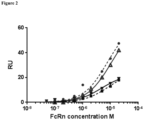
- FcRn samples were prepared over the range 50 nM to 50 ⁇ M in running buffer, (100 mM MES, 150 mM NaCl, 0.05% v/v P20, pH 5.5) and they also contained either zero or 100nM CA645 Fab.
- Each assay cycle was run at a flow rate of 10 ⁇ l / min and consisted of either a 5 min injection of 100 nM CA645 Fab to pre-saturate immobilised albumin, followed by a 5 min injection of one of the above FcRn solutions prepared in the presence of CA645 Fab, or a 5 min injection of running buffer followed by a 5 min injection of one of the above FcRn solutions in the absence of CA645 Fab. In either case a third 5 min injection followed immediately at the end of the second injection, using the 'coinject' mode, comprising respectively, buffer or 100 nM CA645 Fab.
- a blank flow-cell was used for reference subtraction and blank cycles, where FcRn was replaced with buffer, were included to subtract drift and noise. Cycle regeneration was as above. Blank corrected plateau binding levels of FcRn were plotted in Prism and fitted to a steady state model.
- Binding kinetics of wild type and mutant CA645 Fabs at pH 5.5 were also investigated in reverse format on the Biacore3000 using the immobilised albumin chip. In this case cycles were run where Fab solutions over the range 5 to 5000 nM were injected with 5 min association and dissociation phases. Buffer blank cycles were also included to correct for drift.
- CA645 Fab and fatty acid-free HSA were mixed in a molar ratio of 1:1 and incubated overnight at 4 °C. Both CA645 Fab and the complex were purified by size exclusion chromatography over a HiLoad 16/60, Superdex 200 column (GE Healthcare) equilibrated with 50 mM NaCl, 25 mM Tris, 5% (v/v) glycerol. Fractions containing either CA645 Fab or the complex were pooled and concentrated to 10 mg/ml and 70 mg/ml, respectively. Conditions suitable for crystal growth were identified by the sitting drop vapour diffusion method using commercially available crystallization screens (Qiagen).
- CA645 Fab To generate diffraction quality crystals, hanging drop vapour diffusion method was used where 1 ⁇ l of protein solution was mixed with 1 ⁇ l of reservoir solution.
- the reservoir contained 500 ⁇ l 2 M DL-Malic acid. Crystals were harvested and flash frozen in liquid nitrogen without additional cryoprotectant. Diffraction data to 2.68 ⁇ was collected from a single crystal on the I04 beamline at Diamond Light Source, Oxford, UK and processed using MOSFLM and SCALA. 34-36
- the structure of CA645 Fab was solved by molecular replacement with Phaser, 37 using coordinates of an in-house Fab structure as a search model.
- the reservoir contained 500 ⁇ l 0.1 M Citric acid pH 4.4, 0.1 M di-Sodium hydrogen phosphate, 38% v/v Ethanol and 5% v/v Polyethylene glycol 1000 (PEG1000).
- the crystals were cryoprotected by multiple additions to the drop of 1 ⁇ l reservoir buffer containing 25% (v/v) PEG1000, until the concentration of PEG1000 in the drop reached 20%. To minimise crystal stress, each addition was spaced at least 1 hour apart. Crystals were harvested and flash frozen in liquid nitrogen. Diffraction data to 3.58 ⁇ was collected from a single crystal on the I02 beamline at Diamond Light Source, Oxford, UK and processed using XDS. 38
- the structure of the complex was solved by molecular replacement with Phaser using coordinates of CA645 Fab structure and HSA (PDB code 4G03) 39 as search models.
- variable regions were cloned into expression vectors containing rabbit heavy C H 1 and light chain constant regions and then the DNA sequenced. This revealed that the antibody sequences were unique with the exception of CA645 and CA646 which had identical heavy chain sequences. Given CA645 and CA646 must bind to the same epitope through the heavy chain it is unclear why CA646 binding was more affected by the presence of ligands. Also determined from the sequencing was that the complementarity determining regions (CDRs) of all of the antibodies lacked histidine residues. This was important for further progression of these antibodies since histidine residues protonate at acidic pH and this can potentially disrupt antigen binding.
- CDRs complementarity determining regions
- the conservative grafts were expressed as human IgG1 antibodies and analysed by SPR for binding to HSA, MSA and RSA.
- the humanized IgGs displayed the same trend in binding to HSA and MSA as observed with the recombinant parental rabbit Fabs (Table 1).
- the affinities for HSA of CA647, CA648 and CA649 were similar to those of CA645 and CA646 but they showed a 6- to 10-fold reduction in affinity for MSA by comparison.
- the affinities for RSA of CA648 and CA649 also showed a 5- to 10-fold reduction in comparison with CA645 and CA646.
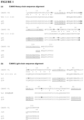
- CA646 exhibited marginally stronger affinities for HSA, MSA and RSA than CA645 but the transient expression yields were 4-fold lower at 35 mg/ml compared with 161 mg/ml (Table 1). Based on the near maximal retention of binding to HSA in the presence of known albumin binders, the consistent binding activity for albumin across multiple species and good yields in transient expression, CA645 was selected as our lead candidate for further progression. Further graft variants of CA645 gL1gH1 were generated by replacing rabbit donor residues with human acceptor residues and filling the gap in framework three of the heavy chain with the equivalent human residues. The graft variants were assessed on affinity for HSA and transient yield expression (data not shown). The final graft pairing selected was gL4 and gH5 ( Fig.1 ).
- CA645 gL4gH5 Fab The affinities of CA645 gL4gH5 Fab for HSA, MSA, RSA and rabbit serum albumin (RbSA) were shown to be 4.6, 7.1, 54 and 162 nM, respectively (Table 2). Significantly for utility of CA645 gL4gH5 Fab in cynomolgus monkey toxicology studies and disease models, the affinity for cynomolgus serum albumin (CSA) was very similar to that of HSA at 3.3 nM. In addition, CA645 Fab failed to bind to bovine serum albumin.
- CSA cynomolgus serum albumin
- CA645 gL4gH5 Fab was likely to remain bound to albumin in the acidic environment of the early endosome and be recycled to the cell surface.
- the affinity of CA645 gL4gH5 Fab for HSA at pH 5.0, pH 5.5, pH 6.0, and pH 7.0 were 7.1, 10.7, 12.5 and 13.3 nM indicating that binding is largely unaffected within this physiologically relevant pH range.
- CA645 Fab-HSA complex To identify where CA645 binds to HSA, the crystal structure of CA645 Fab-HSA complex was determined.
- the CA645 Fab-HSA complex protein preparation was concentrated to 70mg/ml, 24 and crystallized using ethanol and PEG1000 as precipitants.
- To aid solving the structure of the complex with molecular replacement we also determined the structure of unbound CA645 Fab.
- the structure of free Fab was refined to 2.68 ⁇ with a final R work value of 21.14% and R free value of 25.13%.
- the structure of the complex was refined to 3.6 ⁇ with a final R work value of 21.3 8% and R free value of 25.23%.
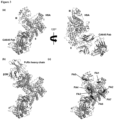
- the crystal structure of the CA645 Fab-HSA complex showed that CA645 binds to domain II of HSA ( Fig.3A ).
- Superimposition of the crystal structure of FcRn in complex with HSA (PDB code 4N0F), 25 showed that CA645 does not block binding of HSA to FcRn ( Fig.3B ).
- HSA contains seven fatty acid (FA) binding sites. Sites FA7 and FA3/FA4 are the two main drug binding sites.
- Drugs also bind at sites FA1, FA5 and FA6 but with weaker affinity. Metal ion binding sites are located between domains I and II and at a site at the N-terminus.
- the binding kinetics of CA645 gL4gH5 Fab to HSA in comparison with those for MSA, CSA, RSA and RbSA may be explained by close visual inspection of the crystal structure.
- the epitope on HSA is formed by residues F206, G207, R209, C316, K317, AEAKD 320-324, K351, E354, E358, K359, C361, A362 and A364.
- the affinities of CA645 for CSA (3.3 nM) and MSA (7.1 nM) are very similar to the affinity for HSA (4.6 nM). This is likely due to the presence in CSA and MSA of the same residues that form the epitope in HSA.
- RSA shares all of these residues except for position 364 which is glycine.
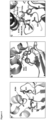
- Position 364 is located at the tip of a short loop (positions 362-365) that links two ⁇ -helices (positions 366-398 and 342-361) together ( Fig.4A ).
- This short loop is bound by CDR's 1 and 2 of the CA645 heavy chain.
- the affinity of CA645 for RSA is approximately 10-fold lower than for HSA. It is possible that the absence of the alanine side chain increases the flexibility of the loop, compared with that of HSA, and alters the binding kinetics.
- RbSA shares all of the HSA epitope residues except positions 320, 358 and 364.
- Superimposition of the crystal structure of RbSA (PDB code 3V09) 30 showed clear clashes with CA645 Fab at positions 320 and 358, and a potential clash at position 364.
- position 364 is aspartic acid and whilst there was no clear clash, this position is a contact residue and therefore likely to influence binding by CA645.
- position 320 is alanine and it forms a hydrophobic interaction with F58 of CDRH2 ( Fig.4B ).
- position 320 is glutamic acid and it clashes with CDRH2 residues W52 and F58.
- Residue E358 in HSA forms a hydrogen bond network with S100 and T100a of CDRH3 ( Fig.4C ).
- Position 358 in RbSA is lysine and it clashes with Y99 of CDRH3.
- the weaker affinity of CA645 for RbSA compared with HSA is entirely due to an 18-fold reduction in the association rate (Table.2). This is likely to be caused by the presence in RbSA of the larger side chains at positions 320 and 358, and possibly 364.
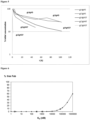
- CA645 gL5gH37 showed no detectable binding to HSA by SPR and was cleared rapidly with a serum half-life of only 0.48 ⁇ 0.06 h ( Table 4 ). This is in line with the short half-life (0.7 h) of an anti-TNF Fab observed in rats. 19 In contrast gL4gH5 exhibited a significantly extended half-life of 84 ⁇ 4.6 h.
- the variant with the weakest affinity for which there was no difference in pharmacokinetic profile from gL4gH5 was gL5gH5 ( Fig. 5 ).
- gL5gH5 contained a single mutation in the light chain, W30A, and its affinity was 453 nM.
- the affinity for MSA of gL5gH5 Fab is 316 nM. It has a pharmacokinetic profile and half-life that matches that of gL4gH5, and is calculated to have a similarly low level of free Fab at 0.05 %.
- the affinities of gL4gH5 and gL5gH5 were both 1.2-fold weaker for MSA than for HSA (Table 5), it is reasonable to predict that the affinities of gL4gH37 and gL5gH47 will be proportionately 1.2-fold weaker.
Landscapes
- Health & Medical Sciences (AREA)
- Chemical & Material Sciences (AREA)
- Organic Chemistry (AREA)
- Life Sciences & Earth Sciences (AREA)
- Medicinal Chemistry (AREA)
- General Health & Medical Sciences (AREA)
- Veterinary Medicine (AREA)
- Public Health (AREA)
- General Chemical & Material Sciences (AREA)
- Animal Behavior & Ethology (AREA)
- Pharmacology & Pharmacy (AREA)
- Nuclear Medicine, Radiotherapy & Molecular Imaging (AREA)
- Chemical Kinetics & Catalysis (AREA)
- Engineering & Computer Science (AREA)
- Bioinformatics & Cheminformatics (AREA)
- Immunology (AREA)
- Diabetes (AREA)
- Physical Education & Sports Medicine (AREA)
- Rheumatology (AREA)
- Oncology (AREA)
- Orthopedic Medicine & Surgery (AREA)
- Neurosurgery (AREA)
- Neurology (AREA)
- Biomedical Technology (AREA)
- Pulmonology (AREA)
- Communicable Diseases (AREA)
- Biochemistry (AREA)
- Biophysics (AREA)
- Proteomics, Peptides & Aminoacids (AREA)
- Genetics & Genomics (AREA)
- Molecular Biology (AREA)
- Hematology (AREA)
- Dermatology (AREA)
- Endocrinology (AREA)
- Heart & Thoracic Surgery (AREA)
- Urology & Nephrology (AREA)
- Cardiology (AREA)
- Toxicology (AREA)
- Psychiatry (AREA)
- Ophthalmology & Optometry (AREA)
Applications Claiming Priority (3)
| Application Number | Priority Date | Filing Date | Title |
|---|---|---|---|
| GBGB1607636.6A GB201607636D0 (en) | 2016-05-01 | 2016-05-01 | Molecules & method |
| GBGB1607828.9A GB201607828D0 (en) | 2016-05-04 | 2016-05-04 | Method |
| PCT/EP2017/060266 WO2017191062A1 (en) | 2016-05-01 | 2017-04-28 | Affinity engineered serum protein carrier binding domain |
Publications (3)
| Publication Number | Publication Date |
|---|---|
| EP3452506A1 EP3452506A1 (en) | 2019-03-13 |
| EP3452506B1 true EP3452506B1 (en) | 2025-04-16 |
| EP3452506C0 EP3452506C0 (en) | 2025-04-16 |
Family
ID=58707502
Family Applications (1)
| Application Number | Title | Priority Date | Filing Date |
|---|---|---|---|
| EP17723304.6A Active EP3452506B1 (en) | 2016-05-01 | 2017-04-28 | Affinity engineered serum protein carrier binding domain |
Country Status (7)
| Country | Link |
|---|---|
| US (1) | US11466076B2 (enExample) |
| EP (1) | EP3452506B1 (enExample) |
| JP (2) | JP7133544B2 (enExample) |
| CN (1) | CN109071643B (enExample) |
| CA (1) | CA3022494A1 (enExample) |
| ES (1) | ES3035839T3 (enExample) |
| WO (1) | WO2017191062A1 (enExample) |
Families Citing this family (6)
| Publication number | Priority date | Publication date | Assignee | Title |
|---|---|---|---|---|
| EP3824906A1 (en) | 2016-12-21 | 2021-05-26 | Amgen Inc. | Anti-tnf alpha antibody formulations |
| GB201811368D0 (en) * | 2018-07-11 | 2018-08-29 | Ucb Biopharma Sprl | Antibody |
| EP3930687A4 (en) | 2019-02-25 | 2023-06-07 | The University of Chicago | METHODS AND COMPOSITIONS FOR THE TREATMENT OF INFLAMMATORY AND AUTOIMMUNE CONDITIONS USING ECM AFFINITY PEPTIDES LINKED TO ANTI-INFLAMMATORY AGENTS |
| EP3904378A1 (en) * | 2020-04-29 | 2021-11-03 | Hober Biotech AB | Bispecific protein |
| CA3198049A1 (en) | 2020-10-15 | 2022-04-21 | UCB Biopharma SRL | Binding molecules that multimerise cd45 |
| GB202318820D0 (en) | 2023-12-08 | 2024-01-24 | UCB Biopharma SRL | Antibodies |
Citations (2)
| Publication number | Priority date | Publication date | Assignee | Title |
|---|---|---|---|---|
| WO2009040562A1 (en) * | 2007-09-26 | 2009-04-02 | Ucb Pharma S.A. | Dual specificity antibody fusions |
| WO2013068571A1 (en) * | 2011-11-11 | 2013-05-16 | Ucb Pharma S.A. | Albumin binding antibodies and binding fragments thereof |
Family Cites Families (10)
| Publication number | Priority date | Publication date | Assignee | Title |
|---|---|---|---|---|
| GB8928874D0 (en) | 1989-12-21 | 1990-02-28 | Celltech Ltd | Humanised antibodies |
| GB9113120D0 (en) | 1991-06-18 | 1991-08-07 | Kodak Ltd | Photographic processing apparatus |
| PT1644412E (pt) | 2003-07-01 | 2015-12-23 | Ucb Biopharma Sprl | Fragmentos de anticorpos fab modificados |
| GB0315457D0 (en) | 2003-07-01 | 2003-08-06 | Celltech R&D Ltd | Biological products |
| GB0315450D0 (en) | 2003-07-01 | 2003-08-06 | Celltech R&D Ltd | Biological products |
| GB0411186D0 (en) | 2004-05-19 | 2004-06-23 | Celltech R&D Ltd | Biological products |
| US10407513B2 (en) | 2008-09-26 | 2019-09-10 | Ucb Biopharma Sprl | Biological products |
| GB201223276D0 (en) * | 2012-12-21 | 2013-02-06 | Ucb Pharma Sa | Antibodies and methods of producing same |
| WO2015006337A2 (en) * | 2013-07-08 | 2015-01-15 | Nanjingjinsirui Science & Technology Biology Corporation | Compositions and methods for increasing protein half-life in a serum |
| GB201411320D0 (en) | 2014-06-25 | 2014-08-06 | Ucb Biopharma Sprl | Antibody construct |
-
2017
- 2017-04-28 CN CN201780027100.5A patent/CN109071643B/zh active Active
- 2017-04-28 ES ES17723304T patent/ES3035839T3/es active Active
- 2017-04-28 WO PCT/EP2017/060266 patent/WO2017191062A1/en not_active Ceased
- 2017-04-28 JP JP2019508294A patent/JP7133544B2/ja active Active
- 2017-04-28 CA CA3022494A patent/CA3022494A1/en active Pending
- 2017-04-28 EP EP17723304.6A patent/EP3452506B1/en active Active
- 2017-04-28 US US16/098,085 patent/US11466076B2/en active Active
-
2022
- 2022-05-02 JP JP2022075986A patent/JP2022115961A/ja not_active Abandoned
Patent Citations (2)
| Publication number | Priority date | Publication date | Assignee | Title |
|---|---|---|---|---|
| WO2009040562A1 (en) * | 2007-09-26 | 2009-04-02 | Ucb Pharma S.A. | Dual specificity antibody fusions |
| WO2013068571A1 (en) * | 2011-11-11 | 2013-05-16 | Ucb Pharma S.A. | Albumin binding antibodies and binding fragments thereof |
Non-Patent Citations (7)
| Title |
|---|
| ALLEN NGUYEN ET AL: "The pharmacokinetics of an albumin-binding Fab (AB.Fab) can be modulated as a function of affinity for albumin", PROTEIN ENGINEERING, DESIGN AND SELECTION, vol. 19, no. 7, 18 April 2006 (2006-04-18), pages 291 - 297, XP007911755, ISSN: 1741-0126, [retrieved on 20060418], DOI: 10.1093/PROTEIN/GZL011 * |
| BAKHEET ELSADEK ET AL: "Impact of albumin on drug delivery - New applications on the horizon", JOURNAL OF CONTROLLED RELEASE, vol. 157, no. 1, 1 January 2012 (2012-01-01), pages 4 - 28, XP055031206, ISSN: 0168-3659, DOI: 10.1016/j.jconrel.2011.09.069 * |
| DATABASE GENESEQ [ONLINE]: "Hit details for GSP:BAO39425; Anti-albumin antibody heavy chain variable region, SEQ ID 1.", DATABASE GENESEQ [ONLINE], 4 July 2013 (2013-07-04), XP055698300, Retrieved from the Internet <URL:http://ibis.internal.epo.org/exam/hitDetails.jsp?id=248688866> [retrieved on 20200526] * |
| DATABASE GENESEQ [ONLINE]: "Hit details for GSP:BAO39427; Anti-albumin antibody light chain variable region, SEQ ID 3.", 4 July 2013 (2013-07-04), XP055698297, Retrieved from the Internet <URL:http://ibis.internal.epo.org/exam/hitDetails.jsp?id=248688333> [retrieved on 20200526] * |
| DATABASE GENESEQ: "Hit details for GSP:AWJ11198; Humanized anti-serum albumin antibody VH domain, dAbH1, SEQ ID 52.", 23 July 2009 (2009-07-23), XP055698383, Retrieved from the Internet <URL:http://ibis.internal.epo.org/exam/hitDetails.jsp?id=248686390> [retrieved on 20200526] * |
| DATABASE GENESEQ: "Hit details for GSP:AWJ11199: Humanized anti-serum albumin antibody VH domain, dAbH1, SEQ ID 52.", 23 July 2009 (2009-07-23), XP055698459, Retrieved from the Internet <URL:http://ibis.internal.epo.org/exam/hitDetails.jsp?id=248686956> [retrieved on 20200526] * |
| DATABASE GENESEQ: "Hit details for GSP:AWJ11199; Humanized anti-serum albumin antibody VL domain, dAbL1, SEQ ID 53.", 23 July 2009 (2009-07-23), XP055698464, Retrieved from the Internet <URL:http://ibis.internal.epo.org/exam/hitDetails.jsp?id=248686956> [retrieved on 20200526] * |
Also Published As
| Publication number | Publication date |
|---|---|
| US11466076B2 (en) | 2022-10-11 |
| CN109071643A (zh) | 2018-12-21 |
| JP7133544B2 (ja) | 2022-09-08 |
| WO2017191062A1 (en) | 2017-11-09 |
| CA3022494A1 (en) | 2017-11-09 |
| JP2022115961A (ja) | 2022-08-09 |
| EP3452506A1 (en) | 2019-03-13 |
| US20190144529A1 (en) | 2019-05-16 |
| BR112018071288A2 (pt) | 2019-02-26 |
| JP2019516785A (ja) | 2019-06-20 |
| ES3035839T3 (en) | 2025-09-10 |
| CN109071643B (zh) | 2024-03-19 |
| EP3452506C0 (en) | 2025-04-16 |
Similar Documents
| Publication | Publication Date | Title |
|---|---|---|
| US11261252B2 (en) | Molecules with specificity for CD79 and CD22 | |
| JP6856610B2 (ja) | ヘテロ二量体免疫グロブリンの精製 | |
| US11466076B2 (en) | Binding domain or antibody specific to a human serum albumin (HSA) | |
| US10774152B2 (en) | Molecules with specificity for CD45 and CD79 | |
| US10618957B2 (en) | Antibody molecules which bind CD79 | |
| JP2018083829A (ja) | 天然の免疫グロブリン形式を有する容易に単離される二重特異性抗体 | |
| CN104364265A (zh) | 抗FcRn抗体 | |
| WO2013064701A2 (en) | Bispecific antibodies and methods for isolating same | |
| US20250051467A1 (en) | Fap/cd40 binding molecule and medicinal use thereof | |
| US20170158755A1 (en) | Anti-laminin4 antibodies specific for lg1-3 | |
| US20240199761A1 (en) | Treatment of autoimmune disease | |
| Fransson et al. | Human framework adaptation of a mouse anti-human IL-13 antibody | |
| CN113677701A (zh) | 产生亲合结合多特异性抗体的方法 | |
| IL293813A (en) | Multispecific antibodies | |
| CA3254085A1 (en) | KLRB1 LIAISON AGENTS AND THEIR METHODS OF USE | |
| JP2019535236A (ja) | テネイシンエピトープと抗体 | |
| HK40062039A (en) | Method for generating avid-binding multispecific antibodies | |
| CA2991179A1 (en) | Antibody molecules which bind cd45 |
Legal Events
| Date | Code | Title | Description |
|---|---|---|---|
| STAA | Information on the status of an ep patent application or granted ep patent |
Free format text: STATUS: UNKNOWN |
|
| STAA | Information on the status of an ep patent application or granted ep patent |
Free format text: STATUS: THE INTERNATIONAL PUBLICATION HAS BEEN MADE |
|
| PUAI | Public reference made under article 153(3) epc to a published international application that has entered the european phase |
Free format text: ORIGINAL CODE: 0009012 |
|
| STAA | Information on the status of an ep patent application or granted ep patent |
Free format text: STATUS: REQUEST FOR EXAMINATION WAS MADE |
|
| 17P | Request for examination filed |
Effective date: 20181203 |
|
| AK | Designated contracting states |
Kind code of ref document: A1 Designated state(s): AL AT BE BG CH CY CZ DE DK EE ES FI FR GB GR HR HU IE IS IT LI LT LU LV MC MK MT NL NO PL PT RO RS SE SI SK SM TR |
|
| AX | Request for extension of the european patent |
Extension state: BA ME |
|
| DAV | Request for validation of the european patent (deleted) | ||
| DAX | Request for extension of the european patent (deleted) | ||
| RAP1 | Party data changed (applicant data changed or rights of an application transferred) |
Owner name: UCB BIOPHARMA SRL |
|
| PUAG | Search results despatched under rule 164(2) epc together with communication from examining division |
Free format text: ORIGINAL CODE: 0009017 |
|
| STAA | Information on the status of an ep patent application or granted ep patent |
Free format text: STATUS: EXAMINATION IS IN PROGRESS |
|
| 17Q | First examination report despatched |
Effective date: 20200827 |
|
| B565 | Issuance of search results under rule 164(2) epc |
Effective date: 20200827 |
|
| GRAP | Despatch of communication of intention to grant a patent |
Free format text: ORIGINAL CODE: EPIDOSNIGR1 |
|
| STAA | Information on the status of an ep patent application or granted ep patent |
Free format text: STATUS: GRANT OF PATENT IS INTENDED |
|
| RIC1 | Information provided on ipc code assigned before grant |
Ipc: A61K 39/00 20060101ALI20241107BHEP Ipc: C07K 16/18 20060101AFI20241107BHEP |
|
| INTG | Intention to grant announced |
Effective date: 20241119 |
|
| RAP3 | Party data changed (applicant data changed or rights of an application transferred) |
Owner name: UCB BIOPHARMA SRL |
|
| GRAS | Grant fee paid |
Free format text: ORIGINAL CODE: EPIDOSNIGR3 |
|
| GRAA | (expected) grant |
Free format text: ORIGINAL CODE: 0009210 |
|
| STAA | Information on the status of an ep patent application or granted ep patent |
Free format text: STATUS: THE PATENT HAS BEEN GRANTED |
|
| AK | Designated contracting states |
Kind code of ref document: B1 Designated state(s): AL AT BE BG CH CY CZ DE DK EE ES FI FR GB GR HR HU IE IS IT LI LT LU LV MC MK MT NL NO PL PT RO RS SE SI SK SM TR |
|
| REG | Reference to a national code |
Ref country code: GB Ref legal event code: FG4D |
|
| REG | Reference to a national code |
Ref country code: CH Ref legal event code: EP |
|
| REG | Reference to a national code |
Ref country code: IE Ref legal event code: FG4D |
|
| REG | Reference to a national code |
Ref country code: DE Ref legal event code: R096 Ref document number: 602017088929 Country of ref document: DE |
|
| U01 | Request for unitary effect filed |
Effective date: 20250513 |
|
| U07 | Unitary effect registered |
Designated state(s): AT BE BG DE DK EE FI FR IT LT LU LV MT NL PT RO SE SI Effective date: 20250519 |
|
| REG | Reference to a national code |
Ref country code: ES Ref legal event code: FG2A Ref document number: 3035839 Country of ref document: ES Kind code of ref document: T3 Effective date: 20250910 |
|
| U20 | Renewal fee for the european patent with unitary effect paid |
Year of fee payment: 9 Effective date: 20250819 |
|
| PG25 | Lapsed in a contracting state [announced via postgrant information from national office to epo] |
Ref country code: NO Free format text: LAPSE BECAUSE OF FAILURE TO SUBMIT A TRANSLATION OF THE DESCRIPTION OR TO PAY THE FEE WITHIN THE PRESCRIBED TIME-LIMIT Effective date: 20250716 Ref country code: GR Free format text: LAPSE BECAUSE OF FAILURE TO SUBMIT A TRANSLATION OF THE DESCRIPTION OR TO PAY THE FEE WITHIN THE PRESCRIBED TIME-LIMIT Effective date: 20250717 |
|
| PG25 | Lapsed in a contracting state [announced via postgrant information from national office to epo] |
Ref country code: PL Free format text: LAPSE BECAUSE OF FAILURE TO SUBMIT A TRANSLATION OF THE DESCRIPTION OR TO PAY THE FEE WITHIN THE PRESCRIBED TIME-LIMIT Effective date: 20250416 |
|
| PG25 | Lapsed in a contracting state [announced via postgrant information from national office to epo] |
Ref country code: HR Free format text: LAPSE BECAUSE OF FAILURE TO SUBMIT A TRANSLATION OF THE DESCRIPTION OR TO PAY THE FEE WITHIN THE PRESCRIBED TIME-LIMIT Effective date: 20250416 |
|
| PG25 | Lapsed in a contracting state [announced via postgrant information from national office to epo] |
Ref country code: RS Free format text: LAPSE BECAUSE OF FAILURE TO SUBMIT A TRANSLATION OF THE DESCRIPTION OR TO PAY THE FEE WITHIN THE PRESCRIBED TIME-LIMIT Effective date: 20250716 |
|
| PG25 | Lapsed in a contracting state [announced via postgrant information from national office to epo] |
Ref country code: IS Free format text: LAPSE BECAUSE OF FAILURE TO SUBMIT A TRANSLATION OF THE DESCRIPTION OR TO PAY THE FEE WITHIN THE PRESCRIBED TIME-LIMIT Effective date: 20250816 |
|
| PG25 | Lapsed in a contracting state [announced via postgrant information from national office to epo] |
Ref country code: SM Free format text: LAPSE BECAUSE OF FAILURE TO SUBMIT A TRANSLATION OF THE DESCRIPTION OR TO PAY THE FEE WITHIN THE PRESCRIBED TIME-LIMIT Effective date: 20250416 |
|
| PG25 | Lapsed in a contracting state [announced via postgrant information from national office to epo] |
Ref country code: CZ Free format text: LAPSE BECAUSE OF FAILURE TO SUBMIT A TRANSLATION OF THE DESCRIPTION OR TO PAY THE FEE WITHIN THE PRESCRIBED TIME-LIMIT Effective date: 20250416 |
|
| PG25 | Lapsed in a contracting state [announced via postgrant information from national office to epo] |
Ref country code: SK Free format text: LAPSE BECAUSE OF FAILURE TO SUBMIT A TRANSLATION OF THE DESCRIPTION OR TO PAY THE FEE WITHIN THE PRESCRIBED TIME-LIMIT Effective date: 20250416 |
|
| PG25 | Lapsed in a contracting state [announced via postgrant information from national office to epo] |
Ref country code: MC Free format text: LAPSE BECAUSE OF FAILURE TO SUBMIT A TRANSLATION OF THE DESCRIPTION OR TO PAY THE FEE WITHIN THE PRESCRIBED TIME-LIMIT Effective date: 20250416 |
|
| PLBE | No opposition filed within time limit |
Free format text: ORIGINAL CODE: 0009261 |
|
| STAA | Information on the status of an ep patent application or granted ep patent |
Free format text: STATUS: NO OPPOSITION FILED WITHIN TIME LIMIT |
|
| REG | Reference to a national code |
Ref country code: CH Ref legal event code: L10 Free format text: ST27 STATUS EVENT CODE: U-0-0-L10-L00 (AS PROVIDED BY THE NATIONAL OFFICE) Effective date: 20260225 |
|
| 26N | No opposition filed |
Effective date: 20260119 |
|
| PGFP | Annual fee paid to national office [announced via postgrant information from national office to epo] |
Ref country code: GB Payment date: 20260310 Year of fee payment: 10 |
|
| PGFP | Annual fee paid to national office [announced via postgrant information from national office to epo] |
Ref country code: IE Payment date: 20260310 Year of fee payment: 10 |
|
| REG | Reference to a national code |
Ref country code: CH Ref legal event code: U11 Free format text: ST27 STATUS EVENT CODE: U-0-0-U10-U11 (AS PROVIDED BY THE NATIONAL OFFICE) Effective date: 20260501 |
|
| U20 | Renewal fee for the european patent with unitary effect paid |
Year of fee payment: 10 Effective date: 20260430 |
|
| PG25 | Lapsed in a contracting state [announced via postgrant information from national office to epo] |
Ref country code: CY Free format text: LAPSE BECAUSE OF FAILURE TO SUBMIT A TRANSLATION OF THE DESCRIPTION OR TO PAY THE FEE WITHIN THE PRESCRIBED TIME-LIMIT Effective date: 20250416 |
|
| PGFP | Annual fee paid to national office [announced via postgrant information from national office to epo] |
Ref country code: ES Payment date: 20260514 Year of fee payment: 10 |
|
| PGFP | Annual fee paid to national office [announced via postgrant information from national office to epo] |
Ref country code: CH Payment date: 20260501 Year of fee payment: 10 |