EP3448014A1 - Bildoptimierung durch ein aussenkamerasystem für flugzeuge - Google Patents
Bildoptimierung durch ein aussenkamerasystem für flugzeuge Download PDFInfo
- Publication number
- EP3448014A1 EP3448014A1 EP18190416.0A EP18190416A EP3448014A1 EP 3448014 A1 EP3448014 A1 EP 3448014A1 EP 18190416 A EP18190416 A EP 18190416A EP 3448014 A1 EP3448014 A1 EP 3448014A1
- Authority
- EP
- European Patent Office
- Prior art keywords
- contrast
- image data
- exterior
- aircraft
- camera system
- Prior art date
- Legal status (The legal status is an assumption and is not a legal conclusion. Google has not performed a legal analysis and makes no representation as to the accuracy of the status listed.)
- Withdrawn
Links
Images



Classifications
-
- H—ELECTRICITY
- H04—ELECTRIC COMMUNICATION TECHNIQUE
- H04N—PICTORIAL COMMUNICATION, e.g. TELEVISION
- H04N23/00—Cameras or camera modules comprising electronic image sensors; Control thereof
- H04N23/60—Control of cameras or camera modules
- H04N23/65—Control of camera operation in relation to power supply
-
- B—PERFORMING OPERATIONS; TRANSPORTING
- B64—AIRCRAFT; AVIATION; COSMONAUTICS
- B64D—EQUIPMENT FOR FITTING IN OR TO AIRCRAFT; FLIGHT SUITS; PARACHUTES; ARRANGEMENT OR MOUNTING OF POWER PLANTS OR PROPULSION TRANSMISSIONS IN AIRCRAFT
- B64D45/00—Aircraft indicators or protectors not otherwise provided for
-
- B—PERFORMING OPERATIONS; TRANSPORTING
- B64—AIRCRAFT; AVIATION; COSMONAUTICS
- B64D—EQUIPMENT FOR FITTING IN OR TO AIRCRAFT; FLIGHT SUITS; PARACHUTES; ARRANGEMENT OR MOUNTING OF POWER PLANTS OR PROPULSION TRANSMISSIONS IN AIRCRAFT
- B64D47/00—Equipment not otherwise provided for
- B64D47/08—Arrangements of cameras
-
- G—PHYSICS
- G02—OPTICS
- G02B—OPTICAL ELEMENTS, SYSTEMS OR APPARATUS
- G02B27/00—Optical systems or apparatus not provided for by any of the groups G02B1/00 - G02B26/00, G02B30/00
- G02B27/0006—Optical systems or apparatus not provided for by any of the groups G02B1/00 - G02B26/00, G02B30/00 with means to keep optical surfaces clean, e.g. by preventing or removing dirt, stains, contamination, condensation
-
- G—PHYSICS
- G03—PHOTOGRAPHY; CINEMATOGRAPHY; ANALOGOUS TECHNIQUES USING WAVES OTHER THAN OPTICAL WAVES; ELECTROGRAPHY; HOLOGRAPHY
- G03B—APPARATUS OR ARRANGEMENTS FOR TAKING PHOTOGRAPHS OR FOR PROJECTING OR VIEWING THEM; APPARATUS OR ARRANGEMENTS EMPLOYING ANALOGOUS TECHNIQUES USING WAVES OTHER THAN OPTICAL WAVES; ACCESSORIES THEREFOR
- G03B15/00—Special procedures for taking photographs; Apparatus therefor
- G03B15/006—Apparatus mounted on flying objects
-
- G—PHYSICS
- G03—PHOTOGRAPHY; CINEMATOGRAPHY; ANALOGOUS TECHNIQUES USING WAVES OTHER THAN OPTICAL WAVES; ELECTROGRAPHY; HOLOGRAPHY
- G03B—APPARATUS OR ARRANGEMENTS FOR TAKING PHOTOGRAPHS OR FOR PROJECTING OR VIEWING THEM; APPARATUS OR ARRANGEMENTS EMPLOYING ANALOGOUS TECHNIQUES USING WAVES OTHER THAN OPTICAL WAVES; ACCESSORIES THEREFOR
- G03B17/00—Details of cameras or camera bodies; Accessories therefor
- G03B17/55—Details of cameras or camera bodies; Accessories therefor with provision for heating or cooling, e.g. in aircraft
-
- G—PHYSICS
- G06—COMPUTING OR CALCULATING; COUNTING
- G06T—IMAGE DATA PROCESSING OR GENERATION, IN GENERAL
- G06T7/00—Image analysis
- G06T7/10—Segmentation; Edge detection
- G06T7/13—Edge detection
-
- G—PHYSICS
- G06—COMPUTING OR CALCULATING; COUNTING
- G06T—IMAGE DATA PROCESSING OR GENERATION, IN GENERAL
- G06T7/00—Image analysis
- G06T7/10—Segmentation; Edge detection
- G06T7/174—Segmentation; Edge detection involving the use of two or more images
-
- H—ELECTRICITY
- H04—ELECTRIC COMMUNICATION TECHNIQUE
- H04N—PICTORIAL COMMUNICATION, e.g. TELEVISION
- H04N23/00—Cameras or camera modules comprising electronic image sensors; Control thereof
- H04N23/50—Constructional details
- H04N23/51—Housings
-
- H—ELECTRICITY
- H04—ELECTRIC COMMUNICATION TECHNIQUE
- H04N—PICTORIAL COMMUNICATION, e.g. TELEVISION
- H04N23/00—Cameras or camera modules comprising electronic image sensors; Control thereof
- H04N23/57—Mechanical or electrical details of cameras or camera modules specially adapted for being embedded in other devices
-
- H—ELECTRICITY
- H04—ELECTRIC COMMUNICATION TECHNIQUE
- H04N—PICTORIAL COMMUNICATION, e.g. TELEVISION
- H04N23/00—Cameras or camera modules comprising electronic image sensors; Control thereof
- H04N23/80—Camera processing pipelines; Components thereof
- H04N23/81—Camera processing pipelines; Components thereof for suppressing or minimising disturbance in the image signal generation
-
- H—ELECTRICITY
- H04—ELECTRIC COMMUNICATION TECHNIQUE
- H04N—PICTORIAL COMMUNICATION, e.g. TELEVISION
- H04N23/00—Cameras or camera modules comprising electronic image sensors; Control thereof
- H04N23/90—Arrangement of cameras or camera modules, e.g. multiple cameras in TV studios or sports stadiums
-
- H—ELECTRICITY
- H05—ELECTRIC TECHNIQUES NOT OTHERWISE PROVIDED FOR
- H05B—ELECTRIC HEATING; ELECTRIC LIGHT SOURCES NOT OTHERWISE PROVIDED FOR; CIRCUIT ARRANGEMENTS FOR ELECTRIC LIGHT SOURCES, IN GENERAL
- H05B1/00—Details of electric heating devices
- H05B1/02—Automatic switching arrangements specially adapted to apparatus ; Control of heating devices
- H05B1/0227—Applications
- H05B1/023—Industrial applications
- H05B1/0236—Industrial applications for vehicles
-
- H—ELECTRICITY
- H05—ELECTRIC TECHNIQUES NOT OTHERWISE PROVIDED FOR
- H05B—ELECTRIC HEATING; ELECTRIC LIGHT SOURCES NOT OTHERWISE PROVIDED FOR; CIRCUIT ARRANGEMENTS FOR ELECTRIC LIGHT SOURCES, IN GENERAL
- H05B3/00—Ohmic-resistance heating
- H05B3/84—Heating arrangements specially adapted for transparent or reflecting areas, e.g. for demisting or de-icing windows, mirrors or vehicle windshields
-
- G—PHYSICS
- G06—COMPUTING OR CALCULATING; COUNTING
- G06T—IMAGE DATA PROCESSING OR GENERATION, IN GENERAL
- G06T2207/00—Indexing scheme for image analysis or image enhancement
- G06T2207/20—Special algorithmic details
- G06T2207/20212—Image combination
- G06T2207/20216—Image averaging
-
- G—PHYSICS
- G06—COMPUTING OR CALCULATING; COUNTING
- G06T—IMAGE DATA PROCESSING OR GENERATION, IN GENERAL
- G06T2207/00—Indexing scheme for image analysis or image enhancement
- G06T2207/30—Subject of image; Context of image processing
- G06T2207/30248—Vehicle exterior or interior
- G06T2207/30252—Vehicle exterior; Vicinity of vehicle
Definitions
- Aircraft camera systems are often equipped with de-icing and anti-fogging systems.
- high-power heaters are installed to prevent and eliminate ice and condensation from accumulating on the camera window. These high-power heaters are either powered constantly, or powered based on a temperature condition. When there is no ice or condensation accumulation this wastes power and sacrifices operating life of the components.
- an exterior camera system of an aircraft comprises an image sensor configured to capture image data and one or more processors.
- the one or more processors are configured to determine a contrast of at least a portion of the captured image data; evaluate whether the contrast is less than a threshold contrast level; and output, in response to the contrast being less than the threshold contrast level, an initiate heating command configured to initiate heating of a camera window positioned between the image sensor and an exterior of the aircraft.
- a method comprises capturing image data using an image sensor of an exterior camera system of an aircraft; determining, by one or more processors of the exterior camera system, contrast of at least a portion of the captured image data; evaluating, by the one or more processors, whether the contrast is less than a threshold contrast level; and outputting, in response to determining that the contrast is less than the threshold contrast level, an initiate heating command configured to initiate heating of a camera window positioned between the image sensor and an exterior of the aircraft.
- Apparatus, systems, and associated methods relate to image optimization using image processing to determine when a camera window heater should be turned on to rid the camera window of ice or condensation.
- heaters are turned on constantly during flight due to low temperatures. The constant heat consumes more power than necessary and lowers the operating life of camera system and heating components.
- FIG. 1 is a perspective view of aircraft 10 equipped with exterior camera 12 which has a viewable zone 14 and exterior camera 16 which has a viewable zone 18.
- Exterior camera 12 can capture image data of viewable zone 14.
- Viewable zone 14 includes the wings, the wheels, and the fuselage of aircraft 10.
- Exterior camera 16 can capture image data of viewable zone 18.
- Viewable zone 18 includes the front wheels and fuselage of aircraft 10.
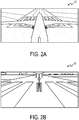
- FIG. 2A is a front plan view of visual display 20 from exterior camera 12.
- visual display 20 shows a display of viewable zone 14 includes the rear wheels, the wings, and the fuselage of aircraft 10.
- the background of visual display 20 shows a runway.
- FIG. 2B is a front plan view of visual display 22 from exterior camera 16. As shown, visual display 22 shows a display of viewable zone 18 including the front wheels and the fuselage of aircraft 10. The background of visual display 22 shows a runway.
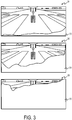
- FIG. 3 illustrates a series of visual displays 24, 26, and 28 of exterior camera 16 in which the camera window is increasingly burdened with ice coverage 30.
- Ice coverage 30 grows from blocking a small portion of visual display 24, to blocking almost the entirety of visual display 28.
- image data becomes generally uniform in areas covered by ice. This general uniformity results in lower contrast in the image data; that is, as ice coverage 30 expands, the contrast of the image from the visual display becomes less. Contrast is greatest in a visual display devoid of ice coverage 30.
- contrast may be slightly lower or almost unaffected as in visual display 24.
- visual display 26 ice coverage 30 has expanded to significantly block exterior camera 16 resulting in a significant drop in contrast.
- ice coverage 30 has expanded to almost the entirety of the image, resulting in even lower contrast.
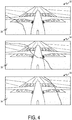
- FIG. 4 is series of visual displays 32, 34, and 36 of exterior camera 12 in which the camera window is increasingly burdened with condensation 38.
- Condensation 38 is indicated by dashed lines. Condensation 38 grows from obscuring a small portion of visual display 32, to blocking almost the entirety of visual display 36. As condensation 38 obscures the view of exterior camera 16, definition between objects and colors in the image data become blurred. This blurring results in lower contrast in the image data; that is, as condensation 38 expands, the contrast of the image from the visual display becomes less. Contrast is greatest in a visual display devoid of condensation 38. As condensation 38 begins to block the view of exterior camera 16, contrast may be slightly lower or almost unaffected as in visual display 32. In visual display 34, condensation 38 has expanded to significantly block exterior camera 16 resulting in a significant drop in contrast. In visual display 36, condensation 38 has expanded to almost the entirety of the image, resulting in even lower contrast.
- FIG. 5 is a block diagram of exterior camera and heating system 40 including exterior camera system 42, camera window 44, viewable zone 46, and heater control system 48 of an aircraft.
- Exterior camera system 42 includes one or more processors 50, computer-readable memory 52, one or more communication devices 53, image sensor 54, and camera lens 56.
- Camera window 44 protects exterior camera system 42 from elements and conditions external to an aircraft while providing visual access to the exterior of the aircraft.
- Lens 56 focuses light from viewable zone 46 so that image sensor 54 can capture image data of viewable zone 46.
- the captured image data is stored in computer-readable memory 52.
- exterior camera system 42 includes one or more processors 50.
- processors 50 are configured to implement functionality and/or process instructions for execution within exterior camera system 42.
- processors 50 can be capable of processing instructions stored at computer-readable memory 52.
- Examples of one or more processors 50 include any one or more of a microprocessor, a controller, a digital signal processor (DSP), an application specific integrated circuit (ASIC), a field-programmable gate array (FPGA), or other equivalent discrete or integrated logic circuitry.
- DSP digital signal processor
- ASIC application specific integrated circuit
- FPGA field-programmable gate array
- One or more processors 50 can determine various aspects of the captured image data including, brightness, contrast, color, and other image data properties.
- contrast is determined along an edge of a known object in the image data.
- the known object can be a wing, the fuselage, or other part of the aircraft that remains in viewable zone 46.
- Edge-detection can be used to find the known object. If edge-detection fails, one or more processors 50 can determine that the contrast of the image data is below a threshold.
- the contrast is an average contrast of the image data.
- One or more processors 50 can evaluate whether the contrast of the image data is below a threshold. In response to determining the contrast is below a threshold, one or more processors 50 can output an initiate heating command.
- the initiate heating command can be configured to initiate heating of camera window 44.
- the command signal can be received by heater control system 48, which will then initiate heating of camera window 44.
- one or more processors 50 can output a terminate heating command.
- the terminate heating command can be configured to terminate heating of camera window 44.
- the command signal can be received by heater control system 48, which will then terminate heating of camera window 44.
- Computer-readable memory 52 can be configured to store information within exterior camera system 42 during operation.
- Computer-readable memory 52 in some examples, is described as a computer-readable storage medium.
- a computer-readable storage medium can include a non-transitory medium.
- the term "non-transitory" can indicate that the storage medium is not embodied in a carrier wave or a propagated signal.
- a non-transitory storage medium can store data that can, over time, change (e.g., in RAM or cache).
- computer-readable memory 52 is a temporary memory, meaning that a primary purpose of computer-readable memory 52 is not long-term storage.
- Computer-readable memory 52 in some examples, is described as a volatile memory, meaning that computer-readable memory 52 does not maintain stored contents when power to exterior camera system 42 is removed. Examples of volatile memories can include random access memories (RAM), dynamic random access memories (DRAM), static random access memories (SRAM), and other forms of volatile memories.
- RAM random access memories
- DRAM dynamic random access memories
- SRAM static random access memories
- computer-readable memory 52 is used to store program instructions for execution by processors 50.
- Computer-readable memory 52 in certain examples, is used by software applications running on exterior camera system 42 to temporarily store information during program execution, such as determining a contrast of at least a portion of an image, or determining the contrast is below a contrast threshold.
- Computer-readable memory 52 in some examples, also include one or more computer-readable storage media.
- Computer-readable memory 52 can be configured to store larger amounts of information than volatile memory.
- Computer-readable memory 52 can further be configured for long-term storage of information.
- computer-readable memory 52 include non-volatile storage elements. Examples of non-volatile storage elements can include magnetic hard discs, optical discs, floppy discs, flash memories, or forms of electrically programmable memories (EPROM) or electrically erasable and programmable (EEPROM) memories.
- Exterior camera system 42 also includes one or more communication devices 53.
- Exterior camera system 42 utilizes communication devices 53 to communicate with external devices via one or more wired or wireless networks, or both.
- Communication devices 53 can include a network interface card, such as an Ethernet card, an optical transceiver, a radio frequency transceiver, or any other type of device that can send and receive information.
- network interfaces can include Bluetooth, 3G, 4G, and WiFi radio computing devices, as well as Universal Serial Bus (USB).
- FIG. 6 is flow diagram depicting a process 58 for image optimization by an exterior camera system of an aircraft. For purposes of clarity and ease of discussion, the example operations are described below within the context of exterior camera system 42 of FIG. 5 .
- image data is captured using image sensor 54.
- the captured image data is be stored in computer-readable memory 52.
- the image data can be image data of a viewable zone of an exterior camera.
- the image data can include known objects, such as wings, fuselage, wheels, and other parts of an aircraft.
- the contrast of at least a portion of the captured image data is determined using one or more processors 50. In one example, the contrast is determined along a known object in the image data.
- the known object can be a wing, the fuselage, or other part of the aircraft that remains in a viewable zone of the exterior camera. In one example, the contrast is determined by using an average contrast of the image data.
- the contrast is evaluated as to whether it satisfies criteria.
- the contrast evaluated as to whether it is less than a threshold contrast level using one or more processors 50.
- the threshold contrast level is a predetermined threshold contrast level.
- the threshold contrast level is determined from image data captured when it is known there is nothing obscuring the camera window, such as ice or condensation.
- evaluating whether the contrast is less than a threshold contrast level includes comparing a second contrast determined at a point in time after an initiate heating command has been output to a third contrast determined after the second contrast, to determine if the third contrast is greater than the second contrast.
- process 58 proceeds from step 64 to step 66.
- an initiate heating command configured to initiate heating of camera window 44 is output. In some examples, the heating command is output to heater control system 48.
- Process 58 then returns to step 60. If the contrast fails to satisfy the criteria (i.e. is above the threshold and/or the third contrast is not greater than the second contrast), process 58 proceeds from step 64 to step 68.
- a terminate heating command configured to terminate heating of camera window 44 is output. In some examples, the terminate heating command is output to heater control system 48. Process 58 then proceeds back to step 60.
- image optimization using an exterior camera system of an aircraft can determine when a camera window heater needs to be turned on.
- a window heater can be turned on and off based upon the contrast of image data captured by the camera system. This allows the window heater to only be turned on when needed, using less power and extending the operating life of affected components.
- An exterior camera system of an aircraft can comprise an image sensor configured to capture image data; and one or more processors can be configured to determine a first contrast of at least a portion of the captured image data; evaluate whether the first contrast is less than a threshold contrast level; and output, in response to the first contrast being less than the threshold contrast level, an initiate heating command configured to initiate heating of a camera window positioned between the image sensor and an exterior of the aircraft.
- the exterior camera system of the preceding paragraph can optionally include, additionally and/or alternatively, any one or more of the following features, configurations and/or additional components:
- the processor can be further configured to output, in response to the first contrast being greater than or equal to the threshold contrast level, a terminate heating command configured to terminate heating of the camera window.
- the determined contrast can be a contrast along an edge of a known object within the captured image data.
- Edge-detection can be used to determine and evaluate the first contrast along an edge of a known object within the captured image data.
- the determined contrast can be an average contrast of the image data.
- the one or more processors can be further configured to determine a second contrast of the at least a portion of the captured image data at point in time after the initiate heating command has been output; determine a third contrast of the at least a portion of the captured image data at point in time after the second contrast is determined; and evaluate whether the third contrast is greater than the second contrast.
- the one or more processors can be further configured to output, in response to the third contrast being equal to the second contrast, a terminate heating command configured to terminate heating of the camera window.
- the one or more processors can be further configured to output, in response to the third contrast being equal to the second contrast and the and the second contrast being above the contrast threshold level, a terminate heating command configured to terminate heating of the camera window.
- the threshold level can be a predetermined threshold level.
- the image sensor can be configured to capture image data of a viewable zone including a wheel and a fuselage of the aircraft.
- a method can comprise capturing image data using an image sensor of an exterior camera system of an aircraft; determining, by one or more processors of the exterior camera system, a first contrast of at least a portion of the captured image data; evaluating, by the one or more processors, whether the first contrast is less than a threshold contrast level; and outputting, in response to determining that the first contrast is less than the threshold contrast level, an initiate heating command configured to initiate heating of a camera window positioned between the image sensor and an exterior of the aircraft.
- the method of the preceding paragraph can optionally include, additionally and/or alternatively, any one or more of the following features, configurations and/or additional components:
- a terminate heating command configured to terminate heating of the camera window.
- the determined contrast can be a contrast along an edge of a known object within the captured image data.
- Edge-detection can be used to determine and evaluate the first contrast along an edge of a known object within the captured image data.
- the determined contrast can be an average contrast of the image data.
- a terminate heating command configured to terminate heating of the camera window.
- the threshold level can be a predetermined threshold level.
- the heating command can be output to a heater control system.
Landscapes
- Engineering & Computer Science (AREA)
- Physics & Mathematics (AREA)
- General Physics & Mathematics (AREA)
- Multimedia (AREA)
- Signal Processing (AREA)
- Aviation & Aerospace Engineering (AREA)
- Computer Vision & Pattern Recognition (AREA)
- Theoretical Computer Science (AREA)
- Optics & Photonics (AREA)
- Studio Devices (AREA)
Applications Claiming Priority (1)
| Application Number | Priority Date | Filing Date | Title |
|---|---|---|---|
| US15/687,320 US20190068880A1 (en) | 2017-08-25 | 2017-08-25 | Image optimization by aircraft exterior camera system |
Publications (1)
| Publication Number | Publication Date |
|---|---|
| EP3448014A1 true EP3448014A1 (de) | 2019-02-27 |
Family
ID=63556107
Family Applications (1)
| Application Number | Title | Priority Date | Filing Date |
|---|---|---|---|
| EP18190416.0A Withdrawn EP3448014A1 (de) | 2017-08-25 | 2018-08-23 | Bildoptimierung durch ein aussenkamerasystem für flugzeuge |
Country Status (2)
| Country | Link |
|---|---|
| US (1) | US20190068880A1 (de) |
| EP (1) | EP3448014A1 (de) |
Families Citing this family (1)
| Publication number | Priority date | Publication date | Assignee | Title |
|---|---|---|---|---|
| CN110618570A (zh) * | 2019-08-21 | 2019-12-27 | 广东弘景光电科技股份有限公司 | 摄像模组自动加热方法及装置 |
Citations (3)
| Publication number | Priority date | Publication date | Assignee | Title |
|---|---|---|---|---|
| JP2012166656A (ja) * | 2011-02-14 | 2012-09-06 | Mitsubishi Heavy Ind Ltd | 航空機 |
| US20140055608A1 (en) * | 2012-08-22 | 2014-02-27 | Sensormatic Electronics, LLC | Method and System for Detecting and Clearing Camera Bubble Misting |
| US20160232423A1 (en) * | 2015-02-11 | 2016-08-11 | Qualcomm Incorporated | Environmental scene condition detection |
Family Cites Families (7)
| Publication number | Priority date | Publication date | Assignee | Title |
|---|---|---|---|---|
| US7720436B2 (en) * | 2006-01-09 | 2010-05-18 | Nokia Corporation | Displaying network objects in mobile devices based on geolocation |
| IL189251A0 (en) * | 2008-02-05 | 2008-11-03 | Ehud Gal | A manned mobile platforms interactive virtual window vision system |
| US8941723B2 (en) * | 2010-08-26 | 2015-01-27 | Blast Motion Inc. | Portable wireless mobile device motion capture and analysis system and method |
| FR2973343B1 (fr) * | 2011-04-01 | 2013-11-29 | Latecoere | Aeronef pourvu d'un systeme d'observation d'un environnement de cet aeronef |
| US9146728B2 (en) * | 2011-08-03 | 2015-09-29 | Cinemotion, Llc | Mobile application creation platform |
| CN103101626B (zh) * | 2012-12-04 | 2015-09-02 | 中国商用飞机有限责任公司 | 结冰探测器 |
| WO2015060899A1 (en) * | 2013-10-24 | 2015-04-30 | The Regents Of The University Of Michigan | Ice and supercooled water detection system |
-
2017
- 2017-08-25 US US15/687,320 patent/US20190068880A1/en not_active Abandoned
-
2018
- 2018-08-23 EP EP18190416.0A patent/EP3448014A1/de not_active Withdrawn
Patent Citations (3)
| Publication number | Priority date | Publication date | Assignee | Title |
|---|---|---|---|---|
| JP2012166656A (ja) * | 2011-02-14 | 2012-09-06 | Mitsubishi Heavy Ind Ltd | 航空機 |
| US20140055608A1 (en) * | 2012-08-22 | 2014-02-27 | Sensormatic Electronics, LLC | Method and System for Detecting and Clearing Camera Bubble Misting |
| US20160232423A1 (en) * | 2015-02-11 | 2016-08-11 | Qualcomm Incorporated | Environmental scene condition detection |
Also Published As
| Publication number | Publication date |
|---|---|
| US20190068880A1 (en) | 2019-02-28 |
Similar Documents
| Publication | Publication Date | Title |
|---|---|---|
| CN107209856B (zh) | 环境场景状况检测 | |
| US20190068863A1 (en) | Image lighting adjustment by aircraft camera system | |
| US9544490B2 (en) | Image processing device, imaging device, image processing method, and recording medium storing image processing program | |
| CN111332255A (zh) | 用于目标区域清洁的车辆雨刮器控制系统 | |
| JP7113980B2 (ja) | 車載用カメラの電源制御装置及び電源制御方法 | |
| CN110658831A (zh) | 对地高度校正方法及装置、无人飞行器 | |
| US11851075B2 (en) | Electronic device and control method therefor | |
| CN104952045A (zh) | 除雾系统和除雾方法 | |
| EP3448014A1 (de) | Bildoptimierung durch ein aussenkamerasystem für flugzeuge | |
| EP1658515B1 (de) | Enteisungs-informationssystem | |
| WO2019054028A1 (ja) | 飛行制御装置 | |
| JP6857250B2 (ja) | 飛行制御装置及び飛行制御システム | |
| CN110228481B (zh) | 车辆控制方法、装置和设备 | |
| US20160086069A1 (en) | Image forming apparatus, image forming system, and image forming method | |
| EP3394659B1 (de) | Verfahren zur korrektur des drifts in einer vorrichtung sowie vorrichtung | |
| EP3487261B1 (de) | Steuerung der leistung einer erhitzten oberfläche | |
| US8837931B2 (en) | Trend-based temperature compensation for a monitoring device | |
| CN117325804A (zh) | 一种摄像头的自动除雾方法、装置、设备和介质 | |
| US11021042B2 (en) | Air-conditioning control system and control method for air-conditioning control apparatus | |
| CN114697473B (zh) | 一种摄像机除雾方法、装置、电子设备和存储介质 | |
| US20180011486A1 (en) | Aircraft control device and remote control aircraft | |
| US11238281B1 (en) | Light source detection in field of view | |
| US20180061008A1 (en) | Imaging system and method | |
| CN109035870B (zh) | 航迹保持性能的一致性监测方法和装置 | |
| EP3428066A1 (de) | Redundante erwärmung der oberflächen einer flugzeughaut zur kontrolle der eisbildung |
Legal Events
| Date | Code | Title | Description |
|---|---|---|---|
| PUAI | Public reference made under article 153(3) epc to a published international application that has entered the european phase |
Free format text: ORIGINAL CODE: 0009012 |
|
| STAA | Information on the status of an ep patent application or granted ep patent |
Free format text: STATUS: THE APPLICATION HAS BEEN PUBLISHED |
|
| AK | Designated contracting states |
Kind code of ref document: A1 Designated state(s): AL AT BE BG CH CY CZ DE DK EE ES FI FR GB GR HR HU IE IS IT LI LT LU LV MC MK MT NL NO PL PT RO RS SE SI SK SM TR |
|
| AX | Request for extension of the european patent |
Extension state: BA ME |
|
| STAA | Information on the status of an ep patent application or granted ep patent |
Free format text: STATUS: REQUEST FOR EXAMINATION WAS MADE |
|
| 17P | Request for examination filed |
Effective date: 20190814 |
|
| RBV | Designated contracting states (corrected) |
Designated state(s): AL AT BE BG CH CY CZ DE DK EE ES FI FR GB GR HR HU IE IS IT LI LT LU LV MC MK MT NL NO PL PT RO RS SE SI SK SM TR |
|
| STAA | Information on the status of an ep patent application or granted ep patent |
Free format text: STATUS: EXAMINATION IS IN PROGRESS |
|
| 17Q | First examination report despatched |
Effective date: 20210608 |
|
| REG | Reference to a national code |
Ref country code: DE Ref legal event code: R079 Free format text: PREVIOUS MAIN CLASS: H04N0005225000 Ipc: H04N0023510000 |
|
| RIC1 | Information provided on ipc code assigned before grant |
Ipc: B64D 47/08 20060101ALI20240118BHEP Ipc: G02B 27/00 20060101ALI20240118BHEP Ipc: G03B 17/55 20060101ALI20240118BHEP Ipc: H04N 23/81 20230101ALI20240118BHEP Ipc: H04N 23/51 20230101AFI20240118BHEP |
|
| GRAP | Despatch of communication of intention to grant a patent |
Free format text: ORIGINAL CODE: EPIDOSNIGR1 |
|
| STAA | Information on the status of an ep patent application or granted ep patent |
Free format text: STATUS: GRANT OF PATENT IS INTENDED |
|
| INTG | Intention to grant announced |
Effective date: 20240313 |
|
| GRAJ | Information related to disapproval of communication of intention to grant by the applicant or resumption of examination proceedings by the epo deleted |
Free format text: ORIGINAL CODE: EPIDOSDIGR1 |
|
| STAA | Information on the status of an ep patent application or granted ep patent |
Free format text: STATUS: EXAMINATION IS IN PROGRESS |
|
| INTC | Intention to grant announced (deleted) | ||
| GRAP | Despatch of communication of intention to grant a patent |
Free format text: ORIGINAL CODE: EPIDOSNIGR1 |
|
| STAA | Information on the status of an ep patent application or granted ep patent |
Free format text: STATUS: GRANT OF PATENT IS INTENDED |
|
| INTG | Intention to grant announced |
Effective date: 20240906 |
|
| STAA | Information on the status of an ep patent application or granted ep patent |
Free format text: STATUS: THE APPLICATION IS DEEMED TO BE WITHDRAWN |
|
| 18D | Application deemed to be withdrawn |
Effective date: 20250421 |