EP3439668B1 - Small molecule-mediated restoration of airway surface physiology in human cystic fibrosis lung epithelia - Google Patents
Small molecule-mediated restoration of airway surface physiology in human cystic fibrosis lung epithelia Download PDFInfo
- Publication number
- EP3439668B1 EP3439668B1 EP17779973.1A EP17779973A EP3439668B1 EP 3439668 B1 EP3439668 B1 EP 3439668B1 EP 17779973 A EP17779973 A EP 17779973A EP 3439668 B1 EP3439668 B1 EP 3439668B1
- Authority
- EP
- European Patent Office
- Prior art keywords
- certain embodiments
- molar ratio
- amb
- asl
- cholesterol
- Prior art date
- Legal status (The legal status is an assumption and is not a legal conclusion. Google has not performed a legal analysis and makes no representation as to the accuracy of the status listed.)
- Active
Links
Images








Classifications
-
- A—HUMAN NECESSITIES
- A61—MEDICAL OR VETERINARY SCIENCE; HYGIENE
- A61K—PREPARATIONS FOR MEDICAL, DENTAL OR TOILETRY PURPOSES
- A61K31/00—Medicinal preparations containing organic active ingredients
- A61K31/70—Carbohydrates; Sugars; Derivatives thereof
- A61K31/7042—Compounds having saccharide radicals and heterocyclic rings
- A61K31/7048—Compounds having saccharide radicals and heterocyclic rings having oxygen as a ring hetero atom, e.g. leucoglucosan, hesperidin, erythromycin, nystatin, digitoxin or digoxin
-
- A—HUMAN NECESSITIES
- A61—MEDICAL OR VETERINARY SCIENCE; HYGIENE
- A61K—PREPARATIONS FOR MEDICAL, DENTAL OR TOILETRY PURPOSES
- A61K31/00—Medicinal preparations containing organic active ingredients
- A61K31/56—Compounds containing cyclopenta[a]hydrophenanthrene ring systems; Derivatives thereof, e.g. steroids
- A61K31/575—Compounds containing cyclopenta[a]hydrophenanthrene ring systems; Derivatives thereof, e.g. steroids substituted in position 17 beta by a chain of three or more carbon atoms, e.g. cholane, cholestane, ergosterol, sitosterol
-
- A—HUMAN NECESSITIES
- A61—MEDICAL OR VETERINARY SCIENCE; HYGIENE
- A61K—PREPARATIONS FOR MEDICAL, DENTAL OR TOILETRY PURPOSES
- A61K47/00—Medicinal preparations characterised by the non-active ingredients used, e.g. carriers or inert additives; Targeting or modifying agents chemically bound to the active ingredient
- A61K47/06—Organic compounds, e.g. natural or synthetic hydrocarbons, polyolefins, mineral oil, petrolatum or ozokerite
- A61K47/28—Steroids, e.g. cholesterol, bile acids or glycyrrhetinic acid
-
- A—HUMAN NECESSITIES
- A61—MEDICAL OR VETERINARY SCIENCE; HYGIENE
- A61K—PREPARATIONS FOR MEDICAL, DENTAL OR TOILETRY PURPOSES
- A61K9/00—Medicinal preparations characterised by special physical form
- A61K9/0012—Galenical forms characterised by the site of application
- A61K9/0019—Injectable compositions; Intramuscular, intravenous, arterial, subcutaneous administration; Compositions to be administered through the skin in an invasive manner
-
- A—HUMAN NECESSITIES
- A61—MEDICAL OR VETERINARY SCIENCE; HYGIENE
- A61K—PREPARATIONS FOR MEDICAL, DENTAL OR TOILETRY PURPOSES
- A61K9/00—Medicinal preparations characterised by special physical form
- A61K9/0012—Galenical forms characterised by the site of application
- A61K9/007—Pulmonary tract; Aromatherapy
-
- A—HUMAN NECESSITIES
- A61—MEDICAL OR VETERINARY SCIENCE; HYGIENE
- A61K—PREPARATIONS FOR MEDICAL, DENTAL OR TOILETRY PURPOSES
- A61K9/00—Medicinal preparations characterised by special physical form
- A61K9/0012—Galenical forms characterised by the site of application
- A61K9/007—Pulmonary tract; Aromatherapy
- A61K9/0073—Sprays or powders for inhalation; Aerolised or nebulised preparations generated by other means than thermal energy
-
- A—HUMAN NECESSITIES
- A61—MEDICAL OR VETERINARY SCIENCE; HYGIENE
- A61P—SPECIFIC THERAPEUTIC ACTIVITY OF CHEMICAL COMPOUNDS OR MEDICINAL PREPARATIONS
- A61P11/00—Drugs for disorders of the respiratory system
- A61P11/10—Expectorants
-
- C—CHEMISTRY; METALLURGY
- C07—ORGANIC CHEMISTRY
- C07H—SUGARS; DERIVATIVES THEREOF; NUCLEOSIDES; NUCLEOTIDES; NUCLEIC ACIDS
- C07H17/00—Compounds containing heterocyclic radicals directly attached to hetero atoms of saccharide radicals
- C07H17/04—Heterocyclic radicals containing only oxygen as ring hetero atoms
- C07H17/08—Hetero rings containing eight or more ring members, e.g. erythromycins
Definitions
- Cystic fibrosis is an autosomal recessive genetic disease that substantially shortens lifespan in affected individuals. It occurs in 1 in 3,000 live births, and is caused by mutations in the CFTR gene encoding cystic fibrosis transmembrane conductance regulator (CFTR), a membrane-expressed anion channel protein in vertebrates. The disease is most often characterized by chronic and potentially fatal respiratory infections, and for most patients with cystic fibrosis, only symptomatic treatments are available. The median survival of patients is only 33 years.
- CFTR cystic fibrosis transmembrane conductance regulator
- CFTR is an ABC transporter-class ion channel that conducts chloride ions across epithelial cell membranes. Mutations of the CFTR gene affecting chloride ion channel function lead to dysregulation of epithelial fluid transport in the lung, pancreas and other organs, resulting in cystic fibrosis. Complications include thickened mucus in the lungs with frequent respiratory infections, and pancreatic insufficiency giving rise to malnutrition and diabetes. These conditions lead to chronic disability and reduced life expectancy. In male patients the progressive obstruction and destruction of the developing vas deferens and epididymis appear to result from abnormal intraluminal secretions, causing congenital absence of the vas deferens and male infertility.
- CFTR functions as a cAMP-activated ATP-gated anion channel, increasing the conductance for certain anions (e.g., Cl - ) to flow down their electrochemical gradient.
- ATP-driven conformational changes in CFTR open and close a gate to allow transmembrane flow of anions down their electrochemical gradient. This function is in contrast to other ABC proteins, in which ATP-driven conformational changes fuel uphill substrate transport across cellular membranes.
- CFTR is an ion channel that evolved as a "broken" ABC transporter that leaks when in the open conformation.
- CFTR apical airway surface liquid
- WO 2008/127358 A2 discloses a composition comprising amphotericin B and cholesterol.
- WO 2005/120497 A2 describes compositions for use in the treatment of cystic fibrosis.
- US 5,880,101 A relates to the use of at least one polyene macrolide for the preparation of pharmaceutical compositions for the treatment of diseases that are associated with an impaired energy turnover.
- An aspect of the invention is a complex, comprising (i) amphotericin B (AmB), or a pharmaceutically acceptable salt or hydrate thereof, and (ii) cholesterol, for use in treating cystic fibrosis.
- AmB amphotericin B
- This and similar complexes can be formed as disclosed herein, and they can be assayed by various methods, such as the method disclosed in the Examples. Anderson TM et al. (2014) Nat Chem Biol 10(5):404-406 .
- An aspect of the invention is a composition, comprising (i) amphotericin B (AmB), or a pharmaceutically acceptable salt or hydrate thereof, and (ii) cholesterol, for use in treating cystic fibrosis, wherein the molar ratio of AmB to cholesterol is greater than 1:2.4 (e.g., 1:2 or 1:1) or in the range from 1:2.6 to about 1:50.
- AmB amphotericin B
- cholesterol for use in treating cystic fibrosis, wherein the molar ratio of AmB to cholesterol is greater than 1:2.4 (e.g., 1:2 or 1:1) or in the range from 1:2.6 to about 1:50.
- An aspect of the invention is a composition, comprising (i) amphotericin B (AmB), or a pharmaceutically acceptable salt or hydrate thereof, and (ii) cholesterol, for use in treating cystic fibrosis, wherein the molar ratio of AmB to cholesterol is in the range from 1:2.6 to about 1:50.
- AmB amphotericin B
- cholesterol for use in treating cystic fibrosis, wherein the molar ratio of AmB to cholesterol is in the range from 1:2.6 to about 1:50.
- An aspect of the invention is a composition, comprising (i) amphotericin B (AmB), or a pharmaceutically acceptable salt or hydrate thereof, and (ii) cholesterol, for use in treating cystic fibrosis, wherein the molar ratio of AmB to cholesterol is in the range from about 1:3 to about 1:15.
- AmB amphotericin B
- cholesterol for use in treating cystic fibrosis, wherein the molar ratio of AmB to cholesterol is in the range from about 1:3 to about 1:15.
- An aspect of the invention is a composition comprising (i) amphotericin B (AmB), or a pharmaceutically acceptable salt or hydrate thereof, and (ii) cholesterol, for use in increasing the pH of airway surface liquid in a human having cystic fibrosis.
- AmB amphotericin B
- cholesterol for use in increasing the pH of airway surface liquid in a human having cystic fibrosis.
- the AmB and the cholesterol are present as a complex.
- Small molecule ion channels introduced into CF epithelia can restore physiologic features of ASL in CF lung epithelia via proton absorption, bicarbonate secretion, or both.
- a thin layer of airway surface liquid represents the sole barrier between the human lung and the environment.
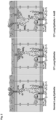
- Basolateral pumps and channels drive bicarbonate flux into polarized epithelial cells, and a primary function of CFTR is to passively release this bicarbonate through the apical membrane into the ASL ( Fig. 12 , left).
- a leading model of CF pathophysiology predicts that loss-of-function of CFTR reduces apical bicarbonate release, leading to acidification of the ASL and a build-up of bicarbonate ions inside the epithelial cells ( Fig. 12 , middle).
- CFTR CFTR-deficient epithelial cells
- a small molecule or a complex can permeabilize the apical membrane of differentiated human lung epithelia to bicarbonate.
- a series of natural and synthetic small molecules reported previously to permeabilize liposomes, cells, and/or nasal epithelia of mice to anions were tested for the capacity to increase short circuit current across CuFi-1 epithelial monolayers using an Ussing chamber.
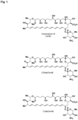
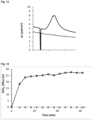
- the clinically approved antifungal natural product amphotericin B (AmB) ( Fig. 1 ) stood out as being exceptionally effective ( Fig. 13 ). Little or no permeabilization of these same epithelia was observed with all of the other compounds tested, including a single-atom-deficient synthetic derivative of AmB, such as C35deOAmB ( Fig. 12 ).
- Treatment with AmB, AmB and cholesterol, C3deOAmB and cholesterol, AmB and ergosterol, or C3deOAmB and ergosterol can rescue one or more of ASL pH, viscosity, and antimicrobial activity in primary lung epithelia derived from CF.
- AmB can permeabilize eukaryotic cells, such as yeast cells, to potassium and other ions. Ermishkin LN et al. (1977) Biochim Biophys Acta 470(3): 357-367 . AmB is also highly toxic to yeast, and this toxicity was thought to be inextricably linked to its membrane permeabilization. However, we found that a synthesized derivative of AmB lacking a single oxygen atom at C35 (C35deOAmB) ( Fig. 1 ) does not form ion channels, and yet still maintains potent fungicidal activity. Gray KC et al. (2012) Proc Natl Acad Set USA 109(7): 2234-2239 .
- AmB may be effective for increasing the pH of ASL in the lungs of CF patients, thereby improving airway antimicrobial activity and airway protection in these patients.
- Pre-complexation of AmB with ergosterol may substantially increase the therapeutic index for yeast growth rescue, i.e., preserves channel formation without potent fugicidal activity.
- AmB and cholesterol together are effective for increasing the pH of ASL in the lungs of CF patients, thereby improving airway antimicrobial activity and airway protection in these patients.
- the molar ratio of AmB:cholesterol is in the range from 1:2.6 to about 1:50. In certain embodiments, the molar ratio of AmB:cholesterol is in the range from about 1:3 to about 1:15.
- C3deOAmB and cholesterol together are effective for increasing the pH of ASL in the lungs of CF patients, thereby improving airway antimicrobial activity and airway protection in these patients.
- AMBIOSOME ® for Injection is a sterile, lyophilized preparation of AmB for intravenous infusion.
- Each vial contains 50 mg of amphotericin B intercalated into a liposomal membrane consisting of approximately 213 mg hydrogenated soy phosphatidylcholine; 52 mg cholesterol, 84 mg distearoylphosphatidyl-glycerol; 0.64 mg alpha tocopherol, together with 900 mg sucrose, and 27 mg disodium succinate hexahydrate as buffer.
- the molar ratio of AmB to cholesterol for this product is about 1:2.5.
- AmB and ergosterol together are effective for increasing the pH of ASL in the lungs of CF patients, thereby improving airway antimicrobial activity and airway protection in these patients.
- C3deOAmB and ergosterol together are effective for increasing the pH of ASL in the lungs of CF patients, thereby improving airway antimicrobial activity and airway protection in these patients.
- An aspect of the invention is a complex formed between (i) amphotericin B (AmB) a pharmaceutically acceptable salt or hydrate thereof, and (ii) cholesterol, for use in treating cystic fibrosis.
- AmB amphotericin B
- This and similar complexes can be formed as disclosed herein, and they can be assayed by a method such as disclosed in the Examples. Anderson TM et al. (2014) Nat Chem Biol 10(5):404-406 .
- a “complex” as used herein refers to a conjugate formed between two or more component moieties, wherein the various component moieties are covalently linked.
- the complex may have a single or central component moiety to which all other component moieties are individually linked.
- each component moiety is linked to at least one other component moiety, i.e., without requiring a single or central component moiety to which all other component moieties are individually linked.
- a complex may have a single or central AmB component moiety to which all cholesterol component moieties are individually linked.
- the complex consists of (i) amphotericin B (AmB), or a pharmaceutically acceptable salt or hydrate thereof, and (ii) cholesterol.
- the complex consists essentially of (i) amphotericin B (AmB), or a pharmaceutically acceptable salt or hydrate thereof, and (ii) cholesterol.
- An aspect of the invention is a composition, comprising (i) amphotericin B (AmB), or a pharmaceutically acceptable salt or hydrate thereof, and (ii) cholesterol, for use in treating cystic fibrosis, wherein the molar ratio of AmB to cholesterol is greater than 1:2.4 (e.g., about 1:2, 1:1, 2:1, 3:1, 4:1, or 5:1) or in the range from 1:2.6 to about 1:50.
- AmB amphotericin B
- cholesterol for use in treating cystic fibrosis
- An aspect of the invention is a composition, comprising (i) amphotericin B (AmB), or a pharmaceutically acceptable salt or hydrate thereof, and (ii) cholesterol, for use in treating cystic fibrosis, wherein the molar ratio of AmB to cholesterol is in the range from 1:2.6 to about 1:50.
- AmB amphotericin B
- cholesterol for use in treating cystic fibrosis, wherein the molar ratio of AmB to cholesterol is in the range from 1:2.6 to about 1:50.
- the composition consists of (i) amphotericin B (AmB), or a pharmaceutically acceptable salt or hydrate thereof, and (ii) cholesterol, for use in treating cystic fibrosis, wherein the molar ratio of AmB to cholesterol is in the range from 1:2.6 to about 1:50.
- AmB amphotericin B
- cholesterol for use in treating cystic fibrosis, wherein the molar ratio of AmB to cholesterol is in the range from 1:2.6 to about 1:50.
- the composition consists essentially of (i) amphotericin B (AmB), or a pharmaceutically acceptable salt or hydrate thereof, and (ii) cholesterol, for use in treating cystic fibrosis, wherein the molar ratio of AmB to cholesterol is in the range from 1:2.6 to about 1:50.
- AmB amphotericin B
- cholesterol for use in treating cystic fibrosis, wherein the molar ratio of AmB to cholesterol is in the range from 1:2.6 to about 1:50.
- the molar ratio of AmB to cholesterol is in the range from about 1:3 to about 1:15.
- the molar ratio of AmB to cholesterol is in the range from about 1:4 to about 1:12.
- the molar ratio of AmB to cholesterol is in the range from about 1:5 to about 1:10.
- the AmB and the cholesterol are present in a molar ratio of AmB to cholesterol.
- the molar ratio is about 1:3 to about 1:50. In certain embodiments, the molar ratio is about 1:4 to about 1:50. In certain embodiments, the molar ratio is about 1:5 to about 1:50. In certain embodiments, the molar ratio is about 1:6 to about 1:50. In certain embodiments, the molar ratio is about 1:7 to about 1:50. In certain embodiments, the molar ratio is about 1:8 to about 1:50. In certain embodiments, the molar ratio is about 1:9 to about 1:50. In certain embodiments, the molar ratio is about 1:10 to about 1:50.
- the molar ratio is about 1:11 to about 1:50. In certain embodiments, the molar ratio is about 1:12 to about 1:50. In certain embodiments, the molar ratio is about 1:13 to about 1:50. In certain embodiments, the molar ratio is about 1:14 to about 1:50. In certain embodiments, the molar ratio is about 1:15 to about 1:50. In certain embodiments, the molar ratio is about 1:16 to about 1:50. In certain embodiments, the molar ratio is about 1:17 to about 1:50. In certain embodiments, the molar ratio is about 1:18 to about 1:50. In certain embodiments, the molar ratio is about 1:19 to about 1:50.
- the molar ratio is about 1:20 to about 1:50. In certain embodiments, the molar ratio is about 1:21 to about 1:50. In certain embodiments, the molar ratio is about 1:22 to about 1:50. In certain embodiments, the molar ratio is about 1:23 to about 1:50. In certain embodiments, the molar ratio is about 1:24 to about 1:50. In certain embodiments, the molar ratio is about 1:25 to about 1:50. In certain embodiments, the molar ratio is about 1:26 to about 1:50. In certain embodiments, the molar ratio is about 1:27 to about 1:28. In certain embodiments, the molar ratio is about 1:29 to about 1:50.
- the molar ratio is about 1:30 to about 1:50. In certain embodiments, the molar ratio is about 1:31 to about 1:50. In certain embodiments, the molar ratio is about 1:32 to about 1:50. In certain embodiments, the molar ratio is about 1:33 to about 1:50. In certain embodiments, the molar ratio is about 1:34 to about 1:50. In certain embodiments, the molar ratio is about 1:35 to about 1:50. In certain embodiments, the molar ratio is about 1:36 to about 1:50. In certain embodiments, the molar ratio is about 1:37 to about 1:50. In certain embodiments, the molar ratio is about 1:38 to about 1:50. In certain embodiments, the molar ratio is about 1:39 to about 1:50. In certain embodiments, the molar ratio is about 1:40 to about 1:50.
- the molar ratio is about 1:3 to about 1:40. In certain embodiments, the molar ratio is about 1:4 to about 1:40. In certain embodiments, the molar ratio is about 1:5 to about 1:40. In certain embodiments, the molar ratio is about 1:6 to about 1:40. In certain embodiments, the molar ratio is about 1:7 to about 1:40. In certain embodiments, the molar ratio is about 1:8 to about 1:40. In certain embodiments, the molar ratio is about 1:9 to about 1:40. In certain embodiments, the molar ratio is about 1:10 to about 1:40. In certain embodiments, the molar ratio is about 1:11 to about 1:40.
- the molar ratio is about 1:12 to about 1:40. In certain embodiments, the molar ratio is about 1:13 to about 1:40. In certain embodiments, the molar ratio is about 1:14 to about 1:40. In certain embodiments, the molar ratio is about 1:15 to about 1:40. In certain embodiments, the molar ratio is about 1:16 to about 1:40. In certain embodiments, the molar ratio is about 1:17 to about 1:40. In certain embodiments, the molar ratio is about 1:18 to about 1:40. In certain embodiments, the molar ratio is about 1:19 to about 1:40. In certain embodiments, the molar ratio is about 1:20 to about 1:40.
- the molar ratio is about 1:21 to about 1:40. In certain embodiments, the molar ratio is about 1:22 to about 1:40. In certain embodiments, the molar ratio is about 1:23 to about 1:40. In certain embodiments, the molar ratio is about 1:24 to about 1:40. In certain embodiments, the molar ratio is about 1:25 to about 1:40. In certain embodiments, the molar ratio is about 1:26 to about 1:40. In certain embodiments, the molar ratio is about 1:27 to about 1:28. In certain embodiments, the molar ratio is about 1:29 to about 1:40. In certain embodiments, the molar ratio is about 1:30 to about 1:40.
- the molar ratio is about 1:3 to about 1:30. In certain embodiments, the molar ratio is about 1:4 to about 1:30. In certain embodiments, the molar ratio is about 1:5 to about 1:30. In certain embodiments, the molar ratio is about 1:6 to about 1:30. In certain embodiments, the molar ratio is about 1:7 to about 1:30. In certain embodiments, the molar ratio is about 1:8 to about 1:30. In certain embodiments, the molar ratio is about 1:9 to about 1:30. In certain embodiments, the molar ratio is about 1:10 to about 1:30. In certain embodiments, the molar ratio is about 1:11 to about 1:30.
- the molar ratio is about 1:12 to about 1:30. In certain embodiments, the molar ratio is about 1:13 to about 1:30. In certain embodiments, the molar ratio is about 1:14 to about 1:30. In certain embodiments, the molar ratio is about 1:15 to about 1:30. In certain embodiments, the molar ratio is about 1:16 to about 1:30. In certain embodiments, the molar ratio is about 1:17 to about 1:30. In certain embodiments, the molar ratio is about 1:18 to about 1:30. In certain embodiments, the molar ratio is about 1:19 to about 1:30. In certain embodiments, the molar ratio is about 1:20 to about 1:30.
- the molar ratio is about 1:3 to about 1:20. In certain embodiments, the molar ratio is about 1:4 to about 1:20. In certain embodiments, the molar ratio is about 1:5 to about 1:20. In certain embodiments, the molar ratio is about 1:6 to about 1:20. In certain embodiments, the molar ratio is about 1:7 to about 1:20. In certain embodiments, the molar ratio is about 1:8 to about 1:20. In certain embodiments, the molar ratio is about 1:9 to about 1:20. In certain embodiments, the molar ratio is about 1:10 to about 1:20.
- the molar ratio is about 1:3 to about 1:10. In certain embodiments, the molar ratio is about 1:4 to about 1:10. In certain embodiments, the molar ratio is about 1:5 to about 1:10.
- the AmB and the cholesterol are present as a complex.
- An example of how to prepare such a complex is disclosed in the Examples.
- the composition is formulated for systemic administration.
- the composition is formulated for intravenous administration.
- the composition is formulated for pulmonary administration.
- the composition is formulated for airway administration.
- the composition is formulated for aerosol administration.
- references to the methods of treatment by therapy in the subsequent paragraphs are to be interpreted as references to compositions of the present invention for use in those methods.
- An aspect of the invention is a method of treating cystic fibrosis, comprising administering to a subject in need thereof a therapeutically effective amount of a complex comprising (i) amphotericin B (AmB), or a pharmaceutically acceptable salt or hydrate thereof, and (ii) cholesterol, thereby treating the cystic fibrosis.
- a complex comprising (i) amphotericin B (AmB), or a pharmaceutically acceptable salt or hydrate thereof, and (ii) cholesterol, thereby treating the cystic fibrosis.
- An aspect of the invention is a method of treating cystic fibrosis, comprising administering to a subject in need thereof a therapeutically effective amount of a composition comprising (i) amphotericin B (AmB), or a pharmaceutically acceptable salt or hydrate thereof, and (ii) cholesterol, thereby treating the cystic fibrosis.
- a composition comprising (i) amphotericin B (AmB), or a pharmaceutically acceptable salt or hydrate thereof, and (ii) cholesterol, thereby treating the cystic fibrosis.
- the terms “treat” and “treating” refer to performing an intervention that results in (a) preventing a condition or disease from occurring in a subject that may be at risk of developing or predisposed to having the condition or disease but has not yet been diagnosed as having it; (b) inhibiting a condition or disease, e.g., slowing or arresting its development; or (c) relieving or ameliorating a condition or disease, e.g., causing regression of the condition or disease.
- treating and “treat” refer to performing an intervention that results in (a) inhibiting a condition or disease, e.g., slowing or arresting its development; or (b) relieving or ameliorating a condition or disease, e.g., causing regression of the condition or disease.
- a "subject” refers to a living mammal.
- a subject is a non-human mammal, including, without limitation, a mouse, rat, hamster, guinea pig, rabbit, sheep, goat, cat, dog, pig, horse, cow, or non-human primate.
- a subject is a human.
- the phrase "effective amount” refers to any amount that is sufficient to achieve a desired biological effect.
- terapéuticaally effective amount refers to any amount that is sufficient to achieve a desired therapeutic effect, e.g., treating cystic fibrosis.
- the composition consists of (i) amphotericin B (AmB), or a pharmaceutically acceptable salt or hydrate thereof, and (ii) cholesterol, wherein the molar ratio of AmB to cholesterol is in the range from 1:2.6 to about 1:50.
- the composition consists essentially of (i) amphotericin B (AmB), or a pharmaceutically acceptable salt or hydrate thereof, and (ii) cholesterol, wherein the molar ratio of AmB to cholesterol is in the range from 1:2.6 to about 1:50.
- the AmB and the cholesterol are present in a molar ratio in the range from about 1:3 to about 1:15.
- the AmB and the cholesterol are present in a molar ratio in the range from about 1:4 to about 1:12.
- the AmB and the cholesterol are present in a molar ratio in the range from about 1:5 to about 1:10.
- the AmB and the cholesterol are present in a molar ratio of Amb to cholesterol.
- the molar ratio is about 1:3 to about 1:50. In certain embodiments, the molar ratio is about 1:4 to about 1:50. In certain embodiments, the molar ratio is about 1:5 to about 1:50. In certain embodiments, the molar ratio is about 1:6 to about 1:50. In certain embodiments, the molar ratio is about 1:7 to about 1:50. In certain embodiments, the molar ratio is about 1:8 to about 1:50. In certain embodiments, the molar ratio is about 1:9 to about 1:50. In certain embodiments, the molar ratio is about 1:10 to about 1:50.
- the molar ratio is about 1:11 to about 1:50. In certain embodiments, the molar ratio is about 1:12 to about 1:50. In certain embodiments, the molar ratio is about 1:13 to about 1:50. In certain embodiments, the molar ratio is about 1:14 to about 1:50. In certain embodiments, the molar ratio is about 1:15 to about 1:50. In certain embodiments, the molar ratio is about 1:16 to about 1:50. In certain embodiments, the molar ratio is about 1:17 to about 1:50. In certain embodiments, the molar ratio is about 1:18 to about 1:50. In certain embodiments, the molar ratio is about 1:19 to about 1:50.
- the molar ratio is about 1:20 to about 1:50. In certain embodiments, the molar ratio is about 1:21 to about 1:50. In certain embodiments, the molar ratio is about 1:22 to about 1:50. In certain embodiments, the molar ratio is about 1:23 to about 1:50. In certain embodiments, the molar ratio is about 1:24 to about 1:50. In certain embodiments, the molar ratio is about 1:25 to about 1:50. In certain embodiments, the molar ratio is about 1:26 to about 1:50. In certain embodiments, the molar ratio is about 1:27 to about 1:28. In certain embodiments, the molar ratio is about 1:29 to about 1:50.
- the molar ratio is about 1:30 to about 1:50. In certain embodiments, the molar ratio is about 1:31 to about 1:50. In certain embodiments, the molar ratio is about 1:32 to about 1:50. In certain embodiments, the molar ratio is about 1:33 to about 1:50. In certain embodiments, the molar ratio is about 1:34 to about 1:50. In certain embodiments, the molar ratio is about 1:35 to about 1:50. In certain embodiments, the molar ratio is about 1:36 to about 1:50. In certain embodiments, the molar ratio is about 1:37 to about 1:50. In certain embodiments, the molar ratio is about 1:38 to about 1:50. In certain embodiments, the molar ratio is about 1:39 to about 1:50. In certain embodiments, the molar ratio is about 1:40 to about 1:50.
- the molar ratio is about 1:3 to about 1:40. In certain embodiments, the molar ratio is about 1:4 to about 1:40. In certain embodiments, the molar ratio is about 1:5 to about 1:40. In certain embodiments, the molar ratio is about 1:6 to about 1:40. In certain embodiments, the molar ratio is about 1:7 to about 1:40. In certain embodiments, the molar ratio is about 1:8 to about 1:40. In certain embodiments, the molar ratio is about 1:9 to about 1:40. In certain embodiments, the molar ratio is about 1:10 to about 1:40. In certain embodiments, the molar ratio is about 1:11 to about 1:40.
- the molar ratio is about 1:12 to about 1:40. In certain embodiments, the molar ratio is about 1:13 to about 1:40. In certain embodiments, the molar ratio is about 1:14 to about 1:40. In certain embodiments, the molar ratio is about 1:15 to about 1:40. In certain embodiments, the molar ratio is about 1:16 to about 1:40. In certain embodiments, the molar ratio is about 1:17 to about 1:40. In certain embodiments, the molar ratio is about 1:18 to about 1:40. In certain embodiments, the molar ratio is about 1:19 to about 1:40. In certain embodiments, the molar ratio is about 1:20 to about 1:40.
- the molar ratio is about 1:21 to about 1:40. In certain embodiments, the molar ratio is about 1:22 to about 1:40. In certain embodiments, the molar ratio is about 1:23 to about 1:40. In certain embodiments, the molar ratio is about 1:24 to about 1:40. In certain embodiments, the molar ratio is about 1:25 to about 1:40. In certain embodiments, the molar ratio is about 1:26 to about 1:40. In certain embodiments, the molar ratio is about 1:27 to about 1:28. In certain embodiments, the molar ratio is about 1:29 to about 1:40. In certain embodiments, the molar ratio is about 1:30 to about 1:40.
- the molar ratio is about 1:3 to about 1:30. In certain embodiments, the molar ratio is about 1:4 to about 1:30. In certain embodiments, the molar ratio is about 1:5 to about 1:30. In certain embodiments, the molar ratio is about 1:6 to about 1:30. In certain embodiments, the molar ratio is about 1:7 to about 1:30. In certain embodiments, the molar ratio is about 1:8 to about 1:30. In certain embodiments, the molar ratio is about 1:9 to about 1:30. In certain embodiments, the molar ratio is about 1:10 to about 1:30. In certain embodiments, the molar ratio is about 1:11 to about 1:30.
- the molar ratio is about 1:12 to about 1:30. In certain embodiments, the molar ratio is about 1:13 to about 1:30. In certain embodiments, the molar ratio is about 1:14 to about 1:30. In certain embodiments, the molar ratio is about 1:15 to about 1:30. In certain embodiments, the molar ratio is about 1:16 to about 1:30. In certain embodiments, the molar ratio is about 1:17 to about 1:30. In certain embodiments, the molar ratio is about 1:18 to about 1:30. In certain embodiments, the molar ratio is about 1:19 to about 1:30. In certain embodiments, the molar ratio is about 1:20 to about 1:30.
- the molar ratio is about 1:3 to about 1:20. In certain embodiments, the molar ratio is about 1:4 to about 1:20. In certain embodiments, the molar ratio is about 1:5 to about 1:20. In certain embodiments, the molar ratio is about 1:6 to about 1:20. In certain embodiments, the molar ratio is about 1:7 to about 1:20. In certain embodiments, the molar ratio is about 1:8 to about 1:20. In certain embodiments, the molar ratio is about 1:9 to about 1:20. In certain embodiments, the molar ratio is about 1:10 to about 1:20.
- the molar ratio is about 1:3 to about 1:10. In certain embodiments, the molar ratio is about 1:4 to about 1:10. In certain embodiments, the molar ratio is about 1:5 to about 1:10.
- the molar ratio can be higher, as high as about 1:1 or even as high as 10:1.
- the AmB and the cholesterol are present as a complex.
- the composition is administered systemically.
- the composition is administered intravenously.
- the composition is administered to an airway of the subject.
- the composition can be administered to an airway of the subject by bronchoalveolar lavage (BAL) or by aerosol.
- BAL bronchoalveolar lavage
- an "airway of a subject” refers to any or all of the following pulmonary structures: trachea, bronchi, bronchioles, alveoli.
- an airway of a subject refers to a so-called conducting airway, i.e., any or all of the following pulmonary structures: trachea, bronchi, and bronchioles.
- the composition is administered as an aerosol to an airway of the subject.
- An aspect of the invention is a method of increasing the pH of airway surface liquid in a subject having cystic fibrosis, comprising administering to a subject having cystic fibrosis a therapeutically effective amount of a complex comprising (i) amphotericin B (AmB), or a pharmaceutically acceptable salt or hydrate thereof, and (ii) cholesterol, thereby increasing the pH of airway surface liquid in the subject having cystic fibrosis.
- a complex comprising (i) amphotericin B (AmB), or a pharmaceutically acceptable salt or hydrate thereof, and (ii) cholesterol
- An aspect of the invention is a method of increasing the pH of airway surface liquid in a subject having cystic fibrosis, comprising administering to a subject having cystic fibrosis a therapeutically effective amount of a composition comprising (i) amphotericin B (AmB), or a pharmaceutically acceptable salt or hydrate thereof, and (ii) cholesterol, thereby increasing the pH of airway surface liquid in the subject having cystic fibrosis.
- a composition comprising (i) amphotericin B (AmB), or a pharmaceutically acceptable salt or hydrate thereof, and (ii) cholesterol
- the composition consists of (i) amphotericin B (AmB), or a pharmaceutically acceptable salt or hydrate thereof, and (ii) cholesterol, wherein the molar ratio of AmB to cholesterol is in the range from 1:2.6 to about 1:50.
- the composition consists essentially of (i) amphotericin B (AmB), or a pharmaceutically acceptable salt or hydrate thereof, and (ii) cholesterol, wherein the molar ratio of AmB to cholesterol is in the range from 1:2.6 to about 1:50.
- airway surface liquid (ASL) in a subject can be measured using any technique known to those of skill in the art.
- airway pH can be measured by placing a planar pH-sensitive probe on the tracheal surface. Pezzulo AA et al. (2012) Nature 487: 109-113 .
- the pH of ASL in a subject is said to be increased when it is measurably greater than the pH of ASL of an untreated subject.
- the pH of ASL in a subject is said to be increased when it is measurably greater than the pH of ASL of the same subject measured prior to or distant in time from treatment according to a method of the invention.
- the increase in pH can be 0.01 pH unit to 2.0 pH unit. In certain embodiments, the increase in pH can be 0.01 pH unit to 1.0 pH unit. In certain embodiments, the increase in pH can be 0.01 pH unit to 0.5 pH unit. In certain embodiments, the increase in pH can be 0.01 pH unit to 0.4 pH unit. In certain embodiments, the increase in pH can be 0.01 pH unit to 0.3 pH unit. In certain embodiments, the increase in pH can be 0.01 pH unit to 0.2 pH unit. In certain embodiments, the increase in pH can be 0.01 pH unit to 0.1 pH unit.
- the increase in pH is by apical addition of any one of the compositions disclosed herein.
- the increase in pH of ASL correlates to alkalization of the apical solution.
- the alkalization of the apical solution is bicarbonate-dependent.
- the increased apical chamber alkalization occurs in the presence of basolateral bicarbonate.
- the increase in ASL pH is not due to increasing CFTR activity/trafficking to the surface or disrupting membrane integrity.
- the AmB and the cholesterol are present in a molar ratio in the range from about 1:3 to about 1:15.
- the AmB and the cholesterol are present in a molar ratio in the range from about 1:4 to about 1:12.
- the AmB and the cholesterol are present in a molar ratio in the range from about 1:5 to about 1:10.
- the AmB and the cholesterol are present in a molar ratio of AmB to cholesterol.
- the molar ratio is about 1:3 to about 1:50. In certain embodiments, the molar ratio is about 1:4 to about 1:50. In certain embodiments, the molar ratio is about 1:5 to about 1:50. In certain embodiments, the molar ratio is about 1:6 to about 1:50. In certain embodiments, the molar ratio is about 1:7 to about 1:50. In certain embodiments, the molar ratio is about 1:8 to about 1:50. In certain embodiments, the molar ratio is about 1:9 to about 1:50. In certain embodiments, the molar ratio is about 1:10 to about 1:50.
- the molar ratio is about 1:11 to about 1:50. In certain embodiments, the molar ratio is about 1:12 to about 1:50. In certain embodiments, the molar ratio is about 1:13 to about 1:50. In certain embodiments, the molar ratio is about 1:14 to about 1:50. In certain embodiments, the molar ratio is about 1:15 to about 1:50. In certain embodiments, the molar ratio is about 1:16 to about 1:50. In certain embodiments, the molar ratio is about 1:17 to about 1:50. In certain embodiments, the molar ratio is about 1:18 to about 1:50. In certain embodiments, the molar ratio is about 1:19 to about 1:50.
- the molar ratio is about 1:20 to about 1:50. In certain embodiments, the molar ratio is about 1:21 to about 1:50. In certain embodiments, the molar ratio is about 1:22 to about 1:50. In certain embodiments, the molar ratio is about 1:23 to about 1:50. In certain embodiments, the molar ratio is about 1:24 to about 1:50. In certain embodiments, the molar ratio is about 1:25 to about 1:50. In certain embodiments, the molar ratio is about 1:26 to about 1:50. In certain embodiments, the molar ratio is about 1:27 to about 1:28. In certain embodiments, the molar ratio is about 1:29 to about 1:50.
- the molar ratio is about 1:30 to about 1:50. In certain embodiments, the molar ratio is about 1:31 to about 1:50. In certain embodiments, the molar ratio is about 1:32 to about 1:50. In certain embodiments, the molar ratio is about 1:33 to about 1:50. In certain embodiments, the molar ratio is about 1:34 to about 1:50. In certain embodiments, the molar ratio is about 1:35 to about 1:50. In certain embodiments, the molar ratio is about 1:36 to about 1:50. In certain embodiments, the molar ratio is about 1:37 to about 1:50. In certain embodiments, the molar ratio is about 1:38 to about 1:50. In certain embodiments, the molar ratio is about 1:39 to about 1:50. In certain embodiments, the molar ratio is about 1:40 to about 1:50.
- the molar ratio is about 1:3 to about 1:40. In certain embodiments, the molar ratio is about 1:4 to about 1:40. In certain embodiments, the molar ratio is about 1:5 to about 1:40. In certain embodiments, the molar ratio is about 1:6 to about 1:40. In certain embodiments, the molar ratio is about 1:7 to about 1:40. In certain embodiments, the molar ratio is about 1:8 to about 1:40. In certain embodiments, the molar ratio is about 1:9 to about 1:40. In certain embodiments, the molar ratio is about 1:10 to about 1:40. In certain embodiments, the molar ratio is about 1:11 to about 1:40.
- the molar ratio is about 1:12 to about 1:40. In certain embodiments, the molar ratio is about 1:13 to about 1:40. In certain embodiments, the molar ratio is about 1:14 to about 1:40. In certain embodiments, the molar ratio is about 1:15 to about 1:40. In certain embodiments, the molar ratio is about 1:16 to about 1:40. In certain embodiments, the molar ratio is about 1:17 to about 1:40. In certain embodiments, the molar ratio is about 1:18 to about 1:40. In certain embodiments, the molar ratio is about 1:19 to about 1:40. In certain embodiments, the molar ratio is about 1:20 to about 1:40.
- the molar ratio is about 1:21 to about 1:40. In certain embodiments, the molar ratio is about 1:22 to about 1:40. In certain embodiments, the molar ratio is about 1:23 to about 1:40. In certain embodiments, the molar ratio is about 1:24 to about 1:40. In certain embodiments, the molar ratio is about 1:25 to about 1:40. In certain embodiments, the molar ratio is about 1:26 to about 1:40. In certain embodiments, the molar ratio is about 1:27 to about 1:28. In certain embodiments, the molar ratio is about 1:29 to about 1:40. In certain embodiments, the molar ratio is about 1:30 to about 1:40.
- the molar ratio is about 1:3 to about 1:30. In certain embodiments, the molar ratio is about 1:4 to about 1:30. In certain embodiments, the molar ratio is about 1:5 to about 1:30. In certain embodiments, the molar ratio is about 1:6 to about 1:30. In certain embodiments, the molar ratio is about 1:7 to about 1:30. In certain embodiments, the molar ratio is about 1:8 to about 1:30. In certain embodiments, the molar ratio is about 1:9 to about 1:30. In certain embodiments, the molar ratio is about 1:10 to about 1:30. In certain embodiments, the molar ratio is about 1:11 to about 1:30.
- the molar ratio is about 1:12 to about 1:30. In certain embodiments, the molar ratio is about 1:13 to about 1:30. In certain embodiments, the molar ratio is about 1:14 to about 1:30. In certain embodiments, the molar ratio is about 1:15 to about 1:30. In certain embodiments, the molar ratio is about 1:16 to about 1:30. In certain embodiments, the molar ratio is about 1:17 to about 1:30. In certain embodiments, the molar ratio is about 1:18 to about 1:30. In certain embodiments, the molar ratio is about 1:19 to about 1:30. In certain embodiments, the molar ratio is about 1:20 to about 1:30.
- the molar ratio is about 1:3 to about 1:20. In certain embodiments, the molar ratio is about 1:4 to about 1:20. In certain embodiments, the molar ratio is about 1:5 to about 1:20. In certain embodiments, the molar ratio is about 1:6 to about 1:20. In certain embodiments, the molar ratio is about 1:7 to about 1:20. In certain embodiments, the molar ratio is about 1:8 to about 1:20. In certain embodiments, the molar ratio is about 1:9 to about 1:20. In certain embodiments, the molar ratio is about 1:10 to about 1:20.
- the molar ratio is about 1:3 to about 1:10. In certain embodiments, the molar ratio is about 1:4 to about 1:10. In certain embodiments, the molar ratio is about 1:5 to about 1:10.
- the molar ratio can be higher, as high as about 1:1 or even as high as 10:1.
- the AmB and the cholesterol are present as a complex.
- the composition is administered systemically.
- the composition is administered intravenously.
- the composition is administered to an airway of the subject.
- the composition can be administered to an airway of the subject by bronchoalveolar lavage (BAL) or by aerosol.
- BAL bronchoalveolar lavage
- an "airway of a subject” refers to any or all of the following pulmonary structures: trachea, bronchi, bronchioles, alveoli.
- an airway of a subject refers to a so-called conducting airway, i.e., any or all of the following pulmonary structures: trachea, bronchi, and bronchioles.
- the composition is administered as an aerosol to an airway of the subject.
- the subject is a human.
- the subject in certain embodiments, is less than 12 years old.
- the subject is at least 12 years old.
- the subject is at least 12 to about 16 years old.
- the subject is about 16 to about 24 years old.
- the subject is about 24 to about 30 years old.
- the subject is about 30 to about 40 years old.
- the subject is about 40 to about 50 years old.
- the subject is about 50 to about 60 years old.
- the subject is about 60 to about 70 years old.
- the subject is about 70 to about 80 years old.
- any of the methods disclosed herein permeabilize the apical membrane. In some embodiments, any of the methods disclosed herein permeabilize the apical membrane to protons. In some embodiments, any of the methods disclosed herein permeabilize the apical membrane to bicarbonate anions.
- any of the methods disclosed herein treat a mutation class of cystic fibrosis selected from the group consisting of I, II, III, IV, V, VI, U, and a combination thereof.
- the mutation class is selected from the group consisting of 14, II/II, II/U, and U/III.
- any of the methods disclosed herein treat a specific genotype of cystic fibrosis.
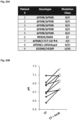
- the genotype is selected from the group consisting of ⁇ F508/ ⁇ F508, R553X/E60X, ⁇ F508/1717-1G ⁇ A, ⁇ F508/c.2052dupA, D293G/V520F, and G551D.
- any of the methods disclosed herein are genotype-independent treatments.
- the phrases "genotype-independent” or “genotype-agnostic” refer to any treatment that is independent of the exact nature of the genetic mutation underlying the reduced CFTR expression or reduced CFTR function in CF.
- any of the methods disclosed herein treat refractory or resistant cystic fibrosis.
- the cystic fibrosis is refractory or resistant to one or more cystic fibrosis treatments (e.g., ivacaftor).
- compositions of the invention may be administered in pharmaceutically acceptable solutions, which may routinely contain pharmaceutically acceptable concentrations of salt, buffering agents, preservatives, compatible carriers, adjuvants, and optionally other therapeutic ingredients.
- Amphotericin B is commercially available in a number of formulations, including deoxycholate-based formulations and lipid-based (including liposomal) formulations.
- AmB is formulated with cholesterol.
- such formulation comprises a complex formed between AmB and cholesterol.
- an effective amount of the active compound or composition of the invention can be administered to a subject by any mode that delivers the compound or composition to the desired location or surface.
- Administering the pharmaceutical composition of the present invention may be accomplished by any means known to the skilled artisan. Routes of administration include but are not limited to oral, intravenous, intramuscular, intraperitoneal, subcutaneous, direct injection (for example, into a tumor or abscess), mucosal, inhalation, and topical.
- the compound or composition is administered systemically. In certain preferred embodiments, the compound or composition is administered intravenously.
- the compound or composition is administered to an airway. In certain preferred embodiments, the compound or composition is administered as an aerosol to an airway.
- Lyophilized formulations are generally reconstituted in suitable aqueous solution, e.g., in sterile water or saline, shortly prior to administration.
- the compounds i.e., compounds of the invention, and other therapeutic agents
- the compounds can be formulated readily by combining the active compound(s) with pharmaceutically acceptable carriers well known in the art.
- Such carriers enable the compounds of the invention to be formulated as tablets, pills, dragees, capsules, liquids, gels, syrups, slurries, suspensions and the like, for oral ingestion by a subject to be treated.
- Pharmaceutical preparations for oral use can be obtained as solid excipient, optionally grinding a resulting mixture, and processing the mixture of granules, after adding suitable auxiliaries, if desired, to obtain tablets or dragee cores.
- Suitable excipients are, in particular, fillers such as sugars, including lactose, sucrose, mannitol, or sorbitol; cellulose preparations such as, for example, maize starch, wheat starch, rice starch, potato starch, gelatin, gum tragacanth, methyl cellulose, hydroxypropylmethyl-cellulose, sodium carboxymethylcellulose, and/or polyvinylpyrrolidone (PVP).
- disintegrating agents may be added, such as the cross-linked polyvinyl pyrrolidone, agar, or alginic acid or a salt thereof such as sodium alginate.
- the oral formulations may also be formulated in saline or buffers, e.g., EDTA for neutralizing internal acid conditions or may be administered without any carriers.
- oral dosage forms of the above component or components may be chemically modified so that oral delivery of the derivative is efficacious.
- the chemical modification contemplated is the attachment of at least one moiety to the component molecule itself, where said moiety permits (a) inhibition of acid hydrolysis; and (b) uptake into the blood stream from the stomach or intestine.
- the increase in overall stability of the component or components and increase in circulation time in the body examples include: polyethylene glycol, copolymers of ethylene glycol and propylene glycol, carboxymethyl cellulose, dextran, polyvinyl alcohol, polyvinyl pyrrolidone and polyproline.
- the location of release may be the stomach, the small intestine (the duodenum, the jejunum, or the ileum), or the large intestine.
- the stomach the small intestine (the duodenum, the jejunum, or the ileum), or the large intestine.
- One skilled in the art has available formulations which will not dissolve in the stomach, yet will release the material in the duodenum or elsewhere in the intestine.
- the release will avoid the deleterious effects of the stomach environment, either by protection of the compound of the invention (or derivative) or by release of the biologically active material beyond the stomach environment, such as in the intestine.
- a coating impermeable to at least pH 5.0 is essential.
- examples of the more common inert ingredients that are used as enteric coatings are cellulose acetate trimellitate (CAT), hydroxypropylmethylcellulose phthalate (HPMCP), HPMCP 50, HPMCP 55, polyvinyl acetate phthalate (PVAP), Eudragit L30D, Aquateric, cellulose acetate phthalate (CAP), Eudragit L, Eudragit S, and shellac. These coatings may be used as mixed films.
- a coating or mixture of coatings can also be used on tablets, which are not intended for protection against the stomach. This can include sugar coatings, or coatings which make the tablet easier to swallow.
- Capsules may consist of a hard shell (such as gelatin) for delivery of dry therapeutic (e.g., powder); for liquid forms, a soft gelatin shell may be used.
- the shell material of cachets could be thick starch or other edible paper. For pills, lozenges, molded tablets or tablet triturates, moist massing techniques can be used.
- the therapeutic can be included in the formulation as fine multi-particulates in the form of granules or pellets of particle size about 1 mm.
- the formulation of the material for capsule administration could also be as a powder, lightly compressed plugs or even as tablets.
- the therapeutic could be prepared by compression.
- Colorants and flavoring agents may all be included.
- the compound of the invention (or derivative) may be formulated (such as by liposome or microsphere encapsulation) and then further contained within an edible product, such as a refrigerated beverage containing colorants and flavoring agents.
- diluents could include carbohydrates, especially mannitol, ⁇ -lactose, anhydrous lactose, cellulose, sucrose, modified dextrans and starch.
- Certain inorganic salts may be also be used as fillers including calcium triphosphate, magnesium carbonate and sodium chloride.
- Some commercially available diluents are Fast-Flo, Emdex, STA-Rx 1500, Emcompress and Avicell.
- Disintegrants may be included in the formulation of the therapeutic into a solid dosage form.
- Materials used as disintegrates include but are not limited to starch, including the commercial disintegrant based on starch, Explotab. Sodium starch glycolate, AmBerlite, sodium carboxymethylcellulose, ultramylopectin, sodium alginate, gelatin, orange peel, acid carboxymethyl cellulose, natural sponge and bentonite may all be used.
- Another form of the disintegrants are the insoluble cationic exchange resins. Powdered gums may be used as disintegrants and as binders and these can include powdered gums such as agar, Karaya or tragacanth. Alginic acid and its sodium salt are also useful as disintegrants.
- Binders may be used to hold the therapeutic agent together to form a hard tablet and include materials from natural products such as acacia, tragacanth, starch and gelatin. Others include methyl cellulose (MC), ethyl cellulose (EC) and carboxymethyl cellulose (CMC). Polyvinyl pyrrolidone (PVP) and hydroxypropylmethyl cellulose (HPMC) could both be used in alcoholic solutions to granulate the therapeutic.
- MC methyl cellulose
- EC ethyl cellulose
- CMC carboxymethyl cellulose
- PVP polyvinyl pyrrolidone
- HPMC hydroxypropylmethyl cellulose
- Lubricants may be used as a layer between the therapeutic and the die wall, and these can include but are not limited to; stearic acid including its magnesium and calcium salts, polytetrafluoroethylene (PTFE), liquid paraffin, vegetable oils and waxes. Soluble lubricants may also be used such as sodium lauryl sulfate, magnesium lauryl sulfate, polyethylene glycol of various molecular weights, Carbowax 4000 and 6000.
- the glidants may include starch, talc, pyrogenic silica and hydrated silicoaluminate.
- Surfactants may include anionic detergents such as sodium lauryl sulfate, dioctyl sodium sulfosuccinate and dioctyl sodium sulfonate.
- anionic detergents such as sodium lauryl sulfate, dioctyl sodium sulfosuccinate and dioctyl sodium sulfonate.
- Cationic detergents which can be used and can include benzalkonium chloride and benzethonium chloride.
- Nonionic detergents that could be included in the formulation as surfactants include lauromacrogol 400, polyoxyl 40 stearate, polyoxyethylene hydrogenated castor oil 10, 50 and 60, glycerol monostearate, polysorbate 40, 60, 65 and 80, sucrose fatty acid ester, methyl cellulose and carboxymethyl cellulose. These surfactants could be present in the formulation of the compound of the invention or derivative either alone or as a mixture in different ratios.
- compositions which can be used orally include push-fit capsules made of gelatin, as well as soft, sealed capsules made of gelatin and a plasticizer, such as glycerol or sorbitol.
- the push-fit capsules can contain the active ingredients in admixture with filler such as lactose, binders such as starches, and/or lubricants such as talc or magnesium stearate and, optionally, stabilizers.
- the active compounds may be dissolved or suspended in suitable liquids, such as fatty oils, liquid paraffin, or liquid polyethylene glycols.
- stabilizers may be added.
- Microspheres formulated for oral administration may also be used. Such microspheres have been well defined in the art. All formulations for oral administration should be in dosages suitable for such administration.
- compositions may take the form of tablets or lozenges formulated in conventional manner.
- the compounds and compositions for use according to the present invention may be conveniently delivered in the form of an aerosol spray presentation from pressurized packs or a nebulizer, with the use of a suitable propellant, e.g., dichlorodifluoromethane, trichlorofluoromethane, dichlorotetrafluoroethane, carbon dioxide or other suitable gas.
- a suitable propellant e.g., dichlorodifluoromethane, trichlorofluoromethane, dichlorotetrafluoroethane, carbon dioxide or other suitable gas.
- a suitable propellant e.g., dichlorodifluoromethane, trichlorofluoromethane, dichlorotetrafluoroethane, carbon dioxide or other suitable gas.
- a suitable propellant e.g., dichlorodifluoromethane, trichlorofluoromethane, dichlorotetrafluoroethane
- pulmonary delivery of the compounds of the invention is delivered to the lungs of a mammal while inhaling and traverses across the lung epithelial lining to the blood stream.
- inhaled molecules include Adjei et al., Pharm Res 7:565-569 (1990 ); Adjei et al., Int J Pharmaceutics 63:135-144 (1990 ) (leuprolide acetate); Braquet et al., J Cardiovasc Pharmacol 13(suppl.
- Contemplated for use in the practice of this invention are a wide range of mechanical devices designed for pulmonary delivery of therapeutic products, including but not limited to nebulizers, metered dose inhalers, and powder inhalers, all of which are familiar to those skilled in the art.
- Ultravent nebulizer manufactured by Mallinckrodt, Inc., St. Louis, Mo.
- Acorn II nebulizer manufactured by Marquest Medical Products, Englewood, Colo.
- the Ventolin metered dose inhaler manufactured by Glaxo Inc., Research Triangle Park, North Carolina
- the Spinhaler powder inhaler manufactured by Fisons Corp., Bedford, Mass.
- each formulation is specific to the type of device employed and may involve the use of an appropriate propellant material, in addition to the usual diluents, adjuvants and/or carriers useful in therapy. Also, the use of liposomes, microcapsules or microspheres, inclusion complexes, or other types of carriers is contemplated.
- Chemically modified compound of the invention may also be prepared in different formulations depending on the type of chemical modification or the type of device employed.
- Formulations suitable for use with a nebulizer will typically comprise compound of the invention (or derivative) dissolved in water at a concentration of about 0.1 to 25 mg of biologically active compound of the invention per mL of solution.
- the formulation may also include a buffer and a simple sugar (e.g., for compound of the invention stabilization and regulation of osmotic pressure).
- the nebulizer formulation may also contain a surfactant, to reduce or prevent surface induced aggregation of the compound of the invention caused by atomization of the solution in forming the aerosol.
- Formulations for use with a metered-dose inhaler device will generally comprise a finely divided powder containing the compound of the invention (or derivative) suspended in a propellant with the aid of a surfactant.
- the propellant may be any conventional material employed for this purpose, such as a chlorofluorocarbon, a hydrochlorofluorocarbon, a hydrofluorocarbon, or a hydrocarbon, including trichlorofluoromethane, dichlorodifluoromethane, dichlorotetrafluoroethanol, and 1,1,1,2-tetrafluoroethane, or combinations thereof.
- Suitable surfactants include sorbitan trioleate and soya lecithin. Oleic acid may also be useful as a surfactant.
- Formulations for dispensing from a powder inhaler device will comprise a finely divided dry powder containing compound of the invention (or derivative) and may also include a bulking agent, such as lactose, sorbitol, sucrose, or mannitol in amounts which facilitate dispersal of the powder from the device, e.g., 50 to 90% by weight of the formulation.
- the compound of the invention (or derivative) should advantageously be prepared in particulate form with an average particle size of less than 10 micrometers ( ⁇ m), most preferably 0.5 to 5 ⁇ m, for most effective delivery to the deep lung.
- Nasal delivery of a pharmaceutical composition of the present invention is also contemplated.
- Nasal delivery allows the passage of a pharmaceutical composition of the present invention to the blood stream directly after administering the therapeutic product to the nose, without the necessity for deposition of the product in the lung.
- Formulations for nasal delivery include those with dextran or cyclodextran.
- a useful device is a small, hard bottle to which a metered dose sprayer is attached.
- the metered dose is delivered by drawing the pharmaceutical composition of the present invention solution into a chamber of defined volume, which chamber has an aperture dimensioned to aerosolize and aerosol formulation by forming a spray when a liquid in the chamber is compressed.
- the chamber is compressed to administer the pharmaceutical composition of the present invention.
- the chamber is a piston arrangement.
- Such devices are commercially available.
- a plastic squeeze bottle with an aperture or opening dimensioned to aerosolize an aerosol formulation by forming a spray when squeezed is used.
- the opening is usually found in the top of the bottle, and the top is generally tapered to partially fit in the nasal passages for efficient administration of the aerosol formulation.
- the nasal inhaler will provide a metered amount of the aerosol formulation, for administration of a measured dose of the drug.
- the compounds when it is desirable to deliver them systemically, may be formulated for parenteral administration by injection, e.g., by bolus injection or continuous infusion.
- Formulations for injection may be presented in unit dosage form, e.g., in ampoules or in multidose containers, with an added preservative.
- the compositions may take such forms as suspensions, solutions, or emulsions in oily or aqueous vehicles, and may contain formulatory agents such as suspending, stabilizing and/or dispersing agents.
- compositions for parenteral administration include aqueous solutions of the active compounds in water-soluble form. Additionally, suspensions of the active compounds may be prepared as appropriate oily injection suspensions. Suitable lipophilic solvents or vehicles include fatty oils such as sesame oil, or synthetic fatty acid esters, such as ethyl oleate or triglycerides, or liposomes. Aqueous injection suspensions may contain substances which increase the viscosity of the suspension, such as sodium carboxymethylcellulose, sorbitol, or dextran. Optionally, the suspension may also contain suitable stabilizers or agents which increase the solubility of the compounds to allow for the preparation of highly concentrated solutions.
- the active compounds may be in powder form for constitution with a suitable vehicle, e.g., sterile pyrogen-free water, before use.
- a suitable vehicle e.g., sterile pyrogen-free water
- the compounds may also be formulated in rectal or vaginal compositions such as suppositories or retention enemas, e.g., containing conventional suppository bases such as cocoa butter or other glycerides.
- the compounds may also be formulated as a depot preparation.
- Such long acting formulations may be formulated with suitable polymeric or hydrophobic materials (for example as an emulsion in an acceptable oil) or ion exchange resins, or as sparingly soluble derivatives, for example, as a sparingly soluble salt.
- compositions also may comprise suitable solid or gel phase carriers or excipients.
- suitable solid or gel phase carriers or excipients include but are not limited to calcium carbonate, calcium phosphate, various sugars, starches, cellulose derivatives, gelatin, and polymers such as polyethylene glycols.
- Suitable liquid or solid pharmaceutical preparation forms are, for example, aqueous or saline solutions for inhalation, microencapsulated, encochleated, coated onto microscopic gold particles, contained in liposomes, nebulized, aerosols, pellets for implantation into the skin, or dried onto a sharp object to be scratched into the skin.
- the pharmaceutical compositions also include granules, powders, tablets, coated tablets, (micro)capsules, suppositories, syrups, emulsions, suspensions, creams, drops or preparations with protracted release of active compounds, in whose preparation excipients and additives and/or auxiliaries such as disintegrants, binders, coating agents, swelling agents, lubricants, flavorings, sweeteners or solubilizers are customarily used as described above.
- the pharmaceutical compositions are suitable for use in a variety of drug delivery systems. For a brief review of methods for drug delivery, see Langer R, Science 249:1527-33 (1990 ).
- the compounds of the invention and optionally other therapeutics may be administered per se (neat) or in the form of a pharmaceutically acceptable salt.
- the salts should be pharmaceutically acceptable, but non-pharmaceutically acceptable salts may conveniently be used to prepare pharmaceutically acceptable salts thereof.
- Such salts include, but are not limited to, those prepared from the following acids: hydrochloric, hydrobromic, sulphuric, nitric, phosphoric, maleic, acetic, salicylic, p-toluene sulphonic, tartaric, citric, methane sulphonic, formic, malonic, succinic, naphthalene-2-sulphonic, and benzene sulphonic.
- such salts can be prepared as alkaline metal or alkaline earth salts, such as sodium, potassium or calcium salts of the carboxylic acid group.
- Suitable buffering agents include: acetic acid and a salt (1-2% w/v); citric acid and a salt (1-3% w/v); boric acid and a salt (0.5-2.5% w/v); and phosphoric acid and a salt (0.8-2% w/v).
- Suitable preservatives include benzalkonium chloride (0.003-0.03% w/v); chlorobutanol (0.3-0.9% w/v); parabens (0.01-0.25% w/v) and thimerosal (0.004-0.02% w/v).
- compositions of the invention contain an effective amount of a compound of the invention and optionally therapeutic agents included in a pharmaceutically acceptable carrier.
- pharmaceutically acceptable carrier means one or more compatible solid or liquid filler, diluents or encapsulating substances which are suitable for administration to a human or other vertebrate animal.
- carrier denotes an organic or inorganic ingredient, natural or synthetic, with which the active ingredient is combined to facilitate the application.
- the components of the pharmaceutical compositions also are capable of being commingled with the compounds of the present invention, and with each other, in a manner such that there is no interaction which would substantially impair the desired pharmaceutical efficiency.
- the therapeutic agent(s), including specifically but not limited to the compound of the invention, may be provided in particles.
- Particles as used herein means nanoparticles or microparticles (or in some instances larger particles) which can consist in whole or in part of the compound of the invention or the other therapeutic agent(s) as described herein.
- the particles may contain the therapeutic agent(s) in a core surrounded by a coating, including, but not limited to, an enteric coating.
- the therapeutic agent(s) also may be dispersed throughout the particles.
- the therapeutic agent(s) also may be adsorbed into the particles.
- the particles may be of any order release kinetics, including zero-order release, first-order release, second-order release, delayed release, sustained release, immediate release, and any combination thereof, etc.
- the particle may include, in addition to the therapeutic agent(s), any of those materials routinely used in the art of pharmacy and medicine, including, but not limited to, erodible, nonerodible, biodegradable, or nonbiodegradable material or combinations thereof.
- the particles may be microcapsules which contain the compound of the invention in a solution or in a semi-solid state.
- the particles may be of virtually any shape.
- Both non-biodegradable and biodegradable polymeric materials can be used in the manufacture of particles for delivering the therapeutic agent(s).
- Such polymers may be natural or synthetic polymers.
- the polymer is selected based on the period of time over which release is desired.
- Bioadhesive polymers of particular interest include bioerodible hydrogels described in Sawhney H Set al. (1993) Macromolecules 26:581-7 .
- polyhyaluronic acids casein, gelatin, glutin, polyanhydrides, polyacrylic acid, alginate, chitosan, poly(methyl methacrylates), poly(ethyl methacrylates), poly(butylmethacrylate), poly(isobutyl methacrylate), poly(hexylmethacrylate), poly(isodecyl methacrylate), poly(lauryl methacrylate), poly(phenyl methacrylate), poly(methyl acrylate), poly(isopropyl acrylate), poly(isobutyl acrylate), and poly(octadecyl acrylate).
- the therapeutic agent(s) may be contained in controlled release systems.
- controlled release is intended to refer to any drug-containing formulation in which the manner and profile of drug release from the formulation are controlled. This refers to immediate as well as non-immediate release formulations, with non-immediate release formulations including but not limited to sustained release and delayed release formulations.
- sustained release also referred to as "extended release” is used in its conventional sense to refer to a drug formulation that provides for gradual release of a drug over an extended period of time, and that preferably, although not necessarily, results in substantially constant blood levels of a drug over an extended time period.
- delayed release is used in its conventional sense to refer to a drug formulation in which there is a time delay between administration of the formulation and the release of the drug there from. "Delayed release” may or may not involve gradual release of drug over an extended period of time, and thus may or may not be “sustained release.”
- Long-term sustained release implant may be particularly suitable for treatment of chronic conditions.
- Long-term release as used herein, means that the implant is constructed and arranged to deliver therapeutic levels of the active ingredient for at least 7 days, and preferably 30-60 days.
- Long-term sustained release implants are well-known to those of ordinary skill in the art and include some of the release systems described above.
- an "effective amount” refers to any amount that is sufficient to achieve a desired biological effect.
- an effective prophylactic or therapeutic treatment regimen can be planned which does not cause substantial unwanted toxicity and yet is effective to treat the particular subject.
- the effective amount for any particular application can vary depending on such factors as the disease or condition being treated, the particular compound of the invention being administered, the size of the subject, or the severity of the disease or condition.
- One of ordinary skill in the art can empirically determine the effective amount of a particular compound of the invention and/or other therapeutic agent without necessitating undue experimentation.
- a maximum dose that is, the highest safe dose according to some medical judgment. Multiple doses per day may be contemplated to achieve appropriate systemic levels of compounds. Appropriate systemic levels can be determined by, for example, measurement of the patient's peak or sustained plasma level of the drug. "Dose” and “dosage” are used interchangeably herein.
- daily doses measured in terms of AmB will be, for human subjects, from about 0.01 milligrams/kg per day to 1000 milligrams/kg per day. It is expected that oral doses in the range of 0.5 to 50 milligrams/kg, in one or several administrations per day, will yield the desired results. Dosage may be adjusted appropriately to achieve desired drug levels, local or systemic, depending upon the mode of administration. For example, it is expected that intravenous administration would be from one order to several orders of magnitude lower dose per day. In the event that the response in a subject is insufficient at such doses, even higher doses (or effective higher doses by a different, more localized delivery route) may be employed to the extent that patient tolerance permits. Multiple doses per day are contemplated to achieve appropriate systemic levels of compounds.
- intravenous administration of a composition of the invention may typically be from 0.1 mg/kg/day to 20 mg/kg/day as measured in terms of AmB. Intravenous dosing thus may be similar to, or advantageously, may exceed maximal tolerated doses of AmB.
- the therapeutically effective amount can be initially determined from animal models.
- a therapeutically effective dose can also be determined from human data for compounds of the invention which have been tested in humans and for compounds which are known to exhibit similar pharmacological activities, such as other related active agents. Higher doses may be required for parenteral administration.
- the applied dose can be adjusted based on the relative bioavailability and potency of the administered compound. Adjusting the dose to achieve maximal efficacy based on the methods described above and other methods as are well-known in the art is well within the capabilities of the ordinarily skilled artisan.
- Example 1 (Comparative). AmB Increases ASL pH in CF Human Lung Epithelia
- amphotericin B (AmB) as a potential therapeutic for cystic fibrosis, and have shown its ability to permeabilize human lung epithelia and increase ASL height.
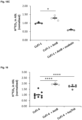
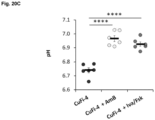
- AmB treatment could increase ASL pH in cultures of human CF lung epithelia with varied disease genotypes, using a fluorescent pH indicator.
- Airway surface liquid (ASL) pH assay was studied using an established fluorescent dye assay using the Dextran, SNARF ® -1, 70,000 MW ratiometric dye (Thermo Fisher D3304). Mature, differentiated CuFi-1 (ATCC CRL-4013) epithelial monolayers were grown on Corning Costar 0.4 ⁇ m Transwell Clear Polyester Membrane cell culture inserts (Corning 3470). CuFi epithelia were treated with perfluorinated hydrocarbon (PFC) vehicle, AmB, AmB: Chol or Chol and incubated for the time course of the experiment at 37 °C.
- PFC perfluorinated hydrocarbon
- Example 2 (Comparative). C35deOAmB Does Not Increase ASL pH in Human CF Lung Epithelia
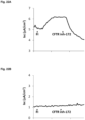
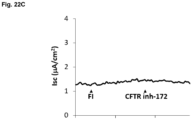
- Example 3 (Comparative). AmB-Mediated Increase in ASL pH Is Not Due to Disrupting Membranes or Increasing CFTR Activity
- Non-CF (control) and CF primary human lung epithelia were prepared and maintained in vitro as previously described.
- epithelial cells were isolated from the trachea and bronchi by enzymatic digestion, seeded onto collagen-coated semi-permeable membranes (0.6 cm 2 Millicell-PCF; Millipore, Bedford, MA), and grown at the air-liquid interface as previously described in Karp PH et al. (2002) In Wise C., Epithelial Cell Culture Protocols, Humana Press, Inc. 188: 115-137 .
- DMEM/F12 Dulbecco's modified Eagle's medium and Ham's F12 medium
- Ultroser G PALL France SAS; Saint Germain-en-Laye, France. Differentiated epithelia were used at least 14 days after seeding.
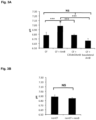
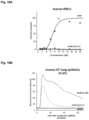
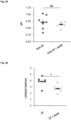
- untreated non-CF primary human lung epithelia had significantly increased change in short-circuit current compared to untreated CF primary human lung epithelia.
- AmB-treated CF primary human lung epithelia had no significant difference in change of short-circuit current compared to untreated CF primary human lung epithelia.
- Example 4 (Comparative). AmB Increases ASL pH in a Time-Dependent Manner
- Example 5 (Comparative). AmB Decreases ASL Viscosity in CFPrimary Human Lung Epithelia
- Non-CF (control) and CF primary human lung epithelia were prepared and maintained in vitro as previously described.
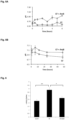
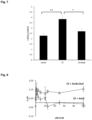
- These cells were treated with AmB at a final concentration of 2 ⁇ M for 48 h, and then ASL viscosity was measured. Representative results are shown in Fig. 6 .
- untreated CF primary human lung epithelia had significantly increased ASL viscosity compared to untreated non-CF primary human lung epithelia.
- AmB-treated CF primary human lung epithelia had significantly decreased ASL viscosity compared to untreated CF primary human lung epithelia, and nearly the same as for untreated non-CF primary human lung epithelia.
- Example 6 (Comparative). AmB Increases ASL Bacterial Killing in CF Primary Human Lung Epithelia
- CF primary human lung epithelia were prepared and maintained in vitro as previously described. Pezzulo AA et al. (2012) Nature 487: 109-113 . These cells were treated with AmB or C35deOAmB at a final concentration of 2 ⁇ M for 1 minute, then washed and maintained in culture for 48 h, and then bacterial killing was measured. Representative results are shown in Fig. 7 .
- percent killing increased from about 25 percent to about 40 percent with the exposure to AmB (p ⁇ 0.0001). Also as shown in the figure, percent killing was not significantly changed from control with the exposure to C35deOAmB.
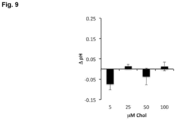
- Example 7 (Comparative). AmB Increases ASL pH in a Concentration-Dependent Manner
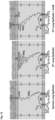
- the rotors of POPC:U- 13 C-AmB:Erg (10:1:1 molar ratio) and POPC:U- 13 C-AmB: 13 C-Erg (10:1:1 molar ratio) were packed with ⁇ 25 mg and the spectra signal averaged for 7.8 days each.
- the 10:1:1 POPC:AmB: 13 C-Erg sample was ⁇ 16 mg and therefore signal averaged for 13.6 days.
- the three spectra were all processed identically, with 40 and 75 Hz 13 C line broadening applied in the direct and indirect dimensions, respectively. Results are shown in Fig. 11 .
- Example 12 (Comparative). AmB Increases ASL Bicarbonate in CF Primary Human Lung Epithelia
- 14 C bicarbonate was administered to the basolateral side of monolayers to trace ion movement through the cells over time.
- Epithelial monolayers grown from the patient-derived lung epithelial cell line CuFi-1 ( ⁇ F508/ ⁇ F508) were also studied.
- the genotype ⁇ F508/ ⁇ F508 represents about 46.5% of all CF patients and is considered a relatively severe deficiency.
- Permeabilization of the apical membrane to bicarbonate anions with AmB could correct the flux abnormality resulting from the loss of CFTR Upon treatment with 2 ⁇ M AmB for 48 hours, a decrease in intracellular 14 C bicarbonate and an increase in ASL 14 C bicarbonate compared to CuFi-1 alone was observed ( Figs.
- Ivacaftor a small molecule potentiator that increases the open probability of CFTR channels with a specific type of gating defect, represents a major advance for the small subset of CF patients (2-4%) with a G551D allele or others in this less severe class of mutations. Remarkably, albeit only partially restoring CFTR activity, this drug has demonstrated substantial increases in lung function and overall quality of life in this select patient population.
- Some patients with similar gating mutations have also seen benefit, but other gating mutations, such as V520F, do not appear to respond.
- Cystic Fibrosis 13, 29-36 Cystic Fibrosis 13, 29-36 .
- ASL pH changes and its downstream effects as markers for CF rescue in primary sinonasal epithelial cell culture from a patient with a G551D gating mutation it was found that ivacaftor increased ASL pH by about 0.2 pH units and decreased viscosity by about two units relative to control.
- This drug also substantially improved lung function in CF patients having a G551D mutation, as evidenced by a 10% increase in predicted FEV 1 and an over 20% increase in event-free subjects in patients with this mutation over 48 weeks of treatment.
- This new understanding of the pathophysiology of CF and quantifiable in vitro changes in ASL physiology caused by ivacaftor can thus serve as benchmarks for the evaluation of alternative approaches for addressing the loss-of-function of CFTR. It is important to note that while ivacaftor is able to restore the whole function of the CFTR protein, AmB would be mimicking only a single function of CFTR in bicarbonate transport, and this distinction may also enable us to probe which role of CFTR could have the most immediate impact on physiology.
- Ivacaftor is a clinically approved and effective drug to treat cystic fibrosis, and it was used as a control in some of the experiments.
- CuFi-4 ( ⁇ F508/G551D) epithelia were treated with forskolin (Fsk) to promote phosphorylation of CFTR and ivacaftor (Iva) to potentiate conductance through the channel.
- Fsk forskolin
- Iva ivacaftor
- ivacaftor was able to increase the ASL 14 C bicarbonate in CuFi-4 monolayers but not in CuFi-1 monolayers ( Figs. 15B and 16 ).
- AmB was able to significantly increase ASL 14 C bicarbonate in both cell lines ( Figs. 15B and 16 ). This provides evidence that while both ivacaftor and AmB increase bicarbonate transport, AmB is operating through a genotype-agnostic mechanism.
- Example 13 (Comparative). AmB Increases ASL pH in CF Human Lung Epithelia in a Bicarbonate-Dependent Manner
- AmB is also able to transport protons, so this presented an alternative mechanism by which the small molecule could influence ASL pH ( Fig. 18 ).
- pH-stat experiments were performed in large NuLi and CuFi-1 epithelial monolayers either in the presence of bicarbonate or in bicarbonate-free solution. Cho, DY, et al., (2009) Am J Rhinol Allergy 23, e10-13 ; Cho, DY, et al., (2011) Int Forum Allergy Rhinol 1, 123-127 .
- Samples were obtained from CF patient donors, and primary human cell cultures were generated from them in order to determine if observations in cell lines could potentially have clinical relevance.
- CF primary epithelial monolayers were treated with vehicle or AmB.
- AmB treatment increased ASL pH in primary cultures of human lung epithelia from 9 CF patients with 5 different disease genotypes ( Figs. 23A and 23B ).
- Patients 1-5 had the common ⁇ F508/ ⁇ F508 mutation.
- Both patients 8 and 9 have rare, uncategorized mutation alleles, with the latter patient's known second mutation allele in the same category as the ivacaftor target G551D but which was found to be refractory to treatment.
- AmB was able to promote increase in ASL pH even in the case of a double null mutation genotype (patient 6) or a rare splice site mutation allele (patient 7) that both result in virtually no CFTR protein produced, which provides additional evidence that AmB acts independently from CFTR ( Fig. 23B ).
- AmB was found to increase ASL pH in primary human epithelia independent of patient donor genotype by an average of again about 0.2 pH units after 48 hours of apical incubation, while the channel-inactivated derivative C35deOAmB and basolateral addition of AmB were unable to do so, consistent with the findings in the cell line ( Fig. 23C ). AmB increased pH in primary cells in a dose and time-dependent fashion ( Figs. 24A and 24B ). Interestingly, AmB treatment had no effect of the pH of non-CF epithelia, providing further evidence for the necessity of the pooled intracellular bicarbonate for increased apical secretion ( Fig. 25 ).
- Example 16 (Comparative). AmB Increases ASL Bacterial Killing in Samples from CF Patients
- ASL viscosity a downstream effect of ASL pH acidification, contributes to the inability to clear mucus and bacteria from the lung.
- AmB decreased ASL viscosity in primary human epithelia independent of patient genotype ( Fig. 26 ).
- ASL pH is also closely correlated to the ability of antimicrobial proteins in the ASL to enact bacterial killing.
- AmB treated epithelia were tested against a human strain of S. aureus. Pezzulo AA et al. (2012) Nature 487: 109-113 . AmB increased ASL bacterial killing in primary human epithelia independent of patient genotype ( Fig.
Landscapes
- Health & Medical Sciences (AREA)
- Chemical & Material Sciences (AREA)
- Life Sciences & Earth Sciences (AREA)
- General Health & Medical Sciences (AREA)
- Veterinary Medicine (AREA)
- Public Health (AREA)
- Animal Behavior & Ethology (AREA)
- Medicinal Chemistry (AREA)
- Pharmacology & Pharmacy (AREA)
- Epidemiology (AREA)
- Engineering & Computer Science (AREA)
- Organic Chemistry (AREA)
- Pulmonology (AREA)
- Molecular Biology (AREA)
- Chemical Kinetics & Catalysis (AREA)
- General Chemical & Material Sciences (AREA)
- Bioinformatics & Cheminformatics (AREA)
- Nuclear Medicine, Radiotherapy & Molecular Imaging (AREA)
- Dermatology (AREA)
- Biochemistry (AREA)
- Biotechnology (AREA)
- Genetics & Genomics (AREA)
- Oil, Petroleum & Natural Gas (AREA)
- Otolaryngology (AREA)
- Pharmaceuticals Containing Other Organic And Inorganic Compounds (AREA)
- Saccharide Compounds (AREA)
- Medicinal Preparation (AREA)
Applications Claiming Priority (3)
| Application Number | Priority Date | Filing Date | Title |
|---|---|---|---|
| US201662320111P | 2016-04-08 | 2016-04-08 | |
| US201662320795P | 2016-04-11 | 2016-04-11 | |
| PCT/US2017/026806 WO2017177228A1 (en) | 2016-04-08 | 2017-04-10 | Small molecule-mediated restoration of airway surface physiology in human cystic fibrosis lung epithelia |
Publications (3)
| Publication Number | Publication Date |
|---|---|
| EP3439668A1 EP3439668A1 (en) | 2019-02-13 |
| EP3439668A4 EP3439668A4 (en) | 2019-12-18 |
| EP3439668B1 true EP3439668B1 (en) | 2024-06-19 |
Family
ID=60001496
Family Applications (1)
| Application Number | Title | Priority Date | Filing Date |
|---|---|---|---|
| EP17779973.1A Active EP3439668B1 (en) | 2016-04-08 | 2017-04-10 | Small molecule-mediated restoration of airway surface physiology in human cystic fibrosis lung epithelia |
Country Status (9)
| Country | Link |
|---|---|
| US (2) | US20190083517A1 (enExample) |
| EP (1) | EP3439668B1 (enExample) |
| JP (1) | JP7041961B2 (enExample) |
| AU (1) | AU2017248394B2 (enExample) |
| DK (1) | DK3439668T3 (enExample) |
| ES (1) | ES2983639T3 (enExample) |
| FI (1) | FI3439668T3 (enExample) |
| PT (1) | PT3439668T (enExample) |
| WO (1) | WO2017177228A1 (enExample) |
Families Citing this family (3)
| Publication number | Priority date | Publication date | Assignee | Title |
|---|---|---|---|---|
| ES2983639T3 (es) | 2016-04-08 | 2024-10-24 | The Board Of Trustees Of The Univ Illinois | Restauración mediada por moléculas pequeñas de la fisiología de la superficie de las vías respiratorias en epitelios pulmonares humanos de fibrosis quística |
| PT3694526T (pt) * | 2017-10-11 | 2025-01-20 | Univ Illinois | Resgate independente do genótipo da fibrose quística com canais de bicarbonato de moléculas pequenas |
| IL315719A (en) | 2022-03-21 | 2024-11-01 | Univ Illinois | Prosthetic assemblies of ion channels containing lipid-coated amphotericin B crystals |
Citations (2)
| Publication number | Priority date | Publication date | Assignee | Title |
|---|---|---|---|---|
| US5049389A (en) * | 1988-12-14 | 1991-09-17 | Liposome Technology, Inc. | Novel liposome composition for the treatment of interstitial lung diseases |
| WO2005120497A2 (en) * | 2004-06-04 | 2005-12-22 | The Regents Of The University Of California | Compounds having activity in increasing ion transport by mutant-cftr and uses thereof |
Family Cites Families (10)
| Publication number | Priority date | Publication date | Assignee | Title |
|---|---|---|---|---|
| JP3507486B2 (ja) | 1991-03-15 | 2004-03-15 | アムジエン・インコーポレーテツド | 顆粒球コロニー刺激因子の肺内投与 |
| US5451569A (en) | 1994-04-19 | 1995-09-19 | Hong Kong University Of Science And Technology R & D Corporation Limited | Pulmonary drug delivery system |
| CA2194049A1 (en) | 1994-06-28 | 1996-01-11 | Georgi Stankov | Novel clinical uses of polyene macrolides |
| TWI249408B (en) * | 2003-12-10 | 2006-02-21 | Ind Tech Res Inst | New antifungal formulation and manufacturing method thereof |
| HUE031951T2 (en) * | 2006-10-10 | 2017-08-28 | Jina Pharmaceuticals Inc | Aqueous systems for lipid-based drug compounds; preparations, processes and their use |
| WO2009006311A2 (en) * | 2007-06-29 | 2009-01-08 | Wisconsin Alumni Research Foundation | Structuring effect of cholesterol in peg-phospholipid micelles, drug delivery of amphotericin b, and combination antifungals |
| BRPI1003990B1 (pt) * | 2009-10-16 | 2021-09-14 | Lifecare Innovations Pvt. Ltd | Formulação para o tratamento de infecções fúngicas |
| KR102548341B1 (ko) * | 2013-10-07 | 2023-06-26 | 더 보오드 오브 트러스티스 오브 더 유니버시티 오브 일리노이즈 | 개선된 치료 지수를 갖는 암포테리신 b 유도체 |
| JP6796581B2 (ja) * | 2014-11-04 | 2020-12-09 | ザ ボード オブ トラスティーズ オブ ザ ユニヴァーシティ オブ イリノイThe Board Of Trustees Of The University Of Illinois | ミッシングタンパク質の小分子模倣体を用いた生理機能の回復 |
| ES2983639T3 (es) | 2016-04-08 | 2024-10-24 | The Board Of Trustees Of The Univ Illinois | Restauración mediada por moléculas pequeñas de la fisiología de la superficie de las vías respiratorias en epitelios pulmonares humanos de fibrosis quística |
-
2017
- 2017-04-10 ES ES17779973T patent/ES2983639T3/es active Active
- 2017-04-10 US US16/091,599 patent/US20190083517A1/en not_active Abandoned
- 2017-04-10 PT PT177799731T patent/PT3439668T/pt unknown
- 2017-04-10 EP EP17779973.1A patent/EP3439668B1/en active Active
- 2017-04-10 FI FIEP17779973.1T patent/FI3439668T3/fi active
- 2017-04-10 AU AU2017248394A patent/AU2017248394B2/en active Active
- 2017-04-10 DK DK17779973.1T patent/DK3439668T3/da active
- 2017-04-10 JP JP2018552659A patent/JP7041961B2/ja active Active
- 2017-04-10 WO PCT/US2017/026806 patent/WO2017177228A1/en not_active Ceased
-
2021
- 2021-06-01 US US17/335,803 patent/US11850256B2/en active Active
Patent Citations (2)
| Publication number | Priority date | Publication date | Assignee | Title |
|---|---|---|---|---|
| US5049389A (en) * | 1988-12-14 | 1991-09-17 | Liposome Technology, Inc. | Novel liposome composition for the treatment of interstitial lung diseases |
| WO2005120497A2 (en) * | 2004-06-04 | 2005-12-22 | The Regents Of The University Of California | Compounds having activity in increasing ion transport by mutant-cftr and uses thereof |
Non-Patent Citations (2)
| Title |
|---|
| M. PROESMANS ET AL: "Use of Nebulized Amphotericin B in the Treatment of Allergic Bronchopulmonary Aspergillosis in Cystic Fibrosis", INTERNATIONAL JOURNAL OF PEDIATRICS, vol. 2010, 1 January 2010 (2010-01-01), pages 1 - 9, XP055692923, ISSN: 1687-9740, DOI: 10.1155/2010/376287 * |
| STONE NEIL R. H. ET AL: "Liposomal Amphotericin B (AmBisome ): A Review of the Pharmacokinetics, Pharmacodynamics, Clinical Experience and Future Directions", DRUGS, vol. 76, no. 4, 1 March 2016 (2016-03-01), NZ, pages 485 - 500, XP093027684, ISSN: 0012-6667, Retrieved from the Internet <URL:https://www.ncbi.nlm.nih.gov/pmc/articles/PMC4856207/pdf/emss-66734.pdf> DOI: 10.1007/s40265-016-0538-7 * |
Also Published As
| Publication number | Publication date |
|---|---|
| US20210393661A1 (en) | 2021-12-23 |
| AU2017248394B2 (en) | 2023-02-23 |
| DK3439668T3 (da) | 2024-09-02 |
| ES2983639T3 (es) | 2024-10-24 |
| JP7041961B2 (ja) | 2022-03-25 |
| PT3439668T (pt) | 2024-08-12 |
| WO2017177228A1 (en) | 2017-10-12 |
| EP3439668A4 (en) | 2019-12-18 |
| FI3439668T3 (fi) | 2024-09-05 |
| US20190083517A1 (en) | 2019-03-21 |
| EP3439668A1 (en) | 2019-02-13 |
| JP2019510788A (ja) | 2019-04-18 |
| AU2017248394A1 (en) | 2018-11-22 |
| US11850256B2 (en) | 2023-12-26 |
Similar Documents
| Publication | Publication Date | Title |
|---|---|---|
| US11850256B2 (en) | Small molecule-mediated restoration of airway surface physiology in human cystic fibrosis lung epithelia | |
| JP7774260B2 (ja) | 細胞外ヒストンによって媒介される病理を処置及び予防するための化合物 | |
| US20240277743A1 (en) | Restoring physiology with small molecule mimics of missing proteins | |
| US20250009775A1 (en) | Genotype-agnostic rescue of cystic fibrosis with small molecule bicarbonate channels | |
| US20260083714A1 (en) | Dosing regimen for treating pku with a piperidine inhibitor of slc6a19 function | |
| US20250025526A1 (en) | Combination therapy for the treatment of friedreich's ataxia | |
| WO2026055445A1 (en) | Anion-selective molecular prosthetics for cftr | |
| WO2025019806A2 (en) | Restoring physiology with small molecule mimics of missing proteins | |
| US20180243247A1 (en) | Drug combinations for cerebrovascular disease |
Legal Events
| Date | Code | Title | Description |
|---|---|---|---|
| STAA | Information on the status of an ep patent application or granted ep patent |
Free format text: STATUS: THE INTERNATIONAL PUBLICATION HAS BEEN MADE |
|
| PUAI | Public reference made under article 153(3) epc to a published international application that has entered the european phase |
Free format text: ORIGINAL CODE: 0009012 |
|
| STAA | Information on the status of an ep patent application or granted ep patent |
Free format text: STATUS: REQUEST FOR EXAMINATION WAS MADE |
|
| 17P | Request for examination filed |
Effective date: 20181029 |
|
| AK | Designated contracting states |
Kind code of ref document: A1 Designated state(s): AL AT BE BG CH CY CZ DE DK EE ES FI FR GB GR HR HU IE IS IT LI LT LU LV MC MK MT NL NO PL PT RO RS SE SI SK SM TR |
|
| AX | Request for extension of the european patent |
Extension state: BA ME |
|
| DAV | Request for validation of the european patent (deleted) | ||
| DAX | Request for extension of the european patent (deleted) | ||
| A4 | Supplementary search report drawn up and despatched |
Effective date: 20191118 |
|
| RIC1 | Information provided on ipc code assigned before grant |
Ipc: A61P 11/10 20060101ALI20191112BHEP Ipc: A61K 31/7048 20060101AFI20191112BHEP Ipc: A61K 31/575 20060101ALI20191112BHEP Ipc: C12P 19/62 20060101ALI20191112BHEP Ipc: A61K 47/28 20060101ALI20191112BHEP Ipc: C07H 17/08 20060101ALI20191112BHEP Ipc: A61K 9/12 20060101ALI20191112BHEP |
|
| STAA | Information on the status of an ep patent application or granted ep patent |
Free format text: STATUS: EXAMINATION IS IN PROGRESS |
|
| 17Q | First examination report despatched |
Effective date: 20230309 |
|
| GRAP | Despatch of communication of intention to grant a patent |
Free format text: ORIGINAL CODE: EPIDOSNIGR1 |
|
| STAA | Information on the status of an ep patent application or granted ep patent |
Free format text: STATUS: GRANT OF PATENT IS INTENDED |
|
| INTG | Intention to grant announced |
Effective date: 20240119 |
|
| GRAS | Grant fee paid |
Free format text: ORIGINAL CODE: EPIDOSNIGR3 |
|
| GRAA | (expected) grant |
Free format text: ORIGINAL CODE: 0009210 |
|
| STAA | Information on the status of an ep patent application or granted ep patent |
Free format text: STATUS: THE PATENT HAS BEEN GRANTED |
|
| AK | Designated contracting states |
Kind code of ref document: B1 Designated state(s): AL AT BE BG CH CY CZ DE DK EE ES FI FR GB GR HR HU IE IS IT LI LT LU LV MC MK MT NL NO PL PT RO RS SE SI SK SM TR |
|
| REG | Reference to a national code |
Ref country code: GB Ref legal event code: FG4D |
|
| REG | Reference to a national code |
Ref country code: CH Ref legal event code: EP |
|
| REG | Reference to a national code |
Ref country code: DE Ref legal event code: R096 Ref document number: 602017082698 Country of ref document: DE |
|
| REG | Reference to a national code |
Ref country code: PT Ref legal event code: SC4A Ref document number: 3439668 Country of ref document: PT Date of ref document: 20240812 Kind code of ref document: T Free format text: AVAILABILITY OF NATIONAL TRANSLATION Effective date: 20240805 |
|
| REG | Reference to a national code |
Ref country code: NL Ref legal event code: FP |
|
| REG | Reference to a national code |
Ref country code: DK Ref legal event code: T3 Effective date: 20240830 |
|
| REG | Reference to a national code |
Ref country code: FI Ref legal event code: FGE |
|
| REG | Reference to a national code |
Ref country code: SE Ref legal event code: TRGR |
|
| PG25 | Lapsed in a contracting state [announced via postgrant information from national office to epo] |
Ref country code: HR Free format text: LAPSE BECAUSE OF FAILURE TO SUBMIT A TRANSLATION OF THE DESCRIPTION OR TO PAY THE FEE WITHIN THE PRESCRIBED TIME-LIMIT Effective date: 20240619 |
|
| REG | Reference to a national code |
Ref country code: LT Ref legal event code: MG9D |
|
| PG25 | Lapsed in a contracting state [announced via postgrant information from national office to epo] |
Ref country code: GR Free format text: LAPSE BECAUSE OF FAILURE TO SUBMIT A TRANSLATION OF THE DESCRIPTION OR TO PAY THE FEE WITHIN THE PRESCRIBED TIME-LIMIT Effective date: 20240920 |
|
| REG | Reference to a national code |
Ref country code: ES Ref legal event code: FG2A Ref document number: 2983639 Country of ref document: ES Kind code of ref document: T3 Effective date: 20241024 |
|
| PG25 | Lapsed in a contracting state [announced via postgrant information from national office to epo] |
Ref country code: LV Free format text: LAPSE BECAUSE OF FAILURE TO SUBMIT A TRANSLATION OF THE DESCRIPTION OR TO PAY THE FEE WITHIN THE PRESCRIBED TIME-LIMIT Effective date: 20240619 |
|
| PG25 | Lapsed in a contracting state [announced via postgrant information from national office to epo] |
Ref country code: LV Free format text: LAPSE BECAUSE OF FAILURE TO SUBMIT A TRANSLATION OF THE DESCRIPTION OR TO PAY THE FEE WITHIN THE PRESCRIBED TIME-LIMIT Effective date: 20240619 Ref country code: HR Free format text: LAPSE BECAUSE OF FAILURE TO SUBMIT A TRANSLATION OF THE DESCRIPTION OR TO PAY THE FEE WITHIN THE PRESCRIBED TIME-LIMIT Effective date: 20240619 Ref country code: GR Free format text: LAPSE BECAUSE OF FAILURE TO SUBMIT A TRANSLATION OF THE DESCRIPTION OR TO PAY THE FEE WITHIN THE PRESCRIBED TIME-LIMIT Effective date: 20240920 Ref country code: RS Free format text: LAPSE BECAUSE OF FAILURE TO SUBMIT A TRANSLATION OF THE DESCRIPTION OR TO PAY THE FEE WITHIN THE PRESCRIBED TIME-LIMIT Effective date: 20240919 |
|
| REG | Reference to a national code |
Ref country code: AT Ref legal event code: UEP Ref document number: 1695490 Country of ref document: AT Kind code of ref document: T Effective date: 20240619 |
|
| PG25 | Lapsed in a contracting state [announced via postgrant information from national office to epo] |
Ref country code: PL Free format text: LAPSE BECAUSE OF FAILURE TO SUBMIT A TRANSLATION OF THE DESCRIPTION OR TO PAY THE FEE WITHIN THE PRESCRIBED TIME-LIMIT Effective date: 20240619 |
|
| PG25 | Lapsed in a contracting state [announced via postgrant information from national office to epo] |
Ref country code: EE Free format text: LAPSE BECAUSE OF FAILURE TO SUBMIT A TRANSLATION OF THE DESCRIPTION OR TO PAY THE FEE WITHIN THE PRESCRIBED TIME-LIMIT Effective date: 20240619 |
|
| PG25 | Lapsed in a contracting state [announced via postgrant information from national office to epo] |
Ref country code: IS Free format text: LAPSE BECAUSE OF FAILURE TO SUBMIT A TRANSLATION OF THE DESCRIPTION OR TO PAY THE FEE WITHIN THE PRESCRIBED TIME-LIMIT Effective date: 20241019 |
|
| PG25 | Lapsed in a contracting state [announced via postgrant information from national office to epo] |
Ref country code: CZ Free format text: LAPSE BECAUSE OF FAILURE TO SUBMIT A TRANSLATION OF THE DESCRIPTION OR TO PAY THE FEE WITHIN THE PRESCRIBED TIME-LIMIT Effective date: 20240619 |
|
| PG25 | Lapsed in a contracting state [announced via postgrant information from national office to epo] |
Ref country code: SK Free format text: LAPSE BECAUSE OF FAILURE TO SUBMIT A TRANSLATION OF THE DESCRIPTION OR TO PAY THE FEE WITHIN THE PRESCRIBED TIME-LIMIT Effective date: 20240619 Ref country code: RO Free format text: LAPSE BECAUSE OF FAILURE TO SUBMIT A TRANSLATION OF THE DESCRIPTION OR TO PAY THE FEE WITHIN THE PRESCRIBED TIME-LIMIT Effective date: 20240619 |
|
| PG25 | Lapsed in a contracting state [announced via postgrant information from national office to epo] |
Ref country code: SM Free format text: LAPSE BECAUSE OF FAILURE TO SUBMIT A TRANSLATION OF THE DESCRIPTION OR TO PAY THE FEE WITHIN THE PRESCRIBED TIME-LIMIT Effective date: 20240619 |
|
| PG25 | Lapsed in a contracting state [announced via postgrant information from national office to epo] |
Ref country code: SM Free format text: LAPSE BECAUSE OF FAILURE TO SUBMIT A TRANSLATION OF THE DESCRIPTION OR TO PAY THE FEE WITHIN THE PRESCRIBED TIME-LIMIT Effective date: 20240619 Ref country code: SK Free format text: LAPSE BECAUSE OF FAILURE TO SUBMIT A TRANSLATION OF THE DESCRIPTION OR TO PAY THE FEE WITHIN THE PRESCRIBED TIME-LIMIT Effective date: 20240619 Ref country code: RO Free format text: LAPSE BECAUSE OF FAILURE TO SUBMIT A TRANSLATION OF THE DESCRIPTION OR TO PAY THE FEE WITHIN THE PRESCRIBED TIME-LIMIT Effective date: 20240619 Ref country code: PL Free format text: LAPSE BECAUSE OF FAILURE TO SUBMIT A TRANSLATION OF THE DESCRIPTION OR TO PAY THE FEE WITHIN THE PRESCRIBED TIME-LIMIT Effective date: 20240619 Ref country code: IS Free format text: LAPSE BECAUSE OF FAILURE TO SUBMIT A TRANSLATION OF THE DESCRIPTION OR TO PAY THE FEE WITHIN THE PRESCRIBED TIME-LIMIT Effective date: 20241019 Ref country code: EE Free format text: LAPSE BECAUSE OF FAILURE TO SUBMIT A TRANSLATION OF THE DESCRIPTION OR TO PAY THE FEE WITHIN THE PRESCRIBED TIME-LIMIT Effective date: 20240619 Ref country code: CZ Free format text: LAPSE BECAUSE OF FAILURE TO SUBMIT A TRANSLATION OF THE DESCRIPTION OR TO PAY THE FEE WITHIN THE PRESCRIBED TIME-LIMIT Effective date: 20240619 |
|
| REG | Reference to a national code |
Ref country code: DE Ref legal event code: R097 Ref document number: 602017082698 Country of ref document: DE |
|
| PGFP | Annual fee paid to national office [announced via postgrant information from national office to epo] |
Ref country code: PT Payment date: 20250324 Year of fee payment: 9 |
|
| PLBE | No opposition filed within time limit |
Free format text: ORIGINAL CODE: 0009261 |
|
| STAA | Information on the status of an ep patent application or granted ep patent |
Free format text: STATUS: NO OPPOSITION FILED WITHIN TIME LIMIT |
|
| PGFP | Annual fee paid to national office [announced via postgrant information from national office to epo] |
Ref country code: TR Payment date: 20250327 Year of fee payment: 9 |
|
| PGFP | Annual fee paid to national office [announced via postgrant information from national office to epo] |
Ref country code: NL Payment date: 20250427 Year of fee payment: 9 |
|
| PGFP | Annual fee paid to national office [announced via postgrant information from national office to epo] |
Ref country code: LU Payment date: 20250428 Year of fee payment: 9 |
|
| 26N | No opposition filed |
Effective date: 20250320 |
|
| PGFP | Annual fee paid to national office [announced via postgrant information from national office to epo] |
Ref country code: FI Payment date: 20250425 Year of fee payment: 9 |
|
| PGFP | Annual fee paid to national office [announced via postgrant information from national office to epo] |
Ref country code: DE Payment date: 20250429 Year of fee payment: 9 |
|
| PGFP | Annual fee paid to national office [announced via postgrant information from national office to epo] |
Ref country code: GB Payment date: 20250428 Year of fee payment: 9 Ref country code: ES Payment date: 20250505 Year of fee payment: 9 Ref country code: DK Payment date: 20250425 Year of fee payment: 9 |
|
| PGFP | Annual fee paid to national office [announced via postgrant information from national office to epo] |
Ref country code: NO Payment date: 20250429 Year of fee payment: 9 |
|
| PGFP | Annual fee paid to national office [announced via postgrant information from national office to epo] |
Ref country code: BE Payment date: 20250428 Year of fee payment: 9 Ref country code: IT Payment date: 20250422 Year of fee payment: 9 |
|
| PGFP | Annual fee paid to national office [announced via postgrant information from national office to epo] |
Ref country code: FR Payment date: 20250425 Year of fee payment: 9 |
|
| PGFP | Annual fee paid to national office [announced via postgrant information from national office to epo] |
Ref country code: BG Payment date: 20250417 Year of fee payment: 9 |
|
| PGFP | Annual fee paid to national office [announced via postgrant information from national office to epo] |
Ref country code: CH Payment date: 20250501 Year of fee payment: 9 |
|
| PGFP | Annual fee paid to national office [announced via postgrant information from national office to epo] |
Ref country code: AT Payment date: 20250319 Year of fee payment: 9 |
|
| PGFP | Annual fee paid to national office [announced via postgrant information from national office to epo] |
Ref country code: IE Payment date: 20250428 Year of fee payment: 9 |
|
| PGFP | Annual fee paid to national office [announced via postgrant information from national office to epo] |
Ref country code: SE Payment date: 20250507 Year of fee payment: 9 |
|
| PG25 | Lapsed in a contracting state [announced via postgrant information from national office to epo] |
Ref country code: MC Free format text: LAPSE BECAUSE OF FAILURE TO SUBMIT A TRANSLATION OF THE DESCRIPTION OR TO PAY THE FEE WITHIN THE PRESCRIBED TIME-LIMIT Effective date: 20240619 |
|
| PG25 | Lapsed in a contracting state [announced via postgrant information from national office to epo] |
Ref country code: CY Free format text: LAPSE BECAUSE OF FAILURE TO SUBMIT A TRANSLATION OF THE DESCRIPTION OR TO PAY THE FEE WITHIN THE PRESCRIBED TIME-LIMIT Effective date: 20240619 |
|
| PG25 | Lapsed in a contracting state [announced via postgrant information from national office to epo] |
Ref country code: LT Free format text: LAPSE BECAUSE OF FAILURE TO SUBMIT A TRANSLATION OF THE DESCRIPTION OR TO PAY THE FEE WITHIN THE PRESCRIBED TIME-LIMIT Effective date: 20240619 |