EP3434587B1 - System zur verbesserung der autorotation - Google Patents
System zur verbesserung der autorotation Download PDFInfo
- Publication number
- EP3434587B1 EP3434587B1 EP18193690.7A EP18193690A EP3434587B1 EP 3434587 B1 EP3434587 B1 EP 3434587B1 EP 18193690 A EP18193690 A EP 18193690A EP 3434587 B1 EP3434587 B1 EP 3434587B1
- Authority
- EP
- European Patent Office
- Prior art keywords
- motor
- engine
- generator
- rotor
- controller
- Prior art date
- Legal status (The legal status is an assumption and is not a legal conclusion. Google has not performed a legal analysis and makes no representation as to the accuracy of the status listed.)
- Active
Links
Images



Classifications
-
- B—PERFORMING OPERATIONS; TRANSPORTING
- B64—AIRCRAFT; AVIATION; COSMONAUTICS
- B64C—AEROPLANES; HELICOPTERS
- B64C27/00—Rotorcraft; Rotors peculiar thereto
- B64C27/006—Safety devices
-
- B—PERFORMING OPERATIONS; TRANSPORTING
- B64—AIRCRAFT; AVIATION; COSMONAUTICS
- B64C—AEROPLANES; HELICOPTERS
- B64C27/00—Rotorcraft; Rotors peculiar thereto
- B64C27/04—Helicopters
- B64C27/12—Rotor drives
-
- B—PERFORMING OPERATIONS; TRANSPORTING
- B64—AIRCRAFT; AVIATION; COSMONAUTICS
- B64D—EQUIPMENT FOR FITTING IN OR TO AIRCRAFT; FLIGHT SUITS; PARACHUTES; ARRANGEMENT OR MOUNTING OF POWER PLANTS OR PROPULSION TRANSMISSIONS IN AIRCRAFT
- B64D27/00—Arrangement or mounting of power plants in aircraft; Aircraft characterised by the type or position of power plants
- B64D27/02—Aircraft characterised by the type or position of power plants
- B64D27/30—Aircraft characterised by electric power plants
- B64D27/33—Hybrid electric aircraft
-
- B—PERFORMING OPERATIONS; TRANSPORTING
- B64—AIRCRAFT; AVIATION; COSMONAUTICS
- B64D—EQUIPMENT FOR FITTING IN OR TO AIRCRAFT; FLIGHT SUITS; PARACHUTES; ARRANGEMENT OR MOUNTING OF POWER PLANTS OR PROPULSION TRANSMISSIONS IN AIRCRAFT
- B64D27/00—Arrangement or mounting of power plants in aircraft; Aircraft characterised by the type or position of power plants
- B64D27/02—Aircraft characterised by the type or position of power plants
- B64D27/30—Aircraft characterised by electric power plants
- B64D27/35—Arrangements for on-board electric energy production, distribution, recovery or storage
- B64D27/357—Arrangements for on-board electric energy production, distribution, recovery or storage using batteries
-
- B—PERFORMING OPERATIONS; TRANSPORTING
- B64—AIRCRAFT; AVIATION; COSMONAUTICS
- B64D—EQUIPMENT FOR FITTING IN OR TO AIRCRAFT; FLIGHT SUITS; PARACHUTES; ARRANGEMENT OR MOUNTING OF POWER PLANTS OR PROPULSION TRANSMISSIONS IN AIRCRAFT
- B64D27/00—Arrangement or mounting of power plants in aircraft; Aircraft characterised by the type or position of power plants
- B64D27/02—Aircraft characterised by the type or position of power plants
- B64D27/026—Aircraft characterised by the type or position of power plants comprising different types of power plants, e.g. combination of a piston engine and a gas-turbine
-
- Y—GENERAL TAGGING OF NEW TECHNOLOGICAL DEVELOPMENTS; GENERAL TAGGING OF CROSS-SECTIONAL TECHNOLOGIES SPANNING OVER SEVERAL SECTIONS OF THE IPC; TECHNICAL SUBJECTS COVERED BY FORMER USPC CROSS-REFERENCE ART COLLECTIONS [XRACs] AND DIGESTS
- Y02—TECHNOLOGIES OR APPLICATIONS FOR MITIGATION OR ADAPTATION AGAINST CLIMATE CHANGE
- Y02T—CLIMATE CHANGE MITIGATION TECHNOLOGIES RELATED TO TRANSPORTATION
- Y02T50/00—Aeronautics or air transport
- Y02T50/60—Efficient propulsion technologies, e.g. for aircraft
-
- Y—GENERAL TAGGING OF NEW TECHNOLOGICAL DEVELOPMENTS; GENERAL TAGGING OF CROSS-SECTIONAL TECHNOLOGIES SPANNING OVER SEVERAL SECTIONS OF THE IPC; TECHNICAL SUBJECTS COVERED BY FORMER USPC CROSS-REFERENCE ART COLLECTIONS [XRACs] AND DIGESTS
- Y10—TECHNICAL SUBJECTS COVERED BY FORMER USPC
- Y10T—TECHNICAL SUBJECTS COVERED BY FORMER US CLASSIFICATION
- Y10T29/00—Metal working
- Y10T29/49—Method of mechanical manufacture
- Y10T29/49002—Electrical device making
- Y10T29/49117—Conductor or circuit manufacturing
Definitions
- a helicopter may employ autorotation to execute a safe landing, wherein the main rotor system of the helicopter is turned by the action of air moving up through the rotor. This generates lift and drag to slow the descent of the helicopter. Autorotation may allow the helicopter to descend and land safely without the use of the main engine. Autorotation may be particularly useful for single engine helicopters. Examples of the prior art are provided by US2011121127 and US2012025032 . A relevant non-prepublished document is EP2703292 .
- an autorotative assist system for a rotor helicopter comprising a transmission coupled to the rotor, an engine coupled to the transmission (via a drive shaft with a freewheeling unit allowing for free rotation of the rotor upon loss of engine power), and an autorotative assist unit couple to the transmission (typically independent of the engine primary drive system (e.g. drive shaft and/or free-wheeling unit) and/or without any intervening component or gearing such as the freewheeling unit), wherein the autorotative assist unit is operable to store energy during normal engine operation, and the autorotative assist unit is operable to drive the rotor through the transmission to provide supplemental autorotative assistance upon loss of engine power (e.g. when the engine rpm level falls below the rpm level of the rotor).
- the engine primary drive system e.g. drive shaft and/or free-wheeling unit
- the autorotative assist unit is operable to store energy during normal engine operation
- the autorotative assist unit is operable to drive the rotor through the transmission to provide
- a method of providing autorotative assistance for a rotor helicopter having an autorotative assist unit comprises, upon loss of engine power, placing the helicopter into autorotation, and providing autorotative assistance to the rotor from the autorotative assist unit (thereby driving the rotor as a supplement to autorotation).
- a method for retrofitting a helicopter for improved autorotation capabilities wherein the helicopter includes a rotor, a transmission having a generator off the transmission housing, and an engine, the method comprising replacing the generator on the transmission with a motor-generator, providing a high capacity/high discharge rate battery system, and electrically connecting the motor-generator to the battery system so that, during normal engine operation, the motor-generator charges the battery system, but upon loss of engine power, the motor-generator is operable to draw energy from the battery system to drive the rotor for autorotative assistance.
- An autorotative assist unit may be operable to enhance the safety of the descent and landing of a helicopter using autorotation.
- the autorotative assist unit may provide supplemental power to the rotor system of a helicopter during autorotation, such as a landing flare of energy operable to slow descent of a helicopter right before landing, for example.
- a landing flare may be used to execute a safe landing during autorotation.
- Design criteria for helicopters may require the ability to complete autorotation from a certain density altitude, such as around 7,000 feet, for example. To meet the criteria, an autorotative assist unit may be used to enhance the autorotative capabilities of the helicopter.
- the system 100 comprises a helicopter 120, wherein the helicopter 120 comprises a fuselage 121, a transmission 102, an engine 104 mechanically coupled to the transmission 102, a rotor system 108 mechanically coupled to the transmission 102, and an autorotative assist unit 110 mechanically coupled to the transmission 102.
- the rotor system 108 may comprise a mast 107 coupled to the transmission 102 and rotor blades 109 coupled to the mast 107.
- the transmission 102 may be coupled to the engine 104 via a drive shaft 105 and/or a freewheeling unit 106, wherein the freewheeling unit 106 allows for free rotation of the rotor 108 upon loss of power from the engine 104 (such may be needed to allow autorotation).
- the engine 104 may comprise a turbine or piston engine, for example, and the helicopter 120 may be a single engine helicopter or a multi-engine helicopter. In one embodiment, the helicopter 120 may comprise a single engine helicopter with a rotor 108.
- the autorotative assist unit 110 is not typically used during normal engine operation (e.g. climb, cruise, hover, descent, etc.).
- the autorotative assist unit 110 may be operable to store energy (for example, excess engine energy not required to drive the rotor 108) during normal engine operation.
- energy for example, excess engine energy not required to drive the rotor 108
- the freewheeling unit 106 may disengage the transmission 102 from the engine 104, and the autorotative assist unit 110 may be operable to provide power to the transmission 102 and therefore the rotor 108 (as a supplement to normal autorotation).
- the autorotative assist unit can be applicable to all rotor hub types, but it may be particularly helpful in helicopters with articulated or low inertia rotors.
- a pilot of the helicopter 120 may control the energy output from the autorotative assist unit 110 to the rotor 108, for example, deciding when to use the supplemental power from the autorotative assist unit 110 and/or how much of the available autorotative assist unit 110 power to use.
- the flight crew may be provided with an indication of the amount of energy stored in the autorotative assist unit 110.
- the output of energy may be controlled automatically by the autorotative assist unit 110.
- a "landing flare" of energy from the autorotative assist unit 110 may be used to slow the descent of the helicopter 120 right before landing.
- energy from the autorotative assist unit 110 may be used to slow the helicopter 120 throughout the descent and/or at the landing.
- the energy input from the autorotative assist unit 110 may be used to stop descent, hover, level cruise, or possibly lift the helicopter 120 if necessary (for example, to traverse an obstacle).
- Several different methods may be used to input the energy from the autorotative assist unit 110 to the rotor 108 based on the conditions of the descent and landing and the abilities and decisions of the pilot of the helicopter 120.
- the autorotative assist unit 110 may respond to sensor input from sensors within the helicopter 120 to automatically provide autorotative assistance. Sensors may provide information comprising engine revolutions per minute (rpm), rotor rpm, descent rate, and/or altitude, as well as energy stored in the autorotative assist unit 110. In one embodiment, the autorotative assist unit 110 may be triggered to provide autorotative assistance when the rpm level of the engine 104 falls below the rpm level of the rotor 108. Autorotative assistance may also be controlled by a model or function executed by a controller coupled to the autorotative assist unit 110.
- the autorotative assist unit 110 may comprise an electric motor-generator, a battery system electrically coupled to the motor-generator operable to store and discharge energy, and a controller operable to control autorotative assist by communicating commands from a pilot and/or receiving sensor data.
- the autorotative assist unit 110 may comprise a hydraulic pump-motor, a hydraulic accumulator in fluid communication with the hydraulic pump-motor operable to store and discharge energy, and a controller operable to control release of the energy stored in the hydraulic accumulator.
- the autorotative assist unit 110 may comprise a mechanical power storage system, such as a flywheel or spring arrangement, for example.
- the autorotative assist system 200 may comprise a transmission 202, an engine 204 mechanically coupled to the transmission 202 via a freewheeling unit 206, a rotor 208 mechanically coupled to the transmission 202, and an autorotative assist unit 210 mechanically coupled to the transmission 202 (typically without any intermediate gearing).
- the autorotative assist unit 210 may comprise a motor-generator 212 mechanically coupled to the transmission 202, a battery system 214 electrically coupled to the motor-generator 212, and a controller 216 for operating the motor-generator 212.
- the battery system 214 may comprise a high capacity/high discharge rate battery system, such as a Lithium (Li) ion battery for example.
- the battery system 214 may be operable to store energy during normal operation of the engine 204 and discharge this energy for autorotative assistance. By having a high discharge rate, the battery system 214 may allow for a boost of power for autorotative assistance.
- a high capacity/high discharge rate battery system 214 may be operable to recover energy in a short period of time, which may enable repeated autorotative assistance, such as may be used during a training exercise, for example.
- the controller 216 may be operable to communicate commands to the motor-generator 212 for directing the stored power in the battery system 214 of the autorotative assist unit 210 to power the motor-generator 212 to drive the rotor 208.
- the controller 216 may receive commands from a pilot of the helicopter, for example.
- the controller 216 may receive sensor input and, based on the sensor input, may automatically trigger the motor-generator 212 to provide autorotative assistance.
- a combination of automatic and manual control of the autorotative assist unit 210 may be provided by the controller 216.
- the energy input to the rotor 208 may be spread out during the descent and/or the energy may be used during the landing flare.
- This control of the energy output may be scheduled by the controller 216, it may be triggered by a pilot, or a combination of the two may be used.
- the autorotative assist unit 210 may automatically put the helicopter in an autorotative state when the engine 204 fails, and the energy remaining after doing so may be used at the discretion of the pilot.
- the autorotative assist unit 210 may be operable to provide about 80 hp for about 6-7 seconds.
- the autorotative assist unit 210 may be operable to provide about 45 hp for about 3-4 seconds.
- the autorotative assist unit 210 may be operable to provide about 45-80 hp for about 3-7 seconds.
- the autorotative assist unit 210 may weigh about 62-64 pounds. Typically, the weight of such an autorotative assist unit may be less than the additional weight that would have to be added to the rotor to achieve rotational inertia for comparable autorotation landing performance.
- Some embodiments of the disclosure include methods 240, shown in FIG. 2B of providing autorotative assistance for a rotor helicopter, wherein the helicopter comprises an autorotative assist unit 210.
- the method 240 may comprise, at block 244, placing the helicopter into autorotation upon loss of engine power. This may be done manually by the pilot or automatically by controls in the helicopter. Then, when necessary, the method 240 may comprise, at block 246, providing autorotative assistance to the rotor 208 from the autorotative assist unit 210, thereby driving the rotor 208 as a supplement to autorotation.
- the method 240 may also comprise, at block 242, storing energy in the autorotative assist unit 210, such as in the battery system 214, during normal engine operation (wherein the storing energy may precede the steps at blocks 244 and 246).
- Autorotative assistance may be triggered manually by pilot control and/or automatically based on sensor input, wherein the helicopter may comprise sensors operable to provide information to the autorotative assist unit 210, such as engine rpm, rotor rpm, speed, descent rate, and altitude, as well as energy stored in the battery system 214.
- the autorotative assistance comprises providing about 45-80 hp for about 3-7 seconds to the rotor 208.
- Autorotative assistance may be provided at landing flare and/or during the descent of the helicopter (prior to landing flare) to slow the descent of the helicopter.
- the method 240 may further comprise, at block 248, after use of the autorotative assist unit 210, recharging the stored energy in the autorotative assist unit 210 (such as in the battery system 214) after discharge.
- the step of recharging may be used in training for autorotation, for example.
- the transmission 302 may be coupled to the rotor 308 (or mast of the rotor system) and to the engine 304 via a drive shaft 305 and a free-wheeling unit 306.
- the free-wheeling unit 306 may be operable to disengage the engine 304 from the transmission 302 upon engine failure to allow for autorotation.
- the transmission 302 may also be coupled to a hydraulic pump system 322 and an electric generator 324.
- the hydraulic pump system 322 and electric generator 324 may couple to the transmission 302 independently of the drive shaft 305 or the free-wheeling unit 306.
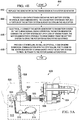
- FIGS. 4A-4D a detailed view of a system 400 within drive system compartment(s) 420 comprising an electrically-based autorotative assist unit 410 is shown.
- the transmission 402 is coupled to the engine 404, via a drive shaft 405 and a free-wheeling unit 406, and to the rotor 408 (or mast of the rotor system).
- the transmission 402 may also be coupled to a hydraulic pump system 422 and an autorotative assist unit 410.
- the autorotative assist unit 410 may comprise a motor-generator 412, a battery system 414 and a controller 416.
- the motor-generator 412 of the autorotative assist unit 410 may take the place of an electric generator 324 (as shown in FIGS. 3A-3D ).
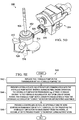
- Some embodiments of the disclosure may include methods, as shown in FIG. 4E of retrofitting a helicopter for improved autorotation capabilities, wherein the helicopter 420 comprises a rotor 408, a transmission 402 having a generator 324 (as shown in FIGS. 3A-3D ) off the transmission housing 402, and an engine 404.
- the method 440 may comprise, at block 442, replacing the generator 324 on the transmission 402 with a motor-generator 412.
- the method may comprise providing a high capacity/high discharge rate battery system 414, wherein, in some embodiments, the new battery system 414 may replace a portion of the battery system already existing in the helicopter 420.
- the method may then comprise, at block 446, electrically connecting the motor-generator 412 to the battery system 414 so that during normal engine operation, the motor-generator 412 charges the battery system 414, but upon loss of engine power, the motor-generator 412 is operable to draw energy from the battery system 414 to drive the rotor 408 for autorotative assistance.
- the transmission 402 may couple to a free-wheeling unit 406, and the motor-generator 412 and the engine 404 may be coupled to the transmission 402 on opposite sides of the freewheeling unit 406.
- the motor-generator 412 may be coupled to the transmission 402 independently of a drive shaft 405 (and/or free-wheeling unit 406) from the engine 404.
- the motor-generator 412 may be coupled to the transmission without any intervening components, such as gearing.
- the method may additionally comprise, at block 448, providing a controller 416, as well as optionally one or more sensors in communication with the controller 416, for triggering the motor-generator 412 to draw energy from the battery system 414 to provide power to the rotor 408 during autorotation.
- the motor-generator 412 and battery system 414 may be operable to provide about 45-80 hp to the rotor 408 for about 3-7 seconds during autorotation.
- the motor-generator 412 and battery system 414 may weigh no more than about 65 pounds, for example about 60-65 pounds, in some embodiments.
- FIGS. 5A-5D a detailed view of a system 500 within drive system compartment(s) 520 comprising a hydraulically-based autorotative assist unit 510 is shown.
- the transmission 502 is coupled to the engine 504, via a drive shaft 505 and a free-wheeling unit 506, and to the rotor 508 (or mast of the rotor system).
- the transmission 502 may also be coupled to an electric generator 524 and an autorotative assist unit 510.
- the autorotative assist unit 510 may comprise a hydraulic pump-motor 512, a hydraulic accumulator 514 and a controller 516.
- hydraulic pump-motor 512 of the autorotative assist unit 510 may take the place of a hydraulic pump system 322 (as shown in FIGS. 3A-3D ).
- the AAU in some embodiments may comprises both electrical and hydraulic features.
- Some embodiments of the disclosure may include methods, shown in FIG. 5E , of retrofitting a helicopter for improved autorotation capabilities, wherein the helicopter comprises a rotor 508, a transmission 502 having a hydraulic pump 322 (as shown in FIGS. 3A-3D ) off the transmission housing 502, and an engine 504.
- the method 540 may comprise, at block 542, replacing the hydraulic pump 322 on the transmission 502 with a hydraulic pump-motor 512.
- the method may comprise providing a hydraulic accumulator 514 in fluid communication with the hydraulic pump-motor 512, wherein during normal engine operation, the hydraulic pump-motor 512 pressurizes (e.g.
- the hydraulic pump-motor 512 draws pressure (energy) from the hydraulic accumulator 514 to drive the rotor for autorotative assistance.
- the hydraulic accumulator 514 may comprise a pressure vessel.
- the transmission 502 may couple to a free-wheeling unit 506 and the hydraulic pump-motor 512 and the engine 504 may be coupled to the transmission 502 on opposite sides of the freewheeling unit 506.
- the hydraulic pump-motor 512 may be coupled to the transmission 502 independently of a drive shaft 505 from the engine 504.
- the pump-motor may be coupled to the transmission without any intervening components, such as gearing.
- the method may additionally comprise, at block 546, providing a controller 516, as well as optionally one or more sensors in communication with the controller 516, for triggering the hydraulic pump-motor 512 to draw energy from the hydraulic accumulator 514 to provide power to the rotor 508 during autorotation.
- the hydraulic pump-motor 512 and hydraulic accumulator 514 may be operable to provide about 45-80 hp to the rotor 508 for about 3-7 seconds during autorotation.
- the hydraulic pump-motor 512 and hydraulic accumulator 514 may weigh less than about 65 pounds, for example about 60-65 pounds, in some embodiments.
- certain embodiments of the disclosure include a shim that is used to bond a component to a bearing.
- the shim may have an elastic modulus value that is lower than an elastic modulus value of the component being bonded to the bearing.
- the shim absorbs a portion of the torsional strain. This reduces an amount of torsional strain experienced by an adhesive layer. Accordingly, since the amount of torsional strain in the adhesive layer is reduced, the adhesive layer may be less likely to fail during operation and may require less maintenance.
- the use of a shim may be advantageous in that it can replace custom molded bearings and components, which may have long lead times and be difficult to assemble and replace.
- R R 1 +k*(R u -R 1 ), wherein k is a variable ranging from 1 percent to 100 percent with a 1 percent increment, i.e., k is 1 percent, 2 percent, 3 percent, 4 percent, 5 percent, ..., 50 percent, 51 percent, 52 percent, ..., 95 percent, 96 percent, 97 percent, 98 percent, 99 percent, or 100 percent. Unless otherwise stated, the term "about” shall mean plus or minus 10 percent of the subsequent value. Moreover, any numerical range defined by two R numbers as defined in the above is also specifically disclosed.
Landscapes
- Engineering & Computer Science (AREA)
- Aviation & Aerospace Engineering (AREA)
- Mechanical Engineering (AREA)
- Connection Of Motors, Electrical Generators, Mechanical Devices, And The Like (AREA)
- Arrangement Or Mounting Of Propulsion Units For Vehicles (AREA)
- Control Of Eletrric Generators (AREA)
Claims (14)
- Autorotationsunterstützungssystem für einen Rotorhubschrauber (120), das Folgendes umfasst:einen Motor-Generator (212, 412) oder einen Hydraulikpumpe-Motor (512), ausgelegt zum Befestigen an einer Kraftmaschine (104);eine Steuerung (216, 416, 516), verbunden mit dem Motor-Generator (212, 412) oder dem Hydraulikpumpe-Motor (512);ein Batteriesystem (214) oder einen hydraulischen Speicher (514), gekoppelt mit dem Motor-Generator (212, 412) bzw. dem Hydraulikpumpe-Motor (512);wobei, während eines normalen Betriebs der Kraftmaschine (104), der Motor-Generator (212, 412) oder der Hydraulikpumpe-Motor (512) ausgelegt ist zum Speichern einer Energie im Batteriesystem (214) bzw. im hydraulischen Speicher (514);wobei, bei manueller und/oder automatischer Steuerung durch die Steuerung (216, 416, 516), das Batteriesystem (214) oder der hydraulische Speicher (514) ausgelegt ist zum Entladen der Energie auf den Motor-Generator (212, 412) bzw. den Hydraulikpumpe-Motor (512), und wobei der Motor-Generator (212, 412) oder der Hydraulikpumpe-Motor (512) ausgelegt ist zum Antreiben des Rotors (108, 208, 408, 508); undwobei die automatische Steuerung durch die Steuerung (216, 426, 516) ausgelöst wird, um Autorotationsunterstützung bereitzustellen, wenn das Drehzahlniveau der Kraftmaschine (104) unter das Drehzahlniveau des Rotors (108, 208, 408, 508) fällt.
- System nach Anspruch 1, wobei die manuelle und/oder eine automatische Steuerung durch die Steuerung (216, 416, 516) erfolgt:(i) während des normalen Betriebs der Kraftmaschine (104); oder(ii) während eines Verlusts von Kraftmaschinenleistung.
- System nach Anspruch 1 oder Anspruch 2, ferner umfassend einen oder mehrere Sensoren, die mit der Steuerung (216, 416, 516) gekoppelt sind, wobei der eine oder die mehreren Sensoren eines oder mehrere aus einer Drehzahl einer Kraftmaschine (104), einer Rotordrehzahl, einer Geschwindigkeit, einer Sinkgeschwindigkeit, einer Höhe und einem Betrag der Energie, die im Batteriesystem (214) oder dem hydraulischen Speicher (514) gespeichert ist, detektieren.
- System nach Anspruch 1 oder Anspruch 2 oder Anspruch 3, wobei die Steuerung (216, 416, 516) ausgelegt ist zum Bereitstellen einer Anzeige eines Betrags der Energie, die im Batteriesystem (214) oder dem hydraulischen Speicher (514) gespeichert ist.
- System nach Anspruch 1 oder einem der vorhergehenden Ansprüche, wobei die Steuerung (216, 416, 516) ausgelegt ist zum Empfangen von einem oder mehreren Befehlen von einem Piloten.
- System nach Anspruch 1 oder einem der vorhergehenden Ansprüche, wobei der Motor-Generator (212, 412) und das Batteriesystem (214) ausgelegt sind zum Bereitstellen von 60 kW (80 PS) für 6-7 Sekunden oder 34 kW (45 PS) für 3-4 Sekunden.
- System nach Anspruch 1 oder einem der vorhergehenden Ansprüche, wobei der Hydraulikpumpe-Motor (512) und der hydraulische Speicher (514) ausgelegt sind zum Bereitstellen von 34-60 kW (45-80 PS) für 3-7 Sekunden.
- Autorotationsunterstützungsverfahren für einen Rotorhubschrauber (120), das Folgendes umfasst:Bereitstellen eines Motor-Generators (212, 412) oder eines Hydraulikpumpe-Motors (512), befestigt an einer Kraftmaschine (104), einer Steuerung (216, 416, 516), verbunden mit dem Motor-Generator (212, 412) oder dem Hydraulikpumpe-Motor (512), und eines Batteriesystems (214) oder eines hydraulischen Speichers (514), gekoppelt mit dem Motor-Generator (212, 412) bzw. dem Hydraulikpumpe-Motor (512);während des normalen Betriebs der Kraftmaschine (104):Speichern der Energie in dem Batteriesystem (214) oder dem hydraulischen Speicher (514) unter Verwendung des Motor-Generators (212, 412) bzw. des Hydraulikpumpe-Motors (512);bei einer manuellen und/oder automatischen Steuerung durch die Steuerung (216, 416, 516) : Entladen der Energie vom Batteriesystem (214) oder vom hydraulischen Speicher (514) auf den Motor-Generator (212, 412) bzw. den Hydraulikpumpe-Motor (512), und Antreiben des Rotors (108, 208, 408, 508) unter Verwendung des Motor-Generators (212, 412) bzw. des Hydraulikpumpe-Motors (512); undwobei die automatische Steuerung durch die Steuerung (216, 426, 516) ausgelöst wird, um Autorotationsunterstützung bereitzustellen, wenn das Drehzahlniveau der Kraftmaschine (104) unter das Drehzahlniveau des Rotors (108, 208, 408, 508) fällt.
- Verfahren nach Anspruch 8, wobei die manuelle und/oder eine automatische Steuerung durch die Steuerung (216, 416, 516) erfolgt:(i) während des normalen Betriebs der Kraftmaschine (104); oder(ii) während eines Verlusts von Kraftmaschinenleistung.
- Verfahren nach Anspruch 8 oder Anspruch 9, ferner umfassend Bereitstellen eines oder mehrerer Sensoren, die mit der Steuerung (216, 416, 516) gekoppelt sind, und Detektieren von einem oder mehreren aus einer Drehzahl einer Kraftmaschine (104), einer Rotordrehzahl, einer Geschwindigkeit, einer Sinkgeschwindigkeit, einer Höhe und einem Betrag der Energie, die im Batteriesystem (214) oder dem hydraulischen Speicher (514) gespeichert ist, unter Verwendung des einen oder der mehreren Sensoren.
- Verfahren nach Anspruch 8 oder Anspruch 9 oder Anspruch 10, ferner umfassend Bereitstellen einer Anzeige eines Betrags der Energie, die im Batteriesystem (214) oder dem hydraulischen Speicher (514) gespeichert ist, unter Verwendung der Steuerung (216, 416, 516).
- Verfahren nach Anspruch 8 oder einem der vorhergehenden Verfahrensansprüche, ferner umfassend Empfangen von einem oder mehreren Befehlen von einem Piloten.
- Verfahren nach Anspruch 8 oder einem der vorhergehenden Verfahrensansprüche, ferner umfassend Bereitstellen von 60 kW (80 PS) für 6-7 Sekunden oder 34 kW (45 PS) für 3-4 Sekunden unter Verwendung des Motor-Generators (212, 412) und des Batteriesystems (214).
- Verfahren nach Anspruch 8 oder einem der vorhergehenden Verfahrensansprüche, ferner umfassend Bereitstellen von 34-60 kW (45-80 PS) für 3-7 Sekunden unter Verwendung des Hydraulikpumpe-Motors (512) und des hydraulischen Speichers (514).
Priority Applications (1)
| Application Number | Priority Date | Filing Date | Title |
|---|---|---|---|
| EP20209609.5A EP3800119B1 (de) | 2013-03-15 | 2013-06-11 | System zur verbesserung der autorotation |
Applications Claiming Priority (3)
| Application Number | Priority Date | Filing Date | Title |
|---|---|---|---|
| US13/834,215 US9180964B2 (en) | 2013-03-15 | 2013-03-15 | Autorotative enhancement system |
| EP15194261.2A EP3000730B1 (de) | 2013-03-15 | 2013-06-11 | System zur autorotationverbesserung eines rotors |
| EP13171571.6A EP2778048B1 (de) | 2013-03-15 | 2013-06-11 | System zur Autorotationverbesserung eines Rotors |
Related Parent Applications (3)
| Application Number | Title | Priority Date | Filing Date |
|---|---|---|---|
| EP15194261.2A Division EP3000730B1 (de) | 2013-03-15 | 2013-06-11 | System zur autorotationverbesserung eines rotors |
| EP15194261.2A Division-Into EP3000730B1 (de) | 2013-03-15 | 2013-06-11 | System zur autorotationverbesserung eines rotors |
| EP13171571.6A Division EP2778048B1 (de) | 2013-03-15 | 2013-06-11 | System zur Autorotationverbesserung eines Rotors |
Related Child Applications (2)
| Application Number | Title | Priority Date | Filing Date |
|---|---|---|---|
| EP20209609.5A Division-Into EP3800119B1 (de) | 2013-03-15 | 2013-06-11 | System zur verbesserung der autorotation |
| EP20209609.5A Division EP3800119B1 (de) | 2013-03-15 | 2013-06-11 | System zur verbesserung der autorotation |
Publications (2)
| Publication Number | Publication Date |
|---|---|
| EP3434587A1 EP3434587A1 (de) | 2019-01-30 |
| EP3434587B1 true EP3434587B1 (de) | 2021-08-11 |
Family
ID=48628297
Family Applications (4)
| Application Number | Title | Priority Date | Filing Date |
|---|---|---|---|
| EP18193690.7A Active EP3434587B1 (de) | 2013-03-15 | 2013-06-11 | System zur verbesserung der autorotation |
| EP20209609.5A Active EP3800119B1 (de) | 2013-03-15 | 2013-06-11 | System zur verbesserung der autorotation |
| EP15194261.2A Active EP3000730B1 (de) | 2013-03-15 | 2013-06-11 | System zur autorotationverbesserung eines rotors |
| EP13171571.6A Active EP2778048B1 (de) | 2013-03-15 | 2013-06-11 | System zur Autorotationverbesserung eines Rotors |
Family Applications After (3)
| Application Number | Title | Priority Date | Filing Date |
|---|---|---|---|
| EP20209609.5A Active EP3800119B1 (de) | 2013-03-15 | 2013-06-11 | System zur verbesserung der autorotation |
| EP15194261.2A Active EP3000730B1 (de) | 2013-03-15 | 2013-06-11 | System zur autorotationverbesserung eines rotors |
| EP13171571.6A Active EP2778048B1 (de) | 2013-03-15 | 2013-06-11 | System zur Autorotationverbesserung eines Rotors |
Country Status (2)
| Country | Link |
|---|---|
| US (5) | US9180964B2 (de) |
| EP (4) | EP3434587B1 (de) |
Families Citing this family (40)
| Publication number | Priority date | Publication date | Assignee | Title |
|---|---|---|---|---|
| DE102012014751B3 (de) * | 2012-07-26 | 2014-01-02 | Eads Deutschland Gmbh | Hilfsantriebssystem für einen Hubschrauber |
| US9180964B2 (en) | 2013-03-15 | 2015-11-10 | Bell Helicopter Textron Inc. | Autorotative enhancement system |
| US9242727B1 (en) * | 2014-09-22 | 2016-01-26 | Rockwell Collins, Inc. | Autorotation initiation and flare cues system and related method |
| WO2016049027A1 (en) * | 2014-09-23 | 2016-03-31 | Sikorsky Aircraft Corporation | Hybrid electric power drive system for a rotorcraft |
| WO2016049030A1 (en) * | 2014-09-23 | 2016-03-31 | Sikorsky Aircraft Corporation | Hybrid contingency power drive system |
| US20170267338A1 (en) * | 2014-10-01 | 2017-09-21 | Sikorsky Aircraft Corporation | Acoustic signature variation of aircraft utilizing a clutch |
| EP3034834B1 (de) * | 2014-12-16 | 2019-04-10 | Airbus (Sas) | Steuerungsverfahren einer Leistungsanforderung zum Betrieb eines unbemannten Luftfahrzeugs, das mit einem Verbrennungsmotor ausgestattet ist |
| US20180002005A1 (en) * | 2015-01-21 | 2018-01-04 | Felix Errol Groenewald | Aircraft |
| KR101615486B1 (ko) * | 2015-07-17 | 2016-04-26 | 주식회사 한국카본 | 하이브리드 전기 추진시스템을 이용하는 수직이착륙 항공기 |
| US10854316B2 (en) * | 2015-12-03 | 2020-12-01 | Syracuse University | Methods and systems for prediction of a DNA profile mixture ratio |
| CN105836116B (zh) * | 2016-04-07 | 2019-02-19 | 易瓦特科技股份公司 | 冷却型无人机 |
| EP3246525B1 (de) * | 2016-05-18 | 2020-07-08 | Rolls-Royce Corporation | Gasturbinenmotor mit flatterkontrolle |
| US11194349B2 (en) | 2016-06-27 | 2021-12-07 | Sikorsky Aircraft Corporation | Automated autorotation and pilot aiding system |
| WO2018007975A1 (en) * | 2016-07-06 | 2018-01-11 | Martin Kuster | Helicopter hybrid engine system |
| US11022042B2 (en) | 2016-08-29 | 2021-06-01 | Rolls-Royce North American Technologies Inc. | Aircraft having a gas turbine generator with power assist |
| WO2018175349A1 (en) * | 2017-03-19 | 2018-09-27 | Zunum Aero, Inc. | Hybrid-electric aircraft, and methods, apparatus and systems for facilitating same |
| US11186185B2 (en) | 2017-05-31 | 2021-11-30 | Textron Innovations Inc. | Rotor brake effect by using electric distributed anti-torque generators and opposing electric motor thrust to slow a main rotor |
| CN111315654A (zh) | 2017-06-01 | 2020-06-19 | 舒尔弗莱股份有限公司 | 用于具有折叠螺旋桨臂和溃缩区起落架的旋翼飞行器的辅助动力系统 |
| US11001384B2 (en) | 2017-10-02 | 2021-05-11 | Bell Helicopter Textron Inc. | Hybrid power systems for aircraft |
| GB2567158A (en) * | 2017-10-03 | 2019-04-10 | J And M Ferranti Tech Limited | Power generation and drive system |
| US10906637B2 (en) | 2018-05-17 | 2021-02-02 | Textron Innovations Inc. | Assisted landing systems for rotorcraft |
| KR102101013B1 (ko) * | 2018-09-19 | 2020-04-14 | 전상엽 | 하이브리드 텐덤 헬기형 드론 |
| US11148799B2 (en) * | 2018-11-26 | 2021-10-19 | Textron Innovations Inc. | Tilting duct compound helicopter |
| RU2694695C1 (ru) * | 2018-12-05 | 2019-07-16 | Шамиль Абдулбарович Сулейманов | Способ распределения и управления энергией винтокрылого летательного аппарата с гибридной системой привода винта |
| FR3090576B1 (fr) | 2018-12-20 | 2021-09-10 | Airbus Helicopters | Procédé d’assistance pour aéronef monomoteur à voilure tournante lors d’une panne moteur. |
| KR102219558B1 (ko) * | 2018-12-24 | 2021-02-23 | 에어버스 헬리콥터스 | 1개의 수평 안전판과, 수평 안전판 상에 배치된 2개의 핀을 가지는 하이브리드형 회전익기 |
| KR101970601B1 (ko) * | 2019-03-13 | 2019-04-19 | 문창모 | 하이브리드 전기 추진시스템을 이용하는 수직이착륙 항공기 |
| US11352900B2 (en) | 2019-05-14 | 2022-06-07 | Pratt & Whitney Canada Corp. | Method and system for operating a rotorcraft engine |
| CN110435883B (zh) * | 2019-07-26 | 2023-10-31 | 佛山科学技术学院 | 一种并排反向双旋翼直升机传动系统 |
| US11104430B2 (en) * | 2019-09-27 | 2021-08-31 | Textron Innovations Inc. | Multimode powertrains for multi engine rotorcraft |
| FR3106570B1 (fr) | 2020-01-23 | 2024-02-16 | Airbus Helicopters | aéronef à voilure tournante muni d’un système de transmission équipé d’un moteur électrique de secours. |
| FR3114077B1 (fr) | 2020-09-14 | 2024-01-19 | Airbus Helicopters | Procédé et dispositif de gestion de l’énergie fournie par une installation motrice hybride pour giravion |
| FR3116805B1 (fr) * | 2020-11-30 | 2022-12-23 | Airbus Helicopters | installation motrice pour un aéronef à voilure tournante munie d’un frein moteur ainsi que d’une roue libre et d’une liaison débrayable en parallèle |
| IL289148A (en) * | 2021-12-19 | 2023-07-01 | De Israeli Luca | Converting a conventional airplane to an airplane with an electric propulsion system |
| FR3135249A1 (fr) * | 2022-05-09 | 2023-11-10 | Safran Helicopter Engines | Procédé de fonctionnement d’un ensemble propulsif pour un aéronef |
| FR3145553B1 (fr) * | 2023-02-08 | 2025-01-10 | Airbus Helicopters | Procédé de test d’une installation motrice hybride équipant un aéronef, programme d’ordinateur et aéronef associés |
| US12473843B2 (en) * | 2023-02-13 | 2025-11-18 | Pratt & Whitney Canada Corp. | Hybrid electric propulsion system with pitch change mechanism operation |
| EP4467449B1 (de) * | 2023-05-24 | 2025-10-15 | AIRBUS HELICOPTERS DEUTSCHLAND GmbH | Verfahren zum betrieb eines drehflügelflugzeugs in einem einzelmotorbetriebsmodus |
| CN117184435B (zh) * | 2023-08-16 | 2025-11-25 | 中国直升机设计研究所 | 一种基于自转着陆能力的旋翼转动惯量设计方法 |
| EP4631851A1 (de) | 2024-04-11 | 2025-10-15 | AIRBUS HELICOPTERS DEUTSCHLAND GmbH | Drehflügler mit einem steuerungssystem für autorotationstrainingsmodus |
Family Cites Families (26)
| Publication number | Priority date | Publication date | Assignee | Title |
|---|---|---|---|---|
| US3027704A (en) | 1959-07-24 | 1962-04-03 | United Aircraft Corp | Power and starting system for engines |
| GB1015512A (en) | 1962-08-20 | 1966-01-05 | Rolls Royce | Improvements in or relating to suspension systems for vehicles |
| US3260313A (en) * | 1964-05-28 | 1966-07-12 | Harold H Reuther | Helicopter flight controls |
| FR1422328A (fr) * | 1964-11-13 | 1965-12-24 | Sud Aviation | Perfectionnements apportés aux mécanismes de transmission de puissance et leurs applications, notamment aux hélicoptères |
| US3455182A (en) | 1967-04-12 | 1969-07-15 | Garrett Corp | Helicopter lift augmentation means |
| US4046335A (en) * | 1975-06-26 | 1977-09-06 | Helmut Osberger | Helicopters safety drive |
| US4609165A (en) | 1983-04-25 | 1986-09-02 | Hughes Helicopters, Inc. | Helicopter auxiliary energy system |
| FR2645828B1 (fr) * | 1989-04-17 | 1991-06-21 | Servanty Pierre | Rotor apte a developper dans un fluide des efforts sustentateurs et/ou propulsifs, procede de pilotage et aeronef equipe d'un tel rotor |
| GB0108659D0 (en) * | 2001-04-06 | 2001-05-30 | Westland Helicopters | Improvements in or relating to aircrafts |
| FR2922860B1 (fr) * | 2007-10-26 | 2010-01-22 | Eurocopter France | Amelioration aux giravions equipes de turbomoteurs |
| US8727271B2 (en) * | 2008-01-11 | 2014-05-20 | Ival O. Salyer | Aircraft using turbo-electric hybrid propulsion system |
| DE102008014404B4 (de) * | 2008-03-14 | 2011-03-03 | Swiss Uav Gmbh | Unbemanntes Luftfahrzeug |
| US20090320460A1 (en) * | 2008-06-26 | 2009-12-31 | Robert Peterson | Aircraft Auxiliary Systems Pump |
| FR2933910B1 (fr) | 2008-07-18 | 2010-12-17 | Eurocopter France | Installation motrice hybride et procede de commande d'une telle installation motrice |
| US8469306B2 (en) * | 2009-01-27 | 2013-06-25 | Ira F. Kuhn, Jr. | Purebred and hybrid electric VTOL tilt rotor aircraft |
| FR2952907B1 (fr) | 2009-11-26 | 2011-12-09 | Eurocopter France | Installation motrice, helicoptere comportant une telle installation motrice, et procede mis en oeuvre par cette installation motrice |
| DE102010021026A1 (de) * | 2010-05-19 | 2011-11-24 | Eads Deutschland Gmbh | Hybrides Antriebs- und Energiesystem für Fluggeräte |
| FR2962404B1 (fr) * | 2010-07-08 | 2012-07-20 | Eurocopter France | Architecture electrique pour aeronef a voilure tournante a motorisation hybride |
| EP2636567B1 (de) * | 2010-11-04 | 2016-01-06 | Toyota Jidosha Kabushiki Kaisha | Steuerungsvorrichtung für ein hybridfahrzeug |
| US20130134264A1 (en) * | 2011-11-28 | 2013-05-30 | Carter Aviation Technologies, Llc | Electric Motor Powered Rotor Drive for Slowed Rotor Winged Aircraft |
| US20130134253A1 (en) * | 2011-11-28 | 2013-05-30 | Carter Aviation Technologies, Llc | Power Rotor Drive for Slowed Rotor Winged Aircraft |
| DE102012014751B3 (de) * | 2012-07-26 | 2014-01-02 | Eads Deutschland Gmbh | Hilfsantriebssystem für einen Hubschrauber |
| US8939399B2 (en) * | 2012-07-31 | 2015-01-27 | Textron Innovations Inc. | System and method of augmenting power in a rotorcraft |
| FR2994687B1 (fr) | 2012-08-27 | 2014-07-25 | Eurocopter France | Procede d'assistance d'un pilote d'un aeronef monomoteur a voilure tournante lors d'une phase de vol en autorotation |
| US9180964B2 (en) * | 2013-03-15 | 2015-11-10 | Bell Helicopter Textron Inc. | Autorotative enhancement system |
| US9193451B2 (en) * | 2013-04-22 | 2015-11-24 | Ival O. Salyer | Aircraft using turbo-electric hybrid propulsion system for multi-mode operation |
-
2013
- 2013-03-15 US US13/834,215 patent/US9180964B2/en active Active
- 2013-06-11 EP EP18193690.7A patent/EP3434587B1/de active Active
- 2013-06-11 EP EP20209609.5A patent/EP3800119B1/de active Active
- 2013-06-11 EP EP15194261.2A patent/EP3000730B1/de active Active
- 2013-06-11 EP EP13171571.6A patent/EP2778048B1/de active Active
-
2015
- 2015-11-06 US US14/934,477 patent/US9522730B2/en active Active
-
2016
- 2016-12-19 US US15/383,458 patent/US10077105B2/en active Active
-
2018
- 2018-08-14 US US16/103,083 patent/US11014655B2/en active Active
-
2021
- 2021-05-13 US US17/319,629 patent/US20210276701A1/en not_active Abandoned
Non-Patent Citations (1)
| Title |
|---|
| None * |
Also Published As
| Publication number | Publication date |
|---|---|
| EP3434587A1 (de) | 2019-01-30 |
| US9522730B2 (en) | 2016-12-20 |
| EP2778048A1 (de) | 2014-09-17 |
| EP3000730B1 (de) | 2018-12-19 |
| US9180964B2 (en) | 2015-11-10 |
| EP2778048B1 (de) | 2016-01-13 |
| US20140263820A1 (en) | 2014-09-18 |
| US20170096219A1 (en) | 2017-04-06 |
| US20160059957A1 (en) | 2016-03-03 |
| US11014655B2 (en) | 2021-05-25 |
| US20180362152A1 (en) | 2018-12-20 |
| EP3000730A1 (de) | 2016-03-30 |
| US10077105B2 (en) | 2018-09-18 |
| EP3800119A1 (de) | 2021-04-07 |
| EP3800119B1 (de) | 2022-09-21 |
| US20210276701A1 (en) | 2021-09-09 |
Similar Documents
| Publication | Publication Date | Title |
|---|---|---|
| EP3434587B1 (de) | System zur verbesserung der autorotation | |
| CN107074366B (zh) | 直升机 | |
| US10906637B2 (en) | Assisted landing systems for rotorcraft | |
| US10301011B2 (en) | Electrified rotorcraft | |
| US20140054411A1 (en) | Method of assisting a pilot of a single-engined rotary wing aircraft during a stage of flight in autorotation | |
| EP2962885B1 (de) | Hybridantriebssystem für kolbenmotorflugzeuge | |
| CN110217384B (zh) | 用于旋翼飞行器的推进系统 | |
| KR101576640B1 (ko) | 두 개의 메인 엔진과 하나의 보조 2차 엔진을 갖는 회전익 항공기, 및 그러한 항공기를 제어하는 방법 | |
| EP2692634B1 (de) | System und methode zur Leistungssteigerung eines Hubschraubers | |
| US20170225573A1 (en) | Hybrid electric power drive system for a rotorcraft | |
| IL269148A (en) | A light aircraft that takes off and lands vertically | |
| EP3125343B1 (de) | Energiespeicherung in thermalbatterien für drehflügelflugzeug | |
| US20180065738A1 (en) | Autorotation initiation system | |
| US20150298797A1 (en) | Aircraft Having A System For Influencing The Yaw Moment And A Method For Influencing The Yaw Moment Of An Aircraft | |
| EP3476731A1 (de) | Drehmomentausgleichssystem für drehflügler | |
| KR20130056690A (ko) | 날개짓 비행체의 유연 박판 태양전지 일체형 날개 시스템 | |
| US11964771B2 (en) | Rotorcraft autorotation control through electrical braking | |
| RU210136U1 (ru) | Устройство спасения вертолета | |
| CN109250078A (zh) | 一种油电混合多旋翼飞行器 | |
| JP4629504B2 (ja) | 小型無人ヘリコプタ機体のオートローテーション制御装置及び方法 | |
| CN204056291U (zh) | 新型直升机 | |
| JP2023129938A (ja) | パワーユニット制御システム、パワーユニット制御方法及びパワーユニット制御プログラム | |
| JP2022030116A (ja) | ヘリポート |
Legal Events
| Date | Code | Title | Description |
|---|---|---|---|
| PUAI | Public reference made under article 153(3) epc to a published international application that has entered the european phase |
Free format text: ORIGINAL CODE: 0009012 |
|
| STAA | Information on the status of an ep patent application or granted ep patent |
Free format text: STATUS: REQUEST FOR EXAMINATION WAS MADE |
|
| STAA | Information on the status of an ep patent application or granted ep patent |
Free format text: STATUS: EXAMINATION IS IN PROGRESS |
|
| 17P | Request for examination filed |
Effective date: 20180911 |
|
| AC | Divisional application: reference to earlier application |
Ref document number: 3000730 Country of ref document: EP Kind code of ref document: P Ref document number: 2778048 Country of ref document: EP Kind code of ref document: P |
|
| AK | Designated contracting states |
Kind code of ref document: A1 Designated state(s): AL AT BE BG CH CY CZ DE DK EE ES FI FR GB GR HR HU IE IS IT LI LT LU LV MC MK MT NL NO PL PT RO RS SE SI SK SM TR |
|
| 17Q | First examination report despatched |
Effective date: 20190107 |
|
| RIN1 | Information on inventor provided before grant (corrected) |
Inventor name: SMITH, DUDLEY E. Inventor name: MARSHALL, BRYAN Inventor name: HITTE, CORY M. Inventor name: FENNY, CARLOS ALEXANDER |
|
| GRAP | Despatch of communication of intention to grant a patent |
Free format text: ORIGINAL CODE: EPIDOSNIGR1 |
|
| STAA | Information on the status of an ep patent application or granted ep patent |
Free format text: STATUS: GRANT OF PATENT IS INTENDED |
|
| INTG | Intention to grant announced |
Effective date: 20200217 |
|
| GRAJ | Information related to disapproval of communication of intention to grant by the applicant or resumption of examination proceedings by the epo deleted |
Free format text: ORIGINAL CODE: EPIDOSDIGR1 |
|
| STAA | Information on the status of an ep patent application or granted ep patent |
Free format text: STATUS: EXAMINATION IS IN PROGRESS |
|
| GRAP | Despatch of communication of intention to grant a patent |
Free format text: ORIGINAL CODE: EPIDOSNIGR1 |
|
| STAA | Information on the status of an ep patent application or granted ep patent |
Free format text: STATUS: GRANT OF PATENT IS INTENDED |
|
| INTC | Intention to grant announced (deleted) | ||
| INTG | Intention to grant announced |
Effective date: 20200717 |
|
| GRAJ | Information related to disapproval of communication of intention to grant by the applicant or resumption of examination proceedings by the epo deleted |
Free format text: ORIGINAL CODE: EPIDOSDIGR1 |
|
| STAA | Information on the status of an ep patent application or granted ep patent |
Free format text: STATUS: EXAMINATION IS IN PROGRESS |
|
| GRAP | Despatch of communication of intention to grant a patent |
Free format text: ORIGINAL CODE: EPIDOSNIGR1 |
|
| STAA | Information on the status of an ep patent application or granted ep patent |
Free format text: STATUS: GRANT OF PATENT IS INTENDED |
|
| INTC | Intention to grant announced (deleted) | ||
| INTG | Intention to grant announced |
Effective date: 20201209 |
|
| GRAJ | Information related to disapproval of communication of intention to grant by the applicant or resumption of examination proceedings by the epo deleted |
Free format text: ORIGINAL CODE: EPIDOSDIGR1 |
|
| STAA | Information on the status of an ep patent application or granted ep patent |
Free format text: STATUS: EXAMINATION IS IN PROGRESS |
|
| GRAP | Despatch of communication of intention to grant a patent |
Free format text: ORIGINAL CODE: EPIDOSNIGR1 |
|
| STAA | Information on the status of an ep patent application or granted ep patent |
Free format text: STATUS: GRANT OF PATENT IS INTENDED |
|
| INTC | Intention to grant announced (deleted) | ||
| GRAJ | Information related to disapproval of communication of intention to grant by the applicant or resumption of examination proceedings by the epo deleted |
Free format text: ORIGINAL CODE: EPIDOSDIGR1 |
|
| GRAP | Despatch of communication of intention to grant a patent |
Free format text: ORIGINAL CODE: EPIDOSNIGR1 |
|
| STAA | Information on the status of an ep patent application or granted ep patent |
Free format text: STATUS: EXAMINATION IS IN PROGRESS |
|
| GRAJ | Information related to disapproval of communication of intention to grant by the applicant or resumption of examination proceedings by the epo deleted |
Free format text: ORIGINAL CODE: EPIDOSDIGR1 |
|
| GRAP | Despatch of communication of intention to grant a patent |
Free format text: ORIGINAL CODE: EPIDOSNIGR1 |
|
| INTG | Intention to grant announced |
Effective date: 20210210 |
|
| GRAP | Despatch of communication of intention to grant a patent |
Free format text: ORIGINAL CODE: EPIDOSNIGR1 |
|
| STAA | Information on the status of an ep patent application or granted ep patent |
Free format text: STATUS: GRANT OF PATENT IS INTENDED |
|
| INTC | Intention to grant announced (deleted) | ||
| INTG | Intention to grant announced |
Effective date: 20210323 |
|
| GRAS | Grant fee paid |
Free format text: ORIGINAL CODE: EPIDOSNIGR3 |
|
| GRAA | (expected) grant |
Free format text: ORIGINAL CODE: 0009210 |
|
| STAA | Information on the status of an ep patent application or granted ep patent |
Free format text: STATUS: THE PATENT HAS BEEN GRANTED |
|
| AC | Divisional application: reference to earlier application |
Ref document number: 2778048 Country of ref document: EP Kind code of ref document: P Ref document number: 3000730 Country of ref document: EP Kind code of ref document: P |
|
| AK | Designated contracting states |
Kind code of ref document: B1 Designated state(s): AL AT BE BG CH CY CZ DE DK EE ES FI FR GB GR HR HU IE IS IT LI LT LU LV MC MK MT NL NO PL PT RO RS SE SI SK SM TR |
|
| REG | Reference to a national code |
Ref country code: CH Ref legal event code: EP |
|
| REG | Reference to a national code |
Ref country code: DE Ref legal event code: R096 Ref document number: 602013078794 Country of ref document: DE |
|
| REG | Reference to a national code |
Ref country code: IE Ref legal event code: FG4D Ref country code: AT Ref legal event code: REF Ref document number: 1419149 Country of ref document: AT Kind code of ref document: T Effective date: 20210915 |
|
| REG | Reference to a national code |
Ref country code: LT Ref legal event code: MG9D |
|
| REG | Reference to a national code |
Ref country code: NL Ref legal event code: MP Effective date: 20210811 |
|
| REG | Reference to a national code |
Ref country code: AT Ref legal event code: MK05 Ref document number: 1419149 Country of ref document: AT Kind code of ref document: T Effective date: 20210811 |
|
| PG25 | Lapsed in a contracting state [announced via postgrant information from national office to epo] |
Ref country code: SE Free format text: LAPSE BECAUSE OF FAILURE TO SUBMIT A TRANSLATION OF THE DESCRIPTION OR TO PAY THE FEE WITHIN THE PRESCRIBED TIME-LIMIT Effective date: 20210811 Ref country code: RS Free format text: LAPSE BECAUSE OF FAILURE TO SUBMIT A TRANSLATION OF THE DESCRIPTION OR TO PAY THE FEE WITHIN THE PRESCRIBED TIME-LIMIT Effective date: 20210811 Ref country code: HR Free format text: LAPSE BECAUSE OF FAILURE TO SUBMIT A TRANSLATION OF THE DESCRIPTION OR TO PAY THE FEE WITHIN THE PRESCRIBED TIME-LIMIT Effective date: 20210811 Ref country code: FI Free format text: LAPSE BECAUSE OF FAILURE TO SUBMIT A TRANSLATION OF THE DESCRIPTION OR TO PAY THE FEE WITHIN THE PRESCRIBED TIME-LIMIT Effective date: 20210811 Ref country code: ES Free format text: LAPSE BECAUSE OF FAILURE TO SUBMIT A TRANSLATION OF THE DESCRIPTION OR TO PAY THE FEE WITHIN THE PRESCRIBED TIME-LIMIT Effective date: 20210811 Ref country code: PT Free format text: LAPSE BECAUSE OF FAILURE TO SUBMIT A TRANSLATION OF THE DESCRIPTION OR TO PAY THE FEE WITHIN THE PRESCRIBED TIME-LIMIT Effective date: 20211213 Ref country code: NO Free format text: LAPSE BECAUSE OF FAILURE TO SUBMIT A TRANSLATION OF THE DESCRIPTION OR TO PAY THE FEE WITHIN THE PRESCRIBED TIME-LIMIT Effective date: 20211111 Ref country code: AT Free format text: LAPSE BECAUSE OF FAILURE TO SUBMIT A TRANSLATION OF THE DESCRIPTION OR TO PAY THE FEE WITHIN THE PRESCRIBED TIME-LIMIT Effective date: 20210811 Ref country code: BG Free format text: LAPSE BECAUSE OF FAILURE TO SUBMIT A TRANSLATION OF THE DESCRIPTION OR TO PAY THE FEE WITHIN THE PRESCRIBED TIME-LIMIT Effective date: 20211111 Ref country code: LT Free format text: LAPSE BECAUSE OF FAILURE TO SUBMIT A TRANSLATION OF THE DESCRIPTION OR TO PAY THE FEE WITHIN THE PRESCRIBED TIME-LIMIT Effective date: 20210811 |
|
| PG25 | Lapsed in a contracting state [announced via postgrant information from national office to epo] |
Ref country code: PL Free format text: LAPSE BECAUSE OF FAILURE TO SUBMIT A TRANSLATION OF THE DESCRIPTION OR TO PAY THE FEE WITHIN THE PRESCRIBED TIME-LIMIT Effective date: 20210811 Ref country code: LV Free format text: LAPSE BECAUSE OF FAILURE TO SUBMIT A TRANSLATION OF THE DESCRIPTION OR TO PAY THE FEE WITHIN THE PRESCRIBED TIME-LIMIT Effective date: 20210811 Ref country code: GR Free format text: LAPSE BECAUSE OF FAILURE TO SUBMIT A TRANSLATION OF THE DESCRIPTION OR TO PAY THE FEE WITHIN THE PRESCRIBED TIME-LIMIT Effective date: 20211112 |
|
| PG25 | Lapsed in a contracting state [announced via postgrant information from national office to epo] |
Ref country code: NL Free format text: LAPSE BECAUSE OF FAILURE TO SUBMIT A TRANSLATION OF THE DESCRIPTION OR TO PAY THE FEE WITHIN THE PRESCRIBED TIME-LIMIT Effective date: 20210811 |
|
| PG25 | Lapsed in a contracting state [announced via postgrant information from national office to epo] |
Ref country code: DK Free format text: LAPSE BECAUSE OF FAILURE TO SUBMIT A TRANSLATION OF THE DESCRIPTION OR TO PAY THE FEE WITHIN THE PRESCRIBED TIME-LIMIT Effective date: 20210811 |
|
| REG | Reference to a national code |
Ref country code: DE Ref legal event code: R097 Ref document number: 602013078794 Country of ref document: DE |
|
| PG25 | Lapsed in a contracting state [announced via postgrant information from national office to epo] |
Ref country code: SM Free format text: LAPSE BECAUSE OF FAILURE TO SUBMIT A TRANSLATION OF THE DESCRIPTION OR TO PAY THE FEE WITHIN THE PRESCRIBED TIME-LIMIT Effective date: 20210811 Ref country code: SK Free format text: LAPSE BECAUSE OF FAILURE TO SUBMIT A TRANSLATION OF THE DESCRIPTION OR TO PAY THE FEE WITHIN THE PRESCRIBED TIME-LIMIT Effective date: 20210811 Ref country code: RO Free format text: LAPSE BECAUSE OF FAILURE TO SUBMIT A TRANSLATION OF THE DESCRIPTION OR TO PAY THE FEE WITHIN THE PRESCRIBED TIME-LIMIT Effective date: 20210811 Ref country code: EE Free format text: LAPSE BECAUSE OF FAILURE TO SUBMIT A TRANSLATION OF THE DESCRIPTION OR TO PAY THE FEE WITHIN THE PRESCRIBED TIME-LIMIT Effective date: 20210811 Ref country code: CZ Free format text: LAPSE BECAUSE OF FAILURE TO SUBMIT A TRANSLATION OF THE DESCRIPTION OR TO PAY THE FEE WITHIN THE PRESCRIBED TIME-LIMIT Effective date: 20210811 Ref country code: AL Free format text: LAPSE BECAUSE OF FAILURE TO SUBMIT A TRANSLATION OF THE DESCRIPTION OR TO PAY THE FEE WITHIN THE PRESCRIBED TIME-LIMIT Effective date: 20210811 |
|
| PLBE | No opposition filed within time limit |
Free format text: ORIGINAL CODE: 0009261 |
|
| STAA | Information on the status of an ep patent application or granted ep patent |
Free format text: STATUS: NO OPPOSITION FILED WITHIN TIME LIMIT |
|
| 26N | No opposition filed |
Effective date: 20220512 |
|
| PG25 | Lapsed in a contracting state [announced via postgrant information from national office to epo] |
Ref country code: SI Free format text: LAPSE BECAUSE OF FAILURE TO SUBMIT A TRANSLATION OF THE DESCRIPTION OR TO PAY THE FEE WITHIN THE PRESCRIBED TIME-LIMIT Effective date: 20210811 |
|
| PG25 | Lapsed in a contracting state [announced via postgrant information from national office to epo] |
Ref country code: MC Free format text: LAPSE BECAUSE OF FAILURE TO SUBMIT A TRANSLATION OF THE DESCRIPTION OR TO PAY THE FEE WITHIN THE PRESCRIBED TIME-LIMIT Effective date: 20210811 |
|
| REG | Reference to a national code |
Ref country code: CH Ref legal event code: PL |
|
| REG | Reference to a national code |
Ref country code: BE Ref legal event code: MM Effective date: 20220630 |
|
| PG25 | Lapsed in a contracting state [announced via postgrant information from national office to epo] |
Ref country code: LU Free format text: LAPSE BECAUSE OF NON-PAYMENT OF DUE FEES Effective date: 20220611 Ref country code: LI Free format text: LAPSE BECAUSE OF NON-PAYMENT OF DUE FEES Effective date: 20220630 Ref country code: IE Free format text: LAPSE BECAUSE OF NON-PAYMENT OF DUE FEES Effective date: 20220611 Ref country code: CH Free format text: LAPSE BECAUSE OF NON-PAYMENT OF DUE FEES Effective date: 20220630 |
|
| PG25 | Lapsed in a contracting state [announced via postgrant information from national office to epo] |
Ref country code: BE Free format text: LAPSE BECAUSE OF NON-PAYMENT OF DUE FEES Effective date: 20220630 |
|
| P01 | Opt-out of the competence of the unified patent court (upc) registered |
Effective date: 20230602 |
|
| PG25 | Lapsed in a contracting state [announced via postgrant information from national office to epo] |
Ref country code: HU Free format text: LAPSE BECAUSE OF FAILURE TO SUBMIT A TRANSLATION OF THE DESCRIPTION OR TO PAY THE FEE WITHIN THE PRESCRIBED TIME-LIMIT; INVALID AB INITIO Effective date: 20130611 |
|
| PG25 | Lapsed in a contracting state [announced via postgrant information from national office to epo] |
Ref country code: MK Free format text: LAPSE BECAUSE OF FAILURE TO SUBMIT A TRANSLATION OF THE DESCRIPTION OR TO PAY THE FEE WITHIN THE PRESCRIBED TIME-LIMIT Effective date: 20210811 Ref country code: CY Free format text: LAPSE BECAUSE OF FAILURE TO SUBMIT A TRANSLATION OF THE DESCRIPTION OR TO PAY THE FEE WITHIN THE PRESCRIBED TIME-LIMIT Effective date: 20210811 |
|
| PG25 | Lapsed in a contracting state [announced via postgrant information from national office to epo] |
Ref country code: MT Free format text: LAPSE BECAUSE OF FAILURE TO SUBMIT A TRANSLATION OF THE DESCRIPTION OR TO PAY THE FEE WITHIN THE PRESCRIBED TIME-LIMIT Effective date: 20210811 |
|
| PGFP | Annual fee paid to national office [announced via postgrant information from national office to epo] |
Ref country code: DE Payment date: 20250627 Year of fee payment: 13 |
|
| PGFP | Annual fee paid to national office [announced via postgrant information from national office to epo] |
Ref country code: GB Payment date: 20250627 Year of fee payment: 13 |
|
| PGFP | Annual fee paid to national office [announced via postgrant information from national office to epo] |
Ref country code: FR Payment date: 20250625 Year of fee payment: 13 |
|
| PGFP | Annual fee paid to national office [announced via postgrant information from national office to epo] |
Ref country code: IT Payment date: 20250619 Year of fee payment: 13 |
|
| PG25 | Lapsed in a contracting state [announced via postgrant information from national office to epo] |
Ref country code: TR Free format text: LAPSE BECAUSE OF FAILURE TO SUBMIT A TRANSLATION OF THE DESCRIPTION OR TO PAY THE FEE WITHIN THE PRESCRIBED TIME-LIMIT Effective date: 20210811 |