EP3432893B1 - Enhanced melt strength acrylic formulation - Google Patents
Enhanced melt strength acrylic formulation Download PDFInfo
- Publication number
- EP3432893B1 EP3432893B1 EP17771220.5A EP17771220A EP3432893B1 EP 3432893 B1 EP3432893 B1 EP 3432893B1 EP 17771220 A EP17771220 A EP 17771220A EP 3432893 B1 EP3432893 B1 EP 3432893B1
- Authority
- EP
- European Patent Office
- Prior art keywords
- acrylic
- weight percent
- formulation
- melt strength
- high melt
- Prior art date
- Legal status (The legal status is an assumption and is not a legal conclusion. Google has not performed a legal analysis and makes no representation as to the accuracy of the status listed.)
- Active
Links
Images

Classifications
-
- C—CHEMISTRY; METALLURGY
- C08—ORGANIC MACROMOLECULAR COMPOUNDS; THEIR PREPARATION OR CHEMICAL WORKING-UP; COMPOSITIONS BASED THEREON
- C08L—COMPOSITIONS OF MACROMOLECULAR COMPOUNDS
- C08L33/00—Compositions of homopolymers or copolymers of compounds having one or more unsaturated aliphatic radicals, each having only one carbon-to-carbon double bond, and only one being terminated by only one carboxyl radical, or of salts, anhydrides, esters, amides, imides or nitriles thereof; Compositions of derivatives of such polymers
- C08L33/04—Homopolymers or copolymers of esters
- C08L33/06—Homopolymers or copolymers of esters of esters containing only carbon, hydrogen and oxygen, which oxygen atoms are present only as part of the carboxyl radical
- C08L33/10—Homopolymers or copolymers of methacrylic acid esters
- C08L33/12—Homopolymers or copolymers of methyl methacrylate
-
- B—PERFORMING OPERATIONS; TRANSPORTING
- B29—WORKING OF PLASTICS; WORKING OF SUBSTANCES IN A PLASTIC STATE IN GENERAL
- B29C—SHAPING OR JOINING OF PLASTICS; SHAPING OF MATERIAL IN A PLASTIC STATE, NOT OTHERWISE PROVIDED FOR; AFTER-TREATMENT OF THE SHAPED PRODUCTS, e.g. REPAIRING
- B29C45/00—Injection moulding, i.e. forcing the required volume of moulding material through a nozzle into a closed mould; Apparatus therefor
- B29C45/0001—Injection moulding, i.e. forcing the required volume of moulding material through a nozzle into a closed mould; Apparatus therefor characterised by the choice of material
-
- B—PERFORMING OPERATIONS; TRANSPORTING
- B29—WORKING OF PLASTICS; WORKING OF SUBSTANCES IN A PLASTIC STATE IN GENERAL
- B29C—SHAPING OR JOINING OF PLASTICS; SHAPING OF MATERIAL IN A PLASTIC STATE, NOT OTHERWISE PROVIDED FOR; AFTER-TREATMENT OF THE SHAPED PRODUCTS, e.g. REPAIRING
- B29C49/00—Blow-moulding, i.e. blowing a preform or parison to a desired shape within a mould; Apparatus therefor
- B29C49/0005—Blow-moulding, i.e. blowing a preform or parison to a desired shape within a mould; Apparatus therefor characterised by the material
-
- B—PERFORMING OPERATIONS; TRANSPORTING
- B29—WORKING OF PLASTICS; WORKING OF SUBSTANCES IN A PLASTIC STATE IN GENERAL
- B29C—SHAPING OR JOINING OF PLASTICS; SHAPING OF MATERIAL IN A PLASTIC STATE, NOT OTHERWISE PROVIDED FOR; AFTER-TREATMENT OF THE SHAPED PRODUCTS, e.g. REPAIRING
- B29C70/00—Shaping composites, i.e. plastics material comprising reinforcements, fillers or preformed parts, e.g. inserts
- B29C70/02—Shaping composites, i.e. plastics material comprising reinforcements, fillers or preformed parts, e.g. inserts comprising combinations of reinforcements, e.g. non-specified reinforcements, fibrous reinforcing inserts and fillers, e.g. particulate fillers, incorporated in matrix material, forming one or more layers and with or without non-reinforced or non-filled layers
-
- C—CHEMISTRY; METALLURGY
- C08—ORGANIC MACROMOLECULAR COMPOUNDS; THEIR PREPARATION OR CHEMICAL WORKING-UP; COMPOSITIONS BASED THEREON
- C08F—MACROMOLECULAR COMPOUNDS OBTAINED BY REACTIONS ONLY INVOLVING CARBON-TO-CARBON UNSATURATED BONDS
- C08F2/00—Processes of polymerisation
- C08F2/12—Polymerisation in non-solvents
- C08F2/16—Aqueous medium
- C08F2/22—Emulsion polymerisation
-
- C—CHEMISTRY; METALLURGY
- C08—ORGANIC MACROMOLECULAR COMPOUNDS; THEIR PREPARATION OR CHEMICAL WORKING-UP; COMPOSITIONS BASED THEREON
- C08F—MACROMOLECULAR COMPOUNDS OBTAINED BY REACTIONS ONLY INVOLVING CARBON-TO-CARBON UNSATURATED BONDS
- C08F220/00—Copolymers of compounds having one or more unsaturated aliphatic radicals, each having only one carbon-to-carbon double bond, and only one being terminated by only one carboxyl radical or a salt, anhydride ester, amide, imide or nitrile thereof
- C08F220/02—Monocarboxylic acids having less than ten carbon atoms; Derivatives thereof
- C08F220/10—Esters
- C08F220/12—Esters of monohydric alcohols or phenols
- C08F220/14—Methyl esters, e.g. methyl (meth)acrylate
-
- C—CHEMISTRY; METALLURGY
- C08—ORGANIC MACROMOLECULAR COMPOUNDS; THEIR PREPARATION OR CHEMICAL WORKING-UP; COMPOSITIONS BASED THEREON
- C08F—MACROMOLECULAR COMPOUNDS OBTAINED BY REACTIONS ONLY INVOLVING CARBON-TO-CARBON UNSATURATED BONDS
- C08F220/00—Copolymers of compounds having one or more unsaturated aliphatic radicals, each having only one carbon-to-carbon double bond, and only one being terminated by only one carboxyl radical or a salt, anhydride ester, amide, imide or nitrile thereof
- C08F220/02—Monocarboxylic acids having less than ten carbon atoms; Derivatives thereof
- C08F220/10—Esters
- C08F220/12—Esters of monohydric alcohols or phenols
- C08F220/16—Esters of monohydric alcohols or phenols of phenols or of alcohols containing two or more carbon atoms
- C08F220/18—Esters of monohydric alcohols or phenols of phenols or of alcohols containing two or more carbon atoms with acrylic or methacrylic acids
-
- C—CHEMISTRY; METALLURGY
- C08—ORGANIC MACROMOLECULAR COMPOUNDS; THEIR PREPARATION OR CHEMICAL WORKING-UP; COMPOSITIONS BASED THEREON
- C08J—WORKING-UP; GENERAL PROCESSES OF COMPOUNDING; AFTER-TREATMENT NOT COVERED BY SUBCLASSES C08B, C08C, C08F, C08G or C08H
- C08J9/00—Working-up of macromolecular substances to porous or cellular articles or materials; After-treatment thereof
- C08J9/04—Working-up of macromolecular substances to porous or cellular articles or materials; After-treatment thereof using blowing gases generated by a previously added blowing agent
- C08J9/12—Working-up of macromolecular substances to porous or cellular articles or materials; After-treatment thereof using blowing gases generated by a previously added blowing agent by a physical blowing agent
- C08J9/14—Working-up of macromolecular substances to porous or cellular articles or materials; After-treatment thereof using blowing gases generated by a previously added blowing agent by a physical blowing agent organic
- C08J9/142—Compounds containing oxygen but no halogen atom
-
- C—CHEMISTRY; METALLURGY
- C08—ORGANIC MACROMOLECULAR COMPOUNDS; THEIR PREPARATION OR CHEMICAL WORKING-UP; COMPOSITIONS BASED THEREON
- C08L—COMPOSITIONS OF MACROMOLECULAR COMPOUNDS
- C08L27/00—Compositions of homopolymers or copolymers of compounds having one or more unsaturated aliphatic radicals, each having only one carbon-to-carbon double bond, and at least one being terminated by a halogen; Compositions of derivatives of such polymers
- C08L27/02—Compositions of homopolymers or copolymers of compounds having one or more unsaturated aliphatic radicals, each having only one carbon-to-carbon double bond, and at least one being terminated by a halogen; Compositions of derivatives of such polymers not modified by chemical after-treatment
- C08L27/12—Compositions of homopolymers or copolymers of compounds having one or more unsaturated aliphatic radicals, each having only one carbon-to-carbon double bond, and at least one being terminated by a halogen; Compositions of derivatives of such polymers not modified by chemical after-treatment containing fluorine atoms
- C08L27/16—Homopolymers or copolymers or vinylidene fluoride
-
- C—CHEMISTRY; METALLURGY
- C08—ORGANIC MACROMOLECULAR COMPOUNDS; THEIR PREPARATION OR CHEMICAL WORKING-UP; COMPOSITIONS BASED THEREON
- C08L—COMPOSITIONS OF MACROMOLECULAR COMPOUNDS
- C08L51/00—Compositions of graft polymers in which the grafted component is obtained by reactions only involving carbon-to-carbon unsaturated bonds; Compositions of derivatives of such polymers
- C08L51/04—Compositions of graft polymers in which the grafted component is obtained by reactions only involving carbon-to-carbon unsaturated bonds; Compositions of derivatives of such polymers grafted on to rubbers
-
- C—CHEMISTRY; METALLURGY
- C08—ORGANIC MACROMOLECULAR COMPOUNDS; THEIR PREPARATION OR CHEMICAL WORKING-UP; COMPOSITIONS BASED THEREON
- C08L—COMPOSITIONS OF MACROMOLECULAR COMPOUNDS
- C08L67/00—Compositions of polyesters obtained by reactions forming a carboxylic ester link in the main chain; Compositions of derivatives of such polymers
- C08L67/04—Polyesters derived from hydroxycarboxylic acids, e.g. lactones
-
- B—PERFORMING OPERATIONS; TRANSPORTING
- B29—WORKING OF PLASTICS; WORKING OF SUBSTANCES IN A PLASTIC STATE IN GENERAL
- B29C—SHAPING OR JOINING OF PLASTICS; SHAPING OF MATERIAL IN A PLASTIC STATE, NOT OTHERWISE PROVIDED FOR; AFTER-TREATMENT OF THE SHAPED PRODUCTS, e.g. REPAIRING
- B29C43/00—Compression moulding, i.e. applying external pressure to flow the moulding material; Apparatus therefor
- B29C43/003—Compression moulding, i.e. applying external pressure to flow the moulding material; Apparatus therefor characterised by the choice of material
-
- B—PERFORMING OPERATIONS; TRANSPORTING
- B29—WORKING OF PLASTICS; WORKING OF SUBSTANCES IN A PLASTIC STATE IN GENERAL
- B29C—SHAPING OR JOINING OF PLASTICS; SHAPING OF MATERIAL IN A PLASTIC STATE, NOT OTHERWISE PROVIDED FOR; AFTER-TREATMENT OF THE SHAPED PRODUCTS, e.g. REPAIRING
- B29C48/00—Extrusion moulding, i.e. expressing the moulding material through a die or nozzle which imparts the desired form; Apparatus therefor
- B29C48/022—Extrusion moulding, i.e. expressing the moulding material through a die or nozzle which imparts the desired form; Apparatus therefor characterised by the choice of material
-
- B—PERFORMING OPERATIONS; TRANSPORTING
- B29—WORKING OF PLASTICS; WORKING OF SUBSTANCES IN A PLASTIC STATE IN GENERAL
- B29K—INDEXING SCHEME ASSOCIATED WITH SUBCLASSES B29B, B29C OR B29D, RELATING TO MOULDING MATERIALS OR TO MATERIALS FOR MOULDS, REINFORCEMENTS, FILLERS OR PREFORMED PARTS, e.g. INSERTS
- B29K2033/00—Use of polymers of unsaturated acids or derivatives thereof as moulding material
- B29K2033/04—Polymers of esters
- B29K2033/08—Polymers of acrylic acid esters, e.g. PMA, i.e. polymethylacrylate
-
- C—CHEMISTRY; METALLURGY
- C08—ORGANIC MACROMOLECULAR COMPOUNDS; THEIR PREPARATION OR CHEMICAL WORKING-UP; COMPOSITIONS BASED THEREON
- C08J—WORKING-UP; GENERAL PROCESSES OF COMPOUNDING; AFTER-TREATMENT NOT COVERED BY SUBCLASSES C08B, C08C, C08F, C08G or C08H
- C08J2201/00—Foams characterised by the foaming process
- C08J2201/02—Foams characterised by the foaming process characterised by mechanical pre- or post-treatments
- C08J2201/024—Preparation or use of a blowing agent concentrate, i.e. masterbatch in a foamable composition
-
- C—CHEMISTRY; METALLURGY
- C08—ORGANIC MACROMOLECULAR COMPOUNDS; THEIR PREPARATION OR CHEMICAL WORKING-UP; COMPOSITIONS BASED THEREON
- C08J—WORKING-UP; GENERAL PROCESSES OF COMPOUNDING; AFTER-TREATMENT NOT COVERED BY SUBCLASSES C08B, C08C, C08F, C08G or C08H
- C08J2333/00—Characterised by the use of homopolymers or copolymers of compounds having one or more unsaturated aliphatic radicals, each having only one carbon-to-carbon double bond, and only one being terminated by only one carboxyl radical, or of salts, anhydrides, esters, amides, imides, or nitriles thereof; Derivatives of such polymers
- C08J2333/04—Characterised by the use of homopolymers or copolymers of compounds having one or more unsaturated aliphatic radicals, each having only one carbon-to-carbon double bond, and only one being terminated by only one carboxyl radical, or of salts, anhydrides, esters, amides, imides, or nitriles thereof; Derivatives of such polymers esters
- C08J2333/06—Characterised by the use of homopolymers or copolymers of compounds having one or more unsaturated aliphatic radicals, each having only one carbon-to-carbon double bond, and only one being terminated by only one carboxyl radical, or of salts, anhydrides, esters, amides, imides, or nitriles thereof; Derivatives of such polymers esters of esters containing only carbon, hydrogen, and oxygen, the oxygen atom being present only as part of the carboxyl radical
- C08J2333/10—Homopolymers or copolymers of methacrylic acid esters
- C08J2333/12—Homopolymers or copolymers of methyl methacrylate
-
- C—CHEMISTRY; METALLURGY
- C08—ORGANIC MACROMOLECULAR COMPOUNDS; THEIR PREPARATION OR CHEMICAL WORKING-UP; COMPOSITIONS BASED THEREON
- C08J—WORKING-UP; GENERAL PROCESSES OF COMPOUNDING; AFTER-TREATMENT NOT COVERED BY SUBCLASSES C08B, C08C, C08F, C08G or C08H
- C08J2433/00—Characterised by the use of homopolymers or copolymers of compounds having one or more unsaturated aliphatic radicals, each having only one carbon-to-carbon double bond, and only one being terminated by only one carboxyl radical, or of salts, anhydrides, esters, amides, imides, or nitriles thereof; Derivatives of such polymers
- C08J2433/04—Characterised by the use of homopolymers or copolymers of compounds having one or more unsaturated aliphatic radicals, each having only one carbon-to-carbon double bond, and only one being terminated by only one carboxyl radical, or of salts, anhydrides, esters, amides, imides, or nitriles thereof; Derivatives of such polymers esters
- C08J2433/06—Characterised by the use of homopolymers or copolymers of compounds having one or more unsaturated aliphatic radicals, each having only one carbon-to-carbon double bond, and only one being terminated by only one carboxyl radical, or of salts, anhydrides, esters, amides, imides, or nitriles thereof; Derivatives of such polymers esters of esters containing only carbon, hydrogen, and oxygen, the oxygen atom being present only as part of the carboxyl radical
- C08J2433/08—Homopolymers or copolymers of acrylic acid esters
-
- C—CHEMISTRY; METALLURGY
- C08—ORGANIC MACROMOLECULAR COMPOUNDS; THEIR PREPARATION OR CHEMICAL WORKING-UP; COMPOSITIONS BASED THEREON
- C08L—COMPOSITIONS OF MACROMOLECULAR COMPOUNDS
- C08L2205/00—Polymer mixtures characterised by other features
- C08L2205/03—Polymer mixtures characterised by other features containing three or more polymers in a blend
-
- C—CHEMISTRY; METALLURGY
- C08—ORGANIC MACROMOLECULAR COMPOUNDS; THEIR PREPARATION OR CHEMICAL WORKING-UP; COMPOSITIONS BASED THEREON
- C08L—COMPOSITIONS OF MACROMOLECULAR COMPOUNDS
- C08L2207/00—Properties characterising the ingredient of the composition
- C08L2207/53—Core-shell polymer
Definitions
- the invention relates to an acrylic formulation having a thermoplastic matrix and 5-15 percent by weight of a very high molecular weight acrylic processing aid, with a weight average molecular weight of 10,000,000 Daltons or greater.
- the formulation has a high melt strength, yet is processable under typical melt processing conditions.
- the formulation is useful for forming melt-processed products, including extruded products such as extruded sheet, foamed products, co-extruded profiles, blown films, and other objects typically formed by a heat processing operation.
- the invention is especially useful with an acrylic matrix, such as Plexiglas ® and Solarkote ® resins from Arkema Inc.
- Thermoplastics are highly versatile polymers which are easily melt-processed into many different shapes, such as profiles, sheets, rods; molded and blow molded into films and objects; and extruded or co-extruded over many other thermoplastic substrates.
- Acrylic polymers are a specific class of thermoplastics that are well known for their clarity, surface gloss and weather resistance.
- melt strength of a thermoplastic polymer formulation is a key factor in the success of many melt-process operations.
- higher melt strength prevents uncontrolled expansion of the foam cells, to provide a small, uniform cell size.
- Higher melt strength also prevents a foam from collapsing prior to cooling, and locks in the foam structure.
- the high melt strength allows the pulling of a hot, extruded solid or foamed material through sizing or calibrating equipment.
- high melt strength provides the polymer melt with integrity, so a continuous material is formed without gaps.
- melt strength of a polymer formulation is to increase the average molecular weight of the polymer. While this approach results in a high melt strength, the melt viscosity can quickly increase to the point that the melt is too thick to process in typical melt processing equipment. Higher melt strength is also known to result from the presence of the higher degree of long chain branching and network/cross-linked structures that can be found in the very high molecular weight process aids. Long chain branching can be introduced in polymers via irradiation or by modification of the polymerization process.
- Melt processing aids which are high molecular weight compatible polymers, have been used in the PVC industry ( US 2009/0093560 ) to increase the melt strength of a PVC formulation.
- EP 1 152 033 A1 discloses a polymeric composition comprising an acrylic matrix and from 1 to 40 weight percent of a processing aid polymer with a molecular weight of greater than 1 million g/mol.
- low levels of very high molecular weight acrylic processing aids can be added to an acrylic matrix to significantly increase the melt strength of the acrylic formulation, with little or no increase in melt viscosity - allowing the high melt strength formulation to be melt processed in typical equipment under typical conditions.
- the high molecular weight acrylic processing aids are miscible with the acrylic matrix.
- the very high molecular weight acrylic processing aids have a molecular weight of greater than 5 million Daltons.
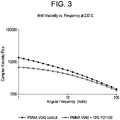
- the very high molecular weight acrylic processing aid formulation, in which the processing aid can be used at lower levels has a minimal effect on mechanical properties such as modulus and hardness in articles made with Applicant's formulation. Due to the lower use levels and the shear thinning behavior of the very high molecular weight process aid with high polydispersity, the viscosity at typical processing conditions can be minimally affected.
- the invention relates to a high melt strength acrylic formulation comprising:
- the invention further relates to a high strength acrylic formulation in which the matrix is may optionally be impact-modified.
- the invention further relates to articles that are made from the high impact strength acrylic formulation, and also to melt processes for forming those articles.
- the invention relates to an acrylic formulation having a high melt strength, yet where the formulation is processable under typical melt-processing conditions.
- the formulation contains from 5 to 15 weight percent of a very high molecular weight acrylic polymer process aid, and a matrix acrylic polymer, that is optionally impact modified.
- Copolymer is used to mean a polymer having two or more different monomer units.
- Polymer is used to mean both homopolymer and copolymers. Polymers may be straight chain, branched, star, comb, block, or any other structure. The polymers may be homogeneous, heterogeneous, and may have a gradient distribution of co-monomer units. All references cited are incorporated herein by reference. As used herein, unless otherwise described, percent shall mean weight percent. Molecular weight is a weight average molecular weight as measured by GPC. In cases where the polymer contains some cross-linking, and GPC cannot be applied due to an insoluble polymer fraction, soluble fraction / gel fraction or soluble faction molecular weight after extraction from gel is used.
- the acrylic polymer process aids of the invention are very high molecular weight acrylic polymers.
- Other polymers miscible with polymethyl methacrylate may also be used in conjunction with the high molecular weight acrylic polymer, including but not limited to polylactic acid and polyvinylidne fluoride.
- very high molecular weight is meant that the polymers have a weight average molecular weight of 10 million Dalton or greater.
- the acrylic process aid preferably contains at least 50 weight percent of methyl methacrylate monomer units, and optionally comonomers, up to 50 weight percent.
- the methyl methacrylate monomer units make up from greater than 50 to 100 percent of the monomer mixture, preferably from 70 to 100 weight percent, and more preferably from 80 to 100 weight percent. 0 to less than 50 weight percent of other acrylate and methacrylate monomers or other ethylenically unsaturated monomers, included but not limited to, styrene, alpha methyl styrene, acrylonitrile, and crosslinkers at low levels may also be present in the monomer mixture.
- Suitable acrylate and methacrylate comonomers include, but are not limited to, methyl acrylate, ethyl acrylate and ethyl methacrylate, butyl acrylate and butyl methacrylate, iso-octyl methacrylate and iso-octyl acrylate, lauryl acrylate and lauryl methacrylate, stearyl acrylate and stearyl methacrylate, isobornyl acrylate and isobornyl methacrylate, methoxy ethyl acrylate and methoxy methacrylate, 2-ethoxy ethyl acrylate and 2-ethoxy ethyl methacrylate, and dimethylamino ethyl acrylate and dimethylamino ethyl methacrylate monomers.
- (Meth) acrylic acids such as methacrylic acid and acrylic acid can be useful for the monomer mixture.
- other functionality can be added to the high molecular weight acrylic process aid through functional comonomers, including epoxy (such as glycidyl methacrylate), hydroxyl, and anhydride functional groups.
- Functional monomer units can be present at up to 70 weight percent of the acrylic polymer, preferably up to 50 weight percent.
- the acrylic polymer is a copolymer having 70 - 99.5 weight percent and more preferably 80 to 99 percent of methyl methacrylate units and from 0.5 to 30 weight percent of one or more C 1-8 straight or branched alkyl acrylate units.
- the polydispersity index of the high molecular weight acrylic process aid is in the range of 1.5 to 50, preferably from 2 to 40, and most preferably from 3 to 30.
- the high molecular weight acrylic process aid has a Tg of from -60 to 140°C, preferably from 0 to 120°C.
- the acrylic polymer can be an alloy with one or more compatible polymers, including ASA, PVDF and PLA.
- Preferred alloys are PMMA/polyvinylidene fluoride (PVDF) alloys, and PMMA/polylactic acid (PLA) alloys.
- the alloy contains 20 to 99 weight percent, preferably 50 to 95 weight percent, and more preferably 60-90 weight percent of the thermoplastic matrix, and 5 to 40 weight percent, preferably 10 to 30 weight percent of the compatible polymer.
- the high molecular weight acrylic process aid can be formed by any known polymerization process, such as emulsion, suspension, solution and reverse emulsion polymerization, emulsion polymerization is the preferred process for producing the very high molecular weight acrylic polymer.
- the polymer matrix of the invention is composed of one or more acrylic polymers.
- the acrylic polymer matrix is meant to include polymers, and copolymers having two or more different monomer units that are formed from alkyl methacrylate and alkyl acrylate monomers, and mixtures thereof.
- the alkyl methacrylate monomer is preferably methyl methacrylate, which may make up from greater than 50 to 100 percent of the monomer mixture, preferably from 70 to 100 weight percent, and more preferably from 80 to 100 weight percent.
- 0 to less than 50 weight percent of other acrylate and methacrylate monomers or other ethylenically unsaturated monomers included but not limited to, styrene, alpha methyl styrene, acrylonitrile, and crosslinkers at low levels may also be present in the monomer mixture.
- Suitable acrylate and methacrylate comonomers include, but are not limited to, methyl acrylate, ethyl acrylate and ethyl methacrylate, butyl acrylate and butyl methacrylate, iso-octyl methacrylate and iso-octyl acrylate, lauryl acrylate and lauryl methacrylate, stearyl acrylate and stearyl methacrylate, isobornyl acrylate and isobornyl methacrylate, methoxy ethyl acrylate and methoxy methacrylate, 2-ethoxy ethyl acrylate and 2-ethoxy ethyl methacrylate, and dimethylamino ethyl acrylate and dimethylamino ethyl methacrylate monomers.
- (Meth) acrylic acids such as methacrylic acid and acrylic acid can be useful for the monomer mixture.
- other functionality can be added to the high molecular weight acrylic process aid through functional comonomers, including epoxy (such as glycidyl methacrylate), hydroxyl, and anhydride functional groups.
- Functional monomer units can be present at up to 70 weight percent of the acrylic polymer, preferably up to 50 weight percent.
- the acrylic polymer is a copolymer having 70 - 99.5 weight percent and more preferably 80 to 99 percent of methyl methacrylate units and from 0.5 to 30 weight percent of one or more C 1-8 straight or branched alkyl acrylate units.
- the acrylic polymer can be an alloy with one or more compatible polymers, including ASA, PVDF and PLA.
- Preferred alloys are PMMA/polyvinylidene fluoride (PVDF) alloys, and PMMA/polylactic acid (PLA) alloys
- PVDF PMMA/polyvinylidene fluoride
- PLA PMMA/polylactic acid
- the alloy contains 2 to 95 weight percent, preferably 5 to 90 weight percent, and more preferably 20-80 weight percent of the PMMA homopolymer or copolymer, and 5 to 98 weight percent, preferably 10 to 95 weight percent and more preferably 20 to 80 weight percent of the compatible polymer.
- the acrylic polymer matrix may contain additives, including impact modifiers, and other additives typically present in polymer formulations, including but not limited to, stabilizers, plasticizers, fillers, coloring agents, pigments, dyes, antioxidants, antistatic agents, surfactants, toner, refractive index matching additives, matting agents, cross-linked polymer beads, additives with specific light diffraction, light absorbing, or light reflection characteristics, and dispersing aids.
- an additive is provided to help prevent degradation of the composition upon exposure to radiation, such as high levels of UV radiation or gamma radiation.
- Useful radiation stabilizers include, but are not limited to poly(ethylene glycol), poly(propylene glycol), butyl lactate, and carboxylic acids such as lactic acid, oxalic acid, acetic acid, or a mixture thereof.
- a chemical blowing agent such as monosodium citrate may be incorporated directly into the thermoplastic formulation, especially in a compounding step below the activation temperature of the blowing agent, or dry blended into the formulation immediately before foam extrusion.
- Useful impact modifiers include block copolymers, graft copolymers, and core/shell impact modifiers that are refractive-index matched to the matrix polymer.
- the impact modifier comprises at least 50 weight percent of acrylic monomer units.
- the impact modifier may be present at a level of from 0 to 80 weight percent, preferably 5 to 45, and more preferably from 10 to 30 weight percent, based on the total layer of matrix polymer and all additives. The level of impact modifier can be adjusted to meet the toughness needs for the end use of the composition.
- Core-shell impact modifiers are multi-stage, sequentially-produced polymer having a core/shell particle structure of at least two layers.
- the core-shell impact modifier has a soft (elastomeric) core, and a hard shell (greater than a Tg of 20°C).
- the core-shell modifier comprises three layers made of a hard core layer, one or more intermediate elastomeric layers, and a hard shell layer.
- the impact modifier is a core-shell structure, in which the shell contains at least 50 weight percent of methyl methacrylate monomer units.
- the core-shell impact modifier has a hard core (with a Tg greater than 30°C, and more preferably greater than 50°C).
- the core-shell impact modifier is made entirely of acrylic monomer units.
- the acrylic matrix polymer, high molecular weight acrylic processing aid, and optional impact modifiers and other additives are blended in the melt.
- Two or more of the components of the thermoplastic formulation may first be dry blended, then melt blended.
- the high molecular weight acrylic polymer, acrylic matrix polymer and optionally impact modifier are melt blended together and formed into pellets. The pellets are then added with other components, such as dyes, fillers, and blowing agents at the melt processer operation.
- heat compounding can be accomplished by typical twin screw extrusion into an acrylic formulation.
- Single screw extruders, and extruders of other designs are also contemplated by the invention.
- emulsions of one or more of the process aids, acrylic matrix polymer and/or impact modifier can be blended as liquid dispersions, and the blend can be dried, such as by spray drying, coagulation, or freeze drying, to form a powder blend.
- the powder blend can then be further compounded with other components of the acrylic formulation either by dry blending or melt blending.
- Powder-powder blending is contemplated.
- An intermediate step, in which the spray-dried powder(s) are extrusion melt compounded into pellets for further melt compounding is also contemplated.
- Typical melt processing operations in which the high melt strength acrylic formulation of the invention, having a manageable melt viscosity may be useful include, but are not limited to, extrusion, co-extrusion, injection molding, compression molding, film extrusion, and blow molding operations.
- the very high molecular weight, very high polydispersity formulation of the invention undergoes significant shear thinning, so its effect on high shear viscosity will be minimal.
- Process aids of the invention having higher levels of long chain branching can more effectively increase the melt strength.
- the acrylic formulations of the invention are useful in melt-processing applications that can benefit from a high melt strength with little increase in melt viscosity. These include, but are not limited to foams, profile coextrusion, thermoforming, and melt blown films.
- foams profile coextrusion, thermoforming, and melt blown films.
- melt blown films melt blown films.
- a high melt strength formulation provides several advantages in a foaming operation.
- the high melt strength provides control over the expansion of the individual cells, allowing for a more uniform cell size, and smaller cell size. Die swell of the foam is also better controlled.
- the high melt strength also helps to prevent the collapse of the cells, once formed. Further, the extruded foam can be more easily sized and/or calendared without deforming the foamed article, due to the higher melt strength of the polymer formulation.
- the higher melt strength acrylic process aid provides more continuity to the thermoplastic formulation, leading to little or no gaps or pit marks in the acrylic layer, and further there is an increase in die swell to better match the coextruded substrate.
- PD-1136 5 to 10 weight percent is melt compounded in a twin screw extruder into SOLARKOTE H300-103 (Arkema Inc.), which is an impact modified acrylic polymer, and extruded over a thermoplastic olefin substrate as a capstock profile extrusion.
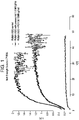
- PMMA grade V920 from Arkema Inc. and compounds with 10% PD 1136 having 10 MM g/mol molecular weight have been tested for the effect of enhanced melt strength on strain hardening behavior and transient extensional viscosity increase.
- the results shown in Figure 2 The effect arising from enhanced melt strength property is increased strain hardening behavior during extensional deformation process that occur in processes such as foaming, thermoforming, blow molding and blown film processes. Rapid increase in viscosity over a short period of time " strain hardening" is associated with higher degree of entanglements from the presence of very high Mw additives and increased polydispersity, and high degree of Long chain branching. Strain hardening helps with stabilization of the cellular structure during foam process which is attributed to the presence of entanglements; consequently macromolecules lose the ability to disentangle quickly enough to follow exponential deformation.
- the molecular weight of the acrylic processing aid described in this example will be about 6 million g/mol., measured as the mass average molecular weight (Mw) of the polymers by size exclusion chromatography (SEC).
- Another processing aid with specific anti-sticking composition such, as the one described in the patent EP 0367 198 B1 could also be used in the process.
- the two processing aids would be co-spray dried using 10 wt. % of the anti-sticking processing aid and 90 wt. % of the processing aid described by the preparation earlier in this example.
- Co-spray drying as used in this example consists of blending the two acrylic processing aid latexes and then isolating the blend by spray drying. This results in a final powder particle or grain comprised of both processing aids.
- acrylic resin Plexiglas ® VS100, Arkema Inc., King of Prussia, PA
- 105 grams 5 wt. % of the processing aid combination described above with 90 wt. % of the high molecular weight component and 10 wt. % of the anti-sticking processing aid.
- the acrylic formulation would be melt compounded in a twin screw extruder in order to homogenize the thermoplastic matrix and processing aids.
- the acrylic formulation would have both high melt strength and improved anti-sticking (better metal release).
Landscapes
- Chemical & Material Sciences (AREA)
- Health & Medical Sciences (AREA)
- Chemical Kinetics & Catalysis (AREA)
- Medicinal Chemistry (AREA)
- Polymers & Plastics (AREA)
- Organic Chemistry (AREA)
- Engineering & Computer Science (AREA)
- Mechanical Engineering (AREA)
- Manufacturing & Machinery (AREA)
- Materials Engineering (AREA)
- Composite Materials (AREA)
- Addition Polymer Or Copolymer, Post-Treatments, Or Chemical Modifications (AREA)
- Compositions Of Macromolecular Compounds (AREA)
Applications Claiming Priority (2)
| Application Number | Priority Date | Filing Date | Title |
|---|---|---|---|
| US201662313276P | 2016-03-25 | 2016-03-25 | |
| PCT/US2017/023982 WO2017165743A1 (en) | 2016-03-25 | 2017-03-24 | Enhanced melt strength acrylic formulation |
Publications (3)
| Publication Number | Publication Date |
|---|---|
| EP3432893A1 EP3432893A1 (en) | 2019-01-30 |
| EP3432893A4 EP3432893A4 (en) | 2019-10-30 |
| EP3432893B1 true EP3432893B1 (en) | 2022-10-26 |
Family
ID=59900749
Family Applications (1)
| Application Number | Title | Priority Date | Filing Date |
|---|---|---|---|
| EP17771220.5A Active EP3432893B1 (en) | 2016-03-25 | 2017-03-24 | Enhanced melt strength acrylic formulation |
Country Status (6)
| Country | Link |
|---|---|
| US (1) | US20200291154A1 (enExample) |
| EP (1) | EP3432893B1 (enExample) |
| JP (1) | JP2019509389A (enExample) |
| KR (1) | KR20180128033A (enExample) |
| MX (1) | MX2018011567A (enExample) |
| WO (1) | WO2017165743A1 (enExample) |
Families Citing this family (5)
| Publication number | Priority date | Publication date | Assignee | Title |
|---|---|---|---|---|
| CN109836532A (zh) * | 2019-03-04 | 2019-06-04 | 浙江华慧塑业有限公司 | 一种超高分子量的pvc熔体增强剂及其制备方法 |
| JP2023544692A (ja) * | 2020-09-30 | 2023-10-25 | ローム アンド ハース カンパニー | 熱可塑性加工のための高分子量アクリル加工助剤濃縮物 |
| KR102758046B1 (ko) * | 2021-11-05 | 2025-01-23 | (주) 넥셀 | 궤양성 대장염 예방 또는 치료용 재조합 단백질 및 이를 포함하는 궤양성 대장염 예방 또는 치료용 조성물 |
| CN116891616A (zh) * | 2023-07-19 | 2023-10-17 | 漳平市国联玩具礼品有限公司 | 一种改性塑胶材料玩具生产工艺 |
| WO2025029795A1 (en) * | 2023-08-01 | 2025-02-06 | Rohm And Haas Company | High molecular weight acrylic processing aid concentrate for thermoplastic processing |
Citations (6)
| Publication number | Priority date | Publication date | Assignee | Title |
|---|---|---|---|---|
| US5055529A (en) * | 1988-03-29 | 1991-10-08 | Mitsubishi Rayon Company, Ltd. | Processing aid for thermoplastic resin, and thermoplastic resin composition comprising same |
| US6784230B1 (en) * | 1999-09-23 | 2004-08-31 | Rohm And Haas Company | Chlorinated vinyl resin/cellulosic blends: compositions, processes, composites, and articles therefrom |
| WO2009108469A1 (en) * | 2008-02-25 | 2009-09-03 | Arkema France | Transparent chemical resistant impact acrylic alloy |
| US20100075088A1 (en) * | 2007-02-12 | 2010-03-25 | Arkema France | Thermoplastic composition comprising a thermoplastic matrix and a terpolymer of alkyl methacrylate, alkyl acrylate and a styrene monomer |
| JP5527252B2 (ja) * | 2010-02-25 | 2014-06-18 | 日立金属株式会社 | ノンハロゲン難燃樹脂組成物及びそれを用いたケーブル |
| JP2015089895A (ja) * | 2013-11-05 | 2015-05-11 | リケンテクノス株式会社 | 医療用塩化ビニル樹脂組成物およびそれからなる医療用器具 |
Family Cites Families (17)
| Publication number | Priority date | Publication date | Assignee | Title |
|---|---|---|---|---|
| JP2705812B2 (ja) | 1988-10-31 | 1998-01-28 | 三菱レイヨン株式会社 | 熱可塑性樹脂用滑剤およびこれを用いた熱可塑性樹脂組成物 |
| CA2042452A1 (en) * | 1990-05-25 | 1991-11-26 | Loren D. Trabert | Modified acrylic capstock |
| DE19927769A1 (de) * | 1999-06-17 | 2000-12-21 | Roehm Gmbh | Schlagzähmodifizierte Polymethacrylat-Formmasse mit verbesserter Fließfähigkeit |
| EP1152033B1 (en) * | 2000-05-03 | 2017-05-24 | Rohm And Haas Company | Polymeric compositions and processes for providing weatherable film and sheet |
| DE60104594T2 (de) * | 2000-05-12 | 2005-08-04 | Rohm And Haas Co. | Kunststoffaditive, verbessertes Verfahren, Produkte und Gegenstände die diese enthalten |
| MY131000A (en) * | 2001-03-16 | 2007-07-31 | Dow Global Technologies Inc | High melt strength polymers and method of making same |
| GB0508255D0 (en) * | 2005-04-25 | 2005-06-01 | Lucite Int Uk Ltd | Acrylic blends |
| JP5346192B2 (ja) | 2007-10-05 | 2013-11-20 | ローム アンド ハース カンパニー | 改善されたポリマー組成物 |
| US9309397B2 (en) * | 2007-10-05 | 2016-04-12 | Rohm And Haas Company | Processing aids and polymer formulations containing the same and method for producing the same |
| US8299139B1 (en) * | 2009-09-08 | 2012-10-30 | Ovation Polymer Technology And Engineered Materials, Inc. | Process and reactor for synthesis of ultra-high molecular weight acrylic polymers |
| WO2011045991A1 (ja) * | 2009-10-13 | 2011-04-21 | コニカミノルタオプト株式会社 | 光学フィルム |
| US8288494B2 (en) * | 2009-12-31 | 2012-10-16 | Cheil Industries Inc. | Transparent thermoplastic resin composition with improved impact strength and melt flow index |
| JP2011246655A (ja) * | 2010-05-28 | 2011-12-08 | Kaneka Corp | 熱可塑性樹脂組成物、その成形体、及び成型方法 |
| JP5619638B2 (ja) * | 2011-01-27 | 2014-11-05 | ユニチカ株式会社 | ポリ乳酸系樹脂組成物およびそれから得られる成形体と発泡体 |
| JP2013213087A (ja) * | 2012-03-30 | 2013-10-17 | Kaneka Corp | 熱可塑性樹脂組成物 |
| JP2013221039A (ja) * | 2012-04-13 | 2013-10-28 | Unitika Ltd | ポリ乳酸系樹脂組成物及び射出成形品 |
| JP2015063583A (ja) * | 2013-09-24 | 2015-04-09 | ユニチカ株式会社 | ポリ乳酸系樹脂組成物および成形体 |
-
2017
- 2017-03-24 JP JP2018550355A patent/JP2019509389A/ja active Pending
- 2017-03-24 US US16/086,020 patent/US20200291154A1/en active Pending
- 2017-03-24 WO PCT/US2017/023982 patent/WO2017165743A1/en not_active Ceased
- 2017-03-24 EP EP17771220.5A patent/EP3432893B1/en active Active
- 2017-03-24 KR KR1020187031005A patent/KR20180128033A/ko not_active Ceased
- 2017-03-24 MX MX2018011567A patent/MX2018011567A/es unknown
Patent Citations (6)
| Publication number | Priority date | Publication date | Assignee | Title |
|---|---|---|---|---|
| US5055529A (en) * | 1988-03-29 | 1991-10-08 | Mitsubishi Rayon Company, Ltd. | Processing aid for thermoplastic resin, and thermoplastic resin composition comprising same |
| US6784230B1 (en) * | 1999-09-23 | 2004-08-31 | Rohm And Haas Company | Chlorinated vinyl resin/cellulosic blends: compositions, processes, composites, and articles therefrom |
| US20100075088A1 (en) * | 2007-02-12 | 2010-03-25 | Arkema France | Thermoplastic composition comprising a thermoplastic matrix and a terpolymer of alkyl methacrylate, alkyl acrylate and a styrene monomer |
| WO2009108469A1 (en) * | 2008-02-25 | 2009-09-03 | Arkema France | Transparent chemical resistant impact acrylic alloy |
| JP5527252B2 (ja) * | 2010-02-25 | 2014-06-18 | 日立金属株式会社 | ノンハロゲン難燃樹脂組成物及びそれを用いたケーブル |
| JP2015089895A (ja) * | 2013-11-05 | 2015-05-11 | リケンテクノス株式会社 | 医療用塩化ビニル樹脂組成物およびそれからなる医療用器具 |
Non-Patent Citations (2)
| Title |
|---|
| "Polymer Dispersions and Their Industrial Applications", vol. 355, 11 April 2002, WILEY-VCH VERLAG, ISBN: 978-3-527-60058-8, article CHUEN-SHYONG CHOU ET AL: "Applications for Modification of Plastic Materials", pages: 355 - 382, XP055770517, DOI: 10.1002/3527600582.ch14 * |
| NAFAA MEKHILEF ET AL: "Effect of high molecular weight acrylic copolymers on the viscoelastic properties of engineering resins", JOURNAL OF VINYL AND ADDITIVE TECHNOLOGY, vol. 12, no. 3, 1 January 2006 (2006-01-01), US, pages 143 - 150, XP055693008, ISSN: 1083-5601, DOI: 10.1002/vnl.20083 * |
Also Published As
| Publication number | Publication date |
|---|---|
| US20200291154A1 (en) | 2020-09-17 |
| MX2018011567A (es) | 2019-05-27 |
| EP3432893A4 (en) | 2019-10-30 |
| WO2017165743A1 (en) | 2017-09-28 |
| KR20180128033A (ko) | 2018-11-30 |
| EP3432893A1 (en) | 2019-01-30 |
| JP2019509389A (ja) | 2019-04-04 |
Similar Documents
| Publication | Publication Date | Title |
|---|---|---|
| US20200291214A1 (en) | Enhanced melt strength thermoplastic formulation | |
| US20200291154A1 (en) | Enhanced melt strength acrylic formulation | |
| EP1976905B1 (en) | Blends of biopolymers with acrylic copolymers | |
| EP1675907B1 (de) | Polymermischung für mattierte spritzgussteile | |
| US8524832B2 (en) | Biodegradable impact-modified polymer compositions | |
| CN101977994B (zh) | 包含热塑性聚氨酯(tpu)和抗冲击性聚(甲基)丙烯酸酯的塑料混合物 | |
| EP3655443B1 (en) | Poly(methyl methacrylate) resin composition | |
| US8859678B2 (en) | Thermoplastic composition comprising a thermoplastic matrix and a terpolymer of alkyl methacrylate, alkyl acrylate and a styrene monomer | |
| JP2019509389A5 (enExample) | ||
| JP3508454B2 (ja) | メタクリル酸メチル系樹脂およびその成形体 | |
| JP3817993B2 (ja) | メタクリル酸メチル系樹脂組成物 | |
| KR20200007681A (ko) | 코어-쉘 공중합체 제조방법, 이로부터 제조된 코어-쉘 공중합체 및 이를 포함하는 수지 조성물 | |
| WO2015031315A1 (en) | Biodegradable impact-modified polymer compositions | |
| JP7676381B2 (ja) | セルpvc用の官能化加工助剤ブレンド | |
| JP6277373B2 (ja) | 水酸基含有の芳香族ビニル系重合体とそれらを含有する樹脂発泡性粒子、予備発泡粒子、発泡成形体 | |
| CN108117728A (zh) | 一种可降解薄膜用耐热聚乳酸树脂组合物及其制备方法 | |
| KR20170141109A (ko) | 아크릴계 가공조제 및 이를 포함하는 염화비닐계 수지 조성물 | |
| US11655319B2 (en) | Processing aid for foam molding, a vinyl chloride resin-based foam molding composition comprising the same and a foam molded product | |
| US11584818B2 (en) | Processing aid for foam molding, a vinyl chloride resin-based foam molding composition comprising the same and a foam molded product | |
| US20130345363A1 (en) | Biodegradable impact-modified polymer compositions | |
| CN119365522A (zh) | 聚丙交酯吹塑膜的制造方法 | |
| BR112022008258B1 (pt) | Misturas de auxiliar de processo funcionalizado para pvc celular | |
| JP2003268217A (ja) | ポリエステル樹脂組成物及びそのシート |
Legal Events
| Date | Code | Title | Description |
|---|---|---|---|
| STAA | Information on the status of an ep patent application or granted ep patent |
Free format text: STATUS: THE INTERNATIONAL PUBLICATION HAS BEEN MADE |
|
| PUAI | Public reference made under article 153(3) epc to a published international application that has entered the european phase |
Free format text: ORIGINAL CODE: 0009012 |
|
| STAA | Information on the status of an ep patent application or granted ep patent |
Free format text: STATUS: REQUEST FOR EXAMINATION WAS MADE |
|
| 17P | Request for examination filed |
Effective date: 20180927 |
|
| AK | Designated contracting states |
Kind code of ref document: A1 Designated state(s): AL AT BE BG CH CY CZ DE DK EE ES FI FR GB GR HR HU IE IS IT LI LT LU LV MC MK MT NL NO PL PT RO RS SE SI SK SM TR |
|
| AX | Request for extension of the european patent |
Extension state: BA ME |
|
| DAV | Request for validation of the european patent (deleted) | ||
| DAX | Request for extension of the european patent (deleted) | ||
| A4 | Supplementary search report drawn up and despatched |
Effective date: 20190927 |
|
| RIC1 | Information provided on ipc code assigned before grant |
Ipc: C08K 5/01 20060101ALI20190923BHEP Ipc: A61K 47/32 20060101ALI20190923BHEP Ipc: A61K 31/78 20060101AFI20190923BHEP Ipc: B29C 70/02 20060101ALI20190923BHEP Ipc: C08F 220/14 20060101ALI20190923BHEP Ipc: A61K 47/34 20170101ALI20190923BHEP Ipc: C08F 20/06 20060101ALI20190923BHEP Ipc: C08F 2/22 20060101ALI20190923BHEP Ipc: D01F 1/10 20060101ALI20190923BHEP |
|
| STAA | Information on the status of an ep patent application or granted ep patent |
Free format text: STATUS: EXAMINATION IS IN PROGRESS |
|
| 17Q | First examination report despatched |
Effective date: 20200514 |
|
| RAP1 | Party data changed (applicant data changed or rights of an application transferred) |
Owner name: TRINSEO EUROPE GMBH |
|
| REG | Reference to a national code |
Ref country code: DE Ref legal event code: R079 Ref document number: 602017063051 Country of ref document: DE Free format text: PREVIOUS MAIN CLASS: A61K0031780000 Ipc: C08L0033120000 |
|
| RIC1 | Information provided on ipc code assigned before grant |
Ipc: C08F 220/14 20060101ALI20220420BHEP Ipc: C08F 2/22 20060101ALI20220420BHEP Ipc: B29C 70/02 20060101ALI20220420BHEP Ipc: C08L 51/04 20060101ALI20220420BHEP Ipc: C08L 33/12 20060101AFI20220420BHEP |
|
| GRAP | Despatch of communication of intention to grant a patent |
Free format text: ORIGINAL CODE: EPIDOSNIGR1 |
|
| STAA | Information on the status of an ep patent application or granted ep patent |
Free format text: STATUS: GRANT OF PATENT IS INTENDED |
|
| INTG | Intention to grant announced |
Effective date: 20220527 |
|
| GRAS | Grant fee paid |
Free format text: ORIGINAL CODE: EPIDOSNIGR3 |
|
| GRAA | (expected) grant |
Free format text: ORIGINAL CODE: 0009210 |
|
| STAA | Information on the status of an ep patent application or granted ep patent |
Free format text: STATUS: THE PATENT HAS BEEN GRANTED |
|
| AK | Designated contracting states |
Kind code of ref document: B1 Designated state(s): AL AT BE BG CH CY CZ DE DK EE ES FI FR GB GR HR HU IE IS IT LI LT LU LV MC MK MT NL NO PL PT RO RS SE SI SK SM TR |
|
| REG | Reference to a national code |
Ref country code: GB Ref legal event code: FG4D |
|
| REG | Reference to a national code |
Ref country code: CH Ref legal event code: EP |
|
| REG | Reference to a national code |
Ref country code: DE Ref legal event code: R096 Ref document number: 602017063051 Country of ref document: DE |
|
| REG | Reference to a national code |
Ref country code: AT Ref legal event code: REF Ref document number: 1527019 Country of ref document: AT Kind code of ref document: T Effective date: 20221115 |
|
| REG | Reference to a national code |
Ref country code: IE Ref legal event code: FG4D |
|
| REG | Reference to a national code |
Ref country code: LT Ref legal event code: MG9D |
|
| REG | Reference to a national code |
Ref country code: NL Ref legal event code: MP Effective date: 20221026 |
|
| REG | Reference to a national code |
Ref country code: AT Ref legal event code: MK05 Ref document number: 1527019 Country of ref document: AT Kind code of ref document: T Effective date: 20221026 |
|
| PG25 | Lapsed in a contracting state [announced via postgrant information from national office to epo] |
Ref country code: NL Free format text: LAPSE BECAUSE OF FAILURE TO SUBMIT A TRANSLATION OF THE DESCRIPTION OR TO PAY THE FEE WITHIN THE PRESCRIBED TIME-LIMIT Effective date: 20221026 |
|
| PG25 | Lapsed in a contracting state [announced via postgrant information from national office to epo] |
Ref country code: SE Free format text: LAPSE BECAUSE OF FAILURE TO SUBMIT A TRANSLATION OF THE DESCRIPTION OR TO PAY THE FEE WITHIN THE PRESCRIBED TIME-LIMIT Effective date: 20221026 Ref country code: PT Free format text: LAPSE BECAUSE OF FAILURE TO SUBMIT A TRANSLATION OF THE DESCRIPTION OR TO PAY THE FEE WITHIN THE PRESCRIBED TIME-LIMIT Effective date: 20230227 Ref country code: NO Free format text: LAPSE BECAUSE OF FAILURE TO SUBMIT A TRANSLATION OF THE DESCRIPTION OR TO PAY THE FEE WITHIN THE PRESCRIBED TIME-LIMIT Effective date: 20230126 Ref country code: LT Free format text: LAPSE BECAUSE OF FAILURE TO SUBMIT A TRANSLATION OF THE DESCRIPTION OR TO PAY THE FEE WITHIN THE PRESCRIBED TIME-LIMIT Effective date: 20221026 Ref country code: FI Free format text: LAPSE BECAUSE OF FAILURE TO SUBMIT A TRANSLATION OF THE DESCRIPTION OR TO PAY THE FEE WITHIN THE PRESCRIBED TIME-LIMIT Effective date: 20221026 Ref country code: ES Free format text: LAPSE BECAUSE OF FAILURE TO SUBMIT A TRANSLATION OF THE DESCRIPTION OR TO PAY THE FEE WITHIN THE PRESCRIBED TIME-LIMIT Effective date: 20221026 Ref country code: AT Free format text: LAPSE BECAUSE OF FAILURE TO SUBMIT A TRANSLATION OF THE DESCRIPTION OR TO PAY THE FEE WITHIN THE PRESCRIBED TIME-LIMIT Effective date: 20221026 |
|
| PG25 | Lapsed in a contracting state [announced via postgrant information from national office to epo] |
Ref country code: RS Free format text: LAPSE BECAUSE OF FAILURE TO SUBMIT A TRANSLATION OF THE DESCRIPTION OR TO PAY THE FEE WITHIN THE PRESCRIBED TIME-LIMIT Effective date: 20221026 Ref country code: PL Free format text: LAPSE BECAUSE OF FAILURE TO SUBMIT A TRANSLATION OF THE DESCRIPTION OR TO PAY THE FEE WITHIN THE PRESCRIBED TIME-LIMIT Effective date: 20221026 Ref country code: LV Free format text: LAPSE BECAUSE OF FAILURE TO SUBMIT A TRANSLATION OF THE DESCRIPTION OR TO PAY THE FEE WITHIN THE PRESCRIBED TIME-LIMIT Effective date: 20221026 Ref country code: IS Free format text: LAPSE BECAUSE OF FAILURE TO SUBMIT A TRANSLATION OF THE DESCRIPTION OR TO PAY THE FEE WITHIN THE PRESCRIBED TIME-LIMIT Effective date: 20230226 Ref country code: HR Free format text: LAPSE BECAUSE OF FAILURE TO SUBMIT A TRANSLATION OF THE DESCRIPTION OR TO PAY THE FEE WITHIN THE PRESCRIBED TIME-LIMIT Effective date: 20221026 Ref country code: GR Free format text: LAPSE BECAUSE OF FAILURE TO SUBMIT A TRANSLATION OF THE DESCRIPTION OR TO PAY THE FEE WITHIN THE PRESCRIBED TIME-LIMIT Effective date: 20230127 |
|
| P01 | Opt-out of the competence of the unified patent court (upc) registered |
Effective date: 20230602 |
|
| REG | Reference to a national code |
Ref country code: DE Ref legal event code: R097 Ref document number: 602017063051 Country of ref document: DE |
|
| PG25 | Lapsed in a contracting state [announced via postgrant information from national office to epo] |
Ref country code: SM Free format text: LAPSE BECAUSE OF FAILURE TO SUBMIT A TRANSLATION OF THE DESCRIPTION OR TO PAY THE FEE WITHIN THE PRESCRIBED TIME-LIMIT Effective date: 20221026 Ref country code: RO Free format text: LAPSE BECAUSE OF FAILURE TO SUBMIT A TRANSLATION OF THE DESCRIPTION OR TO PAY THE FEE WITHIN THE PRESCRIBED TIME-LIMIT Effective date: 20221026 Ref country code: EE Free format text: LAPSE BECAUSE OF FAILURE TO SUBMIT A TRANSLATION OF THE DESCRIPTION OR TO PAY THE FEE WITHIN THE PRESCRIBED TIME-LIMIT Effective date: 20221026 Ref country code: DK Free format text: LAPSE BECAUSE OF FAILURE TO SUBMIT A TRANSLATION OF THE DESCRIPTION OR TO PAY THE FEE WITHIN THE PRESCRIBED TIME-LIMIT Effective date: 20221026 Ref country code: CZ Free format text: LAPSE BECAUSE OF FAILURE TO SUBMIT A TRANSLATION OF THE DESCRIPTION OR TO PAY THE FEE WITHIN THE PRESCRIBED TIME-LIMIT Effective date: 20221026 |
|
| PG25 | Lapsed in a contracting state [announced via postgrant information from national office to epo] |
Ref country code: SK Free format text: LAPSE BECAUSE OF FAILURE TO SUBMIT A TRANSLATION OF THE DESCRIPTION OR TO PAY THE FEE WITHIN THE PRESCRIBED TIME-LIMIT Effective date: 20221026 Ref country code: AL Free format text: LAPSE BECAUSE OF FAILURE TO SUBMIT A TRANSLATION OF THE DESCRIPTION OR TO PAY THE FEE WITHIN THE PRESCRIBED TIME-LIMIT Effective date: 20221026 |
|
| PLBE | No opposition filed within time limit |
Free format text: ORIGINAL CODE: 0009261 |
|
| STAA | Information on the status of an ep patent application or granted ep patent |
Free format text: STATUS: NO OPPOSITION FILED WITHIN TIME LIMIT |
|
| 26N | No opposition filed |
Effective date: 20230727 |
|
| PG25 | Lapsed in a contracting state [announced via postgrant information from national office to epo] |
Ref country code: MC Free format text: LAPSE BECAUSE OF FAILURE TO SUBMIT A TRANSLATION OF THE DESCRIPTION OR TO PAY THE FEE WITHIN THE PRESCRIBED TIME-LIMIT Effective date: 20221026 |
|
| REG | Reference to a national code |
Ref country code: CH Ref legal event code: PL |
|
| PG25 | Lapsed in a contracting state [announced via postgrant information from national office to epo] |
Ref country code: SI Free format text: LAPSE BECAUSE OF FAILURE TO SUBMIT A TRANSLATION OF THE DESCRIPTION OR TO PAY THE FEE WITHIN THE PRESCRIBED TIME-LIMIT Effective date: 20221026 |
|
| REG | Reference to a national code |
Ref country code: BE Ref legal event code: MM Effective date: 20230331 |
|
| PG25 | Lapsed in a contracting state [announced via postgrant information from national office to epo] |
Ref country code: LU Free format text: LAPSE BECAUSE OF NON-PAYMENT OF DUE FEES Effective date: 20230324 |
|
| REG | Reference to a national code |
Ref country code: IE Ref legal event code: MM4A |
|
| PG25 | Lapsed in a contracting state [announced via postgrant information from national office to epo] |
Ref country code: LI Free format text: LAPSE BECAUSE OF NON-PAYMENT OF DUE FEES Effective date: 20230331 Ref country code: IE Free format text: LAPSE BECAUSE OF NON-PAYMENT OF DUE FEES Effective date: 20230324 Ref country code: CH Free format text: LAPSE BECAUSE OF NON-PAYMENT OF DUE FEES Effective date: 20230331 |
|
| PG25 | Lapsed in a contracting state [announced via postgrant information from national office to epo] |
Ref country code: BE Free format text: LAPSE BECAUSE OF NON-PAYMENT OF DUE FEES Effective date: 20230331 |
|
| PGFP | Annual fee paid to national office [announced via postgrant information from national office to epo] |
Ref country code: DE Payment date: 20240327 Year of fee payment: 8 Ref country code: GB Payment date: 20240327 Year of fee payment: 8 |
|
| PGFP | Annual fee paid to national office [announced via postgrant information from national office to epo] |
Ref country code: IT Payment date: 20240321 Year of fee payment: 8 Ref country code: FR Payment date: 20240325 Year of fee payment: 8 |
|
| PG25 | Lapsed in a contracting state [announced via postgrant information from national office to epo] |
Ref country code: BG Free format text: LAPSE BECAUSE OF FAILURE TO SUBMIT A TRANSLATION OF THE DESCRIPTION OR TO PAY THE FEE WITHIN THE PRESCRIBED TIME-LIMIT Effective date: 20221026 |
|
| PG25 | Lapsed in a contracting state [announced via postgrant information from national office to epo] |
Ref country code: BG Free format text: LAPSE BECAUSE OF FAILURE TO SUBMIT A TRANSLATION OF THE DESCRIPTION OR TO PAY THE FEE WITHIN THE PRESCRIBED TIME-LIMIT Effective date: 20221026 |
|
| PG25 | Lapsed in a contracting state [announced via postgrant information from national office to epo] |
Ref country code: CY Free format text: LAPSE BECAUSE OF FAILURE TO SUBMIT A TRANSLATION OF THE DESCRIPTION OR TO PAY THE FEE WITHIN THE PRESCRIBED TIME-LIMIT; INVALID AB INITIO Effective date: 20170324 |
|
| PG25 | Lapsed in a contracting state [announced via postgrant information from national office to epo] |
Ref country code: HU Free format text: LAPSE BECAUSE OF FAILURE TO SUBMIT A TRANSLATION OF THE DESCRIPTION OR TO PAY THE FEE WITHIN THE PRESCRIBED TIME-LIMIT; INVALID AB INITIO Effective date: 20170324 |
|
| REG | Reference to a national code |
Ref country code: DE Ref legal event code: R119 Ref document number: 602017063051 Country of ref document: DE |
|
| GBPC | Gb: european patent ceased through non-payment of renewal fee |
Effective date: 20250324 |
|
| PG25 | Lapsed in a contracting state [announced via postgrant information from national office to epo] |
Ref country code: TR Free format text: LAPSE BECAUSE OF FAILURE TO SUBMIT A TRANSLATION OF THE DESCRIPTION OR TO PAY THE FEE WITHIN THE PRESCRIBED TIME-LIMIT Effective date: 20221026 |
|
| PG25 | Lapsed in a contracting state [announced via postgrant information from national office to epo] |
Ref country code: DE Free format text: LAPSE BECAUSE OF NON-PAYMENT OF DUE FEES Effective date: 20251001 |
|
| PG25 | Lapsed in a contracting state [announced via postgrant information from national office to epo] |
Ref country code: GB Free format text: LAPSE BECAUSE OF NON-PAYMENT OF DUE FEES Effective date: 20250324 |
|
| PG25 | Lapsed in a contracting state [announced via postgrant information from national office to epo] |
Ref country code: FR Free format text: LAPSE BECAUSE OF NON-PAYMENT OF DUE FEES Effective date: 20250331 Ref country code: IT Free format text: LAPSE BECAUSE OF NON-PAYMENT OF DUE FEES Effective date: 20250324 |