EP3424501A1 - Zur verbesserung der symptome der autismus-spektrum-störung verwendete zusammensetzung und verfahren zur verwendung davon zur verbesserung der symptome der autismus-spektrum-störung - Google Patents
Zur verbesserung der symptome der autismus-spektrum-störung verwendete zusammensetzung und verfahren zur verwendung davon zur verbesserung der symptome der autismus-spektrum-störung Download PDFInfo
- Publication number
- EP3424501A1 EP3424501A1 EP17760149.9A EP17760149A EP3424501A1 EP 3424501 A1 EP3424501 A1 EP 3424501A1 EP 17760149 A EP17760149 A EP 17760149A EP 3424501 A1 EP3424501 A1 EP 3424501A1
- Authority
- EP
- European Patent Office
- Prior art keywords
- pyridoxamine
- asd
- compound
- symptoms
- composition
- Prior art date
- Legal status (The legal status is an assumption and is not a legal conclusion. Google has not performed a legal analysis and makes no representation as to the accuracy of the status listed.)
- Withdrawn
Links
Images





Classifications
-
- A—HUMAN NECESSITIES
- A61—MEDICAL OR VETERINARY SCIENCE; HYGIENE
- A61K—PREPARATIONS FOR MEDICAL, DENTAL OR TOILETRY PURPOSES
- A61K31/00—Medicinal preparations containing organic active ingredients
- A61K31/33—Heterocyclic compounds
- A61K31/395—Heterocyclic compounds having nitrogen as a ring hetero atom, e.g. guanethidine or rifamycins
- A61K31/435—Heterocyclic compounds having nitrogen as a ring hetero atom, e.g. guanethidine or rifamycins having six-membered rings with one nitrogen as the only ring hetero atom
- A61K31/44—Non condensed pyridines; Hydrogenated derivatives thereof
- A61K31/4415—Pyridoxine, i.e. Vitamin B6
-
- A—HUMAN NECESSITIES
- A23—FOODS OR FOODSTUFFS; TREATMENT THEREOF, NOT COVERED BY OTHER CLASSES
- A23L—FOODS, FOODSTUFFS OR NON-ALCOHOLIC BEVERAGES, NOT OTHERWISE PROVIDED FOR; PREPARATION OR TREATMENT THEREOF
- A23L33/00—Modifying nutritive qualities of foods; Dietetic products; Preparation or treatment thereof
- A23L33/10—Modifying nutritive qualities of foods; Dietetic products; Preparation or treatment thereof using additives
- A23L33/15—Vitamins
-
- A—HUMAN NECESSITIES
- A61—MEDICAL OR VETERINARY SCIENCE; HYGIENE
- A61K—PREPARATIONS FOR MEDICAL, DENTAL OR TOILETRY PURPOSES
- A61K31/00—Medicinal preparations containing organic active ingredients
- A61K31/33—Heterocyclic compounds
- A61K31/395—Heterocyclic compounds having nitrogen as a ring hetero atom, e.g. guanethidine or rifamycins
- A61K31/435—Heterocyclic compounds having nitrogen as a ring hetero atom, e.g. guanethidine or rifamycins having six-membered rings with one nitrogen as the only ring hetero atom
- A61K31/44—Non condensed pyridines; Hydrogenated derivatives thereof
-
- A—HUMAN NECESSITIES
- A61—MEDICAL OR VETERINARY SCIENCE; HYGIENE
- A61K—PREPARATIONS FOR MEDICAL, DENTAL OR TOILETRY PURPOSES
- A61K31/00—Medicinal preparations containing organic active ingredients
- A61K31/33—Heterocyclic compounds
- A61K31/395—Heterocyclic compounds having nitrogen as a ring hetero atom, e.g. guanethidine or rifamycins
- A61K31/495—Heterocyclic compounds having nitrogen as a ring hetero atom, e.g. guanethidine or rifamycins having six-membered rings with two or more nitrogen atoms as the only ring heteroatoms, e.g. piperazine or tetrazines
- A61K31/505—Pyrimidines; Hydrogenated pyrimidines, e.g. trimethoprim
- A61K31/506—Pyrimidines; Hydrogenated pyrimidines, e.g. trimethoprim not condensed and containing further heterocyclic rings
- A61K31/51—Thiamines, e.g. vitamin B1
-
- A—HUMAN NECESSITIES
- A61—MEDICAL OR VETERINARY SCIENCE; HYGIENE
- A61K—PREPARATIONS FOR MEDICAL, DENTAL OR TOILETRY PURPOSES
- A61K9/00—Medicinal preparations characterised by special physical form
- A61K9/0012—Galenical forms characterised by the site of application
- A61K9/0053—Mouth and digestive tract, i.e. intraoral and peroral administration
-
- A—HUMAN NECESSITIES
- A61—MEDICAL OR VETERINARY SCIENCE; HYGIENE
- A61P—SPECIFIC THERAPEUTIC ACTIVITY OF CHEMICAL COMPOUNDS OR MEDICINAL PREPARATIONS
- A61P25/00—Drugs for disorders of the nervous system
-
- A—HUMAN NECESSITIES
- A61—MEDICAL OR VETERINARY SCIENCE; HYGIENE
- A61P—SPECIFIC THERAPEUTIC ACTIVITY OF CHEMICAL COMPOUNDS OR MEDICINAL PREPARATIONS
- A61P25/00—Drugs for disorders of the nervous system
- A61P25/18—Antipsychotics, i.e. neuroleptics; Drugs for mania or schizophrenia
-
- A—HUMAN NECESSITIES
- A61—MEDICAL OR VETERINARY SCIENCE; HYGIENE
- A61P—SPECIFIC THERAPEUTIC ACTIVITY OF CHEMICAL COMPOUNDS OR MEDICINAL PREPARATIONS
- A61P43/00—Drugs for specific purposes, not provided for in groups A61P1/00-A61P41/00
-
- A—HUMAN NECESSITIES
- A61—MEDICAL OR VETERINARY SCIENCE; HYGIENE
- A61K—PREPARATIONS FOR MEDICAL, DENTAL OR TOILETRY PURPOSES
- A61K2300/00—Mixtures or combinations of active ingredients, wherein at least one active ingredient is fully defined in groups A61K31/00 - A61K41/00
Definitions
- the present invention relates to a composition for use in inhibiting or improving the symptoms of autism spectrum disorder.
- the invention also relates to a method for inhibiting or improving the symptoms of autism spectrum disorder.
- Autism spectrum disorder is also called “autism spectrum disease”; however, this invention and specification refer to it as autism spectrum disorder, or its abbreviation "ASD.”
- ASD includes deficits in developing, maintaining, and understanding nonverbal communicative behaviors used in human-to-human reciprocity and interaction, as well as in personal relationships, and is characterized by persistent deficits in social communication and human-to-human interaction in multiple social contexts.
- diagnosis of ASD is made largely based on the foundational characteristics "deficits in social communication and social interaction" (diagnostic criteria A) and “restricted, repetitive patterns or stereotyped patterns of behavior, interests, or activities” (diagnostic criteria B). These symptoms manifest in the early childhood, and restrict or impair everyday activities (diagnostic criteria C and D).
- the functional deficits may develop in different aspects, depending on individual traits and environment. Although the major diagnostic characteristics typically manifest in the developmental period, they may be hidden by therapeutic intervention, compensation, or support received. The signs of the disorder also greatly vary depending on the severity of the autistic symptoms, developmental stage, and chronological age. Accordingly, the condition is expressed by the term "spectrum.” ASD comprehensively covers disorders that were previously referred to as early infantile autism, Kanner-type autism, high-functioning autism, atypical autism, pervasive developmental disorder not otherwise specified, childhood disintegrative disorder, and Asperger disorder (according to NPL 1) .
- NPL 2 discloses that among children diagnosed with pervasive developmental disorder, such as ASD and Asperger syndrome, those, in particular, who are sensitive to sound and have expressive language disorder and dyspraxia, were administered a high amount of pyridoxine (vitamin B 6 ); and that increases in intelligence quotient (IQ) scores, which indicate improvement in the disorder, were observed.
- NPL 3 also discloses that a high dose of pyridoxine (vitamin B 6 ) was administered to children diagnosed with ASD to improve their communication and language.
- NPL 3 discloses that a high dose of pyridoxine also causes undesired side effects to develop, and that adult ASD patients as well as children with ASD were administered pyridoxine and Mg in combination to improve symptoms of ASD, while alleviating these side effects.
- NPL 4 discloses, citing NPL 2 and NPL 5, that high doses of pyridoxine (vitamin B 6 ) are effective not only in improving vitamin B 6 -dependent seizures that are similar to ASD in mental and physical characteristics, but also in improving symptoms of children with ASD having sensitivity to sound, expressive language disorder, and dyspraxia.
- NPL 7 discloses that when administered pyridoxine, children with pervasive developmental disorder who have sensitivity to sound showed improvement in verbal intelligence.
- NPL 8, and NPL 9, which is cited by NPL 8 disclose that administering pyridoxine to children with ASD may cause side effects to develop (the development of symptoms such as irritability, hyperactivity, sound sensitivity, and enuresis, which coincide with or are similar to symptoms or problematic behaviors of ASD).
- NPL 10 also suggests the potential of developing neurological disorder by administration of high doses of pyridoxine.
- NPL 8 reports, as does NPL 3, that the use of Mg in combination with pyridoxine can reduce these side effects caused by administration of pyridoxine; and improve speech, behaviors in social relationships, and other autistic behaviors of children with ASD.
- NPL 10 states, regarding the therapy with both pyridoxine and Mg, that the effect is not reproducible and thus questionable, and that some of these study reports include methodological flaws.
- NPL 8 to 10 suggest that administration of pyridoxine is not necessarily effective in improving ASD (even when administered in combination with Mg). Additionally, these studies also suggest the potential risk of deteriorating symptoms or problematic behaviors of ASD by administration of pyridoxine alone, in particular administration of pyridoxine to children or administration of high doses of pyridoxine. When all of these reports are considered, the administration of pyridoxine does not appear to be effective in improving symptoms of ASD, which is why pyridoxine is not prevalent as a drug for improving symptoms of ASD.
- Pyridoxamine which is a compound typically lumped into the group of vitamin B 6 or vitamin B 6 isoforms including pyridoxine and pyridoxal described above, is clearly distinguished, because of its amino group, from pyridoxine and pyridoxal, which have no amino group. Additionally, pyridoxamine, due to its lack of a carbonyl group, is clearly distinguished from pyridoxal and its metabolite (pyridoxal phosphate), which have a carbonyl group.
- Pyridoxamine is a substance with inherent properties that differ from those of pyridoxine or pyridoxal, in that it inhibits harmful protein (enzyme) modification by a carbonyl compound; and further repairs the protein modification (decarbonylation reaction), playing a role as an agent for eliminating carbonyl stress in vivo (NPL 6). Pyridoxamine has not yet been approved as a medicinal agent in Japan, or even in other countries.
- NPL 2 to 10 merely mention the effect of pyridoxine in improving symptoms of ASD, and nowhere disclose or suggest pyridoxamine.
- the present inventors conducted extensive research, and found that a pyridoxamine compound is highly effective in improving the symptoms of ASD.
- the administration of a pyridoxamine compound in a certain amount or more involves a potential risk of developing vitamin B 1 deficiency, such as Wernicke's encephalopathy, and symptoms of ASD must be inhibited or improved while this deficiency is also prevented.
- the present invention was completed on the basis of these findings and this demand, and includes the following aspects.
- composition for Use in Inhibition or Improvement of Symptoms of ASD Composition for Inhibiting or Improving Symptoms of ASD
- the composition according to the present invention improves the symptoms of ASD in a subject showing the symptoms of ASD.
- the composition according to the present invention improves the symptoms prescribed as DSM-5 diagnostic criteria A (deficits in social communication and social interaction) and/or DSM-5 diagnostic criteria B (restricted, repetitive patterns or stereotyped patterns of behavior, interests, or activities), which are characteristic symptoms of ASD.
- the composition improves the symptoms of ASD, while preventing the onset of vitamin B 1 deficiency, which may develop when a high dose of a vitamin B 6 compound is administered.
- composition for inhibiting or improving symptoms of ASD is used for inhibiting or improving the symptoms of ASD in a subject having symptoms of ASD.
- the subject includes a human and a mammal other than a human, and the subject is preferably a human.
- a subject having symptoms of ASD includes a subject subclinically having symptoms of ASD, a subject suspected to have ASD (a suspected ASD patient), and a patient diagnosed with ASD (an ASD patient).
- a subject having symptoms of ASD also includes an ASD patient showing temporary improvement in symptoms of ASD, because the patient subclinically has symptoms of ASD, and there is a chance of recurrence.
- composition of the present invention is typically used in a subject having symptoms of ASD (including an ASD patient) to improve the symptoms of ASD
- the composition can also be used in a subject subclinically having symptoms of ASD and an ASD patient who has showed improvement in symptoms of ASD, in order to inhibit the symptoms of ASD (including recurrence) from developing or deteriorating.
- the subject is preferably an ASD patient, and the patient includes an ASD patient who has showed improvement in symptoms of ASD.
- improvement refers to alleviating or eliminating the developed symptoms of ASD.
- inhibitor refers to transiently or continually inhibiting the manifestation of symptoms of ASD. However, it is difficult to determine whether a condition has been improved or inhibited, and the term “improvement” as used in the present invention includes the meaning of "inhibition.”
- ASD is one type of neurodevelopmental syndrome (neurodevelopmental disorder).
- the terms (or definitions), disorder characteristics, and diagnostic criteria are detailed in the International Statistical Classification of Diseases and Related Health Problems (or simply, International Classification of Diseases (ICD)), tenth edition ( Chapter 5, Mental and Behavioral Disorders ) (hereinafter simply referred to as "ICD-10"), and the international diagnostic criteria guideline "DSM-5" (the Diagnostic and Statistical Manual of Mental Disorders, fifth edition) (hereinafter simply referred to as "DSM-5”) published by the American Psychiatric Association in 2013 .
- the previously mentioned NPT 1 is a Japanese version of DSM-5, which was supervised by the Japanese Society of Psychiatry and Neurology.
- ASD autism spectrum disorder
- Fig. 1 illustrates an excerpt of diagnostic criteria for ASD described in DSM-5.
- the diagnosis of ASD can be made based on "deficits in social communication and social interaction" (diagnostic criteria A) and “restricted, repetitive patterns or stereotyped patterns of behavior, interests, or activities” (diagnostic criteria B), which are the fundamental characteristics of ASD in the DSM-5 diagnostic criteria.
- diagnosis of ASD based on DSM-5 varies, among the medical practitioners who make a diagnosis, regarding what category the symptoms fall under; and involves ambiguities because of the difficulty in making an accurate diagnosis.
- an ADI algorithm may also be used in combination to compensate for this difficulty, and to make a more rigorous assessment.
- ABS-J Aberrant Behavior Checklist Community
- PARS Pervasive Developmental Disorders Autism Society Rating Scale
- RB-R Repetitive Behavior Scale - Revised
- a subject can be assessed for whether they have symptoms of ASD; the severity of the symptoms; and whether they show improvement in symptoms, and the degree of improvement, based on at least one method selected from four diagnostic methods: ABC-J, PARS-TR, RSB-R, as well as the aforementioned DSM-5.
- diagnostic methods ABC-J, PARS-TR, RSB-R, as well as the aforementioned DSM-5.
- whether the symptoms of ASD have been improved, or to what degree the symptoms have improved may be determined based on one diagnostic method out of DSM-5, ABC-J, PARS-TR, and RSB-R; or two or more diagnostic methods in combination.
- ABC-J is an aberrant behavior checklist available in Japan, which was made by translating and standardizing the revised version of the aberrant behavior checklist developed by American psychologists Aman M.G. and Singh N.N. as a rating scale for quantitatively assessing behavioral disorders associated with intellectual disability and developmental disorder.
- ABC-J is composed of 58 items that represent problematic behaviors, and a subject is assessed for each item on the following four-rating scale: there are no problems (0 points); the degree of problematic behavior is mild (1 point); the degree of problematic behavior is moderate (2 points); and the degree of problematic behavior is marked (3 points).
- These 58 items are classified into five subscales: I. Irritability (15 items); II. Lethargy (16 items); III. Stereotypical Behavior (7 items); IV. Hyperactivity (16 items); and V.
- the subscales each include the following problematic behaviors.
- Subscale I Irritability (15 items): Items 2, 4, 8, 10, 14, 19, 25, 29, 34, 36, 41, 47, 50, 52, and 57
- Subscale I includes problematic behaviors involving various forms of aggression and intense emotional ups and downs (frustration), such as violence and abusive language against others, destruction of objects, and self-harming behavior. Items related to "panic,” such as crying out and throwing a temper tantrum, are included in this subscale.
- Subscale II Lethargy (16 items): Items 3, 5, 12, 16, 20, 23, 26, 30, 32, 37, 40, 42, 43, 53, 55, and 58
- subscale II includes inactivity, lack of activeness or response, isolation, and a tendency to avoid interpersonal exchanges (shut-in).
- Subscale III includes behaviors such as repeatedly and continuously moving the head, legs and arms, or the entire body meaninglessly, which is often observed in people with relatively severe intellectual disability or developmental disorder.
- Subscale IV Hyperactivity (16 items): Items 1, 7, 13, 15, 18, 21, 24, 28, 31, 38, 39, 44, 48, 51, 54, and 56
- Subscale IV includes problems that are external problematic behaviors similar to those in subscale I, but that are not aggression directed to people or objects; examples include excessive activity, difficulty in focusing on things, and non-compliance or difficulty in following instructions.
- Subscale V includes items regarding inappropriate speech or production of sound that does not suit the social context; and repetitive words, such as talkativeness, speaking loudly, and repeatedly saying the same thing or a single word or phrase.
- Fig. 2 illustrates 58 items (including subscales) of ABC-J, as well as the relation between these items and ASD diagnostic criteria A and B stated in DSM-5.
- Items of ABC-J that are related to diagnostic criteria A or B of DSM-5 are marked with ⁇ (the item number is underlined), and items of ABC-J that may be referred to for diagnostic criteria A and B of DSM-5 are marked with ⁇ (the item number is written in italic font).
- PARS Pervasive Developmental Disorder Autism Society Japan Rating Scale
- PDD pervasive developmental disorder
- PARS-TR is its revised version.
- the revised version contains revised wording of the commentary of question items, while maintaining the reliability and validity of the rating scale of the former PARS.
- Fig. 3 illustrates 57 rating items prescribed in PARS-TR.
- the rating items vary depending on the age group of targets for diagnosis (children before school age (early childhood), elementary school students (childhood), and junior high-school students or older subjects (early adolescence or adulthood)).
- Items 1 to 34 are directed to those in early childhood. Items 1 to 34 are intended to assess the peak in early childhood (assessment for most noticeable symptoms in early childhood) of all subjects (children before school age, elementary school students, and junior high-school students or older subjects), and also to assess the current condition of subjects in early childhood. Peak assessment and current condition assessment are performed for young children because, for example, clear autistic symptoms before the age of 4 years may be alleviated after age 5. Young children are not assessed by items 35 to 57.
- Fig. 2 is a table illustrating the relation between the 57 items of PARS-TR and the 58 items of ABC-J (items that ask a substantially similar question between PARS-TR and ABC-J), the relation between these items and DSM-5 ( ⁇ , ⁇ ), and their classification for each ADI-R algorithm. For example, when focus is placed on diagnostic criteria of DSM-5, items closely related to DSM-5, among the 57 items of PARS-TR, can be selected for assessment.
- RSB-R was prepared for the purpose of assessing, among the diagnostic criteria of DSM-5, diagnostic criteria B "restricted, repetitive patterns of behavior, interests, or activities" in more detail, and is a scale for assessing how many types of repetitive behaviors a child with ASD shows, and the severity of the problematic behaviors.
- RSB-R is composed of 6 subscales (I. Stereotypical Behavior, II. Self-Harming Behavior, III. Obsessive-Compulsive Behavior, IV. Ritualized Behavior, V. Insistence on Sameness, and VI. Circumscribed Interests) and 43 items.
- RSB-R Japanese version of RBS-R, which is a rating scale used worldwide, and whose validity has already been verified ( Inada et al., Research in Autism Spectrum Disorders, Vol. 15-16, July 2015, pp. 60-68 ; Inada et al., Study on reliability and validity of the Japanese version of Repetitive Behaviors Scale - Revised (RBS-R), The Japanese Journal of Developmental Psychology, 2012, Vol. 23, No. 2, pp. 123-133 ).
- Fig. 4 illustrates 43 items of RSB-R (including 6 subscales), and the relation between the 43 items of RSB-R and diagnostic criteria A and B of DSM-5.
- a subject targeted in the present invention is one diagnosed as having symptoms of ASD by one of the following diagnostic methods: DSM-5, ABC-J, PARS-TR, and RSB-R described above.
- the subject is preferably one having symptoms of ASD that is classified into any of items (1) to (3) under diagnostic criteria A, and items (1) to (4) under diagnostic criteria B of DSM-5, which characteristically describe the symptoms of ASD, when the subject is diagnosed using any of these methods (i.e., DSM-5, ABC-J, PARS-TR, and RSB-R).
- the age (early childhood: 1 year after birth to before school age; childhood: elementary school students at 6 to 12 years of age; early adolescence or adulthood), gender, and body weight of the subject are not particularly limited.
- the age group is preferably those in childhood, early adolescence, or adulthood, and more preferably those in early adolescence or adulthood.
- composition for inhibiting or improving symptoms of ASD of the present invention contains at least one pyridoxamine compound selected from the group consisting of pyridoxamine and pharmaceutically acceptable salts thereof as an active substance.
- pyridoxamine compound refers to at least one member selected from the group consisting of pyridoxamine (IUPAC name: 4-(aminomethyl)-5-(hydroxymethyl)-2-methylpyridin-3-ol) and pharmaceutically acceptable salts thereof. These may be used singly, or in any combination of two or more.
- the pharmaceutically acceptable salts are not particularly limited, and include acid addition salts with inorganic acids, such as hydrochloric acid, hydrobromic acid, hydroiodic acid, sulfuric acid, nitric acid, and phosphoric acid; acid addition salts with organic acids, such as formic acid, acetic acid, propionic acid, oxalic acid, malonic acid, succinic acid, fumaric acid, maleic acid, lactic acid, malic acid, tartaric acid, citric acid, methanesulfonic acid, ethane sulfonic acid, aspartic acid, and glutamic acid; salts with metals, such as sodium, potassium (alkali metals), magnesium, calcium (alkaline-earth metals), and aluminum; salts with organic bases, such as methyl amine, ethyl amine, ethanol amine, lysine, and ornithine; and ammonium salts.
- the pharmaceutically acceptable salts are preferably acid addition salts with hydrochloric
- the daily dose of the at least one pyridoxamine compound varies depending on whether the administered composition for inhibiting or improving symptoms of ASD is a pharmaceutical composition, or a food or drink composition.
- the daily dose is 300 mg/day or more on a pyridoxamine basis. More specifically, the minimum daily dose of the at least one pyridoxamine compound is 300, 400, 500, 600, 700, or 800 mg on a pyridoxamine basis, and a more preferable minimum dose is suitably selected from this range.
- the minimum daily dose (mg/day) is 5, 6.7, 8.3, 10, or 13.3 mg/kg/day, if converted on a body weight basis (1 kg) with the assumption that the body weight is 60 kg.
- the maximum daily dose of the at least one pyridoxamine compound is 2000, 3000, 4000, 5000, or 10000 mg on a pyridoxamine basis, and a more preferable maximum dose can be suitably selected from this range. If this is converted on a body weight basis (1 kg) with the assumption that the body weight is 60 kg, the maximum daily dose is 33.3, 50.0, 66.7, 83.3, or 166.7 mg/kg/day.
- the daily dose of the at least one pyridoxamine compound is, for example, 10 mg/day or more on a pyridoxamine basis.
- the intake of pyridoxamine that is effective in inhibiting or improving symptoms of ASD through a food or drink is preferably more than about 0.5 to 1.4 mg/day, which is a daily intake of vitamin B 6 (see the report in Dietary Reference Intakes for Japanese (2015) Design Committee (Ministry of Health, Labour and Welfare in Japan), which recognizes the intake of vitamin B 6 as the total intake of pyridoxamine), and should be at least 2 mg/day or more.
- the effect in improving symptoms is more likely to become greater, as the pyridoxamine intake is increased.
- it is also effective to increase the minimum dose to 10, 20, 30, 40, 50, 60, or 100 mg/day.
- the upper limit is not necessarily clearly determined, and may be set at, for example 60, 80, 100, 150, 200, 250, or 300 mg/day.
- the upper limit may be determined, for example, to keep it to the minimum within the range in which the effect clearly appears, or within the range restricted in legislation, if any.
- the daily dose of the at least one pyridoxamine compound is 300 mg or more as described above, the vitamin B 1 level in the body decreases, which is likely to cause the development of side effects including vitamin B 1 deficiency such as Wernicke's encephalopathy. This is particularly noticeable in those with low body weight, such as elderly people and small children. Even people who are not classified as those with low body weight become more prone to vitamin B 1 deficiency, as the daily dose of the at least one pyridoxamine compound is increased, such as 300 mg or more, 400 mg or more, 500 mg or more, 600 mg or more, 600 mg or more, 700 mg or more, and 800 mg or more.
- the starting day and ending day of administration (ingestion) of the composition for inhibiting or improving symptoms of ASD may be suitably determined depending on the day of the onset of the symptom of ASD and the lasting period of the symptoms in a subject having the symptoms of ASD (or an ASD patient).
- the administration (ingestion) of the composition for inhibiting or improving symptoms of ASD may be performed once daily at a dose as described above.
- a subject having intense ASD symptoms may be administered (ingest) the composition twice a day (morning and evening) or 3 times a day (morning, afternoon, evening) at a daily dose as described above.
- the administration (ingestion) of the composition for inhibiting or improving symptoms of ASD may be performed every day or once every few days, e.g., every other day; but is preferably performed every day.
- the administration (ingestion) time is not particularly limited, and is, for example, after meal or before bedtime.
- composition for inhibiting or improving symptoms of ASD is preferably administered repeatedly.
- the daily dose of the at least one pyridoxamine compound is 300 mg or more
- the subject may be provided with a drug holiday from the end of one dosing period to the next dosing period to prevent vitamin B 1 deficiency.
- the composition for inhibiting or improving symptoms of ASD may be prepared into a form of preparation by combining the at least one pyridoxamine compound with a suitable carrier or additive.
- the preparation as used herein includes not only preparations for medicinal use (pharmaceutical products), but also preparations for use in foods and drinks (food and drink products).
- Examples of the carrier and additive for use in preparing the composition in these preparation forms include a range of those widely used in typical medicinal agents and foods and drinks (e.g., supplements), depending on the dosage form, such as excipients, binders, disintegrants, lubricants, colorants, flavoring agents, smell-masking agents, and surfactants.
- the dosage form is not particularly limited. Examples include tablets, powdered drugs, granules, capsules (including hard capsules and soft capsules), fluid medicines, pills, suspension agents, and emulsions.
- examples include injectable drugs, intravenous drips, suppositories, nasal drops, and pulmonary-administered agents.
- the composition of the present invention may be either an oral composition or a parenteral composition, and is preferably an oral composition (orally administered drugs, and food and drink).
- compositions for inhibiting or improving symptoms of ASD is an orally administered solid composition
- excipients such as lactose, sucrose, sodium chloride, glucose, urea, starch, calcium carbonate, kaolin, crystalline cellulose, silicic acid, methylcellulose, glycerin, sodium alginate, and gum arabic
- binders such as simple syrup, dextrose solutions, starch solutions, gelatin solutions, polyvinyl alcohol, polyvinyl ether, polyvinyl pyrrolidone, carboxy methylcellulose, shellac, methyl cellulose, ethyl cellulose, water, ethanol, and potassium phosphate
- disintegrants such as dry starch, sodium alginate, powdered agar, powdered laminaran, sodium hydrogen carbonate, calcium carbonate, polyoxyethylene sorbitan
- compositions for inhibiting or improving symptoms of ASD are an orally administered solid composition in the form of pills
- the following may be used as carriers in preparing the composition: excipients, such as glucose, lactose, starch, cacao oil, hydrogenated vegetable oil, kaolin, and talc; binders, such as powdered gum arabic, powdered tragacanth, and gelatin; and disintegrants, such as laminaran and agar.
- the capsules are prepared by mixing the active substance with various carriers listed above as examples, and packed in or wrapped with a hard capsule base material, a soft capsule base material, or the like.
- the medicine may be an aqueous or oil-based suspension, a solution, a syrup, or an elixir.
- the fluid medicine is prepared using typical additives in accordance with a standard method.
- compositions for inhibiting or improving symptoms of ASD is an injectable drug
- the following may be used as carriers in preparing the drug: diluents, such as water, ethyl alcohol, macrogol, propylene glycol, ethoxylated isostearyl alcohol, polyoxylated isostearyl alcohol, and polyoxyethylene sorbitan fatty acid esters; pH adjusters, such as sodium citrate, sodium acetate, and sodium phosphate; buffers, such as dipotassium phosphate, trisodium phosphate, sodium hydrogen phosphate, and sodium citrate; stabilizers, such as sodium pyrosulfite, EDTA, thioglycolic acid, and thiolactic acid; and saccharides, such as mannitol, inositol, maltose, sucrose, and lactose, for shape-formers when the composition is freeze-dried.
- diluents such as water, ethyl alcohol, macrogol,
- glucose or glycerin may be added to the drug; a typical solubilizing agent, a soothing agent, a local anesthetic, etc., may also be added to the drug.
- Subcutaneously, intramuscularly, or intravenously injected drugs can be prepared by adding these carriers in accordance with a standard method.
- composition for inhibiting or improving symptoms of ASD is an intravenous drip
- a drip can be prepared by dissolving the at least one pyridoxamine compound to be administered in an isotonic electrolyte solution based on physiological saline, Ringer's solution, or the like.
- composition for inhibiting or improving symptoms of ASD of the present invention contains a pyridoxamine compound as an active substance.
- the composition may also be in the form of a combination of the pyridoxamine compound with at least one thiamine compound selected from the group consisting of thiamine, derivatives thereof, and pharmaceutically acceptable salts thereof.
- composition for inhibiting or improving symptoms of ASD of the present invention may be a combination of (1) at least one pyridoxamine compound selected from the group consisting of pyridoxamine and pharmaceutically acceptable salts thereof with (2) at least one thiamine compound selected from the group consisting of thiamine, derivatives thereof, and pharmaceutically acceptable salts thereof; and the combination is usable for inhibiting or improving the symptoms of ASD in a subject having symptoms of ASD.
- thiamine compound refers to at least one member selected from the group consisting of thiamine, derivatives thereof, and pharmaceutically acceptable salts thereof. Thus, these may be used singly, or in any combination of two or more.
- the thiamine derivatives may be disulfide-type derivatives, acyl-type derivatives, or mixtures thereof.
- Examples of thiamine derivatives include bisthiamine, thiamine disulfide, thiamine dicetylsulfate, benfotiamine, prosultiamine, fursultiamine, bisbentiamine, cycotiamine, octotiamine, allithiamine, prosultiamine, thiamine tetrahydrofurfuryl disulfide, dicethiamine, bisbuthiamine, bisibuthiamine, thiamine monophosphate disulfide, thiamin pyrophosphate, cycotiamine, and thiamine ethyldisulfide.
- the thiamine derivative is preferably at least one member selected from the group consisting of octotiamine, prosultiamine, fursultiamine, bisbentiamine, benfotiamine, cocarboxylase, and thiamine disulfide, and more preferably at least one member selected from the group consisting of octotiamine, prosultiamine, and fursultiamine.
- the thiamine derivative is still more preferably fursultiamine; however, the thiamine derivative is not limited to these derivatives.
- the pharmaceutically acceptable salts of thiamine or derivatives of thiamine are not particularly limited. Examples include acid addition salts with inorganic acids, such as hydrochloric acid, hydrobromic acid, hydroiodic acid, sulfuric acid, nitric acid, and phosphoric acid; acid addition salts with organic acids, such as formic acid, acetic acid, propionic acid, oxalic acid, malonic acid, succinic acid, fumaric acid, maleic acid, lactic acid, malic acid, tartaric acid, citric acid, methanesulfonic acid, ethane sulfonic acid, aspartic acid, and glutamic acid; salts with metals, such as sodium, potassium (alkali metals), magnesium, calcium (alkaline-earth metals), and aluminum; salts with organic bases, such as methyl amine, ethyl amine, ethanol amine, lysine, and ornithine; and ammonium salts.
- inorganic acids such as hydro
- the pharmaceutically acceptable salts are preferably acid addition salts with hydrochloric acid; salts with metals, such as sodium, potassium, magnesium, calcium, and aluminum, and most preferably acid addition salts with inorganic acids, such as hydrochloride and nitrate.
- the at least one thiamine compound is preferably at least one member selected from the group consisting of octotiamine, prosultiamine, fursultiamine, bisbentiamine, benfotiamine, cocarboxylase, thiamine disulfide, salts thereof, thiamine chloride hydrochloride, thiamine nitrate, and dicethiamine hydrochloride; more preferably at least one member selected from the group consisting of octotiamine, prosultiamine, fursultiamine, and salts thereof; and still more preferably fursultiamine, and salts thereof (e.g., fursultiamine hydrochloride).
- the combination of at least one pyridoxamine compound with at least one thiamine compound that is the target of the composition for inhibiting or improving symptoms of ASD of the present invention include the following aspects:
- the combination of at least one pyridoxamine compound with at least one thiamine compound targeted by the present invention is the aspect in which the at least one pyridoxamine compound or a preparation containing the at least one pyridoxamine compound is administered to (ingested by) a subject at different times, simultaneously, or in parallel with the administration (ingestion) of the at least one thiamine compound or a preparation containing the at least one thiamine compound; and the form of the at least one pyridoxamine compound and the form of the at least one thiamine compound in distribution (including in sales) does not particularly matter.
- This aspect also includes an aspect in which the at least one pyridoxamine compound or a preparation containing the at least one pyridoxamine compound is administered to (ingested by) a subject before the administration (ingestion) of the at least one thiamine compound or a preparation containing the at least one thiamine compound, and an aspect in which the at least one pyridoxamine compound or a preparation containing the at least one pyridoxamine compound (ingestion) is administered to (ingested by) a subject after the administration (ingestion) of the at least one thiamine compound or a preparation containing the at least one thiamine compound.
- the "preparation containing the at least one pyridoxamine compound” as used here refers to a preparation prepared by combining the at least one pyridoxamine compound with other components.
- the "preparation containing the at least one thiamine compound” refers to a preparation prepared by combining the at least one thiamine compound with other components. These preparations are distinguished from a preparation composed of the at least one pyridoxamine compound (single drug), and a preparation composed of the at least one thiamine compound (single drug).
- Other components include the carriers and additives described in section 1-1 above, and these preparations are also prepared as described in section 1-1.
- the daily dose of the at least one pyridoxamine compound may be determined on a pyridoxamine amount basis in the same manner as with the composition for inhibiting or improving symptoms of ASD described in section 1-1 above.
- the starting day, ending day, and one dosing period of the administration of the at least one pyridoxamine compound may also be determined in the same manner as with the composition for inhibiting or improving symptoms of ASD described in section 1-1.
- composition for inhibiting or improving symptoms of ASD in the aspect of a combination of the at least one pyridoxamine compound and the at least one thiamine compound may be administered every day, because the development of vitamin B 1 deficiency caused by the intake of the at least one pyridoxamine compound can be prevented by the intake of the at least one thiamine compound.
- the daily dose of the at least one thiamine compound is not particularly limited, and the thiamine content of commercially distributed vitamin preparations may be applied.
- the minimum daily dose of the at least one thiamine compound may be 1, 2, 5, or 10 mg or more on a thiamine amount basis, and a more preferable minimum dose may be suitably selected from this range.
- the maximum dose is 50, 100, 300, or 500 mg, and a more preferable maximum dose may be suitably selected from this range.
- the dose of the at least one thiamine compound per 100 parts by weight of the dose of the at least one pyridoxamine compound is 1 to 20 parts by weight, and the lower limit per 100 parts by weight of the dose of the at least one pyridoxamine compound is preferably 1, 1.5, or 3 parts by weight.
- the upper limit is preferably 10, 15, or 20 parts by weight.
- the at least one thiamine compound may be administered simultaneously with the administration (ingestion) of the at least one pyridoxamine compound, or at a different time.
- the time period for administration (dosing period) of the at least one thiamine compound may be the same as the time period for the administration (dosing period) of the at least one pyridoxamine compound, or the dosing period of the at least one thiamine compound may be pushed before or after the dosing period of the at least one pyridoxamine compound.
- the starting day and ending day of the administration of the at least one thiamine compound may suitably be determined according to the dosing period of the at least one pyridoxamine compound.
- the at least one thiamine compound may be administered once daily at the dose described above; the at least one thiamine compound may also be administered twice (morning and evening) a day or three times (morning, afternoon, and evening) a day at the dose described above, depending on the dose of the at least one pyridoxamine compound.
- a composition that also contains the at least one thiamine compound may be administered every day or every few days, such as every other day, and preferably administered every day.
- the at least one pyridoxamine compound and the at least one thiamine compound may be administered as individual single drugs or as preparations containing other components in combination (a preparation containing the at least one pyridoxamine compound and a preparation containing the at least one thiamine compound), for example, perorally, intramuscularly, subcutaneously, and/or intravascularly.
- a preparation containing the at least one pyridoxamine compound and a preparation containing the at least one thiamine compound are both administered perorally.
- the preparation containing the at least one pyridoxamine compound and/or the preparation containing the at least one thiamine compound can be prepared by combining the at least one pyridoxamine compound and/or the at least one thiamine compound with suitable carriers or additives used in preparations.
- suitable carriers or additives used in preparations may be those listed in section 1-1 above. These preparations may also be prepared in accordance with the preparation method described in section 1-1 above.
- the method for inhibiting or improving symptoms of ASD according to the present invention can be performed by administering (feeding) the composition for inhibiting or improving symptoms of ASD described in sections 1-1 or 1-2 above to a subject having symptoms of ASD.
- the symptom of ASD and the subject having symptoms of ASD as used herein are as described in section 1 above, and the disclosure is incorporated here by reference.
- the subject is preferably an individual in early childhood, childhood, or early adolescence/adulthood who has symptoms of ASD that meets any of items (1) to (3) under diagnostic criteria A and items (1) to (4) under diagnostic criteria B of DSM-5, when assessed by every method of DSM-5, ABC-J, PARS-TR, and RSB-R.
- the subject is more preferably an individual who has symptoms of ASD that meets items (1) to (4) under diagnostic criteria B of DSM-5, and still more preferably an individual who has symptoms of ASD that meets items (1) and/or (4) under diagnostic criteria B of DSM-5.
- the age group is not limited, but is preferably an individual in childhood or early adolescence/adulthood, and more preferably an individual in early adolescence or adulthood.
- compositions for inhibiting or improving symptoms of ASD to be administered are as described in sections 1-1 and 1-2 above, and the disclosures are incorporated herein by reference.
- composition for inhibiting or improving symptoms of ASD is a combination of (1) the at least one pyridoxamine compound and (2) the at least one thiamine compound that are each packaged alone or with a pharmaceutically acceptable carrier or additive in separate preparations, the pyridoxamine compound or a preparation containing the at least one pyridoxamine compound, and the at least one thiamine compound or a preparation containing the at least one thiamine compound are administered to (ingested by) a subject at different times, simultaneously, or in parallel. When both are administered at different times, the administration timing is not particularly limited.
- the at least one pyridoxamine compound or a preparation containing the at least one pyridoxamine compound may be administered before the administration of the at least one thiamine compound or a preparation containing the at least one thiamine compound, or the at least one pyridoxamine compound or a preparation containing the at least one pyridoxamine compound may be administered after the administration of the at least one thiamine compound or a preparation containing the at least one thiamine compound.
- a pyridoxamine compound was administered to a test subject diagnosed with ASD (ASD patient), and the effect in improving symptoms of ASD brought about by the administration was examined in an exploratory manner.
- An ASD patient (female, 29 years old, body weight: 54 kg) took a test drug orally every day for 1 month, and her symptoms of ASD were assessed by ABC-J as a diagnostic method before taking the drug (before the start of administration) and 1 month after taking the drug (1 month after the start of administration).
- the symptoms of ASD of the test subject were assessed by a family member who lives with the subject and has professional expertise on ASD with ABC-J based on the behaviors of the subject.
- Table 1 and Fig. 5 show the results that are scores of ABC-J of the test subject summarized for every subscale in before and after taking the drug.
- a pyridoxamine compound was administered to an ASD patient, who is not the test subject in Example 1, and the effect in improving symptoms of ASD brought about by the administration was examined in an exploratory manner.
- a patient diagnosed with ASD male, 27 years old, body weight: 76 kg orally took the test drug detailed below every day over 17 days, and the symptoms of ASD were assessed by the diagnostic method described below before taking the drug (before the start of administration) and 17 days after taking the drug (17 days after the start of administration).
- the symptoms of the test subject were assessed in accordance with diagnostic criteria of ABC-J and diagnostic criteria in line with PARS-TR before taking the drug and 17 days after taking the drug, by the same medical specialist.
- PARS-TR Pervasive developmental disorder
- the cutoff value at which the subject is diagnosed with PDD is score 9 in early childhood, score 13 in childhood, and score 20 in early adolescence or adulthood.
- Table 2 PDD is less likely PDD is strongly suggested Peak score in early childhood 8 or less 9 or more Current score in early childhood 8 or less 9 or more Current score in childhood 12 or less 13 or more Current score in adolescence or adulthood 19 or less 20 or more
- Table 3 and Fig. 6 show ABC-J scores before and 17 days after the subject took the drug, summarized for every subscale.
- Table 4 shows items 25 to 57 of PARS-TR, and a comparison in scores for each item and the sum of the scores between before and 17 days after the drug intake.
- the diagnosis by ABC-J indicates that the administration of the test drug significantly improved symptoms across all of the 5 subscales I to V (Irritability, Lethargy, Stereotypical Behavior, Hyperactivity, and Inappropriate Speech).
- improvement was observed in symptoms under subscale III (Stereotypical Behavior) (in particular, symptoms stated in items 6, 35, and 45), symptoms under subscale V (Inappropriate Speech) (in particular, symptoms stated in items 22 and 46), and symptoms under subscale II (Lethargy) (in particular, symptoms stated in items 5, 16, 20, 30, 37, 40, 42, 43, and 58), which are closely related to diagnostic criteria of DSM-5 (mainly A and B) and are characteristic symptoms in ASD.
- subscale I Irritability
- a pyridoxamine compound was administered to an ASD patient with severe intellectual disabilities and hyperacusis, who was not the subject in Example 1 or 2, and the effect in improving symptoms of ASD brought about by the administration was examined in an exploratory manner.
- An ASD patient female, 13 years old, body weight: 45 kg orally took the test drug detailed below every day for 8 weeks, and her symptoms of ASD were assessed by the diagnostic method described below before (before the start of administration) and 8 weeks after the intake of the drug (8 weeks after the start of administration).
- ASD ASD-related disease.
- the symptoms of ASD of the ASD patient were assessed based on the scores of ABC-J, PARS-TR, and RSB-R (Japanese version) by a medical doctor who is a researcher of ASD.
- Figs. 7A and 7B show a comparison in the total score of all ABC-J items and the total score of each subscale (Irritability, Lethargy, Stereotypical Behavior, Hyperactivity, and Inappropriate Speech) between before and 8 weeks after the intake of the drug by the test subject.
- the administration of the test drug decreased both the total score of all ABC-J items and the total score of each of the 5 subscales compared with the scores before the administration, indicating that all of the ASD symptoms significantly improved.
- RBS-R also exhibited a significant decrease in both the total score and the total score for each subscale (Stereotypical Behavior, Self-Harming Behavior, Obsessive-Compulsive Behavior, Ritualized Behavior, Insistence on Sameness, and Circumscribed Interests) 8 weeks after the intake, compared with the scores before the intake ( Figs. 8A and 8B ), indicating that the administration of the drug significantly improved all of the ASD symptoms.
- An ASD patient male, 16 years old, body weight: 48 kg took the following test drug orally for 8 weeks daily.
- the symptoms of ASD were assessed before the intake (before the start of administration) and 8 weeks after the intake (8 weeks after the start of administration) in accordance with the following diagnostic method.
- the ASD symptoms of the ASD patient were assessed based on the scores in ABC-J and RSB-R (Japanese version) by a medical doctor who is a researcher of ASD.
- Figs. 9A and 9B show the results of a comparison of the total score of all items of ABC-J and a comparison of the subtotal score of subscale items (Irritability, Lethargy, Stereotypical Behavior, Hyperactivity, Inappropriate Speech) observed in this test subject between before the intake and 8 weeks after the intake.
- the total score of all items and every subtotal score of the four subscales decreased compared with the scores before the administration, and the administration of the test drugs was confirmed to have significantly improved all of the assessed symptoms of ASD.
- the score of the item "Inappropriate Speech" was zero, because the subject showed no speech.
- the intake of the test drugs alleviated the severity of irritability and self-harming behvaior, and improved the sense of everyday difficulty.
- the intake of the test drug was confirmed to have significantly improved the stereotypical behaviors, which are characteristic symptoms of ASD stated in diagnostic criteria B(1) of DSM-5.
- test compound pyridoxamine or pyridoxal
- brain amines serotonin or dopamine
- carbonyl compound glycoxal
- Reaction solutions were prepared by mixing components as shown in Table 5 such that 10 mol of glyoxal (GO: 40% glyoxal solution, Wako Pure Chemical Industries, Ltd.) and/or 10 mol of a test compound (pyridoxal (PL) or pyridoxamine (PM)) are present per mol of serotonin (5-HT: serotonin hydrochloride, Sigma-Aldrich Japan) or dopamine (DP: dopamine hydrochloride, Wako Pure Chemical Industries, Ltd.).
- the reaction solutions are incubated at room temperature, and the amount of free serotonin or dopamine, which were not captured by glyoxal, in the reaction solutions was measured by HPLC.
- the negative control contained only 5-HT or DP with a buffer (GO and the test compounds were not added) (test samples 1 and 5), and the positive control contained 5-HT or DP and only GO (none of the test compounds was added) (test samples 2 and 6).
- the incubation time period for the test samples 1 to 4, to which 5-HT was added, was 2 hours, and the incubation time period for the test samples 5 to 8, to which DP was added, was 30 minutes. After incubation, the reaction solutions were diluted 10-fold (pH 7.4) with a 0.25 M phosphate buffer, and analyzed by HPLC.
- HPLC analysis was performed with instruments produced by Shimadzu Corporation (system controller: SCL-10A vp, auto injector: SIL-10A, degasser: DGU-12A, liquid chromatograph: LC-10AD vp, UV-Vis detector: SPD-10A vp, and column oven: CTO-10AC vp) under the conditions shown in Table 6.
- the data analysis was performed with Chromatopac C-R7A Plus.
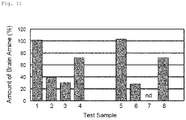
- Fig. 11 shows the experimental results.
- the amount of the brain amine is indicated by a value relative to the negative control (test samples 1 and 5) taken as 100%.
- test samples 1 and 5 In the positive control prepared by adding glyoxal to serotonin or dopamine (test samples 2 and 6), detected free serotonin was only about 40% that of the negative control (test sample 2), and detected free dopamine was only about 30% that of the negative control (test sample 6). This indicates that the brain amines were captured by a carbonyl compound.
- the amount of free serotonin or the amount of free dopamine was recovered to about 70% that of the negative control (test samples 4 and 8).
- pyridoxal facilitates the decrease of brain amines, such as serotonin and dopamine, leading to the depletion of the amines.
- brain amines such as serotonin and dopamine
- the carbonyl groups of pyridoxal react with the amino groups of serotonin or dopamine to form Schiff bases. If that is the case, pyridoxal would react not only with brain amines but also with biologically critical compounds, such as thiamine, to deplete these compounds, possibly leading to a neurological disorder.
- Fig. 12 shows changes in the vitamin B 1 (VB1) level in whole blood, serum pyridoxamine (PM) level, serum pyridoxal (PL) level, and serum pyridoxine (PN) level of two test subjects (patient ID: No. 3, 61 years old, body weight 43 kg; and patient ID: No. 6, 62 years old, body weight 44 kg; both subjects have schizophrenia), who developed vitamin B 1 deficiency (Wernicke's encephalopathy) during the dosing period of a pyridoxamine compound (pyridoxamine dihydrochloride) (hereinafter, simply "medication”) (0 to 24 weeks), in accordance with a medication protocol.
- a pyridoxamine compound pyridoxamine dihydrochloride
- pyridoxamine dihydrochloride a pyridoxamine compound
- the test subjects took pyridoxamine dihydrochloride (a pyridoxamine compound) orally in an amount of 400 mg or 600 mg at a dose three times daily (morning, afternoon, and before bedtime) every day (the dosage of pyridoxamine per day: about 830 mg or 1250 mg).
- the test subject with ID No. 3 developed an epilepsy-like symptom 6 weeks after the start of administration, and was examined with a brain MRI. The results showed a sign suggestive of Wernicke's encephalopathy.
- the vitamin B 1 level in whole blood of the test subject at this time was 28 ng/mL, which is near the lower limit of the baseline (24-66 ng/mL). This suggested that the subject developed vitamin B 1 deficiency during medication.
- the serum pyridoxamine level of the test subject 4 weeks after the start of administration was 1543 ng/mL, which was about 7700 times higher than the level at the start of administration.
- the serum pyridoxal level was 2357 ng/mL, which was about 380 times higher than the level at the start of administration.
- a thiamine compound (Fursultiamine, Takeda Pharmaceutical Company, Ltd.) was immediately started at a dose of 75 mg/day (administration once daily), and continued every day.
- the vitamin B 1 level in whole blood increased to 135 ng/mL 12 weeks after the start of administration (6 weeks after the start of administration of the thiamine compound).
- the serum pyridoxamine level at this time was 23.2 ng/mL, and the serum pyridoxal level was 1179 ng/mL, both of which were lower than those 4 weeks after the start of administration. 14 weeks after the start of administration (8 weeks after the start of administration of the thiamine compound), the symptom of Wernicke's encephalopathy disappeared.
- the test subject with ID No. 6 was examined with a brain MRI 9 weeks after the start of administration, and showed signs suggestive of Wernicke's encephalopathy.
- the vitamin B 1 level in whole blood of the test subject at this time was 25 ng/mL.
- the serum pyridoxamine level of the test subject 8 weeks after the start of administration was 421 ng/mL, which was about 2100 times higher than the level at the start of administration.
- the serum pyridoxal level was 2968 ng/mL, which was about 850 times higher than the level at the start of administration.
- a thiamine compound (Fursultiamine, Takeda Pharmaceutical Company, Ltd., 300 mg/day) was immediately started, and thereafter (10 weeks after the start of administration), oral administration of a thiamine compound at a dose of 100 to 50 mg/day continued.
- the vitamin B 1 level in whole blood was increased to 150 ng/mL 11 weeks after the start of administration (3 weeks after the administration of the thiamine compound), and the symptoms of Wernicke's encephalopathy disappeared.
- the serum pyridoxamine level was 140 ng/mL, and the serum pyridoxal level was 3941 ng/mL.
- test subjects (healthy male adults) were divided into the following 3 groups according to the dose of pyridoxamine (300 mg/dose, 600 mg/dose, 900 mg/dose), and these subjects were orally administered pyridoxamine dihydrochloride (administered three times daily: at 0 hours, at 6 hours, and at 12 hours).
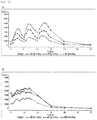
- the blood of the subjects of each group was collected at predetermined time points after the start of oral administration to collect plasma, and the plasma levels of pyridoxamine, pyridoxal (PL), pyridoxine (PN), and 4-pyridoxic acid (4-PA) were measured by LC-MS-MS.
- Fig. 13A pyridoxamine
- Fig. 13B pyridoxal
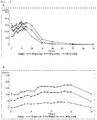
- Fig. 14A (4-pyridoxic acid) and Fig. 14B (pyridoxine) show the results.
- the plasma level of pyridoxamine (unchanged substance) reached a peak 3 hours after the administration of pyridoxamine dihydrochloride, and then decreased.
- Figs. 13B and 14A 4 to 6 hours after the administration of pyridoxamine, as if replacing the peak of pyridoxamine, the pyridoxal (PL) and 4-pyridoxic acid (4-PA) levels reached a peak.
- pyridoxamine The plasma levels of pyridoxamine, pyridoxal, and 4-pyridoxic acid increased along with the increase in dose of pyridoxamine dihydrochloride.
- pyridoxine did not show any substantial change ( Fig. 14B ). The results reveal that most of the pyridoxamine absorbed into the body transformed into pyridoxal or 4-pyridoxic acid.
- Blood was collected from a human using EDTA ⁇ 2K as an anticoagulant.
- Pyridoxamine dihydrochloride Sigma-Aldrich Japan
- pyridoxal hydrochloride Nacalai Tesque, Inc.
- 10 ⁇ L of each test solution was added to 1 mL of the collected whole blood (test samples).
- the final concentration of the test substance in each test sample was 5, 50, or 500 ⁇ g/mL.
- 10 ⁇ l of physiological saline was added to 1 mL of whole blood to prepare a vehicle.
- the vehicle and test samples were incubated at 37°C for 1 hour or 16 hours, and then immediately frozen.
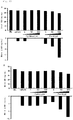
- the vitamin B 1 levels in whole blood before incubation to which no physiological saline and test solution had been added (which may hereinafter be referred to as "baseline”; in Fig. 15 , "BL), the vehicle after incubation, and the test samples were measured by SRL, Inc. using LC/MS/MS.
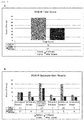
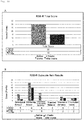
- Fig. 15 shows the measurement results.
- Figs. 15A and 15B each show the results 1 hour after incubation and 16 hours after incubation.
- the upper charts of Figs. 15A and 15B show the vitamin B 1 level in whole blood (ng/mL), and the bottom charts of Figs. 15A and 15B show the difference of the vitamin B 1 level between the baseline and the samples after incubation ( ⁇ VB1) (ng/mL).
- pyridoxamine is metabolized into pyridoxal when absorbed into the body. From this, it is speculated that the increase in the pyridoxal level in the body caused by the administration of a pyridoxamine compound decreases the vitamin B 1 level in the body leading to the development of symptoms of vitamin B 1 deficiency.
- test subjects to which a pyridoxamine compound was administered were also administered a thiamine compound in parallel.
- the seven test subjects were orally administered 1200 to 1800 mg of pyridoxamine dihydrochloride per day as a pyridoxamine compound (administered at a dose of 400 to 600 mg three times per day) for 24 weeks, every day.
- the dose of 400 to 600 mg/day of pyridoxamine dihydrochloride is converted to 277 to 415 mg/day of pyridoxamine.
- the seven subjects were orally administered fursultiamine as a thiamine compound at a dose of 75 mg/day for 2 to 21 weeks after the start of administration of the pyridoxamine compound, and the administration continued every day until the end of the pyridoxamine compound administration.
Landscapes
- Health & Medical Sciences (AREA)
- Life Sciences & Earth Sciences (AREA)
- Chemical & Material Sciences (AREA)
- Pharmacology & Pharmacy (AREA)
- Animal Behavior & Ethology (AREA)
- Veterinary Medicine (AREA)
- Public Health (AREA)
- General Health & Medical Sciences (AREA)
- Medicinal Chemistry (AREA)
- Epidemiology (AREA)
- Engineering & Computer Science (AREA)
- Bioinformatics & Cheminformatics (AREA)
- General Chemical & Material Sciences (AREA)
- Nuclear Medicine, Radiotherapy & Molecular Imaging (AREA)
- Organic Chemistry (AREA)
- Chemical Kinetics & Catalysis (AREA)
- Neurosurgery (AREA)
- Biomedical Technology (AREA)
- Neurology (AREA)
- Nutrition Science (AREA)
- Physiology (AREA)
- Psychiatry (AREA)
- Mycology (AREA)
- Food Science & Technology (AREA)
- Polymers & Plastics (AREA)
- Pharmaceuticals Containing Other Organic And Inorganic Compounds (AREA)
- Coloring Foods And Improving Nutritive Qualities (AREA)
Applications Claiming Priority (2)
| Application Number | Priority Date | Filing Date | Title |
|---|---|---|---|
| JP2016040492A JP6105111B1 (ja) | 2016-03-02 | 2016-03-02 | 自閉スペクトラム症改善用組成物 |
| PCT/JP2017/008355 WO2017150686A1 (ja) | 2016-03-02 | 2017-03-02 | 自閉スペクトラム症の症状改善に使用される組成物、及びそれを用いた自閉スペクトラム症の症状改善方法 |
Publications (2)
| Publication Number | Publication Date |
|---|---|
| EP3424501A1 true EP3424501A1 (de) | 2019-01-09 |
| EP3424501A4 EP3424501A4 (de) | 2019-10-30 |
Family
ID=59366074
Family Applications (1)
| Application Number | Title | Priority Date | Filing Date |
|---|---|---|---|
| EP17760149.9A Withdrawn EP3424501A4 (de) | 2016-03-02 | 2017-03-02 | Zur verbesserung der symptome der autismus-spektrum-störung verwendete zusammensetzung und verfahren zur verwendung davon zur verbesserung der symptome der autismus-spektrum-störung |
Country Status (8)
| Country | Link |
|---|---|
| US (1) | US11253519B2 (de) |
| EP (1) | EP3424501A4 (de) |
| JP (1) | JP6105111B1 (de) |
| KR (1) | KR20180117692A (de) |
| CN (1) | CN108778271A (de) |
| AU (1) | AU2017227332A1 (de) |
| CA (1) | CA3016121A1 (de) |
| WO (1) | WO2017150686A1 (de) |
Family Cites Families (15)
| Publication number | Priority date | Publication date | Assignee | Title |
|---|---|---|---|---|
| US5744451A (en) | 1995-09-12 | 1998-04-28 | Warner-Lambert Company | N-substituted glutamic acid derivatives with interleukin-1 β converting enzyme inhibitory activity |
| ES2197689T3 (es) | 1998-10-22 | 2004-01-01 | University Of South Carolina | Procedimientos para inhibir complicaciones diabeticas. |
| US20020192310A1 (en) | 2001-02-02 | 2002-12-19 | Bland Jeffrey S. | Medical composition for managing hormone balance |
| US7288570B2 (en) * | 2002-12-20 | 2007-10-30 | Nutricia N.V. | Stimulation of in vivo production of proteins |
| US20090082407A1 (en) | 2004-06-18 | 2009-03-26 | Biostratum, Inc. | Pyridoxamine for the Treatment of Diabetic Kidney Disease |
| US7214799B2 (en) | 2004-02-09 | 2007-05-08 | Biostratum, Inc. | Methods for the synthesis of pyridoxamine |
| US7666442B2 (en) | 2004-08-31 | 2010-02-23 | Tracie Martyn International, Llc | Topical compositions comprising benfotiamine and pyridoxamine |
| JP5144015B2 (ja) * | 2006-02-07 | 2013-02-13 | 日東電工株式会社 | 多孔質構造体の製造方法および多孔質構造体並びに多孔質構造体からなる細胞培養用足場基材 |
| EP1916308A1 (de) | 2006-10-26 | 2008-04-30 | DSMIP Assets B.V. | Verwendung von Vitaminen in Fermentations-Verfahren zur Herstellung von Aminosäuren |
| JP5288365B2 (ja) | 2007-07-17 | 2013-09-11 | 学校法人東海大学 | 統合失調症の検査および治療 |
| US20110274679A1 (en) | 2008-11-05 | 2011-11-10 | Vdf Futureceuticals, Inc. | Compositions and Methods of SIRT Activation |
| US8911770B2 (en) | 2009-06-18 | 2014-12-16 | Alessandra Grassi | Dissolvable dietary supplement strip and methods for using the same |
| AU2011280521A1 (en) | 2010-07-23 | 2013-02-21 | Tokai University Educational System | Oral medicinal composition for patients undergoing peritoneal dialysis and method for using same |
| EP2705844B1 (de) | 2011-04-13 | 2019-05-22 | Ajinomoto Co., Inc. | Ernährungszusammensetzung |
| US20170258791A1 (en) * | 2014-08-29 | 2017-09-14 | Project Pm Co., Ltd. | Pharmaceutical composition formed by combining pyridoxamine compound and thiamine compound |
-
2016
- 2016-03-02 JP JP2016040492A patent/JP6105111B1/ja not_active Expired - Fee Related
-
2017
- 2017-03-02 EP EP17760149.9A patent/EP3424501A4/de not_active Withdrawn
- 2017-03-02 CA CA3016121A patent/CA3016121A1/en not_active Abandoned
- 2017-03-02 US US16/081,705 patent/US11253519B2/en active Active
- 2017-03-02 KR KR1020187028568A patent/KR20180117692A/ko not_active Ceased
- 2017-03-02 CN CN201780015030.1A patent/CN108778271A/zh active Pending
- 2017-03-02 WO PCT/JP2017/008355 patent/WO2017150686A1/ja not_active Ceased
- 2017-03-02 AU AU2017227332A patent/AU2017227332A1/en not_active Abandoned
Also Published As
| Publication number | Publication date |
|---|---|
| US11253519B2 (en) | 2022-02-22 |
| EP3424501A4 (de) | 2019-10-30 |
| CN108778271A (zh) | 2018-11-09 |
| JP2017155007A (ja) | 2017-09-07 |
| US20200368233A1 (en) | 2020-11-26 |
| KR20180117692A (ko) | 2018-10-29 |
| AU2017227332A1 (en) | 2018-09-20 |
| JP6105111B1 (ja) | 2017-03-29 |
| CA3016121A1 (en) | 2017-09-08 |
| WO2017150686A1 (ja) | 2017-09-08 |
Similar Documents
| Publication | Publication Date | Title |
|---|---|---|
| NL2018190B1 (en) | Psilocybin or psilocin in combination with cannabinoid | |
| Granfors et al. | Fluvoxamine drastically increases concentrations and effects of tizanidine: a potentially hazardous interaction | |
| Rabe | Update on roflumilast, a phosphodiesterase 4 inhibitor for the treatment of chronic obstructive pulmonary disease | |
| BR112019003732A2 (pt) | Aplicação de pridopidina para tratamento de declínio funcional | |
| CA3177507A1 (en) | Compositions and kits of parts comprising n,n-dimethyltryptamine and harmine and their use in therapy | |
| US11826321B2 (en) | Cyclobenzaprine treatment for agitation, psychosis and cognitive decline in dementia and neurodegenerative conditions | |
| Knott et al. | An acute dose, randomized trial of the effects of CDP-Choline on Mismatch Negativity (MMN) in healthy volunteers stratified by deviance detection level | |
| EP3033082B1 (de) | Behandlung von kognitiven störungen mit einem pde4-inhibitor | |
| US11779563B2 (en) | Oral cannabinoid pharmaceutical compositions and methods of treating sleep disorders | |
| Bakker et al. | First‐in‐man study to investigate safety, pharmacokinetics and exploratory pharmacodynamics of HTL0018318, a novel M1‐receptor partial agonist for the treatment of dementias | |
| Reznik et al. | Cannabidiol: a potential treatment for post Ebola syndrome? | |
| Chen et al. | Drug-drug interaction between paxlovid and tacrolimus in a patient with myasthenia gravis and SARS-CoV-2 infection | |
| JP2024507492A (ja) | 精神療法を補助するためのメスカリン及びメスカリン類似体(スカリン)の効果 | |
| US11253519B2 (en) | Composition used to improve symptoms of autism spectrum disorder, and method using same for improving symptoms of autism spectrum disorder | |
| KR20250011101A (ko) | 엔탁토겐성 마음상태를 설계 및 생성하기 위한 치료적 조합, 조성물, 및 방법 | |
| US20180289655A1 (en) | Methods and Compositions for the Intravenous Administration of Fumarates for the Treatment of Neurological Diseases | |
| TW202027752A (zh) | 使用ccr-3抑制劑治療老化相關損傷之方法及組合物 | |
| Becker et al. | Improvement in symptoms of autism spectrum disorder in children with the use of gastrin-releasing peptide: an open trial | |
| Kravets et al. | Anticholinergic syndrome in the perioperative period (review). Part 1 | |
| WO2024234014A1 (en) | Sublingual spray formulations of psychedelics | |
| Class et al. | Patent application title: USE OF PRIDOPIDINE FOR THE TREATMENT OF FRAGILE X SYNDROME Inventors: Michael Hayden (Herzliya, IL) Mahmoud Abdulhossein Pouladi (Singapore, SG) Assignees: PRILENIA NEUROTHERAPEUTICS LTD. NATIONAL UNIVERSITY OF SINGAPORE Agency For Science, Technology and Research | |
| JP6738797B2 (ja) | レット症候群治療薬 | |
| KR20250008441A (ko) | 질환의 치료 방법 | |
| WO2025017469A1 (en) | Psychedelic "brain boost" combinations for enhancing cellular energy production | |
| WO2023036820A1 (en) | Therapeutic uses of 1-[2-(2,4-dimethyl-phenylsulfanyl)phenyl]piperazine |
Legal Events
| Date | Code | Title | Description |
|---|---|---|---|
| STAA | Information on the status of an ep patent application or granted ep patent |
Free format text: STATUS: THE INTERNATIONAL PUBLICATION HAS BEEN MADE |
|
| PUAI | Public reference made under article 153(3) epc to a published international application that has entered the european phase |
Free format text: ORIGINAL CODE: 0009012 |
|
| STAA | Information on the status of an ep patent application or granted ep patent |
Free format text: STATUS: REQUEST FOR EXAMINATION WAS MADE |
|
| 17P | Request for examination filed |
Effective date: 20180928 |
|
| AK | Designated contracting states |
Kind code of ref document: A1 Designated state(s): AL AT BE BG CH CY CZ DE DK EE ES FI FR GB GR HR HU IE IS IT LI LT LU LV MC MK MT NL NO PL PT RO RS SE SI SK SM TR |
|
| AX | Request for extension of the european patent |
Extension state: BA ME |
|
| DAV | Request for validation of the european patent (deleted) | ||
| DAX | Request for extension of the european patent (deleted) | ||
| A4 | Supplementary search report drawn up and despatched |
Effective date: 20191001 |
|
| RIC1 | Information provided on ipc code assigned before grant |
Ipc: A61K 31/44 20060101AFI20190925BHEP Ipc: A23L 33/15 20160101ALI20190925BHEP Ipc: A61K 31/51 20060101ALI20190925BHEP Ipc: A61P 25/00 20060101ALI20190925BHEP Ipc: A61P 43/00 20060101ALI20190925BHEP Ipc: A61K 31/4415 20060101ALI20190925BHEP |
|
| RAP1 | Party data changed (applicant data changed or rights of an application transferred) |
Owner name: RENASCIENCE CO., LTD. |
|
| STAA | Information on the status of an ep patent application or granted ep patent |
Free format text: STATUS: EXAMINATION IS IN PROGRESS |
|
| 17Q | First examination report despatched |
Effective date: 20210226 |
|
| STAA | Information on the status of an ep patent application or granted ep patent |
Free format text: STATUS: THE APPLICATION IS DEEMED TO BE WITHDRAWN |
|
| 18D | Application deemed to be withdrawn |
Effective date: 20210909 |