EP3421402A1 - Dispositionsoptimierung basierend auf anwesenheit der fahrgäste in der aufzugskabine - Google Patents
Dispositionsoptimierung basierend auf anwesenheit der fahrgäste in der aufzugskabine Download PDFInfo
- Publication number
- EP3421402A1 EP3421402A1 EP18180963.3A EP18180963A EP3421402A1 EP 3421402 A1 EP3421402 A1 EP 3421402A1 EP 18180963 A EP18180963 A EP 18180963A EP 3421402 A1 EP3421402 A1 EP 3421402A1
- Authority
- EP
- European Patent Office
- Prior art keywords
- mobile device
- elevator car
- elevator
- floor
- call
- Prior art date
- Legal status (The legal status is an assumption and is not a legal conclusion. Google has not performed a legal analysis and makes no representation as to the accuracy of the status listed.)
- Withdrawn
Links
- 238000005457 optimization Methods 0.000 title 1
- 230000004044 response Effects 0.000 claims abstract description 32
- 238000000034 method Methods 0.000 claims abstract description 22
- 230000005540 biological transmission Effects 0.000 claims description 30
- 238000004891 communication Methods 0.000 claims description 19
- 238000004590 computer program Methods 0.000 claims description 9
- 238000001514 detection method Methods 0.000 description 3
- 238000005516 engineering process Methods 0.000 description 3
- 230000000007 visual effect Effects 0.000 description 3
- 239000000523 sample Substances 0.000 description 2
- 230000001133 acceleration Effects 0.000 description 1
- 238000012550 audit Methods 0.000 description 1
- 230000001413 cellular effect Effects 0.000 description 1
- 230000036461 convulsion Effects 0.000 description 1
- 238000010586 diagram Methods 0.000 description 1
- 230000000694 effects Effects 0.000 description 1
- 238000009429 electrical wiring Methods 0.000 description 1
- 230000005670 electromagnetic radiation Effects 0.000 description 1
- 239000000835 fiber Substances 0.000 description 1
- 239000000463 material Substances 0.000 description 1
- 238000005259 measurement Methods 0.000 description 1
- 238000012986 modification Methods 0.000 description 1
- 230000004048 modification Effects 0.000 description 1
Images

Classifications
-
- B—PERFORMING OPERATIONS; TRANSPORTING
- B66—HOISTING; LIFTING; HAULING
- B66B—ELEVATORS; ESCALATORS OR MOVING WALKWAYS
- B66B1/00—Control systems of elevators in general
- B66B1/34—Details, e.g. call counting devices, data transmission from car to control system, devices giving information to the control system
- B66B1/46—Adaptations of switches or switchgear
- B66B1/468—Call registering systems
-
- B—PERFORMING OPERATIONS; TRANSPORTING
- B66—HOISTING; LIFTING; HAULING
- B66B—ELEVATORS; ESCALATORS OR MOVING WALKWAYS
- B66B1/00—Control systems of elevators in general
- B66B1/02—Control systems without regulation, i.e. without retroactive action
- B66B1/06—Control systems without regulation, i.e. without retroactive action electric
- B66B1/14—Control systems without regulation, i.e. without retroactive action electric with devices, e.g. push-buttons, for indirect control of movements
-
- B—PERFORMING OPERATIONS; TRANSPORTING
- B66—HOISTING; LIFTING; HAULING
- B66B—ELEVATORS; ESCALATORS OR MOVING WALKWAYS
- B66B2201/00—Aspects of control systems of elevators
- B66B2201/10—Details with respect to the type of call input
-
- B—PERFORMING OPERATIONS; TRANSPORTING
- B66—HOISTING; LIFTING; HAULING
- B66B—ELEVATORS; ESCALATORS OR MOVING WALKWAYS
- B66B2201/00—Aspects of control systems of elevators
- B66B2201/10—Details with respect to the type of call input
- B66B2201/103—Destination call input before entering the elevator car
-
- B—PERFORMING OPERATIONS; TRANSPORTING
- B66—HOISTING; LIFTING; HAULING
- B66B—ELEVATORS; ESCALATORS OR MOVING WALKWAYS
- B66B2201/00—Aspects of control systems of elevators
- B66B2201/20—Details of the evaluation method for the allocation of a call to an elevator car
-
- B—PERFORMING OPERATIONS; TRANSPORTING
- B66—HOISTING; LIFTING; HAULING
- B66B—ELEVATORS; ESCALATORS OR MOVING WALKWAYS
- B66B2201/00—Aspects of control systems of elevators
- B66B2201/40—Details of the change of control mode
- B66B2201/46—Switches or switchgear
- B66B2201/4607—Call registering systems
- B66B2201/4615—Wherein the destination is registered before boarding
-
- B—PERFORMING OPERATIONS; TRANSPORTING
- B66—HOISTING; LIFTING; HAULING
- B66B—ELEVATORS; ESCALATORS OR MOVING WALKWAYS
- B66B2201/00—Aspects of control systems of elevators
- B66B2201/40—Details of the change of control mode
- B66B2201/46—Switches or switchgear
- B66B2201/4607—Call registering systems
- B66B2201/4638—Wherein the call is registered without making physical contact with the elevator system
-
- B—PERFORMING OPERATIONS; TRANSPORTING
- B66—HOISTING; LIFTING; HAULING
- B66B—ELEVATORS; ESCALATORS OR MOVING WALKWAYS
- B66B2201/00—Aspects of control systems of elevators
- B66B2201/40—Details of the change of control mode
- B66B2201/46—Switches or switchgear
- B66B2201/4607—Call registering systems
- B66B2201/4653—Call registering systems wherein the call is registered using portable devices
-
- B—PERFORMING OPERATIONS; TRANSPORTING
- B66—HOISTING; LIFTING; HAULING
- B66B—ELEVATORS; ESCALATORS OR MOVING WALKWAYS
- B66B2201/00—Aspects of control systems of elevators
- B66B2201/40—Details of the change of control mode
- B66B2201/46—Switches or switchgear
- B66B2201/4607—Call registering systems
- B66B2201/4684—Call registering systems for preventing accidental or deliberate misuse
Definitions
- the subject matter disclosed herein generally relates to the field of elevator systems, and more particularly to an apparatus and method for calling elevator cars within the elevator system.
- a method of calling an elevator car from a mobile device comprising: receiving a first elevator call from a first mobile device on a first floor, the first elevator call including a destination request to travel to a second floor; moving an elevator car to the first floor in response to the first elevator call; detecting whether the first mobile device is within the elevator car at the first floor; and adjusting operation of the elevator car in response to each mobile device detected within the elevator car.
- further embodiments may include where the detecting further comprises: connecting to the first mobile device using at least one of Wi-Fi and Bluetooth; and determining a distance between the elevator car and the first mobile device.
- detecting further comprises: detecting a wireless signal of the first mobile device, wherein the sensor does not connect to the wireless signal; and determining a distance between the elevator car and the first mobile device.
- further embodiments may include where the detecting further comprises: detecting a beacon transmitted by a sensor proximate the elevator car using the first mobile device; and determining a distance between the elevator car and the first mobile device in response to a strength of the beacon.
- further embodiments may include where the detecting further comprises: emitting an audio transmission from the first mobile device; detecting the audio transmission using a sensor proximate the elevator car; and determining a distance between the elevator car and the first mobile device in response to a gain of the audio transmission.
- further embodiments may include where the detecting further comprises: emitting an audio transmission from a sensor proximate the elevator car; detecting the audio transmission using the first mobile device; and determining a distance between the elevator car and the first mobile device in response to a gain of the audio transmission.
- further embodiments may include moving the elevator car to the second floor when the first mobile device is detected within the elevator car.
- further embodiments may include cancelling the first elevator call when the first mobile device is not detected within the elevator car after a selected period of time.
- further embodiments may include calling a second elevator car when the first mobile device is not detected within the elevator car after a selected period of time.
- further embodiments may include receiving a second elevator call from a second mobile device on a third floor, the second elevator call including a destination request to travel to a fourth floor; and moving the elevator car to the third floor in response to the second elevator call.
- further embodiments may include receiving a second elevator call from a second mobile device on the first floor, the second elevator call including a destination request to travel to a third floor; and detecting whether the second mobile device is within the elevator car at the first floor.
- further embodiments may include moving the elevator car to the second floor and the third floor when the first mobile device and the second mobile device are detected within the elevator car.
- further embodiments may include cancelling the first elevator call when the first mobile device is not detected within the elevator car after a selected period of time; and moving the elevator car to the third floor when the second mobile device is detected within the elevator car.
- further embodiments may include cancelling the second elevator call when the second mobile device is not detected within the elevator car after a selected period of time; and moving the elevator car to the second floor when the first mobile device is detected within the elevator car.
- an elevator system comprising: an elevator car; a controller in electronic communication with the elevator car, the controller configured to receive a first elevator call from a first mobile device on a first floor, wherein the first elevator call includes a destination request to travel to a second floor, wherein the controller is configured to move the elevator car to the first floor in response to the first elevator call; and a sensor in electronic communication with the controller, the sensor is configured to detect whether the first mobile device is within the elevator car at the first floor; wherein the controller is configured to adjust operation of the elevator car in response to each mobile device detected within the elevator car.
- further embodiments may include where the sensor uses at least one of Wi-Fi and Bluetooth to detect the first mobile device and determine a distance between the first mobile device and the elevator car to detect when the first mobile device is located within the elevator car.
- further embodiments may include where the sensor uses a wireless signal of the first mobile device to detect the first mobile device and determine a distance between the first mobile device and the elevator car to detect when the first mobile device is located within the elevator car, wherein the sensor does not connect to the wireless signal.
- further embodiments may include where the sensor transmits a beacon; and the first mobile device is configured to detect the beacon and determine a distance between the elevator car and the first mobile device in response to a strength of the beacon.
- further embodiments may include where the first mobile device is configured to emit an audio transmission; and the sensor is configured to detect the audio transmission and determine a distance between the elevator car and the first mobile device in response to a gain of the audio transmission.
- a computer program product tangibly embodied on a computer readable medium including instructions that, when executed by a processor, cause the processor to perform operations comprising: receiving a first elevator call from a first mobile device on a first floor, the first elevator call including a destination request to travel to a second floor; moving an elevator car to the first floor in response to the first elevator call; detecting whether the first mobile device is within the elevator car at the first floor; and adjusting operation of the elevator car in response to each mobile device detected within the elevator car.
- inventions of the present disclosure include the ability for an elevator control system to receive elevator destination calls from a mobile device and then detect whether the mobile device boards the elevator.
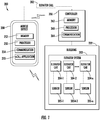
- FIG. 1 depicts an elevator call control system 200 in an example embodiment.
- the elevator call control system 200 includes an elevator system 203 installed at a building 202.
- the building 202 may be a building or a collection of buildings that may or may not be physically located near each other.
- the building 202 may include any number of floors. Persons entering the building 202 may enter at a lobby floor, or any other floor, and may go to a destination floor via one or more conveyance devices, such as the elevator system 203.
- the elevator system 203 may be operably connected to one or more computing devices, such as a controller 206.
- the controller 206 may be configured to control dispatching operations for one or more elevator cars (e.g., elevator cars 204-1, 204-2, ... 204-n) associated with the elevator system 203. It is understood that the elevator system 203 may utilize more than one controller 206, and that each controller may control a group of elevators cars 204-1 and 204-2. Although two elevator cars 204-1 and 204-2 are shown in FIG. 1 , it is understood that any number of elevators cars 204-n may be used in the elevator system 203.
- the elevator cars 204-1 and 204-2 may be located in the same hoistway or in different hoistways so as to allow coordination amongst elevator cars 204-1 and 204-2 in different elevator banks serving different floors. It is understood that other components of the elevator system 203 (e.g., drive, counterweight, safeties, etc.) are not depicted for ease of illustration.
- the controller 206 may include a processor 260, memory 262 and communication module 264 as shown in FIG. 1 .
- the processor 260 can be any type or combination of computer processors, such as a microprocessor, microcontroller, digital signal processor, application specific integrated circuit, programmable logic device, and/or field programmable gate array.
- the memory 262 is an example of a non-transitory computer readable storage medium tangibly embodied in the controller 206 including executable instructions stored therein, for instance, as firmware.
- the communication module 264 may implement one or more communication protocols as described in further detail herein.
- the mobile device 208 may be a mobile computing device that is typically carried by a person, such as, for example a smart phone, PDA, smart watch, tablet, laptop, etc.
- the mobile device 208 may include a touch screen (not shown).
- the mobile device 208 may include a processor 250, memory 252 and communication module 254 as shown in FIG. 1 .
- the processor 250 can be any type or combination of computer processors, such as a microprocessor, microcontroller, digital signal processor, application specific integrated circuit, programmable logic device, and/or field programmable gate array.
- the memory 252 is an example of a non-transitory computer readable storage medium tangibly embodied in the mobile device 208 including executable instructions stored therein, for instance, as firmware.
- the communication module 254 may implement one or more communication protocols as described in further detail herein.
- the mobile device 208 belongs to a resident or employee of the building 202 who currently has access to the elevator system 203. Each mobile device 208 may transmit an elevator call 302 to the controller 206 and the controller 206 will move an elevator car 204 in response to the elevator call 302.
- the elevator call 302 may include a "boarding floor” and a "destination floor.”
- the "boarding floor” is where the person with the mobile device 208 desires to board the elevator car 204 and the "destination floor” is where the person with the mobile device 208 intends to travel too.
- the elevator call 302 may only include the "destination floor” and the "boarding floor” may be automatically determined by the elevator system 203.
- Embodiments herein generate a graphical user interface on the mobile device 208 through an eCall application 255.
- the mobile device 208 may transmit an elevator call 302 through an eCall application 255.
- the mobile device 208 and the controller 206 communicate with one another.
- the mobile device 208 and the controller 206 may communicate with one another when proximate to one another (e.g., within a threshold distance).
- the mobile device 208 and the controller 206 may communicate over a wireless network, such as 802.11x (WiFi), short-range radio (Bluetooth), cellular, satellite, etc.
- the controller 206 may include, or be associated with (e.g., communicatively coupled to) a networked element, such as kiosk, beacon, hall call fixture, lantern, bridge, router, network node, door lock, elevator control panel, building intercom system, etc.
- the networked element may communicate with the mobile device 208 using one or more communication protocols or standards.
- the networked element may communicate with the mobile device 208 using near field communications (NFC).
- NFC near field communications
- a connection between the mobile device 208 and the controller 206 may be direct between mobile device 208 and controller 206 or it may be through a web service.
- the connection also may include security elements such as VPN or authentication or encryption.
- the controller 206 may establish connection with a mobile device 208 that is inside and/or outside of the building 202 in order to detect a location of the mobile device 208.
- a location of the mobile device may be determined using various technologies including GPS, triangulation, trilateration, signal strength detection, accelerometer detection, gyroscopic detection, or barometric pressure sensing by way of non-limiting example.
- the triangulation and trilateration may use various wireless technologies including but not limited to Wi-Fi and Bluetooth.
- the mobile device 208 communicates with the controller 206 over multiple independent wired and/or wireless networks. Embodiments are intended to cover a wide variety of types of communication between the mobile device 208 and controller 206, and embodiments are not limited to the examples provided in this disclosure. Communication between the mobile device 208 and the controller 206 will allow the controller 206 to determine the location of the mobile device 208 in relation to the elevator system 203. The location of the mobile device 208 may be communicated to the controller 206 through a plurality of sensors 205, discussed further below.
- the elevator system 203 also includes one or more sensors 205 (e.g., 205-1, 205-2, ... 205-n).
- the controller 206 is in electronic communication with each sensor 205 through a wired connection and/or wireless connection.
- each sensor may be in indirect communication with the controller 206 through the mobile device 208.
- the sensors 205 are a Bluetooth beacon, then the mobile device 208 can detect when it is in proximity of the sensor 205, then the mobile device 208 can communicate with the controller 206 that it is in the elevator car 204.
- two sensors 205-1 and 205-2 are shown in FIG. 1 , it is understood that any number of sensors 205-n may be used in the elevator system 203.
- each elevator car 204 may contain one or more sensors 205.
- Each sensor 205 is configured to detect operational data of the elevator car 204, such as for example, elevator door position (e.g. open/closed), elevator car location, speed, voltage, vibration, acceleration, noise, deceleration, jerk, and any other performance parameter of any component of the elevator system 204 known to one of skill in the art.
- the sensors 205 detect the presence of an individual in a car and identify the individual using various sensing technology, such as, for example Wi-Fi transceivers, Bluetooth transceivers, radio transceivers, visual recognition cameras, people counters, microphones, etc. to detect persons and/or mobile devices entering and leaving the elevator car.
- the type and nature of sensors 205 within the sensor system 203 is not limited to the embodiments disclosed herein.
- the mobile device 208 and the sensors 205 communicate with one another.
- the mobile device 208 and the sensors 205 may communicate with one another when proximate to one another (e.g., within a threshold distance).
- the mobile device 208 and the sensors 205 may communicate over a wireless network, such as 802.11x (Wi-Fi), ZigBee, Z-Wave and short-range radio (Bluetooth).
- the sensors 205 may include a Wi-Fi transceiver to connect to a mobile device 208 when the mobile device 208 enters the elevator car 204 in order to identify the mobile device 208.
- the sensors 205 may include a Bluetooth transceiver to connect to a mobile device 208 when the mobile devices 208 enters the elevator in order to identify the mobile device 208.
- the sensors 205 are configured to detect a distance between the elevator car 204 and the mobile device 208 to determine whether the mobile device 208 is entering and/or leaving the elevator car 204.
- Communication between the mobile device 208 and the sensors 205 can be one-way or two-way communication.
- the mobile device 208 may advertise a Bluetooth signal and the sensors 205 may receive it.
- the sensors 205 may advertise a Bluetooth signal and the mobile device 208 may receive it.
- there may be two-way Bluetooth communication between the sensors 205 and the mobile device 208.
- a Wi-Fi transceiver i.e. sensor 205
- the mobile device may detect the Wi-Fi beacon frame as part of the 802.11x protocol as well as the received signal strength of that beacon frame to approximate the distance between the Wi-Fi transceiver and the mobile device 208 but not connect to the Wi-Fi signal.
- the mobile device 208 may actively send a probe request looking for Wi-Fi transceivers, then a Wi-Fi transceiver (i.e. sensor 205) located in an elevator car may extract the MAC address of the mobile device 208 from the probe request and approximate distance between the Wi-Fi transceiver and the mobile device 208 from received signal strength.
- a Wi-Fi transceiver i.e. sensor 205 located in an elevator car may extract the MAC address of the mobile device 208 from the probe request and approximate distance between the Wi-Fi transceiver and the mobile device 208 from received signal strength.
- the sensors 205 may include a visual recognition camera to detect each person entering and leaving an elevator car and map connect the person with their mobile device 208.
- knowing the identity of the mobile device 208 helps determine if the mobile device 208 has placed an elevator call 302 and the destination floor of the mobile device 208.
- the mobile device 208 and the sensors 205 may communicate over a non-radio frequency network.
- the mobile device 208 and the sensors 205 may communicate through audio transmission, such as, for example a high frequency audio transmission.
- the mobile device 208 may emit a chirp signature between 15 kHz-20 kHz that one or more microphones (i.e. sensor 205) can detect and extract a signature to determine which mobile device 208 is present.
- Audio gain at speaker may be measured to a distance between the microphone and the mobile device 208 may be determined in response to the audio gain.
- more microphones may help better determine distance.
- the speakers i.e. sensors 205) may be located in the elevators car and may emit the high frequency audit for the mobile device 208 to detect.
- one or more speakers may be help better determine distance.
- FIG. 2 shows a flow chart of method 400 calling an elevator car 204 from a mobile device 208, in accordance with an embodiment of the disclosure.
- a first elevator call 302 is received from a first mobile device on the first floor.
- the first elevator call 302 includes a destination request to travel to a second floor.
- the elevator call 302 may also include the first floor as the boarding floor or the controller 206 may determine that the first floor is the boarding floor.
- Multiple elevator calls 302 may be received from multiple mobile devices.
- the controller 206 will organize the incoming elevator calls 302 and allocate elevator cars 204 accordingly to service each elevator call 302.
- a single elevator car 204 may be assigned to pick up multiple mobile devices 208 on a single floor and then transport each mobile device 208 to the same destination floor or different destination floors.
- an elevator car 204 is moved to the first floor in response to the first elevator call 302.
- the controller 206 may transmit elevator information to mobile devices 208 waiting for the elevator car 204 including but not limited to the estimate time of arrival (ETA) at the first floor, the speed of the elevator car 204, and the elevation of the elevator car 204.
- ETA estimate time of arrival
- the elevator car 204 may be assigned to multiple mobile devices 208 and it will be detected whether each mobile device has entered the elevator car 204.
- the controller 206 may hold the elevator car 204 at the first floor for a selected period of time waiting for mobile devices 208 that transmitted elevator calls 302 to board the elevator car 204. Once the selected period of time has ended, the controller 206 may determine that any mobile devices 208 not currently in the elevator car 204 are no longer coming and the controller 206 may cancel the elevator calls 302 for the mobile devices 208 not in the elevator car 204.
- the controller 206 may call another elevator car 204 to pick up the mobile device 208 at a later time.
- An alarm may be activated on the mobile device 208 when an elevator call 302 is canceled and/or transferred to another elevator car 204.
- the alarm may be audible, visual, and/or vibratory.
- the controller 206 may then adjust the run schedule for the elevator car 204 by cancelling the destinations that are no longer needed due to mobile devices 208 failing to board the elevator car 204. For example, if no mobile device 208 boards the elevator car 204 then the entire elevator car 204 may be reassigned to handle other elevator calls 302.
- the controller 206 will then move the elevator car 204 to destination floors of the mobile devices that did board the elevator car 204.
- the controller 206 may transmit elevator information to mobile devices 208 within the elevator car 204 including but not limited to the estimate time of arrival (ETA) at the destination floor, the speed of the elevator car 204, and the elevation of the elevator car 204.
- the elevator information may be displayed on the mobile device 208 through the eCall application 255.
- a sensor 205 may detect that a mobile device 208 is in an elevator car 204 by connecting to the mobile device 208 through at least one of Wi-Fi and Bluetooth and determining a distance between the elevator car 204 and the mobile device 208.
- the sensor 205 may detect that a mobile device 208 is in an elevator car 204 by detecting a wireless signal of the mobile device 208 and determining a distance between the elevator car 204 and the mobile device 208.
- the sensor 205 does not connect to the wireless signal.
- the wireless signal may be Bluetooth.
- each sensor 205 relative to the elevator car 204 is known, thus by detecting the signal (ex: WiFi and Bluetooth) strength between the sensor 205 and the mobile device 208, the controller 206 may then determine the distance between the elevator car 204 and the mobile device 208.
- the signal ex: WiFi and Bluetooth
- a sensor 205 may detect that a mobile device 208 is in an elevator car 204 by detecting an audio transmission emitted by the mobile device 208 and determining a distance between the elevator car 204 and the mobile device 208 in response to a gain of the audio transmission.
- the sensor 205 may emit the audio transmission and the mobile device 208 may detect the audio transmission and determine a distance between the elevator car 204 and the mobile device 208 in response to a gain of the audio transmission.
- the location of each sensor 205 relative to the elevator car 204 is known, thus by detecting the gain of the audio transmission between the sensor 205 and the mobile device 208, the controller 206 may then determine the distance between the elevator car 204 and the mobile device 208.
- the audio transmission may be a high frequency audio transmission.
- operation of the elevator car 204 may be adjusted in response to each mobile device 208 detected within the elevator car 204.
- the controller 206 will confirm the destination floor associated with each mobile device 208 inside the elevator car 204 and move the elevator car 204 to each destination floor. For example, the elevator car 204 will move to destination floors of mobile devices 208 detected within the elevator car 204 and not to the destination floors of mobile devices 208 not detected in the elevator car 204.
- embodiments can be in the form of processor-implemented processes and devices for practicing those processes, such as a processor.
- Embodiments can also be in the form of computer program code containing instructions embodied in tangible media, such as network cloud storage, SD cards, flash drives, floppy diskettes, CD ROMs, hard drives, or any other computer-readable storage medium, wherein, when the computer program code is loaded into and executed by a computer, the computer becomes a device for practicing the embodiments.
- Embodiments can also be in the form of computer program code, for example, whether stored in a storage medium, loaded into and/or executed by a computer, or transmitted over some transmission medium, loaded into and/or executed by a computer, or transmitted over some transmission medium, such as over electrical wiring or cabling, through fiber optics, or via electromagnetic radiation, wherein, when the computer program code is loaded into an executed by a computer, the computer becomes an device for practicing the embodiments.
- the computer program code segments configure the microprocessor to create specific logic circuits.
Landscapes
- Engineering & Computer Science (AREA)
- Automation & Control Theory (AREA)
- Computer Networks & Wireless Communication (AREA)
- Elevator Control (AREA)
- Indicating And Signalling Devices For Elevators (AREA)
Applications Claiming Priority (1)
| Application Number | Priority Date | Filing Date | Title |
|---|---|---|---|
| US15/638,744 US10647545B2 (en) | 2017-06-30 | 2017-06-30 | Dispatching optimization based on presence |
Publications (1)
| Publication Number | Publication Date |
|---|---|
| EP3421402A1 true EP3421402A1 (de) | 2019-01-02 |
Family
ID=62837812
Family Applications (1)
| Application Number | Title | Priority Date | Filing Date |
|---|---|---|---|
| EP18180963.3A Withdrawn EP3421402A1 (de) | 2017-06-30 | 2018-06-29 | Dispositionsoptimierung basierend auf anwesenheit der fahrgäste in der aufzugskabine |
Country Status (3)
| Country | Link |
|---|---|
| US (1) | US10647545B2 (de) |
| EP (1) | EP3421402A1 (de) |
| CN (1) | CN109205410A (de) |
Cited By (2)
| Publication number | Priority date | Publication date | Assignee | Title |
|---|---|---|---|---|
| US20200087108A1 (en) * | 2018-09-14 | 2020-03-19 | Otis Elevator Company | Validation of elevator call passenger boarding |
| US11542120B2 (en) * | 2018-10-24 | 2023-01-03 | Otis Elevator Company | Associated mobile elevator calls |
Families Citing this family (16)
| Publication number | Priority date | Publication date | Assignee | Title |
|---|---|---|---|---|
| US10743241B1 (en) | 2017-06-06 | 2020-08-11 | Nocell Technologies, LLC | System, method and apparatus for facilitating the restriction of the use of one or more network devices through automated policy enforcement |
| US11038801B2 (en) | 2017-06-06 | 2021-06-15 | Nocell Technologies, LLC | System, method and apparatus for restricting use of a network device through automated policy enforcement |
| US11584613B2 (en) * | 2017-06-23 | 2023-02-21 | Otis Elevator Comapny | Determination for motion of passenger over elevator landing area |
| US10647545B2 (en) * | 2017-06-30 | 2020-05-12 | Otis Elevator Company | Dispatching optimization based on presence |
| US10947085B2 (en) * | 2017-11-30 | 2021-03-16 | Otis Elevator Company | Sequence triggering for automatic calls and multi-segment elevator trips |
| US10947086B2 (en) * | 2017-11-30 | 2021-03-16 | Otis Elevator Company | Sequence triggering for automatic calls and multi segment elevator trips |
| US10988345B2 (en) * | 2018-03-20 | 2021-04-27 | Otis Elevator Company | Direct real-time travel indications for multi-segment trip |
| US11040850B2 (en) * | 2018-03-27 | 2021-06-22 | Otis Elevator Company | Seamless elevator call from mobile device application |
| WO2020188639A1 (ja) * | 2019-03-15 | 2020-09-24 | 三菱電機ビルテクノサービス株式会社 | エレベーターの自動呼び登録システム |
| US12049382B2 (en) * | 2019-04-11 | 2024-07-30 | Otis Elevator Company | Management of elevator service |
| US10833731B1 (en) | 2019-06-19 | 2020-11-10 | International Business Machines Corporation | Managing resource or service utilization within a location |
| CN210214441U (zh) * | 2019-08-20 | 2020-03-31 | 歌拉瑞电梯股份有限公司 | 一种曳引式建筑施工升降机的呼叫系统 |
| WO2021205055A1 (en) * | 2020-04-07 | 2021-10-14 | Kone Corporation | A method and an apparatus for transmitting an elevator call |
| US11319186B2 (en) * | 2020-07-15 | 2022-05-03 | Leandre Adifon | Systems and methods for operation of elevators and other devices |
| US12162722B2 (en) * | 2022-04-25 | 2024-12-10 | Otis Elevator Company | Wireless early car arrival for mobile interfaces to elevator |
| CN116873678B (zh) * | 2023-08-11 | 2026-02-03 | 上海三菱电梯有限公司 | 电梯呼梯系统 |
Citations (3)
| Publication number | Priority date | Publication date | Assignee | Title |
|---|---|---|---|---|
| US5984051A (en) * | 1998-11-09 | 1999-11-16 | Otis Elevator Company | Remote elevator call requests with descriptor tags |
| WO2008116963A1 (en) * | 2007-03-26 | 2008-10-02 | Kone Corporation | Elevator system |
| US20130133986A1 (en) * | 2010-08-19 | 2013-05-30 | Kone Corporation | Passenger flow management system |
Family Cites Families (29)
| Publication number | Priority date | Publication date | Assignee | Title |
|---|---|---|---|---|
| JP2000226162A (ja) * | 1999-02-04 | 2000-08-15 | Hitachi Ltd | エレベータ呼出し操作装置及びこれを備えたエレベータシステム |
| CN1697772B (zh) | 2002-10-15 | 2010-09-01 | 奥蒂斯电梯公司 | 使用个人域网络模块的电梯无线通信系统 |
| US9420423B1 (en) | 2005-04-12 | 2016-08-16 | Ehud Mendelson | RF beacon deployment and method of use |
| JP2009502691A (ja) * | 2005-08-04 | 2009-01-29 | インベンテイオ・アクテイエンゲゼルシヤフト | ユーザをエレベータシステムへと割り当てるための方法 |
| US20090006846A1 (en) | 2007-06-27 | 2009-01-01 | Apple Inc. | Bluetooth device as security access key |
| FI121421B (fi) | 2009-07-28 | 2010-11-15 | Marimils Oy | Järjestelmä hissien ohjaamiseksi hissijärjestelmässä |
| US8174931B2 (en) | 2010-10-08 | 2012-05-08 | HJ Laboratories, LLC | Apparatus and method for providing indoor location, position, or tracking of a mobile computer using building information |
| US8817761B2 (en) | 2011-08-29 | 2014-08-26 | Randal Gruberman | System and method for remotely controlling features of wireless mobile devices |
| WO2014178790A1 (en) | 2013-05-03 | 2014-11-06 | Jandiono Teddy | Bluetooth / wireless auto lift number activator (hands free lift) |
| EP3011521B1 (de) * | 2013-05-20 | 2023-12-20 | Otis Elevator Company | Auf mobiler anwendung basierender versand |
| TWI658717B (zh) | 2013-10-01 | 2019-05-01 | 瑞士商伊文修股份有限公司 | 存取控制方法、存取控制系統及電腦可讀取儲存媒體 |
| US20150156567A1 (en) | 2013-11-29 | 2015-06-04 | Ian James Oliver | Human activity reporting system |
| US20150339871A1 (en) | 2014-05-15 | 2015-11-26 | Altitude Co. | Entity management and recognition system and method |
| JP6029617B2 (ja) * | 2014-05-30 | 2016-11-24 | 株式会社日立製作所 | 群管理エレベータ装置 |
| CH709804B1 (de) | 2014-06-23 | 2018-12-28 | Legic Identsystems Ag | Elektronische Zugangskontrollvorrichtung und Zugangskontrollverfahren. |
| US10158550B2 (en) | 2014-08-19 | 2018-12-18 | Sensormatic Electronics, LLC | Access control system with omni and directional antennas |
| EP3228098B1 (de) | 2014-12-02 | 2022-08-17 | Carrier Corporation | Erfassung der absicht eines benutzers bei der interaktion mit mehreren zugangskontrollen |
| EP3234875B1 (de) | 2014-12-15 | 2019-10-16 | Otis Elevator Company | Intelligentes gebäudesystem zur umsetzung von aktionen auf der basis der erkennung einer benutzervorrichtung |
| US9087246B1 (en) | 2015-02-16 | 2015-07-21 | Polaris Tech Global Limited | RFID-to-bluetooth selective adapter |
| CN107257770A (zh) * | 2015-02-24 | 2017-10-17 | 奥的斯电梯公司 | 测量和诊断电梯系统的乘运质量的系统和方法 |
| US20160356605A1 (en) | 2015-06-08 | 2016-12-08 | Nissim Zur | Active-Micro-Location-based Apparatus Method and services guide the user by light sign |
| US10273117B2 (en) * | 2015-09-30 | 2019-04-30 | Mastercard International Incorporated | Controlling an elevator car to take a user to a destination floor based on calendar information from a mobile device |
| US9483887B1 (en) | 2015-12-31 | 2016-11-01 | Kastle Systems International Llc | Hands-free access control |
| CN205590105U (zh) | 2016-03-22 | 2016-09-21 | 盐城市创颖知识产权服务有限公司 | 一种具有辨别有无等待乘客及带有显示屏的电梯 |
| US10647545B2 (en) * | 2017-06-30 | 2020-05-12 | Otis Elevator Company | Dispatching optimization based on presence |
| US10947085B2 (en) * | 2017-11-30 | 2021-03-16 | Otis Elevator Company | Sequence triggering for automatic calls and multi-segment elevator trips |
| US10947086B2 (en) * | 2017-11-30 | 2021-03-16 | Otis Elevator Company | Sequence triggering for automatic calls and multi segment elevator trips |
| US20190168993A1 (en) * | 2017-12-05 | 2019-06-06 | Otis Elevator Company | Method of dispatching optimization based on sensing |
| US11040849B2 (en) * | 2018-02-28 | 2021-06-22 | Otis Elevator Company | Method for blocking and filtering false automatic elevator calls |
-
2017
- 2017-06-30 US US15/638,744 patent/US10647545B2/en active Active
-
2018
- 2018-06-29 CN CN201810722453.3A patent/CN109205410A/zh active Pending
- 2018-06-29 EP EP18180963.3A patent/EP3421402A1/de not_active Withdrawn
Patent Citations (3)
| Publication number | Priority date | Publication date | Assignee | Title |
|---|---|---|---|---|
| US5984051A (en) * | 1998-11-09 | 1999-11-16 | Otis Elevator Company | Remote elevator call requests with descriptor tags |
| WO2008116963A1 (en) * | 2007-03-26 | 2008-10-02 | Kone Corporation | Elevator system |
| US20130133986A1 (en) * | 2010-08-19 | 2013-05-30 | Kone Corporation | Passenger flow management system |
Cited By (4)
| Publication number | Priority date | Publication date | Assignee | Title |
|---|---|---|---|---|
| US20200087108A1 (en) * | 2018-09-14 | 2020-03-19 | Otis Elevator Company | Validation of elevator call passenger boarding |
| EP3628622A1 (de) * | 2018-09-14 | 2020-04-01 | Otis Elevator Company | Validierung eines aufzugsrufs von aufzugsbenutzern zum einsteigen |
| US12098057B2 (en) * | 2018-09-14 | 2024-09-24 | Otis Elevator Company | Validation of elevator call passenger boarding |
| US11542120B2 (en) * | 2018-10-24 | 2023-01-03 | Otis Elevator Company | Associated mobile elevator calls |
Also Published As
| Publication number | Publication date |
|---|---|
| US10647545B2 (en) | 2020-05-12 |
| CN109205410A (zh) | 2019-01-15 |
| US20190002237A1 (en) | 2019-01-03 |
Similar Documents
| Publication | Publication Date | Title |
|---|---|---|
| US10647545B2 (en) | Dispatching optimization based on presence | |
| EP3505474B1 (de) | Verfahren zur abfertigungsoptimierung auf basis von erfassung | |
| US11040850B2 (en) | Seamless elevator call from mobile device application | |
| EP3647247B1 (de) | Neuzuordnung basierend auf huckepack | |
| US11999589B2 (en) | Mobile device state management and location determination | |
| US11542120B2 (en) | Associated mobile elevator calls | |
| EP3116200A2 (de) | Bakensystem und -verfahren zur wegfindung bei personenförderung | |
| EP3382658A1 (de) | Gruppenzugangsverwaltung für besuchersteuerung | |
| US11535490B2 (en) | System and method for calling elevator | |
| EP3715299B1 (de) | Verfahren zur neuzuweisung eines aufzugsaufrufs einer aufzugskabine | |
| EP3643658B1 (de) | Fahrgastspezifische aufzugsneuzuweisungskriterien | |
| CN112672967A (zh) | 电梯系统以及便携式终端 | |
| US11348424B2 (en) | Method to notify a host the current position of a visitor | |
| CN121269467A (zh) | 电梯系统、便携终端以及自动呼梯登记方法 | |
| WO2020245940A1 (ja) | エレベーターのかご側無線通信機器、エレベーターシステムおよび携帯端末 |
Legal Events
| Date | Code | Title | Description |
|---|---|---|---|
| PUAI | Public reference made under article 153(3) epc to a published international application that has entered the european phase |
Free format text: ORIGINAL CODE: 0009012 |
|
| STAA | Information on the status of an ep patent application or granted ep patent |
Free format text: STATUS: THE APPLICATION HAS BEEN PUBLISHED |
|
| AK | Designated contracting states |
Kind code of ref document: A1 Designated state(s): AL AT BE BG CH CY CZ DE DK EE ES FI FR GB GR HR HU IE IS IT LI LT LU LV MC MK MT NL NO PL PT RO RS SE SI SK SM TR |
|
| AX | Request for extension of the european patent |
Extension state: BA ME |
|
| STAA | Information on the status of an ep patent application or granted ep patent |
Free format text: STATUS: THE APPLICATION IS DEEMED TO BE WITHDRAWN |
|
| 18D | Application deemed to be withdrawn |
Effective date: 20190703 |