EP3417403B1 - Randomisierter spalt und amplitudenschätzung - Google Patents
Randomisierter spalt und amplitudenschätzung Download PDFInfo
- Publication number
- EP3417403B1 EP3417403B1 EP17708118.9A EP17708118A EP3417403B1 EP 3417403 B1 EP3417403 B1 EP 3417403B1 EP 17708118 A EP17708118 A EP 17708118A EP 3417403 B1 EP3417403 B1 EP 3417403B1
- Authority
- EP
- European Patent Office
- Prior art keywords
- quantum
- random
- unitary
- qubit
- state
- Prior art date
- Legal status (The legal status is an assumption and is not a legal conclusion. Google has not performed a legal analysis and makes no representation as to the accuracy of the status listed.)
- Active
Links
Images




Classifications
-
- G—PHYSICS
- G06—COMPUTING OR CALCULATING; COUNTING
- G06N—COMPUTING ARRANGEMENTS BASED ON SPECIFIC COMPUTATIONAL MODELS
- G06N10/00—Quantum computing, i.e. information processing based on quantum-mechanical phenomena
- G06N10/60—Quantum algorithms, e.g. based on quantum optimisation, quantum Fourier or Hadamard transforms
-
- G—PHYSICS
- G06—COMPUTING OR CALCULATING; COUNTING
- G06F—ELECTRIC DIGITAL DATA PROCESSING
- G06F17/00—Digital computing or data processing equipment or methods, specially adapted for specific functions
- G06F17/10—Complex mathematical operations
- G06F17/16—Matrix or vector computation, e.g. matrix-matrix or matrix-vector multiplication, matrix factorization
-
- G—PHYSICS
- G06—COMPUTING OR CALCULATING; COUNTING
- G06N—COMPUTING ARRANGEMENTS BASED ON SPECIFIC COMPUTATIONAL MODELS
- G06N10/00—Quantum computing, i.e. information processing based on quantum-mechanical phenomena
- G06N10/20—Models of quantum computing, e.g. quantum circuits or universal quantum computers
-
- G—PHYSICS
- G06—COMPUTING OR CALCULATING; COUNTING
- G06N—COMPUTING ARRANGEMENTS BASED ON SPECIFIC COMPUTATIONAL MODELS
- G06N3/00—Computing arrangements based on biological models
- G06N3/12—Computing arrangements based on biological models using genetic models
- G06N3/126—Evolutionary algorithms, e.g. genetic algorithms or genetic programming
-
- G—PHYSICS
- G06—COMPUTING OR CALCULATING; COUNTING
- G06N—COMPUTING ARRANGEMENTS BASED ON SPECIFIC COMPUTATIONAL MODELS
- G06N7/00—Computing arrangements based on specific mathematical models
- G06N7/01—Probabilistic graphical models, e.g. probabilistic networks
Definitions
- the invention pertains to eigenphase determination in quantum computing.
- Phase estimation is a technique of fundamental importance to quantum computing. It is not only necessary for the exponential speedup in Shor's factoring algorithm but also is responsible for quadratic performance improvements in quantum simulation.
- the goal of phase estimation is to estimate the eigenvalue associated with an input eigenstate, or more generally to sample from the eigenvalues in the support of an input state vector. This process works by using a control register that is prepared in a quantum superposition and then a unitary, whose eigenvalues are sought, is applied to the system controlled a number of times that is specified by the value of the control register. There are several ways that this process can be performed but a commonality between them is that all of these approaches require at least one qubit to control the process as well as the ability to perform a controlled variant of the unitary evolution.
- Nechita "Asymptotics of random density matrices" (Annales Henri Poincaré, vol. 8(8), pp. 1521 -1538; 22 November 2007, XP019585614 ) deals with the investigation of a convenient measure of random density matrices obtained by partial tracing larger random pure states. A strong connection between these random density matrices and the Wishart ensemble of random matrix theory is shown. The spectrum of random density matrices with distribution ⁇ n,k is computed in an example.
- Granade et al "Accelerated randomized benchmarking" (New Journal of Phys, vol. 17, art. 013042; 20 January 2015, XP020276521 ) discloses an improved approach for providing online estimates of the errors in gate fidelity estimates computed using randomized benchmarking.
- Wiebe, Granade "Efficient Bayesian phase estimation” (retrieved from the Internet under the link: https://arxiv.org/abs/1508.00869v1; 4 August 2015, XP055308177 ) discloses an efficient adaptive algorithm for performing phase estimation of a unitary without inferring the bits of the eigenphase in reverse order. The phase is directly inferred and its uncertainty is directly estimated from experimental data.
- Disclosed herein are alternative approaches to phase estimation that are used to learn spectral gaps in an uncharacterized device without the need for ancilla qubits.
- the disclosed approaches are typically applied to small systems.
- the disclosed methods and apparatus use random operations to extract information about the underlying dynamics of a system.
- Applications to in-place amplitude estimation and quantum device calibration are also disclosed.
- values, procedures, or apparatus are referred to as lowest, best, minimum, or the like. It will be appreciated that such descriptions are intended to indicate that a selection among many used functional alternatives can be made, and such selections need not be better, smaller, or otherwise preferable to other selections.
- unitary operators are referred to as random, but as used herein, such random unitaries include pseudo-random unitaries. Unitaries have eigenvalues of magnitude one, but can have various phases which can be referred to as eigenphases. As used herein, eigenvalue or eigenphase differences are referred to generically as eigenvalue differences unless otherwise noted.
- Bayesian inference can be used to extract information from a system.
- the goal of Bayesian inference is to compute the probability that a hypothesis is true given evidence E and a set of prior beliefs about the hypotheses. These prior beliefs are represented as a probability distribution referred to herein as a prior.
- the output of the algorithm is a posterior distribution P ( x
- E P E
- the posterior distribution output by this process is then used as a prior distribution in online inference algorithms and this process of generating a new prior distribution using Bayes' theorem is known as a Bayesian update.
- Rejection filter inference uses rejection sampling to perform an update.
- rejection sampling is used to convert an ensemble of samples from the prior distribution to a smaller set of samples from the posterior distribution. Specifically, if evidence E is observed and a sample is drawn from the prior distribution and accepted with probability equal to P ( E
- Gaussian mixture models can also be used, but the slightly improved stability provided by allowing multi-modal prior and posterior distributions generally does not compensate for the increased complexity of such models.
- Gaussian models for the posterior distribution provide a number of advantages. First, they are parameterized by the posterior mean and covariance matrix which give an estimate of the true hypothesis and the associated uncertainty. Furthermore, these quantities are typically easy to estimate from the accepted samples and can be computed incrementally, allowing calculations to be executed using near-constant memory.
- Randomized gap estimation uses Bayesian inference in concert with random evolutions to infer the gaps between eigenphases of a unitary or other operator.
- a first step involves preparing a predetermined state such as:
- ⁇ ⁇ : U j
- 0 ⁇ ⁇ k ⁇ k
- the ⁇ k are unknown parameters that depend not only on the random unitary chosen, but also the eigenbasis of H .
- the state 10) is used for convenience, but any other combination of eigenstates can be used.
- ⁇ is allowed to evolve according to e -iHt for a user-selected t. This results in the state e ⁇ iHt
- ⁇ ⁇ e ⁇ iHt U j
- the unitary V is applied a user-selected number of times m to the state
- the unitary U j ⁇ is applied, and the result is measured in the computational basis (and with respect to the initial state), which returns 0 with probability P 0
- H ; t , U j : ⁇ 0
- the likelihood of measuring 0 is given by the law of conditional probability as: P 0
- ⁇ ; t ⁇ P 0
- This probability is distinct from the likelihood that would be used if the user knew or could compute P (0
- the Haar average evaluates to P 0
- Eq. (8) provides a likelihood function that can be used to perform Bayesian inference.
- Bayes' rule states that if a binary experiment is performed wherein the only two outcomes are
- 0 ; t 2 1 + 1 N ⁇ i > j cos ⁇ ij t P ⁇ N + 1 P 0 , wherein P (0) is a normalization factor.
- Bayesian inference allows the gaps to be learned from such experiments. Algorithm 1 above illustrates a representative method of learning eigenvalue gaps in this way.
- FIGS. 1A-1C show median error and uncertainty in determining gaps in Hamiltonian eigenphases using rejection filtering for 2-level, 3-level, and 4-level Hamiltonians, respectively, with eigenspectra drawn from the Gaussian Unitary Ensemble.
- adiabatic evolution can be used to apply Haar random unitaries on a subspace of a total Hilbert space to allow ancilla-free gap estimation for large quantum devices.
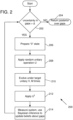
- a representative method 200 of estimating gaps associated with eigenphases of a unitary V is further illustrated in FIG. 2 .
- uncertainty in gap estimates is evaluated to determine if gap estimates are satisfactory. If the gap estimates are satisfactory, a posterior over the gaps is returned at 204. Otherwise, at 206, a predetermined state such as a '0' state is prepared.
- a random unitary operation U is applied to the predetermined state.
- the predetermined state can be a '0' state or other state as may be convenient. In some examples, the predetermined state is established in a small set of qubits, typically fewer than 2, 4, 8, or 10 qubits, but larger numbers of qubits can be used.
- the unitary V is applied M times to the predetermined state. If the unitary is based on a Hamiltonian H , the predetermined state is allowed to evolve for a time t , effectively applying the operator e -iHt .
- an inverse U ⁇ of the random unitary U is applied at 212, and the resulting state is measured with respect to the predetermined state. Based on the measurement, an updated prior is obtained at 214. The updated prior is evaluated at 202, to determine if additional processing is necessary.
- FIG. 3 A representative quantum circuit for use with the method of FIG. 2 is illustrated in FIG. 3 .
- a plurality of qubits 302 is prepared in a predetermined state and coupled to a quantum circuit 304 that implements a random unitary U selected from a set of random unitaries 306.
- the state output by the quantum circuit is allowed to time-evolve as e -iHt , while other unitaries V are applied m times by one or more circuits 308.
- an inverse of the random unitary U is applied and states of the qubits are measured with measurement devices 312.
- a classical or other processing system performs Bayesian inference based on the measurements at 314. Operation of the circuit 300 are repeated multiple times by drawing different random unitaries from the set 306.
- Randomized gap estimation can be used to obtain eigenvalues a part of the spectrum if Haar-random unitary operations can be applied in only that subspace. Since the eigenvectors of the Hamiltonian are generally not known, it is difficult to do this directly. Despite this fact, the adiabatic theorem provides a means by which these random unitaries can be applied to the appropriate subspace by employing adiabatic state preparation.
- H s 1 ⁇ s H 0 + sH p .
- ⁇ j k 0 ⁇ e i ⁇ i k T
- U j be a Haar-random unitary acting on S 0 .
- an adiabatic protocol for estimating the eigenphase is: P 0
- H ; t , U j ⁇ 0 U j ⁇ Te i ⁇ 1 0 H s d sT e ⁇ iH p t Te ⁇ i ⁇ 0 1 H s d sT U j 0 ⁇ 2 .
- Adiabatic evolution can therefore be used to perform phase estimation on a specified subspace of eigenvalues if there exists a gapped adiabatic path between a Hamiltonian that is diagonal in the computational basis and the problem Hamiltonian.
- a representative procedure is illustrated as Algorithm 2. This shows that the problem of dimensionality that afflicts this method can be overcome in cases where such an adiabatic evolution is possible.
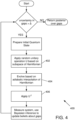
- FIG. 4 illustrates a method 400 of phase estimation on a specified subspace, illustrating similarities to the method of FIG. 2 .
- a random unitary operator is applied, but this random unitary acts on the specified subspace.
- the quantum state produced by the random unitary is evolved based on an adiabatically evolved Hamiltonian such as shown in (12)-(15) above.
- an inverse of the random unitary is applied.
- the set of unitary operators forms a ⁇ -approximate k -design if ⁇ G W - G H ⁇ ⁇ ⁇ ⁇ , where the diamond norm is discussed in detail in John Watrous, Theory of Quantum Information, University of Waterloo (2011).
- Randomized gap estimation also provides an important simplification for amplitude estimation, a quantum algorithm in which the probability of an outcome occurring is estimated by combining ideas from amplitude amplification and phase estimation.
- the algorithm is significant because it allows a quadratic reduction in the number of queries needed to learn an answer from a Monte-Carlo algorithm. Specifically, imagine that you are given an unknown quantum state of the form
- ⁇ ⁇ : A
- 0 ⁇ a
- a method 500 includes performing amplitude estimation using random phase estimation on a Groves operator at 502. At 504, a unique eigenvalue gap is found that is not equal to two, and a sin of one-half of the eigenvalue gap is returned at 506.
- Quantum bootstrapping has been proposed to learn such maps efficiently wherein a trusted quantum simulator is used to infer the controls of an untrusted device. Although this can allow the control map to be learned using a polylogarithmic number of experiments, it necessitates the use of swap gates that couple the device to the trusted simulator that is used to characterize it. This means that verifying that the trusted simulator is properly working can still require an exponential number of measurements (even under assumptions of locality). This is significant because the error in the trusted simulator places a lower limit on the error that can be attained.
- Bayesian inference does not correctly infer a true control map for a system, it does infer a set of controls that precisely mimics a trusted simulator.
- the learning task can be thought of as a machine learning task wherein the untrusted device is trained to maximize the fidelity of its output with that of the "trusted" simulator wherein the output state can be thought of as the training data for the problem. It is therefore crucial to have a well calibrated trusted device to leverage the full power of quantum bootstrapping.
- the first step in building a trusted simulator is to calibrate the single qubit gates.
- the matrix Q can further be determined only if additional constraints are imposed on G . For example, if G is upper or lower triangular and with a positive diagonal it is unique within such measurements and Q is the identity matrix as discussed above.
- a 01 A ([0, 1])
- a 10 A ([1, 0])
- a 11 A ([1, 1]).
- a 01 ⁇ 0
- 0 ⁇ G 11 E 01
- a 10 ⁇ 0
- 0 ⁇ G 10 E 10
- a 11 ⁇ 0
- 0 ⁇ G 10 + G 11 E 11 .
- the sign of G 11 or G 10 is known, these three quantities are enough to unambiguously solve for G 11 and G 10 , and can all be learned in-place using randomized amplitude estimation.
- the remaining elements of the control map can then be found from (40). If the sign of G 11 or G 10 is not known, then they can be learned with amplitude estimation if unitary gates that prepare the states
- FIG. 6 illustrates representative method 600 of obtaining a control map.
- Randomized gap estimation is used at 602 to learn system energies when each control is set to 1.
- the control map is evaluated to determine if it is upper or lower diagonal. If so, a control map can be obtained from the energies at 606. If not the control map is not upper or lower diagonal, it is determined if a Z-gate can be applied as 608. If so, randomized amplitude estimation is used to obtain a control map at 610. Otherwise, the energies are used to select measurements to be executed to obtain the control map at 612. The control map is then inferred from the energies and the selected measurements at 614.
- ⁇ i +2 - ⁇ i ⁇ i +2 - ⁇ i +1 + ⁇ i +1 - ⁇ j .
- Haar-Random unitaries are exponentially difficult to prepare; however, this ensemble of Haar-random unitaries can be approximated by a unitary 2-design which can be formed using random sequences of Clifford operations.
- ⁇ ⁇ : U j
- 0 ⁇ ⁇ k ⁇ k
- ⁇ ⁇ 2 ⁇ k ⁇ k ⁇ ⁇ v k
- the number of parameters in the phase estimation depends the number of eigenstates of the Hamiltonian which are required to represent the input states.
- the expectation value of the likelihood only depends on the gaps in the eigenspectrum of the Hamiltonian. Hence we do not have enough information to resolve the actual eigenspectrum of the system. However, this is still useful. For example, the spectral norm of the Hamiltonian, given by the difference between the smallest and largest eigenvalue, can be found. Also, the smallest gap in the system, which is also a lower bound for the gap between the ground and first excited states is found. This can be used to estimate an optimal annealing schedule for adiabatic algorithms.
- an exemplary system for implementing some aspects of the disclosed technology includes a computing environment 700 that includes a quantum processing unit 702 and one or more monitoring/measuring device(s) 746.
- the quantum processor executes quantum circuits (such as the circuits of FIG. 3 ) that are precompiled by classical compiler unit 720 utilizing one or more classical processor(s) 710.
- the compilation is the process of translation of a high-level description of a quantum algorithm into a sequence of quantum circuits.
- Such high-level description may be stored, as the case may be, on one or more external computer(s) 760 outside the computing environment 700 utilizing one or more memory and/or storage device(s) 762, then downloaded as necessary into the computing environment 700 via one or more communication connection(s) 750.
- the classical compiler unit 720 is coupled to a classical processor 710 and a procedure library 721 that contains some or all procedures or data necessary to implement the methods described above such as randomized gap estimation and defining random unitary circuits such as those of FIG. 3 .
- a communication bus couples instructions and data to and from the quantum processor 702, the measuring and monitoring devices 746, and the classical processor 720. In this way, circuit definitions from the compiler unit 720 or measurement results from the measuring and monitoring devices 746 (or other data) can be communicated.
- FIG. 8 and the following discussion are intended to provide a brief, general description of an exemplary computing environment in which the disclosed technology may be implemented.
- the disclosed technology is described in the general context of computer executable instructions, such as program modules, being executed by a personal computer (PC).
- program modules include routines, programs, objects, components, data structures, etc., that perform particular tasks or implement particular abstract data types.
- the disclosed technology may be implemented with other computer system configurations, including hand held devices, multiprocessor systems, microprocessor-based or programmable consumer electronics, network PCs, minicomputers, mainframe computers, and the like.
- the disclosed technology may also be practiced in distributed computing environments where tasks are performed by remote processing devices that are linked through a communications network.
- program modules may be located in both local and remote memory storage devices.
- a classical computing environment is coupled to a quantum computing environment, but a quantum computing environment is not shown in FIG. 8 .
- an exemplary system for implementing the disclosed technology includes a general purpose computing device in the form of an exemplary conventional PC 800, including one or more processing units 802, a system memory 804, and a system bus 806 that couples various system components including the system memory 804 to the one or more processing units 802.
- the system bus 806 may be any of several types of bus structures including a memory bus or memory controller, a peripheral bus, and a local bus using any of a variety of bus architectures.
- the exemplary system memory 804 includes read only memory (ROM) 808 and random access memory (RAM) 810.
- ROM read only memory
- RAM random access memory
- a basic input/output system (BIOS) 812 containing the basic routines that help with the transfer of information between elements within the PC 800, is stored in ROM 808.
- a specification of random unitaries or related procedures are stored in a memory portion 816. Instructions and specifications for initial quantum states are stored at 811A. Procedures for Bayesian estimation are stored at 811C, Grove operator specifications are stored at 811B, and processor-executable instructions for defining quantum circuits for evolution operations are stored at 818.
- the exemplary PC 800 further includes one or more storage devices 830 such as a hard disk drive for reading from and writing to a hard disk, a magnetic disk drive for reading from or writing to a removable magnetic disk, and an optical disk drive for reading from or writing to a removable optical disk (such as a CD-ROM or other optical media).
- storage devices can be connected to the system bus 806 by a hard disk drive interface, a magnetic disk drive interface, and an optical drive interface, respectively.
- the drives and their associated computer readable media provide nonvolatile storage of computer-readable instructions, data structures, program modules, and other data for the PC 800.
- Other types of computer-readable media which can store data that is accessible by a PC such as magnetic cassettes, flash memory cards, digital video disks, CDs, DVDs, RAMs, ROMs, and the like, may also be used in the exemplary operating environment.
- a number of program modules may be stored in the storage devices 830 including an operating system, one or more application programs, other program modules, and program data. Storage of computer-executable instructions for defining randomized gap estimation circuits and procedures, and configuring a quantum computer can be stored in the storage devices 830 as well as or in addition to the memory 804.
- a user may enter commands and information into the PC 800 through one or more input devices 840 such as a keyboard and a pointing device such as a mouse.
- Other input devices may include a digital camera, microphone, joystick, game pad, satellite dish, scanner, or the like.
- serial port interface that is coupled to the system bus 806, but may be connected by other interfaces such as a parallel port, game port, or universal serial bus (USB).
- a monitor 846 or other type of display device is also connected to the system bus 806 via an interface, such as a video adapter.
- Other peripheral output devices 845 such as speakers and printers (not shown), may be included.
- a user interface is display so that a user can input a prior distribution over eigenvalue gaps, and verify successful inference of the true gaps.
- the PC 800 may operate in a networked environment using logical connections to one or more remote computers, such as a remote computer 860.
- a remote computer 860 may be another PC, a server, a router, a network PC, or a peer device or other common network node, and typically includes many or all of the elements described above relative to the PC 800, although only a memory storage device 862 has been illustrated in FIG. 8 .
- the personal computer 800 and/or the remote computer 860 can be connected to a logical a local area network (LAN) and a wide area network (WAN).
- LAN local area network
- WAN wide area network
- the PC 800 When used in a LAN networking environment, the PC 800 is connected to the LAN through a network interface. When used in a WAN networking environment, the PC 800 typically includes a modem or other means for establishing communications over the WAN, such as the Internet. In a networked environment, program modules depicted relative to the personal computer 800, or portions thereof, may be stored in the remote memory storage device or other locations on the LAN or WAN. The network connections shown are exemplary, and other means of establishing a communications link between the computers may be used.
- a logic device such as a field programmable gate array, other programmable logic device (PLD), an application specific integrated circuit can be used, and a general purpose processor is not necessary.
- processor generally refers to logic devices that execute instructions that can be coupled to the logic device or fixed in the logic device.
- logic devices include memory portions, but memory can be provided externally, as may be convenient.
- multiple logic devices can be arranged for parallel processing.
Landscapes
- Engineering & Computer Science (AREA)
- Physics & Mathematics (AREA)
- Theoretical Computer Science (AREA)
- General Physics & Mathematics (AREA)
- Mathematical Physics (AREA)
- Data Mining & Analysis (AREA)
- Mathematical Analysis (AREA)
- Computational Mathematics (AREA)
- Mathematical Optimization (AREA)
- Pure & Applied Mathematics (AREA)
- Computing Systems (AREA)
- General Engineering & Computer Science (AREA)
- Software Systems (AREA)
- Evolutionary Computation (AREA)
- Artificial Intelligence (AREA)
- Condensed Matter Physics & Semiconductors (AREA)
- Life Sciences & Earth Sciences (AREA)
- Health & Medical Sciences (AREA)
- Biophysics (AREA)
- Evolutionary Biology (AREA)
- Bioinformatics & Cheminformatics (AREA)
- Bioinformatics & Computational Biology (AREA)
- Algebra (AREA)
- Genetics & Genomics (AREA)
- Physiology (AREA)
- Biomedical Technology (AREA)
- Computational Linguistics (AREA)
- General Health & Medical Sciences (AREA)
- Molecular Biology (AREA)
- Databases & Information Systems (AREA)
- Probability & Statistics with Applications (AREA)
- Complex Calculations (AREA)
- Junction Field-Effect Transistors (AREA)
- Superconductor Devices And Manufacturing Methods Thereof (AREA)
Claims (15)
- Phasenschätzverfahren (200, 400) zum Schätzen einer Eigenwertlücke in einer Zieleinheit unter Verwendung einer Rechenumgebung, umfassend:eine Quantenrechenumgebung, die eine Quantenverarbeitungseinheit umfasst, die mindestens ein Qubit und ein oder mehrere Messvorrichtungen umfasst; undeine klassische Rechenumgebung, die einen klassischen Prozessor umfasst, wobei das Verfahren das mehrfache Wiederholen der folgenden Schritte umfasst:Vorbereiten (206) des mindestens einen Qubits (302) der Quantenverarbeitungseinheit in einem anfänglichen Quantenzustand;Anwenden (208, 402) einer zufälligen Einheit auf den anfänglichen Quantenzustand des mindestens einen Qubits in der Quantenverarbeitungseinheit, um einen zufälligen Quantenzustand zu erzeugen, wobei die zufällige Einheit aus einem Satz von zufälligen Einheiten ausgewählt ist, wobei eine andere zufällige Einheit jedes Mal gezeichnet wird, wenn die Schritte wiederholt werden, so dass die zufälligen Einheiten gleichmäßig gemäß einem Haar-Maß gezeichnet werden;Entwickeln (210, 404) des zufälligen Quantenzustands des mindestens einen Qubits in der Quantenverarbeitungseinheit basierend auf einer Zieleinheit;Anwenden (212, 406) einer Umkehrung der zufälligen Einheit auf den entwickelten Quantenzustand des mindestens einen Qubits in der Quantenverarbeitungseinheit, um einen endgültigen Quantenzustand zu erzeugen;Messen des endgültigen Quantenzustands des mindestens einen Qubits in der Quantenverarbeitungseinheit unter Verwendung des einen oder der mehreren Messvorrichtungen; undErzeugen (214), unter Verwendung des klassischen Prozessors, einer Schätzung einer Eigenwertlücke der Zieleinheit unter Verwendung der Bayes'schen Inferenz (314) basierend auf einem Haar-Mittelwert der Messungen des endgültigen Quantenzustands in Bezug auf den anfänglichen Quantenzustand.
- Verfahren nach Anspruch 1, wobei der anfängliche Quantenzustand des mindestens einen Qubits (302) ein Nullzustand ist.
- Verfahren nach Anspruch 1, wobei die Zieleinheit auf einem Hamilton-Operator basiert und das Verfahren weiter das Auswählen einer Evolutionszeit und das Zulassen, dass sich der zufällige Quantenzustand während der Evolutionszeit entwickelt, umfasst.
- Verfahren nach Anspruch 1, wobei der zufällige Quantenzustand durch mehrmaliges Anwenden der Zieleinheit entwickelt wird.
- Verfahren nach Anspruch 1, wobei:das mindestens eine Qubit einen Satz von Qubits (302) umfasst; unddie eine oder die mehreren Messvorrichtungen einen Satz von Messvorrichtungen umfassen.
- Verfahren nach Anspruch 5, wobei die anfänglichen Quantenzustände der Qubits (302) des Satzes von Qubits (302) der gleiche Quantenzustand sind.
- Verfahren nach Anspruch 5, wobei die Zieleinheit auf einem Hamilton-Operator basiert und das Verfahren weiter das Auswählen einer Evolutionszeit und das Zulassen, dass sich die zufälligen Quantenzustände während der Evolutionszeit unter dem Hamilton entwickeln, umfasst.
- Verfahren nach Anspruch 5, wobei der Satz zufälliger Quantenzustände dadurch entwickelt wird, dass die Zieleinheit mehrmals auf jeden der zufälligen Quantenzustände angewendet wird und die anfänglichen Quantenzustände in den Qubits (302) des Satzes von Qubits (302) mindestens zwei unterschiedliche Quantenzustände oder denselben Quantenzustand beinhalten.
- Verfahren nach Anspruch 8, wobei die Zieleinheit V ist und der Satz zufälliger Quantenzustände durch Anwenden der Zieleinheit V m Mal auf die zufälligen Quantenzustände des Satzes zufälliger Quantenzustände entwickelt wird, wobei m eine ganze Zahl ist, die sich um mindestens einige der zufälligen Quantenzustände unterscheidet.
- Verfahren nach Anspruch 1, wobei die Zieleinheit einer Kontrollkarte zugeordnet ist, und weiter umfassend das Definieren einer Kontrollkarte basierend auf den geschätzten Eigenwerten.
- Verfahren nach Anspruch 1, weiter umfassend das Durchführen der Schritte von Anspruch 1 für eine Vielzahl von Zieleinheiten, die einer Kontrollkarte zugeordnet ist, um Eigenwertlücken zu erhalten, und basierend auf den Eigenwertlücken, Bereitstellen einer Schätzung der Kontrollkarte.
- Verfahren nach Anspruch 1, wobei die Zieleinheit ein Grover-Such-Operator ist und der zufällige Quantenzustand durch Anwenden der Zieleinheit für eine gerade Anzahl von Malen entwickelt wird.
- Verfahren nach Anspruch 1, wobei die Zieleinheit einem zeitabhängigen Hamilton zugeordnet ist, der sich von einem anfänglichen Hamilton zu einem endgültigen Hamilton entwickelt, der zufällige Quantenzustand adiabatisch entwickelt wird und die Zufallseinheit basierend auf einer Teilmenge von Eigenwerten des anfänglichen Hamilton ausgewählt wird.
- Rechenumgebung, die konfiguriert ist, um ein Phasenschätzverfahren zu implementieren, um eine Eigenwertlücke in einer Zieleinheit zu schätzen, wobei die Rechenumgebung umfasst:eine Quantenrechenumgebung, wobei die Quantenrechenumgebung eine oder mehrere Messvorrichtungen und eine Quantenverarbeitungseinheit umfasst, die mindestens ein Qubit umfasst, wobei die Quantenverarbeitungseinheit konfiguriert ist, um die folgenden Schritte mehrmals zu wiederholen:Vorbereiten (206) des mindestens einen Qubits (302) der Quantenverarbeitungseinheit in einem anfänglichen Quantenzustand;Anwenden (208, 402) einer zufälligen Einheit auf den anfänglichen Quantenzustand des mindestens einen Qubits in der Quantenverarbeitungseinheit, um einen zufälligen Quantenzustand zu erzeugen, wobei die zufällige Einheit aus einem Satz von zufälligen Einheiten ausgewählt ist, wobei eine andere zufällige Einheit jedes Mal gezeichnet wird, wenn die Schritte wiederholt werden, so dass die zufälligen Einheiten gleichmäßig gemäß einem Haar-Maß gezeichnet werden;Entwickeln (210, 404) des zufälligen Quantenzustands des mindestens einen Qubits in der Quantenverarbeitungseinheit basierend auf einer Zieleinheit;Anwenden (212, 406) einer Umkehrung der zufälligen Einheit auf den entwickelten Quantenzustand des mindestens einen Qubits in der Quantenverarbeitungseinheit, um einen endgültigen Quantenzustand zu erzeugen; undVeranlassen der einen oder mehreren Messvorrichtungen, den endgültigen Quantenzustand des mindestens einen Qubits in der Quantenverarbeitungseinheit zu messen; undeine klassische Rechenumgebung, die einen klassischen Prozessor umfasst, wobei der klassische Prozessor konfiguriert ist zum:
Erzeugen (214) einer Schätzung einer Eigenwertlücke der Zieleinheit unter Verwendung der Bayes'schen Inferenz (314) basierend auf einem Haar-Mittelwert der Messungen des endgültigen Quantenzustands in Bezug auf den anfänglichen Quantenzustand. - Rechenumgebung nach Anspruch 14, wobei die Zieleinheit einem Hamilton-Operator zugeordnet ist und der Quantenprozessor eine Zustandsentwicklung basierend auf einer verstrichenen Zeit zulässt oder eine Zustandsentwicklung durch mindestens m-maliges Anwenden der Zieleinheit zulässt, wobei m eine ganze Zahl von größer als 1 ist.
Applications Claiming Priority (2)
| Application Number | Priority Date | Filing Date | Title |
|---|---|---|---|
| US201662297062P | 2016-02-18 | 2016-02-18 | |
| PCT/US2017/018376 WO2017143195A1 (en) | 2016-02-18 | 2017-02-17 | Randomized gap and amplitude estimation |
Publications (2)
| Publication Number | Publication Date |
|---|---|
| EP3417403A1 EP3417403A1 (de) | 2018-12-26 |
| EP3417403B1 true EP3417403B1 (de) | 2024-01-10 |
Family
ID=58191685
Family Applications (1)
| Application Number | Title | Priority Date | Filing Date |
|---|---|---|---|
| EP17708118.9A Active EP3417403B1 (de) | 2016-02-18 | 2017-02-17 | Randomisierter spalt und amplitudenschätzung |
Country Status (4)
| Country | Link |
|---|---|
| US (1) | US11170302B2 (de) |
| EP (1) | EP3417403B1 (de) |
| CN (1) | CN108713206B (de) |
| WO (1) | WO2017143195A1 (de) |
Families Citing this family (24)
| Publication number | Priority date | Publication date | Assignee | Title |
|---|---|---|---|---|
| CN108154240B (zh) * | 2017-12-29 | 2020-07-07 | 合肥本源量子计算科技有限责任公司 | 一种低复杂度的量子线路模拟系统 |
| GB201807973D0 (en) * | 2018-05-16 | 2018-07-04 | River Lane Res Ltd | Estimating an energy level of a physical system |
| CN108710951A (zh) * | 2018-05-17 | 2018-10-26 | 合肥本源量子计算科技有限责任公司 | 一种构建量子线路的方法及系统 |
| CN109409526B (zh) * | 2018-10-15 | 2021-08-10 | 合肥本源量子计算科技有限责任公司 | 一种单量子逻辑门操作的校准方法 |
| US11645568B2 (en) | 2019-01-25 | 2023-05-09 | IonQ, Inc. | Techniques for controlling small angle Mølmer-Sørensen gates and for handling asymmetric SPAM errors |
| US11586864B2 (en) * | 2019-02-15 | 2023-02-21 | International Business Machines Corporation | Prior knowledge-based topological feature classification |
| US11120359B2 (en) * | 2019-03-15 | 2021-09-14 | Microsoft Technology Licensing, Llc | Phase estimation with randomized hamiltonians |
| US11734598B2 (en) | 2019-11-01 | 2023-08-22 | International Business Machines Corporation | Quantum state preparation of a probability distribution facilitating quantum amplitude estimation |
| US11687815B2 (en) * | 2019-12-16 | 2023-06-27 | International Business Machines Corporation | Estimation of an expected energy value of a Hamiltonian |
| CN111120236B (zh) * | 2019-12-18 | 2022-05-06 | 上海大学 | 以耦合谐振子作为工质的量子绝热捷径热机及其绝热捷径过程的设计方法 |
| CN112651508B (zh) * | 2020-01-10 | 2022-04-15 | 腾讯科技(深圳)有限公司 | 绝热演化路径的预测方法、装置、设备及存储介质 |
| CN112632881B (zh) | 2020-01-17 | 2022-03-08 | 腾讯科技(深圳)有限公司 | 量子克里福德电路的容错计算方法、装置、设备及芯片 |
| US11593697B2 (en) * | 2020-03-10 | 2023-02-28 | QC Ware Corp. | Method for amplitude estimation with noisy intermediate-scale quantum computers |
| US11960969B2 (en) | 2020-03-27 | 2024-04-16 | International Business Machines Corporation | Quantum amplitude estimation state preparation for stochastic processes |
| US12423607B2 (en) * | 2020-09-01 | 2025-09-23 | Google Llc | Verified quantum phase estimation |
| CN112614336B (zh) | 2020-11-19 | 2021-12-07 | 南京师范大学 | 一种基于量子随机游走的交通流模态拟合方法 |
| CN112529203B (zh) * | 2020-12-23 | 2021-09-07 | 北京百度网讯科技有限公司 | 纠缠量子态分辨方法、装置、设备及存储介质 |
| CN114757357B (zh) | 2020-12-29 | 2023-06-02 | 合肥本源量子计算科技有限责任公司 | 量子线路的振幅估计方法、装置、存储介质及电子装置 |
| CN114764618B (zh) * | 2020-12-31 | 2023-08-04 | 本源量子计算科技(合肥)股份有限公司 | 一种针对线性系统的量子预处理方法及装置 |
| CN114611263B (zh) * | 2021-09-07 | 2025-05-30 | 上海交通大学 | 基于经典随机数在三维光子芯片上实现哈尔酉正随机的方法 |
| US11809839B2 (en) | 2022-01-18 | 2023-11-07 | Robert Lyden | Computer language and code for application development and electronic and optical communication |
| CN115374946B (zh) * | 2022-07-29 | 2025-01-24 | 北京量子信息科学研究院 | 量子相位估计的方法及量子相位估计系统 |
| CN115545202B (zh) * | 2022-09-26 | 2023-05-30 | 北京大学 | 一种基于量子门获取待测系统本征值的方法及装置 |
| CN120257917B (zh) * | 2025-06-04 | 2025-08-22 | 中电信量子信息科技集团有限公司 | 量子电路仿真模拟的采样方法 |
Family Cites Families (5)
| Publication number | Priority date | Publication date | Assignee | Title |
|---|---|---|---|---|
| CN100547944C (zh) * | 2006-03-09 | 2009-10-07 | 南京邮电大学 | 量子神经网络用于多用户检测的方法 |
| US8089286B2 (en) * | 2008-04-15 | 2012-01-03 | Nec Laboratories America, Inc. | System and method for quantum computer calibration and performance estimation |
| US9275011B2 (en) * | 2013-03-27 | 2016-03-01 | Microsoft Technology Licensing, Llc | Fast quantum and classical phase estimation |
| US10037493B2 (en) * | 2013-10-22 | 2018-07-31 | D-Wave Systems Inc. | Universal adiabatic quantum computing with superconducting qubits |
| WO2015085190A2 (en) | 2013-12-05 | 2015-06-11 | Microsoft Technology Licensing, Llc | A method and system for computing distance measures on a quantum computer |
-
2017
- 2017-02-17 EP EP17708118.9A patent/EP3417403B1/de active Active
- 2017-02-17 US US15/999,860 patent/US11170302B2/en active Active
- 2017-02-17 WO PCT/US2017/018376 patent/WO2017143195A1/en not_active Ceased
- 2017-02-17 CN CN201780012157.8A patent/CN108713206B/zh active Active
Non-Patent Citations (1)
| Title |
|---|
| S. KIMMEL ET AL: "Robust calibration of a universal single-qubit gate-set via robust phase estimation", ARXIV:1502.02677V2, 6 November 2015 (2015-11-06), XP093061874, Retrieved from the Internet <URL:https://arxiv.org/abs/1502.02677v2> DOI: 10.48550/arXiv.1502.02677 * |
Also Published As
| Publication number | Publication date |
|---|---|
| US20200193302A1 (en) | 2020-06-18 |
| US11170302B2 (en) | 2021-11-09 |
| EP3417403A1 (de) | 2018-12-26 |
| CN108713206B (zh) | 2022-12-27 |
| CN108713206A (zh) | 2018-10-26 |
| WO2017143195A1 (en) | 2017-08-24 |
Similar Documents
| Publication | Publication Date | Title |
|---|---|---|
| EP3417403B1 (de) | Randomisierter spalt und amplitudenschätzung | |
| Cortes et al. | Quantum Krylov subspace algorithms for ground-and excited-state energy estimation | |
| Wittler et al. | Integrated tool set for control, calibration, and characterization of quantum devices applied to superconducting qubits | |
| Fischer et al. | Ancilla-free implementation of generalized measurements for qubits embedded in a qudit space | |
| US8089286B2 (en) | System and method for quantum computer calibration and performance estimation | |
| AU2020292425A1 (en) | Hybrid quantum-classical computer for bayesian inference with engineered likelihood functions for robust amplitude estimation | |
| Dias et al. | Seven lessons from manyfield inflation in random potentials | |
| JP7499540B2 (ja) | 開放量子系のための量子情報処理方法、古典コンピュータ、量子コンピュータ、量子情報処理プログラム、及びデータ構造 | |
| JP2023550324A (ja) | 量子誤差軽減ための仮想抽出 | |
| Kowalski et al. | Quantum simulations employing connected moments expansions | |
| Wei et al. | Neural-shadow quantum state tomography | |
| EP3987459B1 (de) | Charakterisierung von zeitkorrelierten quantenfehlern durch verschränkung | |
| Colless et al. | Robust determination of molecular spectra on a quantum processor | |
| Zintchenko et al. | Randomized gap and amplitude estimation | |
| Gaikwad et al. | True experimental reconstruction of quantum states and processes via convex optimization: A. Gaikwad et al. | |
| Boyd et al. | High-dimensional subspace expansion using classical shadows | |
| Hao et al. | Variational quantum algorithm landscape reconstruction by low-rank tensor completion | |
| Coffman et al. | Local measurement strategies for multipartite entanglement quantification | |
| US20240046131A1 (en) | Methods and systems for patch-by-patch characterization of quantom processors | |
| Balló-Gimbernat et al. | Shallow instantaneous quantum polynomial-time circuits for generative modeling on noisy intermediate-scale quantum hardware | |
| De Nicola | Disentanglement approach to quantum spin ground states: field theory and stochastic simulation | |
| Kargi et al. | Quantum chaos and Trotterisation thresholds in digital quantum simulations | |
| Du et al. | Optimal randomized measurements for a family of non-linear quantum properties | |
| Aziz et al. | Classical Simulations of Low Magic Quantum Dynamics | |
| Ossorio-Castillo et al. | Simulating NMR Spectra with a Quantum Computer |
Legal Events
| Date | Code | Title | Description |
|---|---|---|---|
| STAA | Information on the status of an ep patent application or granted ep patent |
Free format text: STATUS: UNKNOWN |
|
| STAA | Information on the status of an ep patent application or granted ep patent |
Free format text: STATUS: THE INTERNATIONAL PUBLICATION HAS BEEN MADE |
|
| PUAI | Public reference made under article 153(3) epc to a published international application that has entered the european phase |
Free format text: ORIGINAL CODE: 0009012 |
|
| STAA | Information on the status of an ep patent application or granted ep patent |
Free format text: STATUS: REQUEST FOR EXAMINATION WAS MADE |
|
| 17P | Request for examination filed |
Effective date: 20180726 |
|
| AK | Designated contracting states |
Kind code of ref document: A1 Designated state(s): AL AT BE BG CH CY CZ DE DK EE ES FI FR GB GR HR HU IE IS IT LI LT LU LV MC MK MT NL NO PL PT RO RS SE SI SK SM TR |
|
| AX | Request for extension of the european patent |
Extension state: BA ME |
|
| DAV | Request for validation of the european patent (deleted) | ||
| DAX | Request for extension of the european patent (deleted) | ||
| STAA | Information on the status of an ep patent application or granted ep patent |
Free format text: STATUS: EXAMINATION IS IN PROGRESS |
|
| 17Q | First examination report despatched |
Effective date: 20210701 |
|
| RAP3 | Party data changed (applicant data changed or rights of an application transferred) |
Owner name: MICROSOFT TECHNOLOGY LICENSING, LLC |
|
| REG | Reference to a national code |
Ref country code: DE Ref legal event code: R079 Ipc: G06N0010600000 Ref country code: DE Ref legal event code: R079 Ref document number: 602017078306 Country of ref document: DE Free format text: PREVIOUS MAIN CLASS: G06N0099000000 Ipc: G06N0010600000 |
|
| GRAP | Despatch of communication of intention to grant a patent |
Free format text: ORIGINAL CODE: EPIDOSNIGR1 |
|
| STAA | Information on the status of an ep patent application or granted ep patent |
Free format text: STATUS: GRANT OF PATENT IS INTENDED |
|
| RIC1 | Information provided on ipc code assigned before grant |
Ipc: G06N 7/01 20230101ALN20230908BHEP Ipc: G06N 10/20 20220101ALI20230908BHEP Ipc: G06N 10/60 20220101AFI20230908BHEP |
|
| RIC1 | Information provided on ipc code assigned before grant |
Ipc: G06N 7/01 20230101ALN20230915BHEP Ipc: G06N 10/20 20220101ALI20230915BHEP Ipc: G06N 10/60 20220101AFI20230915BHEP |
|
| INTG | Intention to grant announced |
Effective date: 20231002 |
|
| P01 | Opt-out of the competence of the unified patent court (upc) registered |
Effective date: 20231005 |
|
| GRAS | Grant fee paid |
Free format text: ORIGINAL CODE: EPIDOSNIGR3 |
|
| GRAA | (expected) grant |
Free format text: ORIGINAL CODE: 0009210 |
|
| STAA | Information on the status of an ep patent application or granted ep patent |
Free format text: STATUS: THE PATENT HAS BEEN GRANTED |
|
| AK | Designated contracting states |
Kind code of ref document: B1 Designated state(s): AL AT BE BG CH CY CZ DE DK EE ES FI FR GB GR HR HU IE IS IT LI LT LU LV MC MK MT NL NO PL PT RO RS SE SI SK SM TR |
|
| REG | Reference to a national code |
Ref country code: GB Ref legal event code: FG4D |
|
| REG | Reference to a national code |
Ref country code: CH Ref legal event code: EP |
|
| REG | Reference to a national code |
Ref country code: DE Ref legal event code: R096 Ref document number: 602017078306 Country of ref document: DE |
|
| REG | Reference to a national code |
Ref country code: IE Ref legal event code: FG4D |
|
| PGFP | Annual fee paid to national office [announced via postgrant information from national office to epo] |
Ref country code: NL Payment date: 20240220 Year of fee payment: 8 |
|
| PGFP | Annual fee paid to national office [announced via postgrant information from national office to epo] |
Ref country code: GB Payment date: 20240220 Year of fee payment: 8 |
|
| REG | Reference to a national code |
Ref country code: LT Ref legal event code: MG9D |
|
| REG | Reference to a national code |
Ref country code: NL Ref legal event code: MP Effective date: 20240110 |
|
| PGFP | Annual fee paid to national office [announced via postgrant information from national office to epo] |
Ref country code: FR Payment date: 20240220 Year of fee payment: 8 |
|
| REG | Reference to a national code |
Ref country code: AT Ref legal event code: MK05 Ref document number: 1649488 Country of ref document: AT Kind code of ref document: T Effective date: 20240110 |
|
| PG25 | Lapsed in a contracting state [announced via postgrant information from national office to epo] |
Ref country code: NL Free format text: LAPSE BECAUSE OF FAILURE TO SUBMIT A TRANSLATION OF THE DESCRIPTION OR TO PAY THE FEE WITHIN THE PRESCRIBED TIME-LIMIT Effective date: 20240110 |
|
| PG25 | Lapsed in a contracting state [announced via postgrant information from national office to epo] |
Ref country code: NL Free format text: LAPSE BECAUSE OF FAILURE TO SUBMIT A TRANSLATION OF THE DESCRIPTION OR TO PAY THE FEE WITHIN THE PRESCRIBED TIME-LIMIT Effective date: 20240110 |
|
| PG25 | Lapsed in a contracting state [announced via postgrant information from national office to epo] |
Ref country code: IS Free format text: LAPSE BECAUSE OF FAILURE TO SUBMIT A TRANSLATION OF THE DESCRIPTION OR TO PAY THE FEE WITHIN THE PRESCRIBED TIME-LIMIT Effective date: 20240510 |
|
| PG25 | Lapsed in a contracting state [announced via postgrant information from national office to epo] |
Ref country code: LT Free format text: LAPSE BECAUSE OF FAILURE TO SUBMIT A TRANSLATION OF THE DESCRIPTION OR TO PAY THE FEE WITHIN THE PRESCRIBED TIME-LIMIT Effective date: 20240110 |
|
| PG25 | Lapsed in a contracting state [announced via postgrant information from national office to epo] |
Ref country code: GR Free format text: LAPSE BECAUSE OF FAILURE TO SUBMIT A TRANSLATION OF THE DESCRIPTION OR TO PAY THE FEE WITHIN THE PRESCRIBED TIME-LIMIT Effective date: 20240411 |
|
| PG25 | Lapsed in a contracting state [announced via postgrant information from national office to epo] |
Ref country code: RS Free format text: LAPSE BECAUSE OF FAILURE TO SUBMIT A TRANSLATION OF THE DESCRIPTION OR TO PAY THE FEE WITHIN THE PRESCRIBED TIME-LIMIT Effective date: 20240410 Ref country code: HR Free format text: LAPSE BECAUSE OF FAILURE TO SUBMIT A TRANSLATION OF THE DESCRIPTION OR TO PAY THE FEE WITHIN THE PRESCRIBED TIME-LIMIT Effective date: 20240110 |
|
| PG25 | Lapsed in a contracting state [announced via postgrant information from national office to epo] |
Ref country code: ES Free format text: LAPSE BECAUSE OF FAILURE TO SUBMIT A TRANSLATION OF THE DESCRIPTION OR TO PAY THE FEE WITHIN THE PRESCRIBED TIME-LIMIT Effective date: 20240110 |
|
| PG25 | Lapsed in a contracting state [announced via postgrant information from national office to epo] |
Ref country code: AT Free format text: LAPSE BECAUSE OF FAILURE TO SUBMIT A TRANSLATION OF THE DESCRIPTION OR TO PAY THE FEE WITHIN THE PRESCRIBED TIME-LIMIT Effective date: 20240110 |
|
| PG25 | Lapsed in a contracting state [announced via postgrant information from national office to epo] |
Ref country code: RS Free format text: LAPSE BECAUSE OF FAILURE TO SUBMIT A TRANSLATION OF THE DESCRIPTION OR TO PAY THE FEE WITHIN THE PRESCRIBED TIME-LIMIT Effective date: 20240410 Ref country code: NO Free format text: LAPSE BECAUSE OF FAILURE TO SUBMIT A TRANSLATION OF THE DESCRIPTION OR TO PAY THE FEE WITHIN THE PRESCRIBED TIME-LIMIT Effective date: 20240410 Ref country code: LT Free format text: LAPSE BECAUSE OF FAILURE TO SUBMIT A TRANSLATION OF THE DESCRIPTION OR TO PAY THE FEE WITHIN THE PRESCRIBED TIME-LIMIT Effective date: 20240110 Ref country code: IS Free format text: LAPSE BECAUSE OF FAILURE TO SUBMIT A TRANSLATION OF THE DESCRIPTION OR TO PAY THE FEE WITHIN THE PRESCRIBED TIME-LIMIT Effective date: 20240510 Ref country code: HR Free format text: LAPSE BECAUSE OF FAILURE TO SUBMIT A TRANSLATION OF THE DESCRIPTION OR TO PAY THE FEE WITHIN THE PRESCRIBED TIME-LIMIT Effective date: 20240110 Ref country code: GR Free format text: LAPSE BECAUSE OF FAILURE TO SUBMIT A TRANSLATION OF THE DESCRIPTION OR TO PAY THE FEE WITHIN THE PRESCRIBED TIME-LIMIT Effective date: 20240411 Ref country code: ES Free format text: LAPSE BECAUSE OF FAILURE TO SUBMIT A TRANSLATION OF THE DESCRIPTION OR TO PAY THE FEE WITHIN THE PRESCRIBED TIME-LIMIT Effective date: 20240110 Ref country code: BG Free format text: LAPSE BECAUSE OF FAILURE TO SUBMIT A TRANSLATION OF THE DESCRIPTION OR TO PAY THE FEE WITHIN THE PRESCRIBED TIME-LIMIT Effective date: 20240110 Ref country code: AT Free format text: LAPSE BECAUSE OF FAILURE TO SUBMIT A TRANSLATION OF THE DESCRIPTION OR TO PAY THE FEE WITHIN THE PRESCRIBED TIME-LIMIT Effective date: 20240110 |
|
| PG25 | Lapsed in a contracting state [announced via postgrant information from national office to epo] |
Ref country code: PL Free format text: LAPSE BECAUSE OF FAILURE TO SUBMIT A TRANSLATION OF THE DESCRIPTION OR TO PAY THE FEE WITHIN THE PRESCRIBED TIME-LIMIT Effective date: 20240110 Ref country code: PT Free format text: LAPSE BECAUSE OF FAILURE TO SUBMIT A TRANSLATION OF THE DESCRIPTION OR TO PAY THE FEE WITHIN THE PRESCRIBED TIME-LIMIT Effective date: 20240510 |
|
| PG25 | Lapsed in a contracting state [announced via postgrant information from national office to epo] |
Ref country code: SE Free format text: LAPSE BECAUSE OF FAILURE TO SUBMIT A TRANSLATION OF THE DESCRIPTION OR TO PAY THE FEE WITHIN THE PRESCRIBED TIME-LIMIT Effective date: 20240110 Ref country code: PT Free format text: LAPSE BECAUSE OF FAILURE TO SUBMIT A TRANSLATION OF THE DESCRIPTION OR TO PAY THE FEE WITHIN THE PRESCRIBED TIME-LIMIT Effective date: 20240510 Ref country code: PL Free format text: LAPSE BECAUSE OF FAILURE TO SUBMIT A TRANSLATION OF THE DESCRIPTION OR TO PAY THE FEE WITHIN THE PRESCRIBED TIME-LIMIT Effective date: 20240110 Ref country code: LV Free format text: LAPSE BECAUSE OF FAILURE TO SUBMIT A TRANSLATION OF THE DESCRIPTION OR TO PAY THE FEE WITHIN THE PRESCRIBED TIME-LIMIT Effective date: 20240110 |
|
| REG | Reference to a national code |
Ref country code: CH Ref legal event code: PL |
|
| PG25 | Lapsed in a contracting state [announced via postgrant information from national office to epo] |
Ref country code: DK Free format text: LAPSE BECAUSE OF FAILURE TO SUBMIT A TRANSLATION OF THE DESCRIPTION OR TO PAY THE FEE WITHIN THE PRESCRIBED TIME-LIMIT Effective date: 20240110 |
|
| REG | Reference to a national code |
Ref country code: DE Ref legal event code: R097 Ref document number: 602017078306 Country of ref document: DE |
|
| PG25 | Lapsed in a contracting state [announced via postgrant information from national office to epo] |
Ref country code: SM Free format text: LAPSE BECAUSE OF FAILURE TO SUBMIT A TRANSLATION OF THE DESCRIPTION OR TO PAY THE FEE WITHIN THE PRESCRIBED TIME-LIMIT Effective date: 20240110 |
|
| PG25 | Lapsed in a contracting state [announced via postgrant information from national office to epo] |
Ref country code: LU Free format text: LAPSE BECAUSE OF NON-PAYMENT OF DUE FEES Effective date: 20240217 |
|
| PG25 | Lapsed in a contracting state [announced via postgrant information from national office to epo] |
Ref country code: CH Free format text: LAPSE BECAUSE OF NON-PAYMENT OF DUE FEES Effective date: 20240229 |
|
| PG25 | Lapsed in a contracting state [announced via postgrant information from national office to epo] |
Ref country code: CZ Free format text: LAPSE BECAUSE OF FAILURE TO SUBMIT A TRANSLATION OF THE DESCRIPTION OR TO PAY THE FEE WITHIN THE PRESCRIBED TIME-LIMIT Effective date: 20240110 Ref country code: EE Free format text: LAPSE BECAUSE OF FAILURE TO SUBMIT A TRANSLATION OF THE DESCRIPTION OR TO PAY THE FEE WITHIN THE PRESCRIBED TIME-LIMIT Effective date: 20240110 |
|
| PG25 | Lapsed in a contracting state [announced via postgrant information from national office to epo] |
Ref country code: SK Free format text: LAPSE BECAUSE OF FAILURE TO SUBMIT A TRANSLATION OF THE DESCRIPTION OR TO PAY THE FEE WITHIN THE PRESCRIBED TIME-LIMIT Effective date: 20240110 |
|
| PG25 | Lapsed in a contracting state [announced via postgrant information from national office to epo] |
Ref country code: SM Free format text: LAPSE BECAUSE OF FAILURE TO SUBMIT A TRANSLATION OF THE DESCRIPTION OR TO PAY THE FEE WITHIN THE PRESCRIBED TIME-LIMIT Effective date: 20240110 Ref country code: SK Free format text: LAPSE BECAUSE OF FAILURE TO SUBMIT A TRANSLATION OF THE DESCRIPTION OR TO PAY THE FEE WITHIN THE PRESCRIBED TIME-LIMIT Effective date: 20240110 Ref country code: RO Free format text: LAPSE BECAUSE OF FAILURE TO SUBMIT A TRANSLATION OF THE DESCRIPTION OR TO PAY THE FEE WITHIN THE PRESCRIBED TIME-LIMIT Effective date: 20240110 Ref country code: LU Free format text: LAPSE BECAUSE OF NON-PAYMENT OF DUE FEES Effective date: 20240217 Ref country code: EE Free format text: LAPSE BECAUSE OF FAILURE TO SUBMIT A TRANSLATION OF THE DESCRIPTION OR TO PAY THE FEE WITHIN THE PRESCRIBED TIME-LIMIT Effective date: 20240110 Ref country code: DK Free format text: LAPSE BECAUSE OF FAILURE TO SUBMIT A TRANSLATION OF THE DESCRIPTION OR TO PAY THE FEE WITHIN THE PRESCRIBED TIME-LIMIT Effective date: 20240110 Ref country code: CZ Free format text: LAPSE BECAUSE OF FAILURE TO SUBMIT A TRANSLATION OF THE DESCRIPTION OR TO PAY THE FEE WITHIN THE PRESCRIBED TIME-LIMIT Effective date: 20240110 Ref country code: CH Free format text: LAPSE BECAUSE OF NON-PAYMENT OF DUE FEES Effective date: 20240229 |
|
| PG25 | Lapsed in a contracting state [announced via postgrant information from national office to epo] |
Ref country code: MC Free format text: LAPSE BECAUSE OF FAILURE TO SUBMIT A TRANSLATION OF THE DESCRIPTION OR TO PAY THE FEE WITHIN THE PRESCRIBED TIME-LIMIT Effective date: 20240110 |
|
| PLBE | No opposition filed within time limit |
Free format text: ORIGINAL CODE: 0009261 |
|
| STAA | Information on the status of an ep patent application or granted ep patent |
Free format text: STATUS: NO OPPOSITION FILED WITHIN TIME LIMIT |
|
| PG25 | Lapsed in a contracting state [announced via postgrant information from national office to epo] |
Ref country code: MC Free format text: LAPSE BECAUSE OF FAILURE TO SUBMIT A TRANSLATION OF THE DESCRIPTION OR TO PAY THE FEE WITHIN THE PRESCRIBED TIME-LIMIT Effective date: 20240110 |
|
| PG25 | Lapsed in a contracting state [announced via postgrant information from national office to epo] |
Ref country code: IT Free format text: LAPSE BECAUSE OF FAILURE TO SUBMIT A TRANSLATION OF THE DESCRIPTION OR TO PAY THE FEE WITHIN THE PRESCRIBED TIME-LIMIT Effective date: 20240110 |
|
| REG | Reference to a national code |
Ref country code: BE Ref legal event code: MM Effective date: 20240229 |
|
| 26N | No opposition filed |
Effective date: 20241011 |
|
| PG25 | Lapsed in a contracting state [announced via postgrant information from national office to epo] |
Ref country code: IT Free format text: LAPSE BECAUSE OF FAILURE TO SUBMIT A TRANSLATION OF THE DESCRIPTION OR TO PAY THE FEE WITHIN THE PRESCRIBED TIME-LIMIT Effective date: 20240110 |
|
| PG25 | Lapsed in a contracting state [announced via postgrant information from national office to epo] |
Ref country code: BE Free format text: LAPSE BECAUSE OF NON-PAYMENT OF DUE FEES Effective date: 20240229 |
|
| PG25 | Lapsed in a contracting state [announced via postgrant information from national office to epo] |
Ref country code: IE Free format text: LAPSE BECAUSE OF NON-PAYMENT OF DUE FEES Effective date: 20240217 |
|
| PG25 | Lapsed in a contracting state [announced via postgrant information from national office to epo] |
Ref country code: IE Free format text: LAPSE BECAUSE OF NON-PAYMENT OF DUE FEES Effective date: 20240217 Ref country code: BE Free format text: LAPSE BECAUSE OF NON-PAYMENT OF DUE FEES Effective date: 20240229 |
|
| PG25 | Lapsed in a contracting state [announced via postgrant information from national office to epo] |
Ref country code: SI Free format text: LAPSE BECAUSE OF FAILURE TO SUBMIT A TRANSLATION OF THE DESCRIPTION OR TO PAY THE FEE WITHIN THE PRESCRIBED TIME-LIMIT Effective date: 20240110 |
|
| PG25 | Lapsed in a contracting state [announced via postgrant information from national office to epo] |
Ref country code: CY Free format text: LAPSE BECAUSE OF FAILURE TO SUBMIT A TRANSLATION OF THE DESCRIPTION OR TO PAY THE FEE WITHIN THE PRESCRIBED TIME-LIMIT; INVALID AB INITIO Effective date: 20170217 |
|
| PG25 | Lapsed in a contracting state [announced via postgrant information from national office to epo] |
Ref country code: HU Free format text: LAPSE BECAUSE OF FAILURE TO SUBMIT A TRANSLATION OF THE DESCRIPTION OR TO PAY THE FEE WITHIN THE PRESCRIBED TIME-LIMIT; INVALID AB INITIO Effective date: 20170217 |
|
| PG25 | Lapsed in a contracting state [announced via postgrant information from national office to epo] |
Ref country code: FI Free format text: LAPSE BECAUSE OF FAILURE TO SUBMIT A TRANSLATION OF THE DESCRIPTION OR TO PAY THE FEE WITHIN THE PRESCRIBED TIME-LIMIT Effective date: 20240110 |
|
| GBPC | Gb: european patent ceased through non-payment of renewal fee |
Effective date: 20250217 |
|
| PG25 | Lapsed in a contracting state [announced via postgrant information from national office to epo] |
Ref country code: TR Free format text: LAPSE BECAUSE OF FAILURE TO SUBMIT A TRANSLATION OF THE DESCRIPTION OR TO PAY THE FEE WITHIN THE PRESCRIBED TIME-LIMIT Effective date: 20240110 |
|
| PG25 | Lapsed in a contracting state [announced via postgrant information from national office to epo] |
Ref country code: GB Free format text: LAPSE BECAUSE OF NON-PAYMENT OF DUE FEES Effective date: 20250217 |
|
| PG25 | Lapsed in a contracting state [announced via postgrant information from national office to epo] |
Ref country code: FR Free format text: LAPSE BECAUSE OF NON-PAYMENT OF DUE FEES Effective date: 20250228 |
|
| PGFP | Annual fee paid to national office [announced via postgrant information from national office to epo] |
Ref country code: DE Payment date: 20260121 Year of fee payment: 10 |