EP3414856B1 - Efficient harq feedback - Google Patents
Efficient harq feedback Download PDFInfo
- Publication number
- EP3414856B1 EP3414856B1 EP16729399.2A EP16729399A EP3414856B1 EP 3414856 B1 EP3414856 B1 EP 3414856B1 EP 16729399 A EP16729399 A EP 16729399A EP 3414856 B1 EP3414856 B1 EP 3414856B1
- Authority
- EP
- European Patent Office
- Prior art keywords
- harq
- subframe
- downlink
- harq feedback
- wireless device
- Prior art date
- Legal status (The legal status is an assumption and is not a legal conclusion. Google has not performed a legal analysis and makes no representation as to the accuracy of the status listed.)
- Active
Links
Images











Classifications
-
- H—ELECTRICITY
- H04—ELECTRIC COMMUNICATION TECHNIQUE
- H04L—TRANSMISSION OF DIGITAL INFORMATION, e.g. TELEGRAPHIC COMMUNICATION
- H04L1/00—Arrangements for detecting or preventing errors in the information received
- H04L1/12—Arrangements for detecting or preventing errors in the information received by using return channel
- H04L1/16—Arrangements for detecting or preventing errors in the information received by using return channel in which the return channel carries supervisory signals, e.g. repetition request signals
- H04L1/1607—Details of the supervisory signal
- H04L1/1628—List acknowledgements, i.e. the acknowledgement message consisting of a list of identifiers, e.g. of sequence numbers
-
- H—ELECTRICITY
- H04—ELECTRIC COMMUNICATION TECHNIQUE
- H04L—TRANSMISSION OF DIGITAL INFORMATION, e.g. TELEGRAPHIC COMMUNICATION
- H04L1/00—Arrangements for detecting or preventing errors in the information received
- H04L1/0001—Systems modifying transmission characteristics according to link quality, e.g. power backoff
- H04L1/0023—Systems modifying transmission characteristics according to link quality, e.g. power backoff characterised by the signalling
- H04L1/0027—Scheduling of signalling, e.g. occurrence thereof
-
- H—ELECTRICITY
- H04—ELECTRIC COMMUNICATION TECHNIQUE
- H04L—TRANSMISSION OF DIGITAL INFORMATION, e.g. TELEGRAPHIC COMMUNICATION
- H04L1/00—Arrangements for detecting or preventing errors in the information received
- H04L1/12—Arrangements for detecting or preventing errors in the information received by using return channel
- H04L1/16—Arrangements for detecting or preventing errors in the information received by using return channel in which the return channel carries supervisory signals, e.g. repetition request signals
- H04L1/1607—Details of the supervisory signal
- H04L1/1621—Group acknowledgement, i.e. the acknowledgement message defining a range of identifiers, e.g. of sequence numbers
-
- H—ELECTRICITY
- H04—ELECTRIC COMMUNICATION TECHNIQUE
- H04L—TRANSMISSION OF DIGITAL INFORMATION, e.g. TELEGRAPHIC COMMUNICATION
- H04L1/00—Arrangements for detecting or preventing errors in the information received
- H04L1/12—Arrangements for detecting or preventing errors in the information received by using return channel
- H04L1/16—Arrangements for detecting or preventing errors in the information received by using return channel in which the return channel carries supervisory signals, e.g. repetition request signals
- H04L1/1607—Details of the supervisory signal
- H04L1/1685—Details of the supervisory signal the supervisory signal being transmitted in response to a specific request, e.g. to a polling signal
-
- H—ELECTRICITY
- H04—ELECTRIC COMMUNICATION TECHNIQUE
- H04L—TRANSMISSION OF DIGITAL INFORMATION, e.g. TELEGRAPHIC COMMUNICATION
- H04L1/00—Arrangements for detecting or preventing errors in the information received
- H04L1/12—Arrangements for detecting or preventing errors in the information received by using return channel
- H04L1/16—Arrangements for detecting or preventing errors in the information received by using return channel in which the return channel carries supervisory signals, e.g. repetition request signals
- H04L1/18—Automatic repetition systems, e.g. Van Duuren systems
- H04L1/1812—Hybrid protocols; Hybrid automatic repeat request [HARQ]
-
- H—ELECTRICITY
- H04—ELECTRIC COMMUNICATION TECHNIQUE
- H04L—TRANSMISSION OF DIGITAL INFORMATION, e.g. TELEGRAPHIC COMMUNICATION
- H04L1/00—Arrangements for detecting or preventing errors in the information received
- H04L1/12—Arrangements for detecting or preventing errors in the information received by using return channel
- H04L1/16—Arrangements for detecting or preventing errors in the information received by using return channel in which the return channel carries supervisory signals, e.g. repetition request signals
- H04L1/18—Automatic repetition systems, e.g. Van Duuren systems
- H04L1/1829—Arrangements specially adapted for the receiver end
- H04L1/1835—Buffer management
-
- H—ELECTRICITY
- H04—ELECTRIC COMMUNICATION TECHNIQUE
- H04L—TRANSMISSION OF DIGITAL INFORMATION, e.g. TELEGRAPHIC COMMUNICATION
- H04L1/00—Arrangements for detecting or preventing errors in the information received
- H04L1/12—Arrangements for detecting or preventing errors in the information received by using return channel
- H04L1/16—Arrangements for detecting or preventing errors in the information received by using return channel in which the return channel carries supervisory signals, e.g. repetition request signals
- H04L1/18—Automatic repetition systems, e.g. Van Duuren systems
- H04L1/1867—Arrangements specially adapted for the transmitter end
- H04L1/1896—ARQ related signaling
-
- H—ELECTRICITY
- H04—ELECTRIC COMMUNICATION TECHNIQUE
- H04W—WIRELESS COMMUNICATION NETWORKS
- H04W72/00—Local resource management
- H04W72/20—Control channels or signalling for resource management
- H04W72/23—Control channels or signalling for resource management in the downlink direction of a wireless link, i.e. towards a terminal
-
- H—ELECTRICITY
- H04—ELECTRIC COMMUNICATION TECHNIQUE
- H04W—WIRELESS COMMUNICATION NETWORKS
- H04W72/00—Local resource management
- H04W72/20—Control channels or signalling for resource management
- H04W72/23—Control channels or signalling for resource management in the downlink direction of a wireless link, i.e. towards a terminal
- H04W72/232—Control channels or signalling for resource management in the downlink direction of a wireless link, i.e. towards a terminal the control data signalling from the physical layer, e.g. DCI signalling
-
- H—ELECTRICITY
- H04—ELECTRIC COMMUNICATION TECHNIQUE
- H04L—TRANSMISSION OF DIGITAL INFORMATION, e.g. TELEGRAPHIC COMMUNICATION
- H04L1/00—Arrangements for detecting or preventing errors in the information received
- H04L1/12—Arrangements for detecting or preventing errors in the information received by using return channel
- H04L2001/125—Arrangements for preventing errors in the return channel
Definitions
- the present disclosure relates to downlink Hybrid Automatic Repeat Request (HARQ) feedback in a cellular communications network.
- HARQ Hybrid Automatic Repeat Request
- AASs Advanced Antenna Systems
- MIMO Multiple Input Multiple Output
- Beam-forming has become increasingly popular and capable and, therefore, it is natural to use beam-forming not only for transmission of data but also for transmission of control information. This is one motivation behind the (relatively) new control channel in Long Term Evolution (LTE) known as the enhanced Physical Downlink Control Channel (ePDCCH).
- LTE Long Term Evolution
- ePDCCH enhanced Physical Downlink Control Channel
- the cost of transmitting the overhead control information can be reduced due to the increased link budget provided by the additional antenna gain. This is a good property that is also desirable for 5G, perhaps to an even larger degree than what is possible in the current LTE standard.
- HARQ feedback is sent from the User Equipment device (UE) to the network on either the Physical Uplink Control Channel (PUCCH) or the Physical Uplink Shared Channel (PUSCH), depending on whether the UE has been scheduled for uplink PUSCH transmission or not.
- the network can thereafter, on an individual HARQ process basis, draw conclusions on whether the last HARQ reception for that process was successful or not (Acknowledgement/Negative Acknowledgement (ACK/NACK)) or even if the downlink assignment reception failed (Discontinuous Transmission (DTX)).
- ACK/NACK Acknowledgement/Negative Acknowledgement
- DTX discontinuous Transmission
- the timing of the transmitted HARQ feedback in LTE is such that, for Frequency Division Duplexing (FDD), the feedback from one HARQ receive process is received in the uplink in subframe n + 4 if the corresponding downlink transmission for that HARQ receive process was in subframe n.
- FDD Frequency Division Duplexing
- the delay between the downlink transmission and the corresponding HARQ feedback is 4 milliseconds (ms) in total.
- TDD Time Division Duplexing
- the delay from downlink data transmission to uplink feedback reception may be larger than 4 ms (or equivalently 4 subframes) in order accommodate the half-duplex downlinkuplink split.
- the HARQ feedback is to be transmitted as part of the Uplink Control Information (UCI) on xPUCCH.
- UCI Uplink Control Information
- xPUCCH is a term used to refer to the physical uplink control channel in a future generation cellular communications network, e.g. 5G.
- the uplink control channel - xPUCCH - may be transmitted on one Orthogonal Frequency Division Multiplexing (OFDM) symbol.
- This channel will provide a limited number of bits (say, e.g., 1 to 4 information bits) by either: having a number of fixed formats (similar to LTE PUCCH format 1/1a/1b) or having one single format, still allowing for a flexible number of information bits.
- performance may possibly be improved with fewer used information bits, since this allows the unused information bits to be used as a short training sequence.
- DCI Downlink Control Information
- CCEs Control Channel Elements
- WO 2013/170121 A1 (INTEL CORP [US]; HE HONG [CN]; FWU JONG-KAE [US]; CHATTERJEE DEBDEEP) published 14 November 2013 , discloses Downlink control information format including a timing indication field which is of fixed length equal to either 1) 3 bit, capable of directly indicating the HARQ timing offset, or 2) 1 bit, capable of indicating one of two timing candidates.
- Radio Node As used herein, a "radio node” is either a radio access node or a wireless device.
- Radio Access Node is any node in a radio access network of a cellular communications network that operates to wirelessly transmit and/or receive signals.
- a radio access node include, but are not limited to, a base station such as, for example, an enhanced or evolved Node B (eNB) in a Third Generation Partnership Project (3GPP) Long Term Evolution (LTE) network; a high-power or macro base station; a low-power base station such as, for example, a micro base station, a pico base station, a home eNB, or the like; and a relay node.
- a base station such as, for example, an enhanced or evolved Node B (eNB) in a Third Generation Partnership Project (3GPP) Long Term Evolution (LTE) network
- 3GPP Third Generation Partnership Project
- LTE Long Term Evolution
- a "wireless device” is any type of device that has access to, i.e., is served by, a cellular communications network by wirelessly transmitting and/or receiving signals to a radio access node(s).
- a wireless device include, but are not limited to, a User Equipment device (UE) in a 3GPP LTE network and a Machine Type Communication (MTC) device.
- UE User Equipment device
- MTC Machine Type Communication
- Network Node As used herein, a "network node” is any node that is either part of the radio access network or the core network of a cellular communications network/system.
- 3GPP LTE terminology or terminology similar to 3GPP LTE terminology is oftentimes used.
- the concepts disclosed herein are not limited to a 3GPP system.
- HARQ Hybrid Automatic Repeat Request
- LTE Long Term Evolution
- RLC Radio Link Control
- AM Acknowledged Mode
- the current HARQ protocol is based on many strict timing relations such as, e.g., per synchronous HARQ timing operation, something which is very inflexible and causes several problems when, e.g., operating using dynamic Time Division Duplexing (TDD) as is expected to be very common for 5G.
- TDD Time Division Duplexing
- the HARQ feedback protocol for 5G is desired to be both very fast and in particular much faster than LTE, but still not overusing the x Physical Uplink Control Channel (xPUCCH) resources.
- xPUCCH Physical Uplink Control Channel
- a HARQ feedback mechanism that can be adapted in terms of feedback delay vs. xPUCCH resource consumption in a rather dynamic manner depending on, e.g., the robustness and/or delay requirement of the user-plane data service.
- the present disclosure provides systems and methods relating to downlink HARQ feedback that are particularly well-suited for future generation cellular communications networks, e.g., 5G networks, but are not limited thereto.
- feedback flags from a number of downlink HARQ transmissions are bundled into a single HARQ feedback transmission.
- the network uses Downlink Control Information (DCI) to instruct the UE which feedback flags should be combined into a HARQ feedback transmission and when and how it should be transmitted.
- DCI Downlink Control Information
- the present disclosure proposes a fast and efficient downlink HARQ feedback mechanism for, e.g., 5G xPUCCH.
- the mechanism allows for a variable number of HARQ feedback flags (Acknowledgement/Negative Acknowledgement (ACK/NACK)) to be included in one HARQ feedback transmission.
- ACK/NACK Acknowledgement/Negative Acknowledgement
- Embodiments of the present disclosure provide a fast and efficient downlink HARQ feedback mechanism for, e.g., 5G xPUCCH. It regulates the amount of xPUCCH resources used per UE, yet allows for a very fast feedback. Also, embodiments of the downlink HARQ feedback mechanism disclosed herein may be fully scheduled by the network, making it possible to dynamically adapt in terms of resource consumption vs. feedback delay depending on the user-plane service requirements. Embodiments of the downlink HARQ feedback mechanism disclosed herein allows for DTX detection.
- Embodiments of the present disclosure are implemented in a cellular communications system, or network.
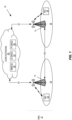
- a cellular communications system 10 is illustrated in Figure 1 .
- the cellular communications system 10 includes a Radio Access Network (RAN) 12 including a number of radio access nodes, which in this illustrated example are base stations 14.
- the base stations 14 are sometimes more generally referred to herein as radio access nodes 14.
- the base stations 14 may be, for example, eNBs or low-power base stations (e.g., pico, micro, femto, or home base stations).
- the base stations 14 provide radio access to wireless devices 18 such as, e.g., UEs, in corresponding cells 16 of the base stations 14.
- the base stations 14 may transmit on multiple beams.
- the base stations 14 communicate via an X2 connection or more generally a base-station-to-base-station connection.
- the base stations 14 are connected to a core network 20, which includes various core network nodes such as, e.g., one or more Mobility Management Entities (MMEs) 22, one or more Serving Gateways (S-GWs) 24, and one or more Packet Data Network Gateways (P-GWs) 26.
- MMEs Mobility Management Entities
- S-GWs Serving Gateways
- P-GWs Packet Data Network Gateways
- each DCI schedules feedback to be transmitted at a later occasion given an included subframe offset K.
- a DCI scheduled at subframe T would then render feedback at subframe T+K.
- the configuration of K could be provided, e.g., partially, by, e.g., a look-up table transmitted via e.g. higher layer signaling and/or hard-coded in the specifications.
- a look-up table transmitted via e.g. higher layer signaling and/or hard-coded in the specifications.
- the value of N may be signaled only once, e.g., by higher layer signaling, or may be a property of the wireless device 18 of which the network is already aware from, e.g., an earlier performed RRC connection procedure.
- the value of S may be varied.
- the value of S may be varied by including the value of S in each respective DCI message where the value of S may vary from one DCI message to another.
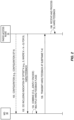
- FIG. 2 illustrates the operation of a wireless device 18 and a radio access node 14 or other network node to operate according to, e.g., the embodiments above.
- the radio access node 14 or some other network node optionally configures, at least partially, an offset K to be used to determine the time (T+K) at which the wireless device 18 is to transmit HARQ feedback upon receiving a DCI message (step 100).
- T is the subframe or more generally the time at which the DCI message is received
- T+K is the subframe or more generally the time at which the HARQ feedback is to be transmitted.
- T is sometimes referred to herein as the current subframe
- K is referred to herein as the HARQ timing offset K or simply the offset K.
- this configuration of the offset K may include, e.g., signaling of a look-up table to be used by the wireless device 18 to determine the value of K, e.g., from an index transmitted in a corresponding DCI message.
- the wireless device 18 receives a DCI message from the radio access node 14, where the DCI message includes an indication of the offset K (step 102).
- the indication of the offset K may be the value of K or, e.g., some value that can be used by the wireless device 18 to determine the value of K, i.e., K may be a function of a value X communicated by the indication.
- the wireless device 18 receives a single DCI message and results in the transmission of HARQ feedback in step 106 below that includes a single HARQ flag.
- the wireless device 18 receives multiple DCI messages including the DCI message of step 102 and additional DCI messages that are potentially in previous subframes.
- these DCI messages may have respective HARQ timing offsets K that result in the respective HARQ feedback being transmitted in the same subframe.
- the wireless device 18 combines multiple HARQ feedback flags to provide HARQ feedback to be transmitted by the wireless device at subframe T+K (step 104). Note, however, that step 104 is optional.
- the manner in which the wireless device 18 combines the multiple feedback flags may vary depending on the particular embodiment/implementation.
- the wireless device 18 may concatenate bit patterns that represent the multiple HARQ feedback flags or jointly encode the multiple HARQ feedback flags into a single codeword.
- the wireless device 18 may transmit the HARQ feedback flags in separate Uplink Control Information (UCI) messages.
- UCI Uplink Control Information
- the wireless device 18 transmits the downlink HARQ feedback at subframe T+K (step 106).
- the HARQ feedback is a downlink HARQ flag for a single downlink data transmission scheduled by the DCI message in subframe T.
- the downlink HARQ flag is an ACK if the downlink data scheduled by the DCI message was successfully received by the wireless device 18 in subframe T or a NACK if the downlink data scheduled by the DCI message was not successfully received by the wireless device 18 in subframe T.
- the HARQ feedback includes downlink HARQ feedback for multiple downlink transmissions.
- the HARQ feedback may then include multiple downlink HARQ flags, e.g., mapped to separate physical resources e.g., Resource Elements (REs)) in the xPUCCH e.g., in separate UCI messages.
- REs Resource Elements
- the HARQ feedback may include a single combined feedback provided by step 104 that jointly represents multiple downlink HARQ flags e.g., is the result of jointly encoding multiple downlink HARQ flags into the single codeword or the result of concatenating multiple bit patterns that represent the multiple HARQ flags.
- the downlink HARQ flags include ACKs and NACKs, depending on whether respective downlink data transmissions (e.g., data transmission on Physical Downlink Shared Channel (PDSCH)) are successfully received by the wireless device 18.
- the downlink HARQ flags include DTXs i.e., flags representing an error, or failure, in DCI reception if respective DCI messages are not successfully received by the wireless device 18.
- the radio access node 14 receives and processes the HARQ feedback according to any desired HARQ feedback processing scheme (step 108). For instance, if a NACK is received, the radio access node 14 retransmits the downlink data.
- the radio access node 14 is able to detect DCI errors, or failures, based on the HARQ feedback. This is referred to herein as DTX or a DCI failure/error.
- DTX detection i.e., a DCI failure can be achieved by either:
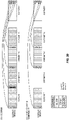
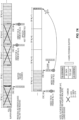
- FIG. 3A An exemplification of the procedure of Figure 2 is shown in Figures 3A and 3B .
- both the DCI messages and the downlink data are successfully decoded for subframes T, T+1, T+2, and T+3, and HARQ feedback flags, which are ACK, ACK, ACK, and ACK, respectively, are transmitted in subframe P.
- HARQ feedback flags which are ACK, ACK, ACK, and ACK, respectively, are transmitted in subframe P.
- These four feedback flags may be jointly encoded or otherwise combined into a single feedback / bit pattern or may be transmitted in separate physical resources, e.g., in separate UCI messages.
- DCI messages for subframes T, T+1, T+2, and T+3 are successfully decoded, downlink data for subframes T, T+2, and T+3 are successfully decoded, and downlink data for subframe T+1 is not successfully decoded, i.e., there is a PDSCH error.
- the appropriate HARQ feedback flags (ACK, NACK, ACK, ACK) are transmitted by the wireless device 18 in subframe P. Again, these four feedback flags may be jointly encoded or otherwise combined into a single feedback / bit pattern or may be transmitted in separate physical resources, e.g., in separate UCI messages.
- DCI messages for subframes T, T+2, and T+3 are successfully decoded, a DCI message for subframe T+1 is not successfully decoded, i.e., there is an DCI error in subframe T+1, and downlink data for subframes T, T+2, and T+3 are successfully decoded.
- the appropriate HARQ feedback flags (ACK, DTX, ACK, ACK) are transmitted by the wireless device 18 in subframe P. Again, these four feedback flags may be jointly encoded or otherwise combined into a single feedback / bit pattern or may be transmitted in separate physical resources, e.g., in separate UCI messages.
- the scenario is the same as in example 1 other than the wireless device 18 is not scheduled in subframe T+1.
- the appropriate HARQ feedback flags (ACK, DTX, ACK, ACK) are transmitted by the UE in subframe P.
- these four feedback flags may be jointly encoded or otherwise combined into a single feedback / bit pattern or may be transmitted in separate physical resources, e.g., in separate UCI messages.
- each DCI message contains an index to a HARQ feedback buffer, in which the receive status (ACK (A) / NACK (N) or, at least in some embodiments, DTX or DCI error (D)) for the indexed reception is stored.
- the network will explicitly poll for status reports of the HARQ feedback buffer, something which will also flush the status of the HARQ feedback buffer. Assuming that a HARQ feedback delay of the wireless device 18 is d subframes, a poll being received at subframe T would then render feedback at subframe T+d.
- the HARQ feedback delay d may be a static delay, e.g., four subframes. In other embodiments, the HARQ feedback delay d may be a configurable delay.
- DTX detection i.e., a DCI failure
- DCI failure can be achieved by either:
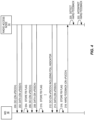
- a radio access node 14 transmits, and the wireless device 18 receives, a first DCI message on the downlink control channel, whichj is referred to here as x Physical Downlink Control Channel (xPDCCH), in a subframe T 1 (step 200).
- the first DCI message includes a downlink grant that indicates that downlink data is transmitted to the wireless device 18 in the subframe T 1 .
- the first DCI message includes an index to a position in the HARQ feedback buffer at which a respective downlink HARQ flag, e.g., ACK, NACK, or DTX, is to be stored.
- the radio access node 14 also transmits first downlink data to the wireless device 18 in the subframe T 1 in accordance with the downlink grant included in the first DCI message (step 202).
- the wireless device 18 stores a downlink HARQ flag, which is also referred to herein as a receive status, in the HARQ feedback buffer at the position defined by the index included in the first DCI message (step 204).
- the stored downlink HARQ flag is an ACK if the wireless device 18 successfully received/decoded the downlink data in subframe T 1 or a NACK if the wireless device 18 did not successfully receive/decode the downlink data in subframe T 1 .
- this storage scheme may be modified, in some embodiments, as described below.
- the HARQ feedback buffer is initialized at all positions to DTX. As such, if the wireless device 18 failed to receive the first DCI message, then a DTX flag is maintained in the respective position in the HARQ feedback buffer.
- the radio access node 14 transmits, and the wireless device 18 receives, a second DCI message on the downlink control channel, which is referred to here as xPDCCH, in a subframe T 2 (step 206).
- the second DCI message includes a downlink grant that indicates that downlink data is transmitted to the wireless device 18 in the subframe T 2 .
- the second DCI message includes an index to a position in the HARQ feedback buffer at which a respective downlink HARQ flag, e.g., ACK, NACK, or DTX, is to be stored.
- the radio access node 14 also transmits second downlink data to the wireless device 18 in the subframe T 2 in accordance with the downlink grant included in the second DCI message (step 208).
- the wireless device 18 stores a downlink HARQ flag, which is also referred to herein as a receive status, in the HARQ feedback buffer at the position defined by the index included in the second DCI message (step 210).
- the stored downlink HARQ flag is an ACK if the wireless device 18 successfully received/decoded the downlink data in subframe T 2 or a NACK if the wireless device 18 did not successfully receive/decode the downlink data in subframe T 2 .
- this storage scheme may be modified, in some embodiments, as described below.
- the HARQ feedback buffer is initialized at all positions to DTX. As such, if the wireless device 18 failed to receive the second DCI message, then a DTX flag is maintained in the respective position in the HARQ feedback buffer.
- this DCI message also includes a downlink grant for subframe T M and a HARQ buffer index for the corresponding downlink HARQ flag.
- the radio access node 14 transmits downlink data to the wireless device 18 in the subframe T M in accordance with the downlink grant included in the DCI message transmitted in subframe T M (step 214).
- the wireless device 18 stores a downlink HARQ flag, which is also referred to herein as a receive status, in the HARQ feedback buffer at the position defined by the index included in the DCI message transmitted in subframe T M (step 216).
- the stored downlink HARQ flag is an ACK if the wireless device 18 successfully received/decoded the downlink data in subframe T M or a NACK if the wireless device 18 did not successfully receive/decode the downlink data in subframe T M .
- this storage scheme may be modified, in some embodiments, as described below.
- the HARQ feedback buffer is initialized at all positions to DTX. As such, if the wireless device 18 failed to receive the DCI message in subframe T M , then a DTX flag is maintained in the respective position in the HARQ feedback buffer.
- the wireless device 18 Upon receiving the poll indicator, the wireless device 18 transmits HARQ feedback that represents the HARQ feedback flags stored in the HARQ feedback buffer, e.g., on xPUCCH (step 218).
- the HARQ feedback is transmitted in subframe T M + d, wherein the delay d may be a static delay or a configurable delay, e.g., the configurable HARQ timing offset K in some embodiments.
- the multiple HARQ feedback flags in the HARQ feedback buffer may be transmitted in separate physical resources, e.g., in separate UCI messages. In other embodiments, the multiple HARQ feedback flags are combined to provide a combined HARQ feedback for transmission.
- the combined HARQ feedback may be a concatenation of bit patterns that represent the multiple HARQ flags.
- the combined HARQ feedback may be a codeword resulting from jointly encoding the multiple HARQ flags.
- the radio access node 14 detects the HARQ feedback (step 220) and interprets the HARQ feedback (222). Once the HARQ feedback is detected and interpreted, the radio access node 14 takes an appropriate action(s), e.g., retransmit the data.
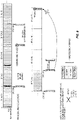
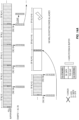
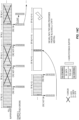
- FIG. 5A and 5B An exemplification of this procedure is shown in Figures 5A and 5B with a corresponding flow chart illustrating the operation of the wireless device 18 in Figure 6 .
- the indexing and polling in the DCI are encoded separately. They could of course be jointly encoded as e.g.:
- the wireless device 18 receives a DCI message with buffer index 00 and, as such, stores the respective HARQ feedback flag in the HARQ feedback buffer at the buffer location corresponding to index 00.
- the wireless device 18 receives a DCI message with poll buffer index 01 and, as such, stores the respective HARQ feedback flag in the HARQ feedback buffer at the buffer location corresponding to index 01.
- the wireless device 18 receives another DCI message in subframes with poll buffer indices 02 and 13, respectively, and, as such, stores the respective HARQ feedback flags in the HARQ feedback buffer at the buffer locations corresponding to indices 02 and 13.
- the network polls the wireless device 18 for the HARQ feedback.
- the wireless device 18 transmits the HARQ feedback stored in the HARQ feedback buffer in subframe T+d, in this example, where the wireless device 18 was polled in, e.g., subframe T and the value d may be a static value or a configurable value, e.g., the HARQ timing offset K, configured by the network as described above.
- Examples 2 and 3 of Figures 5A and 5B are similar to the first example but where there is a PDSCH error in the second subframe (example 2) and a DCI error in the second subframe (example 3).
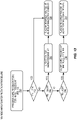
- FIG. 6 is a flow chart that illustrates the operation of a wireless device 18 according to some embodiments of the present disclosure.
- the HARQ feedback buffer is initialized such that all positions are set to some default value, which in the example embodiments described herein is DTX.
- dashed boxes represent optional steps.
- the wireless device 18 first waits for reception of a DCI message (steps 300 and 302).
- the wireless device 18 stores the appropriate HARQ flag, ACK or NACK, in the HARQ feedback buffer for a given index, where the index is, e.g., provided in the DCI message (step 304).
- step 306 is optional in that, e.g., the wireless device 18 may automatically send feedback upon reaching the final position in the HARQ feedback buffer. This may be considered an implicit polling.
- the wireless device 18 Upon being polled, the wireless device 18 creates an xPUCCH message based on the status of the HARQ feedback buffer (step 308). For example, in some embodiments, the wireless device 18 combines the downlink HARQ flags stored in the HARQ feedback buffer to provide a combined HARQ feedback, i.e., a combined downlink HARQ feedback message.
- the combined HARQ feedback may be, for example, a concatenation of bit patterns/sequences for each downlink HARQ flag or, as another example, a single codeword resulting from jointly encoding the HARQ flags stored in the HARQ feedback buffer.
- the xPUCCH message includes, e.g., in an encoded form, the HARQ feedback flags stored in the HARQ feedback buffer.
- the wireless device 18 flushes the HARQ feedback buffer, e.g., sets all entries to DTX (step 310).
- the wireless device 18 waits d subframes (step 312) and then transmits the created xPUCCH message on xPUCCH (step 314).
- the value d i.e., the HARQ feedback delay
- the HARQ feedback delay d is a device-specific value that is, e.g., defined by a processing delay of the wireless device 18.
- different wireless devices 18 may have different device-specific delays from the time that the wireless device 18 receives a DCI message until the time that the wireless device 18 transmits a UCI, or more generally the HARQ feedback, more than one wireless device 18 may transmit UCI messages simultaneously, i.e., in the same subframe. This presents a problem in that the simultaneous transmissions of UCI messages collide. This problem can be solved by any of the following:
- the HARQ Feedback solutions for xPUCCH in 5G as described above may experience problems when HARQ feedback, e.g., in the form of HARQ feedback reports, are not received due to DCI errors on the downlink and/or due to xPUCCH errors on the uplink.
- HARQ feedback e.g., in the form of HARQ feedback reports
- the network cannot draw any conclusions on the successful and/or unsuccessful reception of the PUSCH transmissions to be covered by the non-received report. Additionally, the network may even draw the wrong conclusions in terms of believing non-received transmissions to be ACK'ed, e.g. NACK ⁇ ACK errors, which will cause expensive higher layer retransmissions.
- Figures 7A and 7B illustrate two problems, referred to as Problem A and Problem B.
- Problem A a DCI error causes the poll request/indicator to not be received by the wireless device 18 in subframe SF #(J). Since the poll indictor is not received, the HARQ feedback buffer is not cleared, i.e., all positions in the HARQ feedback buffer are not reset to DTX, and the wireless device 18 does not transmit the HARQ feedback to the network in subframe SF #(J+2).
- a NACK is stored in the first position in the HARQ feedback buffer, where the NACK overwrites/hides the ACK in the HARQ feedback buffer that was not transmitted to the network as a result of the DCI error in subframe SF #(J).
- a NACK is stored in the second position in the HARQ feedback buffer, where the NACK overwrites/hides the ACK in the HARQ feedback buffer that was not transmitted to the network as a result of the DCI error in subframe SF #(J).
- an ACK is stored in the third position in the HARQ feedback buffer, where the ACK overwrites/hides a NACK in the HARQ feedback buffer that was not transmitted to the network as a result of the DCI error in subframe SF #(J).
- an ACK is stored in the fourth position in the HARQ feedback buffer, where the ACK overwrites/hides a DTX in the HARQ feedback buffer that was not transmitted to the network as a result of the DCI error in subframe SF #(J).
- xPUCCH feedback is lost in the uplink such that xPUCCH is not received in subframe SF #(J+2).
- the network does not know how to discriminate between Problems A and B.
- the network will not receive any HARQ feedback for the downlink transmissions in subframes SF #(J-3), SF #(J-2), SF #(J-1), and SF #(J), and the network cannot draw any conclusions with respect to these downlink transmissions.
- the network will retransmit all HARQ processes being NACK'ed, namely, those of buffer indexes 0 and 1, which correspond to the downlink transmissions of subframes SF #(J+1) and SF #(J+2).
- the network will similarly assume that the downlink transmissions of subframes SF #(J+3) and SF #(J+4) are ACK'ed. This is all correct, but the network does not know the receive status of the subframes SF #(J-3), SF #(J-2), SF #(J-1), and SF #(J) since the corresponding status flags have been overwritten by the new status flags.
- Figure 8 illustrates a problem (Problem C) that results in a scenario in which there are multiple consecutive DCI errors.
- the DCI error at subframe SF #(J+1) will cause the entry in the HARQ feedback buffer an index 0 to not be updated. This in turn will cause the network, at subframe SF #(J+7), to erroneously assume that the corresponding downlink transmission has been ACK'ed, whereas in fact it should have been indicated as DTX.
- Embodiments of the present disclosure enhance the HARQ feedback solution for xPUCCH in 5G as described above.
- xPUCCH is used herein to refer to the uplink control channel, particularly in a 5G network.
- the name xPUCCH is only used for clarity and ease of discussion and the actual uplink control channel in 5G may be given a different name.
- An overview of the present disclosure is outlined in Figure 9 , which is described below. Most importantly, embodiments of the present disclosure:
- the HARQ feedback solution described above is made more robust against control channel errors in the downlink, i.e., DCI errors, as well as in the uplink, i.e., xPUCCH errors. It assures that costly DTX/NACK ⁇ ACK errors, which will trigger higher layer retransmissions, are alleviated at the cost of some extra HARQ retransmissions, which are not costly. As an extra bonus, it implicitly interprets lack of HARQ feedback as fast as possible, hence providing the shortest possible HARQ Round Trip Time (RTT).
- RTT Round Trip Time
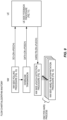
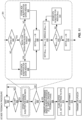
- Figure 9 illustrates an overview/algorithm anatomy for the overall HARQ feedback process.
- Figure 9 illustrates how the induvial processes of Figures 10 through 13 , 14A through 14C , 15A through 15C , and 16A and 16B work together.
- the network e.g., the radio access node 14 transmits DCI messages on the control channel, which is referred to as xPDCCH, and also transmits downlink data on the downlink shared channel, which is referred to as xPDSCH.
- the wireless device 18 performs a UE side feedback procedure that results in the transmission of HARQ feedback to the network.
- network side HARQ feedback interpretation procedures are performed, one per HARQ process, to interpret the HARQ feedback from the wireless device 18 and take the appropriate action(s).
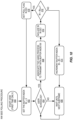
- FIG 10 is a flow chart that illustrates a network side polling procedure according to some embodiments of the present disclosure.
- the network side polling procedure is performed by the radio access node 14.
- the network will ensure that for each xPDSCH transmission, the scheduled HARQ process is associated with a locally unique Buffer Index (Bl), which is also indicated in the DCI.
- Bl Buffer Index
- the BI is the index for the HARQ feedback buffer at the wireless device 18 that defines the position within the HARQ feedback buffer in which the corresponding HARQ flag is to be stored.
- the poll bit is set in the DCI.
- BI MAX here corresponds to the size of the HARQ feedback buffer at the wireless device 18.
- xPDSCH is used herein as the name for the PDSCH in a 5G network for clarify and ease of discussion.
- the actual name for the downlink shared channel in a 5G network may be given another name.
- BI MAX is given a predetermined value by, e.g., the relevant specification, whereas in other embodiments it can be statically or semi-statically configured by, e.g., higher layer, signaling. In yet other embodiments it can be dynamically set in the DCI. Note that for the "Directly scheduled" case described above, the polling part may obviously be omitted.
- the procedure begins at step 400, and the BI is set to 0 (step 402).
- the radio access node 14 determines whether a downlink data transmission is scheduled for the wireless device 18, which is referred to as the user, for the current subframe (step 404). If not, the radio access node 14 waits until the next subframe (step 406) and then the process returns to step 404. If a downlink data transmission is scheduled for the wireless device 18 (step 404; YES), the radio access node 14 associates the respective HARQ process to transmit with the current BI (step 408) and includes the BI in the respective DCI message transmitted to the wireless device 18 with the downlink grant (step 410).
- the radio access node 14 determines whether the BI is equal to BI MAX (step 412). If not, the BI is incremented (step 414) and the process proceeds to step 406. Once the BI reaches BI MAX (step 412; YES), the radio access node 14 sets the poll flag/indicator in the DCI message to be transmitted to the wireless device 18 (step 416) and the process then returns to step 402.
- Figure 11 illustrates a UE-side, or wireless device side, feedback procedure according to some embodiments of the present disclosure.
- the feedback procedure relates to when the wireless device 18 manages to decode at least the DCI message indicating the xPDSCH transmission - and possibly also the xPDSCH transmission itself.
- the DCI message includes a BI as well as a poll indicator (which may be in the form of, e.g., a poll bit).
- the wireless device 18 maintains a HARQ feedback buffer in which the reception status (ACK/NACK/DTX) is stored.
- the HARQ feedback buffer is typically flushed, i.e., all entries are reset to DTX, after each poll.
- Each entry in the HARQ feedback buffer is indexed with the earlier described BI.
- the wireless device 18 rather than simply replacing the old receive status, which is also referred to herein as HARQ flag, of an earlier reception in the HARQ feedback buffer with the receive status of the current reception, the wireless device 18 instead uses an enhanced storing procedure that will allow the network to later make better and more enlightened interpretations of the HARQ feedback when received. This is important in the cases with DCI errors, wherein the HARQ feedback buffer has not been flushed from the poll, since the poll indicator was not received.
- an already stored NACK in one entry of the HARQ feedback buffer will be kept even though the current reception corresponding to this buffer entry, i.e., the same BI, is successful and hence would indicate an ACK.
- a stored ACK will however always, for robustness, be overwritten by a NACK if the current reception corresponding to this buffer entry, i.e., the same BI, is unsuccessful.
- An example of usage is given in Example 8 of Figure 16B .
- the stored value of the previous buffer entry (which has its buffer index given by the expression (BI - 1) modulo (BI MAx + 1)) is replaced with DTX in case that buffer index was not indicated in the previous DCI. This could happen in the case when there is a DCI error for that very transmission. This implicit DTX marking will, e.g., prevent error propagation in terms of, most importantly, NACK ⁇ ACK errors.
- An example of usage is given in Example 9 of Figures 17A and 17B .
- the polling part may obviously be omitted, otherwise the rest should be applicable.
- the enhanced storing process is as follows. Upon receiving a DCI message (step 302, YES), the wireless device 18 determines whether the respective downlink data has been successfully received (step 500). If so, the wireless device 18 determines whether the entry in the HARQ feedback buffer for the BI included in the DCI message is a NACK (step 502). If not, the wireless device 18 stores an ACK in the position/entry in the HARQ feedback buffer indicated by the BI included in the received DCI message (step 504).
- the wireless device 18 stores a NACK, or otherwise maintains the NACK, in the entry in the HARQ feedback buffer for the BI included in the received DCI message (step 506). In this manner, the previous NACK is not hidden or overwritten by an ACK.
- the wireless device 18 stores a NACK in the HARQ feedback buffer at the position/entry indicated by the BI included in the DCI message (step 506).
- the process may continue in order to detect a previous DCI error.
- Step 510 sets the index BI PREV to the previous index in the sequence of possible BI values ⁇ 0, 1, ..., BI MAX ).
- FIG 12 is a flow chart that illustrates the network side xPUCCH detection procedure according to some embodiments of the present disclosure.
- This procedure is performed by a network node, e.g., the radio access node 14.
- the network e.g., the radio access node 14
- the network is expecting HARQ feedback on xPUCCH during the given subframe (step 600).
- the HARQ feedback is deemed trustworthy (step 606). See any example of Figures 14A through 14C , 15A through 15C , 16A and 16B , 17A and 17B , and 18A and 18B for illustration.
- SINR Signal to Interference plus Noise Ratio
- the HARQ feedback received is deemed not trustworthy (step 610).
- all considered transmissions are NACK'ed (step 612), i.e. the HARQ feedback for all BIs in this report are set to NACK.
- This will indeed cost some extra HARQ retransmissions, but will avoid the more costly higher layer retransmission resulting from a premature freeing of the considered HARQ process because of a NACK/DTX ⁇ ACK error.
- Examples 10 and 11 in Figures 18A and 18B respectively.
- ⁇ HP(BI ⁇ be all HARQ processes associated with the BI (step 616).
- HP(BI) be the first element of ⁇ HP(BI) ⁇ and remove this element from ⁇ HP(BI) ⁇ (step 618).
- the network removes the association between HARQ process HP(BI) and BI (step 620).
- the network then processes the HARQ feedback FB(BI) for HARQ processes HP(BI) (step 622).
- This HARQ feedback processing is detailed in Figure 12 .
- the network determines whether ⁇ HP(BI) ⁇ is empty (step 624). If not, the process returns to step 618. Once ⁇ HP(BI) ⁇ is empty, BI is incremented (step 626). At this point, if BI is greater than BI MAX (step 628), the process ends (step 630); otherwise, the process returns to step 616 and is repeated for this new BI.
- FIG. 13 is a flow chart that illustrates a network side HARQ feedback interpretation procedure according to some embodiments of the present disclosure.
- This procedure is performed by a network node such as, for example, the radio access node 14.
- the HARQ feedback for a particular BI is given for the related HARQ process.
- the Redundancy Version (RV) to be used by the HARQ process will be updated accordingly (NACK) or not (DTX).
- the particular HARQ process will thereafter - towards the scheduler - be indicated as eligible either for retransmissions (NACK or DTX) or as free (ACK). In the latter case, the HARQ process will be cleared and a New Data Indicator (NDI) will be toggled.
- NACK Redundancy Version
- the procedure begins when HARQ feedback FB(BI) for a HARQ process HP is to be processed (e.g., in step 622 of Figure 12 ) (step 700). If the HARQ feedback (FB) is DTX (step 702; YES), then the network flags/marks the HARQ process HP as requiring retransmission (step 704). Otherwise, if the HARQ feedback (FB) is NACK (step 706; YES), then the network updates the RV for the HARQ process HP (step 708) and flags/marks the HARQ process HP as requiring retransmission (step 704).
- step 710 the network clears the HARQ process HP and toggles it's New Data Indicator (NDI), which is an existing indicator in LTE, thereby instructing the HARQ process to flush the HARQ buffer since this transmission is not related to an earlier transmission but is rather a new transmission (step 712) and flags/marks the HARQ process HP as free/ready for new data (step 714).
- NDI New Data Indicator
- step 710 is not necessary in that if the HARQ feedback is not DTX and not NACK, then, in this example, it must be ACK. So, the process may proceed directly from the "NO" branch of step 706 to step 712.
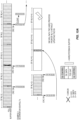
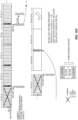
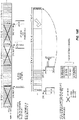
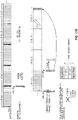
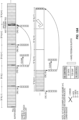
- Figures 14A through 14C , 15A through 15C , 16A and 16B , 17A and 17B , and 18A and 18B illustrate a number of examples that illustrate various aspects certain embodiments of the enhanced HARQ feedback solution described above. These examples are referred to as Examples 1 through 11.
- Example 1 illustrates a scenario in which all DCI messages and downlink data are successfully received by the wireless device 18 and the uplink transmission for the HARQ feedback is successfully received by the network.
- Example 2 illustrates a scenario with a PDSCH error that results in a NACK for subframe SF #(J-1).
- the network will retransmit the HARQ process from subframe SF #(J-1) with a new RV.
- Example 3 illustrates a scenario with multiple PDSCH errors.
- the network In response to the NACKs for subframes SF #(J-2) and SF #(J-1), the network will retransmit the HARQ process from subframes SF #(J-2) and SF #(J-1) with new RVs.
- Example 4 illustrates a scenario with a DCI error for a non-polling DCI message.
- the network will retransmit the HARQ process from subframe SF #(J-1) without updating the RV.
- Example 5 illustrates a scenario with multiple DCI errors on non-polling DCI messages.
- the network will retransmit the HARQ processes from subframes SF #(K-2) and SF #(J-1) without updating the RVs.
- Example 6 illustrates a scenario with mixed DCI errors on non-polling DCI messages.
- the network will retransmit the HARQ processes from subframes SF #(J-3), SF #(J-2), and SF #(J-1), where the first HARQ process is retransmitted with a new RV but the latter two are retransmitted without updating the RVs.
- Example 7 illustrates a scenario with a DCI error on a polling DCI message.
- subframe SF #(J+2) i.e., the subframe in which the network is expecting transmission of the HARQ feedback
- the network will notice the lack of HARQ feedback and realize that there was a DCI error at subframe SF #(J), which is thereafter retransmitted with the same RV.
- subframe SF #(J+7) the network will do nothing since the HARQ feedback includes all ACKs.
- Example 8 illustrates a scenario with a DCI error on a polling DCI message plus additional PDSCH errors. Note that it is helpful to compare this example to Problem A of Figure 7A .
- the network will notice the lack of HARQ feedback and realize that there was a DCI error at subframe SF #(J). This will implicitly DTX the HARQ process transmitted at subframe SF #(J), which is thereafter retransmitted with the same RV.
- subframe SF #(J+7) the network will retransmit all HARQ processes being NACK'ed:
- Example 9A illustrates a scenario in which there are multiple DCI errors. It may be beneficial to compare this example with Problem C of Figure 8 .
- the network will notice the lack of HARQ feedback and realize that there was a DCI error at subframe SF #(J). This will implicitly DTX the HARQ process transmitted at subframe SF #(J); hence, the HARQ process for subframe SF #(J) will be retransmitted.
- Example 9B illustrates another scenario with multiple DCI errors.
- the network will notice the lack of HARQ feedback and realize that there was a DCI error at subframe SF #(J). This will implicitly DTX the HARQ process transmitted at subframe SF #(J); hence, the HARQ process for subframe SF #(J) will be retransmitted.
- Example 10 illustrates a scenario in which all downlink data was successfully received but there is an xPUCCH error, i.e., the xPUCCH transmission is lost or, in other words, not received by the network.
- the network will notice that lack of HARQ feedback and realize that there was an xPUCCH error. This will implicitly NACK all HARQ processes expected to be reported, namely, those from subframes SF #(J-3), SF #(J-2), SF #(J-1), and SF #(J).
- subframe SF #(J+7) the network will do nothing since all downlink transmissions are ACK'ed.
- Example 11 illustrates a scenario in which xPUCCH feedback is lost plus there are additional PDSCH errors. It may be beneficial to compare this example to Problem B of Figure 7B .
- the network will notice the lack of HARQ feedback and realize that there was an xPUCCH error. This will implicitly NACK all HARQ processes expected to be reported, namely, those from subframes SF #(J-3), SF #(J-2), SF #(J-1), and SF #(J). It may be noticed that those of subframes SF #(J-3) and SF #(J-2) are "unnecessary" since these downlink transmissions were successfully received. Hence, it is important to keep the xPUCCH errors rather low. Further, at subframe SF #(J+7), the network will retransmit all HARQ processes being NACK'ed:
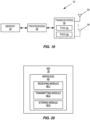
- FIG 19 is a schematic block diagram of the wireless device 18 (e.g., a UE) according to some embodiments of the present disclosure.
- the wireless device 18 includes one or more processors 28, e.g., Central Processing Units (CPUs), Application Specific Integrated Circuits (ASICs), Field Programmable Gate Arrays (FPGAs), and/or the like, memory 30, and one or more transceivers 32 each including one or more transmitters 34 and one or more receivers 36 coupled to one or more antennas 38.
- the functionality of the wireless device 18 described above may be fully or partially implemented in software that is, e.g., stored in the memory 30 and executed by the processor(s) 28.
- a computer program including instructions which, when executed by at least one processor, causes the at least one processor to carry out the functionality of the wireless device 18 according to any of the embodiments described herein is provided.
- a carrier containing the aforementioned computer program product is provided.
- the carrier is one of an electronic signal, an optical signal, a radio signal, or a computer readable storage medium, e.g., a non-transitory computer readable medium such as memory.
- FIG 20 is a schematic block diagram of the wireless device 18 according to some other embodiments of the present disclosure.
- the wireless device 18 includes one or more modules 40, each of which is implemented in software.
- the module(s) 40 provide the functionality of the wireless device 18 described herein.
- the module(s) 40 may include a receiving module 40-1 operable to receive DCI messages from the network, where the DCI messages may include, depending on the embodiment, an indication of a HARQ timing offset K, a HARQ feedback buffer index, and/or a polling indicator, as described above with respect to the various embodiments of the present disclosure.
- the module(s) 40 may include a transmitting module 40-2 operable to transmit HARQ feedback according to any of the embodiments described herein.
- the module(s) 40 may include a storing module 40-3 operable to store HARQ feedback in a HARQ feedback buffer, as described above with respect to some embodiments of the present disclosure.
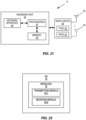
- FIG. 21 is a schematic block diagram of the base station 14 (or more generally radio access node 14) according to some embodiments of the present disclosure. This discussion is equally applicable to other types of radio access nodes. Further, other types of network nodes may have similar architectures (particularly with respect to including processor(s), memory, and a network interface). As illustrated, the base station 14 includes a baseband unit 42 that includes one or more processors 44, e.g., CPUs, ASICs, FPGAs, and/or the like, memory 46, and a network interface 48 as well as one or more radio units 50 that each includes one transmitters 52 and one or more receivers 54 coupled to one or more antennas 56.
- processors 44 e.g., CPUs, ASICs, FPGAs, and/or the like
- the functionality of the base station 14, or more generally the functionality of a radio access node or more generally the functionality of a network node, described above may be fully or partially implemented in software that is, e.g., stored in the memory 46 and executed by the processor(s) 44.
- Figure 22 is a schematic block diagram that illustrates a virtualized embodiment of the base station 14 according to some embodiments of the present disclosure. This discussion is equally applicable to other types of radio access nodes. Further, other types of network nodes may have similar virtualized architectures.
- a "virtualized" network node e.g., a virtualized base station or a virtualized radio access node
- a virtualized network node is an implementation of the network node in which at least a portion of the functionality of the network is implemented as a virtual component, e.g., via a virtual machine(s) executing on a physical processing node(s) in a network(s).
- the base station 14 includes the baseband unit 42 that includes the one or more processors 48, e.g., CPUs, ASICs, FPGAs, and/or the like, the memory 46, and the network interface 48 as well as the one or more radio units 50 that each includes the one or more transmitters 52 and the one or more receivers 54 coupled to the one or more antennas 56, as described above.
- the baseband unit 42 is connected to the radio unit(s) 50 via, for example, an optical cable or the like.
- the baseband unit 42 is connected to one or more processing nodes 58 coupled to or included as part of a network(s) 60 via the network interface 48.
- Each processing node 58 includes one or more processors 62, e.g., CPUs, ASICs, FPGAs, and/or the like, memory 64, and a network interface 66.
- functions 68 of the base station 14 described herein are implemented at the one or more processing nodes 58 or distributed across the baseband unit 42 and the one or more processing nodes 58 in any desired manner.
- some or all of the functions 68 of the base station 14 described herein are implemented as virtual components executed by one or more virtual machines implemented in a virtual environment(s) hosted by the processing node(s) 58.
- additional signaling or communication between the processing node(s) 58 and the baseband unit 42 is used in order to carry out at least some of the desired functions 68.
- the baseband unit 42 may not be included, in which case the radio unit(s) 50 communicate directly with the processing node(s) 58 via an appropriate network interface(s).
- the processing node(s) 58 may operate to indicate or otherwise cause transmission of the DCI including the indication of the HARQ feedback timing offset K to the wireless device 18 via the radio unit(s) 50.
- some or all of the network side polling procedure of Figure 10 may be performed by the processing node(s) 58 and/or some or all of the network side xPUCCH detection procedure of Figure 12 may be performed by the processing node(s) 58 based on the downlink HARQ feedback received from the wireless device 18 via the radio unit(s) 50.
- a computer program including instructions which, when executed by at least one processor, causes the at least one processor to carry out the functionality of the network, e.g., in the form of a network node or a radio access node, according to any of the embodiments described herein is provided.
- a carrier containing the aforementioned computer program product is provided.
- the carrier is one of an electronic signal, an optical signal, a radio signal, or a computer readable storage medium, e.g., a non-transitory computer readable medium such as memory.
- FIG 23 is a schematic block diagram of the base station 14 (or more generally radio access node 14) according to some other embodiments of the present disclosure.
- the base station 14 includes one or more modules 70, each of which is implemented in software.
- the module(s) 70 provide the functionality of the base station 14 described herein.
- the module(s) 70 may include, for example, a transmitting module 70-1 operable to transmit DCI messages and downlink data according to any of the embodiments described herein and a receiving module 70-2 operable to receive and process HARQ feedback according to any of the embodiments described herein.
- Note that other types of radio access nodes may be similar architectures as shown in Figure 23 for the base station 14.
Landscapes
- Engineering & Computer Science (AREA)
- Computer Networks & Wireless Communication (AREA)
- Signal Processing (AREA)
- Quality & Reliability (AREA)
- Mobile Radio Communication Systems (AREA)
- Detection And Prevention Of Errors In Transmission (AREA)
Applications Claiming Priority (3)
| Application Number | Priority Date | Filing Date | Title |
|---|---|---|---|
| US201662293148P | 2016-02-09 | 2016-02-09 | |
| US201662295722P | 2016-02-16 | 2016-02-16 | |
| PCT/SE2016/050514 WO2017138853A1 (en) | 2016-02-09 | 2016-06-01 | Efficient harq feedback |
Publications (2)
| Publication Number | Publication Date |
|---|---|
| EP3414856A1 EP3414856A1 (en) | 2018-12-19 |
| EP3414856B1 true EP3414856B1 (en) | 2023-03-22 |
Family
ID=56119727
Family Applications (2)
| Application Number | Title | Priority Date | Filing Date |
|---|---|---|---|
| EP16729399.2A Active EP3414856B1 (en) | 2016-02-09 | 2016-06-01 | Efficient harq feedback |
| EP16728749.9A Withdrawn EP3414855A1 (en) | 2016-02-09 | 2016-06-01 | Robustness enhancements of efficient harq feedback |
Family Applications After (1)
| Application Number | Title | Priority Date | Filing Date |
|---|---|---|---|
| EP16728749.9A Withdrawn EP3414855A1 (en) | 2016-02-09 | 2016-06-01 | Robustness enhancements of efficient harq feedback |
Country Status (7)
| Country | Link |
|---|---|
| US (4) | US10069603B2 (enExample) |
| EP (2) | EP3414856B1 (enExample) |
| JP (1) | JP2019510389A (enExample) |
| KR (1) | KR20180110071A (enExample) |
| CN (2) | CN108604945A (enExample) |
| MX (1) | MX2018009409A (enExample) |
| WO (2) | WO2017138853A1 (enExample) |
Families Citing this family (51)
| Publication number | Priority date | Publication date | Assignee | Title |
|---|---|---|---|---|
| KR101239252B1 (ko) | 2008-03-10 | 2013-03-06 | 인터디지탈 패튼 홀딩스, 인크 | 반지속적 및 동적 데이터 전송을 위해 harq 프로세스를 효율적으로 이용하기 위한 방법 및 장치 |
| JP2019510389A (ja) | 2016-02-09 | 2019-04-11 | テレフオンアクチーボラゲット エルエム エリクソン(パブル) | 効率的なharqフィードバック |
| EP3220681B1 (en) * | 2016-03-18 | 2020-07-15 | Nokia Technologies Oy | Adaptive and dynamic qos/qoe enforcement |
| JPWO2017170814A1 (ja) * | 2016-03-31 | 2019-02-14 | 株式会社Nttドコモ | ユーザ端末、無線基地局及び無線通信方法 |
| US10541785B2 (en) * | 2016-07-18 | 2020-01-21 | Samsung Electronics Co., Ltd. | Carrier aggregation with variable transmission durations |
| WO2018014162A1 (zh) * | 2016-07-18 | 2018-01-25 | 广东欧珀移动通信有限公司 | 传输数据的方法和装置 |
| US11146377B2 (en) * | 2016-08-02 | 2021-10-12 | Samung Electronics Co., Ltd | Method and apparatus for communicating in a wireless communication system |
| JP7252396B2 (ja) * | 2016-11-03 | 2023-04-04 | オッポ広東移動通信有限公司 | アップリンク制御情報を伝送するための方法、端末装置及びネットワーク装置 |
| CN112019316B (zh) * | 2016-11-03 | 2022-09-02 | Oppo广东移动通信有限公司 | 传输上行控制信息的方法、装置、网络设备及存储介质 |
| CN108282881B (zh) * | 2017-01-06 | 2020-12-15 | 华为技术有限公司 | 一种资源配置方法及装置 |
| US11071130B2 (en) * | 2017-02-05 | 2021-07-20 | Lg Electronics Inc. | Method for supporting plurality of transmission time intervals, plurality of subcarrier intervals or plurality of processing times in wireless communication system, and device therefor |
| US10667288B2 (en) * | 2017-02-21 | 2020-05-26 | Qualcomm Incorporated | Techniques for configuring or transmitting grantless transmissions on beams in uplink subframes |
| CN110635867B (zh) | 2017-06-14 | 2021-03-05 | 华为技术有限公司 | 通信方法、网络设备和终端 |
| CN109275192B (zh) * | 2017-07-18 | 2022-12-13 | 华为技术有限公司 | 用于传输信息的方法和设备 |
| US10506468B2 (en) * | 2017-09-08 | 2019-12-10 | At&T Intellectual Property I, L.P. | Reporting hybrid automatic repeat request-acknowledgements in wireless communication systems |
| US10715283B2 (en) * | 2017-10-02 | 2020-07-14 | Kt Corporation | Apparatus and method of transmitting and receiving HARQ ACK/NACK information for new radio |
| EP4254840A3 (en) * | 2017-11-14 | 2023-12-20 | Telefonaktiebolaget LM Ericsson (publ) | Acknowledgement signaling processes for radio access networks |
| CN108401486A (zh) * | 2017-11-17 | 2018-08-14 | 北京小米移动软件有限公司 | 混合自动重传请求反馈指示、反馈方法及装置和基站 |
| EP3706349B1 (en) * | 2017-11-17 | 2024-10-23 | Beijing Xiaomi Mobile Software Co., Ltd. | Hybrid automatic repeat request feedback indication and feedback method, device, and base station |
| WO2019136599A1 (en) | 2018-01-09 | 2019-07-18 | Nec Corporation | Method and device for harq feedback |
| US10972223B2 (en) * | 2018-01-12 | 2021-04-06 | Qualcomm Incorporated | Timing considerations for AUL-DFI |
| KR102541762B1 (ko) * | 2018-02-14 | 2023-06-12 | 광동 오포 모바일 텔레커뮤니케이션즈 코포레이션 리미티드 | 무선 통신 방법, 단말기 디바이스 및 네트워크 디바이스 |
| WO2019194361A1 (ko) * | 2018-04-02 | 2019-10-10 | 엘지전자 주식회사 | 무선랜 시스템에서 프레임을 송신 또는 수신하기 위한 방법 및 이를 위한 장치 |
| TWI697244B (zh) * | 2018-08-07 | 2020-06-21 | 財團法人資訊工業策進會 | 用於行動通訊系統之使用者裝置及基地台 |
| EP4307810B1 (en) * | 2018-08-08 | 2024-11-13 | Beijing Xiaomi Mobile Software Co., Ltd. | Hybrid automatic repeat request harq feedback method and apparatus |
| CN112753184B (zh) * | 2018-08-10 | 2024-05-28 | Lg电子株式会社 | 支持非授权带的无线通信系统中发送或接收信号的方法及支持该方法的装置 |
| CN110855401A (zh) * | 2018-08-20 | 2020-02-28 | 华为技术有限公司 | 一种harq反馈方法和装置 |
| WO2020037616A1 (zh) * | 2018-08-23 | 2020-02-27 | 北京小米移动软件有限公司 | 混合自动重传请求反馈方法及装置、用户设备和基站 |
| US20200106569A1 (en) * | 2018-09-27 | 2020-04-02 | Mediatek Inc. | Mechanisms for postponing hybrid automatic repeat request acknowledgement (harq-ack) feedback |
| BR112021012523A2 (pt) | 2018-12-28 | 2021-09-14 | Guangdong Oppo Mobile Telecommunications Corp., Ltd. | Método de comunicação sem fio, dispositivo terminal e dispositivo de rede |
| US12035312B2 (en) * | 2018-12-29 | 2024-07-09 | Beijing Xiaomi Mobile Software Co., Ltd. | Communication feedback method, user device, and storage medium |
| US10797832B2 (en) | 2019-02-14 | 2020-10-06 | Qualcomm Incorporated | Dynamic hybrid automatic repeat request (HARQ) codebook for multi-transmit receive point (TRP) communication |
| JP7311942B2 (ja) * | 2019-02-15 | 2023-07-20 | フラウンホーファー-ゲゼルシャフト・ツール・フェルデルング・デル・アンゲヴァンテン・フォルシュング・アインゲトラーゲネル・フェライン | V2x harqプロセス管理 |
| US11582077B2 (en) | 2019-02-25 | 2023-02-14 | Huawei Technologies Co., Ltd. | Systems and methods for transmission of uplink control information over multiple carriers in unlicensed spectrum |
| FR3095565A1 (fr) * | 2019-04-26 | 2020-10-30 | Orange | Procédés de communication entre un terminal et une station de base, terminal, station de base et programme d’ordinateur correspondants. |
| MX2021013164A (es) * | 2019-04-30 | 2021-12-10 | Guangdong Oppo Mobile Telecommunications Corp Ltd | Metodo para la determinacion de recursos, aparato y medio de almacenamiento. |
| US11438794B2 (en) * | 2019-05-02 | 2022-09-06 | Mediatek Inc. | Radio link monitoring in sidelink communications |
| WO2020237425A1 (en) | 2019-05-24 | 2020-12-03 | Qualcomm Incorporated | Scheduling for improved throughput in enhanced machine-type communication |
| US11533738B2 (en) * | 2019-06-28 | 2022-12-20 | Qualcomm Incorporated | Joint activation and/or release for multiple configured grant and/or semi-persistent scheduling configurations |
| US20210050947A1 (en) * | 2019-08-14 | 2021-02-18 | Mediatek Inc. | Downlink feedback information for uplink data retransmission |
| CN114097283B (zh) * | 2019-09-25 | 2025-04-01 | 北京小米移动软件有限公司 | 接收反馈信息传输配置方法、装置、通信设备及存储介质 |
| US11864216B2 (en) * | 2019-09-30 | 2024-01-02 | Qualcomm Incorporated | Acknowledgment feedback for semi-persistent scheduling in wireless communications |
| US11589293B2 (en) * | 2019-10-03 | 2023-02-21 | Qualcomm Incorporated | Non regular search space configuration and adaptation |
| US11658776B2 (en) * | 2019-11-08 | 2023-05-23 | Semiconductor Components Industries, Llc | Feedback and retransmission format of HARQ protocol |
| US12160318B2 (en) * | 2019-12-13 | 2024-12-03 | Qualcomm Incorporated | HARQ feedback for DCI-based beam configuration and/or pathloss reference signal configuration |
| CN113330793A (zh) | 2019-12-31 | 2021-08-31 | 中兴通讯股份有限公司 | 用于确定指示取消的信息的系统和方法 |
| KR20220139303A (ko) | 2020-02-14 | 2022-10-14 | 지티이 코포레이션 | 피드백 정보 전송을 위한 방법 및 디바이스 |
| CN111527786B (zh) * | 2020-04-02 | 2023-10-17 | 北京小米移动软件有限公司 | 资源调度方法、装置、接入网设备、终端和存储介质 |
| WO2021253419A1 (zh) * | 2020-06-19 | 2021-12-23 | 深圳传音控股股份有限公司 | 确定反馈方式的方法、通信装置及存储介质 |
| US11799594B2 (en) * | 2020-06-22 | 2023-10-24 | Qualcomm Incorporated | Methods and apparatus for transmitting a reset negative acknowledgement |
| US11985660B2 (en) * | 2020-10-08 | 2024-05-14 | Electronics And Telecommunications Research Institute | Method and apparatus for transmitting and receiving feedback information in communication system |
Family Cites Families (35)
| Publication number | Priority date | Publication date | Assignee | Title |
|---|---|---|---|---|
| US7346018B2 (en) | 2003-01-16 | 2008-03-18 | Qualcomm, Incorporated | Margin control in a data communication system |
| WO2010078425A1 (en) | 2008-12-30 | 2010-07-08 | Interdigital Patent Holdings, Inc. | Control channel feedback for multiple downlink carrier operations |
| US9191177B2 (en) * | 2009-05-04 | 2015-11-17 | Qualcomm Incorporated | Transmission of feedback information for multi-carrier operation |
| US8386875B2 (en) * | 2009-08-07 | 2013-02-26 | Research In Motion Limited | Method and system for handling HARQ operations during transmission mode changes |
| CN102111250A (zh) * | 2009-12-28 | 2011-06-29 | 华为技术有限公司 | 数据传输的方法和网络侧设备 |
| KR20110093665A (ko) * | 2010-02-10 | 2011-08-18 | 엘지전자 주식회사 | 무선 통신 시스템에서 피드백 전송 방법 및 장치 |
| CN102792749B (zh) | 2010-02-22 | 2016-01-20 | 夏普株式会社 | 移动站装置、通信方法以及集成电路 |
| KR101738893B1 (ko) * | 2010-06-09 | 2017-06-09 | 삼성전자주식회사 | 광대역 무선통신 시스템에서 복합 자동 재전송 요청 파라미터에 대한 능력 협상을 위한 장치 및 방법 |
| CN102404096B (zh) * | 2010-09-13 | 2015-06-03 | 中兴通讯股份有限公司 | 混合自动重传请求信息的反馈方法及终端 |
| EP3367603B1 (en) | 2010-11-03 | 2021-07-07 | Samsung Electronics Co., Ltd. | Generation of harq-ack information and power control of harq-ack signals in tdd systems with downlink of carrier aggregation |
| JP6039578B2 (ja) * | 2011-01-07 | 2016-12-07 | インターデイジタル パテント ホールディングス インコーポレイテッド | 多地点協調送信におけるダウンリンク共有チャネル受信の方法、システムおよび装置 |
| CN102684852A (zh) * | 2011-03-31 | 2012-09-19 | 北京新岸线无线技术有限公司 | 一种用于帧确认的方法和装置 |
| KR20140101830A (ko) * | 2011-08-12 | 2014-08-20 | 인터디지탈 패튼 홀딩스, 인크 | 무선 시스템에서의 융통성있는 대역폭 동작을 위한 다운링크 리소스 할당 |
| EP2795982A4 (en) | 2011-12-23 | 2015-12-02 | Nokia Technologies Oy | SHIFTING HARQ FEEDBACK FOR COGNITIVE RADIO-BASED TD-LTE SYSTEMS |
| JP6110472B2 (ja) | 2012-03-22 | 2017-04-05 | エルジー エレクトロニクス インコーポレイティド | 無線通信システムにおける制御情報受信方法及び装置 |
| KR20140144189A (ko) * | 2012-04-18 | 2014-12-18 | 엘지전자 주식회사 | 무선 통신 시스템에서 단말 간 직접 통신을 위한 harq 수행 방법 및 이를 위한 장치 |
| US9014064B2 (en) | 2012-05-11 | 2015-04-21 | Intel Corporation | Scheduling and hybrid automatic repeat request (HARQ) timing indication for an uplink-downlink (UL-DL) reconfiguration |
| US9699779B2 (en) * | 2012-08-23 | 2017-07-04 | Interdigital Patent Holdings, Inc. | Physical layer operation for multi-layer operation in a wireless system |
| EP2936910B1 (en) * | 2012-12-21 | 2016-10-05 | Telefonaktiebolaget LM Ericsson (publ) | Non-consecutive subframes in multi-tti scheduling messages |
| US9967727B2 (en) | 2013-02-22 | 2018-05-08 | Intel IP Corporation | Systems and methods for access network selection and traffic routing |
| JP2014183357A (ja) | 2013-03-18 | 2014-09-29 | Nec Corp | 無線端末装置及び無線基地局並びに通信システム、通信方法、プログラム |
| US9839018B2 (en) * | 2013-07-03 | 2017-12-05 | Futurewei Technologies, Inc. | Systems and methods for transmitting data information messages on a downlink of a wireless communication system |
| KR20150060118A (ko) * | 2013-11-25 | 2015-06-03 | 주식회사 아이티엘 | Harq ack/nack의 전송방법 및 장치 |
| US9967062B2 (en) | 2014-02-14 | 2018-05-08 | Lg Electronics Inc. | Method and apparatus for transmitting HARQ-ACK in wireless communication system |
| US10003486B2 (en) * | 2014-04-28 | 2018-06-19 | Intel IP Corporation | Non-orthogonal multiple access (NOMA) wireless systems and methods |
| US9642159B1 (en) * | 2014-07-11 | 2017-05-02 | Sprint Spectrum L.P. | Use of indication in downlink control information messaging to signal presence of additional downlink control information messaging |
| US9615283B1 (en) * | 2014-07-30 | 2017-04-04 | Sprint Spectrum L.P. | Dynamic management of control channel capacity |
| US9912504B2 (en) * | 2014-07-31 | 2018-03-06 | Futurewei Technologies, Inc. | System and method for multiple carrier transmission |
| US9681451B1 (en) * | 2014-10-08 | 2017-06-13 | Sprint Spectrum L.P. | Reducing PDCCH interference |
| US10575325B2 (en) | 2014-10-09 | 2020-02-25 | Acer Incorporated | Device and method of handling service in unlicensed cell |
| US10122429B2 (en) * | 2015-01-16 | 2018-11-06 | Qualcomm Incorporated | Channel state information for enhanced carrier aggregation |
| US9686064B2 (en) * | 2015-01-21 | 2017-06-20 | Intel IP Corporation | Devices and methods for HARQ-ACK feedback scheme on PUSCH in wireless communication systems |
| US9629066B2 (en) * | 2015-02-24 | 2017-04-18 | Huawei Technologies Co., Ltd. | System and method for transmission time intervals |
| US10075949B2 (en) * | 2016-02-02 | 2018-09-11 | Motorola Mobility Llc | Method and apparatus for low latency transmissions |
| JP2019510389A (ja) | 2016-02-09 | 2019-04-11 | テレフオンアクチーボラゲット エルエム エリクソン(パブル) | 効率的なharqフィードバック |
-
2016
- 2016-06-01 JP JP2018538175A patent/JP2019510389A/ja active Pending
- 2016-06-01 CN CN201680081311.2A patent/CN108604945A/zh active Pending
- 2016-06-01 EP EP16729399.2A patent/EP3414856B1/en active Active
- 2016-06-01 KR KR1020187025759A patent/KR20180110071A/ko not_active Ceased
- 2016-06-01 US US15/111,035 patent/US10069603B2/en active Active
- 2016-06-01 CN CN201680081361.0A patent/CN108604946A/zh not_active Withdrawn
- 2016-06-01 WO PCT/SE2016/050514 patent/WO2017138853A1/en not_active Ceased
- 2016-06-01 MX MX2018009409A patent/MX2018009409A/es unknown
- 2016-06-01 US US15/111,070 patent/US10187185B2/en active Active
- 2016-06-01 EP EP16728749.9A patent/EP3414855A1/en not_active Withdrawn
- 2016-06-01 WO PCT/SE2016/050515 patent/WO2017138854A1/en not_active Ceased
-
2018
- 2018-08-01 US US16/051,634 patent/US10313064B2/en active Active
-
2019
- 2019-04-29 US US16/396,919 patent/US10727988B2/en active Active
Also Published As
| Publication number | Publication date |
|---|---|
| US10187185B2 (en) | 2019-01-22 |
| CN108604946A (zh) | 2018-09-28 |
| US10069603B2 (en) | 2018-09-04 |
| US10313064B2 (en) | 2019-06-04 |
| EP3414856A1 (en) | 2018-12-19 |
| WO2017138853A1 (en) | 2017-08-17 |
| WO2017138854A1 (en) | 2017-08-17 |
| KR20180110071A (ko) | 2018-10-08 |
| MX2018009409A (es) | 2018-09-21 |
| EP3414855A1 (en) | 2018-12-19 |
| US20180343087A1 (en) | 2018-11-29 |
| US20170373801A1 (en) | 2017-12-28 |
| US20170373802A1 (en) | 2017-12-28 |
| US20190253202A1 (en) | 2019-08-15 |
| CN108604945A (zh) | 2018-09-28 |
| US10727988B2 (en) | 2020-07-28 |
| JP2019510389A (ja) | 2019-04-11 |
Similar Documents
| Publication | Publication Date | Title |
|---|---|---|
| US10727988B2 (en) | Efficient HARQ feedback | |
| US11743022B2 (en) | Method and apparatus for resource allocation for half duplex frequency division duplexing in a wireless communication system | |
| US20220200739A1 (en) | Method for partial retransmission | |
| KR101702397B1 (ko) | 의도되지 않은 다운링크 서브-프레임들에 대한 harq-ack 핸들링 | |
| EP3731588B1 (en) | Radio communication system and methods performed therein | |
| EP3440790B1 (en) | Radio-network node, wireless device and methods performed therein | |
| CN108886754B (zh) | 用于指示反馈消息的传输时间偏移的方法 | |
| CN112889235B (zh) | Harq-ack码本的发送方法、接收方法及装置 | |
| WO2018207002A1 (en) | Method and apparatus for probabilistic dtx detection in a communication network | |
| TWI628921B (zh) | 有效率的混合式自動重送請求(harq)回授之可靠性的強化 | |
| HK1260369A1 (zh) | 高效的harq反馈 |
Legal Events
| Date | Code | Title | Description |
|---|---|---|---|
| STAA | Information on the status of an ep patent application or granted ep patent |
Free format text: STATUS: THE INTERNATIONAL PUBLICATION HAS BEEN MADE |
|
| PUAI | Public reference made under article 153(3) epc to a published international application that has entered the european phase |
Free format text: ORIGINAL CODE: 0009012 |
|
| STAA | Information on the status of an ep patent application or granted ep patent |
Free format text: STATUS: REQUEST FOR EXAMINATION WAS MADE |
|
| 17P | Request for examination filed |
Effective date: 20180904 |
|
| AK | Designated contracting states |
Kind code of ref document: A1 Designated state(s): AL AT BE BG CH CY CZ DE DK EE ES FI FR GB GR HR HU IE IS IT LI LT LU LV MC MK MT NL NO PL PT RO RS SE SI SK SM TR |
|
| AX | Request for extension of the european patent |
Extension state: BA ME |
|
| DAV | Request for validation of the european patent (deleted) | ||
| DAX | Request for extension of the european patent (deleted) | ||
| STAA | Information on the status of an ep patent application or granted ep patent |
Free format text: STATUS: EXAMINATION IS IN PROGRESS |
|
| 17Q | First examination report despatched |
Effective date: 20210506 |
|
| GRAP | Despatch of communication of intention to grant a patent |
Free format text: ORIGINAL CODE: EPIDOSNIGR1 |
|
| STAA | Information on the status of an ep patent application or granted ep patent |
Free format text: STATUS: GRANT OF PATENT IS INTENDED |
|
| INTG | Intention to grant announced |
Effective date: 20221222 |
|
| GRAS | Grant fee paid |
Free format text: ORIGINAL CODE: EPIDOSNIGR3 |
|
| GRAA | (expected) grant |
Free format text: ORIGINAL CODE: 0009210 |
|
| STAA | Information on the status of an ep patent application or granted ep patent |
Free format text: STATUS: THE PATENT HAS BEEN GRANTED |
|
| AK | Designated contracting states |
Kind code of ref document: B1 Designated state(s): AL AT BE BG CH CY CZ DE DK EE ES FI FR GB GR HR HU IE IS IT LI LT LU LV MC MK MT NL NO PL PT RO RS SE SI SK SM TR |
|
| REG | Reference to a national code |
Ref country code: GB Ref legal event code: FG4D |
|
| REG | Reference to a national code |
Ref country code: CH Ref legal event code: EP |
|
| REG | Reference to a national code |
Ref country code: IE Ref legal event code: FG4D |
|
| REG | Reference to a national code |
Ref country code: DE Ref legal event code: R096 Ref document number: 602016078426 Country of ref document: DE |
|
| REG | Reference to a national code |
Ref country code: AT Ref legal event code: REF Ref document number: 1555908 Country of ref document: AT Kind code of ref document: T Effective date: 20230415 |
|
| P01 | Opt-out of the competence of the unified patent court (upc) registered |
Effective date: 20230517 |
|
| REG | Reference to a national code |
Ref country code: LT Ref legal event code: MG9D |
|
| REG | Reference to a national code |
Ref country code: NL Ref legal event code: MP Effective date: 20230322 |
|
| PG25 | Lapsed in a contracting state [announced via postgrant information from national office to epo] |
Ref country code: RS Free format text: LAPSE BECAUSE OF FAILURE TO SUBMIT A TRANSLATION OF THE DESCRIPTION OR TO PAY THE FEE WITHIN THE PRESCRIBED TIME-LIMIT Effective date: 20230322 Ref country code: NO Free format text: LAPSE BECAUSE OF FAILURE TO SUBMIT A TRANSLATION OF THE DESCRIPTION OR TO PAY THE FEE WITHIN THE PRESCRIBED TIME-LIMIT Effective date: 20230622 Ref country code: LV Free format text: LAPSE BECAUSE OF FAILURE TO SUBMIT A TRANSLATION OF THE DESCRIPTION OR TO PAY THE FEE WITHIN THE PRESCRIBED TIME-LIMIT Effective date: 20230322 Ref country code: LT Free format text: LAPSE BECAUSE OF FAILURE TO SUBMIT A TRANSLATION OF THE DESCRIPTION OR TO PAY THE FEE WITHIN THE PRESCRIBED TIME-LIMIT Effective date: 20230322 Ref country code: HR Free format text: LAPSE BECAUSE OF FAILURE TO SUBMIT A TRANSLATION OF THE DESCRIPTION OR TO PAY THE FEE WITHIN THE PRESCRIBED TIME-LIMIT Effective date: 20230322 |
|
| REG | Reference to a national code |
Ref country code: AT Ref legal event code: MK05 Ref document number: 1555908 Country of ref document: AT Kind code of ref document: T Effective date: 20230322 |
|
| PG25 | Lapsed in a contracting state [announced via postgrant information from national office to epo] |
Ref country code: SE Free format text: LAPSE BECAUSE OF FAILURE TO SUBMIT A TRANSLATION OF THE DESCRIPTION OR TO PAY THE FEE WITHIN THE PRESCRIBED TIME-LIMIT Effective date: 20230322 Ref country code: NL Free format text: LAPSE BECAUSE OF FAILURE TO SUBMIT A TRANSLATION OF THE DESCRIPTION OR TO PAY THE FEE WITHIN THE PRESCRIBED TIME-LIMIT Effective date: 20230322 Ref country code: GR Free format text: LAPSE BECAUSE OF FAILURE TO SUBMIT A TRANSLATION OF THE DESCRIPTION OR TO PAY THE FEE WITHIN THE PRESCRIBED TIME-LIMIT Effective date: 20230623 Ref country code: FI Free format text: LAPSE BECAUSE OF FAILURE TO SUBMIT A TRANSLATION OF THE DESCRIPTION OR TO PAY THE FEE WITHIN THE PRESCRIBED TIME-LIMIT Effective date: 20230322 |
|
| PG25 | Lapsed in a contracting state [announced via postgrant information from national office to epo] |
Ref country code: SM Free format text: LAPSE BECAUSE OF FAILURE TO SUBMIT A TRANSLATION OF THE DESCRIPTION OR TO PAY THE FEE WITHIN THE PRESCRIBED TIME-LIMIT Effective date: 20230322 Ref country code: RO Free format text: LAPSE BECAUSE OF FAILURE TO SUBMIT A TRANSLATION OF THE DESCRIPTION OR TO PAY THE FEE WITHIN THE PRESCRIBED TIME-LIMIT Effective date: 20230322 Ref country code: PT Free format text: LAPSE BECAUSE OF FAILURE TO SUBMIT A TRANSLATION OF THE DESCRIPTION OR TO PAY THE FEE WITHIN THE PRESCRIBED TIME-LIMIT Effective date: 20230724 Ref country code: ES Free format text: LAPSE BECAUSE OF FAILURE TO SUBMIT A TRANSLATION OF THE DESCRIPTION OR TO PAY THE FEE WITHIN THE PRESCRIBED TIME-LIMIT Effective date: 20230322 Ref country code: EE Free format text: LAPSE BECAUSE OF FAILURE TO SUBMIT A TRANSLATION OF THE DESCRIPTION OR TO PAY THE FEE WITHIN THE PRESCRIBED TIME-LIMIT Effective date: 20230322 Ref country code: AT Free format text: LAPSE BECAUSE OF FAILURE TO SUBMIT A TRANSLATION OF THE DESCRIPTION OR TO PAY THE FEE WITHIN THE PRESCRIBED TIME-LIMIT Effective date: 20230322 |
|
| PG25 | Lapsed in a contracting state [announced via postgrant information from national office to epo] |
Ref country code: SK Free format text: LAPSE BECAUSE OF FAILURE TO SUBMIT A TRANSLATION OF THE DESCRIPTION OR TO PAY THE FEE WITHIN THE PRESCRIBED TIME-LIMIT Effective date: 20230322 Ref country code: PL Free format text: LAPSE BECAUSE OF FAILURE TO SUBMIT A TRANSLATION OF THE DESCRIPTION OR TO PAY THE FEE WITHIN THE PRESCRIBED TIME-LIMIT Effective date: 20230322 Ref country code: IS Free format text: LAPSE BECAUSE OF FAILURE TO SUBMIT A TRANSLATION OF THE DESCRIPTION OR TO PAY THE FEE WITHIN THE PRESCRIBED TIME-LIMIT Effective date: 20230722 |
|
| REG | Reference to a national code |
Ref country code: DE Ref legal event code: R097 Ref document number: 602016078426 Country of ref document: DE |
|
| PG25 | Lapsed in a contracting state [announced via postgrant information from national office to epo] |
Ref country code: MC Free format text: LAPSE BECAUSE OF FAILURE TO SUBMIT A TRANSLATION OF THE DESCRIPTION OR TO PAY THE FEE WITHIN THE PRESCRIBED TIME-LIMIT Effective date: 20230322 |
|
| PLBE | No opposition filed within time limit |
Free format text: ORIGINAL CODE: 0009261 |
|
| STAA | Information on the status of an ep patent application or granted ep patent |
Free format text: STATUS: NO OPPOSITION FILED WITHIN TIME LIMIT |
|
| PG25 | Lapsed in a contracting state [announced via postgrant information from national office to epo] |
Ref country code: SI Free format text: LAPSE BECAUSE OF FAILURE TO SUBMIT A TRANSLATION OF THE DESCRIPTION OR TO PAY THE FEE WITHIN THE PRESCRIBED TIME-LIMIT Effective date: 20230322 Ref country code: MC Free format text: LAPSE BECAUSE OF FAILURE TO SUBMIT A TRANSLATION OF THE DESCRIPTION OR TO PAY THE FEE WITHIN THE PRESCRIBED TIME-LIMIT Effective date: 20230322 Ref country code: DK Free format text: LAPSE BECAUSE OF FAILURE TO SUBMIT A TRANSLATION OF THE DESCRIPTION OR TO PAY THE FEE WITHIN THE PRESCRIBED TIME-LIMIT Effective date: 20230322 Ref country code: CZ Free format text: LAPSE BECAUSE OF FAILURE TO SUBMIT A TRANSLATION OF THE DESCRIPTION OR TO PAY THE FEE WITHIN THE PRESCRIBED TIME-LIMIT Effective date: 20230322 |
|
| REG | Reference to a national code |
Ref country code: CH Ref legal event code: PL |
|
| REG | Reference to a national code |
Ref country code: BE Ref legal event code: MM Effective date: 20230630 |
|
| 26N | No opposition filed |
Effective date: 20240102 |
|
| PG25 | Lapsed in a contracting state [announced via postgrant information from national office to epo] |
Ref country code: LU Free format text: LAPSE BECAUSE OF NON-PAYMENT OF DUE FEES Effective date: 20230601 |
|
| REG | Reference to a national code |
Ref country code: IE Ref legal event code: MM4A |
|
| PG25 | Lapsed in a contracting state [announced via postgrant information from national office to epo] |
Ref country code: LU Free format text: LAPSE BECAUSE OF NON-PAYMENT OF DUE FEES Effective date: 20230601 |
|
| PG25 | Lapsed in a contracting state [announced via postgrant information from national office to epo] |
Ref country code: IE Free format text: LAPSE BECAUSE OF NON-PAYMENT OF DUE FEES Effective date: 20230601 |
|
| PG25 | Lapsed in a contracting state [announced via postgrant information from national office to epo] |
Ref country code: IE Free format text: LAPSE BECAUSE OF NON-PAYMENT OF DUE FEES Effective date: 20230601 Ref country code: CH Free format text: LAPSE BECAUSE OF NON-PAYMENT OF DUE FEES Effective date: 20230630 |
|
| PG25 | Lapsed in a contracting state [announced via postgrant information from national office to epo] |
Ref country code: IT Free format text: LAPSE BECAUSE OF FAILURE TO SUBMIT A TRANSLATION OF THE DESCRIPTION OR TO PAY THE FEE WITHIN THE PRESCRIBED TIME-LIMIT Effective date: 20230322 Ref country code: FR Free format text: LAPSE BECAUSE OF NON-PAYMENT OF DUE FEES Effective date: 20230630 Ref country code: BE Free format text: LAPSE BECAUSE OF NON-PAYMENT OF DUE FEES Effective date: 20230630 |
|
| PG25 | Lapsed in a contracting state [announced via postgrant information from national office to epo] |
Ref country code: BG Free format text: LAPSE BECAUSE OF FAILURE TO SUBMIT A TRANSLATION OF THE DESCRIPTION OR TO PAY THE FEE WITHIN THE PRESCRIBED TIME-LIMIT Effective date: 20230322 |
|
| PG25 | Lapsed in a contracting state [announced via postgrant information from national office to epo] |
Ref country code: BG Free format text: LAPSE BECAUSE OF FAILURE TO SUBMIT A TRANSLATION OF THE DESCRIPTION OR TO PAY THE FEE WITHIN THE PRESCRIBED TIME-LIMIT Effective date: 20230322 |
|
| PGFP | Annual fee paid to national office [announced via postgrant information from national office to epo] |
Ref country code: DE Payment date: 20250627 Year of fee payment: 10 |
|
| PGFP | Annual fee paid to national office [announced via postgrant information from national office to epo] |
Ref country code: GB Payment date: 20250627 Year of fee payment: 10 |
|
| PG25 | Lapsed in a contracting state [announced via postgrant information from national office to epo] |
Ref country code: CY Free format text: LAPSE BECAUSE OF FAILURE TO SUBMIT A TRANSLATION OF THE DESCRIPTION OR TO PAY THE FEE WITHIN THE PRESCRIBED TIME-LIMIT; INVALID AB INITIO Effective date: 20160601 |
|
| PG25 | Lapsed in a contracting state [announced via postgrant information from national office to epo] |
Ref country code: HU Free format text: LAPSE BECAUSE OF FAILURE TO SUBMIT A TRANSLATION OF THE DESCRIPTION OR TO PAY THE FEE WITHIN THE PRESCRIBED TIME-LIMIT; INVALID AB INITIO Effective date: 20160601 |
|
| PG25 | Lapsed in a contracting state [announced via postgrant information from national office to epo] |
Ref country code: TR Free format text: LAPSE BECAUSE OF FAILURE TO SUBMIT A TRANSLATION OF THE DESCRIPTION OR TO PAY THE FEE WITHIN THE PRESCRIBED TIME-LIMIT Effective date: 20230322 |