EP3413604B1 - Authentifizierungsverfahren und -vorrichtung für identitätsmodul für virtuelle teilnehmer - Google Patents
Authentifizierungsverfahren und -vorrichtung für identitätsmodul für virtuelle teilnehmer Download PDFInfo
- Publication number
- EP3413604B1 EP3413604B1 EP17746694.3A EP17746694A EP3413604B1 EP 3413604 B1 EP3413604 B1 EP 3413604B1 EP 17746694 A EP17746694 A EP 17746694A EP 3413604 B1 EP3413604 B1 EP 3413604B1
- Authority
- EP
- European Patent Office
- Prior art keywords
- vsim
- authentication
- connection
- communication network
- mobile communication
- Prior art date
- Legal status (The legal status is an assumption and is not a legal conclusion. Google has not performed a legal analysis and makes no representation as to the accuracy of the status listed.)
- Active
Links
Images




Classifications
-
- H—ELECTRICITY
- H04—ELECTRIC COMMUNICATION TECHNIQUE
- H04L—TRANSMISSION OF DIGITAL INFORMATION, e.g. TELEGRAPHIC COMMUNICATION
- H04L63/00—Network architectures or network communication protocols for network security
- H04L63/08—Network architectures or network communication protocols for network security for authentication of entities
- H04L63/0876—Network architectures or network communication protocols for network security for authentication of entities based on the identity of the terminal or configuration, e.g. MAC address, hardware or software configuration or device fingerprint
-
- H—ELECTRICITY
- H04—ELECTRIC COMMUNICATION TECHNIQUE
- H04W—WIRELESS COMMUNICATION NETWORKS
- H04W12/00—Security arrangements; Authentication; Protecting privacy or anonymity
- H04W12/06—Authentication
-
- H—ELECTRICITY
- H04—ELECTRIC COMMUNICATION TECHNIQUE
- H04W—WIRELESS COMMUNICATION NETWORKS
- H04W12/00—Security arrangements; Authentication; Protecting privacy or anonymity
- H04W12/30—Security of mobile devices; Security of mobile applications
- H04W12/35—Protecting application or service provisioning, e.g. securing SIM application provisioning
-
- H—ELECTRICITY
- H04—ELECTRIC COMMUNICATION TECHNIQUE
- H04W—WIRELESS COMMUNICATION NETWORKS
- H04W12/00—Security arrangements; Authentication; Protecting privacy or anonymity
- H04W12/40—Security arrangements using identity modules
- H04W12/42—Security arrangements using identity modules using virtual identity modules
-
- H—ELECTRICITY
- H04—ELECTRIC COMMUNICATION TECHNIQUE
- H04W—WIRELESS COMMUNICATION NETWORKS
- H04W60/00—Affiliation to network, e.g. registration; Terminating affiliation with the network, e.g. de-registration
-
- H—ELECTRICITY
- H04—ELECTRIC COMMUNICATION TECHNIQUE
- H04W—WIRELESS COMMUNICATION NETWORKS
- H04W76/00—Connection management
- H04W76/10—Connection setup
- H04W76/19—Connection re-establishment
-
- H—ELECTRICITY
- H04—ELECTRIC COMMUNICATION TECHNIQUE
- H04W—WIRELESS COMMUNICATION NETWORKS
- H04W76/00—Connection management
- H04W76/30—Connection release
-
- H—ELECTRICITY
- H04—ELECTRIC COMMUNICATION TECHNIQUE
- H04W—WIRELESS COMMUNICATION NETWORKS
- H04W8/00—Network data management
- H04W8/18—Processing of user or subscriber data, e.g. subscribed services, user preferences or user profiles; Transfer of user or subscriber data
- H04W8/183—Processing at user equipment or user record carrier
-
- H—ELECTRICITY
- H04—ELECTRIC COMMUNICATION TECHNIQUE
- H04W—WIRELESS COMMUNICATION NETWORKS
- H04W8/00—Network data management
- H04W8/18—Processing of user or subscriber data, e.g. subscribed services, user preferences or user profiles; Transfer of user or subscriber data
- H04W8/20—Transfer of user or subscriber data
-
- H—ELECTRICITY
- H04—ELECTRIC COMMUNICATION TECHNIQUE
- H04W—WIRELESS COMMUNICATION NETWORKS
- H04W8/00—Network data management
- H04W8/18—Processing of user or subscriber data, e.g. subscribed services, user preferences or user profiles; Transfer of user or subscriber data
- H04W8/20—Transfer of user or subscriber data
- H04W8/205—Transfer to or from user equipment or user record carrier
-
- H—ELECTRICITY
- H04—ELECTRIC COMMUNICATION TECHNIQUE
- H04M—TELEPHONIC COMMUNICATION
- H04M1/00—Substation equipment, e.g. for use by subscribers
- H04M1/72—Mobile telephones; Cordless telephones, i.e. devices for establishing wireless links to base stations without route selection
- H04M1/724—User interfaces specially adapted for cordless or mobile telephones
-
- H—ELECTRICITY
- H04—ELECTRIC COMMUNICATION TECHNIQUE
- H04M—TELEPHONIC COMMUNICATION
- H04M1/00—Substation equipment, e.g. for use by subscribers
- H04M1/72—Mobile telephones; Cordless telephones, i.e. devices for establishing wireless links to base stations without route selection
- H04M1/724—User interfaces specially adapted for cordless or mobile telephones
- H04M1/72403—User interfaces specially adapted for cordless or mobile telephones with means for local support of applications that increase the functionality
-
- H—ELECTRICITY
- H04—ELECTRIC COMMUNICATION TECHNIQUE
- H04W—WIRELESS COMMUNICATION NETWORKS
- H04W88/00—Devices specially adapted for wireless communication networks, e.g. terminals, base stations or access point devices
- H04W88/02—Terminal devices
Definitions
- Embodiments of the present invention relate to the field of communications technologies, and in particular, relate to a method and apparatus for authenticating a virtual subscriber identity module (VSIM).
- VSIM virtual subscriber identity module
- SIM subscriber identity module
- GSM Global System for Mobile communications
- UMTS Universal Mobile Subscriber Identity
- 4G future modes
- a SIM card covers a USIM card and a SIM card.
- a user When using the mobile communication network of another service provider, for example, during an international travel, a user needs to pay for roaming fees.
- the user may access a local mobile communication network by using a local SIM card during the travel.
- the personal SIM card of the user is removed during the travel, personal data stored on the SIM card may not be extracted by the user, which may bring troubles to the user.
- US2015304506 relates to methods and devices for dynamic VSIM provisioning on a multi-SIM wireless device having a first SIM as a Universal Integrated Circuit Card (UICC) and a virtual SIM (VSIM).
- a provisioning server may receive updated information from the wireless device, and based at least partially on the received information, determine whether the SIM profile on the VSIM of the wireless device should be changed. To change the SIM profile, the provisioning server may determine whether remote credential management procedures are enabled. If so, the provisioning server may select a new SIM profile from a plurality of SIM profiles, and provision the new SIM profile in the VSIM using remote credential management procedures. If remote credential management procedures are unavailable, the provisioning server may select a remote SIM from a plurality of remote SIMs associated with the provisioning server, and run the remote SIM to execute authentication processes for the wireless device.
- UICC Universal Integrated Circuit Card
- VSIM virtual SIM
- WO2013171648 relates to communication apparatus includes an interface to a plurality of wireless modems and bonding circuitry, which is configured to receive multiple virtual identities in the apparatus, to load respective ones of the received virtual identities into one or more of the wireless modems, and to communicate over the air by simultaneously transmitting or receiving a data stream over at least the two or more of the wireless modems.
- Embodiments of the present invention provide a method for authenticating a VSIM, to solve the problem that during an international travel, a user needs to replace the original SIM card with a local SIM card to access a local communication network without paying for high roaming fees.
- An embodiment of the present invention provides a method for authenticating a VSIM, which includes: establishing, by a terminal, a first connection with a first mobile communication network according to an international mobile subscriber identification number (IMSI) of a removable subscriber identity module (RSIM) in the terminal; acquiring, by the terminal, VSIM information sent by a VSIM server via the first connection, the VSIM information including an IMSI of the VSIM of the VSIM server; initiating, by the terminal, a registration request to a second mobile communication network side according to the IMSI of the VSIM for establishing a second connection with the second mobile communication network; acquiring, by the terminal, an authentication request for authentication for the VSIM from the second mobile communication network, the authentication request carrying an authentication parameter to request for authentication for the VSIM; sending, by the terminal, the authentication request carrying the authentication parameter to the VSIM server via the first connection, such that the VSIM server determines an authentication response parameter according to the authentication parameter; and acquiring, by the terminal, the
- the method further includes: sending, by the terminal, an uplink synchronous frame of the RSIM to the first mobile communication network via the first connection.
- the method further includes: sending, by the terminal, an uplink synchronous frame of the VSIM to the second mobile communication network via the first connection.
- the method further includes: sending an uplink synchronous frame of the VSIM to the second mobile communication network via the second connection.
- Another embodiment of the present invention further provides an apparatus of a terminal for authenticating a VSIM, which includes: a first connection establishing module, configured to establish a first connection with a first mobile communication network according to an international mobile subscriber identification number (IMSI) of a removable subscriber identity module (RSIM) in the terminal; a third acquiring module, configured to acquire, via the first connection, VSIM information sent by a VSIM server, the VSIM information including an IMSI of the VSIM of the VSIM server; a first registration initiating module, configured to initiate a registration request to a second mobile communication network according to the IMSI of the VSIM information for establishing a second connection with the second mobile communication network; a first acquiring module, configured to acquire an authentication request for authentication for the VSIM, the authentication request carrying an authentication parameter to request for authentication for the VSIM; a first sending module, configured to send the authentication parameter acquired by the first acquiring module to the VSIM server via the first connection, such that the VSIM server determines
- the apparatus further includes: a second sending module, configured to send an uplink synchronous frame of the RSIM to the first mobile communication network via the first connection.
- the apparatus further includes: a third sending module, configured to send an uplink synchronous frame of the VSIM via the first connection.
- the apparatus further includes: a fourth sending module, configured to send an uplink synchronous frame of the VSIM via the second connection.
- an authentication parameter is sent to a VSIM server, such that the VSIM server determines an authentication response according to the authentication parameter.
- an authentication response parameter is acquired from the VSIM server, such that the VSIM is authenticated by using only a few roaming resources, and that a mobile terminal is capable of accessing a mobile communication network via the VSIM.
- the mobile communication network includes cellular networks in various communication modes, for example, various communication systems, such as the current 2G and 3G communication systems and the next generation communication system, including: the global system for mobile communication (GSM) system, the code division multiple access (CDMA) system, the code division multiple access (TDMA) system, the Wideband code division multiple access wireless (WCDMA) system, the frequency division multiple access (FDMA)system, the orthogonal frequency-division multiple access (OFDMA) system, the general packet radio service (GPRS) system, the universal mobile telecommunications (UMTS) system, the long term evolution (LTE), and other such communication systems.
- GSM global system for mobile communication
- CDMA code division multiple access
- TDMA code division multiple access
- WCDMA Wideband code division multiple access wireless
- FDMA frequency division multiple access
- OFDMA orthogonal frequency-division multiple access
- GPRS general packet radio service
- UMTS universal mobile telecommunications
- LTE long term evolution
- system and “network” may be interchangeably used herein.
- the term “and/or” used herein mainly signify a correlation between objects linked by this term, and denotes three possible relationships.
- a and/or B may denote: singularly A, both A and B, and singularly B.
- the character “/” generally denotes an "or" relationship between two objects linked by this character.
- SIM card is intended to cover a USIM card and a SIM card, and cover a universal integrated circuit card (UICC) running a SIM or USIM application or an RUIM application in CDMA.
- UICC universal integrated circuit card
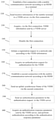
- FIG. 1 is a flowchart of a method for authenticating a VSIM according to one embodiment of the present invention. As illustrated in FIG. 1 , the method for authenticating a VSIM according to the present invention includes the following steps: Step 110: A first connection with a mobile communication network is established according to an RSIM in a terminal.
- An RSIM card is arranged in a mobile terminal, and this RSIM card may be coupled to a SIM card circuit in the mobile terminal via a card slot. For example, after the mobile terminal is started up, the mobile terminal is registered to the network via the RSIM, and a data channel is enabled after Packet Data Protocol (PDP) is activated.
- PDP Packet Data Protocol
- the RSIM of the mobile terminal may establish a first connection with the mobile communication network via a method or protocol in the related art.
- the SIM card includes key data, that is, an international mobile subscriber identification number (hereinafter abbreviated as IMSI).
- IMSI includes a mobile country code (MCC) and a mobile network code (MNC), and the IMSI uniquely identifies a SIM card and may be read from the SIM card when a mobile phone is started up and then sent to the mobile communication network.
- the mobile communication network may identify the mobile terminal via the IMSI, thereby starting authentication to establish a connection.
- the mobile communication network when detecting that the mobile terminal is logged in to (registered), the mobile communication network generates a RAND (for example, the RAND may be random data in 16 bytes) and sends the RAND to the mobile terminal; the mobile terminal sends the RAND to the SIM card; the SIM card conducts an operation by using the RAND and a secret key (Ki) thereof to generate an SRES and send the SRES to the mobile terminal; the mobile terminal forwards the SRES to the mobile communication network; the mobile communication network also conducts a corresponding algorithm operation, determines whether the authentication is successful via comparison of two results, and allows the mobile terminal to log in to the mobile communication network if the authentication is successful.
- a RAND for example, the RAND may be random data in 16 bytes
- the mobile terminal sends the RAND to the SIM card
- the SIM card conducts an operation by using the RAND and a secret key (Ki) thereof to generate an SRES and send the SRES to the mobile terminal
- the mobile terminal forwards the SRES to the mobile
- the mobile terminal establishes the first connection with the mobile communication network via the removable SIM card, wherein the removable SIM card may be a SIM card built in the mobile terminal or may be a SIM card coupled to the mobile terminal via a card slot.
- the removable SIM card may be a SIM card built in the mobile terminal or may be a SIM card coupled to the mobile terminal via a card slot.
- an authentication circuit in the SIM card calculates and determines an authentication response according to an authentication parameter.
- the mobile communication network judges a country that the removable SIM card pertains to and operator information via the IMSI corresponding to the RSIM card reported by the mobile terminal.
- the first connection for international roaming is established via the RSIM card.
- the mobile terminal may be connected to, or communicate with another device in the mobile communication network via the established first connection.
- the mobile terminal may communicate with a VSIM server via the first connection established between the RSIM card and the mobile communication network.
- information, indicating where the mobile terminal is currently located, which is obtained after the mobile terminal is successfully registered via the RSIM is sent to the VSIM server.
- an MCC or an MNC is sent to the VSIM server, the authentication parameter in an authentication request acquired by the mobile terminal from the network is sent to the VSIM server, and authentication response information is acquired from the VSIM server.
- sending, by the mobile terminal, the location information that is successfully registered according to the RSIM card may enable the VSIM server to allocate one SIM card number from a plurality of SIM cards of the VSIM server to the mobile terminal according to the current location of the mobile terminal. In this step, the specific content regarding the communication between the mobile terminal and the VSIM server via the first connection is not given herein any further.
- step 120 VSIM information sent by the VSIM server is acquired via the first connection, wherein the VSIM information includes a subscriber identification number of the VSIM.
- the mobile terminal acquires, via the first connection, the VSIM information sent by the VSIM server, wherein the VSIM information includes IMSI information of a VSIM.
- the VSIM server may allocate a VSIM to the mobile terminal by sending the VSIM information to the mobile terminal.
- the IMSI uniquely corresponds to one SIM card, and the VSIM server may send the IMSI of the allocated VSIM to the mobile terminal.
- the VSIM information sent by the VSIM server is acquired via the first connection, wherein the VSIM information includes the IMSI. It may be still understood that one IMSI uniquely corresponds to one RSIM card in the VSIM server.
- step 130 registration request is initiated to a network side according to the VSIM information.
- the mobile terminal When receiving the VSIM information sent by the VSIM server, the mobile terminal initiates registration to the network side according to the IMSI information in the VSIM information.
- the mobile terminal may send to the mobile communication network an IMSI number sent by the VSIM server, and log in to the mobile communication network via the IMSI. It should be noted that it may be determined according to the related art and conventional protocols as to which mode of mobile communication network the mobile terminal initiates registration, which is not limited in the present invention.
- the mobile communication network which the IMSI sent via the VSIM server logs in to may be different from or may be the same as the mobile communication network that establishes the first connection with the mobile terminal via the RSIM card, which is not limited in the present invention.
- the mobile communication network that establishes the first connection with the mobile terminal via the RSIM card is called a first mobile communication network
- the mobile communication network that establishes a second connection with the mobile terminal via the IMSI corresponding to the VSIM is called a second mobile communication network.
- the mobile communication network may initiate an authentication request, and send the authentication request to the mobile terminal.
- step 140 an authentication request for authentication for the VSIM is acquired, the authentication request carrying an authentication parameter to request for authentication for the VSIM.
- a VSIM module of the mobile terminal may initiate registration to the second mobile communication network according to the IMSI; and a mobile switching center (hereinafter referred to as MSC) and a visitor location register (hereinafter referred to as VLR) of the second mobile communication network select the authentication parameter from authentication data, and send the authentication request to the mobile terminal, wherein the request carries parameters of RAND, AUTN and CKSN in the selected authentication parameter.
- MSC mobile switching center
- VLR visitor location register
- the authentication parameter and a computation rule of the mobile communication network in various modes may be defined by conventional protocols of the mobile communication network in various modes, which is not defined in an embodiment of the present invention.
- the mobile terminal acquires the authentication request issued by the network side, wherein the authentication request carries the authentication parameter to perform the authentication for the VSIM.
- an authentication circuit of the VSIM is configured in the VSIM server.
- a plurality of RSIM cards are configured in the VSIM server, and authentication calculation is performed by using the authentication circuit of the SIM card configured in the VSIM server as the VSIM of the mobile terminal.
- the mobile terminal acquires the authentication request sent by the network side, and the specific content of the authentication request may vary according to the different modes of the mobile communication network, which may be specifically performed according to provisions of the related art and conventional protocols.
- the mobile terminal acquires an authentication parameter RAND in the authentication request. It may be understood that the specific steps and parameters using which the mobile communication network in various modes performs authentication to the mobile terminal and the mobile terminal performs authentication for the network side are defined in the related art. The specific authentication process and parameters are not defined in an embodiment of the present invention.
- the mobile terminal acquires an authentication request sent by the second mobile communication network, wherein the authentication request carries the authentication parameter to perform the authentication for the VSIM.
- step 150 the authentication parameter in the authentication request is sent to the VSIM server, such that the VSIM server determines an authentication response parameter according to the authentication parameter.
- the mobile terminal upon acquiring the authentication request from the network side, calculates an RES, and sends the RES to the MSC and the VLR.
- the MSC and the VLR compare their calculated XRES with the RES returned by the mobile terminal. If the RES is the same as the XRES, the user is authorized, authentication of the user is successful, and the mobile terminal is allowed to access the network; otherwise, the user is unauthorized, authentication of the user is unsuccessful, and the mobile terminal's access to the network is denied.
- the mobile terminal upon acquiring the authentication request, the mobile terminal sends the authentication parameter in the authentication request to the VSIM server, such that the authentication circuit of the SIM card configured in the VSIM server determines an authentication response parameter according to the authentication parameter.
- the authentication parameter for performing authentication calculation by the authentication circuit of the RSIM card configured in the VSIM server may be sent to the VSIM server.
- step 160 the authentication response parameter sent by the VSIM server is acquired, and authentication is performed according to the authentication response parameter.
- the mobile terminal acquires the authentication response parameter sent by the VSIM server.
- the authentication response parameter is the authentication parameter in the authentication request issued by the second mobile communication network and acquired according to the mobile terminal, and calculated and determined by the authentication circuit of the SIM card in the VSIM server.
- the mobile terminal Upon acquiring the authentication response parameter from the VSIM server, the mobile terminal sends the authentication response parameter to the network side to which the VSIM is to be registered, for authentication.
- the mobile terminal when the VSIM of the mobile terminal initiates a registration event or other events triggering the authentication to the second mobile communication network, upon receiving the authentication request issued by the second mobile communication network, the mobile terminal sends the authentication parameter in the authentication request to the VSIM server, and performs authentication by using the authentication response parameter acquired from the VSIM server.
- the VSIM is authenticated by using only a few roaming resources, and the mobile terminal is capable of conveniently accesses the network via the VSIM.
- the method according to this embodiment further includes: sending an uplink synchronous frame of the RSIM.
- the uplink synchronous frame of the RSIM card is sent to the first mobile communication network which the RSIM card is logged in to according to the RSIM card.
- a downlink synchronous frame issued by the network side may be received while the uplink synchronous frame of the RSIM is sent to the network side.
- the specific implementation of sending the uplink synchronous frame and receiving the downlink synchronous frame is not defined in an embodiment of the present invention, which may be specifically implemented according to the related art and conventional protocols.
- FIG. 2 is a flowchart of a method for authenticating a VSIM according to another embodiment of the present invention. As illustrated in FIG. 2 , the method for authenticating a VSIM according to the present invention includes the following steps: In step 210, a first connection with a mobile communication network is established according to an RSIM in a terminal.
- a mobile terminal establishes the first connection with the mobile communication network via an RSIM card, wherein the RSIM card may be a SIM card built in the mobile terminal or may be a SIM card coupled to the mobile terminal via a card slot. It may be understood that when a user travels abroad and the mobile terminal initiates registration to a roaming region via an original SIM card, a network may judge a country that the SIM card pertains to and operator information via the IMSI corresponding to the RSIM card reported by the mobile terminal. When the mobile terminal is successfully registered via the RSIM card, the first connection of international roaming is established. The mobile terminal may be connected to, or communicate with another device in the mobile communication network via the established first connection.
- the mobile terminal may communicate with a VSIM server via the first connection established between the RSIM card and the mobile communication network. For example, information, indicating where the mobile terminal is currently located, which is obtained after the mobile terminal is successfully registered via the RSIM is sent to the VSIM server. Still for example, an MCC or an MNC is sent to the VSIM server, the authentication parameter in an authentication request acquired by the mobile terminal from the network are sent to the VSIM server, and authentication response information is acquired from the VSIM server.
- sending, by the mobile terminal, the location information that is successfully registered according to the RSIM card may enable the VSIM server to allocate one SIM card number from a plurality of SIM cards of the VSIM server to the mobile terminal according to the current location of the mobile terminal.
- step 220 VSIM information sent by the VSIM server is acquired via the first connection, wherein the VSIM information includes a subscriber identification number of the VSIM.
- the VSIM server may allocate a VSIM to the mobile terminal by sending the VSIM information to the mobile terminal. It may be understood that one IMSI uniquely corresponds to one SIM card, and the VSIM server may send the IMSI of the allocated VSIM to the mobile terminal. In this step, the VSIM information sent by the VSIM server is acquired via the first connection, wherein the VSIM information includes the subscriber identification number.
- step 230 a registration request is initiated to a network side according to the VSIM information.
- the mobile terminal When receiving the VSIM information sent by the VSIM server, the mobile terminal initiates registration to the network side according to the IMSI information in the VSIM information, sends to the mobile communication network an IMSI number sent by the VSIM server, and logs in to the mobile communication network via the IMSI. It may be understood that the mobile communication network which the IMSI sent via the VSIM server logs in to may be different from or may be the same as the mobile communication network that establishes the first connection with the mobile terminal via the RSIM card, which is not limited in the present invention.
- the mobile communication network that establishes the first connection with the mobile terminal via the RSIM card is called a first mobile communication network
- the mobile communication network that establishes a second connection with the mobile terminal via the IMSI corresponding to the VSIM is called a second mobile communication network.
- step 240 an uplink synchronous frame of the RSIM is sent.
- the uplink synchronous frame of the RSIM card is sent to the first mobile communication network which the RSIM card is logged in to according to the RSIM card.
- a downlink synchronous frame issued by the network side may be received while the uplink synchronous frame of the RSIM is sent.
- the uplink synchronous frame of the RSIM card may be sent to the first mobile communication network via the first connection established via the RSIM card, to maintain that the first connection is not released by the network side.
- the uplink synchronous frame of the RSIM card is sent to the first mobile communication network via the first connection established by the mobile terminal via the RSIM card, to maintain that the first connection is not released by the network side.
- the mobile terminal includes one baseband module, two radio frequency circuits and one antennas, that is, the mobile terminal is a dual SIM dual standby (hereinafter referred to as DSDS) device
- the uplink synchronous frame of the RSIM card is sent to the first mobile communication network via a signaling link established between the VSIM and the second mobile communication network.
- a timeslot is allocated on a physical link of the VSIM to send the uplink synchronous frame corresponding to the RSIM.
- the uplink synchronous frame is sent in a puncturing manner, and the link synchronous frame carries a radio network temporary identity (hereinafter referred to as RNTI).
- RNTI radio network temporary identity
- the uplink synchronous frame is acquired, to maintain that the first connection is not released by the network side. It should be noted that, to be specific, it may be determined by the protocols employed by the networks in various modes which identity is carried by the uplink synchronous frame. The present invention is described only with reference to same examples, but sets no limitation thereto.
- sequence numbers of the steps do not denote a sequence of the steps.
- the step of sending the uplink synchronous frame of the RSIM may be performed while, before, or after initiating the registration according to the VSIM.
- the uplink synchronous frame of the RSIM card may be sent to the first mobile communication network via the first connection according to a predetermined frequency or time.
- step 250 an authentication request is acquired, the authentication request carrying an authentication parameter to request for authentication for the VSIM.
- the network side After the mobile terminal initiates registration to the second mobile communication network according to the acquired IMSI, the network side sends an authentication request to perform authentication for the mobile terminal. It may be understood that the authentication performed by the mobile terminal to the network side is also involved in the related art. The specific process and parameters are not defined in the embodiment of the present invention.
- the mobile terminal acquires the authentication request sent by the second mobile communication network, wherein the authentication request carries an authentication parameter to perform the authentication for the VSIM.
- the second mobile communication network upon receiving the IMSI corresponding to the VSIM sent by the mobile terminal, the second mobile communication network performs the authentication for the VSIM according to the IMSI information.
- step 260 an uplink synchronous frame of the VSIM is sent.
- the mobile terminal upon acquiring the authentication request with respect to the IMSI corresponding to the VSIM sent by the second mobile communication network, the mobile terminal sends the authentication parameter to the VSIM server and acquires an authentication response parameter from the VSIM server, and afterwards, sends the authentication response parameter to the second mobile communication network.
- the network side upon sending the authentication request to the mobile terminal, the network side waits for an authentication response sent by the mobile terminal, and judges whether the IMSI is authorized according to the authentication response sent by the mobile terminal.
- the mobile terminal sends the uplink synchronous frame of the VSIM to the second mobile communication network which initiates registration according to the IMSI, such that the second mobile communication network does not consider that a problem of link failure exists in the VSIM, and releases a signaling link of the VSIM.
- It may be determined according to the requirements of different modes of communication systems and the conventional protocols as how to send an uplink synchronous frame and which frequency or which time or frequency point is employed to send the uplink synchronous frame, which is not limited in the present invention. Sequence numbers of the steps in the embodiments of the present invention do not denote a sequence of the steps.
- the whole process from acquiring the authentication request to sending authentication response to the network for performing the authentication the uplink synchronous frame of the VSIM may be sent according to a predetermined frequency or time.
- the uplink synchronous frame may be sent to the second mobile communication network via the signaling link initiated to the second mobile communication network via the VSIM, to maintain that the signaling link is not released by the network side.
- the uplink synchronous frame may be sent to the second mobile communication network via the signaling link initiated to the second mobile communication network via the VSIM, to maintain that the signaling link is not released by the network side.
- the uplink synchronous frame of the VSIM is sent to the second mobile communication network via the first connection established by the RSIM in the mobile terminal and the first mobile communication network.
- a timeslot is allocated on a physical link of the RSIM
- the uplink synchronous frame of the VSIM is sent in a puncturing manner
- the sent uplink synchronous frame carries the RNTI.
- the second mobile communication network may identify the mobile terminal to maintain that a signaling connection of the VSIM is not released by the network side.
- a downlink synchronous frame issued by the network side may be received while the uplink synchronous frame of the RSIM is sent.
- step 270 the authentication parameter is sent to the VSIM server, such that the VSIM server determines an authentication response parameter according to the authentication parameter.
- the corresponding authentication circuit is also configured in the SIM card of the VSIM server.
- the mobile terminal When receiving the authentication parameter of the network, the mobile terminal does not have the acquired the authentication circuit of the IMSI and the authentication parameter, and may not perform the authentication computation. Therefore, the mobile terminal sends the received authentication parameter to the VSIM server via the first connection, such that the SIM card corresponding to the IMSI in the VSIM server determines the authentication response parameter according to the authentication parameter.
- step 280 the authentication response parameter sent by the VSIM server is acquired, and authentication is performed according to the authentication response parameter.
- the VSIM server receives the authentication parameter sent by the mobile terminal.
- the corresponding RSIM card may calculate the authentication response according to the authentication parameter, and send the authentication response determined via calculation to the mobile terminal.
- the mobile terminal may acquire, via the first connection, the authentication response parameter sent by the VSIM server, and perform the authentication to the second mobile communication network by using the authentication response parameter according to the related art and conventional protocols.
- the mobile terminal establishes a first connection with the mobile communication network via the RSIM, acquires VSIM information from the VSIM via the first connection, initiates registration to the network via an IMSI, meanwhile sends an uplink synchronous frame of the RSIM to the first mobile communication network, and sends the uplink synchronous frame to the network to which registration is initiated via the VSIM when the mobile terminal sends an authentication parameter to the VSIM server and acquires an authentication response form the VSIM server.
- the mobile terminal when the VSIM process of the mobile terminal waits for the authentication response sent by the VSIM server, the mobile terminal sends the uplink synchronous frame to the second mobile communication network, to maintain that a signaling link established between the mobile terminal and the second mobile communication network via the VSIM is not asynchronous.
- the method of sending an uplink synchronous frame is employed, and the connection may be maintained by sending less data. In this way, the signaling link of the VSIM may be maintained to be not asynchronous when the VSIM process waits for the authentication response parameter from the VSIM server with fewer radio resources are consumed, and thus the authentication may be successfully performed.
- FIG. 3 is a flowchart of a method for authenticating a VSIM according to still another embodiment of the present invention. As illustrated in FIG. 3 , the method for authenticating a VSIM according to the present invention includes the following steps: Step 310: A first connection with a mobile communication network is established according to an RSIM in a terminal.
- the first connection is established with the mobile communication network according to the RSIM.
- the specific implementation method may be referenced to step 110 in the embodiment as illustrated FIG. 1 .
- step 320 location information of the mobile terminal is sent to a VSIM server via the first connection.
- the mobile terminal sends the current location information of the mobile terminal which is acquired from a network side to the VSIM server after the mobile terminal successfully registered via the RSIM. For example, an MCC or an MNC is sent to the VSIM server, such that the VSIM server allocates one SIM card number from a plurality of SIM cards of the VSIM server to the mobile terminal according to the current location of the mobile terminal.
- an MCC or an MNC is sent to the VSIM server, such that the VSIM server allocates one SIM card number from a plurality of SIM cards of the VSIM server to the mobile terminal according to the current location of the mobile terminal.
- step 330 VSIM information sent by the VSIM server is acquired via the first connection, wherein the VSIM information includes a subscriber identification number of the VSIM.
- the VSIM information sent by the VSIM server is acquired via the first connection, and includes the subscriber identification number.
- the specific implementation method may be referenced to step 120 in the embodiment as illustrated in FIG. 1 .
- step 340 the first connection is disabled.
- the first connection established between the mobile terminal and the mobile communication network via the RSIM card is disabled.
- the specific method for disabling the connection may be based on the related art and conventional protocols. For example, a data channel established between the mobile terminal and the mobile communication network via the RSIM card is disabled, or the first connection is released in other manners. For example, a Radio Resource Control (RRC) connection is released, and the like.
- RRC Radio Resource Control
- step 350 a registration request is initiated to a network side according to the VSIM information of the VSIM.
- step 130 registration to the network side is initiated according to the VSIM, and the specific implementation method may be referenced to step 130 in the embodiment as illustrated in FIG. 1 .
- step 360 an authentication request for authentication for the VSIM is acquired, the authentication request carrying an authentication parameter to request for authentication for the VSIM.
- the authentication request is acquired, which carries the authentication parameter to request performing the authentication for the VSIM.
- the specific implementation method may be referenced to step 140 in the embodiment as illustrated FIG. 1 . It may be understood that, in the embodiment of the present invention, when the mobile terminal acquires the authentication request for authenticating the VSIM, a period of time is needed; within this period of time, an acquired authentication parameter is sent to the VSIM server and an authentication response to received from the VSIM server, and then an authentication response parameter is sent to the network side for authentication. Therefore, in the embodiment of the present invention, after the mobile terminal acquires the authentication request from the network side via the VSIM, the mobile terminal needs to communicate with the server via the connection established between the mobile terminal and the mobile communication network via the RSIM. Meanwhile, the VSIM process needs to wait for the authentication response sent by the server.
- step 370 a second connection with the mobile communication network is established according to the RSIM.
- a connection with the mobile communication network is reestablished according to the SIM configured in the mobile terminal or coupled to the card slot of the SIM card, such that the mobile terminal is capable of communicating with the VISM server via the connection.
- the connection is called a second connection.
- the establishment of the second connection between the mobile terminal and the mobile communication network via the RSIM may be referenced to the related art and conventional protocols, which is not limited in the present invention.
- step 380 an uplink synchronous frame of the VSIM is sent via the second connection.
- the uplink synchronous frame of the VSIM is sent, via the second connection established in step 370, to the network to which registration is initiated via the VSIM.
- the uplink synchronous frame of the connection between the VSIM and the second communication network via the second connection in a puncturing manner, such that the signaling link for initiating registration to the mobile communication network is maintained according to the IMSI in the VSIM information sent by the VSIM server, and is not released due to consideration that the signaling link of the VSIM is asynchronous.
- a downlink synchronous frame issued by the network side may be received while the uplink synchronous frame of the RSIM is sent.
- sequence numbers of the steps do not denote a sequence of the steps.
- sending the uplink synchronous frame of the VSIM via the second connection may be started after the second connection is established until the mobile terminal acquires the authentication response parameter sent by the VSIM server.
- the uplink synchronous frame of the VSIM may not be continuously sent via the second connection.
- step 390 the authentication parameter in the authentication request is sent to the VSIM server, such that the VSIM server determines an authentication response parameter according to the authentication parameter.
- the authentication parameter is sent to the VSIM server, such that the VSIM server determines the authentication response parameter according to the authentication parameter.
- the specific implementation method may be referenced to step 270 in the embodiment as illustrated in FIG. 2 .
- step 400 the authentication response parameter sent by the VSIM server is acquired, and authentication is performed according to the authentication response parameter.
- the authentication response parameter sent by the VSIM server is acquired, and the authentication is performed according to the authentication response parameter.
- the specific implementation method may be referenced to step 280 in the embodiment as illustrated in FIG. 2 .
- the embodiment of the present invention may be implemented via the mobile terminal including two baseband modules, two radio frequency circuits and two antennas, or may be implemented via a DSDA mobile terminal.
- the embodiments of the present invention may be implemented via the DSDS mobile terminal.
- the mobile terminal when sending the authentication parameter to the VSIM server via the second connection established by the mobile terminal and mobile communication network via the RSIM card, and acquiring the authentication response from the VSIM server, the mobile terminal sends the uplink synchronous frame to the mobile communication network to which the mobile terminal desires to register, to maintain the connection when the VSIM process waits for the authentication response sent by the VSIM server, thereby successfully implementing the authentication of the VSIM.
- the first connection is disabled after the VSIM information sent by the VSIM server is acquired via the first connection, such that the authentication process of the mobile terminal of the DSDS type may be conveniently implemented.
- the uplink synchronous frame of the VSIM may be specifically sent via the second connection at a predetermined frequency or at a predetermined timeslot.
- the specific frequency or timeslot for sending the uplink synchronous frame may be defined according to the related art and conventional protocols.
- the frequency for sending the uplink synchronous frame at least satisfies the time requirement of the network side.
- the mobile communication networks of different modes may be defined according to the protocols thereof, which are not limited in the present invention.
- the method for authenticating a VSIM according to an embodiment of the present invention further includes: disabling the second connection.
- the second connection is disabled after the authentication response parameter sent by the VSIM server is acquired and authentication is performed according to the authentication response parameter.
- the second connection is disabled via PDP deactivation.
- the first connection established with the mobile communication network according to the RSIM is disabled. In this way, while ensuring that the VSIM can be successfully authenticated, waste of the radio resources is further reduced, and the communication roaming fee is saved.
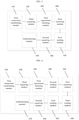
- FIG. 4 is a schematic structural diagram of an apparatus for authenticating a VSIM according to one embodiment of the present invention.
- the apparatus for authenticating a VSIM includes: a first connection establishing module 410, a third acquiring module 420, a first registration initiating module 430, a first acquiring module 440, a first sending module 450, a second acquiring module 460 and an authenticating module 470.
- the first connection establishing module 410 is configured to establish a first connection with a mobile communication network according to an RSIM in a terminal.
- the first link establishing module 410 of the mobile terminal establishes the first connection with the mobile communication network via an RSIM card, wherein the RSIM card may be a SIM card built in the mobile terminal or may be a SIM card coupled to the mobile terminal via a card slot.
- the RSIM card may be a SIM card built in the mobile terminal or may be a SIM card coupled to the mobile terminal via a card slot.
- the mobile communication network may determine the country to which the RSIM card pertains and the operator information of the RSIM card according to the IMSI corresponding to the RSIM reported by the mobile terminal; and when the mobile terminal is successfully registered via the RSIM card, a first connection for international roaming is established via the RSIM card.
- the mobile terminal may be connected to, or communicate with another device in the mobile communication network via the established first connection.
- the third acquiring module 420 is configured to acquire VSIM information sent by a VSIM server via the first connection, the VSIM information including a subscriber identification number of the VSIM.
- the third acquiring module 420 of the mobile terminal acquires via the first connection the VSIM information sent by the VSIM server, wherein the VSIM information includes IMSI information of a VSIM.
- the VSIM server may allocate a VSIM to the mobile terminal by sending the VSIM information to the mobile terminal.
- one IMSI uniquely corresponds to one SIM card, and the VSIM server may send the IMSI of the allocated VSIM to the mobile terminal.
- the VSIM information sent by the VSIM server is acquired via the first connection, wherein the VSIM information includes the IMSI. It may be still understood that one IMSI uniquely corresponds to one RSIM card in the VSIM server.
- the first registration initiating module 430 is configured to initiate a registration request to a network side according to the VSIM information.
- the first registration initiating module 430 of the mobile terminal initiates registration to the network according to the IMSI information in the VSIM information.
- the first registration initiating module 430 of the mobile terminal may send to the mobile communication network an IMSI number sent by the VSIM server, and log in to the mobile communication network via the IMSI. It should be noted that it may be determined according to the related art and the protocols as to which mode of mobile communication network to which registration is initiated, which is not limited in the present invention.
- the mobile communication network which the IMSI sent via the VSIM server logs in to may be different from or may be the same as the mobile communication network that establishes the first connection with the mobile terminal via the RSIM card, which is not limited in the present invention.
- the mobile communication network that establishes the first connection with the mobile terminal via the RSIM card is called a first mobile communication network
- the mobile communication network that establishes a second connection with the mobile terminal via the IMSI corresponding to the VSIM is called a second mobile communication network.
- the first registration initiating module 430 Upon receiving a registration request, the first registration initiating module 430 initiates an authentication request, and sends the authentication request to the mobile terminal.
- the first acquiring module 440 is configured to acquire an authentication request for authentication for the VSIM, the authentication request carrying an authentication parameter to request for authentication for the VSIM.
- the first acquiring module 440 of the mobile terminal acquires the authentication request issued by the network side, wherein the authentication request carries the authentication parameter to perform the authentication for the VSIM.
- the first sending module 450 is configured to send the authentication parameter acquired by the first acquiring module to the VSIM server, such that the VSIM server determines an authentication response parameter according to the authentication parameter.
- the authentication circuit for performing authentication calculation is configured in the VSIM server
- the first sending module 450 of the mobile terminal sends the authentication parameter in the authentication request to the VSIM server, such that the authentication circuit of the SIM card configured in the VSIM server determines an authentication response parameter according to the authentication parameter.
- the authentication parameter for performing authentication calculation by the authentication circuit of the removable SIM card configured in the VSIM server may be sent to the VSIM server.
- the second acquiring module 460 is configured to acquire the authentication response parameter sent by the VSIM server.
- the second acquiring module 460 of the mobile terminal acquires the authentication response parameter sent by the VSIM server. It may be understood that the authentication response parameter is the authentication parameter in the authentication request issued by the second mobile communication network and acquired according to the mobile terminal, and calculated and determined by the authentication circuit of the SIM card in the VSIM server.
- the authenticating module 470 is configured to perform authentication according to the authentication response parameter acquired by the second acquiring module.
- the authenticating module 470 of the mobile terminal Upon acquiring the authentication response parameter from the VSIM server, the authenticating module 470 of the mobile terminal sends the authentication response parameter to the network side to which the VSIM is to be registered, for authentication.
- the mobile terminal when the VSIM of the mobile terminal initiates a registration event or other events triggering the authentication to the second mobile communication network, upon receiving the authentication request issued by the second mobile communication network, the mobile terminal sends the authentication parameter in the authentication request to the VSIM server, and performs authentication without special authorization from the operator.
- the VSIM is authenticated by using only a few roaming resources, and the mobile terminal is capable of conveniently accesses the network via the VSIM.
- a second sending module configured to send an uplink synchronous frame of the RSIM.
- the uplink synchronous frame of the RSIM card is sent to the first mobile communication network which the RSIM card is logged in to according to the RSIM card.
- FIG. 5 is a schematic structural diagram of an apparatus for authenticating a VSIM according to another embodiment of the present invention.
- the apparatus for authenticating a VSIM according to the present invention includes a first connection establishing module 410, a third acquiring module 420, a first registration initiating module 430, a first acquiring module 440, a first sending module 450, a second acquiring module 460 and an authenticating module 470.
- the specific operations of the above modules may be referenced to the corresponding modules in the embodiment as illustrated in FIG. 4 .
- the apparatus for authenticating a VSIM further includes a second sending module 480 and a third sending module 490.
- the second sending module 480 is configured to send an uplink synchronous frame of the RSIM.
- the second sending module 480 sends the uplink synchronous frame of the RSIM card to the first mobile communication network which the RSIM card is logged in to according to the RSIM card.
- the second sending module 480 may send the uplink synchronous frame of the RSIM while, before and after initiating registration according to the VSIM.
- the uplink synchronous frame of the RSIM may be sent to the first mobile communication network via the first connection according to a predetermined frequency or time.
- the second sending module 480 may send the uplink synchronous frame of the RSIM card the first mobile communication network via the first connection established via the RSIM card, to maintain that the first connection is not released by the network side.
- the second sending module 480 may also send the uplink synchronous frame of the RSIM card to the first mobile communication network via the first connection established by the mobile terminal via the RSIM card, to maintain that the first connection is not released by the network side.
- the second sending module 480 may sends the uplink synchronous frame of the RSIM to the first mobile communication network via a signaling link established between the VSIM and the second mobile communication network.
- the uplink synchronous frame may be sent in a puncturing manner, and the sent uplink synchronous frame carries an RNTI, to maintain that the first connection is not released by the network side.
- a downlink synchronous frame issued by the network side may be received while the uplink synchronous frame of the RSIM is sent.
- the third sending module 490 is configured to send an uplink synchronous frame of the VSIM via the first connection.
- the mobile terminal Upon acquiring the authentication request with respect to the IMSI corresponding to the VSIM sent by the second mobile communication network, the mobile terminal sends the authentication parameter to the VSIM server and acquires an authentication response parameter from the VSIM server, and afterwards, sends the authentication response parameter to the second mobile communication network.
- the network side upon sending the authentication request to the mobile terminal, the network side waits for an authentication response sent by the mobile terminal, and judges whether the IMSI is authorized according to the authentication response sent by the mobile terminal.
- the third sending module 490 of the mobile terminal sends the uplink synchronous frame of the VSIM to the second mobile communication network which initiates registration according to the IMSI, such that the second mobile communication network does not consider that a problem of link failure exists in the VSIM, and releases a signaling link of the VSIM. It may be determined according to the requirements of different modes of communication systems and the conventional protocols as how to send an uplink synchronous frame and which frequency or which time or frequency point is employed to send the uplink synchronous frame, which is not limited in the present invention.
- the third sending module 490 may send the uplink synchronous frame to the second mobile communication network via the signaling link initiated to the second mobile communication network via the VSIM, to maintain that the signaling link is not released by the network side.
- the mobile terminal includes two baseband modules, two radio frequency circuits and two antennas, that is, the mobile terminal is a DSDA device
- the third sending module 490 may send the uplink synchronous frame to the second mobile communication network via the signaling link initiated to the second mobile communication network via the VSIM, to maintain that the signaling link is not released by the network side.
- the third sending module 490 may sends the uplink synchronous frame of the VSIM to the second mobile communication network via the first connection established between the RSIM in the mobile terminal and the first mobile communication network.
- the uplink synchronous frame may be sent in a puncturing manner, and the sent uplink synchronous frame carries an RNTI, to maintain that the signaling link of the VSIM is not released by the network side.
- a downlink synchronous frame issued by the network side may be received while the uplink synchronous frame of the VSIM is sent.
- FIG. 6 is a schematic structural diagram of an apparatus for authenticating a VSIM according to still another embodiment of the present invention.
- the apparatus for authenticating a VSIM according to the present invention includes a first connection establishing module 410, a third acquiring module 420, a first acquiring module 440, a first sending module 450, a second acquiring module 460 and an authenticating module 470.
- the specific operations of the above modules may be referenced to the corresponding modules in the embodiment as illustrated in FIG. 4 .
- the apparatus for authenticating a VSIM further includes a first connection disabling module 500, a second registration initiating module, a second connection establishing module 530 and a fourth sending module 540.
- the first connection disabling module 500 is configured to disable the first connection established by the first connection establishing module.
- the first connection disabling module 500 disables the first connection established by the first connection establishing module 410 of the mobile terminal between the mobile terminal and the mobile communication network via the RSIM card.
- the specific method for disabling the connection may be based on the related art and conventional protocols. For example, a data channel established between the mobile terminal and the mobile communication network via the removable SIM card is disabled, or the first connection is released in other manners. For example, an RRC connection is released, and the like. Using which manner to disable the first connection is not limited in an embodiment of the present invention.
- the second registration initiating module 510 is configured to initiate registration to the network side according to the VSIM information after the connection disabling module 500 disables the first connection.
- the second registration initiating module 510 initiates registration to the network side according to the VSIM after the connection disabling module disables the first connection.
- the specific operations may be referenced to the first registration initiating module 430 in the embodiment as illustrated in FIG. 4 .
- the second registration initiating module 510 and the first registration initiating module 430 may be the same module or unit, or may be different modules or units.
- the second connection establishing module 530 is configured to establish a second connection with the mobile communication network according to the RSIM after the first acquiring module 440 acquires the authentication request.
- the second connection establishing module 530 establishes a connection with the mobile communication network according to the SIM configured in the mobile terminal or coupled to the card slot of the SIM card.
- the connection is called a second connection. It may be understood that, via the second connection established by the second connection establishing module 530, the mobile terminal is capable of communicating with the VSIM server, sending the authentication parameter to the VSIM server, and acquiring the authentication response from the VSIM server.
- the fourth sending module 540 is configured to send an uplink synchronous frame of the VSIM via the second connection.
- the fourth sending module 540 sends, via the established second connection, the uplink synchronous frame the network to which registration is initiated via the VSIM, such that the signaling link for initiating registration to the mobile communication network is maintained according to the IMSI in the VSIM information sent by the VSIM server.
- the uplink synchronous frame may be sent in a puncturing manner, and the sent uplink synchronous frame carries an RNTI, such that the connection is not released by the network side due to the network side considers the signaling link of the VSIM is asynchronous.
- a downlink synchronous frame issued by the network side may be received while the uplink synchronous frame of the VSIM is sent.
- the fourth sending module 540 and the second sending module 480 may be the same unit or module, or may be different units or modules (as illustrated in FIG. 6 , the fourth sending module 540 and the second sending module 480 are two independent units or modules. For brevity of description, the fourth sending module 540 and the second sending module 480 not illustrated in FIG. 6 are structured into the same unit or module).
- the first connection established with the mobile communication network according to the RSIM is disabled. In this way, while ensuring that the VSIM can be successfully authenticated, waste of the radio resources is further reduced, and the communication roaming fee is saved.
- FIG. 7 is a signaling interaction diagram of the method for authenticating a VSIM according to the present invention.
- the method for authenticating a VSIM according to the present invention includes the following steps performed by a control module, an RSIM module and a VSIM module of a mobile terminal, and a first mobile communication network, a second mobile communication network and a VSIM server.
- an uplink synchronous frame of the VSIM may be sent to the second mobile communication network, such that the second mobile communication network is capable of sensing the VSIM, to ensure that a signaling link between the VISM and the second mobile communication network is not disabled, such that the VSIM waits for the authentication response from the VSIM server and is thus successfully authenticated.
- FIG. 8 is a signaling interaction diagram of the method for authenticating a VSIM according to the present invention.
- the method for authenticating a VSIM according to the present invention includes the following steps performed by a control module, an RSIM module and a VSIM module of a mobile terminal, and a first mobile communication network, a second mobile communication network and a VSIM server.
- the method may further includes disabling the data connection established between the RSIM and the first mobile communication network in step 808.
- an uplink synchronous frame of the VSIM may be sent to the second mobile communication network, such that the second mobile communication network is capable of sensing the VSIM, to ensure that a signaling link between the VISM and the second mobile communication network is not disabled, such that the VSIM waits for the authentication response from the VSIM server and is thus successfully authenticated.
- the disclosed system, apparatus and method may be practiced in other manners.
- the above described device embodiments are merely illustrative.
- the divisions of the modules or units are merely logical function divisions and may be other divisions in actual practice.
- multiple units or components may be combined or integrated into another system, or some features can be ignored or not performed.
- the displayed or discussed mutual couplings or direct couplings or communication connections are practiced through some interfaces.
- the indirect couplings or communication connections between the apparatuses or units may be practiced in electronic, mechanical or other forms.
- the above described apparatus embodiments are merely for illustration purpose only.
- the units which are described as separate components may be physically separated or may be not physically separated, and the components which are illustrated as units may be or may not be physical units, that is, the components may be located in the same position or may be distributed into a plurality of network units. A part or all the units may be selected according to the actual needs to achieve the objectives of the technical solutions of the embodiments.
- various functional units according to the embodiments of the present invention may be integrated in a processing unit, or may be each independently and physically present; alternatively, one or more than one units are integrated in a unit.
- the above integrated unit may be practiced in the form of hardware, and may also be practiced in the form of a software functional unit.
- the integrated unit may also be stored in a computer readable storage medium.
- the software product may be stored in a storage medium.
- the software product includes a number of instructions that enable a computer (a PC, a server, a network device, or the like) device to execute all or a part of the steps of the methods provided in the embodiments of the present invention.
- the storage media include various media capable of storing program code, for example, a U disk, a mobile hard disk, a read-only memory (ROM), a random access memory (RAM), a magnetic disk, or a compact disc read-only memory (CD-ROM).
Landscapes
- Engineering & Computer Science (AREA)
- Computer Networks & Wireless Communication (AREA)
- Signal Processing (AREA)
- Computer Security & Cryptography (AREA)
- Databases & Information Systems (AREA)
- Power Engineering (AREA)
- Computer Hardware Design (AREA)
- Computing Systems (AREA)
- General Engineering & Computer Science (AREA)
- Mobile Radio Communication Systems (AREA)
- Telephone Function (AREA)
- Telephonic Communication Services (AREA)
Claims (10)
- Verfahren zum Authentifizieren eines virtuellen Teilnehmeridentitätsmoduls, VSIM, umfassend:Errichten (110), durch ein Endgerät beim Roaming, einer ersten Verbindung mit einem ersten mobilen Kommunikationsnetzwerk gemäß einer internationalen Mobilteilnehmeridentifikationsnummer, IMSI, eines entfernbaren Teilnehmeridentitätsmodul, RSIM, in dem Endgerät;Erlangen (120), durch das Endgerät, von VSIM-Informationen, die von einem VSIM-Server über die erste Verbindung gesendet werden, wobei die VSIM-Informationen eine IMSI des VSIM des VSIM-Servers umfassen;Einleiten (130), durch das Endgerät, einer Registrierungsanfrage an ein zweites mobiles Kommunikationsnetzwerk gemäß der IMSI der VSIM-Informationen zum Errichten einer zweiten Verbindung mit dem zweiten mobilen Kommunikationsnetzwerk;Erlangen (140), durch das Endgerät, einer Authentifizierungsanfrage, die einen Authentifizierungsparameter zur Authentifizierung für das VSIM trägt, von dem zweiten mobilen Kommunikationsnetzwerk;Senden (150), durch das Endgerät, der Authentifizierungsanfrage, die den Authentifizierungsparameter trägt, an den VSIM-Server über die erste Verbindung, sodass der VSIM-Server einen Authentifizierungsantwortparameter gemäß dem Authentifizierungsparameter bestimmt; undErlangen (160), durch das Endgerät, des Authentifizierungsantwortparameters, der von dem VSIM-Server über die erste Verbindung gesendet wurde, und Durchführen einer Authentifizierung gemäß dem Authentifizierungsantwortparameter.
- Verfahren nach Anspruch 1, weiter umfassend:
Senden (240), durch das Endgerät, eines synchronen Uplink-Frames des RSIM an das erste mobile Kommunikationsnetzwerk über die erste Verbindung. - Verfahren nach Anspruch 1, weiter umfassend:
Senden (260), durch das Endgerät, eines synchronen Uplink-Frames des VSIM an das zweite mobile Kommunikationsnetzwerk über die erste Verbindung. - Verfahren nach Anspruch 1, weiter umfassend:
Senden (380), durch das Endgerät, des synchronen Uplink-Frames des VSIM an das zweite mobile Kommunikationsnetzwerk über die zweite Verbindung. - Verfahren nach Anspruch 4, wobei nach dem Erlangen des Authentifizierungsantwortparameters, der durch den VSIM-Server gesendet wird, das Verfahren weiter umfasst:
Sperren, durch das Endgerät, der zweiten Verbindung. - Einrichtung eines Endgeräts beim Roaming zur Authentifizierung eines virtuellen Teilnehmeridentitätsmoduls, VSIM, umfassend:ein erstes Verbindungserrichtungsmodul (410), das konfiguriert ist, eine erste Verbindung mit einem ersten mobilen Kommunikationsnetzwerk gemäß einer internationalen Mobilteilnehmeridentifikationsnummer, IMSI, eines entfernbaren Teilnehmeridentitätsmoduls, RSIM, in dem Endgerät zu errichten;ein drittes Erlangungsmodul (420), das konfiguriert ist, über die erste Verbindung VSIM-Informationen zu erlangen, die von einem VSIM-Server über die erste Verbindung gesendet werden, wobei die VSIM-Informationen eine IMSI des VSIM des VSIM-Servers umfassen;ein erstes Registrierungseinleitungsmodul (430), das konfiguriert ist, eine Registrierungsanfrage an ein zweites mobiles Kommunikationsnetzwerk gemäß der IMSI der VSIM-Informationen zum Errichten einer zweiten Verbindung mit dem zweiten mobilen Kommunikationsnetzwerk einzuleiten;ein erstes Erlangungsmodul (440), das konfiguriert ist, eine Authentifizierungsanfrage zur Authentifizierung für das VSIM zu erlangen, wobei die Authentifizierungsanfrage einen Authentifizierungsparameter trägt, um Authentifizierung für das VSIM anzufragen;ein erstes Sendemodul (450), das konfiguriert ist, den Authentifizierungsparameter, der von dem ersten Erlangungsmodul (440) erlangt wurde, an den VSIM-Server über die erste Verbindung zu senden, sodass der VSIM-Server einen Authentifizierungsantwortparameter gemäß dem Authentifizierungsparameter bestimmt;ein zweites Erlangungsmodul (460), das konfiguriert ist, den Authentifizierungsantwortparameter zu erlangen, der von dem VSIM-Server über die erste Verbindung gesendet wurde; undein Authentifizierungsmodul (470), das konfiguriert ist, Authentifizierung gemäß dem Authentifizierungsantwortparameter durchzuführen, der von dem zweiten Erlangungsmodul (460) erlangt wird.
- Einrichtung nach Anspruch 6, weiter umfassend:
ein zweites Sendemodul (480), das konfiguriert ist, einen synchronen Uplink-Frame des RSIM an das erste mobile Kommunikationsnetzwerk über die erste Verbindung zu senden. - Einrichtung nach Anspruch 6, wobei die Einrichtung weiter umfasst:
ein drittes Sendemodul (490), das konfiguriert ist, einen synchronen Uplink-Frame des VSIM an das zweite mobile Kommunikationsnetzwerk über die erste Verbindung zu senden. - Einrichtung nach Anspruch 6, weiter umfassend:
ein viertes Sendemodul (540), das konfiguriert ist, einen synchronen Uplink-Frame des VSIM an das zweite mobile Kommunikationsnetzwerk über die zweite Verbindung zu senden. - Einrichtung nach Anspruch 9, weiter umfassend:
ein zweites Verbindungssperrmodul, das konfiguriert ist, die zweite Verbindung zu sperren, nachdem das zweite Erlangungsmodul (460) den Authentifizierungsantwortparameter erlangt hat, der von dem VSIM-Server gesendet wurde.
Applications Claiming Priority (2)
| Application Number | Priority Date | Filing Date | Title |
|---|---|---|---|
| CN201610070716.8A CN106454821A (zh) | 2016-02-01 | 2016-02-01 | 虚拟用户识别模块鉴权方法和装置 |
| PCT/CN2017/070254 WO2017133374A1 (zh) | 2016-02-01 | 2017-01-05 | 虚拟用户识别模块鉴权方法和装置 |
Publications (3)
| Publication Number | Publication Date |
|---|---|
| EP3413604A1 EP3413604A1 (de) | 2018-12-12 |
| EP3413604A4 EP3413604A4 (de) | 2019-06-26 |
| EP3413604B1 true EP3413604B1 (de) | 2022-03-23 |
Family
ID=58183059
Family Applications (1)
| Application Number | Title | Priority Date | Filing Date |
|---|---|---|---|
| EP17746694.3A Active EP3413604B1 (de) | 2016-02-01 | 2017-01-05 | Authentifizierungsverfahren und -vorrichtung für identitätsmodul für virtuelle teilnehmer |
Country Status (5)
| Country | Link |
|---|---|
| US (1) | US10375068B2 (de) |
| EP (1) | EP3413604B1 (de) |
| JP (1) | JP6732948B2 (de) |
| CN (2) | CN106454821A (de) |
| WO (1) | WO2017133374A1 (de) |
Families Citing this family (17)
| Publication number | Priority date | Publication date | Assignee | Title |
|---|---|---|---|---|
| US9820085B1 (en) * | 2016-07-01 | 2017-11-14 | Qualcomm Incorporated | Multi-device management with single subscription |
| CN107071733B (zh) * | 2017-04-17 | 2020-08-04 | 上海途鸽数据科技有限公司 | 虚拟sim卡业务支持方法及服务器、通信方法及sim卡服务器和移动设备 |
| KR102460573B1 (ko) * | 2017-08-31 | 2022-10-28 | 주식회사 케이티 | 감염병 확산방지 시스템 및 방법 |
| CN107734492B (zh) * | 2017-09-30 | 2021-05-11 | Oppo广东移动通信有限公司 | 信息处理方法、装置、移动终端和计算机可读存储介质 |
| CN108282759B (zh) * | 2018-01-17 | 2019-12-24 | 维沃移动通信有限公司 | 一种业务处理方法及移动通信终端 |
| CN114980070B (zh) | 2018-10-15 | 2025-05-27 | 华为技术有限公司 | 一种终端配置方法及装置 |
| US11032692B2 (en) * | 2019-01-24 | 2021-06-08 | Samsung Electronics Co., Ltd | Method and apparatus for roaming subscription with embedded subscriber identity module |
| KR102044008B1 (ko) * | 2019-05-07 | 2019-11-12 | 옥철식 | 가상 현실 세계의 신원 인증 관리 시스템 |
| CN112788790B (zh) * | 2019-11-08 | 2022-12-27 | 华为技术有限公司 | 一种通信方法及相关设备 |
| CN111565388B (zh) * | 2020-04-02 | 2023-09-19 | 维沃移动通信有限公司 | 一种网络注册方法及电子设备 |
| CN112134744B (zh) * | 2020-10-23 | 2023-04-18 | 上海途鸽数据科技有限公司 | 一种分布式管理系统中节点的管理方法 |
| CN112770314B (zh) * | 2020-12-03 | 2024-04-09 | 上海途鸽数据科技有限公司 | 建立通信连接的方法和装置 |
| CN115175163A (zh) | 2021-04-01 | 2022-10-11 | 思博控股有限公司 | 应用于可携式设备的vSIM模块 |
| CN114071356B (zh) * | 2021-12-01 | 2023-12-19 | 西安中诺通讯有限公司 | 一种终端定位服务的业务管理方法、装置及终端 |
| CN114339720B (zh) * | 2021-12-14 | 2024-01-23 | 深圳市优克联新技术有限公司 | 一种云卡鉴权方法、装置、终端及存储介质 |
| CN114945177B (zh) * | 2022-07-26 | 2022-09-30 | 上海途鸽数据科技有限公司 | 一种双云卡通信方法、电子设备和机器可读存储介质 |
| CN116866887A (zh) * | 2023-04-27 | 2023-10-10 | 上海途鸽数据科技有限公司 | 通信控制方法、装置、设备和计算机可读存储介质 |
Family Cites Families (22)
| Publication number | Priority date | Publication date | Assignee | Title |
|---|---|---|---|---|
| JP2009260768A (ja) * | 2008-04-18 | 2009-11-05 | Kyocera Corp | 移動通信システム、移動局装置、基地局装置、およびハンドオーバ方法 |
| WO2013171648A1 (en) * | 2012-05-17 | 2013-11-21 | Liveu Ltd. | Multi-modem communication using virtual identity modules |
| US20140057600A1 (en) * | 2012-08-22 | 2014-02-27 | Viet Phu Payment Services Support Corporation | Virtual SIM |
| CN102917339B (zh) * | 2012-10-11 | 2014-06-11 | 华为技术有限公司 | 虚拟用户识别模块的实现与通信方法、装置及系统 |
| CN104038935B (zh) * | 2013-03-06 | 2018-04-24 | 北京分享在线网络技术有限公司 | 基于移动终端智能卡的用户认证方法及设备 |
| CN103686669A (zh) * | 2013-12-13 | 2014-03-26 | 华为终端有限公司 | 数据业务传输方法及终端 |
| US9693225B2 (en) * | 2014-04-11 | 2017-06-27 | Blackberry Limited | Method and apparatus for a dual radio user equipment |
| EP3132628B1 (de) * | 2014-04-15 | 2020-06-17 | Telefonaktiebolaget LM Ericsson (publ) | Verfahren und knoten zur integration von netzwerken |
| WO2015157933A1 (en) * | 2014-04-16 | 2015-10-22 | Qualcomm Incorporated | System and methods for dynamic sim provisioning on a dual-sim wireless communication device |
| EP3621332B1 (de) * | 2014-04-18 | 2023-11-01 | Huawei Technologies Co., Ltd. | Verfahren, teilnehmerendgerät, verwaltungsserver und system zum verteilen von daten eines virtuellen teilnehmeridentitätsmoduls |
| CN104394522A (zh) * | 2014-10-30 | 2015-03-04 | 北京神州泰岳软件股份有限公司 | 一种通信链路的建立方法及装置 |
| SE539192C2 (en) * | 2014-08-08 | 2017-05-09 | Identitrade Ab | Method and a system for authenticating a user |
| CN104185171B (zh) * | 2014-08-29 | 2017-09-29 | 广东欧珀移动通信有限公司 | 一种虚拟sim卡实现的方法与装置 |
| KR102240829B1 (ko) * | 2014-12-01 | 2021-04-15 | 삼성전자주식회사 | 데이터 서비스를 제공하는 방법과 이를 지원하는 전자 장치 |
| US9900446B2 (en) * | 2015-02-15 | 2018-02-20 | Lenovo (Beijing) Co., Ltd. | Information processing method using virtual subscriber identification card information, electronic apparatus and server |
| CN106304277B (zh) * | 2015-05-12 | 2020-12-04 | 中兴通讯股份有限公司 | 一种实现网络接入的方法和终端 |
| CN105101167A (zh) * | 2015-08-31 | 2015-11-25 | 联想(北京)有限公司 | 数据业务传输方法及用户终端 |
| US9860750B2 (en) * | 2015-11-11 | 2018-01-02 | Qualcomm Incorporated | Systems and methods of remote subscriber identity module (SIM) authentication |
| DE102016105810A1 (de) * | 2015-12-30 | 2017-07-06 | Lenovo (Beijing) Limited | Herstellung einer lokalen Verbindung in einem Roaming-Standort |
| CN105592441B (zh) * | 2015-12-30 | 2019-04-26 | 联想(北京)有限公司 | 通信方法和移动通信设备 |
| CN105704646B (zh) * | 2015-12-30 | 2019-04-23 | 联想(北京)有限公司 | 通信方法和移动通信设备 |
| GB2552788B (en) * | 2016-08-05 | 2019-11-27 | Eseye Ltd | Loading security information |
-
2016
- 2016-02-01 CN CN201610070716.8A patent/CN106454821A/zh active Pending
- 2016-02-01 CN CN201910972438.9A patent/CN111431847A/zh not_active Withdrawn
-
2017
- 2017-01-05 JP JP2018558466A patent/JP6732948B2/ja active Active
- 2017-01-05 WO PCT/CN2017/070254 patent/WO2017133374A1/zh not_active Ceased
- 2017-01-05 EP EP17746694.3A patent/EP3413604B1/de active Active
-
2018
- 2018-07-31 US US16/050,871 patent/US10375068B2/en active Active
Also Published As
| Publication number | Publication date |
|---|---|
| JP6732948B2 (ja) | 2020-07-29 |
| CN111431847A (zh) | 2020-07-17 |
| EP3413604A1 (de) | 2018-12-12 |
| CN106454821A (zh) | 2017-02-22 |
| WO2017133374A1 (zh) | 2017-08-10 |
| JP2019503635A (ja) | 2019-02-07 |
| EP3413604A4 (de) | 2019-06-26 |
| US20180337921A1 (en) | 2018-11-22 |
| US10375068B2 (en) | 2019-08-06 |
Similar Documents
| Publication | Publication Date | Title |
|---|---|---|
| EP3413604B1 (de) | Authentifizierungsverfahren und -vorrichtung für identitätsmodul für virtuelle teilnehmer | |
| US11641601B2 (en) | Method, apparatus and device for allowing terminal to move between 4G and 5G networks | |
| US11089480B2 (en) | Provisioning electronic subscriber identity modules to mobile wireless devices | |
| CN110278619B (zh) | 一种pdu会话建立的方法和装置 | |
| EP3994907B1 (de) | Steuerverfahren zur handhabung mehrerer benutzeridentitäten pro benutzergerät | |
| EP3817418B1 (de) | Verfahren und vorrichtung zur unterstützung des zugriffs auf dienste für mehrere teilnehmeridentitätsmodule | |
| EP3528591B1 (de) | Dual-sim-karten-dual-anruf-verbindungskommunikationsverfahren, endgerät, netzwerk und system | |
| EP2690912B1 (de) | Verfahren zur gemeinsamen Nutzung von Funknetzen | |
| EP2858395B1 (de) | Verfahrenund system zum zugriff auf mobiles netzwerk | |
| US20090149195A1 (en) | Method and apparatus for providing access point with area identities | |
| CN105101167A (zh) | 数据业务传输方法及用户终端 | |
| EP4096264A1 (de) | Physische sim-esm-umwandlung auf einer vorrichtung | |
| WO2018169720A1 (en) | Method and apparatus for protection of privacy in paging of user equipment | |
| KR20240064005A (ko) | 주 인증 방법 및 장치 | |
| US10390210B2 (en) | Access method, user equipment and server | |
| CN111182542B (zh) | 临近业务的建立方法、系统、基站和可读存储介质 | |
| EP4147493B1 (de) | Multi-usim-vorrichtung zum zugreifen auf dienste eines zweiten zellularen netzwerks über ein erstes zellulares netzwerk über ein gateway | |
| CN118201064A (zh) | 用于多sim设备的控制平面 | |
| WO2017013127A1 (en) | Method for detecting remote access of a universal integrated circuit card (uicc) | |
| CN102870485B (zh) | 控制用户设备接入网络的方法、装置及系统 | |
| CN117062187A (zh) | 一种通信方法及装置 | |
| US20190306822A1 (en) | Communication apparatus and communication method | |
| CN120858591A (zh) | 用于自举选择的蜂窝服务类型 | |
| CN119174281A (zh) | 蜂窝设备无线电网络临时身份保护 |
Legal Events
| Date | Code | Title | Description |
|---|---|---|---|
| STAA | Information on the status of an ep patent application or granted ep patent |
Free format text: STATUS: THE INTERNATIONAL PUBLICATION HAS BEEN MADE |
|
| PUAI | Public reference made under article 153(3) epc to a published international application that has entered the european phase |
Free format text: ORIGINAL CODE: 0009012 |
|
| STAA | Information on the status of an ep patent application or granted ep patent |
Free format text: STATUS: REQUEST FOR EXAMINATION WAS MADE |
|
| 17P | Request for examination filed |
Effective date: 20180801 |
|
| AK | Designated contracting states |
Kind code of ref document: A1 Designated state(s): AL AT BE BG CH CY CZ DE DK EE ES FI FR GB GR HR HU IE IS IT LI LT LU LV MC MK MT NL NO PL PT RO RS SE SI SK SM TR |
|
| AX | Request for extension of the european patent |
Extension state: BA ME |
|
| DAV | Request for validation of the european patent (deleted) | ||
| DAX | Request for extension of the european patent (deleted) | ||
| A4 | Supplementary search report drawn up and despatched |
Effective date: 20190523 |
|
| RIC1 | Information provided on ipc code assigned before grant |
Ipc: H04W 8/20 20090101AFI20190517BHEP |
|
| GRAP | Despatch of communication of intention to grant a patent |
Free format text: ORIGINAL CODE: EPIDOSNIGR1 |
|
| STAA | Information on the status of an ep patent application or granted ep patent |
Free format text: STATUS: GRANT OF PATENT IS INTENDED |
|
| INTG | Intention to grant announced |
Effective date: 20211020 |
|
| GRAS | Grant fee paid |
Free format text: ORIGINAL CODE: EPIDOSNIGR3 |
|
| GRAA | (expected) grant |
Free format text: ORIGINAL CODE: 0009210 |
|
| STAA | Information on the status of an ep patent application or granted ep patent |
Free format text: STATUS: THE PATENT HAS BEEN GRANTED |
|
| AK | Designated contracting states |
Kind code of ref document: B1 Designated state(s): AL AT BE BG CH CY CZ DE DK EE ES FI FR GB GR HR HU IE IS IT LI LT LU LV MC MK MT NL NO PL PT RO RS SE SI SK SM TR |
|
| REG | Reference to a national code |
Ref country code: GB Ref legal event code: FG4D |
|
| REG | Reference to a national code |
Ref country code: CH Ref legal event code: EP |
|
| REG | Reference to a national code |
Ref country code: IE Ref legal event code: FG4D |
|
| REG | Reference to a national code |
Ref country code: AT Ref legal event code: REF Ref document number: 1478268 Country of ref document: AT Kind code of ref document: T Effective date: 20220415 |
|
| REG | Reference to a national code |
Ref country code: DE Ref legal event code: R096 Ref document number: 602017054930 Country of ref document: DE |
|
| RAP4 | Party data changed (patent owner data changed or rights of a patent transferred) |
Owner name: SHANGHAI TUGE DATA TECHNOLOGIES CO., LTD. |
|
| REG | Reference to a national code |
Ref country code: LT Ref legal event code: MG9D |
|
| REG | Reference to a national code |
Ref country code: NL Ref legal event code: MP Effective date: 20220323 |
|
| PG25 | Lapsed in a contracting state [announced via postgrant information from national office to epo] |
Ref country code: SE Free format text: LAPSE BECAUSE OF FAILURE TO SUBMIT A TRANSLATION OF THE DESCRIPTION OR TO PAY THE FEE WITHIN THE PRESCRIBED TIME-LIMIT Effective date: 20220323 Ref country code: RS Free format text: LAPSE BECAUSE OF FAILURE TO SUBMIT A TRANSLATION OF THE DESCRIPTION OR TO PAY THE FEE WITHIN THE PRESCRIBED TIME-LIMIT Effective date: 20220323 Ref country code: NO Free format text: LAPSE BECAUSE OF FAILURE TO SUBMIT A TRANSLATION OF THE DESCRIPTION OR TO PAY THE FEE WITHIN THE PRESCRIBED TIME-LIMIT Effective date: 20220623 Ref country code: LT Free format text: LAPSE BECAUSE OF FAILURE TO SUBMIT A TRANSLATION OF THE DESCRIPTION OR TO PAY THE FEE WITHIN THE PRESCRIBED TIME-LIMIT Effective date: 20220323 Ref country code: HR Free format text: LAPSE BECAUSE OF FAILURE TO SUBMIT A TRANSLATION OF THE DESCRIPTION OR TO PAY THE FEE WITHIN THE PRESCRIBED TIME-LIMIT Effective date: 20220323 Ref country code: BG Free format text: LAPSE BECAUSE OF FAILURE TO SUBMIT A TRANSLATION OF THE DESCRIPTION OR TO PAY THE FEE WITHIN THE PRESCRIBED TIME-LIMIT Effective date: 20220623 |
|
| REG | Reference to a national code |
Ref country code: AT Ref legal event code: MK05 Ref document number: 1478268 Country of ref document: AT Kind code of ref document: T Effective date: 20220323 |
|
| PG25 | Lapsed in a contracting state [announced via postgrant information from national office to epo] |
Ref country code: LV Free format text: LAPSE BECAUSE OF FAILURE TO SUBMIT A TRANSLATION OF THE DESCRIPTION OR TO PAY THE FEE WITHIN THE PRESCRIBED TIME-LIMIT Effective date: 20220323 Ref country code: GR Free format text: LAPSE BECAUSE OF FAILURE TO SUBMIT A TRANSLATION OF THE DESCRIPTION OR TO PAY THE FEE WITHIN THE PRESCRIBED TIME-LIMIT Effective date: 20220624 Ref country code: FI Free format text: LAPSE BECAUSE OF FAILURE TO SUBMIT A TRANSLATION OF THE DESCRIPTION OR TO PAY THE FEE WITHIN THE PRESCRIBED TIME-LIMIT Effective date: 20220323 |
|
| REG | Reference to a national code |
Ref country code: DE Ref legal event code: R081 Ref document number: 602017054930 Country of ref document: DE Owner name: SHANGHAI TUGE DATA TECHNOLOGIES CO., LTD., CN Free format text: FORMER OWNER: SHENZHEN TUGE INFORMATION CO., LTD., SHENZHEN, GUANGDONG, CN |
|
| PG25 | Lapsed in a contracting state [announced via postgrant information from national office to epo] |
Ref country code: NL Free format text: LAPSE BECAUSE OF FAILURE TO SUBMIT A TRANSLATION OF THE DESCRIPTION OR TO PAY THE FEE WITHIN THE PRESCRIBED TIME-LIMIT Effective date: 20220323 |
|
| PG25 | Lapsed in a contracting state [announced via postgrant information from national office to epo] |
Ref country code: SM Free format text: LAPSE BECAUSE OF FAILURE TO SUBMIT A TRANSLATION OF THE DESCRIPTION OR TO PAY THE FEE WITHIN THE PRESCRIBED TIME-LIMIT Effective date: 20220323 Ref country code: SK Free format text: LAPSE BECAUSE OF FAILURE TO SUBMIT A TRANSLATION OF THE DESCRIPTION OR TO PAY THE FEE WITHIN THE PRESCRIBED TIME-LIMIT Effective date: 20220323 Ref country code: RO Free format text: LAPSE BECAUSE OF FAILURE TO SUBMIT A TRANSLATION OF THE DESCRIPTION OR TO PAY THE FEE WITHIN THE PRESCRIBED TIME-LIMIT Effective date: 20220323 Ref country code: PT Free format text: LAPSE BECAUSE OF FAILURE TO SUBMIT A TRANSLATION OF THE DESCRIPTION OR TO PAY THE FEE WITHIN THE PRESCRIBED TIME-LIMIT Effective date: 20220725 Ref country code: ES Free format text: LAPSE BECAUSE OF FAILURE TO SUBMIT A TRANSLATION OF THE DESCRIPTION OR TO PAY THE FEE WITHIN THE PRESCRIBED TIME-LIMIT Effective date: 20220323 Ref country code: EE Free format text: LAPSE BECAUSE OF FAILURE TO SUBMIT A TRANSLATION OF THE DESCRIPTION OR TO PAY THE FEE WITHIN THE PRESCRIBED TIME-LIMIT Effective date: 20220323 Ref country code: CZ Free format text: LAPSE BECAUSE OF FAILURE TO SUBMIT A TRANSLATION OF THE DESCRIPTION OR TO PAY THE FEE WITHIN THE PRESCRIBED TIME-LIMIT Effective date: 20220323 Ref country code: AT Free format text: LAPSE BECAUSE OF FAILURE TO SUBMIT A TRANSLATION OF THE DESCRIPTION OR TO PAY THE FEE WITHIN THE PRESCRIBED TIME-LIMIT Effective date: 20220323 |
|
| PG25 | Lapsed in a contracting state [announced via postgrant information from national office to epo] |
Ref country code: PL Free format text: LAPSE BECAUSE OF FAILURE TO SUBMIT A TRANSLATION OF THE DESCRIPTION OR TO PAY THE FEE WITHIN THE PRESCRIBED TIME-LIMIT Effective date: 20220323 Ref country code: IS Free format text: LAPSE BECAUSE OF FAILURE TO SUBMIT A TRANSLATION OF THE DESCRIPTION OR TO PAY THE FEE WITHIN THE PRESCRIBED TIME-LIMIT Effective date: 20220723 Ref country code: AL Free format text: LAPSE BECAUSE OF FAILURE TO SUBMIT A TRANSLATION OF THE DESCRIPTION OR TO PAY THE FEE WITHIN THE PRESCRIBED TIME-LIMIT Effective date: 20220323 |
|
| REG | Reference to a national code |
Ref country code: DE Ref legal event code: R097 Ref document number: 602017054930 Country of ref document: DE |
|
| PLBE | No opposition filed within time limit |
Free format text: ORIGINAL CODE: 0009261 |
|
| STAA | Information on the status of an ep patent application or granted ep patent |
Free format text: STATUS: NO OPPOSITION FILED WITHIN TIME LIMIT |
|
| PG25 | Lapsed in a contracting state [announced via postgrant information from national office to epo] |
Ref country code: DK Free format text: LAPSE BECAUSE OF FAILURE TO SUBMIT A TRANSLATION OF THE DESCRIPTION OR TO PAY THE FEE WITHIN THE PRESCRIBED TIME-LIMIT Effective date: 20220323 |
|
| 26N | No opposition filed |
Effective date: 20230102 |
|
| PG25 | Lapsed in a contracting state [announced via postgrant information from national office to epo] |
Ref country code: SI Free format text: LAPSE BECAUSE OF FAILURE TO SUBMIT A TRANSLATION OF THE DESCRIPTION OR TO PAY THE FEE WITHIN THE PRESCRIBED TIME-LIMIT Effective date: 20220323 |
|
| PG25 | Lapsed in a contracting state [announced via postgrant information from national office to epo] |
Ref country code: IT Free format text: LAPSE BECAUSE OF FAILURE TO SUBMIT A TRANSLATION OF THE DESCRIPTION OR TO PAY THE FEE WITHIN THE PRESCRIBED TIME-LIMIT Effective date: 20220323 |
|
| REG | Reference to a national code |
Ref country code: CH Ref legal event code: PL |
|
| PG25 | Lapsed in a contracting state [announced via postgrant information from national office to epo] |
Ref country code: LU Free format text: LAPSE BECAUSE OF NON-PAYMENT OF DUE FEES Effective date: 20230105 |
|
| REG | Reference to a national code |
Ref country code: BE Ref legal event code: MM Effective date: 20230131 |
|
| PG25 | Lapsed in a contracting state [announced via postgrant information from national office to epo] |
Ref country code: LI Free format text: LAPSE BECAUSE OF NON-PAYMENT OF DUE FEES Effective date: 20230131 Ref country code: CH Free format text: LAPSE BECAUSE OF NON-PAYMENT OF DUE FEES Effective date: 20230131 |
|
| PG25 | Lapsed in a contracting state [announced via postgrant information from national office to epo] |
Ref country code: BE Free format text: LAPSE BECAUSE OF NON-PAYMENT OF DUE FEES Effective date: 20230131 |
|
| PG25 | Lapsed in a contracting state [announced via postgrant information from national office to epo] |
Ref country code: IE Free format text: LAPSE BECAUSE OF NON-PAYMENT OF DUE FEES Effective date: 20230105 |
|
| PG25 | Lapsed in a contracting state [announced via postgrant information from national office to epo] |
Ref country code: MC Free format text: LAPSE BECAUSE OF FAILURE TO SUBMIT A TRANSLATION OF THE DESCRIPTION OR TO PAY THE FEE WITHIN THE PRESCRIBED TIME-LIMIT Effective date: 20220323 |
|
| PG25 | Lapsed in a contracting state [announced via postgrant information from national office to epo] |
Ref country code: MC Free format text: LAPSE BECAUSE OF FAILURE TO SUBMIT A TRANSLATION OF THE DESCRIPTION OR TO PAY THE FEE WITHIN THE PRESCRIBED TIME-LIMIT Effective date: 20220323 |
|
| PG25 | Lapsed in a contracting state [announced via postgrant information from national office to epo] |
Ref country code: CY Free format text: LAPSE BECAUSE OF FAILURE TO SUBMIT A TRANSLATION OF THE DESCRIPTION OR TO PAY THE FEE WITHIN THE PRESCRIBED TIME-LIMIT; INVALID AB INITIO Effective date: 20170105 |
|
| PG25 | Lapsed in a contracting state [announced via postgrant information from national office to epo] |
Ref country code: HU Free format text: LAPSE BECAUSE OF FAILURE TO SUBMIT A TRANSLATION OF THE DESCRIPTION OR TO PAY THE FEE WITHIN THE PRESCRIBED TIME-LIMIT; INVALID AB INITIO Effective date: 20170105 |
|
| PG25 | Lapsed in a contracting state [announced via postgrant information from national office to epo] |
Ref country code: TR Free format text: LAPSE BECAUSE OF FAILURE TO SUBMIT A TRANSLATION OF THE DESCRIPTION OR TO PAY THE FEE WITHIN THE PRESCRIBED TIME-LIMIT Effective date: 20220323 |
|
| PGFP | Annual fee paid to national office [announced via postgrant information from national office to epo] |
Ref country code: GB Payment date: 20260119 Year of fee payment: 10 |
|
| PGFP | Annual fee paid to national office [announced via postgrant information from national office to epo] |
Ref country code: DE Payment date: 20260119 Year of fee payment: 10 |
|
| PGFP | Annual fee paid to national office [announced via postgrant information from national office to epo] |
Ref country code: FR Payment date: 20260119 Year of fee payment: 10 |