EP3412147B1 - Einzelidentifikationsverfahren für zebrafisch - Google Patents
Einzelidentifikationsverfahren für zebrafisch Download PDFInfo
- Publication number
- EP3412147B1 EP3412147B1 EP16889298.2A EP16889298A EP3412147B1 EP 3412147 B1 EP3412147 B1 EP 3412147B1 EP 16889298 A EP16889298 A EP 16889298A EP 3412147 B1 EP3412147 B1 EP 3412147B1
- Authority
- EP
- European Patent Office
- Prior art keywords
- stripe
- individual
- fin
- caudal
- zebrafish
- Prior art date
- Legal status (The legal status is an assumption and is not a legal conclusion. Google has not performed a legal analysis and makes no representation as to the accuracy of the status listed.)
- Active
Links
Images





Classifications
-
- A—HUMAN NECESSITIES
- A01—AGRICULTURE; FORESTRY; ANIMAL HUSBANDRY; HUNTING; TRAPPING; FISHING
- A01K—ANIMAL HUSBANDRY; AVICULTURE; APICULTURE; PISCICULTURE; FISHING; REARING OR BREEDING ANIMALS, NOT OTHERWISE PROVIDED FOR; NEW BREEDS OF ANIMALS
- A01K61/00—Culture of aquatic animals
- A01K61/10—Culture of aquatic animals of fish
-
- A—HUMAN NECESSITIES
- A01—AGRICULTURE; FORESTRY; ANIMAL HUSBANDRY; HUNTING; TRAPPING; FISHING
- A01K—ANIMAL HUSBANDRY; AVICULTURE; APICULTURE; PISCICULTURE; FISHING; REARING OR BREEDING ANIMALS, NOT OTHERWISE PROVIDED FOR; NEW BREEDS OF ANIMALS
- A01K29/00—Other apparatus for animal husbandry
- A01K29/005—Monitoring or measuring activity
-
- A—HUMAN NECESSITIES
- A01—AGRICULTURE; FORESTRY; ANIMAL HUSBANDRY; HUNTING; TRAPPING; FISHING
- A01K—ANIMAL HUSBANDRY; AVICULTURE; APICULTURE; PISCICULTURE; FISHING; REARING OR BREEDING ANIMALS, NOT OTHERWISE PROVIDED FOR; NEW BREEDS OF ANIMALS
- A01K61/00—Culture of aquatic animals
- A01K61/90—Sorting, grading, counting or marking live aquatic animals, e.g. sex determination
- A01K61/95—Sorting, grading, counting or marking live aquatic animals, e.g. sex determination specially adapted for fish
-
- G—PHYSICS
- G06—COMPUTING OR CALCULATING; COUNTING
- G06F—ELECTRIC DIGITAL DATA PROCESSING
- G06F18/00—Pattern recognition
- G06F18/20—Analysing
- G06F18/22—Matching criteria, e.g. proximity measures
-
- G—PHYSICS
- G06—COMPUTING OR CALCULATING; COUNTING
- G06T—IMAGE DATA PROCESSING OR GENERATION, IN GENERAL
- G06T7/00—Image analysis
- G06T7/60—Analysis of geometric attributes
- G06T7/62—Analysis of geometric attributes of area, perimeter, diameter or volume
-
- G—PHYSICS
- G06—COMPUTING OR CALCULATING; COUNTING
- G06V—IMAGE OR VIDEO RECOGNITION OR UNDERSTANDING
- G06V10/00—Arrangements for image or video recognition or understanding
- G06V10/40—Extraction of image or video features
- G06V10/44—Local feature extraction by analysis of parts of the pattern, e.g. by detecting edges, contours, loops, corners, strokes or intersections; Connectivity analysis, e.g. of connected components
-
- G—PHYSICS
- G06—COMPUTING OR CALCULATING; COUNTING
- G06V—IMAGE OR VIDEO RECOGNITION OR UNDERSTANDING
- G06V10/00—Arrangements for image or video recognition or understanding
- G06V10/70—Arrangements for image or video recognition or understanding using pattern recognition or machine learning
- G06V10/74—Image or video pattern matching; Proximity measures in feature spaces
- G06V10/75—Organisation of the matching processes, e.g. simultaneous or sequential comparisons of image or video features; Coarse-fine approaches, e.g. multi-scale approaches; using context analysis; Selection of dictionaries
-
- G—PHYSICS
- G06—COMPUTING OR CALCULATING; COUNTING
- G06V—IMAGE OR VIDEO RECOGNITION OR UNDERSTANDING
- G06V20/00—Scenes; Scene-specific elements
- G06V20/05—Underwater scenes
-
- G—PHYSICS
- G06—COMPUTING OR CALCULATING; COUNTING
- G06V—IMAGE OR VIDEO RECOGNITION OR UNDERSTANDING
- G06V40/00—Recognition of biometric, human-related or animal-related patterns in image or video data
- G06V40/10—Human or animal bodies, e.g. vehicle occupants or pedestrians; Body parts, e.g. hands
- G06V40/103—Static body considered as a whole, e.g. static pedestrian or occupant recognition
-
- Y—GENERAL TAGGING OF NEW TECHNOLOGICAL DEVELOPMENTS; GENERAL TAGGING OF CROSS-SECTIONAL TECHNOLOGIES SPANNING OVER SEVERAL SECTIONS OF THE IPC; TECHNICAL SUBJECTS COVERED BY FORMER USPC CROSS-REFERENCE ART COLLECTIONS [XRACs] AND DIGESTS
- Y02—TECHNOLOGIES OR APPLICATIONS FOR MITIGATION OR ADAPTATION AGAINST CLIMATE CHANGE
- Y02A—TECHNOLOGIES FOR ADAPTATION TO CLIMATE CHANGE
- Y02A40/00—Adaptation technologies in agriculture, forestry, livestock or agroalimentary production
- Y02A40/80—Adaptation technologies in agriculture, forestry, livestock or agroalimentary production in fisheries management
- Y02A40/81—Aquaculture, e.g. of fish
Definitions
- the present invention relates to a method of identifying individual adult zebrafish, and a device for identifying individual adult zebrafish.
- Zebrafish are small freshwater fish of the family Cyprinidae whose adult length is about 4 to 5 cm. Zebrafish are easy to breed, fertile, and short in generation time, which are characteristics suitable for genetics studies. Furthermore, zebrafish are easy to be genetically manipulated and functionally analyzed. In addition, many of the development and organogenesis mechanisms of zebrafish have high commonality with those of higher vertebrates including human beings. Zebrafish are therefore widely used as experimental animals (model animals) in the fields of medical science, physiology, biological science, and the like.
- Zebrafish which are model animals, live in groups.
- identification of individual zebrafish living in groups is required for improvement of research accuracy.
- a typical method for identifying animals individually is to implant or attach a label such as a marker or a microchip in the body or onto the body surface of each animal.
- a label such as a marker or a microchip in the body or onto the body surface of each animal.
- the small size of zebrafish makes implanting or attaching a label in or onto them difficult. Even if labels could be implanted or attached, the labels would likely detach while the zebrafish are swimming.
- invasively implanting or attaching a label does great damage to the fish body.
- a device for detecting the labels would be required, and the operation for detecting the labels would be cumbersome.
- US 2010/0119119 A1 discloses a procedure that uses "anatomical features of the zebrafish", such as somites which are parallel lines on the tail of the fish, as indicators for identification.
- WO 2009/008733 A1 is a method of measuring the average weight of fish by determining the contour and estimating the distance to all identifiable pattern groups.
- KR 2000/0067583 A discloses a device comprising a breeding water tank for detecting water quality of an inflow water or a river water by monitoring fishes.
- the present invention relates to a method of identifying individual zebrafish as defined in independent claim 1.
- the present invention relates to a device for identifying individual zebrafish as defined in claim 10.
- the present invention provides a method of identifying individual zebrafish that is capable of non-invasively, simply, and reliably identifying each individual.
- the present invention also provides a device for identifying individual zebrafish that is capable of simply and reliably identifying each individual.
- the inventor conducted intensive study in view of the aforesaid difficulties. As a result, the inventor discovered that the anal fin and the caudal fin of zebrafish have striped patterns unique to each individual. The inventor has thus found that individual zebrafish can be non-invasively, simply and reliably identified by using the differences in the stripes of anal fins and caudal fins between individuals as indicators.
- the present invention has been achieved on the basis of these findings.
- individual zebrafish can be non-invasively identified without causing damage to the fish body. Furthermore, according to the present invention, individual zebrafish can be simply and reliably identified.
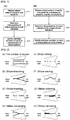
- a method of identifying individual zebrafish according to the present invention includes observing the striped patterns of the anal fin and the caudal fin of individual zebrafish in side view (S11), determining characteristics of each individual from the observed striped patterns (S12), and identifying each individual on the basis of the characteristics obtained (S13).
- Stripes are also present on the dorsal fin and the trunk surface of a zebrafish in addition to those on the anal fin and the caudal fin. However, no distinctive differences in striped patterns between individuals are found on the dorsal fins and trunks of zebrafish. It is therefore difficult to identify individual zebrafish by using differences in the striped patterns of dorsal fins and trunks as indicators.
- individual zebrafish can be non-invasively, simply and reliably identified by using the differences in the striped patterns of anal fins and caudal fins between individuals as indicators.
- the shapes of the dorsal fin, the anal fin, and the caudal fin are observed in side view in addition to the striped patterns of the anal fin and the caudal fin of individual zebrafish (S21). Further characteristics of each individual are determined from the observed striped patterns and fin shapes (S22), and each individual is identified on the basis of the determined characteristics of the striped patterns and the fin shapes (S23).
- each individual can be reliably identified even in a case where identification of individuals among a large number of individuals is difficult based solely on the striped patterns of anal fins and caudal fins.
- the striped patterns of the anal fins and the caudal fins of zebrafish, or the stripes of the anal fins and the caudal fins and the shapes of the dorsal fins, the anal fins, and the caudal fins of zebrafish are observed in side view.
- the striped patterns and the fin shapes may be observed visually in side view.
- a side image of a zebrafish may be taken and the taken image may be observed.
- a side image of a zebrafish may be analyzed and the striped patterns and the fin shapes may be characterized by using an individual identification device, which will be described later.
- zebrafish are preferably put one by one into an aquarium in which a zebrafish can change its swimming direction and swim and advance in the aquarium length direction but cannot move in its front-back (width) direction, and observed in side view while swimming freely in the aquarium, so that the zebrafish can be observed alive in a state in which its fins are open.
- Other examples of the method for observing the striped patterns and the fin shapes in side view include a method of making water flow in one fixed direction in an aquarium so that zebrafish swim in one direction, and observing the zebrafish swimming in one direction in side view, a method of continuously taking images of zebrafish swimming freely in an aquarium, selecting images suitable for observation of the striped patterns and the fin shapes in side view, and performing side-view observation, and a method of comprehensively imaging zebrafish in many directions with multiple imaging devices, selecting images suitable for side-view observation, and performing side-view observation.
- zebrafish can be anesthetized or the like to be temporarily retained for side-view observation.
- side-view observation of zebrafish swimming under an unanesthetized condition is preferable so that the zebrafish are not injured.
- the characteristics of each individual are determined from the observed striped patterns of the anal fin and the caudal fin.
- the dorsal fin also has stripes.
- the dorsal fin is smaller in size than the anal fin and the caudal fin, and no clear stripes distinctively different from those of other individuals can be recognized. Therefore, in the present invention, the striped patterns of the anal fin and the caudal fin among the fins of zebrafish are used as indicators for identification of each individual.
- Examples of the striped patterns of the anal fin and the caudal fin as the indicators for identification of each individual include the presence or absence of a branched stripe, the presence or absence of a divided stripe, the number of stripes, the presence or absence of a curved stripe, and the presence or absence of a width change of a stripe.
- the presence or absence of a branched stripe and the presence or absence of a divided stripe are preferably used as indicators since differences in branching and dividing from other individuals are easily distinguished and since branching and dividing are easily observed even when the opening degrees of the fins vary to some extent during observation of the striped patterns.
- Stripe patterns that are indicators for individual identification will be described with reference to specific examples of striped patterns characteristic of caudal fins of zebrafish illustrated in FIG. 2 .
- the present invention is not limited the illustrated striped patterns. Note that for explanation of indicators for individual identification, FIG. 2 illustrates only characteristic striped patterns and omits the other striped patterns.
- the striped patterns of anal fins are defined similarly to the specific examples of striped patterns of caudal fins.
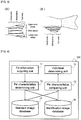
- Stripe pattern characteristics include the number of stripes (see FIG. 2(A) ), stripe branching (see FIG. 2(B) ), stripe breaking (see FIG. 2(C) ), stripe converging (see FIG. 2(D) ), stripe dotting (see FIG. 2(E) ), stripe curving (see FIG. 2(F) ), stripe widening (see FIG. 2(G) ), and stripe narrowing (see FIG. 2(H) ).
- the number of stripes that can be clearly recognized is counted.
- counting the number of stripes of a caudal fin counting the number of stripes extending from the trunk of zebrafish as illustrated in FIG. 2(A) is preferable in terms of simplification of an identification process.
- Stripe branching herein is one form of the aforementioned “branched stripe”. “Stripe branching” refers to a state in which one stripe extending from the head side branches into two or more stripes toward the tail side as illustrated in FIG. 2(B) .
- Stripe breaking herein is one form of the aforementioned “divided stripe”. “Stripe breaking” refers to a state in which a stripe extending from the head side toward the tail side is broken at one or more positions as illustrated in FIG. 2(C) .
- Stripe converging herein is one form of the aforementioned “branched stripe”. “Stripe converging” refers to a state in which two stripes extending separately from the head side converge into one toward the tail side as illustrated in FIG. 2(D) .
- Stripe dotting herein is one form of the aforementioned “divided stripe”. “Stripe dotting” refers to a state in which a stripe extends from the head side toward the tail side in a dotted form as illustrated in FIG. 2(E) .
- Stripe curving herein refers to a state in which a stripe extending from the head side toward the tail side is arched at some portion as illustrated in FIG. 2(F) .
- Stripe widening herein refers to a state in which the width of a stripe changes at some position so that the tail side of the stripe is wider than the head side thereof as illustrated in FIG. 2(G) .
- Stripe narrowing herein refers to a state in which the width of a stripe changes at some position so that the tail side of the stripe is narrower than the head side thereof as illustrated in FIG. 2(H) .
- the aforementioned "divided stripe” specifically, “stripe breaking” and “stripe dotting"
- stripe curving the position in an anal fin or a caudal fin at which such a stripe is present is preferably determined.
- a caudal fin is roughly sectioned such that stripes of the caudal fin that continue to the trunk are first referred to as “main stripes”, and stripes on the upper end side and stripes on the lower end side of the remaining stripes are referred to as “upper end stripes” and “lower end stripes”, respectively.
- a stripe having "stripe branching”, “stripe converging”, “stripe breaking”, “stripe dotting”, “stripe curving", “stripe widening", or “stripe narrowing” is then determined to be a “main stripe", an "upper end stripe", or a “lower end stripe”.
- the caudal fin is roughly sectioned into a head side stripe, a midsection stripe, and a tail side stripe in this order from the head toward the caudal fin, and which of the head side, the midsection, and the tail side a stripe branching portion, a stripe dividing portion, a stripe curving portion, or a stripe width changing portion is present is determined.
- the positions of striped patterns of a caudal fin can be determined in this manner.
- the number of a stripe having "stripe branching”, “stripe converging”, “stripe breaking”, “stripe dotting”, stripe curving”, “stripe widening”, or “stripe narrowing” is determined, in which the number is defined by numbering stripes that are completely separate from the trunk starting from the trunk side.
- the anal fin is then roughly sectioned into head side stripes, midsection stripes, or tail side stripes from the head toward the caudal fin, a stripe branching portion, a stripe dividing portion, a stripe curving portion, or a stripe width changing portion is determined to be present at the head side, the midsection, or the tail side.
- the positions of striped patterns of an anal fin can be determined in this manner.
- the characteristics of each individual are determined from the observed shapes of the dorsal fin, the anal fin, and the caudal fin as necessary.
- characteristic fin shapes include the presence or absence of a defect of a fin.
- the characteristics of individual zebrafish are preferably determined with priority from at least one of the presence or absence of stripe branching, the presence or absence of stripe breaking, the presence or absence of stripe converging, and the presence or absence of stripe dotting. It is more preferable that the position of stripe branching, stripe breaking, stripe converging, or stripe dotting in a fin is also determined.
- Each individual of zebrafish is identified on the basis of the characteristics determined by the methods described above.
- Identification of each individual based on the determined characteristics can be performed by conventional methods. For example, for identification of each individual, the striped patterns, or the striped patterns and the fin shapes of each individual are observed, and characteristics of each individual that are the basis of individual identification are determined. For a stripe having any of the characteristics of "branched stripe” (specifically, “stripe branching” and “stripe converging"), “divided stripe” (specifically, “stripe breaking” and “stripe dotting”), “stripe curving", “stripe widening", and “stripe narrowing" among the striped patterns, the position in an anal fin or a caudal fin at which such a stripe is present is also determined as necessary.
- each individual is bred for a certain period, then the striped patterns or the striped patterns and the fin shapes of each individual are observed again, and the characteristics are determined.
- the position thereof is also determined.
- the characteristics first determined to be the basis of individual identification (specifically, the kinds of striped patterns, characteristic stripe positions, and fin shapes) are compared with the characteristics determined after breeding for the period, and each individual is identified on the basis of the comparison result.
- each of two or more individuals of zebrafish is non-invasively, simply and reliably identified.
- the upper limit of the number of individuals of zebrafish that can be identified by the method according to the present invention is typically about 100, more preferably 80 or smaller, more preferably 60 or smaller, more preferably 40 or smaller, more preferably 24 or smaller, more preferably 16 or smaller, more preferably 10 or smaller, and more preferably 7 or smaller.
- each individual can be identified according to the present invention.
- zebrafish have a habit of living in groups as described above.
- group breeding of breeding two or more zebrafish in one aquarium is typical.
- each individual can be identified according to the present invention.
- a device for identifying individual zebrafish according to the present invention includes: striped pattern information acquiring means for acquiring information of the striped pattern for each of the anal fin and the caudal fin from image data obtained by side-view observation of each individual of two or more zebrafish; striped pattern characteristics determining means for determining characteristics of each individual from the acquired striped pattern information; and individual distinguishing means for distinguishing each individual on the basis of the determined striped pattern characteristics.
- the device for identifying individual zebrafish according to the present invention will be described with reference to FIG. 4 .
- the present invention is not limited thereto.
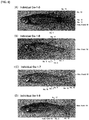
- FIG. 4 conceptually illustrates an example processing configuration of a device for identifying individual zebrafish (hereinafter, also simply referred to as "identification device") 100 that can be suitably used in the present invention.
- the identification device 100 illustrated in FIG. 4 includes a fin information acquiring unit 11, a fin characteristics determining unit 12, a fin characteristics comparing unit 13, an individual determining unit 14, a standard image database 15, and an identification image database 16.
- the identification device 100 illustrated in FIG. 4 is so-called a computer, including a central processing unit (CPU), a memory, an input/output interface, and the like, which are interconnected via a bus, for example.
- the memory is a random access memory (RAM), a read only memory (ROM), a hard disk, a portable storage medium, or the like.
- the input/output interface is connected with a user interface device such as a display device and an input device.
- the input/output interface may be connected with a communication device or the like that performs communication with another computer via a network.
- Image data of fins of zebrafish observed in side view are input from a portable storage medium, another computer, or the like to the fin information acquiring unit 11 via the input/output interface.
- the fin information acquiring unit 11 then acquires information of the striped pattern for each of anal fins and caudal fins from the input image data.
- the fin information acquiring unit 11 preferably acquires information on the shapes of dorsal fins, the anal fins, and the caudal fins in addition to the information on the striped pattern.
- the fin characteristics determining unit 12 determines characteristics of each individual that can be indicators for individual identification from the information on the striped patterns or the striped patterns and the fin shapes acquired by the fin information acquiring unit 11. As necessary, for a stripe having any of the characteristics of "branched stripe”, “divided stripe”, “stripe curving”, “stripe widening”, and “stripe narrowing” among the striped patterns, the position thereof is also determined.
- the characteristics that can be indicators for individual identification are as described above.
- the characteristics of each individual determined by the fin characteristics determining unit 12 are stored together with the image data into the standard image database 15 or the identification image database 16.
- the fin characteristics comparing unit 13 compares a plurality of image data and the information on the characteristics of the fins of each individual stored in the standard image database 15 with a plurality of image data and the information on the characteristics of the fins of each individual stored in the identification image database 16, and performs matching therebetween.
- a method for matching can be selected as appropriate from conventional methods such as the sum of absolute differences (SAD) method, the sum of squared differences (SSD) method, the normalized cross correlation (NCC) method, and the phase-only correlation (POC) method.
- SAD sum of absolute differences
- SSD sum of squared differences
- NCC normalized cross correlation
- POC phase-only correlation
- the individual determining unit 14 identifies each individual on the basis of the comparison result from the fin characteristics comparing unit 13. The result of identification of each individual is then output according to a conventional method.
- the identification device 100 acquires image data of fins of zebrafish observed in side-view by the fin information acquiring unit 11 (S11 or S21). Characteristics of striped patterns or striped patterns and fin shapes are then determined from the acquired image data by the fin characteristics determining unit 12 (S12 or S22). Note that the "striped patterns" used herein include the characteristic positions of the stripes in addition to the kinds of the striped patterns. The characteristics of the fins determined at this point are stored together with the image data in the standard image database 15.
- each individual is bred for a certain period, and acquisition of image data of each individual and determination of the characteristics of the fins are then performed again similarly.
- the characteristics of the fins determined at this point are stored together with the image data in the identification image database 16.
- the information stored in the standard image database 15 and the information stored in the identification image database 16 are then compared with each other by the fin characteristics comparing unit 13, and each individual is identified on the basis of the comparison result by the individual determining unit 14 (S13 or S23).
- the present invention further discloses a method of identifying individual zebrafish, and a device for identifying individual zebrafish as follows.
- the zebrafish were put one by one into a colorless and transparent acrylic aquarium (inside dimension: about 24 mm in width (front-back direction), about 144 mm in length, about 8 cm in water depth). Since the aquarium used here has a width (front-back direction) equal to or smaller than the length of the zebrafish (about 3 to 5 cm), the zebrafish basically swim and advance only in the length direction (lateral direction), and can change the swimming direction as necessary.
- Each of the zebrafish put one by one into the aquarium was let to swim freely, and imaged in a state in which the head was on the left of the observer facing the front of the aquarium and the fins were open so that the entire zebrafish could be observed well with a high-sensitivity digital camera EX-ZR1000 (trade name; produced by CASIO) at a shutter speed of 1/400 second.
- EX-ZR1000 trade name; produced by CASIO
- an additional light was illuminated from obliquely backward of the camera in addition to general illumination to provide sufficient illumination intensity.
- images in a state suitable for observation about two to ten images were taken for one zebrafish.
- images in a state in which the head was on the right of the observer facing the front of the aquarium were similarly taken.
- the characteristics of eight individuals determined from the images taken at the first imaging are described in Tables 2 and 3.
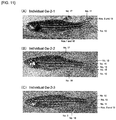
- the images in side view taken at the first imaging and used for determination of the characteristics of the individuals are shown in FIGs. 5 and 6 .
- the positions of stripe portions, which are indicators for individual identification, in the anal fins and the caudal fins were determined. The determined positions are indicated by arrows in FIGs. 5 and 6 .
- Stripe breaking of anal fin present 5 No. 9 Number of stripes of caudal fin: 3 (stripes extending from trunk) 6 No. 17 Defect of dorsal fin: absent 7 No. 19 Defect of caudal fin: absent 0w-1-7 1 No. 3 Stripe breaking of anal fin: present 2 No. 4 Stripe converging of anal fin: present 3 No. 9 Number of stripes of caudal fin: 3 (stripes extending from trunk) 4 No. 10 Stripe branching of caudal fin: present (first portion) 5 No. 10 Stripe branching of caudal fin: present (second portion) 6 No. 18 Defect of anal fin: absent 7 No.
- Characteristics of the fin shapes and the striped patterns were determined similarly to above by using the images taken four weeks later and eight weeks later. In the case of the images of four weeks later and eight weeks later, however, two or more characteristics were determined with priority from stripe branching (Nos. 2 and 10), stripe breaking (Nos. 3 and 11), stripe converging (Nos. 4 and 12), and stripe dotting (Nos. 5 and 13) of the anal fins and the caudal fins.
- the characteristics of the individuals determined from the images of the first imaging were compared with the characteristics of the individuals determined from the images taken four weeks later and eight weeks later, and identification of each individual was performed in a case where two or more characteristics matched with each other and no characteristics was contradictory to each other, and then the individuals were determined to be identical.
- Stripe branching (two portions) and stripe breaking of the caudal fin were found as characteristics of individual 4w-1-1.
- Stripe breaking and stripe narrowing of the caudal fin were found as characteristics of individual 4w-1-2.
- Stripe branching (two portions) and stripe breaking of the anal fin were found as characteristics of individual 4w-1-3.
- Stripe breaking in the anal fin, stripe widening in the caudal fin, absence of defect in the caudal fin, and the number of stripes extending from the trunk being three in the caudal fin are found as characteristics of individual 4w-1-5.
- Stripe breaking in the anal fin and stripe branching in the caudal fin were found as characteristics of individual 4w-1-6.
- Stripe converging in the anal fin and stripe branching (two portions) in the caudal fin were found as characteristics of individual 4w-1-8. Furthermore, absence of defect in the caudal fin and the number of stripes extending from the trunk in the caudal fin being three were also found.
- Stripe branching (two portions) and stripe breaking of the caudal fin were found as characteristics of individual 8w-1-1.
- Individual 8w-1-1 is thus identified to be identical to individual 0w-1-1.
- Stripe branching (two portions) of the anal fin were found as characteristics of individual 8w-1-2.
- Individual 8w-1-2 is thus identified to be identical to individual 0w-1-6.
- Stripe converging of the anal fin and stripe branching (two portions) of the caudal fin were found as characteristics of individual 8w-1-3.
- Individual 8w-1-3 is thus identified to be identical to individual 0w-1-7.
- Stripe branching (two portions) and stripe breaking of the caudal fin were found as characteristics of individual 8w-1-4.
- Stripe breaking of the anal fin and stripe branching (two portions) of the caudal fin were found as characteristics of individual 8w-1-5.
- Individual 8w-1-5 is thus identified to be identical to individual 0w-1-8.
- Individual 8w-1-6 is thus identified to be identical to individual 0w-1-4.
- Stripe breaking and stripe narrowing of the caudal fin were found as characteristics of individual 8w-1-7.
- Individual 8w-1-7 is thus identified to be identical to individual 0w-1-5.
- Individual 8w-1-8 is thus identified to be identical to individual 0w-1-3.
- the eight individuals at the first imaging and the eight individuals of four weeks later or eight weeks later were identified without overlapping with one another.
- Example 1 Nine adult male zebrafish (5 months old, about 3 to 5 cm long) born from the same parent at the same time and grown, which are different from those in Example 1, were used, and the individuals were imaged in side view similarly to Example 1.
- characteristics of the fin shapes and the striped patterns at the first imaging were determined from the items described in Table 1 above by using selected images similarly to Example 1. Furthermore, characteristics of the fin shapes and the striped patterns were determined by using the images taken four weeks later and eight weeks later similarly to Example 1.
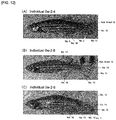
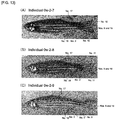
- the characteristics of nine individuals determined from the images taken at the first imaging are described in Tables 7 and 8.
- the images in side view taken at the first imaging and used for determination of the characteristics of the individuals are shown in FIGs. 11 to 13 .
- the positions of stripe portions, which are indicators for individual identification, in the anal fins and the caudal fins were determined. The determined positions were indicated by arrows in FIGs. 11 to 13 .
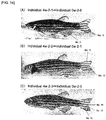
- the characteristics of nine individuals determined from the images taken four weeks later and eight weeks later are described in Tables 9 and 10.
- the images of the individuals in side view taken four weeks later and eight weeks later are shown in FIGs. 14 to 19 .
- the positions of stripe portions, which are indicators for individual identification, in the anal fins and the caudal fins were determined. The determined positions were indicated by arrows in FIGs. 14 to 19 .
- the characteristics of the individuals determined from the images of the first imaging were compared with the characteristics of the individuals determined from the images taken four weeks later and eight weeks later, and identification of each individual was performed in a case where two or more characteristics matched with each other and no characteristics was contradictory to each other, and then the individuals were determined to be identical.
- Stripe branching of the anal fin and stripe breaking of the caudal fin were found as characteristics of individual 4w-2-1.
- Stripe branching and stripe breaking of the caudal fin were found as characteristics of individual 4w-2-2.
- Individual 4w-2-2 is thus identified to be identical to individual 0w-2-1.
- Stripe branching (three portions) of the caudal fin were found as characteristics of individual 4w-2-3.
- Stripe branching and stripe breaking of the anal fin, and stripe branching of the caudal fin were found as characteristics of individual 4w-2-5.
- Stripe branching (three portions) of the caudal fin were found as characteristics of individual 4w-2-6.
- Stripe branching (two portions) of the caudal fin were found as characteristics of individual 4w-2-7.
- Stripe branching (three portions) and stripe converging of the caudal fin were found as characteristics of individual 4w-2-8.
- Stripe breaking and stripe dotting of the anal fin were found as characteristics of individual 4w-2-9.
- Stripe branching (four portions) of the caudal fin were found as characteristics of individual 8w-2-1.
- Individual 8w-2-1 is thus identified to be identical to individual 0w-2-5.
- Stripe branching of the anal fin and stripe breaking of the caudal fin were found as characteristics of individual 8w-2-2.
- Individual 8w-2-2 is thus identified to be identical to individual 0w-2-8.
- Stripe branching (three portions) of the caudal fin were found as characteristics of individual 8w-2-3.
- Individual 8w-2-3 is thus identified to be identical to individual 0w-2-2.
- Stripe breaking and stripe dotting of the anal fin were found as characteristics of individual 8w-2-4.
- Stripe branching, stripe breaking, and stripe widening of the caudal fin were found as characteristics of individual 8w-2-5.
- Individual 8w-2-5 is thus identified to be identical to individual 0w-2-3.
- Stripe branching of the anal fin and stripe branching (three portions) of the caudal fin were found as characteristics of individual 8w-2-6.
- Individual 8w-2-6 is thus identified to be identical to individual 0w-2-7.
- Individual 8w-2-7 is thus identified to be identical to individual 0w-2-4.
- Individual 8w-2-8 is thus identified to be identical to individual 0w-2-1.
- Stripe branching (two portions) and stripe curving of the caudal fin were found as characteristics of individual 8w-2-9.
- the nine individuals at the first imaging and the nine individuals of four weeks later or eight weeks later were identified without overlapping with one another.
Landscapes
- Engineering & Computer Science (AREA)
- Life Sciences & Earth Sciences (AREA)
- Theoretical Computer Science (AREA)
- Environmental Sciences (AREA)
- Physics & Mathematics (AREA)
- General Physics & Mathematics (AREA)
- Computer Vision & Pattern Recognition (AREA)
- Multimedia (AREA)
- Zoology (AREA)
- Animal Husbandry (AREA)
- Biodiversity & Conservation Biology (AREA)
- Marine Sciences & Fisheries (AREA)
- Artificial Intelligence (AREA)
- Evolutionary Computation (AREA)
- Data Mining & Analysis (AREA)
- Health & Medical Sciences (AREA)
- Databases & Information Systems (AREA)
- Computing Systems (AREA)
- General Health & Medical Sciences (AREA)
- Medical Informatics (AREA)
- Software Systems (AREA)
- Geometry (AREA)
- Biophysics (AREA)
- Bioinformatics & Computational Biology (AREA)
- Bioinformatics & Cheminformatics (AREA)
- General Engineering & Computer Science (AREA)
- Human Computer Interaction (AREA)
- Evolutionary Biology (AREA)
- Farming Of Fish And Shellfish (AREA)
- Length Measuring Devices By Optical Means (AREA)
- Image Analysis (AREA)
Claims (15)
- Verfahren zum Identifizieren von einzelnen erwachsenen Zebrafischen (Danio rerio), mit den Schritten:Beobachten (S11) eines Streifenmusters von jeweils einer Afterflosse und einer Schwanzflosse jedes Individuums aus zwei oder mehr Zebrafischen in Seitenansicht unter Verwendung von Bilddaten;Bestimmen (S12) von Merkmalen jedes Individuums aus den beobachteten Streifenmustern; undIdentifizieren (S13) jedes Individuums anhand der ermittelten Merkmale.
- Verfahren nach Anspruch 1, mit den Schritten:Ermitteln der Seitenansicht-Bilddaten durch das Aufnehmen von Seitenansicht-Bildern von Individuen nach Aufzucht über einen festgelegten Zeitraum; undVergleichen der nach Aufzucht über den festgelegten Zeitraum anhand der Seitenansicht-Bilddaten jeweils für die Afterflosse und die Schwanzflosse jedes Individuums ermittelten Streifenmuster-Merkmalsdaten zum Identifizieren von einzelnen Zebrafischen.
- Verfahren nach Anspruch 1 oder 2, wobei jeweils für die Afterflosse und die Schwanzflosse ermittelte Streifenmuster-Merkmalsdaten durch Verweis auf eine Standardbilddatenbank (15), in der die ermittelten Seitenansicht-Bilddaten von Individuen gespeichert sind, verglichen werden.
- Verfahren nach einem der Ansprüche 1 bis 3, wobei es sich bei den Streifenmuster-Merkmalsdaten jeweils für die Afterflosse und die Schwanzflosse wenigstens um eines handelt, das ausgewählt ist aus der Gruppe aus dem Vorhandensein oder Fehlen eines verzweigten Streifens, dem Vorhandensein oder Fehlen eines geteilten Streifens, der Anzahl der Streifen, dem Vorhandensein oder Fehlen eines geschwungenen Streifens und dem Vorhandensein oder Fehlen einer Breitenänderung eines Streifens.
- Verfahren nach Anspruch 4, wobei für den Streifen, der einen verzweigten Streifen, einen geteilten Streifen, einen geschwungenen Streifen oder eine Breitenänderung eines Streifens aufweist, eine Position davon bestimmt wird.
- Verfahren nach einem der Ansprüche 1 bis 5, wobei die Merkmalsdaten für das Individuum Merkmalsdaten für die Flossenformen aufweisen, einschließlich Daten über das Vorhandensein oder Fehlen eines Defekts einer Rückenflosse, der Afterflosse und der Schwanzflosse für jedes Individuums.
- Verfahren nach einem der Ansprüche 1 bis 6, mit den Schritten:Bestimmen (S22) von Streifenmuster-Merkmalen jeweils für die Afterflosse und die Schwanzflosse oder des Streifenmuster jeweils für die Afterflosse und die Schwanzflosse sowie die Flossenform jeweils für die Rückenflosse, die Afterflosse und die Schwanzflosse jedes Individuums aus den Seitenansicht-Bilddaten des Individuums zur Erstellung von Merkmalsdaten;Ermitteln von Seitenansicht-Bilddaten durch erneutes Aufnehmen von Seitenansicht-Bildern eines Individuums nach Aufzucht über den festgelegten Zeitraum; undIdentifizieren (S23) jedes Individuums anhand eines Vergleichsergebnisses, wobei die Merkmalsdaten jedes Individuums mit den Streifenmuster-Merkmalsdaten jeweils für die Afterflosse und die Schwanzflosse, oder mit dem Streifenmuster für die Afterflosse und die Schwanzflosse sowie die Flossenform für die Rückenflosse, die Afterflosse und die Schwanzflosse verglichen werden, die aus den Seitenansichtsbilddaten nach Aufzucht über einen festgelegten Zeitraum ermittelt werden.
- Verfahren nach einem der Ansprüche 1 bis 7, wobei das Seitenansicht-Bild des freischwimmenden Zebrafisches in einem nicht betäubten Zustand aufgenommen wird.
- Verfahren nach einem der Ansprüche 1 bis 8, wobei die Zebrafische einzeln in ein Aquarium gesetzt werden, in dem ein Zebrafisch seine Schwimmrichtung ändern und in Längsrichtung des Aquariums schwimmen und sich vorwärts bewegen kann, sich aber nicht in dessen vorne-hinten-Richtung bewegen kann, und ein Seitenansicht-Bild des Zebrafischs aufgenommen wird, während dieser frei im Aquarium schwimmt.
- Vorrichtung zum Identifizieren von einzelnen erwachsenen Zebrafischen (Danio rerio) mit:einem Streifenmuster-Informationserfassungsmittel zum Erfassen von Informationen über ein Streifenmuster jeweils für eine Afterflosse und eine Schwanzflosse aus Bilddaten, die durch Seitenansicht-Beobachtung jedes Individuums aus zwei oder mehr Zebrafischen gewonnen werden;Mittel zum Bestimmen von Streifenmuster-Merkmalen zum Bestimmen von Merkmalen jedes Individuums aus den erfassten Streifenmuster-Informationen; undIndividuum-Unterscheidungsmittel zum Unterscheiden jedes Individuums anhand der bestimmten Streifenmuster-Merkmale.
- Vorrichtung nach Anspruch 10, wobei es sich bei den Merkmalen um wenigstens eines handelt, das ausgewählt ist aus der Gruppe bestehend aus dem Vorhandensein oder Fehlen eines verzweigten Streifens, dem Vorhandensein oder Fehlen eines geteilten Streifens, der Anzahl der Streifen, dem Vorhandensein oder Fehlen eines geschwungenen Streifens und dem Vorhandensein oder Fehlen einer Breitenänderung eines Streifens.
- Vorrichtung nach Anspruch 11, wobei das Bestimmungsmittel ferner konfiguriert ist, um eine Position eines Streifens mit einem verzweigten Streifen, einem geteilten Streifen, einem geschwungenen Streifen oder einer Breitenänderung eines Streifens zu bestimmen.
- Vorrichtung nach einem der Ansprüche 10 bis 12 mit:Flossenform-Informationserfassungsmittel zum Erfassen von Informationen über Formen einschließlich des Vorhandenseins oder Fehlens eines Defekts einer Rückenflosse, der Afterflosse und der Schwanzflosse aus den Bilddaten; undFlossenform-Merkmalsbestimmungsmittel zum Bestimmen von Merkmalen jedes Individuums aus den erfassten Flossenform-Informationen.
- Vorrichtung nach einem der Ansprüche 10 bis 13 miteiner Datenbank zum Speichern von Informationen über Merkmale, die für Zebrafische vor Aufzucht für einen festgelegten Zeitraum bestimmt wurden; undeiner Datenbank zum Speichern von Informationen über Merkmale, die für die Zebrafische nach Aufzucht für einen festgelegten Zeitraum bestimmt wurden;wobei das Individuum-Unterscheidungsmittel die in den beiden Datenbanken gespeicherten Informationen miteinander vergleicht und jedes Individuum anhand eines Vergleichsergebnisses identifiziert.
- Vorrichtung nach einem der Ansprüche 10 bis 14, wobei das Streifenmuster-Informationserfassungsmittel so konfiguriert ist, dass es Streifenmuster-Informationen jeweils für die Afterflosse und die Schwanzflosse aus Bilddaten ermittelt, die in Seitenansicht beobachtet wurden, während die Zebrafische frei im Aquarium schwimmen.
Applications Claiming Priority (1)
| Application Number | Priority Date | Filing Date | Title |
|---|---|---|---|
| PCT/JP2016/053476 WO2017134812A1 (ja) | 2016-02-05 | 2016-02-05 | ゼブラフィッシュの個体識別方法 |
Publications (3)
| Publication Number | Publication Date |
|---|---|
| EP3412147A1 EP3412147A1 (de) | 2018-12-12 |
| EP3412147A4 EP3412147A4 (de) | 2019-09-04 |
| EP3412147B1 true EP3412147B1 (de) | 2021-09-08 |
Family
ID=58185981
Family Applications (1)
| Application Number | Title | Priority Date | Filing Date |
|---|---|---|---|
| EP16889298.2A Active EP3412147B1 (de) | 2016-02-05 | 2016-02-05 | Einzelidentifikationsverfahren für zebrafisch |
Country Status (5)
| Country | Link |
|---|---|
| US (1) | US10750723B2 (de) |
| EP (1) | EP3412147B1 (de) |
| JP (1) | JP6088709B1 (de) |
| CN (1) | CN108601337B (de) |
| WO (1) | WO2017134812A1 (de) |
Families Citing this family (6)
| Publication number | Priority date | Publication date | Assignee | Title |
|---|---|---|---|---|
| JP6650984B1 (ja) * | 2018-10-03 | 2020-02-19 | 株式会社メビウス | 錦鯉の個体識別方法 |
| CN109275609B (zh) * | 2018-11-14 | 2021-06-01 | 常州大学 | 基于图像处理的常见淡水鱼种类自动识别方法 |
| CN111666897A (zh) * | 2020-06-08 | 2020-09-15 | 鲁东大学 | 基于卷积神经网络的斑石鲷个体识别方法 |
| CN116669544B (zh) * | 2020-12-21 | 2025-09-19 | 株式会社瑞普 | 信息处理装置、信息处理方法及非临时记录介质 |
| JP7661421B2 (ja) * | 2023-07-31 | 2025-04-14 | 株式会社神鋼環境ソリューション | 魚個体識別方法、該装置および該プログラム |
| CN118865083B (zh) * | 2024-07-02 | 2025-12-05 | 中国水产科学研究院黄海水产研究所 | 大菱鲆个体生长表型高通量跟踪测量方法、介质、装置及其应用 |
Family Cites Families (7)
| Publication number | Priority date | Publication date | Assignee | Title |
|---|---|---|---|---|
| KR100309253B1 (ko) * | 1999-04-29 | 2001-09-29 | 김윤규, 정주영, 심옥진, 정몽헌 | 어류를 이용한 화상감시용 수조 |
| JP2005328725A (ja) * | 2004-05-18 | 2005-12-02 | Oriental Giken Kogyo Kk | 実験用生物育成管理システムおよび実験用生物育成管理方法 |
| NO330863B1 (no) * | 2007-07-09 | 2011-08-01 | Feed Control Norway As | Anordning og fremgangsmate for snittvektsmaling og appetittforing i oppdrettsanlegg |
| US20100119119A1 (en) * | 2008-11-07 | 2010-05-13 | General Electric Company | Automated systems and methods for screening zebrafish |
| US8710294B2 (en) * | 2011-02-14 | 2014-04-29 | National Tsing Hua University | Transparent zebrafish and preparation method thereof |
| WO2013024665A1 (ja) * | 2011-08-16 | 2013-02-21 | 日本電気株式会社 | 特徴点対応付けシステム、特徴点対応付け方法、および記録媒体 |
| US9524515B2 (en) | 2012-12-06 | 2016-12-20 | Fishbrain AB | Method and system for logging and processing data relating to an activity |
-
2016
- 2016-02-05 US US16/068,401 patent/US10750723B2/en active Active
- 2016-02-05 EP EP16889298.2A patent/EP3412147B1/de active Active
- 2016-02-05 WO PCT/JP2016/053476 patent/WO2017134812A1/ja not_active Ceased
- 2016-02-05 CN CN201680081020.3A patent/CN108601337B/zh active Active
- 2016-02-05 JP JP2016535068A patent/JP6088709B1/ja active Active
Also Published As
| Publication number | Publication date |
|---|---|
| CN108601337A (zh) | 2018-09-28 |
| EP3412147A1 (de) | 2018-12-12 |
| WO2017134812A1 (ja) | 2017-08-10 |
| JPWO2017134812A1 (ja) | 2018-02-08 |
| US10750723B2 (en) | 2020-08-25 |
| CN108601337B (zh) | 2021-05-18 |
| US20190014750A1 (en) | 2019-01-17 |
| JP6088709B1 (ja) | 2017-03-01 |
| EP3412147A4 (de) | 2019-09-04 |
Similar Documents
| Publication | Publication Date | Title |
|---|---|---|
| EP3412147A1 (de) | Einzelidentifikationsverfahren für zebrafisch | |
| Parichy et al. | Normal table of postembryonic zebrafish development: staging by externally visible anatomy of the living fish | |
| Georgakopoulou et al. | The influence of temperature during early life on phenotypic expression at later ontogenetic stages in sea bass | |
| NO348646B1 (en) | Methods and systems for predicting smoltification in fish through non-invasive means | |
| Ciezarek et al. | Whole genome resequencing data enables a targeted SNP panel for conservation and aquaculture of Oreochromis cichlid fishes | |
| Liu et al. | Molecular parentage analysis is essential in breeding Asian seabass | |
| Gómez et al. | Egg recognition: The importance of quantifying multiple repeatable features as visual identity signals | |
| de Assis Lago et al. | Quantitative analysis of black blotching in a crossbred red tilapia and its effects on performance traits via a path analysis methodology | |
| Montoya-López et al. | Body shape variation between farms of tilapia (Oreochromis sp.) in Colombian Andes using landmark-based geometric morphometrics | |
| Beraldo et al. | Recovery of opercular anomalies in gilthead sea bream, Sparus aurata L.: morphological and morphometric analysis | |
| Esposito et al. | First report of recurrent parthenogenesis as an adaptive reproductive strategy in the endangered common smooth-hound shark Mustelus mustelus | |
| Wei et al. | Shape and ontogenetic changes in otolith of the ocellated icefish (Chionodraco rastrospinosus) from the Bransfield Strait, Antarctic | |
| Carrillo et al. | Morphological malformations of the lateral line in reared gilthead sea bream (Sparus aurata L. 1758) | |
| Lindberg et al. | Digital scoring of welfare traits in Atlantic salmon (Salmo salar L.)-a proof of concept study quantifying dorsal fin haemorrhaging via hyperspectral imaging | |
| Gould et al. | Dragon detectives: citizen science confirms photo-ID as an effective tool for monitoring an endangered reptile | |
| Gagliano et al. | Spot the difference: mimicry in a coral reef fish | |
| Qiao et al. | Pelagic–benthic resource polymorphism in Schizopygopsis thermalis Herzenstein 1891 (Pisces, Cyprinidae) in a headwater lake in the Salween River system on the Tibetan Plateau | |
| Johnson et al. | Interclutch variability in egg characteristics in two species of rail: Is maternal identity encoded in eggshell patterns? | |
| Alwes et al. | The early development of the onychopod cladoceran Bythotrephes longimanus (Crustacea, Branchiopoda) | |
| Bruner et al. | Fractal analysis of the egg shell ornamentation in anostracans cysts: a quantitative approach to the morphological variations in Chirocephalus ruffoi | |
| JP6679474B2 (ja) | ゼブラフィッシュの個体識別方法 | |
| Okomoda et al. | Erythrocyte characteristics of the progenies of pure and reciprocal crosses of Pangasianodon hypophthalmus (Sauvage, 1878) and Clarias gariepinus (Burchell, 1822) | |
| Haffray et al. | Reprint of: Genetic parameters of in-vivo prediction of carcass, head and fillet yields by internal ultrasound and 2D external imagery in large rainbow trout (Oncorhynchus mykiss) | |
| Soler et al. | Detecting intraspecific hybrids in Testudo hermanni (Gmelin 1789) | |
| Seiler et al. | Morphological patterns of hybridization between Yellowstone cutthroat trout and introduced rainbow trout in the South Fork of the Snake River watershed, Idaho and Wyoming |
Legal Events
| Date | Code | Title | Description |
|---|---|---|---|
| STAA | Information on the status of an ep patent application or granted ep patent |
Free format text: STATUS: THE INTERNATIONAL PUBLICATION HAS BEEN MADE |
|
| PUAI | Public reference made under article 153(3) epc to a published international application that has entered the european phase |
Free format text: ORIGINAL CODE: 0009012 |
|
| STAA | Information on the status of an ep patent application or granted ep patent |
Free format text: STATUS: REQUEST FOR EXAMINATION WAS MADE |
|
| 17P | Request for examination filed |
Effective date: 20180905 |
|
| AK | Designated contracting states |
Kind code of ref document: A1 Designated state(s): AL AT BE BG CH CY CZ DE DK EE ES FI FR GB GR HR HU IE IS IT LI LT LU LV MC MK MT NL NO PL PT RO RS SE SI SK SM TR |
|
| AX | Request for extension of the european patent |
Extension state: BA ME |
|
| DAV | Request for validation of the european patent (deleted) | ||
| DAX | Request for extension of the european patent (deleted) | ||
| A4 | Supplementary search report drawn up and despatched |
Effective date: 20190805 |
|
| RIC1 | Information provided on ipc code assigned before grant |
Ipc: A01K 67/00 20060101AFI20190729BHEP Ipc: A01K 61/10 20170101ALI20190729BHEP Ipc: A01K 67/02 20060101ALI20190729BHEP |
|
| GRAP | Despatch of communication of intention to grant a patent |
Free format text: ORIGINAL CODE: EPIDOSNIGR1 |
|
| STAA | Information on the status of an ep patent application or granted ep patent |
Free format text: STATUS: GRANT OF PATENT IS INTENDED |
|
| RIC1 | Information provided on ipc code assigned before grant |
Ipc: A01K 61/10 20170101ALI20210414BHEP Ipc: A01K 67/02 20060101ALI20210414BHEP Ipc: A01K 67/00 20060101AFI20210414BHEP |
|
| INTG | Intention to grant announced |
Effective date: 20210506 |
|
| GRAS | Grant fee paid |
Free format text: ORIGINAL CODE: EPIDOSNIGR3 |
|
| GRAA | (expected) grant |
Free format text: ORIGINAL CODE: 0009210 |
|
| STAA | Information on the status of an ep patent application or granted ep patent |
Free format text: STATUS: THE PATENT HAS BEEN GRANTED |
|
| RAP3 | Party data changed (applicant data changed or rights of an application transferred) |
Owner name: KAO CORPORATION |
|
| AK | Designated contracting states |
Kind code of ref document: B1 Designated state(s): AL AT BE BG CH CY CZ DE DK EE ES FI FR GB GR HR HU IE IS IT LI LT LU LV MC MK MT NL NO PL PT RO RS SE SI SK SM TR |
|
| REG | Reference to a national code |
Ref country code: GB Ref legal event code: FG4D |
|
| REG | Reference to a national code |
Ref country code: AT Ref legal event code: REF Ref document number: 1427694 Country of ref document: AT Kind code of ref document: T Effective date: 20210915 Ref country code: CH Ref legal event code: EP |
|
| REG | Reference to a national code |
Ref country code: IE Ref legal event code: FG4D |
|
| REG | Reference to a national code |
Ref country code: DE Ref legal event code: R096 Ref document number: 602016063592 Country of ref document: DE |
|
| REG | Reference to a national code |
Ref country code: LT Ref legal event code: MG9D |
|
| REG | Reference to a national code |
Ref country code: NL Ref legal event code: MP Effective date: 20210908 |
|
| PG25 | Lapsed in a contracting state [announced via postgrant information from national office to epo] |
Ref country code: SE Free format text: LAPSE BECAUSE OF FAILURE TO SUBMIT A TRANSLATION OF THE DESCRIPTION OR TO PAY THE FEE WITHIN THE PRESCRIBED TIME-LIMIT Effective date: 20210908 Ref country code: RS Free format text: LAPSE BECAUSE OF FAILURE TO SUBMIT A TRANSLATION OF THE DESCRIPTION OR TO PAY THE FEE WITHIN THE PRESCRIBED TIME-LIMIT Effective date: 20210908 Ref country code: NO Free format text: LAPSE BECAUSE OF FAILURE TO SUBMIT A TRANSLATION OF THE DESCRIPTION OR TO PAY THE FEE WITHIN THE PRESCRIBED TIME-LIMIT Effective date: 20211208 Ref country code: FI Free format text: LAPSE BECAUSE OF FAILURE TO SUBMIT A TRANSLATION OF THE DESCRIPTION OR TO PAY THE FEE WITHIN THE PRESCRIBED TIME-LIMIT Effective date: 20210908 Ref country code: ES Free format text: LAPSE BECAUSE OF FAILURE TO SUBMIT A TRANSLATION OF THE DESCRIPTION OR TO PAY THE FEE WITHIN THE PRESCRIBED TIME-LIMIT Effective date: 20210908 Ref country code: HR Free format text: LAPSE BECAUSE OF FAILURE TO SUBMIT A TRANSLATION OF THE DESCRIPTION OR TO PAY THE FEE WITHIN THE PRESCRIBED TIME-LIMIT Effective date: 20210908 Ref country code: LT Free format text: LAPSE BECAUSE OF FAILURE TO SUBMIT A TRANSLATION OF THE DESCRIPTION OR TO PAY THE FEE WITHIN THE PRESCRIBED TIME-LIMIT Effective date: 20210908 Ref country code: BG Free format text: LAPSE BECAUSE OF FAILURE TO SUBMIT A TRANSLATION OF THE DESCRIPTION OR TO PAY THE FEE WITHIN THE PRESCRIBED TIME-LIMIT Effective date: 20211208 |
|
| REG | Reference to a national code |
Ref country code: AT Ref legal event code: MK05 Ref document number: 1427694 Country of ref document: AT Kind code of ref document: T Effective date: 20210908 |
|
| PG25 | Lapsed in a contracting state [announced via postgrant information from national office to epo] |
Ref country code: LV Free format text: LAPSE BECAUSE OF FAILURE TO SUBMIT A TRANSLATION OF THE DESCRIPTION OR TO PAY THE FEE WITHIN THE PRESCRIBED TIME-LIMIT Effective date: 20210908 Ref country code: GR Free format text: LAPSE BECAUSE OF FAILURE TO SUBMIT A TRANSLATION OF THE DESCRIPTION OR TO PAY THE FEE WITHIN THE PRESCRIBED TIME-LIMIT Effective date: 20211209 |
|
| PG25 | Lapsed in a contracting state [announced via postgrant information from national office to epo] |
Ref country code: AT Free format text: LAPSE BECAUSE OF FAILURE TO SUBMIT A TRANSLATION OF THE DESCRIPTION OR TO PAY THE FEE WITHIN THE PRESCRIBED TIME-LIMIT Effective date: 20210908 |
|
| PG25 | Lapsed in a contracting state [announced via postgrant information from national office to epo] |
Ref country code: IS Free format text: LAPSE BECAUSE OF FAILURE TO SUBMIT A TRANSLATION OF THE DESCRIPTION OR TO PAY THE FEE WITHIN THE PRESCRIBED TIME-LIMIT Effective date: 20220108 Ref country code: SM Free format text: LAPSE BECAUSE OF FAILURE TO SUBMIT A TRANSLATION OF THE DESCRIPTION OR TO PAY THE FEE WITHIN THE PRESCRIBED TIME-LIMIT Effective date: 20210908 Ref country code: SK Free format text: LAPSE BECAUSE OF FAILURE TO SUBMIT A TRANSLATION OF THE DESCRIPTION OR TO PAY THE FEE WITHIN THE PRESCRIBED TIME-LIMIT Effective date: 20210908 Ref country code: RO Free format text: LAPSE BECAUSE OF FAILURE TO SUBMIT A TRANSLATION OF THE DESCRIPTION OR TO PAY THE FEE WITHIN THE PRESCRIBED TIME-LIMIT Effective date: 20210908 Ref country code: PT Free format text: LAPSE BECAUSE OF FAILURE TO SUBMIT A TRANSLATION OF THE DESCRIPTION OR TO PAY THE FEE WITHIN THE PRESCRIBED TIME-LIMIT Effective date: 20220110 Ref country code: PL Free format text: LAPSE BECAUSE OF FAILURE TO SUBMIT A TRANSLATION OF THE DESCRIPTION OR TO PAY THE FEE WITHIN THE PRESCRIBED TIME-LIMIT Effective date: 20210908 Ref country code: NL Free format text: LAPSE BECAUSE OF FAILURE TO SUBMIT A TRANSLATION OF THE DESCRIPTION OR TO PAY THE FEE WITHIN THE PRESCRIBED TIME-LIMIT Effective date: 20210908 Ref country code: EE Free format text: LAPSE BECAUSE OF FAILURE TO SUBMIT A TRANSLATION OF THE DESCRIPTION OR TO PAY THE FEE WITHIN THE PRESCRIBED TIME-LIMIT Effective date: 20210908 Ref country code: CZ Free format text: LAPSE BECAUSE OF FAILURE TO SUBMIT A TRANSLATION OF THE DESCRIPTION OR TO PAY THE FEE WITHIN THE PRESCRIBED TIME-LIMIT Effective date: 20210908 Ref country code: AL Free format text: LAPSE BECAUSE OF FAILURE TO SUBMIT A TRANSLATION OF THE DESCRIPTION OR TO PAY THE FEE WITHIN THE PRESCRIBED TIME-LIMIT Effective date: 20210908 |
|
| REG | Reference to a national code |
Ref country code: DE Ref legal event code: R097 Ref document number: 602016063592 Country of ref document: DE |
|
| PLBE | No opposition filed within time limit |
Free format text: ORIGINAL CODE: 0009261 |
|
| STAA | Information on the status of an ep patent application or granted ep patent |
Free format text: STATUS: NO OPPOSITION FILED WITHIN TIME LIMIT |
|
| PG25 | Lapsed in a contracting state [announced via postgrant information from national office to epo] |
Ref country code: DK Free format text: LAPSE BECAUSE OF FAILURE TO SUBMIT A TRANSLATION OF THE DESCRIPTION OR TO PAY THE FEE WITHIN THE PRESCRIBED TIME-LIMIT Effective date: 20210908 |
|
| 26N | No opposition filed |
Effective date: 20220609 |
|
| PG25 | Lapsed in a contracting state [announced via postgrant information from national office to epo] |
Ref country code: SI Free format text: LAPSE BECAUSE OF FAILURE TO SUBMIT A TRANSLATION OF THE DESCRIPTION OR TO PAY THE FEE WITHIN THE PRESCRIBED TIME-LIMIT Effective date: 20210908 |
|
| PG25 | Lapsed in a contracting state [announced via postgrant information from national office to epo] |
Ref country code: MC Free format text: LAPSE BECAUSE OF FAILURE TO SUBMIT A TRANSLATION OF THE DESCRIPTION OR TO PAY THE FEE WITHIN THE PRESCRIBED TIME-LIMIT Effective date: 20210908 |
|
| REG | Reference to a national code |
Ref country code: CH Ref legal event code: PL |
|
| REG | Reference to a national code |
Ref country code: BE Ref legal event code: MM Effective date: 20220228 |
|
| PG25 | Lapsed in a contracting state [announced via postgrant information from national office to epo] |
Ref country code: LU Free format text: LAPSE BECAUSE OF NON-PAYMENT OF DUE FEES Effective date: 20220205 |
|
| PG25 | Lapsed in a contracting state [announced via postgrant information from national office to epo] |
Ref country code: LI Free format text: LAPSE BECAUSE OF NON-PAYMENT OF DUE FEES Effective date: 20220228 Ref country code: IT Free format text: LAPSE BECAUSE OF FAILURE TO SUBMIT A TRANSLATION OF THE DESCRIPTION OR TO PAY THE FEE WITHIN THE PRESCRIBED TIME-LIMIT Effective date: 20210908 Ref country code: IE Free format text: LAPSE BECAUSE OF NON-PAYMENT OF DUE FEES Effective date: 20220205 Ref country code: CH Free format text: LAPSE BECAUSE OF NON-PAYMENT OF DUE FEES Effective date: 20220228 |
|
| PG25 | Lapsed in a contracting state [announced via postgrant information from national office to epo] |
Ref country code: BE Free format text: LAPSE BECAUSE OF NON-PAYMENT OF DUE FEES Effective date: 20220228 |
|
| P01 | Opt-out of the competence of the unified patent court (upc) registered |
Effective date: 20230522 |
|
| PG25 | Lapsed in a contracting state [announced via postgrant information from national office to epo] |
Ref country code: HU Free format text: LAPSE BECAUSE OF FAILURE TO SUBMIT A TRANSLATION OF THE DESCRIPTION OR TO PAY THE FEE WITHIN THE PRESCRIBED TIME-LIMIT; INVALID AB INITIO Effective date: 20160205 |
|
| PG25 | Lapsed in a contracting state [announced via postgrant information from national office to epo] |
Ref country code: MK Free format text: LAPSE BECAUSE OF FAILURE TO SUBMIT A TRANSLATION OF THE DESCRIPTION OR TO PAY THE FEE WITHIN THE PRESCRIBED TIME-LIMIT Effective date: 20210908 Ref country code: CY Free format text: LAPSE BECAUSE OF FAILURE TO SUBMIT A TRANSLATION OF THE DESCRIPTION OR TO PAY THE FEE WITHIN THE PRESCRIBED TIME-LIMIT Effective date: 20210908 |
|
| PG25 | Lapsed in a contracting state [announced via postgrant information from national office to epo] |
Ref country code: MT Free format text: LAPSE BECAUSE OF FAILURE TO SUBMIT A TRANSLATION OF THE DESCRIPTION OR TO PAY THE FEE WITHIN THE PRESCRIBED TIME-LIMIT Effective date: 20210908 |
|
| PG25 | Lapsed in a contracting state [announced via postgrant information from national office to epo] |
Ref country code: TR Free format text: LAPSE BECAUSE OF FAILURE TO SUBMIT A TRANSLATION OF THE DESCRIPTION OR TO PAY THE FEE WITHIN THE PRESCRIBED TIME-LIMIT Effective date: 20210908 |
|
| PGFP | Annual fee paid to national office [announced via postgrant information from national office to epo] |
Ref country code: FR Payment date: 20251231 Year of fee payment: 11 |
|
| PGFP | Annual fee paid to national office [announced via postgrant information from national office to epo] |
Ref country code: GB Payment date: 20260106 Year of fee payment: 11 |
|
| PGFP | Annual fee paid to national office [announced via postgrant information from national office to epo] |
Ref country code: DE Payment date: 20251230 Year of fee payment: 11 |