EP3390630B1 - Polynucleotides encoding methylmalonyl-coa mutase - Google Patents
Polynucleotides encoding methylmalonyl-coa mutase Download PDFInfo
- Publication number
- EP3390630B1 EP3390630B1 EP16822592.8A EP16822592A EP3390630B1 EP 3390630 B1 EP3390630 B1 EP 3390630B1 EP 16822592 A EP16822592 A EP 16822592A EP 3390630 B1 EP3390630 B1 EP 3390630B1
- Authority
- EP
- European Patent Office
- Prior art keywords
- mir
- utp
- polynucleotide
- methyl
- methoxy
- Prior art date
- Legal status (The legal status is an assumption and is not a legal conclusion. Google has not performed a legal analysis and makes no representation as to the accuracy of the status listed.)
- Active
Links
Images








Classifications
-
- A—HUMAN NECESSITIES
- A61—MEDICAL OR VETERINARY SCIENCE; HYGIENE
- A61K—PREPARATIONS FOR MEDICAL, DENTAL OR TOILETRY PURPOSES
- A61K38/00—Medicinal preparations containing peptides
- A61K38/16—Peptides having more than 20 amino acids; Gastrins; Somatostatins; Melanotropins; Derivatives thereof
- A61K38/43—Enzymes; Proenzymes; Derivatives thereof
- A61K38/52—Isomerases (5)
-
- A—HUMAN NECESSITIES
- A61—MEDICAL OR VETERINARY SCIENCE; HYGIENE
- A61K—PREPARATIONS FOR MEDICAL, DENTAL OR TOILETRY PURPOSES
- A61K48/00—Medicinal preparations containing genetic material which is inserted into cells of the living body to treat genetic diseases; Gene therapy
- A61K48/005—Medicinal preparations containing genetic material which is inserted into cells of the living body to treat genetic diseases; Gene therapy characterised by an aspect of the 'active' part of the composition delivered, i.e. the nucleic acid delivered
-
- A—HUMAN NECESSITIES
- A61—MEDICAL OR VETERINARY SCIENCE; HYGIENE
- A61K—PREPARATIONS FOR MEDICAL, DENTAL OR TOILETRY PURPOSES
- A61K9/00—Medicinal preparations characterised by special physical form
- A61K9/10—Dispersions; Emulsions
- A61K9/127—Synthetic bilayered vehicles, e.g. liposomes or liposomes with cholesterol as the only non-phosphatidyl surfactant
- A61K9/1271—Non-conventional liposomes, e.g. PEGylated liposomes or liposomes coated or grafted with polymers
- A61K9/1272—Non-conventional liposomes, e.g. PEGylated liposomes or liposomes coated or grafted with polymers comprising non-phosphatidyl surfactants as bilayer-forming substances, e.g. cationic lipids or non-phosphatidyl liposomes coated or grafted with polymers
-
- A—HUMAN NECESSITIES
- A61—MEDICAL OR VETERINARY SCIENCE; HYGIENE
- A61K—PREPARATIONS FOR MEDICAL, DENTAL OR TOILETRY PURPOSES
- A61K9/00—Medicinal preparations characterised by special physical form
- A61K9/48—Preparations in capsules, e.g. of gelatin, of chocolate
- A61K9/50—Microcapsules having a gas, liquid or semi-solid filling; Solid microparticles or pellets surrounded by a distinct coating layer, e.g. coated microspheres, coated drug crystals
- A61K9/51—Nanocapsules; Nanoparticles
- A61K9/5107—Excipients; Inactive ingredients
- A61K9/5123—Organic compounds, e.g. fats, sugars
-
- A—HUMAN NECESSITIES
- A61—MEDICAL OR VETERINARY SCIENCE; HYGIENE
- A61P—SPECIFIC THERAPEUTIC ACTIVITY OF CHEMICAL COMPOUNDS OR MEDICINAL PREPARATIONS
- A61P3/00—Drugs for disorders of the metabolism
-
- A—HUMAN NECESSITIES
- A61—MEDICAL OR VETERINARY SCIENCE; HYGIENE
- A61P—SPECIFIC THERAPEUTIC ACTIVITY OF CHEMICAL COMPOUNDS OR MEDICINAL PREPARATIONS
- A61P43/00—Drugs for specific purposes, not provided for in groups A61P1/00-A61P41/00
-
- C—CHEMISTRY; METALLURGY
- C12—BIOCHEMISTRY; BEER; SPIRITS; WINE; VINEGAR; MICROBIOLOGY; ENZYMOLOGY; MUTATION OR GENETIC ENGINEERING
- C12N—MICROORGANISMS OR ENZYMES; COMPOSITIONS THEREOF; PROPAGATING, PRESERVING, OR MAINTAINING MICROORGANISMS; MUTATION OR GENETIC ENGINEERING; CULTURE MEDIA
- C12N15/00—Mutation or genetic engineering; DNA or RNA concerning genetic engineering, vectors, e.g. plasmids, or their isolation, preparation or purification; Use of hosts therefor
- C12N15/09—Recombinant DNA-technology
- C12N15/11—DNA or RNA fragments; Modified forms thereof; Non-coding nucleic acids having a biological activity
- C12N15/52—Genes encoding for enzymes or proenzymes
-
- C—CHEMISTRY; METALLURGY
- C12—BIOCHEMISTRY; BEER; SPIRITS; WINE; VINEGAR; MICROBIOLOGY; ENZYMOLOGY; MUTATION OR GENETIC ENGINEERING
- C12N—MICROORGANISMS OR ENZYMES; COMPOSITIONS THEREOF; PROPAGATING, PRESERVING, OR MAINTAINING MICROORGANISMS; MUTATION OR GENETIC ENGINEERING; CULTURE MEDIA
- C12N15/00—Mutation or genetic engineering; DNA or RNA concerning genetic engineering, vectors, e.g. plasmids, or their isolation, preparation or purification; Use of hosts therefor
- C12N15/09—Recombinant DNA-technology
- C12N15/87—Introduction of foreign genetic material using processes not otherwise provided for, e.g. co-transformation
- C12N15/88—Introduction of foreign genetic material using processes not otherwise provided for, e.g. co-transformation using microencapsulation, e.g. using amphiphile liposome vesicle
-
- C—CHEMISTRY; METALLURGY
- C12—BIOCHEMISTRY; BEER; SPIRITS; WINE; VINEGAR; MICROBIOLOGY; ENZYMOLOGY; MUTATION OR GENETIC ENGINEERING
- C12N—MICROORGANISMS OR ENZYMES; COMPOSITIONS THEREOF; PROPAGATING, PRESERVING, OR MAINTAINING MICROORGANISMS; MUTATION OR GENETIC ENGINEERING; CULTURE MEDIA
- C12N9/00—Enzymes; Proenzymes; Compositions thereof; Processes for preparing, activating, inhibiting, separating or purifying enzymes
- C12N9/90—Isomerases (5.)
-
- C—CHEMISTRY; METALLURGY
- C12—BIOCHEMISTRY; BEER; SPIRITS; WINE; VINEGAR; MICROBIOLOGY; ENZYMOLOGY; MUTATION OR GENETIC ENGINEERING
- C12Y—ENZYMES
- C12Y504/00—Intramolecular transferases (5.4)
- C12Y504/99—Intramolecular transferases (5.4) transferring other groups (5.4.99)
- C12Y504/99002—Methylmalonyl-CoA mutase (5.4.99.2)
-
- A—HUMAN NECESSITIES
- A61—MEDICAL OR VETERINARY SCIENCE; HYGIENE
- A61K—PREPARATIONS FOR MEDICAL, DENTAL OR TOILETRY PURPOSES
- A61K38/00—Medicinal preparations containing peptides
Definitions
- Methylmalonic acidemia is a metabolic disorder characterized by the abnormalbuildup of the metabolic byproduct methylmalonic acid in patients. MMA causes developmental delay, intellectual disability, kidney disease, coma, or even death. MMA is also referred to as methylmalonic aciduria. It has an estimated incidence of 1 in 50,000 to 100,000. Current treatment for MMA is primarily via dietary control to limit the usage of metabolic pathways that lead to methylmalonic acid formation. In serious cases, kidney and liver transplants have also been performed to provide a new reservoir of cells that can properly metabolize and remove the methylmalonic acid. However, none of these treatments completely or reliably controls the disorder. As such there is a need for improved therapy to treat MMA.
- MCM methylmalonyl-CoA mutase
- MUT methylmalonyl-CoA mutase
- MCM is a metabolic enzyme (E.C. 5.4.99.2) that plays a critical role in the catabolism of various amino acids, fatty acids, and cholesterol.
- MCM's biological function is to isomerize L-methylmalonyl-CoA into succinyl-CoA, a Krebs cycle intermediate.
- MCM localizes to the mitochondria of cells, exists as a homodimer in its native form and is adenosylcobalamin-dependent.
- the precursor form of human MCM is 750 amino acids, while its mature form is 718 amino acids - a 32 amino acid leader sequence is cleaved off by mitochondrial importation and processing machinery.
- This leader sequence is variously referred to as MCM's mitochondrial targeting peptide, mitochondrial targeting sequence, or mitochondrial transit peptide.
- MCM MCM-associated multi-chain fatty acid
- propionyl-carnitine acetyl-carnitine
- propionyl-CoA D-methylmalonyl-CoA
- L-methylmalonyl-CoA methylmalonic acid
- loss of MCM has been reported to lead to a 1000-fold increase in the methylmalonic acid. Nonetheless, there is no currently available therapeutic to treat MMA.
- WO 2013/151666 describes compositions and methods for the preparation, manufacture and therapeutic use of polynucleotides, primary transcripts and mmRNA molecules.
- composition comprising:
- the compound is of Formula (IIa), (IIb), (IIc), or (IIe): or a salt or isomer thereof.
- the compound is of the formula: or a salt or isomer thereof.
- the delivery agent further comprises a phospholipid, a structural lipid, and a PEG lipid.
- the MCM polypeptide comprises an amino acid sequence at least about 95%, at least about 96%, at least about 97%, at least about 98%, at least about 99%, or about 100% identical to SEQ ID NO:208, and wherein the MCM polypeptide retains methylmalonyl-CoA mutase activity.
- the MCM polypeptide comprises the amino acid sequence set forth in SEQ ID NO:208, SEQ ID NO:209, SEQ ID NO:210, SEQ ID NO:211, SEQ ID NO:212, or SEQ ID NO:213.
- the ORF has at least 98%, at least 99%, or 100% sequence identity to nucleotide 1 to nucleotide 2250 of SEQ ID NO: 732, wherein the ORF encodes an MCM polypeptide.
- the polynucleotide is a messenger RNA (mRNA).
- mRNA messenger RNA
- the composition is formulated as a lipid nanoparticle.
- the present invention provides the composition of the invention for use in treating and/or preventing methylmalonic acidemia in a human subject.
- references to methods for treatment of the human or animal body by surgery or therapy and diagnostic methods practiced on the human or animal body are not to be construed as claiming protection for such methods as such but are instead to be construed as referring to products, in particular substances or compositions, for use in any of these methods.
- compositions comprising a polynucleotide sequence encoding an MCM polypeptide and a delivery agent, as defined in the claims.
- the delivery agent in the compositions of the invention further comprises a phospholipid, a structural lipid, a PEG lipid, or any combination thereof.
- the polynucleotides in the compositions of the invention comprise an ORF having significant sequence similarity to a polynucleotide selected from the group of SEQ ID NOs: 1-207, 732-765, and 772, wherein the ORF encodes an MCM polypeptide.
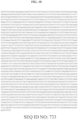
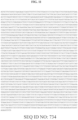
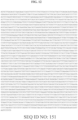
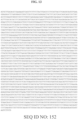
- the polynucleotides comprise an ORF having significant sequence similarity to a polynucleotide selected from the group of SEQ ID NOs: 151, 152, 153, 154, 732, 733, and 734 ( FIGS. 9-15 ), wherein the ORF encodes an MCM polypeptide.
- the polynucleotide comprises an ORF having significant sequence similarity to SEQ ID NO: 734 ( FIG. 11 ) , wherein the ORF encodes an MCM polypeptide.
- the disclosure is directed to a polynucleotide comprising an ORF having at least 99% or 100% sequence identity to nucleotide 97 to nucleotide 2250 of SEQ ID NO: 734, wherein the ORF encodes an MCM polypeptide.
- the disclosure is directed to a polynucleotide comprising an ORF sequence having at least 98%, at least 99%, or 100% sequence identity to nucleotide 97 to nucleotide 2250 of SEQ ID NO: 732, wherein the ORF encodes an MCM polypeptide.
- the disclosure is directed to a polynucleotide comprising an ORF having at least 92%, at least 93%, at least 94%, at least 95%, at least 96%, at least 97%, at least 98%, at least 99%, or 100% sequence identity to a sequence selected from the group consisting of nucleotides 97 to nucleotides 2250 of SEQ ID NOs: 182, 733, and 741, wherein the ORF encodes an MCM polypeptide.
- the disclosure is directed to a polynucleotide comprising an ORF having at least 91%, at least 92%, at least 93%, at least 94%, at least 95%, at least 96%, at least 97%, at least 98%, at least 99%, or 100% sequence identity to a sequence selected from the group consisting of nucleotides 97 to nucleotides 2250 of SEQ ID NOs: 735, 736, 738, 743, 744, 748, 749, 750, 754, 755, 758, 762, and 765, wherein the ORF encodes an MCM polypeptide.
- the disclosure is directed to a polynucleotide comprising an ORF sequence having at least 90%, at least 91%, at least 92%, at least 93%, at least 94%, at least 95%, at least 96%, at least 97%, at least 98%, at least 99%, or 100% sequence identity to a sequence selected from the group consisting of nucleotides 97 to nucleotides 2250 of SEQ ID NOs: 180, 187, 737, 739, 740, 742, 745, 746, 747, 751, 752, 753, 757, 759, 760, 761, 763, and 764, wherein the ORF encodes an MCM polypeptide.
- the disclosure is directed to a polynucleotide comprising an ORF having at least 89%, at least 90%, at least 91%, at least 92%, at least 93%, at least 94%, at least 95%, at least 96%, at least 97%, at least 98%, at least 99%, or 100% sequence identity to a sequence selected from the group consisting of nucleotides 97 to nucleotides 2250 of SEQ ID NO: 181 and 756, wherein the ORF encodes an MCM polypeptide.
- the disclosure is directed to a polynucleotide comprising an ORF having at least 88%, at least 89%, at least 90%, at least 91%, at least 92%, at least 93%, at least 94%, at least 95%, at least 96%, at least 97%, at least 98%, at least 99%, or 100% sequence identity to a sequence selected from the group consisting of nucleotides 97 to nucleotides 2250 of SEQ ID NO: 154, 165, 171, 173, and 175, wherein the ORF encodes an MCM polypeptide.
- the disclosure is directed to a polynucleotide comprising an ORF having at least 87%, at least 88%, at least 89%, at least 90%, at least 91%, at least 92%, at least 93%, at least 94%, at least 95%, at least 96%, at least 97%, at least 98%, at least 99%, or 100% sequence identity to a sequence selected from the group consisting of nucleotides 97 to nucleotides 2250 of SEQ ID NO: 151, 152, 153, 163, 164, 166, 167, 168, 169, 170, 172, 177, 178, 179, 195, and 204, wherein the ORF encodes an MCM polypeptide.
- the disclosure is directed to a polynucleotide comprising an ORF having at least 86%, at least 87%, at least 88%, at least 89%, at least 90%, at least 91%, at least 92%, at least 93%, at least 94%, at least 95%, at least 96%, at least 97%, at least 98%, at least 99%, or 100% sequence identity to a sequence selected from the group consisting of nucleotides 97 to nucleotides 2250 of SEQ ID NOs: 156, 157, 158, 159, 160, 161, 162, 174 and 176, wherein the ORF encodes an MCM polypeptide.
- the disclosure is directed to a polynucleotide comprising an ORF having at least 85%, at least 86%, at least 87%, at least 88%, at least 89%, at least 90%, at least 91%, at least 92%, at least 93%, at least 94%, at least 95%, at least 96%, at least 97%, at least 98%, at least 99%, or 100% sequence identity to a sequence selected from the group consisting of nucleotides 97 to nucleotides 2250 of SEQ ID NOs: 155 and 203, wherein the ORF encodes an MCM polypeptide.
- the disclosure is directed to a polynucleotide comprising an ORF having at least 82%, at least 83%, at least 84%, at least 85%, at least 86%, at least 87%, at least 88%, at least 89%, at least 90%, at least 91%, at least 92%, at least 93%, at least 94%, at least 95%, at least 96%, at least 97%, at least 98%, at least 99%, or 100% sequence identity to a sequence selected from the group consisting of nucleotides 97 to nucleotides 2250 of SEQ ID NOs: 64, 66, 71, 91, and 128, wherein the ORF encodes an MCM polypeptide.
- the disclosure is directed to a polynucleotide comprising an ORF having at least 81%, at least 82%, at least 83%, at least 84%, at least 85%, at least 86%, at least 87%, at least 88%, at least 89%, at least 90%, at least 91%, at least 92%, at least 93%, at least 94%, at least 95%, at least 96%, at least 97%, at least 98%, at least 99%, or 100% sequence identity to a sequence selected from the group consisting of nucleotides 97 to nucleotides 2250 of SEQ ID NOs: 9, 11, 18, 19, 21, 22, 23, 24, 32, 33, 37, 39, 40, 44, 45, 47, 50, 51, 52, 55, 57, 61, 65, 70, 79, 84, 86, 88, 90, 92, 98, 100, 115, 117, 126, 129, 135, 136, 137, 144, 148, 150, 184, 190, 191,
- the disclosure is directed to a polynucleotide comprising an ORF having at least 80%, at least 81%, at least 82%, at least 83%, at least 84%, at least 85%, at least 86%, at least 87%, at least 88%, at least 89%, at least 90%, at least 91%, at least 92%, at least 93%, at least 94%, at least 95%, at least 96%, at least 97%, at least 98%, at least 99%, or 100% sequence identity to a sequence selected from the group consisting of nucleotides 97 to nucleotides 2250 of SEQ ID NOs: 3, 5, 6, 8, 10, 12, 14, 16, 17, 20, 27, 28, 29, 31, 34, 35, 36, 38, 41, 42, 43, 46, 48, 49, 53, 54, 56, 58, 60, 63, 68, 69, 74, 77, 78, 80, 83, 85, 87, 93, 95, 96, 97, 99, 102, 103, 104,
- the disclosure is directed to a polynucleotide comprising an ORF having at least 79%, at least 80%, at least 81%, at least 82%, at least 83%, at least 84%, at least 85%, at least 86%, at least 87%, at least 88%, at least 89%, at least 90%, at least 91%, at least 92%, at least 93%, at least 94%, at least 95%, at least 96%, at least 97%, at least 98%, at least 99%, or 100% sequence identity to a sequence selected from the group consisting of nucleotides 97 to nucleotides 2250 of SEQ ID NOs: 1, 2, 4, 7, 13, 15, 25, 26, 30, 59, 62, 67, 72, 73, 75, 76, 81, 82, 89, 94, 101, 106, 108, 109, 111, 118, 121, 130, 145, 146, and 185, wherein the ORF encodes an MCM polypeptide.
- the polynucleotides in the compositions of the invention further comprise a nucleotide sequence encoding a transit peptide, e.g., mitochondrial transit peptide.
- the mitochondrial transit peptide can be any peptide that facilitates the transport of MCM to mitochondria or localization of MCM in mitochondria.
- the polynucleotide comprises a nucleotide sequence encoding a mitochondrial transit peptide selected from the group listed in Table 1 (SEQ ID NOs: 251 to 265).
- the polynucleotide comprises a nucleotide sequence encoding a mitochondrial transit peptide selected from the group consisting of SEQ ID NOs: 270 to 719.
- the disclosure is directed to a polynucleotide comprising an ORF having at least 99% or 100% sequence identity to nucleotide 1 to nucleotide 2250 of SEQ ID NO: 734, wherein the ORF encodes an MCM polypeptide.
- the disclosure is directed to a polynucleotide comprising an ORF having at least 98%, at least 99%, or 100% sequence identity to nucleotide 1 to nucleotide 2250 of SEQ ID NO: 732, wherein the ORF encodes an MCM polypeptide.
- the disclosure is directed to a polynucleotide comprising an ORF having at least 92%, at least 93%, at least 94%, at least 95%, at least 96%, at least 97%, at least 98%, at least 99%, or 100% sequence identity to a sequence selected from the group consisting of nucleotides 1 to nucleotides 2250 of SEQ ID NO: 182 and 733, wherein the ORF encodes an MCM polypeptide.
- the disclosure is directed to a polynucleotide comprising an ORF having at least 91%, at least 92%, at least 93%, at least 94%, at least 95%, at least 96%, at least 97%, at least 98%, at least 99%, or 100% sequence identity to a sequence selected from the group consisting of nucleotides 1 to nucleotides 2250 of SEQ ID NOs: 735, 741, 743, 744, 748, 758, 762, and 765, wherein the ORF encodes an MCM polypeptide.
- the disclosure is directed to a polynucleotide comprising an ORF having at least 90%, at least 91%, at least 92%, at least 93%, at least 94%, at least 95%, at least 96%, at least 97%, at least 98%, at least 99%, or 100% sequence identity to a sequence selected from the group consisting of nucleotides 1 to nucleotides 2250 of SEQ ID NOs: 180, 181 , 736, 738, 739, 740, 742, 746, 747, 749, 750, 751, 752, 753, 754, 755, 757, 759, 760, 761, and 763, wherein the ORF encodes an MCM polypeptide.
- the disclosure is directed to a polynucleotide comprising an ORF having at least 89%, at least 90%, at least 91%, at least 92%, at least 93%, at least 94%, at least 95%, at least 96%, at least 97%, at least 98%, at least 99%, or 100% sequence identity to a sequence selected from the group consisting of nucleotides 1 to nucleotides 2250 of SEQ ID NO: 745, 756, and 764, wherein the ORF encodes an MCM polypeptide.
- the disclosure is directed to a polynucleotide comprising an ORF having at least 88%, at least 89%, at least 90%, at least 91%, at least 92%, at least 93%, at least 94%, at least 95%, at least 96%, at least 97%, at least 98%, at least 99%, or 100% sequence identity to a sequence selected from the group consisting of nucleotides 1 to nucleotides 2250 of SEQ ID NO: 154, 165, 171, 173, and 175, wherein the ORF encodes an MCM polypeptide.
- the disclosure is directed to a polynucleotide comprising an ORF having at least 87%, at least 88%, at least 89%, at least 90%, at least 91%, at least 92%, at least 93%, at least 94%, at least 95%, at least 96%, at least 97%, at least 98%, at least 99%, or 100% sequence identity to a sequence selected from the group consisting of nucleotides 1 to nucleotides 2250 of SEQ ID NO: 151, 152, 153, 163, 166, 167, 168, 169, 170, 172, 177, 178, 179, 187, and 204, wherein the ORF encodes an MCM polypeptide.
- the disclosure is directed to a polynucleotide comprising an ORF having at least 86%, at least 87%, at least 88%, at least 89%, at least 90%, at least 91%, at least 92%, at least 93%, at least 94%, at least 95%, at least 96%, at least 97%, at least 98%, at least 99%, or 100% sequence identity to a sequence selected from the group consisting of nucleotides 1 to nucleotides 2250 of SEQ ID NO: 156, 157, 158, 159, 160, 162, 164, 174, 176, 195, and 737, wherein the ORF encodes an MCM polypeptide.
- the disclosure is directed to a polynucleotide comprising an ORF having at least 85%, at least 86%, at least 87%, at least 88%, at least 89%, at least 90%, at least 91%, at least 92%, at least 93%, at least 94%, at least 95%, at least 96%, at least 97%, at least 98%, at least 99%, or 100% sequence identity to a sequence selected from the group consisting of nucleotides 1 to nucleotides 2250 of SEQ ID NOs: 155, 161, and 203, wherein the ORF encodes an MCM polypeptide.
- the disclosure is directed to a polynucleotide comprising an ORF having at least 82%, at least 83%, at least 84%, at least 85%, at least 86%, at least 87%, at least 88%, at least 89%, at least 90%, at least 91%, at least 92%, at least 93%, at least 94%, at least 95%, at least 96%, at least 97%, at least 98%, at least 99%, or 100% sequence identity to a sequence selected from the group consisting of nucleotides 1 to nucleotides 2250 of SEQ ID NOs: 71 and 128, wherein the ORF encodes an MCM polypeptide.
- the disclosure is directed to a polynucleotide comprising an ORF having at least 81%, at least 82%, at least 83%, at least 84%, at least 85%, at least 86%, at least 87%, at least 88%, at least 89%, at least 90%, at least 91%, at least 92%, at least 93%, at least 94%, at least 95%, at least 96%, at least 97%, at least 98%, at least 99%, or 100% sequence identity to a sequence selected from the group consisting of nucleotides 1 to nucleotides 2250 of SEQ ID NOs: 4, 6, 8, 9, 11, 19, 22, 23, 24, 32, 33, 37, 40, 44, 45, 47, 51, 61, 64, 65, 66, 79, 84, 86, 90, 91, 92, 100, 101, 112, 115, 117, 126, 129, 135, 136, 146, 148, 184, 190, and 191, wherein the ORF encodes an MCM poly
- the disclosure is directed to a polynucleotide comprising an ORF having at least 80%, at least 81%, at least 82%, at least 83%, at least 84%, at least 85%, at least 86%, at least 87%, at least 88%, at least 89%, at least 90%, at least 91%, at least 92%, at least 93%, at least 94%, at least 95%, at least 96%, at least 97%, at least 98%, at least 99%, or 100% sequence identity to a sequence selected from the group consisting of nucleotides 1 to nucleotides 2250 of SEQ ID NOs: 2, 3, 5, 7, 10, 12, 13, 14, 15, 16, 18, 20, 21, 26, 27, 28, 29, 31, 34, 36, 38, 39, 41, 42, 43, 46, 48, 49, 52, 53, 54, 55, 56, 57, 58, 59, 60, 62, 68, 69, 70, 72, 73, 74, 76, 77, 80, 83, 85, 88, 95,
- the disclosure is directed to a polynucleotide comprising an ORF having at least 79%, at least 80%, at least 81%, at least 82%, at least 83%, at least 84%, at least 85%, at least 86%, at least 87%, at least 88%, at least 89%, at least 90%, at least 91%, at least 92%, at least 93%, at least 94%, at least 95%, at least 96%, at least 97%, at least 98%, at least 99%, or 100% sequence identity to a sequence selected from the group consisting of nucleotides 1 to nucleotides 2250 of SEQ ID NOs: 1, 17, 25, 30, 35, 50, 63, 67, 75, 78, 81, 82, 87, 89, 93, 94, 99, 103, 111, 116, 118, 119, 125, 130, 143, 183, 185, 197, and 201, wherein the ORF encodes an MCM polypeptide.
- the disclosure is directed to polynucleotides that encode functional MCMs or fragments thereof.
- the disclosure provides polynucleotides that encode functional human MCMs (SEQ ID NO: 208, SEQ ID NO: 209, SEQ ID NO: 210, SEQ ID NO: 211, SEQ ID NO: 212, and SEQ ID NO: 213).
- the disclosure provides polynucleotides that encode functional MCM polypeptides having at least one point mutation in the MCM sequence, while still retaining MCM enzymatic activity.
- the encoded MCM polypeptide comprises one or more of the point mutations V69, T499, H532, A598, and V671, as defined by the polypeptide sequences in SEQ ID NO: 209, SEQ ID NO: 210, SEQ ID NO: 211, SEQ ID NO: 212, and SEQ ID NO: 213, respectively.
- the polynucleotides are fully or partially modified (e.g., chemically and/or structurally) in a manner as to avoid the deficiencies of other molecules of the art.
- the polynucleotides of the disclosure can be synthesized as an IVT polynucleotide, chimeric polynucleotide or a circular polynucleotide and such instances are contemplated.
- the polynucleotide in the compositions of the invention is a DNA or RNA that comprises at least one chemically modified nucleoside.
- the at least one chemically modified nucleoside is selected from any of those described herein.
- the polynucleotide further comprises or encodes a 5' UTR. In other embodiments, the polynucleotide further comprises or encodes a 3' UTR. In some embodiments, the UTR comprises or encodes a miRNA (e.g., miR-142-3p, miR-142-5p, miR-126-3p, and/or miR-126-5p). In some embodiments, the polynucleotide further comprises a 5' terminal cap. In some embodiments, the polynucleotide further comprises or encodes a 3' polyA tail.
- a miRNA e.g., miR-142-3p, miR-142-5p, miR-126-3p, and/or miR-126-5p.
- the polynucleotide further comprises a 5' terminal cap. In some embodiments, the polynucleotide further comprises or encodes a 3' polyA tail.
- the polynucleotide is RNA, e.g., mRNA.
- the mRNA comprises the sequences listed in SEQ ID NOs: 766-771.
- the polynucleotide is an RNA polynucleotide that is formulated in a lipid nanoparticle (LNP) carrier.
- LNP lipid nanoparticle
- the disclosure is also directed to a method of treating methylmalonic acidemia in a subject, the method comprising administering to the subject an effective amount of a polynucleotide comprising an mRNA encoding an MCM polypeptide, wherein the administration alleviates the symptoms of methylmalonic acidemia in the subject.
- the polynucleotide useful for the disclosure is any one of the polynucleotides encoding an MCM polypeptide described herein or is formulated as any one of the compositions described herein.
- the disclosure includes a method of reducing the level of a metabolite associated with methylmalonic acidemia in a subject in need thereof, the method comprising administering to the subject an effective amount of a polynucleotide comprising an mRNA encoding an MCM polypeptide.
- the polynucleotide is a polynucleotide described elsewhere herein, or is formulated as a composition described herein.
- the polynucleotide reduces the level of methylmalonic acid present in the subject after the administration by at least about 10%, at least about 20%, at least about 30%, at least about 40%, at least about 50%, at least about 60%, at least about 70%, at least about 80%, at least about 90%, or about 100%. In other instances, after the administration, the polynucleotide reduces the level of propionyl-carnitine present in the subject by at least about 10%, at least about 20%, at least about 30%, at least about 40%, at least about 50%, at least about 60%, at least about 70%, at least about 80%, at least about 90%, or about 100%.
- the polynucleotide reduces the level of acetyl-carnitine present in the subject after the administration by at least about 10%, at least about 20%, at least about 30%, at least about 40%, at least about 50%, at least about 60%, at least about 70%, at least about 80%, at least about 90%, or about 100%.
- one or more metabolites associated with methylmalonic acidemia are reduced after the administration within one day, within two days, within three days, within four days, within five days, within seven days, within one week, within two weeks, within three weeks, or within one month of the administration of the polynucleotide.
- MCM methylmalonyl-CoA mutase polypeptide
- NCBI sequence records gi296010795 reference sequence NM_000255.3, "Homo sapiens methylmalonyl-CoA mutase (MUT), mRNA”; see also , SEQ ID NO: 214) and gi156105689 (reference sequence NP_000246.2, "methylmalonyl-CoA mutase, mitochondrial precursor [Homo sapiens]”; see also , SEQ ID NO: 208), respectively. Accession numbers and the associated sequences are found at the National Center for Biotechnology Information (NCBI) website.
- NCBI National Center for Biotechnology Information
- MCM is a metabolic enzyme (E.C. 5.4.99.2), the biological function of which is to isomerize L-methylmalonyl-CoA into succinyl-CoA, a Krebs cycle intermediate. MCM localizes to the mitochondria of cells, exists as a homodimer in its native form, and is adenosylcobalamin-dependent.
- the precursor form of human MCM is 750 amino acids, while its mature form is 718 amino acids - a 32 amino acid leader sequence is cleaved off by mitochondrial importation and processing machinery.
- composition of the invention provides nucleic acid molecules, specifically polynucleotides that encode one or more MCM polypeptides.
- the MCM polypeptides that are encoded can be mammalian MCM polypeptides, for example, human MCM peptides, or functional fragments thereof.
- the polynucleotides described herein encode at least one methylmalonyl-CoA mutase protein, functional fragment, or variant thereof.
- MCM catalyzes enzymatic transformation of methylmalonyl-CoA into succinyl-CoA, and also comprises a cobalamin-binding domain. MCM's enzymatic activity is dependent on its binding to its cofactor, denosylcobalamin.
- MCM plays a critical role in the catabolism of fat and protein, specifically in disposing of methylmalonyl-CoA created during metabolism.
- methylmalonyl-CoA is an intermediate in the catabolism of amino acids such as isoleucine, methionine, and threonine.
- Methylmalonyl-CoA is also an intermediate in the catabolism of cholesterol and fatty acids. Defects in the activity of this enzyme lead to inefficient metabolism and buildup of potentially toxic metabolic intermediates such as methylmalonic acid.
- the lack of MCM causes the disorder known as methylmalonic acidemia (MMA).
- MMA methylmalonic acidemia
- the polynucleotides disclosed herein comprise one or more sequences encoding a methylmalonyl-CoA mutase protein, functional fragment, or variant thereof that is suitable for use in such gene replacement therapy.
- the compositions of the present invention address the problem of the lack of methylmalonyl-CoA mutase by providing a polynucleotide, e.g ., mRNA, that encodes methylmalonyl-CoA mutase or functional fragment thereof, wherein the polynucleotide is sequence-optimized.
- the polynucleotide e.g ., mRNA
- the polynucleotides encode functional MCM polypeptides or fragments thereof.
- the polynucleotides encode an MCM protein or variant thereof that is full length ( i.e. , it includes a mitochondrial transit peptide, either native or heterologous to that in native full-length MCM), while in other embodiments polynucleotides encode a functional MCM protein or variant thereof that is mature ( i.e. , it lacks the mitochondrial transit peptide).
- the polynucleotides encode a human MCM, or variant thereof, linked to a heterologous or homologous mitochondrial transit peptide.
- the polynucleotides encode functional human MCM (SEQ ID NO: 208, SEQ ID NO: 209, SEQ ID NO: 210, SEQ ID NO: 211, SEQ ID NO: 212, and SEQ ID NO: 213) or fragments thereof. In some embodiments, the polynucleotides encode mutant MCM. In some embodiments, the polynucleotides encode an MCM polypeptide that comprises at least one point mutation in the MCM sequence, while still retaining MCM enzymatic activity. In some embodiments, the polynucleotides encode a functional MCM polypeptide with mutations that do not alter the function of MCM. Such functional MCM can be referred to as function-neutral.
- the encoded MCM polypeptide comprises one or more of the function-neutral point mutations V69, T499, H532, A598, and V671.
- the polynucleotides encode the polypeptide sequences in SEQ ID NO: 209, SEQ ID NO: 210, SEQ ID NO: 211, SEQ ID NO: 212, and SEQ ID NO: 213, which contain the function-neutral mutants V69, T499, H532, A598, and V671, respectively.
- the encoded MCM polypeptide is a V671 mutant (SEQ ID NO: 213).
- Polynucleotides encoding MCM polypeptides are listed in SEQ ID NOs: 1 to 207, 214, 732 to 765, and 772.
- the polynucleotides comprise a nucleotide sequence having significant sequence similarity to a polynucleotide selected from the group of SEQ ID NOs: 1-207, 732-765, and 772, wherein the ORF encodes an MCM polypeptide.
- the polynucleotide comprises a nucleotide sequence having significant sequence similarity to SEQ ID NOs: 151, 152, 153, 154, 732, 733, and 734 ( FIGS. 9-15 ).
- the polynucleotide comprises a nucleotide sequence having significant sequence similarity to SEQ ID NO: 734 ( FIG. 11 ).
- the disclosure is directed to a polynucleotide comprising an ORF having at least 99% or 100% sequence identity to nucleotide 97 to nucleotide 2250 of SEQ ID NO: 734, wherein the ORF encodes an MCM polypeptide.
- the disclosure is directed to a polynucleotide comprising an ORF having at least 98%, at least 99%, or 100% sequence identity to nucleotide 97 to nucleotide 2250 of SEQ ID NO: 732, wherein the ORF encodes an MCM polypeptide.
- the disclosure is directed to a polynucleotide comprising an ORF having at least 92%, at least 93%, at least 94%, at least 95%, at least 96%, at least 97%, at least 98%, at least 99%, or 100% sequence identity to a sequence selected from the group consisting of nucleotides 97 to nucleotides 2250 of SEQ ID NOs: 182, 733, and 741, wherein the ORF encodes an MCM polypeptide.
- the disclosure is directed to a polynucleotide comprising an ORF having at least 91%, at least 92%, at least 93%, at least 94%, at least 95%, at least 96%, at least 97%, at least 98%, at least 99%, or 100% sequence identity to a sequence selected from the group consisting of nucleotides 97 to nucleotides 2250 of SEQ ID NOs: 735, 736, 738, 743, 744, 748, 749, 750, 754, 755, 758, 762, and 765, wherein the ORF encodes an MCM polypeptide.
- the disclosure is directed to a polynucleotide comprising an ORF having at least 90%, at least 91%, at least 92%, at least 93%, at least 94%, at least 95%, at least 96%, at least 97%, at least 98%, at least 99%, or 100% sequence identity to a sequence selected from the group consisting of nucleotides 97 to nucleotides 2250 of SEQ ID NOs: 180, 187, 737, 739, 740, 742, 745, 746, 747, 751, 752, 753, 757, 759, 760, 761, 763, and 764, wherein the ORF encodes an MCM polypeptide.
- the disclosure is directed to a polynucleotide comprising an ORF having at least 89%, at least 90%, at least 91%, at least 92%, at least 93%, at least 94%, at least 95%, at least 96%, at least 97%, at least 98%, at least 99%, or 100% sequence identity to a sequence selected from the group consisting of nucleotides 97 to nucleotides 2250 of SEQ ID NO: 181 and 756, wherein the ORF encodes an MCM polypeptide.
- the disclosure is directed to a polynucleotide comprising an ORF having at least 88%, at least 89%, at least 90%, at least 91%, at least 92%, at least 93%, at least 94%, at least 95%, at least 96%, at least 97%, at least 98%, at least 99%, or 100% sequence identity to a sequence selected from the group consisting of nucleotides 97 to nucleotides 2250 of SEQ ID NO: 154, 165, 171, 173, and 175, wherein the ORF encodes an MCM polypeptide.
- the disclosure is directed to a polynucleotide comprising an ORF having at least 87%, at least 88%, at least 89%, at least 90%, at least 91%, at least 92%, at least 93%, at least 94%, at least 95%, at least 96%, at least 97%, at least 98%, at least 99%, or 100% sequence identity to a sequence selected from the group consisting of nucleotides 97 to nucleotides 2250 of SEQ ID NO: 151, 152, 153, 163, 164, 166, 167, 168, 169, 170, 172, 177, 178, 179, 195, and 204, wherein the ORF encodes an MCM polypeptide.
- the disclosure is directed to a polynucleotide comprising an ORF having at least 86%, at least 87%, at least 88%, at least 89%, at least 90%, at least 91%, at least 92%, at least 93%, at least 94%, at least 95%, at least 96%, at least 97%, at least 98%, at least 99%, or 100% sequence identity to a sequence selected from the group consisting of nucleotides 97 to nucleotides 2250 of SEQ ID NOs: 156, 157, 158, 159, 160, 161, 162, 174 and 176, wherein the ORF encodes an MCM polypeptide.
- the disclosure is directed to a polynucleotide comprising an ORF having at least 85%, at least 86%, at least 87%, at least 88%, at least 89%, at least 90%, at least 91%, at least 92%, at least 93%, at least 94%, at least 95%, at least 96%, at least 97%, at least 98%, at least 99%, or 100% sequence identity to a sequence selected from the group consisting of nucleotides 97 to nucleotides 2250 of SEQ ID NOs: 155 and 203, wherein the ORF encodes an MCM polypeptide.
- the disclosure is directed to a polynucleotide comprising an ORF having at least 82%, at least 83%, at least 84%, at least 85%, at least 86%, at least 87%, at least 88%, at least 89%, at least 90%, at least 91%, at least 92%, at least 93%, at least 94%, at least 95%, at least 96%, at least 97%, at least 98%, at least 99%, or 100% sequence identity to a sequence selected from the group consisting of nucleotides 97 to nucleotides 2250 of SEQ ID NOs: 64, 66, 71, 91, and 128, wherein the ORF encodes an MCM polypeptide.
- the disclosure is directed to a polynucleotide comprising an ORF having at least 81%, at least 82%, at least 83%, at least 84%, at least 85%, at least 86%, at least 87%, at least 88%, at least 89%, at least 90%, at least 91%, at least 92%, at least 93%, at least 94%, at least 95%, at least 96%, at least 97%, at least 98%, at least 99%, or 100% sequence identity to a sequence selected from the group consisting of nucleotides 97 to nucleotides 2250 of SEQ ID NOs: 9, 11, 18, 19, 21, 22, 23, 24, 32, 33, 37, 39, 40, 44, 45, 47, 50, 51, 52, 55, 57, 61, 65, 70, 79, 84, 86, 88, 90, 92, 98, 100, 115, 117, 126, 129, 135, 136, 137, 144, 148, 150, 184, 190, 191,
- the disclosure is directed to a polynucleotide comprising an ORF having at least 80%, at least 81%, at least 82%, at least 83%, at least 84%, at least 85%, at least 86%, at least 87%, at least 88%, at least 89%, at least 90%, at least 91%, at least 92%, at least 93%, at least 94%, at least 95%, at least 96%, at least 97%, at least 98%, at least 99%, or 100% sequence identity to a sequence selected from the group consisting of nucleotides 97 to nucleotides 2250 of SEQ ID NOs: 3, 5, 6, 8, 10, 12, 14, 16, 17, 20, 27, 28, 29, 31, 34, 35, 36, 38, 41, 42, 43, 46, 48, 49, 53, 54, 56, 58, 60, 63, 68, 69, 74, 77, 78, 80, 83, 85, 87, 93, 95, 96, 97, 99, 102, 103, 104,
- the disclosure is directed to a polynucleotide comprising an ORF having at least 79%, at least 80%, at least 81%, at least 82%, at least 83%, at least 84%, at least 85%, at least 86%, at least 87%, at least 88%, at least 89%, at least 90%, at least 91%, at least 92%, at least 93%, at least 94%, at least 95%, at least 96%, at least 97%, at least 98%, at least 99%, or 100% sequence identity to a sequence selected from the group consisting of nucleotides 97 to nucleotides 2250 of SEQ ID NOs: 1, 2, 4, 7, 13, 15, 25, 26, 30, 59, 62, 67, 72, 73, 75, 76, 81, 82, 89, 94, 101, 106, 108, 109, 111, 118, 121, 130, 145, 146, and 185, wherein the ORF encodes an MCM polypeptide.
- the polynucleotides of the disclosure can also encode additional features that facilitate trafficking of the polypeptides to therapeutically relevant sites.
- One such feature that aids in protein trafficking is the signal sequence, or targeting sequence.
- the peptides encoded by these signal sequences are known by a variety of names, including targeting peptides, transit peptides, and signal peptides.
- the disclosure also includes a polynucleotide comprising a sequence that encodes a mitochondrial transit peptide operably linked to the polynucleotide described herein, i.e ., linked to a polynucleotide comprising an ORF encoding an MCM polypeptide.
- a "signal sequence” or “signal peptide” is a polynucleotide or polypeptide, respectively, which is from about 9 to 200 nucleotides (3-70 amino acids) in length that, in some instances, is incorporated at the 5' (or N-terminus) of the coding region or polypeptide encoded, respectively. Addition of these sequences result in trafficking of the encoded polypeptide to a desired site, such as the endoplasmic reticulum or the mitochondria through one or more targeting pathways. Some signal peptides are cleaved from the protein, for example by a signal peptidase after the proteins are transported.
- human MCM's precursor protein comprises a 32-amino acid mitochondrial transit peptide, also referred to as an MCM mitochondrial targeting sequence or mitochondrial targeting peptide, that facilitates delivery of the MCM protein to, and localization in, mitochondria.
- the present disclosure comprises both polynucleotides that encode a homologous targeting sequence (i.e., MCM's native mitochondrial transit sequence) and polynucleotides that encode a heterologous mitochondrial transit sequences (i.e., a mitochondrial transit peptide that is not the native targeting peptide for the operably linked MCM protein).
- the alternate targeting sequences facilitate delivery of MCM to mitochondria.
- Exemplary sequences of known mitochondrial transit peptides include MLSLRQSIRFFKPATRTLCSSRYLL (SEQ ID NO: 251), MALLRGVFVVAAKRTP (SEQ ID NO: 252) and MLRIPVRKALVGLSKSSKGCVRT (SEQ ID NO: 253).
- Non-limiting examples of the mitochondrial transit peptides are listed below in Table 1 (SEQ ID NOs: 251-265). Further examples of mitochondrial transit peptides are provided as SEQ ID NOs: 270-719. Additional mitochondrial transit peptides that can be utilized in the present disclosure can be identified using predictive tools known in the art.
- mitochondrial targeting can be analyzed using the methods described in Fukusawa et al., Molecular and Cellular Proteomics 14:1113-1126 (2015 ).
- Table 1 Mitochondrial Transit Peptides ID (SEQ ID NO) Name of the protein Sequence COX4 (SEQ ID NO: 251) Saccharomyces cerevisiae mitochondrial cytochrome c oxidase subunit IV MLSLRQSIRFFKPATRTLCSSRYLL ACAA2 (SEQ ID NO: 252) Mitochondrial 3-ketoacyl-coa thiolase MALLRGVFWAAKRTP NDUFS1 (SEQ ID NO: 253) NADH-ubiquinone oxidoreductase 75 kDa subunit, mitochondrial isoform 2 MLRIPVRKALVGLSKSSKGCVRT A6NK58 (SEQ ID NO: 254) Putative lipoyltransferase 2, mitochondrial (EC 2.3.1.181) (Lipoate-protein ligas
- the nucleic acid sequence encoding a mitochondrial transit peptide has at least about 70%, at least about 80%, at least about 90%, at least about 95%, at least about 96%, at least about 97%, at least about 98%, at least about 99%, or about 100% sequence identity to a sequence selected from the group of nucleotides 1 to 96 of SEQ ID NOs: 1-207, 732-765, and 772, wherein the transit peptide is capable of targeting or carrying the MCM polypeptide into the mitochondria.
- the nucleic acid sequence encoding a mitochondrial transit peptide has at least about 70%, at least about 80%, at least about 90%, at least about 95%, at least about 96%, at least about 97%, at least about 98%, at least about 99%, or about 100% sequence identity to a sequence in Table 1 (SEQ ID NOs: 251, 252, 253, 254, 255, 256, 257, 258, 259, 260, 261, 262, 263, 264, or 265), wherein the transit peptide is capable of targeting or carrying the MCM polypeptide into the mitochondria.
- Table 1 SEQ ID NOs: 251, 252, 253, 254, 255, 256, 257, 258, 259, 260, 261, 262, 263, 264, or 265
- the nucleic acid sequence encoding a mitochondrial transit peptide has at least about 70%, at least about 80%, at least about 90%, at least about 95%, at least about 96%, at least about 97%, at least about 98%, at least about 99%, or about 100% sequence identity to a sequence selected from the group consisting of SEQ ID NOs: 270 to 719, wherein the transit peptide is capable of targeting or carrying the MCM polypeptide into the mitochondria.
- the disclosure is directed to a polynucleotide comprising an ORF having at least 99% or 100% sequence identity to nucleotide 1 to nucleotide 2250 of SEQ ID NO: 734, wherein the ORF encodes an MCM polypeptide.
- the disclosure is directed to a polynucleotide comprising an ORF having at least 98%, at least 99%, or 100% sequence identity to nucleotide 1 to nucleotide 2250 of SEQ ID NO: 732, wherein the ORF encodes an MCM polypeptide.
- the disclosure is directed to a polynucleotide comprising an ORF having at least 92%, at least 93%, at least 94%, at least 95%, at least 96%, at least 97%, at least 98%, at least 99%, or 100% sequence identity to a sequence selected from the group consisting of nucleotides 1 to nucleotides 2250 of SEQ ID NO: 182 and 733, wherein the ORF encodes an MCM polypeptide.
- the disclosure is directed to a polynucleotide comprising an ORF having at least 91%, at least 92%, at least 93%, at least 94%, at least 95%, at least 96%, at least 97%, at least 98%, at least 99%, or 100% sequence identity to a sequence selected from the group consisting of nucleotides 1 to nucleotides 2250 of SEQ ID NOs: 735, 741, 743, 744, 748, 758, 762, and 765, wherein the ORF encodes an MCM polypeptide.
- the disclosure is directed to a polynucleotide comprising an ORF having at least 90%, at least 91%, at least 92%, at least 93%, at least 94%, at least 95%, at least 96%, at least 97%, at least 98%, at least 99%, or 100% sequence identity to a sequence selected from the group consisting of nucleotides 1 to nucleotides 2250 of SEQ ID NOs: 180, 181 , 736, 738, 739, 740, 742, 746, 747, 749, 750, 751, 752, 753, 754, 755, 757, 759, 760, 761, and 763, wherein the ORF encodes an MCM polypeptide.
- the disclosure is directed to a polynucleotide comprising an ORF having at least 89%, at least 90%, at least 91%, at least 92%, at least 93%, at least 94%, at least 95%, at least 96%, at least 97%, at least 98%, at least 99%, or 100% sequence identity to a sequence selected from the group consisting of nucleotides 1 to nucleotides 2250 of SEQ ID NO: 745, 756, and 764, wherein the ORF encodes an MCM polypeptide.
- the disclosure is directed to a polynucleotide comprising an ORF having at least 88%, at least 89%, at least 90%, at least 91%, at least 92%, at least 93%, at least 94%, at least 95%, at least 96%, at least 97%, at least 98%, at least 99%, or 100% sequence identity to a sequence selected from the group consisting of nucleotides 1 to nucleotides 2250 of SEQ ID NO: 154, 165, 171, 173, and 175, wherein the ORF encodes an MCM polypeptide.
- the disclosure is directed to a polynucleotide comprising an ORF having at least 87%, at least 88%, at least 89%, at least 90%, at least 91%, at least 92%, at least 93%, at least 94%, at least 95%, at least 96%, at least 97%, at least 98%, at least 99%, or 100% sequence identity to a sequence selected from the group consisting of nucleotides 1 to nucleotides 2250 of SEQ ID NO: 151, 152, 153, 163, 166, 167, 168, 169, 170, 172, 177, 178, 179, 187, and 204, wherein the ORF encodes an MCM polypeptide.
- the disclosure is directed to a polynucleotide comprising an ORF having at least 86%, at least 87%, at least 88%, at least 89%, at least 90%, at least 91%, at least 92%, at least 93%, at least 94%, at least 95%, at least 96%, at least 97%, at least 98%, at least 99%, or 100% sequence identity to a sequence selected from the group consisting of nucleotides 1 to nucleotides 2250 of SEQ ID NO: 156, 157, 158, 159, 160, 162, 164, 174, 176, 195, and 737, wherein the ORF encodes an MCM polypeptide.
- the disclosure is directed to a polynucleotide comprising an ORF having at least 85%, at least 86%, at least 87%, at least 88%, at least 89%, at least 90%, at least 91%, at least 92%, at least 93%, at least 94%, at least 95%, at least 96%, at least 97%, at least 98%, at least 99%, or 100% sequence identity to a sequence selected from the group consisting of nucleotides 1 to nucleotides 2250 of SEQ ID NOs: 155, 161, and 203, wherein the ORF encodes an MCM polypeptide.
- the disclosure is directed to a polynucleotide comprising an ORF having at least 82%, at least 83%, at least 84%, at least 85%, at least 86%, at least 87%, at least 88%, at least 89%, at least 90%, at least 91%, at least 92%, at least 93%, at least 94%, at least 95%, at least 96%, at least 97%, at least 98%, at least 99%, or 100% sequence identity to a sequence selected from the group consisting of nucleotides 1 to nucleotides 2250 of SEQ ID NOs: 71 and 128, wherein the ORF encodes an MCM polypeptide.
- the disclosure is directed to a polynucleotide comprising an ORF having at least 81%, at least 82%, at least 83%, at least 84%, at least 85%, at least 86%, at least 87%, at least 88%, at least 89%, at least 90%, at least 91%, at least 92%, at least 93%, at least 94%, at least 95%, at least 96%, at least 97%, at least 98%, at least 99%, or 100% sequence identity to a sequence selected from the group consisting of nucleotides 1 to nucleotides 2250 of SEQ ID NOs: 4, 6, 8, 9, 11, 19, 22, 23, 24, 32, 33, 37, 40, 44, 45, 47, 51, 61, 64, 65, 66, 79, 84, 86, 90, 91, 92, 100, 101, 112, 115, 117, 126, 129, 135, 136, 146, 148, 184, 190, and 191, wherein the ORF encodes an MCM poly
- the disclosure is directed to a polynucleotide comprising an ORF having at least 80%, at least 81%, at least 82%, at least 83%, at least 84%, at least 85%, at least 86%, at least 87%, at least 88%, at least 89%, at least 90%, at least 91%, at least 92%, at least 93%, at least 94%, at least 95%, at least 96%, at least 97%, at least 98%, at least 99%, or 100% sequence identity to a sequence selected from the group consisting of nucleotides 1 to nucleotides 2250 of SEQ ID NOs: 2, 3, 5, 7, 10, 12, 13, 14, 15, 16, 18, 20, 21, 26, 27, 28, 29, 31, 34, 36, 38, 39, 41, 42, 43, 46, 48, 49, 52, 53, 54, 55, 56, 57, 58, 59, 60, 62, 68, 69, 70, 72, 73, 74, 76, 77, 80, 83, 85, 88, 95,
- the disclosure is directed to a polynucleotide comprising an ORF having at least 79%, at least 80%, at least 81%, at least 82%, at least 83%, at least 84%, at least 85%, at least 86%, at least 87%, at least 88%, at least 89%, at least 90%, at least 91%, at least 92%, at least 93%, at least 94%, at least 95%, at least 96%, at least 97%, at least 98%, at least 99%, or 100% sequence identity to a sequence selected from the group consisting of nucleotides 1 to nucleotides 2250 of SEQ ID NOs: 1, 17, 25, 30, 35, 50, 63, 67, 75, 78, 81, 82, 87, 89, 93, 94, 99, 103, 111, 116, 118, 119, 125, 130, 143, 183, 185, 197, and 201, wherein the ORF encodes an MCM polypeptide.
- the polynucleotide includes from about 1500 to about 100,000 nucleotides (e.g ., from about 1500 to 2500, from about 1800 to about 2600, from about 1900 to about 2600, from about 2000 to about 2700, from 2154 to 2,750, from 2154 to 3,000, from 2154 to 5,000, from 2154 to 7,000, from 2154 to 10,000, from 2154 to 25,000, from 2154 to 50,000, from 2154 to 70,000, from 2154 to 100,000, from 2250 to 2750, from 2250 to 3,000, from 2250 to 5,000, from 2250 to 7,000, from 2250 to 10,000, from 2250 to 25,000, from 2250 to 50,000, from 2250 to 70,000, and from 2250 to 100,000 nucleotides).
- nucleotides e.g ., from about 1500 to 2500, from about 1800 to about 2600, from about 1900 to about 2600, from about 2000 to about 2700, from 2154 to 2,750, from 2154 to 3,000, from 2154 to 5,000, from 21
- polynucleotides of the present disclosure can further comprise at least one nucleic acid sequence that is non-coding.
- the length of a region encoding at least one polypeptide of interest is greater than about 2154 nucleotides in length ( e.g. , at least or greater than about 2154, 2,250, 2,500, 3,000, 4,000, 4,100, 4,200, 4,300, 4,400, 4,500, 4,600, 4,700, 4,800, 4,900, 5,000, 5,100, 5,200, 5,300, 5,400, 5,500, 5,600, 5,700, 5,800, 5,900, 6,000, 7,000, 8,000, 9,000, 10,000, 20,000, 30,000, 40,000, 50,000, 60,000, 70,000, 80,000, 90,000 or up to and including 100,000 nucleotides).
- a region can be referred to as a "coding region” or "region encoding.”
- the polynucleotides of the present disclosure are, or function as, a messenger RNA (mRNA).
- mRNA messenger RNA
- the term "messenger RNA” (mRNA) refers to any polynucleotide that encodes at least one polypeptide of interest and that is capable of being translated to produce the encoded polypeptide of interest in vitro , in vivo , in situ or ex vivo. Exemplary mRNAs that can be used are listed in SEQ ID NOs: 776-771.
- the polynucleotides in the compositions of the invention may be sequence-optimized. Sequence optimization methods are known in the art and can be useful to achieve one or more desired results. These results include to match codon frequencies in target and host organisms to ensure proper folding, bias GC content to increase mRNA stability or reduce secondary structures, minimize tandem repeat codons or base runs that can impair gene construction or expression, customize transcriptional and translational control regions, insert or remove protein trafficking sequences, remove/add post translation modification sites in encoded protein (e.g., glycosylation sites), add, remove or shuffle protein domains, insert or delete restriction sites, modify ribosome binding sites and mRNA degradation sites, to adjust translational rates to allow the various domains of the protein to fold properly, or to reduce or eliminate problem secondary structures within the polynucleotide.
- Sequence optimization methods are known in the art and can be useful to achieve one or more desired results. These results include to match codon frequencies in target and host organisms to ensure proper folding, bias GC content to increase m
- Sequence optimization tools, algorithms and services are known in the art, non-limiting examples include services from GeneArt (Life Technologies), DNA2.0 (Menlo Park CA) and/or proprietary methods.
- the ORF sequence is optimized using optimization algorithms. Codon options for each amino acid are given in Table 2. Table 2.
- the percentage of uracil or thymine nucleobases in a sequence-optimized nucleotide sequence is modified (e.g., reduced) with respect to the percentage of uracil or thymine nucleobases in the reference wild-type nucleotide sequence.
- a sequence-optimized nucleotide sequence e.g., encoding an MCM polypeptide, a functional fragment, or a variant thereof
- is modified e.g., reduced
- Such a sequence is referred to as a uracil-modified or thymine-modified sequence.
- the percentage of uracil or thymine content in a nucleotide sequence can be determined by dividing the number of uracils or thymines in a sequence by the total number of nucleotides and multiplying by 100.
- the sequence-optimized nucleotide sequence has a lower uracil or thymine content than the uracil or thymine content in the reference wild-type sequence.
- the uracil or thymine content in a sequence-optimized nucleotide sequence in the compositions of the invention is greater than the uracil or thymine content in the reference wild-type sequence and still maintain beneficial effects, e.g., increased expression and/or reduced Toll-Like Receptor (TLR) response when compared to the reference wild-type sequence.
- beneficial effects e.g., increased expression and/or reduced Toll-Like Receptor (TLR) response when compared to the reference wild-type sequence.
- the uracil or thymine content of wild-type MCM is about 26.67%. In some embodiments, the uracil or thymine content of a uracil- or thymine- modified sequence encoding an MCM polypeptide is less than 26.67%. In some embodiments, the uracil or thymine content of a uracil- or thymine-modified sequence encoding an MCM polypeptide is less than 19%, less that 18%, less than 17%, less than 16%, less than 15%, less than 14%, less than 13%, less than 12%, less than 11%, or less than 10%.
- the uracil or thymine content is not less than 18%, 17%, 16%, 15%, 14%, 13%, 12%, or 11%.
- the uracil or thymine content of a sequence disclosed herein, i.e. , its total uracil or thymine content, is abbreviated herein as %U TL or %T TL .
- the uracil or thymine content (%U TL or %T TL ) of a uracil- or thymine-modified sequence encoding an MCM polypeptide is between 11% and 26%, between 12% and 25%, between 12% and 24%, between 13% and 23%, between 13% and 22%, between 14% and 21%, between 14% and 20%, between 14% and 19%, between 14% and 18%, between 14% and 17%, or between 14% and 16%.
- the uracil or thymine content (%U TL or %T TL ) of a uracil- or thymine-modified sequence encoding an MCM polypeptide is between 13% and 17%, between 13% and 16%, or between 14% and 16%.
- the uracil or thymine content (%U TL or %T TL ) of a uracil- or thymine modified sequence encoding an MCM polypeptide is between about 14% and about 16%, e.g., between 14% and 15%.
- a uracil- or thymine-modified sequence encoding an MCM polypeptide can also be described according to its uracil or thymine content relative to the uracil or thymine content in the corresponding wild-type nucleic acid sequence (%U WT or %T WT ), or according to its uracil or thymine content relative to the theoretical minimum uracil or thymine content of a nucleic acid encoding the wild-type protein sequence (%U TM or (%T TM ).
- uracil or thymine content relative to the uracil or thymine content in the wild type nucleic acid sequence refers to a parameter determined by dividing the number of uracils or thymines in a sequence-optimized nucleic acid by the total number of uracils or thymines in the corresponding wild-type nucleic acid sequence and multiplying by 100. This parameter is abbreviated herein as %U WT or %T WT .
- the %U WT or %T WT of a uracil- or thymine-modified sequence encoding an MCM polypeptide is above 50%, above 55%, above 60%, above 65%, above 70%, above 75%, above 80%, above 85%, above 90%, or above 95%.
- the %U WT or %T WT of a uracil- or thymine modified sequence encoding an MCM polypeptide is between 42% and 68%, between 43% and 67%, between 44% and 66%, between 45% and 65%, between 46% and 64%, between 47% and 63%, between 48% and 62%, between 49% and 61%, between 50% and 60%, between 51% and 59%, or between 52% and 58%.
- the %U WT or %T WT of a uracil- or thymine-modified sequence encoding an MCM polypeptide is between 51% and 60%, between 51% and 59%, between 52% and 59%, between 52% and 58%, or between 53% and 58%.
- the %U WT or %T WT of a uracil- or thymine-modified sequence encoding an MCM polypeptide is between about 53% and about 58%.
- Uracil- or thymine- content relative to the uracil or thymine theoretical minimum refers to a parameter determined by dividing the number of uracils or thymines in a sequence-optimized nucleotide sequence by the total number of uracils or thymines in a hypothetical nucleotide sequence in which all the codons in the hypothetical sequence are replaced with synonymous codons having the lowest possible uracil or thymine content and multiplying by 100.
- This parameter is abbreviated herein as %U TM or %T TM
- the %U TM of a uracil-modified sequence encoding an MCM polypeptide is below 300%, below 295%, below 290%, below 285%, below 280%, below 275%, below 270%, below 265%, below 260%, below 255%, below 250%, below 245%, below 240%, below 235%, below 230%, below 225%, below 220%, below 215%, below 200%, below 195%, below 190%, below 185%, below 180%, below 175%, below 170%, below 165%, below 160%, below 155%, below 150%, below 145%, below 140%, below 139%, below 138%, below 137%, below 136%, below 135%, below 134%, below 133%, below 132%, below 131%, below 130%, below 129%, below 128%, below 127%, below 126%, below 125%, below 124%, below 123%, below 122%, below 121%, below 120%, below 119%, below 118%, or below 117%.
- the %U TM of a uracil-modified sequence encoding an MCM polypeptide is between about 118% and about 129%.
- Phenylalanine can be encoded by UUC or UUU. Thus, even if phenylalanines encoded by UUU are replaced by UUC, the synonymous codon still contains a uracil pair (UU). Accordingly, the number of phenylalanines in a sequence establishes a minimum number of uracil pairs (UU) that cannot be eliminated without altering the number of phenylalanines in the encoded polypeptide.
- the absolute minimum number of uracil pairs (UU) in that uracil-modified sequence encoding the polypeptide, e.g., wild type MCM, can contain is 27, 28, 29, or 30, respectively.
- Wild type MCM contains 82 uracil pairs (UU), and 29 uracil triplets (UUU).
- a uracil-modified sequence encoding an MCM polypeptide has a reduced number of uracil triplets (UUU) with respect to the wild-type nucleic acid sequence.
- a uracil-modified sequence encoding an MCM polypeptide contains 28, 27, 26, 25, 24, 23, 22, 21, 20, 19, 18 ,17, 16, 15, 14, 13,12, 11, 10, 9, 8, 7, 6, 5, 4, 3, 2, 1 or no uracil triplets (UUU).
- a uracil-modified sequence encoding an MCM polypeptide has a reduced number of uracil pairs (UU) with respect to the number of uracil pairs (UU) in the wild-type nucleic acid sequence. In some embodiments, a uracil-modified sequence encoding an MCM polypeptide has a number of uracil pairs (UU) corresponding to the minimum possible number of uracil pairs (UU) in the wild-type nucleic acid sequence, e.g., 28 uracil pairs in the case of wild type MCM.
- a uracil-modified sequence encoding an MCM polypeptide has at least 1, 2, 3, 4, 5, 6, 7, 8, 9, 10, 11, 12, 13, 14, 15, 16, 17, 18, 19, 20, 21, 22, 23, 24, 25, 26, 27, 28, 29, 30, 31, 32, 33, 34, 35, 36, 37, 38, 39, 40, 41, 42, 43, 44, 45, 46, 47, 48, 49, 50, 51, 52, 53, or 54 uracil pairs (UU) less than the number of uracil pairs (UU) in the wild-type nucleic acid sequence.
- a uracil-modified sequence encoding an MCM polypeptide of the disclosure has between 20 and 35 uracil pairs (UU).
- uracil pairs (UU) relative to the uracil pairs (UU) in the wild type nucleic acid sequence refers to a parameter determined by dividing the number of uracil pairs (UU) in a sequence-optimized nucleotide sequence by the total number of uracil pairs (UU) in the corresponding wild-type nucleotide sequence and multiplying by 100. This parameter is abbreviated herein as %UU wt .
- a uracil-modified sequence encoding an MCM polypeptide has a %UU wt less than 90%, less than 85%, less than 80%, less than 75%, less than 70%, less than 65%, less than 60%, less than 65%, less than 60%, less than 55%, less than 50%, less than 40%, less than 30%, or less than 20%.
- the polynucleotide in the compositions of the invention comprises a uracil-modified sequence encoding an MCM polypeptide disclosed herein.
- the uracil-modified sequence encoding an MCM polypeptide comprises at least one chemically modified nucleobase, e.g., 5-methoxyuracil.
- at least 95% of a nucleobase (e.g., uracil) in a uracil-modified sequence encoding an MCM polypeptide are modified nucleobases.
- at least 95% of uracil in a uracil-modified sequence encoding an MCM polypeptide is 5-methoxyuracil.
- the "guanine content of the sequence optimized ORF encoding MCM with respect to the theoretical maximum guanine content of a nucleotide sequence encoding the MCM polypeptide,” abbreviated as %G TMX is at least 69%, at least 70%, at least 75%, at least about 80%, at least about 85%, at least about 90%, at least about 95%, or about 100%. In some embodiments, the %G TMX is between about 70% and about 80%, between about 71% and about 79%, between about 71% and about 78%, between about 71% and about 77% or between about 71% and about 76%.
- the "cytosine content of the ORF relative to the theoretical maximum cytosine content of a nucleotide sequence encoding the MCM polypeptide," abbreviated as %C TMX , is at least about 68%, at least about 70%, at least about 75%, at least about 80%, at least about 85%, at least about 90%, at least about 95%, or about 100%.
- the %C TMX is between about 68% and about 77%, between about 69% and about 76%, or between about 70% and about 75%.
- the "guanine and cytosine content (G/C) of the ORF relative to the theoretical maximum G/C content in a nucleotide sequence encoding the MCM polypeptide,” abbreviated as %G/C TMX is at least about 85%, at least about 90%, at least about 95%, or about 100%.
- the %G/C TMX is between about 85% and about 100%, between about 89% and about 96%, between about 90% and about 95%, or between about 91% and about 94%.
- the "G/C content in the ORF relative to the G/C content in the corresponding wild-type ORF," abbreviated as %G/C WT is at least 120%, at least 130%, at least 140%, at least 141%, at least 142%, at least 143%, at least 144%, at least 145%, at least 146%, at least 147%, at least 150%,or at least 155%.
- the average G/C content in the 3rd codon position in the ORF is at least 50%, at least 51%, at least 52%, at least 53%, at least 54%, at least 55%, at least 56%, at least 57%, at least 58%, at least 59%, or at least 60% higher than the average G/C content in the 3rd codon position in the corresponding wild-type ORF.
- Synthetic polynucleotides and their nucleic acid analogs play an important role in the research and studies of biochemical processes.
- Various enzyme-assisted and chemical-based methods have been developed to synthesize polynucleotides and nucleic acids.
- Enzymatic methods include in vitro transcription that uses RNA polymerases to synthesize the polynucleotides. Enzymatic methods and RNA polymerases for transcription are described in International Patent Application No. PCT/US2014/53907 .
- Solid-phase chemical synthesis can be used to manufacture the polynucleotides described herein or portions thereof. Solid-phase chemical synthesis manufacturing of the polynucleotides described herein are described in International Patent Application No. PCT/US2014/53907 .
- Liquid phase chemical synthesis can be used to manufacture the polynucleotides described herein or portions thereof. Liquid phase chemical synthesis manufacturing of the polynucleotides described herein are described in International Patent Application No. PCT/US2014/53907 .
- Combinations of different synthetic methods can be used to manufacture the polynucleotides described herein or portions thereof. These combinations are described in International Patent Application No. PCT/US2014/53907 .
- Small region synthesis can be used for regions or subregions of the polynucleotides. These synthesis methods are described in International Patent Application No. PCT/US2014/53907 .
- Ligation of polynucleotide regions or subregions can be used to prepare the polynucleotides described herein. These ligation methods are described in International Patent Application No. PCT/US2014/53907 .
- sequence tags or amino acids can be added to the peptide sequences encoded by the polynucleotides (e.g., at the N-terminal or C-terminal ends). Sequence tags can be used for peptide purification or localization. Lysines can be used to increase peptide solubility or to allow for biotinylation. In some embodiments, amino acid residues located at the carboxy and amino terminal regions of a polypeptide encoded by the polynucleotides can optionally be deleted providing for truncated sequences.
- the polynucleotides described herein encode a substitutional variant of an MCM protein.
- the substitutional variant can comprise one, two, three or more than three substitutions.
- “Substitutional variants” when referring to polypeptides are those that have at least one amino acid residue in a native or starting sequence removed and a different amino acid inserted in its place at the same position.
- the substitutions can be single, where only one amino acid in the molecule has been substituted, or they can be multiple, where two or more amino acids have been substituted in the same molecule.
- the polynucleotides described herein encode a variant of an MCM protein with one or more conservative amino acids substitutions.
- conservative amino acid substitution refers to the substitution of an amino acid that is normally present in the sequence with a different amino acid of similar size, charge, or polarity.
- conservative substitutions include the substitution of a non-polar (hydrophobic) residue such as isoleucine, valine and leucine for another non-polar residue.
- examples of conservative substitutions include the substitution of one polar (hydrophilic) residue for another such as between arginine and lysine, between glutamine and asparagine, and between glycine and serine.
- substitution of a basic residue such as lysine, arginine or histidine for another, or the substitution of one acidic residue such as aspartic acid or glutamic acid for another acidic residue are additional examples of conservative substitutions.
- non-conservative substitutions include the substitution of a non-polar (hydrophobic) amino acid residue such as isoleucine, valine, leucine, alanine, methionine for a polar (hydrophilic) residue such as cysteine, glutamine, glutamic acid or lysine and/or a polar residue for a non-polar residue.
- the polynucleotides encode an insertional MCM variant.
- Insertional variants when referring to polypeptides are those with one or more amino acids inserted immediately adjacent to an amino acid at a particular position in a native or starting sequence. "Immediately adjacent" to an amino acid means connected to either the alpha-carboxy or alpha-amino functional group of the amino acid.
- the polynucleotides encode a deletional MCM variant.
- "Deletional variants" when referring to polypeptides are those with one or more amino acids in the native or starting amino acid sequence removed. Ordinarily, deletional variants will have one or more amino acids deleted in a particular region of the molecule.
- the polynucleotides encode a covalent derivative.
- Covalent derivatives when referring to polypeptides include modifications of a native or starting protein with an organic proteinaceous or non-proteinaceous derivatizing agent, and/or post-translational modifications. Covalent modifications are traditionally introduced by reacting targeted amino acid residues of the protein with an organic derivatizing agent that is capable of reacting with selected side-chains or terminal residues, or by harnessing mechanisms of post-translational modifications that function in selected recombinant host cells. The resultant covalent derivatives are useful in programs directed at identifying residues important for biological activity, for immunoassays, or for the preparation of anti-protein antibodies for immunoaffinity purification of the recombinant glycoprotein. Such modifications are within the ordinary skill in the art and are performed without undue experimentation.
- Certain post-translational modifications are the result of the action of recombinant host cells on the expressed polypeptide.
- Glutaminyl and asparaginyl residues are frequently post-translationally deamidated to the corresponding glutamyl and aspartyl residues. Alternatively, these residues are deamidated under mildly acidic conditions. Either form of these residues can be present in the polypeptides produced in accordance with the present disclosure.
- Features when referring to polypeptides, are defined as distinct amino acid sequence-based components of a molecule.
- Features of the polypeptides encoded by the polynucleotides in the compositions of the invention include surface manifestations, local conformational shape, folds, loops, half-loops, domains, half-domains, sites, termini or any combination thereof.
- domain refers to a motif of a polypeptide having one or more identifiable structural or functional characteristics or properties (e.g., binding capacity, serving as a site for protein-protein interactions).
- site as it pertains to amino acid based embodiments is used synonymously with "amino acid residue” and "amino acid side chain.”
- a site represents a position within a peptide or polypeptide that can be modified, manipulated, altered, derivatized or varied within the polypeptide based molecules.
- terminal refers to an extremity of a peptide or polypeptide. Such extremity is not limited only to the first or final site of the peptide or polypeptide but can include additional amino acids in the terminal regions.
- the polypeptide based molecules of the present disclosure can be characterized as having both an N-terminus (terminated by an amino acid with a free amino group (NH2)) and a C-terminus (terminated by an amino acid with a free carboxyl group (COOH)).
- NH2 free amino acid with a free amino group
- COOH free carboxyl group
- Proteins of the disclosure are in some cases made up of multiple polypeptide chains brought together by disulfide bonds or by non-covalent forces (multimers, oligomers). These sorts of proteins will have multiple N- and C-termini.
- the termini of the polypeptides can be modified such that they begin or end, as the case can be, with a non-polypeptide based moiety such as an organic conjugate.
- any of the features have been identified or defined as a desired component of a polypeptide to be encoded by the polynucleotide in the compositions of the invention, any of several manipulations and/or modifications of these features can be performed by moving, swapping, inverting, deleting, randomizing or duplicating. Furthermore, it is understood that manipulation of features can result in the same outcome as a modification to the molecules of the disclosure. For example, a manipulation that involved deleting a domain would result in the alteration of the length of a molecule just as modification of a nucleic acid to encode less than a full length molecule would.
- Modifications and manipulations can be accomplished by methods known in the art such as, but not limited to, site directed mutagenesis or a priori incorporation during chemical synthesis.
- the resulting modified molecules can then be tested for activity using in vitro or in vivo assays such as those described herein or any other suitable screening assay known in the art.
- the polypeptides can comprise a consensus sequence that is discovered through rounds of experimentation.
- a "consensus" sequence is a single sequence that represents a collective population of sequences allowing for variability at one or more sites.
- protein fragments, functional protein domains, and homologous proteins are also considered to be within the scope of polypeptides of interest of this invention.
- any protein fragment meaning a polypeptide sequence at least one amino acid residue shorter than a reference polypeptide sequence but otherwise identical
- a reference protein 10 20, 30, 40, 50, 60, 70, 80, 90, 100 or greater than 100 amino acids in length.
- any protein that includes a stretch of about 20, about 30, about 40, about 50, or about 100 amino acids that are about 40%, about 50%, about 60%, about 70%, about 80%, about 90%, about 95%, or about 100% identical to any of the sequences described herein can be utilized in accordance with the disclosure.
- a polypeptide encoded by the polynucleotide in the compositions of the invention includes 2, 3, 4, 5, 6, 7, 8, 9, 10, or more mutations as shown in any of the sequences provided or referenced herein.
- the encoded polypeptide variant has the same or a similar activity as the reference polypeptide.
- the variant has an altered activity (e.g., increased or decreased) relative to a reference polypeptide.
- variants of a particular polynucleotide or polypeptide in the compositions of the invention will have at least about 40%, 45%, 50%, 55%, 60%, 65%, 70%, 75%, 80%, 85%, 90%, 91%, 92%, 93%, 94%, 95%, 96%, 97%, 98%, 99% but less than 100% sequence identity to that particular reference polynucleotide or polypeptide as determined by sequence alignment programs and parameters described herein and known to those skilled in the art.
- Such tools for alignment include those of the BLAST suite ( Stephen F. Altschul, Thomas L. Madden, Alejandro A. Schulffer, Jinghui Zhang, Zheng Zhang, Webb Miller, and David J. Lipman (1997), "Gapped BLAST and PSI-BLAST: a new generation of protein database search programs," Nucleic Acids Res. 25:3389-3402 .) Other tools are described herein, specifically in the definition of "Identity.”
- BLAST algorithm Default parameters in the BLAST algorithm include, for example, an expect threshold of 10, Word size of 28, Match/Mismatch Scores 1, -2, Gap costs Linear. Any filter can be applied as well as a selection for species specific repeats, e.g., Homo sapiens.
- the protein is encoded by a polynucleotide in the compositions of the invention that can comprise at least a first region of linked nucleosides encoding at least one polypeptide of interest.
- Some polypeptides encoded by the polynucleotides of interest of the present disclosure are listed in Table 3 below. In particular, Table 3 shows human MCM wild type and mutant amino acid sequences. Table 3.
- MCM Polypeptides and Polynucleotides SEQ ID No Gene Sequence SEQ ID NO: 208 Function al Human MCM a.a.
- compositions that include a modified polynucleotide comprising the polynucleotide described herein, i.e. , a polynucleotide comprising an ORF encoding an MCM polypeptide that contains polynucleotides that are chemically and/or structurally modified.
- modified polynucleotides When the polynucleotides are chemically and/or structurally modified the polynucleotides can be referred to as "modified polynucleotides.”
- nucleosides and nucleotides of a polynucleotide of the compositions of the invention e.g., RNA polynucleotides, such as mRNA polynucleotides.
- a "nucleoside” refers to a compound containing a sugar molecule (e.g., a pentose or ribose) or a derivative thereof in combination with an organic base (e.g., a purine or pyrimidine) or a derivative thereof (also referred to herein as "nucleobase”).
- a nucleotide refers to a nucleoside, including a phosphate group.
- Modified nucleotides can by synthesized by any useful method, such as, for example, chemically, enzymatically, or recombinantly, to include one or more modified or non-natural nucleosides.
- Polynucleotides can comprise a region or regions of linked nucleosides. Such regions can have variable backbone linkages. The linkages can be standard phosphodioester linkages, in which case the polynucleotides would comprise regions of nucleotides.
- the modifications can be various distinct modifications.
- the regions can contain one, two, or more (optionally different) nucleoside or nucleotide modifications.
- a modified polynucleotide, introduced to a cell can exhibit reduced degradation in the cell, as compared to an unmodified polynucleotide.
- the polynucleotides in the compositions of the invention are structurally modified.
- a "structural" modification is one in which two or more linked nucleosides are inserted, deleted, duplicated, inverted or randomized in a polynucleotide without significant chemical modification to the nucleotides themselves. Because chemical bonds will necessarily be broken and reformed to effect a structural modification, structural modifications are of a chemical nature and hence are chemical modifications. However, structural modifications will result in a different sequence of nucleotides.
- the polynucleotide "ATCG” can be chemically modified to "AT-5meC-G".
- the same polynucleotide can be structurally modified from "ATCG” to "ATCCCG".
- the dinucleotide "CC” has been inserted, resulting in a structural modification to the polynucleotide.
- the polynucleotides in the compositions of the invention are chemically modified.
- chemical modification or, as appropriate, “chemically modified” refer to modification with respect to adenosine (A), guanosine (G), uridine (U), thymidine (T) or cytidine (C) ribo- or deoxyribonucleosides in one or more of their position, pattern, percent or population.
- these terms are not intended to refer to the ribonucleotide modifications in naturally occurring 5'-terminal mRNA cap moieties.
- the polynucleotides can have a uniform chemical modification of all or any of the same nucleoside type or a population of modifications produced by mere downward titration of the same starting modification in all or any of the same nucleoside type, or a measured percent of a chemical modification of all any of the same nucleoside type but with random incorporation, such as where all uridines are replaced by a uridine analog, e.g. , pseudouridine or 5-methoxyuridine.
- the polynucleotides can have a uniform chemical modification of two, three, or four of the same nucleoside type throughout the entire polynucleotide (such as all uridines and all cytosines, etc. are modified in the same way).
- Modified nucleotide base pairing encompasses not only the standard adenosine-thymine, adenosine-uracil, or guanosine-cytosine base pairs, but also base pairs formed between nucleotides and/or modified nucleotides comprising non-standard or modified bases, wherein the arrangement of hydrogen bond donors and hydrogen bond acceptors permits hydrogen bonding between a non-standard base and a standard base or between two complementary non-standard base structures.
- non-standard base pairing is the base pairing between the modified nucleotide inosine and adenine, cytosine or uracil. Any combination of base/sugar or linker can be incorporated into polynucleotides.
- RNA polynucleotides e.g., RNA polynucleotides, such as mRNA polynucleotides
- RNA polynucleotides such as mRNA polynucleotides
- nucleosides such as RNA polynucleotides
- nucleobases 2-methylthio-N6-(cis-hydroxyisopentenyl)adenosine; 2-methylthio-N6-methyladenosine; 2-methylthio-N6-threonyl carbamoyladenosine; N6-glycinylcarbamoyladenosine; N6-isopentenyladenosine; N6-methyladenosine; N6-threonylcarbamoyladenosine; 1,2'-O-dimethyladenosine; 1-methyladenosine; 2'-O-methyladenosine; 2'-O-ribosyladenosine
- the polynucleotide e.g ., RNA polynucleotide, such as mRNA polynucleotide
- the polynucleotide includes a combination of at least two (e.g ., 2, 3, 4 or more) of the aforementioned modified nucleobases.
- the mRNA comprises at least one chemically modified nucleoside.
- the at least one chemically modified nucleoside is selected from the group consisting of pseudouridine ( ⁇ ), 2-thiouridine (s2U), 4'-thiouridine, 5-methylcytosine, 2-thio-1-methyl-1-deaza-pseudouridine, 2-thio-1-methyl-pseudouridine, 2-thio-5-aza-uridine, 2-thio-dihydropseudouridine, 2-thio-dihydrouridine, 2-thio-pseudouridine, 4-methoxy-2-thio-pseudouridine, 4-methoxy-pseudouridine, 4-thio-1-methyl-pseudouridine, 4-thio-pseudouridine, 5-aza-uridine, dihydropseudouridine, 5-methyluridine, 5-methoxyuridine, 2'-O-methyl uridine, 1-methyl-pseud
- the at least one chemically modified nucleoside is selected from the group consisting of pseudouridine, 1-methyl-pseudouridine, 1-ethyl-pseudouridine, 5-methylcytosine, 5-methoxyuridine, and a combination thereof.
- the polynucleotide e.g ., RNA polynucleotide, such as mRNA polynucleotide
- the polynucleotide includes a combination of at least two ( e.g., 2, 3, 4 or more) of the aforementioned modified nucleobases.
- the chemical modification is at nucleobases in the polynucleotides (e.g ., RNA polynucleotide, such as mRNA polynucleotide).
- modified nucleobases in the polynucleotide e.g ., RNA polynucleotide, such as mRNA polynucleotide
- the polynucleotide includes a combination of at least two (e.g ., 2, 3, 4 or more) of the aforementioned modified nucleobases.
- the polynucleotide e.g ., RNA polynucleotide, such as mRNA polynucleotide
- the polynucleotide comprises pseudouridine ( ⁇ ) and 5-methyl-cytidine (m5C).
- the polynucleotide e.g. , RNA polynucleotide, such as mRNA polynucleotide
- the polynucleotide e.g., RNA polynucleotide, such as mRNA polynucleotide
- the polynucleotide e.g ., RNA polynucleotide, such as mRNA polynucleotide
- the polynucleotide comprises 1-methyl-pseudouridine (m1 ⁇ ) and 5-methyl-cytidine (m5C).
- the polynucleotide e.g ., RNA polynucleotide, such as mRNA polynucleotide
- the polynucleotide (e.g ., RNA polynucleotide, such as mRNA polynucleotide) comprises 2-thiouridine (s2U). In some embodiments, the polynucleotide (e.g ., RNA polynucleotide, such as mRNA polynucleotide) comprises 2-thiouridine and 5-methyl-cytidine (m5C). In some embodiments, the polynucleotide (e.g ., RNA polynucleotide, such as mRNA polynucleotide) comprises methoxy-uridine (moSU).
- moSU methoxy-uridine
- the polynucleotide (e.g ., RNA polynucleotide, such as mRNA polynucleotide) comprises 5-methoxy-uridine (moSU) and 5-methyl-cytidine (m5C).
- the polynucleotide e.g ., RNA polynucleotide, such as mRNA polynucleotide
- the polynucleotide (e.g ., RNA polynucleotide, such as mRNA polynucleotide) comprises 2'-O-methyl uridine and 5-methyl-cytidine (m5C).
- the polynucleotide e.g ., RNA polynucleotide, such as mRNA polynucleotide
- the polynucleotide comprises N6-methyl-adenosine (m6A).
- the polynucleotide e.g ., RNA polynucleotide, such as mRNA polynucleotide
- the polynucleotide e.g ., RNA polynucleotide, such as mRNA polynucleotide
- RNA polynucleotide is uniformly modified (e.g ., fully modified, modified throughout the entire sequence) for a particular modification.
- a polynucleotide can be uniformly modified with 5-methyl-cytidine (m5C), meaning that all cytosine residues in the mRNA sequence are replaced with 5-methyl-cytidine (m5C).
- m5C 5-methyl-cytidine
- a polynucleotide can be uniformly modified for any type of nucleoside residue present in the sequence by replacement with a modified residue such as any of those set forth above.
- the chemically modified nucleosides in the open reading frame are selected from the group consisting of uridine, adenine, cytosine, guanine, and any combination thereof.
- the modified nucleobase is a modified cytosine.
- nucleobases and nucleosides having a modified cytosine include N4-acetyl-cytidine (ac4C), 5-methyl-cytidine (m5C), 5-halo-cytidine (e.g., 5-iodo-cytidine), 5-hydroxymethyl-cytidine (hm5C), 1-methyl-pseudoisocytidine, 2-thio-cytidine (s2C), 2-thio-5-methyl-cytidine.
- a modified nucleobase is a modified uridine.
- Example nucleobases and nucleosides having a modified uridine include 5-cyano uridine or 4'-thio uridine.
- a modified nucleobase is a modified adenine.
- Example nucleobases and nucleosides having a modified adenine include 7-deaza-adenine, 1-methyl-adenosine (m1A), 2-methyl-adenine (m2A), N6-methyl-adenine (m6A), and 2,6-Diaminopurine.
- a modified nucleobase is a modified guanine.
- Example nucleobases and nucleosides having a modified guanine include inosine (I), 1-methyl-inosine (m1I), wyosine (imG), methylwyosine (mimG), 7-deaza-guanosine, 7-cyano-7-deaza-guanosine (preQ0), 7-aminomethyl-7-deaza-guanosine (preQ1), 7-methyl-guanosine (m7G), 1-methyl-guanosine (m1G), 8-oxo-guanosine, 7-methyl-8-oxo-guanosine.
- the nucleobase modified nucleotides in the polynucleotide are 5-methoxyuridine.
- the polynucleotide e.g ., RNA polynucleotide, such as mRNA polynucleotide
- the polynucleotide includes a combination of at least two (e.g ., 2, 3, 4 or more) of modified nucleobases.
- At least 95% of a type of nucleobases (e.g., uracil) in a polynucleotide (e.g ., an mRNA polynucleotide encoding MCM) are modified nucleobases.
- at least 95% of uracil in a polynucleotide (e.g ., an mRNA polynucleotide encoding MCM) is 5-methoxyuracil.
- the polynucleotide e.g ., RNA polynucleotide, such as mRNA polynucleotide
- the polynucleotide comprises 5-methoxyuridine (SmoSU) and 5-methyl-cytidine (m5C).
- the polynucleotide e.g. , RNA polynucleotide, such as mRNA polynucleotide
- RNA polynucleotide such as mRNA polynucleotide
- mRNA polynucleotide is uniformly modified (e.g., fully modified, modified throughout the entire sequence) for a particular modification.
- a polynucleotide can be uniformly modified with 5-methoxyuridine, meaning that substantially all uridine residues in the mRNA sequence are replaced with 5-methoxyuridine.
- a polynucleotide can be uniformly modified for any type of nucleoside residue present in the sequence by replacement with a modified residue such as any of those set forth above.
- the modified nucleobase is a modified cytosine.
- a modified nucleobase is a modified uracil.
- Example nucleobases and nucleosides having a modified uracil include 5-methoxyuracil.
- a modified nucleobase is a modified adenine.
- a modified nucleobase is a modified guanine.
- the nucleobases, sugar, backbone, or any combination thereof in the open reading frame encoding an MCM polypeptide are chemically modified by at least 10%, at least 20%, at least 30%, at least 40%, at least 50%, at least 60%, at least 70%, at least 80%, at least 90%, at least 95%, at least 99%, or 100%.
- the uridine nucleosides in the open reading frame encoding an MCM polypeptide are chemically modified by at least 10%, at least 20%, at least 30%, at least 40%, at least 50%, at least 60%, at least 70%, at least 80%, at least 90%, at least 95%, at least 99%, or 100%.
- the adenosine nucleosides in the open reading frame encoding an MCM polypeptide are chemically modified by at least 10%, at least 20%, at least 30%, at least 40%, at least 50%, at least 60%, at least 70%, at least 80%, at least 90%, at least 95%, at least 99%, or 100%.
- the cytidine nucleosides in the open reading frame encoding an MCM polypeptide are chemically modified by at least at least 10%, at least 20%, at least 30%, at least 40%, at least 50%, at least 60%, at least 70%, at least 80%, at least 90%, at least 95%, at least 99%, or 100%.
- the guanosine nucleosides in the open reading frame encoding an MCM polypeptide are chemically modified by at least at least 10%, at least 20%, at least 30%, at least 40%, at least 50%, at least 60%, at least 70%, at least 80%, at least 90%, at least 95%, at least 99%, or 100%.
- the polynucleotides can include any useful linker between the nucleosides.
- linkers including backbone modifications, that are useful in the composition include, but are not limited to the following: 3'-alkylene phosphonates, 3'-amino phosphoramidate, alkene containing backbones, aminoalkylphosphoramidates, aminoalkylphosphotriesters, boranophosphates, -CH 2 -O-N(CH 3 )-CH 2 -, -CH 2 -N(CH 3 )-N(CH 3 )-CH 2 -, -CH 2 -NH-CH 2 -, chiral phosphonates, chiral phosphorothioates, formacetyl and thioformacetyl backbones, methylene (methylimino), methylene formacetyl and thioformacetyl backbones, methyleneimino and methylenehydrazino backbones, morpholino link
- modified nucleosides and nucleotides e.g ., building block molecules
- a polynucleotide in the compositions of the invention e.g ., RNA or mRNA, as described herein
- the 2' hydroxyl group (OH) can be modified or replaced with a number of different substituents.
- substitutions at the 2'-position include, but are not limited to, H, halo, optionally substituted C 1-6 alkyl; optionally substituted C 1-6 alkoxy; optionally substituted C 6-10 aryloxy; optionally substituted C 3-8 cycloalkyl; optionally substituted C 3-8 cycloalkoxy; optionally substituted C 6-10 aryloxy; optionally substituted C 6-10 aryl-C 1-6 alkoxy, optionally substituted C 1 - 12 (heterocyclyl)oxy; a sugar ( e.g ., ribose, pentose, or any described herein); a polyethyleneglycol (PEG), -O(CH 2 CH 2 O) n CH 2 CH 2 OR, where R is H or optionally substituted alkyl, and n is an integer from 0 to 20 ( e.g., from 0 to 4, from 0 to 8, from 0 to 10, from 0 to 16, from 1 to 4, from 1 to 8, from 1 to 10,
- RNA includes the sugar group ribose, which is a 5-membered ring having an oxygen.
- modified nucleotides include replacement of the oxygen in ribose (e.g ., with S, Se, or alkylene, such as methylene or ethylene); addition of a double bond ( e.g., to replace ribose with cyclopentenyl or cyclohexenyl); ring contraction of ribose ( e.g., to form a 4-membered ring of cyclobutane or oxetane); ring expansion of ribose ( e.g ., to form a 6- or 7-membered ring having an additional carbon or heteroatom, such as for anhydrohexitol, altritol, mannitol, cyclohexanyl, cyclohexenyl, and morpholino that also has a phosphoramidate backbone); multi
- the sugar group can also contain one or more carbons that possess the opposite stereochemical configuration than that of the corresponding carbon in ribose.
- a polynucleotide molecule can include nucleotides containing, e.g ., arabinose, as the sugar.
- Such sugar modifications are taught International Patent Publication No. WO2013052523 and International Patent Application No. PCT/US2013/75177 .
- the polynucleotides in the compositions of the invention can include a combination of modifications to the sugar, the nucleobase, and/or the internucleoside linkage. These combinations can include any one or more modifications described herein.
- modified nucleotides and modified nucleotide combinations are provided below in Table 4 . These combinations of modified nucleotides can be used to form the polynucleotides. Unless otherwise noted, the modified nucleotides can be completely substituted for the natural nucleotides of the polynucleotides. As a non-limiting example, the natural nucleotide uridine can be substituted with a modified nucleoside described herein.
- the natural nucleotide uridine can be partially substituted (e.g ., about 0.1%, 1%, 5%, 10%, 15%, 20%, 25%, 30%, 35%, 40%, 45%, 50%, 55%, 60%, 65%, 70%, 75%, 80%, 85%, 90%, 95% or 99.9%) with at least one of the modified nucleoside disclosed herein.
- Any combination of base/sugar or linker can be incorporated into the polynucleotides and such modifications are taught in International Patent Publication No. WO2013052523 and International Patent Application No. PCT/US2013/75177 . Table 4.
- the basic components of an mRNA molecule include at least a coding region, a 5'UTR, a 3'UTR, a 5' cap and a poly-A tail.
- the polynucleotides in the compositions of the invention can function as mRNA but are distinguished from wild-type mRNA in their functional and/or structural design features that serve, e.g., to overcome existing problems of effective polypeptide production using nucleic-acid based therapeutics.
- compositions that include an in vitro transcribed polynucleotide comprising the polynucleotide described herein, i.e., a polynucleotide comprising an ORF encoding an MCM polypeptide.
- IVT polynucleotides Polynucleotides which are made using only in vitro transcription (IVT) enzymatic synthesis methods are referred to as "IVT polynucleotides.” Methods of making IVT polynucleotides are known in the art and are described, e.g., in International Publication Nos. WO2013151666 , WO2013151667 , WO2013151668 , WO2013151663 , WO2013151669 , WO2013151670 , WO2013151664 , WO2013151665 , WO2013151671 , WO2013151672 and WO2013151736 .
- the shortest length of the first region of the primary construct of the IVT polynucleotide can be the length of a nucleic acid sequence that is sufficient to encode for MCM, a fragment thereof, or variant thereof.
- the length of the first region of the primary construct of the IVT polynucleotide encoding the polypeptide of interest can be greater than about 30 nucleotides in length ( e.g., at least or greater than about 2,154, 2,250, 2,500, and 3,000, 4,000, 4,100, 4,200, 4,300, 4,400, 4,500, 4,600, 4,700, 4,800, 4,900, 5,000, 5,100, 5,200, 5,300, 5,400, 5,500, 6,000, 7,000, 8,000, 9,000, 10,000, 20,000, 30,000, 40,000, 50,000, 60,000, 70,000, 80,000, 90,000 or up to and including 100,000 nucleotides).
- the first and second flanking regions of the IVT polynucleotide in the compositions of the invention can range independently from 15-1,000 nucleotides in length ( e.g., greater than 30, 40, 45, 50, 55, 60, 70, 80, 90, 100, 120, 140, 160, 180, 200, 250, 300, 350, 400, 450, 500, 600, 700, 800, 900, 1,000, 1,500, 2,000, 2,500, 3,000, 3,500, 4,000, 4,500, 5,000, 5,500 nucleotides or at least 30, 40, 45, 50, 55, 60, 70, 80, 90, 100, 120, 140, 160, 180, 200, 250, 300, 350, 400, 450, 500, 600, 700, 800, 900, 1,000, 1,500, 2,000, 2,500, 3,000, 3,500, 4,000, 4,500, 5,000, 5,500 nucleotides).
- 15-1,000 nucleotides in length e.g., greater than 30, 40, 45, 50, 55, 60, 70, 80
- the tailing sequence of the IVT polynucleotide can range from absent to 500 nucleotides in length (e.g., at least 60, 70, 80, 90, 120, 140, 160, 180, 200, 250, 300, 350, 400, 450, or 500 nucleotides).
- the length can be determined in units of or as a function of polyA Binding Protein binding.
- the polyA tail is long enough to bind at least 4 monomers of PolyA Binding Protein. PolyA Binding Protein monomers bind to stretches of approximately 38 nucleotides. As such, it has been observed that polyA tails of about 80 nucleotides and 160 nucleotides are functional.
- the capping region of the IVT polynucleotide can comprise a single cap or a series of nucleotides forming the cap.
- the capping region can be from 1 to 10, e.g., 2-9, 3-8, 4-7, 1-5, 5-10, or at least 2, or 10 or fewer nucleotides in length.
- the cap is absent.
- the first and second operational regions of the IVT polynucleotide can range from 3 to 40, e.g., 5-30, 10-20, 15, or at least 4, or 30 or fewer nucleotides in length and can comprise, in addition to a Start and/or Stop codon, one or more signal and/or restriction sequences.
- the IVT polynucleotides can be structurally modified or chemically modified.
- the polynucleotides can be referred to as "modified IVT polynucleotides.”
- the IVT polynucleotides can have a uniform chemical modification of all or any of the same nucleoside type or a population of modifications produced by mere downward titration of the same starting modification in all or any of the same nucleoside type, or a measured percent of a chemical modification of all any of the same nucleoside type but with random incorporation, such as where all uridines are replaced by a uridine analog, e.g ., pseudouridine or 5-methoxyuridine.
- a uridine analog e.g ., pseudouridine or 5-methoxyuridine.
- the IVT polynucleotides can have a uniform chemical modification of two, three, or four of the same nucleoside type throughout the entire polynucleotide (such as all uridines and all cytosines, etc. are modified in the same way).
- the IVT polynucleotide can encode MCM and at least one additional peptide or polypeptide of interest. In another embodiment, the IVT polynucleotide can encode MCM and two or more peptides or polypeptides of interest.
- Non-limiting examples of peptides or polypeptides of interest include an enzyme and its substrate, a label and its binding molecule, a second messenger and its enzyme or the components of multimeric proteins or complexes.
- the IVT polynucleotide encodes an MCM protein or a functional fragment thereof.
- the IVT polynucleotides comprise any one of the human MCM nucleic acid sequences selected from SEQ ID NOs: 1 to 207, 732 to 765, and 772.
- the IVT polynucleotide encodes a human MCM or functional fragment thereof comprising at least one amino acid mutation from the wild type sequence.
- the IVT polynucleotide encodes an MCM mutant comprising one or more of the point mutations V69, T499, H532, A598, and V671. In some embodiments, the expression of the encoded polypeptide is increased.
- the IVT polynucleotide increases MCM expression levels in cells when introduced into those cells, e.g., by 20-50%, at least 20%, at least 25%, at least 30%, at least 35%, at least 40%, at least 45%, or at least 50%.
- compositions that include a chimeric polynucleotide comprising the polynucleotide described herein, i.e., a polynucleotide comprising an ORF encoding an MCM polypeptide.
- chimeric polynucleotides Polynucleotides which have portions or regions which differ in size and/or chemical modification pattern, chemical modification position, chemical modification percent or chemical modification population and combinations of the foregoing are known as "chimeric polynucleotides.”
- a “chimera” according to the present disclosure is an entity having two or more incongruous or heterogeneous parts or regions.
- a "part" or “region” of a polynucleotide is defined as any portion of the polynucleotide which is less than the entire length of the polynucleotide.
- Chimeric polynucleotides which are modified mRNA molecules are termed "chimeric modified mRNA" or “chimeric mRNA.”
- Chimeric polynucleotides have portions or regions that differ in size and/or chemical modification pattern, chemical modification position, chemical modification percent or chemical modification population and combinations of the foregoing.
- Examples of parts or regions, where the chimeric polynucleotide functions as an mRNA and encodes a polypeptide of interest include, but are not limited to, untranslated regions (UTRs, such as the 5' UTR or 3' UTR), coding regions, cap regions, polyA tail regions, start regions, stop regions, signal or target sequence regions, and combinations thereof.
- UTRs untranslated regions
- cap regions such as the 5' UTR or 3' UTR
- polyA tail regions start regions, stop regions, signal or target sequence regions, and combinations thereof.
- the chimeric polynucleotides in the compositions of the invention have a structure comprising Formula I. 5' [A n ] x -L1-[B o ] y -L2-[C p ] z -L3 3' Formula I wherein:
- At least one of the regions of linked nucleosides of A can comprise a sequence of linked nucleosides that can function as a 5' untranslated region (UTR).
- the sequence of linked nucleosides can be a natural or synthetic 5' UTR.
- the chimeric polynucleotide can encode MCM and the sequence of linked nucleosides of A can encode the native 5' UTR of the MCM protein or a non-heterologous 5' UTR such as, but not limited to a synthetic UTR.
- At least one of the regions of linked nucleosides of A can be a cap region.
- the cap region can be located 5' to a region of linked nucleosides of A functioning as a 5'UTR.
- the cap region can comprise at least one cap such as, but not limited to, Cap0, Cap1, ARCA, inosine, N1-methyl-guanosine, 2'fluoro-guanosine, 7-deaza-guanosine, 8-oxo-guanosine, 2-amino-guanosine, LNA-guanosine, 2-azido-guanosine, Cap2 and Cap4.
- the polynucleotide comprises a Cap1 5'UTR. In some embodiments, a polynucleotide comprises the Cap1 5'UTR, wherein the polynucleotide encodes human MCM or functional fragment thereof.
- a polynucleotide comprising 5'UTR sequence, e.g ., Cap1 for encoding an MCM protein as disclosed herein increases expression of MCM compared to polynucleotides encoding MCM comprising a different 5'UTR (e.g., CapO, ARCA, inosine, N1-methyl-guanosine, 2'fluoro-guanosine, 7-deaza-guanosine, 8-oxo-guanosine, 2-amino-guanosine, LNA-guanosine, 2-azido-guanosine, Cap2 or Cap4).
- 5'UTR e.g., CapO, ARCA, inosine, N1-methyl-guanosine, 2'fluoro-guanosine, 7-deaza-guanosine, 8-oxo-guanosine, 2-amino-guanosine, LNA-guanosine, 2-azido-guanosine
- polynucleotide comprising the Cap1 5'UTR increases MCM expression levels in cells when introduced into those cells, e.g., by at least 20%, e.g., at least 20%, at least 25%, at least 35%, or at least 40%.
- At least one of the regions of linked nucleosides of C can comprise a sequence of linked nucleosides that can function as a 3' UTR.
- the sequence of linked nucleosides can be a natural or synthetic 3' UTR.
- the chimeric polynucleotide can encode MCM and the sequence of linked nucleosides of C can encode the native 3' UTR of MCM or a non-heterologous 3' UTR such as, but not limited to a synthetic UTR.
- At least one of the regions of linked nucleosides of A comprises a sequence of linked nucleosides that functions as a 5' UTR and at least one of the regions of linked nucleosides of C comprises a sequence of linked nucleosides that functions as a 3' UTR.
- the 5' UTR and the 3' UTR can be from the same or different species.
- the 5' UTR and the 3' UTR can encode the native untranslated regions from different proteins from the same or different species.
- Chimeric polynucleotides including the parts or regions thereof, can be classified as hemimers, gapmers, wingmers, or blockmers.
- hemimer is a chimeric polynucleotide comprising a region or part that comprises half of one pattern, percent, position or population of a chemical modification(s) and half of a second pattern, percent, position or population of a chemical modification(s).
- Chimeric polynucleotides can also comprise hemimer subregions. In some embodiments, a part or region is 50% of one and 50% of another.
- the entire chimeric polynucleotide can be 50% of one and 50% of the other. Any region or part of any chimeric polynucleotide can be a hemimer. Types of hemimers include pattern hemimers, population hemimers or position hemimers. By definition, hemimers are 50:50 percent hemimers.
- a “gapmer” is a chimeric polynucleotide having at least three parts or regions with a gap between the parts or regions.
- the "gap” can comprise a region of linked nucleosides or a single nucleoside that differs from the chimeric nature of the two parts or regions flanking it.
- the two parts or regions of a gapmer can be the same or different from each other.
- a "wingmer” is a chimeric polynucleotide having at least three parts or regions with a gap between the parts or regions. Unlike a gapmer, the two flanking parts or regions surrounding the gap in a wingmer are the same in degree or kind. Such similarity can be in the length of number of units of different modifications or in the number of modifications.
- the wings of a wingmer can be longer or shorter than the gap.
- the wing parts or regions can be 20, 30, 40, 50, 60 70, 80, 90 or 95% greater or shorter in length than the region that comprises the gap.
- a "blockmer” is a patterned polynucleotide where parts or regions are of equivalent size or number and type of modifications. Regions or subregions in a blockmer can be 50, 51, 52, 53, 54, 55, 56, 57, 58, 59, 60, 61 62, 63, 64, 65, 66, 67, 68, 69, 70, 71, 72, 73, 74, 75, 76, 77, 78, 79, 80, 81, 82, 83, 84, 85, 86, 87, 88, 89, 90, 91, 92, 93, 94, 95, 96, 97, 98, 99, 100, 101, 102, 103, 104, 105, 106, 107, 108, 109, 110, 111, 112, 113, 114, 115, 116, 117, 118, 119, 120, 121, 122, 123, 124, 125,
- Pattern chimeras Chimeric polynucleotides, including the parts or regions thereof, having a chemical modification pattern are referred to as "pattern chimeras.” Pattern chimeras can also be referred to as blockmers. Pattern chimeras are those polynucleotides having a pattern of modifications within, across or among regions or parts.
- Patterns of modifications within a part or region are those that start and stop within a defined region.
- Patterns of modifications across a part or region are those patterns that start in on part or region and end in another adjacent part or region.
- Patterns of modifications among parts or regions are those that begin and end in one part or region and are repeated in a different part or region, which is not necessarily adjacent to the first region or part.
- the regions or subregions of pattern chimeras or blockmers can have simple alternating patterns such as ABAB[AB]n where each "A" and each "B" represent different chemical modifications (at least one of the base, sugar or backbone linker), different types of chemical modifications ( e.g ., naturally occurring and non-naturally occurring), different percentages of modifications or different populations of modifications.
- Different patterns can also be mixed together to form a second order pattern.
- a single alternating pattern can be combined with a triple alternating pattern to form a second order alternating pattern A'B'.
- One example would be [ABABAB][AAABBBAAABBB] [ABABAB][AAABBBAAABBB] [ABABAB][AAABBBAAABBB], where [ABABAB] is A' and [AAABBBAAABBB] is B'.
- Patterns can include three or more different modifications to form an ABCABC[ABC]n pattern. These three component patterns can also be multiples, such as AABBCCAABBCC[AABBCC]n and can be designed as combinations with other patterns such as ABCABCAABBCCABCABCAABBCC, and can be higher order patterns.
- Regions or subregions of position, percent, and population modifications need not reflect an equal contribution from each modification type. They can form series such as "1-2-3-4,” “1-2-4-8,” where each integer represents the number of units of a particular modification type. Alternatively, they can be odd only, such as '1-3-3-1-3-1-5" or even only "2-4-2-4-6-4-8" or a mixture of both odd and even number of units such as "1-3-4-2-5-7-3-3-4".
- Pattern chimeras can vary in their chemical modification by degree (such as those described above) or by kind ( e.g ., different modifications).
- Chimeric polynucleotides including the parts or regions thereof, having at least one region with two or more different chemical modifications of two or more nucleoside members of the same nucleoside type (A, C, G, T, or U) are referred to as "positionally modified” chimeras.
- Positionally modified chimeras are also referred to herein as “selective placement” chimeras or “selective placement polynucleotides”.
- selective placement refers to the design of polynucleotides that, unlike polynucleotides in the art where the modification to any A, C, G, T or U is the same by virtue of the method of synthesis, can have different modifications to the individual As, Cs, Gs, Ts or Us in a polynucleotide or region thereof.
- a positionally modified chimeric polynucleotide there can be two or more different chemical modifications to any of the nucleoside types of As, Cs, Gs, Ts, or Us.
- a positionally modified or selective placement chimeric polynucleotide can comprise 3 different modifications to the population of adenines in the molecule and also have 3 different modifications to the population of cytosines in the construct-all of which can have a unique, non-random, placement.
- Percent chimeras Chimeric polynucleotides, including the parts or regions thereof, having a chemical modification percent are referred to as "percent chimeras.”
- Percent chimeras can have regions or parts that comprise at least 1%, at least 2%, at least 5%, at least 8%, at least 10%, at least 20%, at least 30%, at least 40%, at least 50%, at least 60%, at least 70%, at least 80%, at least 90%, at least 95%, or at least 99% positional, pattern or population of modifications.
- the percent chimera can be completely modified as to modification position, pattern, or population.
- the percent of modification of a percent chimera can be split between naturally occurring and non-naturally occurring modifications.
- a population chimera can comprise a region or part where nucleosides (their base, sugar or backbone linkage, or combination thereof) have a select population of modifications. Such modifications can be selected from functional populations such as modifications that induce, alter or modulate a phenotypic outcome.
- a functional population can be a population or selection of chemical modifications that increase the level of a cytokine.
- Other functional populations can individually or collectively function to decrease the level of one or more cytokines.
- a “functional population chimera” can be one whose unique functional feature is defined by the population of modifications as described above or the term can apply to the overall function of the chimeric polynucleotide itself. For example, as a whole the chimeric polynucleotide can function in a different or superior way as compared to an unmodified or non-chimeric polynucleotide.
- polynucleotides that have a uniform chemical modification of all of any of the same nucleoside type or a population of modifications produced by mere downward titration of the same starting modification in all of any of the same nucleoside type, or a measured percent of a chemical modification of all any of the same nucleoside type but with random incorporation, such as where all uridines are replaced by a uridine analog, e.g., pseudouridine or 5-methoxyuridine, are not considered chimeric polynucleotides.
- polynucleotides having a uniform chemical modification of two, three, or four of the same nucleoside type throughout the entire polynucleotide are not considered chimeric polynucleotides.
- One example of a polynucleotide that is not chimeric is the canonical pseudouridine/5-methyl cytosine modified polynucleotide.
- polynucleotides are arrived at entirely via in vitro transcription (IVT) enzymatic synthesis; and due to the limitations of the synthesizing enzymes, they contain only one kind of modification at the occurrence of each of the same nucleoside type, i.e., adenosine (A), thymidine (T), guanosine (G), cytidine (C) or uridine (U), found in the polynucleotide.
- IVT in vitro transcription
- Such polynucleotides can be characterized as IVT polynucleotides.
- the chimeric polynucleotides can be structurally modified or chemically modified. When the chimeric polynucleotides are chemically and/or structurally modified, the polynucleotides can be referred to as "modified chimeric polynucleotides.”
- the chimeric polynucleotides can encode two or more peptides or polypeptides of interest.
- peptides or polypeptides of interest include an enzyme and its substrate, a label and its binding molecule, a second messenger and its enzyme, or the components of multimeric proteins or complexes.
- the regions or parts of the chimeric polynucleotides can be separated by a linker or spacer moiety.
- linkers or spaces can be nucleic acid based or non-nucleosidic.
- the chimeric polynucleotides can include a sequence encoding a self-cleaving peptide described herein, such as, but not limited to, a 2A peptide.
- the polynucleotide sequence of the 2A peptide in the chimeric polynucleotide can be modified or sequence-optimized by the methods described herein and/or are known in the art.
- the chimeric polynucleotides of the present disclosure can comprise a region or part that is not positionally modified or not chimeric as defined herein.
- a region or part of a chimeric polynucleotide can be uniformly modified at one or more A, T, C, G, or U, but the polynucleotides will not be uniformly modified throughout the entire region or part.
- Regions or parts of chimeric polynucleotides can be, in some embodiments, from 15-10,000 nucleosides in length and, in some embodiments, a polynucleotide can have from 2-100 different regions or patterns of regions as described herein.
- chimeric polynucleotides encode one or more polypeptides of interest.
- the chimeric polynucleotides are substantially non-coding.
- the chimeric polynucleotides have both coding and non-coding regions and parts.
- regions or subregions of the polynucleotides can range from being absent to 500 nucleotides in length (e.g., at least 60, 70, 80, 90, 100, 110, 120, 130, 140, 150, 160, 170, 180, 190, 200, 250, 300, 350, 400, 450, or 500 nucleotides).
- the region is a polyA tail
- the length can be determined in units of, or as a function of, polyA Binding Protein binding.
- the polyA tail is long enough to bind at least 4 monomers of PolyA Binding Protein.
- PolyA Binding Protein monomers bind to stretches of approximately 38 nucleotides. As such, it has been observed that polyA tails of about 80 nucleotides to about 160 nucleotides are functional.
- the chimeric polynucleotides that function as an mRNA need not comprise a polyA tail.
- chimeric polynucleotides that function as an mRNA have a capping region.
- the capping region can comprise a single cap or a series of nucleotides forming the cap.
- the capping region can be from 1 to 10, e.g., 2-9, 3-8, 4-7, 1-5, 5-10, or at least 2, or 10 or fewer nucleotides in length.
- the cap is absent.
- the present disclosure contemplates chimeric polynucleotides that are circular or cyclic.
- circular polynucleotides are circular in nature meaning that the termini are joined in some fashion, whether by ligation, covalent bond, common association with the same protein or other molecule or complex or by hybridization.
- Chimeric polynucleotides, formulations and compositions comprising chimeric polynucleotides, and methods of making, using and administering chimeric polynucleotides are also described in International Patent Application No. PCT/US2014/53907 .
- the chimeric polynucleotide encodes an MCM protein or a functional fragment thereof. In some embodiments, the chimeric polynucleotides comprise any one of the human MCM nucleic acid sequences selected from SEQ ID NOs: 1-207, 732-765, and 772. In some embodiments, the chimeric polynucleotide encodes a human MCM or functional fragment thereof comprising at least one amino acid mutation from the wild type sequence. In some embodiments, the chimeric polynucleotide encodes an MCM mutant comprising one or more of the point mutations V69, T499, H532, A598, and V671. In some embodiments, the expression of the encoded polypeptide is increased.
- the chimeric polynucleotide increases MCM expression levels in cells when introduced into those cells, e.g., by 20-50%, at least 20%, at least 25%, at least 30%, at least 35%, at least 40%, at least 45%, or at least 50%.
- compositions that include a circular polynucleotide comprising the polynucleotide described herein, i.e., a polynucleotide comprising an ORF encoding an MCM polypeptide.
- Circular polynucleotides Polynucleotides that are circular are known as “circular polynucleotides” or “circP.”
- “circular polynucleotides” or “circP” means a single stranded circular polynucleotide which acts substantially like, and has the properties of, an RNA.
- the term “circular” is also meant to encompass any secondary or tertiary configuration of the circP.
- the present invention contemplates polynucleotides encoding MCM that are circular or cyclic.
- circular polynucleotides are circular in nature meaning that the termini are joined in some fashion, whether by ligation, covalent bond, common association with the same protein or other molecule or complex or by hybridization.
- circular polynucleotides or circPs that encode at least one peptide or polypeptide of interest are known as circular RNAs or circRNA.
- circular RNA or “circRNA” means a circular polynucleotide that can encode at least one peptide or polypeptide of interest.
- circular sponges that comprise at least one sensor sequence and do not encode a peptide or polypeptide of interest are known as circular sponges or circSP.
- circular sponges means a circular polynucleotide that comprises at least one sensor sequence and does not encode a polypeptide of interest.
- sensor sequence means a receptor or pseudo-receptor for endogenous nucleic acid binding molecules.
- Non-limiting examples of sensor sequences include, microRNA binding sites, microRNA seed sequences, microRNA binding sites without the seed sequence, transcription factor binding sites and artificial binding sites engineered to act as pseudo-receptors and portions and fragments thereof.
- circular RNA sponges or circRNA-SP.
- the term "circular construct” refers to a circular polynucleotide transcript that can act substantially similar to and have properties of a RNA molecule.
- the circular construct acts as an mRNA. If the circular construct encodes one or more peptides or polypeptides of interest (e.g., a circRNA or circRNA-SP) then the polynucleotide transcript retains sufficient structural and/or chemical features to allow the polypeptide of interest encoded therein to be translated.
- Circular constructs can be polynucleotides. When structurally or chemically modified, the construct can be referred to as a modified circP, modified circSP, modified circRNA or modified circRNA-SP.
- Circular polynucleotides, formulations and compositions comprising circular polynucleotides, and methods of making, using and administering circular polynucleotides are also disclosed in International Patent Application No. PCT/US2014/53904 .
- the circular polynucleotide encodes an MCM protein or a functional fragment thereof.
- the circular polynucleotides comprise any one of the human MCM nucleic acid selected from SEQ ID NOs: 1-207, 732-765, and 772.
- the circular polynucleotide encodes a human MCM or functional fragment thereof comprising at least one amino acid mutation from the wild type sequence.
- the circular polynucleotide encodes an MCM mutant comprising one or more of the point mutations V69, T499, H532, A598, and V671. In some embodiments, the expression of the encoded polypeptide is increased.
- the circular polynucleotide increases MCM expression levels in cells when introduced into those cells, e.g., by 20-50%, at least 20%, at least 25%, at least 30%, at least 35%, at least 40%, at least 45%, or at least 50%.
- compositions that include multimers of polynucleotides comprising the polynucleotide described herein, i.e., a polynucleotide comprising an ORF encoding an MCM polypeptide.
- multiple distinct chimeric polynucleotides and/or IVT polynucleotides can be linked together through the 3'-end using nucleotides that are modified at the 3'-terminus.
- Chemical conjugation can be used to control the stoichiometry of delivery into cells.
- the glyoxylate cycle enzymes isocitrate lyase and malate synthase, can be supplied into cells at a 1:1 ratio to alter cellular fatty acid metabolism.
- This ratio can be controlled by chemically linking chimeric polynucleotides and/or IVT polynucleotides using a 3'-azido terminated nucleotide on one polynucleotides species and a C5-ethynyl or alkynyl-containing nucleotide on the opposite polynucleotide species.
- the modified nucleotide is added post-transcriptionally using terminal transferase (New England Biolabs, Ipswich, MA) according to the manufacturer's protocol.
- the two polynucleotides species can be combined in an aqueous solution, in the presence or absence of copper, to form a new covalent linkage via a click chemistry mechanism as described in the literature.
- a functionalized saccharide molecule can be chemically modified to contain multiple chemical reactive groups (SH-, NH 2 -, N 3 , etc%) to react with the cognate moiety on a 3'-functionalized mRNA molecule (i.e., a 3'-maleimide ester, 3'-NHS-ester, alkynyl).
- the number of reactive groups on the modified saccharide can be controlled in a stoichiometric fashion to directly control the stoichiometric ratio of conjugated chimeric polynucleotides and/or IVT polynucleotides.
- the chimeric polynucleotides and/or IVT polynucleotides can be linked together in a pattern.
- the pattern can be a simple alternating pattern such as CD[CD] x where each "C" and each "D" represent a chimeric polynucleotide, IVT polynucleotide, different chimeric polynucleotides or different IVT polynucleotides.
- Patterns can also be alternating multiples such as CCDD[CCDD] x (an alternating double multiple) or CCCDDD[CCCDDD] x (an alternating triple multiple) pattern.
- compositions that include conjugates and combinations of polynucleotides comprising the polynucleotide described herein, i.e., a polynucleotide comprising an ORF encoding an MCM polypeptide.
- polynucleotides can be designed to be conjugated to other polynucleotides, dyes, or other agents.
- Conjugation can result in increased stability and/or half-life and can be particularly useful in targeting the polynucleotides to specific sites in the cell, tissue or organism.
- the polynucleotides can be administered with, conjugated to or further encode one or more of RNAi agents, siRNAs, shRNAs, miRNAs, miRNA binding sites, antisense RNAs, ribozymes, catalytic DNA, tRNA, RNAs that induce triple helix formation, aptamers or vectors, and the like.
- RNAi agents siRNAs, shRNAs, miRNAs, miRNA binding sites, antisense RNAs, ribozymes, catalytic DNA, tRNA, RNAs that induce triple helix formation, aptamers or vectors, and the like.
- compositions that include bifunctional polynucleotides comprising the polynucleotide described herein, i.e., a polynucleotide comprising an ORF encoding an MCM polypeptide.
- bifunctional polynucleotides e.g., bifunctional IVT polynucleotides, bifunctional chimeric polynucleotides or bifunctional circular polynucleotides.
- bifunctional polynucleotides are those having or capable of at least two functions. These molecules are also by convention be referred to as multi-functional.
- bifunctional polynucleotides can be encoded by the RNA (the function cannot manifest until the encoded product is translated) or can be a property of the polynucleotide itself. It can be structural or chemical.
- Bifunctional modified polynucleotides can comprise a function that is covalently or electrostatically associated with the polynucleotides. Further, the two functions can be provided in the context of a complex of a chimeric polynucleotide and another molecule.
- Bifunctional polynucleotides can encode peptides that are anti-proliferative. These peptides can be linear, cyclic, constrained or random coil. They can function as aptamers, signaling molecules, ligands or mimics or mimetics thereof. Anti-proliferative peptides can, as translated, be from 3 to 50 amino acids in length. They can be 5-40, 10-30, or approximately 15 amino acids long. They can be single chain, multichain or branched and can form complexes, aggregates or any multi-unit structure once translated.
- compositions that include a noncoding polynucleotide comprising the polynucleotide described herein, i.e., a polynucleotide comprising an ORF encoding an MCM polypeptide.
- the polynucleotides described herein can further comprise sequences that are partially or substantially not translatable, e.g., having a noncoding region.
- the noncoding region can be the first region of the IVT polynucleotide or the circular polynucleotide.
- the noncoding region can be a region other than the first region.
- the noncoding region can be the A, B and/or C region of the chimeric polynucleotide.
- Such molecules are generally not translated, but can exert an effect on protein production by one or more of binding to and sequestering one or more translational machinery components such as a ribosomal protein or a transfer RNA (tRNA), thereby effectively reducing protein expression in the cell or modulating one or more pathways or cascades in a cell that in turn alters protein levels.
- the polynucleotide can contain or encode one or more long noncoding RNA (lncRNA, or lincRNA) or portion thereof, a small nucleolar RNA (sno-RNA), micro RNA (miRNA), small interfering RNA (siRNA) or Piwi-interacting RNA (piRNA). Examples of such lncRNA molecules and RNAi constructs designed to target such lncRNA any of which can be encoded in the polynucleotides are disclosed in International Publication, WO2012/018881 A2 .
- the polynucleotides in the compositions of the invention can further incorporate one or more cytotoxic nucleosides.
- Untranslated regions are nucleic acid sections of a polynucleotide before a start codon (5'UTR) and after a stop codon (3'UTR) that are not translated.
- a polynucleotide in the compositions of the invention e.g., a ribonucleic acid (RNA), e.g., a messenger RNA (mRNA)
- mRNA messenger RNA
- ORF open reading frame
- UTR e.g., a 5'UTR or functional fragment thereof, a 3'UTR or functional fragment thereof, or a combination thereof.
- a UTR can be homologous or heterologous to the coding region in a polynucleotide.
- the UTR is homologous to the ORF encoding the MCM polypeptide.
- the UTR is heterologous to the ORF encoding the MCM polypeptide.
- the polynucleotide comprises two or more 5'UTRs or functional fragments thereof, each of which have the same or different nucleotide sequences.
- the polynucleotide comprises two or more 3'UTRs or functional fragments thereof, each of which have the same or different nucleotide sequences.
- the 5'UTR or functional fragment thereof, 3' UTR or functional fragment thereof, or any combination thereof is sequence optimized.
- the 5'UTR or functional fragment thereof, 3' UTR or functional fragment thereof, or any combination thereof comprises at least one chemically modified nucleobase, e.g., 5-methoxyuracil.
- UTRs can have features that provide a regulatory role, e.g., increased or decreased stability, localization and/or translation efficiency.
- a polynucleotide comprising a UTR can be administered to a cell, tissue, or organism, and one or more regulatory features can be measured using routine methods.
- a functional fragment of a 5'UTR or 3'UTR comprises one or more regulatory features of a full length 5' or 3' UTR, respectively.
- Natural 5 UTRs bear features that play roles in translation initiation. They harbor signatures like Kozak sequences that are commonly known to be involved in the process by which the ribosome initiates translation of many genes. Kozak sequences have the consensus CCR(A/G)CCAUGG, where R is a purine (adenine or guanine) three bases upstream of the start codon (AUG), which is followed by another 'G'. 5'UTRs also have been known to form secondary structures that are involved in elongation factor binding.
- liver-expressed mRNA such as albumin, serum amyloid A, Apolipoprotein A/B/E, transferrin, alpha fetoprotein, erythropoietin, or Factor VIII, can enhance expression of polynucleotides in hepatic cell lines or liver.
- 5'UTR from other tissue-specific mRNA to improve expression in that tissue is possible for muscle (e.g., MyoD, Myosin, Myoglobin, Myogenin, Herculin), for endothelial cells (e.g., Tie-1, CD36), for myeloid cells (e.g., C/EBP, AML1, G-CSF, GM-CSF, CD11b, MSR, Fr-1, i-NOS), for leukocytes (e.g., CD45, CD18), for adipose tissue (e.g., CD36, GLUT4, ACRP30, adiponectin) and for lung epithelial cells (e.g., SP-A/B/C/D).
- muscle e.g., MyoD, Myosin, Myoglobin, Myogenin, Herculin
- endothelial cells e.g., Tie-1, CD36
- myeloid cells e.g., C/E
- UTRs are selected from a family of transcripts whose proteins share a common function, structure, feature or property.
- an encoded polypeptide can belong to a family of proteins (i.e., that share at least one function, structure, feature, localization, origin, or expression pattern), which are expressed in a particular cell, tissue or at some time during development.
- the UTRs from any of the genes or mRNA can be swapped for any other UTR of the same or different family of proteins to create a new polynucleotide.
- the 5'UTR and the 3'UTR can be heterologous. In some embodiments, the 5'UTR can be derived from a different species than the 3'UTR. In some embodiments, the 3'UTR can be derived from a different species than the 5'UTR.
- Exemplary UTRs of the application include, but are not limited to, one or more 5'UTR and/or 3'UTR derived from the nucleic acid sequence of: a globin, such as an ⁇ - or ⁇ -globin (e.g., a Xenopus, mouse, rabbit, or human globin); a strong Kozak translational initiation signal; a CYBA (e.g., human cytochrome b-245 ⁇ polypeptide); an albumin (e.g., human albumin7); a HSD17B4 (hydroxysteroid (17- ⁇ ) dehydrogenase); a virus (e.g., a tobacco etch virus (TEV), a Venezuelan equine encephalitis virus (VEEV), a Dengue virus, a cytomegalovirus (CMV) (e.g., CMV immediate early 1 (IE1)), a hepatitis virus (e.g., hepatitis B virus), a Sindbis virus,
- exemplary 5' and 3' UTRs include, but are not limited to, those described in Karikó et al., Mol. Ther. 2008 16(11):1833-1840 ; Karikó et al., Mol. Ther. 2012 20(5):948-953 ; Karikó et al., Nucleic Acids Res. 2011 39(21):e142 ; Strong et al., Gene Therapy 1997 4:624-627 ; Hansson et al., J. Biol. Chem. 2015 290(9):5661-5672 ; Yu et al., Vaccine 2007 25(10):1701-1711 ; Cafri et al., Mol. Ther.
- the 5'UTR is selected from the group consisting of a ⁇ -globin 5'UTR; a 5'UTR containing a strong Kozak translational initiation signal; a cytochrome b-245 ⁇ polypeptide (CYBA) 5'UTR; a hydroxysteroid (17- ⁇ ) dehydrogenase (HSD17B4) 5'UTR; a Tobacco etch virus (TEV) 5'UTR; a Vietnamese etch virus (TEV) 5'UTR; a decielen equine encephalitis virus (TEEV) 5'UTR; a 5' proximal open reading frame of rubella virus (RV) RNA encoding nonstructural proteins; a Dengue virus (DEN) 5'UTR; a heat shock protein 70 (Hsp70) 5'UTR; a eIF4G 5'UTR; a GLUT1 5'UTR; functional fragments thereof and any combination thereof.
- CYBA cytochrome b-2
- the 3'UTR is selected from the group consisting of a ⁇ -globin 3'UTR; a CYBA 3'UTR; an albumin 3'UTR; a growth hormone (GH) 3'UTR; a VEEV 3'UTR; a hepatitis B virus (HBV) 3'UTR; ⁇ -globin 3'UTR; a DEN 3'UTR; a PAV barley yellow dwarf virus (BYDV-PAV) 3'UTR; an elongation factor 1 ⁇ 1 (EEF1A1) 3'UTR; a manganese superoxide dismutase (MnSOD) 3'UTR; a ⁇ subunit of mitochondrial H(+)-ATP synthase ( ⁇ -mRNA) 3'UTR; a GLUT1 3'UTR; a MEF2A 3'UTR; a ⁇ -F1-ATPase 3'UTR; functional fragments thereof and combinations thereof.
- UTRs include, but are not limited to, one or more of the UTRs, including any combination of UTRs, disclosed in WO2014/164253 .
- Shown in Table 21 of U.S. Provisional Application No. 61/775,509 and in Table 22 of U.S. Provisional Application No. 61/829,372 is a listing start and stop sites for 5'UTRs and 3'UTRs.
- each 5'UTR (5'-UTR-005 to 5'-UTR 68511) is identified by its start and stop site relative to its native or wild-type (homologous) transcript (ENST; the identifier used in the ENSEMBL database).
- ENST wild-type (homologous) transcript
- Wild-type UTRs derived from any gene or mRNA can be incorporated into the polynucleotides in the compositions of the invention.
- a UTR can be altered relative to a wild type or native UTR to produce a variant UTR, e.g., by changing the orientation or location of the UTR relative to the ORF; or by inclusion of additional nucleotides, deletion of nucleotides, swapping or transposition of nucleotides.
- variants of 5' or 3' UTRs can be utilized, for example, mutants of wild type UTRs, or variants wherein one or more nucleotides are added to or removed from a terminus of the UTR.
- one or more synthetic UTRs can be used in combination with one or more non-synthetic UTRs. See, e.g., Mandal and Rossi, Nat. Protoc. 2013 8(3):568-82 , and sequences available at www.addgene.org/Derrick_Rossi/. UTRs or portions thereof can be placed in the same orientation as in the transcript from which they were selected or can be altered in orientation or location. Hence, a 5' and/or 3' UTR can be inverted, shortened, lengthened, or combined with one or more other 5' UTRs or 3' UTRs.
- the polynucleotide comprises multiple UTRs, e.g., a double, a triple or a quadruple 5'UTR or 3'UTR.
- a double UTR comprises two copies of the same UTR either in series or substantially in series.
- a double beta-globin 3'UTR can be used (see US2010/0129877 .
- Tables 5 and 6 provide a listing of exemplary UTRs that can be utilized in the polynucleotides in the compositions of the invention. Shown in Table 5 is a listing of a 5'- untranslated region. Variants of 5' UTRs can be utilized wherein one or more nucleotides are added or removed to the termini, including A, T, C or G. Table 5. 5'-Untranslated Regions 5'UTR Identifier Name/ Description Sequence SEQ ID NO.
- the 5' UTR useful for the polynucleotides comprises SEQ ID NO: 266.
- Table 6 Shown in Table 6 is a listing of 3'-untranslated regions. Variants of 3' UTRs can be utilized wherein one or more nucleotides are added or removed to the termini, including A, T, C or G. Table 6. 3'-Untranslated Regions 3'UTR Identifier Name/ Description Sequence SEQ ID NO.
- 3UTR-001 Creatine Kinase 232 3UTR-002 Myoglobin 233 3UTR-003 ⁇ -actin 234 3UTR-004 Albumin 235 3UTR-005 ⁇ -globin 236 3UTR-006 G-CSF 237 3UTR-007 Col1a2; collagen, type I, alpha 2 238 3UTR-008 Col6a2; collagen, type VI, alpha 2 239 3UTR-009 RPN1; ribophorin I 240 3UTR-010 LRP1; low density lipoprotein receptor-related protein 1 241 3UTR-011 Nnt1; cardiotrophi n-like cytokine factor 1 242 3UTR-012 Col6a1; CCCACCCTGCACGCCGGCACCAAACCCTGTCCTCCCACCCCTC 243 collagen, type VI, alpha 1 3UTR-013 Calr; calreticulin 244 3UTR-014 Col1a1; collagen, type I, alpha 1 2
- the 3' UTR useful for the polynucleotides comprises SEQ ID NO: 267.
- the 5'UTR and/or 3'UTR sequence comprises a nucleotide sequence at least about 60%, at least about 70%, at least about 80%, at least about 90%, at least about 95%, at least about 96%, at least about 97%, at least about 98%, at least about 99%, or about 100% identical to a sequence selected from the group consisting of 5'UTR sequences comprising any of SEQ ID NOs: 215-231 and/or 3'UTR sequences comprises any of SEQ ID NOs: 232-248, and any combination thereof.
- the polynucleotides can comprise combinations of features.
- the ORF can be flanked by a 5'UTR that comprises a strong Kozak translational initiation signal and/or a 3'UTR comprising an oligo(dT) sequence for templated addition of a poly-A tail.
- a 5'UTR can comprise a first polynucleotide fragment and a second polynucleotide fragment from the same and/or different UTRs (see, e.g., US2010/0293625 .
- patterned UTRs include a repeating or alternating pattern, such as ABABAB or AABBAABBAABB or ABCABCABC or variants thereof repeated once, twice, or more than 3 times. In these patterns, each letter, A, B, or C represent a different UTR nucleic acid sequence.
- non-UTR sequences can be used as regions or subregions within the polynucleotides in the compositions of the invention.
- introns or portions of intron sequences can be incorporated into the polynucleotides. Incorporation of intronic sequences can increase protein production as well as polynucleotide expression levels.
- the polynucleotide comprises an internal ribosome entry site (IRES) instead of or in addition to a UTR (see, e.g., Yakubov et al., Biochem. Biophys. Res. Commun. 2010 394(1):189-193 ).
- ITR internal ribosome entry site
- the polynucleotide comprises 5' and/or 3' sequence associated with the 5' and/or 3' ends of rubella virus (RV) genomic RNA, respectively, or deletion derivatives thereof, including the 5' proximal open reading frame of RV RNA encoding nonstructural proteins (e.g., see Pogue et al., J. Virol. 67(12):7106-7117 ).
- RV rubella virus
- Viral capsid sequences can also be used as a translational enhancer, e.g., the 5' portion of a capsid sequence, (e.g., semliki forest virus and Sindbis virus capsid RNAs as described in Sjöberg et al., Biotechnology (NY) 1994 12(11):1127-1131 , and Frolov and Schlesinger J. Virol. 1996 70(2):1182-1190 ).
- the polynucleotide comprises an IRES instead of a 5'UTR sequence.
- the polynucleotide comprises an ORF and a viral capsid sequence.
- the polynucleotide comprises a synthetic 5'UTR in combination with a non-synthetic 3'UTR.
- the UTR can also include at least one translation enhancer polynucleotide, translation enhancer element, or translational enhancer elements (collectively, "TEE," which refers to nucleic acid sequences that increase the amount of polypeptide or protein produced from a polynucleotide.
- TEE translation enhancer polynucleotide, translation enhancer element, or translational enhancer elements
- the TEE can include those described in US2009/0226470 .
- the TEE can be located between the transcription promoter and the start codon.
- the 5'UTR comprises a TEE.
- a TEE is a conserved element in a UTR that can promote translational activity of a nucleic acid such as, but not limited to, cap-dependent or cap-independent translation.
- a nucleic acid such as, but not limited to, cap-dependent or cap-independent translation.
- the conservation of these sequences has been shown across 14 species including humans. See, e.g., Panek et al., "An evolutionary conserved pattern of 18S rRNA sequence complementarity to mRNA 5'UTRs and its implications for eukaryotic gene translation regulation," Nucleic Acids Research 2013, doi:10.1093/nar/gkt548 .
- the TEE comprises the TEE sequence in the 5'-leader of the Gtx homeodomain protein. See Chappell et al., PNAS 2004 101:9590-9594 .
- the TEE comprises a TEE having one or more of the sequences of SEQ ID NOs: 1-35 in US2009/0226470 , US2013/0177581 , and WO2009/075886 ; SEQ ID NOs: 1-5 and 7-645 in WO2012/009644 ; and SEQ ID NO: 1 WO1999/024595 , US6310197 , and US6849405 .
- the TEE is an internal ribosome entry site (IRES), HCV-IRES, or an IRES element such as, but not limited to, those described in: US7468275 , US2007/0048776 , US2011/0124100 , WO2007/025008 , and WO2001/055369 .
- IRES internal ribosome entry site
- the IRES elements can include, but are not limited to, the Gtx sequences (e.g., Gtx9-nt, Gtx8-nt, Gtx7-nt) as described by Chappell et al., PNAS 2004 101:9590-9594 , Zhou et al., PNAS 2005 102:6273-6278 , US2007/0048776 , US2011/0124100 , and WO2007/025008 .
- Gtx sequences e.g., Gtx9-nt, Gtx8-nt, Gtx7-nt
- Translational enhancer polynucleotide or “translation enhancer polynucleotide sequence” refer to a polynucleotide that includes one or more of the TEE provided herein and/or known in the art (see. e.g., US6310197 , US6849405 , US7456273 , US7183395 , US2009/0226470 , US2007/0048776 , US2011/0124100 , US2009/0093049 , US2013/0177581 , WO2009/075886 , WO2007/025008 , WO2012/009644 , WO2001/055371 , WO1999/024595 , EP2610341A1 , and EP2610340A1 , or their variants, homologs, or functional derivatives.
- the polynucleotide in the compositions of the invention comprise one or multiple copies of a TEE.
- the TEE in a translational enhancer polynucleotide can be organized in one or more sequence segments.
- a sequence segment can harbor one or more of the TEEs provided herein, with each TEE being present in one or more copies.
- multiple sequence segments are present in a translational enhancer polynucleotide, they can be homogenous or heterogeneous.
- the multiple sequence segments in a translational enhancer polynucleotide can harbor identical or different types of the TEE provided herein, identical or different number of copies of each of the TEE, and/or identical or different organization of the TEE within each sequence segment.
- the polynucleotide comprises a translational enhancer polynucleotide sequence.
- a 5'UTR and/or 3'UTR of a polynucleotide comprises at least one TEE or portion thereof that is disclosed in: WO1999/024595 , WO2012/009644 , WO2009/075886 , WO2007/025008 , WO1999/024595 , WO2001/055371 , EP2610341A1 , EP2610340A1 , US6310197 , US6849405 , US7456273 , US7183395 , US2009/0226470 , US2011/0124100 , US2007/0048776 , US2009/0093049 , or US2013/0177581 .
- a 5'UTR and/or 3'UTR of a polynucleotide comprises a TEE that is at least 5%, at least 10%, at least 15%, at least 20%, at least 25%, at least 30%, at least 35%, at least 40%, at least 45%, at least 50%, at least 55%, at least 60%, at least 65%, at least 70%, at least 75%, at least 80%, at least 85%, at least 90%, at least 95%, at least 96%, at least 97%, at least 98%, at least 99%, or 100% identical to a TEE disclosed in: US2009/0226470 , US2007/0048776 , US2013/0177581 , US2011/0124100 , WO1999/024595 , WO2012/009644 , WO2009/075886 , WO2007/025008 , EP2610341A1 , EP2610340A1 , US6310197 , US6849405 , US745627
- a 5'UTR and/or 3'UTR of a polynucleotide comprises a TEE which is selected from a 5-30 nucleotide fragment, a 5-25 nucleotide fragment, a 5-20 nucleotide fragment, a 5-15 nucleotide fragment, or a 5-10 nucleotide fragment (including a fragment of 5, 6, 7, 8, 9, 10, 11, 12, 13, 14, 15, 16, 17, 18, 19, 20, 21, 22, 23, 24, 25, 26, 27, 28, 29, or 30 nucleotides) of a TEE sequence disclosed in: US2009/0226470 , US2007/0048776 , US2013/0177581 , US2011/0124100 , WO1999/024595 , WO2012/009644 , WO2009/075886 , WO2007/025008 , EP2610341A1 , EP2610340A1 , US6310197 , US6849405 , US7456273 , US7183395 , Ch
- a 5'UTR and/or 3'UTR of a polynucleotide comprises a TEE which is a transcription regulatory element described in any of US7456273 , US7183395 , US2009/0093049 , and WO2001/055371 .
- the transcription regulatory elements can be identified by methods known in the art, such as, but not limited to, the methods described in US7456273 , US7183395 , US2009/0093049 , and WO2001/055371 .
- a 5'UTR and/or 3'UTR comprising at least one TEE described herein can be incorporated in a monocistronic sequence such as, but not limited to, a vector system or a nucleic acid vector.
- a monocistronic sequence such as, but not limited to, a vector system or a nucleic acid vector.
- the vector systems and nucleic acid vectors can include those described in US7456273 , US7183395 , US2007/0048776 , US2009/0093049 , US2011/0124100 , WO2007/025008 , and WO2001/055371 .
- a 5'UTR and/or 3'UTR of a polynucleotide comprises a TEE or portion thereof described herein.
- the TEEs in the 3'UTR can be the same and/or different from the TEE located in the 5'UTR.
- a 5'UTR and/or 3'UTR of a polynucleotide can include at least 1, at least 2, at least 3, at least 4, at least 5, at least 6, at least 7, at least 8, at least 9, at least 10, at least 11, at least 12, at least 13, at least 14, at least 15, at least 16, at least 17, at least 18 at least 19, at least 20, at least 21, at least 22, at least 23, at least 24, at least 25, at least 30, at least 35, at least 40, at least 45, at least 50, at least 55 or more than 60 TEE sequences.
- the 5'UTR of a polynucleotide can include 1-60, 1-55, 1-50, 1-45, 1-40, 1-35, 1-30, 1-25, 1-20, 1-15, 1-10, 9, 8, 7, 6, 5, 4, 3, 2, or 1 TEE sequences.
- the TEE sequences in the 5'UTR of the polynucleotide can be the same or different TEE sequences.
- a combination of different TEE sequences in the 5'UTR of the polynucleotide can include combinations in which more than one copy of any of the different TEE sequences are incorporated.
- the TEE sequences can be in a pattern such as ABABAB or AABBAABBAABB or ABCABCABC or variants thereof repeated one, two, three, or more than three times. In these patterns, each letter, A, B, or C represent a different TEE nucleotide sequence.
- the TEE can be identified by the methods described in US2007/0048776 , US2011/0124100 , WO2007/025008 , WO2012/009644 .
- the 5'UTR and/or 3'UTR comprises a spacer to separate two TEE sequences.
- the spacer can be a 15 nucleotide spacer and/or other spacers known in the art.
- the 5'UTR and/or 3'UTR comprises a TEE sequence-spacer module repeated at least once, at least twice, at least 3 times, at least 4 times, at least 5 times, at least 6 times, at least 7 times, at least 8 times, at least 9 times, at least 10 times, or more than 10 times in the 5'UTR and/or 3'UTR, respectively.
- the 5'UTR and/or 3'UTR comprises a TEE sequence-spacer module repeated 1, 2, 3, 4, 5, 6, 7, 8, 9, or 10 times.
- the spacer separating two TEE sequences can include other sequences known in the art that can regulate the translation of the polynucleotide of the disclosure, e.g., miR sequences described herein (e.g., miR binding sites and miR seeds).
- miR sequences described herein e.g., miR binding sites and miR seeds.
- each spacer used to separate two TEE sequences can include a different miR sequence or component of a miR sequence (e.g., miR seed sequence).
- a polynucleotide of the disclosure comprises a miR and/or TEE sequence.
- the incorporation of a miR sequence and/or a TEE sequence into a polynucleotide can change the shape of the stem loop region, which can increase and/or decrease translation. See e.g., Kedde et al., Nature Cell Biology 2010 12(10): 1014-20 .
- Polynucleotides in the compositions of the invention can include regulatory elements, for example, microRNA (miRNA) binding sites, transcription factor binding sites, structured mRNA sequences and/or motifs, artificial binding sites engineered to act as pseudo-receptors for endogenous nucleic acid binding molecules, and combinations thereof.
- regulatory elements for example, microRNA (miRNA) binding sites, transcription factor binding sites, structured mRNA sequences and/or motifs, artificial binding sites engineered to act as pseudo-receptors for endogenous nucleic acid binding molecules, and combinations thereof.
- polynucleotides including such regulatory elements are referred to as including "sensor sequences".
- sensor sequences are described in U.S. Publication 2014/0200261 .
- a polynucleotide e.g., a ribonucleic acid (RNA), e.g., a messenger RNA (mRNA)
- RNA ribonucleic acid
- mRNA messenger RNA
- ORF open reading frame
- miRNA binding site(s) provides for regulation of polynucleotides, and in turn, of the polypeptides encoded therefrom, based on tissue-specific and/or cell-type specific expression of naturally-occurring miRNAs.
- a miRNA e.g., a natural-occurring miRNA
- a miRNA sequence comprises a "seed" region, i.e., a sequence in the region of positions 2-8 of the mature miRNA.
- a miRNA seed can comprise positions 2-8 or 2-7 of the mature miRNA.
- a miRNA seed can comprise 7 nucleotides (e.g., nucleotides 2-8 of the mature miRNA), wherein the seed-complementary site in the corresponding miRNA binding site is flanked by an adenosine (A) opposed to miRNA position 1.
- a miRNA seed can comprise 6 nucleotides (e.g., nucleotides 2-7 of the mature miRNA), wherein the seed-complementary site in the corresponding miRNA binding site is flanked by an adenosine (A) opposed to miRNA position 1. See, for example, Grimson A, Farh KK, Johnston WK, Garrett-Engele P, Lim LP, Bartel DP; Mol Cell.
- RNA profiling of the target cells or tissues can be conducted to determine the presence or absence of miRNA in the cells or tissues.
- a polynucleotide e.g., a ribonucleic acid (RNA), e.g., a messenger RNA (mRNA)
- RNA ribonucleic acid
- mRNA messenger RNA
- sequences can correspond to, e.g., have complementarity to, any known microRNA such as those taught in US Publication US2005/0261218 and US Publication US2005/0059005 .
- microRNA binding site refers to a sequence within a polynucleotide, e.g., within a DNA or within an RNA transcript, including in the 5'UTR and/or 3'UTR, that has sufficient complementarity to all or a region of a miRNA to interact with, associate with or bind to the miRNA.
- a polynucleotide comprising an ORF encoding a polypeptide of interest and further comprises one or more miRNA binding site(s).
- a 5'UTR and/or 3'UTR of the polynucleotide e.g., a ribonucleic acid (RNA), e.g., a messenger RNA (mRNA)
- RNA ribonucleic acid
- mRNA messenger RNA
- a miRNA binding site having sufficient complementarity to a miRNA refers to a degree of complementarity sufficient to facilitate miRNA-mediated regulation of a polynucleotide, e.g., miRNA-mediated translational repression or degradation of the polynucleotide.
- a miRNA binding site having sufficient complementarity to the miRNA refers to a degree of complementarity sufficient to facilitate miRNA-mediated degradation of the polynucleotide, e.g., miRNA-guided RNA-induced silencing complex (RISC)-mediated cleavage of mRNA.
- miRNA-guided RNA-induced silencing complex RISC
- the miRNA binding site can have complementarity to, for example, a 19-25 nucleotide miRNA sequence, to a 19-23 nucleotide miRNA sequence, or to a 22 nucleotide miRNA sequence.
- a miRNA binding site can be complementary to only a portion of a miRNA, e.g., to a portion less than 1, 2, 3, or 4 nucleotides of the full length of a naturally-occurring miRNA sequence.
- Full or complete complementarity e.g., full complementarity or complete complementarity over all or a significant portion of the length of a naturally-occurring miRNA is preferred when the desired regulation is mRNA degradation.
- a miRNA binding site includes a sequence that has complementarity (e.g., partial or complete complementarity) with an miRNA seed sequence. In some embodiments, the miRNA binding site includes a sequence that has complete complementarity with a miRNA seed sequence. In some embodiments, a miRNA binding site includes a sequence that has complementarity (e.g., partial or complete complementarity) with an miRNA sequence. In some embodiments, the miRNA binding site includes a sequence that has complete complementarity with a miRNA sequence. In some embodiments, a miRNA binding site has complete complementarity with a miRNA sequence but for 1, 2, or 3 nucleotide substitutions, terminal additions, and/or truncations.
- the miRNA binding site is the same length as the corresponding miRNA. In other embodiments, the miRNA binding site is one, two, three, four, five, six, seven, eight, nine, ten, eleven or twelve nucleotide(s) shorter than the corresponding miRNA at the 5' terminus, the 3' terminus, or both. In still other embodiments, the microRNA binding site is two nucleotides shorter than the corresponding microRNA at the 5' terminus, the 3' terminus, or both. The miRNA binding sites that are shorter than the corresponding miRNAs are still capable of degrading the mRNA incorporating one or more of the miRNA binding sites or preventing the mRNA from translation.
- the miRNA binding site binds the corresponding mature miRNA that is part of an active RISC containing Dicer. In another embodiment, binding of the miRNA binding site to the corresponding miRNA in RISC degrades the mRNA containing the miRNA binding site or prevents the mRNA from being translated. In some embodiments, the miRNA binding site has sufficient complementarity to miRNA so that a RISC complex comprising the miRNA cleaves the polynucleotide comprising the miRNA binding site. In other embodiments, the miRNA binding site has imperfect complementarity so that a RISC complex comprising the miRNA induces instability in the polynucleotide comprising the miRNA binding site. In another embodiment, the miRNA binding site has imperfect complementarity so that a RISC complex comprising the miRNA represses transcription of the polynucleotide comprising the miRNA binding site.
- the miRNA binding site has one, two, three, four, five, six, seven, eight, nine, ten, eleven or twelve mismatch(es) from the corresponding miRNA.
- the miRNA binding site has at least about ten, at least about eleven, at least about twelve, at least about thirteen, at least about fourteen, at least about fifteen, at least about sixteen, at least about seventeen, at least about eighteen, at least about nineteen, at least about twenty, or at least about twenty-one contiguous nucleotides complementary to at least about ten, at least about eleven, at least about twelve, at least about thirteen, at least about fourteen, at least about fifteen, at least about sixteen, at least about seventeen, at least about eighteen, at least about nineteen, at least about twenty, or at least about twenty-one, respectively, contiguous nucleotides of the corresponding miRNA, .
- the polynucleotide By engineering one or more miRNA binding sites into a polynucleotide, the polynucleotide can be targeted for degradation or reduced translation, provided the miRNA in question is available. This can reduce off-target effects upon delivery of the polynucleotide. For example, if a polynucleotide is not intended to be delivered to a tissue or cell but ends up is said tissue or cell, then a miRNA abundant in the tissue or cell can inhibit the expression of the gene of interest if one or multiple binding sites of the miRNA are engineered into the 5'UTR and/or 3'UTR of the polynucleotide.
- miRNA binding sites can be removed from polynucleotide sequences in which they naturally occur in order to increase protein expression in specific tissues.
- a binding site for a specific miRNA can be removed from a polynucleotide to improve protein expression in tissues or cells containing the miRNA.
- a polynucleotide can include at least one miRNA-binding site in the 5'UTR and/or 3'UTR in order to regulate cytotoxic or cytoprotective mRNA therapeutics to specific cells such as, but not limited to, normal and/or cancerous cells.
- a polynucleotide can include two, three, four, five, six, seven, eight, nine, ten, or more miRNA-binding sites in the 5'-UTR and/or 3'-UTR in order to regulate cytotoxic or cytoprotective mRNA therapeutics to specific cells such as, but not limited to, normal and/or cancerous cells.
- Regulation of expression in multiple tissues can be accomplished through introduction or removal of one or more miRNA binding sites, e.g., one or more distinct miRNA binding sites.
- the decision whether to remove or insert a miRNA binding site can be made based on miRNA expression patterns and/or their profilings in tissues and/or cells in development and/or disease. Identification of miRNAs, miRNA binding sites, and their expression patterns and role in biology have been reported (e.g., Bonauer et al., Curr Drug Targets 2010 11:943-949 ; Anand and Cheresh Curr Opin Hematol 2011 18:171-176 ; Contreras and Rao Leukemia 2012 26:404-413 (2011 Dec 20.
- miRNAs and miRNA binding sites can correspond to any known sequence, including non-limiting examples described in U.S. Publication Nos. 2014/0200261 , 2005/0261218 , and 2005/0059005 .
- tissues where miRNA are known to regulate mRNA, and thereby protein expression include, but are not limited to, liver (miR-122), muscle (miR-133, miR-206, miR-208), endothelial cells (miR-17-92, miR-126), myeloid cells (miR-142-3p, miR-142-5p, miR-16, miR-21, miR-223, miR-24, miR-27), adipose tissue (let-7, miR-30c), heart (miR-1d, miR-149), kidney (miR-192, miR-194, miR-204), and lung epithelial cells (let-7, miR-133, miR-126).
- liver miR-122
- muscle miR-133, miR-206, miR-208
- endothelial cells miR-17-92, miR-126
- myeloid cells miR-142-3p, miR-142-5p, miR-16, miR-21, miR-223, miR
- miRNAs are known to be differentially expressed in immune cells (also called hematopoietic cells), such as antigen presenting cells (APCs) (e.g., dendritic cells and macrophages), macrophages, monocytes, B lymphocytes, T lymphocytes, granulocytes, natural killer cells, etc.
- APCs antigen presenting cells
- Immune cell specific miRNAs are involved in immunogenicity, autoimmunity, the immune-response to infection, inflammation, as well as unwanted immune response after gene therapy and tissue/organ transplantation. Immune cells specific miRNAs also regulate many aspects of development, proliferation, differentiation and apoptosis of hematopoietic cells (immune cells).
- miR-142 and miR-146 are exclusively expressed in immune cells, particularly abundant in myeloid dendritic cells. It has been demonstrated that the immune response to a polynucleotide can be shut-off by adding miR-142 binding sites to the 3'-UTR of the polynucleotide, enabling more stable gene transfer in tissues and cells. miR-142 efficiently degrades exogenous polynucleotides in antigen presenting cells and suppresses cytotoxic elimination of transduced cells (e.g., Annoni A et al., blood, 2009, 114, 5152-5161 ; Brown BD, et al., Nat med. 2006, 12(5), 585-591 ; Brown BD, et al., blood, 2007, 110(13): 4144-4152 .
- Annoni A et al., blood, 2009, 114, 5152-5161 e.g., Annoni A et al., blood, 2009, 114, 5152-51
- An antigen-mediated immune response can refer to an immune response triggered by foreign antigens, which, when entering an organism, are processed by the antigen presenting cells and displayed on the surface of the antigen presenting cells. T cells can recognize the presented antigen and induce a cytotoxic elimination of cells that express the antigen.
- Introducing a miR-142 binding site into the 5'UTR and/or 3'UTR of a polynucleotide can selectively repress gene expression in antigen presenting cells through miR-142 mediated degradation, limiting antigen presentation in antigen presenting cells (e.g., dendritic cells) and thereby preventing antigen-mediated immune response after the delivery of the polynucleotide.
- the polynucleotide is then stably expressed in target tissues or cells without triggering cytotoxic elimination.
- binding sites for miRNAs that are known to be expressed in immune cells can be engineered into a polynucleotide to suppress the expression of the polynucleotide in antigen presenting cells through miRNA mediated RNA degradation, subduing the antigen-mediated immune response. Expression of the polynucleotide is maintained in non-immune cells where the immune cell specific miRNAs are not expressed.
- any miR-122 binding site can be removed and a miR-142 (and/or mirR-146) binding site can be engineered into the 5'UTR and/or 3'UTR of a polynucleotide.
- a polynucleotide can include a further negative regulatory element in the 5'UTR and/or 3'UTR, either alone or in combination with miR-142 and/or miR-146 binding sites.
- the further negative regulatory element is a Constitutive Decay Element (CDE).
- Immune cell specific miRNAs include, but are not limited to, hsa-let-7a-2-3p, hsa-let-7a-3p, hsa-7a-5p, hsa-let-7c, hsa-let-7e-3p, hsa-let-7e-5p, hsa-let-7g-3p, hsa-let-7g-5p, hsa-let-7i-3p, hsa-let-7i-5p, miR-10a-3p, miR-10a-5p, miR-1184, hsa-let-7f-1--3p, hsa-let-7f 2--Sp, hsa-let-7f-5p, miR-125b-1-3p, miR-125b-2-3p, miR-125b-5p, miR-1279, miR-130a-3p, miR-130a-5p, miR-132-3p, miR-132-5p, miR-142-3p, miR-142-5p, mi
- novel miRNAs can be identified in immune cell through micro-array hybridization and microtome analysis (e.g., Jima DD et al, Blood, 2010, 116:e118-e127 ; Vaz C et al., BMC Genomics, 2010, 11,288 ).
- miRNAs that are known to be expressed in the liver include, but are not limited to, miR-107, miR-122-3p, miR-122-5p, miR-1228-3p, miR-1228-5p, miR-1249, miR-129-5p, miR-1303, miR-151a-3p, miR-151a-5p, miR-152, miR-194-3p, miR-194-5p, miR-199a-3p, miR-199a-5p, miR-199b-3p, miR-199b-5p, miR-296-5p, miR-557, miR-581, miR-939-3p, and miR-939-5p.
- MiRNA binding sites from any liver specific miRNA can be introduced to or removed from a polynucleotide to regulate expression of the polynucleotide in the liver.
- Liver specific miRNA binding sites can be engineered alone or further in combination with immune cell (e.g., APC) miRNA binding sites in a polynucleotide.
- miRNAs that are known to be expressed in the lung include, but are not limited to, let-7a-2-3p, let-7a-3p, let-7a-5p, miR-126-3p, miR-126-5p, miR-127-3p, miR-127-5p, miR-130a-3p, miR-130a-5p, miR-130b-3p, miR-130b-5p, miR-133a, miR-133b, miR-134, miR-18a-3p, miR-18a-5p, miR-18b-3p, miR-18b-5p, miR-24-1-5p, miR-24-2-5p, miR-24-3p, miR-296-3p, miR-296-5p, miR-32-3p, miR-337-3p, miR-337-5p, miR-381-3p, and miR-381-5p.
- miRNA binding sites from any lung specific miRNA can be introduced to or removed from a polynucleotide to regulate expression of the polynucleotide in the lung.
- Lung specific miRNA binding sites can be engineered alone or further in combination with immune cell (e.g., APC) miRNA binding sites in a polynucleotide.
- miRNAs that are known to be expressed in the heart include, but are not limited to, miR-1, miR-133a, miR-133b, miR-149-3p, miR-149-5p, miR-186-3p, miR-186-5p, miR-208a, miR-208b, miR-210, miR-296-3p, miR-320, miR-451a, miR-451b, miR-499a-3p, miR-499a-5p, miR-499b-3p, miR-499b-5p, miR-744-3p, miR-744-5p, miR-92b-3p, and miR-92b-5p.
- mMiRNA binding sites from any heart specific microRNA can be introduced to or removed from a polynucleotide to regulate expression of the polynucleotide in the heart.
- Heart specific miRNA binding sites can be engineered alone or further in combination with immune cell (e.g., APC) miRNA binding sites in a polynucleotide.
- miRNAs that are known to be expressed in the nervous system include, but are not limited to, miR-124-5p, miR-125a-3p, miR-125a-5p, miR-125b-1-3p, miR-125b-2-3p, miR-125b-5p,miR-1271-3p, miR-1271-5p, miR-128, miR-132-5p, miR-135a-3p, miR-135a-5p, miR-135b-3p, miR-135b-5p, miR-137, miR-139-5p, miR-139-3p, miR-149-3p, miR-149-5p, miR-153, miR-181c-3p, miR-181c-5p, miR-183-3p, miR-183-5p, miR-190a, miR-190b, miR-212-3p, miR-212-5p, miR-219-1-3p, miR-219-2-3p, miR-23a-3p, miR-23a-5p,mi
- miRNAs enriched in the nervous system further include those specifically expressed in neurons, including, but not limited to, miR-132-3p, miR-132-3p, miR-148b-3p, miR-148b-5p, miR-151a-3p, miR-151a-5p, miR-212-3p, miR-212-5p, miR-320b, miR-320e, miR-323a-3p, miR-323a-5p, miR-324-5p, miR-325, miR-326, miR-328, miR-922 and those specifically expressed in glial cells, including, but not limited to, miR-1250, miR-219-1-3p, miR-219-2-3p, miR-219-5p, miR-23a-3p, miR-23a-5p, miR-3065-3p, miR-3065-5p, miR-30e-3p, miR-30e-5p, miR-32-5p, miR-338-5p, and miR-657.
- miRNA binding sites from any CNS specific miRNA can be introduced to or removed from a polynucleotide to regulate expression of the polynucleotide in the nervous system.
- Nervous system specific miRNA binding sites can be engineered alone or further in combination with immune cell (e.g., APC) miRNA binding sites in a polynucleotide.
- miRNAs that are known to be expressed in the pancreas include, but are not limited to, miR-105-3p, miR-105-5p, miR-184, miR-195-3p, miR-195-5p, miR-196a-3p, miR-196a-5p, miR-214-3p, miR-214-5p, miR-216a-3p, miR-216a-5p, miR-30a-3p, miR-33a-3p, miR-33a-5p, miR-375, miR-7-1-3p, miR-7-2-3p, miR-493-3p, miR-493-5p, and miR-944.
- MiRNA binding sites from any pancreas specific miRNA can be introduced to or removed from a polynucleotide to regulate expression of the polynucleotide in the pancreas.
- Pancreas specific miRNA binding sites can be engineered alone or further in combination with immune cell (e.g. APC) miRNA binding sites in a polynucleotide.
- miRNAs that are known to be expressed in the kidney include, but are not limited to, miR-122-3p, miR-145-5p, miR-17-5p, miR-192-3p, miR-192-5p, miR-194-3p, miR-194-5p, miR-20a-3p, miR-20a-5p, miR-204-3p, miR-204-5p, miR-210, miR-216a-3p, miR-216a-5p, miR-296-3p, miR-30a-3p, miR-30a-5p, miR-30b-3p, miR-30b-5p, miR-30c-1-3p, miR-30c-2-3p, miR30c-5p, miR-324-3p, miR-335-3p, miR-335-5p, miR-363-3p, miR-363-5p, and miR-562.
- kidney specific miRNA binding sites from any kidney specific miRNA can be introduced to or removed from a polynucleotide to regulate expression of the polynucleotide in the kidney.
- Kidney specific miRNA binding sites can be engineered alone or further in combination with immune cell (e.g., APC) miRNA binding sites in a polynucleotide.
- miRNAs that are known to be expressed in the muscle include, but are not limited to, let-7g-3p, let-7g-5p, miR-1, miR-1286, miR-133a, miR-133b, miR-140-3p, miR-143-3p, miR-143-5p, miR-145-3p, miR-145-5p, miR-188-3p, miR-188-5p, miR-206, miR-208a, miR-208b, miR-25-3p, and miR-25-5p.
- MiRNA binding sites from any muscle specific miRNA can be introduced to or removed from a polynucleotide to regulate expression of the polynucleotide in the muscle.
- Muscle specific miRNA binding sites can be engineered alone or further in combination with immune cell (e.g., APC) miRNA binding sites in a polynucleotide.
- miRNAs are also differentially expressed in different types of cells, such as, but not limited to, endothelial cells, epithelial cells, and adipocytes.
- miRNAs that are known to be expressed in endothelial cells include, but are not limited to, let-7b-3p, let-7b-5p, miR-100-3p, miR-100-5p, miR-101-3p, miR-101-5p, miR-126-3p, miR-126-5p, miR-1236-3p, miR-1236-5p, miR-130a-3p, miR-130a-5p, miR-17-5p, miR-17-3p, miR-18a-3p, miR-18a-5p, miR-19a-3p, miR-19a-5p, miR-19b-1-5p, miR-19b-2-5p, miR-19b-3p, miR-20a-3p, miR-20a-5p, miR-217, miR-210, miR-21-3p, miR-21-5p, miR-221-3p, miR-221-5p, miR-222-3p, miR-222-5p, miR-23a-3p, miR-23a-5p, miR-296-5p
- miRNA binding sites from any endothelial cell specific miRNA can be introduced to or removed from a polynucleotide to regulate expression of the polynucleotide in the endothelial cells.
- miRNAs that are known to be expressed in epithelial cells include, but are not limited to, let-7b-3p, let-7b-5p, miR-1246, miR-200a-3p, miR-200a-5p, miR-200b-3p, miR-200b-5p, miR-200c-3p, miR-200c-5p, miR-338-3p, miR-429, miR-451a, miR-451b, miR-494, miR-802 and miR-34a, miR-34b-5p, miR-34c-5p, miR-449a, miR-449b-3p, miR-449b-5p specific in respiratory ciliated epithelial cells, let-7 family, miR-133a, miR-133b, miR-126 specific in lung epithelial cells, miR-382-3p, miR-382-5p specific in renal epithelial cells, and miR-762 specific in corneal epithelial cells. miRNA binding sites from any epithelial cell
- a large group of miRNAs are enriched in embryonic stem cells, controlling stem cell self-renewal as well as the development and/or differentiation of various cell lineages, such as neural cells, cardiac, hematopoietic cells, skin cells, osteogenic cells and muscle cells (e.g., Kuppusamy KT et al., Curr. Mol Med, 2013, 13(5), 757-764 ; Vidigal JA and Ventura A, Semin Cancer Biol.
- MiRNAs abundant in embryonic stem cells include, but are not limited to, let-7a-2-3p, let-a-3p, let-7a-5p, let7d-3p, let-7d-5p, miR-103a-2-3p, miR-103a-5p, miR-106b-3p, miR-106b-5p, miR-1246, miR-1275, miR-138-1-3p, miR-138-2-3p, miR-138-5p, miR-154-3p, miR-154-5p, miR-200c-3p, miR-200c-5p, miR-290, miR-301a-3p, miR-301a-5p, miR-302a-3p, miR-302a-5p, miR-302b-3p, miR-302b-5p, miR-302c-3p, miR-302c-5p, miR-302d-3p, miR-302d-5p, miR-302e, miR-367-3p, miR-367-5p, miR-369-3p
- the binding sites of embryonic stem cell specific miRNAs can be included in or removed from the 3'UTR of a polynucleotide to modulate the development and/or differentiation of embryonic stem cells, to inhibit the senescence of stem cells in a degenerative condition (e.g. degenerative diseases), or to stimulate the senescence and apoptosis of stem cells in a disease condition (e.g. cancer stem cells).
- a degenerative condition e.g. degenerative diseases
- apoptosis of stem cells e.g. cancer stem cells
- miRNAs are differentially expressed in cancer cells ( WO2008/154098 , US2013/0059015 , US2013/0042333 , WO2011/157294 ); cancer stem cells ( US2012/0053224 ); pancreatic cancers and diseases ( US2009/0131348 , US2011/0171646 , US2010/0286232 , US8389210 ); asthma and inflammation ( US8415096 ); prostate cancer ( US2013/0053264 ); hepatocellular carcinoma ( WO2012/151212 , US2012/0329672 , WO2008/054828 , US8252538 ); lung cancer cells ( WO2011/076143 , WO2013/033640 , WO2009/070653 , US2010/0323357 ); cutaneous T cell lymph
- miRNA binding sites for miRNAs that are over-expressed in certain cancer and/or tumor cells can be removed from the 3'UTR of a polynucleotide, restoring the expression suppressed by the over-expressed miRNAs in cancer cells, thus ameliorating the corresponsive biological function, for instance, transcription stimulation and/or repression, cell cycle arrest, apoptosis and cell death.
- normal cells and tissues, wherein miRNAs expression is not up-regulated, will remain unaffected.
- miRNA can also regulate complex biological processes such as angiogenesis (e.g., miR-132) ( Anand and Cheresh Curr Opin Hematol 2011 18:171-176 ).
- angiogenesis e.g., miR-132
- miRNA binding sites that are involved in such processes can be removed or introduced, in order to tailor the expression of the polynucleotides to biologically relevant cell types or relevant biological processes.
- the polynucleotides of the disclosure are defined as auxotrophic polynucleotides.
- a polynucleotide comprises a miRNA binding site, wherein the miRNA binding site comprises one or more nucleotide sequences selected from Table 7 , including one or more copies of any one or more of the miRNA binding site sequences.
- a polynucleotide further comprises at least one, two, three, four, five, six, seven, eight, nine, ten, or more of the same or different miRNA binding sites selected from Table 7 , including any combination thereof.
- the miRNA binding site binds to miR-142 or is complementary to miR-142.
- the miR-142 comprises SEQ ID NO: 720.
- the miRNA binding site binds to miR-142-3p or miR-142-5p.
- the miR-142-3p binding site comprises SEQ ID NO: 721.
- the miR-142-5p binding site comprises SEQ ID NO: 723.
- the miRNA binding site comprises a nucleotide sequence at least 80%, at least 85%, at least 90%, at least 95%, or 100% identical to SEQ ID NO: 722 or SEQ ID NO: 724. Table 7. miR-142 and miR-142 binding sites SEQ ID NO.
- a miRNA binding site is inserted in the polynucleotide in the compositions of the invention in any position of the polynucleotide (e.g., the 5'UTR and/or 3'UTR).
- the 5'UTR comprises a miRNA binding site.
- the 3'UTR comprises a miRNA binding site.
- the 5'UTR and the 3'UTR comprise a miRNA binding site.
- the insertion site in the polynucleotide can be anywhere in the polynucleotide as long as the insertion of the miRNA binding site in the polynucleotide does not interfere with the translation of a functional polypeptide in the absence of the corresponding miRNA; and in the presence of the miRNA, the insertion of the miRNA binding site in the polynucleotide and the binding of the miRNA binding site to the corresponding miRNA are capable of degrading the polynucleotide or preventing the translation of the polynucleotide.
- a miRNA binding site is inserted in at least about 30 nucleotides downstream from the stop codon of an ORF in a polynucleotide comprising the ORF. In some embodiments, a miRNA binding site is inserted in at least about 10 nucleotides, at least about 15 nucleotides, at least about 20 nucleotides, at least about 25 nucleotides, at least about 30 nucleotides, at least about 35 nucleotides, at least about 40 nucleotides, at least about 45 nucleotides, at least about 50 nucleotides, at least about 55 nucleotides, at least about 60 nucleotides, at least about 65 nucleotides, at least about 70 nucleotides, at least about 75 nucleotides, at least about 80 nucleotides, at least about 85 nucleotides, at least about 90 nucleotides, at least about 95 nucleotides, or at least about 100 nucleotides
- a miRNA binding site is inserted in about 10 nucleotides to about 100 nucleotides, about 20 nucleotides to about 90 nucleotides, about 30 nucleotides to about 80 nucleotides, about 40 nucleotides to about 70 nucleotides, about 50 nucleotides to about 60 nucleotides, about 45 nucleotides to about 65 nucleotides downstream from the stop codon of an ORF in a polynucleotide.
- miRNA gene regulation can be influenced by the sequence surrounding the miRNA such as, but not limited to, the species of the surrounding sequence, the type of sequence (e.g., heterologous, homologous, exogenous, endogenous, or artificial), regulatory elements in the surrounding sequence and/or structural elements in the surrounding sequence.
- the miRNA can be influenced by the 5'UTR and/or 3'UTR.
- a non-human 3'UTR can increase the regulatory effect of the miRNA sequence on the expression of a polypeptide of interest compared to a human 3'UTR of the same sequence type.
- other regulatory elements and/or structural elements of the 5'UTR can influence miRNA mediated gene regulation.
- a regulatory element and/or structural element is a structured IRES (Internal Ribosome Entry Site) in the 5'UTR, which is necessary for the binding of translational elongation factors to initiate protein translation. EIF4A2 binding to this secondarily structured element in the 5'-UTR is necessary for miRNA mediated gene expression ( Meijer HA et al., Science, 2013, 340, 82-85 ).
- the polynucleotides can further include this structured 5'UTR in order to enhance microRNA mediated gene regulation.
- At least one miRNA binding site can be engineered into the 3'UTR of a polynucleotide.
- at least two, at least three, at least four, at least five, at least six, at least seven, at least eight, at least nine, at least ten, or more miRNA binding sites can be engineered into a 3'UTR of a polynucleotide.
- 1 to 10, 1 to 9, 1 to 8, 1 to 7, 1 to 6, 1 to 5, 1 to 4, 1 to 3, 2, or 1 miRNA binding sites can be engineered into the 3'UTR of a polynucleotide.
- miRNA binding sites incorporated into a polynucleotide can be the same or can be different miRNA sites.
- a combination of different miRNA binding sites incorporated into a polynucleotide can include combinations in which more than one copy of any of the different miRNA sites are incorporated.
- miRNA binding sites incorporated into a polynucleotide can target the same or different tissues in the body.
- tissue-, cell-type-, or disease-specific miRNA binding sites in the 3'-UTR of a polynucleotide through the introduction of tissue-, cell-type-, or disease-specific miRNA binding sites in the 3'-UTR of a polynucleotide, the degree of expression in specific cell types (e.g., hepatocytes, myeloid cells, endothelial cells, cancer cells, etc.) can be reduced.
- a miRNA binding site can be engineered near the 5' terminus of the 3'UTR, about halfway between the 5' terminus and 3' terminus of the 3'UTR and/or near the 3' terminus of the 3'UTR in a polynucleotide.
- a miRNA binding site can be engineered near the 5' terminus of the 3'UTR and about halfway between the 5' terminus and 3' terminus of the 3'UTR.
- a miRNA binding site can be engineered near the 3' terminus of the 3'UTR and about halfway between the 5' terminus and 3' terminus of the 3'UTR.
- a miRNA binding site can be engineered near the 5' terminus of the 3'UTR and near the 3' terminus of the 3'UTR.
- a 3'UTR can comprise 1, 2, 3, 4, 5, 6, 7, 8, 9, or 10 miRNA binding sites.
- the miRNA binding sites can be complementary to a miRNA, miRNA seed sequence, and/or miRNA sequences flanking the seed sequence.
- a polynucleotide can be engineered to include more than one miRNA site expressed in different tissues or different cell types of a subject.
- a polynucleotide can be engineered to include miR-192 and miR-122 to regulate expression of the polynucleotide in the liver and kidneys of a subject.
- a polynucleotide can be engineered to include more than one miRNA site for the same tissue.
- the therapeutic window and or differential expression associated with the polypeptide encoded by a polynucleotide can be altered with a miRNA binding site.
- a polynucleotide encoding a polypeptide that provides a death signal can be designed to be more highly expressed in cancer cells by virtue of the miRNA signature of those cells.
- the polynucleotide encoding the binding site for that miRNA (or miRNAs) would be more highly expressed.
- the polypeptide that provides a death signal triggers or induces cell death in the cancer cell.
- Neighboring noncancer cells harboring a higher expression of the same miRNA would be less affected by the encoded death signal as the polynucleotide would be expressed at a lower level due to the effects of the miRNA binding to the binding site or "sensor" encoded in the 3'UTR.
- cell survival or cytoprotective signals can be delivered to tissues containing cancer and non-cancerous cells where a miRNA has a higher expression in the cancer cells-the result being a lower survival signal to the cancer cell and a larger survival signal to the normal cell.
- Multiple polynucleotides can be designed and administered having different signals based on the use of miRNA binding sites as described herein.
- the expression of a polynucleotide can be controlled by incorporating at least one sensor sequence in the polynucleotide in the compositions of the invention and formulating the polynucleotide for administration.
- a polynucleotide can be targeted to a tissue or cell by incorporating a miRNA binding site and formulating the polynucleotide in a lipid nanoparticle comprising a cationic lipid, including any of the lipids described herein.
- a polynucleotide can be engineered for more targeted expression in specific tissues, cell types, or biological conditions based on the expression patterns of miRNAs in the different tissues, cell types, or biological conditions. Through introduction of tissue-specific miRNA binding sites, a polynucleotide can be designed for optimal protein expression in a tissue or cell, or in the context of a biological condition.
- a polynucleotide can be designed to incorporate miRNA binding sites that either have 100% identity to known miRNA seed sequences or have less than 100% identity to miRNA seed sequences.
- a polynucleotide can be designed to incorporate miRNA binding sites that have at least: 60%, 65%, 70%, 75%, 80%, 85%, 90%, 95%, 96%, 97%, 98%, or 99% identity to known miRNA seed sequences.
- the miRNA seed sequence can be partially mutated to decrease miRNA binding affinity and as such result in reduced downmodulation of the polynucleotide.
- the degree of match or mismatch between the miRNA binding site and the miRNA seed can act as a rheostat to more finely tune the ability of the miRNA to modulate protein expression.
- mutation in the non-seed region of a miRNA binding site can also impact the ability of a miRNA to modulate protein expression.
- a miRNA sequence can be incorporated into the loop of a stem loop.
- a miRNA seed sequence can be incorporated in the loop of a stem loop and a miRNA binding site can be incorporated into the 5' or 3' stem of the stem loop.
- a translation enhancer element can be incorporated on the 5'end of the stem of a stem loop and a miRNA seed can be incorporated into the stem of the stem loop.
- a TEE can be incorporated on the 5' end of the stem of a stem loop, a miRNA seed can be incorporated into the stem of the stem loop and a miRNA binding site can be incorporated into the 3' end of the stem or the sequence after the stem loop.
- the miRNA seed and the miRNA binding site can be for the same and/or different miRNA sequences.
- the incorporation of a miRNA sequence and/or a TEE sequence changes the shape of the stem loop region which can increase and/or decrease translation.
- a miRNA sequence and/or a TEE sequence changes the shape of the stem loop region which can increase and/or decrease translation.
- the 5'-UTR of a polynucleotide can comprise at least one miRNA sequence.
- the miRNA sequence can be, but is not limited to, a 19 or 22 nucleotide sequence and/or a miRNA sequence without the seed.
- the miRNA sequence in the 5'UTR can be used to stabilize a polynucleotide described herein.
- a miRNA sequence in the 5'UTR of a polynucleotide can be used to decrease the accessibility of the site of translation initiation such as, but not limited to a start codon. See, e.g., Matsuda et al., PLoS One. 2010 11(5):e15057 , which used antisense locked nucleic acid (LNA) oligonucleotides and exon-junction complexes (EJCs) around a start codon (-4 to +37 where the A of the AUG codons is +1) in order to decrease the accessibility to the first start codon (AUG).
- LNA antisense locked nucleic acid
- EJCs exon-junction complexes
- a polynucleotide can comprise a miRNA sequence, instead of the LNA or EJC sequence described by Matsuda et al, near the site of translation initiation in order to decrease the accessibility to the site of translation initiation.
- the site of translation initiation can be prior to, after or within the miRNA sequence.
- the site of translation initiation can be located within a miRNA sequence such as a seed sequence or binding site.
- the site of translation initiation can be located within a miR-122 sequence such as the seed sequence or the mir-122 binding site.
- a polynucleotide can include at least one miRNA in order to dampen the antigen presentation by antigen presenting cells.
- the miRNA can be the complete miRNA sequence, the miRNA seed sequence, the miRNA sequence without the seed, or a combination thereof.
- a miRNA incorporated into a polynucleotide can be specific to the hematopoietic system.
- a miRNA incorporated into a polynucleotide to dampen antigen presentation is miR-142-3p.
- a polynucleotide can include at least one miRNA in order to dampen expression of the encoded polypeptide in a tissue or cell of interest.
- a polynucleotide can include at least one miR-122 binding site in order to dampen expression of an encoded polypeptide of interest in the liver.
- a polynucleotide can include at least one miR-142-3p binding site, miR-142-3p seed sequence, miR-142-3p binding site without the seed, miR-142-5p binding site, miR-142-5p seed sequence, miR-142-5p binding site without the seed, miR-146 binding site, miR-146 seed sequence and/or miR-146 binding site without the seed sequence.
- a polynucleotide can comprise at least one miRNA binding site in the 3'UTR in order to selectively degrade mRNA therapeutics in the immune cells to subdue unwanted immunogenic reactions caused by therapeutic delivery.
- the miRNA binding site can make a polynucleotide more unstable in antigen presenting cells.
- these miRNAs include mir-142-5p, mir-142-3p, mir-146a-5p, and mir-146-3p.
- a polynucleotide comprises at least one miRNA sequence in a region of the polynucleotide that can interact with a RNA binding protein.
- the polynucleotide e.g., a RNA, e.g., a mRNA
- a sequence-optimized nucleotide sequence e.g., an ORF
- a miRNA binding site e.g., a miRNA binding site that binds to miR-142.
- the polynucleotide comprises a uracil-modified sequence encoding a MCM polypeptide disclosed herein and a miRNA binding site disclosed herein, e.g., a miRNA binding site that binds to miR-142.
- the uracil-modified sequence encoding a MCM polypeptide comprises at least one chemically modified nucleobase, e.g., 5-methoxyuracil.
- at least 95% of a type of nucleobase (e.g., uracil) in a uracil-modified sequence encoding a MCM polypeptide are modified nucleobases.
- At least 95% of uracil in a uracil-modified sequence encoding a MCM polypeptide is 5-methoxyuridine.
- the polynucleotide comprising a nucleotide sequence encoding a MCM polypeptide disclosed herein and a miRNA binding site is formulated with a delivery agent, e.g., a compound having the Formula (I), e.g., any of Compounds 1-147.
- compositions that include a polynucleotide that comprises both one or more 3' untranslated regions as well as the polynucleotide described herein, i.e., a polynucleotide comprising an ORF encoding an MCM polypeptide.
- AU rich elements can be separated into three classes (Chen et al, 1995): Class I AREs contain several dispersed copies of an AUUUA motif within U-rich regions. C-Myc and MyoD contain class I AREs. Class II AREs possess two or more overlapping UUAUUUA(U/A)(U/A) nonamers. Molecules containing this type of AREs include GM-CSF and TNF-a. Class III ARES are less well defined.
- AREs 3' UTR AU rich elements
- one or more copies of an ARE can be introduced to make polynucleotides less stable and thereby curtail translation and decrease production of the resultant protein.
- AREs can be identified and removed or mutated to increase the intracellular stability and thus increase translation and production of the resultant protein.
- Transfection experiments can be conducted in relevant cell lines, using polynucleotides and protein production can be assayed at various time points post-transfection. For example, cells can be transfected with different ARE-engineering molecules and by using an ELISA kit to the relevant protein and assaying protein produced at 6 hour, 12 hour, 24 hour, 48 hour, and 7 days post-transfection.
- compositions that include a polynucleotide that comprises both a 5' Cap and the polynucleotide described herein, i.e., a polynucleotide comprising an ORF encoding an MCM polypeptide.
- the 5' cap structure of a natural mRNA is involved in nuclear export, increasing mRNA stability and binds the mRNA Cap Binding Protein (CBP), which is responsible for mRNA stability in the cell and translation competency through the association of CBP with poly(A) binding protein to form the mature cyclic mRNA species.
- CBP mRNA Cap Binding Protein
- the cap further assists the removal of 5' proximal introns during mRNA splicing.
- Endogenous mRNA molecules can be 5'-end capped generating a 5'-ppp-5'-triphosphate linkage between a terminal guanosine cap residue and the 5'-terminal transcribed sense nucleotide of the mRNA molecule.
- This 5'-guanylate cap can then be methylated to generate an N7-methyl-guanylate residue.
- the ribose sugars of the terminal and/or anteterminal transcribed nucleotides of the 5' end of the mRNA can optionally also be 2'-O-methylated.
- 5'-decapping through hydrolysis and cleavage of the guanylate cap structure can target a nucleic acid molecule, such as an mRNA molecule, for degradation.
- polynucleotides can be designed to incorporate a cap moiety. Modifications to the polynucleotides can generate a non-hydrolyzable cap structure preventing decapping and thus increasing mRNA half-life. Because cap structure hydrolysis requires cleavage of 5'-ppp-5' phosphorodiester linkages, modified nucleotides can be used during the capping reaction. For example, a Vaccinia Capping Enzyme from New England Biolabs (Ipswich, MA) can be used with ⁇ -thio-guanosine nucleotides according to the manufacturer's instructions to create a phosphorothioate linkage in the 5'-ppp-5' cap. Additional modified guanosine nucleotides can be used such as ⁇ -methyl-phosphonate and seleno-phosphate nucleotides.
- Additional modifications include, but are not limited to, 2'-O-methylation of the ribose sugars of 5'-terminal and/or 5'-anteterminal nucleotides of the polynucleotide (as mentioned above) on the 2'-hydroxyl group of the sugar ring.
- Multiple distinct 5'-cap structures can be used to generate the 5'-cap of a nucleic acid molecule, such as a polynucleotide that functions as an mRNA molecule.
- Cap analogs which herein are also referred to as synthetic cap analogs, chemical caps, chemical cap analogs, or structural or functional cap analogs, differ from natural (i.e., endogenous, wild-type or physiological) 5'-caps in their chemical structure, while retaining cap function. Cap analogs can be chemically (i.e., non-enzymatically) or enzymatically synthesized and/or linked to the polynucleotides.
- the Anti-Reverse Cap Analog (ARCA) cap contains two guanines linked by a 5'-5'-triphosphate group, wherein one guanine contains an N7 methyl group as well as a 3'-O-methyl group (i.e ., N7,3'-O-dimethyl-guanosine-5'-triphosphate-5'-guanosine (m 7 G-3'mppp-G; which can equivalently be designated 3' O-Me-m7G(5')ppp(5')G).
- the 3'-O atom of the other, unmodified, guanine becomes linked to the 5'-terminal nucleotide of the capped polynucleotide.
- the N7- and 3'-O-methlyated guanine provides the terminal moiety of the capped polynucleotide.
- mCAP which is similar to ARCA but has a 2'-O-methyl group on guanosine (i.e., N7,2'-O-dimethyl-guanosine-5'-triphosphate-5'-guanosine, m 7 Gm-ppp-G).
- the cap is a dinucleotide cap analog.
- the dinucleotide cap analog can be modified at different phosphate positions with a boranophosphate group or a phophoroselenoate group such as the dinucleotide cap analogs described in US Patent No. US 8,519,110 .
- the cap is a cap analog is a N7-(4-chlorophenoxyethyl) substituted dicucleotide form of a cap analog known in the art and/or described herein.
- Non-limiting examples of a N7-(4-chlorophenoxyethyl) substituted dicucleotide form of a cap analog include a N7-(4-chlorophenoxyethyl)-G(5')ppp(5')G and a N7-(4-chlorophenoxyethyl)-m 3'-O G(5')ppp(5')G cap analog ( See, e.g., the various cap analogs and the methods of synthesizing cap analogs described in Kore et al. Bioorganic & Medicinal Chemistry 2013 21:4570-4574 ).
- a cap analog is a 4-chloro/bromophenoxyethyl analog.
- cap analogs allow for the concomitant capping of a polynucleotide or a region thereof, in an in vitro transcription reaction, up to 20% of transcripts can remain uncapped. This, as well as the structural differences of a cap analog from an endogenous 5'-cap structures of nucleic acids produced by the endogenous, cellular transcription machinery, can lead to reduced translational competency and reduced cellular stability.
- Polynucleotides in the compositions of the invention can also be capped post-manufacture (whether IVT or chemical synthesis), using enzymes, in order to generate more authentic 5'-cap structures.
- the phrase "more authentic” refers to a feature that closely mirrors or mimics, either structurally or functionally, an endogenous or wild type feature. That is, a "more authentic" feature is better representative of an endogenous, wild-type, natural or physiological cellular function and/or structure as compared to synthetic features or analogs, etc., of the prior art, or which outperforms the corresponding endogenous, wild-type, natural or physiological feature in one or more respects.
- Non-limiting examples of more authentic 5'cap structures are those that, among other things, have enhanced binding of cap binding proteins, increased half-life, reduced susceptibility to 5' endonucleases and/or reduced 5'decapping, as compared to synthetic 5'cap structures known in the art (or to a wild-type, natural or physiological 5'cap structure).
- recombinant Vaccinia Virus Capping Enzyme and recombinant 2'-O-methyltransferase enzyme can create a canonical 5'-5'-triphosphate linkage between the 5'-terminal nucleotide of a polynucleotide and a guanine cap nucleotide wherein the cap guanine contains an N7 methylation and the 5'-terminal nucleotide of the mRNA contains a 2'-O-methyl.
- Cap1 structure Such a structure is termed the Cap1 structure.
- Cap structures include, but are not limited to, 7mG(5')ppp(5')N,pN2p (cap 0), 7mG(5')ppp(5')NlmpNp (cap 1), and 7mG(5')-ppp(5')NlmpN2mp (cap 2).
- capping chimeric polynucleotides post-manufacture can be more efficient as nearly 100% of the chimeric polynucleotides can be capped. This is in contrast to ⁇ 80% when a cap analog is linked to a chimeric polynucleotide in the course of an in vitro transcription reaction.
- 5' terminal caps can include endogenous caps or cap analogs.
- a 5' terminal cap can comprise a guanine analog.
- Useful guanine analogs include, but are not limited to, inosine, N1-methyl-guanosine, 2'fluoro-guanosine, 7-deaza-guanosine, 8-oxo-guanosine, 2-amino-guanosine, LNA-guanosine, and 2-azido-guanosine.
- compositions that include a polynucleotide that comprises both a poly-A tail and the polynucleotide described herein, i.e., a polynucleotide comprising an ORF encoding an MCM polypeptide.
- a long chain of adenine nucleotides can be added to a polynucleotide such as an mRNA molecule in order to increase stability.
- a polynucleotide such as an mRNA molecule
- the 3' end of the transcript can be cleaved to free a 3' hydroxyl.
- poly-A polymerase adds a chain of adenine nucleotides to the RNA.
- polyadenylation adds a poly-A tail that can be between, for example, approximately 80 to approximately 250 residues long, including approximately 80, 90, 100, 110, 120, 130, 140, 150, 160, 170, 180, 190, 200, 210, 220, 230, 240 or 250 residues long.
- PolyA tails can also be added after the construct is exported from the nucleus.
- terminal groups on the poly A tail can be incorporated for stabilization.
- Polynucleotides can include des-3' hydroxyl tails. They can also include structural moieties or 2'-Omethyl modifications as taught by Junjie Li, et al. (Current Biology, Vol. 15, 1501-1507, August 23, 2005 ).
- the polynucleotides in the compositions of the invention can be designed to encode transcripts with alternative polyA tail structures including histone mRNA. According to Norbury, "Terminal uridylation has also been detected on human replication-dependent histone mRNAs. The turnover of these mRNAs is thought to be important for the prevention of potentially toxic histone accumulation following the completion or inhibition of chromosomal DNA replication.
- mRNAs are distinguished by their lack of a 3' poly(A) tail, the function of which is instead assumed by a stable stem-loop structure and its cognate stem-loop binding protein (SLBP); the latter carries out the same functions as those of PABP on polyadenylated mRNAs" ( Norbury, "Cytoplasmic RNA: a case of the tail wagging the dog," Nature Reviews Molecular Cell Biology; AOP, published online 29 August 2013; doi:10.1038/nrm3645 ).
- SLBP stem-loop binding protein
- the length of a poly-A tail when present, is greater than 30 nucleotides in length.
- the poly-A tail is greater than 35 nucleotides in length ( e.g., at least or greater than about 35, 40, 45, 50, 55, 60, 70, 80, 90, 100, 120, 140, 160, 180, 200, 250, 300, 350, 400, 450, 500, 600, 700, 800, 900, 1,000, 1,100, 1,200, 1,300, 1,400, 1,500, 1,600, 1,700, 1,800, 1,900, 2,000, 2,500, and 3,000 nucleotides).
- the polynucleotide or region thereof includes from about 30 to about 3,000 nucleotides (e.g ., from 30 to 50, from 30 to 100, from 30 to 250, from 30 to 500, from 30 to 750, from 30 to 1,000, from 30 to 1,500, from 30 to 2,000, from 30 to 2,500, from 50 to 100, from 50 to 250, from 50 to 500, from 50 to 750, from 50 to 1,000, from 50 to 1,500, from 50 to 2,000, from 50 to 2,500, from 50 to 3,000, from 100 to 500, from 100 to 750, from 100 to 1,000, from 100 to 1,500, from 100 to 2,000, from 100 to 2,500, from 100 to 3,000, from 500 to 750, from 500 to 1,000, from 500 to 1,500, from 500 to 2,000, from 500 to 2,500, from 500 to 3,000, from 1,000 to 1,500, from 1,000 to 2,000, from 1,000 to 2,500, from 1,000 to 3,000, from 1,500 to 2,000, from 1,500 to 2,500, from 1,500 to 3,000, from 1,500 to
- the poly-A tail is designed relative to the length of the overall polynucleotide or the length of a particular region of the polynucleotide. This design can be based on the length of a coding region, the length of a particular feature or region or based on the length of the ultimate product expressed from the polynucleotides.
- the poly-A tail can be 10, 20, 30, 40, 50, 60, 70, 80, 90, or 100% greater in length than the polynucleotide or feature thereof.
- the poly-A tail can also be designed as a fraction of the polynucleotides to which it belongs.
- the poly-A tail can be 10, 20, 30, 40, 50, 60, 70, 80, or 90% or more of the total length of the construct, a construct region or the total length of the construct minus the poly-A tail.
- engineered binding sites and conjugation of polynucleotides for Poly-A binding protein can enhance expression.
- multiple distinct polynucleotides can be linked together via the PABP (Poly-A binding protein) through the 3'-end using modified nucleotides at the 3'-terminus of the poly-A tail.
- Transfection experiments can be conducted in relevant cell lines at and protein production can be assayed by ELISA at 12hr, 24hr, 48hr, 72hr and day 7 post-transfection.
- the polynucleotides are designed to include a polyA-G quartet region.
- the G-quartet is a cyclic hydrogen bonded array of four guanine nucleotides that can be formed by G-rich sequences in both DNA and RNA.
- the G-quartet is incorporated at the end of the poly-A tail.
- the resultant polynucleotide is assayed for stability, protein production and other parameters including half-life at various time points. It has been discovered that the polyA-G quartet results in protein production from an mRNA equivalent to at least 75% of that seen using a poly-A tail of 120 nucleotides alone.
- compositions that include a polynucleotide that comprises both a start codon region and the polynucleotide described herein, i.e., a polynucleotide comprising an ORF encoding an MCM polypeptide.
- the polynucleotides can have regions that are analogous to or function like a start codon region.
- the translation of a polynucleotide can initiate on a codon that is not the start codon AUG.
- Translation of the polynucleotide can initiate on an alternative start codon such as, but not limited to, ACG, AGG, AAG, CTG/CUG, GTG/GUG, ATA/AUA, ATT/AUU, TTG/UUG (see Touriol et al. Biology of the Cell 95 (2003) 169-178 and Matsuda and Mauro PLoS ONE, 2010 5:11 ).
- the translation of a polynucleotide begins on the alternative start codon ACG.
- polynucleotide translation begins on the alternative start codon CTG or CUG.
- the translation of a polynucleotide begins on the alternative start codon GTG or GUG.
- Nucleotides flanking a codon that initiates translation such as, but not limited to, a start codon or an alternative start codon, are known to affect the translation efficiency, the length and/or the structure of the polynucleotide. ( See, e.g., Matsuda and Mauro PLoS ONE, 2010 5:11 ). Masking any of the nucleotides flanking a codon that initiates translation can be used to alter the position of translation initiation, translation efficiency, length and/or structure of a polynucleotide.
- a masking agent can be used near the start codon or alternative start codon in order to mask or hide the codon to reduce the probability of translation initiation at the masked start codon or alternative start codon.
- masking agents include antisense locked nucleic acids (LNA) polynucleotides and exon-junction complexes (EJCs) ( See, e.g., Matsuda and Mauro describing masking agents LNA polynucleotides and EJCs ( PLoS ONE, 2010 5:11 ).
- a masking agent can be used to mask a start codon of a polynucleotide in order to increase the likelihood that translation will initiate on an alternative start codon.
- a masking agent can be used to mask a first start codon or alternative start codon in order to increase the chance that translation will initiate on a start codon or alternative start codon downstream to the masked start codon or alternative start codon.
- a start codon or alternative start codon can be located within a perfect complement for a miR binding site.
- the perfect complement of a miR binding site can help control the translation, length and/or structure of the polynucleotide similar to a masking agent.
- the start codon or alternative start codon can be located in the middle of a perfect complement for a miR-122 binding site.
- the start codon or alternative start codon can be located after the first nucleotide, second nucleotide, third nucleotide, fourth nucleotide, fifth nucleotide, sixth nucleotide, seventh nucleotide, eighth nucleotide, ninth nucleotide, tenth nucleotide, eleventh nucleotide, twelfth nucleotide, thirteenth nucleotide, fourteenth nucleotide, fifteenth nucleotide, sixteenth nucleotide, seventeenth nucleotide, eighteenth nucleotide, nineteenth nucleotide, twentieth nucleotide or twenty-first nucleotide.
- the start codon of a polynucleotide can be removed from the polynucleotide sequence in order to have the translation of the polynucleotide begin on a codon that is not the start codon.
- Translation of the polynucleotide can begin on the codon following the removed start codon or on a downstream start codon or an alternative start codon.
- the start codon ATG or AUG is removed as the first 3 nucleotides of the polynucleotide sequence in order to have translation initiate on a downstream start codon or alternative start codon.
- the polynucleotide sequence where the start codon was removed can further comprise at least one masking agent for the downstream start codon and/or alternative start codons in order to control or attempt to control the initiation of translation, the length of the polynucleotide and/or the structure of the polynucleotide.
- compositions that include a polynucleotide that comprises both a stop codon region and the polynucleotide described herein, i.e., a polynucleotide comprising an ORF encoding an MCM polypeptide.
- the polynucleotides can include at least two stop codons before the 3' untranslated region (UTR).
- the stop codon can be selected from TGA, TAA and TAG.
- the polynucleotides include the stop codon TGA and one additional stop codon.
- the addition stop codon can be TAA.
- the polynucleotides include three stop codons.
- compositions that include a polynucleotide that comprises insertions and/or substitutions in the polynucleotide described herein, i.e., a polynucleotide comprising an ORF encoding an MCM polypeptide.
- the 5'UTR of the polynucleotide can be replaced by the insertion of at least one region and/or string of nucleosides of the same base.
- the region and/or string of nucleotides can include, but is not limited to, at least 3, at least 4, at least 5, at least 6, at least 7 or at least 8 nucleotides and the nucleotides can be natural and/or unnatural.
- the group of nucleotides can include 5-8 adenine, cytosine, thymine, a string of any of the other nucleotides disclosed herein and/or combinations thereof.
- the 5'UTR of the polynucleotide can be replaced by the insertion of at least two regions and/or strings of nucleotides of two different bases such as, but not limited to, adenine, cytosine, thymine, any of the other nucleotides disclosed herein and/or combinations thereof.
- the 5'UTR can be replaced by inserting 5-8 adenine bases followed by the insertion of 5-8 cytosine bases.
- the 5'UTR can be replaced by inserting 5-8 cytosine bases followed by the insertion of 5-8 adenine bases.
- the polynucleotide can include at least one substitution and/or insertion downstream of the transcription start site that can be recognized by an RNA polymerase.
- at least one substitution and/or insertion can occur downstream of the transcription start site by substituting at least one nucleic acid in the region just downstream of the transcription start site (such as, but not limited to, +1 to +6). Changes to region of nucleotides just downstream of the transcription start site can affect initiation rates, increase apparent nucleotide triphosphate (NTP) reaction constant values, and increase the dissociation of short transcripts from the transcription complex curing initial transcription ( Brieba et al, Biochemistry (2002) 41: 5144-5149 ).
- the modification, substitution and/or insertion of at least one nucleoside can cause a silent mutation of the sequence or can cause a mutation in the amino acid sequence.
- the polynucleotide can include the substitution of at least 1, at least 2, at least 3, at least 4, at least 5, at least 6, at least 7, at least 8, at least 9, at least 10, at least 11, at least 12 or at least 13 guanine bases downstream of the transcription start site.
- the polynucleotide can include the substitution of at least 1, at least 2, at least 3, at least 4, at least 5 or at least 6 guanine bases in the region just downstream of the transcription start site.
- the guanine bases can be substituted by at least 1, at least 2, at least 3 or at least 4 adenine nucleotides.
- the guanine bases can be substituted by at least 1, at least 2, at least 3 or at least 4 cytosine bases.
- the guanine bases in the region are GGGAGA
- the guanine bases can be substituted by at least 1, at least 2, at least 3 or at least 4 thymine, and/or any of the nucleotides described herein.
- the polynucleotide can include at least one substitution and/or insertion upstream of the start codon.
- the start codon is the first codon of the protein coding region whereas the transcription start site is the site where transcription begins.
- the polynucleotide can include, but is not limited to, at least 1, at least 2, at least 3, at least 4, at least 5, at least 6, at least 7 or at least 8 substitutions and/or insertions of nucleotide bases.
- the nucleotide bases can be inserted or substituted at 1, at least 1, at least 2, at least 3, at least 4 or at least 5 locations upstream of the start codon.
- the nucleotides inserted and/or substituted can be the same base (e.g., all A or all C or all T or all G), two different bases (e.g., A and C, A and T, or C and T), three different bases (e.g., A, C and T or A, C and T) or at least four different bases.
- the guanine base upstream of the coding region in the polynucleotide can be substituted with adenine, cytosine, thymine, or any of the nucleotides described herein.
- the substitution of guanine bases in the polynucleotide can be designed so as to leave one guanine base in the region downstream of the transcription start site and before the start codon (see Esvelt et al. Nature (2011) 472(7344):499-503 ).
- at least 5 nucleotides can be inserted at 1 location downstream of the transcription start site but upstream of the start codon and the at least 5 nucleotides can be the same base type.
- a polynucleotide disclosed herein or a complement thereof provides methods for making a polynucleotide disclosed herein or a complement thereof.
- a polynucleotide e.g., an mRNA
- a polynucleotide e.g., an mRNA
- a polynucleotide e.g., an mRNA
- encoding an MCM polypeptide or a functional fragment thereof can be constructed by chemical synthesis using an oligonucleotide synthesizer.
- a polynucleotide (e.g., an mRNA) disclosed herein, and encoding an MCM polypeptide or a functional fragment thereof is made by using a host cell.
- a polynucleotide (e.g., an mRNA) disclosed herein, and encoding an MCM polypeptide or a functional fragment thereof is made by one or more combination of the IVT, chemical synthesis, host cell expression, or any other methods known in the art.
- Naturally occurring nucleosides, non-naturally occurring nucleosides, or combinations thereof, can totally or partially naturally replace occurring nucleosides present in the candidate nucleotide sequence and can be incorporated into a sequence-optimized nucleotide sequence (e.g., an mRNA) encoding an MCM polypeptide.
- a sequence-optimized nucleotide sequence e.g., an mRNA
- the resultant mRNAs can then be examined for their ability to produce protein and/or produce a therapeutic outcome.
- a polynucleotide disclosed herein can be transcribed using an in vitro transcription (IVT) system.
- the system typically comprises a transcription buffer, nucleotide triphosphates (NTPs), an RNase inhibitor and a polymerase.
- NTPs can be selected from, but are not limited to, those described herein including natural and unnatural (modified) NTPs.
- the polymerase can be selected from, but is not limited to, T7 RNA polymerase, T3 RNA polymerase and mutant polymerases such as, but not limited to, polymerases able to incorporate modified nucleic acids. See U.S. Publ. No. US20130259923 .
- the IVT system typically comprises a transcription buffer, nucleotide triphosphates (NTPs), an RNase inhibitor and a polymerase.
- NTPs can be selected from, but are not limited to, those described herein including natural and unnatural (modified) NTPs.
- the polymerase can be selected from, but is not limited to, T7 RNA polymerase, T3 RNA polymerase and mutant polymerases such as, but not limited to, polymerases able to incorporate polynucleotides disclosed herein.
- RNA polymerases or variants can be used in the synthesis of the polynucleotides of the present disclosure.
- RNA polymerases can be modified by inserting or deleting amino acids of the RNA polymerase sequence.
- the RNA polymerase can be modified to exhibit an increased ability to incorporate a 2'-modified nucleotide triphosphate compared to an unmodified RNA polymerase (see International Publication WO2008078180 and U.S. Patent 8,101,385 ).
- Variants can be obtained by evolving an RNA polymerase, optimizing the RNA polymerase amino acid and/or nucleic acid sequence and/or by using other methods known in the art.
- T7 RNA polymerase variants can be evolved using the continuous directed evolution system set out by Esvelt et al.
- T7 RNA polymerase can encode at least one mutation such as, but not limited to, lysine at position 93 substituted for threonine (K93T), I4M, A7T, E63V, V64D, A65E, D66Y, T76N, C125R, S128R, A136T, N165S, G175R, H176L, Y178H, F182L, L196F, G198V, D208Y, E222K, S228A, Q239R, T243N, G259D, M267I, G280C, H300R, D351A, A354S, E356D, L360P, A383V, Y385C, D388Y, S397R, M401T, N410S, K450R, P451T, G452V, E484A, H523L, H524N, G
- T7 RNA polymerase variants can encode at least mutation as described in U.S. Pub. Nos. 20100120024 and 20070117112 .
- Variants of RNA polymerase can also include, but are not limited to, substitutional variants, conservative amino acid substitution, insertional variants, deletional variants and/or covalent derivatives.
- the polynucleotide can be designed to be recognized by the wild type or variant RNA polymerases. In doing so, the polynucleotide can be modified to contain sites or regions of sequence changes from the wild type or parent chimeric polynucleotide.
- Polynucleotide or nucleic acid synthesis reactions can be carried out by enzymatic methods utilizing polymerases.
- Polymerases catalyze the creation of phosphodiester bonds between nucleotides in a polynucleotide or nucleic acid chain.
- DNA polymerases can be divided into different families based on amino acid sequence comparison and crystal structure analysis.
- DNA polymerase I poly I
- a polymerase family including the Klenow fragments of E. Coli, Bacillus DNA polymerase I, Thermus aquaticus (Taq) DNA polymerases, and the T7 RNA and DNA polymerases, is among the best studied of these families.
- DNA polymerase ⁇ (pol ⁇ ) or B polymerase family, including all eukaryotic replicating DNA polymerases and polymerases from phages T4 and RB69. Although they employ similar catalytic mechanism, these families of polymerases differ in substrate specificity, substrate analog-incorporating efficiency, degree and rate for primer extension, mode of DNA synthesis, exonuclease activity, and sensitivity against inhibitors.
- DNA polymerases are also selected based on the optimum reaction conditions they require, such as reaction temperature, pH, and template and primer concentrations. Sometimes a combination of more than one DNA polymerases is employed to achieve the desired DNA fragment size and synthesis efficiency. For example, Cheng et al. increase pH, add glycerol and dimethyl sulfoxide, decrease denaturation times, increase extension times, and utilize a secondary thermostable DNA polymerase that possesses a 3' to 5' exonuclease activity to effectively amplify long targets from cloned inserts and human genomic DNA. ( Cheng et al., PNAS, Vol. 91, 5695-5699 (1994 ).
- RNA polymerases from bacteriophage T3, T7, and SP6 have been widely used to prepare RNAs for biochemical and biophysical studies.
- RNA polymerases, capping enzymes, and poly-A polymerases are disclosed in the co-pending International Publication No. WO2014028429 .
- the RNA polymerase which can be used in the synthesis of the polynucleotides described herein is a Syn5 RNA polymerase.
- the Syn5 RNA polymerase was recently characterized from marine cyanophage Syn5 by Zhu et al. where they also identified the promoter sequence (see Zhu et al. Nucleic Acids Research 2013 ).
- Zhu et al. found that Syn5 RNA polymerase catalyzed RNA synthesis over a wider range of temperatures and salinity as compared to T7 RNA polymerase. Additionally, the requirement for the initiating nucleotide at the promoter was found to be less stringent for Syn5 RNA polymerase as compared to the T7 RNA polymerase making Syn5 RNA polymerase promising for RNA synthesis.
- a Syn5 RNA polymerase can be used in the synthesis of the polynucleotides described herein.
- a Syn5 RNA polymerase can be used in the synthesis of the polynucleotide requiring a precise 3'-termini.
- a Syn5 promoter can be used in the synthesis of the polynucleotides.
- the Syn5 promoter can be 5-ATTGGGCACCCGTAAGGG-3' as described by Zhu et al. (Nucleic Acids Research 2013 ).
- a Syn5 RNA polymerase can be used in the synthesis of polynucleotides comprising at least one chemical modification described herein and/or known in the art. (see e.g., the incorporation of pseudo-UTP and 5Me-CTP described in Zhu et al. Nucleic Acids Research 2013 ).
- the polynucleotides described herein can be synthesized using a Syn5 RNA polymerase which has been purified using modified and improved purification procedure described by Zhu et al. (Nucleic Acids Research 2013 ).
- PCR Polymerase chain reaction
- the key components for synthesizing DNA comprise target DNA molecules as a template, primers complementary to the ends of target DNA strands, deoxynucleoside triphosphates (dNTPs) as building blocks, and a DNA polymerase.
- dNTPs deoxynucleoside triphosphates
- PCR As PCR progresses through denaturation, annealing and extension steps, the newly produced DNA molecules can act as a template for the next circle of replication, achieving exponentially amplification of the target DNA.
- PCR requires a cycle of heating and cooling for denaturation and annealing.
- Variations of the basic PCR include asymmetric PCR [ Innis et al., PNAS, vol.
- RT-PCR reverse transcription PCR
- strand displacement amplification is based on the ability of a restriction enzyme to form a nick. ( Walker et al., PNAS, vol. 89, 392-396 (1992 )). A restriction enzyme recognition sequence is inserted into an annealed primer sequence. Primers are extended by a DNA polymerase and dNTPs to form a duplex. Only one strand of the duplex is cleaved by the restriction enzyme. Each single strand chain is then available as a template for subsequent synthesis. SDA does not require the complicated temperature control cycle of PCR.
- Nucleic acid sequence-based amplification also called transcription mediated amplification (TMA) is also an isothermal amplification method that utilizes a combination of DNA polymerase, reverse transcriptase, RNAse H, and T7 RNA polymerase.
- a target RNA is used as a template and a reverse transcriptase synthesizes its complementary DNA strand.
- RNAse H hydrolyzes the RNA template, making space for a DNA polymerase to synthesize a DNA strand complementary to the first DNA strand which is complementary to the RNA target, forming a DNA duplex.
- T7 RNA polymerase continuously generates complementary RNA strands of this DNA duplex. These RNA strands act as templates for new cycles of DNA synthesis, resulting in amplification of the target gene.
- Rolling-circle amplification amplifies a single stranded circular polynucleotide and involves numerous rounds of isothermal enzymatic synthesis where ⁇ 29 DNA polymerase extends a primer by continuously progressing around the polynucleotide circle to replicate its sequence over and over again. Therefore, a linear copy of the circular template is achieved. A primer can then be annealed to this linear copy and its complementary chain can be synthesized. [See Lizardi et al., Nature Genetics, vol. 19, 225-232 (1998 )]. A single stranded circular DNA can also serve as a template for RNA synthesis in the presence of an RNA polymerase. ( Daubendiek et al., JACS, vol.
- RACE inverse rapid amplification of cDNA ends
- LCR Ligase chain reaction
- LCR can be combined with various amplification techniques to increase sensitivity of detection or to increase the amount of products if it is used in synthesizing polynucleotides and nucleic acids.
- DNA fragments can be placed in a NEBNEXT ® ULTRATM DNA Library Prep Kit by NEWENGLAND BIOLABS ® for end preparation, ligation, size selection, clean-up, PCR amplification and final clean-up.
- US Pat. 8,367,328 to Asada et al. teaches utilizing a reaction enhancer to increase the efficiency of DNA synthesis reactions by DNA polymerases.
- the reaction enhancer comprises an acidic substance or cationic complexes of an acidic substance.
- US Pat. 7.384,739 to Kitabayashi et al. teaches a carboxylate ion-supplying substance that promotes enzymatic DNA synthesis, wherein the carboxylate ion-supplying substance is selected from oxalic acid, malonic acid, esters of oxalic acid, esters of malonic acid, salts of malonic acid, and esters of maleic acid.
- US Pat. 8,367,328 to Asada et al. teaches utilizing a reaction enhancer to increase the efficiency of DNA synthesis reactions by DNA polymerases.
- the reaction enhancer comprises an acidic substance or cationic complexes of an acidic substance.
- the composition comprises one enzyme with 3' exonuclease activity but no polymerase activity and another enzyme that is a polymerase. Both of the enzymes are thermostable and are reversibly modified to be inactive at lower temperatures.
- US Pat. No. 7,550,264 to Getts et al. teaches multiple round of synthesis of sense RNA molecules are performed by attaching oligodeoxynucleotides tails onto the 3' end of cDNA molecules and initiating RNA transcription using RNA polymerase.
- US Pat. Publication No. 2013/0183718 to Rohayem teaches RNA synthesis by RNA-dependent RNA polymerases (RdRp) displaying an RNA polymerase activity on single-stranded DNA templates.
- RdRp RNA-dependent RNA polymerases
- Oligonucleotides with non-standard nucleotides can be synthesized with enzymatic polymerization by contacting a template comprising non-standard nucleotides with a mixture of nucleotides that are complementary to the nucleotides of the template as disclosed in US Pat. No. 6,617,106 to Benner .
- Standard methods can be applied to synthesize an isolated polynucleotide sequence encoding an isolated polypeptide of interest. For example, a single DNA or RNA oligomer containing a codon-optimized nucleotide sequence coding for the particular isolated polypeptide can be synthesized. In other aspects, several small oligonucleotides coding for portions of the desired polypeptide can be synthesized and then ligated. In some aspects, the individual oligonucleotides typically contain 5' or 3' overhangs for complementary assembly.
- a polynucleotide disclosed herein (e.g., mRNA) can be chemically synthesized using chemical synthesis methods and potential nucleobase substitutions known in the art. See, for example, International Publication Nos. WO2014093924 , WO2013052523 ; WO2013039857 , WO2012135805 , WO2013151671 ; U.S. Publ. No. US20130115272 ; or U.S. Pat. Nos. US8999380 , US8710200 .
- Purification of the polynucleotides described herein can include, but is not limited to, polynucleotide clean-up, quality assurance and quality control.
- Clean-up can be performed by methods known in the arts such as, but not limited to, AGENCOURT ® beads (Beckman Coulter Genomics, Danvers, MA), poly-T beads, LNA TM oligo-T capture probes (EXIQON ® Inc., Vedbaek, Denmark) or HPLC based purification methods such as, but not limited to, strong anion exchange HPLC, weak anion exchange HPLC, reverse phase HPLC (RP-HPLC), and hydrophobic interaction HPLC (HIC-HPLC).
- HPLC based purification methods such as, but not limited to, strong anion exchange HPLC, weak anion exchange HPLC, reverse phase HPLC (RP-HPLC), and hydrophobic interaction HPLC (HIC-HPLC).
- purification methods such as, but not limited to, strong anion exchange HPLC, weak anion exchange HPLC, reverse phase HPLC (RP-HPLC), and hydrophobic interaction HPLC (HIC-HPLC).
- purification methods such as, but not limited to, strong ani
- a "contaminant” is any substance that makes another unfit, impure or inferior.
- a purified polynucleotide e.g., DNA and RNA
- purification of a polynucleotide of the disclosure removes impurities that can reduce or remove an unwanted immune response, e.g., reducing cytokine activity.
- the polynucleotide is purified prior to administration using column chromatography (e.g., strong anion exchange HPLC, weak anion exchange HPLC, reverse phase HPLC (RP-HPLC), and hydrophobic interaction HPLC (HIC-HPLC), or (LCMS)).
- column chromatography e.g., strong anion exchange HPLC, weak anion exchange HPLC, reverse phase HPLC (RP-HPLC), and hydrophobic interaction HPLC (HIC-HPLC), or (LCMS)
- a column chromatography e.g., strong anion exchange HPLC, weak anion exchange HPLC, reverse phase HPLC (RP-HPLC), and hydrophobic interaction HPLC (HIC-HPLC), or (LCMS) purified polynucleotide, that encodes an MCM polypeptide disclosed herein increases expression of MCM compared to polynucleotides encoding MCM purified by a different purification method.
- a column chromatography e.g., strong anion exchange HPLC, weak anion exchange HPLC, reverse phase HPLC (RP-HPLC), and hydrophobic interaction HPLC (HIC-HPLC), or (LCMS)
- purified polynucleotide encodes an MCM polypeptide or functional fragment thereof comprising one or more of the point mutations V69, T499, H532, A598, and V671.
- the RP-HPLC purified polynucleotide increases MCM expression (e.g., by 20-50%, at least 20%, at least 25%, at least 30%, at least 35%, at least 40%, at least 45%, or at least 50%).
- a quality assurance and/or quality control check can be conducted using methods such as, but not limited to, gel electrophoresis, UV absorbance, or analytical HPLC.
- polynucleotides can be sequenced by methods including, but not limited to reverse-transcriptase-PCR.
- the polynucleotides i.e ., a polynucleotide comprising an ORF encoding an MCM polypeptide
- peripheral blood serum, plasma, ascites, urine, cerebrospinal fluid (CSF), sputum, saliva, bone marrow, synovial fluid, aqueous humor, amniotic fluid, cerumen, breast milk, broncheoalveolar lavage fluid, semen, prostatic fluid, cowper's fluid or pre-ejaculatory fluid, sweat, fecal matter, hair, tears, cyst fluid, pleural and peritoneal fluid, pericardial fluid, lymph, chyme, chyle, bile, interstitial fluid, menses, pus, sebum, vomit, vaginal secretions, mucosal secretion, stool water, pancreatic juice, lavage fluids from sinus cavities, bronchopulmonary aspirates, blastocyl cavity fluid, and umbilical cord blood.
- CSF cerebrospinal fluid
- saliva aqueous humor
- amniotic fluid cerumen
- breast milk broncheoalveolar lavage fluid
- semen prostatic fluid
- exosomes can be retrieved from an organ selected from the group consisting of lung, heart, pancreas, stomach, intestine, bladder, kidney, ovary, testis, skin, colon, breast, prostate, brain, esophagus, liver, and placenta.
- the exosome quantification method a sample of not more than 2mL is obtained from the subject and the exosomes isolated by size exclusion chromatography, density gradient centrifugation, differential centrifugation, nanomembrane ultrafiltration, immunoabsorbent capture, affinity purification, microfluidic separation, or combinations thereof.
- the level or concentration of a polynucleotide can be an expression level, presence, absence, truncation or alteration of the administered construct. It is advantageous to correlate the level with one or more clinical phenotypes or with an assay for a human disease biomarker.
- the assay can be performed using construct specific probes, cytometry, qRT-PCR, real-time PCR, PCR, flow cytometry, electrophoresis, mass spectrometry, or combinations thereof while the exosomes can be isolated using immunohistochemical methods such as enzyme linked immunosorbent assay (ELISA) methods. Exosomes can also be isolated by size exclusion chromatography, density gradient centrifugation, differential centrifugation, nanomembrane ultrafiltration, immunoabsorbent capture, affinity purification, microfluidic separation, or combinations thereof.
- immunohistochemical methods such as enzyme linked immunosorbent assay (ELISA) methods.
- Exosomes can also be isolated by size exclusion chromatography, density gradient centrifugation, differential centrifugation, nanomembrane ultrafiltration, immunoabsorbent capture, affinity purification, microfluidic separation, or combinations thereof.
- the polynucleotide can be quantified using methods such as, but not limited to, ultraviolet visible spectroscopy (UV/Vis).
- UV/Vis ultraviolet visible spectroscopy
- a non-limiting example of a UV/Vis spectrometer is a NANODROP ® spectrometer (ThermoFisher, Waltham, MA).
- NANODROP ® spectrometer ThermoFisher, Waltham, MA.
- Degradation of the polynucleotide can be checked by methods such as, but not limited to, agarose gel electrophoresis, HPLC based purification methods such as, but not limited to, strong anion exchange HPLC, weak anion exchange HPLC, reverse phase HPLC (RP-HPLC), and hydrophobic interaction HPLC (HIC-HPLC), liquid chromatography-mass spectrometry (LCMS), capillary electrophoresis (CE) and capillary gel electrophoresis (CGE).
- HPLC based purification methods such as, but not limited to, strong anion exchange HPLC, weak anion exchange HPLC, reverse phase HPLC (RP-HPLC), and hydrophobic interaction HPLC (HIC-HPLC), liquid chromatography-mass spectrometry (LCMS), capillary electrophoresis (CE) and capillary gel electrophoresis (CGE).
- the invention includes pharmaceutical compositions that comprise the polynucleotide described herein, i.e., a polynucleotide comprising an ORF encoding an MCM polypeptide.
- the formulation can contain polynucleotide encoding wild type MCM or MCM comprising a nucleotide sequence having significant sequence similarity to a polynucleotide selected from the group of SEQ ID NOs: 1-207, 732-765, and 772, wherein the ORF encodes an MCM polypeptide.
- compositions can optionally comprise one or more additional active substances, e.g., therapeutically and/or prophylactically active substances.
- Pharmaceutical compositions can be sterile and/or pyrogen-free. General considerations in the formulation and/or manufacture of pharmaceutical agents can be found, for example, in Remington: The Science and Practice of Pharmacy 21st ed., Lippincott Williams & Wilkins, 2005 .
- the phrase "active ingredient" generally refers to polynucleotides to be delivered as described herein.
- Formulations of the pharmaceutical compositions described herein can be prepared by any method known or hereafter developed in the art of pharmacology. In general, such preparatory methods include the step of associating the active ingredient with an excipient and/or one or more other accessory ingredients.
- a pharmaceutical composition in accordance with the present disclosure can be prepared, packaged, and/or sold in bulk, as a single unit dose, and/or as a plurality of single unit doses.
- a "unit dose" refers to a discrete amount of the pharmaceutical composition comprising a predetermined amount of the active ingredient.
- the amount of the active ingredient is generally equal to the dosage of the active ingredient that would be administered to a subject and/or a convenient fraction of such a dosage such as, for example, one-half or one-third of such a dosage.
- Relative amounts of the active ingredient, the pharmaceutically acceptable excipient, and/or any additional ingredients in a pharmaceutical composition in accordance with the present disclosure can vary, depending upon the identity, size, and/or condition of the subject being treated and further depending upon the route by which the composition is to be administered.
- the composition can comprise between 0.1% and 99% (w/w) of the active ingredient.
- the composition can comprise between 0.1% and 100%, e.g., between 0.5 and 50%, between 1-30%, between 5-80%, at least 80% (w/w) active ingredient.
- the formulations described herein can contain at least one polynucleotide.
- the formulations can contain 1, 2, 3, 4 or 5 polynucleotides.
- the formulations described herein can comprise more than one type of polynucleotide.
- the formulation can comprise a polynucleotide in linear and circular form.
- the formulation can comprise a circular polynucleotide and an IVT polynucleotide.
- the formulation can comprise an IVT polynucleotide, a chimeric polynucleotide and a circular polynucleotide.
- compositions are administered to humans, human patients or subjects.
- pharmaceutical compositions are principally directed to pharmaceutical compositions that are suitable for administration to humans, it will be understood by the skilled artisan that such compositions are generally suitable for administration to any other animal, e.g., to non-human animals, e.g. non-human mammals.
- Modification of pharmaceutical compositions suitable for administration to humans in order to render the compositions suitable for administration to various animals is well understood, and the ordinarily skilled veterinary pharmacologist can design and/or perform such modification with merely ordinary, if any, experimentation.
- Subjects to which administration of the pharmaceutical compositions is contemplated include, but are not limited to, humans and/or other primates; mammals, including commercially relevant mammals such as cattle, pigs, horses, sheep, cats, dogs, mice, and/or rats; and/or birds, including commercially relevant birds such as poultry, chickens, ducks, geese, and/or turkeys.
- compositions with advantageous properties.
- pharmaceutical compositions comprising:
- a subset of compounds of Formula (I) includes those in which when R 4 is -(CH 2 ) n Q, -(CH 2 ) n CHQR, -CHQR, or -CQ(R) 2 , then (i) Q is not -N(R) 2 when n is 1, 2, 3, 4 or 5, or (ii) Q is not 5, 6, or 7-membered heterocycloalkyl when n is 1 or 2.
- composition of the invention comprises a delivery agent, wherein the delivery agent comprises a compound that is of Formula (II):
- the composition of the invention comprises a delivery agent comprising the compound of formula (IIa), or a salt thereof, wherein R 4 is as described above.
- the composition of the invention comprises a delivery agent comprising the compound of formula (IIb), or a salt thereof, wherein R 4 is as described above.
- the composition of the invention comprises a delivery agent comprising the compound of formula (IIc), or a salt thereof, wherein R 4 is as described above.
- composition of the invention comprises a delivery agent comprising the compound of formula (IIe): or a salt thereof, wherein R 4 is as described above.
- the compound of formula (IIa), (IIb), (IIc), or (IIe) comprises an R 4 which is unsubstituted C 1-3 alkyl, or -(CH 2 ) n Q, wherein Q is OH, -NHC(S)N(R) 2 , or -NHC(O)N(R) 2 and n is as defined above.
- the compound of formula (I) is of the formula (IId), or a salt thereof, wherein R 2 and R 3 are independently selected from the group consisting of C 5-14 alkyl and C 5-14 alkenyl, n is selected from 2, 3, and 4, and R', R", R 5 , R 6 and m are as defined above.
- R 2 is C 8 alkyl. In some aspects of the compound of formula (IId), R 3 is C 5 -C 9 alkyl. In some aspects of the compound of formula (IId), m is 5, 7, or 9. In some aspects of the compound of formula (IId), each R 5 is H. In some aspects of the compound of formula (IId), each R 6 is H.
- the present application provides a lipid composition (e.g., a lipid nanoparticle (LNP)) comprising: (1) a compound having the formula (I); (2) optionally a helper lipid (e.g. a phospholipid); (3) optionally a structural lipid (e.g. a sterol); (4) optionally a lipid conjugate (e.g. a PEG-lipid); and (5) optionally a quaternary amine compound.
- the lipid composition e.g., LNP
- the lipid composition further comprises a polynucleotide encoding an MCM polypeptide, e.g., a polynucleotide encapsulated therein.
- alkyl or “alkyl group” means a linear or branched, saturated hydrocarbon including one or more carbon atoms (e.g., one, two, three, four, five, six, seven, eight, nine, ten, eleven, twelve, thirteen, fourteen, fifteen, sixteen, seventeen, eighteen, nineteen, twenty, or more carbon atoms).
- C 1-14 alkyl means a linear or branched, saturated hydrocarbon including 1-14 carbon atoms.
- An alkyl group can be optionally substituted.
- alkenyl or “alkenyl group” means a linear or branched hydrocarbon including two or more carbon atoms (e.g., two, three, four, five, six, seven, eight, nine, ten, eleven, twelve, thirteen, fourteen, fifteen, sixteen, seventeen, eighteen, nineteen, twenty, or more carbon atoms) and at least one double bond.
- C 2-14 alkenyl means a linear or branched hydrocarbon including 2-14 carbon atoms and at least one double bond.
- An alkenyl group can include one, two, three, four, or more double bonds.
- C 18 alkenyl can include one or more double bonds.
- a C 18 alkenyl group including two double bonds can be a linoleyl group.
- An alkenyl group can be optionally substituted.
- the term "carbocycle” or “carbocyclic group” means a mono- or multi-cyclic system including one or more rings of carbon atoms. Rings can be three, four, five, six, seven, eight, nine, ten, eleven, twelve, thirteen, fourteen, or fifteen membered rings.
- C 3-6 carbocycle means a carbocycle including a single ring having 3-6 carbon atoms.
- Carbocycles can include one or more double bonds and can be aromatic (e.g., aryl groups). Examples of carbocycles include cyclopropyl, cyclopentyl, cyclohexyl, phenyl, naphthyl, and 1,2-dihydronaphthyl groups. Carbocycles can be optionally substituted.
- heterocycle or “heterocyclic group” means a mono- or multi-cyclic system including one or more rings, where at least one ring includes at least one heteroatom.
- Heteroatoms can be, for example, nitrogen, oxygen, or sulfur atoms. Rings can be three, four, five, six, seven, eight, nine, ten, eleven, or twelve membered rings.
- Heterocycles can include one or more double bonds and can be aromatic (e.g., heteroaryl groups).
- heterocycles include imidazolyl, imidazolidinyl, oxazolyl, oxazolidinyl, thiazolyl, thiazolidinyl, pyrazolidinyl, pyrazolyl, isoxazolidinyl, isoxazolyl, isothiazolidinyl, isothiazolyl, morpholinyl, pyrrolyl, pyrrolidinyl, furyl, tetrahydrofuryl, thiophenyl, pyridinyl, piperidinyl, quinolyl, and isoquinolyl groups. Heterocycles can be optionally substituted.
- a “biodegradable group” is a group that can facilitate faster metabolism of a lipid in a subject.
- a biodegradable group can be, but is not limited to, -C(O)O-, -OC(O)-, -C(O)N(R')-, -N(R')C(O)-, -C(O)-, -C(S)-, -C(S)S-, -SC(S)-, -CH(OH)-, -P(O)(OR')O-, -S(O) 2 -, an aryl group, and a heteroaryl group.
- aryl group is a carbocyclic group including one or more aromatic rings.
- aryl groups include phenyl and naphthyl groups.
- heteroaryl group is a heterocyclic group including one or more aromatic rings.
- heteroaryl groups include pyrrolyl, furyl, thiophenyl, imidazolyl, oxazolyl, and thiazolyl. Both aryl and heteroaryl groups can be optionally substituted.
- M and M' can be selected from the non-limiting group consisting of optionally substituted phenyl, oxazole, and thiazole. In the formulas herein, M and M' can be independently selected from the list of biodegradable groups above.
- Alkyl, alkenyl, and cyclyl (e.g., carbocyclyl and heterocyclyl) groups can be optionally substituted unless otherwise specified.
- R is an alkyl or alkenyl group, as defined herein.
- the substituent groups themselves can be further substituted with, for example, one, two, three, four, five, or six substituents as defined herein.
- a C 1-6 alkyl group can be further substituted with one, two, three, four, five, or six substituents as described herein.
- the compounds of any one of formulae (I), (IA), (II), (IIa), (IIb), (IIc), (IId), and (IIe) include one or more of the following features when applicable.
- R 4 is selected from the group consisting of a C 3-6 carbocycle, -(CH 2 ) n Q, -(CH 2 ) n CHQR, -CHQR, and -CQ(R) 2 , where Q is selected from a C 3-6 carbocycle, 5-to 14- membered aromatic or non-aromatic heterocycle having one or more heteroatoms selected from N, O, S, and P, -OR, -O(CH 2 ) n N(R) 2 , -C(O)OR, -OC(O)R, -CX 3 , -CX 2 H, -CXH 2 , -CN, -N(R) 2 , -C(O)N(R) 2 , -N(R)C(O)R, -N(R)S(O) 2 R, -N(R)C(O)N(R) 2 , -N(R)C(S)N(R) 2 , -
- R 4 is selected from the group consisting of a C 3-6 carbocycle, -(CH 2 ) n Q, -(CH 2 ) n CHQR, -CHQR, and -CQ(R) 2 , where Q is selected from a C 3-6 carbocycle, a 5-to 14-membered heteroaryl having one or more heteroatoms selected from N, O, and S, -OR, -O(CH 2 ) n N(R) 2 , -C(O)OR, -OC(O)R, -CX 3 , -CX 2 H, -CXH 2 , -CN, -C(O)N(R) 2 , -N(R)C(O)R, -N(R)S(O) 2 R, -N(R)C(O)N(R) 2 , -N(R)C(S)N(R) 2 , -C(R)N(R) 2 C(O
- R 4 is selected from the group consisting of a C 3-6 carbocycle, -(CH 2 ) n Q, -(CH 2 ) n CHQR, -CHQR, and -CQ(R) 2 , where Q is selected from a C 3-6 carbocycle, a 5-to 14-membered heterocycle having one or more heteroatoms selected from N, O, and S, -OR, -O(CH 2 ) n N(R) 2 , -C(O)OR, -OC(O)R, -CX 3 , -CX 2 H, -CXH 2 , -CN, -C(O)N(R) 2 , -N(R)C(O)R, -N(R)S(O) 2 R, -N(R)C(O)N(R) 2 , -N(R)C(S)N(R) 2 , -C(R)N(R) 2 C(O)
- R 4 is selected from the group consisting of a C 3-6 carbocycle, -(CH 2 ) n Q, -(CH 2 ) n CHQR, -CHQR, and -CQ(R) 2 , where Q is selected from a C 3-6 carbocycle, a 5-to 14-membered heteroaryl having one or more heteroatoms selected from N, O, and S, -OR, -O(CH 2 ) n N(R) 2 , -C(O)OR, -OC(O)R, -CX 3 , -CX 2 H, -CXH 2 , -CN, -C(O)N(R) 2 , -N(R)C(O)R, -N(R)S(O) 2 R, -N(R)C(O)N(R) 2 , -N(R)C(S)N(R) 2 , -C(R)N(R) 2 C(O
- R 4 is unsubstituted C 1-4 alkyl, e.g., unsubstituted methyl.
- the disclosure provides a compound having the Formula (I), wherein R 4 is -(CH 2 ) n Q or -(CH 2 ) n CHQR, where Q is -N(R) 2 , and n is selected from 3, 4, and 5.
- the disclosure provides a compound having the Formula (I), wherein R 4 is selected from the group consisting of -(CH 2 ) n Q, -(CH 2 ) n CHQR, -CHQR, and -CQ(R) 2 , where Q is -N(R) 2 , and n is selected from 1, 2, 3, 4, and 5.
- the disclosure provides a compound having the Formula (I), wherein R 2 and R 3 are independently selected from the group consisting of C 2-14 alkyl, C 2-14 alkenyl, -R*YR", -YR", and -R*OR", or R 2 and R 3 , together with the atom to which they are attached, form a heterocycle or carbocycle, and R 4 is -(CH 2 ) n Q or -(CH 2 ) n CHQR, where Q is -N(R) 2 , and n is selected from 3, 4, and 5.
- R 2 and R 3 are independently selected from the group consisting of C 2-14 alkyl, C 2-14 alkenyl, -R*YR", -YR", and -R*OR", or R 2 and R 3 , together with the atom to which they are attached, form a heterocycle or carbocycle.
- R 1 is selected from the group consisting of C 5-20 alkyl and C 5-20 alkenyl.
- R 1 is selected from the group consisting of -R*YR", -YR", and -R"M'R'.
- R 1 is selected from -R*YR" and -YR".
- Y is a cyclopropyl group.
- R* is C 8 alkyl or C 8 alkenyl.
- R" is C 3-12 alkyl.
- R" can be C 3 alkyl.
- R" can be C 4-8 alkyl (e.g., C 4 , C 5 , C 6 , C 7 , or C 8 alkyl).
- R 1 is C 5-20 alkyl. In some instances, R 1 is C 6 alkyl. In some instances, R 1 is C 8 alkyl. In other instances, R 1 is C 9 alkyl. In certain instances, R 1 is C 14 alkyl. In other instances, R 1 is C 18 alkyl.
- R 1 is C 5-20 alkenyl. In certain instances, R 1 is C 18 alkenyl. In some instances, R 1 is linoleyl.
- R 1 is branched (e.g., decan-2-yl, undecan-3-yl, dodecan-4-yl, tridecan-5-yl, tetradecan-6-yl, 2-methylundecan-3-yl, 2-methyldecan-2-yl, 3-methylundecan-3-yl, 4-methyldodecan-4-yl, or heptadeca-9-yl).
- R 1 is branched (e.g., decan-2-yl, undecan-3-yl, dodecan-4-yl, tridecan-5-yl, tetradecan-6-yl, 2-methylundecan-3-yl, 2-methyldecan-2-yl, 3-methylundecan-3-yl, 4-methyldodecan-4-yl, or heptadeca-9-yl).
- R 1 is branched (e.g., decan-2-yl, undecan-3-yl, dodecan-4-yl, tridecan-5-yl,
- R 1 is unsubstituted C 5-20 alkyl or C 5-20 alkenyl.
- R' is substituted C 5-20 alkyl or C 5-20 alkenyl (e.g., substituted with a C 3-6 carbocycle such as 1-cyclopropylnonyl).
- R 1 is -R"M'R'.
- R' is selected from -R*YR" and -YR".
- Y is C 3-8 cycloalkyl.
- Y is C 6-10 aryl.
- Y is a cyclopropyl group.
- Y is a cyclohexyl group.
- R* is C 1 alkyl.
- R" is selected from the group consisting of C 3-12 alkyl and C 3-12 alkenyl.
- R" adjacent to Y is C 1 alkyl.
- R" adjacent to Y is C 4-9 alkyl ( e.g ., C 4 , C 5 , C 6 , C 7 or C 8 or C 9 alkyl).
- R' is selected from C 4 alkyl and C 4 alkenyl. In certain embodiments, R' is selected from C 5 alkyl and C 5 alkenyl. In some embodiments, R' is selected from C 6 alkyl and C 6 alkenyl. In some embodiments, R' is selected from C 7 alkyl and C 7 alkenyl. In some embodiments, R' is selected from C 9 alkyl and C 9 alkenyl.
- R' is selected from C 11 alkyl and C 11 alkenyl. In other embodiments, R' is selected from C 12 alkyl, C 12 alkenyl, C 13 alkyl, C 13 alkenyl, C 14 alkyl, C 14 alkenyl, C 15 alkyl, C 15 alkenyl, C 16 alkyl, C 16 alkenyl, C 17 alkyl, C 17 alkenyl, C 18 alkyl, and C 18 alkenyl.
- R' is branched (e.g., decan-2-yl, undecan-3-yl, dodecan-4-yl, tridecan-5-yl, tetradecan-6-yl, 2-methylundecan-3-yl, 2-methyldecan-2-yl, 3-methylundecan-3-yl, 4-methyldodecan-4-yl or heptadeca-9-yl).
- R' is branched (e.g., decan-2-yl, undecan-3-yl, dodecan-4-yl, tridecan-5-yl, tetradecan-6-yl, 2-methylundecan-3-yl, 2-methyldecan-2-yl, 3-methylundecan-3-yl, 4-methyldodecan-4-yl or heptadeca-9-yl).
- R' is branched (e.g., decan-2-yl, undecan-3-yl, dodecan-4-yl, tridecan-5-yl, t
- R' is unsubstituted C 1-18 alkyl. In certain embodiments, R' is substituted C 1-18 alkyl ( e.g. , C 1-15 alkyl substituted with a C 3-6 carbocycle such as 1-cyclopropylnonyl).
- R" is selected from the group consisting of C 3-14 alkyl and C 3-14 alkenyl. In some embodiments, R" is C 3 alkyl, C 4 alkyl, C 5 alkyl, C 6 alkyl, C 7 alkyl, or C 8 alkyl. In some embodiments, R" is C 9 alkyl, C 10 alkyl, C 11 alkyl, C 12 alkyl, C 13 alkyl, or C 14 alkyl.
- M' is -C(O)O-. In some embodiments, M' is -OC(O)-.
- M' is an aryl group or heteroaryl group.
- M' can be selected from the group consisting of phenyl, oxazole, and thiazole.
- M is -C(O)O- In some embodiments, M is -OC(O)-. In some instances, M is -C(O)N(R')-. In some instances, M is -P(O)(OR')O-.
- M is an aryl group or heteroaryl group.
- M can be selected from the group consisting of phenyl, oxazole, and thiazole.
- M is the same as M'. In other embodiments, M is different from M'.
- each R 5 is H. In certain such instances, each R 6 is also H.
- R 7 is H. In other instances, R 7 is C 1-3 alkyl (e.g., methyl, ethyl, propyl, or i-propyl).
- R 2 and R 3 are independently C 5-14 alkyl or C 5-14 alkenyl.
- R 2 and R 3 are the same. In some embodiments, R 2 and R 3 are C 8 alkyl. In certain embodiments, R 2 and R 3 are C 2 alkyl. In other embodiments, R 2 and R 3 are C 3 alkyl. In some embodiments, R 2 and R 3 are C 4 alkyl. In certain embodiments, R 2 and R 3 are C 5 alkyl. In other embodiments, R 2 and R 3 are C 6 alkyl. In some embodiments, R 2 and R 3 are C 7 alkyl.
- R 2 and R 3 are different.
- R 2 is C 8 alkyl.
- R 3 is C 1 - 7 (e.g., C 1 , C 2 , C 3 , C 4 , C 5 , C 6 , or C 7 alkyl) or C 9 alkyl.
- R 7 and R 3 are H.
- R 2 is H.
- n 5, 7, or 9.
- R 4 is selected from -(CH 2 ) n Q and -(CH 2 ) n CHQR.
- Q is selected from the group consisting of -OR, -OH, -O(CH 2 ) n N(R) 2 , -OC(O)R, -CX 3 , -CN, -N(R)C(O)R, -N(H)C(O)R, -N(R)S(O) 2 R, -N(H)S(O) 2 R, -N(R)C(O)N(R) 2 , -N(H)C(O)N(R) 2 , -N(H)C(O)N(H)(R), -N(R)C(S)N(R) 2 , -N(H)C(S)N(R) 2 , -N(H)C(S)N(H)(R), -C(R)N(R) 2 C(O)OR, a carbocycle, and a heterocycle.
- Q is -OH.
- Q is a substituted or unsubstituted 5- to 10- membered heteroaryl, e.g., Q is an imidazole, a pyrimidine, a purine, 2-amino-1,9-dihydro-6 H -purin-6-one-9-yl (or guanin-9-yl), adenin-9-yl, cytosin-1-yl, or uracil-1-yl.
- Q is 4-methylpiperazinyl, 4-(4-methoxybenzyl)piperazinyl, or isoindolin-2-yl-1,3-dione.
- Q is an unsubstituted or substituted C 6-10 aryl (such as phenyl) or C 3-6 cycloalkyl.
- n is 1. In other embodiments, n is 2. In further embodiments, n is 3. In certain other embodiments, n is 4.
- R 4 can be -(CH 2 ) 2 OH.
- R 4 can be -(CH 2 ) 3 OH.
- R 4 can be -(CH 2 ) 4 OH.
- R 4 can be benzyl.
- R 4 can be 4-methoxybenzyl.
- R 4 is a C 3-6 carbocycle. In some instances, R 4 is a C 3-6 cycloalkyl.
- R 4 can be cyclohexyl optionally substituted with e.g., OH, halo, C 1-6 alkyl, etc.
- R 4 can be 2-hydroxycyclohexyl.
- R is H.
- R is unsubstituted C 1-3 alkyl or unsubstituted C 2-3 alkenyl.
- R 4 can be -CH 2 CH(OH)CH 3 or -CH 2 CH(OH)CH 2 CH 3 .
- R is substituted C 1-3 alkyl, e.g., CH 2 OH.
- R 4 can be -CH 2 CH(OH)CH 2 OH.
- R 2 and R 3 together with the atom to which they are attached, form a heterocycle or carbocycle. In some instances, R 2 and R 3 , together with the atom to which they are attached, form a 5- to 14- membered aromatic or non-aromatic heterocycle having one or more heteroatoms selected from N, O, S, and P. In some instances, R 2 and R 3 , together with the atom to which they are attached, form an optionally substituted C 3-20 carbocycle ( e.g. , C 3-18 carbocycle, C 3-15 carbocycle, C 3-12 carbocycle, or C 3-10 carbocycle), either aromatic or non-aromatic.
- C 3-20 carbocycle e.g. , C 3-18 carbocycle, C 3-15 carbocycle, C 3-12 carbocycle, or C 3-10 carbocycle
- R 2 and R 3 together with the atom to which they are attached, form a C 3-6 carbocycle.
- R 2 and R 3 together with the atom to which they are attached, form a C 6 carbocycle, such as a cyclohexyl or phenyl group.
- the heterocycle or C 3-6 carbocycle is substituted with one or more alkyl groups ( e.g ., at the same ring atom or at adjacent or non-adjacent ring atoms).
- R 2 and R 3 together with the atom to which they are attached, can form a cyclohexyl or phenyl group bearing one or more C 5 alkyl substitutions.
- the heterocycle or C 3-6 carbocycle formed by R 2 and R 3 is substituted with a carbocycle groups.
- R 2 and R 3 together with the atom to which they are attached, can form a cyclohexyl or phenyl group that is substituted with cyclohexyl.
- R 2 and R 3 together with the atom to which they are attached, form a C 7 - 15 carbocycle, such as a cycloheptyl, cyclopentadecanyl, or naphthyl group.
- R 4 is selected from -(CH 2 ) n Q and -(CH 2 ) n CHQR.
- Q is selected from the group consisting of -OR, -OH, -O(CH 2 ) n N(R) 2 , -OC(O)R, -CX 3 , -CN, -N(R)C(O)R, -N(H)C(O)R, -N(R)S(O) 2 R, -N(H)S(O) 2 R, -N(H)S(O) 2 R, -N(R)C(O)N(R) 2 , -N(H)C(O)N(R) 2 , -N(H)C(O)N(R), -N(R)C(S)N(R) 2 , -N(H)C(S)N(R) 2 , -N(H)C(S)N(H)(R), and a heterocycle.
- R 2 and R 3 together with the atom to which they are attached, form a heterocycle or carbocycle.
- R 2 and R 3 together with the atom to which they are attached, form a C 3-6 carbocycle, such as a phenyl group.
- the heterocycle or C 3-6 carbocycle is substituted with one or more alkyl groups (e.g., at the same ring atom or at adjacent or non-adjacent ring atoms).
- R 2 and R 3 together with the atom to which they are attached, can form a phenyl group bearing one or more C 5 alkyl substitutions.
- the compound of formula (I) may be selected from the group consisting of: and salts or stereoisomers thereof.
- the central amine moiety of a lipid according to formula (I) is typically protonated (i.e., positively charged) at a pH below the pKa of the amino moiety and is substantially not charged at a pH above the pKa.
- Such lipids can be referred to ionizable amino lipids.
- the compound is Compound 18.
- the amount of the compound of formula (I) ranges from about 1 mol % to 99 mol % in the lipid composition.
- the amount of the compound of formula (I) is at least about 1, 2, 3, 4, 5, 6, 7, 8, 9, 10, 11, 12, 13, 14, 15, 16, 17, 18, 19, 20, 21, 22, 23, 24, 25, 26, 27, 28, 29, 30, 31, 32, 33, 34, 35, 36, 37, 38, 39, 40, 41, 42, 43, 44, 45, 46, 47, 48, 49, 50, 51, 52, 53, 54, 55, 56, 57, 58, 59, 60, 61, 62, 63, 64, 65, 66, 67, 68, 69, 70, 71, 72, 73, 74, 75, 76, 77, 78, 79, 80, 81, 82, 83, 84, 85, 86, 87, 88, 89, 90, 91, 92, 93, 94, 95, 96, 97, 98, or 99 mol % in the lipid composition.
- the amount of the compound of formula (I) ranges from about 30 mol % to about 70 mol %, from about 35 mol % to about 65 mol %, from about 40 mol % to about 60 mol %, and from about 45 mol % to about 55 mol % in the lipid composition.
- the amount of the compound of formula (I) is about 50 mol % in the lipid composition.
- the lipid composition of the pharmaceutical compositions disclosed herein can comprise additional components such as phospholipids, structural lipids, quaternary amine compounds, PEG-lipids, and any combination thereof.
- the lipid composition of the pharmaceutical composition disclosed herein can comprise one or more phospholipids, for example, one or more saturated or (poly)unsaturated phospholipids or a combination thereof.
- phospholipids comprise a phospholipid moiety and one or more fatty acid moieties.
- a phospholipid can be a lipid according to formula (III): in which R p represents a phospholipid moiety and Ri and R 2 represent fatty acid moieties with or without unsaturation that can be the same or different.
- a phospholipid moiety can be selected, for example, from the non-limiting group consisting of phosphatidyl choline, phosphatidyl ethanolamine, phosphatidyl glycerol, phosphatidyl serine, phosphatidic acid, 2-lysophosphatidyl choline, and a sphingomyelin.
- a fatty acid moiety can be selected, for example, from the non-limiting group consisting of lauric acid, myristic acid, myristoleic acid, palmitic acid, palmitoleic acid, stearic acid, oleic acid, linoleic acid, alpha-linolenic acid, erucic acid, phytanoic acid, arachidic acid, arachidonic acid, eicosapentaenoic acid, behenic acid, docosapentaenoic acid, and docosahexaenoic acid.
- Particular phospholipids can facilitate fusion to a membrane.
- a cationic phospholipid can interact with one or more negatively charged phospholipids of a membrane (e.g., a cellular or intracellular membrane). Fusion of a phospholipid to a membrane can allow one or more elements (e.g., a therapeutic agent) of a lipid-containing composition (e.g., LNPs) to pass through the membrane permitting, e.g., delivery of the one or more elements to a target tissue (e.g., tumoral tissue).
- elements e.g., a therapeutic agent
- LNPs lipid-containing composition
- Non-natural phospholipid species including natural species with modifications and substitutions including branching, oxidation, cyclization, and alkynes are also contemplated.
- a phospholipid can be functionalized with or cross-linked to one or more alkynes (e.g., an alkenyl group in which one or more double bonds is replaced with a triple bond).
- an alkyne group can undergo a copper-catalyzed cycloaddition upon exposure to an azide.
- Such reactions can be useful in functionalizing a lipid bilayer of a nanoparticle composition to facilitate membrane permeation or cellular recognition or in conjugating a nanoparticle composition to a useful component such as a targeting or imaging moiety (e.g., a dye).
- Phospholipids include, but are not limited to, glycerophospholipids such as phosphatidylcholines, phosphatidylethanolamines, phosphatidylserines, phosphatidylinositols, phosphatidy glycerols, and phosphatidic acids. Phospholipids also include phosphosphingolipid, such as sphingomyelin. In some embodiments, a pharmaceutical composition for intratumoral delivery disclosed herein can comprise more than one phospholipid. When more than one phospholipid is used, such phospholipids can belong to the same phospholipid class (e.g., MSPC and DSPC) or different classes (e.g., MSPC and MSPE).
- phospholipid class e.g., MSPC and DSPC
- MSPC and MSPE different classes
- Phospholipids can be of a symmetric or an asymmetric type.
- symmetric phospholipid includes glycerophospholipids having matching fatty acid moieties and sphingolipids in which the variable fatty acid moiety and the hydrocarbon chain of the sphingosine backbone include a comparable number of carbon atoms.
- asymmetric phospholipid includes lysolipids, glycerophospholipids having different fatty acid moieties (e.g., fatty acid moieties with different numbers of carbon atoms and/or unsaturations (e.g., double bonds)), and sphingolipids in which the variable fatty acid moiety and the hydrocarbon chain of the sphingosine backbone include a dissimilar number of carbon atoms (e.g., the variable fatty acid moiety include at least two more carbon atoms than the hydrocarbon chain or at least two fewer carbon atoms than the hydrocarbon chain).
- the lipid composition of a pharmaceutical composition disclosed herein comprises at least one symmetric phospholipid.
- Symmetric phospholipids can be selected from the non-limiting group consisting of
- the lipid composition of a pharmaceutical composition disclosed herein comprises at least one symmetric phospholipid selected from the non-limiting group consisting of DLPC, DMPC, DOPC, DPPC, DSPC, DUPC, 18:0 Diether PC, DLnPC, DAPC, DHAPC, DOPE, 4ME 16:0 PE, DSPE, DLPE,DLnPE, DAPE, DHAPE, DOPG, and any combination thereof.
- the lipid composition of a pharmaceutical composition disclosed herein comprises at least one asymmetric phospholipid.
- Asymmetric phospholipids can be selected from the non-limiting group consisting of
- Asymmetric lipids useful in the lipid composition can also be lysolipids.
- Lysolipids can be selected from the non-limiting group consisting of
- the lipid composition of a pharmaceutical composition disclosed herein comprises at least one asymmetric phospholipid selected from the group consisting of MPPC, MSPC, PMPC, PSPC, SMPC, SPPC, and any combination thereof.
- the asymmetric phospholipid is 1-myristoyl-2-stearoyl-sn-glycero-3-phosphocholine (MSPC).
- the lipid compositions disclosed herein can contain one or more symmetric phospholipids, one or more asymmetric phospholipids, or a combination thereof. When multiple phospholipids are present, they can be present in equimolar ratios, or non-equimolar ratios.
- the lipid composition of a pharmaceutical composition disclosed herein comprises a total amount of phospholipid (e.g., MSPC) which ranges from about 1 mol % to about 20 mol %, from about 5 mol %to about 20 mol %, from about 10 mol % to about 20 mol %, from about 15 mol % to about 20 mol %, from about 1 mol % to about 15 mol %, from about 5 mol % to about 15 mol %, from about 10 mol % to about 15 mol %, from about 5 mol % to about 10 mol % in the lipid composition.
- MSPC phospholipid
- the amount of the phospholipid is from about 8 mol % to about 15 mol % in the lipid composition. In one embodiment, the amount of the phospholipid (e.g., MSPC) is about 10 mol % in the lipid composition.
- the amount of a specific phospholipid is at least about 1, 2, 3, 4, 5, 6, 7, 8, 9, 10, 11, 12, 13, 14, 15, 16, 17, 18, 19 or 20 mol % in the lipid composition.
- the lipid composition of a pharmaceutical composition disclosed herein can comprise one or more quaternary amine compounds (e.g., DOTAP).
- quaternary amine compound is used to include those compounds having one or more quaternary amine groups (e.g., trialkylamino groups) and permanently carrying a positive charge and existing in a form of a salt.
- the one or more quaternary amine groups can be present in a lipid or a polymer (e.g., PEG).
- the quaternary amine compound comprises (1) a quaternary amine group and (2) at least one hydrophobic tail group comprising (i) a hydrocarbon chain, linear or branched, and saturated or unsaturated, and (ii) optionally an ether, ester, carbonyl, or ketal linkage between the quaternary amine group and the hydrocarbon chain.
- the quaternary amine group can be a trimethylammonium group.
- the quaternary amine compound comprises two identical hydrocarbon chains. In some embodiments, the quaternary amine compound comprises two different hydrocarbon chains.
- the lipid composition of a pharmaceutical composition disclosed herein comprises at least one quaternary amine compound.
- Quaternary amine compound can be selected from the non-limiting group consisting of
- the quaternary amine compound is 1,2-dioleoyl-3-trimethylammonium-propane (DOTAP).
- DOTAP 1,2-dioleoyl-3-trimethylammonium-propane
- Quaternary amine compounds are known in the art, such as those described in US 2013/0245107 A1 , US 2014/0363493 A1 , US 8,158,601 , WO 2015/123264 A1 , and WO 2015/148247 A1 .
- the amount of the quaternary amine compound (e.g., DOTAP) in the lipid composition disclosed herein ranges from about 0.01 mol % to about 20 mol %.
- the amount of the quaternary amine compound (e.g., DOTAP) in the lipid composition disclosed herein ranges from about 0.5 mol % to about 20 mol %, from about 0.5 mol % to about 15 mol %, from about 0.5 mol % to about 10 mol %, from about 1 mol % to about 20 mol %, from about 1 mol % to about 15 mol %, from about 1 mol % to about 10 mol %, from about 2 mol % to about 20 mol %, from about 2 mol % to about 15 mol %, from about 2 mol % to about 10 mol %, from about 3 mol % to about 20 mol %, from about 3 mol % to about 15 mol %, from about 3 mol % to about 10 mol %, from about 4 mol % to about 20 mol %, from about 4 mol % to about 15 mol %, from about 4 mol %, from about
- the amount of the quaternary amine compound (e.g., DOTAP) in the lipid composition disclosed herein ranges from about 5 mol % to about 10 mol %.
- the amount of the quaternary amine compound (e.g., DOTAP) in the lipid composition disclosed herein is about 5 mol %. In one embodiment, the amount of the quaternary amine compound (e.g., DOTAP) in the lipid composition disclosed herein is about 10 mol %.
- the amount of the quaternary amine compound is at least about 0.01, 0.02, 0.03, 0.04, 0.05, 0.06, 0.07, 0.08, 0.09, 0.1, 0.2, 0.3, 0.4, 0.5, 0.6, 0.7, 0.8, 0.9, 1, 1.5, 2, 2.5, 3, 3.5, 4, 4.5, 5, 5.5, 6, 6.5, 7, 7.5, 8, 8.5, 9, 9.5, 10, 10.5, 11, 11.5, 12, 12.5, 13, 13.5, 14, 14.5, 15, 15.5, 16, 16.5, 17, 17.5, 18, 18.5, 19, 19.5 or 20 mol % in the lipid composition disclosed herein.
- DOTAP quaternary amine compound
- the mole ratio of the compound of formula (I) (e.g., Compounds 18, 25, 26 or 48) to the quaternary amine compound (e.g., DOTA) is about 100:1 to about 2.5:1. In one embodiment, the mole ratio of the compound of formula (I) (e.g., Compounds 18, 25, 26 or 48) to the quaternary amine compound (e.g., DOTAP) is about 90:1, about 80:1, about 70:1, about 60:1, about 50:1, about 40:1, about 30:1, about 20:1, about 15:1, about 10:1, about 9:1, about 8:1, about 7:1, about 6:1, about 5:1, or about 2.5:1. In one embodiment, the mole ratio of the compound of formula (I) (e.g., Compounds 18, 25, 26 or 48) to the quaternary amine compound (e.g., DOTAP) in the lipid composition disclosed herein is about 10:1.
- the lipid composition the pharmaceutical compositions disclosed herein does not comprise a quaternary amine compound. In some aspects, the lipid composition of the pharmaceutical compositions disclosed does not comprise DOTAP.
- the lipid composition of a pharmaceutical composition disclosed herein can comprise one or more structural lipids.
- structural lipid refers to sterols and also to lipids containing sterol moieties.
- the structural lipid is selected from the group consisting of cholesterol, fecosterol, sitosterol, ergosterol, campesterol, stigmasterol, brassicasterol, tomatidine, tomatine, ursolic acid, alpha-tocopherol, and mixtures thereof.
- the structural lipid is cholesterol.
- the amount of the structural lipid (e.g., an sterol such as cholesterol) in the lipid composition of a pharmaceutical composition disclosed herein ranges from about 20 mol % to about 60 mol %, from about 25 mol % to about 55 mol %, from about 30 mol % to about 50 mol %, or from about 35 mol % to about 45 mol %.
- an sterol such as cholesterol
- the amount of the structural lipid (e.g., an sterol such as cholesterol) in the lipid composition disclosed herein ranges from about 25 mol % to about 30 mol %, from about 30 mol % to about 35 mol %, or from about 35 mol % to about 40 mol %.
- the amount of the structural lipid (e.g., a sterol such as cholesterol) in the lipid composition disclosed herein is about 23.5 mol %, about 28.5 mol %, about 33.5 mol %, or about 38.5 mol %.
- the amount of the structural lipid (e.g., an sterol such as cholesterol) in the lipid composition disclosed herein is at least about 20, 21, 22, 23, 24, 25, 26, 27, 28, 29, 30, 31, 32, 33, 34, 35, 36, 37, 38, 39, 40, 41, 42, 43, 44, 45, 46, 47, 48, 49, 50, 51, 52, 53, 54, 55, 56, 57, 58, 59, or 60 mol %.
- the lipid composition component of the pharmaceutical compositions for intratumoral delivery disclosed does not comprise cholesterol.
- the lipid composition of a pharmaceutical composition disclosed herein can comprise one or more a polyethylene glycol (PEG) lipid.
- PEG polyethylene glycol
- PEG-lipid refers to polyethylene glycol (PEG)-modified lipids.
- PEG-lipids include PEG-modified phosphatidylethanolamine and phosphatidic acid, PEG-ceramide conjugates (e.g., PEG-CerC14 or PEG-CerC20), PEG-modified dialkylamines and PEG-modified 1,2-diacyloxypropan-3-amines.
- PEGylated lipids PEGylated lipids.
- a PEG lipid can be PEG-c-DOMG, PEG-DMG, PEG-DLPE, PEG-DMPE, PEG-DPPC, or a PEG-DSPE lipid.
- the PEG-lipid includes, but not limited to 1,2-dimyristoyl-sn-glycerol methoxypolyethylene glycol (PEG-DMG), 1,2-distearoyl-sn-glycero-3-phosphoethanolamine-N-[amino(polyethylene glycol)] (PEG-DSPE), PEG-disteryl glycerol (PEG-DSG), PEG-dipalmetoleyl, PEG-dioleyl, PEG-distearyl, PEG-diacylglycamide (PEG-DAG), PEG-dipalmitoyl phosphatidylethanolamine (PEG-DPPE), or PEG-1,2-dimyristyloxlpropyl-3-amine (PEG-c-DMA).
- PEG-DMG 1,2-dimyristoyl-sn-glycerol methoxypolyethylene glycol
- PEG-DSPE 1,2-distearoyl-sn-g
- the PEG-lipid is selected from the group consisting of a PEG-modified phosphatidylethanolamine, a PEG-modified phosphatidic acid, a PEG-modified ceramide, a PEG-modified dialkylamine, a PEG-modified diacylglycerol, a PEG-modified dialkylglycerol, and mixtures thereof.
- the lipid moiety of the PEG-lipids includes those having lengths of from about C 14 to about C 22 , preferably from about C 14 to about C 16 .
- a PEG moiety for example an mPEG-NH 2 , has a size of about 1000, 2000, 5000, 10,000, 15,000 or 20,000 daltons.
- the PEG-lipid is PEG 2k -DMG.
- the lipid nanoparticles described herein can comprise a PEG lipid which is a non-diffusible PEG.
- PEG lipid which is a non-diffusible PEG.
- non-diffusible PEGs include PEG-DSG and PEG-DSPE.
- PEG-lipids are known in the art, such as those described in U.S. Patent No. 8158601 and International Publ. No. WO 2015/130584 A2 .
- the amount of PEG-lipid in the lipid composition of a pharmaceutical composition disclosed herein ranges from about 0.1 mol % to about 5 mol %, from about 0.5 mol % to about 5 mol %, from about 1 mol % to about 5 mol %, from about 1.5 mol % to about 5 mol %, from about 2 mol % to about 5 mol % mol %, from about 0.1 mol % to about 4 mol %, from about 0.5 mol % to about 4 mol %, from about 1 mol % to about 4 mol %, from about 1.5 mol % to about 4 mol %, from about 2 mol % to about 4 mol %, from about 0.1 mol % to about 3 mol %, from about 0.5 mol % to about 3 mol %, from about 1 mol % to about 3 mol %, from about 1.5 mol % to about 3 mol %, from about 2 mol % to about 4 mol
- the amount of PEG-lipid in the lipid composition disclosed herein is about 1.5 mol %.
- the amount of PEG-lipid in the lipid composition disclosed herein is at least about 0.1, 0.2, 0.3, 0.4, 0.5, 0.6, 0.7, 0.8, 0.9, 1, 1.1, 1.2, 1.3, 1.4, 1.5, 1.6, 1.7, 1.8, 1.9, 2, 2.1, 2.2, 2.3, 2.4, 2.5, 2.6, 2.7, 2.8, 2.9, 3, 3.1, 3.2, 3.3, 3.4, 3.5, 3.6, 3.7, 3.8, 3.9, 4, 4.1, 4.2, 4.3, 4.4, 4.5, 4.6, 4.7, 4.8, 4.9, or 5 mol %.
- the lipid composition of the pharmaceutical compositions disclosed herein does not comprise a PEG-lipid.
- the lipid composition disclosed herein comprises a compound of formula (I) and an asymmetric phospholipid. In some embodiments, the lipid composition comprises compound 18 and MSPC.
- the lipid composition disclosed herein comprises a compound of formula (I) and a quaternary amine compound. In some embodiments, the lipid composition comprises compound 18 and DOTAP.
- the lipid composition disclosed herein comprises a compound of formula (I), an asymmetric phospholipid, and a quaternary amine compound. In some embodiments, the lipid composition comprises compound 18, MSPC and DOTAP.
- the lipid composition comprises about 50 mol % of a compound of formula (I) (e.g., Compounds 18, 25, 26 or 48), about 10 mol % of DSPC or MSPC, about 33.5 mol % of cholesterol, about 1.5 mol % of PEG-DMG, and about 5 mol % of DOTAP. In one embodiment, the lipid composition comprises about 50 mol % of a compound of formula (I) (e.g. Compounds 18, 25, 26 or 48), about 10 mol % of DSPC or MSPC, about 28.5 mol % of cholesterol, about 1.5 mol % of PEG-DMG, and about 10 mol % of DOTAP.
- a compound of formula (I) e.g., Compounds 18, 25, 26 or 48
- the lipid composition comprises about 50 mol % of a compound of formula (I) (e.g. Compounds 18, 25, 26 or 48), about 10 mol % of DSPC or MSPC, about 28.5 mol % of cholesterol
- the components of the lipid nanoparticle can be tailored for optimal delivery of the polynucleotides based on the desired outcome.
- the lipid nanoparticle can comprise 40-60 mol % a compound of formula (I), 8-16 mol % phospholipid, 30-45 mol % cholesterol, 1-5 mol % PEG lipid, and optionally 1-15 mol % quaternary amine compound.
- the lipid nanoparticle can comprise 45-65 mol % of a compound of formula (I), 5-10 mol % phospholipid, 25-40 mol % cholesterol, 0.5-5 mol % PEG lipid, and optionally 1-15 mol % quaternary amine compound.
- Non-limiting examples of nucleic acid lipid particles are disclosed in U.S. Patent Publication No. 20140121263 .
- the lipid composition of the pharmaceutical composition disclosed herein can comprise one or more ionizable amino lipids in addition to a lipid according to formula (I).
- Ionizable lipids can be selected from the non-limiting group consisting of 3-(didodecylamino)-N1,N1,4-tridodecyl-1-piperazineethanamine (KL10), N1-[2-(didodecylamino)ethyl]-N1,N4,N4-tridodecyl-1,4-piperazinediethanamine (KL22), 14,25-ditridecyl-15, 18,21,24-tetraaza-octatriacontane (KL25), 1,2-dilinoleyloxy-N,N-dimethylaminopropane (DLin-DMA), 2,2-dilinoleyl-4-dimethylaminomethyl-[1,3]-dioxolane (DLin-K-DMA), heptatriaconta-6,9,28,31-tetraen-19-yl 4-(dimethylamino)butanoate (DLin-
- Ionizable lipids can also be the compounds disclosed in International Publication No. WO 2015/199952 A1 .
- the ionizable amino lipids include, but not limited to: and any combination thereof.
- the lipid composition of a pharmaceutical composition disclosed herein can include one or more components in addition to those described above.
- the lipid composition can include one or more permeability enhancer molecules, carbohydrates, polymers, surface altering agents (e.g., surfactants), or other components.
- a permeability enhancer molecule can be a molecule described by U.S. Patent Application Publication No. 2005/0222064 .
- Carbohydrates can include simple sugars (e.g., glucose) and polysaccharides (e.g., glycogen and derivatives and analogs thereof).
- the lipid composition can include a buffer such as, but not limited to, citrate or phosphate at a pH of 7, salt and/or sugar. Salt and/or sugar can be included in the formulations described herein for isotonicity.
- a polymer can be included in and/or used to encapsulate or partially encapsulate a pharmaceutical composition disclosed herein (e.g., a pharmaceutical composition in lipid nanoparticle form).
- a polymer can be biodegradable and/or biocompatible.
- a polymer can be selected from, but is not limited to, polyamines, polyethers, polyamides, polyesters, polycarbamates, polyureas, polycarbonates, polystyrenes, polyimides, polysulfones, polyurethanes, polyacetylenes, polyethylenes, polyethyleneimines, polyisocyanates, polyacrylates, polymethacrylates, polyacrylonitriles, and polyarylates.
- the ratio between the lipid composition and the polynucleotide range can be from about 10:1 to about 60:1 (wt/wt).
- the ratio between the lipid composition and the polynucleotide in the composition of the invention can be about 10:1, 11:1, 12:1, 13:1, 14:1, 15:1, 16:1, 17:1, 18:1, 19:1, 20:1, 21:1, 22:1, 23:1, 24:1, 25:1, 26:1, 27:1, 28:1, 29:1, 30:1, 31:1, 32:1, 33:1, 34:1, 35:1, 36:1, 37:1, 38:1, 39:1, 40:1, 41:1, 42:1, 43:1, 44:1, 45:1, 46:1, 47:1, 48:1, 49:1, 50:1, 51:1, 52:1, 53:1, 54:1, 55:1, 56:1, 57:1, 58:1, 59:1 or 60:1 (wt/wt). In some embodiments, the wt/wt ratio of the lipid composition to the polynucleotide encoding a therapeutic agent is about 20:1 or about 15:1.
- the pharmaceutical composition disclosed herein can contain more than one polypeptides.
- a pharmaceutical composition disclosed herein can contain two or more polynucleotides (e.g., RNA, e.g., mRNA).
- the lipid nanoparticles described herein can comprise polynucleotides (e.g., mRNA) in a lipid:polynucleotide weight ratio of 5:1, 10:1, 15:1, 20:1, 25:1, 30:1, 35:1, 40:1, 45:1, 50:1, 55:1, 60:1 or 70:1, or a range or any of these ratios such as, but not limited to, 5:1 to about 10:1, from about 5:1 to about 15:1, from about 5:1 to about 20:1, from about 5:1 to about 25:1, from about 5:1 to about 30:1, from about 5:1 to about 35:1, from about 5:1 to about 40:1, from about 5:1 to about 45:1, from about 5:1 to about 50:1, from about 5:1 to about 55:1, from about 5:1 to about 60:1, from about 5:1 to about 70:1, from about 10:1 to about 15:1, from about 10:1 to about 20:1, from about 10:1 to about 25:
- the lipid nanoparticles described herein can comprise the polynucleotide in a concentration from approximately 0.1 mg/ml to 2 mg/ml such as, but not limited to, 0.1 mg/ml, 0.2 mg/ml, 0.3 mg/ml, 0.4 mg/ml, 0.5 mg/ml, 0.6 mg/ml, 0.7 mg/ml, 0.8 mg/ml, 0.9 mg/ml, 1.0 mg/ml, 1.1 mg/ml, 1.2 mg/ml, 1.3 mg/ml, 1.4 mg/ml, 1.5 mg/ml, 1.6 mg/ml, 1.7 mg/ml, 1.8 mg/ml, 1.9 mg/ml, 2.0 mg/ml or greater than 2.0 mg/ml.
- formulations comprising the polynucleotides and lipid nanoparticles described herein can comprise 0.15 mg/ml to 2 mg/ml of the polynucleotide described herein (e.g., mRNA).
- the formulation can further comprise 10 mM of citrate buffer and the formulation can additionally comprise up to 10% w/w of sucrose (e.g., at least 1% w/w, at least 2% w/w/, at least 3% w/w, at least 4% w/w, at least 5% w/w, at least 6% w/w, at least 7% w/w, at least 8% w/w, at least 9% w/w or 10% w/w).
- sucrose e.g., at least 1% w/w, at least 2% w/w/, at least 3% w/w, at least 4% w/w, at least 5% w/w, at least 6% w/w, at least 7% w
- compositions disclosed herein may be formulated as lipid nanoparticles (LNP). Accordingly, the present disclosure also provides nanoparticle compositions comprising (i) a lipid composition comprising a compound of formula (I) as described herein, and (ii) a polynucleotide encoding an MCM polypeptide. In such nanoparticle composition, the lipid composition disclosed herein can encapsulate the polynucleotide encoding an MCM polypeptide.
- Nanoparticle compositions are typically sized on the order of micrometers or smaller and can include a lipid bilayer.
- Nanoparticle compositions encompass lipid nanoparticles (LNPs), liposomes (e.g., lipid vesicles), and lipoplexes.
- LNPs lipid nanoparticles
- liposomes e.g., lipid vesicles
- lipoplexes e.g., lipoplexes.
- a nanoparticle composition can be a liposome having a lipid bilayer with a diameter of 500 nm or less.
- Nanoparticle compositions include, for example, lipid nanoparticles (LNPs), liposomes, and lipoplexes.
- LNPs lipid nanoparticles
- nanoparticle compositions are vesicles including one or more lipid bilayers.
- a nanoparticle composition includes two or more concentric bilayers separated by aqueous compartments.
- Lipid bilayers can be functionalized and/or crosslinked to one another.
- Lipid bilayers can include one or more ligands, proteins, or channels.
- Nanoparticle compositions of the present disclosure comprise at least one compound according to formula (I).
- the nanoparticle composition can include one or more of Compounds 1-147.
- Nanoparticle compositions can also include a variety of other components.
- the nanoparticle composition can include one or more other lipids in addition to a lipid according to formula (I) or (II), for example (i) at least one phospholipid, (ii) at least one quaternary amine compound, (iii) at least one structural lipid, (iv) at least one PEG-lipid, or (v) any combination thereof.
- the nanoparticle composition comprises a compound of formula (I), (e.g., Compounds 18, 25, 26 or 48). In some embodiments, the nanoparticle composition comprises a compound of formula (I) (e.g., Compounds 18, 25, 26 or 48) and a phospholipid (e.g., DSPC or MSPC). In some embodiments, the nanoparticle composition comprises a compound of formula (I) (e.g., Compounds 18, 25, 26 or 48), a phospholipid (e.g., DSPC or MSPC), and a quaternary amine compound (e.g., DOTAP). In some embodiments, the nanoparticle composition comprises a compound of formula (I) (e.g., Compounds 18, 25, 26 or 48), and a quaternary amine compound (e.g., DOTAP).
- DOTAP quaternary amine compound
- the nanoparticle composition comprises a lipid composition consisting or consisting essentially of compound of formula (I) (e.g., Compounds 18, 25, 26 or 48). In some embodiments, the nanoparticle composition comprises a lipid composition consisting or consisting essentially of a compound of formula (I) (e.g., Compounds 18, 25, 26 or 48) and a phospholipid (e.g., DSPC or MSPC).
- a phospholipid e.g., DSPC or MSPC
- the nanoparticle composition comprises a lipid composition consisting or consisting essentially of a compound of formula (I) (e.g., Compounds 18, 25, 26 or 48), a phospholipid (e.g., DSPC or MSPC), and a quaternary amine compound (e.g., DOTAP).
- the nanoparticle composition comprises a lipid composition consisting or consisting essentially of a compound of formula (I) (e.g., Compounds 18, 25, 26 or 48), and a quaternary amine compound (e.g., DOTAP).
- Nanoparticle compositions can be characterized by a variety of methods. For example, microscopy (e.g., transmission electron microscopy or scanning electron microscopy) can be used to examine the morphology and size distribution of a nanoparticle composition. Dynamic light scattering or potentiometry (e.g., potentiometric titrations) can be used to measure zeta potentials. Dynamic light scattering can also be utilized to determine particle sizes. Instruments such as the Zetasizer Nano ZS (Malvern Instruments Ltd, Malvern, Worcestershire, UK) can also be used to measure multiple characteristics of a nanoparticle composition, such as particle size, polydispersity index, and zeta potential.
- microscopy e.g., transmission electron microscopy or scanning electron microscopy
- Dynamic light scattering or potentiometry e.g., potentiometric titrations
- Dynamic light scattering can also be utilized to determine particle sizes.
- Instruments such as the Ze
- the size of the nanoparticles can help counter biological reactions such as, but not limited to, inflammation, or can increase the biological effect of the polynucleotide.
- size or “mean size” in the context of nanoparticle compositions refers to the mean diameter of a nanoparticle composition.
- the polynucleotide in the compositions of the invention encoding an MCM polypeptide are formulated in lipid nanoparticles having a diameter from about 10 to about 100 nm such as, but not limited to, about 10 to about 20 nm, about 10 to about 30 nm, about 10 to about 40 nm, about 10 to about 50 nm, about 10 to about 60 nm, about 10 to about 70 nm, about 10 to about 80 nm, about 10 to about 90 nm, about 20 to about 30 nm, about 20 to about 40 nm, about 20 to about 50 nm, about 20 to about 60 nm, about 20 to about 70 nm, about 20 to about 80 nm, about 20 to about 90 nm, about 20 to about 100 nm, about 30 to about 40 nm, about 30 to about 50 nm, about 30 to about 60 nm, about 30 to about 70 nm, about 30 to about 80 nm, about 30 to about 90 nm, about
- the nanoparticles have a diameter from about 10 to 500 nm. In one embodiment, the nanoparticle has a diameter greater than 100 nm, greater than 150 nm, greater than 200 nm, greater than 250 nm, greater than 300 nm, greater than 350 nm, greater than 400 nm, greater than 450 nm, greater than 500 nm, greater than 550 nm, greater than 600 nm, greater than 650 nm, greater than 700 nm, greater than 750 nm, greater than 800 nm, greater than 850 nm, greater than 900 nm, greater than 950 nm or greater than 1000 nm.
- the largest dimension of a nanoparticle composition is 1 ⁇ m or shorter (e.g., 1 ⁇ m, 900 nm, 800 nm, 700 nm, 600 nm, 500 nm, 400 nm, 300 nm, 200 nm, 175 nm, 150 nm, 125 nm, 100 nm, 75 nm, 50 nm, or shorter).
- a nanoparticle composition can be relatively homogenous.
- a polydispersity index can be used to indicate the homogeneity of a nanoparticle composition, e.g., the particle size distribution of the nanoparticle composition.
- a small (e.g., less than 0.3) polydispersity index generally indicates a narrow particle size distribution.
- a nanoparticle composition can have a polydispersity index from about 0 to about 0.25, such as 0.01, 0.02, 0.03, 0.04, 0.05, 0.06, 0.07, 0.08, 0.09, 0.10, 0.11, 0.12, 0.13, 0.14, 0.15, 0.16, 0.17, 0.18, 0.19, 0.20, 0.21, 0.22, 0.23, 0.24, or 0.25.
- the polydispersity index of a nanoparticle composition disclosed herein can be from about 0.10 to about 0.20.
- the zeta potential of a nanoparticle composition can be used to indicate the electrokinetic potential of the composition.
- the zeta potential can describe the surface charge of a nanoparticle composition.
- Nanoparticle compositions with relatively low charges, positive or negative, are generally desirable, as more highly charged species can interact undesirably with cells, tissues, and other elements in the body.
- the zeta potential of a nanoparticle composition disclosed herein can be from about -10 mV to about +20 mV, from about -10 mV to about +15 mV, from about 10 mV to about +10 mV, from about -10 mV to about +5 mV, from about -10 mV to about 0 mV, from about -10 mV to about -5 mV, from about -5 mV to about +20 mV, from about -5 mV to about +15 mV, from about -5 mV to about +10 mV, from about -5 mV to about +5 mV, from about -5 mV to about 0 mV, from about 0 mV to about +20 mV, from about 0 mV to about +15 mV, from about 0 mV to about +10 mV, from about 0 mV to about +5 mV, from about 0 mV to about +20
- the zeta potential of the lipid nanoparticles can be from about 0 mV to about 100 mV, from about 0 mV to about 90 mV, from about 0 mV to about 80 mV, from about 0 mV to about 70 mV, from about 0 mV to about 60 mV, from about 0 mV to about 50 mV, from about 0 mV to about 40 mV, from about 0 mV to about 30 mV, from about 0 mV to about 20 mV, from about 0 mV to about 10 mV, from about 10 mV to about 100 mV, from about 10 mV to about 90 mV, from about 10 mV to about 80 mV, from about 10 mV to about 70 mV, from about 10 mV to about 60 mV, from about 10 mV to about 50 mV, from about 10 mV to about 40 mV, from about 10
- the zeta potential of the lipid nanoparticles can be from about 10 mV to about 50 mV, from about 15 mV to about 45 mV, from about 20 mV to about 40 mV, and from about 25 mV to about 35 mV. In some embodiments, the zeta potential of the lipid nanoparticles can be about 10 mV, about 20 mV, about 30 mV, about 40 mV, about 50 mV, about 60 mV, about 70 mV, about 80 mV, about 90 mV, and about 100 mV.
- encapsulation efficiency of a polynucleotide describes the amount of the polynucleotide that is encapsulated by or otherwise associated with a nanoparticle composition after preparation, relative to the initial amount provided.
- encapsulation can refer to complete, substantial, or partial enclosure, confinement, surrounding, or encasement.
- Encapsulation efficiency is desirably high (e.g., close to 100%).
- the encapsulation efficiency can be measured, for example, by comparing the amount of the polynucleotide in a solution containing the nanoparticle composition before and after breaking up the nanoparticle composition with one or more organic solvents or detergents.
- the encapsulation efficiency of a polynucleotide can be at least 50%, for example 50%, 55%, 60%, 65%, 70%, 75%, 80%, 85%, 90%, 91%, 92%, 93%, 94%, 95%, 96%, 97%, 98%, 99%, or 100%. In some embodiments, the encapsulation efficiency can be at least 80%. In certain embodiments, the encapsulation efficiency can be at least 90%.
- the amount of a polynucleotide present in a pharmaceutical composition disclosed herein can depend on multiple factors such as the size of the polynucleotide, desired target and/or application, or other properties of the nanoparticle composition as well as on the properties of the polynucleotide.
- the amount of an mRNA useful in a nanoparticle composition can depend on the size (expressed as length, or molecular mass), sequence, and other characteristics of the mRNA.
- the relative amounts of a polynucleotide in a nanoparticle composition can also vary.
- the relative amounts of the lipid composition and the polynucleotide present in a lipid nanoparticle composition of the present disclosure can be optimized according to considerations of efficacy and tolerability.
- the N:P ratio can serve as a useful metric.
- N:P ratio of a nanoparticle composition controls both expression and tolerability
- nanoparticle compositions with low N:P ratios and strong expression are desirable.
- N:P ratios vary according to the ratio of lipids to RNA in a nanoparticle composition.
- RNA, lipids, and amounts thereof can be selected to provide an N:P ratio from about 2:1 to about 30:1, such as 2:1, 3:1, 4:1, 5:1, 6:1, 7:1, 8:1, 9:1, 10:1, 12:1, 14:1, 16:1, 18:1, 20:1, 22:1, 24:1, 26:1, 28:1, or 30:1.
- the N:P ratio can be from about 2:1 to about 8:1.
- the N:P ratio is from about 5:1 to about 8:1.
- the N:P ratio is between 5:1 and 6:1. In one specific aspect, the N:P ratio is about is about 5.67:1.
- the present disclosure also provides methods of producing lipid nanoparticles comprising encapsulating a polynucleotide.
- Such method comprises using any of the pharmaceutical compositions disclosed herein and producing lipid nanoparticles in accordance with methods of production of lipid nanoparticles known in the art. See, e.g., Wang et al. (2015) “Delivery of oligonucleotides with lipid nanoparticles” Adv. Drug Deliv. Rev. 87:68-80 ; Silva et al. (2015) “Delivery Systems for Biopharmaceuticals. Part I: Nanoparticles and Microparticles" Curr. Pharm. Technol. 16: 940-954 ; Naseri et al.
- compositions disclosed herein may comprise a formulation of a polynucleotide described herein, i.e., a polynucleotide comprising an ORF encoding an MCM polypeptide, with excipients.
- the polynucleotides in the compositions of the invention can be formulated using one or more excipients to: (1) increase stability; (2) increase cell transfection; (3) permit the sustained or delayed release (e.g., from a depot formulation of the polynucleotide); (4) alter the biodistribution (e.g., target the polynucleotide to specific tissues or cell types); (5) increase the translation of encoded protein in vivo; and/or (6) alter the release profile of encoded protein in vivo.
- excipients can include, without limitation, lipidoids, liposomes, lipid nanoparticles, polymers, lipoplexes, core-shell nanoparticles, peptides, proteins, cells transfected with polynucleotides ( e.g., for transplantation into a subject), hyaluronidase, nanoparticle mimics and combinations thereof.
- the formulations can include one or more excipients, each in an amount that together increases the stability of the polynucleotide, increases cell transfection by the polynucleotide, increases the expression of polynucleotides encoded protein, and/or alters the release profile of polynucleotide encoded proteins.
- the polynucleotides can be formulated using self-assembled nucleic acid nanoparticles.
- a pharmaceutically acceptable excipient includes, but are not limited to, any and all solvents, dispersion media, diluents, or other liquid vehicles, dispersion or suspension aids, surface active agents, isotonic agents, thickening or emulsifying agents, preservatives, solid binders, lubricants, flavoring agents, stabilizers, antioxidants, osmolality adjusting agents, pH adjusting agents and the like, as suited to the particular dosage form desired.
- Various excipients for formulating pharmaceutical compositions and techniques for preparing the composition are known in the art (see Remington: The Science and Practice of Pharmacy, 21st Edition, A. R.
- a pharmaceutically acceptable excipient in the compositions of the invention can be at least 95%, at least 96%, at least 97%, at least 98%, at least 99%, or 100% pure.
- an excipient is approved for use for humans and for veterinary use.
- an excipient can be approved by United States Food and Drug Administration.
- an excipient can be of pharmaceutical grade.
- an excipient can meet the standards of the United States Pharmacopoeia (USP), the European Pharmacopoeia (EP), the British Pharmacopoeia, and/or the International Pharmacopoeia.
- compositions used in the manufacture of pharmaceutical compositions include, but are not limited to, inert diluents, dispersing and/or granulating agents, surface active agents and/or emulsifiers, disintegrating agents, binding agents, preservatives, buffering agents, lubricating agents, and/or oils. Such excipients can optionally be included in pharmaceutical compositions.
- the composition can also include excipients such as cocoa butter and suppository waxes, coloring agents, coating agents, sweetening, flavoring, and/or perfuming agents.
- Exemplary diluents include, but are not limited to, calcium carbonate, sodium carbonate, calcium phosphate, dicalcium phosphate, calcium sulfate, calcium hydrogen phosphate, sodium phosphate lactose, sucrose, cellulose, microcrystalline cellulose, kaolin, mannitol, sorbitol, inositol, sodium chloride, dry starch, cornstarch, powdered sugar, etc., and/or combinations thereof.
- Exemplary granulating and/or dispersing agents include, but are not limited to, potato starch, corn starch, tapioca starch, sodium starch glycolate, clays, alginic acid, guar gum, citrus pulp, agar, bentonite, cellulose and wood products, natural sponge, cation-exchange resins, calcium carbonate, silicates, sodium carbonate, cross-linked poly(vinyl-pyrrolidone) (crospovidone), sodium carboxymethyl starch (sodium starch glycolate), carboxymethyl cellulose, cross-linked sodium carboxymethyl cellulose (croscarmellose), methylcellulose, pregelatinized starch (starch 1500), microcrystalline starch, water insoluble starch, calcium carboxymethyl cellulose, magnesium aluminum silicate (VEEGUM ® ), sodium lauryl sulfate, quaternary ammonium compounds, etc., and/or combinations thereof.
- crospovidone cross-linked poly(vinyl-pyrrolidone)
- Exemplary surface active agents and/or emulsifiers include, but are not limited to, natural emulsifiers (e.g. acacia, agar, alginic acid, sodium alginate, tragacanth, chondrux, cholesterol, xanthan, pectin, gelatin, egg yolk, casein, wool fat, cholesterol, wax, and lecithin), colloidal clays (e.g., bentonite [aluminum silicate] and VEEGUM ® [magnesium aluminum silicate]), long chain amino acid derivatives, high molecular weight alcohols ( e.g., stearyl alcohol, cetyl alcohol, oleyl alcohol, triacetin monostearate, ethylene glycol distearate, glyceryl monostearate, and propylene glycol monostearate, polyvinyl alcohol), carbomers (e.g., carboxy polymethylene, polyacrylic acid, acrylic acid polymer, and carboxyvinyl poly
- Exemplary binding agents include, but are not limited to, starch (e.g., cornstarch and starch paste); gelatin; sugars (e.g., sucrose, glucose, dextrose, dextrin, molasses, lactose, lactitol, mannitol); amino acids (e.g., glycine); natural and synthetic gums (e.g., acacia, sodium alginate, extract of Irish moss, panwar gum, ghatti gum, mucilage of isapol husks, carboxymethylcellulose, methylcellulose, ethylcellulose, hydroxyethylcellulose, hydroxypropyl cellulose, hydroxypropyl methylcellulose, microcrystalline cellulose, cellulose acetate, poly(vinyl-pyrrolidone), magnesium aluminum silicate (VEEGUM ® ), and larch arabogalactan); alginates; polyethylene oxide; polyethylene glycol; inorganic calcium salts; silicic acid
- Exemplary preservatives can include, but are not limited to, antioxidants, chelating agents, antimicrobial preservatives, antifungal preservatives, alcohol preservatives, acidic preservatives, and/or other preservatives. Oxidation is a potential degradation pathway for mRNA, especially for liquid mRNA formulations. In order to prevent oxidation, antioxidants can be added to the formulation.
- antioxidants include, but are not limited to, alpha tocopherol, ascorbic acid, acorbyl palmitate, benzyl alcohol, butylated hydroxyanisole, EDTA, m-cresol, methionine, butylated hydroxytoluene, monothioglycerol, potassium metabisulfite, propionic acid, propyl gallate, sodium ascorbate, sodium bisulfite, sodium metabisulfite, thioglycerol and/or sodium sulfite.
- Exemplary chelating agents include ethylenediaminetetraacetic acid (EDTA), citric acid monohydrate, disodium edetate, dipotassium edetate, edetic acid, fumaric acid, malic acid, phosphoric acid, sodium edetate, tartaric acid, and/or trisodium edetate.
- EDTA ethylenediaminetetraacetic acid
- citric acid monohydrate disodium edetate
- dipotassium edetate dipotassium edetate
- edetic acid fumaric acid, malic acid, phosphoric acid, sodium edetate, tartaric acid, and/or trisodium edetate.
- antimicrobial preservatives include, but are not limited to, benzalkonium chloride, benzethonium chloride, benzyl alcohol, bronopol, cetrimide, cetylpyridinium chloride, chlorhexidine, chlorobutanol, chlorocresol, chloroxylenol, cresol, ethyl alcohol, glycerin, hexetidine, imidurea, phenol, phenoxyethanol, phenylethyl alcohol, phenylmercuric nitrate, propylene glycol, and/or thimerosal.
- Exemplary antifungal preservatives include, but are not limited to, butyl paraben, methyl paraben, ethyl paraben, propyl paraben, benzoic acid, hydroxybenzoic acid, potassium benzoate, potassium sorbate, sodium benzoate, sodium propionate, and/or sorbic acid.
- Exemplary alcohol preservatives include, but are not limited to, ethanol, polyethylene glycol, phenol, phenolic compounds, bisphenol, chlorobutanol, hydroxybenzoate, and/or phenylethyl alcohol.
- Exemplary acidic preservatives include, but are not limited to, vitamin A, vitamin C, vitamin E, beta-carotene, citric acid, acetic acid, dehydroacetic acid, ascorbic acid, sorbic acid, and/or phytic acid.
- preservatives include, but are not limited to, tocopherol, tocopherol acetate, deteroxime mesylate, cetrimide, butylated hydroxyanisol (BHA), butylated hydroxytoluened (BHT), ethylenediamine, sodium lauryl sulfate (SLS), sodium lauryl ether sulfate (SLES), sodium bisulfite, sodium metabisulfite, potassium sulfite, potassium metabisulfite, GLYDANT PLUS ® , PHENONIP ® , methylparaben, GERMALL ® 115, GERMABEN ® II, NEOLONE TM , KATHON TM , and/or EUXYL ® .
- the pH of polynucleotide solutions in the compositions of the invention are maintained between pH 5 and pH 8 to improve stability.
- exemplary buffers to control pH can include, but are not limited to sodium phosphate, sodium citrate, sodium succinate, histidine (or histidine-HCl), sodium carbonate, and/or sodium malate.
- the exemplary buffers listed above can be used with additional monovalent counterions (including, but not limited to potassium). Divalent cations can also be used as buffer counterions; however, these are subject to complex formation and/or mRNA degradation.
- Exemplary buffering agents can also include, but are not limited to, citrate buffer solutions, acetate buffer solutions, phosphate buffer solutions, ammonium chloride, calcium carbonate, calcium chloride, calcium citrate, calcium glubionate, calcium gluceptate, calcium gluconate, D-gluconic acid, calcium glycerophosphate, calcium lactate, propanoic acid, calcium levulinate, pentanoic acid, dibasic calcium phosphate, phosphoric acid, tribasic calcium phosphate, calcium hydroxide phosphate, potassium acetate, potassium chloride, potassium gluconate, potassium mixtures, dibasic potassium phosphate, monobasic potassium phosphate, potassium phosphate mixtures, sodium acetate, sodium bicarbonate, sodium chloride, sodium citrate, sodium lactate, dibasic sodium phosphate, monobasic sodium phosphate, sodium phosphate mixtures, tromethamine, magnesium hydroxide, aluminum hydroxide, alginic acid, pyrogen-free water, iso
- Exemplary lubricating agents include, but are not limited to, magnesium stearate, calcium stearate, stearic acid, silica, talc, malt, glyceryl behanate, hydrogenated vegetable oils, polyethylene glycol, sodium benzoate, sodium acetate, sodium chloride, leucine, magnesium lauryl sulfate, sodium lauryl sulfate, etc., and combinations thereof.
- oils include, but are not limited to, almond, apricot kernel, avocado, babassu, bergamot, black current seed, borage, cade, camomile, canola, caraway, carnauba, castor, cinnamon, cocoa butter, coconut, cod liver, coffee, corn, cotton seed, emu, eucalyptus, evening primrose, fish, flaxseed, geraniol, gourd, grape seed, hazel nut, hyssop, isopropyl myristate, jojoba, kukui nut, lavandin, lavender, lemon, litsea cubeba, macademia nut, mallow, mango seed, meadowfoam seed, mink, nutmeg, olive, orange, orange roughy, palm, palm kernel, peach kernel, peanut, poppy seed, pumpkin seed, rapeseed, rice bran, rosemary, safflower, sandalwood, sasquana, savoury
- oils include, but are not limited to, butyl stearate, caprylic triglyceride, capric triglyceride, cyclomethicone, diethyl sebacate, dimethicone 360, isopropyl myristate, mineral oil, octyldodecanol, oleyl alcohol, silicone oil, and/or combinations thereof.
- Excipients such as cocoa butter and suppository waxes, coloring agents, coating agents, sweetening, flavoring, and/or perfuming agents can be present in the composition, according to the judgment of the formulator.
- Exemplary additives include physiologically biocompatible buffers (e.g., trimethylamine hydrochloride), addition of chelants (such as, for example, DTPA or DTPA-bisamide) or calcium chelate complexes (as for example calcium DTPA, CaNaDTPA-bisamide), or, optionally, additions of calcium or sodium salts (for example, calcium chloride, calcium ascorbate, calcium gluconate or calcium lactate).
- chelants such as, for example, DTPA or DTPA-bisamide
- calcium chelate complexes as for example calcium DTPA, CaNaDTPA-bisamide
- calcium or sodium salts for example, calcium chloride, calcium ascorbate, calcium gluconate or calcium lactate.
- antioxidants and suspending agents can be used.
- compositions of the invention include pharmaceutical compositions that may comprise a lipidoid formulation of the polynucleotide described herein, i.e., a polynucleotide comprising an ORF encoding an MCM polypeptide.
- lipidoids The synthesis of lipidoids has been extensively described and formulations containing these compounds are particularly suited for delivery of polynucleotides ( see Mahon et al., Bioconjug. Chem. 2010 21:1448-1454 ; Schroeder et al., J Intern Med. 2010 267:9-21 ; Akinc et al., Nat Biotechnol. 2008 26:561-569 ; Love et al., Proc Natl Acad Sci USA. 2010 107:1864-1869 ; Siegwart et al., Proc Natl Acad Sci U S A. 2011 108:12996-3001 ).
- Lipidoids have been used to effectively deliver double stranded small interfering RNA molecules in rodents and non-human primates (see Akinc et al., Nat Biotechnol. 2008 26:561-569 ; Frank-Kamenetsky et al., Proc Natl Acad Sci USA. 2008 105:11915-11920 ; Akinc et al., Mol Ther. 2009 17:872-879 ; Love et al., Proc Natl Acad Sci USA. 2010 107:1864-1869 ; Leuschner et al., Nat Biotechnol. 2011 29:1005-1010 ), and the present disclosure describes their formulation and use in delivering polynucleotides.
- Complexes, micelles, liposomes or particles can be prepared containing these lipidoids and therefore, can result in an effective delivery of the polynucleotide, as judged by the production of an encoded protein, following the injection of a lipidoid formulation via localized and/or systemic routes of administration.
- Lipidoid complexes of polynucleotides can be administered by various means including, but not limited to, intravenous, intramuscular, or subcutaneous routes.
- nucleic acids can be affected by many parameters, including, but not limited to, the formulation composition, nature of particle PEGylation, degree of loading, polynucleotide to lipid ratio, and biophysical parameters such as, but not limited to, particle size ( Akinc et al., Mol Ther. 2009 17:872-879 ).
- particle size Akinc et al., Mol Ther. 2009 17:872-879 .
- small changes in the anchor chain length of polyethylene glycol) (PEG) lipids can result in significant effects on in vivo efficacy.
- Formulations with the different lipidoids including, but not limited to penta[3-(1-laurylaminopropionyl)]-triethylenetetramine hydrochloride (TETA-5LAP; aka 98N12-5, see Murugaiah et al., Analytical Biochemistry, 401:61 (2010 ), C12-200 (including derivatives and variants), and MD1, can be tested for in vivo activity.
- TETA-5LAP penta[3-(1-laurylaminopropionyl)]-triethylenetetramine hydrochloride
- lipidoid referred to herein as "98N12-5" is disclosed by Akinc et al., Mol Ther. 2009 17:872-879 .
- the lipidoid referred to herein as "C12-200" is disclosed by Love et al., Proc Natl Acad Sci U S A. 2010 107:1864-1869 and Liu and Huang, Molecular Therapy. 2010 669-670 .
- the lipidoid formulations can include particles comprising either 3 or 4 or more components in addition to polynucleotides.
- Lipidoids and polynucleotide formulations comprising lipidoids are described in International Patent Application No. PCT/US2014/097077 .
- Liposomes Liposomes, Lipoplexes, and Lipid Nanoparticles
- compositions of the invention may comprise a formulation of the polynucleotide described herein, i.e., a polynucleotide comprising an ORF encoding an MCM polypeptide, using one or more liposomes, lipoplexes, or lipid nanoparticles.
- pharmaceutical compositions of the polynucleotides include liposomes. Liposomes are artificially-prepared vesicles that can primarily be composed of a lipid bilayer and can be used as a delivery vehicle for the administration of nutrients and pharmaceutical formulations.
- Liposomes can be of different sizes such as, but not limited to, a multilamellar vesicle (MLV)that can be hundreds of nanometers in diameter and can contain a series of concentric bilayers separated by narrow aqueous compartments, a small unicellular vesicle (SUV)that can be smaller than 50 nm in diameter, and a large unilamellar vesicle (LUV)that can be between 50 and 500 nm in diameter.
- MLV multilamellar vesicle
- SUV small unicellular vesicle
- LUV large unilamellar vesicle
- Liposome design can include, but is not limited to, opsonins or ligands in order to improve the attachment of liposomes to unhealthy tissue or to activate events such as, but not limited to, endocytosis.
- Liposomes can contain a low or a high pH in order to improve the delivery of the pharmaceutical formulations.
- liposomes can depend on the physicochemical characteristics such as, but not limited to, the pharmaceutical formulation entrapped and the liposomal ingredients , the nature of the medium in which the lipid vesicles are dispersed, the effective concentration of the entrapped substance and its potential toxicity, any additional processes involved during the application and/or delivery of the vesicles, the optimization size, polydispersity and the shelf-life of the vesicles for the intended application, and the batch-to-batch reproducibility and possibility of large-scale production of safe and efficient liposomal products.
- liposomes such as synthetic membrane vesicles can be prepared by the methods, apparatus and devices described in US Patent Publication No. US20130177638 , US20130177637 , US20130177636 , US20130177635 , US20130177634 , US20130177633 , US20130183375 , US20130183373 and US20130183372 .
- compositions described herein can include, without limitation, liposomes such as those formed from 1,2-dioleyloxy-N,N-dimethylaminopropane (DODMA) liposomes, DiLa2 liposomes from Marina Biotech (Bothell, WA), 1,2-dilinoleyloxy-3-dimethylaminopropane (DLin-DMA), 2,2-dilinoleyl-4-(2-dimethylaminoethyl)-[1,3]-dioxolane (DLin-KC2-DMA), and MC3 ( US20100324120 ) and liposomes that can deliver small molecule drugs such as, but not limited to, DOXIL ® from Janssen Biotech, Inc. (Horsham, PA).
- DOXIL 1,2-dioleyloxy-N,N-dimethylaminopropane
- DiLa2 liposomes from Marina Biotech (Bothell, WA)
- DLin-DMA 1,2-dilin
- compositions described herein can include, without limitation, liposomes such as those formed from the synthesis of stabilized plasmid-lipid particles (SPLP) or stabilized nucleic acid lipid particle (SNALP) that have been previously described and shown to be suitable for oligonucleotide delivery in vitro and in vivo (see Wheeler et al. Gene Therapy. 1999 6:271-281 ; Zhang et al. Gene Therapy. 1999 6:1438-1447 ; Jeffs et al. Pharm Res. 2005 22:362-372 ; Morrissey et al., Nat Biotechnol. 2005 2:1002-1007 ; Zimmermann et al., Nature.
- liposomes such as those formed from the synthesis of stabilized plasmid-lipid particles (SPLP) or stabilized nucleic acid lipid particle (SNALP) that have been previously described and shown to be suitable for oligonucleotide delivery in vitro and in vivo (see Wheeler et al. Gene
- a liposome can contain, but is not limited to, 55% cholesterol, 20% disteroylphosphatidyl choline (DSPC), 10% PEG-S-DSG, and 15% 1,2-dioleyloxy-N,N-dimethylaminopropane (DODMA), as described by Jeffs et al.
- DSPC disteroylphosphatidyl choline
- PEG-S-DSG 10% PEG-S-DSG
- DODMA 1,2-dioleyloxy-N,N-dimethylaminopropane
- certain liposome formulations can contain, but are not limited to, 48% cholesterol, 20% DSPC, 2% PEG-c-DMA, and 30% cationic lipid, where the cationic lipid can be 1,2-distearloxy-N,N-dimethylaminopropane (DSDMA), DODMA, DLin-DMA, or 1,2-dilinolenyloxy-3-dimethylaminopropane (DLenDMA), as described by Heyes et al.
- DSDMA 1,2-distearloxy-N,N-dimethylaminopropane
- DODMA 1,2-dilinolenyloxy-3-dimethylaminopropane
- liposome formulations can comprise from about 25.0% cholesterol to about 40.0% cholesterol, from about 30.0% cholesterol to about 45.0% cholesterol, from about 35.0% cholesterol to about 50.0% cholesterol and/or from about 48.5% cholesterol to about 60% cholesterol.
- formulations can comprise a percentage of cholesterol selected from the group consisting of 28.5%, 31.5%, 33.5%, 36.5%, 37.0%, 38.5%, 39.0% and 43.5%.
- formulations can comprise from about 5.0% to about 10.0% DSPC and/or from about 7.0% to about 15.0% DSPC.
- compositions can include liposomes that can be formed to deliver polynucleotides that can encode at least one polypeptide of interest.
- the polynucleotides can be encapsulated by the liposome and/or it can be contained in an aqueous core that can then be encapsulated by the liposome (see International Pub. Nos. WO2012031046 , WO2012031043 , WO2012030901 and WO2012006378 and US Patent Publication No. US20130189351 , US20130195969 and US20130202684 ).
- liposomes can be formulated for targeted delivery.
- the liposome can be formulated for targeted delivery to the liver.
- the liposome used for targeted delivery can include, but is not limited to, the liposomes described in and methods of making liposomes described in US Patent Publication No. US20130195967 .
- the polynucleotide in the compositions of the invention can be formulated in a cationic oil-in-water emulsion where the emulsion particle comprises an oil core and a cationic lipid that can interact with the polynucleotide anchoring the molecule to the emulsion particle (see International Pub. No. WO2012006380 ).
- the polynucleotides can be formulated in a water-in-oil emulsion comprising a continuous hydrophobic phase in which the hydrophilic phase is dispersed.
- the emulsion can be made by the methods described in International Publication No. WO201087791 .
- the lipid formulation can include at least cationic lipid, a lipid that can enhance transfection and a least one lipid that contains a hydrophilic head group linked to a lipid moiety (International Pub. No. WO2011076807 and U.S. Pub. No. 20110200582 ).
- the polynucleotides can be formulated in a lipid vesicle that can have crosslinks between functionalized lipid bilayers (see U.S. Pub. No. 20120177724 ).
- the polynucleotides can be formulated in a liposome as described in International Patent Publication No. WO2013086526 .
- the polynucleotides can be encapsulated in a liposome using reverse pH gradients and/or optimized internal buffer compositions as described in International Patent Publication No. WO2013086526 .
- the polynucleotides pharmaceutical compositions can be formulated in liposomes such as, but not limited to, DiLa2 liposomes (Marina Biotech, Bothell, WA), SMARTICLES ® (Marina Biotech, Bothell, WA), neutral DOPC (1,2-dioleoyl-sn-glycero-3-phosphocholine) based liposomes (e.g. , siRNA delivery for ovarian cancer ( Landen et al. Cancer Biology & Therapy 2006 5(12)1708-1713 ) and hyaluronan-coated liposomes (Quiet Therapeutics, Israel).
- liposomes such as, but not limited to, DiLa2 liposomes (Marina Biotech, Bothell, WA), SMARTICLES ® (Marina Biotech, Bothell, WA), neutral DOPC (1,2-dioleoyl-sn-glycero-3-phosphocholine) based liposomes (e.g. , si
- the cationic lipid can be a low molecular weight cationic lipid such as those described in US Patent Application No. 20130090372 .
- the polynucleotides can be formulated in a lipid vesicle that can have crosslinks between functionalized lipid bilayers.
- the polynucleotides can be formulated in a liposome comprising a cationic lipid.
- the liposome can have a molar ratio of nitrogen atoms in the cationic lipid to the phosphates in the RNA (N:P ratio) of between 1:1 and 20:1 as described in International Publication No. WO2013006825 .
- the liposome can have a N:P ratio of greater than 20:1 or less than 1:1.
- the polynucleotides can be formulated in a lipid-polycation complex.
- the formation of the lipid-polycation complex can be accomplished by methods known in the art and/or as described in U.S. Pub. No. 20120178702 .
- the polycation can include a cationic peptide or a polypeptide such as, but not limited to, polylysine, polyornithine and/or polyarginine and the cationic peptides described in International Pub. No. WO2012013326 or US Patent Pub. No. US20130142818 .
- the polynucleotides can be formulated in a lipid-polycation complex that can further include a non-cationic lipid such as, but not limited to, cholesterol or dioleoyl phosphatidylethanolamine (DOPE).
- a non-cationic lipid such as, but not limited to, cholesterol or dioleoyl phosphatidylethanolamine (DOPE).
- DOPE dioleoyl phosphatidylethanolamine
- the polynucleotides can be formulated in an aminoalcohol lipidoid.
- Aminoalcohol lipidoids that can be used in the present disclosure can be prepared by the methods described in U.S. Patent No. 8,450,298 .
- the liposome formulation can be influenced by, but not limited to, the selection of the cationic lipid component, the degree of cationic lipid saturation, the nature of the PEGylation, ratio of all components and biophysical parameters such as size.
- the liposome formulation was composed of 57.1 % cationic lipid, 7.1% dipalmitoylphosphatidylcholine, 34.3 % cholesterol, and 1.4% PEG-c-DMA.
- changing the composition of the cationic lipid could more effectively deliver siRNA to various antigen presenting cells ( Basha et al. Mol Ther. 2011 19:2186-2200 ).
- liposome formulations can comprise from about 35 to about 45% cationic lipid, from about 40% to about 50% cationic lipid, from about 50% to about 60% cationic lipid and/or from about 55% to about 65% cationic lipid.
- the ratio of lipid to mRNA in liposomes can be from about 5:1 to about 20:1, from about 10:1 to about 25:1, from about 15:1 to about 30:1 and/or at least 30:1.
- the ratio of PEG in the lipid nanoparticle (LNP) formulations can be increased or decreased and/or the carbon chain length of the PEG lipid can be modified from C14 to C18 to alter the pharmacokinetics and/or biodistribution of the LNP formulations.
- LNP formulations can contain from about 0.5% to about 3.0%, from about 1.0% to about 3.5%, from about 1.5% to about 4.0%, from about 2.0% to about 4.5%, from about 2.5% to about 5.0% and/or from about 3.0% to about 6.0% of the lipid molar ratio of PEG-c-DOMG (R-3-[(co-methoxy-poly(ethyleneglycol)2000)carbamoyl)]-1,2-dimyristyloxypropyl-3-amine) (also referred to herein as PEG-DOMG) as compared to the cationic lipid, DSPC and cholesterol.
- PEG-c-DOMG R-3-[(co-methoxy-poly(ethyleneglycol)2000)carbamoyl)]-1,2-dimyristyloxypropyl-3-amine
- the PEG-c-DOMG can be replaced with a PEG lipid such as, but not limited to, PEG- DSG (1,2-Distearoyl-sn-glycerol, methoxypolyethylene glycol), PEG-DMG (1,2-Dimyristoyl-sn-glycerol) and/or PEG-DPG (1,2-Dipalmitoyl-sn-glycerol, methoxypolyethylene glycol).
- the cationic lipid can be selected from any lipid known in the art such as, but not limited to, DLin-MC3-DMA, DLin-DMA, C12-200 and DLin-KC2-DMA.
- the polynucleotides can be formulated in a lipid nanoparticle such as those described in International Publication No. WO2012170930 .
- the formulation comprising the polynucleotide is a nanoparticle that can comprise at least one lipid.
- the lipid can be selected from, but is not limited to, DLin-DMA, DLin-K-DMA, 98N12-5, C12-200, DLin-MC3-DMA, DLin-KC2-DMA, DODMA, PLGA, PEG, PEG-DMG, PEGylated lipids and amino alcohol lipids.
- the lipid can be a cationic lipid such as, but not limited to, DLin-DMA, DLin-D-DMA, DLin-MC3-DMA, DLin-KC2-DMA, DODMA and amino alcohol lipids.
- the amino alcohol cationic lipid can be the lipids described in and/or made by the methods described in US Patent Publication No. US20130150625 .
- the cationic lipid can be 2-amino-3-[(9Z,12Z)-octadeca-9,12-dien-1-yloxy]-2- ⁇ [(9Z,2Z)-octadeca-9,12-dien-1-yloxy]methyl(propan-1-ol (Compound 1 in US20130150625 ); 2-amino-3-[(9Z)-octadec-9-en-1-yloxy]-2- ⁇ [(9Z)-octadec-9-en-1-yloxy]methyl ⁇ propan-1-ol (Compound 2 in US20130150625 ); 2-amino-3-[(9Z,12Z)-octadeca-9,12-dien-1-yloxy]-2-[(octyloxy)
- Lipid nanoparticle formulations typically comprise a lipid, in particular, an ionizable cationic lipid, for example, 2,2-dilinoleyl-4-dimethylaminoethyl-[1,3]-dioxolane (DLin-KC2-DMA), dilinoleyl-methyl-4-dimethylaminobutyrate (DLin-MC3-DMA), or di((Z)-non-2-en-1-yl) 9-((4-(dimethylamino)butanoyl)oxy)heptadecanedioate (L319), and further comprise a neutral lipid, a sterol and a molecule capable of reducing particle aggregation, for example a PEG or PEG-modified lipid.
- an ionizable cationic lipid for example, 2,2-dilinoleyl-4-dimethylaminoethyl-[1,3]-dioxolane (DLin-KC
- the lipid nanoparticle formulation in the compositions of the invention consists essentially of (i) at least one lipid selected from the group consisting of 2,2-dilinoleyl-4-dimethylaminoethyl-[1,3]-dioxolane (DLin-KC2-DMA), dilinoleyl-methyl-4-dimethylaminobutyrate (DLin-MC3-DMA), and di((Z)-non-2-en-1-yl) 9-((4-(dimethylamino)butanoyl)oxy)heptadecanedioate (L319); (ii) a neutral lipid selected from DSPC, DPPC, POPC, DOPE and SM; (iii) a sterol, e.g., cholesterol; and (iv) a PEG-lipid, e.g., PEG-DMG or PEG-cDMA, in a molar ratio of about 20-60% catidio
- the formulation includes from about 25% to about 75% on a molar basis of a cationic lipid selected from 2,2-dilinoleyl-4-dimethylaminoethyl-[1,3]-dioxolane (DLin-KC2-DMA), dilinoleyl-methyl-4-dimethylaminobutyrate (DLin-MC3-DMA), and di((Z)-non-2-en-1-yl) 9-((4-(dimethylamino)butanoyl)oxy)heptadecanedioate (L319), e.g., from about 35 to about 65%, from about 45 to about 65%, about 60%, about 57.5%, about 50% or about 40% on a molar basis.
- a cationic lipid selected from 2,2-dilinoleyl-4-dimethylaminoethyl-[1,3]-dioxolane (DLin-KC2-DMA), dilinoley
- the formulation includes from about 0.5% to about 15% on a molar basis of the neutral lipid e.g., from about 3 to about 12%, from about 5 to about 10% or about 15%, about 10%, or about 7.5% on a molar basis.
- Exemplary neutral lipids include, but are not limited to, DSPC, POPC, DPPC, DOPE and SM.
- the formulation includes from about 5% to about 50% on a molar basis of the sterol ( e.g. , about 15 to about 45%, about 20 to about 40%, about 40%, about 38.5%, about 35%, or about 31% on a molar basis.
- An exemplary sterol is cholesterol.
- the formulation includes from about 0.5% to about 20% on a molar basis of the PEG or PEG-modified lipid (e.g., about 0.5 to about 10%, about 0.5 to about 5%, about 1.5%, about 0.5%, about 1.5%, about 3.5%, or about 5% on a molar basis.
- the PEG or PEG modified lipid comprises a PEG molecule of an average molecular weight of 2,000 Da.
- the PEG or PEG modified lipid comprises a PEG molecule of an average molecular weight of less than 2,000, for example around 1,500 Da, around 1,000 Da, or around 500 Da.
- Exemplary PEG-modified lipids include, but are not limited to, PEG-distearoyl glycerol (PEG-DMG) (also referred herein as PEG-C14 or C14-PEG), PEG-cDMA (further discussed in Reyes et al. J. Controlled Release, 107, 276-287 (2005 )).
- PEG-DMG PEG-distearoyl glycerol
- PEG-cDMA further discussed in Reyes et al. J. Controlled Release, 107, 276-287 (2005 )
- the formulations include 25-75% of a cationic lipid selected from 2,2-dilinoleyl-4-dimethylaminoethyl-[1,3]-dioxolane (DLin-KC2-DMA), dilinoleyl-methyl-4-dimethylaminobutyrate (DLin-MC3-DMA), and di((Z)-non-2-en-1-yl) 9-((4-(dimethylamino)butanoyl)oxy)heptadecanedioate (L319), 0.5-15% of the neutral lipid, 5-50% of the sterol, and 0.5-20% of the PEG or PEG-modified lipid on a molar basis.
- a cationic lipid selected from 2,2-dilinoleyl-4-dimethylaminoethyl-[1,3]-dioxolane (DLin-KC2-DMA), dilinoleyl-methyl-4-dimethylamino
- the formulations include 35-65% of a cationic lipid selected from 2,2-dilinoleyl-4-dimethylaminoethyl-[1,3]-dioxolane (DLin-KC2-DMA), dilinoleyl-methyl-4-dimethylaminobutyrate (DLin-MC3-DMA), and di((Z)-non-2-en-1-yl) 9-((4-(dimethylamino)butanoyl)oxy)heptadecanedioate (L319), 3-12% of the neutral lipid, 15-45% of the sterol, and 0.5-10% of the PEG or PEG-modified lipid on a molar basis.
- a cationic lipid selected from 2,2-dilinoleyl-4-dimethylaminoethyl-[1,3]-dioxolane (DLin-KC2-DMA), dilinoleyl-methyl-4-dimethylaminobut
- the formulations include 45-65% of a cationic lipid selected from 2,2-dilinoleyl-4-dimethylaminoethyl-[1,3]-dioxolane (DLin-KC2-DMA), dilinoleyl-methyl-4-dimethylaminobutyrate (DLin-MC3-DMA), and di((Z)-non-2-en-1-yl) 9-((4-(dimethylamino)butanoyl)oxy)heptadecanedioate (L319), 5-10% of the neutral lipid, 25-40% of the sterol, and 0.5-10% of the PEG or PEG-modified lipid on a molar basis.
- a cationic lipid selected from 2,2-dilinoleyl-4-dimethylaminoethyl-[1,3]-dioxolane (DLin-KC2-DMA), dilinoleyl-methyl-4-dimethylamino
- the formulations include about 60% of a cationic lipid selected from 2,2-dilinoleyl-4-dimethylaminoethyl-[1,3]-dioxolane (DLin-KC2-DMA), dilinoleyl-methyl-4-dimethylaminobutyrate (DLin-MC3-DMA), and di((Z)-non-2-en-1-yl) 9-((4-(dimethylamino)butanoyl)oxy)heptadecanedioate (L319), about 7.5% of the neutral lipid, about 31 % of the sterol, and about 1.5% of the PEG or PEG-modified lipid on a molar basis.
- a cationic lipid selected from 2,2-dilinoleyl-4-dimethylaminoethyl-[1,3]-dioxolane (DLin-KC2-DMA), dilinoleyl-methyl-4-dimethylaminobut
- the formulations include about 50% of a cationic lipid selected from 2,2-dilinoleyl-4-dimethylaminoethyl-[1,3]-dioxolane (DLin-KC2-DMA), dilinoleyl-methyl-4-dimethylaminobutyrate (DLin-MC3-DMA), and di((Z)-non-2-en-1-yl) 9-((4-(dimethylamino)butanoyl)oxy)heptadecanedioate (L319), about 10% of the neutral lipid, about 38.5 % of the sterol, and about 1.5% of the PEG or PEG-modified lipid on a molar basis.
- a cationic lipid selected from 2,2-dilinoleyl-4-dimethylaminoethyl-[1,3]-dioxolane (DLin-KC2-DMA), dilinoleyl-methyl-4-dimethylaminobut
- the formulations include about 50% of a cationic lipid selected from 2,2-dilinoleyl-4-dimethylaminoethyl-[1,3]-dioxolane (DLin-KC2-DMA), dilinoleyl-methyl-4-dimethylaminobutyrate (DLin-MC3-DMA), and di((Z)-non-2-en-1-yl) 9-((4-(dimethylamino)butanoyl)oxy)heptadecanedioate (L319), about 10% of the neutral lipid, about 35 % of the sterol, about 4.5% or about 5% of the PEG or PEG-modified lipid, and about 0.5% of the targeting lipid on a molar basis.
- a cationic lipid selected from 2,2-dilinoleyl-4-dimethylaminoethyl-[1,3]-dioxolane (DLin-KC2-DMA), dilinoley
- the formulations include about 40% of a cationic lipid selected from 2,2-dilinoleyl-4-dimethylaminoethyl-[1,3]-dioxolane (DLin-KC2-DMA), dilinoleyl-methyl-4-dimethylaminobutyrate (DLin-MC3-DMA), and di((Z)-non-2-en-1-yl) 9-((4-(dimethylamino)butanoyl)oxy)heptadecanedioate (L319), about 15% of the neutral lipid, about 40% of the sterol, and about 5% of the PEG or PEG-modified lipid on a molar basis.
- a cationic lipid selected from 2,2-dilinoleyl-4-dimethylaminoethyl-[1,3]-dioxolane (DLin-KC2-DMA), dilinoleyl-methyl-4-dimethylaminobutyrate (
- the formulations include about 57.2% of a cationic lipid selected from 2,2-dilinoleyl-4-dimethylaminoethyl-[1,3]-dioxolane (DLin-KC2-DMA), dilinoleyl-methyl-4-dimethylaminobutyrate (DLin-MC3-DMA), and di((Z)-non-2-en-1-yl) 9-((4-(dimethylamino)butanoyl)oxy)heptadecanedioate (L319), about 7.1% of the neutral lipid, about 34.3% of the sterol, and about 1.4% of the PEG or PEG-modified lipid on a molar basis.
- a cationic lipid selected from 2,2-dilinoleyl-4-dimethylaminoethyl-[1,3]-dioxolane (DLin-KC2-DMA), dilinoleyl-methyl-4-dimethyla
- the formulations include about 57.5% of a cationic lipid selected from the PEG lipid is PEG-cDMA (PEG-cDMA is further discussed in Reyes et al. (J. Controlled Release, 107, 276-287 (2005 )), about 7.5% of the neutral lipid, about 31.5 % of the sterol, and about 3.5% of the PEG or PEG-modified lipid on a molar basis.
- PEG-cDMA is further discussed in Reyes et al. (J. Controlled Release, 107, 276-287 (2005 )
- about 7.5% of the neutral lipid about 31.5 % of the sterol
- about 3.5% of the PEG or PEG-modified lipid on a molar basis PEG-cDMA
- lipid nanoparticle formulation consists essentially of a lipid mixture in molar ratios of about 20-70% cationic lipid: 5-45% neutral lipid: 20-55% cholesterol: 0.5-15% PEG-modified lipid. In some embodiments, lipid nanoparticle formulation consists essentially of a lipid mixture in molar ratios of about 20-60% cationic lipid: 5-25% neutral lipid: 25-55% cholesterol: 0.5-15% PEG-modified lipid.
- the molar lipid ratio is approximately 50/10/38.5/1.5 (mol% cationic lipid/neutral lipid, e.g., DSPC/Chol/PEG-modified lipid, e.g., PEG-DMG, PEG-DSG or PEG-DPG), 57.2/7.1134.3/1.4 (mol% cationic lipid/ neutral lipid, e.g., DPPC/Chol/ PEG-modified lipid, e.g., PEG-cDMA), 40/15/40/5 (mol% cationic lipid/ neutral lipid, e.g., DSPC/Chol/ PEG-modified lipid, e.g., PEG-DMG), 50/10/35/4.5/0.5 (mol% cationic lipid/ neutral lipid, e.g., DSPC/Chol/ PEG-modified lipid, e.g., PEG-DSG), 50/10/35/5 (cationic lipid/ neutral lipid,
- Exemplary lipid nanoparticle compositions and methods of making same are described, for example, in Semple et al. (2010) Nat. Biotechnol. 28:172-176 ; Jayarama et al. (2012), Angew. Chem. Int. Ed., 51: 8529-8533 ; and Maier et al. (2013) Molecular Therapy 21, 1570-1578 .
- the lipid nanoparticle formulations described herein can comprise a cationic lipid, a PEG lipid and a structural lipid and optionally comprise a non-cationic lipid.
- the lipid nanoparticle can comprise about 40-60% of cationic lipid, about 5-15% of a non-cationic lipid, about 1-2% of a PEG lipid and about 30-50% of a structural lipid.
- the lipid nanoparticle can comprise about 50% cationic lipid, about 10% non-cationic lipid, about 1.5% PEG lipid and about 38.5% structural lipid.
- the lipid nanoparticle can comprise about 55% cationic lipid, about 10% non-cationic lipid, about 2.5% PEG lipid and about 32.5% structural lipid.
- the cationic lipid can be any cationic lipid described herein such as, but not limited to, DLin-KC2-DMA, DLin-MC3-DMA and L319.
- the lipid nanoparticle formulations described herein can be 4 component lipid nanoparticles.
- the lipid nanoparticle can comprise a cationic lipid, a non-cationic lipid, a PEG lipid and a structural lipid.
- the lipid nanoparticle can comprise about 40-60% of cationic lipid, about 5-15% of a non-cationic lipid, about 1-2% of a PEG lipid and about 30-50% of a structural lipid.
- the lipid nanoparticle can comprise about 50% cationic lipid, about 10% non-cationic lipid, about 1.5% PEG lipid and about 38.5% structural lipid.
- the lipid nanoparticle can comprise about 55% cationic lipid, about 10% non-cationic lipid, about 2.5% PEG lipid and about 32.5% structural lipid.
- the cationic lipid can be any cationic lipid described herein such as, but not limited to, DLin-KC2-DMA, DLin-MC3-DMA and L319.
- the lipid nanoparticle formulations described herein can comprise a cationic lipid, a non-cationic lipid, a PEG lipid and a structural lipid.
- the lipid nanoparticle comprise about 50% of the cationic lipid DLin-KC2-DMA, about 10% of the non-cationic lipid DSPC, about 1.5% of the PEG lipid PEG-DOMG and about 38.5% of the structural lipid cholesterol.
- the lipid nanoparticle comprise about 50% of the cationic lipid DLin-MC3-DMA, about 10% of the non-cationic lipid DSPC, about 1.5% of the PEG lipid PEG-DOMG and about 38.5% of the structural lipid cholesterol.
- the lipid nanoparticle comprise about 50% of the cationic lipid DLin-MC3-DMA, about 10% of the non-cationic lipid DSPC, about 1.5% of the PEG lipid PEG-DMG and about 38.5% of the structural lipid cholesterol.
- the lipid nanoparticle comprise about 55% of the cationic lipid L319, about 10% of the non-cationic lipid DSPC, about 2.5% of the PEG lipid PEG-DMG and about 32.5% of the structural lipid cholesterol.
- the cationic lipid can be selected from, but not limited to, a cationic lipid described in International Publication Nos. WO2012040184 , WO2011153120 , WO2011149733 , WO2011090965 , WO2011043913 , WO2011022460 , WO2012061259 , WO2012054365 , WO2012044638 , WO2010080724 , WO201021865 , WO2008103276 , WO2013086373 and WO2013086354 , US Patent Nos. 7,893,302 , 7,404,969 , 8,283,333 , and 8,466,122 and US Patent Publication No.
- the cationic lipid can be selected from, but not limited to, formula A described in International Publication Nos. WO2012040184 , WO2011153120 , WO2011149733 , WO2011090965 , WO2011043913 , WO2011022460 , WO2012061259 , WO2012054365 , WO2012044638 and WO2013116126 or US Patent Publication No. US20130178541 and US20130225836 .
- the cationic lipid can be selected from, but not limited to, formula CLI-CLXXIX of International Publication No. WO2008103276 , formula CLI-CLXXIX of US Patent No. 7,893,302 , formula CLI-CLXXXXII of US Patent No. 7,404,969 and formula I-VI of US Patent Publication No. US20100036115 , formula I of US Patent Publication No US20130123338 .
- the cationic lipid can be selected from (20Z,23Z)-N,N-dimethylnonacosa-20,23-dien-10-amine, (17Z,20Z)-N,N-dimemylhexacosa-17,20-dien-9-amine, (1Z,19Z)-N5N-dimethylpentacosa-l 6, 19-dien-8-amine, (13Z,16Z)-N,N-dimethyldocosa-13,16-dien-5-amine, (12Z,15Z)-N,N-dimethylhenicosa-12,15-dien-4-amine, (14Z,17Z)-N,N-dimethyltricosa-14,17-dien-6-amine, (15Z,18Z)-N,N-dimethyltetracosa-15,18-dien-7-amine, (18Z,21Z)-N,N-dimethylheptacosa-18,21-dien-10-amine, (18Z,21Z)
- the lipid can be a cleavable lipid such as those described in International Publication No. WO2012170889 .
- the lipid can be a cationic lipid such as, but not limited to, Formula (I) of U.S. Patent Application No. US20130064894 .
- the cationic lipid can be synthesized by methods known in the art and/or as described in International Publication Nos. WO2012040184 , WO2011153120 , WO2011149733 , WO2011090965 , WO2011043913 , WO2011022460 , WO2012061259 , WO2012054365 , WO2012044638 , WO2010080724 , WO201021865 , WO2013086373 and WO2013086354 .
- the cationic lipid can be a trialkyl cationic lipid.
- trialkyl cationic lipids and methods of making and using the trialkyl cationic lipids are described in International Patent Publication No. WO2013126803 .
- the LNP formulations of the polynucleotides can contain PEG-c-DOMG at 3% lipid molar ratio. In another embodiment, the LNP formulations of polynucleotides can contain PEG-c-DOMG at 1.5% lipid molar ratio.
- the pharmaceutical compositions of the polynucleotides can include at least one of the PEGylated lipids described in International Publication No. WO2012099755 .
- the LNP formulation can contain PEG-DMG 2000 (1,2-dimyristoyl-sn-glycero-3-phophoethanolamine-N-[methoxy(polyethylene glycol)-2000).
- the LNP formulation can contain PEG-DMG 2000, a cationic lipid known in the art and at least one other component.
- the LNP formulation can contain PEG-DMG 2000, a cationic lipid known in the art, DSPC and cholesterol.
- the LNP formulation can contain PEG-DMG 2000, DLin-DMA, DSPC and cholesterol.
- the LNP formulation can contain PEG-DMG 2000, DLin-DMA, DSPC and cholesterol in a molar ratio of 2:40:10:48 (see, e.g., Geall et al., Nonviral delivery of self-amplifying RNA vaccines, PNAS 2012; PMID: 22908294 ).
- the LNP formulation can be formulated by the methods described in International Publication Nos. WO2011127255 or WO2008103276 .
- the polynucleotides described herein can be encapsulated in LNP formulations as described in WO2011127255 and/or WO2008103276 .
- the polynucleotides described herein can be formulated in a nanoparticle to be delivered by a parenteral route as described in U.S. Pub. No. US20120207845 .
- the Polynucleotides can be formulated in a lipid nanoparticle made by the methods described in US Patent Publication No US20130156845 or International Publication No WO2013093648 or WO2012024526 .
- lipid nanoparticles described herein can be made in a sterile environment by the system and/or methods described in US Patent Publication No. US20130164400 .
- the LNP formulation can be formulated in a nanoparticle such as a nucleic acid-lipid particle described in US Patent No. 8,492,359 .
- the lipid particle can comprise one or more active agents or therapeutic agents; one or more cationic lipids comprising from about 50 mol % to about 85 mol % of the total lipid present in the particle; one or more non-cationic lipids comprising from about 13 mol % to about 49.5 mol % of the total lipid present in the particle; and one or more conjugated lipids that inhibit aggregation of particles comprising from about 0.5 mol % to about 2 mol % of the total lipid present in the particle.
- the nucleic acid in the nanoparticle can be the polynucleotides described herein and/or are known in the art.
- the LNP formulation can be formulated by the methods described in International Publication Nos. WO2011127255 or WO2008103276 .
- modified RNA described herein can be encapsulated in LNP formulations as described in WO2011127255 and/or WO2008103276 .
- LNP formulations described herein can comprise a polycationic composition.
- the polycationic composition can be selected from formula 1-60 of US Patent Publication No. US20050222064 .
- the LNP formulations comprising a polycationic composition can be used for the delivery of the modified RNA described herein in vivo and/or in vitro.
- the LNP formulations described herein can additionally comprise a permeability enhancer molecule.
- a permeability enhancer molecule are described in US Patent Publication No. US20050222064 .
- the polynucleotide pharmaceutical compositions can be formulated in liposomes such as, but not limited to, DiLa2 liposomes (Marina Biotech, Bothell, WA), SMARTICLES ® (Marina Biotech, Bothell, WA), neutral DOPC (1,2-dioleoyl-sn-glycero-3-phosphocholine) based liposomes (e.g., siRNA delivery for ovarian cancer ( Landen et al. Cancer Biology & Therapy 2006 5(12)1708-1713 )) and hyaluronan-coated liposomes (Quiet Therapeutics, Israel).
- liposomes such as, but not limited to, DiLa2 liposomes (Marina Biotech, Bothell, WA), SMARTICLES ® (Marina Biotech, Bothell, WA), neutral DOPC (1,2-dioleoyl-sn-glycero-3-phosphocholine) based liposomes (e.g., siRNA
- the Polynucleotides can be formulated in a lyophilized gel-phase liposomal composition as described in US Publication No. US2012060293 .
- the nanoparticle formulations can comprise a phosphate conjugate.
- the phosphate conjugate can increase in vivo circulation times and/or increase the targeted delivery of the nanoparticle.
- Phosphate conjugates for use with the present disclosure can be made by the methods described in International Application No. WO2013033438 or US Patent Publication No. US20130196948 .
- the phosphate conjugates can include a compound of any one of the formulas described in International Application No. WO2013033438 .
- the nanoparticle formulation can comprise a polymer conjugate.
- the polymer conjugate can be a water soluble conjugate.
- the polymer conjugate can have a structure as described in U.S. Patent Application No. 20130059360 .
- polymer conjugates with the polynucleotides of the present disclosure can be made using the methods and/or segmented polymeric reagents described in U.S. Patent Application No. 20130072709 .
- the polymer conjugate can have pendant side groups comprising ring moieties such as, but not limited to, the polymer conjugates described in US Patent Publication No. US20130196948 .
- the nanoparticle formulations can comprise a conjugate to enhance the delivery of nanoparticles of the present disclosure in a subject. Further, the conjugate can inhibit phagocytic clearance of the nanoparticles in a subject.
- the conjugate can be a "self" peptide designed from the human membrane protein CD47 (e.g., the "self” particles described by Rodriguez et al (Science 2013 339, 971-975 )). As shown by Rodriguez et al. the self peptides delayed macrophage-mediated clearance of nanoparticles which enhanced delivery of the nanoparticles.
- the conjugate can be the membrane protein CD47 (e.g., see Rodriguez et al. Science 2013 339, 971-975 ). Rodriguez et al. showed that, similarly to "self" peptides, CD47 can increase the circulating particle ratio in a subject as compared to scrambled peptides and PEG coated nanoparticles.
- the Polynucleotides in the compositions of the invention are formulated in nanoparticles that comprise a conjugate to enhance the delivery of the nanoparticles of the present disclosure in a subject.
- the conjugate can be the CD47 membrane or the conjugate can be derived from the CD47 membrane protein, such as the "self" peptide described previously.
- the nanoparticle can comprise PEG and a conjugate of CD47 or a derivative thereof.
- the nanoparticle can comprise both the "self" peptide described above and the membrane protein CD47.
- a "self" peptide and/or CD47 protein can be conjugated to a virus-like particle or pseudovirion, as described herein for delivery of the Polynucleotides of the present disclosure.
- compositions comprise the polynucleotides of the present disclosure and a conjugate that can have a degradable linkage.
- conjugates include an aromatic moiety comprising an ionizable hydrogen atom, a spacer moiety, and a water-soluble polymer.
- pharmaceutical compositions comprising a conjugate with a degradable linkage and methods for delivering such pharmaceutical compositions are described in US Patent Publication No. US20130184443 .
- the nanoparticle formulations can be a carbohydrate nanoparticle comprising a carbohydrate carrier and a polynucleotide.
- the carbohydrate carrier can include, but is not limited to, an anhydride-modified phytoglycogen or glycogen-type material, phytoglycogen octenyl succinate, phytoglycogen beta-dextrin, anhydride-modified phytoglycogen beta-dextrin. ( See, e.g., International Publication No. WO2012109121 ).
- Nanoparticle formulations can be coated with a surfactant or polymer in order to improve the delivery of the particle.
- the nanoparticle can be coated with a hydrophilic coating such as, but not limited to, PEG coatings and/or coatings that have a neutral surface charge.
- the hydrophilic coatings can help to deliver nanoparticles with larger payloads such as, but not limited to, Polynucleotides within the central nervous system.
- nanoparticles comprising a hydrophilic coating and methods of making such nanoparticles are described in US Patent Publication No. US20130183244 .
- the lipid nanoparticles can be hydrophilic polymer particles.
- hydrophilic polymer particles and methods of making hydrophilic polymer particles are described in US Patent Publication No. US20130210991 .
- the lipid nanoparticles can be hydrophobic polymer particles.
- Lipid nanoparticle formulations can be improved by replacing the cationic lipid with a biodegradable cationic lipid that is known as a rapidly eliminated lipid nanoparticle (reLNP).
- Ionizable cationic lipids such as, but not limited to, DLinDMA, DLin-KC2-DMA, and DLin-MC3-DMA, have been shown to accumulate in plasma and tissues over time and can be a potential source of toxicity.
- the rapid metabolism of the rapidly eliminated lipids can improve the tolerability and therapeutic index of the lipid nanoparticles by an order of magnitude from a 1 mg/kg dose to a 10 mg/kg dose in rat.
- ester linkage can improve the degradation and metabolism profile of the cationic component, while still maintaining the activity of the reLNP formulation.
- the ester linkage can be internally located within the lipid chain or it can be terminally located at the terminal end of the lipid chain.
- the internal ester linkage can replace any carbon in the lipid chain.
- the internal ester linkage can be located on either side of the saturated carbon.
- Lipid nanoparticles can be engineered to alter the surface properties of particles so the lipid nanoparticles can penetrate the mucosal barrier.
- Mucus is located on mucosal tissue such as, but not limited to, oral (e.g., the buccal and esophageal membranes and tonsil tissue), ophthalmic, gastrointestinal (e.g ., stomach, small intestine, large intestine, colon, rectum), nasal, respiratory (e.g., nasal, pharyngeal, tracheal and bronchial membranes), genital (e.g., vaginal, cervical and urethral membranes).
- oral e.g., the buccal and esophageal membranes and tonsil tissue
- ophthalmic e.g ., gastrointestinal (e.g ., stomach, small intestine, large intestine, colon, rectum)
- nasal, respiratory e.g., nasal, pharyngeal, tracheal and
- Nanoparticles larger than 10-200 nm can be used for higher drug encapsulation efficiency and the ability to provide the sustained delivery of a wide array of drugs have been thought to be too large to rapidly diffuse through mucosal barriers. Mucus is continuously secreted, shed, discarded or digested and recycled so most of the trapped particles can be removed from the mucosal tissue within seconds or within a few hours. Large polymeric nanoparticles (200nm -500nm in diameter) that have been coated densely with a low molecular weight polyethylene glycol (PEG) diffused through mucus only 4 to 6-fold lower than the same particles diffusing in water ( Lai et al. PNAS 2007 104(5):1482-487 ; Lai et al.
- PEG polyethylene glycol
- compositions that can penetrate a mucosal barrier can be made as described in U.S. Pat. No. 8,241,670 or International Patent Publication No. WO2013110028 .
- the lipid nanoparticle engineered to penetrate mucus can comprise a polymeric material (i.e ., a polymeric core) and/or a polymer-vitamin conjugate and/or a tri-block co-polymer.
- the polymeric material can include, but is not limited to, polyamines, polyethers, polyamides, polyesters, polycarbamates, polyureas, polycarbonates, poly(styrenes), polyimides, polysulfones, polyurethanes, polyacetylenes, polyethylenes, polyethyeneimines, polyisocyanates, polyacrylates, polymethacrylates, polyacrylonitriles, and polyarylates.
- the polymeric material can be biodegradable and/or biocompatible.
- biocompatible polymers are described in International Patent Publication No. WO2013116804 .
- the polymeric material can additionally be irradiated.
- the polymeric material can be gamma irradiated (See e.g ., International App. No. WO201282165 ).
- Non-limiting examples of specific polymers include poly(caprolactone) (PCL), ethylene vinyl acetate polymer (EVA), poly(lactic acid) (PLA), poly(L-lactic acid) (PLLA), poly(glycolic acid) (PGA), poly(lactic acid-co-glycolic acid) (PLGA), poly(L-lactic acid-co-glycolic acid) (PLLGA), poly(D,L-lactide) (PDLA), poly(L-lactide) (PLLA), poly(D,L-lactide-co-caprolactone), poly(D,L-lactide-co-caprolactone-co-glycolide), poly(D,L-lactide-co-PEO-co-D,L-lactide), poly(D,L-lactide-co-PPO-co-D,L-lactide), polyalkyl cyanoacralate, polyurethane, poly-L-lysine (PLL), hydroxypropyl methacrylate (
- the lipid nanoparticle can be coated or associated with a co-polymer such as, but not limited to, a block co-polymer (such as a branched polyether-polyamide block copolymer described in International Publication No. WO2013012476 ), and (poly(ethylene glycol))-(poly(propylene oxide))-(poly(ethylene glycol)) triblock copolymer ( see, e.g., US Publication 20120121718 and US Publication 20100003337 and U.S. Pat. No. 8,263,665 ).
- a block co-polymer such as a branched polyether-polyamide block copolymer described in International Publication No. WO2013012476
- poly(ethylene glycol))-(poly(propylene oxide))-(poly(ethylene glycol)) triblock copolymer see, e.g., US Publication 20120121718 and US Publication 20100003337 and U.S. Pat
- the co-polymer can be a polymer that is generally regarded as safe (GRAS) and the formation of the lipid nanoparticle can be in such a way that no new chemical entities are created.
- the lipid nanoparticle can comprise poloxamers coating PLGA nanoparticles without forming new chemical entities that are still able to rapidly penetrate human mucus ( Yang et al. Angew. Chem. Int. Ed. 2011 50:2597-2600 ).
- a non-limiting scalable method to produce nanoparticles that can penetrate human mucus is described by Xu et al. (See, e.g., J Control Release 2013, 170(2):279-86 ).
- the vitamin of the polymer-vitamin conjugate can be vitamin E.
- the vitamin portion of the conjugate can be substituted with other suitable components such as, but not limited to, vitamin A, vitamin E, other vitamins, cholesterol, a hydrophobic moiety, or a hydrophobic component of other surfactants (e.g., sterol chains, fatty acids, hydrocarbon chains and alkylene oxide chains).
- the lipid nanoparticle engineered to penetrate mucus can include surface altering agents such as, but not limited to, polynucleotides, anionic proteins (e.g., bovine serum albumin), surfactants (e.g., cationic surfactants such as for example dimethyldioctadecyl-ammonium bromide), sugars or sugar derivatives (e.g., cyclodextrin), nucleic acids, polymers (e.g., heparin, polyethylene glycol and poloxamer), mucolytic agents ( e.g., N-acetylcysteine, mugwort, bromelain, papain, clerodendrum, acetylcysteine, bromhexine, carbocisteine, eprazinone, mesna, ambroxol, sobrerol, domiodol, letosteine, stepronin, tiopronin, gelsolin, thymos
- the surface altering agent can be embedded or enmeshed in the particle's surface or disposed ( e.g., by coating, adsorption, covalent linkage, or other process) on the surface of the lipid nanoparticle. (see e.g. , US Publication 20100215580 and US Publication 20080166414 and US20130164343 ).
- the mucus penetrating lipid nanoparticles can comprise at least one polynucleotide described herein.
- the polynucleotide can be encapsulated in the lipid nanoparticle and/or disposed on the surface of the particle.
- the polynucleotide can be covalently coupled to the lipid nanoparticle.
- Formulations of mucus penetrating lipid nanoparticles can comprise a plurality of nanoparticles. Further, the formulations can contain particles that can interact with the mucus and alter the structural and/or adhesive properties of the surrounding mucus to decrease mucoadhesion that can increase the delivery of the mucus penetrating lipid nanoparticles to the mucosal tissue.
- the mucus penetrating lipid nanoparticles can be a hypotonic formulation comprising a mucosal penetration enhancing coating.
- the formulation can be hypotonic for the epithelium to which it is being delivered.
- hypotonic formulations can be found in International Patent Publication No. WO2013110028 .
- the polynucleotide formulation in order to enhance the delivery through the mucosal barrier can comprise or be a hypotonic solution.
- Hypotonic solutions were found to increase the rate at which mucoinert particles such as, but not limited to, mucus-penetrating particles, were able to reach the vaginal epithelial surface ( see, e.g., Ensign et al. Biomaterials 2013 34(28):6922-9 ).
- the polynucleotide is formulated as a lipoplex, such as, without limitation, the ATUPLEXTM system, the DACC system, the DBTC system and other siRNA-lipoplex technology from Silence Therapeutics (London, United Kingdom), STEMFECTTM from STEMGENT ® (Cambridge, MA), and polyethylenimine (PEI) or protamine-based targeted and non-targeted delivery of nucleic acids ( Aleku et al. Cancer Res. 2008 68:9788-9798 ; Strumberg et al.
- a lipoplex such as, without limitation, the ATUPLEXTM system, the DACC system, the DBTC system and other siRNA-lipoplex technology from Silence Therapeutics (London, United Kingdom), STEMFECTTM from STEMGENT ® (Cambridge, MA), and polyethylenimine (PEI) or protamine-based targeted and non-targeted delivery of nucleic acids ( Aleku et al. Cancer Res. 2008 68:9788
- such formulations can also be constructed or compositions altered such that they passively or actively are directed to different cell types in vivo, including but not limited to hepatocytes, immune cells, tumor cells, endothelial cells, antigen presenting cells, and leukocytes ( Akinc et al. Mol Ther. 2010 18:1357-1364 ; Song et al., Nat Biotechnol. 2005 23:709-717 ; Judge et al., J Clin Invest.
- lipid nanoparticle formulations that have been shown to bind to apolipoprotein E and promote binding and uptake of these formulations into hepatocytes in vivo ( Akinc et al. Mol Ther. 2010 18:1357-1364 ).
- Formulations can also be selectively targeted through expression of different ligands on their surface as exemplified by, but not limited by, folate, transferrin, N-acetylgalactosamine (GalNAc), and antibody targeted approaches ( Kolhatkar et al., Curr Drug Discov Technol.
- the polynucleotide is formulated as a solid lipid nanoparticle.
- a solid lipid nanoparticle can be spherical with an average diameter between 10 to 1000 nm.
- SLN possess a solid lipid core matrix that can solubilize lipophilic molecules and can be stabilized with surfactants and/or emulsifiers.
- the lipid nanoparticle can be a self-assembly lipid-polymer nanoparticle (see Zhang et al., ACS Nano, 2008, 2 (8), pp 1696-1702 ).
- the SLN can be the SLN described in International Patent Publication No. WO2013105101 .
- the SLN can be made by the methods or processes described in International Patent Publication No. WO2013105101 .
- Liposomes, lipoplexes, or lipid nanoparticles can be used to improve the efficacy of polynucleotides directed protein production as these formulations can be able to increase cell transfection by the polynucleotide; and/or increase the translation of encoded protein.
- One such example involves the use of lipid encapsulation to enable the effective systemic delivery of polyplex plasmid DNA ( Heyes et al., Mol Ther. 2007 15:713-720 ).
- the liposomes, lipoplexes, or lipid nanoparticles can also be used to increase the stability of the polynucleotide.
- the Polynucleotides can be formulated for controlled release and/or targeted delivery.
- controlled release refers to a pharmaceutical composition or compound release profile that conforms to a particular pattern of release to effect a therapeutic outcome.
- the polynucleotides can be encapsulated into a delivery agent described herein and/or known in the art for controlled release and/or targeted delivery.
- encapsulate means to enclose, surround or encase. As it relates to the formulation of the compounds, encapsulation can be substantial, complete or partial.
- substantially encapsulated means that at least greater than 50, 60, 70, 80, 85, 90, 95, 96, 97, 98, 99, 99.9, 99.9 or greater than 99.999% of the pharmaceutical composition or compound can be enclosed, surrounded or encased within the delivery agent.
- Partially encapsulation means that less than 10, 10, 20, 30, 40 50 or less of the pharmaceutical composition or compound can be enclosed, surrounded or encased within the delivery agent.
- encapsulation can be determined by measuring the escape or the activity of the pharmaceutical composition or compound of the disclosure using fluorescence and/or electron micrograph.
- At least 1, 5, 10, 20, 30, 40, 50, 60, 70, 80, 85, 90, 95, 96, 97, 98, 99, 99.9, 99.99 or greater than 99.99% of the pharmaceutical composition or compound are encapsulated in the delivery agent.
- the controlled release formulation can include, but is not limited to, tri-block co-polymers.
- the formulation can include two different types of tri-block co-polymers (International Pub. No. WO2012131104 and WO2012131106 ).
- the Polynucleotides can be encapsulated into a lipid nanoparticle or a rapidly eliminated lipid nanoparticle and the lipid nanoparticles or a rapidly eliminated lipid nanoparticle can then be encapsulated into a polymer, hydrogel and/or surgical sealant described herein and/or known in the art.
- the polymer, hydrogel or surgical sealant can be PLGA, ethylene vinyl acetate (EVAc), poloxamer, GELSITE ® (Nanotherapeutics, Inc. Alachua, FL), HYLENEX ® (Halozyme Therapeutics, San Diego CA), surgical sealants such as fibrinogen polymers (Ethicon Inc. Cornelia, GA), TISSELL ® (Baxter International, Inc. Deerfield, IL), PEG-based sealants, and COSEAL ® (Baxter International, Inc. Deerfield, IL).
- the lipid nanoparticle can be encapsulated into any polymer known in the art that can form a gel when injected into a subject.
- the lipid nanoparticle can be encapsulated into a polymer matrix that can be biodegradable.
- the polynucleotide formulation for controlled release and/or targeted delivery can also include at least one controlled release coating.
- Controlled release coatings include, but are not limited to, OPADRY ® , polyvinylpyrrolidone/vinyl acetate copolymer, polyvinylpyrrolidone, hydroxypropyl methylcellulose, hydroxypropyl cellulose, hydroxyethyl cellulose, EUDRAGIT RL ® , EUDRAGIT RS ® and cellulose derivatives such as ethylcellulose aqueous dispersions (AQUACOAT ® and SURELEASE ® ).
- the polynucleotide controlled release and/or targeted delivery formulation can comprise at least one degradable polyester that can contain polycationic side chains.
- Degradable polyesters include, but are not limited to, poly(serine ester), poly(L-lactide-co-L-lysine), poly(4-hydroxy-L-proline ester), and combinations thereof.
- the degradable polyesters can include a PEG conjugation to form a PEGylated polymer.
- the polynucleotide controlled release and/or targeted delivery formulation comprising at least one polynucleotide can comprise at least one PEG and/or PEG related polymer derivatives as described in US Patent No. 8,404,222 .
- polynucleotide controlled release delivery formulation comprising at least one polynucleotide can be the controlled release polymer system described in US20130130348 .
- the Polynucleotides can be encapsulated in a therapeutic nanoparticle, referred to herein as "therapeutic nanoparticle polynucleotides.”
- Therapeutic nanoparticles can be formulated by methods described herein and known in the art such as, but not limited to, International Pub Nos. WO2010005740 , WO2010030763 , WO2010005721 , WO2010005723 , WO2012054923 , US Pub. Nos.
- therapeutic polymer nanoparticles can be identified by the methods described in US Pub No. US20120140790 .
- the therapeutic nanoparticle polynucleotide can be formulated for sustained release.
- sustained release refers to a pharmaceutical composition or compound that conforms to a release rate over a specific period of time. The period of time can include, but is not limited to, hours, days, weeks, months and years.
- the sustained release nanoparticle can comprise a polymer and a therapeutic agent such as, but not limited to, the polynucleotides (see International Pub No. 2010075072 and US Pub No. US20100216804 , US20110217377 and US20120201859 ).
- the sustained release formulation can comprise agents that permit persistent bioavailability such as, but not limited to, crystals, macromolecular gels and/or particulate suspensions (see US Patent Publication No US20130150295 ).
- the therapeutic nanoparticle Polynucleotides can be formulated to be target specific.
- the therapeutic nanoparticles can include a corticosteroid (see International Pub. No. WO2011084518 ).
- the therapeutic nanoparticles can be formulated in nanoparticles described in International Pub No. WO2008121949 , WO2010005726 , WO2010005725 , WO2011084521 and US Pub No. US20100069426 , US20120004293 and US20100104655 .
- the nanoparticles can comprise a polymeric matrix.
- the nanoparticle can comprise two or more polymers such as, but not limited to, polyethylenes, polycarbonates, polyanhydrides, polyhydroxyacids, polypropylfumerates, polycaprolactones, polyamides, polyacetals, polyethers, polyesters, poly(orthoesters), polycyanoacrylates, polyvinyl alcohols, polyurethanes, polyphosphazenes, polyacrylates, polymethacrylates, polycyanoacrylates, polyureas, polystyrenes, polyamines, polylysine, poly(ethylene imine), poly(serine ester), poly(L-lactide-co-L-lysine), poly(4-hydroxy-L-proline ester) or combinations thereof.
- the therapeutic nanoparticle comprises a diblock copolymer.
- the diblock copolymer can include PEG in combination with a polymer such as, but not limited to, polyethylenes, polycarbonates, polyanhydrides, polyhydroxyacids, polypropylfumerates, polycaprolactones, polyamides, polyacetals, polyethers, polyesters, poly(orthoesters), polycyanoacrylates, polyvinyl alcohols, polyurethanes, polyphosphazenes, polyacrylates, polymethacrylates, polycyanoacrylates, polyureas, polystyrenes, polyamines, polylysine, poly(ethylene imine), poly(serine ester), poly(L-lactide-co-L-lysine), poly(4-hydroxy-L-proline ester) or combinations thereof.
- a polymer such as, but not limited to, polyethylenes, polycarbonates, polyanhydrides, polyhydroxyacids, polypropylfumerates
- the diblock copolymer can comprise the diblock copolymers.
- the diblock copolymer can be a high-X diblock copolymer such as those described in International Patent Publication No. WO2013120052 .
- the therapeutic nanoparticle comprises a PLGA-PEG block copolymer (see US Pub. No. US20120004293 and US Pat No. 8,236,330 ).
- the therapeutic nanoparticle is a stealth nanoparticle comprising a diblock copolymer of PEG and PLA or PEG and PLGA (see US Pat No 8,246,968 and International Publication No. WO2012166923 ).
- the therapeutic nanoparticle is a stealth nanoparticle or a target-specific stealth nanoparticle as described in US Patent Publication No. US20130172406 .
- the therapeutic nanoparticle can comprise a multiblock copolymer (see, e.g., U.S. Pat. No. 8,263,665 and 8,287,910 and US Patent Pub. No. US20130195987 ).
- the lipid nanoparticle comprises the block copolymer PEG-PLGA-PEG (see, e.g. , the thermosensitive hydrogel (PEG-PLGA-PEG) was used as a TGF-beta1 gene delivery vehicle in Lee et al.
- Thermosensitive Hydrogel as a Tgf- ⁇ 1 Gene Delivery Vehicle Enhances Diabetic Wound Healing. Pharmaceutical Research, 2003 20(12): 1995-2000 ; as a controlled gene delivery system in Li et al. Controlled Gene Delivery System Based on Thermosensitive Biodegradable Hydrogel.
- Non-ionic amphiphilic biodegradable PEG-PLGA-PEG copolymer enhances gene delivery efficiency in rat skeletal muscle. J Controlled Release. 2007 118:245-253 ).
- the Polynucleotides can be formulated in lipid nanoparticles comprising the PEG-PLGA-PEG block copolymer.
- the therapeutic nanoparticle can comprise a multiblock copolymer ( ⁇ see, e.g. , U.S. Pat. No. 8,263,665 and 8,287,910 and US Patent Pub. No. US20130195987 ).
- the block copolymers described herein can be included in a polyion complex comprising a non-polymeric micelle and the block copolymer ( see, e.g., U.S. Pub. No. 20120076836 ).
- the therapeutic nanoparticle can comprise at least one acrylic polymer.
- Acrylic polymers include but are not limited to, acrylic acid, methacrylic acid, acrylic acid and methacrylic acid copolymers, methyl methacrylate copolymers, ethoxyethyl methacrylates, cyanoethyl methacrylate, amino alkyl methacrylate copolymer, poly(acrylic acid), poly(methacrylic acid), polycyanoacrylates and combinations thereof.
- the therapeutic nanoparticles can comprise at least one poly(vinyl ester) polymer.
- the poly(vinyl ester) polymer can be a copolymer such as a random copolymer.
- the random copolymer can have a structure such as those described in International Application No. WO2013032829 or US Patent Publication No US20130121954 .
- the poly(vinyl ester) polymers can be conjugated to the polynucleotides described herein.
- the poly(vinyl ester) polymer that can be used in the present disclosure can be those described in.
- the therapeutic nanoparticle can comprise at least one diblock copolymer.
- the diblock copolymer can be, but it not limited to, a poly(lactic) acid-poly(ethylene)glycol copolymer ( see, e.g., International Patent Publication No. WO2013044219 ).
- the therapeutic nanoparticles can comprise at least one cationic polymer described herein and/or known in the art.
- the therapeutic nanoparticles can comprise at least one amine-containing polymer such as, but not limited to polylysine, polyethylene imine, poly(amidoamine) dendrimers, poly(beta-amino esters) ( see, e.g., U.S. Pat. No. 8,287,849 ) and combinations thereof.
- amine-containing polymer such as, but not limited to polylysine, polyethylene imine, poly(amidoamine) dendrimers, poly(beta-amino esters) ( see, e.g., U.S. Pat. No. 8,287,849 ) and combinations thereof.
- the nanoparticles described herein can comprise an amine cationic lipid such as those described in International Patent Application No. WO2013059496 .
- the cationic lipids can have an amino-amine or an amino-amide moiety.
- the therapeutic nanoparticles can comprise at least one degradable polyester that can contain polycationic side chains.
- Degradable polyesters include, but are not limited to, poly(serine ester), poly(L-lactide-co-L-lysine), poly(4-hydroxy-L-proline ester), and combinations thereof.
- the degradable polyesters can include a PEG conjugation to form a PEGylated polymer.
- the therapeutic nanoparticle can include a conjugation of at least one targeting ligand.
- the targeting ligand can be any ligand known in the art such as, but not limited to, a monoclonal antibody. ( Kirpotin et al, Cancer Res. 2006 66:6732-6740 ).
- the therapeutic nanoparticle Polynucleotides e . g ., therapeutic nanoparticles comprising at least one polynucleotide can be formulated using the methods described by Podobinski et al in US Patent No. 8,404,799 .
- the Polynucleotides can be encapsulated in, linked to and/or associated with synthetic nanocarriers.
- Synthetic nanocarriers include, but are not limited to, those described in International Pub. Nos. WO2010005740 , WO2010030763 , WO201213501 , WO2012149252 , WO2012149255 , WO2012149259 , WO2012149265 , WO2012149268 , WO2012149282 , WO2012149301 , WO2012149393 , WO2012149405 , WO2012149411 , WO2012149454 and WO2013019669 , and US Pub. Nos.
- the synthetic nanocarriers can be formulated using methods known in the art and/or described herein. As a non-limiting example, the synthetic nanocarriers can be formulated by the methods described in International Pub Nos. WO2010005740 , WO2010030763 and WO201213501 and US Pub. Nos. US20110262491 , US20100104645 , US20100087337 and US2012024422 . In another embodiment, the synthetic nanocarrier formulations can be lyophilized by methods described in International Pub. No. WO2011072218 and US Pat No. 8,211,473 . In yet another embodiment, formulations of the present disclosure, including, but not limited to, synthetic nanocarriers, can be lyophilized or reconstituted by the methods described in US Patent Publication No. US20130230568 .
- the synthetic nanocarriers can contain reactive groups to release the polynucleotides described herein (see International Pub. No. WO20120952552 and US Pub No. US20120171229 ).
- the synthetic nanocarriers can be formulated for targeted release.
- the synthetic nanocarrier is formulated to release the polynucleotides at a specified pH and/or after a desired time interval.
- the synthetic nanoparticle can be formulated to release the polynucleotides after 24 hours and/or at a pH of 4.5 (see International Pub. Nos. WO2010138193 and WO2010138194 and US Pub Nos. US20110020388 and US20110027217 ).
- the synthetic nanocarriers can be formulated for controlled and/or sustained release of the polynucleotides described herein.
- the synthetic nanocarriers for sustained release can be formulated by methods known in the art, described herein and/or as described in International Pub No. WO2010138192 and US Pub No. 20100303850 .
- the polynucleotide can be formulated for controlled and/or sustained release wherein the formulation comprises at least one polymer that is a crystalline side chain (CYSC) polymer.
- CYSC polymers are described in U.S. Patent No. 8,399,007 .
- the synthetic nanocarrier can comprise at least one polynucleotide that encodes at least one adjuvant.
- the adjuvant can comprise dimethyldioctadecylammonium-bromide, dimethyldioctadecylammonium-chloride, dimethyldioctadecylammonium-phosphate or dimethyldioctadecylammonium-acetate (DDA) and an apolar fraction or part of said apolar fraction of a total lipid extract of a mycobacterium ( See, e.g. , U.S. Pat. No. 8,241,610 ).
- the synthetic nanocarrier can comprise at least one polynucleotide and an adjuvant.
- the synthetic nanocarrier comprising and adjuvant can be formulated by the methods described in International Pub No. WO2011150240 and US Pub No. US20110293700 .
- the synthetic nanocarrier can encapsulate at least one polynucleotide that encodes a peptide, fragment or region from a virus.
- the synthetic nanocarrier can include, but is not limited to, the nanocarriers described in International Pub No. WO2012024621 , WO201202629 , WO2012024632 and US Pub No. US20120064110 , US20120058153 and US20120058154 .
- the synthetic nanocarrier can be coupled to a polynucleotide that can be able to trigger a humoral and/or cytotoxic T lymphocyte (CTL) response (see, e.g. , International Publication No. WO2013019669 ).
- CTL cytotoxic T lymphocyte
- the polynucleotide can be encapsulated in, linked to and/or associated with zwitterionic lipids.
- zwitterionic lipids Non-limiting examples of zwitterionic lipids and methods of using zwitterionic lipids are described in US Patent Publication No. US20130216607 .
- the zwitterionic lipids can be used in the liposomes and lipid nanoparticles described herein.
- the polynucleotide can be formulated in colloid nanocarriers as described in US Patent Publication No. US20130197100 .
- the nanoparticle can be optimized for oral administration.
- the nanoparticle can comprise at least one cationic biopolymer such as, but not limited to, chitosan or a derivative thereof.
- the nanoparticle can be formulated by the methods described in U.S. Pub. No. 20120282343 .
- LNPs comprise the lipid KL52 (an amino-lipid disclosed in U.S. Application Publication No. 2012/0295832 ). Activity and/or safety (as measured by examining one or more of ALT/AST, white blood cell count and cytokine induction) of LNP administration can be improved by incorporation of such lipids.
- LNPs comprising KL52 can be administered intravenously and/or in one or more doses. In some embodiments, administration of LNPs comprising KL52 results in equal or improved mRNA and/or protein expression as compared to LNPs comprising MC3.
- polynucleotide can be delivered using smaller LNPs.
- Such particles can comprise a diameter from below 0.1 um up to 100 nm such as, but not limited to, less than 0.1 um, less than 1.0 um, less than 5 um, less than 10 um, less than 15 um, less than 20 um, less than 25 um, less than 30 um, less than 35 um, less than 40 um, less than 50 um, less than 55 um, less than 60 um, less than 65 um, less than 70 um, less than 75 um, less than 80 um, less than 85 um, less than 90 um, less than 95 um, less than 100 um, less than 125 um, less than 150 um, less than 175 um, less than 200 um, less than 225 um, less than 250 um, less than 275 um, less than 300 um, less than 325 um, less than 350 um, less than 375 um, less than 400 um, less than 425 um, less than 450 um, less than 475 um, less than 500 um, less than 525 um, less than 550 um,
- polynucleotides can be delivered using smaller LNPs that can comprise a diameter from about 1 nm to about 100 nm, from about 1 nm to about 10 nm, about 1 nm to about 20 nm, from about 1 nm to about 30 nm, from about 1 nm to about 40 nm, from about 1 nm to about 50 nm, from about 1 nm to about 60 nm, from about 1 nm to about 70 nm, from about 1 nm to about 80 nm, from about 1 nm to about 90 nm, from about 5 nm to about from 100 nm, from about 5 nm to about 10 nm, about 5 nm to about 20 nm, from about 5 nm to about 30 nm, from about 5 nm to about 40 nm, from about 5 nm to about 50 nm, from about 5 nm to about 60 nm, from about 5 nm to about 70
- microfluidic mixers can include, but are not limited to a slit interdigitial micromixer including, but not limited to those manufactured by Microinnova (Allerheiligen bei Wildon, Austria) and/or a staggered herringbone micromixer (SHM) (Zhigaltsev, I.V. et al., Bottom-up design and synthesis of limit size lipid nanoparticle systems with aqueous and triglyceride cores using millisecond microfluidic mixing have been published ( Langmuir. 2012. 28:3633-40 ; Belliveau, N.M.
- a slit interdigitial micromixer including, but not limited to those manufactured by Microinnova (Allerheiligen bei Wildon, Austria) and/or a staggered herringbone micromixer (SHM) (Zhigaltsev, I.V. et al., Bottom-up design and synthesis of limit size lipid nanoparticle systems with aqueous and trig
- methods of LNP generation comprising SHM, further comprise the mixing of at least two input streams wherein mixing occurs by microstructure-induced chaotic advection (MICA).
- MICA microstructure-induced chaotic advection
- fluid streams flow through channels present in a herringbone pattern causing rotational flow and folding the fluids around each other.
- This method can also comprise a surface for fluid mixing wherein the surface changes orientations during fluid cycling.
- Methods of generating LNPs using SHM include those disclosed in U.S. Application Publication Nos. 2004/0262223 and 2012/0276209 .
- the polynucleotide in the compositions of the invention can be formulated in lipid nanoparticles created using a micromixer such as, but not limited to, a Slit Interdigital Microstructured Mixer (SIMM-V2) or a Standard Slit Interdigital Micro Mixer (SSIMM) or Caterpillar (CPMM) or Impinging-jet (IJMM)from the Institut für Mikrotechnik Mainz GmbH, Mainz Germany).
- a micromixer such as, but not limited to, a Slit Interdigital Microstructured Mixer (SIMM-V2) or a Standard Slit Interdigital Micro Mixer (SSIMM) or Caterpillar (CPMM) or Impinging-jet (IJMM)from the Institut für Mikrotechnik Mainz GmbH, Mainz Germany).
- the polynucleotides can be formulated in lipid nanoparticles created using microfluidic technology (see Whitesides, George M. The Origins and the Future of Microfluidics. Nature, 2006 442: 368-373 ; and Abraham et al. Chaotic Mixer for Microchannels. Science, 2002 295: 647-651 ).
- controlled microfluidic formulation includes a passive method for mixing streams of steady pressure-driven flows in micro channels at a low Reynolds number ( see, e.g., Abraham et al. Chaotic Mixer for Microchannels. Science, 2002 295: 647-651 ).
- the polynucleotides can be formulated in lipid nanoparticles created using a micromixer chip such as, but not limited to, those from Harvard Apparatus (Holliston, MA) or Dolomite Microfluidics (Royston, UK).
- a micromixer chip can be used for rapid mixing of two or more fluid streams with a split and recombine mechanism.
- the polynucleotides can be formulated for delivery using the drug encapsulating microspheres described in International Patent Publication No. WO2013063468 or U.S. Patent No. 8,440,614 .
- the microspheres can comprise a compound of the formula (I), (II), (III), (IV), (V) or (VI) as described in International Patent Publication No. WO2013063468 .
- the amino acid, peptide, polypeptide, lipids (APPL) are useful in delivering the polynucleotides to cells (see International Patent Publication No. WO2013063468 ).
- the polynucleotides can be formulated in lipid nanoparticles having a diameter from about 10 to about 100 nm such as, but not limited to, about 10 to about 20 nm, about 10 to about 30 nm, about 10 to about 40 nm, about 10 to about 50 nm, about 10 to about 60 nm, about 10 to about 70 nm, about 10 to about 80 nm, about 10 to about 90 nm, about 20 to about 30 nm, about 20 to about 40 nm, about 20 to about 50 nm, about 20 to about 60 nm, about 20 to about 70 nm, about 20 to about 80 nm, about 20 to about 90 nm, about 20 to about 100 nm, about 30 to about 40 nm, about 30 to about 50 nm, about 30 to about 60 nm, about 30 to about 70 nm, about 30 to about 80 nm, about 30 to about 90 nm, about 30 to about 100 nm, about 40 to about
Landscapes
- Health & Medical Sciences (AREA)
- Life Sciences & Earth Sciences (AREA)
- Chemical & Material Sciences (AREA)
- Engineering & Computer Science (AREA)
- Bioinformatics & Cheminformatics (AREA)
- Genetics & Genomics (AREA)
- General Health & Medical Sciences (AREA)
- Organic Chemistry (AREA)
- Medicinal Chemistry (AREA)
- Animal Behavior & Ethology (AREA)
- Public Health (AREA)
- Veterinary Medicine (AREA)
- Pharmacology & Pharmacy (AREA)
- Wood Science & Technology (AREA)
- Zoology (AREA)
- Biomedical Technology (AREA)
- Molecular Biology (AREA)
- General Engineering & Computer Science (AREA)
- Biotechnology (AREA)
- Epidemiology (AREA)
- Biochemistry (AREA)
- Microbiology (AREA)
- Biophysics (AREA)
- Physics & Mathematics (AREA)
- Chemical Kinetics & Catalysis (AREA)
- General Chemical & Material Sciences (AREA)
- Nuclear Medicine, Radiotherapy & Molecular Imaging (AREA)
- Immunology (AREA)
- Proteomics, Peptides & Aminoacids (AREA)
- Plant Pathology (AREA)
- Diabetes (AREA)
- Obesity (AREA)
- Hematology (AREA)
- Gastroenterology & Hepatology (AREA)
- Dispersion Chemistry (AREA)
- Optics & Photonics (AREA)
- Nanotechnology (AREA)
- Pharmaceuticals Containing Other Organic And Inorganic Compounds (AREA)
- Medicines That Contain Protein Lipid Enzymes And Other Medicines (AREA)
- Medicinal Preparation (AREA)
Applications Claiming Priority (12)
| Application Number | Priority Date | Filing Date | Title |
|---|---|---|---|
| US201562269089P | 2015-12-17 | 2015-12-17 | |
| US201562269092P | 2015-12-17 | 2015-12-17 | |
| US201562273108P | 2015-12-30 | 2015-12-30 | |
| US201562273112P | 2015-12-30 | 2015-12-30 | |
| US201662274727P | 2016-01-04 | 2016-01-04 | |
| US201662274726P | 2016-01-04 | 2016-01-04 | |
| US201662274722P | 2016-01-04 | 2016-01-04 | |
| US201662274733P | 2016-01-04 | 2016-01-04 | |
| US201662338478P | 2016-05-18 | 2016-05-18 | |
| US201662338456P | 2016-05-18 | 2016-05-18 | |
| US201662409343P | 2016-10-17 | 2016-10-17 | |
| PCT/US2016/067393 WO2017106799A1 (en) | 2015-12-17 | 2016-12-16 | POLYNUCLEOTIDES ENCODING METHYLMALONYL-CoA MUTASE |
Publications (2)
| Publication Number | Publication Date |
|---|---|
| EP3390630A1 EP3390630A1 (en) | 2018-10-24 |
| EP3390630B1 true EP3390630B1 (en) | 2025-01-22 |
Family
ID=57738001
Family Applications (1)
| Application Number | Title | Priority Date | Filing Date |
|---|---|---|---|
| EP16822592.8A Active EP3390630B1 (en) | 2015-12-17 | 2016-12-16 | Polynucleotides encoding methylmalonyl-coa mutase |
Country Status (8)
| Country | Link |
|---|---|
| US (5) | US10406112B2 (enExample) |
| EP (1) | EP3390630B1 (enExample) |
| JP (1) | JP7065036B2 (enExample) |
| AU (1) | AU2016369612B2 (enExample) |
| CA (1) | CA3007108A1 (enExample) |
| IL (2) | IL259667B (enExample) |
| MA (1) | MA43568A (enExample) |
| WO (1) | WO2017106799A1 (enExample) |
Families Citing this family (98)
| Publication number | Priority date | Publication date | Assignee | Title |
|---|---|---|---|---|
| US10704021B2 (en) | 2012-03-15 | 2020-07-07 | Flodesign Sonics, Inc. | Acoustic perfusion devices |
| CN105939767B (zh) | 2014-01-08 | 2018-04-06 | 弗洛设计声能学公司 | 具有双声电泳腔的声电泳装置 |
| HRP20220070T1 (hr) | 2014-04-23 | 2022-04-01 | Modernatx, Inc. | Cjepiva nukleinske kiseline |
| US11377651B2 (en) | 2016-10-19 | 2022-07-05 | Flodesign Sonics, Inc. | Cell therapy processes utilizing acoustophoresis |
| US11708572B2 (en) | 2015-04-29 | 2023-07-25 | Flodesign Sonics, Inc. | Acoustic cell separation techniques and processes |
| US11364292B2 (en) | 2015-07-21 | 2022-06-21 | Modernatx, Inc. | CHIKV RNA vaccines |
| EP3328394A4 (en) | 2015-07-30 | 2019-03-13 | ModernaTX, Inc. | CONCATEMEE peptide epitope RNAs |
| WO2017031232A1 (en) | 2015-08-17 | 2017-02-23 | Modernatx, Inc. | Methods for preparing particles and related compositions |
| HRP20220156T1 (hr) | 2015-09-17 | 2022-04-15 | Modernatx, Inc. | Spojevi i pripravci za unutarstaničnu isporuku terapeutskih sredstava |
| EP3364949A4 (en) | 2015-10-22 | 2019-07-31 | ModernaTX, Inc. | CANCER VACCINES |
| EP3364981A4 (en) | 2015-10-22 | 2019-08-07 | ModernaTX, Inc. | VACCINE AGAINST THE HUMAN CYTOMEGALOVIRUS |
| DE20164728T1 (de) | 2015-10-22 | 2021-09-30 | Modernatx, Inc. | Impfstoffe gegen atemwegsvirus |
| SG11201803360UA (en) | 2015-10-22 | 2018-05-30 | Modernatx Inc | Nucleic acid vaccines for varicella zoster virus (vzv) |
| WO2017070624A1 (en) | 2015-10-22 | 2017-04-27 | Modernatx, Inc. | Tropical disease vaccines |
| CN108368028B (zh) | 2015-10-28 | 2021-09-03 | 爱康泰生治疗公司 | 用于递送核酸的新型脂质和脂质纳米颗粒制剂 |
| DK3386484T3 (da) | 2015-12-10 | 2022-07-04 | Modernatx Inc | Sammensætninger og fremgangsmåder til afgivelse af terapeutiske midler |
| WO2017106799A1 (en) | 2015-12-17 | 2017-06-22 | Modernatx, Inc. | POLYNUCLEOTIDES ENCODING METHYLMALONYL-CoA MUTASE |
| RS63051B1 (sr) | 2015-12-22 | 2022-04-29 | Modernatx Inc | Jedinjenja i kompozicije za intracelularnu isporuku agenasa |
| US12678515B2 (en) | 2015-12-30 | 2026-07-14 | Acuitas Therapeutics, Inc. | Lipids and lipid nanoparticle formulations for delivery of nucleic acids |
| US11214789B2 (en) | 2016-05-03 | 2022-01-04 | Flodesign Sonics, Inc. | Concentration and washing of particles with acoustics |
| US12128113B2 (en) | 2016-05-18 | 2024-10-29 | Modernatx, Inc. | Polynucleotides encoding JAGGED1 for the treatment of Alagille syndrome |
| WO2017201332A1 (en) * | 2016-05-18 | 2017-11-23 | Modernatx, Inc. | Polynucleotides encoding acyl-coa dehydrogenase, very long-chain for the treatment of very long-chain acyl-coa dehydrogenase deficiency |
| US11001861B2 (en) | 2016-05-18 | 2021-05-11 | Modernatx, Inc. | Polynucleotides encoding galactose-1-phosphate uridylyltransferase for the treatment of galactosemia type 1 |
| AU2017268396B2 (en) | 2016-05-18 | 2023-05-18 | Modernatx, Inc. | Polynucleotides encoding citrin for the treatment of citrullinemia type 2 |
| US11801227B2 (en) | 2016-05-18 | 2023-10-31 | Modernatx, Inc. | Polynucleotides encoding cystic fibrosis transmembrane conductance regulator for the treatment of cystic fibrosis |
| JP2019519601A (ja) | 2016-05-18 | 2019-07-11 | モダーナティエックス・インコーポレイテッドModernaTX, Inc. | 急性間欠性ポルフィリン症の治療のためのポルホビリノゲン脱アミノ酵素をコードするポリヌクレオチド |
| EP3458106A4 (en) | 2016-05-18 | 2020-03-18 | Modernatx, Inc. | POLYNUCLEOTIDS FOR CODING LIPOPROTEIN LIPASE FOR TREATING HYPERLIPIDEMIA |
| SG11201901941YA (en) | 2016-09-14 | 2019-04-29 | Modernatx Inc | High purity rna compositions and methods for preparation thereof |
| EP3528821A4 (en) | 2016-10-21 | 2020-07-01 | ModernaTX, Inc. | HUMAN CYTOMEGALOVIRUS VACCINE |
| US12491261B2 (en) | 2016-10-26 | 2025-12-09 | Acuitas Therapeutics, Inc. | Lipid nanoparticle formulations |
| EP3538067A1 (en) | 2016-11-08 | 2019-09-18 | Modernatx, Inc. | Stabilized formulations of lipid nanoparticles |
| MA46766A (fr) | 2016-11-11 | 2019-09-18 | Modernatx Inc | Vaccin antigrippal |
| EP3551193A4 (en) | 2016-12-08 | 2020-08-19 | Modernatx, Inc. | NUCLEIC ACID VACCINES AGAINST RESPIRATORY VIRUSES |
| EP3555289A1 (en) | 2016-12-13 | 2019-10-23 | ModernaTX, Inc. | Rna affinity purification |
| WO2018170322A1 (en) | 2017-03-15 | 2018-09-20 | Modernatx, Inc. | Crystal forms of amino lipids |
| WO2018170270A1 (en) | 2017-03-15 | 2018-09-20 | Modernatx, Inc. | Varicella zoster virus (vzv) vaccine |
| US11576961B2 (en) | 2017-03-15 | 2023-02-14 | Modernatx, Inc. | Broad spectrum influenza virus vaccine |
| WO2018170260A1 (en) | 2017-03-15 | 2018-09-20 | Modernatx, Inc. | Respiratory syncytial virus vaccine |
| WO2018170256A1 (en) * | 2017-03-15 | 2018-09-20 | Modernatx, Inc. | Herpes simplex virus vaccine |
| RS63953B1 (sr) | 2017-03-15 | 2023-02-28 | Modernatx Inc | Jedinjenje i kompozicije za intracelularnu isporuku terapeutskih sredstava |
| JP7332478B2 (ja) | 2017-03-15 | 2023-08-23 | モデルナティエックス インコーポレイテッド | 脂質ナノ粒子製剤 |
| WO2018170347A1 (en) | 2017-03-17 | 2018-09-20 | Modernatx, Inc. | Zoonotic disease rna vaccines |
| MA48047A (fr) | 2017-04-05 | 2020-02-12 | Modernatx Inc | Réduction ou élimination de réponses immunitaires à des protéines thérapeutiques administrées par voie non intraveineuse, par exemple par voie sous-cutanée |
| EP3638678B1 (en) | 2017-06-14 | 2025-12-03 | ModernaTX, Inc. | Compounds and compositions for intracellular delivery of agents |
| US20200131498A1 (en) * | 2017-06-14 | 2020-04-30 | Modernatx, Inc. | Polynucleotides encoding methylmalonyl-coa mutase |
| MA49421A (fr) | 2017-06-15 | 2020-04-22 | Modernatx Inc | Formulations d'arn |
| EP3668977A4 (en) | 2017-08-18 | 2021-04-21 | Modernatx, Inc. | HPLC ANALYTICAL PROCESSES |
| WO2019036682A1 (en) | 2017-08-18 | 2019-02-21 | Modernatx, Inc. | RNA VARIANTS POLYMERASE |
| WO2019036685A1 (en) | 2017-08-18 | 2019-02-21 | Modernatx, Inc. | METHODS FOR HPLC ANALYSIS |
| MX2020002348A (es) | 2017-08-31 | 2020-10-08 | Modernatx Inc | Métodos de elaboración de nanopartículas lipídicas. |
| EP3679379A2 (en) * | 2017-09-08 | 2020-07-15 | The U.S.A. as represented by the Secretary, Department of Health and Human Services | Biomarkers of organic acidemias |
| EP3681514A4 (en) | 2017-09-14 | 2021-07-14 | ModernaTX, Inc. | RNA VACZINE AGAINST ZIKA VIRUS |
| CN114900773A (zh) | 2017-12-14 | 2022-08-12 | 弗洛设计声能学公司 | 声泳系统及其操作方法、控制声换能器及声学系统的方法 |
| CN111712468A (zh) | 2017-12-22 | 2020-09-25 | 北卡罗莱纳州立大学 | 聚合物荧光团、包含其的组合物及制备和使用其的方法 |
| US11911453B2 (en) | 2018-01-29 | 2024-02-27 | Modernatx, Inc. | RSV RNA vaccines |
| US20190314291A1 (en) * | 2018-01-30 | 2019-10-17 | Modernatx, Inc. | Compositions and methods for delivery of agents to immune cells |
| CN108704162A (zh) * | 2018-08-08 | 2018-10-26 | 中国科学院长春应用化学研究所 | 一种吸水敷料及其制备方法 |
| EP3849617A1 (en) * | 2018-09-14 | 2021-07-21 | Translate Bio, Inc. | Composition and methods for treatment of methylmalonic acidemia |
| US12151029B2 (en) | 2018-09-19 | 2024-11-26 | Modernatx, Inc. | PEG lipids and uses thereof |
| CN112996854B (zh) | 2018-09-19 | 2024-08-30 | 摩登纳特斯有限公司 | 高纯度peg脂质和其用途 |
| EP3853202A1 (en) | 2018-09-19 | 2021-07-28 | ModernaTX, Inc. | Compounds and compositions for intracellular delivery of therapeutic agents |
| US12090235B2 (en) | 2018-09-20 | 2024-09-17 | Modernatx, Inc. | Preparation of lipid nanoparticles and methods of administration thereof |
| US12331320B2 (en) | 2018-10-10 | 2025-06-17 | The Research Foundation For The State University Of New York | Genome edited cancer cell vaccines |
| CA3116576A1 (en) | 2018-10-18 | 2020-04-23 | Acuitas Therapeutics, Inc. | Lipids for lipid nanoparticle delivery of active agents |
| AU2019384557B2 (en) | 2018-11-21 | 2025-07-17 | Translate Bio, Inc. | Treatment of cystic fibrosis by delivery of nebulized mRNA encoding CFTR |
| CN113939282A (zh) | 2019-01-31 | 2022-01-14 | 摩登纳特斯有限公司 | 制备脂质纳米颗粒的方法 |
| MX2021010075A (es) | 2019-02-20 | 2021-12-10 | Modernatx Inc | Variantes de arn polimerasa para la formacion de casquetes cotranscripcionales. |
| US11851694B1 (en) | 2019-02-20 | 2023-12-26 | Modernatx, Inc. | High fidelity in vitro transcription |
| WO2020176720A1 (en) * | 2019-02-27 | 2020-09-03 | The Regents Of The University Of Michigan | Carbamoyl phosphate synthetase-1 for the treatment and prevention of liver injury |
| MX2021011031A (es) | 2019-03-11 | 2021-12-10 | Modernatx Inc | Proceso de transcripción in vitro en lotes alimentados. |
| MA55321A (fr) | 2019-03-15 | 2022-01-19 | Modernatx Inc | Vaccins à base d'arn contre le vih |
| EP4031524A1 (en) | 2019-09-19 | 2022-07-27 | ModernaTX, Inc. | Branched tail lipid compounds and compositions for intracellular delivery of therapeutic agents |
| CA3155003A1 (en) | 2019-09-20 | 2021-03-25 | Translate Bio, Inc. | Mrna encoding engineered cftr |
| TWI899203B (zh) | 2020-04-09 | 2025-10-01 | 大陸商蘇州艾博生物科技有限公司 | 脂質奈米粒子組成物 |
| WO2021204179A1 (en) | 2020-04-09 | 2021-10-14 | Suzhou Abogen Biosciences Co., Ltd. | Nucleic acid vaccines for coronavirus |
| CN118490818A (zh) | 2020-04-22 | 2024-08-16 | 生物技术欧洲股份公司 | 冠状病毒疫苗 |
| KR20230051172A (ko) | 2020-07-16 | 2023-04-17 | 아퀴타스 테라퓨틱스 인크. | 지질 나노 입자에 사용하기 위한 양이온성 지질 |
| US11406703B2 (en) | 2020-08-25 | 2022-08-09 | Modernatx, Inc. | Human cytomegalovirus vaccine |
| WO2022150717A1 (en) | 2021-01-11 | 2022-07-14 | Modernatx, Inc. | Seasonal rna influenza virus vaccines |
| WO2022204369A1 (en) * | 2021-03-24 | 2022-09-29 | Modernatx, Inc. | Polynucleotides encoding methylmalonyl-coa mutase for the treatment of methylmalonic acidemia |
| EP4326227A1 (en) | 2021-04-23 | 2024-02-28 | ModernaTX, Inc. | Stabilized formulations |
| US20220363937A1 (en) | 2021-05-14 | 2022-11-17 | Armstrong World Industries, Inc. | Stabilization of antimicrobial coatings |
| WO2022246020A1 (en) * | 2021-05-19 | 2022-11-24 | Modernatx, Inc. | Polynucleotides encoding methylmalonyl-coa mutase for the treatment of methylmalonic acidemia |
| WO2022245980A1 (en) * | 2021-05-20 | 2022-11-24 | City Of Hope | Mir-142 compounds and uses thereof |
| EP4763287A2 (en) | 2021-09-03 | 2026-06-24 | CureVac SE | Novel lipid nanoparticles for delivery of nucleic acids |
| EP4422698A1 (en) | 2021-10-29 | 2024-09-04 | CureVac SE | Improved circular rna for expressing therapeutic proteins |
| US12186387B2 (en) | 2021-11-29 | 2025-01-07 | BioNTech SE | Coronavirus vaccine |
| US12529047B1 (en) | 2021-12-21 | 2026-01-20 | Modernatx, Inc. | mRNA quantification methods |
| EP4469091A1 (en) | 2022-01-28 | 2024-12-04 | CureVac SE | Nucleic acid encoded transcription factor inhibitors |
| CA3248209A1 (en) | 2022-05-25 | 2023-11-30 | CureVac SE | Escherichia coli Antigenic Polypeptide-Based Nucleic Acid Vaccine (FIMH) |
| US11878055B1 (en) | 2022-06-26 | 2024-01-23 | BioNTech SE | Coronavirus vaccine |
| WO2024089638A1 (en) | 2022-10-28 | 2024-05-02 | Glaxosmithkline Biologicals Sa | Nucleic acid based vaccine |
| KR20250153298A (ko) | 2023-03-08 | 2025-10-24 | 큐어백 에스이 | 핵산 전달을 위한 신규의 지질 나노입자 제형 |
| WO2024230934A1 (en) | 2023-05-11 | 2024-11-14 | CureVac SE | Therapeutic nucleic acid for the treatment of ophthalmic diseases |
| WO2025064906A1 (en) * | 2023-09-21 | 2025-03-27 | The Board Of Regents Of The University Of Texas System | Endogenous mitochondria targeting signal peptides and uses thereof |
| WO2025126242A1 (en) * | 2023-12-11 | 2025-06-19 | Dr. Reddy's Institute Of Life Sciences | Nucleic acid sequence(s) and construct(s) for treating methylmalonic acidemia and method(s) thereof |
| CN118360253A (zh) * | 2024-05-11 | 2024-07-19 | 中山大学附属第六医院 | 一种干扰甲基丙二酰辅酶a变位酶表达的细胞系及其构建方法与应用 |
| WO2026014954A1 (ko) * | 2024-07-10 | 2026-01-15 | 주식회사 엣진 | 개선된 염기 교정 효율을 갖는 미토콘드리아 dna 염기 에디터 |
Family Cites Families (43)
| Publication number | Priority date | Publication date | Assignee | Title |
|---|---|---|---|---|
| US5034506A (en) | 1985-03-15 | 1991-07-23 | Anti-Gene Development Group | Uncharged morpholino-based polymers having achiral intersubunit linkages |
| US5489677A (en) | 1990-07-27 | 1996-02-06 | Isis Pharmaceuticals, Inc. | Oligonucleoside linkages containing adjacent oxygen and nitrogen atoms |
| US5602240A (en) | 1990-07-27 | 1997-02-11 | Ciba Geigy Ag. | Backbone modified oligonucleotide analogs |
| AU695618B2 (en) | 1994-04-11 | 1998-08-20 | Baylor College Of Medicine | Compositions and methods for gene therapy to treat disease |
| US6652886B2 (en) | 2001-02-16 | 2003-11-25 | Expression Genetics | Biodegradable cationic copolymers of poly (alkylenimine) and poly (ethylene glycol) for the delivery of bioactive agents |
| WO2007024997A2 (en) | 2005-08-22 | 2007-03-01 | Fermalogic, Inc. | Methods of increasing production of secondary metabolites |
| PL2578685T3 (pl) | 2005-08-23 | 2020-01-31 | The Trustees Of The University Of Pennsylvania | Rna zawierający zmodyfikowane nukleozydy i sposoby jego zastosowania |
| WO2009030254A1 (en) | 2007-09-04 | 2009-03-12 | Curevac Gmbh | Complexes of rna and cationic peptides for transfection and for immunostimulation |
| RU2573409C2 (ru) * | 2009-11-04 | 2016-01-20 | Дзе Юниверсити Оф Бритиш Коламбиа | Содержащие нуклеиновые кислоты липидные частицы и относящиеся к ним способы |
| SI2506857T1 (en) | 2009-12-01 | 2018-08-31 | Translate Bio, Inc. | Delivery of mRNA for the enrichment of proteins and enzymes in human genetic diseases |
| SE535869C2 (sv) * | 2010-04-01 | 2013-01-22 | Elways Ab | Ett för ett eller flera, elektriskt framdrivbara, fordon anpassat system (Laddningssystem). |
| US20140308304A1 (en) * | 2011-12-07 | 2014-10-16 | Alnylam Pharmaceuticals, Inc. | Lipids for the delivery of active agents |
| SG10201604810UA (en) | 2012-02-07 | 2016-08-30 | Global Bio Therapeutics Inc | Compartmentalized method of nucleic acid delivery and compositions and uses thereof |
| WO2013151664A1 (en) * | 2012-04-02 | 2013-10-10 | modeRNA Therapeutics | Modified polynucleotides for the production of proteins |
| CN104411338A (zh) * | 2012-04-02 | 2015-03-11 | 现代治疗公司 | 用于产生与人类疾病相关的生物制剂和蛋白质的修饰多核苷酸 |
| CA2892448A1 (en) | 2012-12-05 | 2014-06-12 | Sangamo Biosciences, Inc. | Methods and compositions for regulation of metabolic disorders |
| EP3434774A1 (en) | 2013-01-17 | 2019-01-30 | ModernaTX, Inc. | Signal-sensor polynucleotides for the alteration of cellular phenotypes |
| WO2014151927A1 (en) * | 2013-03-14 | 2014-09-25 | Ipg Photonics Corporation | Universal fiber optic connector |
| US10266559B2 (en) | 2013-03-14 | 2019-04-23 | Translate Bio, Inc. | Ribonucleic acids with 4′-thio-modified nucleotides and related methods |
| US9944918B2 (en) | 2013-03-15 | 2018-04-17 | The United States Of America, As Represented By The Secretary, Dept. Of Health & Human Services | Synthetic methylmalonyl-CoA mutase transgene for the treatment of MUT class methylmalonic acidemia (MMA) |
| DK2968602T3 (en) * | 2013-03-15 | 2017-10-30 | Us Health | SYNTHETIC METHYLMALONYL-COA MUTASE TRANSGEN TO TREAT MUT-CLASS METHYLMALONACIDEMIA (MMA) |
| AU2014296278C1 (en) * | 2013-07-30 | 2023-02-02 | Genevant Sciences Gmbh | Block copolymers and their conjugates or complexes with oligonucleotides |
| CA2953341C (en) | 2014-06-25 | 2023-01-24 | Acuitas Therapeutics Inc. | Lipids and lipid nanoparticle formulations for delivery of nucleic acids |
| EP3461904A1 (en) | 2014-11-10 | 2019-04-03 | ModernaTX, Inc. | Alternative nucleic acid molecules containing reduced uracil content and uses thereof |
| EP3247328B1 (en) | 2015-01-21 | 2026-01-07 | Genevant Sciences Gmbh | Methods, compositions, and systems for delivering therapeutic and diagnostic agents into cells |
| US20180087041A1 (en) * | 2015-04-24 | 2018-03-29 | The United States Of America, As Represented By The Secretary, Dept. Of Health And Human Services | Tagged form of mut enzyme, genetic constructs incorporating it, and its use in gene thereapy |
| HRP20220156T1 (hr) | 2015-09-17 | 2022-04-15 | Modernatx, Inc. | Spojevi i pripravci za unutarstaničnu isporuku terapeutskih sredstava |
| CN108368028B (zh) | 2015-10-28 | 2021-09-03 | 爱康泰生治疗公司 | 用于递送核酸的新型脂质和脂质纳米颗粒制剂 |
| WO2017100551A1 (en) | 2015-12-09 | 2017-06-15 | Alexion Pharmaceuticals, Inc. | HETEROLOGOUS UTR SEQUENCES FOR ENHANCED mRNA EXPRESSION |
| WO2017106799A1 (en) | 2015-12-17 | 2017-06-22 | Modernatx, Inc. | POLYNUCLEOTIDES ENCODING METHYLMALONYL-CoA MUTASE |
| WO2017147720A1 (en) | 2016-03-04 | 2017-09-08 | Exerkine Corporation | Method for treating a central nervous system disorder |
| WO2017153936A1 (en) | 2016-03-10 | 2017-09-14 | Novartis Ag | Chemically modified messenger rna's |
| WO2017191274A2 (en) | 2016-05-04 | 2017-11-09 | Curevac Ag | Rna encoding a therapeutic protein |
| US20180126003A1 (en) | 2016-05-04 | 2018-05-10 | Curevac Ag | New targets for rna therapeutics |
| US11801227B2 (en) | 2016-05-18 | 2023-10-31 | Modernatx, Inc. | Polynucleotides encoding cystic fibrosis transmembrane conductance regulator for the treatment of cystic fibrosis |
| US11001861B2 (en) | 2016-05-18 | 2021-05-11 | Modernatx, Inc. | Polynucleotides encoding galactose-1-phosphate uridylyltransferase for the treatment of galactosemia type 1 |
| WO2017201332A1 (en) | 2016-05-18 | 2017-11-23 | Modernatx, Inc. | Polynucleotides encoding acyl-coa dehydrogenase, very long-chain for the treatment of very long-chain acyl-coa dehydrogenase deficiency |
| EP3458106A4 (en) | 2016-05-18 | 2020-03-18 | Modernatx, Inc. | POLYNUCLEOTIDS FOR CODING LIPOPROTEIN LIPASE FOR TREATING HYPERLIPIDEMIA |
| AU2017268396B2 (en) | 2016-05-18 | 2023-05-18 | Modernatx, Inc. | Polynucleotides encoding citrin for the treatment of citrullinemia type 2 |
| JP2019519601A (ja) | 2016-05-18 | 2019-07-11 | モダーナティエックス・インコーポレイテッドModernaTX, Inc. | 急性間欠性ポルフィリン症の治療のためのポルホビリノゲン脱アミノ酵素をコードするポリヌクレオチド |
| US20200368162A1 (en) | 2017-02-24 | 2020-11-26 | Modernatx, Inc. | Nucleic Acid-Based Therapy of Muscular Dystrophies |
| US20200131498A1 (en) | 2017-06-14 | 2020-04-30 | Modernatx, Inc. | Polynucleotides encoding methylmalonyl-coa mutase |
| EP3849617A1 (en) | 2018-09-14 | 2021-07-21 | Translate Bio, Inc. | Composition and methods for treatment of methylmalonic acidemia |
-
2016
- 2016-12-16 WO PCT/US2016/067393 patent/WO2017106799A1/en not_active Ceased
- 2016-12-16 CA CA3007108A patent/CA3007108A1/en active Pending
- 2016-12-16 AU AU2016369612A patent/AU2016369612B2/en not_active Ceased
- 2016-12-16 EP EP16822592.8A patent/EP3390630B1/en active Active
- 2016-12-16 MA MA043568A patent/MA43568A/fr unknown
- 2016-12-16 JP JP2018551890A patent/JP7065036B2/ja active Active
-
2018
- 2018-05-29 IL IL259667A patent/IL259667B/en unknown
- 2018-06-07 US US16/002,376 patent/US10406112B2/en active Active
- 2018-06-07 US US16/002,472 patent/US10426738B2/en active Active
- 2018-08-27 US US16/113,814 patent/US20190022019A1/en not_active Abandoned
-
2019
- 2019-07-18 US US16/515,256 patent/US11504337B2/en active Active
-
2021
- 2021-12-19 IL IL289098A patent/IL289098A/en unknown
-
2022
- 2022-11-18 US US17/989,941 patent/US20230270685A1/en not_active Abandoned
Also Published As
| Publication number | Publication date |
|---|---|
| JP7065036B2 (ja) | 2022-05-11 |
| US20230270685A1 (en) | 2023-08-31 |
| US20200078314A1 (en) | 2020-03-12 |
| US20180289838A1 (en) | 2018-10-11 |
| AU2016369612A1 (en) | 2018-06-14 |
| US11504337B2 (en) | 2022-11-22 |
| US10426738B2 (en) | 2019-10-01 |
| IL259667B (en) | 2022-01-01 |
| CA3007108A1 (en) | 2017-06-22 |
| US20180271795A1 (en) | 2018-09-27 |
| EP3390630A1 (en) | 2018-10-24 |
| MA43568A (fr) | 2018-11-14 |
| JP2019500430A (ja) | 2019-01-10 |
| US10406112B2 (en) | 2019-09-10 |
| IL259667A (en) | 2018-07-31 |
| US20190022019A1 (en) | 2019-01-24 |
| AU2016369612B2 (en) | 2023-06-01 |
| WO2017106799A1 (en) | 2017-06-22 |
| IL289098A (en) | 2022-02-01 |
Similar Documents
| Publication | Publication Date | Title |
|---|---|---|
| US20230270685A1 (en) | POLYNUCLEOTIDES ENCODING METHYLMALONYL-CoA MUTASE | |
| US12377136B2 (en) | Polynucleotides encoding porphobilinogen deaminase for the treatment of acute intermittent porphyria | |
| US12239742B2 (en) | Polynucleotides encoding Citrin for the treatment of Citrullinemia type 2 | |
| US12252704B2 (en) | Polynucleotides encoding galactose-1-phosphate uridylyltransferase for the treatment of galactosemia type 1 | |
| US20230323371A1 (en) | Polynucleotides encoding alpha-galactosidase a for the treatment of fabry disease | |
| EP3458107B1 (en) | Polynucleotides encoding jagged1 for the treatment of alagille syndrome | |
| US20200131498A1 (en) | Polynucleotides encoding methylmalonyl-coa mutase | |
| US20240318187A1 (en) | Polyribonucleotides containing reduced uracil content and uses thereof | |
| US20190298657A1 (en) | Polynucleotides Encoding Acyl-CoA Dehydrogenase, Very Long-Chain for the Treatment of Very Long-Chain Acyl-CoA Dehydrogenase Deficiency | |
| WO2018157009A1 (en) | Nucleic acid-based therapy of muscular dystrophies | |
| HK40004218A (en) | POLYNUCLEOTIDES ENCODING α-GALACTOSIDASE A FOR THE TREATMENT OF FABRY DISEASE | |
| HK40004218B (en) | POLYNUCLEOTIDES ENCODING α-GALACTOSIDASE A FOR THE TREATMENT OF FABRY DISEASE |
Legal Events
| Date | Code | Title | Description |
|---|---|---|---|
| STAA | Information on the status of an ep patent application or granted ep patent |
Free format text: STATUS: UNKNOWN |
|
| STAA | Information on the status of an ep patent application or granted ep patent |
Free format text: STATUS: THE INTERNATIONAL PUBLICATION HAS BEEN MADE |
|
| PUAI | Public reference made under article 153(3) epc to a published international application that has entered the european phase |
Free format text: ORIGINAL CODE: 0009012 |
|
| STAA | Information on the status of an ep patent application or granted ep patent |
Free format text: STATUS: REQUEST FOR EXAMINATION WAS MADE |
|
| 17P | Request for examination filed |
Effective date: 20180713 |
|
| AK | Designated contracting states |
Kind code of ref document: A1 Designated state(s): AL AT BE BG CH CY CZ DE DK EE ES FI FR GB GR HR HU IE IS IT LI LT LU LV MC MK MT NL NO PL PT RO RS SE SI SK SM TR |
|
| AX | Request for extension of the european patent |
Extension state: BA ME |
|
| RIN1 | Information on inventor provided before grant (corrected) |
Inventor name: PRESNYAK, VLADIMIR Inventor name: MARTINI, PAOLO |
|
| STAA | Information on the status of an ep patent application or granted ep patent |
Free format text: STATUS: EXAMINATION IS IN PROGRESS |
|
| 17Q | First examination report despatched |
Effective date: 20190328 |
|
| REG | Reference to a national code |
Ref country code: HK Ref legal event code: DE Ref document number: 1262202 Country of ref document: HK |
|
| GRAP | Despatch of communication of intention to grant a patent |
Free format text: ORIGINAL CODE: EPIDOSNIGR1 |
|
| STAA | Information on the status of an ep patent application or granted ep patent |
Free format text: STATUS: GRANT OF PATENT IS INTENDED |
|
| RIC1 | Information provided on ipc code assigned before grant |
Ipc: C12N 15/88 20060101ALI20240730BHEP Ipc: A61K 9/127 20060101ALI20240730BHEP Ipc: A61P 3/00 20060101ALI20240730BHEP Ipc: C12N 15/61 20060101ALI20240730BHEP Ipc: C12N 9/90 20060101AFI20240730BHEP |
|
| INTG | Intention to grant announced |
Effective date: 20240808 |
|
| RIN1 | Information on inventor provided before grant (corrected) |
Inventor name: PRESNYAK, VLADIMIR Inventor name: MARTINI, PAOLO |
|
| GRAS | Grant fee paid |
Free format text: ORIGINAL CODE: EPIDOSNIGR3 |
|
| GRAA | (expected) grant |
Free format text: ORIGINAL CODE: 0009210 |
|
| STAA | Information on the status of an ep patent application or granted ep patent |
Free format text: STATUS: THE PATENT HAS BEEN GRANTED |
|
| RAP3 | Party data changed (applicant data changed or rights of an application transferred) |
Owner name: MODERNATX, INC. |
|
| RIN1 | Information on inventor provided before grant (corrected) |
Inventor name: PRESNYAK, VLADIMIR Inventor name: MARTINI, PAOLO |
|
| AK | Designated contracting states |
Kind code of ref document: B1 Designated state(s): AL AT BE BG CH CY CZ DE DK EE ES FI FR GB GR HR HU IE IS IT LI LT LU LV MC MK MT NL NO PL PT RO RS SE SI SK SM TR |
|
| REG | Reference to a national code |
Ref country code: GB Ref legal event code: FG4D |
|
| P01 | Opt-out of the competence of the unified patent court (upc) registered |
Free format text: CASE NUMBER: APP_67647/2024 Effective date: 20241220 |
|
| REG | Reference to a national code |
Ref country code: CH Ref legal event code: EP |
|
| REG | Reference to a national code |
Ref country code: IE Ref legal event code: FG4D |
|
| REG | Reference to a national code |
Ref country code: DE Ref legal event code: R096 Ref document number: 602016091028 Country of ref document: DE |
|
| REG | Reference to a national code |
Ref country code: NL Ref legal event code: FP |
|
| PG25 | Lapsed in a contracting state [announced via postgrant information from national office to epo] |
Ref country code: RS Free format text: LAPSE BECAUSE OF FAILURE TO SUBMIT A TRANSLATION OF THE DESCRIPTION OR TO PAY THE FEE WITHIN THE PRESCRIBED TIME-LIMIT Effective date: 20250422 |
|
| PG25 | Lapsed in a contracting state [announced via postgrant information from national office to epo] |
Ref country code: FI Free format text: LAPSE BECAUSE OF FAILURE TO SUBMIT A TRANSLATION OF THE DESCRIPTION OR TO PAY THE FEE WITHIN THE PRESCRIBED TIME-LIMIT Effective date: 20250122 |
|
| PG25 | Lapsed in a contracting state [announced via postgrant information from national office to epo] |
Ref country code: PL Free format text: LAPSE BECAUSE OF FAILURE TO SUBMIT A TRANSLATION OF THE DESCRIPTION OR TO PAY THE FEE WITHIN THE PRESCRIBED TIME-LIMIT Effective date: 20250122 |
|
| PG25 | Lapsed in a contracting state [announced via postgrant information from national office to epo] |
Ref country code: ES Free format text: LAPSE BECAUSE OF FAILURE TO SUBMIT A TRANSLATION OF THE DESCRIPTION OR TO PAY THE FEE WITHIN THE PRESCRIBED TIME-LIMIT Effective date: 20250122 |
|
| REG | Reference to a national code |
Ref country code: LT Ref legal event code: MG9D |
|
| PG25 | Lapsed in a contracting state [announced via postgrant information from national office to epo] |
Ref country code: IS Free format text: LAPSE BECAUSE OF FAILURE TO SUBMIT A TRANSLATION OF THE DESCRIPTION OR TO PAY THE FEE WITHIN THE PRESCRIBED TIME-LIMIT Effective date: 20250522 Ref country code: NO Free format text: LAPSE BECAUSE OF FAILURE TO SUBMIT A TRANSLATION OF THE DESCRIPTION OR TO PAY THE FEE WITHIN THE PRESCRIBED TIME-LIMIT Effective date: 20250422 |
|
| REG | Reference to a national code |
Ref country code: AT Ref legal event code: MK05 Ref document number: 1761509 Country of ref document: AT Kind code of ref document: T Effective date: 20250122 |
|
| PG25 | Lapsed in a contracting state [announced via postgrant information from national office to epo] |
Ref country code: HR Free format text: LAPSE BECAUSE OF FAILURE TO SUBMIT A TRANSLATION OF THE DESCRIPTION OR TO PAY THE FEE WITHIN THE PRESCRIBED TIME-LIMIT Effective date: 20250122 |
|
| PG25 | Lapsed in a contracting state [announced via postgrant information from national office to epo] |
Ref country code: PT Free format text: LAPSE BECAUSE OF FAILURE TO SUBMIT A TRANSLATION OF THE DESCRIPTION OR TO PAY THE FEE WITHIN THE PRESCRIBED TIME-LIMIT Effective date: 20250522 Ref country code: LV Free format text: LAPSE BECAUSE OF FAILURE TO SUBMIT A TRANSLATION OF THE DESCRIPTION OR TO PAY THE FEE WITHIN THE PRESCRIBED TIME-LIMIT Effective date: 20250122 |
|
| PG25 | Lapsed in a contracting state [announced via postgrant information from national office to epo] |
Ref country code: BG Free format text: LAPSE BECAUSE OF FAILURE TO SUBMIT A TRANSLATION OF THE DESCRIPTION OR TO PAY THE FEE WITHIN THE PRESCRIBED TIME-LIMIT Effective date: 20250122 Ref country code: GR Free format text: LAPSE BECAUSE OF FAILURE TO SUBMIT A TRANSLATION OF THE DESCRIPTION OR TO PAY THE FEE WITHIN THE PRESCRIBED TIME-LIMIT Effective date: 20250423 |
|
| PG25 | Lapsed in a contracting state [announced via postgrant information from national office to epo] |
Ref country code: AT Free format text: LAPSE BECAUSE OF FAILURE TO SUBMIT A TRANSLATION OF THE DESCRIPTION OR TO PAY THE FEE WITHIN THE PRESCRIBED TIME-LIMIT Effective date: 20250122 |
|
| PG25 | Lapsed in a contracting state [announced via postgrant information from national office to epo] |
Ref country code: SE Free format text: LAPSE BECAUSE OF FAILURE TO SUBMIT A TRANSLATION OF THE DESCRIPTION OR TO PAY THE FEE WITHIN THE PRESCRIBED TIME-LIMIT Effective date: 20250122 |
|
| PG25 | Lapsed in a contracting state [announced via postgrant information from national office to epo] |
Ref country code: SM Free format text: LAPSE BECAUSE OF FAILURE TO SUBMIT A TRANSLATION OF THE DESCRIPTION OR TO PAY THE FEE WITHIN THE PRESCRIBED TIME-LIMIT Effective date: 20250122 |
|
| PG25 | Lapsed in a contracting state [announced via postgrant information from national office to epo] |
Ref country code: DK Free format text: LAPSE BECAUSE OF FAILURE TO SUBMIT A TRANSLATION OF THE DESCRIPTION OR TO PAY THE FEE WITHIN THE PRESCRIBED TIME-LIMIT Effective date: 20250122 |
|
| PG25 | Lapsed in a contracting state [announced via postgrant information from national office to epo] |
Ref country code: IT Free format text: LAPSE BECAUSE OF FAILURE TO SUBMIT A TRANSLATION OF THE DESCRIPTION OR TO PAY THE FEE WITHIN THE PRESCRIBED TIME-LIMIT Effective date: 20250122 |
|
| VS25 | Lapsed in a validation state [announced via postgrant information from nat. office to epo] |
Ref country code: MD Free format text: LAPSE BECAUSE OF FAILURE TO SUBMIT A TRANSLATION OF THE DESCRIPTION OR TO PAY THE FEE WITHIN THE PRESCRIBED TIME-LIMIT Effective date: 20250122 |
|
| PG25 | Lapsed in a contracting state [announced via postgrant information from national office to epo] |
Ref country code: EE Free format text: LAPSE BECAUSE OF FAILURE TO SUBMIT A TRANSLATION OF THE DESCRIPTION OR TO PAY THE FEE WITHIN THE PRESCRIBED TIME-LIMIT Effective date: 20250122 Ref country code: CZ Free format text: LAPSE BECAUSE OF FAILURE TO SUBMIT A TRANSLATION OF THE DESCRIPTION OR TO PAY THE FEE WITHIN THE PRESCRIBED TIME-LIMIT Effective date: 20250122 |
|
| REG | Reference to a national code |
Ref country code: DE Ref legal event code: R097 Ref document number: 602016091028 Country of ref document: DE |
|
| PG25 | Lapsed in a contracting state [announced via postgrant information from national office to epo] |
Ref country code: RO Free format text: LAPSE BECAUSE OF FAILURE TO SUBMIT A TRANSLATION OF THE DESCRIPTION OR TO PAY THE FEE WITHIN THE PRESCRIBED TIME-LIMIT Effective date: 20250122 |
|
| PG25 | Lapsed in a contracting state [announced via postgrant information from national office to epo] |
Ref country code: SK Free format text: LAPSE BECAUSE OF FAILURE TO SUBMIT A TRANSLATION OF THE DESCRIPTION OR TO PAY THE FEE WITHIN THE PRESCRIBED TIME-LIMIT Effective date: 20250122 |
|
| PLBE | No opposition filed within time limit |
Free format text: ORIGINAL CODE: 0009261 |
|
| STAA | Information on the status of an ep patent application or granted ep patent |
Free format text: STATUS: NO OPPOSITION FILED WITHIN TIME LIMIT |
|
| REG | Reference to a national code |
Ref country code: CH Ref legal event code: L10 Free format text: ST27 STATUS EVENT CODE: U-0-0-L10-L00 (AS PROVIDED BY THE NATIONAL OFFICE) Effective date: 20251203 |
|
| 26N | No opposition filed |
Effective date: 20251023 |
|
| VS25 | Lapsed in a validation state [announced via postgrant information from nat. office to epo] |
Ref country code: MA Free format text: LAPSE BECAUSE OF FAILURE TO SUBMIT A TRANSLATION OF THE DESCRIPTION OR TO PAY THE FEE WITHIN THE PRESCRIBED TIME-LIMIT; INVALID AB INITIO Effective date: 20161216 |
|
| PG25 | Lapsed in a contracting state [announced via postgrant information from national office to epo] |
Ref country code: LT Free format text: LAPSE BECAUSE OF FAILURE TO SUBMIT A TRANSLATION OF THE DESCRIPTION OR TO PAY THE FEE WITHIN THE PRESCRIBED TIME-LIMIT Effective date: 20250122 |
|
| VS25 | Lapsed in a validation state [announced via postgrant information from nat. office to epo] |
Ref country code: MA Free format text: LAPSE BECAUSE OF FAILURE TO SUBMIT A TRANSLATION OF THE DESCRIPTION OR TO PAY THE FEE WITHIN THE PRESCRIBED TIME-LIMIT Effective date: 20250122 |
|
| PG25 | Lapsed in a contracting state [announced via postgrant information from national office to epo] |
Ref country code: MC Free format text: LAPSE BECAUSE OF FAILURE TO SUBMIT A TRANSLATION OF THE DESCRIPTION OR TO PAY THE FEE WITHIN THE PRESCRIBED TIME-LIMIT Effective date: 20250122 |
|
| REG | Reference to a national code |
Ref country code: HK Ref legal event code: WD Ref document number: 1262202 Country of ref document: HK |
|
| REG | Reference to a national code |
Ref country code: CH Ref legal event code: H13 Free format text: ST27 STATUS EVENT CODE: U-0-0-H10-H13 (AS PROVIDED BY THE NATIONAL OFFICE) Effective date: 20260723 |
|
| REG | Reference to a national code |
Ref country code: NL Ref legal event code: MM Effective date: 20260101 |