EP3387480B1 - An image scanning apparatus and methods of operating an image scanning apparatus - Google Patents
An image scanning apparatus and methods of operating an image scanning apparatus Download PDFInfo
- Publication number
- EP3387480B1 EP3387480B1 EP16820178.8A EP16820178A EP3387480B1 EP 3387480 B1 EP3387480 B1 EP 3387480B1 EP 16820178 A EP16820178 A EP 16820178A EP 3387480 B1 EP3387480 B1 EP 3387480B1
- Authority
- EP
- European Patent Office
- Prior art keywords
- swathe
- scan
- width
- focus
- acquired
- Prior art date
- Legal status (The legal status is an assumption and is not a legal conclusion. Google has not performed a legal analysis and makes no representation as to the accuracy of the status listed.)
- Active
Links
Images



Classifications
-
- H—ELECTRICITY
- H04—ELECTRIC COMMUNICATION TECHNIQUE
- H04N—PICTORIAL COMMUNICATION, e.g. TELEVISION
- H04N1/00—Scanning, transmission or reproduction of documents or the like, e.g. facsimile transmission; Details thereof
- H04N1/024—Details of scanning heads ; Means for illuminating the original
- H04N1/02409—Focusing, i.e. adjusting the focus of the scanning head
-
- G—PHYSICS
- G02—OPTICS
- G02B—OPTICAL ELEMENTS, SYSTEMS OR APPARATUS
- G02B26/00—Optical devices or arrangements for the control of light using movable or deformable optical elements
- G02B26/08—Optical devices or arrangements for the control of light using movable or deformable optical elements for controlling the direction of light
- G02B26/10—Scanning systems
- G02B26/12—Scanning systems using multifaceted mirrors
- G02B26/123—Multibeam scanners, e.g. using multiple light sources or beam splitters
-
- G—PHYSICS
- G02—OPTICS
- G02B—OPTICAL ELEMENTS, SYSTEMS OR APPARATUS
- G02B26/00—Optical devices or arrangements for the control of light using movable or deformable optical elements
- G02B26/08—Optical devices or arrangements for the control of light using movable or deformable optical elements for controlling the direction of light
- G02B26/10—Scanning systems
- G02B26/12—Scanning systems using multifaceted mirrors
- G02B26/127—Adaptive control of the scanning light beam, e.g. using the feedback from one or more detectors
- G02B26/128—Focus control
-
- H—ELECTRICITY
- H04—ELECTRIC COMMUNICATION TECHNIQUE
- H04N—PICTORIAL COMMUNICATION, e.g. TELEVISION
- H04N1/00—Scanning, transmission or reproduction of documents or the like, e.g. facsimile transmission; Details thereof
- H04N1/04—Scanning arrangements, i.e. arrangements for the displacement of active reading or reproducing elements relative to the original or reproducing medium, or vice versa
- H04N1/10—Scanning arrangements, i.e. arrangements for the displacement of active reading or reproducing elements relative to the original or reproducing medium, or vice versa using flat picture-bearing surfaces
- H04N1/1013—Scanning arrangements, i.e. arrangements for the displacement of active reading or reproducing elements relative to the original or reproducing medium, or vice versa using flat picture-bearing surfaces with sub-scanning by translatory movement of at least a part of the main-scanning components
- H04N1/1039—Movement of the main scanning components
- H04N1/1043—Movement of the main scanning components of a sensor array
Definitions
- This disclosure relates to an image scanning apparatus and to methods of operating the same.
- Fig. 1 illustrates a typical image scanning apparatus that provides a virtual microscope, which operates according to known principles.
- the image scanning apparatus includes an imaging lens 1 which focuses light originating from a sample located on a slide 6 onto a line scan detector 2.
- the sample located on the slide 6 may be a biological specimen such as a tissue sample, for example.
- the image area is an elongate region 7 extending in a swathe width direction 5 (x-axis).
- the imaging lens 1 and the line scan detector 2 together make up an imaging system of the image scanning apparatus.
- the image scanning apparatus typically includes a slide mounting device configured to mount the slide 6 in the image scanning apparatus.
- the slide 6 In order to produce an extended image over a large area of the sample located on the slide 6, the slide 6 is moved (by moving the slide mounting device) relative to the imaging lens 1 and line scan detector 2 in a scan length direction 8 (y-axis). In this sense the sample on the slide is "scanned" by the line scan detector 2.
- the image scanning apparatus is configured to image a surface of the sample located on the slide 6 in a plurality of swathes, wherein each swathe is formed by a group of scan lines, each scan line being acquired using the scan line detector 2 from a respective elongate region 7 of the surface of the sample extending in a scan width direction 5, wherein each group of scan lines is acquired whilst the slide 6 is moved relative to the scan line detector 2 in a scan length direction 8.
- a focus setting of the image scanning apparatus may be adjusted, for example, by moving the imaging lens 1 along an imaging axis 9.
- an individual swathe acquired from the surface of the sample may be approximately 1 mm wide in the swathe width direction 5 and between 2mm and 60mm long in the swathe length direction 8. Multiple swathes can be combined to generate an image wider than the (approximately 1mm) width of an individual swathe.
- the present inventors observe that over the scale of 1 mm, the height variation of a typical biological sample (z-axis) does not typically exceed the depth of focus of the image scanning apparatus (typically in the region of 1 ⁇ m).
- a focus setting of the image scanning apparatus can be dynamically adjusted to maintain the sample in focus along the length of the sample in the scan length direction 8 (y-axis).
- Techniques for measuring and dynamically adjusting focus to maintain the sample in focus along the length of the sample in the scan length direction 8 are described in the literature, see, e.g., US7485834 , WO2013/017855 and US2014/0071438 . Further prior art can be found in JP H09 15872 A , US 2005/286800 A1 and WO 2013/017855 A1 .
- the present inventors have observed that it is not unknown for the height of a biological sample (z-axis) to vary more rapidly than the typical amount of 1 ⁇ m per mm discussed above.
- the present inventors have also observed that mechanical tolerances in typical image scanning apparatuses mean that the surface of the biological sample might be tilted (not parallel) in the scan width direction 5 relative to an imaging plane of the image scanning apparatus. For the scan length direction 8, this is not a problem because as described above the focus of the image scanning apparatus can be dynamically adjusted during the acquisition of a swathe.
- a first aspect of the disclosure may provide:
- the at least one swathe acquired from the surface of the second object can be kept substantially in focus across its width in the scan width direction, even when the surface of the second object is uneven (e.g. tilted) in the scan width direction.
- the second object may be the same object as the first object, e.g. a slide having a sample thereon (see e.g. Fig. 8 ).
- the second object may be a different object from the first object, e.g. the first object could be an internal target mounted in the image scanning apparatus and the second object could be a slide having a sample thereon (see e.g. Fig. 6 and Fig. 7 ).
- An object may be moved relative to the scan line detector by moving the object whilst keeping the scan line detector static.
- an object may be moved relative to the scan line detector by moving the scan line detector whilst keeping the object static, or by moving both the object and the scan line detector.
- the at least one swathe acquired from the surface of the second object may contain very small localised regions in which the swathe is not in focus (e.g. due to local variations in the height of the surface of the object), even though the swathe width value was configured so as to keep that at least one swathe substantially in focus across its width.
- An imaging plane of the image scanning apparatus may be defined as a plane from which an image acquired by the image scanning apparatus is deemed to be in focus. Such a plane can usually be defined for any imaging system.
- the at least one measure may indicate that the surface of the first object is tilted in the scan width direction relative to an imaging plane of the image scanning apparatus.
- the at least one measure may be calculated using the output of a focus merit function as calculated, for at least one scan line, at two or more positions offset from each other in the scan width direction.
- the at least one measure may include at least one differential focus indicating a distance between (i) an in focus level at a first position on the surface of the first object; and (ii) an in focus level at a second position on the surface of the first object; wherein the first position and second position are offset from each other in the scan width direction.
- the first position and second position offset from each other in the scan width direction preferably correspond to positions on opposite sides (e.g. opposite ends) of a scan line acquired from the surface of the first object mounted in the image scanning apparatus.
- The/each differential focus may be calculated using the output of a focus merit function as calculated, for at least one scan line, at two or more positions offset from each other in the scan width direction (see e.g. Fig. 3 which shows the output of a focus merit function as calculated at two positions for multiple scan lines obtained from a "focus sweep”; also see e.g. Fig. 4 which shows the output of a focus merit function as calculated at four positions for multiple scan lines obtained from a "focus sweep”; also see e.g. Fig. 11 which shows the output of a focus merit function as calculated at two positions for multiple scan lines in a swathe obtained using a dynamic focus tracking method).
- a focus merit function may be configured to provide, for at least one scan line, an indication of focus quality at a given position, and may be calculated based on adjacent pixels at that given position. Such functions are well known in the art.
- the at least one measure may include a single differential focus (see e.g. Fig. 3 to Fig. 5 ), or multiple differential focuses (see e.g. Fig. 11 ).
- the multiple differential focuses may be combined (e.g. averaged) to provide a combined (e.g. averaged) differential focus, with the swathe width value being set based on the combined (e.g. averaged) differential focus.
- the at least one measure may be obtained and the swathe width value set based on the at least one measure prior to acquiring an image (including a plurality of swathes) from the surface of the second object, wherein each swathe acquired from the surface of the second object has a width in the scan width direction that corresponds to the swathe width value set based on the at least one measure.
- the at least one measure may be obtained and the swathe width value set based on the at least one measure prior to acquiring each swathe from the surface of the second object.
- the at least one measure may be obtained and the swathe width value set based on the at least one measure at periodic intervals, e.g. every 30 minutes.
- the method may include identifying one or more areas on the surface of the object suitable for acquiring the at least one scan line, and then subsequently acquiring at least one scan line from the one or more identified areas on the surface of the object (for subsequent use in obtaining the at least one measure).
- the method includes acquiring at least one scan line from the one or more identified areas on the surface of the object, then a respective measure indicating that the surface of the first object is uneven (e.g. tilted) in the scan width direction relative to an imaging plane of the image scanning apparatus may be acquired for each area on the surface of the object.
- These measures may then be combined (e.g. averaged) to provide a combined (e.g. averaged) measure, with the swathe width value being set based on the combined (e.g. averaged) measure (see e.g. Fig. 9 ).
- the method includes using a plurality of scan lines, acquired from the surface of the first object mounted in the image scanning apparatus using the scan line detector, to obtain the at least one measure.
- a plurality of scan lines may be acquired from a single elongate region of the surface of the first object extending in the scan width direction, with the image scanning apparatus having a different focus setting whilst each scan line is acquired (see e.g. Fig. 6 - Fig. 9 ).
- the process of acquiring such scan lines may be referred to herein as a "focus sweep”.
- a plurality of scan lines may be a group of scan lines forming a swathe, with each scan line being acquired from a respective elongate region of the surface of the first object extending in the scan width direction whilst the first object is moved relative to the scan line detector in the scan length direction (see e.g. Fig. 11 - Fig. 16 ).
- the swathe formed by the group of scan lines may be a first swathe acquired from the surface of the object.
- a plurality of scan lines (from which the at least one measure is obtained) is a group of scan lines forming a swathe
- the swathe may have been acquired using a dynamic focus tracking method in which the focus setting of the image scanning apparatus was adjusted whilst the swathe was acquired.
- Such dynamic focusing methods are disclosed in US7485834 , WO2013/017855 and US2014/0071438 , for example.
- the second object may be the same object as the first object, wherein a plurality of scan lines (from which the at least one measure is obtained) is a group of scan lines forming a swathe, the swathe having been acquired from the surface of the object using a dynamic focus tracking method in which the focus setting of the image scanning apparatus was adjusted whilst the swathe was acquired.
- each swathe subsequently acquired from the surface of the object may have a width in the scan width direction that corresponds to a swathe width value set based on the at least one measure obtained using the group of scan lines forming the swathe (see e.g. Fig. 12 ).
- scan lines forming the new swathe may be used to obtain the at least one measure, with the swathe width value being set based on the at least one measure so that the swathe width value is set each time a new swathe is acquired (see e.g. Fig. 13 and Fig. 14 ).
- a swathe width value set based on a new swathe acquired from the surface of the object is smaller than a previously set swathe width value that was in use during the acquisition of the new swathe, then the width of the new swathe may be reduced based on the smaller swathe width value that has been set based on the new swathe (see e.g. Fig. 13 and Fig. 14 ) - this may be achieved, for example, by rescanning the corresponding region on the surface of the second object, or by reducing the width of the new swathe in post-processing.
- a swathe width value set based on a new swathe acquired from the surface of the object is larger than a previously set swathe width value that was in use during the acquisition of the new swathe, then the width of the new swathe may be increased based on the larger swathe width value that has been set based on the new swathe (see e.g. Fig. 14 ) - this may be achieved, for example, by rescanning the corresponding region on the surface of the second object, or by increasing the width of the new swathe in post-processing, e.g.
- the at least one measure need not include a differential focus.
- the at least one measure may include the output of a focus merit function as calculated, for at least one scan line, at two or more positions offset from each other in the scan width direction.
- the output of a focus merit function as calculated, for at least one scan line, at a centre position and two edge positions offset from each other in the scan width direction could be used as measures indicating that the surface of a first object is tilted in the scan width direction relative to an imaging plane, without a differential focus being calculated.
- these measures can be interpreted as indicating that surface of the first object is tilted in the scan width direction relative to an imaging plane of the image scanning apparatus.
- mean density values as calculated, for the at least one scan line, at the centre position and two edge positions are additionally used to ensure that the at least one scan line is suitable for assessing tilt.
- the output of a focus merit function as calculated, for at least one scan line from a swathe acquired using the line scan detector, at a centre position ("centre merit value”) and two edge positions ("edge merit values”) offset from each other in the scan width direction, could be used as measures indicating that the surface of a first object is tilted in the scan width direction relative to an imaging plane. If the edge merit values do not match each other to within a predetermined tolerance or if the centre merit value does not match the edge merit values to within a predetermined tolerance, then these measures can be taken as indicating that the surface of a first object is tilted in the scan width direction relative to an imaging plane (see e.g. Fig. 15 and Fig. 16 ).
- mean density values may also be calculated, for the at least one scan line, at the centre position and two edge positions, e.g. to ensure that the at least one scan line is suitable for assessing tilt (see e.g. Fig. 16 ).
- the scan line detector may include a linear array of photodetectors.
- the/each swathe acquired from the surface of the second object is acquired by using all photodetectors in the linear array to obtain a precursor swathe from the surface of the second object, with the precursor swathe being post-processed (e.g. cropped) to obtain a swathe that has a width in the scan width direction that corresponds to the swathe width value set based on the at least one measure.
- the/each precursor swathe from the surface of the second object is preferably acquired from a region (preferably a previously unscanned region) of the swathe that adjoins either an edge of the surface of the second object (which may be appropriate if the swathe is a first swathe) and/or adjoins a previously acquired swathe.
- This helps to provide the maximum scope for increasing the width of the swathe in post-processing on the non-adjoining side of the swathe, should that be needed/appropriate (see e.g. Fig. 14 ).
- the at least one swathe acquired from the surface of the second object may be acquired using only a subset of photodetectors in the linear array so that the at least one swathe acquired from the surface of the second object has a width in the scan width direction that corresponds to the swathe width value set based on the at least one measure.
- the swathe width value may be set based on the at least one measure and a depth of focus of the image scanning apparatus (i.e. not just the at least one measure).
- the at least one measure and the depth of focus of the image scanning apparatus may be used to set a swathe width value that is deemed to be a maximum useable swathe width for maximising the width of swathe acquired whilst keeping the/each swathe acquired from the surface of the second object substantially in focus across its width in the scan width direction.
- the swathe width value may be set based on the at least one measure without reference to a depth of focus (see e.g. Fig. 15 and Fig. 16 ).
- the second object may be a slide having a sample thereon.
- the sample may be a biological specimen.
- the surface of the second object (from which the at least one swathe is acquired) may be a surface of the sample (e.g. biological specimen) located on the slide.
- the image scanning apparatus may include a mounting device configured to mount the second object in the image scanning apparatus. If the second object is a slide having a sample thereon (see above), the mounting device may be a slide mounting device configured to mount a slide in the image scanning apparatus.
- the first object may be a target mounted in the image scanning apparatus.
- the target mounted in the image scanning apparatus may be an "internal" target mounted in a mounting device that is separate from a mounting device used to mount the second object in the image scanning apparatus.
- the target could be an "external” target mounted in a mounting device that is subsequently used to mount the second object in the image scanning apparatus.
- the target (if present) may be a square wave grating, for example.
- the image scanning apparatus may be configured to move the second object relative to the scan line detector in a scan length direction by moving the mount in the scan length direction.
- the image scanning apparatus may be configured to move the second object relative to the scan line detector in a scan length direction by moving the line scan detector (in addition to or as an alternative to moving the mount).
- the image scanning apparatus may include an imagine system including the line scan detector and an imaging lens.
- a focus setting of the image scanning apparatus may be adjusted, for example, by moving the imaging lens, though other ways of adjusting a focus setting of the image scanning apparatus would be apparent to those skilled in the art.
- a second aspect of the disclosure may provide an image scanning apparatus configured to perform a method according to the first aspect of the disclosure.
- the apparatus may be configured to implement, or have means for implementing, any method step described in connection with any above aspect of the disclosure.
- the image scanning apparatus may include a control unit, e.g. a computer, configured to control the image scanning apparatus to perform a method according to the first aspect of the disclosure.
- a third aspect of the disclosure may provide a computer-readable medium having computer-executable instructions configured to cause an image scanning apparatus to perform a method according to the first aspect of the disclosure.
- the disclosure also includes any combination of the aspects and preferred features described except where such a combination is clearly impermissible or expressly avoided.
- Fig. 1 there are a number of factors which may cause the height of a sample on a slide 7 to change more rapidly than the depth of focus of an image scanning apparatus (typically in the region of 1 ⁇ m) over the width of a swathe acquired by the image scanning apparatus (typically in the region of 1 mm).
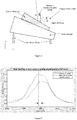
- Fig. 2 shows the limit of swathe width where the surface of a sample on a slide is kept within the depth of focus, referred to as a "maximum useable swathe width".
- the maximum useable swathe width may be defined as the maximum width of a swathe that is able to keep the surface of the sample in focus across the width of the swathe in the scan width direction.
- the present inventors have observed that if the swathe width is set to the maximum useable swathe width, rather than the maximum possible swathe width, this will allow the whole of the sample to be scanned in focus.
- a sample on a slide can be scanned in the minimum number of swathes using swathes that have the maximum possible swathe width, which in turn gives the shortest scan time.
- an in focus swathe could still be acquired by reducing the width of the swathe scanned to half the normal swathe width. This will produce the same image quality as a scanner with no tilt but because of the greater number swathes required for the same scan area the time to scan will increase.
- a maximum useable swathe width should first be determined.
- a differential focus may be calculated.
- a differential focus may be defined as being indicative of a distance between (i) an in focus level at a first position on the surface of the sample; and (ii) an in focus level at a second position on the surface of the sample; wherein the first position and second position are offset from each other in the scan width direction 5.
- the first and second positions may correspond to positions on opposite sides (e.g. opposite ends) of a scan line or group of scan lines.
- a differential focus may be measured by performing a "focus sweep" on a single line location 7 on the sample.
- a focus sweep can be thought of as a 2D image in the xz plane rather than the xy plane. This can be achieved with a simply by moving the lens focus along the z axis, e.g. by moving the lens 1 along the imaging axis 9, while the line scan detector 2 is collecting data, or by performing consecutive single line scans at different focus positions. From scan lines acquired in the focus sweep (as an image or stack of images), it is possible to calculate the output of a focus merit function at two positions that are on either side of the line location 7, as a function of focus position (z-axis). A peak in a merit function indicates an "in focus" level. Hence, the difference between the peaks of the output of the merit function for the two positions that are on either side of the line location 7, provides a differential focus, which is indicative of a distance between in focus levels at the two positions.
- the output of a focus merit function can be thought of as providing a measure of the quality of focus and there are many functions that may be used, typically based on a difference in adjacent pixels.
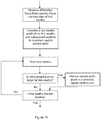
- An example of this is in Fig. 3 where the output of the focus merit function on each side of the swathe has a peak at a different focus position (z-axis).
- the fact that the output of the focus merit function has different peak values at the two positions is not important and only shows that the sample measured has different level of detail at those two positions (i.e. across the swathe width).
- the differential focus is shown in Fig. 3 in arbitrary units ("AU") derived from the position of the imaging lens 1 along the imaging axis, though other measures of focus position could equally be used.
- AU arbitrary units
- the output of the focus merit function is calculated using adjacent pixels at positions at either end of the line scans obtained from the focus sweep (left edge, right edge).
- the focus merit function is calculated using adjacent pixels at either side of the line scans (left edge, right edge) and also at intermediate positions between either end of the line scans and a centre of the line scans (left of centre, right of centre).
- a known target may be used to determine a maximum useable swathe width, rather than direct measurement from a sample on the slide 7.
- this target would be square wave grating mounted in the scanner separately from a mount used for slides, e.g. so that the target could be moved into and out from the imaging axis 9. Types of target other than a square wave grating could be used.
- a target not permanently mounted within the scanner but instead mountable in a mount used for slides could be used. The same technique for measuring differential focus can be used on the target, as has already been described above.
- the target it is also not required for the target to be mounted without any tilt as if the level of tilt of the target relative to a mounted slide is known this can be subtracted from the measured tilt of the target to give the real tilt of a mounted slide. In this way, we can either measure the tilt of a slide directly, or measure the change in tilt of a target to give the tilt of a slide.
- the swathe width is preferably set to be equal to a maximum useable swathe width is preferred, the swathe width may instead be calculated with a buffer to be slightly smaller than the maximum useable swathe width to ensure that the distance between the in focus levels at the edges of a swathe does not exceed the depth of focus of the image scanning apparatus.
- the swathe width is set based on at least one measure (differential focus) indicating that the surface of the sample on the slide is uneven (in this case tilted) in the scan width direction relative to an imaging plane of the image scanning apparatus.
- This measurement of the tilt of a mounted slide can be performed periodically, typically every 30mins if the change in the scanner is slow. If the change in tilt is more rapid, a tilt measurement can be performed before every full image scan, as in the workflow shown in Fig. 6 . It is also possible for a tilt measurement to be performed before acquisition of every swathe in an image scan if the change is very rapid. This sequence is shown in Fig. 7 . If tilt is measured before every swathe this may give an image with different swathe widths within the full scanned image.
- sample, slide and a slide mount is to be compensated for, then it is necessary to scan the sample itself (i.e. necessary for the object used for measuring tilt to be the same as the object being scanned).
- a suitable area within the surface of the sample, with detail across a swathe width, can be identified and measured before every full scanned image.
- a maximum usable swathe width for the full scanned image can then be set. This is shown in Fig. 8 .
- the thickness of a tissue sample may vary across the sample and a single measurement may not give a reliable measurement. However if measurements are taken at multiple points on the tissue sample, these can be combined to give a more reliable result.
- the combination process may be a simple mean or median value or maximum value or a more sophisticated process designed to remove the outlying results such as taking the mean of 80% of the closest results. Such combination processes are well known to those skilled in the art. This is shown in Fig. 9
- the scanner has a dynamic focus tracking system such as described in US2014/0071438 or WO2013/017855 or US7485834 it is possible to measure/predict the differential focus during the scanning of a swathe.
- the whole of the swathe width is used to predict a single focus position at which to scan at a given location along the length of a swathe, as shown in Fig. 10 .
- This measuring of the differential focus can be measured from dynamic focus tracking data using a first swathe to set the swathe width for all subsequent swathes of a full image scan as shown in Fig. 12 .
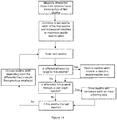
- the differential focus error is monitored from the dynamic focus tracking data it can be analysed if any individual swathe has a differential focus that is too large. If so, the swathe can be repeated but with a reduced swathe width, as shown in Fig. 13 . Note that in this case it is required to repeat the swathe scan as the centre of the swathe scan has to be moved along the x direction to ensure that the swathe width adjoins the previous adjacent swathe. This means different swathes within the same full scan image will have different widths.
- the swathe for the subsequent swathes may be returned to the swathe width calculated after the first swathe or may be retain at the reduced swathe width.
- differential focus data from a swathe indicates the swathe width could have been greater than that used it is possible to use the addition swathe image data on the side not adjoining a previous scanned swathe, as shown in Fig. 14 . It would then be possible to scan subsequent swathes at the larger swathe width.
- measures indicating that the surface of a sample on a slide is uneven (e.g. tilted) in the scan width direction relative to an imaging plane of the image scanning apparatus can still be estimated from a scanned swathe image itself. This can be done using multiple scan lines from a swathe (as shown below), or even from just a single scan line from a swathe (not shown).
- a focus merit value (output of a focus merit function) could be calculated at positions on both sides and the middle of a swathe, and if the detail in the sample is known to be uniform across the swathe, then the relative values of the edge merit values can be compared with the centre merit value to assess whether the sample on the slide 7 is tilted, and adjust the swathe width accordingly.
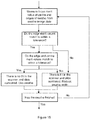
- the two edge merit values will match. If the sample is uniform and has no tilt the two edge merit values will match and the centre merit value will match. If the sample is uniform and has tilt the edge merit values will match but be lower than the centre merit value. This is shown in Fig. 15 . From all of these decisions we can determine if there the swathe width was too wide by deciding if there were too many decisions where there was judged to be tilt in the system. The swathe width can then be reduced and repeated if required.
- the amount of reduction of swathe width could be determined from monitoring additional points across the swathe width such as third, quarter, eighth or more points. These can then have the same logic as shown in Fig. 15 applied and the widest set of points which meet the acceptability criteria on the number of "No" decisions can be used to set the maximum usable swathe width.
- Fig. 16 A further refinement is shown in Fig. 16 .
- the mean density value of each section of the swathe can be measured. If the sample is uniform in detail the mean density value of each section of the swathe will be similar. If the mean density value of each section of the swathe is not the same then the detail will not be uniform even if the merit values of each section are the same. This provides a check to make sure that the scan line is suitable for measuring tilt, since if mean density values are different, then the scan line can't be used to assess tilt.
- the amount of reduction of the swathe width required can be calculated in the same way with more sections across the swathe width using not only the focus merit values but the mean density being matched to the other sections.
- a maximum usable swathe width measurement determined according to the example workflows shown in Fig. 15 and Fig. 16 can be used to predict trends. For example if the maximum usable swathe width reduces over a period of time, then a user could be informed to call someone to perform corrective action such as a visit from a service engineer. Predictive trends can inform the user that corrective action will be required in a certain time interval before the maximum usable swathe width is actually required to be reduced and impact the scanner productivity.
Landscapes
- Physics & Mathematics (AREA)
- Engineering & Computer Science (AREA)
- Multimedia (AREA)
- Signal Processing (AREA)
- General Physics & Mathematics (AREA)
- Optics & Photonics (AREA)
- Length Measuring Devices By Optical Means (AREA)
- Microscoopes, Condenser (AREA)
- Photometry And Measurement Of Optical Pulse Characteristics (AREA)
Applications Claiming Priority (2)
| Application Number | Priority Date | Filing Date | Title |
|---|---|---|---|
| US201562265015P | 2015-12-09 | 2015-12-09 | |
| PCT/EP2016/080360 WO2017097950A1 (en) | 2015-12-09 | 2016-12-09 | An image scanning apparatus and methods of operating an image scanning apparatus |
Publications (2)
| Publication Number | Publication Date |
|---|---|
| EP3387480A1 EP3387480A1 (en) | 2018-10-17 |
| EP3387480B1 true EP3387480B1 (en) | 2020-01-15 |
Family
ID=57708545
Family Applications (1)
| Application Number | Title | Priority Date | Filing Date |
|---|---|---|---|
| EP16820178.8A Active EP3387480B1 (en) | 2015-12-09 | 2016-12-09 | An image scanning apparatus and methods of operating an image scanning apparatus |
Country Status (7)
| Country | Link |
|---|---|
| US (1) | US10462322B2 (https=) |
| EP (1) | EP3387480B1 (https=) |
| JP (1) | JP6901484B2 (https=) |
| CN (1) | CN108369337B (https=) |
| AU (1) | AU2016367209B2 (https=) |
| CA (1) | CA3002319C (https=) |
| WO (1) | WO2017097950A1 (https=) |
Families Citing this family (5)
| Publication number | Priority date | Publication date | Assignee | Title |
|---|---|---|---|---|
| CN111183385B (zh) * | 2017-09-29 | 2022-04-08 | 徕卡生物系统成像股份有限公司 | 实时自动聚焦扫描 |
| WO2019170564A1 (en) | 2018-03-06 | 2019-09-12 | Ventana Medical Systems, Inc. | Digital pathology scanning interface and workflow |
| CN110852999B (zh) * | 2019-10-29 | 2023-03-10 | 北京临近空间飞行器系统工程研究所 | 图像扫描系统及图像扫描方法 |
| IL326068A (en) * | 2019-11-25 | 2026-03-01 | Hologic Inc | Digital imaging method and system |
| CN113596276B (zh) * | 2021-06-28 | 2022-09-27 | 展讯半导体(南京)有限公司 | 便携式电子设备的扫描方法及系统、电子设备及存储介质 |
Family Cites Families (10)
| Publication number | Priority date | Publication date | Assignee | Title |
|---|---|---|---|---|
| JP3460131B2 (ja) * | 1995-06-29 | 2003-10-27 | 株式会社ニコン | 投影露光装置 |
| JP2004361431A (ja) * | 2003-05-30 | 2004-12-24 | Minolta Co Ltd | 撮像装置 |
| GB0414201D0 (en) * | 2004-06-24 | 2004-07-28 | Fujifilm Electronic Imaging | Method and apparatus for forming a multiple focus stack image |
| GB0503032D0 (en) * | 2005-02-14 | 2005-03-23 | Fujifilm Electronic Imaging | Blip focus |
| ES2561937T3 (es) * | 2009-12-30 | 2016-03-01 | Koninklijke Philips N.V. | Sensor para microscopia |
| GB201113071D0 (en) | 2011-07-29 | 2011-09-14 | Ffei Ltd | Method and apparatus for image scanning |
| US9632301B2 (en) * | 2011-09-21 | 2017-04-25 | Huron Technologies International Inc. | Slide scanner with a tilted image |
| JP2013083925A (ja) * | 2011-09-29 | 2013-05-09 | Canon Inc | 撮像装置及びその制御方法 |
| CA2868263C (en) * | 2012-03-23 | 2021-04-13 | Huron Technologies International Inc. | Slide scanner with dynamic focus and specimen tilt and method of operation |
| GB2505691B (en) * | 2012-09-07 | 2018-02-21 | Ffei Ltd | Method and apparatus for image scanning |
-
2016
- 2016-12-09 CA CA3002319A patent/CA3002319C/en active Active
- 2016-12-09 EP EP16820178.8A patent/EP3387480B1/en active Active
- 2016-12-09 CN CN201680072104.0A patent/CN108369337B/zh active Active
- 2016-12-09 JP JP2018529947A patent/JP6901484B2/ja active Active
- 2016-12-09 WO PCT/EP2016/080360 patent/WO2017097950A1/en not_active Ceased
- 2016-12-09 AU AU2016367209A patent/AU2016367209B2/en active Active
-
2018
- 2018-06-08 US US16/004,237 patent/US10462322B2/en active Active
Non-Patent Citations (1)
| Title |
|---|
| None * |
Also Published As
| Publication number | Publication date |
|---|---|
| CN108369337A (zh) | 2018-08-03 |
| EP3387480A1 (en) | 2018-10-17 |
| CA3002319A1 (en) | 2017-06-15 |
| CN108369337B (zh) | 2021-03-30 |
| AU2016367209A1 (en) | 2018-04-26 |
| US10462322B2 (en) | 2019-10-29 |
| US20180295254A1 (en) | 2018-10-11 |
| WO2017097950A1 (en) | 2017-06-15 |
| JP2018538574A (ja) | 2018-12-27 |
| CA3002319C (en) | 2022-06-14 |
| JP6901484B2 (ja) | 2021-07-14 |
| AU2016367209B2 (en) | 2021-06-17 |
Similar Documents
| Publication | Publication Date | Title |
|---|---|---|
| US10462322B2 (en) | Image scanning apparatus and methods of operating an image scanning apparatus | |
| CN107238919B (zh) | 用于图像扫描的方法和装置 | |
| JP5263126B2 (ja) | 板材の光学式形状測定方法及び測定装置 | |
| EP2517799B1 (en) | Apparatus and method for industrial online micro-topography and waviness measurements on moving products | |
| US11449964B2 (en) | Image reconstruction method, device and microscopic imaging device | |
| DE102010016997B4 (de) | Inspektionssystem und Verfahren mit Mehrfachbildphasenverschiebungsanalyse | |
| WO2017223206A1 (en) | Hyperspectral imaging methods and apparatuses | |
| EP2865003A1 (en) | Scanning in angle-resolved reflectometry and algorithmically eliminating diffraction from optical metrology | |
| WO2019097587A1 (ja) | 定量位相画像生成方法、定量位相画像生成装置およびプログラム | |
| TW201229493A (en) | Substrate quality assessment method and apparatus thereof | |
| JP2016500849A (ja) | 光学顕微鏡および顕微鏡観察方法 | |
| EP2884326B1 (en) | Method and apparatus for estimating an in-focus position | |
| JP2018538574A5 (https=) | ||
| US9924115B2 (en) | Apparatus and method for three-dimensional infrared imaging of surfaces | |
| KR20240025598A (ko) | 테스트될 광학 시스템에 의한 이미징을 위한 디바이스, 및 광학 시스템을 테스트하기 위한 시스템 및 또한 방법 | |
| Helmli et al. | Ultra high speed 3D measurement with the focus variation method | |
| JP2006270334A (ja) | シェーディング補正方法および画像検査装置 | |
| Zeise et al. | Measurement of contributing attributes of perceived printer resolution. | |
| JP2023177950A (ja) | 算出方法、撮像方法、および撮像装置 | |
| US20050140953A1 (en) | Image enhancement of substantially coherent imaging systems | |
| JP5949689B2 (ja) | 撮像方法及び撮像装置 | |
| Ma et al. | Novel algorithm to improve sampling frequency of LSF | |
| JPH10153487A (ja) | 偏光解析装置の光学系 | |
| JP2016065835A (ja) | 計測装置 | |
| JP2005265605A (ja) | 画像評価方法及びその装置、並びに記録媒体 |
Legal Events
| Date | Code | Title | Description |
|---|---|---|---|
| STAA | Information on the status of an ep patent application or granted ep patent |
Free format text: STATUS: UNKNOWN |
|
| STAA | Information on the status of an ep patent application or granted ep patent |
Free format text: STATUS: THE INTERNATIONAL PUBLICATION HAS BEEN MADE |
|
| PUAI | Public reference made under article 153(3) epc to a published international application that has entered the european phase |
Free format text: ORIGINAL CODE: 0009012 |
|
| STAA | Information on the status of an ep patent application or granted ep patent |
Free format text: STATUS: REQUEST FOR EXAMINATION WAS MADE |
|
| 17P | Request for examination filed |
Effective date: 20180709 |
|
| AK | Designated contracting states |
Kind code of ref document: A1 Designated state(s): AL AT BE BG CH CY CZ DE DK EE ES FI FR GB GR HR HU IE IS IT LI LT LU LV MC MK MT NL NO PL PT RO RS SE SI SK SM TR |
|
| AX | Request for extension of the european patent |
Extension state: BA ME |
|
| DAV | Request for validation of the european patent (deleted) | ||
| DAX | Request for extension of the european patent (deleted) | ||
| GRAP | Despatch of communication of intention to grant a patent |
Free format text: ORIGINAL CODE: EPIDOSNIGR1 |
|
| STAA | Information on the status of an ep patent application or granted ep patent |
Free format text: STATUS: GRANT OF PATENT IS INTENDED |
|
| INTG | Intention to grant announced |
Effective date: 20190801 |
|
| GRAS | Grant fee paid |
Free format text: ORIGINAL CODE: EPIDOSNIGR3 |
|
| GRAA | (expected) grant |
Free format text: ORIGINAL CODE: 0009210 |
|
| STAA | Information on the status of an ep patent application or granted ep patent |
Free format text: STATUS: THE PATENT HAS BEEN GRANTED |
|
| AK | Designated contracting states |
Kind code of ref document: B1 Designated state(s): AL AT BE BG CH CY CZ DE DK EE ES FI FR GB GR HR HU IE IS IT LI LT LU LV MC MK MT NL NO PL PT RO RS SE SI SK SM TR |
|
| REG | Reference to a national code |
Ref country code: GB Ref legal event code: FG4D Ref country code: CH Ref legal event code: EP |
|
| REG | Reference to a national code |
Ref country code: IE Ref legal event code: FG4D |
|
| REG | Reference to a national code |
Ref country code: DE Ref legal event code: R096 Ref document number: 602016028445 Country of ref document: DE |
|
| REG | Reference to a national code |
Ref country code: AT Ref legal event code: REF Ref document number: 1225660 Country of ref document: AT Kind code of ref document: T Effective date: 20200215 |
|
| REG | Reference to a national code |
Ref country code: NL Ref legal event code: MP Effective date: 20200115 |
|
| REG | Reference to a national code |
Ref country code: LT Ref legal event code: MG4D |
|
| PG25 | Lapsed in a contracting state [announced via postgrant information from national office to epo] |
Ref country code: NO Free format text: LAPSE BECAUSE OF FAILURE TO SUBMIT A TRANSLATION OF THE DESCRIPTION OR TO PAY THE FEE WITHIN THE PRESCRIBED TIME-LIMIT Effective date: 20200415 Ref country code: PT Free format text: LAPSE BECAUSE OF FAILURE TO SUBMIT A TRANSLATION OF THE DESCRIPTION OR TO PAY THE FEE WITHIN THE PRESCRIBED TIME-LIMIT Effective date: 20200607 Ref country code: FI Free format text: LAPSE BECAUSE OF FAILURE TO SUBMIT A TRANSLATION OF THE DESCRIPTION OR TO PAY THE FEE WITHIN THE PRESCRIBED TIME-LIMIT Effective date: 20200115 Ref country code: NL Free format text: LAPSE BECAUSE OF FAILURE TO SUBMIT A TRANSLATION OF THE DESCRIPTION OR TO PAY THE FEE WITHIN THE PRESCRIBED TIME-LIMIT Effective date: 20200115 Ref country code: RS Free format text: LAPSE BECAUSE OF FAILURE TO SUBMIT A TRANSLATION OF THE DESCRIPTION OR TO PAY THE FEE WITHIN THE PRESCRIBED TIME-LIMIT Effective date: 20200115 |
|
| PG25 | Lapsed in a contracting state [announced via postgrant information from national office to epo] |
Ref country code: HR Free format text: LAPSE BECAUSE OF FAILURE TO SUBMIT A TRANSLATION OF THE DESCRIPTION OR TO PAY THE FEE WITHIN THE PRESCRIBED TIME-LIMIT Effective date: 20200115 Ref country code: GR Free format text: LAPSE BECAUSE OF FAILURE TO SUBMIT A TRANSLATION OF THE DESCRIPTION OR TO PAY THE FEE WITHIN THE PRESCRIBED TIME-LIMIT Effective date: 20200416 Ref country code: IS Free format text: LAPSE BECAUSE OF FAILURE TO SUBMIT A TRANSLATION OF THE DESCRIPTION OR TO PAY THE FEE WITHIN THE PRESCRIBED TIME-LIMIT Effective date: 20200515 Ref country code: BG Free format text: LAPSE BECAUSE OF FAILURE TO SUBMIT A TRANSLATION OF THE DESCRIPTION OR TO PAY THE FEE WITHIN THE PRESCRIBED TIME-LIMIT Effective date: 20200415 Ref country code: SE Free format text: LAPSE BECAUSE OF FAILURE TO SUBMIT A TRANSLATION OF THE DESCRIPTION OR TO PAY THE FEE WITHIN THE PRESCRIBED TIME-LIMIT Effective date: 20200115 Ref country code: LV Free format text: LAPSE BECAUSE OF FAILURE TO SUBMIT A TRANSLATION OF THE DESCRIPTION OR TO PAY THE FEE WITHIN THE PRESCRIBED TIME-LIMIT Effective date: 20200115 |
|
| REG | Reference to a national code |
Ref country code: DE Ref legal event code: R097 Ref document number: 602016028445 Country of ref document: DE |
|
| PG25 | Lapsed in a contracting state [announced via postgrant information from national office to epo] |
Ref country code: LT Free format text: LAPSE BECAUSE OF FAILURE TO SUBMIT A TRANSLATION OF THE DESCRIPTION OR TO PAY THE FEE WITHIN THE PRESCRIBED TIME-LIMIT Effective date: 20200115 Ref country code: CZ Free format text: LAPSE BECAUSE OF FAILURE TO SUBMIT A TRANSLATION OF THE DESCRIPTION OR TO PAY THE FEE WITHIN THE PRESCRIBED TIME-LIMIT Effective date: 20200115 Ref country code: ES Free format text: LAPSE BECAUSE OF FAILURE TO SUBMIT A TRANSLATION OF THE DESCRIPTION OR TO PAY THE FEE WITHIN THE PRESCRIBED TIME-LIMIT Effective date: 20200115 Ref country code: EE Free format text: LAPSE BECAUSE OF FAILURE TO SUBMIT A TRANSLATION OF THE DESCRIPTION OR TO PAY THE FEE WITHIN THE PRESCRIBED TIME-LIMIT Effective date: 20200115 Ref country code: DK Free format text: LAPSE BECAUSE OF FAILURE TO SUBMIT A TRANSLATION OF THE DESCRIPTION OR TO PAY THE FEE WITHIN THE PRESCRIBED TIME-LIMIT Effective date: 20200115 Ref country code: SM Free format text: LAPSE BECAUSE OF FAILURE TO SUBMIT A TRANSLATION OF THE DESCRIPTION OR TO PAY THE FEE WITHIN THE PRESCRIBED TIME-LIMIT Effective date: 20200115 Ref country code: SK Free format text: LAPSE BECAUSE OF FAILURE TO SUBMIT A TRANSLATION OF THE DESCRIPTION OR TO PAY THE FEE WITHIN THE PRESCRIBED TIME-LIMIT Effective date: 20200115 Ref country code: RO Free format text: LAPSE BECAUSE OF FAILURE TO SUBMIT A TRANSLATION OF THE DESCRIPTION OR TO PAY THE FEE WITHIN THE PRESCRIBED TIME-LIMIT Effective date: 20200115 |
|
| REG | Reference to a national code |
Ref country code: AT Ref legal event code: MK05 Ref document number: 1225660 Country of ref document: AT Kind code of ref document: T Effective date: 20200115 |
|
| PLBE | No opposition filed within time limit |
Free format text: ORIGINAL CODE: 0009261 |
|
| STAA | Information on the status of an ep patent application or granted ep patent |
Free format text: STATUS: NO OPPOSITION FILED WITHIN TIME LIMIT |
|
| 26N | No opposition filed |
Effective date: 20201016 |
|
| PG25 | Lapsed in a contracting state [announced via postgrant information from national office to epo] |
Ref country code: IT Free format text: LAPSE BECAUSE OF FAILURE TO SUBMIT A TRANSLATION OF THE DESCRIPTION OR TO PAY THE FEE WITHIN THE PRESCRIBED TIME-LIMIT Effective date: 20200115 Ref country code: AT Free format text: LAPSE BECAUSE OF FAILURE TO SUBMIT A TRANSLATION OF THE DESCRIPTION OR TO PAY THE FEE WITHIN THE PRESCRIBED TIME-LIMIT Effective date: 20200115 |
|
| PG25 | Lapsed in a contracting state [announced via postgrant information from national office to epo] |
Ref country code: PL Free format text: LAPSE BECAUSE OF FAILURE TO SUBMIT A TRANSLATION OF THE DESCRIPTION OR TO PAY THE FEE WITHIN THE PRESCRIBED TIME-LIMIT Effective date: 20200115 Ref country code: SI Free format text: LAPSE BECAUSE OF FAILURE TO SUBMIT A TRANSLATION OF THE DESCRIPTION OR TO PAY THE FEE WITHIN THE PRESCRIBED TIME-LIMIT Effective date: 20200115 |
|
| PG25 | Lapsed in a contracting state [announced via postgrant information from national office to epo] |
Ref country code: MC Free format text: LAPSE BECAUSE OF FAILURE TO SUBMIT A TRANSLATION OF THE DESCRIPTION OR TO PAY THE FEE WITHIN THE PRESCRIBED TIME-LIMIT Effective date: 20200115 |
|
| REG | Reference to a national code |
Ref country code: BE Ref legal event code: MM Effective date: 20201231 |
|
| PG25 | Lapsed in a contracting state [announced via postgrant information from national office to epo] |
Ref country code: IE Free format text: LAPSE BECAUSE OF NON-PAYMENT OF DUE FEES Effective date: 20201209 Ref country code: LU Free format text: LAPSE BECAUSE OF NON-PAYMENT OF DUE FEES Effective date: 20201209 |
|
| PG25 | Lapsed in a contracting state [announced via postgrant information from national office to epo] |
Ref country code: TR Free format text: LAPSE BECAUSE OF FAILURE TO SUBMIT A TRANSLATION OF THE DESCRIPTION OR TO PAY THE FEE WITHIN THE PRESCRIBED TIME-LIMIT Effective date: 20200115 Ref country code: MT Free format text: LAPSE BECAUSE OF FAILURE TO SUBMIT A TRANSLATION OF THE DESCRIPTION OR TO PAY THE FEE WITHIN THE PRESCRIBED TIME-LIMIT Effective date: 20200115 Ref country code: CY Free format text: LAPSE BECAUSE OF FAILURE TO SUBMIT A TRANSLATION OF THE DESCRIPTION OR TO PAY THE FEE WITHIN THE PRESCRIBED TIME-LIMIT Effective date: 20200115 |
|
| PG25 | Lapsed in a contracting state [announced via postgrant information from national office to epo] |
Ref country code: MK Free format text: LAPSE BECAUSE OF FAILURE TO SUBMIT A TRANSLATION OF THE DESCRIPTION OR TO PAY THE FEE WITHIN THE PRESCRIBED TIME-LIMIT Effective date: 20200115 Ref country code: AL Free format text: LAPSE BECAUSE OF FAILURE TO SUBMIT A TRANSLATION OF THE DESCRIPTION OR TO PAY THE FEE WITHIN THE PRESCRIBED TIME-LIMIT Effective date: 20200115 |
|
| PG25 | Lapsed in a contracting state [announced via postgrant information from national office to epo] |
Ref country code: BE Free format text: LAPSE BECAUSE OF NON-PAYMENT OF DUE FEES Effective date: 20201231 |
|
| REG | Reference to a national code |
Ref country code: DE Ref legal event code: R082 Ref document number: 602016028445 Country of ref document: DE Representative=s name: KRAUS & LEDERER PARTGMBB, DE |
|
| REG | Reference to a national code |
Ref country code: CH Ref legal event code: U11 Free format text: ST27 STATUS EVENT CODE: U-0-0-U10-U11 (AS PROVIDED BY THE NATIONAL OFFICE) Effective date: 20260101 |
|
| PGFP | Annual fee paid to national office [announced via postgrant information from national office to epo] |
Ref country code: DE Payment date: 20251126 Year of fee payment: 10 |
|
| PGFP | Annual fee paid to national office [announced via postgrant information from national office to epo] |
Ref country code: GB Payment date: 20251119 Year of fee payment: 10 |
|
| PGFP | Annual fee paid to national office [announced via postgrant information from national office to epo] |
Ref country code: FR Payment date: 20251120 Year of fee payment: 10 |
|
| PGFP | Annual fee paid to national office [announced via postgrant information from national office to epo] |
Ref country code: CH Payment date: 20260101 Year of fee payment: 10 |