EP3386937B1 - Zweibettverfahren zur umwandlung von paraffin in olefin - Google Patents
Zweibettverfahren zur umwandlung von paraffin in olefin Download PDFInfo
- Publication number
- EP3386937B1 EP3386937B1 EP16873560.3A EP16873560A EP3386937B1 EP 3386937 B1 EP3386937 B1 EP 3386937B1 EP 16873560 A EP16873560 A EP 16873560A EP 3386937 B1 EP3386937 B1 EP 3386937B1
- Authority
- EP
- European Patent Office
- Prior art keywords
- unit
- adsorbent
- adsorbent unit
- regenerant
- passing
- Prior art date
- Legal status (The legal status is an assumption and is not a legal conclusion. Google has not performed a legal analysis and makes no representation as to the accuracy of the status listed.)
- Active
Links
Images
Classifications
-
- C—CHEMISTRY; METALLURGY
- C10—PETROLEUM, GAS OR COKE INDUSTRIES; TECHNICAL GASES CONTAINING CARBON MONOXIDE; FUELS; LUBRICANTS; PEAT
- C10G—CRACKING HYDROCARBON OILS; PRODUCTION OF LIQUID HYDROCARBON MIXTURES, e.g. BY DESTRUCTIVE HYDROGENATION, OLIGOMERISATION, POLYMERISATION; RECOVERY OF HYDROCARBON OILS FROM OIL-SHALE, OIL-SAND, OR GASES; REFINING MIXTURES MAINLY CONSISTING OF HYDROCARBONS; REFORMING OF NAPHTHA; MINERAL WAXES
- C10G53/00—Treatment of hydrocarbon oils, in the absence of hydrogen, by two or more refining processes
- C10G53/02—Treatment of hydrocarbon oils, in the absence of hydrogen, by two or more refining processes plural serial stages only
- C10G53/08—Treatment of hydrocarbon oils, in the absence of hydrogen, by two or more refining processes plural serial stages only including at least one sorption step
-
- B—PERFORMING OPERATIONS; TRANSPORTING
- B01—PHYSICAL OR CHEMICAL PROCESSES OR APPARATUS IN GENERAL
- B01D—SEPARATION
- B01D15/00—Separating processes involving the treatment of liquids with solid sorbents; Apparatus therefor
- B01D15/08—Selective adsorption, e.g. chromatography
- B01D15/10—Selective adsorption, e.g. chromatography characterised by constructional or operational features
- B01D15/18—Selective adsorption, e.g. chromatography characterised by constructional or operational features relating to flow patterns
- B01D15/1814—Recycling of the fraction to be distributed
-
- B—PERFORMING OPERATIONS; TRANSPORTING
- B01—PHYSICAL OR CHEMICAL PROCESSES OR APPARATUS IN GENERAL
- B01D—SEPARATION
- B01D15/00—Separating processes involving the treatment of liquids with solid sorbents; Apparatus therefor
- B01D15/08—Selective adsorption, e.g. chromatography
- B01D15/10—Selective adsorption, e.g. chromatography characterised by constructional or operational features
- B01D15/18—Selective adsorption, e.g. chromatography characterised by constructional or operational features relating to flow patterns
- B01D15/1864—Selective adsorption, e.g. chromatography characterised by constructional or operational features relating to flow patterns using two or more columns
-
- B—PERFORMING OPERATIONS; TRANSPORTING
- B01—PHYSICAL OR CHEMICAL PROCESSES OR APPARATUS IN GENERAL
- B01D—SEPARATION
- B01D53/00—Separation of gases or vapours; Recovering vapours of volatile solvents from gases; Chemical or biological purification of waste gases, e.g. engine exhaust gases, smoke, fumes, flue gases, aerosols
- B01D53/02—Separation of gases or vapours; Recovering vapours of volatile solvents from gases; Chemical or biological purification of waste gases, e.g. engine exhaust gases, smoke, fumes, flue gases, aerosols by adsorption, e.g. preparative gas chromatography
- B01D53/04—Separation of gases or vapours; Recovering vapours of volatile solvents from gases; Chemical or biological purification of waste gases, e.g. engine exhaust gases, smoke, fumes, flue gases, aerosols by adsorption, e.g. preparative gas chromatography with stationary adsorbents
- B01D53/0407—Constructional details of adsorbing systems
- B01D53/0423—Beds in columns
-
- C—CHEMISTRY; METALLURGY
- C07—ORGANIC CHEMISTRY
- C07C—ACYCLIC OR CARBOCYCLIC COMPOUNDS
- C07C2/00—Preparation of hydrocarbons from hydrocarbons containing a smaller number of carbon atoms
- C07C2/54—Preparation of hydrocarbons from hydrocarbons containing a smaller number of carbon atoms by addition of unsaturated hydrocarbons to saturated hydrocarbons or to hydrocarbons containing a six-membered aromatic ring with no unsaturation outside the aromatic ring
- C07C2/64—Addition to a carbon atom of a six-membered aromatic ring
- C07C2/66—Catalytic processes
-
- C—CHEMISTRY; METALLURGY
- C07—ORGANIC CHEMISTRY
- C07C—ACYCLIC OR CARBOCYCLIC COMPOUNDS
- C07C7/00—Purification; Separation; Use of additives
- C07C7/12—Purification; Separation; Use of additives by adsorption, i.e. purification or separation of hydrocarbons with the aid of solids, e.g. with ion-exchangers
-
- C—CHEMISTRY; METALLURGY
- C10—PETROLEUM, GAS OR COKE INDUSTRIES; TECHNICAL GASES CONTAINING CARBON MONOXIDE; FUELS; LUBRICANTS; PEAT
- C10G—CRACKING HYDROCARBON OILS; PRODUCTION OF LIQUID HYDROCARBON MIXTURES, e.g. BY DESTRUCTIVE HYDROGENATION, OLIGOMERISATION, POLYMERISATION; RECOVERY OF HYDROCARBON OILS FROM OIL-SHALE, OIL-SAND, OR GASES; REFINING MIXTURES MAINLY CONSISTING OF HYDROCARBONS; REFORMING OF NAPHTHA; MINERAL WAXES
- C10G25/00—Refining of hydrocarbon oils in the absence of hydrogen, with solid sorbents
-
- C—CHEMISTRY; METALLURGY
- C10—PETROLEUM, GAS OR COKE INDUSTRIES; TECHNICAL GASES CONTAINING CARBON MONOXIDE; FUELS; LUBRICANTS; PEAT
- C10G—CRACKING HYDROCARBON OILS; PRODUCTION OF LIQUID HYDROCARBON MIXTURES, e.g. BY DESTRUCTIVE HYDROGENATION, OLIGOMERISATION, POLYMERISATION; RECOVERY OF HYDROCARBON OILS FROM OIL-SHALE, OIL-SAND, OR GASES; REFINING MIXTURES MAINLY CONSISTING OF HYDROCARBONS; REFORMING OF NAPHTHA; MINERAL WAXES
- C10G29/00—Refining of hydrocarbon oils, in the absence of hydrogen, with other chemicals
- C10G29/20—Organic compounds not containing metal atoms
- C10G29/205—Organic compounds not containing metal atoms by reaction with hydrocarbons added to the hydrocarbon oil
-
- B—PERFORMING OPERATIONS; TRANSPORTING
- B01—PHYSICAL OR CHEMICAL PROCESSES OR APPARATUS IN GENERAL
- B01D—SEPARATION
- B01D2256/00—Main component in the product gas stream after treatment
- B01D2256/24—Hydrocarbons
-
- B—PERFORMING OPERATIONS; TRANSPORTING
- B01—PHYSICAL OR CHEMICAL PROCESSES OR APPARATUS IN GENERAL
- B01D—SEPARATION
- B01D2257/00—Components to be removed
- B01D2257/70—Organic compounds not provided for in groups B01D2257/00 - B01D2257/602
- B01D2257/702—Hydrocarbons
- B01D2257/7027—Aromatic hydrocarbons
-
- B—PERFORMING OPERATIONS; TRANSPORTING
- B01—PHYSICAL OR CHEMICAL PROCESSES OR APPARATUS IN GENERAL
- B01D—SEPARATION
- B01D2259/00—Type of treatment
- B01D2259/40—Further details for adsorption processes and devices
- B01D2259/40083—Regeneration of adsorbents in processes other than pressure or temperature swing adsorption
- B01D2259/40088—Regeneration of adsorbents in processes other than pressure or temperature swing adsorption by heating
- B01D2259/40092—Regeneration of adsorbents in processes other than pressure or temperature swing adsorption by heating using hot liquid
-
- B—PERFORMING OPERATIONS; TRANSPORTING
- B01—PHYSICAL OR CHEMICAL PROCESSES OR APPARATUS IN GENERAL
- B01D—SEPARATION
- B01D2259/00—Type of treatment
- B01D2259/40—Further details for adsorption processes and devices
- B01D2259/402—Further details for adsorption processes and devices using two beds
-
- C—CHEMISTRY; METALLURGY
- C10—PETROLEUM, GAS OR COKE INDUSTRIES; TECHNICAL GASES CONTAINING CARBON MONOXIDE; FUELS; LUBRICANTS; PEAT
- C10G—CRACKING HYDROCARBON OILS; PRODUCTION OF LIQUID HYDROCARBON MIXTURES, e.g. BY DESTRUCTIVE HYDROGENATION, OLIGOMERISATION, POLYMERISATION; RECOVERY OF HYDROCARBON OILS FROM OIL-SHALE, OIL-SAND, OR GASES; REFINING MIXTURES MAINLY CONSISTING OF HYDROCARBONS; REFORMING OF NAPHTHA; MINERAL WAXES
- C10G2300/00—Aspects relating to hydrocarbon processing covered by groups C10G1/00 - C10G99/00
- C10G2300/10—Feedstock materials
- C10G2300/1088—Olefins
-
- C—CHEMISTRY; METALLURGY
- C10—PETROLEUM, GAS OR COKE INDUSTRIES; TECHNICAL GASES CONTAINING CARBON MONOXIDE; FUELS; LUBRICANTS; PEAT
- C10G—CRACKING HYDROCARBON OILS; PRODUCTION OF LIQUID HYDROCARBON MIXTURES, e.g. BY DESTRUCTIVE HYDROGENATION, OLIGOMERISATION, POLYMERISATION; RECOVERY OF HYDROCARBON OILS FROM OIL-SHALE, OIL-SAND, OR GASES; REFINING MIXTURES MAINLY CONSISTING OF HYDROCARBONS; REFORMING OF NAPHTHA; MINERAL WAXES
- C10G2300/00—Aspects relating to hydrocarbon processing covered by groups C10G1/00 - C10G99/00
- C10G2300/10—Feedstock materials
- C10G2300/1096—Aromatics or polyaromatics
-
- C—CHEMISTRY; METALLURGY
- C10—PETROLEUM, GAS OR COKE INDUSTRIES; TECHNICAL GASES CONTAINING CARBON MONOXIDE; FUELS; LUBRICANTS; PEAT
- C10G—CRACKING HYDROCARBON OILS; PRODUCTION OF LIQUID HYDROCARBON MIXTURES, e.g. BY DESTRUCTIVE HYDROGENATION, OLIGOMERISATION, POLYMERISATION; RECOVERY OF HYDROCARBON OILS FROM OIL-SHALE, OIL-SAND, OR GASES; REFINING MIXTURES MAINLY CONSISTING OF HYDROCARBONS; REFORMING OF NAPHTHA; MINERAL WAXES
- C10G2400/00—Products obtained by processes covered by groups C10G9/00 - C10G69/14
- C10G2400/20—C2-C4 olefins
-
- C—CHEMISTRY; METALLURGY
- C10—PETROLEUM, GAS OR COKE INDUSTRIES; TECHNICAL GASES CONTAINING CARBON MONOXIDE; FUELS; LUBRICANTS; PEAT
- C10G—CRACKING HYDROCARBON OILS; PRODUCTION OF LIQUID HYDROCARBON MIXTURES, e.g. BY DESTRUCTIVE HYDROGENATION, OLIGOMERISATION, POLYMERISATION; RECOVERY OF HYDROCARBON OILS FROM OIL-SHALE, OIL-SAND, OR GASES; REFINING MIXTURES MAINLY CONSISTING OF HYDROCARBONS; REFORMING OF NAPHTHA; MINERAL WAXES
- C10G2400/00—Products obtained by processes covered by groups C10G9/00 - C10G69/14
- C10G2400/22—Higher olefins
-
- C—CHEMISTRY; METALLURGY
- C10—PETROLEUM, GAS OR COKE INDUSTRIES; TECHNICAL GASES CONTAINING CARBON MONOXIDE; FUELS; LUBRICANTS; PEAT
- C10G—CRACKING HYDROCARBON OILS; PRODUCTION OF LIQUID HYDROCARBON MIXTURES, e.g. BY DESTRUCTIVE HYDROGENATION, OLIGOMERISATION, POLYMERISATION; RECOVERY OF HYDROCARBON OILS FROM OIL-SHALE, OIL-SAND, OR GASES; REFINING MIXTURES MAINLY CONSISTING OF HYDROCARBONS; REFORMING OF NAPHTHA; MINERAL WAXES
- C10G2400/00—Products obtained by processes covered by groups C10G9/00 - C10G69/14
- C10G2400/30—Aromatics
Definitions
- the present invention is related to a process for producing a purified feed to a benzene alkylation unit by removing heavy aromatics.
- normal paraffins provides the ability of upgrading products from straight runs of hydrocarbon streams derived from crude oil fractionation.
- straight run kerosene is further processed to separate out normal paraffins for higher valued products, such as used in the production of linear alkyl benzenes (LAB).
- Normal paraffins in the range of C10 to C13 are important precursors to LAB production, which is in turn used to produce linear alkyl benzene sulfonate (LAS).
- LAS is the predominant surfactant used in the production of detergents.
- detergents can be formulated from a wide variety of different compounds much of the world's supply is formulated from chemicals derived from alkylbenzenes.
- the compounds are produced in petrochemical complexes in which an aromatic hydrocarbon, typically benzene, is alkylated with an olefin of the desired structure and carbon number for the side chain.
- the olefin is actually a mixture of different olefins forming a homologous series having a range of three to five carbon numbers.
- the olefin(s) can be derived from several alternative sources.
- Kerosene boiling range fractions from crude oil provide heavier paraffins. Paraffins having 8 to 15 carbons are present in significant concentrations in relatively low cost kerosene. These paraffins have been a predominant source for linear alkanes and the leading source of olefin precursors for use in making LABs.
- Recovery of the desired normal paraffins from kerosene is performed by adsorption separation, which is one process in overall production of LABs.
- the paraffins are then passed through a catalytic dehydrogenation zone wherein some of the paraffins are converted to olefins.
- WO 2013/013885 relates to an integrated nitrile poison adsorption and desorption system.
- the present invention relates to an improved process for the removal of heavy aromatics from an olefins stream to generate a high quality feed stream for a detergent alkylation unit.
- the present invention is in accordance with the appended claims.
- a process for the removal of heavy aromatics from an olefins stream comprising passing an olefins feed stream to a first adsorbent unit in two unit adsorbent system to generate a first adsorbent effluent stream with reduced heavy aromatics content; running the first adsorbent unit until breakthrough; equalize pressure in a second adsorbent unit to the pressure of the first adsorbent unit; pass the olefins feed stream to the second adsorbent unit to generate a second adsorbent unit effluent stream with reduced heavy aromatics content; pass the second adsorbent unit effluent stream to the first adsorbent unit, displacing the first adsorbent unit fluid; discontinue the first adsorbent unit displacement; pass regenerant to the first adsorbent unit to regenerate the first adsorbent unit, wherein the regenerant flows in a co-current direction relative to the olefin feed stream through
- An embodiment of the disclosure is one, any or all of prior embodiments in this paragraph up through the first embodiment in this paragraph further comprising passing the first adsorbent bed effluent stream to a benzene alkylation unit.
- An embodiment of the disclosure is one, any or all of prior embodiments in this paragraph up through the first embodiment in this paragraph further comprising passing the second adsorbent bed effluent stream to a benzene alkylation unit.
- An embodiment of the disclosure is one, any or all of prior embodiments in this paragraph up through the first embodiment in this paragraph further comprising a trim displacement of the first adsorption unit following the first adsorption unit displacement.
- An embodiment of the disclosure is one, any or all of prior embodiments in this paragraph up through the first embodiment in this paragraph wherein the trim displacement is performed with regenerant.
- An embodiment of the disclosure is one, any or all of prior embodiments in this paragraph up through the first embodiment in this paragraph further comprising a trim displacement of the second adsorption unit following the second adsorption unit displacement.
- An embodiment of the disclosure is one, any or all of prior embodiments in this paragraph up through the first embodiment in this paragraph wherein the trim displacement is performed with regenerant.
- An embodiment of the disclosure is one, any or all of prior embodiments in this paragraph up through the first embodiment in this paragraph further comprising putting the first adsorbent unit on standby after passing the regenerant to the first adsorbent unit.
- An embodiment of the disclosure is one, any or all of prior embodiments in this paragraph up through the first embodiment in this paragraph further comprising putting the second adsorbent unit on standby after passing the regenerant to the second adsorbent unit.
- An embodiment of the disclosure is one, any or all of prior embodiments in this paragraph up through the first embodiment in this paragraph wherein the regenerant is benzene.
- An embodiment of the disclosure is one, any or all of prior embodiments in this paragraph up through the first embodiment in this paragraph wherein the heavy aromatics comprise C7 and heavier aromatics.
- An embodiment of the disclosure is one, any or all of prior embodiments in this paragraph up through the first embodiment in this paragraph wherein the olefins feed stream is generated by a paraffins dehydrogenation unit.
- An embodiment of the disclosure is one, any or all of prior embodiments in this paragraph up through the first embodiment in this paragraph further comprising passing the first adsorbent unit effluent stream to an alkylation unit.
- An embodiment of the disclosure is one, any or all of prior embodiments in this paragraph up through the first embodiment in this paragraph further comprising passing the second adsorbent unit effluent stream to an alkylation unit.
- An embodiment of the disclosure is one, any or all of prior embodiments in this paragraph up through the first embodiment in this paragraph wherein the alkylation unit is a benzene alkylation unit.
- a process for the removal of heavy aromatics from an olefins stream comprising passing an olefins feed stream to a first adsorbent unit in two unit adsorbent system to generate a first adsorbent effluent stream with reduced heavy aromatics content; running the first adsorbent unit until breakthrough; equalize pressure in a second adsorbent unit to the pressure of the first adsorbent unit; pass the olefins feed stream to the second adsorbent unit to generate a second adsorbent unit effluent stream with reduced heavy aromatics content; pass the second adsorbent unit effluent stream to the first adsorbent unit, displacing the first adsorbent unit fluid; discontinue the first adsorbent unit displacement and moving the first adsorbent unit off-line and the second adsorbent unit on-line; performing a trim displacement of the first adsorption unit following the first adsorption unit displacement;
- An embodiment of the disclosure is one, any or all of prior embodiments in this paragraph up through the second embodiment in this paragraph further comprising passing the first adsorbent unit effluent stream and the second adsorbent unit effluent stream to an alkylation unit.
- An embodiment of the disclosure is one, any or all of prior embodiments in this paragraph up through the second embodiment in this paragraph wherein the regenerant is benzene.
- An embodiment of the disclosure is one, any or all of prior embodiments in this paragraph up through the second embodiment in this paragraph wherein the heavy aromatics comprise C7 and heavier aromatics.
- An embodiment of the disclosure is one, any or all of prior embodiments in this paragraph up through the second embodiment in this paragraph wherein the trim displacement comprises passing benzene to the adsorbent unit being moved off line.
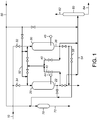
- FIG. 1 presents the layout and flow scheme for a two bed system.
- Olefins for use in the production of linear alkylbenzenes are generated by dehydrogenation of paraffins to produce an olefins feed stream.
- the paraffin dehydrogenation process for the production of olefins generates aromatics.
- the aromatics include heavy aromatics that comprise aromatics with 7 or more carbons.
- the heavy aromatics are impurities that affect the quality of the LAB product and need to be removed before the alkylation step.
- a current design is complex and expensive, and utilizes a six bed adsorption system.
- the system includes a separate displacement liquid and requires a divided wall column for the separation of the displacement liquid, the regenerate, and the heavy aromatics.
- the process for the removal of heavy aromatics from an olefin feed stream, before passing the olefin feed stream to an alkylation unit is a complex unit.
- the heavy aromatics removal process utilizes six adsorbers with four on-line in a parallel configuration.
- the other two adsorbers are in various stages of regeneration or displacement, with displacement using n-pentane.
- the spent regenerant, which is benzene, and the n-pentane are sent to respective mix drums.
- the effluent from each of these mix drums are sent to a regenerant column as separate feeds.
- the regenerant column is a divided wall column and essentially results in an overhead n-pentane stream which is recycled back as displacement liquid, a side desorbent liquid which is sent to the alkylation unit, and the bottoms heavy aromatic product.
- the improved heavy aromatics removal design only requires two beds and does not require a separate displacement purge step. Since the displacement liquid is no longer required, the regenerant column design is simplified. The column does not need to be a divided wall column since only a benzene overhead stream and heavy aromatic bottoms product is required. The new design will remove at least 80% of the heavy aromatics from the feed, and maximize the recovery of the olefins feed stream for passing to a benzene alkylation unit. The new design also provides for a continuous flow of feed to the alkylation unit and a continuous flow of spent regenerant to the regenerant column.
- the present invention provides a method to reduce the cost and utilities of the present process for the removal of heavy aromatics.
- the improved design also reduces the complexity of the unit, the cost of the unit and will reduce the utilities since no separate displacement liquid is used.
- the present invention is a process for the removal of heavy aromatics from the olefin feedstream to a benzene alkylation unit.
- the process utilizes a two bed system without the need for a separate displacement liquid, and without the need for the divided wall column.
- the process includes passing an olefins feed stream to a first adsorbent unit, in a two unit adsorbent system, and generates a first adsorbent effluent stream with reduced heavy aromatics content.
- the first adsorbent unit effluent stream with reduced heavy aromatics is passed to a benzene alkylation unit.
- the first adsorbent bed is run until breakthrough.
- the pressure of a second adsorbent unit is equalized with the pressure of the first adsorbent unit.
- the olefins feed stream is switched from the first adsorbent unit to the second adsorbent unit to generate a second adsorbent bed effluent stream.
- Breakthrough is determined by an analyzer disposed within the adsorbent beds to determine when the heavy aromatics content is exceeding a preset level.
- the analyzer is positioned before the end of the adsorbent bed, such that there is sufficient adsorbent in the bed to prevent the level of heavy aromatics from exceeding the preset level, when breakthrough is achieved.
- the equalization of the pressure can be set at the inlet of each adsorbent bed.
- the second adsorbent bed effluent stream initially comprises the displacement fluid in the second adsorbent bed.
- the second adsorbent unit effluent stream is passed to the first adsorbent unit, displacing the residual first adsorbent unit fluid.
- the second adsorbent bed effluent stream is passed to the benzene alkylation unit.
- a regenerant is passed to the first adsorbent unit to regenerate the first adsorbent unit. The regenerated flows in the same direction through the first adsorbent unit as the olefins feed stream. When the first adsorbent unit is regenerated it is placed on stand-by, until the second adsorbent unit reaches breakthrough.
- the process continues with flow through the second adsorbent column to generate the second adsorbent unit effluent stream.
- the pressure in the first adsorbent unit is equalized to the pressure in the second adsorbent unit.
- the olefins feed stream is switched to the first adsorbent unit, and the first adsorbent unit effluent stream is passed to the second adsorbent unit, displacing the second adsorbent unit fluid.
- the passing of the first adsorbent unit effluent stream to the second adsorbent unit is discontinued.
- the first adsorbent unit effluent stream is now passed to the benzene alkylation unit.
- the process not completes the cycle by passing the regenerant to the second adsorbent unit to regenerate the second adsorbent unit.
- the regenerant flows through the second adsorbent unit in the same as the olefins feed stream.
- a preferred regenerant is benzene.
- the regenerant passing from the adsorbent units during regeneration is passed to a regenerant column wherein the contaminated regenerate is separation into an overhead stream comprising regenerant, and a bottoms stream comprising heavy aromatics.
- the process further includes the use of a trim adsorbent unit.
- the trim adsorbent unit is a smaller adsorbent unit and is used to finish up the displacement of the end of an adsorbent unit during the displacement step.
- the effluent stream from the adsorbent unit having the fluid displaced from the adsorbent unit is passed to the trim adsorbent unit to adsorb residual heavy aromatics from the adsorbent unit.
- the effluent from the trim displacement unit is passed to the benzene alkylation unit.
- the trim bed is regenerated with a regenerant.
- FIG. 1 The process can be seen in FIG. 1 , wherein an olefins feedstream 10 is passed to the first adsorbent unit 20 to generate the first adsorbent unit effluent stream 22 having a reduced heavy aromatics content.
- the effluent stream 22 is passed to the alkylation unit.
- the process begins to prepare the second adsorbent unit 30. This is done by equalizing the pressure between the first and second adsorbent units 20, 30 through the opening of an appropriate valve 32. While FIG. 1 is representative, it is not intended to include all potential flows, and as such not all valves may be represented.
- the adsorbent units reach capacity at breakthrough, or when an analyzer 44, 45 determines that the heavy aromatics content exceeds a predetermined level of tolerance for the olefins stream.
- valve 34 to the first adsorbent unit 20 is closed. Other valves are opened, and the fluid inside the second adsorbent unit 30 is passed through a line 40 to the inlet of the first adsorbent unit 20, displacing residual olefins and passing the residual first adsorbent unit effluent 22 to the alkylation unit.
- the second adsorbent unit 30 is on-line, and the olefins feed stream 10 continues to be passed to the second adsorbent unit 30 to generate a second adsorbent unit effluent stream 36, which is passed to the alkylation unit.
- the first adsorbent unit 20 is regenerated.
- a regenerant stream 50 is passed to the first adsorbent unit 20 through a branch line 52.
- the regenerant displaces adsorbed heavy aromatics, and generates a spent regenerant stream 54.
- the spent regenerant stream 54 is passed to the regenerant column 60 to generate an overhead stream 62 comprising regenerant, and a bottoms stream 64 comprising heavy aromatics.
- the regenerant stream 62 is recycled to be reused.
- a stream of benzene is passed through the trim adsorbent unit 70 to generate a trim adsorbent unit effluent stream 72.
- the trim adsorbent unit effluent stream 72 is passed to the alkylation unit.
- the cycle continues until the second adsorbent unit 30 reaches breakthrough.
- the first adsorbent unit 20 is prepared for bringing on-line by equalizing the pressure between the first adsorbent unit 20 and the second adsorbent unit 30.
- the olefins feed stream 10 is switched to the first adsorbent unit 20 by closing the valve 32 and opening the valve 34.
- the fluid in the first adsorbent unit 20 is displaced and passed through line 42 to the second adsorbent unit 30.
- a trim displacement of the final, small amount of fluid from the second adsorbent unit 30 is passed through line 56 to the trim adsorbent unit 70, with the trim adsorbent unit effluent stream 72 passed to the alkylation unit.
- the first adsorbent unit effluent stream 22 is now on-line and passed to the alkylation unit.
- a preferred regeneration temperature is between 110°C and 150°C, with a preferred regeneration temperature near 130°C.
- a trim bed is done to even out the composition of the steams over the course of the operation. This could also be accomplished by a mixing drum as is the case with the conventional design, but the trim bed will be much smaller that a mixing drum and will be more cost effective.
- Disclosed herein is a process for the removal of heavy aromatics from an olefins stream comprising passing an olefins feed stream to a first adsorbent unit in two unit adsorbent system to generate a first adsorbent effluent stream with reduced heavy aromatics content; running the first adsorbent unit until breakthrough; equalizing pressure in a second adsorbent unit to the pressure of the first adsorbent unit; passing the olefins feed stream to the second adsorbent unit to generate a second adsorbent unit effluent stream with reduced heavy aromatics content; passing the second adsorbent unit effluent stream to the first adsorbent unit, displacing the first adsorbent unit fluid; discontinuing the first adsorbent unit displacement; passing regenerant to the first adsorbent unit to regenerate the first adsorbent unit, wherein the regenerant flows in a co-current direction relative to the olefin feed
- An embodiment of the disclosure is one, any or all of prior embodiments in this paragraph up through the first embodiment in this paragraph further comprising passing the first adsorbent bed effluent stream to a benzene alkylation unit.
- An embodiment of the disclosure is one, any or all of prior embodiments in this paragraph up through the first embodiment in this paragraph further comprising passing the second adsorbent bed effluent stream to a benzene alkylation unit.
- An embodiment of the disclosure is one, any or all of prior embodiments in this paragraph up through the first embodiment in this paragraph further comprising a trim displacement of the first adsorption unit following the first adsorption unit displacement.
- An embodiment of the disclosure is one, any or all of prior embodiments in this paragraph up through the first embodiment in this paragraph wherein the trim displacement is performed with regenerant.
- An embodiment of the disclosure is one, any or all of prior embodiments in this paragraph up through the first embodiment in this paragraph further comprising a trim displacement of the second adsorption unit following the second adsorption unit displacement.
- An embodiment of the disclosure is one, any or all of prior embodiments in this paragraph up through the first embodiment in this paragraph wherein the trim displacement is performed with regenerant.
- An embodiment of the disclosure is one, any or all of prior embodiments in this paragraph up through the first embodiment in this paragraph further comprising putting the first adsorbent unit on standby after passing the regenerant to the first adsorbent unit.
- An embodiment of the disclosure is one, any or all of prior embodiments in this paragraph up through the first embodiment in this paragraph further comprising putting the second adsorbent unit on standby after passing the regenerant to the second adsorbent unit.
- An embodiment of the disclosure is one, any or all of prior embodiments in this paragraph up through the first embodiment in this paragraph wherein the regenerant is benzene.
- An embodiment of the disclosure is one, any or all of prior embodiments in this paragraph up through the first embodiment in this paragraph wherein the heavy aromatics comprise C7 and heavier aromatics.
- An embodiment of the disclosure is one, any or all of prior embodiments in this paragraph up through the first embodiment in this paragraph wherein the olefins feed stream is generated by a paraffins dehydrogenation unit.
- An embodiment of the disclosure is one, any or all of prior embodiments in this paragraph up through the first embodiment in this paragraph further comprising passing the first adsorbent unit effluent stream to an alkylation unit.
- An embodiment of the disclosure is one, any or all of prior embodiments in this paragraph up through the first embodiment in this paragraph further comprising passing the second adsorbent unit effluent stream to an alkylation unit.
- An embodiment of the disclosure is one, any or all of prior embodiments in this paragraph up through the first embodiment in this paragraph wherein the alkylation unit is a benzene alkylation unit.
- Disclosed herein is a process for the removal of heavy aromatics from an olefins stream comprising passing an olefins feed stream to a first adsorbent unit in two unit adsorbent system to generate a first adsorbent effluent stream with reduced heavy aromatics content; running the first adsorbent unit until breakthrough; equalizing pressure in a second adsorbent unit to the pressure of the first adsorbent unit; passing the olefins feed stream to the second adsorbent unit to generate a second adsorbent unit effluent stream with reduced heavy aromatics content; passing the second adsorbent unit effluent stream to the first adsorbent unit, displacing the first adsorbent unit fluid; discontinuing the first adsorbent unit displacement and moving the first adsorbent unit off-line and the second adsorbent unit on-line; performing a trim displacement of the first adsorption unit following the first adsorption unit
- An embodiment of the disclosure is one, any or all of prior embodiments in this paragraph up through the second embodiment in this paragraph further comprising passing the first adsorbent unit effluent stream and the second adsorbent unit effluent stream to an alkylation unit.
- An embodiment of the disclosure is one, any or all of prior embodiments in this paragraph up through the second embodiment in this paragraph wherein the regenerant is benzene.
- An embodiment of the disclosure is one, any or all of prior embodiments in this paragraph up through the second embodiment in this paragraph wherein the heavy aromatics comprise C7 and heavier aromatics.
- the trim displacement comprises passing benzene to the adsorbent unit being moved off line.
Landscapes
- Chemical & Material Sciences (AREA)
- Organic Chemistry (AREA)
- Oil, Petroleum & Natural Gas (AREA)
- Chemical Kinetics & Catalysis (AREA)
- Engineering & Computer Science (AREA)
- Analytical Chemistry (AREA)
- General Chemical & Material Sciences (AREA)
- Life Sciences & Earth Sciences (AREA)
- Sustainable Development (AREA)
- Water Supply & Treatment (AREA)
- Organic Low-Molecular-Weight Compounds And Preparation Thereof (AREA)
- Production Of Liquid Hydrocarbon Mixture For Refining Petroleum (AREA)
- Treatment Of Liquids With Adsorbents In General (AREA)
Claims (8)
- Verfahren zur Entfernung schwerer Aromaten aus einem Olefinstrom, umfassend:Leiten eines Olefin-Beschickungsstroms zu einer ersten Adsorbenseinheit in einem Adsorbenssystem mit zwei Einheiten, um einen ersten Adsorbens-Abflussstrom mit verringertem Gehalt an schweren Aromaten zu erzeugen;Laufenlassen der ersten Adsorbenseinheit bis zum Durchbruch;Angleichen des Drucks in einer zweiten Adsorbenseinheit an den Druck der ersten Adsorbenseinheit;Leiten des Olefin-Beschickungsstroms zur zweiten Adsorbenseinheit, um einen zweiten Abflussstrom der Adsorbenseinheit mit verringertem Gehalt an schweren Aromaten zu erzeugen;Leiten des Abflussstroms der zweiten Adsorbenseinheit zur ersten Adsorbenseinheit, wobei das Fluid der ersten Adsorbenseinheit verdrängt wird;Unterbrechen der Verdrängung der ersten Adsorbenseinheit und Schalten der ersten Adsorbenseinheit offline und der zweiten Adsorbenseinheit online;Durchführen einer Korrekturverdrängung der ersten Adsorptionseinheit nach der Verdrängung der ersten Adsorptionseinheit;Leiten des Regeneriermittels zur ersten Adsorbenseinheit, um die erste Adsorbenseinheit zu regenerieren, wobei das Regeneriermittel in einer gleichläufigen Richtung relativ zum Olefin-Beschickungsstrom durch die erste Adsorbenseinheit fließt;Angleichen des Drucks in der ersten Adsorbenseinheit an den Druck der zweiten Adsorbenseinheit;Leiten des Olefin-Beschickungsstroms zur ersten Adsorbenseinheit, um den ersten Abflussstrom der Adsorbenseinheit zu erzeugen;Leiten des Abflussstroms der ersten Adsorbenseinheit zur zweiten Adsorbenseinheit, wobei das Fluid der zweiten Adsorbenseinheit verdrängt wird;Unterbrechen der Verdrängung der zweiten Adsorbenseinheit und Schalten der zweiten Adsorbenseinheit offline und der ersten Adsorbenseinheit online;Durchführen einer Korrekturverdrängung der zweiten Adsorptionseinheit nach der Verdrängung der zweiten Adsorptionseinheit; undLeiten des Regeneriermittels zur zweiten Adsorbenseinheit, um die zweite Adsorbenseinheit zu regenerieren, wobei das Regeneriermittel in einer gleichläufigen Richtung relativ zum Olefin-Beschickungsstrom durch die erste Adsorbenseinheit fließt.
- Verfahren nach Anspruch 1, ferner umfassend das Leiten des ersten Abflussstroms des Adsorbensbetts oder des zweiten Adsorbens-Abflussstroms zu einer Benzolalkylierungseinheit.
- Verfahren nach Anspruch 1, wobei die Korrekturverdrängung mit Regeneriermittel durchgeführt wird.
- Verfahren nach Anspruch 1, ferner umfassend das Versetzen der ersten Adsorbenseinheit in den Standby-Modus, nachdem das Regeneriermittel zur ersten Adsorbenseinheit geleitet wurde.
- Verfahren nach Anspruch 1, ferner umfassend das Versetzen der zweiten Adsorbenseinheit in den Standby-Modus, nachdem das Regeneriermittel zur zweiten Adsorbenseinheit geleitet wurde.
- Verfahren nach Anspruch 1, wobei das Regeneriermittel Benzol ist.
- Verfahren nach Anspruch 1, wobei die schweren Aromaten C7 und schwerere Aromaten umfassen.
- Verfahren nach Anspruch 1, wobei der Olefin-Beschickungsstrom durch eine Paraffin-Dehydrierungseinheit erzeugt wird.
Applications Claiming Priority (2)
| Application Number | Priority Date | Filing Date | Title |
|---|---|---|---|
| US201562264040P | 2015-12-07 | 2015-12-07 | |
| PCT/US2016/062147 WO2017099960A1 (en) | 2015-12-07 | 2016-11-16 | Two-bed paraffin to olefin enhancement process |
Publications (3)
| Publication Number | Publication Date |
|---|---|
| EP3386937A1 EP3386937A1 (de) | 2018-10-17 |
| EP3386937A4 EP3386937A4 (de) | 2019-07-03 |
| EP3386937B1 true EP3386937B1 (de) | 2021-06-23 |
Family
ID=59014067
Family Applications (1)
| Application Number | Title | Priority Date | Filing Date |
|---|---|---|---|
| EP16873560.3A Active EP3386937B1 (de) | 2015-12-07 | 2016-11-16 | Zweibettverfahren zur umwandlung von paraffin in olefin |
Country Status (5)
| Country | Link |
|---|---|
| US (2) | US10167241B2 (de) |
| EP (1) | EP3386937B1 (de) |
| CA (1) | CA3004459C (de) |
| ES (1) | ES2883585T3 (de) |
| WO (1) | WO2017099960A1 (de) |
Family Cites Families (11)
| Publication number | Priority date | Publication date | Assignee | Title |
|---|---|---|---|---|
| US5026482A (en) * | 1989-09-26 | 1991-06-25 | Air Products And Chemicals, Inc. | Separation of liquid mixtures by concentration swing adsorption |
| ES2116311T3 (es) | 1992-07-15 | 1998-07-16 | Procter & Gamble | Procedimiento y composiciones para detergentes compactos. |
| US5276231A (en) | 1992-07-27 | 1994-01-04 | Uop | Alkylaromatic process with removal of aromatic by-products |
| ZA978601B (en) | 1996-10-07 | 1998-03-26 | Procter & Gamble | Alkoxylated, quaternized polyamine detergent ingredients. |
| AU737587B2 (en) | 1997-08-08 | 2001-08-23 | Procter & Gamble Company, The | Improved processes for making surfactants via adsorptive separation and products thereof |
| US6407305B1 (en) | 2000-09-27 | 2002-06-18 | Uop Llc | Adsorptive separation process for recovery of two paraffin products |
| US6417420B1 (en) | 2001-02-26 | 2002-07-09 | Uop Llc | Alkylaromatic process with removal of aromatic byproducts using efficient distillation |
| US6670519B1 (en) | 2001-10-15 | 2003-12-30 | Uop Llc | Monomethyl paraffin adsorptive separation process |
| US7396966B2 (en) * | 2005-12-20 | 2008-07-08 | Uop Llc | Olefinic feedstock treatment processes |
| US7576247B2 (en) | 2007-02-12 | 2009-08-18 | Uop Llc | Processes for making detergent range alkylbenzenes |
| WO2013013885A2 (en) | 2011-07-25 | 2013-01-31 | Exxonmobil Chemical Patents Inc. | Integrated nitrile poison adsorption and desorption system |
-
2016
- 2016-11-16 EP EP16873560.3A patent/EP3386937B1/de active Active
- 2016-11-16 ES ES16873560T patent/ES2883585T3/es active Active
- 2016-11-16 WO PCT/US2016/062147 patent/WO2017099960A1/en not_active Ceased
- 2016-11-16 CA CA3004459A patent/CA3004459C/en active Active
-
2018
- 2018-05-23 US US15/987,839 patent/US10167241B2/en active Active
- 2018-10-30 US US16/175,084 patent/US10329498B2/en active Active
Non-Patent Citations (1)
| Title |
|---|
| None * |
Also Published As
| Publication number | Publication date |
|---|---|
| US20190062648A1 (en) | 2019-02-28 |
| US10329498B2 (en) | 2019-06-25 |
| WO2017099960A1 (en) | 2017-06-15 |
| EP3386937A1 (de) | 2018-10-17 |
| ES2883585T3 (es) | 2021-12-09 |
| US10167241B2 (en) | 2019-01-01 |
| US20180265432A1 (en) | 2018-09-20 |
| CA3004459C (en) | 2020-07-07 |
| EP3386937A4 (de) | 2019-07-03 |
| CA3004459A1 (en) | 2017-06-15 |
Similar Documents
| Publication | Publication Date | Title |
|---|---|---|
| JP2938096B2 (ja) | 線状パラフィンの精製方法 | |
| US20120160742A1 (en) | High Purity Heavy Normal Paraffins Utilizing Integrated Systems | |
| US8198502B2 (en) | Process for separating para-xylene from a mixture of C8 and C9 aromatic hydrocarbons | |
| TWI464146B (zh) | 藉由萃取蒸餾之芳香化合物回收 | |
| RU2491322C2 (ru) | Способ выделения п-ксилола из смеси c8 и c9-ароматических углеводородов и устройство для его осуществления | |
| US7972568B2 (en) | Apparatus for separating para-xylene from a mixture of C8 and C9 aromatic hydrocarbons | |
| CN103796748B (zh) | 集成的腈毒物吸附及解吸系统 | |
| US7960601B2 (en) | Heavy paraffin adsorption separation process | |
| JPH06501718A (ja) | 線状パラフィンの精製方法の改良されたプロセス制御 | |
| US10329498B2 (en) | Two-bed paraffin to olefin enhancement process | |
| TWI524922B (zh) | 分殼式萃餘物管柱 | |
| US8053620B2 (en) | Guard bed for removing contaminants from feedstock to a normal paraffin extraction unit | |
| KR20160031527A (ko) | 옥시게네이트 오염물질의 제거용 올레핀 처리 흡착제의 재생 방법 | |
| US10822291B2 (en) | Processes and apparatuses for naphthene recycle in the production of aromatic products | |
| US10065908B1 (en) | Alkylaromatic process with removal of aromatic by-products | |
| JP7372346B2 (ja) | 二重供給パラキシレン分離のためのプロセス及び装置 | |
| WO2022150104A1 (en) | Integrated hydrocracking/adsorption and aromatic recovery complex to utilize the aromatic bottoms stream | |
| JP2002060760A (ja) | オレフィン炭化水素分離方法 | |
| EP3562572B1 (de) | Verfahren zum betrieb eines trimmbetts für adsorptionstrennzone | |
| US20160090336A1 (en) | Removal of aromatic contaminants in olefin stream from paraffin dehydrogenation | |
| WO2016089634A1 (en) | Adsorptive recovery of butadiene from on purpose butadiene production | |
| CN103562355A (zh) | 用于制备基本线性链烷烃产物的方法和设备 |
Legal Events
| Date | Code | Title | Description |
|---|---|---|---|
| STAA | Information on the status of an ep patent application or granted ep patent |
Free format text: STATUS: THE INTERNATIONAL PUBLICATION HAS BEEN MADE |
|
| PUAI | Public reference made under article 153(3) epc to a published international application that has entered the european phase |
Free format text: ORIGINAL CODE: 0009012 |
|
| STAA | Information on the status of an ep patent application or granted ep patent |
Free format text: STATUS: REQUEST FOR EXAMINATION WAS MADE |
|
| 17P | Request for examination filed |
Effective date: 20180529 |
|
| AK | Designated contracting states |
Kind code of ref document: A1 Designated state(s): AL AT BE BG CH CY CZ DE DK EE ES FI FR GB GR HR HU IE IS IT LI LT LU LV MC MK MT NL NO PL PT RO RS SE SI SK SM TR |
|
| AX | Request for extension of the european patent |
Extension state: BA ME |
|
| DAV | Request for validation of the european patent (deleted) | ||
| DAX | Request for extension of the european patent (deleted) | ||
| A4 | Supplementary search report drawn up and despatched |
Effective date: 20190604 |
|
| RIC1 | Information provided on ipc code assigned before grant |
Ipc: B01D 15/00 20060101ALI20190528BHEP Ipc: C07C 7/12 20060101AFI20190528BHEP Ipc: C07C 2/66 20060101ALI20190528BHEP Ipc: C07C 11/02 20060101ALI20190528BHEP |
|
| STAA | Information on the status of an ep patent application or granted ep patent |
Free format text: STATUS: EXAMINATION IS IN PROGRESS |
|
| 17Q | First examination report despatched |
Effective date: 20200814 |
|
| GRAP | Despatch of communication of intention to grant a patent |
Free format text: ORIGINAL CODE: EPIDOSNIGR1 |
|
| STAA | Information on the status of an ep patent application or granted ep patent |
Free format text: STATUS: GRANT OF PATENT IS INTENDED |
|
| INTG | Intention to grant announced |
Effective date: 20210318 |
|
| GRAS | Grant fee paid |
Free format text: ORIGINAL CODE: EPIDOSNIGR3 |
|
| GRAA | (expected) grant |
Free format text: ORIGINAL CODE: 0009210 |
|
| STAA | Information on the status of an ep patent application or granted ep patent |
Free format text: STATUS: THE PATENT HAS BEEN GRANTED |
|
| AK | Designated contracting states |
Kind code of ref document: B1 Designated state(s): AL AT BE BG CH CY CZ DE DK EE ES FI FR GB GR HR HU IE IS IT LI LT LU LV MC MK MT NL NO PL PT RO RS SE SI SK SM TR |
|
| REG | Reference to a national code |
Ref country code: GB Ref legal event code: FG4D |
|
| REG | Reference to a national code |
Ref country code: CH Ref legal event code: EP |
|
| REG | Reference to a national code |
Ref country code: DE Ref legal event code: R096 Ref document number: 602016059803 Country of ref document: DE Ref country code: AT Ref legal event code: REF Ref document number: 1404193 Country of ref document: AT Kind code of ref document: T Effective date: 20210715 |
|
| REG | Reference to a national code |
Ref country code: IE Ref legal event code: FG4D |
|
| REG | Reference to a national code |
Ref country code: LT Ref legal event code: MG9D |
|
| PG25 | Lapsed in a contracting state [announced via postgrant information from national office to epo] |
Ref country code: HR Free format text: LAPSE BECAUSE OF FAILURE TO SUBMIT A TRANSLATION OF THE DESCRIPTION OR TO PAY THE FEE WITHIN THE PRESCRIBED TIME-LIMIT Effective date: 20210623 Ref country code: BG Free format text: LAPSE BECAUSE OF FAILURE TO SUBMIT A TRANSLATION OF THE DESCRIPTION OR TO PAY THE FEE WITHIN THE PRESCRIBED TIME-LIMIT Effective date: 20210923 Ref country code: LT Free format text: LAPSE BECAUSE OF FAILURE TO SUBMIT A TRANSLATION OF THE DESCRIPTION OR TO PAY THE FEE WITHIN THE PRESCRIBED TIME-LIMIT Effective date: 20210623 Ref country code: FI Free format text: LAPSE BECAUSE OF FAILURE TO SUBMIT A TRANSLATION OF THE DESCRIPTION OR TO PAY THE FEE WITHIN THE PRESCRIBED TIME-LIMIT Effective date: 20210623 |
|
| REG | Reference to a national code |
Ref country code: AT Ref legal event code: MK05 Ref document number: 1404193 Country of ref document: AT Kind code of ref document: T Effective date: 20210623 |
|
| PG25 | Lapsed in a contracting state [announced via postgrant information from national office to epo] |
Ref country code: LV Free format text: LAPSE BECAUSE OF FAILURE TO SUBMIT A TRANSLATION OF THE DESCRIPTION OR TO PAY THE FEE WITHIN THE PRESCRIBED TIME-LIMIT Effective date: 20210623 Ref country code: GR Free format text: LAPSE BECAUSE OF FAILURE TO SUBMIT A TRANSLATION OF THE DESCRIPTION OR TO PAY THE FEE WITHIN THE PRESCRIBED TIME-LIMIT Effective date: 20210924 Ref country code: RS Free format text: LAPSE BECAUSE OF FAILURE TO SUBMIT A TRANSLATION OF THE DESCRIPTION OR TO PAY THE FEE WITHIN THE PRESCRIBED TIME-LIMIT Effective date: 20210623 Ref country code: SE Free format text: LAPSE BECAUSE OF FAILURE TO SUBMIT A TRANSLATION OF THE DESCRIPTION OR TO PAY THE FEE WITHIN THE PRESCRIBED TIME-LIMIT Effective date: 20210623 Ref country code: NO Free format text: LAPSE BECAUSE OF FAILURE TO SUBMIT A TRANSLATION OF THE DESCRIPTION OR TO PAY THE FEE WITHIN THE PRESCRIBED TIME-LIMIT Effective date: 20210923 |
|
| REG | Reference to a national code |
Ref country code: NL Ref legal event code: MP Effective date: 20210623 |
|
| REG | Reference to a national code |
Ref country code: ES Ref legal event code: FG2A Ref document number: 2883585 Country of ref document: ES Kind code of ref document: T3 Effective date: 20211209 |
|
| PG25 | Lapsed in a contracting state [announced via postgrant information from national office to epo] |
Ref country code: PT Free format text: LAPSE BECAUSE OF FAILURE TO SUBMIT A TRANSLATION OF THE DESCRIPTION OR TO PAY THE FEE WITHIN THE PRESCRIBED TIME-LIMIT Effective date: 20211025 Ref country code: RO Free format text: LAPSE BECAUSE OF FAILURE TO SUBMIT A TRANSLATION OF THE DESCRIPTION OR TO PAY THE FEE WITHIN THE PRESCRIBED TIME-LIMIT Effective date: 20210623 Ref country code: NL Free format text: LAPSE BECAUSE OF FAILURE TO SUBMIT A TRANSLATION OF THE DESCRIPTION OR TO PAY THE FEE WITHIN THE PRESCRIBED TIME-LIMIT Effective date: 20210623 Ref country code: CZ Free format text: LAPSE BECAUSE OF FAILURE TO SUBMIT A TRANSLATION OF THE DESCRIPTION OR TO PAY THE FEE WITHIN THE PRESCRIBED TIME-LIMIT Effective date: 20210623 Ref country code: EE Free format text: LAPSE BECAUSE OF FAILURE TO SUBMIT A TRANSLATION OF THE DESCRIPTION OR TO PAY THE FEE WITHIN THE PRESCRIBED TIME-LIMIT Effective date: 20210623 Ref country code: AT Free format text: LAPSE BECAUSE OF FAILURE TO SUBMIT A TRANSLATION OF THE DESCRIPTION OR TO PAY THE FEE WITHIN THE PRESCRIBED TIME-LIMIT Effective date: 20210623 Ref country code: SK Free format text: LAPSE BECAUSE OF FAILURE TO SUBMIT A TRANSLATION OF THE DESCRIPTION OR TO PAY THE FEE WITHIN THE PRESCRIBED TIME-LIMIT Effective date: 20210623 Ref country code: SM Free format text: LAPSE BECAUSE OF FAILURE TO SUBMIT A TRANSLATION OF THE DESCRIPTION OR TO PAY THE FEE WITHIN THE PRESCRIBED TIME-LIMIT Effective date: 20210623 |
|
| PG25 | Lapsed in a contracting state [announced via postgrant information from national office to epo] |
Ref country code: PL Free format text: LAPSE BECAUSE OF FAILURE TO SUBMIT A TRANSLATION OF THE DESCRIPTION OR TO PAY THE FEE WITHIN THE PRESCRIBED TIME-LIMIT Effective date: 20210623 |
|
| REG | Reference to a national code |
Ref country code: DE Ref legal event code: R097 Ref document number: 602016059803 Country of ref document: DE |
|
| PG25 | Lapsed in a contracting state [announced via postgrant information from national office to epo] |
Ref country code: DK Free format text: LAPSE BECAUSE OF FAILURE TO SUBMIT A TRANSLATION OF THE DESCRIPTION OR TO PAY THE FEE WITHIN THE PRESCRIBED TIME-LIMIT Effective date: 20210623 |
|
| PLBE | No opposition filed within time limit |
Free format text: ORIGINAL CODE: 0009261 |
|
| STAA | Information on the status of an ep patent application or granted ep patent |
Free format text: STATUS: NO OPPOSITION FILED WITHIN TIME LIMIT |
|
| 26N | No opposition filed |
Effective date: 20220324 |
|
| PG25 | Lapsed in a contracting state [announced via postgrant information from national office to epo] |
Ref country code: AL Free format text: LAPSE BECAUSE OF FAILURE TO SUBMIT A TRANSLATION OF THE DESCRIPTION OR TO PAY THE FEE WITHIN THE PRESCRIBED TIME-LIMIT Effective date: 20210623 |
|
| REG | Reference to a national code |
Ref country code: DE Ref legal event code: R119 Ref document number: 602016059803 Country of ref document: DE |
|
| PG25 | Lapsed in a contracting state [announced via postgrant information from national office to epo] |
Ref country code: MC Free format text: LAPSE BECAUSE OF FAILURE TO SUBMIT A TRANSLATION OF THE DESCRIPTION OR TO PAY THE FEE WITHIN THE PRESCRIBED TIME-LIMIT Effective date: 20210623 |
|
| REG | Reference to a national code |
Ref country code: CH Ref legal event code: PL |
|
| GBPC | Gb: european patent ceased through non-payment of renewal fee |
Effective date: 20211116 |
|
| PG25 | Lapsed in a contracting state [announced via postgrant information from national office to epo] |
Ref country code: LU Free format text: LAPSE BECAUSE OF NON-PAYMENT OF DUE FEES Effective date: 20211116 Ref country code: BE Free format text: LAPSE BECAUSE OF NON-PAYMENT OF DUE FEES Effective date: 20211130 |
|
| REG | Reference to a national code |
Ref country code: BE Ref legal event code: MM Effective date: 20211130 |
|
| PG25 | Lapsed in a contracting state [announced via postgrant information from national office to epo] |
Ref country code: IE Free format text: LAPSE BECAUSE OF NON-PAYMENT OF DUE FEES Effective date: 20211116 Ref country code: GB Free format text: LAPSE BECAUSE OF NON-PAYMENT OF DUE FEES Effective date: 20211116 Ref country code: DE Free format text: LAPSE BECAUSE OF NON-PAYMENT OF DUE FEES Effective date: 20220601 |
|
| PG25 | Lapsed in a contracting state [announced via postgrant information from national office to epo] |
Ref country code: FR Free format text: LAPSE BECAUSE OF NON-PAYMENT OF DUE FEES Effective date: 20211130 |
|
| PG25 | Lapsed in a contracting state [announced via postgrant information from national office to epo] |
Ref country code: HU Free format text: LAPSE BECAUSE OF FAILURE TO SUBMIT A TRANSLATION OF THE DESCRIPTION OR TO PAY THE FEE WITHIN THE PRESCRIBED TIME-LIMIT; INVALID AB INITIO Effective date: 20161116 |
|
| P01 | Opt-out of the competence of the unified patent court (upc) registered |
Effective date: 20230421 |
|
| PG25 | Lapsed in a contracting state [announced via postgrant information from national office to epo] |
Ref country code: CY Free format text: LAPSE BECAUSE OF FAILURE TO SUBMIT A TRANSLATION OF THE DESCRIPTION OR TO PAY THE FEE WITHIN THE PRESCRIBED TIME-LIMIT Effective date: 20210623 |
|
| PG25 | Lapsed in a contracting state [announced via postgrant information from national office to epo] |
Ref country code: LI Free format text: LAPSE BECAUSE OF NON-PAYMENT OF DUE FEES Effective date: 20220630 Ref country code: CH Free format text: LAPSE BECAUSE OF NON-PAYMENT OF DUE FEES Effective date: 20220630 |
|
| PG25 | Lapsed in a contracting state [announced via postgrant information from national office to epo] |
Ref country code: MK Free format text: LAPSE BECAUSE OF FAILURE TO SUBMIT A TRANSLATION OF THE DESCRIPTION OR TO PAY THE FEE WITHIN THE PRESCRIBED TIME-LIMIT Effective date: 20210623 |
|
| PG25 | Lapsed in a contracting state [announced via postgrant information from national office to epo] |
Ref country code: MT Free format text: LAPSE BECAUSE OF FAILURE TO SUBMIT A TRANSLATION OF THE DESCRIPTION OR TO PAY THE FEE WITHIN THE PRESCRIBED TIME-LIMIT Effective date: 20210623 |
|
| PG25 | Lapsed in a contracting state [announced via postgrant information from national office to epo] |
Ref country code: TR Free format text: LAPSE BECAUSE OF FAILURE TO SUBMIT A TRANSLATION OF THE DESCRIPTION OR TO PAY THE FEE WITHIN THE PRESCRIBED TIME-LIMIT Effective date: 20210623 |
|
| PGFP | Annual fee paid to national office [announced via postgrant information from national office to epo] |
Ref country code: IT Payment date: 20251121 Year of fee payment: 10 |
|
| PGFP | Annual fee paid to national office [announced via postgrant information from national office to epo] |
Ref country code: ES Payment date: 20251209 Year of fee payment: 10 |