EP3385955B1 - Herstellung von radiopharmazeutika - Google Patents
Herstellung von radiopharmazeutika Download PDFInfo
- Publication number
- EP3385955B1 EP3385955B1 EP18160877.9A EP18160877A EP3385955B1 EP 3385955 B1 EP3385955 B1 EP 3385955B1 EP 18160877 A EP18160877 A EP 18160877A EP 3385955 B1 EP3385955 B1 EP 3385955B1
- Authority
- EP
- European Patent Office
- Prior art keywords
- ijt
- target
- production
- cyclotron
- time
- Prior art date
- Legal status (The legal status is an assumption and is not a legal conclusion. Google has not performed a legal analysis and makes no representation as to the accuracy of the status listed.)
- Active
Links
Images

Classifications
-
- G—PHYSICS
- G06—COMPUTING OR CALCULATING; COUNTING
- G06Q—INFORMATION AND COMMUNICATION TECHNOLOGY [ICT] SPECIALLY ADAPTED FOR ADMINISTRATIVE, COMMERCIAL, FINANCIAL, MANAGERIAL OR SUPERVISORY PURPOSES; SYSTEMS OR METHODS SPECIALLY ADAPTED FOR ADMINISTRATIVE, COMMERCIAL, FINANCIAL, MANAGERIAL OR SUPERVISORY PURPOSES, NOT OTHERWISE PROVIDED FOR
- G06Q10/00—Administration; Management
- G06Q10/04—Forecasting or optimisation specially adapted for administrative or management purposes, e.g. linear programming or "cutting stock problem"
-
- G—PHYSICS
- G21—NUCLEAR PHYSICS; NUCLEAR ENGINEERING
- G21G—CONVERSION OF CHEMICAL ELEMENTS; RADIOACTIVE SOURCES
- G21G1/00—Arrangements for converting chemical elements by electromagnetic radiation, corpuscular radiation or particle bombardment, e.g. producing radioactive isotopes
- G21G1/001—Recovery of specific isotopes from irradiated targets
-
- G—PHYSICS
- G06—COMPUTING OR CALCULATING; COUNTING
- G06Q—INFORMATION AND COMMUNICATION TECHNOLOGY [ICT] SPECIALLY ADAPTED FOR ADMINISTRATIVE, COMMERCIAL, FINANCIAL, MANAGERIAL OR SUPERVISORY PURPOSES; SYSTEMS OR METHODS SPECIALLY ADAPTED FOR ADMINISTRATIVE, COMMERCIAL, FINANCIAL, MANAGERIAL OR SUPERVISORY PURPOSES, NOT OTHERWISE PROVIDED FOR
- G06Q10/00—Administration; Management
- G06Q10/06—Resources, workflows, human or project management; Enterprise or organisation planning; Enterprise or organisation modelling
- G06Q10/063—Operations research, analysis or management
- G06Q10/0631—Resource planning, allocation, distributing or scheduling for enterprises or organisations
- G06Q10/06316—Sequencing of tasks or work
-
- G—PHYSICS
- G06—COMPUTING OR CALCULATING; COUNTING
- G06Q—INFORMATION AND COMMUNICATION TECHNOLOGY [ICT] SPECIALLY ADAPTED FOR ADMINISTRATIVE, COMMERCIAL, FINANCIAL, MANAGERIAL OR SUPERVISORY PURPOSES; SYSTEMS OR METHODS SPECIALLY ADAPTED FOR ADMINISTRATIVE, COMMERCIAL, FINANCIAL, MANAGERIAL OR SUPERVISORY PURPOSES, NOT OTHERWISE PROVIDED FOR
- G06Q50/00—Information and communication technology [ICT] specially adapted for implementation of business processes of specific business sectors, e.g. utilities or tourism
- G06Q50/04—Manufacturing
-
- G—PHYSICS
- G21—NUCLEAR PHYSICS; NUCLEAR ENGINEERING
- G21G—CONVERSION OF CHEMICAL ELEMENTS; RADIOACTIVE SOURCES
- G21G1/00—Arrangements for converting chemical elements by electromagnetic radiation, corpuscular radiation or particle bombardment, e.g. producing radioactive isotopes
- G21G1/04—Arrangements for converting chemical elements by electromagnetic radiation, corpuscular radiation or particle bombardment, e.g. producing radioactive isotopes outside nuclear reactors or particle accelerators
- G21G1/10—Arrangements for converting chemical elements by electromagnetic radiation, corpuscular radiation or particle bombardment, e.g. producing radioactive isotopes outside nuclear reactors or particle accelerators by bombardment with electrically charged particles
-
- G—PHYSICS
- G21—NUCLEAR PHYSICS; NUCLEAR ENGINEERING
- G21G—CONVERSION OF CHEMICAL ELEMENTS; RADIOACTIVE SOURCES
- G21G1/00—Arrangements for converting chemical elements by electromagnetic radiation, corpuscular radiation or particle bombardment, e.g. producing radioactive isotopes
- G21G1/001—Recovery of specific isotopes from irradiated targets
- G21G2001/0015—Fluorine
Definitions
- This disclosure relates in general to the production of short-lived radiopharmaceuticals for positron emission tomography.
- Radiopharmaceuticals such as fludeoxyglucose (FDG) used in nuclear medical imaging such as positron emission tomography (PET) are produced in cyclotrons, from bombardment of a target material with charged particles.
- a cyclotron is a particle accelerator that comprises two metal D-shaped electrodes placed in a vacuum chamber between two poles of a large magnet. Typically, negatively charged particles (anions) are injected into the center of the chamber via a high voltage ion source. A high frequency alternating voltage applied between the two electrodes dramatically increases the kinetic energy of the particles and the strong magnetic field forces them to travel in a spiral pathway as a beam from the center towards the perimeter of the vacuum chamber where the beam interacts with a stripping foil.
- the interaction results in the removal of electrons from the accelerated particles, transforming them into positively charged particles.
- the positive charge of the particles alters the pathway of the accelerated beam, which exits the vacuum chamber and collides with the content of the target yielding positron emitting radionuclides.
- the accelerated particles are usually hydrogen (protium) and the target material is oxygen-18, typically in the form of enriched water. This process is called bombardment and the longer it lasts the more fluorine-18 is produced which in turn will be used to synthesize larger quantities of FDG.
- fluorine-18 radionuclides undergo radioactive decay immediately after they are created in the bombardment process stage causing the quantity of radioactivity due to fluorine-18 to decrease.
- the length of time for the radioactivity to reach half of the initial amount is called half-life and for fluorine-18 it is 109.771 minutes.
- This relatively long half-life makes fluorine-18 an ideal radionuclide for medical imaging for two main reasons: (a) it can be transported to a substantial distance from the production facility, a radiopharmacy, and (b) after about 10 hours it is substantially eliminated from the patient's body.
- a fundamental practice in every radiopharmacy is the creation of a daily schedule for the production of FDG in batches and the dispensing of the FDG into corresponding patient doses.
- An individual batch may provide sufficient radioactivity for up to forty or more individual doses for injecting into a patient.
- the number of doses that can be served by a batch depends on the distance between the radiopharmacy and the customers, nuclear imaging centers or hospitals, as well as the actual injection time of each dose. The farther a customer is from the radiopharmacy, the more radioactivity needs to be produced and therefore the bombardment process within the cyclotron needs to last longer. It is therefore important to accurately determine the amount of radioactivity that needs to be produced in order to meet the demand for the FDG for a large number of geographically dispersed customers.
- a computer-implemented method for determining the optimized amount of radiopharmaceutical to be produced at a production facility is disclosed.
- the radiopharmaceutical is for use in nuclear imaging at customer sites such as medical imaging centers or hospitals.
- the optimized amount of radiopharmaceutical will meet the aggregate demand of orders placed by the customer sites, where the quantity of radiopharmaceutical is sufficient to meet the aggregate demand while minimizing any overproduction of the radiopharmaceutical.
- the invention relates to a computer-implemented method for determining optimized amount of a radiopharmaceutical to be produced at a production facility, the radiopharmaceutical being for use in nuclear imaging at customer sites, in order to meet aggregate demands of orders placed by the customer sites, wherein the production facility is operating one or more cyclotrons, wherein the production of the radiopharmaceutical comprises: a cyclotron bombardment process stage during which a target radionuclide precursor material is bombarded with charged particles to produce a radionuclide material; a target unload process stage; a radionuclide transfer process stage during which the radionuclide material is transferred from the target unload process stage to a chemistry process stage, wherein during the chemistry process stage the radionuclide material is converted in to a radiopharmaceutical; a quality control process stage during which the radiopharmaceutical is sampled for quality control testing; a dose dispensing process stage during which the radiopharmaceutical is dispensed into individual doses for delivery
- a computer-implemented method for producing an optimized amount of radiopharmaceutical for preparation of doses for use in nuclear imaging at customer sites is also disclosed.
- the optimized amount of radiopharmaceutical will meet the aggregate demands of orders placed by the customer sites while minimizing any overproduction of the radiopharmaceutical.
- the radiopharmaceutical is produced at a production facility operating one or more cyclotrons.
- a control system for controlling the operation of such radiopharmaceutical production facility is also disclosed.
- the disclosure further relates to a method for producing an optimized amount of radiopharmaceutical for preparation of doses for use in nuclear imaging at customer sites in order to meet aggregate demands of orders placed by the customer sites, wherein the radiopharmaceutical is produced at a production facility operating one or more cyclotrons, wherein the production of radiopharmaceutical comprises: a cyclotron bombardment process stage during which a target radionuclide precursor material is bombarded with charged particles to produce a radionuclide material; a target unload process stage; a radionuclide transfer process stage during which the radionuclide material is transferred from the target unload process stage to a chemistry process stage, wherein during the chemistry process stage the radionuclide material is converted in to a radiopharmaceutical; a quality control process stage during which the radiopharmaceutical is sampled for quality control testing; a dose dispensing process stage during which the radiopharmaceutical is dispensed into individual doses for delivery to the customer sites, the method comprising:
- the invention further relates to a control system for controlling the operation of a radiopharmaceutical production facility for the production of a radiopharmaceutical, the radiopharmaceutical being for use in nuclear imaging at customer sites, in order to meet aggregate demands of orders placed by the customer sites, wherein the production facility is operating one or more cyclotrons, wherein the production of radiopharmaceutical comprises: a cyclotron bombardment process stage during which a target radionuclide precursor material is bombarded with charged particles to produce a radionuclide material; a target unload process stage; a radionuclide transfer process stage during which the radionuclide material is transferred from the target unload process stage to a chemistry process stage, wherein during the chemistry process stage the radionuclide material is converted in to a radiopharmaceutical; a quality control process stage during which the radiopharmaceutical is sampled for quality control testing; a dose dispensing process stage during which the radiopharmaceutical is dispensed into individual doses for delivery
- the inventors have developed a flexible optimization model that integrates the main decisions involved in the production process of FDG.
- the optimization model takes into account constraints related to the bombardment and decay processes of radionuclides, the binary decisions involved in the selection of the number of cyclotrons and targets that are needed in order to produce the right amount of radioactivity that meets the demand for FDG.
- the production schedule planning horizon spans one day and it may be divided into a number of time periods.
- the demand of each imaging center is known in advance but it may vary for different time periods.
- the optimal solution involves four major decisions: (a) the length of the bombardment time, (b) the number of cyclotrons and targets to be used to produce enough radioactivity, and (c) the amount of radioactivity that needs to be produced in order to satisfy the total demand in each time period.
- the radiopharmaceutical production facility 200 comprises: one or more cyclotrons 210 for producing fluorine-18; one or more radiopharmaceutical synthesizers 220; an analytical laboratory 230 where all the quality assurance tests are performed ( e.g ., testing batches for sterility, chemical purity, heavy metal contamination, etc.), and a dispenser 240 which is responsible for separating the total quantity of FDG into the unit doses which in turn will be delivered to imaging centers.
- the cyclotrons 210 is denoted in FIG.
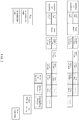
- FIG. 2 An overview of a typical work flow for the production of FDG can be seen in FIG. 2 .
- the process has many stages.
- the completion time of each stage is known in advance, except from the bombardment stage (denoted by the dashed box).
- the time needed during the bombardment stage is determined by the optimization model defined below.
- the production workflow in FIG. 2 is for an example with two cyclotrons each employing two targets.
- Radioactive Decay A brief overview of radioactive decay will be discussed as a background to provide the context for the reason why scheduling and planning production of radionuclides for production of radiopharmaceutical results in much inefficiency in the currently practiced manual methods of scheduling radiopharmaceutical production.
- Radionuclides have unstable nuclei that do not have enough binding energy to hold the nucleus together due to an excess of either protons or neutrons. In the process of becoming stable, radionuclides release energy and/or matter from the nucleus and often transform into a new element. Radioactive decay is a stochastic process and as such we can only determine the probability of when an individual radionuclide decays. However, for a group of radionuclides we can determine the decay rate as a whole. The half-life (denoted by t 1/2 ) of a group of radionuclides is the time after which, on average, half of them will have decayed and the activity of the group will be half of its initial level.
- the mean lifetime (denoted by ⁇ ) of a radioisotope is the average time before it decays.
- equation (6) By solving equation (5) in terms of Q EOB , we can determine how much radioactivity is need to be produced at the end of the bombardment by expression (6):
- Q EOB Q INJ e ⁇ T INJ ⁇ T EOB
- Q F BC EN SY 1 ⁇ e ⁇ ⁇ T BMB
- BC the beam current (defined as the flux of the bombarding particles)
- EN represents the enrichment of water in oxygen-18
- SY is the saturation yield coefficient which together with the term (1 - e - ⁇ ( T BMB ) ) define the rate of production of fluorine-18
- ⁇ is the radioactive decay constant.
- the beam current may range from 10 to 80 micro Ampere ( ⁇ A).
- the end of bombardment (EOB) occurs when the beam current is set to zero. It is important to use water enriched in oxygen-18, up to at least 85%, for the production of fluorine-18 in order to be able to produce sufficient quantities of fluorine-18.
- the rate of production of fluorine-18 is also affected by the fact that the resulting nuclide is also radioactive and its decay is expected to start any time after it is produced. The rates of production and decay will eventually reach an equilibrium after sufficiently long bombardment times.
- the saturation yield of a target represents the theoretical maximum amount of fluorine-18 ion that may be produced by a target.
- the saturation yield depends on the beam energy of the cyclotron and may range from 70 to 260 mCi/ ⁇ A.
- Target unload process stage The Fluoride-18 ion produced by each target is consolidated into a single product during the unload process. To accomplish this, each target is sequentially unloaded to a collection vial (known as the v-vial). Targets may not be unloaded simultaneously. The unload time may be different for each target. The time when unloading of the last target is completed is defined as the end of unload (EOU).
- EOU end of unload
- Target reload process stage in preparation for another bombardment After completing the unload process, a target may be immediately reloaded in preparation for another bombardment.
- the time required for the reload process is the same as the time for the original target load process.
- the beam After the target is reloaded, the beam may be started on the target and the next bombardment will occur after the beam tuning process. This represents the earliest time the target is available for the next bombardment session.
- Fluorine-18 ion transfer process stage - Once the target unload process is complete, the vial containing the produced fluorine-18 ion is transferred to the chemistry module. Regardless of the number of targets used, there is only one transfer process for each batch of product produced. A small percentage of the total fluorine-18 ion is lost during the transfer process. The time when the transfer process is complete is defined as the beginning of synthesis (BOS).
- the quantity of fluorine-18 ion at the BOS is given by expression (9):
- Q BOS Q EOU 1 ⁇ n FR e ⁇ ⁇ T TRAN
- Q BOS represents the quantity of Flurine-18 ion at the BOS
- n represents the number of targets
- FR is the fractional percentage lost during the unload process
- the fractional percentage of radioactivity lost and the transfer time is the same for all targets at a given production facililty.
- a chemistry module converts the available fluorine-18 ion into the PET drug of interest (in this example it is FDG).
- FDG fluorine-18 ion
- a percentage of the fluorine-18 ion is lost during the chemistry process. This percentage is referred to as the percent yield of the chemistry process.
- the time when the chemistry process is complete is defined as the end of synthesis (EOS).
- Each PET drug product has a unique percent yield and synthesis time. The percent yield and synthesis time may vary at each production facility but remain constant for each batch of a specific product.
- the cost of materials and labor for the chemistry process includes the costs associated with production and quality control testing.
- a manufacturing facility may have one or more chemistry modules.
- a chemistry module may be capable of makiing up to four batches of product.
- Each PET drug has a unique sample percentage and sampling time. The sample percentage and the sampling time may vary at each production facility and are constant for each batch of product at a production facility. After the sample has been removed from the product, the QC process is performed and the dose dispensing process may begin on the remaining product, Q DSP . Each PET drug has a unique QC process time which may vary for each production facility.
- Dose dispensing stage - The dose dispensing process may be executed simultaneously with the QC process.
- the dispensed doses may not be released from the production facility until after the QC process is complete and the batch meets all QC release criteria.
- the aggregate, decay-corrected, quantity of all dispensed doses cannot exceed Q DSP .
- the radiopharmaceutical production model described above will be applied to an example in which we consider a multi-period process, where a day is divided into a small number of periods. Production that takes place in production stage t is transported to the customers, the imaging centers, in the following stage t +1.
- N PRD the number of production stages being considered in a day. Due to the nature of the problem, its complexity becomes increasingly large as the number of periods increases. Typically, there are 2 to 3 production and transportation periods in a day.
- Decision variables - There are decision variables that are unknown quantities that the decision-maker can control and needs to determine their optimal values. For example, in applying the disclosed model, the number of cyclotrons and targets needed to produce enough radioactivity and satisfy all the orders for radiopharmaceuticals placed during a day is unknown. However, the decision-maker would like to know the minimum number of cyclotrons and/or targets that are needed since there are costs associated with their use.
- the variables associated with the production process are provided in the Definitions section below.
- Production variables - The beginning and end of bombardment of target j at cyclotron i in production stage t are denoted by BOB ijt and EOB ijt , respectively.
- the beam current applied on target j in cyclotron i at production stage t is denoted by BC ijt .
- the latest time of the target unload process at production stage t is denoted by EOU t and the radioactivity level at that time is denoted by Q t EOU .
- the time when the dispensing of the doses at production stage t starts is denoted by T t DSP , and the total radioactivity at that time is denoted by Q t DSP .
- N CYCL is the number of cyclotrons available in a production facility (a radio-pharmacy)
- G ⁇ 1, ..., N TRG ⁇
- N TRG is the number of targets available in all cyclotrons that exist in a production facility
- T ⁇ 1, ..., N PRD ⁇
- N PRD is the number of production stages considered in the model
- BC min ⁇ z ijt ⁇ BC ijt ⁇ BC max ⁇ z ijt , ⁇ i ⁇ C , ⁇ j ⁇ G , ⁇ t ⁇ T
- BC min is the lower bound on the beam current of a cyclotron
- BC ijt is the beam current of cyclotron i, target j , in production stage t
- BC max is the upper bound on the beam current
- EO B i 1 ⁇ t EO B ijt , ⁇ i ⁇ C
- T INIT represents the total amount of time required before the bombardment begins
- T CYCL-INIT is the amount of time required to initialize cyclotron i
- T TRG-LOAD is the amount time it takes to load target j
- T TUNE-BEAM is the amount of time required to tune cyclotron i 's beam current
- EOU t -1 is the time point representing the end of unloading of target j in production stage t -1 (i.e., one previous to the production stage t )
- T PREP is the amount of time required to prepare cyclotron i for the next production stage
- Q
- the objective is to run an efficient production of radiopharmaceutical so that the production cost is minimized while meeting all of the demands of the customers, the imaging centers. In other words, producing just enough radiopharmaceuticals to meet all of the demand without over producing.
- the objective function is defined by the expression (13) which is finding the minimum production cost for a radio-pharmacy where i represents a cyclotron among the set C of cyclotrons available to the radio-pharmacy for production, j represents a target among the set G of targets available to each cyclotron, and t represents a production stage among the set T of multiple production stages in a given day.
- the production cost is defined as a multiple of the bombardment time needed at every stage of the production phase.
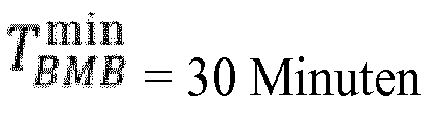
- T BMB min and T BMB max are the minimum and maximum allowed bombardment times, respectively.
- the use of the binary variables Z ijt in both equations (14) and (15) ensure that the bombardment time and beam current are kept within acceptable intervals if a target is actually used. For the targets that are not used these intervals automatically become zero.
- Constraint (16) ensure that for every cyclotron the end of the bombardment for the targets happen at the same time point.
- the requirement that at every production stage each target in a cyclotron is unloaded sequentially after the end of the bombardment is described by constraint (17).
- constraint (17) allow the end of bombardment of different cyclotrons to take place at different points in time. The end of unload though happens in a common point in time for all available cyclotrons.
- constraint (19) models the fact that the beginning of the bombardment in stage t must happen after the dispensing time in the previous stage t -1. This constraint links the production in consecutive stages.
- the radioactive material is transferred to the chemistry module where the synthesis process takes place in order to convert the fluorine-18 ion into a PET drug (the FDG).
- the FDG product is sampled and the quality control process starts.
- the radioactivity decays through all of the above three mentioned stages.
- the formula that measures the amount of radioactivity after the transfer, chemistry, and quality control processes have been completed is described in constraint (21).
- constraint (22) connect the time line between the EOU and the dispensing times at each stage.
- Constraint (23) connects the total amount of radioactivity that must be produced at dispensing time and the total amount of radioactivity that has been ordered by the imaging centers that are going to be served during the production stage t.
- q i is the radioactivity ordered by imaging center i
- q i ⁇ e ⁇ ⁇ T it INJ ⁇ T t DSP is the amount we need at the dispensing step in production stage t for imaging center i .
- Table 2 summarizes the values we used for the various parameters of the production optimization model. It should be mentioned that these values can be changed by the users based on their preferences and the availability of the resources in each production facility. Table 2.
- Production parameter Value unit of measurement Production parameter Value Unit of measurement
- Tables 3 and 4 summarize the results for the production of radioactivity during production stages 1 and 2.
- the production for Stage 1 started at 01:00 and once it was completed, the production for Stage 2 started.
- the model decided to use all available resources in Stage 1, meaning that both cyclotrons and all 4 targets were used to produce enough radioactivity to satisfy the demand of the imaging centers in Stage 1.
- the bombardment time for each of the 4 targets was 60 minutes. This means that a total of 4 radioactivity production hours was achieved in duration of 1 hour.
- the model determines that the beginning of the bombardment for each target should start on 01:30 and should end on 02:30. At that time, the total radioactivity produced by all targets is 9,189.47 mCi. After 02:30, the radioactive material produced will start decaying. Once the bombardment of each target is completed, the targets are unloaded.
- the radioactivity keeps decaying and at the time of dispensing, the radioactivity has become 3,933.51 mCi, which represents a 10% increase to the total customer radioactivity demand at dispensing time is which is equal to 3,575.92 mCi.
- Table 3 Results of the radioactivity production during Stages 1 and 2.
- the radioactivity at the end of bombardment is 3,614.2 mCi, which is substantially smaller than the corresponding radioactivity produced in Stage 1. This may be attributed to the following factors: (a) the customers (the imaging centers) in Stage 2 are closer to the radio-pharmacy, (b) the injection times are closer to the beginning of the bombardment in Stage 2, and (c) there are fewer customers and their demand of FDG is smaller. At the end of the unload of the single target the radioactivity has been decreased to 3,458.01 mCi and 1,616.92 mCi, respectively. The total customer radioactivity demand at dispensing time is 1,469.92 mCi. Table 4.
- a computer-implemented method for determining optimized amount of radiopharmaceutical to be produced at a production facility is disclosed.
- the radiopharmaceutical is for use in nuclear imaging at customer sites, in order to meet the aggregate demand of the orders placed by the customer sites.
- the production facility is operating one or more cyclotrons.
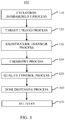
- the production of radiopharmaceutical comprises: a cyclotron bombardment process 110 during which a target material (a radionuclide precursor) is bombarded with charged particles to produce radionuclide material; a target unload process 120 ; a radionuclide transfer process 130 during which the radionuclide material is transferred from the target unload process to a chemistry process module; a chemistry process 140 during which the radionuclide material is converted in to a radiopharmaceutical; a quality control process 150 during which the radiopharmaceutical is sampled for quality control testing; a dose dispensing process 160 during which the radiopharmaceutical is dispensed into individual doses; and delivery 170 to the customer sites.
- a target material a radionuclide precursor
- the computer system 300 that controls the operation of the radiopharmaceutical production facility 200 also executes the methods disclosed herein.
- the computer system 300 executes the process of determining the optimized amount of radiopharmaceutical to be produced at the production facility.
- the computer system also controls the operation of the production facility.
- the FDG production model represented by the expression (13) is a large-scale nonlinear optimization with integer and continuous variables and as such the computer system 300 that controlls the operation of the radiopharmaceutical production facility 200 to produce the optimal solution would have sufficient computing power to carry out the computations necessary for the model.
- the computer system 300 preferably is a powerful computer having one or more processors providing the computing power.
- the computer system 300 can be parallel computers with the comuting time decreasing as the number of computers devoted to solve the optimization model increases.
- the input to the computer system 300 will be the order details provided by the imaging centers (e.g., the amount of radioactivity at the injection time, the time when the FDG dose will be injected in the patients body, the number of cyclotrons and targets that are available in the production facilty, etc).
- the output of the computer will be the total amount of FDG needed to satisfy the demnd for each period during a specific day. Also, for each time period, the computer system will provide the time when the FDG will be ready for dispencing and transported to the imaging centers or hospitals.
- a computer-implemented method for producing an optimized amount of radiopharmaceutical for preparation of doses for use in nuclear imaging at customer sites in order to meet the aggregate demands of the orders placed by the customer sites is disclosed.
- the radiopharmaceutical is produced at the production facility operating N CYCL number of cyclotrons and N TRD number of targets.
- the production of radiopharmaceutical comprises the steps illustrated in the flowchart shown in FIG. 3 .
- a control system for controlling the operation of a radiopharmaceutical production facility where the radiopharmaceutical being for use in nuclear imaging at customer sites, in order to meet aggregate demands of orders placed by the customer sites, wherein the production facility is operating one or more cyclotrons, wherein the production of radiopharmaceutical comprises: a cyclotron bombardment process stage during which a target radionuclide precursor material is bombarded with charged particles to produce a radionuclide material; a target unload process stage; a radionuclide transfer process stage during which the radionuclide material is transferred from the target unload process stage to a chemistry process stage, wherein during the chemistry process stage the radionuclide material is converted in to a radiopharmaceutical; a quality control process stage during which the radiopharmaceutical is sampled for quality control testing; a dose dispensing process stage during which the radiopharmaceutical is dispensed into individual doses for delivery to the customer sites.
- control system is the computer system 300 of FIG. 1 .
- the control system can comprise: a processor having a non-transitory machine-readable storage medium encoded with computer program code, wherein when the processor executes the computer program code, the processor performs the computer-implemented method for determining optimized amount of radiopharmaceutical to be produced by the production facility described above.
Landscapes
- Engineering & Computer Science (AREA)
- Business, Economics & Management (AREA)
- Human Resources & Organizations (AREA)
- Physics & Mathematics (AREA)
- Economics (AREA)
- Strategic Management (AREA)
- High Energy & Nuclear Physics (AREA)
- General Engineering & Computer Science (AREA)
- General Chemical & Material Sciences (AREA)
- Chemical & Material Sciences (AREA)
- Chemical Kinetics & Catalysis (AREA)
- General Business, Economics & Management (AREA)
- Theoretical Computer Science (AREA)
- Entrepreneurship & Innovation (AREA)
- Marketing (AREA)
- General Physics & Mathematics (AREA)
- Tourism & Hospitality (AREA)
- Development Economics (AREA)
- Game Theory and Decision Science (AREA)
- Quality & Reliability (AREA)
- Operations Research (AREA)
- Health & Medical Sciences (AREA)
- General Health & Medical Sciences (AREA)
- Educational Administration (AREA)
- Manufacturing & Machinery (AREA)
- Primary Health Care (AREA)
- Particle Accelerators (AREA)
- Medicines Containing Antibodies Or Antigens For Use As Internal Diagnostic Agents (AREA)
- Life Sciences & Earth Sciences (AREA)
- General Factory Administration (AREA)
- Medical Informatics (AREA)
- Nuclear Medicine, Radiotherapy & Molecular Imaging (AREA)
- Pathology (AREA)
- Radiology & Medical Imaging (AREA)
- Biomedical Technology (AREA)
- Heart & Thoracic Surgery (AREA)
- Molecular Biology (AREA)
- Surgery (AREA)
- Animal Behavior & Ethology (AREA)
- Public Health (AREA)
Claims (6)
- Computerimplementiertes Verfahren zum Bestimmen der optimierten Menge eines Radiopharmazeutikums, das in einer Produktionsanlage hergestellt werden soll, wobei das Radiopharmazeutikum zur Verwendung in der nuklearen Bildgebung bei Kundenstandorten bestimmt ist, um die Gesamtnachfrage der von den Kundenstandorten erteilten Aufträge zu erfüllen, wobei die Produktionsanlage ein oder mehrere Zyklotrone betreibt, wobei die Herstellung des Radiopharmazeutikums umfasst: eine Zyklotronbeschuss-Prozessstufe, in der ein Ziel-Radionuklid-Vorläufermaterial mit geladenen Partikeln beschossen wird, um ein Radionuklidmaterial herzustellen; eine Ziel-Entladungsprozessstufe; eine Radionuklid-Transfer-Prozessstufe, in der das Radionuklidmaterial von der Ziel-Entladungsprozessstufe zu einer chemischen Prozessstufe transferiert wird, wobei während der chemischen Prozessstufe das Radionuklidmaterial in ein Radiopharmazeutikum umgewandelt wird; eine Qualitätskontrollprozessstufe, in der das Radiopharmazeutikum für Qualitätskontrolltests erprobt wird; eine Dosisabgabeprozessstufe, in der das Radiopharmazeutikum in Einzeldosen zur Abgabe an die Kundenstandorte abgegeben wird, wobei das Verfahren vom Computer durchgeführt wird und umfasst:Bestimmen der Gesamtmenge an Radionuklid


 wobei σ ≥ 1 ist, qi der gesamte Radioaktivitätsbedarf des Kundenstandorts i ist, der eine oder mehrere Aufträge aufgegeben hat,wobei Ht = {2, ..., NSITES }, wobei NSITES die Anzahl der Kundenstandorte ist, die Aufträge aufgegeben haben, deren Nachfrage durch die Produktionsstufe t erfüllt werden soll, wobei λ die Radioaktivitätszerfallsrate des Radionuklids ist,wobei
 wobei
wobei
 wobei das
 wobei
wobei wobei FR ein Prozentsatz der Radionuklide ist, die durch radioaktiven Zerfall während des Ziel-Entladungsprozesses der einen oder mehreren Zyklotronen in der Produktionsstufe t verloren gehen,wobei PY die prozentuale Ausbeute der Radionuklide durch den Ziel-Entladungsprozess der einen oder mehreren Zyklotronen in der Produktionsstufe t ist,wobei QS ein Prozentsatz der Radionuklide am Ende des chemischen Prozesses der einen oder mehreren Zyklotronen in der Produktionsstufe t ist,wobei TTRAN die Zeitdauer ist, die zum Durchführen des Radionuklidtransferprozesses der einen oder mehreren Zyklotronen in der Produktionsstufe t benötigt wird,wobei TCHEM die für den chemischen Prozess des einen oder der mehreren Zyklotronen in der Produktionsstufe t erforderliche Zeit ist, undwobei TQC die Zeit ist, die für den Qualitätskontrollprozess der einen oder mehreren Zyklotronen in der Produktionsstufe t benötigt wird;wobei
 wobei T = {1, ..., NPRD}, wobei NPRD die Anzahl der betrachteten Produktionsstufen ist,wobei C = {1, ..., NCYCL}, wobei NCYCL die Anzahl der in der Produktionsanlage verfügbaren Zyklotronen ist,wobei G = {1, ..., NTRG }, wobei NTRG die Anzahl der Ziele ist, die in allen Zyklotronen, die in der Produktionsanlage vorhanden sind, verfügbar sind,wobei BCijt der Strahlstrom von Zyklotron i, Ziel j , in der Produktionsstufe t ist,wobei SYij die Sättigungsausbeute von Zyklotron i und Ziel j ist,wobei ENij die Anreicherung des Radionuklid-Vorläufers in Zyklotron i und Ziel j ist,wobei EOBijt die Zeit am Ende des Beschusses von Zyklotron i, Ziel j , in der Produktionsstufe t ist,wobei BOBijt die Zeit zu Beginn des Beschusses von Zyklotron i, Ziel j, in der Produktionsstufe t ist, undwobei EOUt die Zeit am Ende des gesamten Ziel-Entladungsprozesses in der Produktionsstufe t ist;wobei (EOBijt - BOBijt ) die Dauer des Beschusses von Zyklotron i , Ziel j , in der Produktionsstufe t durch den folgenden Ausdruck (13) minimiert wird:
 vorbehaltlich der folgenden Bedingungen (14) bis (19),


 wobei die Bedingung (16) vorsieht, dass für jedes Zyklotron das Ende des Beschusses aller Ziele gleichzeitig erfolgt,

 wobei TINIT = TSTART + TCYCL-INIT + TTRG-LOAD + TTUNE-BEAM, wobei BOBij1 der Zeitpunkt des Beginns des Beschusses von Zyklotron i, Ziel j , in Produktionsstufe 1 definiert, TINIT die Gesamtdauer der Zeit darstellt, die benötigt wird, bevor der Beschuss beginnt, TSTART den Zeitpunkt darstellt, wenn der Produktionsprozess beginnt, wo die Zeit in Minuten nach Mitternacht ist, TCYCL-INIT die Zeitdauer ist, die benötigt wird, um Zyklotron i zu initialisieren, TTRG-LOAD die Zeitdauer ist, die benötigt wird, um Ziel j zu laden, und TTUNE-BEAM die Zeitdauer ist, die benötigt wird, um den Strahlstrom von Zyklotron i einzustellen; und
- Verfahren nach Anspruch 1, wobei


- Verfahren nach den Ansprüchen 1 oder 2, wobei BCmin = 40µA und BCmax = 80µA ist.
- Steuerungssystem zum Steuern des Betriebs einer radiopharmazeutischen Produktionsanlage für die Herstellung eines Radiopharmazeutikums, wobei das Radiopharmazeutikum zur Verwendung in der nuklearen Bildgebung bei Kundenstandorten bestimmt ist, um die Gesamtnachfrage der von den Kundenstandorten erteilten Aufträge zu erfüllen, wobei die Produktionsanlage ein oder mehrere Zyklotrone betreibt, wobei die Herstellung des Radiopharmazeutikums umfasst: eine Zyklotronbeschuss-Prozessstufe, in der ein Ziel-Radionuklid-Vorläufermaterial mit geladenen Partikeln beschossen wird, um ein Radionuklidmaterial herzustellen; eine Ziel-Entladungsprozessstufe; eine Radionuklid-Transfer-Prozessstufe, in der das Radionuklidmaterial von der Ziel-Entladungsprozessstufe zu einer chemischen Prozessstufe transferiert wird, wobei während der chemischen Prozessstufe das Radionuklidmaterial in ein Radiopharmazeutikum umgewandelt wird; eine Qualitätskontrollprozessstufe, in der das Radiopharmazeutikum für Qualitätskontrolltests erprobt wird; eine Dosisabgabeprozessstufe, in der das Radiopharmazeutikum in Einzeldosen zur Abgabe an die Kundenstandorte abgegeben wird, wobei das Steuerungsystem umfasst:
einen Prozessor mit einem nicht-flüchtigen, maschinenlesbaren Speichermedium, das mit einem Computerprogrammcode kodiert ist, wobei, wenn der Prozessor den Computerprogrammcode ausführt, der Prozessor ein Verfahren ausführt, das die folgenden Schritte umfasst:Bestimmen der Gesamtmenge an Radionuklid


 wobei Ht = {2, ..., NSITES }, wobei NSITES die Anzahl der Kundenstandorte ist, die Aufträge aufgegeben haben, deren Nachfrage durch die Produktionsstufe t erfüllt werden soll,
wobei λ die Radioaktivitätszerfallsrate des Radionuklids ist,
wobei
wobei
 wobei das
 wobei
wobei wobei FR ein Prozentsatz der Radionuklide ist, die durch radioaktiven Zerfall während des Ziel-Entladungsprozesses der einen oder mehreren Zyklotronen in der Produktionsstufe t verloren gehen,wobei PY die prozentuale Ausbeute der Radionuklide durch den Ziel-Entladungsprozess der einen oder mehreren Zyklotronen in der Produktionsstufe t ist,wobei QS ein Prozentsatz der Radionuklide am Ende des chemischen Prozesses der einen oder mehreren Zyklotronen in der Produktionsstufe t ist,wobei TTRAN die Zeitdauer ist, die zum Durchführen des Radionuklidtransferprozesses der einen oder mehreren Zyklotronen in der Produktionsstufe t benötigt wird,wobei TCHEM die für den chemischen Prozess des einen oder der mehreren Zyklotronen in der Produktionsstufe t erforderliche Zeit ist, undwobei TQC die Zeit ist, die für den Qualitätskontrollprozess der einen oder mehreren Zyklotronen in der Produktionsstufe t benötigt wird;wobei
 wobei T = {1, ..., NPRD}, wobei NPRD die Anzahl der betrachteten Produktionsstufen ist,wobei C = {1, ..., NCYCL}, wobei NCYCL die Anzahl der in der Produktionsanlage verfügbaren Zyklotronen ist,wobei G = {1, ..., NTRG}, wobei NTRG die Anzahl der Ziele ist, die in allen Zyklotronen, die in der Produktionsanlage vorhanden sind, verfügbar sind,wobei BCijt der Strahlstrom von Zyklotron i, Ziel j, in der Produktionsstufe t ist,wobei SYij die Sättigungsausbeute von Zyklotron i und Ziel j ist,wobei ENij die Anreicherung des Radionuklid-Vorläufers in Zyklotron i und Ziel j ist,wobei EOBijt die Zeit am Ende des Beschusses von Zyklotron i, Ziel j, in der Produktionsstufe t ist,wobei BOBijt die Zeit zu Beginn des Beschusses von Zyklotron i, Ziel j, in der Produktionsstufe t ist, undwobei EOUt die Zeit am Ende des gesamten Ziel-Entladungsprozesses in der Produktionsstufe t ist;wobei (EOBijt - BOBijt ) die Dauer des Beschusses von Zyklotron i, Ziel j, in der Produktionsstufe t durch den folgenden Ausdruck (13) minimiert wird:
 vorbehaltlich der folgenden Bedingungen (14) bis (19),





- Steuerungssystem nach Anspruch 4, wobei

- Steuerungssystem nach den Ansprüchen 4 oder 5, wobei BCmin = 40µA und BCmax = 80µA ist.
Priority Applications (1)
| Application Number | Priority Date | Filing Date | Title |
|---|---|---|---|
| EP19168072.7A EP3550574B1 (de) | 2017-03-10 | 2018-03-09 | Herstellung von radiopharmazeutika |
Applications Claiming Priority (1)
| Application Number | Priority Date | Filing Date | Title |
|---|---|---|---|
| US15/455,618 US9865368B1 (en) | 2017-03-10 | 2017-03-10 | Production of radiopharmaceuticals |
Related Child Applications (2)
| Application Number | Title | Priority Date | Filing Date |
|---|---|---|---|
| EP19168072.7A Division EP3550574B1 (de) | 2017-03-10 | 2018-03-09 | Herstellung von radiopharmazeutika |
| EP19168072.7A Division-Into EP3550574B1 (de) | 2017-03-10 | 2018-03-09 | Herstellung von radiopharmazeutika |
Publications (2)
| Publication Number | Publication Date |
|---|---|
| EP3385955A1 EP3385955A1 (de) | 2018-10-10 |
| EP3385955B1 true EP3385955B1 (de) | 2019-08-14 |
Family
ID=60812848
Family Applications (2)
| Application Number | Title | Priority Date | Filing Date |
|---|---|---|---|
| EP19168072.7A Active EP3550574B1 (de) | 2017-03-10 | 2018-03-09 | Herstellung von radiopharmazeutika |
| EP18160877.9A Active EP3385955B1 (de) | 2017-03-10 | 2018-03-09 | Herstellung von radiopharmazeutika |
Family Applications Before (1)
| Application Number | Title | Priority Date | Filing Date |
|---|---|---|---|
| EP19168072.7A Active EP3550574B1 (de) | 2017-03-10 | 2018-03-09 | Herstellung von radiopharmazeutika |
Country Status (4)
| Country | Link |
|---|---|
| US (1) | US9865368B1 (de) |
| EP (2) | EP3550574B1 (de) |
| JP (1) | JP6643380B2 (de) |
| CN (1) | CN108573321B (de) |
Families Citing this family (2)
| Publication number | Priority date | Publication date | Assignee | Title |
|---|---|---|---|---|
| CN111598290A (zh) * | 2020-04-03 | 2020-08-28 | 浙江工业大学 | 一种pcb板合拼下料优化方法 |
| JP2022069253A (ja) * | 2020-10-23 | 2022-05-11 | 三菱重工業株式会社 | 放射性同位体の生産管理装置、放射性同位体の生産管理方法及び放射性同位体の生産管理プログラム |
Family Cites Families (13)
| Publication number | Priority date | Publication date | Assignee | Title |
|---|---|---|---|---|
| US6599484B1 (en) | 2000-05-12 | 2003-07-29 | Cti, Inc. | Apparatus for processing radionuclides |
| JP4303436B2 (ja) * | 2001-12-14 | 2009-07-29 | 株式会社日立製作所 | 放射線検診スケジュール生成システムおよび放射線検診システム |
| JP4040994B2 (ja) * | 2003-03-05 | 2008-01-30 | 住友重機械工業株式会社 | 検査用薬剤分注管理システム、方法および管理プログラム |
| US7825372B2 (en) * | 2006-04-11 | 2010-11-02 | Radqual, Llc | Simulated dose calibrator source standard for positron emission tomography radionuclides |
| US20080122390A1 (en) | 2006-06-13 | 2008-05-29 | Joseph Lidestri | Systems and methods for the production of fluorine-18 using high current proton accelerators |
| SG156564A1 (en) | 2008-04-09 | 2009-11-26 | Asml Holding Nv | Lithographic apparatus and device manufacturing method |
| US8775136B2 (en) | 2010-12-13 | 2014-07-08 | Siemens Aktiengesellschaft | Primal-dual interior point methods for solving discrete optimal power flow problems implementing a chain rule technique for improved efficiency |
| WO2013012822A1 (en) * | 2011-07-15 | 2013-01-24 | Cardinal Health 414, Llc | Systems, methods, and devices for producing, manufacturing, and control of radiopharmaceuticals |
| CN102600786A (zh) * | 2012-01-10 | 2012-07-25 | 杨建华 | 分体式多批次放射性药物合成装置 |
| US8977524B2 (en) | 2012-03-06 | 2015-03-10 | Siemens Aktiengesellschaft | Interior point method for reformulated optimal power flow model |
| CN104854593B (zh) * | 2012-12-03 | 2018-10-12 | 皇家飞利浦有限公司 | 智能核医学患者工作流程排程器 |
| CN103771341B (zh) * | 2013-12-23 | 2016-03-23 | 米度(南京)生物技术有限公司 | 一种制备放射性124i离子的方法 |
| WO2016130463A1 (en) * | 2015-02-10 | 2016-08-18 | Abt Molecular Imaging, Inc. | Automated radiopharmaceutical production and quality control system |
-
2017
- 2017-03-10 US US15/455,618 patent/US9865368B1/en active Active
-
2018
- 2018-03-08 JP JP2018042217A patent/JP6643380B2/ja active Active
- 2018-03-09 EP EP19168072.7A patent/EP3550574B1/de active Active
- 2018-03-09 EP EP18160877.9A patent/EP3385955B1/de active Active
- 2018-03-09 CN CN201810193921.2A patent/CN108573321B/zh active Active
Non-Patent Citations (1)
| Title |
|---|
| None * |
Also Published As
| Publication number | Publication date |
|---|---|
| JP6643380B2 (ja) | 2020-02-12 |
| JP2018151385A (ja) | 2018-09-27 |
| EP3550574B1 (de) | 2020-08-05 |
| EP3385955A1 (de) | 2018-10-10 |
| US9865368B1 (en) | 2018-01-09 |
| EP3550574A1 (de) | 2019-10-09 |
| CN108573321B (zh) | 2022-11-22 |
| CN108573321A (zh) | 2018-09-25 |
Similar Documents
| Publication | Publication Date | Title |
|---|---|---|
| Duchemin et al. | CERN-MEDICIS: A review since commissioning in 2017 | |
| Kocher | Radioactive decay data tables | |
| Winger et al. | Large β-Delayed Neutron Emission Probabilities in the Ni 78 Region | |
| Kurenkov et al. | Evaluation of calculation methods for excitation functions for production of radioisotopes of iodine, thallium and other elements | |
| EP3385955B1 (de) | Herstellung von radiopharmazeutika | |
| Ermolaev et al. | Cross sections and production yields of 117mSn and other radionuclides generated in natural and enriched antimony with protons up to 145 MeV | |
| Bernerd et al. | Production of innovative radionuclides for medical applications at the CERN-MEDICIS facility | |
| Galea et al. | Reduce, reuse and recycle: A green solution to Canada's medical isotope shortage | |
| Spahn et al. | Cross-section measurement of the 169Tm (p, n) reaction for the production of the therapeutic radionuclide 169Yb and comparison with its reactor-based generation | |
| Özdoğan et al. | Investigation of 209Bi (α, 2n) 211At reaction route for the production of α-emitter 211At | |
| Ligtvoet et al. | Study on sustainable and resilient supply of medical radioisotopes in the EU | |
| Räty et al. | Nuclide inventory of FIR 1 TRIGA research reactor fuel | |
| Griswold | Actinium-225 production via proton irradiation of thorium-232 | |
| Hermanne et al. | Limitation of the long-lived 121Te contaminant in production of 123I through the 124Xe (p, x) route | |
| Bills | Measuring Production Pathways for the Targeted Alpha Therapy Candidate Terbium-149 | |
| Elbinawi et al. | Deuteron induced nuclear reactions on Mo up to 10 MeV: experimental investigation and nuclear model calculations | |
| Rosmayani et al. | A Simulation of Irradiation Calculations on Lutetium-177 Production in RSG-GAS Using U3Si2-Al and U9Mo-Al Fuels | |
| Infantino | Advanced aspects of radiation protection in the use of particle accelerators in the medical field | |
| Bakhtiari et al. | Nuclear model calculations of charged-particle-induced reaction cross section data for the production of the radiohalogen 34 Cl m | |
| Truoel | New Results on Rare and Forbidden Semileptonic $ K^+ $ Decays | |
| Rosmayani et al. | Tri Dasa Mega | |
| US20180165420A1 (en) | Systems for Radionuclide Production | |
| Sheu et al. | Evaluation of thallium-201 production in INER’s compact cyclotron based on excitation functions | |
| Lică | Development of the ISOLDE Decay Station and γ spectroscopic studies of exotic nuclei near the N= 20" Island of Inversion" | |
| Akrotirianakis et al. | A multi-period production and distribution optimization model for radiopharmaceuticals |
Legal Events
| Date | Code | Title | Description |
|---|---|---|---|
| PUAI | Public reference made under article 153(3) epc to a published international application that has entered the european phase |
Free format text: ORIGINAL CODE: 0009012 |
|
| STAA | Information on the status of an ep patent application or granted ep patent |
Free format text: STATUS: REQUEST FOR EXAMINATION WAS MADE |
|
| 17P | Request for examination filed |
Effective date: 20180309 |
|
| AK | Designated contracting states |
Kind code of ref document: A1 Designated state(s): AL AT BE BG CH CY CZ DE DK EE ES FI FR GB GR HR HU IE IS IT LI LT LU LV MC MK MT NL NO PL PT RO RS SE SI SK SM TR |
|
| AX | Request for extension of the european patent |
Extension state: BA ME |
|
| RBV | Designated contracting states (corrected) |
Designated state(s): AL AT BE BG CH CY CZ DE DK EE ES FI FR GB GR HR HU IE IS IT LI LT LU LV MC MK MT NL NO PL PT RO RS SE SI SK SM TR |
|
| GRAP | Despatch of communication of intention to grant a patent |
Free format text: ORIGINAL CODE: EPIDOSNIGR1 |
|
| STAA | Information on the status of an ep patent application or granted ep patent |
Free format text: STATUS: GRANT OF PATENT IS INTENDED |
|
| INTG | Intention to grant announced |
Effective date: 20190307 |
|
| GRAS | Grant fee paid |
Free format text: ORIGINAL CODE: EPIDOSNIGR3 |
|
| GRAA | (expected) grant |
Free format text: ORIGINAL CODE: 0009210 |
|
| STAA | Information on the status of an ep patent application or granted ep patent |
Free format text: STATUS: THE PATENT HAS BEEN GRANTED |
|
| AK | Designated contracting states |
Kind code of ref document: B1 Designated state(s): AL AT BE BG CH CY CZ DE DK EE ES FI FR GB GR HR HU IE IS IT LI LT LU LV MC MK MT NL NO PL PT RO RS SE SI SK SM TR |
|
| REG | Reference to a national code |
Ref country code: GB Ref legal event code: FG4D |
|
| REG | Reference to a national code |
Ref country code: CH Ref legal event code: EP Ref country code: AT Ref legal event code: REF Ref document number: 1167991 Country of ref document: AT Kind code of ref document: T Effective date: 20190815 |
|
| REG | Reference to a national code |
Ref country code: IE Ref legal event code: FG4D |
|
| REG | Reference to a national code |
Ref country code: DE Ref legal event code: R096 Ref document number: 602018000410 Country of ref document: DE |
|
| REG | Reference to a national code |
Ref country code: NL Ref legal event code: MP Effective date: 20190814 |
|
| REG | Reference to a national code |
Ref country code: LT Ref legal event code: MG4D |
|
| PG25 | Lapsed in a contracting state [announced via postgrant information from national office to epo] |
Ref country code: NL Free format text: LAPSE BECAUSE OF FAILURE TO SUBMIT A TRANSLATION OF THE DESCRIPTION OR TO PAY THE FEE WITHIN THE PRESCRIBED TIME-LIMIT Effective date: 20190814 Ref country code: SE Free format text: LAPSE BECAUSE OF FAILURE TO SUBMIT A TRANSLATION OF THE DESCRIPTION OR TO PAY THE FEE WITHIN THE PRESCRIBED TIME-LIMIT Effective date: 20190814 Ref country code: BG Free format text: LAPSE BECAUSE OF FAILURE TO SUBMIT A TRANSLATION OF THE DESCRIPTION OR TO PAY THE FEE WITHIN THE PRESCRIBED TIME-LIMIT Effective date: 20191114 Ref country code: LT Free format text: LAPSE BECAUSE OF FAILURE TO SUBMIT A TRANSLATION OF THE DESCRIPTION OR TO PAY THE FEE WITHIN THE PRESCRIBED TIME-LIMIT Effective date: 20190814 Ref country code: PT Free format text: LAPSE BECAUSE OF FAILURE TO SUBMIT A TRANSLATION OF THE DESCRIPTION OR TO PAY THE FEE WITHIN THE PRESCRIBED TIME-LIMIT Effective date: 20191216 Ref country code: HR Free format text: LAPSE BECAUSE OF FAILURE TO SUBMIT A TRANSLATION OF THE DESCRIPTION OR TO PAY THE FEE WITHIN THE PRESCRIBED TIME-LIMIT Effective date: 20190814 Ref country code: FI Free format text: LAPSE BECAUSE OF FAILURE TO SUBMIT A TRANSLATION OF THE DESCRIPTION OR TO PAY THE FEE WITHIN THE PRESCRIBED TIME-LIMIT Effective date: 20190814 Ref country code: NO Free format text: LAPSE BECAUSE OF FAILURE TO SUBMIT A TRANSLATION OF THE DESCRIPTION OR TO PAY THE FEE WITHIN THE PRESCRIBED TIME-LIMIT Effective date: 20191114 |
|
| REG | Reference to a national code |
Ref country code: AT Ref legal event code: MK05 Ref document number: 1167991 Country of ref document: AT Kind code of ref document: T Effective date: 20190814 |
|
| PG25 | Lapsed in a contracting state [announced via postgrant information from national office to epo] |
Ref country code: LV Free format text: LAPSE BECAUSE OF FAILURE TO SUBMIT A TRANSLATION OF THE DESCRIPTION OR TO PAY THE FEE WITHIN THE PRESCRIBED TIME-LIMIT Effective date: 20190814 Ref country code: AL Free format text: LAPSE BECAUSE OF FAILURE TO SUBMIT A TRANSLATION OF THE DESCRIPTION OR TO PAY THE FEE WITHIN THE PRESCRIBED TIME-LIMIT Effective date: 20190814 Ref country code: GR Free format text: LAPSE BECAUSE OF FAILURE TO SUBMIT A TRANSLATION OF THE DESCRIPTION OR TO PAY THE FEE WITHIN THE PRESCRIBED TIME-LIMIT Effective date: 20191115 Ref country code: IS Free format text: LAPSE BECAUSE OF FAILURE TO SUBMIT A TRANSLATION OF THE DESCRIPTION OR TO PAY THE FEE WITHIN THE PRESCRIBED TIME-LIMIT Effective date: 20191214 Ref country code: RS Free format text: LAPSE BECAUSE OF FAILURE TO SUBMIT A TRANSLATION OF THE DESCRIPTION OR TO PAY THE FEE WITHIN THE PRESCRIBED TIME-LIMIT Effective date: 20190814 Ref country code: ES Free format text: LAPSE BECAUSE OF FAILURE TO SUBMIT A TRANSLATION OF THE DESCRIPTION OR TO PAY THE FEE WITHIN THE PRESCRIBED TIME-LIMIT Effective date: 20190814 |
|
| REG | Reference to a national code |
Ref country code: CH Ref legal event code: NV Representative=s name: SIEMENS SCHWEIZ AG, CH |
|
| PG25 | Lapsed in a contracting state [announced via postgrant information from national office to epo] |
Ref country code: TR Free format text: LAPSE BECAUSE OF FAILURE TO SUBMIT A TRANSLATION OF THE DESCRIPTION OR TO PAY THE FEE WITHIN THE PRESCRIBED TIME-LIMIT Effective date: 20190814 |
|
| PG25 | Lapsed in a contracting state [announced via postgrant information from national office to epo] |
Ref country code: AT Free format text: LAPSE BECAUSE OF FAILURE TO SUBMIT A TRANSLATION OF THE DESCRIPTION OR TO PAY THE FEE WITHIN THE PRESCRIBED TIME-LIMIT Effective date: 20190814 Ref country code: PL Free format text: LAPSE BECAUSE OF FAILURE TO SUBMIT A TRANSLATION OF THE DESCRIPTION OR TO PAY THE FEE WITHIN THE PRESCRIBED TIME-LIMIT Effective date: 20190814 Ref country code: RO Free format text: LAPSE BECAUSE OF FAILURE TO SUBMIT A TRANSLATION OF THE DESCRIPTION OR TO PAY THE FEE WITHIN THE PRESCRIBED TIME-LIMIT Effective date: 20190814 Ref country code: IT Free format text: LAPSE BECAUSE OF FAILURE TO SUBMIT A TRANSLATION OF THE DESCRIPTION OR TO PAY THE FEE WITHIN THE PRESCRIBED TIME-LIMIT Effective date: 20190814 Ref country code: EE Free format text: LAPSE BECAUSE OF FAILURE TO SUBMIT A TRANSLATION OF THE DESCRIPTION OR TO PAY THE FEE WITHIN THE PRESCRIBED TIME-LIMIT Effective date: 20190814 Ref country code: DK Free format text: LAPSE BECAUSE OF FAILURE TO SUBMIT A TRANSLATION OF THE DESCRIPTION OR TO PAY THE FEE WITHIN THE PRESCRIBED TIME-LIMIT Effective date: 20190814 |
|
| PG25 | Lapsed in a contracting state [announced via postgrant information from national office to epo] |
Ref country code: CZ Free format text: LAPSE BECAUSE OF FAILURE TO SUBMIT A TRANSLATION OF THE DESCRIPTION OR TO PAY THE FEE WITHIN THE PRESCRIBED TIME-LIMIT Effective date: 20190814 Ref country code: IS Free format text: LAPSE BECAUSE OF FAILURE TO SUBMIT A TRANSLATION OF THE DESCRIPTION OR TO PAY THE FEE WITHIN THE PRESCRIBED TIME-LIMIT Effective date: 20200224 Ref country code: SK Free format text: LAPSE BECAUSE OF FAILURE TO SUBMIT A TRANSLATION OF THE DESCRIPTION OR TO PAY THE FEE WITHIN THE PRESCRIBED TIME-LIMIT Effective date: 20190814 Ref country code: SM Free format text: LAPSE BECAUSE OF FAILURE TO SUBMIT A TRANSLATION OF THE DESCRIPTION OR TO PAY THE FEE WITHIN THE PRESCRIBED TIME-LIMIT Effective date: 20190814 |
|
| REG | Reference to a national code |
Ref country code: DE Ref legal event code: R097 Ref document number: 602018000410 Country of ref document: DE |
|
| PLBE | No opposition filed within time limit |
Free format text: ORIGINAL CODE: 0009261 |
|
| STAA | Information on the status of an ep patent application or granted ep patent |
Free format text: STATUS: NO OPPOSITION FILED WITHIN TIME LIMIT |
|
| PG2D | Information on lapse in contracting state deleted |
Ref country code: IS |
|
| 26N | No opposition filed |
Effective date: 20200603 |
|
| PG25 | Lapsed in a contracting state [announced via postgrant information from national office to epo] |
Ref country code: SI Free format text: LAPSE BECAUSE OF FAILURE TO SUBMIT A TRANSLATION OF THE DESCRIPTION OR TO PAY THE FEE WITHIN THE PRESCRIBED TIME-LIMIT Effective date: 20190814 |
|
| PG25 | Lapsed in a contracting state [announced via postgrant information from national office to epo] |
Ref country code: MC Free format text: LAPSE BECAUSE OF FAILURE TO SUBMIT A TRANSLATION OF THE DESCRIPTION OR TO PAY THE FEE WITHIN THE PRESCRIBED TIME-LIMIT Effective date: 20190814 |
|
| REG | Reference to a national code |
Ref country code: BE Ref legal event code: MM Effective date: 20200331 |
|
| PG25 | Lapsed in a contracting state [announced via postgrant information from national office to epo] |
Ref country code: LU Free format text: LAPSE BECAUSE OF NON-PAYMENT OF DUE FEES Effective date: 20200309 |
|
| PG25 | Lapsed in a contracting state [announced via postgrant information from national office to epo] |
Ref country code: IE Free format text: LAPSE BECAUSE OF NON-PAYMENT OF DUE FEES Effective date: 20200309 |
|
| PG25 | Lapsed in a contracting state [announced via postgrant information from national office to epo] |
Ref country code: BE Free format text: LAPSE BECAUSE OF NON-PAYMENT OF DUE FEES Effective date: 20200331 |
|
| REG | Reference to a national code |
Ref country code: CH Ref legal event code: PL |
|
| PG25 | Lapsed in a contracting state [announced via postgrant information from national office to epo] |
Ref country code: LI Free format text: LAPSE BECAUSE OF NON-PAYMENT OF DUE FEES Effective date: 20210331 Ref country code: CH Free format text: LAPSE BECAUSE OF NON-PAYMENT OF DUE FEES Effective date: 20210331 |
|
| PG25 | Lapsed in a contracting state [announced via postgrant information from national office to epo] |
Ref country code: MT Free format text: LAPSE BECAUSE OF FAILURE TO SUBMIT A TRANSLATION OF THE DESCRIPTION OR TO PAY THE FEE WITHIN THE PRESCRIBED TIME-LIMIT Effective date: 20190814 Ref country code: CY Free format text: LAPSE BECAUSE OF FAILURE TO SUBMIT A TRANSLATION OF THE DESCRIPTION OR TO PAY THE FEE WITHIN THE PRESCRIBED TIME-LIMIT Effective date: 20190814 |
|
| PG25 | Lapsed in a contracting state [announced via postgrant information from national office to epo] |
Ref country code: MK Free format text: LAPSE BECAUSE OF FAILURE TO SUBMIT A TRANSLATION OF THE DESCRIPTION OR TO PAY THE FEE WITHIN THE PRESCRIBED TIME-LIMIT Effective date: 20190814 |
|
| PGFP | Annual fee paid to national office [announced via postgrant information from national office to epo] |
Ref country code: DE Payment date: 20250520 Year of fee payment: 8 |
|
| PGFP | Annual fee paid to national office [announced via postgrant information from national office to epo] |
Ref country code: GB Payment date: 20250403 Year of fee payment: 8 |
|
| REG | Reference to a national code |
Ref country code: DE Ref legal event code: R082 Ref document number: 602018000410 Country of ref document: DE |
|
| PGFP | Annual fee paid to national office [announced via postgrant information from national office to epo] |
Ref country code: FR Payment date: 20260316 Year of fee payment: 9 |