EP3381292A1 - Milky beverage, method for producing milky beverage, and method for improving flavor of milky beverage - Google Patents
Milky beverage, method for producing milky beverage, and method for improving flavor of milky beverage Download PDFInfo
- Publication number
- EP3381292A1 EP3381292A1 EP16868094.0A EP16868094A EP3381292A1 EP 3381292 A1 EP3381292 A1 EP 3381292A1 EP 16868094 A EP16868094 A EP 16868094A EP 3381292 A1 EP3381292 A1 EP 3381292A1
- Authority
- EP
- European Patent Office
- Prior art keywords
- milky beverage
- beverage
- milky
- proline
- flavor
- Prior art date
- Legal status (The legal status is an assumption and is not a legal conclusion. Google has not performed a legal analysis and makes no representation as to the accuracy of the status listed.)
- Granted
Links
Images





Classifications
-
- A—HUMAN NECESSITIES
- A23—FOODS OR FOODSTUFFS; TREATMENT THEREOF, NOT COVERED BY OTHER CLASSES
- A23C—DAIRY PRODUCTS, e.g. MILK, BUTTER OR CHEESE; MILK OR CHEESE SUBSTITUTES; PREPARATION THEREOF
- A23C9/00—Milk preparations; Milk powder or milk powder preparations
- A23C9/152—Milk preparations; Milk powder or milk powder preparations containing additives
- A23C9/156—Flavoured milk preparations ; Addition of fruits, vegetables, sugars, sugar alcohols or sweeteners
-
- A—HUMAN NECESSITIES
- A23—FOODS OR FOODSTUFFS; TREATMENT THEREOF, NOT COVERED BY OTHER CLASSES
- A23C—DAIRY PRODUCTS, e.g. MILK, BUTTER OR CHEESE; MILK OR CHEESE SUBSTITUTES; PREPARATION THEREOF
- A23C9/00—Milk preparations; Milk powder or milk powder preparations
- A23C9/12—Fermented milk preparations; Treatment using microorganisms or enzymes
- A23C9/13—Fermented milk preparations; Treatment using microorganisms or enzymes using additives
- A23C9/137—Thickening substances
-
- A—HUMAN NECESSITIES
- A23—FOODS OR FOODSTUFFS; TREATMENT THEREOF, NOT COVERED BY OTHER CLASSES
- A23C—DAIRY PRODUCTS, e.g. MILK, BUTTER OR CHEESE; MILK OR CHEESE SUBSTITUTES; PREPARATION THEREOF
- A23C9/00—Milk preparations; Milk powder or milk powder preparations
- A23C9/12—Fermented milk preparations; Treatment using microorganisms or enzymes
- A23C9/13—Fermented milk preparations; Treatment using microorganisms or enzymes using additives
- A23C9/1322—Inorganic compounds; Minerals, including organic salts thereof, oligo-elements; Amino-acids, peptides, protein-hydrolysates or derivatives; Nucleic acids or derivatives; Yeast extract or autolysate; Vitamins; Antibiotics; Bacteriocins
-
- A—HUMAN NECESSITIES
- A23—FOODS OR FOODSTUFFS; TREATMENT THEREOF, NOT COVERED BY OTHER CLASSES
- A23C—DAIRY PRODUCTS, e.g. MILK, BUTTER OR CHEESE; MILK OR CHEESE SUBSTITUTES; PREPARATION THEREOF
- A23C9/00—Milk preparations; Milk powder or milk powder preparations
- A23C9/12—Fermented milk preparations; Treatment using microorganisms or enzymes
- A23C9/1203—Addition of, or treatment with, enzymes or microorganisms other than lactobacteriaceae
-
- A—HUMAN NECESSITIES
- A23—FOODS OR FOODSTUFFS; TREATMENT THEREOF, NOT COVERED BY OTHER CLASSES
- A23C—DAIRY PRODUCTS, e.g. MILK, BUTTER OR CHEESE; MILK OR CHEESE SUBSTITUTES; PREPARATION THEREOF
- A23C9/00—Milk preparations; Milk powder or milk powder preparations
- A23C9/12—Fermented milk preparations; Treatment using microorganisms or enzymes
- A23C9/123—Fermented milk preparations; Treatment using microorganisms or enzymes using only microorganisms of the genus lactobacteriaceae; Yoghurt
-
- A—HUMAN NECESSITIES
- A23—FOODS OR FOODSTUFFS; TREATMENT THEREOF, NOT COVERED BY OTHER CLASSES
- A23C—DAIRY PRODUCTS, e.g. MILK, BUTTER OR CHEESE; MILK OR CHEESE SUBSTITUTES; PREPARATION THEREOF
- A23C9/00—Milk preparations; Milk powder or milk powder preparations
- A23C9/12—Fermented milk preparations; Treatment using microorganisms or enzymes
- A23C9/123—Fermented milk preparations; Treatment using microorganisms or enzymes using only microorganisms of the genus lactobacteriaceae; Yoghurt
- A23C9/1234—Fermented milk preparations; Treatment using microorganisms or enzymes using only microorganisms of the genus lactobacteriaceae; Yoghurt characterised by using a Lactobacillus sp. other than Lactobacillus Bulgaricus, including Bificlobacterium sp.
-
- A—HUMAN NECESSITIES
- A23—FOODS OR FOODSTUFFS; TREATMENT THEREOF, NOT COVERED BY OTHER CLASSES
- A23C—DAIRY PRODUCTS, e.g. MILK, BUTTER OR CHEESE; MILK OR CHEESE SUBSTITUTES; PREPARATION THEREOF
- A23C9/00—Milk preparations; Milk powder or milk powder preparations
- A23C9/12—Fermented milk preparations; Treatment using microorganisms or enzymes
- A23C9/13—Fermented milk preparations; Treatment using microorganisms or enzymes using additives
- A23C9/1307—Milk products or derivatives; Fruit or vegetable juices; Sugars, sugar alcohols, sweeteners; Oligosaccharides; Organic acids or salts thereof or acidifying agents; Flavours, dyes or pigments; Inert or aerosol gases; Carbonation methods
-
- A—HUMAN NECESSITIES
- A23—FOODS OR FOODSTUFFS; TREATMENT THEREOF, NOT COVERED BY OTHER CLASSES
- A23C—DAIRY PRODUCTS, e.g. MILK, BUTTER OR CHEESE; MILK OR CHEESE SUBSTITUTES; PREPARATION THEREOF
- A23C9/00—Milk preparations; Milk powder or milk powder preparations
- A23C9/12—Fermented milk preparations; Treatment using microorganisms or enzymes
- A23C9/13—Fermented milk preparations; Treatment using microorganisms or enzymes using additives
- A23C9/1315—Non-milk proteins or fats; Seeds, pulses, cereals or soja; Fatty acids, phospholipids, mono- or diglycerides or derivatives therefrom; Egg products
-
- A—HUMAN NECESSITIES
- A23—FOODS OR FOODSTUFFS; TREATMENT THEREOF, NOT COVERED BY OTHER CLASSES
- A23C—DAIRY PRODUCTS, e.g. MILK, BUTTER OR CHEESE; MILK OR CHEESE SUBSTITUTES; PREPARATION THEREOF
- A23C9/00—Milk preparations; Milk powder or milk powder preparations
- A23C9/12—Fermented milk preparations; Treatment using microorganisms or enzymes
- A23C9/13—Fermented milk preparations; Treatment using microorganisms or enzymes using additives
- A23C9/133—Fruit or vegetables
-
- A—HUMAN NECESSITIES
- A23—FOODS OR FOODSTUFFS; TREATMENT THEREOF, NOT COVERED BY OTHER CLASSES
- A23L—FOODS, FOODSTUFFS OR NON-ALCOHOLIC BEVERAGES, NOT OTHERWISE PROVIDED FOR; PREPARATION OR TREATMENT THEREOF
- A23L2/00—Non-alcoholic beverages; Dry compositions or concentrates therefor; Preparation or treatment thereof
- A23L2/38—Other non-alcoholic beverages
- A23L2/382—Other non-alcoholic beverages fermented
-
- A—HUMAN NECESSITIES
- A23—FOODS OR FOODSTUFFS; TREATMENT THEREOF, NOT COVERED BY OTHER CLASSES
- A23L—FOODS, FOODSTUFFS OR NON-ALCOHOLIC BEVERAGES, NOT OTHERWISE PROVIDED FOR; PREPARATION OR TREATMENT THEREOF
- A23L2/00—Non-alcoholic beverages; Dry compositions or concentrates therefor; Preparation or treatment thereof
- A23L2/52—Adding ingredients
- A23L2/56—Flavouring or bittering agents
-
- A—HUMAN NECESSITIES
- A23—FOODS OR FOODSTUFFS; TREATMENT THEREOF, NOT COVERED BY OTHER CLASSES
- A23L—FOODS, FOODSTUFFS OR NON-ALCOHOLIC BEVERAGES, NOT OTHERWISE PROVIDED FOR; PREPARATION OR TREATMENT THEREOF
- A23L2/00—Non-alcoholic beverages; Dry compositions or concentrates therefor; Preparation or treatment thereof
- A23L2/52—Adding ingredients
- A23L2/66—Proteins
-
- A—HUMAN NECESSITIES
- A23—FOODS OR FOODSTUFFS; TREATMENT THEREOF, NOT COVERED BY OTHER CLASSES
- A23L—FOODS, FOODSTUFFS OR NON-ALCOHOLIC BEVERAGES, NOT OTHERWISE PROVIDED FOR; PREPARATION OR TREATMENT THEREOF
- A23L33/00—Modifying nutritive qualities of foods; Dietetic products; Preparation or treatment thereof
- A23L33/10—Modifying nutritive qualities of foods; Dietetic products; Preparation or treatment thereof using additives
- A23L33/135—Bacteria or derivatives thereof, e.g. probiotics
-
- A—HUMAN NECESSITIES
- A23—FOODS OR FOODSTUFFS; TREATMENT THEREOF, NOT COVERED BY OTHER CLASSES
- A23L—FOODS, FOODSTUFFS OR NON-ALCOHOLIC BEVERAGES, NOT OTHERWISE PROVIDED FOR; PREPARATION OR TREATMENT THEREOF
- A23L33/00—Modifying nutritive qualities of foods; Dietetic products; Preparation or treatment thereof
- A23L33/10—Modifying nutritive qualities of foods; Dietetic products; Preparation or treatment thereof using additives
- A23L33/17—Amino acids, peptides or proteins
- A23L33/175—Amino acids
-
- A—HUMAN NECESSITIES
- A23—FOODS OR FOODSTUFFS; TREATMENT THEREOF, NOT COVERED BY OTHER CLASSES
- A23C—DAIRY PRODUCTS, e.g. MILK, BUTTER OR CHEESE; MILK OR CHEESE SUBSTITUTES; PREPARATION THEREOF
- A23C2240/00—Use or particular additives or ingredients
- A23C2240/20—Inert gas treatment, using, e.g. noble gases or CO2, including CO2 liberated by chemical reaction; Carbonation of milk products
Definitions
- the present invention relates to a beverage, and relates to a milky beverage, a method for producing a milky beverage and a method for improving the flavor of a milky beverage.
- fermented milk is defined as meaning "products which are obtained by fermenting milk, or milk etc. containing an equal or greater amount of non-fat milk solids with lactic acid bacteria or yeast and then forming a paste or liquid, or a frozen product".
- the non-fat milk solids content is a minimum of 8.0% and the lactic acid bacteria count or yeast count (per 1 mL) is a minimum of 1,000,000, but this does not apply to products which, after fermentation, are either heated at not lower than 75°C for 15 minutes or pasteurized by heating having an equal or greater pasteurization effect.
- Coliform bacteria negative".
- lactic acid bacteria beverages are defined as meaning "drinks which are obtained by fermenting milk etc. with lactic acid bacteria or yeast and then processing it or using it as the principal ingredient (excluding fermented milk)".
- compositional standards for lactic acid bacteria beverages (those containing a minimum of 3.0% non-fat milk solids)
- Table 2 of this ordinance stipulates that "the lactic acid bacteria count or yeast count (per 1 mL) is a minimum of 1,000,000, but this does not apply to products which, after fermentation, are either heated at not lower than 75°C for 15 minutes or pasteurized by heating having an equal or greater pasteurization effect.
- Coliform bacteria negative".
- compositional standards for lactic acid bacteria beverages (those containing less than 3.0% non-fat milk solids)
- Table 2 of this ordinance stipulates that "the lactic acid bacteria count or yeast count (per 1 mL) is a minimum of 1,000,000, and coliform bacteria: negative”.
- This ordinance stipulates that standards for manufacturing lactic acid bacteria beverages (those containing less than 3.0% non-fat milk solids) are "the same as for lactic acid bacteria beverages (those containing not less than 3.0% non-fat milk solids)”.
- yogurt flavored drinks those which contain less than 3.0% of non-fat milk solids and contain less than 1,000,000 lactic acid bacteria or yeast cells per 1 mL do not correspond to "fermented milk” or "lactic acid bacteria beverages” as defined in the Ministerial Ordinance on Milk etc., and are classified as “soft drinks”. Such "soft drinks” are also known as "milky beverages”.
- fermented milk can only be produced using a special production line for which government approval has been granted.
- soft drinks can be produced using ordinary production lines, and do not require government approval.
- Fermented milk contains amino acids, for example several milligrams of proline per 100 g.
- Proline is produced in milk fermentation processes.
- the minimum concentration at which the flavor of proline can be detected is reported as being 300 mg/100 g (for example, see Non-Patent Document 2)
- amino acids hardly contribute to the taste of fermented milk (for example, see Non-Patent Document 3).
- an objective of the present invention is to provide a flavorful milky beverage, a method for producing a milky beverage and a method for improving the flavor of a milky beverage.
- a proline-containing milky beverage may have the flavor of fermented milk.
- This milky beverage contains less than 3.0% of non-fat milk solids, and may contain less than 1,000,000 lactic acid bacteria or yeast cells per 1 mL.
- This milky beverage may be a yogurt flavored soft drink.
- this milky beverage may be a soft drink having a combined flavor of yogurt and fruit.
- This milky beverage need not contain amino acids other than proline.
- This milky beverage can be stored at ordinary temperatures.
- This milky beverage may contain 0.0010-0.0600 g of proline per 100 g of the milky beverage.
- This milky beverage may contain 0.0060-0.0300 g of proline per 100 g of the milky beverage.
- the milky beverage may be a non-carbonated beverage.
- This milky beverage may contain 0.0060-0.0120 g of proline per 100 g of the milky beverage.
- the milky beverage may be a carbonated beverage.
- a method for producing a milky beverage including (a) a step of preparing a milky beverage material and (b) a step of adding proline to the milky beverage material.
- milky beverage material means a milky beverage that does not contain proline.
- Proline may be added to the milky beverage material so that a produced milky beverage has a fermented milk flavor.
- a produced milky beverage contains less than 3.0% of non-fat milk solids and may contain less than 1,000,000 lactic acid bacteria or yeast cells per 1 mL.
- a produced milky beverage may be a yogurt flavored soft drink.
- a produced milky beverage may be a soft drink having a combined flavor of yogurt and fruit.
- a produced milky beverage need not contain amino acids other than proline.
- a produced milky beverage can be stored at ordinary temperatures.
- proline may be added to the milky beverage material so that a produced milky beverage contains 0.0010-0.0600 g of proline per 100 g of the milky beverage.
- proline may be added to the milky beverage material so that a produced milky beverage contains 0.0060-0.0300 g of proline per 100 g of the milky beverage.
- a produced milky beverage may be a non-carbonated beverage.
- proline may be added to the milky beverage material so that a produced milky beverage contains 0.0060-0.0120 g of proline per 100 g of the milky beverage.
- a produced milky beverage may be a carbonated beverage.
- a further mode of the present invention is a method for improving the flavor of a milky beverage, the method including (a) a step of preparing a milky beverage and (b) a step of adding proline to the milky beverage.
- Proline may be added to the milky beverage so that the milky beverage has a fermented milk flavor.
- the milky beverage contains less than 3.0% of non-fat milk solids and may contain less than 1,000,000 lactic acid bacteria or yeast cells per 1 mL.
- the milky beverage may be a yogurt flavored soft drink.
- the milky beverage may be a soft drink having a combined flavor of yogurt and fruit.
- the milky beverage need not contain amino acids other than proline.
- the milky beverage can be stored at ordinary temperatures.
- proline may be added to the milky beverage so that the milky beverage contains 0.0010-0.0600 g of proline per 100 g of the milky beverage.
- proline may be added to the milky beverage so that the milky beverage contains 0.0060-0.0300 g of proline per 100 g of the milky beverage.
- the milky beverage may be a non-carbonated beverage.
- proline may be added to the milky beverage so that the milky beverage contains 0.0060-0.0120 g of proline per 100 g of the milky beverage.
- the milky beverage may be a carbonated beverage.
- a further mode of the present invention is a method for suppressing sourness in a milky beverage, the method including (a) a step of preparing a milky beverage and (b) a step of adding proline to the milky beverage.
- the milky beverage contains less than 3.0% of non-fat milk solids and may contain less than 1,000,000 lactic acid bacteria or yeast cells per 1 mL.
- the milky beverage may be a yogurt flavored soft drink.
- the milky beverage may be a soft drink having a combined flavor of yogurt and fruit.
- the milky beverage need not contain amino acids other than proline.
- the milky beverage can be stored at ordinary temperatures.
- proline may be added to the milky beverage so that the milky beverage contains 0.0005-0.0600 g of proline per 100 g of the milky beverage.
- proline may be added to the milky beverage so that the milky beverage contains 0.0060-0.0600 g of proline per 100 g of the milky beverage.
- the milky beverage may be a non-carbonated beverage.
- proline may be added to the milky beverage so that the milky beverage contains 0.0020-0.0120 g of proline per 100 g of the milky beverage.
- the milky beverage may be a carbonated beverage.
- a milky beverage according to an embodiment of the present invention is a proline-containing milky beverage.
- the milky beverage according to this embodiment may have a fermented milk flavor.
- the milky beverage according to this embodiment contains less than 3.0% of non-fat milk solids, and may contain fewer than 1,000,000 lactic acid bacteria or yeast cells per 1 mL.
- the milky beverage according to this embodiment may be a yogurt flavored soft drink.
- the milky beverage according to this embodiment may be a soft drink having a combined flavor of yogurt and fruit.
- a fruit flavor may be obtained by adding pulp, skin, juice, or the like, of a fruit, and may also be obtained by adding a flavor (food additive) that imparts a fruit flavor.
- the fruit may be tangerine, orange, grapefruit, grape, blueberry, plum, peach, melon, apple, pineapple, strawberry, cherry, kiwi, or the like, but is not limited to these.
- the milky beverage according to this embodiment may be a soft drink having a flavor obtained by combining yogurt with powdered green tea, brown sugar syrup, maple syrup, or the like.
- the milky beverage according to this embodiment need not contain amino acids other than proline.
- the milky beverage according to this embodiment may contain 0.0010-0.0600 g of proline per 100 g of the milky beverage. By setting the content of proline to fall within this range, the milky beverage tends to have a fermented milk flavor.
- the milky beverage according to this embodiment may contain 0.0060-0.0300 g of proline per 100 g of the milky beverage. In such cases, the milky beverage according to this embodiment may be a non-carbonated beverage.
- the milky beverage according to this embodiment may contain 0.0060-0.0120 g of proline per 100 g of the milky beverage. In such cases, the milky beverage according to this embodiment may be a carbonated beverage.
- “Fermented milk” means a product which contains, for example, a minimum of 8.0% of non-fat milk solids, is obtained through fermentation with lactic acid bacteria or yeast, and contains a minimum of 10 7 lactic acid bacteria or yeast cells per 1 mL.
- a “lactic acid bacteria beverage” is, for example, a beverage containing less than 8.0% of non-fat milk solids.
- lactic acid bacteria beverages those containing a minimum of 3.0% of non-fat milk solids and containing a minimum of 10 7 lactic acid bacteria or yeast cells per 1 mL are also known as “dairy product lactic acid bacteria beverages”.
- lactic acid bacteria beverages those which contain a minimum of 3.0% of non-fat milk solids and in which lactic acid bacteria or yeast cells are killed by sterilization are also known as “(sterilized) dairy product lactic acid bacteria beverages”.
- lactic acid bacteria beverages those which contain less than 3.0% of non-fat milk solids and contain a minimum of 10 6 lactic acid bacteria or yeast cells per 1 mL are also known as "lactic acid bacteria beverages containing mainly milk etc.”.
- “Milky beverages” are, for example, beverages which contain less than 3.0% of non-fat milk solids and contain fewer than 1,000,000 lactic acid bacteria or yeast cells per 1 mL, do not correspond to "fermented milk” or "lactic acid bacteria beverages", and are classified as “soft drinks”. "Milky beverages” have a low milk content, and can therefore be stored at ordinary temperatures. Ordinary temperatures means, for example, 0-40°C, 0-35°C or 0-30°C.
- the milky beverage according to this embodiment can be produced by, for example, preparing a milky beverage material, which is a milky beverage that does not contain proline, and adding proline to the milky beverage material.
- a milky beverage material which is a milky beverage that does not contain proline
- proline-containing milky beverages are soft drinks, and can therefore be produced using ordinary production lines and do not require government approval.
- the milky beverage that does not contain proline may be a commercially available milky beverage.
- the milky beverage that does not contain proline may be a commercially available milky beverage.
- proline may be added to the milky beverage so that the milky beverage contains 0.0060-0.0600 g of proline per 100 g of the milky beverage.
- the milky beverage may be a non-carbonated beverage.
- proline may be added to the milky beverage so that the milky beverage contains 0.0020-0.0120 g of proline per 100 g of the milky beverage.
- the milky beverage may be a carbonated beverage.
- milky beverage 1 soft drink, able to be transported at ordinary temperatures
- milky beverage 2 soft drink, able to be transported at ordinary temperatures
- milky beverage 3 soft drink, able to be transported at ordinary temperatures
- milky beverage 4 soft drink, able to be transported at ordinary temperatures
- Prototype prepared by the inventor of the present invention soft drink, non-fat milk solids: 1.2%, milk fat: 0.2%, able to be transported at ordinary temperatures
- compositions of the procured or prepared samples were analyzed. Analysis of sugars and acids was carried out by high performance liquid chromatography (using a LC-20AD manufactured by Shimadzu Corporation). Analysis of amino acids was carried out using a high-speed amino acid analyzer (L-8800 manufactured by Hitachi High-Technologies Corporation). Brix analysis was carried out in an oscillation period method using a DA-310C manufactured by Kyoto Electronics Manufacturing Co., Ltd. Brix (Ref) analysis was carried out by refractive index measurements using a RX-5000 ⁇ manufactured by Atago Co., Ltd. Acidity analysis was carried out using an AT-510 manufactured by Kyoto Electronics Manufacturing Co., Ltd. pH analysis was carried out using a HM-30G manufactured by DKK-TOA Corporation. The results are shown in FIG. 1 .
- Amino acids were detected in the fermented milk beverages and lactic acid bacteria beverages. Lysine, leucine, valine, alanine, proline, serine and aspartic acid were detected in 3 or more fermented milk beverages or lactic acid bacteria beverages. However, amino acids were not detected in the milky beverages.
- the pH values of the fermented milk beverages and lactic acid bacteria beverages were higher than the pH values of the milky beverages.
- a non-carbonated milky beverage which had the composition shown in FIG. 2 and contained no amino acids was prepared. This non-carbonated milky beverage was the same as the prototype shown in FIG. 1 . Citric acid and lactic acid were used as acidifiers.
- Carboxymethyl cellulose (CMC), pectin and xanthan gum were used as stabilizers.
- Amino acids were added to the non-carbonated milky beverage so that 0.002 g or 0.012 g of the amino acids shown in FIG. 3 were contained per 100g of the prepared non-carbonated milky beverages.
- the sourness and fermented milk flavor of the amino acid-containing non-carbonated milky beverages were functionally evaluated by 5 panelists experienced in beverage evaluation.
- Proline was added to the same non-carbonated milky beverage as that used in Working Example 2 so that the content of proline was 0.0005 g, 0.0010 g, 0.0020 g, 0.0060 g, 0.0120 g, 0.0300 g, 0.0600 g, 0.1000 g or 0.3000 g per 100 g of the milky beverage, as shown in FIG. 4 .
- the sourness and fermented milk flavor of these proline-containing non-carbonated milky beverages were functionally evaluated by the same 5 panelists as in Working Example 2. The evaluation criteria were the same as in Working Example 2.
- a carbonated milky drink which had the composition shown in FIG. 5 and which did not contain amino acids was prepared.
- Proline was added to the prepared carbonated milky beverage so that the content of proline was 0.0005 g, 0.0010 g, 0.0020 g, 0.0060 g, 0.0120 g, 0.0300 g, 0.0600 g, 0.1000 g or 0.3000 g per 100 g of the milky beverage, as shown in FIG. 6 .
- the sourness and fermented milk flavor of these proline-containing carbonated milky beverages were functionally evaluated by the same 5 panelists as in Working Example 2. The evaluation criteria were the same as in Working Example 2.
- the content of lactic acid was greater than the content of citric acid in commercially available fermented milk beverage 2.
- milky beverage sample 35 in which the content of lactic acid was greater than the content of citric acid, showed increased sourness compared to milky beverage sample 33, in which the content of citric acid was greater than the content of lactic acid.
- milky beverage sample 35 exhibited higher sourness and did not have a fermented milk flavor.
Landscapes
- Life Sciences & Earth Sciences (AREA)
- Chemical & Material Sciences (AREA)
- Polymers & Plastics (AREA)
- Engineering & Computer Science (AREA)
- Food Science & Technology (AREA)
- Microbiology (AREA)
- Nutrition Science (AREA)
- Health & Medical Sciences (AREA)
- Proteomics, Peptides & Aminoacids (AREA)
- Mycology (AREA)
- Biochemistry (AREA)
- Molecular Biology (AREA)
- Biophysics (AREA)
- Dairy Products (AREA)
- Non-Alcoholic Beverages (AREA)
Abstract
Description
- The present invention relates to a beverage, and relates to a milky beverage, a method for producing a milky beverage and a method for improving the flavor of a milky beverage.
- In Japan, the definitions of cows milk and dairy products are stipulated in "Ministerial Ordinance concerning the Ingredient Standards for Milk and Dairy Products" (for example, see Non-Patent Document 1). This ministerial ordinance is generally referred to as "Ministerial Ordinance on Milk etc.". In addition, the basis for milk and dairy component standards and production methods is stipulated in Attached Table 2 "Compositional Standards and Standards of Manufacturing, Cooking, and Storing Condition of Milk, etc." in this ordinance.
- In the Ministerial Ordinance on Milk etc., "fermented milk" is defined as meaning "products which are obtained by fermenting milk, or milk etc. containing an equal or greater amount of non-fat milk solids with lactic acid bacteria or yeast and then forming a paste or liquid, or a frozen product". With respect to compositional standards of fermented milk, attached Table 2 of this ordinance stipulates that "the non-fat milk solids content is a minimum of 8.0% and the lactic acid bacteria count or yeast count (per 1 mL) is a minimum of 1,000,000, but this does not apply to products which, after fermentation, are either heated at not lower than 75°C for 15 minutes or pasteurized by heating having an equal or greater pasteurization effect. Coliform bacteria: negative".
- Furthermore, with respect to standards for manufacturing fermented milk, Attached Table 2 of this ordinance stipulates that "a. Raw water for fermented milk shall be potable water. b. Raw materials for fermented milk (excluding lactic acid bacteria, yeast, fermented milk and fermented milk drinks) shall either be pasteurized by heating at 63°C for 30 minutes using a holding method or by heating by a method having an equal or greater pasteurization effect". As is clear from these compositional standards, "fermented milk" products are dairy products in the form of soft solid yogurts or thick liquid products.
- In the Ministerial Ordinance on Milk etc., "lactic acid bacteria beverages" are defined as meaning "drinks which are obtained by fermenting milk etc. with lactic acid bacteria or yeast and then processing it or using it as the principal ingredient (excluding fermented milk)". With respect to compositional standards for lactic acid bacteria beverages (those containing
a minimum of 3.0% non-fat milk solids), attached Table 2 of this ordinance stipulates that "the lactic acid bacteria count or yeast count (per 1 mL) is a minimum of 1,000,000, but this does not apply to products which, after fermentation, are either heated at not lower than 75°C for 15 minutes or pasteurized by heating having an equal or greater pasteurization effect. Coliform bacteria: negative". - Furthermore, with respect to standards for manufacturing lactic acid bacteria beverages (those containing a minimum of 3.0% non-fat milk solids), attached Table 2 of this ordinance stipulates that "a. Raw water used in the manufacture of a stock solution of a lactic acid bacteria beverage shall be potable water. b. Raw materials used in the manufacture of a stock solution of a lactic acid bacteria beverage (excluding lactic acid bacteria and yeast) shall either be pasteurized by heating at 63°C for 30 minutes using a holding method or by heating by a method having an equal or greater pasteurization effect, c. Water etc. used for diluting a stock solution of a lactic acid bacteria beverage shall either be boiled for not less than 5 minutes or pasteurized by an operation having an equal or greater pasteurization effect immediately before use".
- Furthermore, with respect to compositional standards for lactic acid bacteria beverages (those containing less than 3.0% non-fat milk solids), attached Table 2 of this ordinance stipulates that "the lactic acid bacteria count or yeast count (per 1 mL) is a minimum of 1,000,000, and coliform bacteria: negative". This ordinance stipulates that standards for manufacturing lactic acid bacteria beverages (those containing less than 3.0% non-fat milk solids) are "the same as for lactic acid bacteria beverages (those containing not less than 3.0% non-fat milk solids)".
- For example, in the case of yogurt flavored drinks, those which contain less than 3.0% of non-fat milk solids and contain less than 1,000,000 lactic acid bacteria or yeast cells per 1 mL do not correspond to "fermented milk" or "lactic acid bacteria beverages" as defined in the Ministerial Ordinance on Milk etc., and are classified as "soft drinks". Such "soft drinks" are also known as "milky beverages". In Japan, for example, fermented milk can only be produced using a special production line for which government approval has been granted. However, soft drinks can be produced using ordinary production lines, and do not require government approval.
- Fermented milk contains amino acids, for example several milligrams of proline per 100 g. Proline is produced in milk fermentation processes. However, because the minimum concentration at which the flavor of proline can be detected is reported as being 300 mg/100 g (for example, see Non-Patent Document 2), it has been reported that amino acids hardly contribute to the taste of fermented milk (for example, see Non-Patent Document 3).
-
- [Non-Patent Document 1] Hajime ITO, "Dairy Manufacturing Science", Korin Publishing Co., Ltd., 28 February 2007, Reprint
- [Non-Patent Document 2] Ajinomoto Co., Inc. "Amino Acids Handbook", Kogyo Chosakai Publishing Co., Ltd., 20 February 2005, first edition, fourth printing, pages 46-47
- [Non-Patent Document 3] Masato OMAE et al., "Sensory Properties and Taste Compounds of Fermented Milk Produced by Lactococcus and Streptococcus thermophilus", Food Sci. Technol. Res., 14(2), 183-189, 2008
- Compared to relatively concentrated fermented milk and lactic acid bacteria beverages, milky beverages have a light mouthfeel and have become widely accepted as soft drinks. However, some consumers prefer the taste of fermented milk to the taste of milky beverages. Therefore, the inventors of the present invention carried out diligent research into obtaining the taste of fermented milk in a milky beverage, and surprisingly found that by adding proline, which had been thought in the past to hardly contribute to the taste of fermented milk, to a milky beverage, the milky beverage had the taste of fermented milk and became flavorful. As a result, an objective of the present invention is to provide a flavorful milky beverage, a method for producing a milky beverage and a method for improving the flavor of a milky beverage.
- Provided by a mode of the present invention is a proline-containing milky beverage. This milky beverage may have the flavor of fermented milk. This milky beverage contains less than 3.0% of non-fat milk solids, and may contain less than 1,000,000 lactic acid bacteria or yeast cells per 1 mL. This milky beverage may be a yogurt flavored soft drink. Alternatively, this milky beverage may be a soft drink having a combined flavor of yogurt and fruit. This milky beverage need not contain amino acids other than proline. This milky beverage can be stored at ordinary temperatures.
- This milky beverage may contain 0.0010-0.0600 g of proline per 100 g of the milky beverage.
- This milky beverage may contain 0.0060-0.0300 g of proline per 100 g of the milky beverage. In such cases, the milky beverage may be a non-carbonated beverage.
- This milky beverage may contain 0.0060-0.0120 g of proline per 100 g of the milky beverage. In such cases, the milky beverage may be a carbonated beverage.
- Provided by another mode of the present invention is a method for producing a milky beverage, the method including (a) a step of preparing a milky beverage material and (b) a step of adding proline to the milky beverage material. Here, milky beverage material means a milky beverage that does not contain proline. Proline may be added to the milky beverage material so that a produced milky beverage has a fermented milk flavor.
- In this method for producing a milky beverage, a produced milky beverage contains less than 3.0% of non-fat milk solids and may contain less than 1,000,000 lactic acid bacteria or yeast cells per 1 mL. In addition, a produced milky beverage may be a yogurt flavored soft drink. Alternatively, a produced milky beverage may be a soft drink having a combined flavor of yogurt and fruit. A produced milky beverage need not contain amino acids other than proline. A produced milky beverage can be stored at ordinary temperatures.
- In this method for producing a milky beverage, proline may be added to the milky beverage material so that a produced milky beverage contains 0.0010-0.0600 g of proline per 100 g of the milky beverage.
- In this method for producing a milky beverage, proline may be added to the milky beverage material so that a produced milky beverage contains 0.0060-0.0300 g of proline per 100 g of the milky beverage. In such cases, a produced milky beverage may be a non-carbonated beverage.
- In this method for producing a milky beverage, proline may be added to the milky beverage material so that a produced milky beverage contains 0.0060-0.0120 g of proline per 100 g of the milky beverage. In such cases, a produced milky beverage may be a carbonated beverage.
- Provided by a further mode of the present invention is a method for improving the flavor of a milky beverage, the method including (a) a step of preparing a milky beverage and (b) a step of adding proline to the milky beverage. Proline may be added to the milky beverage so that the milky beverage has a fermented milk flavor.
- In this method for improving the flavor of a milky beverage, the milky beverage contains less than 3.0% of non-fat milk solids and may contain less than 1,000,000 lactic acid bacteria or yeast cells per 1 mL. In addition, the milky beverage may be a yogurt flavored soft drink. Alternatively, the milky beverage may be a soft drink having a combined flavor of yogurt and fruit. The milky beverage need not contain amino acids other than proline. The milky beverage can be stored at ordinary temperatures.
- In this method for improving the flavor of a milky beverage, proline may be added to the milky beverage so that the milky beverage contains 0.0010-0.0600 g of proline per 100 g of the milky beverage.
- In this method for improving the flavor of a milky beverage, proline may be added to the milky beverage so that the milky beverage contains 0.0060-0.0300 g of proline per 100 g of the milky beverage. In such cases, the milky beverage may be a non-carbonated beverage.
- In this method for improving the flavor of a milky beverage, proline may be added to the milky beverage so that the milky beverage contains 0.0060-0.0120 g of proline per 100 g of the milky beverage. In such cases, the milky beverage may be a carbonated beverage.
- Provided by a further mode of the present invention is a method for suppressing sourness in a milky beverage, the method including (a) a step of preparing a milky beverage and (b) a step of adding proline to the milky beverage.
- In this method for suppressing sourness in a milky beverage, the milky beverage contains less than 3.0% of non-fat milk solids and may contain less than 1,000,000 lactic acid bacteria or yeast cells per 1 mL. In addition, the milky beverage may be a yogurt flavored soft drink. Alternatively, the milky beverage may be a soft drink having a combined flavor of yogurt and fruit. The milky beverage need not contain amino acids other than proline. The milky beverage can be stored at ordinary temperatures.
- In this method for suppressing sourness in a milky beverage, proline may be added to the milky beverage so that the milky beverage contains 0.0005-0.0600 g of proline per 100 g of the milky beverage.
- In this method for suppressing sourness in a milky beverage, proline may be added to the milky beverage so that the milky beverage contains 0.0060-0.0600 g of proline per 100 g of the milky beverage. In such cases, the milky beverage may be a non-carbonated beverage.
- In this method for suppressing sourness in a milky beverage, proline may be added to the milky beverage so that the milky beverage contains 0.0020-0.0120 g of proline per 100 g of the milky beverage. In such cases, the milky beverage may be a carbonated beverage.
- According to the present invention, it is possible to provide a flavorful milky beverage, a method for producing a milky beverage and a method for improving the flavor of a milky beverage.
-
-
FIG. 1 is a table showing results of Working Example 1. -
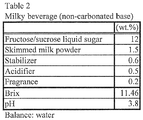
FIG. 2 is a table showing the composition of a non-carbonated milky beverage according to Working Example 2. -
FIG. 3 is a table showing results of Working Example 2. -
FIG. 4 is a table showing results of Working Example 3. -
FIG. 5 is a table showing the composition of a carbonated milky beverage according to Working Example 4. -
FIG. 6 is a table showing results of Working Example 4. -
FIG. 7 is a table showing results of Working Example 5. - Embodiments of the present invention will now be explained. However, it should not be understood that statements and drawings that form parts of these disclosures limit the invention. A variety of alternative embodiments, examples and operational techniques should be clear to a person skilled in the art from these disclosures. Therefore, it should be understood that the present invention encompasses a variety of embodiments etc. that are not disclosed here.
- A milky beverage according to an embodiment of the present invention is a proline-containing milky beverage. The milky beverage according to this embodiment may have a fermented milk flavor. The milky beverage according to this embodiment contains less than 3.0% of non-fat milk solids, and may contain fewer than 1,000,000 lactic acid bacteria or yeast cells per 1 mL. In addition, the milky beverage according to this embodiment may be a yogurt flavored soft drink. Alternatively, the milky beverage according to this embodiment may be a soft drink having a combined flavor of yogurt and fruit. A fruit flavor may be obtained by adding pulp, skin, juice, or the like, of a fruit, and may also be obtained by adding a flavor (food additive) that imparts a fruit flavor. The fruit may be tangerine, orange, grapefruit, grape, blueberry, plum, peach, melon, apple, pineapple, strawberry, cherry, kiwi, or the like, but is not limited to these. In addition, the milky beverage according to this embodiment may be a soft drink having a flavor obtained by combining yogurt with powdered green tea, brown sugar syrup, maple syrup, or the like. Furthermore, the milky beverage according to this embodiment need not contain amino acids other than proline.
- The milky beverage according to this embodiment may contain 0.0010-0.0600 g of proline per 100 g of the milky beverage. By setting the content of proline to fall within this range, the milky beverage tends to have a fermented milk flavor. Alternatively, the milky beverage according to this embodiment may contain 0.0060-0.0300 g of proline per 100 g of the milky beverage. In such cases, the milky beverage according to this embodiment may be a non-carbonated beverage. Alternatively, the milky beverage according to this embodiment may contain 0.0060-0.0120 g of proline per 100 g of the milky beverage. In such cases, the milky beverage according to this embodiment may be a carbonated beverage.
- "Fermented milk" means a product which contains, for example, a minimum of 8.0% of non-fat milk solids, is obtained through fermentation with lactic acid bacteria or yeast, and contains a minimum of 107 lactic acid bacteria or yeast cells per 1 mL.
- A "lactic acid bacteria beverage" is, for example, a beverage containing less than 8.0% of non-fat milk solids. Among "lactic acid bacteria beverages", those containing a minimum of 3.0% of non-fat milk solids and containing a minimum of 107 lactic acid bacteria or yeast cells per 1 mL are also known as "dairy product lactic acid bacteria beverages". Among "lactic acid bacteria beverages", those which contain a minimum of 3.0% of non-fat milk solids and in which lactic acid bacteria or yeast cells are killed by sterilization are also known as "(sterilized) dairy product lactic acid bacteria beverages". Among "lactic acid bacteria beverages", those which contain less than 3.0% of non-fat milk solids and contain a minimum of 106 lactic acid bacteria or yeast cells per 1 mL are also known as "lactic acid bacteria beverages containing mainly milk etc.".
- "Milky beverages" are, for example, beverages which contain less than 3.0% of non-fat milk solids and contain fewer than 1,000,000 lactic acid bacteria or yeast cells per 1 mL, do not correspond to "fermented milk" or "lactic acid bacteria beverages", and are classified as "soft drinks". "Milky beverages" have a low milk content, and can therefore be stored at ordinary temperatures. Ordinary temperatures means, for example, 0-40°C, 0-35°C or 0-30°C.
- The milky beverage according to this embodiment can be produced by, for example, preparing a milky beverage material, which is a milky beverage that does not contain proline, and adding proline to the milky beverage material. In Japan, for example, fermented milk can only be produced using a special production line for which government approval has been granted. However, proline-containing milky beverages are soft drinks, and can therefore be produced using ordinary production lines and do not require government approval.
- The milky beverage that does not contain proline may be a commercially available milky beverage. By preparing a commercially available milky beverage and adding proline to this commercially available milky beverage, the flavor of the milky beverage is improved and the milky beverage has a fermented milk flavor.
- It is possible to add proline to the milky beverage in order to suppress sourness in the milky beverage. In such cases, by adding proline to the milky beverage so that the milky beverage contains 0.0005-0.0600 g of proline per 100 g of the milky beverage, sourness tends to be suppressed. Alternatively, in order to suppress sourness in the milky beverage, proline may be added to the milky beverage so that the milky beverage contains 0.0060-0.0600 g of proline per 100 g of the milky beverage. In such cases, the milky beverage may be a non-carbonated beverage. Alternatively, in order to suppress sourness in the milky beverage, proline may be added to the milky beverage so that the milky beverage contains 0.0020-0.0120 g of proline per 100 g of the milky beverage. In such cases, the milky beverage may be a carbonated beverage.
- Samples of the following fermented milk beverages and lactic acid bacteria beverages were procured. All of these were beverages having different brand names.
Commercially available fermented milk beverage 1 (yogurt drink, able to be transported if refrigerated)
Commercially available fermented milk beverage 2 (yogurt drink, able to be transported if refrigerated)
Commercially available fermented milk beverage 3 (yogurt drink, able to be transported if refrigerated)
Commercially available fermented milk beverage 4 (yogurt drink, able to be transported if refrigerated)
Commercially available lactic acid bacteria beverage 1 (able to be transported if refrigerated)
Commercially available lactic acid bacteria beverage 2 (able to be transported if refrigerated)
Commercially available lactic acid bacteria beverage 3 (able to be transported if refrigerated) - In addition, samples of the following milky beverages were procured or prepared. All of these were beverages having different brand names.
Commercially available milky beverage 1 (soft drink, able to be transported at ordinary temperatures)
Commercially available milky beverage 2 (soft drink, able to be transported at ordinary temperatures)
Commercially available milky beverage 3 (soft drink, able to be transported at ordinary temperatures)
Commercially available milky beverage 4 (soft drink, able to be transported at ordinary temperatures)
Prototype prepared by the inventor of the present invention (soft drink, non-fat milk solids: 1.2%, milk fat: 0.2%, able to be transported at ordinary temperatures) - The compositions of the procured or prepared samples were analyzed. Analysis of sugars and acids was carried out by high performance liquid chromatography (using a LC-20AD manufactured by Shimadzu Corporation). Analysis of amino acids was carried out using a high-speed amino acid analyzer (L-8800 manufactured by Hitachi High-Technologies Corporation). Brix analysis was carried out in an oscillation period method using a DA-310C manufactured by Kyoto Electronics Manufacturing Co., Ltd. Brix (Ref) analysis was carried out by refractive index measurements using a RX-5000α manufactured by Atago Co., Ltd. Acidity analysis was carried out using an AT-510 manufactured by Kyoto Electronics Manufacturing Co., Ltd. pH analysis was carried out using a HM-30G manufactured by DKK-TOA Corporation. The results are shown in
FIG. 1 . - In all of these fermented milk beverages and lactic acid bacteria beverages, the content of lactic acid was greater than the content of citric acid. In the milky beverages, however, the content of lactic acid was lower than the content of citric acid, except in commercially available
milky beverage 2. - Amino acids were detected in the fermented milk beverages and lactic acid bacteria beverages. Lysine, leucine, valine, alanine, proline, serine and aspartic acid were detected in 3 or more fermented milk beverages or lactic acid bacteria beverages. However, amino acids were not detected in the milky beverages.
- The pH values of the fermented milk beverages and lactic acid bacteria beverages were higher than the pH values of the milky beverages.
- A non-carbonated milky beverage which had the composition shown in
FIG. 2 and contained no amino acids was prepared. This non-carbonated milky beverage was the same as the prototype shown inFIG. 1 . Citric acid and lactic acid were used as acidifiers. - Carboxymethyl cellulose (CMC), pectin and xanthan gum were used as stabilizers. Amino acids were added to the non-carbonated milky beverage so that 0.002 g or 0.012 g of the amino acids shown in
FIG. 3 were contained per 100g of the prepared non-carbonated milky beverages. The sourness and fermented milk flavor of the amino acid-containing non-carbonated milky beverages were functionally evaluated by 5 panelists experienced in beverage evaluation. - In
FIG. 3 , "+/-" for sourness indicates that the sourness was not altered by the addition of the amino acid. "-" for sourness indicates that sourness was suppressed by the addition of the amino acid. "--" for sourness indicates that sourness was more suppressed by the addition of the amino acid. - In
FIG. 3 , "+/-" for fermented milk flavor indicates that the flavor was not altered by the addition of the amino acid. "+" for fermented milk flavor indicates that the fermented milk flavor was enhanced by the addition of the amino acid. "++" for fermented milk flavor indicates that the fermented milk flavor was more enhanced by the addition of the amino acid. - As shown in
FIG. 3 , even when amino acids other than proline (lysine, leucine, valine, alanine, glutamic acid and sodium aspartate) were added to a milky beverage, the fermented milk flavor was not enhanced, but by adding proline to a milky beverage, sourness was suppressed and the fermented milk flavor was enhanced. - Proline was added to the same non-carbonated milky beverage as that used in Working Example 2 so that the content of proline was 0.0005 g, 0.0010 g, 0.0020 g, 0.0060 g, 0.0120 g, 0.0300 g, 0.0600 g, 0.1000 g or 0.3000 g per 100 g of the milky beverage, as shown in
FIG. 4 . The sourness and fermented milk flavor of these proline-containing non-carbonated milky beverages were functionally evaluated by the same 5 panelists as in Working Example 2. The evaluation criteria were the same as in Working Example 2. - The results showed that in cases where the content of proline was 0.0010 g or 0.0020 g per 100 g of the non-carbonated milky beverage, the sourness was evaluated as "-" and the fermented milk flavor was evaluated as "+". In cases where the content of proline was 0.0060 g, 0.0120 g or 0.0300 g per 100 g of the non-carbonated milky beverage, the sourness was evaluated as "--" and the fermented milk flavor was evaluated as "++". In cases where the content of proline was 0.0600 g per 100 g of the non-carbonated milky beverage, the sourness was evaluated as "--" and the fermented milk flavor was evaluated as "+".
- A carbonated milky drink which had the composition shown in
FIG. 5 and which did not contain amino acids was prepared. Proline was added to the prepared carbonated milky beverage so that the content of proline was 0.0005 g, 0.0010 g, 0.0020 g, 0.0060 g, 0.0120 g, 0.0300 g, 0.0600 g, 0.1000 g or 0.3000 g per 100 g of the milky beverage, as shown inFIG. 6 . The sourness and fermented milk flavor of these proline-containing carbonated milky beverages were functionally evaluated by the same 5 panelists as in Working Example 2. The evaluation criteria were the same as in Working Example 2. - In cases where the content of proline was 0.0010 g per 100 g of the carbonated milky beverage, the sourness was evaluated as "-" and the fermented milk flavor was evaluated as "+". In cases where the content of proline was 0.0020 g per 100 g of the carbonated milky beverage, the sourness was evaluated as "--" and the fermented milk flavor was evaluated as "+". In cases where the content of proline was 0.0060 g or 0.0120 g per 100 g of the carbonated milky beverage, the sourness was evaluated as "--" and the fermented milk flavor was evaluated as "++". In cases where the content of proline was 0.0300 g or 0.0600 g per 100 g of the carbonated milky beverage, the sourness was evaluated as "-" and the fermented milk flavor was evaluated as "+".
- Commercially available fermented
milk beverage 2 was prepared in the same way as in Working Example 1. In addition, a non-carbonated milky beverage was prepared in the same way as in Working Example 2. Furthermore,samples 33 to 36 were obtained by adjusting the content of citric acid and lactic acid in non-carbonated milky beverages as shown inFIG. 7 . The sourness and fermented milk flavor of commercially available fermentedmilk beverage 2 andsamples 33 to 36 were functionally evaluated by the same 5 panelists as in Working Example 2. The evaluation criteria were the same as in Working Example 2, "+" for sourness indicates that the sourness was increased by the addition of citric acid and lactic acid, and "++" for sourness indicates that the sourness was further increased by the addition of citric acid and lactic acid. In addition, "+++" for fermented milk flavor indicates that the fermented milk flavor was further enhanced. - The content of lactic acid was greater than the content of citric acid in commercially available fermented
milk beverage 2. However,milky beverage sample 35, in which the content of lactic acid was greater than the content of citric acid, showed increased sourness compared tomilky beverage sample 33, in which the content of citric acid was greater than the content of lactic acid. Furthermore, despite the content of citric acid and the content of lactic acid being the same as in commercially available fermentedmilk beverage 2,milky beverage sample 35 exhibited higher sourness and did not have a fermented milk flavor. - Sourness was suppressed and the fermented milk flavor was enhanced in
milky beverage sample 34, which was obtained by adding proline tomilky beverage sample 33. In addition, sourness was suppressed and the fermented milk flavor was enhanced inmilky beverage sample 36, which was obtained by adding proline tomilky beverage sample 35.
Claims (47)
- A proline-containing milky beverage.
- The milky beverage as claimed in claim 1, which contains less than 3.0% of non-fat milk solids and contains less than 1,000,000 lactic acid bacteria or yeast cells per 1 mL.
- The milky beverage as claimed in claim 1 or claim 2, which is a yogurt flavored soft drink.
- The milky beverage as claimed in claim 1 or claim 2, which is a soft drink having a combined flavor of yogurt and fruit.
- The milky beverage as claimed in any one of claims 1 to 4, which does not contain amino acids other than proline.
- The milky beverage as claimed in any one of claims 1 to 5, which can be stored at ordinary temperatures.
- The milky beverage as claimed in any one of claims 1 to 6, which contains 0.0010-0.0600 g of proline per 100 g of the milky beverage.
- The milky beverage as claimed in any one of claims 1 to 6, which contains 0.0060-0.0300 g of proline per 100 g of the milky beverage.
- The milky beverage as claimed in any one of claims 1 to 6, which contains 0.0060-0.0120 g of proline per 100 g of the milky beverage.
- The milky beverage as claimed in claim 8, which is a non-carbonated beverage.
- The milky beverage as claimed in claim 9, which is a carbonated beverage.
- The milky beverage as claimed in any one of claims 1 to 11, which has a fermented milk flavor.
- A method for producing a milky beverage, the method including
a step of preparing a milky beverage material, and
a step of adding proline to the milky beverage material. - The method for producing a milky beverage as claimed in claim 13, wherein a produced milky beverage contains less than 3.0% of non-fat milk solids and contains less than 1,000,000 lactic acid bacteria or yeast cells per 1 mL.
- The method for producing a milky beverage as claimed in claim 13 or claim 14, wherein a produced milky beverage is a yogurt flavored soft drink.
- The method for producing a milky beverage as claimed in claim 13 or claim 14, wherein a produced milky beverage is a soft drink having a combined flavor of yogurt and fruit.
- The method for producing a milky beverage as claimed in any one of claims 13 to 16, wherein a produced milky beverage does not contain amino acids other than proline.
- The method for producing a milky beverage as claimed in any one of claims 13 to 17, wherein a produced milky beverage can be stored at ordinary temperatures.
- The method for producing a milky beverage as claimed in any one of claims 13 to 18, wherein proline is added to the milky beverage material so that a produced milky beverage contains 0.0010-0.0600 g of proline per 100 g of the milky beverage.
- The method for producing a milky beverage as claimed in any one of claims 13 to 18, wherein proline is added to the milky beverage material so that a produced milky beverage contains 0.0060-0.0300 g of proline per 100 g of the milky beverage.
- The method for producing a milky beverage as claimed in any one of claims 13 to 18, wherein proline is added to the milky beverage material so that a produced milky beverage contains 0.0060-0.0120 g of proline per 100 g of the milky beverage.
- The method for producing a milky beverage as claimed in claim 20, wherein a produced milky beverage is a non-carbonated beverage.
- The method for producing a milky beverage as claimed in claim 21, wherein a produced milky beverage is a carbonated beverage.
- The method for producing a milky beverage as claimed in any one of claims 13 to 23, wherein proline is added to the milky beverage material so that a produced milky beverage has a fermented milk flavor.
- A method for improving the flavor of a milky beverage, the method including
a step of preparing a milky beverage, and
a step of adding proline to the milky beverage. - The method for improving the flavor of a milky beverage as claimed in claim 25, wherein the milky beverage contains less than 3.0% of non-fat milk solids and contains less than 1,000,000 lactic acid bacteria or yeast cells per 1 mL.
- The method for improving the flavor of a milky beverage as claimed in claim 25 or claim 26, wherein the milky beverage is a yogurt flavored soft drink.
- The method for improving the flavor of a milky beverage as claimed in claim 25 or claim 26, wherein the milky beverage is a soft drink having a combined flavor of yogurt and fruit.
- The method for improving the flavor of a milky beverage as claimed in any one of claims 25 to 28, wherein the milky beverage does not contain amino acids other than proline.
- The method for improving the flavor of a milky beverage as claimed in any one of claims 25 to 29, wherein the milky beverage can be stored at ordinary temperatures.
- The method for improving the flavor of a milky beverage as claimed in any one of claims 25 to 30, wherein proline is added to the milky beverage so that the milky beverage contains 0.0010-0.0600 g of proline per 100 g of the milky beverage.
- The method for improving the flavor of a milky beverage as claimed in any one of claims 25 to 30, wherein proline is added to the milky beverage so that the milky beverage contains 0.0060-0.0300 g of proline per 100 g of the milky beverage.
- The method for improving the flavor of a milky beverage as claimed in any one of claims 25 to 30, wherein proline is added to the milky beverage so that the milky beverage contains 0.0060-0.0120 g of proline per 100 g of the milky beverage.
- The method for improving the flavor of a milky beverage as claimed in claim 32, wherein the milky beverage is a non-carbonated beverage.
- The method for improving the flavor of a milky beverage as claimed in claim 33, wherein the milky beverage is a carbonated beverage.
- The method for improving the flavor of a milky beverage as claimed in any one of claims 25 to 35, wherein proline is added to the milky beverage so that the milky beverage has a fermented milk flavor.
- A method for suppressing sourness in a milky beverage, the method including
a step of preparing a milky beverage, and
a step of adding proline to the milky beverage. - The method for suppressing sourness in a milky beverage as claimed in claim 37, wherein the milky beverage contains less than 3.0% of non-fat milk solids and contains less than 1,000,000 lactic acid bacteria or yeast cells per 1 mL.
- The method for suppressing sourness in a milky beverage as claimed in claim 37 or claim 38, wherein the milky beverage is a yogurt flavored soft drink.
- The method for suppressing sourness in a milky beverage as claimed in claim 37 or claim 38, wherein the milky beverage is a soft drink having a combined flavor of yogurt and fruit.
- The method for suppressing sourness in of a milky beverage as claimed in any one of claims 37 to 40, wherein the milky beverage does not contain amino acids other than proline.
- The method for suppressing sourness in a milky beverage as claimed in any one of claims 37 to 41, wherein the milky beverage can be stored at ordinary temperatures.
- The method for suppressing sourness in a milky beverage as claimed in any one of claims 37 to 42, wherein proline is added to the milky beverage so that the milky beverage contains 0.0005-0.0600 g of proline per 100 g of the milky beverage.
- The method for suppressing sourness in a milky beverage as claimed in any one of claims 37 to 42, wherein proline is added to the milky beverage so that the milky beverage contains 0.0060-0.0600 g of proline per 100 g of the milky beverage.
- The method for suppressing sourness in a milky beverage as claimed in any one of claims 37 to 42, wherein proline is added to the milky beverage so that the milky beverage contains 0.0020-0.0120 g of proline per 100 g of the milky beverage.
- The method for suppressing sourness in a milky beverage as claimed in claim 44, wherein the milky beverage is a non-carbonated beverage.
- The method for suppressing sourness in a milky beverage as claimed in claim 45, wherein the milky beverage is a carbonated beverage.
Applications Claiming Priority (2)
| Application Number | Priority Date | Filing Date | Title |
|---|---|---|---|
| JP2015230454A JP6841594B2 (en) | 2015-11-26 | 2015-11-26 | Milky beverages, methods for producing dairy beverages, and methods for improving the flavor of dairy beverages. |
| PCT/IB2016/001791 WO2017089893A1 (en) | 2015-11-26 | 2016-11-28 | Milky beverage, method for producing milky beverage, and method for improving flavor of milky beverage |
Publications (4)
| Publication Number | Publication Date |
|---|---|
| EP3381292A1 true EP3381292A1 (en) | 2018-10-03 |
| EP3381292A4 EP3381292A4 (en) | 2019-05-08 |
| EP3381292B1 EP3381292B1 (en) | 2023-12-27 |
| EP3381292C0 EP3381292C0 (en) | 2023-12-27 |
Family
ID=58764012
Family Applications (1)
| Application Number | Title | Priority Date | Filing Date |
|---|---|---|---|
| EP16868094.0A Active EP3381292B1 (en) | 2015-11-26 | 2016-11-28 | Milky beverage, method for producing milky beverage, and method for improving flavor of milky beverage |
Country Status (11)
| Country | Link |
|---|---|
| US (1) | US20210204557A1 (en) |
| EP (1) | EP3381292B1 (en) |
| JP (1) | JP6841594B2 (en) |
| KR (1) | KR102789825B1 (en) |
| CN (1) | CN108601364B (en) |
| BR (1) | BR112018010763B1 (en) |
| MX (1) | MX2018006508A (en) |
| MY (1) | MY184734A (en) |
| PH (1) | PH12018501211B1 (en) |
| SG (1) | SG11201804815XA (en) |
| WO (1) | WO2017089893A1 (en) |
Families Citing this family (4)
| Publication number | Priority date | Publication date | Assignee | Title |
|---|---|---|---|---|
| JP2019126330A (en) * | 2018-01-26 | 2019-08-01 | 正治 長尾 | Soft drink with anticancer function and manufacturing method thereof |
| CN109757559A (en) * | 2018-12-15 | 2019-05-17 | 湖南上优食品科技有限公司 | A kind of sour milk beverage and preparation method thereof |
| JP7312634B2 (en) * | 2019-07-23 | 2023-07-21 | アサヒ飲料株式会社 | Beverage and method for improving acidity and aftertaste of beverage |
| CN122497427A (en) | 2023-12-25 | 2026-07-31 | 麒麟饮料株式会社 | Beverage, method for producing same, and method for improving yogurt flavor of beverage |
Family Cites Families (15)
| Publication number | Priority date | Publication date | Assignee | Title |
|---|---|---|---|---|
| GB1154139A (en) * | 1967-04-12 | 1969-06-04 | Ajinomoto Kk | Process for Preparing a Sour Milk Beverage or Yoghurt. |
| CN1061512A (en) * | 1990-11-20 | 1992-06-03 | 郝云 | The production method of sour milk soft drink |
| JPH0819367A (en) * | 1992-07-16 | 1996-01-23 | Gun Ei Chem Ind Co Ltd | Dairy drink |
| RU2031586C1 (en) * | 1993-02-05 | 1995-03-27 | Тамара Георгиевна Извекова | Biologically active product of sour milk and method for its production |
| JP2683491B2 (en) * | 1993-09-30 | 1997-11-26 | 雪印乳業株式会社 | Whey protein fermented milk and method for producing the same |
| JPH09149762A (en) * | 1995-11-29 | 1997-06-10 | Kosumosu Shokuhin:Kk | Method for producing block-shaped solid lactic acid beverage |
| US8367138B2 (en) * | 2005-11-23 | 2013-02-05 | The Coca-Cola Company | Dairy composition with high-potency sweetener |
| EP2449891A1 (en) * | 2010-11-05 | 2012-05-09 | Nestec S.A. | Drinking yoghurt preparations containing non-replicating probiotic micro-organisms |
| CN104363772B (en) * | 2012-05-01 | 2019-02-12 | Mc食品科技株式会社 | Flavor modifier |
| JP6203491B2 (en) * | 2012-12-27 | 2017-09-27 | Mcフードスペシャリティーズ株式会社 | Method for improving taste of fruit liquor or fruit drink containing polyphenol |
| JP5909200B2 (en) * | 2013-01-30 | 2016-04-26 | 株式会社 伊藤園 | Food and drink containing lactic acid bacteria and method for producing the same |
| CN103478267A (en) * | 2013-10-14 | 2014-01-01 | 宜兰食品工业股份有限公司 | Brown rice milk and its preparation method, milk tea and its preparation method |
| MY210365A (en) * | 2014-01-23 | 2025-09-14 | Asahi Soft Drinks Co Ltd | Acidic lactic beverage and method for producing same |
| CN104950046B (en) * | 2014-03-26 | 2017-06-06 | 浙江科技学院 | A kind of free amino acid analysis method for differentiating fermented type and mixed acid milk drink |
| CN103976023A (en) * | 2014-05-26 | 2014-08-13 | 程礼华 | Okra yogurt beverage and preparation method thereof |
-
2015
- 2015-11-26 JP JP2015230454A patent/JP6841594B2/en active Active
-
2016
- 2016-11-28 MY MYPI2018000834A patent/MY184734A/en unknown
- 2016-11-28 KR KR1020187017410A patent/KR102789825B1/en active Active
- 2016-11-28 WO PCT/IB2016/001791 patent/WO2017089893A1/en not_active Ceased
- 2016-11-28 BR BR112018010763-8A patent/BR112018010763B1/en active IP Right Grant
- 2016-11-28 SG SG11201804815XA patent/SG11201804815XA/en unknown
- 2016-11-28 PH PH1/2018/501211A patent/PH12018501211B1/en unknown
- 2016-11-28 EP EP16868094.0A patent/EP3381292B1/en active Active
- 2016-11-28 MX MX2018006508A patent/MX2018006508A/en unknown
- 2016-11-28 US US15/779,200 patent/US20210204557A1/en not_active Abandoned
- 2016-11-28 CN CN201680079968.5A patent/CN108601364B/en active Active
Also Published As
| Publication number | Publication date |
|---|---|
| CN108601364B (en) | 2022-04-19 |
| US20210204557A1 (en) | 2021-07-08 |
| EP3381292B1 (en) | 2023-12-27 |
| PH12018501211A1 (en) | 2019-02-27 |
| BR112018010763B1 (en) | 2022-10-04 |
| SG11201804815XA (en) | 2018-07-30 |
| CN108601364A (en) | 2018-09-28 |
| EP3381292C0 (en) | 2023-12-27 |
| BR112018010763A2 (en) | 2019-04-02 |
| PH12018501211B1 (en) | 2023-08-02 |
| KR102789825B1 (en) | 2025-04-03 |
| WO2017089893A1 (en) | 2017-06-01 |
| JP2017093376A (en) | 2017-06-01 |
| JP6841594B2 (en) | 2021-03-10 |
| EP3381292A4 (en) | 2019-05-08 |
| MY184734A (en) | 2021-04-20 |
| KR20180084953A (en) | 2018-07-25 |
| MX2018006508A (en) | 2018-08-15 |
Similar Documents
| Publication | Publication Date | Title |
|---|---|---|
| JP6585942B2 (en) | Alcohol-containing acidic milk beverage with phytic acid added | |
| EP3381292B1 (en) | Milky beverage, method for producing milky beverage, and method for improving flavor of milky beverage | |
| TWI765055B (en) | Carbonated beverage, packaged carbonated beverage and enhancing method for yoghurt flavor of carbonated beverage | |
| JP6293055B2 (en) | Concentrated milk acidic beverage and method for producing the same | |
| JP6750136B2 (en) | Method for mitigating sweetness change or color change when thawing a frozen beverage | |
| JP6883453B2 (en) | Beverages in containers | |
| JP5053239B2 (en) | Beverage and production method thereof | |
| JP2006523454A (en) | Enhanced transparency and / or stability properties of protein-containing liquids and gels | |
| JP7312634B2 (en) | Beverage and method for improving acidity and aftertaste of beverage | |
| JP2016202128A (en) | Carbonated beverage with improved carbonation | |
| JP2024133408A (en) | Fruit juice flavored beverage | |
| JP2005278605A (en) | Fruit juice beverage | |
| US11744268B2 (en) | High complete protein, chemical free energy enhancement and muscle rejuvenation beverage for refreshment meal replacement and enhanced anti-inflammatory response | |
| TW202327462A (en) | Beverage having enhanced sourness | |
| HK1261639A1 (en) | Milky beverage, method for producing milky beverage, and method for improving flavor of milky beverage | |
| HK1261639B (en) | Milky beverage, method for producing milky beverage, and method for improving flavor of milky beverage | |
| JP2024080258A (en) | Melon juice beverage and method for producing melon juice beverage | |
| JP6915021B2 (en) | How to improve the aftertaste of yogurt-like beverages, packaged beverages and yogurt-like beverages | |
| JP6902076B2 (en) | Carbonated drink with improved carbonation | |
| JP7010657B2 (en) | How to enhance the yogurt flavor of carbonated drinks, packaged carbonated drinks and carbonated drinks | |
| JP7264638B2 (en) | Wine-taste beverage and method for producing wine-taste beverage | |
| JP2000189120A (en) | Acidic beverage with enhanced fruity aroma and method for producing the same | |
| JP2009072165A (en) | Heat-resistant acidophilic bacteria growth inhibitor, food and drink containing the same, and method for producing the same | |
| JP7264639B2 (en) | Wine-taste beverage and method for producing wine-taste beverage | |
| JP2016111971A (en) | Low alcoholic drink having full-bodied feeling |
Legal Events
| Date | Code | Title | Description |
|---|---|---|---|
| STAA | Information on the status of an ep patent application or granted ep patent |
Free format text: STATUS: THE INTERNATIONAL PUBLICATION HAS BEEN MADE |
|
| PUAI | Public reference made under article 153(3) epc to a published international application that has entered the european phase |
Free format text: ORIGINAL CODE: 0009012 |
|
| STAA | Information on the status of an ep patent application or granted ep patent |
Free format text: STATUS: REQUEST FOR EXAMINATION WAS MADE |
|
| 17P | Request for examination filed |
Effective date: 20180625 |
|
| AK | Designated contracting states |
Kind code of ref document: A1 Designated state(s): AL AT BE BG CH CY CZ DE DK EE ES FI FR GB GR HR HU IE IS IT LI LT LU LV MC MK MT NL NO PL PT RO RS SE SI SK SM TR |
|
| AX | Request for extension of the european patent |
Extension state: BA ME |
|
| DAV | Request for validation of the european patent (deleted) | ||
| DAX | Request for extension of the european patent (deleted) | ||
| A4 | Supplementary search report drawn up and despatched |
Effective date: 20190405 |
|
| RIC1 | Information provided on ipc code assigned before grant |
Ipc: A23C 9/133 20060101ALI20190329BHEP Ipc: A23C 9/00 20060101AFI20190329BHEP Ipc: A23L 2/38 20060101ALI20190329BHEP Ipc: A23C 9/12 20060101ALI20190329BHEP Ipc: A23L 2/66 20060101ALI20190329BHEP Ipc: A23C 9/13 20060101ALI20190329BHEP Ipc: A23C 9/156 20060101ALI20190329BHEP Ipc: A23C 9/152 20060101ALI20190329BHEP Ipc: A23C 9/137 20060101ALI20190329BHEP |
|
| STAA | Information on the status of an ep patent application or granted ep patent |
Free format text: STATUS: EXAMINATION IS IN PROGRESS |
|
| 17Q | First examination report despatched |
Effective date: 20200311 |
|
| GRAP | Despatch of communication of intention to grant a patent |
Free format text: ORIGINAL CODE: EPIDOSNIGR1 |
|
| STAA | Information on the status of an ep patent application or granted ep patent |
Free format text: STATUS: GRANT OF PATENT IS INTENDED |
|
| INTG | Intention to grant announced |
Effective date: 20230615 |
|
| GRAS | Grant fee paid |
Free format text: ORIGINAL CODE: EPIDOSNIGR3 |
|
| GRAA | (expected) grant |
Free format text: ORIGINAL CODE: 0009210 |
|
| STAA | Information on the status of an ep patent application or granted ep patent |
Free format text: STATUS: THE PATENT HAS BEEN GRANTED |
|
| AK | Designated contracting states |
Kind code of ref document: B1 Designated state(s): AL AT BE BG CH CY CZ DE DK EE ES FI FR GB GR HR HU IE IS IT LI LT LU LV MC MK MT NL NO PL PT RO RS SE SI SK SM TR |
|
| REG | Reference to a national code |
Ref country code: GB Ref legal event code: FG4D |
|
| REG | Reference to a national code |
Ref country code: CH Ref legal event code: EP |
|
| REG | Reference to a national code |
Ref country code: DE Ref legal event code: R096 Ref document number: 602016085051 Country of ref document: DE |
|
| REG | Reference to a national code |
Ref country code: IE Ref legal event code: FG4D |
|
| U01 | Request for unitary effect filed |
Effective date: 20240105 |
|
| U07 | Unitary effect registered |
Designated state(s): AT BE BG DE DK EE FI FR IT LT LU LV MT NL PT SE SI Effective date: 20240116 |
|
| PG25 | Lapsed in a contracting state [announced via postgrant information from national office to epo] |
Ref country code: GR Free format text: LAPSE BECAUSE OF FAILURE TO SUBMIT A TRANSLATION OF THE DESCRIPTION OR TO PAY THE FEE WITHIN THE PRESCRIBED TIME-LIMIT Effective date: 20240328 |
|
| PG25 | Lapsed in a contracting state [announced via postgrant information from national office to epo] |
Ref country code: ES Free format text: LAPSE BECAUSE OF FAILURE TO SUBMIT A TRANSLATION OF THE DESCRIPTION OR TO PAY THE FEE WITHIN THE PRESCRIBED TIME-LIMIT Effective date: 20231227 |
|
| PG25 | Lapsed in a contracting state [announced via postgrant information from national office to epo] |
Ref country code: GR Free format text: LAPSE BECAUSE OF FAILURE TO SUBMIT A TRANSLATION OF THE DESCRIPTION OR TO PAY THE FEE WITHIN THE PRESCRIBED TIME-LIMIT Effective date: 20240328 Ref country code: ES Free format text: LAPSE BECAUSE OF FAILURE TO SUBMIT A TRANSLATION OF THE DESCRIPTION OR TO PAY THE FEE WITHIN THE PRESCRIBED TIME-LIMIT Effective date: 20231227 |
|
| PG25 | Lapsed in a contracting state [announced via postgrant information from national office to epo] |
Ref country code: RS Free format text: LAPSE BECAUSE OF FAILURE TO SUBMIT A TRANSLATION OF THE DESCRIPTION OR TO PAY THE FEE WITHIN THE PRESCRIBED TIME-LIMIT Effective date: 20231227 Ref country code: NO Free format text: LAPSE BECAUSE OF FAILURE TO SUBMIT A TRANSLATION OF THE DESCRIPTION OR TO PAY THE FEE WITHIN THE PRESCRIBED TIME-LIMIT Effective date: 20240327 Ref country code: HR Free format text: LAPSE BECAUSE OF FAILURE TO SUBMIT A TRANSLATION OF THE DESCRIPTION OR TO PAY THE FEE WITHIN THE PRESCRIBED TIME-LIMIT Effective date: 20231227 |
|
| PG25 | Lapsed in a contracting state [announced via postgrant information from national office to epo] |
Ref country code: IS Free format text: LAPSE BECAUSE OF FAILURE TO SUBMIT A TRANSLATION OF THE DESCRIPTION OR TO PAY THE FEE WITHIN THE PRESCRIBED TIME-LIMIT Effective date: 20240427 |
|
| PG25 | Lapsed in a contracting state [announced via postgrant information from national office to epo] |
Ref country code: CZ Free format text: LAPSE BECAUSE OF FAILURE TO SUBMIT A TRANSLATION OF THE DESCRIPTION OR TO PAY THE FEE WITHIN THE PRESCRIBED TIME-LIMIT Effective date: 20231227 |
|
| PG25 | Lapsed in a contracting state [announced via postgrant information from national office to epo] |
Ref country code: SK Free format text: LAPSE BECAUSE OF FAILURE TO SUBMIT A TRANSLATION OF THE DESCRIPTION OR TO PAY THE FEE WITHIN THE PRESCRIBED TIME-LIMIT Effective date: 20231227 |
|
| PG25 | Lapsed in a contracting state [announced via postgrant information from national office to epo] |
Ref country code: SM Free format text: LAPSE BECAUSE OF FAILURE TO SUBMIT A TRANSLATION OF THE DESCRIPTION OR TO PAY THE FEE WITHIN THE PRESCRIBED TIME-LIMIT Effective date: 20231227 Ref country code: SK Free format text: LAPSE BECAUSE OF FAILURE TO SUBMIT A TRANSLATION OF THE DESCRIPTION OR TO PAY THE FEE WITHIN THE PRESCRIBED TIME-LIMIT Effective date: 20231227 Ref country code: RO Free format text: LAPSE BECAUSE OF FAILURE TO SUBMIT A TRANSLATION OF THE DESCRIPTION OR TO PAY THE FEE WITHIN THE PRESCRIBED TIME-LIMIT Effective date: 20231227 Ref country code: IS Free format text: LAPSE BECAUSE OF FAILURE TO SUBMIT A TRANSLATION OF THE DESCRIPTION OR TO PAY THE FEE WITHIN THE PRESCRIBED TIME-LIMIT Effective date: 20240427 Ref country code: CZ Free format text: LAPSE BECAUSE OF FAILURE TO SUBMIT A TRANSLATION OF THE DESCRIPTION OR TO PAY THE FEE WITHIN THE PRESCRIBED TIME-LIMIT Effective date: 20231227 |
|
| PG25 | Lapsed in a contracting state [announced via postgrant information from national office to epo] |
Ref country code: PL Free format text: LAPSE BECAUSE OF FAILURE TO SUBMIT A TRANSLATION OF THE DESCRIPTION OR TO PAY THE FEE WITHIN THE PRESCRIBED TIME-LIMIT Effective date: 20231227 |
|
| PG25 | Lapsed in a contracting state [announced via postgrant information from national office to epo] |
Ref country code: PL Free format text: LAPSE BECAUSE OF FAILURE TO SUBMIT A TRANSLATION OF THE DESCRIPTION OR TO PAY THE FEE WITHIN THE PRESCRIBED TIME-LIMIT Effective date: 20231227 |
|
| REG | Reference to a national code |
Ref country code: DE Ref legal event code: R097 Ref document number: 602016085051 Country of ref document: DE |
|
| PLBE | No opposition filed within time limit |
Free format text: ORIGINAL CODE: 0009261 |
|
| STAA | Information on the status of an ep patent application or granted ep patent |
Free format text: STATUS: NO OPPOSITION FILED WITHIN TIME LIMIT |
|
| U20 | Renewal fee for the european patent with unitary effect paid |
Year of fee payment: 9 Effective date: 20241022 |
|
| 26N | No opposition filed |
Effective date: 20240930 |
|
| REG | Reference to a national code |
Ref country code: CH Ref legal event code: PL |
|
| PG25 | Lapsed in a contracting state [announced via postgrant information from national office to epo] |
Ref country code: MC Free format text: LAPSE BECAUSE OF FAILURE TO SUBMIT A TRANSLATION OF THE DESCRIPTION OR TO PAY THE FEE WITHIN THE PRESCRIBED TIME-LIMIT Effective date: 20231227 |
|
| REG | Reference to a national code |
Ref country code: CH Ref legal event code: PL |
|
| PG25 | Lapsed in a contracting state [announced via postgrant information from national office to epo] |
Ref country code: CH Free format text: LAPSE BECAUSE OF NON-PAYMENT OF DUE FEES Effective date: 20241130 |
|
| PG25 | Lapsed in a contracting state [announced via postgrant information from national office to epo] |
Ref country code: IE Free format text: LAPSE BECAUSE OF NON-PAYMENT OF DUE FEES Effective date: 20241128 |
|
| U20 | Renewal fee for the european patent with unitary effect paid |
Year of fee payment: 10 Effective date: 20251022 |
|
| PGFP | Annual fee paid to national office [announced via postgrant information from national office to epo] |
Ref country code: GB Payment date: 20251023 Year of fee payment: 10 |
|
| PG25 | Lapsed in a contracting state [announced via postgrant information from national office to epo] |
Ref country code: HU Free format text: LAPSE BECAUSE OF FAILURE TO SUBMIT A TRANSLATION OF THE DESCRIPTION OR TO PAY THE FEE WITHIN THE PRESCRIBED TIME-LIMIT; INVALID AB INITIO Effective date: 20161128 |
|
| PG25 | Lapsed in a contracting state [announced via postgrant information from national office to epo] |
Ref country code: CY Free format text: LAPSE BECAUSE OF FAILURE TO SUBMIT A TRANSLATION OF THE DESCRIPTION OR TO PAY THE FEE WITHIN THE PRESCRIBED TIME-LIMIT; INVALID AB INITIO Effective date: 20161128 |
|
| PG25 | Lapsed in a contracting state [announced via postgrant information from national office to epo] |
Ref country code: TR Free format text: LAPSE BECAUSE OF FAILURE TO SUBMIT A TRANSLATION OF THE DESCRIPTION OR TO PAY THE FEE WITHIN THE PRESCRIBED TIME-LIMIT Effective date: 20231227 |