EP3378864A1 - Spiro compound and organic light-emitting element comprising same - Google Patents
Spiro compound and organic light-emitting element comprising same Download PDFInfo
- Publication number
- EP3378864A1 EP3378864A1 EP16866675.8A EP16866675A EP3378864A1 EP 3378864 A1 EP3378864 A1 EP 3378864A1 EP 16866675 A EP16866675 A EP 16866675A EP 3378864 A1 EP3378864 A1 EP 3378864A1
- Authority
- EP
- European Patent Office
- Prior art keywords
- group
- substituted
- unsubstituted
- compound
- experimental example
- Prior art date
- Legal status (The legal status is an assumption and is not a legal conclusion. Google has not performed a legal analysis and makes no representation as to the accuracy of the status listed.)
- Granted
Links
- 0 CC*1c(cccc2)c2-c2ccccc12 Chemical compound CC*1c(cccc2)c2-c2ccccc12 0.000 description 38
- MJEHCOMEWNVUBG-UHFFFAOYSA-N Brc(cc1C2(c3ccc4)c(cccc5)c5-[n]5c3c4c3ccccc53)ccc1Oc1c2cccc1 Chemical compound Brc(cc1C2(c3ccc4)c(cccc5)c5-[n]5c3c4c3ccccc53)ccc1Oc1c2cccc1 MJEHCOMEWNVUBG-UHFFFAOYSA-N 0.000 description 2
- QVHGCNIRAJHXLJ-UHFFFAOYSA-N CC(C)(c1ccccc1C1(c2ccc3)c(cccc4)c4-[n]4c2c3c2ccccc42)c2c1ccc(-c(cc1)cc(c3ccccc33)c1[n]3-c1cc(cccc3)c3cc1)c2 Chemical compound CC(C)(c1ccccc1C1(c2ccc3)c(cccc4)c4-[n]4c2c3c2ccccc42)c2c1ccc(-c(cc1)cc(c3ccccc33)c1[n]3-c1cc(cccc3)c3cc1)c2 QVHGCNIRAJHXLJ-UHFFFAOYSA-N 0.000 description 2
- RKZRCYVMPHFQEL-UHFFFAOYSA-N c(cc1)ccc1-c(cc1)ccc1N(c(cc1)ccc1-c1ccccc1)c(cc1)cc(C2(c3ccc4)c(cccc5)c5-[n]5c3c4c3ccccc53)c1Sc1c2cccc1 Chemical compound c(cc1)ccc1-c(cc1)ccc1N(c(cc1)ccc1-c1ccccc1)c(cc1)cc(C2(c3ccc4)c(cccc5)c5-[n]5c3c4c3ccccc53)c1Sc1c2cccc1 RKZRCYVMPHFQEL-UHFFFAOYSA-N 0.000 description 2
- XULLFBDHZAXVRF-UHFFFAOYSA-N c(cc1)ccc1-c(cc1)ccc1N(c1ccccc1)c(cc1)cc(C2(c3ccc4)c(cccc5)c5-[n]5c3c4c3ccccc53)c1Sc1c2cccc1 Chemical compound c(cc1)ccc1-c(cc1)ccc1N(c1ccccc1)c(cc1)cc(C2(c3ccc4)c(cccc5)c5-[n]5c3c4c3ccccc53)c1Sc1c2cccc1 XULLFBDHZAXVRF-UHFFFAOYSA-N 0.000 description 2
- CPCCSEBLCPKUBE-UHFFFAOYSA-N c(cc1)ccc1N(c1ccccc1)c(cccc1C2(c3ccc4)c5ccccc5-[n]5c3c4c3ccccc53)c1Sc1c2cccc1 Chemical compound c(cc1)ccc1N(c1ccccc1)c(cccc1C2(c3ccc4)c5ccccc5-[n]5c3c4c3ccccc53)c1Sc1c2cccc1 CPCCSEBLCPKUBE-UHFFFAOYSA-N 0.000 description 2
- ZISLNWYNYLYUFB-UHFFFAOYSA-N c(cc1c2c3c(C45c(ccc(-c(cc6c7c8cccc7)ccc6[n]8-c6cc(cccc7)c7cc6)c6)c6Oc6c4cccc6)ccc2)ccc1[n]3-c1c5cccc1 Chemical compound c(cc1c2c3c(C45c(ccc(-c(cc6c7c8cccc7)ccc6[n]8-c6cc(cccc7)c7cc6)c6)c6Oc6c4cccc6)ccc2)ccc1[n]3-c1c5cccc1 ZISLNWYNYLYUFB-UHFFFAOYSA-N 0.000 description 2
- ZUQZICXRNRYMST-UHFFFAOYSA-N c(cc1c2c3c(C45c(ccc(-c(cc6c7c8cccc7)ccc6[n]8-c6cc(cccc7)c7cc6)c6)c6Sc6c4cccc6)ccc2)ccc1[n]3-c1c5cccc1 Chemical compound c(cc1c2c3c(C45c(ccc(-c(cc6c7c8cccc7)ccc6[n]8-c6cc(cccc7)c7cc6)c6)c6Sc6c4cccc6)ccc2)ccc1[n]3-c1c5cccc1 ZUQZICXRNRYMST-UHFFFAOYSA-N 0.000 description 2
- QWNRMHNHACKYID-UHFFFAOYSA-N C(C1C2(c3ccc4)c(cccc5)c5-[n]5c3c4c3ccccc53)=CC(c3c(cccc4)c4ccc3)=CC1Oc1c2cccc1 Chemical compound C(C1C2(c3ccc4)c(cccc5)c5-[n]5c3c4c3ccccc53)=CC(c3c(cccc4)c4ccc3)=CC1Oc1c2cccc1 QWNRMHNHACKYID-UHFFFAOYSA-N 0.000 description 1
- IAIFBPJOOIUKCY-UHFFFAOYSA-N C(C1c2c3ccc(-c(cccc4C5(c6ccc7)c(cccc8)c8-[n]8c6c7c6ccccc86)c4Oc4c5cccc4)c2)=CC=CC1N3c1cc2ccccc2cc1 Chemical compound C(C1c2c3ccc(-c(cccc4C5(c6ccc7)c(cccc8)c8-[n]8c6c7c6ccccc86)c4Oc4c5cccc4)c2)=CC=CC1N3c1cc2ccccc2cc1 IAIFBPJOOIUKCY-UHFFFAOYSA-N 0.000 description 1
- DVYGFLSTMJTJPA-UHFFFAOYSA-N C(c(cc1)ccc1-c1ccccc1)N(c(cc1)ccc1-c1ccccc1)c(cc1)ccc1-c1cc(Sc2c(C34c5ccccc5-[n]5c6c3cccc6c3ccccc53)cccc2)c4cc1 Chemical compound C(c(cc1)ccc1-c1ccccc1)N(c(cc1)ccc1-c1ccccc1)c(cc1)ccc1-c1cc(Sc2c(C34c5ccccc5-[n]5c6c3cccc6c3ccccc53)cccc2)c4cc1 DVYGFLSTMJTJPA-UHFFFAOYSA-N 0.000 description 1
- CMVLKKUHQRHCKX-UHFFFAOYSA-N CC(C(C(c1ccccc1)OC)c1c(C2(c3ccc4)c(cccc5)c5-[n]5c3c4c3ccccc53)cccc1)c1c2ccc(-c(cc2c3c4cccc3)ccc2[n]4-c2cc(cccc3)c3cc2)c1 Chemical compound CC(C(C(c1ccccc1)OC)c1c(C2(c3ccc4)c(cccc5)c5-[n]5c3c4c3ccccc53)cccc1)c1c2ccc(-c(cc2c3c4cccc3)ccc2[n]4-c2cc(cccc3)c3cc2)c1 CMVLKKUHQRHCKX-UHFFFAOYSA-N 0.000 description 1
- HKTMERABNUFQJX-UHFFFAOYSA-N CC(C)(c1c(C(c2ccc3)(c4ccc5)c(cccc6)c6-[n]6c2c3c2ccccc62)cccc1)c4c5-c1cccc2c1[o]c1c2cccc1 Chemical compound CC(C)(c1c(C(c2ccc3)(c4ccc5)c(cccc6)c6-[n]6c2c3c2ccccc62)cccc1)c4c5-c1cccc2c1[o]c1c2cccc1 HKTMERABNUFQJX-UHFFFAOYSA-N 0.000 description 1
- NUSFLUJCXSPBAG-UHFFFAOYSA-N CC(C)(c1ccccc1C(c1ccc2)(c(cccc3)c3-[n]3c1c2c1ccccc31)c1c2)c1ccc2-c(cc1)ccc1-c1nc2ccccc2[n]1-c1ccccc1 Chemical compound CC(C)(c1ccccc1C(c1ccc2)(c(cccc3)c3-[n]3c1c2c1ccccc31)c1c2)c1ccc2-c(cc1)ccc1-c1nc2ccccc2[n]1-c1ccccc1 NUSFLUJCXSPBAG-UHFFFAOYSA-N 0.000 description 1
- UVHHGLQAECWWJK-UHFFFAOYSA-N CC(C)(c1ccccc1C(c1ccc2)(c3ccc4)c(cccc5)c5-[n]5c1c2c1ccccc51)c3c4Br Chemical compound CC(C)(c1ccccc1C(c1ccc2)(c3ccc4)c(cccc5)c5-[n]5c1c2c1ccccc51)c3c4Br UVHHGLQAECWWJK-UHFFFAOYSA-N 0.000 description 1
- MDLARRJRJOUGLR-UHFFFAOYSA-N CC(C)(c1ccccc1C1(c2ccc3)c(cccc4)c4-[n]4c2c3c2ccccc42)c2c1ccc(-c(cc1)ccc1-c1nc(-c3ccccc3)nc(-c3ccccc3)n1)c2 Chemical compound CC(C)(c1ccccc1C1(c2ccc3)c(cccc4)c4-[n]4c2c3c2ccccc42)c2c1ccc(-c(cc1)ccc1-c1nc(-c3ccccc3)nc(-c3ccccc3)n1)c2 MDLARRJRJOUGLR-UHFFFAOYSA-N 0.000 description 1
- YAPALIUQIBIUHI-UHFFFAOYSA-N CC(C)(c1ccccc1C1(c2ccc3)c(cccc4)c4-[n]4c2c3c2ccccc42)c2c1ccc(-c(cc1)ccc1-c1nc(cccc3)c3[n]1-c1ccccc1)c2 Chemical compound CC(C)(c1ccccc1C1(c2ccc3)c(cccc4)c4-[n]4c2c3c2ccccc42)c2c1ccc(-c(cc1)ccc1-c1nc(cccc3)c3[n]1-c1ccccc1)c2 YAPALIUQIBIUHI-UHFFFAOYSA-N 0.000 description 1
- MQURWRDVZVUVHF-UHFFFAOYSA-N CC(C)(c1ccccc1C1(c2ccc3)c(cccc4)c4-[n]4c5c1cccc5c1ccccc41)c2c3-c1c2[s]c3ccccc3c2ccc1 Chemical compound CC(C)(c1ccccc1C1(c2ccc3)c(cccc4)c4-[n]4c5c1cccc5c1ccccc41)c2c3-c1c2[s]c3ccccc3c2ccc1 MQURWRDVZVUVHF-UHFFFAOYSA-N 0.000 description 1
- SPOGXFDGRWFKBP-UHFFFAOYSA-N CC(C)c1nc(-c2ccccc2)nc(-c2ccccc2)n1 Chemical compound CC(C)c1nc(-c2ccccc2)nc(-c2ccccc2)n1 SPOGXFDGRWFKBP-UHFFFAOYSA-N 0.000 description 1
- CNVFPJKZDHNXLC-UHFFFAOYSA-N CC(C1)C(c2cc3c(cccc4)c4ccc3cc2)=CC(C(c2ccc3)(c(cccc4)c4-[n]4c2c3c2ccccc42)c2ccccc22)=C1P2(c1ccccc1)=O Chemical compound CC(C1)C(c2cc3c(cccc4)c4ccc3cc2)=CC(C(c2ccc3)(c(cccc4)c4-[n]4c2c3c2ccccc42)c2ccccc22)=C1P2(c1ccccc1)=O CNVFPJKZDHNXLC-UHFFFAOYSA-N 0.000 description 1
- QIBMGXKKJOXFTL-UHFFFAOYSA-N CC(C1)C=C(c2ccccc2N2c3c4cccc3)C2=C1C41c(cc(cc2)-c(cc3)ccc3N(c3ccccc3)c3ccc(C4C=CC=CC4C4(C)C)c4c3)c2Oc2ccccc12 Chemical compound CC(C1)C=C(c2ccccc2N2c3c4cccc3)C2=C1C41c(cc(cc2)-c(cc3)ccc3N(c3ccccc3)c3ccc(C4C=CC=CC4C4(C)C)c4c3)c2Oc2ccccc12 QIBMGXKKJOXFTL-UHFFFAOYSA-N 0.000 description 1
- OULJWDWAJOQOFI-UHFFFAOYSA-N CC(C1)C=CC(C(c2ccc3)(c4c5cccc4)c(cc(cc4)-c(cc6)ccc6-c(cc6)ccc6C6=CC=CCC6C)c4P5(c4ccccc4)=O)=C1[n]1c2c3c2ccccc12 Chemical compound CC(C1)C=CC(C(c2ccc3)(c4c5cccc4)c(cc(cc4)-c(cc6)ccc6-c(cc6)ccc6C6=CC=CCC6C)c4P5(c4ccccc4)=O)=C1[n]1c2c3c2ccccc12 OULJWDWAJOQOFI-UHFFFAOYSA-N 0.000 description 1
- YXKIPSRYJQGXES-UHFFFAOYSA-N CC(C1)C=CC(N(C2=CC=CCC22C)c3c2cccc32)=C1C21c(cccc2)c2OC2=C1CC(C)C=C2c1nc(-c2ccccc2)nc(C2=CC=CCC2C)n1 Chemical compound CC(C1)C=CC(N(C2=CC=CCC22C)c3c2cccc32)=C1C21c(cccc2)c2OC2=C1CC(C)C=C2c1nc(-c2ccccc2)nc(C2=CC=CCC2C)n1 YXKIPSRYJQGXES-UHFFFAOYSA-N 0.000 description 1
- JFXUKNBSQNCKEI-UHFFFAOYSA-N CC(C1)C=CC([n]2c(c3ccc4)c4c4ccccc24)=C1C3(c1ccccc1Oc1c2)c1ccc2N(c1ccc2-c3ccccc3C(C)(C)c2c1)c(cccc1)c1-c1ccccc1 Chemical compound CC(C1)C=CC([n]2c(c3ccc4)c4c4ccccc24)=C1C3(c1ccccc1Oc1c2)c1ccc2N(c1ccc2-c3ccccc3C(C)(C)c2c1)c(cccc1)c1-c1ccccc1 JFXUKNBSQNCKEI-UHFFFAOYSA-N 0.000 description 1
- ODCGYHJWCKLUCF-UHFFFAOYSA-N CC(C12)C=CC=C1c1cccc-3c1N2c(cccc1)c1-c(cccc1)c1Sc1c-3ccc(-c(cc2)ccc2-[n]2c(cccc3)c3c3c2cccc3)c1 Chemical compound CC(C12)C=CC=C1c1cccc-3c1N2c(cccc1)c1-c(cccc1)c1Sc1c-3ccc(-c(cc2)ccc2-[n]2c(cccc3)c3c3c2cccc3)c1 ODCGYHJWCKLUCF-UHFFFAOYSA-N 0.000 description 1
- OWBHWLHJPGVXHA-UHFFFAOYSA-N CC(CC(C1(c2ccc3)c(cccc4)c4-[n]4c2c3c2ccccc42)=C2Sc3c1cccc3)C=C2c1nc(-c2cc3ccccc3cc2)nc(-c2cc(cccc3)c3cc2)n1 Chemical compound CC(CC(C1(c2ccc3)c(cccc4)c4-[n]4c2c3c2ccccc42)=C2Sc3c1cccc3)C=C2c1nc(-c2cc3ccccc3cc2)nc(-c2cc(cccc3)c3cc2)n1 OWBHWLHJPGVXHA-UHFFFAOYSA-N 0.000 description 1
- KLBRIVJDZAVFSI-UHFFFAOYSA-N CC(CC=C1c(cc2)ccc2-c2cc(Oc3c(C4(c5ccc6)c(cccc7)c7-[n]7c5c6c5ccccc75)cccc3)c4cc2)c2c1nccc2 Chemical compound CC(CC=C1c(cc2)ccc2-c2cc(Oc3c(C4(c5ccc6)c(cccc7)c7-[n]7c5c6c5ccccc75)cccc3)c4cc2)c2c1nccc2 KLBRIVJDZAVFSI-UHFFFAOYSA-N 0.000 description 1
- NAFHLDNDWHUOHX-UHFFFAOYSA-N CC(c1ccccc1C(c1ccc2)(c(cccc3)c3-[n]3c1c2c1ccccc31)c1c2)c1ccc2C(N=C(C1)c2ccccc2)=NC1c1ccccc1 Chemical compound CC(c1ccccc1C(c1ccc2)(c(cccc3)c3-[n]3c1c2c1ccccc31)c1c2)c1ccc2C(N=C(C1)c2ccccc2)=NC1c1ccccc1 NAFHLDNDWHUOHX-UHFFFAOYSA-N 0.000 description 1
- SMZPSZKBWQAPTB-UHFFFAOYSA-N CC1(C)c(cc(cc2)N(c(cc3)ccc3-c3ccccc3)c(cccc3C4(c5ccc6)c(cccc7)c7-[n]7c5c6c5ccccc75)c3Sc3c4cccc3)c2-c2ccccc12 Chemical compound CC1(C)c(cc(cc2)N(c(cc3)ccc3-c3ccccc3)c(cccc3C4(c5ccc6)c(cccc7)c7-[n]7c5c6c5ccccc75)c3Sc3c4cccc3)c2-c2ccccc12 SMZPSZKBWQAPTB-UHFFFAOYSA-N 0.000 description 1
- NKEBANZRKPKYEL-UHFFFAOYSA-N CC1(C)c(cc(cc2)N(c3ccccc3)c(cc3)cc(C4(c5ccc6)c(cccc7)c7-[n]7c5c6c5ccccc75)c3Sc3c4cccc3)c2-c2ccccc12 Chemical compound CC1(C)c(cc(cc2)N(c3ccccc3)c(cc3)cc(C4(c5ccc6)c(cccc7)c7-[n]7c5c6c5ccccc75)c3Sc3c4cccc3)c2-c2ccccc12 NKEBANZRKPKYEL-UHFFFAOYSA-N 0.000 description 1
- RYYAJMNIEQEGLH-UHFFFAOYSA-N CC1(C)c(cc(cc2)N(c3ccccc3)c(cc3)ccc3-c(cccc3C4(c5ccc6)c(cccc7)c7-[n]7c5c6c5ccccc75)c3Sc3c4cccc3)c2-c2ccccc12 Chemical compound CC1(C)c(cc(cc2)N(c3ccccc3)c(cc3)ccc3-c(cccc3C4(c5ccc6)c(cccc7)c7-[n]7c5c6c5ccccc75)c3Sc3c4cccc3)c2-c2ccccc12 RYYAJMNIEQEGLH-UHFFFAOYSA-N 0.000 description 1
- KNULTDBGRUCGTL-UHFFFAOYSA-N CC1(C)c(cc(cc2)N(c3ccccc3)c3cccc4c3C(C)(C)c3ccccc3C4(c3ccc4)c(cccc5)c5-[n]5c3c4c3ccccc53)c2-c2c1cccc2 Chemical compound CC1(C)c(cc(cc2)N(c3ccccc3)c3cccc4c3C(C)(C)c3ccccc3C4(c3ccc4)c(cccc5)c5-[n]5c3c4c3ccccc53)c2-c2c1cccc2 KNULTDBGRUCGTL-UHFFFAOYSA-N 0.000 description 1
- DHJRUCQYWXPSAR-UHFFFAOYSA-N CC1(C)c2cc(N(c(cc3)cc(C(c4ccc5)(c(cccc6)c6-[n]6c4c5c4c6cccc4)c4c5cccc4)c3P5(c3ccccc3)=O)c3ccccc3-c3ccccc3)ccc2-c2ccccc12 Chemical compound CC1(C)c2cc(N(c(cc3)cc(C(c4ccc5)(c(cccc6)c6-[n]6c4c5c4c6cccc4)c4c5cccc4)c3P5(c3ccccc3)=O)c3ccccc3-c3ccccc3)ccc2-c2ccccc12 DHJRUCQYWXPSAR-UHFFFAOYSA-N 0.000 description 1
- GPIVKOXASCCSMX-UHFFFAOYSA-N CC1(C)c2cc(N(c(cc3)ccc3-c3ccccc3)c(cc3)cc(C(c4ccc5)(c(cccc6)c6-[n]6c4c5c4ccccc64)c4ccccc44)c3P4(c3ccccc3)=O)ccc2-c2ccccc12 Chemical compound CC1(C)c2cc(N(c(cc3)ccc3-c3ccccc3)c(cc3)cc(C(c4ccc5)(c(cccc6)c6-[n]6c4c5c4ccccc64)c4ccccc44)c3P4(c3ccccc3)=O)ccc2-c2ccccc12 GPIVKOXASCCSMX-UHFFFAOYSA-N 0.000 description 1
- NWTPWTMVGAWSLN-UHFFFAOYSA-N CC1(C)c2cc(N(c(cc3)ccc3-c3ccccc3)c(cc3)cc4c3Sc3ccccc3C4(c3ccc4)c(cccc5)c5-[n]5c3c4c3ccccc53)ccc2-c2ccccc12 Chemical compound CC1(C)c2cc(N(c(cc3)ccc3-c3ccccc3)c(cc3)cc4c3Sc3ccccc3C4(c3ccc4)c(cccc5)c5-[n]5c3c4c3ccccc53)ccc2-c2ccccc12 NWTPWTMVGAWSLN-UHFFFAOYSA-N 0.000 description 1
- XLARLWONNCLZMG-UHFFFAOYSA-N CC1(C)c2cc(N(c(cc3)ccc3-c3ccccc3)c(cc3)ccc3-c(cc3)cc4c3Sc3ccccc3C4(c3ccc4)c(cccc5)c5-[n]5c3c4c3ccccc53)ccc2-c2ccccc12 Chemical compound CC1(C)c2cc(N(c(cc3)ccc3-c3ccccc3)c(cc3)ccc3-c(cc3)cc4c3Sc3ccccc3C4(c3ccc4)c(cccc5)c5-[n]5c3c4c3ccccc53)ccc2-c2ccccc12 XLARLWONNCLZMG-UHFFFAOYSA-N 0.000 description 1
- HOKLKMRBDOHPHH-UHFFFAOYSA-N CC1(C)c2cc(N(c(cc3)ccc3-c3ccccc3)c(cc3C4(c5ccc6)c7ccccc7-[n]7c5c6c5ccccc75)ccc3Oc3c4cccc3)ccc2-c2c1cccc2 Chemical compound CC1(C)c2cc(N(c(cc3)ccc3-c3ccccc3)c(cc3C4(c5ccc6)c7ccccc7-[n]7c5c6c5ccccc75)ccc3Oc3c4cccc3)ccc2-c2c1cccc2 HOKLKMRBDOHPHH-UHFFFAOYSA-N 0.000 description 1
- YSFUDKCBJHGGKL-UHFFFAOYSA-N CC1(C)c2cc(N(c(cc3)ccc3-c3ccccc3)c3ccc(C(c4ccc5)(c(cccc6)c6-[n]6c4c5c4ccccc64)c4ccccc4O4)c4c3)ccc2-c2ccccc12 Chemical compound CC1(C)c2cc(N(c(cc3)ccc3-c3ccccc3)c3ccc(C(c4ccc5)(c(cccc6)c6-[n]6c4c5c4ccccc64)c4ccccc4O4)c4c3)ccc2-c2ccccc12 YSFUDKCBJHGGKL-UHFFFAOYSA-N 0.000 description 1
- VDJYYKZWFLKSDQ-UHFFFAOYSA-N CC1(C)c2cc(N(c(cc3C4(c5ccc6)c7ccccc7-[n]7c5c6c5ccccc75)ccc3[Si+](C)(C)c3c4cccc3)c3ccccc3-c3ccccc3)ccc2-c2ccccc12 Chemical compound CC1(C)c2cc(N(c(cc3C4(c5ccc6)c7ccccc7-[n]7c5c6c5ccccc75)ccc3[Si+](C)(C)c3c4cccc3)c3ccccc3-c3ccccc3)ccc2-c2ccccc12 VDJYYKZWFLKSDQ-UHFFFAOYSA-N 0.000 description 1
- OPAXFDAXUREWAI-UHFFFAOYSA-N CC1(C)c2cc(N(c3ccc(C(c4ccc5)(c(cccc6)c6-[n]6c4c5c4ccccc64)c4ccccc4S4)c4c3)c(cccc3)c3-c3ccccc3)ccc2-c2ccccc12 Chemical compound CC1(C)c2cc(N(c3ccc(C(c4ccc5)(c(cccc6)c6-[n]6c4c5c4ccccc64)c4ccccc4S4)c4c3)c(cccc3)c3-c3ccccc3)ccc2-c2ccccc12 OPAXFDAXUREWAI-UHFFFAOYSA-N 0.000 description 1
- JDSBUQNQTRTGPY-UHFFFAOYSA-N CC1(C)c2cc(N(c3ccccc3)c(cc3)cc(C(c4ccc5)(c6ccccc66)C(C=CCC7)=C7[n]7c4c5c4c7cccc4)c3P6(c3ccccc3)=O)ccc2-c2ccccc12 Chemical compound CC1(C)c2cc(N(c3ccccc3)c(cc3)cc(C(c4ccc5)(c6ccccc66)C(C=CCC7)=C7[n]7c4c5c4c7cccc4)c3P6(c3ccccc3)=O)ccc2-c2ccccc12 JDSBUQNQTRTGPY-UHFFFAOYSA-N 0.000 description 1
- YXAWQPJKNDIYNQ-UHFFFAOYSA-N CC1(C)c2cc(N(c3ccccc3)c(cc3)cc(C4(c5ccc6)c(cccc7)c7-[n]7c5c6c5ccccc75)c3Oc3c4cccc3)ccc2-c2ccccc12 Chemical compound CC1(C)c2cc(N(c3ccccc3)c(cc3)cc(C4(c5ccc6)c(cccc7)c7-[n]7c5c6c5ccccc75)c3Oc3c4cccc3)ccc2-c2ccccc12 YXAWQPJKNDIYNQ-UHFFFAOYSA-N 0.000 description 1
- ZRUQIWMBQBYKOP-UHFFFAOYSA-N CC1(C)c2cc(N(c3ccccc3)c(cc3)cc4c3[Si+](C)(C)c3ccccc3C4(c3ccc4)c(cccc5)c5-[n]5c3c4c3ccccc53)ccc2-c2c1cccc2 Chemical compound CC1(C)c2cc(N(c3ccccc3)c(cc3)cc4c3[Si+](C)(C)c3ccccc3C4(c3ccc4)c(cccc5)c5-[n]5c3c4c3ccccc53)ccc2-c2c1cccc2 ZRUQIWMBQBYKOP-UHFFFAOYSA-N 0.000 description 1
- IOCRPXSIIMPHRL-UHFFFAOYSA-N CC1(C)c2cc(N(c3ccccc3)c(cc3)ccc3-c(cccc3C4(c5ccc6)c(cccc7)c7-[n]7c5c6c5ccccc75)c3[Si](C)(C)c3c4cccc3)ccc2-c2ccccc12 Chemical compound CC1(C)c2cc(N(c3ccccc3)c(cc3)ccc3-c(cccc3C4(c5ccc6)c(cccc7)c7-[n]7c5c6c5ccccc75)c3[Si](C)(C)c3c4cccc3)ccc2-c2ccccc12 IOCRPXSIIMPHRL-UHFFFAOYSA-N 0.000 description 1
- JBPDJJRBCFTYDX-UHFFFAOYSA-N CC1(C)c2cc(N(c3ccccc3)c(cc3)ccc3-c(cccc3C4(c5ccc6)c7ccccc7-[n]7c5c6c5c7cccc5)c3Oc3c4cccc3)ccc2-c2ccccc12 Chemical compound CC1(C)c2cc(N(c3ccccc3)c(cc3)ccc3-c(cccc3C4(c5ccc6)c7ccccc7-[n]7c5c6c5c7cccc5)c3Oc3c4cccc3)ccc2-c2ccccc12 JBPDJJRBCFTYDX-UHFFFAOYSA-N 0.000 description 1
- UEDDFWHEULTWDT-UHFFFAOYSA-N CC1(C)c2cc(N(c3ccccc3)c(cc3)ccc3C3=CC4C(c5ccc6)(c(cccc7)c7-[n]7c5c6c5ccccc75)c5ccccc5SC4(C)C=C3)ccc2-c2ccccc12 Chemical compound CC1(C)c2cc(N(c3ccccc3)c(cc3)ccc3C3=CC4C(c5ccc6)(c(cccc7)c7-[n]7c5c6c5ccccc75)c5ccccc5SC4(C)C=C3)ccc2-c2ccccc12 UEDDFWHEULTWDT-UHFFFAOYSA-N 0.000 description 1
- SYDWFVILAVCXOP-UHFFFAOYSA-N CC1(C)c2cc(N(c3ccccc3-c3ccccc3)c3c4SC5C=CC=CC5C(c5ccc6)(c(cccc7)c7-[n]7c5c6c5ccccc75)c4ccc3)ccc2-c2c1cccc2 Chemical compound CC1(C)c2cc(N(c3ccccc3-c3ccccc3)c3c4SC5C=CC=CC5C(c5ccc6)(c(cccc7)c7-[n]7c5c6c5ccccc75)c4ccc3)ccc2-c2c1cccc2 SYDWFVILAVCXOP-UHFFFAOYSA-N 0.000 description 1
- YOZQRYHRRCOCCY-UHFFFAOYSA-N CC1C(S(C)c2c(C3(c4ccc5)c(cccc6)c6-[n]6c4c5c4ccccc64)ccc(-c(cc4)ccc4-c4cccc5c4nccc5)c2)=C3C=CC1 Chemical compound CC1C(S(C)c2c(C3(c4ccc5)c(cccc6)c6-[n]6c4c5c4ccccc64)ccc(-c(cc4)ccc4-c4cccc5c4nccc5)c2)=C3C=CC1 YOZQRYHRRCOCCY-UHFFFAOYSA-N 0.000 description 1
- DQAYOYPLAHPAID-UHFFFAOYSA-N CC1C=CC=CC1C(C(C)C(C(C)(C1)C=CC2=C1C(c1ccc3)(c(cccc4)c4-[n]4c1c3c1ccccc41)c1ccccc1P2(c1ccccc1)=O)=C1)C=C1c1ccccc1 Chemical compound CC1C=CC=CC1C(C(C)C(C(C)(C1)C=CC2=C1C(c1ccc3)(c(cccc4)c4-[n]4c1c3c1ccccc41)c1ccccc1P2(c1ccccc1)=O)=C1)C=C1c1ccccc1 DQAYOYPLAHPAID-UHFFFAOYSA-N 0.000 description 1
- CXHMYOSOABAYMT-UHFFFAOYSA-N CCNc(cc1)ccc1N1c2ccccc2Sc2c1cccc2 Chemical compound CCNc(cc1)ccc1N1c2ccccc2Sc2c1cccc2 CXHMYOSOABAYMT-UHFFFAOYSA-N 0.000 description 1
- KANCUTDPBMXLBM-UHFFFAOYSA-N CCc1cc(-c2nc(-c3ccccc3)nc(-c3ccccc3)n2)ccc1 Chemical compound CCc1cc(-c2nc(-c3ccccc3)nc(-c3ccccc3)n2)ccc1 KANCUTDPBMXLBM-UHFFFAOYSA-N 0.000 description 1
- IXHHAUCYHTVMEA-UHFFFAOYSA-N CS(c1c(C(c2ccc3)(c(cccc4)c4-[n]4c2c3c2ccccc42)c2ccc3)cccc1)c2c3-c1cc(-c2ccccc2)cc(-c2ccccc2)c1 Chemical compound CS(c1c(C(c2ccc3)(c(cccc4)c4-[n]4c2c3c2ccccc42)c2ccc3)cccc1)c2c3-c1cc(-c2ccccc2)cc(-c2ccccc2)c1 IXHHAUCYHTVMEA-UHFFFAOYSA-N 0.000 description 1
- DCGZZHKVWYTBAD-UHFFFAOYSA-N C[IH](C(c1ccccc1)=C1)=C(c2cc(Oc3c(C4(c5ccc6)c(cccc7)c7-[n]7c5c6c5ccccc75)cccc3)c4cc2)N=C1c1ccccc1 Chemical compound C[IH](C(c1ccccc1)=C1)=C(c2cc(Oc3c(C4(c5ccc6)c(cccc7)c7-[n]7c5c6c5ccccc75)cccc3)c4cc2)N=C1c1ccccc1 DCGZZHKVWYTBAD-UHFFFAOYSA-N 0.000 description 1
- VXLDXJQGYNYJOD-UHFFFAOYSA-N C[S+](c1c(C(c2ccc3)(c(cccc4)c4-[n]4c2c3c2ccccc42)c2ccc3)cccc1)c2c3-c1ccc2c(cccc3)c3ccc2c1 Chemical compound C[S+](c1c(C(c2ccc3)(c(cccc4)c4-[n]4c2c3c2ccccc42)c2ccc3)cccc1)c2c3-c1ccc2c(cccc3)c3ccc2c1 VXLDXJQGYNYJOD-UHFFFAOYSA-N 0.000 description 1
- PTDJOCFIAJMWQS-UHFFFAOYSA-N C[Si+](C)(C)c(cc1)ccc1-c1ccc2Oc3ccccc3C(c3ccc4)(c(cccc5)c5-[n]5c3c4c3c5cccc3)c2c1 Chemical compound C[Si+](C)(C)c(cc1)ccc1-c1ccc2Oc3ccccc3C(c3ccc4)(c(cccc5)c5-[n]5c3c4c3c5cccc3)c2c1 PTDJOCFIAJMWQS-UHFFFAOYSA-N 0.000 description 1
- GLNSLWRIMDTROE-UHFFFAOYSA-N C[Si+](C)(c1c(C(c2ccc3)(c(cccc4)c4-[n]4c2c3c2c4cccc2)c2c3)cccc1)c2ccc3N(c1ccccc1)c(cc1)ccc1-c1ccccc1 Chemical compound C[Si+](C)(c1c(C(c2ccc3)(c(cccc4)c4-[n]4c2c3c2c4cccc2)c2c3)cccc1)c2ccc3N(c1ccccc1)c(cc1)ccc1-c1ccccc1 GLNSLWRIMDTROE-UHFFFAOYSA-N 0.000 description 1
- ZVXLWTQGHLRDPB-UHFFFAOYSA-N C[Si+](C)(c1c(C(c2ccc3)(c(cccc4)c4-[n]4c2c3c2ccccc42)c2c3)cccc1)c2ccc3-c1ccc2[s]c(cccc3)c3c2c1 Chemical compound C[Si+](C)(c1c(C(c2ccc3)(c(cccc4)c4-[n]4c2c3c2ccccc42)c2c3)cccc1)c2ccc3-c1ccc2[s]c(cccc3)c3c2c1 ZVXLWTQGHLRDPB-UHFFFAOYSA-N 0.000 description 1
- ZWNHBJPGXCWIRR-UHFFFAOYSA-N C[Si+](C)(c1c(C(c2ccc3)(c(cccc4)c4-[n]4c2c3c2ccccc42)c2c3)cccc1)c2ccc3N(c(cc1)ccc1-c1ccccc1)c(cccc1)c1-c1ccccc1 Chemical compound C[Si+](C)(c1c(C(c2ccc3)(c(cccc4)c4-[n]4c2c3c2ccccc42)c2c3)cccc1)c2ccc3N(c(cc1)ccc1-c1ccccc1)c(cccc1)c1-c1ccccc1 ZWNHBJPGXCWIRR-UHFFFAOYSA-N 0.000 description 1
- OVZJUQGAVWEFIC-UHFFFAOYSA-N C[Si+](C)(c1c(C2(c3ccc4)c(cccc5)c5-[n]5c3c4c3ccccc53)cccc1)c(cc1)c2cc1-c(cc1c2c3cccc2)ccc1[n]3-c1cc2ccccc2cc1 Chemical compound C[Si+](C)(c1c(C2(c3ccc4)c(cccc5)c5-[n]5c3c4c3ccccc53)cccc1)c(cc1)c2cc1-c(cc1c2c3cccc2)ccc1[n]3-c1cc2ccccc2cc1 OVZJUQGAVWEFIC-UHFFFAOYSA-N 0.000 description 1
- OBPZCOUUHGWVAH-UHFFFAOYSA-N C[Si+](C)(c1ccccc1C1(c2ccc3)c(cccc4)c4-[n]4c2c3c2ccccc42)c(cc2)c1cc2-c(cc1c2ccccc22)ccc1[n]2-c1ccccc1 Chemical compound C[Si+](C)(c1ccccc1C1(c2ccc3)c(cccc4)c4-[n]4c2c3c2ccccc42)c(cc2)c1cc2-c(cc1c2ccccc22)ccc1[n]2-c1ccccc1 OBPZCOUUHGWVAH-UHFFFAOYSA-N 0.000 description 1
- ZYQSWPLTCKDXGW-UHFFFAOYSA-N C[SiH+]c1c(C(c2cccc(-c(cc3)ccc3-c(cc3)ccc3-[n]3c(cccc4)c4c4ccccc34)c2)(c2ccc3)c(cccc4)c4-[n]4c2c3c2ccccc42)cccc1 Chemical compound C[SiH+]c1c(C(c2cccc(-c(cc3)ccc3-c(cc3)ccc3-[n]3c(cccc4)c4c4ccccc34)c2)(c2ccc3)c(cccc4)c4-[n]4c2c3c2ccccc42)cccc1 ZYQSWPLTCKDXGW-UHFFFAOYSA-N 0.000 description 1
- JHVIPFVEIHRGRU-UHFFFAOYSA-N C[SiH-](C)(c1ccccc1C1(c2ccc3)c(cccc4)c4-[n]4c2c3c2ccccc42)c(cc2)c1cc2-c(cc1)ccc1-c1nc(cccc2)c2[n]1-c1ccccc1 Chemical compound C[SiH-](C)(c1ccccc1C1(c2ccc3)c(cccc4)c4-[n]4c2c3c2ccccc42)c(cc2)c1cc2-c(cc1)ccc1-c1nc(cccc2)c2[n]1-c1ccccc1 JHVIPFVEIHRGRU-UHFFFAOYSA-N 0.000 description 1
- BKPRFIUZXWJVLR-UHFFFAOYSA-N C[SiH](c1c(C2(c3ccc4)c(cccc5)c5-[n]5c3c4c3ccccc53)cccc1)c(cc(cc1)-c(cc3)ccc3-c3ccccc3)c1N(c1ccccc1)c1cc2ccc1 Chemical compound C[SiH](c1c(C2(c3ccc4)c(cccc5)c5-[n]5c3c4c3ccccc53)cccc1)c(cc(cc1)-c(cc3)ccc3-c3ccccc3)c1N(c1ccccc1)c1cc2ccc1 BKPRFIUZXWJVLR-UHFFFAOYSA-N 0.000 description 1
- ZRAGGIVKYUWSDO-UHFFFAOYSA-N C[Si](C)(c1ccccc1C1(c2ccc3)c(cccc4)c4-[n]4c2c3c2ccccc42)c(cc2)c1cc2-c1ccc2[o]c(cccc3)c3c2c1 Chemical compound C[Si](C)(c1ccccc1C1(c2ccc3)c(cccc4)c4-[n]4c2c3c2ccccc42)c(cc2)c1cc2-c1ccc2[o]c(cccc3)c3c2c1 ZRAGGIVKYUWSDO-UHFFFAOYSA-N 0.000 description 1
- HURLFWBGJPSIKK-UHFFFAOYSA-N Cc(c(O)c(c(O)c1O)O)c1O Chemical compound Cc(c(O)c(c(O)c1O)O)c1O HURLFWBGJPSIKK-UHFFFAOYSA-N 0.000 description 1
- WUNAYBYVCDPTAE-UHFFFAOYSA-N Cc(cc1)cc(c2c3cccc2)c1[n]1c3nc2c1cccc2 Chemical compound Cc(cc1)cc(c2c3cccc2)c1[n]1c3nc2c1cccc2 WUNAYBYVCDPTAE-UHFFFAOYSA-N 0.000 description 1
- MGRKPFIXMKCTFO-UHFFFAOYSA-N Cc(cc1)cc2c1c1ccc(cccc3)c3c1c1nc3ccccc3[n]21 Chemical compound Cc(cc1)cc2c1c1ccc(cccc3)c3c1c1nc3ccccc3[n]21 MGRKPFIXMKCTFO-UHFFFAOYSA-N 0.000 description 1
- IMRGQTYDHSGIMY-UHFFFAOYSA-N Cc1cc(-c2ccc3Oc4ccccc4C(c4ccc5)(c(cccc6)c6-[n]6c4c5c4ccccc64)c3c2)cc(C)c1 Chemical compound Cc1cc(-c2ccc3Oc4ccccc4C(c4ccc5)(c(cccc6)c6-[n]6c4c5c4ccccc64)c3c2)cc(C)c1 IMRGQTYDHSGIMY-UHFFFAOYSA-N 0.000 description 1
- LYSGVAGOLJKEGK-UHFFFAOYSA-N Cc1cc(C#N)cc(C#N)c1 Chemical compound Cc1cc(C#N)cc(C#N)c1 LYSGVAGOLJKEGK-UHFFFAOYSA-N 0.000 description 1
- XBBOHMHBUWYMEG-UHFFFAOYSA-N Cc1nc(-c2cc3ccccc3cc2)nc(-c2ccc(cccc3)c3c2)n1 Chemical compound Cc1nc(-c2cc3ccccc3cc2)nc(-c2ccc(cccc3)c3c2)n1 XBBOHMHBUWYMEG-UHFFFAOYSA-N 0.000 description 1
- TZIBSOKZNDVTRX-UHFFFAOYSA-N Cc1nc(-c2cccc3c2cccc3)nc(-c2cccc3c2cccc3)n1 Chemical compound Cc1nc(-c2cccc3c2cccc3)nc(-c2cccc3c2cccc3)n1 TZIBSOKZNDVTRX-UHFFFAOYSA-N 0.000 description 1
- JNKZQLXHNKFAAY-UHFFFAOYSA-N Fc(cc1)ccc1-c1ccc2Oc3ccccc3C(c3ccc4)(c(cccc5)c5-[n]5c3c4c3ccccc53)c2c1 Chemical compound Fc(cc1)ccc1-c1ccc2Oc3ccccc3C(c3ccc4)(c(cccc5)c5-[n]5c3c4c3ccccc53)c2c1 JNKZQLXHNKFAAY-UHFFFAOYSA-N 0.000 description 1
- TUHCAEGNMWTFJZ-UHFFFAOYSA-N N#Cc(cc1)ccc1-c(cc1C2(c3ccc4)c(cccc5)c5-[n]5c3c4c3ccccc53)ccc1Oc1c2cccc1 Chemical compound N#Cc(cc1)ccc1-c(cc1C2(c3ccc4)c(cccc5)c5-[n]5c3c4c3ccccc53)ccc1Oc1c2cccc1 TUHCAEGNMWTFJZ-UHFFFAOYSA-N 0.000 description 1
- NKXCLVHHMPHXKY-UHFFFAOYSA-N Nc(cc1)ccc1-c1nc(-c(cc2)ccc2-c2ccccc2)nc(-c2ccccc2)n1 Chemical compound Nc(cc1)ccc1-c1nc(-c(cc2)ccc2-c2ccccc2)nc(-c2ccccc2)n1 NKXCLVHHMPHXKY-UHFFFAOYSA-N 0.000 description 1
- ADAHBIQTCHBVNS-UHFFFAOYSA-N O=P(c1ccccc1)(c1c(C2(c3ccc4)c(cccc5)c5-[n]5c3c4c3ccccc53)cccc1)c1c2ccc(-c(cc2)ccc2-c2nc(-c3ccccc3)nc(-c3ccccc3)n2)c1 Chemical compound O=P(c1ccccc1)(c1c(C2(c3ccc4)c(cccc5)c5-[n]5c3c4c3ccccc53)cccc1)c1c2ccc(-c(cc2)ccc2-c2nc(-c3ccccc3)nc(-c3ccccc3)n2)c1 ADAHBIQTCHBVNS-UHFFFAOYSA-N 0.000 description 1
- BHTJKQWNYLVARK-UHFFFAOYSA-N O=P(c1ccccc1)(c1c(C2(c3ccc4)c(cccc5)c5-[n]5c3c4c3ccccc53)cccc1)c1c2ccc(-c2c(cccc3)c3ccc2)c1 Chemical compound O=P(c1ccccc1)(c1c(C2(c3ccc4)c(cccc5)c5-[n]5c3c4c3ccccc53)cccc1)c1c2ccc(-c2c(cccc3)c3ccc2)c1 BHTJKQWNYLVARK-UHFFFAOYSA-N 0.000 description 1
- QQPHTCZMRKMNBX-UHFFFAOYSA-N O=P(c1ccccc1)(c1ccccc1C1(c2ccc3)c(cccc4)c4-[n]4c2c3c2c4cccc2)c(cc2)c1cc2N(c1ccccc1)c(cc1)ccc1-c1ccccc1 Chemical compound O=P(c1ccccc1)(c1ccccc1C1(c2ccc3)c(cccc4)c4-[n]4c2c3c2c4cccc2)c(cc2)c1cc2N(c1ccccc1)c(cc1)ccc1-c1ccccc1 QQPHTCZMRKMNBX-UHFFFAOYSA-N 0.000 description 1
- ZBZGUODTQAOABT-UHFFFAOYSA-N O=P(c1ccccc1)(c1ccccc1C1(c2ccc3)c(cccc4)c4-[n]4c2c3c2ccccc42)c(cc2)c1cc2N(c(cc1)ccc1-c1ccccc1)c(cccc1)c1-c1ccccc1 Chemical compound O=P(c1ccccc1)(c1ccccc1C1(c2ccc3)c(cccc4)c4-[n]4c2c3c2ccccc42)c(cc2)c1cc2N(c(cc1)ccc1-c1ccccc1)c(cccc1)c1-c1ccccc1 ZBZGUODTQAOABT-UHFFFAOYSA-N 0.000 description 1
- WFPHHYYGCKHEQN-UHFFFAOYSA-N O=P(c1ccccc1)(c1ccccc1C1(c2ccc3)c(cccc4)c4-[n]4c2c3c2ccccc42)c(cc2)c1cc2N(c1ccccc1)c1ccccc1 Chemical compound O=P(c1ccccc1)(c1ccccc1C1(c2ccc3)c(cccc4)c4-[n]4c2c3c2ccccc42)c(cc2)c1cc2N(c1ccccc1)c1ccccc1 WFPHHYYGCKHEQN-UHFFFAOYSA-N 0.000 description 1
- BXKBPOUVDXNUDX-DYGKKUCJSA-N O=[P@](c1ccccc1)(c1c(C(c2ccc3)(c(cccc4)c4-[n]4c2c3c2ccccc42)c2c3)cccc1)c2ccc3-c(cc1c2c3cccc2)ccc1[n]3-c1cc2ccccc2cc1 Chemical compound O=[P@](c1ccccc1)(c1c(C(c2ccc3)(c(cccc4)c4-[n]4c2c3c2ccccc42)c2c3)cccc1)c2ccc3-c(cc1c2c3cccc2)ccc1[n]3-c1cc2ccccc2cc1 BXKBPOUVDXNUDX-DYGKKUCJSA-N 0.000 description 1
- OBRUXYKQTMMEQR-UHFFFAOYSA-N OP(c1ccccc1)(c1c(C2(c3ccc4)c(cccc5)c5-[n]5c3c4c3ccccc53)cccc1)c(cc1)c2cc1-c1ccc2[s]c(cccc3)c3c2c1 Chemical compound OP(c1ccccc1)(c1c(C2(c3ccc4)c(cccc5)c5-[n]5c3c4c3ccccc53)cccc1)c(cc1)c2cc1-c1ccc2[s]c(cccc3)c3c2c1 OBRUXYKQTMMEQR-UHFFFAOYSA-N 0.000 description 1
- PFIMIEUFDKGLHA-UHFFFAOYSA-O [OH2+]P(c1ccccc1)(c1ccccc1C(c1ccc2)(c(cccc3)c3-[n]3c1c2c1ccccc31)c1c2)c1ccc2-c(cc1)cc(cc2)c1c1c2C=CCC1 Chemical compound [OH2+]P(c1ccccc1)(c1ccccc1C(c1ccc2)(c(cccc3)c3-[n]3c1c2c1ccccc31)c1c2)c1ccc2-c(cc1)cc(cc2)c1c1c2C=CCC1 PFIMIEUFDKGLHA-UHFFFAOYSA-O 0.000 description 1
- AUGIDFCPGOJMAT-UHFFFAOYSA-N c(cc1)ccc1-[n](c(cccc1)c1c1c2)c1ccc2-c1ccc2Sc3ccccc3C(c3ccc4)(c(cccc5)c5-[n]5c3c4c3ccccc53)c2c1 Chemical compound c(cc1)ccc1-[n](c(cccc1)c1c1c2)c1ccc2-c1ccc2Sc3ccccc3C(c3ccc4)(c(cccc5)c5-[n]5c3c4c3ccccc53)c2c1 AUGIDFCPGOJMAT-UHFFFAOYSA-N 0.000 description 1
- ILSKCIRXKPCGIF-UHFFFAOYSA-N c(cc1)ccc1-[n]1c(-c(cc2)ccc2-c(cc2)cc3c2Sc2ccccc2C3(c2ccc3)c(cccc4)c4-[n]4c2c3c2ccccc42)nc2ccccc12 Chemical compound c(cc1)ccc1-[n]1c(-c(cc2)ccc2-c(cc2)cc3c2Sc2ccccc2C3(c2ccc3)c(cccc4)c4-[n]4c2c3c2ccccc42)nc2ccccc12 ILSKCIRXKPCGIF-UHFFFAOYSA-N 0.000 description 1
- FPSGNSGFNNBSKP-UHFFFAOYSA-N c(cc1)ccc1-[n]1c(-c(cc2)ccc2-c2cc(Oc3c(C4(c5ccc6)c(cccc7)c7-[n]7c5c6c5ccccc75)cccc3)c4cc2)nc2c1cccc2 Chemical compound c(cc1)ccc1-[n]1c(-c(cc2)ccc2-c2cc(Oc3c(C4(c5ccc6)c(cccc7)c7-[n]7c5c6c5ccccc75)cccc3)c4cc2)nc2c1cccc2 FPSGNSGFNNBSKP-UHFFFAOYSA-N 0.000 description 1
- WGJLPFBAJXANDS-UHFFFAOYSA-N c(cc1)ccc1-[n]1c(-c(cc2)ccc2-c2cc(Sc3c(C4(c5ccc6)c(cccc7)c7-[n]7c5c6c5ccccc75)cccc3)c4cc2)nc2c1cccc2 Chemical compound c(cc1)ccc1-[n]1c(-c(cc2)ccc2-c2cc(Sc3c(C4(c5ccc6)c(cccc7)c7-[n]7c5c6c5ccccc75)cccc3)c4cc2)nc2c1cccc2 WGJLPFBAJXANDS-UHFFFAOYSA-N 0.000 description 1
- OLZGUGBOJXEHRF-UHFFFAOYSA-N c(cc1)ccc1-[n]1c(-c(cc2)ccc2-c2ccc3Oc4ccccc4C(c4ccc5)(c(cccc6)c6-[n]6c4c5c4c6cccc4)c3c2)nc2c1cccc2 Chemical compound c(cc1)ccc1-[n]1c(-c(cc2)ccc2-c2ccc3Oc4ccccc4C(c4ccc5)(c(cccc6)c6-[n]6c4c5c4c6cccc4)c3c2)nc2c1cccc2 OLZGUGBOJXEHRF-UHFFFAOYSA-N 0.000 description 1
- WNHDFIDNTKGTBS-UHFFFAOYSA-N c(cc1)ccc1-[n]1c(cc(cc2)-c(cccc3C4(c5ccc6)c(cccc7)c7-[n]7c5c6c5ccccc75)c3Sc3c4cccc3)c2c2ccccc12 Chemical compound c(cc1)ccc1-[n]1c(cc(cc2)-c(cccc3C4(c5ccc6)c(cccc7)c7-[n]7c5c6c5ccccc75)c3Sc3c4cccc3)c2c2ccccc12 WNHDFIDNTKGTBS-UHFFFAOYSA-N 0.000 description 1
- SFCNQTAZBPFFMW-UHFFFAOYSA-N c(cc1)ccc1-[n]1c(ccc(-c(cccc2C34c5ccccc5-[n]5c6c3cccc6c3c5cccc3)c2Oc2c4cccc2)c2)c2c2c1cccc2 Chemical compound c(cc1)ccc1-[n]1c(ccc(-c(cccc2C34c5ccccc5-[n]5c6c3cccc6c3c5cccc3)c2Oc2c4cccc2)c2)c2c2c1cccc2 SFCNQTAZBPFFMW-UHFFFAOYSA-N 0.000 description 1
- PJMVWDYTYVMTTJ-UHFFFAOYSA-N c(cc1)ccc1-[n]1c2cc(-c(cc3C4(c5ccc6)c(cccc7)c7-[n]7c5c6c5ccccc75)ccc3Sc3c4cccc3)ccc2c2ccccc12 Chemical compound c(cc1)ccc1-[n]1c2cc(-c(cc3C4(c5ccc6)c(cccc7)c7-[n]7c5c6c5ccccc75)ccc3Sc3c4cccc3)ccc2c2ccccc12 PJMVWDYTYVMTTJ-UHFFFAOYSA-N 0.000 description 1
- KBCGRQVXXSTSPI-UHFFFAOYSA-N c(cc1)ccc1-c(cc1)ccc1-c1nc(-c(cc2)ccc2-c2ccccc2)nc(-c(cc2)cc3c2Sc2ccccc2C32c3ccccc3N(c3ccccc3)c3ccccc23)n1 Chemical compound c(cc1)ccc1-c(cc1)ccc1-c1nc(-c(cc2)ccc2-c2ccccc2)nc(-c(cc2)cc3c2Sc2ccccc2C32c3ccccc3N(c3ccccc3)c3ccccc23)n1 KBCGRQVXXSTSPI-UHFFFAOYSA-N 0.000 description 1
- SCUWVNVMSZFNOW-UHFFFAOYSA-N c(cc1)ccc1-c(cc1)ccc1-c1nc(-c2ccccc2)nc(-c2ccncc2)n1 Chemical compound c(cc1)ccc1-c(cc1)ccc1-c1nc(-c2ccccc2)nc(-c2ccncc2)n1 SCUWVNVMSZFNOW-UHFFFAOYSA-N 0.000 description 1
- XRVASFZCVQZAJS-UHFFFAOYSA-N c(cc1)ccc1-c(cc1)ccc1N(c(cc1)cc(C2(c3ccc4)c(cccc5)c5-[n]5c3c4c3ccccc53)c1Sc1c2cccc1)c(cccc1)c1-c1ccccc1 Chemical compound c(cc1)ccc1-c(cc1)ccc1N(c(cc1)cc(C2(c3ccc4)c(cccc5)c5-[n]5c3c4c3ccccc53)c1Sc1c2cccc1)c(cccc1)c1-c1ccccc1 XRVASFZCVQZAJS-UHFFFAOYSA-N 0.000 description 1
- MHXTWAVJMCLMBJ-UHFFFAOYSA-N c(cc1)ccc1-c(cc1)ccc1N(c(cc1)ccc1-c1ccccc1)c(cc1)ccc1-c(cc1)cc2c1Sc1ccccc1C2(c1ccc2)c(cccc3)c3-[n]3c1c2c1ccccc31 Chemical compound c(cc1)ccc1-c(cc1)ccc1N(c(cc1)ccc1-c1ccccc1)c(cc1)ccc1-c(cc1)cc2c1Sc1ccccc1C2(c1ccc2)c(cccc3)c3-[n]3c1c2c1ccccc31 MHXTWAVJMCLMBJ-UHFFFAOYSA-N 0.000 description 1
- YOSJXRGZJSQDOJ-UHFFFAOYSA-N c(cc1)ccc1-c(cc1)ccc1N(c(cc1)ccc1-c1ccccc1)c(cccc1C2(c3ccc4)c(cccc5)c5-[n]5c3c4c3ccccc53)c1Sc1c2cccc1 Chemical compound c(cc1)ccc1-c(cc1)ccc1N(c(cc1)ccc1-c1ccccc1)c(cccc1C2(c3ccc4)c(cccc5)c5-[n]5c3c4c3ccccc53)c1Sc1c2cccc1 YOSJXRGZJSQDOJ-UHFFFAOYSA-N 0.000 description 1
- NHNTXLZJWNOGMV-UHFFFAOYSA-N c(cc1)ccc1-c(cc1)ccc1N(c1ccccc1)c(cc1)ccc1-c(cc1)cc(C2(c3ccc4)c(cccc5)c5-[n]5c3c4c3ccccc53)c1Sc1c2cccc1 Chemical compound c(cc1)ccc1-c(cc1)ccc1N(c1ccccc1)c(cc1)ccc1-c(cc1)cc(C2(c3ccc4)c(cccc5)c5-[n]5c3c4c3ccccc53)c1Sc1c2cccc1 NHNTXLZJWNOGMV-UHFFFAOYSA-N 0.000 description 1
- YNZWGEJXWOELJK-UHFFFAOYSA-N c(cc1)ccc1-c(cc1)ccc1N(c1ccccc1)c(cccc1C2(c3ccc4)c(cccc5)c5-[n]5c3c4c3ccccc53)c1Sc1c2cccc1 Chemical compound c(cc1)ccc1-c(cc1)ccc1N(c1ccccc1)c(cccc1C2(c3ccc4)c(cccc5)c5-[n]5c3c4c3ccccc53)c1Sc1c2cccc1 YNZWGEJXWOELJK-UHFFFAOYSA-N 0.000 description 1
- DICAMFSKJHCMSI-UHFFFAOYSA-N c(cc1)ccc1-c(cc1)ccc1N(c1ccccc1)c1ccc(C(c2ccc3)(c(cccc4)c4-[n]4c2c3c2ccccc42)c2ccccc2O2)c2c1 Chemical compound c(cc1)ccc1-c(cc1)ccc1N(c1ccccc1)c1ccc(C(c2ccc3)(c(cccc4)c4-[n]4c2c3c2ccccc42)c2ccccc2O2)c2c1 DICAMFSKJHCMSI-UHFFFAOYSA-N 0.000 description 1
- QPZYWENBXABMAH-UHFFFAOYSA-N c(cc1)ccc1-c(cc1)ccc1N(c1ccccc1)c1ccc(C(c2ccc3)(c(cccc4)c4-[n]4c2c3c2ccccc42)c2ccccc2S2)c2c1 Chemical compound c(cc1)ccc1-c(cc1)ccc1N(c1ccccc1)c1ccc(C(c2ccc3)(c(cccc4)c4-[n]4c2c3c2ccccc42)c2ccccc2S2)c2c1 QPZYWENBXABMAH-UHFFFAOYSA-N 0.000 description 1
- GRDBTZXZGBYRHE-UHFFFAOYSA-N c(cc1)ccc1-c1cc(-c2cc(Sc3c(C4(c5ccc6)c(cccc7)c7-[n]7c5c6c5ccccc75)cccc3)c4cc2)nc(-c2ccccc2)c1 Chemical compound c(cc1)ccc1-c1cc(-c2cc(Sc3c(C4(c5ccc6)c(cccc7)c7-[n]7c5c6c5ccccc75)cccc3)c4cc2)nc(-c2ccccc2)c1 GRDBTZXZGBYRHE-UHFFFAOYSA-N 0.000 description 1
- HCLXDJGYNKIRQU-UHFFFAOYSA-N c(cc1)ccc1-c1cc(-c2cc(Sc3c(C4(c5ccc6)c(cccc7)c7-[n]7c5c6c5ccccc75)cccc3)c4cc2)nc(-c2ccccc2)n1 Chemical compound c(cc1)ccc1-c1cc(-c2cc(Sc3c(C4(c5ccc6)c(cccc7)c7-[n]7c5c6c5ccccc75)cccc3)c4cc2)nc(-c2ccccc2)n1 HCLXDJGYNKIRQU-UHFFFAOYSA-N 0.000 description 1
- NINIGWICCKDZLN-UHFFFAOYSA-N c(cc1)ccc1-c1cc(-c2ccccc2)nc(-c(cccc2C3(c4ccc5)c(cccc6)c6-[n]6c4c5c4ccccc64)c2Sc2c3cccc2)c1 Chemical compound c(cc1)ccc1-c1cc(-c2ccccc2)nc(-c(cccc2C3(c4ccc5)c(cccc6)c6-[n]6c4c5c4ccccc64)c2Sc2c3cccc2)c1 NINIGWICCKDZLN-UHFFFAOYSA-N 0.000 description 1
- YILXWXJVHDWOIJ-UHFFFAOYSA-N c(cc1)ccc1-c1nc(-c(cc2)cc3c2-c(cccc2c4c5cccc4)c2[n]5-c(cccc2)c2-c(cccc2)c2S3)nc2ccccc12 Chemical compound c(cc1)ccc1-c1nc(-c(cc2)cc3c2-c(cccc2c4c5cccc4)c2[n]5-c(cccc2)c2-c(cccc2)c2S3)nc2ccccc12 YILXWXJVHDWOIJ-UHFFFAOYSA-N 0.000 description 1
- AOVCFFORVQLYTN-UHFFFAOYSA-N c(cc1)ccc1-c1nc(-c(cc2)ccc2-c2cc(Oc3c(C4(c5ccc6)c(cccc7)c7-[n]7c5c6c5ccccc75)cccc3)c4cc2)nc(-c2ccccc2)n1 Chemical compound c(cc1)ccc1-c1nc(-c(cc2)ccc2-c2cc(Oc3c(C4(c5ccc6)c(cccc7)c7-[n]7c5c6c5ccccc75)cccc3)c4cc2)nc(-c2ccccc2)n1 AOVCFFORVQLYTN-UHFFFAOYSA-N 0.000 description 1
- BDPLEVSLEZWRBC-UHFFFAOYSA-N c(cc1)ccc1-c1nc(-c(cc2)ccc2-c2cc(Sc3c(C4(c5ccc6)c(cccc7)c7-[n]7c5c6c5ccccc75)cccc3)c4cc2)nc(-c2ccccc2)n1 Chemical compound c(cc1)ccc1-c1nc(-c(cc2)ccc2-c2cc(Sc3c(C4(c5ccc6)c(cccc7)c7-[n]7c5c6c5ccccc75)cccc3)c4cc2)nc(-c2ccccc2)n1 BDPLEVSLEZWRBC-UHFFFAOYSA-N 0.000 description 1
- QMBPKRUXKFYZSS-UHFFFAOYSA-N c(cc1)ccc1-c1nc(-c2ccccc2)nc(-c(cccc2C3(c4ccc5)c(cccc6)c6-[n]6c4c5c4ccccc64)c2Sc2c3cccc2)c1 Chemical compound c(cc1)ccc1-c1nc(-c2ccccc2)nc(-c(cccc2C3(c4ccc5)c(cccc6)c6-[n]6c4c5c4ccccc64)c2Sc2c3cccc2)c1 QMBPKRUXKFYZSS-UHFFFAOYSA-N 0.000 description 1
- NFCXYUROUHASHB-UHFFFAOYSA-N c(cc1)ccc1N(c1ccccc1)c(cc1)cc(-c2ccc3)c1Sc(cccc1)c1-c(cccc1)c1-[n]1c2c3c2ccccc12 Chemical compound c(cc1)ccc1N(c1ccccc1)c(cc1)cc(-c2ccc3)c1Sc(cccc1)c1-c(cccc1)c1-[n]1c2c3c2ccccc12 NFCXYUROUHASHB-UHFFFAOYSA-N 0.000 description 1
- LTCXZLLIHGNSPH-UHFFFAOYSA-N c(cc1)ccc1N(c1ccccc1)c(cc1)ccc1-c1ccc2Sc3ccccc3C(c3ccc4)(c(cccc5)c5-[n]5c3c4c3ccccc53)c2c1 Chemical compound c(cc1)ccc1N(c1ccccc1)c(cc1)ccc1-c1ccc2Sc3ccccc3C(c3ccc4)(c(cccc5)c5-[n]5c3c4c3ccccc53)c2c1 LTCXZLLIHGNSPH-UHFFFAOYSA-N 0.000 description 1
- AYDOVELTKSTORN-UHFFFAOYSA-N c(cc1)ccc1P(c1c(C23c(cccc4)c4-[n]4c5c2cccc5c2ccccc42)cccc1)c1c3ccc(-c(cc2c3c4cccc3)ccc2[n]4-c2cc(cccc3)c3cc2)c1 Chemical compound c(cc1)ccc1P(c1c(C23c(cccc4)c4-[n]4c5c2cccc5c2ccccc42)cccc1)c1c3ccc(-c(cc2c3c4cccc3)ccc2[n]4-c2cc(cccc3)c3cc2)c1 AYDOVELTKSTORN-UHFFFAOYSA-N 0.000 description 1
- KCHLWBOOMPSHSV-UHFFFAOYSA-N c(cc1c2c3c(C45c6cccc(-c(cc7)cc8c7[o]c7c8cccc7)c6Oc6c4cccc6)ccc2)ccc1[n]3-c1c5cccc1 Chemical compound c(cc1c2c3c(C45c6cccc(-c(cc7)cc8c7[o]c7c8cccc7)c6Oc6c4cccc6)ccc2)ccc1[n]3-c1c5cccc1 KCHLWBOOMPSHSV-UHFFFAOYSA-N 0.000 description 1
- SHJZZQHIONZKDD-UHFFFAOYSA-N c(cc1c2c3c(C45c6cccc(-c(cc7)cc8c7[s]c7c8cccc7)c6Oc6c4cccc6)ccc2)ccc1[n]3-c1c5cccc1 Chemical compound c(cc1c2c3c(C45c6cccc(-c(cc7)cc8c7[s]c7c8cccc7)c6Oc6c4cccc6)ccc2)ccc1[n]3-c1c5cccc1 SHJZZQHIONZKDD-UHFFFAOYSA-N 0.000 description 1
- XSEQABOZKATOCX-UHFFFAOYSA-N c(cc1c2c3c(C45c6cccc(C7=NC(c8cccc9ccccc89)=NC(c8cccc9c8cccc9)N7)c6Sc6c4cccc6)ccc2)ccc1[n]3-c1c5cccc1 Chemical compound c(cc1c2c3c(C45c6cccc(C7=NC(c8cccc9ccccc89)=NC(c8cccc9c8cccc9)N7)c6Sc6c4cccc6)ccc2)ccc1[n]3-c1c5cccc1 XSEQABOZKATOCX-UHFFFAOYSA-N 0.000 description 1
- JEOGKJHBJJIYMD-UHFFFAOYSA-N c(cc1c2c3c4ccc2)ccc1[n]3-c1ccccc1C41c(ccc(-c2c(cccc3)c3ccc2)c2)c2Sc2c1cccc2 Chemical compound c(cc1c2c3c4ccc2)ccc1[n]3-c1ccccc1C41c(ccc(-c2c(cccc3)c3ccc2)c2)c2Sc2c1cccc2 JEOGKJHBJJIYMD-UHFFFAOYSA-N 0.000 description 1
Images

Classifications
-
- C—CHEMISTRY; METALLURGY
- C07—ORGANIC CHEMISTRY
- C07D—HETEROCYCLIC COMPOUNDS
- C07D491/00—Heterocyclic compounds containing in the condensed ring system both one or more rings having oxygen atoms as the only ring hetero atoms and one or more rings having nitrogen atoms as the only ring hetero atoms, not provided for by groups C07D451/00 - C07D459/00, C07D463/00, C07D477/00 or C07D489/00
- C07D491/12—Heterocyclic compounds containing in the condensed ring system both one or more rings having oxygen atoms as the only ring hetero atoms and one or more rings having nitrogen atoms as the only ring hetero atoms, not provided for by groups C07D451/00 - C07D459/00, C07D463/00, C07D477/00 or C07D489/00 in which the condensed system contains three hetero rings
- C07D491/20—Spiro-condensed systems
-
- C—CHEMISTRY; METALLURGY
- C07—ORGANIC CHEMISTRY
- C07D—HETEROCYCLIC COMPOUNDS
- C07D209/00—Heterocyclic compounds containing five-membered rings, condensed with other rings, with one nitrogen atom as the only ring hetero atom
- C07D209/56—Ring systems containing three or more rings
- C07D209/80—[b, c]- or [b, d]-condensed
- C07D209/82—Carbazoles; Hydrogenated carbazoles
-
- C—CHEMISTRY; METALLURGY
- C07—ORGANIC CHEMISTRY
- C07D—HETEROCYCLIC COMPOUNDS
- C07D307/00—Heterocyclic compounds containing five-membered rings having one oxygen atom as the only ring hetero atom
- C07D307/77—Heterocyclic compounds containing five-membered rings having one oxygen atom as the only ring hetero atom ortho- or peri-condensed with carbocyclic rings or ring systems
- C07D307/91—Dibenzofurans; Hydrogenated dibenzofurans
-
- C—CHEMISTRY; METALLURGY
- C07—ORGANIC CHEMISTRY
- C07D—HETEROCYCLIC COMPOUNDS
- C07D333/00—Heterocyclic compounds containing five-membered rings having one sulfur atom as the only ring hetero atom
- C07D333/50—Heterocyclic compounds containing five-membered rings having one sulfur atom as the only ring hetero atom condensed with carbocyclic rings or ring systems
- C07D333/76—Dibenzothiophenes
-
- C—CHEMISTRY; METALLURGY
- C07—ORGANIC CHEMISTRY
- C07D—HETEROCYCLIC COMPOUNDS
- C07D471/00—Heterocyclic compounds containing nitrogen atoms as the only ring hetero atoms in the condensed system, at least one ring being a six-membered ring with one nitrogen atom, not provided for by groups C07D451/00 - C07D463/00
- C07D471/02—Heterocyclic compounds containing nitrogen atoms as the only ring hetero atoms in the condensed system, at least one ring being a six-membered ring with one nitrogen atom, not provided for by groups C07D451/00 - C07D463/00 in which the condensed system contains two hetero rings
- C07D471/06—Peri-condensed systems
-
- C—CHEMISTRY; METALLURGY
- C07—ORGANIC CHEMISTRY
- C07D—HETEROCYCLIC COMPOUNDS
- C07D471/00—Heterocyclic compounds containing nitrogen atoms as the only ring hetero atoms in the condensed system, at least one ring being a six-membered ring with one nitrogen atom, not provided for by groups C07D451/00 - C07D463/00
- C07D471/02—Heterocyclic compounds containing nitrogen atoms as the only ring hetero atoms in the condensed system, at least one ring being a six-membered ring with one nitrogen atom, not provided for by groups C07D451/00 - C07D463/00 in which the condensed system contains two hetero rings
- C07D471/10—Spiro-condensed systems
-
- C—CHEMISTRY; METALLURGY
- C07—ORGANIC CHEMISTRY
- C07D—HETEROCYCLIC COMPOUNDS
- C07D495/00—Heterocyclic compounds containing in the condensed system at least one hetero ring having sulfur atoms as the only ring hetero atoms
- C07D495/12—Heterocyclic compounds containing in the condensed system at least one hetero ring having sulfur atoms as the only ring hetero atoms in which the condensed system contains three hetero rings
- C07D495/20—Spiro-condensed systems
-
- C—CHEMISTRY; METALLURGY
- C07—ORGANIC CHEMISTRY
- C07F—ACYCLIC, CARBOCYCLIC OR HETEROCYCLIC COMPOUNDS CONTAINING ELEMENTS OTHER THAN CARBON, HYDROGEN, HALOGEN, OXYGEN, NITROGEN, SULFUR, SELENIUM OR TELLURIUM
- C07F7/00—Compounds containing elements of Groups 4 or 14 of the Periodic Table
- C07F7/02—Silicon compounds
- C07F7/08—Compounds having one or more C—Si linkages
- C07F7/0803—Compounds with Si-C or Si-Si linkages
- C07F7/081—Compounds with Si-C or Si-Si linkages comprising at least one atom selected from the elements N, O, halogen, S, Se or Te
- C07F7/0812—Compounds with Si-C or Si-Si linkages comprising at least one atom selected from the elements N, O, halogen, S, Se or Te comprising a heterocyclic ring
- C07F7/0814—Compounds with Si-C or Si-Si linkages comprising at least one atom selected from the elements N, O, halogen, S, Se or Te comprising a heterocyclic ring said ring is substituted at a C ring atom by Si
-
- C—CHEMISTRY; METALLURGY
- C07—ORGANIC CHEMISTRY
- C07F—ACYCLIC, CARBOCYCLIC OR HETEROCYCLIC COMPOUNDS CONTAINING ELEMENTS OTHER THAN CARBON, HYDROGEN, HALOGEN, OXYGEN, NITROGEN, SULFUR, SELENIUM OR TELLURIUM
- C07F7/00—Compounds containing elements of Groups 4 or 14 of the Periodic Table
- C07F7/02—Silicon compounds
- C07F7/08—Compounds having one or more C—Si linkages
- C07F7/0803—Compounds with Si-C or Si-Si linkages
- C07F7/081—Compounds with Si-C or Si-Si linkages comprising at least one atom selected from the elements N, O, halogen, S, Se or Te
- C07F7/0812—Compounds with Si-C or Si-Si linkages comprising at least one atom selected from the elements N, O, halogen, S, Se or Te comprising a heterocyclic ring
- C07F7/0816—Compounds with Si-C or Si-Si linkages comprising at least one atom selected from the elements N, O, halogen, S, Se or Te comprising a heterocyclic ring said ring comprising Si as a ring atom
-
- C—CHEMISTRY; METALLURGY
- C07—ORGANIC CHEMISTRY
- C07F—ACYCLIC, CARBOCYCLIC OR HETEROCYCLIC COMPOUNDS CONTAINING ELEMENTS OTHER THAN CARBON, HYDROGEN, HALOGEN, OXYGEN, NITROGEN, SULFUR, SELENIUM OR TELLURIUM
- C07F9/00—Compounds containing elements of Groups 5 or 15 of the Periodic Table
- C07F9/02—Phosphorus compounds
- C07F9/547—Heterocyclic compounds, e.g. containing phosphorus as a ring hetero atom
- C07F9/6561—Heterocyclic compounds, e.g. containing phosphorus as a ring hetero atom containing systems of two or more relevant hetero rings condensed among themselves or condensed with a common carbocyclic ring or ring system, with or without other non-condensed hetero rings
-
- C—CHEMISTRY; METALLURGY
- C07—ORGANIC CHEMISTRY
- C07F—ACYCLIC, CARBOCYCLIC OR HETEROCYCLIC COMPOUNDS CONTAINING ELEMENTS OTHER THAN CARBON, HYDROGEN, HALOGEN, OXYGEN, NITROGEN, SULFUR, SELENIUM OR TELLURIUM
- C07F9/00—Compounds containing elements of Groups 5 or 15 of the Periodic Table
- C07F9/02—Phosphorus compounds
- C07F9/547—Heterocyclic compounds, e.g. containing phosphorus as a ring hetero atom
- C07F9/6564—Heterocyclic compounds, e.g. containing phosphorus as a ring hetero atom having phosphorus atoms, with or without nitrogen, oxygen, sulfur, selenium or tellurium atoms, as ring hetero atoms
- C07F9/6568—Heterocyclic compounds, e.g. containing phosphorus as a ring hetero atom having phosphorus atoms, with or without nitrogen, oxygen, sulfur, selenium or tellurium atoms, as ring hetero atoms having phosphorus atoms as the only ring hetero atoms
- C07F9/65685—Heterocyclic compounds, e.g. containing phosphorus as a ring hetero atom having phosphorus atoms, with or without nitrogen, oxygen, sulfur, selenium or tellurium atoms, as ring hetero atoms having phosphorus atoms as the only ring hetero atoms the ring phosphorus atom being part of a phosphine oxide or thioxide
-
- C—CHEMISTRY; METALLURGY
- C09—DYES; PAINTS; POLISHES; NATURAL RESINS; ADHESIVES; COMPOSITIONS NOT OTHERWISE PROVIDED FOR; APPLICATIONS OF MATERIALS NOT OTHERWISE PROVIDED FOR
- C09B—ORGANIC DYES OR CLOSELY-RELATED COMPOUNDS FOR PRODUCING DYES, e.g. PIGMENTS; MORDANTS; LAKES
- C09B57/00—Other synthetic dyes of known constitution
-
- C—CHEMISTRY; METALLURGY
- C09—DYES; PAINTS; POLISHES; NATURAL RESINS; ADHESIVES; COMPOSITIONS NOT OTHERWISE PROVIDED FOR; APPLICATIONS OF MATERIALS NOT OTHERWISE PROVIDED FOR
- C09B—ORGANIC DYES OR CLOSELY-RELATED COMPOUNDS FOR PRODUCING DYES, e.g. PIGMENTS; MORDANTS; LAKES
- C09B57/00—Other synthetic dyes of known constitution
- C09B57/008—Triarylamine dyes containing no other chromophores
-
- C—CHEMISTRY; METALLURGY
- C09—DYES; PAINTS; POLISHES; NATURAL RESINS; ADHESIVES; COMPOSITIONS NOT OTHERWISE PROVIDED FOR; APPLICATIONS OF MATERIALS NOT OTHERWISE PROVIDED FOR
- C09B—ORGANIC DYES OR CLOSELY-RELATED COMPOUNDS FOR PRODUCING DYES, e.g. PIGMENTS; MORDANTS; LAKES
- C09B69/00—Dyes not provided for by a single group of this subclass
- C09B69/008—Dyes containing a substituent, which contains a silicium atom
-
- C—CHEMISTRY; METALLURGY
- C09—DYES; PAINTS; POLISHES; NATURAL RESINS; ADHESIVES; COMPOSITIONS NOT OTHERWISE PROVIDED FOR; APPLICATIONS OF MATERIALS NOT OTHERWISE PROVIDED FOR
- C09K—MATERIALS FOR MISCELLANEOUS APPLICATIONS, NOT PROVIDED FOR ELSEWHERE
- C09K11/00—Luminescent materials, e.g. electroluminescent or chemiluminescent
- C09K11/06—Luminescent materials, e.g. electroluminescent or chemiluminescent containing organic luminescent materials
-
- H—ELECTRICITY
- H10—SEMICONDUCTOR DEVICES; ELECTRIC SOLID-STATE DEVICES NOT OTHERWISE PROVIDED FOR
- H10K—ORGANIC ELECTRIC SOLID-STATE DEVICES
- H10K50/00—Organic light-emitting devices
-
- H—ELECTRICITY
- H10—SEMICONDUCTOR DEVICES; ELECTRIC SOLID-STATE DEVICES NOT OTHERWISE PROVIDED FOR
- H10K—ORGANIC ELECTRIC SOLID-STATE DEVICES
- H10K85/00—Organic materials used in the body or electrodes of devices covered by this subclass
- H10K85/40—Organosilicon compounds, e.g. TIPS pentacene
-
- H—ELECTRICITY
- H10—SEMICONDUCTOR DEVICES; ELECTRIC SOLID-STATE DEVICES NOT OTHERWISE PROVIDED FOR
- H10K—ORGANIC ELECTRIC SOLID-STATE DEVICES
- H10K85/00—Organic materials used in the body or electrodes of devices covered by this subclass
- H10K85/60—Organic compounds having low molecular weight
- H10K85/615—Polycyclic condensed aromatic hydrocarbons, e.g. anthracene
-
- H—ELECTRICITY
- H10—SEMICONDUCTOR DEVICES; ELECTRIC SOLID-STATE DEVICES NOT OTHERWISE PROVIDED FOR
- H10K—ORGANIC ELECTRIC SOLID-STATE DEVICES
- H10K85/00—Organic materials used in the body or electrodes of devices covered by this subclass
- H10K85/60—Organic compounds having low molecular weight
- H10K85/615—Polycyclic condensed aromatic hydrocarbons, e.g. anthracene
- H10K85/622—Polycyclic condensed aromatic hydrocarbons, e.g. anthracene containing four rings, e.g. pyrene
-
- H—ELECTRICITY
- H10—SEMICONDUCTOR DEVICES; ELECTRIC SOLID-STATE DEVICES NOT OTHERWISE PROVIDED FOR
- H10K—ORGANIC ELECTRIC SOLID-STATE DEVICES
- H10K85/00—Organic materials used in the body or electrodes of devices covered by this subclass
- H10K85/60—Organic compounds having low molecular weight
- H10K85/615—Polycyclic condensed aromatic hydrocarbons, e.g. anthracene
- H10K85/626—Polycyclic condensed aromatic hydrocarbons, e.g. anthracene containing more than one polycyclic condensed aromatic rings, e.g. bis-anthracene
-
- H—ELECTRICITY
- H10—SEMICONDUCTOR DEVICES; ELECTRIC SOLID-STATE DEVICES NOT OTHERWISE PROVIDED FOR
- H10K—ORGANIC ELECTRIC SOLID-STATE DEVICES
- H10K85/00—Organic materials used in the body or electrodes of devices covered by this subclass
- H10K85/60—Organic compounds having low molecular weight
- H10K85/631—Amine compounds having at least two aryl rest on at least one amine-nitrogen atom, e.g. triphenylamine
-
- H—ELECTRICITY
- H10—SEMICONDUCTOR DEVICES; ELECTRIC SOLID-STATE DEVICES NOT OTHERWISE PROVIDED FOR
- H10K—ORGANIC ELECTRIC SOLID-STATE DEVICES
- H10K85/00—Organic materials used in the body or electrodes of devices covered by this subclass
- H10K85/60—Organic compounds having low molecular weight
- H10K85/631—Amine compounds having at least two aryl rest on at least one amine-nitrogen atom, e.g. triphenylamine
- H10K85/633—Amine compounds having at least two aryl rest on at least one amine-nitrogen atom, e.g. triphenylamine comprising polycyclic condensed aromatic hydrocarbons as substituents on the nitrogen atom
-
- H—ELECTRICITY
- H10—SEMICONDUCTOR DEVICES; ELECTRIC SOLID-STATE DEVICES NOT OTHERWISE PROVIDED FOR
- H10K—ORGANIC ELECTRIC SOLID-STATE DEVICES
- H10K85/00—Organic materials used in the body or electrodes of devices covered by this subclass
- H10K85/60—Organic compounds having low molecular weight
- H10K85/631—Amine compounds having at least two aryl rest on at least one amine-nitrogen atom, e.g. triphenylamine
- H10K85/636—Amine compounds having at least two aryl rest on at least one amine-nitrogen atom, e.g. triphenylamine comprising heteroaromatic hydrocarbons as substituents on the nitrogen atom
-
- H—ELECTRICITY
- H10—SEMICONDUCTOR DEVICES; ELECTRIC SOLID-STATE DEVICES NOT OTHERWISE PROVIDED FOR
- H10K—ORGANIC ELECTRIC SOLID-STATE DEVICES
- H10K85/00—Organic materials used in the body or electrodes of devices covered by this subclass
- H10K85/60—Organic compounds having low molecular weight
- H10K85/649—Aromatic compounds comprising a hetero atom
- H10K85/654—Aromatic compounds comprising a hetero atom comprising only nitrogen as heteroatom
-
- H—ELECTRICITY
- H10—SEMICONDUCTOR DEVICES; ELECTRIC SOLID-STATE DEVICES NOT OTHERWISE PROVIDED FOR
- H10K—ORGANIC ELECTRIC SOLID-STATE DEVICES
- H10K85/00—Organic materials used in the body or electrodes of devices covered by this subclass
- H10K85/60—Organic compounds having low molecular weight
- H10K85/649—Aromatic compounds comprising a hetero atom
- H10K85/657—Polycyclic condensed heteroaromatic hydrocarbons
-
- H—ELECTRICITY
- H10—SEMICONDUCTOR DEVICES; ELECTRIC SOLID-STATE DEVICES NOT OTHERWISE PROVIDED FOR
- H10K—ORGANIC ELECTRIC SOLID-STATE DEVICES
- H10K85/00—Organic materials used in the body or electrodes of devices covered by this subclass
- H10K85/60—Organic compounds having low molecular weight
- H10K85/649—Aromatic compounds comprising a hetero atom
- H10K85/657—Polycyclic condensed heteroaromatic hydrocarbons
- H10K85/6572—Polycyclic condensed heteroaromatic hydrocarbons comprising only nitrogen in the heteroaromatic polycondensed ring system, e.g. phenanthroline or carbazole
-
- C—CHEMISTRY; METALLURGY
- C09—DYES; PAINTS; POLISHES; NATURAL RESINS; ADHESIVES; COMPOSITIONS NOT OTHERWISE PROVIDED FOR; APPLICATIONS OF MATERIALS NOT OTHERWISE PROVIDED FOR
- C09K—MATERIALS FOR MISCELLANEOUS APPLICATIONS, NOT PROVIDED FOR ELSEWHERE
- C09K2211/00—Chemical nature of organic luminescent or tenebrescent compounds
- C09K2211/10—Non-macromolecular compounds
- C09K2211/1018—Heterocyclic compounds
-
- C—CHEMISTRY; METALLURGY
- C09—DYES; PAINTS; POLISHES; NATURAL RESINS; ADHESIVES; COMPOSITIONS NOT OTHERWISE PROVIDED FOR; APPLICATIONS OF MATERIALS NOT OTHERWISE PROVIDED FOR
- C09K—MATERIALS FOR MISCELLANEOUS APPLICATIONS, NOT PROVIDED FOR ELSEWHERE
- C09K2211/00—Chemical nature of organic luminescent or tenebrescent compounds
- C09K2211/10—Non-macromolecular compounds
- C09K2211/1018—Heterocyclic compounds
- C09K2211/1025—Heterocyclic compounds characterised by ligands
- C09K2211/1029—Heterocyclic compounds characterised by ligands containing one nitrogen atom as the heteroatom
- C09K2211/1033—Heterocyclic compounds characterised by ligands containing one nitrogen atom as the heteroatom with oxygen
-
- C—CHEMISTRY; METALLURGY
- C09—DYES; PAINTS; POLISHES; NATURAL RESINS; ADHESIVES; COMPOSITIONS NOT OTHERWISE PROVIDED FOR; APPLICATIONS OF MATERIALS NOT OTHERWISE PROVIDED FOR
- C09K—MATERIALS FOR MISCELLANEOUS APPLICATIONS, NOT PROVIDED FOR ELSEWHERE
- C09K2211/00—Chemical nature of organic luminescent or tenebrescent compounds
- C09K2211/10—Non-macromolecular compounds
- C09K2211/1018—Heterocyclic compounds
- C09K2211/1025—Heterocyclic compounds characterised by ligands
- C09K2211/1029—Heterocyclic compounds characterised by ligands containing one nitrogen atom as the heteroatom
- C09K2211/1037—Heterocyclic compounds characterised by ligands containing one nitrogen atom as the heteroatom with sulfur
-
- H—ELECTRICITY
- H10—SEMICONDUCTOR DEVICES; ELECTRIC SOLID-STATE DEVICES NOT OTHERWISE PROVIDED FOR
- H10K—ORGANIC ELECTRIC SOLID-STATE DEVICES
- H10K2101/00—Properties of the organic materials covered by group H10K85/00
- H10K2101/10—Triplet emission
-
- H—ELECTRICITY
- H10—SEMICONDUCTOR DEVICES; ELECTRIC SOLID-STATE DEVICES NOT OTHERWISE PROVIDED FOR
- H10K—ORGANIC ELECTRIC SOLID-STATE DEVICES
- H10K50/00—Organic light-emitting devices
- H10K50/10—OLEDs or polymer light-emitting diodes [PLED]
- H10K50/11—OLEDs or polymer light-emitting diodes [PLED] characterised by the electroluminescent [EL] layers
-
- H—ELECTRICITY
- H10—SEMICONDUCTOR DEVICES; ELECTRIC SOLID-STATE DEVICES NOT OTHERWISE PROVIDED FOR
- H10K—ORGANIC ELECTRIC SOLID-STATE DEVICES
- H10K50/00—Organic light-emitting devices
- H10K50/10—OLEDs or polymer light-emitting diodes [PLED]
- H10K50/14—Carrier transporting layers
- H10K50/15—Hole transporting layers
-
- H—ELECTRICITY
- H10—SEMICONDUCTOR DEVICES; ELECTRIC SOLID-STATE DEVICES NOT OTHERWISE PROVIDED FOR
- H10K—ORGANIC ELECTRIC SOLID-STATE DEVICES
- H10K50/00—Organic light-emitting devices
- H10K50/10—OLEDs or polymer light-emitting diodes [PLED]
- H10K50/17—Carrier injection layers
-
- H—ELECTRICITY
- H10—SEMICONDUCTOR DEVICES; ELECTRIC SOLID-STATE DEVICES NOT OTHERWISE PROVIDED FOR
- H10K—ORGANIC ELECTRIC SOLID-STATE DEVICES
- H10K50/00—Organic light-emitting devices
- H10K50/10—OLEDs or polymer light-emitting diodes [PLED]
- H10K50/17—Carrier injection layers
- H10K50/171—Electron injection layers
-
- H—ELECTRICITY
- H10—SEMICONDUCTOR DEVICES; ELECTRIC SOLID-STATE DEVICES NOT OTHERWISE PROVIDED FOR
- H10K—ORGANIC ELECTRIC SOLID-STATE DEVICES
- H10K50/00—Organic light-emitting devices
- H10K50/10—OLEDs or polymer light-emitting diodes [PLED]
- H10K50/18—Carrier blocking layers
-
- H—ELECTRICITY
- H10—SEMICONDUCTOR DEVICES; ELECTRIC SOLID-STATE DEVICES NOT OTHERWISE PROVIDED FOR
- H10K—ORGANIC ELECTRIC SOLID-STATE DEVICES
- H10K50/00—Organic light-emitting devices
- H10K50/10—OLEDs or polymer light-emitting diodes [PLED]
- H10K50/18—Carrier blocking layers
- H10K50/181—Electron blocking layers
-
- H—ELECTRICITY
- H10—SEMICONDUCTOR DEVICES; ELECTRIC SOLID-STATE DEVICES NOT OTHERWISE PROVIDED FOR
- H10K—ORGANIC ELECTRIC SOLID-STATE DEVICES
- H10K85/00—Organic materials used in the body or electrodes of devices covered by this subclass
- H10K85/30—Coordination compounds
- H10K85/341—Transition metal complexes, e.g. Ru(II)polypyridine complexes
- H10K85/342—Transition metal complexes, e.g. Ru(II)polypyridine complexes comprising iridium
-
- H—ELECTRICITY
- H10—SEMICONDUCTOR DEVICES; ELECTRIC SOLID-STATE DEVICES NOT OTHERWISE PROVIDED FOR
- H10K—ORGANIC ELECTRIC SOLID-STATE DEVICES
- H10K85/00—Organic materials used in the body or electrodes of devices covered by this subclass
- H10K85/60—Organic compounds having low molecular weight
- H10K85/649—Aromatic compounds comprising a hetero atom
- H10K85/657—Polycyclic condensed heteroaromatic hydrocarbons
- H10K85/6574—Polycyclic condensed heteroaromatic hydrocarbons comprising only oxygen in the heteroaromatic polycondensed ring system, e.g. cumarine dyes
-
- H—ELECTRICITY
- H10—SEMICONDUCTOR DEVICES; ELECTRIC SOLID-STATE DEVICES NOT OTHERWISE PROVIDED FOR
- H10K—ORGANIC ELECTRIC SOLID-STATE DEVICES
- H10K85/00—Organic materials used in the body or electrodes of devices covered by this subclass
- H10K85/60—Organic compounds having low molecular weight
- H10K85/649—Aromatic compounds comprising a hetero atom
- H10K85/657—Polycyclic condensed heteroaromatic hydrocarbons
- H10K85/6576—Polycyclic condensed heteroaromatic hydrocarbons comprising only sulfur in the heteroaromatic polycondensed ring system, e.g. benzothiophene
Definitions
- the present specification relates to a compound having a spiro structure and an organic light emitting device including the same.
- an organic light emitting phenomenon refers to a phenomenon in which electric energy is converted into light energy by using an organic material.
- An organic light emitting device using the organic light emitting phenomenon usually has a structure including a positive electrode, a negative electrode, and an organic material layer interposed therebetween.
- the organic material layer may have a multi-layered structure composed of different materials in order to improve the efficiency and stability of an organic light emitting device in many cases, and for example, may be composed of a hole injection layer, a hole transporting layer, a light emitting layer, an electron transporting layer, an electron injection layer, and the like.
- the organic light emitting device In the structure of the organic light emitting device, if a voltage is applied between two electrodes, holes are injected from a positive electrode into the organic material layer and electrons are injected from a negative electrode into the organic material layer, and when the injected holes and electrons meet each other, an exciton is formed, and light is emitted when the exciton falls down again to a ground state.
- the present specification describes a compound having a spiro structure and an organic light emitting device including the same.
- an exemplary embodiment of the present specification provides an organic light emitting device including: a first electrode; a second electrode provided to face the first electrode; and an organic material layer having one or more layers disposed between the first electrode and the second electrode, in which one or more layers of the organic material layer include the compound of Chemical Formula 1.
- the compound described in the present specification may be used as a material for an organic material layer of an organic light emitting device.
- the compound according to at least one exemplary embodiment of the present specification may improve the efficiency, achieve low driving voltage and/or improve service life characteristics in the organic light emitting device.
- the compound described in the present specification may be used as a material for hole injection, hole transport, hole injection and hole transport, light emission, electron transport, or electron injection.
- substituted or unsubstituted means being unsubstituted or substituted with one or more substituents selected from the group consisting of deuterium; a halogen group; a nitrile group; a nitro group; a hydroxy group; a carbonyl group; an ester group; an imide group; an amino group; a phosphine oxide group; an alkoxy group; an aryloxy group; an alkylthioxy group; an arylthioxy group; an alkylsulfoxy group; an arylsulfoxy group; a silyl group; a boron group; an alkyl group; a cycloalkyl group; an alkenyl group; an aryl group; an aralkyl group; an aralkenyl group; an alkylaryl group; an alkylamino group; an aralkylamino group; a heteroarylamino group; an aryla
- the number of carbon atoms of a carbonyl group is not particularly limited, but is preferably 1 to 40.
- the carbonyl group may be a compound having the following structures, but is not limited thereto.
- the oxygen of the ester group may be substituted with a straight, branched, or cyclic alkyl group having 1 to 25 carbon atoms, or an aryl group having 6 to 25 carbon atoms.
- the ester group may be a compound having the following structural formulae, but is not limited thereto.
- the number of carbon atoms of an imide group is not particularly limited, but is preferably 1 to 25.
- the imide group may be a compound having the following structures, but is not limited thereto.
- a silyl group may be represented by a chemical formula of -SiRR'R", and R, R', and R" may be each hydrogen; a substituted or unsubstituted alkyl group; or a substituted or unsubstituted aryl group.
- Specific examples of the silyl group include a trimethylsilyl group, a triethylsilyl group, a t-butyldimethylsilyl group, a vinyldimethylsilyl group, a propyldimethylsilyl group, a triphenylsilyl group, a diphenylsilyl group, a phenylsilyl group, and the like, but are not limited thereto.
- a boron group may be represented by a chemical formula of -BRR', and R and R' may be each hydrogen; a substituted or unsubstituted alkyl group; or a substituted or unsubstituted aryl group.
- R and R' may be each hydrogen; a substituted or unsubstituted alkyl group; or a substituted or unsubstituted aryl group.
- Specific examples of the boron group include a trimethylboron group, a triethylboron group, a t-butyldimethylboron group, a triphenylboron group, a phenylboron group, and the like, but are not limited thereto.
- examples of a halogen group include fluorine, chlorine, bromine or iodine.
- the alkyl group may be straight or branched, and the number of carbon atoms thereof is not particularly limited, but is preferably 1 to 40. According to an exemplary embodiment, the number of carbon atoms of the alkyl group is 1 to 20. According to another exemplary embodiment, the number of carbon atoms of the alkyl group is 1 to 10. According to still another exemplary embodiment, the number of carbon atoms of the alkyl group is 1 to 6.
- alkyl group examples include methyl, ethyl, propyl, n-propyl, isopropyl, butyl, n-butyl, isobutyl, tert-butyl, sec-butyl, 1-methylbutyl, 1-ethyl-butyl, pentyl, n-pentyl, isopentyl, neopentyl, tert-pentyl, hexyl, n-hexyl, 1-methylpentyl, 2-methylpentyl, 4-methyl-2-pentyl, 3,3-dimethylbutyl, 2-ethylbutyl, heptyl, n-heptyl, 1-methylhexyl, cyclopentylmethyl, cyclohexylmethyl, octyl, n-octyl, tert-octyl, 1-methylheptyl, 2-ethylhexyl, 2-e
- the alkenyl group may be straight or branched, and the number of carbon atoms thereof is not particularly limited, but is preferably 2 to 40. According to an exemplary embodiment, the number of carbon atoms of the alkenyl group is 2 to 20. According to yet another exemplary embodiment, the number of carbon atoms of the alkenyl group is 2 to 10. According to still yet another exemplary embodiment, the number of carbon atoms of the alkenyl group is 2 to 6.
- Specific examples thereof include vinyl, 1-propenyl, isopropenyl, 1-butenyl, 2-butenyl, 3-butenyl, 1-pentenyl, 2-pentenyl, 3-pentenyl, 3-methyl-1-butenyl, 1,3-butadienyl, allyl, 1-phenylvinyl-1-yl, 2-phenylvinyl-1-yl, 2,2-diphenylvinyl-1-yl, 2-phenyl-2-(naphthyl-1-yl)vinyl-1-yl, 2,2-bis(diphenyl-1-yl)vinyl-1-yl, a stilbenyl group, a styrenyl group, and the like, but are not limited thereto.
- a cycloalkyl group is not particularly limited, but has preferably 3 to 60 carbon atoms, and according to an exemplary embodiment, the number of carbon atoms of the cycloalkyl group is 3 to 30. According to another exemplary embodiment, the number of carbon atoms of the cycloalkyl group is 3 to 20. According to still another exemplary embodiment, the number of carbon atoms of the cycloalkyl group is 3 to 6.
- cyclopropyl examples thereof include cyclopropyl, cyclobutyl, cyclopentyl, 3-methylcyclopentyl, 2,3-dimethylcyclopentyl, cyclohexyl, 3-methylcyclohexyl, 4-methylcyclohexyl, 2,3-dimethylcyclohexyl, 3,4,5-trimethylcyclohexyl, 4-tert-butylcyclohexyl, cycloheptyl, cyclooctyl, and the like, but are not limited thereto.
- an alkoxy group is not particularly limited, but has preferably 1 to 40 carbon atoms. According to an exemplary embodiment, the number of carbon atoms of the alkoxy group is 1 to 10. According to another exemplary embodiment, the number of carbon atoms of the alkoxy group is 1 to 6. Specific examples of the alkoxy group include a methoxy group, an ethoxy group, a propoxy group, an isobutyloxy group, a sec-butyloxy group, a pentyloxy group, an iso-amyloxy group, a hexyloxy group, and the like, but are not limited thereto.
- the number of carbon atoms of an amino group is not particularly limited, but is preferably 1 to 30.
- Specific examples of the amino group include a methylamino group, a dimethylamino group, an ethylamino group, a diethylamino group, a phenylamino group, a naphthylamino group, a biphenylamino group, an anthracenylamino group, a 9-methyl-anthracenylamino group, a diphenylamino group, a phenylnaphthylamino group, a ditolylamino group, a phenyltolylamino group, a triphenylamino group, and the like, but are not limited thereto.
- examples of an arylamino group include a substituted or unsubstituted monoarylamino group, a substituted or unsubstituted diarylamino group, or a substituted or unsubstituted triarylamino group.
- the aryl group in the arylamino group may be a monocyclic aryl group, and may be a polycyclic aryl group.
- the arylamino group including two or more aryl groups may include a monocyclic aryl group, a polycyclic aryl group, or both a monocyclic aryl group and a polycyclic aryl group.
- arylamino group examples include phenylamine, naphthylamine, biphenylamine, anthracenylamine, 3-methyl-phenylamine, 4-methyl-naphthylamine, 2-methyl-biphenylamine, 9-methyl-anthracenylamine, a diphenylamino group, a phenylnaphthylamino group, a ditolylamino group, a phenyltolylamino group, carbazole, a triphenylamino group, and the like, but are not limited thereto.
- examples of a heteroarylamino group include a substituted or unsubstituted monoheteroarylamino group, a substituted or unsubstituted diheteroarylamino group, or a substituted or unsubstituted triheteroarylamino group.
- the heteroaryl group in the heteroarylamino group may be a monocyclic heterocyclic group, and may be a polycyclic heterocyclic group.
- the heteroarylamino group including two or more heterocyclic groups may include a monocyclic heterocyclic group, a polycyclic heterocyclic group, or both a monocyclic heterocyclic group and a polycyclic heterocyclic group.
- an arylheteroarylamino group means an amino group substituted with an aryl group and a heterocyclic group.
- examples of an arylphosphine group include a substituted or unsubstituted monoarylphosphine group, a substituted or unsubstituted diarylphosphine group, or a substituted or unsubstituted triarylphosphine group.
- the aryl group in the arylphosphine group may be a monocyclic aryl group, and may be a polycyclic aryl group.
- the arylphosphine group including two or more aryl groups may include a monocyclic aryl group, a polycyclic aryl group, or both a monocyclic aryl group and a polycyclic aryl group.
- an aryl group is not particularly limited, but has preferably 6 to 60 carbon atoms, and may be a monocyclic aryl group or a polycyclic aryl group. According to an exemplary embodiment, the number of carbon atoms of the aryl group is 6 to 30. According to an exemplary embodiment, the number of carbon atoms of the aryl group is 6 to 20.
- the monocyclic aryl group include a phenyl group, a biphenyl group, a terphenyl group, and the like, but are not limited thereto.
- polycyclic aryl group examples include a naphthyl group, an anthracenyl group, a phenanthryl group, a pyrenyl group, a perylenyl group, a chrysenyl group, a fluorenyl group, a triphenylene group, and the like, but are not limited thereto.
- a fluorenyl group may be substituted, and two substituents may be bonded to each other to form a spiro structure.
- the fluorenyl group when the fluorenyl group is substituted, the fluorenyl group may be and the like. However, the fluorenyl group is not limited thereto.
- a heterocyclic group is a heterocyclic group including one or more of N, O, S, Si, and Se as a heteroatom, and the number of carbon atoms thereof is not particularly limited, but is preferably 2 to 60.
- the heterocyclic group include a thiophene group, a furan group, a pyrrole group, an imidazole group, a thiazole group, an oxazole group, an oxadiazole group, a triazole group, a pyridyl group, a bipyridyl group, a pyrimidyl group, a triazine group, a triazole group, an acridyl group, a pyridazine group, a pyrazinyl group, a qinolinyl group, a quinazoline group, a quinoxalinyl group, a phthalazinyl group, a pyridopyrimidiny
- heterocyclic group may be applied to a heteroaryl group except for an aromatic heteroaryl group.
- aryl group in an aryloxy group, an arylthioxy group, an arylsulfoxy group, an arylphosphine group, an aralkyl group, an aralkylamino group, an aralkenyl group, an alkylaryl group, an arylamino group, and an arylheteroarylamino group.
- alkyl group in an alkylthioxy group, an alkylsulfoxy group, an aralkyl group, an aralkylamino group, an alkylaryl group, and an alkylamino group.
- heterocyclic group in a heteroaryl group, a heteroarylamino group, and an arylheteroarylamino group.
- alkenyl group in an aralkenyl group.
- aryl group may be applied to an arylene except for a divalent arylene group.
- heterocyclic group may be applied to a heteroarylene except for a divalent heteroarylene group.
- being bonded to an adjacent group to form a ring means being bonded to an adjacent group to form a substituted or unsubstituted aliphatic hydrocarbon ring; a substituted or unsubstituted aromatic hydrocarbon ring; a substituted or unsubstituted aliphatic hetero ring; a substituted or unsubstituted aromatic hetero ring; or a fused ring thereof.
- the aliphatic hydrocarbon ring is a ring which is not an aromatic ring, and is a ring composed of only carbon and hydrogen atoms. Examples of the aromatic hydrocarbon ring include benzene, naphthalene, anthracene, and the like, but are not limited thereto.
- the aliphatic hetero ring is an aliphatic ring including one or more heteroatoms.
- the aromatic hetero ring is an aromatic ring including one or more heteroatoms.
- the hetero ring may include O, S, Se, N, or Si as a heteroatom.
- the aliphatic hydrocarbon ring, the aromatic hydrocarbon ring, the aliphatic hetero ring, and the aromatic hetero ring may be monocyclic or polycyclic.
- Chemical Formula 1 may be represented by any one of the following Chemical Formulae 2 to 6.
- R1 to R19 are the same as those defined in Chemical Formula 1.
- R 1 to R 19 are the same as those defined in Chemical Formula 1.
- R 1 to R 19 are the same as those defined in Chemical Formula 1, and Ar1 is a substituted or unsubstituted aryl group.
- R 1 to R 19 are the same as those defined in Chemical Formula 1, and R 20 and R 21 are the same as or different from each other, and are each independently a substituted or unsubstituted alkyl group.
- Chemical Formula 5 may be represented by the following Chemical Formula 5-1.
- R 1 to R 19 are the same as those defined in Chemical Formula 1, and Ar 2 and Ar 3 are a substituted or unsubstituted aryl group.
- R 1 to R 19 are the same as those defined in Chemical Formula 1, and R 20 and R 21 are the same as or different from each other, and are each independently a substituted or unsubstituted alkyl group.
- one or two or more of R 1 to R 19 is or are bonded to an adjacent group to form a ring.
- one or two or more of R 1 to R 19 is or are bonded to an adjacent group to form a substituted or unsubstituted aromatic hydrocarbon ring.
- R 9 and R 10 are bonded to each other to form a substituted or unsubstituted aromatic hydrocarbon ring, or R 7 and R 8 are bonded to each other to form a substituted or unsubstituted aromatic hydrocarbon ring.
- R 9 and R 10 are bonded to each other to form a substituted or unsubstituted aromatic hydrocarbon ring, and R7 and R8 are bonded to each other to form a substituted or unsubstituted aromatic hydrocarbon ring.
- one or two or more of R 1 to R 19 is or are bonded to an adjacent group to form a substituted or unsubstituted benzene ring.
- R 9 and R 10 are bonded to each other to form a substituted or unsubstituted benzene ring, or R 7 and R 8 are bonded to each other to form a substituted or unsubstituted benzene ring.
- R 9 and R 10 are bonded to each other to form a substituted or unsubstituted benzene ring, and R 7 and R 8 are bonded to each other to form a substituted or unsubstituted benzene ring.
- Chemical Formula 1 may be represented by the following Chemical Formula 7 or 8.
- R 1 to R 8 , R 11 to R 19 , and Y are the same as those defined in Chemical Formula 1
- R 22 is the same as the definitions of R 1 to R 19 of Chemical Formula 1
- n is an integer from 0 to 4, and when n is 2 or more, R 22 's are the same as or different from each other.
- R 1 to R 6 , R 11 to R 19 , and Y are the same as those defined in Chemical Formula 1
- R 23 and R 24 are the same as or different from each other, and are the same as the definitions of R 1 to R 19 of Chemical Formula 1
- p and q are each an integer from 0 to 4, and when p and q are each 2 or more, structures in the parenthesis are the same as or different from each other.
- At least one of R 1 to R 19 in Chemical Formulae 1 to 6 is a substituted or unsubstituted aralkyl group; a substituted or unsubstituted aralkenyl group; a substituted or unsubstituted alkylaryl group; a substituted or unsubstituted alkylamino group; a substituted or unsubstituted aralkylamino group; a substituted or unsubstituted heteroarylamino group; a substituted or unsubstituted arylamino group; a substituted or unsubstituted arylheteroarylamino group; a substituted or unsubstituted arylphosphine group; a substituted or unsubstituted phosphine oxide group; a substituted or unsubstituted aryl group; or a substituted or unsubstituted heterocyclic group, or is bonded
- the substituent is deuterium, a halogen group, a nitrile group, a silyl group, an alkyl group, an alkylamino group, an aralkylamino group, a heteroarylamino group, an arylamino group, an arylheteroarylamino group, an arylphosphine group, a phosphine oxide group, an aryl group, or a heterocyclic group.
- At least one of R 1 to R 19 in Chemical Formulae 1 to 6 is a substituted or unsubstituted aralkyl group; a substituted or unsubstituted aralkenyl group; a substituted or unsubstituted alkylaryl group; a substituted or unsubstituted alkylamino group; a substituted or unsubstituted aralkylamino group; a substituted or unsubstituted heteroarylamino group; a substituted or unsubstituted arylamino group; a substituted or unsubstituted arylheteroarylamino group; a substituted or unsubstituted arylphosphine group; a substituted or unsubstituted phosphine oxide group; a substituted or unsubstituted aryl group; or a substituted or unsubstituted heterocyclic group, or is bonded
- At least one of R 1 to R 19 in Chemical Formula 1 to 6 is a substituted or unsubstituted aryl group; a substituted or unsubstituted heterocyclic group; a substituted or unsubstituted arylamino group; or a substituted or unsubstituted arylphosphine group.
- At least one of R 1 to R 19 in Chemical Formulae 1 to 6 is an aryl group which is unsubstituted or substituted with a group to which one or two or more groups of a halogen group, a nitrile group, an alkyl group, a silyl group, an arylamino group, an arylphosphine group, an aryl group, and a heteroaryl group is or are bonded; a heterocyclic group which is unsubstituted or substituted with a group to which one or two or more groups of a halogen group, a nitrile group, an alkyl group, a silyl group, an arylamino group, an arylphosphine group, an aryl group, and a heteroaryl group is or are bonded; or an arylamino group which is unsubstituted or substituted with a group to which one or two or more groups of a halogen group
- the group to which two or more groups are bonded may be a group to which two or more substituents exemplified above are bonded, for example, a heteroaryl group substituted with an aryl group, an aryl group substituted with a heteroaryl group, an aryl group substituted with an arylamino group, an aryl group substituted with an arylphosphine group, and the like, and is not limited to these examples.
- At least one of R 1 to R 19 in Chemical Formulae 1 to 6 is an aryl group which is unsubstituted or substituted with a group to which one or two or more groups of a halogen group, a nitrile group, an alkyl group, a silyl group, an arylamino group, an arylphosphine group, an aryl group, and a heteroaryl group is or are bonded; a heterocyclic group which is unsubstituted or substituted with a group to which one or two or more groups of a halogen group, a nitrile group, an alkyl group, a silyl group, an arylamino group, an arylphosphine group, an aryl group, and a heteroaryl group is or are bonded; or an arylamino group which is unsubstituted or substituted with a group to which one or two or more groups of a halogen group
- any one carbon is a linking moiety for forming a monovalent group
- the other carbons are a group to which one or two or more groups of hydrogen or a substituent, for example, a halogen group, a nitrile group, an alkyl group, a silyl group, an arylamino group, an arylphosphine group, an aryl group, and a heteroaryl group is or are bonded.
- R 1 to R 8 , R 11 to R 19 , and R 22 in Chemical Formula 7 are hydrogen or deuterium.
- R 1 to R 8 , R 11 to R 19 , and R 22 in Chemical Formula 7 are hydrogen.
- At least one of R 1 to R 8 , R 11 to R 19 , and R 22 in Chemical Formula 7 is a substituted or unsubstituted aryl group; a substituted or unsubstituted heterocyclic group; or a substituted or unsubstituted arylamino group.
- At least one of R 1 to R 8 , R 11 to R 19 , and R 22 in Chemical Formula 7 is an aryl group which is unsubstituted or substituted with a group to which one or two or more groups of a halogen group, a nitrile group, an alkyl group, a silyl group, an arylamino group, an arylphosphine group, an aryl group, and a heteroaryl group is or are bonded; a heterocyclic group which is unsubstituted or substituted with a group to which one or two or more groups of a halogen group, a nitrile group, an alkyl group, a silyl group, an arylamino group, an arylphosphine group, an aryl group, and a heteroaryl group is or are bonded; or an arylamino group which is unsubstituted or substituted with a group to which one or two or
- At least one of R 1 to R 8 , R 11 to R 19 , and R 22 in Chemical Formula 7 is an aryl group which is unsubstituted or substituted with a group to which one or two or more groups of a halogen group, a nitrile group, an alkyl group, a silyl group, an arylamino group, an arylphosphine group, an aryl group, and a heteroaryl group is or are bonded; a heterocyclic group which is unsubstituted or substituted with a group to which one or two or more groups of a halogen group, a nitrile group, an alkyl group, a silyl group, an arylamino group, an arylphosphine group, an aryl group, and a heteroaryl group is or are bonded; or an arylamino group which is unsubstituted or substituted with a group to which one or two or
- R 1 to R 6 , R 11 to R 19 , R 23 , and R 24 in Chemical Formula 8 are hydrogen or deuterium.
- R 1 to R 6 , R 11 to R 19 , R 23 , and R 24 in Chemical Formula 8 are hydrogen.
- At least one of R 1 to R 6 , R 11 to R 19 , R 23 , and R 24 in Chemical Formula 8 is a substituted or unsubstituted aryl group; a substituted or unsubstituted heterocyclic group; or a substituted or unsubstituted arylamino group.
- At least one of R 1 to R 6 , R 11 to R 19 , R 23 , and R 24 in Chemical Formula 8 is an aryl group which is unsubstituted or substituted with a group to which one or two or more groups of a halogen group, a nitrile group, an alkyl group, a silyl group, an arylamino group, an arylphosphine group, an aryl group, and a heteroaryl group is or are bonded; a heterocyclic group which is unsubstituted or substituted with a group to which one or two or more groups of a halogen group, a nitrile group, an alkyl group, a silyl group, an arylamino group, an arylphosphine group, an aryl group, and a heteroaryl group is or are bonded; or an arylamino group which is unsubstituted or substituted with a group to which
- At least one of R 1 to R 6 , R 11 to R 19 , R 23 , and R 24 in Chemical Formula 8 is an aryl group which is unsubstituted or substituted with a group to which one or two or more groups of a halogen group, a nitrile group, an alkyl group, a silyl group, an arylamino group, an arylphosphine group, an aryl group, and a heteroaryl group is or are bonded; a heterocyclic group which is unsubstituted or substituted with a group to which one or two or more groups of a halogen group, a nitrile group, an alkyl group, a silyl group, an arylamino group, an arylphosphine group, an aryl group, and a heteroaryl group is or are bonded; or an arylamino group which is unsubstituted or substituted with a group to which
- At least one of R 5 to R 8 in Chemical Formulae 1 to 6 is a substituted or unsubstituted aryl group; a substituted or unsubstituted heterocyclic group; or a substituted or unsubstituted arylamino group.
- At least one of R 5 to R 8 in Chemical Formulae 1 to 6 is an aryl group which is unsubstituted or substituted with a group to which one or two or more groups of a halogen group, a nitrile group, an alkyl group, a silyl group, an arylamino group, an arylphosphine group, an aryl group, and a heteroaryl group is or are bonded; or a heterocyclic group which is unsubstituted or substituted with a group to which one or two or more groups of a halogen group, a nitrile group, an alkyl group, a silyl group, an arylamino group, an arylphosphine group, an aryl group, and a heteroaryl group is or are bonded; or an arylamino group which is unsubstituted or substituted with a group to which one or two or more groups of a halogen group, a nitrile group,
- At least one of R 5 to R 8 in Chemical Formulae 1 to 6 is an aryl group which is unsubstituted or substituted with a group to which one or two or more groups of a halogen group, a nitrile group, an alkyl group, a silyl group, an arylamino group, an arylphosphine group, an aryl group, and a heteroaryl group is or are bonded; a heterocyclic group which is unsubstituted or substituted with a group to which one or two or more groups of a halogen group, a nitrile group, an alkyl group, a silyl group, an arylamino group, an arylphosphine group, an aryl group, and a heteroaryl group is or are bonded; or an arylamino group which is unsubstituted or substituted with a group to which one or two or more groups of a halogen group
- R 6 in Chemical Formulae 1 to 8 is a substituted or unsubstituted aryl group; a substituted or unsubstituted heterocyclic group; or a substituted or unsubstituted arylamino group.
- R 6 in Chemical Formulae 1 to 8 is an aryl group which is unsubstituted or substituted with a group to which one or two or more groups of a halogen group, a nitrile group, an alkyl group, a silyl group, an arylamino group, an arylphosphine group, an aryl group, and a heteroaryl group is or are bonded; a heterocyclic group which is unsubstituted or substituted with a group to which one or two or more groups of a halogen group, a nitrile group, an alkyl group, a silyl group, an arylamino group, an arylphosphine group, an aryl group, and a heteroaryl group is or are bonded; or an arylamino group which is unsubstituted or substituted with a group to which one or two or more groups of a halogen group, a nitrile group, an alkyl group, a
- R 6 in Chemical Formulae 1 to 8 is an aryl group which is unsubstituted or substituted with a group to which one or two or more groups of a halogen group, a nitrile group, an alkyl group, a silyl group, an arylamino group, an arylphosphine group, an aryl group, and a heteroaryl group is or are bonded; a heterocyclic group which is unsubstituted or substituted with a group to which one or two or more groups of a halogen group, a nitrile group, an alkyl group, a silyl group, an arylamino group, an arylphosphine group, an aryl group, and a heteroaryl group is or are bonded; or an arylamino group which is unsubstituted or substituted with a group to which one or two or more groups of a halogen group, a nitrile group, an alkyl group, a
- R 8 in Chemical Formulae 1 to 8 is a substituted or unsubstituted aryl group; a substituted or unsubstituted heterocyclic group; or a substituted or unsubstituted arylamino group.
- R 8 in Chemical Formulae 1 to 8 is an aryl group which is unsubstituted or substituted with a group to which one or two or more groups of a halogen group, a nitrile group, an alkyl group, a silyl group, an arylamino group, an arylphosphine group, an aryl group, and a heteroaryl group is or are bonded; a heterocyclic group which is unsubstituted or substituted with a group to which one or two or more groups of a halogen group, a nitrile group, an alkyl group, a silyl group, an arylamino group, an arylphosphine group, an aryl group, and a heteroaryl group is or are bonded; or an arylamino group which is unsubstituted or substituted with a group to which one or two or more groups of a halogen group, a nitrile group, an alkyl group, a
- R 8 in Chemical Formulae 1 to 8 is an aryl group which is unsubstituted or substituted with a group to which one or two or more groups of a halogen group, a nitrile group, an alkyl group, a silyl group, an arylamino group, an arylphosphine group, an aryl group, and a heteroaryl group is or are bonded; a heterocyclic group which is unsubstituted or substituted with a group to which one or two or more groups of a halogen group, a nitrile group, an alkyl group, a silyl group, an arylamino group, an arylphosphine group, an aryl group, and a heteroaryl group is or are bonded; or an arylamino group which is unsubstituted or substituted with a group to which one or two or more groups of a halogen group, a nitrile group, an alkyl group, a
- At least one of R 5 to R 8 and at least one of R9 to R12 in Chemical Formulae 1 to 6 are a substituted or unsubstituted aryl group; a substituted or unsubstituted heterocyclic group; or a substituted or unsubstituted arylamino group.
- At least one of R 5 to R 8 and at least one of R 9 to R 12 in Chemical Formulae 1 to 6 are an aryl group which is unsubstituted or substituted with a group to which one or two or more groups of a halogen group, a nitrile group, an alkyl group, a silyl group, an arylamino group, an arylphosphine group, an aryl group, and a heteroaryl group is or are bonded; a heterocyclic group which is unsubstituted or substituted with a group to which one or two or more groups of a halogen group, a nitrile group, an alkyl group, a silyl group, an arylamino group, an arylphosphine group, an aryl group, and a heteroaryl group is or are bonded; or an arylamino group which is unsubstituted or substituted with a group to which one or two or more groups of a halogen group
- At least one of R 5 to R 8 and at least one of R 9 to R 12 in Chemical Formulae 1 to 6 are an aryl group which is unsubstituted or substituted with a group to which one or two or more groups of a halogen group, a nitrile group, an alkyl group, a silyl group, an arylamino group, an arylphosphine group, an aryl group, and a heteroaryl group is or are bonded; a heterocyclic group which is unsubstituted or substituted with a group to which one or two or more groups of a halogen group, a nitrile group, an alkyl group, a silyl group, an arylamino group, an arylphosphine group, an aryl group, and a heteroaryl group is or are bonded; or an arylamino group which is unsubstituted or substituted with a group to which one or two or more groups of a halogen group
- R 6 and R 11 in Chemical Formulae 1 to 8 are a substituted or unsubstituted aryl group; a substituted or unsubstituted heterocyclic group; or a substituted or unsubstituted arylamino group.
- R 6 and R 11 in Chemical Formulae 1 to 8 are an aryl group which is unsubstituted or substituted with a group to which one or two or more groups of a halogen group, a nitrile group, an alkyl group, a silyl group, an arylamino group, an arylphosphine group, an aryl group, and a heteroaryl group is or are bonded; a heterocyclic group which is unsubstituted or substituted with a group to which one or two or more groups of a halogen group, a nitrile group, an alkyl group, a silyl group, an arylamino group, an arylphosphine group, an aryl group, and a heteroaryl group is or are bonded; or an arylamino group which is unsubstituted or substituted with a group to which one or two or more groups of a halogen group, a
- R 6 and R 11 in Chemical Formulae 1 to 8 are an aryl group which is unsubstituted or substituted with a group to which one or two or more groups of a halogen group, a nitrile group, an alkyl group, a silyl group, an arylamino group, an arylphosphine group, an aryl group, and a heteroaryl group is or are bonded; a heterocyclic group which is unsubstituted or substituted with a group to which one or two or more groups of a halogen group, a nitrile group, an alkyl group, a silyl group, an arylamino group, an arylphosphine group, an aryl group, and a heteroaryl group is or are bonded; or an arylamino group which is unsubstituted or substituted with a group to which one or two or more groups of a halogen group, a
- R 6 and R 11 in Chemical Formulae 1 to 8 are hydrogen or an aryl group, for example, a phenyl group, a biphenylyl group, and a naphthyl group.
- R 6 and R 11 in Chemical Formulae 1 to 8 are hydrogen or a phenyl group.
- R 14 in Chemical Formulae 1 to 8 is a substituted or unsubstituted aryl group; a substituted or unsubstituted heterocyclic group; or a substituted or unsubstituted arylamino group.
- R 14 in Chemical Formulae 1 to 8 is an aryl group which is unsubstituted or substituted with a group to which one or two or more groups of a halogen group, a nitrile group, an alkyl group, a silyl group, an arylamino group, an arylphosphine group, an aryl group, and a heteroaryl group is or are bonded; a heterocyclic group which is unsubstituted or substituted with a group to which one or two or more groups of a halogen group, a nitrile group, an alkyl group, a silyl group, an arylamino group, an arylphosphine group, an aryl group, and a heteroaryl group is or are bonded; or an arylamino group which is unsubstituted or substituted with a group to which one or two or more groups of a halogen group, a nitrile group, an alkyl group, a
- R 14 in Chemical Formulae 1 to 8 is an aryl group which is unsubstituted or substituted with a group to which one or two or more groups of a halogen group, a nitrile group, an alkyl group, a silyl group, an arylamino group, an arylphosphine group, an aryl group, and a heteroaryl group is or are bonded; a heterocyclic group which is unsubstituted or substituted with a group to which one or two or more groups of a halogen group, a nitrile group, an alkyl group, a silyl group, an arylamino group, an arylphosphine group, an aryl group, and a heteroaryl group is or are bonded; or an arylamino group which is unsubstituted or substituted with a group to which one or two or more groups of a halogen group, a nitrile group, an alkyl group, a
- R 14 in Chemical Formulae 1 to 8 are hydrogen or an aryl group, for example, a phenyl group, a biphenylyl group, and a naphthyl group.
- R 14 in Chemical Formulae 1 to 8 is hydrogen or a phenyl group.
- R 17 in Chemical Formulae 1 to 8 is a substituted or unsubstituted aryl group; a substituted or unsubstituted heterocyclic group; or a substituted or unsubstituted arylamino group.
- R 17 in Chemical Formulae 1 to 8 is an aryl group which is unsubstituted or substituted with a group to which one or two or more groups of a halogen group, a nitrile group, an alkyl group, a silyl group, an arylamino group, an arylphosphine group, an aryl group, and a heteroaryl group is or are bonded; a heterocyclic group which is unsubstituted or substituted with a group to which one or two or more groups of a halogen group, a nitrile group, an alkyl group, a silyl group, an arylamino group, an arylphosphine group, an aryl group, and a heteroaryl group is or are bonded; or an arylamino group which is unsubstituted or substituted with a group to which one or two or more groups of a halogen group, a nitrile group, an alkyl group, a
- R 17 in Chemical Formulae 1 to 8 is an aryl group which is unsubstituted or substituted with a group to which one or two or more groups of a halogen group, a nitrile group, an alkyl group, a silyl group, an arylamino group, an arylphosphine group, an aryl group, and a heteroaryl group is or are bonded; a heterocyclic group which is unsubstituted or substituted with a group to which one or two or more groups of a halogen group, a nitrile group, an alkyl group, a silyl group, an arylamino group, an arylphosphine group, an aryl group, and a heteroaryl group is or are bonded; or an arylamino group which is unsubstituted or substituted with a group to which one or two or more groups of a halogen group, a nitrile group, an alkyl group, a
- R 17 in Chemical Formulae 1 to 8 are hydrogen or an aryl group, for example, a phenyl group, a biphenylyl group, and a naphthyl group.
- R 17 in Chemical Formulae 1 to 8 is hydrogen or a phenyl group.
- R 14 and R 17 in Chemical Formulae 1 to 8 are a substituted or unsubstituted aryl group; a substituted or unsubstituted heterocyclic group; or a substituted or unsubstituted arylamino group.
- R 14 and R 17 in Chemical Formulae 1 to 8 are an aryl group which is unsubstituted or substituted with a group to which one or two or more groups of a halogen group, a nitrile group, an alkyl group, a silyl group, an arylamino group, an arylphosphine group, an aryl group, and a heteroaryl group is or are bonded; a heterocyclic group which is unsubstituted or substituted with a group to which one or two or more groups of a halogen group, a nitrile group, an alkyl group, a silyl group, an arylamino group, an arylphosphine group, an aryl group, and a heteroaryl group is or are bonded; or an arylamino group which is unsubstituted or substituted with a group to which one or two or more groups of a halogen group, a
- R 14 and R 17 in Chemical Formulae 1 to 8 are an aryl group which is unsubstituted or substituted with a group to which one or two or more groups of a halogen group, a nitrile group, an alkyl group, a silyl group, an arylamino group, an arylphosphine group, an aryl group, and a heteroaryl group is or are bonded; a heterocyclic group which is unsubstituted or substituted with a group to which one or two or more groups of a halogen group, a nitrile group, an alkyl group, a silyl group, an arylamino group, an arylphosphine group, an aryl group, and a heteroaryl group is or are bonded; or an arylamino group which is unsubstituted or substituted with a group to which one or two or more groups of a halogen group, a
- R 14 and R 17 in Chemical Formulae 1 to 8 are hydrogen or an aryl group, for example, a phenyl group, a biphenylyl group, and a naphthyl group.
- R 14 and R 17 in Chemical Formulae 1 to 8 are hydrogen or a phenyl group.
- R 20 and R 21 in Chemical Formula 5 is a straight or branched alkyl group having 1 to 6 carbon atoms, for example, methyl.
- Ar 1 to Ar 3 in Chemical Formulae 4 and 6 are the same as or different from each other, and are each independently an aryl group having 6 to 20 carbon atoms, for example, a phenyl group.
- At least one of R 1 to R 19 is selected from the following chemical formulae.
- the compound of Chemical Formula 1 may be any one selected from the following compounds.
- the compound represented by Chemical Formula 1 may be prepared based on the Preparation Examples to be described below.
- a core structure may be prepared as in the following Reaction Formula 1, and then a substituent may be introduced as in Reaction Formulae 2 to 4.
- the following Chemical Formulae 1 to 4 relate to an example in which a specific substituent is introduced, but the person skilled in the art may not introduce a substituent by using the technology known in the art, if necessary, and when introducing a substituent, the person skilled in the art may perform the introduction by changing the kind or number of substituents. Further, the person skilled in the art may perform the introduction by changing samples, reaction conditions, or starting materials of the following Reaction Formulae 1 to 4 using the technology known in the art.
- Y is the same as that defined in Chemical Formula 1.
- Reaction Formula 2 Y is the same as that defined in Chemical Formula 1
- X is the same as that defined in Reaction Formula 1
- L 1 is a direct bond, a substituted or unsubstituted arylene group or a substituted or unsubstituted heteroarylene group
- Ar1 is a substituted or unsubstituted aryl group or a substituted or unsubstituted heteroaryl group.
- Reaction Formula 3 Y is the same as that defined in Chemical Formula 1
- X is the same as that defined in Reaction Formula 1
- L 2 is a direct bond, a substituted or unsubstituted arylene group or a substituted or unsubstituted heteroarylene group
- Ar 2 and Ar3 are a substituted or unsubstituted aryl group or a substituted or unsubstituted heteroaryl group.
- Reaction Formula 4 Y is the same as that defined in Chemical Formula 1
- X is the same as that defined in Reaction Formula 1
- L 3 is a direct bond, a substituted or unsubstituted arylene group or a substituted or unsubstituted heteroarylene group
- Ar 3 and Ar 4 are a substituted or unsubstituted aryl group or a substituted or unsubstituted heteroaryl group.
- an organic light emitting device including the compound represented by Chemical Formula 1.
- An exemplary embodiment of the present specification provides an organic light emitting device including: a first electrode; a second electrode provided to face the first electrode; and an organic material layer having one or more layers disposed between the first electrode and the second electrode, in which one or more layers of the organic material layer include the compound of Chemical Formula 1.
- the organic material layer of the organic light emitting device of the present specification may also be composed of a single-layered structure, but may be composed of a multi-layered structure in which two or more organic material layers are stacked.
- the organic light emitting device of the present invention may have a structure including a hole injection layer, a hole transporting layer, a light emitting layer, an electron transporting layer, an electron injection layer, and the like as organic material layers.
- the structure of the organic light emitting device is not limited thereto, and may include a fewer number of organic layers.
- the organic material layer includes a hole injection layer, a hole transporting layer, or a layer which simultaneously injects and transports holes, and the hole injection layer, the hole transporting layer, or the layer which simultaneously injects and transports holes includes the compound of Chemical Formula 1.
- the organic material layer includes a light emitting layer, and the light emitting layer includes the compound of Chemical Formula 1.
- the light emitting layer includes the compound of Chemical Formula 1 and further includes a light emitting dopant.
- the light emitting dopant includes a fluorescent dopant or a phosphorescent dopant.
- the phosphorescent dopant includes an iridium-based phosphorescent dopant.
- the phosphorescent dopant material includes Ir(ppy) 3 or (piq) 2 Ir(acac).
- the organic material layer includes an electron transporting layer or an electron injection layer, and the electron transporting layer or the electron injection layer includes the compound of Chemical Formula 1.
- the organic material layer includes an electron blocking layer
- the electron blocking layer includes the compound of Chemical Formula 1.
- the electron transporting layer, the electron injection layer, or the layer which simultaneously transports and injects electrons includes the compound of Chemical Formula 1.
- the organic material layer includes a light emitting layer and an electron transporting layer
- the electron transporting layer includes the compound of Chemical Formula 1.
- An exemplary embodiment of the present specification provides an organic light emitting device including: a first electrode; a second electrode provided to face the first electrode; a light emitting layer disposed between the first electrode and the second electrode; and an organic material layer having two or more layers disposed between the light emitting layer and the first electrode, or between the light emitting layer and the second electrode, in which at least one of the organic material layer having two or more layers includes the heterocyclic compound.
- the organic material layer having two or more layers two or more may be selected from the group consisting of an electron transporting layer, an electron injection layer, a layer which simultaneously transports and injects electrons, and a hole blocking layer.
- the organic material layer includes an electron transporting layer having two or more layers, and at least one of the electron transporting layer having two or more layers includes the heterocyclic compound.
- the heterocyclic compound may also be included in one layer of the electron transporting layer having two or more layers, and may be included in each of the electron transporting layer having two or more layers.
- the other materials except for the heterocyclic compound may be the same as or different from each other.
- the organic light emitting device may be an organic light emitting device having a structure (normal type) in which a positive electrode, an organic material layer having one or more layers, and a negative electrode are sequentially stacked on a substrate.
- the organic light emitting device may be an organic light emitting device having a reverse-direction structure (inverted type) in which a negative electrode, an organic material layer having one or more layers, and a positive electrode are sequentially stacked on a substrate.
- a reverse-direction structure inverted type in which a negative electrode, an organic material layer having one or more layers, and a positive electrode are sequentially stacked on a substrate.
- FIGS. 1 and 2 the structure of the organic light emitting device according to an exemplary embodiment of the present specification is exemplified in FIGS. 1 and 2 .
- FIG. 1 illustrates an example of an organic light emitting device composed of a substrate 1, a positive electrode 2, a light emitting layer 3, and a negative electrode 4.
- the compound may be included in the light emitting layer.
- FIG. 2 illustrates an example of an organic light emitting device composed of a substrate 1, a positive electrode 2, a hole injection layer 5, a hole transporting layer 6, a light emitting layer 7, an electron transporting layer 8, and a negative electrode 4.
- the compound may be included in one or more layers of the hole injection layer, the hole transporting layer, the light emitting layer, and the electron transporting layer.
- the organic material layer includes the light emitting layer, and the light emitting layer includes a compound represented by the following Chemical Formula 1-A.
- Chemical Formula 1-A In Chemical Formula 1-A,
- the organic material layer includes a light emitting layer, and the light emitting layer includes the compound represented by Chemical Formula 1-A as a dopant of the light emitting layer.
- L4 is a direct bond.
- n1 is 2.
- Ar7 is a divalent pyrene group which is unsubstituted or substituted with deuterium, a methyl group, an ethyl group, or a tert-butyl group.
- Ar8 and Ar9 are the same as or different from each other, and are each independently a substituted or unsubstituted aryl group having 6 to 30 carbon atoms.
- Ar8 and Ar9 are the same as or different from each other, and are each independently an aryl group which is unsubstituted or substituted with a germanium group substituted with an alkyl group.
- Ar8 and Ar9 are the same as or different from each other, and are each independently an aryl group which is unsubstituted or substituted with a trimethylgermanium group.
- Ar8 and Ar9 are the same as or different from each other, and are each independently a substituted or unsubstituted phenyl group.
- Ar8 and Ar9 are a phenyl group which is unsubstituted or substituted with a trimethylgermanium group.
- Chemical Formula 1-A is represented by the following compound.
- the organic material layer includes a light emitting layer, and the light emitting layer includes a compound represented by the following Chemical Formula 2-A.
- Chemical Formula 2-A In Chemical Formula 2-A,
- the organic material layer includes a light emitting layer
- the light emitting layer includes the compound represented by Chemical Formula 2-A as a host of the light emitting layer.
- G11 is a 1-naphthyl group.
- G12 is a 2-naphthyl group.
- G13 and G14 are hydrogen.
- Chemical Formula 2-A is represented by the following compound.
- the organic light emitting device of the present specification may be manufactured by the materials and methods known in the art, except that one or more layers of the organic material layer include the compound of the present specification, that is, the compound of Chemical Formula 1.
- the organic material layers may be formed of the same material or different materials.
- the organic light emitting device of the present specification may be manufactured by the materials and methods known in the art, except that one or more layers of the organic material layer include the compound of Chemical Formula 1, that is, the compound represented by Chemical Formula 1.
- the organic light emitting device of the present specification may be manufactured by sequentially stacking a first electrode, an organic material layer, and a second electrode on a substrate.
- the organic light emitting device may be manufactured by depositing a metal or a metal oxide having conductivity, or an alloy thereof on a substrate to form a positive electrode, forming an organic material layer including a hole injection layer, a hole transporting layer, a light emitting layer, and an electron transporting layer thereon, and then depositing a material, which may be used as a negative electrode, thereon, by using a physical vapor deposition (PVD) method such as sputtering or e-beam evaporation.
- PVD physical vapor deposition
- an organic light emitting device may be made by sequentially depositing a negative electrode material, an organic material layer, and a positive electrode material on a substrate.
- the compound of Chemical Formula 1 may be formed as an organic material layer by not only a vacuum deposition method, but also a solution application method when an organic light emitting device is manufactured.
- the solution application method means spin coating, dip coating, doctor blading, inkjet printing, screen printing, a spray method, roll coating, and the like, but is not limited thereto.
- an organic light emitting device may also be made by sequentially depositing a negative electrode material, an organic material layer, and a positive electrode material on a substrate (International Publication No. 2003/012890 ).
- the manufacturing method is not limited thereto.
- the first electrode is a positive electrode
- the second electrode is a negative electrode
- the first electrode is a negative electrode
- the second electrode is a positive electrode
- the positive electrode material materials having a large work function are usually preferred so as to facilitate the injection of holes into an organic material layer.
- the positive electrode material which may be used in the present invention include: a metal such as vanadium, chromium, copper, zinc, and gold, or an alloy thereof; a metal oxide such as zinc oxide, indium oxide, indium tin oxide (ITO), and indium zinc oxide (IZO); a combination of a metal and an oxide, such as ZnO:Al or SnO 2 :Sb; a conductive polymer such as poly(3-methylthiophene), poly[3,4-(ethylene-1,2-dioxy)thiophene] (PEDOT), polypyrrole, and polyaniline, and the like, but are not limited thereto.
- a metal such as vanadium, chromium, copper, zinc, and gold, or an alloy thereof
- a metal oxide such as zinc oxide, indium oxide, indium tin oxide (ITO), and indium zinc oxide (IZO)
- the negative electrode material materials having a small work function are usually preferred so as to facilitate the injection of electrons into an organic material layer.
- the negative electrode material which may be in the present invention include: a metal such as magnesium, calcium, sodium, potassium, titanium, indium, yttrium, lithium, gadolinium, aluminum, silver, tin, and lead, or an alloy thereof; a multi-layer structured material such as LiF/Al or LiO 2 /Al, and the like, but are not limited thereto.
- the hole injection layer is a layer which injects holes from an electrode
- a hole injection material is preferably a compound which has a capability of transporting holes and thus has an effect of injecting holes at a positive electrode and an excellent effect of injecting holes for a light emitting layer or a light emitting material, prevents excitons produced from the light emitting layer from moving to an electron injection layer or an electron injection material, and is also excellent in the ability to form a thin film.
- the highest occupied molecular orbital (HOMO) of the hole injection material is a value between the work function of the positive electrode material and the HOMO of the neighboring organic material layer.
- the hole injection material examples include metal porphyrin, oligothiophene, arylamine-based organic materials, hexanitrile hexaazatriphenylene-based organic materials, quinacridone-based organic materials, perylene-based organic materials, anthraquinone, polyaniline-based and polythiophene-based conductive polymers, and the like, but are not limited thereto.
- the hole transporting layer is a layer which accepts holes from a hole injection layer and transports the holes to a light emitting layer
- a hole transporting material is suitably a material having high hole mobility which may accept holes from a positive electrode or a hole injection layer and transfer the holes to a light emitting layer.
- Specific examples thereof include arylamine-based organic materials, conductive polymers, block copolymers having both conjugated portions and non-conjugated portions, and the like, but are not limited thereto.
- the light emitting material is preferably a material which may receive holes and electrons transported from a hole transporting layer and an electron transporting layer, respectively, and combine the holes and the electrons to emit light in a visible ray region, and has good quantum efficiency to fluorescence or phosphorescence.
- Specific examples thereof include: 8-hydroxy-quinoline-aluminum complex (Alq 3 ); carbazole-based compounds; dimerized styryl compounds; BAlq; 10-hydroxybenzoquinoline-metal compounds; benzoxazole-based, benzthiazole-based and benzimidazole-based compounds; poly(p-phenylenevinylene) (PPV)-based polymers; spiro compounds; polyfluorene, lubrene, and the like, but are not limited thereto.
- Alq 3 8-hydroxy-quinoline-aluminum complex
- carbazole-based compounds dimerized styryl compounds
- BAlq 10-hydroxybenzoquinoline-metal compounds
- benzoxazole-based, benzthiazole-based and benzimidazole-based compounds benzoxazole-based, benzthiazole-based and benzimidazole-based compounds
- PV poly(p-phenylenevinylene)
- the light emitting layer may include a host material and a dopant material.
- the host material include a fused aromatic ring derivative, or a hetero ring-containing compound, and the like.
- the fused aromatic ring derivative include an anthracene derivative, a pyrene derivative, a naphthalene derivative, a pentacene derivative, a phenanthrene compound, a fluoranthene compound, and the like
- specific examples of the hetero ring-containing compound include a carbazole derivative, a dibenzofuran derivative, a ladder-type furan compound, a pyrimidine derivative, and the like, but the examples thereof are not limited thereto.
- the dopant material examples include an aromatic amine derivative, a styrylamine compound, a boron complex, a fluoranthene compound, a metal complex, and the like.
- the aromatic amine derivative is a fused aromatic ring derivative having a substituted or unsubstituted arylamino group, and examples thereof include a pyrene, an anthracene, a chrysene, a periflanthene, and the like, which have an arylamino group
- the styrylamine compound is a compound in which a substituted or unsubstituted arylamine is substituted with at least one arylvinyl group, and one or two or more substituents selected from the group consisting of an aryl group, a silyl group, an alkyl group, a cycloalkyl group, and an arylamino group is or are substituted or unsubstituted.
- examples thereof include styrylamine, styryldiamine, styryltriamine, styryltetramine, and the like, but are not limited thereto.
- examples of the metal complex include an iridium complex, a platinum complex, and the like, but are not limited thereto.
- the electron transporting material is a material which accepts electrons from an electron injection layer and transports the electrons to a light emitting layer
- an electron transporting material is suitably a material having high electron mobility which may proficiently accept electrons from a negative electrode and may transfer the electrons to a light emitting layer.
- Specific examples thereof include: Al complexes of 8-hydroxyquinoline; complexes including Alq3; organic radical compounds; hydroxyflavone-metal complexes, and the like, but are not limited thereto.
- the electron transporting layer may be used with any desired cathode material, as used according to the related art.
- appropriate examples of the cathode material are a typical material which has a low work function, followed by an aluminum layer or a silver layer.
- Specific examples thereof include cesium, barium, calcium, ytterbium, and samarium, in each case followed by an aluminum layer or a silver layer.
- the electron injection layer is a layer which injects electrons from an electrode
- an electron injection material is preferably a compound which has a capability of transporting electrons, has an effect of injecting electrons from a negative electrode and an excellent effect of injecting electrons into a light emitting layer or a light emitting material, prevents excitons produced from the light emitting layer from moving to a hole injection layer, and is also excellent in the ability to form a thin film.
- fluorenone anthraquinodimethane, diphenoquinone, thiopyran dioxide, oxazole, oxadiazole, triazole, imidazole, perylenetetracarboxylic acid, fluorenylidene methane, anthrone, and the like, and derivatives thereof, a metal complex compound, a nitrogen-containing 5-membered ring derivative, and the like, but are not limited thereto.
- Examples of the metal complex compound include 8-hydroxyquinolinato lithium, bis(8-hydroxyquinolinato) zinc, bis(8-hydroxyquinolinato) copper, bis(8-hydroxyquinolinato) manganese, tris(8-hydroxyquinolinato) aluminum, tris(2-methyl-8-hydroxyquinolinato) aluminum, tris(8-hydroxyquinolinato) gallium, bis(10-hydroxybenzo[h]quinolinato) beryllium, bis(10-hydroxybenzo[h]quinolinato) zinc, bis(2-methyl-8-quinolinato) chlorogallium, bis(2-methyl-8-quinolinato)(o-cresolato) gallium, bis(2-methyl-8-quinolinato)(1-naphtholato) aluminum, bis(2-methyl-8-quinolinato)(2-naphtholato) gallium, and the like, but are not limited thereto.
- the organic light emitting device may be a top emission type, a bottom emission type, or a dual emission type according to the materials to be used.
- the compound of Chemical Formula 1 may be included in an organic solar cell or an organic transistor in addition to an organic light emitting device.
- Compounds 20 to 38 were prepared in the same manner as in the method of preparing Compounds 1 to 19, except that Compound B and Compound B-1 were used instead of Compound A and Compound A-1, respectively, as starting materials in Preparation Examples 1 to 19.
- the MS[M+H] + values of Compounds 20 to 38 are shown in the following Table 1. [Table 1] Compound No. MS [M+H] + 20 663 21 665 22 663 23 589 24 665 25 741 26 741 27 731 28 781 29 781 30 653 31 652 32 652 33 651 34 626 35 729 36 663 37 817 38 626
- a glass substrate on which a thin film of indium tin oxide (ITO) was coated to have a thickness of 1,000 ⁇ was placed into distilled water in which a detergent was dissolved, and washed using ultrasonic waves.
- ITO indium tin oxide
- a product manufactured by Fischer Co. was used as the detergent
- distilled water twice filtered using a filter manufactured by Millipore Co. was used as the distilled water.
- ultrasonic washing was repeated twice using distilled water for 10 minutes.
- ultrasonic washing was conducted using a solvent of isopropyl alcohol, acetone, and methanol, and the resultant product was dried and then transported to a plasma washing machine.
- the substrate was washed by using an oxygen plasma for 5 minutes, and then was transported to a vacuum deposition machine.
- Hexanitrile hexaazatriphenylene (HAT) of the following Chemical Formula was thermally vacuum deposited to have a thickness of 500 ⁇ on the transparent ITO electrode, which was thus prepared, thereby forming a hole injection layer.
- NPB N-(1-naphthyl)-N-phenylamino]biphenyl
- the following Compound 1 was vacuum deposited to have a film thickness of 100 ⁇ on the hole transporting layer, thereby forming an electron blocking layer.
- the following BH and BD were vacuum deposited at a weight ratio of 25:1 to have a film thickness of 300 ⁇ on the electron blocking layer, thereby forming a light emitting layer.
- Compound ET1 and Compound LiQ were vacuum deposited at a weight ratio of 1:1 on the light emitting layer, thereby forming an electron injection and transporting layer having a thickness of 300 ⁇ .
- Lithium fluoride (LiF) and aluminum were sequentially deposited on the electron injection and transporting layer to have a thickness of 12 ⁇ and 2,000 ⁇ , respectively, thereby forming a negative electrode.
- the deposition rate of the organic material was maintained at 0.4 to 0.7 ⁇ /sec
- the deposition rates of lithium fluoride and aluminum of the negative electrode were maintained at 0.3 ⁇ /sec and at 2 ⁇ /sec, respectively
- the degree of vacuum during the deposition was maintained at 2 ⁇ 10-7 to 5 ⁇ 10-6 torr, thereby manufacturing an organic light emitting device.
- An organic light emitting device was manufactured in the same manner as in Experimental Example 1-1, except that Compound 2 was used instead of Compound 1 in Experimental Example 1-1.
- An organic light emitting device was manufactured in the same manner as in Experimental Example 1-1, except that Compound 3 was used instead of Compound 1 in Experimental Example 1-1.
- An organic light emitting device was manufactured in the same manner as in Experimental Example 1-1, except that Compound 4 was used instead of Compound 1 in Experimental Example 1-1.
- An organic light emitting device was manufactured in the same manner as in Experimental Example 1-1, except that Compound 5 was used instead of Compound 1 in Experimental Example 1-1.
- An organic light emitting device was manufactured in the same manner as in Experimental Example 1-1, except that Compound 6 was used instead of Compound 1 in Experimental Example 1-1.
- An organic light emitting device was manufactured in the same manner as in Experimental Example 1-1, except that Compound 7 was used instead of Compound 1 in Experimental Example 1-1.
- An organic light emitting device was manufactured in the same manner as in Experimental Example 1-1, except that Compound 8 was used instead of Compound 1 in Experimental Example 1-1.
- An organic light emitting device was manufactured in the same manner as in Experimental Example 1-1, except that Compound 9 was used instead of Compound 1 in Experimental Example 1-1.
- An organic light emitting device was manufactured in the same manner as in Experimental Example 1-1, except that Compound 10 was used instead of Compound 1 in Experimental Example 1-1.
- An organic light emitting device was manufactured in the same manner as in Experimental Example 1-1, except that Compound 17 was used instead of Compound 1 in Experimental Example 1-1.
- An organic light emitting device was manufactured in the same manner as in Experimental Example 1-1, except that Compound 18 was used instead of Compound 1 in Experimental Example 1-1.
- An organic light emitting device was manufactured in the same manner as in Experimental Example 1-1, except that Compound 20 was used instead of Compound 1 in Experimental Example 1-1.
- An organic light emitting device was manufactured in the same manner as in Experimental Example 1-1, except that Compound 21 was used instead of Compound 1 in Experimental Example 1-1.
- An organic light emitting device was manufactured in the same manner as in Experimental Example 1-1, except that Compound 22 was used instead of Compound 1 in Experimental Example 1-1.
- An organic light emitting device was manufactured in the same manner as in Experimental Example 1-1, except that Compound 23 was used instead of Compound 1 in Experimental Example 1-1.
- An organic light emitting device was manufactured in the same manner as in Experimental Example 1-1, except that Compound 24 was used instead of Compound 1 in Experimental Example 1-1.
- An organic light emitting device was manufactured in the same manner as in Experimental Example 1-1, except that Compound 25 was used instead of Compound 1 in Experimental Example 1-1.
- An organic light emitting device was manufactured in the same manner as in Experimental Example 1-1, except that Compound 26 was used instead of Compound 1 in Experimental Example 1-1.
- An organic light emitting device was manufactured in the same manner as in Experimental Example 1-1, except that Compound 27 was used instead of Compound 1 in Experimental Example 1-1.
- An organic light emitting device was manufactured in the same manner as in Experimental Example 1-1, except that Compound 28 was used instead of Compound 1 in Experimental Example 1-1.
- An organic light emitting device was manufactured in the same manner as in Experimental Example 1-1, except that Compound 29 was used instead of Compound 1 in Experimental Example 1-1.
- An organic light emitting device was manufactured in the same manner as in Experimental Example 1-1, except that Compound 36 was used instead of Compound 1 in Experimental Example 1-1.
- An organic light emitting device was manufactured in the same manner as in Experimental Example 1-1, except that Compound 37 was used instead of Compound 1 in Experimental Example 1-1.
- An organic light emitting device was manufactured in the same manner as in Experimental Example 1-1, except that Compound 40 was used instead of Compound 1 in Experimental Example 1-1.
- An organic light emitting device was manufactured in the same manner as in Experimental Example 1-1, except that Compound 44 was used instead of Compound 1 in Experimental Example 1-1.
- An organic light emitting device was manufactured in the same manner as in Experimental Example 1-1, except that Compound 47 was used instead of Compound 1 in Experimental Example 1-1.
- An organic light emitting device was manufactured in the same manner as in Experimental Example 1-1, except that Compound 56 was used instead of Compound 1 in Experimental Example 1-1.
- An organic light emitting device was manufactured in the same manner as in Experimental Example 1-1, except that Compound 59 was used instead of Compound 1 in Experimental Example 1-1.
- An organic light emitting device was manufactured in the same manner as in Experimental Example 1-1, except that Compound 63 was used instead of Compound 1 in Experimental Example 1-1.
- An organic light emitting device was manufactured in the same manner as in Experimental Example 1-1, except that Compound 66 was used instead of Compound 1 in Experimental Example 1-1.
- An organic light emitting device was manufactured in the same manner as in Experimental Example 1-1, except that Compound 75 was used instead of Compound 1 in Experimental Example 1-1.
- An organic light emitting device was manufactured in the same manner as in Experimental Example 1-1, except that Compound 78 was used instead of Compound 1 in Experimental Example 1-1.
- An organic light emitting device was manufactured in the same manner as in Experimental Example 1-1, except that Compound 82 was used instead of Compound 1 in Experimental Example 1-1.
- An organic light emitting device was manufactured in the same manner as in Experimental Example 1-1, except that Compound 85 was used instead of Compound 1 in Experimental Example 1-1.
- An organic light emitting device was manufactured in the same manner as in Experimental Example 1-1, except that Compound 94 was used instead of Compound 1 in Experimental Example 1-1.
- An organic light emitting device was manufactured in the same manner as in Experimental Example 1-1, except that Compound 97 was used instead of Compound 1 in Experimental Example 1-1.
- An organic light emitting device was manufactured in the same manner as in Experimental Example 1-1, except that Compound 101 was used instead of Compound 1 in Experimental Example 1-1.
- An organic light emitting device was manufactured in the same manner as in Experimental Example 1-1, except that Compound 104 was used instead of Compound 1 in Experimental Example 1-1.
- An organic light emitting device was manufactured in the same manner as in Experimental Example 1-1, except that Compound 113 was used instead of Compound 1 in Experimental Example 1-1.
- An organic light emitting device was manufactured in the same manner as in Experimental Example 1-1, except that Compound 116 was used instead of Compound 1 in Experimental Example 1-1.
- An organic light emitting device was manufactured in the same manner as in Experimental Example 1-1, except that Compound 117 was used instead of Compound 1 in Experimental Example 1-1.
- An organic light emitting device was manufactured in the same manner as in Experimental Example 1-1, except that EB 1 was used instead of Compound 1 in Experimental Example 1-1.
- An organic light emitting device was manufactured in the same manner as in Experimental Example 1-1, except that EB 2 was used instead of Compound 1 in Experimental Example 1-1.
- An organic light emitting device was manufactured in the same manner as in Experimental Example 1-1, except that EB 3 was used instead of Compound 1 in Experimental Example 1-1.
- the compound derivatives of the Chemical Formulae according to the present invention have excellent electron blocking capability and thus exhibit low voltage and high efficiency characteristics, and may be applied to an organic light emitting device.
- the compounds prepared in the Synthesis Examples were subjected to high-purity sublimation purification by a typically known method, and then green organic light emitting devices were manufactured by the following method.
- a glass substrate on which a thin film of indium tin oxide (ITO) was coated to have a thickness of 1,000 ⁇ was placed into distilled water in which a detergent was dissolved, and washed using ultrasonic waves.
- ITO indium tin oxide
- a product manufactured by Fischer Co. was used as the detergent
- distilled water twice filtered using a filter manufactured by Millipore Co. was used as the distilled water.
- ultrasonic washing was repeated twice using distilled water for 10 minutes.
- ultrasonic washing was conducted using a solvent of isopropyl alcohol, acetone, and methanol, and the resultant product was dried and then transported to a plasma washing machine.
- the substrate was washed by using an oxygen plasma for 5 minutes, and then was transported to a vacuum deposition machine.
- An organic light emitting device was manufactured by configuring a light emitting device in the order of m-MTDATA (60 nm)/TCTA (80 nm)/Compound 10 + 10 % Ir(ppy) 3 (300 nm)/BCP (10 nm)/Alq 3 (30 nm)/LiF (1 nm)/Al (200 nm) on the thus prepared ITO transparent electrode by using Compound 10 as a host.
- m-MTDATA, TCTA, Ir(ppy) 3 , and BCP are as follows.
- An organic light emitting device was manufactured in the same manner as in Experimental Example 2-1, except that Compound 12 was used instead of Compound 11 in Experimental Example 2-1.
- An organic light emitting device was manufactured in the same manner as in Experimental Example 2-1, except that Compound 13 was used instead of Compound 11 in Experimental Example 2-1.
- An organic light emitting device was manufactured in the same manner as in Experimental Example 2-1, except that Compound 14 was used instead of Compound 11 in Experimental Example 2-1.
- An organic light emitting device was manufactured in the same manner as in Experimental Example 2-1, except that Compound 16 was used instead of Compound 11 in Experimental Example 2-1.
- An organic light emitting device was manufactured in the same manner as in Experimental Example 2-1, except that Compound 30 was used instead of Compound 11 in Experimental Example 2-1.
- An organic light emitting device was manufactured in the same manner as in Experimental Example 2-1, except that Compound 31 was used instead of Compound 11 in Experimental Example 2-1.
- An organic light emitting device was manufactured in the same manner as in Experimental Example 2-1, except that Compound 32 was used instead of Compound 11 in Experimental Example 2-1.
- An organic light emitting device was manufactured in the same manner as in Experimental Example 2-1, except that Compound 33 was used instead of Compound 11 in Experimental Example 2-1.
- An organic light emitting device was manufactured in the same manner as in Experimental Example 2-1, except that Compound 35 was used instead of Compound 11 in Experimental Example 2-1.
- An organic light emitting device was manufactured in the same manner as in Experimental Example 2-1, except that Compound 49 was used instead of Compound 11 in Experimental Example 2-1.
- An organic light emitting device was manufactured in the same manner as in Experimental Example 2-1, except that Compound 50 was used instead of Compound 11 in Experimental Example 2-1.
- An organic light emitting device was manufactured in the same manner as in Experimental Example 2-1, except that Compound 51 was used instead of Compound 11 in Experimental Example 2-1.
- An organic light emitting device was manufactured in the same manner as in Experimental Example 2-1, except that Compound 52 was used instead of Compound 11 in Experimental Example 2-1.
- An organic light emitting device was manufactured in the same manner as in Experimental Example 2-1, except that Compound 54 was used instead of Compound 11 in Experimental Example 2-1.
- An organic light emitting device was manufactured in the same manner as in Experimental Example 2-1, except that Compound 68 was used instead of Compound 11 in Experimental Example 2-1.
- An organic light emitting device was manufactured in the same manner as in Experimental Example 2-1, except that Compound 69 was used instead of Compound 11 in Experimental Example 2-1.
- An organic light emitting device was manufactured in the same manner as in Experimental Example 2-1, except that Compound 70 was used instead of Compound 11 in Experimental Example 2-1.
- An organic light emitting device was manufactured in the same manner as in Experimental Example 2-1, except that Compound 71 was used instead of Compound 11 in Experimental Example 2-1.
- An organic light emitting device was manufactured in the same manner as in Experimental Example 2-1, except that Compound 73 was used instead of Compound 11 in Experimental Example 2-1.
- An organic light emitting device was manufactured in the same manner as in Experimental Example 2-1, except that Compound 87 was used instead of Compound 11 in Experimental Example 2-1.
- An organic light emitting device was manufactured in the same manner as in Experimental Example 2-1, except that Compound 88 was used instead of Compound 11 in Experimental Example 2-1.
- An organic light emitting device was manufactured in the same manner as in Experimental Example 2-1, except that Compound 89 was used instead of Compound 11 in Experimental Example 2-1.
- An organic light emitting device was manufactured in the same manner as in Experimental Example 2-1, except that Compound 90 was used instead of Compound 11 in Experimental Example 2-1.
- An organic light emitting device was manufactured in the same manner as in Experimental Example 2-1, except that Compound 92 was used instead of Compound 11 in Experimental Example 2-1.
- An organic light emitting device was manufactured in the same manner as in Experimental Example 2-1, except that Compound 106 was used instead of Compound 11 in Experimental Example 2-1.
- An organic light emitting device was manufactured in the same manner as in Experimental Example 2-1, except that Compound 107 was used instead of Compound 11 in Experimental Example 2-1.
- An organic light emitting device was manufactured in the same manner as in Experimental Example 2-1, except that Compound 108 was used instead of Compound 11 in Experimental Example 2-1.
- An organic light emitting device was manufactured in the same manner as in Experimental Example 2-1, except that Compound 109 was used instead of Compound 11 in Experimental Example 2-1.
- An organic light emitting device was manufactured in the same manner as in Experimental Example 2-1, except that Compound 111 was used instead of Compound 11 in Experimental Example 2-1.
- An organic light emitting device was manufactured in the same manner as in Experimental Example 2-1, except that GH 1 was used instead of Compound 11 in Experimental Example 2-1.
- An organic light emitting device was manufactured in the same manner as in Experimental Example 2-1, except that GH 2 was used instead of Compound 11 in Experimental Example 2-1.
- An organic light emitting device was manufactured in the same manner as in Experimental Example 2-1, except that GH 3 was used instead of Compound 11 in Experimental Example 2-1.
- the compounds synthesized in the Preparation Examples were subjected to high-purity sublimation purification in a typically known method, and then red organic light emitting devices were manufactured by the following method.
- ITO glass was patterned and then washed, such that the light emitting area of the ITO glass became 2 mm ⁇ 2 mm.
- the base pressure was set to 1 ⁇ 10 -6 torr, and then layers were sequentially formed on the ITO by using DNTPD (700 ⁇ ) and ⁇ -NPB (300 ⁇ ).
- a light emitting layer was formed by using Compound 15 as a host (90 wt%), and codepositing the following (piq)2Ir(acac) (10 wt%) (300 ⁇ ) as a dopant, films were additionally formed in the order of Alq 3 (350 ⁇ ), LiF (5 ⁇ ), and Al (1,000 ⁇ ), and measurements were made at 0.4 mA.
- An organic light emitting device was manufactured in the same manner as in Experimental Example 3-1, except that Compound 19 was used instead of Compound 15 in Experimental Example 3-1.
- An organic light emitting device was manufactured in the same manner as in Experimental Example 3-1, except that Compound 34 was used instead of Compound 15 in Experimental Example 3-1.
- An organic light emitting device was manufactured in the same manner as in Experimental Example 3-1, except that Compound 38 was used instead of Compound 15 in Experimental Example 3-1.
- An organic light emitting device was manufactured in the same manner as in Experimental Example 3-1, except that Compound 53 was used instead of Compound 15 in Experimental Example 3-1.
- An organic light emitting device was manufactured in the same manner as in Experimental Example 3-1, except that Compound 57 was used instead of Compound 15 in Experimental Example 3-1.
- An organic light emitting device was manufactured in the same manner as in Experimental Example 3-1, except that Compound 72 was used instead of Compound 15 in Experimental Example 3-1.
- An organic light emitting device was manufactured in the same manner as in Experimental Example 3-1, except that Compound 76 was used instead of Compound 15 in Experimental Example 3-1.
- An organic light emitting device was manufactured in the same manner as in Experimental Example 3-1, except that Compound 91 was used instead of Compound 15 in Experimental Example 3-1.
- An organic light emitting device was manufactured in the same manner as in Experimental Example 3-1, except that Compound 95 was used instead of Compound 15 in Experimental Example 3-1.
- An organic light emitting device was manufactured in the same manner as in Experimental Example 3-1, except that Compound 110 was used instead of Compound 15 in Experimental Example 3-1.
- An organic light emitting device was manufactured in the same manner as in Experimental Example 3-1, except that Compound 114 was used instead of Compound 15 in Experimental Example 3-1.
- An organic light emitting device was manufactured in the same manner as in Experimental Example 3-1, except that the following Compound RH 15 (CBP) was used instead of Compound 15 in Experimental Example 3-1.
- CBP Compound RH 15
- An organic light emitting device was manufactured in the same manner as in Experimental Example 3-1, except that the following Compound RH 2 was used instead of Compound 15 in Experimental Example 3-1.
- An organic light emitting device was manufactured in the same manner as in Experimental Example 3-1, except that the following Compound RH 3 was used instead of Compound 15 in Experimental Example 3-1.
- T95 means the time taken for the luminance to be reduced to 95% of the initial luminance (5,000 nit).
Landscapes
- Chemical & Material Sciences (AREA)
- Organic Chemistry (AREA)
- Engineering & Computer Science (AREA)
- Materials Engineering (AREA)
- Physics & Mathematics (AREA)
- Spectroscopy & Molecular Physics (AREA)
- Health & Medical Sciences (AREA)
- Life Sciences & Earth Sciences (AREA)
- Biochemistry (AREA)
- General Health & Medical Sciences (AREA)
- Molecular Biology (AREA)
- Optics & Photonics (AREA)
- Electroluminescent Light Sources (AREA)
- Nitrogen Condensed Heterocyclic Rings (AREA)
- Heterocyclic Carbon Compounds Containing A Hetero Ring Having Oxygen Or Sulfur (AREA)
Abstract
Description
- The present specification claims priority to and the benefit of Korean Patent Application No.
10-2015-0161414 - The present specification relates to a compound having a spiro structure and an organic light emitting device including the same.
- In general, an organic light emitting phenomenon refers to a phenomenon in which electric energy is converted into light energy by using an organic material. An organic light emitting device using the organic light emitting phenomenon usually has a structure including a positive electrode, a negative electrode, and an organic material layer interposed therebetween. Here, the organic material layer may have a multi-layered structure composed of different materials in order to improve the efficiency and stability of an organic light emitting device in many cases, and for example, may be composed of a hole injection layer, a hole transporting layer, a light emitting layer, an electron transporting layer, an electron injection layer, and the like. In the structure of the organic light emitting device, if a voltage is applied between two electrodes, holes are injected from a positive electrode into the organic material layer and electrons are injected from a negative electrode into the organic material layer, and when the injected holes and electrons meet each other, an exciton is formed, and light is emitted when the exciton falls down again to a ground state.
- There is a continuous need for developing a new material for the aforementioned organic light emitting device.
- Official Gazette of Korean Patent Application Laid-Open No.
2000-0051826 - The present specification describes a compound having a spiro structure and an organic light emitting device including the same.
- An exemplary embodiment of the present specification provides a compound represented by the following Chemical Formula 1:

- Y is O, S, P(=O)R, PR, CR'R", or SiR'R", and
- R1 to R19, R, R', and R" are the same as or different from each other, and are each independently hydrogen; deuterium; a halogen group; a nitrile group; a nitro group; a hydroxy group; a carbonyl group; an ester group; an imide group; an amino group; a substituted or unsubstituted silyl group; a substituted or unsubstituted boron group; a substituted or unsubstituted alkyl group; a substituted or unsubstituted cycloalkyl group; a substituted or unsubstituted alkoxy group; a substituted or unsubstituted aryloxy group; a substituted or unsubstituted alkylthioxy group; a substituted or unsubstituted arylthioxy group; a substituted or unsubstituted alkylsulfoxy group; a substituted or unsubstituted arylsulfoxy group; a substituted or unsubstituted alkenyl group; a substituted or unsubstituted aralkyl group; a substituted or unsubstituted aralkenyl group; a substituted or unsubstituted alkylaryl group; a substituted or unsubstituted alkylamino group; a substituted or unsubstituted aralkylamino group; a substituted or unsubstituted heteroarylamino group; a substituted or unsubstituted arylamino group; a substituted or unsubstituted arylheteroarylamino group; a substituted or unsubstituted arylphosphine group; a substituted or unsubstituted phosphine oxide group; a substituted or unsubstituted aryl group; or a substituted or unsubstituted heterocyclic group, or may be bonded to an adjacent group to form a ring.
- Further, an exemplary embodiment of the present specification provides an organic light emitting device including: a first electrode; a second electrode provided to face the first electrode; and an organic material layer having one or more layers disposed between the first electrode and the second electrode, in which one or more layers of the organic material layer include the compound of
Chemical Formula 1. - The compound described in the present specification may be used as a material for an organic material layer of an organic light emitting device. The compound according to at least one exemplary embodiment of the present specification may improve the efficiency, achieve low driving voltage and/or improve service life characteristics in the organic light emitting device. In particular, the compound described in the present specification may be used as a material for hole injection, hole transport, hole injection and hole transport, light emission, electron transport, or electron injection.
-
-
FIG. 1 illustrates an example of an organic light emitting device composed of asubstrate 1, apositive electrode 2, alight emitting layer 3, and anegative electrode 4. -
FIG. 2 illustrates an example of an organic light emitting device composed of asubstrate 1, apositive electrode 2, ahole injection layer 5, ahole transporting layer 6, alight emitting layer 3, anelectron transporting layer 7, and anegative electrode 4. - Hereinafter, the present specification will be described in more detail.
- Examples of the substituents will be described below, but are not limited thereto.
- In the present specification, the term "substituted or unsubstituted" means being unsubstituted or substituted with one or more substituents selected from the group consisting of deuterium; a halogen group; a nitrile group; a nitro group; a hydroxy group; a carbonyl group; an ester group; an imide group; an amino group; a phosphine oxide group; an alkoxy group; an aryloxy group; an alkylthioxy group; an arylthioxy group; an alkylsulfoxy group; an arylsulfoxy group; a silyl group; a boron group; an alkyl group; a cycloalkyl group; an alkenyl group; an aryl group; an aralkyl group; an aralkenyl group; an alkylaryl group; an alkylamino group; an aralkylamino group; a heteroarylamino group; an arylamino group; an arylphosphine group; and a heterocyclic group, or being unsubstituted or substituted with a substituent to which two or more substituents among the substituents exemplified above are linked . For example, "the substituent to which two or more substituents are linked" may be an aryl group substituted with a heteroaryl group.
- In the present specification, the number of carbon atoms of a carbonyl group is not particularly limited, but is preferably 1 to 40. Specifically, the carbonyl group may be a compound having the following structures, but is not limited thereto.


- In the present specification, for an ester group, the oxygen of the ester group may be substituted with a straight, branched, or cyclic alkyl group having 1 to 25 carbon atoms, or an aryl group having 6 to 25 carbon atoms. Specifically, the ester group may be a compound having the following structural formulae, but is not limited thereto.


- In the present specification, the number of carbon atoms of an imide group is not particularly limited, but is preferably 1 to 25. Specifically, the imide group may be a compound having the following structures, but is not limited thereto.


- In the present specification, a silyl group may be represented by a chemical formula of -SiRR'R", and R, R', and R" may be each hydrogen; a substituted or unsubstituted alkyl group; or a substituted or unsubstituted aryl group. Specific examples of the silyl group include a trimethylsilyl group, a triethylsilyl group, a t-butyldimethylsilyl group, a vinyldimethylsilyl group, a propyldimethylsilyl group, a triphenylsilyl group, a diphenylsilyl group, a phenylsilyl group, and the like, but are not limited thereto.
- In the present specification, a boron group may be represented by a chemical formula of -BRR', and R and R' may be each hydrogen; a substituted or unsubstituted alkyl group; or a substituted or unsubstituted aryl group. Specific examples of the boron group include a trimethylboron group, a triethylboron group, a t-butyldimethylboron group, a triphenylboron group, a phenylboron group, and the like, but are not limited thereto.
- In the present specification, examples of a halogen group include fluorine, chlorine, bromine or iodine.
- In the present specification, the alkyl group may be straight or branched, and the number of carbon atoms thereof is not particularly limited, but is preferably 1 to 40. According to an exemplary embodiment, the number of carbon atoms of the alkyl group is 1 to 20. According to another exemplary embodiment, the number of carbon atoms of the alkyl group is 1 to 10. According to still another exemplary embodiment, the number of carbon atoms of the alkyl group is 1 to 6. Specific examples of the alkyl group include methyl, ethyl, propyl, n-propyl, isopropyl, butyl, n-butyl, isobutyl, tert-butyl, sec-butyl, 1-methylbutyl, 1-ethyl-butyl, pentyl, n-pentyl, isopentyl, neopentyl, tert-pentyl, hexyl, n-hexyl, 1-methylpentyl, 2-methylpentyl, 4-methyl-2-pentyl, 3,3-dimethylbutyl, 2-ethylbutyl, heptyl, n-heptyl, 1-methylhexyl, cyclopentylmethyl, cyclohexylmethyl, octyl, n-octyl, tert-octyl, 1-methylheptyl, 2-ethylhexyl, 2-propylpentyl, n-nonyl, 2,2-dimethylheptyl, 1-ethyl-propyl, 1,1-dimethylpropyl, isohexyl, 4-methylhexyl, 5-methylhexyl, and the like, but are not limited thereto.
- In the present specification, the alkenyl group may be straight or branched, and the number of carbon atoms thereof is not particularly limited, but is preferably 2 to 40. According to an exemplary embodiment, the number of carbon atoms of the alkenyl group is 2 to 20. According to yet another exemplary embodiment, the number of carbon atoms of the alkenyl group is 2 to 10. According to still yet another exemplary embodiment, the number of carbon atoms of the alkenyl group is 2 to 6. Specific examples thereof include vinyl, 1-propenyl, isopropenyl, 1-butenyl, 2-butenyl, 3-butenyl, 1-pentenyl, 2-pentenyl, 3-pentenyl, 3-methyl-1-butenyl, 1,3-butadienyl, allyl, 1-phenylvinyl-1-yl, 2-phenylvinyl-1-yl, 2,2-diphenylvinyl-1-yl, 2-phenyl-2-(naphthyl-1-yl)vinyl-1-yl, 2,2-bis(diphenyl-1-yl)vinyl-1-yl, a stilbenyl group, a styrenyl group, and the like, but are not limited thereto.
- In the present specification, a cycloalkyl group is not particularly limited, but has preferably 3 to 60 carbon atoms, and according to an exemplary embodiment, the number of carbon atoms of the cycloalkyl group is 3 to 30. According to another exemplary embodiment, the number of carbon atoms of the cycloalkyl group is 3 to 20. According to still another exemplary embodiment, the number of carbon atoms of the cycloalkyl group is 3 to 6. Specific examples thereof include cyclopropyl, cyclobutyl, cyclopentyl, 3-methylcyclopentyl, 2,3-dimethylcyclopentyl, cyclohexyl, 3-methylcyclohexyl, 4-methylcyclohexyl, 2,3-dimethylcyclohexyl, 3,4,5-trimethylcyclohexyl, 4-tert-butylcyclohexyl, cycloheptyl, cyclooctyl, and the like, but are not limited thereto.
- In the present specification, an alkoxy group is not particularly limited, but has preferably 1 to 40 carbon atoms. According to an exemplary embodiment, the number of carbon atoms of the alkoxy group is 1 to 10. According to another exemplary embodiment, the number of carbon atoms of the alkoxy group is 1 to 6. Specific examples of the alkoxy group include a methoxy group, an ethoxy group, a propoxy group, an isobutyloxy group, a sec-butyloxy group, a pentyloxy group, an iso-amyloxy group, a hexyloxy group, and the like, but are not limited thereto.
- In the present specification, the number of carbon atoms of an amino group is not particularly limited, but is preferably 1 to 30. Specific examples of the amino group include a methylamino group, a dimethylamino group, an ethylamino group, a diethylamino group, a phenylamino group, a naphthylamino group, a biphenylamino group, an anthracenylamino group, a 9-methyl-anthracenylamino group, a diphenylamino group, a phenylnaphthylamino group, a ditolylamino group, a phenyltolylamino group, a triphenylamino group, and the like, but are not limited thereto.
- In the present specification, examples of an arylamino group include a substituted or unsubstituted monoarylamino group, a substituted or unsubstituted diarylamino group, or a substituted or unsubstituted triarylamino group. The aryl group in the arylamino group may be a monocyclic aryl group, and may be a polycyclic aryl group. The arylamino group including two or more aryl groups may include a monocyclic aryl group, a polycyclic aryl group, or both a monocyclic aryl group and a polycyclic aryl group. Specific examples of the arylamino group include phenylamine, naphthylamine, biphenylamine, anthracenylamine, 3-methyl-phenylamine, 4-methyl-naphthylamine, 2-methyl-biphenylamine, 9-methyl-anthracenylamine, a diphenylamino group, a phenylnaphthylamino group, a ditolylamino group, a phenyltolylamino group, carbazole, a triphenylamino group, and the like, but are not limited thereto.
- In the present specification, examples of a heteroarylamino group include a substituted or unsubstituted monoheteroarylamino group, a substituted or unsubstituted diheteroarylamino group, or a substituted or unsubstituted triheteroarylamino group. The heteroaryl group in the heteroarylamino group may be a monocyclic heterocyclic group, and may be a polycyclic heterocyclic group. The heteroarylamino group including two or more heterocyclic groups may include a monocyclic heterocyclic group, a polycyclic heterocyclic group, or both a monocyclic heterocyclic group and a polycyclic heterocyclic group.
- In the present specification, an arylheteroarylamino group means an amino group substituted with an aryl group and a heterocyclic group.
- In the present specification, examples of an arylphosphine group include a substituted or unsubstituted monoarylphosphine group, a substituted or unsubstituted diarylphosphine group, or a substituted or unsubstituted triarylphosphine group. The aryl group in the arylphosphine group may be a monocyclic aryl group, and may be a polycyclic aryl group. The arylphosphine group including two or more aryl groups may include a monocyclic aryl group, a polycyclic aryl group, or both a monocyclic aryl group and a polycyclic aryl group.
- In the present specification, an aryl group is not particularly limited, but has preferably 6 to 60 carbon atoms, and may be a monocyclic aryl group or a polycyclic aryl group. According to an exemplary embodiment, the number of carbon atoms of the aryl group is 6 to 30. According to an exemplary embodiment, the number of carbon atoms of the aryl group is 6 to 20. Examples of the monocyclic aryl group include a phenyl group, a biphenyl group, a terphenyl group, and the like, but are not limited thereto. Examples of the polycyclic aryl group include a naphthyl group, an anthracenyl group, a phenanthryl group, a pyrenyl group, a perylenyl group, a chrysenyl group, a fluorenyl group, a triphenylene group, and the like, but are not limited thereto.
- In the present specification, a fluorenyl group may be substituted, and two substituents may be bonded to each other to form a spiro structure.
- When the fluorenyl group is substituted, the fluorenyl group may be


- In the present specification, a heterocyclic group is a heterocyclic group including one or more of N, O, S, Si, and Se as a heteroatom, and the number of carbon atoms thereof is not particularly limited, but is preferably 2 to 60. Examples of the heterocyclic group include a thiophene group, a furan group, a pyrrole group, an imidazole group, a thiazole group, an oxazole group, an oxadiazole group, a triazole group, a pyridyl group, a bipyridyl group, a pyrimidyl group, a triazine group, a triazole group, an acridyl group, a pyridazine group, a pyrazinyl group, a qinolinyl group, a quinazoline group, a quinoxalinyl group, a phthalazinyl group, a pyridopyrimidinyl group, a pyridopyrazinyl group, a pyrazinopyrazinyl group, an isoquinoline group, an indole group, a carbazole group, a benzoxazole group, a benzimidazole group, a benzothiazole group, a benzocarbazole group, a benzothiophene group, a dibenzothiophene group, a benzofuranyl group, a phenanthroline group, a thiazolyl group, an isoxazolyl group, an oxadiazolyl group, a thiadiazolyl group, a benzothiazolyl group, a phenothiazinyl group, a dibenzofuranyl group, and the like, but are not limited thereto.
- In the present specification, the above-described description on the heterocyclic group may be applied to a heteroaryl group except for an aromatic heteroaryl group.
- In the present specification, the above-described description on the aryl group may be applied to an aryl group in an aryloxy group, an arylthioxy group, an arylsulfoxy group, an arylphosphine group, an aralkyl group, an aralkylamino group, an aralkenyl group, an alkylaryl group, an arylamino group, and an arylheteroarylamino group.
- In the present specification, the above-described description on the alkyl group may be applied to an alkyl group in an alkylthioxy group, an alkylsulfoxy group, an aralkyl group, an aralkylamino group, an alkylaryl group, and an alkylamino group.
- In the present specification, the above-described description on the heterocyclic group may be applied to a heteroaryl group in a heteroaryl group, a heteroarylamino group, and an arylheteroarylamino group.
- In the present specification, the above-described description on the alkenyl group may be applied to an alkenyl group in an aralkenyl group.
- In the present specification, the above-described description on the aryl group may be applied to an arylene except for a divalent arylene group.
- In the present specification, the above-described description on the heterocyclic group may be applied to a heteroarylene except for a divalent heteroarylene group.
- In the present specification, being bonded to an adjacent group to form a ring means being bonded to an adjacent group to form a substituted or unsubstituted aliphatic hydrocarbon ring; a substituted or unsubstituted aromatic hydrocarbon ring; a substituted or unsubstituted aliphatic hetero ring; a substituted or unsubstituted aromatic hetero ring; or a fused ring thereof. The aliphatic hydrocarbon ring is a ring which is not an aromatic ring, and is a ring composed of only carbon and hydrogen atoms. Examples of the aromatic hydrocarbon ring include benzene, naphthalene, anthracene, and the like, but are not limited thereto. The aliphatic hetero ring is an aliphatic ring including one or more heteroatoms. The aromatic hetero ring is an aromatic ring including one or more heteroatoms. The hetero ring may include O, S, Se, N, or Si as a heteroatom. The aliphatic hydrocarbon ring, the aromatic hydrocarbon ring, the aliphatic hetero ring, and the aromatic hetero ring may be monocyclic or polycyclic.
- According to an exemplary embodiment of the present specification,
Chemical Formula 1 may be represented by any one of the followingChemical Formulae 2 to 6.

- In
Chemical Formula 2, R1 to R19 are the same as those defined inChemical Formula 1.

- In
Chemical Formula 3, R1 to R19 are the same as those defined inChemical Formula 1.

- In
Chemical Formula 4, R1 to R19 are the same as those defined inChemical Formula 1, and Ar1 is a substituted or unsubstituted aryl group.

- In
Chemical Formula 5, R1 to R19 are the same as those defined inChemical Formula 1, and R20 and R21 are the same as or different from each other, and are each independently a substituted or unsubstituted alkyl group. - According to an exemplary embodiment of the present application,
Chemical Formula 5 may be represented by the following Chemical Formula 5-1.

- In Chemical Formula 5-1, R1 to R19 are the same as those defined in
Chemical Formula 1, and Ar2 and Ar3 are a substituted or unsubstituted aryl group.

- In
Chemical Formula 6, R1 to R19 are the same as those defined inChemical Formula 1, and R20 and R21 are the same as or different from each other, and are each independently a substituted or unsubstituted alkyl group. - According to an exemplary embodiment of the present invention, one or two or more of R1 to R19 is or are bonded to an adjacent group to form a ring.
- According to an exemplary embodiment of the present invention, one or two or more of R1 to R19 is or are bonded to an adjacent group to form a substituted or unsubstituted aromatic hydrocarbon ring.
- According to an exemplary embodiment of the present invention, R9 and R10 are bonded to each other to form a substituted or unsubstituted aromatic hydrocarbon ring, or R7 and R8 are bonded to each other to form a substituted or unsubstituted aromatic hydrocarbon ring.
- According to an exemplary embodiment of the present invention, R9 and R10 are bonded to each other to form a substituted or unsubstituted aromatic hydrocarbon ring, and R7 and R8 are bonded to each other to form a substituted or unsubstituted aromatic hydrocarbon ring.
- According to an exemplary embodiment of the present invention, one or two or more of R1 to R19 is or are bonded to an adjacent group to form a substituted or unsubstituted benzene ring.
- According to an exemplary embodiment of the present invention, R9 and R10 are bonded to each other to form a substituted or unsubstituted benzene ring, or R7 and R8 are bonded to each other to form a substituted or unsubstituted benzene ring.
- According to an exemplary embodiment of the present invention, R9 and R10 are bonded to each other to form a substituted or unsubstituted benzene ring, and R7 and R8 are bonded to each other to form a substituted or unsubstituted benzene ring.
- According to an exemplary embodiment of the present specification,
Chemical Formula 1 may be represented by the followingChemical Formula 7 or 8.
- In
Chemical Formula 7, R1 to R8, R11 to R19, and Y are the same as those defined inChemical Formula 1, R22 is the same as the definitions of R1 to R19 ofChemical Formula 1, n is an integer from 0 to 4, and when n is 2 or more, R22's are the same as or different from each other.

- In Chemical Formula 8, R1 to R6, R11 to R19, and Y are the same as those defined in
Chemical Formula 1, R23 and R24 are the same as or different from each other, and are the same as the definitions of R1 to R19 ofChemical Formula 1, p and q are each an integer from 0 to 4, and when p and q are each 2 or more, structures in the parenthesis are the same as or different from each other. - According to an exemplary embodiment of the present invention, at least one of R1 to R19 in
Chemical Formulae 1 to 6 is a substituted or unsubstituted aralkyl group; a substituted or unsubstituted aralkenyl group; a substituted or unsubstituted alkylaryl group; a substituted or unsubstituted alkylamino group; a substituted or unsubstituted aralkylamino group; a substituted or unsubstituted heteroarylamino group; a substituted or unsubstituted arylamino group; a substituted or unsubstituted arylheteroarylamino group; a substituted or unsubstituted arylphosphine group; a substituted or unsubstituted phosphine oxide group; a substituted or unsubstituted aryl group; or a substituted or unsubstituted heterocyclic group, or is bonded to an adjacent group to form a ring, and the others are hydrogen or deuterium. When R1 to R19 are substituted, the substituent is deuterium, a halogen group, a nitrile group, a silyl group, an alkyl group, an alkylamino group, an aralkylamino group, a heteroarylamino group, an arylamino group, an arylheteroarylamino group, an arylphosphine group, a phosphine oxide group, an aryl group, or a heterocyclic group. - According to an exemplary embodiment of the present invention, at least one of R1 to R19 in
Chemical Formulae 1 to 6 is a substituted or unsubstituted aralkyl group; a substituted or unsubstituted aralkenyl group; a substituted or unsubstituted alkylaryl group; a substituted or unsubstituted alkylamino group; a substituted or unsubstituted aralkylamino group; a substituted or unsubstituted heteroarylamino group; a substituted or unsubstituted arylamino group; a substituted or unsubstituted arylheteroarylamino group; a substituted or unsubstituted arylphosphine group; a substituted or unsubstituted phosphine oxide group; a substituted or unsubstituted aryl group; or a substituted or unsubstituted heterocyclic group, or is bonded to an adjacent group to form a ring, and the others are hydrogen or deuterium. - According to an exemplary embodiment of the present invention, at least one of R1 to R19 in
Chemical Formula 1 to 6 is a substituted or unsubstituted aryl group; a substituted or unsubstituted heterocyclic group; a substituted or unsubstituted arylamino group; or a substituted or unsubstituted arylphosphine group. - According to an exemplary embodiment of the present invention, at least one of R1 to R19 in
Chemical Formulae 1 to 6 is an aryl group which is unsubstituted or substituted with a group to which one or two or more groups of a halogen group, a nitrile group, an alkyl group, a silyl group, an arylamino group, an arylphosphine group, an aryl group, and a heteroaryl group is or are bonded; a heterocyclic group which is unsubstituted or substituted with a group to which one or two or more groups of a halogen group, a nitrile group, an alkyl group, a silyl group, an arylamino group, an arylphosphine group, an aryl group, and a heteroaryl group is or are bonded; or an arylamino group which is unsubstituted or substituted with a group to which one or two or more groups of a halogen group, a nitrile group, an alkyl group, a silyl group, an arylamino group, an arylphosphine group, an aryl group, and a heteroaryl group is or are bonded. The group to which two or more groups are bonded may be a group to which two or more substituents exemplified above are bonded, for example, a heteroaryl group substituted with an aryl group, an aryl group substituted with a heteroaryl group, an aryl group substituted with an arylamino group, an aryl group substituted with an arylphosphine group, and the like, and is not limited to these examples. - According to an exemplary embodiment of the present invention, at least one of R1 to R19 in Chemical Formulae 1 to 6 is an aryl group which is unsubstituted or substituted with a group to which one or two or more groups of a halogen group, a nitrile group, an alkyl group, a silyl group, an arylamino group, an arylphosphine group, an aryl group, and a heteroaryl group is or are bonded; a heterocyclic group which is unsubstituted or substituted with a group to which one or two or more groups of a halogen group, a nitrile group, an alkyl group, a silyl group, an arylamino group, an arylphosphine group, an aryl group, and a heteroaryl group is or are bonded; or an arylamino group which is unsubstituted or substituted with a group to which one or two or more groups of a halogen group, a nitrile group, an alkyl group, a silyl group, an arylamino group, an arylphosphine group, an aryl group, and a heteroaryl group is or are bonded, and here, the halogen group is a fluorine group, the alkyl group is a straight or branched alkyl group having 1 to 20 carbon atoms, for example, 1 to 6 carbon atoms, the silyl group is trialkylsilyl, for example, a trimethylsilyl group or triphenylsilyl, the aryl group and aryl are phenyl, biphenylyl, terphenylyl, naphthyl, phenanthrenyl, or fluorenyl, and the heteroaryl group is pyridyl, pyrimidyl, triazinyl, carbazolyl, benzocarbazolyl, quinazolyl, quinolyl, isoquinolyl, thienyl, benzoquinolyl, phenanthrolinyl, benzimidazolyl, benzoxazolyl, benzothiazolyl, a dibenzofuran group, a dibenzothiophene group, a benzo naphtho furan group, a benzo naphtho thiophene group, a phenoxazine group, a phenothiazine group, or a substituent of Group A.
-

- In the structural formulae, any one carbon is a linking moiety for forming a monovalent group, and the other carbons are a group to which one or two or more groups of hydrogen or a substituent, for example, a halogen group, a nitrile group, an alkyl group, a silyl group, an arylamino group, an arylphosphine group, an aryl group, and a heteroaryl group is or are bonded.
- According to an exemplary embodiment of the present invention, R1 to R8, R11 to R19, and R22 in
Chemical Formula 7 are hydrogen or deuterium. - According to an exemplary embodiment of the present invention, R1 to R8, R11 to R19, and R22 in
Chemical Formula 7 are hydrogen. - According to an exemplary embodiment of the present invention, at least one of R1 to R8, R11 to R19, and R22 in
Chemical Formula 7 is a substituted or unsubstituted aryl group; a substituted or unsubstituted heterocyclic group; or a substituted or unsubstituted arylamino group. - According to an exemplary embodiment of the present invention, at least one of R1 to R8, R11 to R19, and R22 in
Chemical Formula 7 is an aryl group which is unsubstituted or substituted with a group to which one or two or more groups of a halogen group, a nitrile group, an alkyl group, a silyl group, an arylamino group, an arylphosphine group, an aryl group, and a heteroaryl group is or are bonded; a heterocyclic group which is unsubstituted or substituted with a group to which one or two or more groups of a halogen group, a nitrile group, an alkyl group, a silyl group, an arylamino group, an arylphosphine group, an aryl group, and a heteroaryl group is or are bonded; or an arylamino group which is unsubstituted or substituted with a group to which one or two or more groups of a halogen group, a nitrile group, an alkyl group, a silyl group, an arylamino group, an arylphosphine group, an aryl group, and a heteroaryl group is or are bonded. - According to an exemplary embodiment of the present invention, at least one of R1 to R8, R11 to R19, and R22 in Chemical Formula 7 is an aryl group which is unsubstituted or substituted with a group to which one or two or more groups of a halogen group, a nitrile group, an alkyl group, a silyl group, an arylamino group, an arylphosphine group, an aryl group, and a heteroaryl group is or are bonded; a heterocyclic group which is unsubstituted or substituted with a group to which one or two or more groups of a halogen group, a nitrile group, an alkyl group, a silyl group, an arylamino group, an arylphosphine group, an aryl group, and a heteroaryl group is or are bonded; or an arylamino group which is unsubstituted or substituted with a group to which one or two or more groups of a halogen group, a nitrile group, an alkyl group, a silyl group, an arylamino group, an arylphosphine group, an aryl group, and a heteroaryl group is or are bonded, and here, the halogen group is a fluorine group, the alkyl group is a straight or branched alkyl group having 1 to 20 carbon atoms, for example, 1 to 6 carbon atoms, the silyl group is trialkylsilyl, for example, a trimethylsilyl group or triphenylsilyl, the aryl group is phenyl, biphenylyl, terphenylyl, naphthyl, phenanthrenyl, or fluorenyl, and the heteroaryl group is pyridyl, pyrimidyl, triazinyl, carbazolyl, benzocarbazolyl, quinazolyl, quinolyl, isoquinolyl, thienyl, benzoquinolyl, phenanthrolinyl, benzimidazolyl, benzoxazolyl, benzothiazolyl, a dibenzofuran group, a dibenzothiophene group, a benzo naphtho furan group, a benzo naphtho thiophene group, a phenoxazine group, a phenothiazine group, or the substituent of Group A.
- According to an exemplary embodiment of the present invention, R1 to R6, R11 to R19, R23, and R24 in Chemical Formula 8 are hydrogen or deuterium.
- According to an exemplary embodiment of the present invention, R1 to R6, R11 to R19, R23, and R24 in Chemical Formula 8 are hydrogen.
- According to an exemplary embodiment of the present invention, at least one of R1 to R6, R11 to R19, R23, and R24 in Chemical Formula 8 is a substituted or unsubstituted aryl group; a substituted or unsubstituted heterocyclic group; or a substituted or unsubstituted arylamino group.
- According to an exemplary embodiment of the present invention, at least one of R1 to R6, R11 to R19, R23, and R24 in Chemical Formula 8 is an aryl group which is unsubstituted or substituted with a group to which one or two or more groups of a halogen group, a nitrile group, an alkyl group, a silyl group, an arylamino group, an arylphosphine group, an aryl group, and a heteroaryl group is or are bonded; a heterocyclic group which is unsubstituted or substituted with a group to which one or two or more groups of a halogen group, a nitrile group, an alkyl group, a silyl group, an arylamino group, an arylphosphine group, an aryl group, and a heteroaryl group is or are bonded; or an arylamino group which is unsubstituted or substituted with a group to which one or two or more groups of a halogen group, a nitrile group, an alkyl group, a silyl group, an arylamino group, an arylphosphine group, an aryl group, and a heteroaryl group is or are bonded.
- According to an exemplary embodiment of the present invention, at least one of R1 to R6, R11 to R19, R23, and R24 in Chemical Formula 8 is an aryl group which is unsubstituted or substituted with a group to which one or two or more groups of a halogen group, a nitrile group, an alkyl group, a silyl group, an arylamino group, an arylphosphine group, an aryl group, and a heteroaryl group is or are bonded; a heterocyclic group which is unsubstituted or substituted with a group to which one or two or more groups of a halogen group, a nitrile group, an alkyl group, a silyl group, an arylamino group, an arylphosphine group, an aryl group, and a heteroaryl group is or are bonded; or an arylamino group which is unsubstituted or substituted with a group to which one or two or more groups of a halogen group, a nitrile group, an alkyl group, a silyl group, an arylamino group, an arylphosphine group, an aryl group, and a heteroaryl group is or are bonded, and here, the halogen group is a fluorine group, the alkyl group is a straight or branched alkyl group having 1 to 20 carbon atoms, for example, 1 to 6 carbon atoms, the silyl group is trialkylsilyl, for example, a trimethylsilyl group or triphenylsilyl, the aryl group and aryl are phenyl, biphenylyl, terphenylyl, naphthyl, phenanthrenyl, or fluorenyl, and the heteroaryl group is pyridyl, pyrimidyl, triazinyl, carbazolyl, benzocarbazolyl, quinazolyl, quinolyl, isoquinolyl, thienyl, benzoquinolyl, phenanthrolinyl, benzimidazolyl, benzoxazolyl, benzothiazolyl, a dibenzofuran group, a dibenzothiophene group, a benzo naphtho furan group, a benzo naphtho thiophene group, a phenoxazine group, a phenothiazine group, or the substituent of Group A.
- According to an exemplary embodiment of the present invention, at least one of R5 to R8 in
Chemical Formulae 1 to 6 is a substituted or unsubstituted aryl group; a substituted or unsubstituted heterocyclic group; or a substituted or unsubstituted arylamino group. - According to an exemplary embodiment of the present invention, at least one of R5 to R8 in
Chemical Formulae 1 to 6 is an aryl group which is unsubstituted or substituted with a group to which one or two or more groups of a halogen group, a nitrile group, an alkyl group, a silyl group, an arylamino group, an arylphosphine group, an aryl group, and a heteroaryl group is or are bonded; or a heterocyclic group which is unsubstituted or substituted with a group to which one or two or more groups of a halogen group, a nitrile group, an alkyl group, a silyl group, an arylamino group, an arylphosphine group, an aryl group, and a heteroaryl group is or are bonded; or an arylamino group which is unsubstituted or substituted with a group to which one or two or more groups of a halogen group, a nitrile group, an alkyl group, a silyl group, an arylamino group, an arylphosphine group, an aryl group, and a heteroaryl group is or are bonded. - According to an exemplary embodiment of the present invention, at least one of R5 to R8 in Chemical Formulae 1 to 6 is an aryl group which is unsubstituted or substituted with a group to which one or two or more groups of a halogen group, a nitrile group, an alkyl group, a silyl group, an arylamino group, an arylphosphine group, an aryl group, and a heteroaryl group is or are bonded; a heterocyclic group which is unsubstituted or substituted with a group to which one or two or more groups of a halogen group, a nitrile group, an alkyl group, a silyl group, an arylamino group, an arylphosphine group, an aryl group, and a heteroaryl group is or are bonded; or an arylamino group which is unsubstituted or substituted with a group to which one or two or more groups of a halogen group, a nitrile group, an alkyl group, a silyl group, an arylamino group, an arylphosphine group, an aryl group, and a heteroaryl group is or are bonded, and here, the halogen group is a fluorine group, the alkyl group is a straight or branched alkyl group having 1 to 20 carbon atoms, for example, 1 to 6 carbon atoms, the silyl group is trialkylsilyl, for example, a trimethylsilyl group or triphenylsilyl, the aryl group and aryl are phenyl, biphenylyl, terphenylyl, naphthyl, phenanthrenyl, or fluorenyl, and the heteroaryl group is pyridyl, pyrimidyl, triazinyl, carbazolyl, benzocarbazolyl, quinazolyl, quinolyl, isoquinolyl, thienyl, benzoquinolyl, phenanthrolinyl, benzimidazolyl, benzoxazolyl, benzothiazolyl, a dibenzofuran group, a dibenzothiophene group, a benzo naphtho furan group, a benzo naphtho thiophene group, a phenoxazine group, a phenothiazine group, or the substituent of Group A.
- According to an exemplary embodiment of the present invention, R6 in
Chemical Formulae 1 to 8 is a substituted or unsubstituted aryl group; a substituted or unsubstituted heterocyclic group; or a substituted or unsubstituted arylamino group. - According to an exemplary embodiment of the present invention, R6 in
Chemical Formulae 1 to 8 is an aryl group which is unsubstituted or substituted with a group to which one or two or more groups of a halogen group, a nitrile group, an alkyl group, a silyl group, an arylamino group, an arylphosphine group, an aryl group, and a heteroaryl group is or are bonded; a heterocyclic group which is unsubstituted or substituted with a group to which one or two or more groups of a halogen group, a nitrile group, an alkyl group, a silyl group, an arylamino group, an arylphosphine group, an aryl group, and a heteroaryl group is or are bonded; or an arylamino group which is unsubstituted or substituted with a group to which one or two or more groups of a halogen group, a nitrile group, an alkyl group, a silyl group, an arylamino group, an arylphosphine group, an aryl group, and a heteroaryl group is or are bonded. - According to an exemplary embodiment of the present invention, R6 in Chemical Formulae 1 to 8 is an aryl group which is unsubstituted or substituted with a group to which one or two or more groups of a halogen group, a nitrile group, an alkyl group, a silyl group, an arylamino group, an arylphosphine group, an aryl group, and a heteroaryl group is or are bonded; a heterocyclic group which is unsubstituted or substituted with a group to which one or two or more groups of a halogen group, a nitrile group, an alkyl group, a silyl group, an arylamino group, an arylphosphine group, an aryl group, and a heteroaryl group is or are bonded; or an arylamino group which is unsubstituted or substituted with a group to which one or two or more groups of a halogen group, a nitrile group, an alkyl group, a silyl group, an arylamino group, an arylphosphine group, an aryl group, and a heteroaryl group is or are bonded, and here, the halogen group is a fluorine group, the alkyl group is a straight or branched alkyl group having 1 to 20 carbon atoms, for example, 1 to 6 carbon atoms, the silyl group is trialkylsilyl, for example, a trimethylsilyl group or triphenylsilyl, the aryl group and aryl are phenyl, biphenylyl, terphenylyl, naphthyl, phenanthrenyl, or fluorenyl, and the heteroaryl group is pyridyl, pyrimidyl, triazinyl, carbazolyl, benzocarbazolyl, quinazolyl, quinolyl, isoquinolyl, thienyl, benzoquinolyl, phenanthrolinyl, benzimidazolyl, benzoxazolyl, benzothiazolyl, a dibenzofuran group, a dibenzothiophene group, a benzo naphtho furan group, a benzo naphtho thiophene group, a phenoxazine group, a phenothiazine group, or the substituent of Group A.
- According to an exemplary embodiment of the present invention, R8 in
Chemical Formulae 1 to 8 is a substituted or unsubstituted aryl group; a substituted or unsubstituted heterocyclic group; or a substituted or unsubstituted arylamino group. - According to an exemplary embodiment of the present invention, R8 in
Chemical Formulae 1 to 8 is an aryl group which is unsubstituted or substituted with a group to which one or two or more groups of a halogen group, a nitrile group, an alkyl group, a silyl group, an arylamino group, an arylphosphine group, an aryl group, and a heteroaryl group is or are bonded; a heterocyclic group which is unsubstituted or substituted with a group to which one or two or more groups of a halogen group, a nitrile group, an alkyl group, a silyl group, an arylamino group, an arylphosphine group, an aryl group, and a heteroaryl group is or are bonded; or an arylamino group which is unsubstituted or substituted with a group to which one or two or more groups of a halogen group, a nitrile group, an alkyl group, a silyl group, an arylamino group, an arylphosphine group, an aryl group, and a heteroaryl group is or are bonded. - According to an exemplary embodiment of the present invention, R8 in Chemical Formulae 1 to 8 is an aryl group which is unsubstituted or substituted with a group to which one or two or more groups of a halogen group, a nitrile group, an alkyl group, a silyl group, an arylamino group, an arylphosphine group, an aryl group, and a heteroaryl group is or are bonded; a heterocyclic group which is unsubstituted or substituted with a group to which one or two or more groups of a halogen group, a nitrile group, an alkyl group, a silyl group, an arylamino group, an arylphosphine group, an aryl group, and a heteroaryl group is or are bonded; or an arylamino group which is unsubstituted or substituted with a group to which one or two or more groups of a halogen group, a nitrile group, an alkyl group, a silyl group, an arylamino group, an arylphosphine group, an aryl group, and a heteroaryl group is or are bonded, and here, the halogen group is a fluorine group, the alkyl group is a straight or branched alkyl group having 1 to 20 carbon atoms, for example, 1 to 6 carbon atoms, the silyl group is trialkylsilyl, for example, a trimethylsilyl group or triphenylsilyl, the aryl group and aryl are phenyl, biphenylyl, terphenylyl, naphthyl, phenanthrenyl, or fluorenyl, and the heteroaryl group is pyridyl, pyrimidyl, triazinyl, carbazolyl, benzocarbazolyl, quinazolyl, quinolyl, isoquinolyl, thienyl, benzoquinolyl, phenanthrolinyl, benzimidazolyl, benzoxazolyl, benzothiazolyl, a dibenzofuran group, a dibenzothiophene group, a benzo naphtho furan group, a benzo naphtho thiophene group, a phenoxazine group, a phenothiazine group, or the substituent of Group A.
- According to an exemplary embodiment of the present invention, at least one of R5 to R8 and at least one of R9 to R12 in
Chemical Formulae 1 to 6 are a substituted or unsubstituted aryl group; a substituted or unsubstituted heterocyclic group; or a substituted or unsubstituted arylamino group. - According to an exemplary embodiment of the present invention, at least one of R5 to R8 and at least one of R9 to R12 in
Chemical Formulae 1 to 6 are an aryl group which is unsubstituted or substituted with a group to which one or two or more groups of a halogen group, a nitrile group, an alkyl group, a silyl group, an arylamino group, an arylphosphine group, an aryl group, and a heteroaryl group is or are bonded; a heterocyclic group which is unsubstituted or substituted with a group to which one or two or more groups of a halogen group, a nitrile group, an alkyl group, a silyl group, an arylamino group, an arylphosphine group, an aryl group, and a heteroaryl group is or are bonded; or an arylamino group which is unsubstituted or substituted with a group to which one or two or more groups of a halogen group, a nitrile group, an alkyl group, a silyl group, an arylamino group, an arylphosphine group, an aryl group, and a heteroaryl group is or are bonded. - According to an exemplary embodiment of the present invention, at least one of R5 to R8 and at least one of R9 to R12 in Chemical Formulae 1 to 6 are an aryl group which is unsubstituted or substituted with a group to which one or two or more groups of a halogen group, a nitrile group, an alkyl group, a silyl group, an arylamino group, an arylphosphine group, an aryl group, and a heteroaryl group is or are bonded; a heterocyclic group which is unsubstituted or substituted with a group to which one or two or more groups of a halogen group, a nitrile group, an alkyl group, a silyl group, an arylamino group, an arylphosphine group, an aryl group, and a heteroaryl group is or are bonded; or an arylamino group which is unsubstituted or substituted with a group to which one or two or more groups of a halogen group, a nitrile group, an alkyl group, a silyl group, an arylamino group, an arylphosphine group, an aryl group, and a heteroaryl group is or are bonded, and here, the halogen group is a fluorine group, the alkyl group is a straight or branched alkyl group having 1 to 20 carbon atoms, for example, 1 to 6 carbon atoms, the silyl group is trialkylsilyl, for example, a trimethylsilyl group or triphenylsilyl, the aryl group and aryl are phenyl, biphenylyl, terphenylyl, naphthyl, phenanthrenyl, or fluorenyl, and the heteroaryl group is pyridyl, pyrimidyl, triazinyl, carbazolyl, benzocarbazolyl, quinazolyl, quinolyl, isoquinolyl, thienyl, benzoquinolyl, phenanthrolinyl, benzimidazolyl, benzoxazolyl, benzothiazolyl, a dibenzofuran group, a dibenzothiophene group, a benzo naphtho furan group, a benzo naphtho thiophene group, a phenoxazine group, a phenothiazine group, or the substituent of Group A.
- According to an exemplary embodiment of the present invention, R6 and R11 in
Chemical Formulae 1 to 8 are a substituted or unsubstituted aryl group; a substituted or unsubstituted heterocyclic group; or a substituted or unsubstituted arylamino group. - According to an exemplary embodiment of the present invention, R6 and R11 in
Chemical Formulae 1 to 8 are an aryl group which is unsubstituted or substituted with a group to which one or two or more groups of a halogen group, a nitrile group, an alkyl group, a silyl group, an arylamino group, an arylphosphine group, an aryl group, and a heteroaryl group is or are bonded; a heterocyclic group which is unsubstituted or substituted with a group to which one or two or more groups of a halogen group, a nitrile group, an alkyl group, a silyl group, an arylamino group, an arylphosphine group, an aryl group, and a heteroaryl group is or are bonded; or an arylamino group which is unsubstituted or substituted with a group to which one or two or more groups of a halogen group, a nitrile group, an alkyl group, a silyl group, an arylamino group, an arylphosphine group, an aryl group, and a heteroaryl group is or are bonded. - According to an exemplary embodiment of the present invention, R6 and R11 in Chemical Formulae 1 to 8 are an aryl group which is unsubstituted or substituted with a group to which one or two or more groups of a halogen group, a nitrile group, an alkyl group, a silyl group, an arylamino group, an arylphosphine group, an aryl group, and a heteroaryl group is or are bonded; a heterocyclic group which is unsubstituted or substituted with a group to which one or two or more groups of a halogen group, a nitrile group, an alkyl group, a silyl group, an arylamino group, an arylphosphine group, an aryl group, and a heteroaryl group is or are bonded; or an arylamino group which is unsubstituted or substituted with a group to which one or two or more groups of a halogen group, a nitrile group, an alkyl group, a silyl group, an arylamino group, an arylphosphine group, an aryl group, and a heteroaryl group is or are bonded, and here, the halogen group is a fluorine group, the alkyl group is a straight or branched alkyl group having 1 to 20 carbon atoms, for example, 1 to 6 carbon atoms, the silyl group is trialkylsilyl, for example, a trimethylsilyl group or triphenylsilyl, the aryl group and aryl are phenyl, biphenylyl, terphenylyl, naphthyl, phenanthrenyl, or fluorenyl, and the heteroaryl group is pyridyl, pyrimidyl, triazinyl, carbazolyl, benzocarbazolyl, quinazolyl, quinolyl, isoquinolyl, thienyl, benzoquinolyl, phenanthrolinyl, benzimidazolyl, benzoxazolyl, benzothiazolyl, a dibenzofuran group, a dibenzothiophene group, a benzo naphtho furan group, a benzo naphtho thiophene group, a phenoxazine group, a phenothiazine group, or the substituent of Group A.
- According to an exemplary embodiment of the present invention, R6 and R11 in
Chemical Formulae 1 to 8 are hydrogen or an aryl group, for example, a phenyl group, a biphenylyl group, and a naphthyl group. - According to an exemplary embodiment of the present invention, R6 and R11 in
Chemical Formulae 1 to 8 are hydrogen or a phenyl group. - According to an exemplary embodiment of the present invention, R14 in
Chemical Formulae 1 to 8 is a substituted or unsubstituted aryl group; a substituted or unsubstituted heterocyclic group; or a substituted or unsubstituted arylamino group. - According to an exemplary embodiment of the present invention, R14 in
Chemical Formulae 1 to 8 is an aryl group which is unsubstituted or substituted with a group to which one or two or more groups of a halogen group, a nitrile group, an alkyl group, a silyl group, an arylamino group, an arylphosphine group, an aryl group, and a heteroaryl group is or are bonded; a heterocyclic group which is unsubstituted or substituted with a group to which one or two or more groups of a halogen group, a nitrile group, an alkyl group, a silyl group, an arylamino group, an arylphosphine group, an aryl group, and a heteroaryl group is or are bonded; or an arylamino group which is unsubstituted or substituted with a group to which one or two or more groups of a halogen group, a nitrile group, an alkyl group, a silyl group, an arylamino group, an arylphosphine group, an aryl group, and a heteroaryl group is or are bonded. - According to an exemplary embodiment of the present invention, R14 in Chemical Formulae 1 to 8 is an aryl group which is unsubstituted or substituted with a group to which one or two or more groups of a halogen group, a nitrile group, an alkyl group, a silyl group, an arylamino group, an arylphosphine group, an aryl group, and a heteroaryl group is or are bonded; a heterocyclic group which is unsubstituted or substituted with a group to which one or two or more groups of a halogen group, a nitrile group, an alkyl group, a silyl group, an arylamino group, an arylphosphine group, an aryl group, and a heteroaryl group is or are bonded; or an arylamino group which is unsubstituted or substituted with a group to which one or two or more groups of a halogen group, a nitrile group, an alkyl group, a silyl group, an arylamino group, an arylphosphine group, an aryl group, and a heteroaryl group is or are bonded, and here, the halogen group is a fluorine group, the alkyl group is a straight or branched alkyl group having 1 to 20 carbon atoms, for example, 1 to 6 carbon atoms, the silyl group is trialkylsilyl, for example, a trimethylsilyl group or triphenylsilyl, the aryl group and aryl are phenyl, biphenylyl, terphenylyl, naphthyl, phenanthrenyl, or fluorenyl, and the heteroaryl group is pyridyl, pyrimidyl, triazinyl, carbazolyl, benzocarbazolyl, quinazolyl, quinolyl, isoquinolyl, thienyl, benzoquinolyl, phenanthrolinyl, benzimidazolyl, benzoxazolyl, benzothiazolyl, a dibenzofuran group, a dibenzothiophene group, a benzo naphtho furan group, a benzo naphtho thiophene group, a phenoxazine group, a phenothiazine group, or the substituent of Group A.
- According to an exemplary embodiment of the present invention, R14 in
Chemical Formulae 1 to 8 are hydrogen or an aryl group, for example, a phenyl group, a biphenylyl group, and a naphthyl group. - According to an exemplary embodiment of the present invention, R14 in
Chemical Formulae 1 to 8 is hydrogen or a phenyl group. - According to an exemplary embodiment of the present invention, R17 in
Chemical Formulae 1 to 8 is a substituted or unsubstituted aryl group; a substituted or unsubstituted heterocyclic group; or a substituted or unsubstituted arylamino group. - According to an exemplary embodiment of the present invention, R17 in
Chemical Formulae 1 to 8 is an aryl group which is unsubstituted or substituted with a group to which one or two or more groups of a halogen group, a nitrile group, an alkyl group, a silyl group, an arylamino group, an arylphosphine group, an aryl group, and a heteroaryl group is or are bonded; a heterocyclic group which is unsubstituted or substituted with a group to which one or two or more groups of a halogen group, a nitrile group, an alkyl group, a silyl group, an arylamino group, an arylphosphine group, an aryl group, and a heteroaryl group is or are bonded; or an arylamino group which is unsubstituted or substituted with a group to which one or two or more groups of a halogen group, a nitrile group, an alkyl group, a silyl group, an arylamino group, an arylphosphine group, an aryl group, and a heteroaryl group is or are bonded. - According to an exemplary embodiment of the present invention, R17 in Chemical Formulae 1 to 8 is an aryl group which is unsubstituted or substituted with a group to which one or two or more groups of a halogen group, a nitrile group, an alkyl group, a silyl group, an arylamino group, an arylphosphine group, an aryl group, and a heteroaryl group is or are bonded; a heterocyclic group which is unsubstituted or substituted with a group to which one or two or more groups of a halogen group, a nitrile group, an alkyl group, a silyl group, an arylamino group, an arylphosphine group, an aryl group, and a heteroaryl group is or are bonded; or an arylamino group which is unsubstituted or substituted with a group to which one or two or more groups of a halogen group, a nitrile group, an alkyl group, a silyl group, an arylamino group, an arylphosphine group, an aryl group, and a heteroaryl group is or are bonded, and here, the halogen group is a fluorine group, the alkyl group is a straight or branched alkyl group having 1 to 20 carbon atoms, for example, 1 to 6 carbon atoms, the silyl group is trialkylsilyl, for example, a trimethylsilyl group or triphenylsilyl, the aryl group and aryl are phenyl, biphenylyl, terphenylyl, naphthyl, phenanthrenyl, or fluorenyl, and the heteroaryl group is pyridyl, pyrimidyl, triazinyl, carbazolyl, benzocarbazolyl, quinazolyl, quinolyl, isoquinolyl, thienyl, benzoquinolyl, phenanthrolinyl, benzimidazolyl, benzoxazolyl, benzothiazolyl, a dibenzofuran group, a dibenzothiophene group, a benzo naphtho furan group, a benzo naphtho thiophene group, a phenoxazine group, a phenothiazine group, or the substituent of Group A.
- According to an exemplary embodiment of the present invention, R17 in
Chemical Formulae 1 to 8 are hydrogen or an aryl group, for example, a phenyl group, a biphenylyl group, and a naphthyl group. - According to an exemplary embodiment of the present invention, R17 in
Chemical Formulae 1 to 8 is hydrogen or a phenyl group. - According to an exemplary embodiment of the present invention, R14 and R17 in
Chemical Formulae 1 to 8 are a substituted or unsubstituted aryl group; a substituted or unsubstituted heterocyclic group; or a substituted or unsubstituted arylamino group. - According to an exemplary embodiment of the present invention, R14 and R17 in
Chemical Formulae 1 to 8 are an aryl group which is unsubstituted or substituted with a group to which one or two or more groups of a halogen group, a nitrile group, an alkyl group, a silyl group, an arylamino group, an arylphosphine group, an aryl group, and a heteroaryl group is or are bonded; a heterocyclic group which is unsubstituted or substituted with a group to which one or two or more groups of a halogen group, a nitrile group, an alkyl group, a silyl group, an arylamino group, an arylphosphine group, an aryl group, and a heteroaryl group is or are bonded; or an arylamino group which is unsubstituted or substituted with a group to which one or two or more groups of a halogen group, a nitrile group, an alkyl group, a silyl group, an arylamino group, an arylphosphine group, an aryl group, and a heteroaryl group is or are bonded. - According to an exemplary embodiment of the present invention, R14 and R17 in Chemical Formulae 1 to 8 are an aryl group which is unsubstituted or substituted with a group to which one or two or more groups of a halogen group, a nitrile group, an alkyl group, a silyl group, an arylamino group, an arylphosphine group, an aryl group, and a heteroaryl group is or are bonded; a heterocyclic group which is unsubstituted or substituted with a group to which one or two or more groups of a halogen group, a nitrile group, an alkyl group, a silyl group, an arylamino group, an arylphosphine group, an aryl group, and a heteroaryl group is or are bonded; or an arylamino group which is unsubstituted or substituted with a group to which one or two or more groups of a halogen group, a nitrile group, an alkyl group, a silyl group, an arylamino group, an arylphosphine group, an aryl group, and a heteroaryl group is or are bonded, and here, the halogen group is a fluorine group, the alkyl group is a straight or branched alkyl group having 1 to 20 carbon atoms, for example, 1 to 6 carbon atoms, the silyl group is trialkylsilyl, for example, a trimethylsilyl group or triphenylsilyl, the aryl group and aryl are phenyl, biphenylyl, terphenylyl, naphthyl, phenanthrenyl, or fluorenyl, and the heteroaryl group is pyridyl, pyrimidyl, triazinyl, carbazolyl, benzocarbazolyl, quinazolyl, quinolyl, isoquinolyl, thienyl, benzoquinolyl, phenanthrolinyl, benzimidazolyl, benzoxazolyl, benzothiazolyl, a dibenzofuran group, a dibenzothiophene group, a benzo naphtho furan group, a benzo naphtho thiophene group, a phenoxazine group, a phenothiazine group, or the substituent of Group A.
- According to an exemplary embodiment of the present invention, R14 and R17 in
Chemical Formulae 1 to 8 are hydrogen or an aryl group, for example, a phenyl group, a biphenylyl group, and a naphthyl group. - According to an exemplary embodiment of the present invention, R14 and R17 in
Chemical Formulae 1 to 8 are hydrogen or a phenyl group. - According to an exemplary embodiment of the present invention, R20 and R21 in
Chemical Formula 5 is a straight or branched alkyl group having 1 to 6 carbon atoms, for example, methyl. - According to an exemplary embodiment of the present invention, Ar1 to Ar3 in
Chemical Formulae - According to an exemplary embodiment of the present invention, at least one of R1 to R19 is selected from the following chemical formulae.





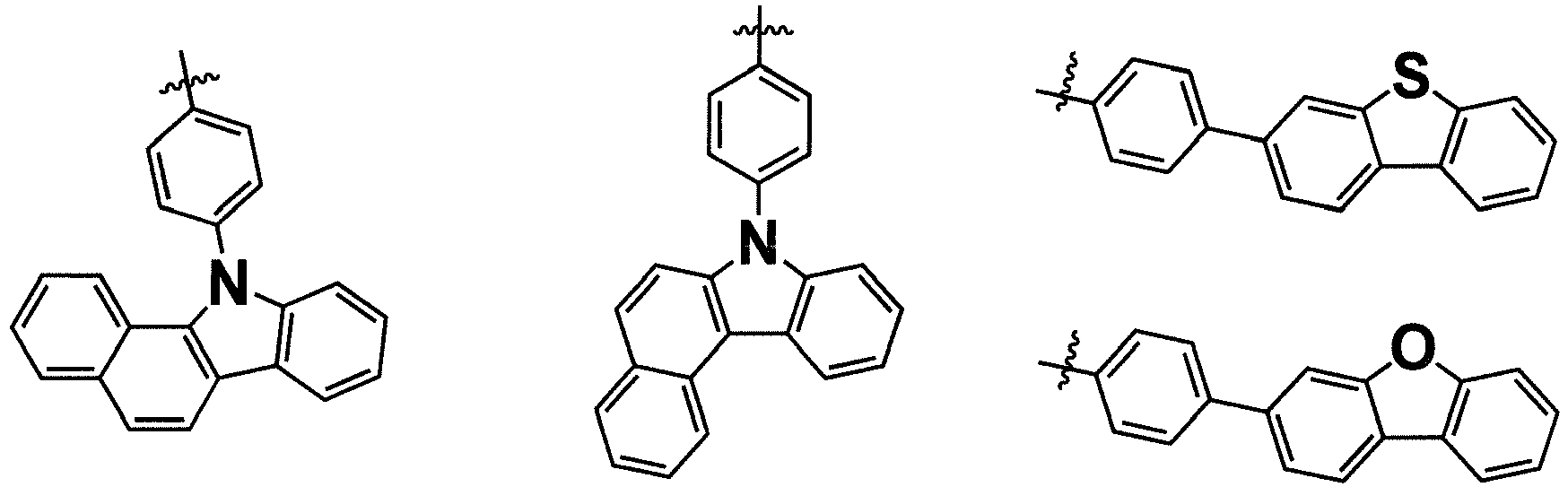
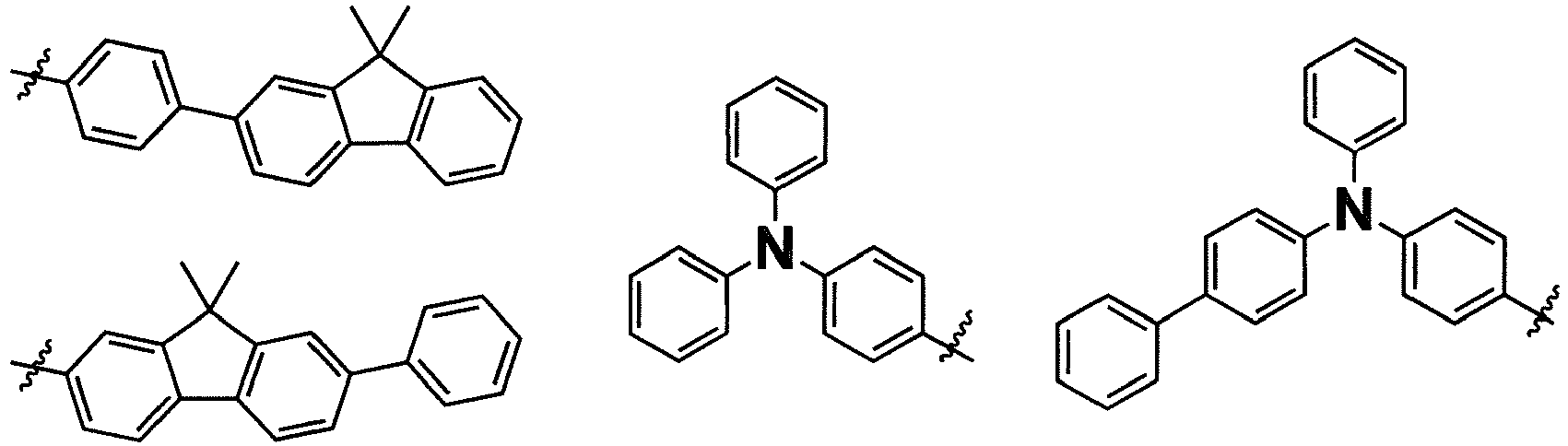





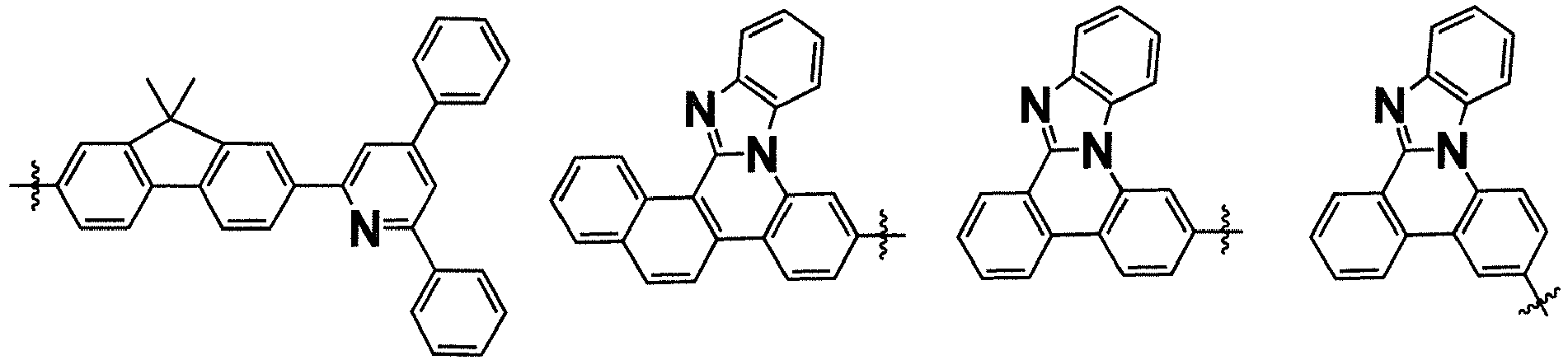


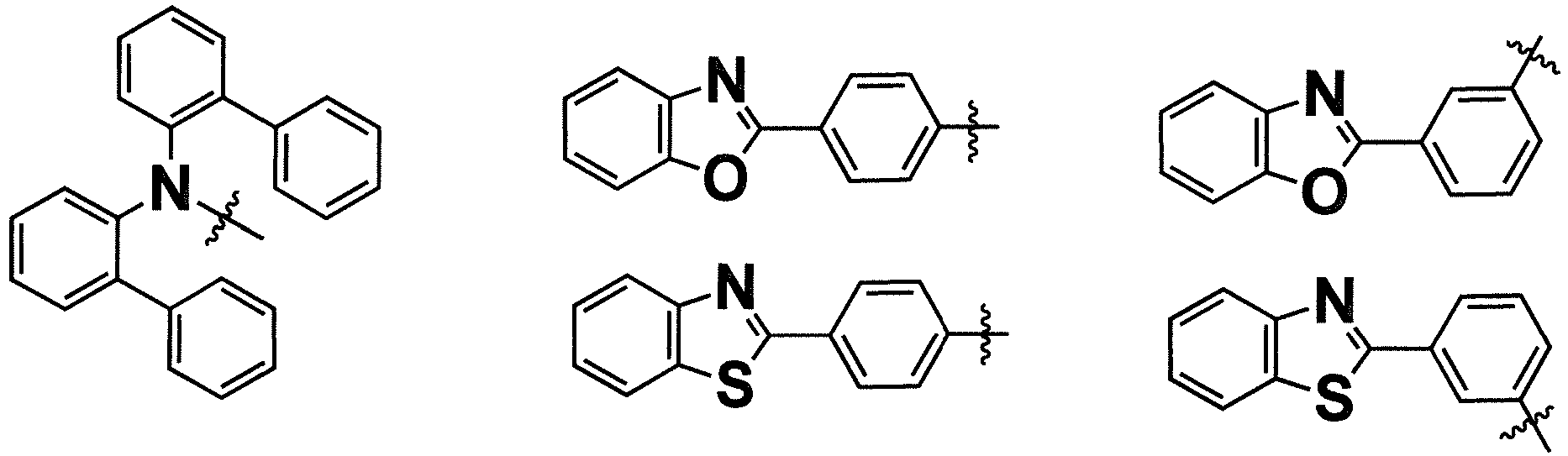


- According to an exemplary embodiment of the present invention, the compound of
Chemical Formula 1 may be any one selected from the following compounds.














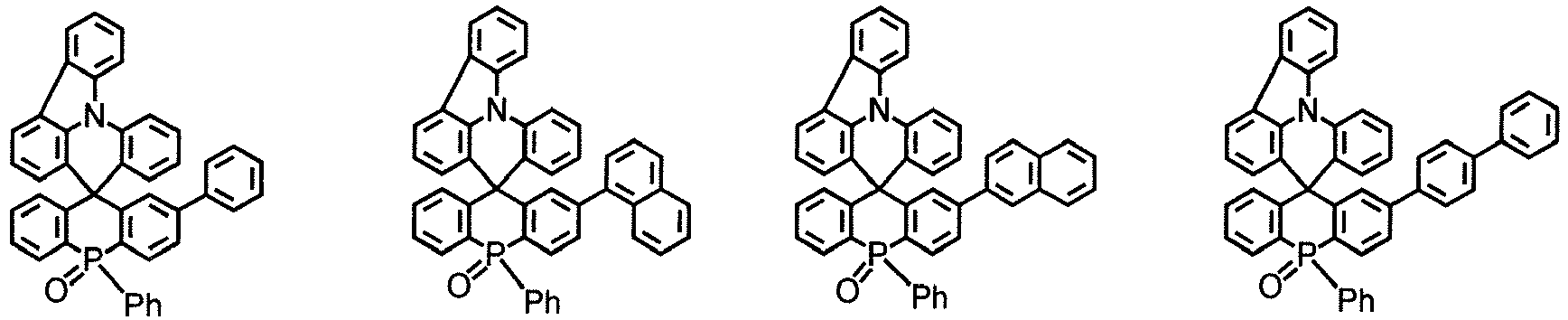


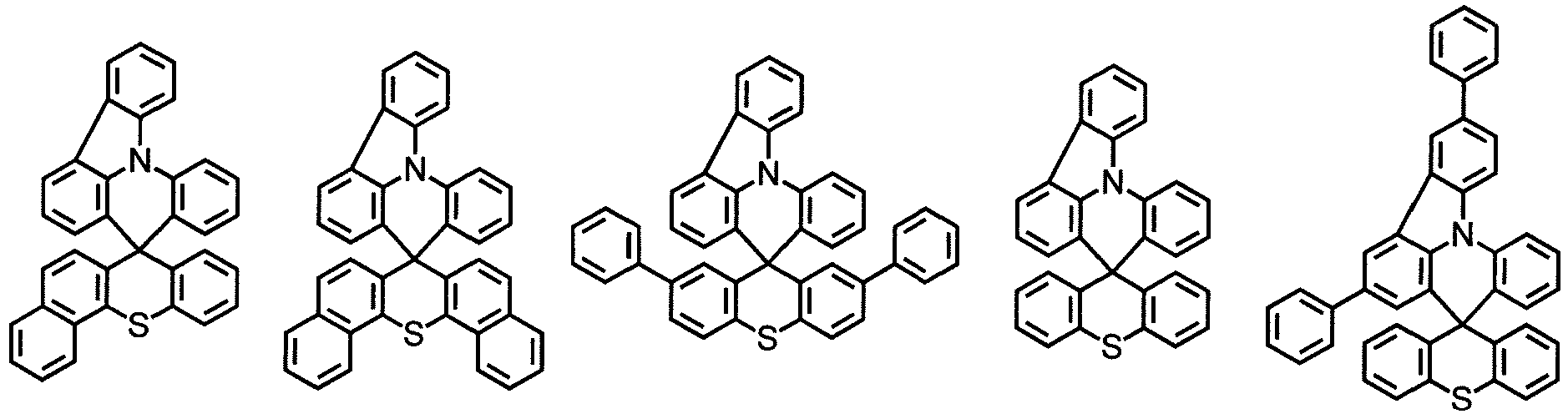


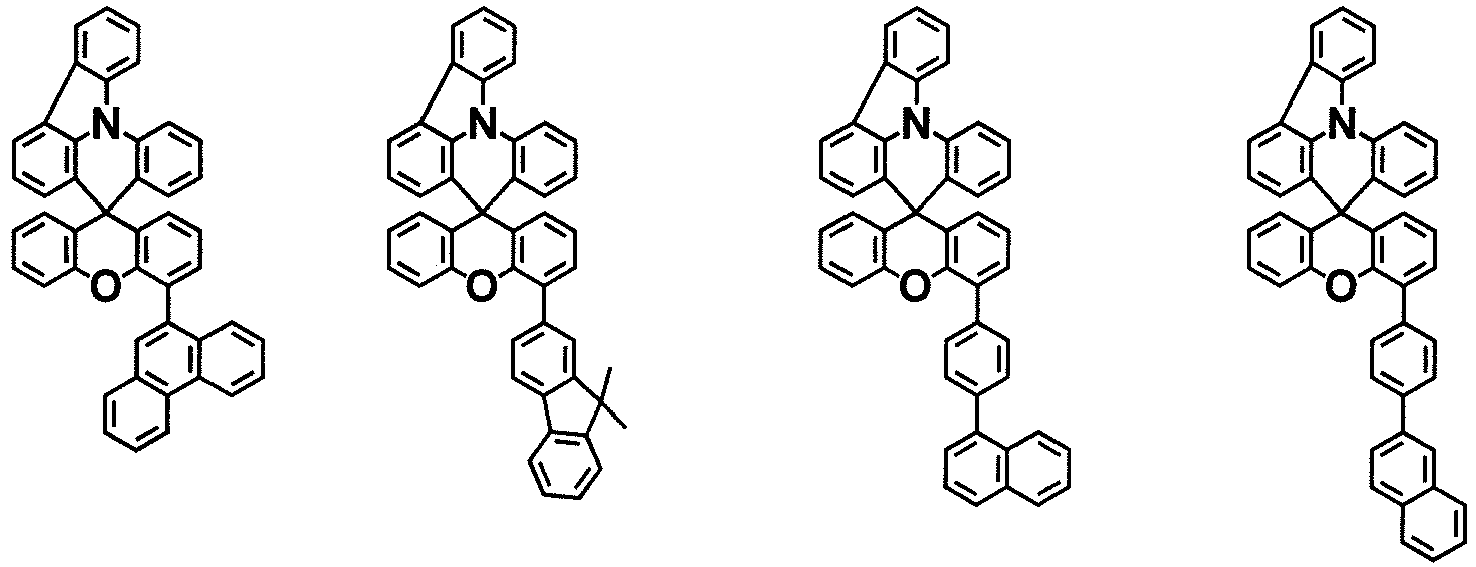


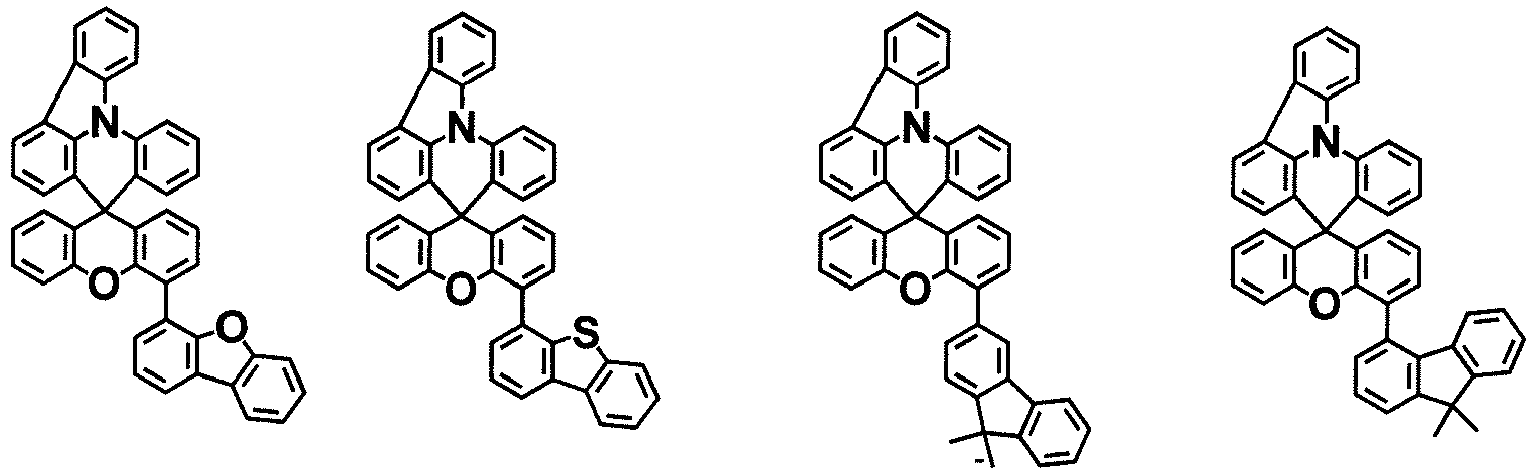


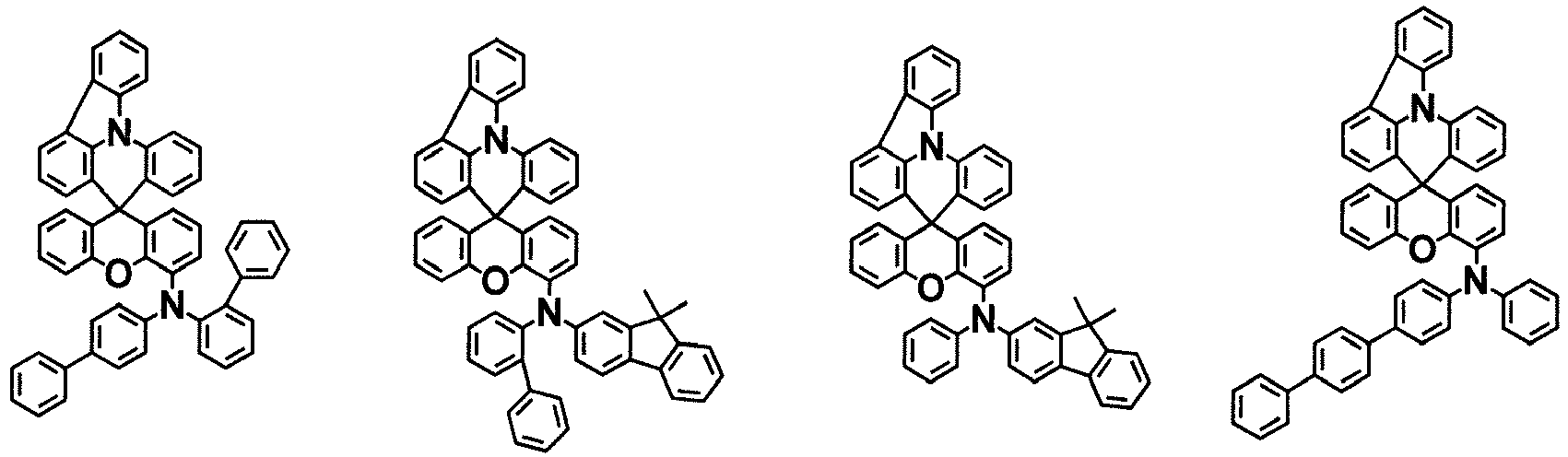


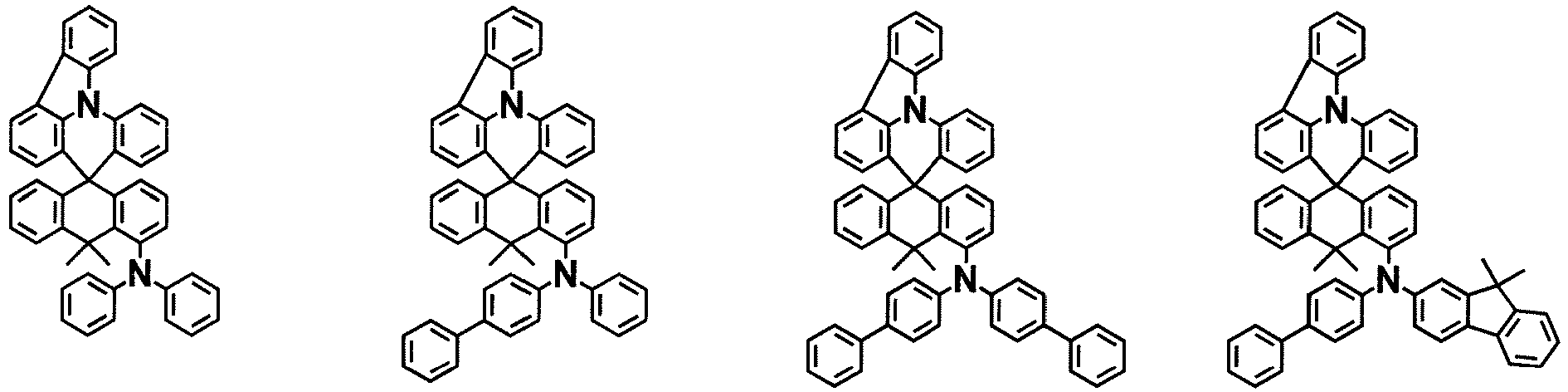


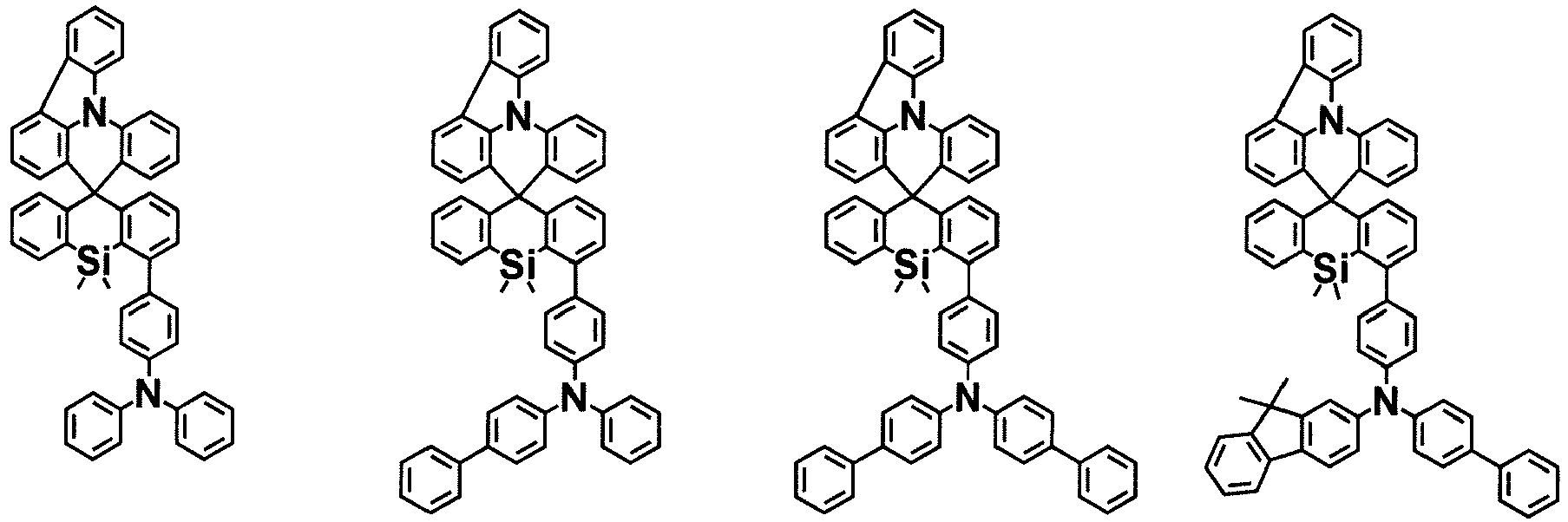

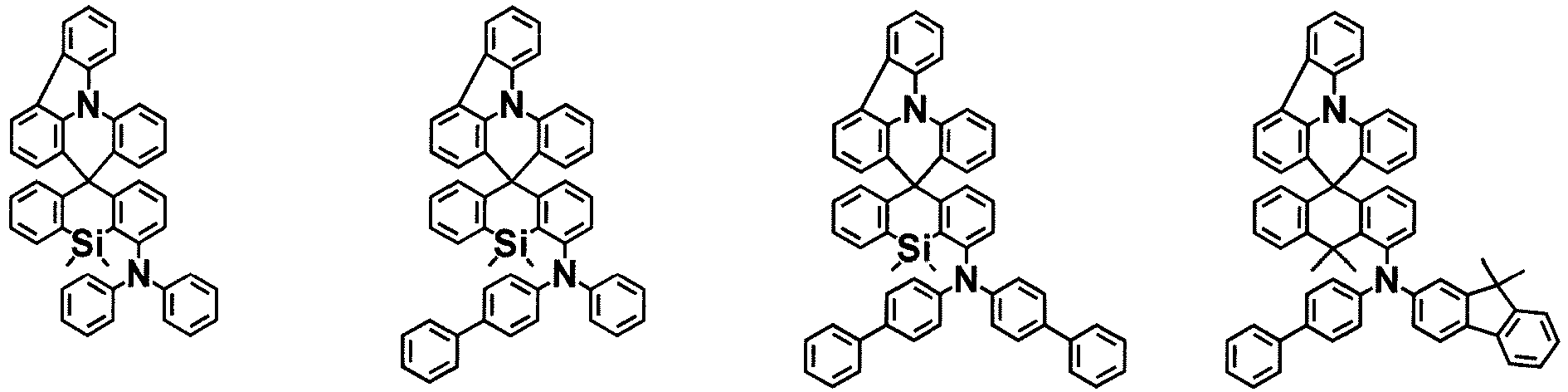


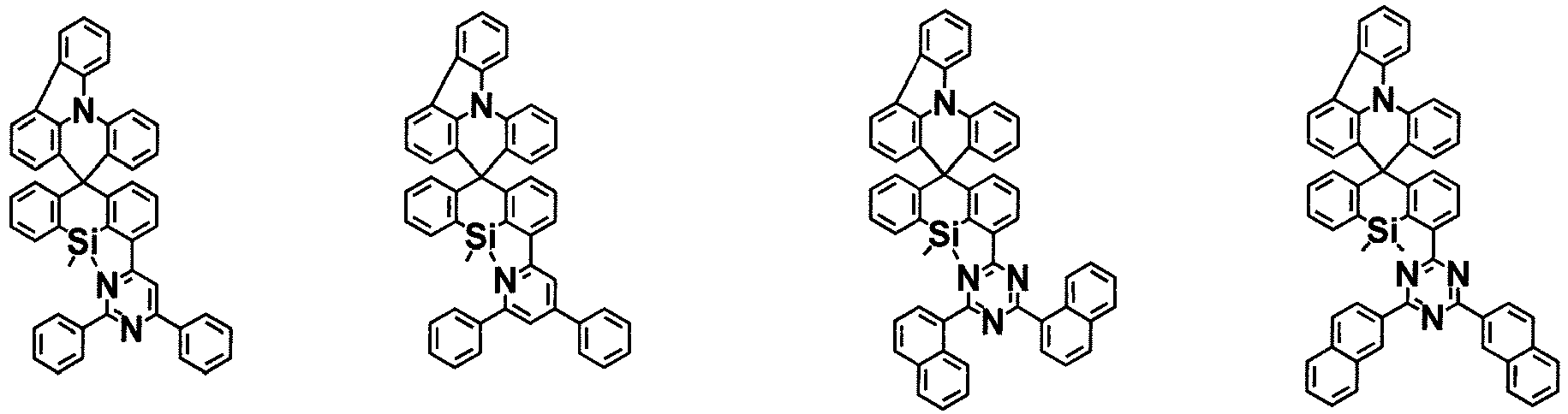


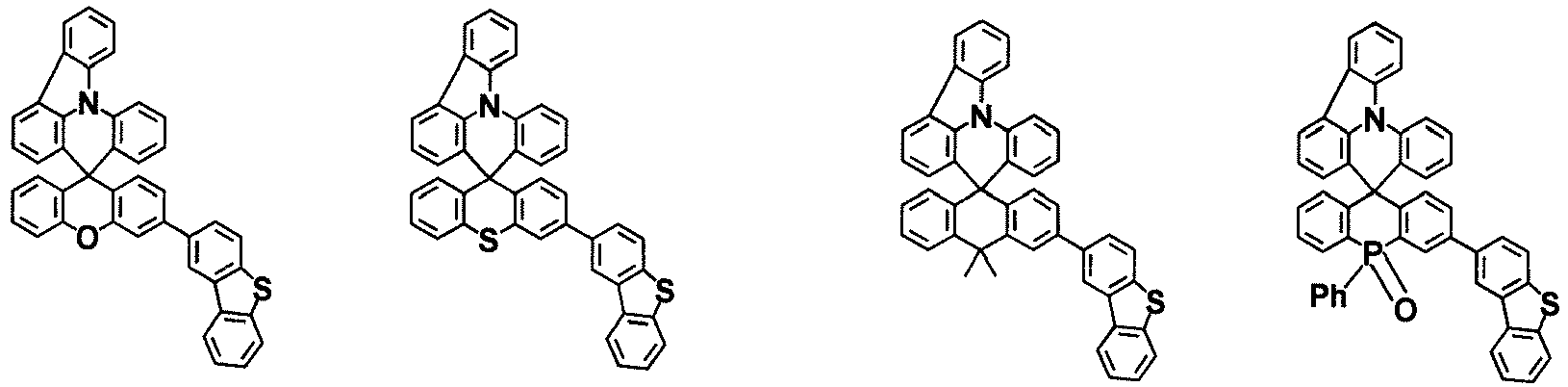





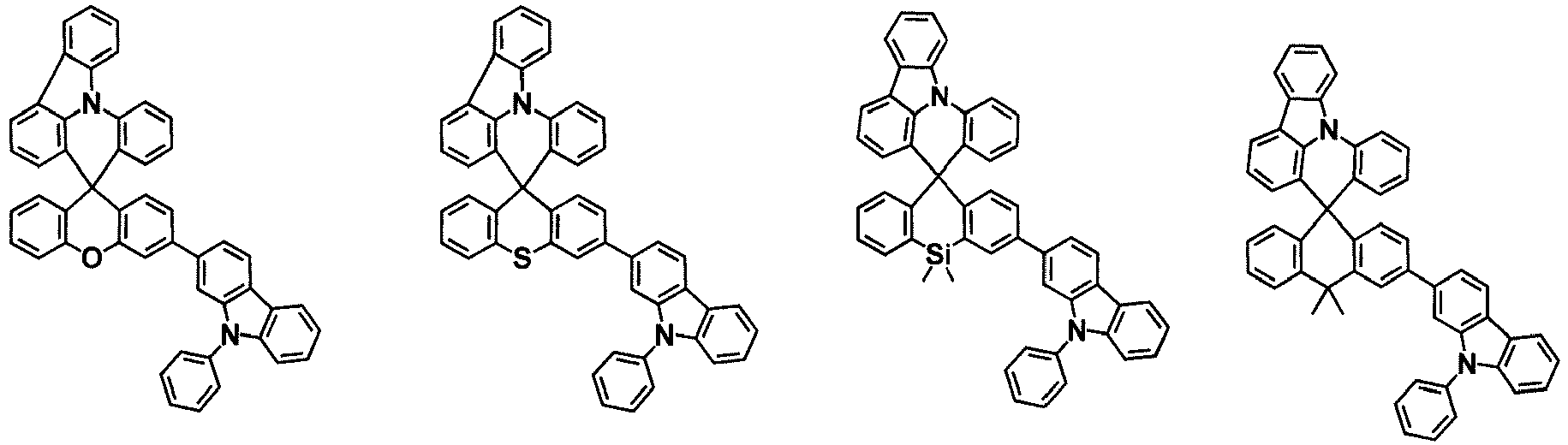


- The compound represented by
Chemical Formula 1 may be prepared based on the Preparation Examples to be described below. For example, a core structure may be prepared as in the followingReaction Formula 1, and then a substituent may be introduced as inReaction Formulae 2 to 4. The followingChemical Formulae 1 to 4 relate to an example in which a specific substituent is introduced, but the person skilled in the art may not introduce a substituent by using the technology known in the art, if necessary, and when introducing a substituent, the person skilled in the art may perform the introduction by changing the kind or number of substituents. Further, the person skilled in the art may perform the introduction by changing samples, reaction conditions, or starting materials of the followingReaction Formulae 1 to 4 using the technology known in the art.
- In
Reaction Formula 1, Y is the same as that defined inChemical Formula 1.

- In
Reaction Formula 2, Y is the same as that defined inChemical Formula 1, X is the same as that defined inReaction Formula 1, L1 is a direct bond, a substituted or unsubstituted arylene group or a substituted or unsubstituted heteroarylene group, and Ar1 is a substituted or unsubstituted aryl group or a substituted or unsubstituted heteroaryl group.
- In
Reaction Formula 3, Y is the same as that defined inChemical Formula 1, X is the same as that defined inReaction Formula 1, L2 is a direct bond, a substituted or unsubstituted arylene group or a substituted or unsubstituted heteroarylene group, and Ar2 and Ar3 are a substituted or unsubstituted aryl group or a substituted or unsubstituted heteroaryl group.

- In
Reaction Formula 4, Y is the same as that defined inChemical Formula 1, X is the same as that defined inReaction Formula 1, L3 is a direct bond, a substituted or unsubstituted arylene group or a substituted or unsubstituted heteroarylene group, and Ar3 and Ar4 are a substituted or unsubstituted aryl group or a substituted or unsubstituted heteroaryl group. - Furthermore, the present specification provides an organic light emitting device including the compound represented by
Chemical Formula 1. - An exemplary embodiment of the present specification provides an organic light emitting device including: a first electrode; a second electrode provided to face the first electrode; and an organic material layer having one or more layers disposed between the first electrode and the second electrode, in which one or more layers of the organic material layer include the compound of
Chemical Formula 1. - The organic material layer of the organic light emitting device of the present specification may also be composed of a single-layered structure, but may be composed of a multi-layered structure in which two or more organic material layers are stacked. For example, the organic light emitting device of the present invention may have a structure including a hole injection layer, a hole transporting layer, a light emitting layer, an electron transporting layer, an electron injection layer, and the like as organic material layers. However, the structure of the organic light emitting device is not limited thereto, and may include a fewer number of organic layers.
- In an exemplary embodiment of the present specification, the organic material layer includes a hole injection layer, a hole transporting layer, or a layer which simultaneously injects and transports holes, and the hole injection layer, the hole transporting layer, or the layer which simultaneously injects and transports holes includes the compound of
Chemical Formula 1. - In another exemplary embodiment, the organic material layer includes a light emitting layer, and the light emitting layer includes the compound of
Chemical Formula 1. - In an exemplary embodiment of the present specification, the light emitting layer includes the compound of
Chemical Formula 1 and further includes a light emitting dopant. - In another exemplary embodiment, the light emitting dopant includes a fluorescent dopant or a phosphorescent dopant.
- In still another exemplary embodiment, the phosphorescent dopant includes an iridium-based phosphorescent dopant.
- In yet another exemplary embodiment, the phosphorescent dopant material includes Ir(ppy)3 or (piq)2Ir(acac).
- In an exemplary embodiment of the present specification, the organic material layer includes an electron transporting layer or an electron injection layer, and the electron transporting layer or the electron injection layer includes the compound of
Chemical Formula 1. - In an exemplary embodiment of the present specification, the organic material layer includes an electron blocking layer, and the electron blocking layer includes the compound of
Chemical Formula 1. - In an exemplary embodiment of the present specification, the electron transporting layer, the electron injection layer, or the layer which simultaneously transports and injects electrons includes the compound of
Chemical Formula 1. - In another exemplary embodiment, the organic material layer includes a light emitting layer and an electron transporting layer, and the electron transporting layer includes the compound of
Chemical Formula 1. - An exemplary embodiment of the present specification provides an organic light emitting device including: a first electrode; a second electrode provided to face the first electrode; a light emitting layer disposed between the first electrode and the second electrode; and an organic material layer having two or more layers disposed between the light emitting layer and the first electrode, or between the light emitting layer and the second electrode, in which at least one of the organic material layer having two or more layers includes the heterocyclic compound. In one exemplary embodiment, as the organic material layer having two or more layers, two or more may be selected from the group consisting of an electron transporting layer, an electron injection layer, a layer which simultaneously transports and injects electrons, and a hole blocking layer.
- In an exemplary embodiment of the present specification, the organic material layer includes an electron transporting layer having two or more layers, and at least one of the electron transporting layer having two or more layers includes the heterocyclic compound. Specifically, in an exemplary embodiment of the present specification, the heterocyclic compound may also be included in one layer of the electron transporting layer having two or more layers, and may be included in each of the electron transporting layer having two or more layers.
- In addition, in an exemplary embodiment of the present specification, when the heterocyclic compound is included in each of the electron transporting layer having two or more layers, the other materials except for the heterocyclic compound may be the same as or different from each other.
- In another exemplary embodiment, the organic light emitting device may be an organic light emitting device having a structure (normal type) in which a positive electrode, an organic material layer having one or more layers, and a negative electrode are sequentially stacked on a substrate.
- In still another exemplary embodiment, the organic light emitting device may be an organic light emitting device having a reverse-direction structure (inverted type) in which a negative electrode, an organic material layer having one or more layers, and a positive electrode are sequentially stacked on a substrate.
- For example, the structure of the organic light emitting device according to an exemplary embodiment of the present specification is exemplified in
FIGS. 1 and 2 . -
FIG. 1 illustrates an example of an organic light emitting device composed of asubstrate 1, apositive electrode 2, alight emitting layer 3, and anegative electrode 4. In the structure as described above, the compound may be included in the light emitting layer. -
FIG. 2 illustrates an example of an organic light emitting device composed of asubstrate 1, apositive electrode 2, ahole injection layer 5, ahole transporting layer 6, alight emitting layer 7, an electron transporting layer 8, and anegative electrode 4. In the structure as described above, the compound may be included in one or more layers of the hole injection layer, the hole transporting layer, the light emitting layer, and the electron transporting layer. - According to an exemplary embodiment of the present specification, the organic material layer includes the light emitting layer, and the light emitting layer includes a compound represented by the following Chemical Formula 1-A.

- n1 is an integer of 1 or more,
- Ar7 is a substituted or unsubstituted monovalent or more benzofluorene group; a substituted or unsubstituted monovalent or more fluoranthene group; a substituted or unsubstituted monovalent or more pyrene group; or a substituted or unsubstituted monovalent or more chrysene group,
- L4 is a direct bond; a substituted or unsubstituted arylene group; or a substituted or unsubstituted heteroarylene group,
- Ar8 and Ar9 are the same as or different from each other, and are each independently a substituted or unsubstituted aryl group; a substituted or unsubstituted silyl group; a substituted or unsubstituted germanium group; a substituted or unsubstituted alkyl group; a substituted or unsubstituted arylalkyl group; or a substituted or unsubstituted heteroaryl group, or may be bonded to each other to form a substituted or unsubstituted ring, and
- when n1 is 2 or more, two or more structures in the parenthesis are the same as or different from each other.
- According to an exemplary embodiment of the present specification, the organic material layer includes a light emitting layer, and the light emitting layer includes the compound represented by Chemical Formula 1-A as a dopant of the light emitting layer.
- According to an exemplary embodiment of the present specification, L4 is a direct bond.
- According to an exemplary embodiment of the present specification, n1 is 2.
- In an exemplary embodiment of the present specification, Ar7 is a divalent pyrene group which is unsubstituted or substituted with deuterium, a methyl group, an ethyl group, or a tert-butyl group.
- According to an exemplary embodiment of the present specification, Ar8 and Ar9 are the same as or different from each other, and are each independently a substituted or unsubstituted aryl group having 6 to 30 carbon atoms.
- According to an exemplary embodiment of the present specification, Ar8 and Ar9 are the same as or different from each other, and are each independently an aryl group which is unsubstituted or substituted with a germanium group substituted with an alkyl group.
- According to an exemplary embodiment of the present specification, Ar8 and Ar9 are the same as or different from each other, and are each independently an aryl group which is unsubstituted or substituted with a trimethylgermanium group.
- According to an exemplary embodiment of the present specification, Ar8 and Ar9 are the same as or different from each other, and are each independently a substituted or unsubstituted phenyl group.
- According to an exemplary embodiment of the present specification, Ar8 and Ar9 are a phenyl group which is unsubstituted or substituted with a trimethylgermanium group.
- According to an exemplary embodiment of the present specification, Chemical Formula 1-A is represented by the following compound.

- According to an exemplary embodiment of the present specification, the organic material layer includes a light emitting layer, and the light emitting layer includes a compound represented by the following Chemical Formula 2-A.

- G11 is a 1-naphthyl group, a 2-naphthyl group, a 1-anthryl group, a 2-anthryl group, a 1-phenanthryl group, a 2-phenanthryl group, a 3-phenanthryl group, a 4-phenanthryl group, a 9-phenanthryl group, a 1-naphthacenyl group, a 2-naphthacenyl group, a 9-naphthacenyl group, a 1-pyrenyl group, a 2-pyrenyl group, a 4-pyrenyl group, a 3-methyl-2-naphthyl group, a 4-methyl-1-naphthyl group, or the following Chemical Formula

- G12 is a phenyl group, a 1-naphthyl group, a 2-naphthyl group, a 1-anthryl group, a 2-anthryl group, a 9-anthryl group, a 1-phenanthryl group, a 2-phenanthryl group, a 3-phenanthryl group, a 4-phenanthryl group, a 9-phenanthryl group, a 1-naphthacenyl group, a 2-naphthacenyl group, a 9-naphthacenyl group, a 1-pyrenyl group, a 2-pyrenyl group, a 4-pyrenyl group, a 2-biphenylyl group, a 3-biphenylyl group, a 4-biphenylyl group, a p-terphenyl-4-yl group, a p-terphenyl-3-yl group, a p-terphenyl-2-yl group, an m-terphenyl-4-yl group, an m-terphenyl-3-yl group, an m-terphenyl-2-yl group, an o-tolyl group, an m-tolyl group, a p-tolyl group, a p-t-butylphenyl group, a p-(2-phenylpropyl)phenyl group, a 3-methyl-2-naphthyl group, a 4-methyl-1-naphthyl group, a 4-methyl-1-anthryl group, a 4'-methylbiphenylyl group, a 4"-t-butyl-p-terphenyl-4-yl group, or a 3-fluoranthenyl group,
- G13 and G14 are the same as or different from each other, and are each independently hydrogen; a substituted or unsubstituted alkyl group; a substituted or unsubstituted alkoxy group; a substituted or unsubstituted aryl group; or a substituted or unsubstituted heteroaryl group,
- g12 is an integer from 1 to 5,
- g13 and g14 are each an integer from 1 to 4, and
- when g12 to g14 are each 2 or more, two or more structures in the parenthesis are the same as or different from each other.
- According to an exemplary embodiment of the present specification, the organic material layer includes a light emitting layer, and the light emitting layer includes the compound represented by Chemical Formula 2-A as a host of the light emitting layer.
- According to an exemplary embodiment of the present specification, G11 is a 1-naphthyl group.
- According to an exemplary embodiment of the present specification, G12 is a 2-naphthyl group.
- According to an exemplary embodiment of the present specification, G13 and G14 are hydrogen.
- According to an exemplary embodiment of the present specification, Chemical Formula 2-A is represented by the following compound.

- The organic light emitting device of the present specification may be manufactured by the materials and methods known in the art, except that one or more layers of the organic material layer include the compound of the present specification, that is, the compound of
Chemical Formula 1. - When the organic light emitting device includes a plurality of organic material layers, the organic material layers may be formed of the same material or different materials.
- The organic light emitting device of the present specification may be manufactured by the materials and methods known in the art, except that one or more layers of the organic material layer include the compound of
Chemical Formula 1, that is, the compound represented byChemical Formula 1. - For example, the organic light emitting device of the present specification may be manufactured by sequentially stacking a first electrode, an organic material layer, and a second electrode on a substrate. In this case, the organic light emitting device may be manufactured by depositing a metal or a metal oxide having conductivity, or an alloy thereof on a substrate to form a positive electrode, forming an organic material layer including a hole injection layer, a hole transporting layer, a light emitting layer, and an electron transporting layer thereon, and then depositing a material, which may be used as a negative electrode, thereon, by using a physical vapor deposition (PVD) method such as sputtering or e-beam evaporation. In addition to the method as described above, an organic light emitting device may be made by sequentially depositing a negative electrode material, an organic material layer, and a positive electrode material on a substrate.
- Further, the compound of
Chemical Formula 1 may be formed as an organic material layer by not only a vacuum deposition method, but also a solution application method when an organic light emitting device is manufactured. Here, the solution application method means spin coating, dip coating, doctor blading, inkjet printing, screen printing, a spray method, roll coating, and the like, but is not limited thereto. - In addition to the method as described above, an organic light emitting device may also be made by sequentially depositing a negative electrode material, an organic material layer, and a positive electrode material on a substrate (International Publication No.
2003/012890 ). However, the manufacturing method is not limited thereto. - In an exemplary embodiment of the present specification, the first electrode is a positive electrode, and the second electrode is a negative electrode.
- In another exemplary embodiment, the first electrode is a negative electrode, and the second electrode is a positive electrode.
- As the positive electrode material, materials having a large work function are usually preferred so as to facilitate the injection of holes into an organic material layer. Specific examples of the positive electrode material which may be used in the present invention include: a metal such as vanadium, chromium, copper, zinc, and gold, or an alloy thereof; a metal oxide such as zinc oxide, indium oxide, indium tin oxide (ITO), and indium zinc oxide (IZO); a combination of a metal and an oxide, such as ZnO:Al or SnO2:Sb; a conductive polymer such as poly(3-methylthiophene), poly[3,4-(ethylene-1,2-dioxy)thiophene] (PEDOT), polypyrrole, and polyaniline, and the like, but are not limited thereto.
- As the negative electrode material, materials having a small work function are usually preferred so as to facilitate the injection of electrons into an organic material layer. Specific examples of the negative electrode material which may be in the present invention include: a metal such as magnesium, calcium, sodium, potassium, titanium, indium, yttrium, lithium, gadolinium, aluminum, silver, tin, and lead, or an alloy thereof; a multi-layer structured material such as LiF/Al or LiO2/Al, and the like, but are not limited thereto.
- The hole injection layer is a layer which injects holes from an electrode, and a hole injection material is preferably a compound which has a capability of transporting holes and thus has an effect of injecting holes at a positive electrode and an excellent effect of injecting holes for a light emitting layer or a light emitting material, prevents excitons produced from the light emitting layer from moving to an electron injection layer or an electron injection material, and is also excellent in the ability to form a thin film. It is preferred that the highest occupied molecular orbital (HOMO) of the hole injection material is a value between the work function of the positive electrode material and the HOMO of the neighboring organic material layer. Specific examples of the hole injection material include metal porphyrin, oligothiophene, arylamine-based organic materials, hexanitrile hexaazatriphenylene-based organic materials, quinacridone-based organic materials, perylene-based organic materials, anthraquinone, polyaniline-based and polythiophene-based conductive polymers, and the like, but are not limited thereto.
- The hole transporting layer is a layer which accepts holes from a hole injection layer and transports the holes to a light emitting layer, and a hole transporting material is suitably a material having high hole mobility which may accept holes from a positive electrode or a hole injection layer and transfer the holes to a light emitting layer. Specific examples thereof include arylamine-based organic materials, conductive polymers, block copolymers having both conjugated portions and non-conjugated portions, and the like, but are not limited thereto.
- The light emitting material is preferably a material which may receive holes and electrons transported from a hole transporting layer and an electron transporting layer, respectively, and combine the holes and the electrons to emit light in a visible ray region, and has good quantum efficiency to fluorescence or phosphorescence. Specific examples thereof include: 8-hydroxy-quinoline-aluminum complex (Alq3); carbazole-based compounds; dimerized styryl compounds; BAlq; 10-hydroxybenzoquinoline-metal compounds; benzoxazole-based, benzthiazole-based and benzimidazole-based compounds; poly(p-phenylenevinylene) (PPV)-based polymers; spiro compounds; polyfluorene, lubrene, and the like, but are not limited thereto.
- The light emitting layer may include a host material and a dopant material. Examples of the host material include a fused aromatic ring derivative, or a hetero ring-containing compound, and the like. Specific examples of the fused aromatic ring derivative include an anthracene derivative, a pyrene derivative, a naphthalene derivative, a pentacene derivative, a phenanthrene compound, a fluoranthene compound, and the like, and specific examples of the hetero ring-containing compound include a carbazole derivative, a dibenzofuran derivative, a ladder-type furan compound, a pyrimidine derivative, and the like, but the examples thereof are not limited thereto.
- Examples of the dopant material include an aromatic amine derivative, a styrylamine compound, a boron complex, a fluoranthene compound, a metal complex, and the like. Specifically, the aromatic amine derivative is a fused aromatic ring derivative having a substituted or unsubstituted arylamino group, and examples thereof include a pyrene, an anthracene, a chrysene, a periflanthene, and the like, which have an arylamino group, and the styrylamine compound is a compound in which a substituted or unsubstituted arylamine is substituted with at least one arylvinyl group, and one or two or more substituents selected from the group consisting of an aryl group, a silyl group, an alkyl group, a cycloalkyl group, and an arylamino group is or are substituted or unsubstituted. Specific examples thereof include styrylamine, styryldiamine, styryltriamine, styryltetramine, and the like, but are not limited thereto. Further, examples of the metal complex include an iridium complex, a platinum complex, and the like, but are not limited thereto.
- The electron transporting material is a material which accepts electrons from an electron injection layer and transports the electrons to a light emitting layer, and an electron transporting material is suitably a material having high electron mobility which may proficiently accept electrons from a negative electrode and may transfer the electrons to a light emitting layer. Specific examples thereof include: Al complexes of 8-hydroxyquinoline; complexes including Alq3; organic radical compounds; hydroxyflavone-metal complexes, and the like, but are not limited thereto. The electron transporting layer may be used with any desired cathode material, as used according to the related art. In particular, appropriate examples of the cathode material are a typical material which has a low work function, followed by an aluminum layer or a silver layer. Specific examples thereof include cesium, barium, calcium, ytterbium, and samarium, in each case followed by an aluminum layer or a silver layer.
- The electron injection layer is a layer which injects electrons from an electrode, and an electron injection material is preferably a compound which has a capability of transporting electrons, has an effect of injecting electrons from a negative electrode and an excellent effect of injecting electrons into a light emitting layer or a light emitting material, prevents excitons produced from the light emitting layer from moving to a hole injection layer, and is also excellent in the ability to form a thin film. Specific examples thereof include fluorenone, anthraquinodimethane, diphenoquinone, thiopyran dioxide, oxazole, oxadiazole, triazole, imidazole, perylenetetracarboxylic acid, fluorenylidene methane, anthrone, and the like, and derivatives thereof, a metal complex compound, a nitrogen-containing 5-membered ring derivative, and the like, but are not limited thereto.
- Examples of the metal complex compound include 8-hydroxyquinolinato lithium, bis(8-hydroxyquinolinato) zinc, bis(8-hydroxyquinolinato) copper, bis(8-hydroxyquinolinato) manganese, tris(8-hydroxyquinolinato) aluminum, tris(2-methyl-8-hydroxyquinolinato) aluminum, tris(8-hydroxyquinolinato) gallium, bis(10-hydroxybenzo[h]quinolinato) beryllium, bis(10-hydroxybenzo[h]quinolinato) zinc, bis(2-methyl-8-quinolinato) chlorogallium, bis(2-methyl-8-quinolinato)(o-cresolato) gallium, bis(2-methyl-8-quinolinato)(1-naphtholato) aluminum, bis(2-methyl-8-quinolinato)(2-naphtholato) gallium, and the like, but are not limited thereto.
- The organic light emitting device according to the present specification may be a top emission type, a bottom emission type, or a dual emission type according to the materials to be used.
- In an exemplary embodiment of the present specification, the compound of
Chemical Formula 1 may be included in an organic solar cell or an organic transistor in addition to an organic light emitting device. - The preparation of the compound represented by
Chemical Formula 1 and the organic light emitting device including the same will be specifically described in the following Examples. However, the following Examples are provided for exemplifying the present specification, and the scope of the present specification is not limited thereby. -


-

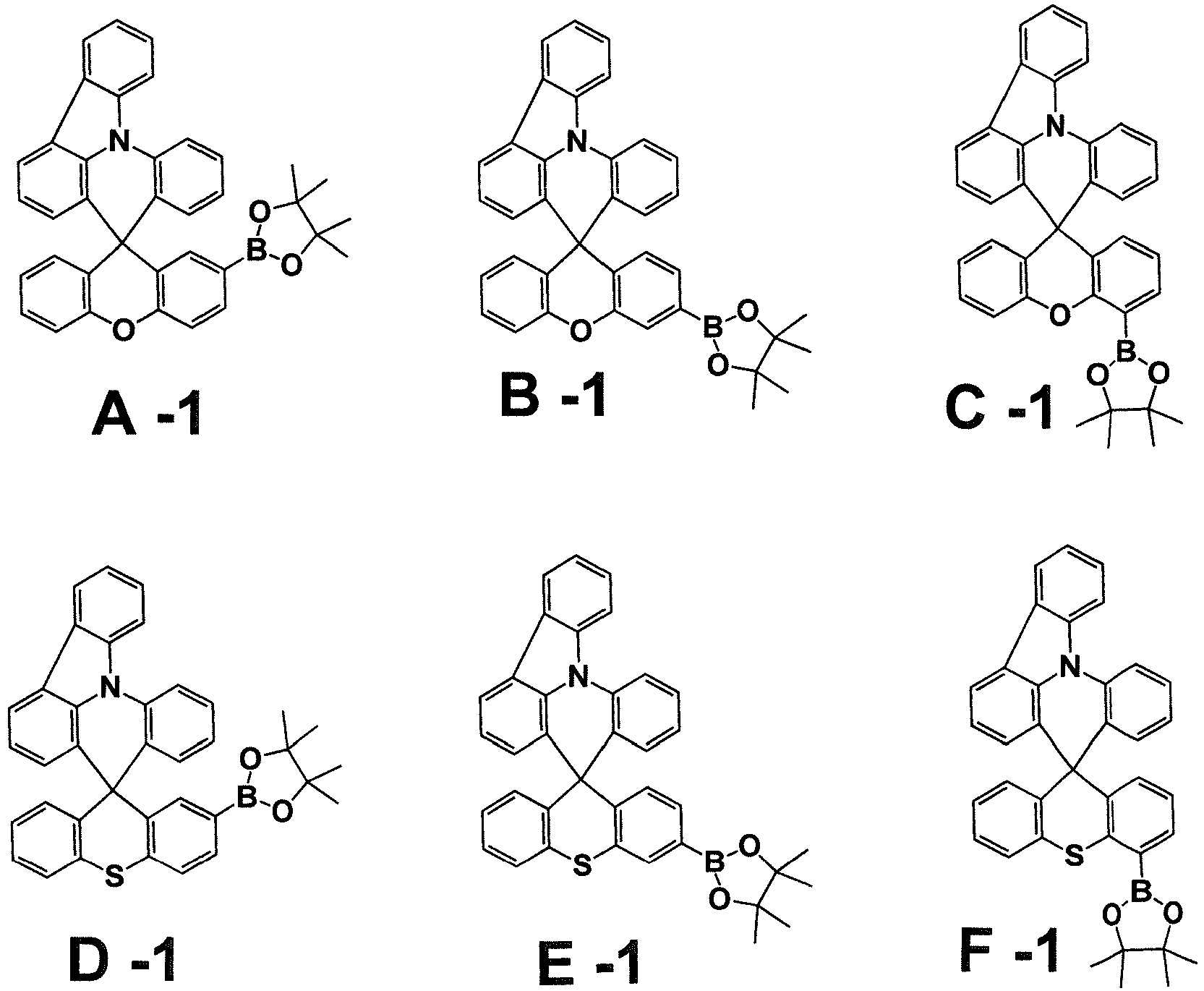

-

- Compound A (10.0 g, 20.00 mmol) and (9-phenyl-9H-carbazol-2-yl)boronic acid (5.90 g, 20.57 mmol) were completely dissolved in 320 ml of tetrahydrofuran in a 500-ml round bottom flask under a nitrogen atmosphere, and then a 2 M aqueous potassium carbonate solution (160 ml) was added thereto, tetrakis-(triphenylphosphine)palladium (0.62 g, 0.54 mmol) was put thereinto, and then the resulting mixture was heated and stirred for 3 hours. The temperature was lowered to normal temperature, the aqueous layer was removed, and the residue was dried over anhydrous magnesium sulfate, and then concentrated under reduced pressure, and recrystallized with 230 ml of ethyl acetate to prepare Compound 1 (10.55 g, yield: 80%).
MS[M+H]+ = 663 -

- Compound A (10.0 g, 20.62 mmol) and (4-(diphenylamino)phenyl)boronic acid (6.51 g, 22.68 mmol) were completely dissolved in 240 ml of tetrahydrofuran in a 500-ml round bottom flask under a nitrogen atmosphere, and then a 2 M aqueous potassium carbonate solution (120 ml) was added thereto, tetrakis-(triphenylphosphine)palladium (0.69 g, 0.61 mmol) was put thereinto, and then the resulting mixture was heated and stirred for 2 hours. The temperature was lowered to normal temperature, the aqueous layer was removed, and the residue was dried over anhydrous magnesium sulfate, and then concentrated under reduced pressure, and recrystallized with 230 ml of ethyl acetate to prepare Compound 2 (10.18 g, yield: 76%).
MS[M+H]= 665 -

- Compound A (10.0 g, 20.00 mmol) and (9-phenyl-9H-carbazol-2-yl)boronic acid (5.90 g, 20.57 mmol) were completely dissolved in 360 ml of tetrahydrofuran in a 500-ml round bottom flask under a nitrogen atmosphere, and then a 2 M aqueous potassium carbonate solution (180 ml) was added thereto, tetrakis-(triphenylphosphine)palladium (0.62 g, 0.54 mmol) was put thereinto, and then the resulting mixture was heated and stirred for 5 hours. The
temperature was lowered to normal temperature, the aqueous layer was removed, and the residue was dried over anhydrous magnesium sulfate, and then concentrated under reduced pressure, and recrystallized with 280 ml of ethyl acetate to prepare Compound 3 (11.46 g, yield: 86%).
MS[M+H]+= 663 -

- Compound A (10.0 g, 20.00 mmol) and diphenylamine (3.55 g, 21.00 mmol) were completely dissolved in 160 ml of xylene in a 500-ml round bottom flask under a nitrogen atmosphere, and then sodium tert-butoxide (2.30 g, 24.00 mol) was added thereto, bis(tri-tert-butylphosphine) palladium(0) (0.10 g, 0.20 mmol) was put thereinto, and then the resulting mixture was heated and stirred for 1 hour. The temperature was lowered to normal temperature, the mixture was filtered to remove the base, and then xylene was concentrated under reduced pressure, and the residue was subjected to column chromatography at a ratio of tetrahydrofuran : hexane = 1 : 25 to prepare Compound 4 (8.41 g, yield: 71%).
MS[M+H]+ = 589 -

- Compound A (10.0 g, 20.00 mmol) and N-phenyl-[1,1'-biphenyl]-4-amine (5.15 g, 21.00 mmol) were completely dissolved in 200 ml of xylene in a 500-ml round bottom flask under a nitrogen atmosphere, and then sodium tert-butoxide (2.30 g, 24.00 mol) was added thereto, bis(tri-tert-butylphosphine) palladium(0) (0.10 g, 0.20 mmol) was put thereinto, and then the resulting mixture was heated and stirred for 3 hours. The temperature was lowered to normal temperature, the mixture was filtered to remove the base, and then xylene was concentrated under reduced pressure, and the residue was subjected to column chromatography at a ratio of tetrahydrofuran : hexane = 1 : 20 to prepare Compound 5 (10.98 g, yield: 83%).
MS[M+H]+ = 665 -

- Compound A (10.0 g, 20.00 mmol) and di([1,1'-biphenyl]-4-yl)amine (6.74 g, 21.00 mmol) were completely dissolved in 320 ml of xylene in a 500-ml round bottom flask under a nitrogen atmosphere, and then sodium tert-butoxide (2.30 g, 24.00 mol) was added thereto, bis(tri-tert-butylphosphine) palladium(0) (0.10 g, 0.20 mmol) was put thereinto, and then the resulting mixture was heated and stirred for 5 hours. The temperature was lowered to normal temperature, the mixture was filtered to remove the base, and then xylene was concentrated under reduced pressure, and the residue was recrystallized with 300 ml of ethyl acetate to prepare Compound 6 (12.05 g, yield: 81%).
MS[M+H]+ = 741 -

- Compound A (10.0 g, 20.00 mmol) and di([1,1'-biphenyl]-4-yl)amine (6.74 g, 21.00 mmol) were completely dissolved in 305 ml of xylene in a 500-ml round bottom flask under a nitrogen atmosphere, and then sodium tert-butoxide (2.30 g, 24.00 mol) was added thereto, bis(tri-tert-butylphosphine) palladium(0) (0.10 g, 0.20 mmol) was put thereinto, and then the resulting mixture was heated and stirred for 3 hours. The temperature was lowered to normal temperature, the mixture was filtered to remove the base, and then xylene was concentrated under reduced pressure, and the residue was recrystallized with 200 ml of ethyl acetate to prepare Compound 7 (8.45 g, yield: 57%).
MS[M+H]+= 741 -


- Compound A (10.0 g, 20.00 mmol) and 9,9-dimethyl-N-phenyl-9H-fluoren-2-amine (5.99 g, 21.00 mmol) were completely dissolved in 220 ml of xylene in a 500-ml round bottom flask under a nitrogen atmosphere, and then sodium tert-butoxide (2.30 g, 24.00 mol) was added thereto, bis(tri-tert-butylphosphine) palladium(0) (0.11 g, 0.21 mmol) was put thereinto, and then the resulting mixture was heated and stirred for 3 hours. The temperature was lowered to normal temperature, the mixture was filtered to remove the base, and then xylene was concentrated under reduced pressure, and the residue was recrystallized with 150 ml of ethyl acetate to prepare Compound 8 (9.62 g, yield: 68%).
MS[M+H]+= 705 -


- Compound A (10.0 g, 20.00 mmol) and N-([1,1'-biphenyl]-4-yl)-9,9-dimethyl-9H-fluoren-2-amine (7.58 g, 22.68 mmol) were completely dissolved in 290 ml of xylene in a 500-ml round bottom flask under a nitrogen atmosphere, and then sodium tert-butoxide (2.30 g, 24.00 mol) was added thereto, bis(tri-tert-butylphosphine) palladium(0) (0.10 g, 0.20 mmol) was put thereinto, and then the resulting mixture was heated and stirred for 4 hours. The temperature was lowered to normal temperature, the mixture was filtered to remove the base, and then xylene was concentrated under reduced pressure, and the residue was recrystallized with 240 ml of ethyl acetate to prepare Compound 9 (13.87 g, yield: 89%).
MS[M+H]+= 781 -


- Compound A (10.0 g, 20.00 mmol) and N-([1,1'-biphenyl]-4-yl)-2,2-dimethyl-9H-fluoren-2-amine (7.58 g, 22.68 mmol) were completely dissolved in 290 ml of xylene in a 500-ml round bottom flask under a nitrogen atmosphere, and then sodium tert-butoxide (2.30 g, 24.00 mol) was added thereto, bis(tri-tert-butylphosphine) palladium(0) (0.10 g, 0.20 mmol) was put thereinto, and then the resulting mixture was heated and stirred for 2 hours. The temperature was lowered to normal temperature, the mixture was filtered to remove the base, and then xylene was concentrated under reduced pressure, and the residue was recrystallized with 200 ml of ethyl acetate to prepare Compound 10 (11.12 g, yield: 71%).
MS[M+H]+= 781 -


- Compound A-1 (10.0 g, 18.28 mmol) and 2-chloro-4,6-diphenyl-1,3,5-triazine (4.24 g, 15.90 mol) were completely dissolved in 200 ml of tetrahydrofuran in a 500-ml round bottom flask under a nitrogen atmosphere, and then a 2 M aqueous potassium carbonate solution (100 ml) was added thereto, tetrakis-(triphenylphosphine)palladium (0.69 g, 0.60 mmol) was put thereinto, and then the resulting mixture was heated and stirred for 6 hours. The temperature was lowered to normal temperature, the aqueous layer was removed, and the residue was dried over anhydrous magnesium sulfate, and then concentrated under reduced pressure, and recrystallized with 280 ml of ethyl acetate to prepare Compound 11 (9.84 g, yield: 82%).
MS[M+H]+= 653 -


- Compound A-1 (10.0 g, 18.28 mmol) and 2-chloro-4,6-diphenylpyrimidine (4.24 g, 15.90 mol) were completely dissolved in 220 ml of tetrahydrofuran in a 500-ml round bottom flask under a nitrogen atmosphere, and then a 2 M aqueous potassium carbonate solution (110 ml) was added thereto, tetrakis-(triphenylphosphine)palladium (0.58 g, 0.51 mmol) was put thereinto, and then the resulting mixture was heated and stirred for 3 hours. The temperature was lowered to normal temperature, the aqueous layer was removed, and the residue was dried over anhydrous magnesium sulfate, and then concentrated under reduced pressure, and recrystallized with 240 ml of ethyl acetate to prepare Compound 12 (8.46 g, yield: 71%).
MS[M+H]+= 652 -


- Compound A-1 (10.0 g, 18.28 mmol) and 2-chloro-4,6-diphenylpyrimidine (4.24 g, 15.90 mol) were completely dissolved in 220 ml of tetrahydrofuran in a 500-ml round bottom flask under a nitrogen atmosphere, and then a 2 M aqueous potassium carbonate solution (110 ml) was added thereto, tetrakis-(triphenylphosphine)palladium (0.58 g, 0.51 mmol) was put thereinto, and then the resulting mixture was heated and stirred for 3 hours. The temperature was lowered to normal temperature, the aqueous layer was removed, and the residue was dried over anhydrous magnesium sulfate, and then concentrated under reduced pressure, and recrystallized with 240 ml of ethyl acetate to prepare Compound 13 (8.89 g, yield: 74%).
MS[M+H]+= 652 -


- Compound A-1 (10.0 g, 18.28 mmol) and 2-chloro-4,6-diphenylpyridine (4.24 g, 15.90 mol) were completely dissolved in 180 ml of tetrahydrofuran in a 500-ml round bottom flask under a nitrogen atmosphere, and then a 2 M aqueous potassium carbonate solution (90 ml) was added thereto, tetrakis-(triphenylphosphine)palladium (0.58 g, 0.51 mmol) was put thereinto, and then the resulting mixture was heated and stirred for 3 hours. The temperature was lowered to normal temperature, the aqueous layer was removed, and the residue was dried over anhydrous magnesium sulfate, and then concentrated under reduced pressure, and recrystallized with 190 ml of ethyl acetate to prepare Compound 14 (7.45 g, yield: 62%).
MS[M+H]+= 651 -


- Compound A-1 (10.0 g, 18.28 mmol) and 2-chloro-4-phenylquinazoline (3.83 g, 15.90 mol) were completely dissolved in 320 ml of tetrahydrofuran in a 500-ml round bottom flask under a nitrogen atmosphere, and then a 2 M aqueous potassium carbonate solution (160 ml) was added thereto, tetrakis-(triphenylphosphine)palladium (0.58 g, 0.51 mmol) was put thereinto, and then the resulting mixture was heated and stirred for 6 hours. The temperature was lowered to normal temperature, the aqueous layer was removed, and the residue was dried over anhydrous magnesium sulfate, and then concentrated under reduced pressure, and recrystallized with 300 ml of ethyl acetate to prepare Compound 15 (7.23 g, yield: 63%).
MS[M+H]+= 626 -


- Compound A-1 (10.0 g, 18.28 mmol) and 2-(4-bromophenyl)-4,6-diphenyl-1,3,5-triazine (6.17 g, 15.90 mol) were completely dissolved in 220 ml of tetrahydrofuran in a 500-ml round bottom flask under a nitrogen atmosphere, and then a 2 M aqueous potassium carbonate solution (110 ml) was added thereto, tetrakis-(triphenylphosphine)palladium (0.69 g, 0.60 mmol) was put thereinto, and then the resulting mixture was heated and stirred for 8 hours. The temperature was lowered to normal temperature, the aqueous layer was removed, and the residue was dried over anhydrous magnesium sulfate, and then concentrated under reduced pressure, and recrystallized with 380 ml of ethyl acetate to prepare Compound 16 (11.85 g, yield: 89%).
MS[M+H]+= 729 -


- Compound A (10.0 g, 20.00 mmol) and 4-(9H-carbazol-9-yl)phenyl)boronic acid (5.90 g, 20.57 mmol) were completely dissolved in 320 ml of tetrahydrofuran in a 500-ml round bottom flask under a nitrogen atmosphere, and then a 2 M aqueous potassium carbonate solution (160 ml) was added thereto, tetrakis-(triphenylphosphine)palladium (0.62 g, 0.54 mmol) was put thereinto, and then the resulting mixture was heated and stirred for 3 hours. The temperature was lowered to normal temperature, the aqueous layer was removed, and the residue was dried over anhydrous magnesium sulfate, and then concentrated under reduced pressure, and recrystallized with 230 ml of ethyl acetate to prepare Compound 17 (10.55 g, yield: 80%).
MS[M+H]+= 663 -


- Compound A (10.0 g, 20.62 mmol) and (4-(diphenylamino)phenyl)boronic acid (10.00 g, 22.68 mmol) were completely dissolved in 240 ml of tetrahydrofuran in a 500-ml round bottom flask under a nitrogen atmosphere, and then a 2 M aqueous potassium carbonate solution (120 ml) was added thereto, tetrakis-(triphenylphosphine)palladium (0.69 g, 0.61 mmol) was put thereinto, and then the resulting mixture was heated and stirred for 3 hours. The temperature was lowered to normal temperature, the aqueous layer was removed, and the residue was dried over anhydrous magnesium sulfate, and then concentrated under reduced pressure, and recrystallized with 230 ml of ethyl acetate to prepare Compound 18 (12.66 g, yield: 85%).
MS[M+H]+= 818 -


- Compound A-1 (10.0 g, 18.28 mmol) and 2-(4-bromophenyl)-4-phenylquinazoline (5.74 g, 15.90 mol) were completely dissolved in 320 ml of tetrahydrofuran in a 500-ml round bottom flask under a nitrogen atmosphere, and then a 2 M aqueous potassium carbonate solution (160 ml) was added thereto, tetrakis-(triphenylphosphine)palladium (0.58 g, 0.51 mmol) was put thereinto, and then the resulting mixture was heated and stirred for 9 hours. The temperature was lowered to normal temperature, the aqueous layer was removed, and the residue was dried over anhydrous magnesium sulfate, and then concentrated under reduced pressure, and recrystallized with 350 ml of ethyl acetate to prepare Compound 19 (10.22 g, yield: 81%).
MS[M+H]+= 702 -


- Compounds 20 to 38 were prepared in the same manner as in the method of preparing
Compounds 1 to 19, except that Compound B and Compound B-1 were used instead of Compound A and Compound A-1, respectively, as starting materials in Preparation Examples 1 to 19. The MS[M+H]+ values of Compounds 20 to 38 are shown in the following Table 1.[Table 1] Compound No. MS [M+H]+ 20 663 21 665 22 663 23 589 24 665 25 741 26 741 27 731 28 781 29 781 30 653 31 652 32 652 33 651 34 626 35 729 36 663 37 817 38 626 -


- Compounds 39 to 57 were prepared in the same manner as in the method of preparing
Compounds 1 to 19, except that Compound C and Compound C-1 were used instead of Compound A and Compound A-1, respectively, as starting materials in Preparation Examples 1 to 19. The MS[M+H]+ values of Compounds 39 to 57 are shown in the following Table 2.[Table 2] Compound No. MS [M+H]+ 39 663 40 665 41 663 42 589 43 665 44 741 45 741 46 731 47 781 48 781 49 653 50 652 51 652 52 651 53 626 54 729 55 663 56 817 57 626 -


- Compounds 58 to 76 were prepared in the same manner as in the method of preparing
Compounds 1 to 19, except that Compound D and Compound D-1 were used instead of Compound A and Compound A-1, respectively, as starting materials in Preparation Examples 1 to 19. The MS[M+H]+ values of Compounds 58 to 76 are shown in the following Table 3.[Table 3] Compound No. MS[M+H]+ 58 679 59 681 60 679 61 605 62 681 63 757 64 757 65 747 66 797 67 797 68 669 69 668 70 668 71 667 72 642 73 745 74 679 75 833 76 642 -


- Compounds 77 to 95 were prepared in the same manner as in the method of preparing
Compounds 1 to 19, except that Compound E and Compound E-1 were used instead of Compound A and Compound A-1, respectively, as starting materials in Preparation Examples 1 to 19. The MS[M+H]+ values of Compounds 77 to 95 are shown in the following Table 4.[Table 4] Compound No. MS [M+H]+ 77 679 78 681 79 679 80 605 81 681 82 757 83 757 84 747 85 797 86 797 87 669 88 668 89 668 90 667 91 642 92 745 93 679 94 833 95 642 -


- Compounds 96 to 114 were prepared in the same manner as in the method of preparing
Compounds 1 to 19, except that Compound F and Compound F-1 were used instead of Compound A and Compound A-1, respectively, as starting materials in Preparation Examples 1 to 19. The MS[M+H]+ values of Compounds 96 to 114 are shown in the following Table 5.[Table 5] Compound No. MS [M+H]+ 96 679 97 681 98 679 99 605 100 681 101 757 102 757 103 747 104 797 105 797 106 669 107 668 108 668 109 667 110 642 111 745 112 679 113 833 114 642 -

- Compound G-1 (10.0 g, 17.88 mmol) and 2-chloro-4,6-diphenyl-1,3,5-triazine (4.24 g, 16.20 mol) were completely dissolved in 200 ml of tetrahydrofuran in a 500-ml round bottom flask under a nitrogen atmosphere, and then a 2 M aqueous potassium carbonate solution (100 ml) was added thereto, tetrakis-(triphenylphosphine)palladium (0.69 g, 0.60 mmol) was put thereinto, and then the resulting mixture was heated and stirred for 4 hours. The temperature was lowered to normal temperature, the aqueous layer was removed, and the residue was dried over anhydrous magnesium sulfate, and then concentrated under reduced pressure, and recrystallized with 230 ml of ethyl acetate to prepare Compound 115 (9.72 g, yield: 83%).
MS[M+H]+= 679 -

- Compound I (10.0 g, 19.84 mmol) and di([1,1'-biphenyl]-4-yl)amine (6.74 g, 20.78 mmol) were completely dissolved in 290 ml of xylene in a 500-ml round bottom flask under a nitrogen atmosphere, and then sodium tert-butoxide (2.30 g, 24.00 mol) was added thereto, bis(tri-tert-butylphosphine) palladium(0) (0.10 g, 0.20 mmol) was put thereinto, and then the resulting mixture was heated and stirred for 2 hours. The temperature was lowered to normal temperature, the mixture was filtered to remove the base, and then xylene was concentrated under reduced pressure, and the residue was recrystallized with 280 ml of ethyl acetate to prepare Compound 116 (11.32 g, yield: 78%).
MS[M+H]+= 769 -

- Compound K (10.0 g, 19.84 mmol) and (4-(diphenylamino)phenyl)boronic acid (6.51 g, 20.95 mmol) were completely dissolved in 220 ml of tetrahydrofuran in a 500-ml round bottom flask under a nitrogen atmosphere, and then a 2 M aqueous potassium carbonate solution (110 ml) was added thereto, tetrakis-(triphenylphosphine)palladium (0.69 g, 0.61 mmol) was put thereinto, and then the resulting mixture was heated and stirred for 2 hours. The temperature was lowered to normal temperature, the aqueous layer was removed, and the residue was dried over anhydrous magnesium sulfate, and then concentrated under reduced pressure, and recrystallized with 180 ml of ethyl acetate to prepare Compound 117 (9.88 g, yield: 77%).
MS[M+H]+= 773 - A glass substrate on which a thin film of indium tin oxide (ITO) was coated to have a thickness of 1,000 Å was placed into distilled water in which a detergent was dissolved, and washed using ultrasonic waves. In this case, a product manufactured by Fischer Co., was used as the detergent, and distilled water twice filtered using a filter manufactured by Millipore Co., was used as the distilled water. After the ITO was washed for 30 minutes, ultrasonic washing was repeated twice using distilled water for 10 minutes. After the washing using distilled water was completed, ultrasonic washing was conducted using a solvent of isopropyl alcohol, acetone, and methanol, and the resultant product was dried and then transported to a plasma washing machine. Furthermore, the substrate was washed by using an oxygen plasma for 5 minutes, and then was transported to a vacuum deposition machine.
- Hexanitrile hexaazatriphenylene (HAT) of the following Chemical Formula was thermally vacuum deposited to have a thickness of 500 Å on the transparent ITO electrode, which was thus prepared, thereby forming a hole injection layer.
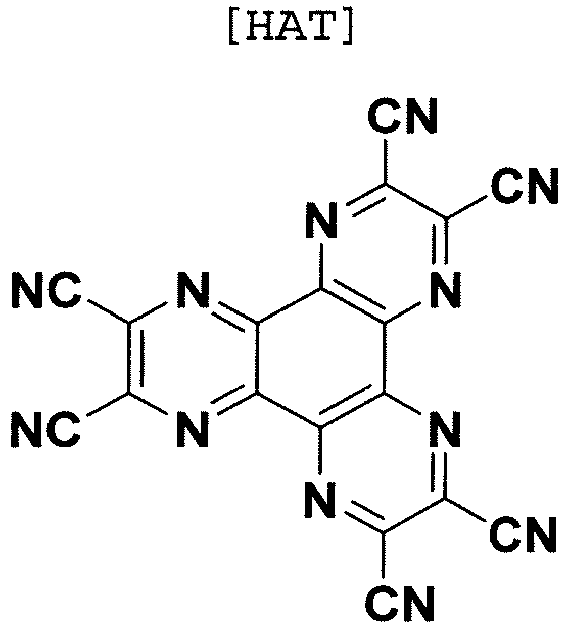
- The following compound 4-4'-bis[N-(1-naphthyl)-N-phenylamino]biphenyl (NPB) (300 Å), which is a material for transporting holes, was vacuum deposited on the hole injection layer, thereby forming a hole transporting layer.

- Subsequently, the following
Compound 1 was vacuum deposited to have a film thickness of 100 Å on the hole transporting layer, thereby forming an electron blocking layer.

- Subsequently, the following BH and BD were vacuum deposited at a weight ratio of 25:1 to have a film thickness of 300 Å on the electron blocking layer, thereby forming a light emitting layer.


- Compound ET1 and Compound LiQ (lithium quinolate) were vacuum deposited at a weight ratio of 1:1 on the light emitting layer, thereby forming an electron injection and transporting layer having a thickness of 300 Å. Lithium fluoride (LiF) and aluminum were sequentially deposited on the electron injection and transporting layer to have a thickness of 12 Å and 2,000 Å, respectively, thereby forming a negative electrode.
- In the aforementioned procedure, the deposition rate of the organic material was maintained at 0.4 to 0.7 Å/sec, the deposition rates of lithium fluoride and aluminum of the negative electrode were maintained at 0.3 Å/sec and at 2 Å/sec, respectively, and the degree of vacuum during the deposition was maintained at 2 × 10⁻⁷ to 5 × 10⁻⁶ torr, thereby manufacturing an organic light emitting device.
- An organic light emitting device was manufactured in the same manner as in Experimental Example 1-1, except that
Compound 2 was used instead ofCompound 1 in Experimental Example 1-1. - An organic light emitting device was manufactured in the same manner as in Experimental Example 1-1, except that
Compound 3 was used instead ofCompound 1 in Experimental Example 1-1. - An organic light emitting device was manufactured in the same manner as in Experimental Example 1-1, except that
Compound 4 was used instead ofCompound 1 in Experimental Example 1-1. - An organic light emitting device was manufactured in the same manner as in Experimental Example 1-1, except that
Compound 5 was used instead ofCompound 1 in Experimental Example 1-1. - An organic light emitting device was manufactured in the same manner as in Experimental Example 1-1, except that
Compound 6 was used instead ofCompound 1 in Experimental Example 1-1. - An organic light emitting device was manufactured in the same manner as in Experimental Example 1-1, except that
Compound 7 was used instead ofCompound 1 in Experimental Example 1-1. - An organic light emitting device was manufactured in the same manner as in Experimental Example 1-1, except that Compound 8 was used instead of
Compound 1 in Experimental Example 1-1. - An organic light emitting device was manufactured in the same manner as in Experimental Example 1-1, except that Compound 9 was used instead of
Compound 1 in Experimental Example 1-1. - An organic light emitting device was manufactured in the same manner as in Experimental Example 1-1, except that Compound 10 was used instead of
Compound 1 in Experimental Example 1-1. - An organic light emitting device was manufactured in the same manner as in Experimental Example 1-1, except that Compound 17 was used instead of
Compound 1 in Experimental Example 1-1. - An organic light emitting device was manufactured in the same manner as in Experimental Example 1-1, except that Compound 18 was used instead of
Compound 1 in Experimental Example 1-1. - An organic light emitting device was manufactured in the same manner as in Experimental Example 1-1, except that Compound 20 was used instead of
Compound 1 in Experimental Example 1-1. - An organic light emitting device was manufactured in the same manner as in Experimental Example 1-1, except that Compound 21 was used instead of
Compound 1 in Experimental Example 1-1. - An organic light emitting device was manufactured in the same manner as in Experimental Example 1-1, except that Compound 22 was used instead of
Compound 1 in Experimental Example 1-1. - An organic light emitting device was manufactured in the same manner as in Experimental Example 1-1, except that Compound 23 was used instead of
Compound 1 in Experimental Example 1-1. - An organic light emitting device was manufactured in the same manner as in Experimental Example 1-1, except that Compound 24 was used instead of
Compound 1 in Experimental Example 1-1. - An organic light emitting device was manufactured in the same manner as in Experimental Example 1-1, except that Compound 25 was used instead of
Compound 1 in Experimental Example 1-1. - An organic light emitting device was manufactured in the same manner as in Experimental Example 1-1, except that Compound 26 was used instead of
Compound 1 in Experimental Example 1-1. - An organic light emitting device was manufactured in the same manner as in Experimental Example 1-1, except that Compound 27 was used instead of
Compound 1 in Experimental Example 1-1. - An organic light emitting device was manufactured in the same manner as in Experimental Example 1-1, except that Compound 28 was used instead of
Compound 1 in Experimental Example 1-1. - An organic light emitting device was manufactured in the same manner as in Experimental Example 1-1, except that Compound 29 was used instead of
Compound 1 in Experimental Example 1-1. - An organic light emitting device was manufactured in the same manner as in Experimental Example 1-1, except that Compound 36 was used instead of
Compound 1 in Experimental Example 1-1. - An organic light emitting device was manufactured in the same manner as in Experimental Example 1-1, except that Compound 37 was used instead of
Compound 1 in Experimental Example 1-1. - An organic light emitting device was manufactured in the same manner as in Experimental Example 1-1, except that Compound 40 was used instead of
Compound 1 in Experimental Example 1-1. - An organic light emitting device was manufactured in the same manner as in Experimental Example 1-1, except that Compound 44 was used instead of
Compound 1 in Experimental Example 1-1. - An organic light emitting device was manufactured in the same manner as in Experimental Example 1-1, except that Compound 47 was used instead of
Compound 1 in Experimental Example 1-1. - An organic light emitting device was manufactured in the same manner as in Experimental Example 1-1, except that Compound 56 was used instead of
Compound 1 in Experimental Example 1-1. - An organic light emitting device was manufactured in the same manner as in Experimental Example 1-1, except that Compound 59 was used instead of
Compound 1 in Experimental Example 1-1. - An organic light emitting device was manufactured in the same manner as in Experimental Example 1-1, except that Compound 63 was used instead of
Compound 1 in Experimental Example 1-1. - An organic light emitting device was manufactured in the same manner as in Experimental Example 1-1, except that Compound 66 was used instead of
Compound 1 in Experimental Example 1-1. - An organic light emitting device was manufactured in the same manner as in Experimental Example 1-1, except that Compound 75 was used instead of
Compound 1 in Experimental Example 1-1. - An organic light emitting device was manufactured in the same manner as in Experimental Example 1-1, except that Compound 78 was used instead of
Compound 1 in Experimental Example 1-1. - An organic light emitting device was manufactured in the same manner as in Experimental Example 1-1, except that Compound 82 was used instead of
Compound 1 in Experimental Example 1-1. - An organic light emitting device was manufactured in the same manner as in Experimental Example 1-1, except that Compound 85 was used instead of
Compound 1 in Experimental Example 1-1. - An organic light emitting device was manufactured in the same manner as in Experimental Example 1-1, except that Compound 94 was used instead of
Compound 1 in Experimental Example 1-1. - An organic light emitting device was manufactured in the same manner as in Experimental Example 1-1, except that Compound 97 was used instead of
Compound 1 in Experimental Example 1-1. - An organic light emitting device was manufactured in the same manner as in Experimental Example 1-1, except that Compound 101 was used instead of
Compound 1 in Experimental Example 1-1. - An organic light emitting device was manufactured in the same manner as in Experimental Example 1-1, except that Compound 104 was used instead of
Compound 1 in Experimental Example 1-1. - An organic light emitting device was manufactured in the same manner as in Experimental Example 1-1, except that Compound 113 was used instead of
Compound 1 in Experimental Example 1-1. - An organic light emitting device was manufactured in the same manner as in Experimental Example 1-1, except that Compound 116 was used instead of
Compound 1 in Experimental Example 1-1. - An organic light emitting device was manufactured in the same manner as in Experimental Example 1-1, except that Compound 117 was used instead of
Compound 1 in Experimental Example 1-1. - An organic light emitting device was manufactured in the same manner as in Experimental Example 1-1, except that
EB 1 was used instead ofCompound 1 in Experimental Example 1-1.
- An organic light emitting device was manufactured in the same manner as in Experimental Example 1-1, except that
EB 2 was used instead ofCompound 1 in Experimental Example 1-1.

- An organic light emitting device was manufactured in the same manner as in Experimental Example 1-1, except that
EB 3 was used instead ofCompound 1 in Experimental Example 1-1.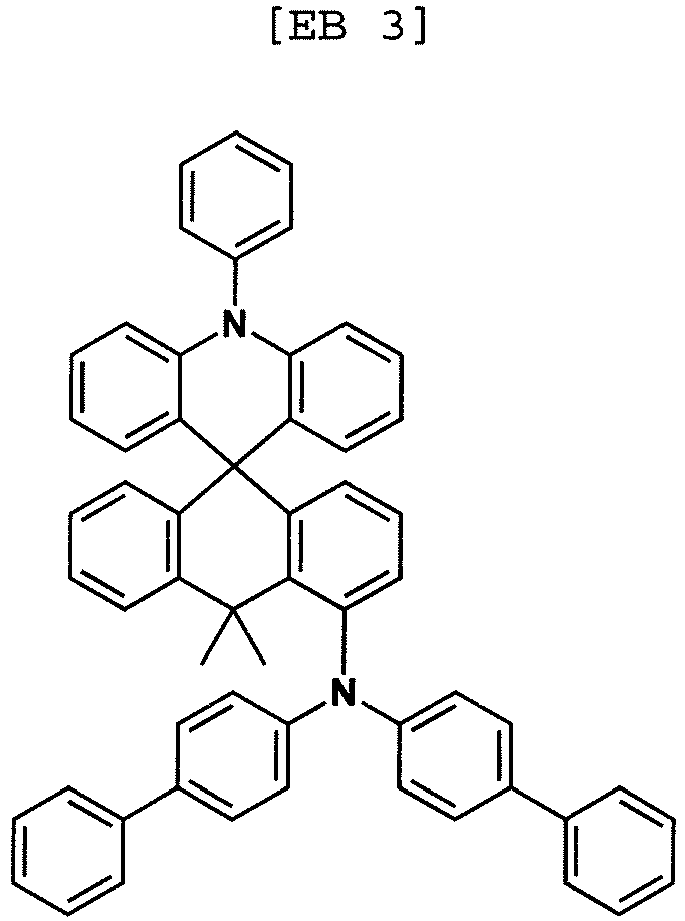
- When current was applied to the organic light emitting devices manufactured in Experimental Examples 1-1 to 1-42 and Comparative Examples 1-1 to 1-3, the results of Table 6 were obtained.
[Table 6] Compound (Electron blocking layer) Voltage (V@10mA/cm2) Efficiency (cd/A@10mA/cm2) Color coordinate (x, y) Experimental Example 1-1 Compound 1 3.81 5.20 (0.139, 0.125) Experimental Example 1-2 Compound 2 3.73 5.35 (0.138, 0.126) Experimental Example 1-3 Compound 3 3.55 5.79 (0.138, 0.127) Experimental Example 1-4 Compound 4 3.56 5.57 (0.137, 0.125) Experimental Example 1-5 Compound 5 3.58 5.78 (0.136, 0.125) Experimental Example 1-6 Compound 6 3.57 5.61 (0.136, 0.127) Experimental Example 1-7 Compound 7 3.59 5.63 (0.136, 0.125) Experimental Example 1-8 Compound 8 3.50 5.65 (0.137, 0.125) Experimental Example 1-9 Compound 9 3.61 5.54 (0.138, 0.125) Experimental Example 1-10 Compound 10 3.65 5.63 (0.136, 0.125) Experimental Example 1-11 Compound 17 3.64 5.51 (0.137, 0.125) Experimental Example 1-12 Compound 18 3.66 5.41 (0.136, 0.125) Experimental Example 1-13 Compound 20 3.79 5.55 (0.138, 0.126) Experimental Example 1-14 Compound 21 3.75 5.74 (0.137, 0.125) Experimental Example 1-15 Compound 22 3.70 5.46 (0.136, 0.127) Experimental Example 1-16 Compound 23 3.71 5.78 (0.135, 0.127) Experimental Example 1-17 Compound 24 3.52 5.67 (0.138, 0.127) Experimental Example 1-18 Compound 25 3.63 5.55 (0.137, 0.125) Experimental Example 1-19 Compound 26 3.85 5.50 (0.139, 0.125) Experimental Example 1-20 Compound 27 3.72 5.35 (0.138, 0.126) Experimental Example 1-21 Compound 28 3.57 5.79 (0.138, 0.127) Experimental Example 1-22 Compound 29 3.58 5.67 (0.137, 0.125) Experimental Example 1-23 Compound 36 3.54 5.61 (0.136, 0.125) Experimental Example 1-24 Compound 37 3.53 5.73 (0.136, 0.127) Experimental Example 1-25 Compound 40 3.54 5.65 (0.136, 0.125) Experimental Example 1-26 Compound 44 3.63 5.54 (0.137, 0.125) Experimental Example 1-27 Compound 47 3.65 5.43 (0.138, 0.125) Experimental Example 1-28 Compound 56 3.63 5.51 (0.136, 0.125) Experimental Example 1-29 Compound 59 3.64 5.51 (0.137, 0.125) Experimental Example 1-30 Compound 63 3.57 5.55 (0.136, 0.125) Experimental Example 1-31 Compound 66 3.77 5.54 (0.138, 0.126) Experimental Example 1-32 Compound 75 3.70 5.46 (0.137, 0.125) Experimental Example 1-33 Compound 78 3.71 5.58 (0.136, 0.127) Experimental Example 1-34 Compound 82 3.71 5.58 (0.135, 0.127) Experimental Example 1-35 Compound 85 3.54 5.67 (0.138, 0.127) Experimental Example 1-36 Compound 94 3.63 5.55 (0.137, 0.125) Experimental Example 1-37 Compound 97 3.65 5.41 (0.136, 0.125) Experimental Example 1-38 Compound 101 3.72 5.55 (0.138, 0.126) Experimental Example 1-39 Compound 104 3.77 5.54 (0.137, 0.125) Experimental Example 1-40 Compound 113 3.70 5.46 (0.136, 0.127) Experimental Example 1-41 Compound 116 3.71 5.58 (0.135, 0.127) Experimental Example 1-42 Compound 117 3.54 5.67 (0.138, 0.127) Comparative Example 1-1 EB 1 4.26 4.72 (0.138, 0.127) Comparative Example 1-2 EB 2 4.45 4.58 (0.139, 0.125) Comparative Example 1-3 EB 3 4.64 4.21 (0.139, 0.126) - As observed in Table 6, it can be seen that the compounds in Experimental Examples 1-1 to 1-42 exhibit lower voltage and higher efficiency characteristics than those in Comparative Examples 1-1 to 1-3, in which a substituent is linked to a material having a core similar to that of the compound of the present invention as an electron blocking layer in the organic light emitting device.
- It could be confirmed that the compound derivatives of the Chemical Formulae according to the present invention have excellent electron blocking capability and thus exhibit low voltage and high efficiency characteristics, and may be applied to an organic light emitting device.
- The compounds prepared in the Synthesis Examples were subjected to high-purity sublimation purification by a typically known method, and then green organic light emitting devices were manufactured by the following method.
- A glass substrate on which a thin film of indium tin oxide (ITO) was coated to have a thickness of 1,000 Å was placed into distilled water in which a detergent was dissolved, and washed using ultrasonic waves. In this case, a product manufactured by Fischer Co., was used as the detergent, and distilled water twice filtered using a filter manufactured by Millipore Co., was used as the distilled water. After the ITO was washed for 30 minutes, ultrasonic washing was repeated twice using distilled water for 10 minutes. After the washing using distilled water was completed, ultrasonic washing was conducted using a solvent of isopropyl alcohol, acetone, and methanol, and the resultant product was dried and then transported to a plasma washing machine. Furthermore, the substrate was washed by using an oxygen plasma for 5 minutes, and then was transported to a vacuum deposition machine.
- An organic light emitting device was manufactured by configuring a light emitting device in the order of m-MTDATA (60 nm)/TCTA (80 nm)/Compound 10 + 10 % Ir(ppy)3 (300 nm)/BCP (10 nm)/Alq3 (30 nm)/LiF (1 nm)/Al (200 nm) on the thus prepared ITO transparent electrode by using Compound 10 as a host.
- The structures of m-MTDATA, TCTA, Ir(ppy)3, and BCP are as follows.


- An organic light emitting device was manufactured in the same manner as in Experimental Example 2-1, except that Compound 12 was used instead of Compound 11 in Experimental Example 2-1.
- An organic light emitting device was manufactured in the same manner as in Experimental Example 2-1, except that Compound 13 was used instead of Compound 11 in Experimental Example 2-1.
- An organic light emitting device was manufactured in the same manner as in Experimental Example 2-1, except that Compound 14 was used instead of Compound 11 in Experimental Example 2-1.
- An organic light emitting device was manufactured in the same manner as in Experimental Example 2-1, except that Compound 16 was used instead of Compound 11 in Experimental Example 2-1.
- An organic light emitting device was manufactured in the same manner as in Experimental Example 2-1, except that Compound 30 was used instead of Compound 11 in Experimental Example 2-1.
- An organic light emitting device was manufactured in the same manner as in Experimental Example 2-1, except that Compound 31 was used instead of Compound 11 in Experimental Example 2-1.
- An organic light emitting device was manufactured in the same manner as in Experimental Example 2-1, except that Compound 32 was used instead of Compound 11 in Experimental Example 2-1.
- An organic light emitting device was manufactured in the same manner as in Experimental Example 2-1, except that Compound 33 was used instead of Compound 11 in Experimental Example 2-1.
- An organic light emitting device was manufactured in the same manner as in Experimental Example 2-1, except that Compound 35 was used instead of Compound 11 in Experimental Example 2-1.
- An organic light emitting device was manufactured in the same manner as in Experimental Example 2-1, except that Compound 49 was used instead of Compound 11 in Experimental Example 2-1.
- An organic light emitting device was manufactured in the same manner as in Experimental Example 2-1, except that Compound 50 was used instead of Compound 11 in Experimental Example 2-1.
- An organic light emitting device was manufactured in the same manner as in Experimental Example 2-1, except that Compound 51 was used instead of Compound 11 in Experimental Example 2-1.
- An organic light emitting device was manufactured in the same manner as in Experimental Example 2-1, except that Compound 52 was used instead of Compound 11 in Experimental Example 2-1.
- An organic light emitting device was manufactured in the same manner as in Experimental Example 2-1, except that Compound 54 was used instead of Compound 11 in Experimental Example 2-1.
- An organic light emitting device was manufactured in the same manner as in Experimental Example 2-1, except that Compound 68 was used instead of Compound 11 in Experimental Example 2-1.
- An organic light emitting device was manufactured in the same manner as in Experimental Example 2-1, except that Compound 69 was used instead of Compound 11 in Experimental Example 2-1.
- An organic light emitting device was manufactured in the same manner as in Experimental Example 2-1, except that Compound 70 was used instead of Compound 11 in Experimental Example 2-1.
- An organic light emitting device was manufactured in the same manner as in Experimental Example 2-1, except that Compound 71 was used instead of Compound 11 in Experimental Example 2-1.
- An organic light emitting device was manufactured in the same manner as in Experimental Example 2-1, except that Compound 73 was used instead of Compound 11 in Experimental Example 2-1.
- An organic light emitting device was manufactured in the same manner as in Experimental Example 2-1, except that Compound 87 was used instead of Compound 11 in Experimental Example 2-1.
- An organic light emitting device was manufactured in the same manner as in Experimental Example 2-1, except that Compound 88 was used instead of Compound 11 in Experimental Example 2-1.
- An organic light emitting device was manufactured in the same manner as in Experimental Example 2-1, except that Compound 89 was used instead of Compound 11 in Experimental Example 2-1.
- An organic light emitting device was manufactured in the same manner as in Experimental Example 2-1, except that Compound 90 was used instead of Compound 11 in Experimental Example 2-1.
- An organic light emitting device was manufactured in the same manner as in Experimental Example 2-1, except that Compound 92 was used instead of Compound 11 in Experimental Example 2-1.
- An organic light emitting device was manufactured in the same manner as in Experimental Example 2-1, except that Compound 106 was used instead of Compound 11 in Experimental Example 2-1.
- An organic light emitting device was manufactured in the same manner as in Experimental Example 2-1, except that Compound 107 was used instead of Compound 11 in Experimental Example 2-1.
- An organic light emitting device was manufactured in the same manner as in Experimental Example 2-1, except that Compound 108 was used instead of Compound 11 in Experimental Example 2-1.
- An organic light emitting device was manufactured in the same manner as in Experimental Example 2-1, except that Compound 109 was used instead of Compound 11 in Experimental Example 2-1.
- An organic light emitting device was manufactured in the same manner as in Experimental Example 2-1, except that Compound 111 was used instead of Compound 11 in Experimental Example 2-1.
- An organic light emitting device was manufactured in the same manner as in Experimental Example 2-1, except that
GH 1 was used instead of Compound 11 in Experimental Example 2-1.

- An organic light emitting device was manufactured in the same manner as in Experimental Example 2-1, except that
GH 2 was used instead of Compound 11 in Experimental Example 2-1.
- An organic light emitting device was manufactured in the same manner as in Experimental Example 2-1, except that
GH 3 was used instead of Compound 11 in Experimental Example 2-1.
- When current was applied to the organic light emitting devices manufactured in Experimental Examples 2-1 to 2-30 and Comparative Examples 2-1 to 2-3, the results of Table 7 were obtained.
[Table 7] Compound (Host) Voltage (V@10mA/cm2) Efficiency (cd/A@10mA/cm2) EL peak (nm) Experimental Example 2-1 Compound 11 5.28 46.93 517 Experimental Example 2-2 Compound 12 5.36 45.24 516 Experimental Example 2-3 Compound 13 5.25 46.79 518 Experimental Example 2-4 Compound 14 5.39 45.15 517 Experimental Example 2-5 Compound 16 5.38 45.31 515 Experimental Example 2-6 Compound 30 5.23 46.63 516 Experimental Example 2-7 Compound 31 5.39 45.62 516 Experimental Example 2-8 Compound 32 5.37 45.64 517 Experimental Example 2-9 Compound 33 5.34 45.68 518 Experimental Example 2-10 Compound 35 5.28 46.83 517 Experimental Example 2-11 Compound 49 5.25 46.93 517 Experimental Example 2-12 Compound 50 5.32 45.24 516 Experimental Example 2-13 Compound 51 5.20 46.79 518 Experimental Example 2-14 Compound 52 5.36 45.15 517 Experimental Example 2-15 Compound 54 5.37 45.31 515 Experimental Example 2-16 Compound 68 5.28 46.63 516 Experimental Example 2-17 Compound 69 5.39 45.62 516 Experimental Example 2-18 Compound 70 5.38 45.64 517 Experimental Example 2-19 Compound 71 5.34 45.68 518 Experimental Example 2-20 Compound 73 5.23 46.83 517 Experimental Example 2-21 Compound 87 5.28 46.93 517 Experimental Example 2-22 Compound 88 5.36 45.24 516 Experimental Example 2-23 Compound 89 5.20 46.79 518 Experimental Example 2-24 Compound 90 5.31 45.15 517 Experimental Example 2-25 Compound 92 5.23 46.31 515 Experimental Example 2-26 Compound 106 5.38 45.63 516 Experimental Example 2-27 Compound 107 5.29 46.62 516 Experimental Example 2-28 Compound 108 5.26 46.64 517 Experimental Example 2-29 Compound 109 5.35 45.68 518 Experimental Example 2-30 Compound 111 5.21 46.83 517 Comparative Example 2-1 GH 1 7.01 35.45 517 Comparative Example 2-2 GH 2 6.51 38.08 518 Comparative Example 2-3 GH 3 6.65 37.11 517 - As a result of the experiment, it could be confirmed that the green organic light emitting devices of Experimental Examples 2-1 to 2-30 in which the compound represented by
Chemical Formula 1 according to the present invention was used as a host material of the green light emitting layer exhibited better performances in terms of current efficiency and driving voltage than the green organic light emitting devices of Comparative Examples 2-1 to 2-3 in which a substituent is linked to a material having a core similar to that of the compound of the present invention. - The compounds synthesized in the Preparation Examples were subjected to high-purity sublimation purification in a typically known method, and then red organic light emitting devices were manufactured by the following method.
- An ITO glass was patterned and then washed, such that the light emitting area of the ITO glass became 2 mm × 2 mm. After the substrate was mounted in a vacuum chamber, the base pressure was set to 1 × 10⁻⁶ torr, and then layers were sequentially formed on the ITO by using DNTPD (700 Å) and α-NPB (300 Å). Subsequently, a light emitting layer was formed by using Compound 15 as a host (90 wt%), and codepositing the following (piq)2Ir(acac) (10 wt%) (300 Å) as a dopant, films were additionally formed in the order of Alq3 (350 Å), LiF (5 Å), and Al (1,000 Å), and measurements were made at 0.4 mA.
- The structures of DNTPD, α-NPB, (piq)2Ir(acac), and Alq3 are as follows.


- An organic light emitting device was manufactured in the same manner as in Experimental Example 3-1, except that Compound 19 was used instead of Compound 15 in Experimental Example 3-1.
- An organic light emitting device was manufactured in the same manner as in Experimental Example 3-1, except that Compound 34 was used instead of Compound 15 in Experimental Example 3-1.
- An organic light emitting device was manufactured in the same manner as in Experimental Example 3-1, except that Compound 38 was used instead of Compound 15 in Experimental Example 3-1.
- An organic light emitting device was manufactured in the same manner as in Experimental Example 3-1, except that Compound 53 was used instead of Compound 15 in Experimental Example 3-1.
- An organic light emitting device was manufactured in the same manner as in Experimental Example 3-1, except that Compound 57 was used instead of Compound 15 in Experimental Example 3-1.
- An organic light emitting device was manufactured in the same manner as in Experimental Example 3-1, except that Compound 72 was used instead of Compound 15 in Experimental Example 3-1.
- An organic light emitting device was manufactured in the same manner as in Experimental Example 3-1, except that Compound 76 was used instead of Compound 15 in Experimental Example 3-1.
- An organic light emitting device was manufactured in the same manner as in Experimental Example 3-1, except that Compound 91 was used instead of Compound 15 in Experimental Example 3-1.
- An organic light emitting device was manufactured in the same manner as in Experimental Example 3-1, except that Compound 95 was used instead of Compound 15 in Experimental Example 3-1.
- An organic light emitting device was manufactured in the same manner as in Experimental Example 3-1, except that Compound 110 was used instead of Compound 15 in Experimental Example 3-1.
- An organic light emitting device was manufactured in the same manner as in Experimental Example 3-1, except that Compound 114 was used instead of Compound 15 in Experimental Example 3-1.
- An organic light emitting device was manufactured in the same manner as in Experimental Example 3-1, except that the following Compound RH 15 (CBP) was used instead of Compound 15 in Experimental Example 3-1.


- An organic light emitting device was manufactured in the same manner as in Experimental Example 3-1, except that the following
Compound RH 2 was used instead of Compound 15 in Experimental Example 3-1.
- An organic light emitting device was manufactured in the same manner as in Experimental Example 3-1, except that the following
Compound RH 3 was used instead of Compound 15 in Experimental Example 3-1.

- For the organic light emitting devices manufactured according to Experimental Examples 3-1 to 3-12 and Comparative Examples 3-1 to 3-3, the voltages, current densities, luminances, color coordinates, and service lives were measured, and the results are shown in the following Table 8. T95 means the time taken for the luminance to be reduced to 95% of the initial luminance (5,000 nit).
[Table 8] Classification Host Voltage (V) Luminance (cd/m2) Color coordinate (x, y) T95 (hr) Experimental Example 3-1 Compound 15 4.1 1950 (0.670,0.329) 415 Experimental Example 3-2 Compound 19 4.2 1850 (0.674,0.325) 425 Experimental Example 3-3 Compound 34 4.3 1700 (0.672,0.327) 440 Experimental Example 3-4 Compound 38 4.3 1740 (0.673,0.335) 435 Experimental Example 3-5 Compound 53 4.2 1890 (0.675, 0.333) 435 Experimental Example 3-6 Compound 57 4.5 1510 (0.670,0.339) 440 Experimental Example 3-7 Compound 72 4.2 1870 (0.671,0.338) 425 Experimental Example 3-8 Compound 76 4.4 1660 (0.668, 0.329) 475 Experimental Example 3-9 Compound 91 4.3 1750 (0.673,0.325) 455 Experimental Example 3-10 Compound 95 4.5 1560 (0.671,0.323) 485 Experimental Example 3-11 Compound 110 4.2 1850 (0.672, 0.324) 425 Experimental Example 3-12 Compound 114 4.1 1960 (0.670, 0.325) 435 Comparative Example 3-1 RH 1 5.6 1300 (0.670, 0.325) 265 Comparative Example 3-2 RH 2 5.8 1250 (0.671, 0.327) 275 Comparative Example 3-3 RH 3 6.2 1150 (0.674, 0.329) 295 - As a result of the experiment, it could be confirmed that the red organic light emitting devices of Experimental Examples 3-1 to 3-12 in which the compound according to the present invention was used as a host material for a light emitting layer exhibited better performances in terms of current efficiency, driving voltage, and service life than the organic light emitting devices of Comparative Examples 3-1 to 3-3 in which a substituent is linked to a material having a core similar to that of the compound of the present invention.
- Although the preferred exemplary embodiments (an electron blocking layer, a green light emitting device, and a red light emitting device) of the present invention have been described above, the present invention is not limited thereto, and various modifications can be made and carried out within the scope of the claims and the detailed description of the invention, and also fall within the scope of the invention.
-
- 1:
- Substrate
- 2:
- Positive electrode
- 3:
- Light emitting layer
- 4:
- Negative electrode
- 5:
- Hole injection layer
- 6:
- Hole transporting layer
- 7:
- Electron transporting layer
Claims (19)
- A compound represented by the following Chemical Formula 1:
 Y is O, S, P(=O)R, PR, CR'R", or SiR'R", andR1 to R19, R, R', and R" are the same as or different from each other, and are each independently hydrogen; deuterium; a halogen group; a nitrile group; a nitro group; a hydroxy group; a carbonyl group; an ester group; an imide group; an amino group; a substituted or unsubstituted silyl group; a substituted or unsubstituted boron group; a substituted or unsubstituted alkyl group; a substituted or unsubstituted cycloalkyl group; a substituted or unsubstituted alkoxy group; a substituted or unsubstituted aryloxy group; a substituted or unsubstituted alkylthioxy group; a substituted or unsubstituted arylthioxy group; a substituted or unsubstituted alkylsulfoxy group; a substituted or unsubstituted arylsulfoxy group; a substituted or unsubstituted alkenyl group; a substituted or unsubstituted aralkyl group; a substituted or unsubstituted aralkenyl group; a substituted or unsubstituted alkylaryl group; a substituted or unsubstituted alkylamino group; a substituted or unsubstituted aralkylamino group; a substituted or unsubstituted heteroarylamino group; a substituted or unsubstituted arylamino group; a substituted or unsubstituted arylheteroarylamino group; a substituted or unsubstituted arylphosphine group; a substituted or unsubstituted phosphine oxide group; a substituted or unsubstituted aryl group; or a substituted or unsubstituted heterocyclic group, or are optionally bonded to an adjacent group to form a ring.
 - The compound of claim 1, wherein Chemical Formula 1 is represented by one of the following Chemical Formulae 2 to 6:


- The compound of claim 1, wherein Chemical Formula 1 is represented by the following Chemical Formula 7 or 8:


- The compound of claim 1, wherein at least one of R1 to R19 is a substituted or unsubstituted aryl group; a substituted or unsubstituted heterocyclic group; or a substituted or unsubstituted arylamino group.
- The compound of claim 1, wherein R6 or R8 is a substituted or unsubstituted aryl group; a substituted or unsubstituted heterocyclic group; or a substituted or unsubstituted arylamino group.
- The compound of claim 1, wherein R6 and R11 are a substituted or unsubstituted aryl group; a substituted or unsubstituted heterocyclic group; or a substituted or unsubstituted arylamino group.
- The compound of claim 1, wherein R14 or R17 is a substituted or unsubstituted aryl group; a substituted or unsubstituted heterocyclic group; or a substituted or unsubstituted arylamino group.
- The compound of claim 1, wherein R14 and R17 are a substituted or unsubstituted aryl group; a substituted or unsubstituted heterocyclic group; or a substituted or unsubstituted arylamino group.
- The compound of claim 1, wherein at least one of R1 to R19 is selected from the following structural formulae:







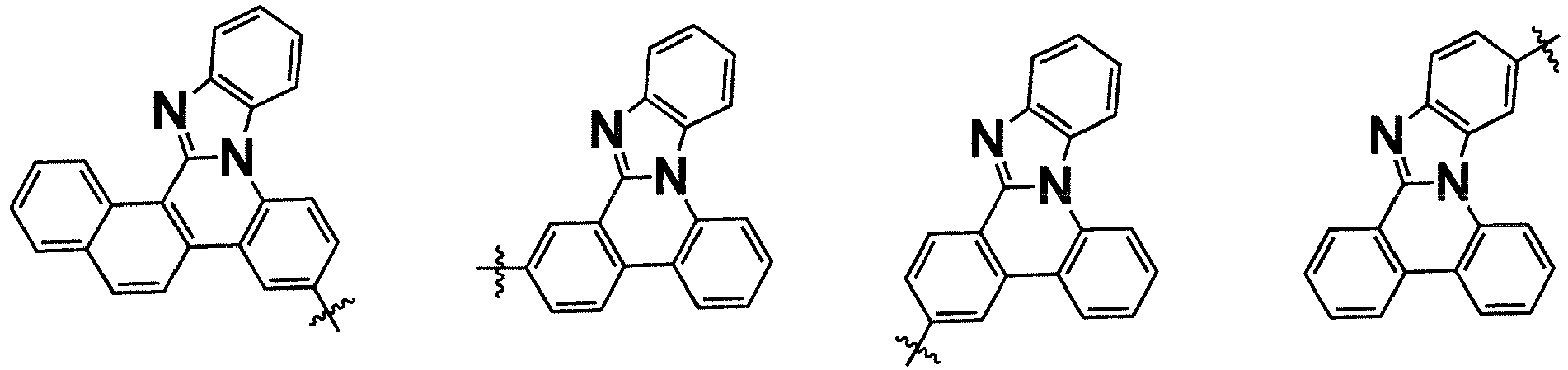


- The compound of claim 1, wherein the compound of Chemical Formula 1 is any one selected from the following structural formulae:






















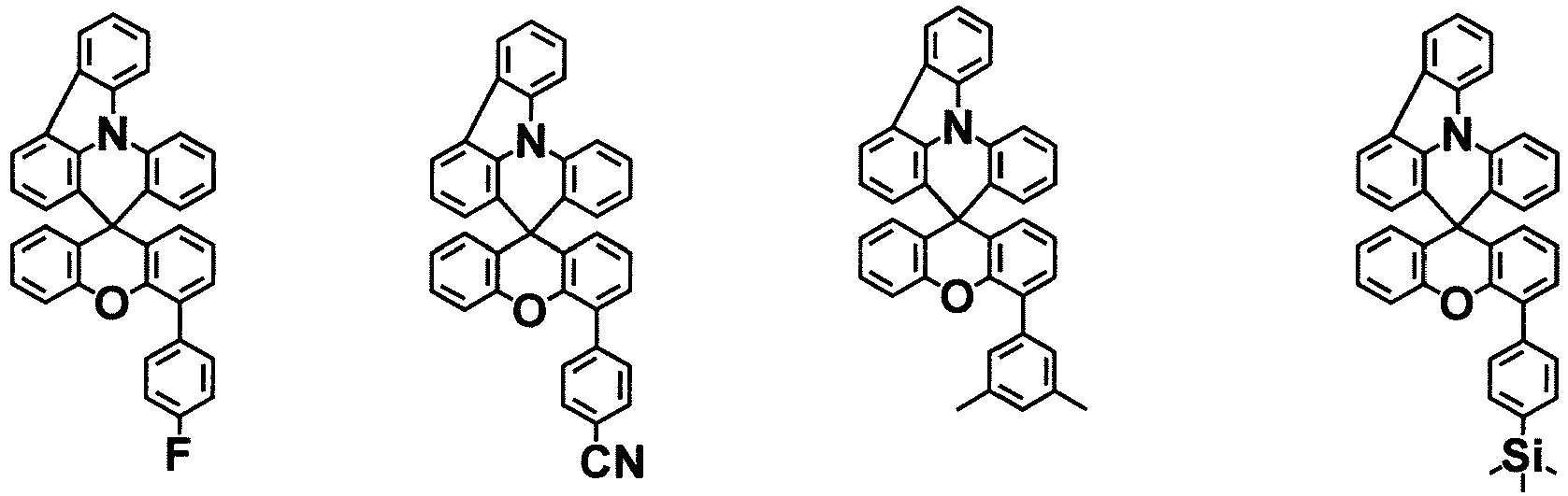


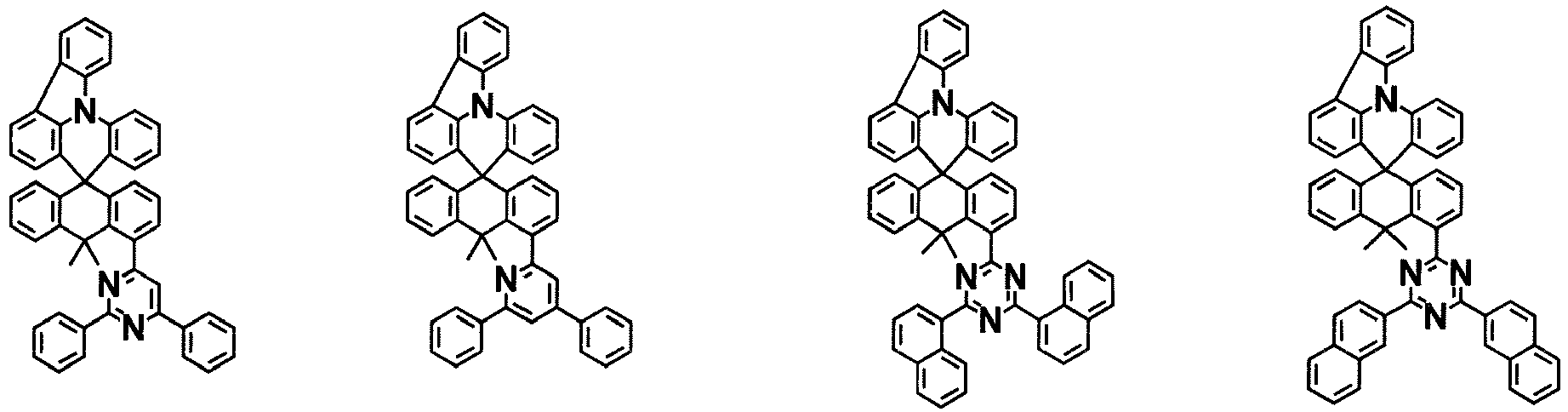


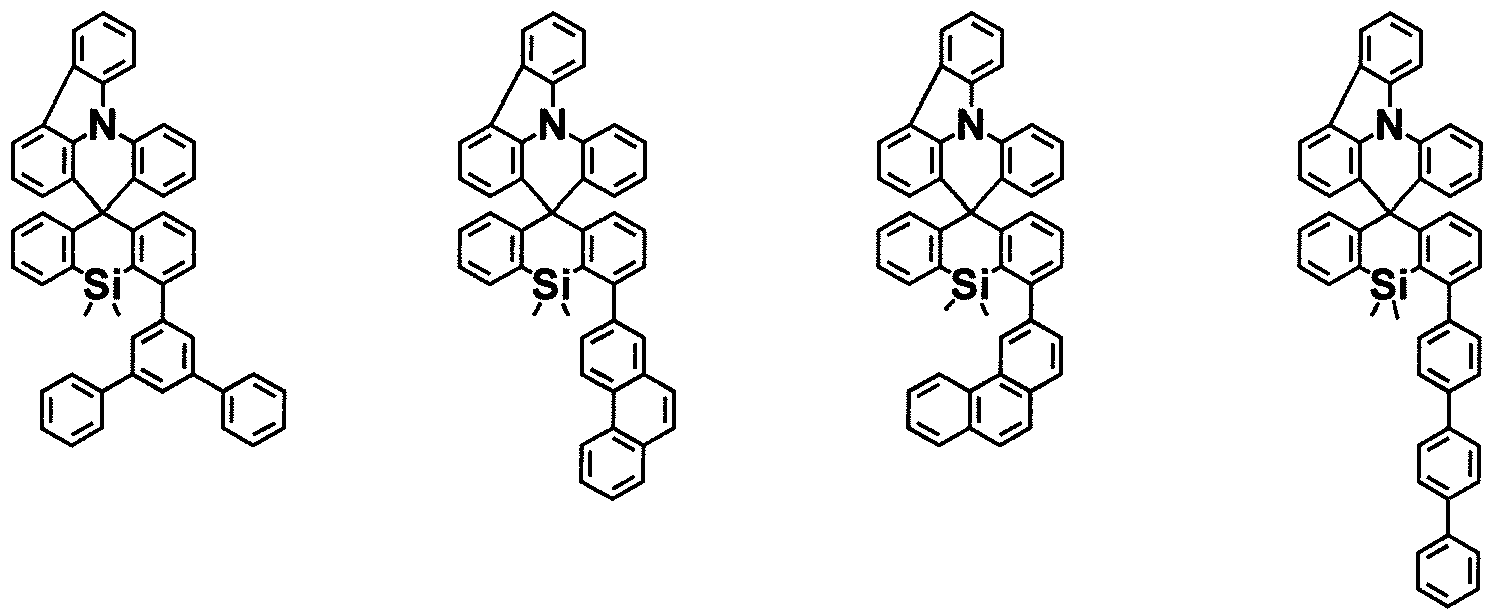





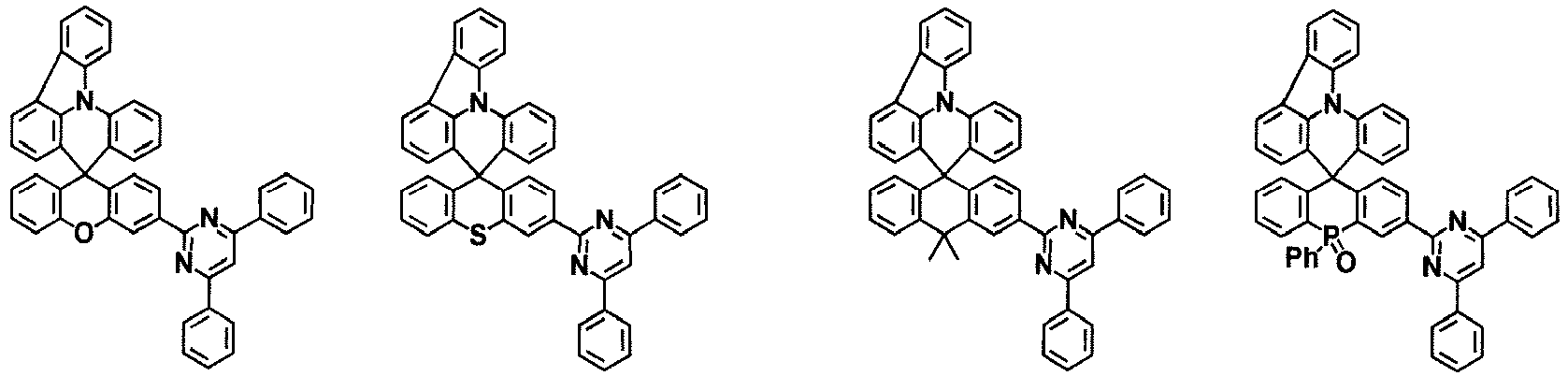


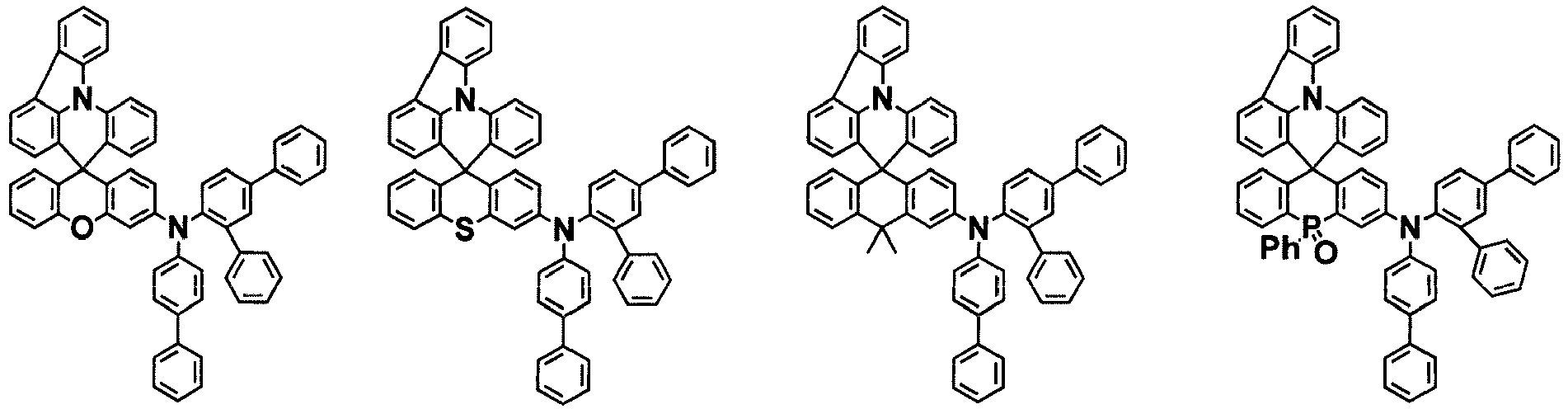


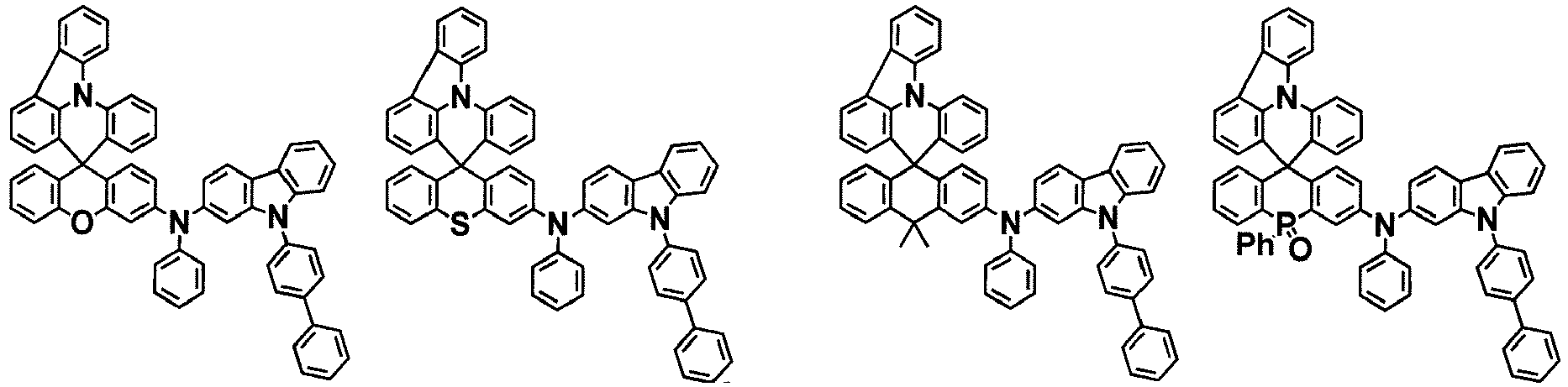


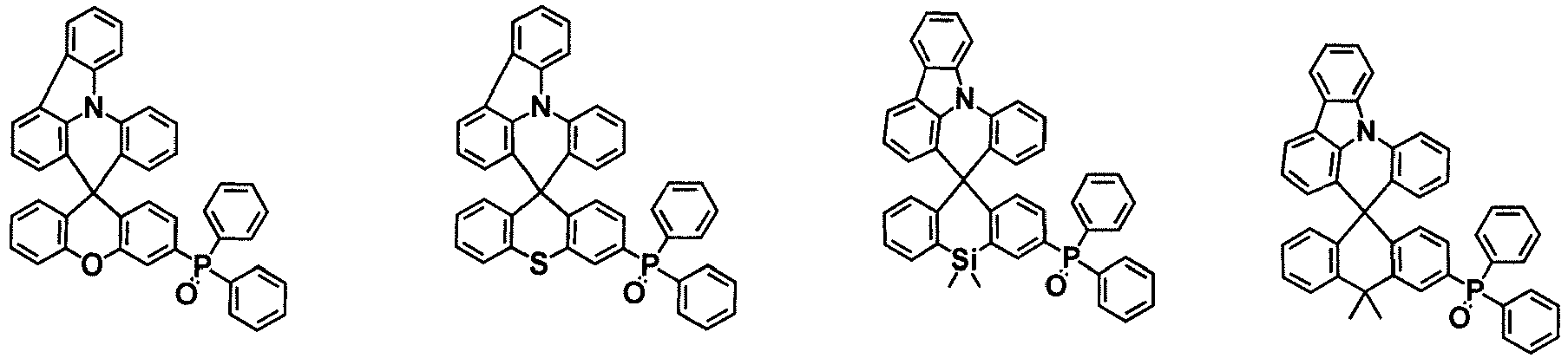


- An organic light emitting device comprising:a first electrode;a second electrode provided to face the first electrode; andan organic material layer having one or more layers disposed between the first electrode and the second electrode,wherein one or more layers of the organic material layer comprise the compound of any one of claims 1 to 10.
- The organic light emitting device of claim 11,
wherein the organic material layer comprises a hole transporting layer, a hole injection layer, and a layer which injects and transports holes simultaneously, and the hole transporting layer, the hole injection layer, and the layer which injects and transports holes simultaneously comprise the compound. - The organic light emitting device of claim 11,
wherein the organic material layer comprises an electron blocking layer, and the electron blocking layer comprises the compound. - The organic light emitting device of claim 11,
wherein the organic material layer comprises a light emitting layer, and the light emitting layer comprises the compound. - The organic light emitting device of claim 11,
wherein the organic material layer comprises a compound represented by the following Chemical Formula 1-A: n1 is an integer of 1 or more,Ar7 is a substituted or unsubstituted monovalent or more benzofluorene group; a substituted or unsubstituted monovalent or more fluoranthene group; a substituted or unsubstituted monovalent or more pyrene group; or a substituted or unsubstituted monovalent or more chrysene group,L4 is a direct bond; a substituted or unsubstituted arylene group; or a substituted or unsubstituted heteroarylene group,Ar8 and Ar9 are the same as or different from each other, and are each independently a substituted or unsubstituted aryl group; a substituted or unsubstituted silyl group; a substituted or unsubstituted germanium group; a substituted or unsubstituted alkyl group; a substituted or unsubstituted arylalkyl group; or a substituted or unsubstituted heteroaryl group, or are optionally bonded to each other to form a substituted or unsubstituted ring, andwhen n1 is 2 or more, two or more structures in the parenthesis are the same as or different from each other.
 - The organic light emitting device of claim 15,
wherein L4 is a direct bond, Ar7 is a divalent pyrene group, Ar8 and Ar9 are the same as or different from each other, and are each independently an aryl group having 6 to 30 carbon atoms, which is unsubstituted or substituted with an alkyl group having 1 to 30 carbon atoms, or a substituted or unsubstituted heteroaryl group having 2 to 30 carbon atoms, and n1 is 2. - The organic light emitting device of claim 11,
wherein the organic material layer comprises a compound represented by the following Chemical Formula 2-A:
 G11 is a phenyl group, a 1-naphthyl group, a 2-naphthyl group, a 1-anthryl group, a 2-anthryl group, a 1-phenanthryl group, a 2-phenanthryl group, a 3-phenanthryl group, a 4-phenanthryl group, a 9-phenanthryl group, a 1-naphthacenyl group, a 2-naphthacenyl group, a 9-naphthacenyl group, a 1-pyrenyl group, a 2-pyrenyl group, a 4-pyrenyl group, a 3-methyl-2-naphthyl group, a 4-methyl-1-naphthyl group, or the following Chemical Formula
 G12 is a phenyl group, a 1-naphthyl group, a 2-naphthyl group, a 1-anthryl group, a 2-anthryl group, a 9-anthryl group, a 1-phenanthryl group, a 2-phenanthryl group, a 3-phenanthryl group, a 4-phenanthryl group, a 9-phenanthryl group, a 1-naphthacenyl group, a 2-naphthacenyl group, a 9-naphthacenyl group, a 1-pyrenyl group, a 2-pyrenyl group, a 4-pyrenyl group, a 2-biphenylyl group, a 3-biphenylyl group, a 4-biphenylyl group, a p-terphenyl-4-yl group, a p-terphenyl-3-yl group, a p-terphenyl-2-yl group, an m-terphenyl-4-yl group, an m-terphenyl-3-yl group, an m-terphenyl-2-yl group, an o-tolyl group, an m-tolyl group, a p-tolyl group, a p-t-butylphenyl group, a p-(2-phenylpropyl)phenyl group, a 3-methyl-2-naphthyl group, a 4-methyl-1-naphthyl group, a 4-methyl-1-anthryl group, a 4'-methylbiphenylyl group, a 4"-t-butyl-p-terphenyl-4-yl group, or a 3-fluoranthenyl group,G13 and G14 are the same as or different from each other, and are each independently hydrogen; a substituted or unsubstituted alkyl group; a substituted or unsubstituted alkoxy group; a substituted or unsubstituted aryl group; or a substituted or unsubstituted heteroaryl group,g12 is an integer from 1 to 5,g13 and g14 are each an integer from 1 to 4, andwhen g12 to g14 are each 2 or more, two or more structures in the parenthesis are the same as or different from each other.
 - The organic light emitting device of claim 17,
wherein G11 is a 1-naphthyl group, and G12 is a 2-naphthyl group. - The organic light emitting device of claim 15,
wherein the organic material layer comprises a compound represented by the following Chemical Formula 2-A: G11 is a phenyl group, a 1-naphthyl group, a 2-naphthyl group, a 1-anthryl group, a 2-anthryl group, a 1-phenanthryl group, a 2-phenanthryl group, a 3-phenanthryl group, a 4-phenanthryl group, a 9-phenanthryl group, a 1-naphthacenyl group, a 2-naphthacenyl group, a 9-naphthacenyl group, a 1-pyrenyl group, a 2-pyrenyl group, a 4-pyrenyl group, a 3-methyl-2-naphthyl group, a 4-methyl-1-naphthyl group, or the following Chemical Formula
 G12 is a phenyl group, a 1-naphthyl group, a 2-naphthyl group, a 1-anthryl group, a 2-anthryl group, a 9-anthryl group, a 1-phenanthryl group, a 2-phenanthryl group, a 3-phenanthryl group, a 4-phenanthryl group, a 9-phenanthryl group, a 1-naphthacenyl group, a 2-naphthacenyl group, a 9-naphthacenyl group, a 1-pyrenyl group, a 2-pyrenyl group, a 4-pyrenyl group, a 2-biphenylyl group, a 3-biphenylyl group, a 4-biphenylyl group, a p-terphenyl-4-yl group, a p-terphenyl-3-yl group, a p-terphenyl-2-yl group, an m-terphenyl-4-yl group, an m-terphenyl-3-yl group, an m-terphenyl-2-yl group, an o-tolyl group, an m-tolyl group, a p-tolyl group, a p-t-butylphenyl group, a p-(2-phenylpropyl)phenyl group, a 3-methyl-2-naphthyl group, a 4-methyl-1-naphthyl group, a 4-methyl-1-anthryl group, a 4'-methylbiphenylyl group, a 4"-t-butyl-p-terphenyl-4-yl group, or a 3-fluoranthenyl group,G13 and G14 are the same as or different from each other, and are each independently hydrogen; a substituted or unsubstituted alkyl group; a substituted or unsubstituted alkoxy group; a substituted or unsubstituted aryl group; or a substituted or unsubstituted heteroaryl group,g12 is an integer from 1 to 5,g13 and g14 are each an integer from 1 to 4, andwhen g12 to g14 are each 2 or more, two or more structures in the parenthesis are the same as or different from each other.
Applications Claiming Priority (2)
| Application Number | Priority Date | Filing Date | Title |
|---|---|---|---|
| KR20150161414 | 2015-11-17 | ||
| PCT/KR2016/013301 WO2017086723A1 (en) | 2015-11-17 | 2016-11-17 | Spiro compound and organic light-emitting element comprising same |
Publications (3)
| Publication Number | Publication Date |
|---|---|
| EP3378864A1 true EP3378864A1 (en) | 2018-09-26 |
| EP3378864A4 EP3378864A4 (en) | 2019-07-03 |
| EP3378864B1 EP3378864B1 (en) | 2020-04-22 |
Family
ID=58719042
Family Applications (1)
| Application Number | Title | Priority Date | Filing Date |
|---|---|---|---|
| EP16866675.8A Active EP3378864B1 (en) | 2015-11-17 | 2016-11-17 | Spiro compound and organic light-emitting element comprising same |
Country Status (7)
| Country | Link |
|---|---|
| US (1) | US11050026B2 (en) |
| EP (1) | EP3378864B1 (en) |
| JP (1) | JP6504631B2 (en) |
| KR (1) | KR102018700B1 (en) |
| CN (1) | CN107709330B (en) |
| TW (1) | TWI664183B (en) |
| WO (1) | WO2017086723A1 (en) |
Families Citing this family (14)
| Publication number | Priority date | Publication date | Assignee | Title |
|---|---|---|---|---|
| CN110520427B (en) * | 2017-06-30 | 2022-03-08 | 株式会社Lg化学 | Novel heterocyclic compound and organic light-emitting element using same |
| KR102051625B1 (en) * | 2017-06-30 | 2019-12-02 | 주식회사 엘지화학 | Novel hetero-cyclic compound and organic light emitting device comprising the same |
| CN109651369A (en) * | 2017-12-28 | 2019-04-19 | 广州华睿光电材料有限公司 | Organic compound, polymer, organic mixture, composition and organic electronic device |
| KR102223470B1 (en) * | 2018-03-28 | 2021-03-05 | 주식회사 엘지화학 | Hetorocyclic compound and organic light emitting device comprising same |
| KR102248540B1 (en) * | 2018-04-17 | 2021-05-04 | 주식회사 엘지화학 | Hetorocyclic compound and organic light emitting device comprising the same |
| CN111377966B (en) * | 2018-12-28 | 2022-10-28 | 北京鼎材科技有限公司 | Compound, application thereof and organic electroluminescent device comprising compound |
| CN109942635B (en) * | 2019-04-23 | 2022-04-12 | 苏州大学 | Phenyltricarbazole spiro derivative, preparation method and application thereof, and electronic device |
| CN110845537B (en) * | 2019-11-25 | 2022-02-11 | 信阳师范学院 | Synthesis and application of aryl acridine phosphine spiro-compound |
| CN112321645A (en) * | 2019-12-30 | 2021-02-05 | 广东聚华印刷显示技术有限公司 | Acridine compound and light-emitting device |
| KR102520587B1 (en) * | 2020-01-06 | 2023-04-11 | 주식회사 엘지화학 | Novel compound and organic light emitting device comprising the same |
| CN113968866A (en) * | 2020-07-24 | 2022-01-25 | 上海和辉光电股份有限公司 | Spiro-cyclic compound and organic electroluminescent device comprising same |
| CN112321646B (en) * | 2020-10-21 | 2023-09-22 | 武汉天马微电子有限公司 | An organic compound, electroluminescent material and application thereof |
| CN114685501B (en) * | 2020-12-29 | 2023-11-07 | 维思普新材料(苏州)有限公司 | Phenylcarbazole spiro derivative and application thereof, organic electronic device, display device or lighting device |
| CN118772174A (en) * | 2024-06-12 | 2024-10-15 | 南京邮电大学 | A space charge transfer type thermally activated delayed fluorescent material based on thioxanthene and its preparation method and application |
Family Cites Families (12)
| Publication number | Priority date | Publication date | Assignee | Title |
|---|---|---|---|---|
| KR100430549B1 (en) | 1999-01-27 | 2004-05-10 | 주식회사 엘지화학 | New organomattalic complex molecule for the fabrication of organic light emitting diodes |
| US7839074B2 (en) * | 2002-08-23 | 2010-11-23 | Idemitsu Kosan Co., Ltd. | Organic electroluminescence device and anthracene derivative |
| US7862908B2 (en) | 2007-11-26 | 2011-01-04 | National Tsing Hua University | Conjugated compounds containing hydroindoloacridine structural elements, and their use |
| KR101231931B1 (en) * | 2009-11-13 | 2013-02-08 | 주식회사 엘지화학 | New fused cyclic compound and organic electronic device |
| KR20110113470A (en) * | 2010-04-09 | 2011-10-17 | 에스에프씨 주식회사 | Heterocyclic compound and organic light emitting device comprising the same |
| KR101759482B1 (en) | 2010-04-09 | 2017-07-20 | 에스에프씨 주식회사 | Heterocyclic compounds and organic light-emitting diode including the same |
| KR101771529B1 (en) * | 2010-04-09 | 2017-09-06 | 에스에프씨 주식회사 | Heterocyclic compounds and organic light-emitting diode including the same |
| US10305040B2 (en) * | 2011-11-17 | 2019-05-28 | Merck Patent Gmbh | Spiro dihydroacridine derivatives and the use thereof as materials for organic electroluminescence devices |
| KR20150010016A (en) * | 2013-07-17 | 2015-01-28 | 롬엔드하스전자재료코리아유한회사 | Organic electroluminescent device |
| CN104293348A (en) | 2013-07-19 | 2015-01-21 | 海洋王照明科技股份有限公司 | Bipolar blue-light emitting host material, and preparation method and application thereof |
| CN104341436A (en) | 2013-08-05 | 2015-02-11 | 海洋王照明科技股份有限公司 | Organic semiconductor material, preparation method and electroluminescent device |
| JP6547840B2 (en) | 2015-11-17 | 2019-07-24 | エルジー・ケム・リミテッド | SPIRO COMPOUND AND ORGANIC LIGHT-EMITTING DEVICE COMPRISING THE SAME {SPIRO COMPOUND AND ORGANIC LIGHT-EMITTING ELEMENT COMPRISING SAME} |
-
2016
- 2016-11-17 JP JP2017559828A patent/JP6504631B2/en active Active
- 2016-11-17 TW TW105137570A patent/TWI664183B/en active
- 2016-11-17 KR KR1020160153636A patent/KR102018700B1/en active Active
- 2016-11-17 CN CN201680034652.4A patent/CN107709330B/en active Active
- 2016-11-17 US US15/577,558 patent/US11050026B2/en active Active
- 2016-11-17 WO PCT/KR2016/013301 patent/WO2017086723A1/en not_active Ceased
- 2016-11-17 EP EP16866675.8A patent/EP3378864B1/en active Active
Also Published As
| Publication number | Publication date |
|---|---|
| WO2017086723A1 (en) | 2017-05-26 |
| TW201730193A (en) | 2017-09-01 |
| CN107709330B (en) | 2020-03-27 |
| KR102018700B1 (en) | 2019-09-05 |
| TWI664183B (en) | 2019-07-01 |
| JP2018521968A (en) | 2018-08-09 |
| JP6504631B2 (en) | 2019-04-24 |
| EP3378864A4 (en) | 2019-07-03 |
| KR20170057856A (en) | 2017-05-25 |
| US20180175304A1 (en) | 2018-06-21 |
| US11050026B2 (en) | 2021-06-29 |
| CN107709330A (en) | 2018-02-16 |
| EP3378864B1 (en) | 2020-04-22 |
Similar Documents
| Publication | Publication Date | Title |
|---|---|---|
| EP3378864B1 (en) | Spiro compound and organic light-emitting element comprising same | |
| EP3357912B1 (en) | Use of spiro compound and organic light emitting element comprising same | |
| EP2873667B1 (en) | Heterocyclic compound and organic electronic element containing same | |
| EP3378853B1 (en) | Heterocyclic compound and organic light-emitting element comprising same | |
| EP3378865B1 (en) | Spiro compound and organic light-emitting element comprising same | |
| EP3351523B1 (en) | Compound and organic light emitting device containing same | |
| EP3339293B1 (en) | Compound and organic electronic device comprising same | |
| EP3388438B1 (en) | Spiro-structured compound and organic electronic device comprising same | |
| KR102020529B1 (en) | Compound and organic electronic device comprising the same | |
| EP3345891B1 (en) | Amine compound and organic light-emitting device comprising same | |
| EP3330249B1 (en) | Amine-based compound and organic light emitting device comprising same | |
| EP3369727A1 (en) | Amine compound and organic light emitting element comprising same | |
| EP3369718B1 (en) | Spiro-type compound and organic light emitting element comprising same | |
| EP3263555B1 (en) | Hetero ring compound and organic luminescent element comprising same | |
| EP3321246B1 (en) | Double spiro compound and organic light-emitting element comprising same | |
| EP3351531A1 (en) | Heterocyclic compound and organic light emitting device comprising same | |
| EP3369719B1 (en) | Spiro-type compound and organic light emitting element comprising same |
Legal Events
| Date | Code | Title | Description |
|---|---|---|---|
| STAA | Information on the status of an ep patent application or granted ep patent |
Free format text: STATUS: THE INTERNATIONAL PUBLICATION HAS BEEN MADE |
|
| PUAI | Public reference made under article 153(3) epc to a published international application that has entered the european phase |
Free format text: ORIGINAL CODE: 0009012 |
|
| STAA | Information on the status of an ep patent application or granted ep patent |
Free format text: STATUS: REQUEST FOR EXAMINATION WAS MADE |
|
| 17P | Request for examination filed |
Effective date: 20171129 |
|
| AK | Designated contracting states |
Kind code of ref document: A1 Designated state(s): AL AT BE BG CH CY CZ DE DK EE ES FI FR GB GR HR HU IE IS IT LI LT LU LV MC MK MT NL NO PL PT RO RS SE SI SK SM TR |
|
| AX | Request for extension of the european patent |
Extension state: BA ME |
|
| DAV | Request for validation of the european patent (deleted) | ||
| DAX | Request for extension of the european patent (deleted) | ||
| A4 | Supplementary search report drawn up and despatched |
Effective date: 20190603 |
|
| RIC1 | Information provided on ipc code assigned before grant |
Ipc: C07D 491/20 20060101ALI20190527BHEP Ipc: C07D 209/82 20060101ALI20190527BHEP Ipc: C09K 11/06 20060101ALI20190527BHEP Ipc: C07D 307/91 20060101ALI20190527BHEP Ipc: C07D 495/20 20060101ALI20190527BHEP Ipc: C07D 333/76 20060101ALI20190527BHEP Ipc: H01L 51/54 20060101AFI20190527BHEP |
|
| REG | Reference to a national code |
Ref country code: DE Ref legal event code: R079 Ref document number: 602016034791 Country of ref document: DE Free format text: PREVIOUS MAIN CLASS: C07D0491200000 Ipc: H01L0051540000 |
|
| GRAP | Despatch of communication of intention to grant a patent |
Free format text: ORIGINAL CODE: EPIDOSNIGR1 |
|
| STAA | Information on the status of an ep patent application or granted ep patent |
Free format text: STATUS: GRANT OF PATENT IS INTENDED |
|
| RIC1 | Information provided on ipc code assigned before grant |
Ipc: C07D 491/20 20060101ALI20191127BHEP Ipc: C07D 307/91 20060101ALI20191127BHEP Ipc: C07D 333/76 20060101ALI20191127BHEP Ipc: C09K 11/06 20060101ALI20191127BHEP Ipc: C07D 495/20 20060101ALI20191127BHEP Ipc: C07D 209/82 20060101ALI20191127BHEP Ipc: H01L 51/54 20060101AFI20191127BHEP |
|
| INTG | Intention to grant announced |
Effective date: 20191218 |
|
| GRAS | Grant fee paid |
Free format text: ORIGINAL CODE: EPIDOSNIGR3 |
|
| GRAA | (expected) grant |
Free format text: ORIGINAL CODE: 0009210 |
|
| STAA | Information on the status of an ep patent application or granted ep patent |
Free format text: STATUS: THE PATENT HAS BEEN GRANTED |
|
| AK | Designated contracting states |
Kind code of ref document: B1 Designated state(s): AL AT BE BG CH CY CZ DE DK EE ES FI FR GB GR HR HU IE IS IT LI LT LU LV MC MK MT NL NO PL PT RO RS SE SI SK SM TR |
|
| REG | Reference to a national code |
Ref country code: CH Ref legal event code: EP |
|
| REG | Reference to a national code |
Ref country code: IE Ref legal event code: FG4D |
|
| REG | Reference to a national code |
Ref country code: DE Ref legal event code: R096 Ref document number: 602016034791 Country of ref document: DE |
|
| REG | Reference to a national code |
Ref country code: AT Ref legal event code: REF Ref document number: 1261315 Country of ref document: AT Kind code of ref document: T Effective date: 20200515 |
|
| REG | Reference to a national code |
Ref country code: LT Ref legal event code: MG4D |
|
| REG | Reference to a national code |
Ref country code: NL Ref legal event code: MP Effective date: 20200422 |
|
| PG25 | Lapsed in a contracting state [announced via postgrant information from national office to epo] |
Ref country code: GR Free format text: LAPSE BECAUSE OF FAILURE TO SUBMIT A TRANSLATION OF THE DESCRIPTION OR TO PAY THE FEE WITHIN THE PRESCRIBED TIME-LIMIT Effective date: 20200723 Ref country code: FI Free format text: LAPSE BECAUSE OF FAILURE TO SUBMIT A TRANSLATION OF THE DESCRIPTION OR TO PAY THE FEE WITHIN THE PRESCRIBED TIME-LIMIT Effective date: 20200422 Ref country code: NO Free format text: LAPSE BECAUSE OF FAILURE TO SUBMIT A TRANSLATION OF THE DESCRIPTION OR TO PAY THE FEE WITHIN THE PRESCRIBED TIME-LIMIT Effective date: 20200722 Ref country code: SE Free format text: LAPSE BECAUSE OF FAILURE TO SUBMIT A TRANSLATION OF THE DESCRIPTION OR TO PAY THE FEE WITHIN THE PRESCRIBED TIME-LIMIT Effective date: 20200422 Ref country code: IS Free format text: LAPSE BECAUSE OF FAILURE TO SUBMIT A TRANSLATION OF THE DESCRIPTION OR TO PAY THE FEE WITHIN THE PRESCRIBED TIME-LIMIT Effective date: 20200822 Ref country code: NL Free format text: LAPSE BECAUSE OF FAILURE TO SUBMIT A TRANSLATION OF THE DESCRIPTION OR TO PAY THE FEE WITHIN THE PRESCRIBED TIME-LIMIT Effective date: 20200422 Ref country code: LT Free format text: LAPSE BECAUSE OF FAILURE TO SUBMIT A TRANSLATION OF THE DESCRIPTION OR TO PAY THE FEE WITHIN THE PRESCRIBED TIME-LIMIT Effective date: 20200422 Ref country code: PT Free format text: LAPSE BECAUSE OF FAILURE TO SUBMIT A TRANSLATION OF THE DESCRIPTION OR TO PAY THE FEE WITHIN THE PRESCRIBED TIME-LIMIT Effective date: 20200824 |
|
| REG | Reference to a national code |
Ref country code: AT Ref legal event code: MK05 Ref document number: 1261315 Country of ref document: AT Kind code of ref document: T Effective date: 20200422 |
|
| PG25 | Lapsed in a contracting state [announced via postgrant information from national office to epo] |
Ref country code: BG Free format text: LAPSE BECAUSE OF FAILURE TO SUBMIT A TRANSLATION OF THE DESCRIPTION OR TO PAY THE FEE WITHIN THE PRESCRIBED TIME-LIMIT Effective date: 20200722 Ref country code: HR Free format text: LAPSE BECAUSE OF FAILURE TO SUBMIT A TRANSLATION OF THE DESCRIPTION OR TO PAY THE FEE WITHIN THE PRESCRIBED TIME-LIMIT Effective date: 20200422 Ref country code: LV Free format text: LAPSE BECAUSE OF FAILURE TO SUBMIT A TRANSLATION OF THE DESCRIPTION OR TO PAY THE FEE WITHIN THE PRESCRIBED TIME-LIMIT Effective date: 20200422 Ref country code: RS Free format text: LAPSE BECAUSE OF FAILURE TO SUBMIT A TRANSLATION OF THE DESCRIPTION OR TO PAY THE FEE WITHIN THE PRESCRIBED TIME-LIMIT Effective date: 20200422 |
|
| PG25 | Lapsed in a contracting state [announced via postgrant information from national office to epo] |
Ref country code: AL Free format text: LAPSE BECAUSE OF FAILURE TO SUBMIT A TRANSLATION OF THE DESCRIPTION OR TO PAY THE FEE WITHIN THE PRESCRIBED TIME-LIMIT Effective date: 20200422 |
|
| REG | Reference to a national code |
Ref country code: DE Ref legal event code: R097 Ref document number: 602016034791 Country of ref document: DE |
|
| PG25 | Lapsed in a contracting state [announced via postgrant information from national office to epo] |
Ref country code: AT Free format text: LAPSE BECAUSE OF FAILURE TO SUBMIT A TRANSLATION OF THE DESCRIPTION OR TO PAY THE FEE WITHIN THE PRESCRIBED TIME-LIMIT Effective date: 20200422 Ref country code: DK Free format text: LAPSE BECAUSE OF FAILURE TO SUBMIT A TRANSLATION OF THE DESCRIPTION OR TO PAY THE FEE WITHIN THE PRESCRIBED TIME-LIMIT Effective date: 20200422 Ref country code: EE Free format text: LAPSE BECAUSE OF FAILURE TO SUBMIT A TRANSLATION OF THE DESCRIPTION OR TO PAY THE FEE WITHIN THE PRESCRIBED TIME-LIMIT Effective date: 20200422 Ref country code: SM Free format text: LAPSE BECAUSE OF FAILURE TO SUBMIT A TRANSLATION OF THE DESCRIPTION OR TO PAY THE FEE WITHIN THE PRESCRIBED TIME-LIMIT Effective date: 20200422 Ref country code: IT Free format text: LAPSE BECAUSE OF FAILURE TO SUBMIT A TRANSLATION OF THE DESCRIPTION OR TO PAY THE FEE WITHIN THE PRESCRIBED TIME-LIMIT Effective date: 20200422 Ref country code: ES Free format text: LAPSE BECAUSE OF FAILURE TO SUBMIT A TRANSLATION OF THE DESCRIPTION OR TO PAY THE FEE WITHIN THE PRESCRIBED TIME-LIMIT Effective date: 20200422 Ref country code: CZ Free format text: LAPSE BECAUSE OF FAILURE TO SUBMIT A TRANSLATION OF THE DESCRIPTION OR TO PAY THE FEE WITHIN THE PRESCRIBED TIME-LIMIT Effective date: 20200422 Ref country code: RO Free format text: LAPSE BECAUSE OF FAILURE TO SUBMIT A TRANSLATION OF THE DESCRIPTION OR TO PAY THE FEE WITHIN THE PRESCRIBED TIME-LIMIT Effective date: 20200422 |
|
| PG25 | Lapsed in a contracting state [announced via postgrant information from national office to epo] |
Ref country code: PL Free format text: LAPSE BECAUSE OF FAILURE TO SUBMIT A TRANSLATION OF THE DESCRIPTION OR TO PAY THE FEE WITHIN THE PRESCRIBED TIME-LIMIT Effective date: 20200422 Ref country code: SK Free format text: LAPSE BECAUSE OF FAILURE TO SUBMIT A TRANSLATION OF THE DESCRIPTION OR TO PAY THE FEE WITHIN THE PRESCRIBED TIME-LIMIT Effective date: 20200422 |
|
| PLBE | No opposition filed within time limit |
Free format text: ORIGINAL CODE: 0009261 |
|
| STAA | Information on the status of an ep patent application or granted ep patent |
Free format text: STATUS: NO OPPOSITION FILED WITHIN TIME LIMIT |
|
| 26N | No opposition filed |
Effective date: 20210125 |
|
| PG25 | Lapsed in a contracting state [announced via postgrant information from national office to epo] |
Ref country code: SI Free format text: LAPSE BECAUSE OF FAILURE TO SUBMIT A TRANSLATION OF THE DESCRIPTION OR TO PAY THE FEE WITHIN THE PRESCRIBED TIME-LIMIT Effective date: 20200422 |
|
| PG25 | Lapsed in a contracting state [announced via postgrant information from national office to epo] |
Ref country code: MC Free format text: LAPSE BECAUSE OF FAILURE TO SUBMIT A TRANSLATION OF THE DESCRIPTION OR TO PAY THE FEE WITHIN THE PRESCRIBED TIME-LIMIT Effective date: 20200422 |
|
| REG | Reference to a national code |
Ref country code: CH Ref legal event code: PL |
|
| PG25 | Lapsed in a contracting state [announced via postgrant information from national office to epo] |
Ref country code: LU Free format text: LAPSE BECAUSE OF NON-PAYMENT OF DUE FEES Effective date: 20201117 |
|
| REG | Reference to a national code |
Ref country code: BE Ref legal event code: MM Effective date: 20201130 |
|
| PG25 | Lapsed in a contracting state [announced via postgrant information from national office to epo] |
Ref country code: CH Free format text: LAPSE BECAUSE OF NON-PAYMENT OF DUE FEES Effective date: 20201130 Ref country code: LI Free format text: LAPSE BECAUSE OF NON-PAYMENT OF DUE FEES Effective date: 20201130 |
|
| PG25 | Lapsed in a contracting state [announced via postgrant information from national office to epo] |
Ref country code: IE Free format text: LAPSE BECAUSE OF NON-PAYMENT OF DUE FEES Effective date: 20201117 |
|
| PG25 | Lapsed in a contracting state [announced via postgrant information from national office to epo] |
Ref country code: TR Free format text: LAPSE BECAUSE OF FAILURE TO SUBMIT A TRANSLATION OF THE DESCRIPTION OR TO PAY THE FEE WITHIN THE PRESCRIBED TIME-LIMIT Effective date: 20200422 Ref country code: MT Free format text: LAPSE BECAUSE OF FAILURE TO SUBMIT A TRANSLATION OF THE DESCRIPTION OR TO PAY THE FEE WITHIN THE PRESCRIBED TIME-LIMIT Effective date: 20200422 Ref country code: CY Free format text: LAPSE BECAUSE OF FAILURE TO SUBMIT A TRANSLATION OF THE DESCRIPTION OR TO PAY THE FEE WITHIN THE PRESCRIBED TIME-LIMIT Effective date: 20200422 |
|
| PG25 | Lapsed in a contracting state [announced via postgrant information from national office to epo] |
Ref country code: MK Free format text: LAPSE BECAUSE OF FAILURE TO SUBMIT A TRANSLATION OF THE DESCRIPTION OR TO PAY THE FEE WITHIN THE PRESCRIBED TIME-LIMIT Effective date: 20200422 |
|
| PG25 | Lapsed in a contracting state [announced via postgrant information from national office to epo] |
Ref country code: BE Free format text: LAPSE BECAUSE OF NON-PAYMENT OF DUE FEES Effective date: 20201130 |
|
| REG | Reference to a national code |
Ref country code: DE Ref legal event code: R079 Ref document number: 602016034791 Country of ref document: DE Free format text: PREVIOUS MAIN CLASS: H01L0051540000 Ipc: H10K0085000000 |
|
| PGFP | Annual fee paid to national office [announced via postgrant information from national office to epo] |
Ref country code: DE Payment date: 20251020 Year of fee payment: 10 |
|
| PGFP | Annual fee paid to national office [announced via postgrant information from national office to epo] |
Ref country code: GB Payment date: 20251023 Year of fee payment: 10 |
|
| PGFP | Annual fee paid to national office [announced via postgrant information from national office to epo] |
Ref country code: FR Payment date: 20251021 Year of fee payment: 10 |