EP3377219B1 - Katalysatorsystem und verfahren zur herstellung von glycolen - Google Patents
Katalysatorsystem und verfahren zur herstellung von glycolen Download PDFInfo
- Publication number
- EP3377219B1 EP3377219B1 EP16797928.5A EP16797928A EP3377219B1 EP 3377219 B1 EP3377219 B1 EP 3377219B1 EP 16797928 A EP16797928 A EP 16797928A EP 3377219 B1 EP3377219 B1 EP 3377219B1
- Authority
- EP
- European Patent Office
- Prior art keywords
- catalyst system
- catalyst
- hydrogenation
- reactor
- catalytic species
- Prior art date
- Legal status (The legal status is an assumption and is not a legal conclusion. Google has not performed a legal analysis and makes no representation as to the accuracy of the status listed.)
- Active
Links
Images
Classifications
-
- B—PERFORMING OPERATIONS; TRANSPORTING
- B01—PHYSICAL OR CHEMICAL PROCESSES OR APPARATUS IN GENERAL
- B01J—CHEMICAL OR PHYSICAL PROCESSES, e.g. CATALYSIS OR COLLOID CHEMISTRY; THEIR RELEVANT APPARATUS
- B01J23/00—Catalysts comprising metals or metal oxides or hydroxides, not provided for in group B01J21/00
- B01J23/70—Catalysts comprising metals or metal oxides or hydroxides, not provided for in group B01J21/00 of the iron group metals or copper
- B01J23/89—Catalysts comprising metals or metal oxides or hydroxides, not provided for in group B01J21/00 of the iron group metals or copper combined with noble metals
- B01J23/892—Nickel and noble metals
-
- B—PERFORMING OPERATIONS; TRANSPORTING
- B01—PHYSICAL OR CHEMICAL PROCESSES OR APPARATUS IN GENERAL
- B01J—CHEMICAL OR PHYSICAL PROCESSES, e.g. CATALYSIS OR COLLOID CHEMISTRY; THEIR RELEVANT APPARATUS
- B01J23/00—Catalysts comprising metals or metal oxides or hydroxides, not provided for in group B01J21/00
- B01J23/38—Catalysts comprising metals or metal oxides or hydroxides, not provided for in group B01J21/00 of noble metals
- B01J23/40—Catalysts comprising metals or metal oxides or hydroxides, not provided for in group B01J21/00 of noble metals of the platinum group metals
-
- B—PERFORMING OPERATIONS; TRANSPORTING
- B01—PHYSICAL OR CHEMICAL PROCESSES OR APPARATUS IN GENERAL
- B01J—CHEMICAL OR PHYSICAL PROCESSES, e.g. CATALYSIS OR COLLOID CHEMISTRY; THEIR RELEVANT APPARATUS
- B01J23/00—Catalysts comprising metals or metal oxides or hydroxides, not provided for in group B01J21/00
- B01J23/38—Catalysts comprising metals or metal oxides or hydroxides, not provided for in group B01J21/00 of noble metals
- B01J23/54—Catalysts comprising metals or metal oxides or hydroxides, not provided for in group B01J21/00 of noble metals combined with metals, oxides or hydroxides provided for in groups B01J23/02 - B01J23/36
- B01J23/56—Platinum group metals
-
- B—PERFORMING OPERATIONS; TRANSPORTING
- B01—PHYSICAL OR CHEMICAL PROCESSES OR APPARATUS IN GENERAL
- B01J—CHEMICAL OR PHYSICAL PROCESSES, e.g. CATALYSIS OR COLLOID CHEMISTRY; THEIR RELEVANT APPARATUS
- B01J23/00—Catalysts comprising metals or metal oxides or hydroxides, not provided for in group B01J21/00
- B01J23/38—Catalysts comprising metals or metal oxides or hydroxides, not provided for in group B01J21/00 of noble metals
- B01J23/54—Catalysts comprising metals or metal oxides or hydroxides, not provided for in group B01J21/00 of noble metals combined with metals, oxides or hydroxides provided for in groups B01J23/02 - B01J23/36
- B01J23/66—Silver or gold
- B01J23/68—Silver or gold with arsenic, antimony, bismuth, vanadium, niobium, tantalum, polonium, chromium, molybdenum, tungsten, manganese, technetium or rhenium
- B01J23/683—Silver or gold with arsenic, antimony, bismuth, vanadium, niobium, tantalum, polonium, chromium, molybdenum, tungsten, manganese, technetium or rhenium with chromium, molybdenum or tungsten
- B01J23/687—Silver or gold with arsenic, antimony, bismuth, vanadium, niobium, tantalum, polonium, chromium, molybdenum, tungsten, manganese, technetium or rhenium with chromium, molybdenum or tungsten with tungsten
-
- B—PERFORMING OPERATIONS; TRANSPORTING
- B01—PHYSICAL OR CHEMICAL PROCESSES OR APPARATUS IN GENERAL
- B01J—CHEMICAL OR PHYSICAL PROCESSES, e.g. CATALYSIS OR COLLOID CHEMISTRY; THEIR RELEVANT APPARATUS
- B01J23/00—Catalysts comprising metals or metal oxides or hydroxides, not provided for in group B01J21/00
- B01J23/70—Catalysts comprising metals or metal oxides or hydroxides, not provided for in group B01J21/00 of the iron group metals or copper
- B01J23/74—Iron group metals
-
- B—PERFORMING OPERATIONS; TRANSPORTING
- B01—PHYSICAL OR CHEMICAL PROCESSES OR APPARATUS IN GENERAL
- B01J—CHEMICAL OR PHYSICAL PROCESSES, e.g. CATALYSIS OR COLLOID CHEMISTRY; THEIR RELEVANT APPARATUS
- B01J25/00—Catalysts of the Raney type
- B01J25/02—Raney nickel
-
- B—PERFORMING OPERATIONS; TRANSPORTING
- B01—PHYSICAL OR CHEMICAL PROCESSES OR APPARATUS IN GENERAL
- B01J—CHEMICAL OR PHYSICAL PROCESSES, e.g. CATALYSIS OR COLLOID CHEMISTRY; THEIR RELEVANT APPARATUS
- B01J27/00—Catalysts comprising the elements or compounds of halogens, sulfur, selenium, tellurium, phosphorus or nitrogen; Catalysts comprising carbon compounds
- B01J27/14—Phosphorus; Compounds thereof
- B01J27/186—Phosphorus; Compounds thereof with arsenic, antimony, bismuth, vanadium, niobium, tantalum, polonium, chromium, molybdenum, tungsten, manganese, technetium or rhenium
- B01J27/188—Phosphorus; Compounds thereof with arsenic, antimony, bismuth, vanadium, niobium, tantalum, polonium, chromium, molybdenum, tungsten, manganese, technetium or rhenium with chromium, molybdenum, tungsten or polonium
-
- B—PERFORMING OPERATIONS; TRANSPORTING
- B01—PHYSICAL OR CHEMICAL PROCESSES OR APPARATUS IN GENERAL
- B01J—CHEMICAL OR PHYSICAL PROCESSES, e.g. CATALYSIS OR COLLOID CHEMISTRY; THEIR RELEVANT APPARATUS
- B01J35/00—Catalysts, in general, characterised by their form or physical properties
- B01J35/19—Catalysts containing parts with different compositions
-
- C—CHEMISTRY; METALLURGY
- C07—ORGANIC CHEMISTRY
- C07C—ACYCLIC OR CARBOCYCLIC COMPOUNDS
- C07C29/00—Preparation of compounds having hydroxy or O-metal groups bound to a carbon atom not belonging to a six-membered aromatic ring
- C07C29/132—Preparation of compounds having hydroxy or O-metal groups bound to a carbon atom not belonging to a six-membered aromatic ring by reduction of an oxygen containing functional group
-
- C—CHEMISTRY; METALLURGY
- C07—ORGANIC CHEMISTRY
- C07C—ACYCLIC OR CARBOCYCLIC COMPOUNDS
- C07C29/00—Preparation of compounds having hydroxy or O-metal groups bound to a carbon atom not belonging to a six-membered aromatic ring
- C07C29/60—Preparation of compounds having hydroxy or O-metal groups bound to a carbon atom not belonging to a six-membered aromatic ring by elimination of -OH groups, e.g. by dehydration
-
- B—PERFORMING OPERATIONS; TRANSPORTING
- B01—PHYSICAL OR CHEMICAL PROCESSES OR APPARATUS IN GENERAL
- B01J—CHEMICAL OR PHYSICAL PROCESSES, e.g. CATALYSIS OR COLLOID CHEMISTRY; THEIR RELEVANT APPARATUS
- B01J2231/00—Catalytic reactions performed with catalysts classified in B01J31/00
- B01J2231/60—Reduction reactions, e.g. hydrogenation
- B01J2231/64—Reductions in general of organic substrates, e.g. hydride reductions or hydrogenations
- B01J2231/641—Hydrogenation of organic substrates, i.e. H2 or H-transfer hydrogenations, e.g. Fischer-Tropsch processes
- B01J2231/643—Hydrogenation of organic substrates, i.e. H2 or H-transfer hydrogenations, e.g. Fischer-Tropsch processes of R2C=O or R2C=NR (R= C, H)
-
- Y—GENERAL TAGGING OF NEW TECHNOLOGICAL DEVELOPMENTS; GENERAL TAGGING OF CROSS-SECTIONAL TECHNOLOGIES SPANNING OVER SEVERAL SECTIONS OF THE IPC; TECHNICAL SUBJECTS COVERED BY FORMER USPC CROSS-REFERENCE ART COLLECTIONS [XRACs] AND DIGESTS
- Y02—TECHNOLOGIES OR APPLICATIONS FOR MITIGATION OR ADAPTATION AGAINST CLIMATE CHANGE
- Y02P—CLIMATE CHANGE MITIGATION TECHNOLOGIES IN THE PRODUCTION OR PROCESSING OF GOODS
- Y02P20/00—Technologies relating to chemical industry
- Y02P20/50—Improvements relating to the production of bulk chemicals
- Y02P20/52—Improvements relating to the production of bulk chemicals using catalysts, e.g. selective catalysts
Definitions
- the present invention relates to a process for the production of glycols, in particular monoethylene glycol and monopropylene glycol from a saccharide-containing feedstock.
- Monoethylene glycol (MEG) and monopropylene glycol (MPG) are valuable materials with a multitude of commercial applications, e.g. as heat transfer media, antifreeze, and precursors to polymers such as polyethylene terephthalate (PET).
- PET polyethylene terephthalate
- Said glycols are currently made on an industrial scale by hydrolysis of the corresponding alkylene oxides, which are the oxidation products of ethylene and propylene, generally produced from fossil fuels.
- certain carbohydrates can be reacted with hydrogen in the presence of a catalyst system to generate polyols and sugar alcohols.
- Current methods for the conversion of saccharides to glycols revolve around a hydrogenation/hydrogenolysis process.
- Reported processes generally require a first catalytic species to perform the hydrogenolysis reaction, which is postulated to have a retro-aldol mechanism, and a second catalytic species for hydrogenation.
- US 2011/0312487 A1 describes a process for generating at least one polyol from a saccharide-containing feedstock and a catalyst system for use therein, wherein said catalyst system comprises a) an unsupported component comprising a compound selected from the group consisting of a tungsten compound, a molybdenum compound and any combination thereof; and b) a supported compound comprising an active metal component selected from the group consisting of Pt, Pd, Ru, Rh, Ni, Ir, and combinations thereof on a solid catalyst support.
- Examples of the unsupported catalyst component in US 2011/0312487 A1 are said to include tungstic acid (H 2 WO 4 ), ammonium tungstate ((NH 4 ) 10 H 2 (W 2 O 7 ) 6 ), ammonium metatungstate ((NH 4 ) 6 H 2 (W 12 O 40) .xH 2 O), ammonium paratungstate ((NH 4 ) 10 [H 2 W 12 O 42 ] .4H 2 O), and tungstate, metatungstate and paratungstate compounds comprising at least Group I or II element.
- tungstic acid H 2 WO 4
- ammonium tungstate ((NH 4 ) 10 H 2 (W 2 O 7 ) 6 )
- ammonium metatungstate (NH 4 ) 6 H 2 (W 12 O 40) .xH 2 O)
- ammonium paratungstate (NH 4 ) 10 [H 2 W 12 O 42 ] .4H 2 O)
- tungstate, metatungstate and paratungstate compounds comprising at least Group I
- Catalyst systems tested in US 2011/0312487 A1 utilise tungstic acid, tungsten oxide (WO 2 ), phosphotungstic acid (H 3 PW 12 O 40 ) and ammonium metatungstate as the unsupported catalyst component in conjunction with various nickel, platinum and palladium supported catalyst components.
- US 2011/03046419 A1 describes a method for producing ethylene glycol from a polyhydroxy compound such as starch, hemicellulose, glucose, sucrose, fructose and fructan in the presence of catalyst comprising a first active ingredient and a second active ingredient, the first active ingredient comprising a transition metal selected from iron, cobalt, nickel, ruthenium, rhodium, palladium, iridium, and platinum, or a mixture thereof; the second active ingredient comprising a metallic state of molybdenum and/or tungsten, or a carbide, nitride, or phosphide thereof.
- a polyhydroxy compound such as starch, hemicellulose, glucose, sucrose, fructose and fructan
- catalyst comprising a first active ingredient and a second active ingredient, the first active ingredient comprising a transition metal selected from iron, cobalt, nickel, ruthenium, rhodium, palladium, iridium, and platinum, or a mixture thereof; the
- AIChE Journal, 2014, 60 (11), pp. 3804-3813 describes the retro-aldol condensation of glucose using ammonium metatungstate as catalyst.
- the products of the afore-mentioned processes are typically a mixture of materials comprising MEG, MPG, 1,2-butanediol (1,2-BDO) and other by-products.
- the reactor temperature selected in processes for the conversion of saccharide-containing feedstocks to glycols depends upon the nature of the saccharide-containing feedstock and is typically selected to achieve a good balance of retro-aldol activity which is favoured at higher temperatures and hydrogenation which is favoured at lowered temperatures.
- said processes are typically performed at reactor temperatures within the range of from 195 to 245 °C.
- typical reactor temperatures are in the range of from 195 to 230 °C.
- the sorbitol by-product yield from the hydrogenation of glucose increases and the yield of glycols decreases.
- the present invention has surprisingly found that certain catalyst systems may be utilised at lower reactor temperatures whilst still displaying advantageous performance in the conversion of saccharide-containing feedstocks to polyols.
- a catalyst system comprising:
- the present invention provides a process for the preparation of monoethylene glycol from starting material comprising one or more saccharides, by contacting said starting material with hydrogen in a reactor at a reactor temperature in the range of from 145 to 190 °C in the presence of a solvent and said catalyst system.
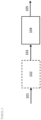
- Figure 1 is a schematic diagram of an exemplary, but non-limiting, embodiment of the process of the invention.
- the present invention has found that by utilising a catalyst system comprising increased amounts of silver tungstate to catalyse hydrogenolysis in combination with one or more catalytic species suitable for hydrogenation, it is surprisingly possible to operate at lower reactor temperatures than are typically used in the conversion of saccharide-containing feedstocks to polyols, whilst still achieving advantageous product yields.
- the one or more catalytic species present in the catalyst system which are suitable for hydrogenation of material present in the reactor may be present in elemental form or as one or more compounds. It is also suitable that these one or more catalytic species may be present in chemical combination with one or more other ingredients in the catalyst system.
- the one or more catalytic species which are suitable for the hydrogenation are not selected from one or more transition metals from Groups 8, 9 or 10 of the Periodic Table, and compounds thereof.
- said catalytic species may be one or more transition metals selected from the group of cobalt, iron, platinum, palladium, ruthenium, rhodium, nickel, iridium, and compounds thereof.
- the one or more catalytic species suitable for hydrogenation are solid, unsupported species.
- examples of such species include Raney Ni.
- the one or more catalytic species suitable for hydrogenation are in homogeneous form.
- the one or more catalytic species suitable for hydrogenation are on one or more solid catalyst supports.
- the solid supports may be in the form of a powder or in the form of regular or irregular shapes such as spheres, extrudates, pills, pellets, tablets, monolithic structures.
- the solid supports may be present as surface coatings, for examples on the surfaces of tubes or heat exchangers.
- Suitable solid support materials are those known to the skilled person and include, but are not limited to aluminas, silicas, zirconium oxide, magnesium oxide, zinc oxide, titanium oxide, carbon, activated carbon, zeolites, clays, silica alumina and mixtures thereof.
- the silver tungstate may be present in the catalyst system in unsupported form or, alternatively, may also be present on an inert support.
- suitable supports include, but are not limited to aluminas, silicas, zirconium oxide, magnesium oxide, zinc oxide, titanium oxide, carbon, activated carbon, zeolites, clays, silica alumina and mixtures thereof.
- the weight ratio of the silver tungstate to the one or more catalytic species suitable for hydrogenation is greater than 4:1 on the basis of the total weight of the catalyst system.
- the present invention further provides a process for the preparation of monoethylene glycol from starting material comprising one or more saccharides, by contacting said starting material with hydrogen in a reactor at a reactor temperature in the range of from 145 to 190 °C in the presence of a solvent and a catalyst system as hereinbefore described.
- the silver tungstate is present as the catalytic species suitable for hydrogenolysis in the reaction mixture in an amount in the range of from 0.005 to 10 wt. %, preferably in the range of from 0.005 to 8 wt. %, more preferably in the range of from 0.01 to 6 wt. %, based on the total weight of the reaction mixture.
- reaction mixture in the present invention is meant the total weight of the starting material, catalyst system, hydrogen, solvent present in the reactor.
- the starting material for use in the process of the present invention comprises one or more saccharides selected from the group consisting of monosaccharides, disaccharides, oligosaccharides and polysaccharides.
- polysaccharides include cellulose, hemicelluloses, starch, glycogen, chitin and mixtures thereof.
- said starting material may be subjected to a pre-treatment before being fed to the reactor in a form that can be more conveniently converted in the process of the present invention.
- Suitable pre-treatment methods are known in the art and one or more may be selected from the group including, but not limited to, sizing, drying, grinding, hot water treatment, steam treatment, hydrolysis, pyrolysis, thermal treatment, chemical treatment, biological treatment.
- the starting material for use in the process of the present invention comprises one or more saccharides selected from the group consisting of glucose, sucrose and starch.
- Said saccharides are suitably present as a solution, a suspension or a slurry in solvent.
- the solvent present in the reactor may be conveniently selected from water, C 1 to C 6 alcohols, ethers and other suitable organic compounds, and mixtures thereof.
- the solvent is water.
- the starting material is provided to the reactor as a solution, suspension or slurry in a solvent, said solvent is also suitably water or a C 1 to C 6 alcohols, ethers and other suitable organic compounds, or mixtures thereof.
- both solvents are the same. More preferably, both solvents comprise water. Most preferably, both solvents are water.
- the temperature in the reactor is generally in the range of from 145 to 190 °C, preferably in the range of from 150 to 190 °C, more preferably in the range of from 150 to 185 °C and most preferably in the range of from 155 to 185 °C.
- the reactor is heated to a temperature within these limits before addition of any starting material and is maintained at such a temperature until all reaction is complete.
- the pressure in the reactor is generally at least 1 MPa, preferably at least 2 MPa, more preferably at least 3 MPa.
- the pressure in the reactor is generally at most 25 MPa, more preferably at most 20MPa, more preferably at most 18 MPa.
- the reactor is pressurised to a pressure within these limits by addition of hydrogen before addition of any starting material and is maintained at such a pressure until all reaction is complete. This can be achieved by subsequent addition of hydrogen.
- the process of the present invention takes place in the presence of hydrogen.
- the process of the present reaction takes place in the absence of air or oxygen.
- the atmosphere in the reactor be evacuated and replaced with hydrogen repeatedly, after loading of any initial reactor contents. It may also be suitable to add further hydrogen to the reactor as the reaction proceeds.
- the reactor in the present invention may be any suitable reactor known in the art.
- the process may be carried out as a batch process or as a continuous flow process.
- the process is a batch process.
- the reactor may be loaded with the catalyst system, solvent and one or more saccharides, and the reactor may then be purged and pressurized with hydrogen at room temperature, sealed and heated to the reaction temperature.
- addition of further portions of starting material may occur in a continuous manner or the portions may be added in a discontinuous manner with time elapsing between the end of the addition of one portion and the start of the addition of the next portion.
- the number and size of each portion will be dependent on the scale of the reactor.
- the total number of portions including the first portion is no less than 5, more preferably no less than 8, even more preferably no less than 10.
- the amount of time over which each portion is added and the time to be elapsed between the end of the addition of one portion and the start of the addition of the next portion will also depend on the scale of the reactor.
- the time to be elapsed between the end of the addition of one portion and the start of the addition of the next portion will be greater than the amount of time over which each portion is added.
- the reaction may then be allowed to proceed to completion for a further period of time.
- the reaction product will then be removed from the reactor.
- the reactor pressurised with hydrogen and heated, and then the first portion of starting material is introduced into the reactor and allowed to react. Further portions of starting material are then provided to the reactor. Reaction product is removed from the reactor in a continuous manner.
- catalysts may be added in a continuous fashion.
- the starting material is suitably a saccharide feedstock comprising at least 1 wt. % saccharide as a solution, suspension or slurry in a solvent.
- said saccharide feedstock comprises at least 2 wt. %, more preferably at least 5 wt. %, even more preferably at least 10 wt. %, most preferably at least 20 wt. % saccharide in a solvent.
- the saccharide feedstock contains no more than 50 wt. %, preferably no more than 40 wt. % saccharide in a solvent.
- the weight ratio of the catalyst system to saccharides in the starting material is suitably in the range of from 1:100 to 1:10000.
- FIG. 1 is a schematic diagram of an exemplary, but non-limiting, embodiment of the process of the invention.
- a feed 101 comprising polysaccharides and solvent is provided to a pre-treatment unit 102 to convert it mainly into glucose, sucrose and/or starch in solvent to form feed 103.
- the pre-treatment unit 102 may consist of multiple pre-treatment units performing the same or different pre-treatment functions.
- Pre-treatment is an optional step in case the feed is polysaccharide.
- Feed 103 is then fed to the main reactor 104 where it undergoes hydrogenation/hydrogenolysis in the presence of catalysts to produce a product stream comprising of MEG 105.
- the process of the present invention is not limited to any particular reactor or flow configurations, and those depicted in Figure 1 are merely exemplary. Furthermore, the sequence in which various feed components are introduced into the process and their respective points of introduction, as well as the flow connections, may be varied from that depicted in Figure 1 .
- Hastelloy C batch autoclaves 75 ml Hastelloy C batch autoclaves, with magnetic stir bars, were used for the experiments.
- known weights of catalysts and feedstocks were added to the autoclaves along with 30 ml of the solvent (typically water). If the catalysts or feedstocks were present as slurries or solutions, the total volume of those as well as the solvent was kept at 30 ml.
- Example 1 0.3 g of glucose was dissolved in 30 ml of water. The loaded autoclave was then purged three times with nitrogen, followed by hydrogen purge. The hydrogen pressure was then raised to 2000 psig or ⁇ 14 MPa of hydrogen and the autoclave was sealed and left stirring overnight to do a leak test.
- the autoclave was de-pressurised to the target hydrogen pressure (1450 psig or 10.1 MPa) at room temperature, and closed. Next the temperature was ramped to the target run temperature either as a fast ramp or in steps.
- Example 1 there was a fast ramp to temperature.
- the autoclave was held at the target temperature for known durations of time (75 min), while both the temperature and pressure were monitored. After the required run time had elapsed, the heating was stopped, and the reactor was cooled down to room temperature, de-pressurised, purged with nitrogen and then opened.
- GC Gas Chromatography
- HPLC High Pressure Liquid Chromatography
- Table 1 provides details on the catalyst systems tested in Example 1.
- Catalyst system B (catalysts B-1 to B-3) is comparative in nature. In addition, catalyst A-1 is also comparative in nature. Catalysts A-2 and A-3 are according to the present invention. Table 1 Catalyst System Catalyst No.
- MEG monoethylene glycol
- MPG monopropylene glycol
- HA hydroxyacetone
- 1,2-BDO 1,2-butanediol
- 1H2BO 1-hydroxy-2-butanone.
- Table 2 presents the gas chromatography (GC) results of testing comparative catalyst A-1 at various temperatures.
- Table 2 Temperature MEG MPG * HA ** 1,2-BDO *** 1H2BO MEG: (MPG+HA) °C wt. % wt. % wt. % wt. % wt. % 230 39.4 9.5 0.8 6.9 1.4 3.8 195 37.7 6.2 1.0 4.1 1.4 5.2 180 31.2 5.1 0.8 3.3 1.1 5.3 160 18.4 4.5 0.0 1.4 0.7 4.1 * hydroxyacetone ** 1,2-butanediol *** 1-hydroxy-2-butanone
- Table 3 presents the GC results of testing comparative catalyst B-2 comprising sodium phosphotungstate as the hydrogenolysis catalyst component and Raney Ni as the hydrogenation catalyst component.
- Table 3 Temperature MEG MPG * HA ** 1,2-BDO *** 1H2BO MEG: (MPG+HA) °C wt. % wt. % wt. % wt. % wt. % 195 34.9 4.6 2.4 3.1 3.6 5.0 160 9.0 4.3 0.4 0.0 0.8 1.9 * hydroxyacetone ** 1,2-butanediol *** 1-hydroxy-2-butanone
- Table 4 presents the GC results of testing various comparative catalyst systems comprising sodium phosphotungstate as the hydrogenolysis catalyst component and Raney Ni as the hydrogenation catalyst component at 160 °C.
- Catalyst system A comprises a combination of silver tungstate as hydrogenolysis catalyst (a) and Raney Ni as hydrogenation catalyst (b), in varying amounts.
- Table 5 presents the results of testing different ratios of said catalyst components in catalyst system A at a temperature of 180°C for a run time of 75 minutes.
- Catalyst system A comprises a combination of silver tungstate as hydrogenolysis catalyst (a) and Raney Ni as hydrogenation catalyst (b), in varying amounts.
- Catalyst system A comprises a combination of silver tungstate and Raney Ni in varying amounts.
- catalyst A-3 not only shows good yields of MEG in testing runs at 160 °C reactor temperature, but also shows very high C2:C3 ratios (MEG:(MPG+HA)) under said low temperature.
- Table 6 Catalyst No. Temp. MEG MPG * HA ** 1,2-BDO *** 1H2BO MEG: (MPG+HA) °C wt. % wt. % wt. % wt. % wt.
Landscapes
- Chemical & Material Sciences (AREA)
- Organic Chemistry (AREA)
- Engineering & Computer Science (AREA)
- Materials Engineering (AREA)
- Chemical Kinetics & Catalysis (AREA)
- Organic Low-Molecular-Weight Compounds And Preparation Thereof (AREA)
- Catalysts (AREA)
- Low-Molecular Organic Synthesis Reactions Using Catalysts (AREA)
Claims (10)
- Katalysatorsystem umfassend:a) Silberwolframat; undb) eine oder mehrere katalytische Arten, die für eine Hydrierung geeignet sind, wobei das Gewichtsverhältnis des Silberwolframats zu der einen oder den mehreren katalytischen Arten, die für die Hydrierung geeignet sind, größer als 4:1 ist, bezogen auf das Gesamtgewicht des Katalysatorsystems,wobei die eine oder die mehreren katalytischen Arten, die für die Hydrierung geeignet sind, aus einem oder mehreren Übergangsmetallen aus den Gruppen 8, 9 oder 10 der Periodentafel oder aus Verbindungen davon ausgewählt sind.
- Katalysatorsystem nach Anspruch 1, wobei die eine oder die mehreren katalytischen Arten, die für die Hydrierung geeignet sind, aus einem oder mehreren Übergangsmetallen ausgewählt sind, die aus der Gruppe von Kobalt, Eisen, Platin, Palladium, Ruthenium, Rhodium, Nickel, Iridium und Verbindungen davon ausgewählt sind.
- Katalysatorsystem nach einem der Ansprüche 1 bis 2, wobei die eine oder die mehreren katalytischen Arten, die für die Hydrierung geeignet sind, feste, nicht unterstützte Arten sind.
- Katalysatorsystem nach einem der Ansprüche 1 bis 3, wobei die eine oder die mehreren katalytischen Arten, die für die Hydrierung geeignet sind, auf festen Katalysatorträgern sind.
- Katalysatorsystem nach Anspruch 4, wobei der feste Katalysatorträger ausgewählte(s) Aluminiumoxide, Kieselsäuren, Zirkoniumoxid, Magnesiumoxid, Zinkoxid, Titanoxid, Kohlenstoff, Aktivkohle, Zeolithe, Tone, Siliziumdioxid-Aluminiumoxid und Mischungen davon ist.
- Verfahren für die Herstellung von Monoethylenglykol aus Ausgangsmaterial, umfassend einen oder mehrere Saccharide, durch Inberührungbringen des Ausgangsmaterials mit Wasserstoff in einem Reaktor bei einer Reaktortemperatur in dem Bereich von 145 bis 190 °C in der Gegenwart eines Lösungsmittels und eines Katalysatorsystems nach einem der Ansprüche 1 bis 5.
- Verfahren nach Anspruch 6, wobei die Saccharide aus der Gruppe ausgewählt sind, bestehend aus Monosacchariden, Disacchariden, Oligosacchariden und Polysacchariden.
- Verfahren nach Anspruch 6 oder 7, wobei die katalytischen Arten, die für eine Hydrogenolyse in dem Katalysatorsystem geeignet sind, in einer Menge in dem Bereich von 0,005 bis 10 Gew.-%, bezogen auf das Gesamtgewicht der Reaktionsmischung, vorhanden sind.
- Verfahren nach einem der Ansprüche 6 bis 8, wobei die Reaktortemperatur in dem Bereich von 150 bis 185 °C liegt.
- Verfahren nach einem der Ansprüche 6 bis 9, wobei der Reaktordruck in dem Bereich von mindestens 1 bis höchstens 25 MPa liegt.
Applications Claiming Priority (2)
| Application Number | Priority Date | Filing Date | Title |
|---|---|---|---|
| EP15195494 | 2015-11-19 | ||
| PCT/EP2016/078071 WO2017085222A1 (en) | 2015-11-19 | 2016-11-17 | Catalyst system and process for the production of glycols |
Publications (2)
| Publication Number | Publication Date |
|---|---|
| EP3377219A1 EP3377219A1 (de) | 2018-09-26 |
| EP3377219B1 true EP3377219B1 (de) | 2023-08-09 |
Family
ID=54695537
Family Applications (1)
| Application Number | Title | Priority Date | Filing Date |
|---|---|---|---|
| EP16797928.5A Active EP3377219B1 (de) | 2015-11-19 | 2016-11-17 | Katalysatorsystem und verfahren zur herstellung von glycolen |
Country Status (6)
| Country | Link |
|---|---|
| US (1) | US10369550B2 (de) |
| EP (1) | EP3377219B1 (de) |
| CN (1) | CN108348900B (de) |
| BR (1) | BR112018010232B1 (de) |
| CA (1) | CA3002894C (de) |
| WO (1) | WO2017085222A1 (de) |
Families Citing this family (3)
| Publication number | Priority date | Publication date | Assignee | Title |
|---|---|---|---|---|
| CN114630817A (zh) | 2019-09-24 | 2022-06-14 | 爱荷华谷类推广协会 | 用于操作连续未调制多催化步骤工艺的方法 |
| US11319269B2 (en) | 2020-09-24 | 2022-05-03 | Iowa Corn Promotion Board | Continuous processes for the selective conversion of aldohexose-yielding carbohydrate to ethylene glycol using low concentrations of retro-aldol catalyst |
| US11680031B2 (en) | 2020-09-24 | 2023-06-20 | T. EN Process Technology, Inc. | Continuous processes for the selective conversion of aldohexose-yielding carbohydrate to ethylene glycol using low concentrations of retro-aldol catalyst |
Family Cites Families (8)
| Publication number | Priority date | Publication date | Assignee | Title |
|---|---|---|---|---|
| US7759280B2 (en) * | 2006-09-20 | 2010-07-20 | Basf Corporation | Catalysts, systems and methods to reduce NOX in an exhaust gas stream |
| CN101214435B (zh) * | 2007-12-26 | 2010-08-11 | 广西南宁化学制药有限责任公司 | 固定化钼酸盐催化剂的制备方法 |
| CN101735014B (zh) * | 2008-11-26 | 2013-07-24 | 中国科学院大连化学物理研究所 | 一种多羟基化合物制乙二醇的方法 |
| CN102190562B (zh) * | 2010-03-17 | 2014-03-05 | 中国科学院大连化学物理研究所 | 一种多羟基化合物制乙二醇的方法 |
| US20110312487A1 (en) | 2011-07-28 | 2011-12-22 | Uop Llc | Catalyst system for generation of polyols from saccharides |
| WO2013015955A2 (en) * | 2011-07-28 | 2013-01-31 | Uop Llc | Generation of polyols from saccharides |
| US9745234B2 (en) * | 2013-08-26 | 2017-08-29 | Shell Oil Company | Process for the preparation of glycols |
| CN103731258B (zh) | 2013-12-20 | 2017-07-28 | 三星电子(中国)研发中心 | 生成密钥的方法及设备 |
-
2016
- 2016-11-17 CN CN201680067008.7A patent/CN108348900B/zh active Active
- 2016-11-17 US US15/776,863 patent/US10369550B2/en active Active
- 2016-11-17 BR BR112018010232-6A patent/BR112018010232B1/pt not_active IP Right Cessation
- 2016-11-17 CA CA3002894A patent/CA3002894C/en active Active
- 2016-11-17 EP EP16797928.5A patent/EP3377219B1/de active Active
- 2016-11-17 WO PCT/EP2016/078071 patent/WO2017085222A1/en not_active Ceased
Non-Patent Citations (1)
| Title |
|---|
| "Studies on the interaction of silver tungstate and mercury (II) halides in solid state", 1 January 1986, India, article JAIN AMITA: "Chapter II: Chemistry of Silver Tungstate and Mercury(II) halides", XP055778178 * |
Also Published As
| Publication number | Publication date |
|---|---|
| BR112018010232A2 (pt) | 2018-11-27 |
| CA3002894A1 (en) | 2017-05-26 |
| CA3002894C (en) | 2023-10-03 |
| US10369550B2 (en) | 2019-08-06 |
| CN108348900A (zh) | 2018-07-31 |
| US20180339287A1 (en) | 2018-11-29 |
| WO2017085222A1 (en) | 2017-05-26 |
| CN108348900B (zh) | 2021-04-16 |
| EP3377219A1 (de) | 2018-09-26 |
| BR112018010232B1 (pt) | 2021-08-10 |
Similar Documents
| Publication | Publication Date | Title |
|---|---|---|
| US9302965B1 (en) | Process for the preparation of glycols | |
| US20180326405A1 (en) | Catalyst system and process for the production of glycols | |
| EP3245180B1 (de) | Verfahren zur herstellung von ethylenglykol aus einer kohlenhydratquelle | |
| CN105517983B (zh) | 制备二醇类的方法 | |
| EP3377218B1 (de) | Katalysatorsystem und verfahren zur herstellung von glycolen | |
| EP3377219B1 (de) | Katalysatorsystem und verfahren zur herstellung von glycolen | |
| US10647647B2 (en) | Process for the preparation of glycols | |
| EP3377466B1 (de) | Katalysatorsystem und verfahren zur herstellung von glycolen | |
| WO2023150656A1 (en) | Process for producing glycol from renewable feedstock | |
| BR112018010230B1 (pt) | Sistema catalisador e processo para a preparação de monoetileno glicol a partir de material de partida que compreende um ou mais sacarídeos |
Legal Events
| Date | Code | Title | Description |
|---|---|---|---|
| STAA | Information on the status of an ep patent application or granted ep patent |
Free format text: STATUS: UNKNOWN |
|
| STAA | Information on the status of an ep patent application or granted ep patent |
Free format text: STATUS: THE INTERNATIONAL PUBLICATION HAS BEEN MADE |
|
| PUAI | Public reference made under article 153(3) epc to a published international application that has entered the european phase |
Free format text: ORIGINAL CODE: 0009012 |
|
| STAA | Information on the status of an ep patent application or granted ep patent |
Free format text: STATUS: REQUEST FOR EXAMINATION WAS MADE |
|
| 17P | Request for examination filed |
Effective date: 20180514 |
|
| AK | Designated contracting states |
Kind code of ref document: A1 Designated state(s): AL AT BE BG CH CY CZ DE DK EE ES FI FR GB GR HR HU IE IS IT LI LT LU LV MC MK MT NL NO PL PT RO RS SE SI SK SM TR |
|
| AX | Request for extension of the european patent |
Extension state: BA ME |
|
| DAV | Request for validation of the european patent (deleted) | ||
| DAX | Request for extension of the european patent (deleted) | ||
| STAA | Information on the status of an ep patent application or granted ep patent |
Free format text: STATUS: EXAMINATION IS IN PROGRESS |
|
| 17Q | First examination report despatched |
Effective date: 20200320 |
|
| GRAP | Despatch of communication of intention to grant a patent |
Free format text: ORIGINAL CODE: EPIDOSNIGR1 |
|
| STAA | Information on the status of an ep patent application or granted ep patent |
Free format text: STATUS: GRANT OF PATENT IS INTENDED |
|
| INTG | Intention to grant announced |
Effective date: 20230421 |
|
| GRAS | Grant fee paid |
Free format text: ORIGINAL CODE: EPIDOSNIGR3 |
|
| GRAA | (expected) grant |
Free format text: ORIGINAL CODE: 0009210 |
|
| STAA | Information on the status of an ep patent application or granted ep patent |
Free format text: STATUS: THE PATENT HAS BEEN GRANTED |
|
| P01 | Opt-out of the competence of the unified patent court (upc) registered |
Effective date: 20230602 |
|
| AK | Designated contracting states |
Kind code of ref document: B1 Designated state(s): AL AT BE BG CH CY CZ DE DK EE ES FI FR GB GR HR HU IE IS IT LI LT LU LV MC MK MT NL NO PL PT RO RS SE SI SK SM TR |
|
| REG | Reference to a national code |
Ref country code: GB Ref legal event code: FG4D |
|
| REG | Reference to a national code |
Ref country code: CH Ref legal event code: EP |
|
| REG | Reference to a national code |
Ref country code: IE Ref legal event code: FG4D |
|
| REG | Reference to a national code |
Ref country code: DE Ref legal event code: R096 Ref document number: 602016081803 Country of ref document: DE |
|
| REG | Reference to a national code |
Ref country code: NL Ref legal event code: FP |
|
| REG | Reference to a national code |
Ref country code: LT Ref legal event code: MG9D |
|
| REG | Reference to a national code |
Ref country code: AT Ref legal event code: MK05 Ref document number: 1596859 Country of ref document: AT Kind code of ref document: T Effective date: 20230809 |
|
| PG25 | Lapsed in a contracting state [announced via postgrant information from national office to epo] |
Ref country code: GR Free format text: LAPSE BECAUSE OF FAILURE TO SUBMIT A TRANSLATION OF THE DESCRIPTION OR TO PAY THE FEE WITHIN THE PRESCRIBED TIME-LIMIT Effective date: 20231110 |
|
| PG25 | Lapsed in a contracting state [announced via postgrant information from national office to epo] |
Ref country code: IS Free format text: LAPSE BECAUSE OF FAILURE TO SUBMIT A TRANSLATION OF THE DESCRIPTION OR TO PAY THE FEE WITHIN THE PRESCRIBED TIME-LIMIT Effective date: 20231209 |
|
| PG25 | Lapsed in a contracting state [announced via postgrant information from national office to epo] |
Ref country code: SE Free format text: LAPSE BECAUSE OF FAILURE TO SUBMIT A TRANSLATION OF THE DESCRIPTION OR TO PAY THE FEE WITHIN THE PRESCRIBED TIME-LIMIT Effective date: 20230809 Ref country code: RS Free format text: LAPSE BECAUSE OF FAILURE TO SUBMIT A TRANSLATION OF THE DESCRIPTION OR TO PAY THE FEE WITHIN THE PRESCRIBED TIME-LIMIT Effective date: 20230809 Ref country code: PT Free format text: LAPSE BECAUSE OF FAILURE TO SUBMIT A TRANSLATION OF THE DESCRIPTION OR TO PAY THE FEE WITHIN THE PRESCRIBED TIME-LIMIT Effective date: 20231211 Ref country code: NO Free format text: LAPSE BECAUSE OF FAILURE TO SUBMIT A TRANSLATION OF THE DESCRIPTION OR TO PAY THE FEE WITHIN THE PRESCRIBED TIME-LIMIT Effective date: 20231109 Ref country code: LV Free format text: LAPSE BECAUSE OF FAILURE TO SUBMIT A TRANSLATION OF THE DESCRIPTION OR TO PAY THE FEE WITHIN THE PRESCRIBED TIME-LIMIT Effective date: 20230809 Ref country code: LT Free format text: LAPSE BECAUSE OF FAILURE TO SUBMIT A TRANSLATION OF THE DESCRIPTION OR TO PAY THE FEE WITHIN THE PRESCRIBED TIME-LIMIT Effective date: 20230809 Ref country code: IS Free format text: LAPSE BECAUSE OF FAILURE TO SUBMIT A TRANSLATION OF THE DESCRIPTION OR TO PAY THE FEE WITHIN THE PRESCRIBED TIME-LIMIT Effective date: 20231209 Ref country code: HR Free format text: LAPSE BECAUSE OF FAILURE TO SUBMIT A TRANSLATION OF THE DESCRIPTION OR TO PAY THE FEE WITHIN THE PRESCRIBED TIME-LIMIT Effective date: 20230809 Ref country code: GR Free format text: LAPSE BECAUSE OF FAILURE TO SUBMIT A TRANSLATION OF THE DESCRIPTION OR TO PAY THE FEE WITHIN THE PRESCRIBED TIME-LIMIT Effective date: 20231110 Ref country code: FI Free format text: LAPSE BECAUSE OF FAILURE TO SUBMIT A TRANSLATION OF THE DESCRIPTION OR TO PAY THE FEE WITHIN THE PRESCRIBED TIME-LIMIT Effective date: 20230809 Ref country code: AT Free format text: LAPSE BECAUSE OF FAILURE TO SUBMIT A TRANSLATION OF THE DESCRIPTION OR TO PAY THE FEE WITHIN THE PRESCRIBED TIME-LIMIT Effective date: 20230809 |
|
| PG25 | Lapsed in a contracting state [announced via postgrant information from national office to epo] |
Ref country code: PL Free format text: LAPSE BECAUSE OF FAILURE TO SUBMIT A TRANSLATION OF THE DESCRIPTION OR TO PAY THE FEE WITHIN THE PRESCRIBED TIME-LIMIT Effective date: 20230809 |
|
| PG25 | Lapsed in a contracting state [announced via postgrant information from national office to epo] |
Ref country code: ES Free format text: LAPSE BECAUSE OF FAILURE TO SUBMIT A TRANSLATION OF THE DESCRIPTION OR TO PAY THE FEE WITHIN THE PRESCRIBED TIME-LIMIT Effective date: 20230809 |
|
| PG25 | Lapsed in a contracting state [announced via postgrant information from national office to epo] |
Ref country code: SM Free format text: LAPSE BECAUSE OF FAILURE TO SUBMIT A TRANSLATION OF THE DESCRIPTION OR TO PAY THE FEE WITHIN THE PRESCRIBED TIME-LIMIT Effective date: 20230809 Ref country code: RO Free format text: LAPSE BECAUSE OF FAILURE TO SUBMIT A TRANSLATION OF THE DESCRIPTION OR TO PAY THE FEE WITHIN THE PRESCRIBED TIME-LIMIT Effective date: 20230809 Ref country code: ES Free format text: LAPSE BECAUSE OF FAILURE TO SUBMIT A TRANSLATION OF THE DESCRIPTION OR TO PAY THE FEE WITHIN THE PRESCRIBED TIME-LIMIT Effective date: 20230809 Ref country code: EE Free format text: LAPSE BECAUSE OF FAILURE TO SUBMIT A TRANSLATION OF THE DESCRIPTION OR TO PAY THE FEE WITHIN THE PRESCRIBED TIME-LIMIT Effective date: 20230809 Ref country code: DK Free format text: LAPSE BECAUSE OF FAILURE TO SUBMIT A TRANSLATION OF THE DESCRIPTION OR TO PAY THE FEE WITHIN THE PRESCRIBED TIME-LIMIT Effective date: 20230809 Ref country code: CZ Free format text: LAPSE BECAUSE OF FAILURE TO SUBMIT A TRANSLATION OF THE DESCRIPTION OR TO PAY THE FEE WITHIN THE PRESCRIBED TIME-LIMIT Effective date: 20230809 Ref country code: SK Free format text: LAPSE BECAUSE OF FAILURE TO SUBMIT A TRANSLATION OF THE DESCRIPTION OR TO PAY THE FEE WITHIN THE PRESCRIBED TIME-LIMIT Effective date: 20230809 |
|
| REG | Reference to a national code |
Ref country code: DE Ref legal event code: R097 Ref document number: 602016081803 Country of ref document: DE |
|
| PLBE | No opposition filed within time limit |
Free format text: ORIGINAL CODE: 0009261 |
|
| STAA | Information on the status of an ep patent application or granted ep patent |
Free format text: STATUS: NO OPPOSITION FILED WITHIN TIME LIMIT |
|
| REG | Reference to a national code |
Ref country code: CH Ref legal event code: PL |
|
| PG25 | Lapsed in a contracting state [announced via postgrant information from national office to epo] |
Ref country code: MC Free format text: LAPSE BECAUSE OF FAILURE TO SUBMIT A TRANSLATION OF THE DESCRIPTION OR TO PAY THE FEE WITHIN THE PRESCRIBED TIME-LIMIT Effective date: 20230809 |
|
| PG25 | Lapsed in a contracting state [announced via postgrant information from national office to epo] |
Ref country code: LU Free format text: LAPSE BECAUSE OF NON-PAYMENT OF DUE FEES Effective date: 20231117 |
|
| 26N | No opposition filed |
Effective date: 20240513 |
|
| PG25 | Lapsed in a contracting state [announced via postgrant information from national office to epo] |
Ref country code: CH Free format text: LAPSE BECAUSE OF NON-PAYMENT OF DUE FEES Effective date: 20231130 |
|
| GBPC | Gb: european patent ceased through non-payment of renewal fee |
Effective date: 20231117 |
|
| PG25 | Lapsed in a contracting state [announced via postgrant information from national office to epo] |
Ref country code: MC Free format text: LAPSE BECAUSE OF FAILURE TO SUBMIT A TRANSLATION OF THE DESCRIPTION OR TO PAY THE FEE WITHIN THE PRESCRIBED TIME-LIMIT Effective date: 20230809 Ref country code: LU Free format text: LAPSE BECAUSE OF NON-PAYMENT OF DUE FEES Effective date: 20231117 Ref country code: CH Free format text: LAPSE BECAUSE OF NON-PAYMENT OF DUE FEES Effective date: 20231130 Ref country code: SI Free format text: LAPSE BECAUSE OF FAILURE TO SUBMIT A TRANSLATION OF THE DESCRIPTION OR TO PAY THE FEE WITHIN THE PRESCRIBED TIME-LIMIT Effective date: 20230809 |
|
| REG | Reference to a national code |
Ref country code: BE Ref legal event code: MM Effective date: 20231130 |
|
| REG | Reference to a national code |
Ref country code: IE Ref legal event code: MM4A |
|
| PG25 | Lapsed in a contracting state [announced via postgrant information from national office to epo] |
Ref country code: IE Free format text: LAPSE BECAUSE OF NON-PAYMENT OF DUE FEES Effective date: 20231117 |
|
| PG25 | Lapsed in a contracting state [announced via postgrant information from national office to epo] |
Ref country code: GB Free format text: LAPSE BECAUSE OF NON-PAYMENT OF DUE FEES Effective date: 20231117 |
|
| PG25 | Lapsed in a contracting state [announced via postgrant information from national office to epo] |
Ref country code: BE Free format text: LAPSE BECAUSE OF NON-PAYMENT OF DUE FEES Effective date: 20231130 |
|
| PGFP | Annual fee paid to national office [announced via postgrant information from national office to epo] |
Ref country code: FR Payment date: 20240909 Year of fee payment: 9 |
|
| PGFP | Annual fee paid to national office [announced via postgrant information from national office to epo] |
Ref country code: NL Payment date: 20240917 Year of fee payment: 9 |
|
| PG25 | Lapsed in a contracting state [announced via postgrant information from national office to epo] |
Ref country code: IE Free format text: LAPSE BECAUSE OF NON-PAYMENT OF DUE FEES Effective date: 20231117 Ref country code: GB Free format text: LAPSE BECAUSE OF NON-PAYMENT OF DUE FEES Effective date: 20231117 Ref country code: BE Free format text: LAPSE BECAUSE OF NON-PAYMENT OF DUE FEES Effective date: 20231130 |
|
| PG25 | Lapsed in a contracting state [announced via postgrant information from national office to epo] |
Ref country code: BG Free format text: LAPSE BECAUSE OF FAILURE TO SUBMIT A TRANSLATION OF THE DESCRIPTION OR TO PAY THE FEE WITHIN THE PRESCRIBED TIME-LIMIT Effective date: 20230809 |
|
| PG25 | Lapsed in a contracting state [announced via postgrant information from national office to epo] |
Ref country code: BG Free format text: LAPSE BECAUSE OF FAILURE TO SUBMIT A TRANSLATION OF THE DESCRIPTION OR TO PAY THE FEE WITHIN THE PRESCRIBED TIME-LIMIT Effective date: 20230809 |
|
| PGFP | Annual fee paid to national office [announced via postgrant information from national office to epo] |
Ref country code: DE Payment date: 20240925 Year of fee payment: 9 |
|
| PGFP | Annual fee paid to national office [announced via postgrant information from national office to epo] |
Ref country code: IT Payment date: 20241010 Year of fee payment: 9 |
|
| PG25 | Lapsed in a contracting state [announced via postgrant information from national office to epo] |
Ref country code: CY Free format text: LAPSE BECAUSE OF FAILURE TO SUBMIT A TRANSLATION OF THE DESCRIPTION OR TO PAY THE FEE WITHIN THE PRESCRIBED TIME-LIMIT; INVALID AB INITIO Effective date: 20161117 |
|
| PG25 | Lapsed in a contracting state [announced via postgrant information from national office to epo] |
Ref country code: HU Free format text: LAPSE BECAUSE OF FAILURE TO SUBMIT A TRANSLATION OF THE DESCRIPTION OR TO PAY THE FEE WITHIN THE PRESCRIBED TIME-LIMIT; INVALID AB INITIO Effective date: 20161117 |
|
| PG25 | Lapsed in a contracting state [announced via postgrant information from national office to epo] |
Ref country code: TR Free format text: LAPSE BECAUSE OF FAILURE TO SUBMIT A TRANSLATION OF THE DESCRIPTION OR TO PAY THE FEE WITHIN THE PRESCRIBED TIME-LIMIT Effective date: 20230809 |