EP3377080B1 - Peptides with anti-angiogenic, anti-lymphangiogenic, and anti-edemic properties and nanoparticle formulations - Google Patents
Peptides with anti-angiogenic, anti-lymphangiogenic, and anti-edemic properties and nanoparticle formulations Download PDFInfo
- Publication number
- EP3377080B1 EP3377080B1 EP16867239.2A EP16867239A EP3377080B1 EP 3377080 B1 EP3377080 B1 EP 3377080B1 EP 16867239 A EP16867239 A EP 16867239A EP 3377080 B1 EP3377080 B1 EP 3377080B1
- Authority
- EP
- European Patent Office
- Prior art keywords
- cancer
- peptide
- tumors
- seq
- plga
- Prior art date
- Legal status (The legal status is an assumption and is not a legal conclusion. Google has not performed a legal analysis and makes no representation as to the accuracy of the status listed.)
- Active
Links
Images









Classifications
-
- A—HUMAN NECESSITIES
- A61—MEDICAL OR VETERINARY SCIENCE; HYGIENE
- A61K—PREPARATIONS FOR MEDICAL, DENTAL OR TOILETRY PURPOSES
- A61K38/00—Medicinal preparations containing peptides
- A61K38/16—Peptides having more than 20 amino acids; Gastrins; Somatostatins; Melanotropins; Derivatives thereof
- A61K38/17—Peptides having more than 20 amino acids; Gastrins; Somatostatins; Melanotropins; Derivatives thereof from animals; from humans
- A61K38/39—Connective tissue peptides, e.g. collagen, elastin, laminin, fibronectin, vitronectin, cold insoluble globulin [CIG]
-
- A—HUMAN NECESSITIES
- A61—MEDICAL OR VETERINARY SCIENCE; HYGIENE
- A61K—PREPARATIONS FOR MEDICAL, DENTAL OR TOILETRY PURPOSES
- A61K45/00—Medicinal preparations containing active ingredients not provided for in groups A61K31/00 - A61K41/00
- A61K45/06—Mixtures of active ingredients without chemical characterisation, e.g. antiphlogistics and cardiaca
-
- A—HUMAN NECESSITIES
- A61—MEDICAL OR VETERINARY SCIENCE; HYGIENE
- A61K—PREPARATIONS FOR MEDICAL, DENTAL OR TOILETRY PURPOSES
- A61K47/00—Medicinal preparations characterised by the non-active ingredients used, e.g. carriers or inert additives; Targeting or modifying agents chemically bound to the active ingredient
- A61K47/50—Medicinal preparations characterised by the non-active ingredients used, e.g. carriers or inert additives; Targeting or modifying agents chemically bound to the active ingredient the non-active ingredient being chemically bound to the active ingredient, e.g. polymer-drug conjugates
- A61K47/69—Medicinal preparations characterised by the non-active ingredients used, e.g. carriers or inert additives; Targeting or modifying agents chemically bound to the active ingredient the non-active ingredient being chemically bound to the active ingredient, e.g. polymer-drug conjugates the conjugate being characterised by physical or galenical forms, e.g. emulsion, particle, inclusion complex, stent or kit
- A61K47/6921—Medicinal preparations characterised by the non-active ingredients used, e.g. carriers or inert additives; Targeting or modifying agents chemically bound to the active ingredient the non-active ingredient being chemically bound to the active ingredient, e.g. polymer-drug conjugates the conjugate being characterised by physical or galenical forms, e.g. emulsion, particle, inclusion complex, stent or kit the form being a particulate, a powder, an adsorbate, a bead or a sphere
- A61K47/6927—Medicinal preparations characterised by the non-active ingredients used, e.g. carriers or inert additives; Targeting or modifying agents chemically bound to the active ingredient the non-active ingredient being chemically bound to the active ingredient, e.g. polymer-drug conjugates the conjugate being characterised by physical or galenical forms, e.g. emulsion, particle, inclusion complex, stent or kit the form being a particulate, a powder, an adsorbate, a bead or a sphere the form being a solid microparticle having no hollow or gas-filled cores
-
- A—HUMAN NECESSITIES
- A61—MEDICAL OR VETERINARY SCIENCE; HYGIENE
- A61K—PREPARATIONS FOR MEDICAL, DENTAL OR TOILETRY PURPOSES
- A61K47/00—Medicinal preparations characterised by the non-active ingredients used, e.g. carriers or inert additives; Targeting or modifying agents chemically bound to the active ingredient
- A61K47/50—Medicinal preparations characterised by the non-active ingredients used, e.g. carriers or inert additives; Targeting or modifying agents chemically bound to the active ingredient the non-active ingredient being chemically bound to the active ingredient, e.g. polymer-drug conjugates
- A61K47/69—Medicinal preparations characterised by the non-active ingredients used, e.g. carriers or inert additives; Targeting or modifying agents chemically bound to the active ingredient the non-active ingredient being chemically bound to the active ingredient, e.g. polymer-drug conjugates the conjugate being characterised by physical or galenical forms, e.g. emulsion, particle, inclusion complex, stent or kit
- A61K47/6921—Medicinal preparations characterised by the non-active ingredients used, e.g. carriers or inert additives; Targeting or modifying agents chemically bound to the active ingredient the non-active ingredient being chemically bound to the active ingredient, e.g. polymer-drug conjugates the conjugate being characterised by physical or galenical forms, e.g. emulsion, particle, inclusion complex, stent or kit the form being a particulate, a powder, an adsorbate, a bead or a sphere
- A61K47/6927—Medicinal preparations characterised by the non-active ingredients used, e.g. carriers or inert additives; Targeting or modifying agents chemically bound to the active ingredient the non-active ingredient being chemically bound to the active ingredient, e.g. polymer-drug conjugates the conjugate being characterised by physical or galenical forms, e.g. emulsion, particle, inclusion complex, stent or kit the form being a particulate, a powder, an adsorbate, a bead or a sphere the form being a solid microparticle having no hollow or gas-filled cores
- A61K47/6929—Medicinal preparations characterised by the non-active ingredients used, e.g. carriers or inert additives; Targeting or modifying agents chemically bound to the active ingredient the non-active ingredient being chemically bound to the active ingredient, e.g. polymer-drug conjugates the conjugate being characterised by physical or galenical forms, e.g. emulsion, particle, inclusion complex, stent or kit the form being a particulate, a powder, an adsorbate, a bead or a sphere the form being a solid microparticle having no hollow or gas-filled cores the form being a nanoparticle, e.g. an immuno-nanoparticle
- A61K47/6931—Medicinal preparations characterised by the non-active ingredients used, e.g. carriers or inert additives; Targeting or modifying agents chemically bound to the active ingredient the non-active ingredient being chemically bound to the active ingredient, e.g. polymer-drug conjugates the conjugate being characterised by physical or galenical forms, e.g. emulsion, particle, inclusion complex, stent or kit the form being a particulate, a powder, an adsorbate, a bead or a sphere the form being a solid microparticle having no hollow or gas-filled cores the form being a nanoparticle, e.g. an immuno-nanoparticle the material constituting the nanoparticle being a polymer
- A61K47/6935—Medicinal preparations characterised by the non-active ingredients used, e.g. carriers or inert additives; Targeting or modifying agents chemically bound to the active ingredient the non-active ingredient being chemically bound to the active ingredient, e.g. polymer-drug conjugates the conjugate being characterised by physical or galenical forms, e.g. emulsion, particle, inclusion complex, stent or kit the form being a particulate, a powder, an adsorbate, a bead or a sphere the form being a solid microparticle having no hollow or gas-filled cores the form being a nanoparticle, e.g. an immuno-nanoparticle the material constituting the nanoparticle being a polymer the polymer being obtained otherwise than by reactions involving carbon to carbon unsaturated bonds, e.g. polyesters, polyamides or polyglycerol
-
- A—HUMAN NECESSITIES
- A61—MEDICAL OR VETERINARY SCIENCE; HYGIENE
- A61K—PREPARATIONS FOR MEDICAL, DENTAL OR TOILETRY PURPOSES
- A61K47/00—Medicinal preparations characterised by the non-active ingredients used, e.g. carriers or inert additives; Targeting or modifying agents chemically bound to the active ingredient
- A61K47/50—Medicinal preparations characterised by the non-active ingredients used, e.g. carriers or inert additives; Targeting or modifying agents chemically bound to the active ingredient the non-active ingredient being chemically bound to the active ingredient, e.g. polymer-drug conjugates
- A61K47/69—Medicinal preparations characterised by the non-active ingredients used, e.g. carriers or inert additives; Targeting or modifying agents chemically bound to the active ingredient the non-active ingredient being chemically bound to the active ingredient, e.g. polymer-drug conjugates the conjugate being characterised by physical or galenical forms, e.g. emulsion, particle, inclusion complex, stent or kit
- A61K47/6921—Medicinal preparations characterised by the non-active ingredients used, e.g. carriers or inert additives; Targeting or modifying agents chemically bound to the active ingredient the non-active ingredient being chemically bound to the active ingredient, e.g. polymer-drug conjugates the conjugate being characterised by physical or galenical forms, e.g. emulsion, particle, inclusion complex, stent or kit the form being a particulate, a powder, an adsorbate, a bead or a sphere
- A61K47/6927—Medicinal preparations characterised by the non-active ingredients used, e.g. carriers or inert additives; Targeting or modifying agents chemically bound to the active ingredient the non-active ingredient being chemically bound to the active ingredient, e.g. polymer-drug conjugates the conjugate being characterised by physical or galenical forms, e.g. emulsion, particle, inclusion complex, stent or kit the form being a particulate, a powder, an adsorbate, a bead or a sphere the form being a solid microparticle having no hollow or gas-filled cores
- A61K47/6929—Medicinal preparations characterised by the non-active ingredients used, e.g. carriers or inert additives; Targeting or modifying agents chemically bound to the active ingredient the non-active ingredient being chemically bound to the active ingredient, e.g. polymer-drug conjugates the conjugate being characterised by physical or galenical forms, e.g. emulsion, particle, inclusion complex, stent or kit the form being a particulate, a powder, an adsorbate, a bead or a sphere the form being a solid microparticle having no hollow or gas-filled cores the form being a nanoparticle, e.g. an immuno-nanoparticle
- A61K47/6931—Medicinal preparations characterised by the non-active ingredients used, e.g. carriers or inert additives; Targeting or modifying agents chemically bound to the active ingredient the non-active ingredient being chemically bound to the active ingredient, e.g. polymer-drug conjugates the conjugate being characterised by physical or galenical forms, e.g. emulsion, particle, inclusion complex, stent or kit the form being a particulate, a powder, an adsorbate, a bead or a sphere the form being a solid microparticle having no hollow or gas-filled cores the form being a nanoparticle, e.g. an immuno-nanoparticle the material constituting the nanoparticle being a polymer
- A61K47/6935—Medicinal preparations characterised by the non-active ingredients used, e.g. carriers or inert additives; Targeting or modifying agents chemically bound to the active ingredient the non-active ingredient being chemically bound to the active ingredient, e.g. polymer-drug conjugates the conjugate being characterised by physical or galenical forms, e.g. emulsion, particle, inclusion complex, stent or kit the form being a particulate, a powder, an adsorbate, a bead or a sphere the form being a solid microparticle having no hollow or gas-filled cores the form being a nanoparticle, e.g. an immuno-nanoparticle the material constituting the nanoparticle being a polymer the polymer being obtained otherwise than by reactions involving carbon to carbon unsaturated bonds, e.g. polyesters, polyamides or polyglycerol
- A61K47/6937—Medicinal preparations characterised by the non-active ingredients used, e.g. carriers or inert additives; Targeting or modifying agents chemically bound to the active ingredient the non-active ingredient being chemically bound to the active ingredient, e.g. polymer-drug conjugates the conjugate being characterised by physical or galenical forms, e.g. emulsion, particle, inclusion complex, stent or kit the form being a particulate, a powder, an adsorbate, a bead or a sphere the form being a solid microparticle having no hollow or gas-filled cores the form being a nanoparticle, e.g. an immuno-nanoparticle the material constituting the nanoparticle being a polymer the polymer being obtained otherwise than by reactions involving carbon to carbon unsaturated bonds, e.g. polyesters, polyamides or polyglycerol the polymer being PLGA, PLA or polyglycolic acid
-
- A—HUMAN NECESSITIES
- A61—MEDICAL OR VETERINARY SCIENCE; HYGIENE
- A61K—PREPARATIONS FOR MEDICAL, DENTAL OR TOILETRY PURPOSES
- A61K9/00—Medicinal preparations characterised by special physical form
- A61K9/0012—Galenical forms characterised by the site of application
- A61K9/0048—Eye, e.g. artificial tears
-
- A—HUMAN NECESSITIES
- A61—MEDICAL OR VETERINARY SCIENCE; HYGIENE
- A61K—PREPARATIONS FOR MEDICAL, DENTAL OR TOILETRY PURPOSES
- A61K9/00—Medicinal preparations characterised by special physical form
- A61K9/48—Preparations in capsules, e.g. of gelatin, of chocolate
- A61K9/50—Microcapsules having a gas, liquid or semi-solid filling; Solid microparticles or pellets surrounded by a distinct coating layer, e.g. coated microspheres, coated drug crystals
-
- A—HUMAN NECESSITIES
- A61—MEDICAL OR VETERINARY SCIENCE; HYGIENE
- A61P—SPECIFIC THERAPEUTIC ACTIVITY OF CHEMICAL COMPOUNDS OR MEDICINAL PREPARATIONS
- A61P27/00—Drugs for disorders of the senses
- A61P27/02—Ophthalmic agents
-
- A—HUMAN NECESSITIES
- A61—MEDICAL OR VETERINARY SCIENCE; HYGIENE
- A61P—SPECIFIC THERAPEUTIC ACTIVITY OF CHEMICAL COMPOUNDS OR MEDICINAL PREPARATIONS
- A61P35/00—Antineoplastic agents
-
- C—CHEMISTRY; METALLURGY
- C07—ORGANIC CHEMISTRY
- C07K—PEPTIDES
- C07K14/00—Peptides having more than 20 amino acids; Gastrins; Somatostatins; Melanotropins; Derivatives thereof
- C07K14/435—Peptides having more than 20 amino acids; Gastrins; Somatostatins; Melanotropins; Derivatives thereof from animals; from humans
- C07K14/475—Growth factors; Growth regulators
- C07K14/48—Nerve growth factor [NGF]
-
- C—CHEMISTRY; METALLURGY
- C07—ORGANIC CHEMISTRY
- C07K—PEPTIDES
- C07K14/00—Peptides having more than 20 amino acids; Gastrins; Somatostatins; Melanotropins; Derivatives thereof
- C07K14/435—Peptides having more than 20 amino acids; Gastrins; Somatostatins; Melanotropins; Derivatives thereof from animals; from humans
- C07K14/78—Connective tissue peptides, e.g. collagen, elastin, laminin, fibronectin, vitronectin or cold insoluble globulin [CIG]
-
- C—CHEMISTRY; METALLURGY
- C07—ORGANIC CHEMISTRY
- C07K—PEPTIDES
- C07K7/00—Peptides having 5 to 20 amino acids in a fully defined sequence; Derivatives thereof
- C07K7/04—Linear peptides containing only normal peptide links
- C07K7/08—Linear peptides containing only normal peptide links having 12 to 20 amino acids
-
- G—PHYSICS
- G01—MEASURING; TESTING
- G01N—INVESTIGATING OR ANALYSING MATERIALS BY DETERMINING THEIR CHEMICAL OR PHYSICAL PROPERTIES
- G01N33/00—Investigating or analysing materials by specific methods not covered by groups G01N1/00 - G01N31/00
- G01N33/48—Biological material, e.g. blood, urine; Haemocytometers
- G01N33/50—Chemical analysis of biological material, e.g. blood, urine; Testing involving biospecific ligand binding methods; Immunological testing
- G01N33/53—Immunoassay; Biospecific binding assay; Materials therefor
- G01N33/569—Immunoassay; Biospecific binding assay; Materials therefor for microorganisms, e.g. protozoa, bacteria, viruses
- G01N33/56966—Animal cells
-
- G—PHYSICS
- G01—MEASURING; TESTING
- G01N—INVESTIGATING OR ANALYSING MATERIALS BY DETERMINING THEIR CHEMICAL OR PHYSICAL PROPERTIES
- G01N33/00—Investigating or analysing materials by specific methods not covered by groups G01N1/00 - G01N31/00
- G01N33/48—Biological material, e.g. blood, urine; Haemocytometers
- G01N33/50—Chemical analysis of biological material, e.g. blood, urine; Testing involving biospecific ligand binding methods; Immunological testing
- G01N33/58—Chemical analysis of biological material, e.g. blood, urine; Testing involving biospecific ligand binding methods; Immunological testing involving labelled substances
- G01N33/585—Chemical analysis of biological material, e.g. blood, urine; Testing involving biospecific ligand binding methods; Immunological testing involving labelled substances with a particulate label, e.g. coloured latex
- G01N33/587—Nanoparticles
-
- G—PHYSICS
- G01—MEASURING; TESTING
- G01N—INVESTIGATING OR ANALYSING MATERIALS BY DETERMINING THEIR CHEMICAL OR PHYSICAL PROPERTIES
- G01N33/00—Investigating or analysing materials by specific methods not covered by groups G01N1/00 - G01N31/00
- G01N33/48—Biological material, e.g. blood, urine; Haemocytometers
- G01N33/50—Chemical analysis of biological material, e.g. blood, urine; Testing involving biospecific ligand binding methods; Immunological testing
- G01N33/68—Chemical analysis of biological material, e.g. blood, urine; Testing involving biospecific ligand binding methods; Immunological testing involving proteins, peptides or amino acids
- G01N33/6887—Chemical analysis of biological material, e.g. blood, urine; Testing involving biospecific ligand binding methods; Immunological testing involving proteins, peptides or amino acids from muscle, cartilage or connective tissue
-
- G—PHYSICS
- G01—MEASURING; TESTING
- G01N—INVESTIGATING OR ANALYSING MATERIALS BY DETERMINING THEIR CHEMICAL OR PHYSICAL PROPERTIES
- G01N2333/00—Assays involving biological materials from specific organisms or of a specific nature
- G01N2333/435—Assays involving biological materials from specific organisms or of a specific nature from animals; from humans
- G01N2333/705—Assays involving receptors, cell surface antigens or cell surface determinants
- G01N2333/70546—Integrin superfamily, e.g. VLAs, leuCAM, GPIIb/GPIIIa, LPAM
-
- G—PHYSICS
- G01—MEASURING; TESTING
- G01N—INVESTIGATING OR ANALYSING MATERIALS BY DETERMINING THEIR CHEMICAL OR PHYSICAL PROPERTIES
- G01N2333/00—Assays involving biological materials from specific organisms or of a specific nature
- G01N2333/435—Assays involving biological materials from specific organisms or of a specific nature from animals; from humans
- G01N2333/78—Connective tissue peptides, e.g. collagen, elastin, laminin, fibronectin, vitronectin, cold insoluble globulin [CIG]
-
- G—PHYSICS
- G01—MEASURING; TESTING
- G01N—INVESTIGATING OR ANALYSING MATERIALS BY DETERMINING THEIR CHEMICAL OR PHYSICAL PROPERTIES
- G01N2800/00—Detection or diagnosis of diseases
- G01N2800/70—Mechanisms involved in disease identification
- G01N2800/7014—(Neo)vascularisation - Angiogenesis
-
- Y—GENERAL TAGGING OF NEW TECHNOLOGICAL DEVELOPMENTS; GENERAL TAGGING OF CROSS-SECTIONAL TECHNOLOGIES SPANNING OVER SEVERAL SECTIONS OF THE IPC; TECHNICAL SUBJECTS COVERED BY FORMER USPC CROSS-REFERENCE ART COLLECTIONS [XRACs] AND DIGESTS
- Y02—TECHNOLOGIES OR APPLICATIONS FOR MITIGATION OR ADAPTATION AGAINST CLIMATE CHANGE
- Y02A—TECHNOLOGIES FOR ADAPTATION TO CLIMATE CHANGE
- Y02A50/00—TECHNOLOGIES FOR ADAPTATION TO CLIMATE CHANGE in human health protection, e.g. against extreme weather
- Y02A50/30—Against vector-borne diseases, e.g. mosquito-borne, fly-borne, tick-borne or waterborne diseases whose impact is exacerbated by climate change
Definitions
- Peptides derived from collagen type IV have been described for their potential to inhibit angiogenesis and lymphangiogenesis.
- Peptide motifs derived from the non-collagenous domain of the ⁇ 5 fibril of type IV collagen are described in US Patent 9,056,923 , WO 2012/079088 , and Lee et al., Scientific Reports 4:7139 (2014 ).
- a peptide comprising the motif NINNV is described as inhibiting proliferation, migration, and tubule formation of human umbilical vein endothelial cells (HUVEC).
- UAVEC human umbilical vein endothelial cells
- the present disclosure focuses on the therapeutic properties of such peptides in combination with immune checkpoint blockade. Teachings useful to understand the background can be found in Hodi (2014); Cancer Immunol. Res. 2(7):632-642 .
- a pharmaceutical composition comprising a peptide targeting ⁇ 5 ⁇ 1 and ⁇ V ⁇ 3 integrins for use in treating cancer.
- the peptides are derived from the ⁇ 5 fibril of type IV collagen and have the amino acid sequence according to SEQ ID NO:1-31.
- VAGFR vascular endothelial growth factor receptor
- HGFR hepatocyte growth factor receptor
- IGFR insulin-like growth factor receptor
- PDGFR platelet-derived growth factor receptor
- compositions improve immune checkpoint inhibitor therapy by inhibiting angiogenesis and allowing dendritic cell maturation and more robust lymphocyte endothelial trafficking.
- the peptide is formulated with a polymeric nanoparticle or microparticle carrier.
- the present invention in various aspects and embodiments involves pharmaceutical compositions of peptides derived from the ⁇ 5 fibril of type IV collagen for use in treating cancer in a patient.
- the peptides have an amino acid sequence chosen from SEQ ID NO:1 - 31.
- the peptides target ⁇ 5 ⁇ 1 and ⁇ V ⁇ 3 integrins, and inhibit signaling through multiple receptors, including vascular endothelial growth factor receptor (VEGFR), hepatocyte growth factor receptor (HGFR), insulin-like growth factor receptor (IGFR), and platelet-derived growth factor receptor (PDGFR).
- VEGFR vascular endothelial growth factor receptor
- HGFR hepatocyte growth factor receptor
- IGFR insulin-like growth factor receptor
- PDGFR platelet-derived growth factor receptor
- peptide targeting integrins include those described in US 9,056,923 .
- a peptide targeting integrins may comprise the amino acid sequence LRRFSTXPXXXXNINNVXNF (SEQ ID NO:1), where X is a standard amino acid or non-genetically encoded amino acid.
- the peptide may contain about 30 amino acids or less, or about 25 amino acids of less, or about 24 amino acids, or about 23 amino acids, or about 22 amino acids, or about 21 amino acids, or about 20 amino acids.
- peptides that target integrins have the amino acid sequence LRRFSTAPFAFIDINDVINF (SEQ ID NO:2), or LRRFSTAPFAFININNVINF (SEQ ID NO:3), or LRRFSTAPFAFIDINDVINW (SEQ ID NO:4), or FTNINNVTN (SEQ ID NO: 5), or FTDINDVTN (SEQ ID NO:6), or an amino acid sequence that is a derivative of any of the foregoing as set forth in SEQ ID NOs: 7-31.
- the peptide of SEQ ID NO:2 is also referred to herein as P07.
- the peptide of SEQ ID NO:3 is also referred to herein as P06.
- the peptide of SEQ ID NO:4 is also referred to herein as P08.
- the peptide of SEQ ID NO:5 is also referred to herein as P05.
- the peptide of SEQ ID NO:6 is also referred to herein as P09.
- the peptide of SEQ ID NO:2 (in comparison to SEQ ID NO:1) has an Aspartic Acid at positions 13 and 16, which improves the physical properties of the peptide without negatively impacting the biological activities.
- N- and/or C- termini may optionally be occupied by another chemical group (other than amine or carboxy, e.g., amide or thiol), and which can be useful for conjugation of other moieties, including PEG or PLGA-PEG co-polymers, as described in further detail herein.
- Peptides may be provided in the form of a pharmaceutically acceptable salt in some embodiments, or complexed with other components or encapsulated in particles for targeted or sustained delivery to particular tissues.
- the 20 genetically encoded amino acids can be grouped into the following six standard amino acid groups:
- conservative substitutions are defined as exchanges of an amino acid by another amino acid listed within the same group of the six standard amino acid groups shown above. For example, the exchange of Asp by Glu retains one negative charge in the so modified polypeptide.
- glycine and proline may be substituted for one another based on their ability to disrupt ⁇ -helices.
- Some preferred conservative substitutions within the above six groups are exchanges within the following sub-groups: (i) Ala, Val, Leu and Ile; (ii) Ser and Thr; (ii) Asn and Gln; (iv) Lys and Arg; and (v) Tyr and Phe.
- non-conservative substitutions are defined as exchanges of an amino acid by another amino acid listed in a different group of the six standard amino acid groups (1) to (6) shown above.
- the peptide may contain at least one, at least two, or at least three D-amino acids. It may contain from one to about five (e.g., 1, 2, or 3) non-genetically encoded amino acids, which are optionally selected from 2-Aminobutyric acid (Abu), norleucine (Nle), 4-chlorophenylalanine (4-ClPhe), and Allylglycine (AllylGly).
- Abu 2-Aminobutyric acid
- Nle norleucine
- 4-chlorophenylalanine (4-ClPhe
- Allylglycine AllylGlycine
- Peptide agents derived from the peptides of SEQ ID NOS: 2 to 6 include:
- the peptide may be delivered in the form of nanoparticle and microparticle formulations, either conjugated to the surface or encapsulated.
- Exemplary particle formulations based on PLGA-PEG polymers are described in detail herein.
- the peptide agents can be chemically synthesized and purified using well-known techniques, such as solid-phase synthesis. See US 9,051,349 .
- the peptides described herein target ⁇ 5 ⁇ 1 and ⁇ V ⁇ 3 integrins, and inhibit signaling through multiple receptors, including vascular endothelial growth factor receptor (VEGFR), hepatocyte growth factor receptor (HGFR), insulin-like growth factor receptor (IGFR), and platelet derived growth factor receptor (PDGFR).
- VEGFR vascular endothelial growth factor receptor
- HGFR hepatocyte growth factor receptor
- IGFR insulin-like growth factor receptor
- PDGFR platelet derived growth factor receptor
- Integrins are transmembrane receptors that are the bridges for cell-cell and cell-extracellular matrix (ECM) interactions. Signal transduction from integrins effects the chemical composition and mechanical status of the ECM, which controls numerous biological responses such as regulation of the cell cycle, cell shape, and/or motility; or new receptors being added to the cell membrane. This allows rapid and flexible responses to events at the cell surface.
- Integrins work alongside other receptors such as cadherins, the immunoglobulin superfamily cell adhesion molecules, selectins and syndecans to mediate cell-cell and cell-matrix interaction.
- Ligands for integrins include fibronectin, vitronectin, collagen, and laminin.
- the invention provides pharmaceutical compositions for use in a method for treating cancer in a patient, by normalizing a tumor microenvironment, and in particular by improving immune checkpoint inhibitor therapy.
- the method comprises administering an effective amount of a peptide having the amino acid sequence of any one of SEQ ID NO:1 to 6, or a derivative as set forth in SEQ ID NOs: 7-31 or combination thereof, to a cancer patient undergoing therapy with (or in preparation for therapy) an immune checkpoint inhibitor.
- Angiogenesis is a drug target for treating cancer.
- VEGF and its receptor VEGFR2 are important mediators of angiogenesis.
- Bevacizumab an antibody that sequesters human VEGF, and other small molecule tyrosine kinase inhibitors that inhibit VEGFR2 have been developed for various types of cancer.
- VEGF also functions as an immune suppressor by inhibiting the maturation of dendritic cells. Tumors are thought to produce VEGF both to attract neovasculature and to suppress the immune system by reducing the number of mature immune cells and modulating lymphocyte endothelial trafficking.
- checkpoint inhibitors such as ipilimumab, tremelimumab, nivolumab, and pembrolizumab
- checkpoint inhibitors for which the peptides and compositions of the present invention may work synergistically, include LAG-3, KIR, OX40L, IDO-1, and TIM-3.
- the specificity of the peptide for ⁇ 5 ⁇ 1 and ⁇ V ⁇ 3 integrins, as disclosed herein, suggests other medically important roles for the peptide in cancer therapy.
- the receptors have been identified as the ⁇ 5 ⁇ 1 and ⁇ V ⁇ 3 integrins. Integrins function as co-receptors for many different growth factor receptors.
- the peptides described herein and derivatives thereof inhibit signaling from the vascular endothelial growth factor receptor (VEGFR2), the hepatocyte growth factor receptor (c-met), and insulin-like growth factor receptor among others.
- VEGFR2 vascular endothelial growth factor receptor
- c-met hepatocyte growth factor receptor
- insulin-like growth factor receptor among others.
- P07 for example, strongly inhibits VEGF induced neovascularization and leakage in mouse models of retinal and choroidal neovascularization and vascular leakage.
- VEGF also causes immunosuppression which is exploited by the tumor to dampen the immune response against it. Since P07 blocks signaling by VEGF, it could effectively act as an immune system booster and thus promote attack on the tumor by the immune system.
- the immune checkpoint inhibitor can be an anti-PD-1 antibody, an anti-PD-L1 antibody, or an anti-CTLA-4 antibody.
- the methods can be useful against any cancer where immune checkpoint therapy is effective, and especially where the cancer is a sarcoma, carcinoma, or solid tumor cancer selected from germ line tumors, tumors of the central nervous system, breast cancer, prostate cancer, cervical cancer, uterine cancer, lung cancer, ovarian cancer, testicular cancer, thyroid cancer, astrocytoma, glioma, pancreatic cancer, stomach cancer, liver cancer, colon cancer, melanoma (including advanced melanoma), renal cancer, bladder cancer, esophageal cancer, cancer of the larynx, cancer of the parotid, cancer of the biliary tract, rectal cancer, endometrial cancer, squamous cell carcinomas, adenocarcinomas, small cell carcinomas, neuroblastomas, mesotheliomas, adrenocortical carcinomas, epit
- the cancer may be non-small cell lung cancer, melanoma, prostate cancer, metastatic renal cell cancer.
- the cancer is positive for PD-1, PD-L1 or CTLA-4, and the checkpoint inhibitor therapy is an agent that inhibits an interaction between PD-1 and PD-L1 or CTLA-4 and B7.
- stage I or II early stage cancer
- stage III or stage IV stage IV cancers
- Stage I cancers are localized to one part of the body.
- Stage II cancers are locally advanced, as are Stage III cancers.
- Stage III cancers Whether a cancer is designated as Stage II or Stage III can depend on the specific type of cancer. For example, stage II can indicate affected lymph nodes on only one side of the diaphragm, whereas stage III indicates affected lymph nodes above and below the diaphragm. The specific criteria for stages II and III therefore differ according to diagnosis.
- Stage IV cancers have often metastasized, or spread to other organs or throughout the body.
- the cancer can be non-resectable.
- a non-resectable cancer is a malignancy which cannot be surgically removed, due either to the number of metastatic foci, or because it is in a surgical danger zone.
- the patient may be non-responsive or only partially responsive to the immune checkpoint inhibitor alone.
- the peptide or pharmaceutical composition may be administered with (or during) immune checkpoint inhibitor therapy.
- the patient may be treated for one to four weeks with the peptide, followed by immune checkpoint inhibitor therapy.
- the peptide can be administered in a variety of forms depending on the desired route and/or dose.
- the peptide can be delivered as a pharmaceutically acceptable salt, and may include any number of carriers known in the art.
- pharmaceutically acceptable salt includes salts that are prepared with relatively nontoxic acids or bases.
- pharmaceutically acceptable carrier is intended to include, but is not limited to, water, saline, dextrose solutions, human serum albumin, liposomes, hydrogels, microparticles and nanoparticles.
- the peptide agents may be formulated into liquid or solid dosage forms and administered systemically or locally.
- the agents may be delivered, for example, in a timed- or sustained-low release form as is known to those skilled in the art. Techniques for formulation and administration may be found in Remington: The Science and Practice of Pharmacy (20th ed.) Lippincott, Williams & Wilkins (2000 ).
- Suitable routes may include oral, buccal, by inhalation spray, sublingual, rectal, transdermal, vaginal, transmucosal, nasal or intestinal administration; parenteral delivery, including intramuscular, subcutaneous, intramedullary injections, as well as intrathecal, direct intraventricular, intravenous, intra-articular, intra-sternal, intra-synovial, intra-hepatic, intralesional, intracranial, intraperitoneal, intranasal, or intraocular injections or other modes of delivery.
- the form and/or route of administration can vary; the peptide or pharmaceutical composition may be administered parenterally (e.g., by subcutaneous, intravenous, or intramuscular administration), or may be administered directly to the lungs.
- Local administration to the lungs can be achieved using a variety of formulation strategies including pharmaceutical aerosols, which may be solution aerosols or powder aerosols.
- Powder formulations typically comprise small particles. Suitable particles can be prepared using any means known in the art, for example, by grinding in an airjet mill, ball mill or vibrator mill, sieving, microprecipitation, spray-drying, lyophilization or controlled crystallization. Typically, particles will be about 10 microns or less in diameter.
- Powder formulations may optionally contain at least one particulate pharmaceutically acceptable carrier known to those of skill in the art.
- suitable pharmaceutical carriers include, but are not limited to, saccharides, including monosaccharides, disaccharides, polysaccharides and sugar alcohols such as arabinose, glucose, fructose, ribose, mannose, sucrose, trehalose, lactose, maltose, starches, dextran, mannitol or sorbitol.
- solution aerosols may be prepared using any means known to those of skill in the art, for example, an aerosol vial provided with a valve adapted to deliver a metered dose of the composition.
- the inhalation device may be a nebulizer, for example a conventional pneumatic nebulizer such as an airjet nebulizer, or an ultrasonic nebulizer, which may contain, for example, from 1 to 50 ml, commonly 1 to 10 ml, of the dispersion; or a hand-held nebulizer which allows smaller nebulized volumes, e.g. 10 ⁇ l to 100 ⁇ l.
- a nebulizer for example a conventional pneumatic nebulizer such as an airjet nebulizer, or an ultrasonic nebulizer, which may contain, for example, from 1 to 50 ml, commonly 1 to 10 ml, of the dispersion; or a hand-held nebulizer which allows smaller nebulized volumes, e.g. 10 ⁇ l to 100 ⁇ l.
- the peptides may be formulated and diluted in aqueous solutions, such as in physiologically compatible buffers such as Hank's solution, Ringer's solution, or physiological saline buffer.
- physiologically compatible buffers such as Hank's solution, Ringer's solution, or physiological saline buffer.
- the peptides may also be formulated using pharmaceutically acceptable inert carriers into dosages suitable for systemic administration.
- the compositions of the present disclosure in particular, those formulated as solutions, may be administered parenterally, such as by intravenous injection.
- the compounds can be formulated readily using pharmaceutically acceptable carriers well known in the art into dosages suitable for oral administration. Such carriers enable the compounds of the disclosure to be formulated as tablets, pills, capsules, liquids, gels, syrups, slurries, suspensions and the like, for oral ingestion by a subject (e.g., patient) to be treated.
- the peptides may be formulated by methods known to those of skill in the art, and may include, for example, but not limited to, examples of solubilizing, diluting, or dispersing substances such as, saline, preservatives, such as benzyl alcohol, absorption promoters, and fluorocarbons.
- the peptides may be formulated with a polymeric nanoparticle or microparticle carrier.
- the microparticle or nanoparticle may comprise a material having one or more degradable linkages, such as an ester linkage, a disulfide linkage, an amide linkage, an anhydride linkage, and a linkage susceptible to enzymatic degradation.
- the microparticle or nanoparticle may comprise a biodegradable polymer or blends of polymers selected from the group consisting of poly(lactic-co-glycolic acid) (PLGA), poly(beta-amino ester) (PBAE), polycaprolactone (PCL), polyglycolic acid (PGA), polylactic acid (PLA), poly(acrylic acid) (PAA), poly-3-hydroxybutyrate (P3HB) and poly(hydroxybutyrate-co-hydroxyvalerate).
- Nondegradable polymers that are used in the art, such as polystyrene may be blended with a degradable polymer or polymers from above to create a copolymer system. Accordingly, in some embodiments, a nondegradable polymer is blended with the biodegradable polymer.
- nanoparticles comprising PLGA-PEG copolymers and a conjugated peptide targeting integrins.
- the conjugated peptide is a peptide of any one or more of SEQ ID NO:1 to 31.
- N07 is a designation used herein for a peptide-conjugated nanoparticle based on P07 that has anti-angiogenic and anti-tumorigenic properties. N07 has anti-angiogenic and anti-tumorigenic activity in vitro, specific binding to the integrin ⁇ V ⁇ 3 complex, and the ability to carry encapsulated drug cargo.
- the nanoparticles may contain an additional drug or targeting agent conjugated to the surface.
- the nanoparticles may be made from PLGA-PEG-X and PLGA-PEG-Y polymers, where X is said peptide and Y is another drug or targeting agent.
- the targeting agent may be a tissue selective targeting agent, or may be selective for cancer cells.
- Such nanoparticles, which have a conjugated peptide and optionally an additional targeting agent may be used in a treatment of cancer, including solid tumors as described above, and including glioblastoma or breast cancer (including triple negative breast cancer).
- the additional targeting agents include antibodies and antigen-binding portions thereof.
- the various formats for target binding include a single-domain antibody, a recombinant heavy-chain-only antibody (VHH), a single-chain antibody (scFv), a shark heavy-chain-only antibody (VNAR), a microprotein (cysteine knot protein, knottin), a DARPin, a Tetranectin, an Affibody; a Transbody, an Anticalin, an AdNectin, an Affilin, a Microbody, a peptide aptamer, a phylomer, a stradobody, a maxibody, an evibody, a fynomer, an armadillo repeat protein, a Kunitz domain, an avimer, an atrimer, a probody, an immunobody, a triomab, a troybody, a pepbody, a vaccibody, a UniBody, a Du
- the nanoparticle can synthesized from poly(lactic-co-glycolic acid) polyethylene glycol (PLGA-PEG) block copolymers of tunable size which are covalently linked to the peptide (e.g., comprising the sequence of any one of SEQ ID NOS:1 to 6, or derivative thereof), or other binding agent as described above.
- PLGA-PEG poly(lactic-co-glycolic acid) polyethylene glycol
- a mix of conjugated and unconjugated polymers in any ratio can be used to create nanoparticles with the desired density of targeting agent on the surface.
- a description of the tunable characteristics of the particle can be found in Table 1.
- the peptide conjugated to the particle has the amino acid sequence of SEQ ID NO:1, SEQ ID NO:2, SEQ ID NO:3, SEQ ID NO:4, SEQ ID NO:5, or SEQ ID NO:6, or derivative thereof as set forth in SEQ ID NOS:7-31.
- the nanoparticles can be formed from PLGA-PEG-peptide conjugates, or in in the alternative the peptide is conjugated to pre-formed particles.
- the term “particle” as used herein is meant to include nanoparticles and microparticles.
- microparticle includes particles having at least one dimension in the range of at least about one micrometer ( ⁇ m).
- nanoparticle refers to a particle having at least one dimension in the range of about 1 nm to about 1000 nm, including any integer value between 1 nm and 1000 nm (including about 1, 2, 5, 10, 20, 50, 60, 70, 80, 90, 100, 200, 500, and 1000 nm and all integers and fractional integers in between).
- the nanoparticle has at least one dimension, e.g. diameter, of about 50 to about 100 nm, and in some cases about 70 to 100 nm.
- the particles may be designed to provide desired pharmacodynamic advantages, including circulating properties, biodistribution, and degradation kinetics. Such parameters include size, surface charge, polymer composition, ligand conjugation chemistry, peptide conjugation density, among others.
- the particles may have a PLGA polymer core, and a hydrophilic shell formed by the PEG portion of PLGA-PEG co-polymers, wherein a portion of the PLGA-PEG polymers have a terminal attachment of the peptide.
- the hydrophilic shell may further comprise ester-end-capped PLGA-PEG polymers that are inert with respect to functional groups, such as PLGA-PEG-MeOH polymers.
- some or all of the unconjugated polymers may have other terminal groups (such as carboxy) to provide fine tuning of the surface properties.
- Peptides described herein can be chemically conjugated to the particles using any available process.
- Functional groups for peptide conjugation include PEG-COOH, PEG-NH 2 , PEG-SH. See, e.g., Hermanson, BlOCONJUGATE TECHNIQUES, Academic Press, New York, 1996 .
- Activating functional groups include alkyl and acyl halides, amines, sulfhydryls, aldehydes, unsaturated bonds, hydrazides, isocyanates, isothiocyanates, ketones, and other groups known to activate for chemical bonding.
- peptides can be conjugated through the use of a small molecule-coupling reagent.
- Non-limiting examples of coupling reagents include carbodiimides, maleimides, N-hydroxysuccinimide esters, bischloroethylamines, bifunctional aldehydes such as glutaraldehyde, anhydrides and the like.
- the nanoparticles may have a core (PLGA) that can be tuned for a specific biodegradation rate in vivo (by adjusting the LA:GA ratio and/or molecular weight of the PLGA polymer).
- the PLGA is based on a LA:GA ratio of from 20:1 to 1:20, including compositions of L/G of: 5/95, 10/90, 15/85, 20/80, 25/75, 30/70, 35/65, 40/60, 45/55, 50/50, 55/45, 60/40, 65/35, 70/30, 75/25, 80/20, 85/15, 90/10, or 95/5.
- PLGA degrades by hydrolysis of its ester linkages.
- the time required for degradation of PLGA is related to the ratio of monomers: the higher the content of glycolide units, the lower the time required for degradation as compared to predominantly lactide units.
- polymers that are end-capped with esters have longer degradation half-lives.
- the PLGA polymers for fabricating nanoparticles have a molecular weight in the range of about 10K to about 70K, such as about 20K, about 25K, about 30K, about 40K, about 50K, about 60K, or about 70K, to provide tunable particle size.
- the PLGA polymers used for fabricating microparticles have a molecular weight in the range of about 20K to about 200K, such as from 100K to about 200K.
- the PEG portion of the polymer is generally in the range of 2K to 5K.
- the ratio of PLGA-PEG-peptide and unconjugated PLGA-PEG typically ranges from about 1:20 to about 20:1, such as from about 1:15 to about 15:1, or about 1:10 to about 10:1, or about 1:5 to about 5:1, or about 1:2 to about 2:1. In some cases, the ratio of PLGA-PEG-peptide and unconjugated copolymers is about 1:1. In some cases, at least 50% of the polymers have conjugated peptide.
- Thee nanoparticle can have a size (average diameter) within the range of about 50 to about 200 nm, or within the range of about 50 to about 100 nm.
- the nanoparticle can have a zeta potential in deionized water within the range of about -5 mV to about -40 mV, and in some cases, from about -10 mV to about -30 mV (e.g., about -20, about -25, or about -30 mV).
- nanoparticle is typically substantially spherical, it may also be non-spherical.
- the choice of material, the size distribution, and the shape distribution of the particles are all critical parameters affecting the particles' activity.
- both the size and shape of a particle can affect the way the particle interacts with various cells of the body.
- the shape of the particle can affect how well various cell types can uptake the particle, where an ellipsoidal particle is usually more difficult for a cell to uptake than a spherical particle. Stretching the shape of the particles can therefore reduce unwanted uptake of particles, such as by the immune system cells, thereby extending the half-life of the particles in the body.
- the size of the particle also affects the ability of cells to uptake and interact with the particles. Optimization of the activity of a particle based system can therefore be achieved by tuning the size and shape distribution of the particles.
- the dimensions of the nanoparticle and/or process for stretching the particles in as disclosed in WO 2013/086500 .
- the ellipsoid is a tri-axial ellipsoid, wherein the dimension (a) along the x-axis is greater than the dimension (b) along the y-axis, and wherein the dimension (b) along the y-axis is greater than the dimension (c) along the z-axis, such that the tri-axial ellipsoid can be described by the equation a > b > c.
- the microparticle or nanoparticle can an aspect ratio ranging from about 1.1 to about 5.
- the aspect ratio has a range from about 5 to about 10.
- the aspect ratio has a range from about 1.5 to about 3.5.
- the particle is a microparticle that encapsulates the integrin-targeting peptides disclosed herein.
- the particle may or may not contain peptide conjugated to its surface.
- the particle can provide a long acting drug depot, to provide a sustained release of the peptides.
- Exemplary particle formats include those described in WO 2014/197892 .
- particles do not incorporate poly(beta-amino ester) (PBAE), and thus the polymers consist essentially of PLGA-PEG block co-polymers.
- the particle may have a size (average diameter) in the range of 1 ⁇ m to 500 of ⁇ m, such as in the range of about 1 ⁇ m to about 250 ⁇ m.
- the particles can be injected from about once daily to about once every six months, or about weekly or about monthly, depending on the duration of the sustained peptide or drug release.
- Example 1 P07 Inhibits Signaling of VEGF, HGF and IGF
- the targets of P07 were identified to be the ⁇ 5 ⁇ 1 and ⁇ V ⁇ 3 integrins. Integrins function as co-receptors for many growth factor receptors such as VEGFR, hepatocyte growth factor receptor (HGFR or c-met), insulin-like growth factor receptor (IGFR), and platelet derived growth factor receptor (PDGFR). Consistent with this mechanism, P07 was found to inhibit signaling from these receptors ( Fig. 1 ).
- VEGF vascular endothelial growth factor
- P07 was also tested in a model of edema in the rabbit eye.
- human VEGF was injected directly into the eye causing the local vasculature to be leaky.
- the extent of this leak was assessed by measuring the amount of fluorescence in the eye resulting from the leakage of sodium fluorescein administered intravenously 3 days after VEGF injection.
- P07 was present at about 50 ⁇ g in the eye prior to VEGF injection, the vascular leakage was dramatically inhibited ( Fig. 3 ).
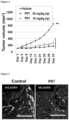
- TNBC orthotopic triple-negative breast cancer
- SCLC small cell lung cancer
- glioblastoma xenografts not shown.
- the responding tumors have dramatically diminished vasculature ( Fig. 5 ).
- P07 may have synergistic effects when combined with immune checkpoint inhibitors.
- P07 and an immune checkpoint inhibitor can simultaneously inhibit angiogenesis and strengthen the immune response against tumors by allowing dendritic cell maturation and more robust lymphocyte endothelial trafficking and the checkpoint inhibitor would allow infiltrating cytotoxic T-cells to kill tumor cells.
- N07 is a peptide-conjugated nanoparticle that has anti-angiogenic and anti-tumorigenic properties. N07 specifically binds to the integrin ⁇ V ⁇ 3 complex, and has the ability to carry encapsulated drug cargo.
- N07 was synthesized from poly(lactic-co-glycolic acid) polyethylene glycol (PLGA-PEG) block copolymers of tunable size which are covalently conjugated with N07.
- PLGA-PEG poly(lactic-co-glycolic acid) polyethylene glycol
- a mix of conjugated and unconjugated polymers in any ratio can be used to create nanoparticles with the desired density of P07 on the surface.
- a description of the tunable characteristics of the particle is shown in Table 1.
- Table 1 Tunable Parameter Applicable Range Molecular weight of PLGA 10 kDa - 70 kDa Molecular weight of PEG 2 kDa - 5 kDa Percent of polymers conjugated to peptide 0 - 100%
- N07 was synthesized from the P07 peptide and PLGA-PEG block copolymers.
- P07 was produced by solid state synthesis at New England Peptide and its purity assessed by HPLC/MS.
- the peptide has an amine at the N-terminus and an amide at the C-terminus.
- PLGA-PEG block copolymers were purchased from PolySciTech ® and purity and molecular weight was assessed by gel permeation chromatography (GPC) and Fourier transform infrared spectroscopy (FTIR).
- P07 was dissolved at 100 mg/ml in DMSO and added to 170 mg/ml NHS-functionalized PLGA-PEG (PLGA-PEG-NHS) in DMF. 40 molar excess of diisopropylethylamine (DTPEA) was added to the mixture and stirred overnight at room temperature. The mixture was then added dropwise to a cold mixture of ether and methanol and spun down at 22,000 x g. The pellet was then repeatedly washed with methanol and spun down to remove unreacted peptide. The supernatant was discarded, and the pellet was left to dry under vacuum for several hours to yield solid PLGA-PEG-SP2043. Other cargo, such as drugs and dyes, can also be conjugated to PLGA-PEG via a similar process.
- DTPEA diisopropylethylamine
- a mixture of PLGA-PEG-P07 and PLGA-PEG was dissolved in DMF at 10 mg/ml and added dropwise to deionized water under magnetic stirring to form nanoparticles in a process called nanoprecipitation. Desired cargo was added to the DMF mixture prior to nanoprecipitation, which resulted in a nanoparticle with loaded cargo in the hydrophobic PLGA core. After several hours of stirring, the particles were filtered and concentrated with Ultra Centrifugation Columns (EMD Millipore, UFC810096).
- HPLC HPLC was used to assess the efficiency of the conjugation of PLGA-PEG-NHS to P07.
- the c-terminal F was replaced with W to allow reading of absorbance and fluorescence from the W residue.
- PLGA-PEG-P07 from the reaction mixture prior to precipitation in ether and methanol was diluted in DMSO and run through an Agilent Poroshell 300 column in a water-acetonitrile mobile phase. Peptide was detected via absorbance at 220 nm (peptide backbone) and 280 nm (tryptophan, W), and via fluorescence at 295/348 nm excitation/emission (tryptophan). The amount of unreacted P07 was determined via integration of the free P07 peak.
- the PLGA-PEG-P07 reaction mixture was compared to a control reaction mixture of PLGA-PEG-COOH or PLGA-mPEG and P07, neither of which will undergo a reaction to form PLGA-PEG-P07. Reacted P07 would not contribute to the free P07 peak, so a reduction in the P07 peak relative to the control reaction indicates conjugation to the PLGA-PEG-NHS copolymer. Results were compared to a standard curve of free peptide to ensure all integration values fell within a linear range of peptide concentration. The results are shown in Table 2 and Fig. 6 . Table 2 Signal for Quantification Conjugation Efficiency Fluorescence (295/348 nm) 0.869 Absorbance (280 nm) 0.920 Absorbance (220 nm) 0.854
- LavaPep TM Characterization The LavaPep TM peptide quantification kit (Gel Company, LP022010) was used to directly detect peptide on the surface of N07. Particles at 3-5 mg/ml in ultrapure water were incubated for 1 hour in the dark with the LavaPep working solution in 96-well plates. The epicocconone dye in the LavaPep working solution interacted with the Arg residues on the peptide to become highly fluorescent. Fluorescence was read at 530/590 nm on a Biotek HT Synergy plate reader. The signal from the nanoparticles was compared to a standard dilution curve of known amounts of free peptide.
- N07 was suspended in water at 1 mg/ml and analyzed using a Malvern Zetasizer Nano ZS90. Z-average diameter and intensity-based size distribution were measured and recorded. The results are shown in Table 4 and Fig. 7 , demonstrating that N07 exhibits a Z-average diameter of approximately 70-80 nm and slight size increase was seen in samples with conjugated P07 on the nanoparticle.
- Table 4 Sample Z-Average (d. nm) PDI PLGA-PEG-COOH 68.24 ⁇ 0.26 0.23 PLGA-PEG-COOH/P07 (50/50) 73.39 ⁇ 1.03 0.18 PLGA-PEG-P07 77.59 ⁇ 2.65 0.29
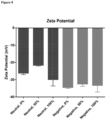
- N07 was suspended in ultrapure water at 1 mg/ml and analyzed using a Malvern Zetasizer Nano ZS90. Surface zeta potential was measured and recorded. The results are shown in Fig. 8 , demonstrating that N07 exhibits a negative zeta potential in deionized water, which is very slightly tunable around 25 mV using different end groups on PEG. In Fig. 8 , neutral is methoxy-terminated PEG and negative is carboxy-terminated PEG.
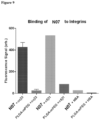
- Particles were prepared as described above, made either completely of PLGA-PEG-P07 or PLGA-mPEG. Integrin ⁇ v ⁇ 3, integrin ⁇ 5 ⁇ 1, and human serum albumin were labeled with an Alexafluor 488 TFP-ester according to the manufacturer's instructions. Particles were incubated at room temperature with the integrin in PBS overnight alongside a control sample with integrins or HSA in PBS without particles. Particles were then separated from free integrins or HSA protein via SEC centrifugal spin columns using Sephacryl S-500 HR media. After separation, fluorescence signal was measured on a Biotek Synergy HT microplate reader to assess the amount of integrin brought through the SEC media by the particles. The results are shown in Fig. 9 .
- Nanoparticles were tested for binding to MDA-MB-231 and microvascular endothelial cells (MEC) Cells. Particles were prepared as above with the addition of 1% TAMRA dye by weight. After nanoprecipitation, the particles were concentrated with Amicon ultracentrifugation filters (MWCO 100,000) and filtered with SEC centrifugal spin columns using Sephacryl S-500 HR media to remove free TAMRA dye or other free polymer or peptide materials. Cells were then incubated with nanoparticles at 100,000 cells/ml and 1 mg/ml particle. Nanoparticles were made from either targeted PLGA-PEG-P07 polymers or untargeted PLGA-mPEG polymers.
- MEC microvascular endothelial cells
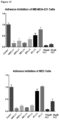
- Particles were tested for their ability to inhibit adhesion of MB-MDA-231 cells and microvascular endothelial cells (MEC).
- MEC microvascular endothelial cells
- MDA-MB-231 or MEC cells were added at 20,000 cells/well to the particles, peptides, and media. The 96-well plate was incubated for approximately 2 hours at 37 °C and 5% CO 2 .
- MEC proliferation assay using the MTT Vybrant Assay Kit were carried out on MEC cells. 2000 cells/well were plated in 96-well plates in phenol red-free ECM-2MV media and allowed to adhere over 18-20 hours. Original media with no particles was replaced with N07 particles suspended in media at 5 mg/ml or AXT201 peptide in media or media alone. After four days, media was replaced with 100 ul MTT reagent as per the manufacturer's recommendations. After four hours, 100 ul of SDS solution was added to each well and incubated at 37 °C for another four hours.
- the size and shape of particles were manipulated for the optimization of the activity of the particles.
- the particles were made and stretched successfully.
- the peptides remain stable throughout the process, with peptide loading remaining the same before and after the stretching protocol.
- Microparticle formation Poly(lactide-co-glycolide), PLGA, was first dissolved into dichloromethane, DCM, at 20 mg/mL in a test tube and vortexed to fully dissolve. Peptide stock of P07 in dimethylsulfoxide, DMSO (20 mg/mL) was micropipetted to the PLGA/DCM solution. The initial mass ratio of peptide to PLGA can vary; such as 1:50 and 1:20 peptide:PLGA. For blank microparticle, equivalent volume of DMSO only was pipetted. The mixture was sonicated with the test tube on ice. Sonication was performed with an amplitude setting of '30', which equals approximately 5-10 W, for 20 seconds.
- This primary emulsion was immediately poured into 50 mL of 1% poly(vinyl alcohol), PVA, solution and homogenized at 3.6-3.8 krpm for 1 minute. The full volume was then transferred to 100 mL of 0.5% PVA solution and stirred in a chemical hood for about 3.5 hours. Three wash steps were then performed. For each wash step, the microparticle solution was centrifuged at 4°C, 4 krpm, for 5 minutes, and then the supernatant was removed. Subsequently, 40 mL of refrigerated Milli-Q water was added, the microparticle pellet was resuspended and the washing steps were repeated.
- Nanoparticle formation PLGA was first dissolved into DCM, at desired concentration (usually 20 mg/mL or 40 mg/mL), in a test tube and vortexed to fully dissolve. Peptide stock, such as P07, in DMSO (20 mg/mL) was micropipetted to the PLGA/DCM solution. The mass ratio of peptide to PLGA can vary. An exemplary formulation is 1:50 peptide:PLGA. For blank nanoparticle, an equivalent volume of DMSO only was pipetted. The mixture was sonicated with the test tube on ice. Sonication (Misonix) was performed with an amplitude setting of '30', which equals approximately 5-10 W, for 20 seconds.
- This primary emulsion was immediately poured into 50 mL of 1% PVA solution and sonicated at an amplitude setting of anywhere from '30' to '100' for 2 minutes on ice. The full volume was then transferred to 100 mL of 0.5% PVA solution and stirred in a chemical hood for ⁇ 3.5 hours. Three wash steps were then performed. For each wash step, the nanoparticle solution was centrifuged at 4°C, 17 krpm, for 10 minutes, and then the supernatant was removed. Subsequently, 30 mL of refrigerated Milli-Q water was added, the nanoparticle pellet was resuspended and the washing steps were repeated.
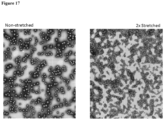
- Microparticle Stretching Lyophilized PLGA particles were dissolved in a 10% PVA/ 2% glycerol solution at a concentration of 2.5 mg/mL and 10 mL of this solution was deposited into rectangular petri dishes to dry overnight. The resulting film was cut to size and loaded in between two aluminum mounts and heated up to 90 °C. The film length was measured and the film was stretched slowly to produce the desired fold of stretch (e.g. 2 fold stretched ellipsoidal particles) using custom made stretching device. The film was then allowed to cool down to room temperature and was removed from the aluminum blocks. The PVA film was dissolved in water and the resulting particle suspension was washed 3x. The particles were lyophilized prior to use.
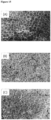
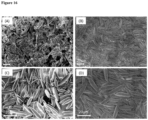
- SEM and TEM characterization For scanning electron microscope (SEM), Lyophilized particles were placed on carbon tape (Electron Microscopy Sciences, Hatfield, PA) placed on aluminum mounts. Samples were sputtered with gold-palladium, and SEM imaging was performed with a LEO/Zeiss FESEM at the JHU School of Medicine MicFac. Sizing of microparticle samples was performed with ImageJ analysis of SEM images. The results are shown in Fig. 15 . Stretched particles are shown in Fig. 16 .
- TEM transmission electron microscopy
- Microparticle loading and release quantification To measure loading, a known mass of microparticles was dissolved in DMSO. For peptide loaded microparticles, and corresponding blank microparticles, quantification was performed by running gel electrophoresis (Bio-Rad Mini-PROTEAN system) and silver stain analysis. A 12-well 10-20% Mini-PROTEAN tris-tricine gel was used, along with 10x tris/tricine/SDS running buffer diluted to 1x in Milli-Q water. Each gel contained a standard series of a known amount of peptide. The peptide standard series included 0, 62.5, 125, 250, and 500 ng of peptide per well.
- the remaining wells included a protein standard, and the microparticle samples, both peptide loaded and blanks as controls.
- the DMSO samples were mixed 1:1 by volume with sample buffer.
- Sample buffer was made of 24% glycerol in 1x PBS.
- Gel electrophoresis was run until the 2.5 kDa band of the protein standard traveled approximately two-thirds of the way down the gel.
- the silver stain protocol was followed for gel staining.
- the stop solution was added once the lowest peptide standard (in this case 62.5 ng) began to appear.
- Gel images were captured with a digital camera and analyzed with ImageJ using gel band intensity quantification functionality. The results are shown in Fig. 18 .
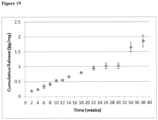
- a known mass of microparticles was suspended in 1x PBS, placed on a shaker in a 37 °C oven. At various time points, samples were centrifuged for 5 min at ⁇ 2.5 krcf. Supernatant was collected and stored at -80 °C, and fresh PBS was added to samples. Quantification of peptide released into the supernatant was performed by running gel electrophoresis, silver staining, and gel band analysis. The results are shown in Fig. 19 .
Landscapes
- Health & Medical Sciences (AREA)
- Life Sciences & Earth Sciences (AREA)
- Chemical & Material Sciences (AREA)
- Engineering & Computer Science (AREA)
- Medicinal Chemistry (AREA)
- General Health & Medical Sciences (AREA)
- Immunology (AREA)
- Molecular Biology (AREA)
- Biomedical Technology (AREA)
- Veterinary Medicine (AREA)
- Public Health (AREA)
- Animal Behavior & Ethology (AREA)
- Pharmacology & Pharmacy (AREA)
- Organic Chemistry (AREA)
- Urology & Nephrology (AREA)
- Hematology (AREA)
- Epidemiology (AREA)
- Bioinformatics & Cheminformatics (AREA)
- Nanotechnology (AREA)
- Biochemistry (AREA)
- Proteomics, Peptides & Aminoacids (AREA)
- Cell Biology (AREA)
- Zoology (AREA)
- Analytical Chemistry (AREA)
- Biotechnology (AREA)
- Microbiology (AREA)
- Pathology (AREA)
- General Physics & Mathematics (AREA)
- Food Science & Technology (AREA)
- Physics & Mathematics (AREA)
- Gastroenterology & Hepatology (AREA)
- Genetics & Genomics (AREA)
- Biophysics (AREA)
- Chemical Kinetics & Catalysis (AREA)
- General Chemical & Material Sciences (AREA)
- Nuclear Medicine, Radiotherapy & Molecular Imaging (AREA)
- Ophthalmology & Optometry (AREA)
- Tropical Medicine & Parasitology (AREA)
- Virology (AREA)
- Toxicology (AREA)
Applications Claiming Priority (2)
| Application Number | Priority Date | Filing Date | Title |
|---|---|---|---|
| US201562257569P | 2015-11-19 | 2015-11-19 | |
| PCT/US2016/062816 WO2017087825A1 (en) | 2015-11-19 | 2016-11-18 | Peptides with anti-angiogenic, anti-lymphangiogenic, and anti-edemic properties and nanoparticle formulations |
Publications (3)
| Publication Number | Publication Date |
|---|---|
| EP3377080A1 EP3377080A1 (en) | 2018-09-26 |
| EP3377080A4 EP3377080A4 (en) | 2019-07-31 |
| EP3377080B1 true EP3377080B1 (en) | 2024-02-14 |
Family
ID=58717907
Family Applications (1)
| Application Number | Title | Priority Date | Filing Date |
|---|---|---|---|
| EP16867239.2A Active EP3377080B1 (en) | 2015-11-19 | 2016-11-18 | Peptides with anti-angiogenic, anti-lymphangiogenic, and anti-edemic properties and nanoparticle formulations |
Country Status (12)
| Country | Link |
|---|---|
| US (1) | US20180339024A1 (enExample) |
| EP (1) | EP3377080B1 (enExample) |
| JP (1) | JP2018535224A (enExample) |
| KR (1) | KR20180081608A (enExample) |
| CN (1) | CN108883150A (enExample) |
| AU (1) | AU2016358125A1 (enExample) |
| BR (1) | BR112018010052A2 (enExample) |
| CA (1) | CA3005284A1 (enExample) |
| IL (1) | IL259376A (enExample) |
| MX (1) | MX2018006194A (enExample) |
| SG (2) | SG10202004259PA (enExample) |
| WO (1) | WO2017087825A1 (enExample) |
Families Citing this family (7)
| Publication number | Priority date | Publication date | Assignee | Title |
|---|---|---|---|---|
| NZ771201A (en) | 2017-04-06 | 2025-01-31 | Sustain Holdings Llc | Collagen Peptide-Based Medicament Compositions And Devices And Methods Of Production And Use Thereof |
| US11674959B2 (en) | 2017-08-03 | 2023-06-13 | The Johns Hopkins University | Methods for identifying and preparing pharmaceutical agents for activating Tie1 and/or Tie2 receptors |
| US20210113654A1 (en) * | 2018-05-31 | 2021-04-22 | Yale University | Methods and Compositions to Alleviate Vascular Permeability |
| CA3134816A1 (en) * | 2019-03-26 | 2020-10-01 | Asclepix Therapeutics, Inc. | Compositions and methods for treating ocular disease |
| SG11202112487QA (en) | 2019-04-22 | 2021-12-30 | Sustain Holdings Llc | Collagen peptide-based medicament compositions and devices and methods of production and use thereof |
| WO2021178949A1 (en) * | 2020-03-06 | 2021-09-10 | The Board Of Trustees Of The Leland Stanford Junior University | Antibody fragments conjugated to peg-plga nanoparticles improve immunotherapy against cancer cells |
| GB202004514D0 (en) | 2020-03-27 | 2020-05-13 | Inst De Medicina Molecular Joaeo Lobo Antunes | Treatment of Immunosuppressive Cancer |
Family Cites Families (30)
| Publication number | Priority date | Publication date | Assignee | Title |
|---|---|---|---|---|
| ATE318832T1 (de) | 1990-06-11 | 2006-03-15 | Gilead Sciences Inc | Verfahren zur vervendung von nukleinsäureliganden |
| SE9400088D0 (sv) | 1994-01-14 | 1994-01-14 | Kabi Pharmacia Ab | Bacterial receptor structures |
| ES2210306T3 (es) | 1994-07-20 | 2004-07-01 | The General Hospital Corporation | Sistemas de trampa para interacciones, para detectar interacciones de proteinas. |
| DE19742706B4 (de) | 1997-09-26 | 2013-07-25 | Pieris Proteolab Ag | Lipocalinmuteine |
| AUPP221098A0 (en) | 1998-03-06 | 1998-04-02 | Diatech Pty Ltd | V-like domain binding molecules |
| US6818418B1 (en) | 1998-12-10 | 2004-11-16 | Compound Therapeutics, Inc. | Protein scaffolds for antibody mimics and other binding proteins |
| ES2402878T3 (es) | 1999-05-05 | 2013-05-10 | Phylogica Limited | Aislamiento de moduladores biológicos a partir de colecciones de fragmentos génicos biodiversos |
| DE60045243D1 (de) | 1999-05-26 | 2010-12-30 | Next Biomed Technologies Nbt Oy | VERFAHREN UND MATERIALIEN ZUR ERZEUGUNG VON SH3 DOMäNEN MIT ANGEPASSTEN BINDUNGSEIGENSCHAFTEN |
| SE0001877D0 (sv) | 2000-05-22 | 2000-05-22 | Klaus Mosbach | Molecular imprinting |
| EP1332209B1 (en) | 2000-09-08 | 2009-11-11 | Universität Zürich | Collections of repeat proteins comprising repeat modules |
| DE10053224A1 (de) | 2000-10-26 | 2002-05-08 | Univ Goettingen Georg August | Verfahren zur Exposition von Peptiden und Polypeptiden auf der Zelloberfläche von Bakterien |
| EP2284270A3 (en) | 2000-12-13 | 2012-07-25 | Anaphore, Inc. | Method for the identification and isolation of binding polypeptides from combinatorial libraries of proteins having the scaffold structure of C-type lectin-like domains |
| CN1628126A (zh) | 2001-08-30 | 2005-06-15 | 比奥雷克西斯药物公司 | 经修饰的运铁蛋白融合蛋白 |
| WO2004031733A2 (en) | 2002-10-02 | 2004-04-15 | Catalyst Biosciences | Methods of generating and screenign for porteases with altered specificity |
| PT1587907E (pt) | 2003-01-07 | 2011-04-08 | Dyax Corp | Biblioteca de domínios de kunitz |
| US20060008844A1 (en) | 2004-06-17 | 2006-01-12 | Avidia Research Institute | c-Met kinase binding proteins |
| DE102004049479A1 (de) | 2004-10-11 | 2006-04-13 | Scil Proteins Gmbh | Proteinkonjugate zur Verwendung in Therapie, Diagnose und Chromatographie |
| EP1892248A1 (en) | 2006-08-21 | 2008-02-27 | Eidgenössische Technische Hochschule Zürich | Specific and high affinity binding proteins comprising modified SH3 domains of FYN kinase |
| WO2008085828A2 (en) * | 2007-01-03 | 2008-07-17 | The Johns Hopkins University | Peptide modulators of angiogenesis and use thereof |
| SI2185589T1 (sl) | 2007-06-01 | 2016-04-29 | University Of Maryland Baltimore | Vezavna sredstva za Fc receptor konstantne regije imunoglobulina |
| US9051349B2 (en) | 2007-11-21 | 2015-06-09 | Alba Therapeutics Corporation | Larazotide acetate compositions |
| US8992991B2 (en) * | 2009-05-15 | 2015-03-31 | The Johns Hopkins University | Multicomponent degradable cationic polymers |
| WO2011084509A1 (en) * | 2009-12-15 | 2011-07-14 | Massachusetts Institute Of Technology | Endothelial basement membrane targeting peptide ligands |
| WO2012079088A2 (en) * | 2010-12-10 | 2012-06-14 | The Johns Hopkins University | Mimetic peptides derived from collagen type iv and their use for treating angiogenesis- and lymphangiogenesis- dependent diseases |
| US9309286B2 (en) * | 2011-08-17 | 2016-04-12 | Tufts Medical Center | Compositions and methods for augmenting permeability barriers |
| US10758487B2 (en) | 2011-12-09 | 2020-09-01 | The Johns Hopkins University | Artificial antigen presenting cells having a defined and dynamic shape |
| WO2014018018A1 (en) * | 2012-07-24 | 2014-01-30 | Morehouse School Of Medicine | Composition and method for reducing tissue damage from inflammatory disorder or pathogenic infection |
| US9682143B2 (en) * | 2012-08-14 | 2017-06-20 | Ibc Pharmaceuticals, Inc. | Combination therapy for inducing immune response to disease |
| JP6470740B2 (ja) * | 2013-06-07 | 2019-02-13 | ザ ジョンズ ホプキンス ユニバーシティ | 血管新生およびリンパ管新生依存性疾患の処置のための生体模倣ペプチドおよび生分解性送達プラットフォーム |
| SG11201602522VA (en) * | 2013-10-02 | 2016-04-28 | Medimmune Llc | Neutralizing anti-influenza a antibodies and uses thereof |
-
2016
- 2016-11-18 EP EP16867239.2A patent/EP3377080B1/en active Active
- 2016-11-18 SG SG10202004259PA patent/SG10202004259PA/en unknown
- 2016-11-18 BR BR112018010052A patent/BR112018010052A2/pt not_active IP Right Cessation
- 2016-11-18 US US15/776,971 patent/US20180339024A1/en not_active Abandoned
- 2016-11-18 WO PCT/US2016/062816 patent/WO2017087825A1/en not_active Ceased
- 2016-11-18 AU AU2016358125A patent/AU2016358125A1/en not_active Abandoned
- 2016-11-18 KR KR1020187017365A patent/KR20180081608A/ko not_active Withdrawn
- 2016-11-18 CA CA3005284A patent/CA3005284A1/en not_active Abandoned
- 2016-11-18 SG SG11201804003VA patent/SG11201804003VA/en unknown
- 2016-11-18 JP JP2018526543A patent/JP2018535224A/ja active Pending
- 2016-11-18 MX MX2018006194A patent/MX2018006194A/es unknown
- 2016-11-18 CN CN201680078709.0A patent/CN108883150A/zh active Pending
-
2018
- 2018-05-15 IL IL259376A patent/IL259376A/en unknown
Non-Patent Citations (6)
| Title |
|---|
| BERGERS G. & SONG S.: "The role of pericytes in blood-vessel formation and maintenance", NEURO-ONCOLOGY, vol. 7, 2005, pages 452 - 464, XP055851947, DOI: 10.1215/S1152851705000232 * |
| F. S. HODI ET AL: "Bevacizumab plus Ipilimumab in Patients with Metastatic Melanoma", CANCER IMMUNOLOGY RESEARCH, vol. 2, no. 7, 21 April 2014 (2014-04-21), pages 632 - 642, XP055163152, ISSN: 2326-6066, DOI: 10.1158/2326-6066.CIR-14-0053 * |
| FLORENCE SCHAFFNER ET AL: "Integrin [alpha]5[beta]1, the Fibronectin Receptor, as a Pertinent Therapeutic Target in Solid Tumors", CANCERS, vol. 5, no. 4, 15 January 2013 (2013-01-15), pages 27 - 47, XP055697383, DOI: 10.3390/cancers5010027 * |
| NOMAN M.Z. ET AL.: "Improving cancer immunotherapy by targeting the hypoxic tumor microenvironment: New opportunities and challenges.", CELLS, vol. 8, 1083, 2019 * |
| PARK JIN-SUNG ET AL: "Normalization of Tumor Vessels by Tie2 Activation and Ang2 Inhibition Enhances Drug Delivery and Produces a Favorable Tumor Microenvironment", CANCER CELL, CELL PRESS, US, vol. 30, no. 6, 12 December 2016 (2016-12-12), pages 953 - 967, XP029845233, ISSN: 1535-6108, DOI: 10.1016/J.CCELL.2016.10.018 * |
| YASUFUMI SATO: "Persistent vascular normalization as an alternative goal of anti-angiogenic cancer therapy", CANCER SCIENCE, vol. 102, no. 7, 14 April 2011 (2011-04-14), JP, pages 1253 - 1256, XP055697390, ISSN: 1347-9032, DOI: 10.1111/j.1349-7006.2011.01929.x * |
Also Published As
| Publication number | Publication date |
|---|---|
| AU2016358125A1 (en) | 2018-07-05 |
| SG11201804003VA (en) | 2018-06-28 |
| EP3377080A1 (en) | 2018-09-26 |
| US20180339024A1 (en) | 2018-11-29 |
| MX2018006194A (es) | 2018-12-06 |
| KR20180081608A (ko) | 2018-07-16 |
| JP2018535224A (ja) | 2018-11-29 |
| WO2017087825A1 (en) | 2017-05-26 |
| BR112018010052A2 (pt) | 2019-02-05 |
| SG10202004259PA (en) | 2020-06-29 |
| CN108883150A (zh) | 2018-11-23 |
| CA3005284A1 (en) | 2017-05-26 |
| EP3377080A4 (en) | 2019-07-31 |
| IL259376A (en) | 2018-07-31 |
Similar Documents
| Publication | Publication Date | Title |
|---|---|---|
| AU2006293410B2 (en) | Nanoparticles for targeted delivery of active agents | |
| US20180339024A1 (en) | Peptides with anti-angiogenic, anti-lymphangiogenic, and anti-edemic properties and nanoparticle formulations | |
| US20110143993A1 (en) | Endothelial basement membrane targeting peptide ligands | |
| EP3522906B1 (en) | Compounds and methods for activating tie2 signaling | |
| CN114981310A (zh) | 一种全过程靶向分子及其药物复合物在构建递药系统中的应用 | |
| Emami et al. | Dual receptor specific nanoparticles targeting EGFR and PD-L1 for enhanced delivery of docetaxel in cancer therapy | |
| JP7035050B2 (ja) | Vapポリペプチド及び腫瘍の標的診断及び治療のための薬物の調製におけるその使用 | |
| Yi et al. | In situ crosslinked smart polypeptide nanoparticles for multistage responsive tumor-targeted drug delivery | |
| WO2017063542A1 (zh) | 稳定化a7r多肽及其在构建肿瘤靶向诊治递药系统中的用途 | |
| EP4157859A1 (en) | Isolated peptide for a peptide coacervate, and methods of use thereof | |
| JP2025062605A (ja) | ウイルス模倣性ナノ粒子 | |
| WO2018049155A1 (en) | Compositions comprising polymeric nanoparticles and mcl-1 antagonists | |
| CN101610759A (zh) | 由跨膜肽组成的自组装纳米颗粒及其用于特异性肿瘤内递送抗癌药物的应用 | |
| TWI630910B (zh) | 供靶向、造影及治療前列腺癌之胜肽共軛奈米粒子 | |
| US11674959B2 (en) | Methods for identifying and preparing pharmaceutical agents for activating Tie1 and/or Tie2 receptors | |
| Meng | Self-assembled Nanostructures for Drug Delivery and its Surface Modification Method | |
| Li | Designing polyprodrug and protein nanocarriers with stealth effect for drug delivery | |
| HK40077492A (en) | Application of systematic targeting molecule and drug complex thereof in constructing drug delivery system |
Legal Events
| Date | Code | Title | Description |
|---|---|---|---|
| STAA | Information on the status of an ep patent application or granted ep patent |
Free format text: STATUS: THE INTERNATIONAL PUBLICATION HAS BEEN MADE |
|
| PUAI | Public reference made under article 153(3) epc to a published international application that has entered the european phase |
Free format text: ORIGINAL CODE: 0009012 |
|
| STAA | Information on the status of an ep patent application or granted ep patent |
Free format text: STATUS: REQUEST FOR EXAMINATION WAS MADE |
|
| 17P | Request for examination filed |
Effective date: 20180611 |
|
| AK | Designated contracting states |
Kind code of ref document: A1 Designated state(s): AL AT BE BG CH CY CZ DE DK EE ES FI FR GB GR HR HU IE IS IT LI LT LU LV MC MK MT NL NO PL PT RO RS SE SI SK SM TR |
|
| AX | Request for extension of the european patent |
Extension state: BA ME |
|
| DAV | Request for validation of the european patent (deleted) | ||
| DAX | Request for extension of the european patent (deleted) | ||
| A4 | Supplementary search report drawn up and despatched |
Effective date: 20190703 |
|
| RIC1 | Information provided on ipc code assigned before grant |
Ipc: A61K 38/39 20060101ALI20190627BHEP Ipc: C07K 14/78 20060101ALI20190627BHEP Ipc: A61K 35/44 20150101AFI20190627BHEP Ipc: G01N 33/574 20060101ALI20190627BHEP Ipc: A61K 38/10 20060101ALI20190627BHEP Ipc: A61K 38/08 20190101ALI20190627BHEP Ipc: C07K 7/08 20060101ALI20190627BHEP Ipc: A61K 39/145 20060101ALI20190627BHEP |
|
| STAA | Information on the status of an ep patent application or granted ep patent |
Free format text: STATUS: EXAMINATION IS IN PROGRESS |
|
| 17Q | First examination report despatched |
Effective date: 20200528 |
|
| GRAP | Despatch of communication of intention to grant a patent |
Free format text: ORIGINAL CODE: EPIDOSNIGR1 |
|
| STAA | Information on the status of an ep patent application or granted ep patent |
Free format text: STATUS: GRANT OF PATENT IS INTENDED |
|
| INTG | Intention to grant announced |
Effective date: 20230721 |
|
| GRAS | Grant fee paid |
Free format text: ORIGINAL CODE: EPIDOSNIGR3 |
|
| P01 | Opt-out of the competence of the unified patent court (upc) registered |
Effective date: 20230912 |
|
| GRAJ | Information related to disapproval of communication of intention to grant by the applicant or resumption of examination proceedings by the epo deleted |
Free format text: ORIGINAL CODE: EPIDOSDIGR1 |
|
| GRAL | Information related to payment of fee for publishing/printing deleted |
Free format text: ORIGINAL CODE: EPIDOSDIGR3 |
|
| STAA | Information on the status of an ep patent application or granted ep patent |
Free format text: STATUS: EXAMINATION IS IN PROGRESS |
|
| GRAP | Despatch of communication of intention to grant a patent |
Free format text: ORIGINAL CODE: EPIDOSNIGR1 |
|
| STAA | Information on the status of an ep patent application or granted ep patent |
Free format text: STATUS: GRANT OF PATENT IS INTENDED |
|
| GRAJ | Information related to disapproval of communication of intention to grant by the applicant or resumption of examination proceedings by the epo deleted |
Free format text: ORIGINAL CODE: EPIDOSDIGR1 |
|
| GRAL | Information related to payment of fee for publishing/printing deleted |
Free format text: ORIGINAL CODE: EPIDOSDIGR3 |
|
| STAA | Information on the status of an ep patent application or granted ep patent |
Free format text: STATUS: EXAMINATION IS IN PROGRESS |
|
| GRAP | Despatch of communication of intention to grant a patent |
Free format text: ORIGINAL CODE: EPIDOSNIGR1 |
|
| STAA | Information on the status of an ep patent application or granted ep patent |
Free format text: STATUS: GRANT OF PATENT IS INTENDED |
|
| INTC | Intention to grant announced (deleted) | ||
| INTG | Intention to grant announced |
Effective date: 20231109 |
|
| INTG | Intention to grant announced |
Effective date: 20231121 |
|
| GRAA | (expected) grant |
Free format text: ORIGINAL CODE: 0009210 |
|
| STAA | Information on the status of an ep patent application or granted ep patent |
Free format text: STATUS: THE PATENT HAS BEEN GRANTED |
|
| AK | Designated contracting states |
Kind code of ref document: B1 Designated state(s): AL AT BE BG CH CY CZ DE DK EE ES FI FR GB GR HR HU IE IS IT LI LT LU LV MC MK MT NL NO PL PT RO RS SE SI SK SM TR |
|
| REG | Reference to a national code |
Ref country code: GB Ref legal event code: FG4D |
|
| REG | Reference to a national code |
Ref country code: CH Ref legal event code: EP |
|
| REG | Reference to a national code |
Ref country code: DE Ref legal event code: R096 Ref document number: 602016085826 Country of ref document: DE |
|
| REG | Reference to a national code |
Ref country code: IE Ref legal event code: FG4D |
|
| REG | Reference to a national code |
Ref country code: LT Ref legal event code: MG9D |
|
| REG | Reference to a national code |
Ref country code: NL Ref legal event code: MP Effective date: 20240214 |
|
| PG25 | Lapsed in a contracting state [announced via postgrant information from national office to epo] |
Ref country code: IS Free format text: LAPSE BECAUSE OF FAILURE TO SUBMIT A TRANSLATION OF THE DESCRIPTION OR TO PAY THE FEE WITHIN THE PRESCRIBED TIME-LIMIT Effective date: 20240614 |
|
| PG25 | Lapsed in a contracting state [announced via postgrant information from national office to epo] |
Ref country code: LT Free format text: LAPSE BECAUSE OF FAILURE TO SUBMIT A TRANSLATION OF THE DESCRIPTION OR TO PAY THE FEE WITHIN THE PRESCRIBED TIME-LIMIT Effective date: 20240214 |
|
| PG25 | Lapsed in a contracting state [announced via postgrant information from national office to epo] |
Ref country code: GR Free format text: LAPSE BECAUSE OF FAILURE TO SUBMIT A TRANSLATION OF THE DESCRIPTION OR TO PAY THE FEE WITHIN THE PRESCRIBED TIME-LIMIT Effective date: 20240515 |
|
| REG | Reference to a national code |
Ref country code: AT Ref legal event code: MK05 Ref document number: 1656484 Country of ref document: AT Kind code of ref document: T Effective date: 20240214 |
|
| PG25 | Lapsed in a contracting state [announced via postgrant information from national office to epo] |
Ref country code: RS Free format text: LAPSE BECAUSE OF FAILURE TO SUBMIT A TRANSLATION OF THE DESCRIPTION OR TO PAY THE FEE WITHIN THE PRESCRIBED TIME-LIMIT Effective date: 20240514 Ref country code: NL Free format text: LAPSE BECAUSE OF FAILURE TO SUBMIT A TRANSLATION OF THE DESCRIPTION OR TO PAY THE FEE WITHIN THE PRESCRIBED TIME-LIMIT Effective date: 20240214 Ref country code: HR Free format text: LAPSE BECAUSE OF FAILURE TO SUBMIT A TRANSLATION OF THE DESCRIPTION OR TO PAY THE FEE WITHIN THE PRESCRIBED TIME-LIMIT Effective date: 20240214 |
|
| PG25 | Lapsed in a contracting state [announced via postgrant information from national office to epo] |
Ref country code: ES Free format text: LAPSE BECAUSE OF FAILURE TO SUBMIT A TRANSLATION OF THE DESCRIPTION OR TO PAY THE FEE WITHIN THE PRESCRIBED TIME-LIMIT Effective date: 20240214 |
|
| PG25 | Lapsed in a contracting state [announced via postgrant information from national office to epo] |
Ref country code: AT Free format text: LAPSE BECAUSE OF FAILURE TO SUBMIT A TRANSLATION OF THE DESCRIPTION OR TO PAY THE FEE WITHIN THE PRESCRIBED TIME-LIMIT Effective date: 20240214 |
|
| PG25 | Lapsed in a contracting state [announced via postgrant information from national office to epo] |
Ref country code: RS Free format text: LAPSE BECAUSE OF FAILURE TO SUBMIT A TRANSLATION OF THE DESCRIPTION OR TO PAY THE FEE WITHIN THE PRESCRIBED TIME-LIMIT Effective date: 20240514 Ref country code: NO Free format text: LAPSE BECAUSE OF FAILURE TO SUBMIT A TRANSLATION OF THE DESCRIPTION OR TO PAY THE FEE WITHIN THE PRESCRIBED TIME-LIMIT Effective date: 20240514 Ref country code: NL Free format text: LAPSE BECAUSE OF FAILURE TO SUBMIT A TRANSLATION OF THE DESCRIPTION OR TO PAY THE FEE WITHIN THE PRESCRIBED TIME-LIMIT Effective date: 20240214 Ref country code: LT Free format text: LAPSE BECAUSE OF FAILURE TO SUBMIT A TRANSLATION OF THE DESCRIPTION OR TO PAY THE FEE WITHIN THE PRESCRIBED TIME-LIMIT Effective date: 20240214 Ref country code: IS Free format text: LAPSE BECAUSE OF FAILURE TO SUBMIT A TRANSLATION OF THE DESCRIPTION OR TO PAY THE FEE WITHIN THE PRESCRIBED TIME-LIMIT Effective date: 20240614 Ref country code: HR Free format text: LAPSE BECAUSE OF FAILURE TO SUBMIT A TRANSLATION OF THE DESCRIPTION OR TO PAY THE FEE WITHIN THE PRESCRIBED TIME-LIMIT Effective date: 20240214 Ref country code: GR Free format text: LAPSE BECAUSE OF FAILURE TO SUBMIT A TRANSLATION OF THE DESCRIPTION OR TO PAY THE FEE WITHIN THE PRESCRIBED TIME-LIMIT Effective date: 20240515 Ref country code: FI Free format text: LAPSE BECAUSE OF FAILURE TO SUBMIT A TRANSLATION OF THE DESCRIPTION OR TO PAY THE FEE WITHIN THE PRESCRIBED TIME-LIMIT Effective date: 20240214 Ref country code: ES Free format text: LAPSE BECAUSE OF FAILURE TO SUBMIT A TRANSLATION OF THE DESCRIPTION OR TO PAY THE FEE WITHIN THE PRESCRIBED TIME-LIMIT Effective date: 20240214 Ref country code: BG Free format text: LAPSE BECAUSE OF FAILURE TO SUBMIT A TRANSLATION OF THE DESCRIPTION OR TO PAY THE FEE WITHIN THE PRESCRIBED TIME-LIMIT Effective date: 20240214 Ref country code: AT Free format text: LAPSE BECAUSE OF FAILURE TO SUBMIT A TRANSLATION OF THE DESCRIPTION OR TO PAY THE FEE WITHIN THE PRESCRIBED TIME-LIMIT Effective date: 20240214 |
|
| PG25 | Lapsed in a contracting state [announced via postgrant information from national office to epo] |
Ref country code: PL Free format text: LAPSE BECAUSE OF FAILURE TO SUBMIT A TRANSLATION OF THE DESCRIPTION OR TO PAY THE FEE WITHIN THE PRESCRIBED TIME-LIMIT Effective date: 20240214 Ref country code: PT Free format text: LAPSE BECAUSE OF FAILURE TO SUBMIT A TRANSLATION OF THE DESCRIPTION OR TO PAY THE FEE WITHIN THE PRESCRIBED TIME-LIMIT Effective date: 20240614 |
|
| PG25 | Lapsed in a contracting state [announced via postgrant information from national office to epo] |
Ref country code: SE Free format text: LAPSE BECAUSE OF FAILURE TO SUBMIT A TRANSLATION OF THE DESCRIPTION OR TO PAY THE FEE WITHIN THE PRESCRIBED TIME-LIMIT Effective date: 20240214 Ref country code: PT Free format text: LAPSE BECAUSE OF FAILURE TO SUBMIT A TRANSLATION OF THE DESCRIPTION OR TO PAY THE FEE WITHIN THE PRESCRIBED TIME-LIMIT Effective date: 20240614 Ref country code: PL Free format text: LAPSE BECAUSE OF FAILURE TO SUBMIT A TRANSLATION OF THE DESCRIPTION OR TO PAY THE FEE WITHIN THE PRESCRIBED TIME-LIMIT Effective date: 20240214 Ref country code: LV Free format text: LAPSE BECAUSE OF FAILURE TO SUBMIT A TRANSLATION OF THE DESCRIPTION OR TO PAY THE FEE WITHIN THE PRESCRIBED TIME-LIMIT Effective date: 20240214 |
|
| PG25 | Lapsed in a contracting state [announced via postgrant information from national office to epo] |
Ref country code: DK Free format text: LAPSE BECAUSE OF FAILURE TO SUBMIT A TRANSLATION OF THE DESCRIPTION OR TO PAY THE FEE WITHIN THE PRESCRIBED TIME-LIMIT Effective date: 20240214 |
|
| PG25 | Lapsed in a contracting state [announced via postgrant information from national office to epo] |
Ref country code: SM Free format text: LAPSE BECAUSE OF FAILURE TO SUBMIT A TRANSLATION OF THE DESCRIPTION OR TO PAY THE FEE WITHIN THE PRESCRIBED TIME-LIMIT Effective date: 20240214 |
|
| PG25 | Lapsed in a contracting state [announced via postgrant information from national office to epo] |
Ref country code: CZ Free format text: LAPSE BECAUSE OF FAILURE TO SUBMIT A TRANSLATION OF THE DESCRIPTION OR TO PAY THE FEE WITHIN THE PRESCRIBED TIME-LIMIT Effective date: 20240214 Ref country code: EE Free format text: LAPSE BECAUSE OF FAILURE TO SUBMIT A TRANSLATION OF THE DESCRIPTION OR TO PAY THE FEE WITHIN THE PRESCRIBED TIME-LIMIT Effective date: 20240214 |
|
| PG25 | Lapsed in a contracting state [announced via postgrant information from national office to epo] |
Ref country code: SK Free format text: LAPSE BECAUSE OF FAILURE TO SUBMIT A TRANSLATION OF THE DESCRIPTION OR TO PAY THE FEE WITHIN THE PRESCRIBED TIME-LIMIT Effective date: 20240214 |
|
| PG25 | Lapsed in a contracting state [announced via postgrant information from national office to epo] |
Ref country code: SM Free format text: LAPSE BECAUSE OF FAILURE TO SUBMIT A TRANSLATION OF THE DESCRIPTION OR TO PAY THE FEE WITHIN THE PRESCRIBED TIME-LIMIT Effective date: 20240214 Ref country code: SK Free format text: LAPSE BECAUSE OF FAILURE TO SUBMIT A TRANSLATION OF THE DESCRIPTION OR TO PAY THE FEE WITHIN THE PRESCRIBED TIME-LIMIT Effective date: 20240214 Ref country code: RO Free format text: LAPSE BECAUSE OF FAILURE TO SUBMIT A TRANSLATION OF THE DESCRIPTION OR TO PAY THE FEE WITHIN THE PRESCRIBED TIME-LIMIT Effective date: 20240214 Ref country code: EE Free format text: LAPSE BECAUSE OF FAILURE TO SUBMIT A TRANSLATION OF THE DESCRIPTION OR TO PAY THE FEE WITHIN THE PRESCRIBED TIME-LIMIT Effective date: 20240214 Ref country code: DK Free format text: LAPSE BECAUSE OF FAILURE TO SUBMIT A TRANSLATION OF THE DESCRIPTION OR TO PAY THE FEE WITHIN THE PRESCRIBED TIME-LIMIT Effective date: 20240214 Ref country code: CZ Free format text: LAPSE BECAUSE OF FAILURE TO SUBMIT A TRANSLATION OF THE DESCRIPTION OR TO PAY THE FEE WITHIN THE PRESCRIBED TIME-LIMIT Effective date: 20240214 |
|
| REG | Reference to a national code |
Ref country code: DE Ref legal event code: R097 Ref document number: 602016085826 Country of ref document: DE |
|
| PG25 | Lapsed in a contracting state [announced via postgrant information from national office to epo] |
Ref country code: IT Free format text: LAPSE BECAUSE OF FAILURE TO SUBMIT A TRANSLATION OF THE DESCRIPTION OR TO PAY THE FEE WITHIN THE PRESCRIBED TIME-LIMIT Effective date: 20240214 |
|
| PLBE | No opposition filed within time limit |
Free format text: ORIGINAL CODE: 0009261 |
|
| STAA | Information on the status of an ep patent application or granted ep patent |
Free format text: STATUS: NO OPPOSITION FILED WITHIN TIME LIMIT |
|
| PG25 | Lapsed in a contracting state [announced via postgrant information from national office to epo] |
Ref country code: IT Free format text: LAPSE BECAUSE OF FAILURE TO SUBMIT A TRANSLATION OF THE DESCRIPTION OR TO PAY THE FEE WITHIN THE PRESCRIBED TIME-LIMIT Effective date: 20240214 |
|
| 26N | No opposition filed |
Effective date: 20241115 |
|
| PGFP | Annual fee paid to national office [announced via postgrant information from national office to epo] |
Ref country code: CH Payment date: 20241201 Year of fee payment: 9 |
|
| PG25 | Lapsed in a contracting state [announced via postgrant information from national office to epo] |
Ref country code: SI Free format text: LAPSE BECAUSE OF FAILURE TO SUBMIT A TRANSLATION OF THE DESCRIPTION OR TO PAY THE FEE WITHIN THE PRESCRIBED TIME-LIMIT Effective date: 20240214 |
|
| PG25 | Lapsed in a contracting state [announced via postgrant information from national office to epo] |
Ref country code: MC Free format text: LAPSE BECAUSE OF FAILURE TO SUBMIT A TRANSLATION OF THE DESCRIPTION OR TO PAY THE FEE WITHIN THE PRESCRIBED TIME-LIMIT Effective date: 20240214 |
|
| PG25 | Lapsed in a contracting state [announced via postgrant information from national office to epo] |
Ref country code: LU Free format text: LAPSE BECAUSE OF NON-PAYMENT OF DUE FEES Effective date: 20241118 |
|
| REG | Reference to a national code |
Ref country code: BE Ref legal event code: MM Effective date: 20241130 |
|
| PG25 | Lapsed in a contracting state [announced via postgrant information from national office to epo] |
Ref country code: BE Free format text: LAPSE BECAUSE OF NON-PAYMENT OF DUE FEES Effective date: 20241130 |
|
| PG25 | Lapsed in a contracting state [announced via postgrant information from national office to epo] |
Ref country code: IE Free format text: LAPSE BECAUSE OF NON-PAYMENT OF DUE FEES Effective date: 20241118 |
|
| PGFP | Annual fee paid to national office [announced via postgrant information from national office to epo] |
Ref country code: DE Payment date: 20251128 Year of fee payment: 10 |
|
| PGFP | Annual fee paid to national office [announced via postgrant information from national office to epo] |
Ref country code: GB Payment date: 20251127 Year of fee payment: 10 |
|
| PGFP | Annual fee paid to national office [announced via postgrant information from national office to epo] |
Ref country code: FR Payment date: 20251125 Year of fee payment: 10 |
|
| PG25 | Lapsed in a contracting state [announced via postgrant information from national office to epo] |
Ref country code: HU Free format text: LAPSE BECAUSE OF FAILURE TO SUBMIT A TRANSLATION OF THE DESCRIPTION OR TO PAY THE FEE WITHIN THE PRESCRIBED TIME-LIMIT; INVALID AB INITIO Effective date: 20161118 |
|
| PG25 | Lapsed in a contracting state [announced via postgrant information from national office to epo] |
Ref country code: CY Free format text: LAPSE BECAUSE OF FAILURE TO SUBMIT A TRANSLATION OF THE DESCRIPTION OR TO PAY THE FEE WITHIN THE PRESCRIBED TIME-LIMIT; INVALID AB INITIO Effective date: 20161118 |
|
| PG25 | Lapsed in a contracting state [announced via postgrant information from national office to epo] |
Ref country code: TR Free format text: LAPSE BECAUSE OF FAILURE TO SUBMIT A TRANSLATION OF THE DESCRIPTION OR TO PAY THE FEE WITHIN THE PRESCRIBED TIME-LIMIT Effective date: 20240214 |
|
| REG | Reference to a national code |
Ref country code: CH Ref legal event code: H13 Free format text: ST27 STATUS EVENT CODE: U-0-0-H10-H13 (AS PROVIDED BY THE NATIONAL OFFICE) Effective date: 20260623 |
|
| PG25 | Lapsed in a contracting state [announced via postgrant information from national office to epo] |
Ref country code: CH Free format text: LAPSE BECAUSE OF NON-PAYMENT OF DUE FEES Effective date: 20251130 |