EP3377052B1 - Verfahren zum verbesserten schutz und zur verabreichung von aminothiolen und analoga davon - Google Patents
Verfahren zum verbesserten schutz und zur verabreichung von aminothiolen und analoga davon Download PDFInfo
- Publication number
- EP3377052B1 EP3377052B1 EP16867136.0A EP16867136A EP3377052B1 EP 3377052 B1 EP3377052 B1 EP 3377052B1 EP 16867136 A EP16867136 A EP 16867136A EP 3377052 B1 EP3377052 B1 EP 3377052B1
- Authority
- EP
- European Patent Office
- Prior art keywords
- aminothiol
- conjugate
- cells
- drug
- delivery
- Prior art date
- Legal status (The legal status is an assumption and is not a legal conclusion. Google has not performed a legal analysis and makes no representation as to the accuracy of the status listed.)
- Active
Links
Images



Classifications
-
- A—HUMAN NECESSITIES
- A61—MEDICAL OR VETERINARY SCIENCE; HYGIENE
- A61K—PREPARATIONS FOR MEDICAL, DENTAL OR TOILETRY PURPOSES
- A61K47/00—Medicinal preparations characterised by the non-active ingredients used, e.g. carriers or inert additives; Targeting or modifying agents chemically bound to the active ingredient
- A61K47/50—Medicinal preparations characterised by the non-active ingredients used, e.g. carriers or inert additives; Targeting or modifying agents chemically bound to the active ingredient the non-active ingredient being chemically bound to the active ingredient, e.g. polymer-drug conjugates
- A61K47/51—Medicinal preparations characterised by the non-active ingredients used, e.g. carriers or inert additives; Targeting or modifying agents chemically bound to the active ingredient the non-active ingredient being chemically bound to the active ingredient, e.g. polymer-drug conjugates the non-active ingredient being a modifying agent
- A61K47/56—Medicinal preparations characterised by the non-active ingredients used, e.g. carriers or inert additives; Targeting or modifying agents chemically bound to the active ingredient the non-active ingredient being chemically bound to the active ingredient, e.g. polymer-drug conjugates the non-active ingredient being a modifying agent the modifying agent being an organic macromolecular compound, e.g. an oligomeric, polymeric or dendrimeric molecule
- A61K47/59—Medicinal preparations characterised by the non-active ingredients used, e.g. carriers or inert additives; Targeting or modifying agents chemically bound to the active ingredient the non-active ingredient being chemically bound to the active ingredient, e.g. polymer-drug conjugates the non-active ingredient being a modifying agent the modifying agent being an organic macromolecular compound, e.g. an oligomeric, polymeric or dendrimeric molecule obtained otherwise than by reactions only involving carbon-to-carbon unsaturated bonds, e.g. polyureas or polyurethanes
- A61K47/60—Medicinal preparations characterised by the non-active ingredients used, e.g. carriers or inert additives; Targeting or modifying agents chemically bound to the active ingredient the non-active ingredient being chemically bound to the active ingredient, e.g. polymer-drug conjugates the non-active ingredient being a modifying agent the modifying agent being an organic macromolecular compound, e.g. an oligomeric, polymeric or dendrimeric molecule obtained otherwise than by reactions only involving carbon-to-carbon unsaturated bonds, e.g. polyureas or polyurethanes the organic macromolecular compound being a polyoxyalkylene oligomer, polymer or dendrimer, e.g. PEG, PPG, PEO or polyglycerol
-
- A—HUMAN NECESSITIES
- A61—MEDICAL OR VETERINARY SCIENCE; HYGIENE
- A61K—PREPARATIONS FOR MEDICAL, DENTAL OR TOILETRY PURPOSES
- A61K31/00—Medicinal preparations containing organic active ingredients
- A61K31/13—Amines
- A61K31/145—Amines having sulfur, e.g. thiurams (>N—C(S)—S—C(S)—N< and >N—C(S)—S—S—C(S)—N<), Sulfinylamines (—N=SO), Sulfonylamines (—N=SO2)
-
- A—HUMAN NECESSITIES
- A61—MEDICAL OR VETERINARY SCIENCE; HYGIENE
- A61P—SPECIFIC THERAPEUTIC ACTIVITY OF CHEMICAL COMPOUNDS OR MEDICINAL PREPARATIONS
- A61P31/00—Antiinfectives, i.e. antibiotics, antiseptics, chemotherapeutics
- A61P31/12—Antivirals
- A61P31/14—Antivirals for RNA viruses
-
- A—HUMAN NECESSITIES
- A61—MEDICAL OR VETERINARY SCIENCE; HYGIENE
- A61P—SPECIFIC THERAPEUTIC ACTIVITY OF CHEMICAL COMPOUNDS OR MEDICINAL PREPARATIONS
- A61P35/00—Antineoplastic agents
-
- A—HUMAN NECESSITIES
- A61—MEDICAL OR VETERINARY SCIENCE; HYGIENE
- A61P—SPECIFIC THERAPEUTIC ACTIVITY OF CHEMICAL COMPOUNDS OR MEDICINAL PREPARATIONS
- A61P35/00—Antineoplastic agents
- A61P35/02—Antineoplastic agents specific for leukemia
Definitions
- the present invention relates to aminothiol-conjugates, compositions and kits containing them, and their use in therapy.
- the conjugates are useful in the treatment of subjects in need of aminothiol therapy (e.g., those in need of treatment with an antiviral agent, a chemoprotectant, a cytoprotectant, a radioprotectant, an anti-fibrotic agent, an anti-tumor agent, an antioxidant, or an antimicrobial or antiparasitic agent).
- the phosphate group is bound to the sulfhydryl moiety of the aminothiol and it serves the purpose of protecting the active metabolite from adventitious reactivity during the process of drug delivery to target and non-target cells.
- the phosphate group is removed by cell membrane-bound alkaline phosphatase. Then the active metabolite (the aminothiol) is taken into the cell by passive diffusion or, under some conditions, active transport by the polyamine transport system.
- the present invention is directed to overcoming these and other deficiencies in the art.
- US 2009/239817 relates to organic thiophosphate antiretroviral agents indicated in the prevention or treatment of human immunodeficiency virus infection and discloses metabolites and derivatives of amifostine and phosphonol.
- US 2011/053894 is directed to broad spectrum antiviral compounds and also discloses metabolites and derivatives of amifostine and phosphonol.
- US2013/337046 relates to the delivery of aminothiol drugs and discloses aminothiol conjugates in which the aminothiol is conjugated with an intracellularly-cleavable thiol protecting group.
- US5846958 discusses the stimulation of hematopoietic progenitor cells in vitro by amifostine and the use of disclosed thiols and polyamines, and functional derivatives and analogues thereof, in methods of treating conditions that require hematopoietic cell growth.
- US 2013/13128 discloses block copolymers poly(ethylene glycol)-b-poly(glutamic acid) (PEG-b-PGA) for the delivery of drugs (among which amifostine or WR-1065) in cells from which the present constructs differ in that instead of linking the polymer to the drug via FeCl2 chelation the aminothiol is covalently bonded through a disulfide bridge.
- PEG-b-PGA poly(ethylene glycol)-b-poly(glutamic acid)
- US 2004/09650 relates to the use of 6-arm PEG compounds as carrier for drug delivery.
- Soft Matter 7(6):2329-2331 (2011 ) describes 6sPCL-SS-PEG micelles as a tool for drug delivery in tumour cells.
- Polymer Chem. 6(19):3634-3640 (2015 ) relates to the synthesis of 4-arm PEG conjugates to carry a fluorescent dye in cells.
- One aspect of the present invention relates to an aminothiol-conjugate in accordance with claim 1.
- Another aspect of the present invention relates to a pharmaceutical composition comprising an aminothiol-conjugate in accordance with claim 1. Further aspects of the present invention relate to a kit comprising one or more aminothiol-conjugate in accordance with claim 1; and said aminothiol-conjugate or said composition for use in therapy.
- the disclosure relates generally to the field of drug delivery that involves the use of polymeric carrier(s) in which a carrier molecule is covalently bound to a molecule of interest.
- the general purpose of this drug delivery system is to achieve one or more of the following: (i) increased water solubility, (ii) stability against degrading enzymes or reduction of uptake by the reticulo-endothelial system, (iii) targeted delivery of drugs to specific sites. It also relates to reformulating aminothiol drugs for the purpose of protecting one or more active moieties and for enhancing the pharmacokinetics and pharmacodynamics of the reformulated entity for delivery to humans and other animals. As set forth in the Examples below, unexpected drug effects have been shown for the aminothiol-conjugates described herein.
- the present application discloses improved methods of achieving protection of the active moiety(ies) of phosphorothioate compounds (i.e., aminothiols), delivery of the protected compounds, and activation at desired sites in vivo in humans and animals.
- phosphorothioate compounds i.e., aminothiols
- the present application also discloses methods for achieving increased drug efficacy and reduced of toxicity.
- the present application relates to methods for achieving improved therapeutic efficacy and lower toxicity of aminothiols, their metabolites, analogs thereof, dimers and heterodimers of the aforementioned through use of the aminothiol conjugates described herein.
- protected drugs can be delivered without the use of additional delivery methods or modules, or can be combined with drug delivery systems that achieve intracellular, intracytoplasmic, active or passive targeted cell delivery or exclusion, and/or intra-subcellular organelle delivery.
- active moiety refers to reactive groups such as -SH and/or -NH and the compounds bearing these groups that make up part of the structure of the active metabolites of amifostine, phosphonol, and structurally-related compounds and analogs.
- amifostine refers to the name given to the phosphorothioate form of WR-1065, WR-1065 being the biologically active moiety and physiological metabolite of amifostine.
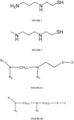
- aminothiol refers to any molecule having the structure shown in Fig. 3 .
- bioreducible or “bioreducible disulfide bond” refers to a bond or disulfide bond that can be reduced by processes, enzymes, reactions, or other mechanisms that are present in vivo, in organ systems, and/or inside of cells.
- conjugate refers to any synthetic or naturally occurring polymer, copolymer, dendrimer, other conjugate, molecule, chemical or combination of the aforementioned that is bound to or conjugated to a therapeutically active aminothiol or aminothiol analog.
- dendrimer refers to any synthetic polymer with a branching, tree-like architecture.
- PEG is the abbreviated form of 'polyethylene glycol'.
- phosphonol is the name given to the phosphorothioate WR-3789, with WR-255591 being the biologically active moiety and metabolite of phosphonol.
- alkyl means an aliphatic hydrocarbon group which may be straight or branched having about 1 to about 6 carbon atoms in the chain. Branched means that one or more lower alkyl groups such as methyl, ethyl or propyl are attached to a linear alkyl chain. Exemplary alkyl groups include methyl, ethyl, n-propyl, i-propyl, n-butyl, t-butyl, n-pentyl, and 3-pentyl.
- halo or halogen means fluoro, chloro, bromo, or iodo.
- the molecular weight of the aminothiol-conjugate is 100,000 daltons or less.
- the molecular weight of the aminothiol-conjugate may be about 100,000 daltons; 20,000 daltons; 10,000 daltons; 5,000 daltons; 3,000 daltons; 2,000 daltons; or 1,000 daltons.
- the molecular weight of the aminothiol-conjugate is about 10,000 daltons.
- the molecular weight of the aminothiol-conjugate is about 9,000 to about 11,000 daltons.
- the molecular weight of the aminothiol-conjugate is about 9,000 to about 11,000 daltons.
- Linker is a linker group, wherein the linker group is a polymer, a section of a polymer, an arm of a polymer, an arm of a copolymer, or a branch of a dendrimer, an atom, or a molecule.
- the section of a polymer refers to a repeating unit of a polymer.
- Linker may be a moiety with a molecular weight of 100,000 daltons or less; 20,000 daltons or less; 10,000 daltons or less; 5,000 daltons or less; 3,000 daltons or less; 2,000 daltons or less; 1,000 daltons or less; 500 daltons or less; 400 daltons or less; or 200 daltons or less.
- Linker may be a moiety with a molecular weight of 400 daltons to 100,000 daltons; 400 daltons to 20,000 daltons; 400 daltons to 10,000 daltons; 400 daltons to 5,000 daltons; 400 daltons to 3,000 daltons; 400 daltons to 2,000 daltons; 400 daltons to 1,000 daltons; or 400 daltons to 500 daltons.
- Linker may be a moiety with a molecular weight of 500 daltons to 100,000 daltons; 500 daltons to 20,000 daltons; 500 daltons to 10,000 daltons; 500 daltons to 5,000 daltons; 500 daltons to 3,000 daltons; 500 daltons to 2,000 daltons; or 500 daltons to 1,000 daltons.
- Linker may be a moiety with a molecular weight of 1,000 daltons to 100,000 daltons; 1,000 daltons to 20,000 daltons; 1,000 daltons to 10,000 daltons; 1,000 daltons to 5,000 daltons; 1,000 daltons to 3,000 daltons; or 1,000 daltons to 2,000 daltons.
- Linker may be a moiety with a molecular weight of 2,000 daltons to 100,000 daltons; 2,000 daltons to 20,000 daltons; 2,000 daltons to 10,000 daltons; 2,000 daltons to 5,000 daltons; or 2,000 daltons to 3,000 daltons.
- Linker may be a moiety with a molecular weight of about 100,000 daltons; 20,000 daltons; 10,000 daltons; 5,000 daltons; 3,000 daltons; 2,000 daltons; 1,000 daltons; 500 daltons; 400 daltons; or 200 daltons.
- Polymers as described herein include polyethylene glycol (PEG), branched PEG, polysialic acid (PSA), polysaccharides, pullulane, chitosan, hyaluronic acid, chondroitin sulfate, dermatan sulfate, starch, dextran, carboxymethyl-dextran, polyalkylene oxide (PAO), copolymers of polyalkylene oxides, polyoxamer (such as PLURONIC), polyalkylene glycol (PAG), polypropylene glycol (PPG), polyoxazoline, polyacryloylmorpholine, polyvinyl alcohol (PVA), polycarboxylate, polyvinylpyrrolidone, polyphosphazene, polyethylene-co-maleic acid anhydride, polystyrene-co-maleic acid anhydride, poly(1-hydroxymethylethylene hydroxymethylformal) (PHF), and 2-methacryloyloxy-2'-ethyltrimethylam
- Linker is selected from the group consisting of polyethylene glycol (polyethylene oxide); thiol-terminated polyethylene glycol (polyethylene oxide); folic acid derivative; a conjugate of folic acid derivative with PEG; spermine; and a polymer of spermine.
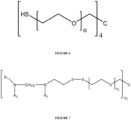
- Linker is polyethylene glycol (polyethylene oxide) or polyethylene glycol (polyethylene oxide) derivative ( see , e.g., Figure 4 ).
- Linker is polyethylene glycol (polyethylene oxide), wherein 'n' can be any integer from 1 or greater.
- the linear formula is H-(O-CH 2 -CH 2 ) n -OH, where in 'n' can be any integer, with a range of 1 to 2500 being most desirable for the applications presented here.
- PEG may include a terminal end group, for example, PEG may terminate in a hydroxyl, a thiol, a methoxy or other alkoxyl group, a methyl or other alkyl group, an aryl group, a carboxylic acid, an amine, an amide, an acetyl group, a guanidino group, or an imidazole.
- Other contemplated end groups include azide, alkyne, maleimide, aldehyde, hydrazide, hydroxylamine, or alkoxyamine moieties.
- Linker and/or Core may also be a conjugate of folic acid derivative with or without PEG.
- the general structure for folate (folic acid) is shown in Figure 9 .
- the terminal carboxyl group e.g., SH
- an aminothiol or PEG e.g., a conjugate of folic acid with an aminothiol or PEG can be synthesized ( Chen et al., "Folate-mediated intracellular drug delivery increases the anticancer efficacy of nanoparticulate formulation of arsenic trioxide," Mol Cancer Ther 8(7):1955-63 (2009 ); Kang et al., "Folic acid-tethered Pep-1 peptide-conjugated liposomal nanocarrier for enhanced intracellular drug delivery to cancer cells: conformational characterization and in vitro cellular uptake evaluation," Int J Nanomed 8:1155-65 (2013 )).
- the folic acid conjugate offers the advantage that it
- Linker and/or Core may also be spermine or a polymer of spermine.
- a conjugate of spermine polymer with an aminothiol or PEG can be synthesized.
- the general structure of spermine polymer is shown in Figure 10 .
- the linear formula is NH 2 C 2 H 4 (NC 3 H 6 NHC 4 H 8 ) n -NHC 3 H 6 NH 2 , wherein 'n' can be any integer equal to or greater than 1.
- the spermine polymer conjugate offers the advantage that it can interact with the polyamine receptor on the surface of cells and trigger active transport of the prodrug into the cell cytosol.
- Linker can be attached to the core to form thiol-terminated, polyethylene glycol ( see, e.g., Figures 6 and 8 ). In certain embodiments, Linker can be attached to the core to form one arm of a multi-armed thiol-terminated, polyethylene glycol ( see, e.g., Figures 6 and 8 ). In certain embodiments, the aminothiol-conjugate is a thiol-terminated, star polyethylene glycol having from 1 to 8 arms. For instance, Linker can be attached to the core to form thiol-terminated 2-arm-PEG, 3-arm-PEG, 4-arm-PEG, 6-arm-PEG, and 8-arm-PEG. See e.g., suitable PEG polymers and dendrimers at Sigmaaldrich.com, PEG Dendrimers and Multi-arm PEGs.
- FIG. 7 An exemplary structure of a thiol-terminated polyethylene glycol conjugated via a disulfide bond to an aminothiol is shown in Figure 7 , wherein 'n 1 ' can be any integer from 1 to 2500 and 'n 2 ' can be any number of arms that can be accommodated around a core without inducing undesirable steric hindrance or interference. In one embodiment, 'n 1 ' can be any integer from 1 to 2500 and 'n 2 ' can be any integer from 1 to 8.
- the prodrug described herein is an aminothiol-conjugate.
- the aminothiol portion of the aminothiol-conjugate of formula I has the following formula: where each R 1 , R 2 , and R 3 is independently selected from hydrogen and C 1-6 alkyl, and wherein n is an integer of from 1 to 10.
- Aminothiols (and analogues thereof) that may be used to synthesize aminothiol-conjugates described herein include those of the exemplary generic structures shown in Figures 3A and 3B .
- a generic structure of an aminothiol is: where X is selected from the group consisting of -PO 3 H 2 , hydrogen, sulfhydryl, sulfur, acetyl, isobutyryl, pivaloyl, and benzoyl; and each of R 1 , R 2 , and R 3 is independently selected from hydrogen and C 1-6 alkyl, and wherein n is an integer of from 1 to 10.
- two exemplary structures of active moieties of the generic aminothiols shown in Figures 3A-3B that may be used to synthesize aminothiol-conjugates described herein are where X is hydrogen.
- the aminothiol is an active moiety of amifostine (NH 2 (CH 2 ) 3 NH(CH 2 ) 2 SH) or phosphonol (CH 3 NH(CH 2 ) 3 NH(CH 2 ) 2 SH).
- Core is a polymer core, a dendrimer core, a dendrimer core with an interior dendritic structure (i.e., branches), a therapeutic agent, or a derivative of a therapeutic agent.
- the molecular weight of the Core is 100,000 daltons or less.
- Dendrimers have been extensively studied as vehicles for the delivery of therapeutics or as carriers for in vivo imaging ( Lee et al., "Designing Dendrimers for Biological Applications,” Nat. Biotech. 23(12):1517-26 (2005 ); Esfand & Tomalia, “Poly(amidoamine) (PAMAM) Dendrimers: From Biomimicry to Drug Delivery and Biomedical Applications,” Drug Discov. Today 6(8):427-36 (2001 ); Sadler & Tam, “Peptide Dendrimers: Applications and Synthesis," Rev. Mol. Biotechnol. 90:195-229 (2002 ); Cloninger, "Biological Applications of Dendrimers," Curr. Opin. Chem. Biol.
- Dendrimers are highly branched macromolecules with well defined three-dimensional architectures ( GEORGE R. NEWKOME ET AL., DENDRIMERS AND DENDRONS: CONCEPTS, SYNTHESIS, APPLICATIONS (2001 )).
- dendrimers lies in their unique perfectly branched architectures, which affords them different properties than corresponding linear polymers of the same composition and molecular weights ( Lee et al., “Designing Dendrimers for Biological Applications,” Nat. Biotech. 23(12):1517-26
- amide dendrimer cores include those described in Tarallo et al., Int'l J. Nanomed. 8:521-34 (2013 ); Carberry et al., Chem. Eur. J. 1813678-85 (2012 ); Jung et al., Macromolecules 44:9075-83 (2011 ); Ornelas et al., J. Am. Chem. Soc.
- dendrimer any type of dendrimer is contemplated, including but not limited to poly(amidoamine) (PAMAM) dendrimers such as dense star polymers and Starburst polymers, poly(amidoamine-organosilicon) (PAMAMOS) dendrimers, (Poly (Propylene Imine)) (PPI) dendrimers, tecto dendrimers, multilingual dendrimers, chiral dendrimers, hybrid dendrimers/linear polymers, amphiphilic dendrimers, micellar dendrimers and Fréchet-type dendrimers.
- PAMAM poly(amidoamine)
- PAMAMOS poly(amidoamine-organosilicon) dendrimers
- PPI Poly (Propylene Imine)
- Core is selected from the group consisting of folic acid, folic acid derivative, spermine polymer, and spermine polymer derivative, wherein a is 0 to 2500; b is 0 to 2500; c is 0 to 2500; d is 0 to 2500; R is independently selected from hydrogen, C 1-6 alkyl, and halogen; X is an atom, a molecule, or a macromolecule; and Y is a multivalent group, molecule, or atom.
- the present invention relates to an aminothiol-conjugate having the following structure: wherein k is 1 to 2500.
- aminothiol conjugate has the following structure:
- the protecting group should have the capacity to prevent adventitious reactivity of the aminothiols during drug delivery; second, the protecting group should be removable by systems or processes available in target cells and particularly within the intracellular milieu and/or within lysosomes; and third, the protecting group should be non-toxic to animal and human cells.
- Other desirable conditions that can be met include (i) increasing drug circulation times, (ii) making the drug amenable to cell absorption via mechanisms that are not applicable to aminothiols alone, (iii) making the drug amenable to intracellular uptake by cell receptor transport systems (the folic acid and polyamine transport systems are two examples) and (iii) altering the mechanisms by which the drug is cleared from circulation and/or the human or animal body.
- intracellular delivery will optimize opportunities for reactivity of the active drug metabolite with target cellular elements as opposed to reaction with targets that are not associated with therapeutic effects, including but not limited to extracellular targets.
- Conjugation of a therapeutic aminothiol to another molecule for the purpose of altering the pharmacokinetics and pharmacodynamics from that of the corresponding phosphorothioate is a method that can be used to alter or enhance aminothiol delivery to, and activation in, stressed or diseased cells.
- Polymers or copolymers, including dendrimers, composed entirely or partially of PEG or comparable biocompatible materials designed to alter and improve drug pharmacokinetics and pharmacodynamics and that also are amenable to cell uptake and intracellular delivery of the aminothiols can be used to meet these goals. Methods are presented below for resolving these problems by using drug formulations that consist of an aminothiol moiety bound to a conjugate as described herein. Such formulations can be used alone or can be combined with additional methods to achieve optimal intracytoplasmic drug delivery and drug efficacy.
- Intracellular delivery methods and compositions have been developed by others for effecting intracellular delivery of other drug molecules. Some of those methods and compositions (e.g., those explicitly described or referenced herein) can be used to effect intracellular delivery of aminothiols. However, it is believed that no others have previously proposed to use such compositions and methods in connection with aminothiols. Thus, compositions and methods that have been described by others for protecting the sulfhydryl group of an active pharmaceutical entity can be used to facilitate intracellular delivery of aminothiol compounds, even if those compositions and methods are not among those explicitly described in this disclosure.
- Amifostine as representative of the class of drugs known as phosphorothioates, is an inactive prodrug composed of the therapeutically active aminothiol WR1065 and a phosphate group that is conjugated to the aminothiol via a bond to the aminothiol's sulfhydryl group.
- This prodrug has specific pharmacokinetic and pharmacodynamics characteristics that make it suitable for delivery to, and activation by, many but not all normal cells (i.e. not stressed or diseased cells) of humans and other animals. However, these characteristics are not suitable for prodrug delivery to, and activation by, most stressed or diseased cells.
- new prodrugs that contain and can release the aminothiol under physiologic conditions of stress and/or disease, and to cells that are stressed or diseased, are needed.
- amifostine' and 'WR-1065' (the active moiety of amifostine) will be used as representative examples of all phosphorothioates, aminothiols, their analogs, and the active metabolites of the parent drugs (prodrugs).
- Amifostine is a phosphorothioate that is metabolized in vivo to its active moiety WR-1065 ( Grdina et al., "Thiol and Disulfide Metabolites of the Radiation Protector and Potential Chemopreventive Agent WR-2721 are Linked to Both its Anti-Cytotoxic and Anti-Mutagenic Mechanisms of Action," Carcinogenesis 16:767-774 (1995 ); Purdie et al., "Interaction of Cultured Mammalian Cells with WR-2721 and its Thiol, WR-1065: Implications for Mechanisms of Radioprotection," Int. J. Radiat. Biol. Relat. Stud. Phys. Chem. Med.
- the dephosphorylation step is carried out by membrane-bound alkaline phosphatase, an enzyme that is produced by many, but not all human and animal cells. After removal of the phosphate group, the active moiety is taken up into the intracellular milieu from which it can be distributed further to subcellular organelles or to other cells, and where therapeutic effects are induced.
- Amifostine is inactive until metabolized by cell membrane-bound alkaline phosphatase, which removes the phosphate group, thereby, releasing WR1065 with its free thiol for uptake into cells ( Capizzi, "The Preclinical Basis for Broad-Spectrum Selective Cytoprotection of Normal Tissues from Cytotoxic Therapies by Amifostine (Ethyol),” Eur. J. Cancer 32A:Suppl 4: S5-16 (1996 ); Shaw et al., "Pharmacokinetic Profile of Amifostine," Semin. Oncol.
- Amifostine has little to no activity in diseased or stressed cells because many diseased cells, including pathogen-infected cells, tumor cells, and cells in the microenvironment of metastatic cells, produce little to no membrane-bound enzyme but can and often do produce significant amounts of various alkaline phosphatase isoenzymes ( Guerreiro et al., "Distinct Modulation of Alkaline Phosphatase Isoenzymes by 17beta-Estradiol and Xanthohumol in Breast Cancer MCF-7 Cells", Clin. Biochem.
- Plasma-membrane bound alkaline phosphatase is a GPI-anchored protein ( Marty et al., "Effect of Anti-Alkaline Phosphatase Monoclonal Antibody on B Lymphocyte Function,” Immunol. Lett. 38:87-95 (1993 )) that is expressed by some, but not all, cell types.
- Alkaline phosphatase also is present intracellularly in the rough endoplasmic reticulum where it is synthesized, in the Golgi apparatus where additional processing may occur, in Golgi-derived vesicles, in some lysosomes, and around the nuclear envelope ( Tokumitsu et al., "Alkaline Phosphatase Biosynthesis in the Endoplasmic Reticulum and its Transport Through the Golgi Apparatus to the Plasma Membrane: Cytochemical Evidence," J. Histochem. Cytochem. 31:647-655 (1983 )).
- Plasma membrane-bound alkaline phosphatase is dependent upon correct microtubule organization to achieve its correct orientation in the cell membrane ( Gilbert et al., "Microtubular Organization and its Involvement in the Biogenetic Pathways of Plasma Membrane Proteins in Caco-2 Intestinal Epithelial Cells," J. Cell. Biol. 113:275-288 (1991 )), and microtubule organization can be altered in cancer cells and cells infected with viruses ( Nyce, "Drug-Induced DNA Hypermethylation and Drug Resistance in Human Tumors," Cancer Res.
- Alkaline phosphatase localization and expression is not uniform across all cell types or across all cell states or conditions, but instead is highly variable. Some cells to which drug delivery is desired do not produce membrane-bound alkaline phosphatase, or produce it only under limited conditions, or only produce it during developmental stages that are of limited duration. In some disease states, such as during inflammation, infection, or neoplastic transformation, membrane-bound alkaline phosphatase expression and localization are altered.
- Alkaline phosphatase is released into the extracellular milieu during some infectious conditions as a generalized response to pathogens ( Murthy et al., "Alkaline Phosphatase Band-10 Fraction as a Possible Surrogate Marker for Human Immunodeficiency Virus Type 1 Infection in Children," Arch. Path. & Lab. Med. 118:873-877 (1994 )).
- Activated B lymphocytes can shed alkaline phosphatase into the surrounding cellular milieu ( Burg et al., "Late Events in B Cell Activation. Expression Of Membrane Alkaline Phosphatase Activity," J. Immunol.
- alkaline phosphatase also is present in serum.
- Alkaline phosphatase is not expressed in quiescent B lymphocytes; it also is not expressed in active and inactive T-lymphocytes. Release of alkaline phosphatase into the extracellular milieu can result in metabolism of phosphorothioates to their active metabolites at a distance from cell membranes. This phenomenon reduces uptake by cells, increases the availability of metabolites for participation in non-therapeutic reactions, and makes the active moieties available for further metabolism to aldehydes and other compounds with cytotoxic effects.
- WR-1065 amifostine
- WR-2721 amifostine
- WR-1065, WR-33278, WR-1065-cysteine, and other disulfide forms of the parent compound WR-2721 did not show evidence of activity if present outside of V79 cells ( Smoluk et al., "Radioprotection of Cells in Culture by WR-2721 and Derivatives: Form of the Drug responsible for Protection," Cancer Res. 48:3641-3647 (1988 )).
- intracellular levels of WR-1065 correlated with significant protection against gamma-radiation.
- reliance upon the drug formulations known as the phosphorothioates for delivery of their therapeutically active metabolites, the aminothiols, is associated with several significant problems including (1) inability to metabolize the drug to its active form by some cell types, including but not limited to stressed or diseased cells, (2) inability to activate/metabolize the drug under some physiological or disease conditions, (3) activation of the drug in milieus where its activity is not desired, (4) activation of the drug at a distance from the optimal cellular or subcellular milieu, (5) activation in milieus where the products are vulnerable to metabolism to toxins, and (6) lack of ability to achieve targeted cell delivery or targeted cell exclusion. These problems adversely affect the ability to obtain a therapeutic effect in stressed or diseased cells.
- Sulfhydryl groups are highly reactive moieties that will form covalent bonds with a variety of moieties present in the bodies and cells of living organisms.
- therapeutic drugs that contain one or more sulfhydryl groups that have roles in the pharmacological effects of those drugs require protection of the sulfhydryl moiety during delivery to prevent reactivity with neighboring molecules not related to the drug's desired therapeutic effects.
- any molecular group can be used if it meets the requirements that (i) it achieves the desired protective effect during delivery, (ii) it is amenable to cellular uptake into the cytosol, (iii) it can be removed intracellularly, (iv) it is not toxic to cells (either before or after removal from the active aminothiol moiety), and (v) it achieves intracellular therapeutic aminothiol levels in a time frame that can be achieved given the half-life of the prodrug in circulation (i.e. within an acceptable time frame).
- any method that achieves intracellular drug delivery at therapeutic intracellular levels within an acceptable time frame will serve the purpose of delivering aminothiol drugs to a milieu where their activity is desired and where they will have a beneficial effect. That is, the observations made in this disclosure relate importantly to realization that intracellular delivery of an intracellularly-cleavable aminothiol-protecting-moiety conjugate beneficially affects administration of aminothiols. The observations made in this disclosure also relate to realization that intracellular delivery-however achieved-of an aminothiol compound having a reactive active moiety is advantageous relative to extracellular delivery of the corresponding phosphorothioate of the aminothiol compound.
- Targeted cell delivery and/or targeted cell exclusion is desirable because of the recognized toxicity of aminothiols.
- the delivery method or system should be one that has the capacity to protect the drug from degradation by, and/or reactivity with, enzymes found in the lumen of organs through which the drug will pass.
- the methods must achieve protection from luminal enzymes and factors of the gastrointestinal tract, and for inhalation delivery, the methods must protect against degradation by respiratory tract exudates/secretions.
- Targeted drug delivery can be either passive or active ( Banerjee et al., "Poly(ethylene glycol)-prodrug conjugates: concept, design, and applications," J Drug Deliv 2012:1-17 (2012 )).
- the enhanced permeability and retention (EPR) effect achieves passive drug targeting by releasing, or causing the accumulation of, drug outside the target site, and it relies upon altered environmental conditions.
- the EPR effect takes advantage of the hyperpermeable vasculature and reduced lymphatic drainage of tumors and inflamed areas to increase drug accumulation in these areas, thereby, providing passive targeting.
- Active targeting is based upon taking advantage of potential interactions between a ligand-receptor, antigen-antibody, enzyme substrate (biological pairs).
- Targeting agents are attached to the surface of the prodrug by conjugation chemistries.
- Examples of common targeting moieties include peptide ligands, sugar residues, antibodies, or aptamers that have as their biological pair receptors, selectins, antigens, or mRNAs expressed by cells or organs.
- luteinizing hormone-releasing hormone peptide is used to target receptors overexpressed by several cancer cells.
- Added groups can be ones that serve as ligands for receptors and/or that trigger receptor-mediated endocytosis.
- any group used to protect the sulfhydryl group of the aminothiol must be one that can be released or removed once the drug has been successfully delivered into the cytoplasm of target and/or non-target cells.
- the active form of the drug is protected during delivery and it is desirable to obtain release of the aminothiol once delivery has been completed.
- any compositions or method(s) that provide protection of the sulfhydryl group of the aminothiols during delivery, that result in intracellular release of the active form of the drug following delivery to the desired site(s), and that result in therapeutic intracellular drug levels can be used. Protection of the sulfhydryl moiety of the aminothiols prior to intracellular delivery is essential for obtaining therapeutic benefits of these drugs. Because protection systems should have the characteristic of being able to release the active moiety of the drug once intracytoplasmic delivery has been achieved, systems that address both protection during delivery and release after delivery are discussed together.
- the aminothiol is bound to the conjugate via a bioreducible disulfide bond between the sulfhydryl group of the aminothiol and a sulfhydryl group on the conjugate, or at the end of one or more arms, for multi-arm polymers/copolymers, or at the end of one or more branches, for branching dendrimers.
- the disulfide bonds are reducible by thiol-disulfide exchange reactions that function primarily in the cytosol and in the cytosolic conditions of target cells, but not extracellularly or in circulation conditions ( Navath et al., "Stimuli-Responsive Star Poly(Ethylene Glycol) Drug Conjugates for Improved Intracellular Delivery of the Drug in Neuroinflammation," J. Controlled Release 142:447-456 (2010 )). Bonds to sulfhydryl groups that link the aminothiol to the conjugate and that are reducible by cellular processes, reactions, enzymes, or other elements can be used.
- the conjugate can have a linear, branched or dendrimeric architecture and the molecular weight of the conjugate can vary from low to high, based upon the number of repeating units in the polymer/copolymer and/or the number of branches and repeating units in the dendrimer. Conjugates may or may not have biologic activity.
- the following steps must be completed to bond a conjugate to the sulfhydryl group of an aminothiol or aminothiol analog.
- the one condition that must be met is that the protecting groups must be removable as the last step of the synthesis by mechanisms that do not damage the polymer, copolymer or dendrimer or the aminothiol components of the prodrug.
- the sulfhydryl group of the aminothiol is bound to an intermediate via a disulfide bond between the sulfhydryl group of the conjugate and the sulfhydryl group of the aminothiol.
- this disulfide is reacted with a polymer, copolymer, or dendrimer.
- conjugates must have at least one sulfhydryl group at one end of the molecule (for a linear polymer or copolymer) or at the ends of one or more arms (for a multi-arm polymer or copolymer) or at the end of the branches of a dendrimer.
- the amine protecting groups must be removed using methods that do not damage the structure of the newly synthesized prodrug.
- An aminothiol-conjugate of the present invention can be prepared according to Schemes outlined below.
- PG is any suitable protecting group.
- PG is any suitable protecting group.
- PG and PG 1 are each a suitable protecting group. PG and PG 1 can be the same or different.
- Aminothiol-conjugates can be produced according to known methods. For example, aminothiol-conjugates of formula (I) can be prepared according to Scheme 6 outlined below.
- X and Y are each H, a suitable leaving group, or suitable activating group. X and Y can be the same or different.
- Reaction of the disulfide (II) with amine compound (III) leads to formation of the aminothiol-conjugate (I).
- the reaction can be carried out in a variety of solvents, for example in water, buffer, methanol (MeOH), ethanol (EtOH), dimethylformamide (DMF), or other such solvents or in the mixture of such solvents.
- the reaction can be carried out at a temperature of 0 °C to 100 °C, at a temperature of 0 °C to 40 °C, or at a temperature of 0 °C to 25 °C.
- amino groups in the compound of formula III can be protected by a suitable protecting group which can be selectively removed at a later time if desired.
- useful protective groups for the amino group are benzyloxycarbonyl (Cbz), t-butyloxycarbonyl (Boc), 2,2,2-trichloroethoxycarbonyl (Troc), t-amyloxycarbonyl, 4-methoxybenzyloxycarbonyl, 2-(trichlorosilyl)ethoxycarbonyl, 9-fluorenylmethoxycarbonyl (Fmoc), phthaloyl, acetyl (Ac), formyl, trifluoroacetyl, and the like.
- Any suitable commercially available disulfide (II) can be.
- disulfide (II) can be prepared according to known methods.
- the PEG-SH molecule used as a scaffold for conjugation of WR1065 can be a linear PEG polymer of differing length and molecular weight or a multi-arm polymer with differing numbers of arms (e.g., 4 arms as shown above (4) or 6, 8, etc. arms) and molecular weight.
- Linker is a linker group, wherein the linker group is a polymer, a section of a polymer, an arm of a polymer, an arm of a copolymer, a branch of a dendrimer, an atom, or a molecule.
- the section of a polymer refers to a repeating unit of a polymer.
- the conjugated prodrug (or active moiety thereof) may be delivered intracellularly or intracytoplasmically to cells (e.g., target cells).
- cells e.g., target cells.
- any method described in the literature or developed in the future that has characteristics that allow the release of the aminothiol by any biologic or cellular mechanism can be used.
- the conjugated prodrug can be delivered in combination with other drug delivery modules as presented below. Targeted drug delivery and targeted drug exclusion are desirable but not necessary.
- Nanoparticles also are referred to as nanovesicles, nanocarriers, or nanocapsules and include lysosomes, micelles, capsules, polymersomes, nanogels, dendritic and macromolecular drug conjugates, and nanosized nucleic acid complexes.
- a summary of categories into which nanoparticles are sometimes divided includes the following items (1)-(18).
- Additional intracellular drug delivery systems that may be considered to fall into the category of nanoparticles include the following items (a)-(u).
- nanoscopic drug delivery systems can be used in combination with each other. They also can be engineered further to provide target cell or tissue type delivery or targeted cell/tissue-type exclusion.
- new nanoscopic delivery systems are being developed frequently, and a variety of materials for use in the formation of nanoscopic drug delivery vehicles is expanding rapidly.
- the above delivery systems can be used in combination with enhanced delivery techniques.
- Examples of such techniques include the following items (I)-(XV).
- the active form of the aminothiol (or analogue thereof) is released intracytoplasmic ally to achieve therapeutic effects.
- any drug delivery system and/or drug protection method that includes the capacity to release the active form of the drug following intracytoplasmic delivery can be used.
- the key to the selection of one or more of the protection and delivery systems described above is to recognize that once the drug has been delivered into the cytoplasm of target cells, the delivery/protection method must allow for release of the aminothiol.
- binding of the conjugate to the aminothiol must be carried out so as to result in a reducible (bioreducible) disulfide bond ( Benham et al., "Disulfide Bonding Patterns and Protein Topologies," Protein Sci.
- Another aspect of the present invention relates to an aminothiol-conjugate according to the present invention for use in therapy, in a method of treating a subject in need of aminothiol therapy.
- the method involves administering to a subject in need thereof one or more of the aminothiol-conjugates according to the present invention.
- treatment means any manner in which one or more of the symptoms of a disease or disorder are ameliorated or otherwise beneficially altered.
- a therapeutically effective amount of aminothiol-conjugates as described herein can be, e.g., an amount sufficient to prevent the onset of a disease state or to shorten the duration of a disease state, or to decrease the severity of one or more symptoms.
- Treatment includes inhibition and attenuation of, e.g., viruses or pathogenic microorganisms in the subject.
- Amifostine, phosphonol, and structurally-related phosphorothioates and analogs have been shown to have therapeutic efficacy when used as chemoprotectants, cytoprotectants, radioprotectants, anti-fibrotic agents, anti-tumor agents with anti-metastatic, anti-invasive, and anti-mutagenic effects, antioxidants, free radical scavengers, anti-viral agents, and as agents that prevent tumor induction, slow tumor cell growth, have antitumor/anticancer effects and/or enhance the efficacy of anticancer agents ( Grdina et al., "Differential Activation of Nuclear Transcription Factor Kappab, Gene Expression, and Proteins By Amifostine's Free Thiol in Human Microvascular Endothelial and Glioma Cells," Semin.
- the subject is one in need of treatment with an antiviral agent, a chemoprotectant, a cytoprotectant, a radioprotectant, an anti-fibrotic agent, an anti-tumor agent, an antioxidant, or a combination thereof.
- the subject is not infected with HIV.
- the subject is in need of anti-microbial therapy and the aminothiol-conjugate or pharmaceutical composition comprising aminothiol-conjugate is administered under conditions effective to kill one or more pathogenic microorganisms in the subject.
- the microorganism may be, for example, a bacterium, a yeast, a fungus, or a parasite.
- the parasite may be intracellular parasite or an extracellular parasite.
- the subject is infected with a virus and the aminothiol-conjugate (or pharmaceutical composition including the aminothiol-conjugate) is administered under conditions effective to treat the virus.
- a therapeutically effective amount of the aminothiol-conjugate described herein is an amount sufficient to reduce the viral load of the target virus in the subject.
- the subject may be one that is infected with HIV, orthomyxovirus, influenza virus, adenovirus, or a combination thereof. In one embodiment, the subject is not infected with HIV.
- the subject is one infected with influenza.
- influenza virus may be, e.g., H1N1 or H3N2.
- the subject is one infected with adenovirus.
- the adenovirus may be of the species B, C, or E.
- the subject is one infected with Ebola virus.
- one aspect of the present invention relates to an aminothiol-conjugate according to the present invention for use in a method of treating a subject with a neoplastic condition by administering an aminothiol-conjugate or pharmaceutical composition comprising aminothiol-conjugate as described herein under conditions effective to treat the neoplastic condition.
- Another aspect of the present invention relates to an aminothiol-conjugate according to the present invention for use in a method of treating a subject at risk of developing a neoplastic condition by administering an aminothiol-conjugate or pharmaceutical composition comprising aminothiol-conjugate as described herein under conditions effective to reduce the risk of developing the neoplastic condition.
- a subject at risk of developing a neoplastic condition includes, e . g ., a subject receiving repeated diagnostic radiation exposures.
- sensitive tumor types identified through in vitro studies include: breast cancer, ovarian cancer, malignant melanoma ( Brenner et al., "Variable Cytotoxicity of Amifostine in Malignant and Non-Malignant Cell Lines,” Oncol. Rep. 10(5):1609-13 (2003 )); ovarian cancer ( Calabro-Jones et al., "The Limits to Radioprotection of Chinese Hamster V79 Cells by WR-1065 Under Aerobic Conditions," Radiat. Res.
- Calabro-Jones 149:550-559 (1998 )
- Calabro-Jones cervical carcinoma cells (HeLa cells and Me-180-VCII) (see Calabro-Jones); colon carcinoma ( see Calabro-Jones); lung cancer (A549 cells and H1299): (verbal communication from Dr. A. Kajon; Pataer et al., "Induction of Apoptosis in Human Lung Cancer Cells Following Treatment With Amifostine and an Adenoviral Vector Containing Wild-Type p53," Cancer Gene Ther.
- Sensitive tumor types identified through in vivo studies include, for example, metastatic melanoma ( Glover et al., "WR-2721 and High-Dose Cisplatin: An Active Combination in the Treatment of Metastatic Melanoma," J. Clin. Oncol.
- lymphoreticular tumors e.g., fibrosarcoma-lymph node, histiocytic leukemia, histiocytic lymphoma, lymphocytic-lymphoblastic lymphoma, myelogenous leukemia, plasma cell tumors, undifferentiated leukemia, undifferentiated lymphoma, unclassified lymphoma, mixed histiocytic-lymphocytic leukemia, and mixed histiocytic-lymphocytic lymphoma) ( Grdina et al., "Protection Against Late Effects of Radiation by S-2-(3-aminopropylamino)-ethylphosphorothioic Acid," Cancer Res.
- lymphoreticular tumors e.g., fibrosarcoma-lymph node, histiocytic leukemia, histiocytic lymphoma, lymphocytic-lymphoblast
- anti-cancer effects of aminothiols have been well-established.
- exemplary anti-cancer effects include anti-neoplastic transformation, anti-mutagenesis in normal cells, anti-angiogenesis, inhibition or reduction of tumor cell growth, inhibition or reduction of tumor cell invasion, and inhibition or reduction of tumor cell metastasis.
- Exemplary anti-cancer effects identified through in vitro or in vivo studies are summarized below.
- WR1065 and WR151326 were shown to protect C3H/10T1/2 cells from neoplastic transformation induced by exposure to fission neutrons, and this effect was observed for two different radiation exposure protocols ( Balcer-Kubiczek et al, "Effects of WR-1065 and WR-151326 on Survival and Neoplastic Transformation in C3H/10T1/2 Cells Exposed to TRIGA or JANUS Fission Neutrons," Int. J. Radiat. Biol. 63(1):37-46 (1993 )). The cells were exposed to WR1065 or WR151326 before, during, and after the radiation exposure.
- the protection factor for WR1065 was 3.23, while for WR151326 it was 1.8.
- WR2721 administered at 100 micrograms/g body weight protected young rats from the formation of radiation-induced hepatic foci; this effect was more pronounced in female rats, the gender most susceptible to hepatocellular focus formation ( Grdina et al, "Protective Effect of S-2-(3-aminopropylamino)ethylphosphorothioic Acid against Induction of Altered Hepatocyte Foci in Rats Treated Once With Gamma-Radiation Within one day After birth," Cancer Res. 45(11 Pt 1):5379-81 (1985 )).
- WR2721 exposure inhibited radiation-induced cell transformation in a mouse model, with 26% of mice receiving WR2721 plus radiation developing tumors, compared to 87% of mice receiving radiation alone ( Milas et al. "Inhibition of Radiation Carcinogenesis in Mice by S-2-(3-aminopropylamino)-ethylphosphorothioic Acid," Cancer Res. 44(12 Pt 1):5567-9 (1984 )).
- mice Female C57/BL/6JANL x BALB/cJANLF1 mice were exposed to 0, 206 cGy gamma rays, 417 cGy gamma rays, or the same doses of radiation with 400 mg/kg WR2721; animals were held for life( Grdina et al., "Protection Against Late Effects of Radiation by S-2-(3-aminopropylamino)-ethylphosphorothioic Acid," Cancer Res. 51(16):4125-30 (1991 )). 90% of the irradiated animals died of tumors; significant protection was seen for WR2721 treated mice that were irradiated with 206 cGy.
- WR1065 protected G0 T-lymphocytes from mutation induction due to ionizing radiation, showing protection in a non-cycling cell ( Clark et al., "Hprt Mutations in Human T-Lymphocytes Reflect Radioprotective Effects of the Aminothiol, WR-1065," Carcinogenesis 17 (12), 2647-2653(1996 )).
- Clark et al. "Hprt Mutations in Human T-Lymphocytes Reflect Radioprotective Effects of the Aminothiol, WR-1065," Carcinogenesis 17 (12), 2647-2653(1996 )
- WR1065 reduced the induction of mutations indicative of gross structural alterations ( Clark et al., "The Aminothiol WR-1065 Protects T Lymphocytes From Ionizing Radiation-Induced Deletions of the HPRT Gene," Cancer Epidemiol. Biomarkers.
- WR1065 and WR151326 were tested for their ability to prevent mutation induction at the HPRT gene due to exposure to fission-spectrum neutrons ( Grdina et al., "Protection by WR1065 and WR151326 Against Fission-Neutron-Induced Mutations at the HGPRT Locus in V79 Cells," Radiat. Res. 117(3):500-10 (1989 )). Both agents protected against mutation induction, with WR1065 being more effective than WR151326 at preventing mutations.
- Anti-Angiogenesis Amifostine reduced the mRNA levels of VEGF isoforms VEGF(165) and VEGF(190) and angiogenesis in chicken embryo chorioallantoic membranes at doses not associated with signs of toxicity ( Giannopoulou et al., "Amifostine has Antiangiogenic Properties in Vitro by Changing the Redox Status of Human Endothelial Cells," Free Radic. Res. 37(11):1191-9 (2003 )).
- WR2721 also reduced the mRNA levels of inducible nitric oxide synthase, and also reduced laminin and collagen deposition amounts in the same model "without affecting the expression of the corresponding genes.” See id.
- WR1065-induced inhibition of topoisomerase II-alpha can result in alteration in cell population distribution throughout the cell cycle ( Kataoka et al., "Activation of the Nuclear Transcription Factor kappaB (NFkappaB) and Differential Gene Expression in U87 Glioma Cells After Exposure to the Cytoprotector Amifostine," Int. J. Radiat. 53(1):180-9 (2002 )).
- WR1065 In in vitro experiments in a model using chicken embryo chorioallantoic membranes, WR1065, at doses not associated with signs of toxicity, reduced gene expression of MMP-2 (an enzyme associated with tumor cell invasion), but protein levels were not affected ( Giannopoulou et al., "Amifostine has Antiangiogenic Properties in Vitro by Changing the Redox Status of Human Endothelial Cells," Free Radic. Res. 37(11):1191-9 (2003 )). In in vitro experiments, WR2721 decreased the activity of matrix metalloproteinases (MMPs) -2 and -9 by 30 to 40%.
- MMPs matrix metalloproteinases
- WR2721 also inhibited the migration of Sa-NH cells through Matrigel in a dose dependent manner ( Grdina et al., "Inhibition of Spontaneous Metastases Formation by Amifostine,” Int. J. Cancer 97(2):135-41 (2002 )).
- C3Hf/Kam mice were injected with Sa-NH sarcoma cells and treated with WR2721 at 50 mg/kg every other day for 6 days while the tumors grew; then the tumors were removed by limb amputation and WR2721 was administered immediately after surgery and again 2 days later ( Grdina et al., "Inhibition of Spontaneous Metastases Formation by Amifostine," Int. J. Cancer 97(2):135-41 (2002 )).
- aminothiols e.g., amifostine (WR2721) and WR1065
- exemplary effects on other anti-cancer therapies include enhancement of other anti-cancer therapies (e.g., enhanced cytotoxicity of chemotherapeutic agents, enhanced cytotoxic effects of radiation therapy, improved response to chemotherapy, selective radioprotective effect on non-cancerous cells).
- Exemplary effects on other anti-cancer therapies identified through in vitro or in vivo studies are summarized below.
- WR1065 Enhancement of anti-cancer therapies: In in vitro experiments, WR1065 enhanced the cytotoxicity of the chemotherapeutic agent bleomycin in human lymphocytes at the G0 stage of the cell cycle ( Hoffmann et al., "Structure-Activity Analysis of the Potentiation by Aminothiols of the Chromosome-Damaging Effect of Bleomycin in G0 Human Lymphocytes," Environ. Mol. Mutagen. 37(2):117-27 (2001 )).
- the neoplastic condition is selected from the group consisting of breast, ovary, cervix, colon, lung, skin (malignant melanoma), lymphoreticular tumors, and combinations thereof. In one embodiment, the neoplastic condition is a myelodysplastic condition.
- the subject is one that receives a cancer therapy (e.g., radiation therapy, chemotherapy, or a combination thereof) and the aminothiol-conjugate or pharmaceutical composition comprising aminothiol-conjugate is administered under conditions effective to enhance the efficacy of the cancer therapy.
- a cancer therapy e.g., radiation therapy, chemotherapy, or a combination thereof
- the aminothiol-conjugate or pharmaceutical composition comprising aminothiol-conjugate is administered under conditions effective to enhance the efficacy of the cancer therapy.
- the mammal is a human. In one embodiment, the mammal is a non-human animal.
- the above improved drug delivery systems can be administered using any appropriate drug administration method(s) known or described in the future, including but not limited to intravenously, subcutaneously, orally, intraperitoneally, intranasally, intrarectally, topically, by inhalation and/or transdermal patch.
- the drugs can be encapsulated in any delivery module that achieves drug delivery to the desired target cell(s) including by encapsulation or incorporation into nanoparticles, micelles, liposomes, nanogels, or others (see above).
- Drug dosing levels should be based upon the level of aminothiol (or analogue thereof) that is being delivered. Thus, the following discussion considers the dose of aminothiol being administered as opposed to the total amount of prodrug being administered.
- the total amount of prodrug will vary depending upon the nature of the prodrug being administered.
- the active moiety (the aminothiol) can be administered at dosages selected to provide the equivalent of 910 mg/m2 or less for a 60 kg BW adult human. This dosage is equivalent to 24.3 mg/kg BW for a 60 kg BW adult human being (or a total dose of 1456 mg for a 60 kg BW adult). Children have been given up to a 2700 mg/m2 total dose of aminothiol in the form of amifostine.
- WR2065 given by injection at 500-910 mg/m 2 , has a plasma T 1/2 of ⁇ 10 minutes and has a peak plasma level of ⁇ 100 ⁇ M.
- the maximally tolerated dose (MTD) for WR-1065 (in the form of amifostine) in mice was 432 mg/kg BW administered i.p. and 720 mg/kg BW administered p.o., and the 100% effective radioprotective dose was about one half of the MTD.
- the MTD was 893 mg/kg BW administered i.p. and 1488 mg/kg BW administered p.o., and the 100% effective radioprotective dose was about one half of the MTD. All of the aminothiols have MTDs in rodents of greater than 400 mg/kg BW.
- Aminothiols including WR-1065 can be efficacious at very low concentrations, for example, down to 0.4 micromolar concentrations in some in vitro studies.
- the drugs can be formulated so as to allow them to be administered by other routes. It can be desirable in certain embodiments to formulate the drug for intravenous administration in order to maximize efficacy. Because of the structural similarities between WR-1065 and WR-255591, especially the similarities in the sulfhydryl ends of the molecules, WR-255591 is expected to behave in a manner similar to WR-1065.
- aminothiols and especially WR1065
- intracellular levels of the aminothiol can be determined ( Bai et al., "New Liquid Chromatographic Assay with Electrochemical Detection for the Measurement of Amifostine and WR1065," J. Chromatogr. B. Analyt. Technol. Biomed. Life. Sci. 772:257-265 (2002 ); Elas et al., "Oral Administration is as Effective as Intraperitoneal Administration of Amifostine in Decreasing Nitroxide EPR Signal Decay In Vivo. Biochim. Biophys. Acta.
- intracellular aminothiol levels as a guide to drug administration.
- prodrug administration at levels that result in 30 to 100 nanomoles aminothiol per 10 6 cells are recommended.
- lower intracellular levels are equally effective and can be used.
- intracellular levels in the range of 0.001 to 30 nanomoles aminothiol per 10 6 cells are effective.
- administering the prodrug at dose levels that result in intracellular levels in the range of 0.001 to 30 nanomoles aminothiol per 10 6 cells also is recommended.
- the prodrug can be desirable to administer the prodrug more than once.
- administration of the prodrug at dose levels that result in 0.000001 to 30 nanomoles aminothiol per 10 6 cells is recommended.
- the prodrug can be administered at dose levels that result in intracellular levels in that range from 1 to 100 nanomoles aminothiol per 10 6 cells.
- prodrug that are administered will vary considerably based upon the structure of the prodrug and the nature of the target cells for which therapeutic effects are sought.
- prodrugs designed to take advantage of these active transport systems generally can be administered at lower amounts that the amounts needed to obtain a comparable intracellular level using a prodrug that is not actively transported into the cell.
- the levels of expression of active transport systems can vary between diseased or stressed cells, and can be affected by prodrug treatment, with the result that lower prodrug doses may be sufficient to obtain a therapeutic effect when multiple doses are being administered over time.
- combination therapies including the aminothiol-conjugate prodrug described herein and one or more other agents.
- the prodrugs described herein can be administered in combination with other agents employed to obtain the therapeutic benefits of the aminothiols.
- One of the benefits of such combination therapies is that lower doses of the therapeutic agents can be administered and/or greater therapeutic effects can be achieved. Such lower dosages can be particularly advantageous for antiretroviral drugs known to have genotoxicity and mitochondrial toxicity.
- aminothiol-conjugates described herein can be incorporated into a pharmaceutically acceptable carrier, including incorporation into nanoparticles, for administration to an individual in need of the therapeutic effects of an aminothiol.
- One aspect of the present invention relates to a pharmaceutical composition comprising an aminothiol-conjugate in accordance with the present invention.
- the pharmaceutical composition may further include an intracellular delivery system.
- the intracellular delivery system may be selected from the group consisting of: (a) systems comprising a cell penetrating agent, (b) pH-responsive carriers, (c) C2-streptavidin delivery systems, (d) CH(3)-TDDS drug delivery systems, (e) hydrophobic bioactive carriers, (f) exosomes, (g) lipid-based delivery systems, (h) liposome-based delivery systems, (i) micellar delivery systems, (j) microparticles, (k) molecular carriers, (1) nanocarriers, (m) nanoscopic multi-variant carriers, (n) nanogels, (o) hybrid nanocarrier systems consisting of components of two or more particulate delivery systems, (p) nanoparticles, (q) peptide-based drug delivery systems, and (r) polymer- or copolymer-based delivery systems.
- the intracellular delivery system is a nanoparticle.
- the pharmaceutical composition does not include a nanoparticle delivery system.
- the pharmaceutical composition may also include a surfactant.
- the pharmaceutical composition may also include a reducing agent.
- the composition may comprise one or more different aminothiol-conjugates in accordance with the present invention.
- the one or more different aminothiol-conjugates have an average molecular weight of about 20,000 daltons; 10,000 daltons; 5,000 daltons; 3,000 daltons; 2,000 daltons; or 1,000 daltons.
- the average molecular weight is about 9,000 to about 11,000 daltons.
- the average molecular weight is about 9,000 to about 11,000 daltons.
- the average molecular weight is about 10,000 daltons.
- the average molecular weight is about 10,500 daltons.
- Another aspect of the present invention relates to a kit comprising one or more different aminothiol-conjugates in accordance with the present invention.
- the kit further comprises one or more additional therapeutic agents.
- reducing agents include organic aldehydes, hydroxyl-containing aldehydes, and reducing sugars such as glucose, mannose, galactose, xylose, ribose, and arabinose.
- reducing sugars containing hemiacetal or keto groupings can be employed, for example, maltose, sucrose, lactose, fructose, and sorbose.
- reducing agents include alcohols, preferably polyhydric alcohols, such as glycerol, sorbitol, glycols, especially ethylene glycol and propylene glycol, and polyglycols such as polyethylene and polypropylene glycols.
- polyhydric alcohols such as glycerol, sorbitol, glycols, especially ethylene glycol and propylene glycol, and polyglycols such as polyethylene and polypropylene glycols.
- aminothiol-conjugates and portions thereof described herein also include the pharmaceutically acceptable salts thereof.
- pharmaceutically acceptable salts and “a pharmaceutically acceptable salt thereof” as used herein are broad terms, and are to be given their ordinary and customary meaning to a person of ordinary skill in the art (and are not to be limited to a special or customized meaning), and refer without limitation to salts prepared from pharmaceutically acceptable, non-toxic acids or bases.
- Suitable pharmaceutically acceptable salts include metallic salts, e.g., salts of aluminum, zinc, alkali metal salts such as lithium, sodium, and potassium salts, alkaline earth metal salts such as calcium and magnesium salts; organic salts, e.g., salts of lysine, N,N'-dibenzylethylenediamine, chloroprocaine, choline, diethanolamine, ethylenediamine, meglumine (N-methylglucamine), procaine, and tris; salts of free acids and bases; a salt of trifluoroacetic acid; inorganic salts, e.g., sulfate, hydrochloride, and hydrobromide; and other salts which are currently in widespread pharmaceutical use and are listed in sources well known to those of skill in the art, such as, for example, The Merck Index.
- metallic salts e.g., salts of aluminum, zinc, alkali metal salts such as lithium, sodium, and potassium salts, alkaline earth
- Any suitable constituent can be selected to make a salt of the therapeutic agents discussed herein, provided that it is non-toxic and does not substantially interfere with the desired activity.
- pharmaceutically acceptable precursors and derivatives of the compounds can be employed.
- Pharmaceutically acceptable amides, lower alkyl esters, and protected derivatives can also be suitable for use in compositions. While it may be possible to administer the compounds of the preferred embodiments in the form of pharmaceutically acceptable salts, it is generally preferred to administer the compounds in neutral form.
- Contemplated routes of administration include but are not limited to oral, parenteral, intravenous, subcutaneous, intrarectal, intranasal, transdermal, and by inhalation.
- the prodrugs can be formulated into liquid preparations for, e.g., oral administration. Suitable forms include suspensions, syrups, elixirs, and the like. Particularly preferred unit dosage forms for oral administration include tablets and capsules.
- the pharmaceutical compositions of the prodrugs are preferably isotonic with the blood or other body fluid of the recipient.
- the isotonicity of the compositions can be attained using sodium tartrate, propylene glycol or other inorganic or organic solutes.
- Sodium chloride is particularly preferred.
- Buffering agents can be employed, such as acetic acid and salts, citric acid and salts, boric acid and salts, and phosphoric acid and salts.
- Parenteral vehicles include sodium chloride solution, Ringer's dextrose, dextrose and sodium chloride, lactated Ringer's or fixed oils.
- Intravenous vehicles include fluid and nutrient replenishers, electrolyte replenishers (such as those based on Ringer's dextrose), and the like.
- a reducing agent such as vitamin C, vitamin E, or other reducing agents as are known in the pharmaceutical arts, in the formulation.
- Viscosity of the pharmaceutical compositions can be maintained at the selected level using a pharmaceutically acceptable thickening agent.
- Methylcellulose is preferred because it is readily and economically available and is easy to work with.
- Other suitable thickening agents include, for example, xanthan gum, carboxymethyl cellulose, hydroxypropyl cellulose, carbomer, and the like.
- the preferred concentration of the thickener will depend upon the thickening agent selected. An amount is preferably used that will achieve the selected viscosity. Viscous compositions are normally prepared from solutions by the addition of such thickening agents.
- a pharmaceutically acceptable preservative can be employed to increase the shelf life of the pharmaceutical compositions.
- Benzyl alcohol can be suitable, although a variety of preservatives including, for example, parabens, thimerosal, chlorobutanol, or benzalkonium chloride can also be employed.
- a suitable concentration of the preservative is typically from about 0.02% to about 2% based on the total weight of the composition, although larger or smaller amounts can be desirable depending upon the agent selected. Reducing agents, as described above, can be advantageously used to maintain good shelf life of the formulation.
- the prodrugs can be in admixture with a suitable carrier, diluent, or excipient such as sterile water, physiological saline, glucose, or the like, and can contain auxiliary substances such as wetting or emulsifying agents, pH buffering agents, gelling or viscosity enhancing additives, preservatives, flavoring agents, colors, and the like, depending upon the route of administration and the preparation desired.
- a suitable carrier diluent, or excipient
- auxiliary substances such as wetting or emulsifying agents, pH buffering agents, gelling or viscosity enhancing additives, preservatives, flavoring agents, colors, and the like, depending upon the route of administration and the preparation desired.
- Such preparations can include complexing agents, metal ions, polymeric compounds such as polyacetic acid, polyglycolic acid, hydrogels, dextran, and the like, liposomes, microemulsions, micelles, unilamellar or multilamellar vesicles, erythrocyte ghosts or spheroblasts.
- Suitable lipids for liposomal formulation include, without limitation, monoglycerides, diglycerides, sulfatides, lysolecithin, phospholipids, saponin, bile acids, and the like. The presence of such additional components can influence the physical state, solubility, stability, rate of in vivo release, and rate of in vivo clearance, and are thus chosen according to the intended application, such that the characteristics of the carrier are tailored to the selected route of administration.
- compositions intended for oral use can be prepared according to any method known in the art for the manufacture of pharmaceutical compositions and can include one or more of the following agents: sweeteners, flavoring agents, coloring agents and preservatives.
- Aqueous suspensions can contain the active ingredient in admixture with excipients suitable for the manufacture of aqueous suspensions.
- Formulations for oral use can also be provided as hard gelatin capsules, wherein the active ingredient(s) are mixed with an inert solid diluent, such as calcium carbonate, calcium phosphate, or kaolin, or as soft gelatin capsules.
- an inert solid diluent such as calcium carbonate, calcium phosphate, or kaolin
- the active compounds can be dissolved or suspended in suitable liquids, such as water or an oil medium, such as peanut oil, olive oil, fatty oils, liquid paraffin, or liquid polyethylene glycols.
- Stabilizers and microspheres formulated for oral administration can also be used.
- Capsules can include push-fit capsules made of gelatin, as well as soft, sealed capsules made of gelatin and a plasticizer, such as glycerol or sorbitol.
- the push-fit capsules can contain the active ingredient in admixture with fillers such as lactose, binders such as starches, and/or lubricants such as talc or magnesium stearate and, optionally, stabilizers.
- fillers such as lactose, binders such as starches, and/or lubricants such as talc or magnesium stearate and, optionally, stabilizers.
- binders such as starches
- lubricants such as talc or magnesium stearate
- stabilizers optionally, stabilizers.
- a reducing agent in the capsule or other dosage form.
- Tablets can be uncoated or coated by known methods to delay disintegration and absorption in the gastrointestinal tract and thereby provide a sustained action over a longer period of time.
- a time delay material such as glyceryl monostearate can be used.
- the solid form When administered in solid form, such as tablet form, the solid form typically comprises from about 0.001 wt. % or less to about 50 wt. % or more of active ingredient(s), preferably from about 0.005, 0.01, 0.02, 0.03, 0.04, 0.05, 0.06, 0.07, 0.08, 0.09, 0.1, 0.2, 0.3, 0.4, 0.5, 0.6, 0.7, 0.8, 0.9, or 1 wt. % to about 2, 3, 4, 5, 6, 7, 8, 9, 10, 15, 20, 25, 30, 35, 40, or 45 wt. %.
- each tablet or capsule contains from about 10 mg or less to about 1,000 mg or more of the prodrug of choice, more preferably from about 20, 30, 40, 50, 60, 70, 80, 90, or 100 mg to about 150, 200, 250, 300, 350, 400, 450, 500, 550, 600, 650, 700, 750, 800, or 900 mg.
- tablets or capsules are provided in a range of dosages to permit divided dosages to be administered. A dosage appropriate to the patient and the number of doses to be administered daily can thus be conveniently selected.
- Suitable inert materials include diluents, such as carbohydrates, mannitol, lactose, anhydrous lactose, cellulose, sucrose, modified dextrans, starch, and the like, or inorganic salts such as calcium triphosphate, calcium phosphate, sodium phosphate, calcium carbonate, sodium carbonate, magnesium carbonate, and sodium chloride.
- diluents such as carbohydrates, mannitol, lactose, anhydrous lactose, cellulose, sucrose, modified dextrans, starch, and the like
- inorganic salts such as calcium triphosphate, calcium phosphate, sodium phosphate, calcium carbonate, sodium carbonate, magnesium carbonate, and sodium chloride.
- Disintegrants or granulating agents can be included in the formulation, for example, starches such as corn starch, alginic acid, sodium starch glycolate, Amberlite, sodium carboxymethylcellulose, ultramylopectin, sodium alginate, gelatin, orange peel, acid carboxymethyl cellulose, natural sponge and bentonite, insoluble cationic exchange resins, powdered gums such as agar, karaya or tragacanth, or alginic acid or salts thereof.
- starches such as corn starch, alginic acid, sodium starch glycolate, Amberlite, sodium carboxymethylcellulose, ultramylopectin, sodium alginate, gelatin, orange peel, acid carboxymethyl cellulose, natural sponge and bentonite, insoluble cationic exchange resins, powdered gums such as agar, karaya or tragacanth, or alginic acid or salts thereof.
- Binders can be used to form a hard tablet. Binders include materials from natural products such as acacia, tragacanth, starch and gelatin, methyl cellulose, ethyl cellulose, carboxymethyl cellulose, polyvinyl pyrrolidone, hydroxypropylmethyl cellulose, and the like.
- Lubricants such as stearic acid or magnesium or calcium salts thereof, polytetrafluoroethylene, liquid paraffin, vegetable oils and waxes, sodium lauryl sulfate, magnesium lauryl sulfate, polyethylene glycol, starch, talc, pyrogenic silica, hydrated silicoaluminate, and the like, can be included in tablet formulations.
- Surfactants can also be employed, for example, anionic detergents such as sodium lauryl sulfate, dioctyl sodium sulfosuccinate and dioctyl sodium sulfonate, cationic such as benzalkonium chloride or benzethonium chloride, or nonionic detergents such as polyoxyethylene hydrogenated castor oil, glycerol monostearate, polysorbates, sucrose fatty acid ester, methyl cellulose, or carboxymethyl cellulose.
- anionic detergents such as sodium lauryl sulfate, dioctyl sodium sulfosuccinate and dioctyl sodium sulfonate
- cationic such as benzalkonium chloride or benzethonium chloride
- nonionic detergents such as polyoxyethylene hydrogenated castor oil, glycerol monostearate, polysorbates, sucrose fatty acid ester, methyl cellulose, or carboxymethyl cellulose.
- Coatings can be used, for example, nonenteric materials such as methyl cellulose, ethyl cellulose, hydroxyethyl cellulose, methylhydroxy-ethyl cellulose, hydroxypropyl cellulose, hydroxypropyl-methyl cellulose, sodium carboxy-methyl cellulose, providone and the polyethylene glycols, or enteric materials such as phthalic acid esters.
- Dyestuffs or pigments can be added for identification or to characterize different combinations of active compound doses
- a liquid carrier such as water, petroleum, oils of animal or plant origin such as peanut oil, mineral oil, soybean oil, or sesame oil, or synthetic oils can be added to the active ingredient(s).
- Physiological saline solution, dextrose, or other saccharide solution, or glycols such as ethylene glycol, propylene glycol, or polyethylene glycol are also suitable liquid carriers.
- the pharmaceutical compositions can also be in the form of oil-in-water emulsions.
- the oily phase can be a vegetable oil, such as olive or arachis oil, a mineral oil such as liquid paraffin, or a mixture thereof.
- Suitable emulsifying agents include naturally-occurring gums such as gum acacia and gum tragacanth, naturally occurring phosphatides, such as soybean lecithin, esters or partial esters derived from fatty acids and hexitol anhydrides, such as sorbitan mono-oleate, and condensation products of these partial esters with ethylene oxide, such as polyoxyethylene sorbitan mono-oleate.
- the emulsions can also contain sweetening and flavoring agents.
- a selected prodrug When a selected prodrug is administered by intravenous, parenteral, or other injection, it is preferably in the form of a pyrogen-free, parenterally acceptable aqueous solution or oleaginous suspension.
- Suspensions can be formulated according to methods well known in the art using suitable dispersing or wetting agents and suspending agents. The preparation of acceptable aqueous solutions with suitable pH, isotonicity, stability, and the like, is within the skill in the art.
- a preferred pharmaceutical composition for injection preferably contains an isotonic vehicle such as 1,3-butanediol, water, isotonic sodium chloride solution, Ringer's solution, dextrose solution, dextrose and sodium chloride solution, lactated Ringer's solution, or other vehicles as are known in the art.
- an isotonic vehicle such as 1,3-butanediol, water, isotonic sodium chloride solution, Ringer's solution, dextrose solution, dextrose and sodium chloride solution, lactated Ringer's solution, or other vehicles as are known in the art.
- sterile fixed oils can be employed conventionally as a solvent or suspending medium.
- any bland fixed oil can be employed including synthetic mono or diglycerides.
- fatty acids such as oleic acid can likewise be used in the formation of injectable preparations.
- the pharmaceutical compositions can also contain stabilizers, preservatives, buffers, antioxidants, or other additives known to those of skill in the art
- the duration of the injection can be adjusted depending upon various factors, and can comprise a single injection administered over the course of a few seconds or less, to 0.5, 0.1, 0.25, 0.5, 0.75, 1, 2, 3, 4, 5, 6, 7, 8, 9, 10, 11, 12, 13, 14, 15, 16, 17, 18, 19, 20, 21, 22, 23, or 24 hours or more of continuous intravenous administration.
- compositions composed of one or more selected prodrug can additionally employ adjunct components conventionally found in pharmaceutical compositions in their art-established fashion and at their art-established levels.
- the compositions can contain additional compatible pharmaceutically active materials for combination therapy (such as supplementary antimicrobials, antipruritics, astringents, local anesthetics, anti-inflammatory agents, reducing agents, and the like), or can contain materials useful in physically formulating various dosage forms of the preferred embodiments, such as excipients, dyes, thickening agents, stabilizers, preservatives or antioxidants.
- the prodrugs can be provided to an administering physician or other health care professional in the form of a kit.
- the kit is a package which houses a container which contains the compound(s) in a suitable pharmaceutical composition, and instructions for administering the pharmaceutical composition to a subject.
- the kit can optionally also contain one or more additional therapeutic agents.
- a kit containing one or more compositions comprising one or more prodrugs in combination with one or more additional therapeutic agent can be provided, or separate pharmaceutical compositions containing one or more selected prodrugs and additional therapeutic agents can be provided.
- the kit can also contain separate doses of prodrug for serial or sequential administration.
- the prodrugs can be administered prophylactically for the prevention of induction of a stress state or disease state in cells of an individual in need of such therapy. Alternatively, therapy is preferably initiated as early as possible following the onset of signs and symptoms of a stress state or disease state.
- the administration route, amount administered, and frequency of administration will vary depending on the age of the patient, the severity of the infection, and any associated conditions.
- Contemplated amounts, dosages, and routes of administration for the prodrugs for treatment of disease states such as cancer or infection with a microbial pathogen are similar to those established for conventional anticancer and antiviral agents. Detailed information relating to administration and dosages of conventional antiretroviral agents can be found in the Physician's Desk Reference, 47th edition. This information can be adapted in designing treatment regimens utilizing the prodrugs.
- Contemplated amounts of the prodrugs for oral administration to treat cancer, pathogen/microbial infections, or for cytoprotection range from about 10 mg or less to about 2000 mg or more administered from about every 24 hours or less to about every 6 hours or more (or from about 1 time daily to about 6 times daily) for about 5 days or less to about 10 days or more (40 mg/day or less to about 15,000 mg/day or more) or until there is a significant improvement in the condition.
- doses of from about 10 mg or less to about 1000 mg or more are orally administered once, twice, or multiple times a day, typically for up to about 12 months, or, in certain circumstances, indefinitely (from about 10 mg/day to about 1,000 mg/day).
- the single highest dose of amifostine administered to an adult human as documented in the literature was 1330 mg/m2. Children have been administered single doses of amifostine of up to 2700 mg/m2 with no untoward effects.
- the literature indicates that multiple doses (up to three times the recommended single dose of 740 to 910 mg/m2) have been safely administered within a 24-hour period. Repeated administration of amifostine at two and four hours after the initial dose does not appear to result in an increase in side effects, especially nausea, vomiting, or hypotension. It appears that the most significant deleterious side effect from the administration of amifostine is hypotension.
- Contemplated amounts of the compounds of the preferred embodiments, methods of administration, and treatment schedules for individuals with AIDS are generally similar to those described above for treatment of HIV.
- amifostine Known side effects of amifostine include decrease in systolic blood pressure, nausea, and vomiting. If such side effects are observed for the particular thiophosphate administered, it is generally preferred to administer an antiemetic medication prior to, or in conjunction with the thiophosphate.
- Suitable antiemetic medications include antihistamines (e.g., buclizine, cyclizine, dimenhydrinate, diphenhydramine, meclizine), anticholinergic agents (e.g., scopolamine), dopamine antagonists (e.g., chlorpromazine, droperidol, metoclopramide, prochlorperazine, promethazine), serotonin antagonists (e.g., dolasetron, granisetron, ondansetron), or other agents (e.g., dexamethasone, methylprednisolone, trimethobenzamide).
- antihistamines e.g., buclizine, cyclizine, dimenhydrinate, diphenhydramine, meclizine
- anticholinergic agents e.g., scopolamine
- dopamine antagonists e.g., chlorpromazine, droperidol, metoclopramide, prochlorperazine
- the growth inhibitory dose of 4SP65 required to reduce the growth of normal human mammary epithelial cells by 50% was above 300 micromolar.
- the exact value has not been determined as of yet due to the fact that 4SP65 forms a hydrogel in medium when present at a concentration that exceeds 300 micromolar.
- Table 1 Average Growth Inhibitory Doses Required to Reduce in Vitro Cell Growth by 50% following a 48 hour exposure to 4SP65 Tumor Type Average Growth Inhibitory Dose 50% [EC(50)] (micromolar) Breast CA (MDA-MB-231) 4.5 Lung CA (A549) 15 Malignant melanoma (SK-MEL-28) 9.5 Myelogenous Leukemia (HL60) 3 Ovarian CA (SK-OV-3) 5 Prostate CA (DU-145) 6.7
- the methods used to obtain the EC(50) values presented in Table 1 were as follows. Each cell line was grown in medium as recommended by the ATCC or as presented in the literature for that cell line. All cells were cultured in a water jacket incubator at 36-37°C and in the presence of 5% CO 2 . To ensure optimal growth and viability, all cells were grown on plates coated with FNC (InVitrogen). Cells were refed with growth medium twice weekly until they had reached 60 to 70% confluence. At this point, the medium was replaced with growth medium supplemented with 4SP65 at doses ranging from 0 to up to 300 micromolar.
- FNC InVitrogen
- each mole of 4-arm star PEG-WR1065 (4SP65) has four molecules of WR1065 for every one molecule of WR-1065 or WR-2721, and as a result, one would expect only a maximum of a 4-fold increase in activity compared to that of WR-1065 or amifostine.
- WR1065 and amifostine have low molecular weights of 134.25 and 214.2 Daltons, respectively. As such, they enter cells primarily through passive diffusion through the cell membrane ( Lipinski et al., "Experimental and Computational Approaches to Estimate Solubility and Permeability in Drug Discovery and Development Settings," Adv. Drug Deliv. Rev. 46(1-3):3-26 (2001 )), with WR-1065 having greater facility for passive diffusion than amifostine.
- amifostine will have activity in cells where amifostine was inactive or where it had a cytoprotective effect instead of a cytotoxic effect.
- the activity of amifostine is known to depend, at least in part, upon the levels of expression of cell membrane-bound alkaline phosphatase, but this information alone is not sufficient to be able to predict drug activity ( Shen et al., "Binding of the Aminothiol WR-1065 to Transcription Factors Influences Cellular Response to Anticancer Drugs," J. Pharmacol. Exp. Ther. 297(3):1067-73 (2001 )).
- Mouse cardiomyocytes will be plated at 70 to 80% confluence in growth medium and allowed to plate down and enter the growth cycle for 24 hours. Then, the growth medium will be removed and the cells will be exposed to medium containing dilutions of mouse coxsackie B virus for 30 mins. At the end of this time period, the virus-containing medium will be removed and the cells will be fed with 4-arm-PEG-WR1065-supplemented medium, where the dose of 4-arm-PEG-WR1065 ranges from 0.5 to 20 microM. Plates of control cells will be exposed to medium containing dilutions of coxsackie B virus and then will be refed at 6 hours with unsupplemented growth medium. All plates will be refed with their respective media every three days.
- the antimicrobial activity of 4SP65 will be tested against the bacteria, yeast and fungi described in US Application Publication No. 2008/0027030 , titled "Pharmaceutical Compositions Comprising Amifostine and Related Compounds" to Stogniew and Bourthis ("Stogniew and Bourthis"). Experiments as described herein will be performed in which the antimicrobial agent to be tested will be 4SP65 instead of amifostine.
- the growth inhibitory activity of 4SP65 will be tested alone and also in combination with other drugs.
- the antimicrobial effects of 4SP65 are predicted to be at least 8- to 12-fold greater than those described for amifostine in Stogniew and Bourthis.
- TK6 human lymphoblastoid cells in log phase growth were plated in growth medium at 50 to 60% confluence and allowed to proliferate for 24 hours. Then the growth medium was removed and replaced by medium supplemented with one of three types of medium: (i) growth medium supplemented with 1 milliM cyclophosphamide, (ii) growth medium supplemented with 1 milliM cyclophosphamide plus 100 to 400 microM 4-arm-PEG-WR1065, (iii) unsupplemented growth medium (controls). The plates were evaluated 48 and 72 hours later for evidence of cell death.
- cell death at 72 hours for the cells exposed to 1 milliM cyclophosphamide was 70% based upon Trypan Blue exclusion, while for the cells exposed to 1 milliM cyclophosphamide plus 100 to 400 microM 4-arm-PEG-WR1065 cells death was approximately 19%.
- Example 1 Normal human mammary epithelial cells were grown as described in Example 1, with the exception that the growth medium was as MEBM (purchased from American Type Tissue Culture Collection). When the cells had reach 50 to 60%, the growth medium was removed and medium supplemented with 0 to 300 microM 4SP65 was added to each well containing cells. At 48 hours, the cells were removed by trypsinization stained with Trypan Blue, and counted using a hemocytometer. No inhibition of cell growth was observed at any drug concentration except at the 100 microM exposure level. Cell growth was inhibited by approximately 22% to 40%. Above 100 microM and up to 300 microM no evidence of cell growth inhibition was observed. Thus, the results showed a biphasic curve that did not reach 50% growth inhibition.
- MEBM purchased from American Type Tissue Culture Collection
- Vero cells or other cells permissive for infection by Zika virus will be grown as described above ( see Example 1) until 50 to 70% confluent. Then the cells will be treated with 4SP65 for up to 48 hours at drug levels that range from 0 to 100 microM. At the end of this exposure period, growth medium supplemented with 4SP65 will be removed and replaced with growth medium containing differing infectious units of Zika virus. Evidence of virus-induced cytotoxic effects will be assessed at multiple time points post-virus exposure to determine the ability of 4SP65 to reduce or prevent viral infection. In a similar experiment, cells will be infected with the virus for 30 minutes, and then exposed to 4SP65 at doses ranging from 0 to 100 microM and for time periods that range from 0 to 48 hrs.
- the antiviral therapeutic efficacy of 4SP65 will be determined and is expected to fall within the range of 0.1 to 13 microM.
- the same experimental design will be used to test the antiviral efficacy of 4SP65 against other viral pathogens of concern to humans or animals.
- Antiviral efficacy in the range of 0.1 to 13 microM is expected to be observed for all experiments.
- Substrate 1 (as dihydrochloride salt, 1.21 mmol) was dissolved in anhydrous dichloromethane (5 ml). Triethyl amine (6 eq.) and boc anhydride (2.1 eq) were added and the reaction was stirred at ambient temperature overnight under a positive nitrogen atmosphere. The next day, the reaction was diluted with dichloromethane and washed with brine. The organic layer was dried over magnesium sulfate and concentrated in vacuo to give compound 2 as a clear oil in 85% yield. The compound was used in the next step without purification.
- Substrate 2 (1.03 mmol) was dissolved in 1/1 water/methanol (10 ml) and disulfide 3 (2 eq.) was added. The reaction was stirred at ambient temperature under nitrogen overnight. Next day the reaction was concentrated in vacuo and diluted with dichloromethane. It was washed with brine and dried over magnesium sulfate. The product 4 was purified by column chromatography with silica gel and hexane/ethyl acetate gradient. The product was isolated in 46% yield.
- Conjugate 6 (814 mg) was treated with 1/1 TFA/dichloromethane (5 ml) for 30 min. The solvent was removed in vacuo and the residue was dried on a vacuum pump overnight. Next day, the residue was washed with ethyl ether (twice) and further dried on a vacuum pump overnight. 750 mg of conjugate 7 was obtained. MALDI analysis indicated an average mass of 10,531.95, which suggested incorporation of four WR1065 units on average.
Landscapes
- Health & Medical Sciences (AREA)
- Life Sciences & Earth Sciences (AREA)
- Animal Behavior & Ethology (AREA)
- Chemical & Material Sciences (AREA)
- Veterinary Medicine (AREA)
- Public Health (AREA)
- Medicinal Chemistry (AREA)
- General Health & Medical Sciences (AREA)
- Pharmacology & Pharmacy (AREA)
- Organic Chemistry (AREA)
- General Chemical & Material Sciences (AREA)
- Chemical Kinetics & Catalysis (AREA)
- Nuclear Medicine, Radiotherapy & Molecular Imaging (AREA)
- Virology (AREA)
- Oncology (AREA)
- Epidemiology (AREA)
- Communicable Diseases (AREA)
- Molecular Biology (AREA)
- Bioinformatics & Cheminformatics (AREA)
- Engineering & Computer Science (AREA)
- Hematology (AREA)
- Medicinal Preparation (AREA)
- Medicines That Contain Protein Lipid Enzymes And Other Medicines (AREA)
- Acyclic And Carbocyclic Compounds In Medicinal Compositions (AREA)
- Polyethers (AREA)
- Compositions Of Macromolecular Compounds (AREA)
- Pharmaceuticals Containing Other Organic And Inorganic Compounds (AREA)
Claims (10)
- Aminothiol-Konjugat mit der folgenden Struktur:

- Pharmazeutische Zusammensetzung, umfassend ein Aminothiol-Konjugat nach Anspruch 1 und optional ein intrazelluläres Verabreichungssystem.
- Pharmazeutische Zusammensetzung nach Anspruch 2, wobei das intrazelluläre Verabreichungssystem ausgewählt ist aus der Gruppe bestehend aus: (a) Systemen umfassend ein zellpenetrierendes Mittel, (b) pH-reagierenden Trägern, (c) C2-Streptavidin-Verabreichungssystemen, (d) CH(3)-TDDS-Arzneimittelverabreichungssystemen, (e) hydrophoben bioaktiven Trägern, (f) Exosomen, (g) lipidbasierten Verabreichungssystemen, (h) liposombasierten Verabreichungssystemen, (i) mizellaren Verabreichungssystemen, (j) Mikropartikeln, (k) molekularen Trägern, (l) Nanoträgern, (m) nanoskopischen multivarianten Trägern, (n) Nanogelen, (o) hybriden Nanoträgersystemen bestehend aus Komponenten von zwei oder mehr partikulären Verabreichungssystemen, (p) Nanopartikeln, (q) peptidbasierten Arzneimittelverabreichungssystemen und (r) polymer- oder copolymerbasierten Verabreichungssystemen.
- Pharmazeutische Zusammensetzung nach Anspruch 2, ferner umfassend eines oder mehrere von: einem Tensid und einem Reduktionsmittel.
- Zusammensetzung, umfassend ein oder mehrere Aminothiol-Konjugate nach Anspruch 1.
- Kit, umfassend ein oder mehrere Aminothiol-Konjugate nach Anspruch 1 und optional ein oder mehrere zusätzliche therapeutische Mittel.
- Aminothiol-Konjugat oder pharmazeutische Zusammensetzung, die Aminothiol-Konjugat nach einem der Ansprüche 1-4 umfasst, zur Verwendung in der Therapie bei einem Subjekt, das Aminothiol-Therapie benötigt.
- Aminothiol-Konjugat oder pharmazeutische Zusammensetzung, die Aminothiol-Konjugat umfasst, zur Verwendung nach Anspruch 7, wobei die Therapie für ein Subjekt ist, das ausgewählt ist aus:der Gruppe bestehend aus einem Subjekt, das Behandlung mit einem antiviralen Mittel, einem Chemoprotektivum, einem Zytoprotektivum, einem Radioprotektivum, einem antifibrotischen Mittel, einem Antitumormittel oder einem Antioxidans benötigt;einem Subjekt, das mit einem Virus infiziert ist, wobei das Aminothiol-Konjugat oder die pharmazeutische Zusammensetzung, die Aminothiol-Konjugat umfasst, unter Bedingungen angewendet wird, die wirksam sind, um das Virus zu behandeln;einem Subjekt, das mit HIV, Orthomyxovirus, Influenzavirus oder Adenovirus infiziert ist;einem Subjekt, das mit Influenzavirus infiziert ist, wobei das Influenzavirus ein Typ ist, der ausgewählt ist aus der Gruppe bestehend aus H1N1 und H3N2;einem Subjekt, das mit Adenovirus infiziert ist, wobei das Adenovirus eine Spezies ist, die ausgewählt ist aus der Gruppe bestehend aus B, C und E;einem Subjekt, das mit einem Virus infiziert ist, wobei das Aminothiol-Konjugat oder die pharmazeutische Zusammensetzung, die Aminothiol-Konjugat umfasst, unter Bedingungen angewendet wird, die wirksam sind, um das Virus zu behandeln, und wobei das Subjekt nicht mit HIV infiziert ist;einem Subjekt, das an einem neoplastischen Zustand leidet, und das Aminothiol-Konjugat oder die pharmazeutische Zusammensetzung, die Aminothiol-Konjugat umfasst, unter Bedingungen angewendet wird, die wirksam sind, um den neoplastischen Zustand zu behandeln;einem Subjekt, das an einem neoplastischen Zustand leidet, und das Aminothiol-Konjugat oder die pharmazeutische Zusammensetzung, die Aminothiol-Konjugat umfasst, unter Bedingungen angewendet wird, die wirksam sind, um den neoplastischen Zustand zu behandeln, wobei der neoplastische Zustand ausgewählt ist aus der Gruppe bestehend aus Brust-, Eierstock-, Gebärmutterhals-, Dickdarm-, Lungen-, Haut- (malignes Melanom), lymphoretikulären Tumoren und Kombinationen davon, oder der neoplastische Zustand ein myelodysplastischer Zustand ist;einem Subjekt, das Strahlentherapie, Chemotherapie oder eine Kombination davon erhält, und das Aminothiol-Konjugat oder die pharmazeutische Zusammensetzung, die Aminothiol-Konjugat umfasst, unter Bedingungen angewendet wird, die wirksam sind, um die negativen oder unerwünschten Nebenwirkungen der Strahlentherapie, Chemotherapie oder Kombination davon zu reduzieren oder zu verringern;einem Subjekt, das antimikrobielle Therapie benötigt, und das Aminothiol-Konjugat oder die pharmazeutische Zusammensetzung, die Aminothiol-Konjugat umfasst, unter Bedingungen angewendet wird, die wirksam sind, um einen oder mehrere pathogene Mikroorganismen in dem Subjekt abzutöten; undeinem Subjekt, das antimikrobielle Therapie benötigt, und das Aminothiol-Konjugat oder die pharmazeutische Zusammensetzung, die Aminothiol-Konjugat umfasst, unter Bedingungen angewendet wird, die wirksam sind, um einen oder mehrere pathogene Mikroorganismen in dem Subjekt abzutöten, wobei der Mikroorganismus ausgewählt ist aus der Gruppe bestehend aus einem Bakterium, einer Hefe, einem Pilz, einem intrazellulären Parasiten oder einem extrazellulären Parasiten.
- Aminothiol-Konjugat oder pharmazeutische Zusammensetzung zur Verwendung nach einem von Anspruch 7 und 8, wobei das Subjekt ein Säugetier ist.
- Aminothiol-Konjugat oder pharmazeutische Zusammensetzung zur Verwendung nach Anspruch 9, wobei das Säugetier ein Mensch ist.
Applications Claiming Priority (2)
| Application Number | Priority Date | Filing Date | Title |
|---|---|---|---|
| US201562256545P | 2015-11-17 | 2015-11-17 | |
| PCT/US2016/062526 WO2017087668A1 (en) | 2015-11-17 | 2016-11-17 | Methods for improved protection and delivery of aminothiols and analogs thereof |
Publications (3)
| Publication Number | Publication Date |
|---|---|
| EP3377052A1 EP3377052A1 (de) | 2018-09-26 |
| EP3377052A4 EP3377052A4 (de) | 2019-05-22 |
| EP3377052B1 true EP3377052B1 (de) | 2025-05-07 |
Family
ID=58717853
Family Applications (1)
| Application Number | Title | Priority Date | Filing Date |
|---|---|---|---|
| EP16867136.0A Active EP3377052B1 (de) | 2015-11-17 | 2016-11-17 | Verfahren zum verbesserten schutz und zur verabreichung von aminothiolen und analoga davon |
Country Status (6)
| Country | Link |
|---|---|
| US (3) | US10780176B2 (de) |
| EP (1) | EP3377052B1 (de) |
| JP (3) | JP6892132B2 (de) |
| CN (1) | CN108495625B (de) |
| CA (1) | CA3042858A1 (de) |
| WO (1) | WO2017087668A1 (de) |
Families Citing this family (3)
| Publication number | Priority date | Publication date | Assignee | Title |
|---|---|---|---|---|
| EP3377052B1 (de) | 2015-11-17 | 2025-05-07 | The Burlington HC Research Group, Inc. | Verfahren zum verbesserten schutz und zur verabreichung von aminothiolen und analoga davon |
| TWI823836B (zh) * | 2016-07-08 | 2023-12-01 | 美商建南德克公司 | 人類副睪蛋白4(he4)用於評定癌症治療反應性之用途 |
| CN113968906B (zh) * | 2021-11-22 | 2023-03-24 | 四川大学 | 一种利用外壁季铵化葫芦脲赋予胶原持久抗菌功能的方法 |
Family Cites Families (22)
| Publication number | Priority date | Publication date | Assignee | Title |
|---|---|---|---|---|
| US4399075A (en) * | 1981-06-25 | 1983-08-16 | Asahi Chemical Company, Limited | Process for producing chlorinated phenoxytoluene derivatives |
| US5846958A (en) | 1995-02-17 | 1998-12-08 | U.S. Bioscience, Inc. | Methods of using aminothiols to promote hematopoietic progenitor cell growth |
| US6239119B1 (en) | 1998-04-27 | 2001-05-29 | Medimmune Oncology, Inc. | Topical administration of amifostine and related compounds |
| CA2328602A1 (en) | 1998-05-06 | 1999-11-11 | University Of Iowa Research Foundation | Methods for the prevention and treatment of parasitic infections and related diseases using cpg oligonucleotides |
| US6489312B1 (en) | 1999-06-15 | 2002-12-03 | Medimmune Oncology, Inc. | Pharmaceutical formulations comprising aminoalkyl phosphorothioates |
| KR20040040782A (ko) * | 2002-11-08 | 2004-05-13 | 선바이오(주) | 신규한 헥사-암 폴리에틸렌글리콜과 유도체 및 그의합성방법 |
| WO2007123868A2 (en) | 2006-04-17 | 2007-11-01 | The Government Of The United States Of America, As Represented By The Secretary, Department Of Health And Human Services | Organic thiophosphate antiretroviral agents |
| US9585849B2 (en) | 2006-04-17 | 2017-03-07 | The Burlington Hc Research Group, Inc. | Broad spectrum antiviral and methods of use |
| WO2010056919A2 (en) | 2008-11-12 | 2010-05-20 | Kyphia Pharmaceuticals, Inc. | Eflornithine prodrugs, conjugates and salts, and methods of use thereof |
| WO2011046901A2 (en) * | 2009-10-12 | 2011-04-21 | Walker Dale M | Broad spectrum antiviral and methods of use |
| WO2011130331A2 (en) | 2010-04-12 | 2011-10-20 | Walker Dale M | Detection and quantification of cellular stress response resolution pathway expression and functionality and the effects of agents or conditions thereupon |
| US20130040291A1 (en) | 2011-04-12 | 2013-02-14 | Dale M. Walker | Detection and Quantification of Cellular Stress Response Resolution Pathway Expression and Functionality and the Effects of Agents or Conditions Thereupon |
| US10179174B2 (en) * | 2011-05-25 | 2019-01-15 | Cel-Sci Corp. | Method for inducing an immune response and formulations thereof |
| TWI432204B (zh) * | 2011-06-03 | 2014-04-01 | Taiwan Hopax Chems Mfg Co Ltd | 對抗自由基的醫藥組合物 |
| US9044515B2 (en) * | 2011-09-06 | 2015-06-02 | University Of Delaware | Chemical conjugates for targeted degradation under reducing conditions |
| TWI568453B (zh) * | 2011-11-22 | 2017-02-01 | 原創生醫股份有限公司 | 具有螯合型複合微胞之藥物載體及其應用 |
| US8785569B2 (en) | 2011-11-22 | 2014-07-22 | Original Biomedicals Co., Ltd. | Drug carrier with chelating complex micelles and the application thereof |
| US8454947B1 (en) * | 2012-03-01 | 2013-06-04 | Nanogen Pharmaceutical Biotechnology | PEG-interferon lambda 1 conjugates |
| EP2861221A4 (de) | 2012-06-14 | 2016-02-17 | Dale M Walker | Verfahren zur verbesserten verabreichung von aminothiolen, dimeren von aminothiolen und aus aminothiolen zusammengesetzten heterodimeren |
| AU2014317990A1 (en) * | 2013-09-06 | 2016-02-25 | Theranos Ip Company, Llc | Systems and methods for detecting infectious diseases |
| EP3377052B1 (de) | 2015-11-17 | 2025-05-07 | The Burlington HC Research Group, Inc. | Verfahren zum verbesserten schutz und zur verabreichung von aminothiolen und analoga davon |
| AU2021385533A1 (en) | 2020-11-25 | 2023-07-06 | F3 Platform Biologics, Inc. | Compositions and methods for preventing and protecting against damage in cells and tissues |
-
2016
- 2016-11-17 EP EP16867136.0A patent/EP3377052B1/de active Active
- 2016-11-17 CN CN201680070616.3A patent/CN108495625B/zh active Active
- 2016-11-17 WO PCT/US2016/062526 patent/WO2017087668A1/en not_active Ceased
- 2016-11-17 US US15/776,674 patent/US10780176B2/en active Active
- 2016-11-17 JP JP2018545133A patent/JP6892132B2/ja active Active
- 2016-11-17 CA CA3042858A patent/CA3042858A1/en active Pending
-
2020
- 2020-08-07 US US16/988,239 patent/US11554174B2/en active Active
-
2021
- 2021-05-20 JP JP2021085019A patent/JP7121425B2/ja active Active
-
2022
- 2022-07-29 JP JP2022121744A patent/JP7323960B2/ja active Active
- 2022-12-13 US US18/080,140 patent/US12128107B2/en active Active
Also Published As
| Publication number | Publication date |
|---|---|
| JP7323960B2 (ja) | 2023-08-09 |
| US20180369398A1 (en) | 2018-12-27 |
| US20230364246A1 (en) | 2023-11-16 |
| WO2017087668A1 (en) | 2017-05-26 |
| CN108495625A (zh) | 2018-09-04 |
| CA3042858A1 (en) | 2017-05-26 |
| JP2022160543A (ja) | 2022-10-19 |
| US12128107B2 (en) | 2024-10-29 |
| CN108495625B (zh) | 2021-07-27 |
| EP3377052A4 (de) | 2019-05-22 |
| JP7121425B2 (ja) | 2022-08-18 |
| US10780176B2 (en) | 2020-09-22 |
| JP2021130674A (ja) | 2021-09-09 |
| JP6892132B2 (ja) | 2021-06-18 |
| EP3377052A1 (de) | 2018-09-26 |
| US11554174B2 (en) | 2023-01-17 |
| JP2019500407A (ja) | 2019-01-10 |
| US20210023229A1 (en) | 2021-01-28 |
Similar Documents
| Publication | Publication Date | Title |
|---|---|---|
| US12128107B2 (en) | Methods for improved protection and delivery of aminothiols and analogs thereof | |
| Gisbert-Garzaran et al. | Designing mesoporous silica nanoparticles to overcome biological barriers by incorporating targeting and endosomal escape | |
| Lin et al. | Peptide-based autophagic gene and cisplatin co-delivery systems enable improved chemotherapy resistance | |
| Sanna et al. | Targeted biocompatible nanoparticles for the delivery of (−)-epigallocatechin 3-gallate to prostate cancer cells | |
| Shirbin et al. | Cisplatin-induced formation of biocompatible and biodegradable polypeptide-based vesicles for targeted anticancer drug delivery | |
| Alavi et al. | Overview of novel strategies for the delivery of anthracyclines to cancer cells by liposomal and polymeric nanoformulations | |
| Zhang et al. | A6 peptide-tagged core-disulfide-cross-linked micelles for targeted delivery of proteasome inhibitor carfilzomib to multiple myeloma in vivo | |
| Benko et al. | Nanocarrier drug resistant tumor interactions: novel approaches to fight drug resistance in cancer | |
| de la Mata et al. | Carbosilane dendritic nanostructures, highly versatile platforms for pharmaceutical applications | |
| El Kazzouli et al. | Dendrimer therapeutics: covalent and ionic attachments | |
| Wen et al. | Dendritic polylysine with paclitaxel and triptolide codelivery for enhanced cancer ferroptosis through the accumulation of ROS | |
| Zhang et al. | Zwitterionic targeting doxorubicin-loaded micelles assembled by amphiphilic dendrimers with enhanced antitumor performance | |
| Gu et al. | Self-assembly dual-responsive NO donor nanoparticles for effective cancer therapy | |
| Han et al. | Combining doxorubicin-conjugated polymeric nanoparticles and 5-aminolevulinic acid for enhancing radiotherapy against lung cancer | |
| Cong et al. | Recent progress in bio-responsive drug delivery systems for tumor therapy | |
| Meng et al. | Therapeutic copolymer from salicylic acid and l-phenylalanine as a nanosized drug carrier for orthotopic breast cancer with lung metastasis | |
| Zhu et al. | Hypoxia-responsive nanomicelle based on 2-nitroimidazole for tumor treatment through chemotherapy and modulation of the tumor redox microenvironment | |
| Chen et al. | Enzyme and reduction dual-responsive peptide micelles as nanocarriers for smart drug delivery | |
| Hong et al. | Effective strategies in designing chitosan-hyaluronic acid nanocarriers: from synthesis to drug delivery towards chemotherapy | |
| Xue et al. | Strategies and methods of nanocrystal technology for targeting drug delivery | |
| Liu et al. | Nanomedicines based on responsive nanocarriers for cancer therapy | |
| US20250144050A1 (en) | Aminothiol-conjugates, compositions, and methods of use thereof | |
| Sun et al. | Novel, self-distinguished, dual stimulus-responsive therapeutic nanoplatform for intracellular on-demand drug release | |
| Diwan et al. | Therapeutic Uses of TheraCour™ Polymeric Nanomicelles Against Cancer, Infectious Diseases, and More | |
| Zhang et al. | Multifunctional dendritic Au@ SPP@ DOX nanoparticles integrating chemotherapy and low-dose radiotherapy for enhanced anticancer activity |
Legal Events
| Date | Code | Title | Description |
|---|---|---|---|
| STAA | Information on the status of an ep patent application or granted ep patent |
Free format text: STATUS: THE INTERNATIONAL PUBLICATION HAS BEEN MADE |
|
| PUAI | Public reference made under article 153(3) epc to a published international application that has entered the european phase |
Free format text: ORIGINAL CODE: 0009012 |
|
| STAA | Information on the status of an ep patent application or granted ep patent |
Free format text: STATUS: REQUEST FOR EXAMINATION WAS MADE |
|
| 17P | Request for examination filed |
Effective date: 20180606 |
|
| AK | Designated contracting states |
Kind code of ref document: A1 Designated state(s): AL AT BE BG CH CY CZ DE DK EE ES FI FR GB GR HR HU IE IS IT LI LT LU LV MC MK MT NL NO PL PT RO RS SE SI SK SM TR |
|
| AX | Request for extension of the european patent |
Extension state: BA ME |
|
| DAV | Request for validation of the european patent (deleted) | ||
| DAX | Request for extension of the european patent (deleted) | ||
| A4 | Supplementary search report drawn up and despatched |
Effective date: 20190424 |
|
| RIC1 | Information provided on ipc code assigned before grant |
Ipc: A61K 31/145 20060101AFI20190416BHEP Ipc: A61P 35/00 20060101ALI20190416BHEP Ipc: A61K 31/661 20060101ALI20190416BHEP Ipc: A61P 31/04 20060101ALI20190416BHEP Ipc: A61P 35/02 20060101ALI20190416BHEP Ipc: A61K 47/60 20170101ALI20190416BHEP |
|
| REG | Reference to a national code |
Ref country code: HK Ref legal event code: DE Ref document number: 1261225 Country of ref document: HK |
|
| STAA | Information on the status of an ep patent application or granted ep patent |
Free format text: STATUS: EXAMINATION IS IN PROGRESS |
|
| 17Q | First examination report despatched |
Effective date: 20200504 |
|
| GRAP | Despatch of communication of intention to grant a patent |
Free format text: ORIGINAL CODE: EPIDOSNIGR1 |
|
| STAA | Information on the status of an ep patent application or granted ep patent |
Free format text: STATUS: GRANT OF PATENT IS INTENDED |
|
| INTG | Intention to grant announced |
Effective date: 20250205 |
|
| GRAS | Grant fee paid |
Free format text: ORIGINAL CODE: EPIDOSNIGR3 |
|
| GRAA | (expected) grant |
Free format text: ORIGINAL CODE: 0009210 |
|
| STAA | Information on the status of an ep patent application or granted ep patent |
Free format text: STATUS: THE PATENT HAS BEEN GRANTED |
|
| AK | Designated contracting states |
Kind code of ref document: B1 Designated state(s): AL AT BE BG CH CY CZ DE DK EE ES FI FR GB GR HR HU IE IS IT LI LT LU LV MC MK MT NL NO PL PT RO RS SE SI SK SM TR |
|
| REG | Reference to a national code |
Ref country code: GB Ref legal event code: FG4D |
|
| P01 | Opt-out of the competence of the unified patent court (upc) registered |
Free format text: CASE NUMBER: APP_16667/2025 Effective date: 20250407 |
|
| REG | Reference to a national code |
Ref country code: CH Ref legal event code: EP |
|
| REG | Reference to a national code |
Ref country code: DE Ref legal event code: R096 Ref document number: 602016092192 Country of ref document: DE |
|
| REG | Reference to a national code |
Ref country code: IE Ref legal event code: FG4D |
|
| REG | Reference to a national code |
Ref country code: NL Ref legal event code: MP Effective date: 20250507 |
|
| PG25 | Lapsed in a contracting state [announced via postgrant information from national office to epo] |
Ref country code: PT Free format text: LAPSE BECAUSE OF FAILURE TO SUBMIT A TRANSLATION OF THE DESCRIPTION OR TO PAY THE FEE WITHIN THE PRESCRIBED TIME-LIMIT Effective date: 20250908 Ref country code: ES Free format text: LAPSE BECAUSE OF FAILURE TO SUBMIT A TRANSLATION OF THE DESCRIPTION OR TO PAY THE FEE WITHIN THE PRESCRIBED TIME-LIMIT Effective date: 20250507 Ref country code: FI Free format text: LAPSE BECAUSE OF FAILURE TO SUBMIT A TRANSLATION OF THE DESCRIPTION OR TO PAY THE FEE WITHIN THE PRESCRIBED TIME-LIMIT Effective date: 20250507 |
|
| REG | Reference to a national code |
Ref country code: LT Ref legal event code: MG9D |
|
| PG25 | Lapsed in a contracting state [announced via postgrant information from national office to epo] |
Ref country code: GR Free format text: LAPSE BECAUSE OF FAILURE TO SUBMIT A TRANSLATION OF THE DESCRIPTION OR TO PAY THE FEE WITHIN THE PRESCRIBED TIME-LIMIT Effective date: 20250808 Ref country code: NO Free format text: LAPSE BECAUSE OF FAILURE TO SUBMIT A TRANSLATION OF THE DESCRIPTION OR TO PAY THE FEE WITHIN THE PRESCRIBED TIME-LIMIT Effective date: 20250807 |
|
| PG25 | Lapsed in a contracting state [announced via postgrant information from national office to epo] |
Ref country code: PL Free format text: LAPSE BECAUSE OF FAILURE TO SUBMIT A TRANSLATION OF THE DESCRIPTION OR TO PAY THE FEE WITHIN THE PRESCRIBED TIME-LIMIT Effective date: 20250507 Ref country code: NL Free format text: LAPSE BECAUSE OF FAILURE TO SUBMIT A TRANSLATION OF THE DESCRIPTION OR TO PAY THE FEE WITHIN THE PRESCRIBED TIME-LIMIT Effective date: 20250507 |
|
| REG | Reference to a national code |
Ref country code: AT Ref legal event code: MK05 Ref document number: 1791711 Country of ref document: AT Kind code of ref document: T Effective date: 20250507 |
|
| PG25 | Lapsed in a contracting state [announced via postgrant information from national office to epo] |
Ref country code: BG Free format text: LAPSE BECAUSE OF FAILURE TO SUBMIT A TRANSLATION OF THE DESCRIPTION OR TO PAY THE FEE WITHIN THE PRESCRIBED TIME-LIMIT Effective date: 20250507 |
|
| PG25 | Lapsed in a contracting state [announced via postgrant information from national office to epo] |
Ref country code: HR Free format text: LAPSE BECAUSE OF FAILURE TO SUBMIT A TRANSLATION OF THE DESCRIPTION OR TO PAY THE FEE WITHIN THE PRESCRIBED TIME-LIMIT Effective date: 20250507 |
|
| PG25 | Lapsed in a contracting state [announced via postgrant information from national office to epo] |
Ref country code: AT Free format text: LAPSE BECAUSE OF FAILURE TO SUBMIT A TRANSLATION OF THE DESCRIPTION OR TO PAY THE FEE WITHIN THE PRESCRIBED TIME-LIMIT Effective date: 20250507 |
|
| PG25 | Lapsed in a contracting state [announced via postgrant information from national office to epo] |
Ref country code: RS Free format text: LAPSE BECAUSE OF FAILURE TO SUBMIT A TRANSLATION OF THE DESCRIPTION OR TO PAY THE FEE WITHIN THE PRESCRIBED TIME-LIMIT Effective date: 20250807 |
|
| PG25 | Lapsed in a contracting state [announced via postgrant information from national office to epo] |
Ref country code: IS Free format text: LAPSE BECAUSE OF FAILURE TO SUBMIT A TRANSLATION OF THE DESCRIPTION OR TO PAY THE FEE WITHIN THE PRESCRIBED TIME-LIMIT Effective date: 20250907 |
|
| PG25 | Lapsed in a contracting state [announced via postgrant information from national office to epo] |
Ref country code: LV Free format text: LAPSE BECAUSE OF FAILURE TO SUBMIT A TRANSLATION OF THE DESCRIPTION OR TO PAY THE FEE WITHIN THE PRESCRIBED TIME-LIMIT Effective date: 20250507 |
|
| REG | Reference to a national code |
Ref country code: CH Ref legal event code: U11 Free format text: ST27 STATUS EVENT CODE: U-0-0-U10-U11 (AS PROVIDED BY THE NATIONAL OFFICE) Effective date: 20251201 |
|
| PGFP | Annual fee paid to national office [announced via postgrant information from national office to epo] |
Ref country code: DE Payment date: 20251119 Year of fee payment: 10 |
|
| PGFP | Annual fee paid to national office [announced via postgrant information from national office to epo] |
Ref country code: GB Payment date: 20251128 Year of fee payment: 10 |
|
| PG25 | Lapsed in a contracting state [announced via postgrant information from national office to epo] |
Ref country code: DK Free format text: LAPSE BECAUSE OF FAILURE TO SUBMIT A TRANSLATION OF THE DESCRIPTION OR TO PAY THE FEE WITHIN THE PRESCRIBED TIME-LIMIT Effective date: 20250507 Ref country code: SM Free format text: LAPSE BECAUSE OF FAILURE TO SUBMIT A TRANSLATION OF THE DESCRIPTION OR TO PAY THE FEE WITHIN THE PRESCRIBED TIME-LIMIT Effective date: 20250507 |
|
| PGFP | Annual fee paid to national office [announced via postgrant information from national office to epo] |
Ref country code: FR Payment date: 20251126 Year of fee payment: 10 |
|
| PGFP | Annual fee paid to national office [announced via postgrant information from national office to epo] |
Ref country code: BE Payment date: 20251119 Year of fee payment: 10 |
|
| PGFP | Annual fee paid to national office [announced via postgrant information from national office to epo] |
Ref country code: CH Payment date: 20251201 Year of fee payment: 10 |
|
| PG25 | Lapsed in a contracting state [announced via postgrant information from national office to epo] |
Ref country code: CZ Free format text: LAPSE BECAUSE OF FAILURE TO SUBMIT A TRANSLATION OF THE DESCRIPTION OR TO PAY THE FEE WITHIN THE PRESCRIBED TIME-LIMIT Effective date: 20250507 |
|
| PGFP | Annual fee paid to national office [announced via postgrant information from national office to epo] |
Ref country code: IE Payment date: 20251121 Year of fee payment: 10 |
|
| PG25 | Lapsed in a contracting state [announced via postgrant information from national office to epo] |
Ref country code: EE Free format text: LAPSE BECAUSE OF FAILURE TO SUBMIT A TRANSLATION OF THE DESCRIPTION OR TO PAY THE FEE WITHIN THE PRESCRIBED TIME-LIMIT Effective date: 20250507 |
|
| PG25 | Lapsed in a contracting state [announced via postgrant information from national office to epo] |
Ref country code: SK Free format text: LAPSE BECAUSE OF FAILURE TO SUBMIT A TRANSLATION OF THE DESCRIPTION OR TO PAY THE FEE WITHIN THE PRESCRIBED TIME-LIMIT Effective date: 20250507 Ref country code: RO Free format text: LAPSE BECAUSE OF FAILURE TO SUBMIT A TRANSLATION OF THE DESCRIPTION OR TO PAY THE FEE WITHIN THE PRESCRIBED TIME-LIMIT Effective date: 20250507 |
|
| PG25 | Lapsed in a contracting state [announced via postgrant information from national office to epo] |
Ref country code: IT Free format text: LAPSE BECAUSE OF FAILURE TO SUBMIT A TRANSLATION OF THE DESCRIPTION OR TO PAY THE FEE WITHIN THE PRESCRIBED TIME-LIMIT Effective date: 20250507 |