EP3374510B1 - Gewebeselektive transgenexpression - Google Patents
Gewebeselektive transgenexpression Download PDFInfo
- Publication number
- EP3374510B1 EP3374510B1 EP16797497.1A EP16797497A EP3374510B1 EP 3374510 B1 EP3374510 B1 EP 3374510B1 EP 16797497 A EP16797497 A EP 16797497A EP 3374510 B1 EP3374510 B1 EP 3374510B1
- Authority
- EP
- European Patent Office
- Prior art keywords
- recombination
- type
- units
- unit
- transcribable
- Prior art date
- Legal status (The legal status is an assumption and is not a legal conclusion. Google has not performed a legal analysis and makes no representation as to the accuracy of the status listed.)
- Active
Links
Images



Classifications
-
- C—CHEMISTRY; METALLURGY
- C12—BIOCHEMISTRY; BEER; SPIRITS; WINE; VINEGAR; MICROBIOLOGY; ENZYMOLOGY; MUTATION OR GENETIC ENGINEERING
- C12N—MICROORGANISMS OR ENZYMES; COMPOSITIONS THEREOF; PROPAGATING, PRESERVING, OR MAINTAINING MICROORGANISMS; MUTATION OR GENETIC ENGINEERING; CULTURE MEDIA
- C12N15/00—Mutation or genetic engineering; DNA or RNA concerning genetic engineering, vectors, e.g. plasmids, or their isolation, preparation or purification; Use of hosts therefor
- C12N15/09—Recombinant DNA-technology
- C12N15/63—Introduction of foreign genetic material using vectors; Vectors; Use of hosts therefor; Regulation of expression
- C12N15/79—Vectors or expression systems specially adapted for eukaryotic hosts
- C12N15/85—Vectors or expression systems specially adapted for eukaryotic hosts for animal cells
- C12N15/86—Viral vectors
-
- A—HUMAN NECESSITIES
- A01—AGRICULTURE; FORESTRY; ANIMAL HUSBANDRY; HUNTING; TRAPPING; FISHING
- A01K—ANIMAL HUSBANDRY; AVICULTURE; APICULTURE; PISCICULTURE; FISHING; REARING OR BREEDING ANIMALS, NOT OTHERWISE PROVIDED FOR; NEW BREEDS OF ANIMALS
- A01K67/00—Rearing or breeding animals, not otherwise provided for; New or modified breeds of animals
- A01K67/027—New or modified breeds of vertebrates
- A01K67/0275—Genetically modified vertebrates, e.g. transgenic
-
- C—CHEMISTRY; METALLURGY
- C12—BIOCHEMISTRY; BEER; SPIRITS; WINE; VINEGAR; MICROBIOLOGY; ENZYMOLOGY; MUTATION OR GENETIC ENGINEERING
- C12N—MICROORGANISMS OR ENZYMES; COMPOSITIONS THEREOF; PROPAGATING, PRESERVING, OR MAINTAINING MICROORGANISMS; MUTATION OR GENETIC ENGINEERING; CULTURE MEDIA
- C12N15/00—Mutation or genetic engineering; DNA or RNA concerning genetic engineering, vectors, e.g. plasmids, or their isolation, preparation or purification; Use of hosts therefor
- C12N15/09—Recombinant DNA-technology
- C12N15/11—DNA or RNA fragments; Modified forms thereof; Non-coding nucleic acids having a biological activity
- C12N15/111—General methods applicable to biologically active non-coding nucleic acids
-
- C—CHEMISTRY; METALLURGY
- C12—BIOCHEMISTRY; BEER; SPIRITS; WINE; VINEGAR; MICROBIOLOGY; ENZYMOLOGY; MUTATION OR GENETIC ENGINEERING
- C12N—MICROORGANISMS OR ENZYMES; COMPOSITIONS THEREOF; PROPAGATING, PRESERVING, OR MAINTAINING MICROORGANISMS; MUTATION OR GENETIC ENGINEERING; CULTURE MEDIA
- C12N15/00—Mutation or genetic engineering; DNA or RNA concerning genetic engineering, vectors, e.g. plasmids, or their isolation, preparation or purification; Use of hosts therefor
- C12N15/09—Recombinant DNA-technology
- C12N15/63—Introduction of foreign genetic material using vectors; Vectors; Use of hosts therefor; Regulation of expression
- C12N15/79—Vectors or expression systems specially adapted for eukaryotic hosts
- C12N15/85—Vectors or expression systems specially adapted for eukaryotic hosts for animal cells
-
- C—CHEMISTRY; METALLURGY
- C12—BIOCHEMISTRY; BEER; SPIRITS; WINE; VINEGAR; MICROBIOLOGY; ENZYMOLOGY; MUTATION OR GENETIC ENGINEERING
- C12Q—MEASURING OR TESTING PROCESSES INVOLVING ENZYMES, NUCLEIC ACIDS OR MICROORGANISMS; COMPOSITIONS OR TEST PAPERS THEREFOR; PROCESSES OF PREPARING SUCH COMPOSITIONS; CONDITION-RESPONSIVE CONTROL IN MICROBIOLOGICAL OR ENZYMOLOGICAL PROCESSES
- C12Q1/00—Measuring or testing processes involving enzymes, nucleic acids or microorganisms; Compositions therefor; Processes of preparing such compositions
- C12Q1/68—Measuring or testing processes involving enzymes, nucleic acids or microorganisms; Compositions therefor; Processes of preparing such compositions involving nucleic acids
- C12Q1/6876—Nucleic acid products used in the analysis of nucleic acids, e.g. primers or probes
- C12Q1/6888—Nucleic acid products used in the analysis of nucleic acids, e.g. primers or probes for detection or identification of organisms
-
- A—HUMAN NECESSITIES
- A01—AGRICULTURE; FORESTRY; ANIMAL HUSBANDRY; HUNTING; TRAPPING; FISHING
- A01K—ANIMAL HUSBANDRY; AVICULTURE; APICULTURE; PISCICULTURE; FISHING; REARING OR BREEDING ANIMALS, NOT OTHERWISE PROVIDED FOR; NEW BREEDS OF ANIMALS
- A01K2217/00—Genetically modified animals
- A01K2217/05—Animals comprising random inserted nucleic acids (transgenic)
-
- A—HUMAN NECESSITIES
- A01—AGRICULTURE; FORESTRY; ANIMAL HUSBANDRY; HUNTING; TRAPPING; FISHING
- A01K—ANIMAL HUSBANDRY; AVICULTURE; APICULTURE; PISCICULTURE; FISHING; REARING OR BREEDING ANIMALS, NOT OTHERWISE PROVIDED FOR; NEW BREEDS OF ANIMALS
- A01K2227/00—Animals characterised by species
- A01K2227/10—Mammal
- A01K2227/105—Murine
-
- C—CHEMISTRY; METALLURGY
- C12—BIOCHEMISTRY; BEER; SPIRITS; WINE; VINEGAR; MICROBIOLOGY; ENZYMOLOGY; MUTATION OR GENETIC ENGINEERING
- C12N—MICROORGANISMS OR ENZYMES; COMPOSITIONS THEREOF; PROPAGATING, PRESERVING, OR MAINTAINING MICROORGANISMS; MUTATION OR GENETIC ENGINEERING; CULTURE MEDIA
- C12N2310/00—Structure or type of the nucleic acid
- C12N2310/10—Type of nucleic acid
- C12N2310/14—Type of nucleic acid interfering nucleic acids [NA]
-
- C—CHEMISTRY; METALLURGY
- C12—BIOCHEMISTRY; BEER; SPIRITS; WINE; VINEGAR; MICROBIOLOGY; ENZYMOLOGY; MUTATION OR GENETIC ENGINEERING
- C12N—MICROORGANISMS OR ENZYMES; COMPOSITIONS THEREOF; PROPAGATING, PRESERVING, OR MAINTAINING MICROORGANISMS; MUTATION OR GENETIC ENGINEERING; CULTURE MEDIA
- C12N2320/00—Applications; Uses
- C12N2320/10—Applications; Uses in screening processes
- C12N2320/12—Applications; Uses in screening processes in functional genomics, i.e. for the determination of gene function
-
- C—CHEMISTRY; METALLURGY
- C12—BIOCHEMISTRY; BEER; SPIRITS; WINE; VINEGAR; MICROBIOLOGY; ENZYMOLOGY; MUTATION OR GENETIC ENGINEERING
- C12N—MICROORGANISMS OR ENZYMES; COMPOSITIONS THEREOF; PROPAGATING, PRESERVING, OR MAINTAINING MICROORGANISMS; MUTATION OR GENETIC ENGINEERING; CULTURE MEDIA
- C12N2750/00—MICROORGANISMS OR ENZYMES; COMPOSITIONS THEREOF; PROPAGATING, PRESERVING, OR MAINTAINING MICROORGANISMS; MUTATION OR GENETIC ENGINEERING; CULTURE MEDIA ssDNA viruses
- C12N2750/00011—Details
- C12N2750/14011—Parvoviridae
- C12N2750/14111—Dependovirus, e.g. adenoassociated viruses
- C12N2750/14141—Use of virus, viral particle or viral elements as a vector
- C12N2750/14143—Use of virus, viral particle or viral elements as a vector viral genome or elements thereof as genetic vector
-
- C—CHEMISTRY; METALLURGY
- C12—BIOCHEMISTRY; BEER; SPIRITS; WINE; VINEGAR; MICROBIOLOGY; ENZYMOLOGY; MUTATION OR GENETIC ENGINEERING
- C12N—MICROORGANISMS OR ENZYMES; COMPOSITIONS THEREOF; PROPAGATING, PRESERVING, OR MAINTAINING MICROORGANISMS; MUTATION OR GENETIC ENGINEERING; CULTURE MEDIA
- C12N2800/00—Nucleic acids vectors
- C12N2800/30—Vector systems comprising sequences for excision in presence of a recombinase, e.g. loxP or FRT
-
- C—CHEMISTRY; METALLURGY
- C12—BIOCHEMISTRY; BEER; SPIRITS; WINE; VINEGAR; MICROBIOLOGY; ENZYMOLOGY; MUTATION OR GENETIC ENGINEERING
- C12N—MICROORGANISMS OR ENZYMES; COMPOSITIONS THEREOF; PROPAGATING, PRESERVING, OR MAINTAINING MICROORGANISMS; MUTATION OR GENETIC ENGINEERING; CULTURE MEDIA
- C12N2830/00—Vector systems having a special element relevant for transcription
- C12N2830/008—Vector systems having a special element relevant for transcription cell type or tissue specific enhancer/promoter combination
-
- C—CHEMISTRY; METALLURGY
- C12—BIOCHEMISTRY; BEER; SPIRITS; WINE; VINEGAR; MICROBIOLOGY; ENZYMOLOGY; MUTATION OR GENETIC ENGINEERING
- C12Q—MEASURING OR TESTING PROCESSES INVOLVING ENZYMES, NUCLEIC ACIDS OR MICROORGANISMS; COMPOSITIONS OR TEST PAPERS THEREFOR; PROCESSES OF PREPARING SUCH COMPOSITIONS; CONDITION-RESPONSIVE CONTROL IN MICROBIOLOGICAL OR ENZYMOLOGICAL PROCESSES
- C12Q2600/00—Oligonucleotides characterized by their use
- C12Q2600/124—Animal traits, i.e. production traits, including athletic performance or the like
-
- C—CHEMISTRY; METALLURGY
- C12—BIOCHEMISTRY; BEER; SPIRITS; WINE; VINEGAR; MICROBIOLOGY; ENZYMOLOGY; MUTATION OR GENETIC ENGINEERING
- C12Q—MEASURING OR TESTING PROCESSES INVOLVING ENZYMES, NUCLEIC ACIDS OR MICROORGANISMS; COMPOSITIONS OR TEST PAPERS THEREFOR; PROCESSES OF PREPARING SUCH COMPOSITIONS; CONDITION-RESPONSIVE CONTROL IN MICROBIOLOGICAL OR ENZYMOLOGICAL PROCESSES
- C12Q2600/00—Oligonucleotides characterized by their use
- C12Q2600/158—Expression markers
Definitions
- the present invention relates to a method for tissue specific expression of randomly selected transcribable units.
- the time required for the generation of effective strains is further lengthened by the need to establish mice homozygous for the transgene of interest, and carrying an additional wildtype or mutant Cre recombinase transgene, conferring tissue-specific and/or inducibility of gene expression.
- the time taken to generate a novel rodent line wherein a specific gene is either ectopically expressed or inactivated, in a tissue-specific or inducible manner in the adult takes approximately two to three years.
- adenoviruses adeno-associated viruses
- lentiviruses adeno-associated viruses
- some viral subtypes such as adenoviruses and lentiviruses, exhibit a degree of tropism towards specific organs when delivered systemically or provide an acceptable level of infectivity and gene transduction when delivered using invasive methods to specific organs
- adenoviruses and lentiviruses are not effective platforms for general tissue-targeting strategies in adult rodents.
- AAVs delivered systemically exhibit tropism towards a broad range of organs.
- the AAV subtype 9 has been shown to exhibit multiorgan infectivity with a high efficiency of gene transduction ( Lotze and Kost, Cancer Gene Ther 9, 692-699, 2002 ; Naldini et al., Science, 1996 ).
- AAV multi-organ tropism exhibited by AAV however, precludes the analysis and understanding of gene or pathway function in an organ- or context-specific manner ( Inagaki et al., Mol Ther 14, 45-53, 2006 ).
- the problem underlying the present invention is to provide the means for long term tissue specific in vivo expression of transcribable units without the need for the generation of transgenic animals for each transcribable unit. This problem is solved by the subject-matter of the independent claims.
- a method for expression of transcribable unit(s) in a rodent target cell comprises the steps of
- a DNA vector comprises:
- a method for in vivo assessment of a plurality of transcribable units for phenotype variation in a tissue of interest comprises the steps of:
- a transgenic rodent is provided.
- the transgenic rodent is characterized by a genetic locus comprising:
- a method for generating a transgenic rodent comprises the use of a DNA vector comprising:
- a method for expression of transcribable unit(s) in a rodent target cell comprises the steps of
- the inventors postulate that recombination of the DNA vector by binding of the site-specific recombinase to the target sites comprised within the expression vector, yields a recombined DNA vector comprising a single recombination unit selected from the plurality of recombination units.
- SSR site-specific recombinase
- SSR excises the DNA flanked by the target sites, leaving a single target site behind. Conversely, when the two target sites are oriented in different directions, SSR flips the flanked DNA into the antisense orientation. After excision of the DNA flanked by target sites half of each target site remains thereby forming a new target site of the same type and orientation.
- the rodent target cell is a cell of a multicellular organism.
- the recombination unit comprises 2 to 25 transcribable units, in particular 5 to 20 transcribable units, more particular 10 to 15 transcribable units.
- the plurality of recombination units comprises 2 to 80 recombination units, in particular 5 to 60 recombination units, more particular 10 to 50 recombination units. In certain embodiments, the plurality of recombination units comprises 3 to 80 recombination units.
- the terms expressing or expression are used in their meaning known in molecular biology and genetics; they refer to the process by which information from a nucleic acid sequence is used in the synthesis of a functional product.
- the functional product can be a protein or a functional RNA including non-coding RNA (ncRNA), short-hairpin RNA (shRNA), small interfering RNA (siRNA) or micro RNA (miRNA).
- ncRNA non-coding RNA
- shRNA short-hairpin RNA
- siRNA small interfering RNA
- miRNA micro RNA
- each of the recombination units in the DNA vector additionally comprises a transcriptional terminator located between the transcribable unit closest to the 3' end of the recombination unit and the second type of target site.
- the DNA vector additionally comprises two transcribable units not being part of a recombination unit.
- the DNA vector additionally comprises two transcribable units not being part of a recombination unit, wherein one of those transcribable units is in 5'-position of the first recombination unit and the other transcribable unit is in 3'-position of the last recombination unit.
- these additional transcribable units may serve as controls.
- One such example of a control would be a non-silencing shRNA.
- the rodent target cells expressing the site-specific recombinase are comprised within or constitutes a tissue of interest in a rodent.
- the tissue of interest is selected from heart, liver, brain, kidney, testes, muscle and adipose tissue.
- the site-specific recombinase is selected from Cre-recombinase and FLP.
- Cre-recombinase is selected from YP_006472.1, YP_008494422.1 and gene homologs.
- FLP recombinase is selected from NP_040495.1, NP_040496.1 and gene homologs. In certain embodiments, FLP recombinase is selected from SEQ ID NO 005 (ATGGCTCCTAAGAAGAAGAGGAAGGTGATGAGCCAGTTCGACATCCTGTGCAAGACCCCCCCCAAGGT GCTGGTGCGGCAGTTCGTGGAGAGATTCGAGAGGCCCAGCGGCGAGAAGATCGCCAGCTGTGCCGCCG AGCTGACCTACCTGTGCTGGATGATCACCCACAACGGCACCGCCATCAAGAGGGCCACCTTCATGAGC TACAACACCATCATCAGCAACAGCCTGAGCTTCGACATCGTGAACAAGAGCCTGCAGTTCAAGTACAA GACCCAGAAGGCCACCATCCTGGAGGCCAGCCTGAAGAAGCTGATCCCCGCCTGGGAGTTCACCATCA TCCCTTACAACGGCCAGAAGCACCAGAGCGACATCACCGACATCGTGTCCAGCACCATCA
- the site-specific recombinase is Cre-recombinase
- the sequence of the target site (5'-3' orientation) is selected from SEQ ID NO 001 (ATAACTTCGTATAGCATACATTATACGAAGTTAT) and SEQ ID NO 002 (ATAACTTCGTATAGGATACTTTATACGAAGTTAT).
- the site-specific recombinase is FLP-recombinase
- the sequence of the target site (5'-3' orientation) is selected from SEQ ID NO 003 (TGAAGTTCCTATACTTTCTAGAGAATAGGAACTTC) and SEQ ID NO 004 (GAAGTTCCTATTCTCTAGAAAGTATAGGAACTTCA).
- expression of the site-specific recombinase is under control of an inducible promoter.
- the method of the invention comprises the steps of:
- the plurality of DNA vectors comprises 2 to 10 DNA vectors, particularly 3 to 5 DNA vectors.
- the DNA vector comprises a multitude of selection units, wherein each of the selection units comprises:
- one transcribable unit will be expressed after recombination.
- three selection units with 10 transcribable units each would result in the expression of three transcribable units (one for each selection unit) that are randomly selected from the 10 transcribable units comprised within the respective selection units.
- the multitude of selection units comprises 2 to 50 selection units. In certain embodiments, the multitude of selection units comprises 3 to 30 selection units. In certain embodiments, the multitude of selection units comprises 5 to 20 selection units.
- the multitude of recombination units comprised within a selection of the multitude of selection units comprises 2 to 50 recombination units. In certain embodiments, the multitude of recombination units comprised within a selection of the multitude of selection units comprises 3 to 30 recombination units. In certain embodiments, the multitude of recombination units comprised within a selection of the multitude of selection units comprises 5 to 20 recombination units.
- the selection units are on different DNA-vectors. This embodiment is advantageous for the use of a large number of transcribable units or transcribable units with long sequences to avoid size limitations of the DNA vector used.
- each of the transcribable units comprised within the DNA vector is independently of each other selected from ncRNA, shRNA, siRNA, miRNA and protein coding sequence.
- the DNA vector may contain a combination of each type of transcribable unit.
- the transcribable unit is a Green fluorescent protein (GFP) coding sequence.
- GFP Green fluorescent protein
- the DNA vector is an expression vector.
- the DNA vector is an expression vector, particularly a viral vector derived from a virus selected from adeno-associated virus, adenovirus, lentivirus, retrovirus and baculovirus.
- the DNA vector is a viral vector derived from a virus selected from adeno-associated virus, adenovirus, lentivirus, retrovirus and baculovirus.
- the rodent target cell is expressing at least two site-specific recombinases not being able to recognize target sites of the other site-specific recombinase.
- the DNA vector comprises a first type and a second type of target site specific for each site-specific recombinase.
- Each selection unit comprises a promoter and a multitude of recombination units comprising only target sites (first and second type) specific for one of the site-specific recombinases. By combining selection units comprising target sites for different site-specific recombinases no recombination events can take place between different selection units.
- the DNA vector comprises:
- DNA vector in its meaning known in the art of molecular biology; it refers to a DNA molecule used as a vehicle to carry genetic material into another cell.
- DNA vectors include without being limited to plasmids and viral vectors. Commonly used types of DNA vectors include expression vectors and DNA constructs used for the generation of transgenic animals.
- the plurality of recombination units comprises 2 to 80 recombination units, in particular 5 to 60 recombination units, more particular 10 to 50 recombination units.
- each of the recombination units in the DNA vector additionally comprises a transcriptional terminator located between the transcribable unit closest to the 3' end of the recombination unit and the second type of target site.
- the DNA vector additionally comprises a promoter to enable expression of the transcribable units, particularly an U6 promoter.
- the DNA vector additionally comprises two transcribable units not being part of a recombination unit.
- the DNA vector comprises a multitude of selection units, wherein each of the selection units comprises:
- the DNA vector additionally comprises two transcribable units not being part of a recombination unit, wherein one of those transcribable units is in 5'-position of the first recombination unit and the other transcribable unit is in 3'-position of the last recombination unit.
- these additional transcribable units may serve as controls.
- One such example of a control would be a non-silencing shRNA.
- each of the transcribable units comprised within the DNA vector is independently of each other selected from ncRNA, shRNA, siRNA, miRNA and protein coding sequence.
- a DNA vector may contain a combination of each type of transcribable unit.
- the transcribable unit is a Green fluorescent protein (GFP) coding sequence.
- GFP Green fluorescent protein
- the DNA vector is an expression vector.
- the DNA vector is a viral vector derived from a virus selected from adeno-associated virus, adenovirus, lentivirus, retrovirus and baculovirus.
- the DNA vector is an expression vector, particularly a viral vector derived from a virus selected from adeno-associated virus, adenovirus, lentivirus, retrovirus and baculovirus.
- the DNA vector might be used to generate transgenic mice.
- the DNA vector additionally comprises DNA sequences homologous to DNA sequences in the locus of interest, thereby facilitating homologous recombination with the locus of interest.
- the locus of interest is the ROSA26 locus.
- a method for in vivo assessment of a plurality of transcribable units for phenotype variation in a tissue of interest of a rodent comprises the steps of:
- the phenotype of interest is cell size, cell morphology, cell staining or a cell marker.
- Cell staining is to be understood in this context as any feature of a cell that can either be directly stained with an appropriate dye or is indirectly stained by affinity binders (e.g. antibodies, aptamers) that are coupled to a dye or appropriate marker.
- affinity binders e.g. antibodies, aptamers
- Methods known in the art for the sorting of cells due to cell size, cell morphology or cell staining include flow cytometry, in particular fluorescense-activated cell sorting (FACS).
- transgenic rodent is provided.
- the transgenic rodent is characterized by a genetic locus comprising:
- genetic locus is used in its meaning known in the field of molecular biology and molecular genetics. It refers to the specific location of a DNA sequence in the genome. In organisms having a multitude of chromosomes the genetic locus determines a specific position on one of the chromosomes.
- One example of a genetic locus commonly used in the generation of transgenic mice where the introduced DNA sequence is constitutively and ubiquitously expressed is the ROSA26 locus.
- the transgenic rodent is a rabbit, a mice or a rat.
- a method for generating a transgenic rodent comprises the use of a recombinant non-naturally occuring DNA vector comprising:
- the transgenic rodents are mice.
- the DNA vector is used for homologous recombination of embryonic stem cells used for the generation of the transgenic rodent.
- the DNA vector is used for pronuclear injection to generate transgenic rodents.
- the DNA sequence comprised in the DNA vector is introduced into the genome of the transgenic rodent by the use of CRISPR/CAS or ZFN (zinc finger nuclease) technology.
- the inventors have developed a novel AAV-based strategy for tissue-specific, inducible and long-term animal transgenesis.
- this system allows for the specific targeting of multiple organs, including the brain, kidney, liver, spleen, adipose tissue, skeletal muscle and the heart.
- this approach potentially allows for the high-throughput analysis of in vivo organ-specific gene function directly in animals, without the need to generate a new line of transgenic animals for each gene analyzed.
- RNA polymerase II RNA Polll
- RNA polymerase III RNA Pollll
- MHC myosin heavy chain
- Cre-recombinase Cre
- the AAV9 virus is transduced to a number of organs including the liver, kidney and heart.
- the transgene is not active despite transduction of heart cells (cardiomyocytes) by AAV9.
- Viral transduction can be verified by monitoring green fluorescent protein (GFP) expression, which is absent in all transduced cells.
- GFP green fluorescent protein
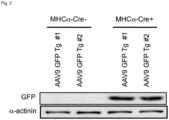
- the inventors first assessed the sensitivity of the AAV9 construct to Cre recombinase mediated GFP transgene induction. As shown in Figure 1A (top panels), in the absence of Cre recombinase, GFP expression is not detected. In contrast, ectopic Cre recombinase expression driven by the myosin light chain 2v (MLC2v) promoter (Ht-AAV9) leads to expression of GFP in cardiomyocytes ( Figure 1A lower panels). The specificity of Cre recombinase-dependent GFP expression was further confirmed by immunoblotting with GFP specific antibodies and quantitative polymerase chain reaction (qPCR) ( Figures 1B and 1C ).
- qPCR quantitative polymerase chain reaction
- Example 2 In vivo validation
- the cardiomyocyte targeting AAV9-MLC2v-lox-STOP-GFP -transgene virus was injected intravenously into mice expressing tamoxifen-inducible Cre recombinase under the control of the cardiac-specific MHC ⁇ promoter.
- control MHC ⁇ -Cre- mice did not exhibit GFP expression ( Figure 2A, upper panel and 2B), while mice harbouring the Cre recombinase transgene (MHC ⁇ -Cre+) expressed high levels of GFP upon tamoxifen delivery ( Figure 2A, lower panel and 2B) in cardiac ventricles.
- Transgene expression was observed in hearts of MHC ⁇ -Cre+ mice infected with AAV9-GFP at 10-20 weeks post-injection, but was absent in non-cardiac tissue throughout this duration.
- Example 3 Use of a plurality of transcribable units
- RNA Pollll-driven transcription RNA Pollll-driven transcription
- ncRNA non-coding RNAs
- miRNA micro RNAs
- siRNA small interfering RNAs
- shRNA short-hairpin RNAs
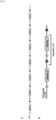
- Cell specific expression of the individual transgene or shRNA is achieved through combinatorial utilization of IoxP elements in a convergent or divergent orientation as shown in Figure 3A .
- Figure 3B the minimal repetitive unit of the construct is shown.
- transgene expression is strongly correlated to its position within the AAV9 construct. Transgenes at the flanks are most heavily represented, while those positioned at the centre are least represented. However, in the context of the adult mouse heart, within a 50 transgene construct, the lowest expressed transgene was detected in approximately 0.2% of cardiomyocytes within the heart corresponding to roughly 40 000 heart cells.
- Example 4 In vivo assessment of a plurality of transcribable units for phenotype variation
- mice expressing Cre-recombinase in the liver were maintained on a high fat diet to induce fatty livers.
- the mice were injected with a virus containing shRNAS targeting 50 individual genes that are hypothesised to effect fat accumulation in the liver.
- the liver was dissociated using standard methods yielding individual hepatocytes. Some of those hepatocytes carry a fat load while others do less so or haven't any fat load.
- FACS fluorescense-activated cell sorting
- This method can be applied for other possible phenotypic readouts such as cell size, cell morphology, surface or internal protein expression, apoptosis, proliferation, etc.
- phenotypic readouts such as cell size, cell morphology, surface or internal protein expression, apoptosis, proliferation, etc.
- any parameter that serves as readout for a gene function that can be distinguished by staining, size or cell morphology can be used.
- Example 5 Novel mouse system for in vivo orthotropic identification of disease-associated genes.
- the invention can also be employed for the generation of a novel mouse system for in vivo orthotropic identification of disease-associated genes. This is achieved by introduction of multiple small interfering RNAs (siRNA), short hairpin RNAs (shRNA) or coding or non-coding genes flanked by a combination of two different loxP motifs (that are mutually exclusive but of similar Cre recombinase sensitivity and efficiency) into a single transgene at the mouse ROSA26 locus. This system enables the functional assessment of multiple genes in a single mouse, in a celltype and organ-specific manner.
- siRNA small interfering RNAs
- shRNA short hairpin RNAs
- coding or non-coding genes flanked by a combination of two different loxP motifs (that are mutually exclusive but of similar Cre recombinase sensitivity and efficiency) into a single transgene at the mouse ROSA26 locus.
- FIG. 3A and 3B where Figure 3B represents the minimal modular unit of this system, while Figure 3A depicts a schematic of the transgene, is introduced at the ROSA26 locus.
- Expression of the respective siRNAs in the transgene in Figure 3A is tightly regulated by Cre recombinase activity (Cre) activity, such that in any given cell only one siRNA (or shRNA or coding or non-coding gene) is active. This occurs upon completion of Cre-mediated recombination as shown in Figure 4A and 4B , where the arrows represent the multiple routes taken to reach completion of Cre-activity in a three ( Figure 4A ) or four ( Figure 4B ) siRNA transgene.
- Cre Cre recombinase activity
- Crossing mice carrying the multi-construct transgene at the ROSA26 locus with mice expressing Cre in an organ-specific manner allows the relevance of specific genes in the context of disease to be assessed.
- siRNA/shRNA-mediated knockdown or ectopic expression of multiple genes in a cell-type specific manner while simultaneously ensuring that only one gene or RNA is upregulated or inhibited in one cell, the function of multiple genes or RNAs can be addressed simultaneously in one mouse.
- the in vivo function of a protein family consisting of 50 members
- mice can be interrogated in a specific cell type with 1-3 mice as opposed to the 50 mice that would be required using conventional methods.
- mice carrying both the multi-transgene construct and a tissue-specific Cre Upon derivation of mice carrying both the multi-transgene construct and a tissue-specific Cre, these mice can be subjected to pathologic stress stimuli to induce a disease state. The relevance of a specific siRNA (or shRNA, or coding or non-coding gene) will thereafter be assessed through a phenotypic screen.
- Heart cells can be isolated using the established Langendorf method and fluorescence activated cell sorting (FACS) performed to distinguish large cells from small cells.
- FACS fluorescence activated cell sorting
- siRNAs enriched in the small cell population would be predicted to inhibit pathologic growth in response to stress. In doing so, the in vivo functional significance of a specific siRNA or gene can be determined.
- Other readouts such as cell proliferation, ROS levels, induction of specific protein, etc. can also be used using the same principle. This system can also be used without a stress stimulus to assess if siRNA-mediated gene inactivation or ectopic gene expression is sufficient to induce a disease phenotype.
- This novel system for large-scale in vivo organ-targeted mammalian transgenesis is applicable for the tissue specific and inducible expression of transgenes in a broad range of embryonic, newborn and adult animals.
- the use of this platform enables the high-throughput and economical gain-of-function and loss-of function assessment of coding and non-coding gene function in vivo in an organ-specific manner.
- the in vivo function of a protein family (consisting of up to 50 members) can be interrogated in a particular cell type with several animals as opposed to the around 50 animals that would be required using conventional methods. Thereafter, function of specific transgenes can be addressed using functional or phenotypic readouts including apoptosis, cell proliferation, ROS levels, induction of specific protein, etc. followed by cost-effective targeted qPCR or sequencing techniques to identify phenotype-associated gene targets.
- This platform not only facilitates easy in vivo gene validation, but is also advantageous by reducing the number of animals used in experiments.
- This technology can be further extended for in vivo screening of DNA/RNA-based therapeutic compounds in rodents and non-rodent / large animals, for optimization of plant growth in agriculture and used in combination with CRISPR/Cas technology for simultaneous multi-loci genome editing for generation of mutations, knockouts or knock-ins in a single cell-specific manner for downstream functional genomic analysis.
- This platform serves as the missing link for translation between animals and human clinical studies by facilitating the ability to cost-effectively and efficiently extend preliminary findings in small animal models to more physiologically relevant large animal models such as the pig, sheep and non-human primate, prior to targeted therapies in humans.
Landscapes
- Life Sciences & Earth Sciences (AREA)
- Health & Medical Sciences (AREA)
- Engineering & Computer Science (AREA)
- Genetics & Genomics (AREA)
- Chemical & Material Sciences (AREA)
- Biomedical Technology (AREA)
- Organic Chemistry (AREA)
- Zoology (AREA)
- Biotechnology (AREA)
- Wood Science & Technology (AREA)
- General Engineering & Computer Science (AREA)
- Bioinformatics & Cheminformatics (AREA)
- Molecular Biology (AREA)
- General Health & Medical Sciences (AREA)
- Biophysics (AREA)
- Microbiology (AREA)
- Biochemistry (AREA)
- Physics & Mathematics (AREA)
- Plant Pathology (AREA)
- Analytical Chemistry (AREA)
- Proteomics, Peptides & Aminoacids (AREA)
- Environmental Sciences (AREA)
- Virology (AREA)
- Animal Behavior & Ethology (AREA)
- Animal Husbandry (AREA)
- Biodiversity & Conservation Biology (AREA)
- Veterinary Medicine (AREA)
- Immunology (AREA)
- Micro-Organisms Or Cultivation Processes Thereof (AREA)
Claims (13)
- Ein Verfahren zur Expression von transkribierbarer(n) Einheit(en) in einer Nagetier-Zielzelle, umfassend die Schritte:- Bereitstellen einer Nagetier-Zielzelle, die eine ortsspezifische Rekombinase exprimiert,- Bereitstellen eines DNA-Vektors, gekennzeichnet durch eine 5'-zu-3'-Vektorsequenzorientierung,
wobeio besagter DNA-Vektor eine Vielzahl von Rekombinationseinheiten umfasst, und wobei eine einzelne Rekombinationseinheit mindestens eine transkribierbare Einheit und einen ersten Typ und einen zweiten Typ von Zielort umfasst, die beide von der ortsspezifischen Rekombinase erkennbar sind, und wobei:▪ Rekombination nur zwischen zwei Zielorten desselben Typs stattfinden kann;▪ sich besagter erster Typ von Zielort am 5'-Anfang von besagter Rekombinationseinheit befindet und besagter zweiter Typ von Zielort sich am 3'-Ende von besagter Rekombinationseinheit befindet;▪ für alle Rekombinationseinheiten, die innerhalb des DNA-Vektors umfasst sind, die Ausrichtung von allen von besagten Zielorten des ersten Typs gleich ist, und die Ausrichtung von allen von besagten Zielorten des zweiten Typs gleich ist;- Einbringen des besagten DNA-Vektors in besagte Nagetier-Zielzelle. - Das Verfahren gemäß Anspruch 1, wobei besagte Vielzahl von Rekombinationseinheiten 2 bis 80 Rekombinationseinheiten, insbesondere 5 bis 60 Rekombinationseinheiten, weiter insbesondere 10 bis 50 Rekombinationseinheiten umfasst.
- Das Verfahren gemäß einem der vorhergehenden Ansprüche, wobei jede von besagten Rekombinationseinheiten in besagtem DNA-Vektor zusätzlich einen Transkriptionsterminator umfasst, der sich zwischen der transkribierbaren Einheit, die dem 3'-Ende von besagter Rekombinationseinheit am nächsten ist, und besagtem zweiten Typ von Zielort befindet.
- Das Verfahren gemäß einem der vorhergehenden Ansprüche, wobei die Nagetier-Zielzellen, die besagte ortsspezifische Rekombinase exprimieren, innerhalb eines Gewebes von Interesse in einem Nagetier umfasst sind oder ein solches ausbilden.
- Das Verfahren gemäß einem der vorhergehenden Ansprüche, wobei besagte ortsspezifische Rekombinase ausgewählt ist aus Cre-Rekombinase und FLP.
- Das Verfahren gemäß einem der vorhergehenden Ansprüche, wobei besagter DNA-Vektor eine Vielzahl von Selektionseinheiten umfasst, wobei jede von besagten Selektionseinheiten umfasst:- einen Promotor, um die Expression der transkribierbaren Einheiten zu ermöglichen, insbesondere den U6 Promotor, und- eine Vielzahl von Rekombinationseinheiten.
- Ein DNA-Vektor, gekennzeichnet durch eine 5'-zu-3'-Vektorsequenzorientierung, umfassend:- eine Vielzahl von Rekombinationseinheiten, wobei eine einzelne Rekombinationseinheit mindestens eine transkribierbare Einheit und einen ersten Typ und einen zweiten Typ von Zielort umfasst, wobei beide durch eine ortsspezifische Rekombinase erkennbar sind, und wobei:∘ Rekombination nur zwischen zwei Zielorten desselben Typs stattfinden kann;∘ sich besagter erster Typ von Zielort am 5'-Anfang von besagter Rekombinationseinheit und besagter zweiter Typ von Zielort am 3'-Ende von besagter Rekombinationseinheit befindet;∘ für alle Rekombinationseinheiten, die innerhalb des DNA-Vektors umfasst sind, die Ausrichtung von allen von besagten Zielorten des ersten Typs gleich ist und die Ausrichtung von allen von besagten Zielorten des zweiten Typs gleich ist, wobei∘ besagte Vielzahl von Rekombinationseinheiten in besagtem DNA-Vektor 3 bis 80 Rekombinationseinheiten, insbesondere 5 bis 60 Rekombinationseinheiten, weiter insbesondere 10 bis 50 Rekombinationseinheiten umfasst.
- Der DNA-Vektor gemäß Anspruch 7, wobei jeder von besagten Rekombinationseinheiten in besagtem DNA-Vektor in 3'-Position ein Transkriptionsterminator folgt.
- Der DNA-Vektor gemäß Anspruch 7 oder Anspruch 8, umfassend eine Vielzahl von Selektionseinheiten, wobei jede der besagten Selektionseinheiten umfasst:- einen Promotor, um die Expression der transkribierbaren Einheiten zu ermöglichen, insbesondere den U6 Promotor, und- eine Vielzahl von Rekombinationseinheiten.
- Ein Verfahren zur in-vivo-Bewertung einer Vielzahl von transkribierbaren Einheiten für Phänotypvariation in einem Gewebe von Interesse eines Nagetiers, umfassend die Schritte:- in-vivo-Expression von mindestens einer transkribierbaren Einheit in einem Gewebe von Interesse gemäß dem Verfahren nach einem der Ansprüche 4 bis 6,- Ernten von besagtem Gewebe von Interesse,- Trennen des besagten Gewebes in einzelne Zellen und Sortieren von besagten einzelnen Zellen gemäß einem Phänotyp von Interesse,- Identifizierung besagter transkribierbarer Einheit(en), die in jeder von besagten sortierten einzelnen Zellen exprimiert sind,- Inbezugsetzen besagter transkribierbarer Einheit(en) mit besagtem Phänotyp von Interesse der besagten einzelnen Zellen.
- Das Verfahren gemäß Anspruch 10, wobei besagter Phänotyp von Interesse gekennzeichnet ist durch eine Zellgröße, eine Zellmorphologie, eine Zellfärbung oder einen Zellmarker.
- Ein transgenes Nagetier, gekennzeichnet durch einen genetischen Locus, umfassend:- eine Vielzahl von Rekombinationseinheiten, wobei eine einzelne Rekombinationseinheit mindestens eine transkribierbare Einheit und einen ersten Typ und einen zweiten Typ von Zielort umfasst, wobei beide durch eine ortsspezifische Rekombinase erkennbar sind, und wobei:∘ Rekombination nur zwischen zwei Zielorten desselben Typs stattfinden kann;∘ sich besagter erster Typ von Zielort am 5'-Anfang von besagter Rekombinationseinheit befindet und besagter zweiter Typ von Zielort sich am 3'-Ende von besagter Rekombinationseinheit befindet;∘ für alle Rekombinationseinheiten, die innerhalb des DNA-Vektors umfasst sind, die Ausrichtung von allen von besagten Zielorten des ersten Typs gleich ist und die Ausrichtung von allen von besagten Zielorten des zweiten Typs gleich ist.
- Ein Verfahren zum Generieren eines transgenen Nagetiers, umfassend die Verwendung eines DNA-Vektors, umfassend:- eine Vielzahl von Rekombinationseinheiten, wobei eine einzelne Rekombinationseinheit mindestens eine transkribierbare Einheit und einen ersten Typ und einen zweiten Typ von Zielort umfasst, wobei beide durch eine ortsspezifische Rekombinase erkennbar sind, und wobei:∘ Rekombination nur zwischen zwei Zielorten desselben Typs stattfinden kann;∘ sich besagter erster Typ von Zielort am 5'-Anfang von besagter Rekombinationseinheit befindet und besagter zweiter Typ von Zielort sich am 3'-Ende von besagter Rekombinationseinheit befindet;∘ für alle Rekombinationseinheiten, die innerhalb des DNA-Vektors umfasst sind, die Ausrichtung von allen von besagten Zielorten des ersten Typs gleich ist und die Ausrichtung von allen von besagten Zielorten des zweiten Typs gleich ist.
Applications Claiming Priority (3)
| Application Number | Priority Date | Filing Date | Title |
|---|---|---|---|
| EP15194155 | 2015-11-11 | ||
| EP16169261.1A EP3243906A1 (de) | 2016-05-11 | 2016-05-11 | Gewebeselektive transgenexpression |
| PCT/EP2016/077351 WO2017081204A1 (en) | 2015-11-11 | 2016-11-10 | Tissue selective transgene expression |
Publications (3)
| Publication Number | Publication Date |
|---|---|
| EP3374510A1 EP3374510A1 (de) | 2018-09-19 |
| EP3374510B1 true EP3374510B1 (de) | 2023-06-21 |
| EP3374510C0 EP3374510C0 (de) | 2023-06-21 |
Family
ID=57326367
Family Applications (1)
| Application Number | Title | Priority Date | Filing Date |
|---|---|---|---|
| EP16797497.1A Active EP3374510B1 (de) | 2015-11-11 | 2016-11-10 | Gewebeselektive transgenexpression |
Country Status (3)
| Country | Link |
|---|---|
| US (1) | US10851388B2 (de) |
| EP (1) | EP3374510B1 (de) |
| WO (1) | WO2017081204A1 (de) |
Family Cites Families (3)
| Publication number | Priority date | Publication date | Assignee | Title |
|---|---|---|---|---|
| CA2269661A1 (en) | 1996-12-18 | 1998-06-25 | Targeted Genetics Corporation | Recombinase-activatable aav packaging cassettes for use in the production of aav vectors |
| AU2003245036A1 (en) | 2002-05-20 | 2003-12-02 | University Of Delhi, South Campus | Novel lambda phage display system and the process |
| JP4883532B2 (ja) | 2008-02-15 | 2012-02-22 | 国立大学法人九州大学 | 組換え酵素を用いた遺伝子増幅方法 |
-
2016
- 2016-11-10 US US15/775,030 patent/US10851388B2/en active Active
- 2016-11-10 EP EP16797497.1A patent/EP3374510B1/de active Active
- 2016-11-10 WO PCT/EP2016/077351 patent/WO2017081204A1/en not_active Ceased
Also Published As
| Publication number | Publication date |
|---|---|
| WO2017081204A1 (en) | 2017-05-18 |
| US20180334686A1 (en) | 2018-11-22 |
| EP3374510A1 (de) | 2018-09-19 |
| EP3374510C0 (de) | 2023-06-21 |
| US10851388B2 (en) | 2020-12-01 |
Similar Documents
| Publication | Publication Date | Title |
|---|---|---|
| US12213466B2 (en) | Process for using CRISPR to transfect primordial germ cells in avians | |
| CN113831407B (zh) | 用于使用多个引导rna来破坏免疫耐受性的方法 | |
| JP2021518141A5 (de) | ||
| US20160010113A1 (en) | Compositions and methods for engineering cells | |
| US20220145297A1 (en) | Rna-targeting cas enzymes | |
| Dann | New technology for an old favorite: lentiviral transgenesis and RNAi in rats | |
| KR20200096262A (ko) | RNAi 모델의 유전자 간섭 개발 및 적용 방법 | |
| Belizário et al. | New routes for transgenesis of the mouse | |
| CN110438160B (zh) | 一种Cd2ap基因敲除动物的构建方法及应用 | |
| Luqman et al. | Long read sequencing reveals transgene concatemerization and vector sequences integration following AAV-driven electroporation of CRISPR RNP complexes in mouse zygotes | |
| Yin et al. | Multiplex conditional mutagenesis in zebrafish using the CRISPR/Cas system | |
| EP1700914A1 (de) | Entwicklung einer säugergenommodifikationstechnik unter verwendung eines retrotransposons | |
| Park et al. | CpG methylation modulates tissue-specific expression of a transgene in chickens | |
| Jeon et al. | Retroelement insertion in a CRISPR/Cas9 editing site in the early embryo intensifies genetic mosaicism | |
| EP3374510B1 (de) | Gewebeselektive transgenexpression | |
| EP3243906A1 (de) | Gewebeselektive transgenexpression | |
| JP7426101B2 (ja) | ゲノム編集された細胞を製造する方法 | |
| Kleinhammer et al. | Gene knockdown in the mouse through RNAi | |
| Li et al. | Genome-wide forward genetic screens in mouse ES cells | |
| Min et al. | Generation of antiviral transgenic chicken using spermatogonial stem cell transfected in vivo | |
| Luqman et al. | Long Read Sequencing reveals transgene concatemerization and backbone integration following AAV-driven electroporation of CRISPR RNP complexes in mouse zygotes | |
| KR102131883B1 (ko) | Cre 재조합효소 의존적으로 TREK-1 발현이 억제되는 항우울 동물모델 및 이의 제조방법 | |
| Koirala et al. | eSPLIT and iSWAP: CRISPR-Mediated Conditional Allele Engineering with Short Artificial Introns | |
| Elaswad et al. | Muhammad W. Luqman 1, 2+, Piroon Jenjaroenpun 3*, Jessica Spathos¹, Nikhil Shingte4, Mitchell Cummins 1, 5 | |
| Táborská | RNA interference in mouse oocytes and somatic cells |
Legal Events
| Date | Code | Title | Description |
|---|---|---|---|
| STAA | Information on the status of an ep patent application or granted ep patent |
Free format text: STATUS: UNKNOWN |
|
| STAA | Information on the status of an ep patent application or granted ep patent |
Free format text: STATUS: THE INTERNATIONAL PUBLICATION HAS BEEN MADE |
|
| PUAI | Public reference made under article 153(3) epc to a published international application that has entered the european phase |
Free format text: ORIGINAL CODE: 0009012 |
|
| STAA | Information on the status of an ep patent application or granted ep patent |
Free format text: STATUS: REQUEST FOR EXAMINATION WAS MADE |
|
| 17P | Request for examination filed |
Effective date: 20180523 |
|
| AK | Designated contracting states |
Kind code of ref document: A1 Designated state(s): AL AT BE BG CH CY CZ DE DK EE ES FI FR GB GR HR HU IE IS IT LI LT LU LV MC MK MT NL NO PL PT RO RS SE SI SK SM TR |
|
| AX | Request for extension of the european patent |
Extension state: BA ME |
|
| RIN1 | Information on inventor provided before grant (corrected) |
Inventor name: WARD, JONATHAN Inventor name: KRISHNAN, JAYA |
|
| DAV | Request for validation of the european patent (deleted) | ||
| DAX | Request for extension of the european patent (deleted) | ||
| STAA | Information on the status of an ep patent application or granted ep patent |
Free format text: STATUS: EXAMINATION IS IN PROGRESS |
|
| 17Q | First examination report despatched |
Effective date: 20190625 |
|
| GRAP | Despatch of communication of intention to grant a patent |
Free format text: ORIGINAL CODE: EPIDOSNIGR1 |
|
| STAA | Information on the status of an ep patent application or granted ep patent |
Free format text: STATUS: GRANT OF PATENT IS INTENDED |
|
| INTG | Intention to grant announced |
Effective date: 20230105 |
|
| GRAS | Grant fee paid |
Free format text: ORIGINAL CODE: EPIDOSNIGR3 |
|
| GRAA | (expected) grant |
Free format text: ORIGINAL CODE: 0009210 |
|
| STAA | Information on the status of an ep patent application or granted ep patent |
Free format text: STATUS: THE PATENT HAS BEEN GRANTED |
|
| AK | Designated contracting states |
Kind code of ref document: B1 Designated state(s): AL AT BE BG CH CY CZ DE DK EE ES FI FR GB GR HR HU IE IS IT LI LT LU LV MC MK MT NL NO PL PT RO RS SE SI SK SM TR |
|
| REG | Reference to a national code |
Ref country code: CH Ref legal event code: EP |
|
| REG | Reference to a national code |
Ref country code: DE Ref legal event code: R096 Ref document number: 602016080486 Country of ref document: DE |
|
| REG | Reference to a national code |
Ref country code: AT Ref legal event code: REF Ref document number: 1580918 Country of ref document: AT Kind code of ref document: T Effective date: 20230715 |
|
| REG | Reference to a national code |
Ref country code: IE Ref legal event code: FG4D |
|
| RAP4 | Party data changed (patent owner data changed or rights of a patent transferred) |
Owner name: GENOME BIOLOGICS GMBH |
|
| U01 | Request for unitary effect filed |
Effective date: 20230721 |
|
| U07 | Unitary effect registered |
Designated state(s): AT BE BG DE DK EE FI FR IT LT LU LV MT NL PT SE SI Effective date: 20230728 |
|
| REG | Reference to a national code |
Ref country code: LT Ref legal event code: MG9D |
|
| PG25 | Lapsed in a contracting state [announced via postgrant information from national office to epo] |
Ref country code: NO Free format text: LAPSE BECAUSE OF FAILURE TO SUBMIT A TRANSLATION OF THE DESCRIPTION OR TO PAY THE FEE WITHIN THE PRESCRIBED TIME-LIMIT Effective date: 20230921 |
|
| PG25 | Lapsed in a contracting state [announced via postgrant information from national office to epo] |
Ref country code: RS Free format text: LAPSE BECAUSE OF FAILURE TO SUBMIT A TRANSLATION OF THE DESCRIPTION OR TO PAY THE FEE WITHIN THE PRESCRIBED TIME-LIMIT Effective date: 20230621 Ref country code: HR Free format text: LAPSE BECAUSE OF FAILURE TO SUBMIT A TRANSLATION OF THE DESCRIPTION OR TO PAY THE FEE WITHIN THE PRESCRIBED TIME-LIMIT Effective date: 20230621 Ref country code: GR Free format text: LAPSE BECAUSE OF FAILURE TO SUBMIT A TRANSLATION OF THE DESCRIPTION OR TO PAY THE FEE WITHIN THE PRESCRIBED TIME-LIMIT Effective date: 20230922 |
|
| PG25 | Lapsed in a contracting state [announced via postgrant information from national office to epo] |
Ref country code: SK Free format text: LAPSE BECAUSE OF FAILURE TO SUBMIT A TRANSLATION OF THE DESCRIPTION OR TO PAY THE FEE WITHIN THE PRESCRIBED TIME-LIMIT Effective date: 20230621 |
|
| PG25 | Lapsed in a contracting state [announced via postgrant information from national office to epo] |
Ref country code: ES Free format text: LAPSE BECAUSE OF FAILURE TO SUBMIT A TRANSLATION OF THE DESCRIPTION OR TO PAY THE FEE WITHIN THE PRESCRIBED TIME-LIMIT Effective date: 20230621 |
|
| PG25 | Lapsed in a contracting state [announced via postgrant information from national office to epo] |
Ref country code: IS Free format text: LAPSE BECAUSE OF FAILURE TO SUBMIT A TRANSLATION OF THE DESCRIPTION OR TO PAY THE FEE WITHIN THE PRESCRIBED TIME-LIMIT Effective date: 20231021 |
|
| PG25 | Lapsed in a contracting state [announced via postgrant information from national office to epo] |
Ref country code: SM Free format text: LAPSE BECAUSE OF FAILURE TO SUBMIT A TRANSLATION OF THE DESCRIPTION OR TO PAY THE FEE WITHIN THE PRESCRIBED TIME-LIMIT Effective date: 20230621 Ref country code: SK Free format text: LAPSE BECAUSE OF FAILURE TO SUBMIT A TRANSLATION OF THE DESCRIPTION OR TO PAY THE FEE WITHIN THE PRESCRIBED TIME-LIMIT Effective date: 20230621 Ref country code: RO Free format text: LAPSE BECAUSE OF FAILURE TO SUBMIT A TRANSLATION OF THE DESCRIPTION OR TO PAY THE FEE WITHIN THE PRESCRIBED TIME-LIMIT Effective date: 20230621 Ref country code: IS Free format text: LAPSE BECAUSE OF FAILURE TO SUBMIT A TRANSLATION OF THE DESCRIPTION OR TO PAY THE FEE WITHIN THE PRESCRIBED TIME-LIMIT Effective date: 20231021 Ref country code: ES Free format text: LAPSE BECAUSE OF FAILURE TO SUBMIT A TRANSLATION OF THE DESCRIPTION OR TO PAY THE FEE WITHIN THE PRESCRIBED TIME-LIMIT Effective date: 20230621 Ref country code: CZ Free format text: LAPSE BECAUSE OF FAILURE TO SUBMIT A TRANSLATION OF THE DESCRIPTION OR TO PAY THE FEE WITHIN THE PRESCRIBED TIME-LIMIT Effective date: 20230621 |
|
| U21 | Renewal fee for the european patent with unitary effect paid with additional fee |
Year of fee payment: 8 Effective date: 20240119 |
|
| PG25 | Lapsed in a contracting state [announced via postgrant information from national office to epo] |
Ref country code: PL Free format text: LAPSE BECAUSE OF FAILURE TO SUBMIT A TRANSLATION OF THE DESCRIPTION OR TO PAY THE FEE WITHIN THE PRESCRIBED TIME-LIMIT Effective date: 20230621 |
|
| REG | Reference to a national code |
Ref country code: DE Ref legal event code: R097 Ref document number: 602016080486 Country of ref document: DE |
|
| PLBE | No opposition filed within time limit |
Free format text: ORIGINAL CODE: 0009261 |
|
| STAA | Information on the status of an ep patent application or granted ep patent |
Free format text: STATUS: NO OPPOSITION FILED WITHIN TIME LIMIT |
|
| 26N | No opposition filed |
Effective date: 20240322 |
|
| PG25 | Lapsed in a contracting state [announced via postgrant information from national office to epo] |
Ref country code: MC Free format text: LAPSE BECAUSE OF FAILURE TO SUBMIT A TRANSLATION OF THE DESCRIPTION OR TO PAY THE FEE WITHIN THE PRESCRIBED TIME-LIMIT Effective date: 20230621 |
|
| PG25 | Lapsed in a contracting state [announced via postgrant information from national office to epo] |
Ref country code: MC Free format text: LAPSE BECAUSE OF FAILURE TO SUBMIT A TRANSLATION OF THE DESCRIPTION OR TO PAY THE FEE WITHIN THE PRESCRIBED TIME-LIMIT Effective date: 20230621 |
|
| REG | Reference to a national code |
Ref country code: IE Ref legal event code: MM4A |
|
| PG25 | Lapsed in a contracting state [announced via postgrant information from national office to epo] |
Ref country code: IE Free format text: LAPSE BECAUSE OF NON-PAYMENT OF DUE FEES Effective date: 20231110 |
|
| PG25 | Lapsed in a contracting state [announced via postgrant information from national office to epo] |
Ref country code: IE Free format text: LAPSE BECAUSE OF NON-PAYMENT OF DUE FEES Effective date: 20231110 |
|
| U20 | Renewal fee for the european patent with unitary effect paid |
Year of fee payment: 9 Effective date: 20241125 |
|
| PG25 | Lapsed in a contracting state [announced via postgrant information from national office to epo] |
Ref country code: CY Free format text: LAPSE BECAUSE OF FAILURE TO SUBMIT A TRANSLATION OF THE DESCRIPTION OR TO PAY THE FEE WITHIN THE PRESCRIBED TIME-LIMIT; INVALID AB INITIO Effective date: 20161110 |
|
| PG25 | Lapsed in a contracting state [announced via postgrant information from national office to epo] |
Ref country code: HU Free format text: LAPSE BECAUSE OF FAILURE TO SUBMIT A TRANSLATION OF THE DESCRIPTION OR TO PAY THE FEE WITHIN THE PRESCRIBED TIME-LIMIT; INVALID AB INITIO Effective date: 20161110 |
|
| REG | Reference to a national code |
Ref country code: CH Ref legal event code: U11 Free format text: ST27 STATUS EVENT CODE: U-0-0-U10-U11 (AS PROVIDED BY THE NATIONAL OFFICE) Effective date: 20251201 |
|
| PG25 | Lapsed in a contracting state [announced via postgrant information from national office to epo] |
Ref country code: TR Free format text: LAPSE BECAUSE OF FAILURE TO SUBMIT A TRANSLATION OF THE DESCRIPTION OR TO PAY THE FEE WITHIN THE PRESCRIBED TIME-LIMIT Effective date: 20230621 |
|
| U20 | Renewal fee for the european patent with unitary effect paid |
Year of fee payment: 10 Effective date: 20251117 |
|
| PGFP | Annual fee paid to national office [announced via postgrant information from national office to epo] |
Ref country code: GB Payment date: 20251120 Year of fee payment: 10 |
|
| PGFP | Annual fee paid to national office [announced via postgrant information from national office to epo] |
Ref country code: CH Payment date: 20251201 Year of fee payment: 10 |