EP3373679A1 - Verfahren, vorrichtung und ausrüstung zur auswahl von ressourcen - Google Patents
Verfahren, vorrichtung und ausrüstung zur auswahl von ressourcen Download PDFInfo
- Publication number
- EP3373679A1 EP3373679A1 EP16912446.8A EP16912446A EP3373679A1 EP 3373679 A1 EP3373679 A1 EP 3373679A1 EP 16912446 A EP16912446 A EP 16912446A EP 3373679 A1 EP3373679 A1 EP 3373679A1
- Authority
- EP
- European Patent Office
- Prior art keywords
- resource
- sensing window
- sensing
- time period
- resource reservation
- Prior art date
- Legal status (The legal status is an assumption and is not a legal conclusion. Google has not performed a legal analysis and makes no representation as to the accuracy of the status listed.)
- Granted
Links
Images


Classifications
-
- H—ELECTRICITY
- H04—ELECTRIC COMMUNICATION TECHNIQUE
- H04W—WIRELESS COMMUNICATION NETWORKS
- H04W28/00—Network traffic management; Network resource management
- H04W28/16—Central resource management; Negotiation of resources or communication parameters, e.g. negotiating bandwidth or QoS [Quality of Service]
- H04W28/26—Resource reservation
-
- H—ELECTRICITY
- H04—ELECTRIC COMMUNICATION TECHNIQUE
- H04W—WIRELESS COMMUNICATION NETWORKS
- H04W72/00—Local resource management
- H04W72/02—Selection of wireless resources by user or terminal
-
- H—ELECTRICITY
- H04—ELECTRIC COMMUNICATION TECHNIQUE
- H04W—WIRELESS COMMUNICATION NETWORKS
- H04W72/00—Local resource management
- H04W72/04—Wireless resource allocation
-
- H—ELECTRICITY
- H04—ELECTRIC COMMUNICATION TECHNIQUE
- H04W—WIRELESS COMMUNICATION NETWORKS
- H04W72/00—Local resource management
- H04W72/50—Allocation or scheduling criteria for wireless resources
- H04W72/52—Allocation or scheduling criteria for wireless resources based on load
-
- H—ELECTRICITY
- H04—ELECTRIC COMMUNICATION TECHNIQUE
- H04W—WIRELESS COMMUNICATION NETWORKS
- H04W72/00—Local resource management
- H04W72/50—Allocation or scheduling criteria for wireless resources
- H04W72/54—Allocation or scheduling criteria for wireless resources based on quality criteria
- H04W72/542—Allocation or scheduling criteria for wireless resources based on quality criteria using measured or perceived quality
-
- H—ELECTRICITY
- H04—ELECTRIC COMMUNICATION TECHNIQUE
- H04W—WIRELESS COMMUNICATION NETWORKS
- H04W74/00—Wireless channel access
- H04W74/08—Non-scheduled access, e.g. ALOHA
- H04W74/0808—Non-scheduled access, e.g. ALOHA using carrier sensing, e.g. carrier sense multiple access [CSMA]
-
- Y—GENERAL TAGGING OF NEW TECHNOLOGICAL DEVELOPMENTS; GENERAL TAGGING OF CROSS-SECTIONAL TECHNOLOGIES SPANNING OVER SEVERAL SECTIONS OF THE IPC; TECHNICAL SUBJECTS COVERED BY FORMER USPC CROSS-REFERENCE ART COLLECTIONS [XRACs] AND DIGESTS
- Y02—TECHNOLOGIES OR APPLICATIONS FOR MITIGATION OR ADAPTATION AGAINST CLIMATE CHANGE
- Y02D—CLIMATE CHANGE MITIGATION TECHNOLOGIES IN INFORMATION AND COMMUNICATION TECHNOLOGIES [ICT], I.E. INFORMATION AND COMMUNICATION TECHNOLOGIES AIMING AT THE REDUCTION OF THEIR OWN ENERGY USE
- Y02D30/00—Reducing energy consumption in communication networks
- Y02D30/70—Reducing energy consumption in communication networks in wireless communication networks
Definitions
- Embodiments of the present invention relate to communications technologies, and in particular, to a resource selection method, an apparatus, and a device.
- a wireless ad hoc communications network is formed by connecting user equipment (User Equipment, UE for short) to user equipment by using an in-vehicle intelligent terminal device, thereby implementing mutual communication between UEs.
- user equipment User Equipment, UE for short
- in-vehicle intelligent terminal device thereby implementing mutual communication between UEs.
- the UE when UE performs sensing and semi-static reserved transmission in an autonomous resource selection mode, if resource selection or resource reselection is triggered, the UE needs to sense, in a sensing window, whether a resource is idle, and select, based on a sensing result, a time-frequency resource that is used to send data.
- the UE further indicates a resource reservation interval, that is, a time interval between a resource to be used for next data transmission and a resource used for current data transmission.
- Embodiments of the present invention provide a resource selection method, an apparatus, and a device, so as to reduce power consumption of UE.
- an embodiment of the present invention provides a resource selection method.
- the method is described from a perspective of first UE.
- the method includes: determining, by the first user equipment UE, parameter information of a sensing window, where the parameter information includes at least one of a start time, a time span, or a quantity; and sensing, by the first UE, the resource in the sensing window according to the parameter information of the sensing window, and selecting a resource according to a sensing result.
- the parameter information of the sensing window is determined, and the resource is sensed in the sensing window according to the determined parameter information of the sensing window, a prior-art phenomenon that a resource is sensed according to a fixed sensing window is avoided, thereby reducing power consumption of UE.
- the determining, by the first user equipment UE, parameter information of a sensing window includes: determining, by the first UE, the parameter information of the sensing window according to a usage status of a resource.
- the usage status of the resource includes at least one of the following: a first congestion level, a first resource reservation interval, a second resource reservation interval, a quantity of optional resources, or energy on the resource; and a resource reservation interval is a time interval between a resource used by second UE for current data transmission and a resource used by the second UE for next data transmission.
- an optional resource is a resource that meets a specific criterion. For example, if the first UE learns that a resource is reserved or scheduled, and energy received on the resource exceeds a threshold, the resource is not an optional resource.
- the usage status of the resource may alternatively include power on the resource. When the first UE learns that the resource is reserved or scheduled, and the power received on the resource exceeds a threshold, the resource is not an optional resource.
- the first UE may determine the parameter information of the sensing window according to the usage status of the resource, so that the parameter information of the sensing window adaptively changes according to the usage status of the resource. Therefore, a relationship between power consumption and performance of UE is well balanced.
- the method before the determining, by the first user equipment UE, parameter information of a sensing window, includes: receiving, by the first UE, first indication information sent by a base station or the second UE, where the first indication information includes the first congestion level and/or the first resource reservation interval; or determining, by the first UE, the first congestion level according to the energy or the power on the resource; or receiving, by the first UE, second indication information sent by at least one second UE, where the second indication information includes a second congestion level and/or the second resource reservation interval; and determining, by the first UE, the first congestion level and/or the first resource reservation interval according to the second congestion level and/or the second resource reservation interval.
- a congestion level may be represented as: If energy on a resource is greater than a preset threshold, it indicates that the resource is busy; otherwise, the resource is idle; and within a period of time, a ratio of a quantity of all busy resources to a total quantity of resources is the congestion level. Therefore, a larger ratio represents a higher congestion level and a busier channel.
- the first UE may obtain the usage status of the resource according to multiple different manners, manners of obtaining the usage status of the resource are simple and diversified.
- the first resource reservation interval is a subset of the second resource reservation interval.
- the determining, by the first UE, the first resource reservation interval according to the second resource reservation interval includes:
- the first UE may determine the start time of the sensing window and the quantity of sensing windows according to the second resource reservation interval.
- the determining, by the first user equipment UE, parameter information of a sensing window includes: receiving, by the first UE, third indication information, where the third indication information includes the parameter information of the sensing window.
- the first UE may directly determine the parameter information of the sensing window by using the received third indication information that includes the parameter information of the sensing window and that is sent by the base station or the second UE. This improves parameter information determining efficiency.
- the method before the determining, by the first UE, the parameter information of the sensing window according to a usage status of a resource, includes: sensing, by the first UE, the resource in a preset time period, and determining the usage status of the resource.
- the determining, by the first UE, the parameter information of the sensing window according to a usage status of a resource includes: determining, by the first UE, that a time span of the sensing window is a sum of time spans of N preset time periods, where a quantity of optional resources in the N preset time periods is greater than or equal to the first preset threshold, or a sum of time spans of (N+1) preset time periods is greater than or equal to a second preset threshold, and N is a positive integer.
- the first UE determines the time span of the sensing window according to the quantity of optional resources, so that the time span of the sensing window changes according to the quantity of optional resources. Therefore, a relationship between power consumption and performance of UE can be well balanced.
- the determining, by the first UE, the parameter information of the sensing window according to a usage status of a resource includes: determining, by the first UE, that a time span of the sensing window is a difference between a sum of time spans of P preset time periods and a sum of time spans of L preset time periods in which there is no optional resource, where a quantity of optional resources in the P preset time periods is greater than or equal to a third preset threshold, or a sum of time spans of (P+1) preset time periods is greater than or equal to a fourth preset threshold, and both P and L are positive integers.
- the first UE determines the time span of the sensing window according to a quantity of optional resources obtained in a preset time, so that the time span of the sensing window changes according to the quantity of optional resources. Therefore, a relationship between power consumption and performance of UE can be well balanced.
- the determining, by the first UE, the parameter information of the sensing window according to a usage status of a resource includes: determining that a time span of the sensing window is a time span of a first time period, where in the preset time period, a quantity of optional resources in the first time period is largest, and the preset time period includes at least one first time period; or determining that a time span of the sensing window is a time span of a second time period, where in the preset time period, a quantity of optional resources in the second time period is greater than or equal to a fifth preset threshold, and the time span of the second time period is less than a time span of another second time period in the preset time period; and the preset time period includes at least one second time period.
- the first UE determines the time span of the sensing window according to a quantity of optional resources obtained in a preset time, so that the time span of the sensing window changes according to the quantity of optional resources. Therefore, a relationship between power consumption and performance of UE can be well balanced.
- the determining, by the first user equipment UE, parameter information of a sensing window includes: determining, by the first UE, an offset of the start time of the sensing window; and determining, by the first UE, the start time of the sensing window according to the offset and a start time of a sensing window that is used during previous sensing.
- the offset is related to a time span of the sensing window that is used during the previous sensing.
- a start time of a sensing window of the UE has an offset, a phenomenon that the UE cannot find sufficient optional resources in a sensing window can be prevented.
- an embodiment of the present invention provides UE, including a processor, configured to determine parameter information of a sensing window, where the parameter information includes at least one of a start time, a time span, or a quantity, and the processor is further configured to: sense the resource in the sensing window according to the parameter information of the sensing window, and select a resource according to a sensing result.
- the processor is further configured to determine the parameter information of the sensing window according to a usage status of a resource.
- the usage status of the resource includes at least one of the following: a first congestion level, a first resource reservation interval, a second resource reservation interval, a quantity of optional resources, or energy on the resource; and a resource reservation interval is a time interval between a resource used by second UE for current data transmission and a resource used by the second UE for next data transmission.
- the UE further includes a receiver, where the receiver is configured to receive first indication information sent by a base station or the second UE, where the first indication information includes the first congestion level and/or the first resource reservation interval; or the processor is further configured to determine the first congestion level according to the energy on the resource; or the receiver is configured to receive second indication information sent by at least one second UE, where the second indication information includes a second congestion level and/or the second resource reservation interval; and the processor is further configured to determine the first congestion level and/or the first resource reservation interval according to the second congestion level and/or the second resource reservation interval.
- the first resource reservation interval is a subset of the second resource reservation interval.
- the processor is further configured to sort the second resource reservation interval; and the processor is further configured to select, from the sorted second resource reservation interval, M resource reservation intervals as the first resource reservation interval, where M is a positive integer.
- the UE further includes a receiver, where the receiver is configured to receive third indication information, where the third indication information includes the parameter information of the sensing window.
- the processor is further configured to sense the resource in a preset time period and determine the usage status of the resource.
- the processor is further configured to determine that a time span of the sensing window is a sum of time spans of N preset time periods, where a quantity of optional resources in the N preset time period is greater than or equal to the first preset threshold, or a sum of time spans of (N+1) preset time periods is greater than or equal to a second preset threshold, and N is a positive integer.
- the processor is further configured to determine that a time span of the sensing window is a time span of a first time period, where in the preset time period, a quantity of optional resources in the first time period is largest, and the preset time period includes at least one first time period; or the processor is further configured to determine that a time span of the sensing window is a time span of a second time period, where in the preset time period, a quantity of optional resources in the second time period is greater than or equal to a fifth preset threshold, and the time span of the second time period is less than a time span of another second time period in the preset time period; and the preset time period includes at least one second time period.
- the processor is further configured to determine an offset of the start time of the sensing window; and the processor is further configured to determine the start time of the sensing window according to the offset and a start time of a sensing window that is used during previous sensing.
- the offset is related to a time span of the sensing window that is used during the previous sensing.
- the parameter information of the sensing window is determined, and the resource is sensed in the sensing window according to the parameter information of the sensing window, so as to perform resource selection. Because the parameter information of the sensing window is determined, and the resource is sensed in the sensing window according to the determined parameter information of the sensing window, a prior-art phenomenon that a resource is sensed according to a fixed sensing window is avoided, thereby reducing power consumption of UE.
- V2V vehicle to vehicle
- a solution in which UE performs sensing and semi-static reserved transmission in an autonomous resource selection mode is defined in a V2V work item (work item, WI for short).
- the autonomous resource selection mode used by the UE if resource selection or resource reselection is triggered at a moment n, the UE senses a resource at least from a moment (n-a) to a moment (n-b). That is, a start time of a sensing window is at (n-a), and a time span thereof is (a-b), where values of a and b are constant, and the sensing window is relative to a reference moment n.
- the reference moment n may be the moment at which resource selection or resource reselection is triggered, a moment at which the first packet arrives at a Packet Data Convergence Protocol (Packet Data Convergence Protocol, PDCP for short) layer after resource selection or resource reselection is triggered, or another moment that may be used for reference.
- the start time of the sensing window is relative to a reference moment of current sensing. Sensing needs to be performed once each time resource selection or resource reselection is performed.
- the UE selects to send data on a frequency resource block at a moment (n+d).
- the UE sends a scheduling assignment (scheduling assignment, SA for short) at a moment (n+c).
- SA indicates the related data transmitted at the moment (n+d), and the SA further indicates whether data is to be sent at a moment (n+e) by still using the frequency resource, where e may include multiple values.
- a time interval that is indicated by the UE and that is between a resource to be used for next data transmission and a resource used for current data transmission is defined as a resource reservation interval.
- a resource reservation interval is a time interval between two resources.
- a resource is selected in a sensing-based manner used in V2V, when a sensing time of UE is longer, power consumption of the UE is higher. However, if a sensing time of UE is shorter, fewer resources are available. As a result, the UE does not find an appropriate resource from limited available resources.
- the UE may use different reservation intervals, for example, 100 ms, 200 ms, ..., 1000 ms, if UE sends data by using a resource at (n-1000) ms, and instructs to reserve the resource after a moment corresponding to 1000 ms, the resource at n ms is reserved.
- the resource at n ms is reserved. If the UE sends data by selecting a resource at n ms, the UE needs to sense the resource at least at (n-1000) ms and (n-100) ms. That is, the UE needs to perform sensing at a time corresponding to each resource reservation interval.
- a resource reservation interval of another UE may be 100 ms, 200 ms, or 500 ms
- the UE needs to sense the resource in a sensing window from (n-499) ms to (n-490) ms, a sensing window from (n-199) ms to (n-190) ms, or a sensing window from (n-99) ms to (n-90) ms. Therefore, there may be multiple sensing windows during one sensing by the UE.
- the UE performs sensing in a sensing window corresponding to each possible reservation interval. As a result, power consumption of the UE is relatively high.
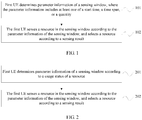
- FIG. 1 is a schematic flowchart of Embodiment 1 of a resource selection method according to the present invention.
- This embodiment of the present invention provides a resource selection method, and this embodiment is executed by UE.
- the method in this embodiment may include the following steps: Step 101.
- First UE determines parameter information of a sensing window, where the parameter information includes at least one of a start time, a time span, or a quantity.
- the first UE in a P2V service, the first UE first needs to determine the parameter information of the sensing window.
- the parameter information includes at least one of the start time, the time span, or the quantity, and the sensing window may be a time period. For example, assuming that a reference moment of one sensing is n ms, the first UE may sense a resource in a sensing window whose start time is at (n-100) ms and time span is 10 ms.
- Step 102 The first UE senses the resource in the sensing window according to the parameter information of the sensing window, and selects a resource according to a sensing result.
- the first UE senses the resource in the sensing window, and learns energy on the resource or whether the resource is reserved or scheduled, thereby learning which resources are idle and which resources are busy, so as to select a resource to send data.
- the parameter information of the sensing window is determined, the resource is sensed in the sensing window according to the parameter information of the sensing window, and the resource is selected according to the sensing result. Because the parameter information of the sensing window is determined, and the resource is sensed in the sensing window according to the determined parameter information of the sensing window, a prior-art phenomenon that a resource is sensed according to a fixed sensing window is avoided, thereby reducing power consumption of UE.
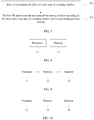
- FIG. 2 is a schematic flowchart of Embodiment 2 of a resource selection method according to the present invention. Based on Embodiment 1 of the resource selection method, this embodiment provides detailed description of an embodiment in which first UE determines parameter information of a sensing window. As shown in FIG. 2 , the method in this embodiment may include the following steps: Step 201. The first UE determines the parameter information of the sensing window according to a usage status of a resource.
- the usage status of the resource includes at least one of the following information: a first congestion level, a first resource reservation interval, a second resource reservation interval, a quantity of optional resources, or energy on the resource.
- the first resource reservation interval is a time interval between a resource used by second UE for current data transmission and a resource used by the second UE for next data transmission.
- an optional resource is a resource that meets a specific criterion. For example, if the first UE learns, according to a decoded SA, that a resource is reserved or scheduled, and energy received on the resource exceeds a threshold, the resource is not an optional resource. Otherwise, the resource is an optional resource.
- the usage status of the resource may alternatively include power on the resource.
- Step 202 The first UE senses the resource in the sensing window according to the parameter information of the sensing window, and selects a resource according to a sensing result.
- the parameter information of the sensing window is determined, the resource is sensed in the sensing window according to the parameter information of the sensing window, and the resource is selected according to the sensing result. Because the parameter information of the sensing window is determined, and the resource is sensed in the sensing window according to the determined parameter information of the sensing window, a prior-art phenomenon that a resource is sensed according to a fixed sensing window is avoided, thereby reducing power consumption of UE.
- the first UE may determine the parameter information of the sensing window according to the usage status of the resource, so that the parameter information of the sensing window adaptively changes according to the usage status of the resource. Therefore, a relationship between power consumption and performance of UE is well balanced.
- the first UE determines the first congestion level according to the energy on the resource.
- a congestion level may be represented as: If energy on a resource is greater than a preset threshold, it indicates that the resource is busy; otherwise, the resource is idle; and within a period of time, a ratio of a quantity of all busy resources to a total quantity of resources is the congestion level. Therefore, a larger ratio represents a higher congestion level and a busier channel.
- the first UE may determine the first congestion level according to the energy on the resource.
- a congestion level is a ratio of an average value of energy on all resources within a period of time to a preset threshold.
- a definition manner of the congestion level is not limited herein in this embodiment.
- the preset threshold may be preconfigured, may be configured by using a network, may be predefined, or the like.
- a specific preset threshold is not limited herein in this embodiment.
- the congestion level may be represented by resource utilization.
- the first UE may determine the first congestion level according to energy on a resource in a sensing window that is used during previous one or more times of sensing.
- the first UE receives first indication information sent by a base station or the second UE.
- the first indication information includes the first congestion level and/or the first resource reservation interval.
- the first UE may also obtain the first congestion level and/or the first resource reservation interval by using the received first indication information that includes the first congestion level and/or the first resource reservation interval and that is sent by the base station or the second UE.
- the first congestion level and/or the first resource reservation interval includes only the first congestion level, includes only the first resource reservation interval, or includes both the first congestion level and the first resource reservation interval.
- a manner of determining the first congestion level by the base station or the second UE is as follows: The base station or the second UE may determine the first congestion level by using a received second congestion level sent by at least one another UE and by using an algorithm such as an average algorithm. There are multiple methods for determining the first resource reservation interval by the base station or the second UE. A first method is determining the first resource reservation interval according to the second resource reservation interval.
- the base station or the second UE determines a set of resource reservation intervals by using a received resource reservation interval sent by the at least one another UE, and uses the set as the second resource reservation interval.
- a method for determining the second resource reservation interval is as follows: When the base station or the second UE receives a resource reservation interval that is not in the set, the resource reservation interval is added to the set. For a resource reservation interval in the set, if the base station or the second UE does not receive the resource reservation interval during continuous Y times of sensing, the resource reservation interval is deleted from the set.
- Another method for determining the second resource reservation interval is as follows: After receiving a message that includes a resource reservation interval and that is sent by another UE, the base station or the second UE determines a set of resource reservation intervals according to the message, and sends the set to the base station or the second UE; and in this case, the base station or the second UE may determine the second resource reservation interval according to the set.
- the base station or the second UE may directly use the second resource reservation interval as the first resource reservation interval.
- a second method for determining the first resource reservation interval by the base station or the second UE is sorting the second resource reservation interval and determining the first resource reservation interval according to the sorted second resource reservation interval.
- the base station or the second UE receives a resource reservation interval sent by at least one another UE, and determines the resource reservation interval as the second resource reservation interval.
- the second resource reservation interval is sorted, and M resource reservation intervals are selected from the sorted second resource reservation interval and used as the first reservation interval, where M is a positive integer.
- the first resource reservation interval is a subset of the second resource reservation interval.
- a sorting manner is sorting according to a quantity of received second resource reservation intervals.
- a set of second resource reservation intervals determined by the base station or the second UE is A, for example, A is ⁇ 100 ms, 200 ms, 500 ms, 1000 ms ⁇ , a quantity of resource reservation intervals of 100 ms that are received by the base station or the second UE is 2, a quantity of resource reservation intervals of 200 ms that are received by the base station or the second UE is 5, a quantity of resource reservation intervals of 500 ms that are received by the base station or the second UE is 3, and a quantity of resource reservation intervals of 1000 ms that are received by the base station or the second UE is 1, the set of sorted second resource reservation intervals is ⁇ 200 ms, 500 ms, 100 ms, 1000 ms ⁇ .
- Another sorting manner is sorting according to a sum of energy within a received second resource reservation interval.
- Energy within a resource reservation interval may be energy of an SA that indicates the resource reservation interval, or energy of a demodulation reference signal (Demodulation Reference Signal, DMRS for short) of a data signal that is transmitted by scheduling using an SA that indicates the resource reservation interval.
- DMRS Demodulation Reference Signal
- Another manner may be used to sort the second resource reservation interval.
- a specific sorting manner is not limited herein in this embodiment.
- the first M resource reservation intervals may be selected from the second resource reservation interval and used as the first resource reservation interval. Selection may be performed according to a quantity of resource reservation intervals or a sum of energy within the resource reservation intervals. For example, the first M reservation intervals may be selected, and a quantity of the M reservation intervals or a sum of energy within the M reservation intervals exceeds X% of a quantity of or energy within total second resource reservation intervals.
- M and X may be preconfigured, may be configured by using a network, may be predefined, or may be determined by UE or a base station according to a congestion level.
- a third method for determining the first resource reservation interval by the base station or the second UE is as follows: After determining the second resource reservation interval according to a manner of determining the second resource reservation interval in the first method, the base station or the second UE then sorts the second resource reservation interval according to the second method, and determines the first resource reservation interval according to the sorted second resource reservation interval.
- a fourth method for determining the first resource reservation interval by the base station or the second UE is as follows: The base station or the second UE uses a received resource reservation interval sent by at least one another UE as the first resource reservation interval.
- each resource reservation interval is corresponding to a sensing window.
- the first resource reservation interval that is included in the first indication information and that is sent by the second UE may be a resource reservation interval of the second UE, that is, a resource reservation interval sent after being added to the SA, or may be a resource reservation interval determined by using a received resource reservation interval of another UE and by using the foregoing method.
- the first resource reservation interval that is included in the first indication information and that is sent by the base station may be a resource reservation interval determined by using a received resource reservation interval of another UE and by using the foregoing method.
- the base station or the second UE After determining the first congestion level and/or the first resource reservation interval, the base station or the second UE adds the first congestion level and/or the first resource reservation interval to the first indication information and sends the first indication information to the first UE.
- the base station may alternatively determine the first congestion level and/or the first resource reservation interval by using another algorithm. A specific determining manner is not limited herein in this embodiment.
- the first UE before determining the parameter information of the sensing window, receives second indication information sent by a base station or at least one second UE, where the second indication information includes a second congestion level and/or the second resource reservation interval; and the first UE determines the first congestion level and/or the first resource reservation interval according to the second congestion level and/or the second resource reservation interval.
- the first UE determines the first congestion level and/or the first resource reservation interval by using a method the same as that used by the base station or the second UE. For a method for determining the first congestion level and/or the first resource reservation interval by the first UE, details are not described herein again.
- the second congestion level may be the same as or be different from the first congestion level.
- the first UE may determine the first resource reservation interval and the second resource reservation interval according to a resource reservation interval in a sensing window that is used during previous one or more times of sensing.
- this embodiment provides detailed description about how the first UE determines the parameter information of the sensing window after determining the first congestion level, the first resource reservation interval, and the second resource reservation interval.
- the usage status of the resource includes the first congestion level
- that the first UE determines the parameter information of the sensing window according to a usage status of a resource includes: The first UE determines a time span of the sensing window according to a correspondence between the first congestion level and the time span of the sensing window.
- time spans of several sensing windows may be preset, and the correspondence between the first congestion level and the time span of the sensing window is predefined.
- a higher congestion level indicates a longer time span, and a lower congestion level indicates a shorter time span.
- the time span of the sensing window may be set to zero. That is, the first UE does not perform sensing when selecting a resource, and may randomly select a resource.
- the time span of the sensing window, the correspondence between the first congestion level and the time span of the sensing window, and the preset threshold may be set according to experience or an actual situation. A specific time span, a correspondence, and a preset threshold are not limited herein in this embodiment.
- the usage status of the resource includes the first congestion level and the second resource reservation interval
- that the first UE determines the parameter information of the sensing window according to a usage status of a resource includes: determining a start time of a sensing window and a quantity of sensing windows according to the second resource reservation interval.
- the first UE may determine the start time of the sensing window and the quantity of sensing windows according to the second resource reservation interval.
- the first UE determines the start time of the sensing window and the quantity of sensing windows according to the first congestion level and the second resource reservation interval.
- the second resource reservation interval determined by the first UE is A, and A is ⁇ 100 ms, 200 ms, 500 ms, 1000 ms ⁇ .
- the first congestion level When the first congestion level is relatively high, one of every two elements in the set is selected, and it may be determined that a set of time spans of sensing windows is ⁇ 100 ms, 500 ms ⁇ , that is, a start time of a sensing window and a quantity of sensing windows may be determined.
- a set of time spans of sensing windows is ⁇ 100 ms, 500 ms ⁇ , that is, a start time of a sensing window and a quantity of sensing windows may be determined.
- the first congestion level When the first congestion level is relatively low, one of every four elements in the set is selected, it may be determined that a time span of a sensing window is ⁇ 100 ms ⁇ , and therefore, a start time of a sensing window and a quantity of sensing windows may be determined.
- the usage status of the resource includes the first resource reservation interval
- that the first UE determines the parameter information of the sensing window according to a usage status of a resource includes: determining a start time of a sensing window and a quantity of sensing windows according to the first resource reservation interval.
- a start time of a sensing window and a quantity of sensing windows may be determined according to a reference moment of current sensing and the first resource reservation interval.
- the reference moment of current sensing is n ms.
- a start time of a sensing window is at (n-100) ms; or assuming that the first resource reservation interval further includes 500 ms, a start time of another sensing window is at (n-500) ms, and a quantity of sensing windows is 2.
- the usage status of the resource includes the first resource reservation interval
- that the first UE determines the parameter information of the sensing window according to a usage status of a resource includes: determining a time span of the sensing window according to the first resource reservation interval.
- the time span of the sensing window is related to a maximum resource reservation interval in the first resource reservation interval.
- the time span of the sensing window may be equal to the maximum resource reservation interval in the first resource reservation interval.
- the parameter information of the sensing window is determined, the resource is sensed in the sensing window according to the parameter information of the sensing window, and the resource is selected according to the sensing result. Because the parameter information of the sensing window is determined, and the resource is sensed in the sensing window according to the determined parameter information of the sensing window, a prior-art phenomenon that a resource is sensed according to a fixed sensing window is avoided, thereby reducing power consumption of UE.
- the first UE determines the parameter information of the sensing window according to the usage status of the resource, so that the parameter information of the sensing window changes according to the usage status of the resource. Therefore, a relationship between power consumption and performance of UE is well balanced.
- the first UE may periodically use a relatively large quantity of sensing windows, and determine, based on a result of current sensing, a relatively small quantity of sensing windows that are used during following (N-1) times of sensing.
- UE senses a resource in a sensing window from (n-100) ms to (n-91) ms, a sensing window from (n-200) ms to (n-191) ms, a sensing window from (n-300) ms to (n-291) ms, a sensing window from (n-400) ms to (n-391) ms, a sensing window from (n-500) ms to (n-491) ms, a sensing window from (n-600) ms to (n-591) ms, a sensing window from (n-700) ms to (n-691) ms, a sensing window from (n-800) ms to (
- a reference moment for sensing is n' ms
- the UE senses a resource in a sensing window from (n'-100) ms to (n'-91) ms, a sensing window from (n'-200) ms to (n'-191) m, and a sensing window from (n'-500) ms to (n'-491) m, and a quantity of sensing windows during each sensing is 3.
- a quantity of sensing windows used during the sixth time of sensing by the first UE is the same as a quantity of sensing windows used during the first time of sensing.
- Quantities of sensing windows used during the seventh, eighth, ninth, and tenth times of sensing are related to resource reservation intervals determined during the sixth time of sensing.
- the first UE determines the parameter information of the sensing window includes: The first UE receives indication information, where the indication information includes the parameter information of the sensing window.
- the first UE may alternatively determine the parameter information of the sensing window by using received third indication information that includes the parameter information of the sensing window and that is sent by a base station or the second UE.
- a manner of determining the parameter information of the sensing window by the base station or the second UE is similar to the manner of determining the parameter information of the sensing window by the first UE, and details are not described herein again.
- FIG. 3 is a schematic flowchart of Embodiment 3 of a resource selection method according to the present invention. Based on Embodiment 1 of the resource selection method, this embodiment provides detailed description of an embodiment in which first UE determines parameter information of a sensing window. As shown in FIG. 3 , the method in this embodiment may include the following steps.
- Step 301 The first UE senses a resource in a preset time period and determines a usage status of the resource.
- the preset time period may be set according to experience or an actual situation.
- the preset time period may be 10 ms, 20 ms, or the like.
- the preset time period may be a time span of a sensing window that is used during one sensing.
- a specific preset time period is not limited herein in this embodiment.
- the usage status of the resource includes a quantity of optional resources.
- Step 302. The first UE determines that a time span of the sensing window is a sum of time spans of N preset time periods, where a quantity of optional resources in the N preset time periods is greater than or equal to a first preset threshold, or a sum of time spans of (N+1) preset time periods is greater than or equal to a second preset threshold, and N is a positive integer.
- the preset time period is directly used as the time span of the sensing window. For example, assuming that the preset time period is 10 ms and the first preset threshold is 20, and if a quantity of optional resources that are found by the first UE in 10 ms is 21, 10 ms may be used as the time span of the sensing window.
- the first UE may continue to sense optional resources in a next preset time period; determine whether a quantity of optional resources is greater than or equal to the first preset threshold in the two preset time periods; if yes, use a sum of time spans of the two preset time periods as the time span of the sensing window; otherwise, continue to perform sensing, until a quantity of optional resources is greater than or equal to the first preset threshold when sensing is performed within time spans of a total of N preset time periods, or the sum of the time spans of the (N+1) preset time periods is greater than or equal to the second preset threshold; and use the sum of the time spans of the N preset time periods as the time span of the sensing window.
- the preset time period, the first preset threshold, and the second preset threshold may be preconfigured, may be configured by using a network, may be predefined, or the like.
- a specific preset time period, a specific first preset threshold, and a specific second preset threshold are not limited herein in this embodiment.
- a span of the preset time period is 10 ms
- a quantity of optional resources found by performing sensing by the first UE in a sensing window for example, a corresponding resource reservation interval thereof is 500 ms
- the first UE continues to perform sensing from (n-a+10) ms to (n-a+19) ms.
- a quantity of optional resources that are founded by the first UE is greater than or equal to the first preset threshold, and the first UE stops sensing.
- the first UE determines that a time span of the sensing window is 20 ms.
- a time span of the sensing window is 20 ms, and a start time of the sensing window is at (n-a+300) ms.
- Step 303 The first UE senses the resource in the sensing window according to the parameter information of the sensing window, and selects a resource according to a sensing result.
- the parameter information of the sensing window is determined, and the resource is sensed in the sensing window according to the parameter information of the sensing window, so as to perform resource selection. Because the parameter information of the sensing window is determined, and the resource is sensed in the sensing window according to the determined parameter information of the sensing window, a prior-art phenomenon that a resource is sensed according to a fixed sensing window is avoided, thereby reducing power consumption of UE.
- the first UE determines the time span of the sensing window according to the quantity of optional resources, so that the time span of the sensing window changes according to the quantity of optional resources. Therefore, a relationship between power consumption and performance of UE can be well balanced.
- FIG. 4 is a schematic flowchart of Embodiment 4 of a resource selection method according to the present invention. Based on Embodiment 1 of the resource selection method, this embodiment provides detailed description of an embodiment in which first UE determines parameter information of a sensing window. As shown in FIG. 4 , the method in this embodiment may include the following steps.
- Step 401 The first UE senses a resource in a preset time period and determines a usage status of the resource.
- the usage status of the resource includes a quantity of optional resources.
- Step 402. The first UE determines that a time span of the sensing window is a difference between a sum of time spans of P preset time periods and a sum of time spans of L preset time periods in which there is no optional resource, where a quantity of optional resources in the P preset time periods is greater than or equal to a third preset threshold, or a sum of time spans of (P+1) preset time periods is greater than or equal to a fourth preset threshold, and both P and L are positive integers.
- the first UE may continue to sense optional resources in a next preset time period; determine whether a quantity of optional resources is greater than or equal to the third preset threshold in the two preset time periods; if yes, the first UE needs to determine a time span of a preset time period in which there is no optional resource; and use a difference between a sum of time spans of the two preset time periods and the time span of the preset time period in which there is no optional resource as the time span of the sensing window.
- the first UE continues to perform sensing, until a quantity of optional resources is greater than or equal to the third preset threshold when sensing is performed within the time spans of a total of P preset time periods.
- the first UE first needs to determine the time spans of the L preset time periods in which there is no optional resource, and use the difference between the sum of the time spans of the P preset time periods and the sum of the time spans of the L preset time periods in which there is no optional resource as the time span of the sensing window.
- a span of the preset time period is 10 ms
- a quantity of optional resources found by performing sensing by the first UE in a sensing window for example, a corresponding resource reservation interval thereof is 500 ms
- the first UE continues to perform sensing from (n-a+10) ms to (n-a+19) ms.
- a quantity of optional resources that are founded by the UE is greater than or equal to the fourth preset threshold, and the UE stops sensing.
- the first UE finds that there is no optional resource in a time period from (n-a) ms to (n-a+9) ms, and when the UE performs sending in a next sensing window (for example, a corresponding resource reservation interval thereof is 200 ms), a start time of the sensing window is at (n-a+310) ms.
- Step 403. The first UE senses the resource in the sensing window according to the parameter information of the sensing window, and selects a resource according to a sensing result.
- the parameter information of the sensing window is determined, and the resource is sensed in the sensing window according to the parameter information of the sensing window, so as to perform resource selection. Because the parameter information of the sensing window is determined, and the resource is sensed in the sensing window according to the determined parameter information of the sensing window, a prior-art phenomenon that a resource is sensed according to a fixed sensing window is avoided, thereby reducing power consumption of UE.
- the first UE determines the time span of the sensing window according to a quantity of optional resources obtained in a preset time, so that the time span of the sensing window changes according to the quantity of optional resources. Therefore, a relationship between power consumption and performance of UE can be well balanced.
- FIG. 5 is a schematic flowchart of Embodiment 5 of a resource selection method according to the present invention. Based on Embodiment 1 of the resource selection method, this embodiment provides detailed description of an embodiment in which first UE determines parameter information of a sensing window. As shown in FIG. 5 , the method in this embodiment may include the following steps.
- Step 501 The first UE senses a resource in a preset time period and determines a usage status of the resource.
- the usage status of the resource includes a quantity of optional resources.
- Step 502. Determine that a time span of the sensing window is a time span of a first time period, where in the preset time period, a quantity of optional resources in the first time period is largest, and the preset time period includes at least one first time period.
- the first UE determines the first time period in which the quantity of optional resource is largest in the preset time period, determines the time span of the first time period as the time span of the sensing window, and determines a start time of the sensing window according to the first time period.
- a sensing window during the N th time of sensing by the first UE is from (n-1000) ms to (n-1) ms, where n ms is a reference moment of current sensing.
- the first UE finds that a quantity of optional resources from (n-110) ms to (n-101) ms is largest.
- (n+m) ms is a reference moment of the (N+M) th time of sensing by the first UE, a sensing window during current sensing is from (n+m-110) ms to (n+m-101) ms.
- the UE may use the preset time period during the first time of sensing, use the first time period during the subsequent (N-1) th time of sensing, and use the preset time period again during the (N+1) th time of sensing.
- Step 503. The first UE senses the resource in the sensing window according to the parameter information of the sensing window, and selects a resource according to a sensing result.
- the parameter information of the sensing window is determined, and the resource is sensed in the sensing window according to the parameter information of the sensing window, so as to perform resource selection. Because the parameter information of the sensing window is determined, and the resource is sensed in the sensing window according to the determined parameter information of the sensing window, a prior-art phenomenon that a resource is sensed according to a fixed sensing window is avoided, thereby reducing power consumption of UE.
- the first UE determines the time span of the sensing window according to a quantity of optional resources obtained in a preset time, so that the time span of the sensing window changes according to the quantity of optional resources. Therefore, a relationship between power consumption and performance of UE can be well balanced.
- FIG. 6 is a schematic flowchart of Embodiment 6 of a resource selection method according to the present invention. Based on Embodiment 1 of the resource selection method, this embodiment provides detailed description of an embodiment in which first UE determines parameter information of a sensing window. As shown in FIG. 6 , the method in this embodiment may include the following steps.
- Step 601. The first UE senses a resource in a preset time period and determines a usage status of the resource.
- the usage status of the resource includes a quantity of optional resources.
- Step 602. Determine that a time span of the sensing window is a time span of a second time period, where in the preset time period, a quantity of optional resources in the second time period is greater than or equal to a fifth preset threshold, the time span of the second time period is less than a time span of another second time period in the preset time period, and the preset time period includes at least one second time period.
- the first UE determines that the quantity of optional resources is greater than or equal to the fifth preset threshold in the preset time period, where the second time period has a shortest time span.
- a sensing window during the N th time of sensing by the first UE is from (n-1000) ms to (n-1) ms, where n ms is a reference moment of current sensing.
- the first UE determines that quantities of optional resources in two second time periods from (n-110) ms to (n-101) ms and from (n-130) ms and (n-111) ms each are greater than or equal to the fifth preset threshold.
- (n+m) ms is a reference moment of the (N+M) th time of sensing by the first UE
- 10 ms is used as a time span of a sensing window that is used during the (N+M) th time of sensing
- the sensing window during current sensing is from (n+m-110) ms to (n+m-101) ms.
- Step 603. The first UE senses the resource in the sensing window according to the parameter information of the sensing window, and selects a resource according to a sensing result.
- the parameter information of the sensing window is determined, and the resource is sensed in the sensing window according to the parameter information of the sensing window, so as to perform resource selection. Because the parameter information of the sensing window is determined, and the resource is sensed in the sensing window according to the determined parameter information of the sensing window, a prior-art phenomenon that a resource is sensed according to a fixed sensing window is avoided, thereby reducing power consumption of UE.
- the first UE determines the time span of the sensing window according to a quantity of optional resources obtained in a preset time, so that the time span of the sensing window changes according to the quantity of optional resources. Therefore, a relationship between power consumption and performance of UE can be well balanced.
- FIG. 7 is a schematic flowchart of Embodiment 7 of a resource selection method according to the present invention. Based on Embodiment 1 of the resource selection method, this embodiment provides detailed description of an embodiment in which first UE determines parameter information of a sensing window. As shown in FIG. 7 , the method in this embodiment may include the following steps.
- Step 701. The first UE determines an offset of a start time of the sensing window.
- the offset may be preconfigured, may be configured by using a network, or may be predefined.
- the offset may be related to a time span of a sensing window that is used during previous sensing.
- the offset is the same as the time span of the sensing window that is used during the previous sensing.
- the offset may be determined according to a result of previous sensing. For example, if a quantity of optional resources found by the first UE during previous sensing exceeds a threshold, the offset is 0; otherwise, the offset is not 0.
- the offset may be randomly selected by the first UE within a value range.
- a specific setting manner of the offset is not limited herein in this embodiment.
- Step 702. The first UE determines the start time of the sensing window according to the offset and a start time of a sensing window that is used during previous sensing.
- the first UE determines the start time of the sensing window according to the start time of the sensing window that is used during the previous sensing and the obtained offset.
- a sensing window during the N th time of sensing by the first UE is from (n-10) ms to (n-1) ms, where n ms is a reference moment of current sensing.
- (n+m) ms is a reference time of the (N+1) th time of sensing by the first UE and that an offset is p
- a start time of a sensing window during current sensing is at (n+m-10+p) ms.
- shifting is performed on a start time of a sensing window that is used during each sensing, or shifting is performed every n times of sensing, for example, shifting is performed every two sensing windows.
- a specific shifting manner is not limited herein in this embodiment.
- the parameter information of the sensing window is determined, and the resource is sensed in the sensing window according to the parameter information of the sensing window, so as to perform resource selection. Because the parameter information of the sensing window is determined, and the resource is sensed in the sensing window according to the determined parameter information of the sensing window, a prior-art phenomenon that a resource is sensed according to a fixed sensing window is avoided, thereby reducing power consumption of UE. In addition, because a start time of a sensing window of the UE has an offset, a phenomenon that the UE cannot find sufficient optional resources in a sensing window can be prevented.
- FIG. 8 is a schematic structural diagram of Embodiment 1 of UE according to the present invention.
- the UE provided in this embodiment may implement each step of the method that is applied to the UE and that is provided in any embodiment of the present invention, and the detailed implementation process is not described herein again.
- the UE provided in this embodiment includes a processor 11 and a memory 12 that is configured to store an instruction that can be executed by the processor.
- the processor 11 is configured to determine parameter information of a sensing window, where the parameter information includes at least one of a start time, a time span, or a quantity.
- the processor 11 is further configured to: sense the resource in the sensing window according to the parameter information of the sensing window, and select a resource according to a sensing result.
- the parameter information of the sensing window is determined, the resource is sensed in the sensing window according to the parameter information of the sensing window, and the resource is selected according to the sensing result. Because the parameter information of the sensing window is determined, and the resource is sensed in the sensing window according to the determined parameter information of the sensing window, a prior-art phenomenon that a resource is sensed according to a fixed sensing window is avoided, thereby reducing power consumption of UE.
- the processor 11 is further configured to determine the parameter information of the sensing window according to a usage status of a resource.
- the usage status of the resource includes at least one of the following: a first congestion level, a first resource reservation interval, a second resource reservation interval, a quantity of optional resources, or energy on the resource; and a resource reservation interval is a time interval between a resource used by second UE for current data transmission and a resource used by the second UE for next data transmission.
- the UE provided in this embodiment may be configured to execute the technical solution of the resource selection method provided in any embodiment of the present invention.
- An implementation principle and a technical effect thereof are similar to those of the resource selection method, and details are not described herein again.
- FIG. 9 is a schematic structural diagram of Embodiment 2 of UE according to the present invention. As shown in FIG. 9 , this embodiment is based on the embodiment shown in FIG. 8 , and the UE may further include a receiver 13.
- the receiver 13 is configured to receive first indication information sent by a base station or second UE, where the first indication information includes the first congestion level and/or the first resource reservation interval.
- the processor 11 is further configured to determine the first congestion level according to the energy on the resource.
- the receiver 13 is configured to receive second indication information sent by at least one second UE, where the second indication information includes a second congestion level and/or the second resource reservation interval.
- the processor 11 is further configured to determine the first congestion level and/or the first resource reservation interval according to the second congestion level and/or the second resource reservation interval.
- the first resource reservation interval is a subset of the second resource reservation interval.
- the processor 11 is further configured to sort the second resource reservation interval.
- the processor 11 is further configured to select, from the sorted second resource reservation interval, M resource reservation intervals as the first resource reservation interval, where M is a positive integer.
- the UE provided in this embodiment may be configured to execute the technical solution of the resource selection method provided in any embodiment of the present invention.
- An implementation principle and a technical effect thereof are similar to those of the resource selection method, and details are not described herein again.
- FIG. 10 is a schematic structural diagram of Embodiment 3 of UE according to the present invention. As shown in FIG. 10 , this embodiment is based on the embodiment shown in FIG. 8 , and the UE further includes a receiver 14.
- the receiver 14 is configured to receive third indication information, where the third indication information includes the parameter information of the sensing window.
- the processor 11 is further configured to sense the resource in a preset time period and determine the usage status of the resource.
- the processor 11 is further configured to determine that a time span of the sensing window is a sum of time spans of N preset time periods, where a quantity of optional resources in the N preset time period is greater than or equal to the first preset threshold, or a sum of time spans of (N+1) preset time periods is greater than or equal to a second preset threshold, and N is a positive integer.
- the processor 11 is further configured to determine that a time span of the sensing window is a time span of a first time period, where in the preset time period, a quantity of optional resources in the first time period is largest, and the preset time period includes at least one first time period.
- the processor 11 is further configured to determine that a time span of the sensing window is a time span of a second time period, where in the preset time period, a quantity of optional resources in the second time period is greater than or equal to a fifth preset threshold, and the time span of the second time period is less than a time span of another second time period in the preset time period; and the preset time period includes at least one second time period.
- the UE provided in this embodiment may be configured to execute the technical solution of the resource selection method provided in any embodiment of the present invention.
- An implementation principle and a technical effect thereof are similar to those of the resource selection method, and details are not described herein again.
- the processor 11 is further configured to determine an offset of the start time of the sensing window.
- the processor 11 is further configured to determine the start time of the sensing window according to the offset and a start time of a sensing window that is used during previous sensing.
- the offset is related to a time span of the sensing window that is used during the previous sensing.
- the UE provided in this embodiment may be configured to execute the technical solution of the resource selection method provided in any embodiment of the present invention.
- An implementation principle and a technical effect thereof are similar to those of the resource selection method, and details are not described herein again.
- the disclosed system, apparatus, and method may be implemented in other manners.
- the described apparatus embodiment is merely an example.
- the module or unit division is merely logical function division and may be other division in actual implementation.
- a plurality of units or components may be combined or integrated into another system, or some features may be ignored or not performed.
- the displayed or discussed mutual couplings or direct couplings or communication connections may be implemented by using some interfaces.
- the indirect couplings or communication connections between the apparatuses or units may be implemented in electronic, mechanical, or other forms.
- the units described as separate parts may or may not be physically separate, and parts displayed as units may or may not be physical units, may be located in one position, or may be distributed on a plurality of network units. Some or all of the units may be selected according to actual requirements to achieve the objectives of the solutions of the embodiments.
- functional units in the embodiments of the present application may be integrated into one processing unit, or each of the units may exist alone physically, or two or more units may be integrated into one unit.
- the integrated unit may be implemented in a form of hardware, or may be implemented in a form of a software functional unit.
- the integrated unit When the integrated unit is implemented in the form of a software functional unit and sold or used as an independent product, the integrated unit may be stored in a computer-readable storage medium. Based on such an understanding, the technical solutions of this application essentially, or the part contributing to the prior art, or all or a part of the technical solutions may be implemented in the form of a software product.
- the software product is stored in a storage medium and includes several instructions for instructing a computer device (which may be a personal computer, a server, a network device, or the like) or a processor (processor) to perform all or a part of the steps of the methods described in the embodiments of the present application.
- the foregoing storage medium includes: any medium that can store program code, such as a USB flash drive, a removable hard disk, a read-only memory (ROM, Read-Only Memory), a random access memory (RAM, Random Access Memory), a magnetic disk, or an optical disc.
- program code such as a USB flash drive, a removable hard disk, a read-only memory (ROM, Read-Only Memory), a random access memory (RAM, Random Access Memory), a magnetic disk, or an optical disc.
Landscapes
- Engineering & Computer Science (AREA)
- Computer Networks & Wireless Communication (AREA)
- Signal Processing (AREA)
- Quality & Reliability (AREA)
- Mobile Radio Communication Systems (AREA)
- Remote Monitoring And Control Of Power-Distribution Networks (AREA)
- Power Sources (AREA)
Applications Claiming Priority (1)
| Application Number | Priority Date | Filing Date | Title |
|---|---|---|---|
| PCT/CN2016/095054 WO2018027991A1 (zh) | 2016-08-12 | 2016-08-12 | 资源的选择方法、装置和设备 |
Publications (3)
| Publication Number | Publication Date |
|---|---|
| EP3373679A1 true EP3373679A1 (de) | 2018-09-12 |
| EP3373679A4 EP3373679A4 (de) | 2019-01-09 |
| EP3373679B1 EP3373679B1 (de) | 2026-02-25 |
Family
ID=61161619
Family Applications (1)
| Application Number | Title | Priority Date | Filing Date |
|---|---|---|---|
| EP16912446.8A Active EP3373679B1 (de) | 2016-08-12 | 2016-08-12 | Verfahren, vorrichtung und ausrüstung zur auswahl von ressourcen |
Country Status (9)
| Country | Link |
|---|---|
| US (2) | US10834641B2 (de) |
| EP (1) | EP3373679B1 (de) |
| JP (1) | JP6592608B2 (de) |
| KR (1) | KR102066450B1 (de) |
| CN (1) | CN108370563B (de) |
| BR (1) | BR112019002756B1 (de) |
| CA (1) | CA3033450C (de) |
| RU (1) | RU2718407C1 (de) |
| WO (1) | WO2018027991A1 (de) |
Cited By (2)
| Publication number | Priority date | Publication date | Assignee | Title |
|---|---|---|---|---|
| CN111148223A (zh) * | 2018-11-02 | 2020-05-12 | 华为技术有限公司 | 通信方法和通信装置 |
| WO2022164614A1 (en) * | 2021-01-29 | 2022-08-04 | Qualcomm Incorporated | Strategic channel sensing |
Families Citing this family (18)
| Publication number | Priority date | Publication date | Assignee | Title |
|---|---|---|---|---|
| WO2018027816A1 (zh) * | 2016-08-11 | 2018-02-15 | 华为技术有限公司 | 一种资源能量确定方法及装置 |
| US12340004B2 (en) * | 2016-09-28 | 2025-06-24 | Texas Instruments Incorporated | Method and system for secure communication |
| WO2019214135A1 (zh) * | 2018-05-07 | 2019-11-14 | Oppo广东移动通信有限公司 | 通信方法和设备 |
| WO2020092931A1 (en) * | 2018-11-02 | 2020-05-07 | Intel Corporation | Resource allocation and processing behaviors for nr v2x sidelink communications |
| US11395294B2 (en) * | 2019-08-16 | 2022-07-19 | Mediatek Inc. | Method and apparatus for resource selection of multiple transmission occasions in new radio sidelink communications |
| KR20220092892A (ko) * | 2019-11-08 | 2022-07-04 | 엘지전자 주식회사 | Nr v2x에서 사이드링크 재전송을 수행하는 방법 및 장치 |
| CN113518323B (zh) * | 2020-04-10 | 2024-01-05 | 中信科智联科技有限公司 | 一种资源选择方法及终端 |
| US11678362B2 (en) | 2020-05-06 | 2023-06-13 | Samsung Electronics Co., Ltd. | Method to dynamically change the minimum candidate resources ratio in mode 2 resource selection procedure of NR V2X |
| US12317241B2 (en) | 2020-07-09 | 2025-05-27 | Samsung Electronics Co., Ltd | Power-efficient resource selection procedure for NR V2X UE with limited power |
| EP4193741A4 (de) * | 2020-08-04 | 2023-09-27 | Telefonaktiebolaget LM Ericsson (publ) | Adaptive erfassungsbasierte ressourcenauswahl für d2d-kommunikation |
| CN114080010B (zh) * | 2020-08-17 | 2024-12-17 | 维沃移动通信有限公司 | 操作方法、发送方法及相关设备 |
| US12075391B2 (en) | 2020-10-09 | 2024-08-27 | Samsung Electronics Co., Ltd | Pre-emption, congestion control, and Tx/Rx alignment for NR V2X UE with limited power |
| US20230337051A1 (en) * | 2020-10-15 | 2023-10-19 | Hyundai Motor Company | Method and apparatus for sensing and selection of resource in sidelink communication |
| US12075473B2 (en) * | 2020-10-23 | 2024-08-27 | Qualcomm Incorporated | Techniques for channel sensing mode selection |
| EP4268525A4 (de) * | 2020-12-28 | 2024-09-11 | Lenovo (Beijing) Limited | Verfahren und vorrichtungen zur erfassung von ressourcen für sidelink-übertragung |
| WO2022154640A1 (ko) * | 2021-01-18 | 2022-07-21 | 엘지전자 주식회사 | Nr v2x에서 자원 할당을 향상시키는 방법 및 장치 |
| CN115119220B (zh) * | 2021-03-19 | 2025-12-05 | 维沃移动通信有限公司 | 检测窗口确定方法、装置及终端 |
| EP4410044A4 (de) * | 2021-09-28 | 2025-06-18 | Qualcomm Incorporated | Ressourcenauswahl für autonome koordinationsnachricht zwischen benutzervorrichtungen |
Family Cites Families (18)
| Publication number | Priority date | Publication date | Assignee | Title |
|---|---|---|---|---|
| CN101478792B (zh) | 2008-01-03 | 2010-12-08 | 大唐移动通信设备有限公司 | 一种专用随机接入资源预留方法和基站 |
| US8107883B2 (en) * | 2009-03-23 | 2012-01-31 | Nokia Corporation | Apparatus and method for interference avoidance in mixed device-to-device and cellular environment |
| CN102083208B (zh) * | 2009-11-30 | 2013-09-25 | 普天信息技术研究院有限公司 | 资源分配方法和装置 |
| CN103907390A (zh) | 2011-09-16 | 2014-07-02 | 诺基亚通信公司 | 用于无线电资源分配的方法和装置 |
| CN103327613B (zh) | 2012-03-18 | 2016-01-06 | 上海贝尔股份有限公司 | 在无线通信网中用于传输调度请求的方法 |
| US9967810B2 (en) | 2013-10-31 | 2018-05-08 | Lg Electronics Inc. | Method for transmitting discovery message in wireless communication system and apparatus for same |
| EP2869644B1 (de) | 2013-10-31 | 2017-12-27 | Alcatel Lucent | Kommunikationssystem, Zugangsnetzwerkknoten und Verfahren zur Optimierung von in einem Kommunikationsnetzwerk verbrauchter Energie |
| US10057076B2 (en) * | 2014-05-19 | 2018-08-21 | Futurewei Technologies, Inc. | System and method for device-to-device communication |
| CN105472744B (zh) | 2014-09-02 | 2020-07-31 | 中兴通讯股份有限公司 | 一种数据传输方法和装置 |
| CN105634990B (zh) * | 2014-11-27 | 2019-09-24 | 南京中兴软件有限责任公司 | 基于时间频谱连续的资源预留方法、装置和处理器 |
| US20170070911A1 (en) * | 2015-09-04 | 2017-03-09 | Intel IP Corporation | Adaptive mid-packet detection in wireless communications |
| WO2017052690A1 (en) * | 2015-09-24 | 2017-03-30 | Intel Corporation | Congestion control for vehicular-to-anything services |
| US10383147B2 (en) * | 2015-12-28 | 2019-08-13 | Samsung Electronics Co., Ltd. | Methods and apparatus for resource collision avoidance in vehicle to vehicle communication |
| US11395325B2 (en) * | 2016-04-01 | 2022-07-19 | Lg Electronics Inc. | Method for transmitting downlink control information for sidelink scheduling in wireless communication system and terminal using same |
| KR102778390B1 (ko) * | 2016-04-11 | 2025-03-11 | 가부시키가이샤 엔티티 도코모 | 유저장치 및 신호 송신 방법 |
| EP3846575B1 (de) * | 2016-08-09 | 2022-10-19 | Panasonic Intellectual Property Corporation of America | Verbesserte funkressourcenauswahl und -erfassung für v2x-übertragungen |
| JP6357509B2 (ja) * | 2016-08-10 | 2018-07-11 | 株式会社Nttドコモ | ユーザ装置及び信号送信方法 |
| EP3473044B1 (de) * | 2016-08-10 | 2023-05-24 | Samsung Electronics Co., Ltd. | Verfahren und vorrichtung zur auswahl von ressourcen in v2x-kommunikationen |
-
2016
- 2016-08-12 CA CA3033450A patent/CA3033450C/en active Active
- 2016-08-12 US US15/781,382 patent/US10834641B2/en active Active
- 2016-08-12 KR KR1020187018168A patent/KR102066450B1/ko active Active
- 2016-08-12 BR BR112019002756-4A patent/BR112019002756B1/pt active IP Right Grant
- 2016-08-12 WO PCT/CN2016/095054 patent/WO2018027991A1/zh not_active Ceased
- 2016-08-12 CN CN201680014826.0A patent/CN108370563B/zh active Active
- 2016-08-12 JP JP2018535325A patent/JP6592608B2/ja active Active
- 2016-08-12 RU RU2019106623A patent/RU2718407C1/ru active
- 2016-08-12 EP EP16912446.8A patent/EP3373679B1/de active Active
-
2020
- 2020-10-29 US US17/083,695 patent/US11706666B2/en active Active
Cited By (7)
| Publication number | Priority date | Publication date | Assignee | Title |
|---|---|---|---|---|
| CN111148223A (zh) * | 2018-11-02 | 2020-05-12 | 华为技术有限公司 | 通信方法和通信装置 |
| EP3852456A4 (de) * | 2018-11-02 | 2021-12-15 | Huawei Technologies Co., Ltd. | Kommunikationsverfahren und kommunikationsvorrichtung |
| CN111148223B (zh) * | 2018-11-02 | 2022-11-18 | 华为技术有限公司 | 通信方法和通信装置 |
| US12010653B2 (en) | 2018-11-02 | 2024-06-11 | Huawei Technologies Co., Ltd. | Communication method and communications apparatus for resource selection |
| WO2022164614A1 (en) * | 2021-01-29 | 2022-08-04 | Qualcomm Incorporated | Strategic channel sensing |
| US20220248460A1 (en) * | 2021-01-29 | 2022-08-04 | Qualcomm Incorporated | Strategic channel sensing |
| US11696326B2 (en) | 2021-01-29 | 2023-07-04 | Qualcomm Incorporated | Strategic channel sensing |
Also Published As
| Publication number | Publication date |
|---|---|
| BR112019002756A2 (pt) | 2019-07-09 |
| EP3373679A4 (de) | 2019-01-09 |
| EP3373679B1 (de) | 2026-02-25 |
| JP6592608B2 (ja) | 2019-10-16 |
| US20180359659A1 (en) | 2018-12-13 |
| CA3033450A1 (en) | 2018-02-15 |
| US11706666B2 (en) | 2023-07-18 |
| KR20180088429A (ko) | 2018-08-03 |
| WO2018027991A1 (zh) | 2018-02-15 |
| BR112019002756B1 (pt) | 2024-01-09 |
| CA3033450C (en) | 2023-03-28 |
| KR102066450B1 (ko) | 2020-01-15 |
| US20210051526A1 (en) | 2021-02-18 |
| CN108370563B (zh) | 2020-06-09 |
| RU2718407C1 (ru) | 2020-04-02 |
| JP2019506060A (ja) | 2019-02-28 |
| CN108370563A (zh) | 2018-08-03 |
| US10834641B2 (en) | 2020-11-10 |
Similar Documents
| Publication | Publication Date | Title |
|---|---|---|
| US11706666B2 (en) | Resource selection method, apparatus, and device | |
| JP7230225B2 (ja) | 伝送リソース検出方法、伝送リソース決定方法と通信機器 | |
| US10327210B2 (en) | Low power consumption communication method and apparatus | |
| EP2749122B1 (de) | Verfahren und system für drahtloskommunikations-basisbandverarbeitung | |
| US20170079033A1 (en) | Transmission resource determining method, access point, and station | |
| CN110312307B (zh) | 一种载波中的资源选择方法及设备 | |
| JP7739576B2 (ja) | フィードバックチャネルマッピング方法およびデバイス、機器、および記憶媒体 | |
| CN109564516B (zh) | 一种载波选择方法、终端设备及计算机存储介质 | |
| EP3468264B1 (de) | Verfahren und vorrichtung zur leistungszuweisung | |
| WO2022082787A1 (en) | Sidelink communication | |
| CN116113058A (zh) | 物理旁链路反馈信道资源配置方法、终端及网络侧设备 | |
| CN110149708A (zh) | 一种载波选择方法及通信设备 | |
| US20240032078A1 (en) | Sidelink resource recommendation method and apparatus, device, and readable storage medium | |
| CN113518323B (zh) | 一种资源选择方法及终端 | |
| CN105165097B (zh) | 信道接入参数发送方法及装置 | |
| CN113056021B (zh) | 一种用户传输模式切换方法、电子装置及存储介质 | |
| WO2017167059A1 (zh) | 上行cca检测方法、装置、终端及计算机存储介质 | |
| CN118843198A (zh) | 信息上报方法、部分带宽配置方法、装置及通信设备 | |
| CN107211406A (zh) | 一种资源的确定方法和基站以及用户设备 |
Legal Events
| Date | Code | Title | Description |
|---|---|---|---|
| STAA | Information on the status of an ep patent application or granted ep patent |
Free format text: STATUS: THE INTERNATIONAL PUBLICATION HAS BEEN MADE |
|
| PUAI | Public reference made under article 153(3) epc to a published international application that has entered the european phase |
Free format text: ORIGINAL CODE: 0009012 |
|
| STAA | Information on the status of an ep patent application or granted ep patent |
Free format text: STATUS: REQUEST FOR EXAMINATION WAS MADE |
|
| 17P | Request for examination filed |
Effective date: 20180604 |
|
| AK | Designated contracting states |
Kind code of ref document: A1 Designated state(s): AL AT BE BG CH CY CZ DE DK EE ES FI FR GB GR HR HU IE IS IT LI LT LU LV MC MK MT NL NO PL PT RO RS SE SI SK SM TR |
|
| AX | Request for extension of the european patent |
Extension state: BA ME |
|
| A4 | Supplementary search report drawn up and despatched |
Effective date: 20181211 |
|
| RIC1 | Information provided on ipc code assigned before grant |
Ipc: H04W 72/02 20090101ALN20181205BHEP Ipc: H04W 74/08 20090101AFI20181205BHEP |
|
| DAV | Request for validation of the european patent (deleted) | ||
| DAX | Request for extension of the european patent (deleted) | ||
| STAA | Information on the status of an ep patent application or granted ep patent |
Free format text: STATUS: EXAMINATION IS IN PROGRESS |
|
| 17Q | First examination report despatched |
Effective date: 20200616 |
|
| REG | Reference to a national code |
Ipc: H04W0074080800 Ref country code: DE Ref legal event code: R079 Ref document number: 602016094830 Country of ref document: DE Free format text: PREVIOUS MAIN CLASS: H04W0072040000 |
|
| RIC1 | Information provided on ipc code assigned before grant |
Ipc: H04W 74/0808 20240101AFI20250812BHEP Ipc: H04W 72/02 20090101ALI20250812BHEP |
|
| GRAP | Despatch of communication of intention to grant a patent |
Free format text: ORIGINAL CODE: EPIDOSNIGR1 |
|
| STAA | Information on the status of an ep patent application or granted ep patent |
Free format text: STATUS: GRANT OF PATENT IS INTENDED |
|
| INTG | Intention to grant announced |
Effective date: 20251006 |
|
| GRAS | Grant fee paid |
Free format text: ORIGINAL CODE: EPIDOSNIGR3 |
|
| GRAA | (expected) grant |
Free format text: ORIGINAL CODE: 0009210 |
|
| STAA | Information on the status of an ep patent application or granted ep patent |
Free format text: STATUS: THE PATENT HAS BEEN GRANTED |
|
| AK | Designated contracting states |
Kind code of ref document: B1 Designated state(s): AL AT BE BG CH CY CZ DE DK EE ES FI FR GB GR HR HU IE IS IT LI LT LU LV MC MK MT NL NO PL PT RO RS SE SI SK SM TR |
|
| REG | Reference to a national code |
Ref country code: CH Ref legal event code: F10 Free format text: ST27 STATUS EVENT CODE: U-0-0-F10-F00 (AS PROVIDED BY THE NATIONAL OFFICE) Effective date: 20260225 Ref country code: GB Ref legal event code: FG4D |
|
| REG | Reference to a national code |
Ref country code: DE Ref legal event code: R096 Ref document number: 602016094830 Country of ref document: DE |
|
| REG | Reference to a national code |
Ref country code: IE Ref legal event code: FG4D |