EP3372932B1 - Kühlschrank mit linearkompressor und verfahren zur steuerung desselben - Google Patents
Kühlschrank mit linearkompressor und verfahren zur steuerung desselben Download PDFInfo
- Publication number
- EP3372932B1 EP3372932B1 EP16861272.9A EP16861272A EP3372932B1 EP 3372932 B1 EP3372932 B1 EP 3372932B1 EP 16861272 A EP16861272 A EP 16861272A EP 3372932 B1 EP3372932 B1 EP 3372932B1
- Authority
- EP
- European Patent Office
- Prior art keywords
- temperature
- refrigerator
- freezing
- refrigeration
- compartment
- Prior art date
- Legal status (The legal status is an assumption and is not a legal conclusion. Google has not performed a legal analysis and makes no representation as to the accuracy of the status listed.)
- Active
Links
Images


Classifications
-
- F—MECHANICAL ENGINEERING; LIGHTING; HEATING; WEAPONS; BLASTING
- F25—REFRIGERATION OR COOLING; COMBINED HEATING AND REFRIGERATION SYSTEMS; HEAT PUMP SYSTEMS; MANUFACTURE OR STORAGE OF ICE; LIQUEFACTION SOLIDIFICATION OF GASES
- F25B—REFRIGERATION MACHINES, PLANTS OR SYSTEMS; COMBINED HEATING AND REFRIGERATION SYSTEMS; HEAT PUMP SYSTEMS
- F25B49/00—Arrangement or mounting of control or safety devices
- F25B49/02—Arrangement or mounting of control or safety devices for compression type machines, plants or systems
- F25B49/022—Compressor control arrangements
-
- F—MECHANICAL ENGINEERING; LIGHTING; HEATING; WEAPONS; BLASTING
- F25—REFRIGERATION OR COOLING; COMBINED HEATING AND REFRIGERATION SYSTEMS; HEAT PUMP SYSTEMS; MANUFACTURE OR STORAGE OF ICE; LIQUEFACTION SOLIDIFICATION OF GASES
- F25B—REFRIGERATION MACHINES, PLANTS OR SYSTEMS; COMBINED HEATING AND REFRIGERATION SYSTEMS; HEAT PUMP SYSTEMS
- F25B1/00—Compression machines, plants or systems with non-reversible cycle
- F25B1/02—Compression machines, plants or systems with non-reversible cycle with compressor of reciprocating-piston type
-
- F—MECHANICAL ENGINEERING; LIGHTING; HEATING; WEAPONS; BLASTING
- F25—REFRIGERATION OR COOLING; COMBINED HEATING AND REFRIGERATION SYSTEMS; HEAT PUMP SYSTEMS; MANUFACTURE OR STORAGE OF ICE; LIQUEFACTION SOLIDIFICATION OF GASES
- F25D—REFRIGERATORS; COLD ROOMS; ICE-BOXES; COOLING OR FREEZING APPARATUS NOT OTHERWISE PROVIDED FOR
- F25D29/00—Arrangement or mounting of control or safety devices
-
- F—MECHANICAL ENGINEERING; LIGHTING; HEATING; WEAPONS; BLASTING
- F25—REFRIGERATION OR COOLING; COMBINED HEATING AND REFRIGERATION SYSTEMS; HEAT PUMP SYSTEMS; MANUFACTURE OR STORAGE OF ICE; LIQUEFACTION SOLIDIFICATION OF GASES
- F25B—REFRIGERATION MACHINES, PLANTS OR SYSTEMS; COMBINED HEATING AND REFRIGERATION SYSTEMS; HEAT PUMP SYSTEMS
- F25B2400/00—Component parts or details not otherwise provided for in this subclass
- F25B2400/07—Details of compressors or related parts
- F25B2400/073—Linear compressors
-
- F—MECHANICAL ENGINEERING; LIGHTING; HEATING; WEAPONS; BLASTING
- F25—REFRIGERATION OR COOLING; COMBINED HEATING AND REFRIGERATION SYSTEMS; HEAT PUMP SYSTEMS; MANUFACTURE OR STORAGE OF ICE; LIQUEFACTION SOLIDIFICATION OF GASES
- F25B—REFRIGERATION MACHINES, PLANTS OR SYSTEMS; COMBINED HEATING AND REFRIGERATION SYSTEMS; HEAT PUMP SYSTEMS
- F25B2500/00—Problems to be solved
- F25B2500/12—Sound
-
- F—MECHANICAL ENGINEERING; LIGHTING; HEATING; WEAPONS; BLASTING
- F25—REFRIGERATION OR COOLING; COMBINED HEATING AND REFRIGERATION SYSTEMS; HEAT PUMP SYSTEMS; MANUFACTURE OR STORAGE OF ICE; LIQUEFACTION SOLIDIFICATION OF GASES
- F25B—REFRIGERATION MACHINES, PLANTS OR SYSTEMS; COMBINED HEATING AND REFRIGERATION SYSTEMS; HEAT PUMP SYSTEMS
- F25B2700/00—Sensing or detecting of parameters; Sensors therefor
- F25B2700/21—Temperatures
- F25B2700/2106—Temperatures of fresh outdoor air
-
- F—MECHANICAL ENGINEERING; LIGHTING; HEATING; WEAPONS; BLASTING
- F25—REFRIGERATION OR COOLING; COMBINED HEATING AND REFRIGERATION SYSTEMS; HEAT PUMP SYSTEMS; MANUFACTURE OR STORAGE OF ICE; LIQUEFACTION SOLIDIFICATION OF GASES
- F25B—REFRIGERATION MACHINES, PLANTS OR SYSTEMS; COMBINED HEATING AND REFRIGERATION SYSTEMS; HEAT PUMP SYSTEMS
- F25B2700/00—Sensing or detecting of parameters; Sensors therefor
- F25B2700/21—Temperatures
- F25B2700/2117—Temperatures of an evaporator
-
- F—MECHANICAL ENGINEERING; LIGHTING; HEATING; WEAPONS; BLASTING
- F25—REFRIGERATION OR COOLING; COMBINED HEATING AND REFRIGERATION SYSTEMS; HEAT PUMP SYSTEMS; MANUFACTURE OR STORAGE OF ICE; LIQUEFACTION SOLIDIFICATION OF GASES
- F25D—REFRIGERATORS; COLD ROOMS; ICE-BOXES; COOLING OR FREEZING APPARATUS NOT OTHERWISE PROVIDED FOR
- F25D2700/00—Means for sensing or measuring; Sensors therefor
- F25D2700/12—Sensors measuring the inside temperature
-
- F—MECHANICAL ENGINEERING; LIGHTING; HEATING; WEAPONS; BLASTING
- F25—REFRIGERATION OR COOLING; COMBINED HEATING AND REFRIGERATION SYSTEMS; HEAT PUMP SYSTEMS; MANUFACTURE OR STORAGE OF ICE; LIQUEFACTION SOLIDIFICATION OF GASES
- F25D—REFRIGERATORS; COLD ROOMS; ICE-BOXES; COOLING OR FREEZING APPARATUS NOT OTHERWISE PROVIDED FOR
- F25D2700/00—Means for sensing or measuring; Sensors therefor
- F25D2700/14—Sensors measuring the temperature outside the refrigerator or freezer
Definitions
- the present invention relates to the technical field of refrigerator noise reduction, and in particular to a refrigerator adopting a linear compressor and a control method thereof.
- Linear compressors are more and more widely applied in refrigerator manufacture industries owing to their advantages of small volume, self-lubrication and high precision.
- Refrigerators rely on linear compressors to work to compress the coolant to make cooling, during which the linear compressors will generate operation noise, especially when the refrigerator has a heavy heating load. For example, at the initial power-up period of the refrigerator, a large amount of high-temperature goods are placed in the refrigerator compartments or the door of the refrigerator has been opened for a long time, the operation noise of the linear compressor is especially obvious.
- the linear compressor having loud operation noise when the refrigerator has a heavy heating load is decided by the operation property of the linear compressor.
- the temperature of the evaporator in the cooling loop of the linear compressor will be relatively high, and the inlet and outlet pressures of the linear compressor are also relatively high.
- the inlet and outlet pressures of the linear compressor are proportional to the entire vibration frequency of the linear compressor, with the increase of the heating load of the refrigerator, the vibration frequency when the linear compressor operates will also be relatively high, easy to resonate with the refrigerator body and will generate relatively loud noise.
- the linear compressor has the feature of self-lubrication and does not need to connect the lubrication oil loop.
- the linear compressor is provided at the back of the refrigeration compartment at the top of the refrigerator, and the top of the refrigerator is closer to the ear when a user stands nearby.
- the noise is especially obvious, and a refrigerator adopting a linear compressor and a control method thereof are needed urgently to reduce the refrigerator noise.
- Document US 2013/167565 discloses a method for controlling an operation of a refrigerator, wherein different operation modes are selected according to whether a refrigerator door is opened and closed, and according to an inner temperature and an ambient noise.
- An object of the present invention is to provide a control method of a refrigerator adopting a linear compressor according to claim 1.
- a refrigerator adopting a linear compressor according to claim 6 is also provided.
- the technical effects of the present invention are as follows: by means of the refrigerator adopting a linear compressor and the control method thereof in the present invention, when there is a heavy heating load, the air door of the evaporator and/or the blower is closed so that the heat exchange rate of the evaporator decreases, the temperature of the evaporator decreases rapidly, and the inlet and outlet pressures of the linear compressor also decrease accordingly. Finally, the entire vibration frequency of the linear compressor decreases, and is not easy to resonate with the refrigerator body, achieving the advantage of low operation noise.
- a single-system refrigerator merely has one cooling loop.
- the refrigerator compartments (refrigeration compartment and freezing compartment) share one evaporator.
- the air inside the refrigerator compartments is forced to pass through the evaporator using a blower and return to the refrigerator compartments after being cooled to form a forced circulation of the cool air in the refrigerator compartments.
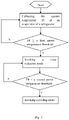
- the present invention discloses a control method of a refrigerator adopting a linear compressor, comprising: monitoring the temperature of an evaporator of the refrigerator; and if the current temperature of the refrigerator evaporator is greater than or equal to a first preset temperature threshold, then invoking the noise reduction mode to actively reduce the heat exchange amount between the evaporator and the refrigerator compartments, and further, in the noise reduction mode, reducing the heat exchange amount between the evaporator and the refrigerator compartments by closing the blower of the refrigerator and/or the air doors of the compartments.
- a cooling mode When the current temperature of the refrigerator evaporator is less than or equal to a second preset temperature threshold, a cooling mode will be invoked to resume the normal heat exchange between the evaporator and the refrigerator compartments, and further, in the cooling mode, the blower and the air door are controlled to operate according to the temperature in the refrigerator compartments and the ambient temperature.
- the temperature in the refrigerator compartments can be used for controlling the turning-on or turning-off of the blower and the opening and closing of the air doors of the compartments.
- the ambient temperature can be divided into a plurality of consecutive intervals.
- the operating rotation speed of the blower is set corresponding to each temperature interval. For example, when the ambient temperature is 10-20 degrees, the operating rotation speed of the blower is 500 revolutions per minute; when the ambient temperature is 20-30 degrees, the operating rotation speed of the blower is 700 revolutions per minute; and when the current temperature of the refrigerator evaporator is less than or equal to a second preset temperature threshold, the blower and the air doors of the compartments operate according to corresponding operation parameters.
- the first preset temperature threshold is higher than the second preset temperature threshold.
- the vibration spectrum when the refrigerator operates is scanned and the temperature of the evaporator when the refrigerator resonates is recorded. This temperature is the first preset temperature threshold.
- the second preset temperature threshold is slightly smaller than the first preset temperature threshold, for preventing the refrigerator switching frequently between the noise reduction mode and the cooling mode.
- the method further includes: in the noise reduction mode, controlling the operation of the linear compressor according to the temperature in the refrigerator compartments and the ambient temperature.
- the temperature in the refrigerator compartments can be used for controlling the turning-on or turning-off of the linear compressor.
- the ambient temperature can be divided into a plurality of consecutive intervals.
- the operating parameters of the linear compressor are set corresponding to each interval. For example, when the ambient temperature is 10-20 degrees, the input frequency of the linear compressor is 100W; when the ambient temperature is 20-30 degrees, the input frequency of the linear compressor is 120W.
- the current temperature of the refrigerator evaporator is greater than or equal to a first preset temperature, the linear compressor operates according to corresponding operation parameters.
- the operation state of the linear compressor and the operation states of the blower and the air doors of the compartments are correlated. It should be understood that if the travel of the linear compressor (the travel is proportional to the input frequency) gradually declines along with the closing of the blower and/or the air doors of the compartments in the noise reduction mode, then the declination trend of the temperature of the evaporator slows down. Thus, the linear compressor is controlled to operate according to the temperature in the refrigerator compartments and the ambient temperature so as to ensure that the evaporator temperature can decrease rapidly.
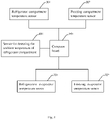
- the present invention also discloses a refrigerator adopting a linear compressor, comprising: an evaporator temperature sensor 200 configured for monitoring the temperature of an evaporator of the refrigerator; a computer board 100 configured for controlling the operation mode of the refrigerator; a temperature sensor inside the refrigerator compartment 300 configured for collecting the temperature in the refrigeration compartment; and a temperature sensor outside the refrigerator compartment 400 configured for collecting an ambient temperature.
- the noise reduction mode will be invoked to actively reduce the heat exchange amount between the evaporator and the refrigerator compartments; and further, in the noise reduction mode, the heat exchange amount between the evaporator and the refrigerator compartments is reduced by closing the blower of the refrigerator and/or the air doors of the compartments.
- a cooling mode When the current temperature of the refrigerator evaporator is less than or equal to a second preset temperature threshold, a cooling mode will be invoked to resume the normal heat exchange between the evaporator and the refrigerator compartments; and further, in the cooling mode, the blower and the air door are controlled to operate according to the temperature in the refrigerator compartments and the ambient temperature.
- the temperature in the refrigerator compartments can be used for controlling the turning-on or turning-off of the blower and the opening and closing of the air doors of the compartments.
- the ambient temperature can be divided into a plurality of consecutive intervals.
- the operating rotation speed of the blower is set corresponding to each temperature interval. For example, when the ambient temperature is 10-20 degrees, the operating rotation speed of the blower is 500 revolutions per minute; when the ambient temperature is 20-30 degrees, the operating rotation speed of the blower is 700 revolutions per minute; and when the current temperature of the refrigerator evaporator is less than or equal to a second preset temperature, the blower and the air doors of the compartments operate according to corresponding operation parameters.
- the first preset temperature threshold is higher than the second preset temperature threshold.
- the vibration spectrum when the refrigerator operates is scanned and the temperature of the evaporator when the refrigerator resonates is recorded. This temperature is the first preset temperature threshold.
- the second preset temperature threshold is slightly smaller than the first preset temperature threshold, for preventing the refrigerator switching frequently between the noise reduction mode and the cooling mode.
- the operation of the linear compressor is controlled according to the temperature in the refrigerator compartments and the ambient temperature.
- the temperature in the refrigerator compartments are used for controlling the turning-on or turning-off of the linear compressor.
- the ambient temperature can be divided into a plurality of consecutive intervals.
- the operating parameters of the linear compressor are set corresponding to each interval. For example, when the ambient temperature is 10-20 degrees, the input frequency of the linear compressor is 100W; when the ambient temperature is 20-30 degrees, the input frequency of the linear compressor is 120W.
- the current temperature of the refrigerator evaporator is greater than or equal to a first preset temperature, the linear compressor operates according to corresponding operation parameters.
- the operation state of the linear compressor and the operation states of the blower and the air doors of the compartments are correlated. It should be understood that if the travel of the linear compressor (the travel is proportional to the input frequency) gradually declines along with the closing of the blower and/or the air doors of the compartments in the noise reduction mode, then the declination trend of the temperature of the evaporator slows down. Thus, the linear compressor is controlled to operate according to the temperature in the refrigerator compartments and the ambient temperature so as to ensure that the evaporator temperature can decrease rapidly.
- the air door of the evaporator and/or the blower is closed so that the heat exchange rate of the evaporator decreases, the temperature of the evaporator decreases rapidly, and the inlet and outlet pressures of the linear compressor also decrease accordingly. Finally, the entire vibration frequency of the linear compressor decreases, and is not easy to resonate with the refrigerator body, achieving the advantage of low operation noise.
- a multi-system refrigerator has a refrigeration compartment cooling loop and a freezing compartment cooling loop.
- the refrigeration compartment and the freezing compartment respectively have a corresponding evaporator and blower.
- the refrigeration compartment blower is adopted to force the air in the refrigeration compartment to pass through the refrigeration evaporator and return to the refrigeration compartment after being cooled to form a forced circulation of the cool air in the refrigeration compartment.
- the freezing compartment blower is adopted to force the air in the freezing compartment to pass through the freezing evaporator and return to the freezing compartment after being cooled to form a forced circulation of the cool air in the freezing compartment.
- the present invention discloses a control method of a refrigerator adopting a linear compressor, comprising: monitoring temperatures of a refrigeration evaporator and of a freezing evaporator of the refrigerator; if the current temperature of the refrigerator refrigeration evaporator is greater than or equal to a first preset refrigeration temperature threshold, then invoking the refrigeration noise reduction mode to actively reduce the heat exchange amount between the refrigeration evaporator and the refrigeration compartment; and further, in the refrigeration noise reduction mode, reducing the heat exchange amount between the refrigeration evaporator and the refrigeration compartment by closing a blower of the refrigeration compartment and/or an air door of the refrigeration compartment.
- the method also comprises: if the current temperature of the refrigerator freezing evaporator is greater than or equal to a first preset freezing temperature threshold, then invoking the freezing noise reduction mode to actively reduce the heat exchange amount between the freezing evaporator and the freezing compartment; and further, in the freezing noise reduction mode, reducing the heat exchange amount between the freezing evaporator and the freezing compartment by closing a blower of the freezing compartment and/or an air door of the freezing compartment.
- a refrigeration cooling mode When the current temperature of the refrigeration evaporator is less than or equal to a second preset refrigeration temperature threshold, a refrigeration cooling mode will be invoked to resume the normal heat exchange between the refrigeration evaporator and the refrigeration compartment. Further, the blower of the refrigeration compartment and the air door of the refrigeration compartment are controlled to operate according to the temperature in the refrigeration compartment and the ambient temperature in the refrigeration cooling mode.
- the temperature in the refrigeration compartment can be used for controlling the turning-on or turning-off of the blower of the refrigeration compartment and the opening and closing of the air door of the refrigeration compartment.
- the ambient temperature can be divided into a plurality of consecutive intervals.
- the operating rotation speed of the blower of the refrigeration compartment is set corresponding to each temperature interval. For example, when the ambient temperature is 10-20 degrees, the operating rotation speed of the blower of the refrigeration compartment is 500 revolutions per minute; when the ambient temperature is 20-30 degrees, the operating rotation speed of the blower of the refrigeration compartment is 700 revolutions per minute; and when the current temperature of the refrigeration evaporator is less than or equal to a second preset refrigeration temperature threshold, the blower and the air door of the refrigeration compartment operate according to corresponding operation parameters.
- a freezing cooling mode When the current temperature of the freezing evaporator is less than or equal to a second preset freezing temperature threshold, a freezing cooling mode will be invoked to resume the normal heat exchange between the freezing evaporator and the freezing compartment. Further, in the freezing cooling mode, the blower of the freezing compartment and the air door of the freezing compartment are controlled to operate according to the temperature in the freezing compartment and the ambient temperature.
- the temperature in the freezing compartment can be used for controlling the turning-on or turning-off of the blower of the freezing compartment and the opening and closing of the air door of the freezing compartment.
- the ambient temperature can be divided into a plurality of consecutive intervals.
- the operating rotation speed of the blower of the freezing compartment is set corresponding to each temperature interval. For example, when the ambient temperature is 10-20 degrees, the operating rotation speed of the blower of the freezing compartment is 500 revolutions per minute; when the ambient temperature is 20-30 degrees, the operating rotation speed of the blower of the freezing compartment is 700 revolutions per minute; and when the current temperature of the freezing evaporator is less than or equal to a second preset freezing temperature threshold, the blower and the air door of the freezing compartment operate according to corresponding operation parameters.
- the first preset refrigeration temperature threshold is higher than the second preset refrigeration temperature threshold.
- the first preset freezing temperature threshold is higher than the second preset freezing temperature threshold.
- the vibration spectrum of the refrigerator when the coolant passes through the refrigeration loop and the freezing loop is scanned respectively and the temperatures of the refrigeration evaporator and the freezing evaporator when the refrigerator resonates are recorded respectively.
- the above temperatures are the first preset refrigeration temperature threshold and the first preset freezing temperature threshold.
- the second preset refrigeration temperature threshold is slightly smaller than the first preset refrigeration temperature threshold, for preventing the refrigerator switching frequently between the refrigeration noise reduction mode and the refrigeration cooling mode.
- the second preset freezing temperature threshold is slightly smaller than the first preset freezing temperature threshold, for preventing the refrigerator switching frequently between the freezing noise reduction mode and the freezing cooling mode.
- the method further includes: in the refrigeration noise reduction mode, controlling the operation of the linear compressor according to the temperature in the refrigeration compartment and the ambient temperature, wherein in particular, when the coolant passes through the refrigeration loop, the temperature in the refrigeration compartment can be used for controlling the turning-on or turning-off of the linear compressor, the ambient temperature can be divided into a plurality of consecutive intervals, and the operating parameters of the linear compressor are set corresponding to each interval. For example, when the ambient temperature is 10-20 degrees, the input frequency of the linear compressor is 100W; when the ambient temperature is 20-30 degrees, the input frequency of the linear compressor is 120W. When the current temperature of the refrigeration evaporator is greater than or equal to a first preset refrigeration temperature threshold, the linear compressor operates according to corresponding operation parameters.
- the method further includes: in the freezing noise reduction mode, controlling the operation of the linear compressor according to the temperature in the freezing compartment and the ambient temperature, wherein in particular, when the coolant passes through the freezing loop, the temperature in the freezing compartment can be used for controlling the turning-on or turning-off of the linear compressor, the ambient temperature can be divided into a plurality of consecutive intervals, and the operating parameters of the linear compressor are set corresponding to each interval. For example, when the ambient temperature is 10-20 degrees, the input frequency of the linear compressor is 100W; when the ambient temperature is 20-30 degrees, the input frequency of the linear compressor is 120W. When the current temperature of the freezing evaporator is greater than or equal to a first preset freezing temperature threshold, the linear compressor operates according to corresponding operation parameters.
- the operation state of the linear compressor and the operation states of the blower of the refrigeration compartment, the blower of the freezing machine, the air door of the refrigeration compartment and the air door of the freezing compartment are correlated. It should be understood that if the travel of the linear compressor (the travel is proportional to the input frequency) gradually declines along with the closing of the blower of the refrigeration compartment and the air door of the refrigeration compartment in the refrigeration noise reduction mode. Then the declination trend of the temperature in the refrigeration evaporator slows down.
- the linear compressor is controlled to operate according to the temperature in the refrigeration compartment and the ambient temperature in the refrigeration noise reduction mode so as to ensure that the refrigeration evaporator temperature can decrease rapidly.
- the linear compressor is controlled to operate according to the temperature in the freezing compartment and the ambient temperature in the freezing noise reduction mode so as to ensure that the freezing evaporator temperature can decrease rapidly
- the present invention also discloses a refrigerator adopting a linear compressor, comprising: a refrigeration evaporator temperature sensor 201 configured for monitoring the temperature of a refrigeration evaporator of the refrigerator; a freezing evaporator temperature sensor 202 configured for monitoring the temperature of a freezing evaporator of the refrigerator; a computer board 100 configured for controlling the operation mode of the refrigerator; a refrigeration compartment temperature sensor 301 configured for collecting the temperature in the refrigeration compartment; a freezing compartment temperature sensor 302 configured for collecting the temperature in the freezing compartment; and a temperature sensor outside the refrigerator compartment 400 configured for collecting an ambient temperature.
- the refrigeration noise reduction mode is invoked to actively reduce the heat exchange amount between the refrigeration evaporator and the refrigeration compartment. Further, in the refrigeration noise reduction mode, the heat exchange amount between the refrigeration evaporator and the refrigeration compartment is reduced by closing a blower of the refrigeration compartment and/or an air door of the refrigeration compartment.
- the freezing noise reduction mode is invoked to actively reduce the heat exchange amount between the freezing evaporator and the freezing compartment. Further, in the freezing noise reduction mode, the heat exchange amount between the freezing evaporator and the freezing compartment is reduced by closing a blower of the freezing compartment and/or an air door of the freezing compartment.
- a refrigeration cooling mode When the current temperature of the refrigeration evaporator is less than or equal to a second preset refrigeration temperature threshold, a refrigeration cooling mode will be invoked to resume the normal heat exchange between the refrigeration evaporator and the refrigeration compartment. Further, in the refrigeration cooling mode, the blower of the refrigeration compartment and the air door of the refrigeration compartment are controlled to operate according to the temperature in the refrigeration compartment and the ambient temperature.
- the temperature in the refrigeration compartment can be used for controlling the turning-on or turning-off of the blower of the refrigeration compartment and the opening and closing of the air door of the refrigeration compartment.
- the ambient temperature can be divided into a plurality of consecutive intervals.
- the operating rotation speed of the blower of the refrigeration compartment is set corresponding to each temperature interval. For example, when the ambient temperature is 10-20 degrees, the operating rotation speed of the blower of the refrigeration compartment is 500 revolutions per minute. When the ambient temperature is 20-30 degrees, the operating rotation speed of the blower of the refrigeration compartment is 700 revolutions per minute.
- the current temperature of the refrigeration evaporator is less than or equal to a second preset refrigeration temperature threshold, the blower and the air door of the refrigeration compartment operate according to corresponding operation parameters.
- a freezing cooling mode When the current temperature of the freezing evaporator is less than or equal to a second preset freezing temperature threshold, a freezing cooling mode will be invoked to resume the normal heat exchange between the freezing evaporator and the freezing compartment. Further, in the freezing cooling mode, the blower of the freezing compartment and the air door of the freezing compartment are controlled to operate according to the temperature in the freezing compartment and the ambient temperature.
- the temperature in the freezing compartment can be used for controlling the turning-on or turning-off of the blower of the freezing compartment and the opening and closing of the air door of the freezing compartment.
- the ambient temperature can be divided into a plurality of consecutive intervals.
- the operating rotation speed of the blower of the freezing compartment is set corresponding to each temperature interval. For example, when the ambient temperature is 10-20 degrees, the operating rotation speed of the blower of the freezing compartment is 500 revolutions per minute; when the ambient temperature is 20-30 degrees, the operating rotation speed of the blower of the freezing compartment is 700 revolutions per minute.
- the current temperature of the freezing evaporator is less than or equal to the second preset freezing temperature threshold, the blower and the air door of the freezing compartment operate according to corresponding operation parameters.
- the first preset refrigeration temperature threshold is higher than the second preset refrigeration temperature threshold.
- the first preset freezing temperature threshold is higher than the second preset freezing temperature threshold.
- the vibration spectrum of the refrigerator when the coolant passes through the refrigeration loop and the freezing loop is scanned respectively and the temperatures of the refrigeration evaporator and the freezing evaporator when the refrigerator resonates are recorded respectively.
- the above temperatures are the first preset refrigeration temperature threshold and the first preset freezing temperature threshold.
- the second preset refrigeration temperature threshold is slightly smaller than the first preset refrigeration temperature threshold, for preventing the refrigerator switching frequently between the refrigeration noise reduction mode and the refrigeration cooling mode.
- the second preset freezing temperature threshold is slightly smaller than the first preset freezing temperature threshold, for preventing the refrigerator switching frequently between the freezing noise reduction mode and the freezing cooling mode.
- the operation of the linear compressor is controlled according to the temperature in the refrigeration compartment and the ambient temperature.
- the temperature in the refrigeration compartment can be used for controlling the turning-on or turning-off of the linear compressor.
- the ambient temperature can be divided into a plurality of consecutive intervals.
- the operating parameters of the linear compressor are set corresponding to each interval. For example, when the ambient temperature is 10-20 degrees, the input frequency of the linear compressor is 100W. When the ambient temperature is 20-30 degrees, the input frequency of the linear compressor is 120W.
- the current temperature of the refrigeration evaporator is greater than or equal to a first preset refrigeration temperature threshold, the linear compressor operates according to corresponding operation parameters.
- the operation of the linear compressor is controlled according to the temperature in the freezing compartment and the ambient temperature.
- the temperature in the freezing compartment can be used for controlling the turning-on or turning-off of the linear compressor.
- the ambient temperature can be divided into a plurality of consecutive intervals.
- the operating parameters of the linear compressor are set corresponding to each interval. For example, when the ambient temperature is 10-20 degrees, the input frequency of the linear compressor is 100W. When the ambient temperature is 20-30 degrees, the input frequency of the linear compressor is 120W.
- the linear compressor operates according to corresponding operation parameters.
- the operation state of the linear compressor and the operation states of the blower of the refrigeration compartment, the blower of the freezing machine, the air door of the refrigeration compartment and the air door of the freezing compartment are correlated. It should be understood that if the travel of the linear compressor (the travel is proportional to the input frequency) gradually declines along with the closing of the blower of the refrigeration compartment and the air door of the refrigeration compartment in the refrigeration noise reduction mode. Then the declination trend of the temperature in the refrigeration evaporator slows down.
- the linear compressor is controlled to operate according to the temperature in the refrigeration compartment and the ambient temperature in the refrigeration noise reduction mode so as to ensure that the refrigeration evaporator temperature can decrease rapidly.
- the linear compressor is controlled to operate according to the temperature in the freezing compartment and the ambient temperature in the freezing noise reduction mode so as to ensure that the freezing evaporator temperature can decrease rapidly.
- the air door of the refrigeration compartment and/or the blower of the refrigeration compartment are/is closed so that the heat exchange rate of the refrigeration evaporator decreases, the temperature in the refrigeration evaporator decreases rapidly.
- the air door of the freezing compartment and/or the blower of the freezing compartment are/is closed so that the heat exchange rate of the freezing evaporator decreases, and the inlet and outlet pressures of the linear compressor also decrease accordingly.
- the entire vibration frequency of the linear compressor decreases, and is not easy to resonate with the refrigerator body, achieving the advantage of low operation noise.
Landscapes
- Engineering & Computer Science (AREA)
- Physics & Mathematics (AREA)
- Mechanical Engineering (AREA)
- Thermal Sciences (AREA)
- General Engineering & Computer Science (AREA)
- Chemical & Material Sciences (AREA)
- Combustion & Propulsion (AREA)
- Devices That Are Associated With Refrigeration Equipment (AREA)
- Cold Air Circulating Systems And Constructional Details In Refrigerators (AREA)
Claims (10)
- Steuerverfahren eines Kühlschranks unter Einsatz eines Linearkompressors, umfassend:Überwachen der Temperatur eines Verdampfers des Kühlschranks; und,wenn die aktuelle Temperatur des Verdampfers des Kühlschranks größer als oder gleich wie ein erster voreingestellter Temperaturschwellenwert ist, dann Aufrufen eines Geräuschreduzierungsmodus, um die Wärmeaustauschmenge zwischen dem Verdampfer und einem Fach des Kühlschranks aktiv zu reduzieren, bis die aktuelle Temperatur des Verdampfers des Kühlschranks kleiner als oder gleich wie ein zweiter voreingestellter Temperaturschwellenwert ist, und Aufrufen eines Kühlmodus, um den normalen Wärmeaustausch zwischen dem Verdampfer und dem Fach des Kühlschranks wieder aufzunehmen, wobei der erste voreingestellte Temperaturschwellenwert höher ist als der zweite voreingestellte Temperaturschwellenwert ist; dadurch gekennzeichnet, dass es ferner Folgendes umfasst:
in dem Geräuschreduzierungsmodus, Steuern des Linearkompressors, um ihn gemäß der Temperatur in dem Fach des Kühlschranks ein- oder auszuschalten, Erfassen einer Umgebungstemperatur mit einem Temperatursensor außerhalb des Kühlschranks, Unterteilen der Umgebungstemperatur in eine Vielzahl von aufeinanderfolgenden Intervallen, Einstellen von Betriebsparametern des Linearkompressors entsprechend jedem Intervall und Betreiben des Linearkompressors gemäß den entsprechenden Betriebsparametern. - Steuerverfahren eines Kühlschranks unter Einsatz eines Linearkompressors nach Anspruch 1, wobei der Geräuschreduzierungsmodus Folgendes umfasst:
Schließen eines Gebläses des Kühlschranks und/oder einer Luftklappe des Fachs. - Steuerverfahren eines Kühlschranks unter Einsatz eines Linearkompressors nach Anspruch 1, wobei ein Überwachen der Temperatur eines Verdampfers des Kühlschranks Folgendes umfasstÜberwachen von Temperaturen eines Kühlverdampfers und eines Gefrierverdampfers des Kühlschranks;wenn die aktuelle Temperatur des Kühlverdampfers des Kühlschranks größer als oder gleich wie ein erster voreingestellter Kühltemperaturschwellenwert ist, dann Aufrufen eines Kühlgeräuschreduzierungsmodus, um die Wärmeaustauschmenge zwischen dem Kühlverdampfer und einem Kühlfach aktiv zu reduzieren, bis die aktuelle Temperatur des Kühlverdampfers kleiner als oder gleich wie ein zweiter voreingestellter Kühltemperaturschwellenwert ist, und Aufrufen eines Kühlmodus, um den normalen Wärmeaustausch zwischen dem Kühlverdampfer und dem Kühlfach wieder aufzunehmen, wobei der erste voreingestellte Kühltemperaturschwellenwert höher ist als der zweite voreingestellte Kühltemperaturschwellenwert; und,wenn die aktuelle Temperatur des Gefrierverdampfers des Kühlschranks größer als oder gleich wie ein erster voreingestellter Gefriertemperaturschwellenwert ist, dann Aufrufen eines Gefriergeräuschreduzierungsmodus, um die Wärmeaustauschmenge zwischen dem Gefrierverdampfer und einem Gefrierfach aktiv zu reduzieren, bis die aktuelle Temperatur des Gefrierverdampfers kleiner als oder gleich wie ein zweiter voreingestellter Gefriertemperaturschwellenwert ist und Aufrufen eines Gefrierkühlmodus, um den normalen Wärmeaustausch zwischen dem Gefrierverdampfer und dem Gefrierfach wieder aufzunehmen, wobei der erste voreingestellte Gefriertemperaturschwellenwert höher ist als der zweite voreingestellte Gefriertemperaturschwellenwert.
- Steuerverfahren eines Kühlschranks unter Einsatz eines Linearkompressors nach Anspruch 3, wobei der Kühlgeräuschreduzierungsmodus Folgendes umfasst:Schließen eines Gebläses des Kühlfachs und/oder einer Luftklappe des Kühlfachs; undder Gefriergeräuschunterdrückungsmodus Folgendes umfasst:
Schließen eines Gebläses des Gefrierfachs und/oder einer Luftklappe des Gefrierfachs. - Steuerverfahren eines Kühlschranks durch Einsatz eines Linearkompressors nach Anspruch 3, ferner umfassend:in dem Kühlgeräuschreduzierungsmodus, Steuern des Linearkompressors, um ihn gemäß der Temperatur in dem Kühlfach ein- oder auszuschalten, Erfassen einer Umgebungstemperatur mit einem Temperatursensor außerhalb des Kühlschranks, Unterteilen der Umgebungstemperatur in eine Vielzahl von aufeinanderfolgenden Intervallen, Einstellen von Betriebsparametern des Linearkompressors entsprechend jedem Intervall und Betreiben des Linearkompressors gemäß entsprechenden Betriebsparametern; undin dem Gefriergeräuschreduzierungsmodus, Steuern des Linearkompressors, um ihn gemäß der Temperatur in dem Gefrierfach ein- oder auszuschalten, Erfassen einer Umgebungstemperatur mit einem Temperatursensor außerhalb des Kühlschranks, Unterteilen der Umgebungstemperatur in eine Vielzahl von aufeinanderfolgenden Intervallen, Einstellen von Betriebsparametern des Linearkompressors entsprechend jedem Intervall und Betreiben des Linearkompressors gemäß den entsprechenden Betriebsparametern.
- Kühlschrank unter Einsatz eines Linearkompressors, umfassend:einen Verdampfertemperatursensor (200), der zum Überwachen der Temperatur eines Verdampfers des Kühlschranks konfiguriert ist; undeine Computerplatine (100), die konfiguriert ist für: Steuern des Betriebsmodus des Kühlschranks; wenn die aktuelle Temperatur des Verdampfers des Kühlschranks größer als oder gleich wie ein erster voreingestellter Temperaturschwellenwert ist, dann Aufrufen eines Geräuschreduzierungsmodus, um die Wärmeaustauschmenge zwischen dem Verdampfer und einem Fach des Kühlschranks aktiv zu reduzieren, bis die aktuelle Temperatur des Verdampfers des Kühlschranks kleiner als oder gleich wie ein zweiter voreingestellter Temperaturschwellenwert ist, und Aufrufen eines Kühlmodus, um den normalen Wärmeaustausch zwischen dem Verdampfer und dem Fach des Kühlschranks wieder aufzunehmen, wobei der erste voreingestellte Temperaturschwellenwert höher ist als der zweite voreingestellte Temperaturschwellenwert ist; dadurch gekennzeichnet, dass er ferner Folgendes umfasst:einen Temperatursensor (300) im Inneren des Kühlfachs, der zum Erfassen der Temperatur in dem Kühlfach konfiguriert ist;einen Temperatursensor (400) außerhalb des Kühlfachs, der zum Erfassen einer Umgebungstemperatur konfiguriert ist; undin dem Geräuschreduzierungsmodus, Steuern des Linearkompressors, um ihn gemäß der Temperatur in dem Fach des Kühlschranks ein- oder auszuschalten, Erfassen einer Umgebungstemperatur mit dem Temperatursensor (400) außerhalb des Kühlschranks, Unterteilen der Umgebungstemperatur in eine Vielzahl von aufeinanderfolgenden Intervallen, Einstellen von Betriebsparametern des Linearkompressors entsprechend jedem Intervall und Betreiben des Linearkompressors gemäß den entsprechenden Betriebsparametern.
- Kühlschrank unter Einsatz eines Linearkompressors nach Anspruch 6, wobei
der Geräuschunterdrückungsmodus Folgendes umfasst:
Schließen eines Gebläses des Kühlschranks und/oder einer Luftklappe des Fachs. - Kühlschrank unter Einsatz eines Linearkompressors nach Anspruch 6, wobeider Verdampfertemperatursensor einen Kühlverdampfertemperatursensor (201) umfasst, der zum Überwachen der Temperatur eines Kühlverdampfers des Kühlschranks konfiguriert ist; undeinen Gefrierverdampfer-Temperatursensor (202), der zum Überwachen der Temperatur eines Gefrierverdampfers des Kühlschranks konfiguriert ist; wenn die aktuelle Temperatur des Kühlverdampfers des Kühlschranks größer als oder gleich wie ein erster voreingestellter Kühltemperaturschwellenwert ist, dann Aufrufen eines Kühlgeräuschreduzierungsmodus, um die Wärmeaustauschmenge zwischen dem Kühlverdampfer und einem Kühlfach aktiv zu reduzieren, bis die aktuelle Temperatur des Kühlverdampfers kleiner als oder gleich wie ein zweiter voreingestellter Kühltemperaturschwellenwert ist, und Aufrufen eines Kühlmodus, um den normalen Wärmeaustausch zwischen dem Kühlverdampfer und dem Kühlfach wieder aufzunehmen, wobei der erste voreingestellte Kühltemperaturschwellenwert höher ist als der zweite voreingestellte Kühltemperaturschwellenwert; und wenn die aktuelle Temperatur des Gefrierverdampfers des Kühlschranks größer als oder gleich wie ein erster voreingestellter Gefriertemperaturschwellenwert ist, dann Aufrufen eines Gefriergeräuschreduzierungsmodus, um die Wärmeaustauschmenge zwischen dem Gefrierverdampfer und einem Gefrierfach aktiv zu reduzieren, bis die aktuelle Temperatur des Gefrierverdampfers kleiner als oder gleich wie ein zweiter voreingestellter Gefriertemperaturschwellenwert ist und Aufrufen eines Gefrierkühlmodus, um den normalen Wärmeaustausch zwischen dem Gefrierverdampfer und dem Gefrierfach wieder aufzunehmen, wobei der erste voreingestellte Gefriertemperaturschwellenwert höher ist als der zweite voreingestellte Gefriertemperaturschwellenwert.
- Kühlschrank unter Einsatz eines Linearkompressors nach Anspruch 8, wobei
der Kühlgeräuschunterdrückungsmodus Folgendes umfasst:Schließen eines Gebläses des Kühlfachs und/oder einer Luftklappe des Kühlfachs; undder Gefriergeräuschunterdrückungsmodus Folgendes umfasst:
Schließen eines Gebläses des Gefrierfachs und/oder einer Luftklappe des Gefrierfachs. - Kühlschrank unter Einsatz eines Linearkompressors nach Anspruch 8, ferner umfassendeinen Kühlfachtemperatursensor (301), der zum Erfassen der Temperatur in dem Kühlfach konfiguriert ist;einen Gefrierfachtemperatursensor (302), der zum Erfassen der Temperaturen in dem Gefrierfach konfiguriert ist; undin dem Kühlgeräuschreduzierungsmodus, Steuern des Linearkompressors, um ihn gemäß der Temperatur in dem Kühlfach ein- oder auszuschalten, Erfassen einer Umgebungstemperatur mit einem Temperatursensor außerhalb des Kühlschranks, Unterteilen der Umgebungstemperatur in eine Vielzahl von aufeinanderfolgenden Intervallen, Einstellen von Betriebsparametern des Linearkompressors entsprechend jedem Intervall und Betreiben des Linearkompressors gemäß den entsprechenden Betriebsparametern; undin dem Gefriergeräuschreduzierungsmodus, Steuern des Linearkompressors, um ihn gemäß der Temperatur in dem Gefrierfach ein- oder auszuschalten, Erfassen einer Umgebungstemperatur mit einem Temperatursensor außerhalb des Kühlschranks, Unterteilen der Umgebungstemperatur in eine Vielzahl von aufeinanderfolgenden Intervallen, Einstellen von Betriebsparametern des Linearkompressors entsprechend jedem Intervall und Betreiben des Linearkompressors gemäß den entsprechenden Betriebsparametern.
Applications Claiming Priority (2)
| Application Number | Priority Date | Filing Date | Title |
|---|---|---|---|
| CN201510751457.0A CN105258449B (zh) | 2015-11-05 | 2015-11-05 | 采用直线压缩机的冰箱及其控制方法 |
| PCT/CN2016/086167 WO2017076002A1 (zh) | 2015-11-05 | 2016-06-17 | 采用直线压缩机的冰箱及其控制方法 |
Publications (3)
| Publication Number | Publication Date |
|---|---|
| EP3372932A1 EP3372932A1 (de) | 2018-09-12 |
| EP3372932A4 EP3372932A4 (de) | 2019-06-26 |
| EP3372932B1 true EP3372932B1 (de) | 2022-11-09 |
Family
ID=55098239
Family Applications (1)
| Application Number | Title | Priority Date | Filing Date |
|---|---|---|---|
| EP16861272.9A Active EP3372932B1 (de) | 2015-11-05 | 2016-06-17 | Kühlschrank mit linearkompressor und verfahren zur steuerung desselben |
Country Status (4)
| Country | Link |
|---|---|
| US (1) | US10969150B2 (de) |
| EP (1) | EP3372932B1 (de) |
| CN (1) | CN105258449B (de) |
| WO (1) | WO2017076002A1 (de) |
Families Citing this family (18)
| Publication number | Priority date | Publication date | Assignee | Title |
|---|---|---|---|---|
| CA3001335C (en) * | 2015-10-16 | 2025-05-13 | Walmart Apollo, Llc | SENSOR AND ALARM DATA ANALYSIS MANAGEMENT |
| CN105258449B (zh) | 2015-11-05 | 2018-04-20 | 青岛海尔股份有限公司 | 采用直线压缩机的冰箱及其控制方法 |
| CN106813455A (zh) * | 2016-12-14 | 2017-06-09 | 青岛海尔股份有限公司 | 提高直线压缩机稳定性的冰箱及其控制方法 |
| CN106524663A (zh) * | 2016-12-14 | 2017-03-22 | 青岛海尔股份有限公司 | 提高直线压缩机稳定性的冰箱及其控制方法 |
| CN107477973A (zh) * | 2017-08-28 | 2017-12-15 | 合肥华凌股份有限公司 | 风机控制方法、系统及冰箱 |
| CN109708423B (zh) * | 2018-11-22 | 2021-10-29 | 海尔智家股份有限公司 | 冰箱,该冰箱的控制方法及控制系统 |
| US20200227021A1 (en) * | 2019-01-11 | 2020-07-16 | Haier Us Appliance Solutions, Inc. | Consumer appliances having one or more noise cancellation features |
| CN110173952B (zh) * | 2019-05-29 | 2021-04-23 | 合肥美的电冰箱有限公司 | 制冷设备及其控制方法、控制装置、电子设备及存储介质 |
| CN111189296B (zh) * | 2020-01-14 | 2021-04-20 | 合肥美的电冰箱有限公司 | 制冷系统的控制方法、制冷系统、制冷设备和存储介质 |
| JP2022085483A (ja) * | 2020-11-27 | 2022-06-08 | 富士電機株式会社 | 冷媒回路装置 |
| CN113932556B (zh) * | 2021-03-19 | 2023-04-07 | 海信冰箱有限公司 | 酒柜及其控制方法、装置 |
| CN113532017A (zh) * | 2021-07-19 | 2021-10-22 | 长虹美菱股份有限公司 | 一种变频冰箱的噪声控制方法 |
| CN113654298B (zh) * | 2021-08-23 | 2022-05-20 | 珠海格力电器股份有限公司 | 制冷设备控制方法、存储介质、电子设备以及制冷设备 |
| CN113758116B (zh) * | 2021-09-30 | 2022-07-29 | 珠海格力电器股份有限公司 | 冰箱化霜后的制冷控制方法、装置、控制器和冰箱 |
| CN113915912A (zh) * | 2021-10-25 | 2022-01-11 | 海信(山东)冰箱有限公司 | 一种冰箱和冰箱降噪方法 |
| CN114608261B (zh) * | 2022-03-08 | 2024-05-28 | 长虹美菱股份有限公司 | 一种冰箱压缩机开停机优化控制方法 |
| CN115717809B (zh) * | 2022-11-30 | 2025-02-14 | 珠海格力电器股份有限公司 | 一种冰箱的节能方法、装置、电子设备和存储介质 |
| CN116242081B (zh) * | 2023-03-22 | 2024-09-13 | 海信冰箱有限公司 | 一种冰箱及获取冰箱低噪音转速的试验方法 |
Family Cites Families (11)
| Publication number | Priority date | Publication date | Assignee | Title |
|---|---|---|---|---|
| JPH10185395A (ja) * | 1996-12-26 | 1998-07-14 | Matsushita Refrig Co Ltd | 冷凍冷蔵庫 |
| KR100221881B1 (ko) * | 1997-08-26 | 1999-09-15 | 전주범 | 냉장고의 저소음 운전 제어 방법 |
| JP3462156B2 (ja) * | 1999-11-30 | 2003-11-05 | 株式会社東芝 | 冷蔵庫 |
| CN101413748A (zh) * | 2007-10-17 | 2009-04-22 | 开利公司 | 整机展示柜系统 |
| DK2339266T3 (en) * | 2009-12-25 | 2018-05-28 | Sanyo Electric Co | Cooling device |
| KR101663835B1 (ko) * | 2010-08-06 | 2016-10-14 | 엘지전자 주식회사 | 냉장고의 운전 제어 방법 |
| KR20140144020A (ko) * | 2013-06-10 | 2014-12-18 | 주식회사 대유위니아 | 냉장고의 모터 제어 방법 및 장치 |
| ITTO20131093A1 (it) * | 2013-12-31 | 2015-07-01 | Indesit Co Spa | Metodo e dispositivo di controllo di una fase di surgelamento in un apparecchio frigorifero del tipo combinato mono regolazione, e relativo apparecchio frigorifero |
| ITTO20131094A1 (it) * | 2013-12-31 | 2015-07-01 | Indesit Co Spa | Metodo e dispositivo di controllo di una fase di surgelamento in un apparecchio frigorifero del tipo combinato mono regolazione, e relativo apparecchio frigorifero |
| US9704329B2 (en) * | 2014-05-01 | 2017-07-11 | Elkay Manufacturing Company | System and method for dispensing consumable liquids |
| CN105258449B (zh) | 2015-11-05 | 2018-04-20 | 青岛海尔股份有限公司 | 采用直线压缩机的冰箱及其控制方法 |
-
2015
- 2015-11-05 CN CN201510751457.0A patent/CN105258449B/zh active Active
-
2016
- 2016-06-17 US US15/770,203 patent/US10969150B2/en active Active
- 2016-06-17 WO PCT/CN2016/086167 patent/WO2017076002A1/zh not_active Ceased
- 2016-06-17 EP EP16861272.9A patent/EP3372932B1/de active Active
Also Published As
| Publication number | Publication date |
|---|---|
| US20180306477A1 (en) | 2018-10-25 |
| WO2017076002A1 (zh) | 2017-05-11 |
| CN105258449A (zh) | 2016-01-20 |
| EP3372932A1 (de) | 2018-09-12 |
| EP3372932A4 (de) | 2019-06-26 |
| US10969150B2 (en) | 2021-04-06 |
| CN105258449B (zh) | 2018-04-20 |
Similar Documents
| Publication | Publication Date | Title |
|---|---|---|
| US10969150B2 (en) | Refrigerator adopting linear compressor and control method thereof | |
| EP3341664B1 (de) | Betriebsverfahren einer kühlvorrichtung und kühlvorrichtung | |
| JP5826317B2 (ja) | 冷蔵庫 | |
| US20080034768A1 (en) | Refrigeration Control System in Combined Refrigeration Appliances | |
| CN104949468B (zh) | 一种冰箱风门的控制方法 | |
| JP5884010B2 (ja) | 冷蔵庫 | |
| JP2016223752A (ja) | 冷蔵庫 | |
| CN103868320A (zh) | 一种冰箱的保护压缩机的控制方法 | |
| KR102373262B1 (ko) | 효율을 증가시키도록 열전 모듈을 동작시키기 위한 방법 및 시스템 | |
| CN106687757B (zh) | 具有可选的噪声发射的冷却设备 | |
| JP5897215B1 (ja) | 冷蔵庫 | |
| KR20140144020A (ko) | 냉장고의 모터 제어 방법 및 장치 | |
| JP2010071480A (ja) | 冷蔵庫 | |
| JP6120367B2 (ja) | 冷蔵庫 | |
| CN107624154B (zh) | 具有制冷剂压缩机的制冷器具 | |
| JP2013174423A (ja) | 冷却システム | |
| KR20130141976A (ko) | 냉장고의 제어방법 | |
| CN115247938B (zh) | 制冷装置的控制方法 | |
| EP2636976B1 (de) | Hybrider Kühlschrank und Steuerungsverfahren dafür | |
| KR20060069714A (ko) | 공기 조화기의 압축기 토출온도 상승 억제 방법 | |
| KR20140061108A (ko) | 냉장고 | |
| CN106524663A (zh) | 提高直线压缩机稳定性的冰箱及其控制方法 | |
| CN116067118B (zh) | 冰箱控制方法、装置、冰箱以及计算机可读存储介质 | |
| CN109297230B (zh) | 制冷设备工作方法以及制冷设备 | |
| EP2520881A1 (de) | Kühlsystem und Verfahren zum Kühlen von zwei Fächern mit Serienverdampfern |
Legal Events
| Date | Code | Title | Description |
|---|---|---|---|
| STAA | Information on the status of an ep patent application or granted ep patent |
Free format text: STATUS: THE INTERNATIONAL PUBLICATION HAS BEEN MADE |
|
| PUAI | Public reference made under article 153(3) epc to a published international application that has entered the european phase |
Free format text: ORIGINAL CODE: 0009012 |
|
| STAA | Information on the status of an ep patent application or granted ep patent |
Free format text: STATUS: REQUEST FOR EXAMINATION WAS MADE |
|
| 17P | Request for examination filed |
Effective date: 20180504 |
|
| AK | Designated contracting states |
Kind code of ref document: A1 Designated state(s): AL AT BE BG CH CY CZ DE DK EE ES FI FR GB GR HR HU IE IS IT LI LT LU LV MC MK MT NL NO PL PT RO RS SE SI SK SM TR |
|
| AX | Request for extension of the european patent |
Extension state: BA ME |
|
| DAV | Request for validation of the european patent (deleted) | ||
| DAX | Request for extension of the european patent (deleted) | ||
| A4 | Supplementary search report drawn up and despatched |
Effective date: 20190523 |
|
| RIC1 | Information provided on ipc code assigned before grant |
Ipc: F25D 29/00 20060101AFI20190517BHEP |
|
| STAA | Information on the status of an ep patent application or granted ep patent |
Free format text: STATUS: EXAMINATION IS IN PROGRESS |
|
| 17Q | First examination report despatched |
Effective date: 20201118 |
|
| GRAP | Despatch of communication of intention to grant a patent |
Free format text: ORIGINAL CODE: EPIDOSNIGR1 |
|
| STAA | Information on the status of an ep patent application or granted ep patent |
Free format text: STATUS: GRANT OF PATENT IS INTENDED |
|
| INTG | Intention to grant announced |
Effective date: 20220603 |
|
| GRAS | Grant fee paid |
Free format text: ORIGINAL CODE: EPIDOSNIGR3 |
|
| GRAA | (expected) grant |
Free format text: ORIGINAL CODE: 0009210 |
|
| STAA | Information on the status of an ep patent application or granted ep patent |
Free format text: STATUS: THE PATENT HAS BEEN GRANTED |
|
| AK | Designated contracting states |
Kind code of ref document: B1 Designated state(s): AL AT BE BG CH CY CZ DE DK EE ES FI FR GB GR HR HU IE IS IT LI LT LU LV MC MK MT NL NO PL PT RO RS SE SI SK SM TR |
|
| REG | Reference to a national code |
Ref country code: GB Ref legal event code: FG4D |
|
| REG | Reference to a national code |
Ref country code: CH Ref legal event code: EP Ref country code: AT Ref legal event code: REF Ref document number: 1530628 Country of ref document: AT Kind code of ref document: T Effective date: 20221115 |
|
| REG | Reference to a national code |
Ref country code: DE Ref legal event code: R096 Ref document number: 602016076275 Country of ref document: DE |
|
| REG | Reference to a national code |
Ref country code: IE Ref legal event code: FG4D |
|
| REG | Reference to a national code |
Ref country code: LT Ref legal event code: MG9D |
|
| REG | Reference to a national code |
Ref country code: NL Ref legal event code: MP Effective date: 20221109 |
|
| REG | Reference to a national code |
Ref country code: AT Ref legal event code: MK05 Ref document number: 1530628 Country of ref document: AT Kind code of ref document: T Effective date: 20221109 |
|
| PG25 | Lapsed in a contracting state [announced via postgrant information from national office to epo] |
Ref country code: SE Free format text: LAPSE BECAUSE OF FAILURE TO SUBMIT A TRANSLATION OF THE DESCRIPTION OR TO PAY THE FEE WITHIN THE PRESCRIBED TIME-LIMIT Effective date: 20221109 Ref country code: PT Free format text: LAPSE BECAUSE OF FAILURE TO SUBMIT A TRANSLATION OF THE DESCRIPTION OR TO PAY THE FEE WITHIN THE PRESCRIBED TIME-LIMIT Effective date: 20230309 Ref country code: NO Free format text: LAPSE BECAUSE OF FAILURE TO SUBMIT A TRANSLATION OF THE DESCRIPTION OR TO PAY THE FEE WITHIN THE PRESCRIBED TIME-LIMIT Effective date: 20230209 Ref country code: LT Free format text: LAPSE BECAUSE OF FAILURE TO SUBMIT A TRANSLATION OF THE DESCRIPTION OR TO PAY THE FEE WITHIN THE PRESCRIBED TIME-LIMIT Effective date: 20221109 Ref country code: FI Free format text: LAPSE BECAUSE OF FAILURE TO SUBMIT A TRANSLATION OF THE DESCRIPTION OR TO PAY THE FEE WITHIN THE PRESCRIBED TIME-LIMIT Effective date: 20221109 Ref country code: ES Free format text: LAPSE BECAUSE OF FAILURE TO SUBMIT A TRANSLATION OF THE DESCRIPTION OR TO PAY THE FEE WITHIN THE PRESCRIBED TIME-LIMIT Effective date: 20221109 Ref country code: AT Free format text: LAPSE BECAUSE OF FAILURE TO SUBMIT A TRANSLATION OF THE DESCRIPTION OR TO PAY THE FEE WITHIN THE PRESCRIBED TIME-LIMIT Effective date: 20221109 |
|
| PG25 | Lapsed in a contracting state [announced via postgrant information from national office to epo] |
Ref country code: RS Free format text: LAPSE BECAUSE OF FAILURE TO SUBMIT A TRANSLATION OF THE DESCRIPTION OR TO PAY THE FEE WITHIN THE PRESCRIBED TIME-LIMIT Effective date: 20221109 Ref country code: PL Free format text: LAPSE BECAUSE OF FAILURE TO SUBMIT A TRANSLATION OF THE DESCRIPTION OR TO PAY THE FEE WITHIN THE PRESCRIBED TIME-LIMIT Effective date: 20221109 Ref country code: LV Free format text: LAPSE BECAUSE OF FAILURE TO SUBMIT A TRANSLATION OF THE DESCRIPTION OR TO PAY THE FEE WITHIN THE PRESCRIBED TIME-LIMIT Effective date: 20221109 Ref country code: IS Free format text: LAPSE BECAUSE OF FAILURE TO SUBMIT A TRANSLATION OF THE DESCRIPTION OR TO PAY THE FEE WITHIN THE PRESCRIBED TIME-LIMIT Effective date: 20230309 Ref country code: HR Free format text: LAPSE BECAUSE OF FAILURE TO SUBMIT A TRANSLATION OF THE DESCRIPTION OR TO PAY THE FEE WITHIN THE PRESCRIBED TIME-LIMIT Effective date: 20221109 Ref country code: GR Free format text: LAPSE BECAUSE OF FAILURE TO SUBMIT A TRANSLATION OF THE DESCRIPTION OR TO PAY THE FEE WITHIN THE PRESCRIBED TIME-LIMIT Effective date: 20230210 |
|
| PG25 | Lapsed in a contracting state [announced via postgrant information from national office to epo] |
Ref country code: NL Free format text: LAPSE BECAUSE OF FAILURE TO SUBMIT A TRANSLATION OF THE DESCRIPTION OR TO PAY THE FEE WITHIN THE PRESCRIBED TIME-LIMIT Effective date: 20221109 |
|
| PG25 | Lapsed in a contracting state [announced via postgrant information from national office to epo] |
Ref country code: SM Free format text: LAPSE BECAUSE OF FAILURE TO SUBMIT A TRANSLATION OF THE DESCRIPTION OR TO PAY THE FEE WITHIN THE PRESCRIBED TIME-LIMIT Effective date: 20221109 Ref country code: RO Free format text: LAPSE BECAUSE OF FAILURE TO SUBMIT A TRANSLATION OF THE DESCRIPTION OR TO PAY THE FEE WITHIN THE PRESCRIBED TIME-LIMIT Effective date: 20221109 Ref country code: EE Free format text: LAPSE BECAUSE OF FAILURE TO SUBMIT A TRANSLATION OF THE DESCRIPTION OR TO PAY THE FEE WITHIN THE PRESCRIBED TIME-LIMIT Effective date: 20221109 Ref country code: DK Free format text: LAPSE BECAUSE OF FAILURE TO SUBMIT A TRANSLATION OF THE DESCRIPTION OR TO PAY THE FEE WITHIN THE PRESCRIBED TIME-LIMIT Effective date: 20221109 Ref country code: CZ Free format text: LAPSE BECAUSE OF FAILURE TO SUBMIT A TRANSLATION OF THE DESCRIPTION OR TO PAY THE FEE WITHIN THE PRESCRIBED TIME-LIMIT Effective date: 20221109 |
|
| REG | Reference to a national code |
Ref country code: DE Ref legal event code: R097 Ref document number: 602016076275 Country of ref document: DE |
|
| PG25 | Lapsed in a contracting state [announced via postgrant information from national office to epo] |
Ref country code: SK Free format text: LAPSE BECAUSE OF FAILURE TO SUBMIT A TRANSLATION OF THE DESCRIPTION OR TO PAY THE FEE WITHIN THE PRESCRIBED TIME-LIMIT Effective date: 20221109 Ref country code: AL Free format text: LAPSE BECAUSE OF FAILURE TO SUBMIT A TRANSLATION OF THE DESCRIPTION OR TO PAY THE FEE WITHIN THE PRESCRIBED TIME-LIMIT Effective date: 20221109 |
|
| PLBE | No opposition filed within time limit |
Free format text: ORIGINAL CODE: 0009261 |
|
| STAA | Information on the status of an ep patent application or granted ep patent |
Free format text: STATUS: NO OPPOSITION FILED WITHIN TIME LIMIT |
|
| 26N | No opposition filed |
Effective date: 20230810 |
|
| PG25 | Lapsed in a contracting state [announced via postgrant information from national office to epo] |
Ref country code: SI Free format text: LAPSE BECAUSE OF FAILURE TO SUBMIT A TRANSLATION OF THE DESCRIPTION OR TO PAY THE FEE WITHIN THE PRESCRIBED TIME-LIMIT Effective date: 20221109 |
|
| PG25 | Lapsed in a contracting state [announced via postgrant information from national office to epo] |
Ref country code: MC Free format text: LAPSE BECAUSE OF FAILURE TO SUBMIT A TRANSLATION OF THE DESCRIPTION OR TO PAY THE FEE WITHIN THE PRESCRIBED TIME-LIMIT Effective date: 20221109 |
|
| PG25 | Lapsed in a contracting state [announced via postgrant information from national office to epo] |
Ref country code: MC Free format text: LAPSE BECAUSE OF FAILURE TO SUBMIT A TRANSLATION OF THE DESCRIPTION OR TO PAY THE FEE WITHIN THE PRESCRIBED TIME-LIMIT Effective date: 20221109 |
|
| REG | Reference to a national code |
Ref country code: CH Ref legal event code: PL |
|
| REG | Reference to a national code |
Ref country code: BE Ref legal event code: MM Effective date: 20230630 |
|
| PG25 | Lapsed in a contracting state [announced via postgrant information from national office to epo] |
Ref country code: LU Free format text: LAPSE BECAUSE OF NON-PAYMENT OF DUE FEES Effective date: 20230617 |
|
| REG | Reference to a national code |
Ref country code: IE Ref legal event code: MM4A |
|
| PG25 | Lapsed in a contracting state [announced via postgrant information from national office to epo] |
Ref country code: LU Free format text: LAPSE BECAUSE OF NON-PAYMENT OF DUE FEES Effective date: 20230617 |
|
| PG25 | Lapsed in a contracting state [announced via postgrant information from national office to epo] |
Ref country code: IE Free format text: LAPSE BECAUSE OF NON-PAYMENT OF DUE FEES Effective date: 20230617 |
|
| PG25 | Lapsed in a contracting state [announced via postgrant information from national office to epo] |
Ref country code: IE Free format text: LAPSE BECAUSE OF NON-PAYMENT OF DUE FEES Effective date: 20230617 Ref country code: CH Free format text: LAPSE BECAUSE OF NON-PAYMENT OF DUE FEES Effective date: 20230630 |
|
| PG25 | Lapsed in a contracting state [announced via postgrant information from national office to epo] |
Ref country code: IT Free format text: LAPSE BECAUSE OF FAILURE TO SUBMIT A TRANSLATION OF THE DESCRIPTION OR TO PAY THE FEE WITHIN THE PRESCRIBED TIME-LIMIT Effective date: 20221109 Ref country code: BE Free format text: LAPSE BECAUSE OF NON-PAYMENT OF DUE FEES Effective date: 20230630 |
|
| PG25 | Lapsed in a contracting state [announced via postgrant information from national office to epo] |
Ref country code: BG Free format text: LAPSE BECAUSE OF FAILURE TO SUBMIT A TRANSLATION OF THE DESCRIPTION OR TO PAY THE FEE WITHIN THE PRESCRIBED TIME-LIMIT Effective date: 20221109 |
|
| PG25 | Lapsed in a contracting state [announced via postgrant information from national office to epo] |
Ref country code: BG Free format text: LAPSE BECAUSE OF FAILURE TO SUBMIT A TRANSLATION OF THE DESCRIPTION OR TO PAY THE FEE WITHIN THE PRESCRIBED TIME-LIMIT Effective date: 20221109 |
|
| PGFP | Annual fee paid to national office [announced via postgrant information from national office to epo] |
Ref country code: DE Payment date: 20250617 Year of fee payment: 10 |
|
| PGFP | Annual fee paid to national office [announced via postgrant information from national office to epo] |
Ref country code: GB Payment date: 20250625 Year of fee payment: 10 |
|
| PGFP | Annual fee paid to national office [announced via postgrant information from national office to epo] |
Ref country code: FR Payment date: 20250630 Year of fee payment: 10 |
|
| PG25 | Lapsed in a contracting state [announced via postgrant information from national office to epo] |
Ref country code: CY Free format text: LAPSE BECAUSE OF FAILURE TO SUBMIT A TRANSLATION OF THE DESCRIPTION OR TO PAY THE FEE WITHIN THE PRESCRIBED TIME-LIMIT; INVALID AB INITIO Effective date: 20160617 |
|
| PG25 | Lapsed in a contracting state [announced via postgrant information from national office to epo] |
Ref country code: HU Free format text: LAPSE BECAUSE OF FAILURE TO SUBMIT A TRANSLATION OF THE DESCRIPTION OR TO PAY THE FEE WITHIN THE PRESCRIBED TIME-LIMIT; INVALID AB INITIO Effective date: 20160617 |
|
| PG25 | Lapsed in a contracting state [announced via postgrant information from national office to epo] |
Ref country code: TR Free format text: LAPSE BECAUSE OF FAILURE TO SUBMIT A TRANSLATION OF THE DESCRIPTION OR TO PAY THE FEE WITHIN THE PRESCRIBED TIME-LIMIT Effective date: 20221109 |